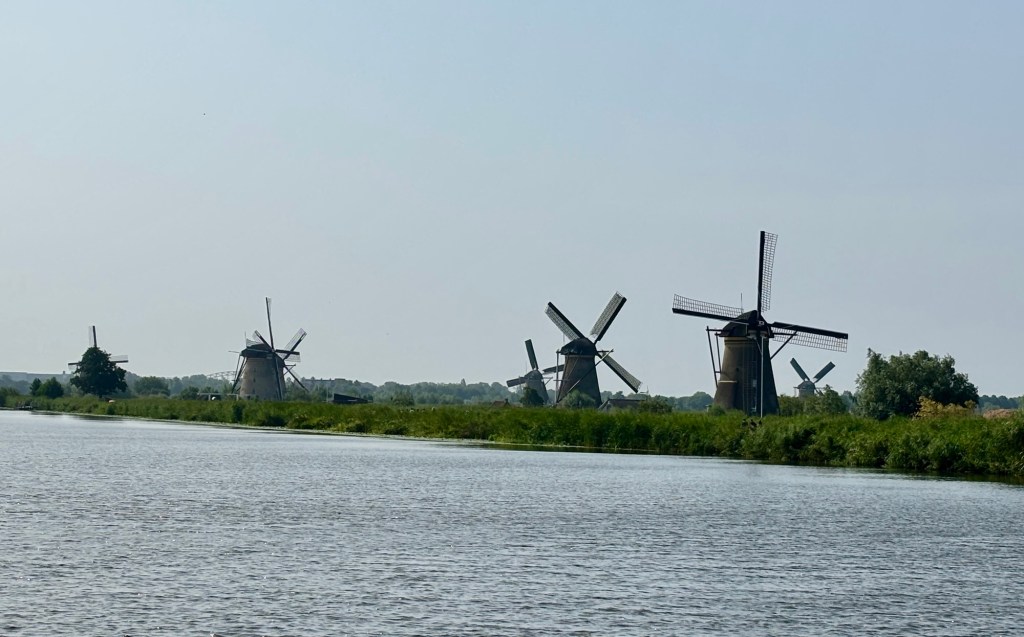
Kinderdijk has been a UNESCO World Heritage Site since 1997. This group of 19 windmills was built circa 1740 and is the largest grouping left in the Netherlands. That was our destination for the day on July 26.
We had a private tour with a lovely young woman named Eleftheria. She says she is totally Dutch but she had creative parents who chose her name which means freedom in Greek.
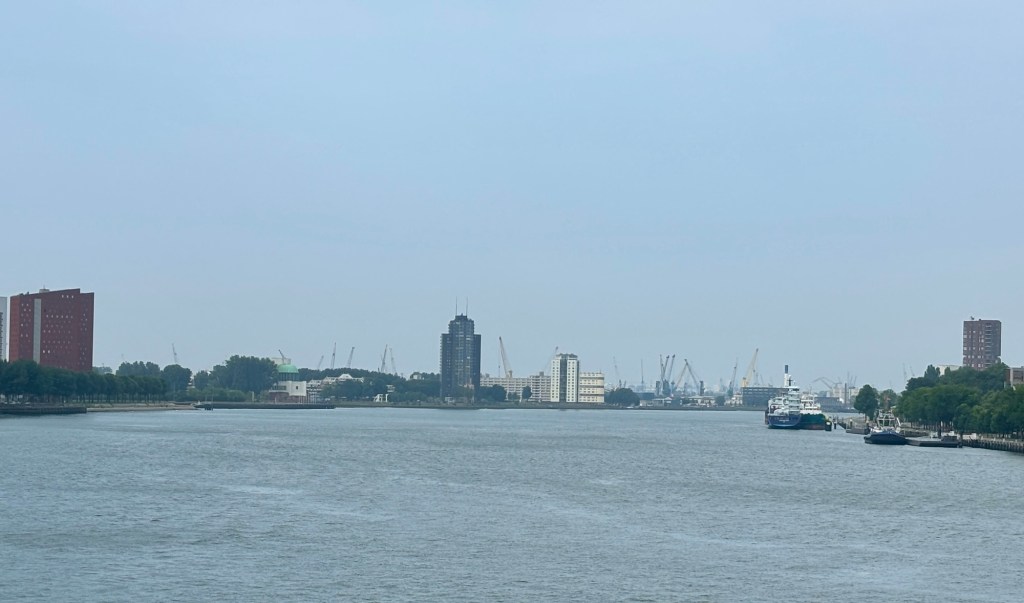
As we walked across the Erasmus bridge she told us how most of the city center in Rotterdam is new since the Second World War. Germany bombed the city into submission to have control of their port, the largest in Europe. The port stretches for miles, this is just the part viewable from the bridge.
The bridge is named for Desiderius Erasmus, a prominent renaissance humanist and a major historical figure in Dutch culture.
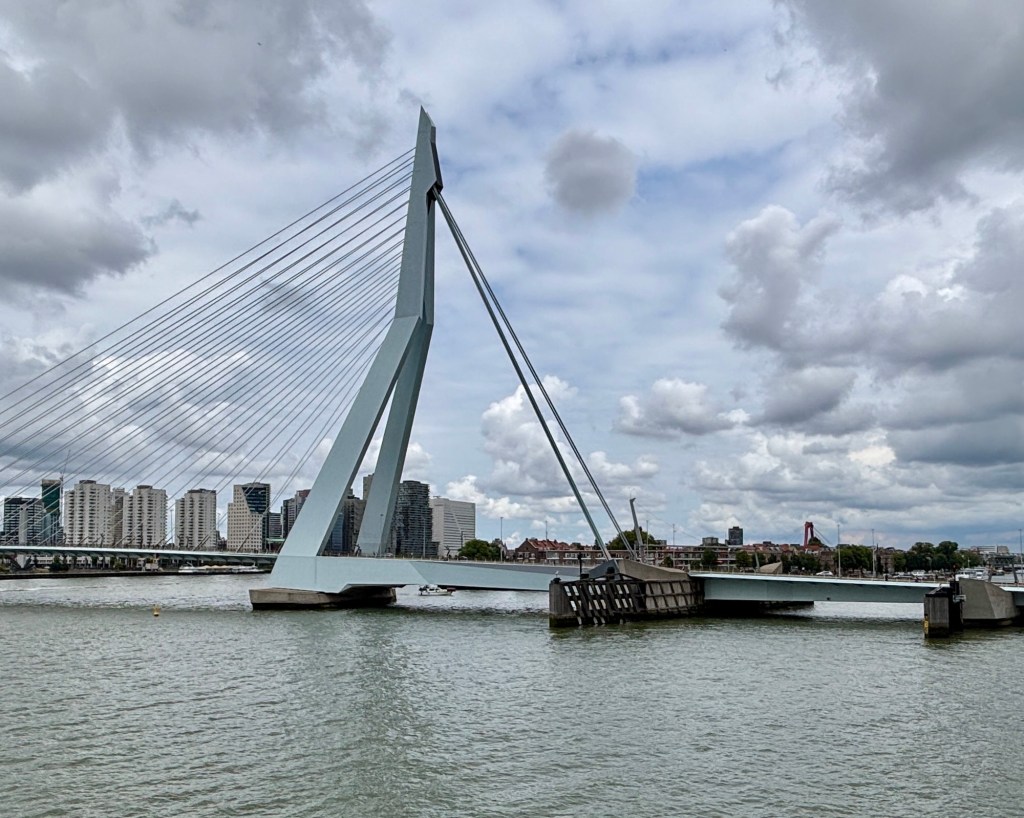
The bridge, also called The Swan, is a symbol of Rotterdam.
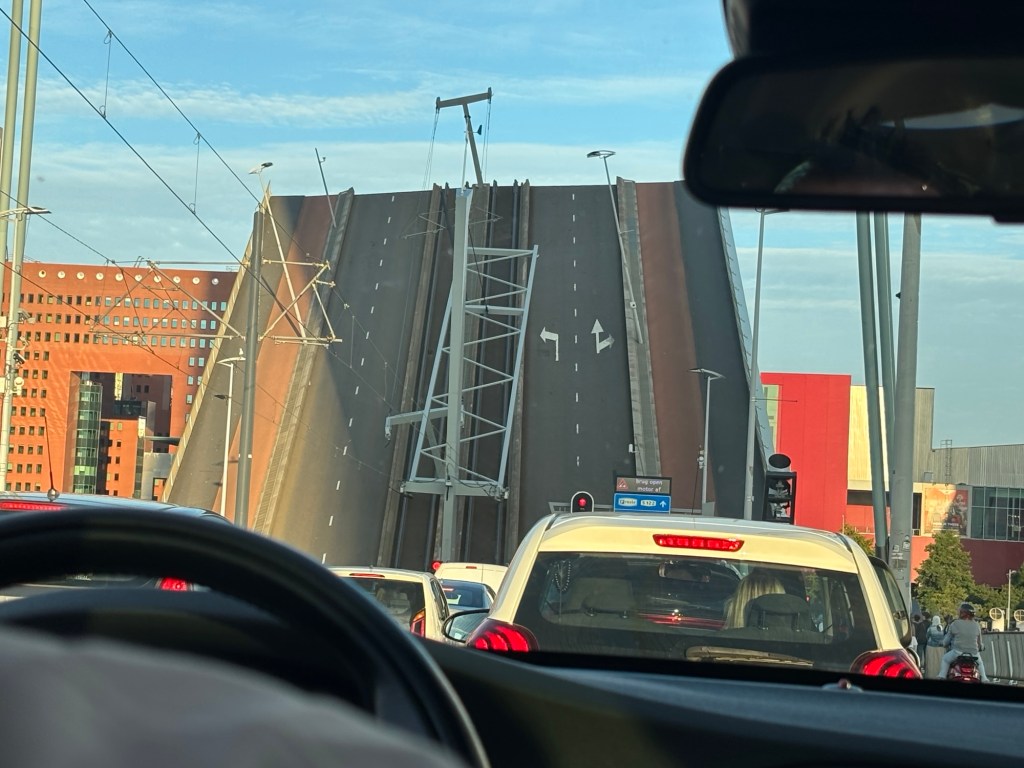
We were riding on the bridge the night before in our Uber when one end went nearly vertical to allow a high masted boat to pass through.
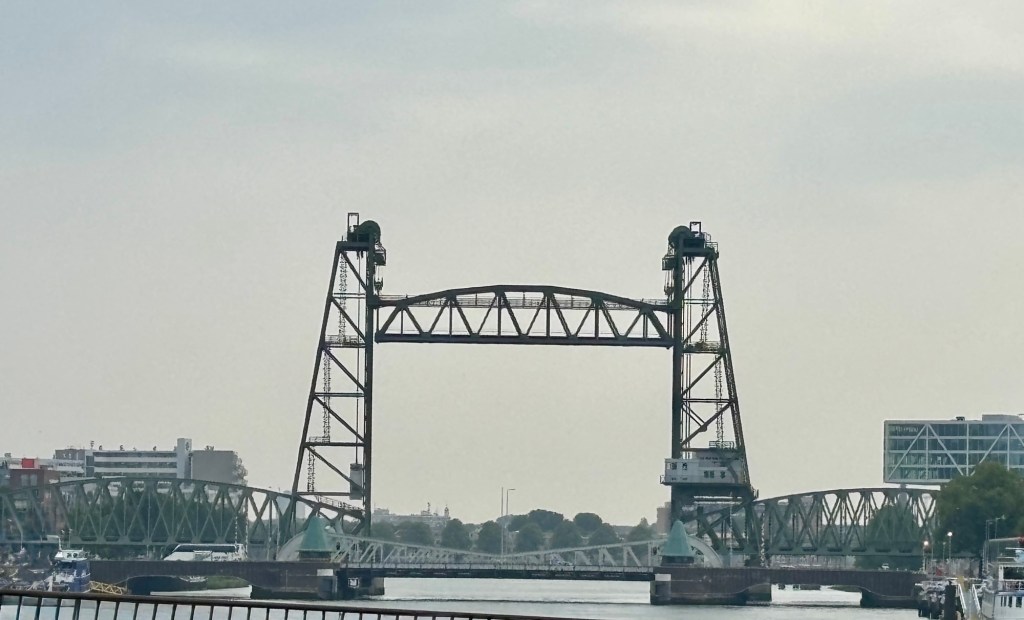
During that delay our Uber driver told us about the Hef Bridge, shown above, and how Jeff Bezos had coerced the city of Rotterdam to partially dismantle this bridge to allow his newly built yacht to pass under. We were disgusted at the story.
However, when El told us the story, she said that the city said “no” to the wealthy American and made him modify his yacht to be able to pass under. We told her what we had been told the night before. Although she was confident, El did the research quickly and confirmed that she was correct. We liked her version of the story much more!
We learn repeatedly not to take everything tour guides or Uber drivers say as truth. Our Uber driver embellished a lot. He said when they dismantled the bridge to let Bezos’s boat through, they had to reconstruct it and used that opportunity to repaint it. Not only did they never take the bridge apart, it was never repainted.
The Hef is a vertical lifting bridge built in 1927 and was very unique for that time and is an iconic piece of Rotterdam.
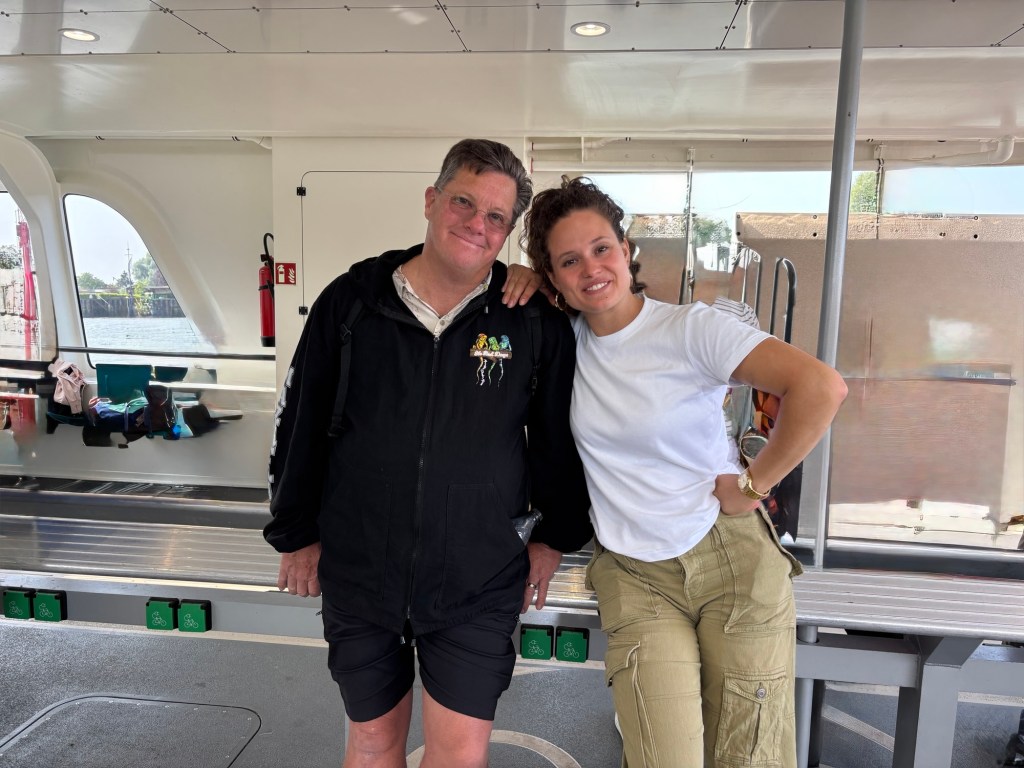
We took a pleasant 45 minute cruise on public (boat) transportation to Kinderdijk. This picture is Randy, of course, and the delightful El, or Eleftheria.
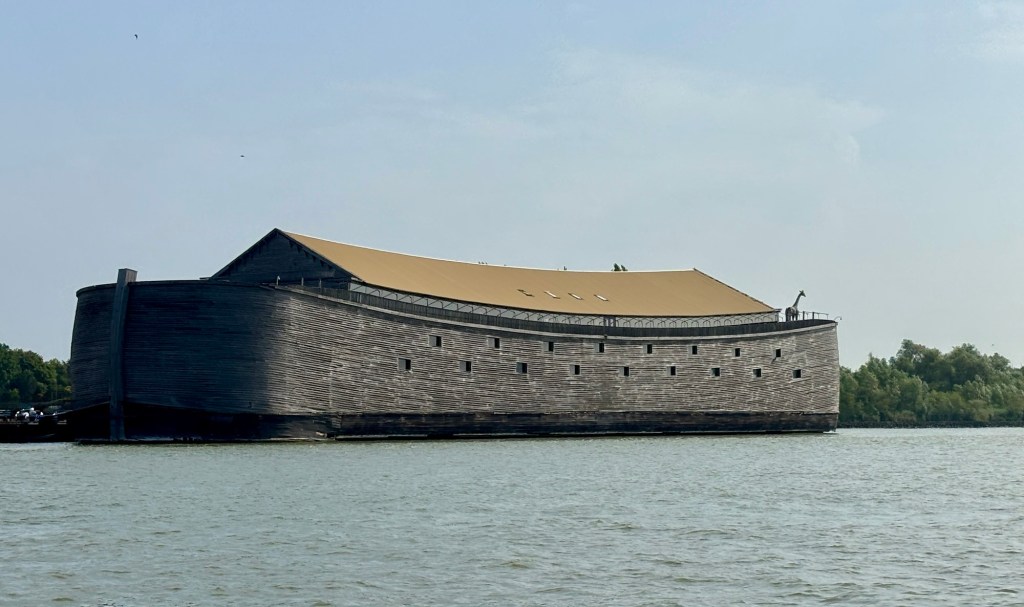
We passed a replica of Noah’s Ark. It was a little worse for wear, seemingly abandoned.
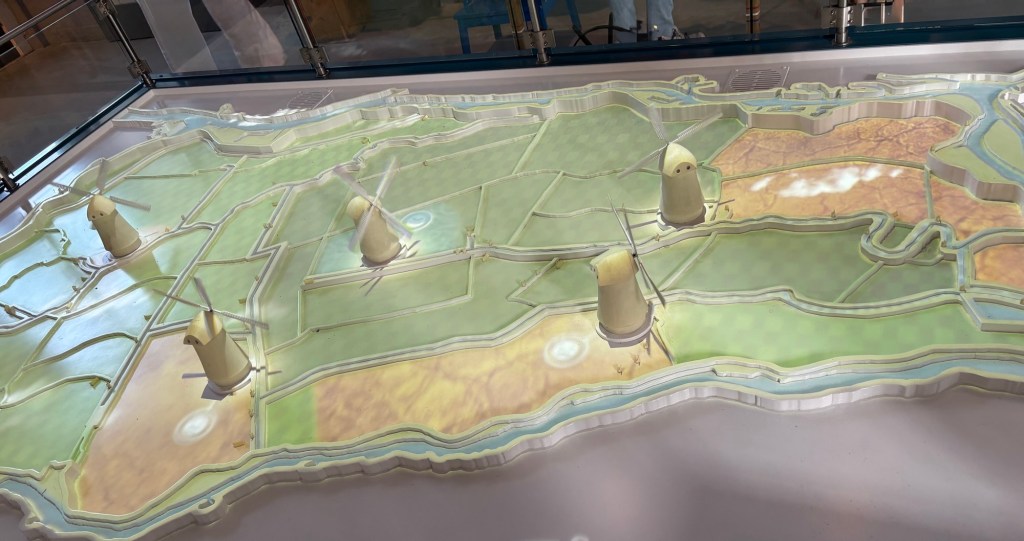
When we arrived at Kinderdjik, we missed the first few minutes of an orientation video. Seeing those minutes might have helped me but it took awhile to wrap my head around the fact that the canals and windmills were to get the water OUT. That was needed to make the land livable.
Exposing the land also allowed them to cut out portions from the peat layer to dry and use as a fuel source. Some still use peat, centuries later.
We live in a desert in a decades long drought. My mind always thinks conserve water and save every precious drop. It just didn’t compute trying to get rid of the water so they could live in marshy lands below sea level.
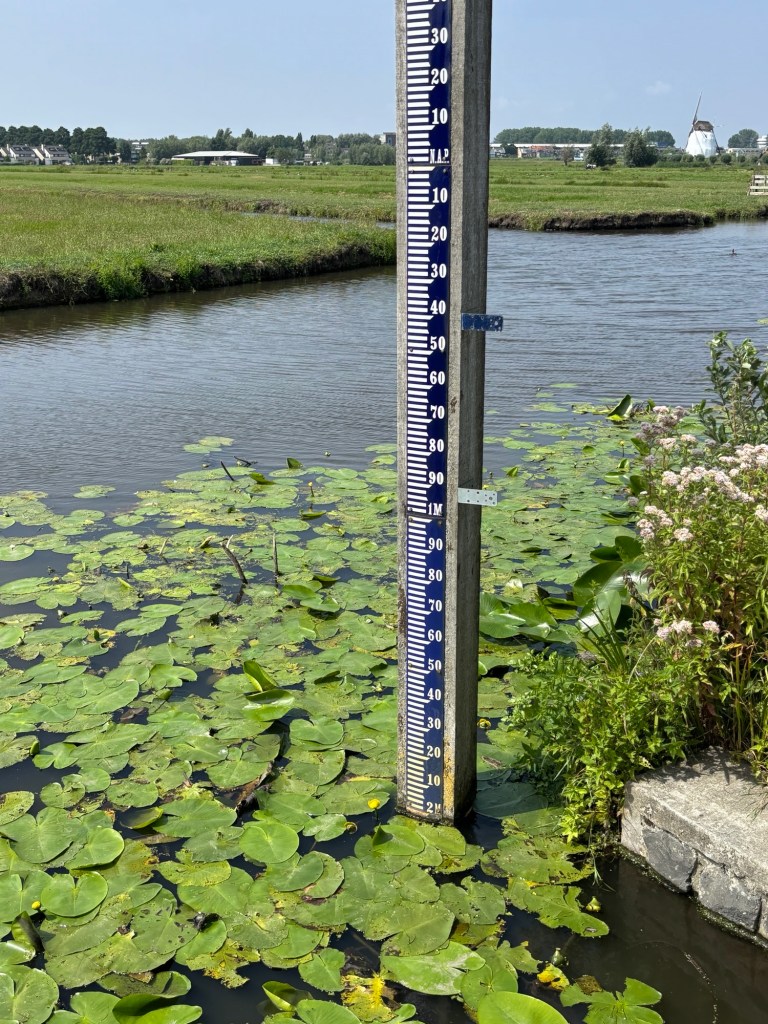
Kinderdijk is Dutch for “Children dike” and named for the legend of a villager finding a wooden cradle floating after a flood.
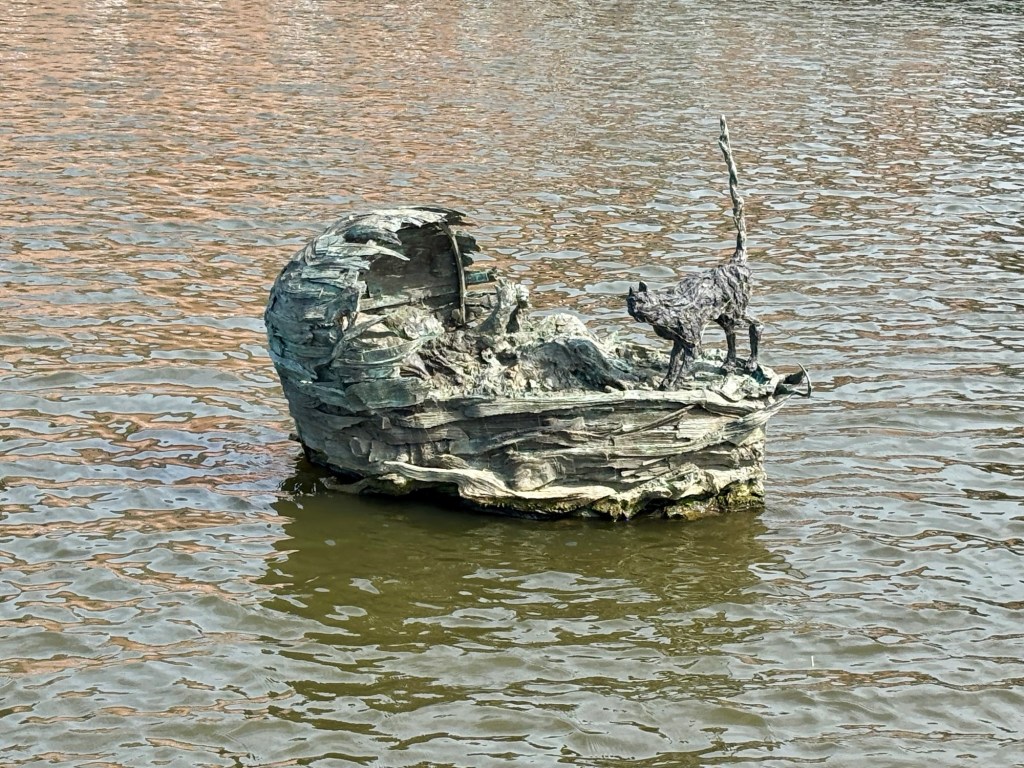
Inside was a child with a cat trying to keep it in balance. This sculpture is on the grounds in commemoration.
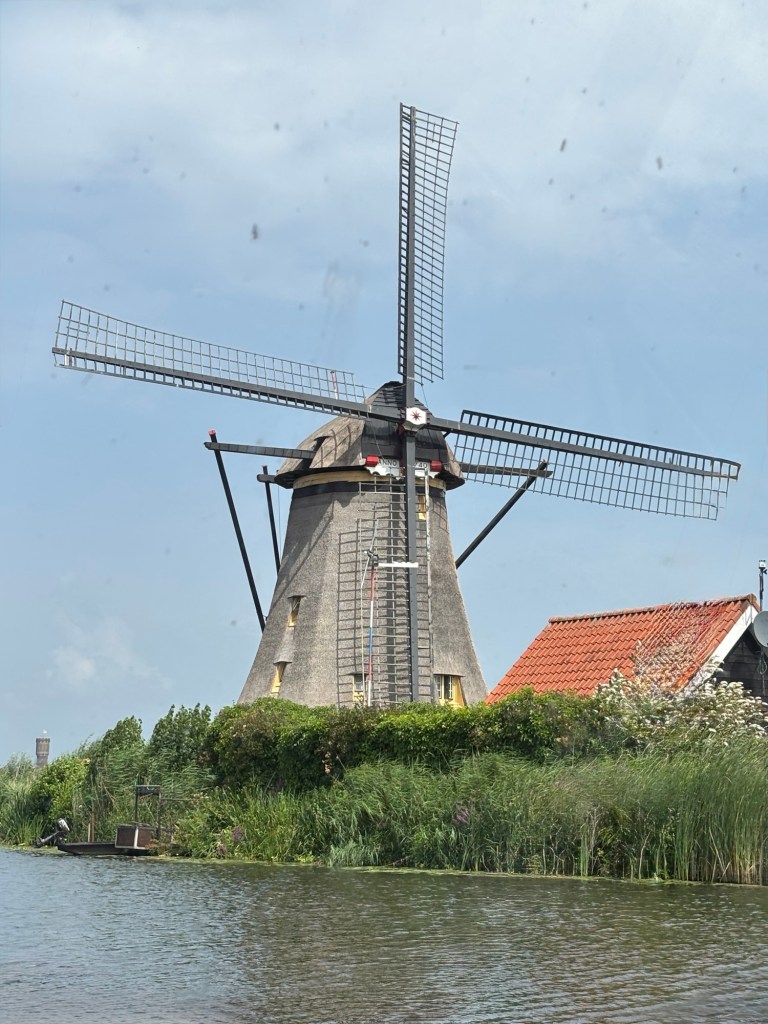
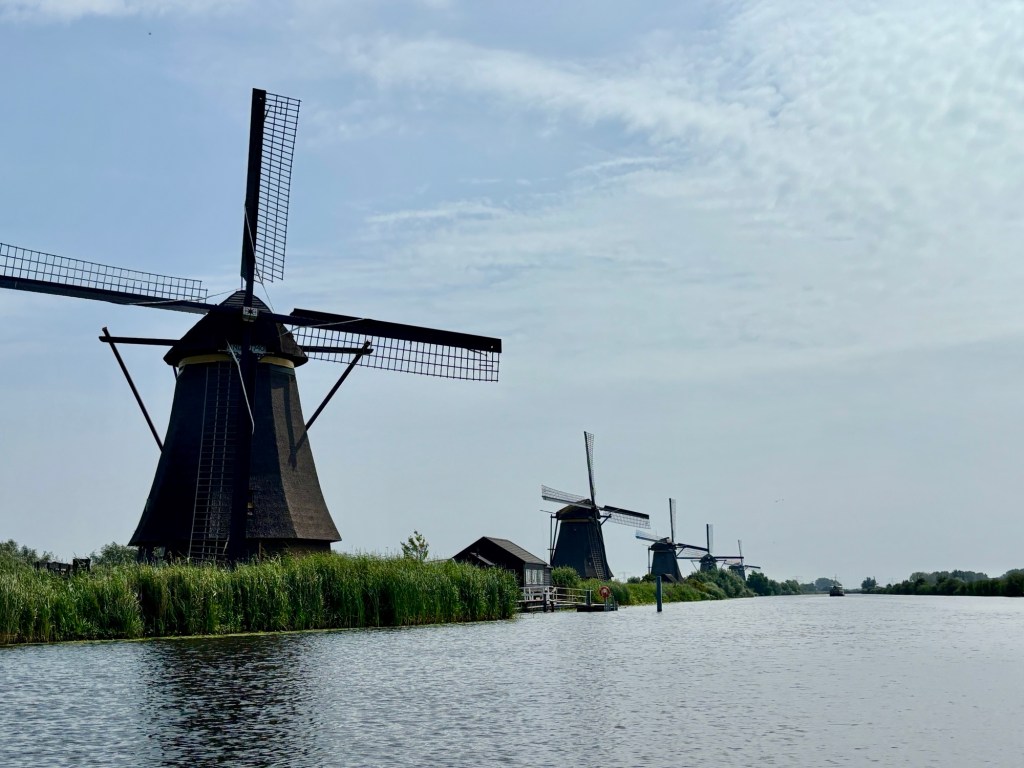
The former queen of the Netherlands, Beatrix, was instrumental in making sure this collection of 19 windmills were preserved. Seventeen are rented out as homes while two are set as part of site tours.
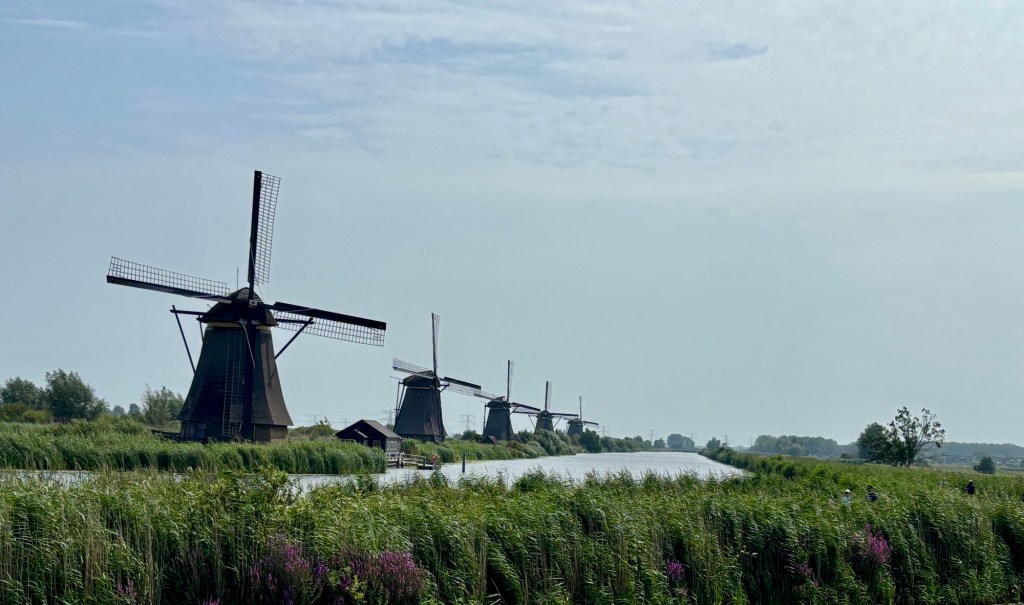
Apparently, this is the iconic windmill shot at Kinderdijk.
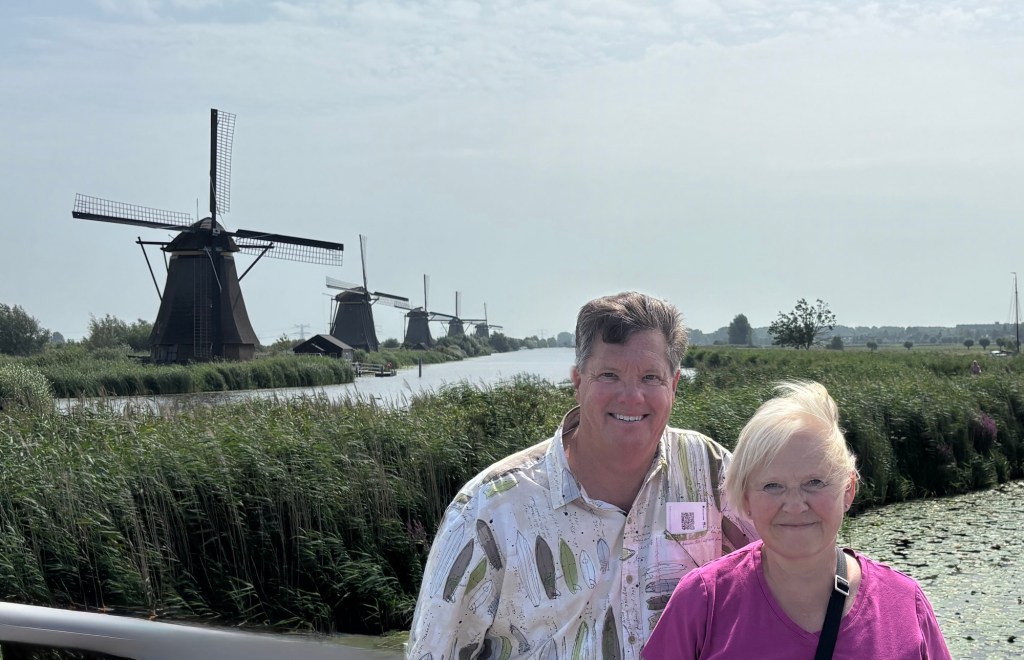
And here is proof that we were there!
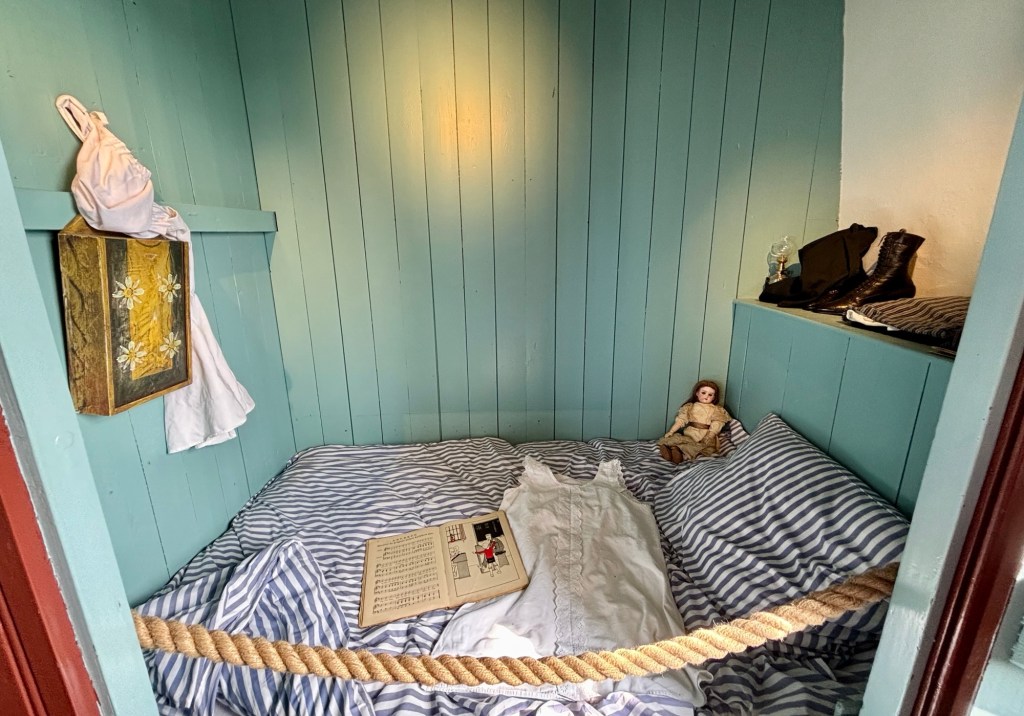
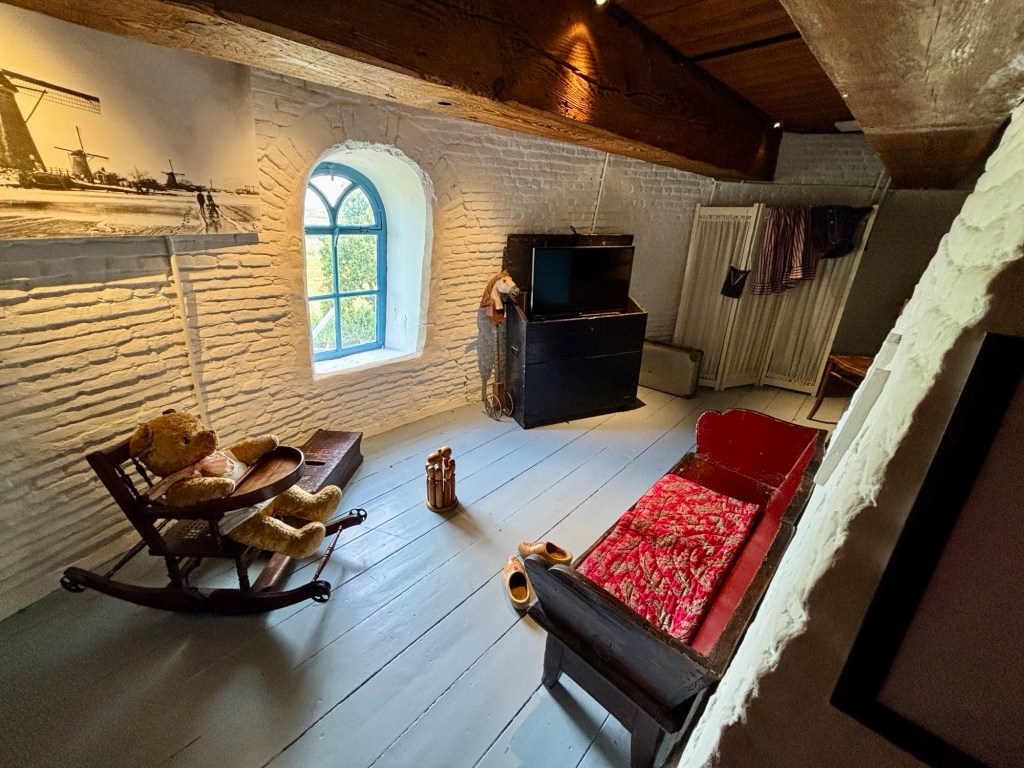
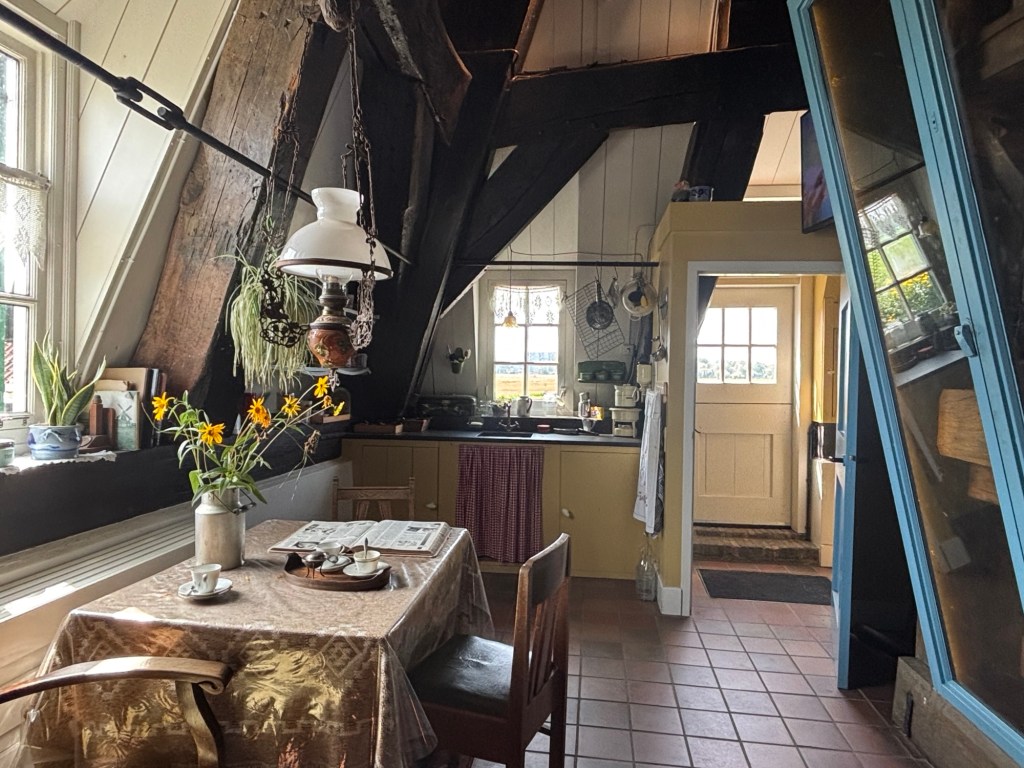
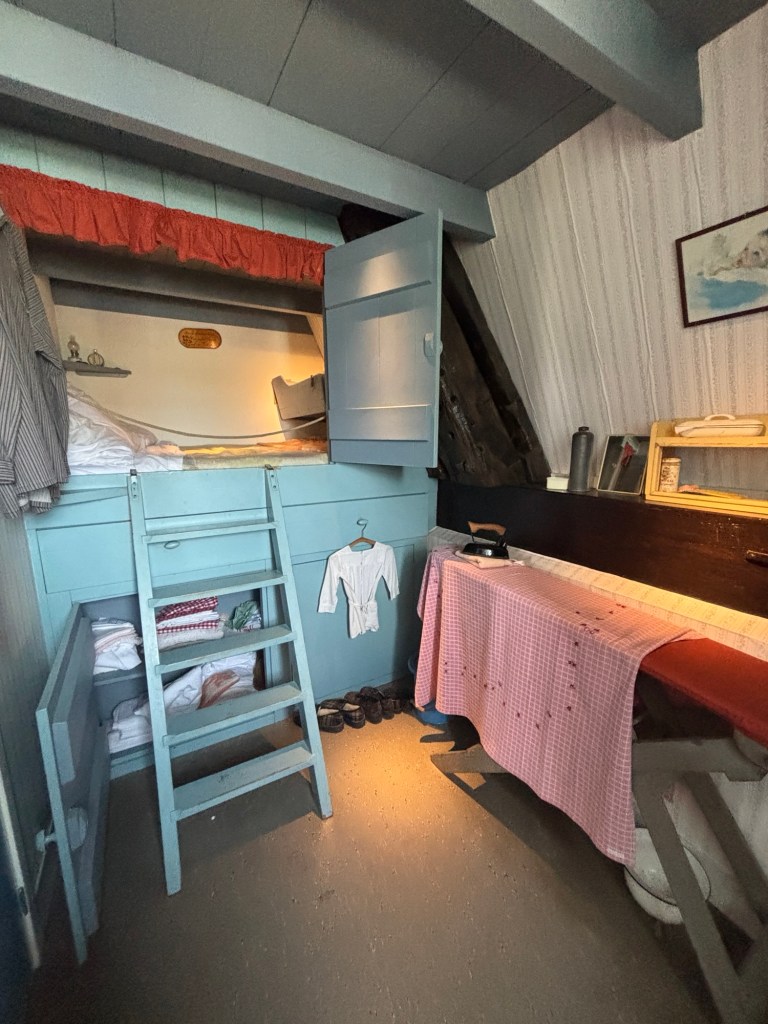
We enjoyed touring the two available windmills and seeing how “millers” and their families lived through the 17th, 18th and 19th centuries.
We had an interesting talk with one man about his wooden shoes. He wears them always, but said they must be paired with wool socks.
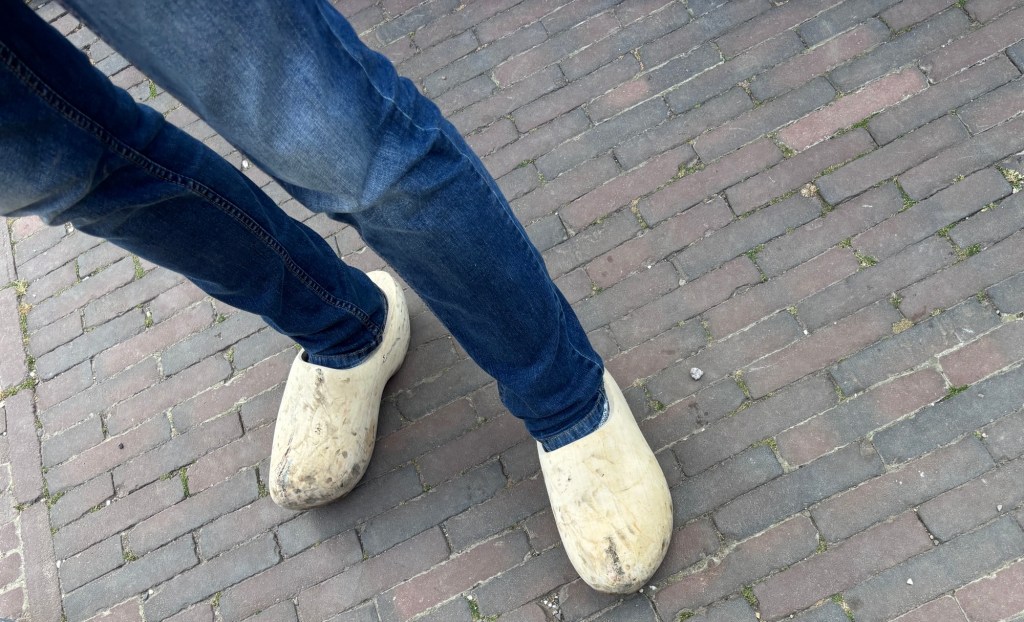
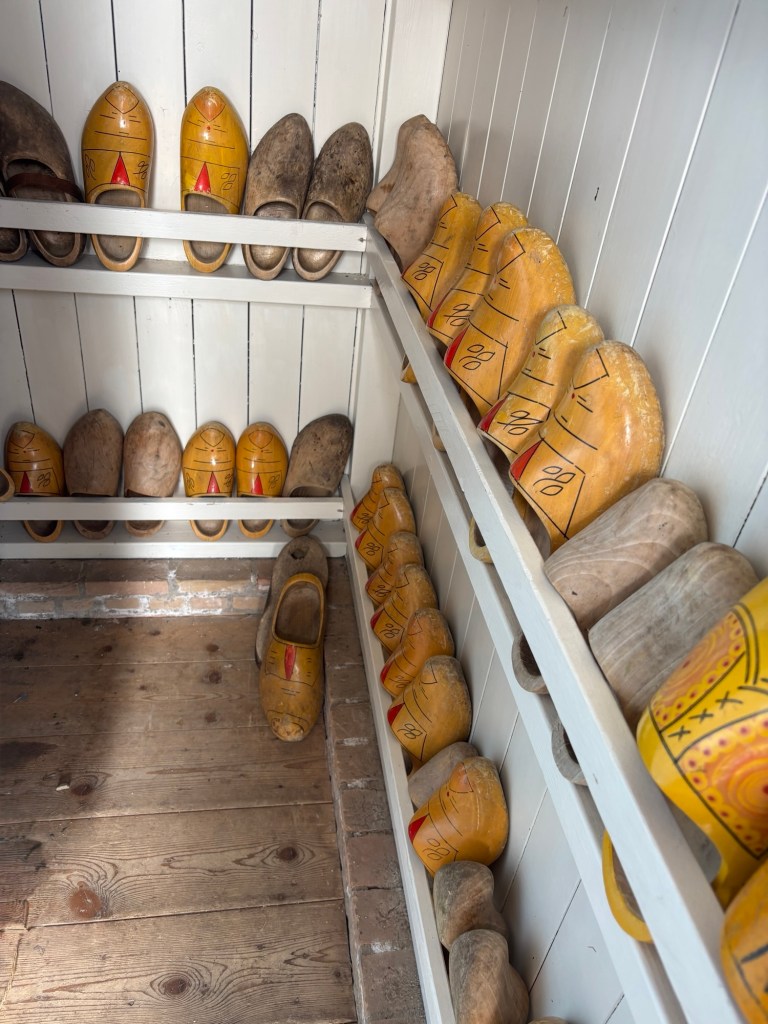
They are made from a renewable resource, protect his feet from getting wet and being stepped on by farm animals. Finally, they can be firewood when they are used up. He says a pair lasts him about eight months. In hindsight, we failed to ask how he knew when a pair needed to be replaced.
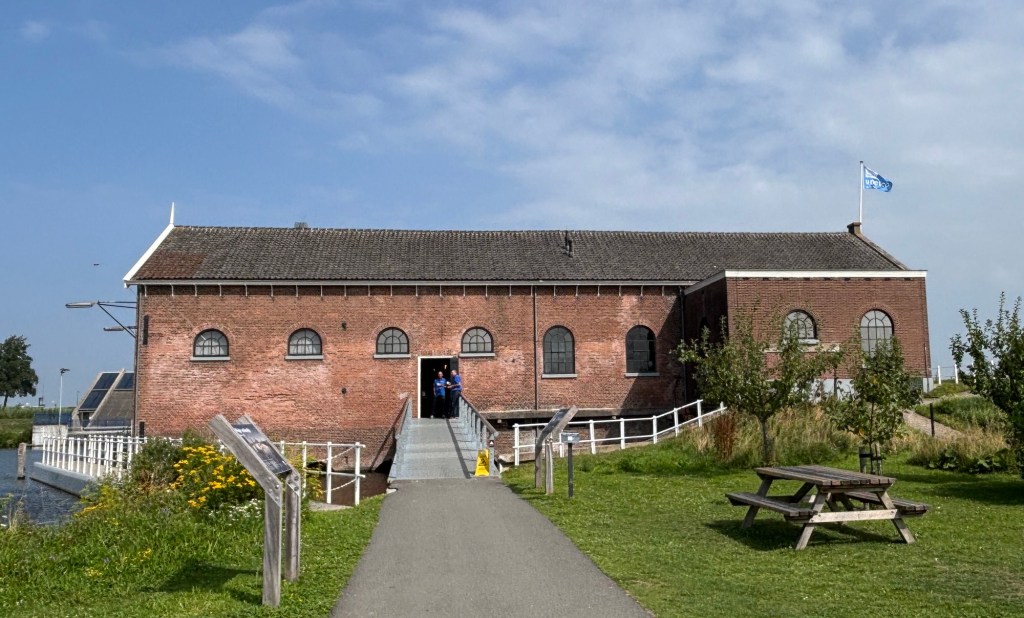
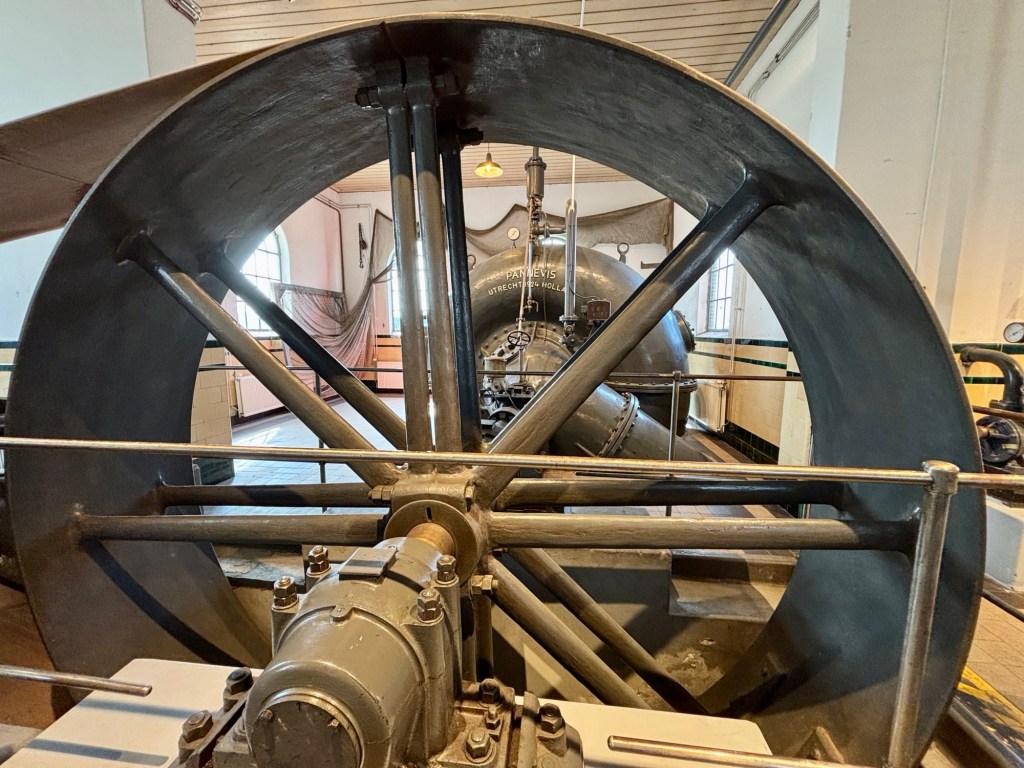
We visited a large building that held the steam engines that took on water pumping after the windmills.
Nowadays, water experts, using modern technology, play the chess game of how much water to remove, from where, at any given time, considering present and presumed precipitation.
At the end of our tour we rode the boat back into Rotterdam.
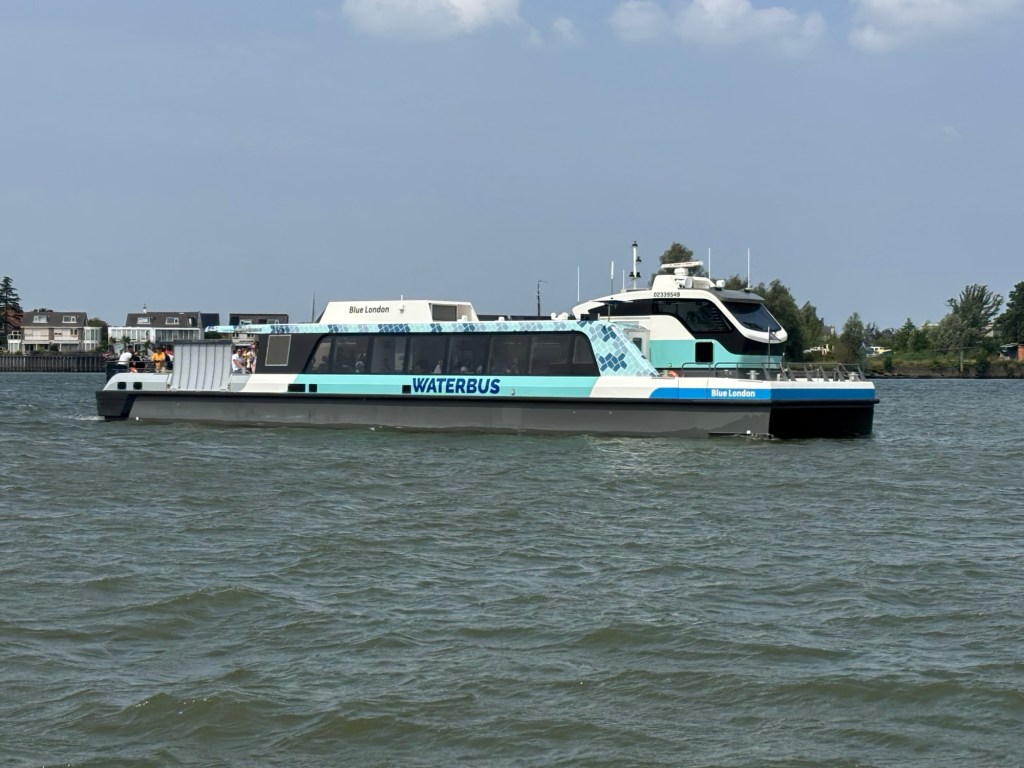
We decided to avoid the long walk back across the bridge. We got tickets aboard a second boat, a water taxi, for 10 Euros (about $11.50). It was a great choice.
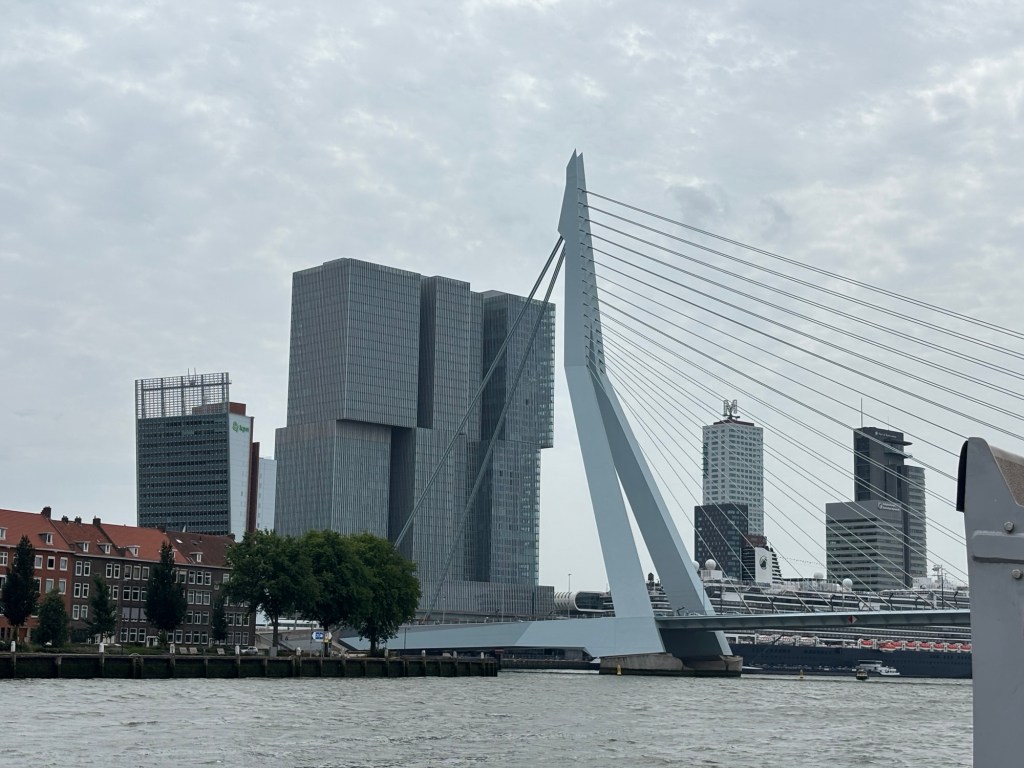
From a different angle, we could see an interesting sky scraper behind the Erasmus bridge.
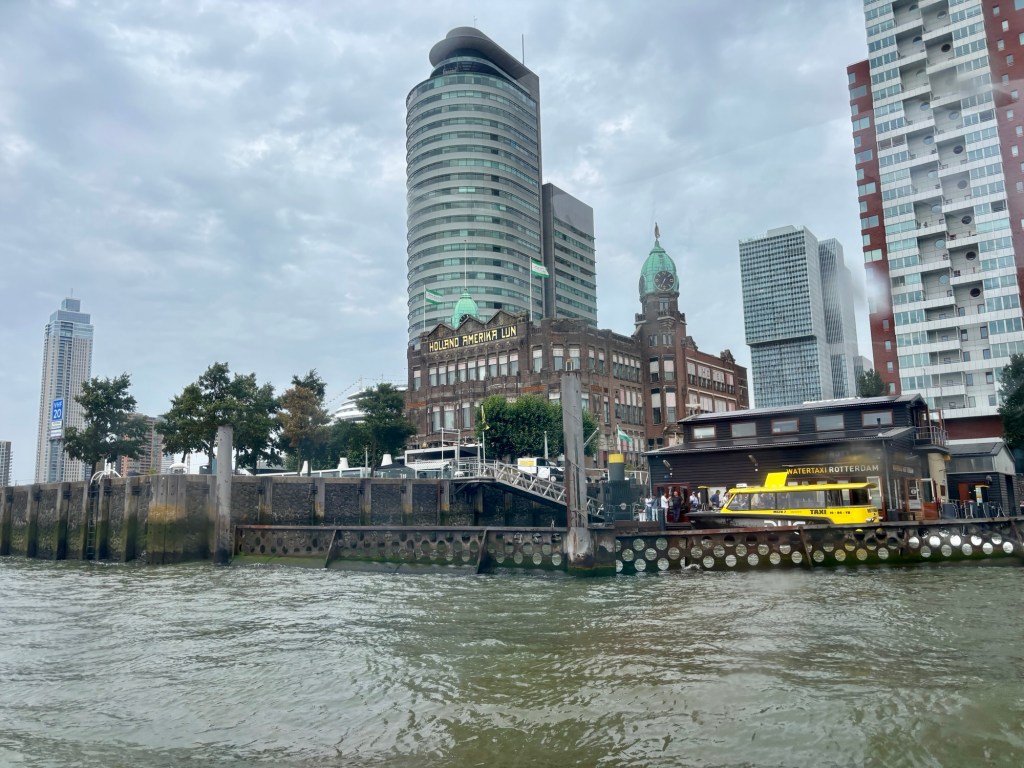
It was also interesting to see our Hotel New York from the water. It was a nice stay in Rotterdam!
Next Up: We board the Nieuw Statendam, catch up with friends Cindy and Darrell, and begin our first of two cruises.


