Our sea day, August 8, was a calm one on the North Sea. We’ve missed ports and had excitement on previous sailings through the North Sea. On a previous cruise, we had to learn that ginger and green apples are a more common “antidote” for sea sickness than the saltines we usually reach for.
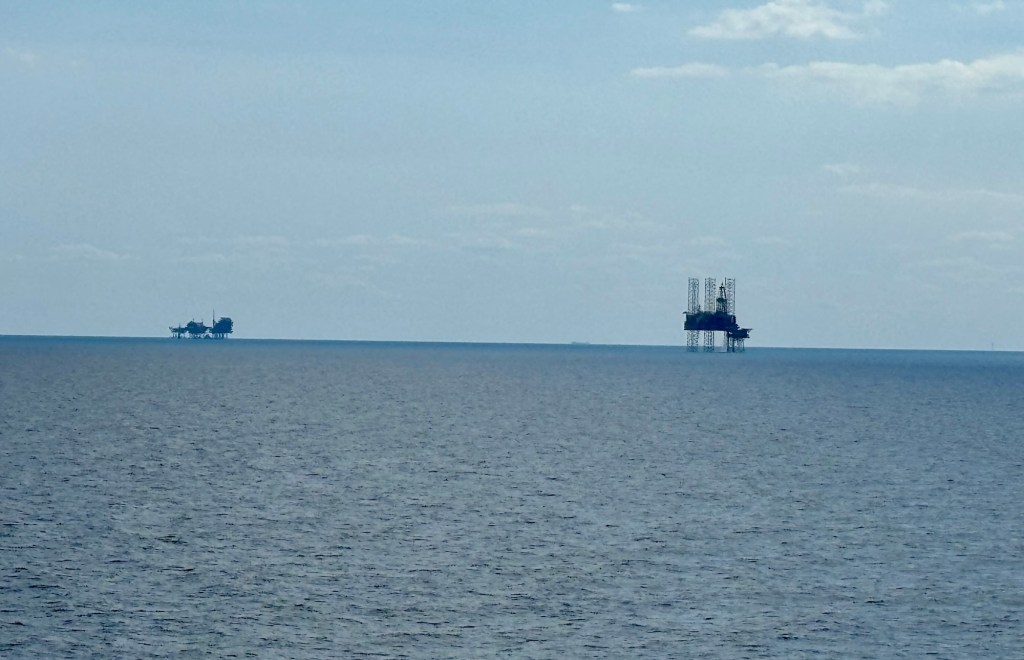

Today, we could see oil derricks and wind turbines from our balcony.
We had a relaxing day enjoying ship activities while Cindy and Darrell had to pack, weigh their bags and all that.

We had our last dinner together in the dining room with our waiter Hendri. He was very good and always had Randy’s ice tea with stevia ready when we arrived. Getting to know members of the crew always enhances our cruise experience.

We finished the evening with the strings group Vivace and then a performance by Juliette Primrose on the World Stage.

The next morning, I had set the alarm to wake me up at 6:00 to see the White Cliffs of Dover. Fortunately, Randy got up about 5:45 and noticed we were already sailing by. I grabbed my robe and went out on the balcony to see the cliffs and take pictures.
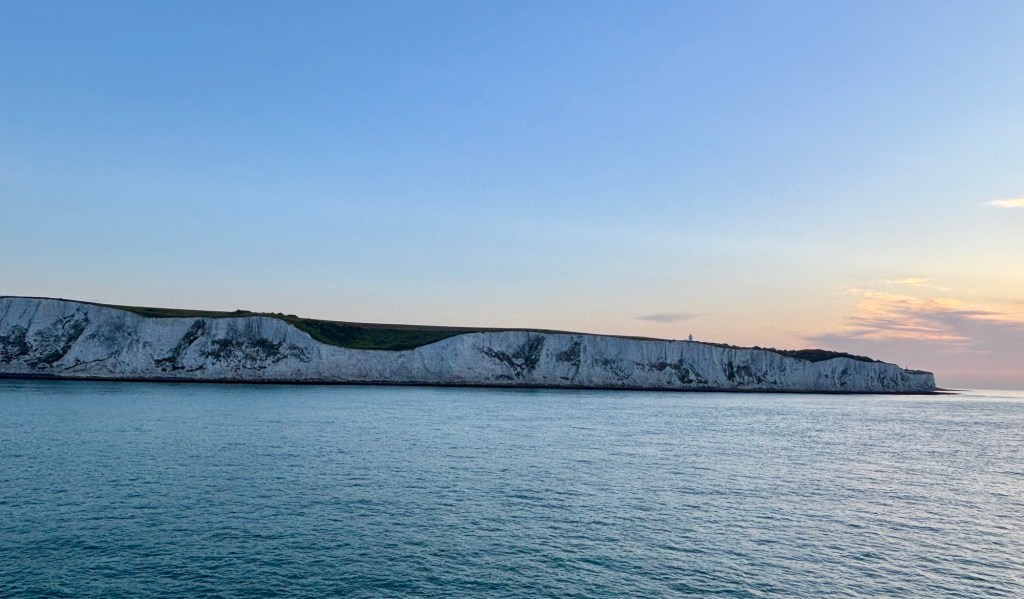
They weren’t super impressive in the early morning light but later they were sparkling white.

The cliffs are about 350 feet high and I was pretty entranced.
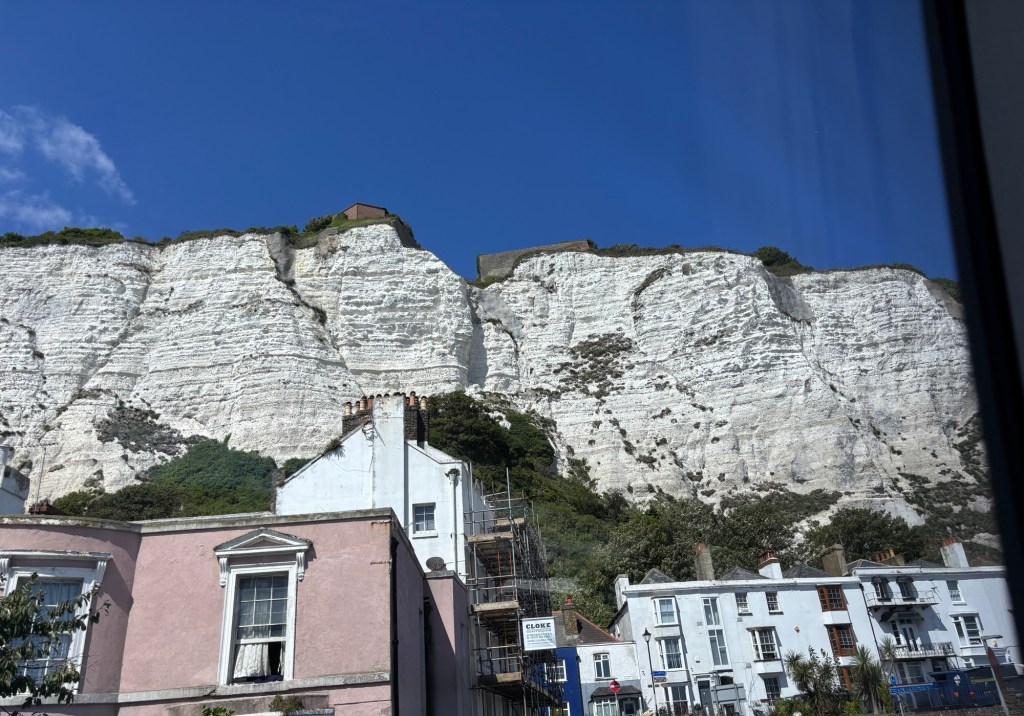
Microscopic analysis shows they are made of compressed sea life, chalk and flint stone. The cliffs stretch for eight miles.
One cliff is named for William Shakespeare as he was impressed enough with the cliffs that he included a reference to them in King Lear.

The South Foreland Upper Lighthouse was built in 1843 and decommissioned in 1988. The upper lighthouse used to work in tandem with a lower lighthouse of the same name. That allowed sailers to better determine position until the lower light was turned off.
Five generations of the Knott family were keepers in this lighthouse. It was also used in experiments in wireless radio transmissions by Guglielmo Marconi.
In Dover, 600 of our fellow passengers left the ship, including Cindy and Darrell. We always enjoy traveling with them and look forward to the next time. (Next time was undetermined when they left the ship, but has since been scheduled for September 2027.)

With so many passengers gone, disembarked or departed on excursions, it seemed we had the ship to ourselves. (I didn’t take the people out of this picture, they just weren’t there.)
I wandered up to the crows nest and found an acquaintance, Jo, who writes a blog called “Writer on Deck”. I’ve enjoyed reading about her travels as she mostly lives on Holland America cruise ships.
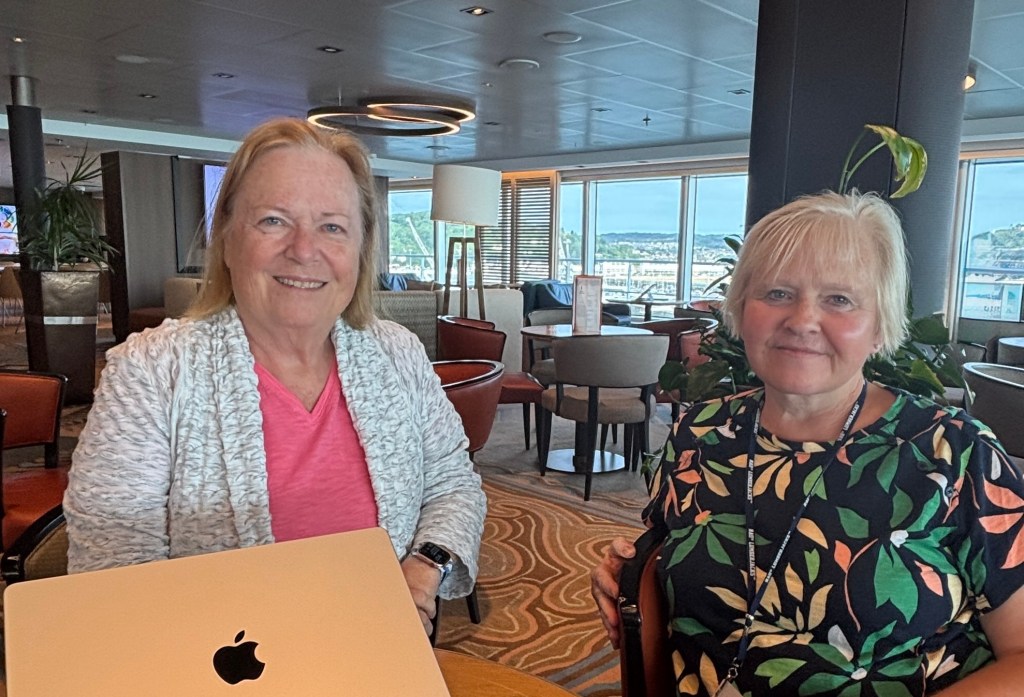
Jo and I had spoken briefly a couple days prior but this was a better time to visit. Randy also came up and joined the conversation. It was very pleasant and we made plans to get together for dinner during this next cruise.
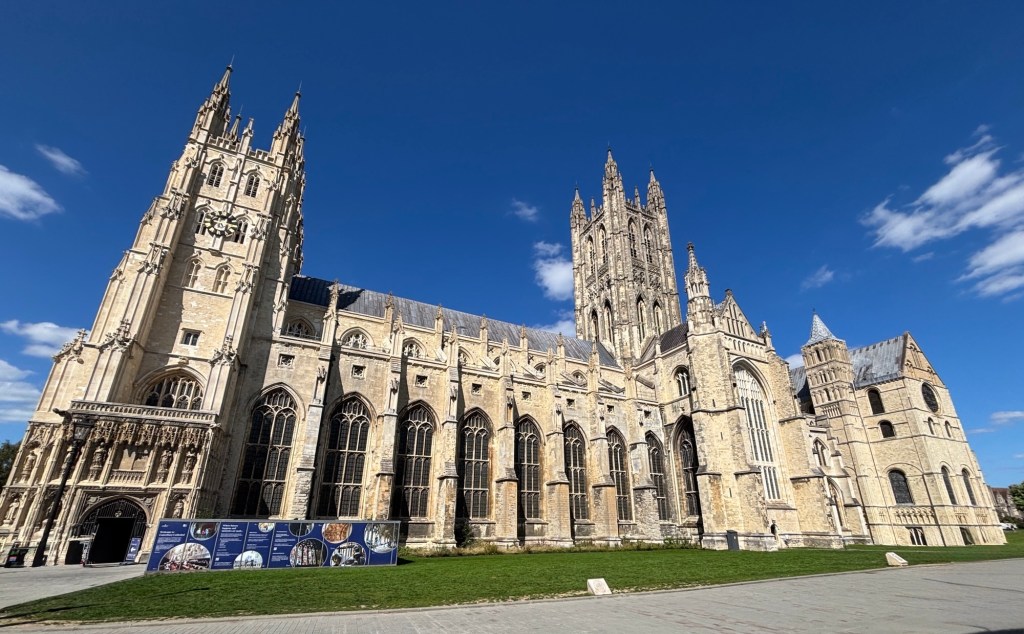
Our afternoon tour destination was Canterbury Cathedral. It is considered a masterpiece of art and architecture, and one of the UK’s most-visited historic sites.

The cathedral website describes it as the “Mother Church of the worldwide Anglican Communion, the seat of the Archbishop of Canterbury, UNESCO World Heritage Site, and resting place of royalty and saints.”

Dover’s first cathedral, St Augustine Abbey, was established in 597. This cathedral took its place. Initial construction took place from 1070-1077.
A defining event that happened in the Canterbury Cathedral was the murder of Archbishop Thomas Becket in 1170 by the knights of King Henry II. The king and the Archbishop had frequent conflicts and the king is said to have asked in exasperation, “Will no one rid me of this turbulent priest?” Four of his knights took his words as a directive. (This event was chronicled in Chaucer’s Canterbury Tales.)

The murder happened in this chapel.


Becket’s body was placed in a cathedral shrine in 1220. However, King Henry VIII destroyed the shrine in 1538.
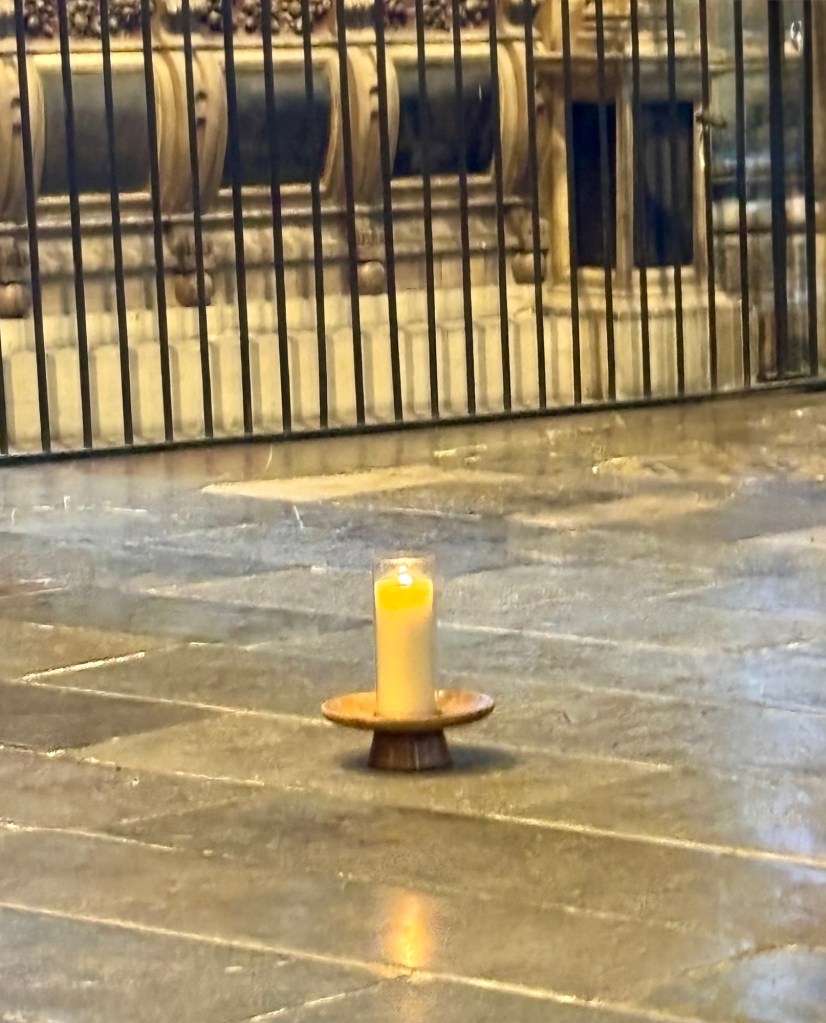
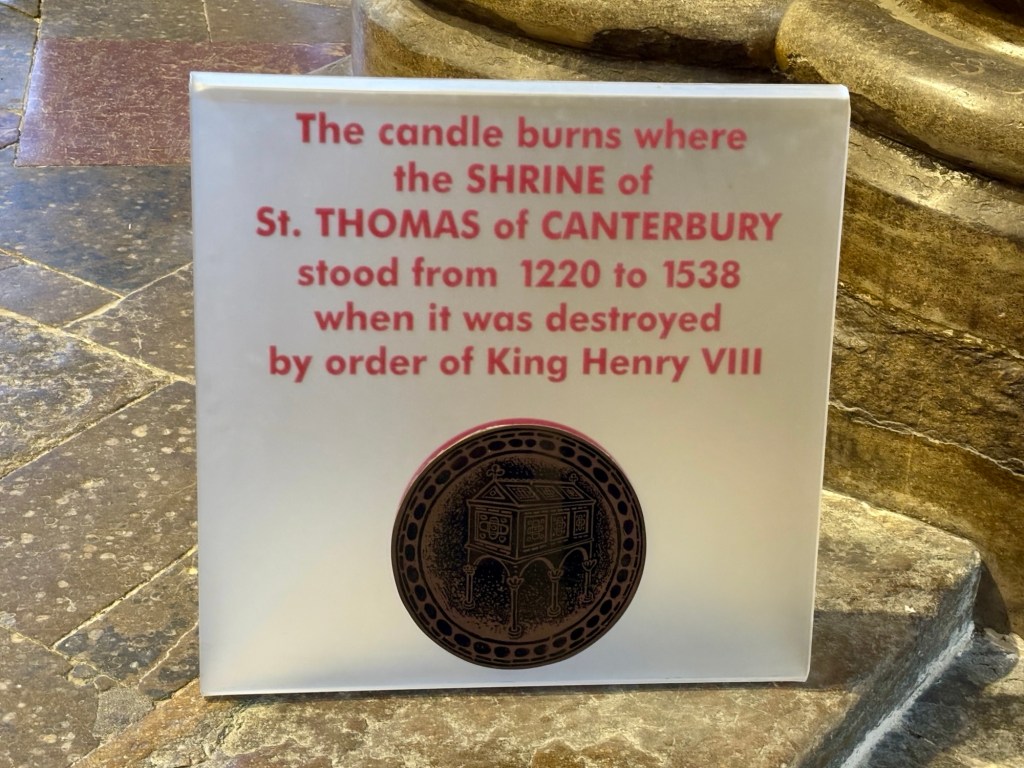
The candle depicts where that shrine once was.

Speaking of Henry, the entrance gate to the cathedral commemorates the marriage of Catherine of Aragon and Arthur, Prince of Wales. Arthur was Henry VIII’s older brother. Arthur died shortly after his marriage to Catherine. King Henry VIII then married her.
Catherine was Queen of England for 23 years but was discarded in favor of Anne Boleyn. That set off changes in English, church and world history.

The gate was covered during our visit, but I was able to take a picture of a picture on display.
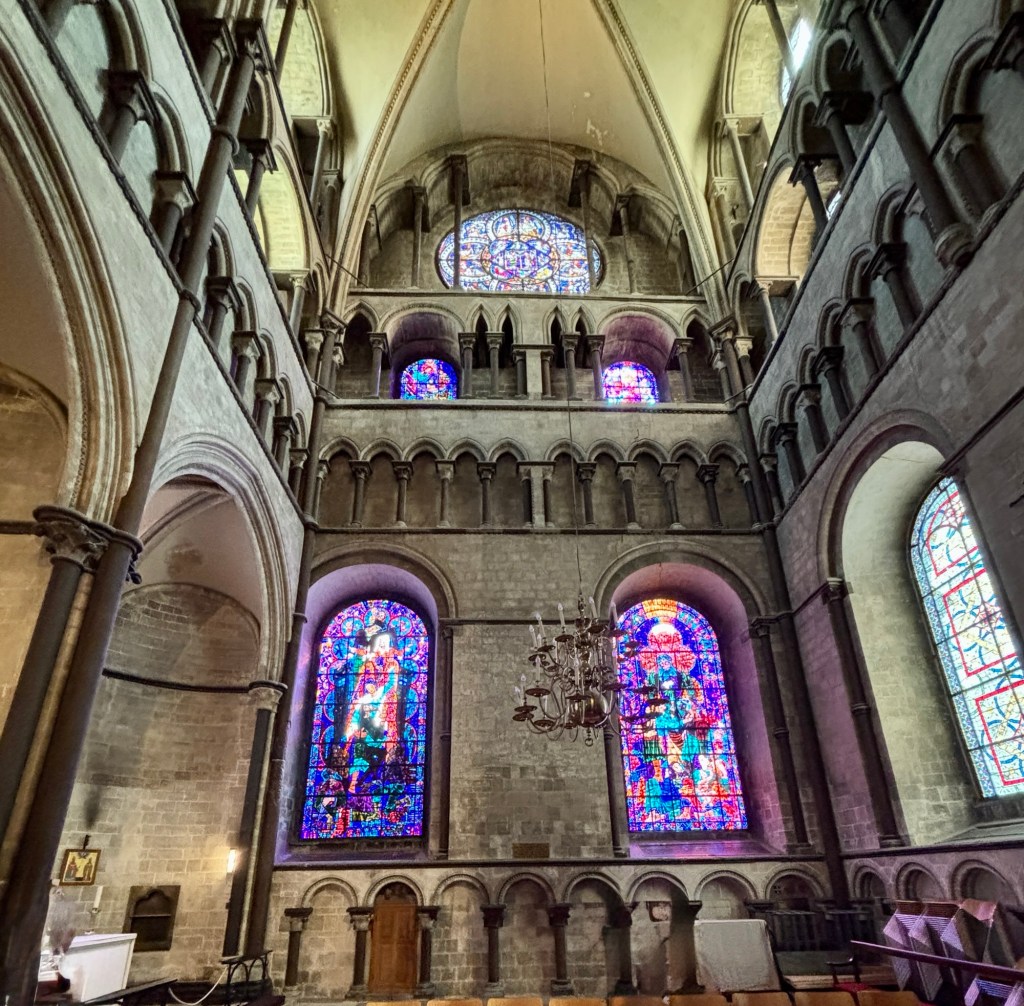
The Canterbury Cathedral was impressive in its size and gothic touches.
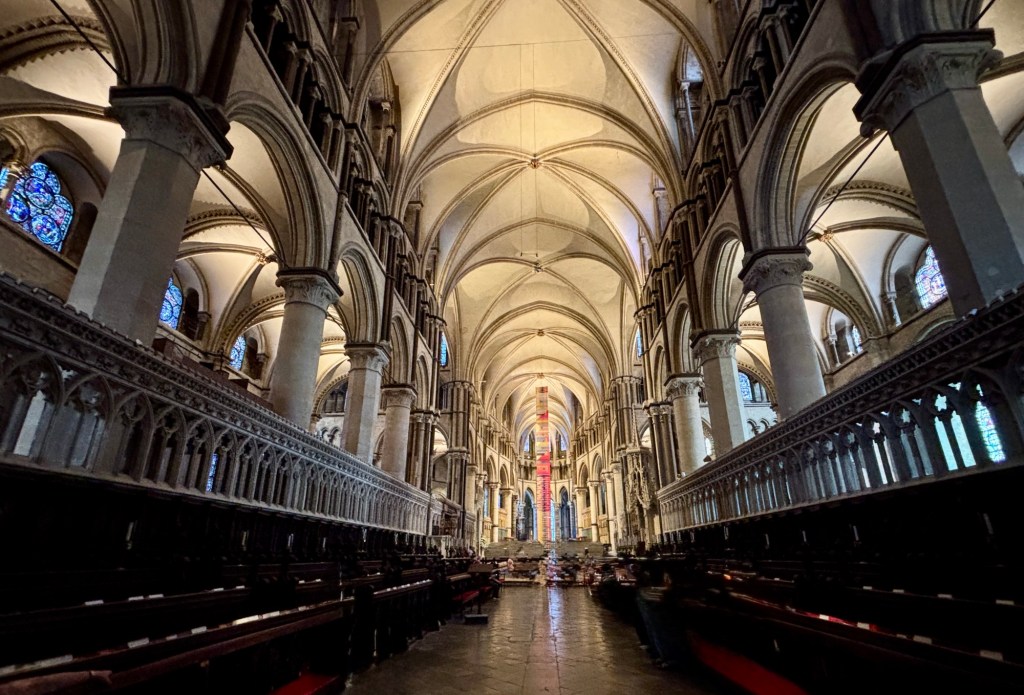
Work on the soaring nave began in 1377.


In this chapel, people are asked to pray for all in the world who suffer unlawful imprisonment and torture.

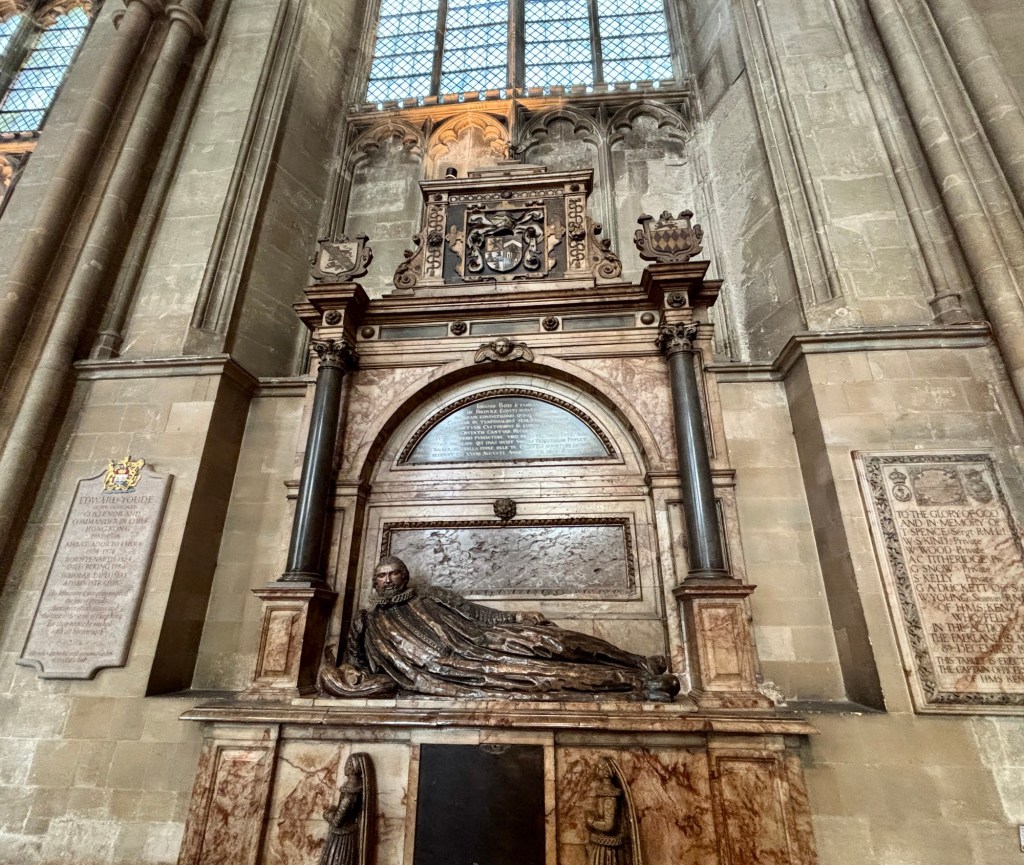
There are many tombs of important people in the Anglican Church of England. They are currently in process of discernment regarding appointment of their 106th Archbishop since the year 597.

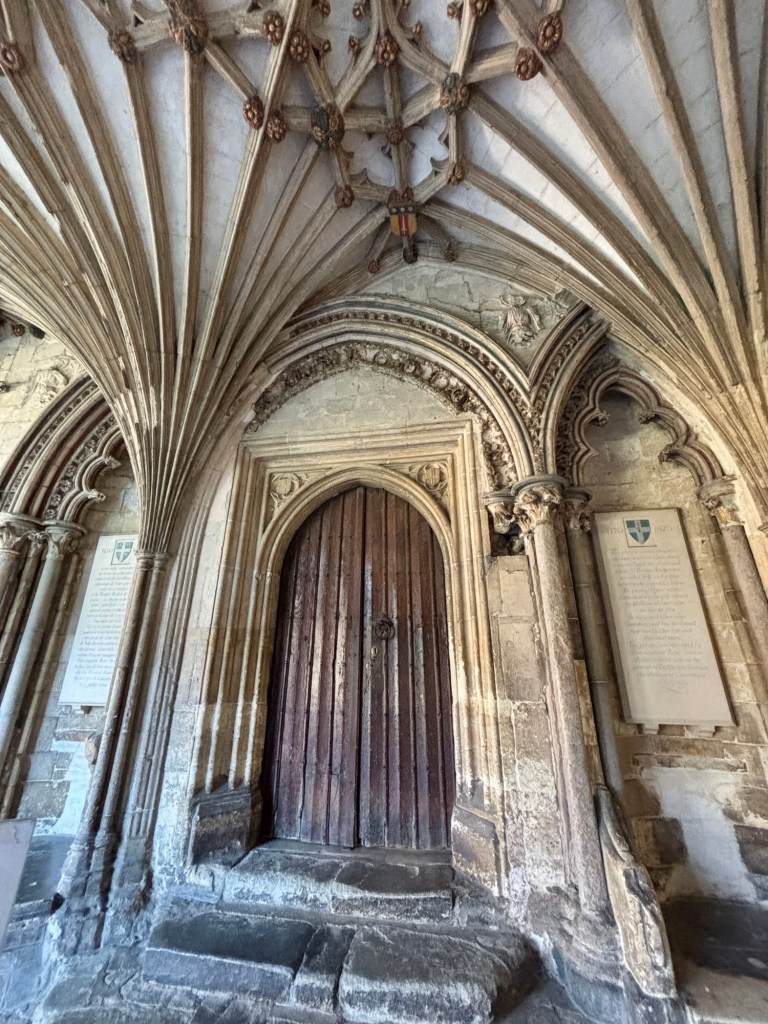
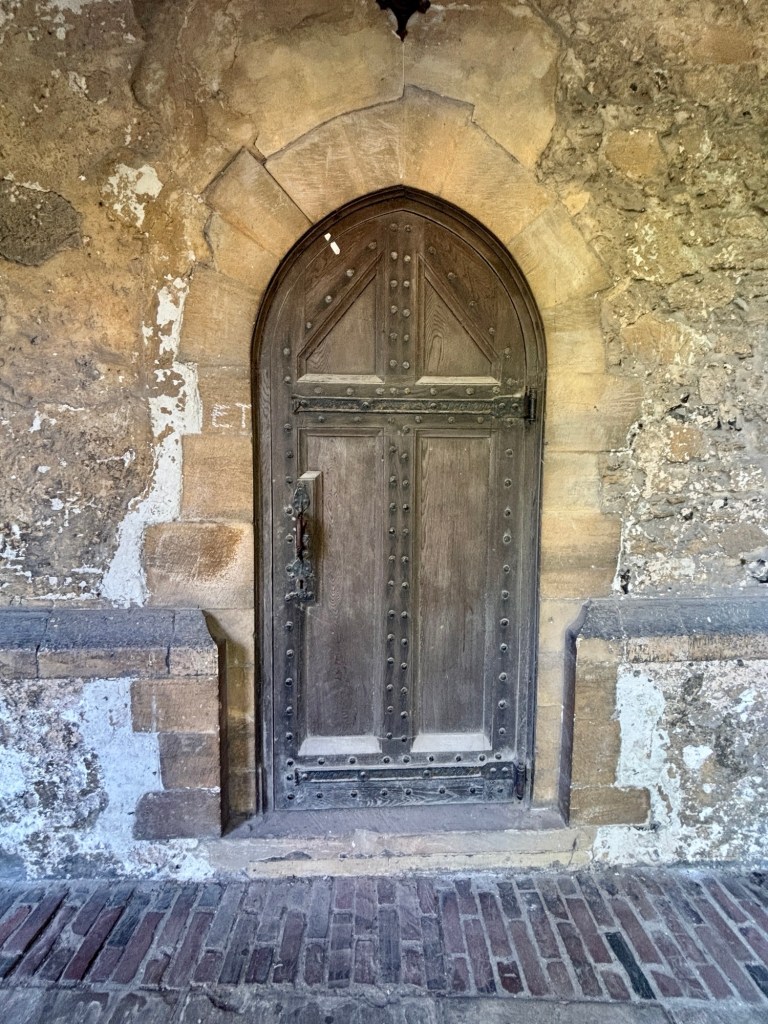
The cathedral was beautiful as so many of them are.
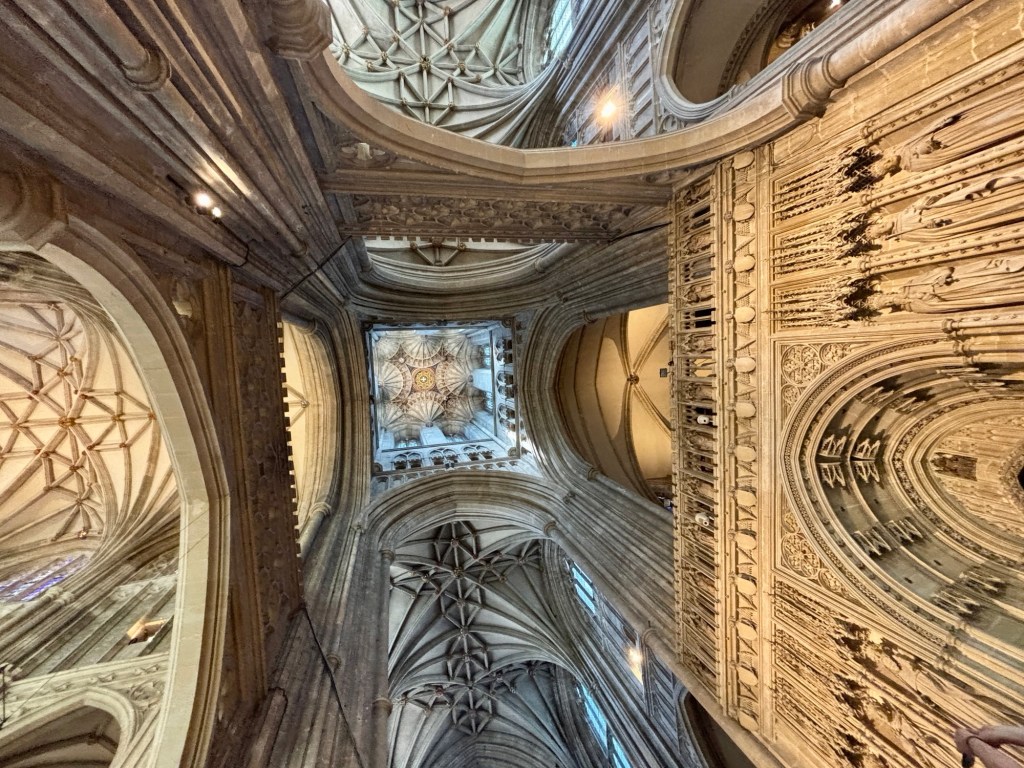
It was very impressive.

We left the grounds and gathered in the courtyard just outside the front gate.
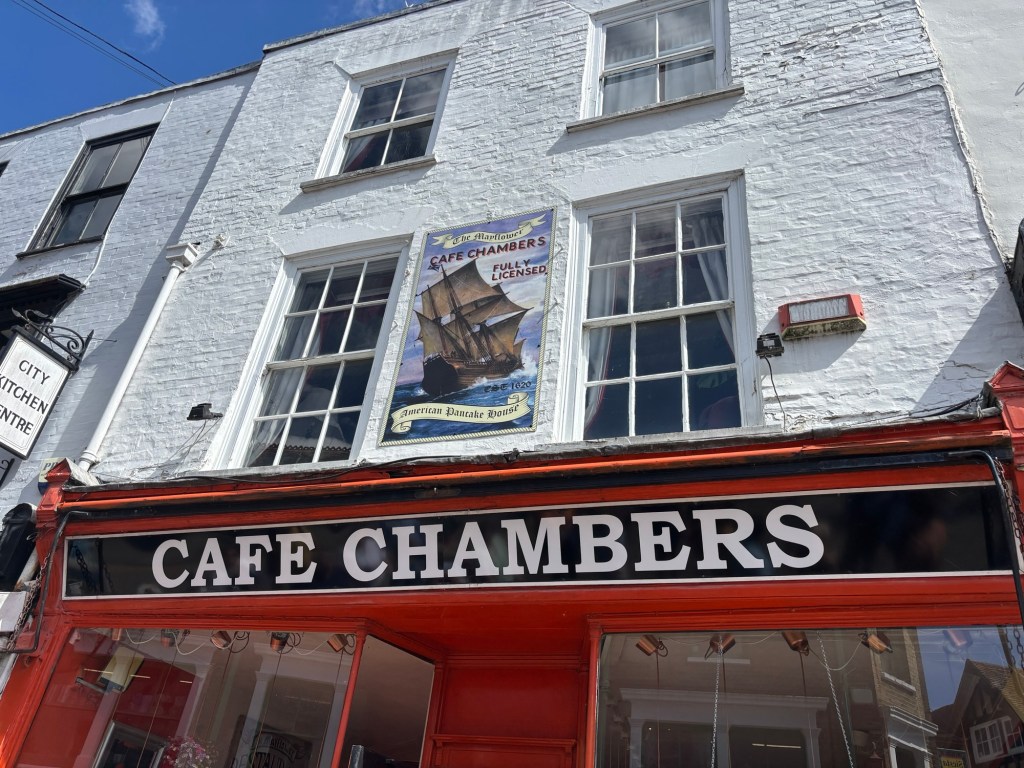
Walking around the village of Canterbury, we were told this building is where the Mayflower pact was negotiated and signed in 1620.
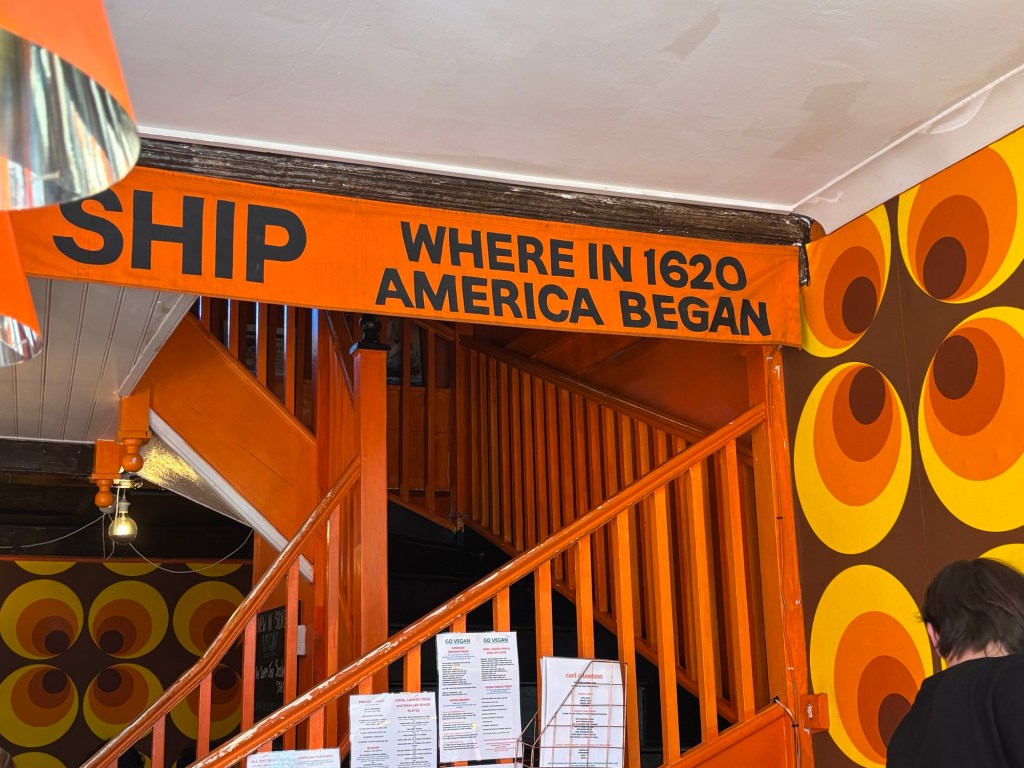

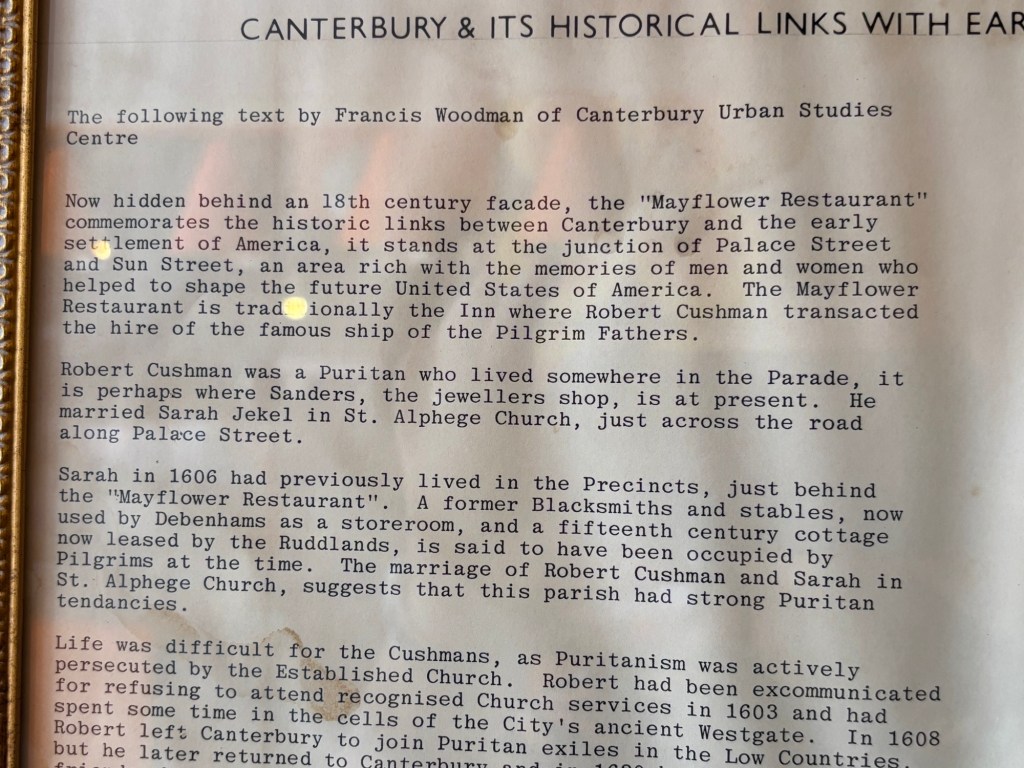
There is commemorative information on one wall.
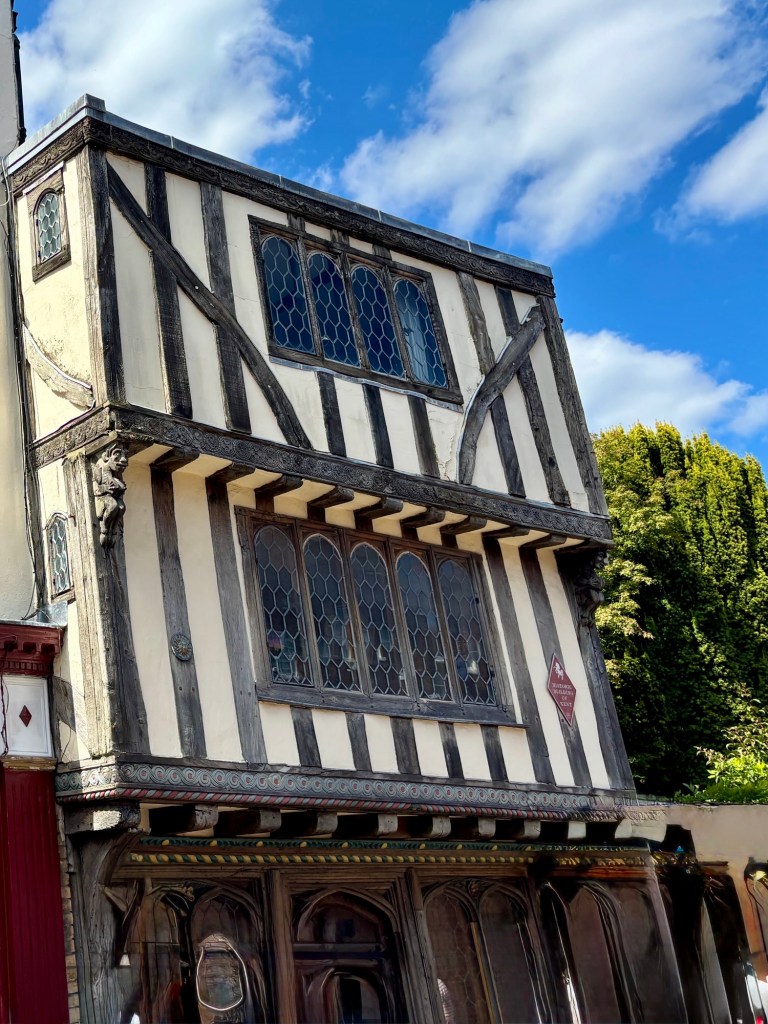
We saw an example of a Tudor house from the 15th century.
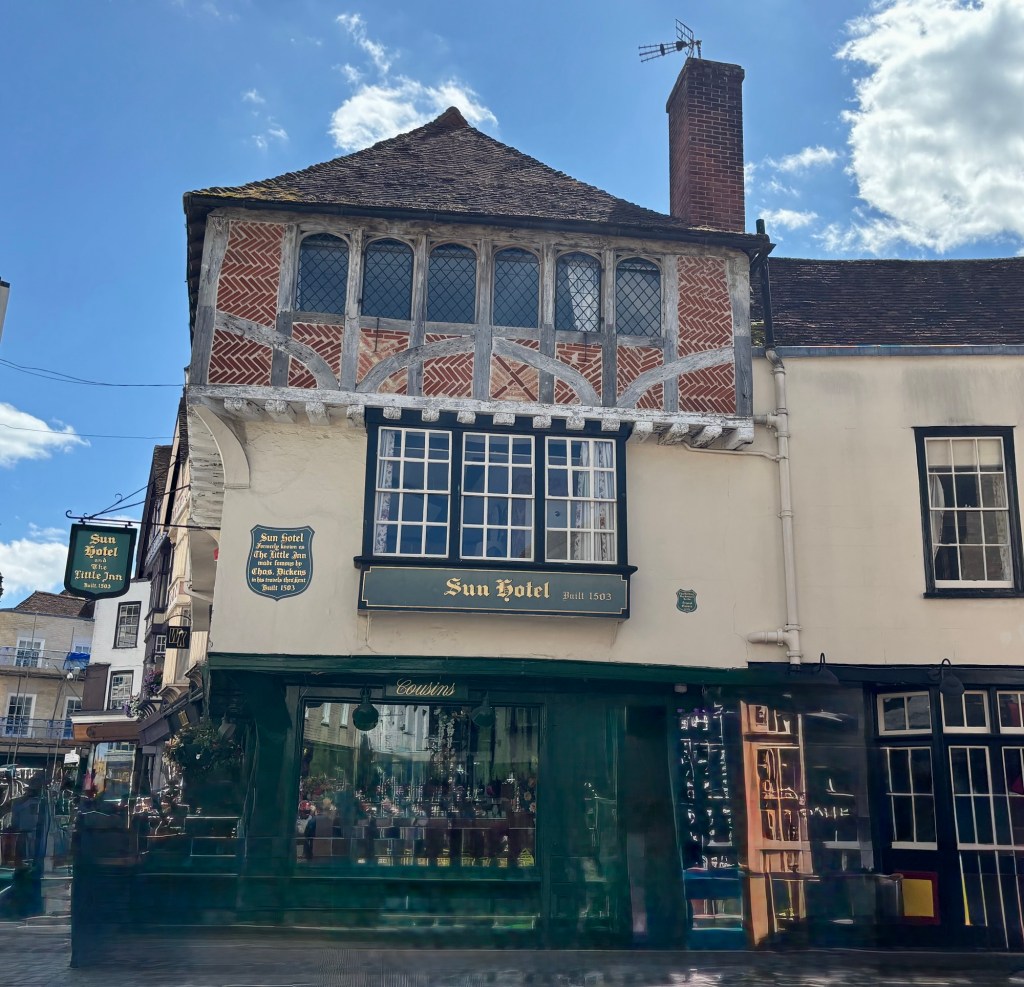
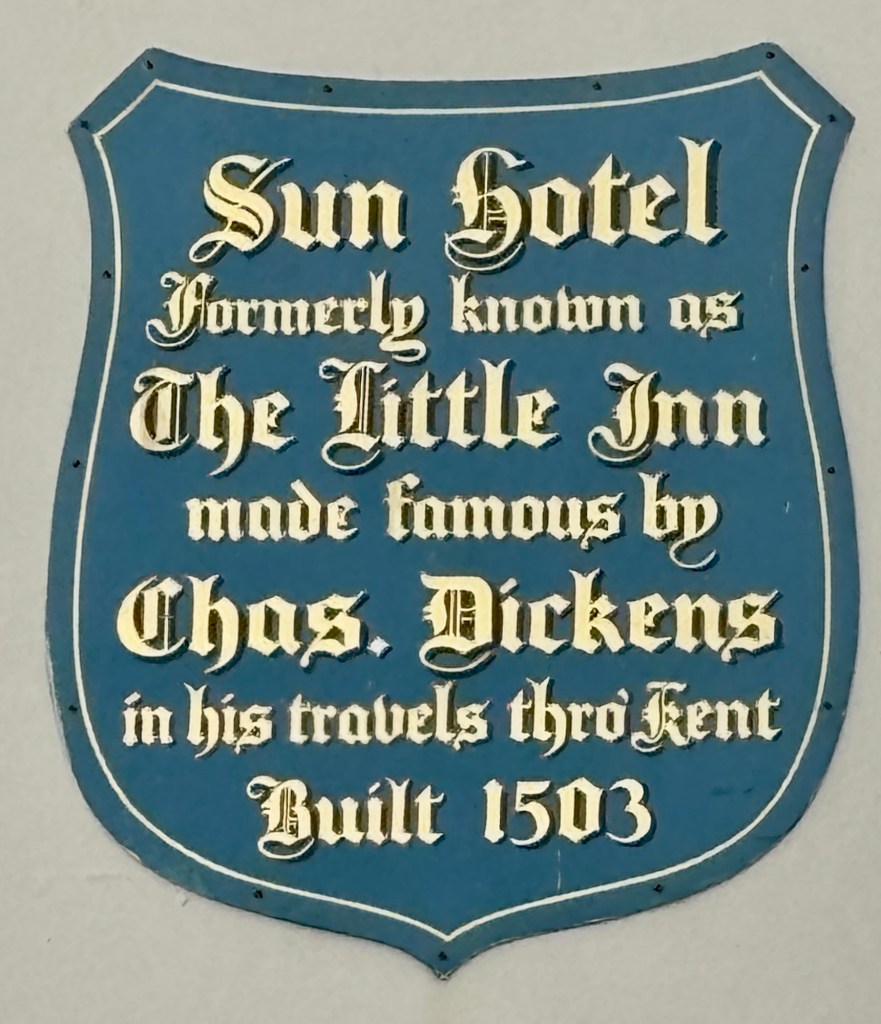
The Sun Hotel, built in 1503, was formerly known as The Little Inn. The inn was made famous in the writings of Charles Dickens.

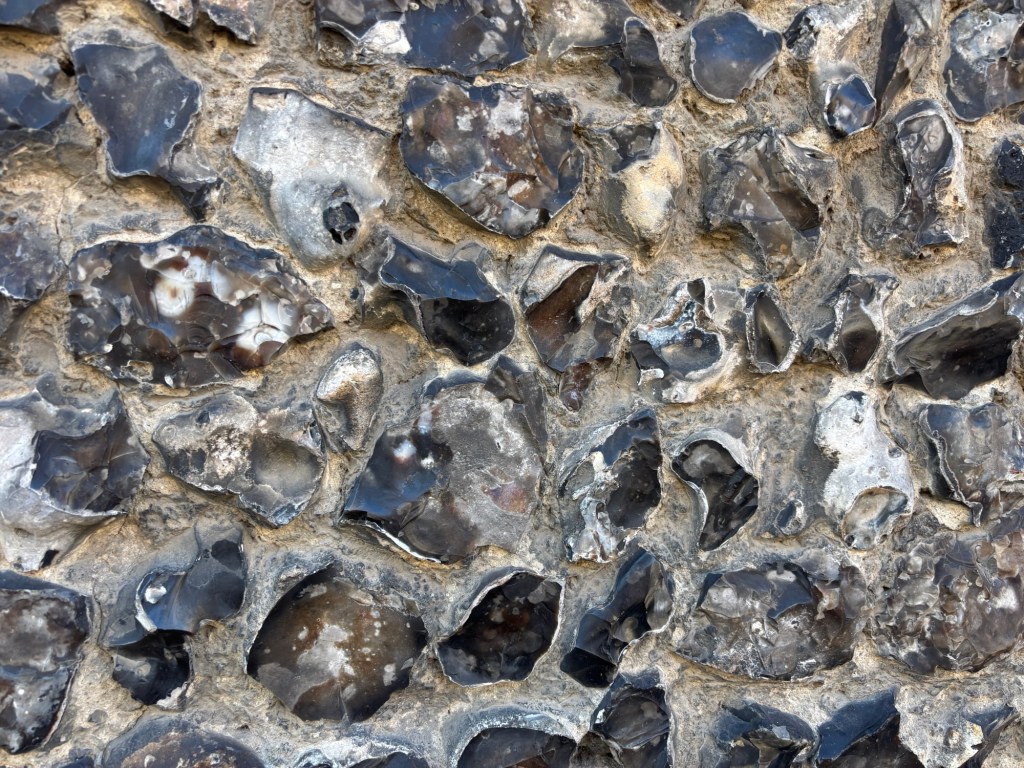
Earlier I mentioned that flint stone was a component in the white cliffs. We passed some walls and buildings made of flint stone. I never knew flint stone was a real thing – just a cartoon.
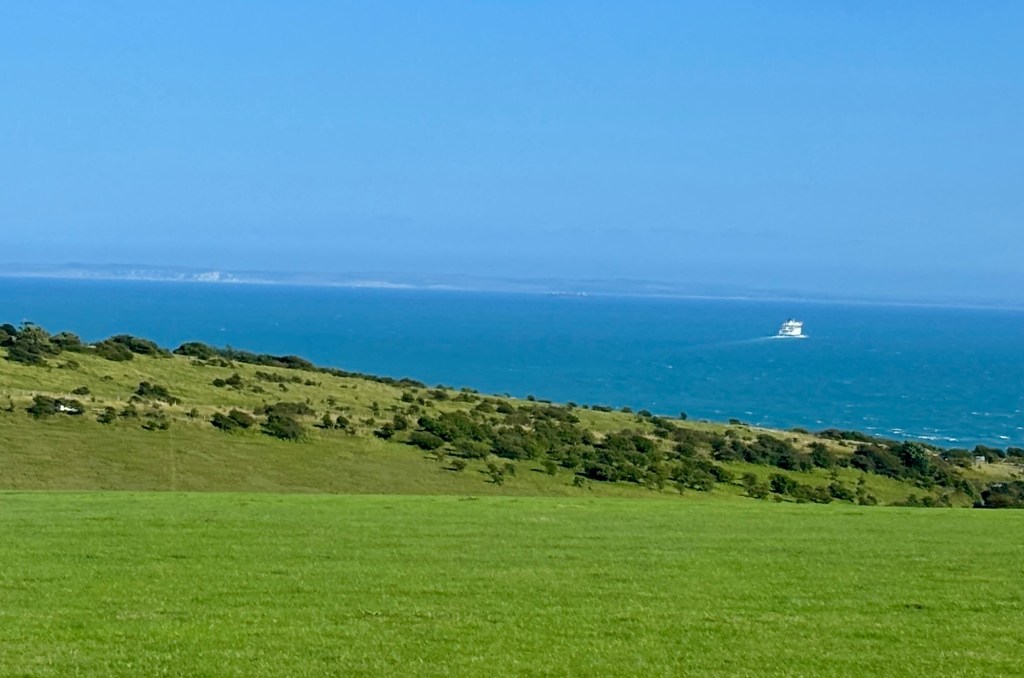
As we drove back to the pier, we could see a ferry heading across the Strait of Dover, part of the English Channel, to a village near Calais, France. The distance is approximately 23 miles. This is where people swim, or attempt to swim, the English Channel.

Finally, we stopped to have good views of Dover Castle. I had seen it from the ship in the morning but the distance and weak light did not make for a good picture!
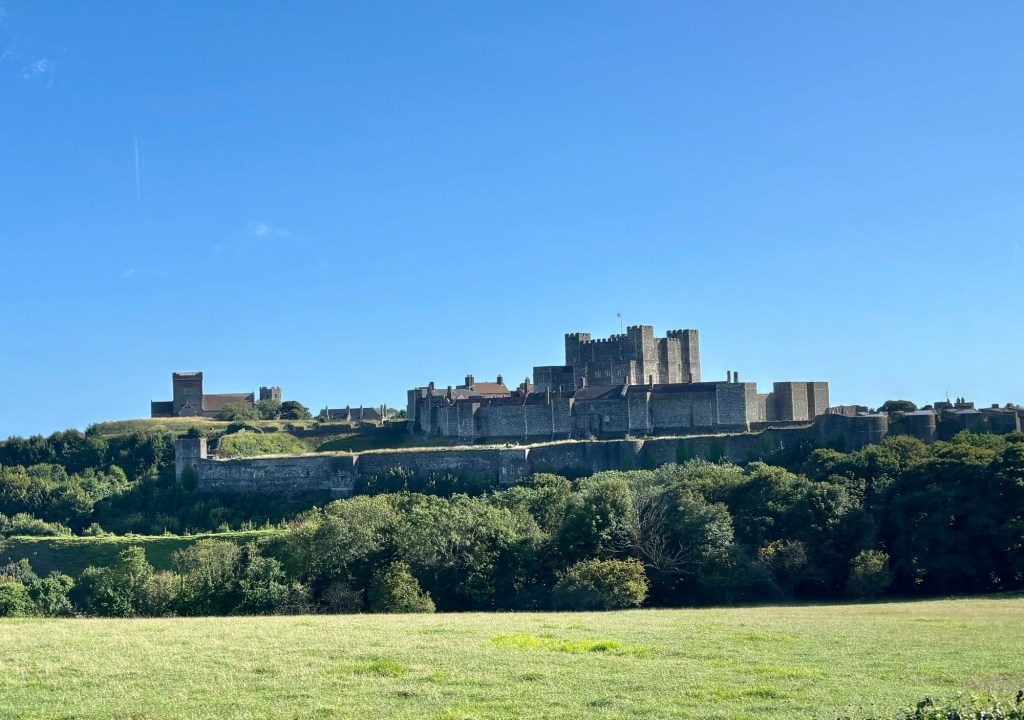
Building began in the 11th century and the castle had a very extensive history over the next 900 years. The castle has been described as the “Key to England” because an aggressor needed to get by it to have hope of conquering England.
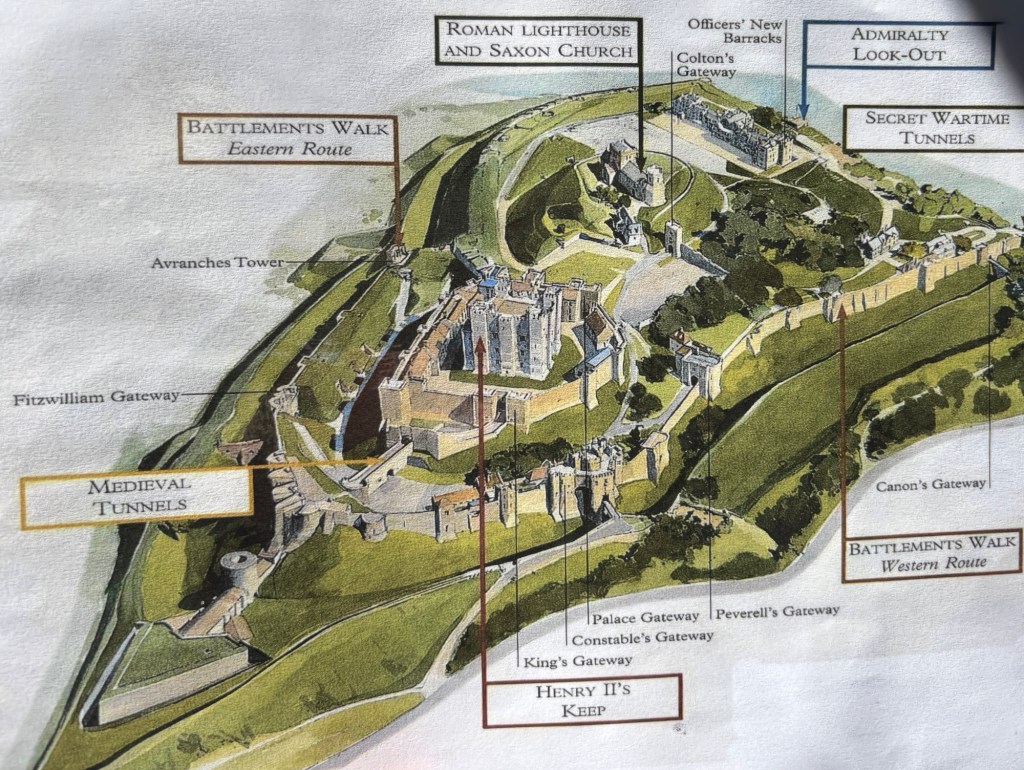
Extensive medieval tunnels were built under the castle eventually totaling approximately 3.5 miles. The tunnels became bomb shelters and command centers during World War II. The evacuation of Dunkirk was directed from Dover Castle tunnels.
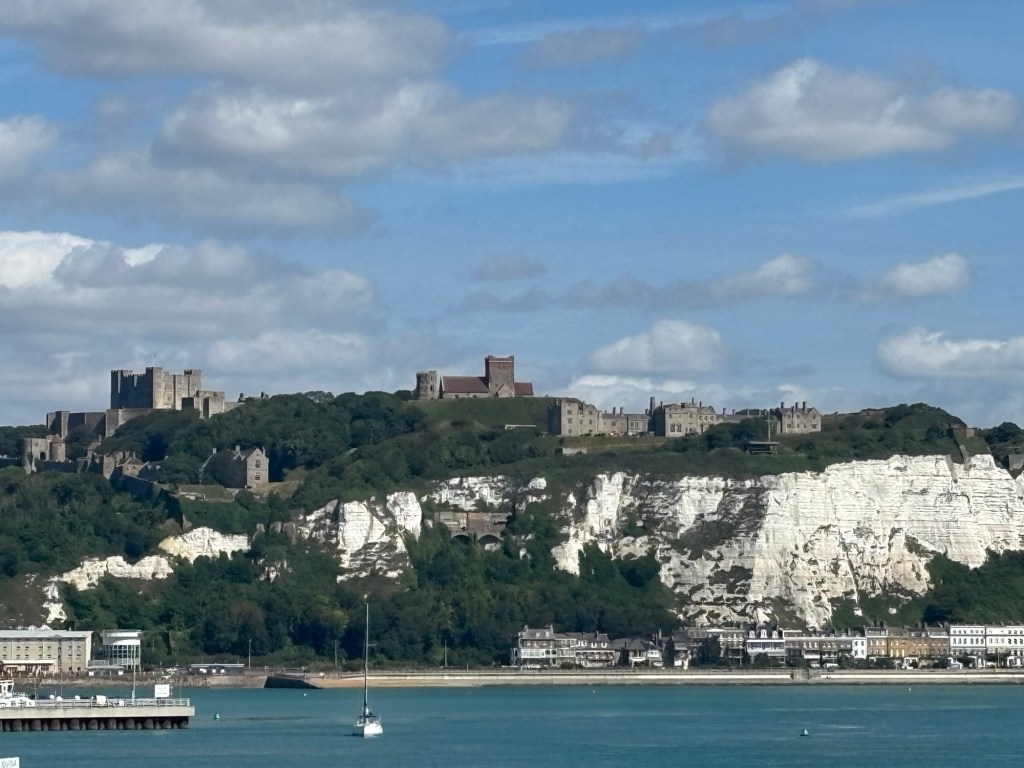
Dover Castle is the largest castle in England by size. Windsor Castle is the largest occupied castle in England. This picture was taken from our balcony when we were back onboard.
Next Up: Another Day in Rotterdam


 Serene Wandering
WowSent from my iPad