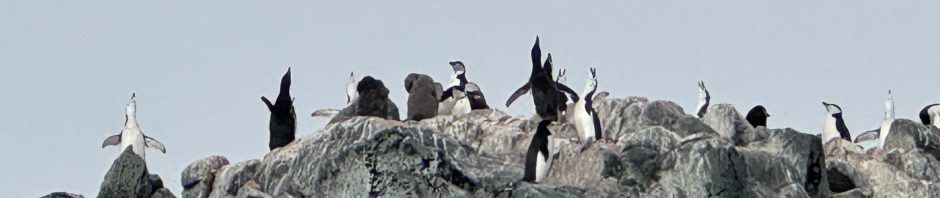

We visited the island of Heimaey on August 18th. It sits off the southern coast of Iceland.

We learned that our ship was staying in place using dynamic positioning and thrusters. We were above the electricity cables providing service on the island so the ship was not allowed to lay anchor.
The isolated island was a long-time shelter for the Icelandic fishing fleet. It was beneficial that the fleet was at home when a volcanic eruption took place in 1973. The fleet was able to help with a total evacuation of the island. Everyone survived the eruption except for one person who stayed behind trying to loot the pharmacy.

The eruption caused the island to grow by 2.2 square kilometers.
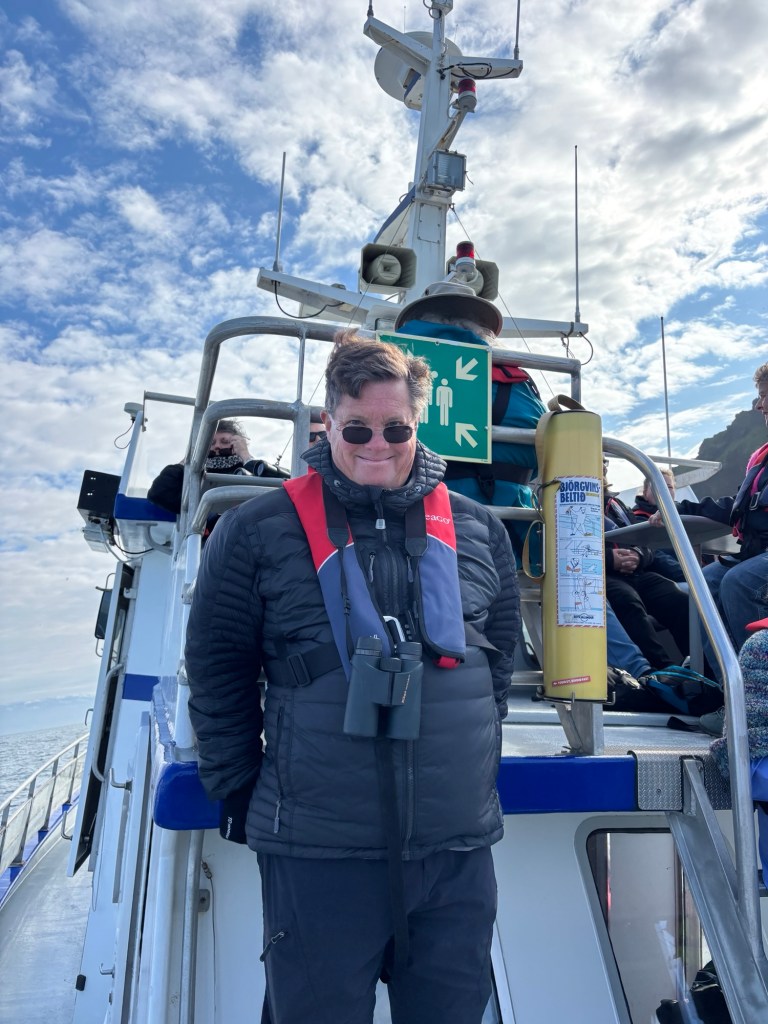

Our excursion was to cruise around the island to see various bird colonies – specifically PUFFINS!
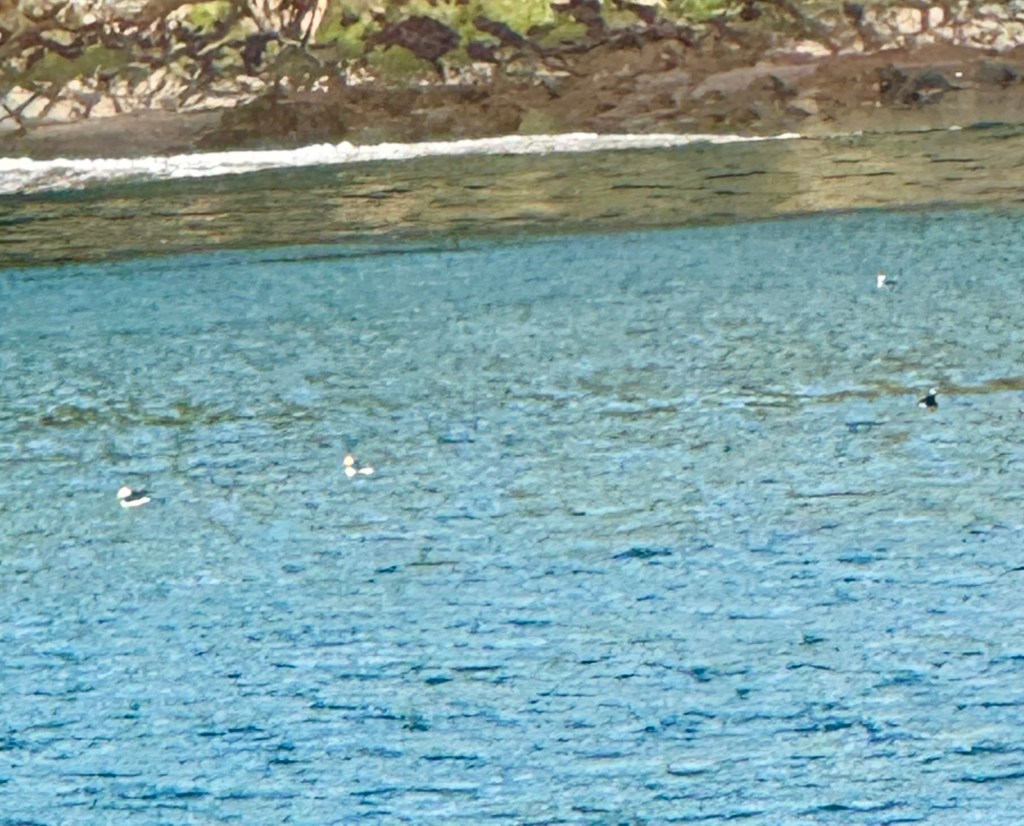
We did see them, but they are very small and it was difficult to get pictures. The closest I came to one was on the tender back to the ship at the end of the day.

Iceland has an estimated 6-8 million puffins with about two million being seasonal residents on this island. In mid August, the adult puffin were migrating out of Iceland so, perhaps, we were lucky to see any at all.
We learned that people who took walking excursions were able to see puffins close up. I just chose the wrong excursion in that respect.

The very bumpy looking ground is showing all the puffin burrows underground. In a few weeks the “puffling” inside the burrow will get hungry and make its way towards the light. If it is daytime and the light they see is the sun reflecting in the ocean – all is well. The puffling jumps out over the ocean and begins its life at sea.

If the puffling emerges at night near one of the towns, he could be confused and jump towards a house or street light. There is a whole culture in Iceland of rescuing the misdirected pufflings. They are gathered, kept in a box overnight and then thrown off a cliff to the ocean the next day. Our tour guide told a story of taking a walk one evening and collecting four pufflings – one in each pocket and one in each hand. It seems that Icelanders take their commitment to the puffins very seriously.

Then there are the sheep…there are sheep all over Iceland, easily out numbering the humans. We have learned how they are mostly set free to roam all summer and gathered again in the fall to keep protected over the harsh winter.
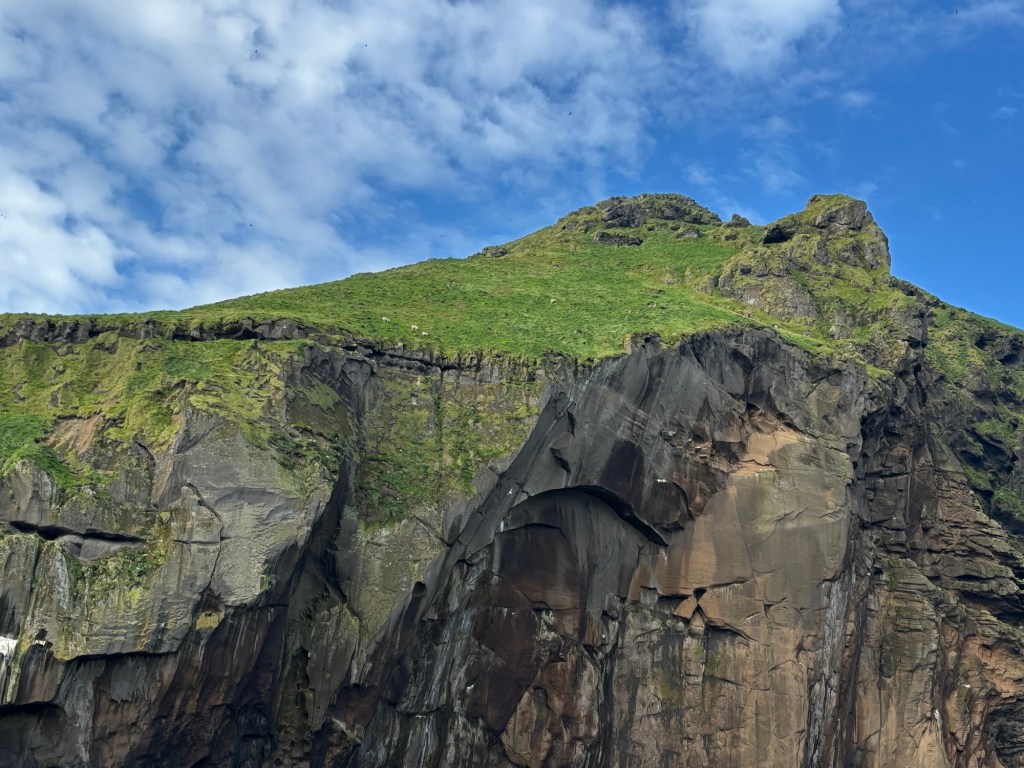
We saw sheep grazing on remote islands, often high up above steep rock cliffs.
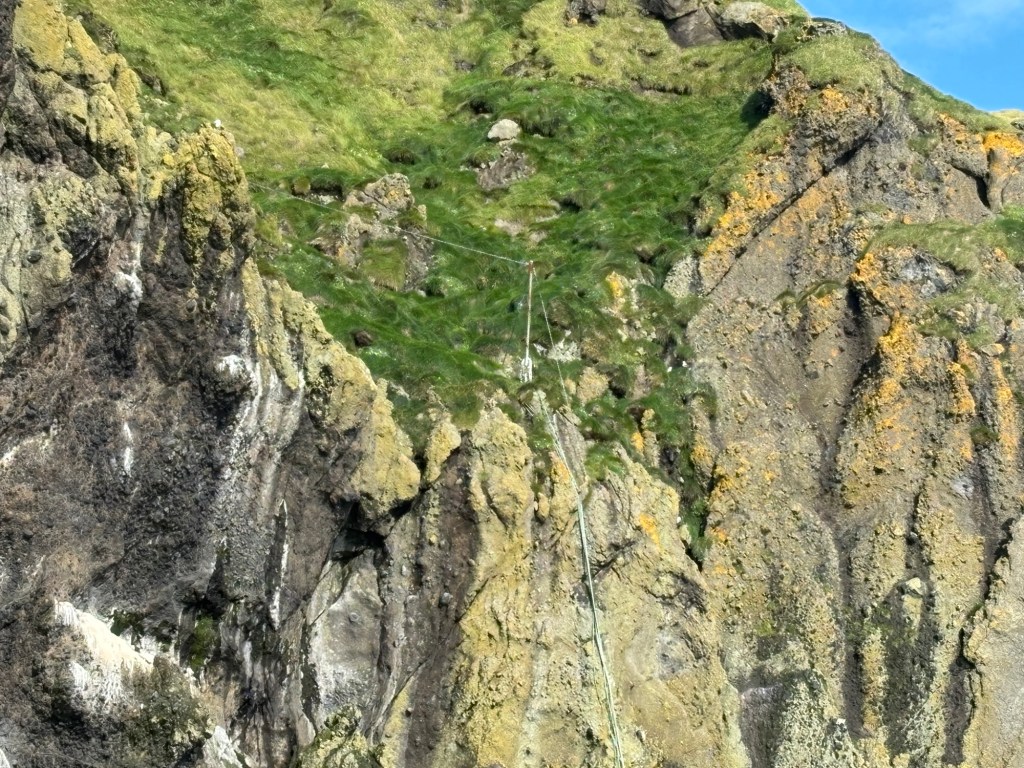
The sheep are placed there in the spring using a net and pulley system. They are collected and removed again in the fall. What we failed to ask is why? Why go to all the work to have them graze these islands and then gather them down again?
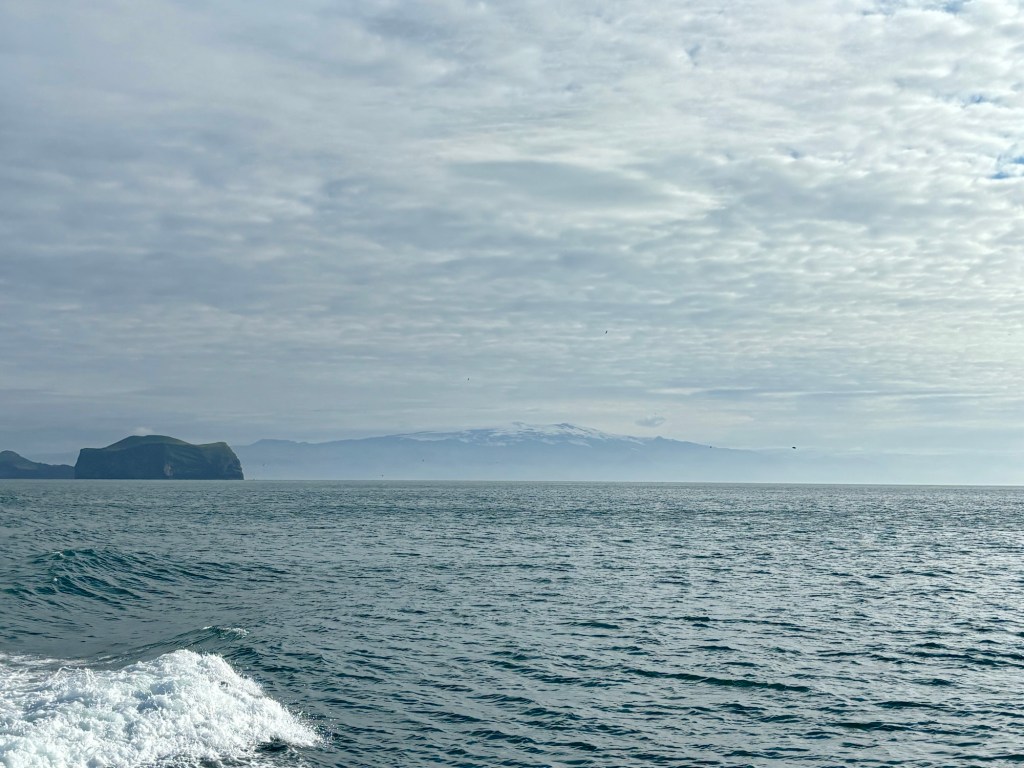
The 2010 volcanic eruption that disrupted air travel worldwide was this mountain and glacier area off in the distance. The volcano, Eyafjallajökull, erupted between March and June 2010. After an initial six days of eruptions, 20 countries closed their airspace to commercial jet traffic and it affected approximately 10 million travelers.


This middle island is Surtsey, the second youngest island in the world. Its creation began with eruptions 130 meters below sea level from November 1963 to June 1967. It is named after the Norse god of fire and has been protected as a natural laboratory.
And just for our information: The world’s youngest island formed in 2014 off Tonga’s main island. It is already diminishing and sinking into the sea. It will probably not be visible within 30 years.

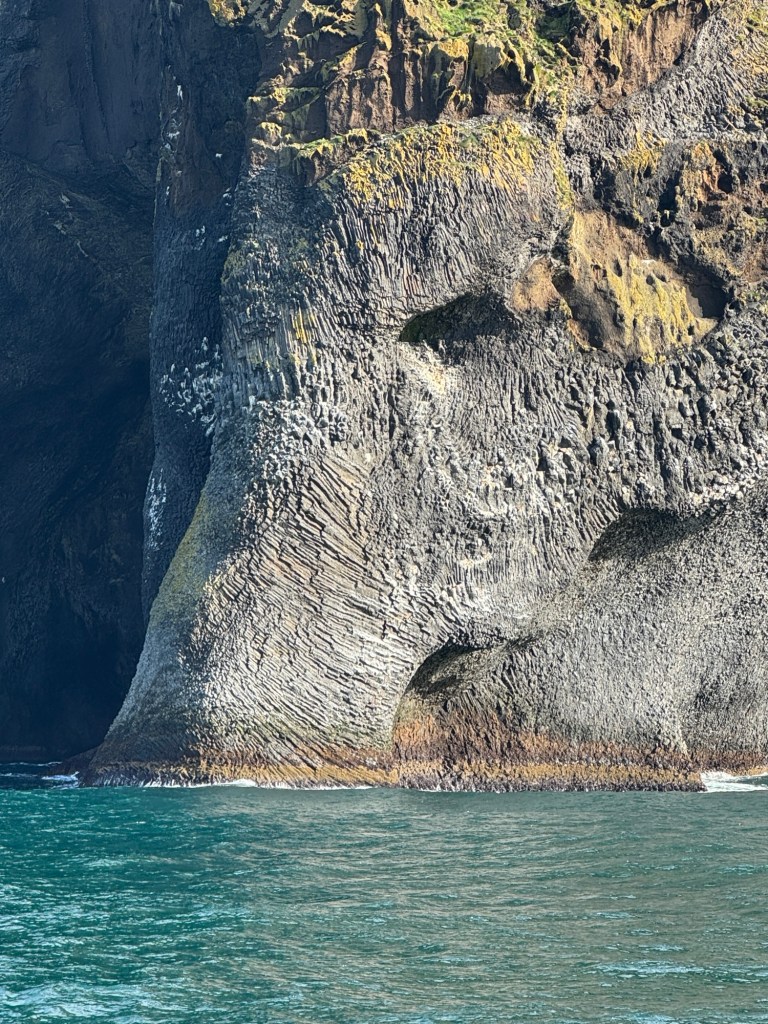
Iceland’s famous Elephant rock is made of basalt columns and formed by the slow cooling and contraction of lava.
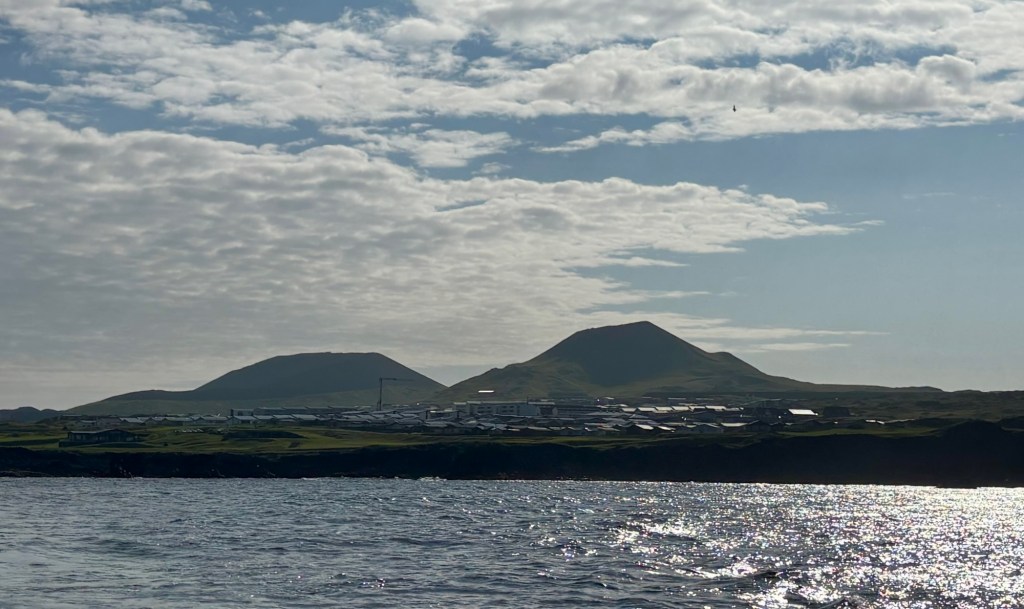
There are two volcanos in this picture. The left, flatter one erupted in 1963. The one on the right erupted 4000 years ago.
Our guide was a lovely young woman. She told us a bit about growing up on a small island. She said Icelandic students must learn three things before graduating. First, everyone must learn English because no one on earth speaks Icelandic. Second, everyone is required to learn to swim both for themselves and for rescue situations. Third, everyone must learn to run from volcanoes!
She also said that the dating life on the island (for her at 21) really stinks. She’s pretty sure her soul mate isn’t on the island or she would have met him already. Everyone is either a cousin, already taken, or no one she’d want to date. She was asking if any of us had sons or grandsons to recommend.
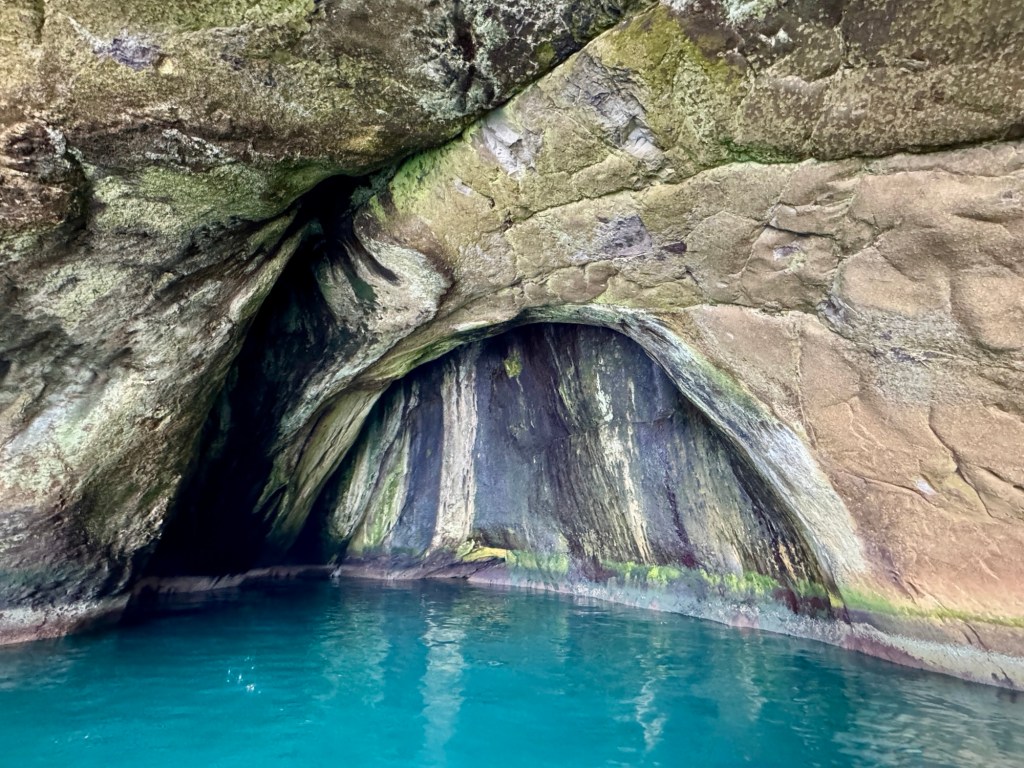
There were several caves being carved out at water level. We approached a few but actually fit inside one that is known for its acoustics. Musicians sometimes play inside. Our tour boat captain played a song on the sound system – the experience lacked authenticity.
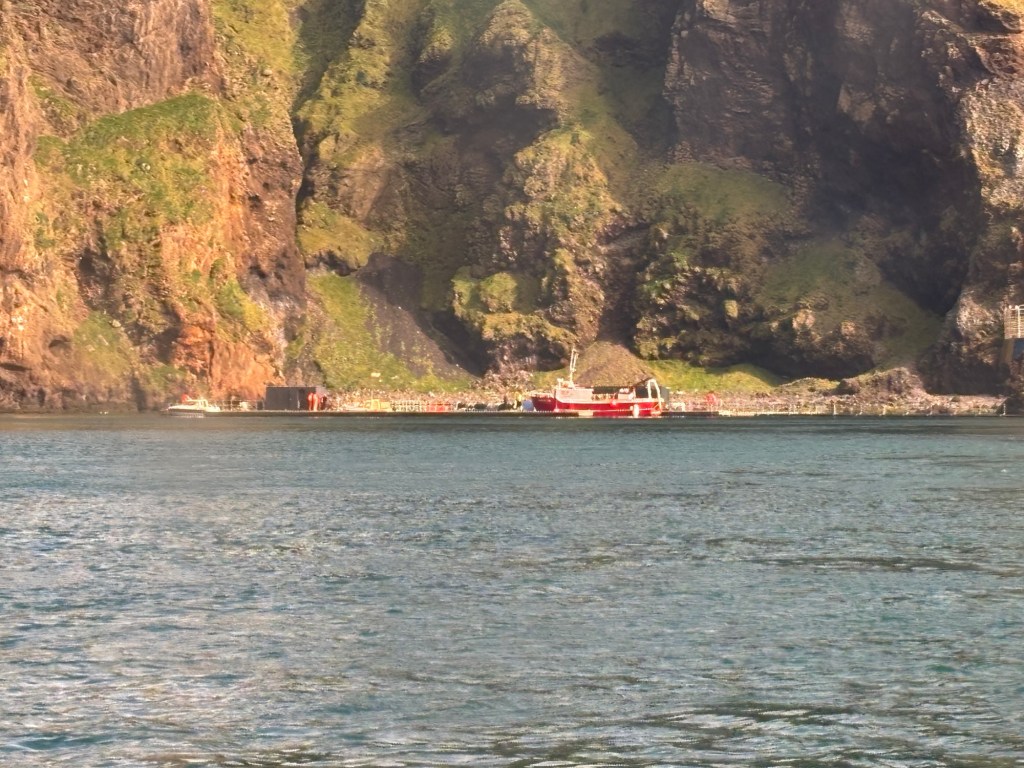
This area is where the whale Keiko lived his final years as highlighted in the movie Free Willy.

Keiko lived in a secluded area behind this infrastructure. Keiko was safely confined but also enjoyed the most freedom he ever had.
Currently the site is operating as a Beluga Way sanctuary. They have two beluga whales, with room and plans to have 6 more. Their goal is to get the whales out of amusement park swimming pools.
We saw the following post on social media a day after this was posted. Good for them!

Back to the original post…

We spent our last afternoon in Iceland in the Crow’s Nest watching the sheep graze along the steep hillside far above the seaside cliffs.

As we sailed away, the cruise director alerted us to the fact that we were going to sail by one of the internet memes for the loneliest house on earth, or most desirable if you don’t want neighbors.
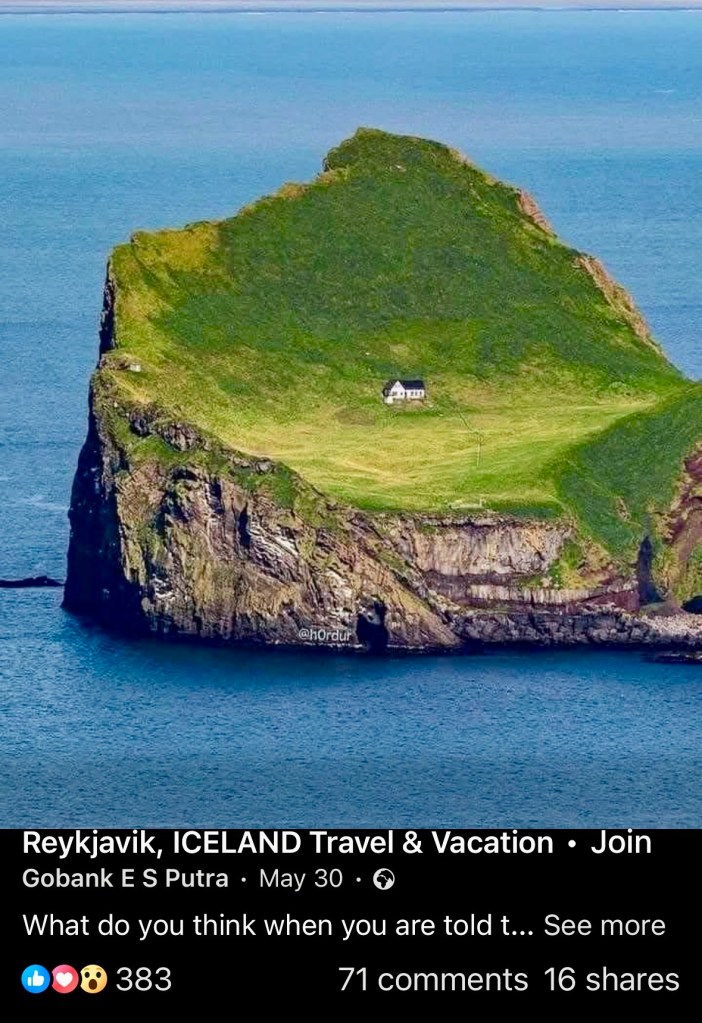
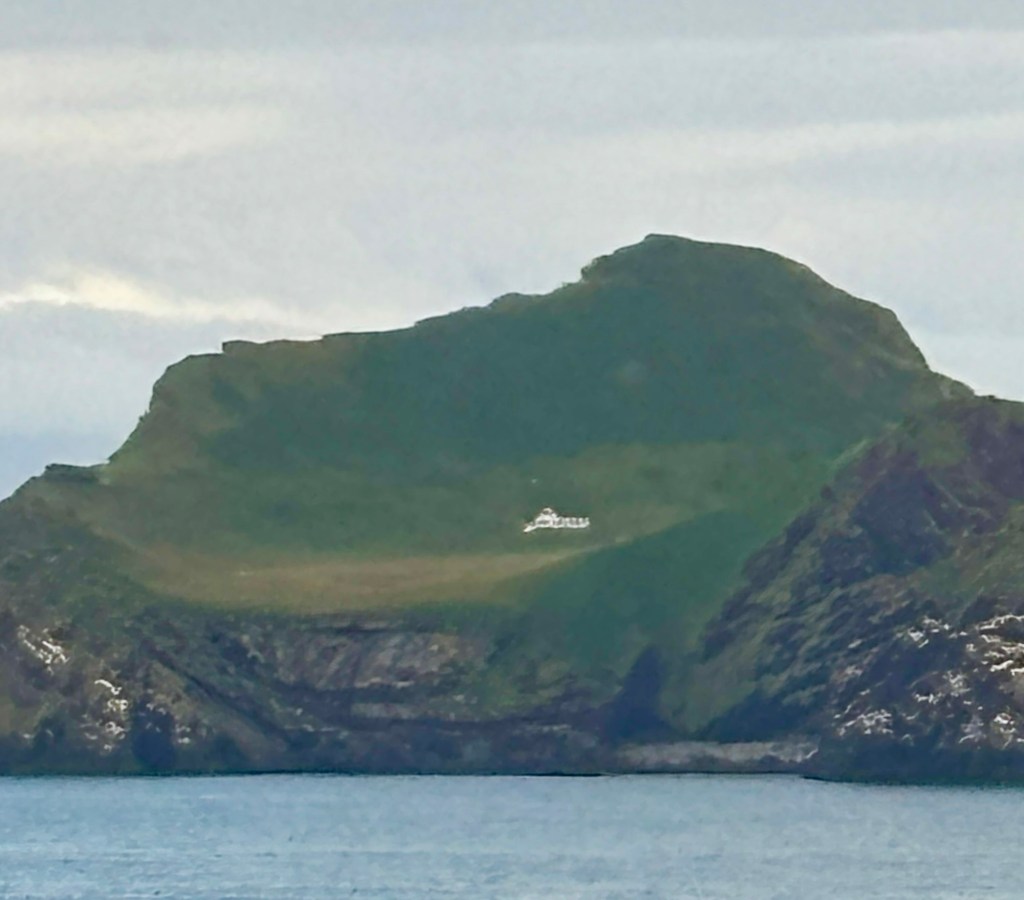
I found it on line, and then took a picture of the same house.

And then there was a second house on the next island over. I guess they were neighbors of a sort.

This was a nice day and a good excursion. Unfortunately, the puffin viewing could have been better. . Another trip, another time.
Next Up: One more blog on Iceland because I learned some interesting things that I haven’t put down yet.


 Serene Wandering
I have so enjoyed all your blogs if late. How blessed you are to have traveled to so many amazing places……Motor On🤗
Thank you for reading along. We do feel very fortunate to travel as much as we do.