My birthday was in late September and I wanted to spend it at the La Posada Hotel in Winslow, Arizona.
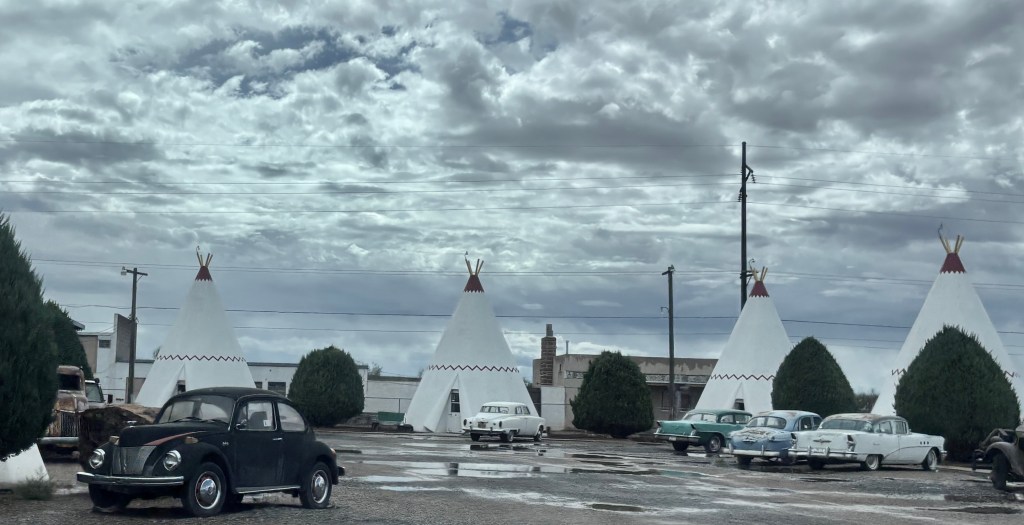
I could have selected the Wigwam Hotel in Holbrook but at this point in life (my 66th birthday) I was looking for something a bit more refined!

Both Holbrook and Winslow are on Route 66 in northern Arizona.

Winslow is famous for “the corner” mentioned in the Eagles’ song Take it Easy.
Standing on the corner in Winslow, Arizona
Such a fine sight to see
It’s a girl, my Lord, in a flatbed Ford
Slowin’ down to take a look at me


We were at the corner in 2019 and Randy bought a T-shirt that he enjoyed wearing for many years. He was glad to go back to Winslow and buy another. In fact, he got two!
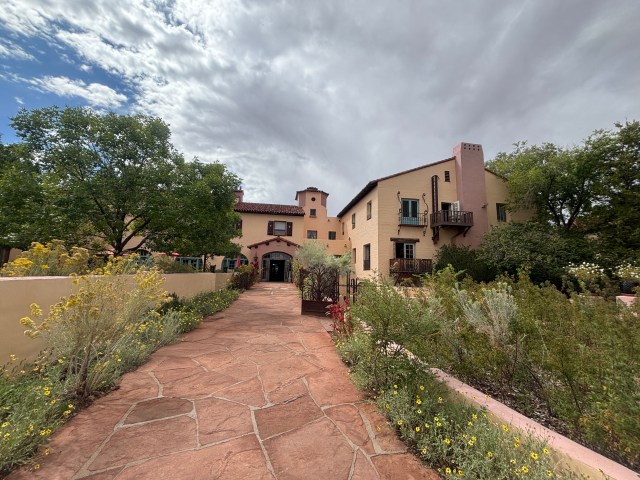
On our last visit, we walked through the La Posada Hotel but didn’t stay because we were in our RV. I have always had a love for historic hotels so the memory stayed with me.

Our friends, Jo and Flynn, enjoy staying at La Posada so we invited them along.

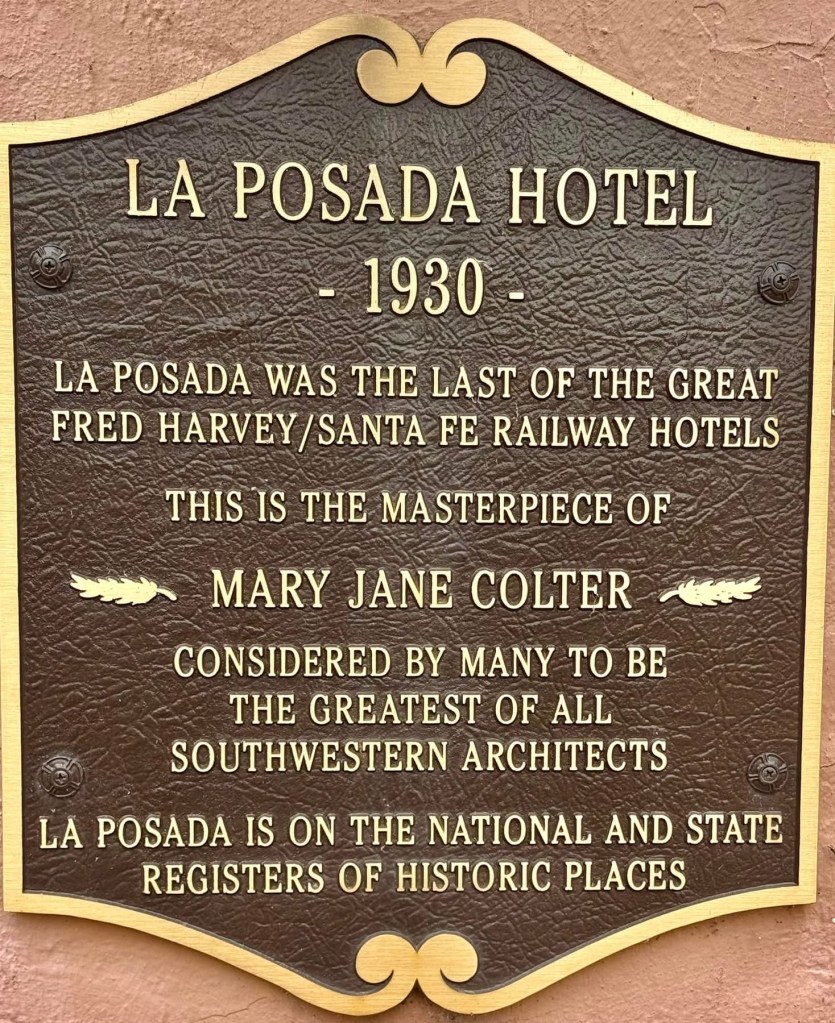
The hotel was designed by Mary Colter who considered La Posada her finest work.

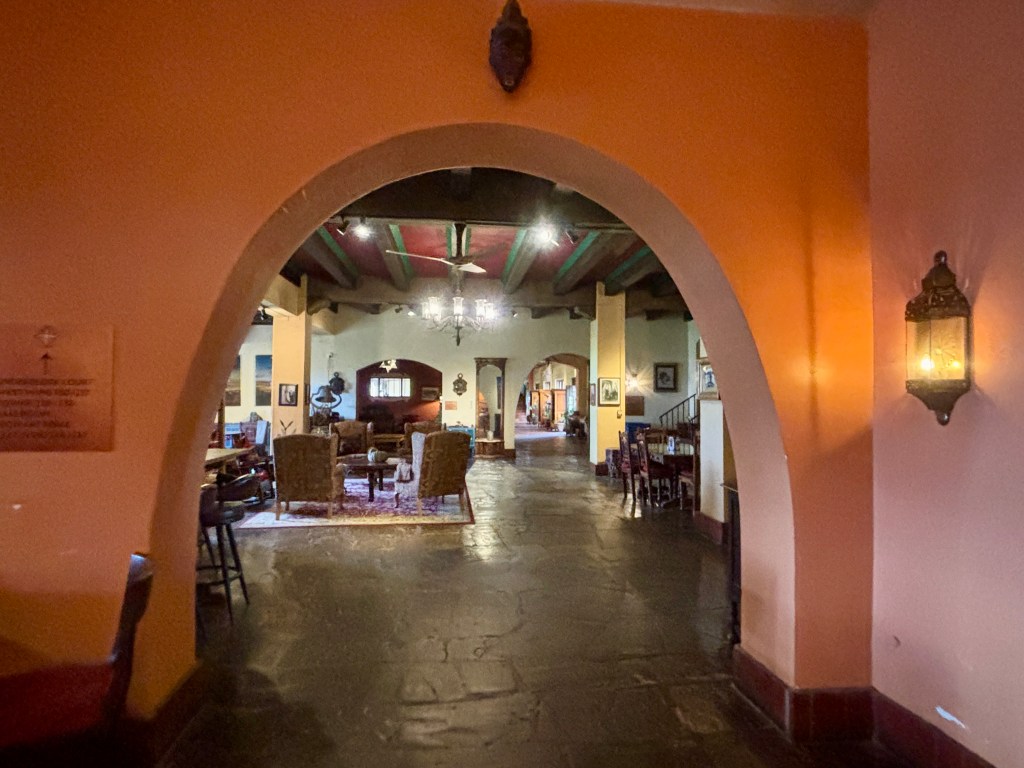
She designed it to feel like the ranch home of a wealthy Spanish Colonial family. She wanted guests to feel like they were coming home.
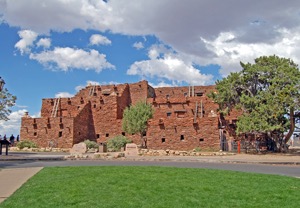

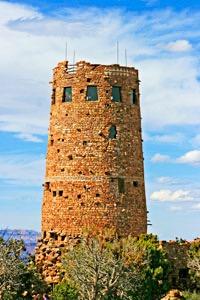
Colter also designed a number of buildings at the Grand Canyon including Hopi House (1905), Lookout Studio (1914), and Desert View Watchtower (1933).

Her El Navajo Hotel in Gallup, NM was designed in 1923 but torn down in 1957 to widen Route 66.

La Posada Hotel, opened in 1930, was the last of the Fred Harvey Company hotels. Harvey’s hotels and restaurants followed railway lines throughout the west. Rail travel declined due to the great depression and then because of increased automobile use. Those factors caused the La Posada to close after just twenty-seven years.
The Santa Fe Railroad gutted La Posada in 1961 and turned the building into their regional offices.

Allan Affeldt and Tina Mion acquired La Posada from the Santa Fe Railway in 1997. It was their goal to reopen the hotel and offer fine dining in a restaurant they called The Turquoise Room.
We had my birthday dinner at the Turquoise Room and our meals were unusual, artistic and delicious. During our dinner conversation, Jo said she had once bought a Turquoise Room cookbook that she had never used.
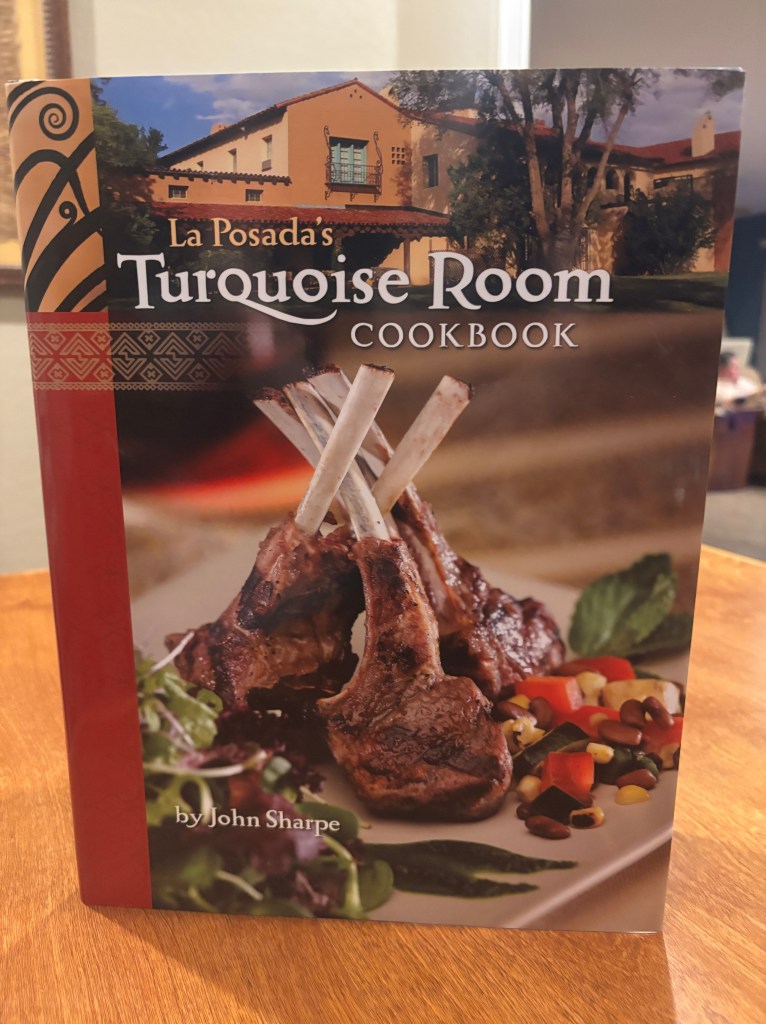

Jo gave me the cookbook a few weeks later and I took a picture of their signature soup that Flynn and I enjoyed! It is sweet corn and black bean with red chili cream!
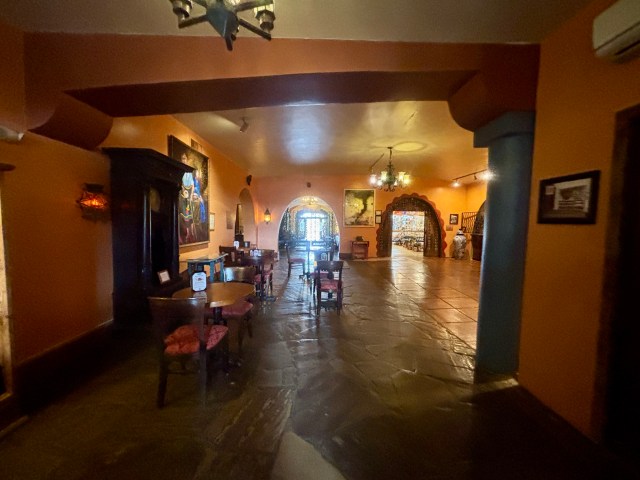
The next morning we had a delicious breakfast and set about exploring more of the hotel. We had experienced guides in Jo and Flynn.
Tina Mion, one of the pair that set out to reopen the hotel, is an artist and the hotel has a gallery that is full of her interesting works.
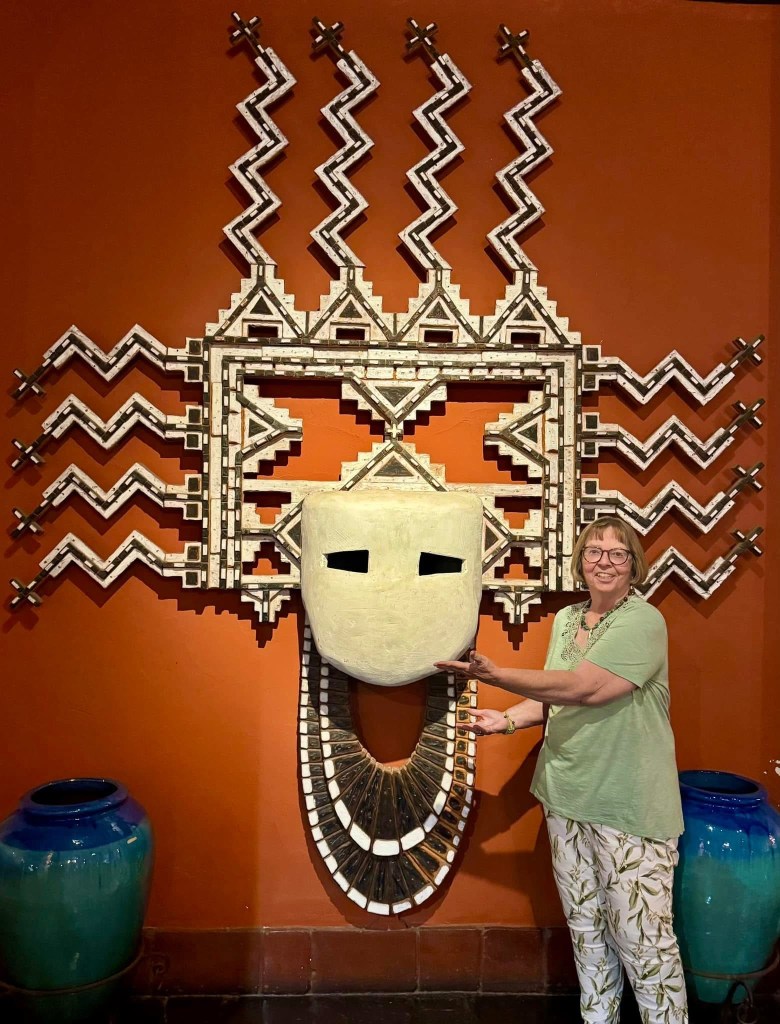
The public areas have more traditional southwest and Native American art. Photo with Jo by Flynn!
One of the things I most enjoyed about La Posada were the bookcases in each guest room and many common areas. Our room had a case of at least 60 previously read books and that was a small collection compared to other rooms we saw. There were no provisions to check them out, or buy them. I assume if you were in the middle of a book you could take it with you.


La Posada also has a museum in the old train depot. We spent an hour or so checking things out.
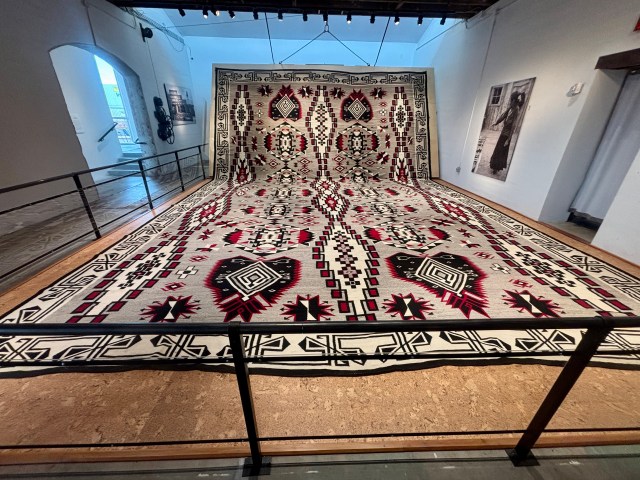
Most interesting was the display of the Largest Navajo Rug in the World. It was commissioned in 1932 and completed in 1937.
Julia Joe was the master weaver. She wove on a custom loom fit inside a custom building sized 40′ x 30′ x 10’.
In a community effort, the Red Clan sheared about 200 Navajo Churro sheep. They, including Julia’s daughters, spent two years washing, carding, dying, and spinning the wool.

Julia and her daughter, Lillie, sat at the loom during most daylight hours for a little more than three years weaving the 21’4″ x 32’7″ masterpiece.
The rug used natural colors and had a universe theme including protective talismans. The rug’s border included Puebloan potshards.
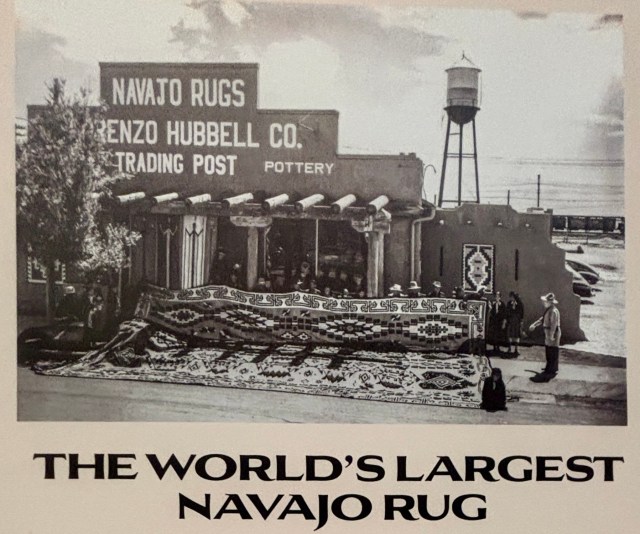
The rug had been commissioned by Lorenzo Hubbell Jr. to use in marketing his Winslow Trading Post. The weaving traveled to museums throughout the country and to the U.S. Senate Chambers. It was displayed at Marshall Field ‘s New York department store in 1943 and was used as a backdrop for Hubbell’s Winslow Motor Company display of the 1946 DeSoto.
In 1949, the Winslow Trading Post with all the inventory, including the famous rug, was purchased by businessman Kyle Bales. The rug was shown occasionally through the 1950s-1970s. Sites include the Los Angeles County Fair, the World’s Fair in New York, the Heard Museum in Phoenix and the Arizona State Fair.
Bales’ daughter eventually donated the former Hubbell Trading Post in Winslow (and the rug) to the Arizona Historical Society as a potential museum. The museum was not developed so the “World’s Largest Navajo Rug,” disappeared into storage for more than forty years.
La Posada’s renovator, Allan Affledt, understood the rug’s significance. He was able to purchase the rug from the Bales family and developed a permanent space for it in the old baggage room of the train station at La Posada.

One of Julia’s daughters, Emma Joe Lee, who assisted in carding the wool as a child, was photographed on the rug in 2012 at age 94.
To reflect the person who originally commissioned the rug and the master weaver, it is referred to as the Hubbell-Joe Rug.
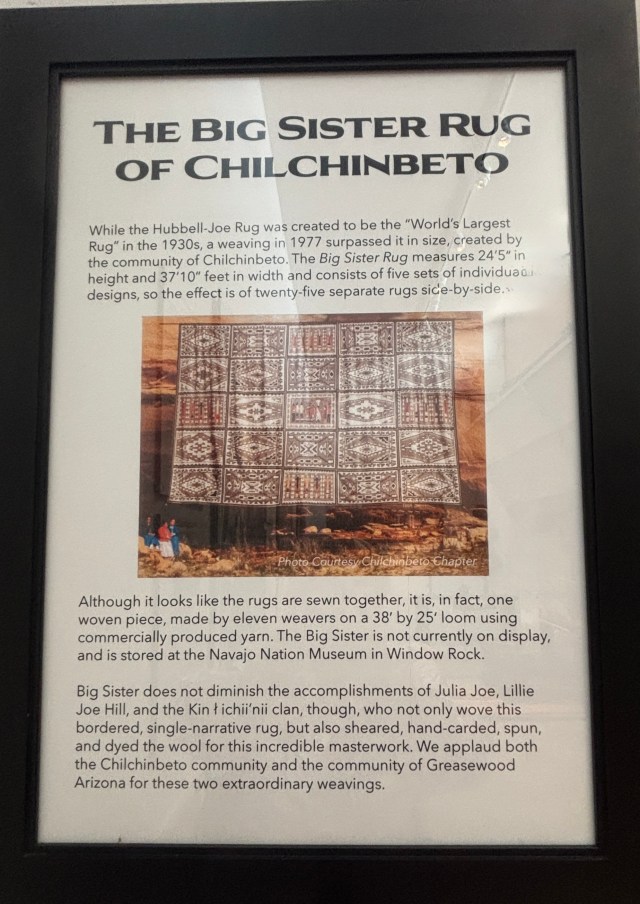
An even larger rug was woven in 1977 called The Big Sister Rug. It is in Window Rock, Arizona at the Navajo Nation Museum but not currently on display.
I hadn’t intended to write about my birthday and our stay at La Posada even though the hotel was wonderful and I thought the rug was a great story. It wasn’t until I was looking at our blog for something else that I saw I had once started a Historic Hotels series.

That hotel was The Gadsden Hotel in Douglas, Arizona. We stayed at the Gadsden in 2021. So, if you too like historic hotels, ghosts, or travel in southern Arizona, that post is Historic Hotel Series: The Gadsden


 Serene Wandering
It’s a girl my Lord, in a flatbed Ford…
Welcome to Route 66!