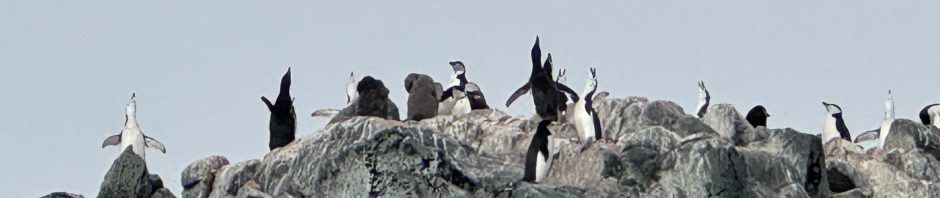
The plan for three national parks near Hyde Park, New York wasn’t happening on October 18 and 19th due to the government shutdown. So, I reworked the last few days of our trip.
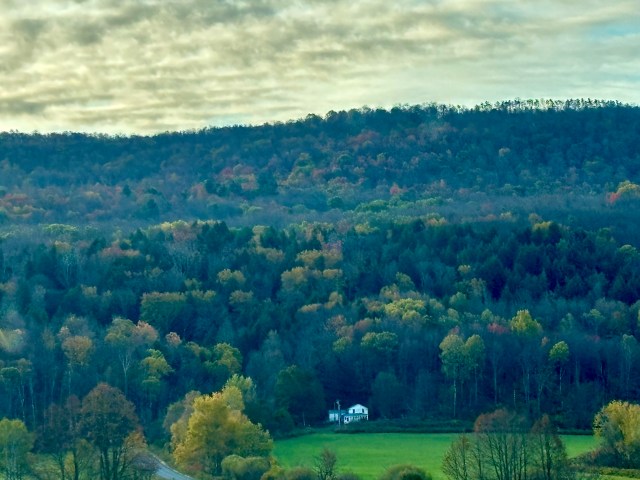
While driving, we came across this scene – New York in mid October really was this beautiful.

We left New York and traveled briefly across the southwest corner of Massachusetts.

There seemed to be endless photo opportunities around every bend of the county roads.

Traveling the backroads was a delight on this roadtrip!
There were villages, with historical markers, every few miles. It seemed we were in the middle of one of the villages when Apple Maps told us “Welcome to Connecticut.” There was no sign, just neighbors on either side of the border between Massachusetts and Connecticut. Randy has told people many times that this was his favorite thing on the trip .
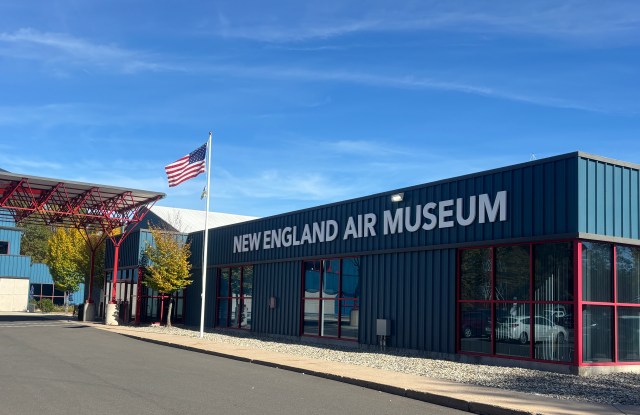
In our rework, we decided to go to the New England Air Museum.

Randy really enjoys aviation museums and we’ve been to quite a few. I like them well enough as long as the airplanes have stories and are not just engines, wings and fuselages.
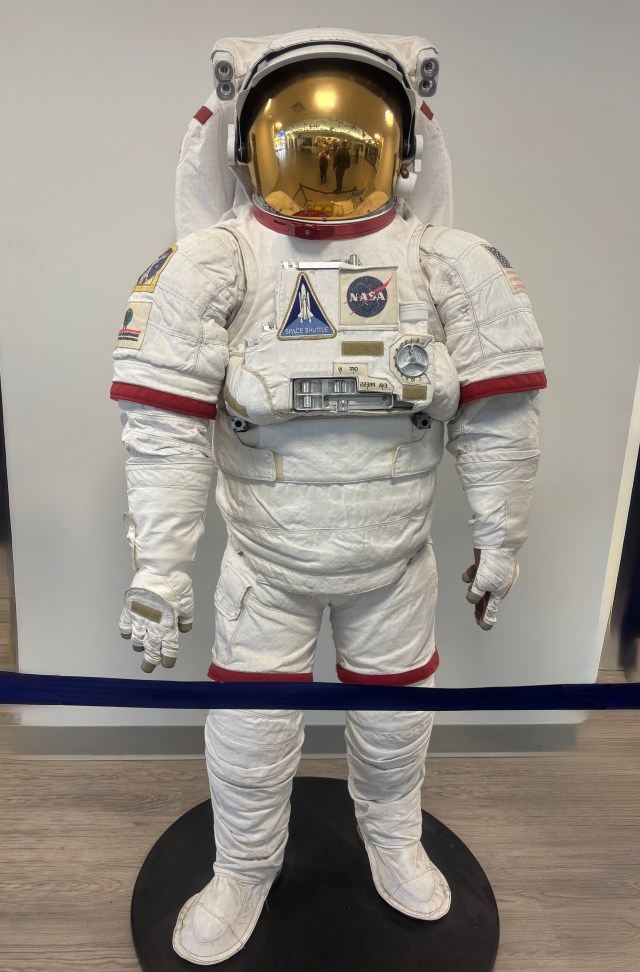
In the entry, we saw an astronaut space suit. These suits are sometimes considered the world’s smallest spacecraft. They have more than 18,000 parts working together to provide life support, environmental protection mobility and communications. Collins Aerospace, the primary contractor for these suits, is based in this part of Connecticut.

We thought this video board was interesting showing all of the airplanes in and around Hartford at the moment. This was during the shutdown but before air travel was significantly impacted.
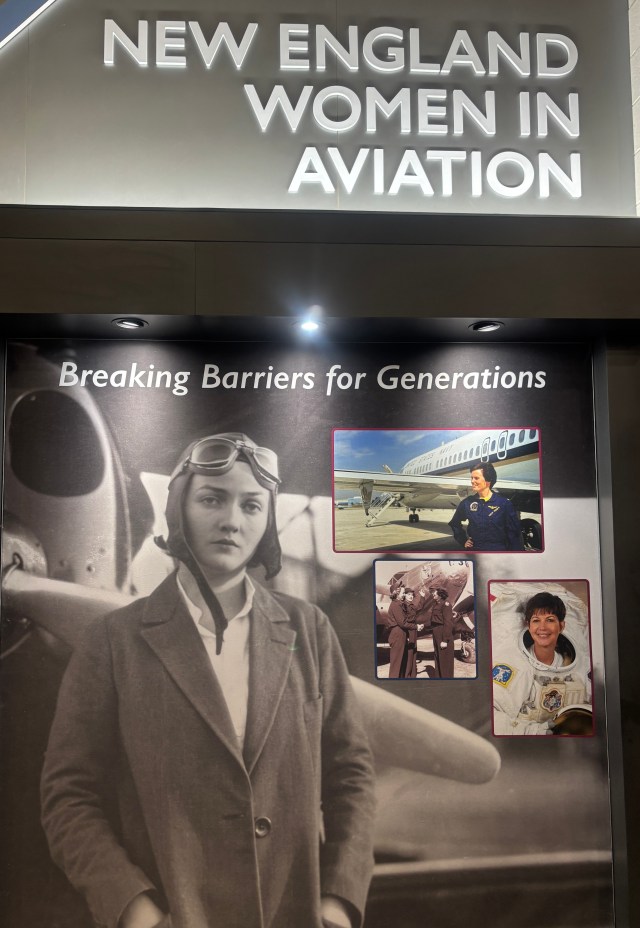
We went into a display about New England Women in Aviation. There were a dozen or more women highlighted, but two caught my eye.

MIT graduate Dava Newman has degrees in aerospace engineering and biomedical engineering. Her research has focused on developing a BioSuit allowing astronauts to move around more freely. She also served as the deputy administrator of NASA and was awarded the NASA Distinguished Medal.

Ruth Law, born in 1887, bought her first airplane directly from Orville Wright but he refused to give her flying lessons. He believed that women were not mechanically inclined.
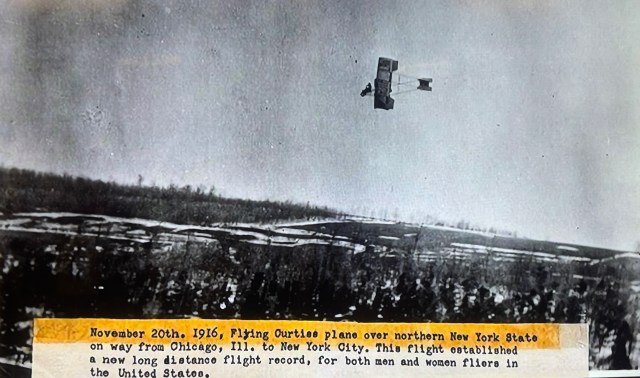
She learned to fly and eventually flew from Chicago to New York City, a distance of 593 miles.
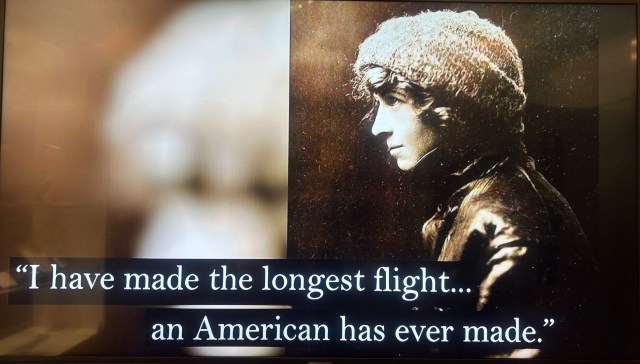
The above photo shows what she said when asked if she had made the longest flight a woman had ever made.
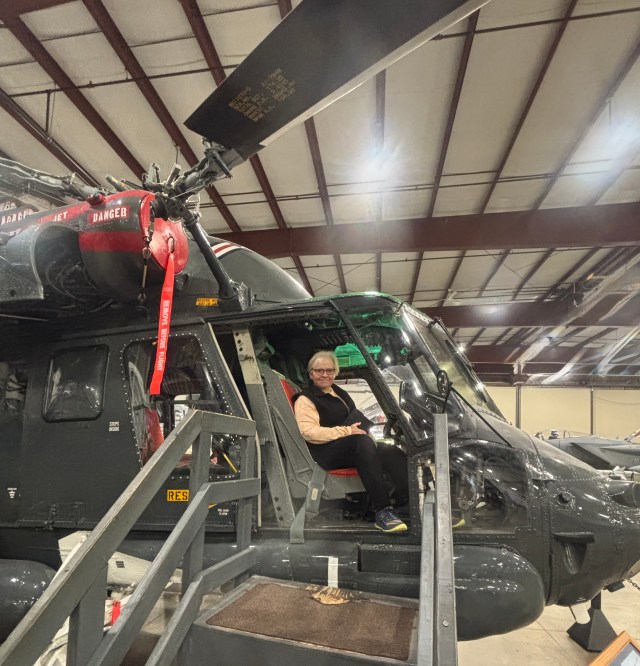
I might resemble the women who are not mechanically inclined, but played along sitting in a Seasprite helicopter. It was designed and built by the Kaman Corporation in Connecticut.

Randy sat in an F-100 Super Sabre. This type of plane was the first production supersonic fighter in 1954. Randy always enjoys talking with the docents.

The docent, Jim, had flown the F-100 in Europe. Then, he trained on the F-4 in Tucson where Randy grew up. After 67 hours on the F-4, he was sent to Vietnam to fly combat missions. Jim said his short training time was possible because all US aircraft, at that time, had very similar control positioning.

This picture shows how the F-100 looked prior to restoration.
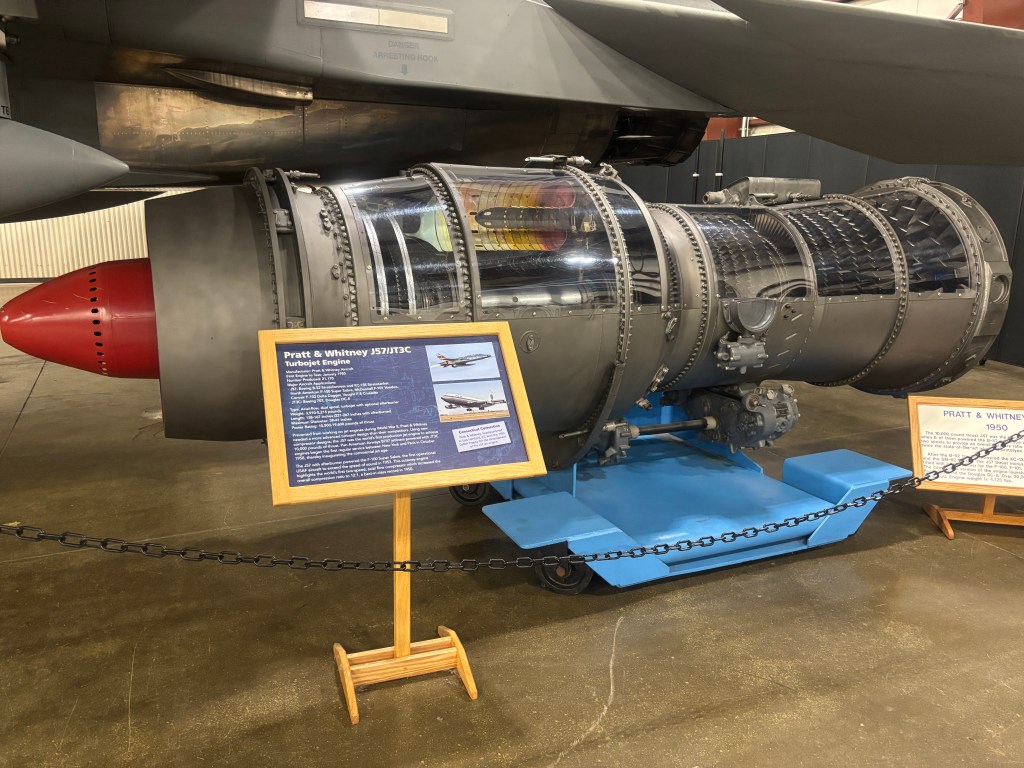
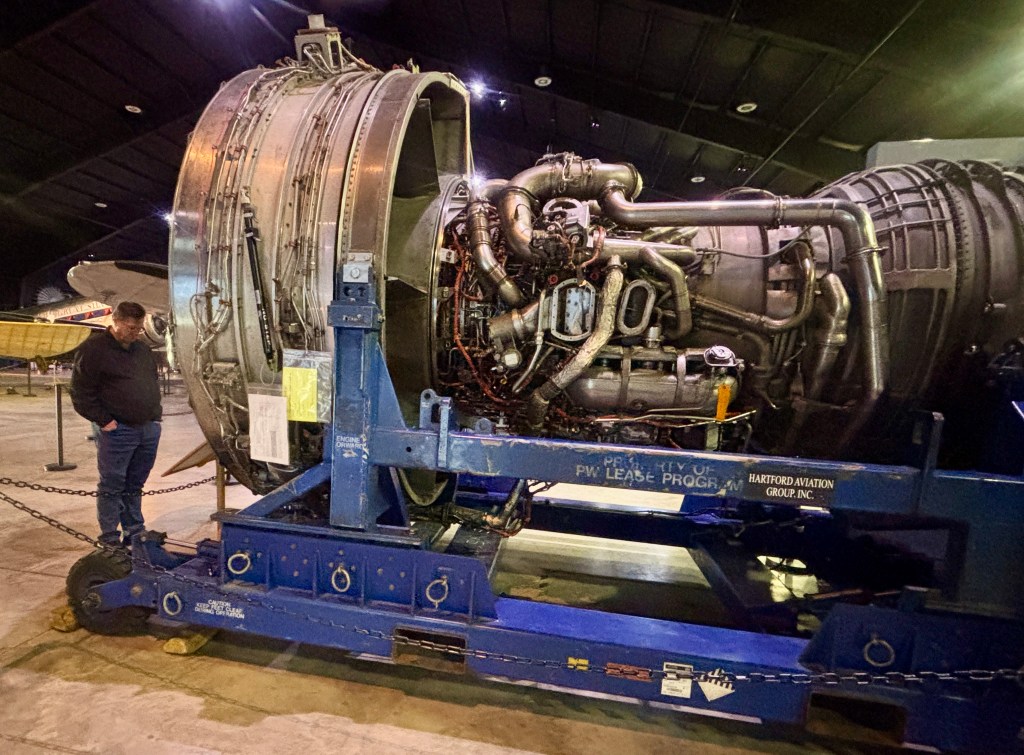
This plane, and many others had Pratt & Whitney engines. The company was, and still is, headquartered in East Hartford, Connecticut.

When Roosevelt needed mobilization during WWII, Pratt & Whitney developed a wartime engine. The whole process required transforming the automobile industry into a wartime industry.
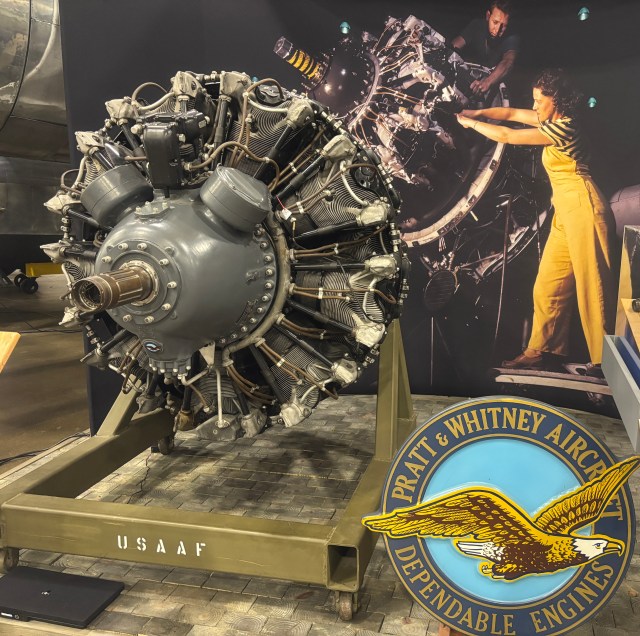
Pratt & Whitney engineers worked 50 hour weeks for years without a shutdown or vacation. Their initial workforce of 3000 grew to 40,000 men and women in 1944. Most of them had never built anything complicated but ultimately produced 363,619 engines. Pratt & Whitney provided half the horsepower used by all American air forces in World War II.

This steel mat is called the Marston Mat named after Marston, North Carolina where it was first used. The interlocking perforated steel matting material was used during WWII for temporary runways and landing strips.
This airplane is a P-47 Thunderbolt, the largest, heaviest, and most destructive single engine aircraft used in World War II.

When the war ended, military aircraft were given to friendly foreign governments. This plane went to Peru and served in their Air Force for 20 years. It was deemed obsolete in 1970 and was given back to the United States. Considered a possible museum exhibit, it was eventually offered to the New England Air Museum. It arrived in 1972, completely disassembled and badly deteriorated.

The museum was able to track down information about this particular plane by its insignia and number. They knew the pilot was Lieutenant Bradley Muhl but, at that time, had no way to find him.
In 1996, an amateur sleuth museum volunteer found a listing for Muhl and confirmed that he had been the pilot.

Muhl explained how he had met a pretty nurse by the name of Lieutenant Norma Holler at a party in Italy. Pilots sometimes named their planes after wives or sweethearts, in this case Norma.
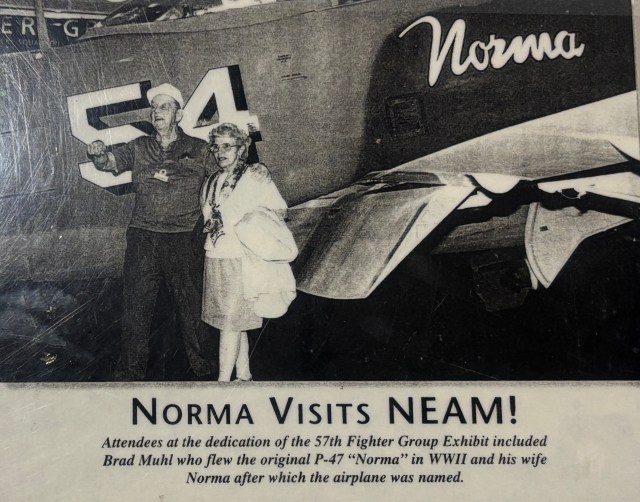
The couple had settled in Los Angeles. He didn’t know that his old plane was being restored to the condition it was when it was Norma. They visited the exhibit after restoration.
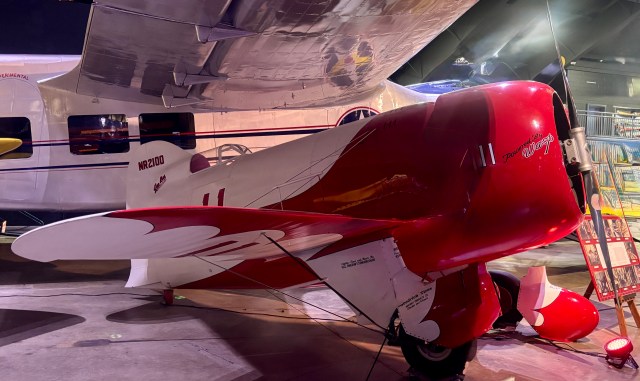
Randy remembers making a model of this plane when he was a boy. I guess he’s always liked this stuff.

This is a Goodyear ZNPK Blimp Control car from 1942. The 10 person crew piloted a blimp, aloft above them, that measured 252 feet long and 63 feet wide. It was filled with 425,000 ft.³ of helium. Two Pratt & Whitney engines powered this craft to a top speed of 78 mph.

This aircraft served during World War II as an anti-submarine escort. It was also used for search and rescue, photography, and mine sweeping. This air craft, named Puritan, was retired in 1948.

A video told how this airship, with only 10 percent of original equipment, was restored between 1993 and 2014. A man named Russ oversaw it all. They used old pictures to determine what was needed. Few actual replacement parts could be obtained. Most items were specially manufactured with a few gathered from sources around the country, even eBay. Russ was 87 when the project was done! What a joy the project, and its completion must have been! It is the only remaining air ship of its kind in the world.
A museum visitor from New Zealand had experience building vintage engines. A docent mentioned that the attached engines were approximations because they were all that was available, The visitor made them replicas of the aircraft’s engines from scrap materials. He received the ones the restoration team had used in exchange.
Igor Sikorsky was designing aircraft in Russia In 1913. Tsar Nicholas II took notice and commended Sikorsky. After the Bolshevik Revolution, Sikorsky believed his life was in danger and fled, He ended up in the United States.
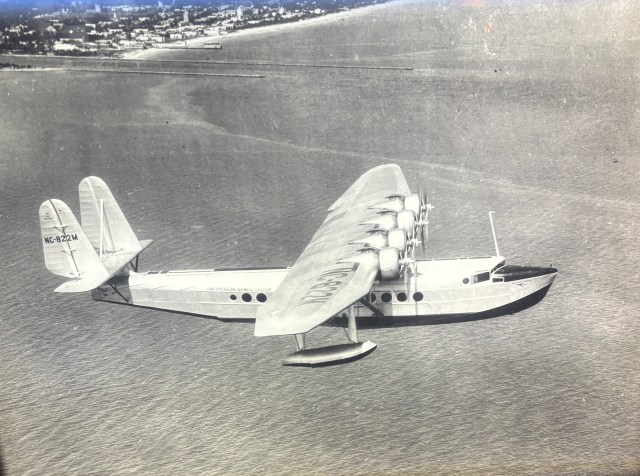
One of his designs was for flying boats. They were built for commercial transatlantic passenger service prior to World War II. They were roomy and luxurious and allowed for docking at a pier before land infrastructure existed.

This Sikorsky designed VS 44 was completed in 1942 and flew priority passengers for the US Navy. This is only one of three VS44s ever built.

It was named Excambrian and, after the war, was operated by American Export Airline between New York and Ireland.
This craft was purchased in 1967 by former Sikorsky test pilot Charlie Blair and his wife actress Maureen O’Hara. They later donated it back to the Navy who donated it to New England Air Museum.

It was restored by museum volunteers and former Sikorsky employees between 1987 and 1999. It is the only surviving four engine flying boat ever built in the United States.

Igor Sikorsky felt helicopters could be used as life-saving machines and designed them with that in mind. In February 1972, a fire in a São Paulo Brazil residence left 400 people at risk. Twenty helicopters and crews saved 400 lives. Sigorsky received a letter describing this miracle operation.
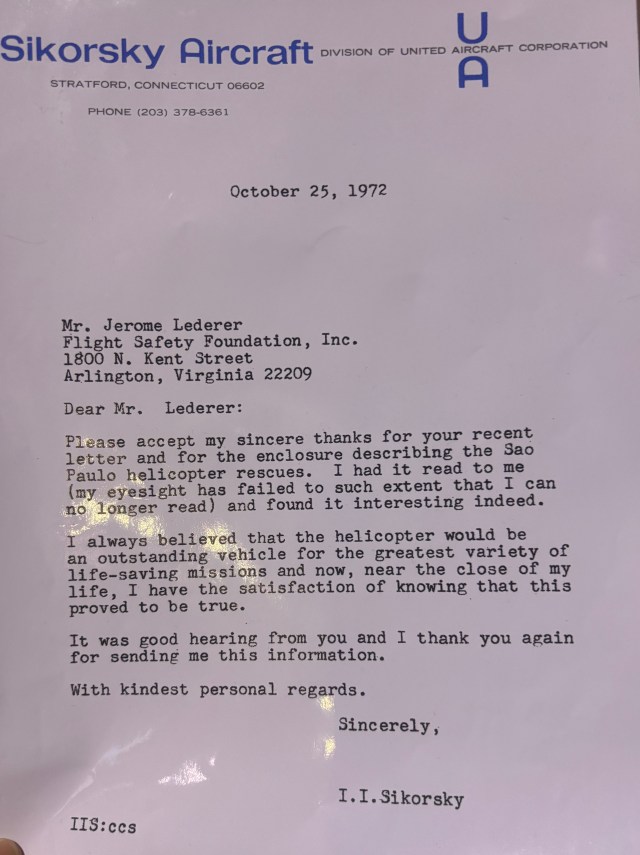
Igor Sikorsky wrote a letter in response the evening before he passed away, in his sleep, at age 84. The letter remained on his desk.

Marine One helicopters are Sikorsky helicopters .

While we were looking at the B29, a docent was talking about how problematic the planes were when they were coming off the assembly lines. They basically had to strip down the electronics and have them rebuilt before being given to pilots. Unfortunately, and probably understandably, pilots didn’t want to fly them.
There had been a note about this in the Women of New England section.
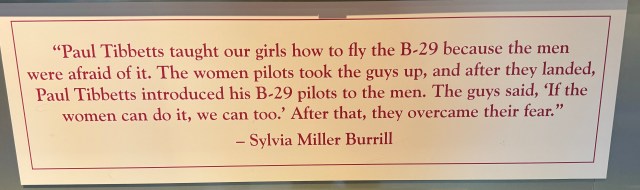
I asked the docent about “the story” of this particular plane – specifically how it got from WWII to this museum.

He said it had never served in Europe but was used as a training plane stateside. After the war, it ended up in a California proving ground as a target for drone and ground attacks. When the Air Force cleaned up the bombing site, this plane was determined to be intact enough that it might be of interest to a museum. It was loaded onto a transport and made its way to this museum.
The B-29 sat outside the Bradley Air Museum, the predecessor of the New England Air Museum..

The plane survived a severe tornado in 1979, likely because it hadn’t been restored enough to have the wings attached. Most of the museum’s other planes were destroyed.
Overtime, the museum moved to its current site.
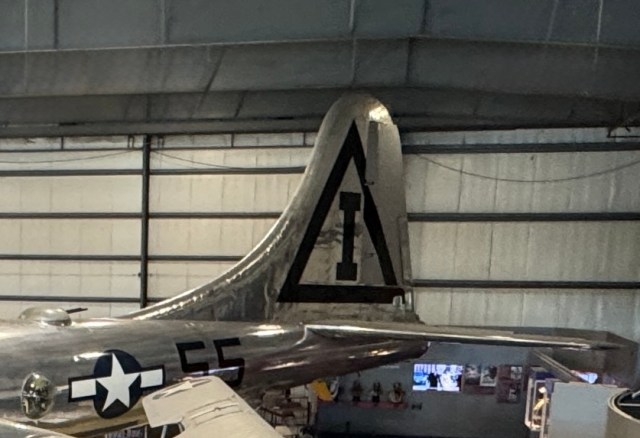
An air museum in Washington state was trying to restore their B29 to be able to fly. Their plane’s tail section wasn’t in good enough condition and they asked other museums if anyone had a good tail. This museum responded and the tail swap was accomplished!
So, this plane survived test pilots, drone and ground attacks, a trip across country, a tornado and a tail lift. That is a pretty good airplane story!

The docent also made sure we knew that the Millennium Falcon in Star Wars was based on a B29!
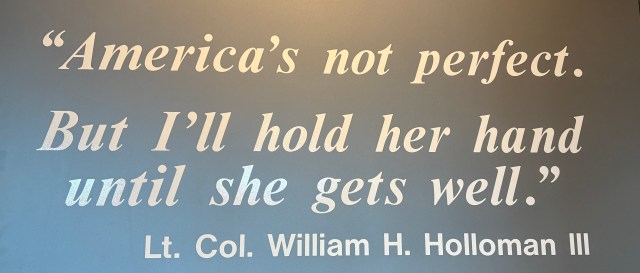
We didn’t go into The Tuskegee Airmen exhibit but saw this quote at the entrance. It seemed poignant.

Next Up: We spend time in Hartford, and why.
If you enjoyed these airplane stories, here are a few links to posts from other aviation museums we have enjoyed.


 Serene Wandering
Love your blog from New England and airplane museum!Sent from my iPhone