On February 5, we woke to announcements that the morning’s landing would be difficult because of rocky terrain.
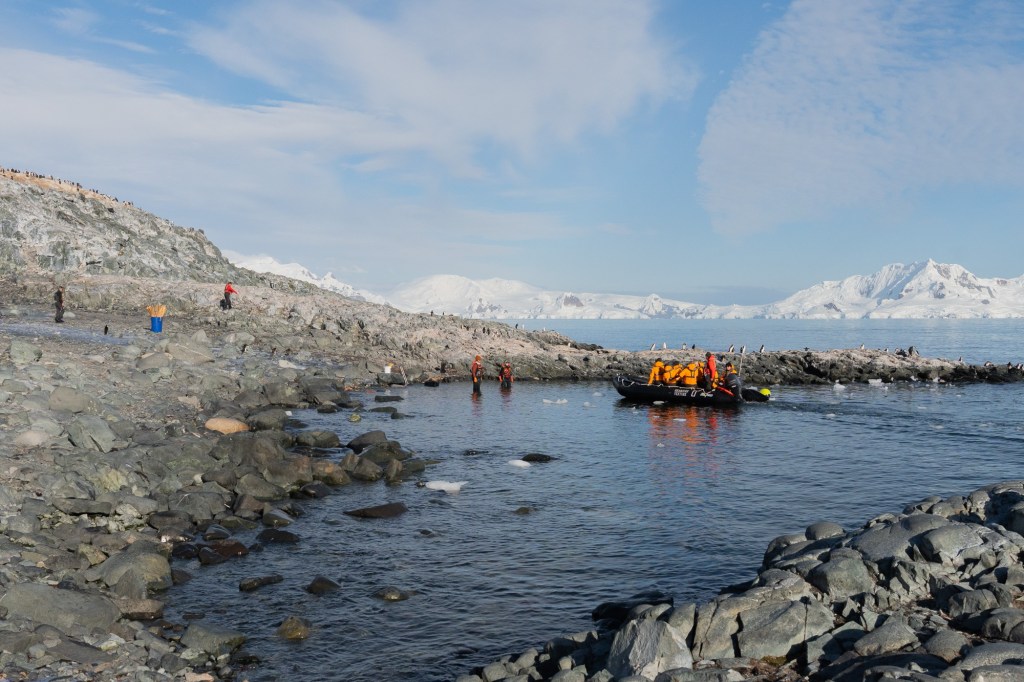
That, on top of nonstop activity for five days, made us less interested in going ashore.
As an alternative, they were offering a short zodiac ride. Even that wasn’t appealing to me because, as a short person, if I don’t have good seat placement in the zodiac, I can see very little.
We all were so much better at gauging how many layers, which waterproof pants, goggles or not, etc. we would need. However, donning all the outer gear to leave the ship, was still significant. We had to have it all on before pulling on our waterproof boots in the mudroom. Only then could we get in line to depart.
I decided to have a down day while Randy contemplated his decision. He eventually decided to go.
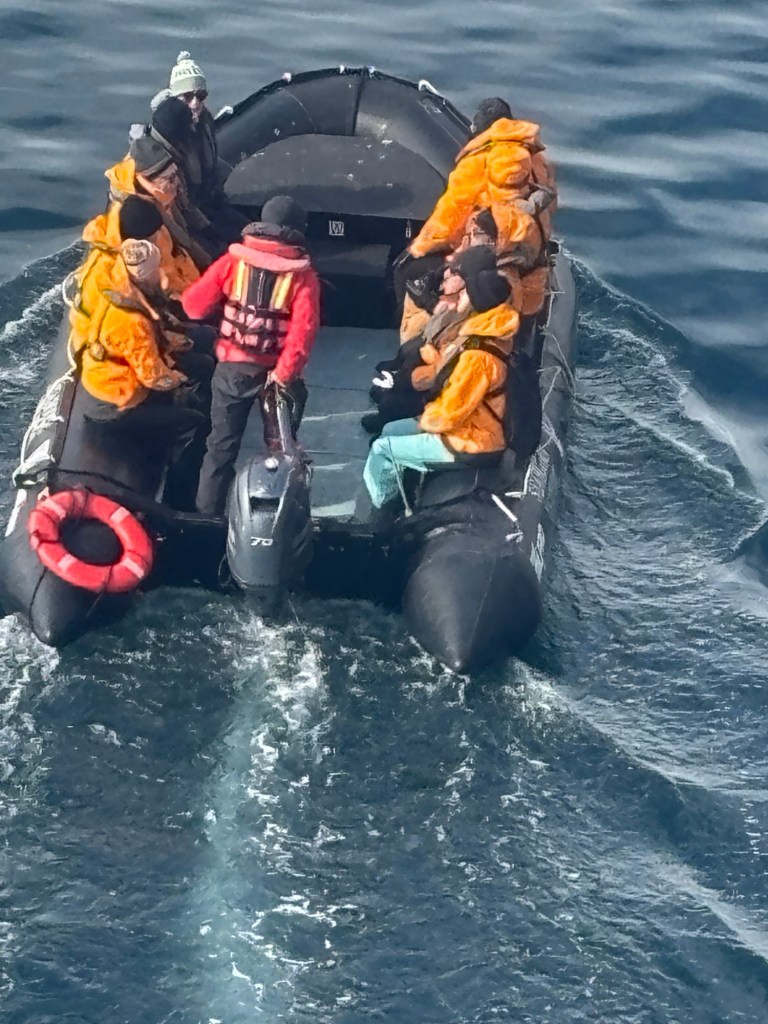
Randy was in the front on the right as the zodiac went away. He would have optimal viewing at that position on the very short trip to land.
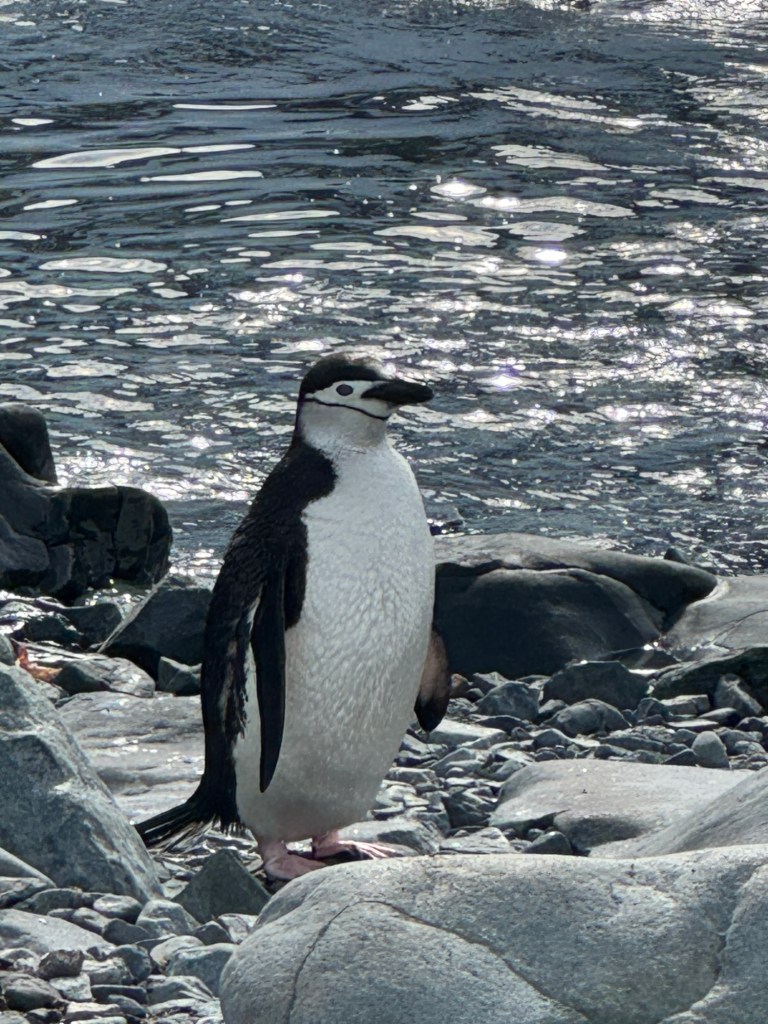
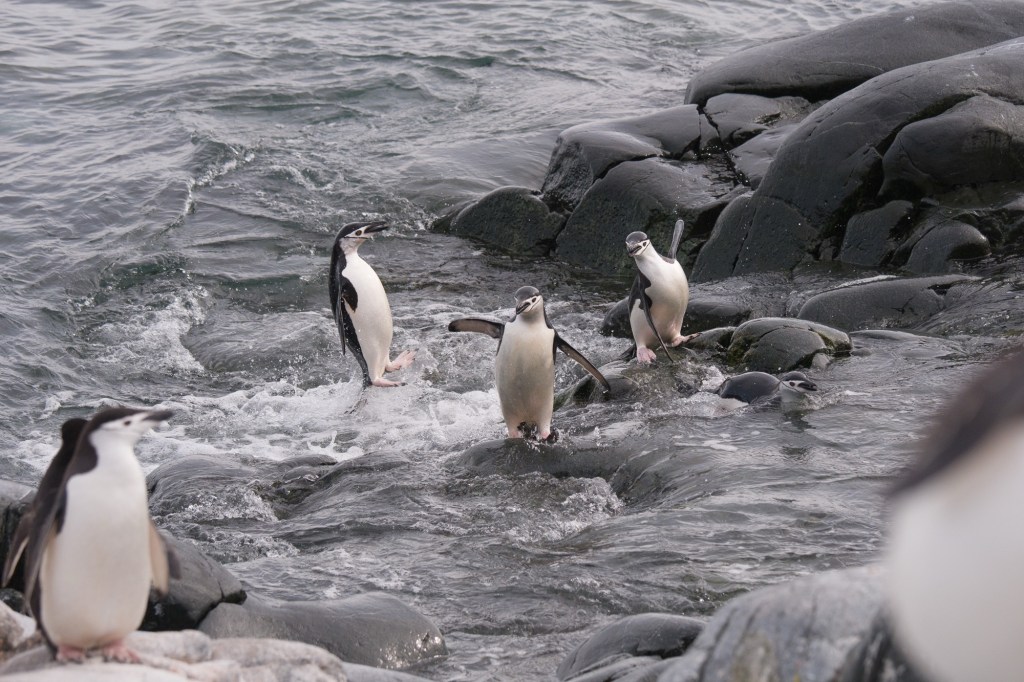
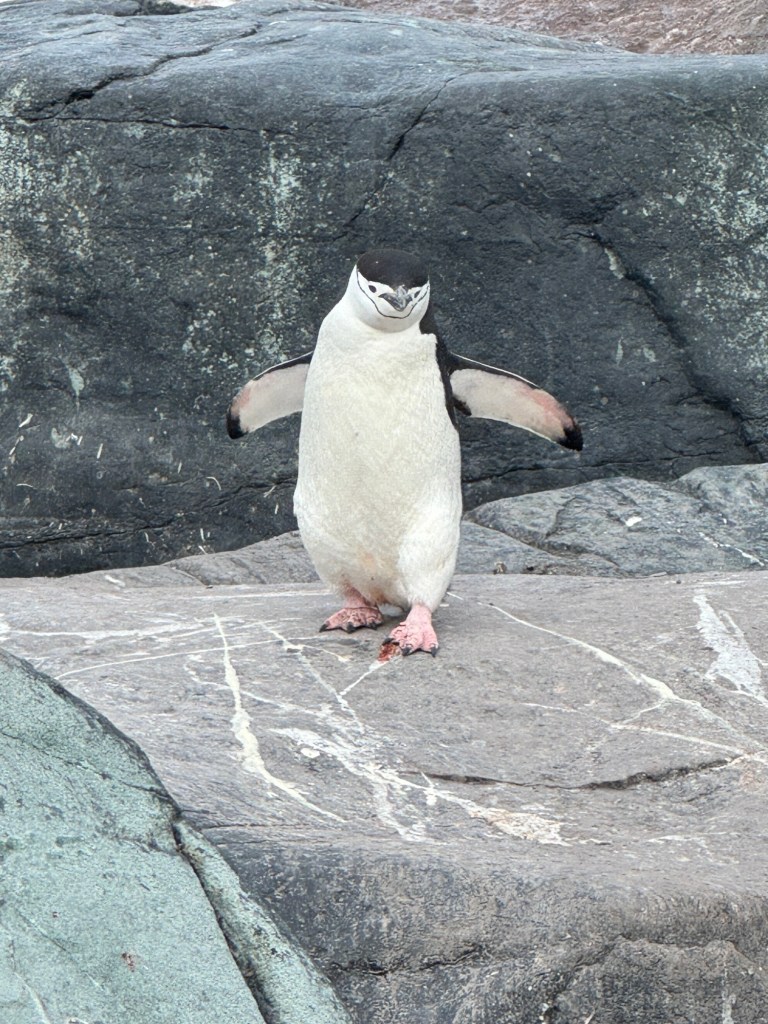
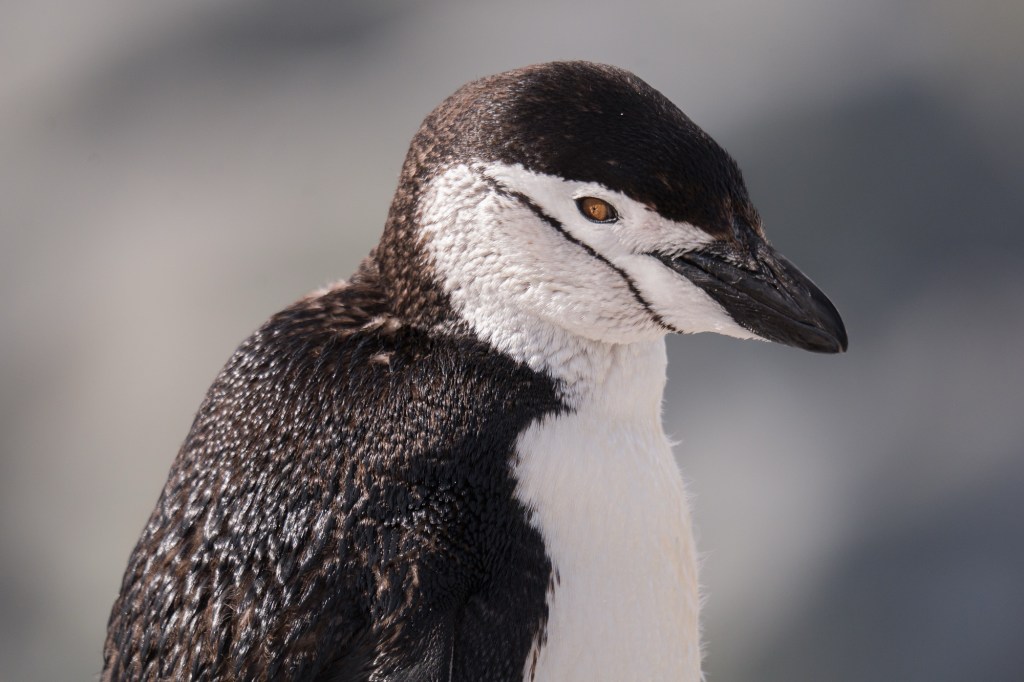
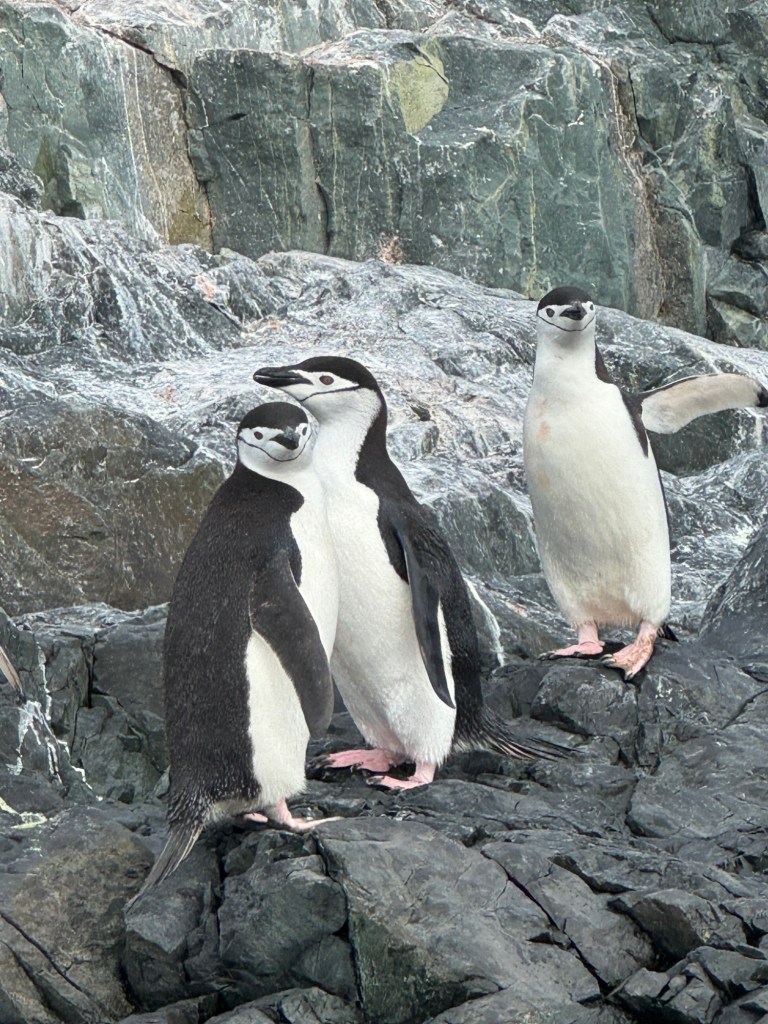
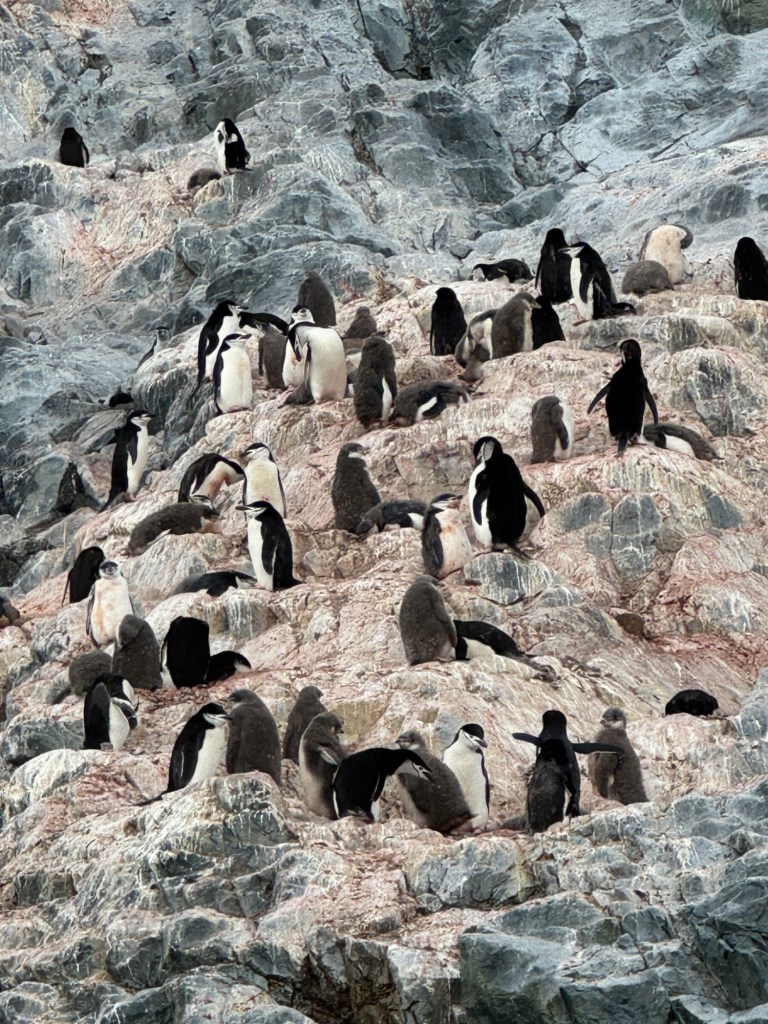
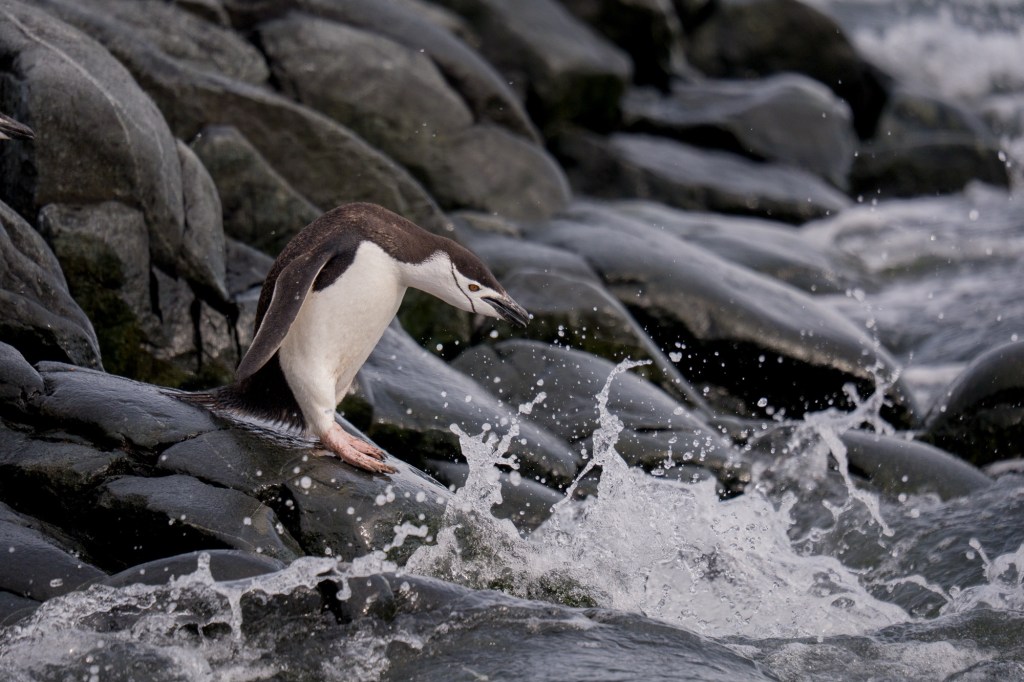
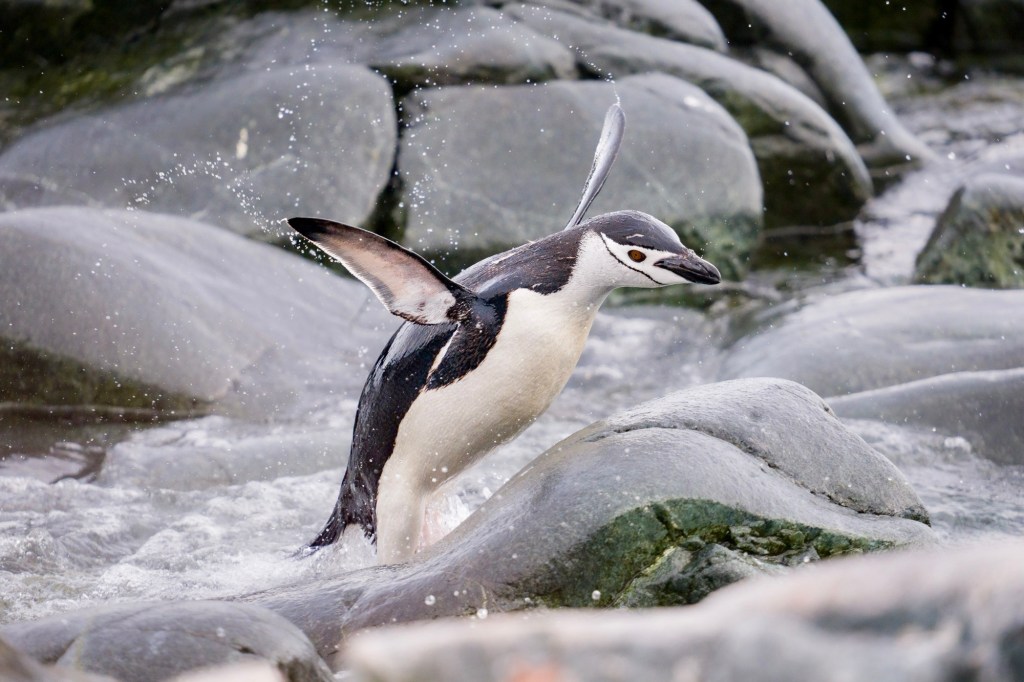
My only regret at staying was the likelihood of not getting up close and personal with chinstrap penguins as I had with the Adèlie and Gentoo.
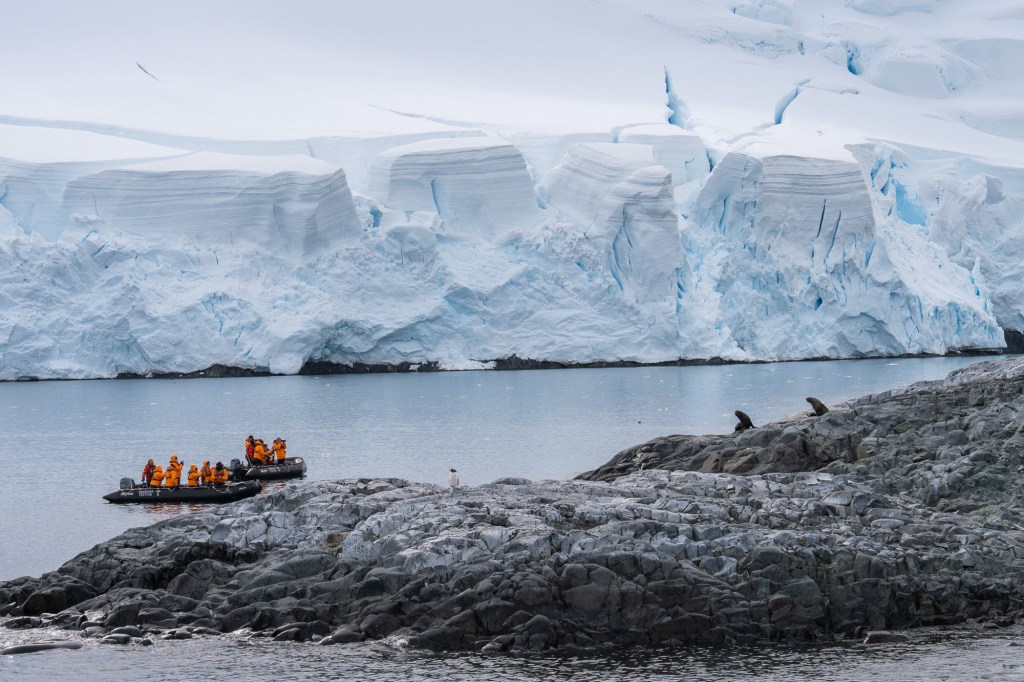
Given that very few zodiacs were operating, it seemed a lot of people made the same choice that I did.
Randy and the ship’s photographer, Harry, got some great pictures of fur seals and chinstrap penguins!
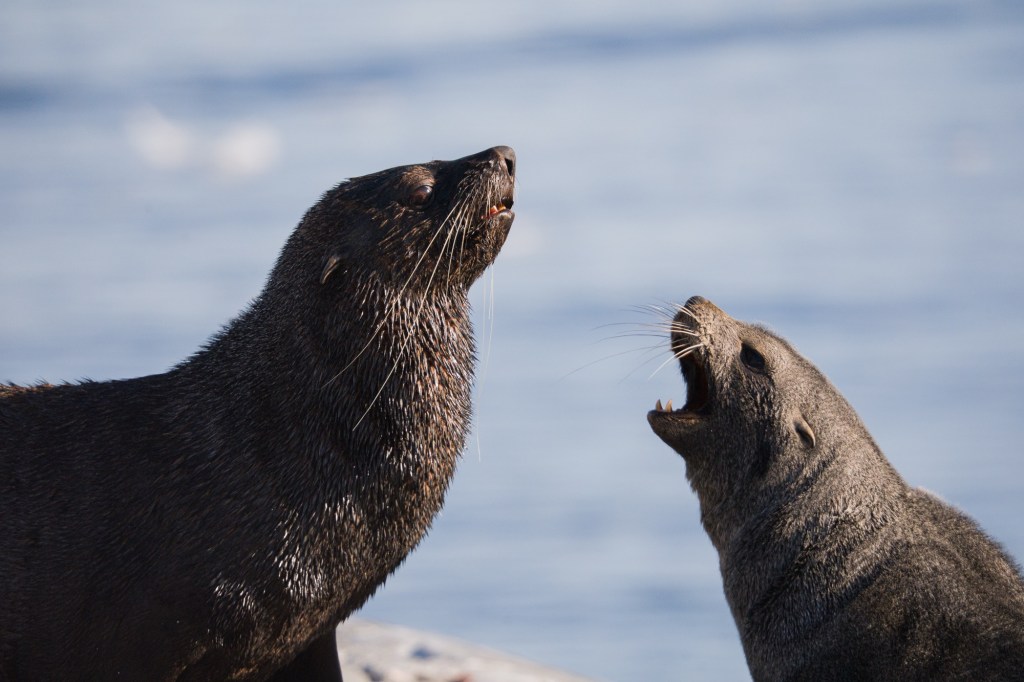
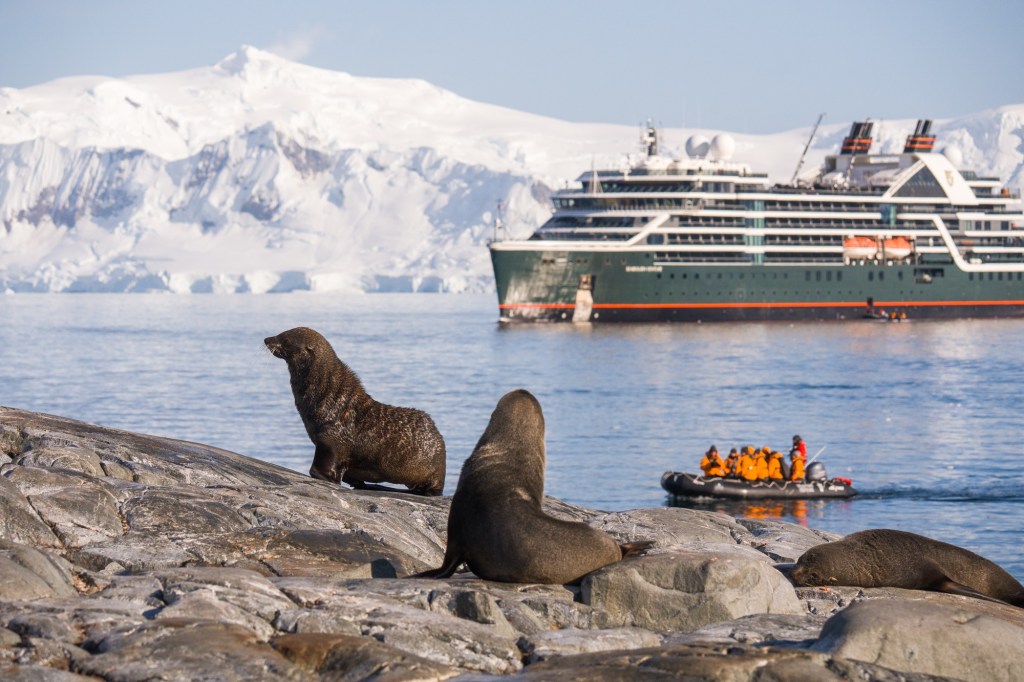
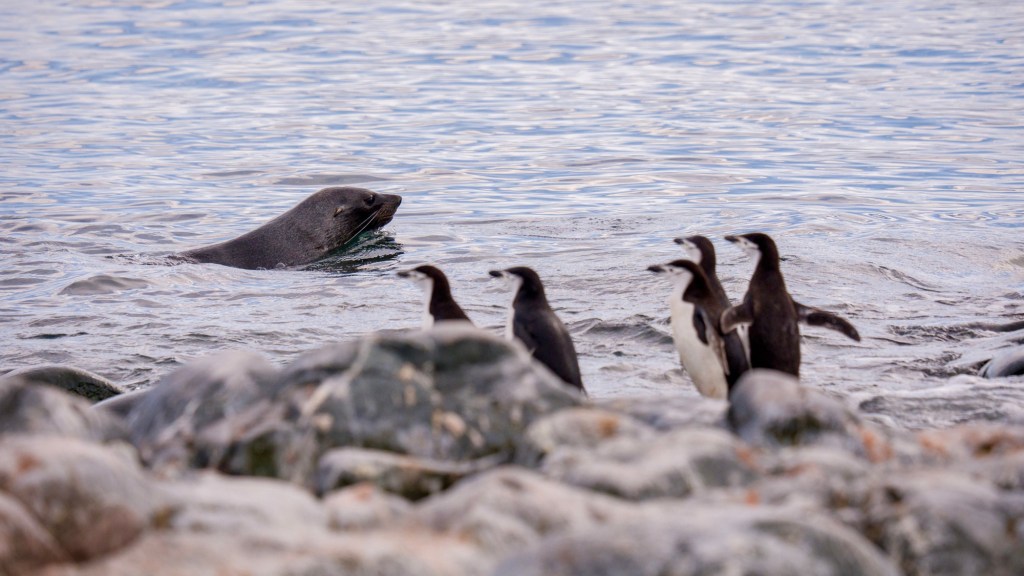
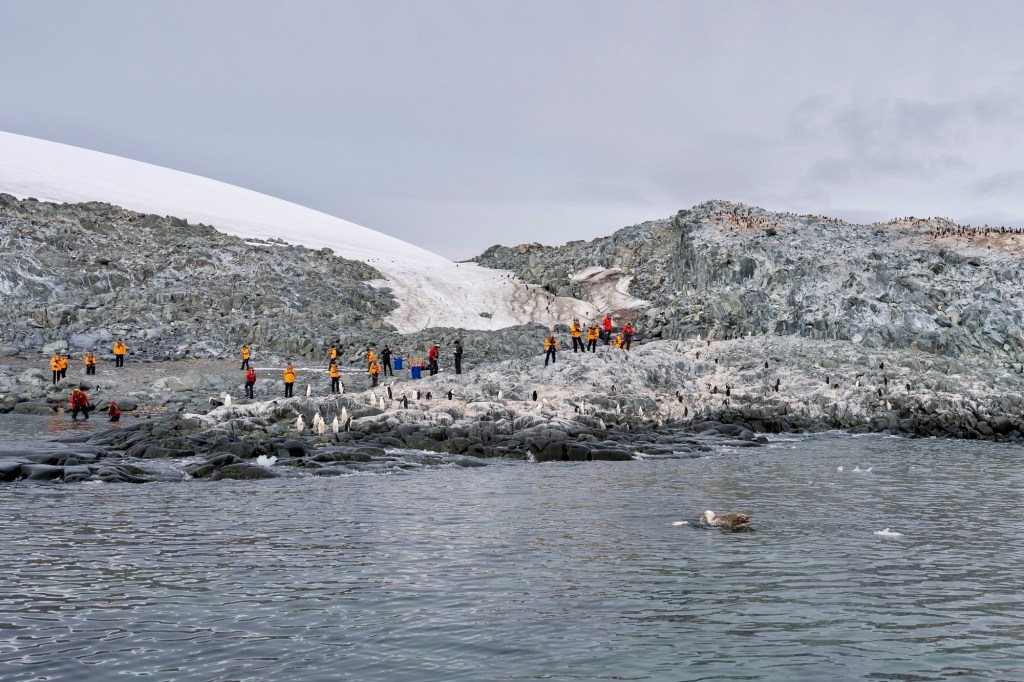
From our balcony, and a zoom lens, I could barely make out the penguins on the shore, but the shared photos were great!
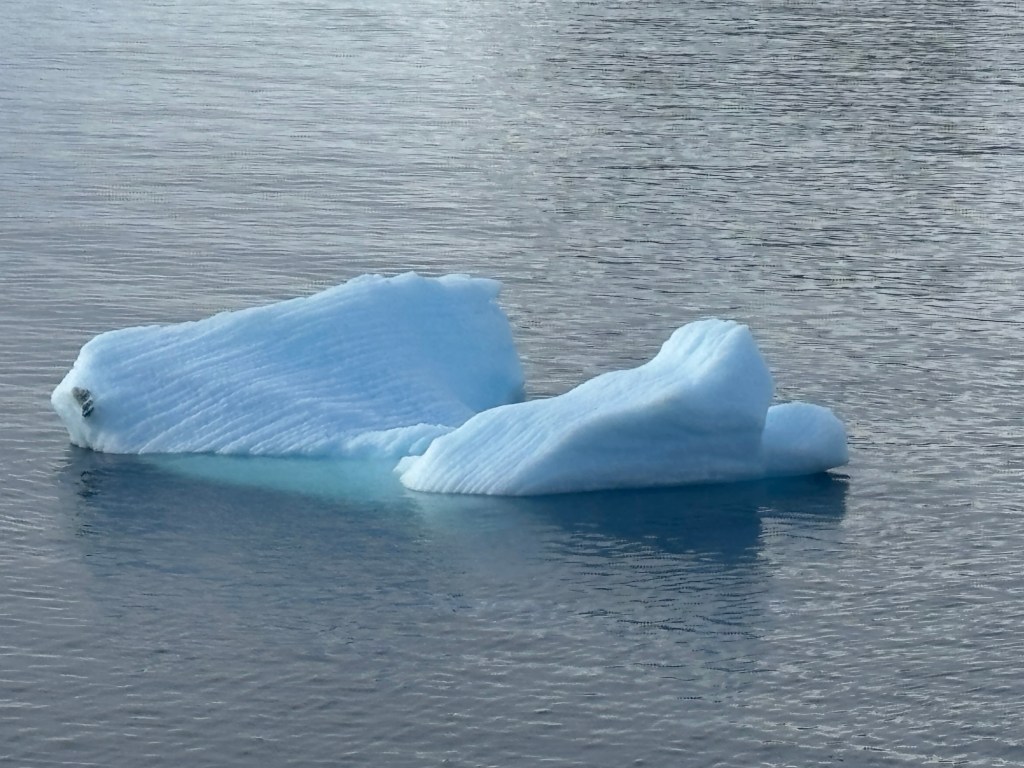
This iceberg looked like it had a lounge chair.
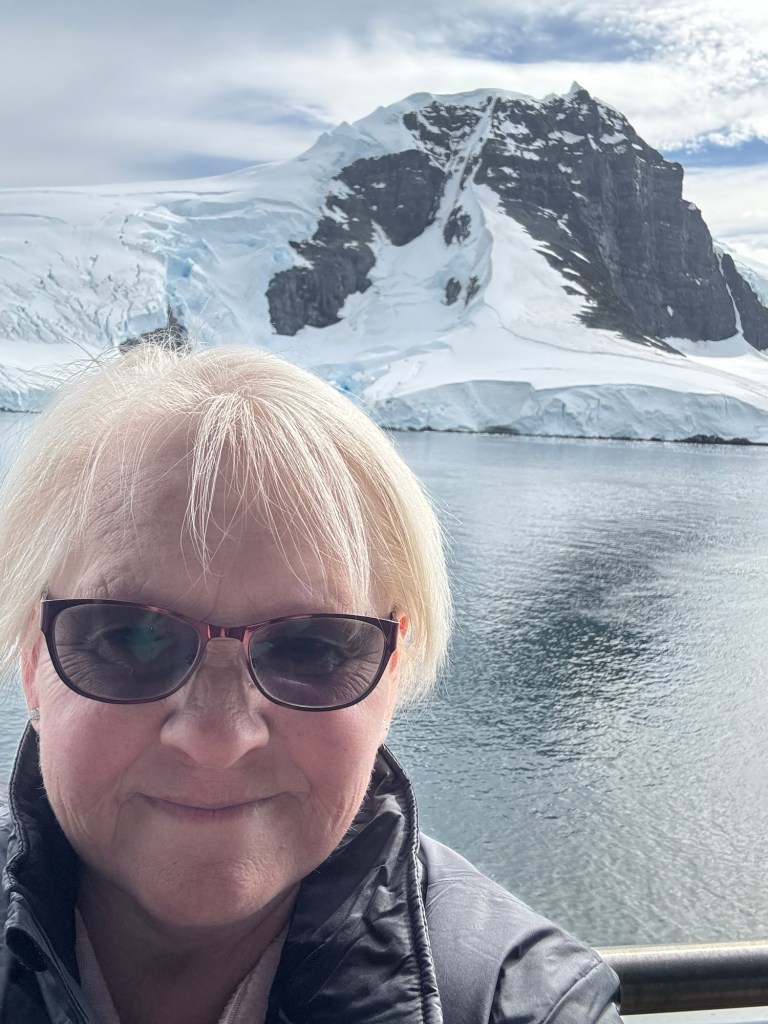
No lounge chair but, as I enjoyed the balcony, I could hear the mountain ice, groaning, cracking and occasionally calving.
Randy was glad he had gone ashore, and I was glad I stayed. He was able to talk with one of the expedition guides for an extended period. They were so interesting to talk with individually. The expedition crew was cross-trained, helpful and knowledgeable. Our cabin television showed bios for all of the officers and expedition crew. They have many PHDs, expedition and extreme sport leadership roles among them.
Later, Randy had a second submarine dive. They offered greatly reduced rates for a second dive to those of us who paid full price for a first dive.
Full price had been $1000 per person and we had prepaid for Randy months before to make sure he had his dive. We had enough on board credit to cover my dive when I decided to go. We had almost enough on-board credit left to pay for his second dive, so it was an easy decision.
It was also easy for me to be happy with my first dive and pass on a second.
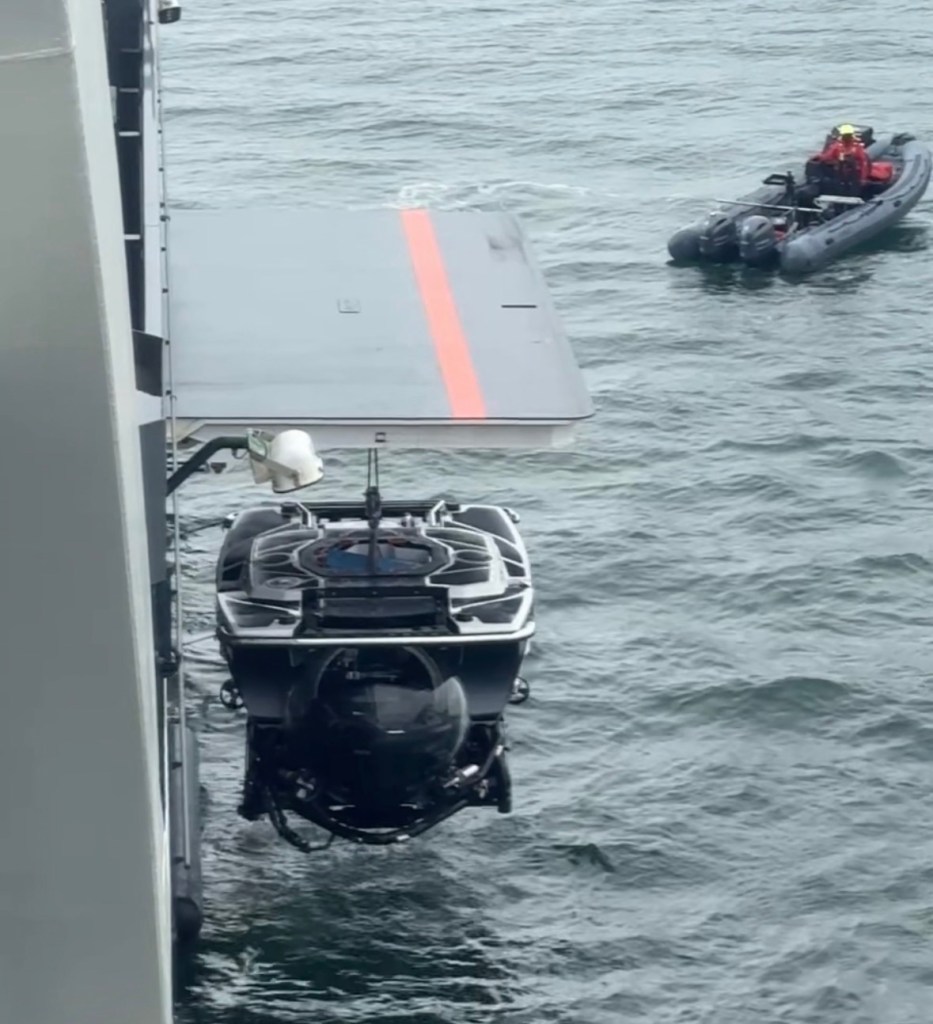
I watched the submarine leave the ship and go out on its way. We often felt fortunate to have had a balcony on the port side as we were able to watch most of the coming and goings of zodiacs, submarines, and kayaks.
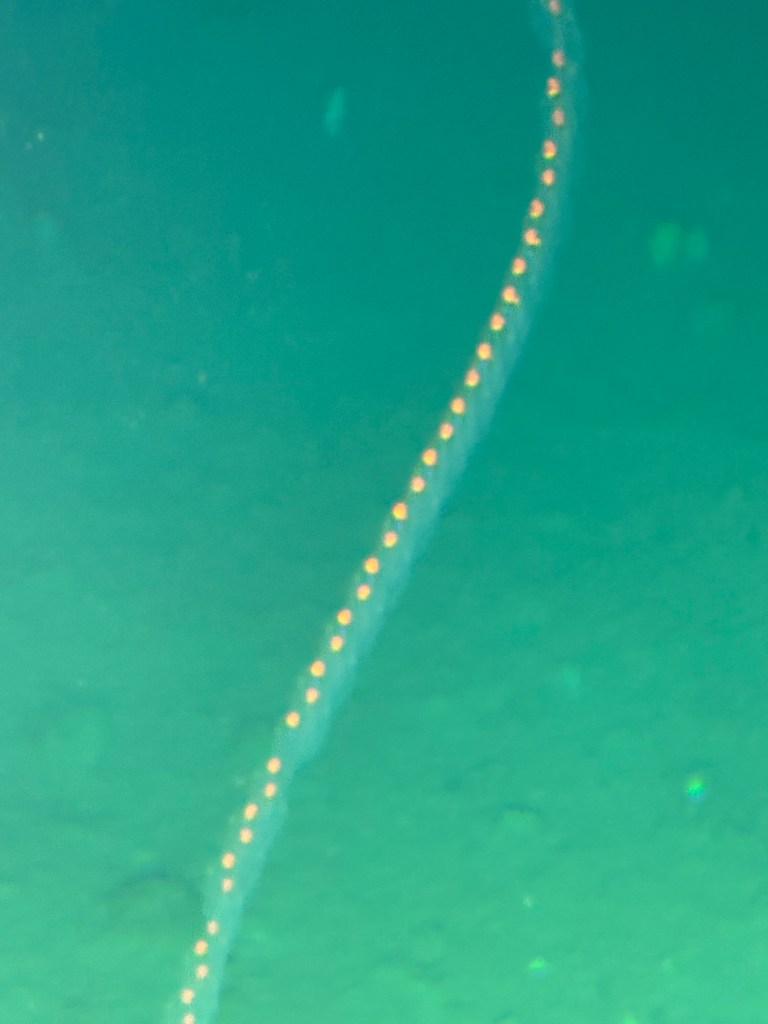
Randy saw something new – salp chains! The chains are transparent and gelatinous and can grow in length to 50 feet in open ocean.
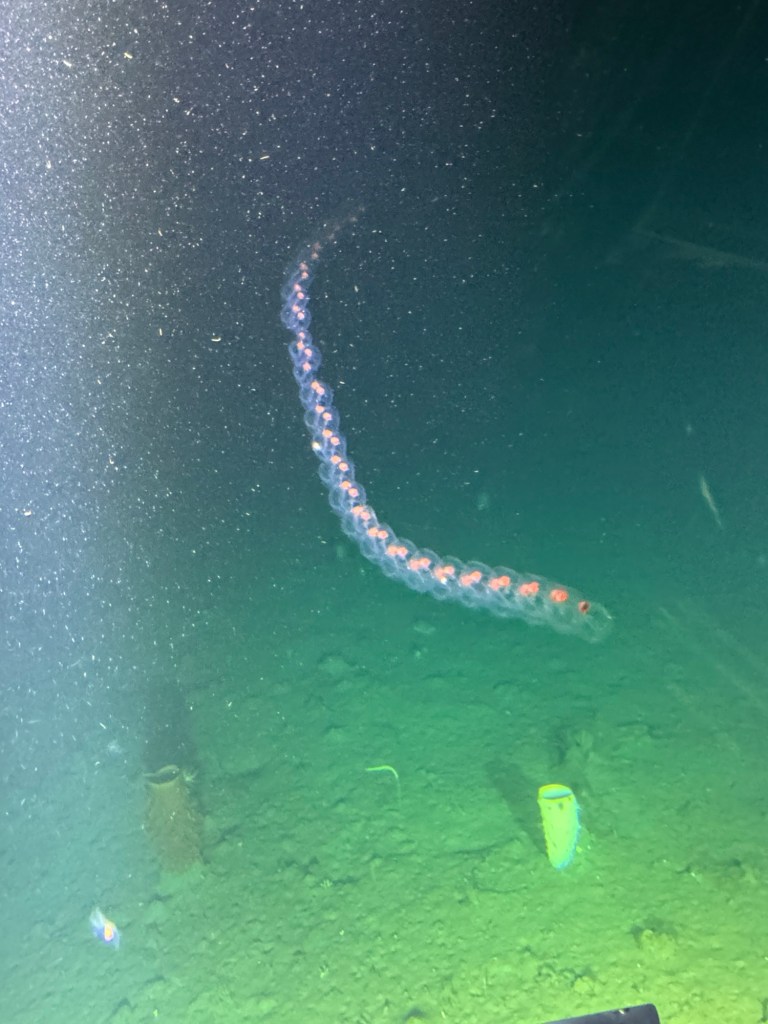
The chains contribute to the food chain and create carbon-rich feces that assist in the ocean’s carbon sequestration.
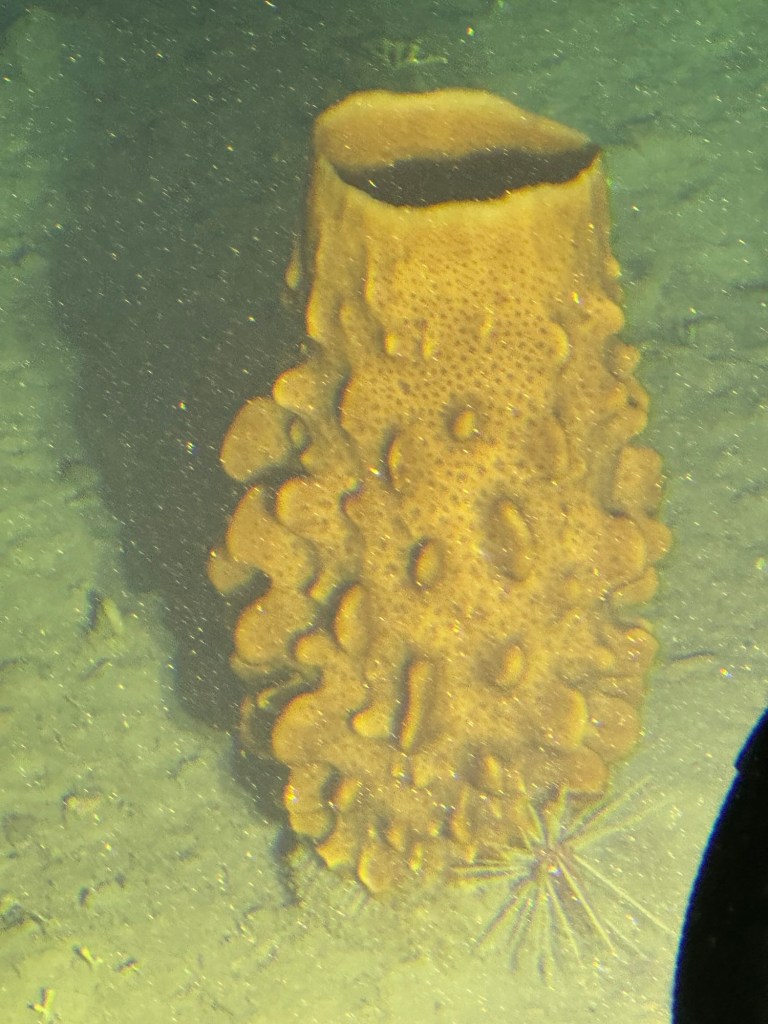
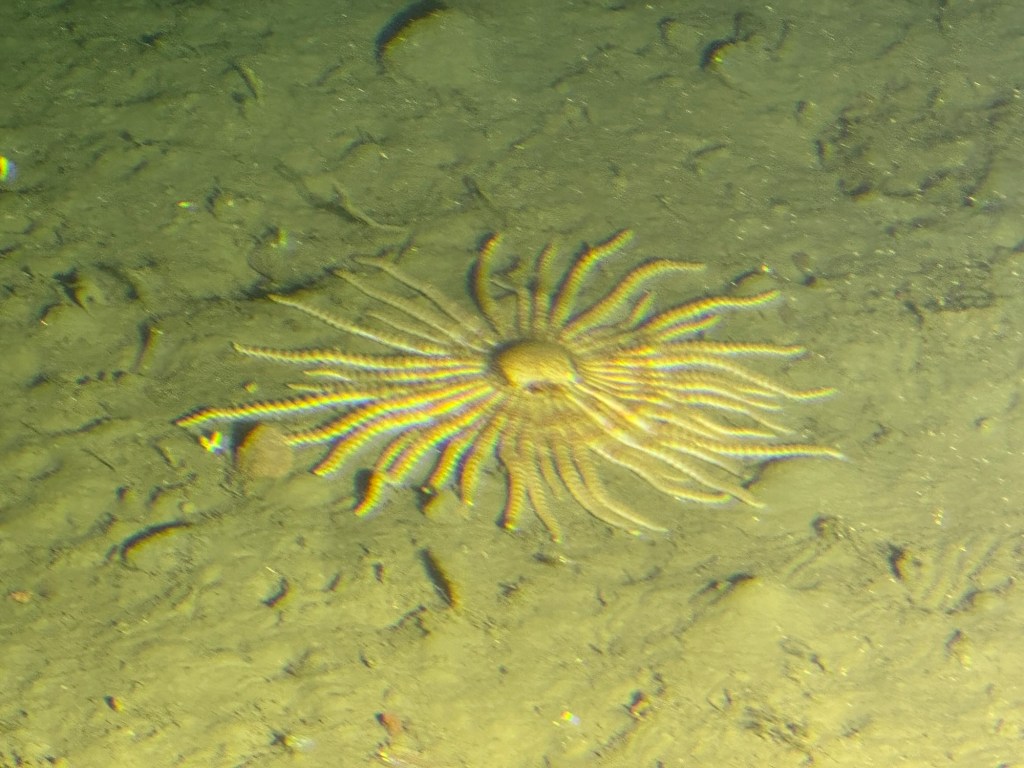
He also saw new types of sponge and starfish.
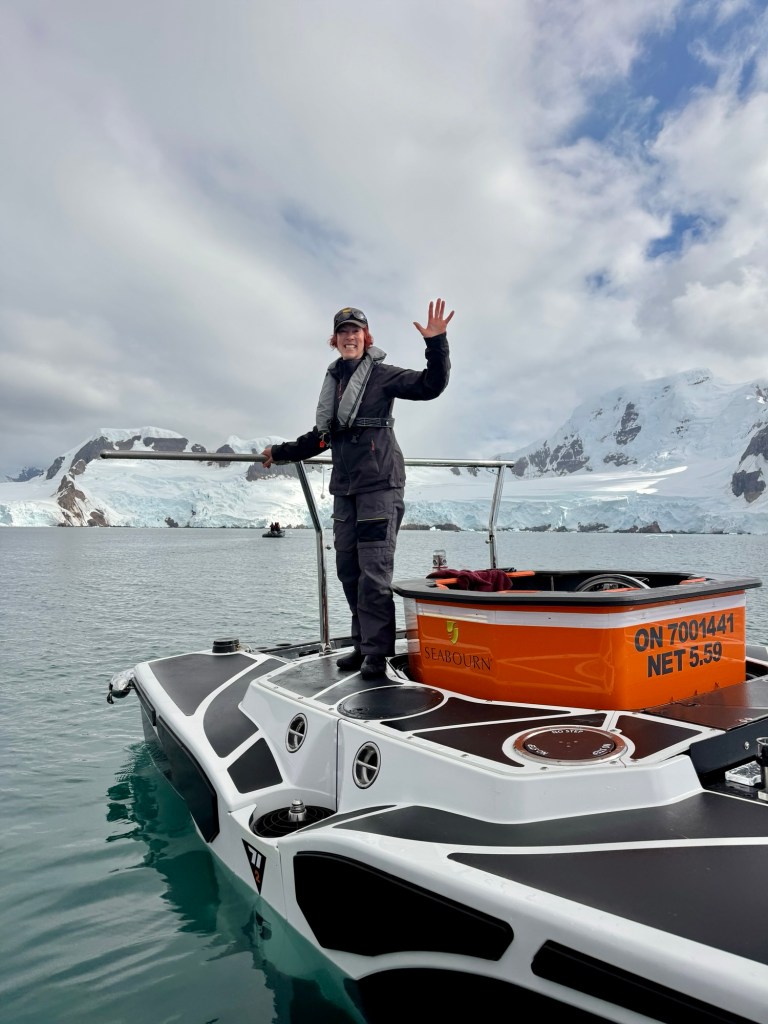
We valued our interactions with Marel on our cruise whether she was piloting the submarines or giving an interesting lecture. We hope she will “land” in a good place as Seabourn is discontinuing their submarine excursions.
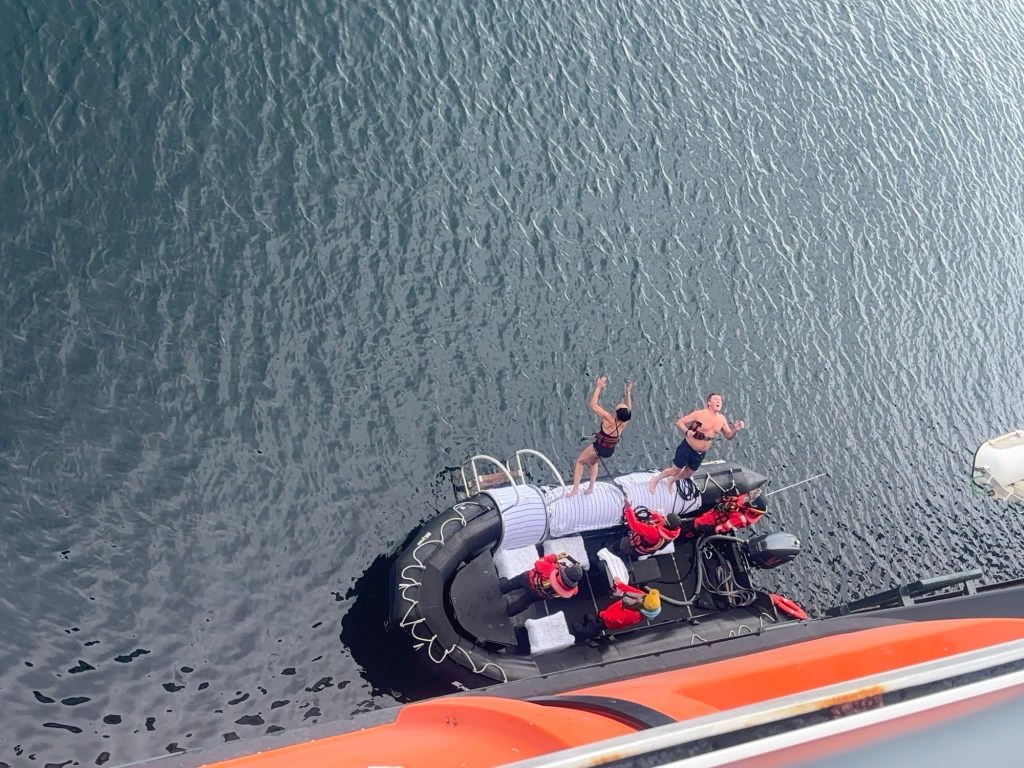
I was able to stay on our balcony and watch the “brave” people doing the polar plunge into Antarctic waters. Neither of us were inclined to do that.
During our expedition lecture later in the day, we learned that 118 fellow passengers completed the plunge.
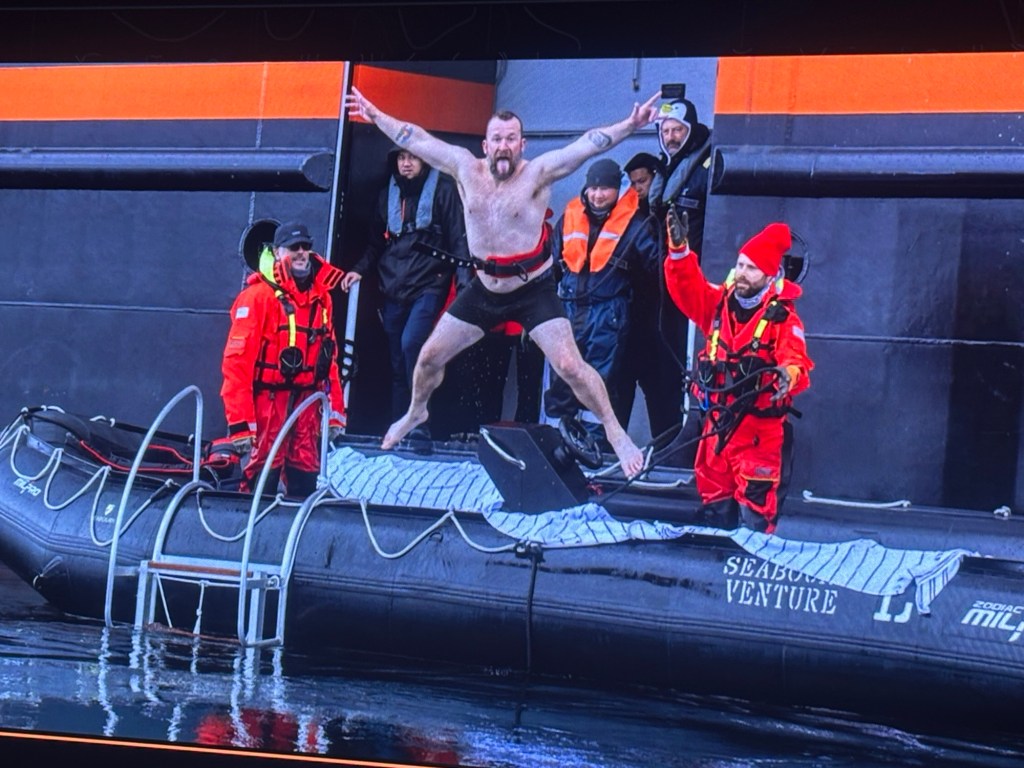
One crew member jumps whenever the opportunity presents.
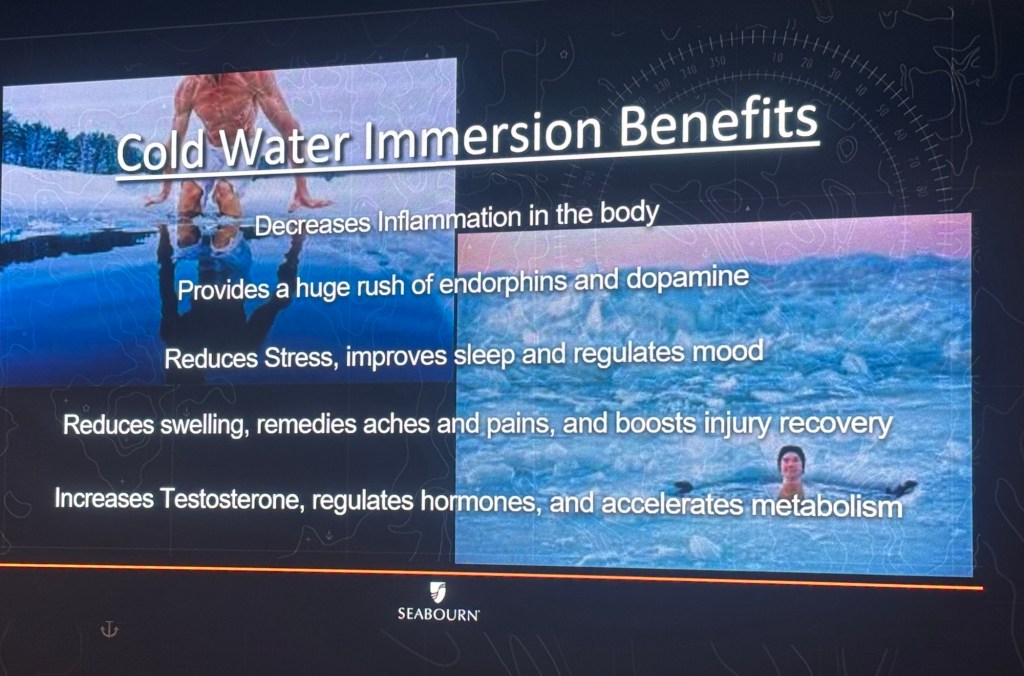
He told us about the physical benefits, which still didn’t make us wish we had done the Polar Plunge.
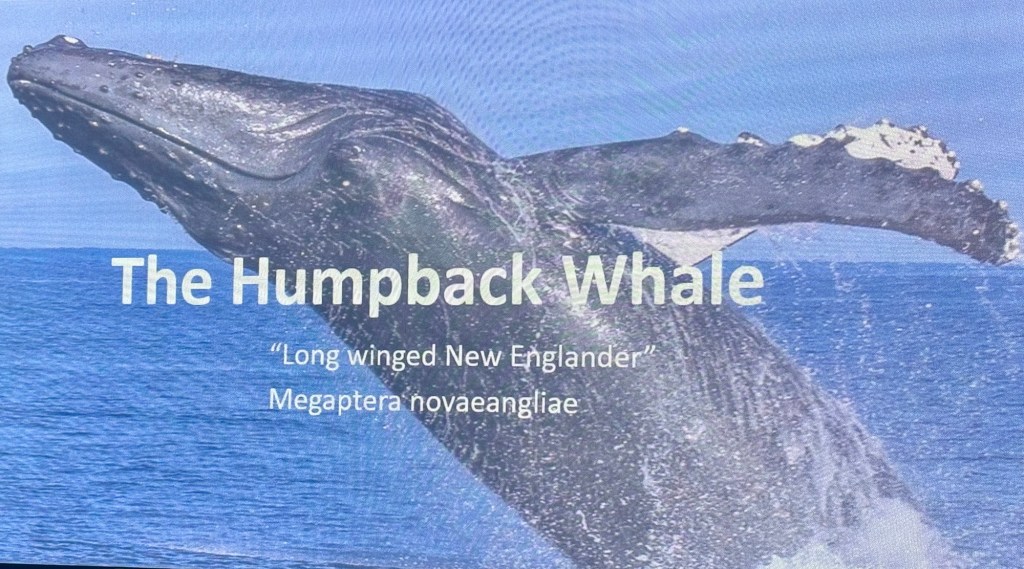
Next, we learned more about humpback whales.
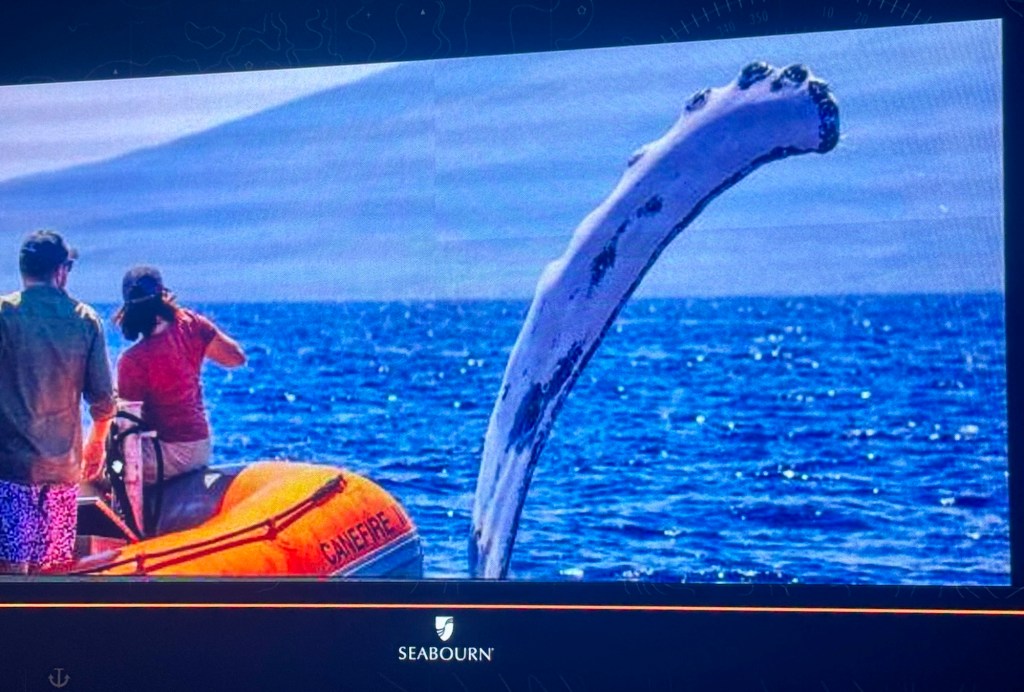
Slapping a flipper or fluke/tail is thought to be communicative.
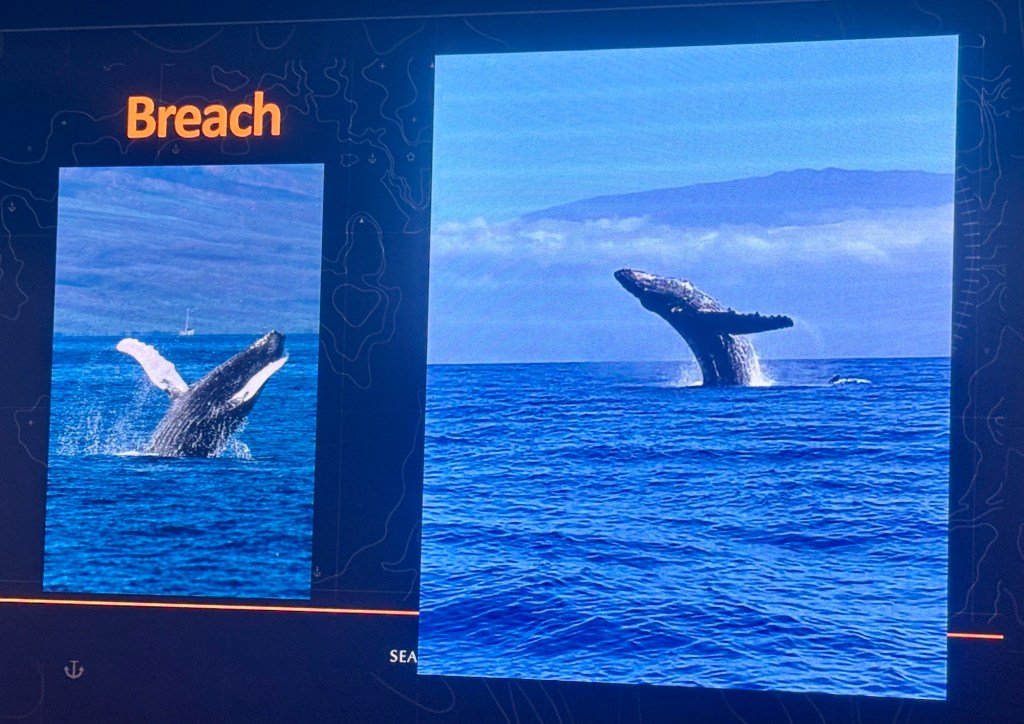
Breaching can also be communicative or as a way to shed barnacles or old skin.
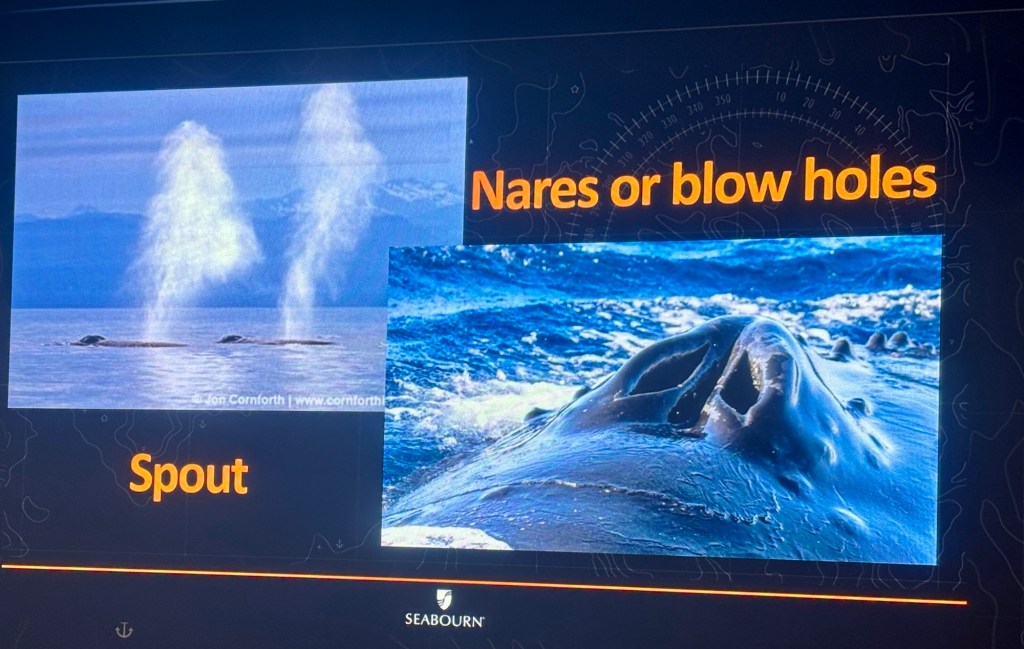
Usually the males are the only ones who sing or vocalize. Their songs can travel over 900 miles underwater in optimal conditions.
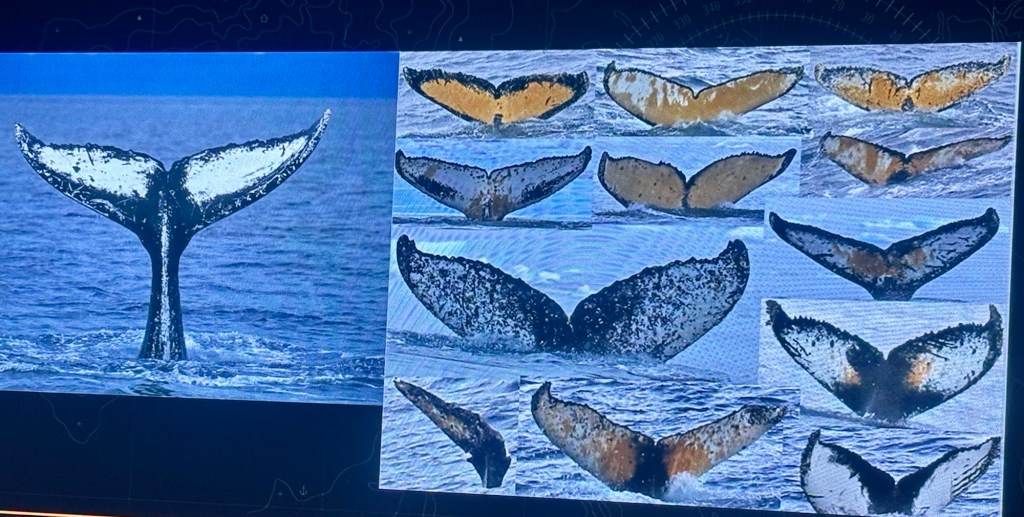
A fluke print doesn’t develop until two years old.
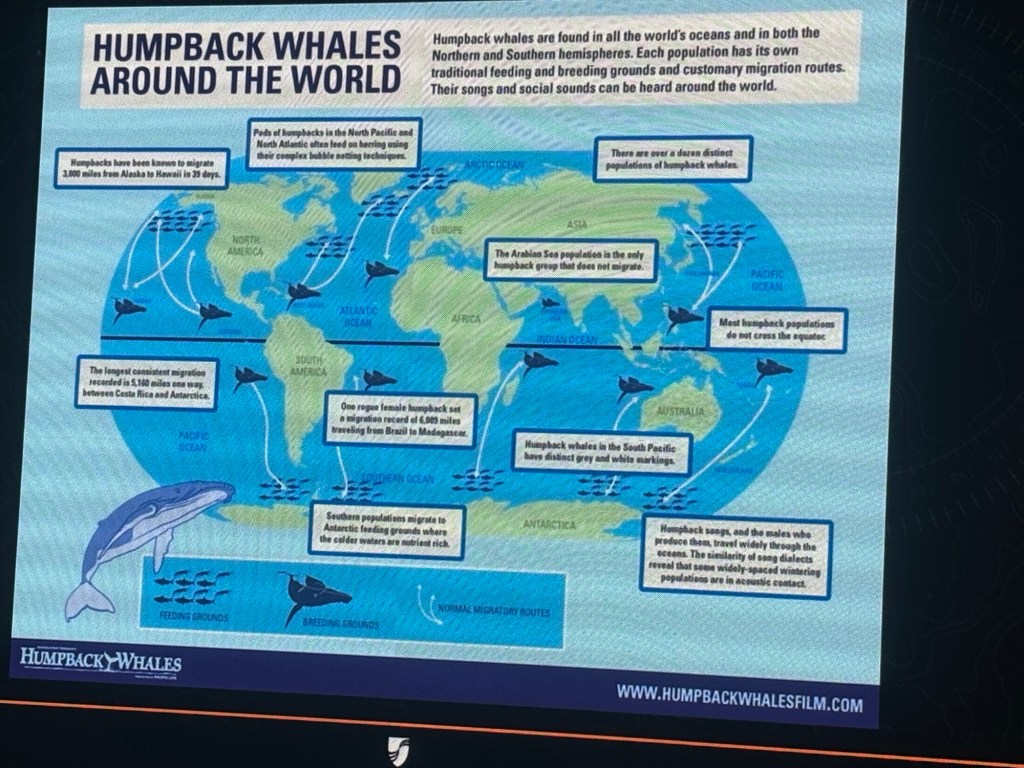
Seventy percent of the whales in Antarctica come from Equador with most of the remaining coming from Brazil. Whales return near to their place of birth.
Over 100 incidents of humpbacks helping other species have been documented.
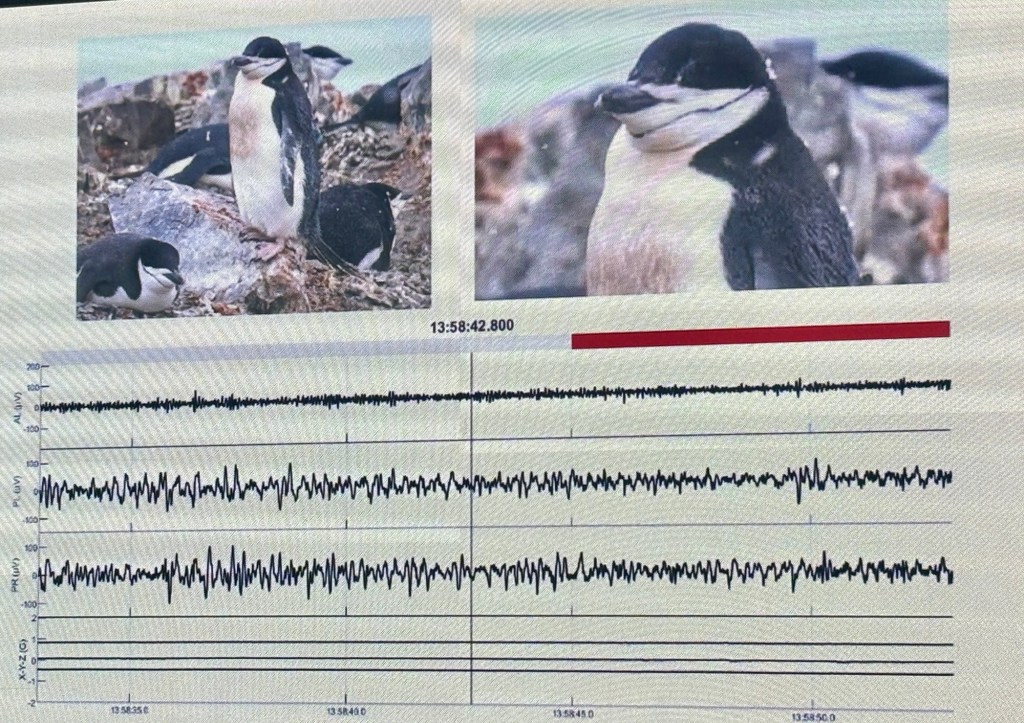
We also learned about the napping behavior of penguins.
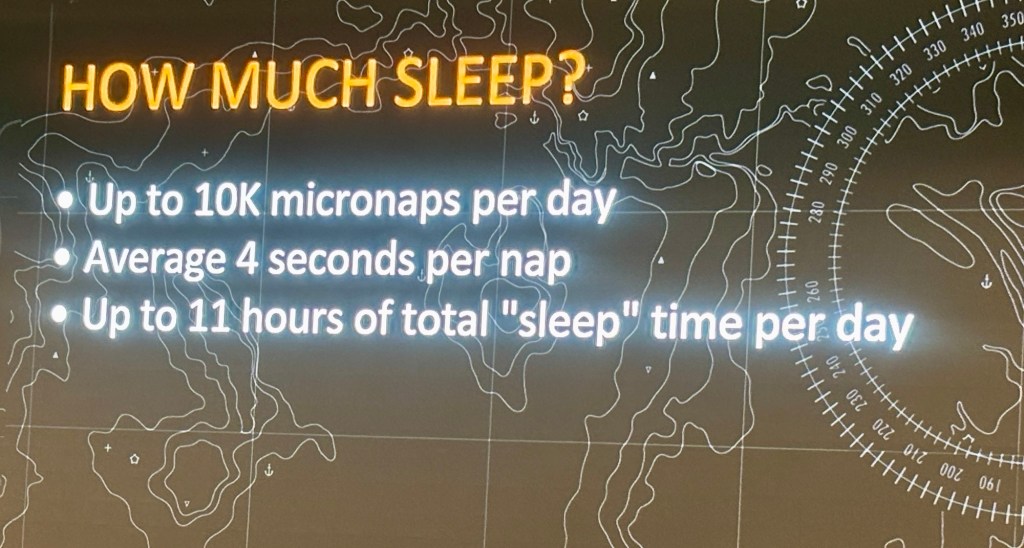
They take micro-naps.
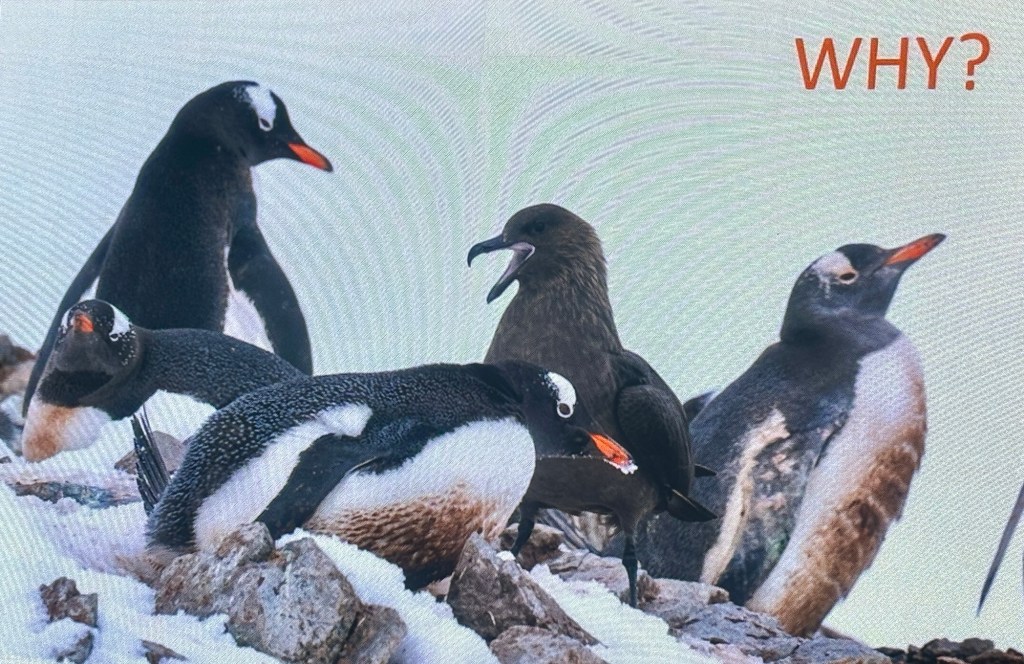
They always need to be somewhat aware of their surroundings to protect their eggs and chicks from predatory birds.
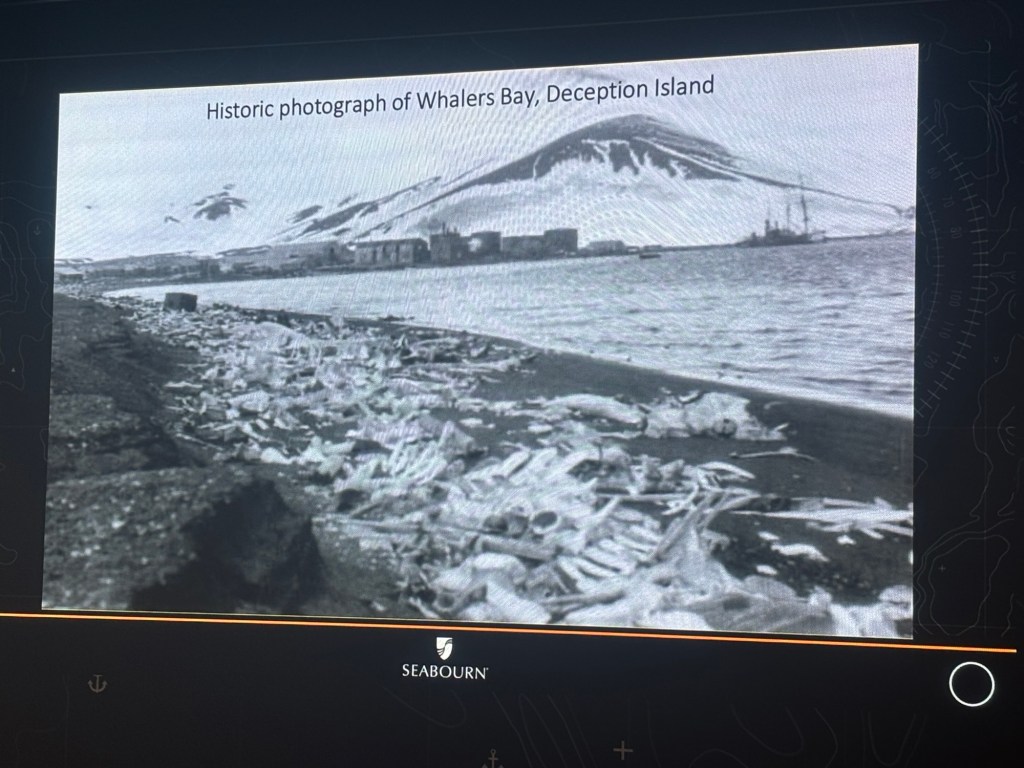
We had a preview of our next, and last, destination in Antartica – Deception Island. We would be sailing into an active volcano!
This was the evening when many passengers had invitations to dine with officers. We did not have status on Seabourn but do on Holland America, a sister line. We also stayed in a mid level suite.
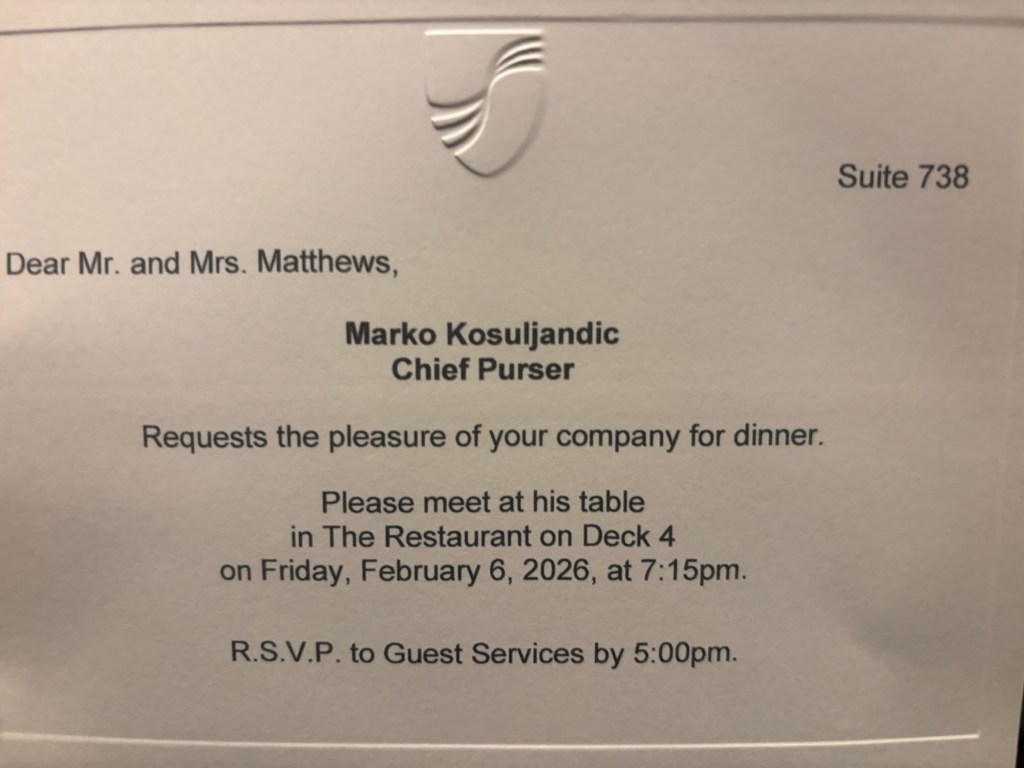
For whatever reason, we were invited to share dinner with six other passengers and the chief purser. It was a most pleasant evening.


