A Stormy Time at Rehoboth Beach

Delaware was another new state for us.  The Welcome to Delaware sign along the highway was small and gone before I was prepared to take a picture.  

There was a visually interesting bridge.  The Indian River Inlet Bridge (officially called the Charles W. Cullen bridge) was built in 2011.  It is the fifth bridge built to span the river.  The first, made of wood, was built in 1934. A concrete and steel replacement was completed in 1940 but collapsed due to ice flows and wind in 1948.  The 1952 replacement held up until the epic Nor’Easter storm in 1962 leveled much of the area.  In 1965 a steel girder bridge was built and declared structurally deficient in 1989. It was maintained until 2005. Whew!  That was a lot to learn when I just wondered about the name of the cool bridge!
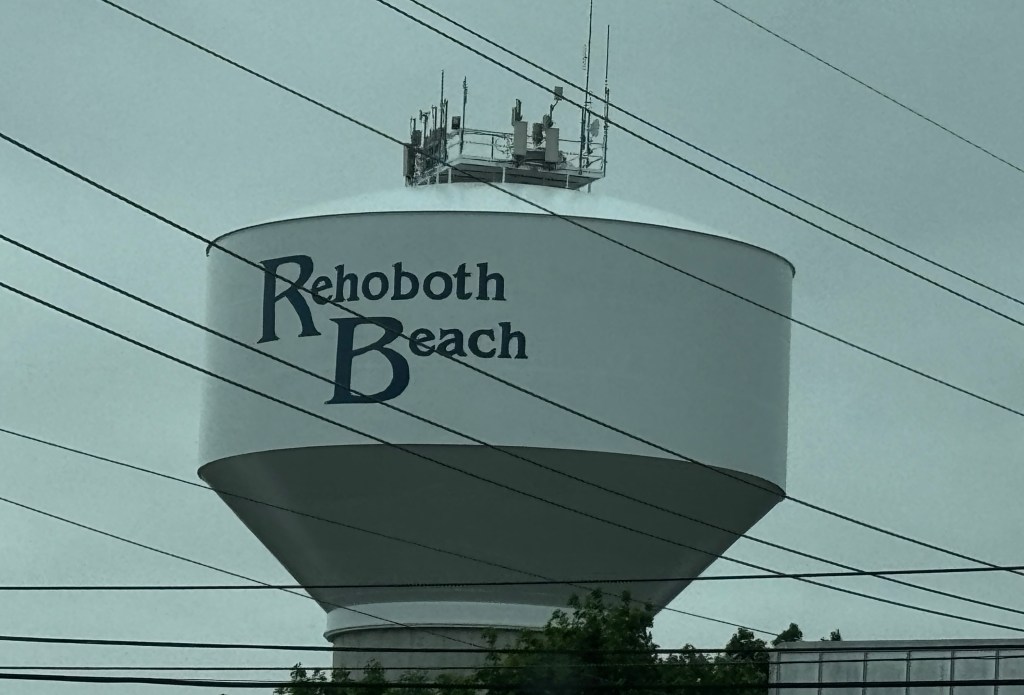
We knew we were at our destination when we saw the water tower sign for Rehoboth Beach.  Water tower signs were commonplace along the outer banks and in eastern seaboard towns.
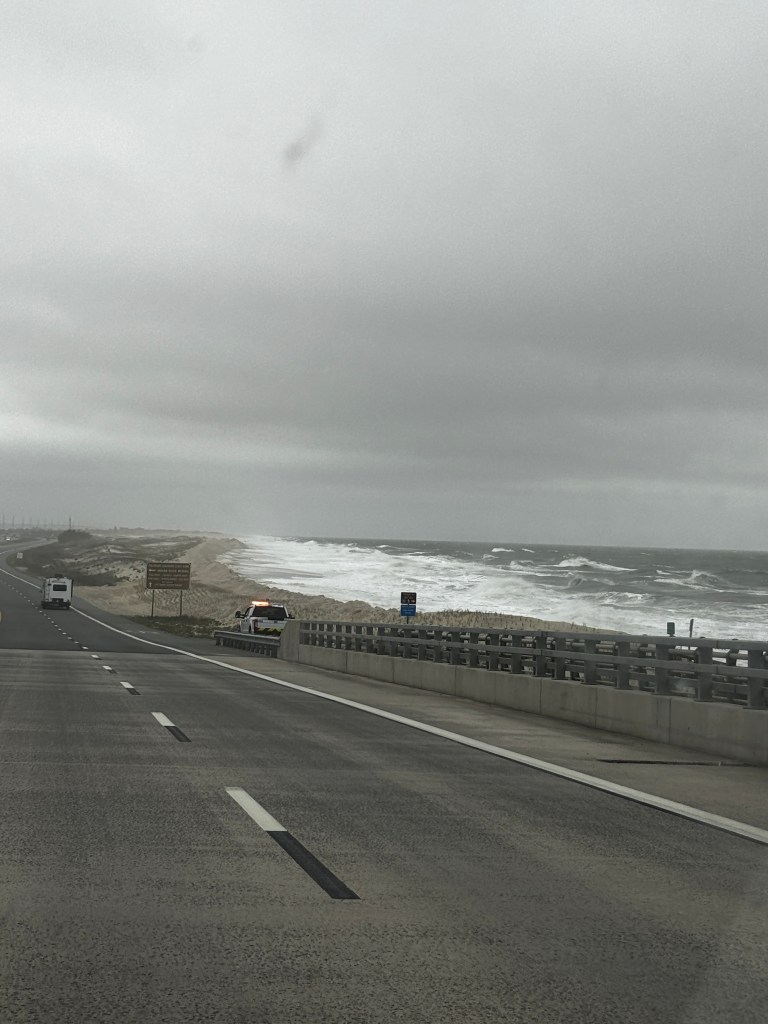
The plan for the day was to enjoy the Rehoboth boardwalk but it was a windy cold day.  

The next thought was to go to the First State National Historic Park but their visitor center was closed for renovations.  In the video on the park website, I learned that Swedish immigrants came to the region in 1638 near present day Wilmington.   They named their settlement Fort Christina after the young Queen in their homeland.  The Dutch took over this region and then the English did the same.  

From the beginning, Delaware included peoples of different origins and religions, It was unique in those respects.  The lands came under the jurisdiction of William Penn who worked well with the indigenous peoples. Those efforts waned under future leaders.  

In 1776, a local resolution was passed to separate not just from Great Britain but also from Pennsylvania. This action formed the state of Delaware.

In 1787,  Delaware became the first state to ratify the new US Constitution.

Years later, when Delaware was in position to be the last needed state to give women the right to vote by ratifying the 19th Amendment to the Constitution, they rejected the measure. Two months later, Tennessee became the 36th state to ratify the amendment, ensuring that the right to vote could not be denied based on gender. 
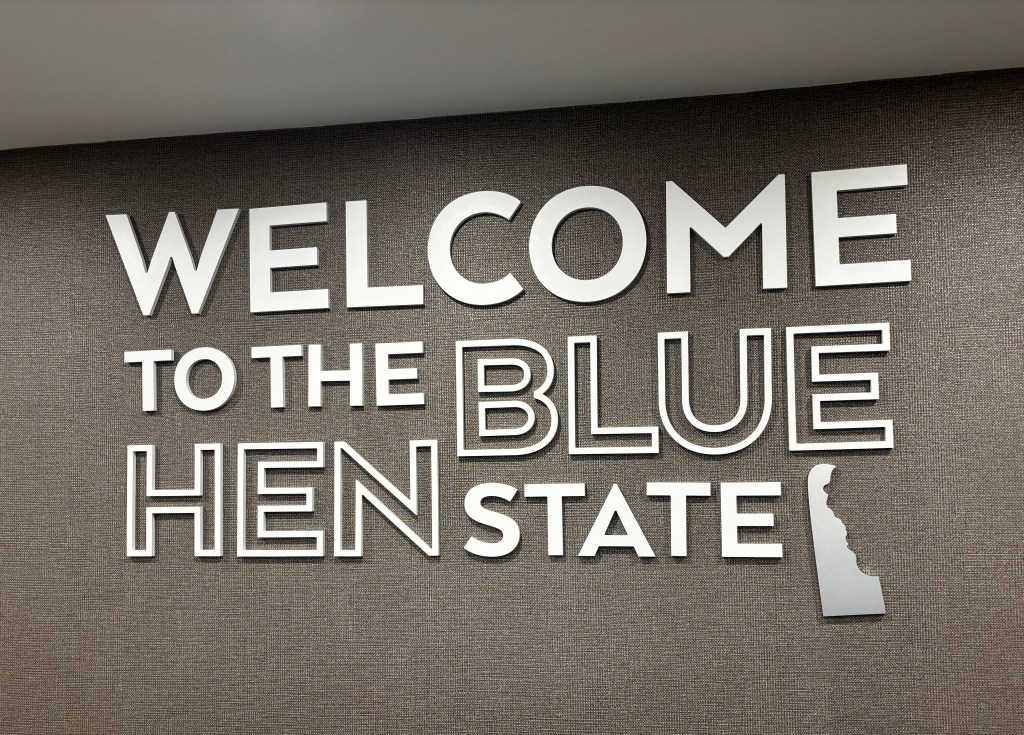
This was the wall behind the desk as we registered into our Rehoboth Beach hotel.  
The Delaware Blue Hen, the official bird of Delaware, is a strain of American gamecock. It is not a chicken.

We had a miserable weather afternoon in Rehoboth Beach.  It was the only day on our trip (full of marginal weather) that we gave up and enjoyed being warm and dry inside. Somehow I neglected to take pictures from our really great hotel room overlooking the stormy ocean. 
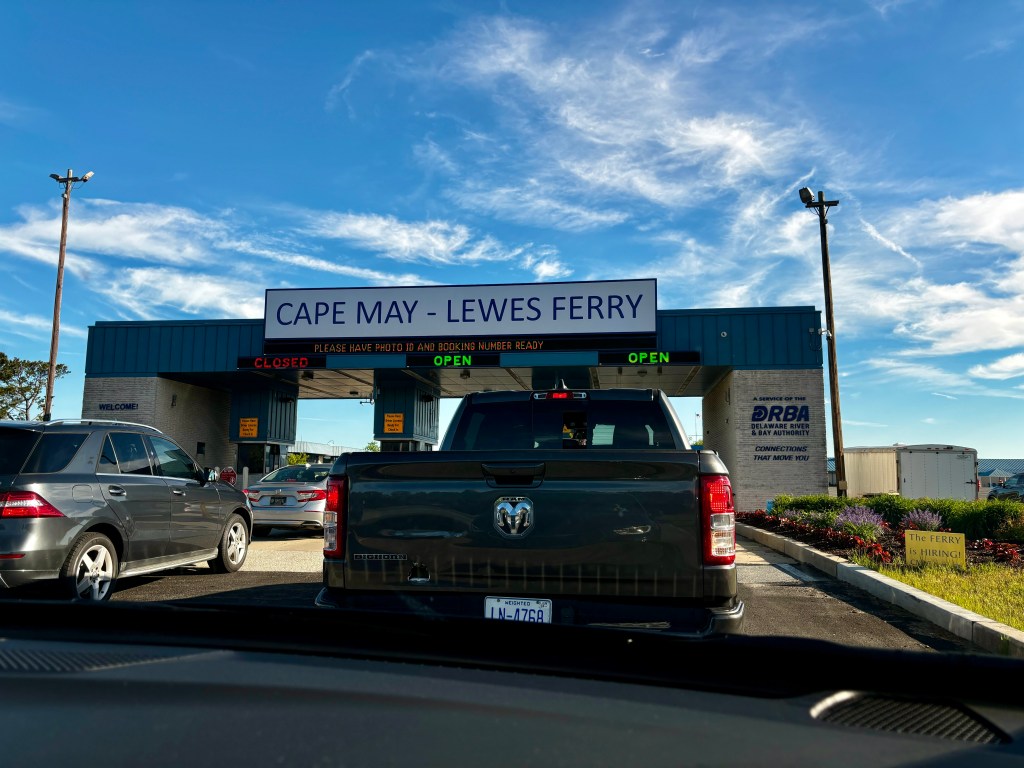
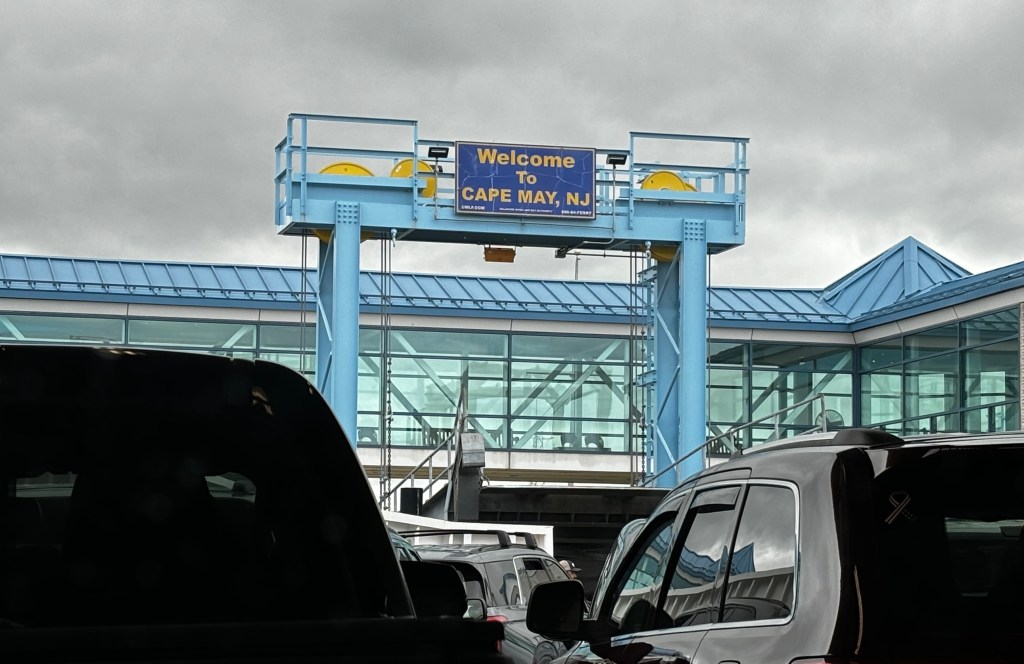
The next morning we boarded the ferry in Lewes, Delaware.
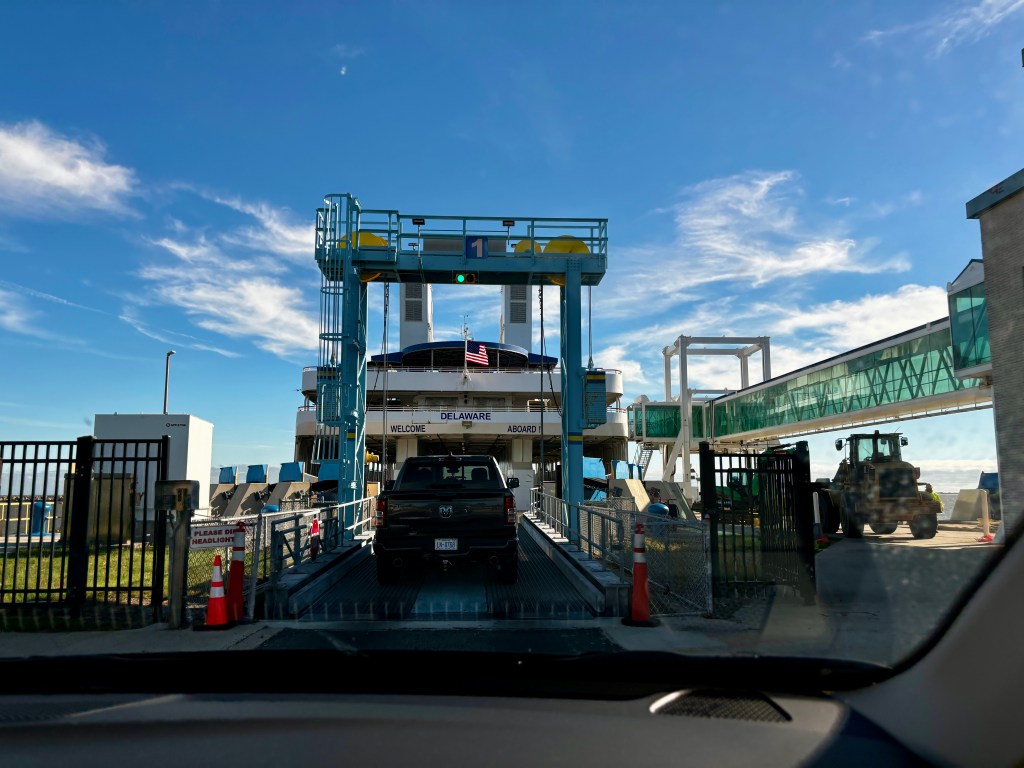
Randy drove our rental car onto the Cape May-Lewes Ferry.
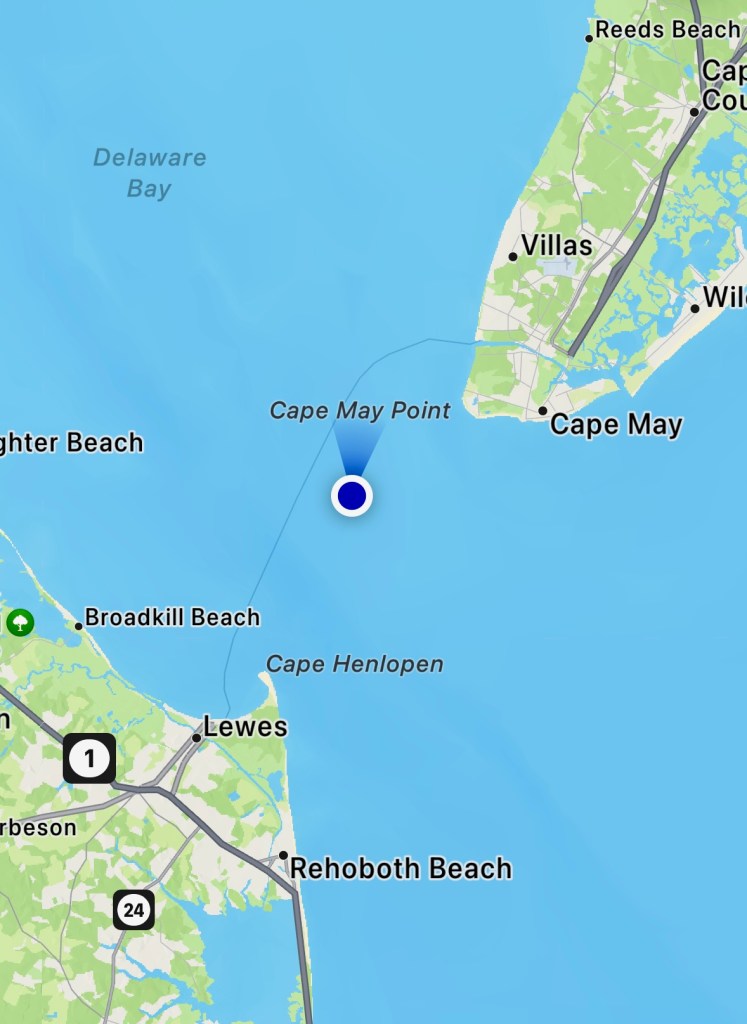
Screenshot

The journey to New Jersey was 17 miles across and took 85 minutes.  It was pretty delightful. 
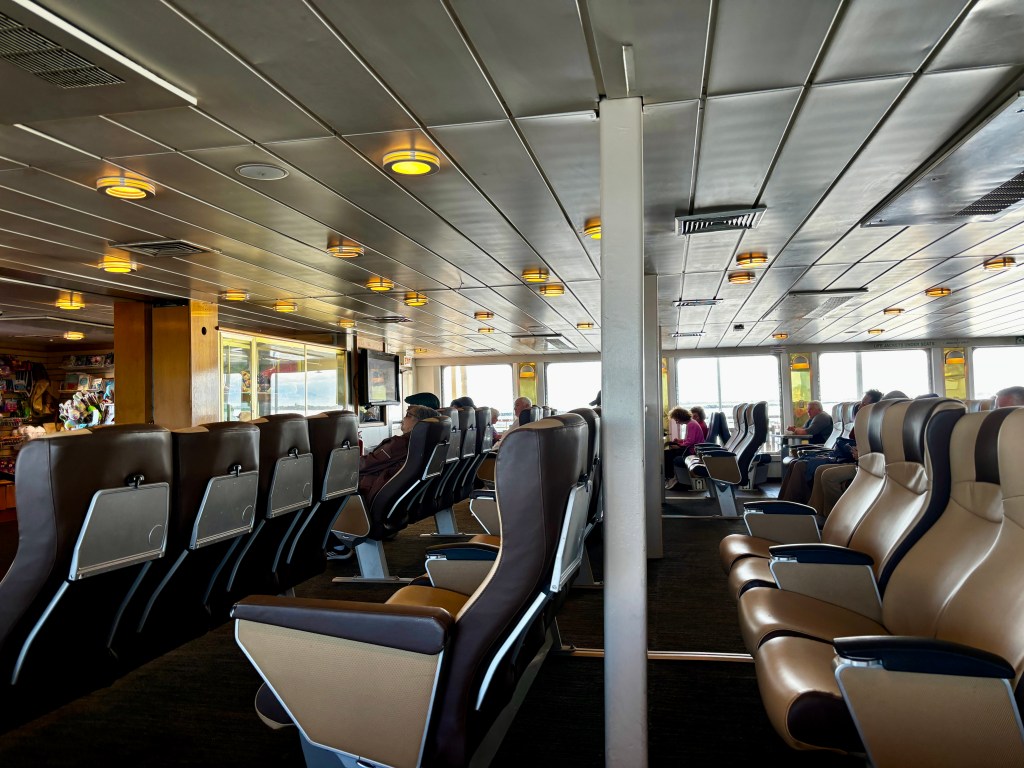
The ferry has transported 45 million passengers since 1964.

We were in Delaware in May, 2024.
Next Up:  We spend a few days in Cape May, New Jersey.
Posted in Uncategorized | 1 Comment

Wild Horses of Assateague

I read a book as a child that stayed with me.  I wasn’t a horse girl so I’m not sure why a book about horses made a lasting impression.

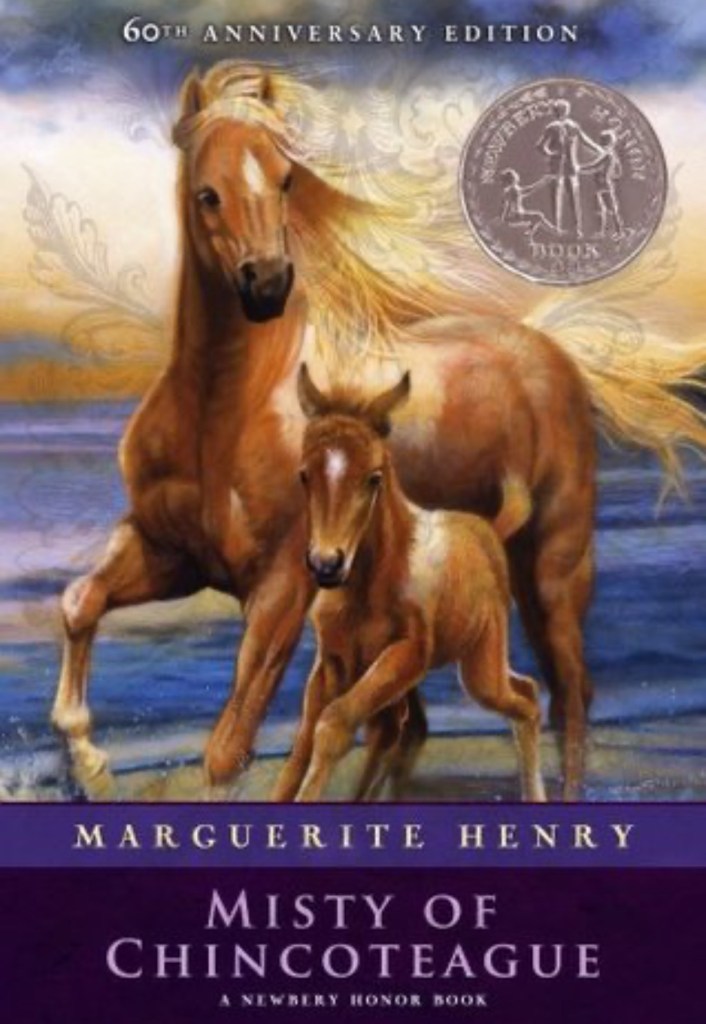
Misty of Chincoteague was written by Marguerite Henry and published in 1938.  It was a Newberry Honor Winner in 1948.  I probably read it around 1968.  There have been 165 editions published.  

Over the years, when I heard reference to the wild horses of Assateague, the memory of this book would resurface. When we decided to visit this area, seeing the wild horses on Assateague became part of the itinerary.

The origin of the horses, as explained in the book, is that horses were freed, or stranded, or marooned, on the island when a Spanish ship went down hundreds of years ago.  Over time, they became wild and adapted to a harsh landscape.

The more verifiable history is that 300 years ago, settlers on the mainland placed their animals on the island to pasture.  This allowed owners to avoid paying the grazing tax that would have been due if they kept their horses on the eastern shore of the mainland. (The horses roaming the island are descended from those original horses with DNA introduced from others over the centuries.) Again, over time, they became wild and adapted to a harsh landscape.

Native American’s used to visit the island known as Assateague.

In later years it had periods of tourist development that ebbed and flowed.  A massive development called Ocean Beach was in the process of selling almost 6000 lots when a Great Nor’Easter hit in the spring of 1962.  As only thirty lots had been built and everything in the region was leveled after the three day storm, Ocean Beach was abandoned. 

The epic storm set the stage for President Lyndon Johnson to declare Assateague Island a National Seashore in 1965.

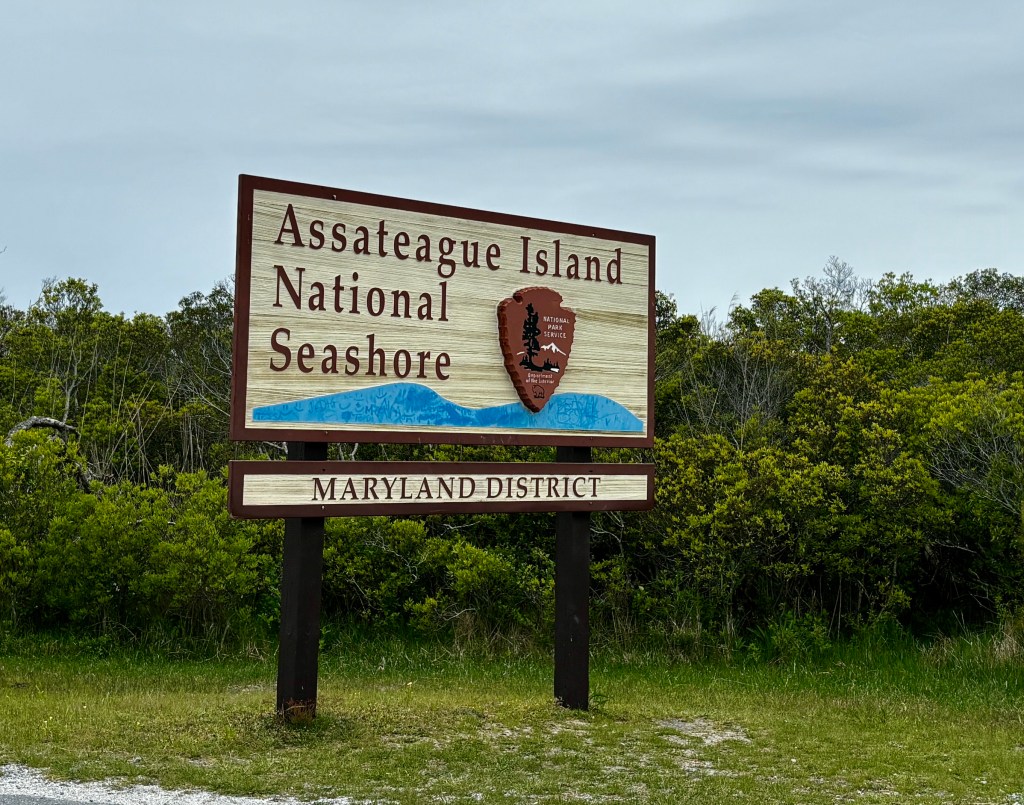
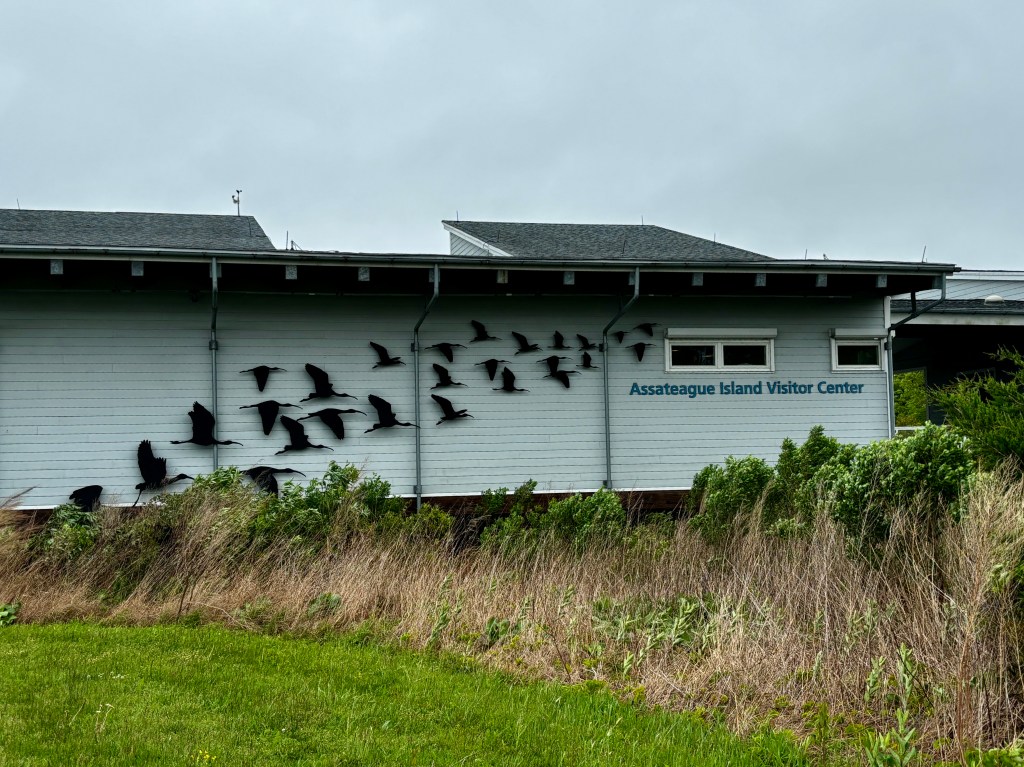
We visited the Assateague National Seashore Visitor Center.

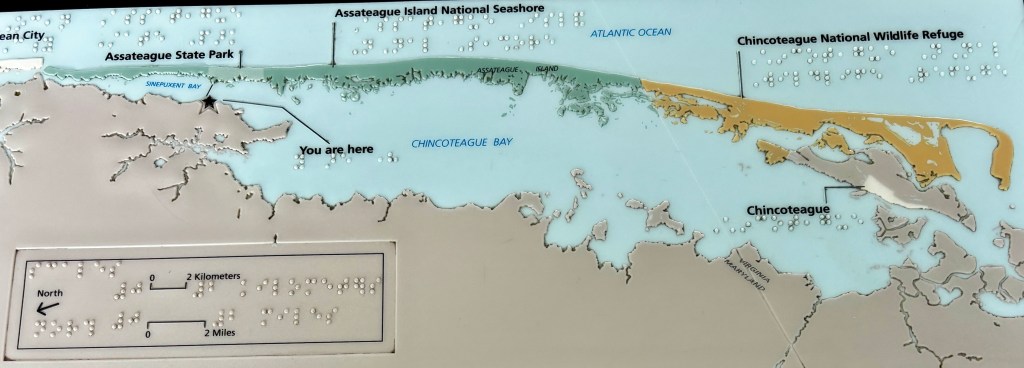
Assateague is a 37 miles long barrier island. It is the outermost point of the eastern United States.  The island is divided into the Maryland portion (Assateague) managed by the state of Maryland and the National Park Service and the southern half, managed by the state of Virginia.

The southern horse population is owned and managed by the  Chincoteague Fire Department.  They have a spring roundup where water cowboys round up  the horses to swim to Chincoteague for auction.  This helps to manage the population and create income for the fire department. Following the sale, the adult horses are then led to swim back to the main island.  The July 2024 version of the event is the 99th in history.  (The pony swim and round-up is the major plot line of the book I read so many years ago.)

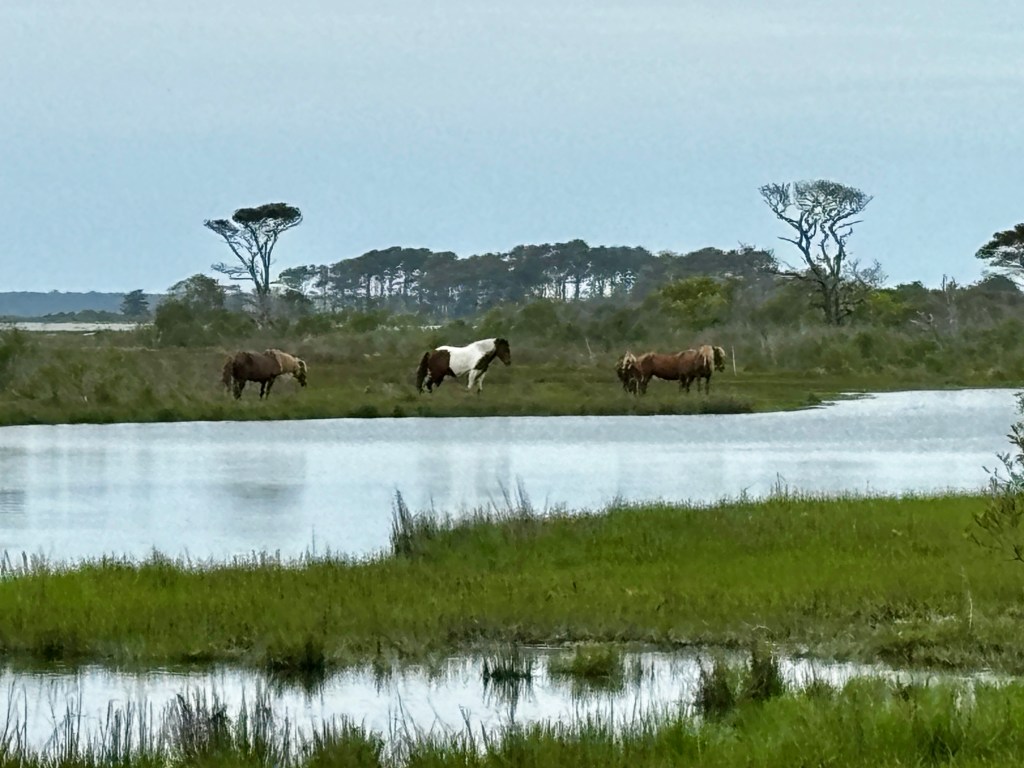
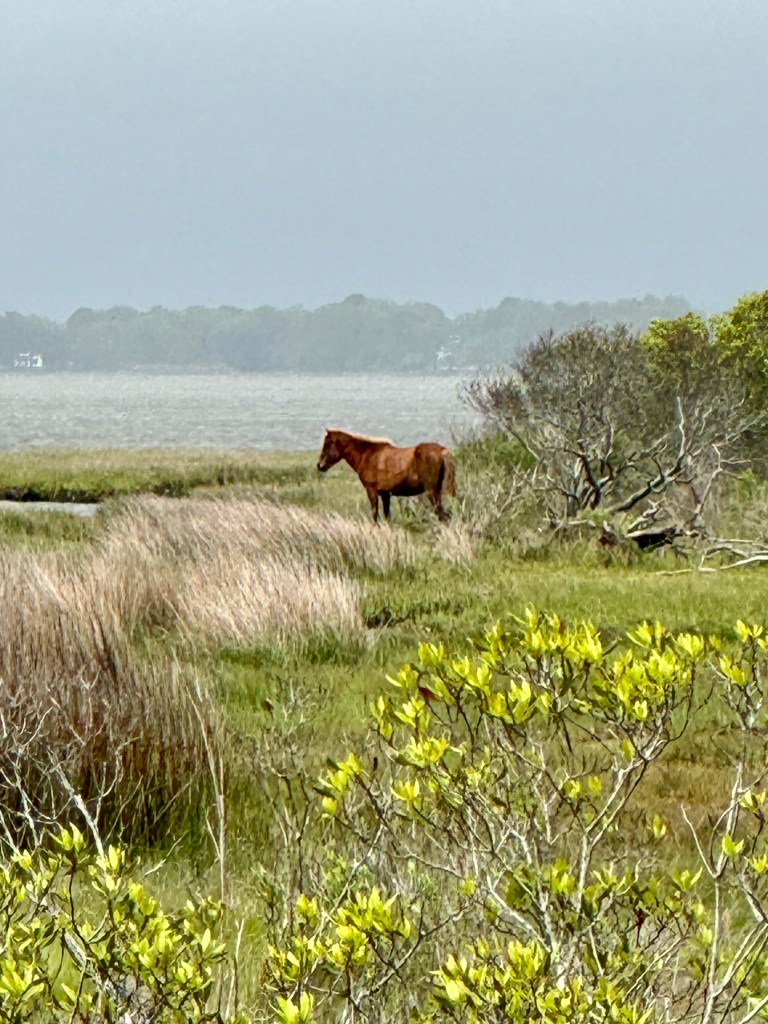
We visited the north side of the island, and saw the horses managed by the NPS.  These horses are left to be wild with minimal human involvement.   

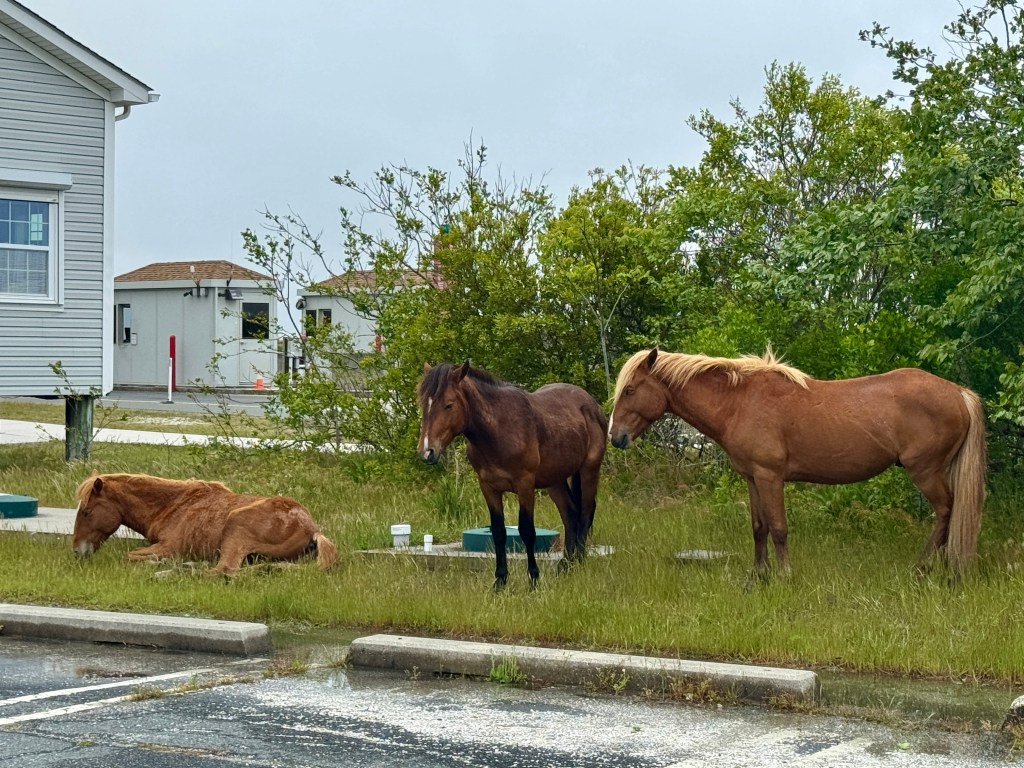
Of course, the horses can decide to come to civilization whenever they want.

The exception to human initiated involvement is to control when mares are able to be pregnant.  This is done by vaccinating selected mares by rifle dart.  This restricts the number of pregnancies each mare experiences. Fewer pregnancies in the herd keeps the mares healthier, the gene pool less saturated, and the herd size at a level the island can maintain.

This practice of supplying vaccines to selected mares was unproven when it was introduced more than 30 years ago but has proven very successful. The practice has been replicated in other places.

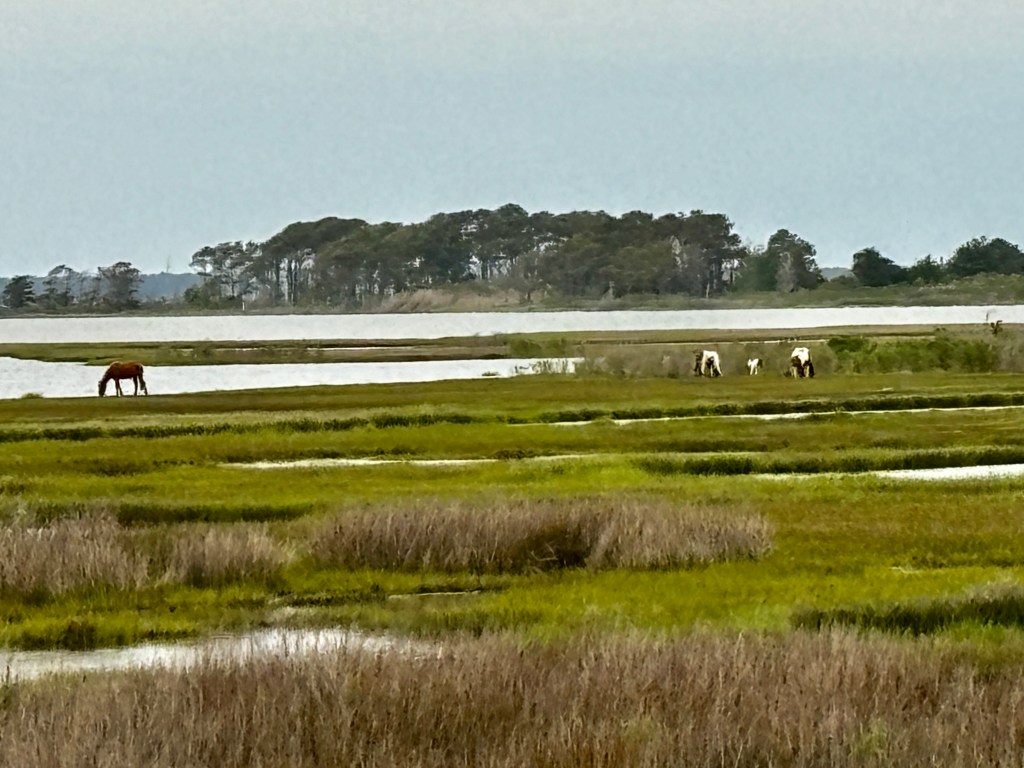
We went to Assateague twice, once in the evening and again the following morning.  We saw several groups of horses each time.

We learned that the Assateague horses appear bloated because they eat so much salty sea grass.  This necessitates them drinking a lot of freshwater available in island pools.

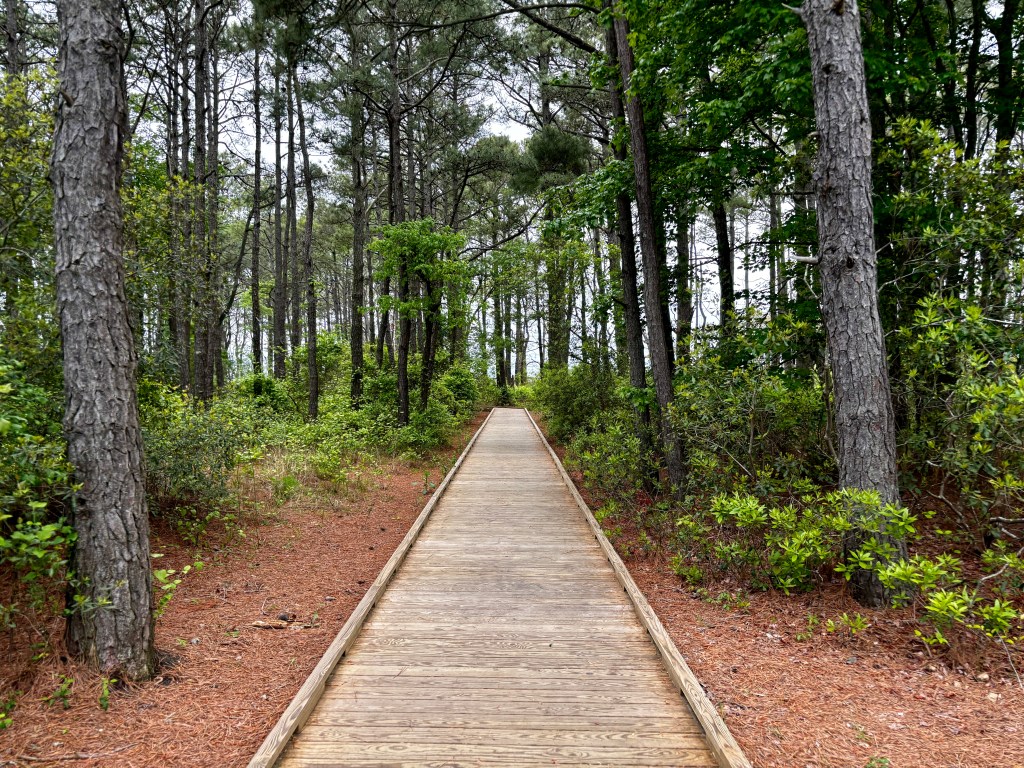
Walkways were constructed to assist in viewing.

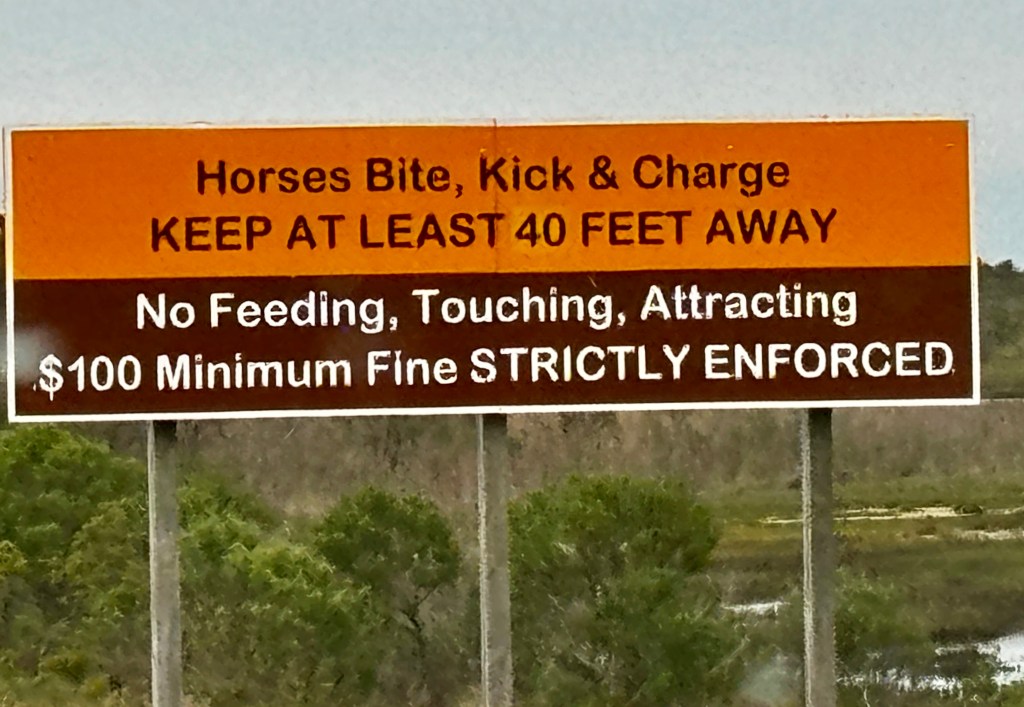
There are many signs and reminders to stay back from all wildlife, including the horses.

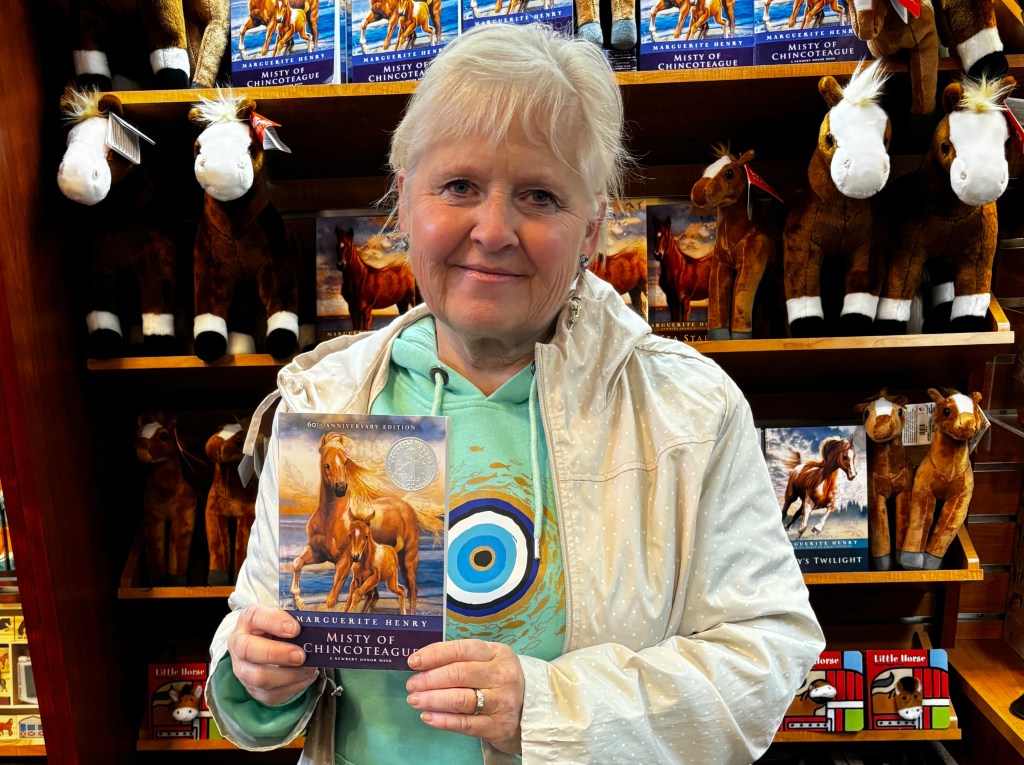
In the visitor center bookstore, they sold the 60th Anniversary Edition of the book I read so long ago.  I bought it and read it again. That was coming full circle!

The visit, and re-reading the book, were both worthwhile. But, I’m still not a horse girl!

We were on Assateague in May 2024.

Next Up: Delaware – a new state for us

Posted in Uncategorized | 1 Comment

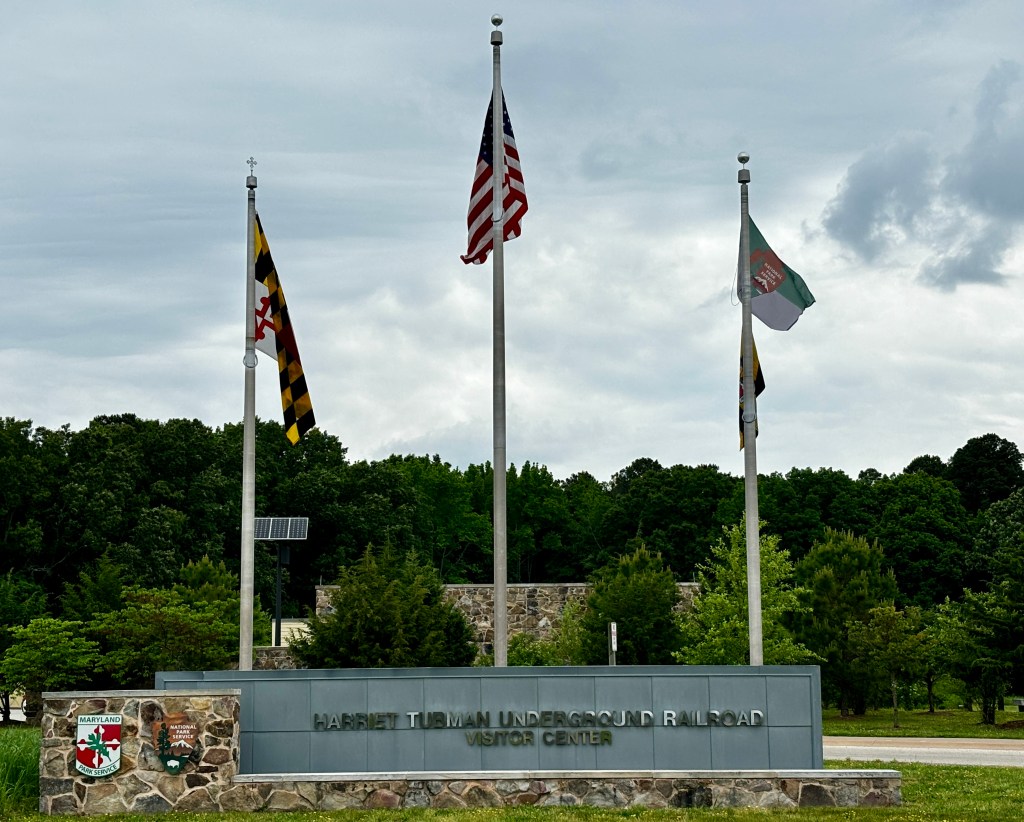
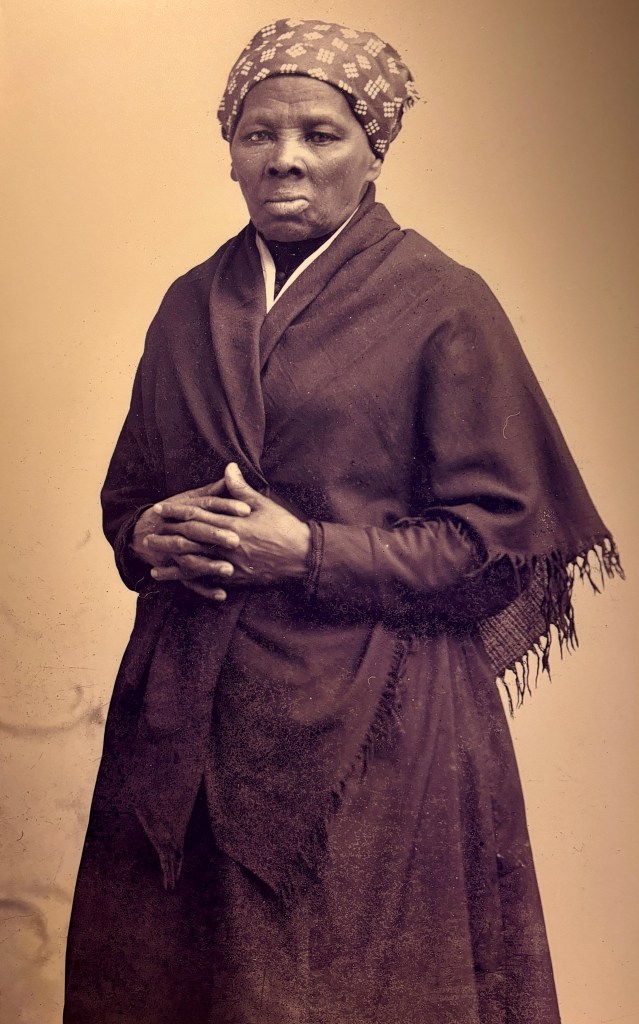
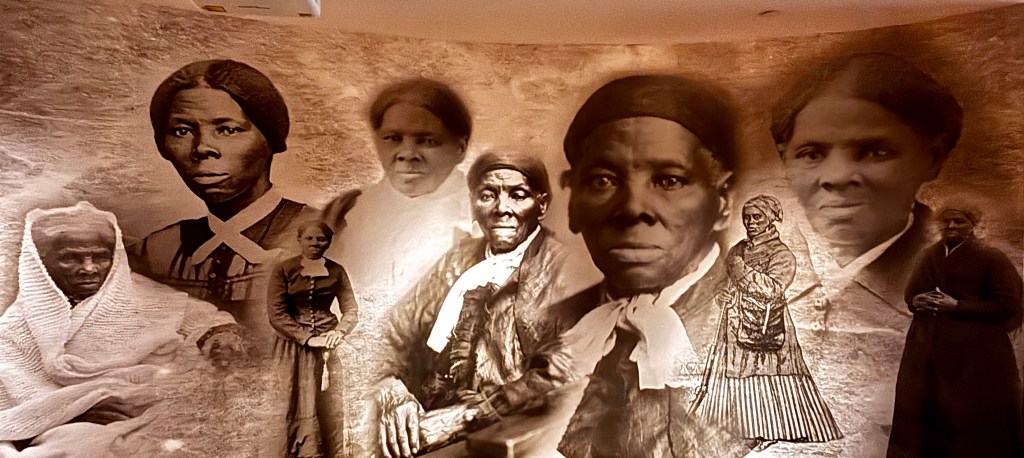
Harriet Tubman National Historic Site

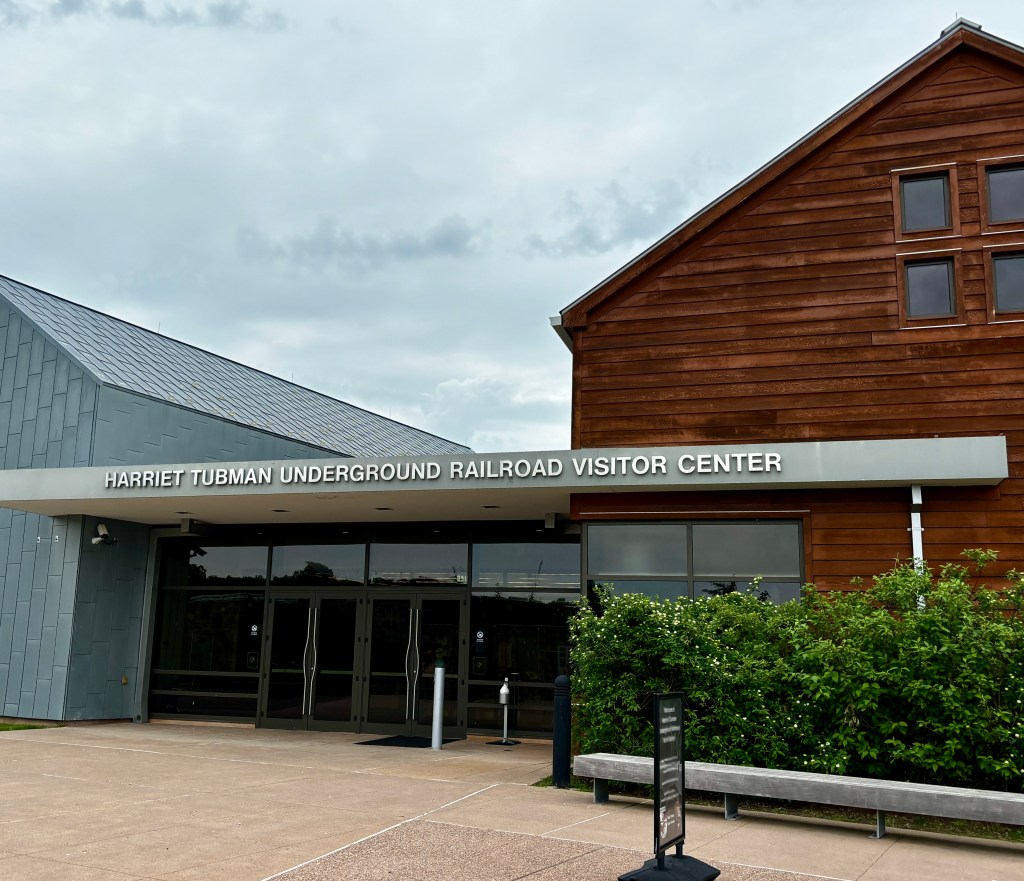
The Harriet Tubman National Historic Site is one of many commemorating her along routes of the Underground Railroad.  

This site is a combined effort between the National Park Service and Maryland State Parks.

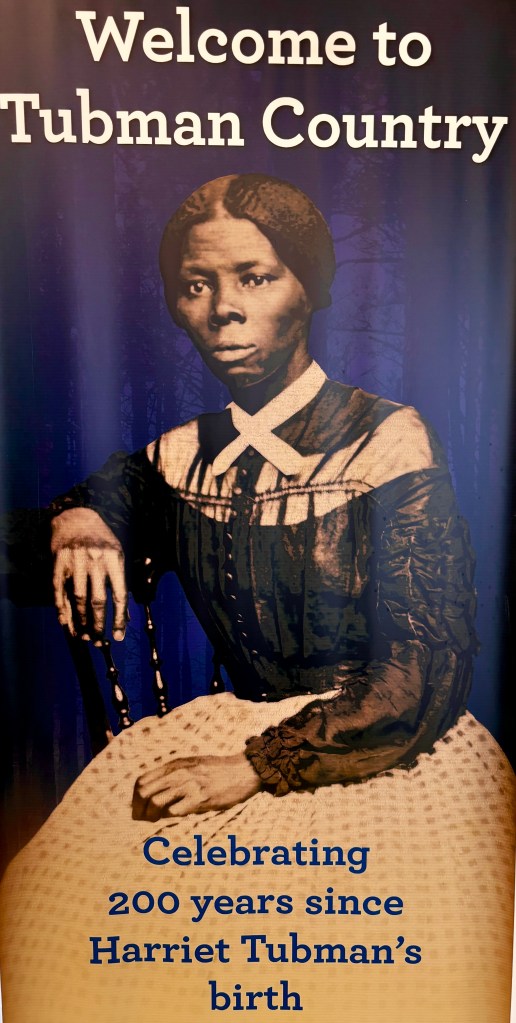
The girl who would become Harriet Tubman was born on the eastern shore of Maryland in 1822. Her childhood name was Araminta Ross.  She was born of people who were enslaved, the middle of nine children.

Araminta witnessed her older sisters being sold away and was haunted by the memory. Every time a white man came to the farm, they wondered who might be next.

At age six, the man who owned her began hiring her out to others.  One farmer had her hunting muskrats.  She suffered beatings as a child and the scars were evident throughout her life. 

As a young teen Araminta was hit in the head by an iron weight.  The weight was thrown at an enslaved young man but hit her.  Her skull was broken and she was still expected to do her work in the field. Araminta recovered over the next months but suffered from epilepsy and headaches throughout her life.  She felt her injury opened a direct connection to God that she relied on throughout her life.

“Minty” married a free black man named John Tubman.  In 1840, half of the blacks in Dorchester County, Maryland were free. 

Araminta changed her name to Harriet.  A short time later, learning that she was about to be sold, Harriet decided to run.   She had a strong reserve, physical strength and belief that God meant her to be free.

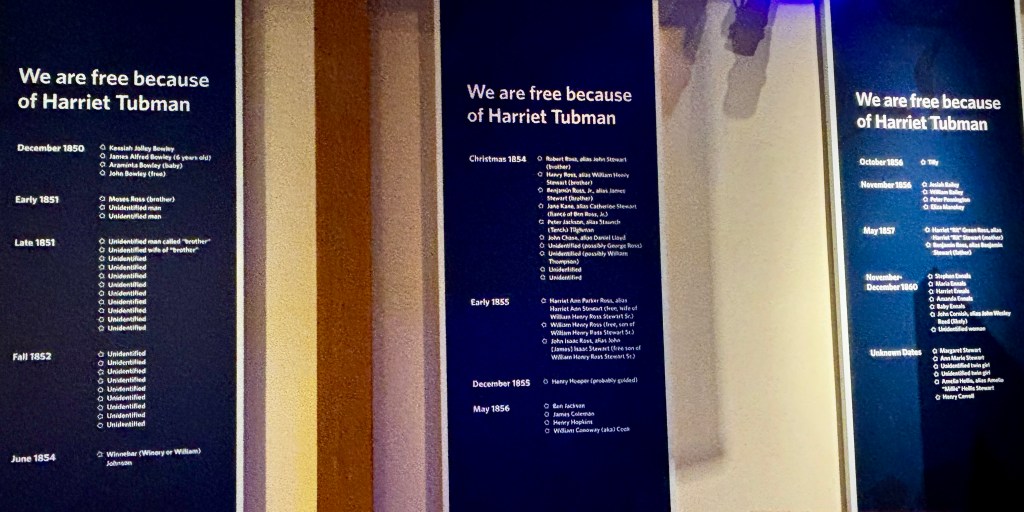
Harriet made it to Pennsylvania. Instead of going further north and enjoying her new freedom, she chose to go back and help family members, and others, escape to freedom.

It devastated Harriet that her husband John chose to stay in Maryland.  She “dropped him out of her heart” and went on.

Harriet returned to Maryland at least a dozen times, over a decade, and directly rescued 70 people as a conductor along the Underground Railroad.  Free blacks and sympathetic whites helped escaping enslaved people.  

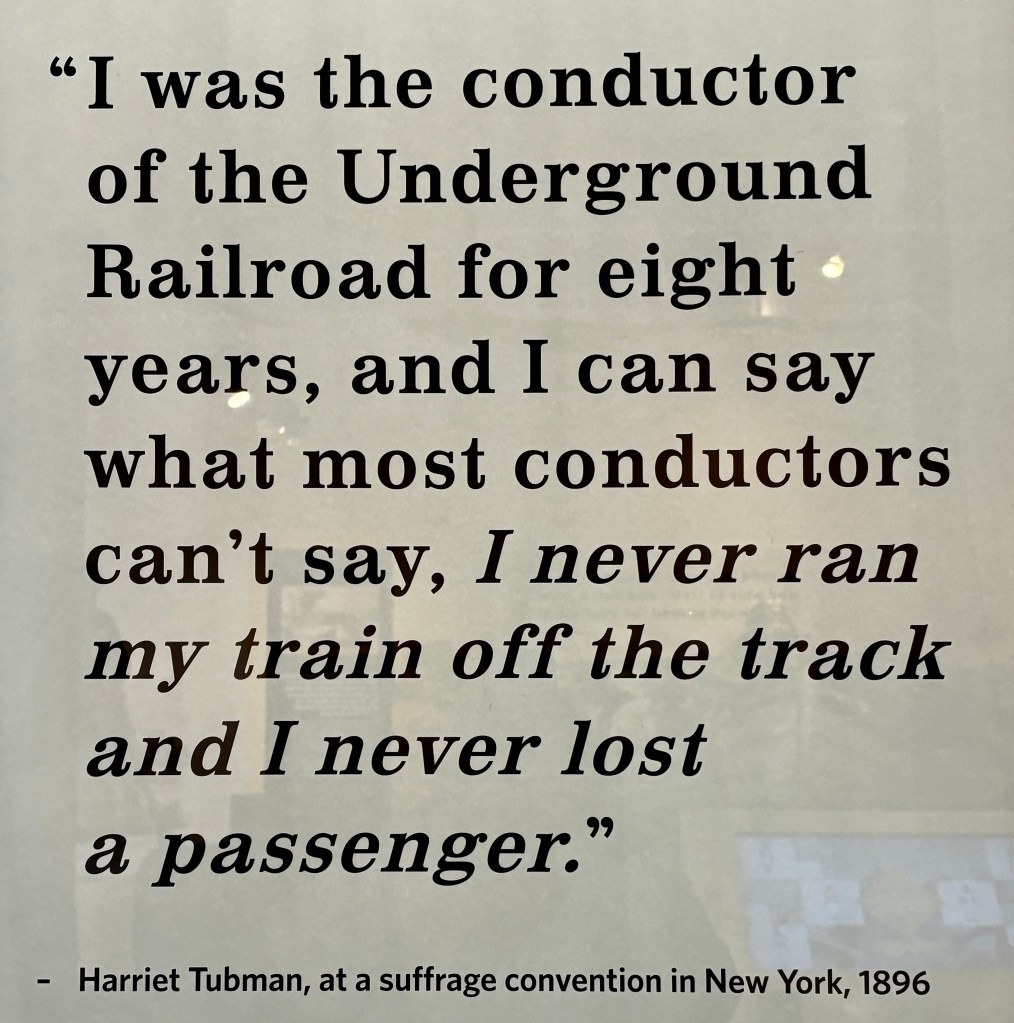
Harriet never lost a passenger on the underground railroad.

When the Civil War began, Harriet worked as a nurse, a spy, and a soldier for the Union.

She eventually settled in New York and assisted with the Women’s suffrage movement.  Harriet Tubman died at age 85 in 1913.

In 1944, the SS Harriet Tubman was launched as a Liberty Warship in WWII, the first ship named after a black woman.

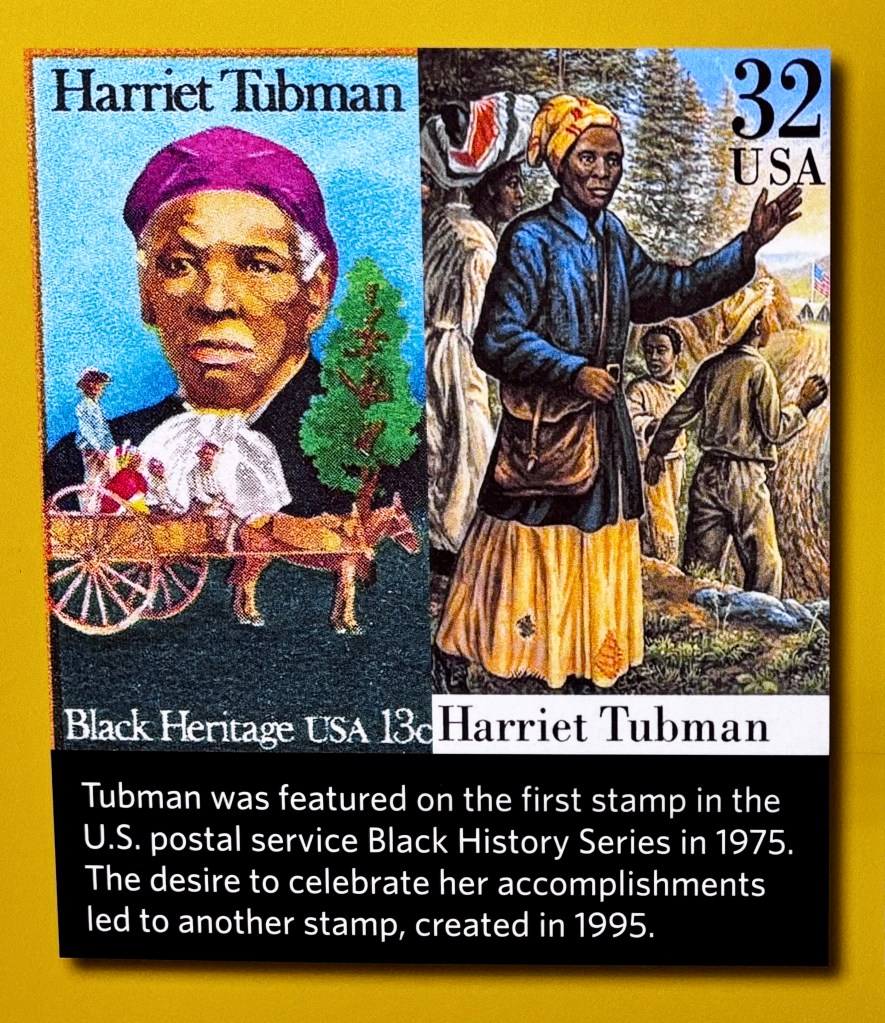
Harriet Tubman was honored with postage stamps in 1975 and 1995.

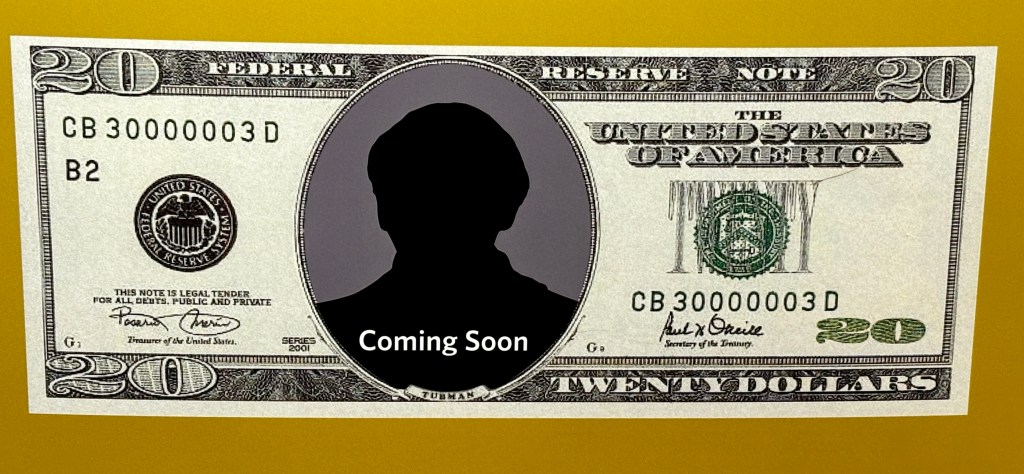
The Harriet Tubman $20 is set to be released in 2030.  The US $20 bill is the most used bill in the world.

We were at the Harriet Tubman National Historic Site in May 2024.

Next Up: A childhood memory revisited

Posted in Uncategorized | Leave a comment

Afternoon at Antietam National Battlefield

We visited Antietam National Battlefield which consisted of driving a self guided tour around the battlefield, the visitor center and the national cemetery. There are paths to walk along the driving route but as we were there for only an afternoon, our time was mostly spent on the driving route and visitor center.

Eighteen months into the Civil War, neither side could assume victory.  The confederacy, under General Robert E. Lee had been fighting well in Virginia.  He decided to cross the Potomac River into Maryland in September 1862.   This was his significant foray into lands occupied by the US Army.   He hoped to move through Maryland into Pennsylvania.

Lee’s Maryland Campaign resulted in four battles:  Harpers Ferry on September 13-15, South Mountain on September 14 and Antietam on September 17.   (The fourth battle, in Shepherdstown, happened while the Confederate soldiers were in retreat after Antietam.)

A US Army soldier found a copy of Lee’s plan of operations on September 13, 1862 which allowed General McClelland to arrange his armies.   Instead of returning to Virginia, Lee decided to make a stand at Sharpsburg, Maryland near Antietam Creek.

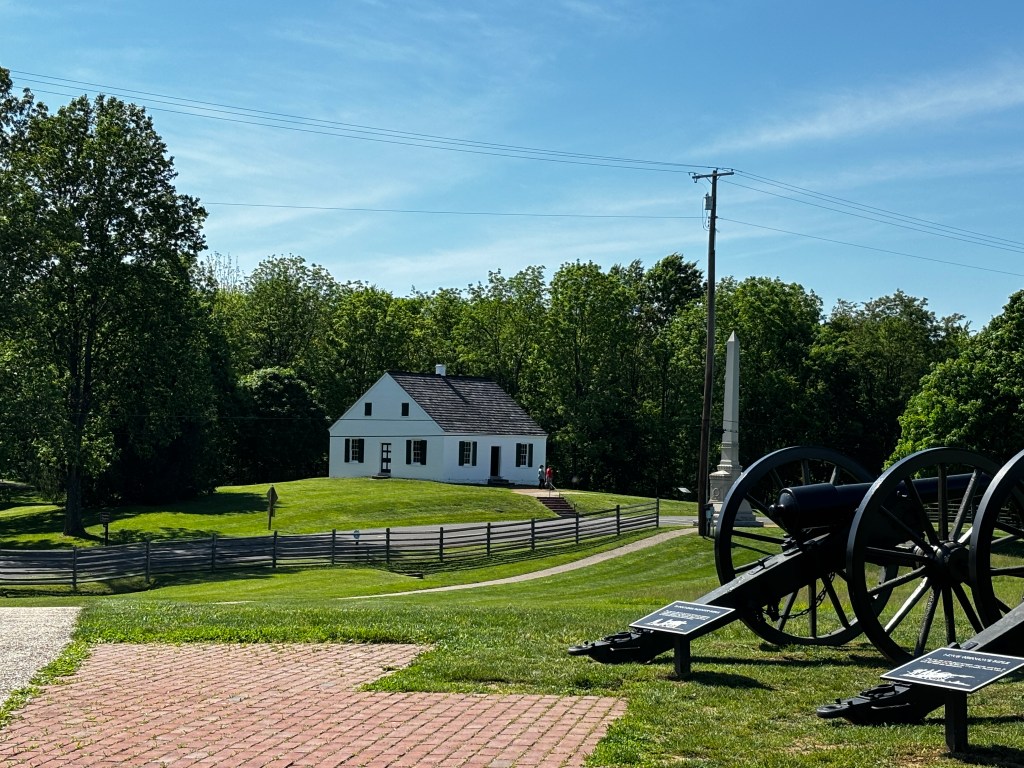
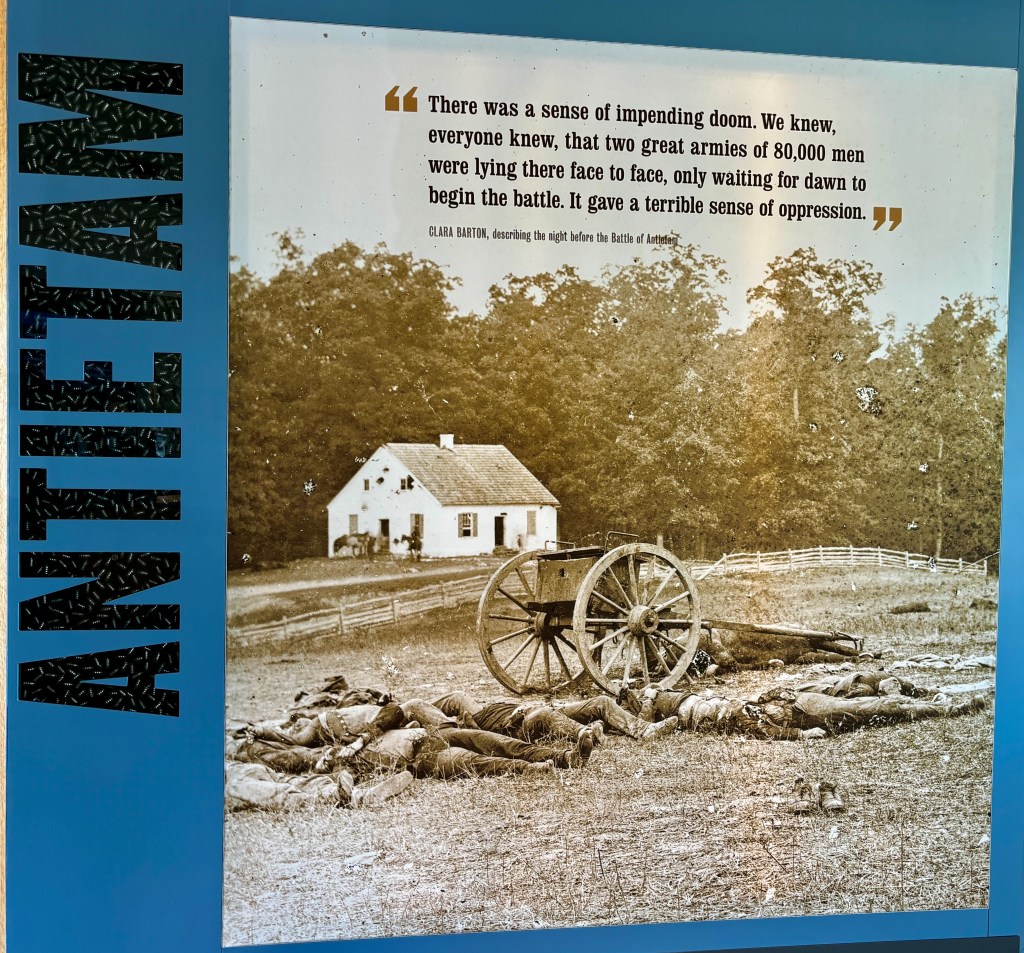
Confederate soldiers waited through the night around Dunker’s Church.

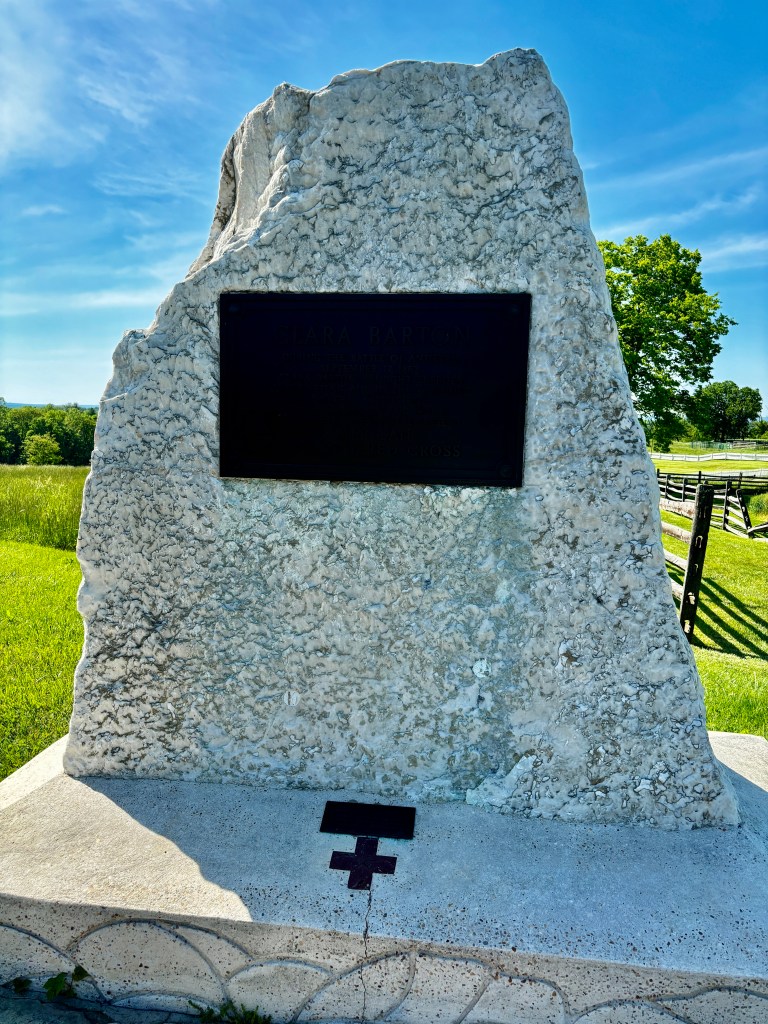
Clara Barton followed the army to battlefields to offer medical assistance.

At dawn on September, 17, 1862, US Army soldiers crossed Antietam Creek to engage Lee’s soldiers.  

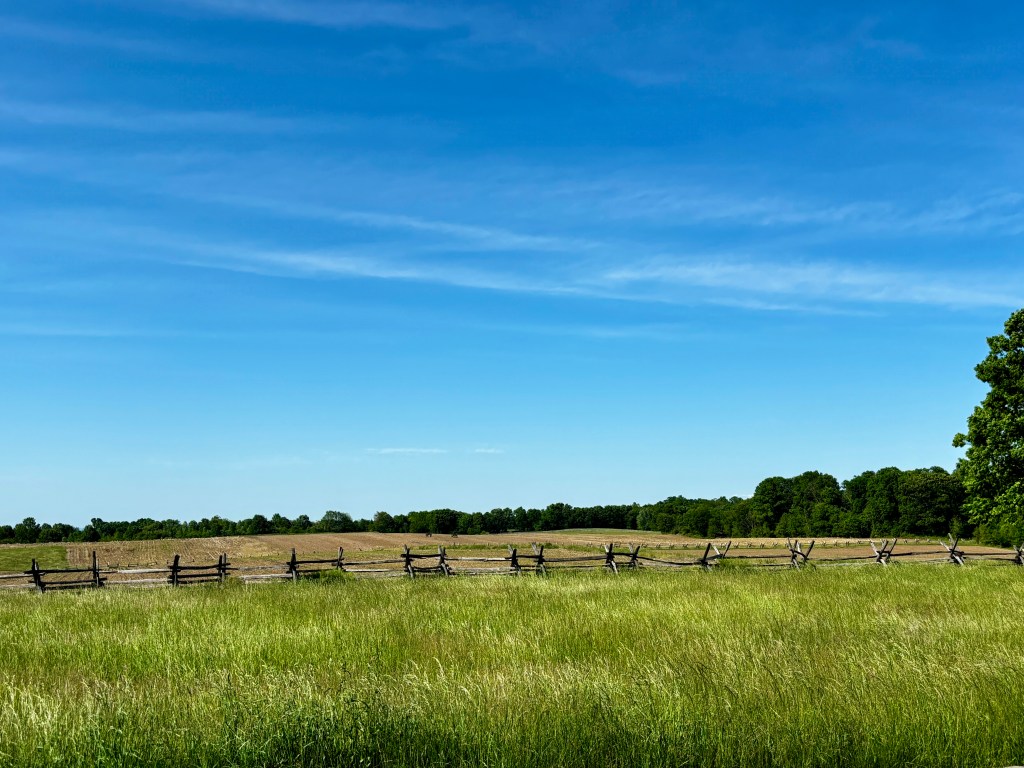
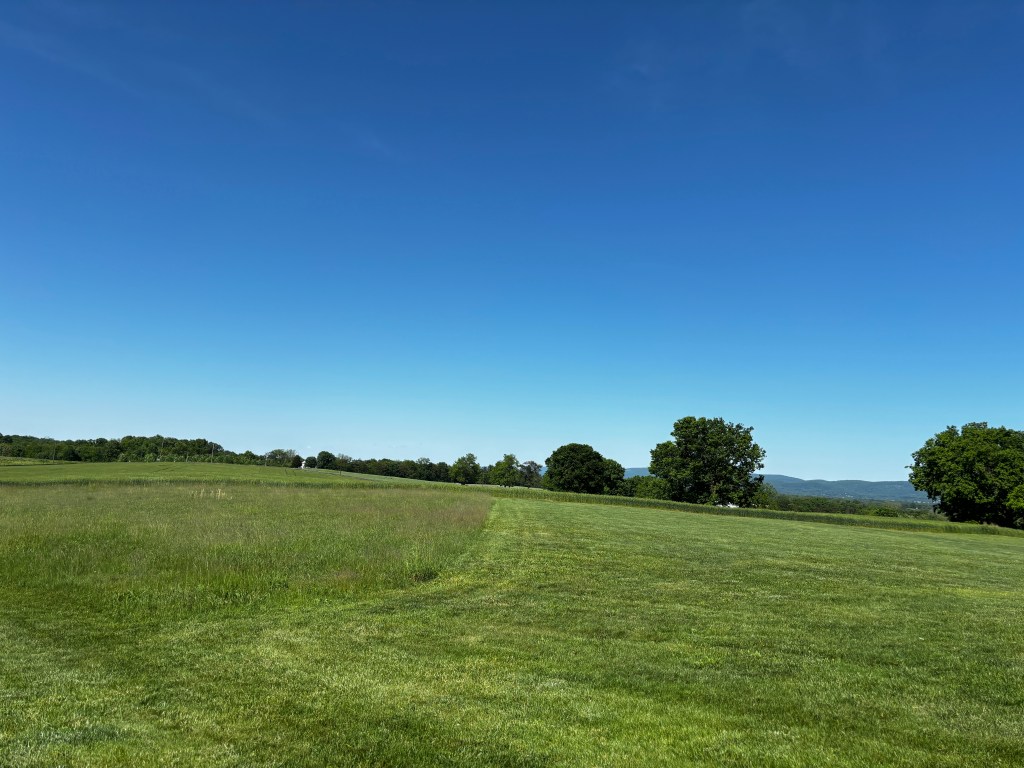
Some of the earliest and deadliest fighting took place in this cornfield. The cornfield changed hands several times throughout the day.  

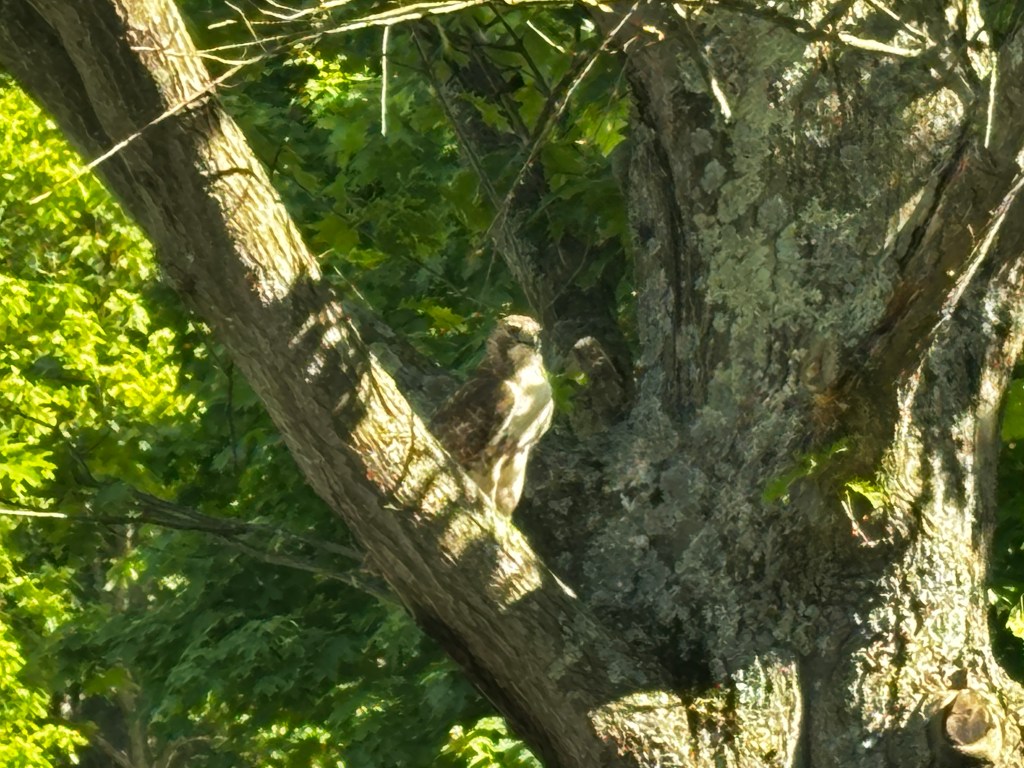
The fighting moved into the east and west woods.  (On this day we saw only a red tail hawk in the west woods.)

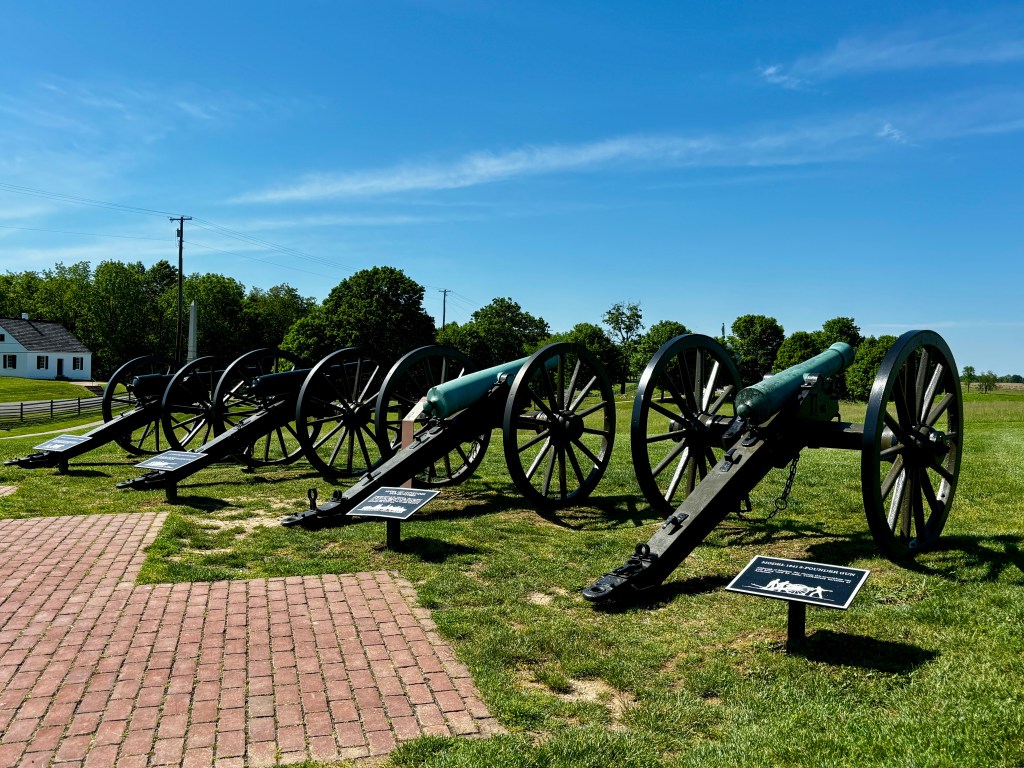
The open terrain benefited both armies as cannon fire could be set upon the opposite side.

Over 500 cannon (yes, the plural form of cannon is cannon) were in operation on the battle.

By late morning, the fighting shifted to Sunken Road, later named “Bloody Lane.”  It was the scene of a three hour stalemate.

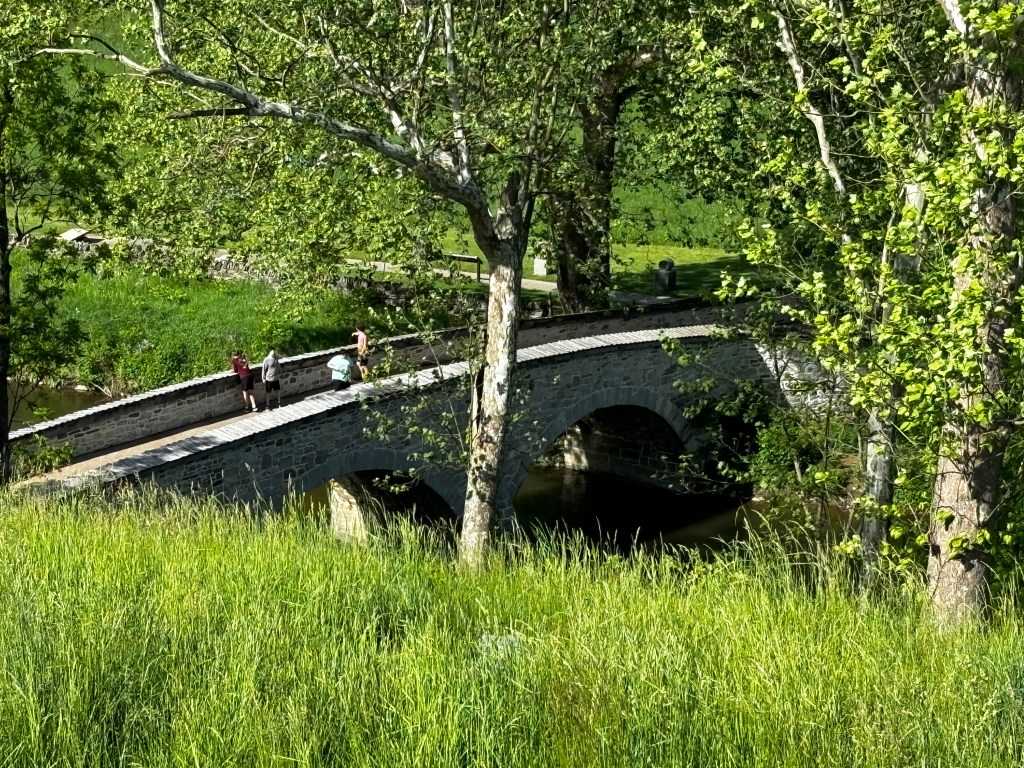
US Army General Burnside took the lower bridge and Union troops crossed Antietam Creek.  This action made the confederacy retreat towards Sharpsburg.

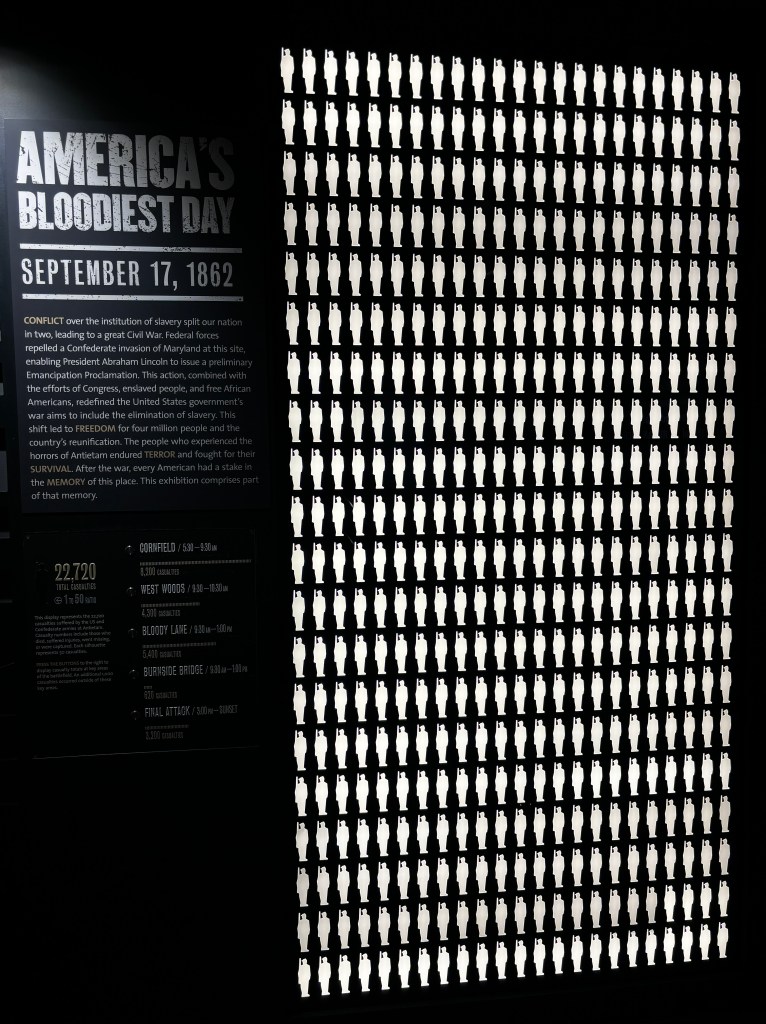
By evening, battle lines had not changed substantially.  Of the 100,000 soldiers who fought, nearly 23,000 were killed, wounded or missing.

The Battle of Antietam was the single bloodiest date on American soil. Each man symbol represents 50 real men, including those who were killed, injured and missing.

On September 18, Lee retreated back into Virginia.  As significant as the number of casualties were, the defeat also denied Lee a victory on northern soil.  

The 1200 residents of Sharpsburg generally hid from the horrors of the battle. However, they were still left with damage to their homes and farms.  They were left with bodies, artillery  and ammunition in their fields.

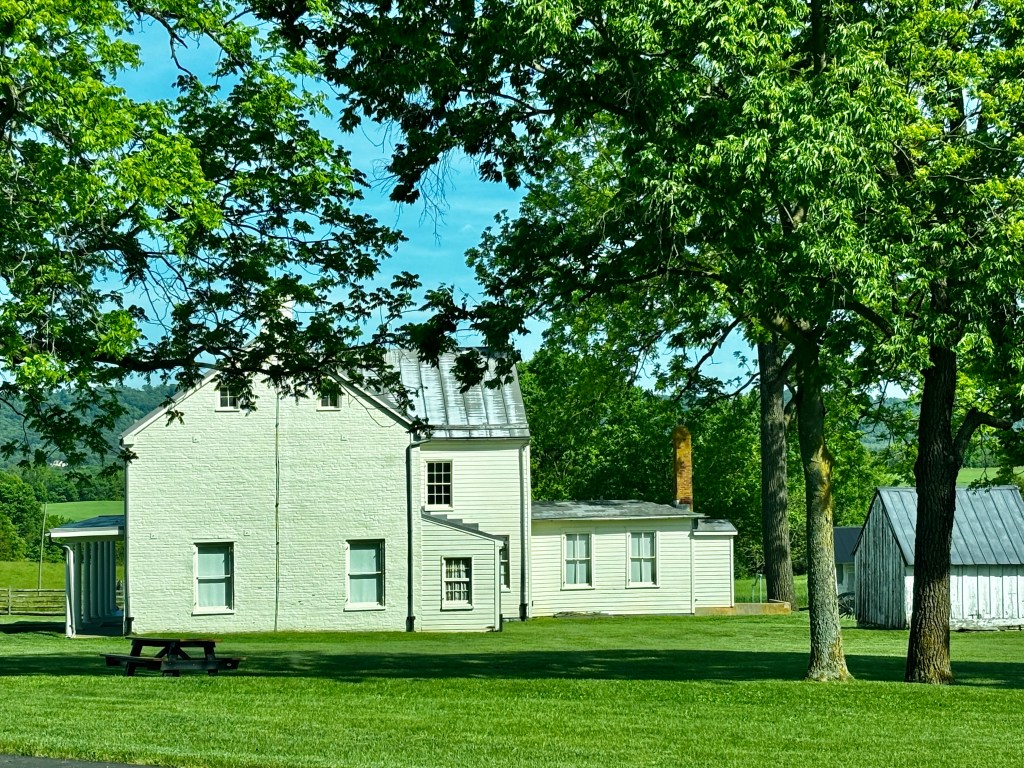
This was the Mumma Farm.  The family fled to safety prior to the battle and the house was occupied by confederate soldiers.  It was burned by the confederacy to avoid federal sharpshooters using the site.  That was the only act of willful destruction to the Sharpsburg community by either side.  

Later, when the federal government was reimbursing people for property damage, it declined to reimburse The Mumma family for their loss as it was deliberate damage by the confederacy. The family rebuilt the farm.

Five days after the Battle of Antietam, President Lincoln issued the Emancipation Proclamation, expanding the Union’s purpose from reunification to include the abolishment of slavery.

Although the writing is not visible in the picture, this monument is for Clara Barton. She, with her staff of 30, did what they could to assist the injured and dying.  They were in this area for three days before moving on to the next battlefield.

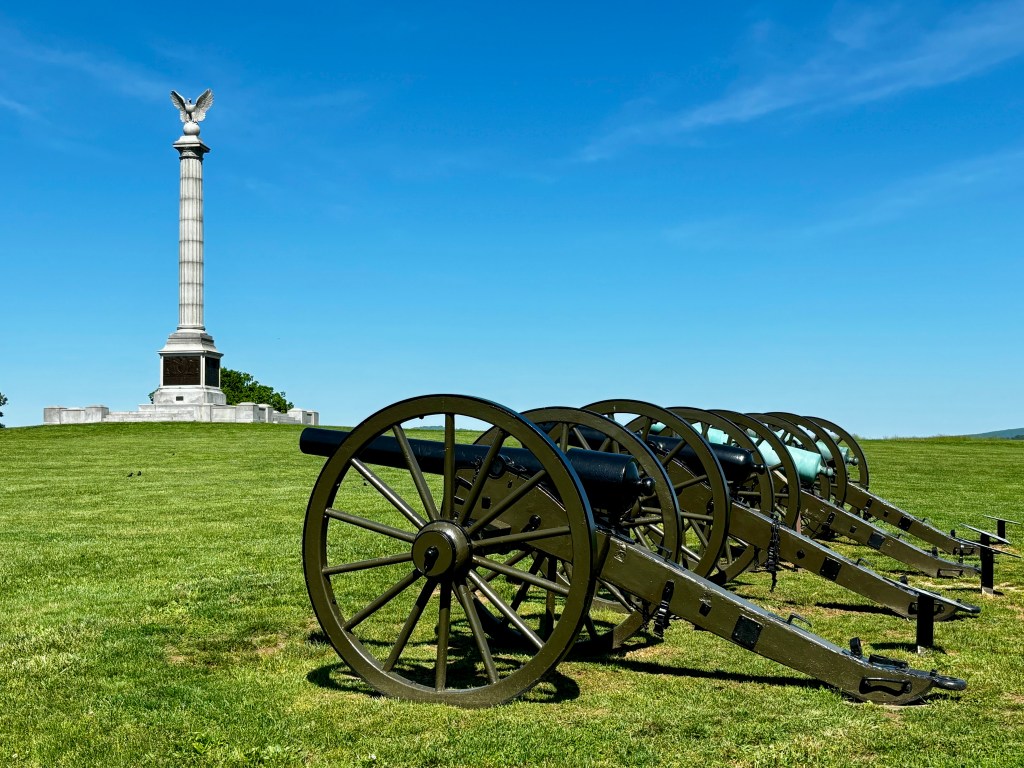
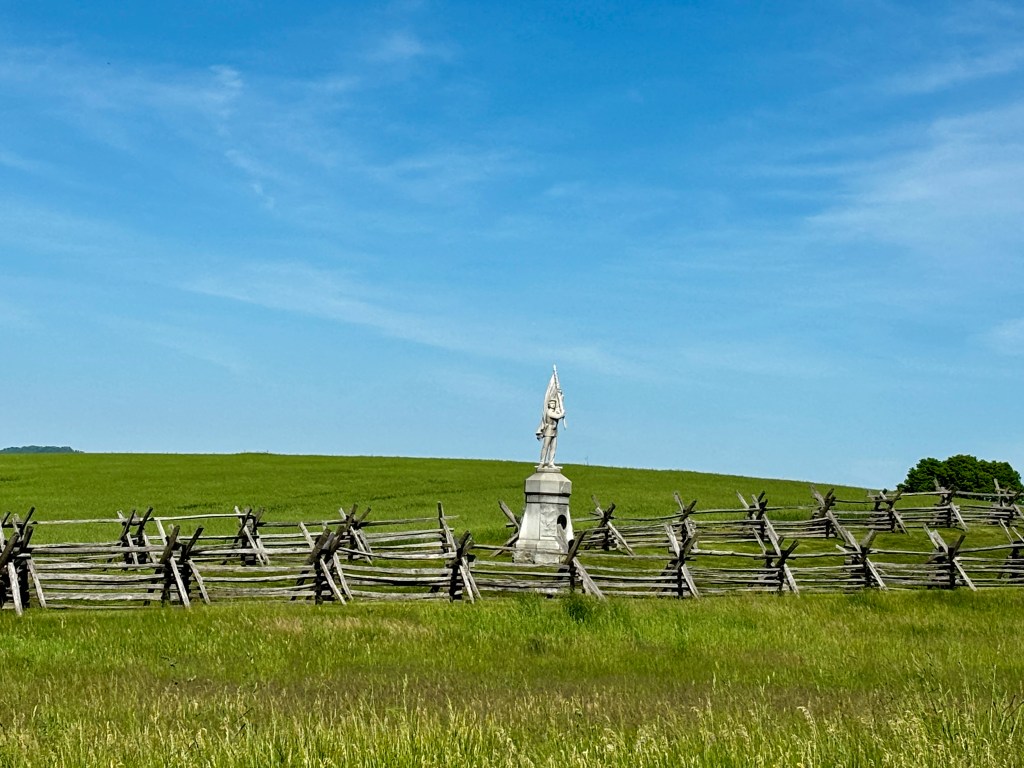
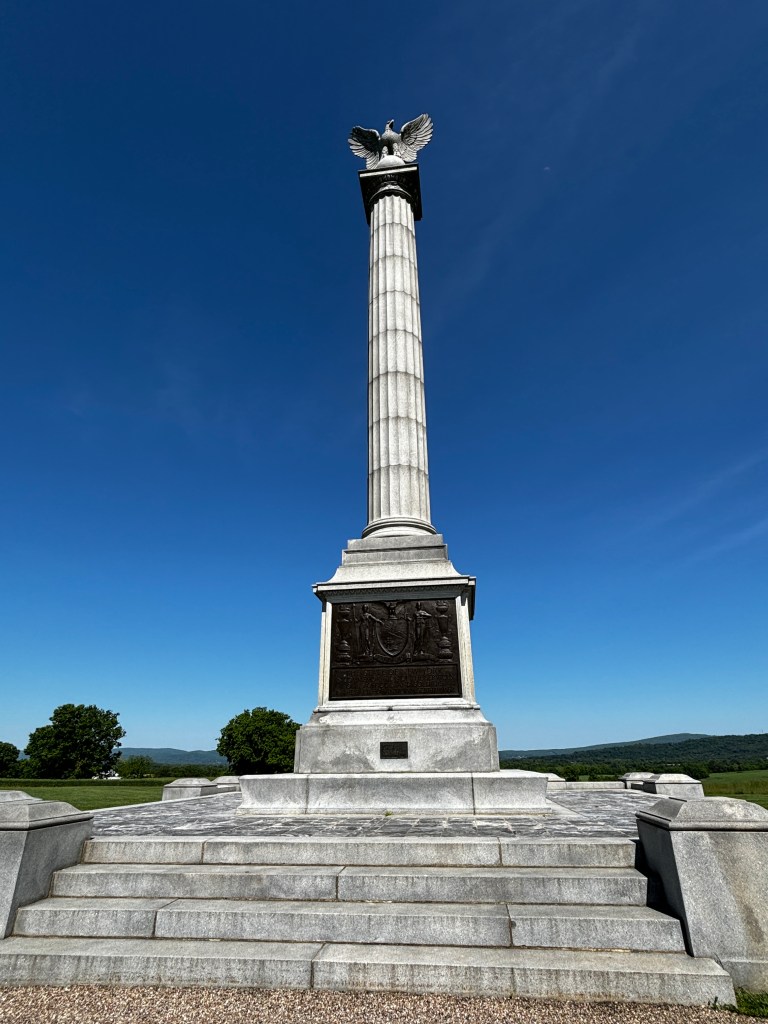
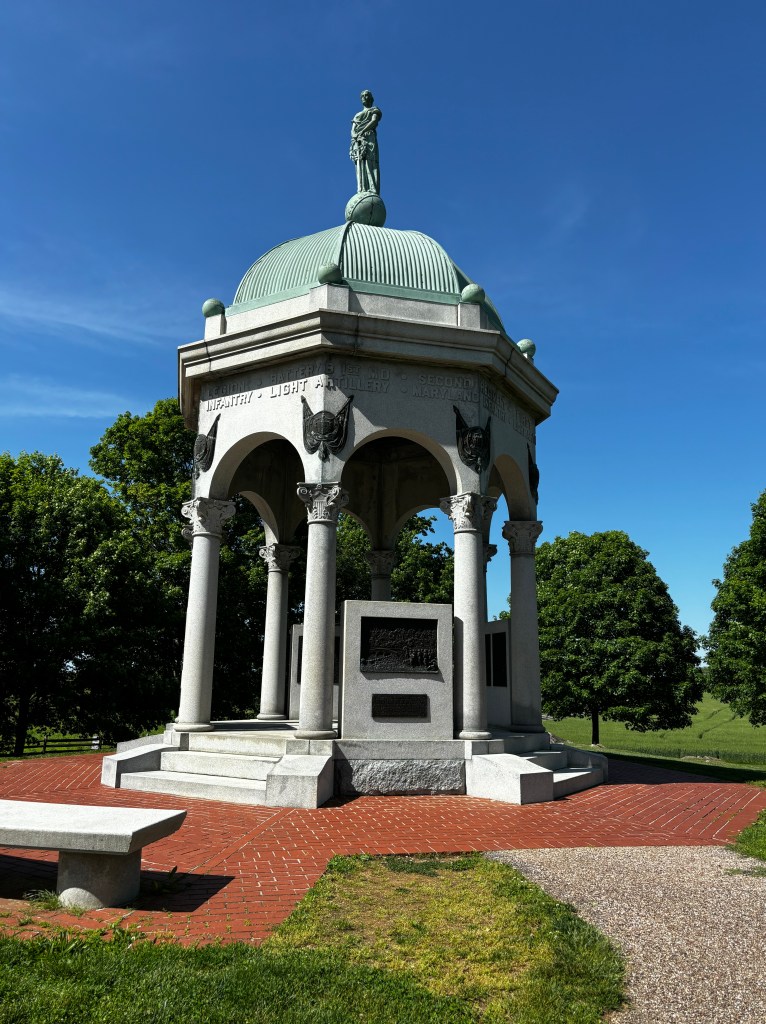
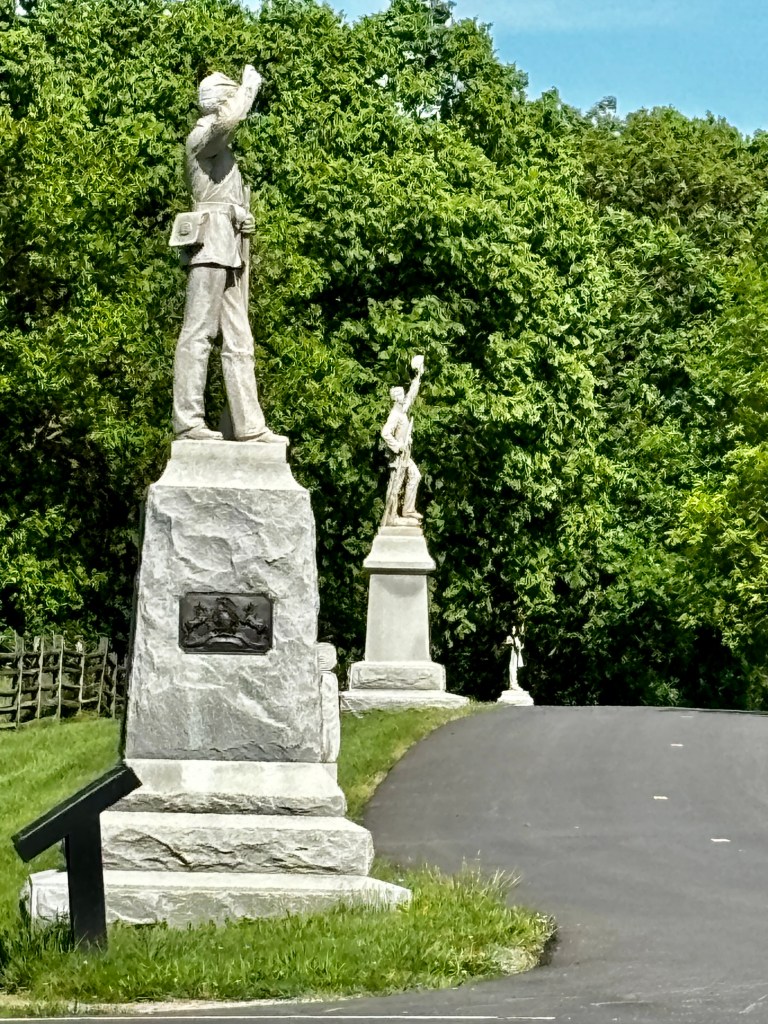
There were a number of monuments to specific people or to groups of soldiers who fought in the Battle of Antietam. Nearly all represent Union people or companies as the south did not have the funds to do so after the war.

This monument is from The State of New York commemorating their soldiers.

This one is to commemorate Marylanders who fought.

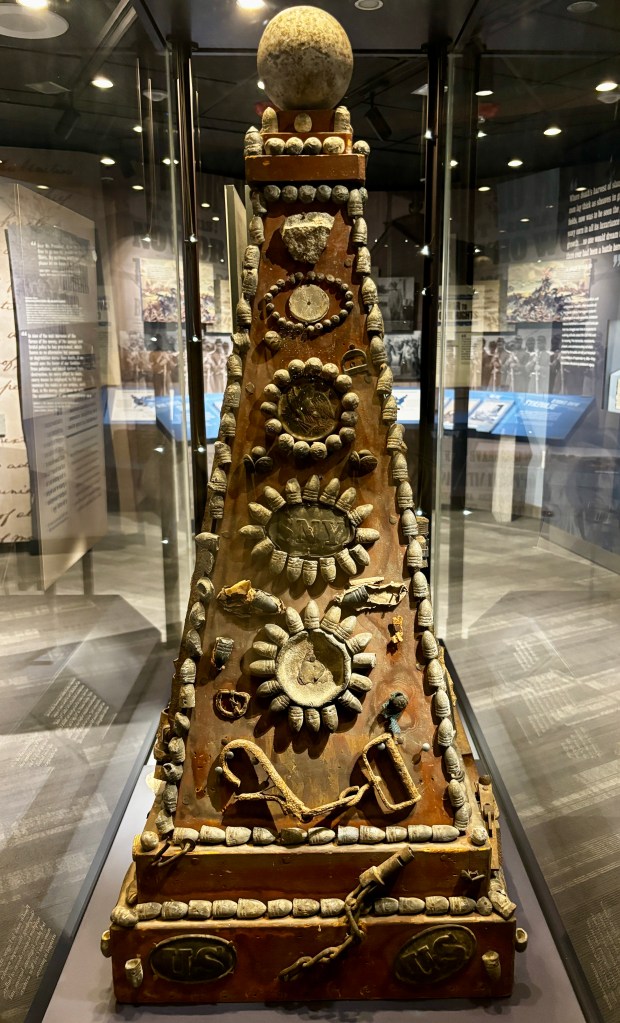
At the visitor center, we saw this sculpture made of battlefield remnants of bullets, buttons, belt plates and more. It is not known for sure who the artist was, but he is assumed to be from Sharpsburg.

The docent at the visitor center wanted us to remember three things from our visit to Antietam National Battlefield. First, that people lived in the area before and after the battle.  Second, it was the single deadliest day on US soil.  Finally, the results of the battle denied Lee his northern victory, ultimately denying the confederacy international recognition and support which might have altered the outcome.

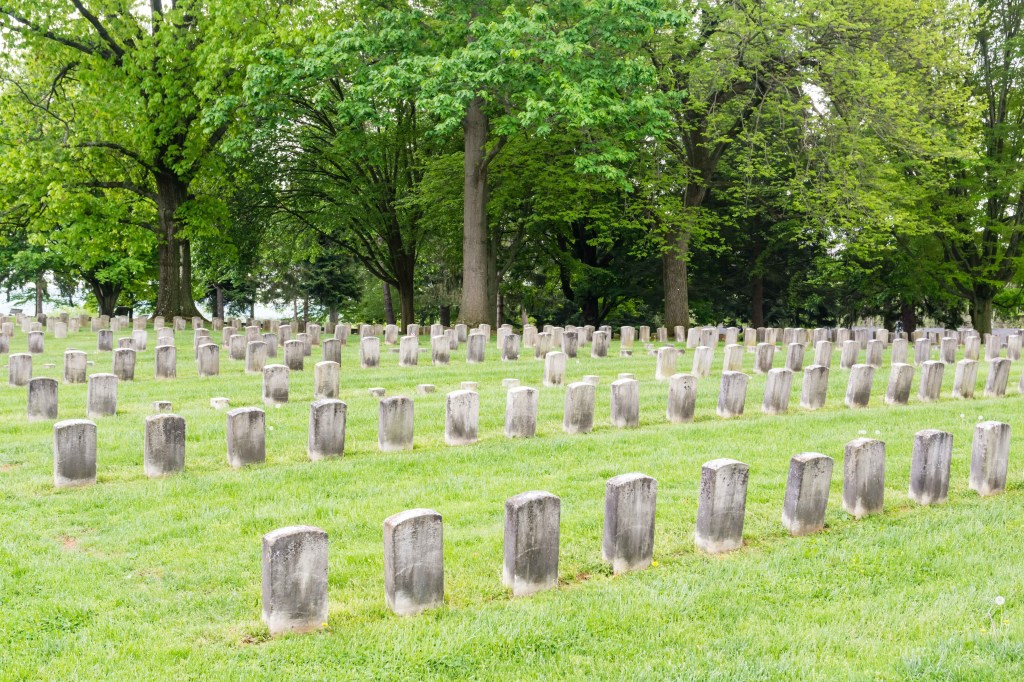
The Maryland Legislature created the Antietam National Cemetery with the intention to bury both the union and confederate dead there as a sign of unification.   It was the first land protected at the battlefield site.

However, lasting bitterness, and the south’s inability to fund burials for their soldiers, led to it only be used for Union soldiers.   Other cemeteries in the area hold confederate remains. More recently, soldiers and veterans of other warsincluding WWI and WWII, have been buried at Antietam National Cemetery.  Sadly, and not surprising, African American remains were segregated.

We were at Antietam National Battlefield in May 2024.

Next Up – Harriet Tubman

Posted in Uncategorized | Leave a comment

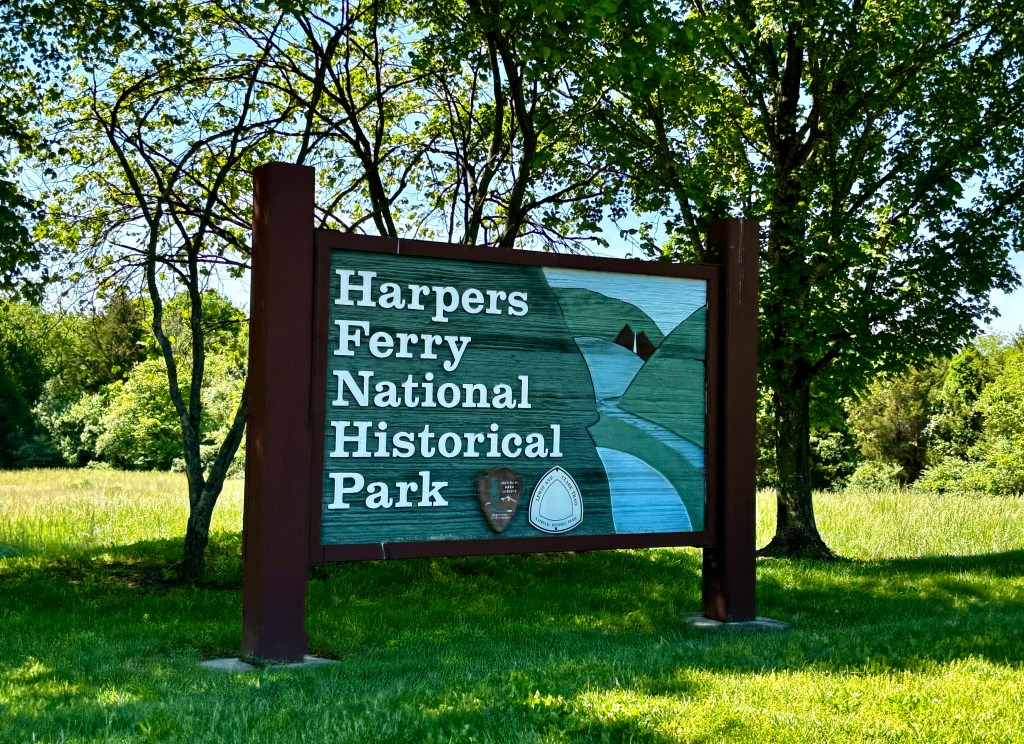
Morning in Harpers Ferry

We picked up our rental car in downtown Baltimore instead of going to get it at the airport.  The manager offered us a free “upgrade.”   The upgrade was to a mini-van which had lots of room we didn’t need.  Our rental was one-way Baltimore to Philadelphia. We thought maybe they were wanting to get the mini-van to Philadelphia, so we agreed.  (This rental car info will be relevant later in our trip.)

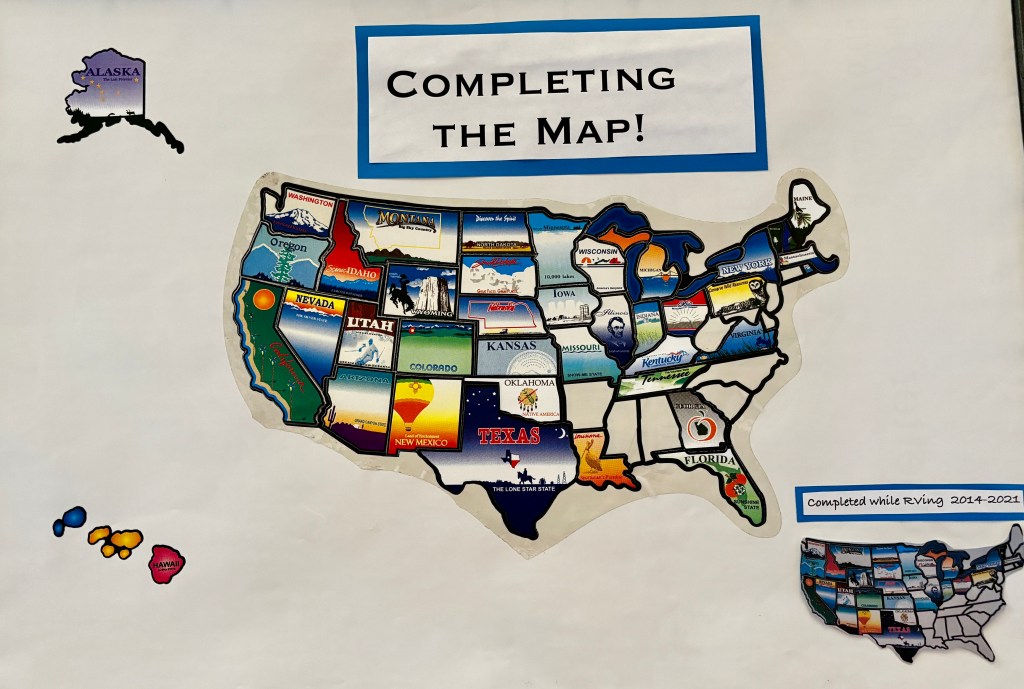
We were on our way to Harpers Ferry, situated on the eastern tip of West Virginia.  (No apostrophe is correct.) West Virginia was one of the four states we were visiting to be able to place stickers on our old RV map. 

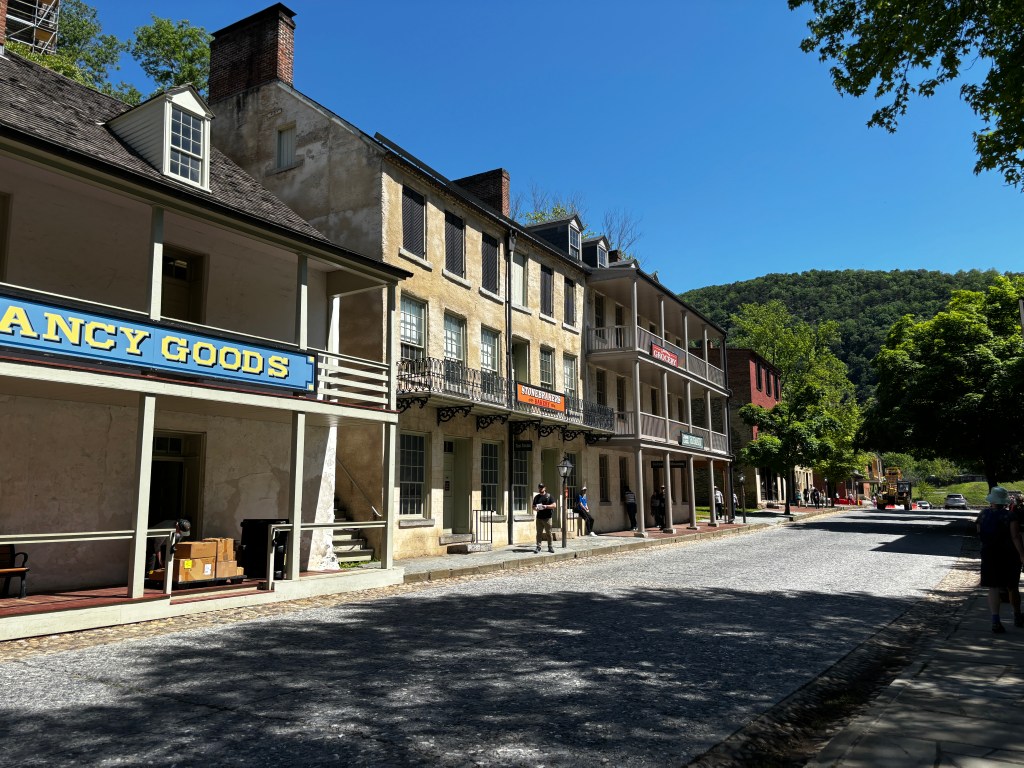
When you drive to Harpers Ferry National Historical Park, there is a visitor center above and a bus that takes you down to the town at river level.

The historic park is administered by the National Park Service. 

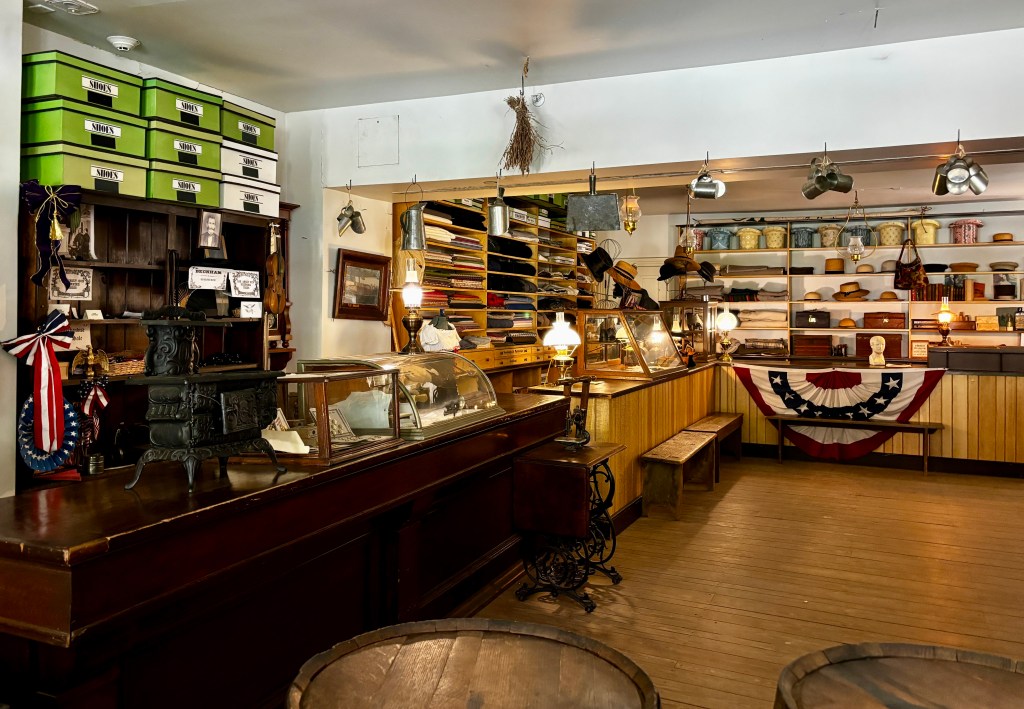
It has sites developed to show what things were like in past days. There are also restaurants, ice cream shops and a hotel catering to visitors.

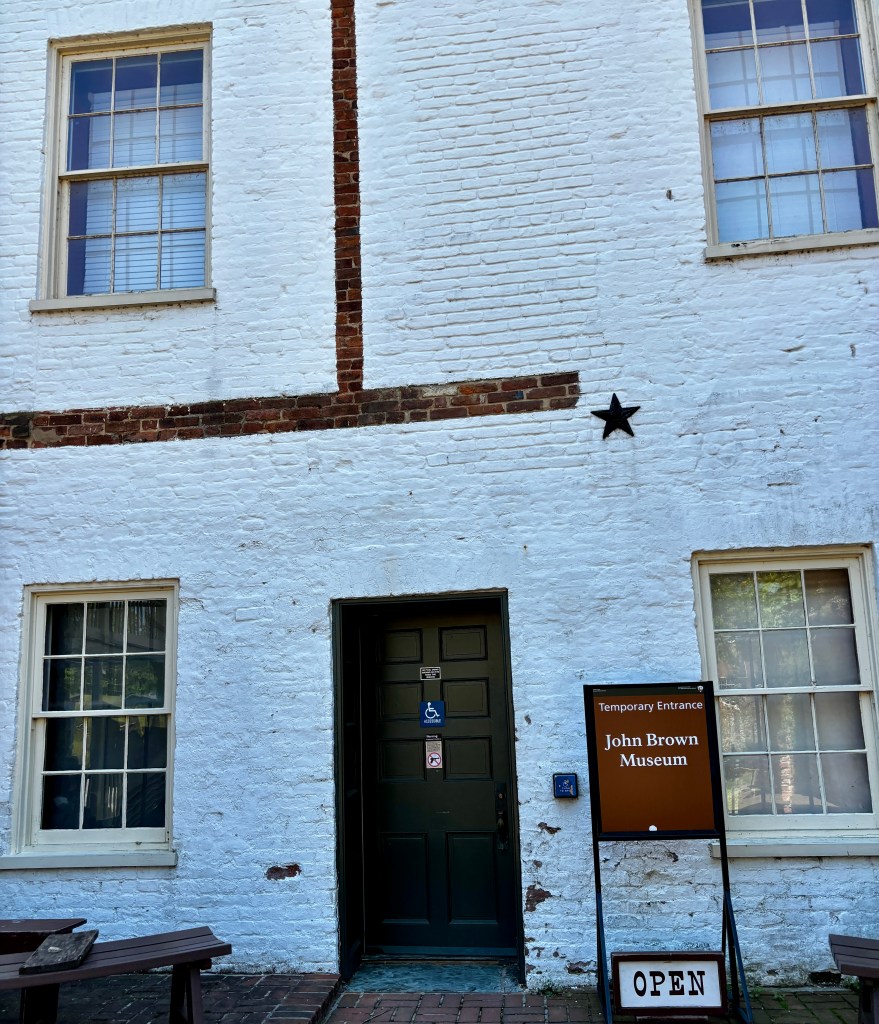
Of course, there are also buildings housing information about the history of Harpers Ferry.

We learned that Harpers Ferry was: A Town Wrought By Rivers,  Ravaged by Floods, Laid Waste by War, that Rises Again and Again.

The town is formed where the Potomac River cuts through the Blue Ridge Mountains and meets the Shenandoah River.  Robert Harper started a ferry across the Potomac in 1747.

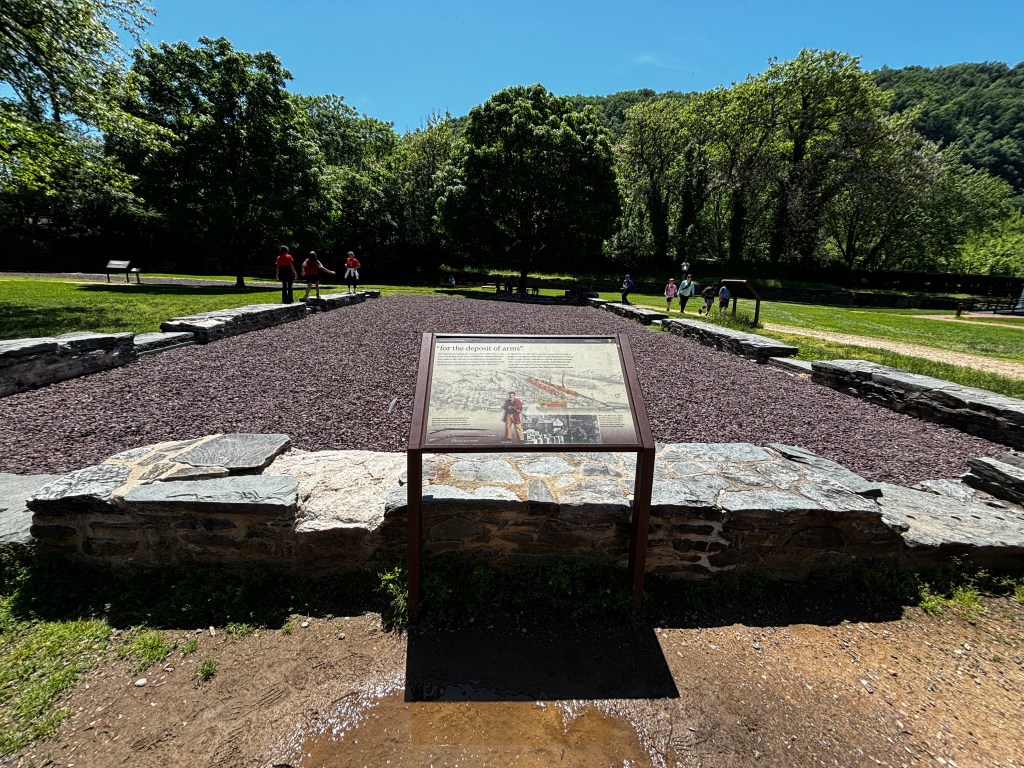
George Washington chose to build a national armory in Harpers Ferry.  The picture shows the remaining foundation of a small arms depository. Additional foundation is below ground.

From the early 1800s, there were a variety of factories that helped fuel the Industrial Revolution.  Innovations at Harpers Ferry included manufacturing interchangeable parts for a rifle factory.  Articles for the Lewis and Clark expedition were manufactured there.

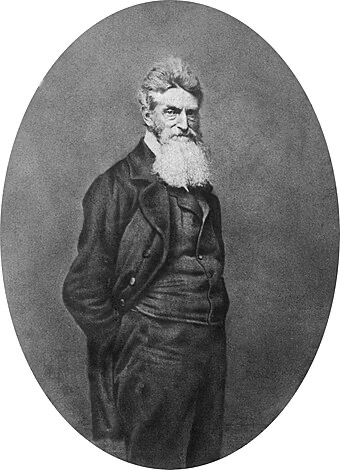
John Brown and his slave revolt is the part of the history that we knew a little about.  But we knew too little!  For example, neither of us knew that John Brown was a white man.    

John Brown had been a prominent abolitionist leader for decades.  He had strong religious convictions and believed he was an instrument of God to help stop slavery.  

He believed in the “golden rule” and in the Declaration of Independence that stated “all men are created equal.”  After peaceful efforts had failed to produce results, Brown grew to believe that violence was necessary.  

John Brown reached national prominence in the 1850s for his radical abolitionism and for fighting, with his sons, in “Bloody Kansas.”   The state level civil war centered on whether Kansas would join the Union as a slave or free state.  

In 1857, the Dred Scott decision of the US Supreme Court ruled that Negros were not entitled to federal citizenship and that congress had no power to prohibit slavery. John Brown decided more drastic measures were needed.

In October 1859, Brown led a raid on the federal armory in Harpers Ferry. They occupied the armory and several other buildings. He intended to start a slave liberation movement. 

Seven of his men were killed in the raid and only a few enslaved men joined in.  Brown and his remaining men were captured by local militia and by federal troops under the leadership of Robert E. Lee.

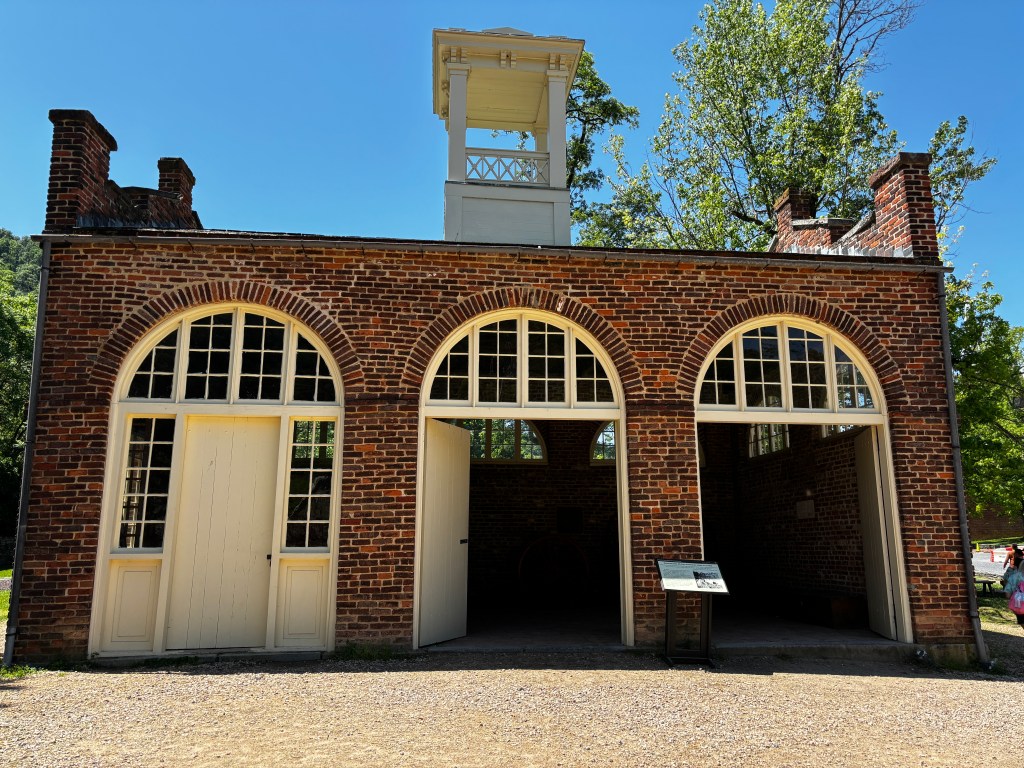
This building is John Brown’s Fort where some of the fighting took place.  Brown was tried, found guilty and hanged.  He was the first person executed for “treason against a US state.”

The raid, trial and execution brought national exposure and helped propel the country to Civil War over the issue of slavery.

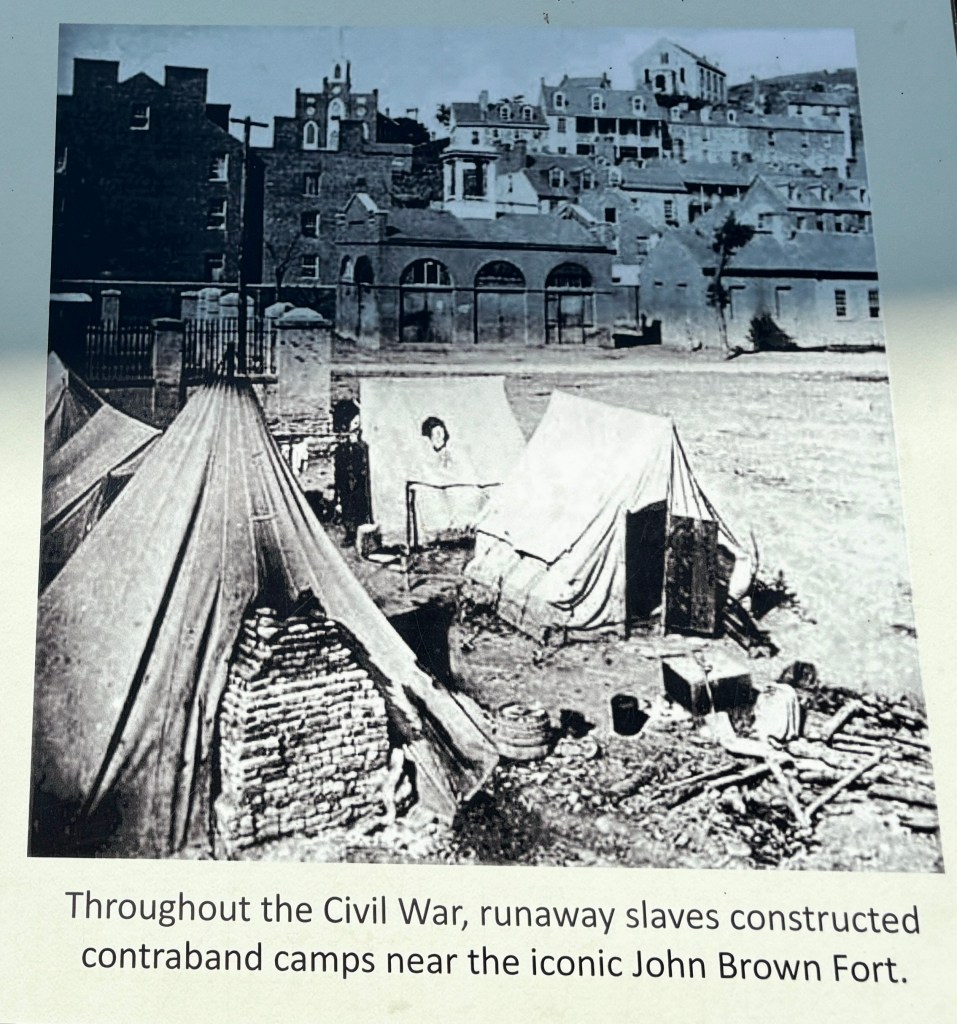
The town of Harpers Ferry changed hands eight times during the Civil War.  Mostly, it was under Union control. The United States Colored Troops marched through Harpers Ferry during the war..

Following the war, and the ratification of the 13th Amendment, Harpers Ferry became a symbol of freedom to people formerly held in bondage.

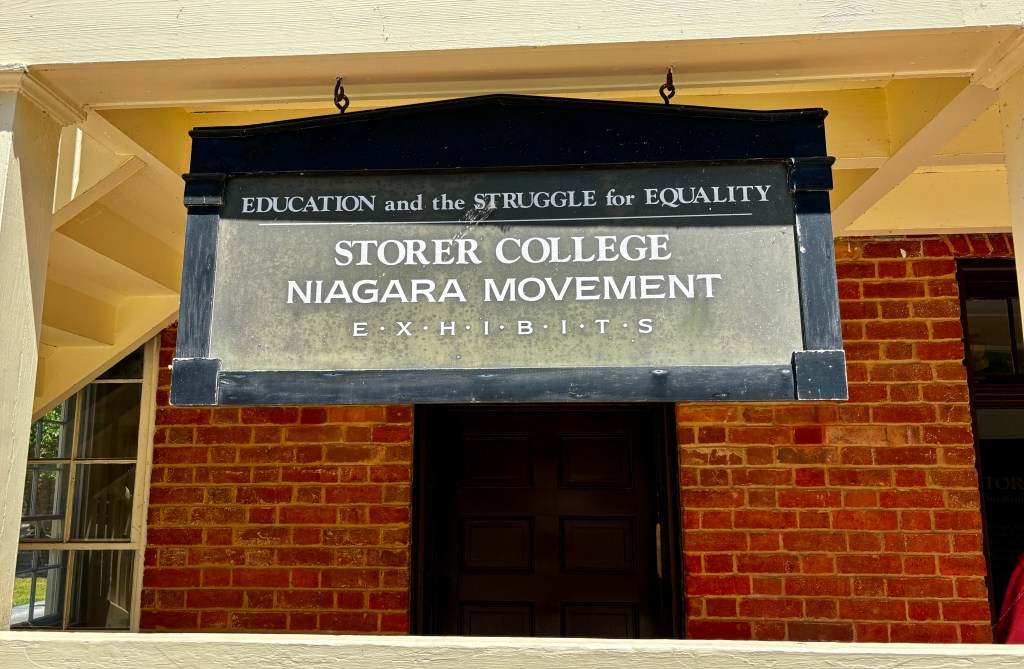
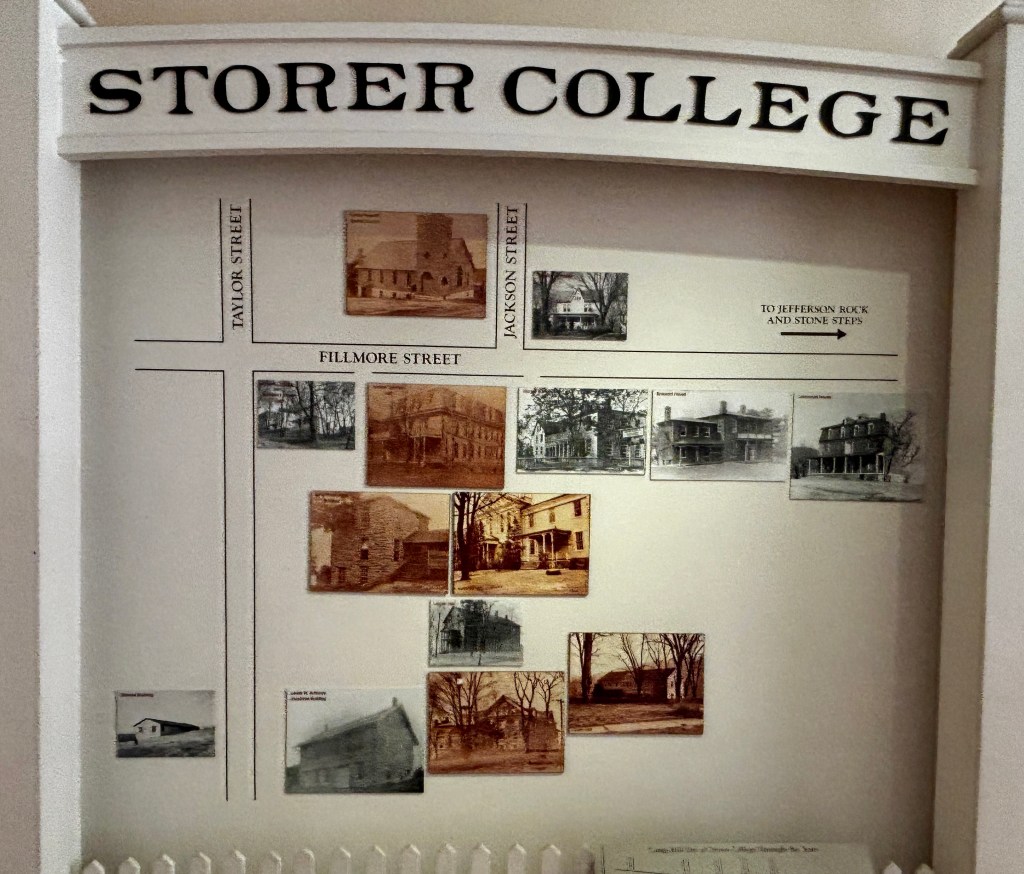
Before the war it had usually been against the law to teach an enslaved person to read.  After the war, Baptist missionaries founded Storer College to educate men and women of any race.  

John Storer was an abolitionist and humanitarian. He donated $10,000 to form the college.

Harpers Ferry was the chosen for the college because of the large population of African Americans nearby and the accessibility of abandoned government buildings.

Anthony Hall became the primary building of the Storer College campus. This building was used daily but became nationally significant in the struggle for equality. 

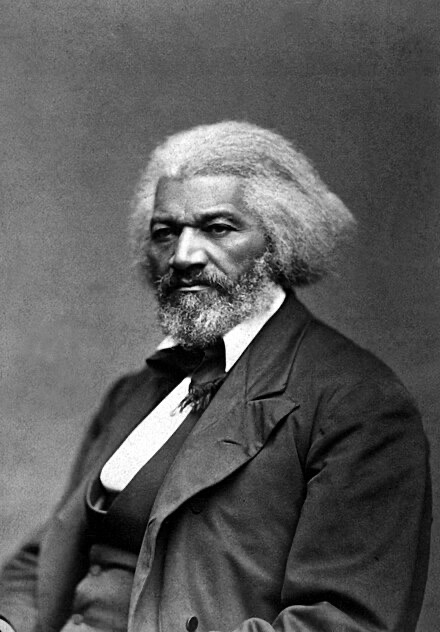
In May 1881, Frederick Douglass delivered his famous speech praising John Brown at Anthony Hall.

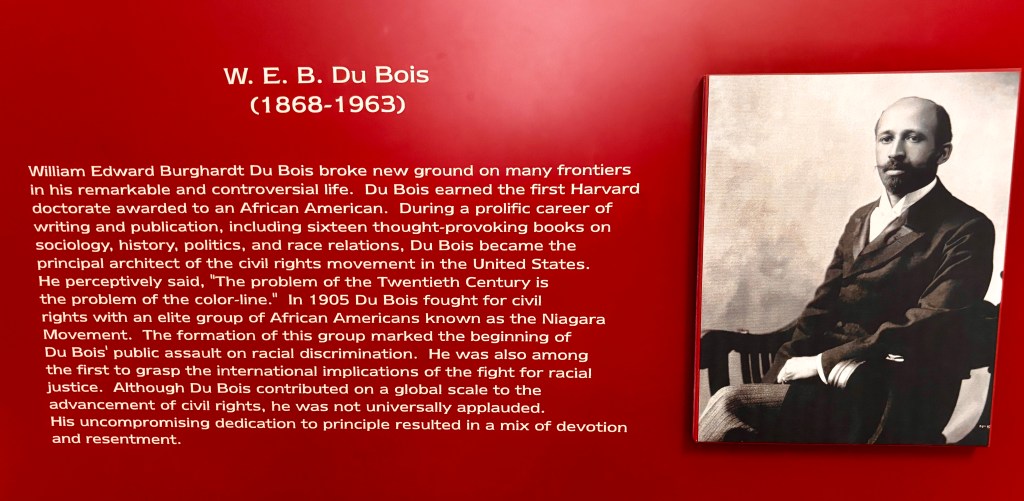
Twenty-five years later, Harpers Ferry hosted the Niagara Movement. It was a civil rights organization founded in 1905 by African American activists including W.E.B DuBois. 

The group wanted a “mighty current” of change so developed a Niagara Falls logo and had their inaugural meetings in Niagara Falls, New York.  

Their second conference, in 1906, was held in Harpers Ferry.  The town was considered “holy ground” for African American’s because of the efforts by John Brown.  Storer College also had the needed facilities.

The Niagara Movement was not well known, partially due to conflict with Booker T. Washington.  Differing philosophies led Washington to exert his power to stifle coverage of the Niagara Movement.  The Niagara Movement was the immediate predecessor of the NAACP.

We learned a lot on our half day exploration in Harpers Ferry.  There were layers and layers of history in Harpers Ferry both before and after the Civil War.

Next up:  We spend the afternoon at Antietam National Battlefield.

We were in Harpers Ferry in May 2024.

Posted in Uncategorized | 1 Comment

Baltimore History and Food Tours

This writing will combine two of the tours we took in Baltimore.  The first was a Historic Baltimore tour where we saw everything – and nothing at all.   We drove around in a van with a driver who was on a timer – we didn’t understand why at first. The second was a food tour – always a good time in our minds.

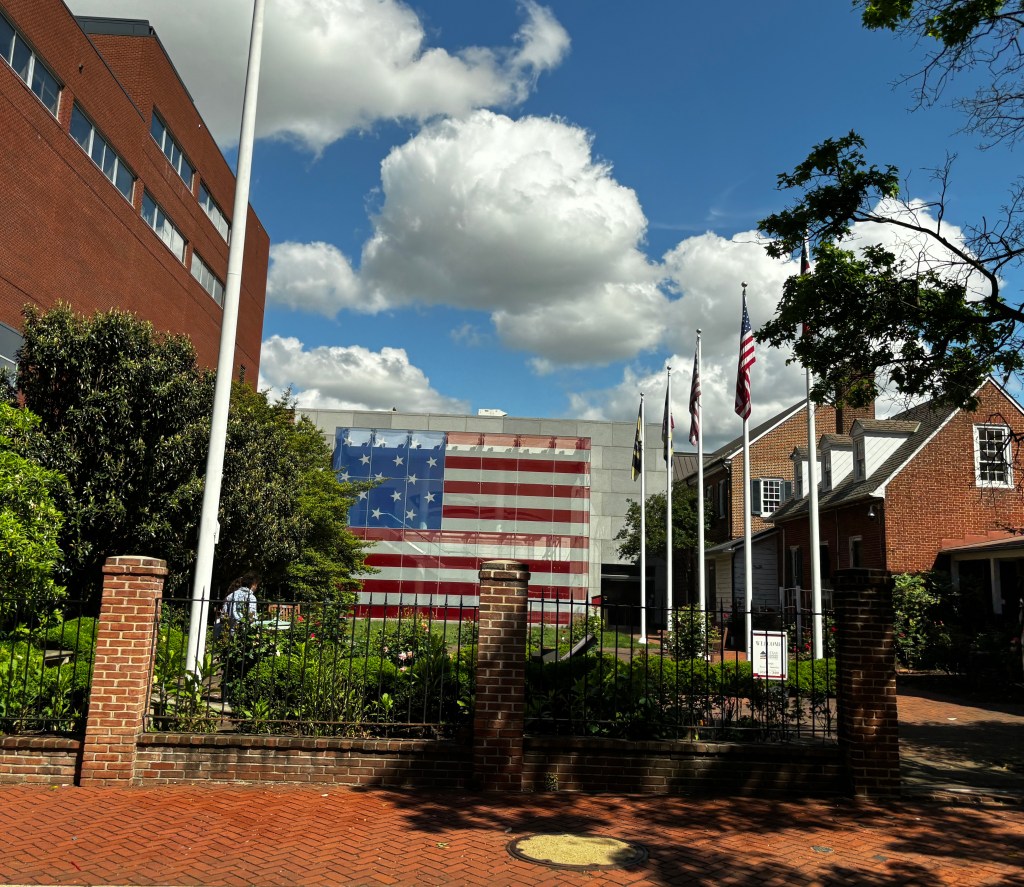
I have a few pictures taken when the target was on the side I was sitting.  For example, we passed by the Flag House Museum.

We drove by the first George Washington Monument built in the US.   The monument was completed in 1829. You must climb 227 steps to walk to top.

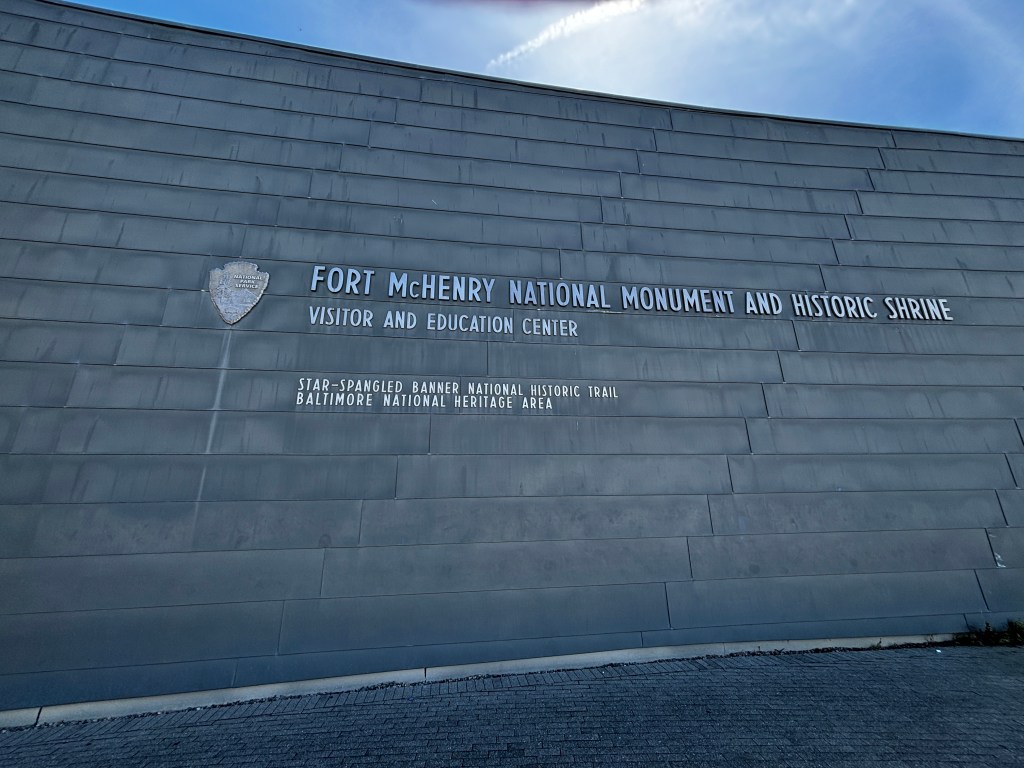
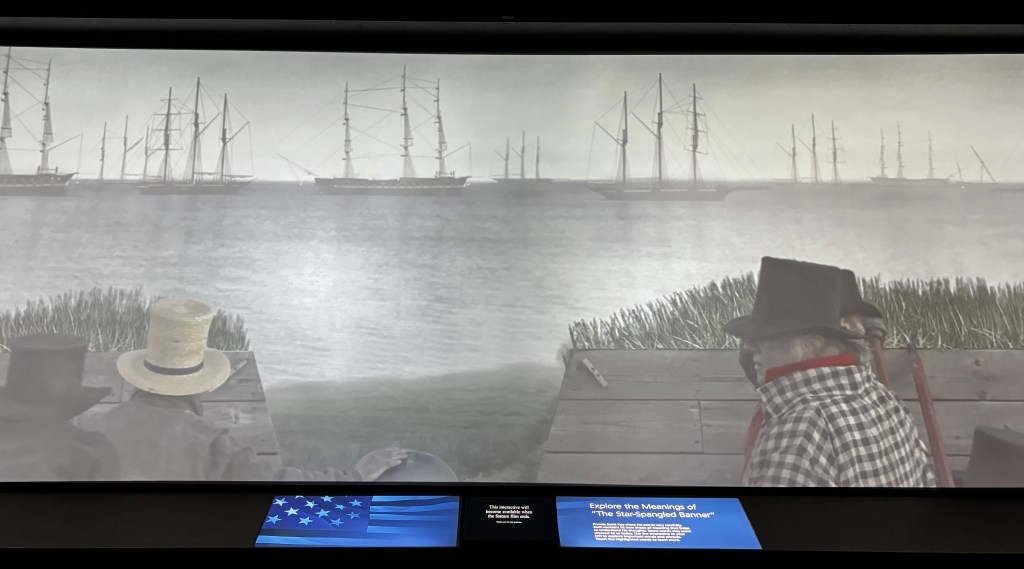
We were able to get out of the van at Fort McHenry to see most of a 20 minute informational video at the visitor center.

The movie was really well done so we were disappointed not to have seen the first part. The driver tried hard, but just didn’t quite get us there.

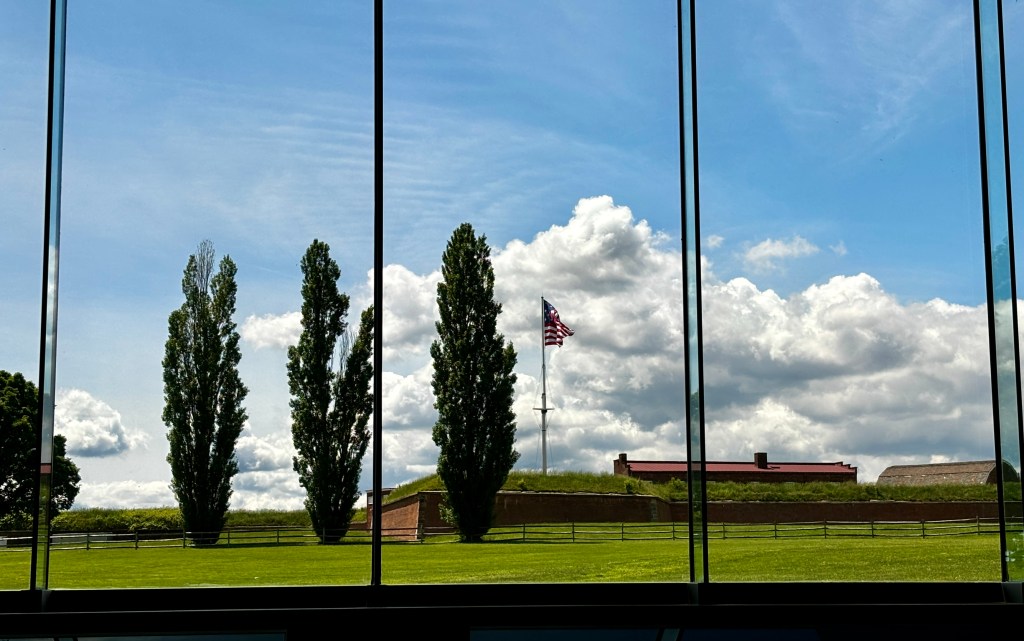
The video finished with the screen being raised to see the flag still flying over Fort McHenry.   We were not allowed additional time in the visitor center or grounds.  Hmmm.

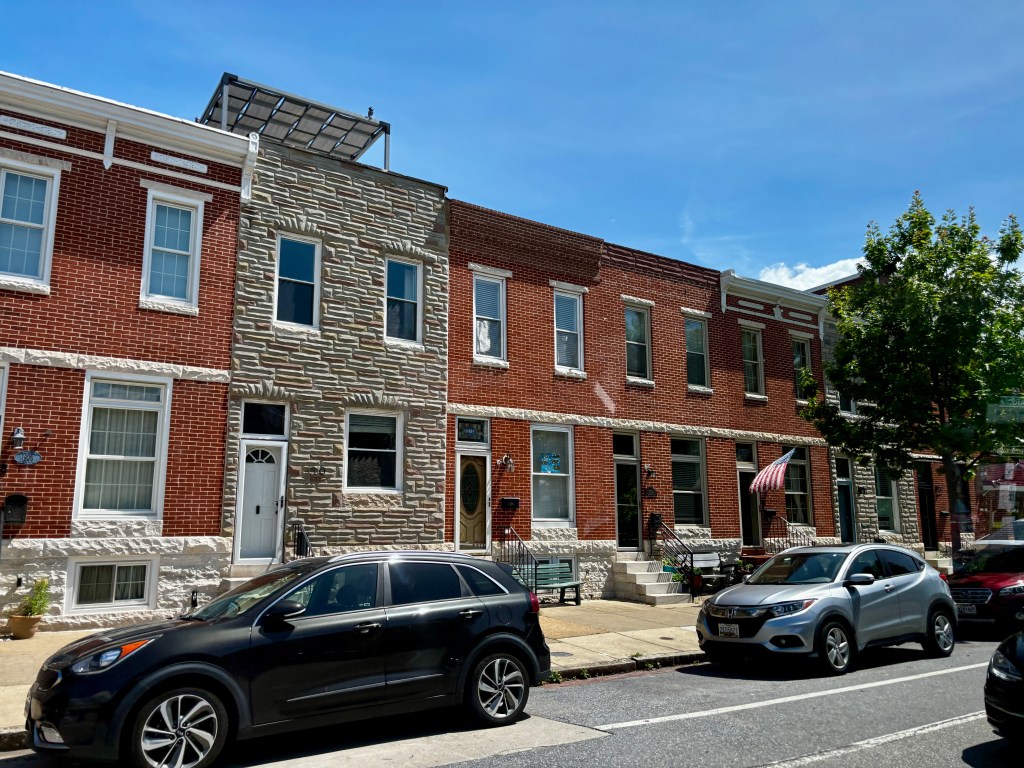
We learned that there were thousands of row houses built for the dock workers in Baltimore.  Only Philadelphia has more.  We were told to notice the very small doors. 

Bricks were mandated for buildings in Baltimore in 1804 to reduce fire danger and because wood was needed for building ships such as the Baltimore clippers.

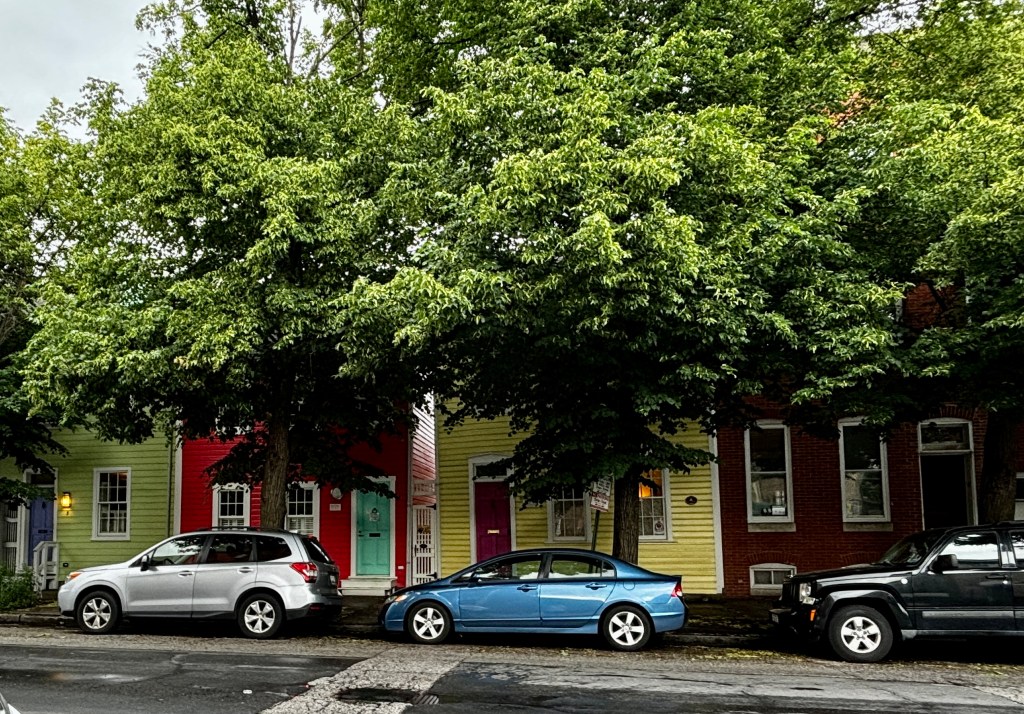
The wooden structures that remained were “grandfathered in.”  After years, and subsequent fires, there are only eleven wooden structures left.  Four of them are together.

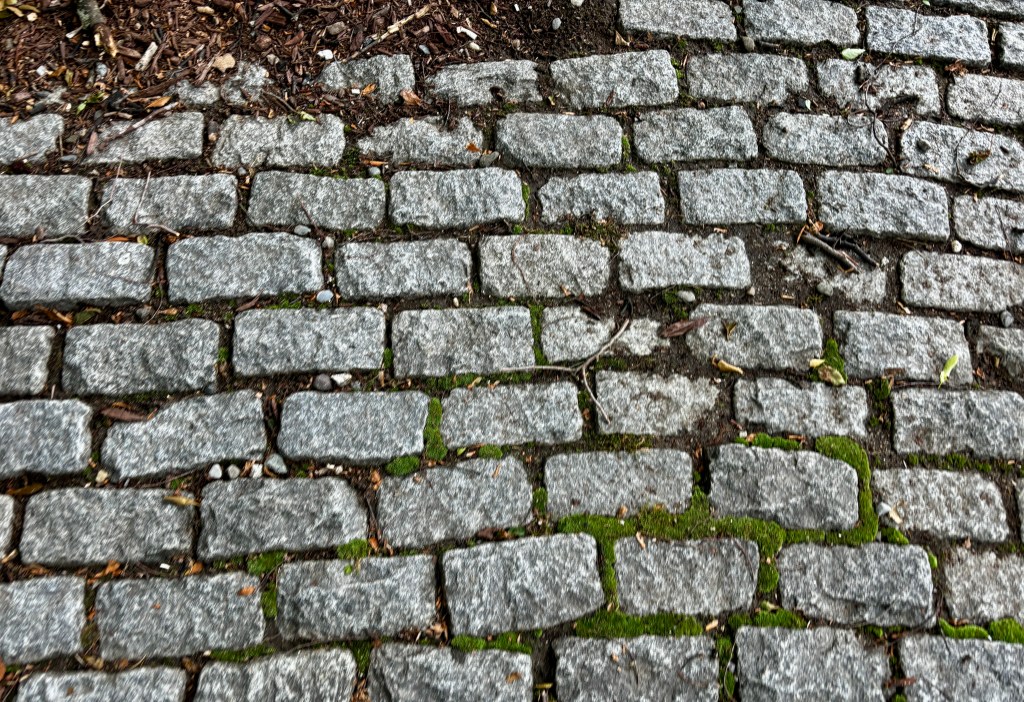
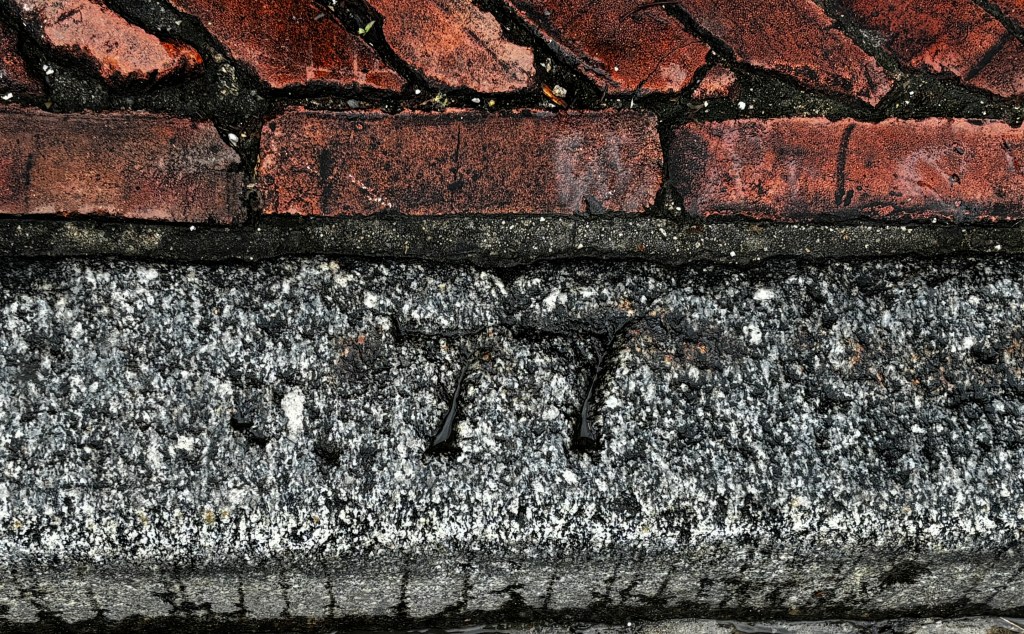
Belgium bricks were used for ballast on ships on their way back to Baltimore.  They were then used to build roads in Fell’s Point.  Fell’s Point is now a Baltimore neighborhood but the community is  75 years older than Baltimore.

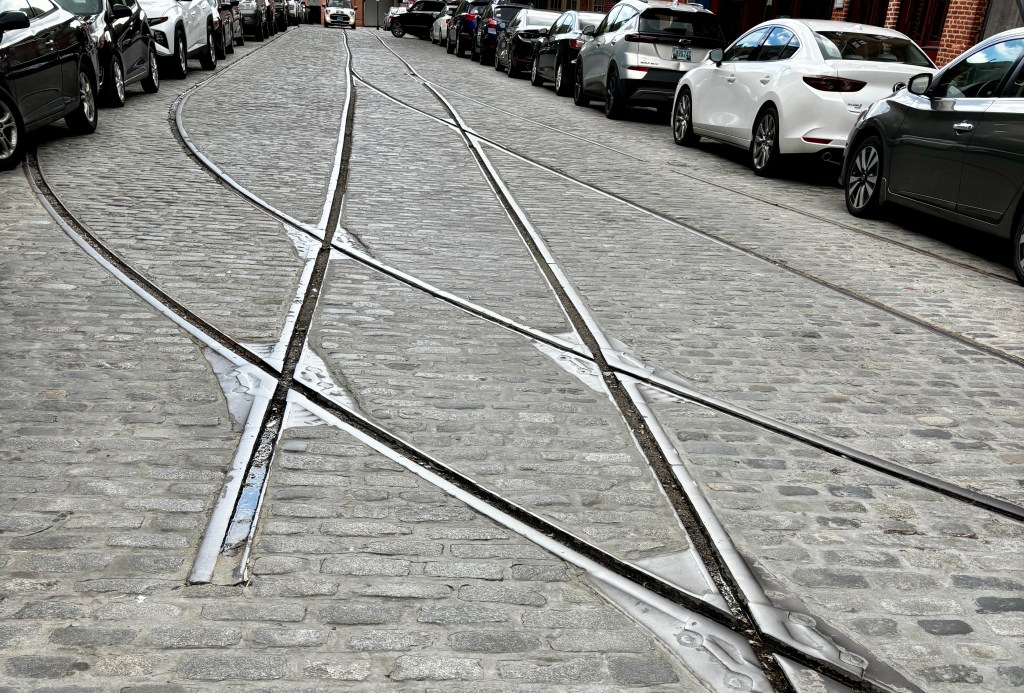
Our food tour was set in Fell’s Point – sometimes written with the apostrophe and sometimes not.   We saw evidence of the old B & O Railroad tracks as we walked.  That would be Baltimore & Ohio Railroad for those of you, like me, who are only familiar with B&O from Monopoly.

Our first stop was a Mexican restaurant called Chilanguas.  We thought that was a little odd, but the corn tamale fritters were so good, we didn’t question anything further! (I looked for a knock off recipe after the fact but was unable to find one.)  We also had Carne Asada Tacos, guacamole and chips and salsa.  The meal was perfect, but still unexpected, on a Baltimore food tour.

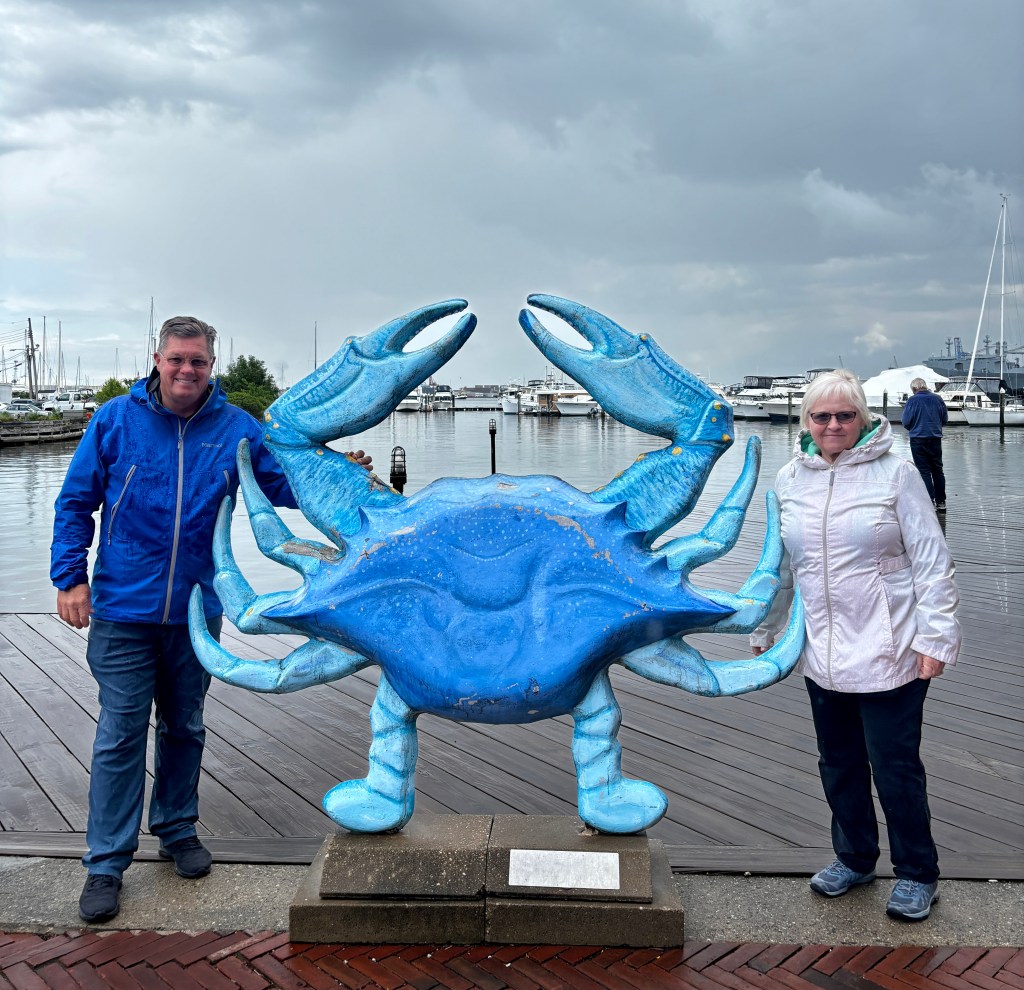
While walking to our next restaurant we had a typical Baltimore photo opportunity. Yes, it was raining again.

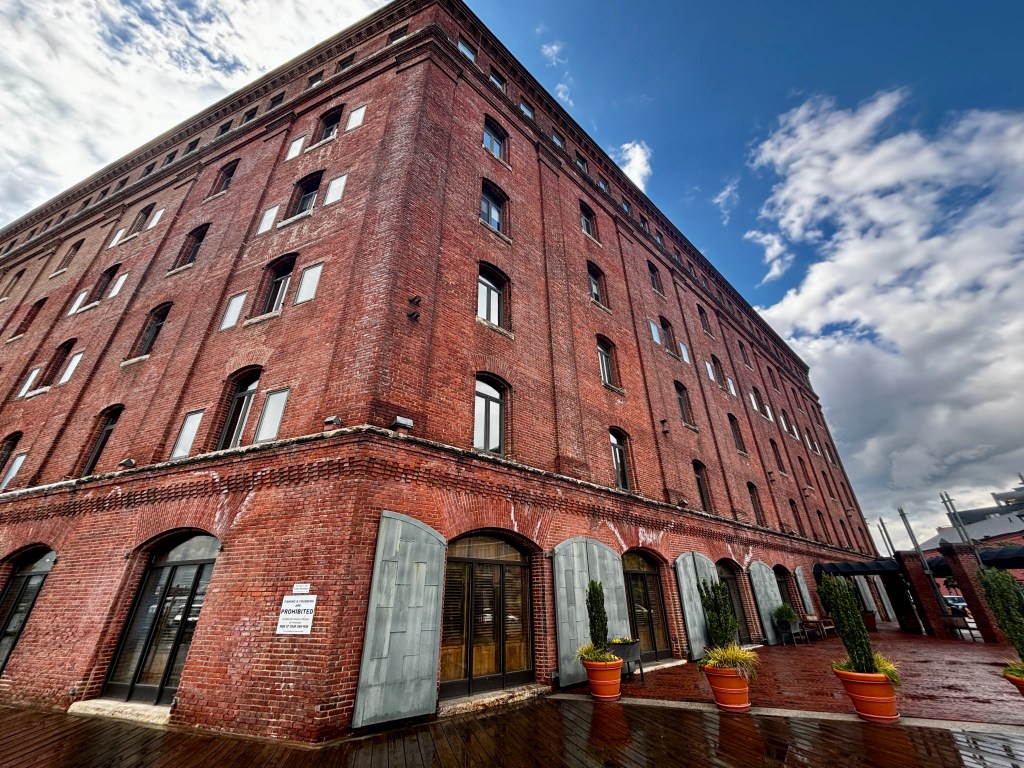
Nearby, we were told that this old tobacco warehouse was redesigned for luxury apartments.  Repurposing old warehouses along the inner harbor is a common thing.

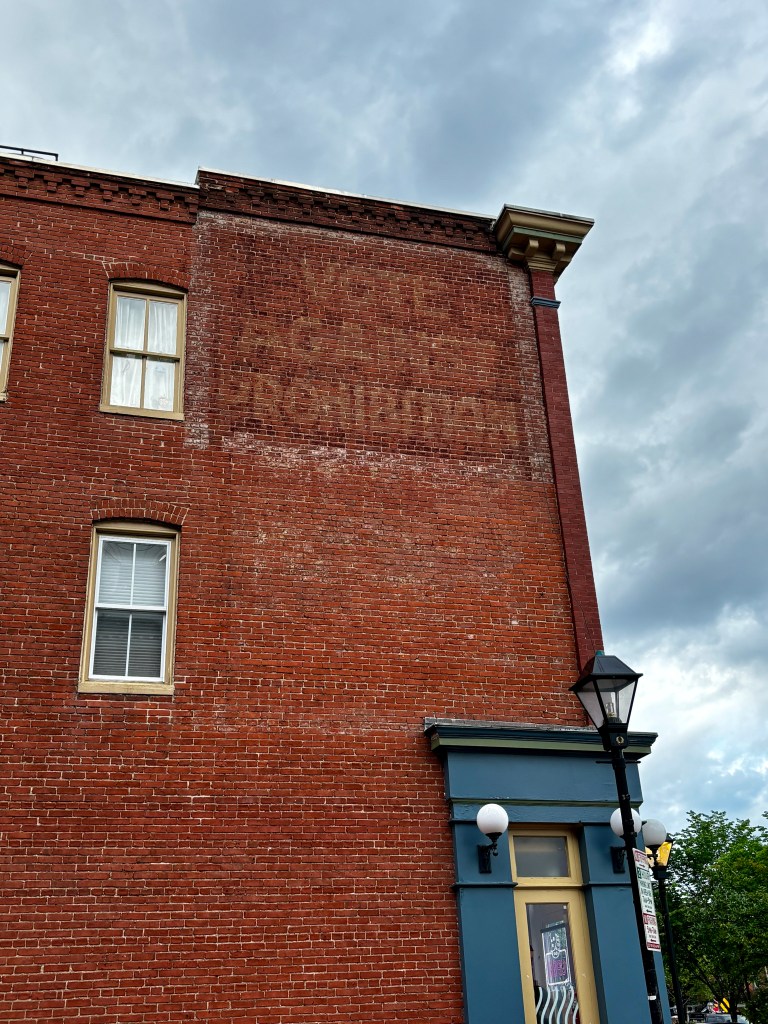
On some of the old buildings, it is possible to see the old signs “leaking” through.  This one says Vote Against Prohibition.  We were told that Baltimore pretty much ignored prohibition and did their own thing.  

The bricks on buildings have also “woven” a bit over time.  Look above the lower window on the right.

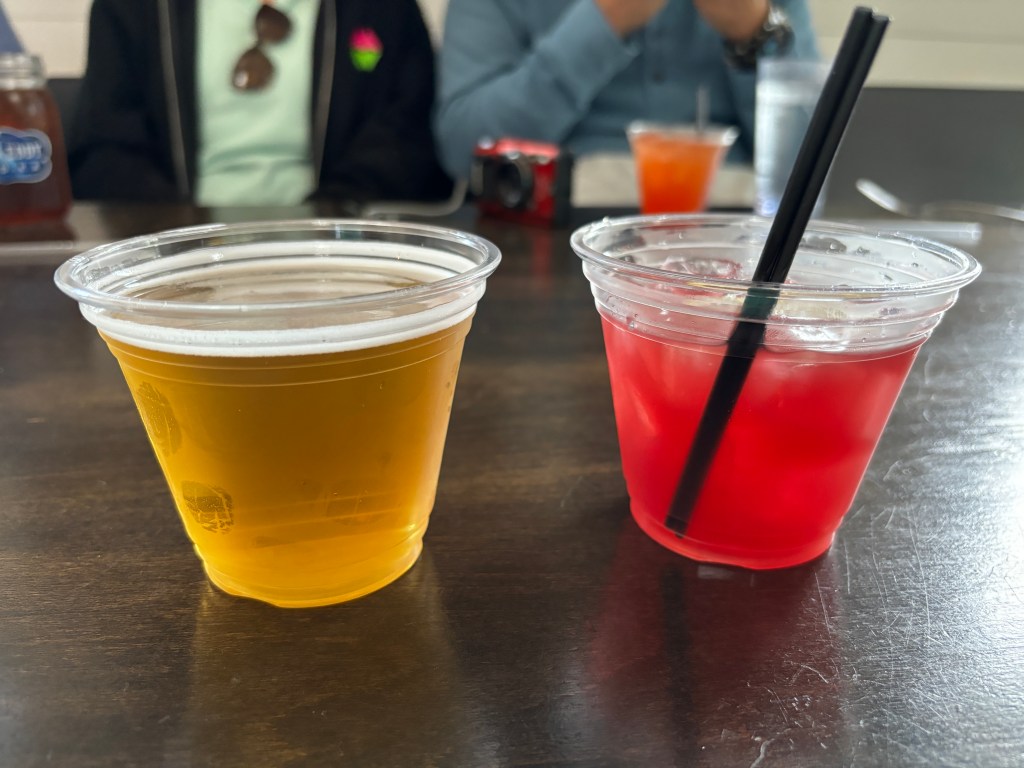
Our next restaurant was more like what we expected. We were offered a local beer or sanga-rita.  Randy likes sangria and margaritas so he liked that combination. I don’t prefer either, so chose beer.

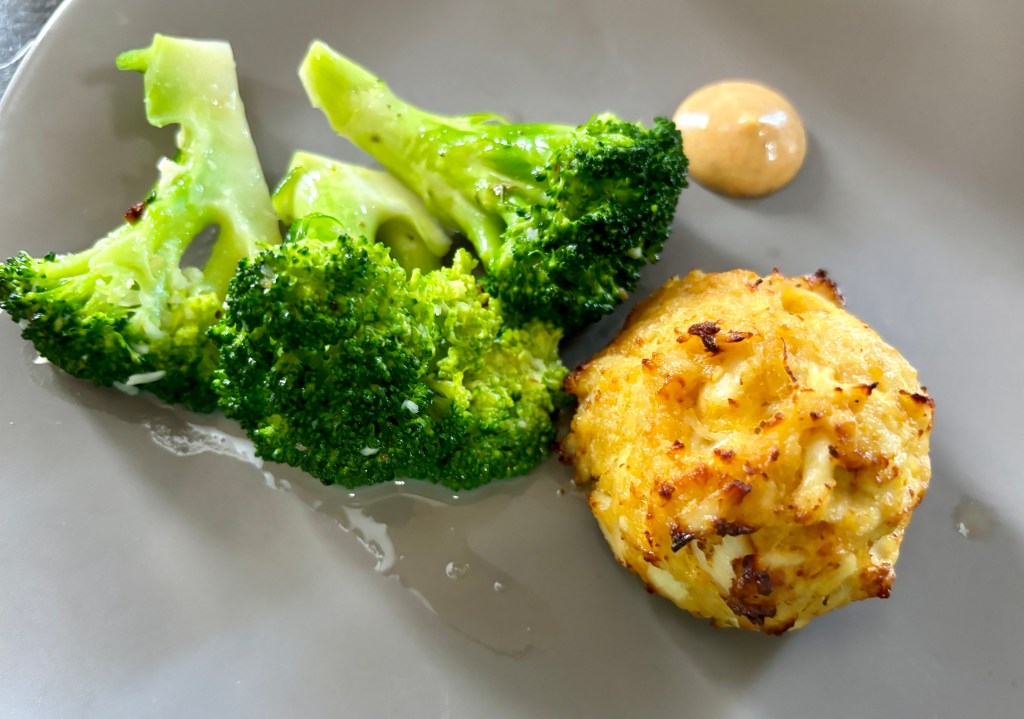
We had a small bowl of crab soup and then a crab cake with broccoli. The restaurant owner and one of our food tour compatriots discussed the merits of various types of crab and crab cake preparation. That all went way over our heads but it was interesting. This crab cake was very good.

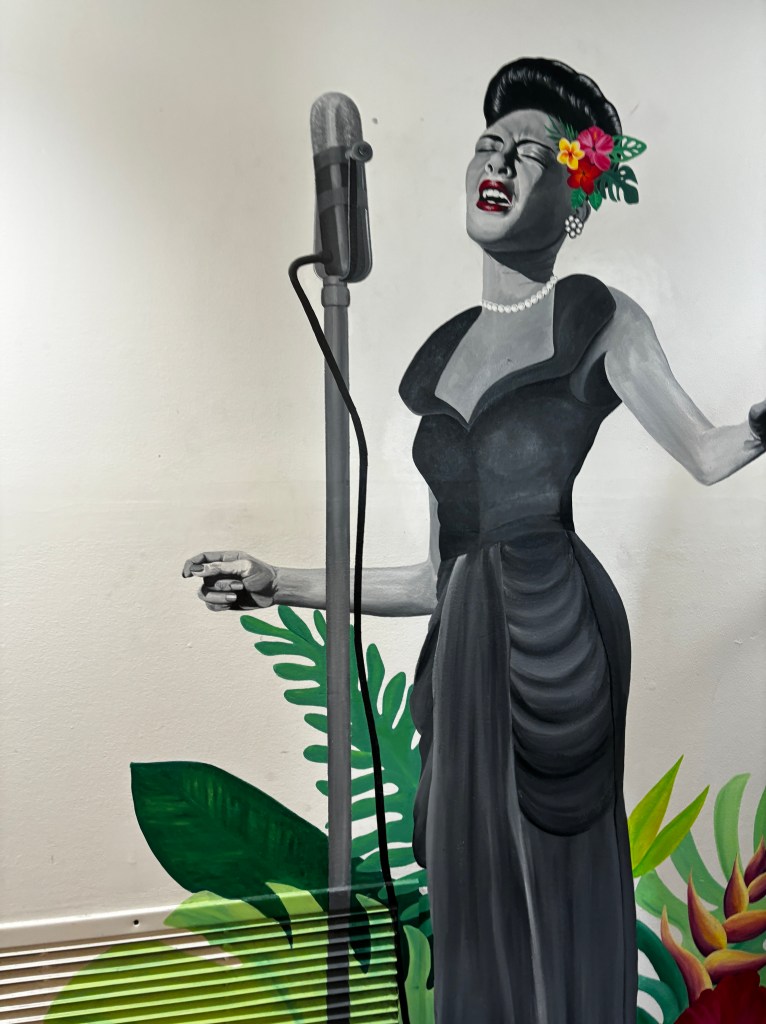
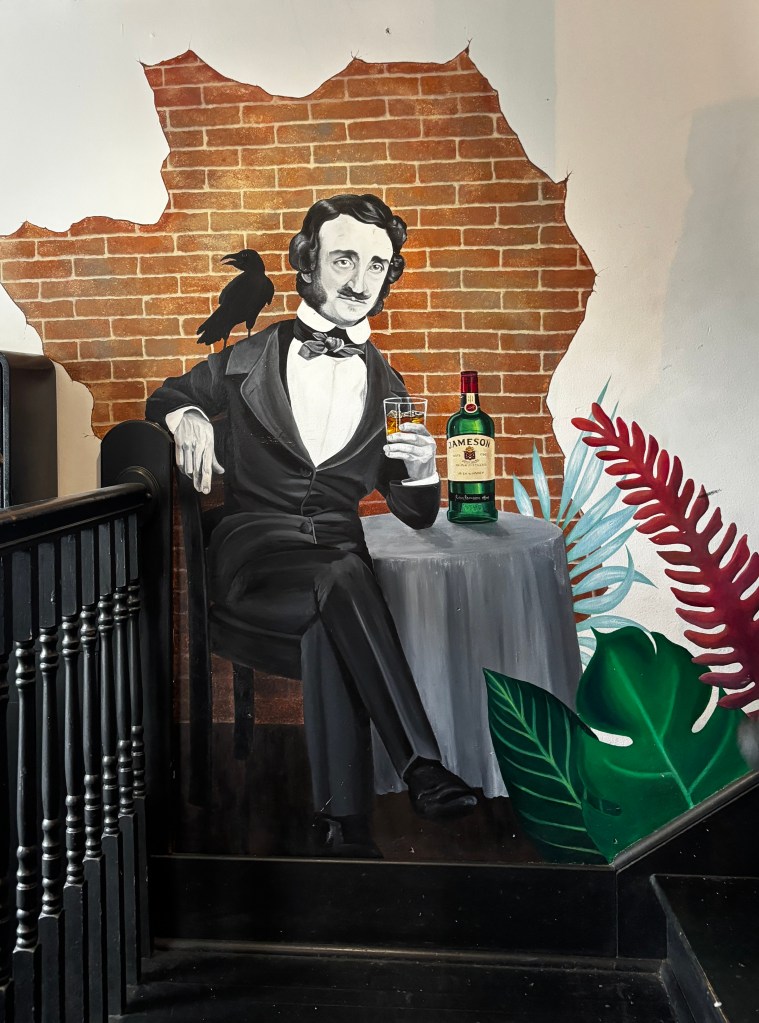
Going upstairs and down at the restaurant we saw paintings of two “local” residents.

Billy Holiday spent her turbulent childhood in Baltimore partially raised by relatives and partially spending time at a Catholic reform school.

Edgar Allen Poe lived in Baltimore several times in his life.  He was the first American writer who tried to support himself exclusively by his writing.

Poe earned $9 for his most successful writing, The Raven.  He was on his way to becoming a household name when he went on a crusade against Henry Wadsworth Longfellow.  That caused him to lose the goodwill the Raven had provided him.   (The Baltimore football team is named after Poe’s The Raven.)

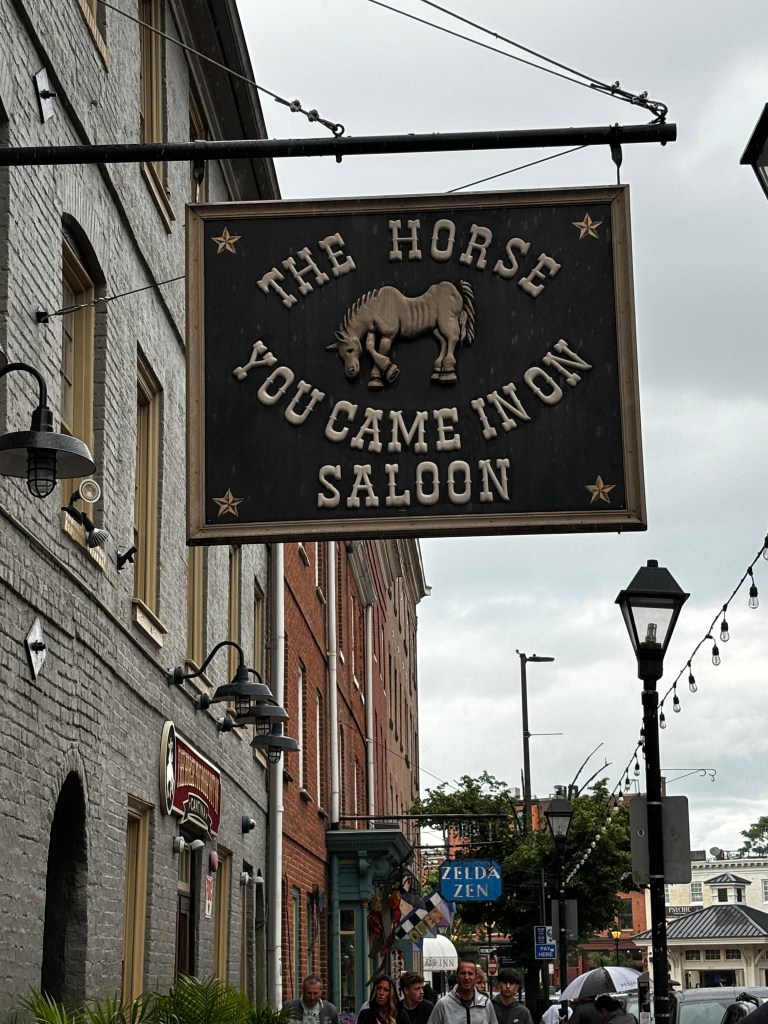
It is known that Edgar Allen Poe took his last drink at The Horse You Came in On Saloon.  (In addition to Poe notoriety, it also claims to be America’s Oldest saloon, having been established in 1775.)

Poe was found in a gutter in Fell’s Point and died at this hospital, possibly from alcoholism or rabies.  

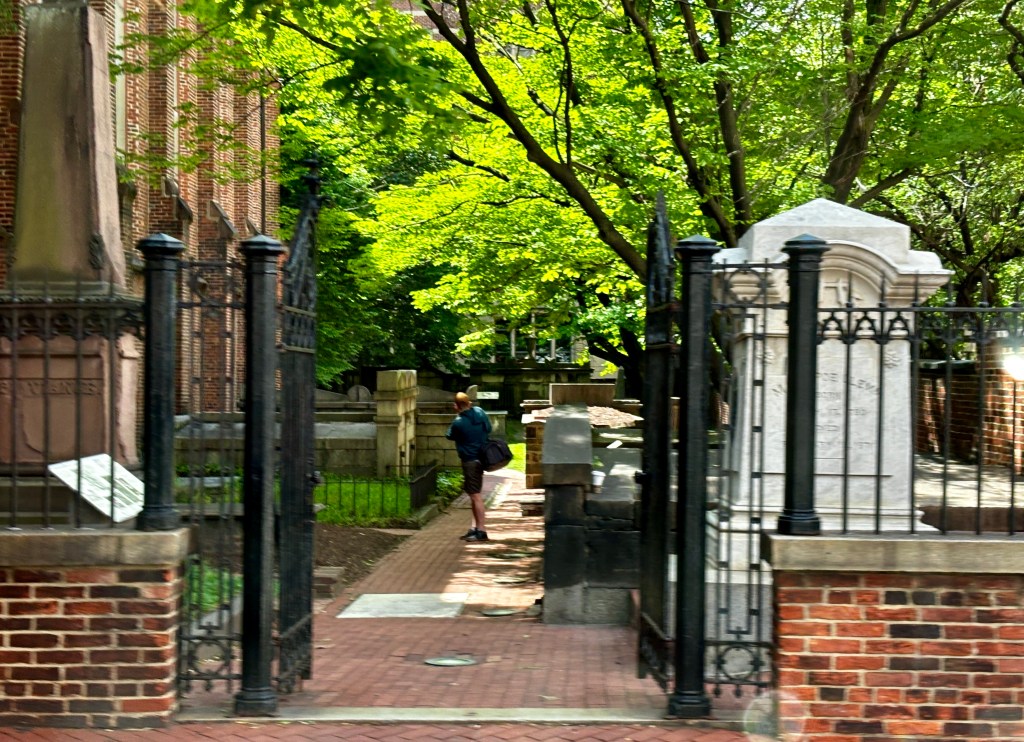
He is buried in this church graveyard – another one of those drive by photos.

The mirror in our hotel room had this quote engraved in it: “There is no beauty without some strangeness – Edgar Allen Poe”

As we walked to our next destination we stopped at the Robert Long House. Built in 1765 , it is Baltimore’s oldest surviving urban residence.  It is known that Robert Long was wealthy because row houses were taxed based on street frontage.  This house and garden occupied two lots.

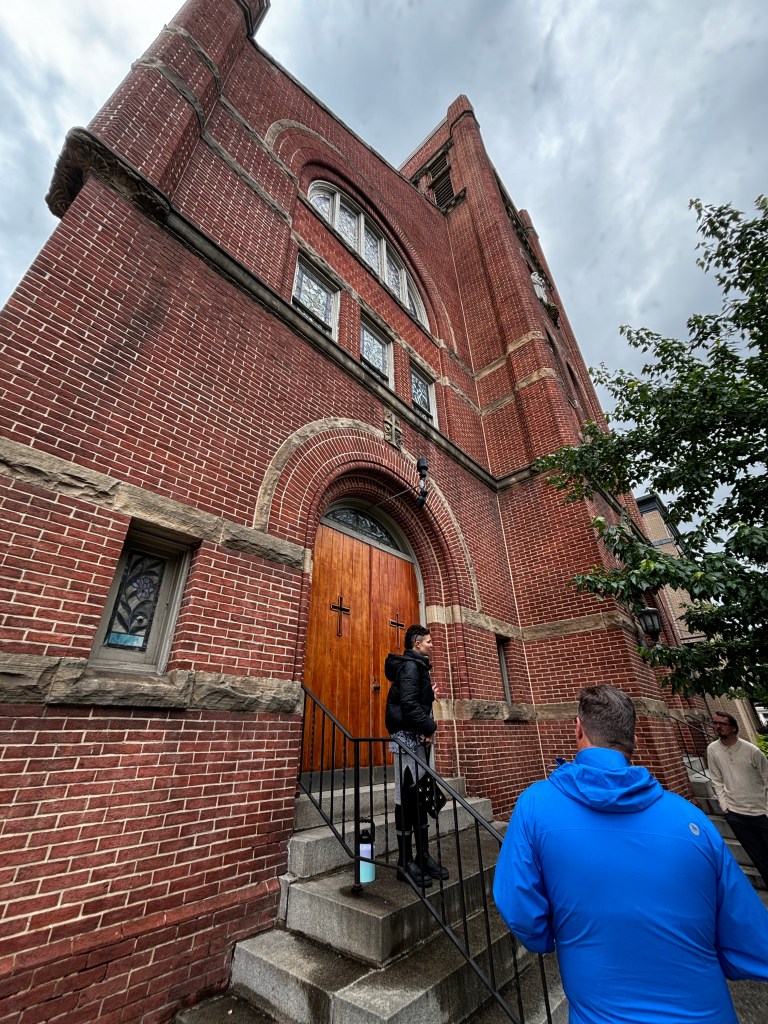
This church was built by Baltimore’s Polish community from 1880-1889.  It served as a place of worship, community center and point of contact for immigrants newly arrived.  It is now a physical therapy center.

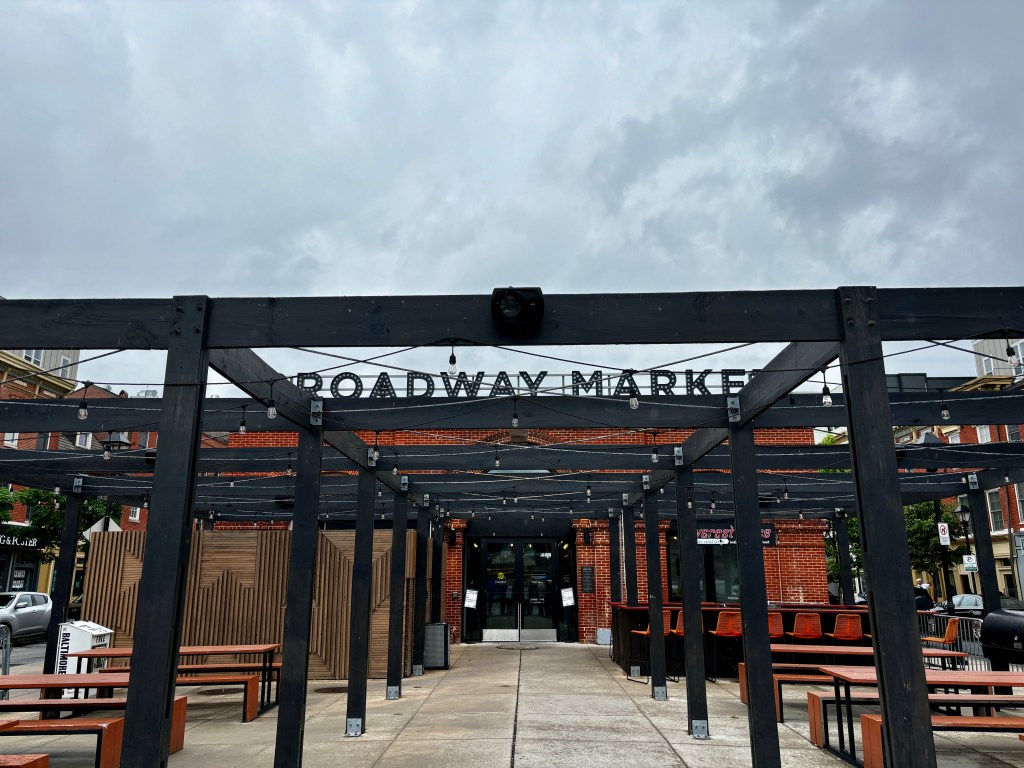
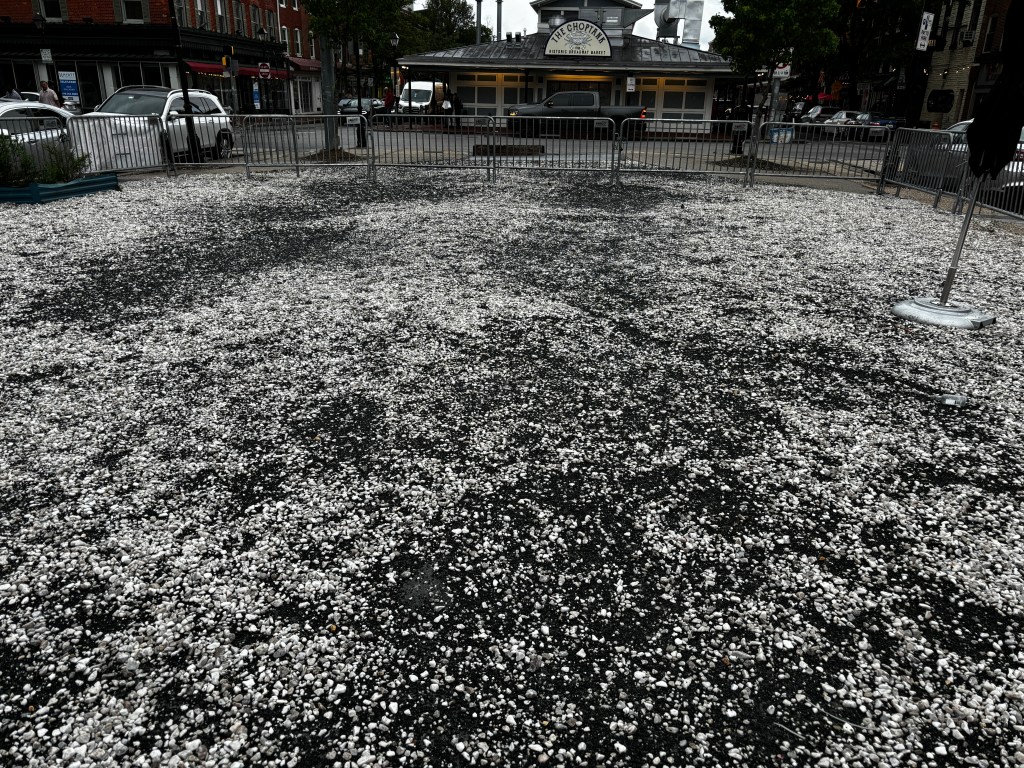
The Broadway Market once held a variety of wares sold by venders in designated spots.

Humans were sold here as well.

Today the space is used for restaurants, farmers’ market and crafts.

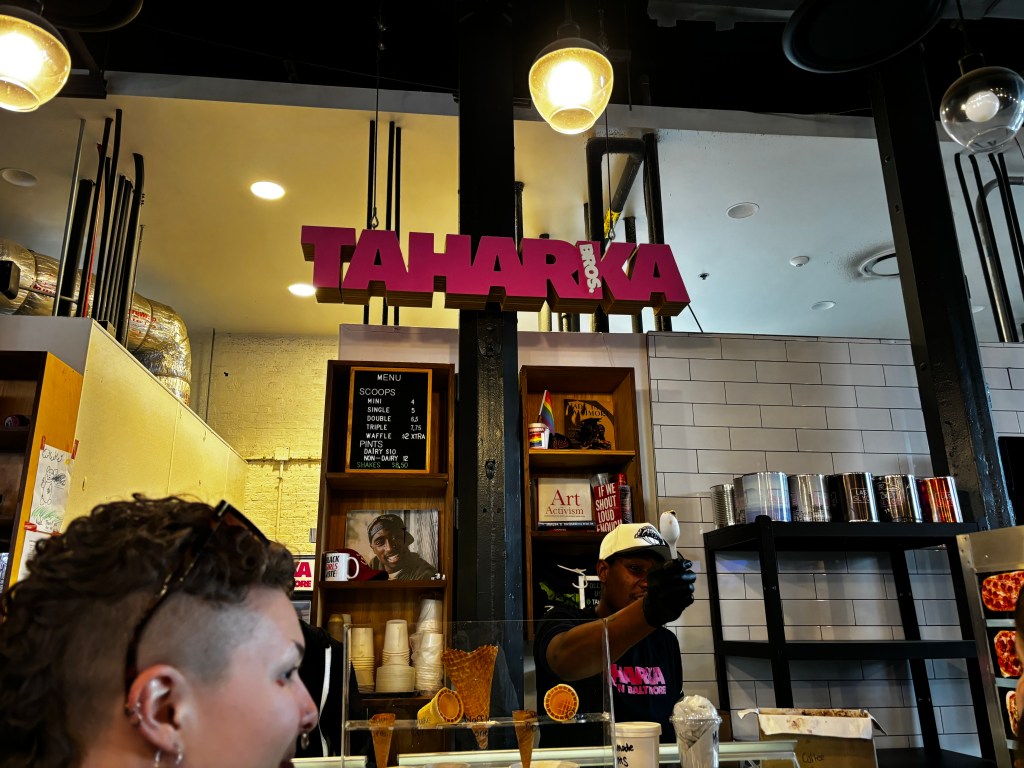
As we walked by the Taharka Brother’s booth, the women on our tour received free ice cream for Mother’s Day.  The business is known for providing employment opportunities for young adults from some of Baltimore’s most troubled neighborhoods.

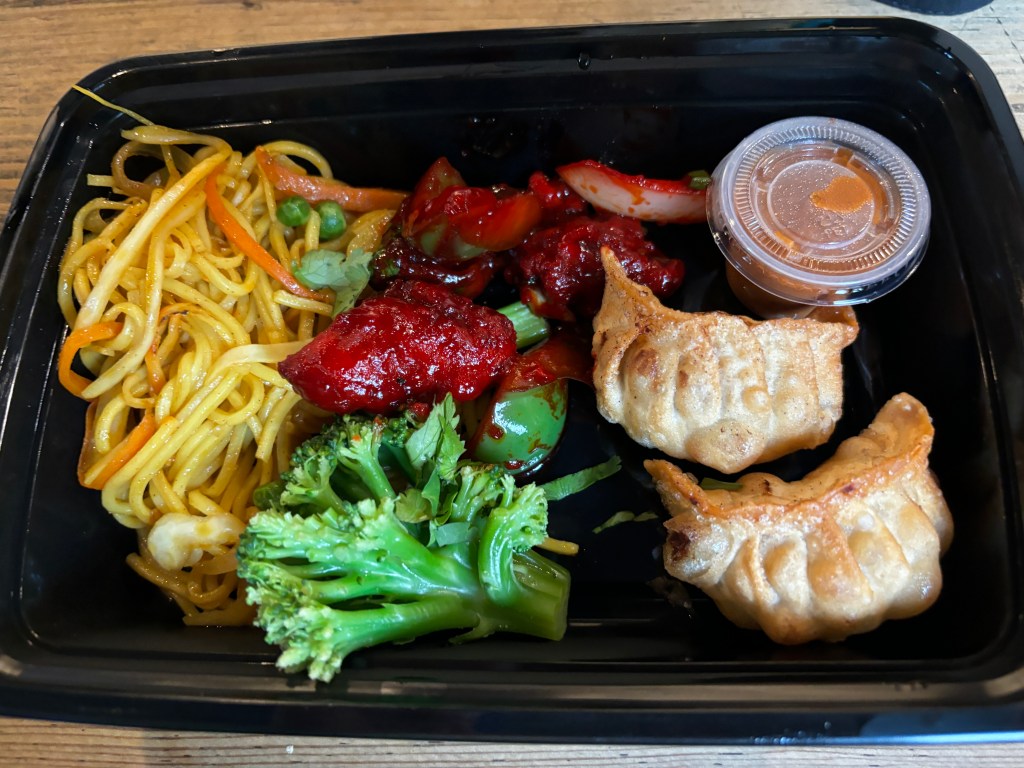
Our specific destination in the market was for Nepalese food.  Our guide told us she chose Mexican and Nepalese food to  represent the high number of immigrants that came to Baltimore.  Different groups came in waves over the decades through Locust Point Pier.

More than 1.2 million immigrants came between 1868 and 1914.  Baltimore was the third largest port of entry in the US during that time. Only New York and Boston received more. 

We had one more stop on a tour.  It was a pastry shop that gave us the opportunity for a hot drink and a variety of dessert bars and cookies.  

On the way, our guide gave her Nepalese meal to a homeless man.  We got the feeling that it wasn’t the first time.   She was an interesting and inspiring young woman.  In addition to leading food tours, she bartends and performs in drag.  She had very recently graduated from a Baltimore university and intended to use her Spanish degree to help Spanish speaking residents access health care more reliably.   Simone was memorable in the best possible ways.

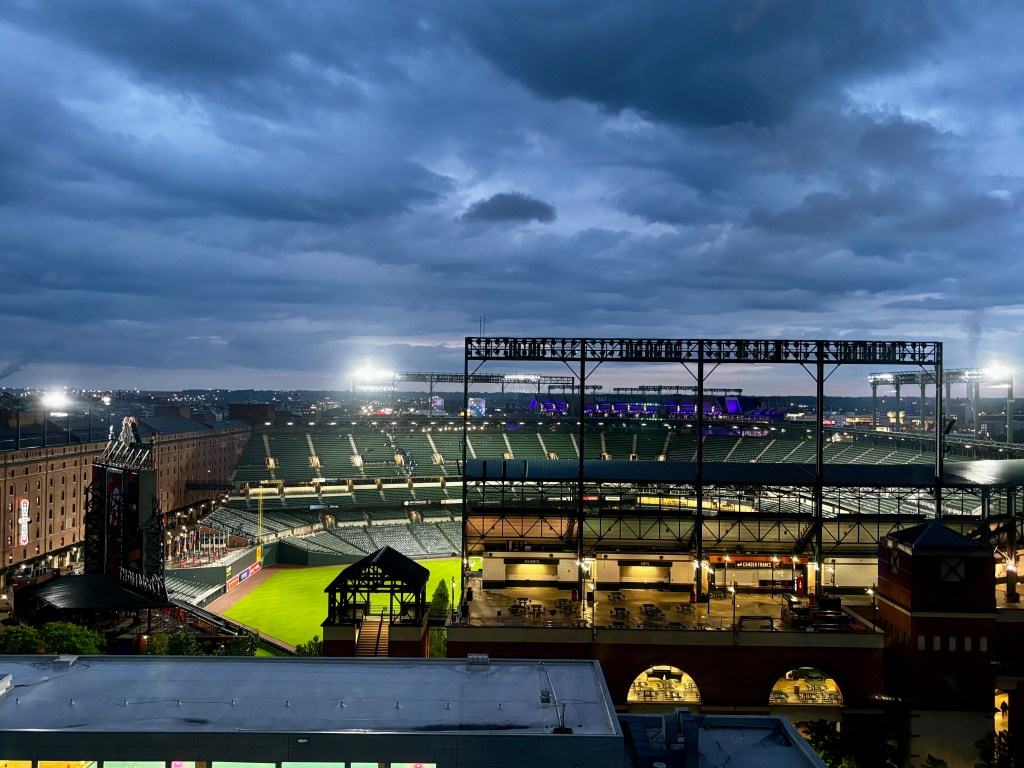
We made our way back to our hotel room and took a last look out at Camden Yards.  The next day we were on to Harpers Ferry, West Virginia.

We were in Baltimore in May 2024.

Posted in Uncategorized | Leave a comment

O’s vs D’Backs and Babe Ruth

We had mostly enjoyed a wet first day in Baltimore. To finish it off, we had tickets to the Orioles vs. Diamondbacks game that evening.  

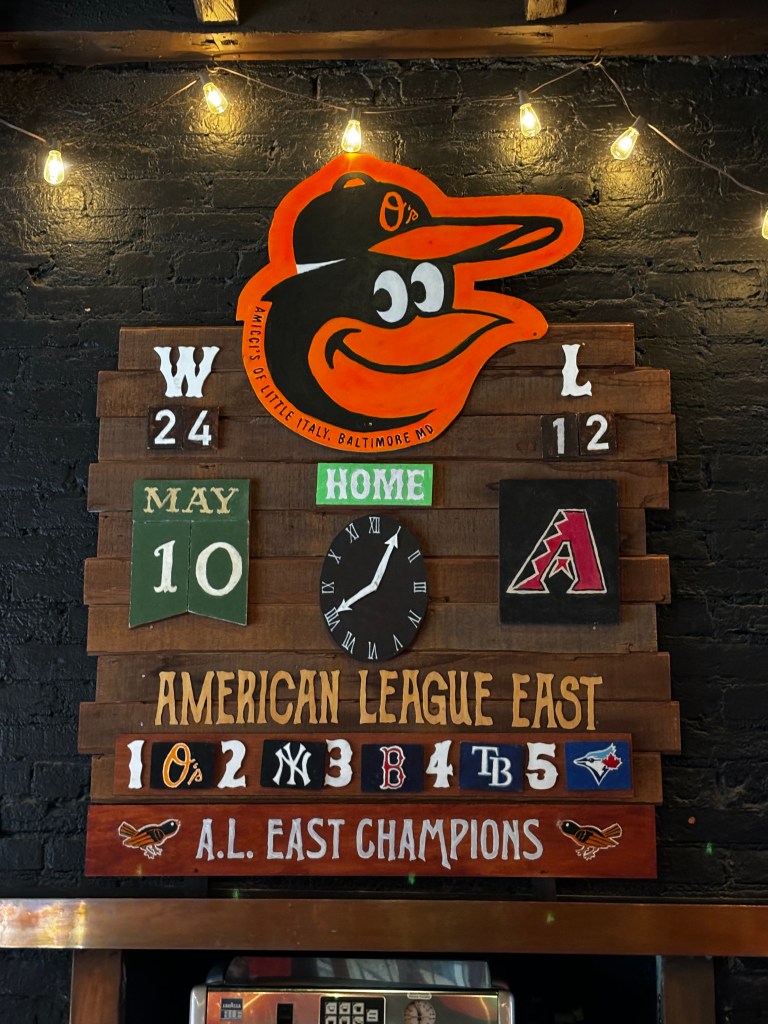
This board in a restaurant bar inspired us to go forth and cheer for our D’Backs!

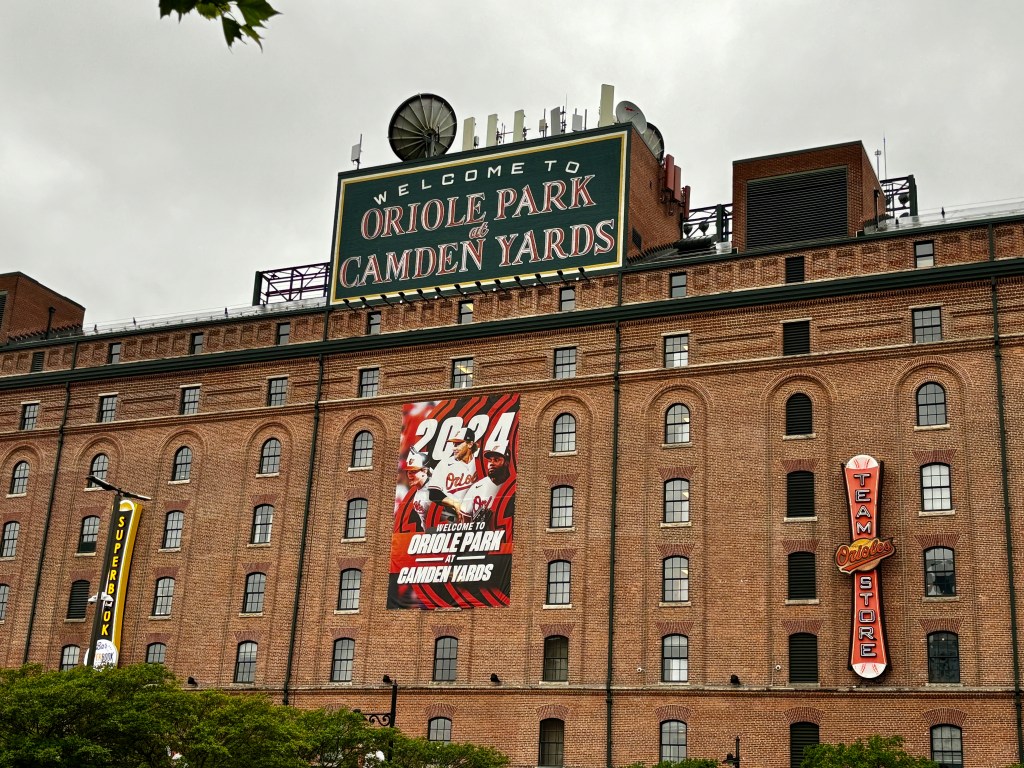
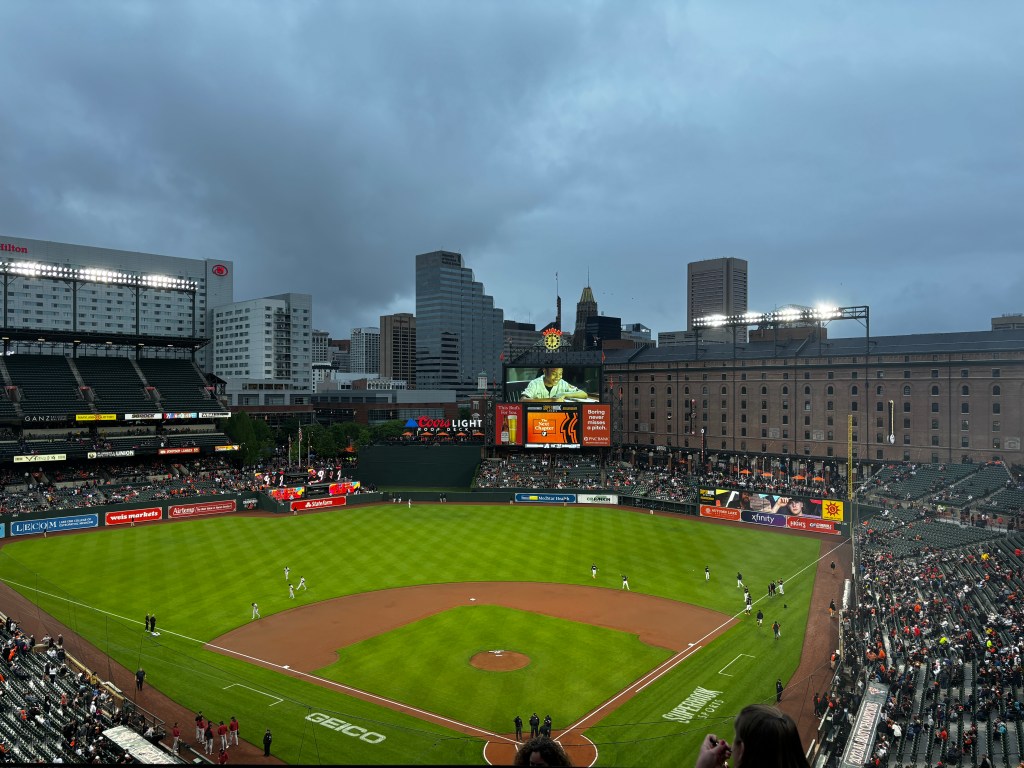
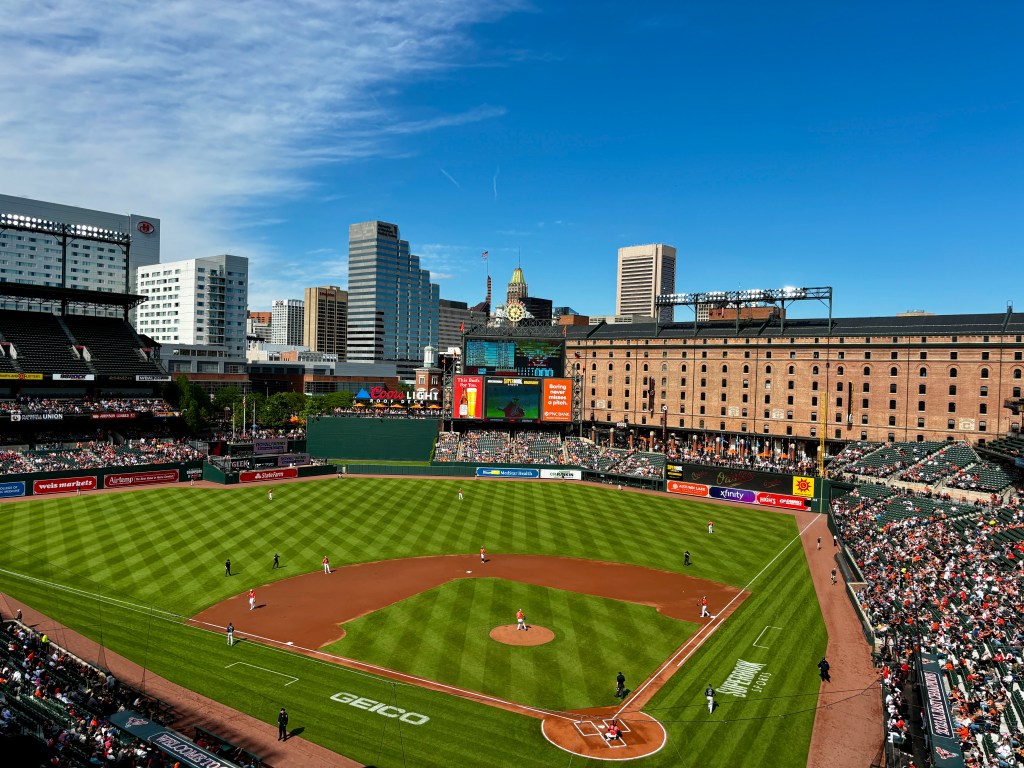
We walked the short distance from our hotel to Camden Yards.  The stadium seats 45,000 and opened in 1992.  It was built over the former Camden railroad yard in industrial Baltimore.  The right field area utilizes one of Baltimore’s many old industrial buildings.

The weather was better, but not great.

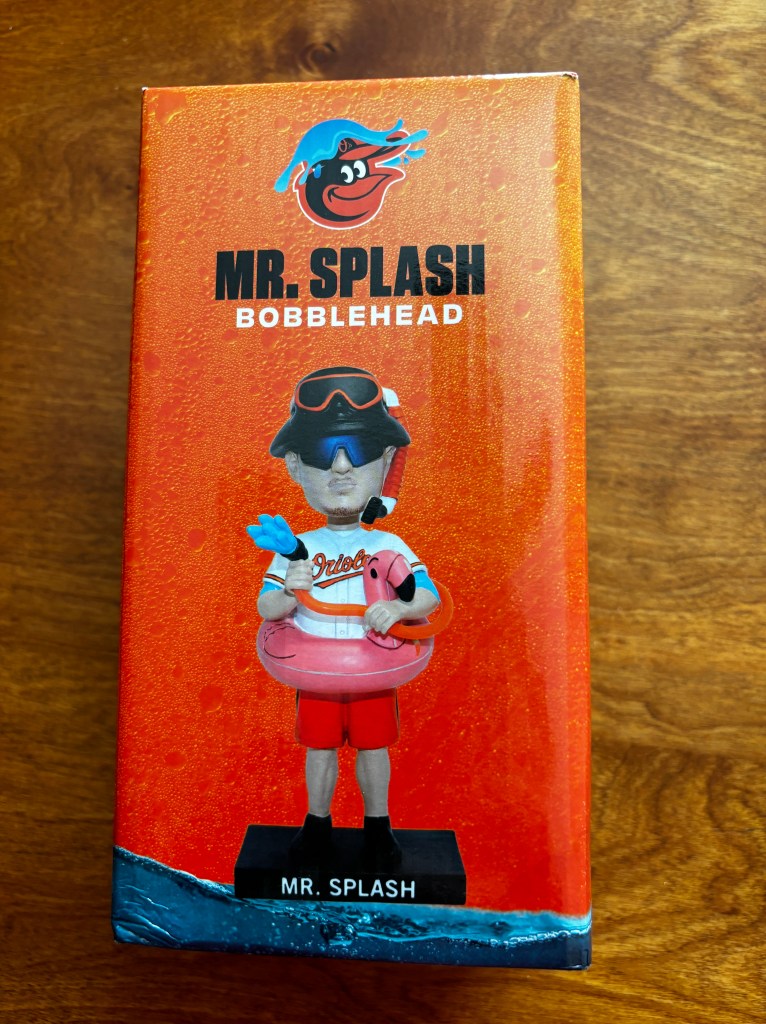
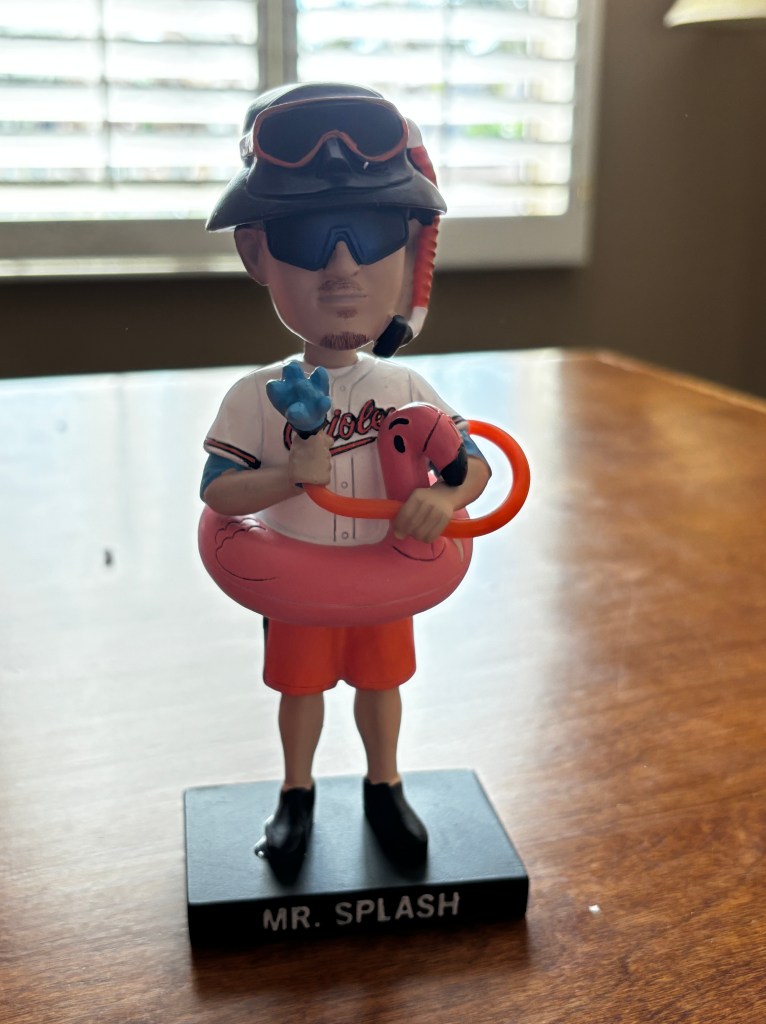
It was a bobble-head give-away night and the locals were very excited about them.  I gave one of ours to a most appreciative woman. I’m not sure what we’ll do with the one we still have.

The Mr. Splash bobble-head represents a tradition of fans in a particular outfield section of the stadium getting sprayed with water at times during the game.  The O’s team owner was Mr. Splashy that cold and chilly night. 

Screenshot

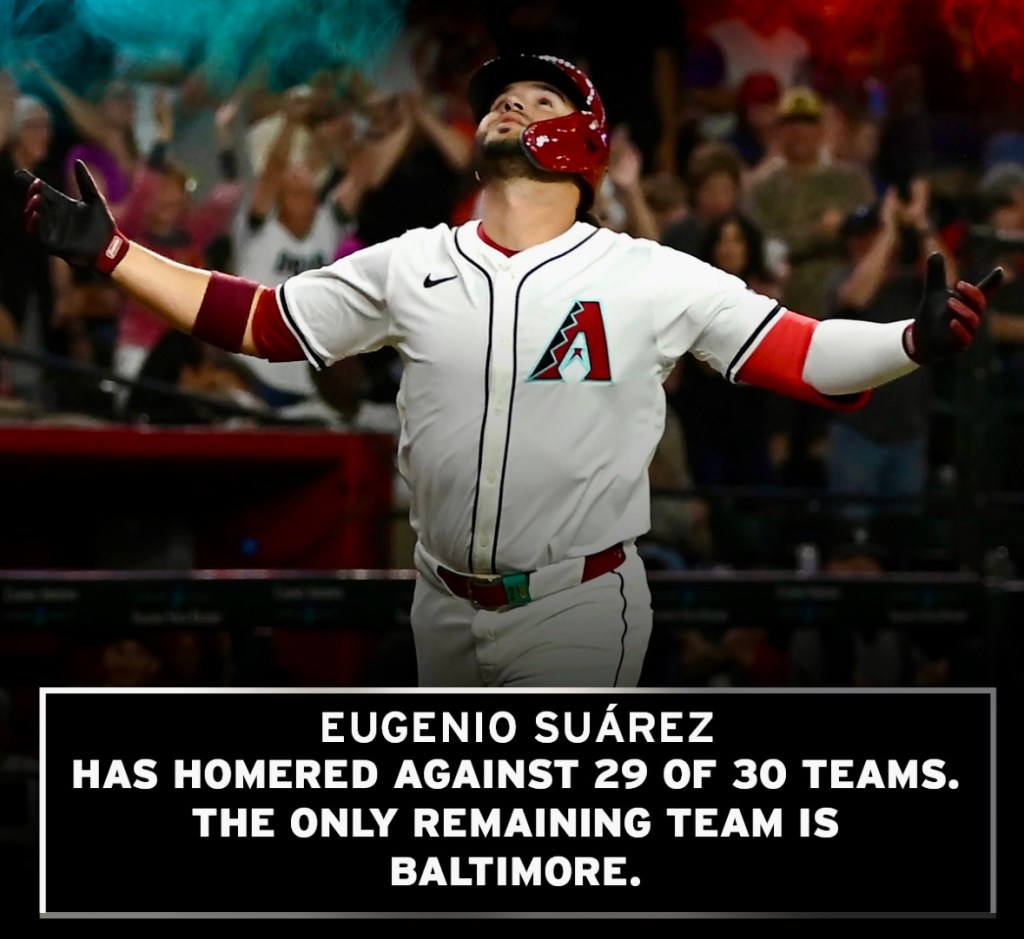
On Twitter, I saw this post about Eugenio Suarez.  He was my favorite Mariner last year and was traded to the Diamondbacks in the off season.  Logically, he is now my favorite Diamondback.  The only team he hadn’t homered against in his career was the Baltimore Orioles.  

Alas, Eugenio didn’t hit a home run in game 1 and the Diamondbacks did not win the game.  It rained some, but our gear kept us mostly dry.

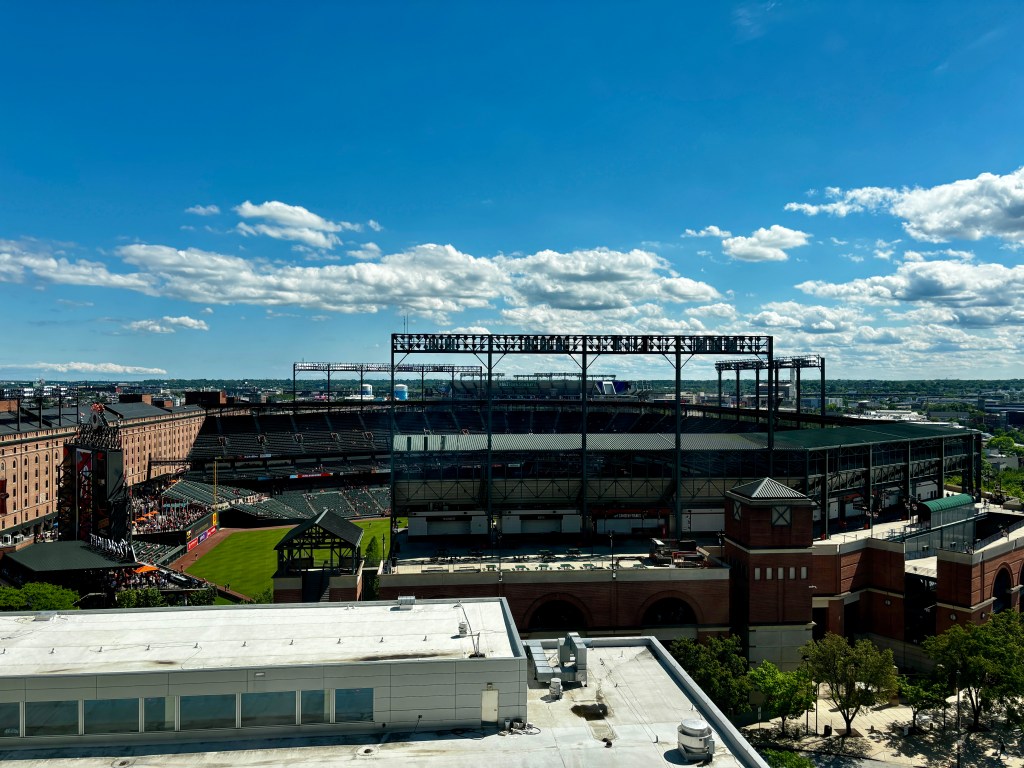
The next morning, when we viewed the field from our hotel room, it seemed we had finally gotten a break in the weather!

The game later in the day was pleasant but the D’backs lost again and Eugenio didn’t hit a home run.

We noticed that during the seventh inning stretch, the routine was to  have a patriotic song and then sing Take Me Out to the Ball Game.  That is pretty typical of stadiums around the country.

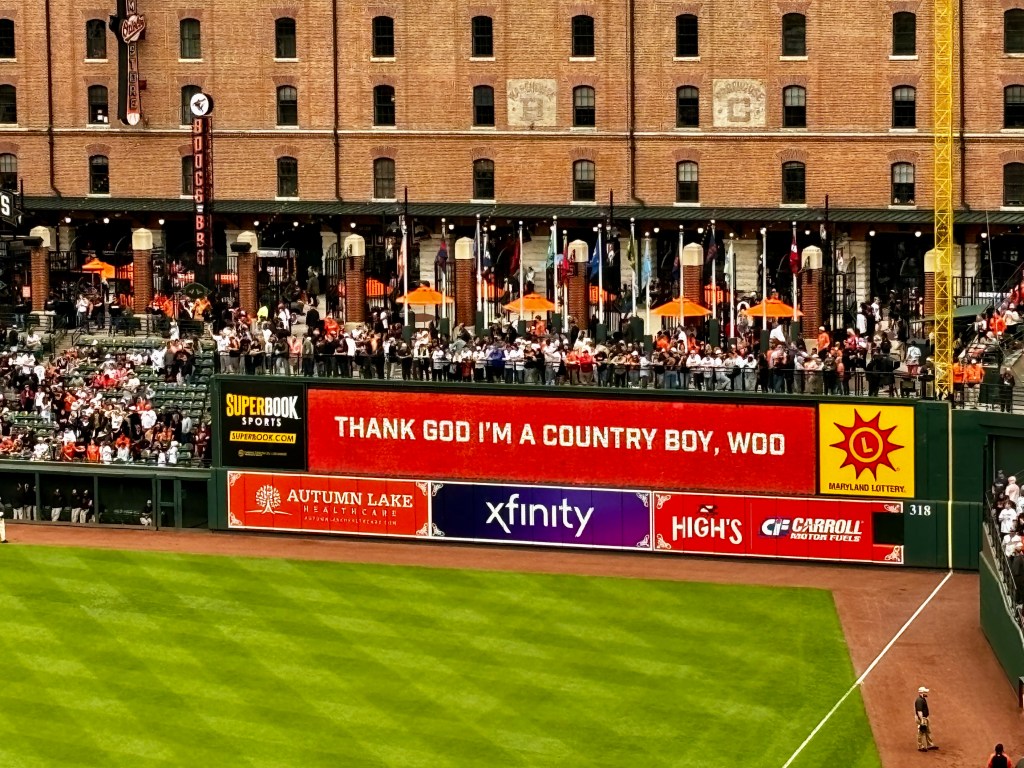
However, at Camden Yards they follow those up with Thank God I’m a Country Boy and everyone sings along.  We were a bit confused by that because Baltimore is a good sized city and the surrounding area isn’t really very rural.  We asked a local fan sitting near us about it, and he couldn’t explain it.  He just said it has been happening for the 30 years that he has been going to Orioles games.

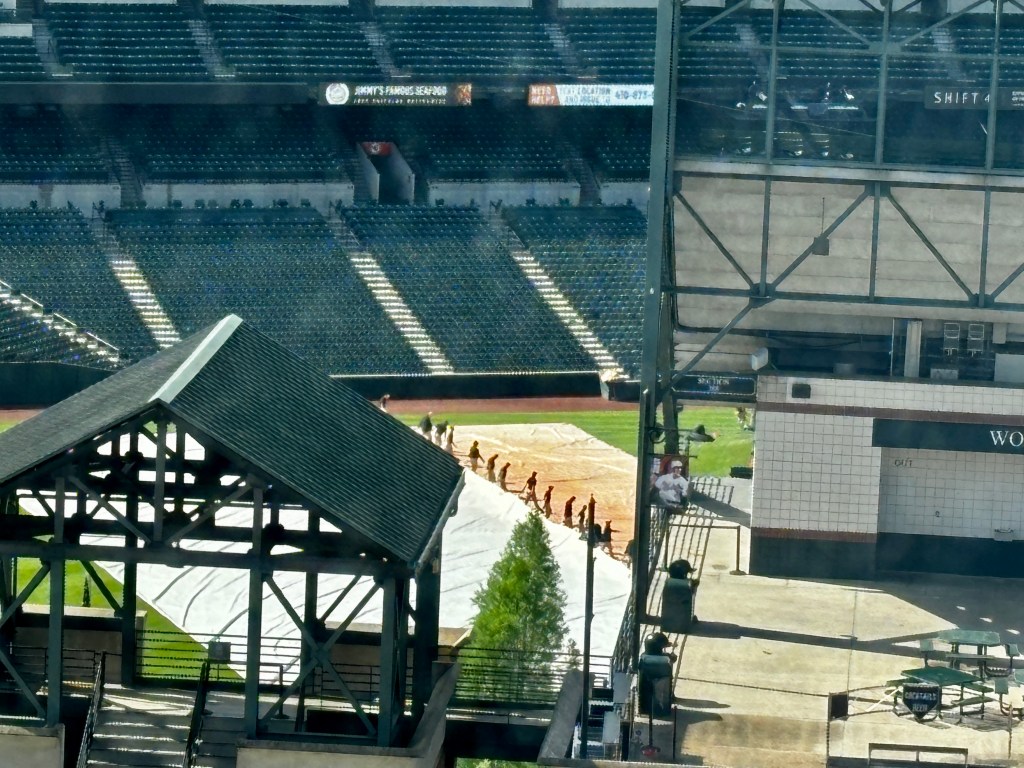
The next morning, we could see the grounds crew removing the tarp and preparing the field for the third game in the series.  We were not going to the game that day. Instead we were headed to the Babe Ruth Museum and Birthplace and a food tour.

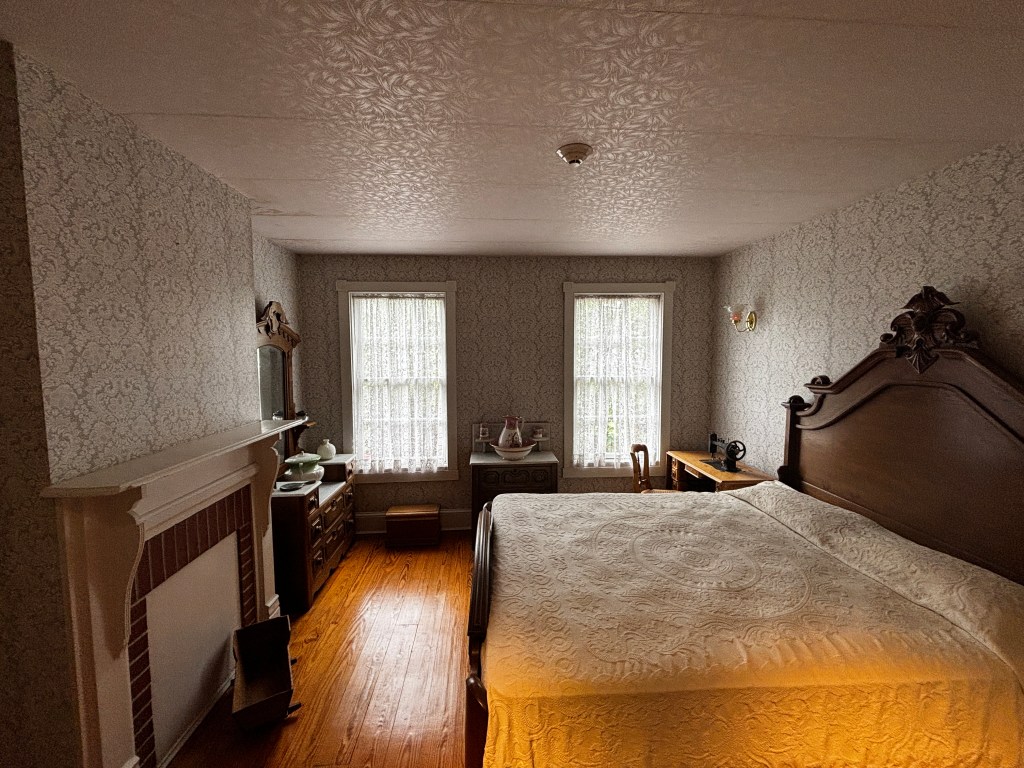
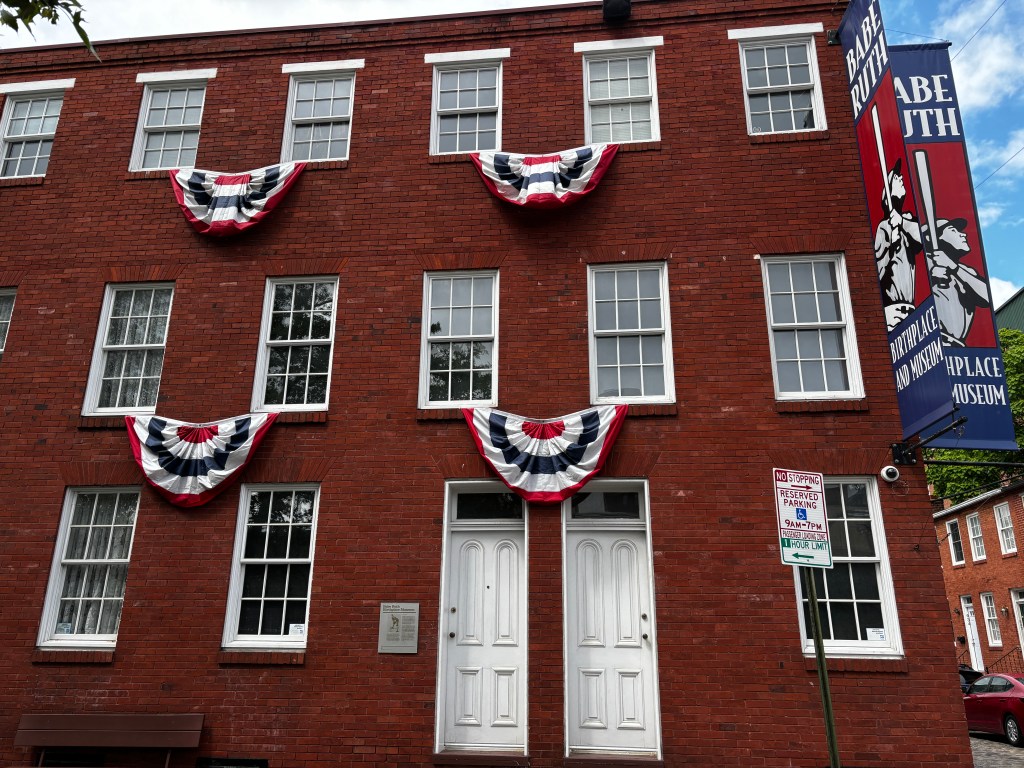
We were able to walk to the museum and learned that George Herman Ruth was born in this row house.    His mother went to her parents’ house for his birth as the apartment she shared with her husband was above a rowdy tavern.

Mrs. Ruth’s parents’ home was a typical Baltimore row house, worth about $1500.  At the time of Babe’s birth, in 1895, Baltimore was the nation’s sixth largest city.  The city’s industry was seaport related.

George was a bit of a problem child, roaming the streets and skipping school.  At age 7 his parents placed him in St. Mary’s Industrial School – a home for orphans and delinquents.  He went back and forth between his parents’ home and the school for 12 years.  

George left St. Mary’s for the last time in 1914 ,at age 19, under the guardianship of Baltimore Orioles’ owner and manager, Jack Dunn.  He signed the talented young man to pitch for his minor league Baltimore Orioles ball-club for $600 per year. Dunn agreed to serve as Ruth’s legal guardian until he turned 21.

Ruth’s exuberance over everything in his new life led someone to observe, “He’s just a babe in the woods.” People began calling him “Jack Dunn’s Baby,” which was soon shortened to “Babe.”

However, Babe Ruth was soon sold to the Red Sox in a financial move to keep the Orioles afloat.  (I’m not sure how that guardian thing went after that.)

By 1916, Babe Ruth was viewed as an outstanding pitcher who sometimes hit long home runs.  Being a pitcher did not allow him to play everyday so he also played in the outfield.  He then broke home run records, hitting 29 in 1919.

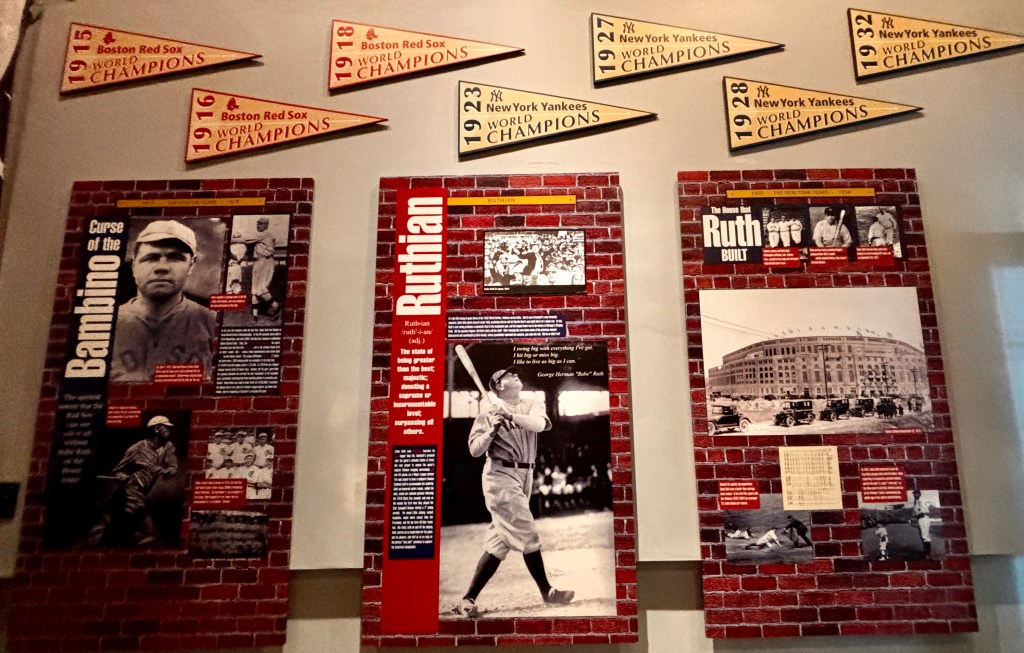
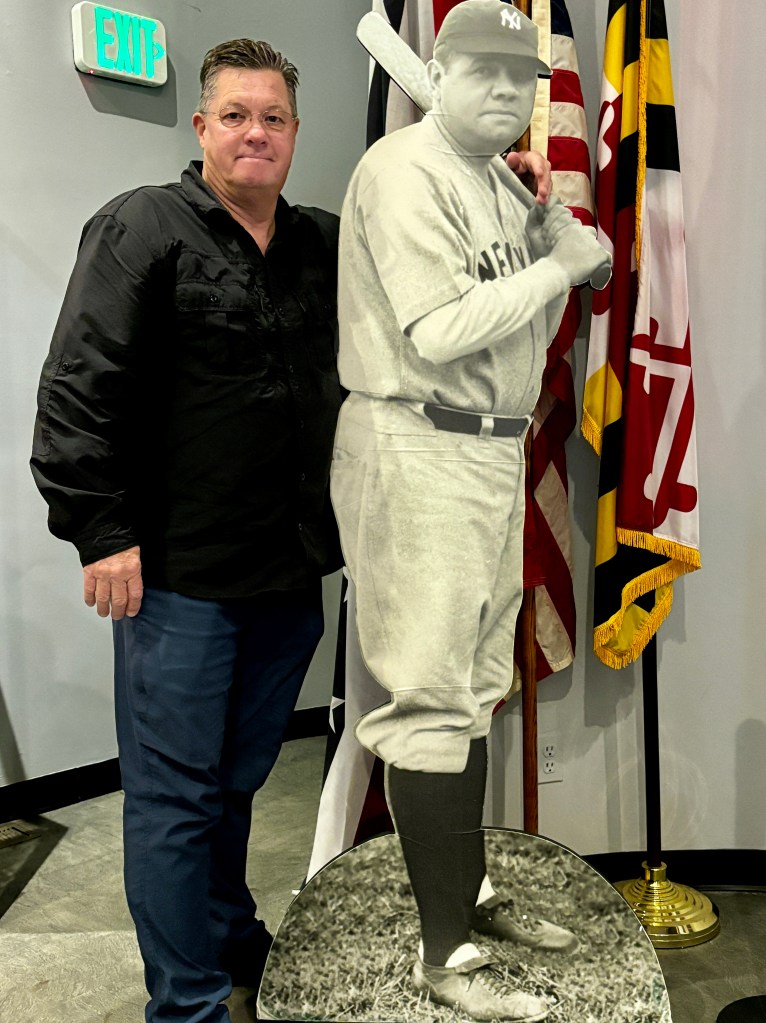
After that season, Ruth was sold to the Yankees, initiating the “Curse of the Bambino” which “kept” Boston from winning a championship for 86 years.

Ruth helped the Yankees win four world series championship in his fifteen years with the team. 

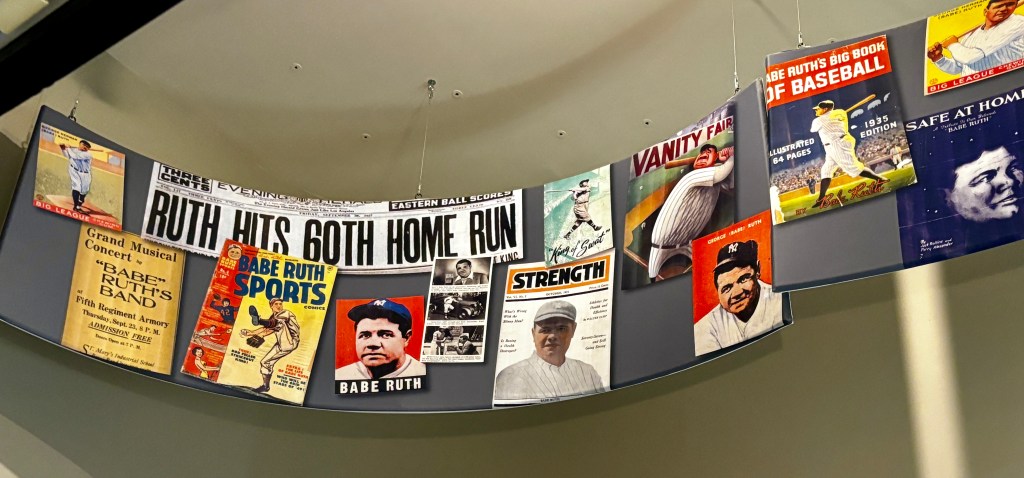
He hit 60 homers in 1927 as part of the Yankees “Murderers Row” lineup. 

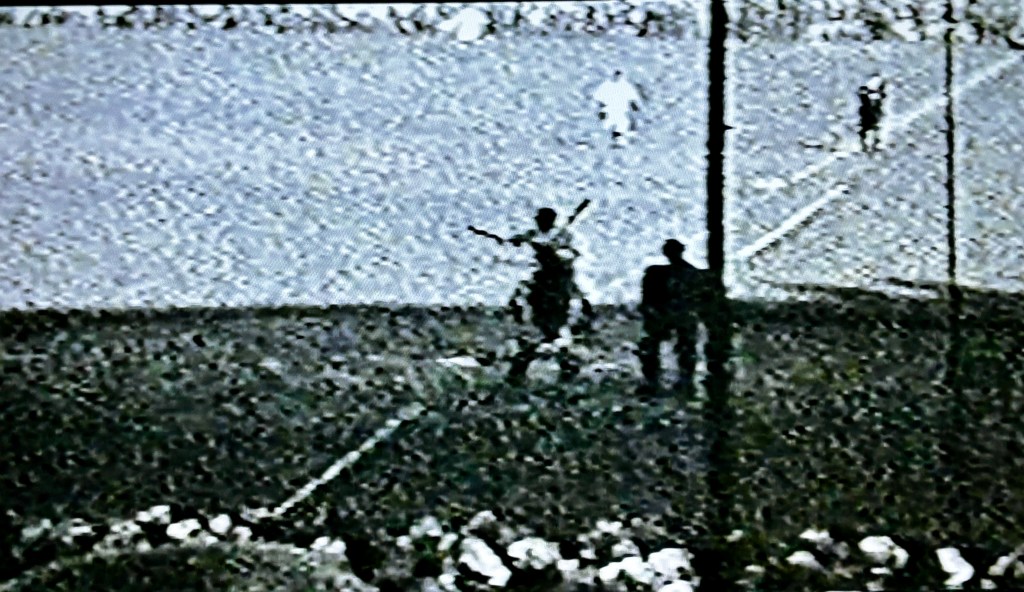
This picture MAY show Babe Ruth calling his shot – a home run against the Chicago Cubs in game 3 of the 1932 World Series.  It is unclear whether the pointing gesture Ruth made actually had intent but the possibility of it being so added to his baseball lore.

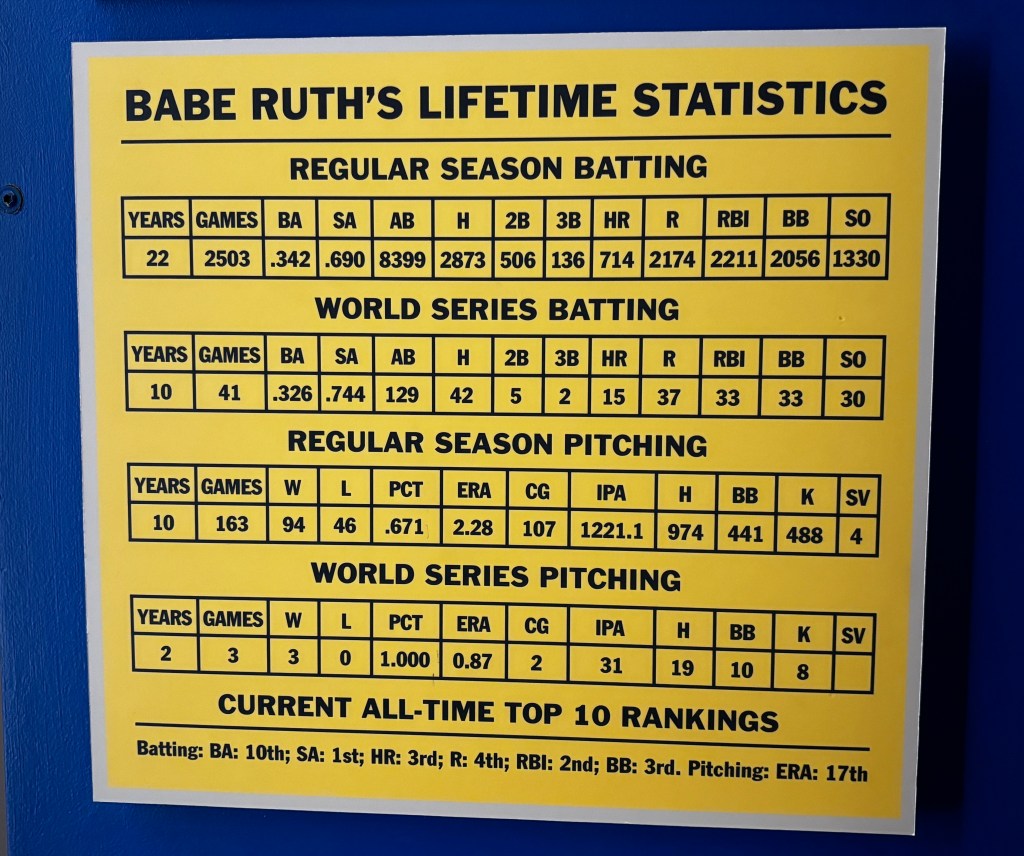
Babe Ruth played very briefly with the Boston Braves before retiring in 1935.  He played in 2503 games in his career and had 714 career home runs.

In 1936 Babe Ruth was one of five members inducted into the first class of the Baseball Hall of Fame.  The others were Ty Cobb, Honus Wagner, Christy Mathewson and Walter Johnson.

Babe Ruth received press and public attention for his baseball stats and for his drinking and womanizing.  This likely kept him from ever managing a team after retiring as a player.

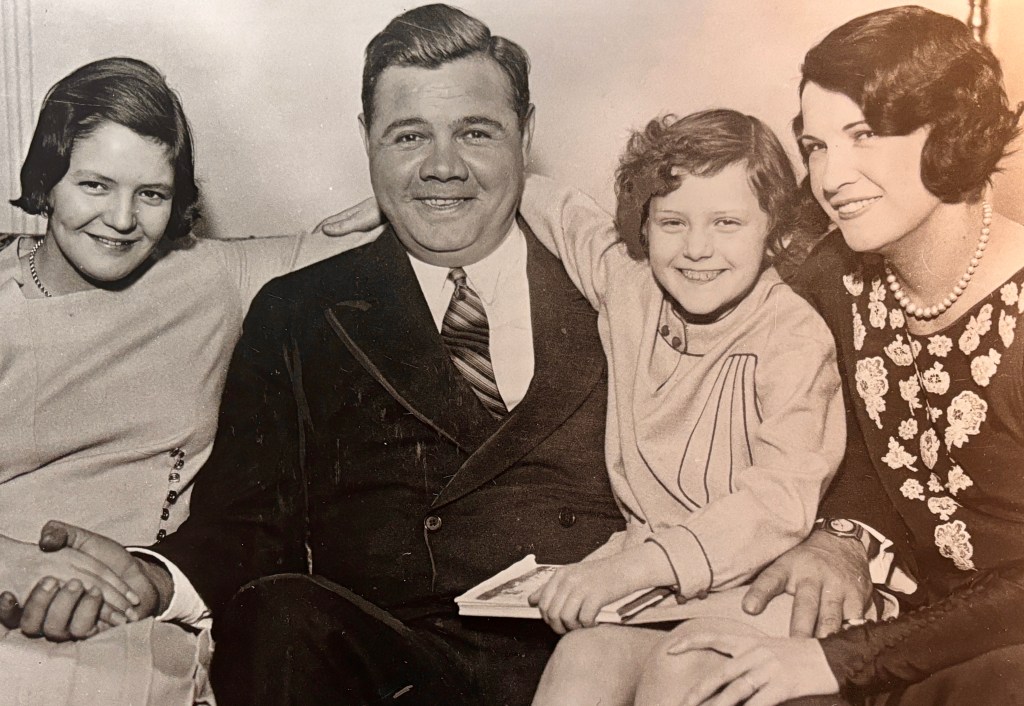
This picture is of Babe, his second wife, and their daughters.

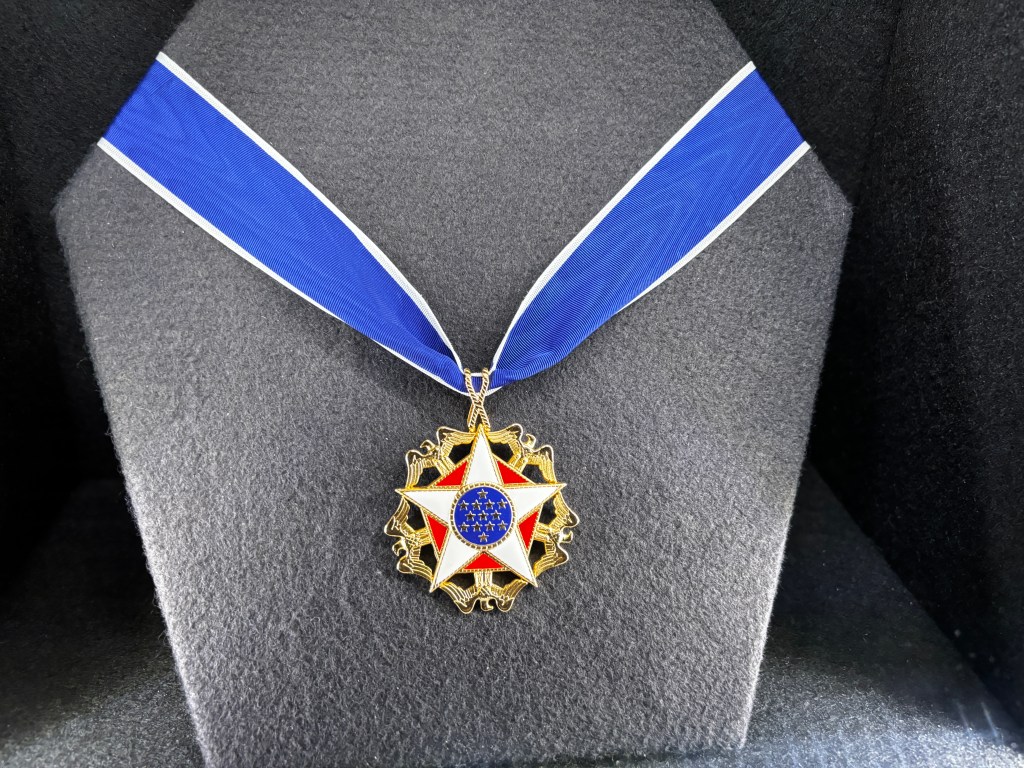
After his playing days, Ruth made many public appearances in support of America’s efforts during World War II.  In 2018, Ruth’s grandson accepted a Presidential Medial of Freedom on Babe Ruth’s behalf for his service to security and culture in America.

The lower level of the Babe Ruth Museum focused on how the Star Spangled Banner came to be played at baseball games.  That has been broadened to most sporting events, but it started with baseball. 

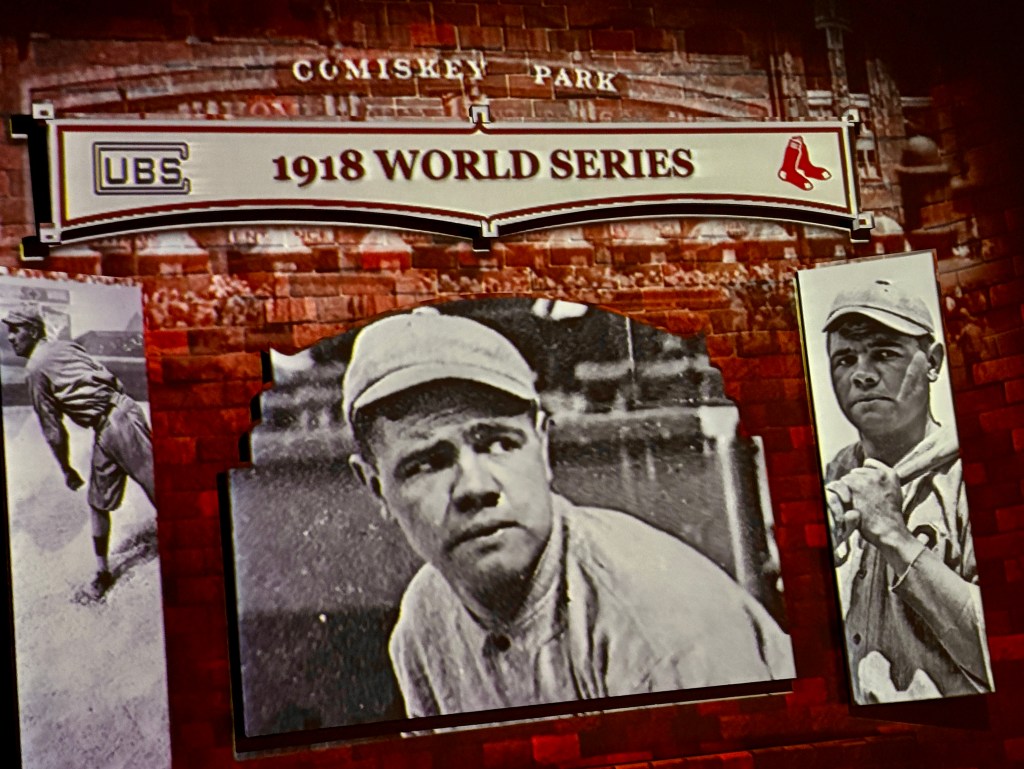
During the 1918 World Series, President Woodrow Wilson, in attendance at the game, asked the band to play The Star Spangler Banner.  He was hoping to promote some good feelings as the country was involved in WWI.  The third baseman for the Yankees, on leave from the service to play baseball, stood and saluted.  Other players, including Babe Ruth on the mound, took notice.

Playing the Star Spangled Banner was repeated during the seventh inning stretch in game two of the series.  By game three, the song was moved to before the game and has been there ever since.

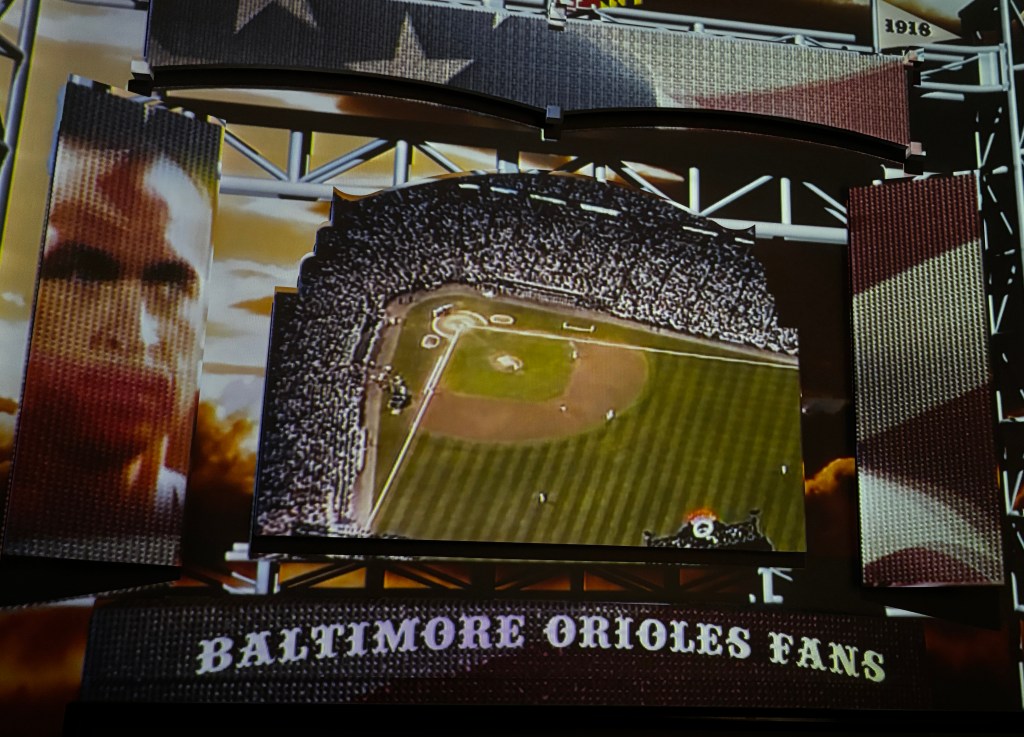
At the museum, a video showed a montage of celebrities singing different parts of the anthem. This video included Oriole fans.

Baltimore fans shout “Os” at the beginning of the line “O say does that star-spangled banner yet wave…”  We had noticed that during the two games we attended.  We thought that was pretty cool as Frances Scott Key wrote the poem while being held in Baltimore harbor.  (That game tradition makes perfect sense to us – unlike singing Thank God I’m a Country Boy.)

The D’Backs won the final game in the series (when we weren’t there) and Suarez did not hit a home run against Baltimore.

Next up:  Our Baltimore History and Food Tours

We were in Baltimore in May 2024.

Posted in Uncategorized | 1 Comment

Baltimore: Historic Ships and Little Italy

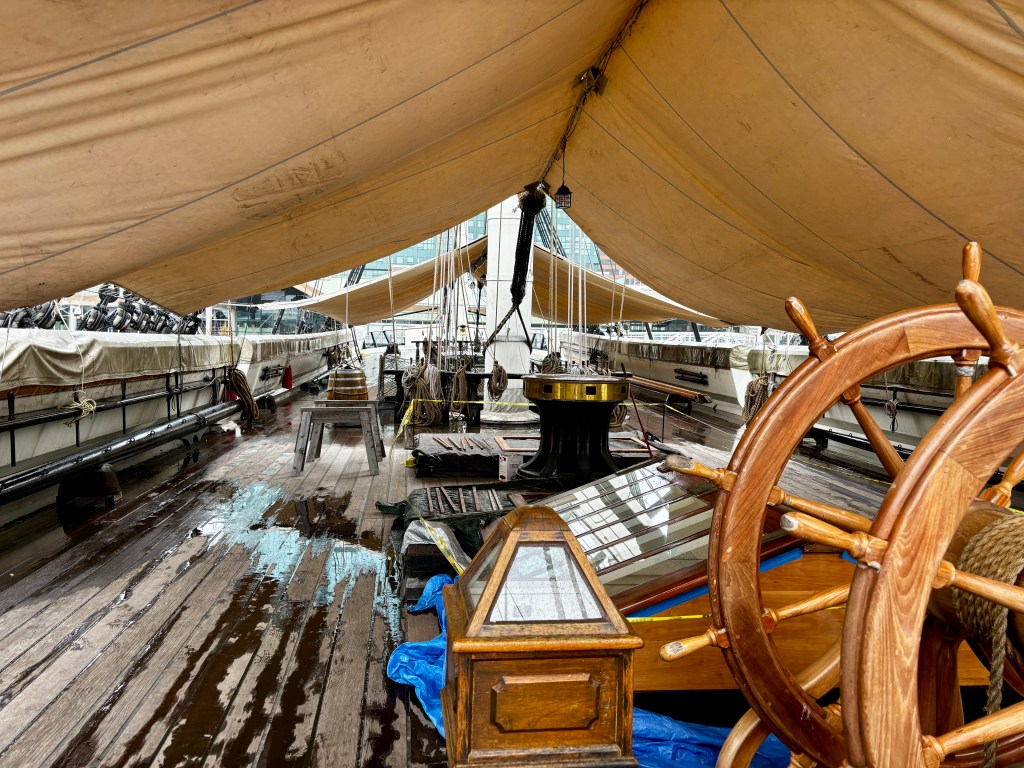
Our next excursion was to tour the Historic Ships of Baltimore, each with its own story and docked in the Inner Harbor.   The weather was still rainy and cool but it was easy to walk between the ships and mostly we were inside the vessels.

Our first was the USS Constellation. She was built in 1854 and has the distinction of being the only US ship active in Civil War that is still afloat.

She is also the last “sail only” US warship. USS Constellation is also the largest example of Chesapeake shipbuilding.

Although she began service in the Mediterranean Sea, her first mission of lasting importance was as part of the US African Squadron patrolling for, and capturing, illegal slave ships.

The importation of slaves had been illegal since 1808 but, obviously, continued.  It is presumed that one in five Africans died in transit because of horrid conditions.

Another notable service period was as a training ship for the US Navy from 1871-1883.  She was stationed at Annapolis Maryland. During that period it also delivered famine relief goods to Ireland in 1880.

She continued service as a stationary training vessel in Rhode Island from 1883 to 1933.  

In 1933, Constellation was decommissioned, but under consideration to be maintained as a historic naval relic.  Nothing was decided. Following WWII, she was sent into regular mothball status.  

 In 1955, she was stricken from Navy roles and sent to Baltimore as she was confused with another vessel named Constellation.  A non-profit group, The Constellation Commission of Maryland, intended to preserve the other Constellation.

The “other” was a 1797 frigate that was on the Navy rolls until 1853 when she was considered beyond repair and broken up.

Construction on the 1854 Sloop of War USS Constellation was just beginning as the other was scrapped.

Earlier restoration attempts tried to change this ship to the frigate style, but that was later corrected. She currently shows her Sloop of War pedigree.

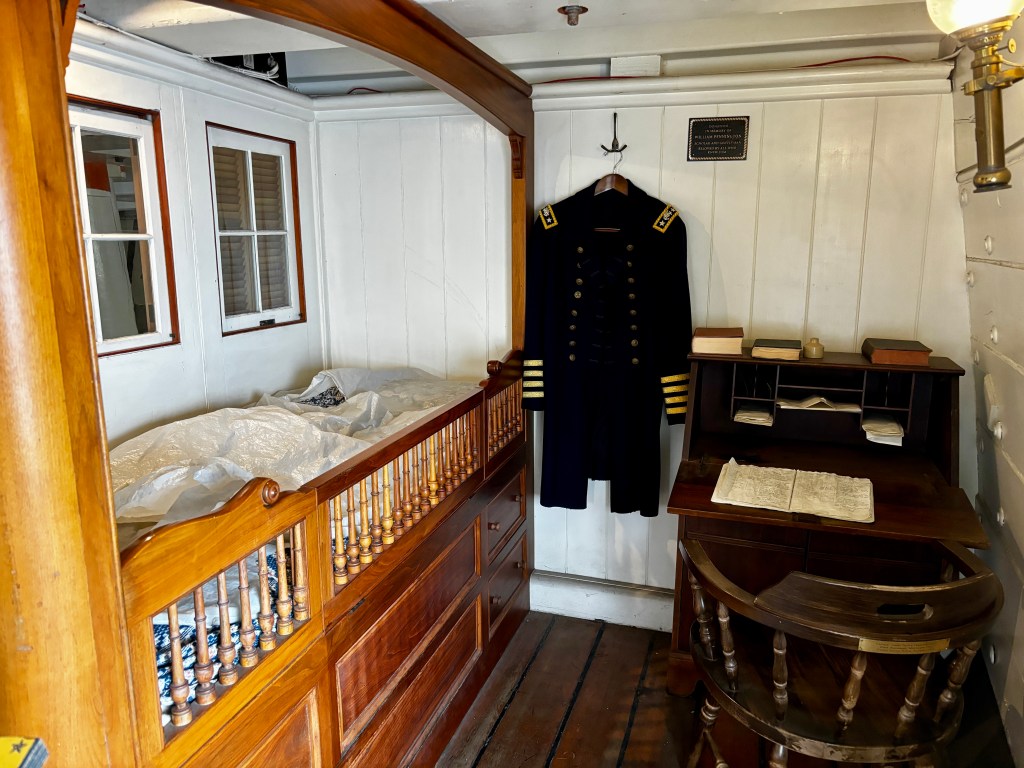
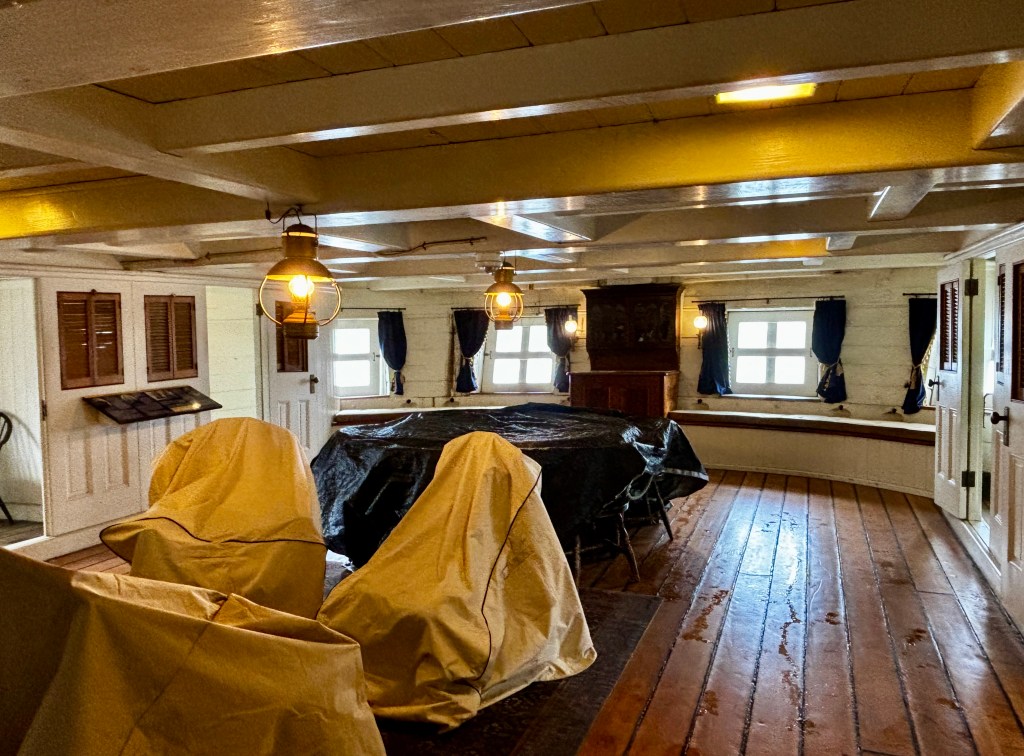
The Captain’s Cabin encompasses six rooms for rest, entertaining and administering the ship.

The Captain’s rooms are at centered at the bow of the ship.

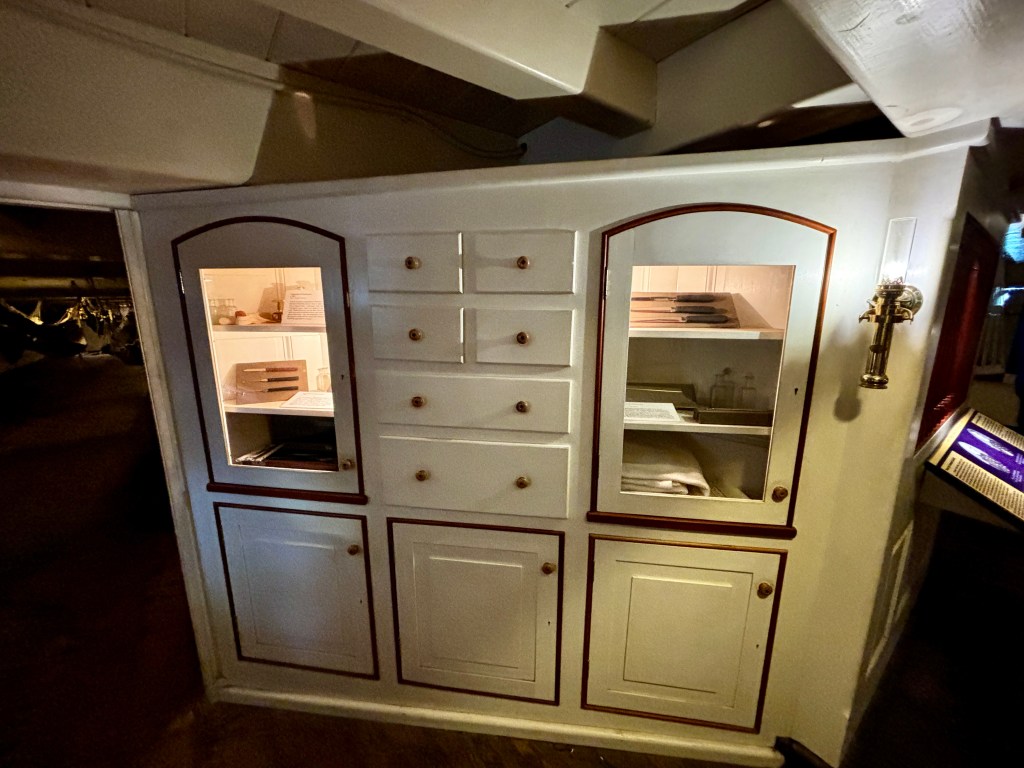
This is the ship’s infirmary.

Some medical equipment is on display.

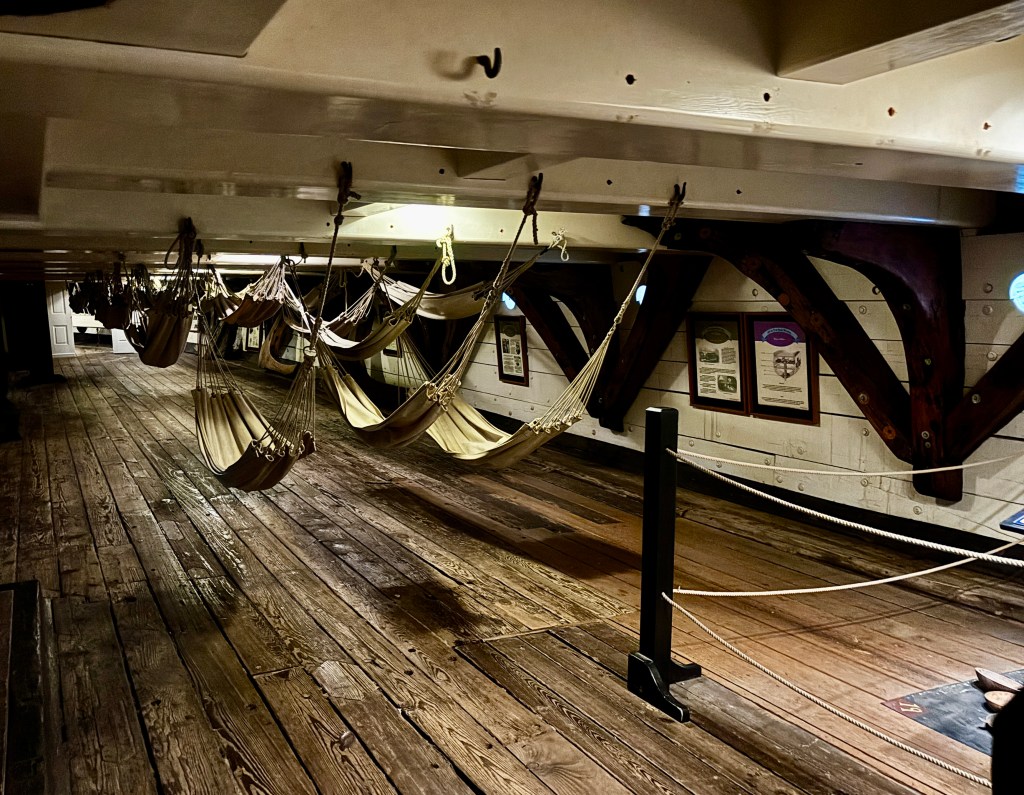
Each member of the crew had his own hammock. 

He would wrap his possessions in the hammock while on duty and hang it on a numbered hook for storage.

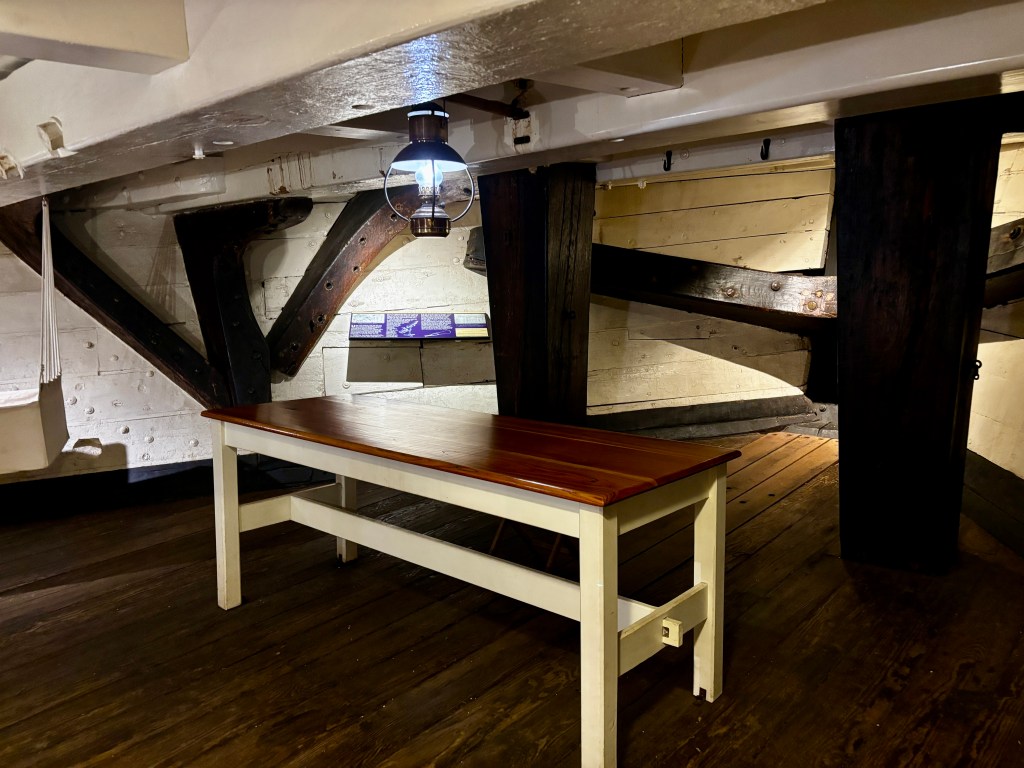
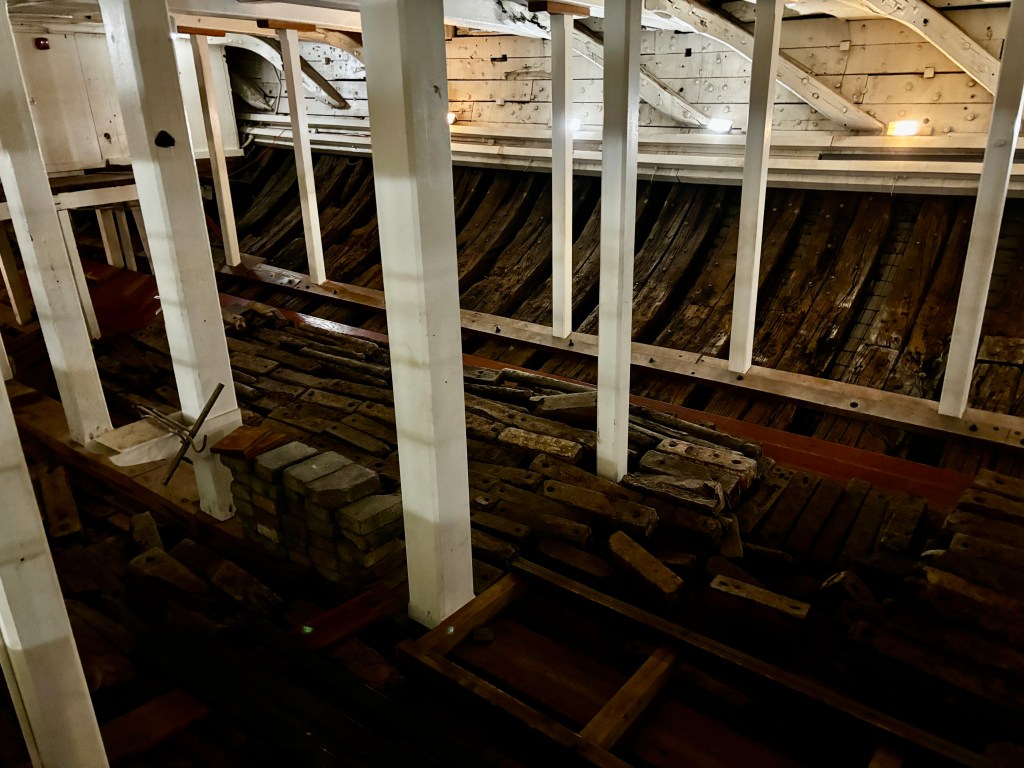
The two lowest decks are mostly original while the upper decks have been renovated.

The gun deck held 8-inch shell-firing guns and four 32-pounder long guns.  (I don’t know what that means.)

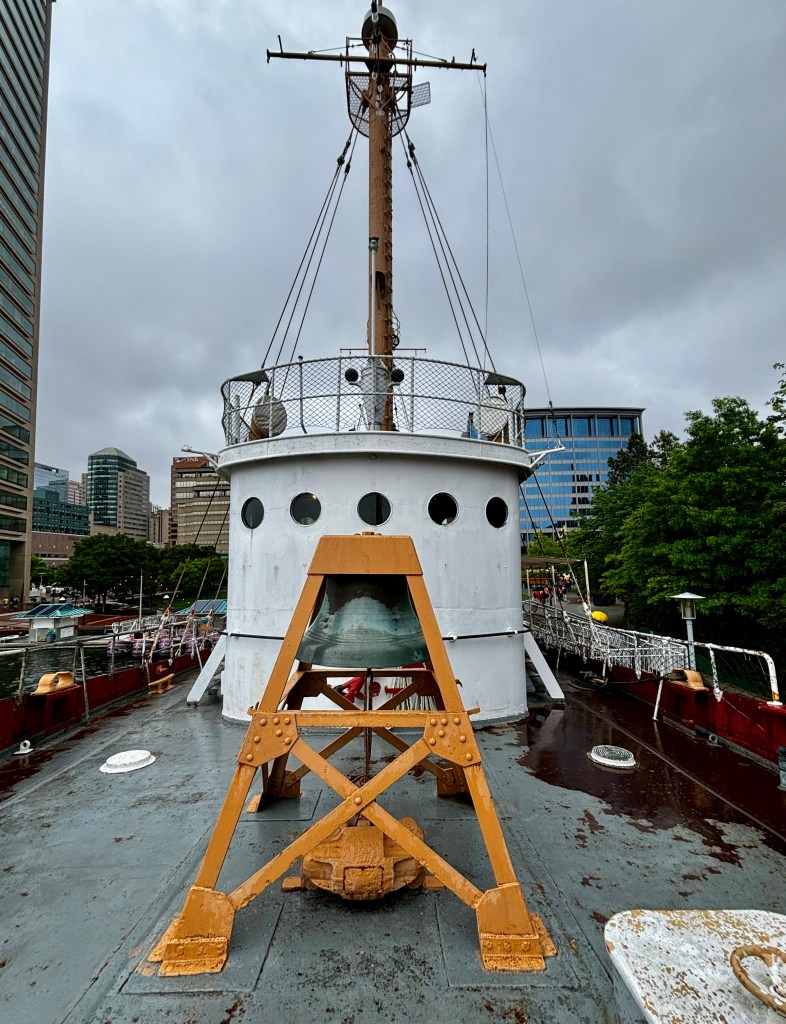
We exited the USS Constellation and walked a short distance to the Lightship Chesapeake.  A lightship functions as a lighthouse.  These ships were used in the US from 1820 to 1983. 

Originally they were managed by the US Lighthouse Service.  They folded into the US Coast Guard in 1939. 

This vessel was in service from 1930 to 1971 and had a crew of 16.  She served at the entrance of Chesapeake Bay for 20 years. She had two 5000 pound anchors to keep her in place.

Lightships, including the Chesapeake, were honored in a set of postage stamps in 2021.

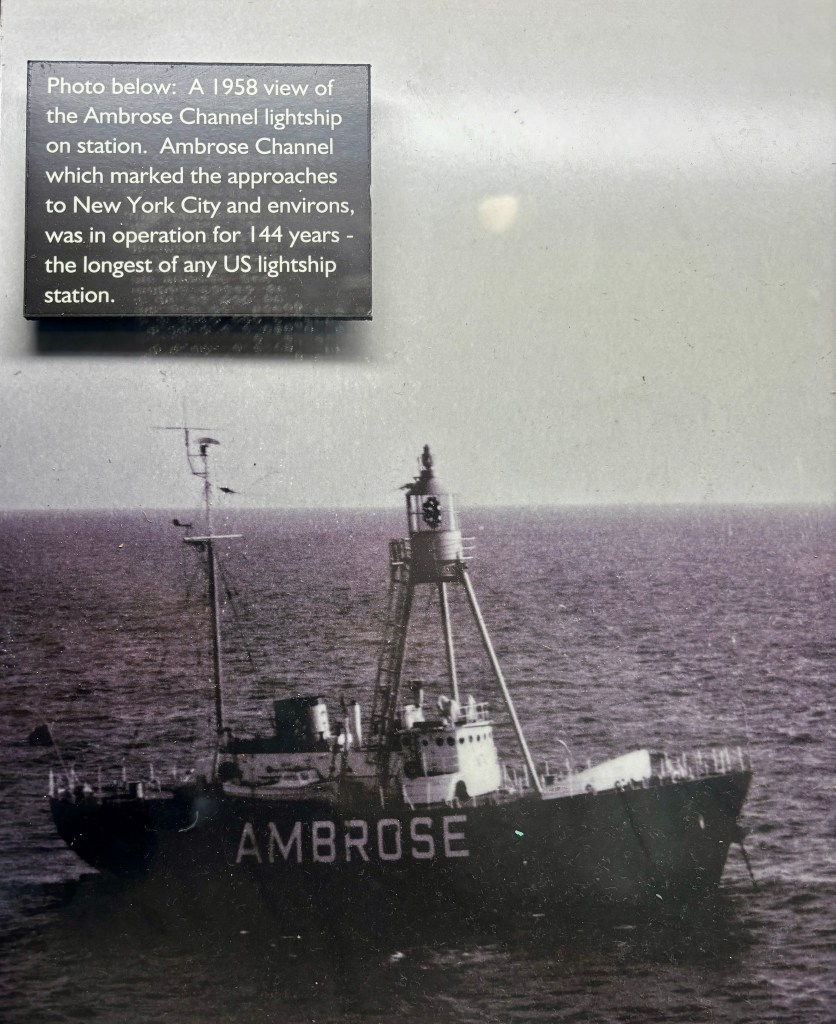
The Ambrose Channel Lightship operated for 144 years as a beacon on the approach to New York City.

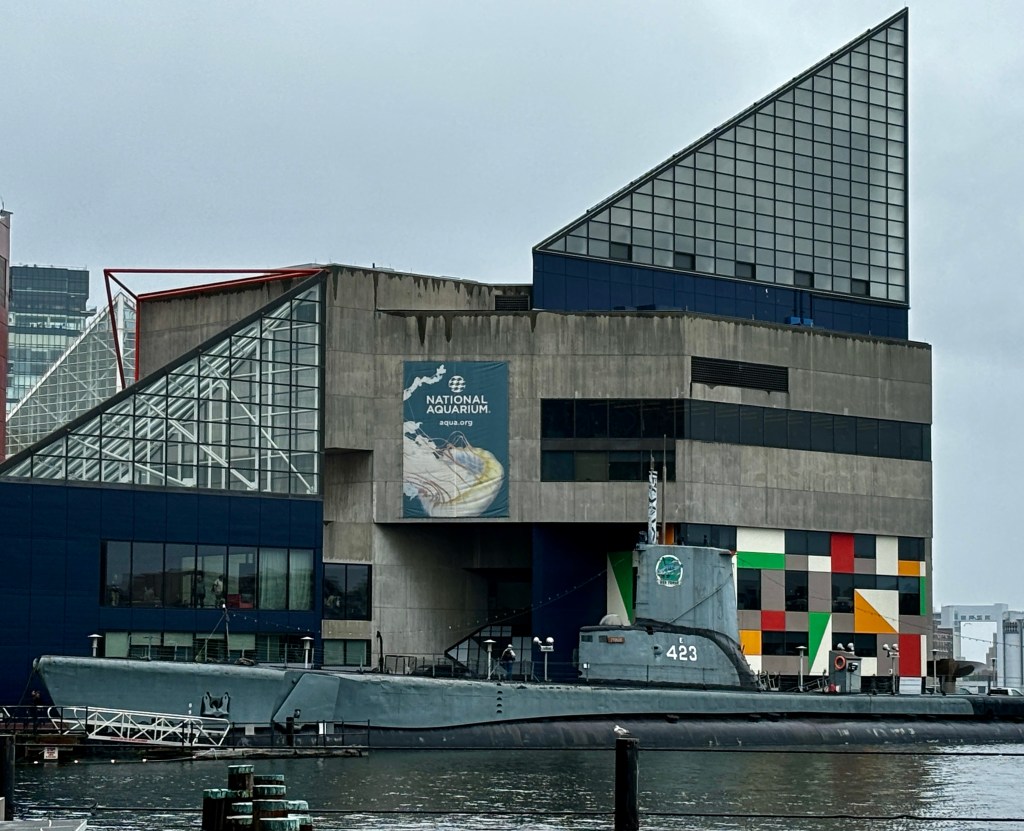
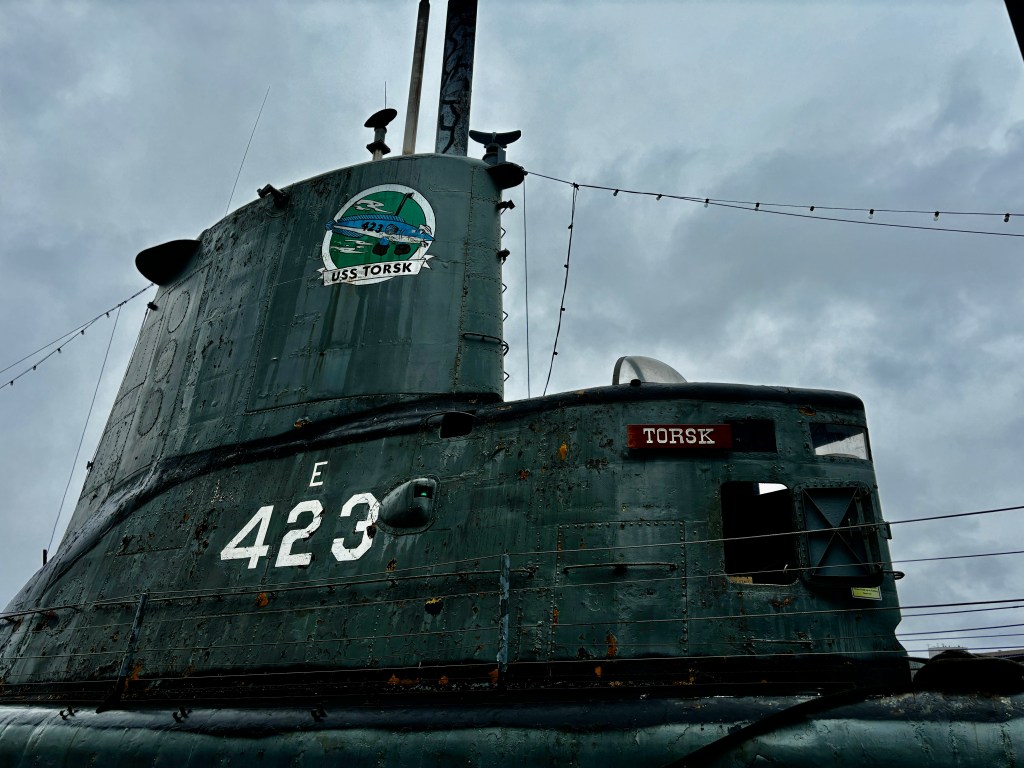
Our next vessel, the USS Torsk, was docked next to the National Aquarium.  We didn’t have plans to visit the Aquarium, but who knew what we might do to get out of the rain!

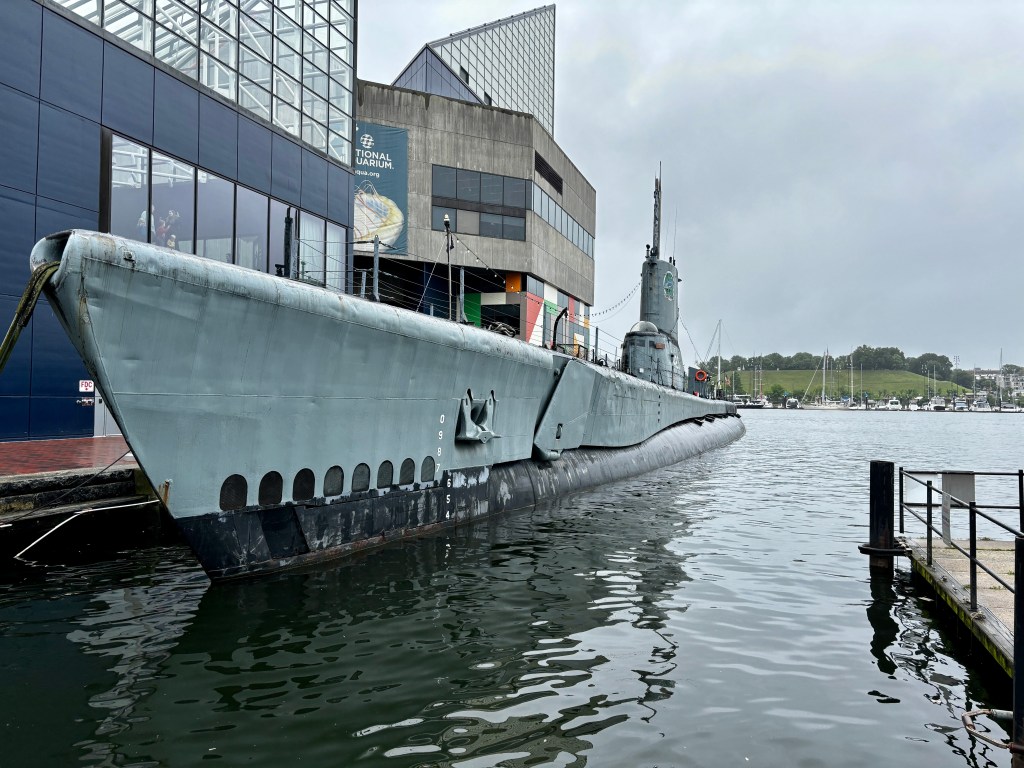
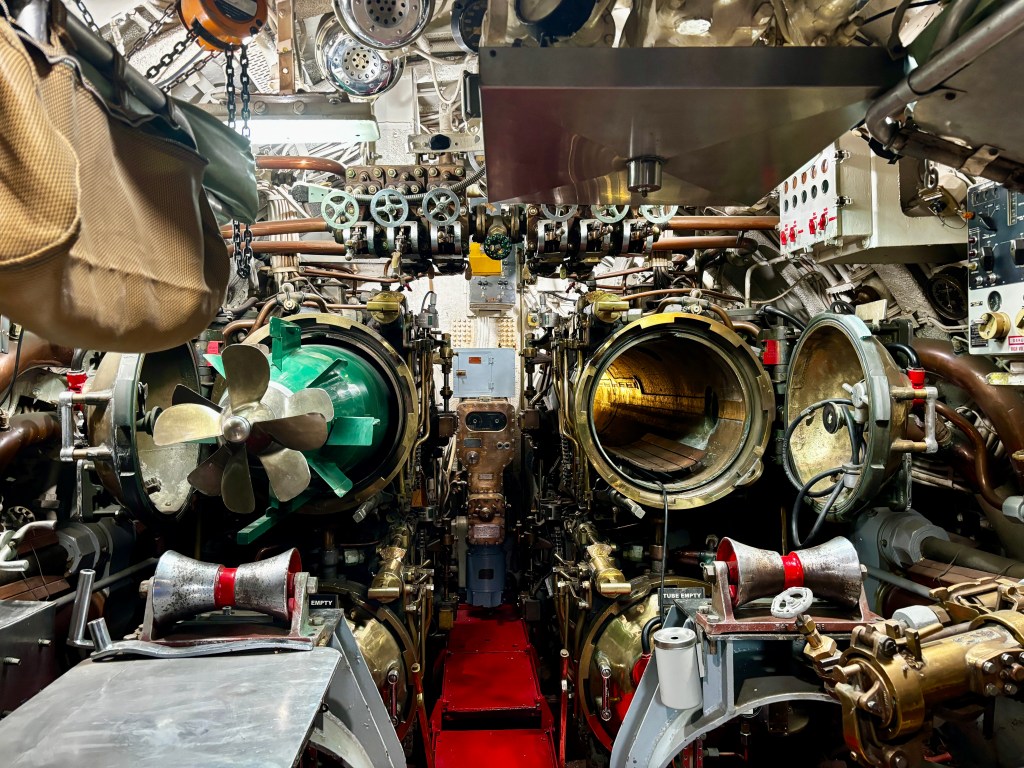
The USS Torsk was launched in 1944 and served for 24 years.  At the time of launch, it was state of the art for submarines.

It had a speed of 22 mph on the surface and 9 mph submerged.  It could stay submerged for 48 hours.

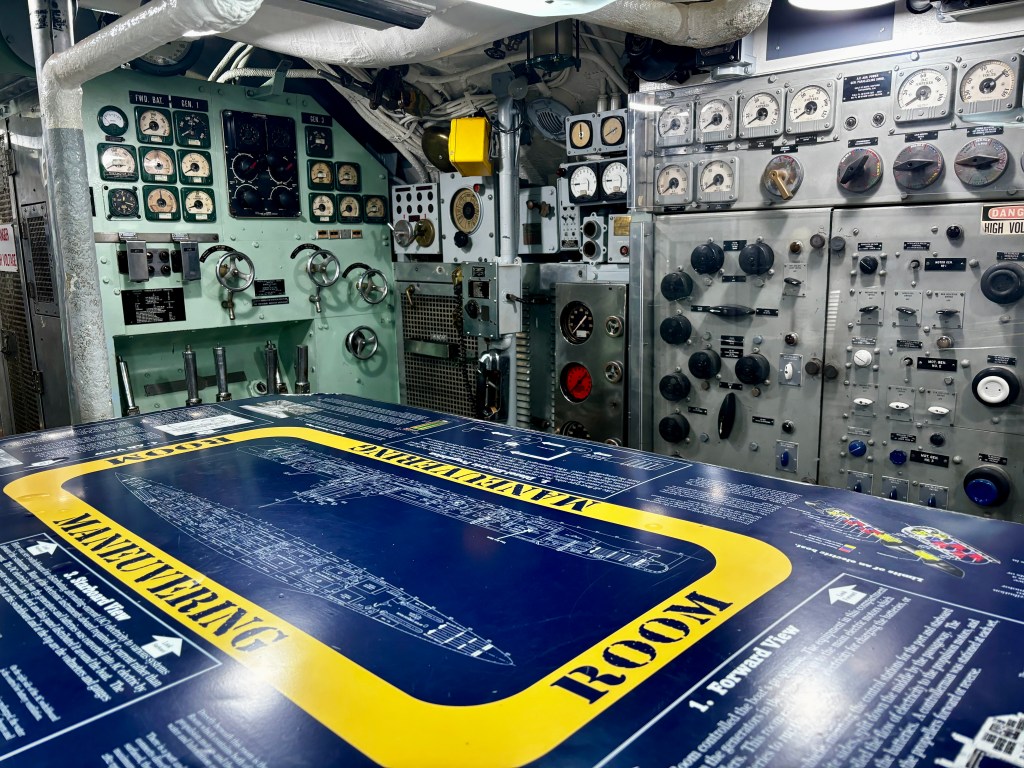
The maneuvering room managed propulsion from four diesel engines, two batteries and 2 electric motors.

The Torsk made two war patrols off Japan, sinking a cargo vessel and two Coastal Defense frigates.  The second was the last enemy sinking of WWII.  

A plaque identified the sacrifice of so many men “still on duty” on submarines from WWII.

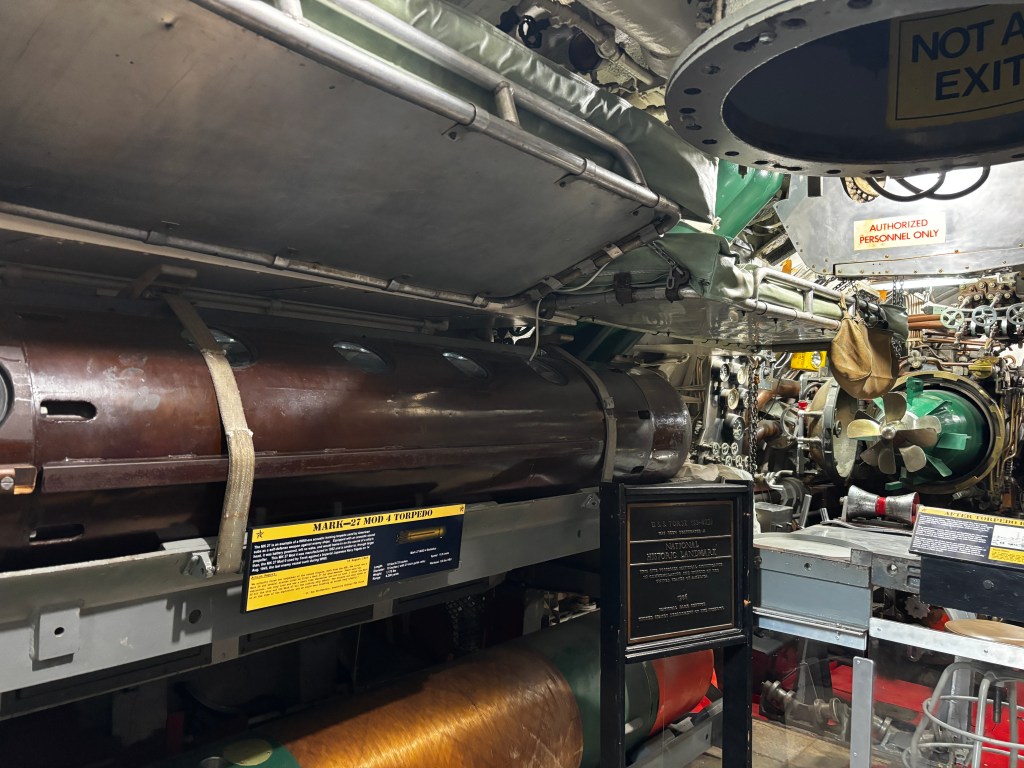
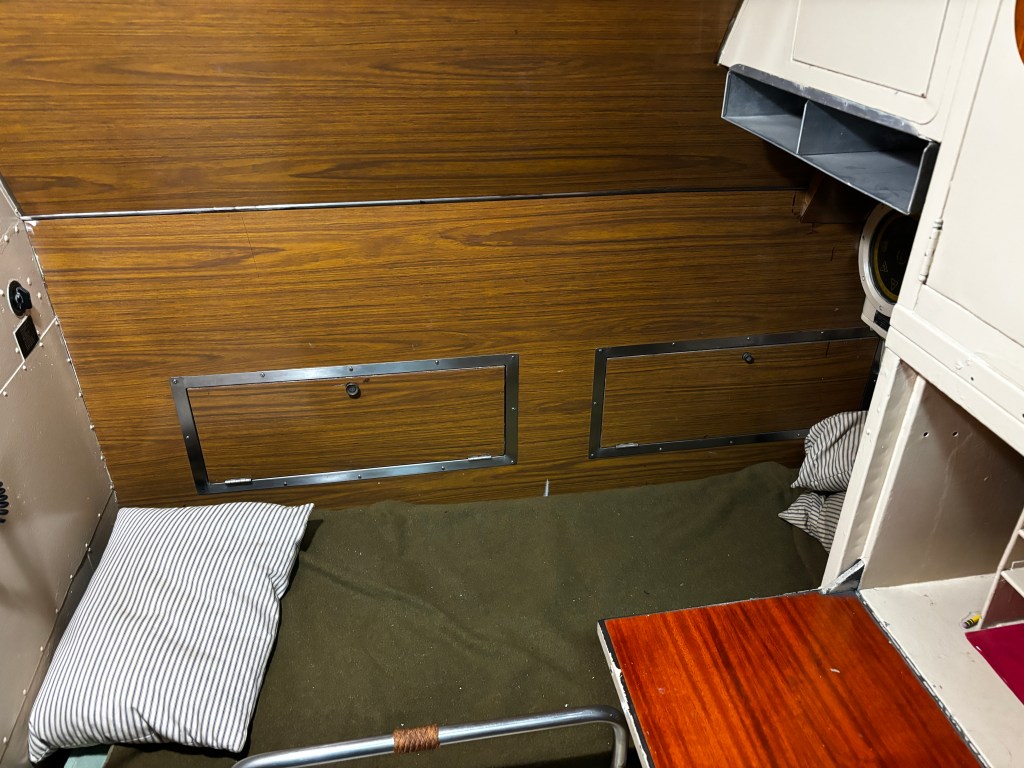
Notice the sleeping quarters above the torpedos.

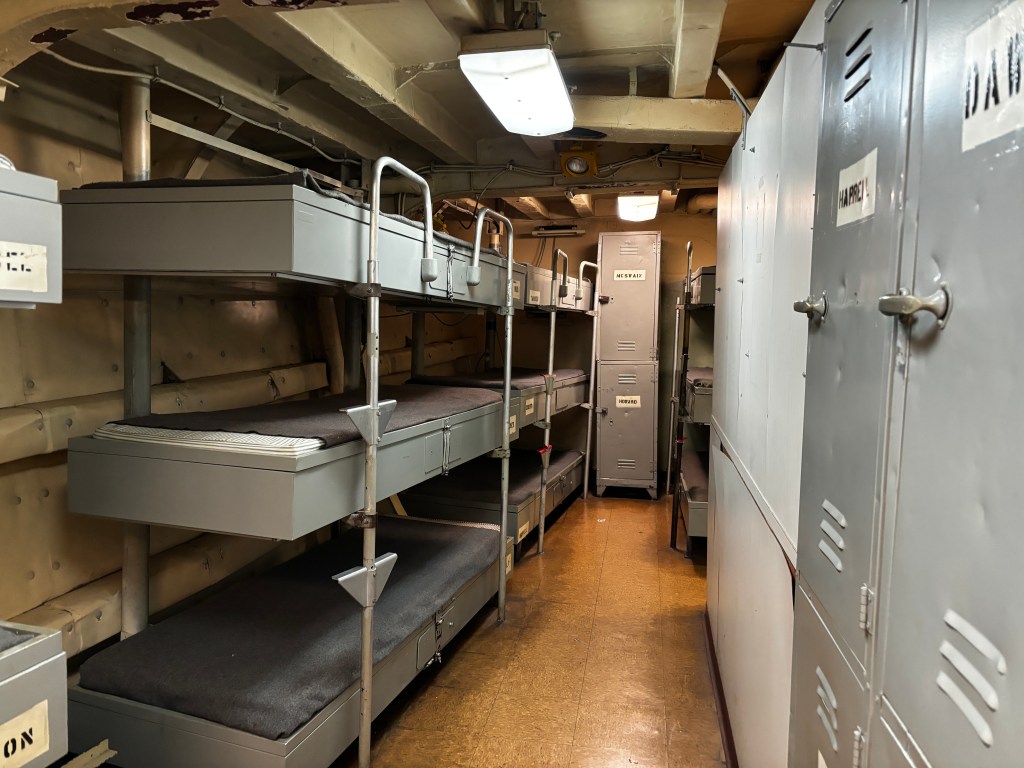
These are the more traditional sleeping quarters.

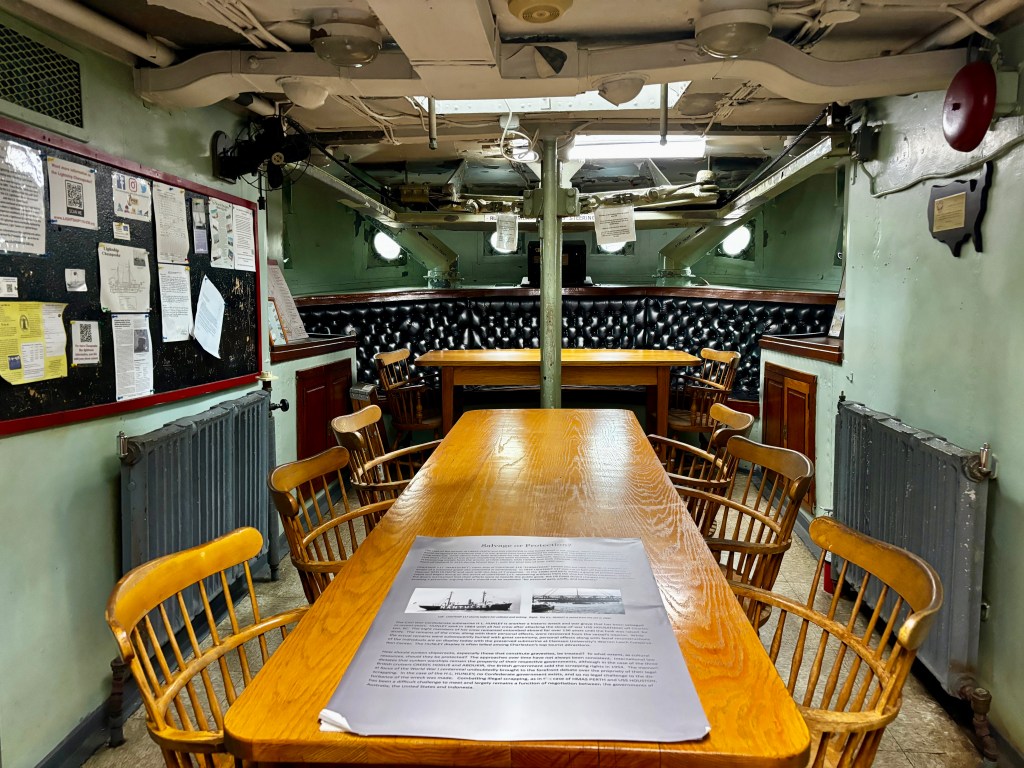
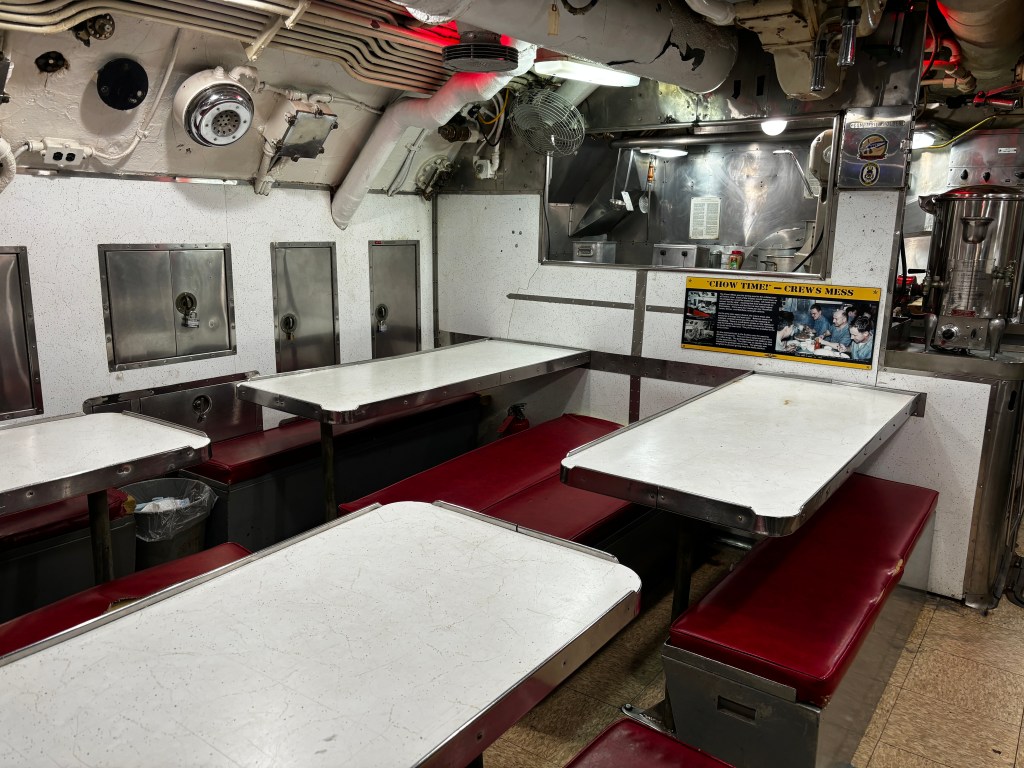
This was the crew’s mess.

The captain on the USS Torsk had modest quarters.

One of the Torsk’s claims to fame is that it held a (then) record of over 10,000 dives.

In later years she operated primarily as a training vessel but was present at the 1962 Blockade of Cuba. 

She was decommissioned in 1968 and was stricken from the Navy register in 1971.   At that time she was turned over to the state of Maryland for use as a museum ship.  

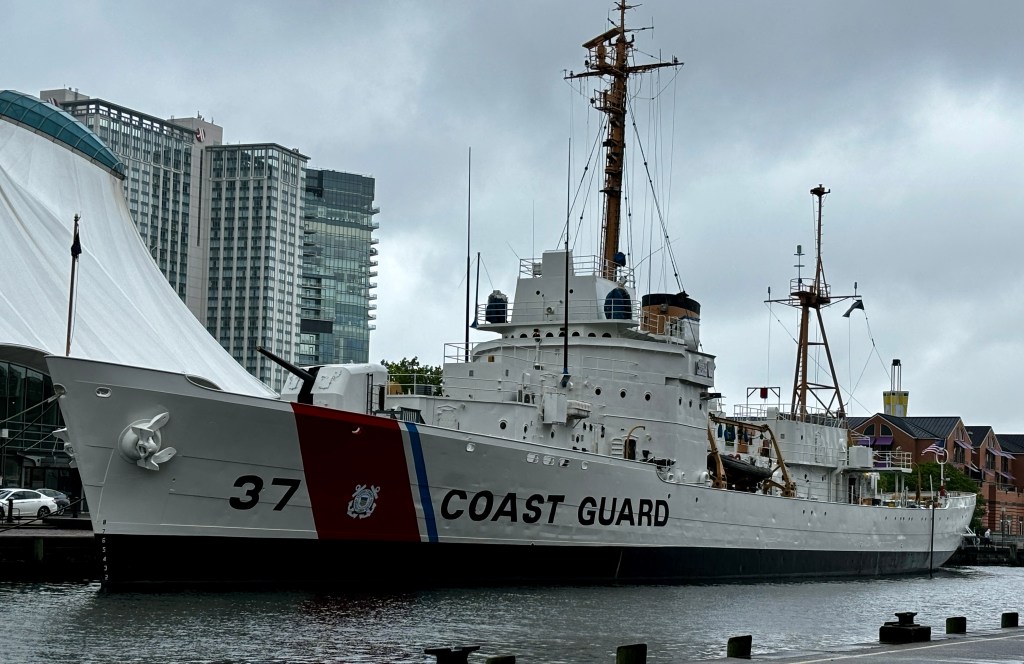
Our final ship was the USCC Cutter 37, also known as Taney.  She was in service from 1936 – 1986.
Her usual crew ranged from 120 – 220 seamen.  

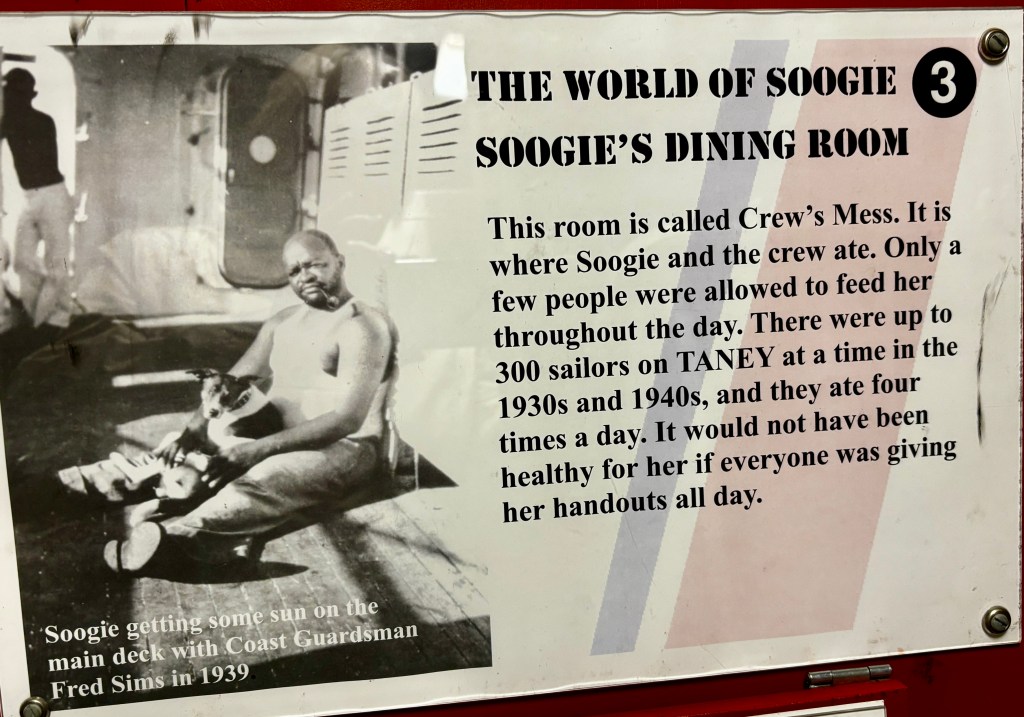
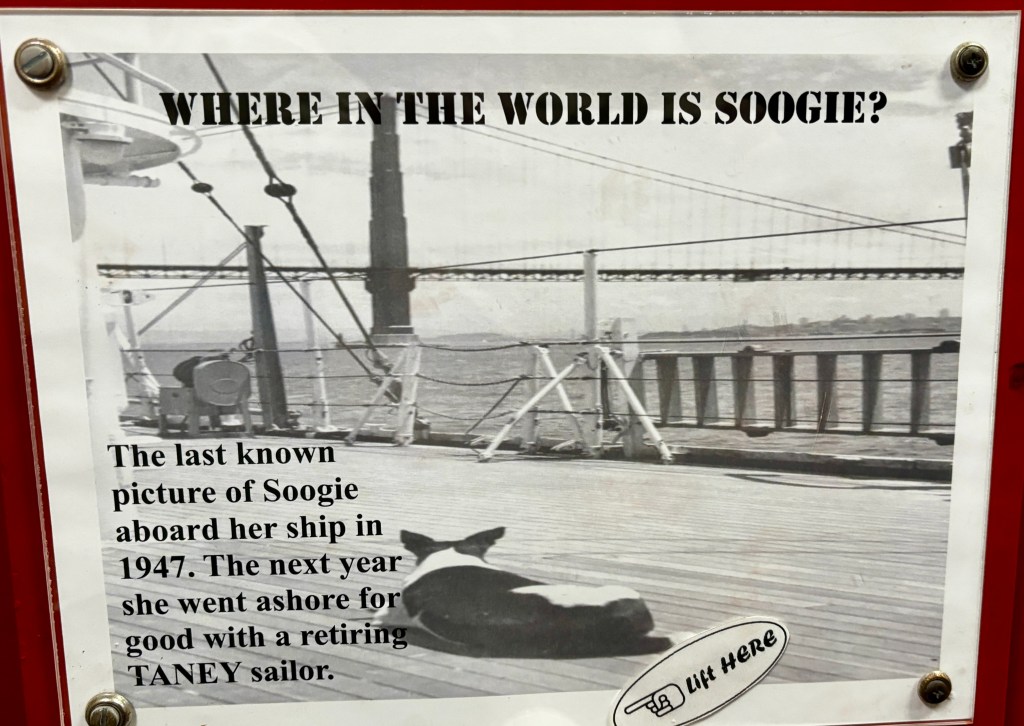
And a dog! Soogie sailed on the Taney from 1937 to 1948.

The Taney’s range was 12,000 miles powered by boilers and turbines.  

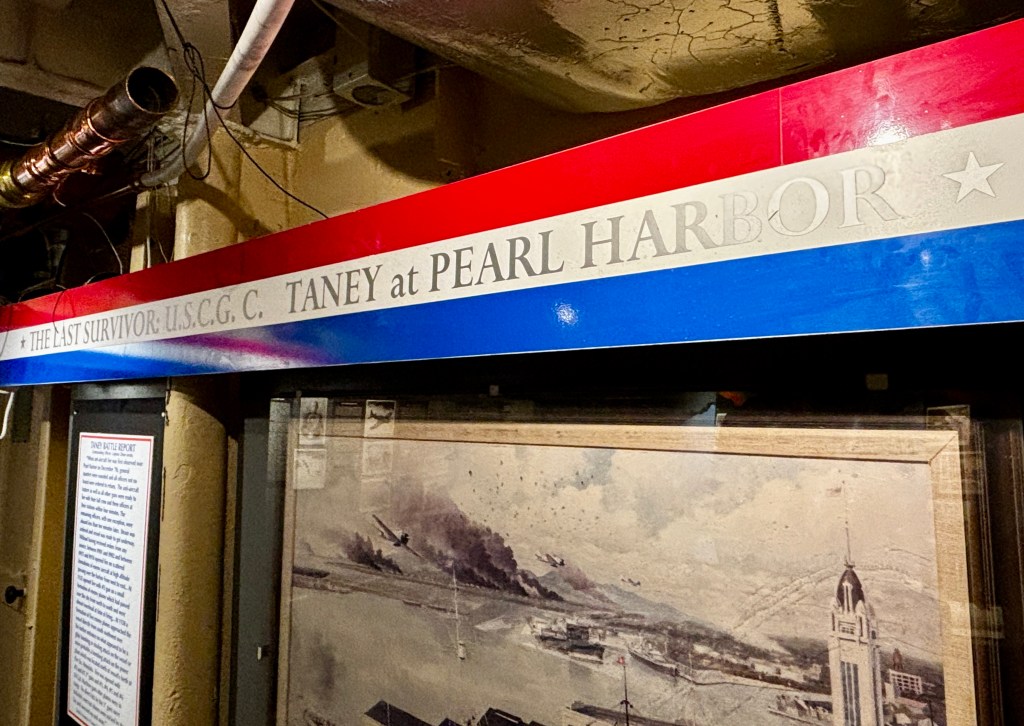
She is the last remaining warship that participated in the Battle of Pearl Harbor.

In her later years, Taney saw action in Vietnam and as a vessel for drug interdiction.   She was involved in 11 drug seizures in the Caribbean and east coast waters.

After our Summer Wind cruise of the Inner Harbor in the rain, and touring the Historic Ships of Baltimore in the rain, we were ready for warmth, the opportunity to get dry, comforting food, and a glass of wine.

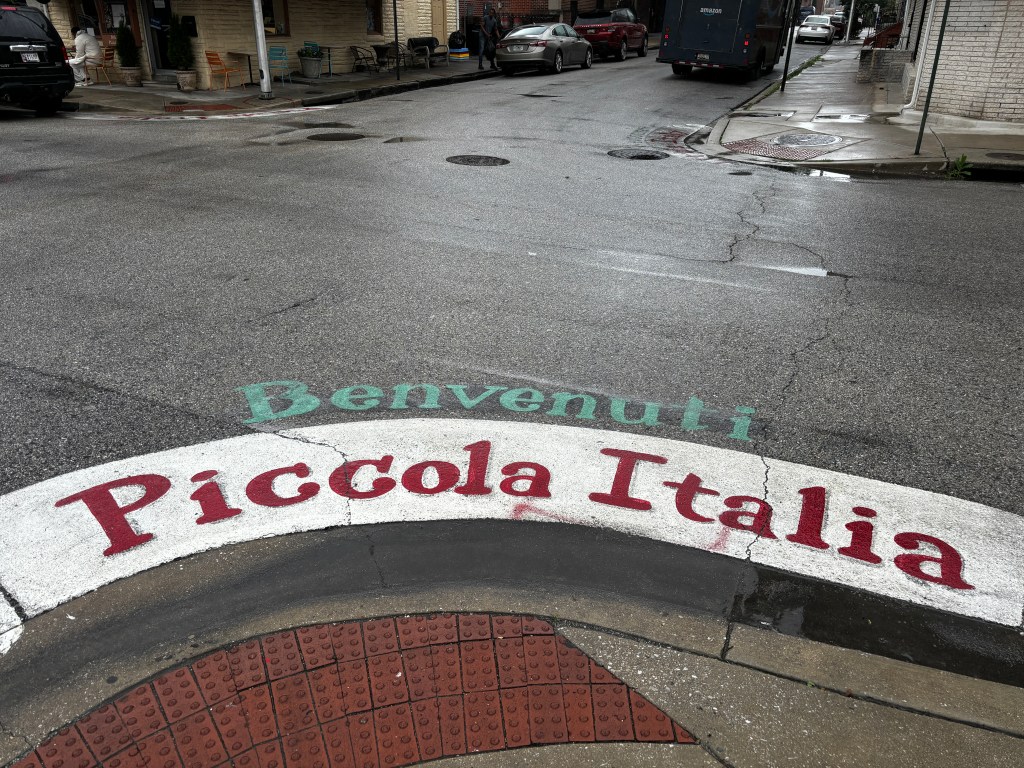
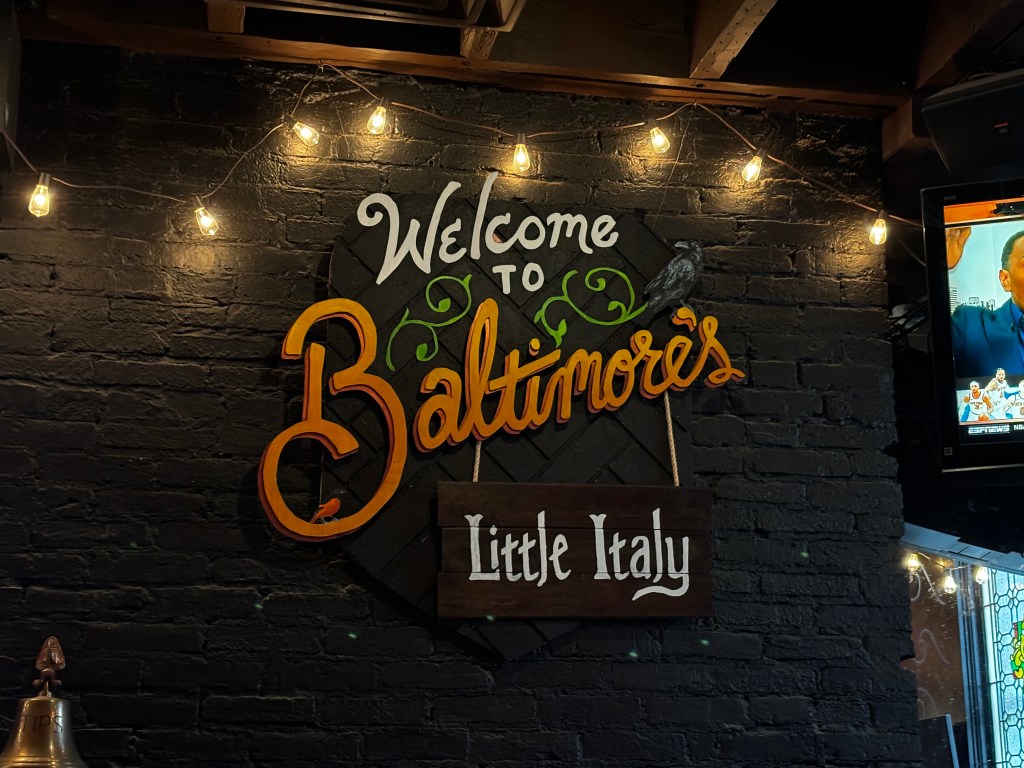
We walked a short distance to Baltimore’s Little Italy.
Thomas D’Alesandro Jr. came out of Baltimore’s Little Italy.  He represented Maryland’s 3rd congressional district in the United States House of Representatives from 1939 to 1947.  He also served as the 41st mayor of Baltimore from 1947 to 1959. D’Alesandro and his wife had a daughter that grew up in Baltimore’s Little Italy.  She would grow up to become Nancy Pelosi, the 52nd Speaker of the House.
We found our restaurant.  It was warm and dry.

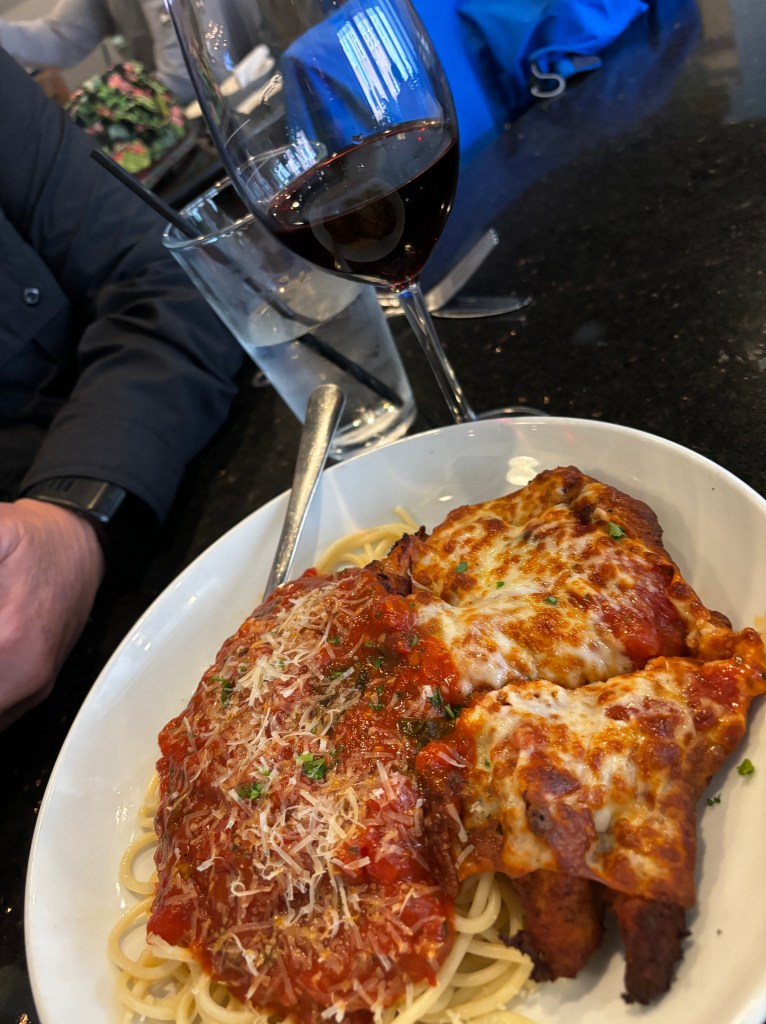
We shared delicious chicken parmesan and had glasses of chianti.  It was perfect.

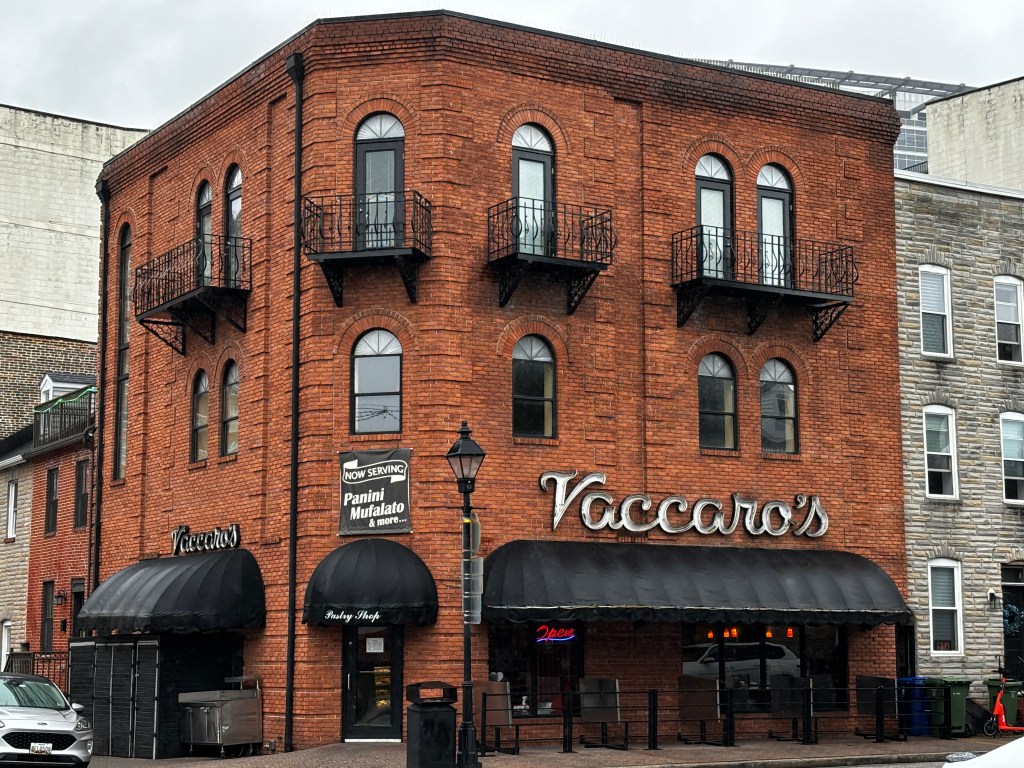
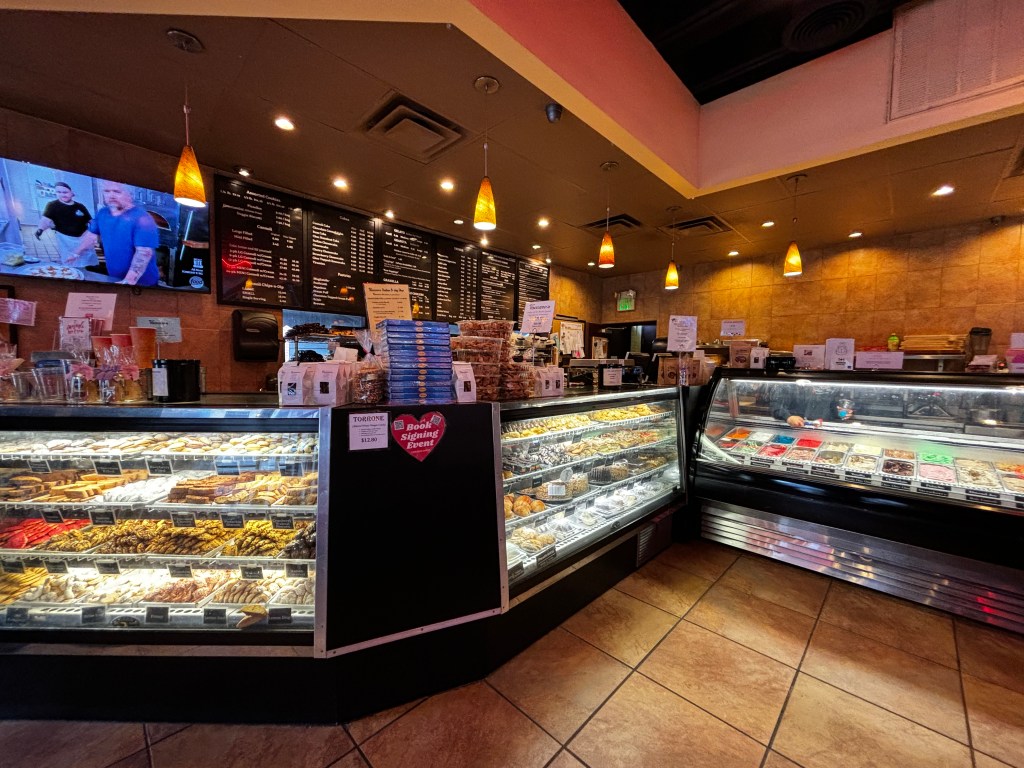
The diners at the next table talked about getting dessert at Vaccaro’s – a renowned family owned pastry shop that had served Baltimore for 65 years.

Of course we went to Vaccaro’s, and our dessert was also delicious.

Next:  We finally go to a baseball game!

We were in Baltimore in May 2024.

Posted in Uncategorized | Leave a comment

A Rainy Inner Harbor Cruise

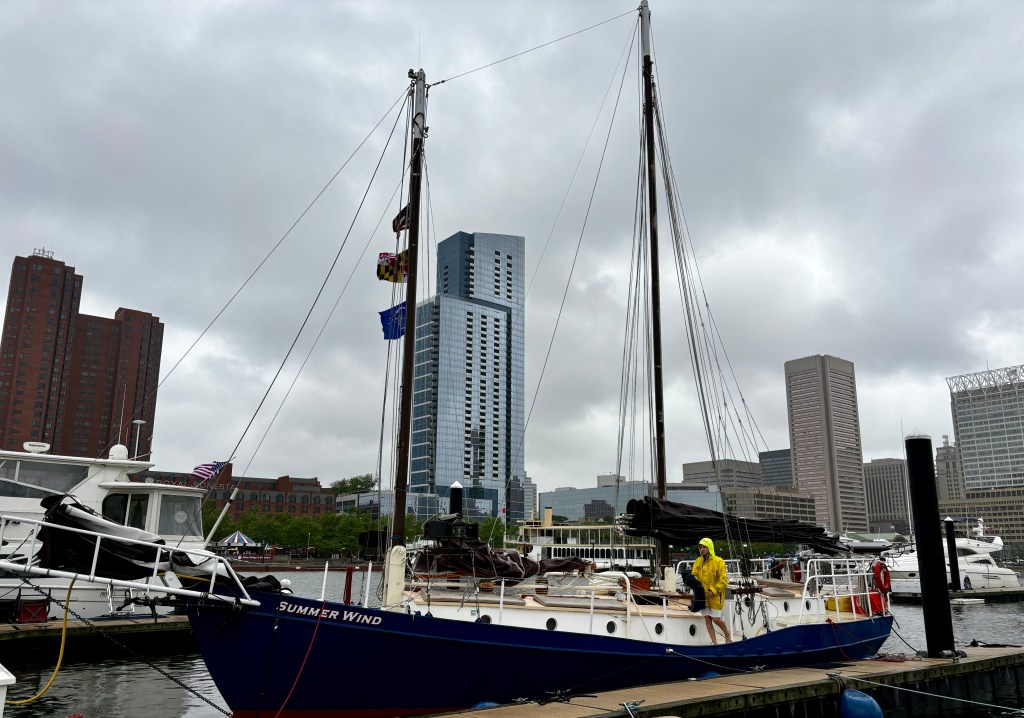
The pre-purchased event for our first morning in Baltimore was a sail around Baltimore’s Inner Harbor on the Summer Wind.  When we arrived we were offered a refund, to re-schedule or to go ahead in the rain.  As our next days were already planned we, and one other passenger, opted to go ahead.

I don’t think the boat people were all that excited about it but we set out with our rain gear and ponchos. 

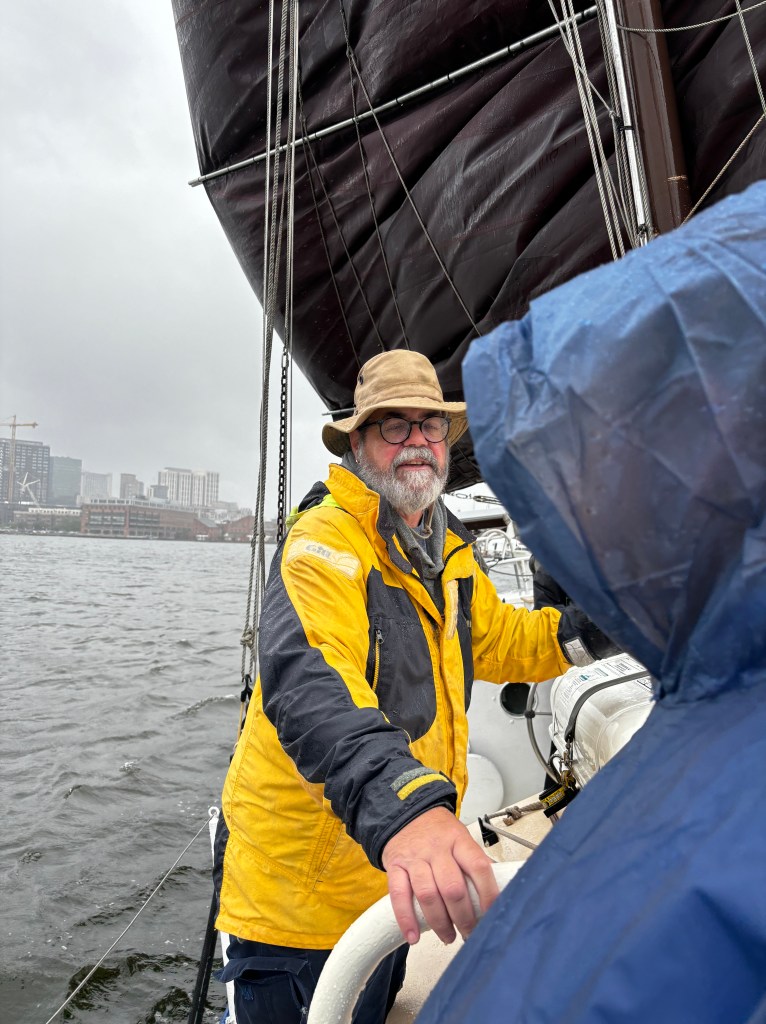
The owner of the boat was also our historian and tour guide. He had previously captained his boat as well, but now employed a female captain.

Although the single additional crew member put up Summer Wind’s sails, we motored around the harbor.  If there was an intended period of time meant to only use sails, none of us were really interested in loitering in the rain.

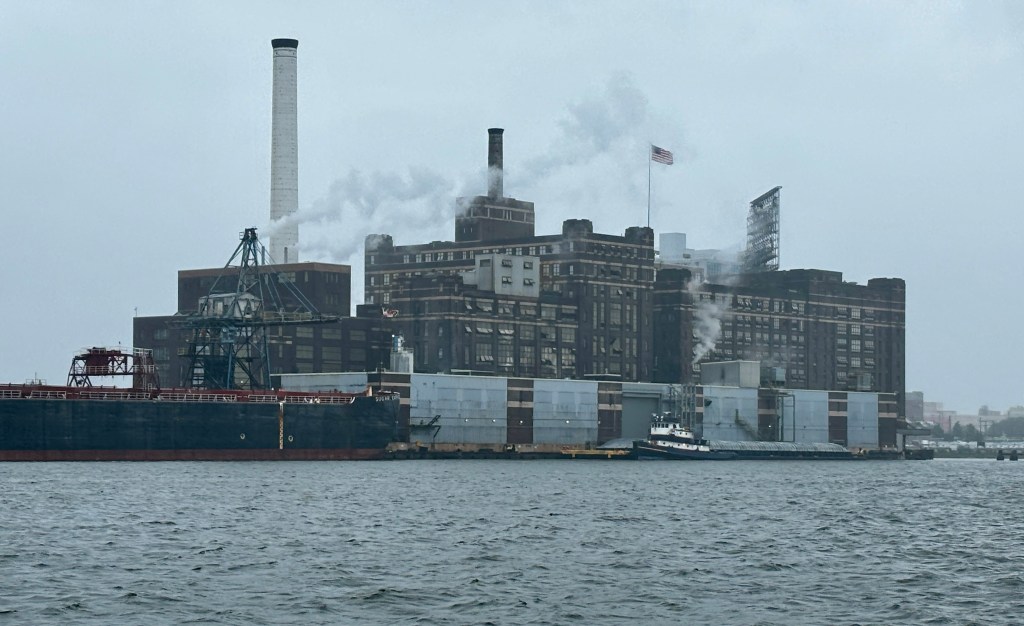
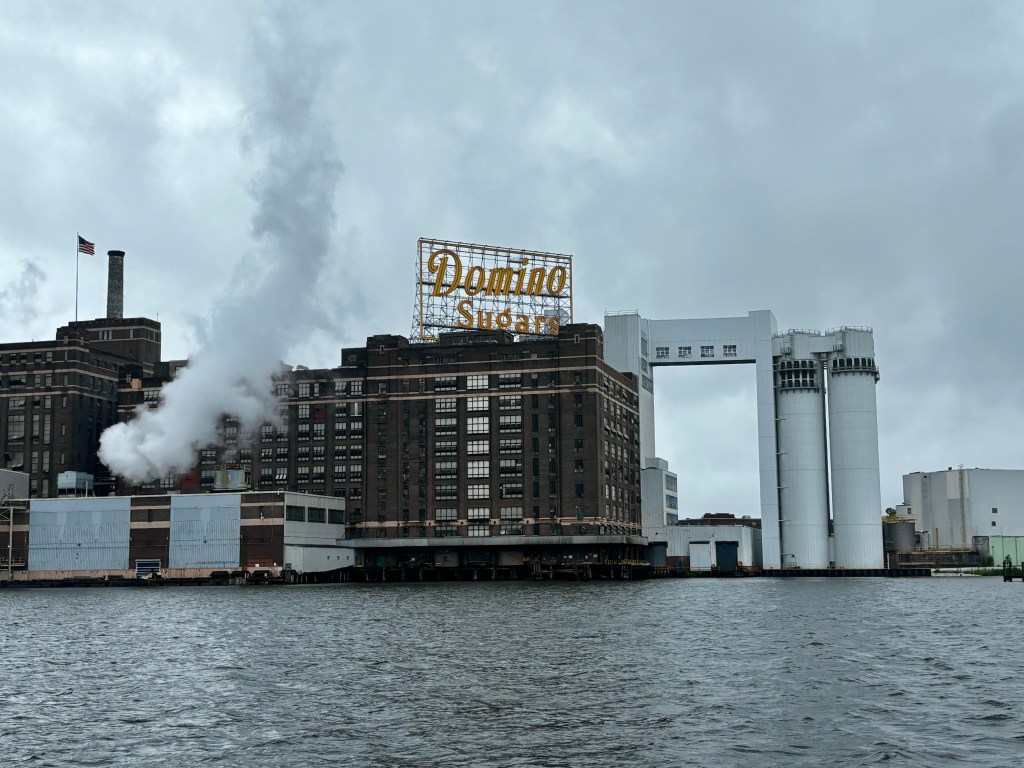
The remaining large, and dominant, factory on the inner harbor is The Domino Sugar refinery.  There were once six refineries within the harbor but this is the only one that remains. This facility was built in 1921 and has undergone little change over the years. About 500 employees process 6.5 million pounds of raw cane sugar.

It is the second largest sugar refinery in the country and accounts for 14 percent of US sugar production.  According to our guide, most of it goes to Hershey, Pennsylvania.

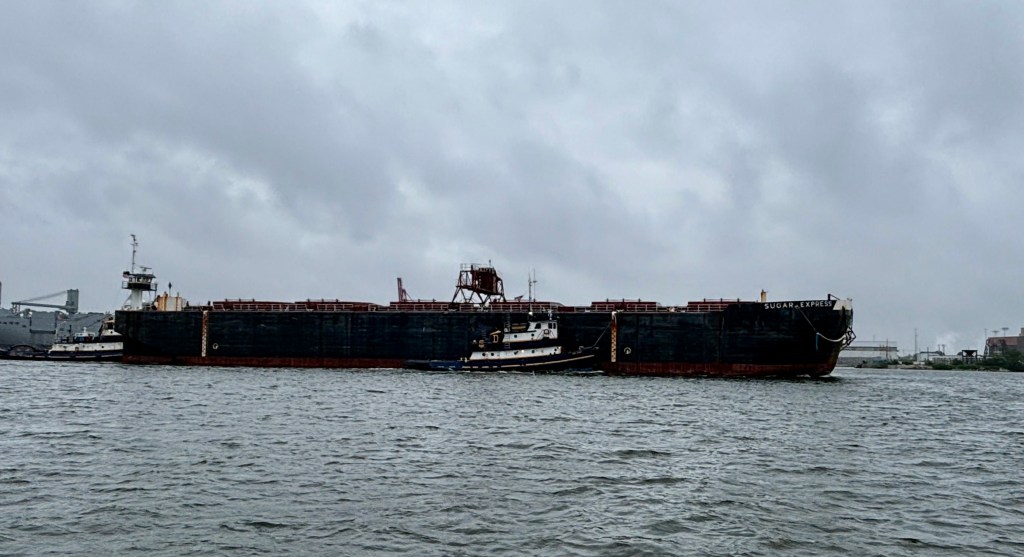
Currently, inland Florida sugar cane arrives by barge. 

Larger ships had unloaded directly at the plant prior to the Frances Scott Key Bridge collapse on March 26, 2024.  

The iconic Domino sign was installed in 1951.  It is so large that the dot on the “i” is six feet high.   

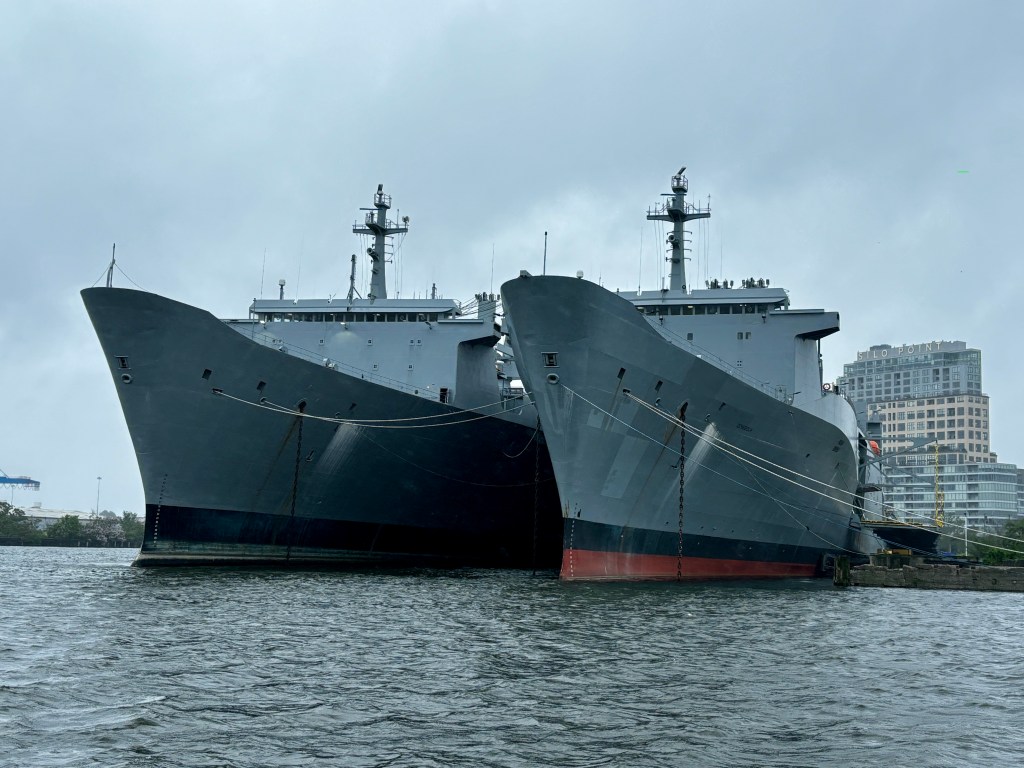
These ships are part of the U.S. Navy’s Ready Reserve Force designed to supply American troops around the world very quickly.  Ships in the force are positioned at ports along the eastern and western seaboards and the Gulf of Mexico.   

There are five ready reserve ships stationed in Baltimore but four have been confined in the harbor because of the bridge collapse.  Fortunately, two months later, trapped ships are just now beginning to be able to leave Baltimore harbor.   The target date for a new bridge is fall of 2028.

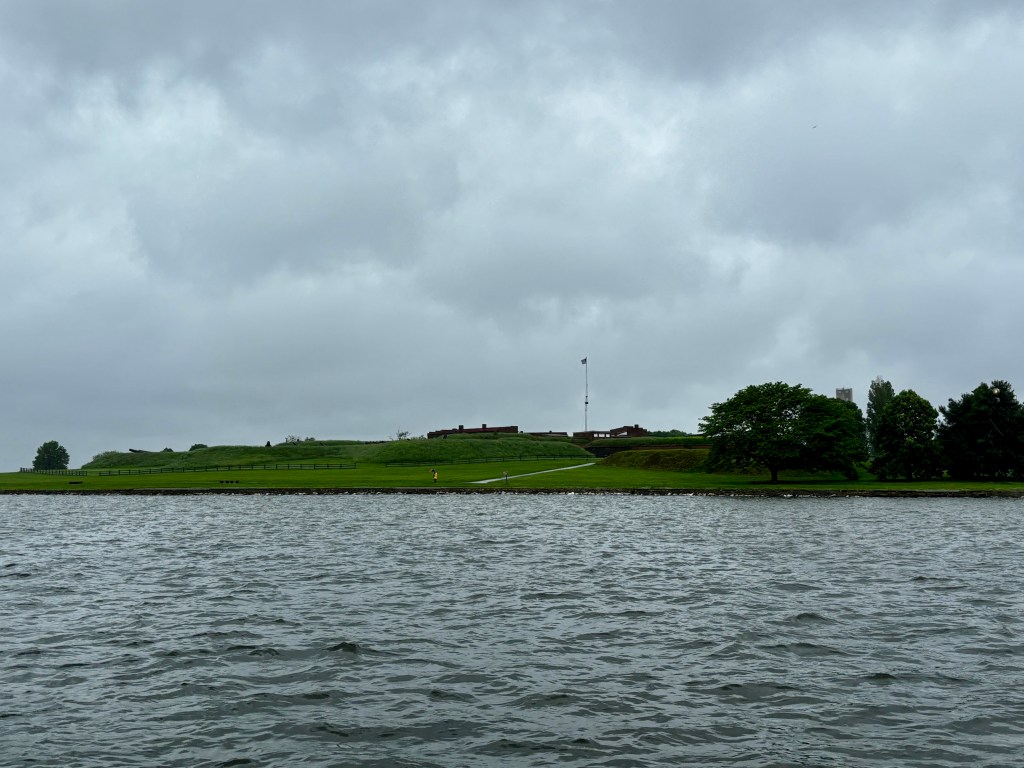
We sailed near Fort McHenry, over which the banner, with “broad stripes and white stars,” was gallantly streaming in the dawn’s early light of September 14, 1814.   The defense of the fort in the Battle of Baltimore inspired Francis Scott Key to write the poem “Defense of Fort M’Henry.” The words of the poem became “The Star Spangled Banner.” The song was first used officially in 1889 by the United States Navy. It became our national anthem in 1931.

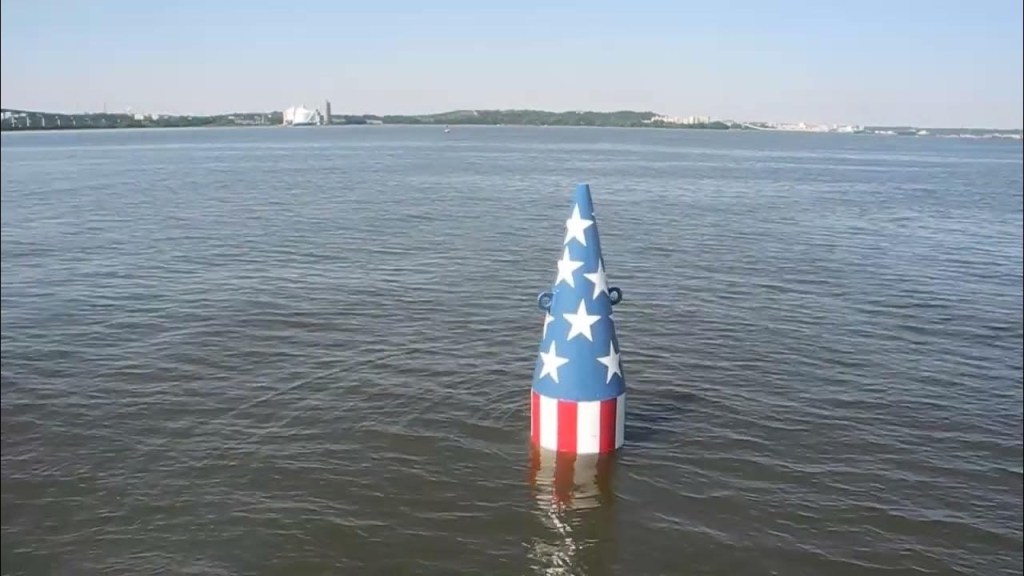
Every spring since 1980, the Coast Guard has set this historic buoy in the harbor. It is placed near the spot where Frances Scott Key observed the 1814 British bombardment of Fort McHenry. He had been detained aboard a British ship while on a diplomatic mission. The buoy is removed each year before winter. We did not see it but were told about it.

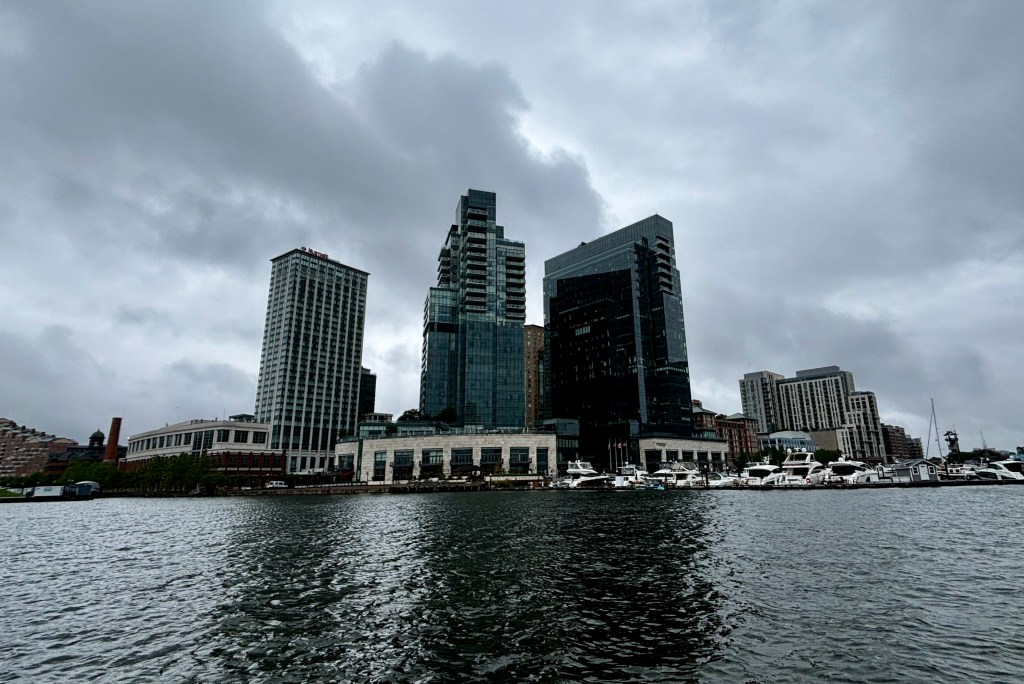
Baltimore’s Inner Harbor had been a hub of industry and transportation for more than a century.  As industry declined, the harbor declined.

Today, the inner harbor area thrives. 

William Donald Schaefer served in public office for 50 years in Baltimore and Maryland.  As the mayor of Baltimore, he was a guiding force in refurbishing the inner harbor.

Under-Armor’s world headquarters are in the harbor area. Founder, Kevin Plank, did not like wearing sweaty clothes while playing football for the University of Maryland. So, he invented an alternative clothing line that wicks away sweat and dries quickly.

The investment company, T.Rowe Price, also is headquartered in Baltimore.

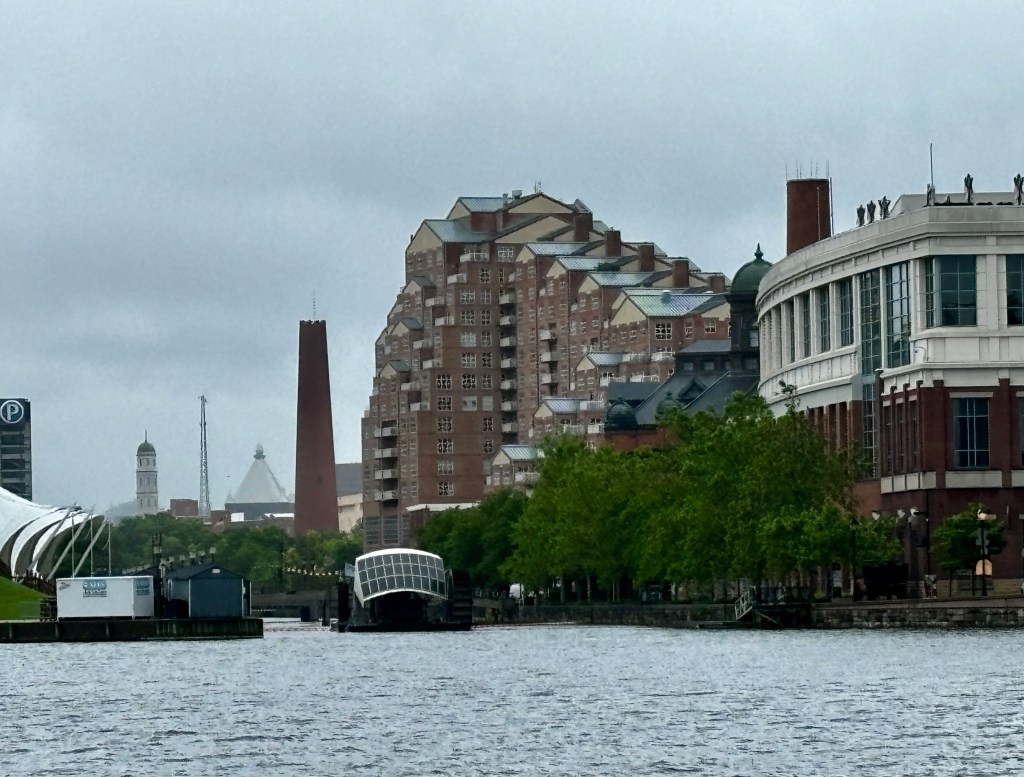
At the close of our cruise, we saw Mr. Trash Wheel.  It is the vessel with the white grid at water level. The brainchild of local engineer John Kelley, it was installed in 2014.   Mr. Trash is solar powered and collects trash at the mouth of the Jones Falls River as it empties into the harbor.  As the wheel turns it collects all kinds of trash, 50 tons in its first year.   The collected trash is stored and emptied regularly.   It has been incredibly effective in removing, and keeping trash from the harbor.  There is now a second iteration at another location in the inner harbor.

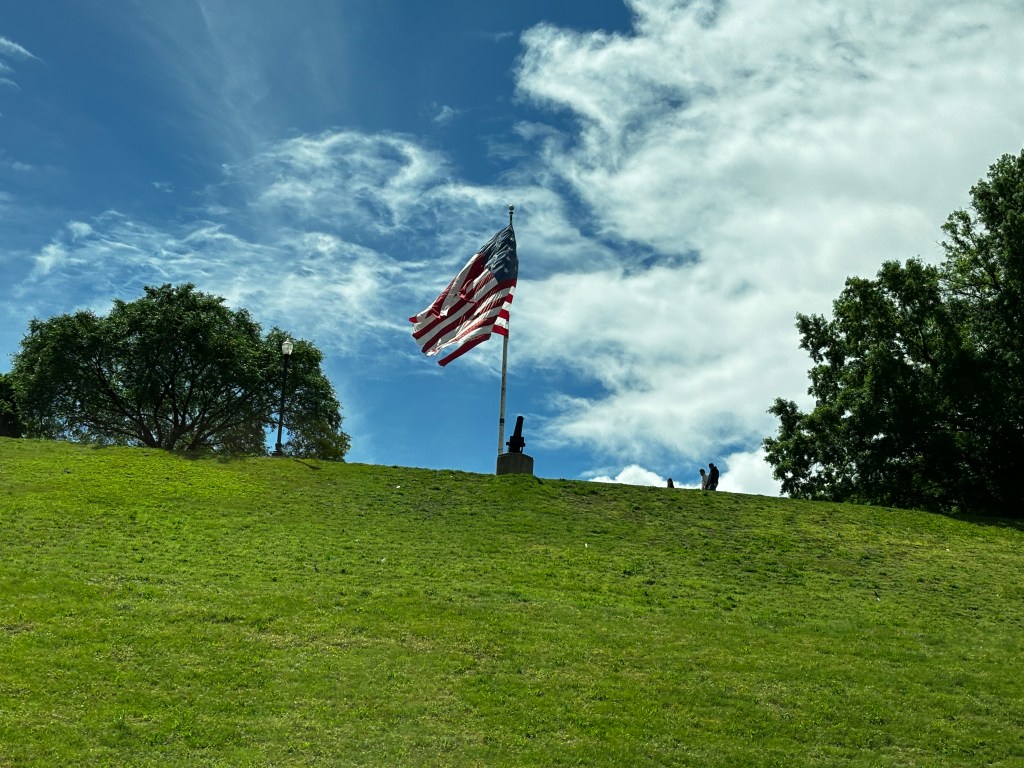
Just off the harbor we walked by Federal Hill. It was occupied by Union troops during the Civil War in a city that largely supported the confederacy. Our guide described Baltimore as the northernmost point of the confederacy and the southernmost point of the union.

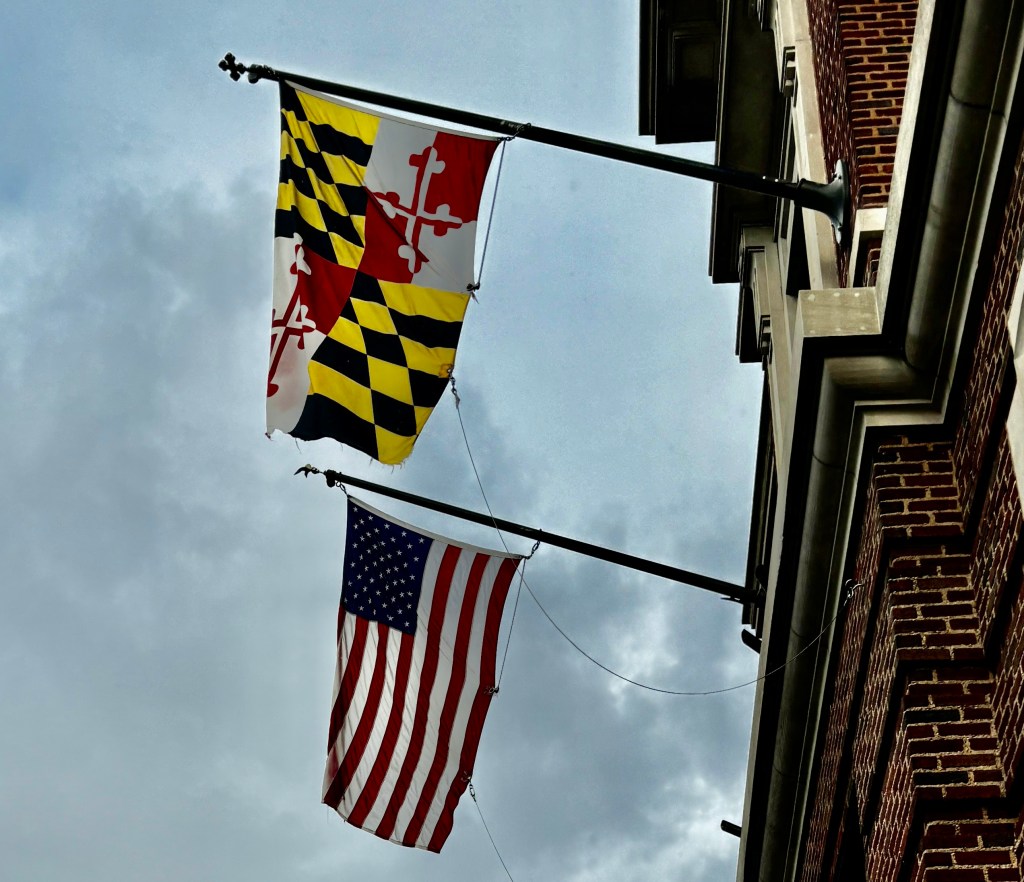
It is just an illusion of how I took the picture of the flags that the Maryland flag appears to be above the American flag.  It wasn’t.  However, I was interested in the Maryland flag and why it looks the way it does.

During the Civil War, Lord Baltimore’s yellow and black banner  was flown in support of the union while the red and white Crossland banner was flown by pro-confederacy. The Maryland flag reflects the coming together of Marylanders after the Civil War.

Next up: The Historic Ships in Baltimore’s Inner Harbor

We were in Baltimore in May, 2024.

Posted in Uncategorized | 2 Comments

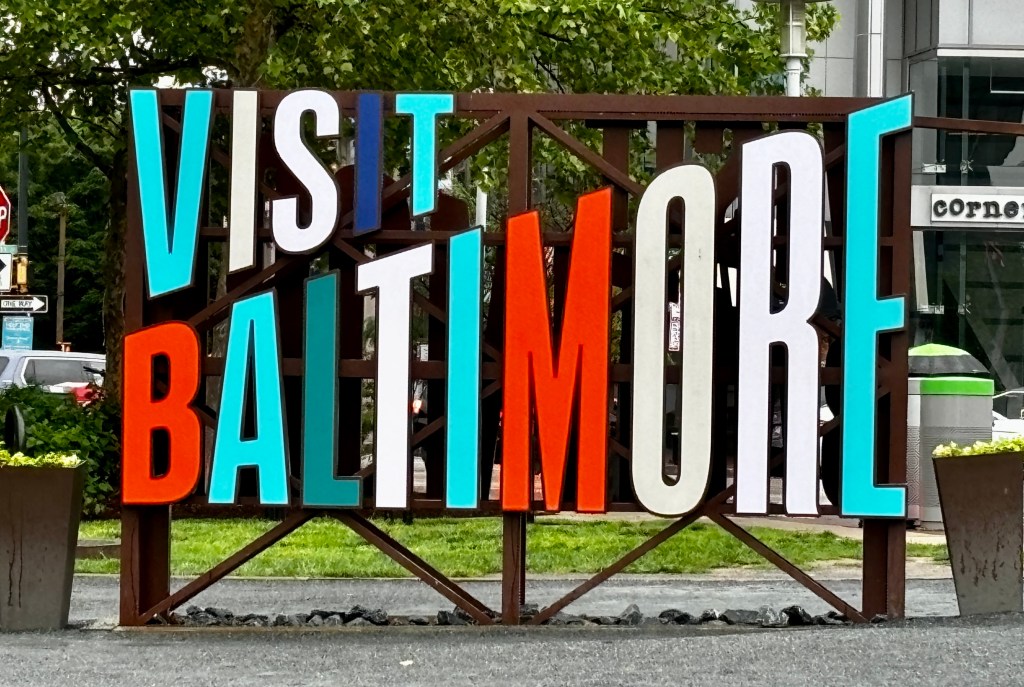
Baseball Trip to Baltimore

This year’s baseball trip was a bit different than our usual because this time we didn’t follow the Seattle Mariners. This year we followed our Arizona Diamondbacks to Baltimore and combined baseball with our desire to finish our map from our RV days.  

The first destination was to fly to Baltimore via Charlotte. When we boarded the plane in Phoenix, the pilot told us that they would do their best to land in Charlotte but they may have to divert to Raleigh.  Weather concerns in the eastern part of the US made air travel a bit of a mess on our travel day.

Fortunately, the weather cooperated enough that we were able to land in Charlotte and then make our connection to Baltimore.  Living in Phoenix, we are most often able to fly direct, but not this time.

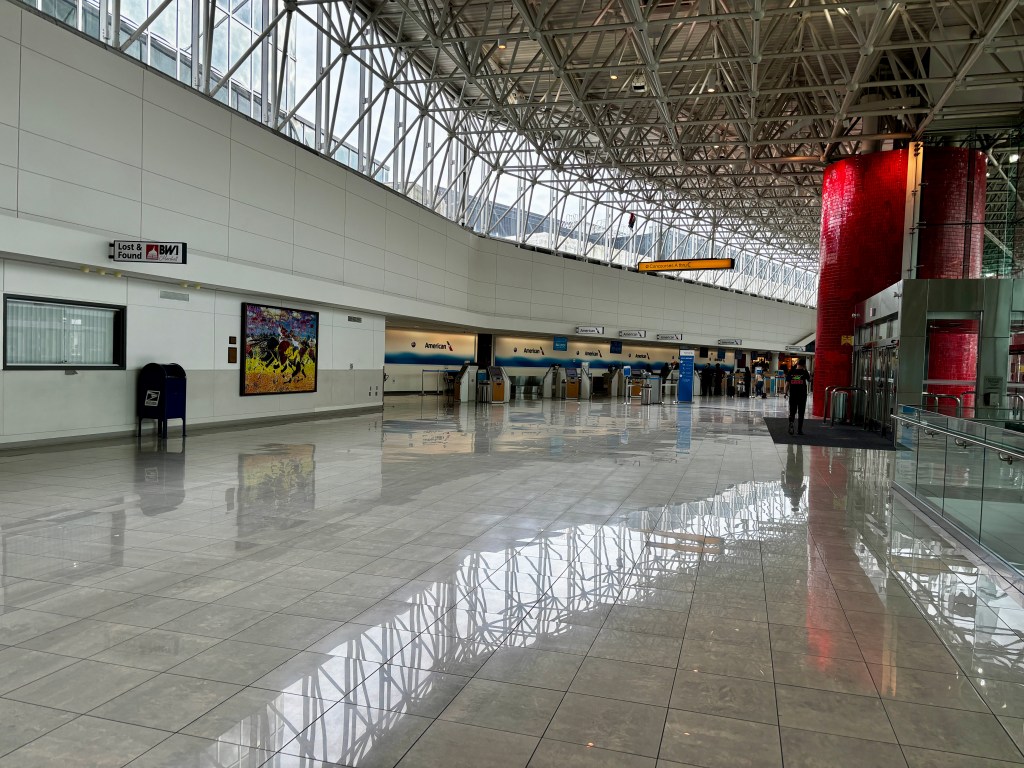
When we arrived in Baltimore, we both thought it was the cleanest airport we have ever seen!

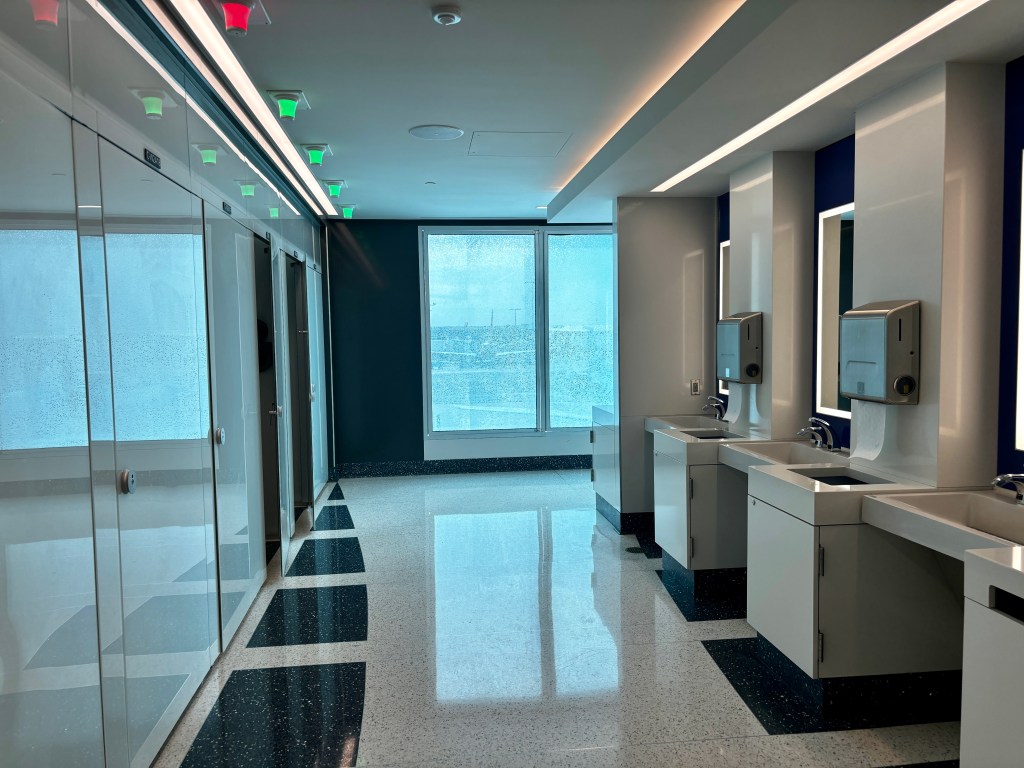
Even the restrooms were exceptionally clean and  nice.

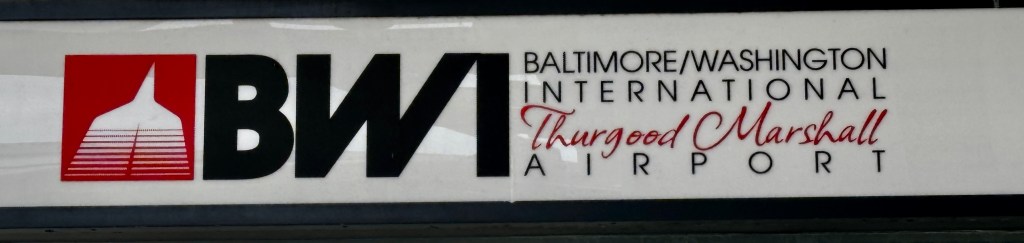
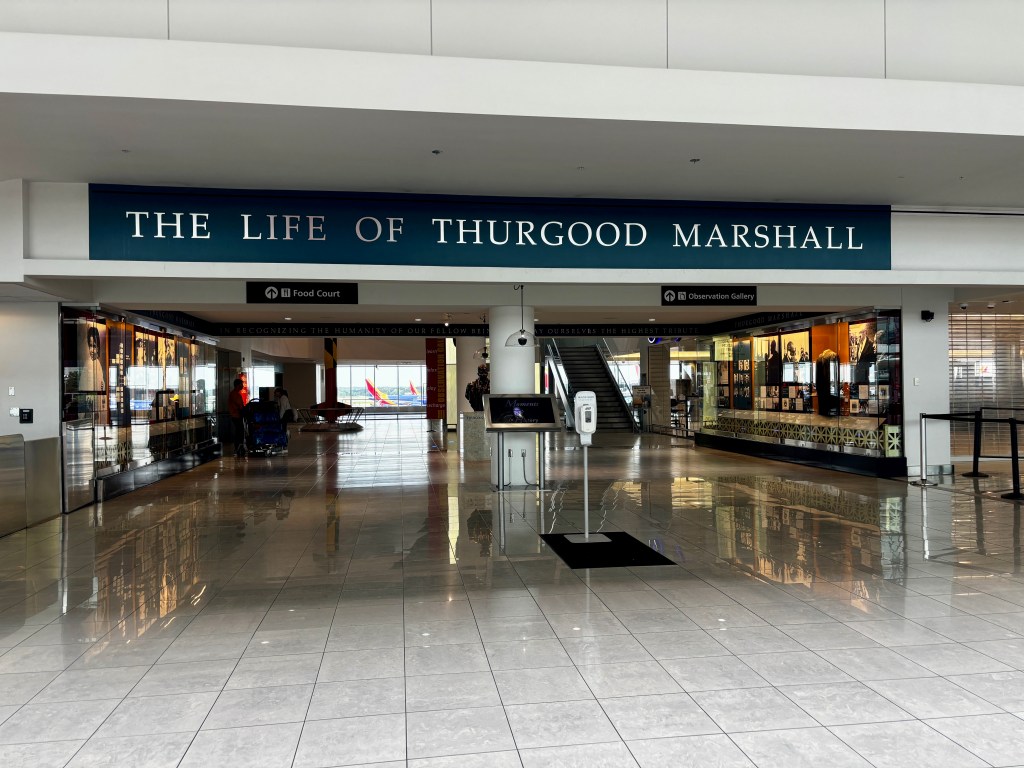
The airport’s official name is Baltimore Washington International Thurgood Marshall Airport. 

We saw an exhibit about former associate Supreme Court justice Thurgood Marshall but didn’t have the opportunity to explore. Born in Baltimore, Marshall was the first African American justice, serving from 1967-1991.  He was nominated by John F. Kennedy.

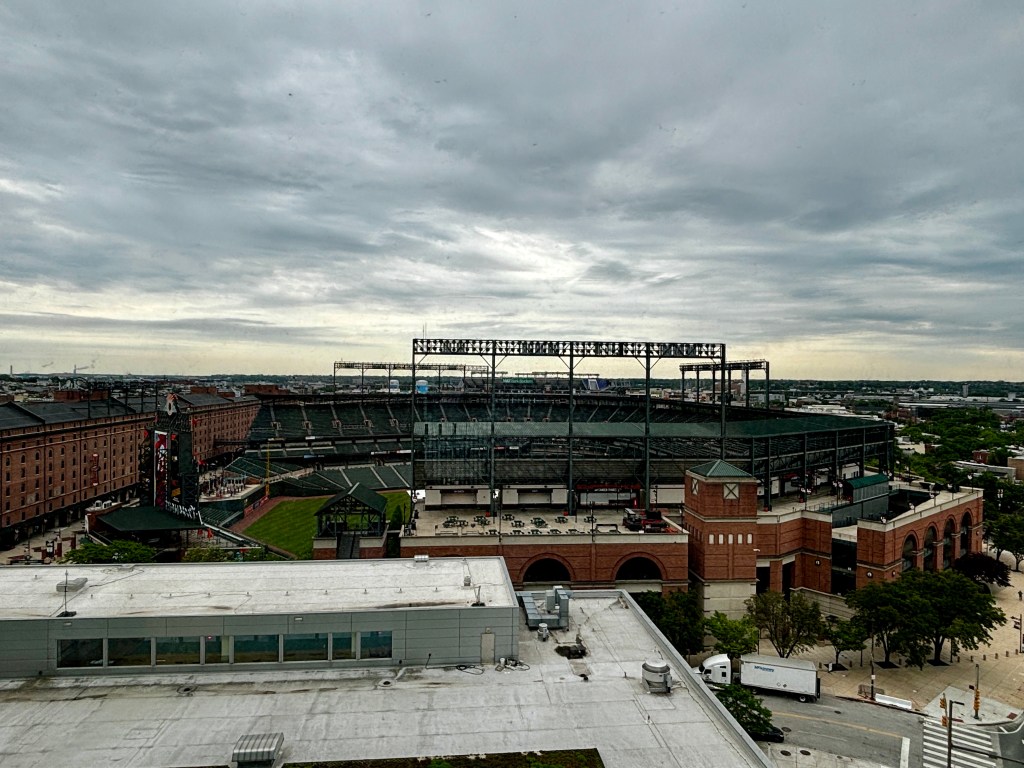
We arrived at our downtown hotel where we had booked a room with a field view of Camden Yards. 

Well, kind of….Initially disappointing, we did grow to enjoy our view over our days in Baltimore.

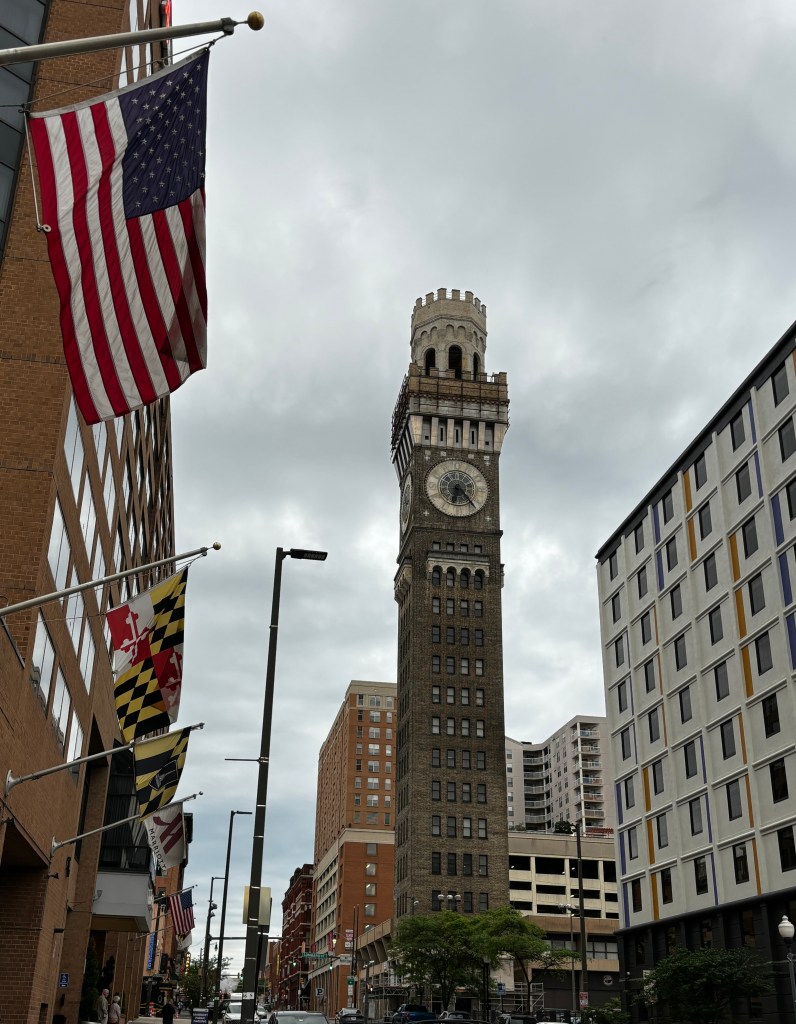
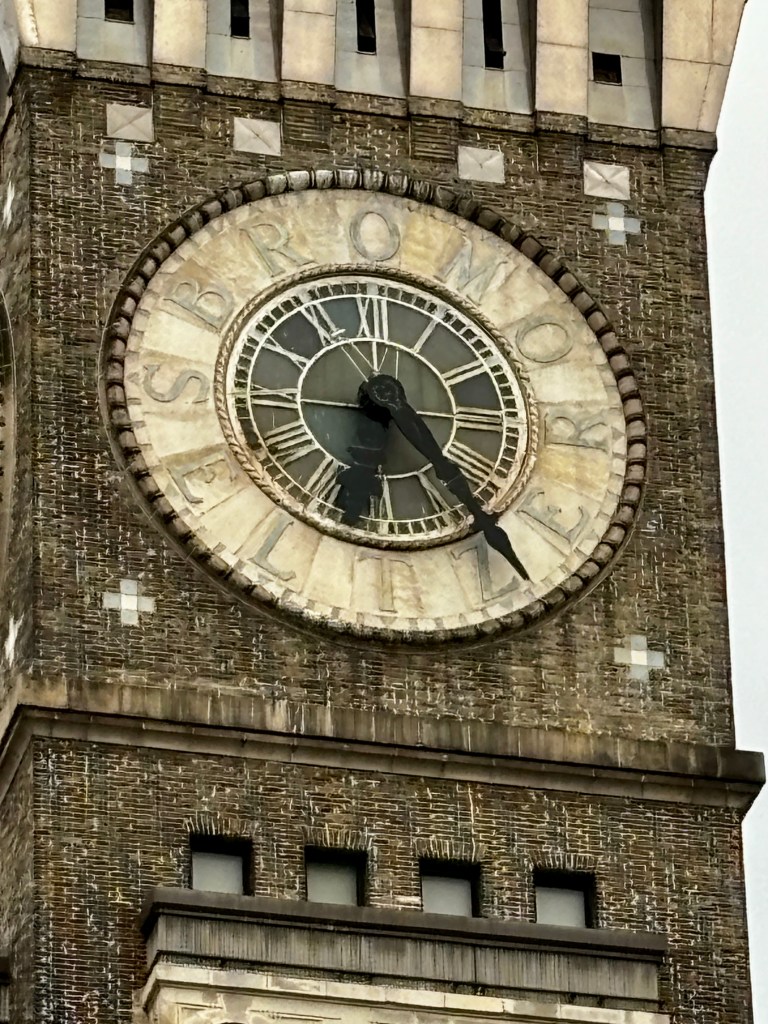
We took a walk and saw the Emerson Bromo-Seltzer Tower.  The tower was built in 1911 as part of the business’ downtown offices and factory.  

The clock faces on each side of the tower are ringed by letters spelling out Bromo-Seltzer.  Their primary product was a brand of antacid.  Bromo-Seltzer’s original formula had to be reworked over time  when two of the ingredients were found to be highly toxic.

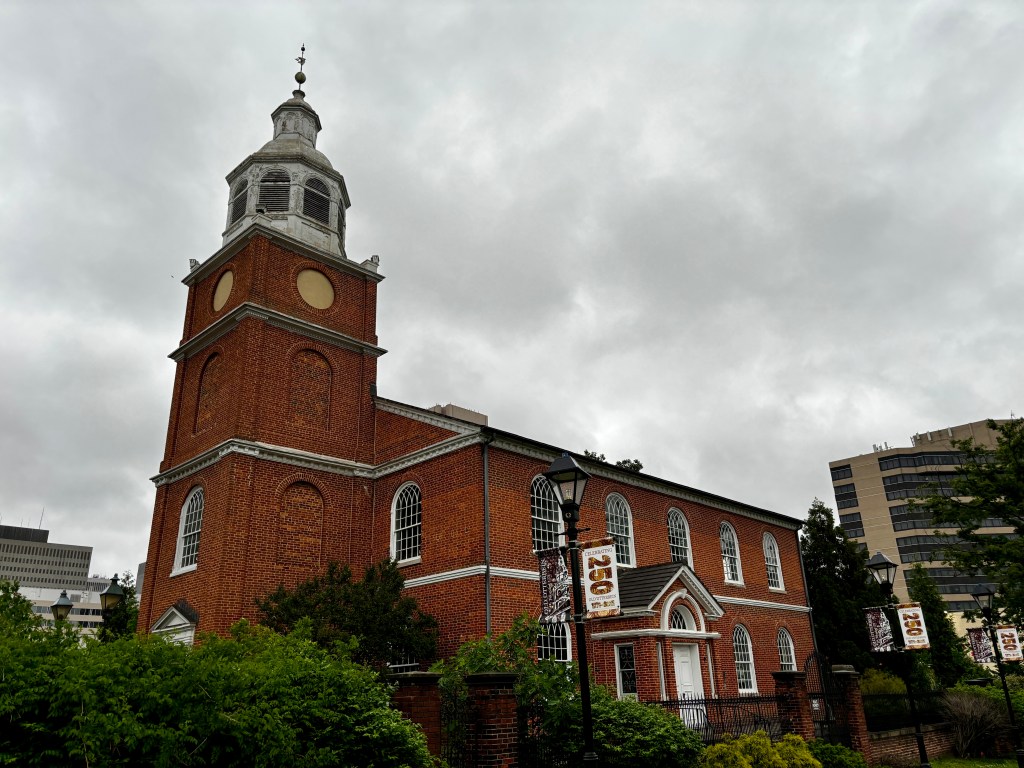
We saw The Old Otterbein Church.  It was established in 1771- quite old by American standards! The church began as United Brethren and went through several denominational changes over the years. It is currently a United Methodist church.

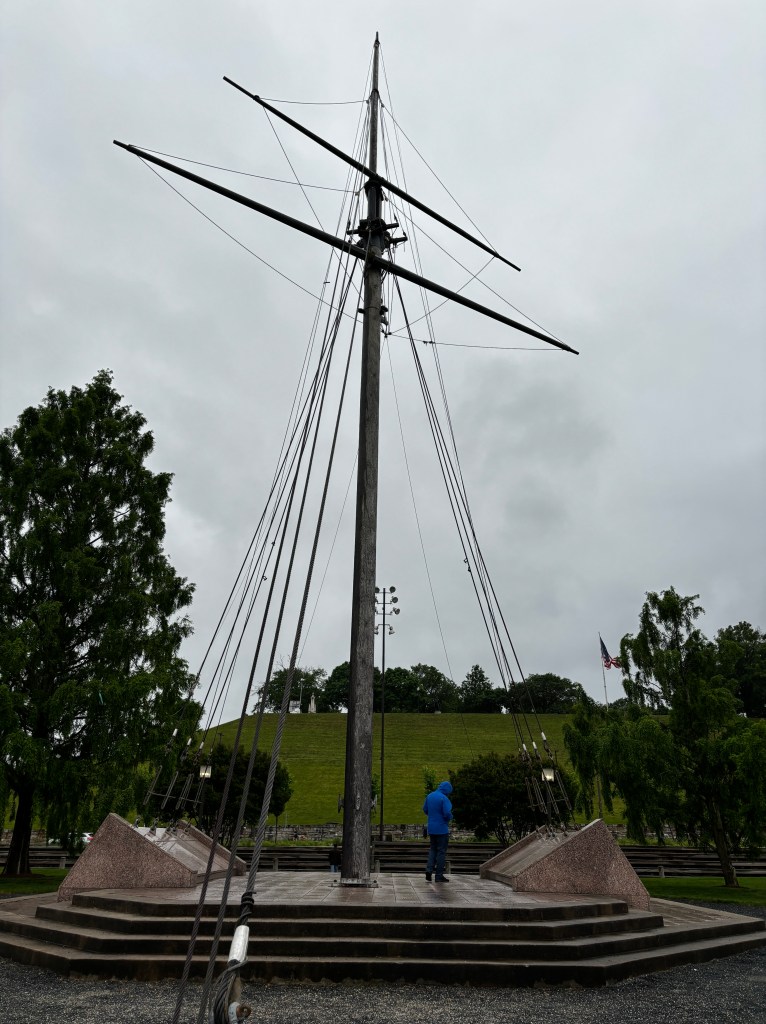
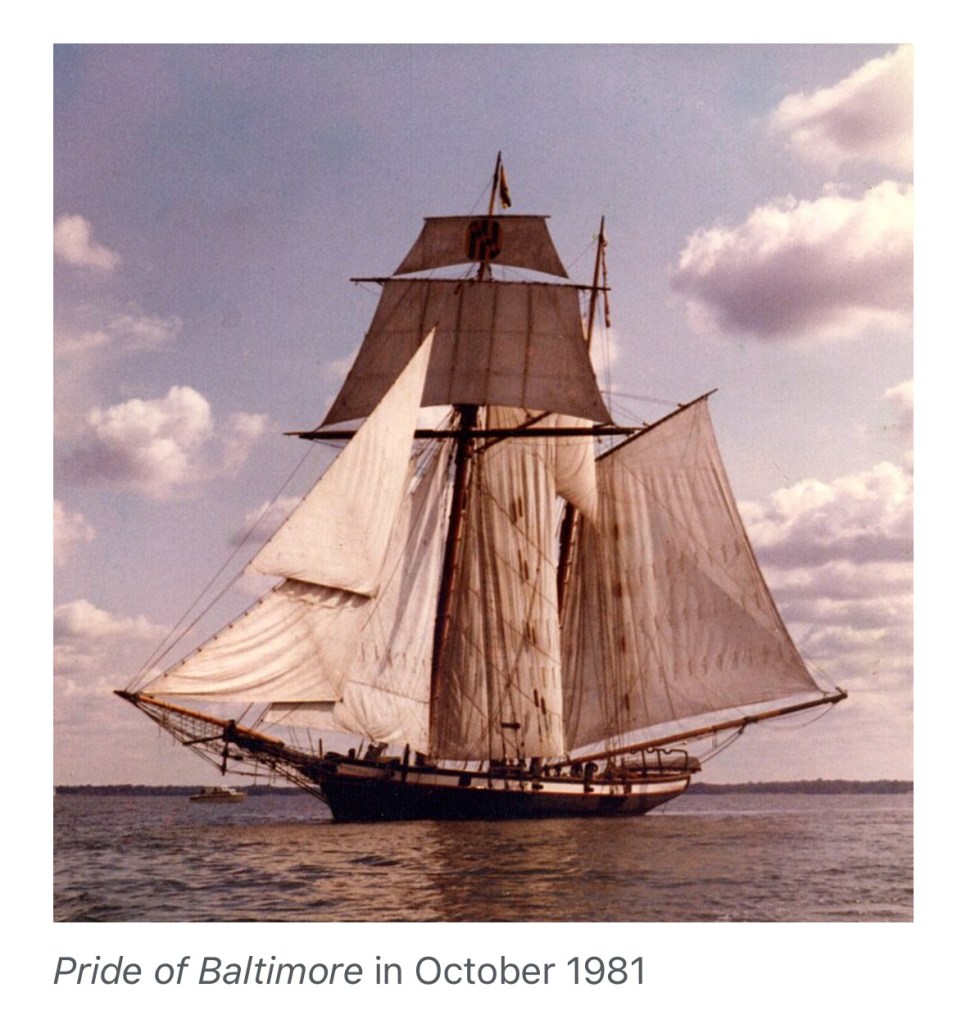
Next we saw the mast for The Pride of Baltimore.  This ship was a reproduction of a 19th-century Baltimore Clipper.  These vessels were made famous by successes as small privateer warships in the War of 1812.  Following the war, Baltimore Clippers were sometimes used in the opium and slave trades.

The Pride of Baltimore was commissioned in May 1977 as a good will vessel.  She logged 150,000 miles, and visited 125 cities around the world. After sailing for nine years, the Pride of Baltimore was lost at sea in the Caribbean on May 14, 1986.  Her captain and three crew perished.

It surprised both of us that we did not know, or did not remember, the Pride of Baltimore.

Next, we take an Inner Harbor cruise , explore the Historic Ships in Baltimore – and go to a baseball game at Camden Yards!

We were in Baltimore in May, 2024.

Posted in Uncategorized | 1 Comment