O’s vs D’Backs and Babe Ruth

We had mostly enjoyed a wet first day in Baltimore. To finish it off, we had tickets to the Orioles vs. Diamondbacks game that evening.  

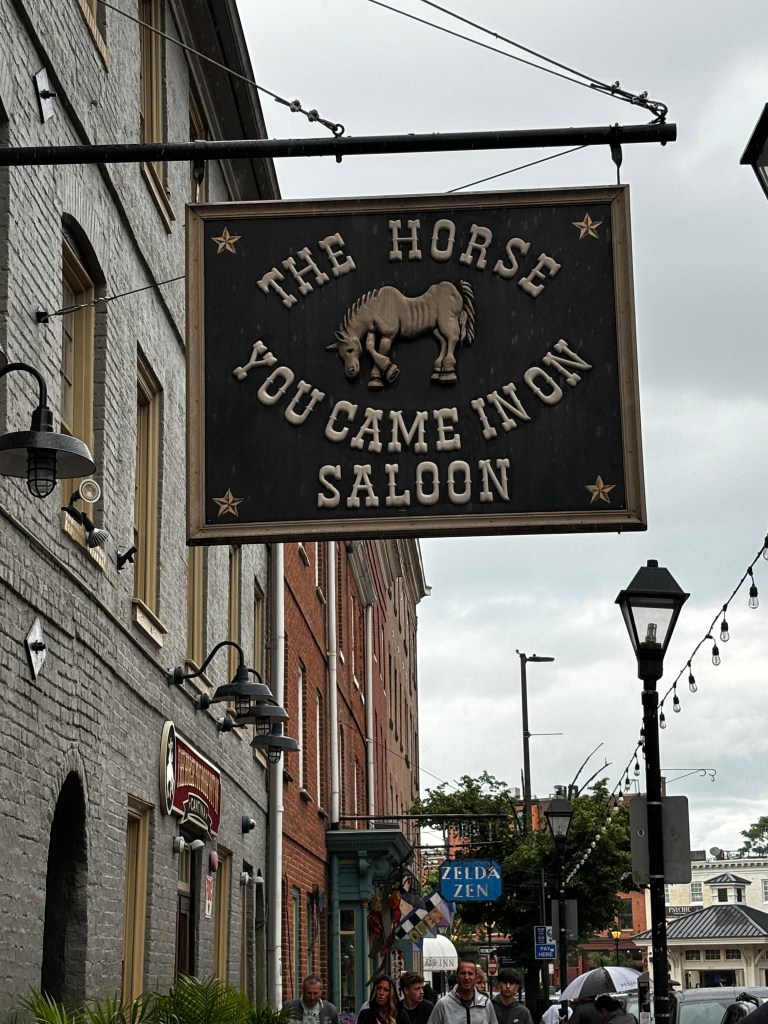
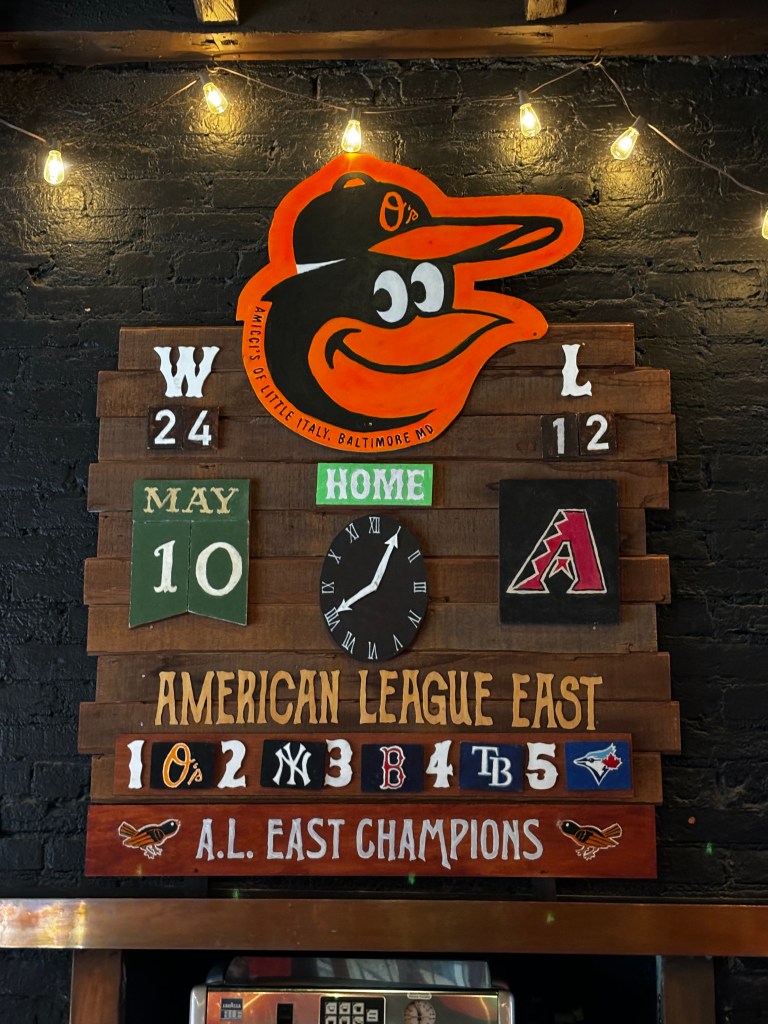
This board in a restaurant bar inspired us to go forth and cheer for our D’Backs!

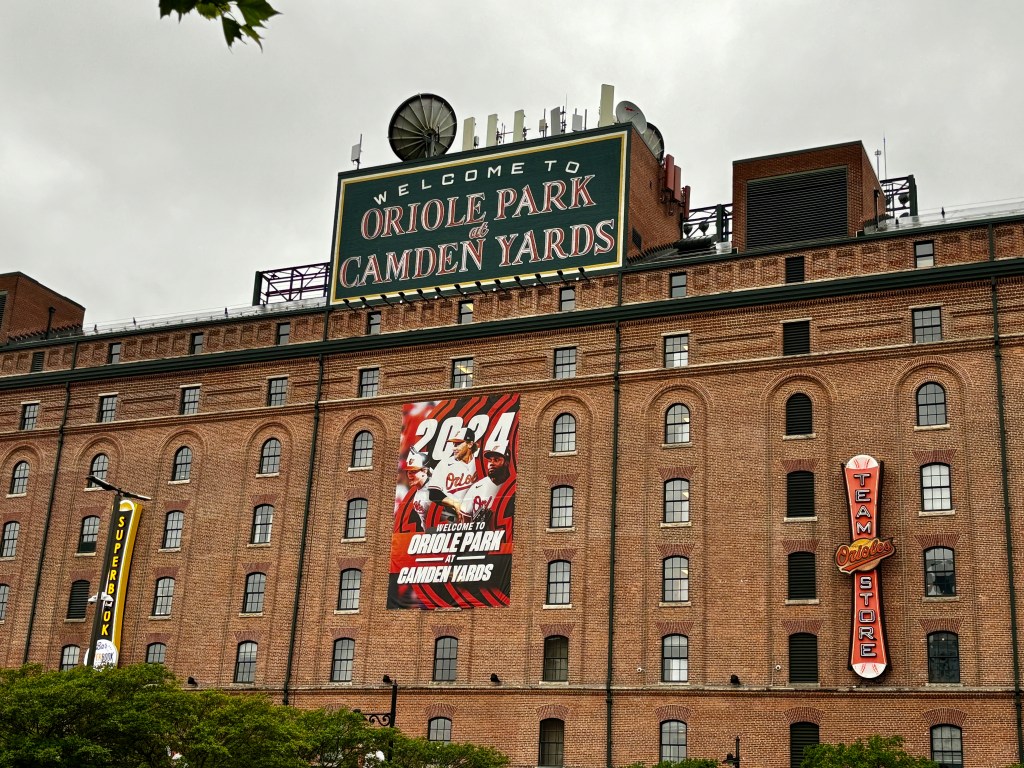
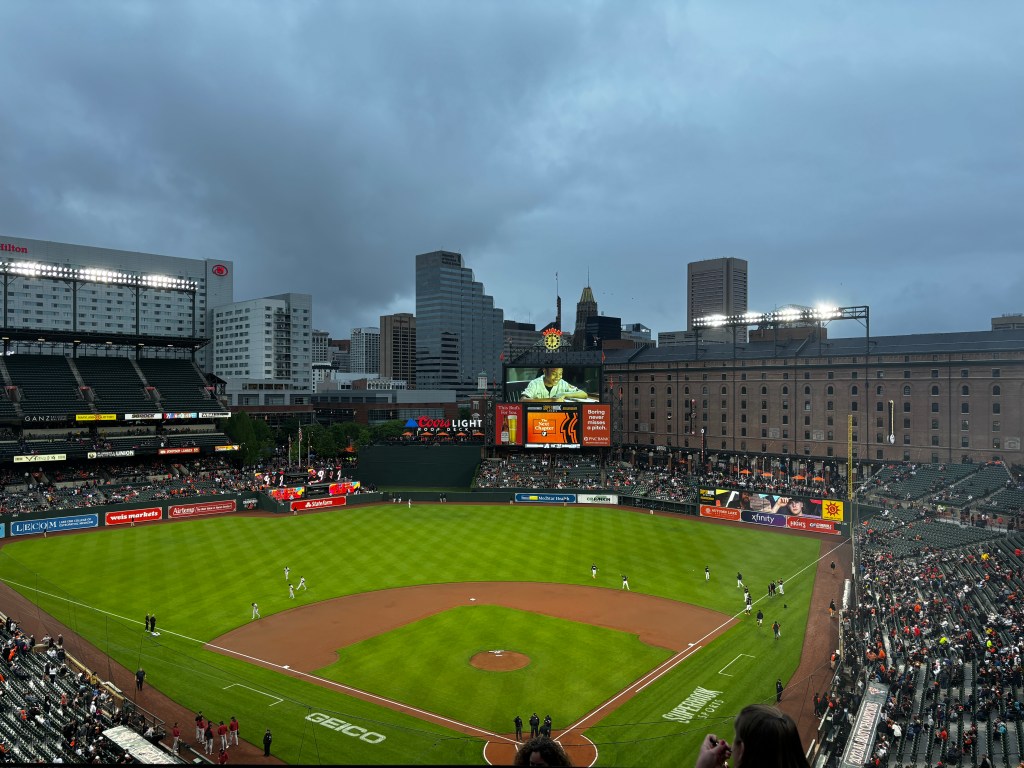
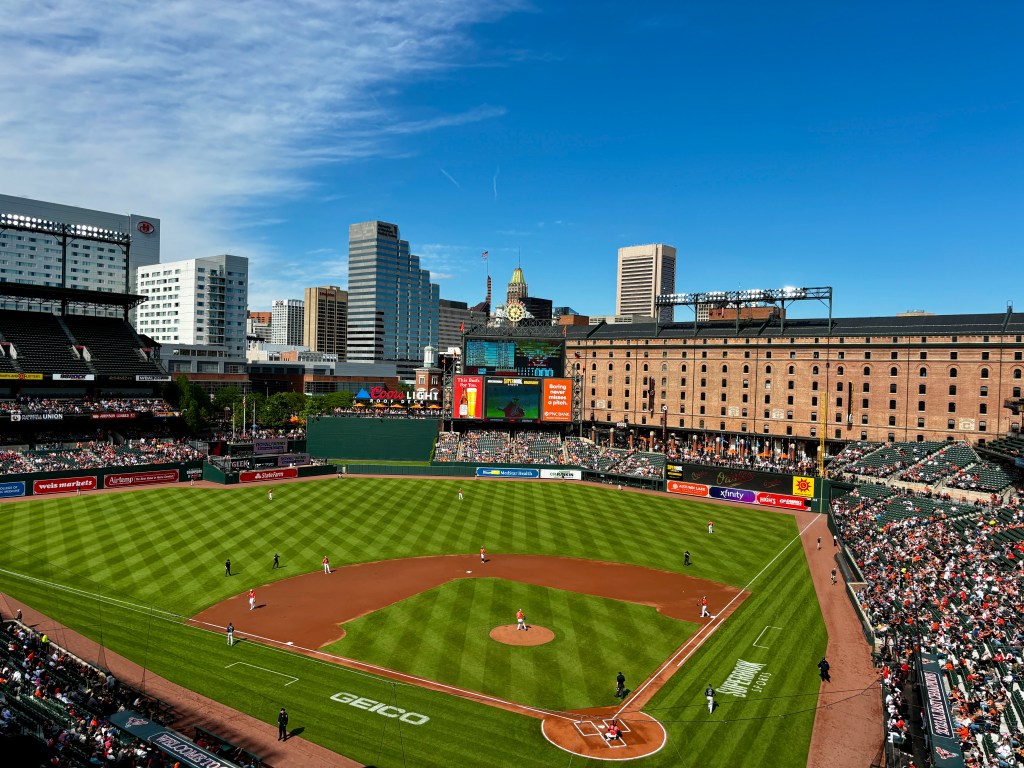
We walked the short distance from our hotel to Camden Yards.  The stadium seats 45,000 and opened in 1992.  It was built over the former Camden railroad yard in industrial Baltimore.  The right field area utilizes one of Baltimore’s many old industrial buildings.

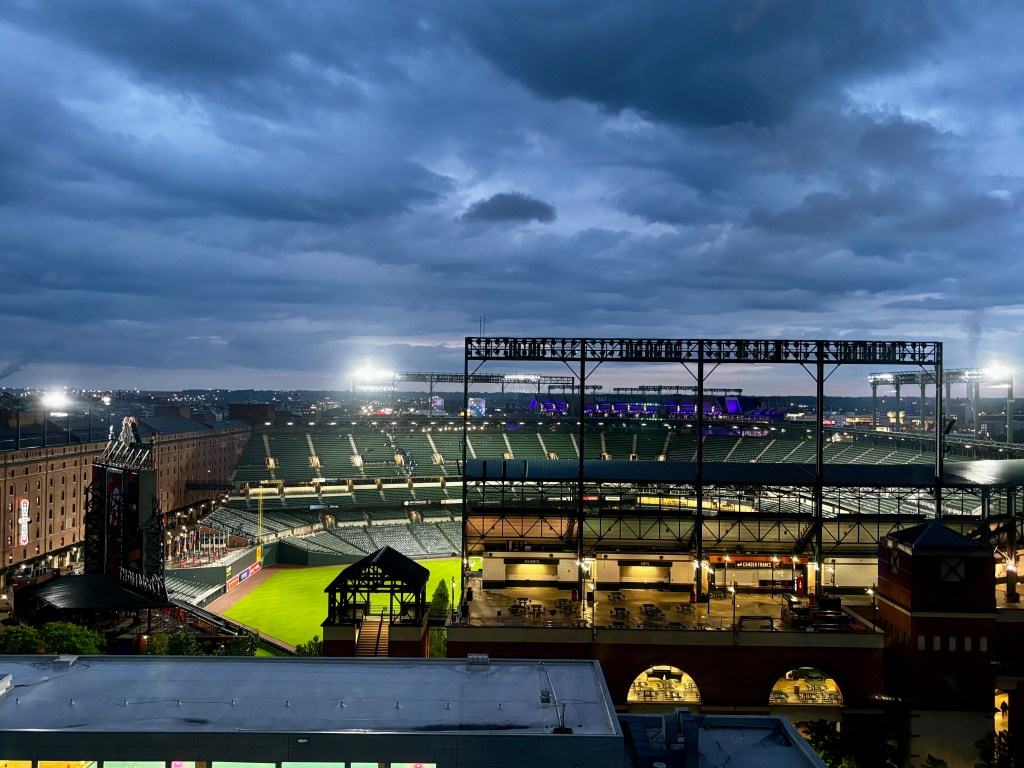
The weather was better, but not great.

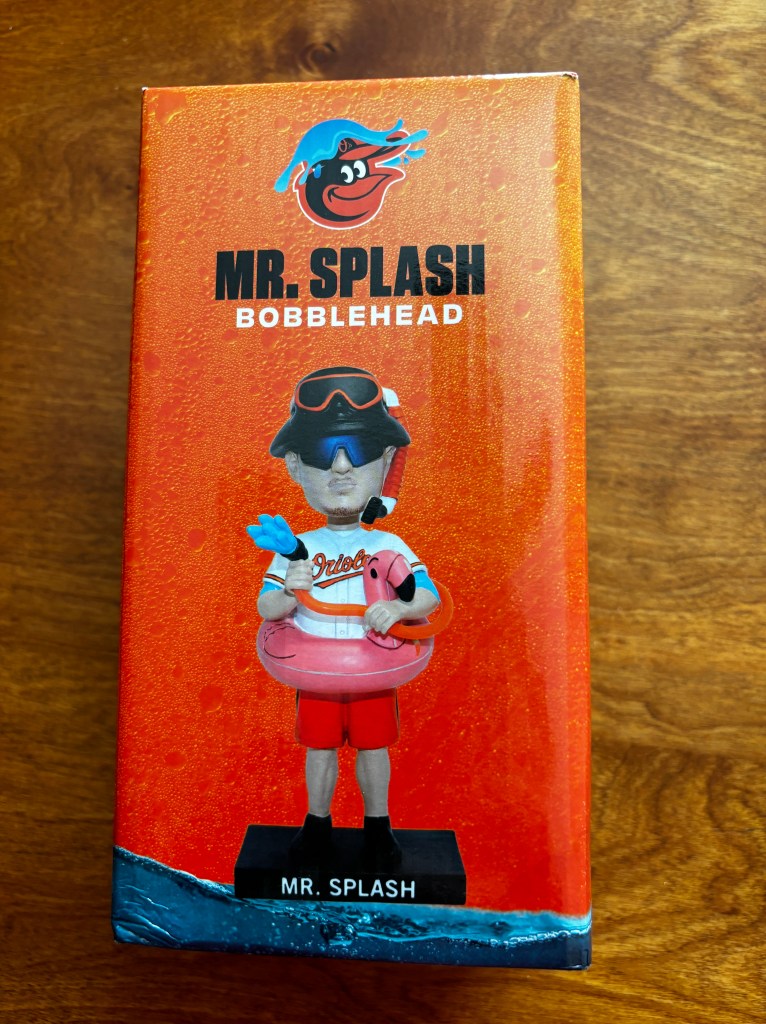
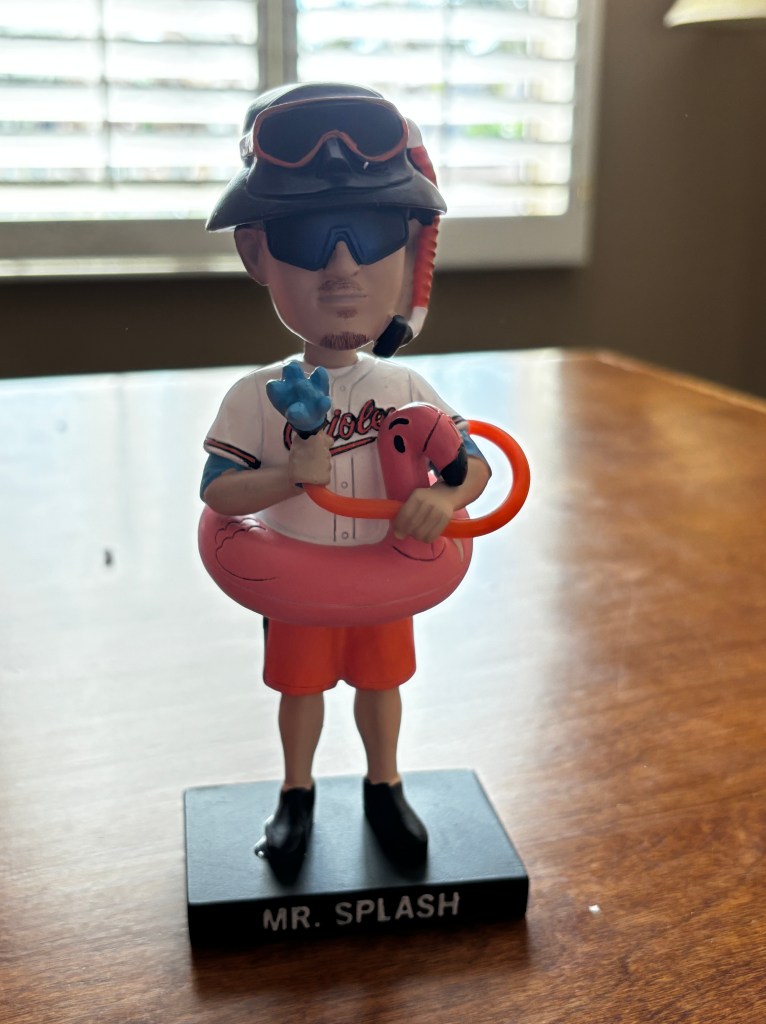
It was a bobble-head give-away night and the locals were very excited about them.  I gave one of ours to a most appreciative woman. I’m not sure what we’ll do with the one we still have.

The Mr. Splash bobble-head represents a tradition of fans in a particular outfield section of the stadium getting sprayed with water at times during the game.  The O’s team owner was Mr. Splashy that cold and chilly night. 

Screenshot

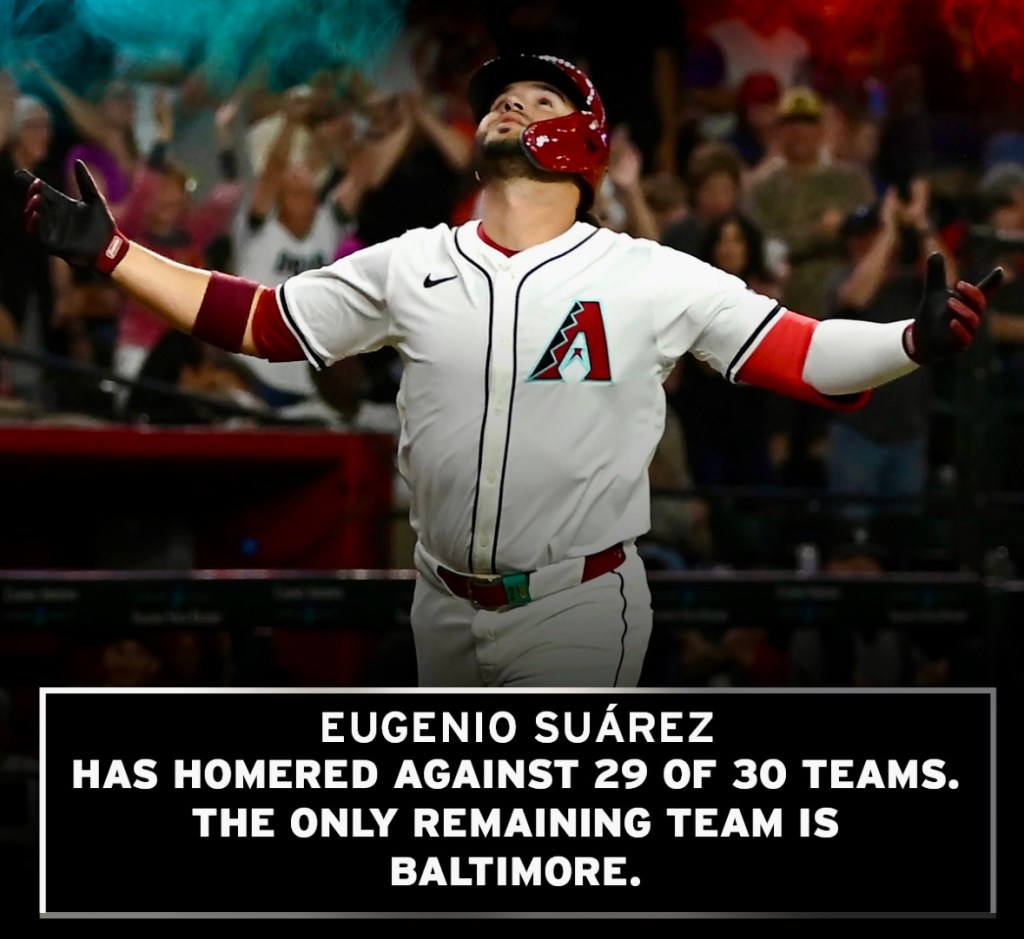
On Twitter, I saw this post about Eugenio Suarez.  He was my favorite Mariner last year and was traded to the Diamondbacks in the off season.  Logically, he is now my favorite Diamondback.  The only team he hadn’t homered against in his career was the Baltimore Orioles.  

Alas, Eugenio didn’t hit a home run in game 1 and the Diamondbacks did not win the game.  It rained some, but our gear kept us mostly dry.

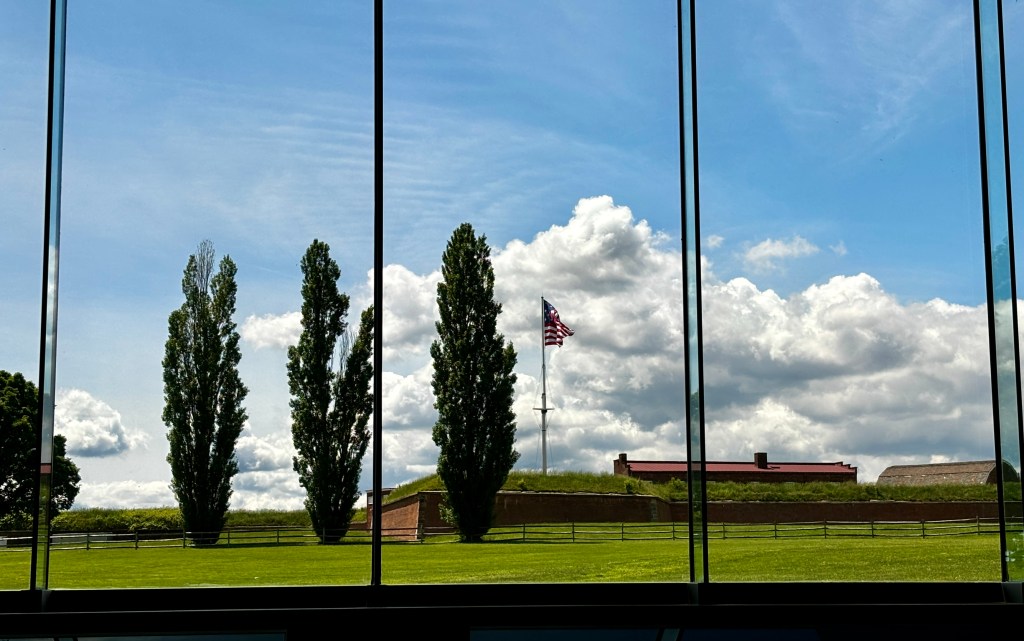
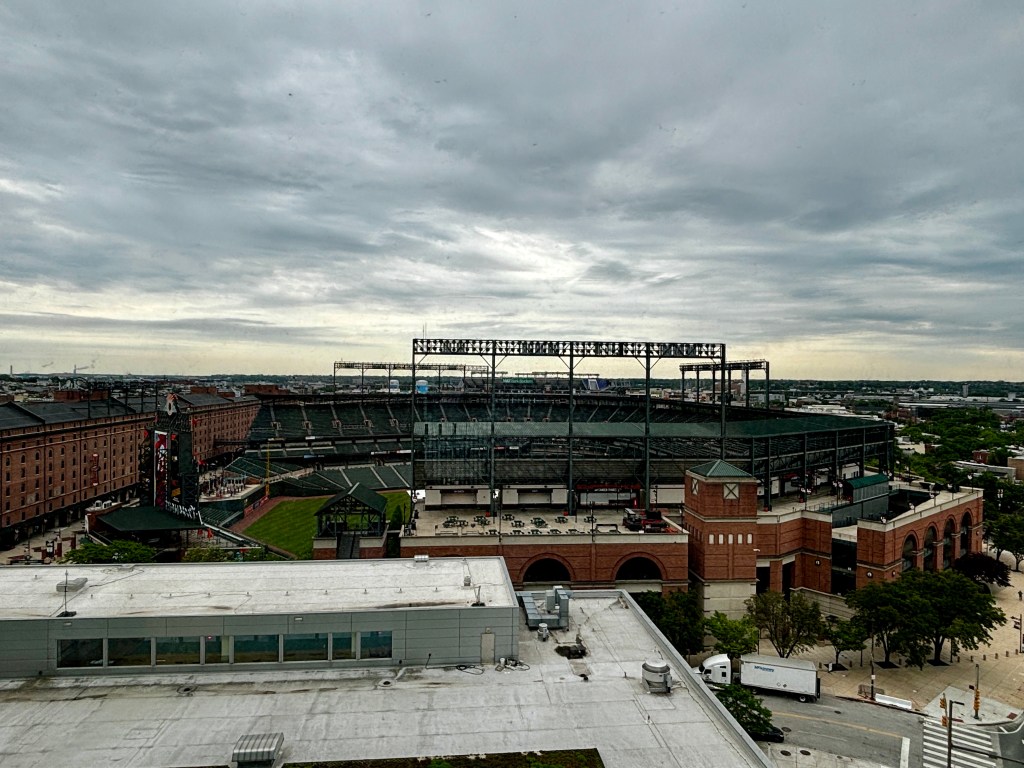
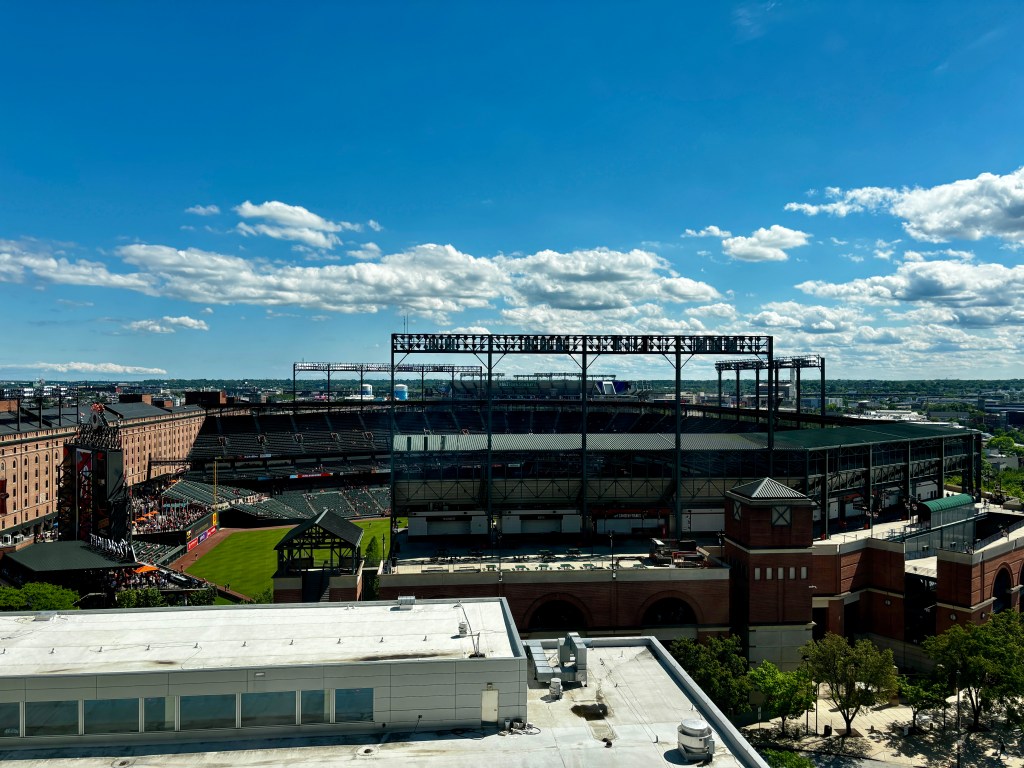
The next morning, when we viewed the field from our hotel room, it seemed we had finally gotten a break in the weather!

The game later in the day was pleasant but the D’backs lost again and Eugenio didn’t hit a home run.

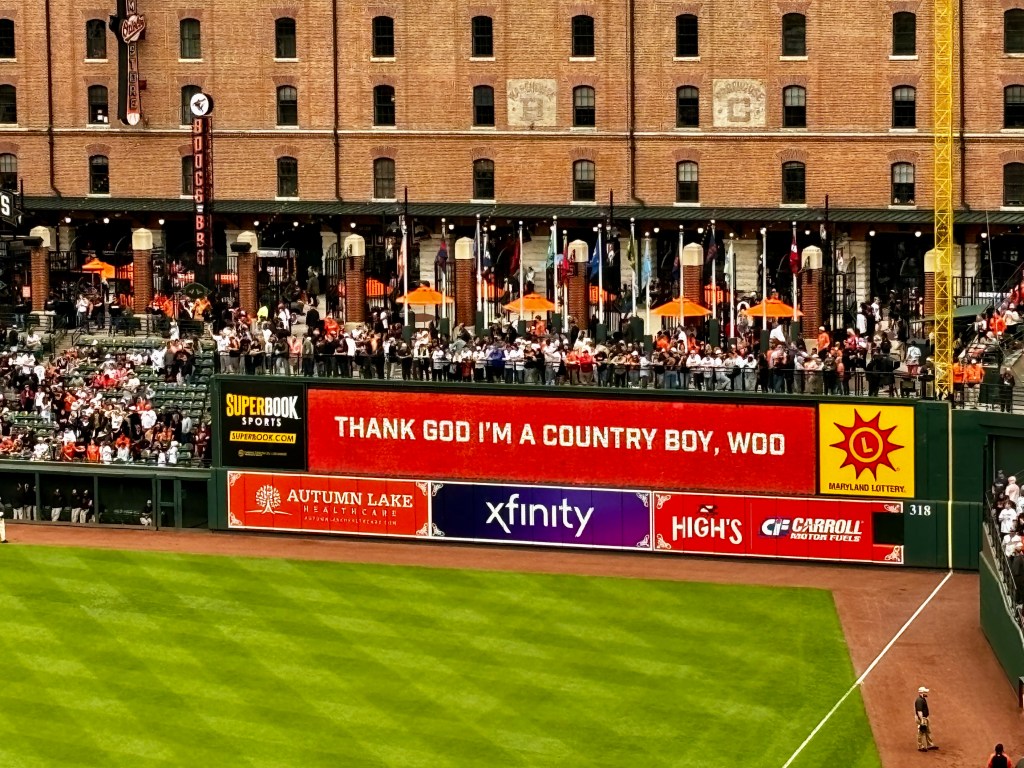
We noticed that during the seventh inning stretch, the routine was to  have a patriotic song and then sing Take Me Out to the Ball Game.  That is pretty typical of stadiums around the country.

However, at Camden Yards they follow those up with Thank God I’m a Country Boy and everyone sings along.  We were a bit confused by that because Baltimore is a good sized city and the surrounding area isn’t really very rural.  We asked a local fan sitting near us about it, and he couldn’t explain it.  He just said it has been happening for the 30 years that he has been going to Orioles games.

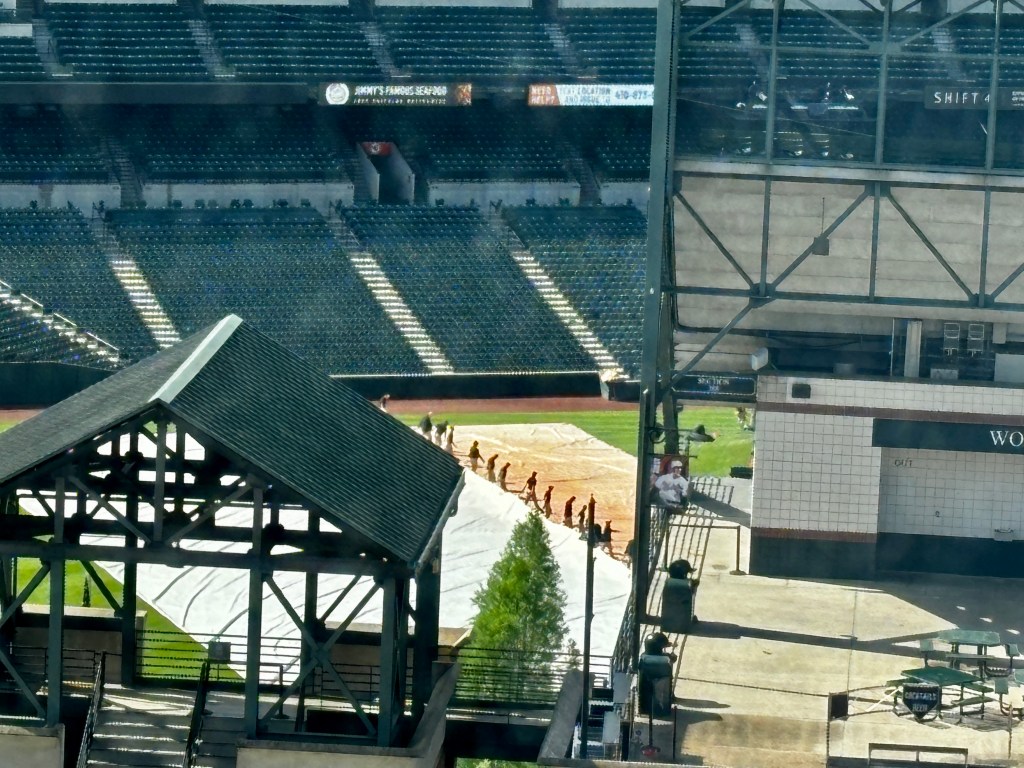
The next morning, we could see the grounds crew removing the tarp and preparing the field for the third game in the series.  We were not going to the game that day. Instead we were headed to the Babe Ruth Museum and Birthplace and a food tour.

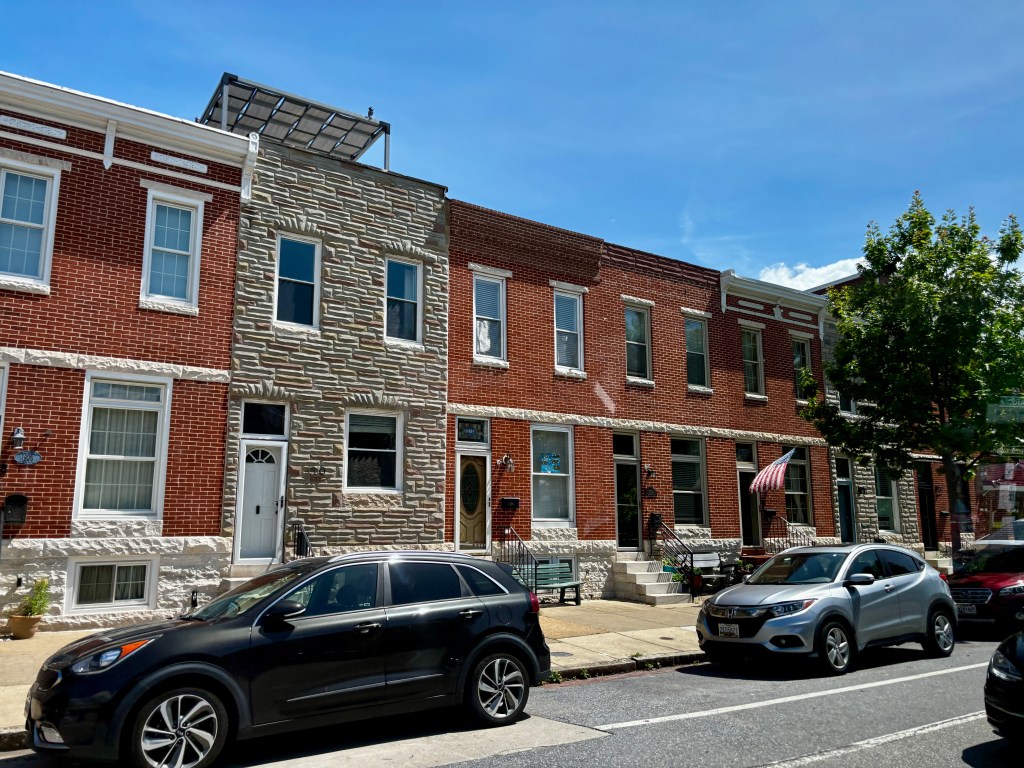
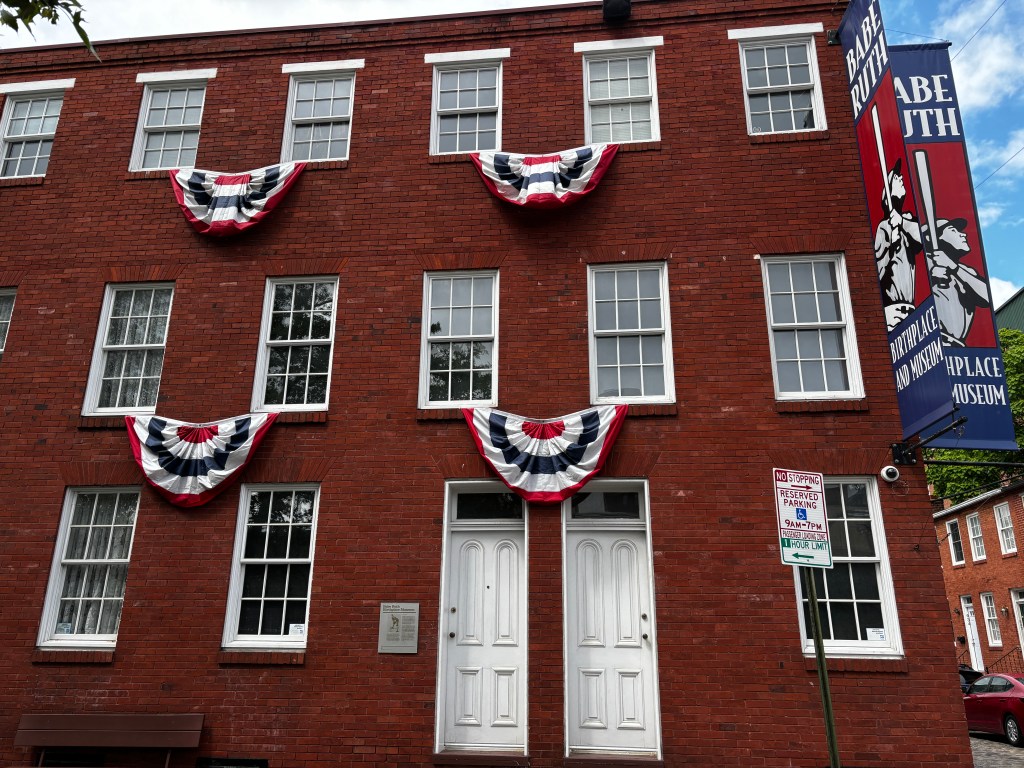
We were able to walk to the museum and learned that George Herman Ruth was born in this row house.    His mother went to her parents’ house for his birth as the apartment she shared with her husband was above a rowdy tavern.

Mrs. Ruth’s parents’ home was a typical Baltimore row house, worth about $1500.  At the time of Babe’s birth, in 1895, Baltimore was the nation’s sixth largest city.  The city’s industry was seaport related.

George was a bit of a problem child, roaming the streets and skipping school.  At age 7 his parents placed him in St. Mary’s Industrial School – a home for orphans and delinquents.  He went back and forth between his parents’ home and the school for 12 years.  

George left St. Mary’s for the last time in 1914 ,at age 19, under the guardianship of Baltimore Orioles’ owner and manager, Jack Dunn.  He signed the talented young man to pitch for his minor league Baltimore Orioles ball-club for $600 per year. Dunn agreed to serve as Ruth’s legal guardian until he turned 21.

Ruth’s exuberance over everything in his new life led someone to observe, “He’s just a babe in the woods.” People began calling him “Jack Dunn’s Baby,” which was soon shortened to “Babe.”

However, Babe Ruth was soon sold to the Red Sox in a financial move to keep the Orioles afloat.  (I’m not sure how that guardian thing went after that.)

By 1916, Babe Ruth was viewed as an outstanding pitcher who sometimes hit long home runs.  Being a pitcher did not allow him to play everyday so he also played in the outfield.  He then broke home run records, hitting 29 in 1919.

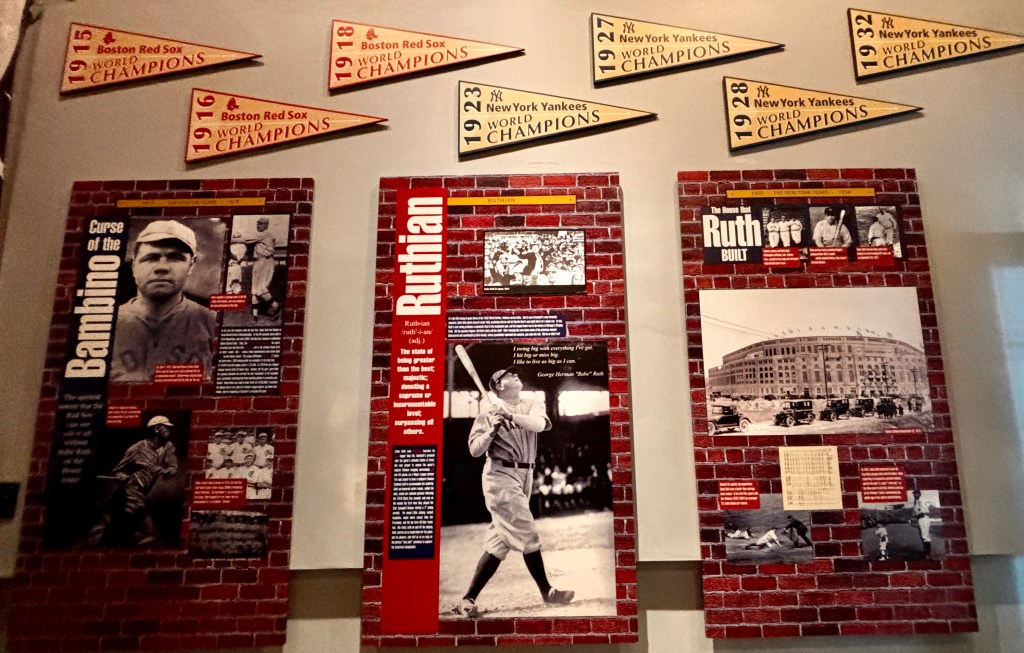
After that season, Ruth was sold to the Yankees, initiating the “Curse of the Bambino” which “kept” Boston from winning a championship for 86 years.

Ruth helped the Yankees win four world series championship in his fifteen years with the team. 

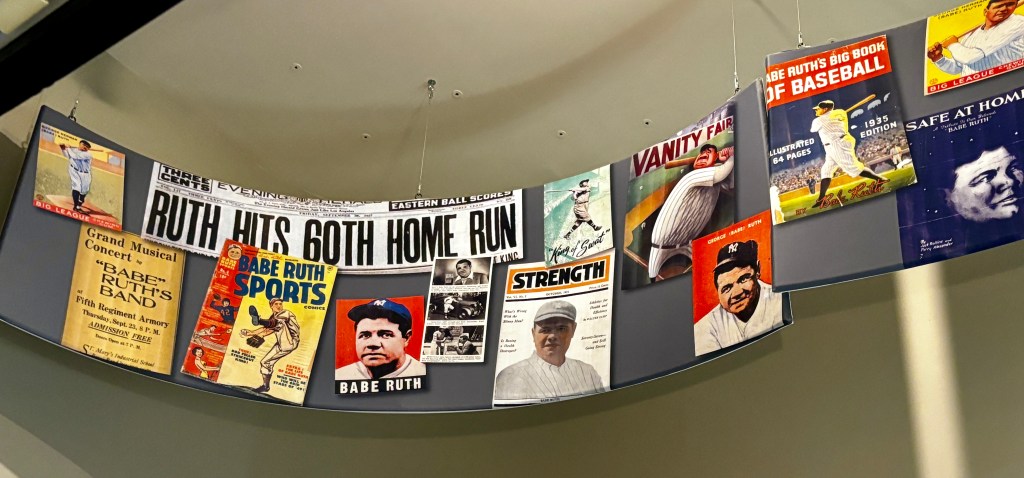
He hit 60 homers in 1927 as part of the Yankees “Murderers Row” lineup. 

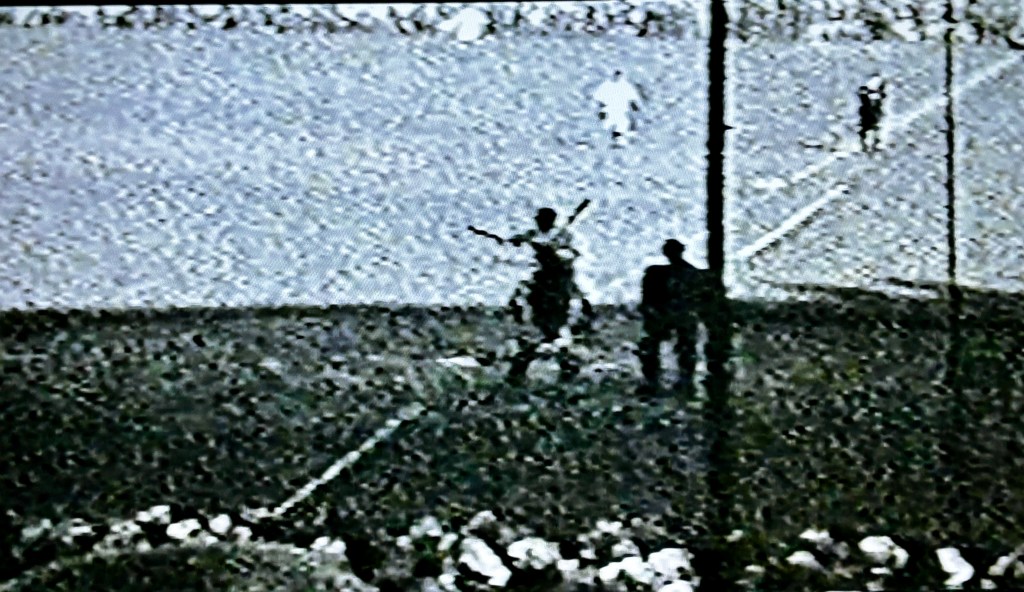
This picture MAY show Babe Ruth calling his shot – a home run against the Chicago Cubs in game 3 of the 1932 World Series.  It is unclear whether the pointing gesture Ruth made actually had intent but the possibility of it being so added to his baseball lore.

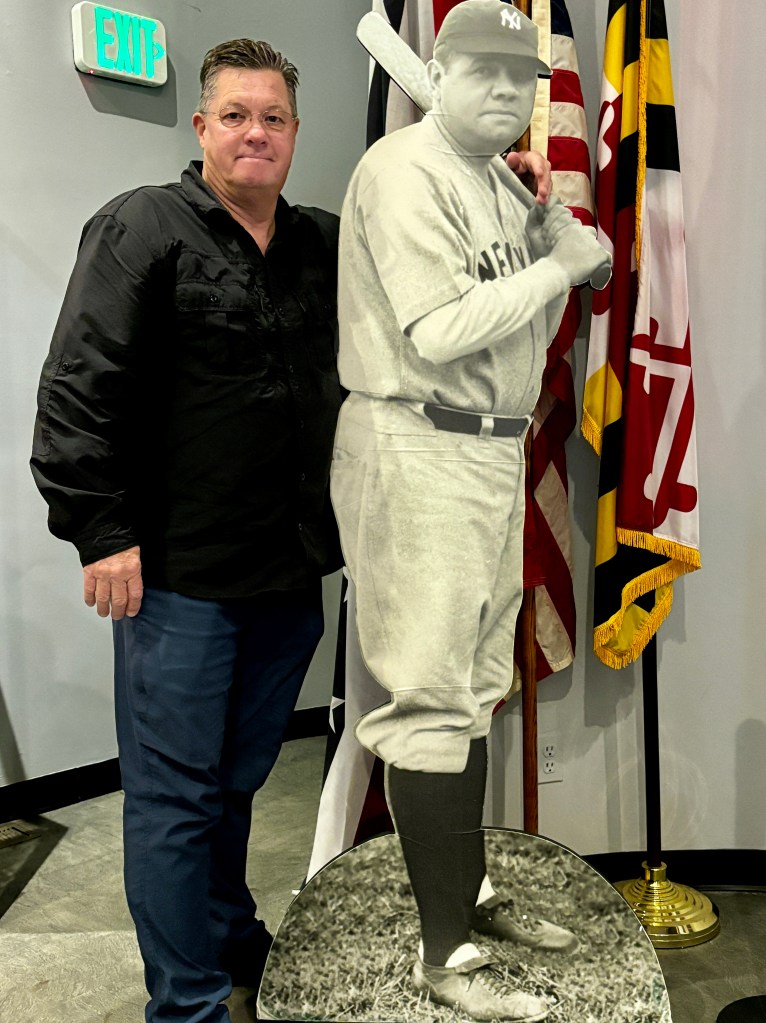
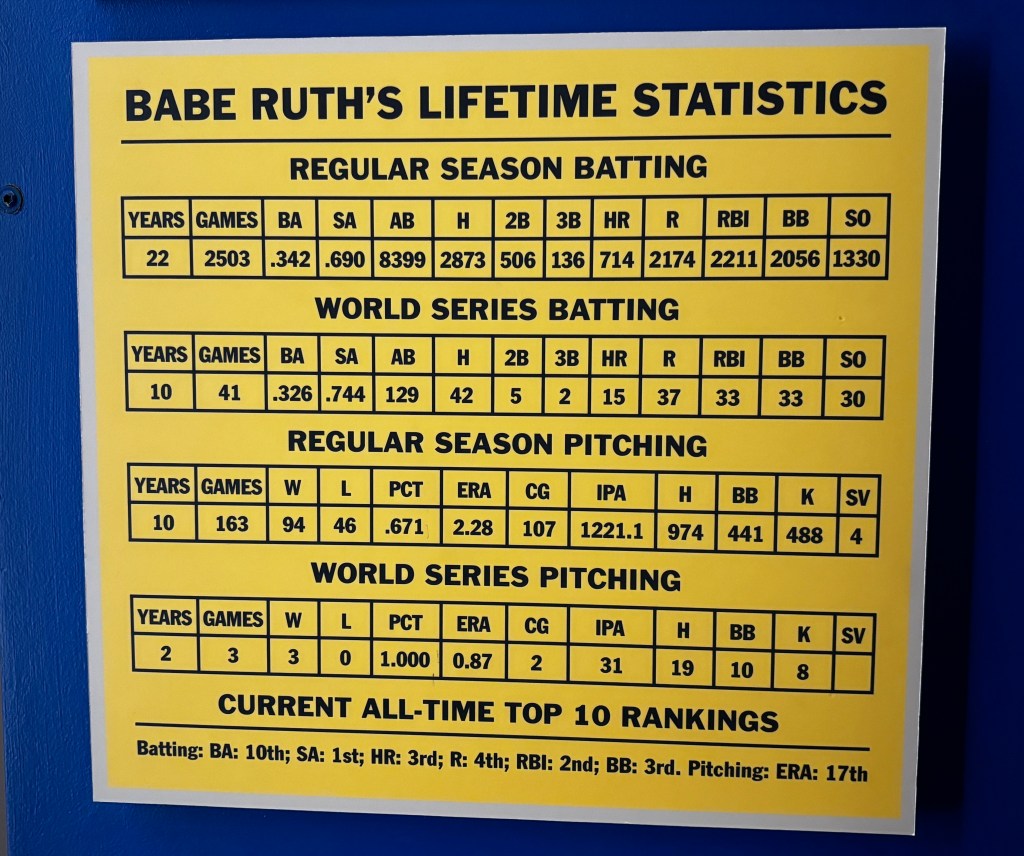
Babe Ruth played very briefly with the Boston Braves before retiring in 1935.  He played in 2503 games in his career and had 714 career home runs.

In 1936 Babe Ruth was one of five members inducted into the first class of the Baseball Hall of Fame.  The others were Ty Cobb, Honus Wagner, Christy Mathewson and Walter Johnson.

Babe Ruth received press and public attention for his baseball stats and for his drinking and womanizing.  This likely kept him from ever managing a team after retiring as a player.

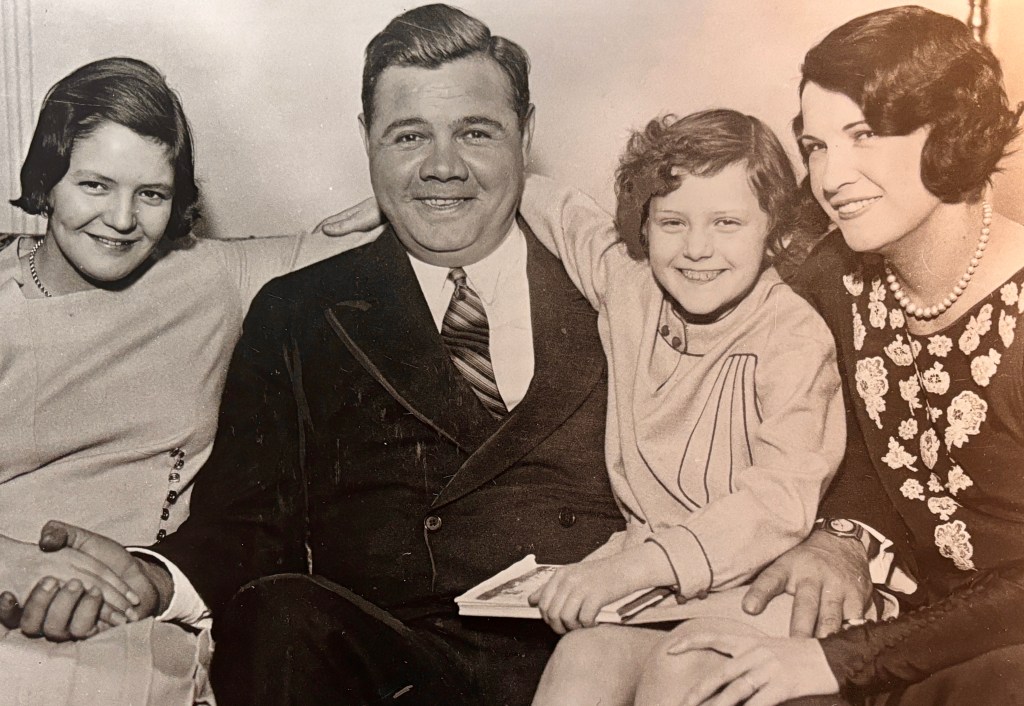
This picture is of Babe, his second wife, and their daughters.

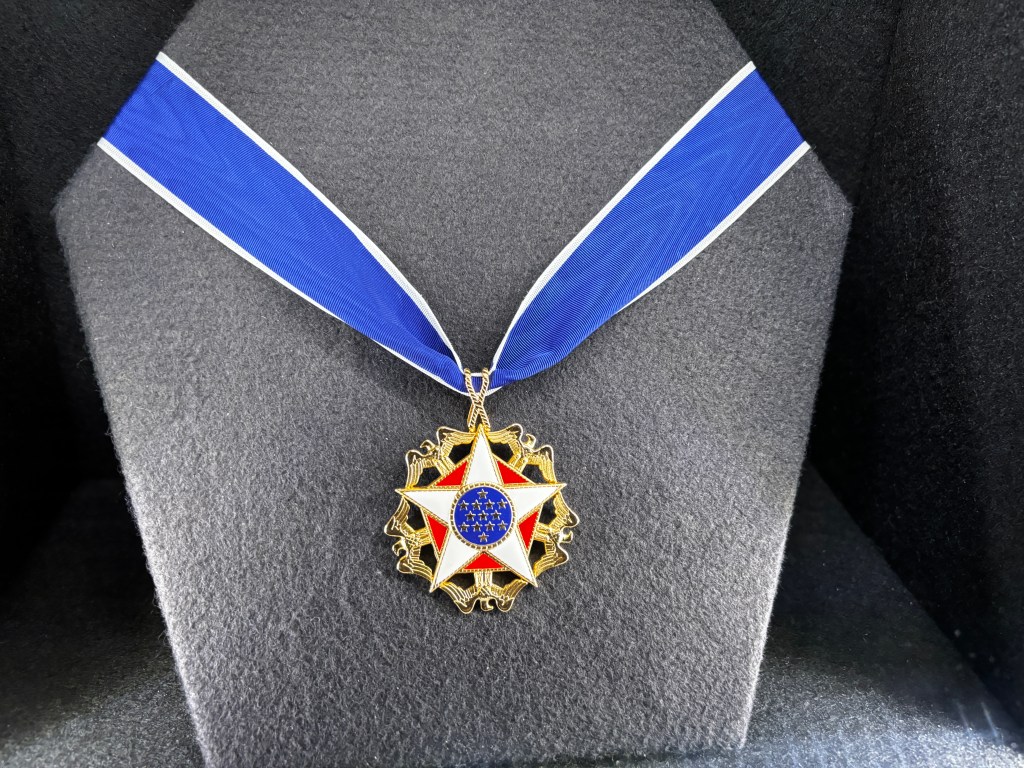
After his playing days, Ruth made many public appearances in support of America’s efforts during World War II.  In 2018, Ruth’s grandson accepted a Presidential Medial of Freedom on Babe Ruth’s behalf for his service to security and culture in America.

The lower level of the Babe Ruth Museum focused on how the Star Spangled Banner came to be played at baseball games.  That has been broadened to most sporting events, but it started with baseball. 

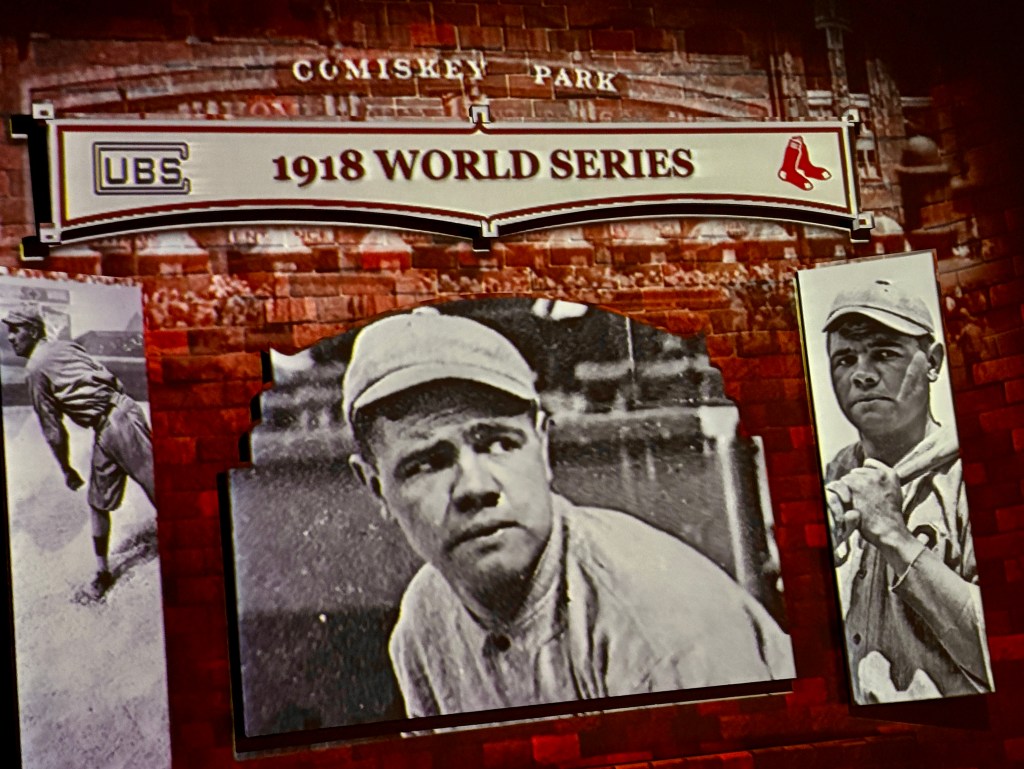
During the 1918 World Series, President Woodrow Wilson, in attendance at the game, asked the band to play The Star Spangler Banner.  He was hoping to promote some good feelings as the country was involved in WWI.  The third baseman for the Yankees, on leave from the service to play baseball, stood and saluted.  Other players, including Babe Ruth on the mound, took notice.

Playing the Star Spangled Banner was repeated during the seventh inning stretch in game two of the series.  By game three, the song was moved to before the game and has been there ever since.

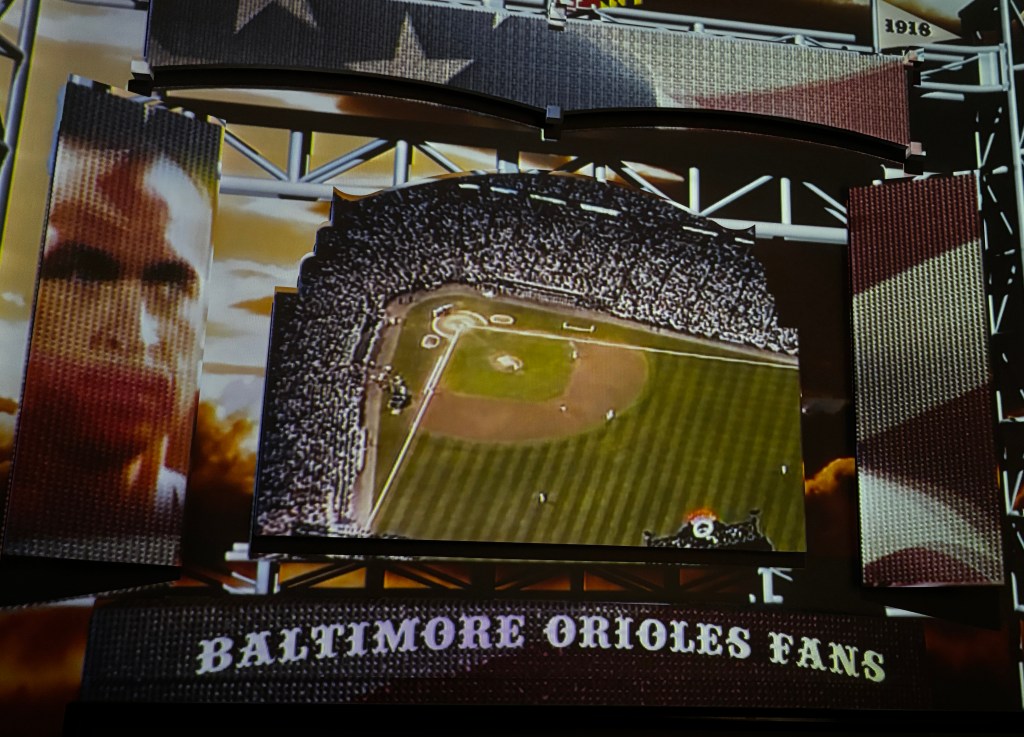
At the museum, a video showed a montage of celebrities singing different parts of the anthem. This video included Oriole fans.

Baltimore fans shout “Os” at the beginning of the line “O say does that star-spangled banner yet wave…”  We had noticed that during the two games we attended.  We thought that was pretty cool as Frances Scott Key wrote the poem while being held in Baltimore harbor.  (That game tradition makes perfect sense to us – unlike singing Thank God I’m a Country Boy.)

The D’Backs won the final game in the series (when we weren’t there) and Suarez did not hit a home run against Baltimore.

Next up:  Our Baltimore History and Food Tours

We were in Baltimore in May 2024.
Posted in Uncategorized | 1 Comment

Baltimore: Historic Ships and Little Italy

Our next excursion was to tour the Historic Ships of Baltimore, each with its own story and docked in the Inner Harbor.   The weather was still rainy and cool but it was easy to walk between the ships and mostly we were inside the vessels.

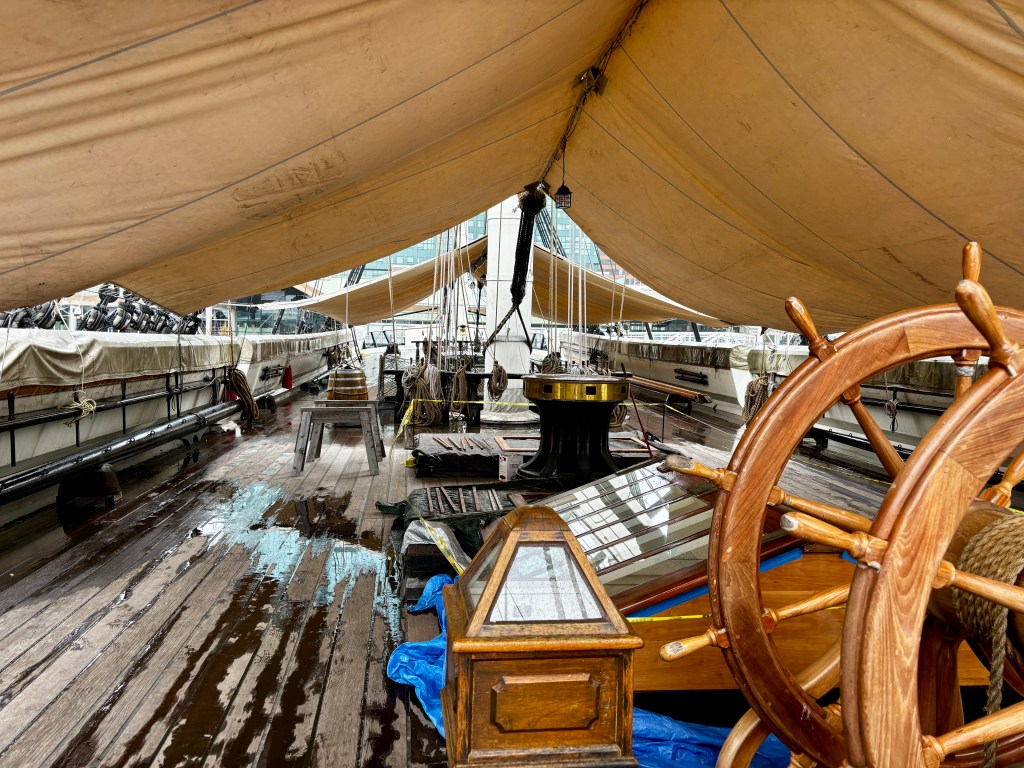
Our first was the USS Constellation. She was built in 1854 and has the distinction of being the only US ship active in Civil War that is still afloat.

She is also the last “sail only” US warship. USS Constellation is also the largest example of Chesapeake shipbuilding.

Although she began service in the Mediterranean Sea, her first mission of lasting importance was as part of the US African Squadron patrolling for, and capturing, illegal slave ships.

The importation of slaves had been illegal since 1808 but, obviously, continued.  It is presumed that one in five Africans died in transit because of horrid conditions.

Another notable service period was as a training ship for the US Navy from 1871-1883.  She was stationed at Annapolis Maryland. During that period it also delivered famine relief goods to Ireland in 1880.

She continued service as a stationary training vessel in Rhode Island from 1883 to 1933.  

In 1933, Constellation was decommissioned, but under consideration to be maintained as a historic naval relic.  Nothing was decided. Following WWII, she was sent into regular mothball status.  

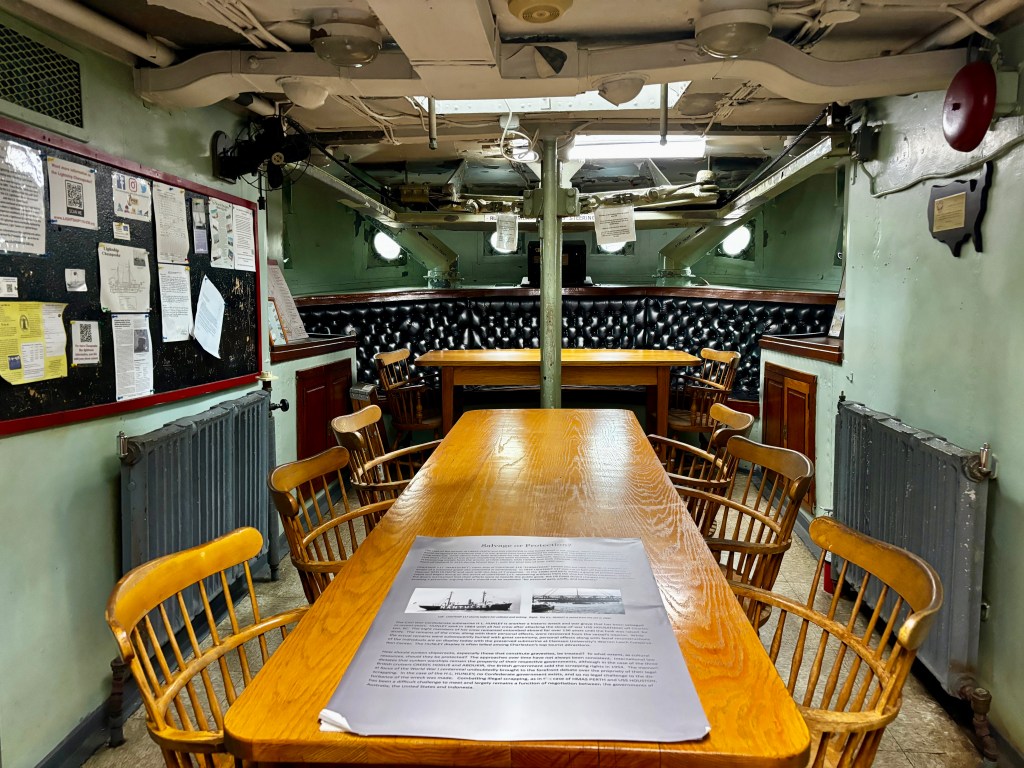
 In 1955, she was stricken from Navy roles and sent to Baltimore as she was confused with another vessel named Constellation.  A non-profit group, The Constellation Commission of Maryland, intended to preserve the other Constellation.

The “other” was a 1797 frigate that was on the Navy rolls until 1853 when she was considered beyond repair and broken up.

Construction on the 1854 Sloop of War USS Constellation was just beginning as the other was scrapped.

Earlier restoration attempts tried to change this ship to the frigate style, but that was later corrected. She currently shows her Sloop of War pedigree.

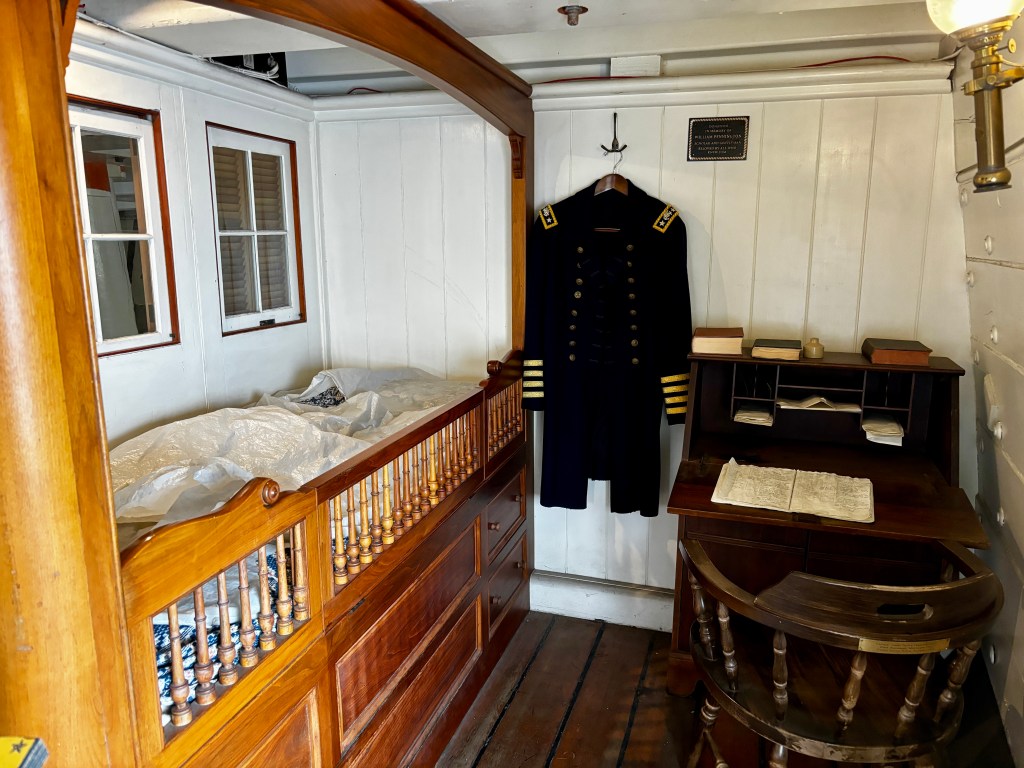
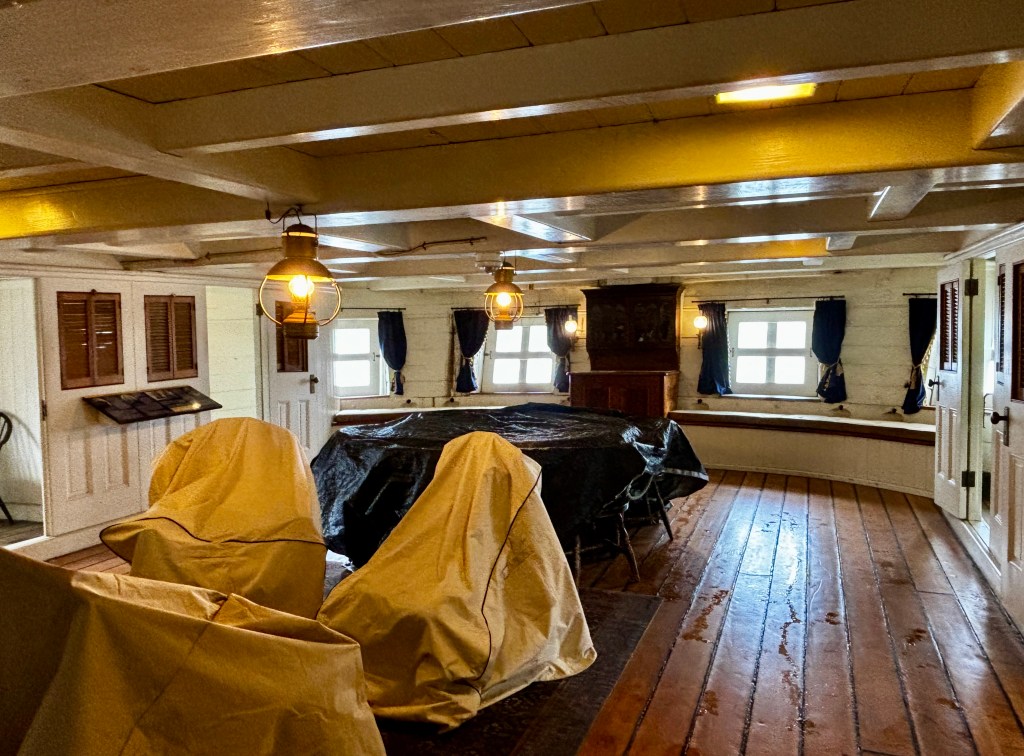
The Captain’s Cabin encompasses six rooms for rest, entertaining and administering the ship.

The Captain’s rooms are at centered at the bow of the ship.

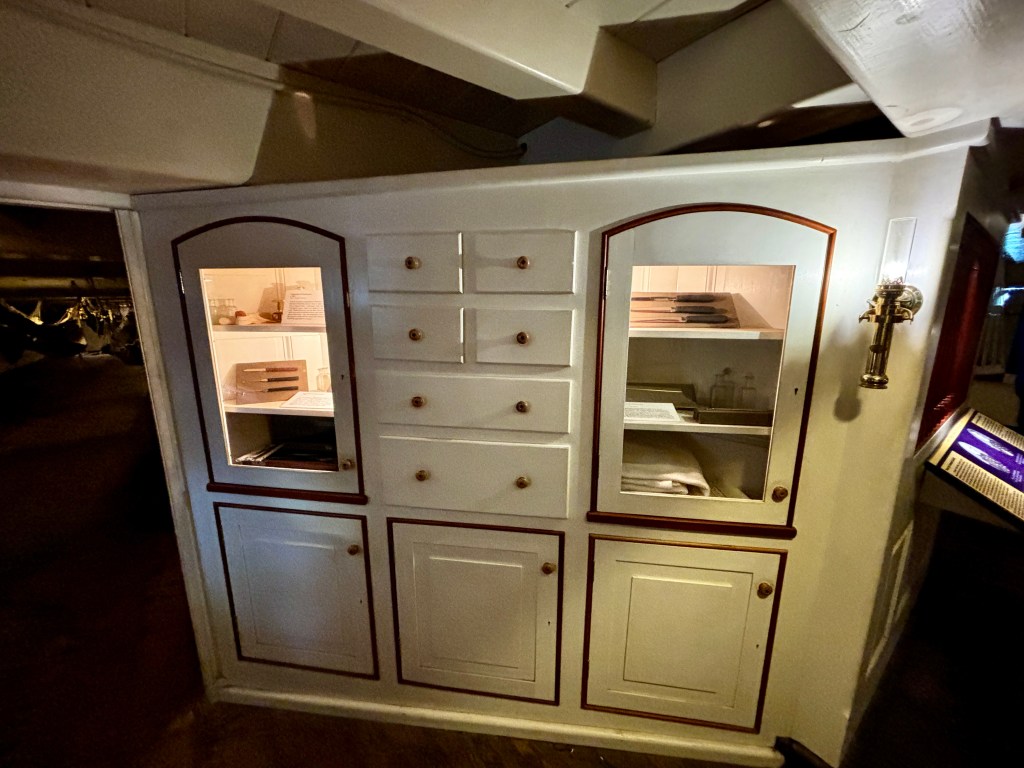
This is the ship’s infirmary.

Some medical equipment is on display.

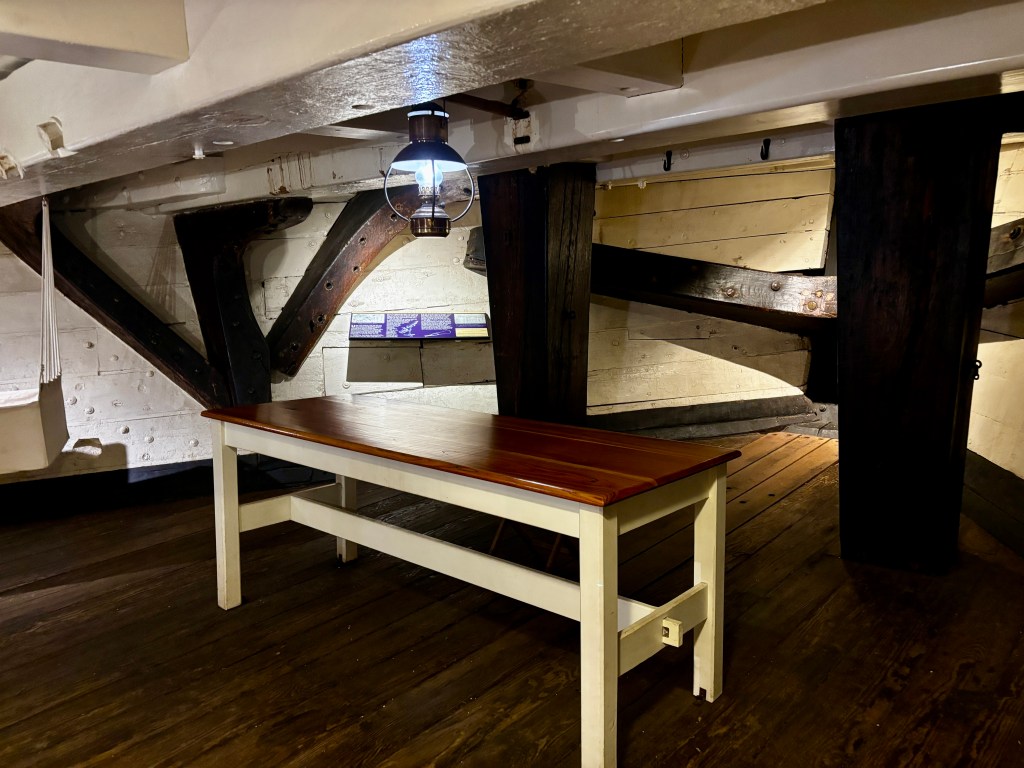
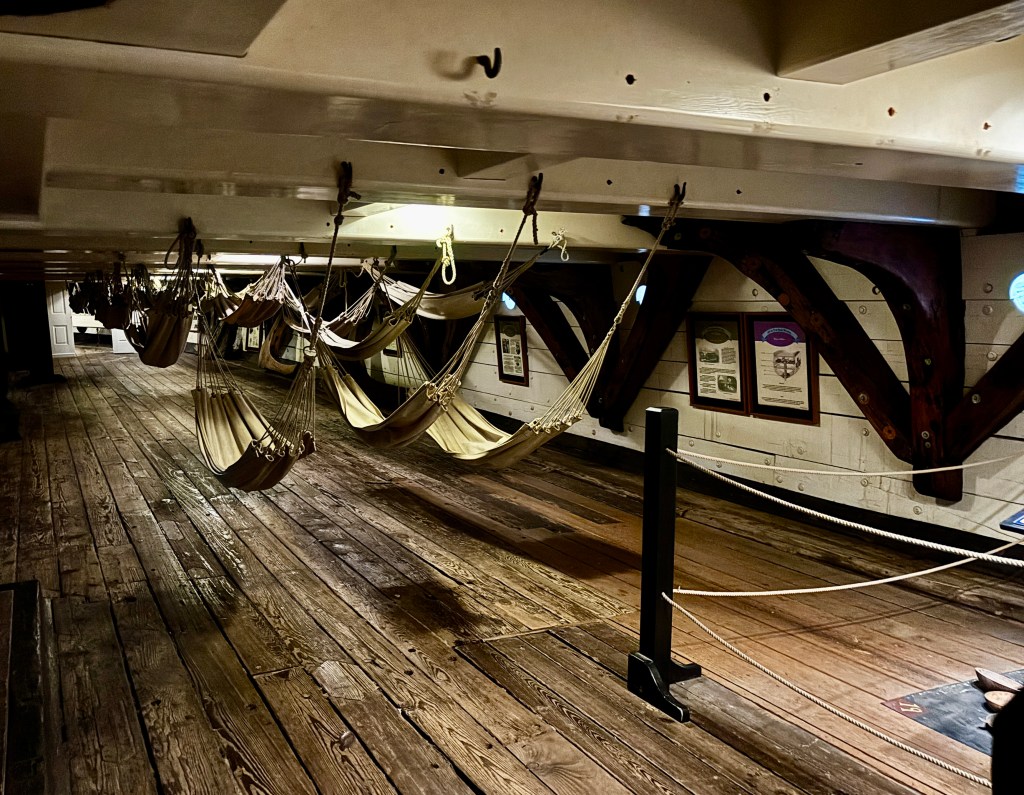
Each member of the crew had his own hammock. 

He would wrap his possessions in the hammock while on duty and hang it on a numbered hook for storage.

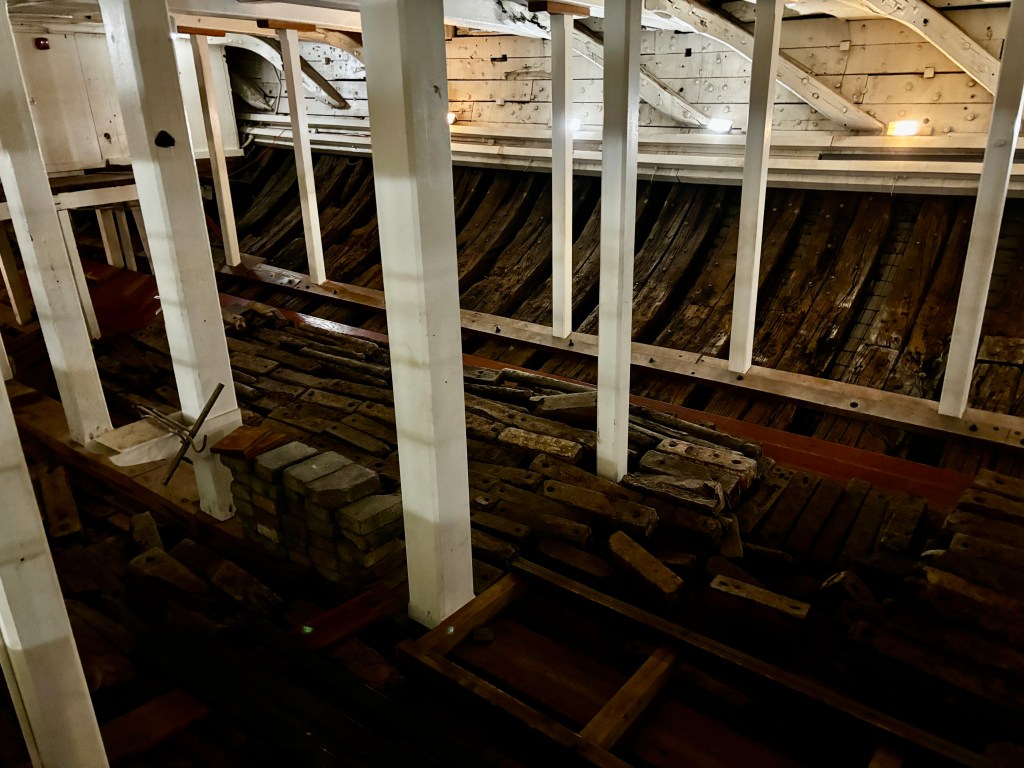
The two lowest decks are mostly original while the upper decks have been renovated.

The gun deck held 8-inch shell-firing guns and four 32-pounder long guns.  (I don’t know what that means.)

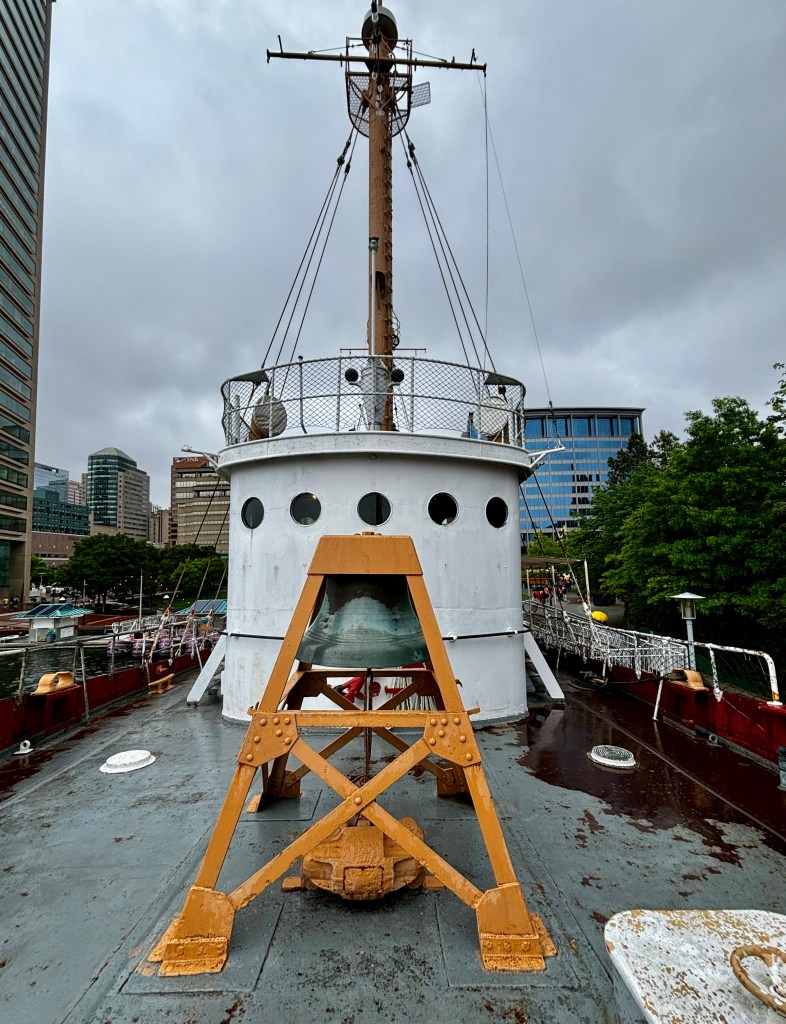
We exited the USS Constellation and walked a short distance to the Lightship Chesapeake.  A lightship functions as a lighthouse.  These ships were used in the US from 1820 to 1983. 

Originally they were managed by the US Lighthouse Service.  They folded into the US Coast Guard in 1939. 

This vessel was in service from 1930 to 1971 and had a crew of 16.  She served at the entrance of Chesapeake Bay for 20 years. She had two 5000 pound anchors to keep her in place.

Lightships, including the Chesapeake, were honored in a set of postage stamps in 2021.

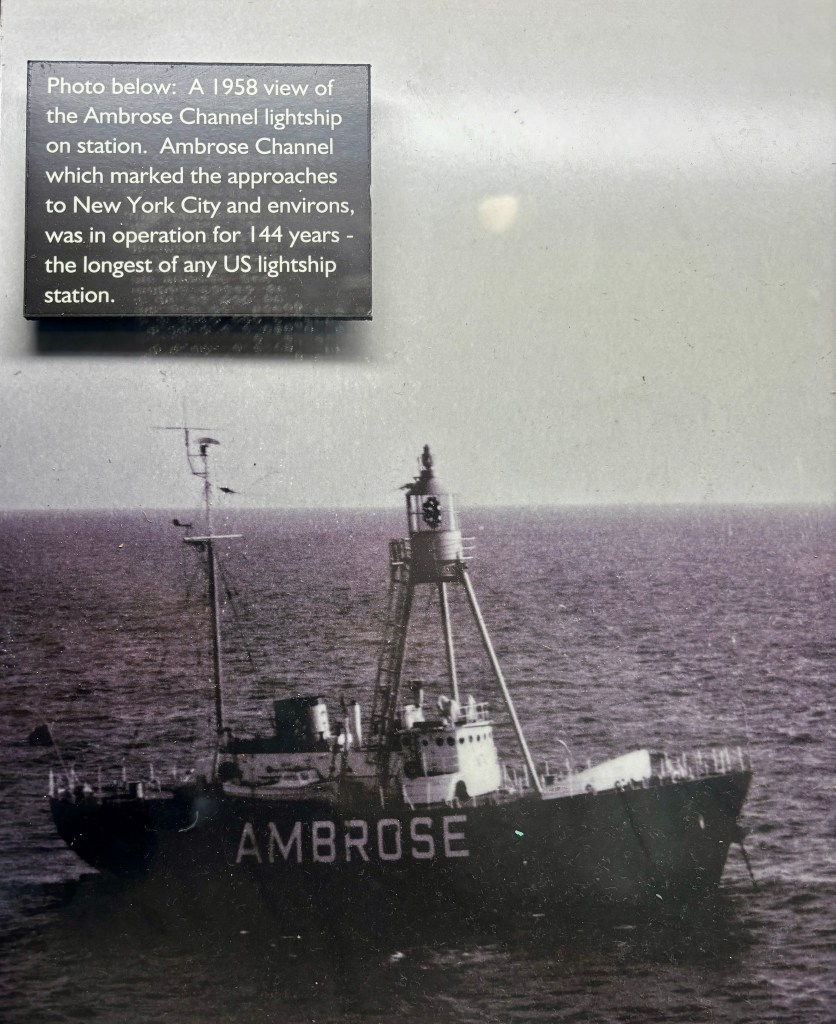
The Ambrose Channel Lightship operated for 144 years as a beacon on the approach to New York City.

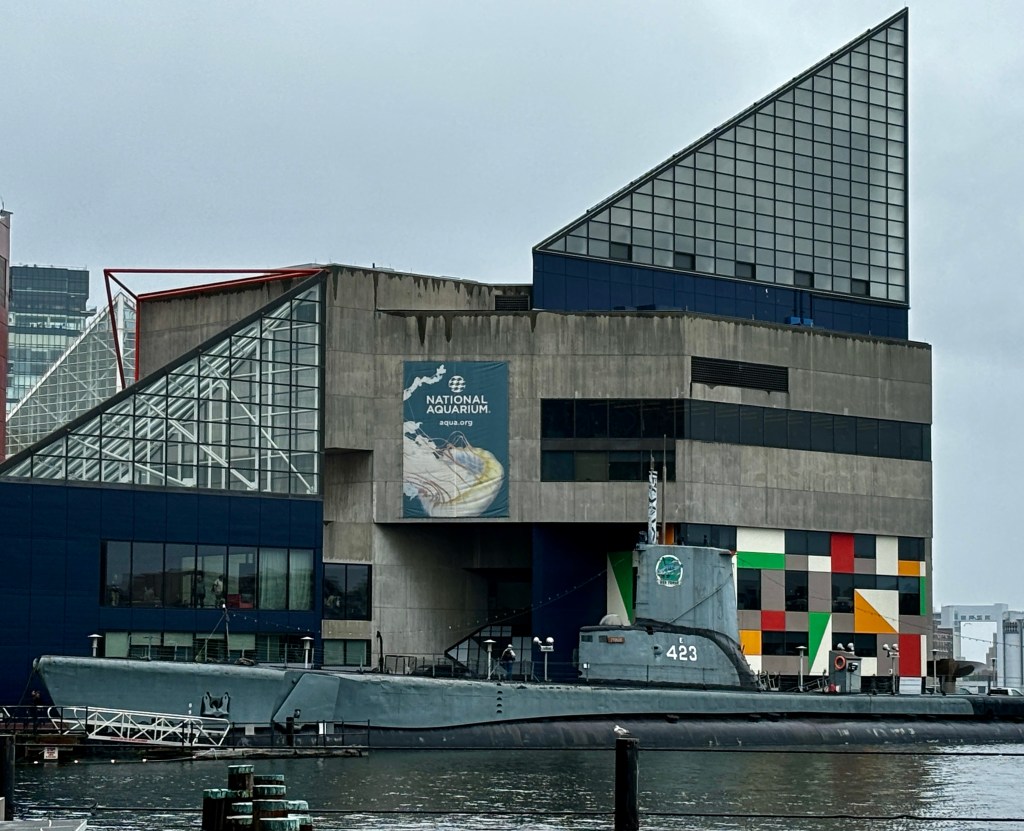
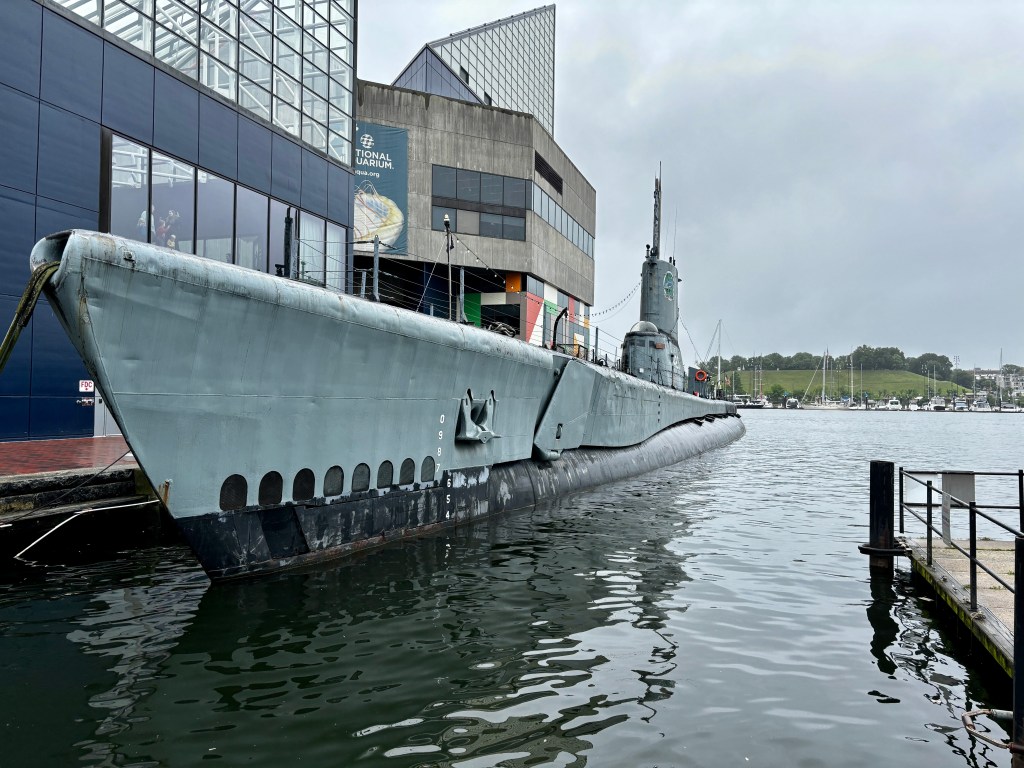
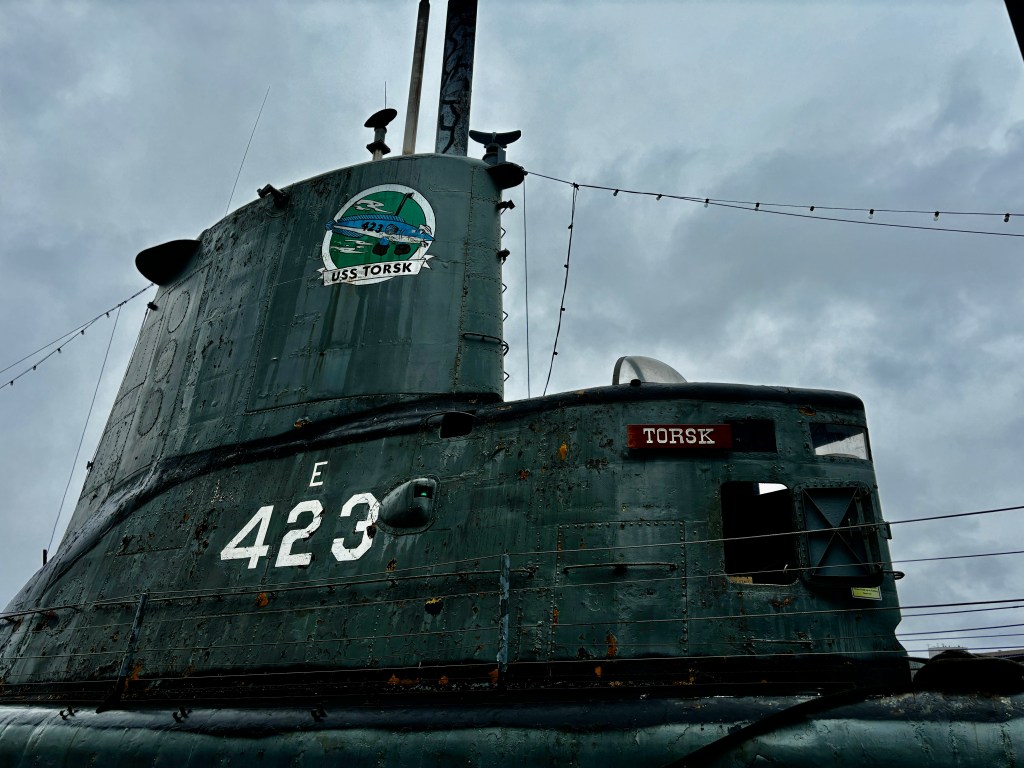
Our next vessel, the USS Torsk, was docked next to the National Aquarium.  We didn’t have plans to visit the Aquarium, but who knew what we might do to get out of the rain!

The USS Torsk was launched in 1944 and served for 24 years.  At the time of launch, it was state of the art for submarines.

It had a speed of 22 mph on the surface and 9 mph submerged.  It could stay submerged for 48 hours.

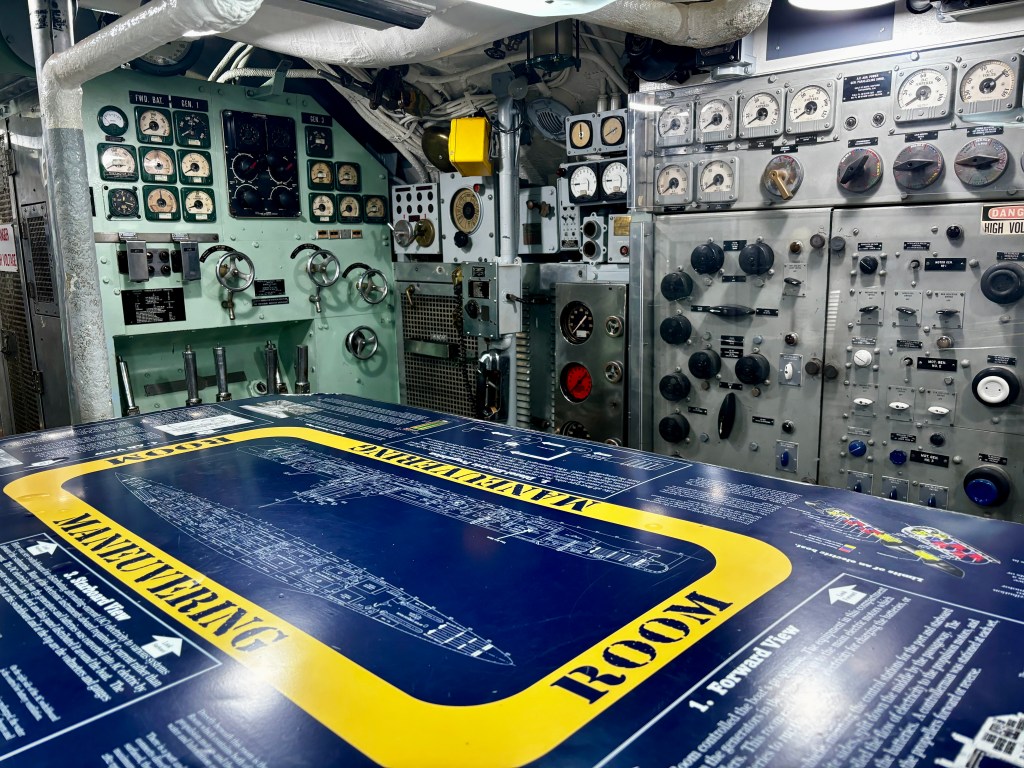
The maneuvering room managed propulsion from four diesel engines, two batteries and 2 electric motors.

The Torsk made two war patrols off Japan, sinking a cargo vessel and two Coastal Defense frigates.  The second was the last enemy sinking of WWII.  

A plaque identified the sacrifice of so many men “still on duty” on submarines from WWII.

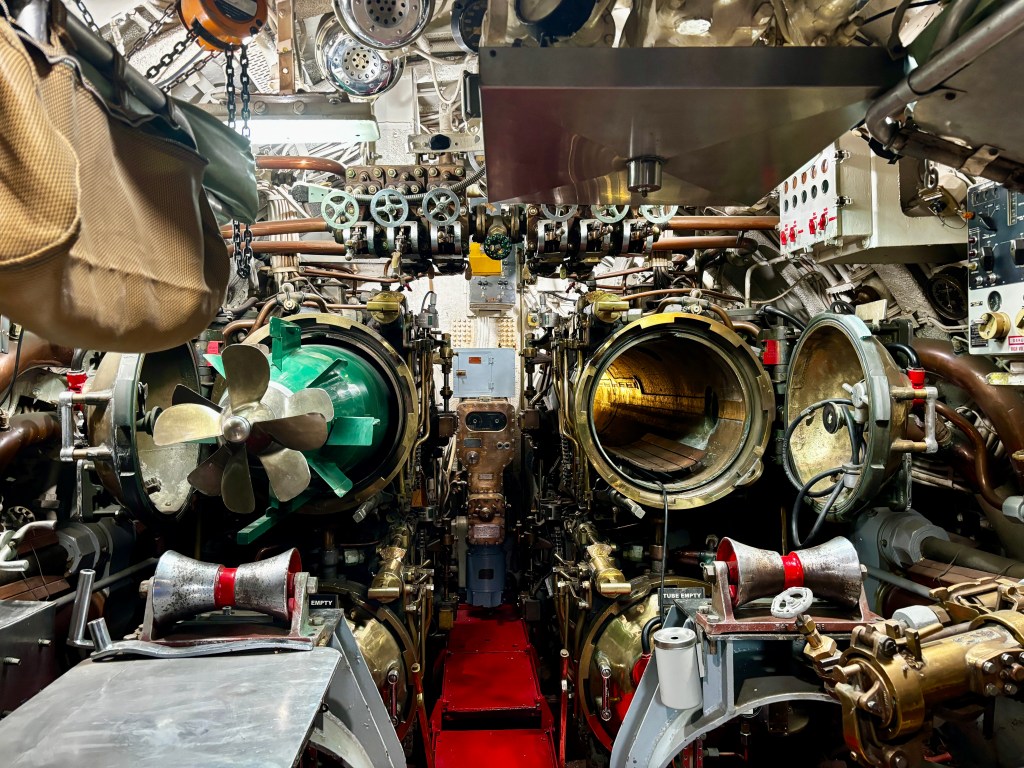
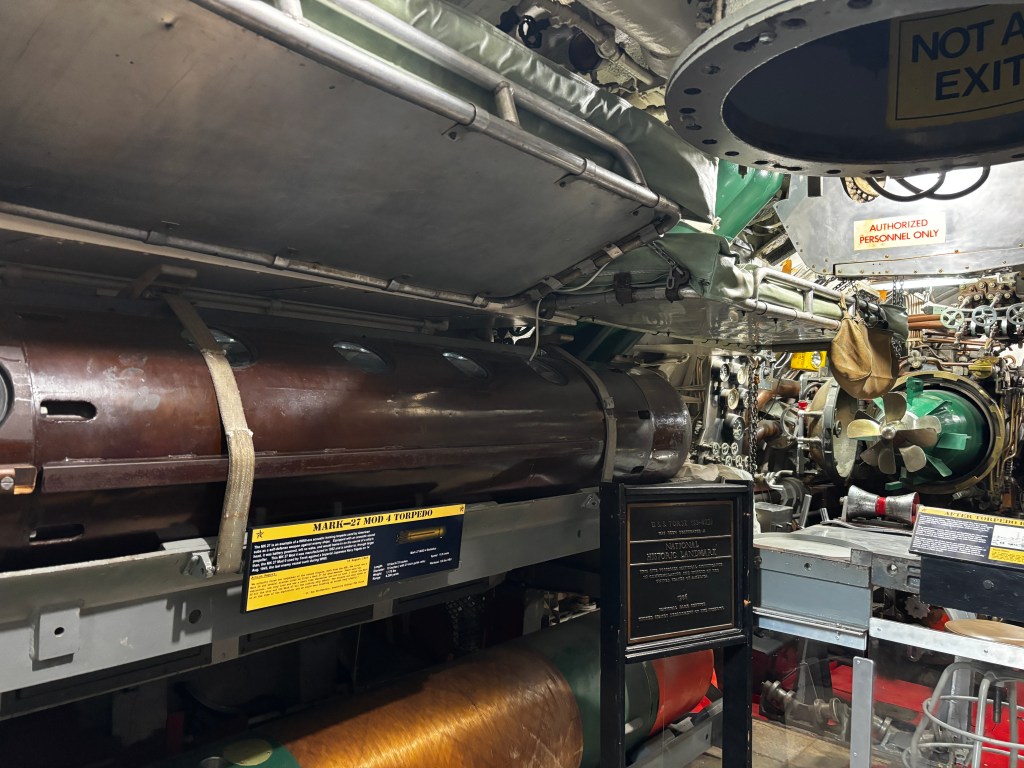
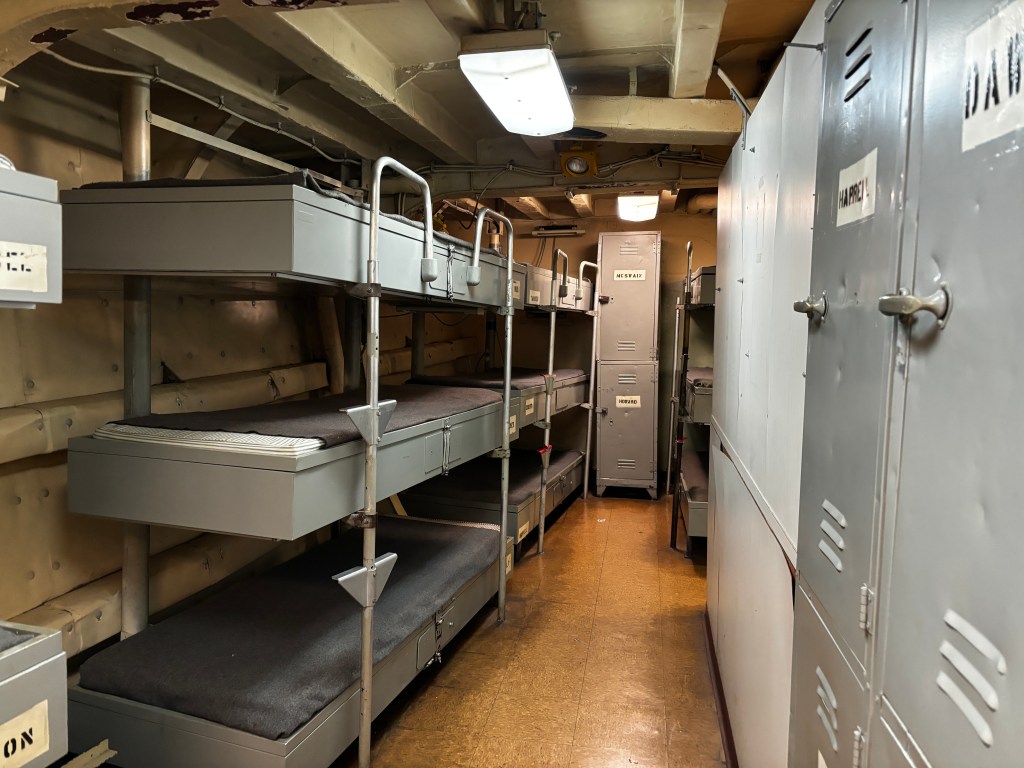
Notice the sleeping quarters above the torpedos.

These are the more traditional sleeping quarters.

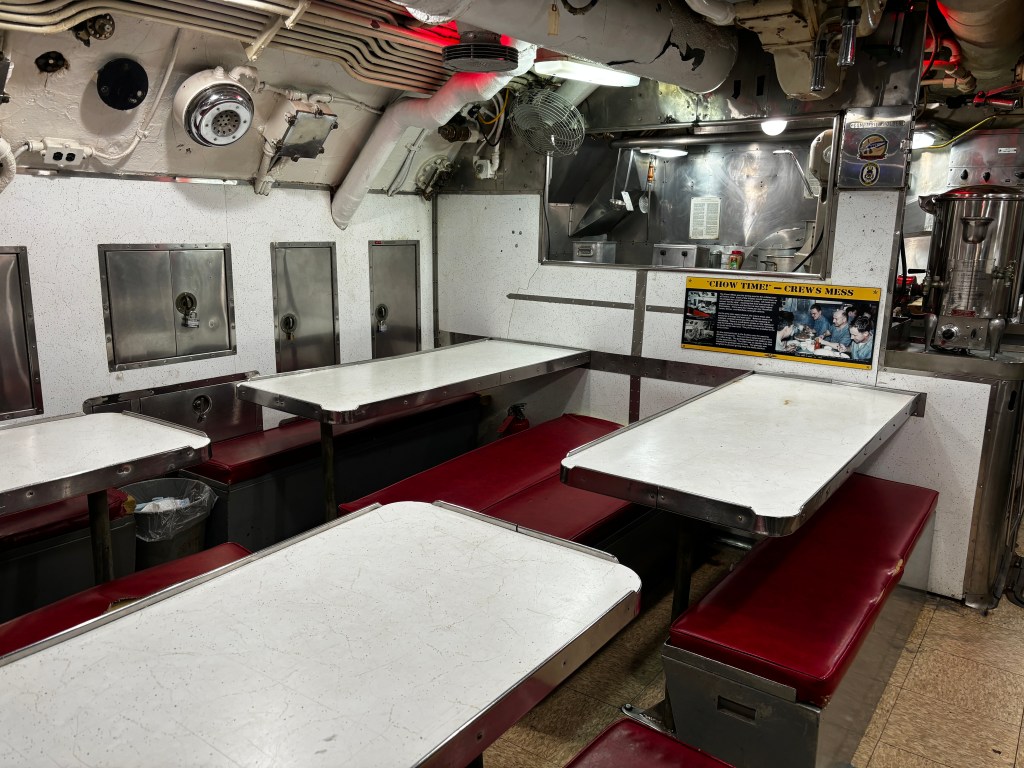
This was the crew’s mess.

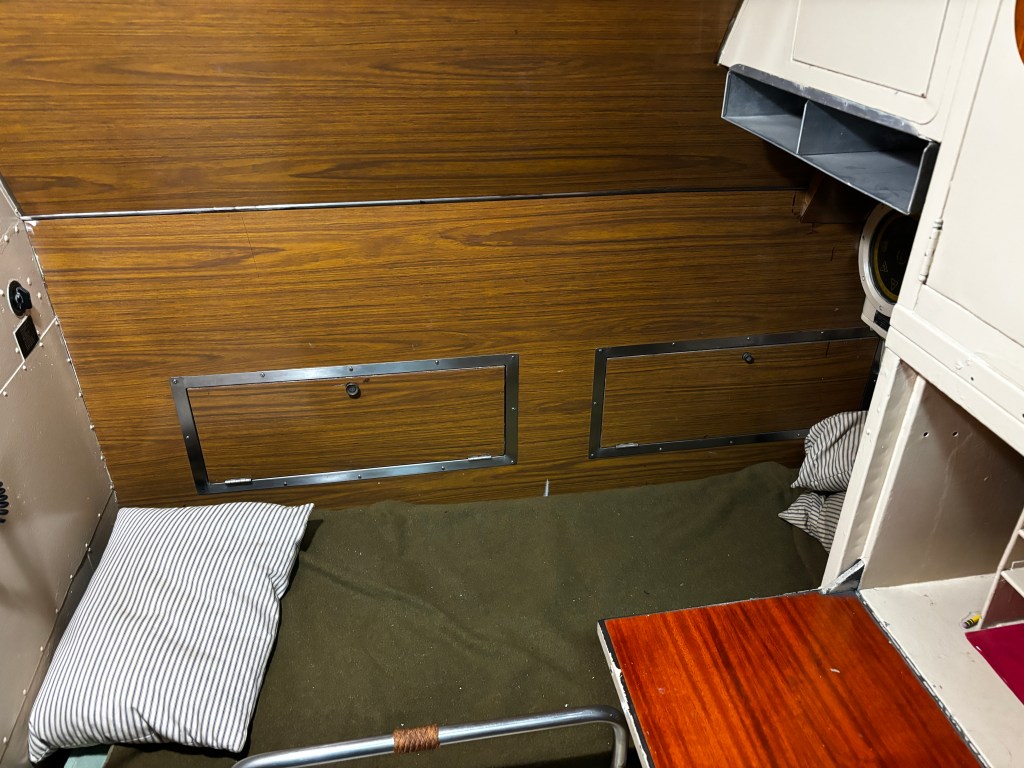
The captain on the USS Torsk had modest quarters.

One of the Torsk’s claims to fame is that it held a (then) record of over 10,000 dives.

In later years she operated primarily as a training vessel but was present at the 1962 Blockade of Cuba. 

She was decommissioned in 1968 and was stricken from the Navy register in 1971.   At that time she was turned over to the state of Maryland for use as a museum ship.  

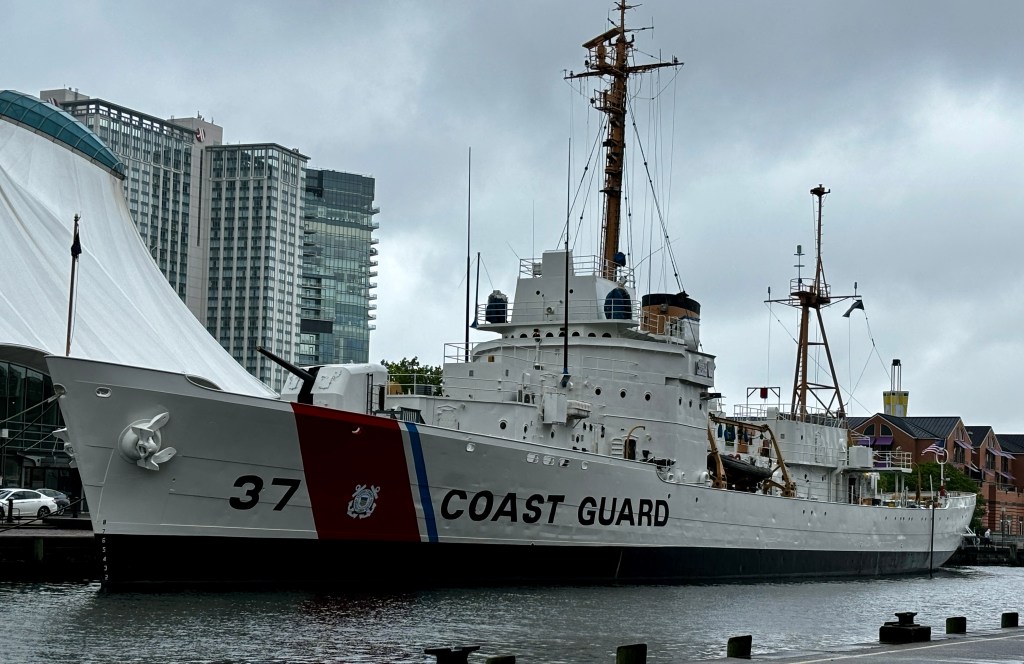
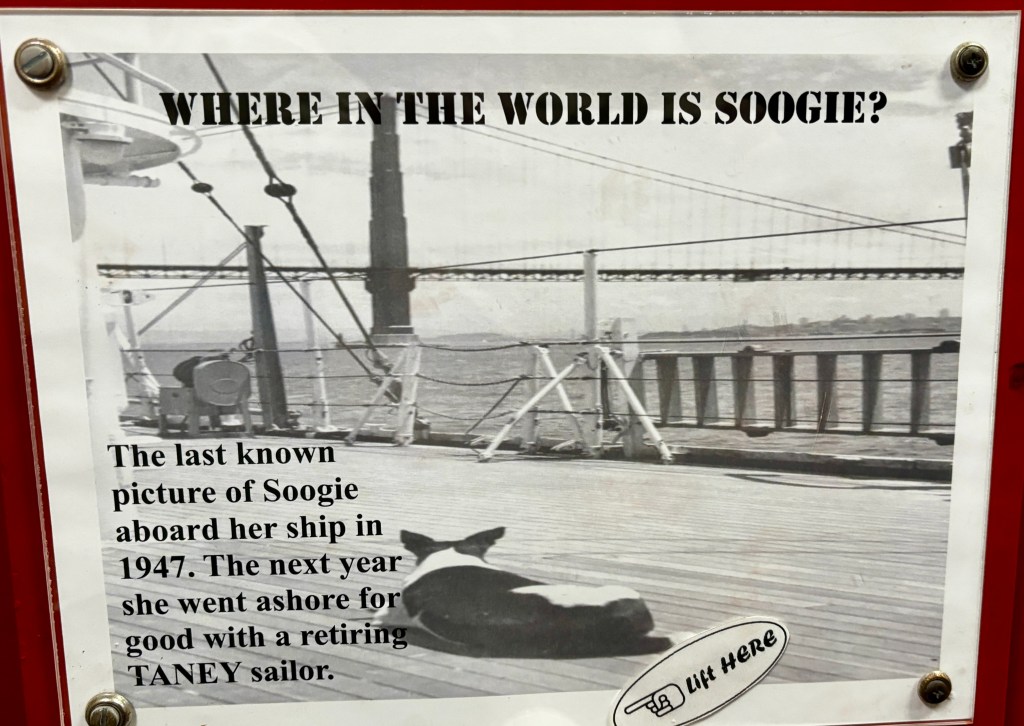
Our final ship was the USCC Cutter 37, also known as Taney.  She was in service from 1936 – 1986.

Her usual crew ranged from 120 – 220 seamen.  

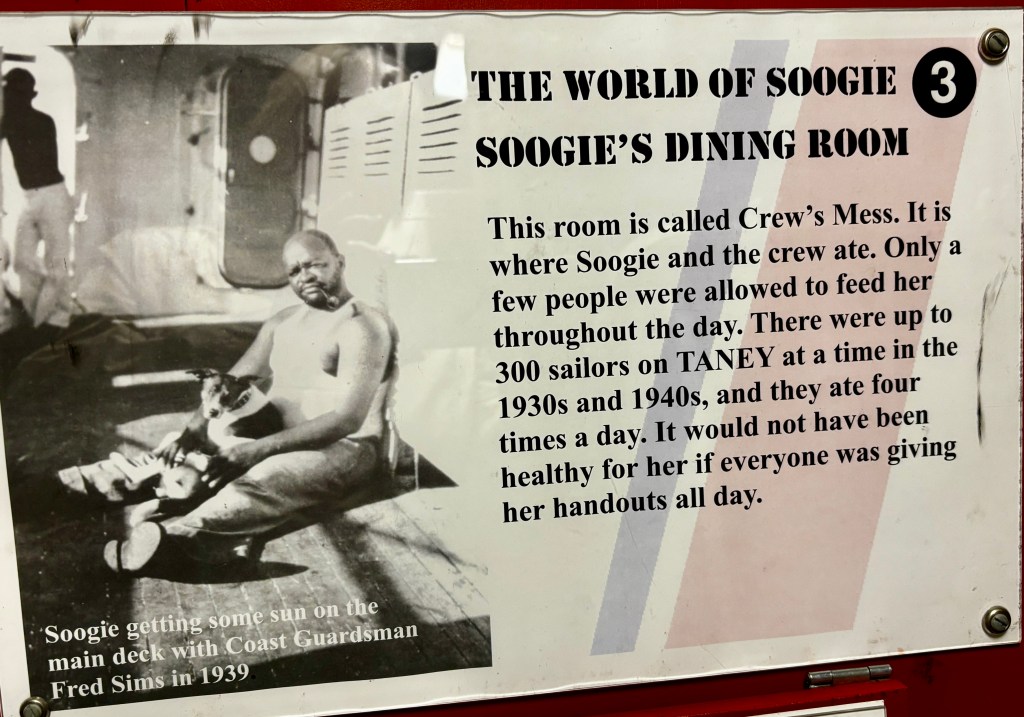
And a dog! Soogie sailed on the Taney from 1937 to 1948.

The Taney’s range was 12,000 miles powered by boilers and turbines.  

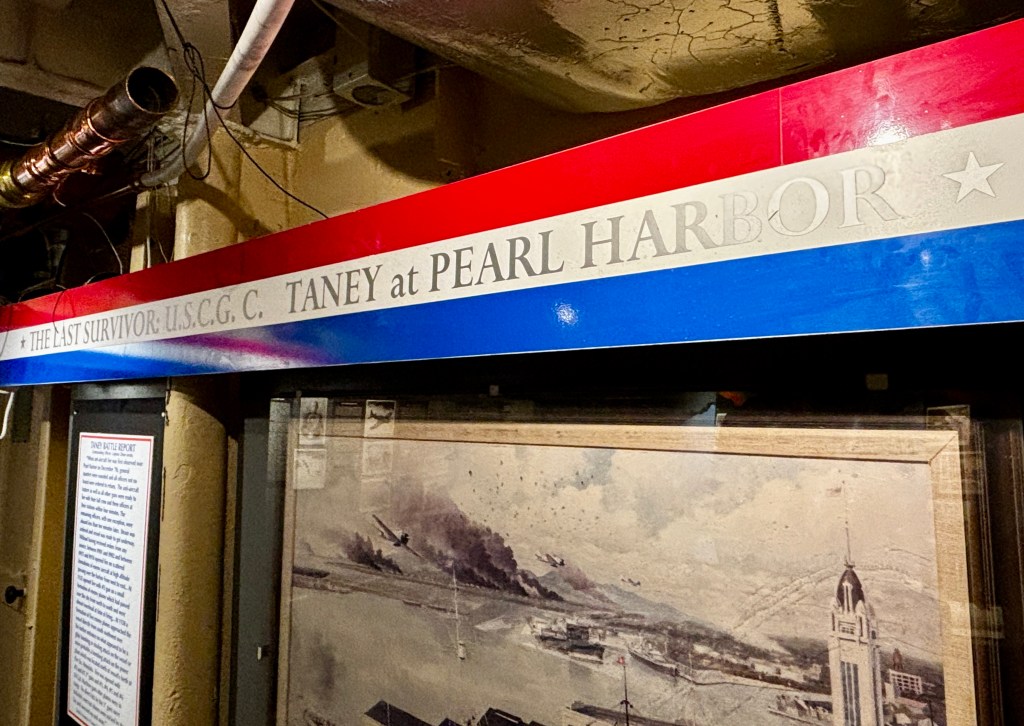
She is the last remaining warship that participated in the Battle of Pearl Harbor.

In her later years, Taney saw action in Vietnam and as a vessel for drug interdiction.   She was involved in 11 drug seizures in the Caribbean and east coast waters.

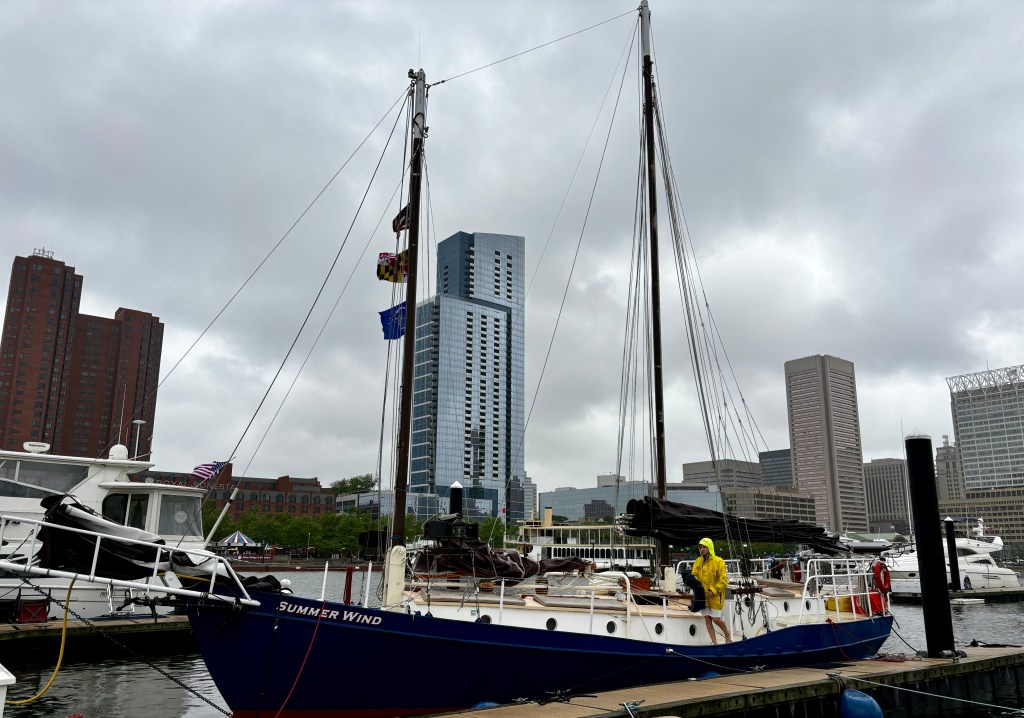
After our Summer Wind cruise of the Inner Harbor in the rain, and touring the Historic Ships of Baltimore in the rain, we were ready for warmth, the opportunity to get dry, comforting food, and a glass of wine.

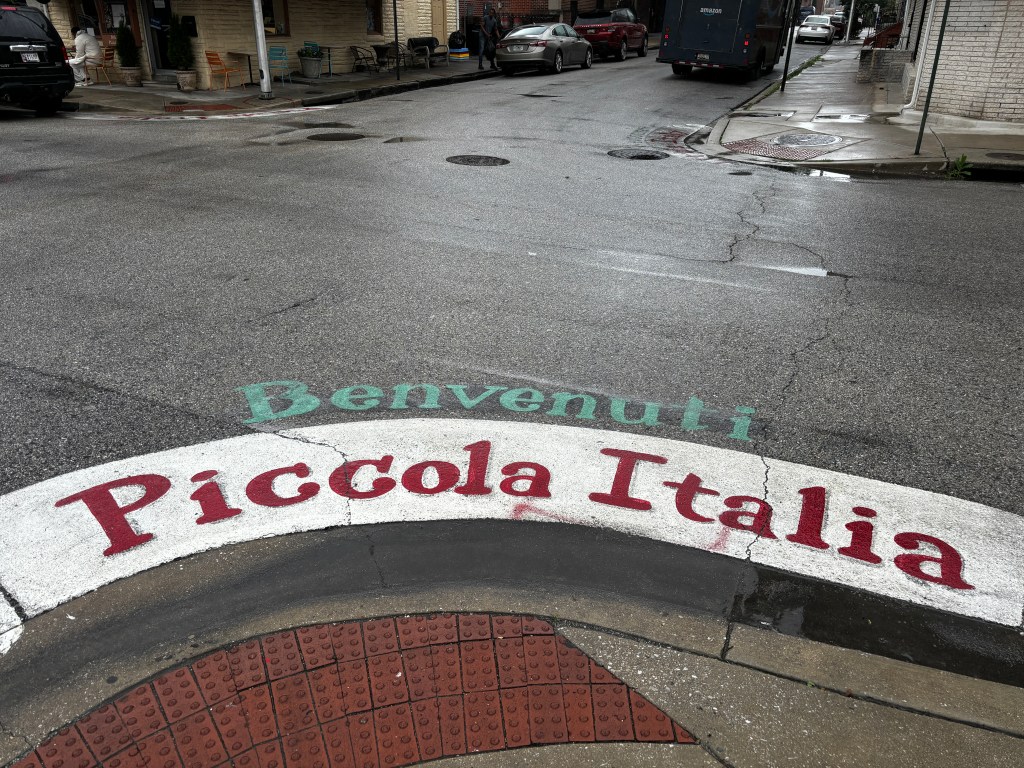
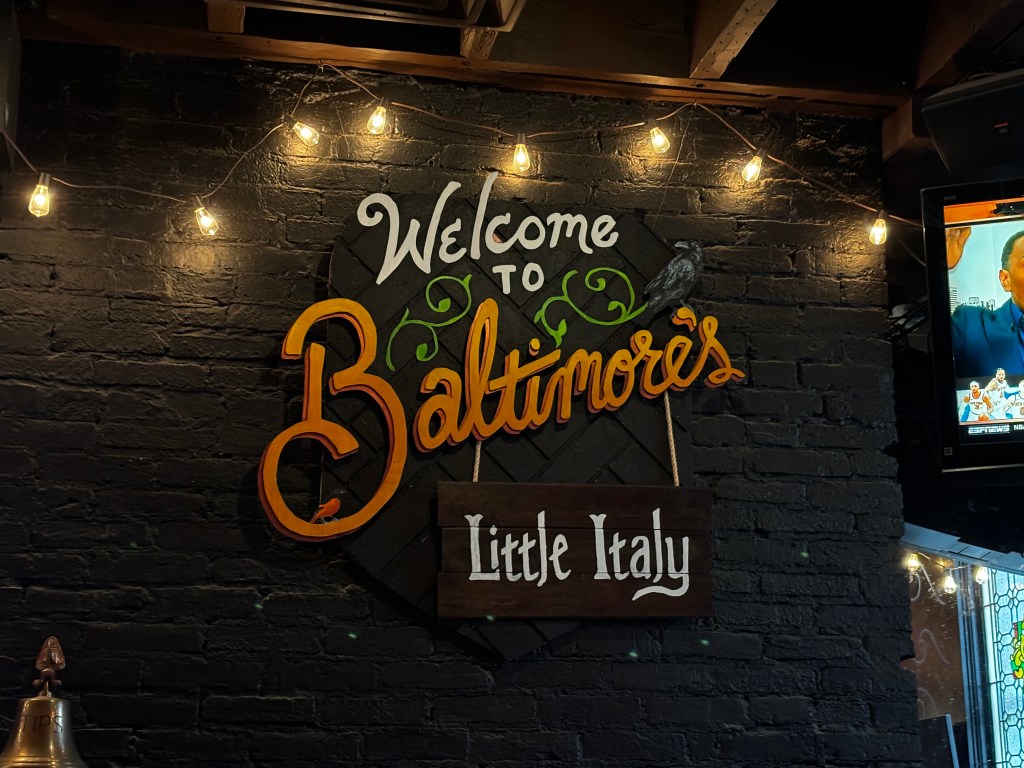
We walked a short distance to Baltimore’s Little Italy.

Thomas D’Alesandro Jr. came out of Baltimore’s Little Italy.  He represented Maryland’s 3rd congressional district in the United States House of Representatives from 1939 to 1947.  He also served as the 41st mayor of Baltimore from 1947 to 1959. D’Alesandro and his wife had a daughter that grew up in Baltimore’s Little Italy.  She would grow up to become Nancy Pelosi, the 52nd Speaker of the House.

We found our restaurant.  It was warm and dry.

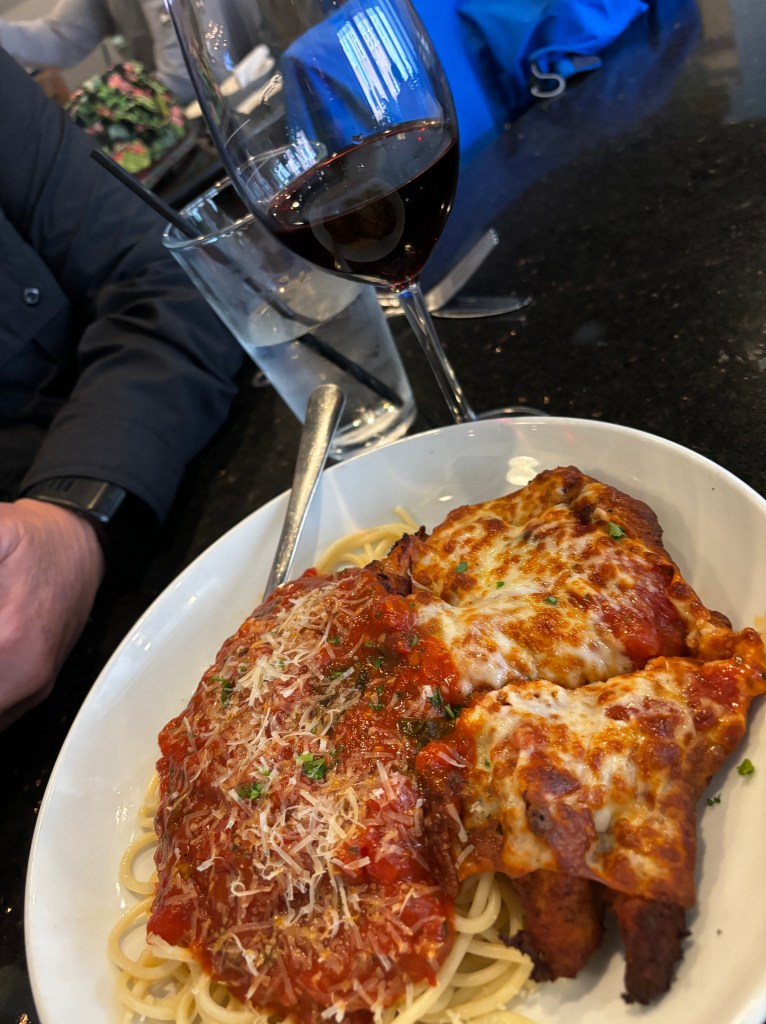
We shared delicious chicken parmesan and had glasses of chianti.  It was perfect.

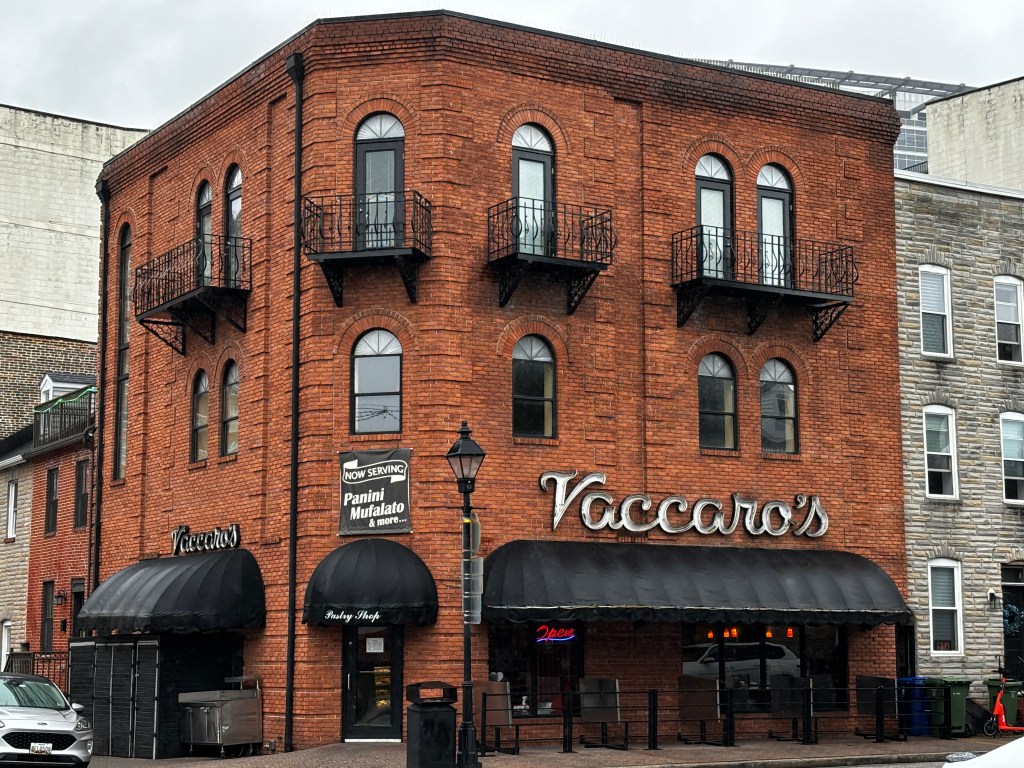
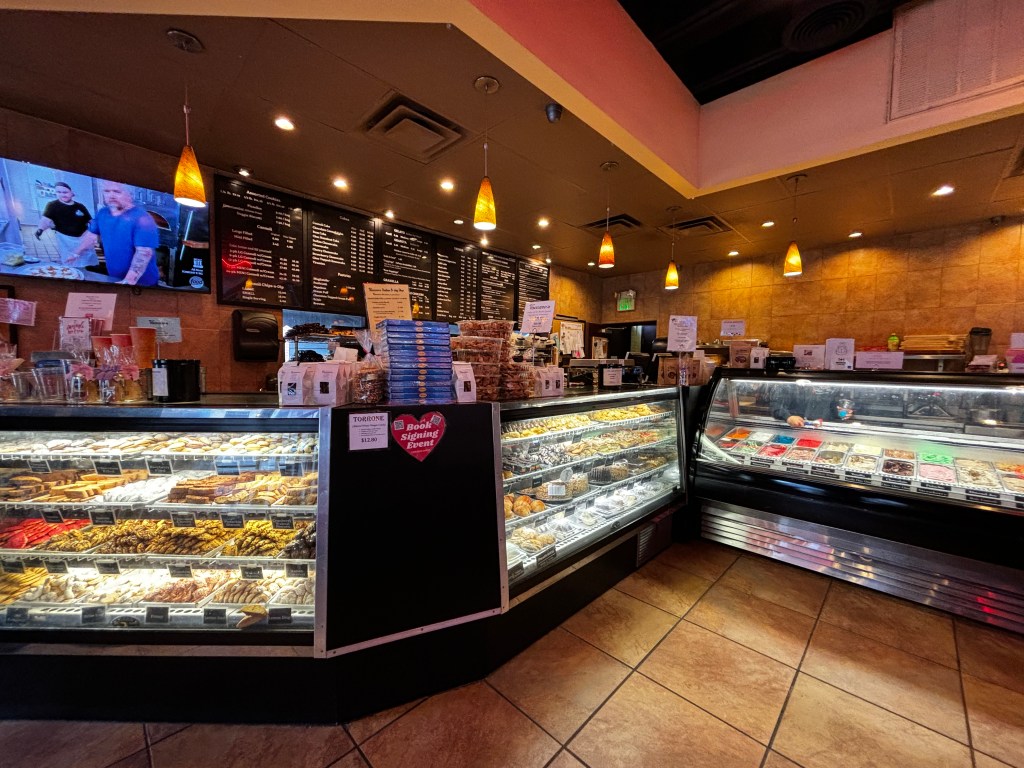
The diners at the next table talked about getting dessert at Vaccaro’s – a renowned family owned pastry shop that had served Baltimore for 65 years.

Of course we went to Vaccaro’s, and our dessert was also delicious.

Next:  We finally go to a baseball game!

We were in Baltimore in May 2024.
Posted in Uncategorized | Leave a comment

A Rainy Inner Harbor Cruise

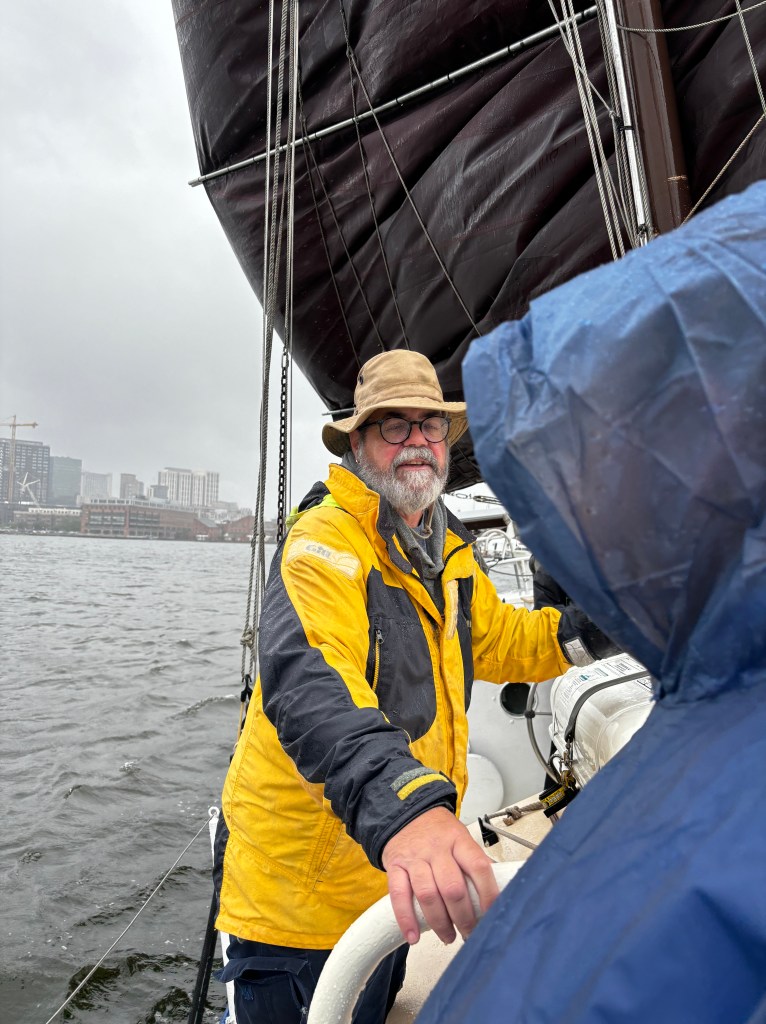
The pre-purchased event for our first morning in Baltimore was a sail around Baltimore’s Inner Harbor on the Summer Wind.  When we arrived we were offered a refund, to re-schedule or to go ahead in the rain.  As our next days were already planned we, and one other passenger, opted to go ahead.

I don’t think the boat people were all that excited about it but we set out with our rain gear and ponchos. 

The owner of the boat was also our historian and tour guide. He had previously captained his boat as well, but now employed a female captain.

Although the single additional crew member put up Summer Wind’s sails, we motored around the harbor.  If there was an intended period of time meant to only use sails, none of us were really interested in loitering in the rain.

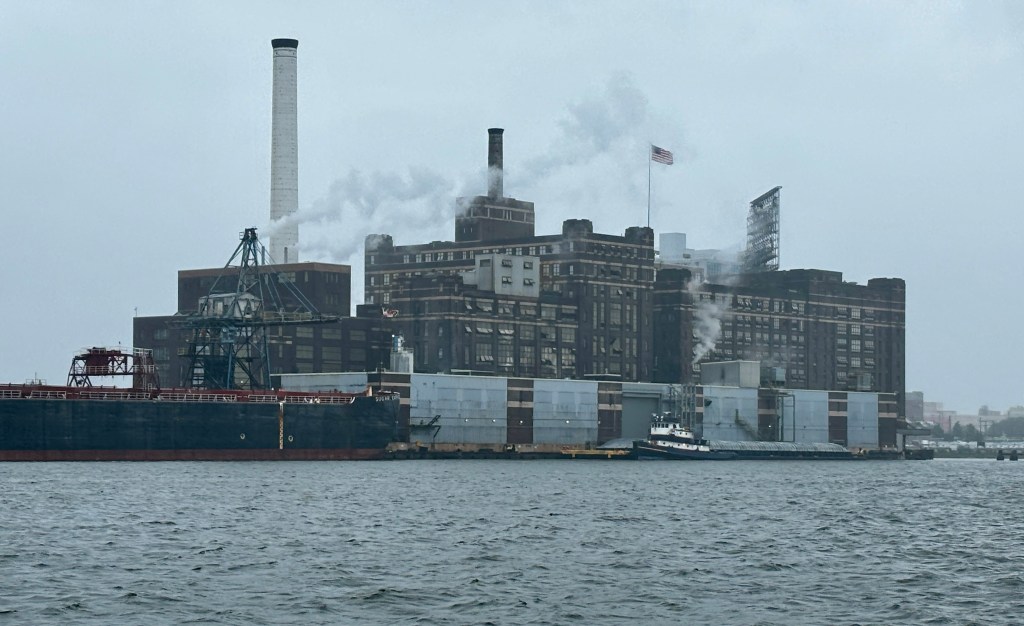
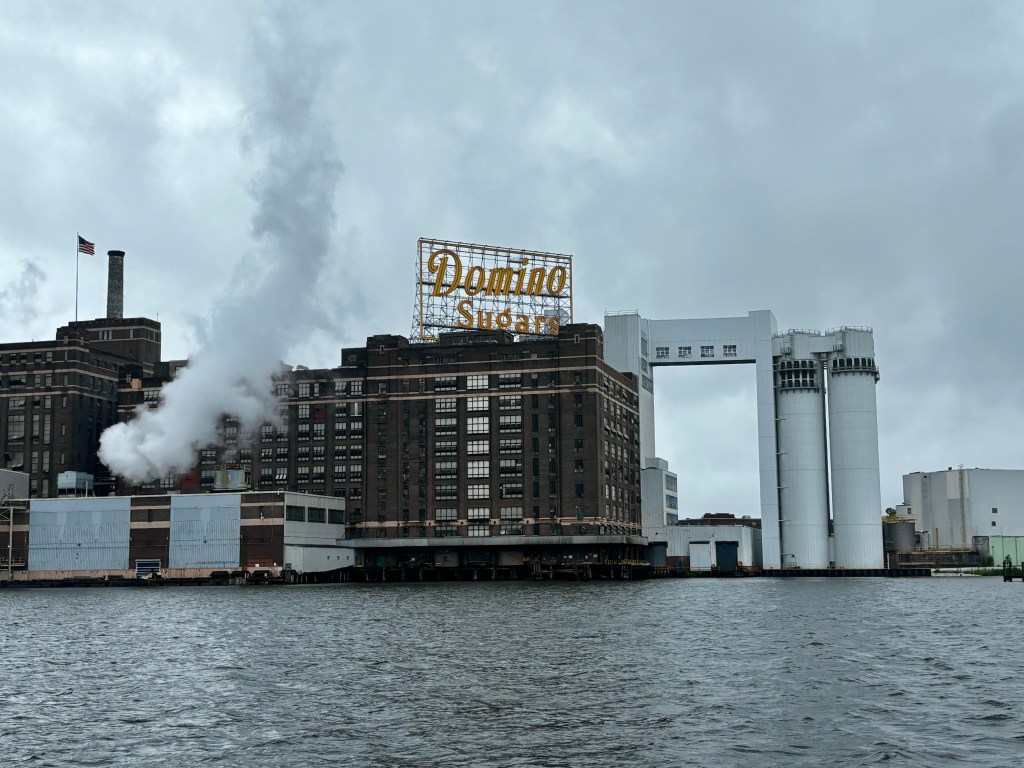
The remaining large, and dominant, factory on the inner harbor is The Domino Sugar refinery.  There were once six refineries within the harbor but this is the only one that remains. This facility was built in 1921 and has undergone little change over the years. About 500 employees process 6.5 million pounds of raw cane sugar.

It is the second largest sugar refinery in the country and accounts for 14 percent of US sugar production.  According to our guide, most of it goes to Hershey, Pennsylvania.

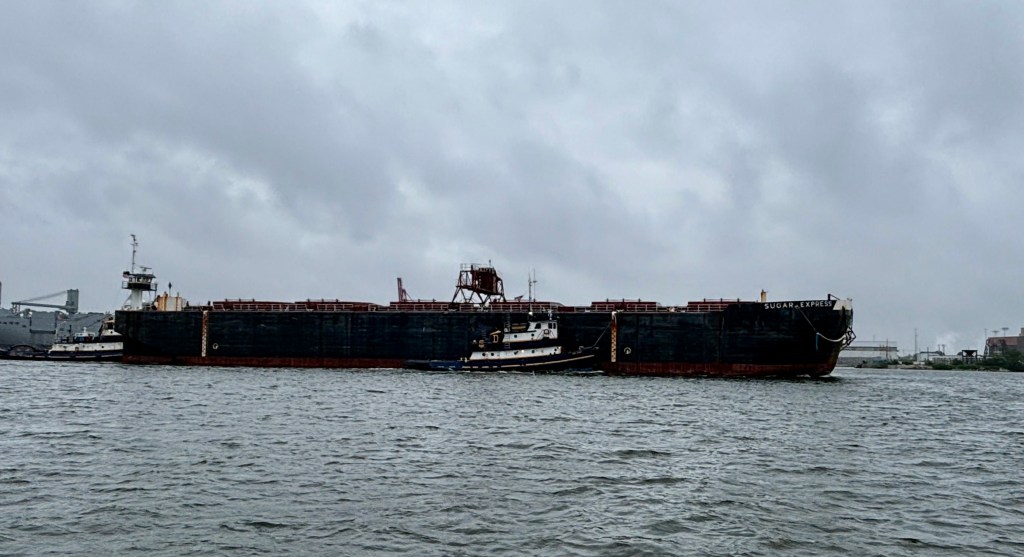
Currently, inland Florida sugar cane arrives by barge. 

Larger ships had unloaded directly at the plant prior to the Frances Scott Key Bridge collapse on March 26, 2024.  
The iconic Domino sign was installed in 1951.  It is so large that the dot on the “i” is six feet high.   

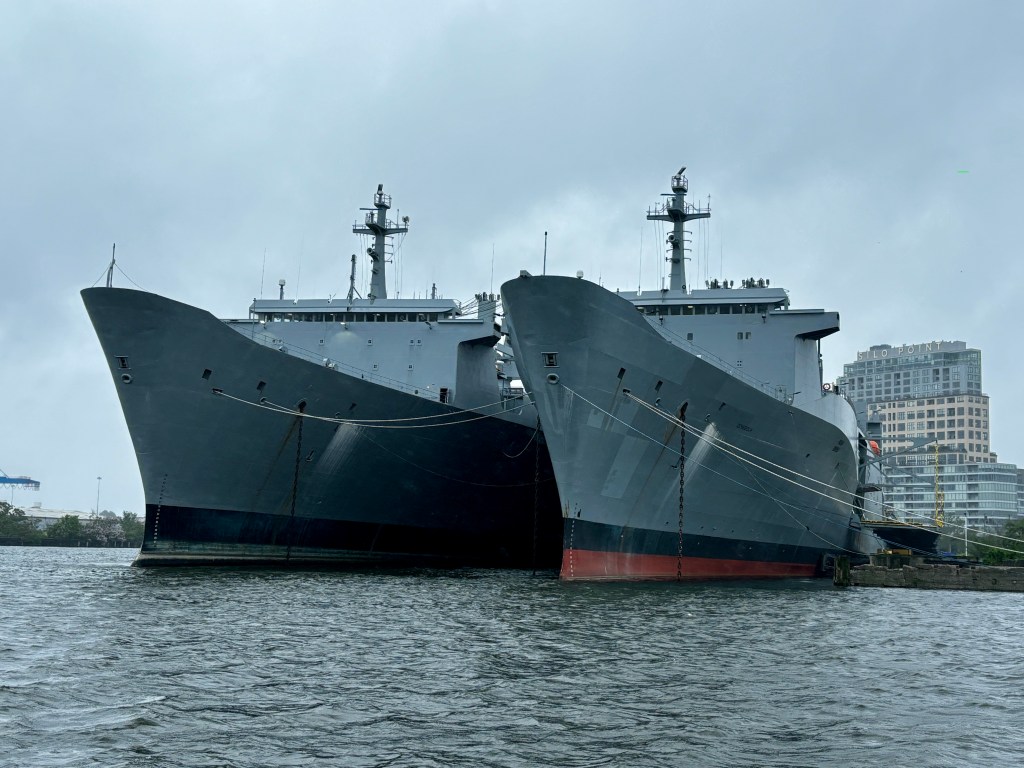
These ships are part of the U.S. Navy’s Ready Reserve Force designed to supply American troops around the world very quickly.  Ships in the force are positioned at ports along the eastern and western seaboards and the Gulf of Mexico.   

There are five ready reserve ships stationed in Baltimore but four have been confined in the harbor because of the bridge collapse.  Fortunately, two months later, trapped ships are just now beginning to be able to leave Baltimore harbor.   The target date for a new bridge is fall of 2028.

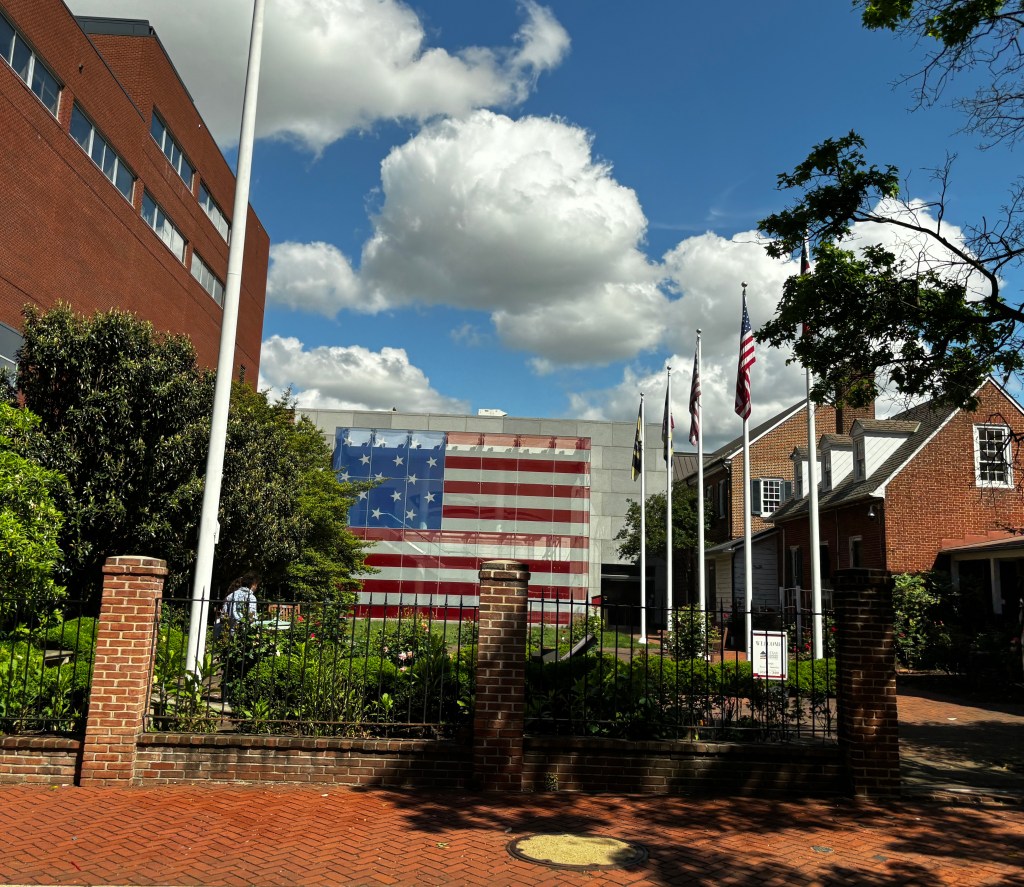
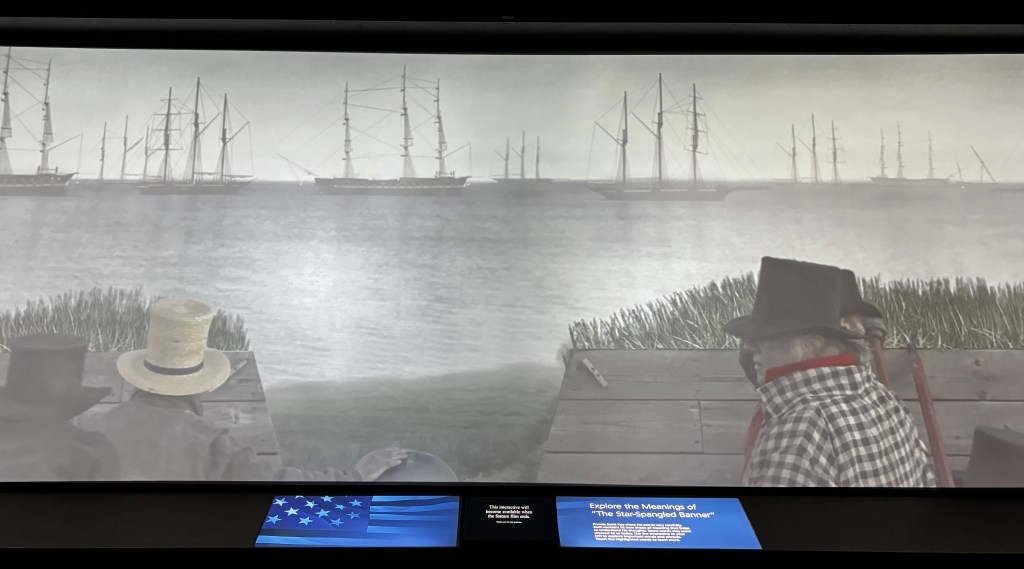
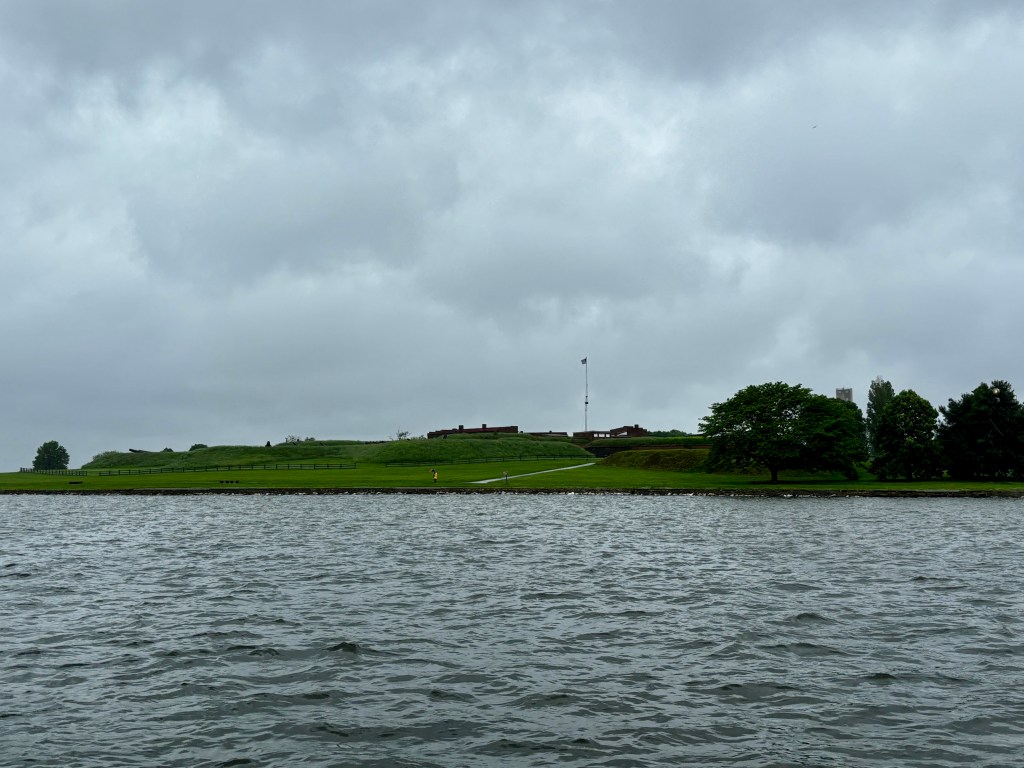
We sailed near Fort McHenry, over which the banner, with “broad stripes and white stars,” was gallantly streaming in the dawn’s early light of September 14, 1814.   The defense of the fort in the Battle of Baltimore inspired Francis Scott Key to write the poem “Defense of Fort M’Henry.” The words of the poem became “The Star Spangled Banner.” The song was first used officially in 1889 by the United States Navy. It became our national anthem in 1931.

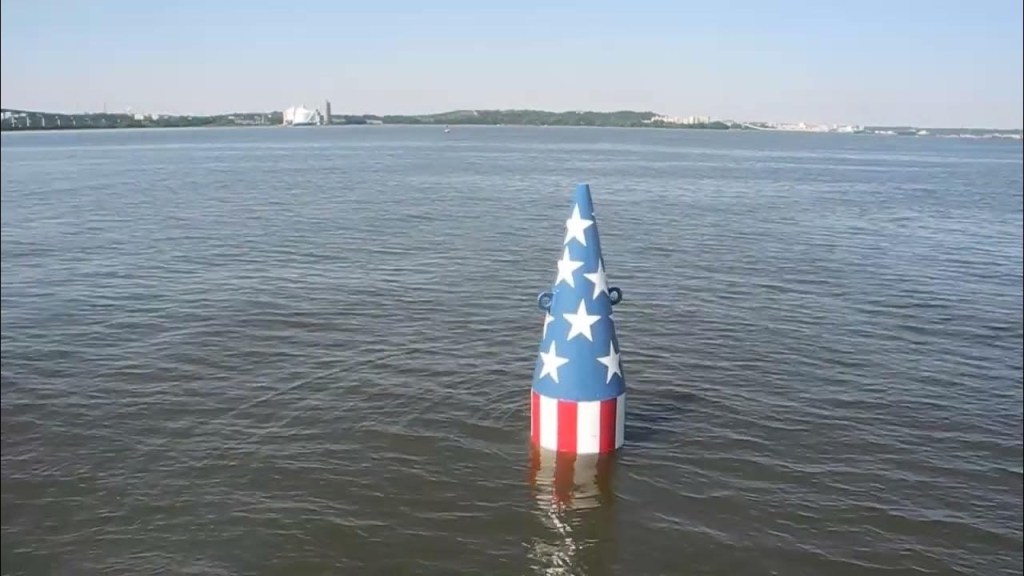
Every spring since 1980, the Coast Guard has set this historic buoy in the harbor. It is placed near the spot where Frances Scott Key observed the 1814 British bombardment of Fort McHenry. He had been detained aboard a British ship while on a diplomatic mission. The buoy is removed each year before winter. We did not see it but were told about it.

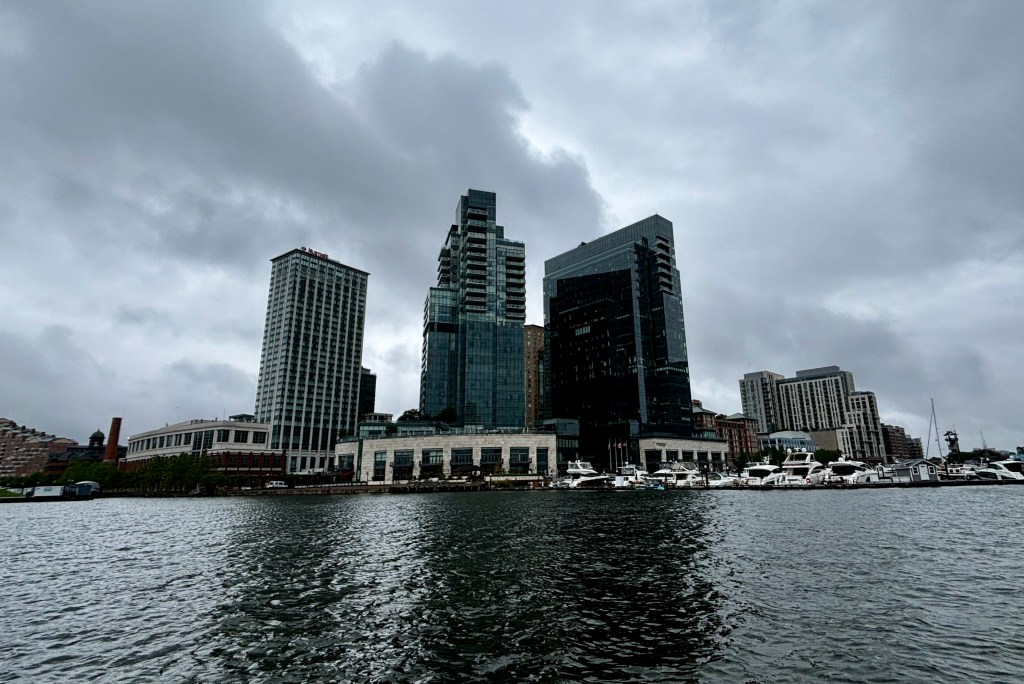
Baltimore’s Inner Harbor had been a hub of industry and transportation for more than a century.  As industry declined, the harbor declined.

Today, the inner harbor area thrives. 

William Donald Schaefer served in public office for 50 years in Baltimore and Maryland.  As the mayor of Baltimore, he was a guiding force in refurbishing the inner harbor.

Under-Armor’s world headquarters are in the harbor area. Founder, Kevin Plank, did not like wearing sweaty clothes while playing football for the University of Maryland. So, he invented an alternative clothing line that wicks away sweat and dries quickly.

The investment company, T.Rowe Price, also is headquartered in Baltimore.

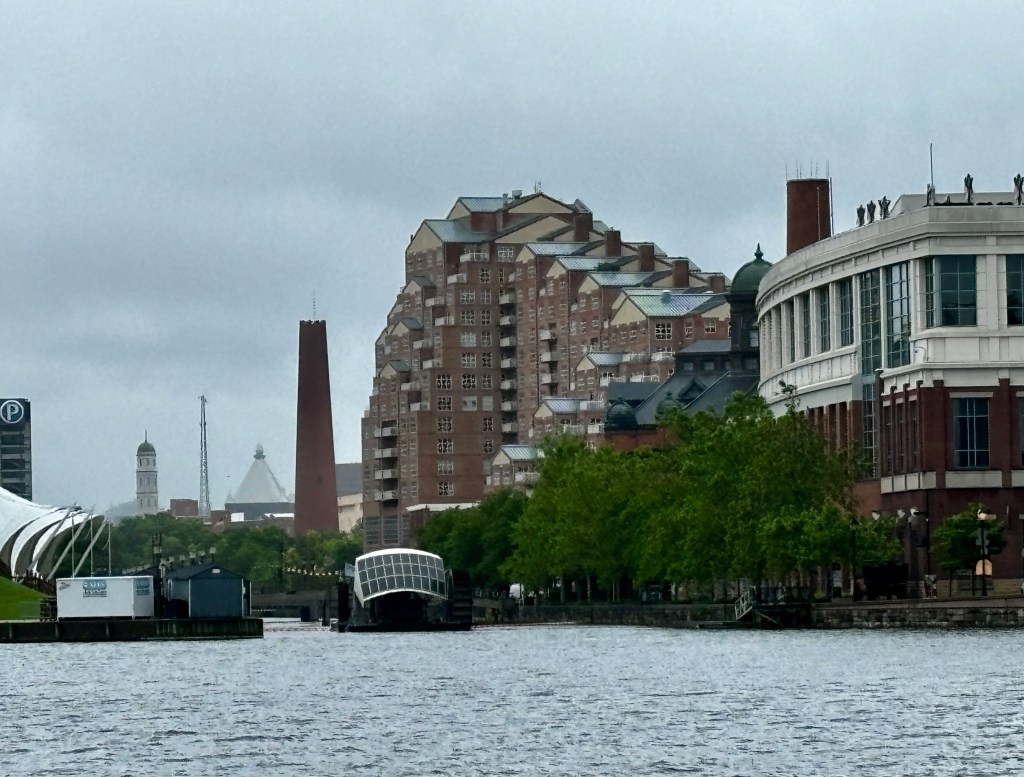
At the close of our cruise, we saw Mr. Trash Wheel.  It is the vessel with the white grid at water level. The brainchild of local engineer John Kelley, it was installed in 2014.   Mr. Trash is solar powered and collects trash at the mouth of the Jones Falls River as it empties into the harbor.  As the wheel turns it collects all kinds of trash, 50 tons in its first year.   The collected trash is stored and emptied regularly.   It has been incredibly effective in removing, and keeping trash from the harbor.  There is now a second iteration at another location in the inner harbor.

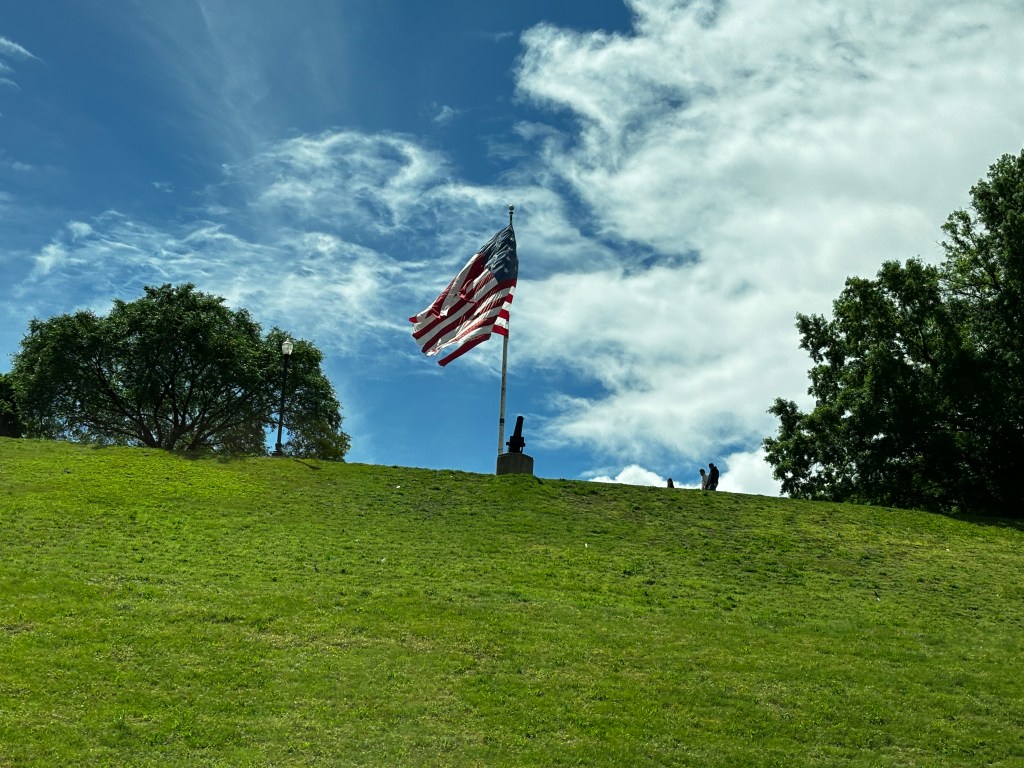
Just off the harbor we walked by Federal Hill. It was occupied by Union troops during the Civil War in a city that largely supported the confederacy. Our guide described Baltimore as the northernmost point of the confederacy and the southernmost point of the union.

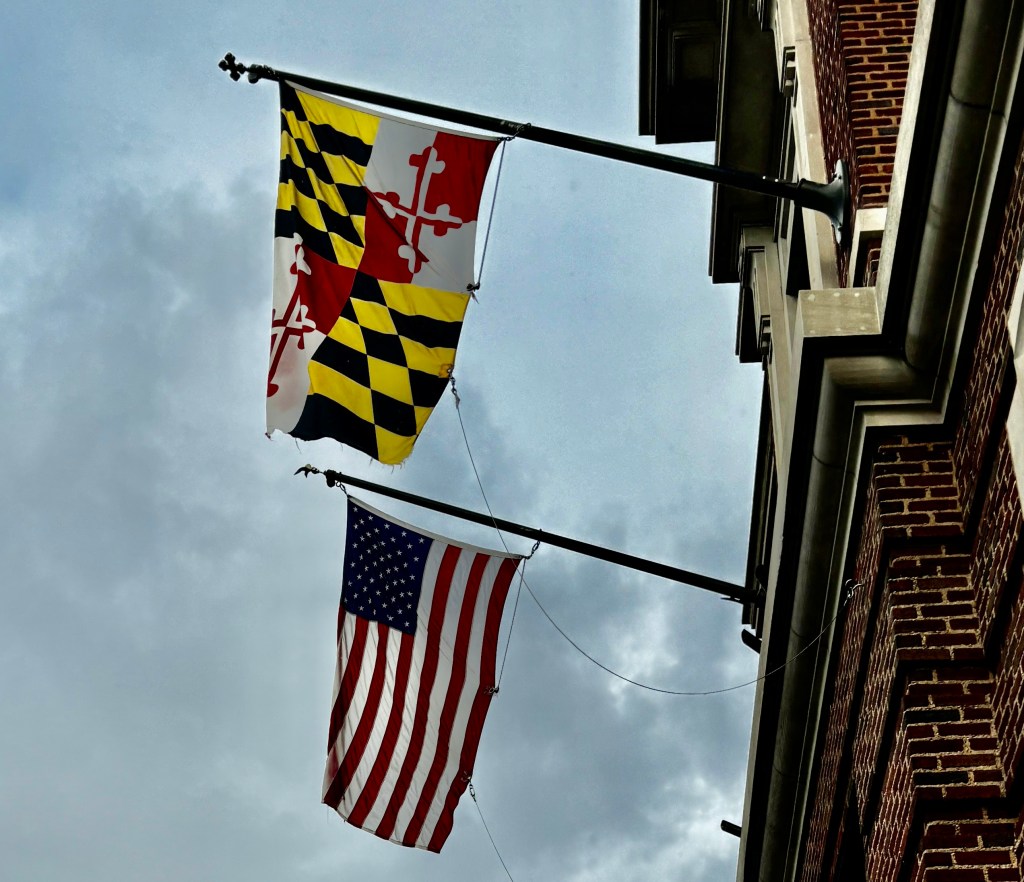
It is just an illusion of how I took the picture of the flags that the Maryland flag appears to be above the American flag.  It wasn’t.  However, I was interested in the Maryland flag and why it looks the way it does.

During the Civil War, Lord Baltimore’s yellow and black banner  was flown in support of the union while the red and white Crossland banner was flown by pro-confederacy. The Maryland flag reflects the coming together of Marylanders after the Civil War.

Next up: The Historic Ships in Baltimore’s Inner Harbor

We were in Baltimore in May, 2024.
Posted in Uncategorized | 2 Comments

Baseball Trip to Baltimore

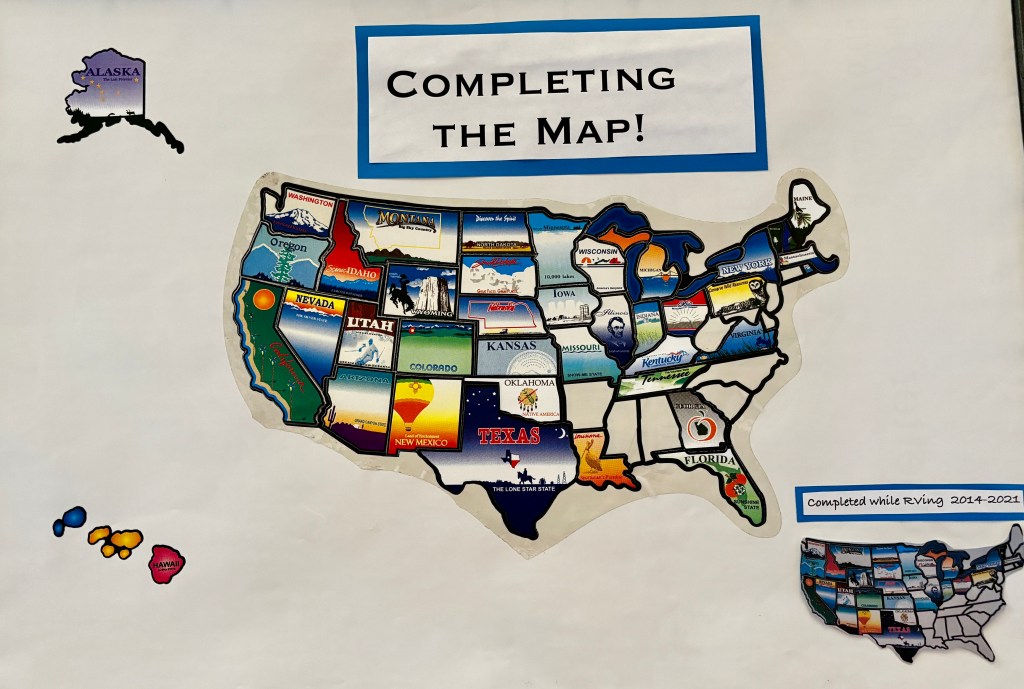
This year’s baseball trip was a bit different than our usual because this time we didn’t follow the Seattle Mariners. This year we followed our Arizona Diamondbacks to Baltimore and combined baseball with our desire to finish our map from our RV days.  

The first destination was to fly to Baltimore via Charlotte. When we boarded the plane in Phoenix, the pilot told us that they would do their best to land in Charlotte but they may have to divert to Raleigh.  Weather concerns in the eastern part of the US made air travel a bit of a mess on our travel day.

Fortunately, the weather cooperated enough that we were able to land in Charlotte and then make our connection to Baltimore.  Living in Phoenix, we are most often able to fly direct, but not this time.

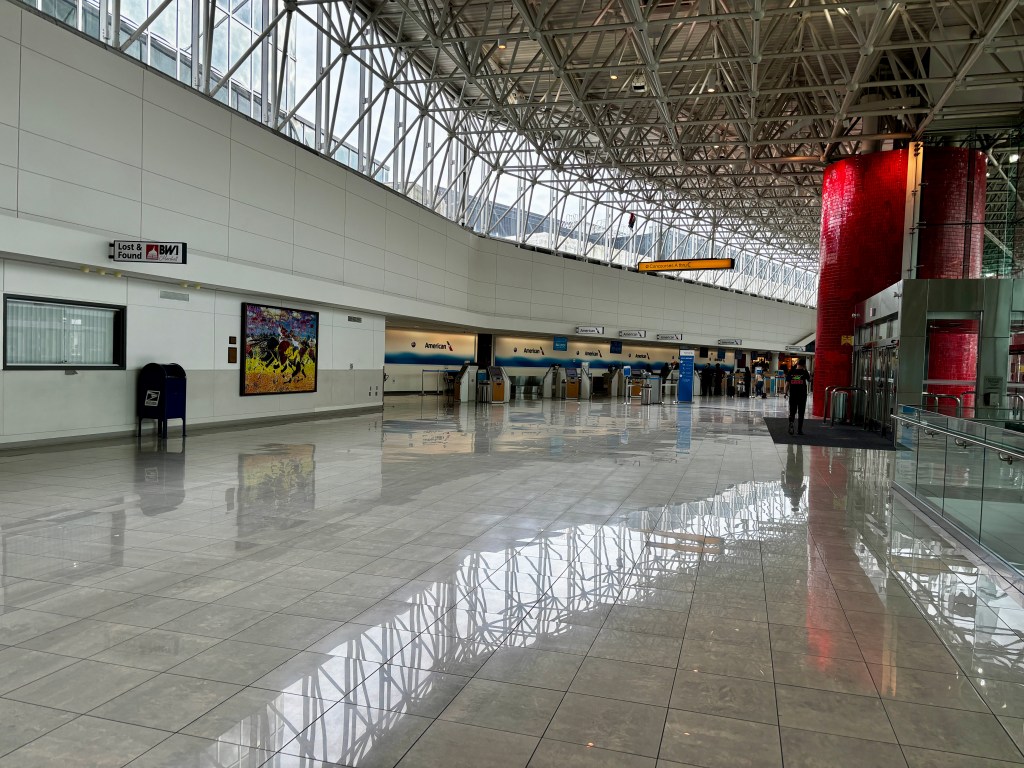
When we arrived in Baltimore, we both thought it was the cleanest airport we have ever seen!

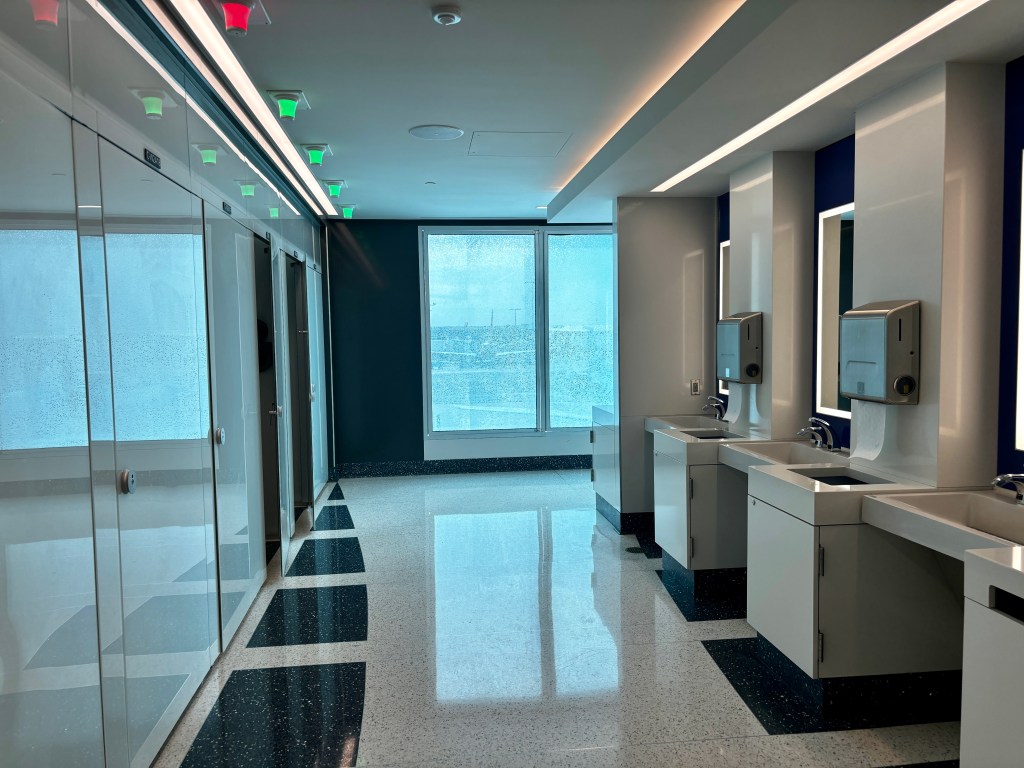
Even the restrooms were exceptionally clean and  nice.

The airport’s official name is Baltimore Washington International Thurgood Marshall Airport. 

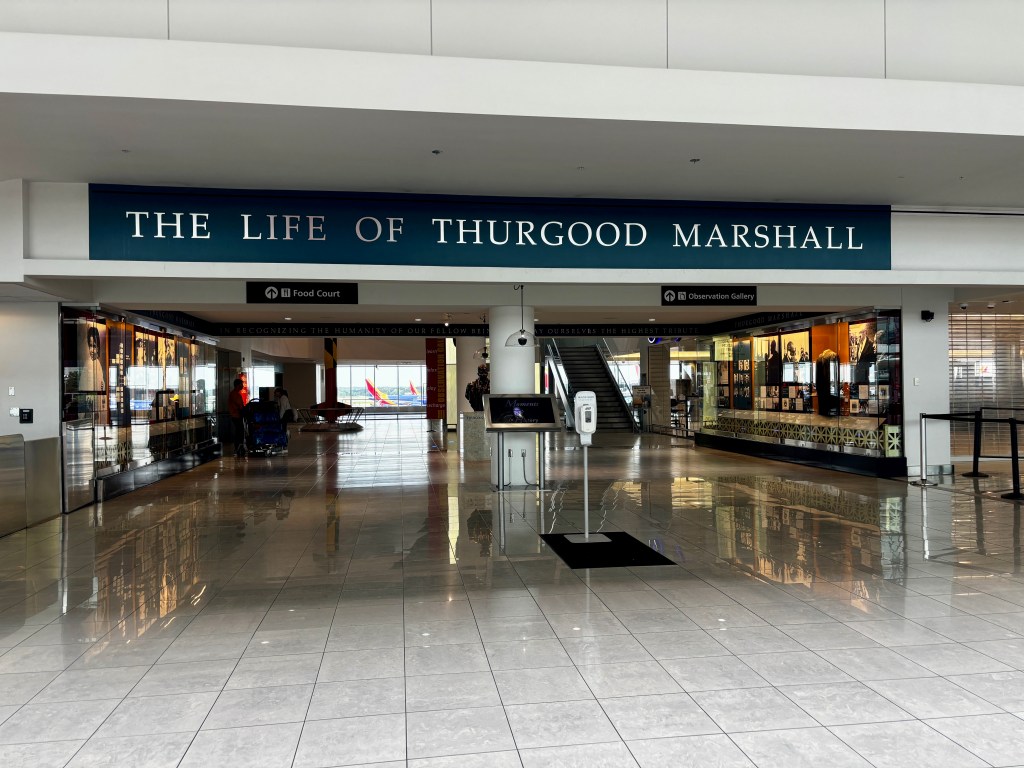
We saw an exhibit about former associate Supreme Court justice Thurgood Marshall but didn’t have the opportunity to explore. Born in Baltimore, Marshall was the first African American justice, serving from 1967-1991.  He was nominated by John F. Kennedy.

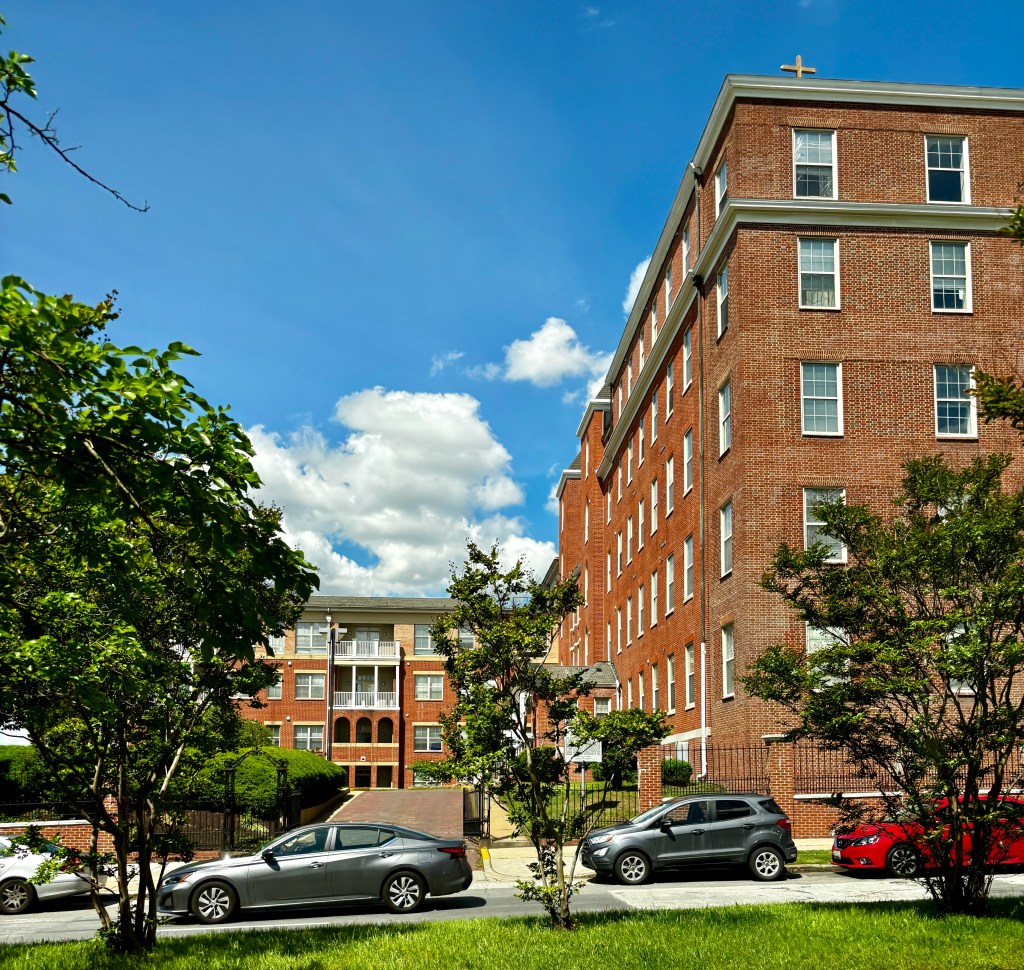
We arrived at our downtown hotel where we had booked a room with a field view of Camden Yards. 

Well, kind of….Initially disappointing, we did grow to enjoy our view over our days in Baltimore.

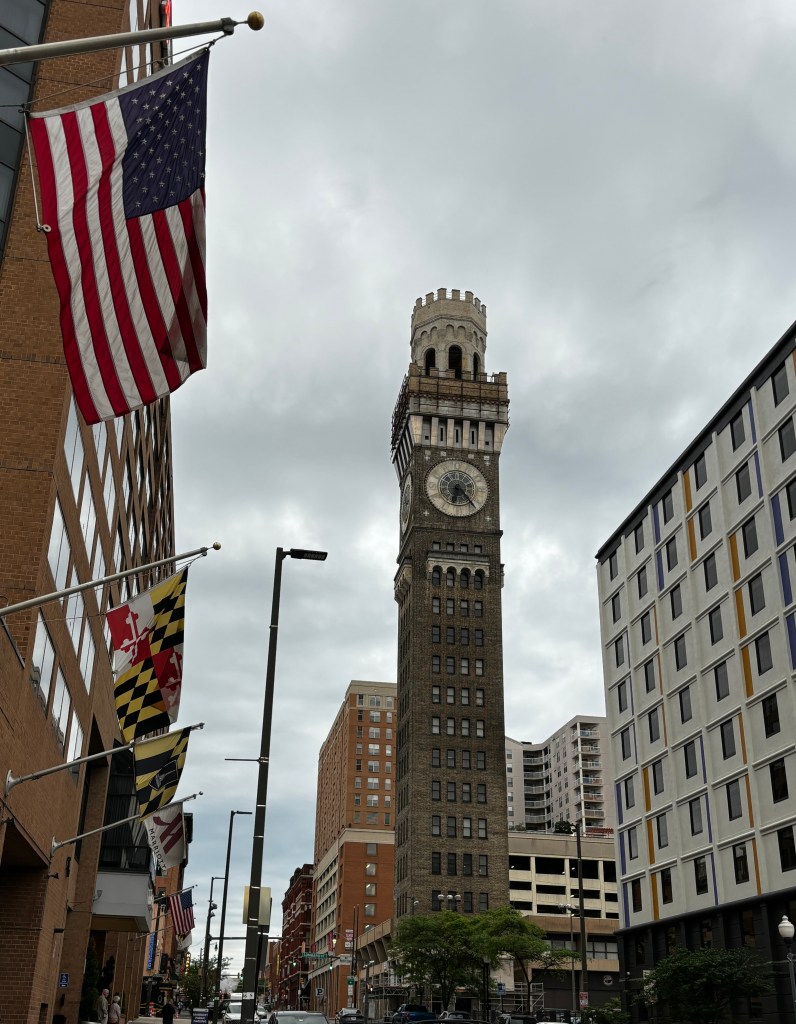
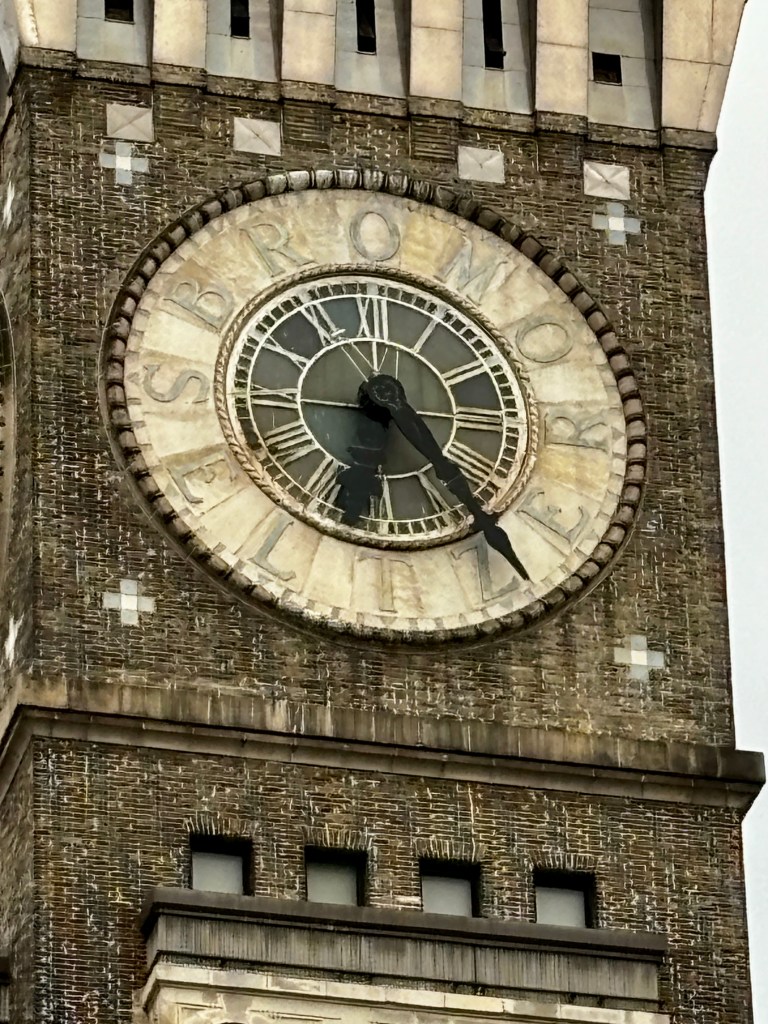
We took a walk and saw the Emerson Bromo-Seltzer Tower.  The tower was built in 1911 as part of the business’ downtown offices and factory.  

The clock faces on each side of the tower are ringed by letters spelling out Bromo-Seltzer.  Their primary product was a brand of antacid.  Bromo-Seltzer’s original formula had to be reworked over time  when two of the ingredients were found to be highly toxic.

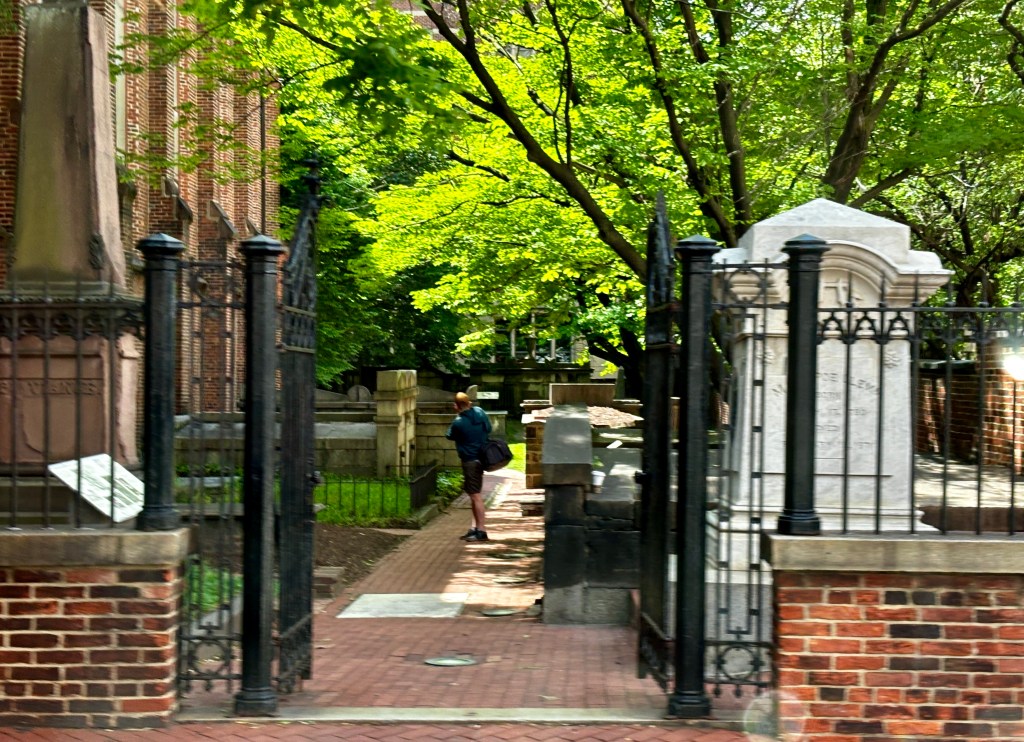
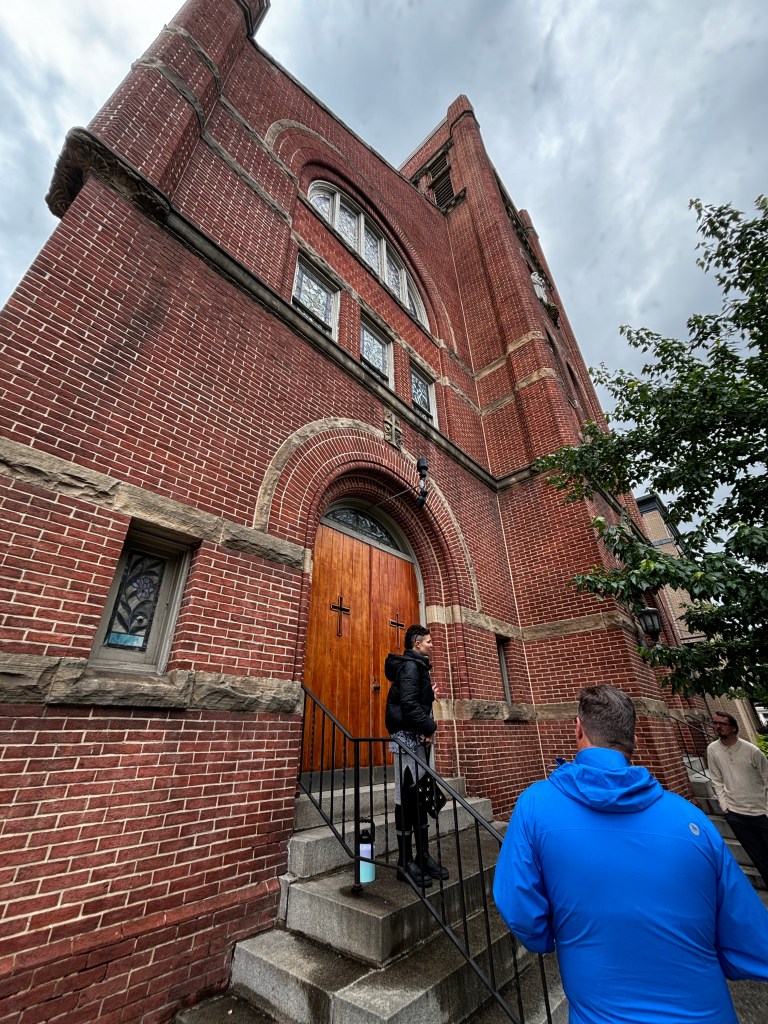
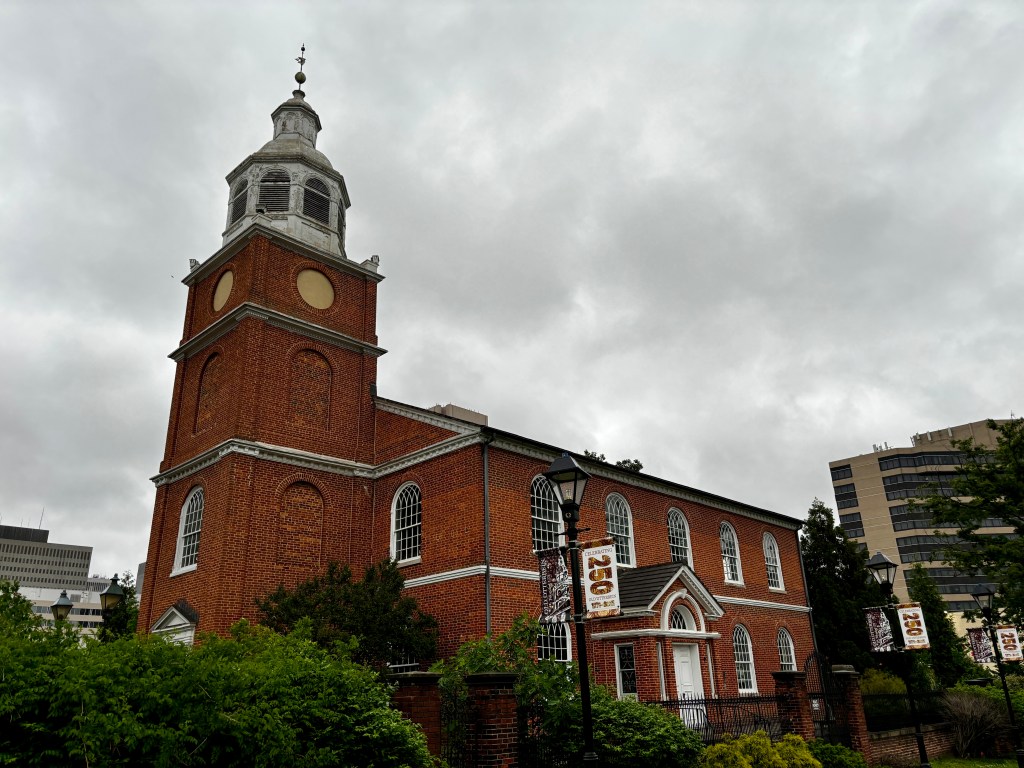
We saw The Old Otterbein Church.  It was established in 1771- quite old by American standards! The church began as United Brethren and went through several denominational changes over the years. It is currently a United Methodist church.

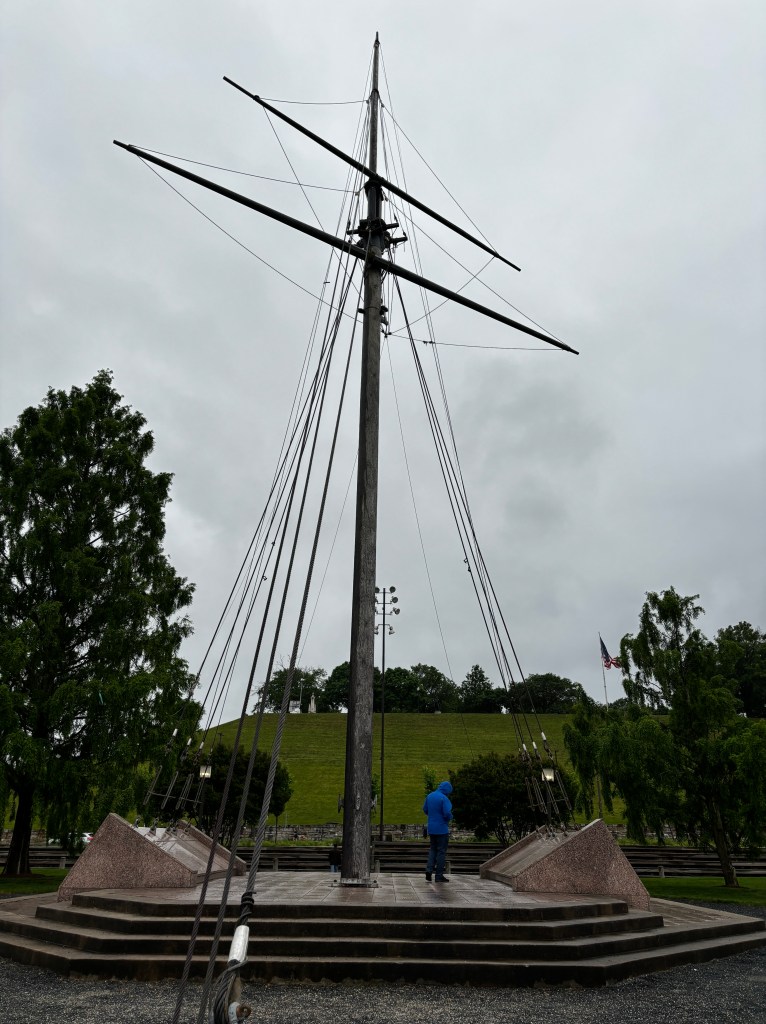
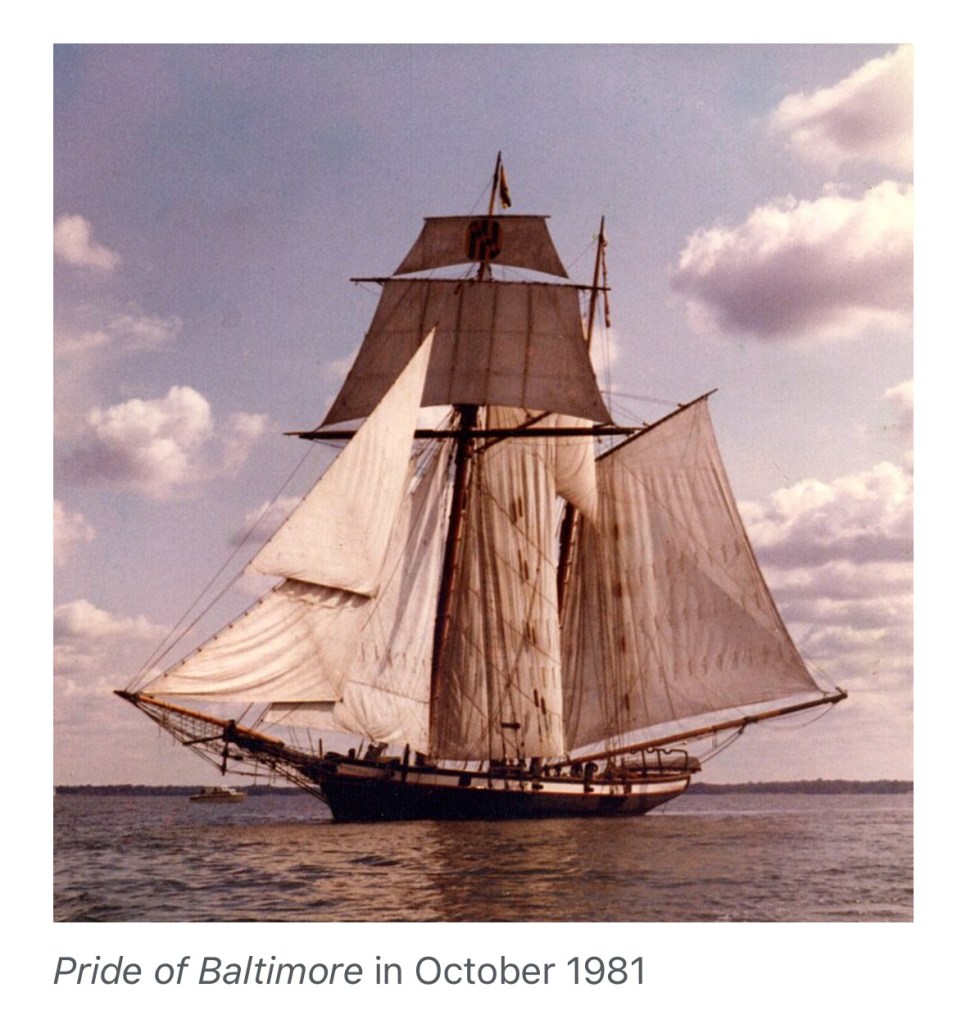
Next we saw the mast for The Pride of Baltimore.  This ship was a reproduction of a 19th-century Baltimore Clipper.  These vessels were made famous by successes as small privateer warships in the War of 1812.  Following the war, Baltimore Clippers were sometimes used in the opium and slave trades.

The Pride of Baltimore was commissioned in May 1977 as a good will vessel.  She logged 150,000 miles, and visited 125 cities around the world. After sailing for nine years, the Pride of Baltimore was lost at sea in the Caribbean on May 14, 1986.  Her captain and three crew perished.

It surprised both of us that we did not know, or did not remember, the Pride of Baltimore.

Next, we take an Inner Harbor cruise , explore the Historic Ships in Baltimore – and go to a baseball game at Camden Yards!

We were in Baltimore in May, 2024.
Posted in Uncategorized | 1 Comment

Winning the Lottery – Tovrea Castle

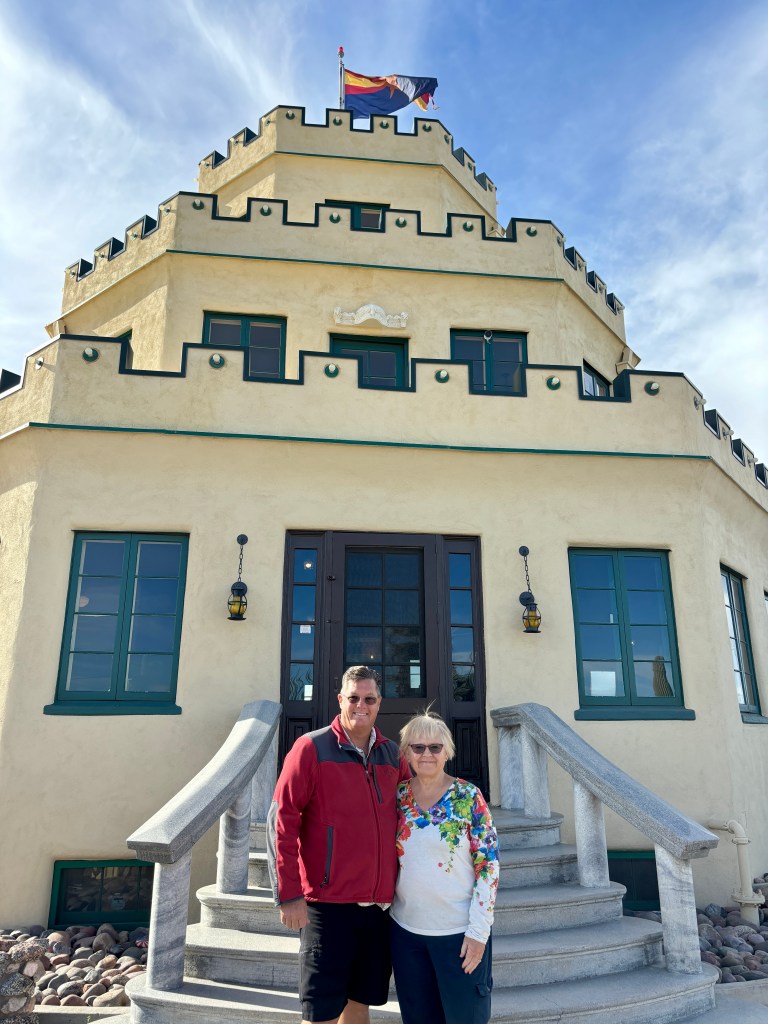
It took several lottery cycles before we were able to get tickets to tour Tovrea Castle, a Phoenix landmark. These tour tickets are described as “harder to get than a permit to hike to Havasupai Falls or a night at Phantom Ranch at the bottom of Grand Canyon.” I’m happy to say it was worth the extra time and effort!

Tovrea Castle, sometimes referred to as the Wedding Cake Castle, is on the National Register of Historic Places. 

This part of downtown Phoenix was once harsh desert.  Homesteaders owned the property and were attempting to eke out a livelihood . 

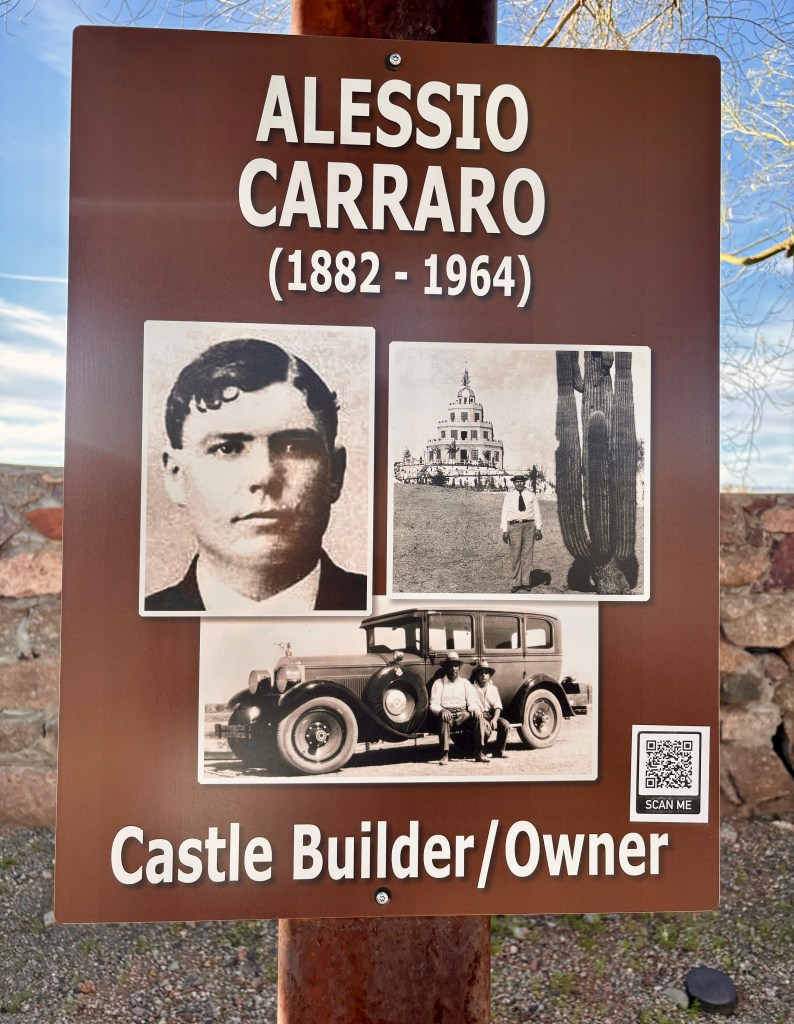
Italian immigrant, Alessio Carraro, purchased 277 acres and went to work building a castle. It was intended as a boutique luxury hotel.  Carraro wanted to host people to interest them in purchasing the luxury homes he intended to build on his land. The castle and surrounding homes were to be known as Carraro Heights.

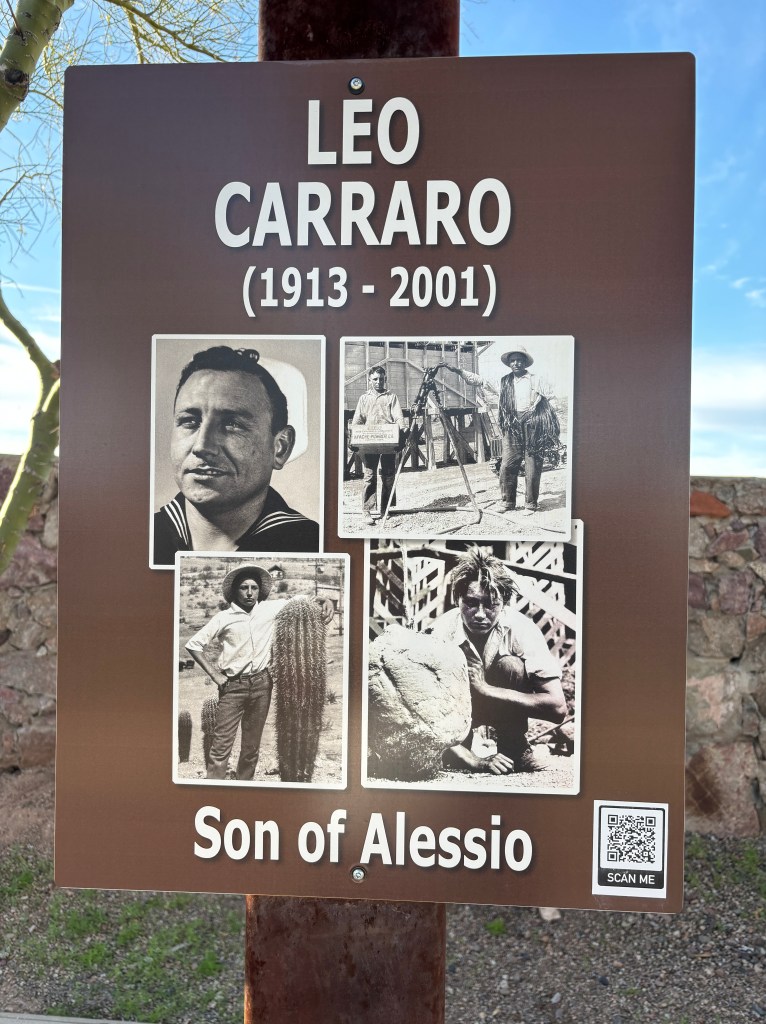
Carraro, and his son Leo, used whatever materials were available while building their castle hotel.

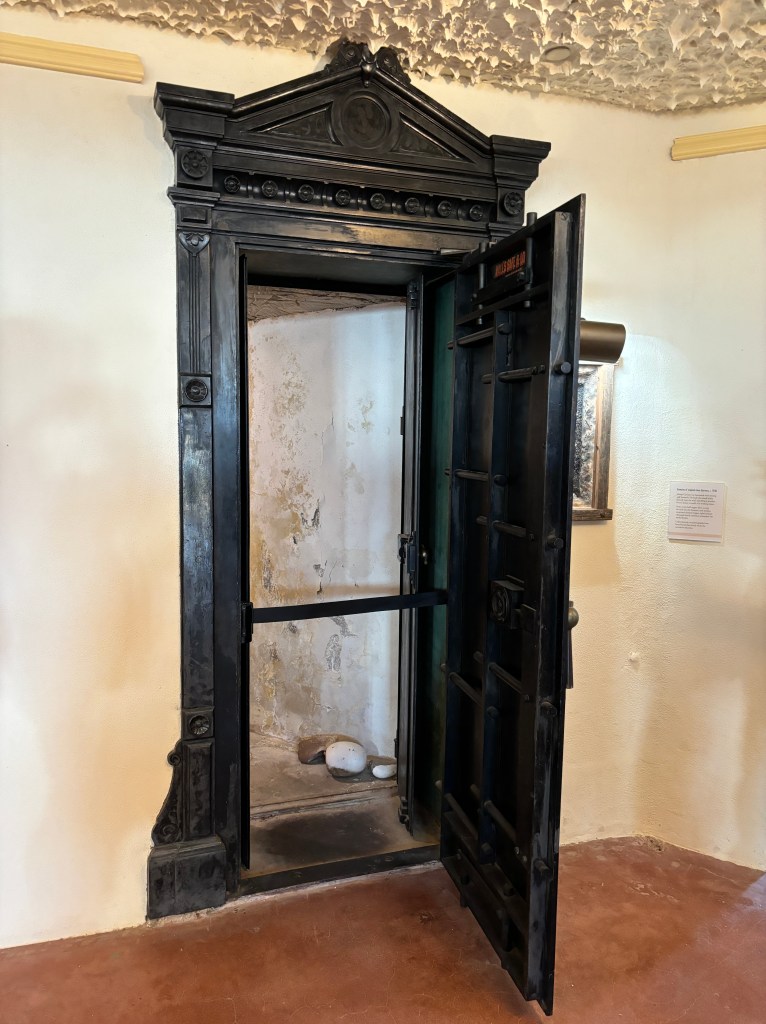
They used a discarded safe from a local bank to hold valuables and be the wine cellar.

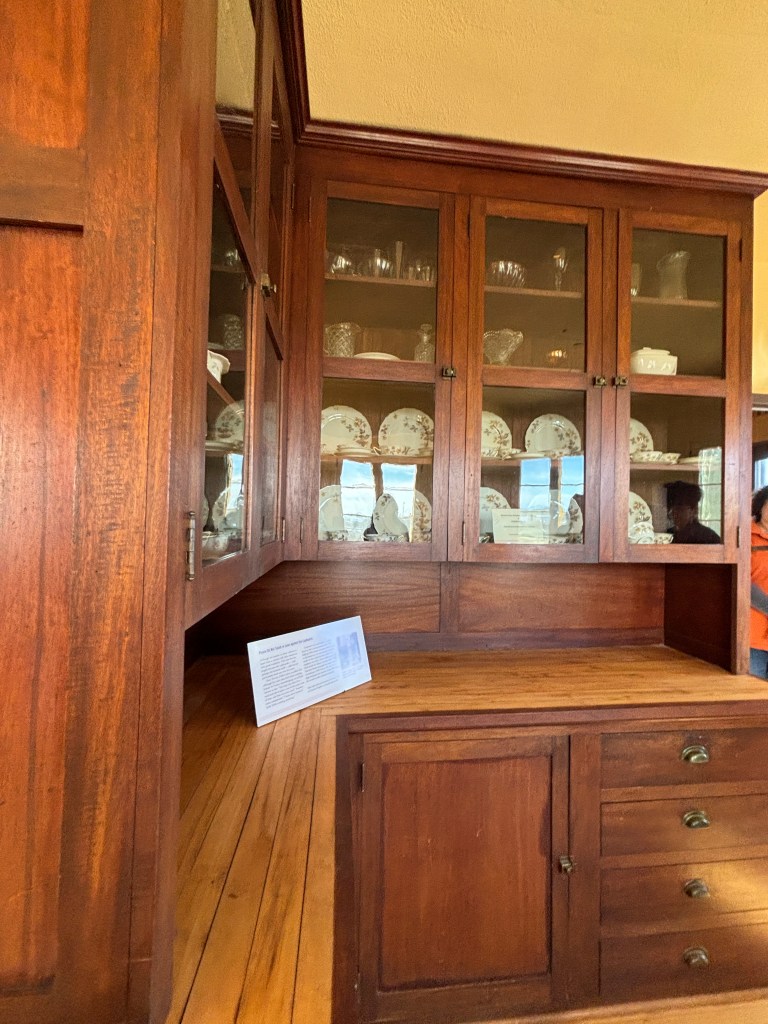
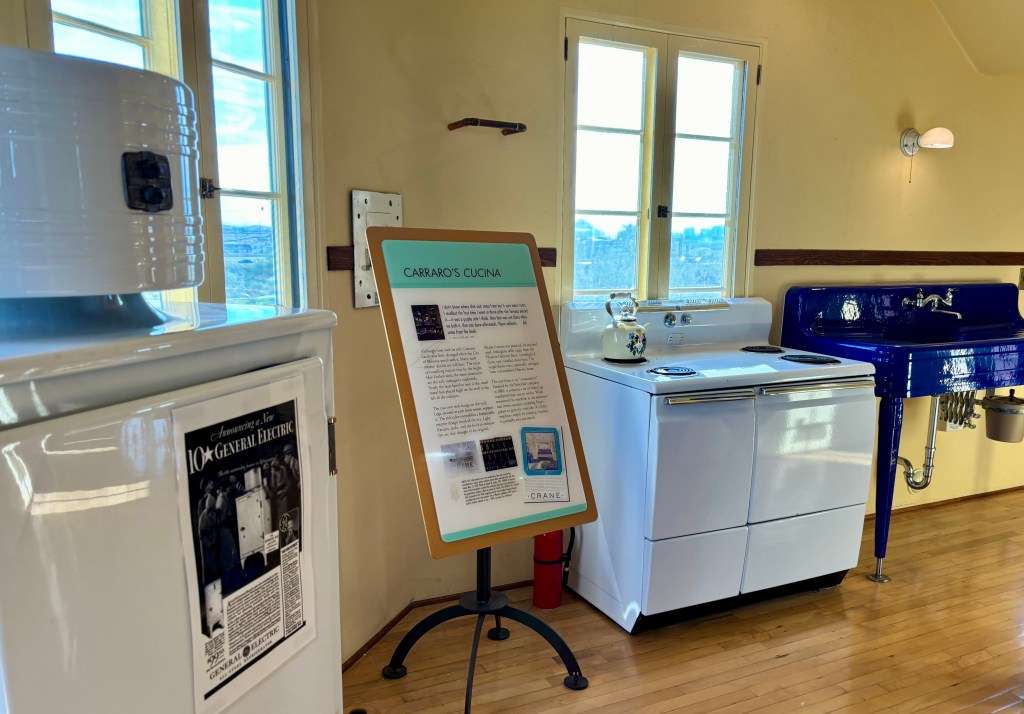
The kitchen cupboards were made of teller cages from the same bank.

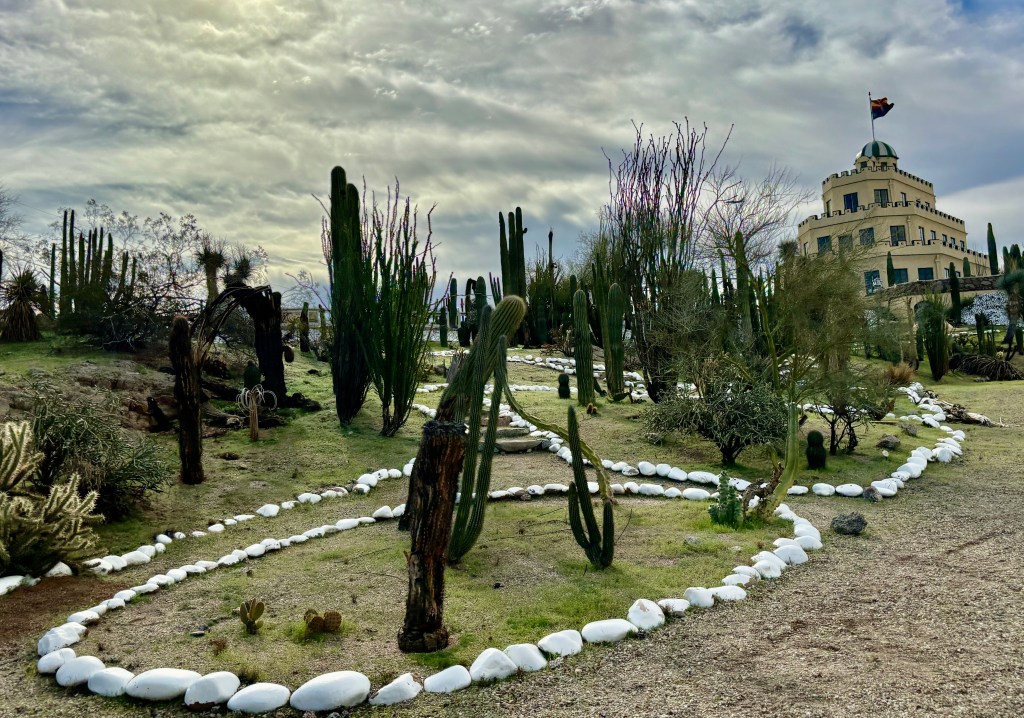
The Carraros developed a cactus garden with cacti from all over the world.  (Over time, only cactus from the local area survived.)

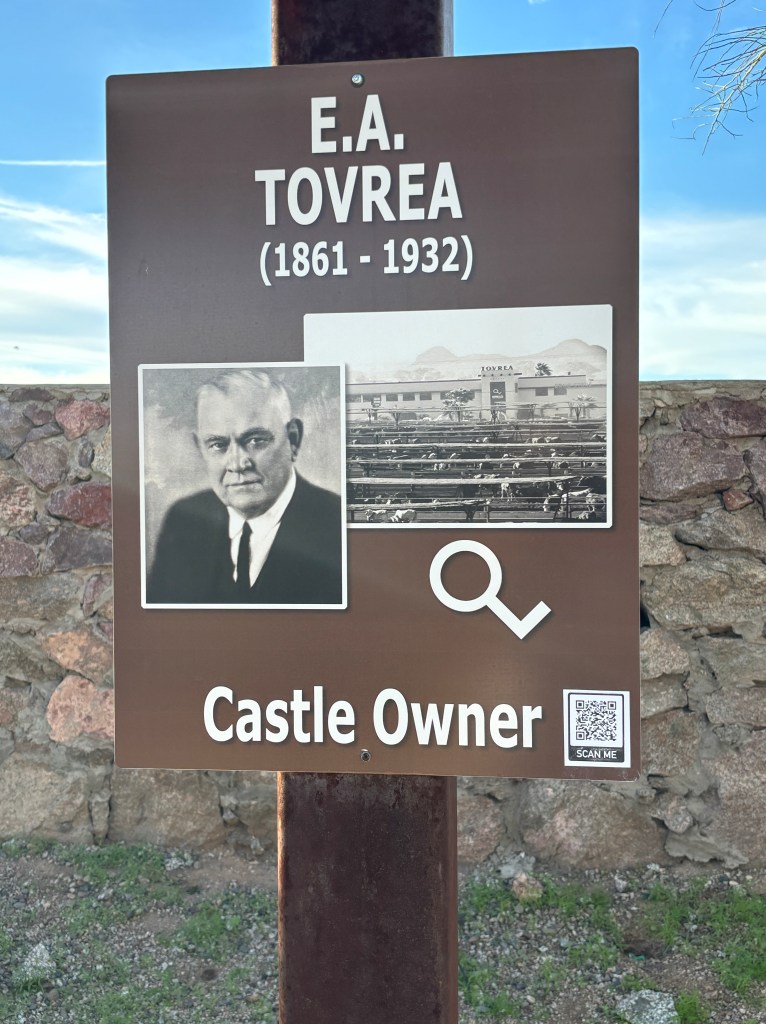
Father and son took 14 months to build the hotel structure and surrounding grounds. Carraro’s plans were derailed by the Great Depression and odors from the surrounding stockyards owned by Edward A. Tovrea.  Tovrea ran the largest stockyard in the world encompassing 200 acres of holding pens and processing 400,000 head of cattle a year.

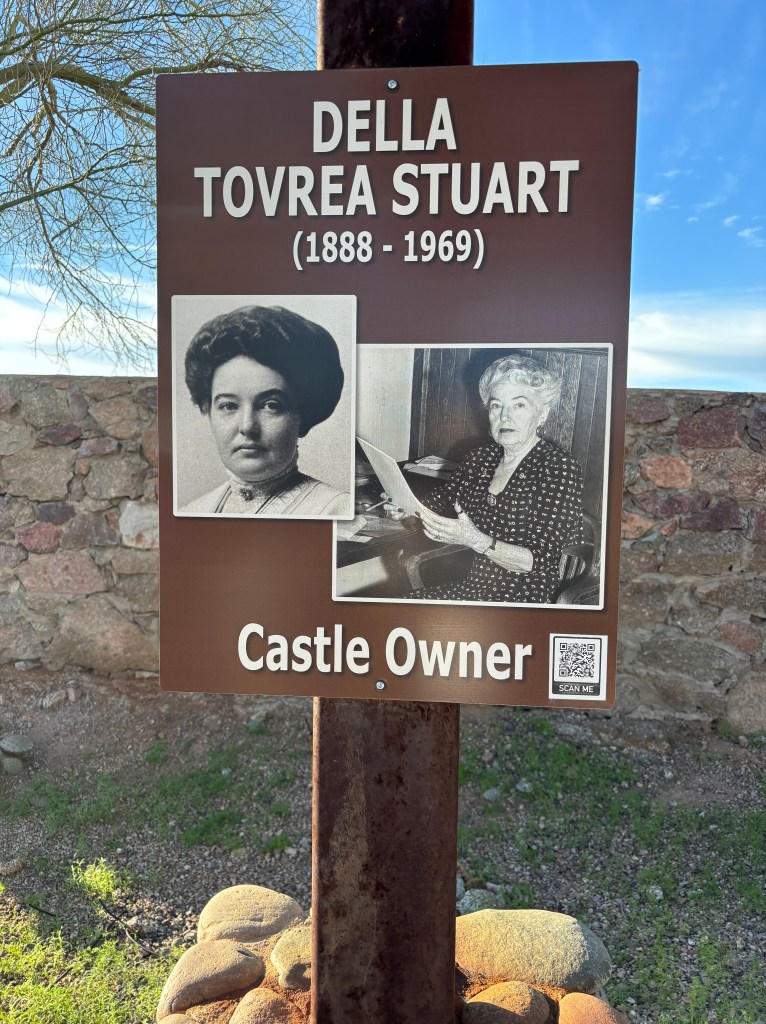
Alessio Carraro sold his castle to E.A. Tovrea in 1931. E.A. and his second wife, Della, moved into the castle. They lived mostly in the basement as there were no heating or cooling systems. The stairs going down were quite steep.

E.A. died a year later and his son, Phillip, took over the stockyard business. Della maintained the castle.

Della married Prescott publisher Bill Stuart and they lived in the castle seasonally.

The bathroom was on the main floor where there were six to eight guest rooms.  The only shower was on the second floor where two suites shared another bathroom. The top floor was a copala.

The couple entertained in the castle and on the grounds.

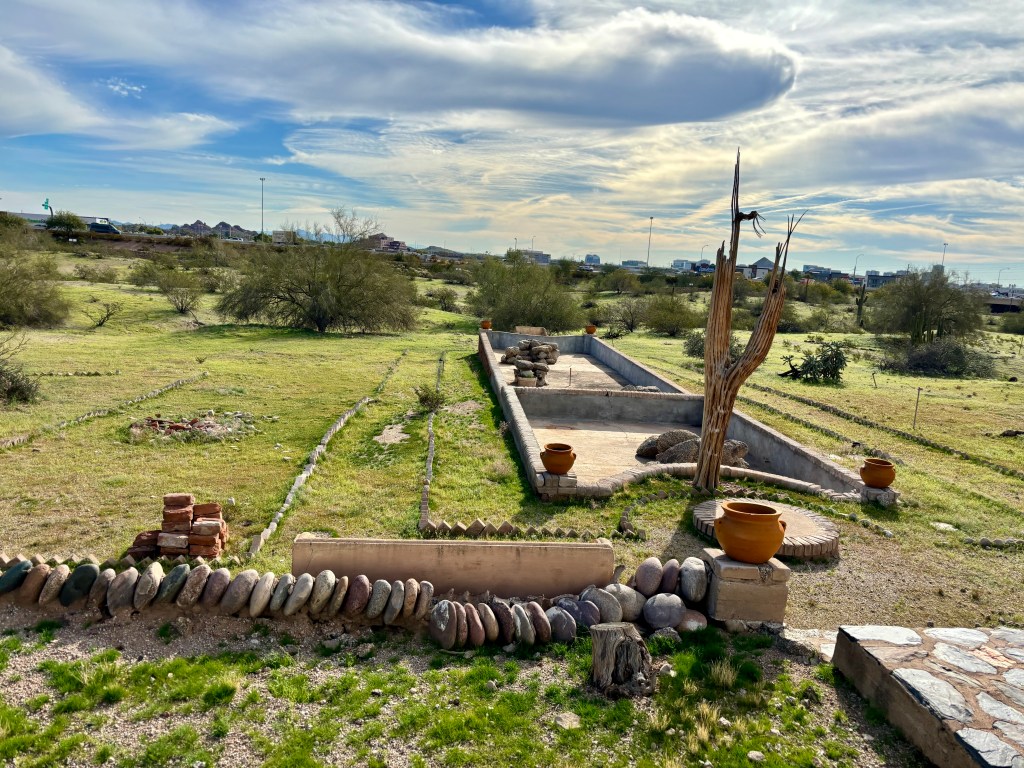
Della expanded the castle grounds including a reflecting pool surrounded by a rose garden.  She built an aviary to house peacocks and other birds.

After Stuart’s death, Della lived full time in the castle by herself.  As she aged, Della moved onto the main floor.   

One night eighty year old Della was robbed by two men.  There was a tussle over a gun. (A bullet hole remains in the kitchen ceiling.)

Della eventually loosened her bindings and tried to call for the caretaker.  

When her caretaker didn’t respond, she walked down to his cabin for assistance. Della came down with pneumonia shortly after and died.

One of the robbers was caught but Della died a couple of months before any of her property was recovered.  She had lived in the castle for 40 years.

After Della’s death, various family members and caretakers lived in the castle over the next decades. The building and grounds suffered from lack of maintenance.

Beginning in 1989, the City of Phoenix passed a series of bonds to purchase the landmark and rehabilitate the castle and grounds. The city and volunteer efforts took more than 20 years.

Currently, The Tovrea Carraro Society is responsible for conducting tours and maintaining the castle and grounds.  The society began offering tours in 2012 and there was huge demand. The lottery system was adopted post COVID.

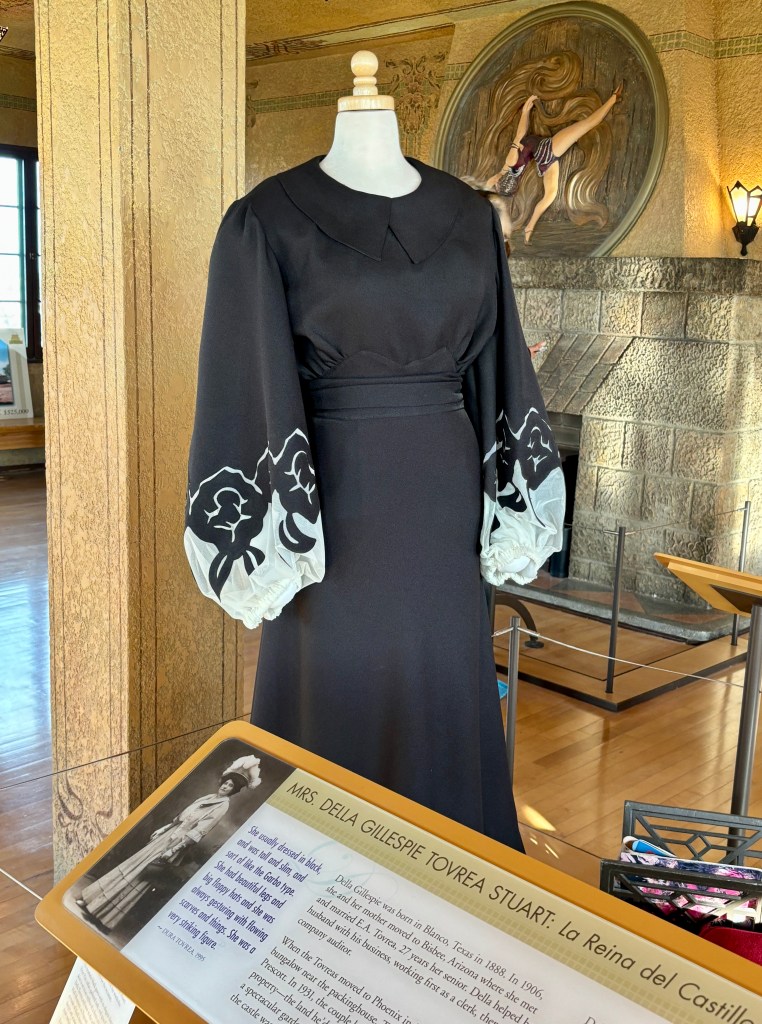
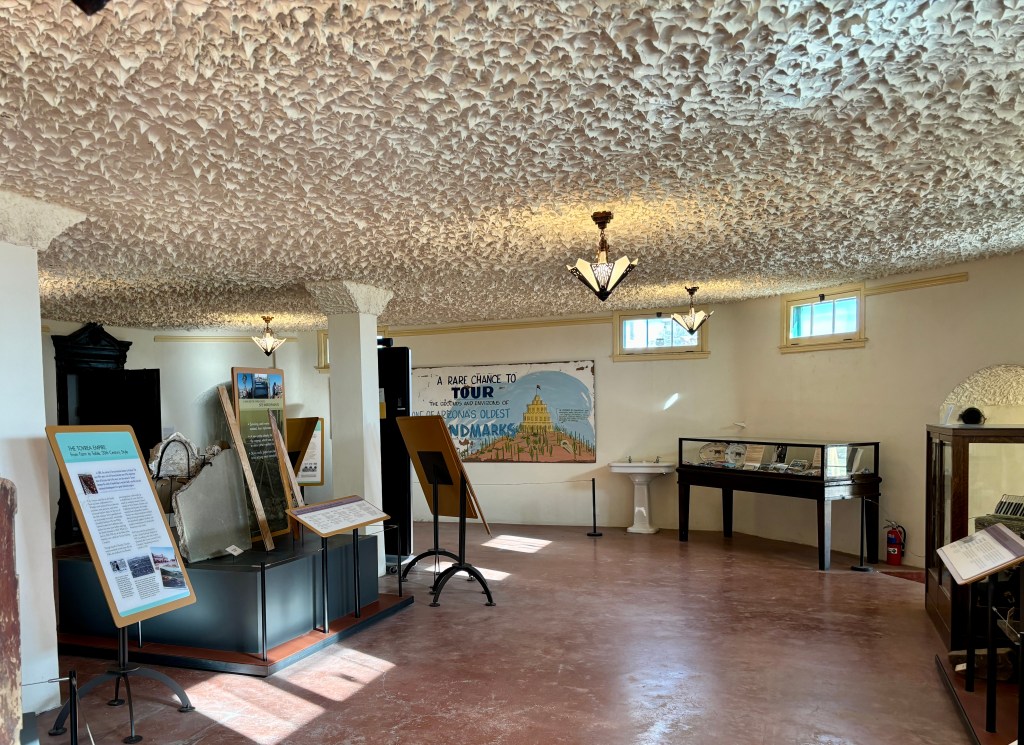
We were able to tour the basement where Della and her husbands lived. There are a variety of historic exhibits about the castle and its people.

One of the most interesting aspects of the basement was the ceiling plaster. There are a few birds eggs (plaster) hidden in the plaster. We saw them but I didn’t get a picture.

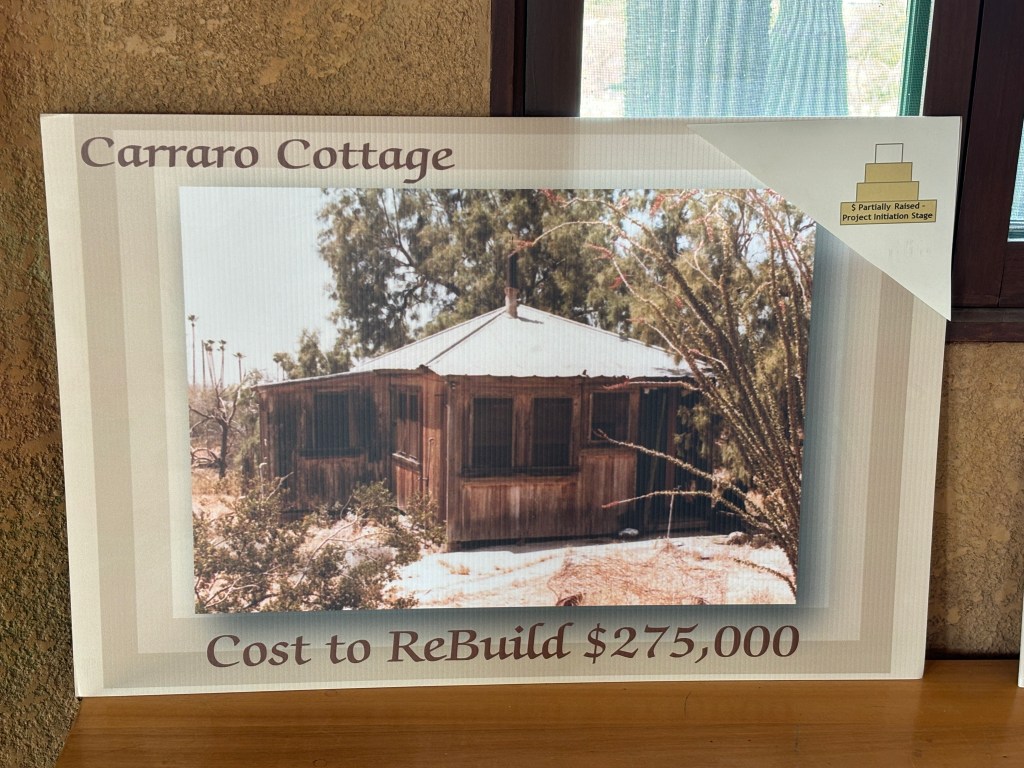
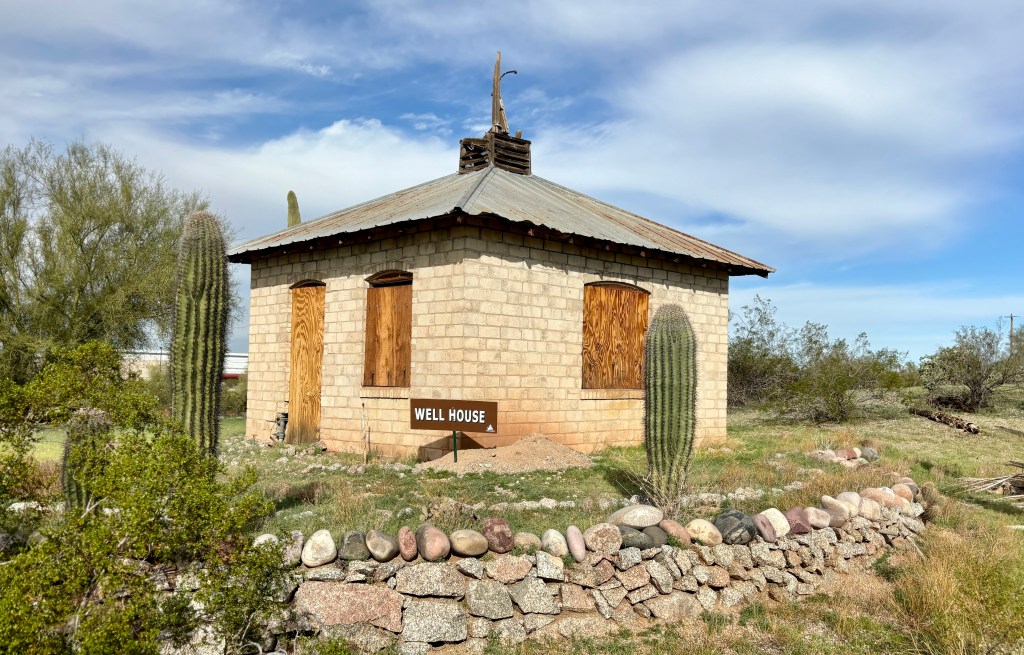
The society is trying to raise money to rehabilitate a few of the outer buildings.  Many were felled by a microburst in 2015.

The former well house fared better.

We very much enjoyed our tour of Tovrea Castle!

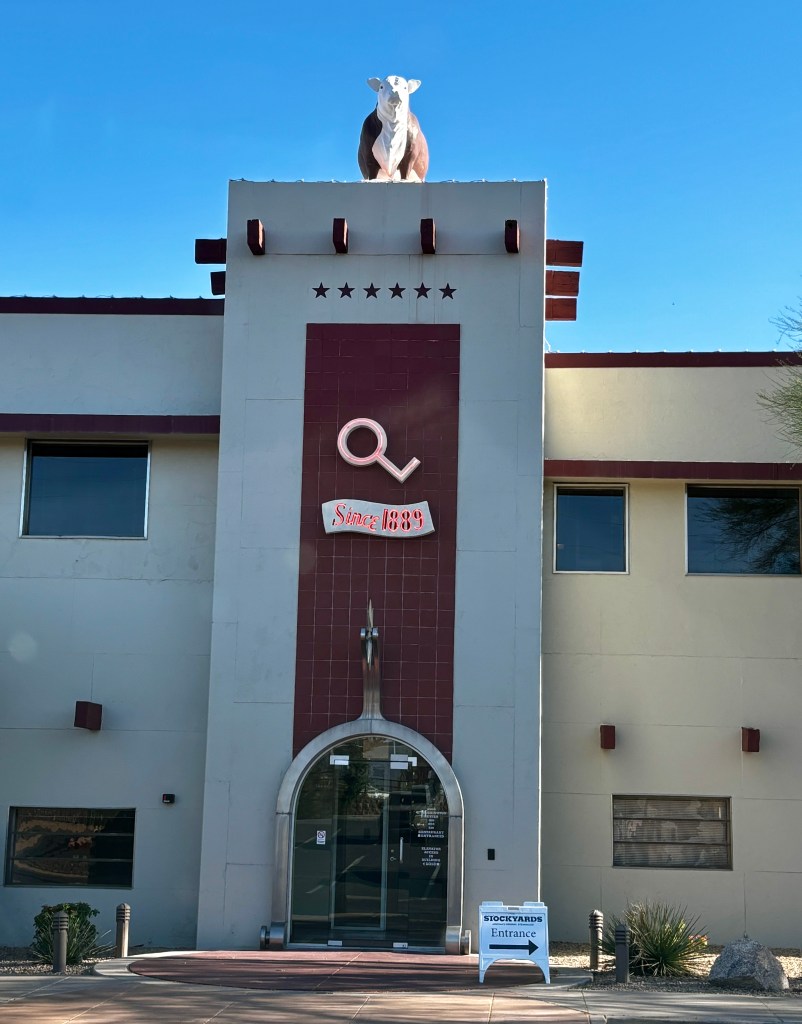
While on the tour, we could see the nearby Stockyards Restaurant, connected in its history to the castle.

That meant we needed to go there.

The Stockyards was the original Phoenix steakhouse.  Opening in 1947, the restaurant became a gathering place for cattlemen, politicians and bankers.  

When it burned down in 1953, it was remodeled by Helen Tovrea.  Helen was the wife of Phillip Tovrea, then the owner of the cattle stockyards, meat packing company and Tovrea Castle at Carraro Heights. 

Thanks to friends, Nancy and Mark, for joining us on the Stockyards field trip! The food was delicious and the experience was very nice.

The other Phoenix castle we toured is the Phoenix Mystery Castle.  We visited in 2023 without having to win the lottery first, or even have advance reservations.  If you would like to read about that castle, it is the blog PHX: Mystery Castle

Posted in Uncategorized | 1 Comment

Northern Lights Cruise: Norwegian Sea and Bergen

As we approached the end of our Northern Lights Cruise we were supposed to have two sea days south to Bergen where we would disembark and head home.

We left Alta at midnight and when we woke it looked like it should be 7:00 am. It was almost 10:00!  It was so nice to sleep in on a sea day when the ship is rocking just enough to promote sleep, not hinder it. Plus we had had three shore excursions the day prior!

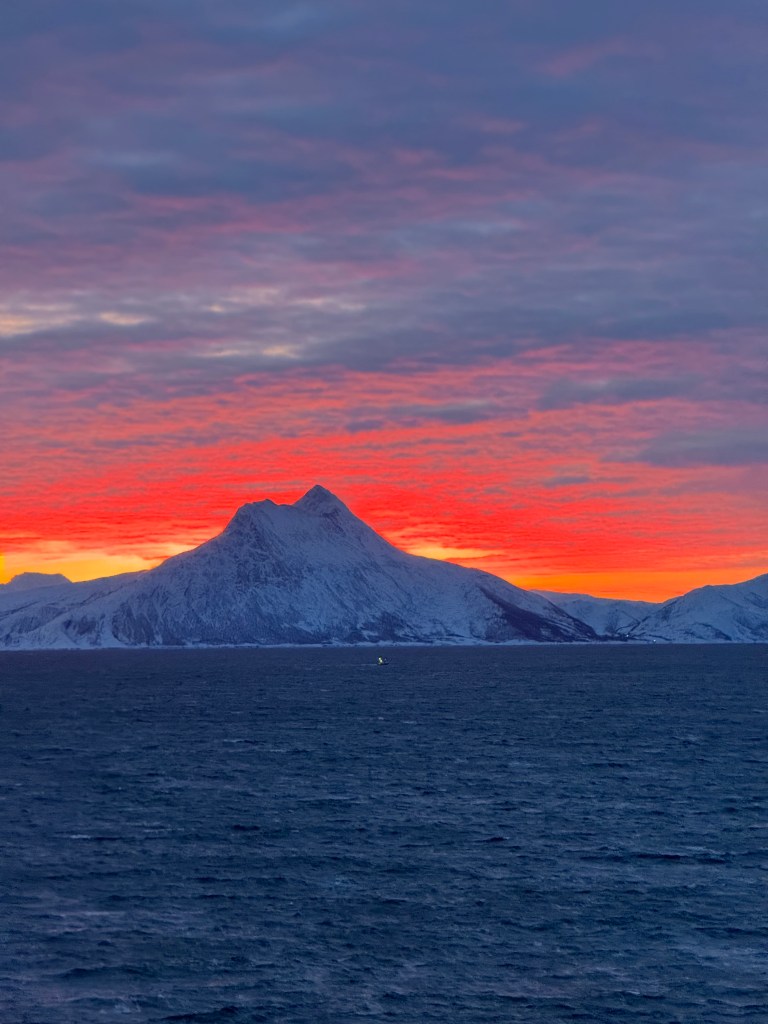
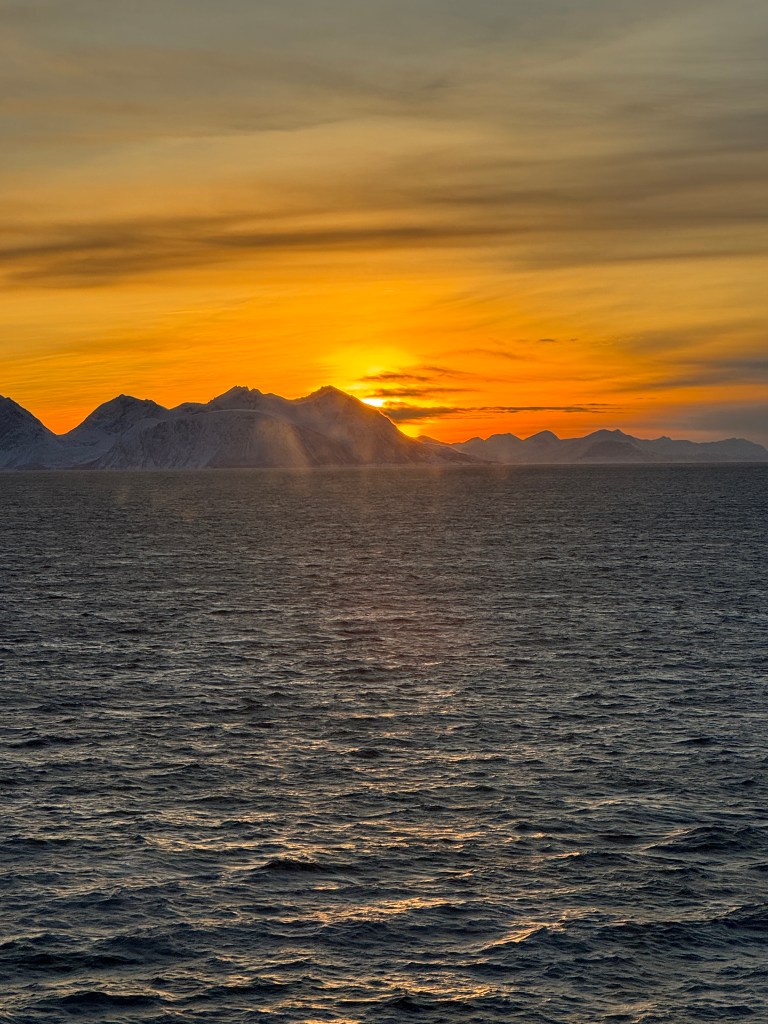
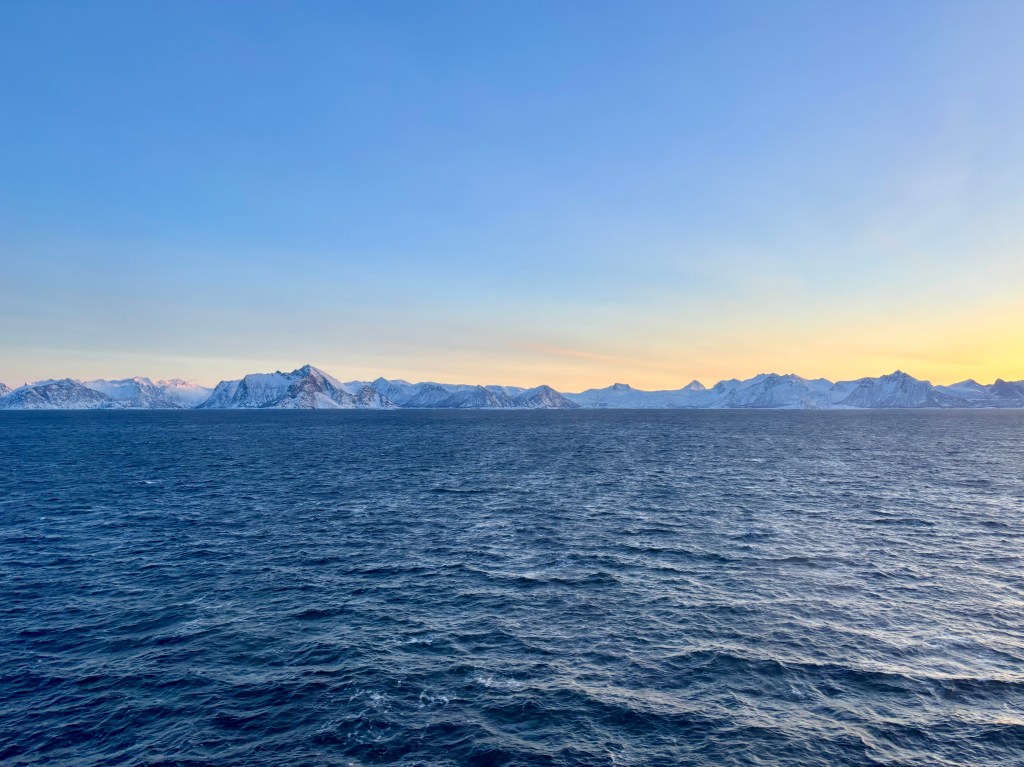
Randy and Flynn enjoyed taking some sunrise pictures as the sun was actually rising as we went south.

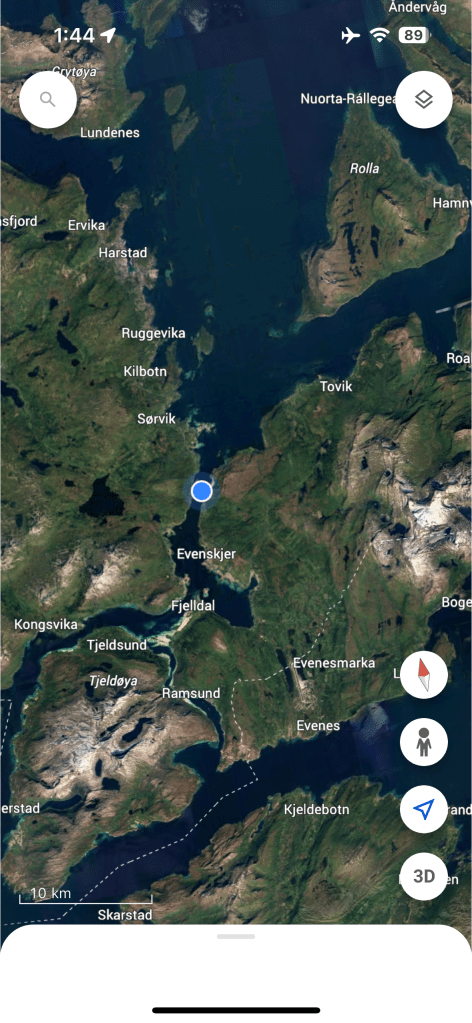
We watched the scenery along both sides of the ship as we sailed the Norwegian Inside Passage.

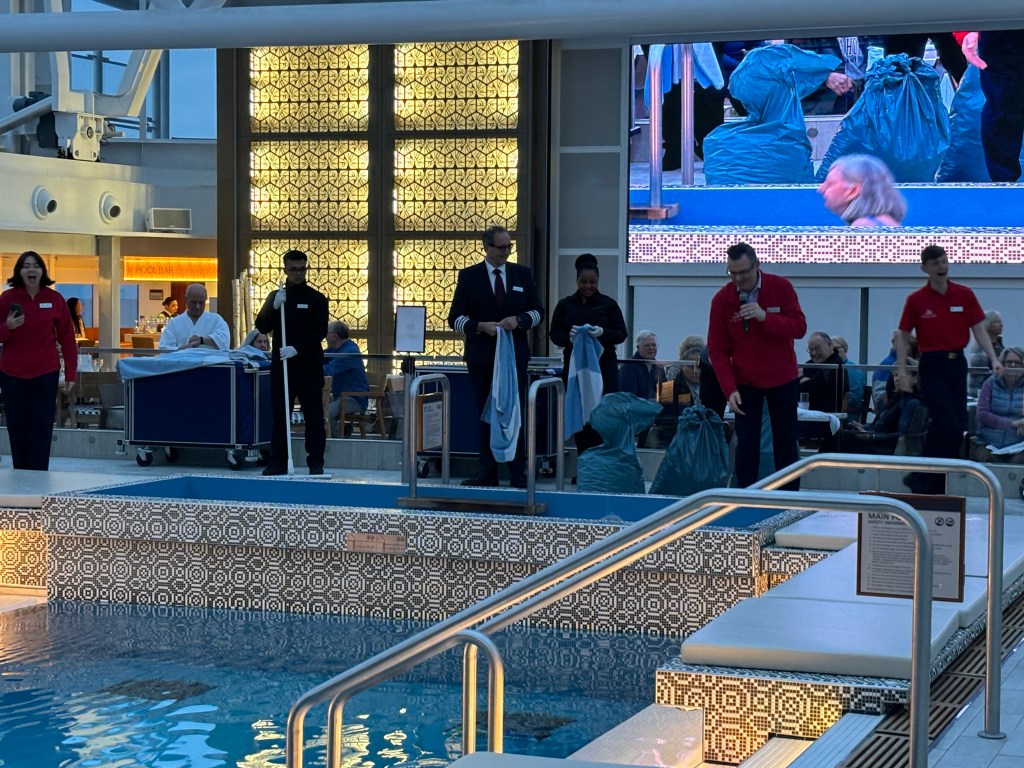
Viking has a polar plunge activity in an ice filled pool when the ship crosses the Arctic Circle. It was amazing to us how many people chose to participate, but we did not. We were really done being any kind of cold.

We did get Arctic Circle certificates!

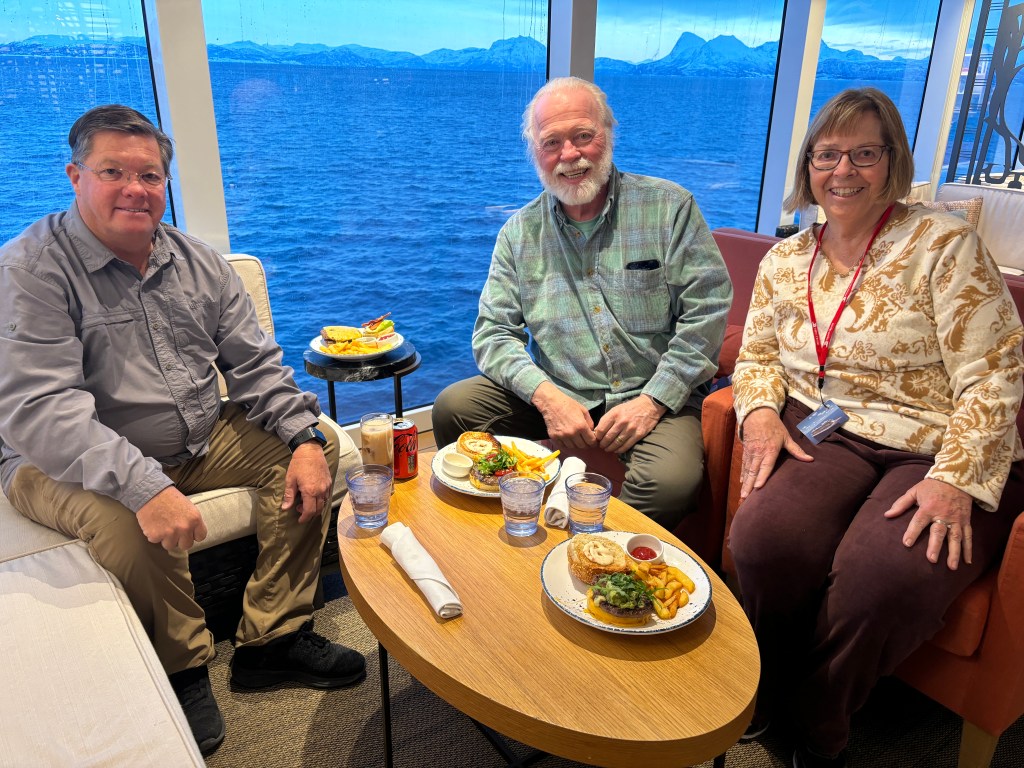
We had a relaxing lunch with our travel partners Flynn and Jo. We had not traveled together previously, but found complete compatibility. We’d be glad to do a trip together again.

We watched one more educational presentation, this time about  Viking ships. It was about the old, authentic type, not current Viking cruise line ships.

Viking boats had a steering board on the right side.  Over time that became “steer board” and gradually, starboard. The starboard side of a boat is the right side.

The sails were made of wool by women.  I’m sure they used the resources that were available, but it surprised me that sails were ever wool.

We enjoyed our last few calm sea hours on the ship.

Overnight, we had bad weather again with high seas and high winds. 

The seal on our sliding balcony door was not tight enough to stay fully closed in the high winds. Randy got up repeatedly and closed it to avoid the wind howling through. Unfortunately, his efforts only stopped the howling for brief periods!  We told the steward about it the next morning and the maintenance crew was able to fix it.

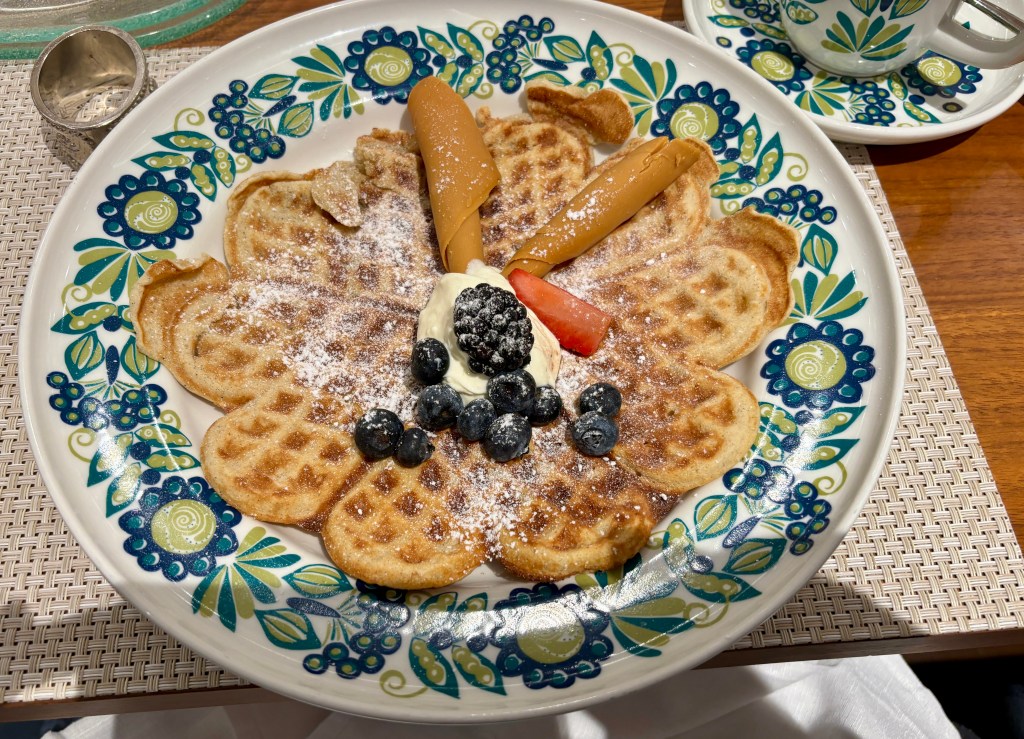
We had the Norwegian specialty waffles for breakfast. The queue for these each morning had been long enough that we hadn’t bothered before. I thought these were quite good. The brown cylinders are the Norwegian goat cheese we had been introduced to previously.

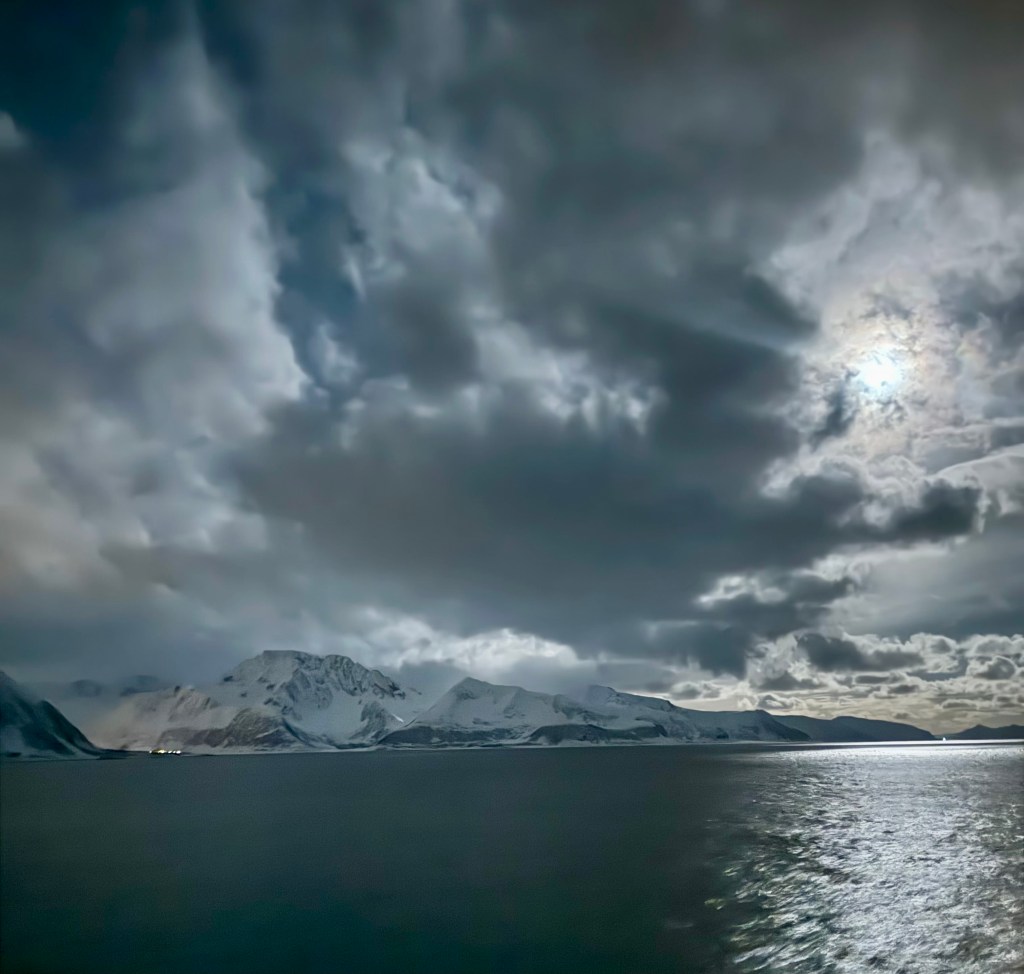
The weather was still very unsettled.  We were sailing into the storm with winds up to 60-80 mph and 30 foot waves.  The captain had slowed the ship which would likely delay our arrival in Bergen the next day.

We watched a presentation on Bergen, our last port of the cruise and where we would disembark.  We learned Bergen was founded in 1070 and its location was important for shipping and travel.  The city is on the same latitude as Alaska and Siberia but is warmed by the gulf stream

The black plague entered Norway through Bergen, eventually killing half the population of the country.

In the late afternoon the captain announced 70-80 mph, hurricane force, winds.  He said “We’re just rolling on down the sea-way.”  At that point it wasn’t frightening, just very interesting.

This was when it got a bit frightening!  We were sitting at dinner and I glanced over and saw the wave water above the bottom of the windows.   The restaurant was on the first deck.  Crew quarters and many ship systems are on A Deck, below the first deck. 

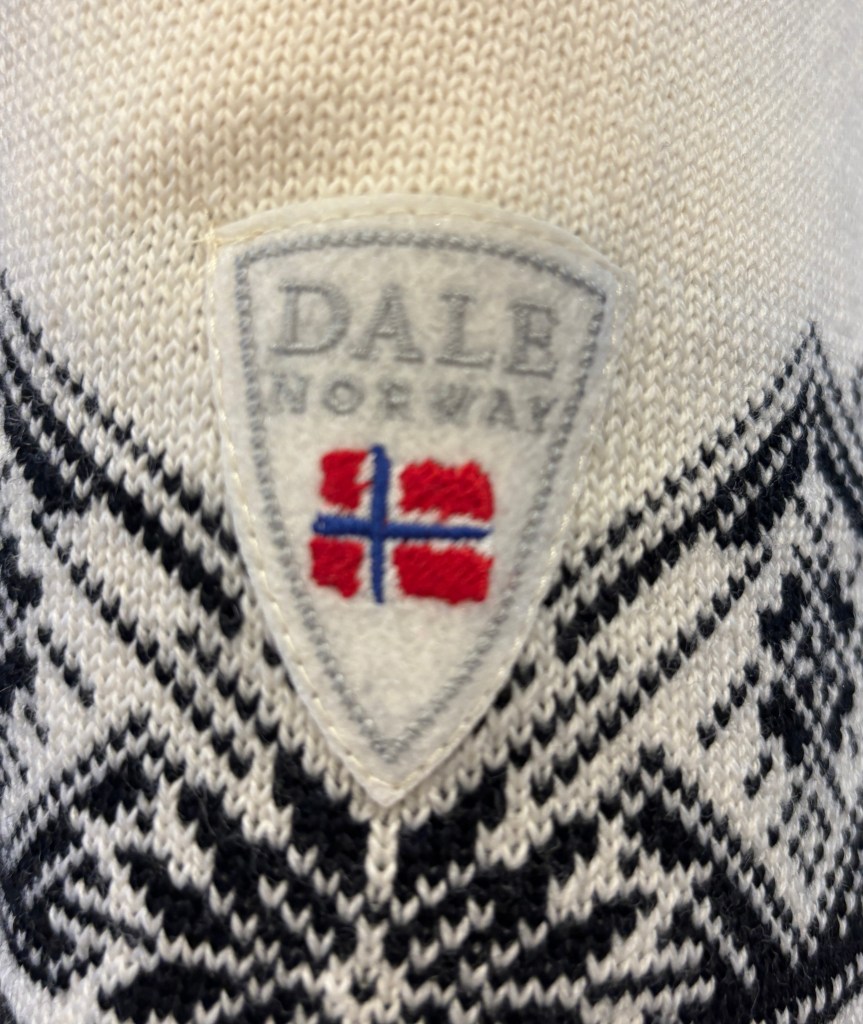
By then the ship’s shore excursion crew were hoping to adjust the times of our Bergen excursions so we didn’t miss them. Our morning tour was to the town of Dale, Norway, home of Dale of Norway sweaters.

The Dale textile business dates back to 1872. Beginning in 1956, Dale of Norway designed Olympic and World Championship sweaters for Norway’s national ski teams.  They were later chosen to design official sweaters for ongoing Winter Olympic Games.

Even though we had already bought Norwegian sweater jackets in Tromsø, we planned on buying Dale of Norway sweaters in Dale, Norway. That now seemed in doubt.

Overnight we had winds gusting up to 100 mph and 40 ft waves.  It was rough, but at least our balcony door didn’t howl! We woke finding we had survived the night and the seas had calmed.  

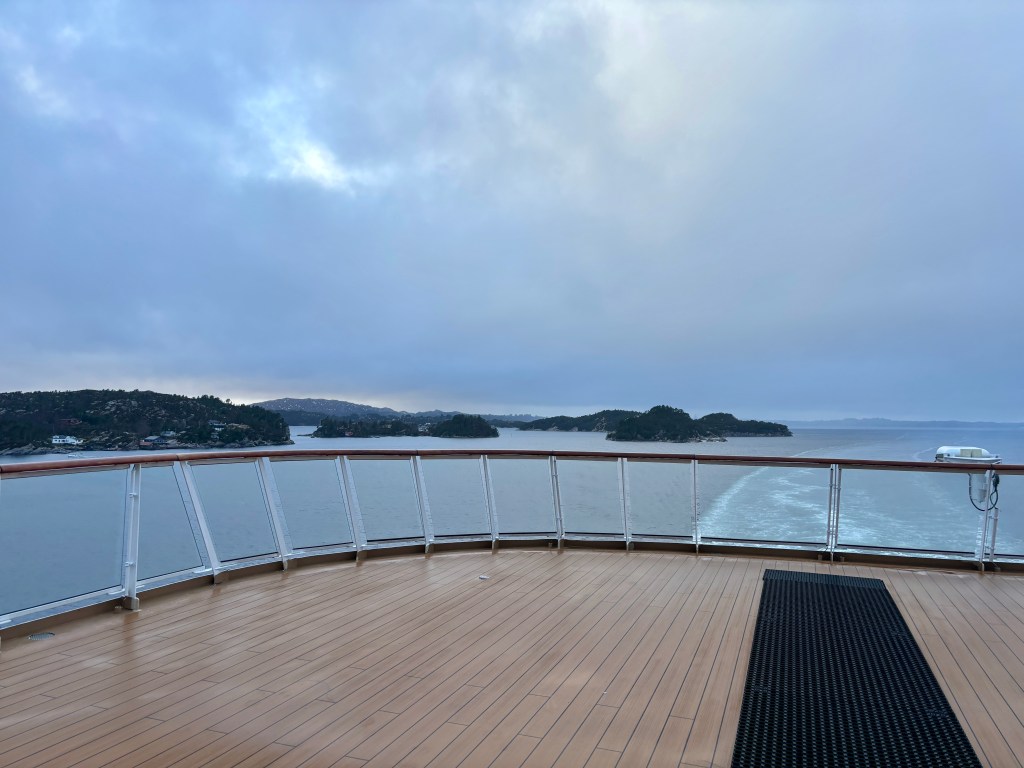
As we came into Bergen it was finally calm enough, and warm enough, to go out on deck briefly.  It was my first time out on deck on the whole cruise.

Our 8:00 am scheduled arrival ended up closer to 3:00 pm.  We missed out on our Dale of Norway excursion so I was glad I had bought a sweater on the ship.  Unfortunately, Randy missed out. 

Jo, Flynn, Randy and I went for a walk into town while we waited for our salvaged, abbreviated city tour later in the evening.

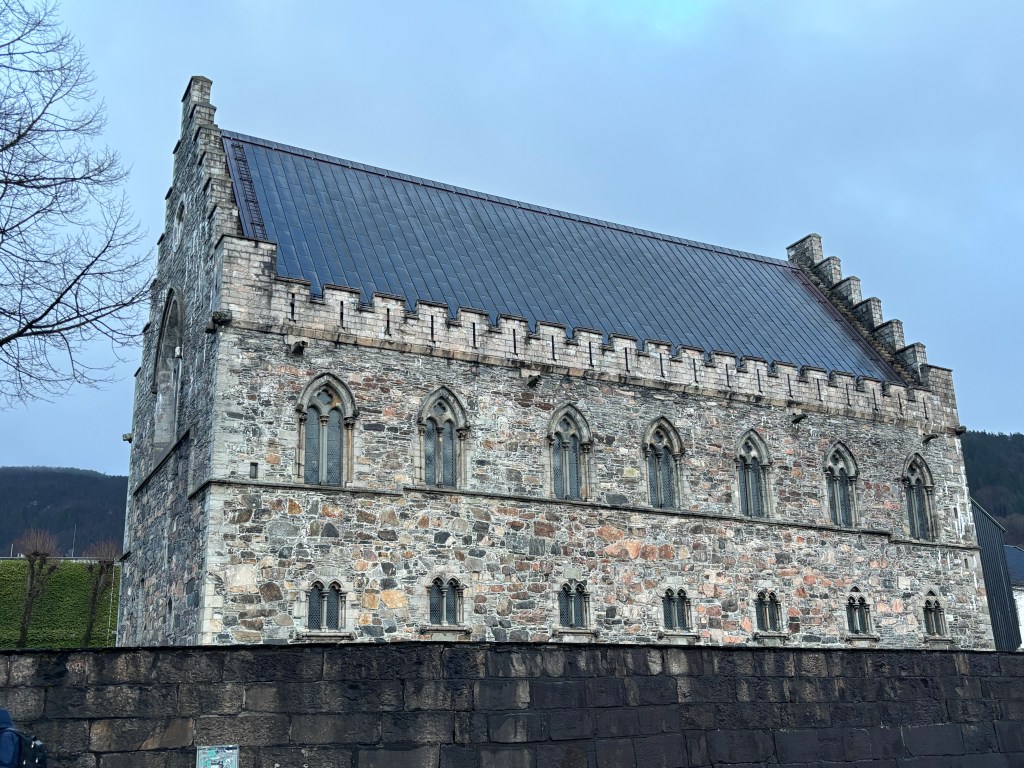
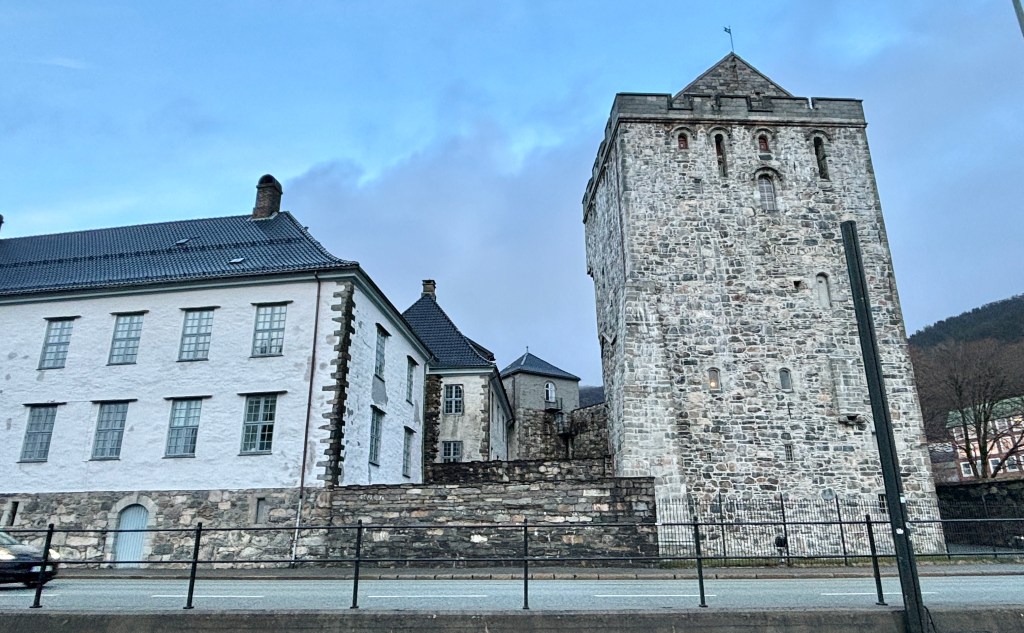
We walked by the Bergenhaus Fortress.  There are buildings within the fortress dating back to the 1240s.  The fortress has held the royal residence,  a cathedral, several churches, the bishop’s residence, and a monastery. Haakon’s Hall, formerly the royal hall, was built around 1260. 

The tower was built around 1270.  

In the mid 1600s the tower was incorporated into a larger structure, now known as the Rosenkrantz Tower. 

Once a home to the local governor, it served as a place to store gunpowder from 1740-1930. 

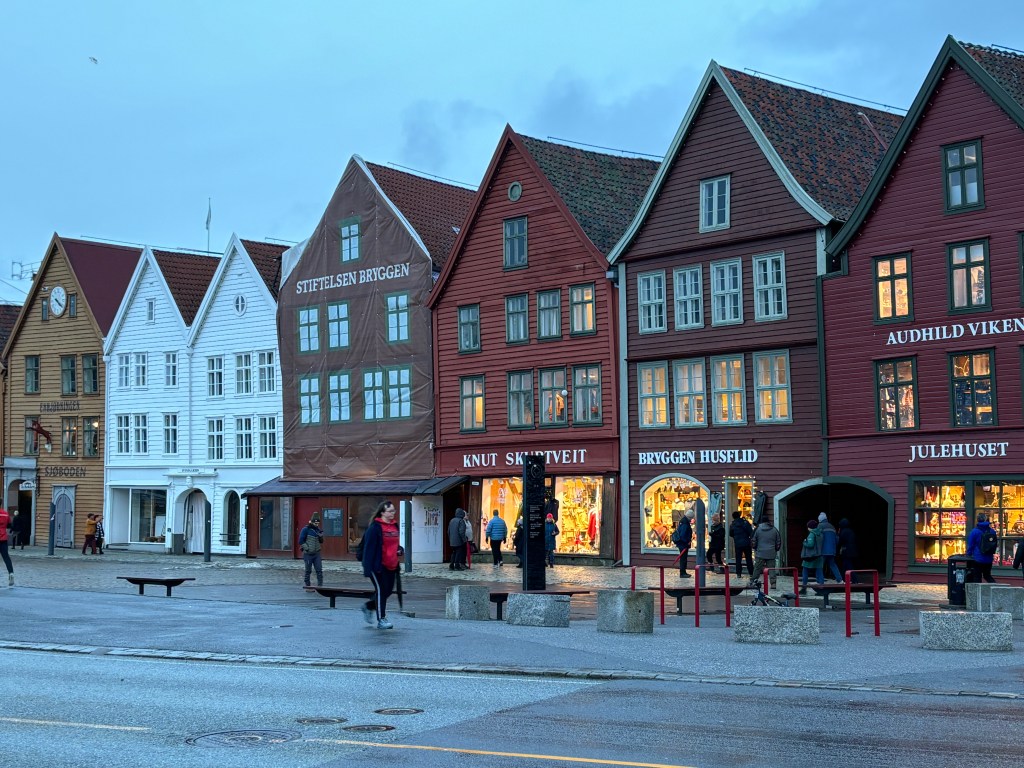
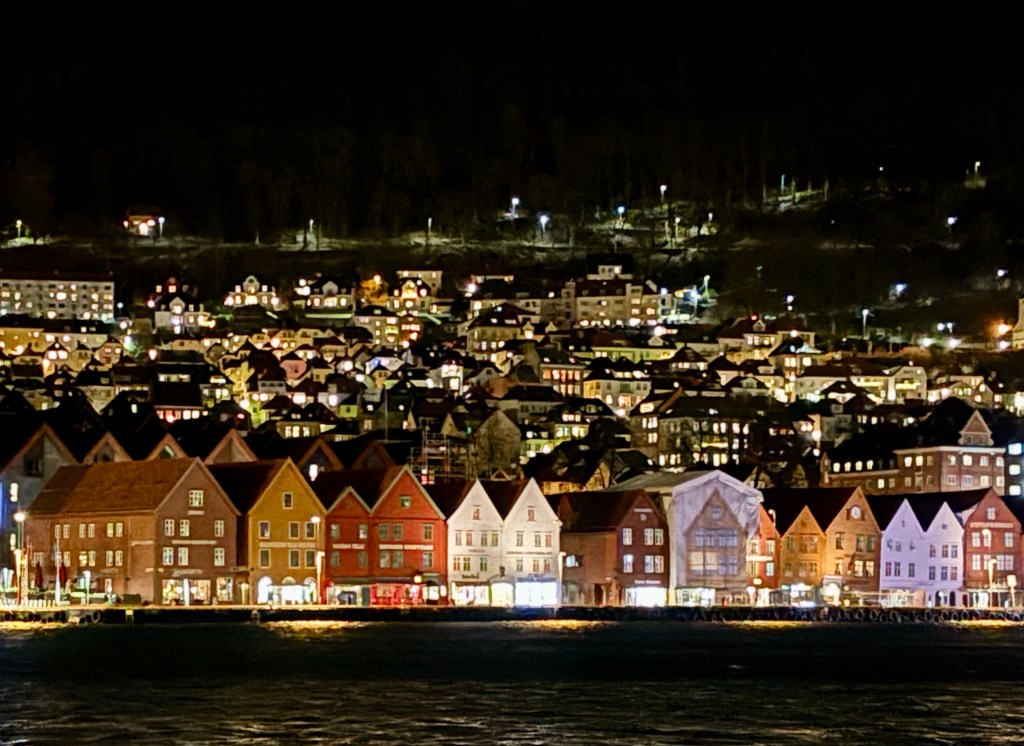
Bergen has had a series of devastating fires in its history.  The wooden houses that once stood along the wharf burned down in 1702.  These houses quickly replaced them so they are about 320 years old.

The Bryggen Wharf is now a UNESCO World Heritage site.

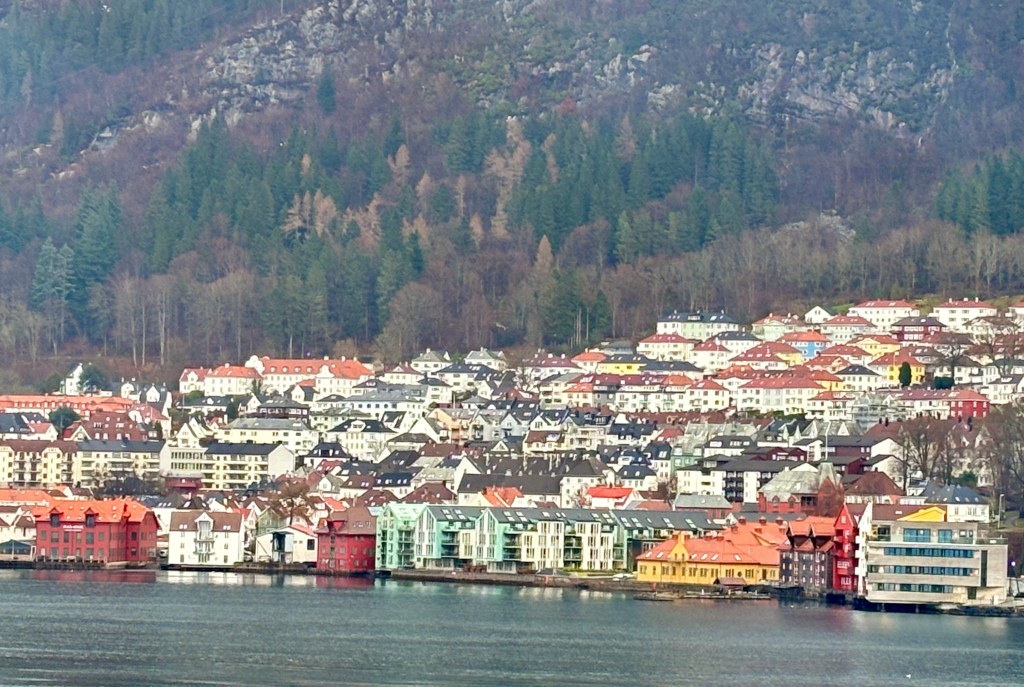
I liked how they cover buildings under construction with a shell that mimics the building.  On the Stiftelsen Bryggen building above, there is still a nice representation of the building and the covering is barely noticeable from a distance. The construction isn’t a visual distraction to the landmark.

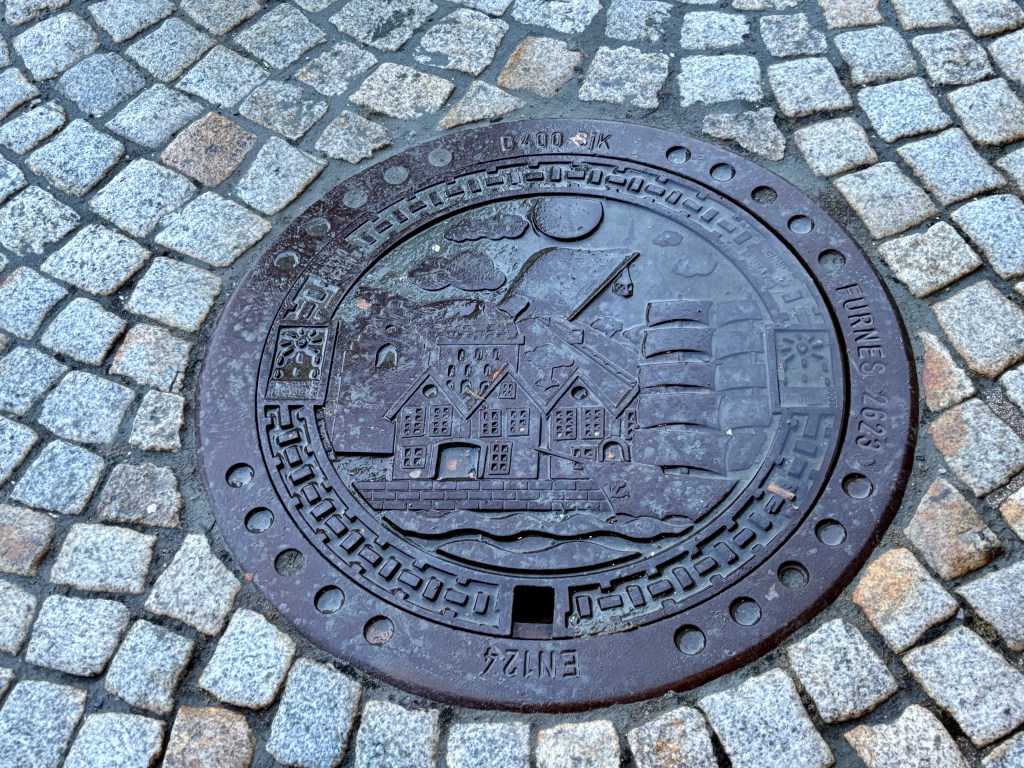
Bergen has decorative man hole covers!

Our planned two hour Bergen panoramic tour ended up being just an hour but the crew and shore operators did the best they could to give everyone something.

Our driver drove us around a bit showing us various sites that did not photograph well at night through bus windows.  He took us across the river so we could photograph the wharf from the opposite side.

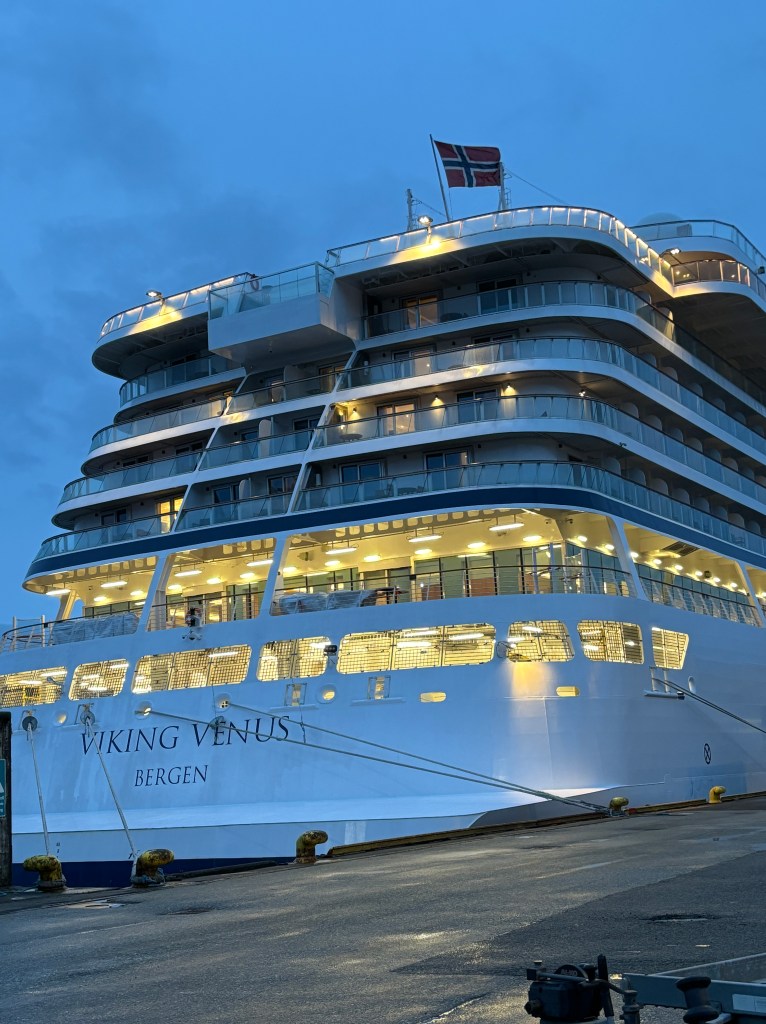
The next morning we left the Viking Venus with fond memories of the ship, the crew and our adventure.

Jo and Flynn left very early and flew out the same day.  Our reservations required an overnight in Bergen and then out very early the next day.  They were both very long travel days but all was accomplished.

I took a picture of this donation box that we saw at the airport in Bergen.  I have seen them in other European cities as well.  It holds an interesting mix of left over currency in many types and values. 

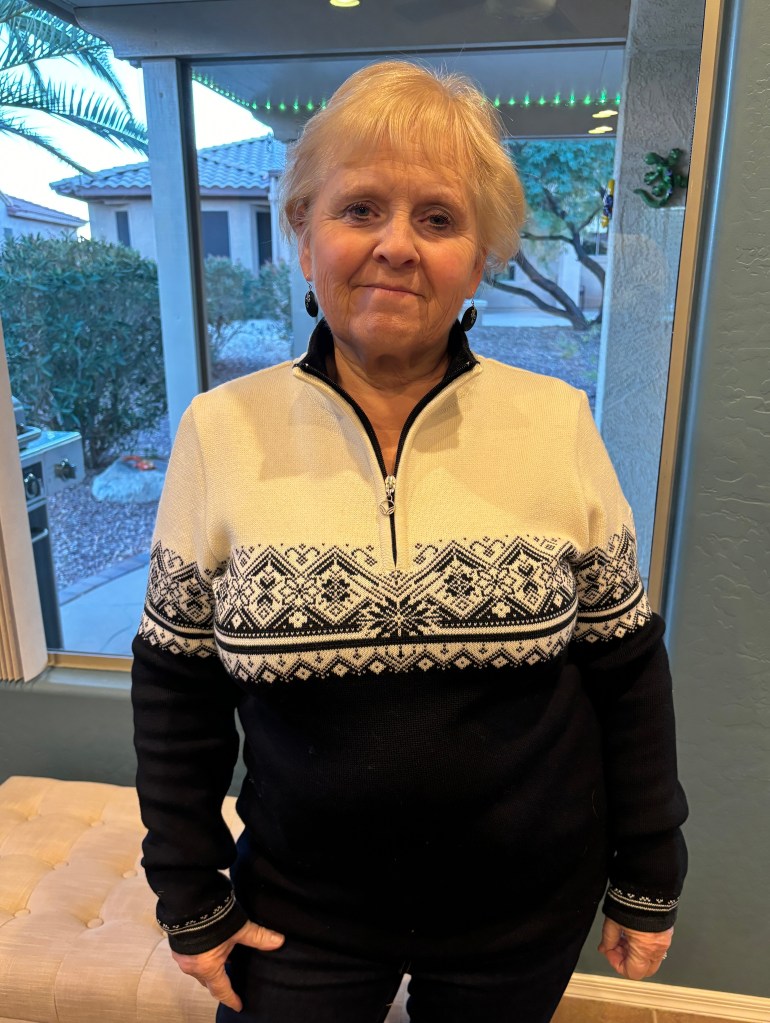
This is me in my authentic Dale of Norway sweater purchased onboard the Viking Venus. It has actually been cool enough in Phoenix to wear it a couple times.

The Northern Lights Cruise right after us had the reverse itinerary – Bergen to Alta to Tromsø to Narvik to Amsterdam to London.   Due to extreme and unsafe seas (worse than we had) the Viking Venus was “stuck” in Tromsø  and the passengers had extra days there to finish out their cruise.  Viking chartered flights for those passengers from Tromsø to London Heathrow.  Those same charters brought the next group of passengers from Heathrow to Tromsø to begin their cruise. The Northern Lights Cruise after that didn’t see any lights.

We were really very fortunate.  We saw lights numerous times and had seas that were bad enough for a good story but not any worse.  

It was a great trip with great friends, with a great crew, on the Viking Venus.

We disembarked on January 24, 2024.
Posted in Uncategorized | Leave a comment

Northern Lights Cruise: Alta and World War II

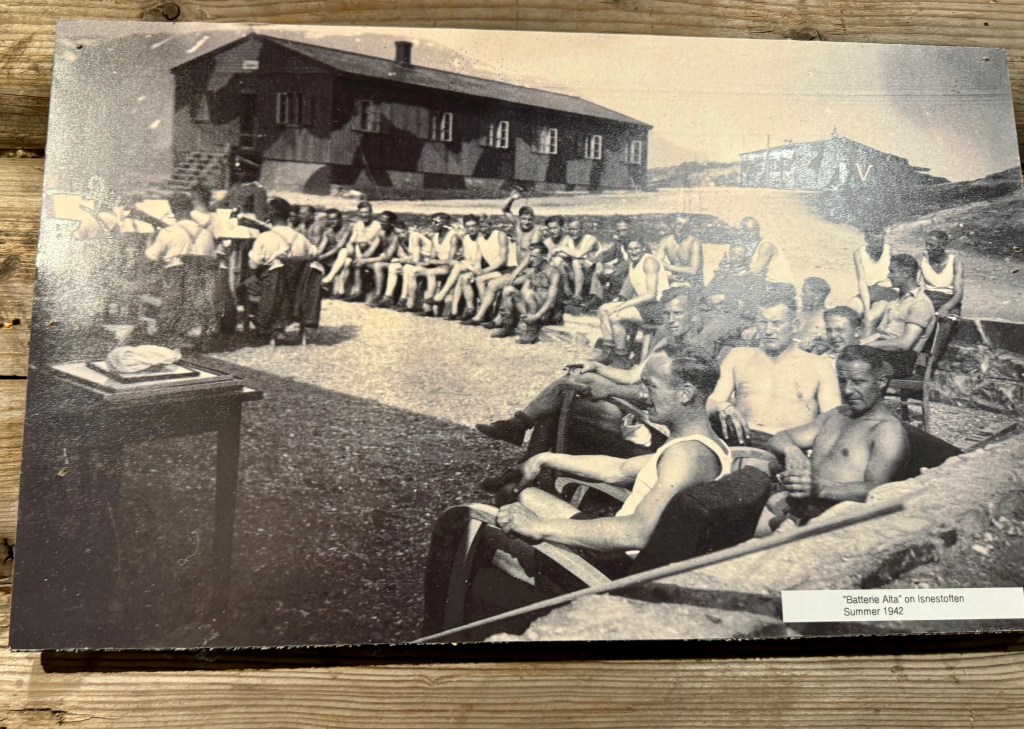
Alta is about equidistant between the North Pole and Berlin.  The area around Alta held the Nazi’s largest naval base outside of Germany during World War II. 

Many thousands of German soldiers were in Alta.  

There was even a local stalag for Russian prisoners of war.  Stalag 330 held prisoners from 1941 – 1945.

Women at Ravensbruk Concentration Camp were forced to weave insulating straw boots for German soldiers to protect their feet from the cold.

Germany felt pressure from an alliance between Finland and Russia and initiated a forced evacuation of the local people around Alta.  About 45,000 people were forcibly relocated to the Tromsø area.

The German ship, Tirpitz, was named after a general who helped to modernize the German navy.  She was a larger sister ship to the Bismarck.   The Tirpitz was a floating city.

After the Bismarck was sunk, Hitler did not want to expose the Tirpitz because of the potential propaganda value to the Allies if it too was sunk.

The Tirpitz was sent to Norway as a deterrent to supply convoys between the western allies and Russia.  Her presence pulled allied resources to the Arctic and away from other areas.  The ship was more important for what it could have done, than what it actually did.

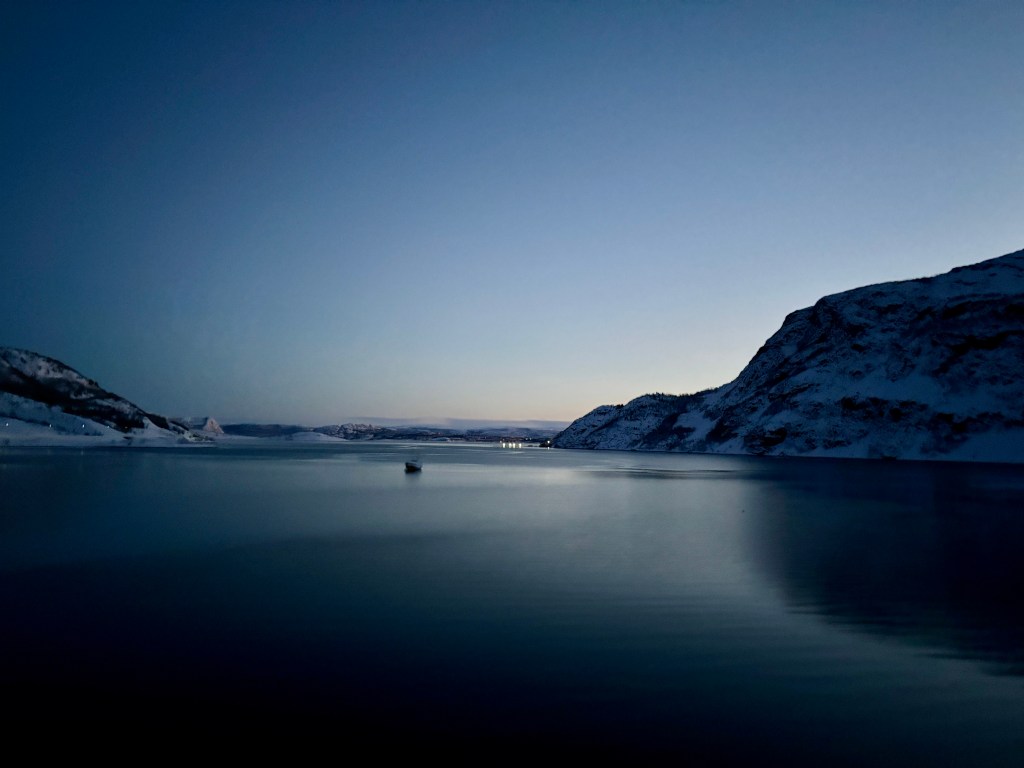
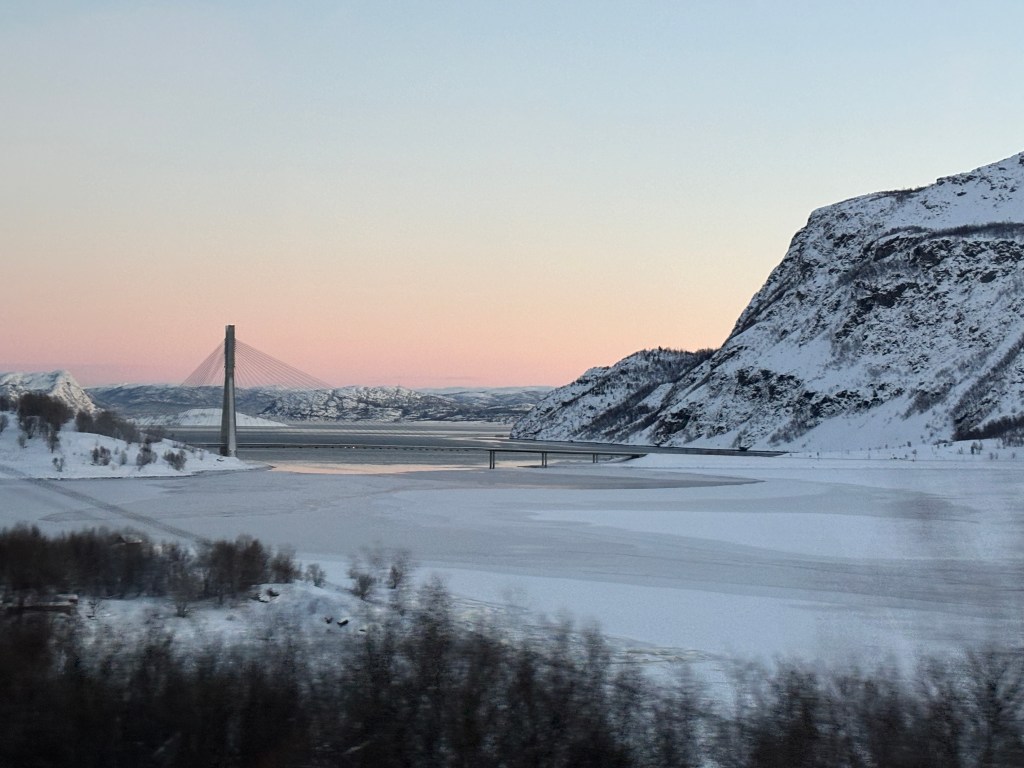
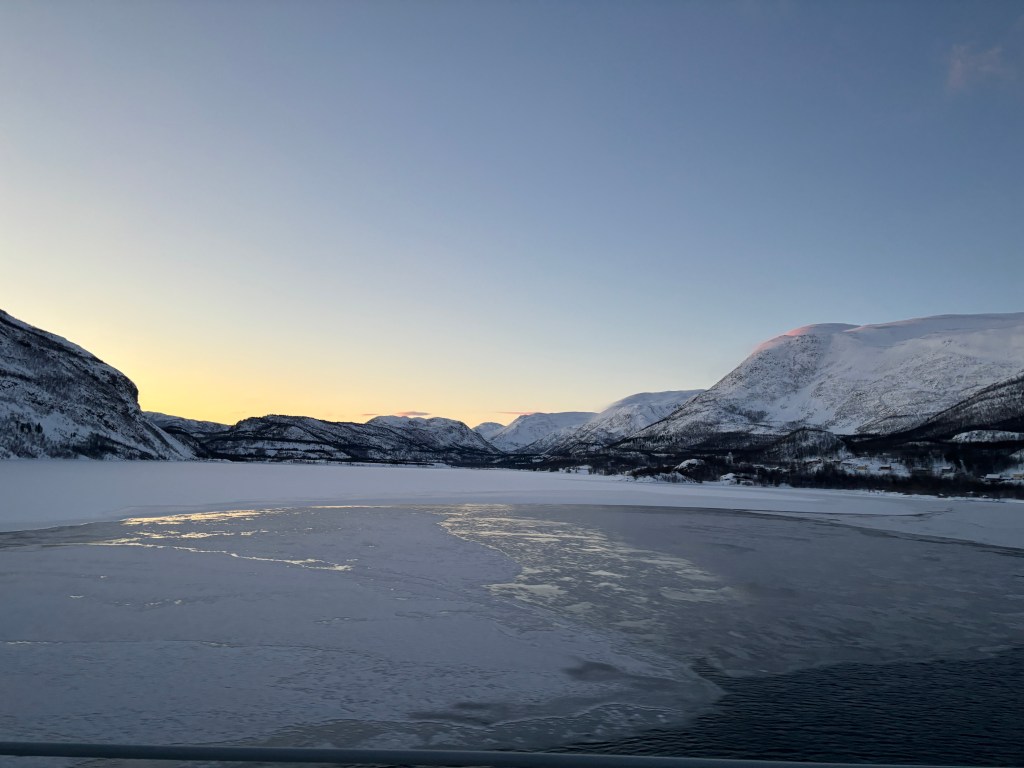
These beautiful bay pictures show where many of the German navy ships were once anchored.

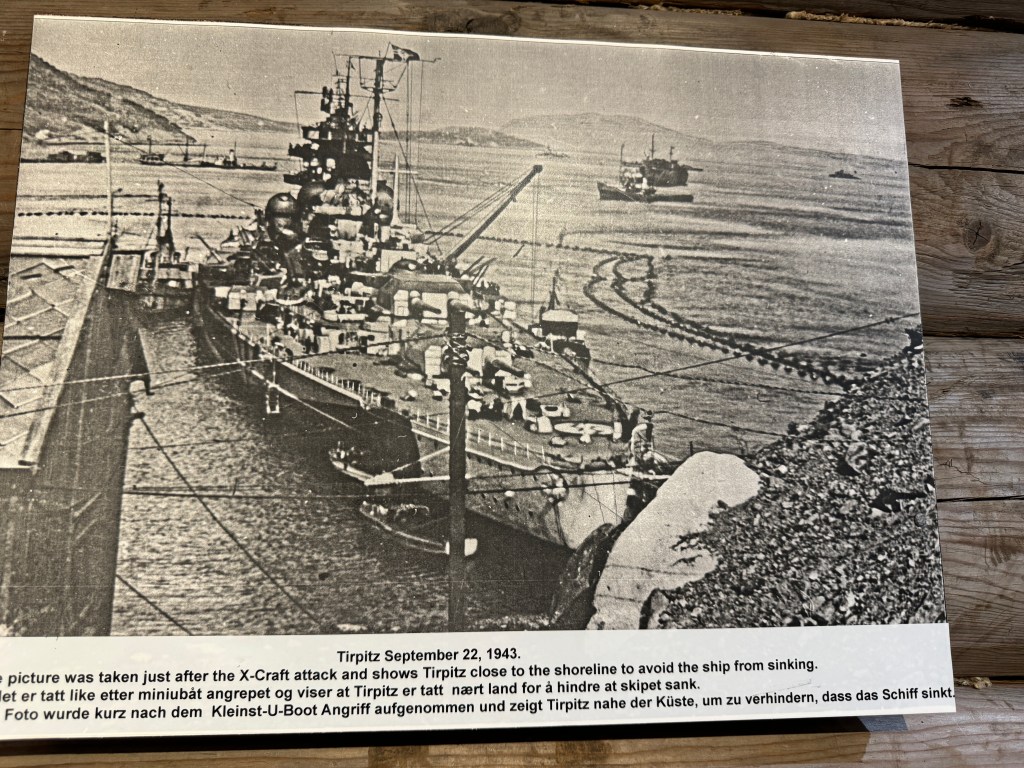
In September 1943, the Royal Navy struck a blow near Alta.

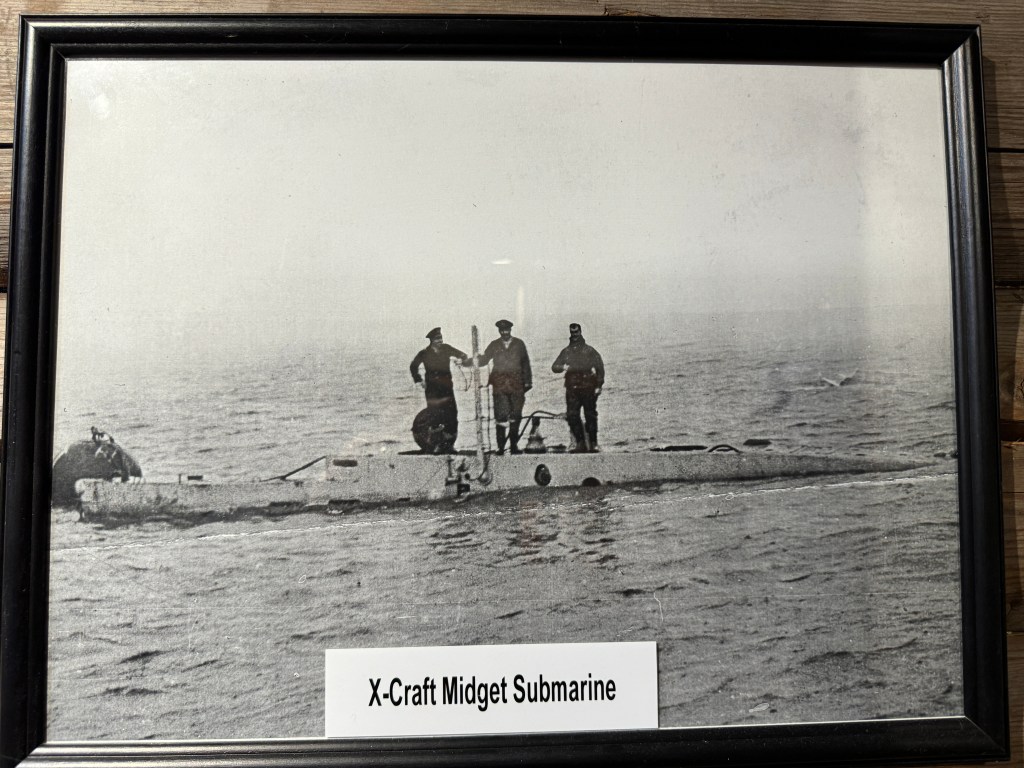
The Tirpitz was damaged by a series of attacks from mini submarines and bombers. 

The ship made it to land but was unable to return to Germany for a full overhaul.

The Tirpitz was repaired enough to sail to the Tromsø area to be used as stationery artillery. 

The Tripitz was sunk in the Tromsø bay by the Allies in late 1944.
Alta was devastated at the end of the World War II as the Germans instituted as scorched earth policy in the wake of their retreat.  They destroyed almost everything including buildings, infrastructure, mines and wells.
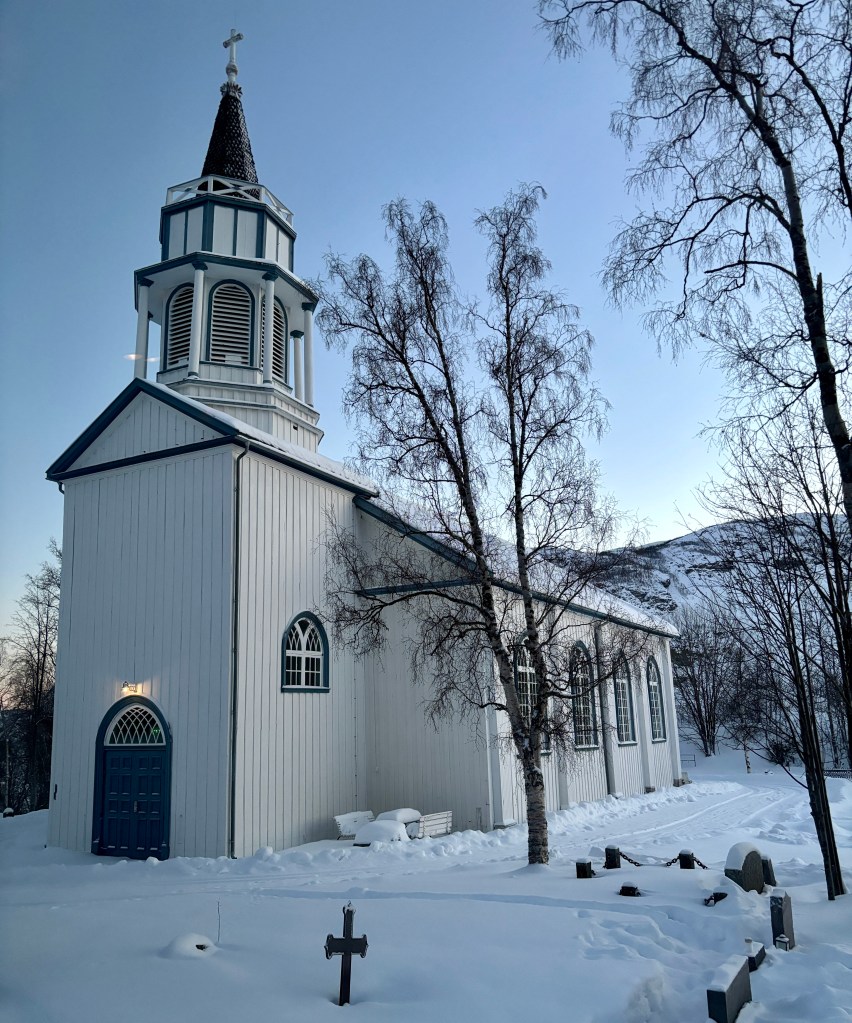
Two churches survived the German evacuation destruction.  This church was built in 1858.

This second church was built in 1937 for the local mining community that once numbered over 1000.  

Many miners were Finns and the statue is in memory of them.

It is not known why these two churches were all that survived the destruction, but it is assumed that a few German soldiers had qualms about destroying churches.

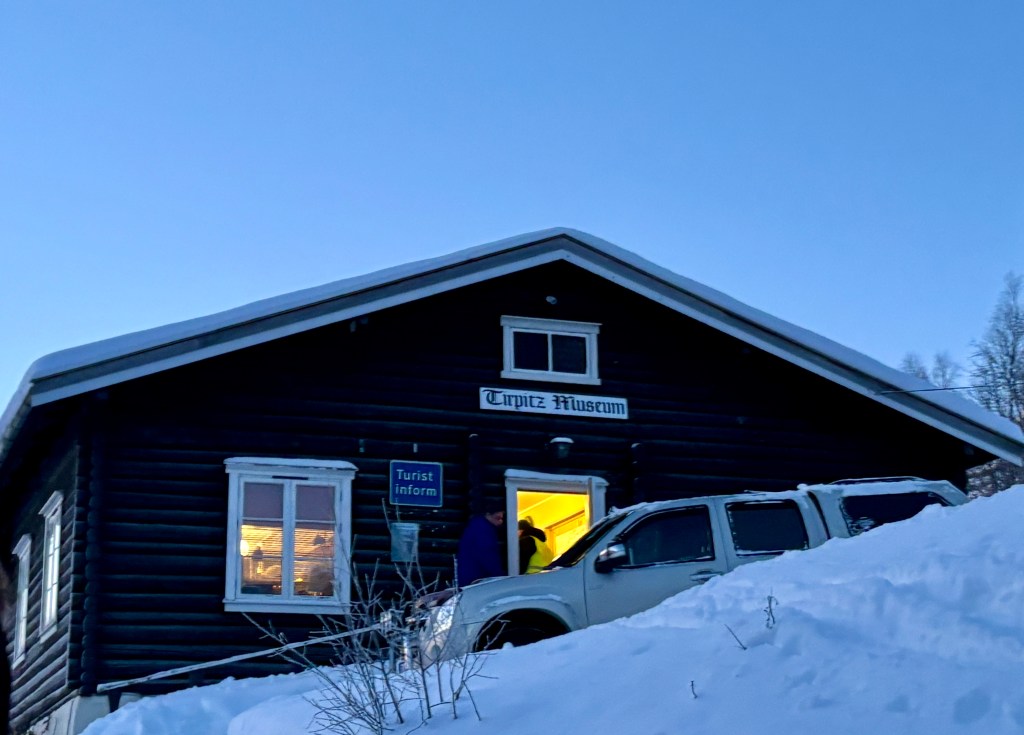
Our tour took us to a museum named for the German battleship Tirpitz.  It is housed in a cabin that was originally built in 1888 in southern Norway.  The cabin was taken apart and brought to Alta after the war because of the desperate need for buildings.

We began with a film about the Tirpitz from its 1939 beginnings in Germany to its 1944 sinking in Tromsø, Norway.

We saw photographs and artifacts that told the story of German occupation and Norway’s struggle.

We learned that chemicals provided a “smoke screen” for the Tirpitz from the allies above. The chemicals had a decades long effect on tree growth as documented by tree ring data. 

This wedding dress was made with silk from a German parachute.

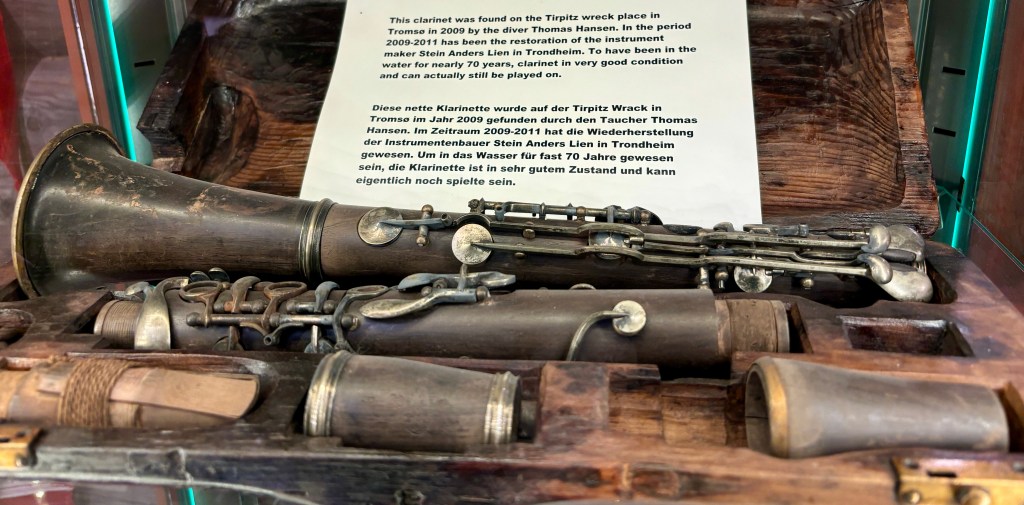
This clarinet was found by divers exploring the Tirpitz wreckage in 2009. Some wreckage is still in Tromsø bay and visible at low tide. One article I read said that it is possible to buy knives made from Tirpitz steel.

We left the museum and headed back towards town. I’m not sure what atmospheric and temperature events were in play to make this part of the bay look feathered but it was cool looking!

On our way back to the ship, our tour guide (from Ireland) was very excited, and distracted, by the sun being almost visible.  (I’m sure I’d be very excited to see the sun too if I hadn’t seen it for two whole months. Living in Phoenix, we get super excited if the summer sun goes behind a cloud once in a while !) He still managed to tell us a few things.

Our guide told us there are 20,000 people in Alta but there is no hospital.  The nearest hospital is three hours over land and the road is frequently closed.  There is an air ambulance that can fly patients to the nearest hospital or to Tromsø if needed and weather allows.

Alta does have a clinic and a birthing center.  The birthing center is only for women having baby number two or more. First time mothers must go (or plan to go) to one of the hospitals outside Alta.  Our guide said he found it surprising that a community of 20,000 didn’t have a hospital in a country as wealthy as Norway.  I must agree.

Later, we had an afternoon tour around Alta that included a UNESCO World Heritage Site for ancient rock carvings.   Randy was still thinking he was done with old things and ancient rock carvings dating back to 4200 BC didn’t dissuade him.  It didn’t help that we weren’t actually even going to see the stone engravings because they were covered with snow.  

We had seen some near Tromsø anyway.

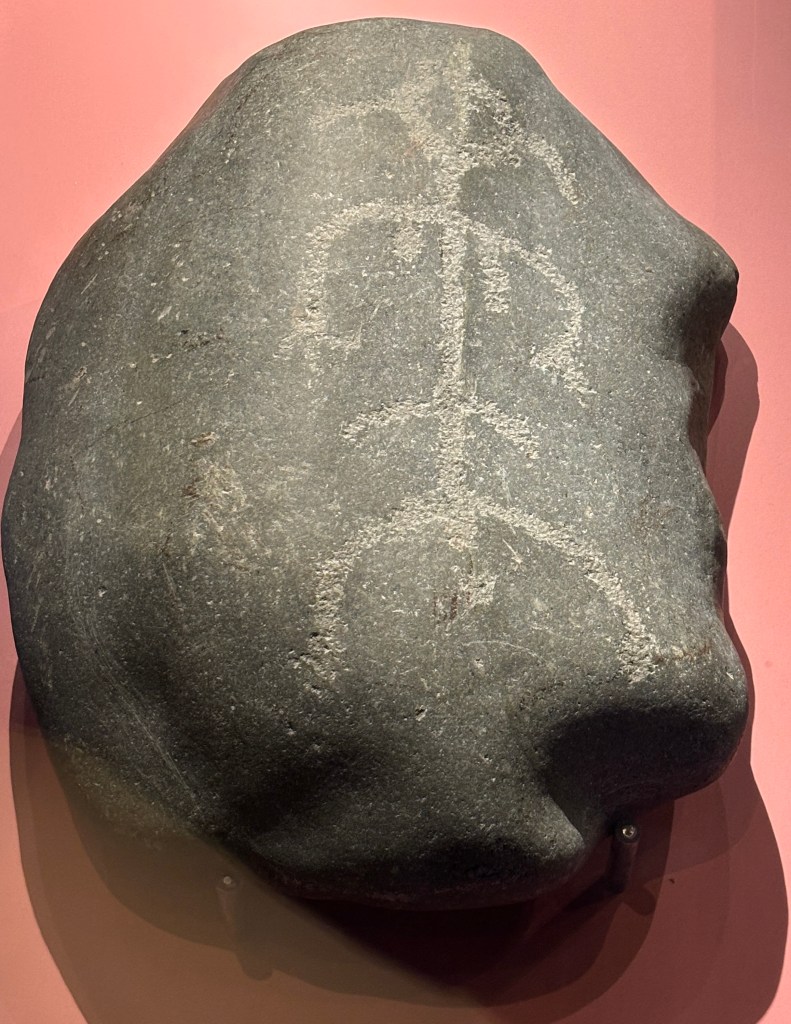
I went on the tour and went to the Alta Museum.  The concentration of carvings are surrounded by the museum.   More than 6000 etchings in and around Alta were discovered in 1973.  They are believed to be from the Komsa people and include people performing rituals, hunting, and gathering. 

There are also animals and symbols.

This rock carving is 4,000-5,000 years old. It was discovered around 1950, in a potato field near Alta.

As expected, all I could see was the surrounding beauty and the museum displays.

Our second tour stop was the same church, the Northern Lights Cathedral, where we had been the night before for the organ recital.  

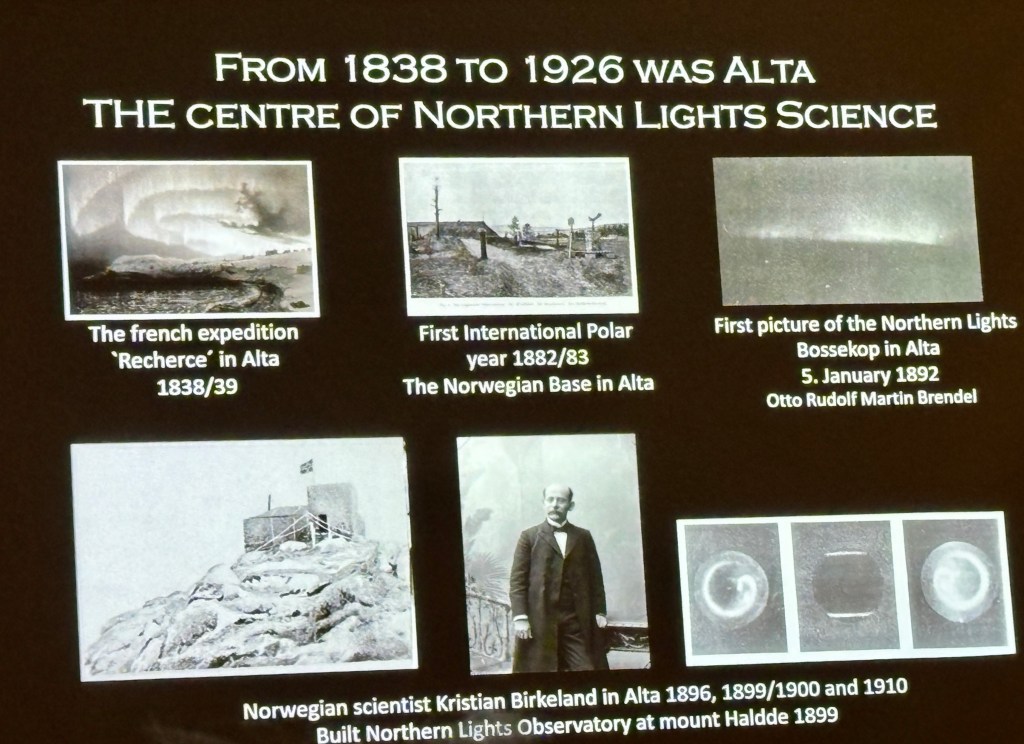
This time we went downstairs to learn more about the northern lights and how Alta is the place of origin for northern lights research.  The first northern lights observatory opened in Alta in 1899.  

Norwegian physicist Kristian Birkeland made a breakthrough in understanding the northern lights phenomena in the late 1800s when he proposed that charged particles from the sun trigger polar lights.   He made a model to demonstrate his theory.

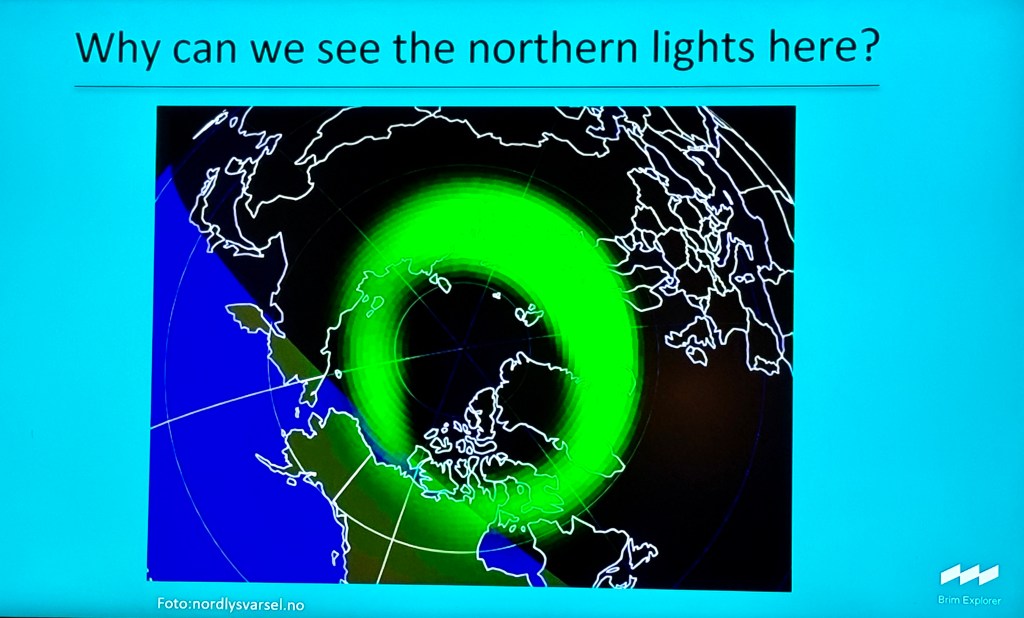
It is now known that Alta is situated under the aurora oval.

It was Galileo who named the lights the aurora borealis after he saw the red lights in the sky in Rome.  It is very uncommon thing for the lights to dip that far south.

We had a third tour of the day, the last being to Pasketeun, a working slate quarry.  One hundred and fifty people are employed at the site.

Although we saw some products made of slate, the purpose of our visit was to be away from the city and have the opportunity to see more northern lights.

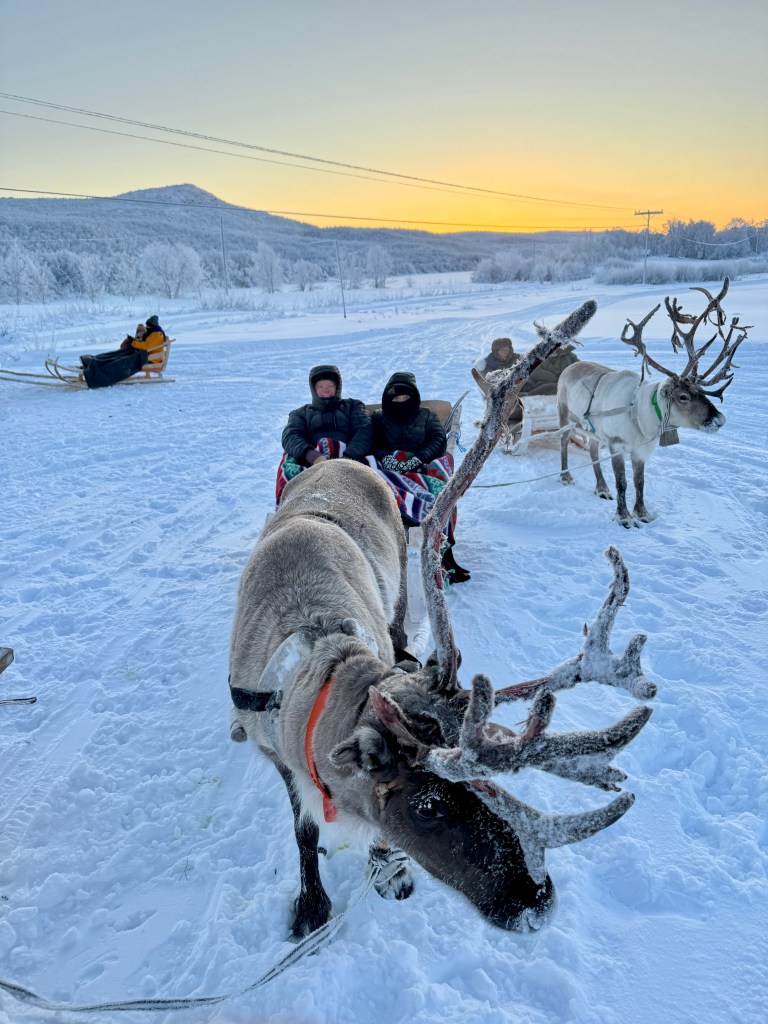
The Sami family we met yesterday were there with a warming lavau and a couple reindeer. 

We had yet another good presentation about the lights but not a lot of real opportunity to see the real thing until the end.  

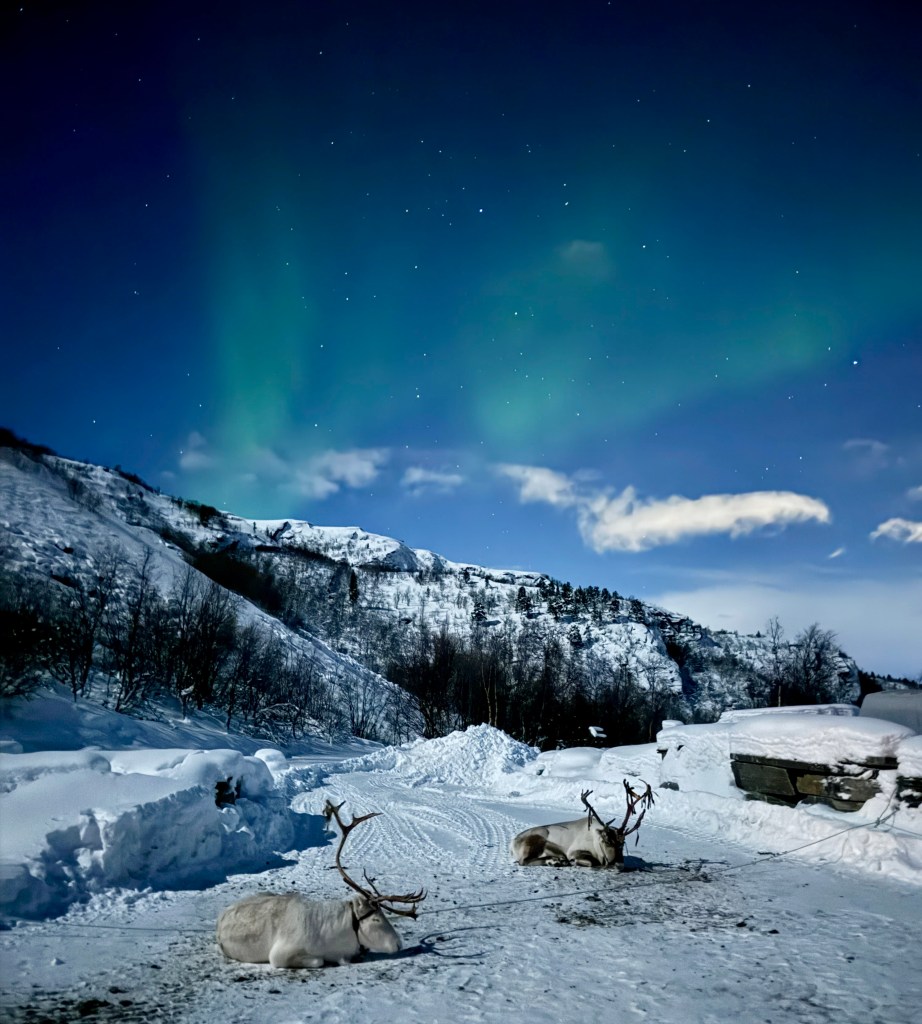
We were trying to do artsy shots with the reindeer while we waited for the lights to intensify!

Flynn’s tour came to Pasketeun just before we left.   

His timing was much better than ours as he had some wonderful light opportunities.  

These are his pictures.

No worries that Flynn got the better light show. We were more than satisfied with the lights we saw on this trip overall and he shares! Also, we were warm and comfortable back on the ship hours before he got back.

When we arrived in our cabin there was a tray with sandwiches, cakes and wine waiting for us.  This was the second time this had happened when we were off the ship over the span of time when dinner was served.   The first time we had been on a dinner cruise so didn’t need the extra fare, but this time their thoughtfulness was most welcome!  (We were hungry enough that I forgot to take a picture before we dug in.)

Flynn, and the others on the late tour, got back onboard and we sailed away about midnight.  

We were in Alta on January 20, 2024.
Next Up:  The Norwegian Sea plays rough with us too!

Posted in Uncategorized | 1 Comment

Northern Lights Cruise: The Sami and the Northern Lights Cathedral

On board the Viking Venus, we had signed up for a phone alert for when the crew see the lights during the night. Some people got the alert at 4:00 a.m. but we had not.  We had been fortunate enough to see the lights during our two nights in Tromsø, so we were fine with sleeping!

Today was our first day in Alta, Norway. It is believed by some to be the northernmost “city” in the world.  With a population of about 20,000 people, it gained “city” status in 2000 after combining two smaller communities. 

There are only 1.4 people per square mile in this most northern county of Norway.

The drinking water quality in Alta is consistently the best in Norway. Drinking water quality in Norway is consistently the best (or second best) in the world.

The municipality of Alta provides ice skates, tents, canoes, camping gear etc. free of charge for the health and recreation of its citizens. 

Salmon season fishing attract visitors from all over the world.  There is a salmon lottery for locals with tickets costing about $100.  The cost for guest fishermen along desired stretches of the river goes for $5000.   

Alta is at the same latitude as Barrow, Alaska but has more population and a more hospitable lifestyle because of the Gulf Stream.  Unlike Alaska, there are not many bear.  There are moose, wolverine, wolf and fox.  There are reindeer in this region owned by the Sami.

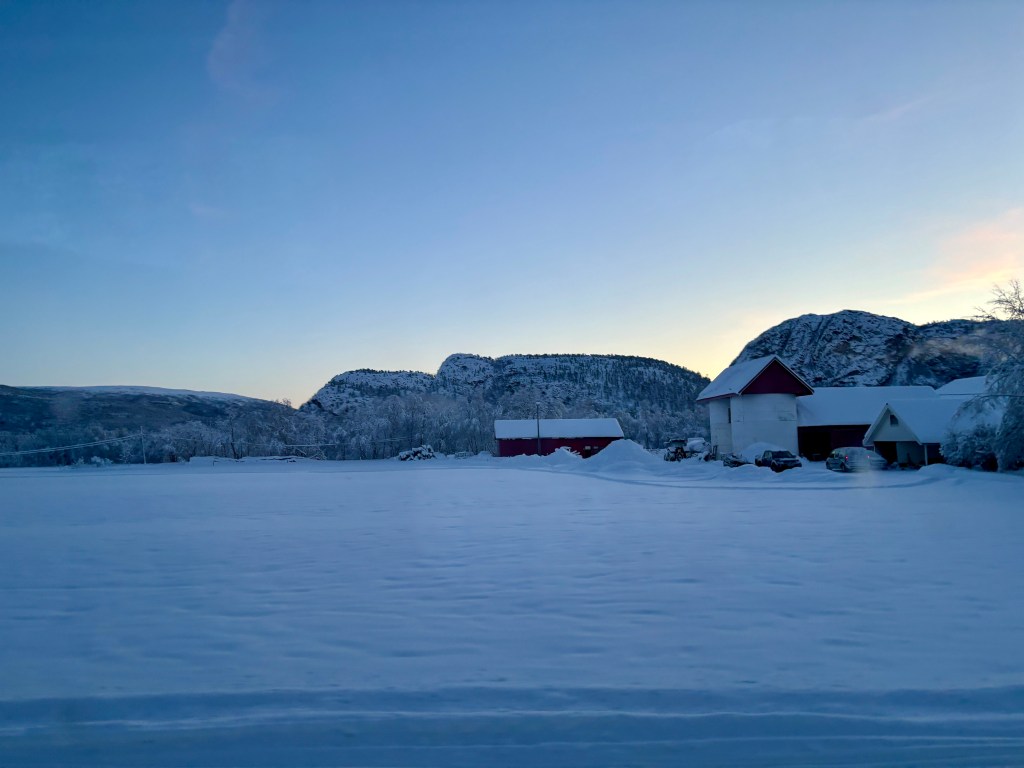
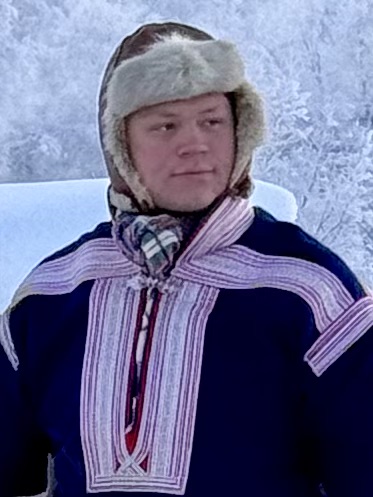
Our activity for the morning was to tour a Sami camp.  It was a bit cold!  The temperature is shown in Celsius but equates to about 1.4 degrees Fahrenheit. 

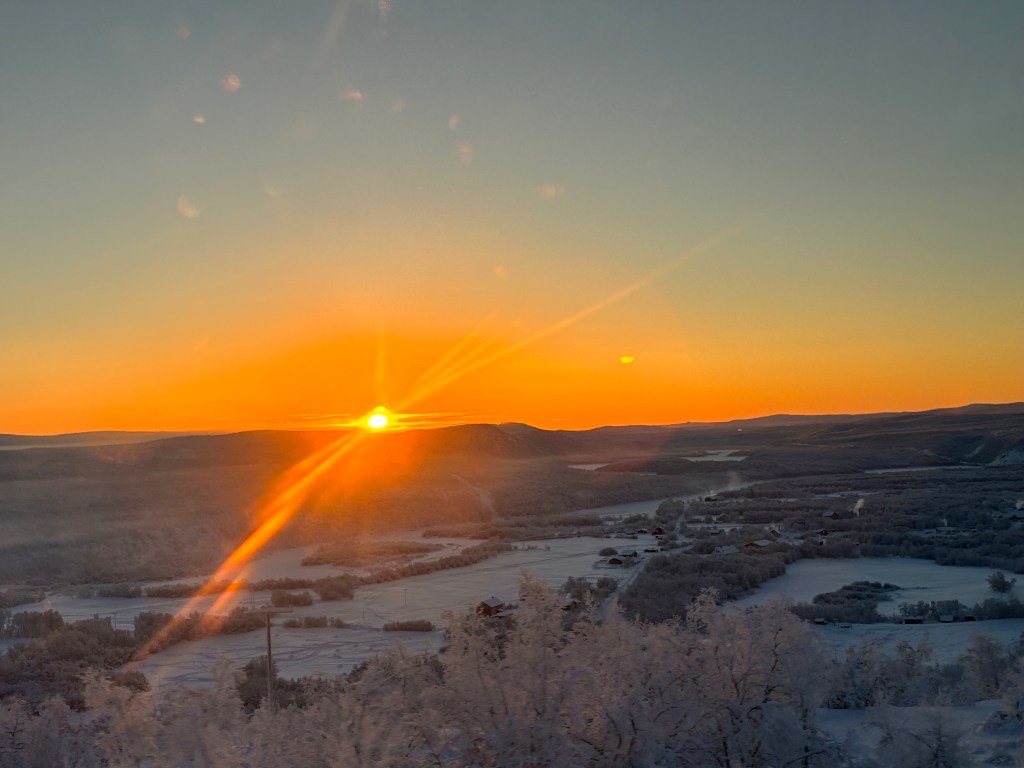
While on our bus ride we all clapped for the sun making a real appearance for the first time in over a week for us, and for the first time in two months for those living in this part of Norway! 

We had been told that Sami culture can be identified from 2000 years past as the only recognized indigenous group in Norway.  The Sami are the only ones allowed to own and hunt reindeer.

In 1968-82, a conflict erupted in Norway about building a dam in the area.  The controversy grew because of how it would affect the Sami, an indigenous group that lives in areas of Norway, Finland, Sweden and Russia. 

A smaller dam was eventually built but the process led to a total overhaul of awareness and representation for Sami, allowing for some exclusive protections, including their ability to own and hunt reindeer.

The Sami Village we visited has 200 people and 99 percent are Sami. 

They are encouraged to marry within the community but it is not required.  

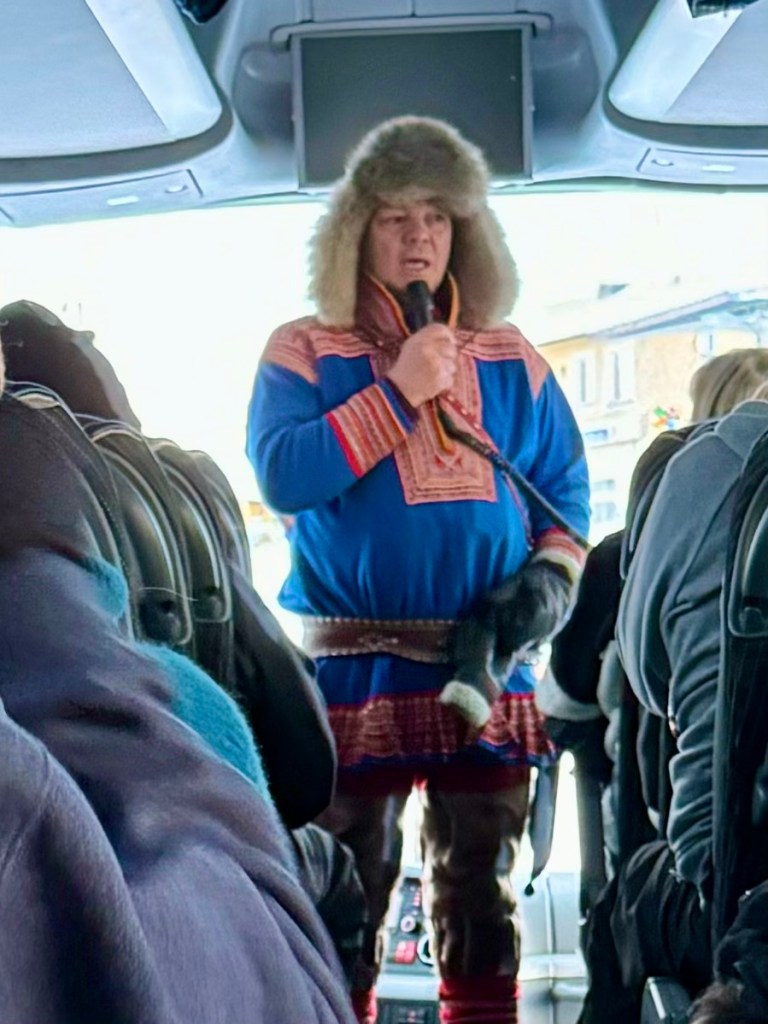
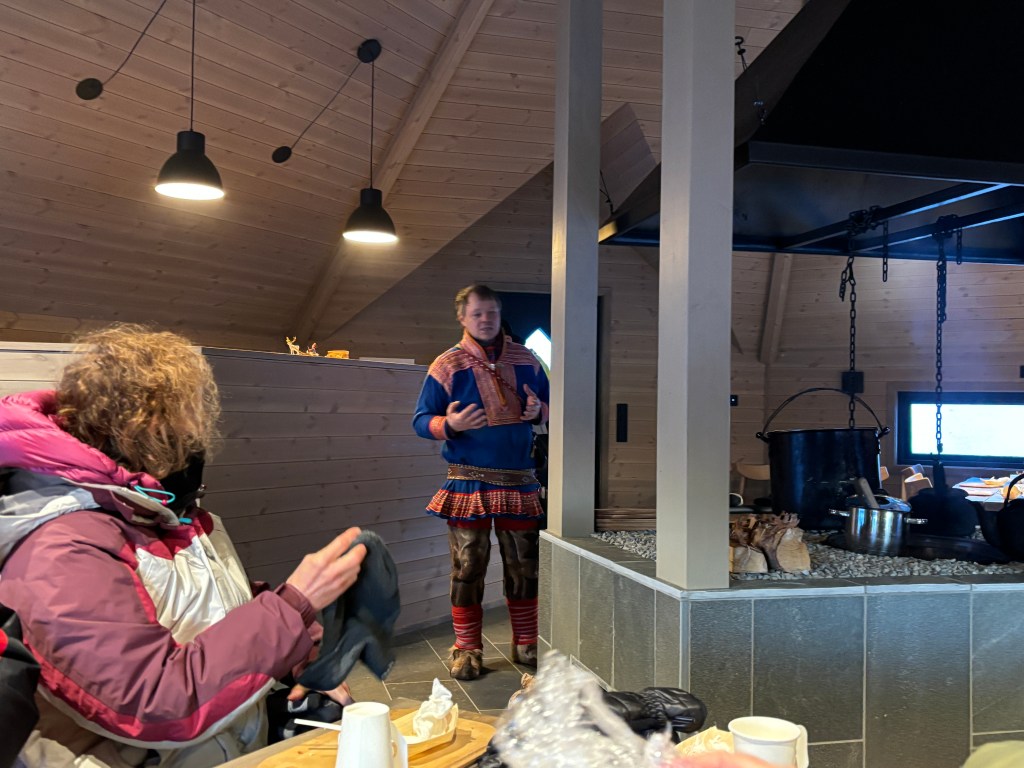
Our Sami host came on board the bus to give us an orientation before we got out.

This family’s main reindeer herd is about 70 kilometers away for the winter. 

The reindeer survive on natural lichen and grass found beneath the snow.  They are fed other food only if dire conditions necessitate. The reindeer are herded by snowmobile and dogs.

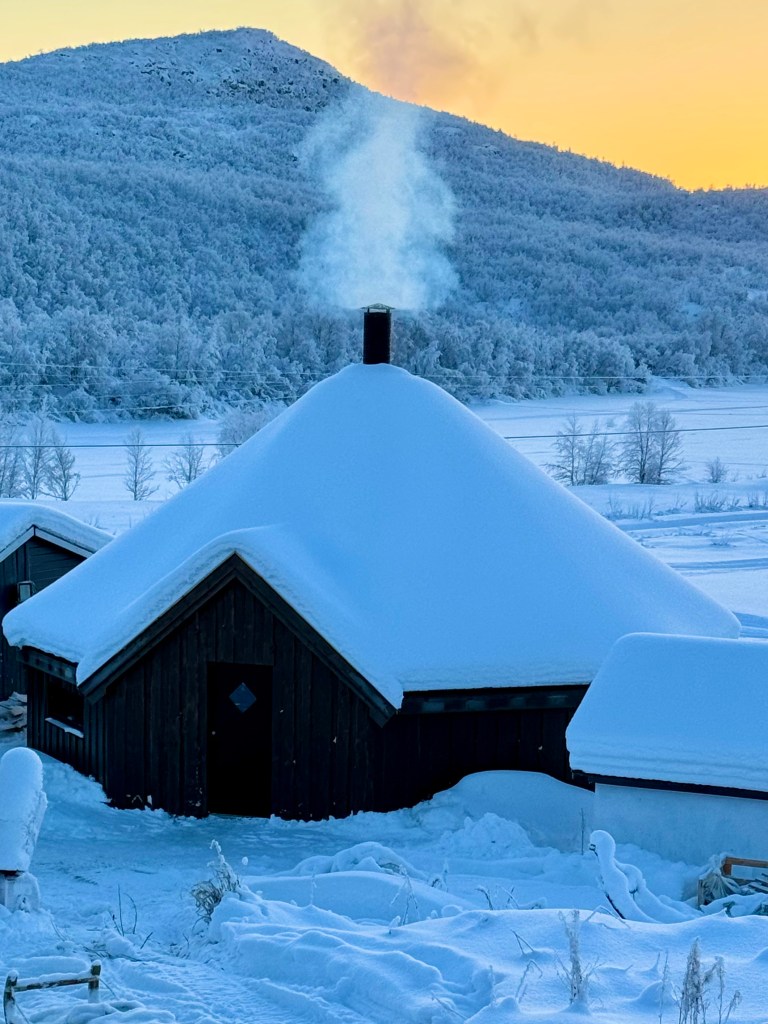
We were in the old fashioned lavau for hot tea and storytelling. Jo and Flynn are on the left.

They took a picture of us, while I took a picture of them.

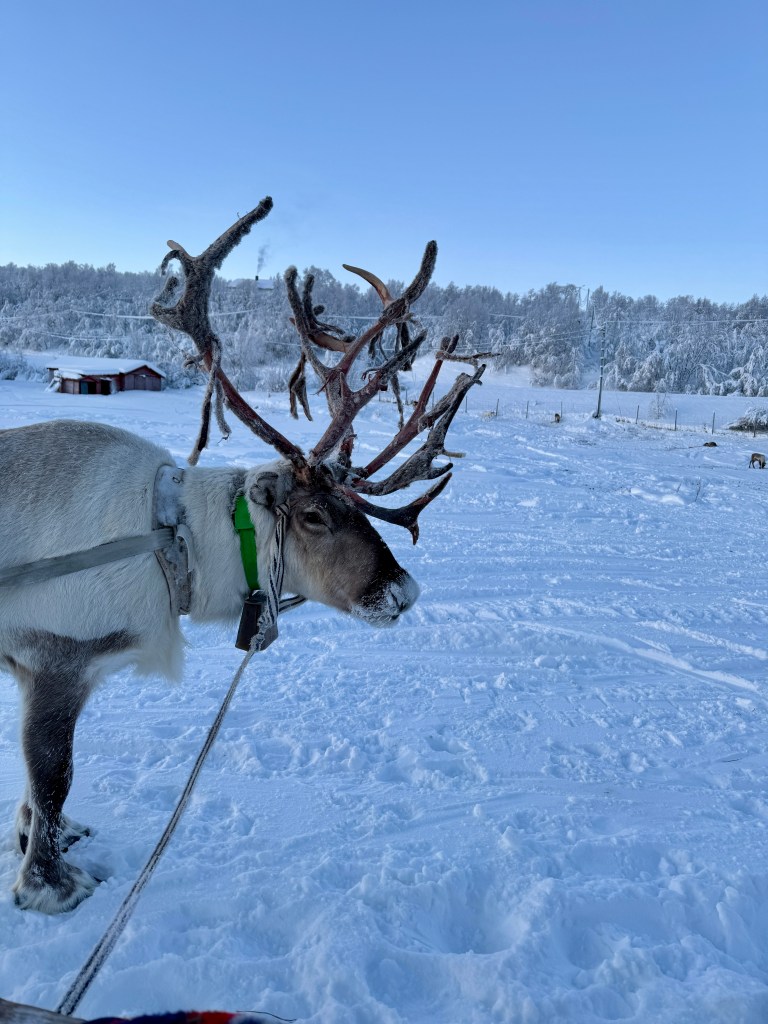
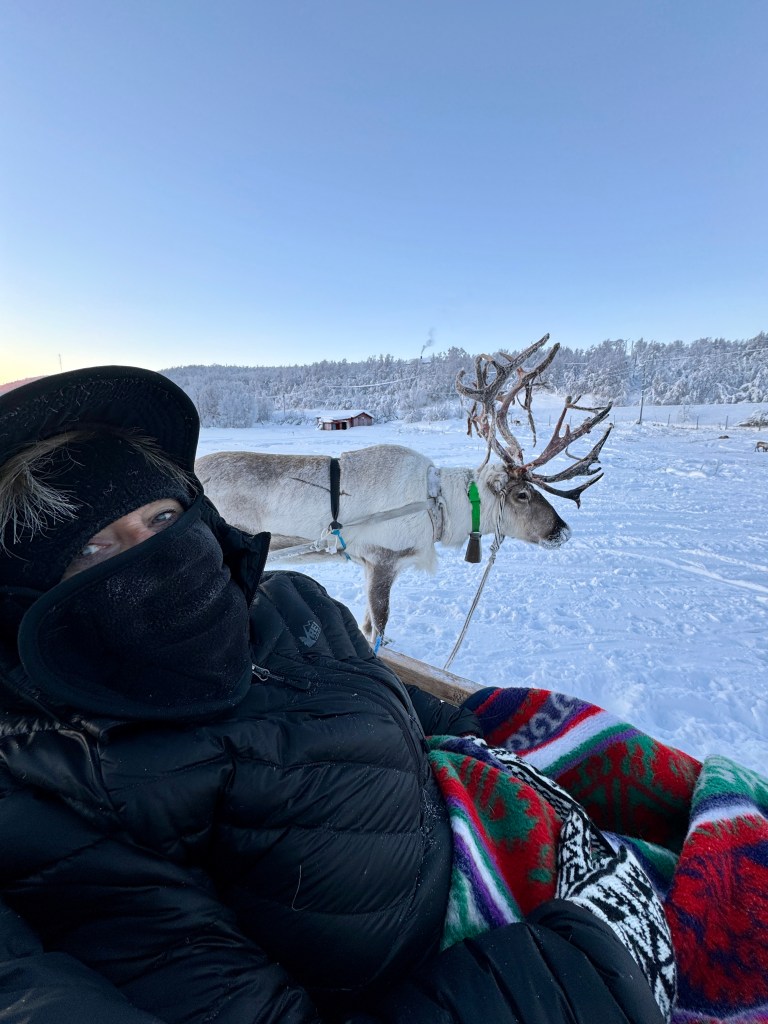
We got ready for our reindeer ride and were the most layered up that we had been yet on the trip.  We had purchased winter gear at REI and were using all of that and more. We had three layers below our waist and four layers for our torso.  We had glove liners, wool outer gloves and electronic hand warmers because, of course, we had to have some kind of electronic component!

The only time on this trip that I felt exceptionally cold (my feet) was on our reindeer ride. 

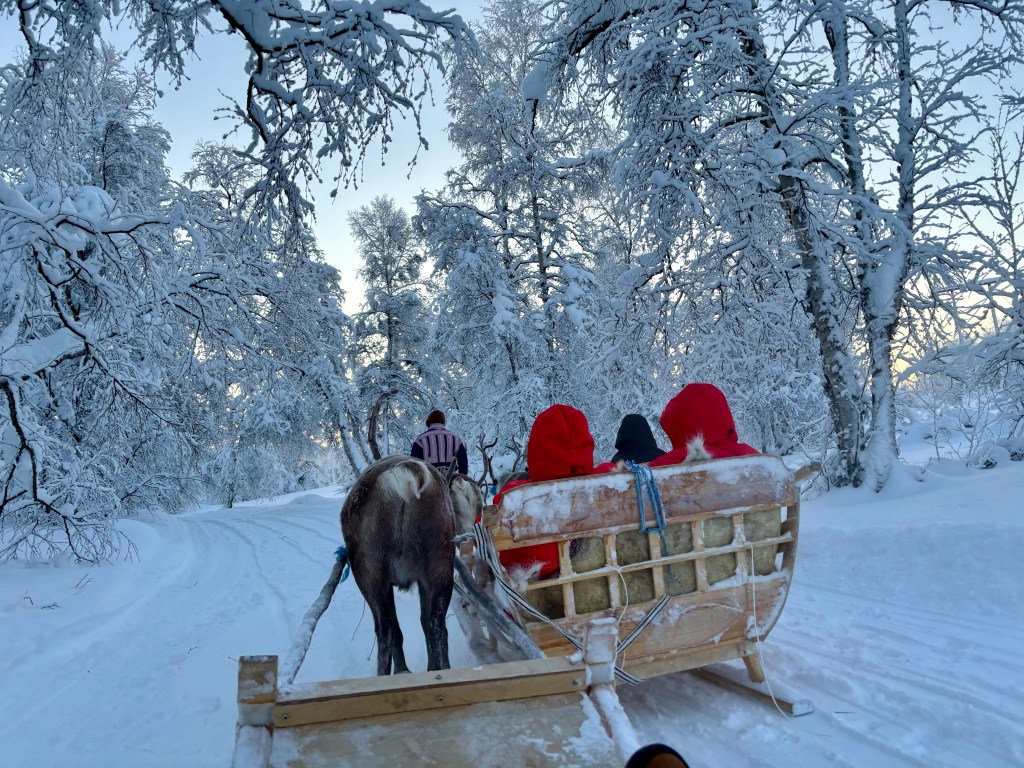
Our sleigh ride was about 30 minutes and it was very lovely.

Cold, but very lovely!

The Sami, of course, are very used to the cold and seemed not to be bothered at all.

Following our ride, we had lunch in their new cement lavau. 

We were the very first tour group to use it.

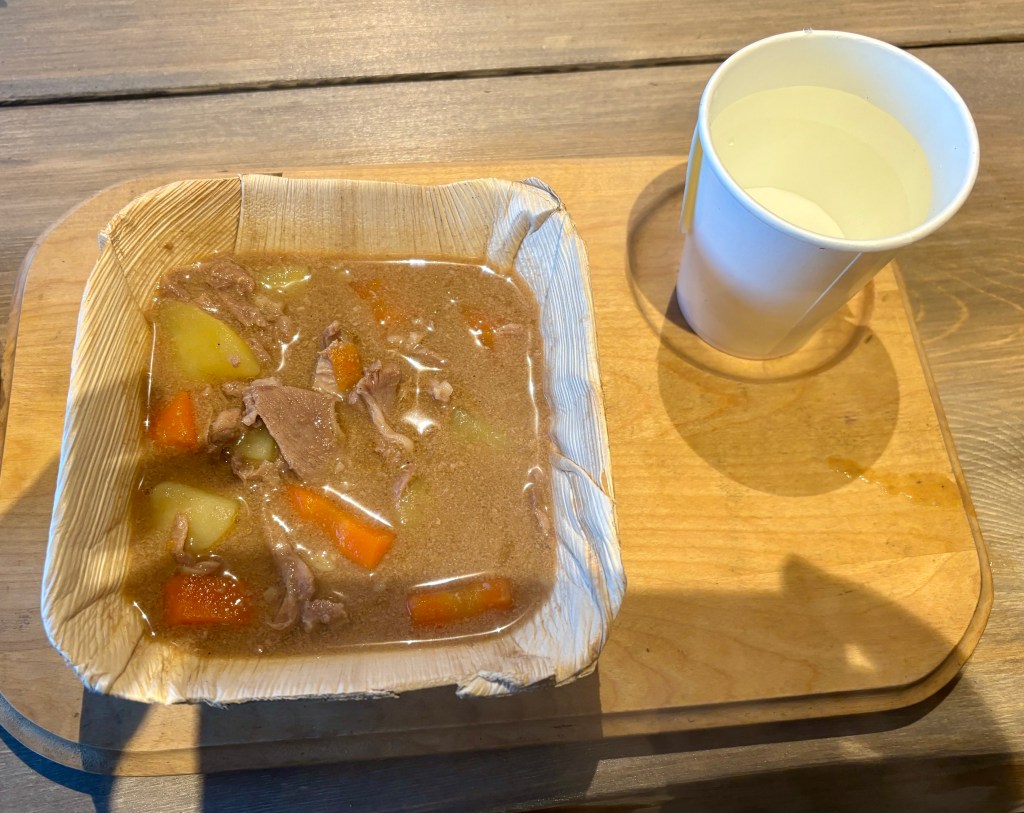
The reindeer stew, including potatoes and carrots, was quite good.  It was served with bread and butter.

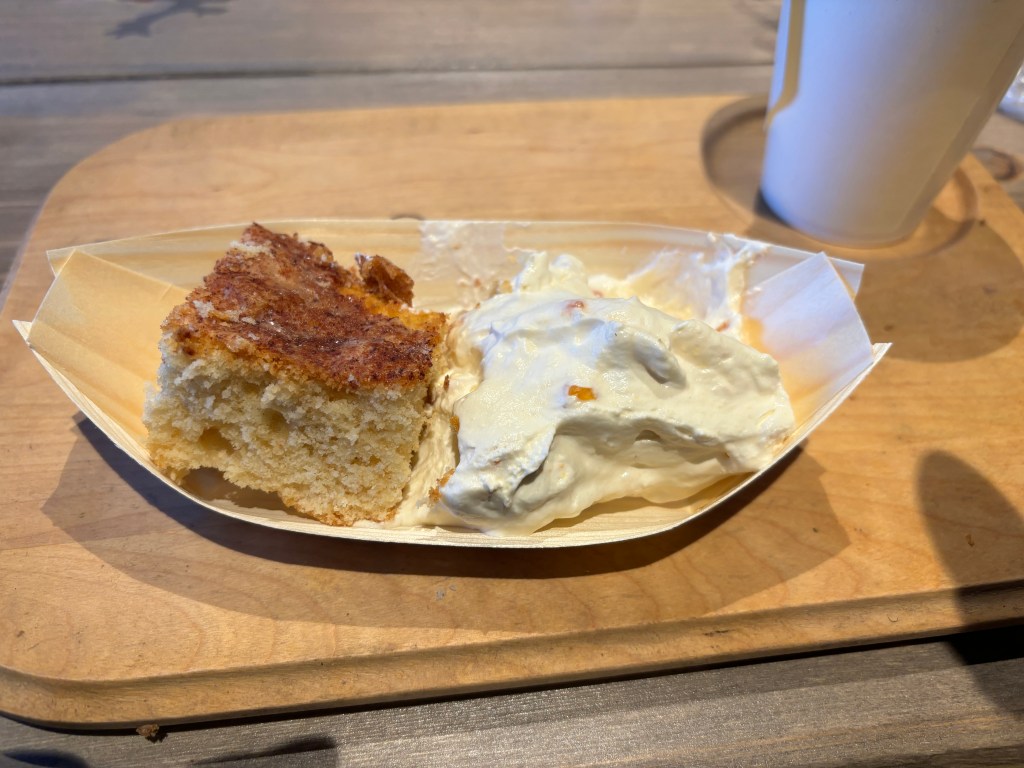
For desert we had a cinnamon topped cake with cream and berries.

We learned that only within the last 100 years ago have Sami people been allowed to own land and practice their culture openly.  

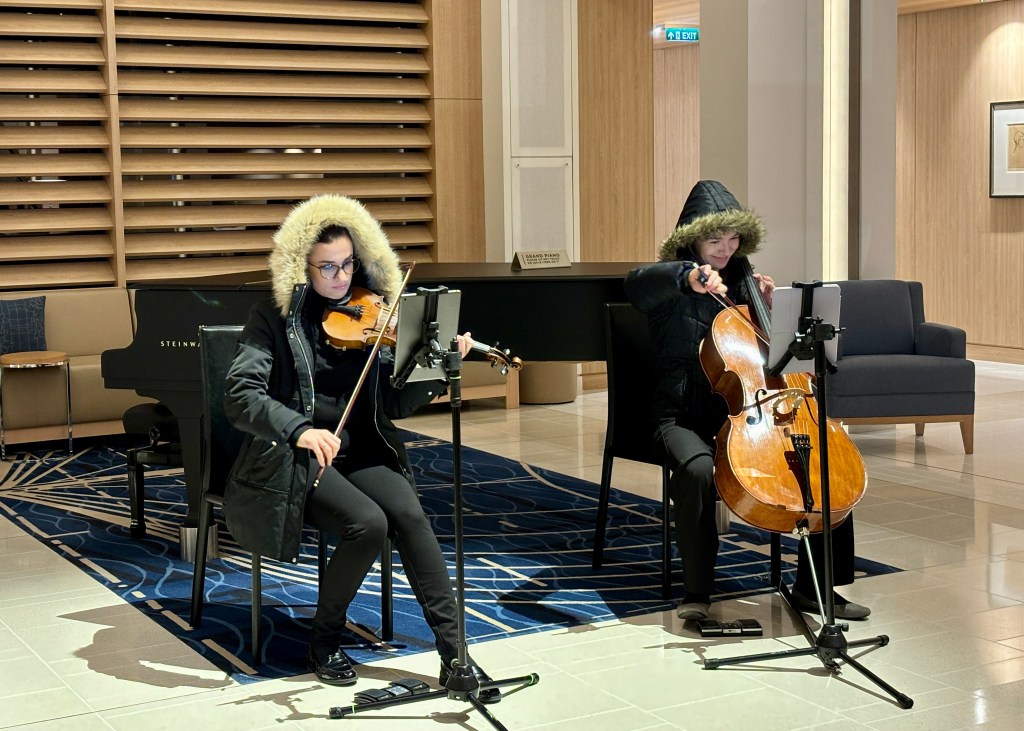
We went back to the ship and warmed up before our evening tour. The atrium area was near the gangway and our string duo still had to play!

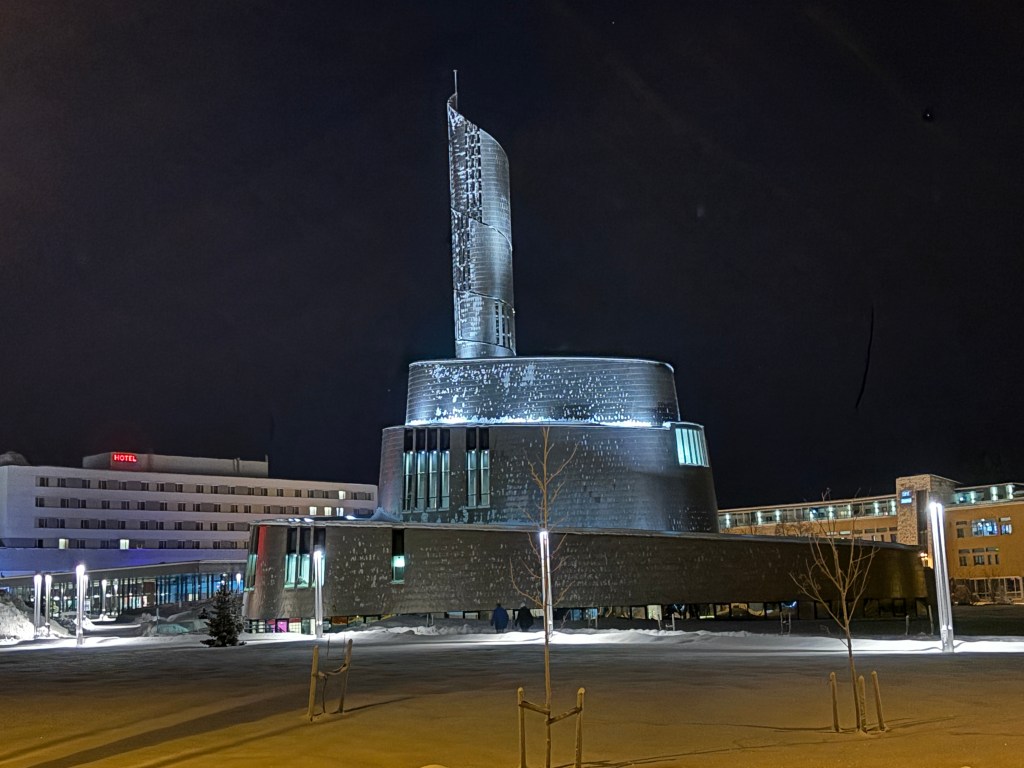
Our evening tour was a recital at the Northern Lights Cathedral.  On the way we heard once again that using seatbelts is mandatory.  We heard it every time we were on a bus in Norway.  If the police stop the bus, and we’ve been so advised, it is the tourist that pays the fine – about $120.

Our evening guide told us that when Alta became a city (20,000 population) in 2000, they felt they needed a new landmark. Because Alta was considered the City of Northern Lights, they wanted something to reflect that status.

It took years to get the church designed and cost $11,000,000 to build.

There are 40,000 interlocking titanium plates on the outside.  They are self cleaning and reflect the light.

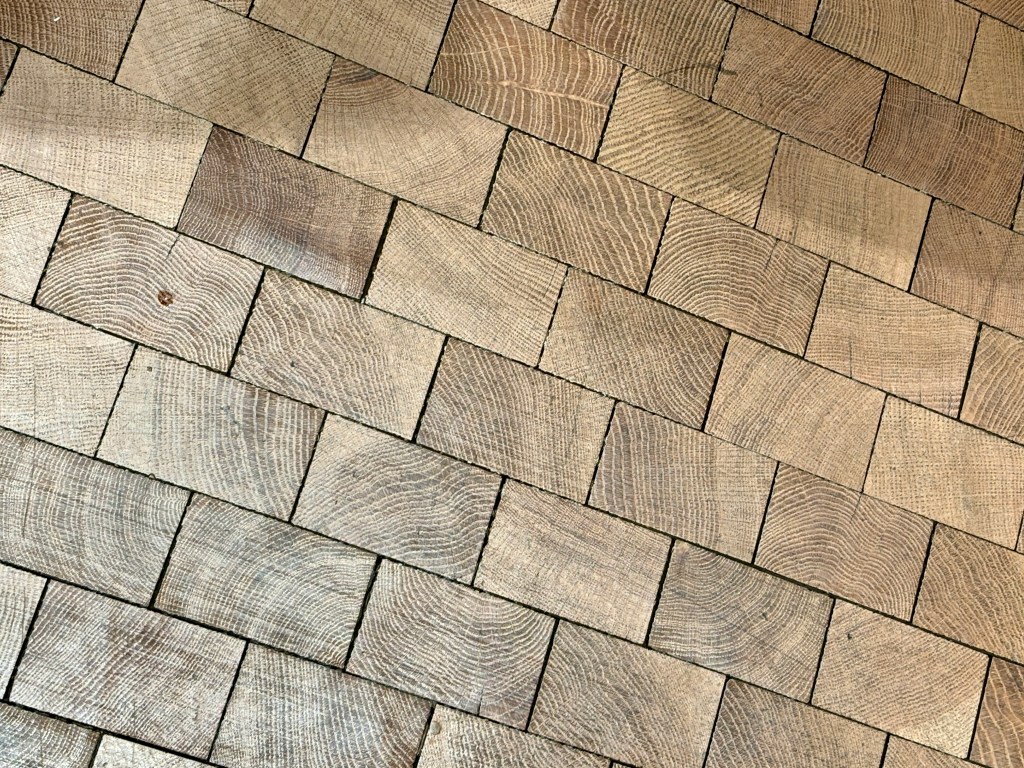
The floor is made of German Oak.  It worked well until last summer when there were high temperatures and humidity resulting in some sections expanding and popping out.

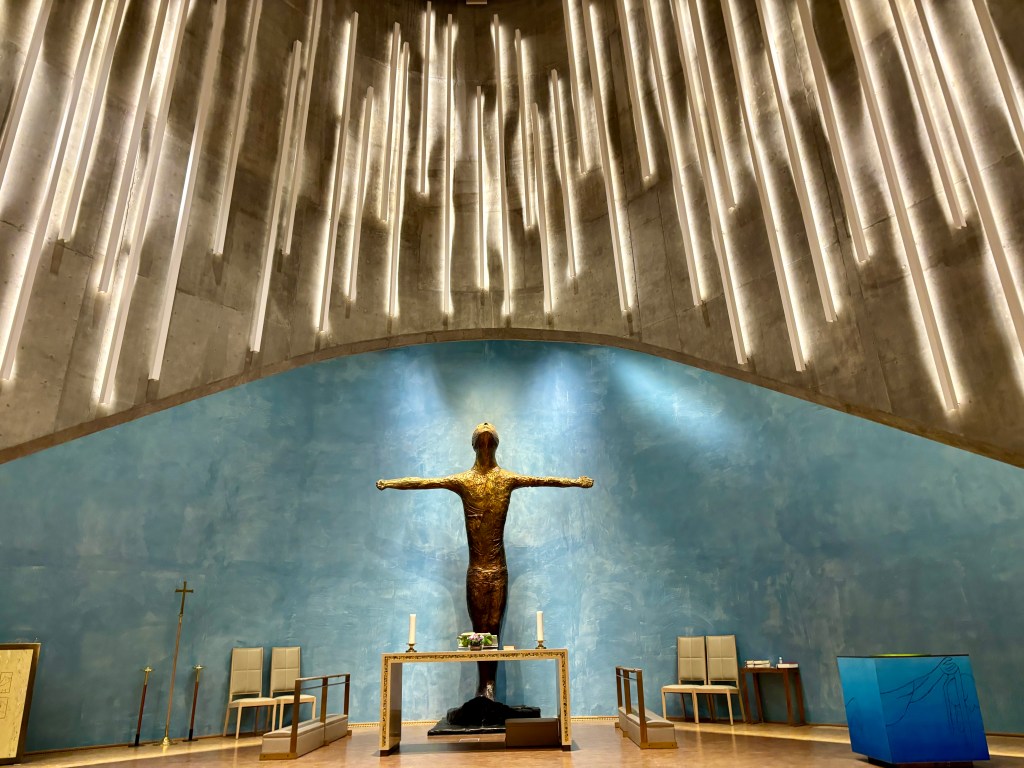
Jesus was designed to be looking up to heaven as a more positive vibe than the typical Jesus on the cross. 

The sun sets on his face. 

One of his hands is a fist to represent struggle while the other is open to represent welcome. The statue was made in Tuscany, Italy and the building was built around it.

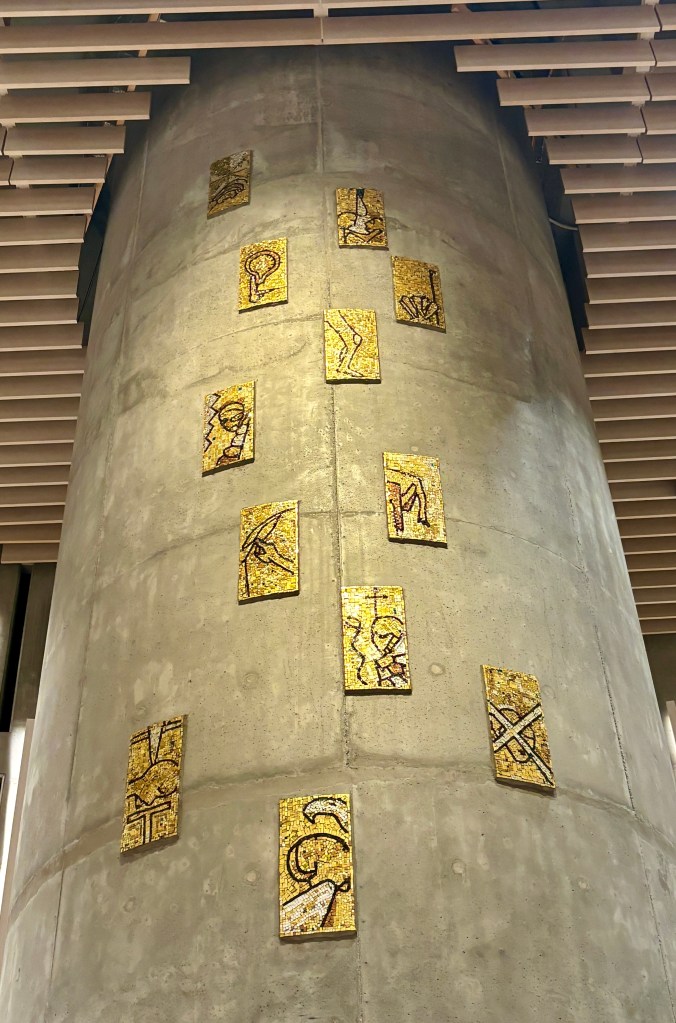
These 12 pictures might represent the 12 apostles or the 12 Jewish tribes or just twelve biblical looking pictures.  No one is really sure.

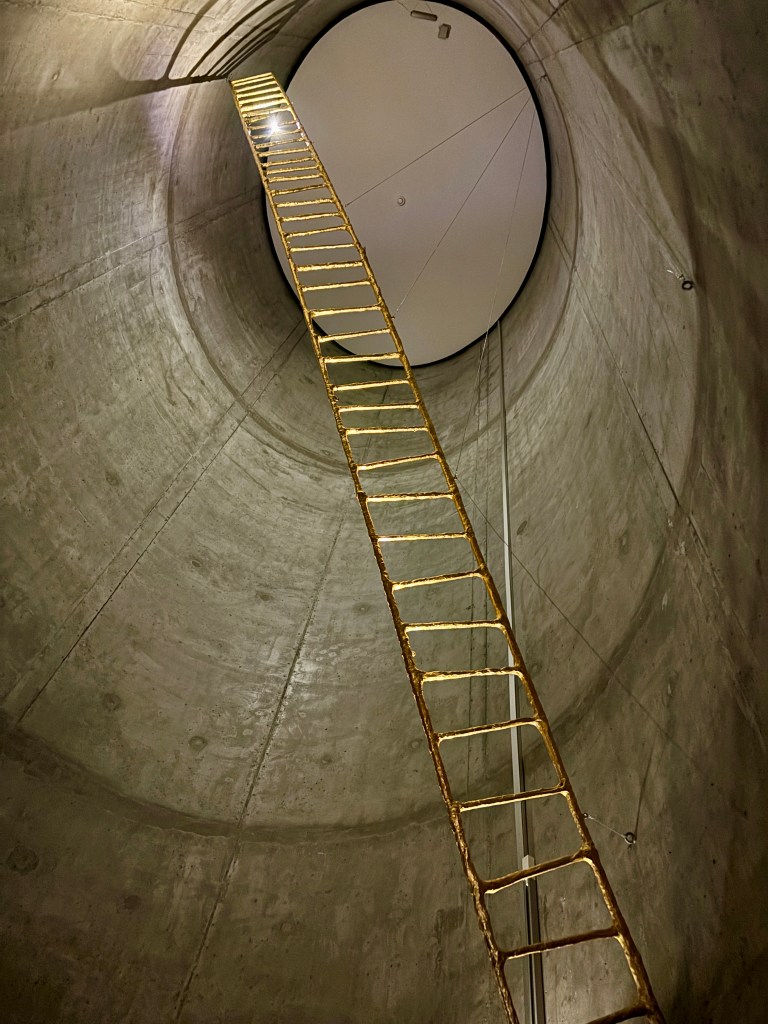
The golden ladder represents Jacob’s ladder or a way to heaven. Interpretations seem a bit loose.

The church opened in 2013 but the inner structure is made of concrete so they had to wait a year for it to cure before installing the organ.

The Northern Lights Church is a Lutheran church with services but is also a concert hall for the city. 

We were able to enjoy a concert by a Russian organist and composer Irina Girunyan, who lives in Alta.   Honestly, some of the music was very strange but we don’t know enough to determine whether the strangeness was the Norwegian composer’s work, or her interpretation of it, or our very unsophisticated exposure to any organ music outside of Christian hymns and Phantom of the Opera.

After a very good, but cold day,  it was nice to come back to the ship and off to bed early.  We watched the evening’s music show from there. (Broadcasting events live to the staterooms is one of the things we like about Viking Ocean cruises.)

At 11:00 pm we had an alert that the northern lights were spotted off the port side.  Our cabin was on starboard and we were warm and not getting out of bed.  It was shocking how blasé we had gotten about seeing the lights after out two successful nights!

We were in Alta on January 19, 2024.
Next up: We learn about this part of Norway during World War II and see more lights!

Posted in Uncategorized | 1 Comment

Northern Lights Cruise: The Dogs and the Lights

Our tour led us away from the city of Tromsø to an area to see and interact with sled dogs.   We missed our dog sled riding excursion when we missed Narvik but the purpose here was really to go to a darker environment in hopes of seeing the northern lights.

We saw Tromsø’s Arctic Cathedral all lit up in the distance. We’d be visiting there the next day.

Along the way our guide was checking apps for various values on atmospheric load and particles and said she was optimistic that we would see the northern lights.

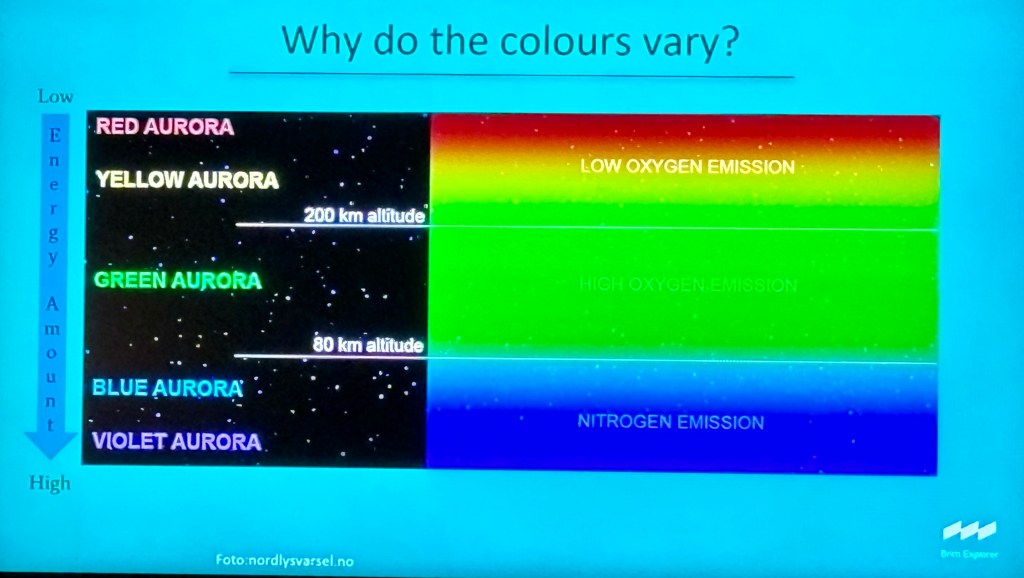
She told us a bit about the science behind the lights.   Very basically, there is a process involving solar eruptions, particles, plasma and electrons.  It is the end of the solar eruption that is sometimes visible in various colors.

The sun has an eleven year cycle of maximum and minimum solar eruptions.  The maximum is projected for 2025. As a result 2024 and 2026 are also projected to be very good.  We did not know that when we booked – just a fortunate coincidence. Don’t plan on taking this tour in 2030 or 2031, the low part of the eleven year cycle!

We arrived at our destination and started with the Alaskan Husky Dogs while waiting for the lights to, hopefully, develop.  (Yes, this is Norway, and yes, I wrote Alaskan Husky Dogs.)

Dogs go through training to be chosen to pull a sled with a team.  They are highly socialized.  Appearance is not important.

Most of the dogs were in their shelters but some came out for a people visit.  

This dog was tucked into his shelter but one was just laying on the ice. He was so still that several of us that thought he was dead.  Someone alerted a handler and he assured us that the dog was fine.  He said that this particular dog gets too warm in his shelter and often sleeps outside.

We learned that Norway has the longest dog sled race in Europe and the second longest in the world.  The longest is the Iditarod in Alaska. 

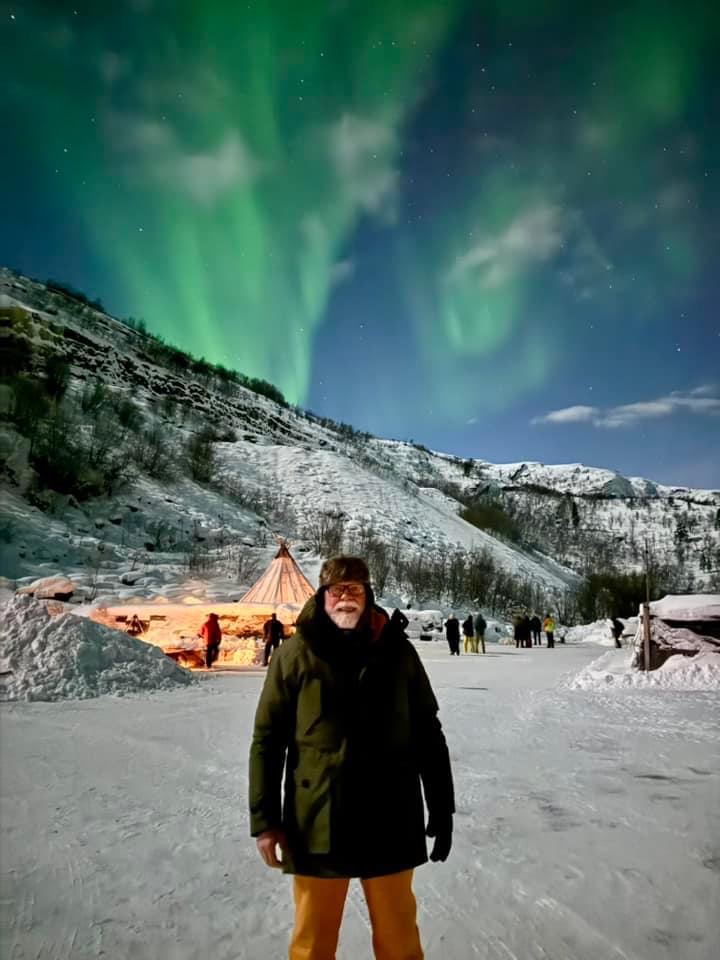
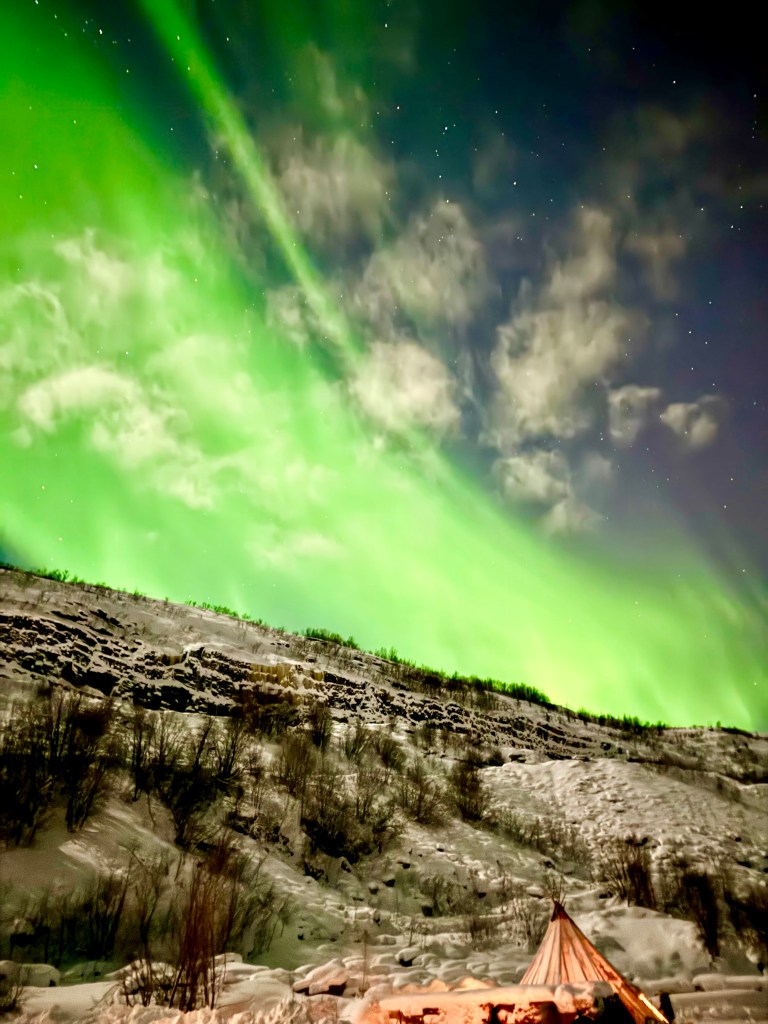
We gathered in the field and our tour guide’s optimism paid off.  At first we saw the faintest whispers of white, whispy “clouds.”  

After a very short while, we could recognize the difference between the clouds and the northern lights.

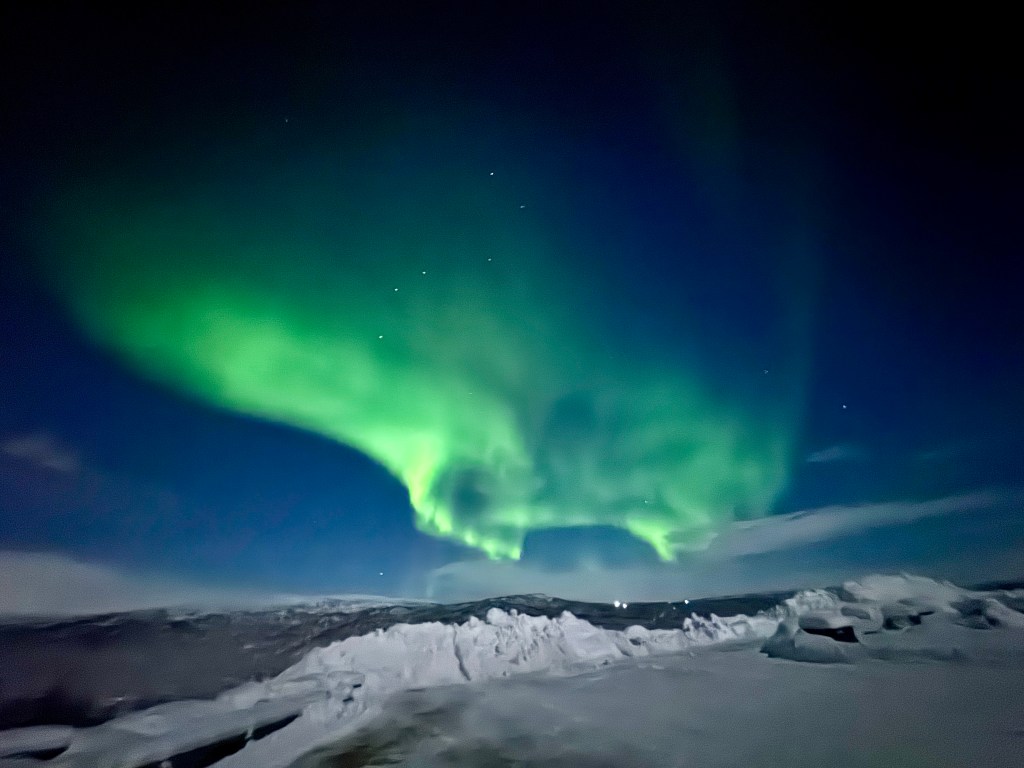
The color is far more visible through the camera! Our eyes saw white with a slight hint of green.  (We saw white lights moving in Alaska and had not realized that we should have looked through our camera.)

It was an exciting night seeing the northern lights on our first real opportunity!

The skies were clear enough that we could see the stars within the lights.

Randy took all of these pictures just with his iPhone 15 Pro camera. He had cold fingers!

There were fires set up for warmth.

There was also a Sami Lavvu available to see artifacts and also warm up a bit.

After experiencing enough of the lights, or in my case getting cold enough to want to move on, we went to find the husky puppies!

This is their next generation of Alaskan Husky Dogs.  They are four months old. Their kennel has inside and outside areas.

It was a good night – dogs and northern lights – what more could we want!

We saw the lights in Tromsø on January 17, 2024.
Next Up: More from Tromsø

Posted in Uncategorized | 1 Comment

Northern Lights Cruise:  We Made it to Tromsø

After missing Narvik because of high winds and rough seas, we were excited to be on land again. 

Our tours were for later in the afternoon so Jo, Flynn, Randy and I walked off the ship into Tromsø. We wanted to test out our cold weather gear and had a little anxiety about whether we had enough.  

We had enough! Despite the zero degrees temperature, we were fine.

We walked around Cathedral Square.  The Cathedral of Tromsø was built in 1861 and is the only cathedral in the world made of wood. It has a capacity of 700 people.

At the time of construction, the cathedral and square were built over a cemetery. It wasn’t clear if that was known at the time.  During renewal of the square in 2017, they found graves, some dating back to the middle ages.

We did some shopping.

We stopped for coffee.

As we were returning to the ship about 11:30, we had a beautiful sky. In mid January, Tromsø was just coming out of the “no sun for two months” period. (In summer there is an alternate period of continued daylight.)

We enjoyed seeing what art was displayed on our way upstairs to shed coats, gloves and hats before lunch.

Rot was one of our favorite waiters. He had one week left on his six month contract and then would be going home to Bali.  His young son’s birthday was the day after he got home.  He will be home for two months and then join another Viking Ocean ship, The Jupiter.  Rot says Viking treats them very well which is always good to hear.  Ship crew work long hours every day, always with a smile.

For those that know Viking categories, Rot said crew can go between Ocean and Expedition ships but River crew are separate.

In the afternoon, Randy and I went on one tour while Jo and Flynn did another.  We were headed to the town of Sommarøy to see life experienced north of the arctic circle.  As we left the city we had a beautiful view of Tromsø.

We stopped at a site for stone pictures similar to the petroglyphs we have in the southwest United States.  

The area around Alta, a bit further north, has a higher concentration of ancient stone art.  That is our next port. 

We had the opportunity to take pictures of the surrounding mountains.

We were told there is very good fishing in this area of Norway.

We saw some older buildings and farms likely from the mid 1800s. The residents would have been poor fish farmers. They would have had to keep the fire going in one room all the time.

People ate fish six days a week. On the seventh, usually Sunday, they might have had sausage.

Norway was once a very poor country, very similar to Ireland.  In the 1960s they found “black gold” off shore and Norway is now one of the richest countries.  The money from oil is invested all over the world and saved in a fund for future generations.  The fund is currently valued at $300,000 USD per person living in Norway.

The oil and gas produced currently goes to other countries. There is an end date for oil and gas production as Norway is embracing a greener future.

Houses in Norway are heated by electricity, produced by hydroelectric.  Almost all energy used is clean energy.  Sixty-seven wind turbines produce enough electricity for all of Tromsø.  

They are placed on windy mountain tops and have red lights so planes are aware.

Fish is Norway’s second largest export after oil. Much of the cod goes to Portugal and Spain.

Nearly all houses in Norway are made of wood.  Wood is readily available and building with it makes it easier to accommodate 25 centimeters of insulation in each wall.

We visited a community center serving residents and welcoming visitors.

We were served Norwegian waffles with tea or coffee.  

We also had brown cheese made from the whey of goat milk, a Norwegian staple.  It has an interesting flavor that I didn’t l love but am glad to have tried.  We were served brown cheese numerous times on this trip.

The local women gave presentations on spinning and weaving.

We had the opportunity to buy a variety of handmade items.

I bought these mittens for about $45 USD.

We visited the local museum.  

Three generations once lived here at the same time.

One item highlighted for us was this painting of Wanny Woldstad. 

She was born in this small town of Sommarøy in 1893. Wanny married and had two sons.  She raised them alone after the death of her husband. In the 1920s, she  became the first woman to work as a taxi driver in Tromsø. Through driving, she met trappers who told her of their exploits. In 1931 she joined her first expedition. In 1932, she shot her first polar bear. Wanny spent five seasons hunting.  She and her partners killed 77 polar bears.  This woman, who did so much, died in 1959 after being hit by a truck.  (Something is just wrong with that ending.)

While leaving the museum we saw this woman using a kick sled, a common travel assistance device. In this picture it is nighttime dark at 4:15 in the afternoon.

Enroute to our Sommarøy home visit, our guide told us that Norway has a very popular monarchy.  “They are good people and don’t have troubles like the British monarchy.”

We learned Tromsø has more tourists in winter than in summer.  Winter visitors come looking for the northern lights – just like us.

Our home visit was to the home of a local school teacher.  Our driver told us it was tradition to remove shoes going into a private home. That was quite the task with a dozen of us trying to get our big boots off!

We met our hostess, Helen, who told us about her life as a mother, wife and school teacher.  She said her husband was working this evening.

Then she introduced her husband, Egel – our van driver! They did that very well!

They served tea and coffee and Norwegian lefse.  Lefse was new to everyone on the tour except Randy and me.  I have Swedish and Lutheran heritage so we have made and eaten lefse for decades. 

She served “old lefse” layered with brown cheese.  (We usually eat it with sugar and/or cinnamon.)   She also served soft lefse which was more like a layered cookie cake.  That was new to us. We also had small portions of chocolate cake and who doesn’t love that?

They gave us a tour of their home and encouraged us to ask as many questions about their life as we wanted. They said life was very good in Norway.  Things are very expensive but salaries are commensurate.  Their government provides many services.  

They said that even though Finland is the nearest neighbor, they have great difficulty with the language.  Finland’s language root is from Hungary while Norwegian is similar to the languages spoken in Sweden and Denmark.

Our driver showed us his Nobel Peace Prize. He received it after his service in the Norwegian military (which is required for one year) as part of a United Nations peacekeeping force in Lebanon.

Helen showed us Norwegian and Sami flags.  We would be touring with the indigenous Sami in a few days.

When I signed us up for this tour, I was expecting something similar to another home visit tour we took above the arctic circle in Alaska. During Covid, we went to Fairbanks looking for the northern lights and took a trip north of the arctic circle to see how people live off the grid.  That post is Chena Hot Springs, Denali National Park, and Being Above the Arctic Circle

This home visit in Sommarøy was nothing like the one in Alaska but it was totally lovely!  We were very happy with the tour and seeing their comfortable life above the arctic circle.

We were in Tromsø on January 17, 2024.
Next up:  We see the northern lights!!!!

Posted in Uncategorized | 1 Comment