Transatlantic Cruise: Barcelona – Less Than We Expected

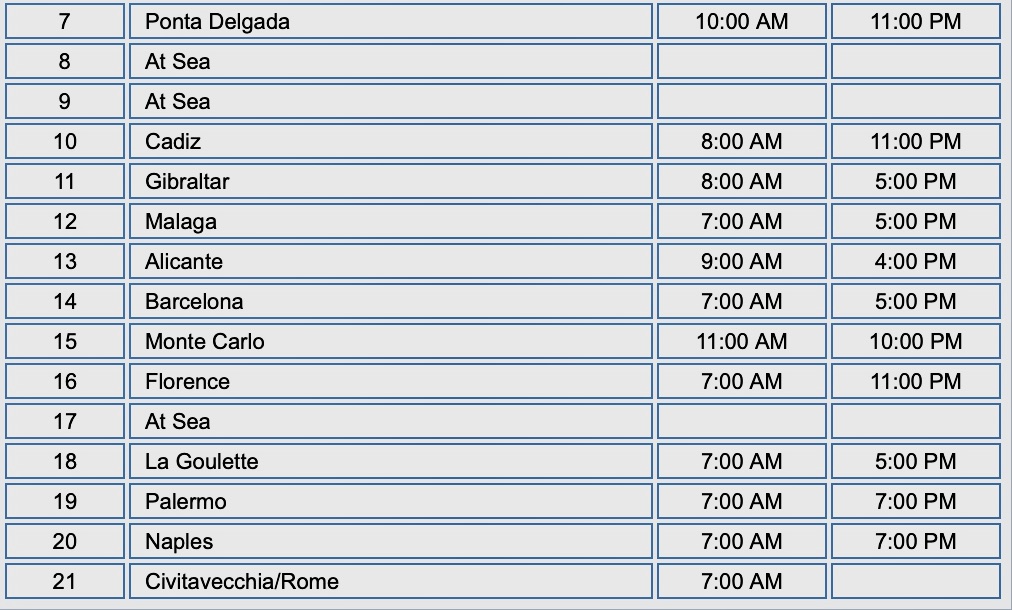
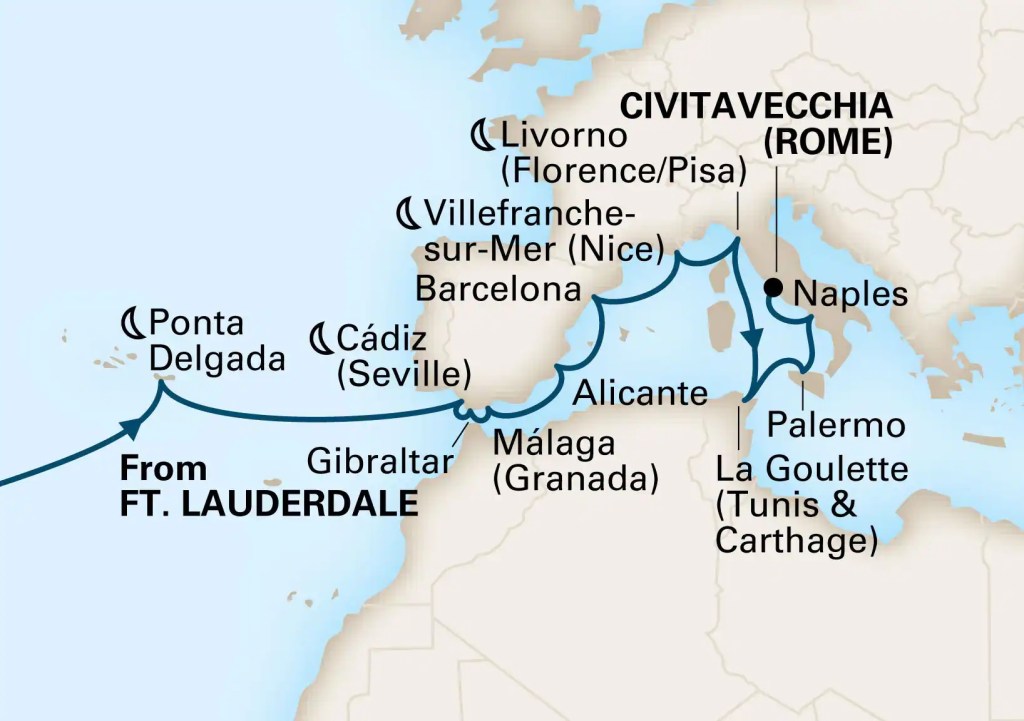
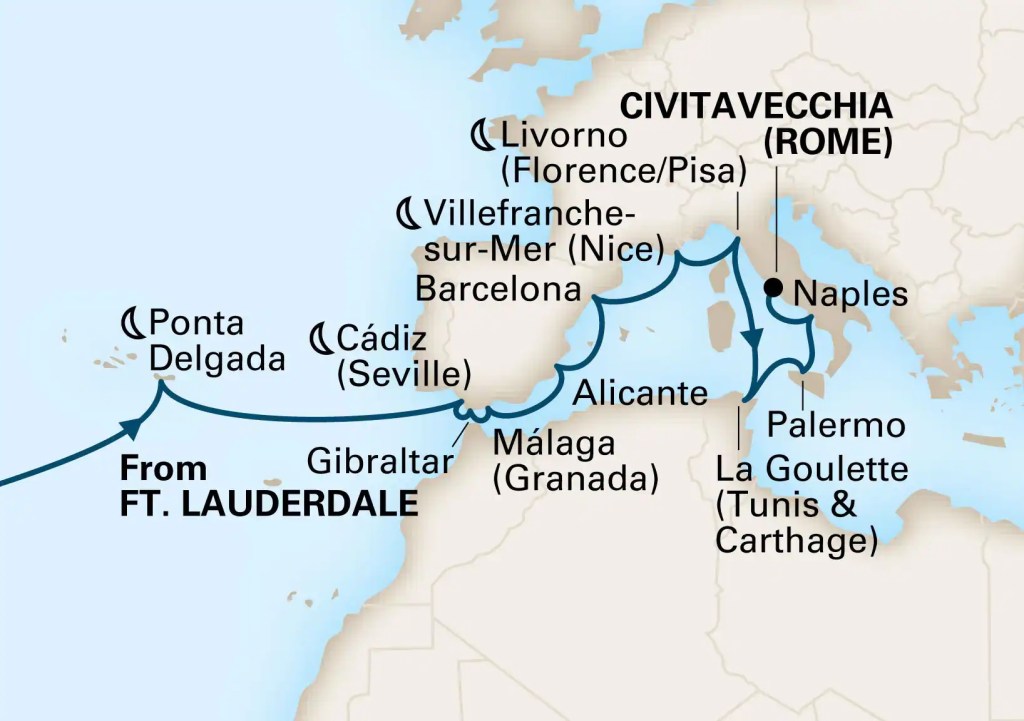
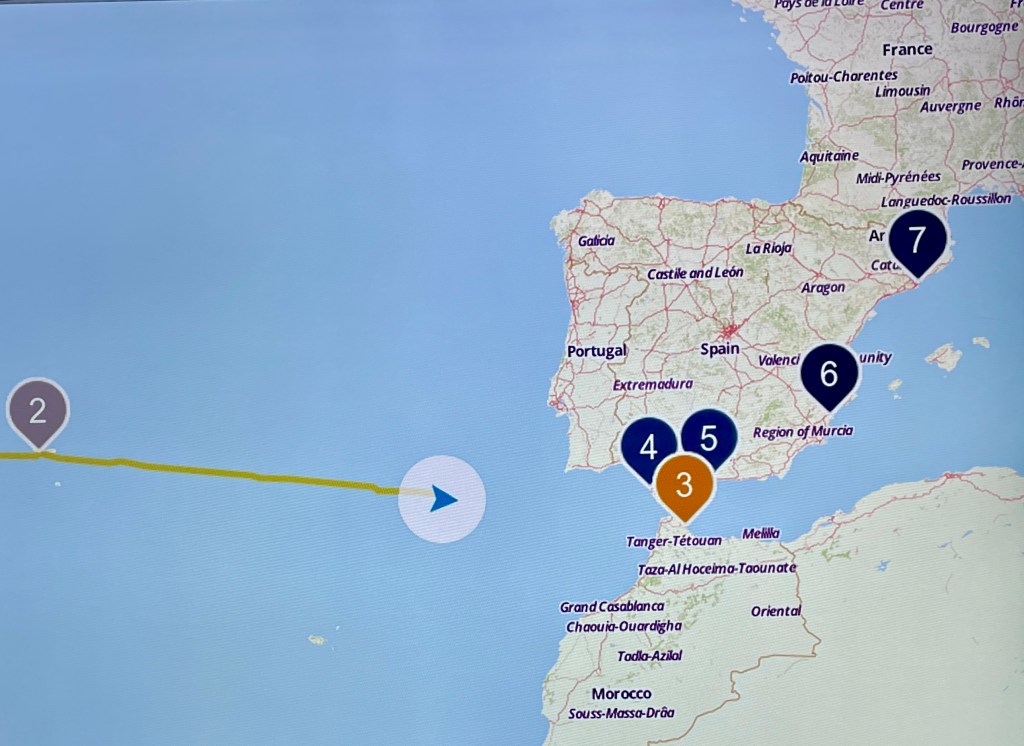
Barcelona was the end of the fourteen day transatlantic segment of our cruise and also the beginning of a seven day Mediterranean cruise. Eight hundred passengers, mostly American retirees, left the ship in Barcelona while six hundred of us were to continue on to Rome.

While the ship was going through the process of departing and embarking passengers, we had our choice of a variety of shore excursions. Our tour was the Highlights of Barcelona- with about 40 other passengers. We had met a number of passengers and crew who love Barcelona, and we had really enjoyed our previous ports in Spain, so we had high hopes for a great day.   

Unfortunately, our experience in Barcelona was less than we expected. We took a shuttle into the city and our first impression wasn’t great. We stepped off the bus right into a disturbance. There was a loud argument with pushing and shoving involving a dozen men and one woman. It was something about one of the men not getting paid what he thought he should. Our guide hurried us away.
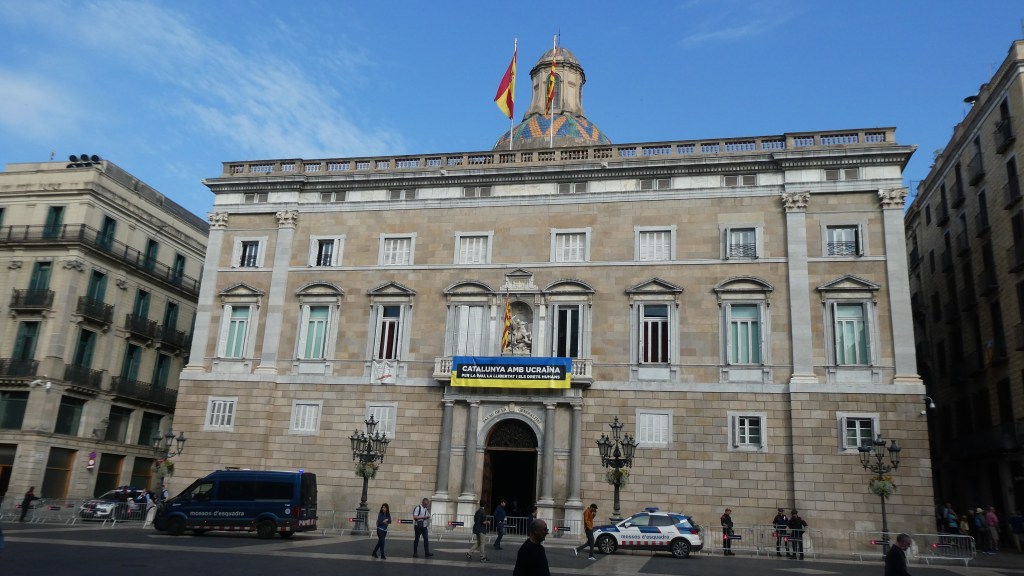
Then we had a man yelling non stop at a sculpture as a form of protest and other preparations for a mass protest. We were not told what either was about.

Almost immediately many of our fellow passengers started whining. I need the toilet NOW. We’re moving too slow. We’re moving too fast. I want to stop and go back to the ship. The tour guide isn’t pronouncing English clearly enough. Good grief!  Like any of these people could speak Castilian Spanish, Catalan, French and passable English! And those are the only languages we know she speaks. She was a 28ish woman trying to herd seniors of varying physical condition and tolerance. Unfortunately it continued throughout the tour! 

Okay, enough of my whining about the whiners! Now on to what we saw in Barcelona.
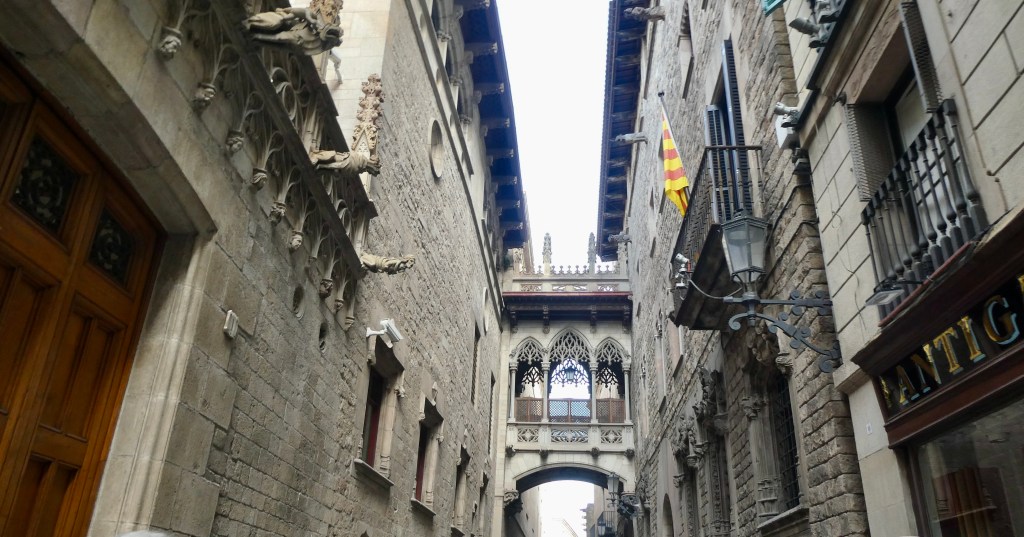
We walked into the Gothic Quarter, the ancient part of Barcelona. The city was founded 2000 years ago as part of Roman expansion over the Pyrenees Mountains. 
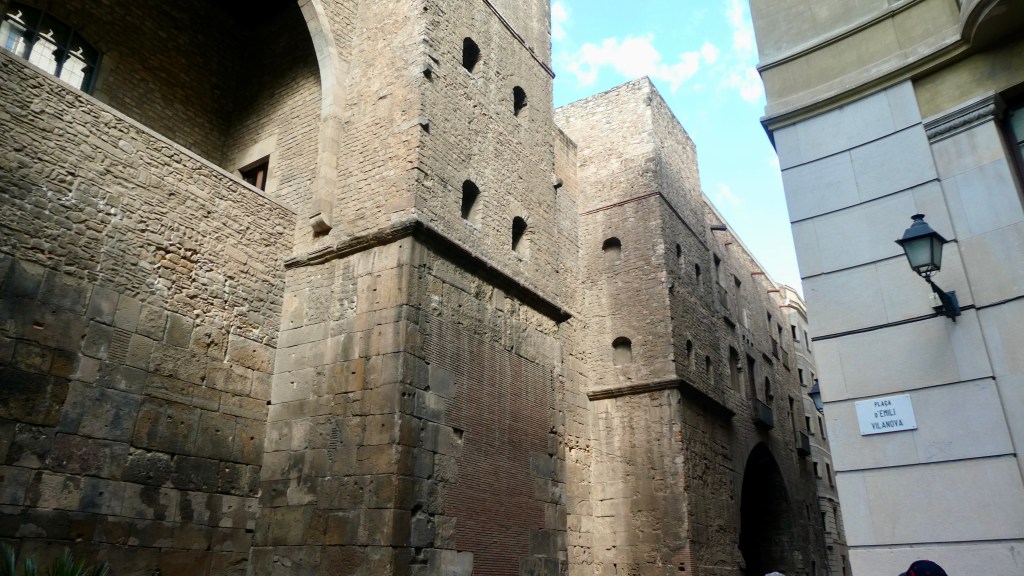
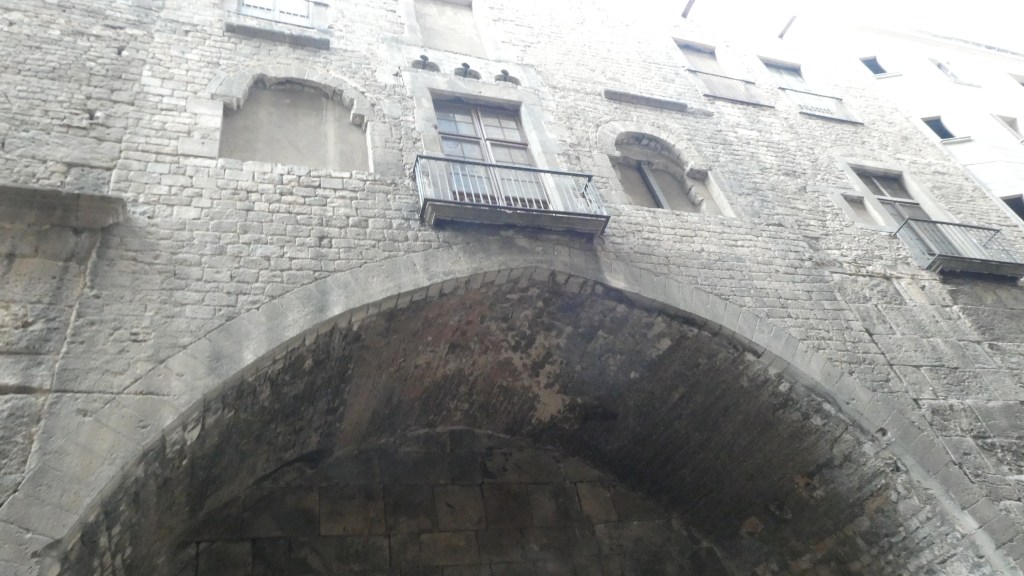
These ancient walls are a combination of Roman and Medieval influences. We found it so fascinating that apartments were built within the old walls.

.
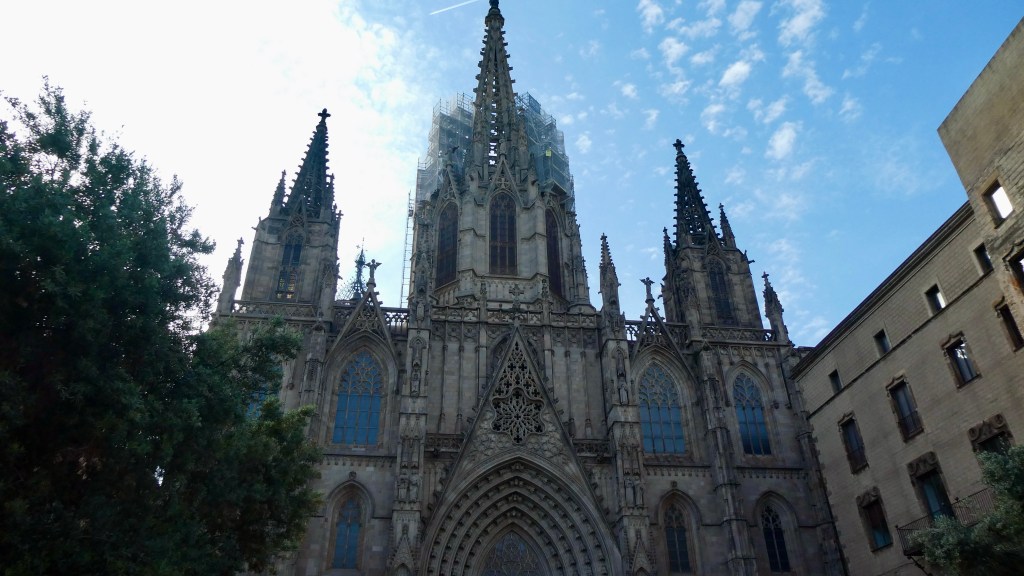
We were able to see the Cathedral of the Holy Cross, but only from the outside as an event was happening inside. Some people were going in, but not tourists.

It was common in cathedrals we visited that mass was conducted at the front and tourists sat at the back or walked around quietly. We have enough experience in liturgical churches that we generally knew what was happening even if it was in Spanish, Italian or Latin.
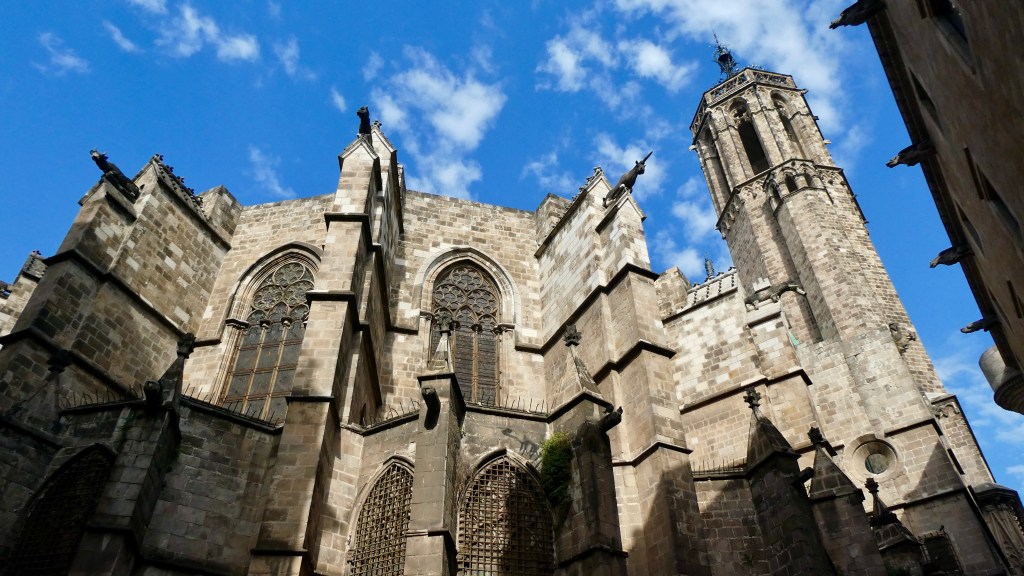
This is another side of the same cathedral built in the 14th century. Notice the unicorn to the left of the bell tower. Unicorns are mentioned in the Bible eight or nine times depending on translation but research says that the original Hebrew likely meant “beast with one horn” as opposed to the mythical unicorn.
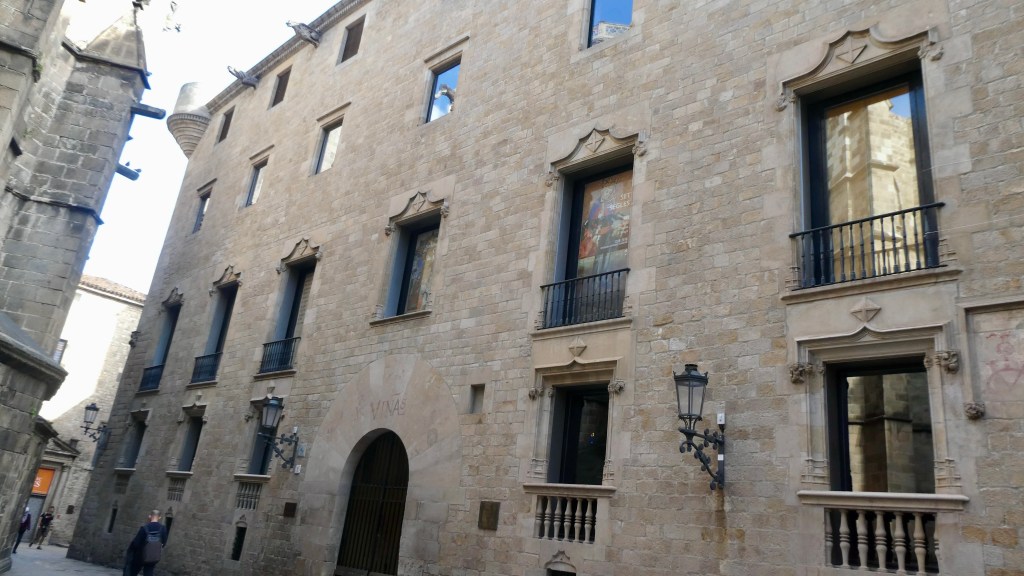
A building adjacent to the cathedral is now a museum commemorating the Jews who were martyred during the inquisition.  
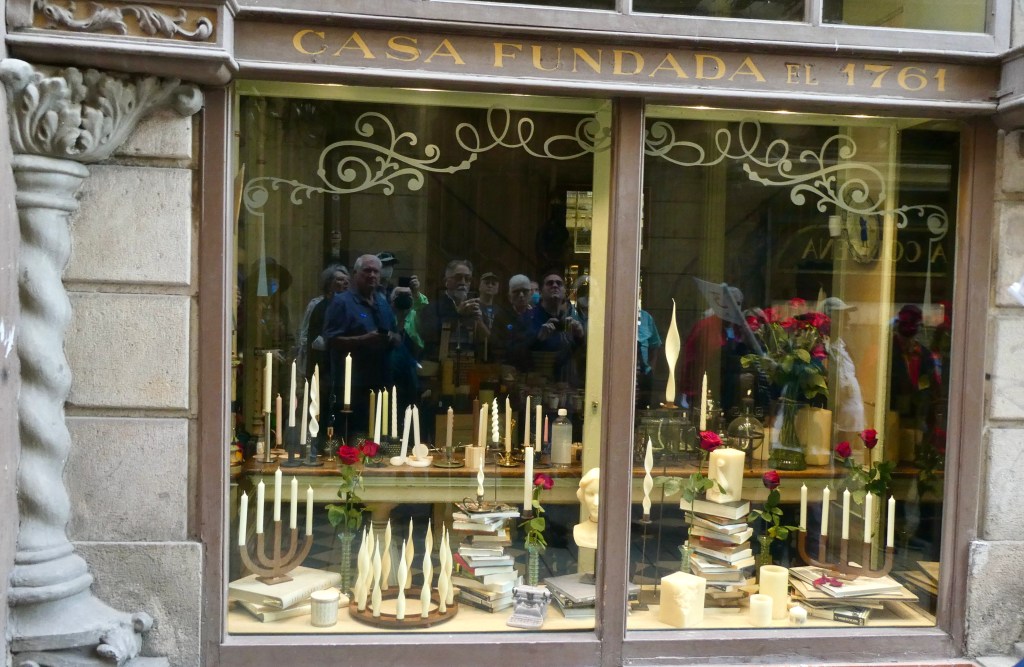
This candle shop, the oldest in Barcelona, dates back to 1761.
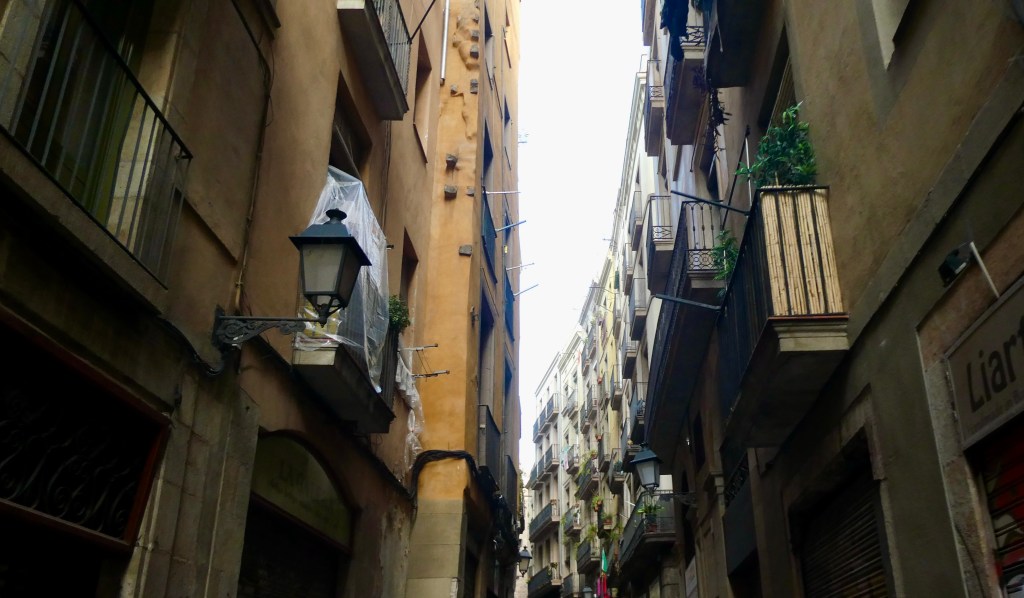
As we learned in Malaga, Picasso lived in one of these apartments as a child. 

Our primary destination was Sagrada Familia a hallmark of Spain and Barcelona. 
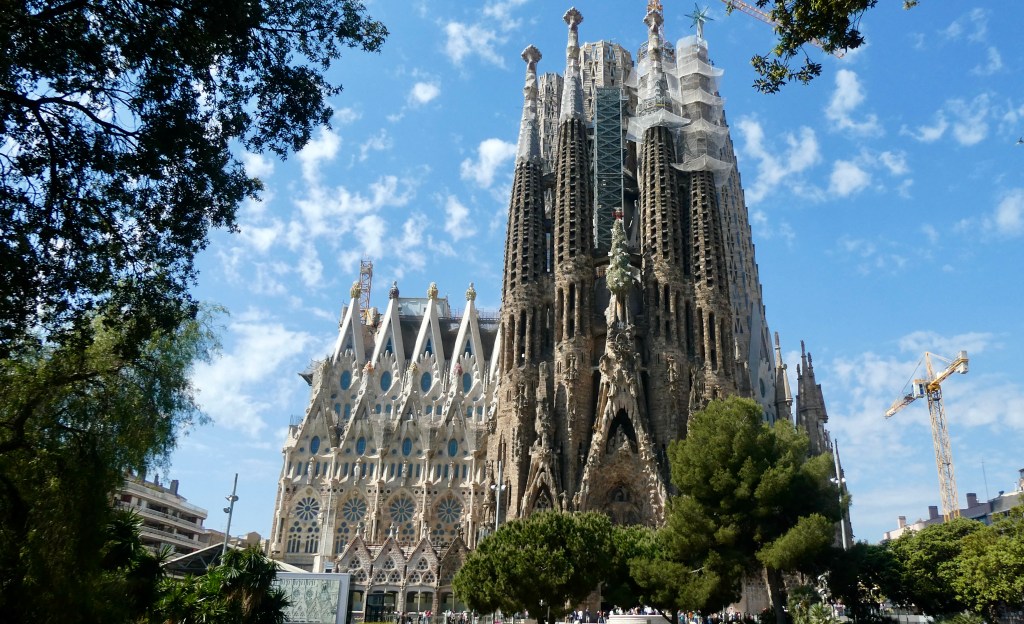
Even though it looks as though it is very old, and possibly under repair, in fact it has not yet been completed.  

Sagrada Familia has been under construction since 1882, 140 years. It was supposed to be completed in 2026, the 100th anniversary of Antoni Gaudi’s death.  Unfortunately COVID has altered that plan with completion now planned for 2030.

Gaudi was the primary architect and is buried in a tomb in the crypt of the church. The architectural works of Gaudí form a UNESCO World Heritage Site.  
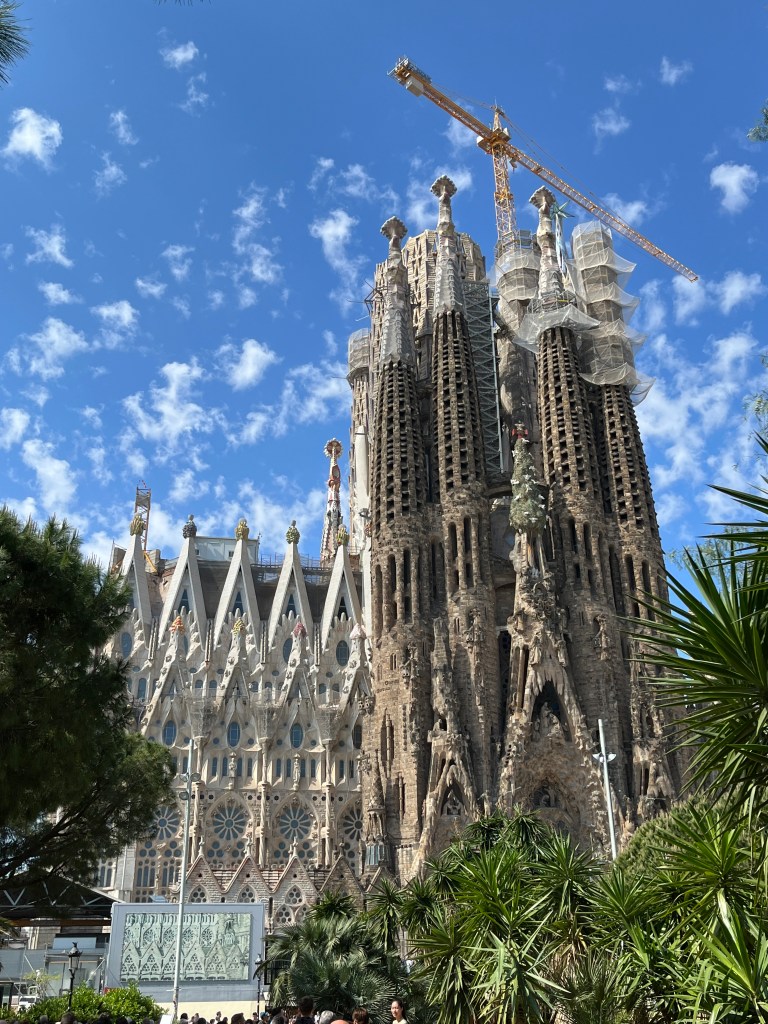
Sagrada Familia is the tallest religious building in the world at 566 feet.  It is known throughout the world and visited by millions of people every year. The capacity of the church is 9000.

The different colors are because materials have come from different parts of the Catalan region of Spain.
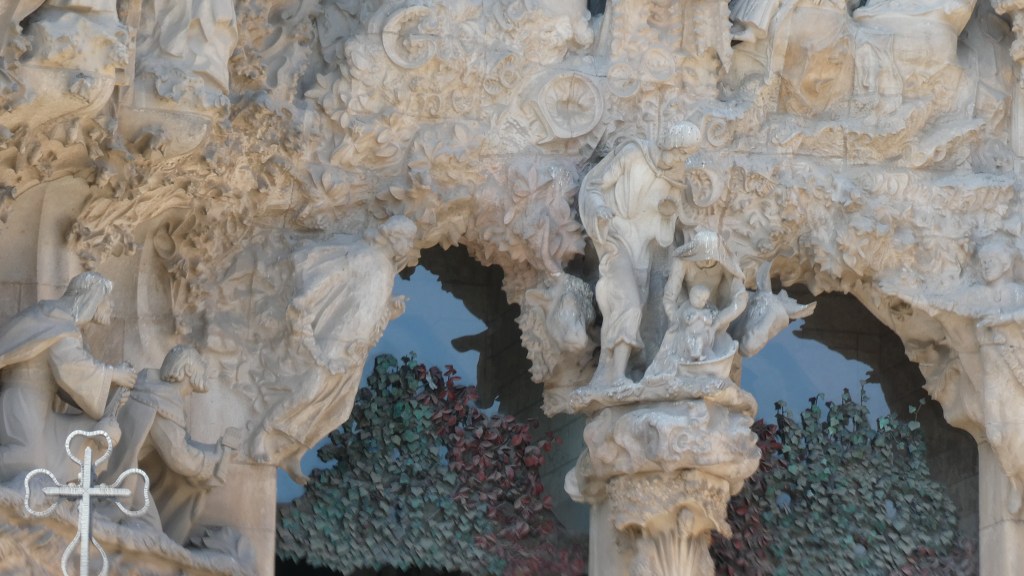
Elaborate carvings depict different stories of Jesus’ life in stone.  Some portions were damaged during the Spanish civil war and were repaired by a Japanese sculptor.

Most of our viewing was near the Nativity Entrance – the area depicting Jesus’ birth.
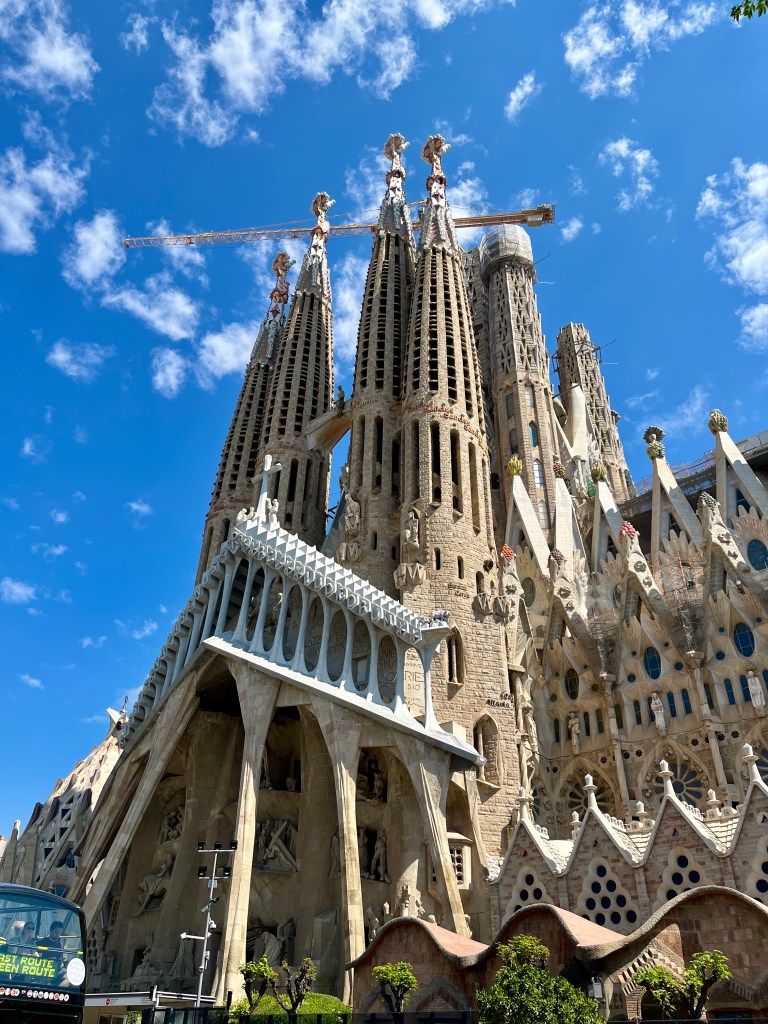
The Passion Entrance

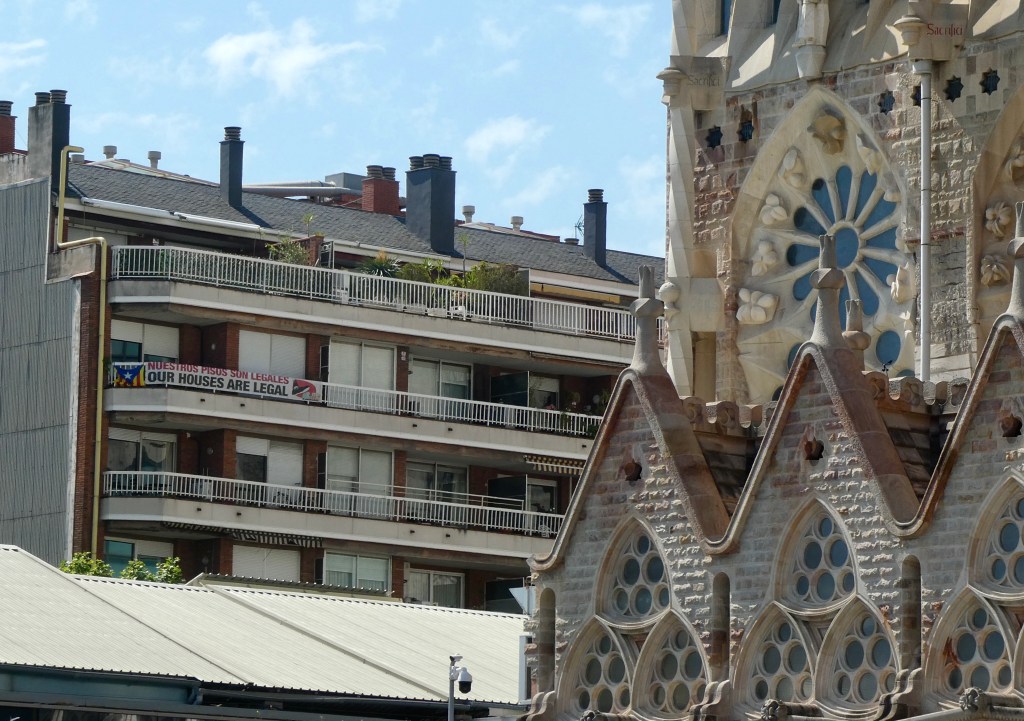
The area around the Passion Entrance (Death of Christ) was very limited because of these apartments.  There is a legal dispute as to whether they can stay after they were approved in error.

We were very disappointed that our tour did not include entrance into the Sagrada Familia. Our experience was just to take pictures from the outside. Even that was challenging because the area around the church was very busy.  There seemed to be a festival going on in addition to just regular Sagrada Familia visitation. We were warned about potential pick-pockets.

We walked back to where we could meet up with our transportation to continue our Panoramic Tour – that means “see what you can from the bus”.  Two monuments we drove by, but couldn’t see well, were the Arch of the Triumph and the Christopher Columbus statue, both built as part of Barcelona’s World Expo in 1888.

We briefly saw the Bull Fighting Museum. Bull fighting was banned in this region of Spain in 2010 and a former bull ring is now the museum.

And we kind of saw the Olympic Stadium built for 55,000 for the Barcelona Olympics held in 1992.

Barcelona holds 1.5 million residents and is currently the fourth busiest port in Europe.  It was not as clean as the other Spanish port cities we had visited.  Certainly American cities have the same, but our earlier port cities in Spain had been spotless.

So,  we enjoyed our earlier stops in Spain enough to know we’d like to come back and give Barcelona another chance.  The on-line pictures we’ve seen of the inside of Sagrada Familia make it a must do.  We’re willing to try again. 

Back on the Nieuw Statendam we found that one thousand people joined the cruise so there were now1600 passengers on the ship from Barcelona to Rome. Sixteen hundred was still a very comfortable amount for the ship’s facilities. The new passengers were younger and more diverse.  

As appealing as younger and more diverse was, they were not generally compliant with the captain’s masking requirements. despite repeated admonitions,  Of course, they weren’t on the ship when we got that shocking letter that we had COVID onboard. We too had enjoyed that false sense of security that everyone testing negative prior to boarding had given. They were living that storyline as we departed.  
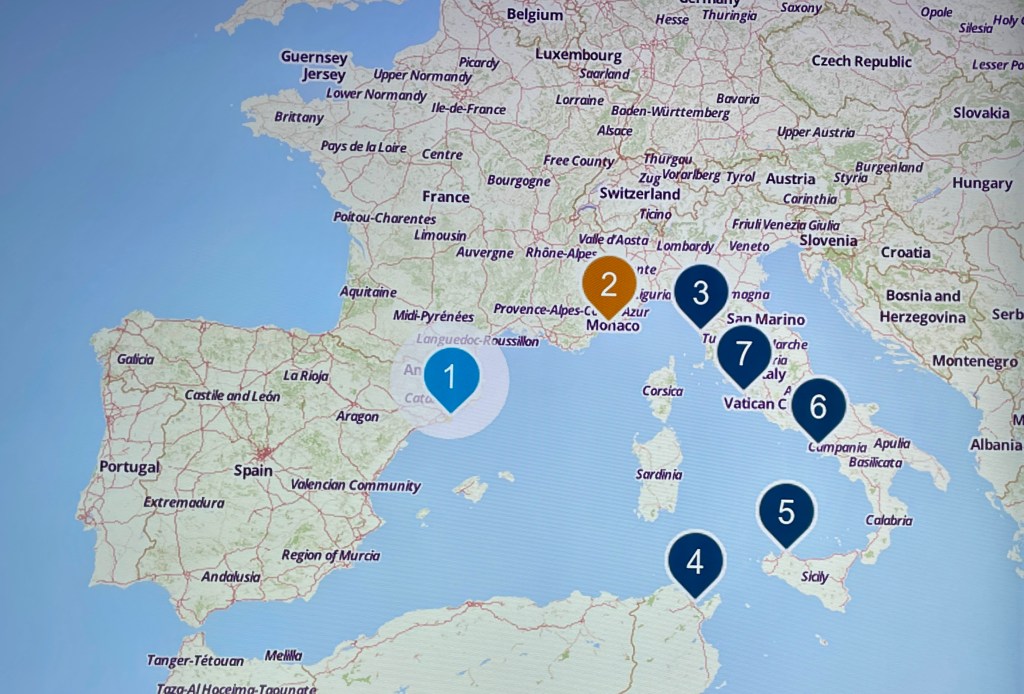
The plan was to visit new ports on five of the next six days, in three countries and two continents.

Next port:  Nice, France
Posted in Uncategorized | 1 Comment

Transatlantic Cruise: Alicante, Spain and the Caves del Canelobre

We viewed a lovely sunrise from our balcony as we came towards the port of Alicante Spain.

This area has been populated for 7000 years by the regular cast of characters, the Phoenicians, Greeks, Romans and Arabs. The Spanish monarchy recaptured Alicante in 1214 AD and established Catholic rule.

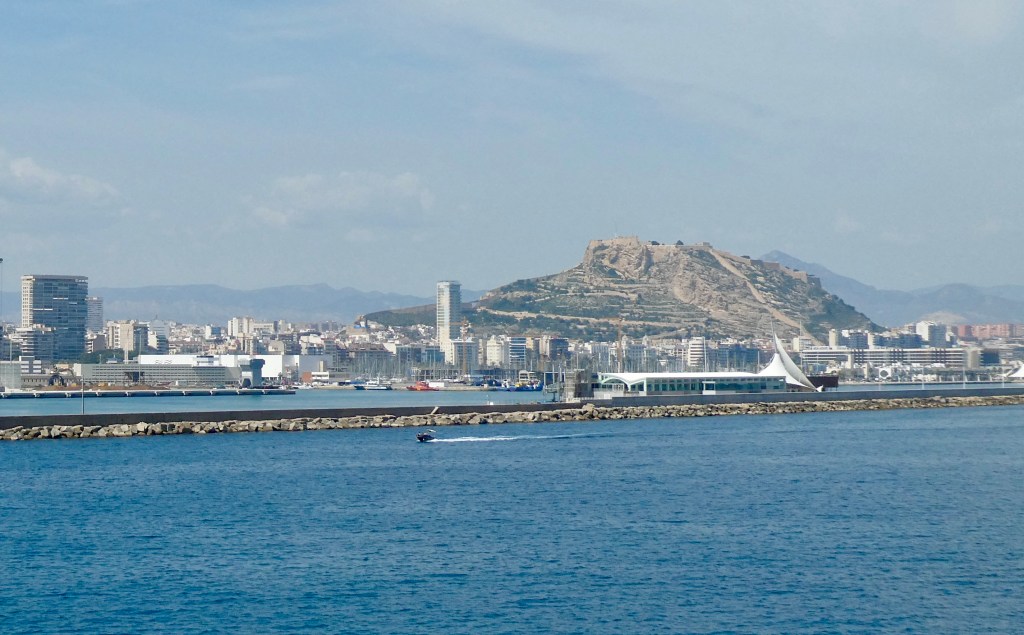
We could see the ancient fortress way up on the hill.  We learned later it was the Castillo de Santa Bárbara, built over a span of 1000 years, but primarily in the 16th century.  

Alicante actually has two castles, the second being the Castillo de San Fernando.  We didn’t go to either. What were we thinking?

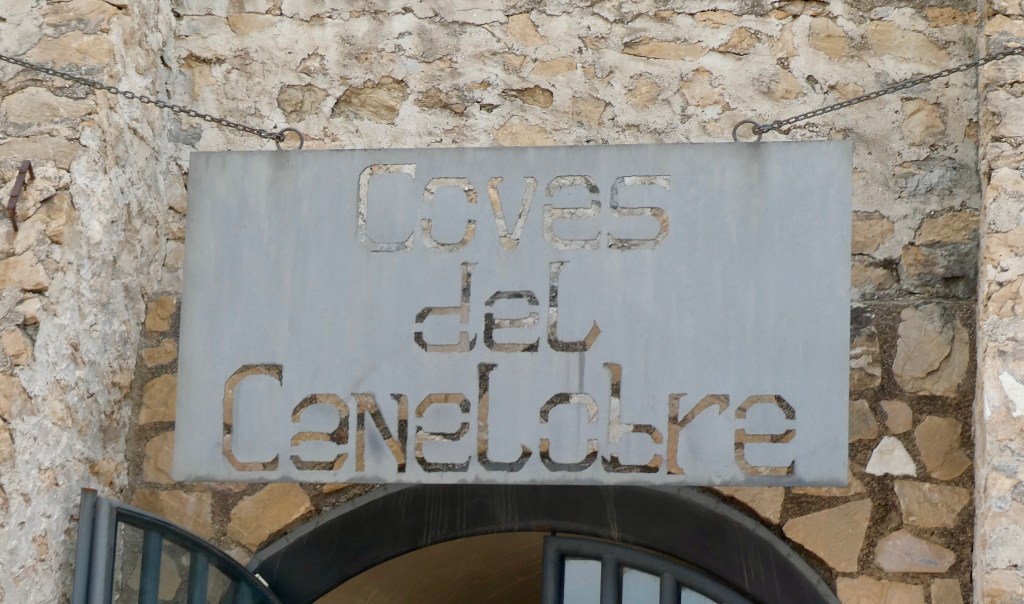
We were thinking something different – the Caves del Canelobre.  We had a brief city tour before heading inland.

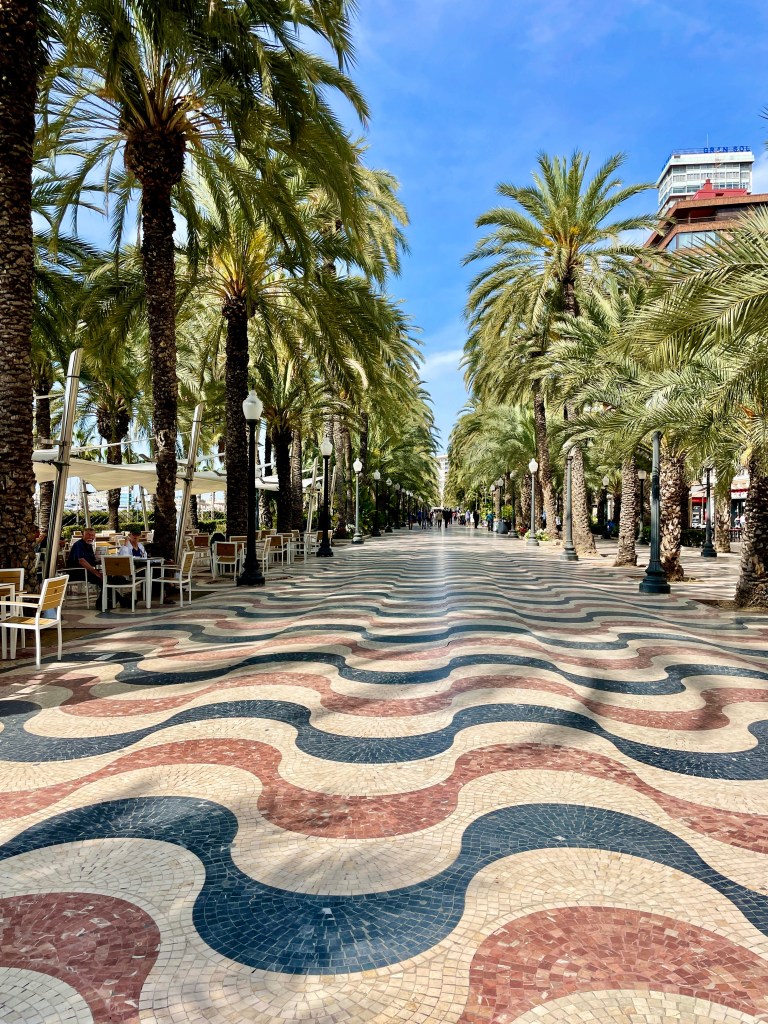
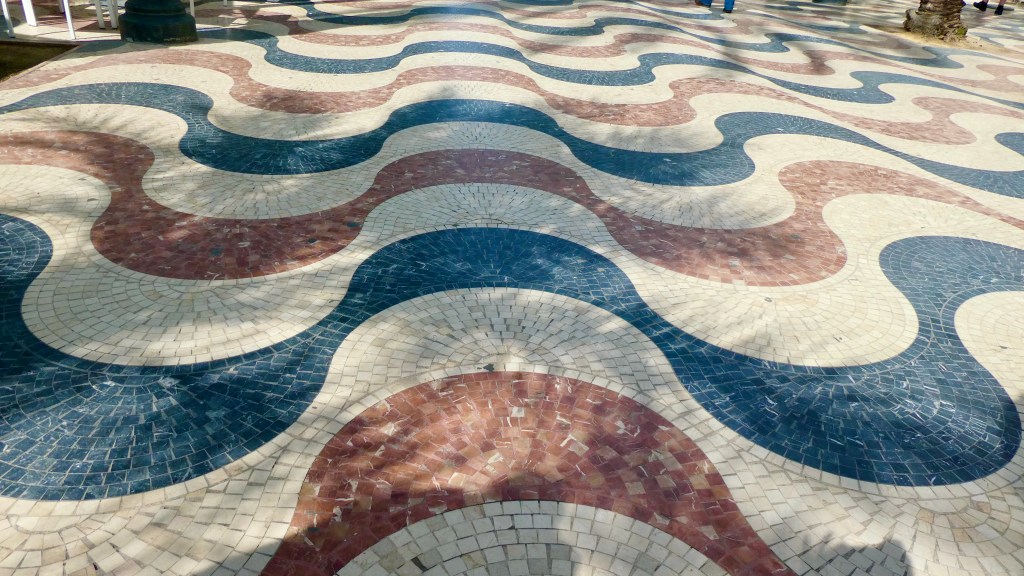
We saw the expansive public beaches the city is known for a well as the Explanada de España.  This tree lined walkway has restaurants, shops and open air events.  It took about five minutes of waiting to get this photo with the walkway mostly clear of people.

There are 6.6 million tiles in three colors.

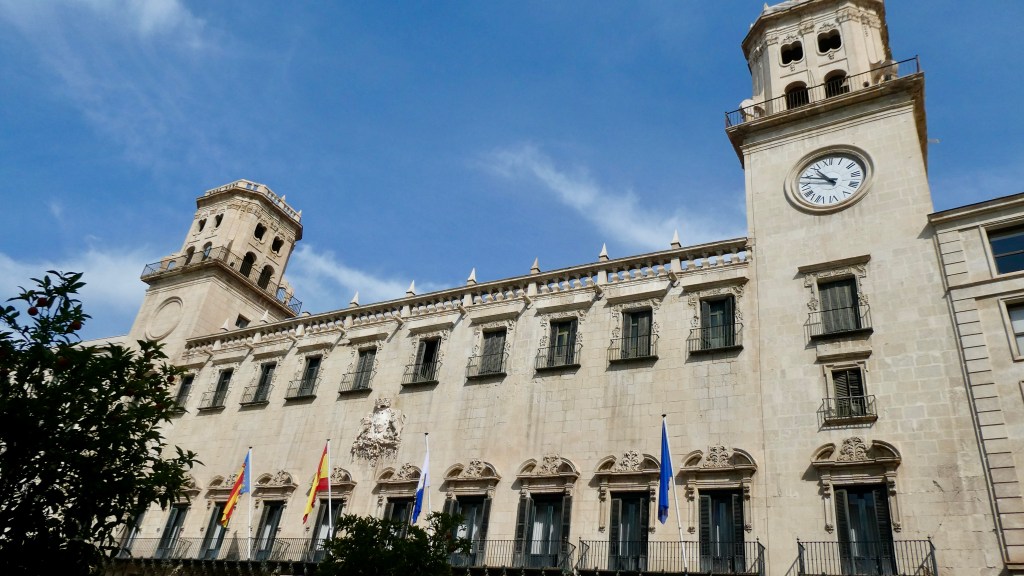
We saw the Alicante Town Hall, built in the baroque style in the 18th century.  The four flags represent Valencia, Spain, Alicante and the European Union.  

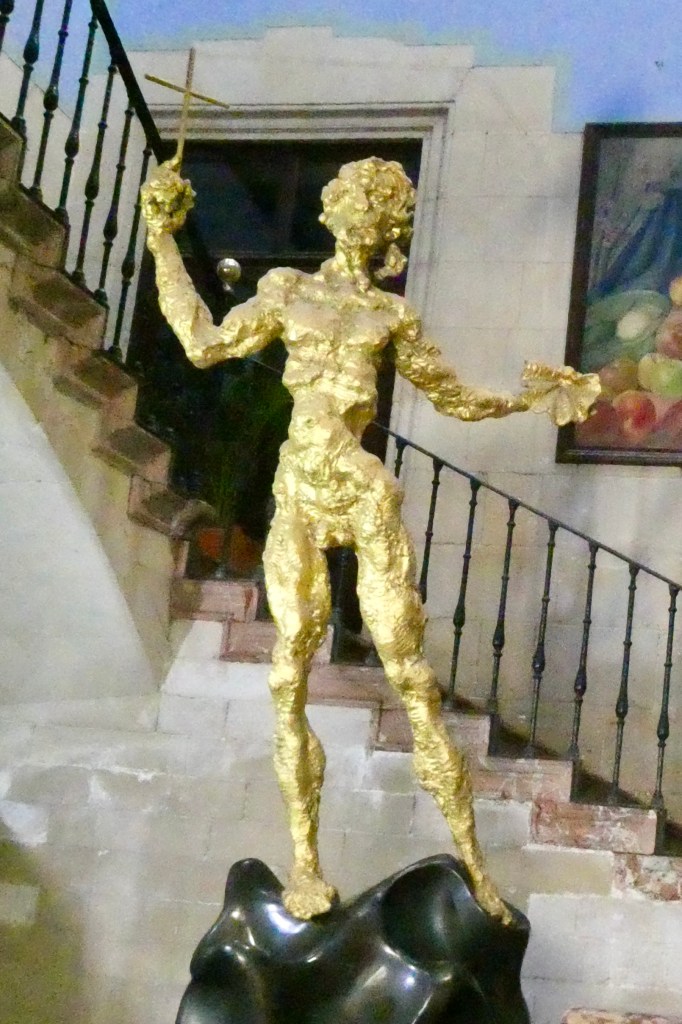
This sculpture by Salvador Dali (1973) was inside the entrance of the town hall.

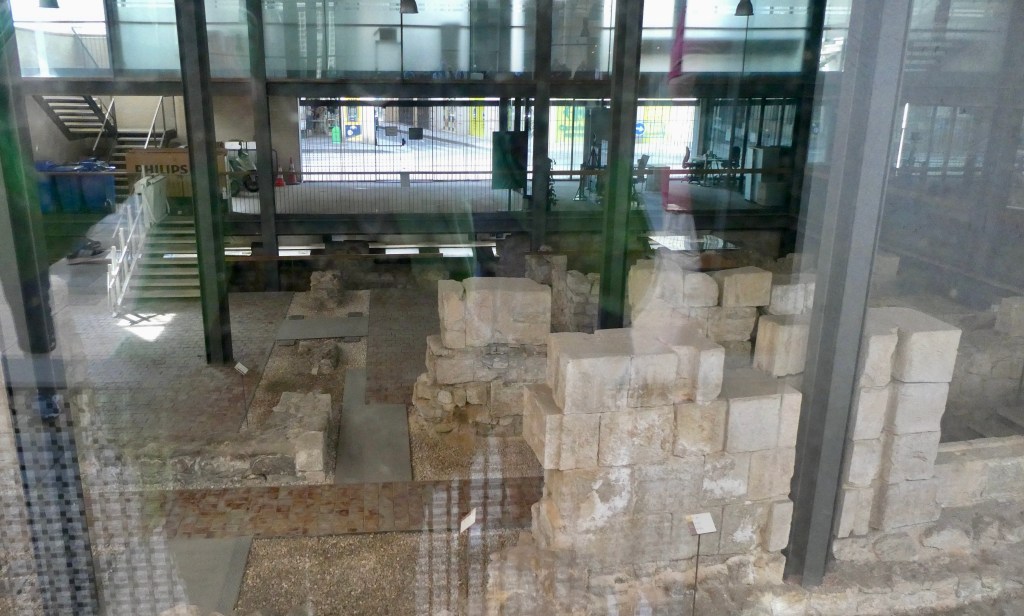
These ruins were discovered about ten years ago.  They are from a 13th -18th century Christian city.

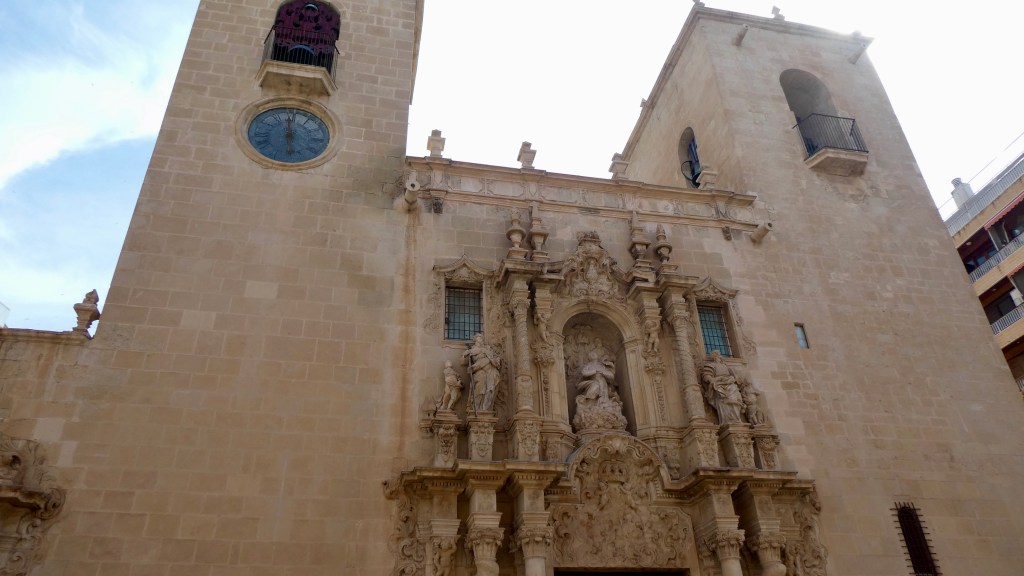
Walking in the old town area, we saw the Basilica de Santa Maria built in the 14th to 18th centuries.  The outside style is baroque.

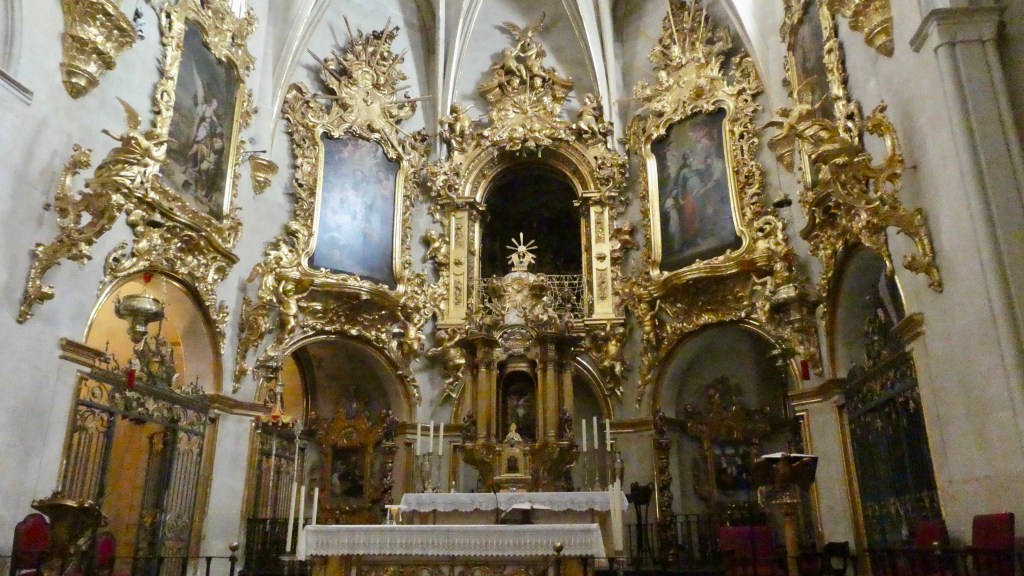
The style inside is gothic and has a glass floor above the crypt.  The basilica served as a church and a fortress and was built over a 9th century mosque.

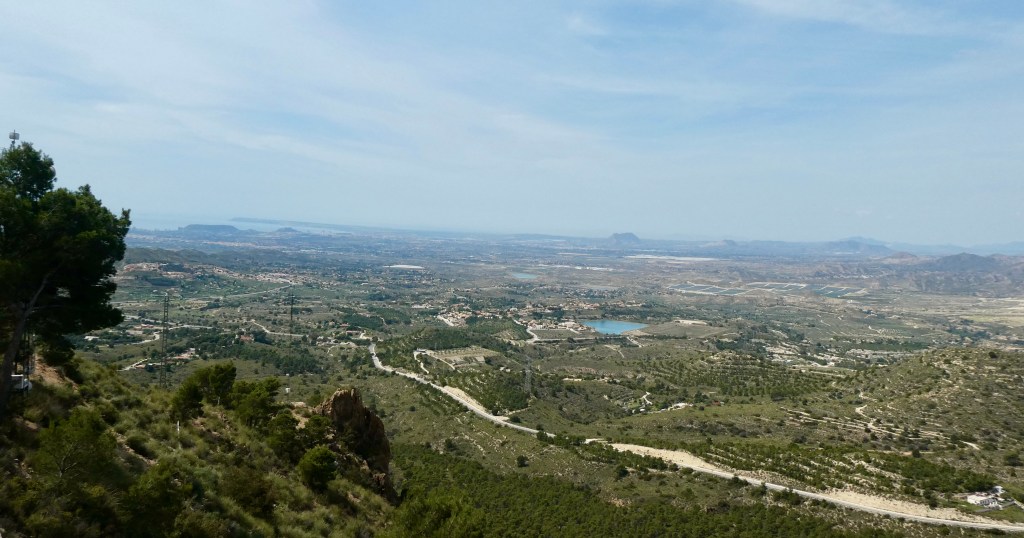
We enjoyed a ride through the countryside on our way to the Caves del Canelobre.

The caves, formed in Jurassic times, were discovered during the Arab era.  They also have an interesting recent history.

During the Spanish Civil War (1936-1939) the primary cave was used by the Republicans as a place to work on airplanes.  The Republicans were at war against the Nationalists who were led by Franco and supported by Mussolini and Hitler. 

An attack on Alicante by the Nationalists Italian Air Force on May 25, 1938 killed more civilians than any single bombing raid anywhere in Spain during the Civil War. 

The Nationalists overthrew the left-leaning democratically elected government and Franco ruled as dictator until his death in1975.

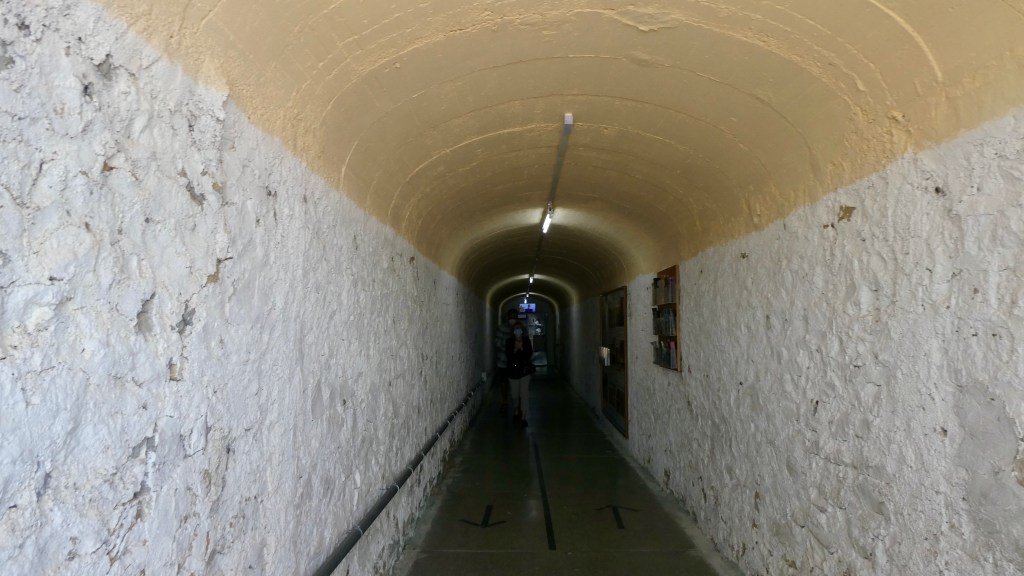
This tunnel was built during the civil war and is now used to provide access the cave.  The cave opened to the public in the 1950s. 

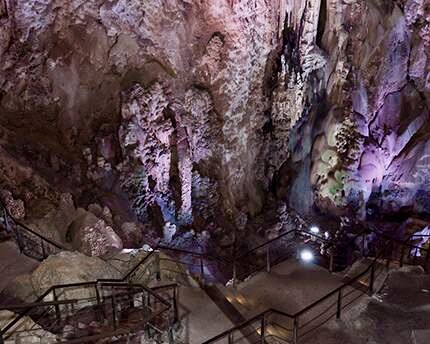
Pictures are not allowed in the cave so this is from their advertising. 

The Canelobre Cave is considered the biggest cathedral in rock measuring 70 meters tall.   In addition to tourism, the cave is used for concerts because of its great acoustics.  

We had a guided tour that lasted about 30 minutes.  We descended into the cave several hundred steps and then departed on those same steps.  The guide, speaking very good English, said the cave was last full of water 7000 years ago.  

We go into caves whenever possible and now we have been in a cave in Spain!

Our next port is Barcelona – our only bad day of the whole trip.

Posted in Uncategorized | 1 Comment

Transatlantic Cruise: Málaga and a Boring Yacht

We were in the part of the cruise that had a new port every day, mostly along the southern coast of Spain.  Our next port was Málaga, a city thought to be 3000 years old. Established first by the Phoenicians approximately 700BC, the name Málaga, meant “queen” in their language. The city was also ruled by the Romans, Moors and eventually Christians.

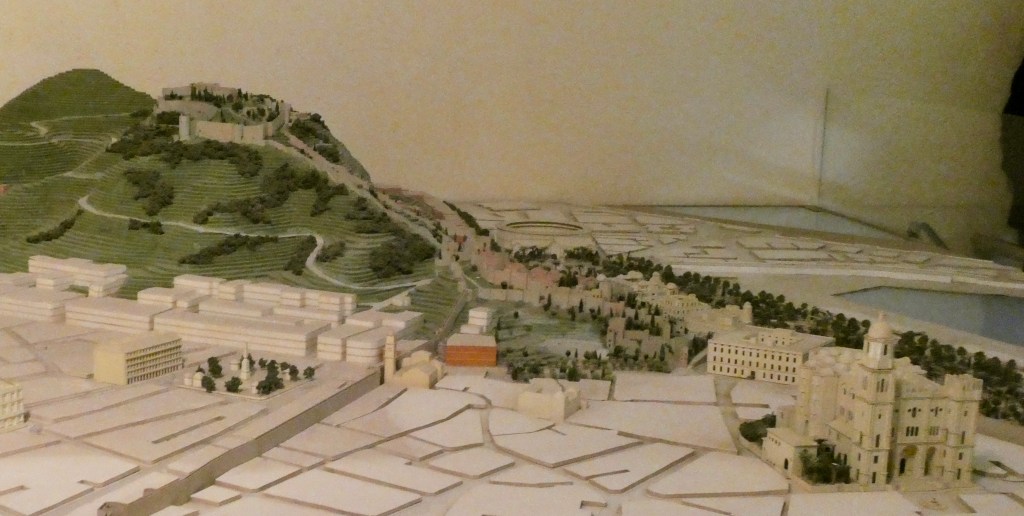
Our tour took us to La Alcazaba, also called Castillo de Gibralfaro.  On this relief map it is on the high point over looking the city.  (The cathedral is in the right foreground.)

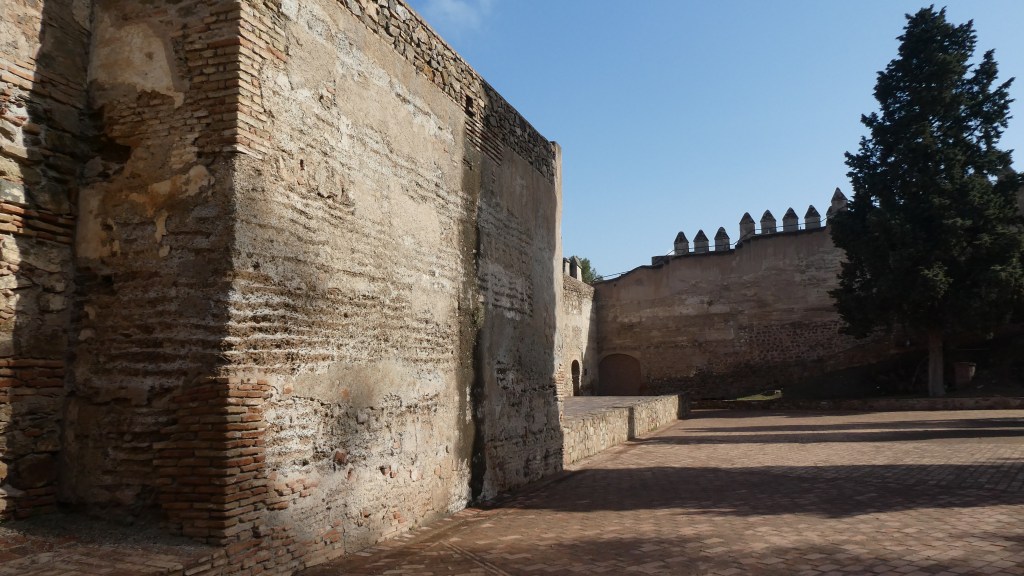
The fortress, originating in the Roman era, was abandoned and restored many times.  The site was extensively expanded and modified by the Moors late in their occupation of 711 – 1492.  

Spanish monarchs, King Ferdinand and Queen Isabella, captured the city in 1492.  

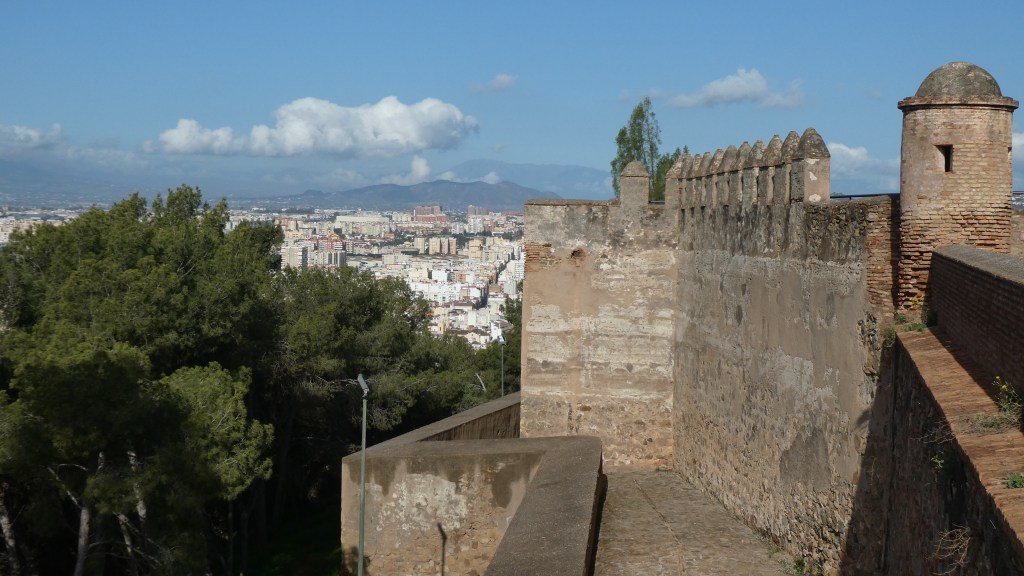
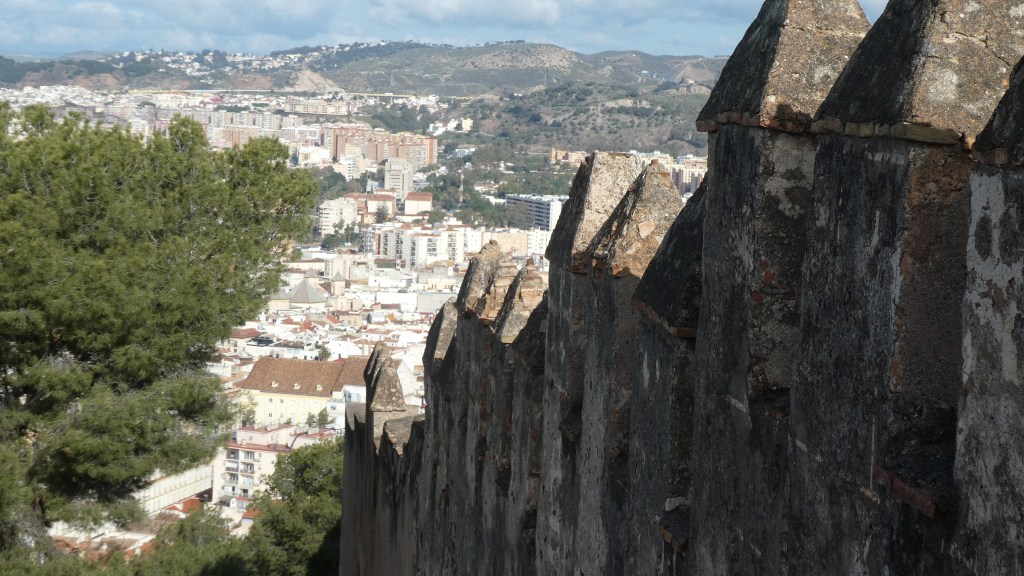
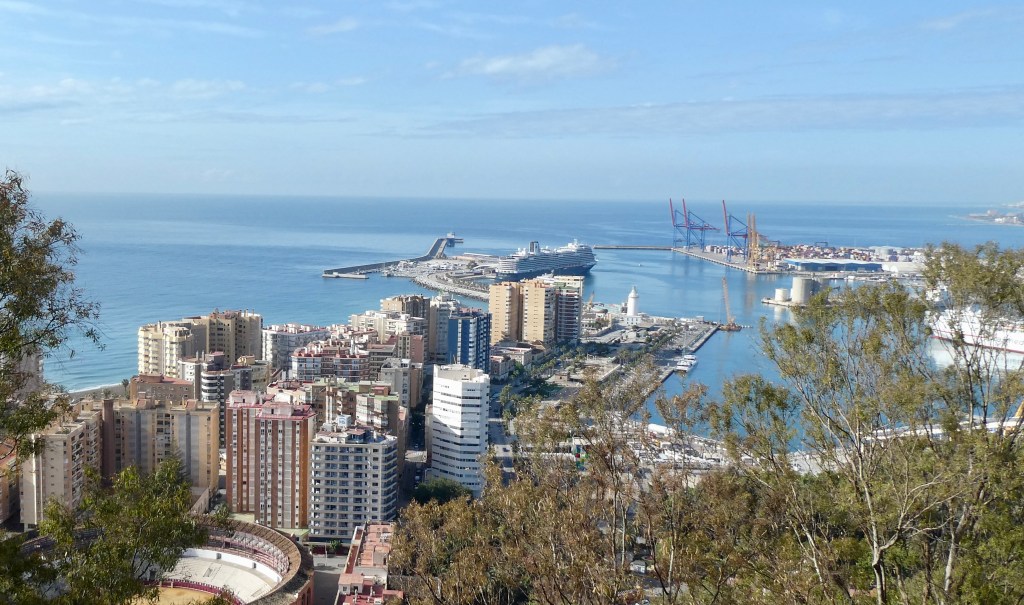
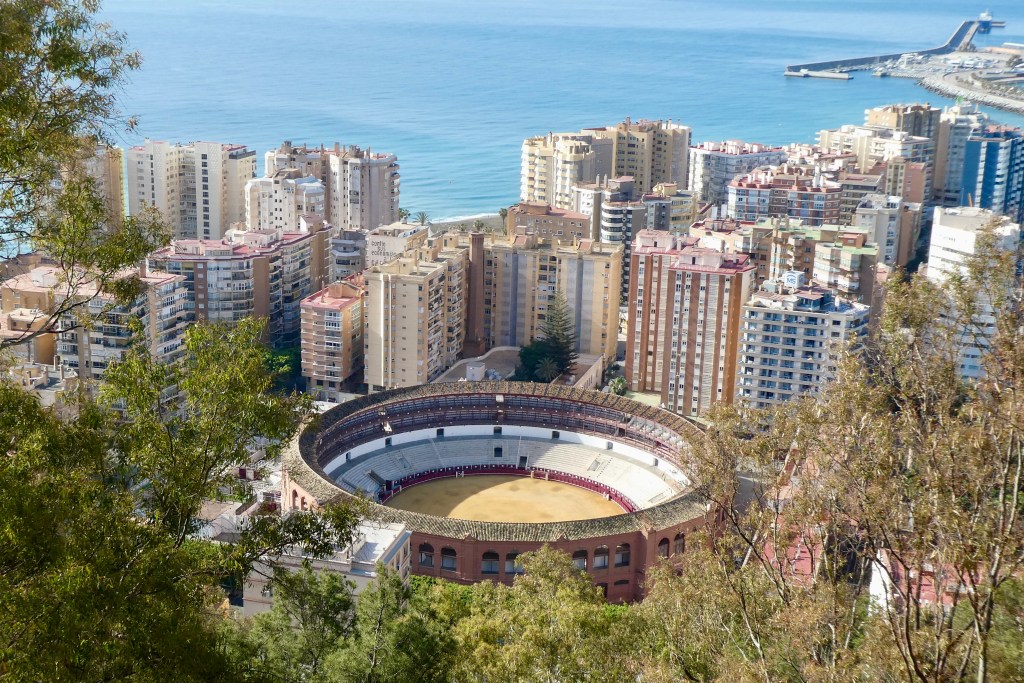
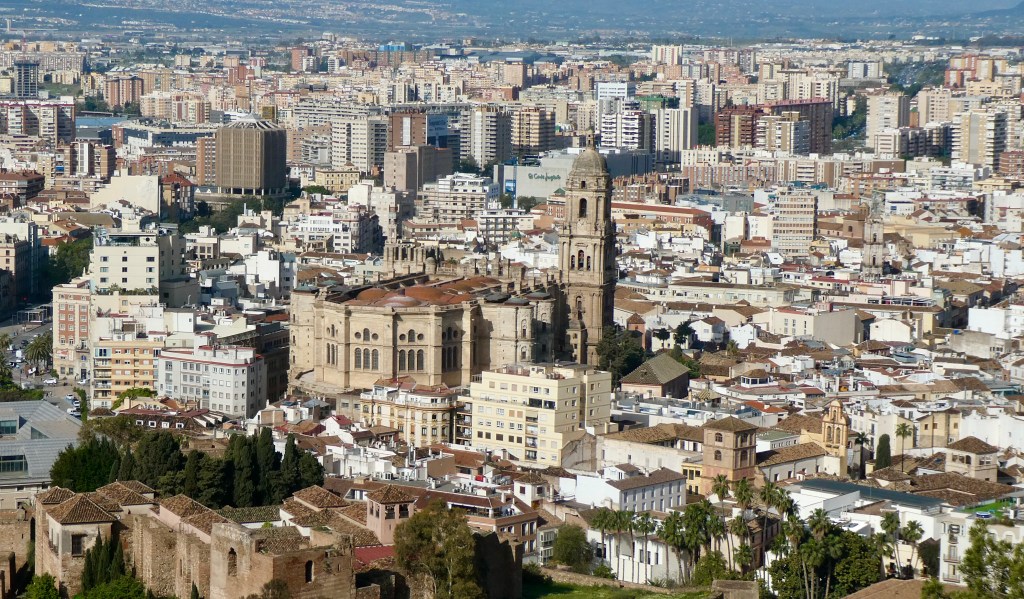
From high up on the hill those in charge, and we, had a good view of the sea and the city below.

We saw our ship, the Nieuw Statendam.

We saw the Bull Ring.

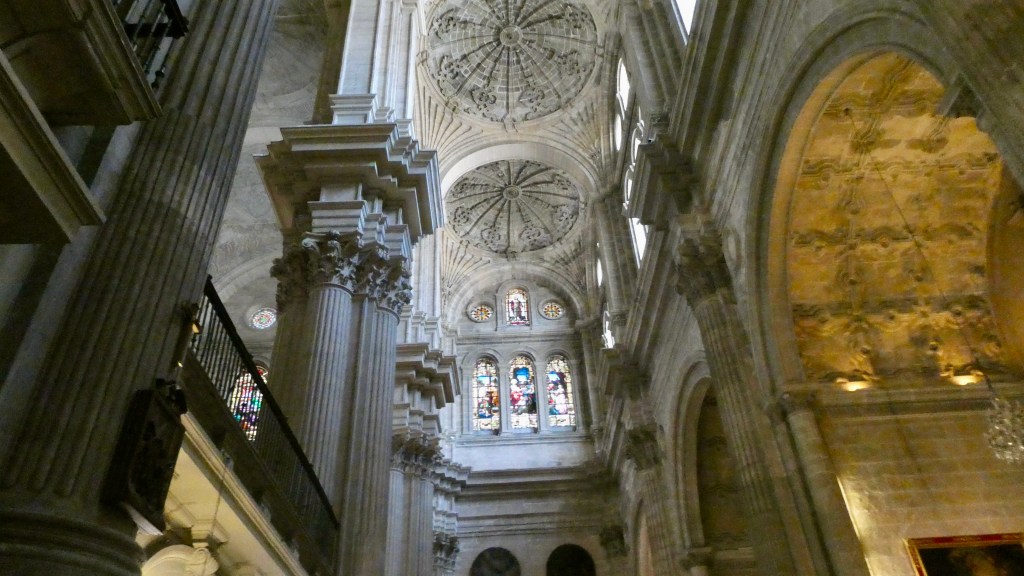
We saw the Málaga Cathedral.

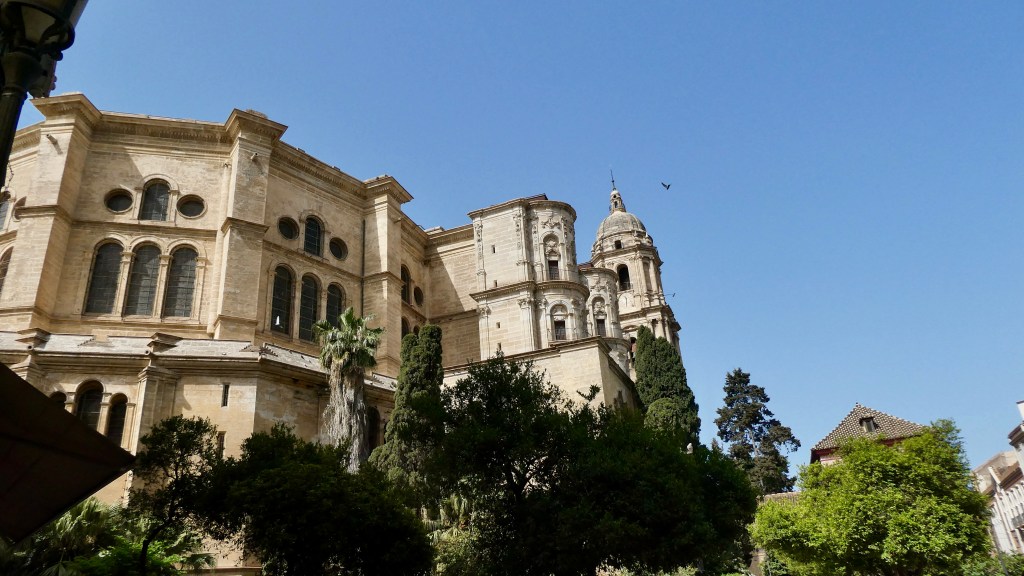
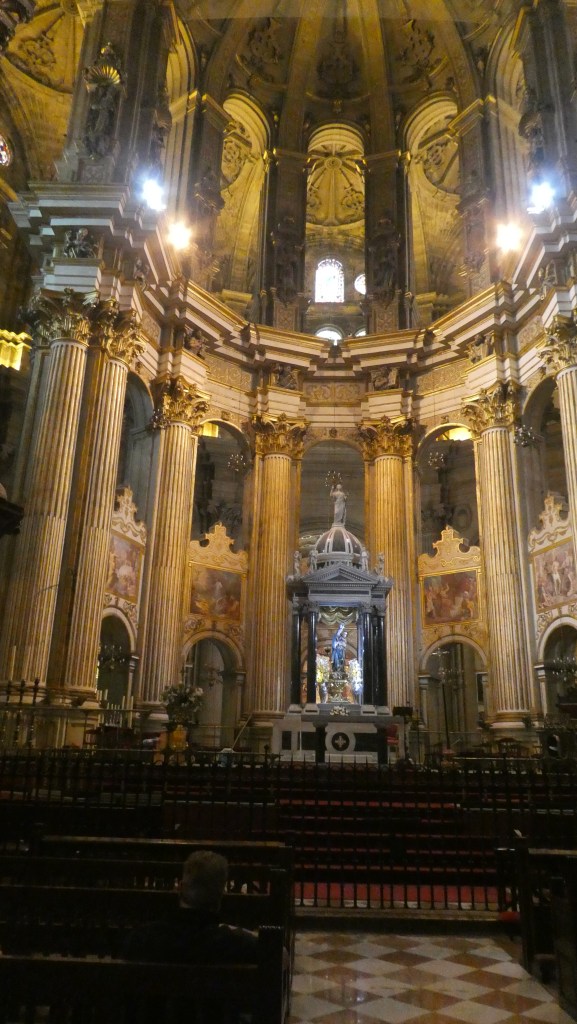
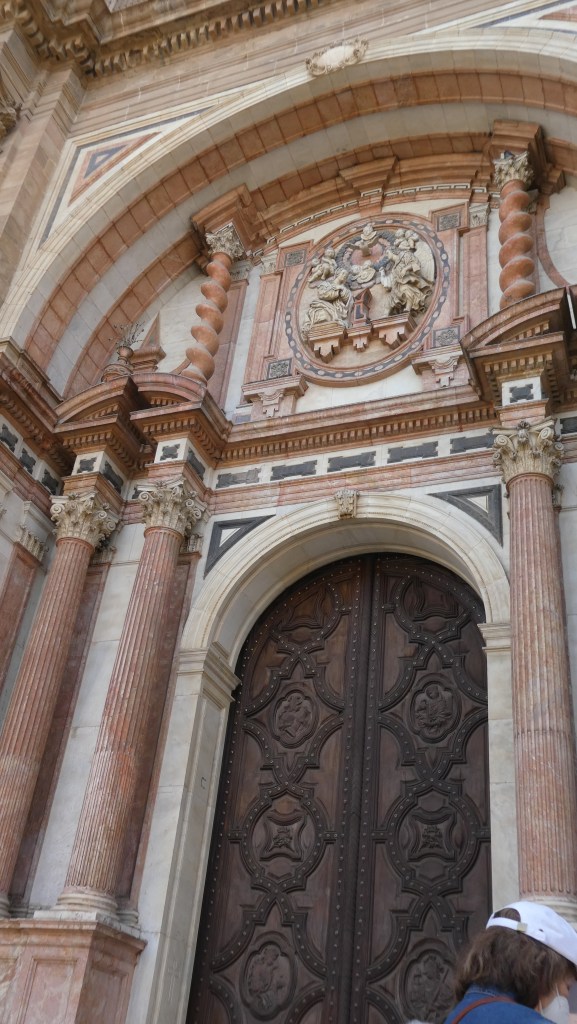
The “Catedral de la Encarnación de Málaga” is similar to other cathedrals we saw with a large central nave and altar.    

There was an ornate choir.

And a very old organ.

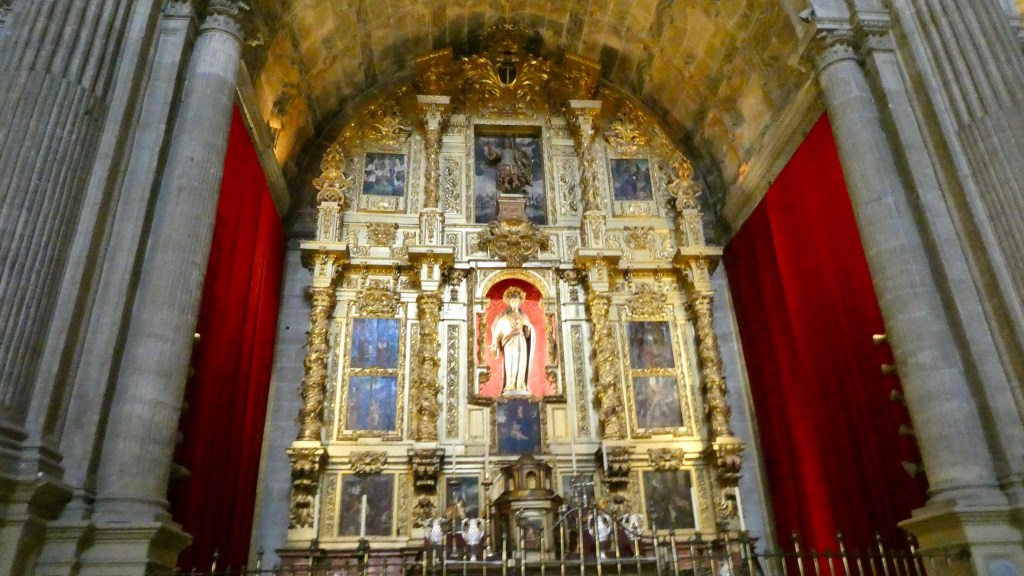
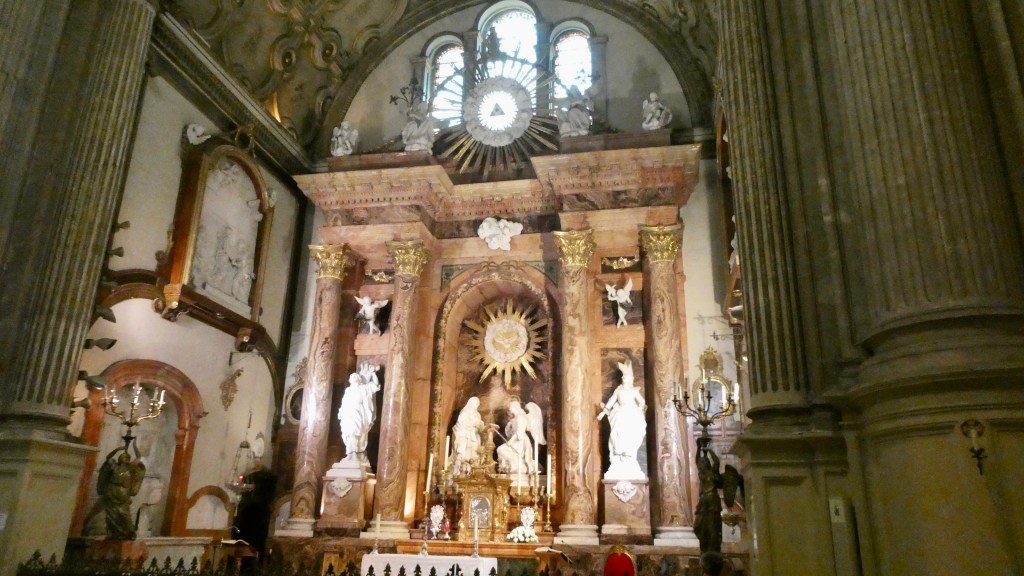
There were side chapels.  

The Málaga Cathedral was built between 1528-1782.  While still unfinished,  construction was stopped due to a lack of funding.  It is widely believed that the city of Málaga contributed funds to the American revolution.  Our tour guide told us that the US offered to help complete the cathedral post revolution but the offer was declined.

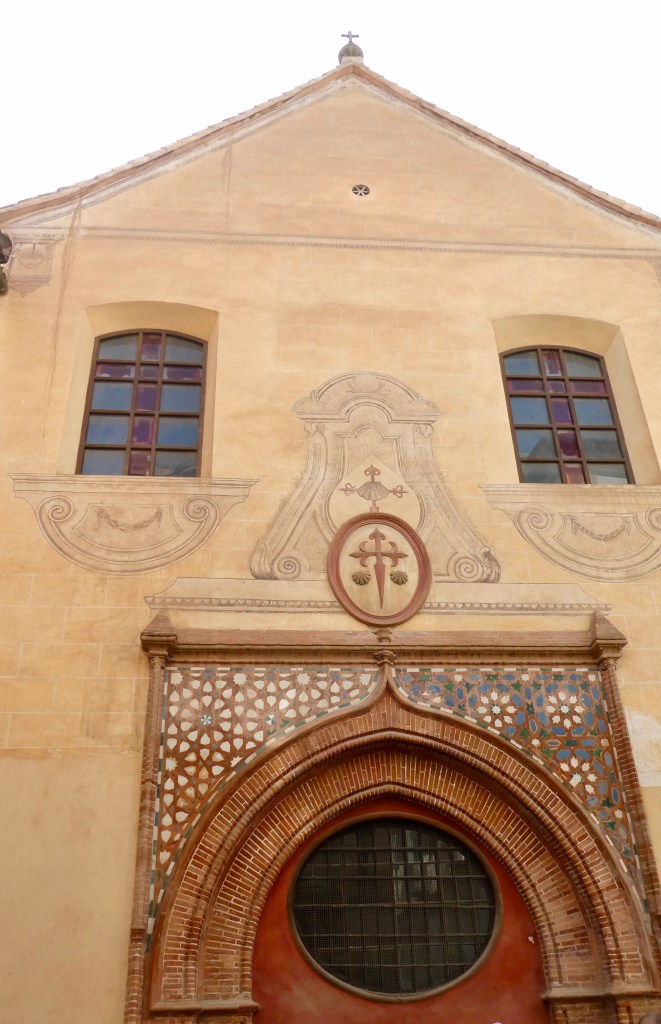
Christian rulers in Málaga, and throughout Spain, built churches over mosques, or refit them for Christian purposes. This entrance still has the Arabic arch.

In more recent Málaga history, Pablo Picasso was born here October 25, 1881 on the first floor of the building behind his statue.  His childhood home was on this square.  At the age of ten his family moved to Barcelona where he was educated.  Picasso eventually moved to Paris.  There is a Picasso museum in Málaga, opened in 2003, with artifacts given by his daughter in law Christine Picasso.

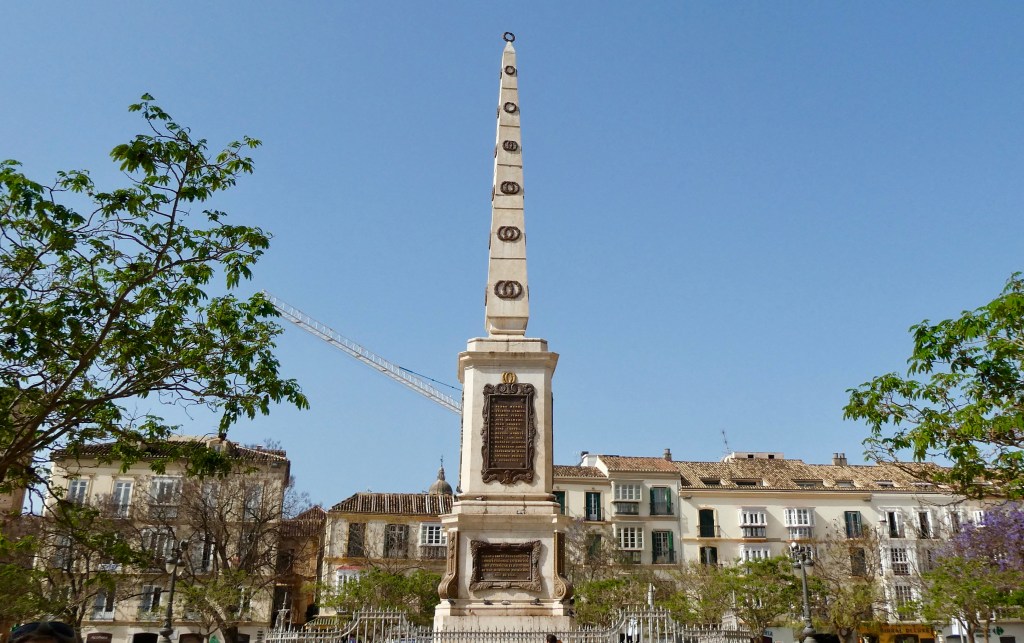
This Obelisk was dedicated to celebrate the Heroes of Independence in 1921.
This Roman theater was discovered in 1951 during excavations,  It is used once again for concerts and has great acoustics. 
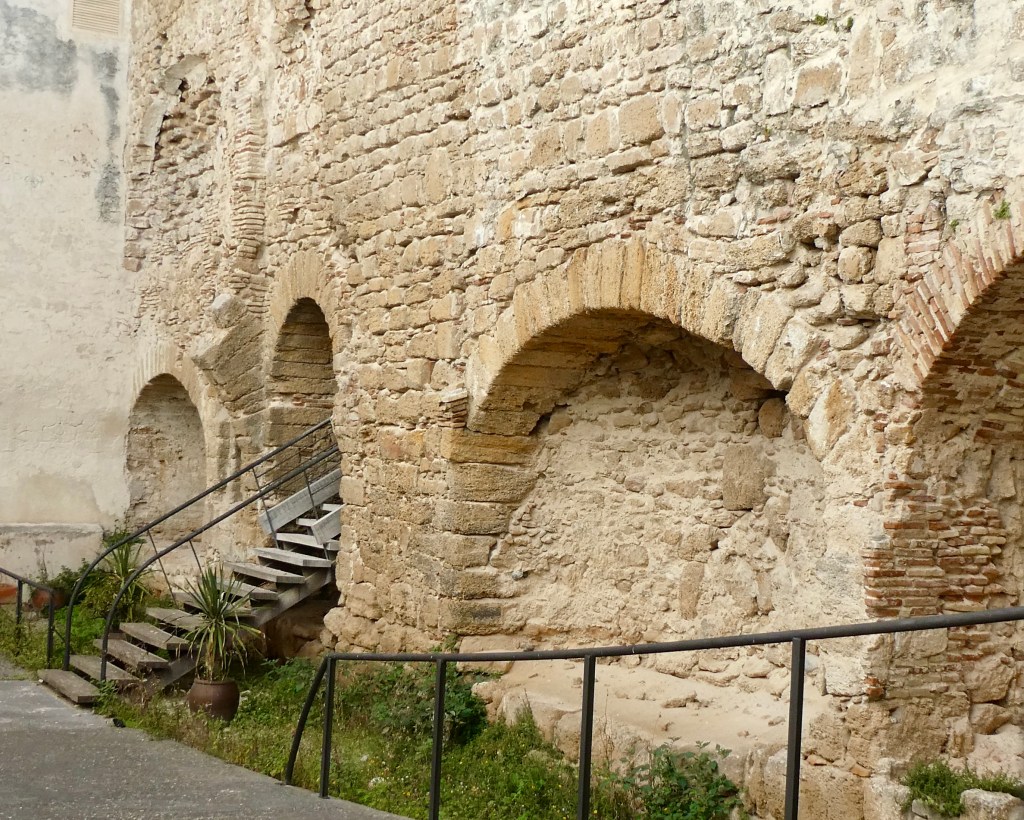
The discovery of old ruins continues to happen. This construction site was on-hold until the archeologists determined what was there and how best to preserve it.
In 1960 actor Antonio Banderas was born in Málaga.  He lives here part time and built a large performing arts venue for the city.

In 1974 Málaga became a sister city with Mobile, Alabama.

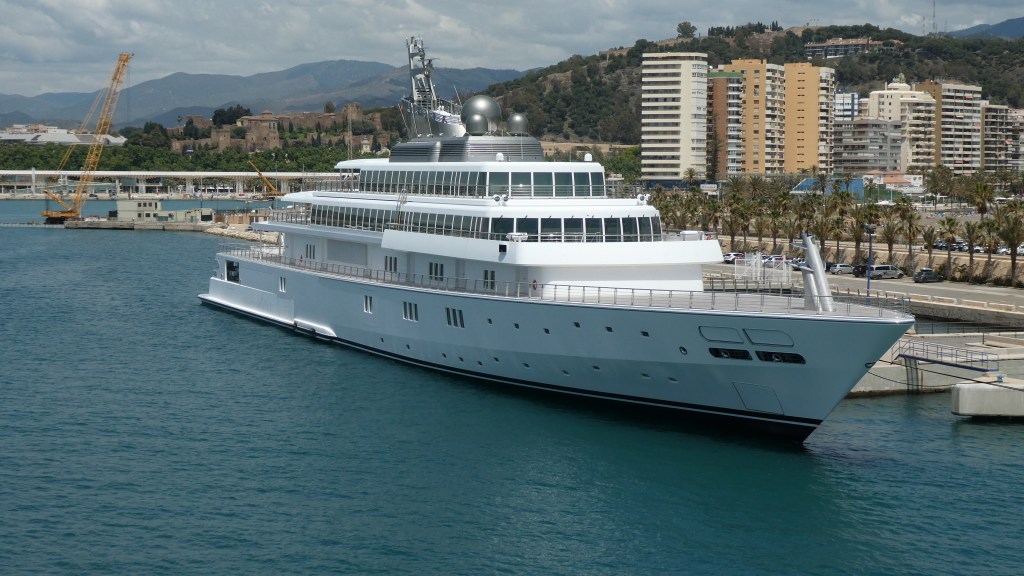
In 2022 we saw this yacht in the Málaga marina.  It was so white, so spartan, so quiet and so boring that we wondered if it was confiscated from a Russian oligarch.  There were very few people ever visible and no deck chairs or color anywhere. 

We eventually saw the name, Rising Sun, and did some research.  It was built in 2004 for Larry Ellison the CEO of Oracle Corporation.  Hollywood mogul David Geffen bought a half share in Rising Sun in 2006 and then the entire yacht in 2010.  The initial build cost was $200 million but with refits it is valued at $570 million.  The yacht’s annual expenses are estimated to be $25-40 million. 

We learned that many celebrities have spent time on the Rising Sun.  Also, billionaire David Geffen was highly criticized for posts showing self isolation on his yacht in the Caribbean during the early days of COVID.  We don’t often side with billionaires on anything, but self isolating on the ocean during a pandemic does seem to make some sense.  

Randy watched activity on and around the yacht with his binoculars and believes he saw David Geffen alone on the bow at one time.

We enjoyed doing research about the Rising Sun and more yachts and ships we saw in various ports.  More to come in future posts!

Posted in Uncategorized | 1 Comment

Transatlantic Cruise: Cadìz, Spain and our First Flamenco

Cadìz is arguably the oldest inhabited city in western Europe.  The history is authenticated from 1104 BC.   It was inhabited first by the Phonecians, then the Carthaginians (beginning in 530 BC) Romans (beginning in 49 BC),  Moors (beginning in 711 AD) and Christians (beginning in 1264 AD).  Cadìz has been ruled primarily by Spain and its predecessors but was sought by the English, French and Dutch.

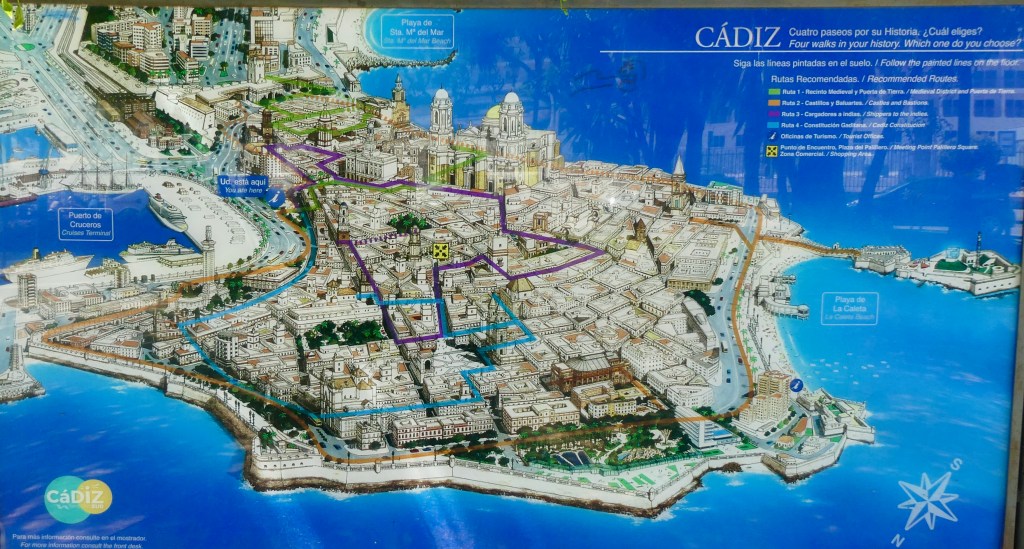
Cadìz sits on a small peninsula just west of the Mediterranean Sea and was an important port for trade and defense.

Cadìz is famous for the Watchtowers that were so important for shipping and times of battle.

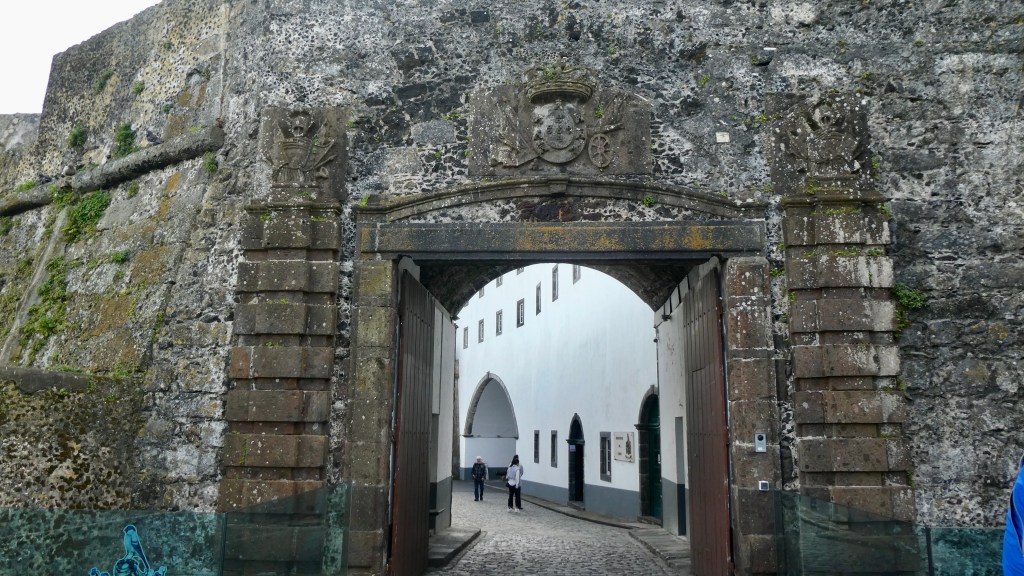
The oldest walls in the city are from 800 BC.

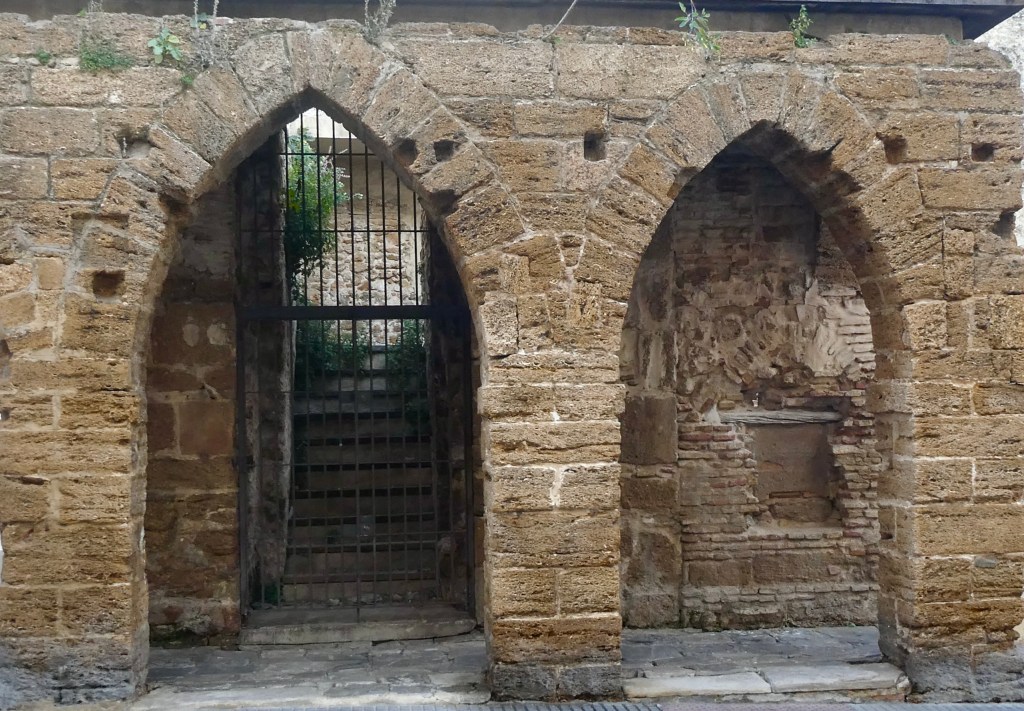
These walls from the Islamic era.  

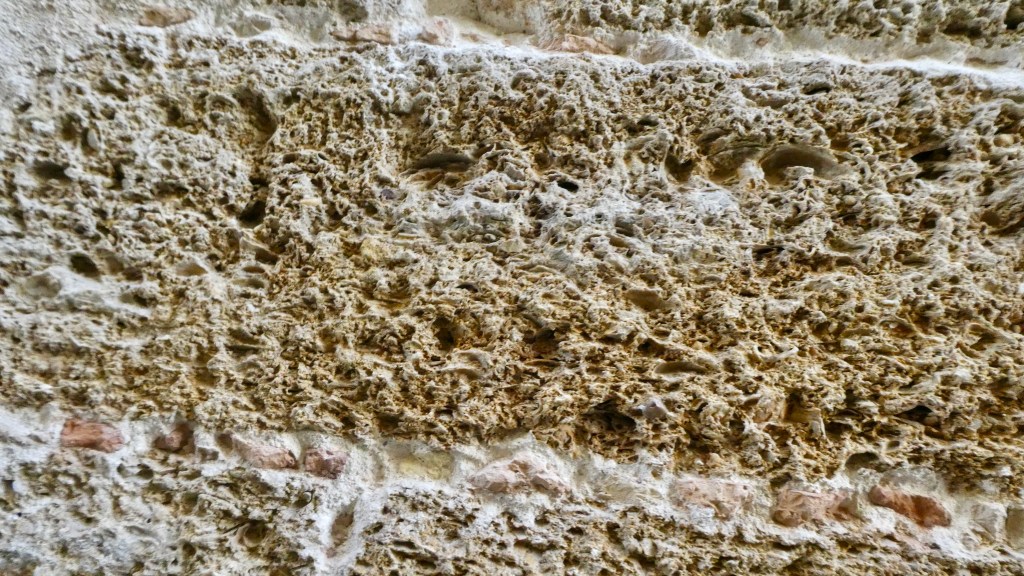
Walls of past eras were made from ostionera stone – a combination of crushed shells and small stones.

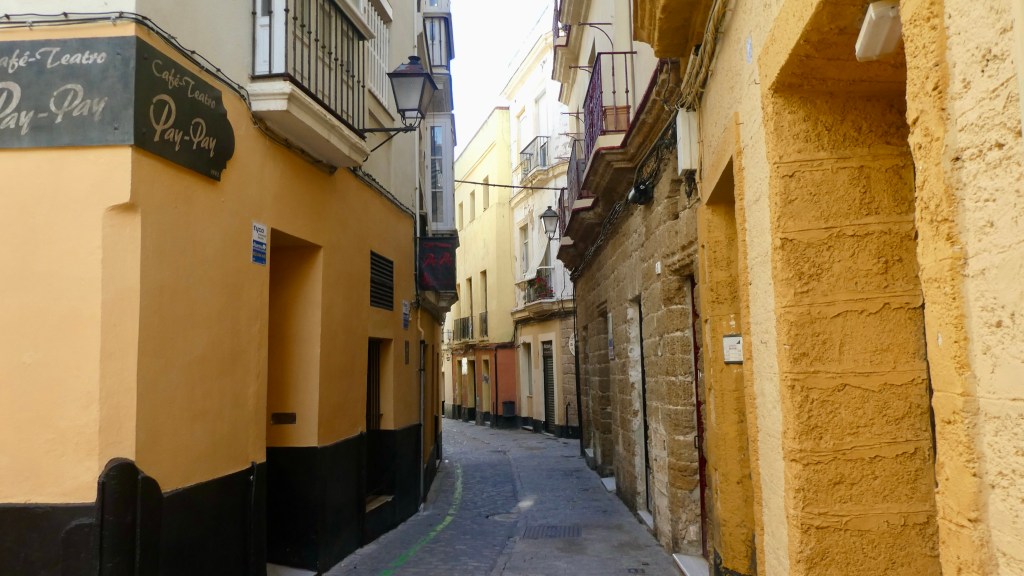
Cities in the Mediterranean region were built with narrow streets and buildings several stories high. .  This allows for shade and a cooling wind tunnel through the streets.

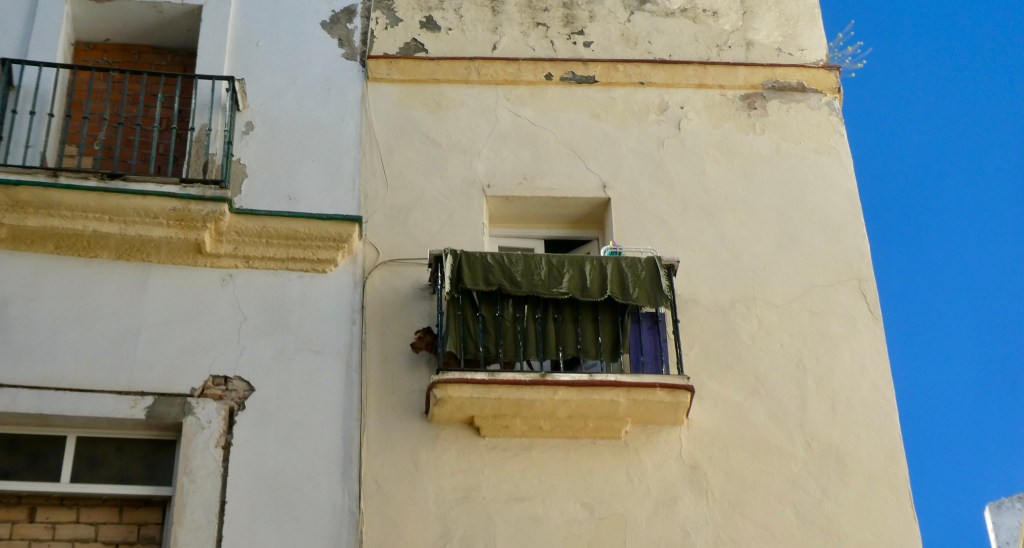
This pup was happy to greet us as we walked the narrow streets of Cadìz.

During the early 19th century, Cádiz was a stronghold for Spain’s anti-monarchist, liberal movement. A significant protest was held at the town hall in 1799.  As a result Cadìz was the site of the declaration of Spain’s first constitution in 1812.

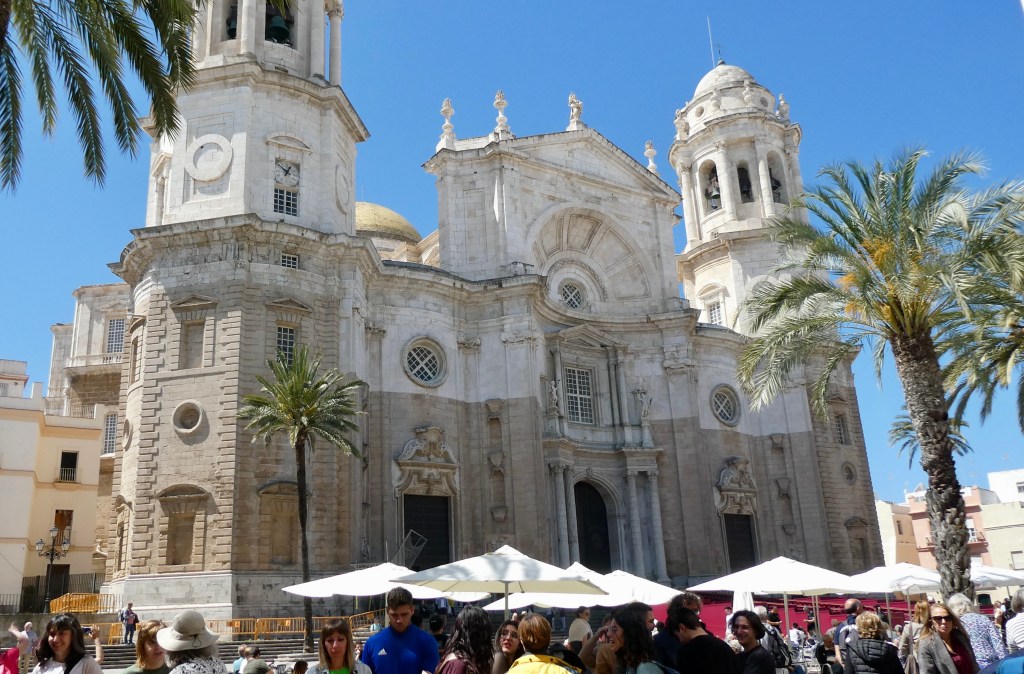
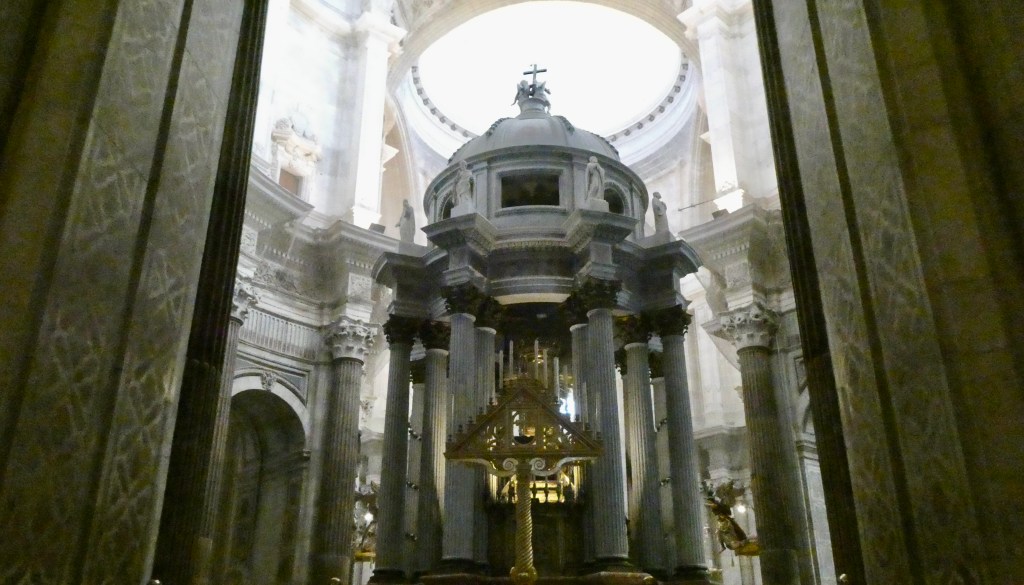
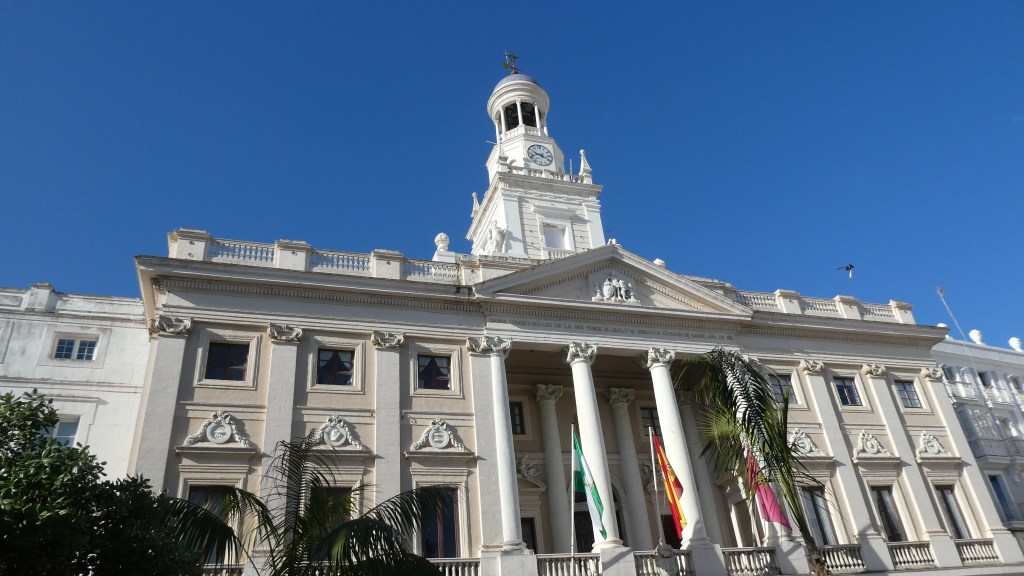
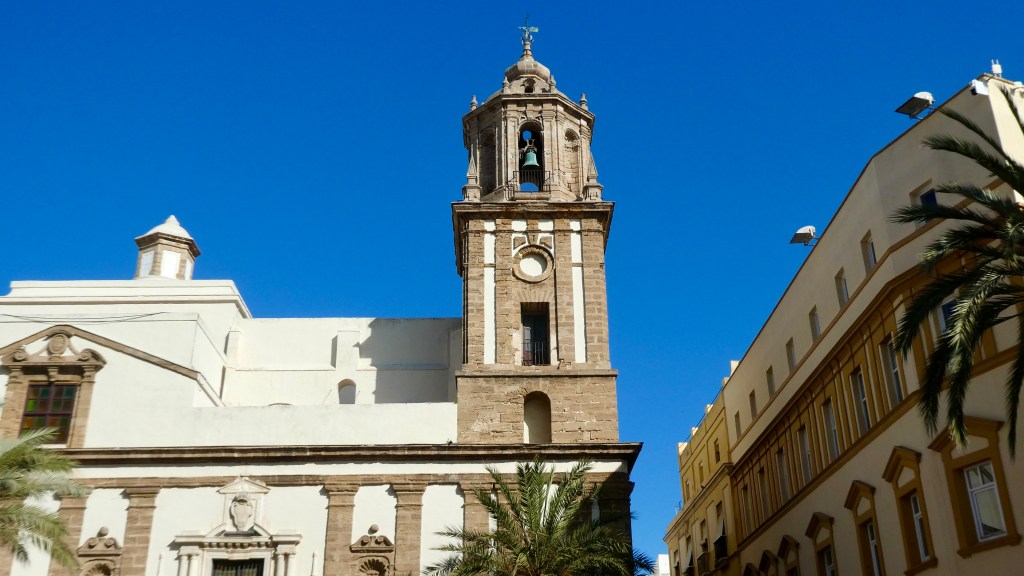
This is the “Catedral de CadÌz”, begun in 1722 and completed in 1838.  It is called the new cathedral because the 15th century cathedral was destroyed during a battle with the Dutch.

It is also called the Cathedral of the Americas because the wealth to build the cathedral was gained through trade with the new world.  The outside dome was gold so sailors could see it from a distance.

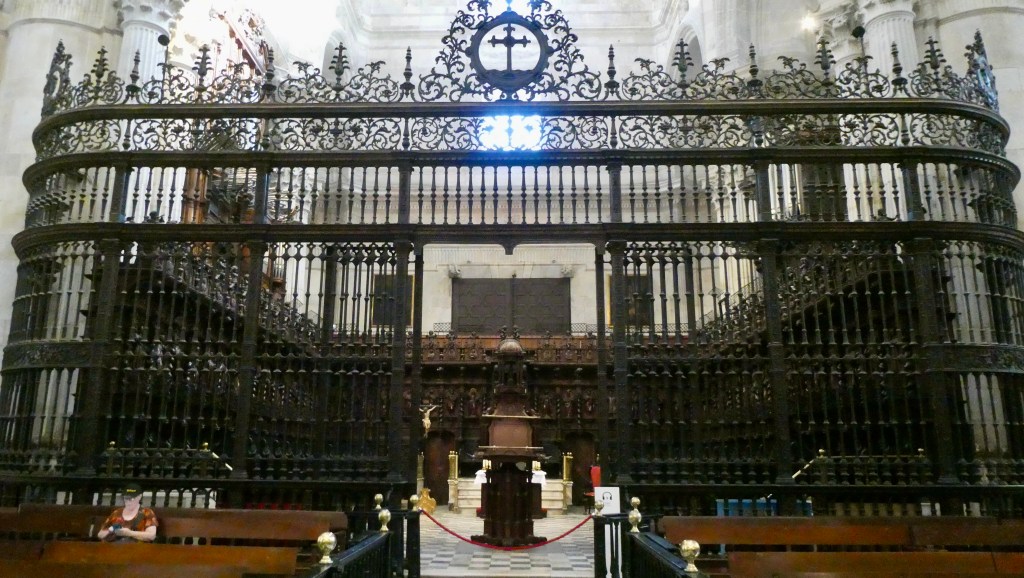
The Choir was built of the oak from ships, mostly from the Americas.

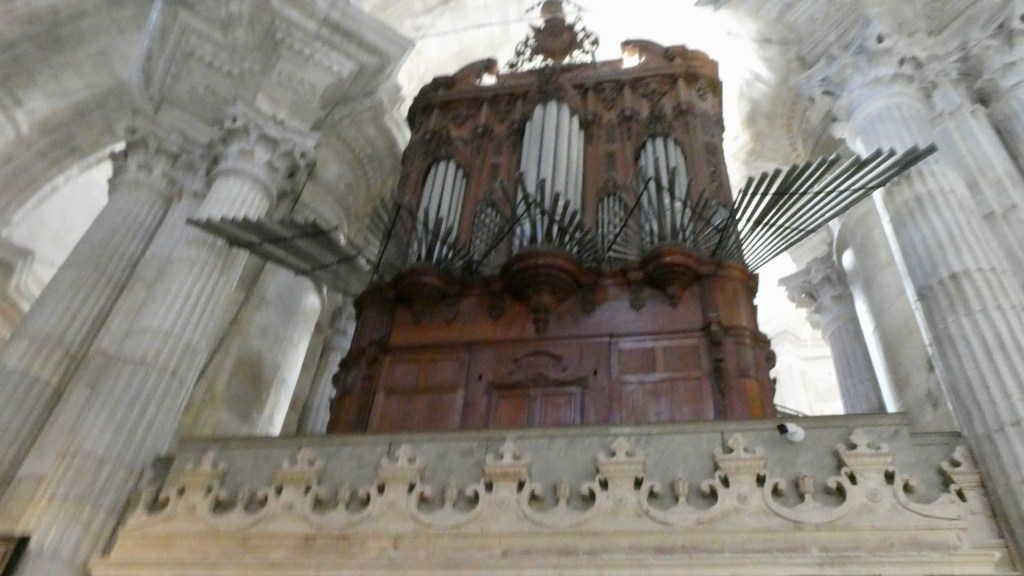
The organ is from the fifteenth century. 

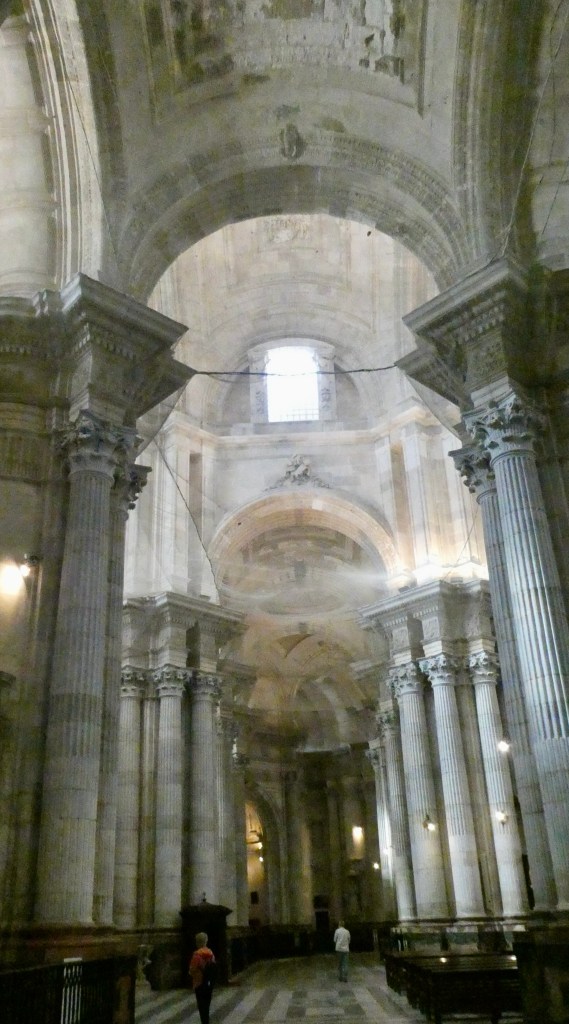
This is the main branch of the cathedral.

This is the central altar. Mass is still celebrated in the cathedral.

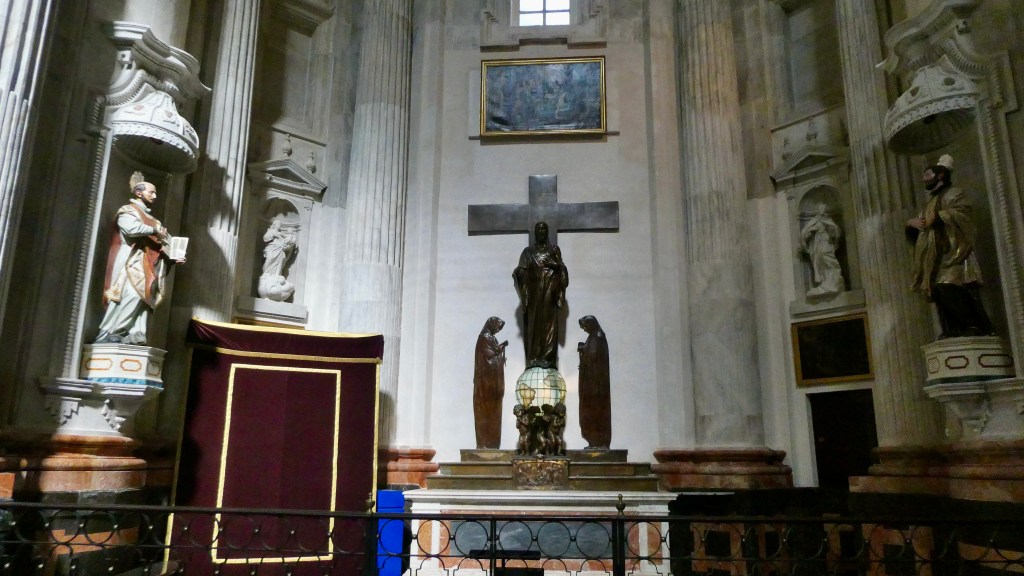
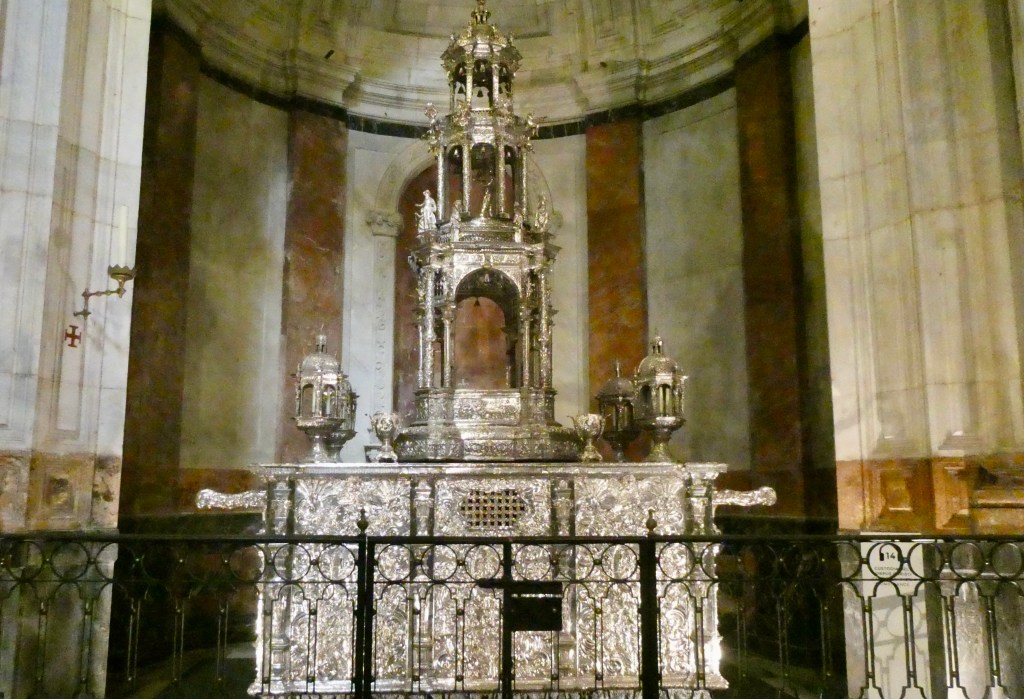
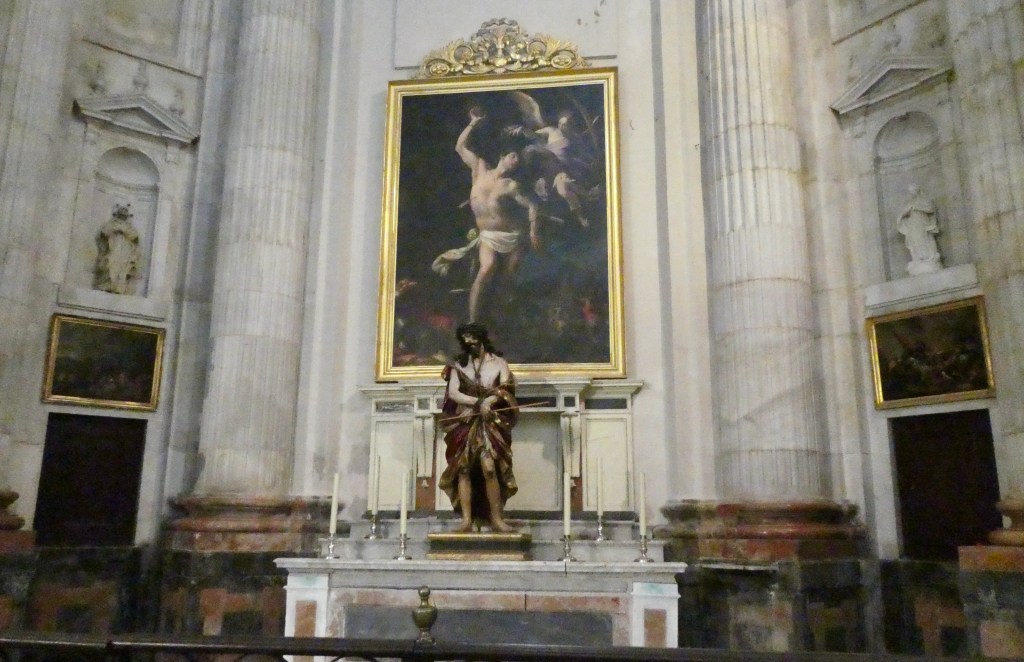
The cathedral has 16 side chapels. 

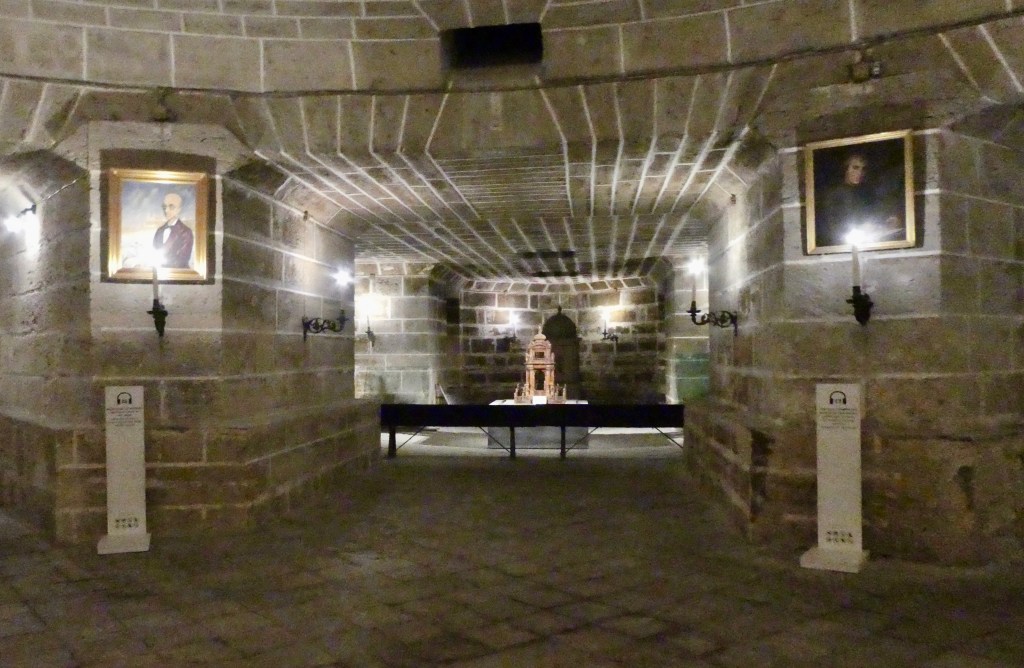
There is a crypt underneath the Catedral de Cadìz.  Among many entombed, the crypt of Manuel de Falla is highlighted.  He was a Spanish composer who was born in Cadìz.  He died in Argentina but was returned to CadÌz.  

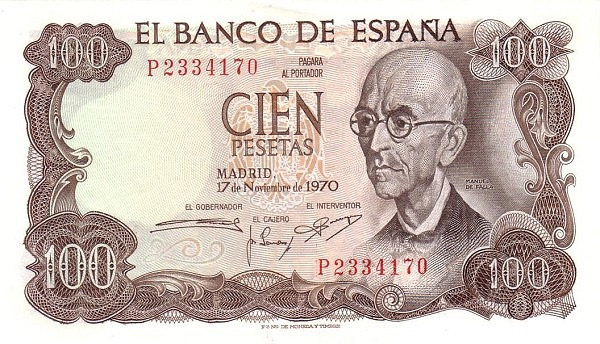
Manuel de Falla was important enough that he was on the 100 Pesatas currency of Spain.

Cadìz is in the Andalusia region along the southwest coast of Spain, one of seventeen autonomous regions. Andalusia is the second largest and most populous region of Spain.

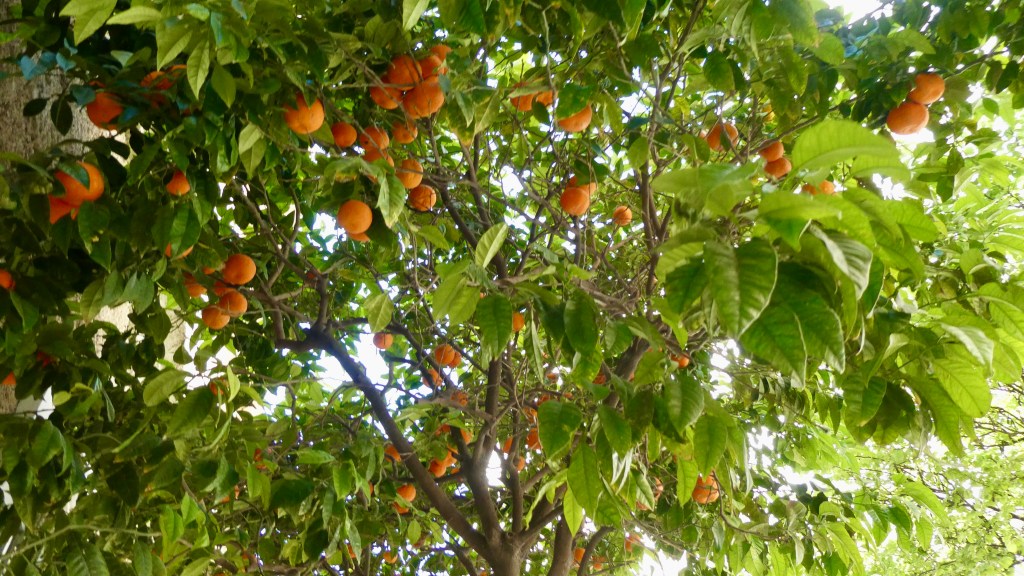
Cadìz is in one of the warmest areas of Spain along the southern coast. Bitter Oranges, also called Seville Oranges, were grown along the roads for their beauty. A market developed as they are exported to Britain for Orange Marmalade 

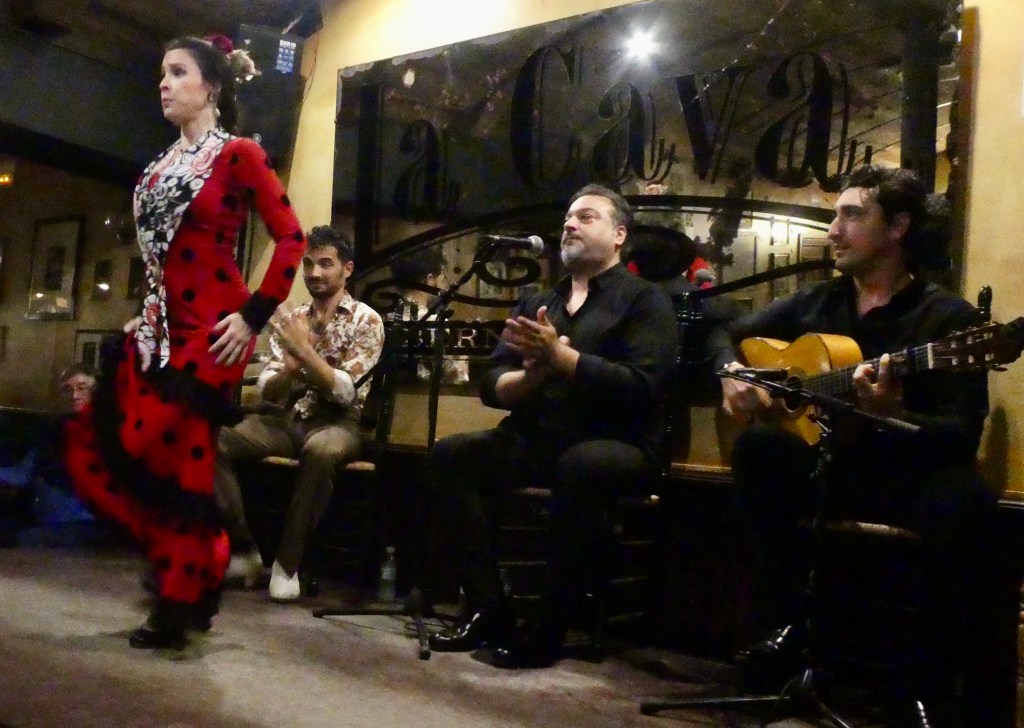
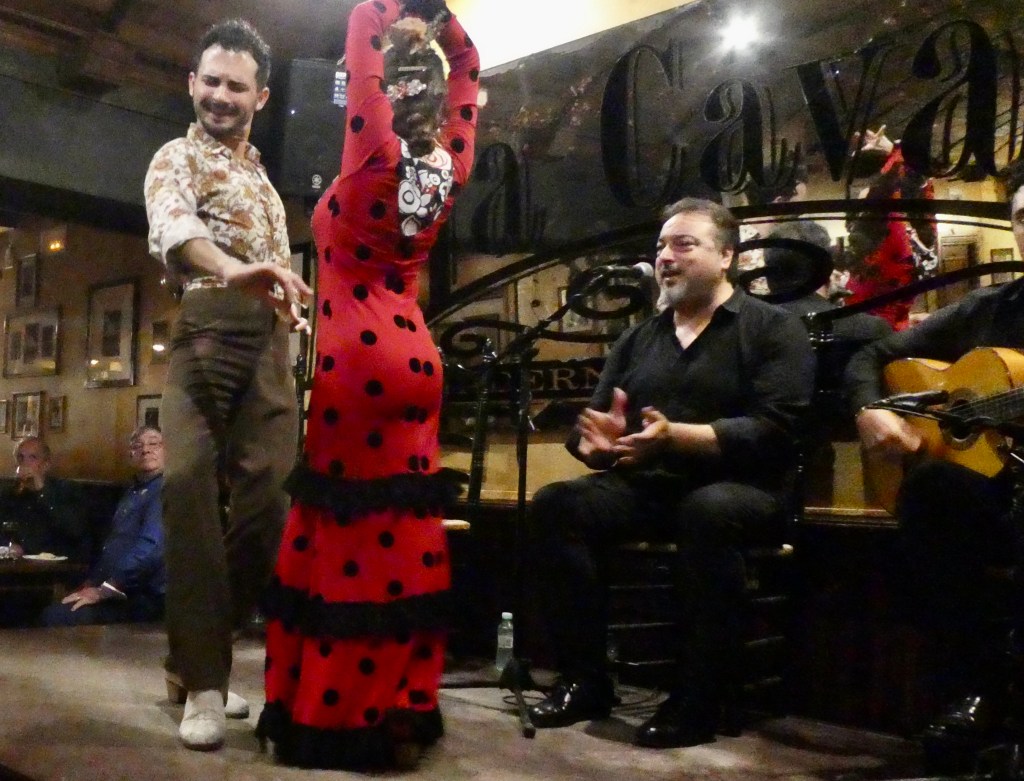
This area of Spain is famous for sherry.  We had our opportunity to try local sherry when we went to a Flamenco Show.  The sherry was served with a variety of tapas (meats, cheeses, small egg dish) and all were delicious.

We enjoyed the Flamenco way more than we expected to.  We consider it a whole trip highlight.  This group included a guitarist, singer and male and female dancers. 

The expressions on the face of the dancers were so intense.  We had the good fortune to sit very close and we could see how hard they worked to entertain us.

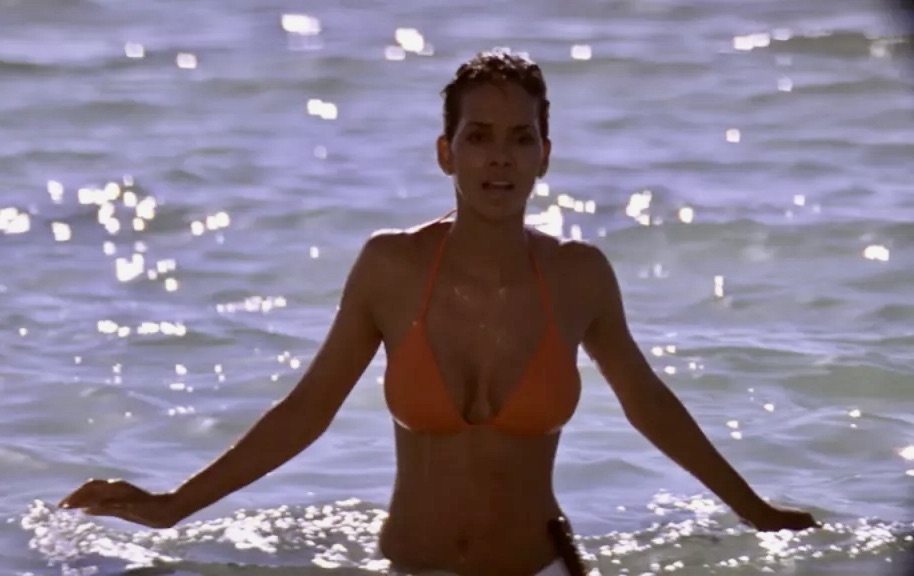
There is one more thing the guide made sure we knew about Cadìz.  The James Bond film Die Another Day was filmed here.  If you are a fan of Bond movies, you may remember the beach scene when Halle Berry came up out of the water.  It was filmed on the beach near the port for our ship.

We loved this port in Spain.  We have several more coming up. The next is Malaga.

Posted in Uncategorized | 2 Comments

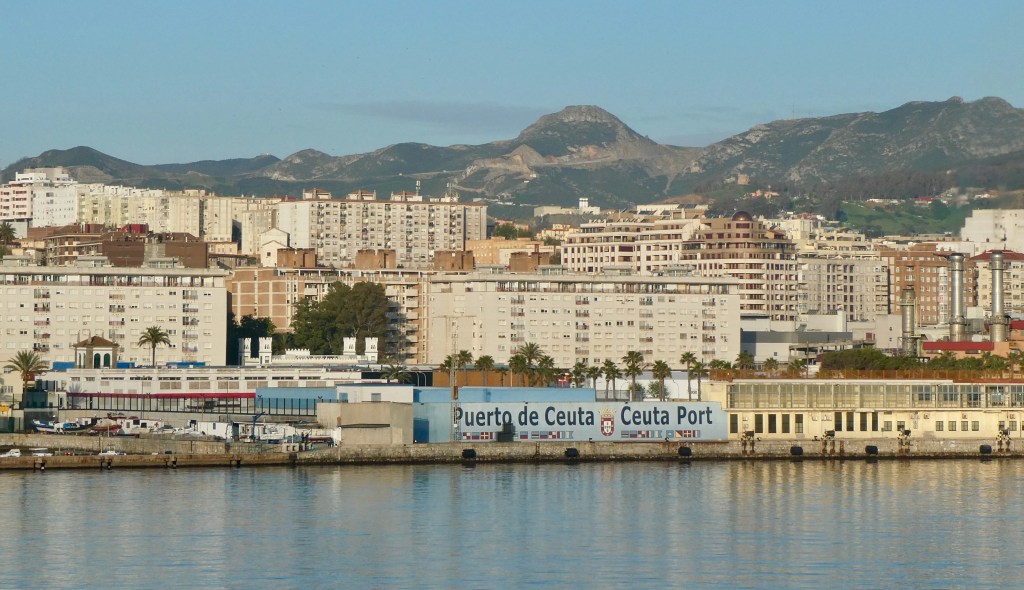
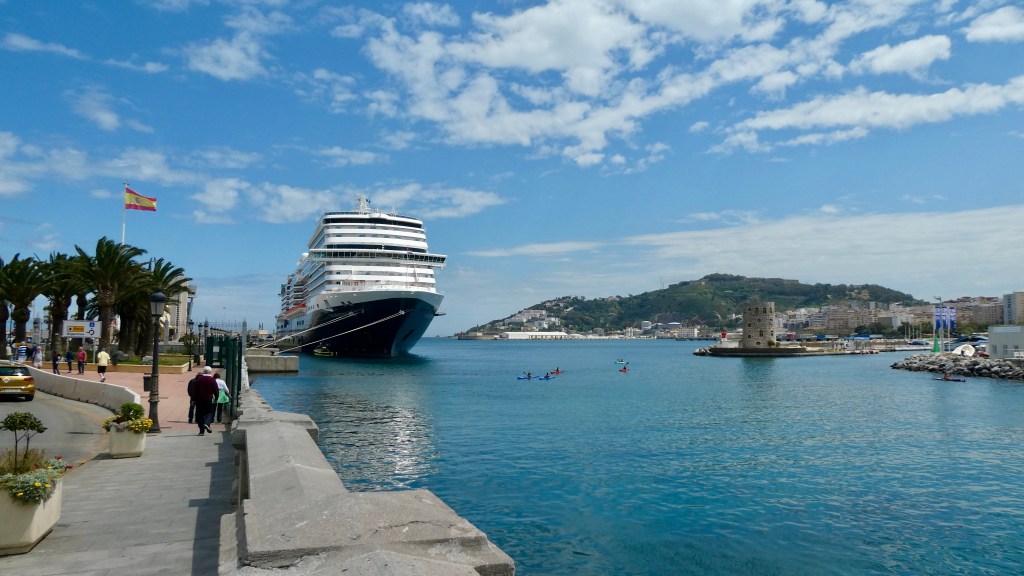
Transatlantic Cruise: Ceuta – Is it Spain? Is it Africa? It’s Both!

When we purchased our transatlantic cruise, it included ports of Gibraltar and Monte Carlo.  However, we knew before we left home that those had been substituted out and our new ports were Cueta, Spanish Morocco and Nice, France.

Flexibility is required in travel. I didn’t care about Monte Carlo but I sure wanted to go to Gibraltar. 

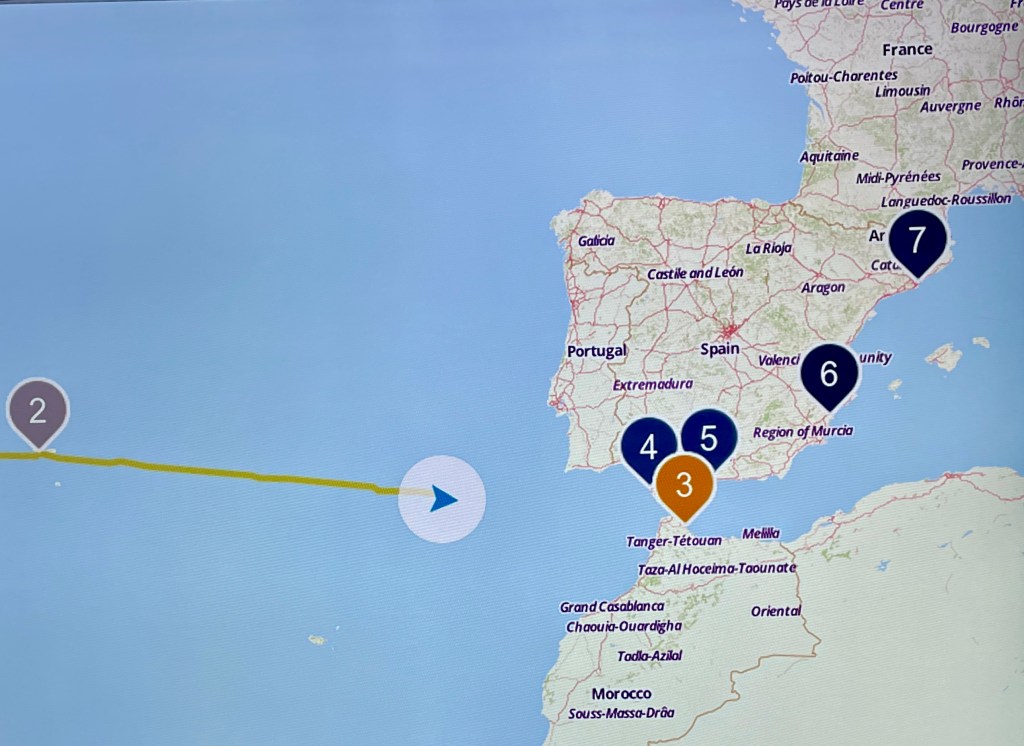
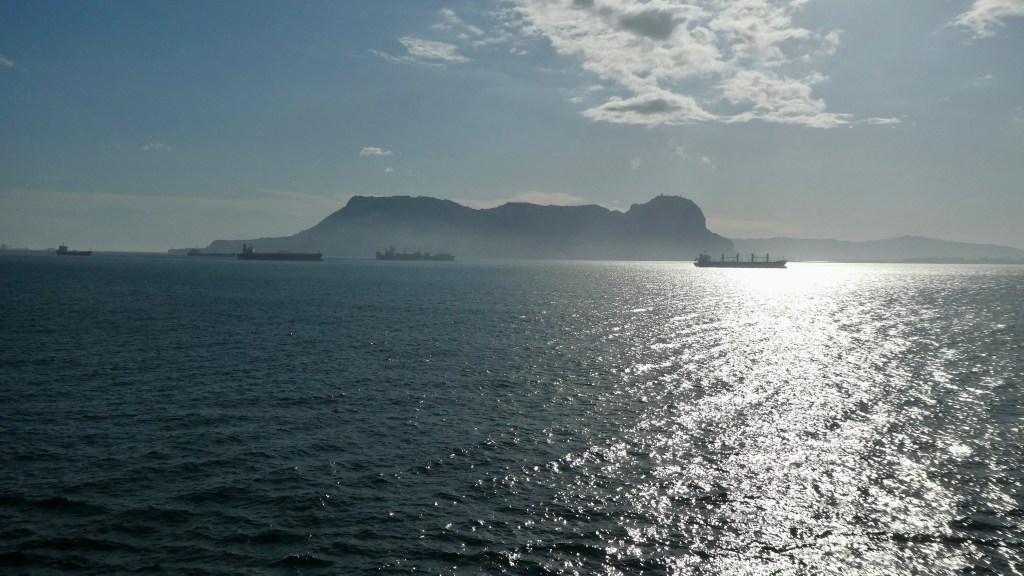
We sailed through the Strait of Gibraltar, and past the Rock of Gibraltar on the port side.  We would pass it two more times as we went back out and in again over the next couple days.

The Rock of Gibraltar – maybe next time.

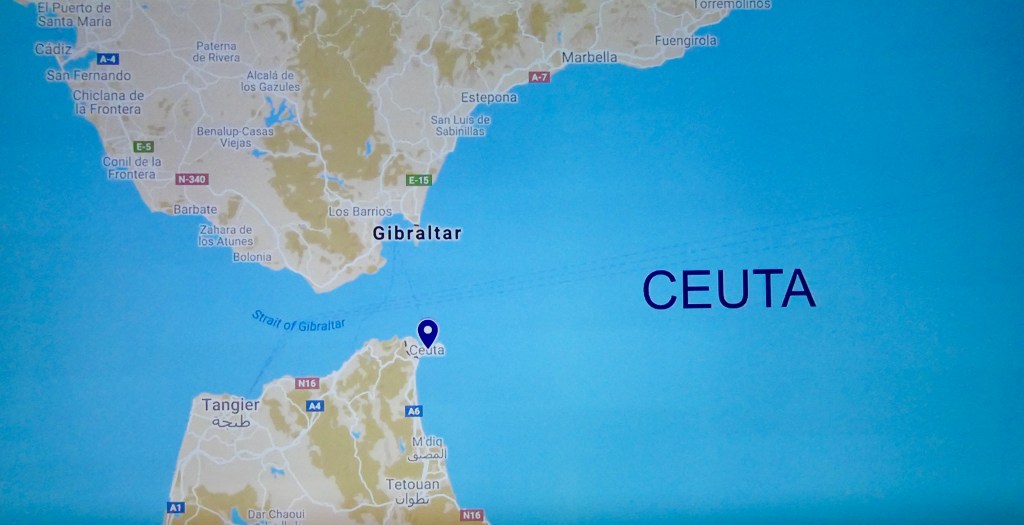
It was interesting to learn that Ceuta is one of two Spanish cities in Africa, the other is Melilla further to the east.

Ceuta was settled in the 7th century BC by the Phoenicians. It provided them strategic advantages due to the narrow strait. It later came under Roman and then Muslim rule.  Ceuta was conquered by Portugal in 1415.

Portugal and Spain were joined in 1580 for an unhappy 60 years. When they separated the citizens of Ceuta had the opportunity to choose whether they wanted to be part of Portugal or part of Spain.  They chose Spain and that was completed in 1668.  A Spanish monarch finally visited Ceuta in 1975 and then again in 2008.

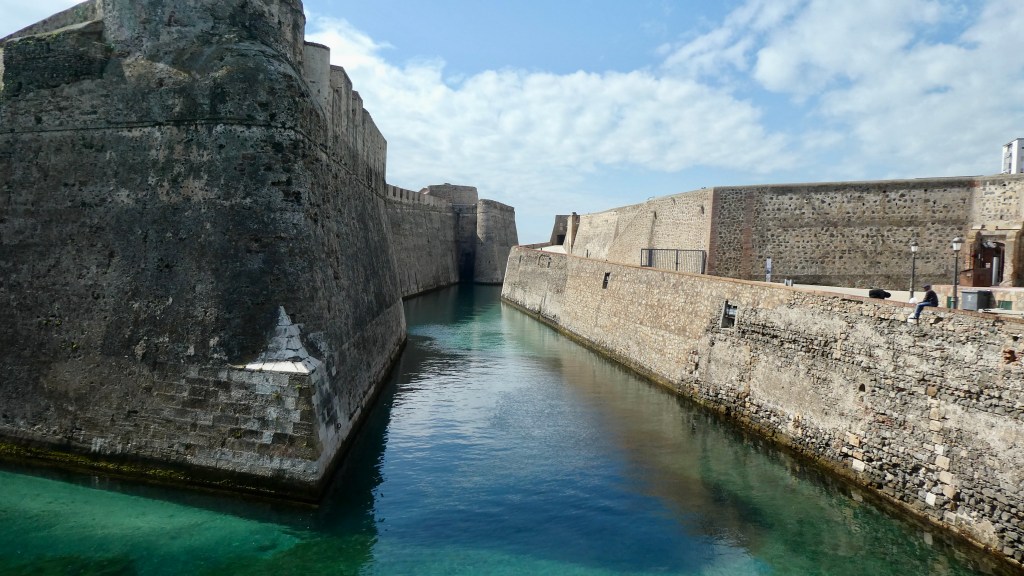
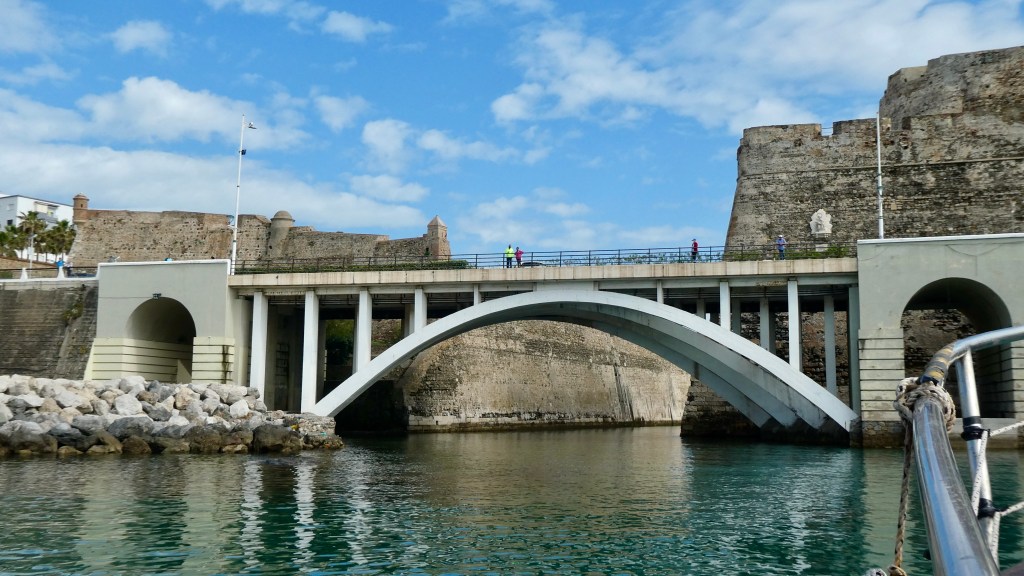
We took a boat trip through the royal moat.  The left side was built in the 16th century by the Portuguese.   The right side was built by Spain in the 18th century.

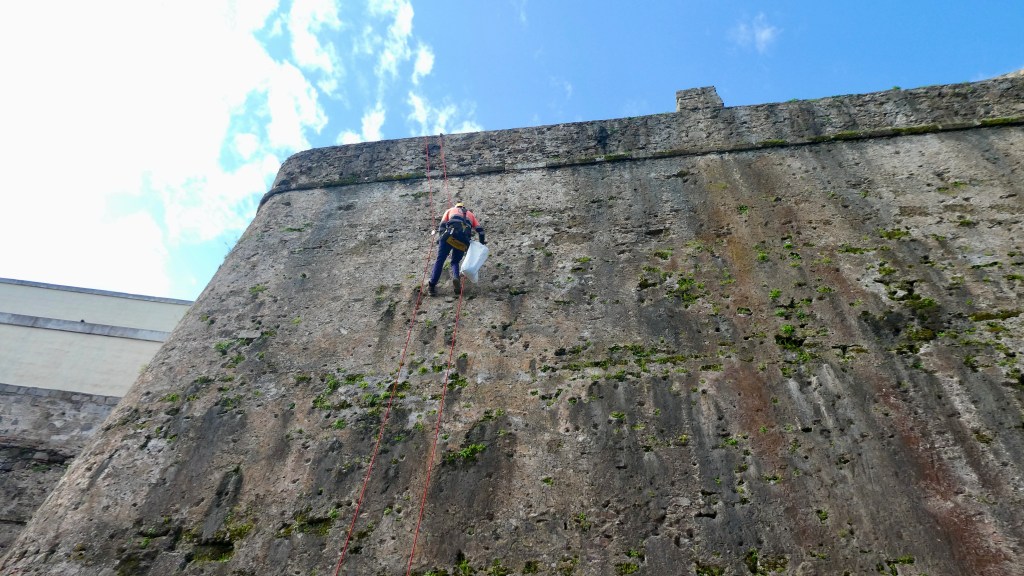
We saw people “weeding” the moat.

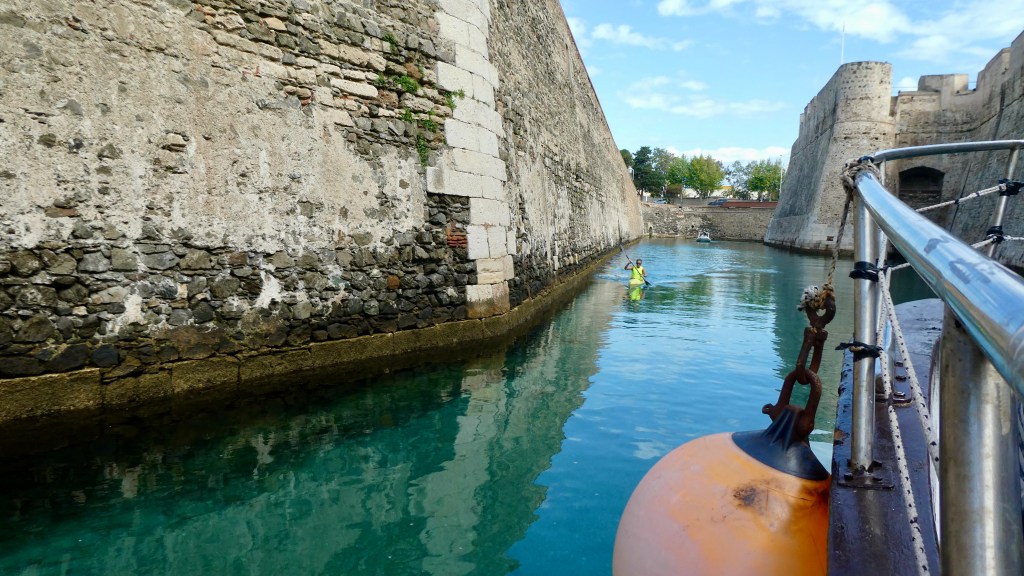
And another kayaking the moat.

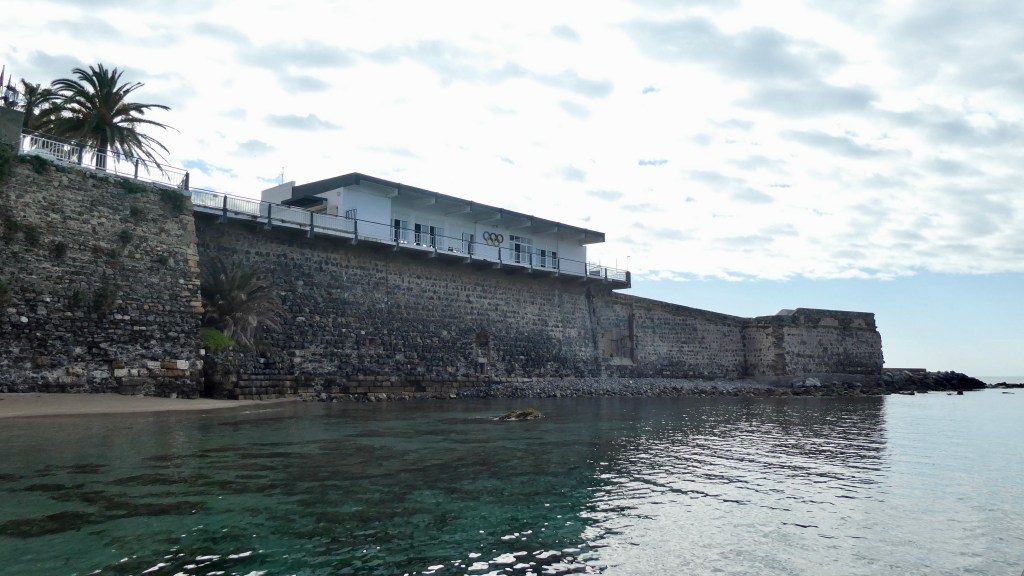
As we left the old part of Ceuta, we went by this sports complex showing Olympic Rings  Ceuta has had two Olympic medalists, one male and one female, both medaling in water polo in different games. 

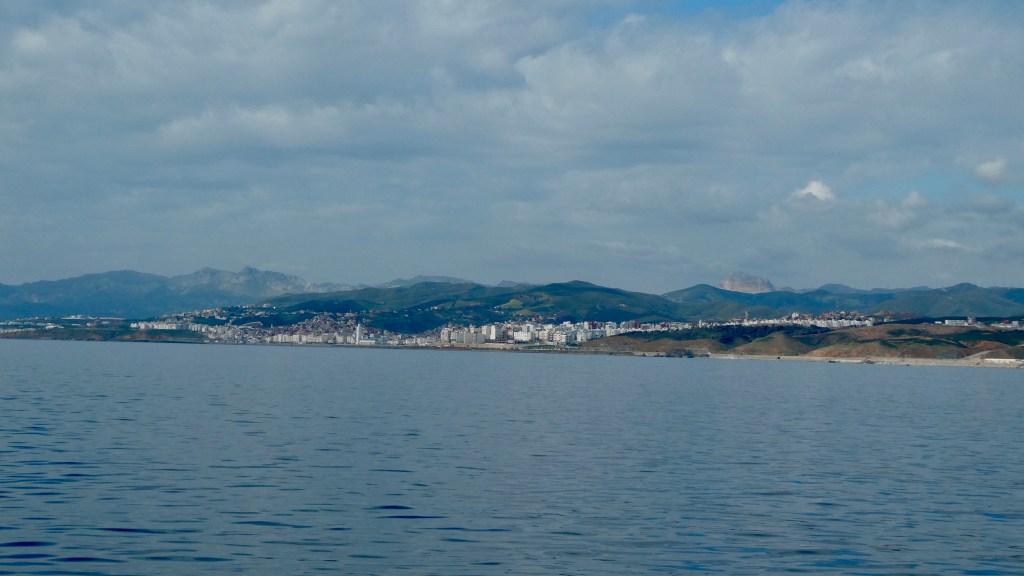
We traveled out into the bay.   From there we could see Morocco in the distance.  There used to be a lot of daily travel back and forth but that has not occurred with COVID restrictions. Our tour guide said she worried about the Moroccan lady who works for her and wonders how she is getting by.

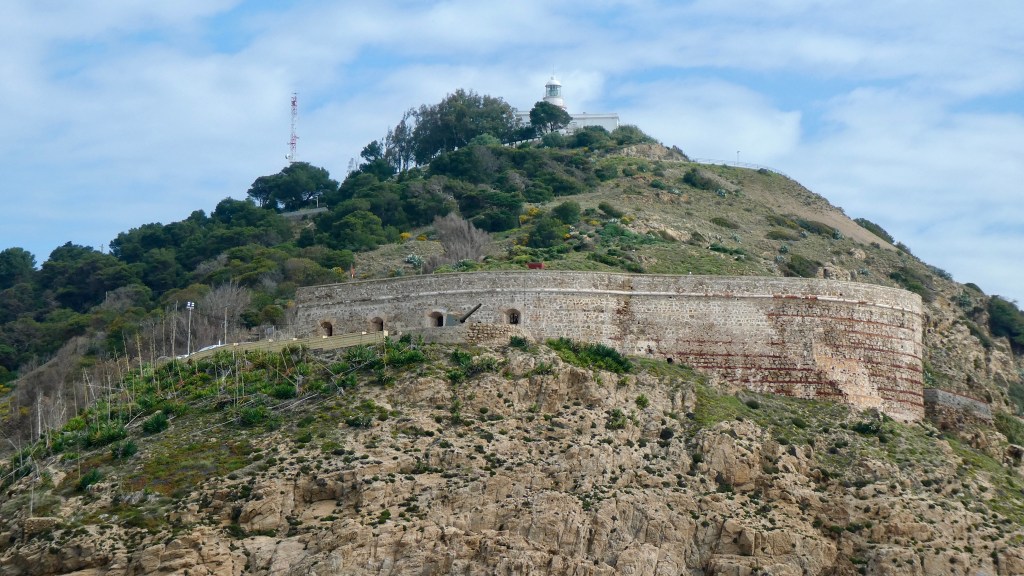
We could see this fortress on the hill.  In the past, if danger was present, someone would set fires to alert the people below.  In more recent years it was a prison and now a military post.

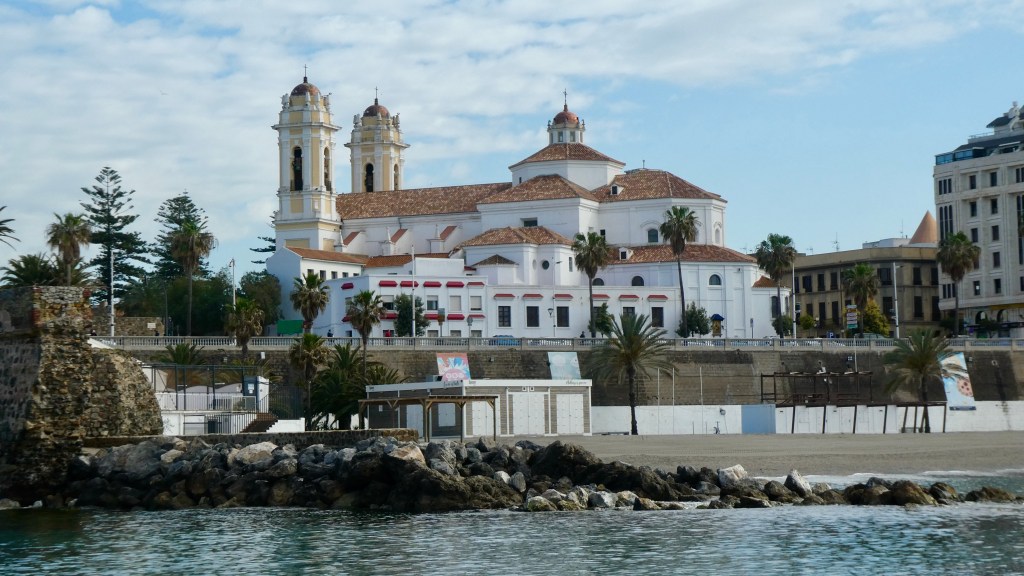
Ceuta Cathedral from the water.

We sailed back into the moat to have our land tour.

We went to Plaza de Africa.  It had all the power centers, the government, the military and the church.

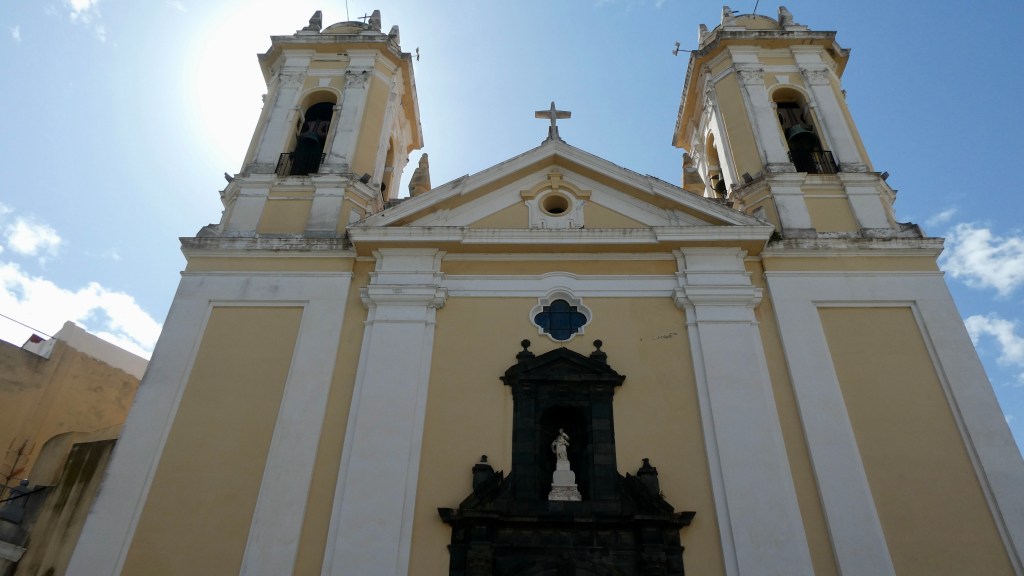
This church is from the 18 century, built by the Portuguese.  It went through refurbishment in 2002.

This staff was held by the original Portuguese governor when he declared his rule in the 15th century.

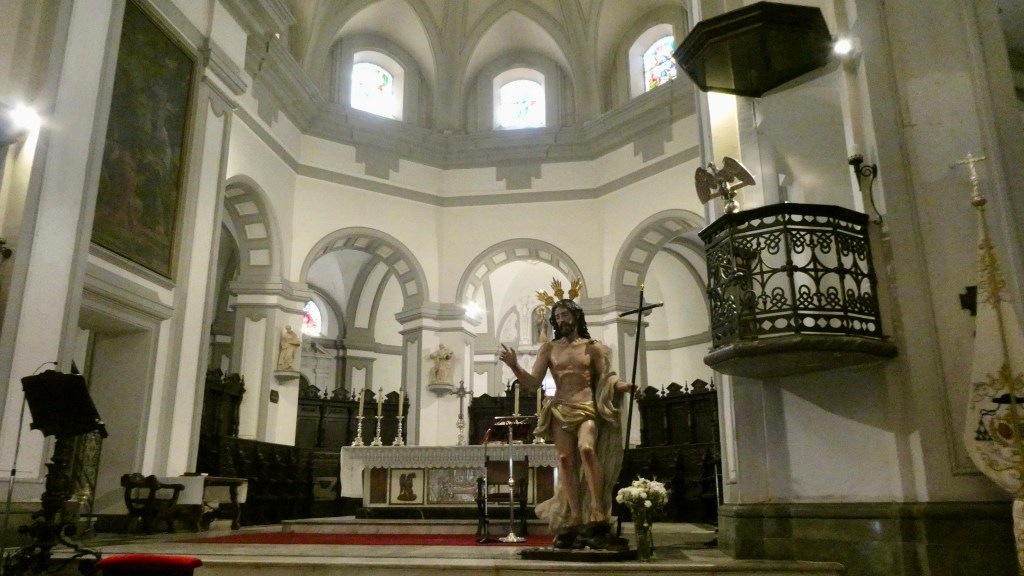
The Inside.

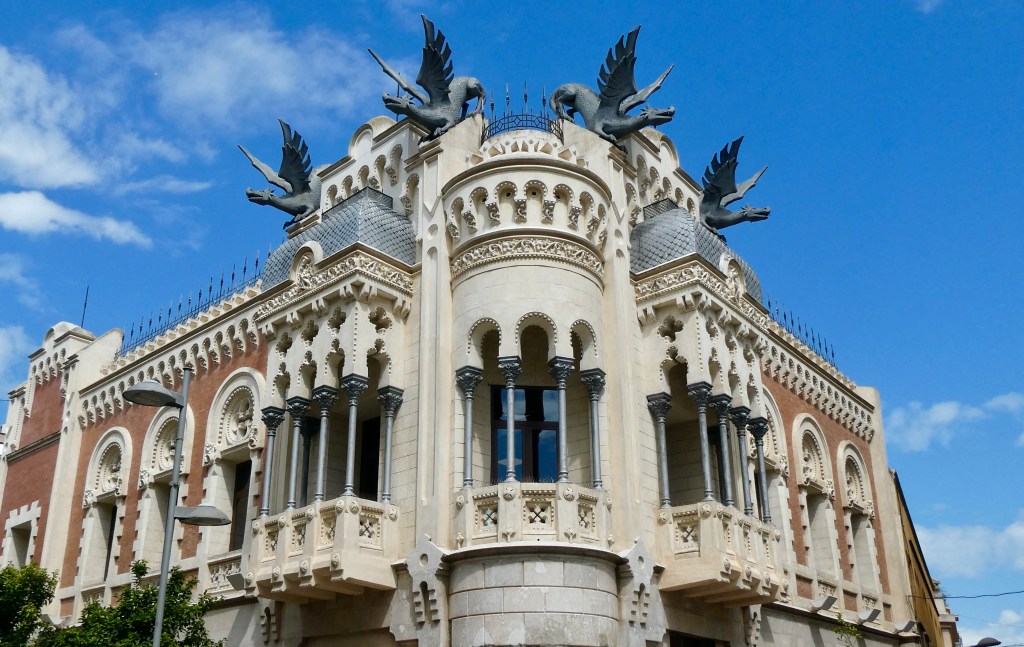
We walked a bit and found the Casa de los Dragones. It was built in 1905, a mere youngin’ but fun.  The dragons were originally made of bronze and were removed in 1925. New lighter dragons were installed in 2006.

We saw the Ceuta Cathedral from land. It had a similar look to the nearby church on the Plaza de Africa but was much larger.

The inside of the cathedral.

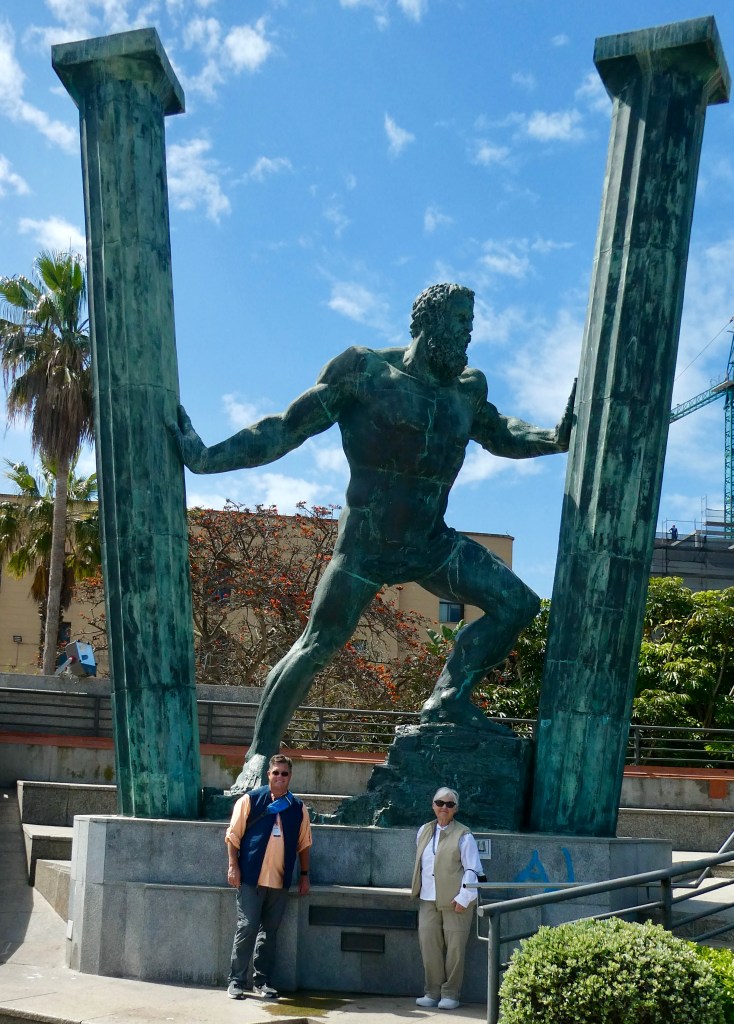
The Pillars of Hercules – Hercules is separating the land to form the Strait of Gibraltar. 

Ahhh.  There is our ship, the Nieuw Statendam.  A welcome sight after a good day of touring in Ceuta, Spanish Morocco, Africa. Our very first time to Africa!

Posted in Uncategorized | 6 Comments

Transatlantic Cruise: The Azores

The Azores are a group of islands spanning a length of 373 miles.  The islands formed 50,000 years ago through volcanic eruption. Ten major islands surfaced and two were later joined through another eruption, leaving nine primary islands in the archipelago. The Azores, an autonomous region of Portugal, are 2100 miles from the US mainland and 900 miles from mainland Portugal. 

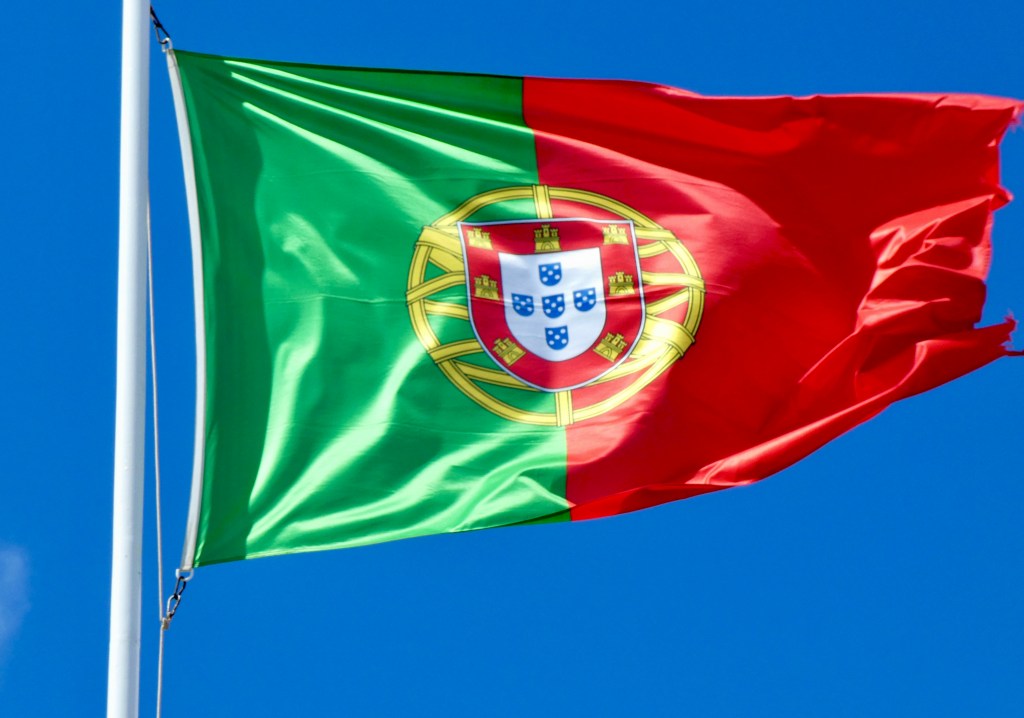
Flag of Portugal

Discovered in 1427 and settled in 1432, the primary language is Portuguese. The Azores dialect sounds slightly French because of the people who left Britannia during the Napoleon wars.

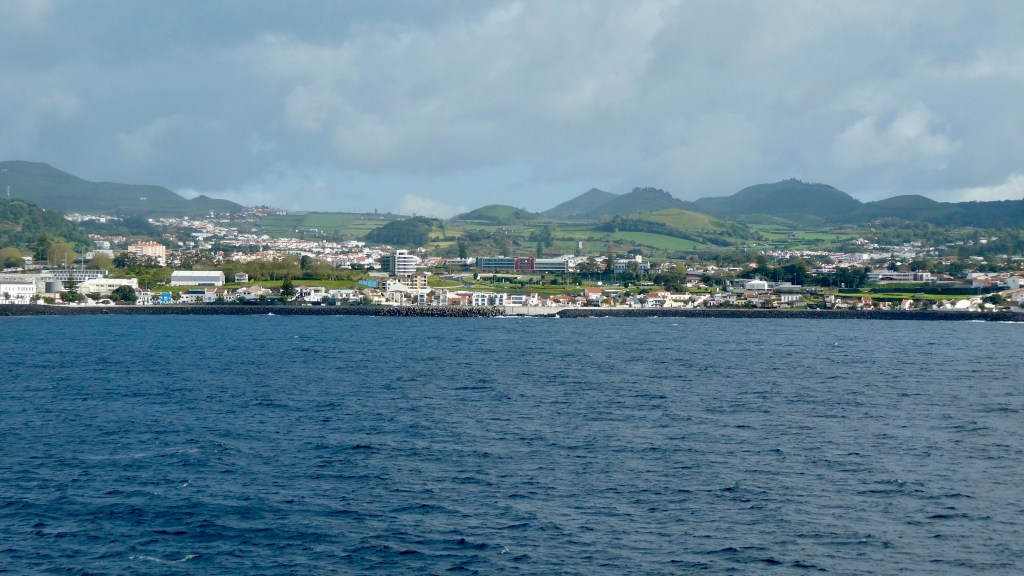
It took us six sea days to reach our first port –  Ponta Delgada on the island of Sao Miguel, The Azores, Portugal. 

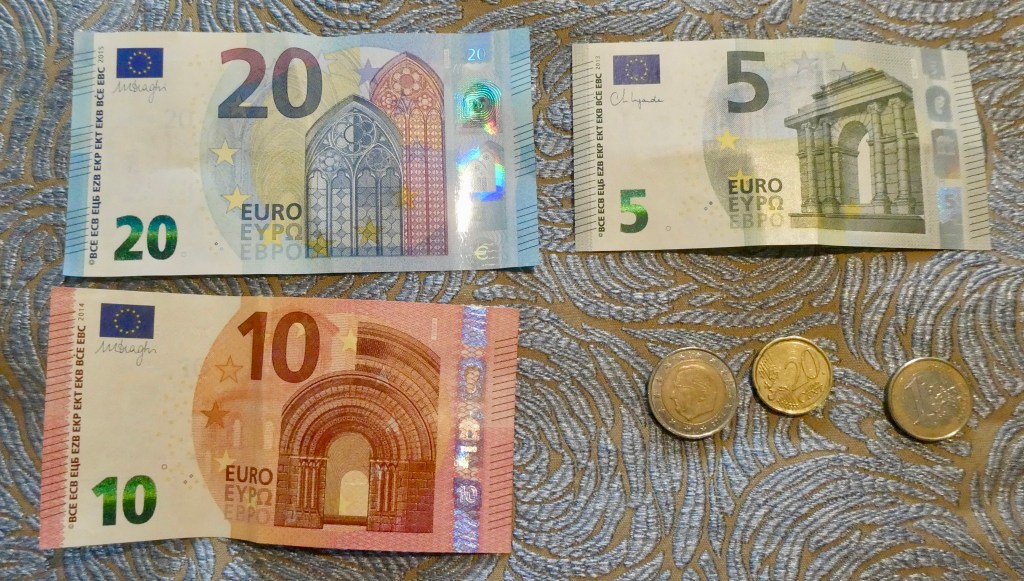
The currency in the Azores is the Euro and we exchanged money on the ship.  This is really only a small sample of the denominations we eventually used both in bills and coin.  There are a lot!

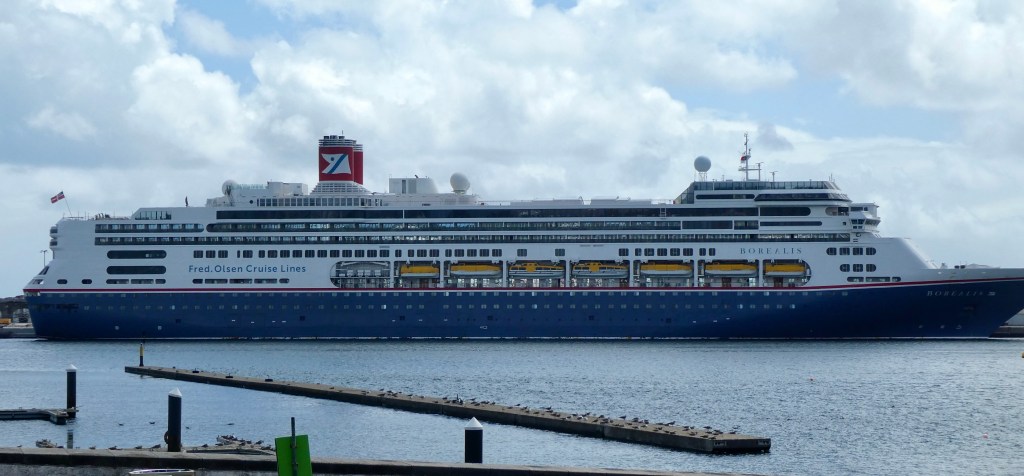
As we were entering port, our captain commented on this ship, the Borealis of the Fred Olsen line.  She was launched in 1996 and christened in 1997 as part of the Holland America fleet.  She was the sixth ship in the line named the Rotterdam.  This ship was sold when the newest Rotterdam was planned.  The new, seventh, Rotterdam was in Fort Lauderdale with us and was in sight for much of of our journey across the Atlantic.

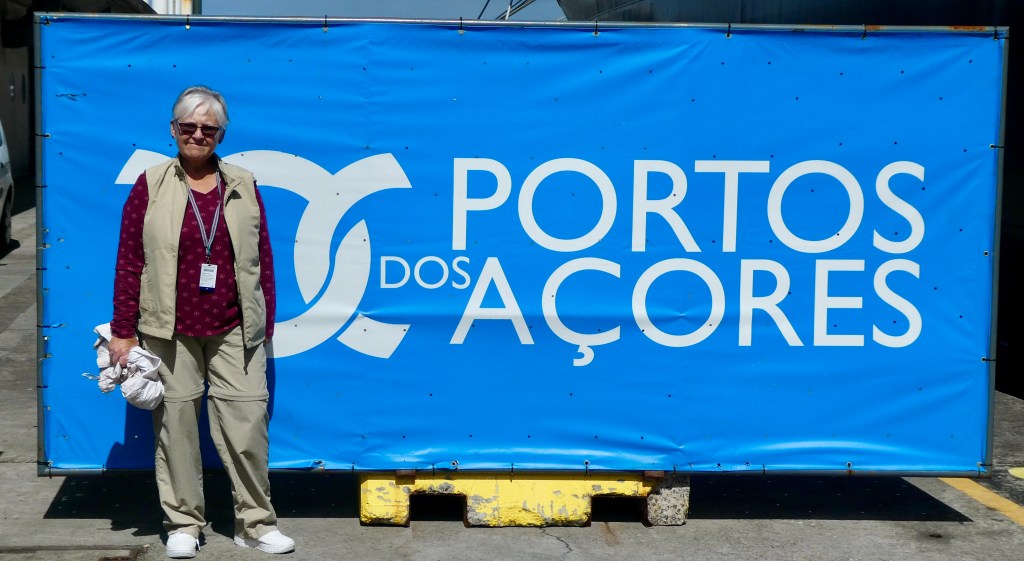
Our feet touched land for the first time in almost a week and we joined our guided tour – destination the Sete Cidades Crater.

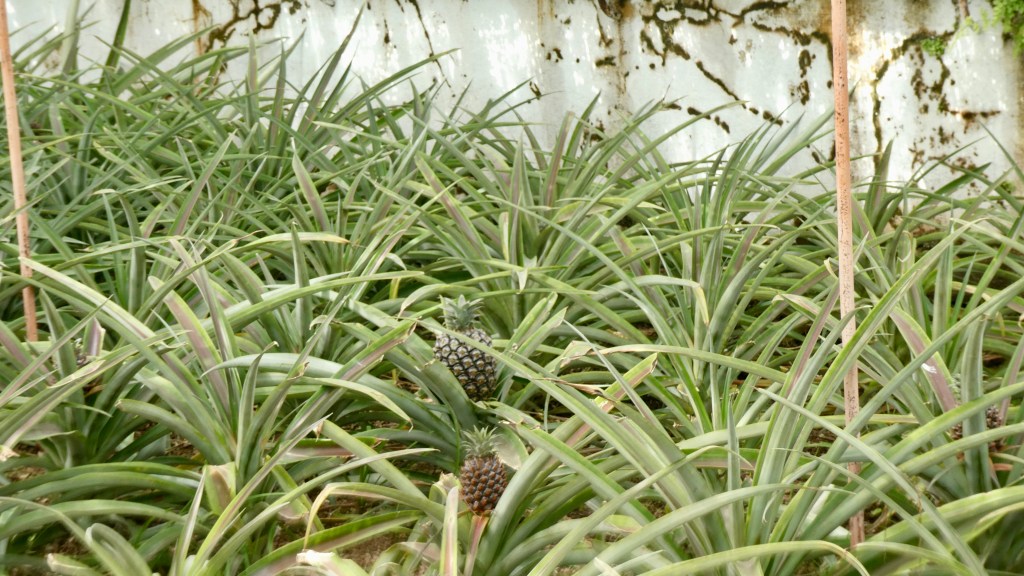
However our first stop was at the A. Arruda pineapple plantation.  Originally brought from Brazil, pineapples are grown here in glass greenhouses.  A crop takes two years to grow as compared to six months in Brazil.

Smoke pots trick the plants to grow faster.

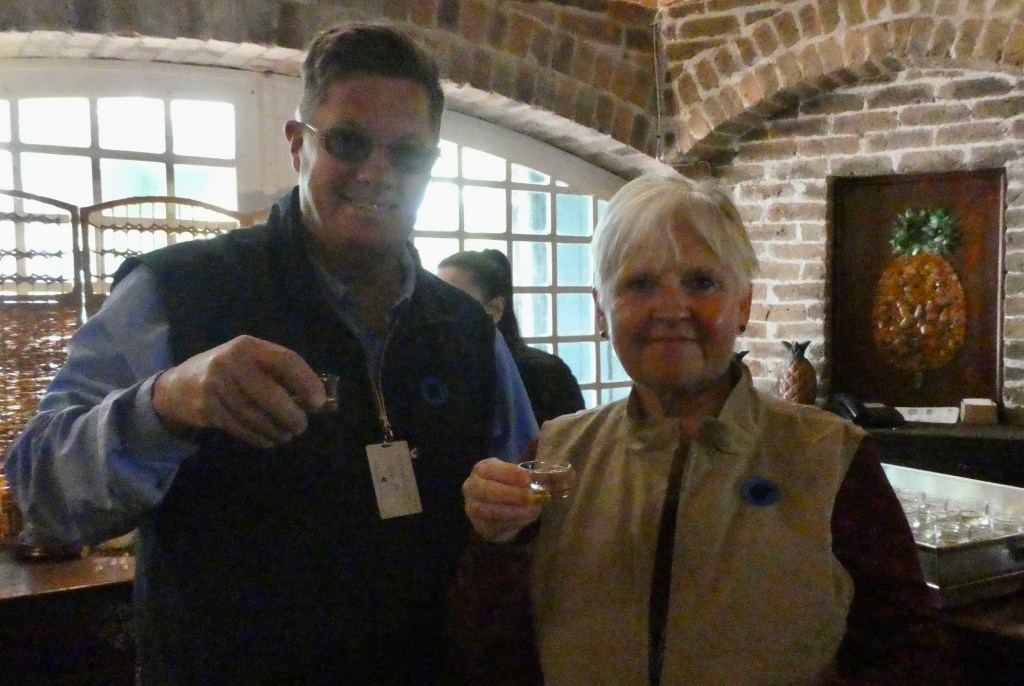
We tasted pineapple liquor. It was good.

On the drive up to the caldera crater, our tour guide told us a variety of things about his homeland.  

There are no snakes on the islands, but there are ferrets, weasels and rats.  They were stowaways on ships through time.

In the lush lands, they are able to grow food and sustain cattle.  As a result the Azores do not generally import foodstuffs.

Education for kindergarten through university is free.  All majors are available on the islands. Engineering, Medical and Law students transfer to the mainland to complete advanced degrees.

The United States still has an Air Force Base in the Azores, Lejes Field.

There are commercial flights from Boston every day.

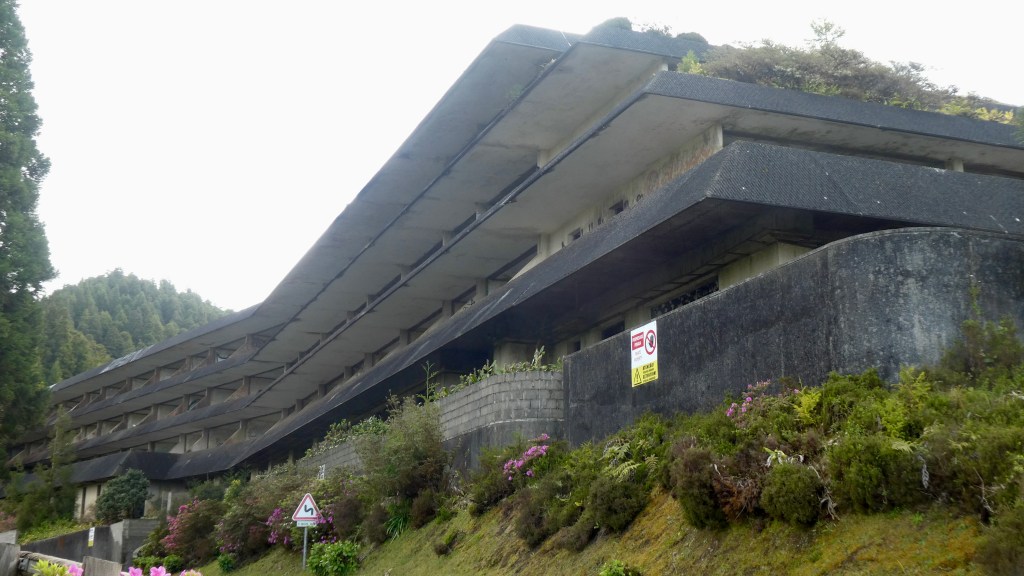
At the top, we parked near to this abandoned hotel.   Built in the late 1980s, the Hotel Monte Palace was a five star resort and voted the best in Portugal, but lasted only eighteen months. It just couldn’t succeed financially.  The drab concrete seems like it could be featured on the TV show Mysteries of the Abandoned.

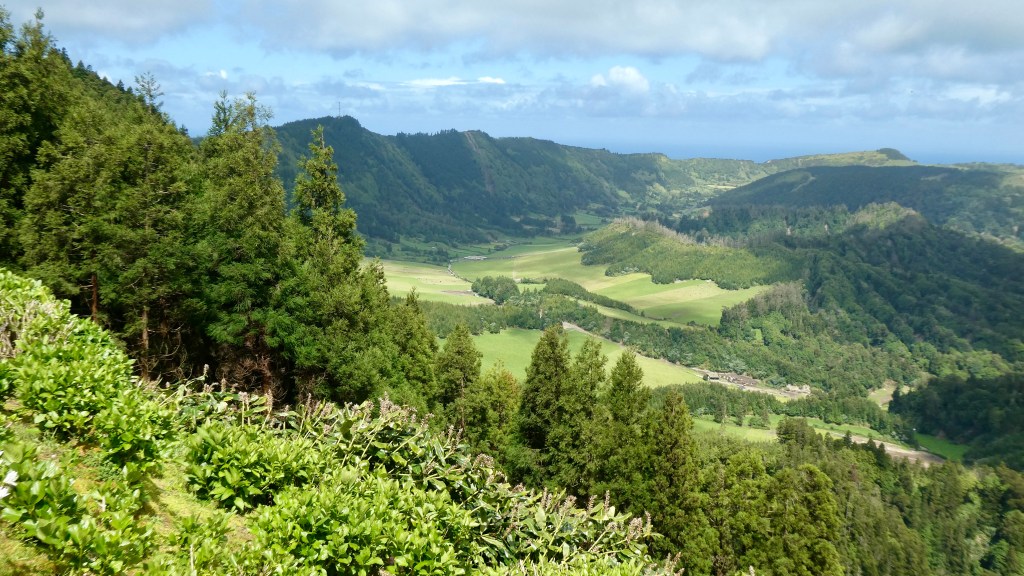
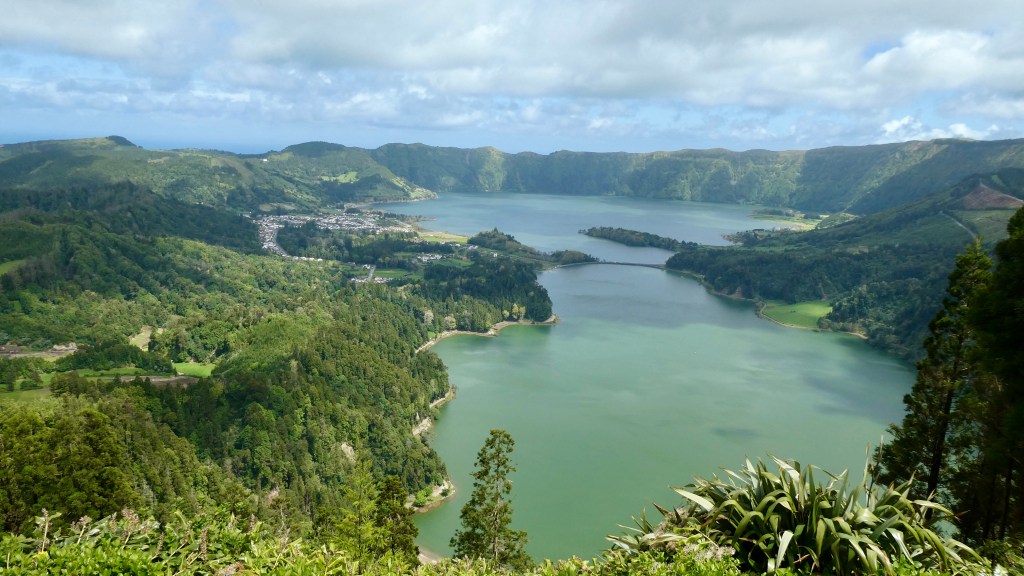
Just steps away was a viewpoint for Sete Cidades Crater.  We visited on an overcast day and, although still beautiful and lush, we didn’t see the lakes when the color differential was most vibrant.

This is a picture of an advertising photograph.

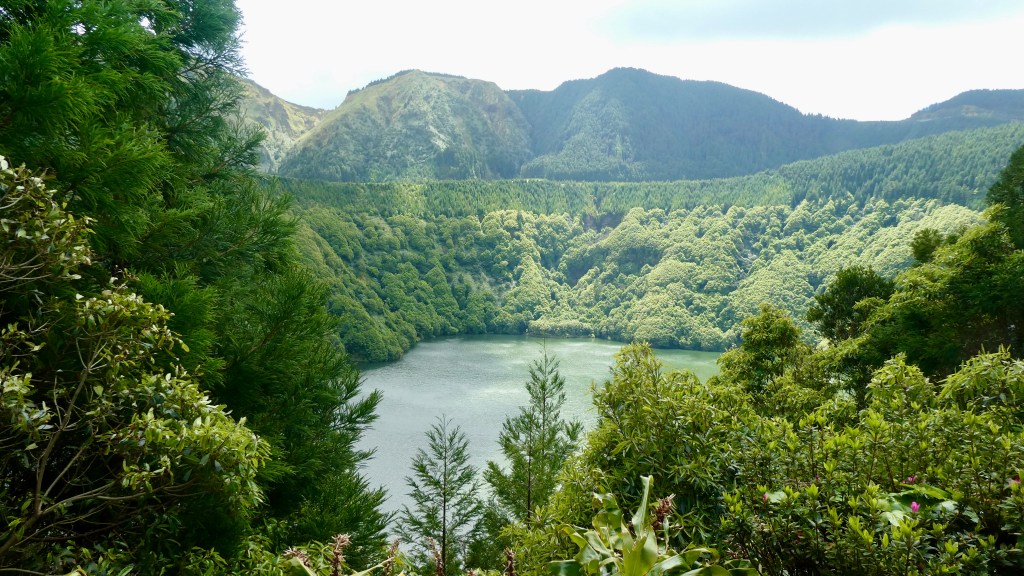
We passed another beautiful little lake on the way down into the caldera.

We journeyed to the town at the bottom and explored a bit.   There is always a church!

And there was food. This is fast food pizza – Azores style. It was okay, but cold. We didn’t know it then but it was foretaste of the challenge to come for us regarding the temperature of food in Spain and Italy.

After a good tour we had some time on our own at the port.  We walked to the Military Museum of the Azores, housed in the Fortress of Sao Bras  – a Renaissance military fortification.    

There were many interesting displays and objects throughout the museum,

The military objects and equipment spanned centuries.  We looked around and learned what we could but very few placards had information in English.

The Fortress had some lovely views.

After two more sea days we were to the part of the cruise that has a new port almost daily. Next up: Cueta, Spanish Morocco.

Posted in Uncategorized | 7 Comments

Transatlantic Cruise: Entertainment and Covid

If Entertainment and Covid seems an odd title, it is unfortunately fitting. We first suspected that something was going on when the entertainment we could see scheduled out days ahead started changing.   

We had gone through pretty rigorous requirements to get on the ship including vaccinations and boosters, a Covid test a few days prior and then one more surprise test before we boarded.  Signs all over the ship indicated wearing masks was recommended and many passengers did. The ship’s crew always wore masks.  Cleaning measures were evident everywhere.

Yet, about a week into our cruise passengers received a letter saying that Covid was on the ship and involved a small number of passengers and crew. They indicated contact tracing had been done and all involved people were in quarantine.

This door was near our cabin area on Deck 4. Behind it was about a dozen quarantine cabins. We occasionally saw a crew member going in to clean.

So, given the addition of Covid, the changing entertainment schedule made sense. However, the musicians and entertainers covered and modified their programs and schedules. There was only one night in 21 that we had nothing to see on the main stage.

Shows included the ship’s featured dancers who integrated the circular stage with surrounding screens and lights so well!   The dancers did three shows in repertoire and we saw each of them over the course of our lengthy cruise.  Unfortunately, no photographs allowed. 

We also had shows by The Runaround Kids featuring 50s and 60s music.  They were excellent, even missing one band member who had been delayed.  The missing musician eventually made it on board and we enjoyed their second show as well.

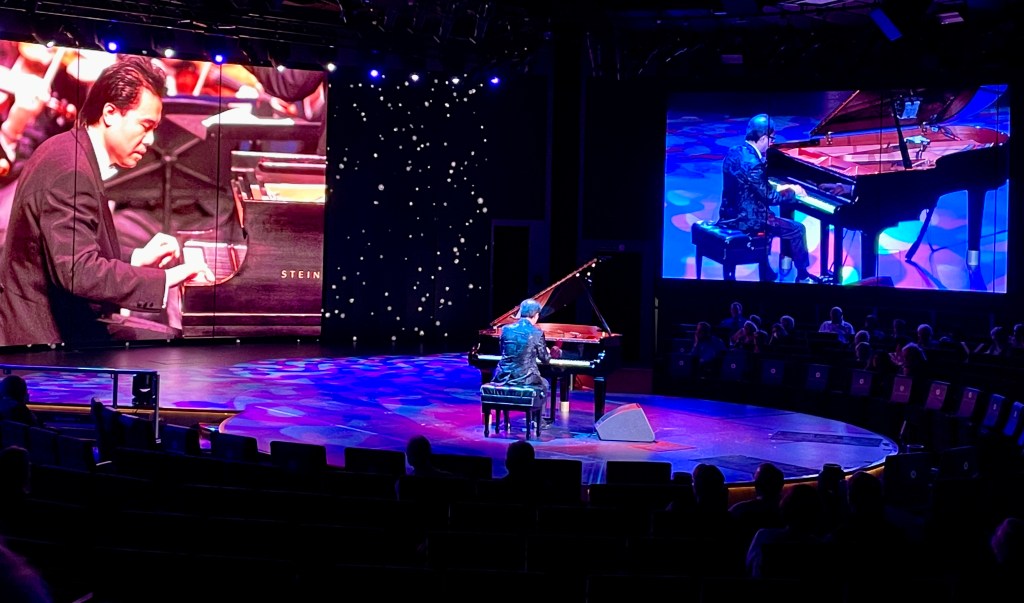
World renown pianist, Tian Jiang, entertained us first in a solo performance and later in a concert including a few of the ship’s musicians.   It is common for performers such as Tian Jiang to sign on for a cruise or two to provide entertainment.
The ship’s resident musicians, in four different groupings, work along the Music Walk.  Three venues along the “walk” rotate their 30 minute shows each night and are rarely competing against each other.  

We went to Billboard Onboard a few times. It featured two pianists doing shows like Never #1 – a playlist of songs we all know well, but never made it to number one in the charts.  Across the hall was the Rolling Stones tribute band which was not our favorite. 

We went to BB Kings Blues Club a lot – the timing of their shows typically was right after the main stage show finished and it was a natural fit.  Over the course of 21 days we saw some of their sets multiple times.  There were usually 6-7 people on stage and a variety of passengers dancing.  

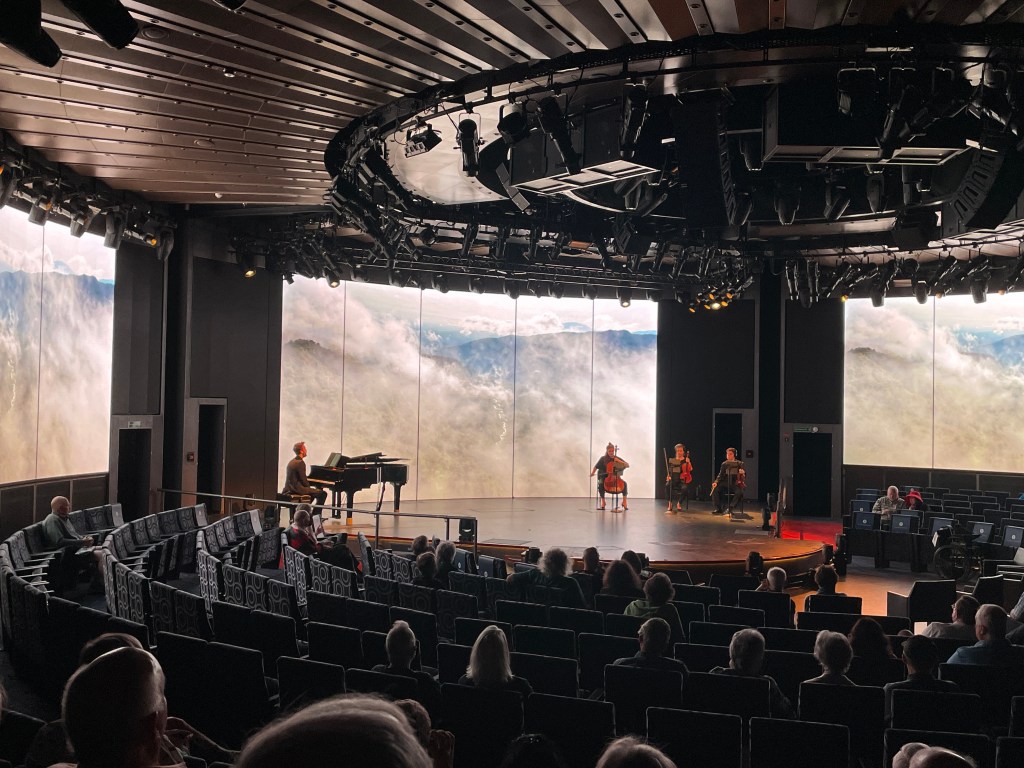
Sharing the same space as the BB Kings Blues Club was the Lincoln Center Stage.  Watching the transformation from one venue to the other was also interesting.    
The classical music quartet playing on the Lincoln Center Stage became one of Randy’s favorites and he could often be found there in the late afternoon.  

The Lincoln Center Stage players featured a piano, viola, cello and violin.  They also accompanied main stage productions of BBC Earth in Concert.  These shows were spectacular with visual beauty on the many screens of the main stage and the group’s music accentuating the show.

Randy went to a “meet the artists” talk for the Lincoln Center Stage group where they told about their process of coming to the Nieuw Statendam.   Musicians sent in audition tapes to Holland America from all around the world.  Some were selected to gather in New York City for auditions.  Those that were selected to be ship musicians were then put into groups.  They spent a couple weeks together learning the programs that are played across the Holland America fleet.  

The four that became the Nieuw Statendam classical musicians did not know each other prior to being chosen to play together.  The pianist is from Israel, the viola player is from Finland and the other two are American.  Although we don’t know for sure, we assume the assemblage of dancers and musicians for the other entertainment venues was similar.

We enjoyed almost all of the ship’s entertainment – there was a soprano and an illusionist that didn’t do it for us but that was a result of our taste, not a lack talent on their part.  But there was one thing we missed.

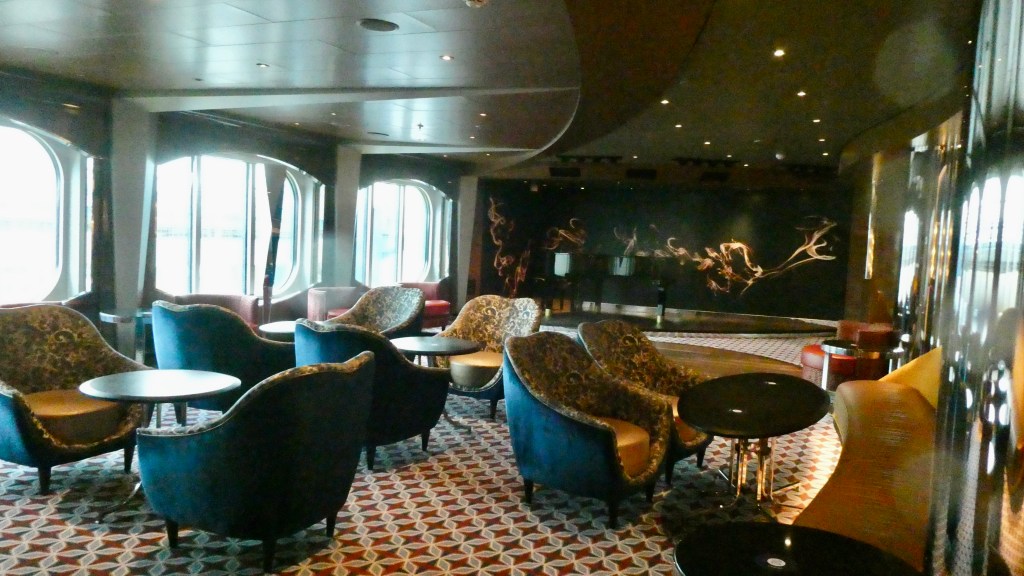
The piano sits quiet.

Every other cruise we have been on had a prominent piano bar experience.  The late afternoon drinks in the piano bar have been memorable on so many of our previous trips. I discovered chocolate martinis in one of those piano bars!   That just didn’t happen with regularity on this ship, or when a session was scheduled, it interfered with early seating dinner in the dining room.

We had appreciated the move by cruise lines to adopt anytime dining – where you go eat where you want when you want.  That sounds good in theory but if everyone else wants to go to the dining room at 6:30 there is a line to contend with and you take what you get regarding sitting alone or with others.   

Meeting others over a meal used to be enjoyable but in a Covid world we were hesitant. We were also hesitant because of “old white guy syndrome” that illusion that everyone wants to know what they think about everything – including US politics in the middle of the dang Atlantic Ocean. We wanted to avoid that situation so we always requested a table for two. (Others were avoiding it too because tables for eight gradually became the guy and his wife sitting alone at a large table.)

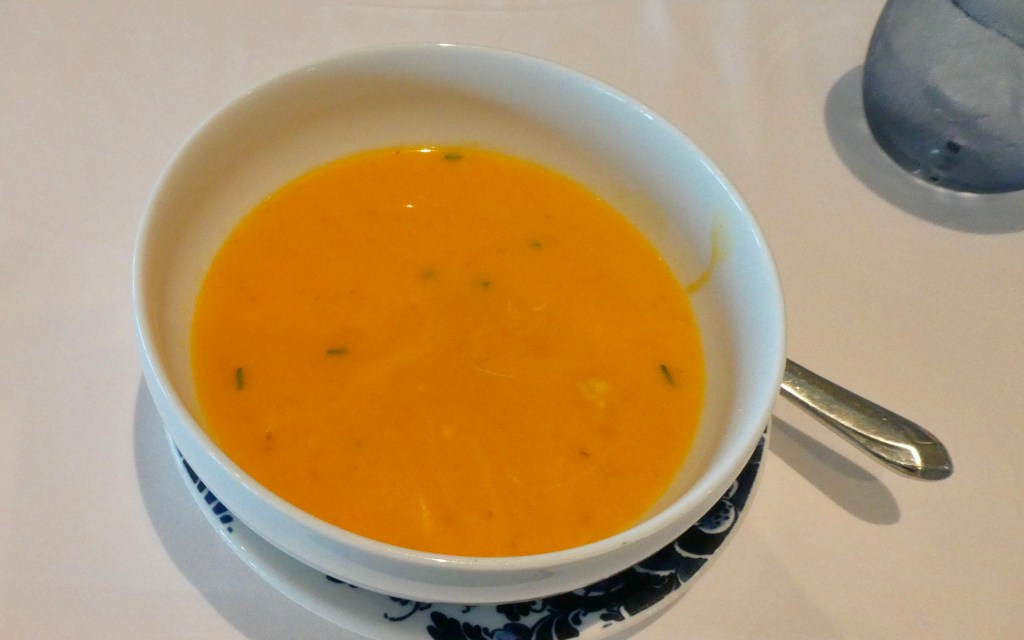
Shout out to the soup chef on the Nieuw Statendam. The soup was always excellent and frequently my favorite part of the meal.

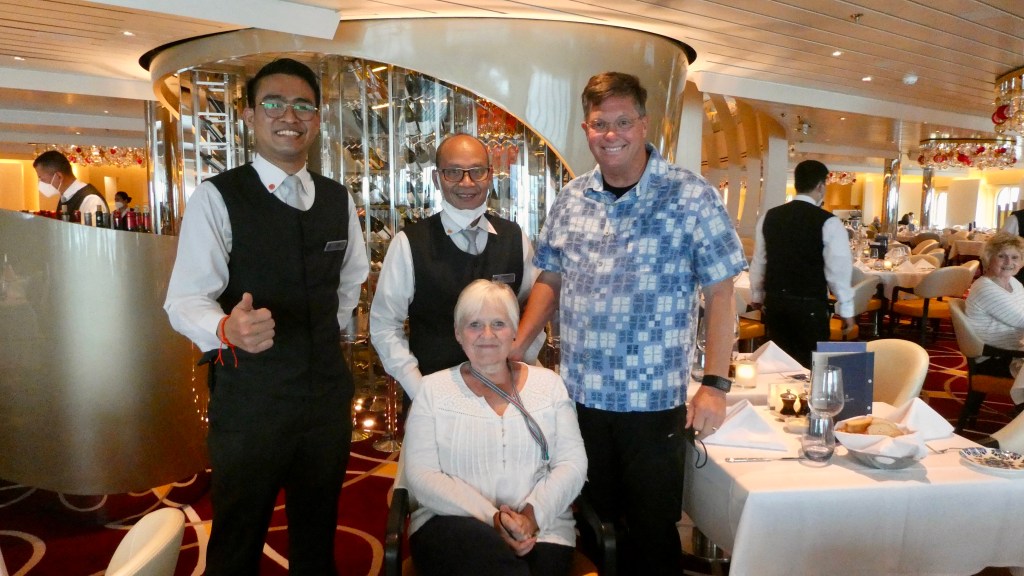
The alternative to anytime dining is to make a reservation or have early or late seating at a specific table with consistent waiters.  About halfway through our cruise we made a reservation and happily landed at Anthony and Loki’s table.   We enjoyed them very much and decided to switch to early seating at one of their tables every night going forward.  It became something to look forward to.

Anthony (center) is a Holland America Cruise Line veteran waiter and has decades under his belt.  We are going on another cruise on the Nieuw Statendam later this year and will request early sitting dining at one of his tables.

Loki has many fewer years in service but is wonderful and engaging. It was so interesting to learn about his family and how they manage his time away on contract.  His wife and two children live in an area with extended family support and Loki is able to FaceTime with his kids at the conclusion of his day which is the beginning of their day. Face time, or similar, is such a great option for a dad trying to keep in contact with his kids.

Of course, as the ship changes locations, Loki’s time to contact his kids changes.  From the Caribbean towards the Mediterranean, we “lost” an hour every other day.  That had little effect on our relaxed sea day routines but did impact our sleep.

Our Phoenix Suns, as well as the Seattle Mariners and Arizona Diamondbacks were also entertainment of interest and, depending on where the games were played and how far across the Atlantic we had traveled, the radio cast was anytime from late in the evening to the middle of the night to very early the next morning.  Several times one of us would wake up in the middle of the night, check a score, and be awake for hours.  They were sea days – it worked.

Our middle of the night listening had to change when we started having port days.   Next blog  – Our first port in the Azores.

Posted in Uncategorized | 5 Comments

Transatlantic Cruise: Those Sensational Sea Days

Our 21 day cruise started with six straight sea days. Actually it was eight out of the first nine days on board the Nieuw Statendam.  That allows for a lot of sea day activities and for sea day routines to develop.

We each spent a lot of time sitting on our balcony looking out at the sea. Sometimes we’d see other cruise ships on our same general transatlantic route or a cargo ship. Usually it was just wide open sea.

Each day with decent weather we would walk round and round the promenade deck enjoying our podcasts or audiobooks while looking out to see what we could see. This is a photo through one of the deck openings although there was lots of open viewing. One day we saw whales on the port side! Other people reported seeing dolphins but we never did.

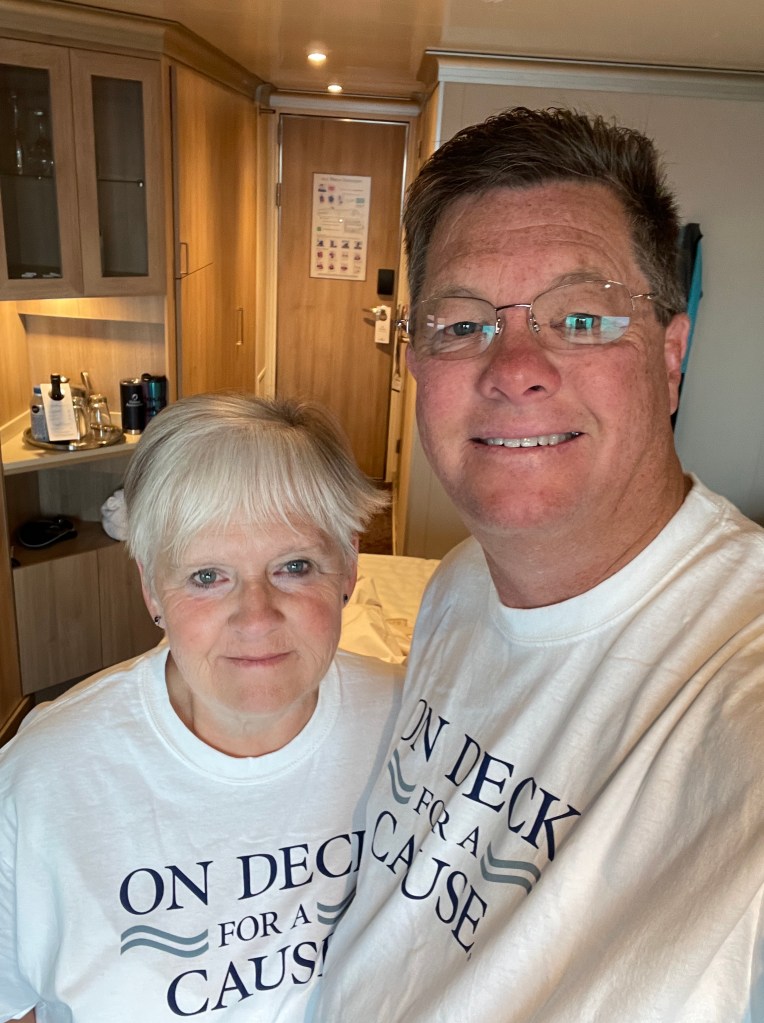
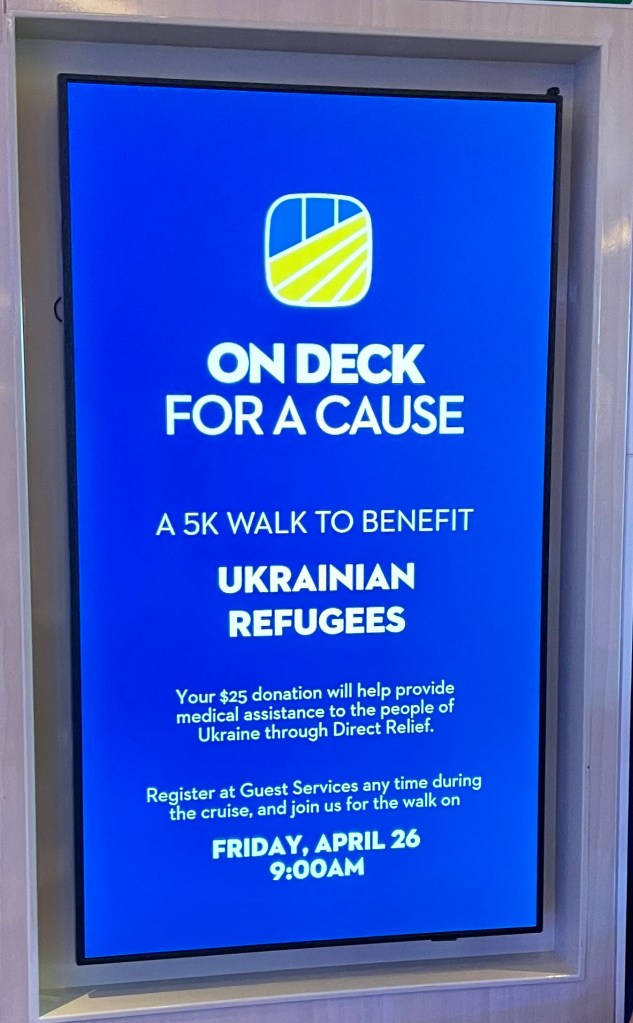
One day we walked On Deck for a Cause with about thirty other passengers as a fund raiser for Ukrainian Refugees.

We got into the flow of going to whatever educational, interest, or entertainment activities were available on the ship each day.

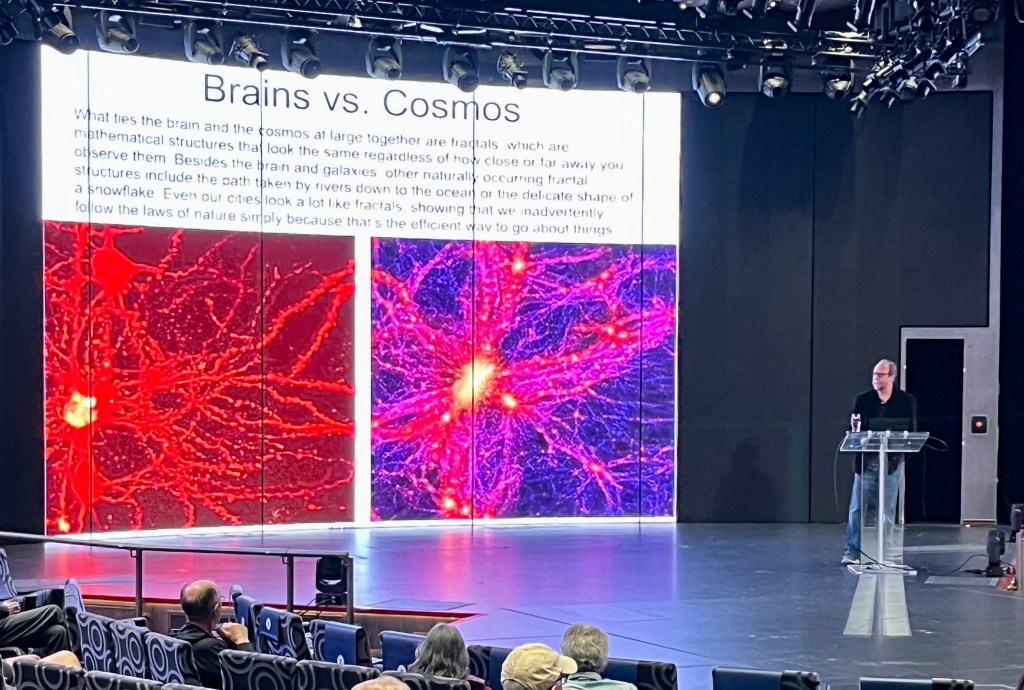
This is a picture of lecturer Andy. We both went to his first lecture involving science, space, physics and DNA. That was the last lecture I attended because those topics just aren’t my thing, however, Randy was hooked. Andy lectured almost every day and then had question and answer sessions each afternoon. It was rare for Randy to miss a session.

I attended lots of other presentations including cooking demonstrations, an executive talk about Marconi’s development of the long distance telegraph, Pirates, Dressing Italian, and information about future ports.

Some of the presentations were of interest to us both. One was about women on the Nieuw Statendam. Five departments on the ship are led by women including Finance, Entertainment, Housekeeping, Shore Excursions and Cruise Director. The above photo shows Shore Excursions Director Diamente, and Executive Housekeeper Sonia being interviewed by Cruise Director Stephanie.

Diamante, Shore Excursion Manager, leads a team of five.  She is responsible for the operation of shore excursions for each port including ticketing, coordinating transportation, food availability, and arrangements.   She researches and gives port presentations to passengers.

Sonia reported that she has 152 positions under her management including tailors, laundry staff (for 24 hours per day operations), cabin stewards, and ship-wide cleaners. Contracts in housekeeping are eight to nine months in length. Sonia started her career at another cruise ship company and held all housekeeping positions at one time or another.

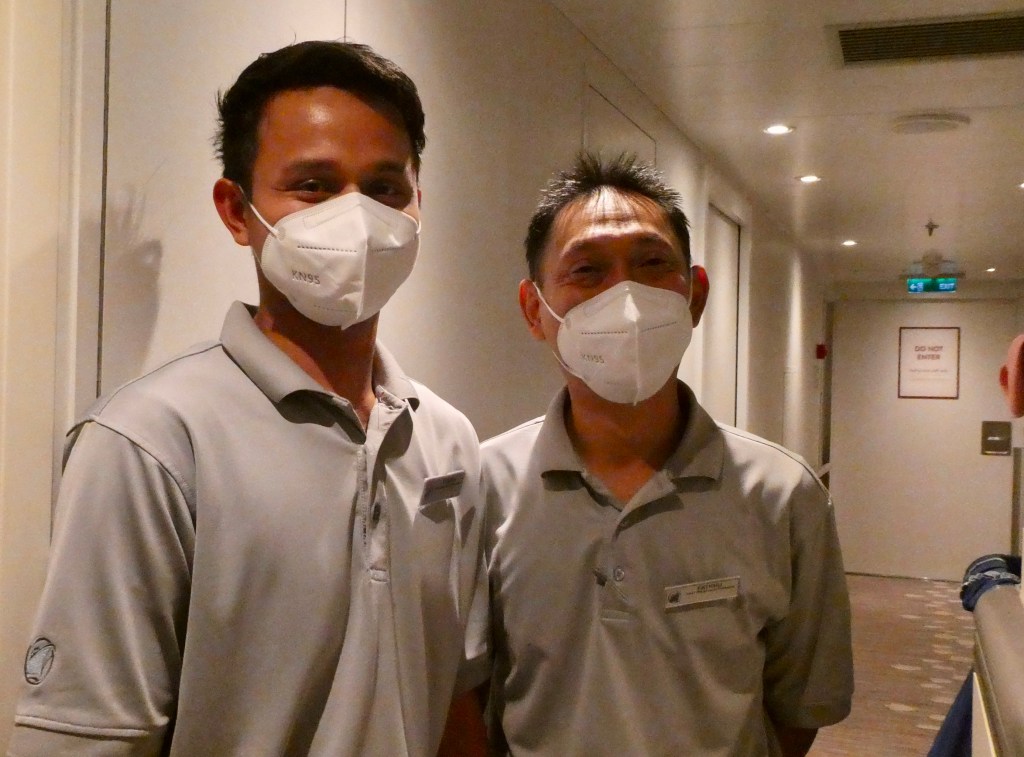
Two crew members on Sonia’s staff were Risman and Fatkhu – our awesome cabin stewards.

When asked if she, as a woman, had any problems leading the housekeeping group, Sonia said the mostly Asian men on her staff initially had difficulty reporting to a woman as that is not part of their culture. Sonia, a Latina, said “For a woman, nothing is impossible.” That remained true when she and twelve of her crew were tasked with maintaining the interior of the ship during the 18 month pandemic pause.

Stephanie reported that industry-wide, most cruise directors are young, white and male.  She made the point that she is none of those.  Stephanie came to the cruise industry just a few years ago after a career in the entertainment industry.  She coordinated her team, did multiple ship announcements daily, held informational discussions on sea days and introduced entertainment.  (Two thirds of the way through our cruise, another female cruise director came on without passengers being told Stephanie was going off contract.  That seemed strange but the new cruise director, Betty Ann, was great.)

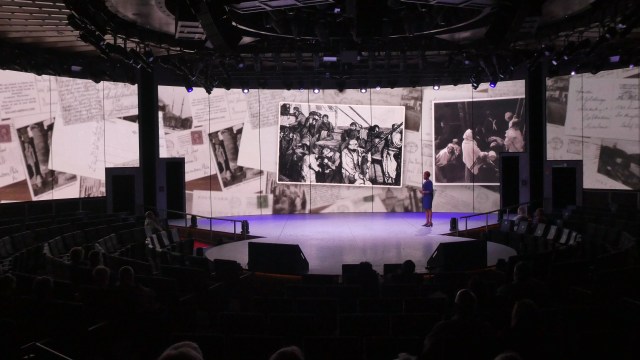
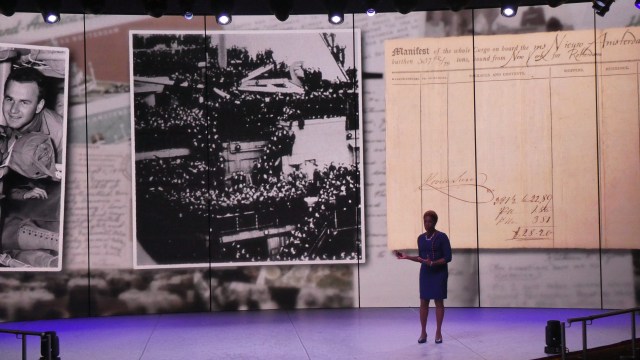
In another presentation we learned about the history of the Holland America Line.  We learned how the line reinvented itself time and time again in response to world events. 

One in ten immigrants came to America on a Holland Ship.  Unlike other lines, they offered immigrants temporary housing in Rotterdam while awaiting passage and three meals a day while on the ship.

During war time, Holland ships were used as troop transports and hospitals. That kind of use continued recently when the Volendam, which had been in dry-dock, was used to house Ukrainian refugees. The fleet has only recently returned to full use.

Holland was the cruise line that developed the Alaskan cruise and the infrastructure supporting it. That new focus saved the company at a time when its survival was in question.

A presentation we went to twice was the Captain’s Question and Answer session. Captain Noel O’Driscoll was the best. He had a great sense of humor and we enjoyed the noon updates everyday in his Irish lilt. He felt very approachable when we saw him around the ship. Captain O’Driscoll joined Holland America Line in 1999 and became captain in 2013.

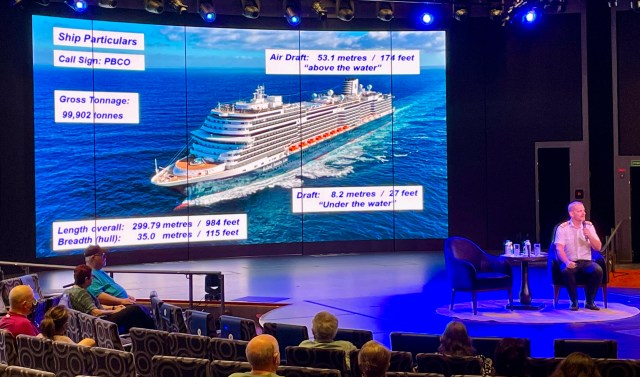
The Nieuw Statendam went under contract in Italy in 2015. The keel was laid in March of 2017 and it was delivered to Holland America Line in November of 2018. The ship weighs 99,902 tons although the captain likes to round up to 100,000 tons. The anchor weighs 26,000 pounds and has 1000 feet of chain.

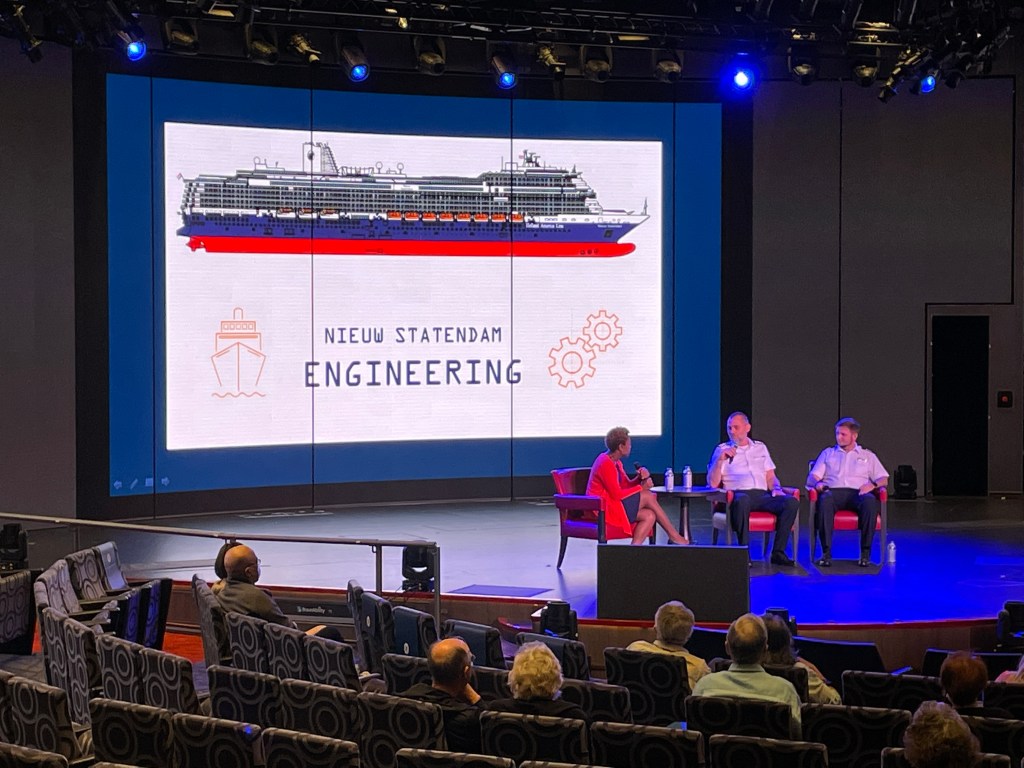
One of the Captain’s Q & A presentations included his Chief of Engineering. The Chief Engineer leads a team of 72 people responsible for maintenance and propulsion.

Ship stabilizers reduce roll by 81 percent and three engines pull the ship along, not push it. There are actually four engines, each the size of a bus, with each engine capable of 18,800 horse power. Only three are ever in use at the same time. A rotation keeps all engines active and in good repair. The ship’s maximum speed is 22 knots but we usually saw 16-19 knots.

The engine room is manned 24 hours a day and has stations for propulsion and hotel services. Hotel services include electricity, water, steam heat and environmental. Air is filtered and UV treated as it goes in and out of each cabin through the AC system. Two water makers produce 2500 tons of water daily. Waste water is treated on the ship and is clean enough to be drinking water before it is dispersed.

The ship is able to connect to shore power to reduce emissions – a procedure the Nieuw Statendam has only been able to do once. That was in Norway but more opportunities are coming with improvement in port infrastructure.

Also coming soon on the Holland America Line – a female captain! Although not on this ship, there are two Staff Captains (second in command) within the company.

Our transatlantic cruise (the first fourteen days) was at 60 percent passenger capacity, and cost $1.1 million in fuel.  

There are 44 different countries represented on the crew.  Holland tries hard to take care of its crew offering Indonesian, Philipino and Western foods.  Recycling efforts support the Team Member Recreation fund.  

The crew usually numbers just over 1000 to care for the ship and 2600 passengers.  During the pandemic a crew of 99 stayed aboard – including the twelve I wrote about earlier. 

At the beginning of the pandemic, Holland America spent a month getting every single passenger home and an additional three months getting every crew member home. Many cruise ships hung out in Manila Bay for 18 months waiting for a resumption of travel. That also kept them close to much of their crew. Most Holland America crew members returned when operations resumed. The process of gathering crew, mostly previously employees, took three months.

This really isn’t meant to be a Holland America commercial but everything we learned and experienced during our 21 day cruise made us happy enough that HAL has become our cruise line of choice.

Next time:  The entertainment on Nieuw Statendam during our cruise and… COVID arrives.

Posted in Uncategorized | 4 Comments

Transatlantic Cruise: Embarkation

We recently returned from spending five weeks on a rather significant trip – a 21 day transatlantic cruise from Florida to Rome and then a two-week land tour of Italy.  Without hesitation, we declare it a wonderful trip.  We saw and learned so much. We were happy enough and busy enough that our thoughts turned homeward only in the last few days of the five weeks.

This trip was a second or third iteration of pre-Covid travel plans. Even until the last day, we were not certain it would really happen.

Because I planned to write about the trip,  I took notes along the way.  Putting our memories on the blog will give us an opportunity to remember.   I am assuming this will be a summer project because there is a lot to unpack and revisit.   Spoiler Alert:  There are a few cathedrals coming!

So –  

“Andiamo, guys”   (“Let’s go”  in Italian and a favorite phrase of Fabrizio, our guide)

As Randy and I have come to love cruising, we have grown to really, really like sea days – those days when you don’t have a port to visit.  We enjoy the extra activities on the ship and just sitting on our balcony watching the sea go by.  (Balconies are required in our opinion.)  

As such, we were booked on a transatlantic cruise where our ship was transitioning from Caribbean season to Mediterranean season. We were set to sail on a Sunday in April from Florida and were required to have documentation of vaccinations and boosters, and a negative Covid test within three days.  All of that was accomplished and we flew uneventfully to Fort Lauderdale the day prior to boarding.  

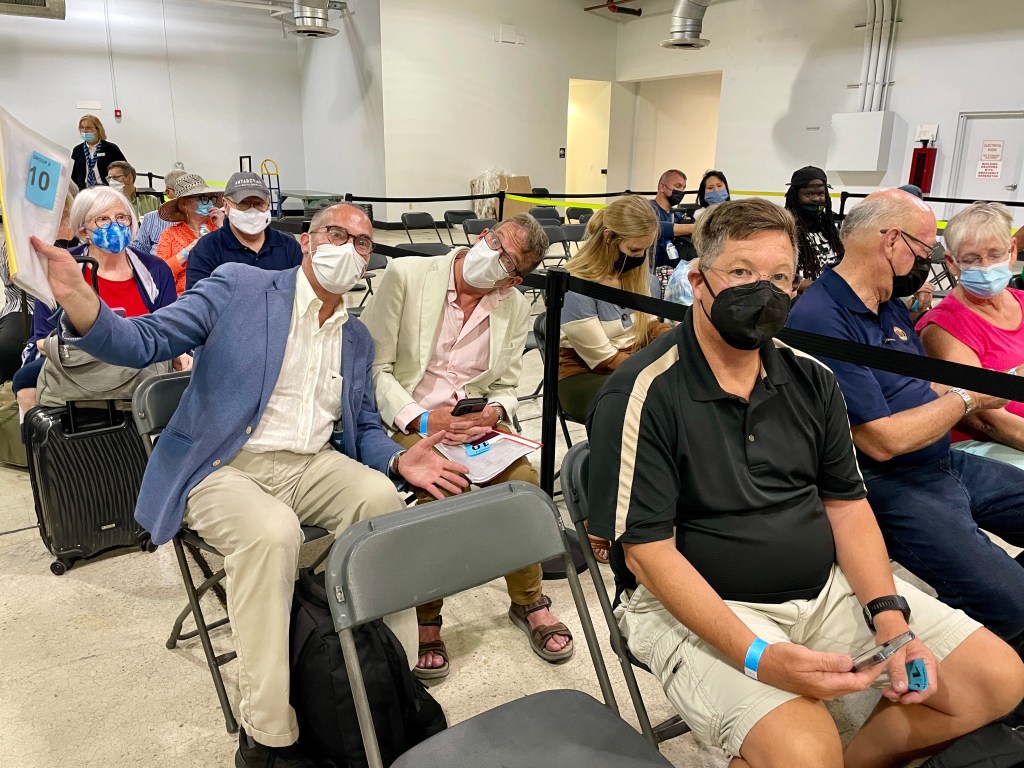
Usually embarkation goes very well for cruise lines but nothing is predictable in a Covid world.  The lines were very long for several ships – ours included.  We never learned exactly why but an additional Covid test certainly was a contributing factor!

None of our ship embarkation documentation or any research I did on-line prior to the cruise indicated there would be an additional test.   We were put into groups of about 30, tested, and then seated in a very large holding area until our results were known.  As we heard different groups called, most were told to proceed. We believe that meant everyone in that group passed the last hurdle.  Occasionally, there would be a hold up with a group, presumably because someone failed, or had to be retested.

Our group was eventually cleared (after 20 minutes) and told to proceed. As a result – once we finally got on board, we felt good about the safety precautions and the health of our fellow passengers. Masks were recommended in the communal areas and we usually wore ours.

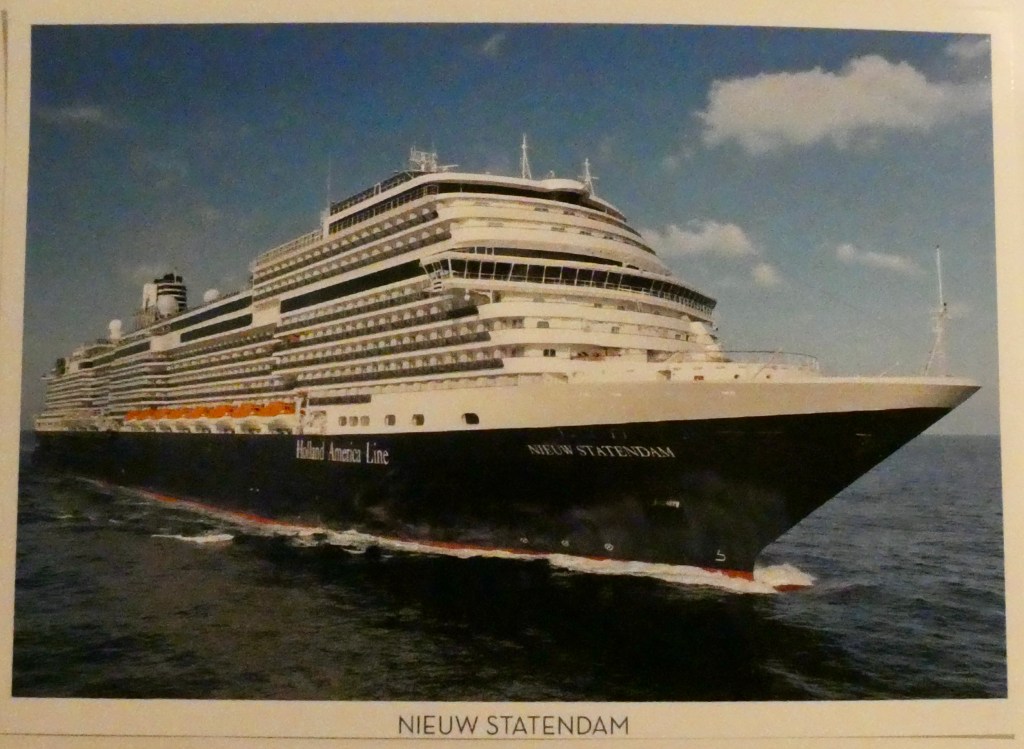
This is our ship – The Nieuw Statendam, a member of the Holland America Line.  We have sailed a number of cruise lines but generally seem to gravitate back to Holland.

This is our cabin.  Cabins are similar industry wide but this one had an exceptionally efficient bathroom that I did not take a picture of.

Our cabin had a larger balcony than normal. I know it looks small, but trust me, it is twice as deep as most. We had sky above the outer half instead of just the balcony floor above. Research matters and I knew what to ask for when booking.  Sections of Deck 4, some port-side, some starboard, some forward and some aft, have extra large balconies.  We were starboard aft.

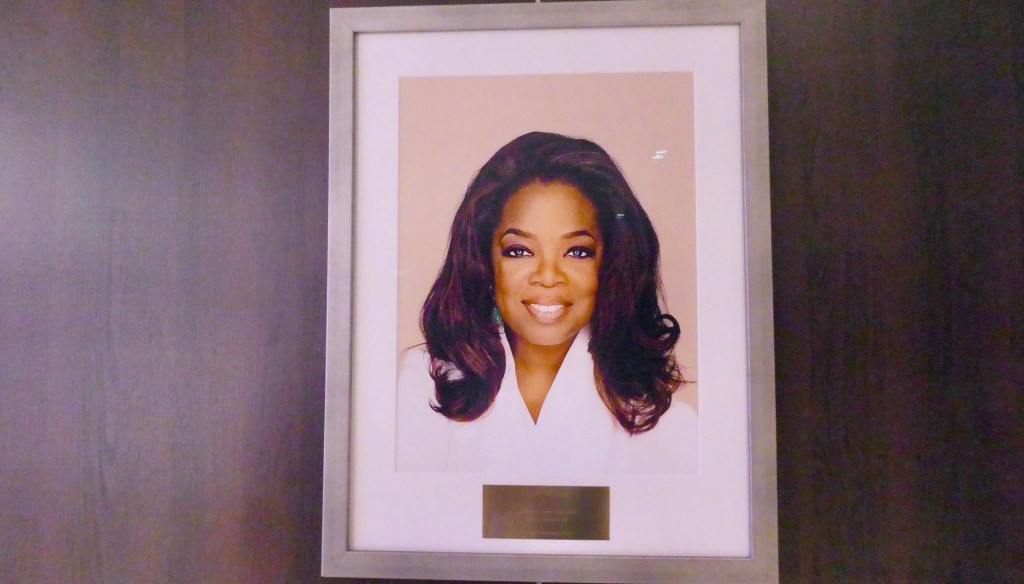
Holland America Ships all have a godmother – many from the monarchy of the Netherlands.  A few are from other areas of life including the Olson Twins and Oprah Winfrey.    Oprah Winfrey is godmother of the Nieuw Statendam.

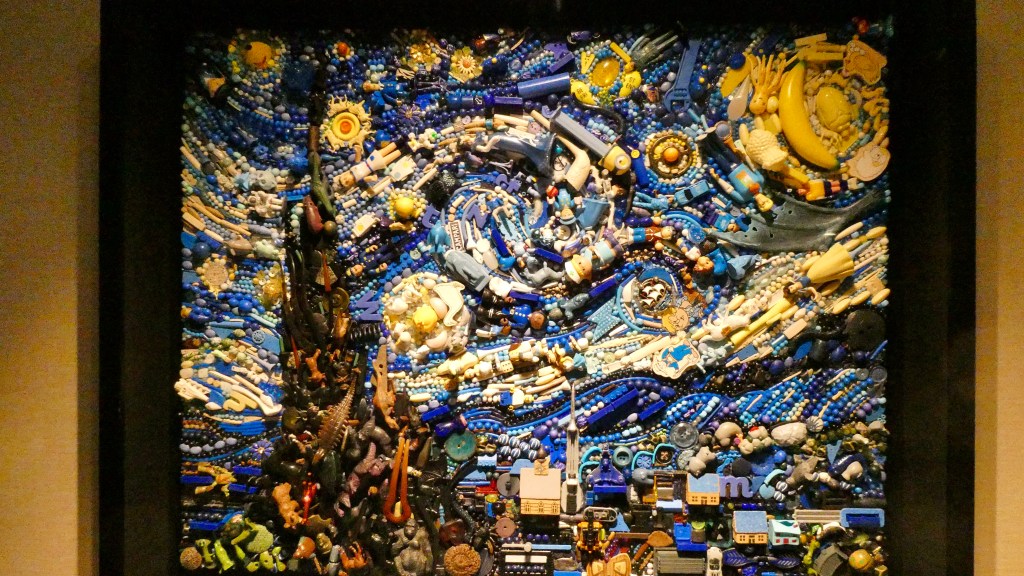
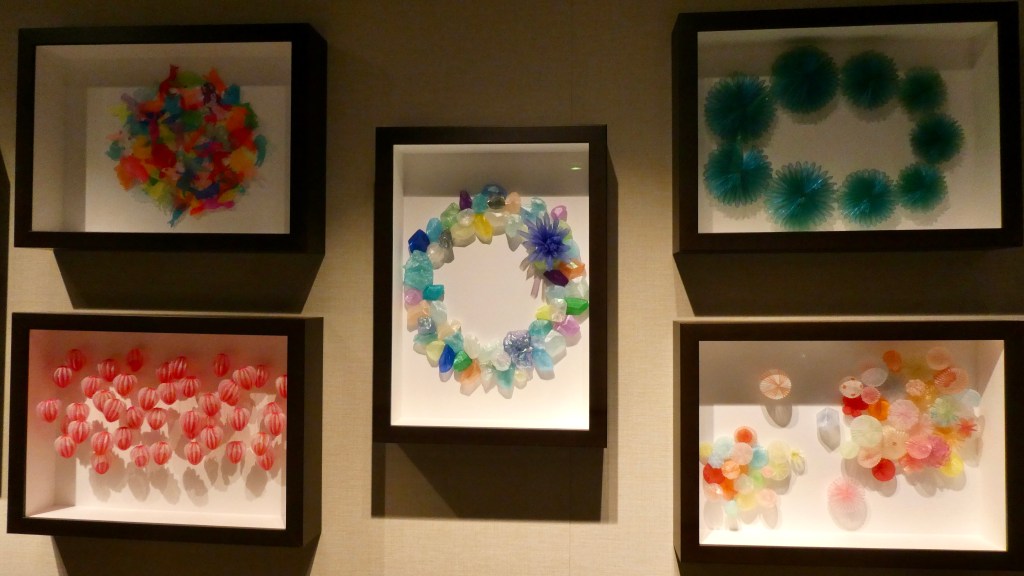
We soon learned our way around and grew to love the ship.  We did think, however, that it had strange art.   Pieces would be in the central spaces near the stairs and elevators on each deck.  Here is a sampler.

I fully admit to being art impaired but…..
I did like this one.
But not this one…
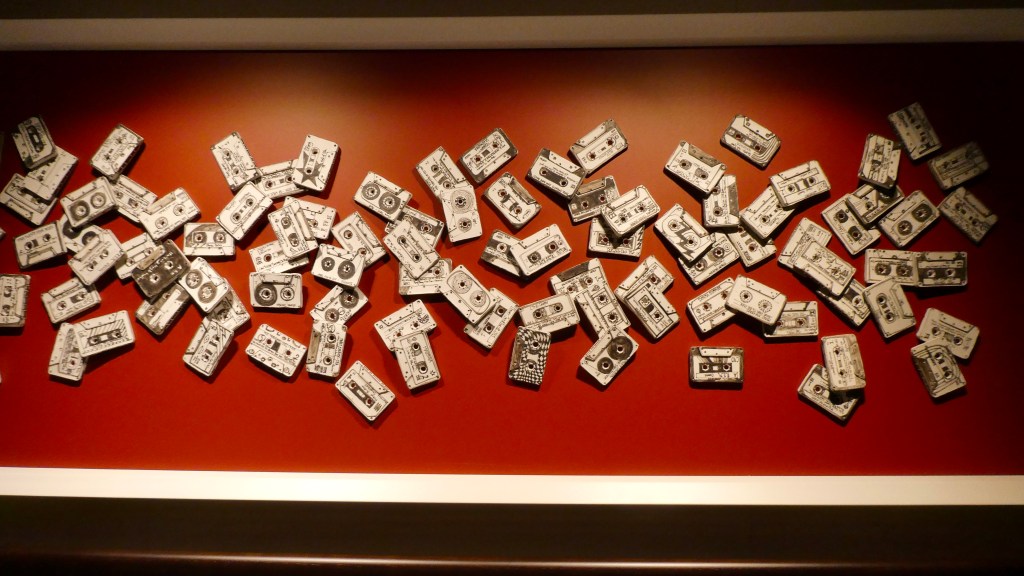
There was definitely a music theme throughout.
A collage of miscellaneous items in the theme of Starry Night. Kind of cool.
This one I liked very much. There was a series of three women made from feathers.
No words.
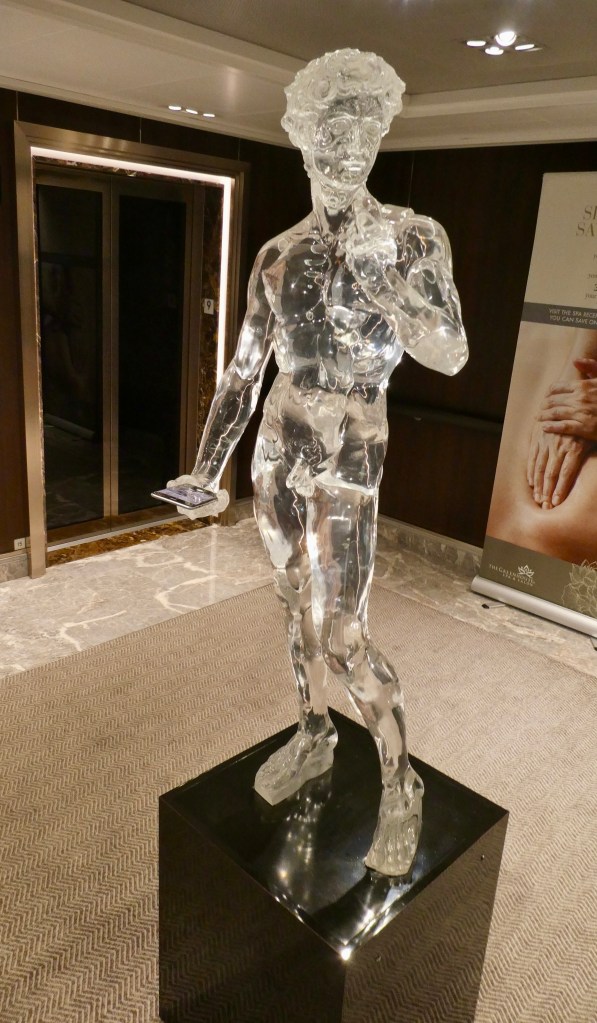
A take off on Michelangelo’s David – this one with a cell phone, taking a selfie. Spoiler alert: We see the real thing later!
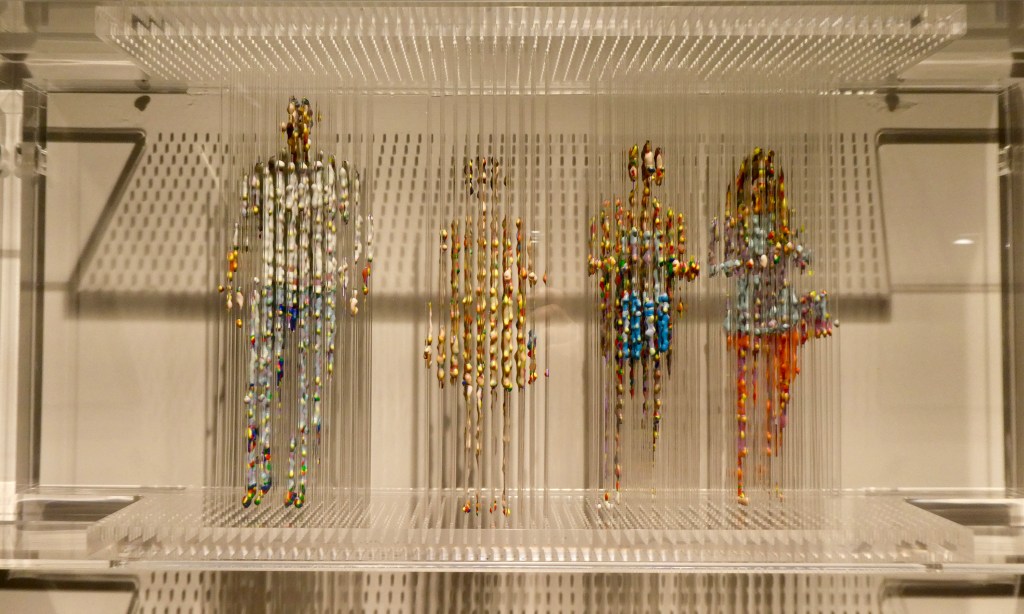
A grouping of people made with vertical beading. Interesting.

Even towards the end of 21 days, we would occasionally see a piece that we hadn’t seen before -depending on where in the ship we were going, and how we happened to go there.

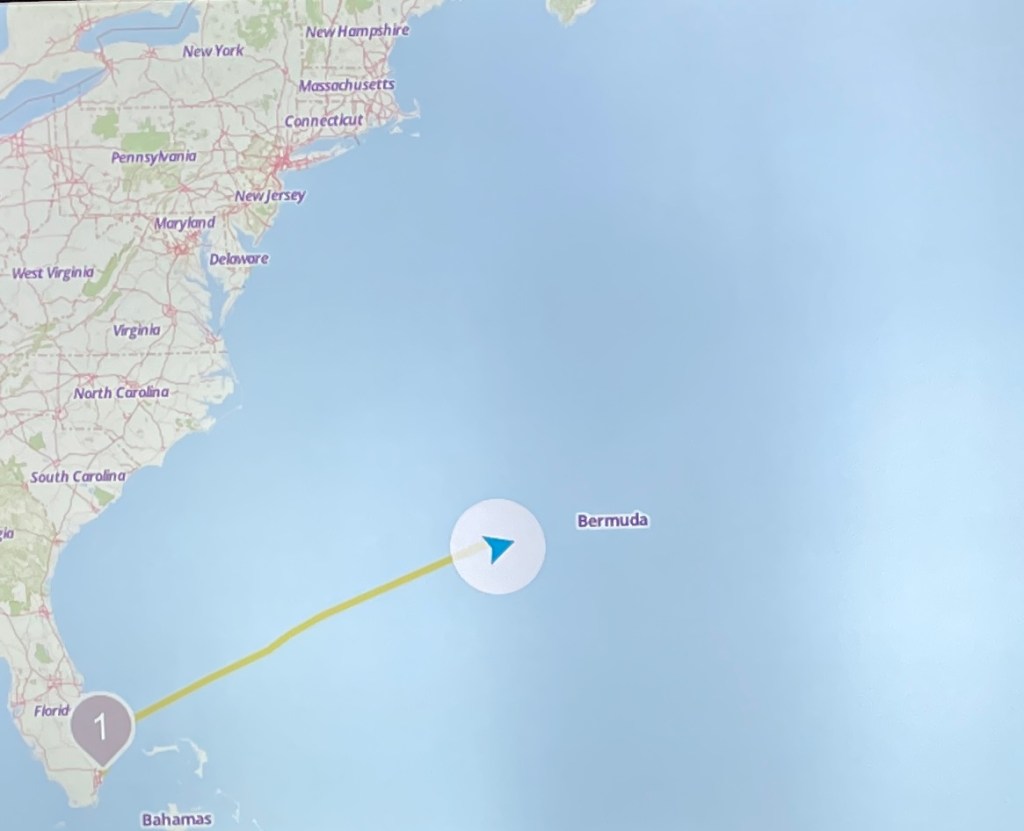
We started our sail with sea days, heading towards Bermuda and beyond. Even though Bermuda seemed to be a logical port, we sailed right by. We’ve been there before so weren’t disappointed.

Everyday we would watch the course of our cruise on our cabin TV.

Our first four days were sea days, a wonderful respite after the business of trip preparation and wondering if it would actually happen.

Next time – our shipboard activities on those great sea days!

Posted in Uncategorized | 11 Comments

A Copper Excursion

Our friend Beth was traveling nearby so we drove north to join her in the Verde Valley.   Randy and I spent February 2015 exploring the Verde Valley while in our fifth wheel and knew there was an abundance of things to do!

The three of us decided to go on the Verde Canyon Railroad – a repeat for Randy and me.   Our experience was quite different this time. During the COVID break, the railroad’s entire operation was reimagined. The car’s interiors were refurbished and each now has an attendant/bartender. A generous fruit and cheese platter (with champagne) is included with your ticket, as well as the opportunity to order a hot boxed lunch. 

Our car attendant/bartender, Mona, was on her last trip as she retired the next day.  

Our outside attendant, EC, was very knowledgable and engaging.  He narrated our ride along the river, pointing out rock formations and sites relevant to the former mining operations.

He told us the history of the railroad and the town of Clarkdale.   One of the Montana Copper Kings, William Andrews Clark, was described as the richest man you’ve never heard of.  He bought western copper mines and a Montana based US Senate seat.  His business acumen and ruthlessness were equal to Carnegie, Rockefeller and Morgan but Clark is less well known today. He did not trouble himself with philanthropic endeavors so has no lasting legacy to soften the rough edges. Clark County, Nevada is also named for William Andrews Clark as he and his brother were instrumental in putting Las Vegas on the railroad map.

In Arizona, Clark bought the Jerome copper mine in1888 and built the town of Clarkdale for his employees. This company town is said to be the first planned community in Arizona.  

In 1894 he built a 26 mile railroad spur to transport his copper to the larger line in Prescott. This railroad, abandoned when the mine shut down, was resurrected as a tourist venue, The Verde Canyon Railroad.

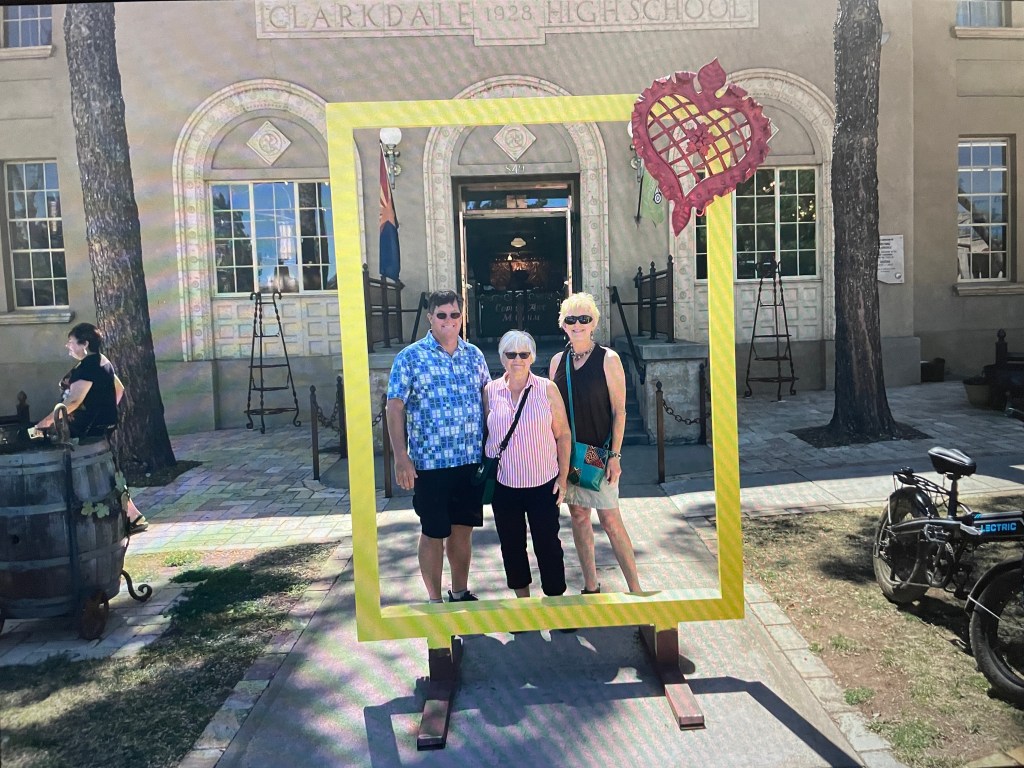
The three of us enjoyed a trip to the Arizona Copper Museum – a new venue in town.  

The museum was established by a Minnesota family who had amassed two very large collections of copper items.  They chose to develop the museum in Arizona because it is the copper state, the largest copper producer in the nation. A copper star is central on the Arizona flag.

Clarkdale was chosen because of the region’s history with mining and ongoing tourist opportunities connected to that copper past.  The long abandoned Clarkdale High School was refurbished to house the museum.

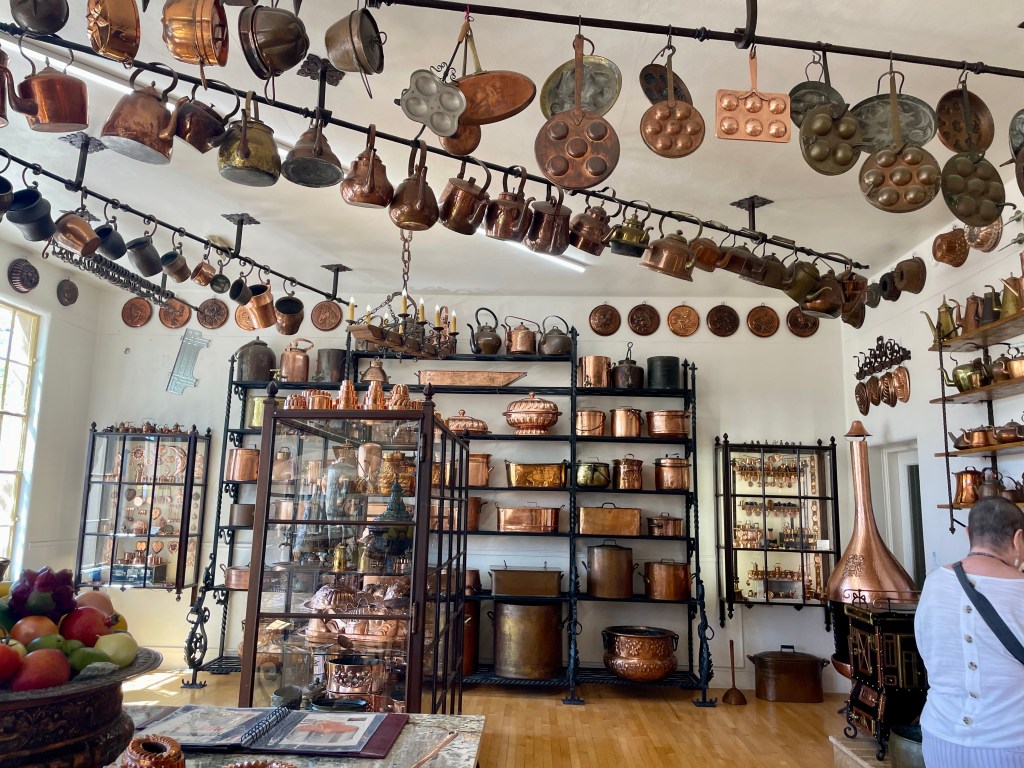
The family’s copper, assembled over decades, form the bulk of the museum’s collection although acquisitions by purchase and gifts continue. There are six to eight very large rooms holding copper pieces on every wall and in interior cases. There are also hallway exhibits.

We learned a lot about copper! Copper was the first metal discovered by man, the first to be worked by man, and the first to be alloyed.   

Copper and gold are the only metals that have color.  The world’s oldest copper mine still in operation (over 6000 years) is in Cyprus and that is why the copper element symbol is Cu.

Copper and gold exist in nuggets where other metals form in ore.  For 4000 years copper and gold were the only metals used by man.

There are seven metals of antiquity:  copper, gold, silver, tin, lead, iron and mercury.

Bronze is a mixture of 85% copper and 15% tin.

The museum includes a very large military art collection.  The various rows hold casings from the same weapon type and explain how soldiers were able to pass some time creating these works of art. Most examples were from WWI.

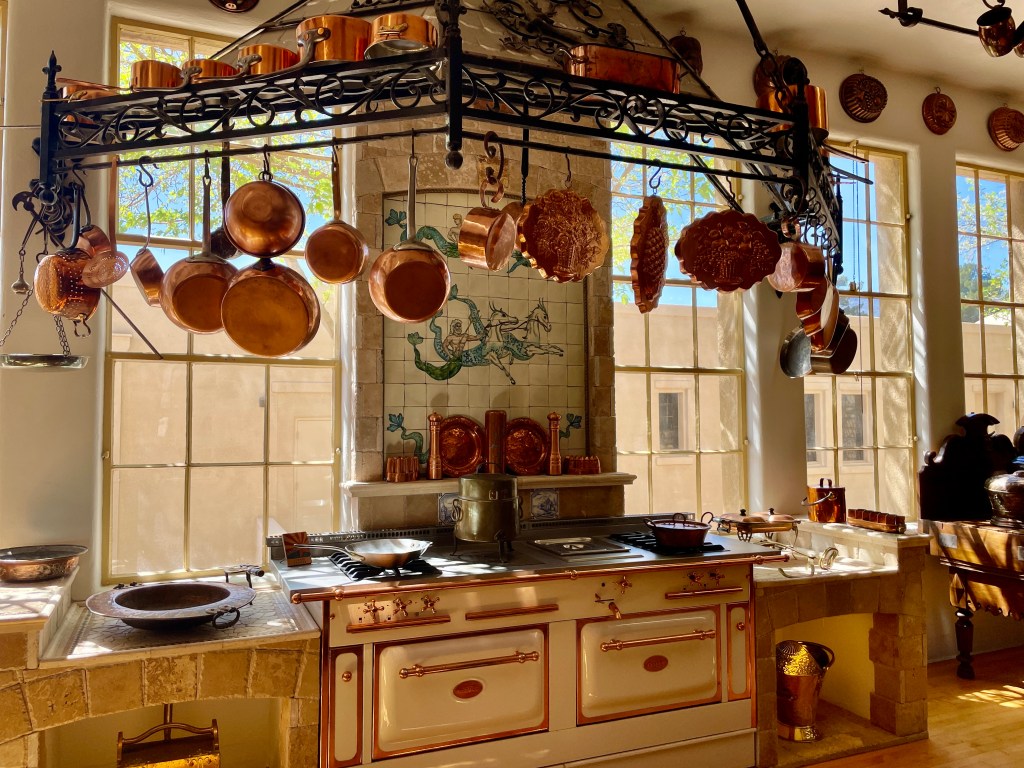
There are very large collections of copper pots, and dishes.

This display allows you to see the various forms of copper embellishment: verdigris (natural), patina, applied and polished.

Copper ceilings adorn most rooms.

Did you know there is copper in dark chocolate?

Or that copper is present in blue glass?  Adding tin makes glass yellow and adding gold makes glass red.

The museum is extensive and it is easy to go on copper overload.  It was also easy to go in, enjoy the displays and learn a few interesting things about copper.

Our life is so different now than it was when we lived in the mode of constant traveling, exploring, and learning new things everyday. It was a delight to be explorers and learners again!

Posted in Uncategorized | 11 Comments