Having three quick stays behind us, we were ready for a longer visit and Las Cruces was a great fit. We loved Las Cruces!
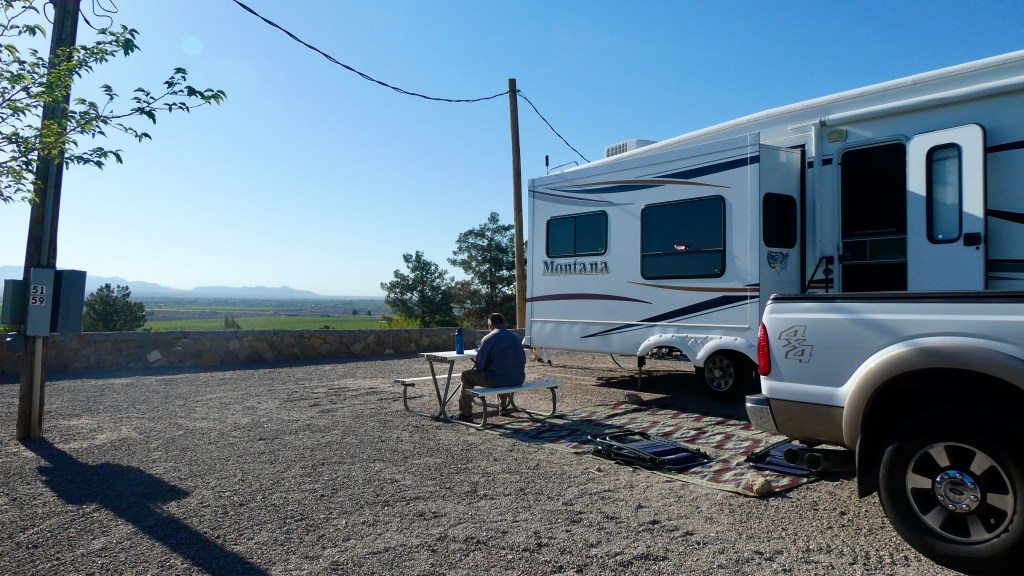
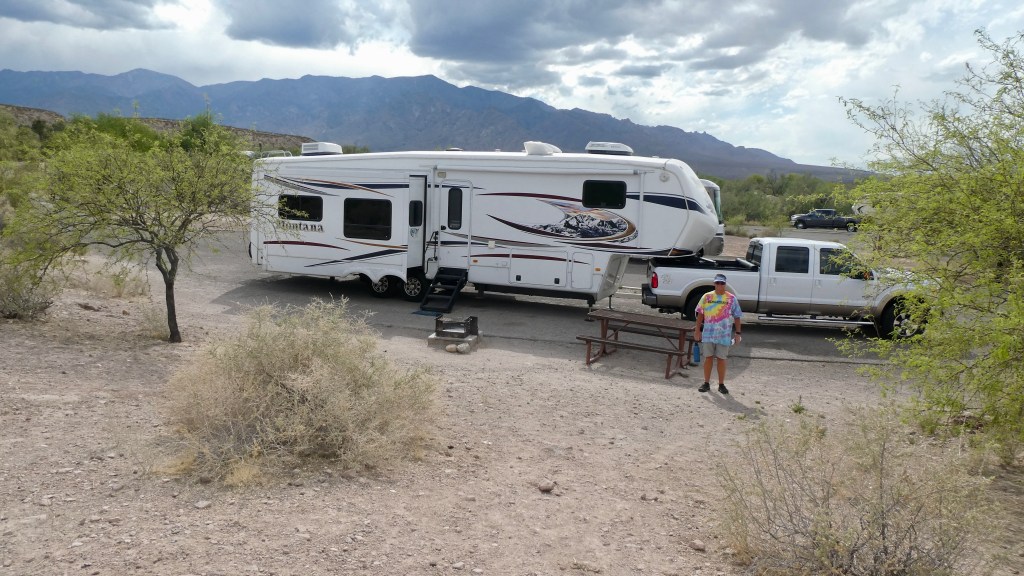
We stayed at the Las Cruces KOA and had one of the nicest sites in the campground.
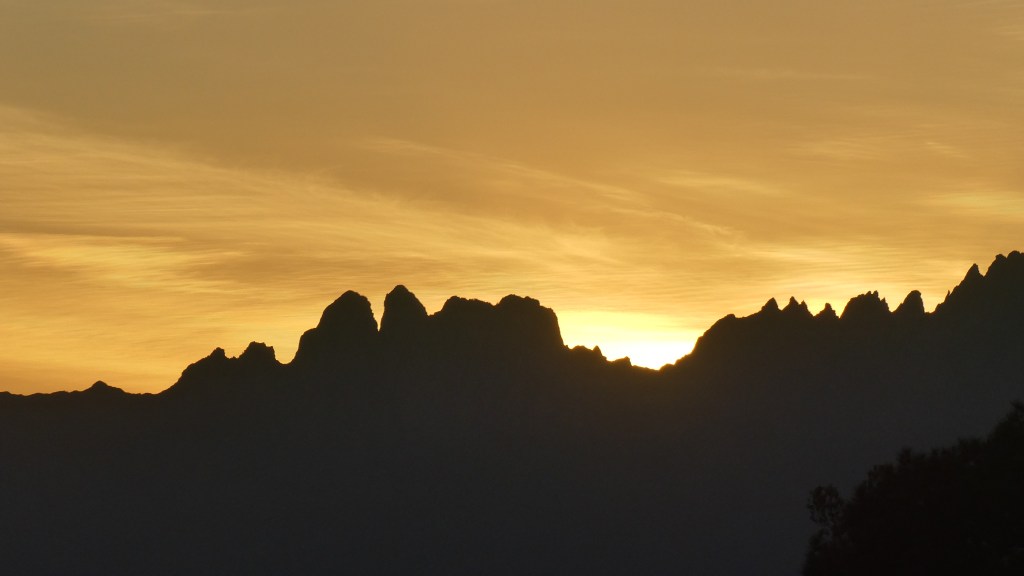
We had sunrise views in the morning,
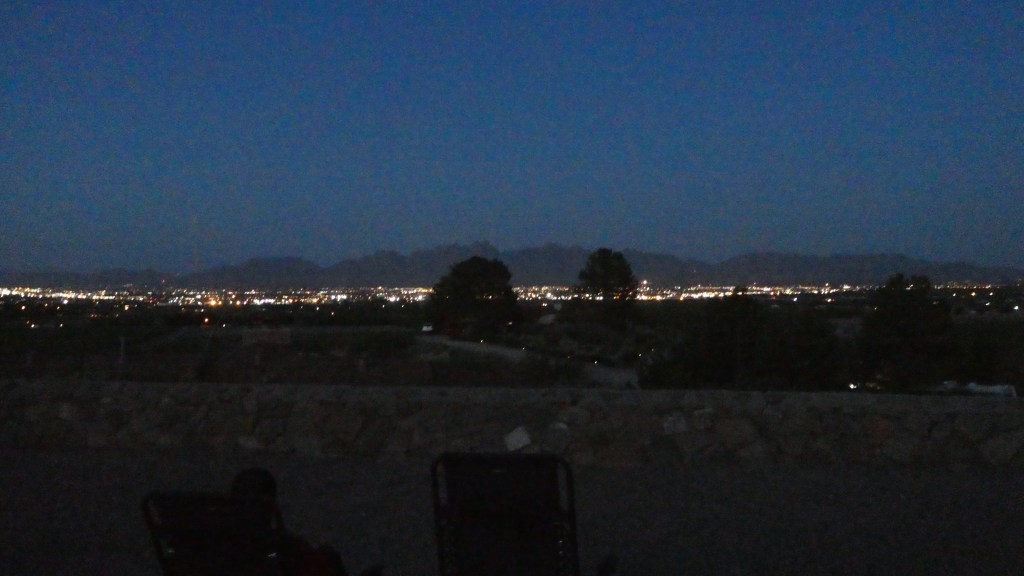
and city lights at night.
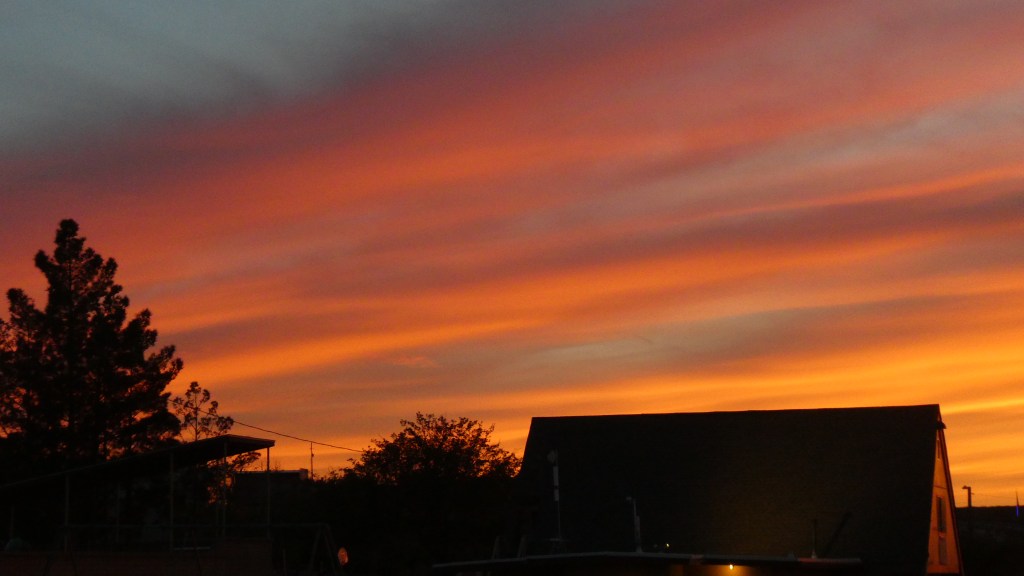
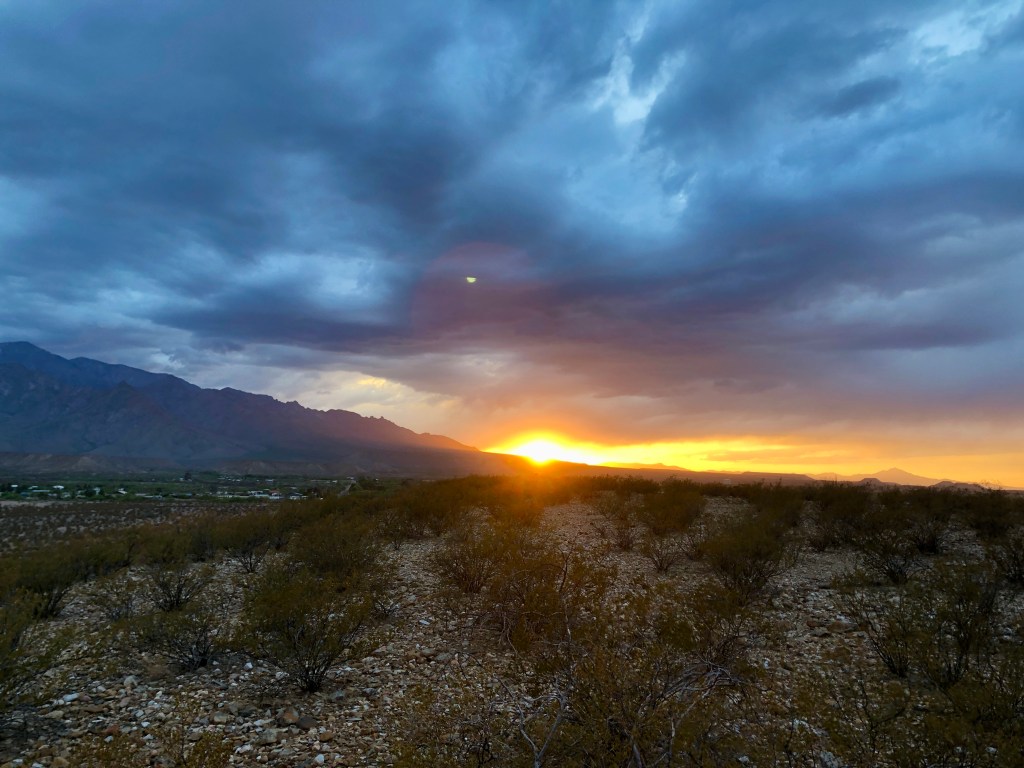
We even had a glorious sunset on our last night!
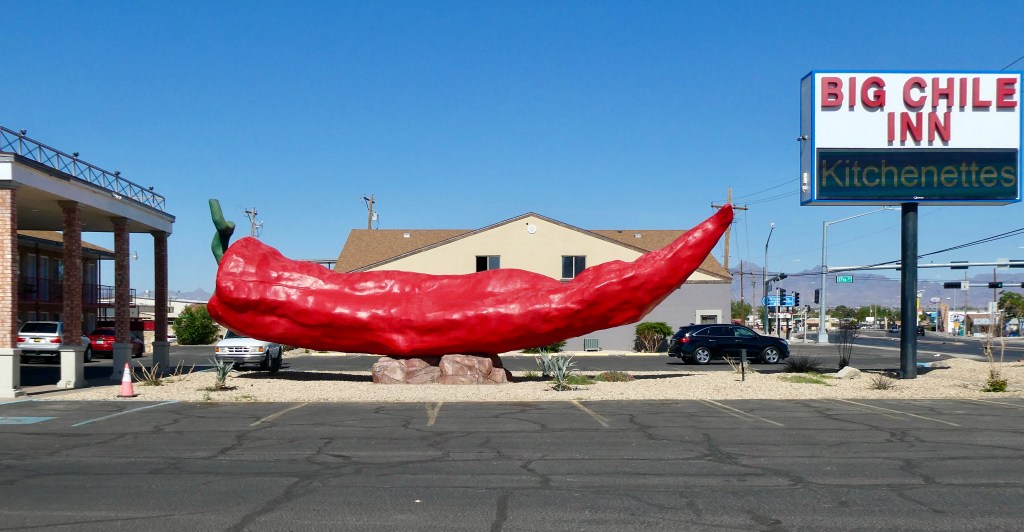
Las Cruces has a few iconic photo opportunities. The first we encountered was the big red chili at Big Chile Inn. It is 47 feet long and made from 2 1/2 tons of concrete!
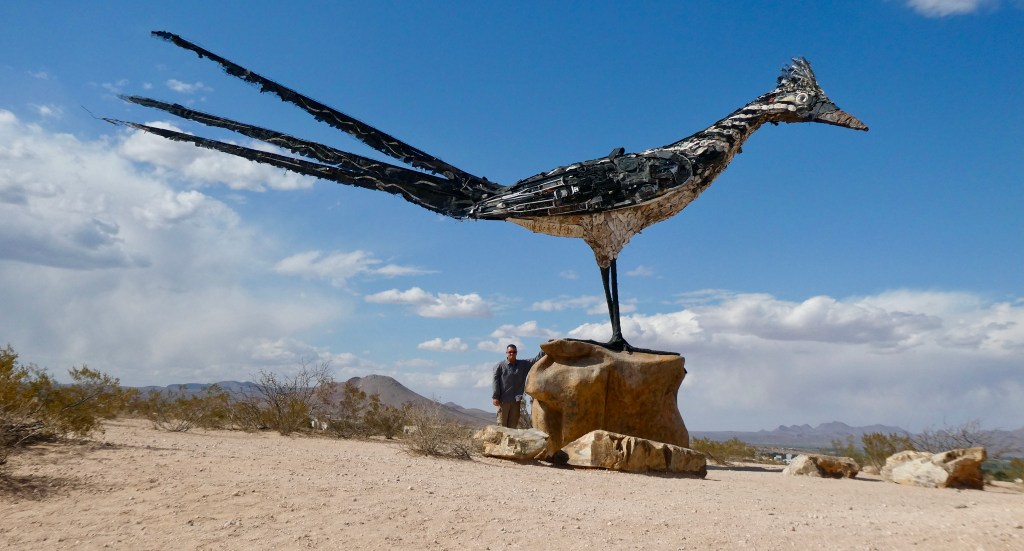
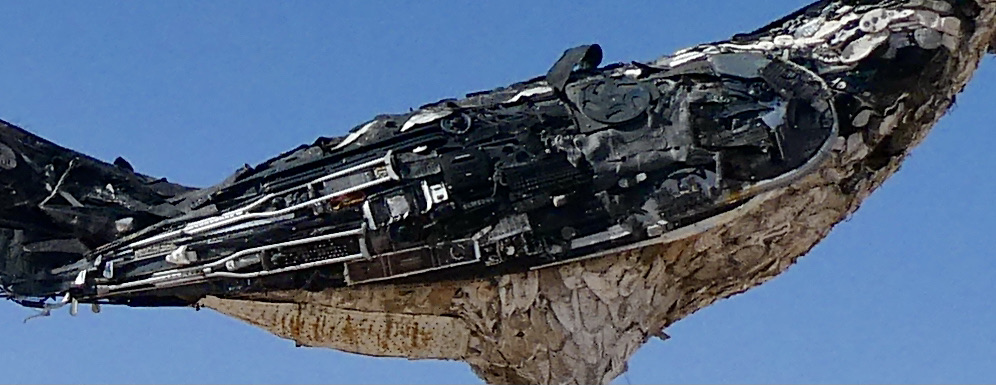
Another icon is the Recycled Roadrunner sculpture located at a rest stop on I-10. We saw it several times as we drove by but actually had to go to the rest stop to get pictures showing the scale and the recycled building materials.
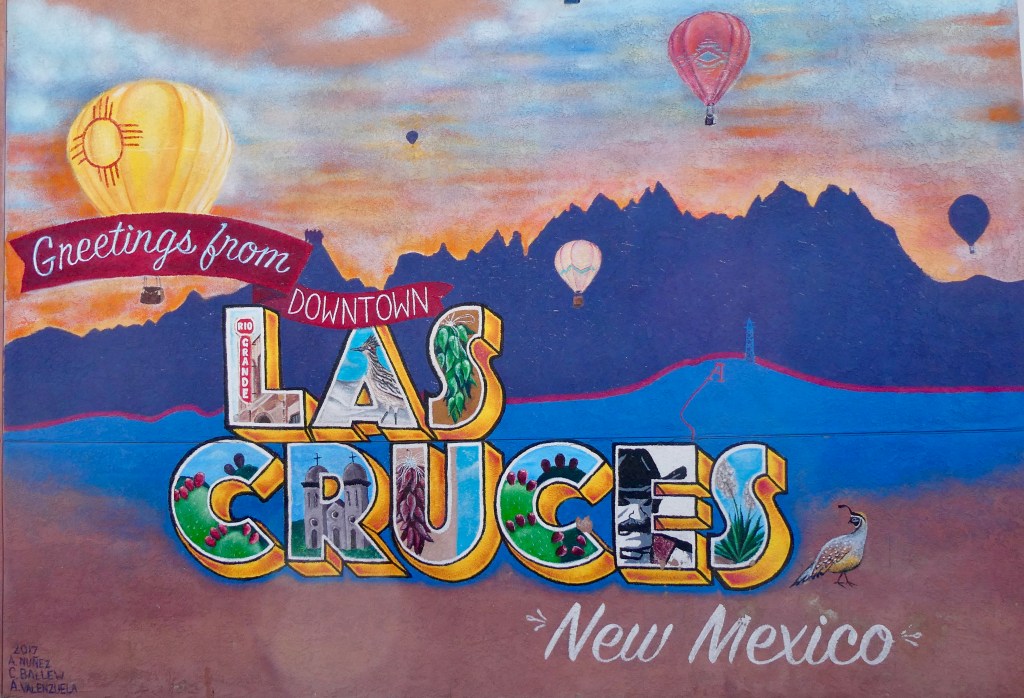
This mural, welcoming all to Downtown Las Cruces, shows some of the special things about Las Cruces in each letter.

We saw the mural when we went downtown to the Farmer’s Market. We had a great time buying art and local food items. Art and food are big in Las Cruces!
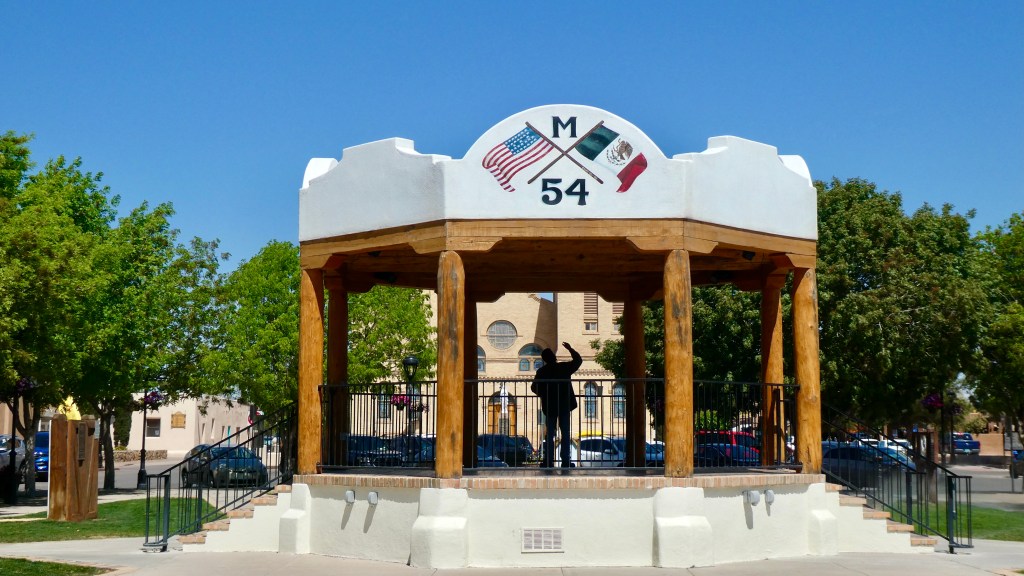
We also enjoyed the historic town of Mesilla. There is a town square with shops, restaurant and a church. There are historic markers explaining Mesilla’s interesting history. The 1848 Treaty of Guadalupe Hidalgo which ended the Mexican-American war established that this little town was within Mexico. In 1854 the US acquired property, including Mesilla, by means of the Gadsden Purchase.

This 1850 building once served as the capital of the Arizona and New Mexico territories. It later held the courthouse in which Billy the Kid was tried and sentenced to hang.
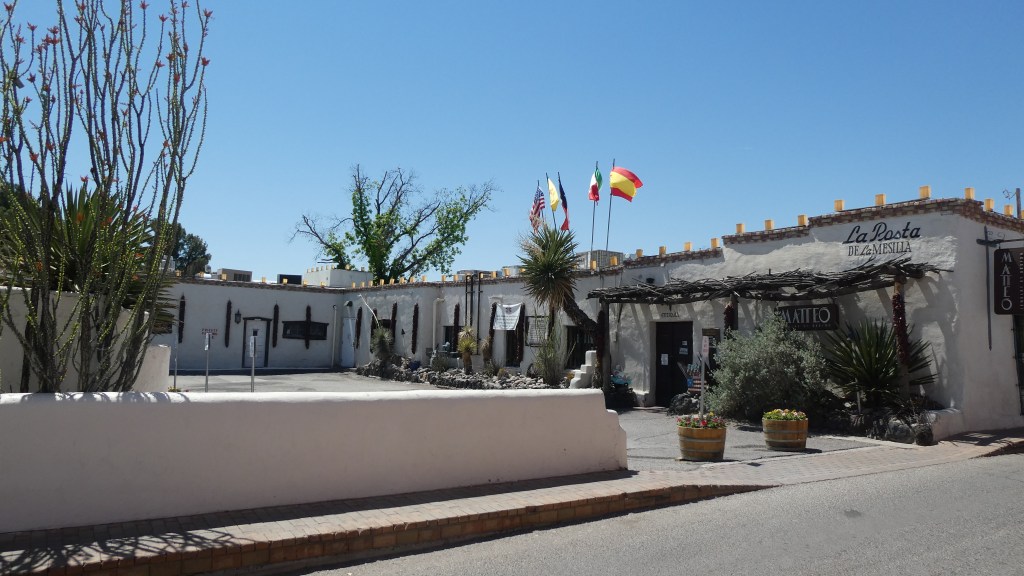
Just off the town square is La Posta de Mesilla, one of the ten best Mexican Restaurants in the country according to USA Today. The building, over 150 years old, is on the national historic registry. La Posta used to be a stage stop on the Old Butterfield Trail. The 19 year old niece of the local land baron began serving food here in 1939. Restaurant lore claims that her decision to serve complimentary ‘chips and chilis’ to her customers was the precursor for Mexican restaurants serving complimentary chips and salsa.
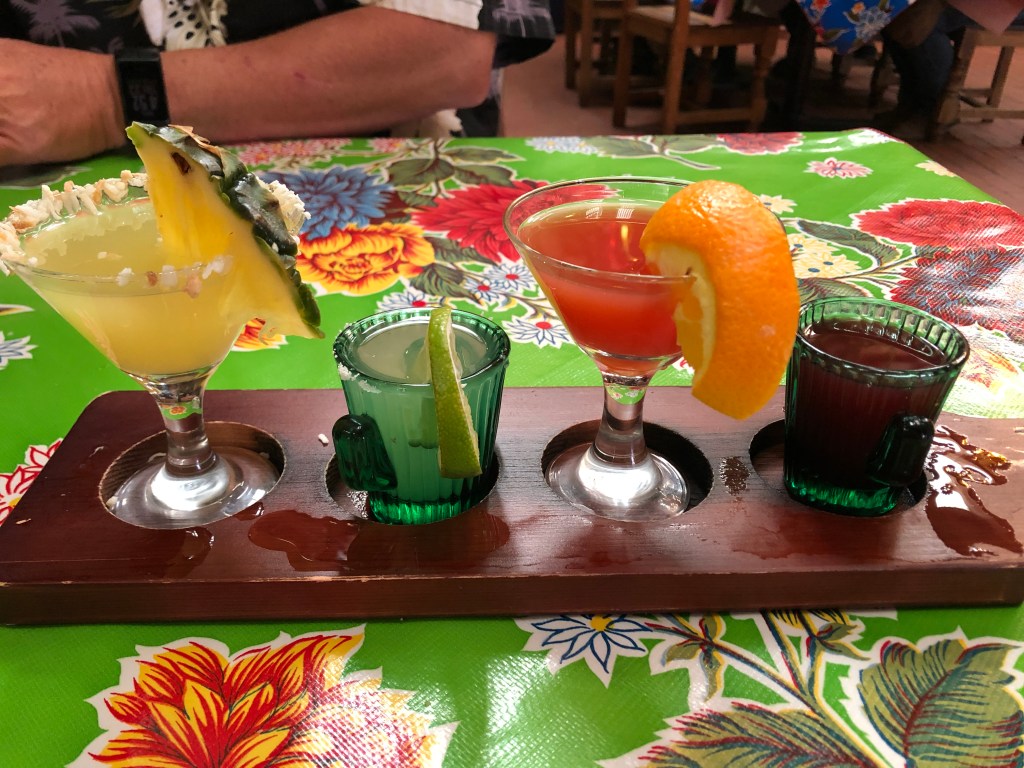
We started with our own chips and salsa and a Margarita Flight. Our favorite was the Coco Loco but we liked the La Patrona, the Blood Orange and the Chili-Rita as well. They went great with the best chicken quesadilla we have ever eaten.
We liked La Posta so well that we went back a second time – even though we were only in Las Cruces for five days. Mexican restaurants are three to a block in Las Cruces and we did frequent one other. The food was very good but the experience was less festive.
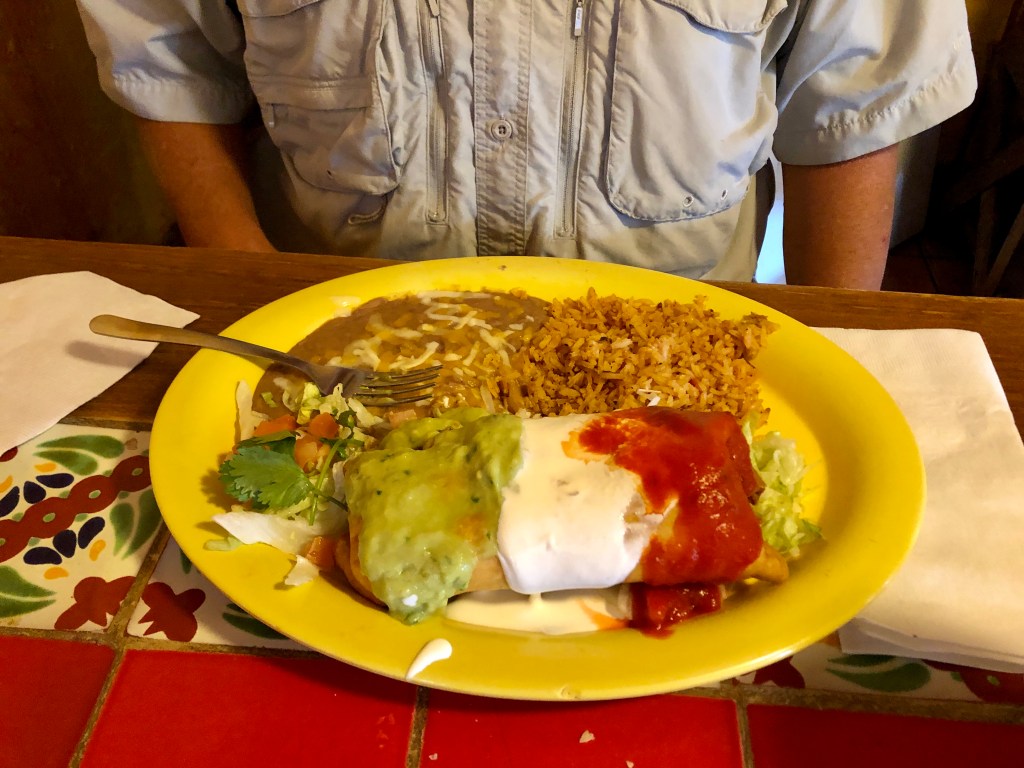
Mexican Food New Mexico Style: Red, Green, or Christmas.
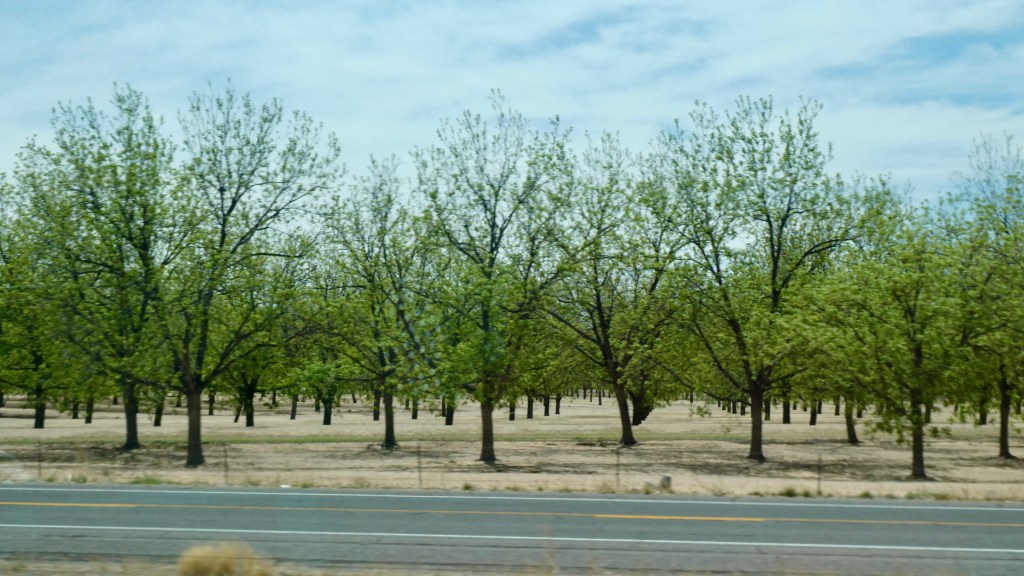
In addition to Mexican restaurants, the area has an agricultural emphasis on pecans and pistachios. Pecan trees are everywhere along the interstate. We bought plain pecans, bread with pecans and butterscotch covered pecans.
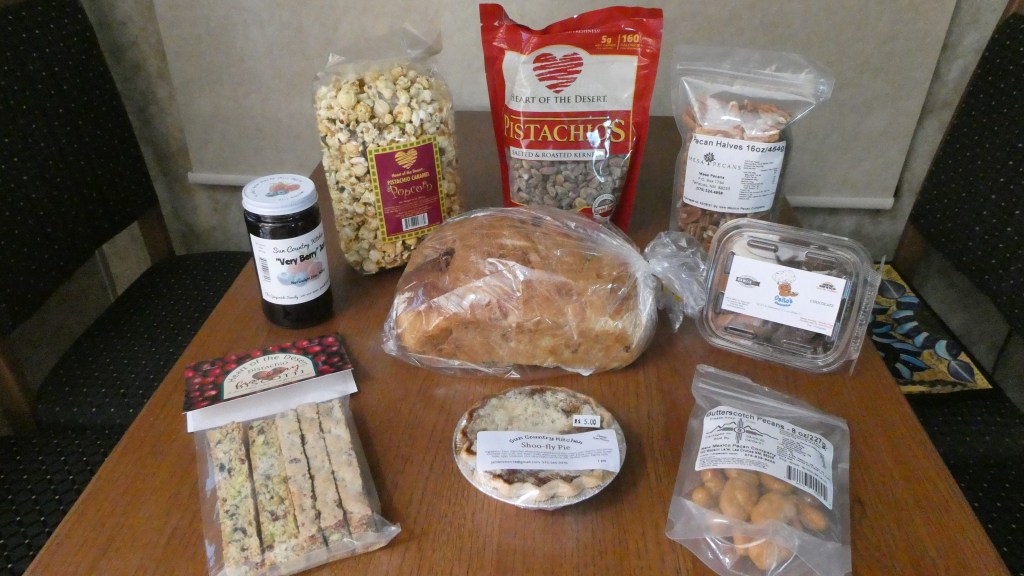
We don’t know if we saw pistachio trees or not but we bought pistachio products: Pistachio biscotti, pistachio popcorn, and roasted pistachios. Throw in jam and shoofly pie for fun!
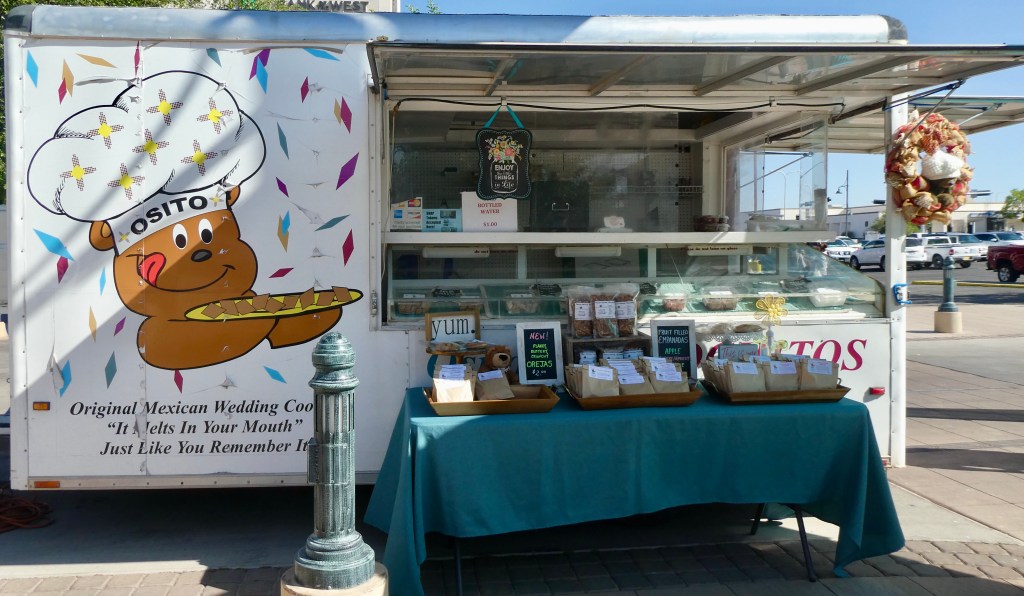
We bought New Mexico’s Famous Wedding cookies. Are you getting the idea we ate our way through Las Cruces? We did!
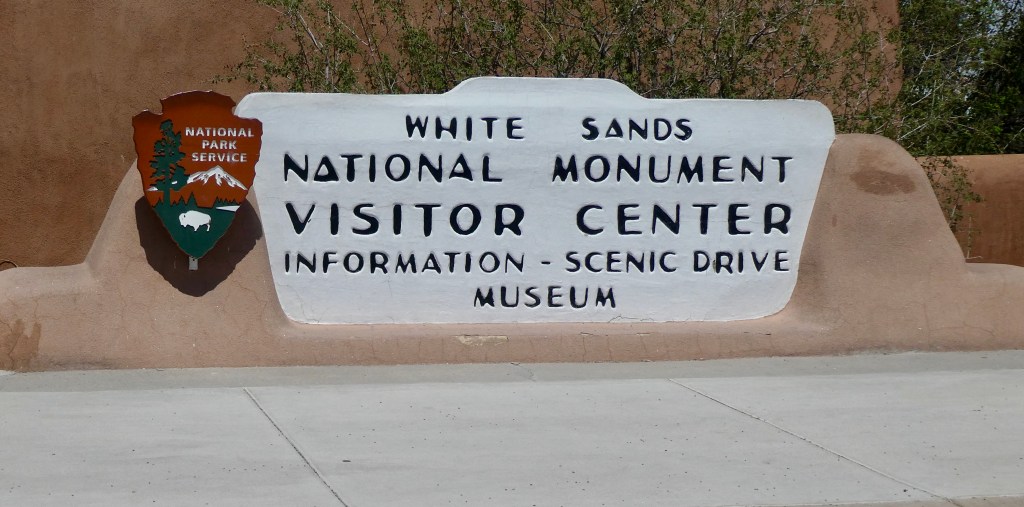
We left Las Cruces for the afternoon and drove to nearby White Sands National Park. The signage says National Monument but the designation was changed by Congress in December 2019.
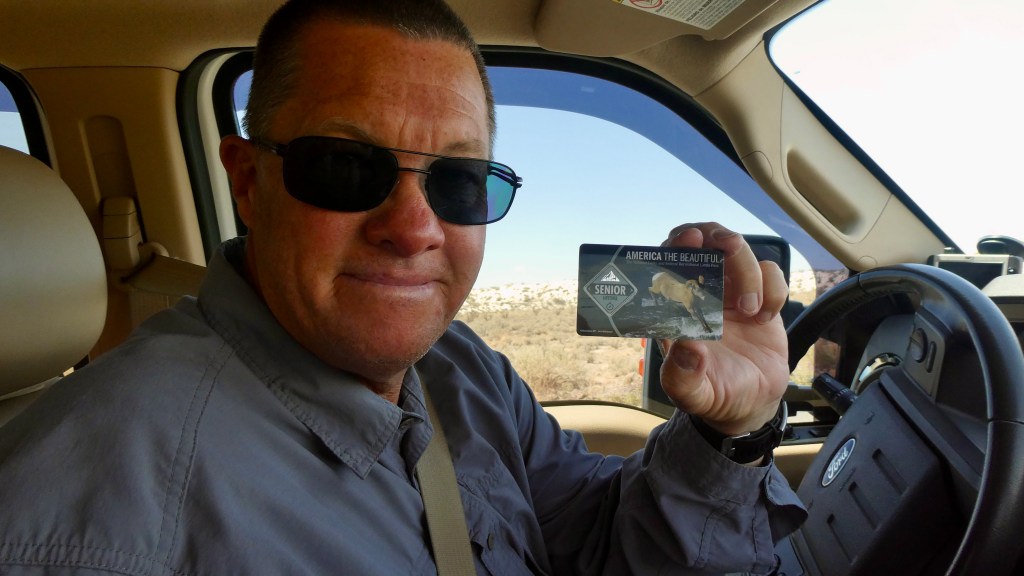
A highlight of this trip for Randy was getting carded – something he totally enjoyed! He had to prove he was 62 years old to get his Senior Lifetime National Parks Pass.
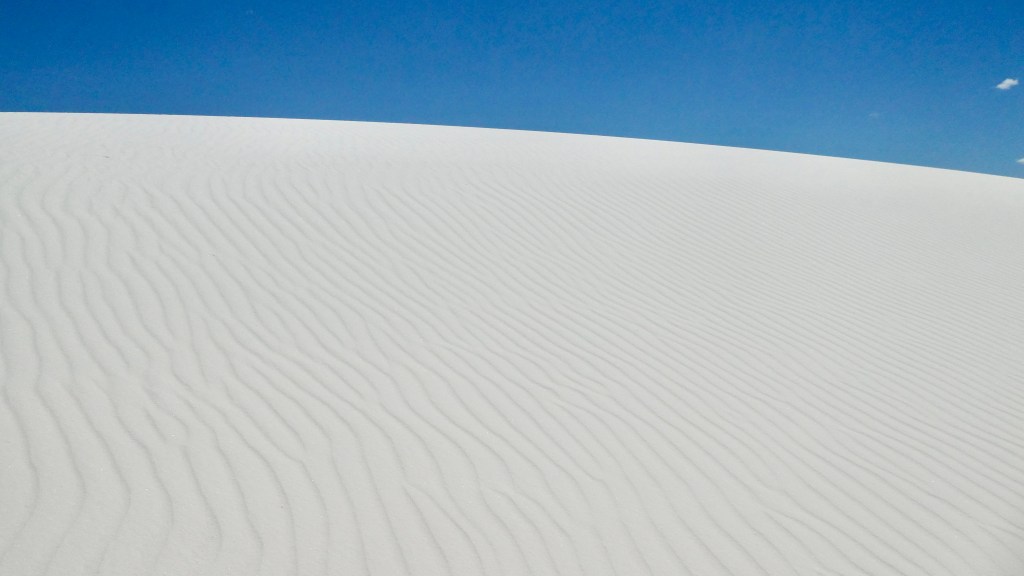
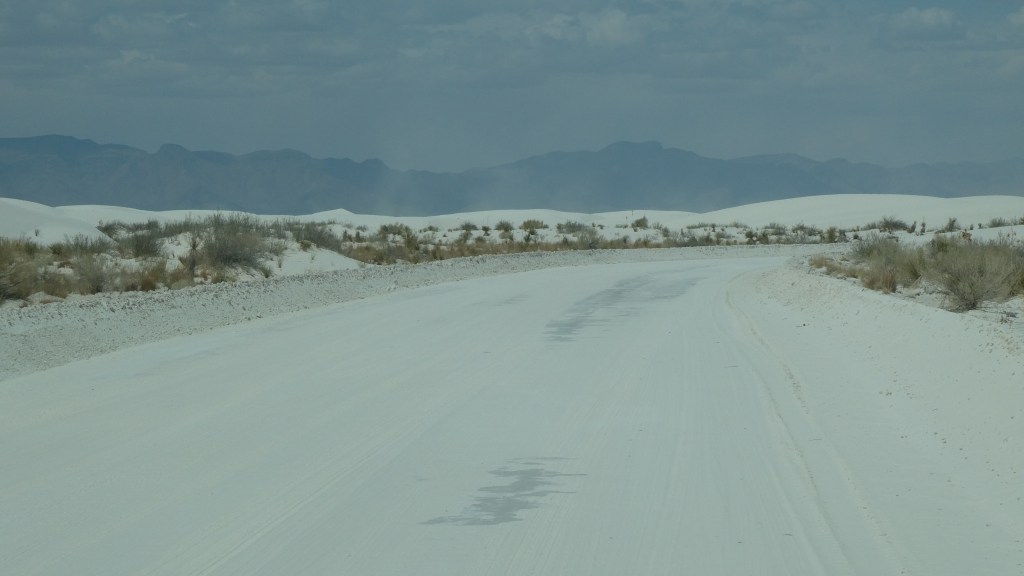
White Sands is 275 square miles of stark white gypsum sand, the largest collection in the world. This particular kind of sand retains moisture and that keeps it from just blowing away. We were there on a very windy day and there was some sand blowing around but not clouds of it.
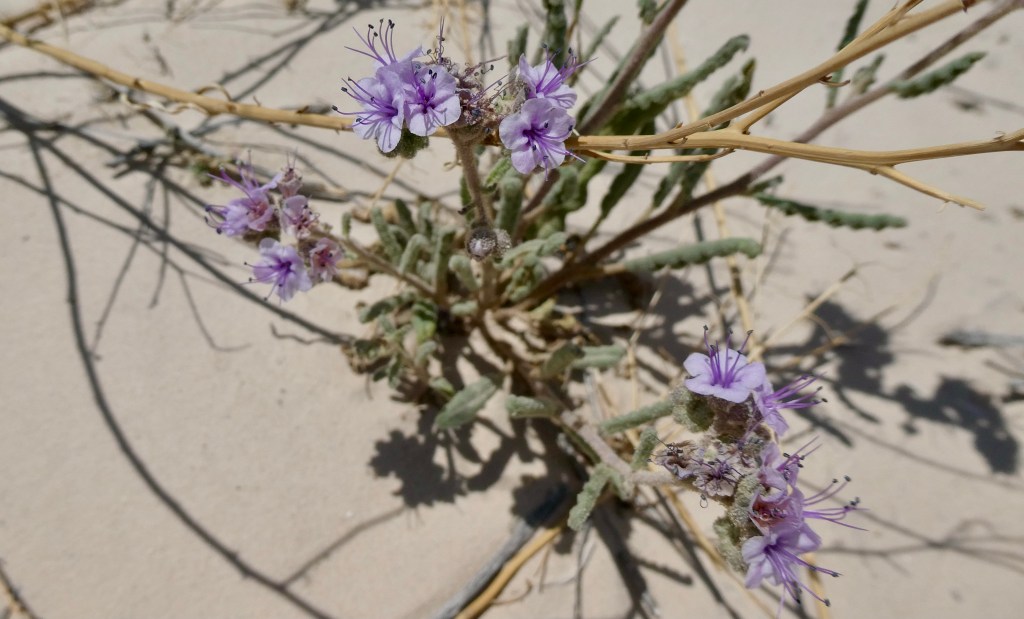
Sand verbena blooms quickly and has a short life span.

We’ve been here before but it was nice to come again!
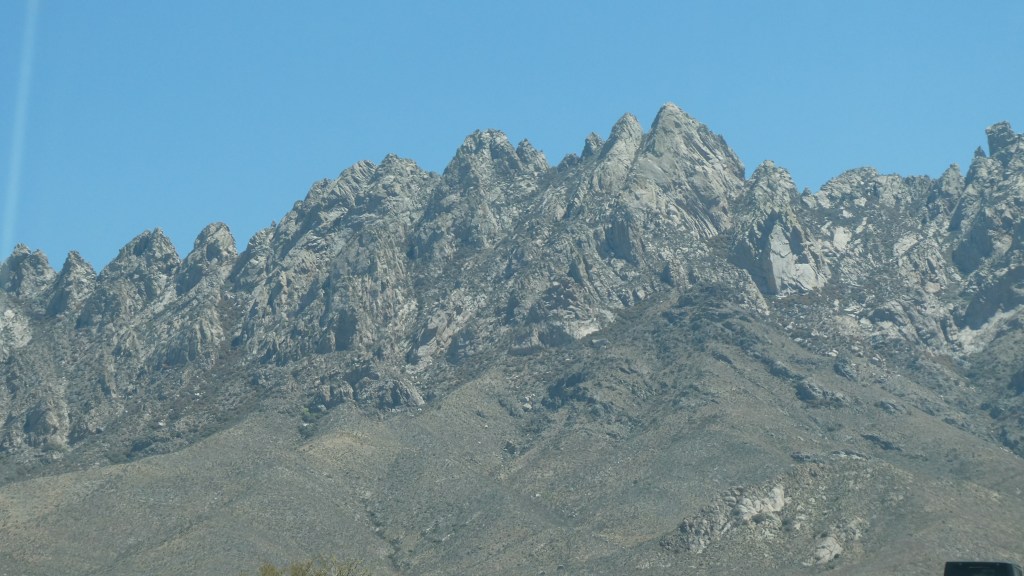
Las Cruces sits in the shadow of the Organ Mountains. We found them reminiscent of the Sawtooth Mountains in Idaho that we loved.
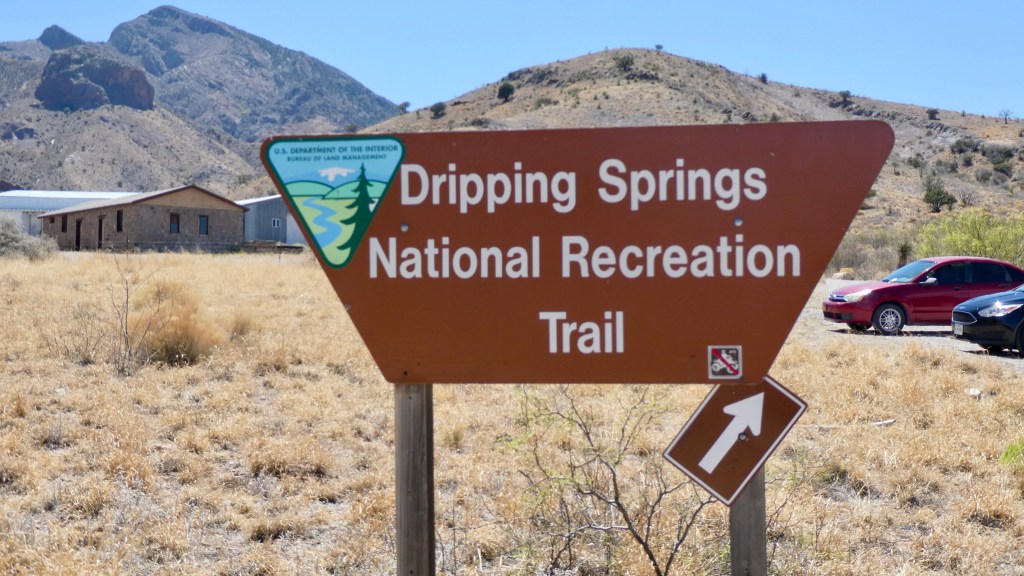
We drove there and hiked into the Dripping Springs Natural Area. As the name implies, there is a spring that provides water to the area.
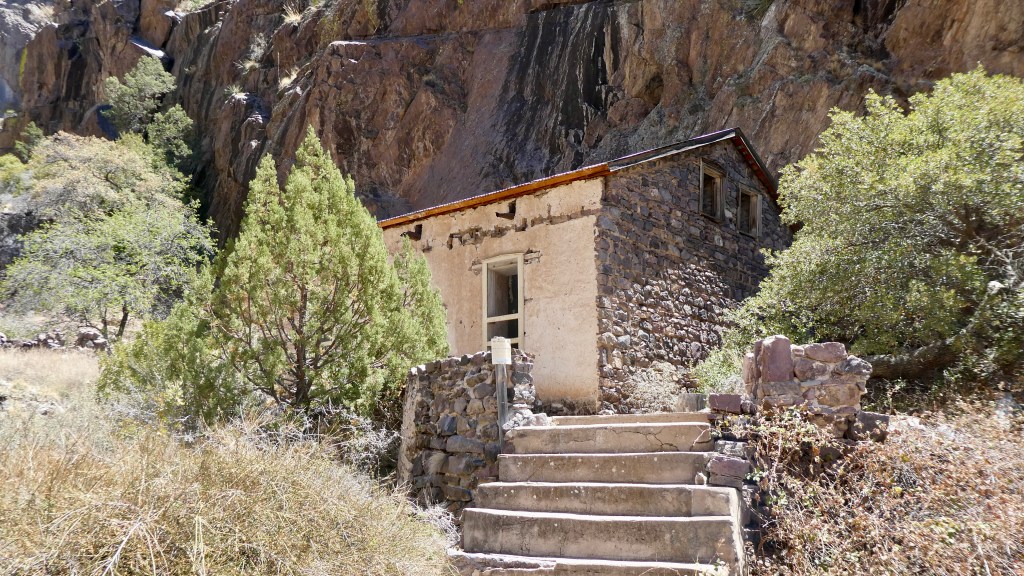
Eugene Van Patten was a major player in early Las Cruces and built and ran Dripping Springs Mountain Camp in the late 1800s. He built a small dam to contain the springs for his camp.
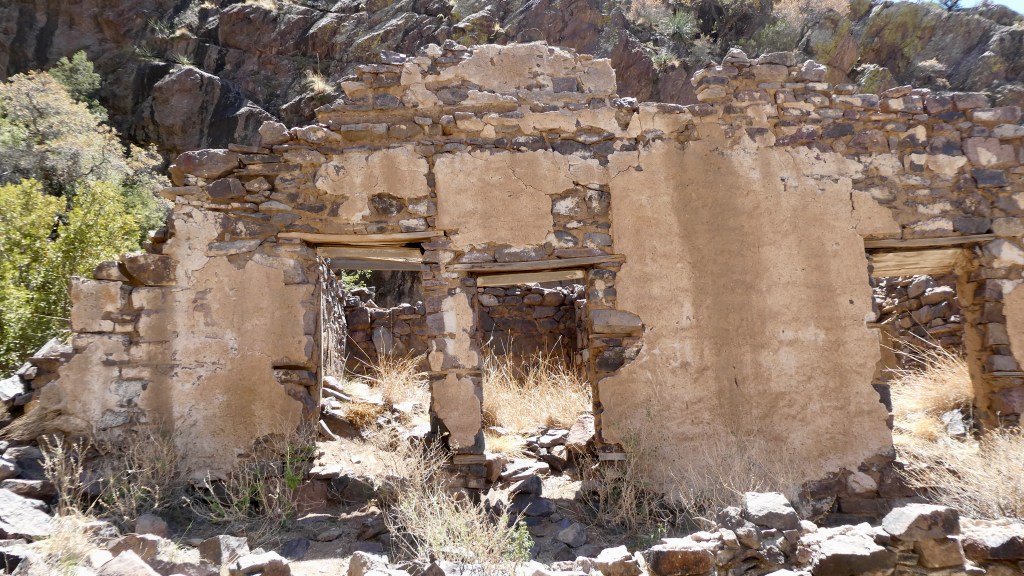
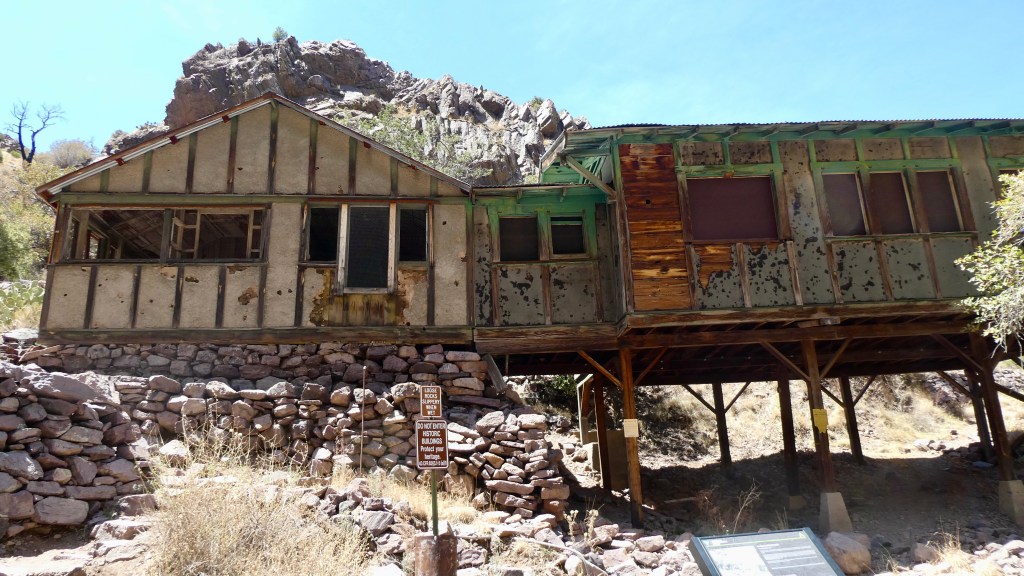
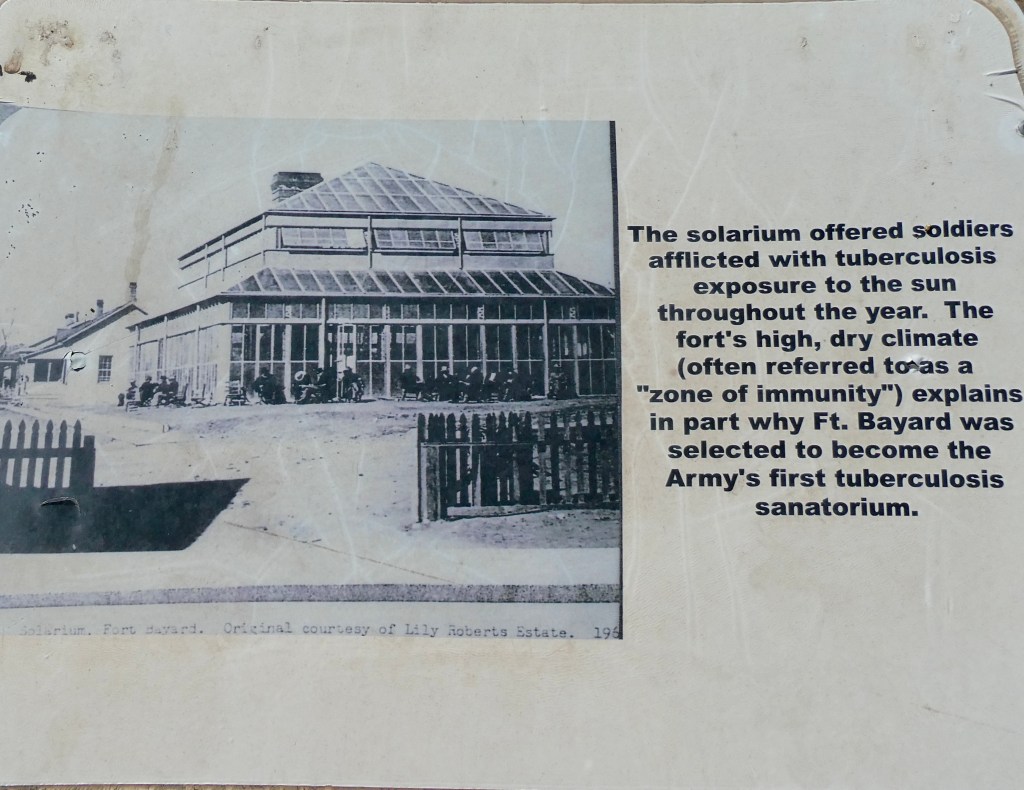
Van Patten leased nearby land to Dr. Boyd who built and ran a tuberculosis sanatorium. Both men experienced financial problems along the way and sold the properties which were eventually abandoned.
There is still much left for us to do in Las Cruces – some we missed because our time was limited and some places were still closed due to COVID. We will be perfectly happy to return!
In our next post you will meet a tour guide named Alex. Half Navajo and half Mexican, Alex lives and works near Las Cruces. He said the Native Americans, Mexicans and Anglos fought it out long ago and then inter-married. When the person who is supposed to be your enemy is also family, you learn to get along. He believes the swath from Tucson to the Big Bend area in Texas lives in greater harmony than much of the country because of shared faith and intermarriage. We felt that in Las Cruces.

















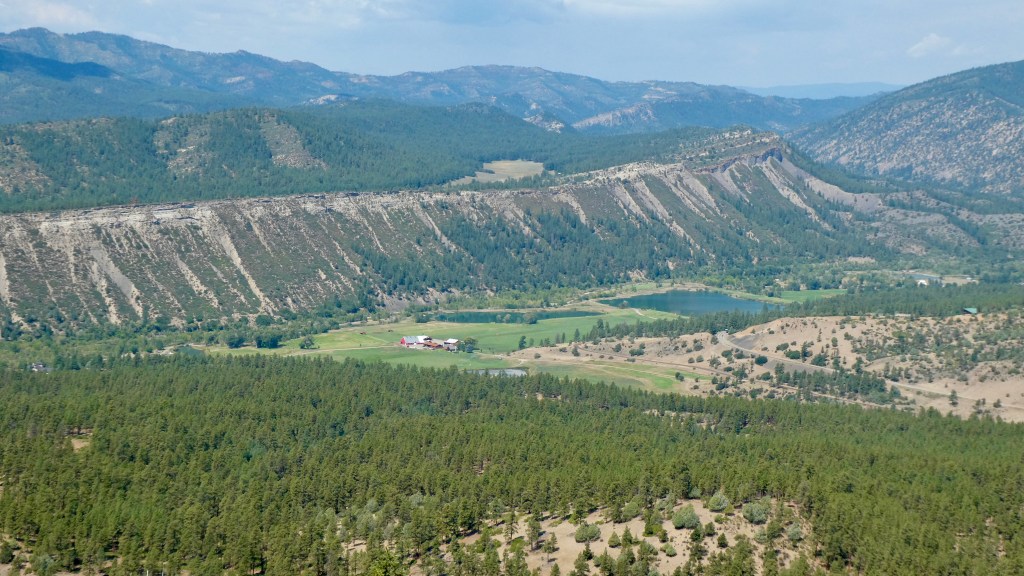
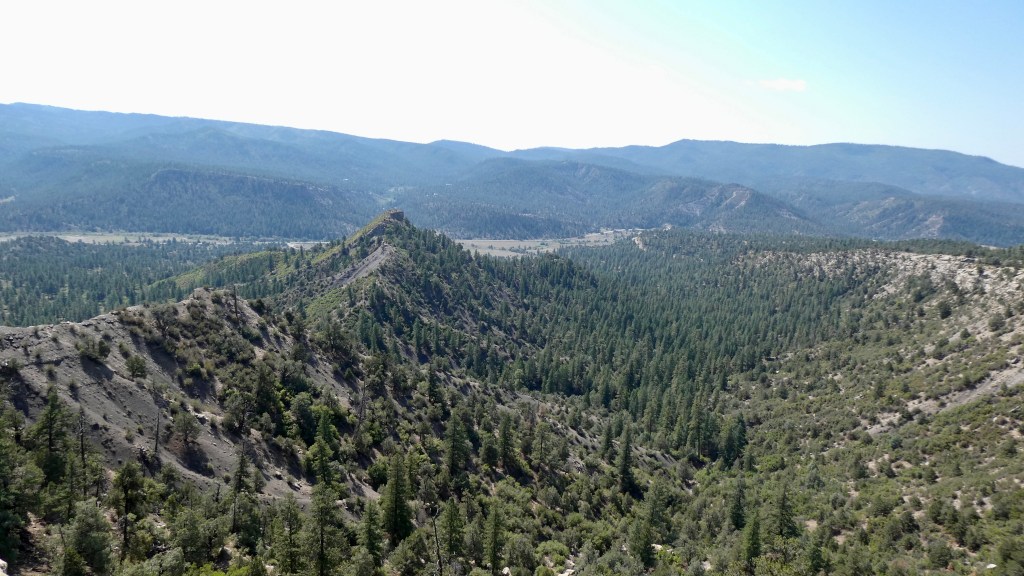
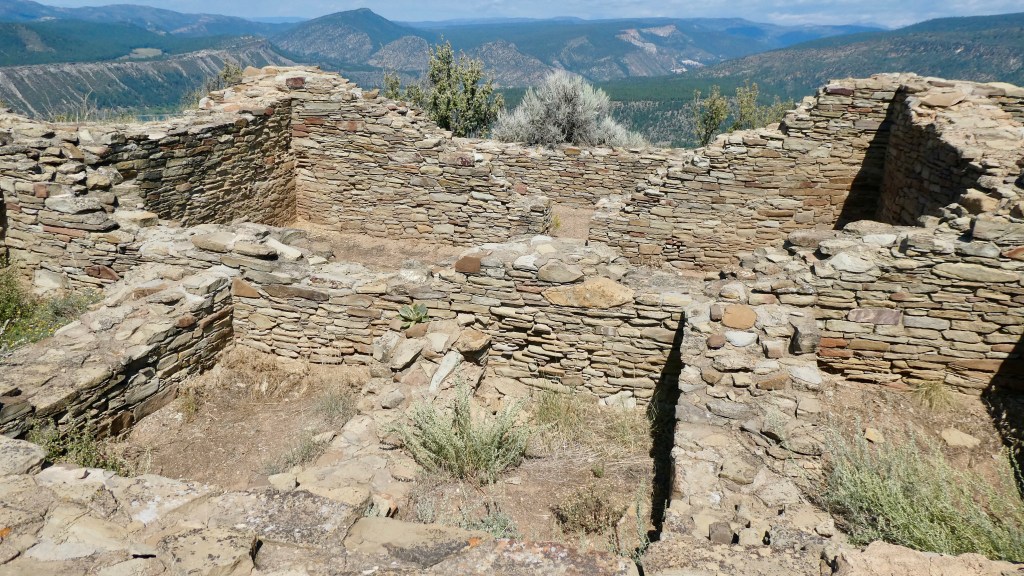
 We so enjoyed our 12 days at Ridgway State Park near Montrose, Colorado.

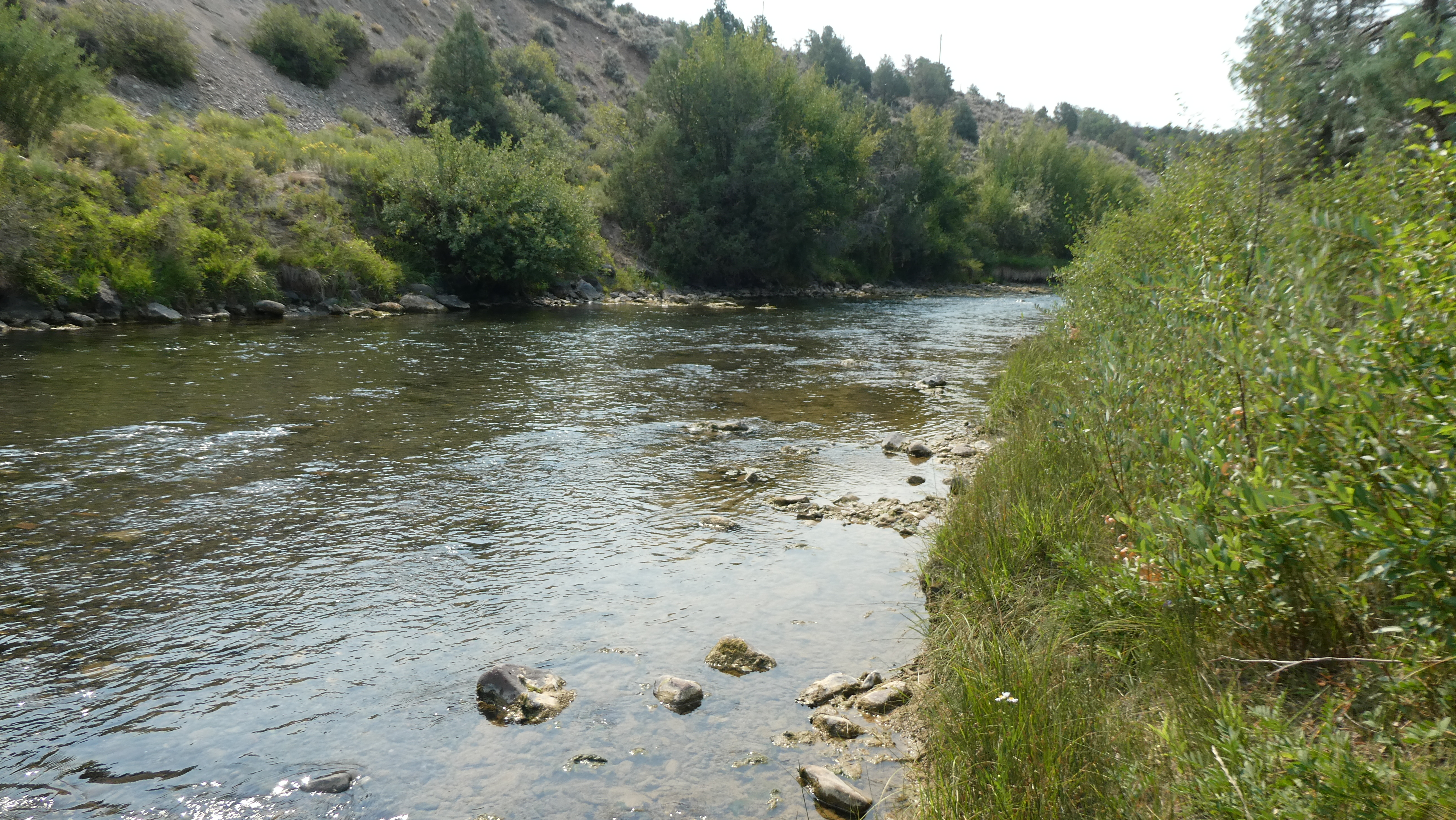 Dennis Weaver and family donated large acreage along the Umcompaghre River as a wildlife preserve and recreation area.
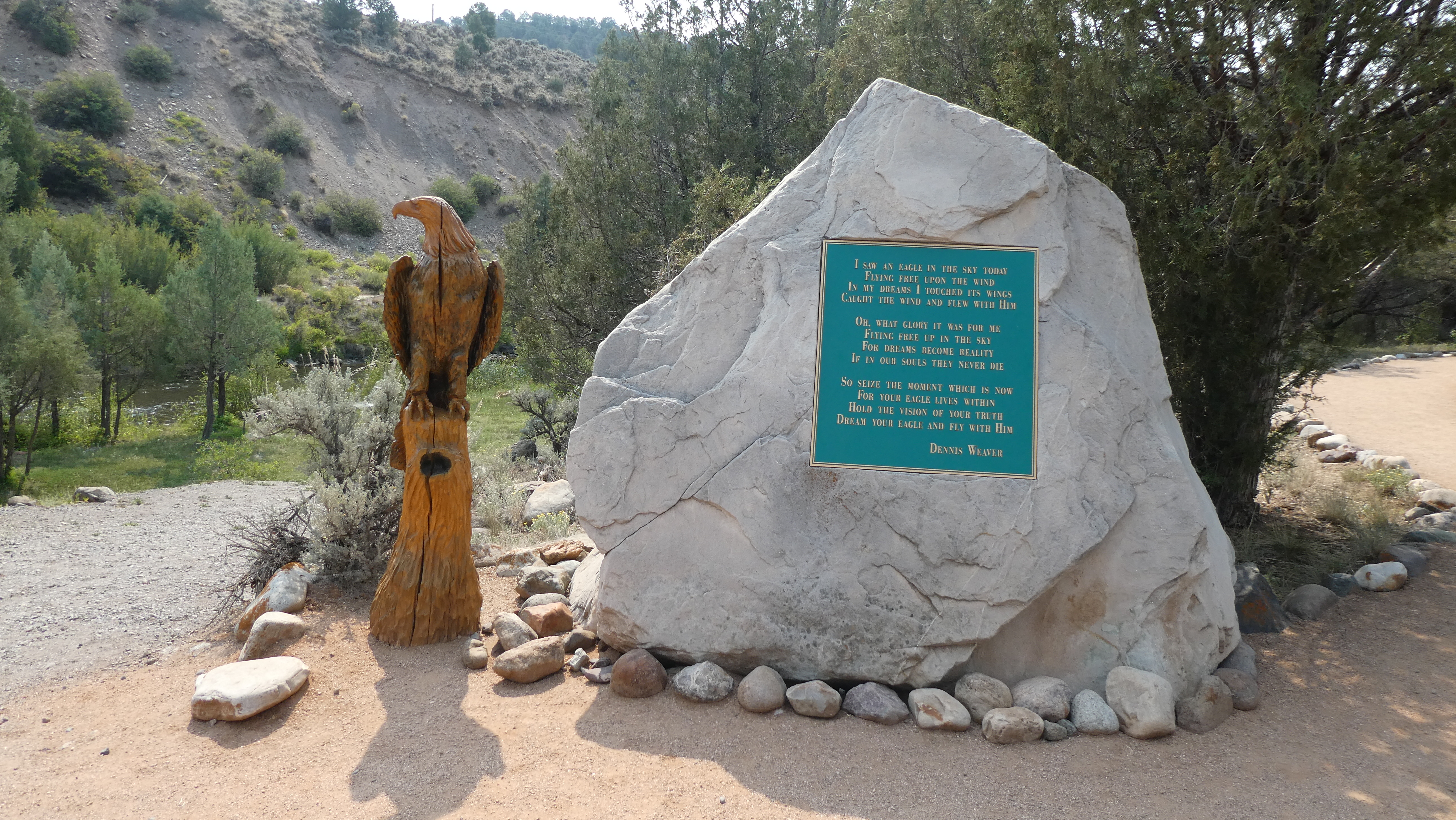 Dennis Weaver died in 2006 and his family dedicated the Dennis Weaver Memorial Park in 2007.
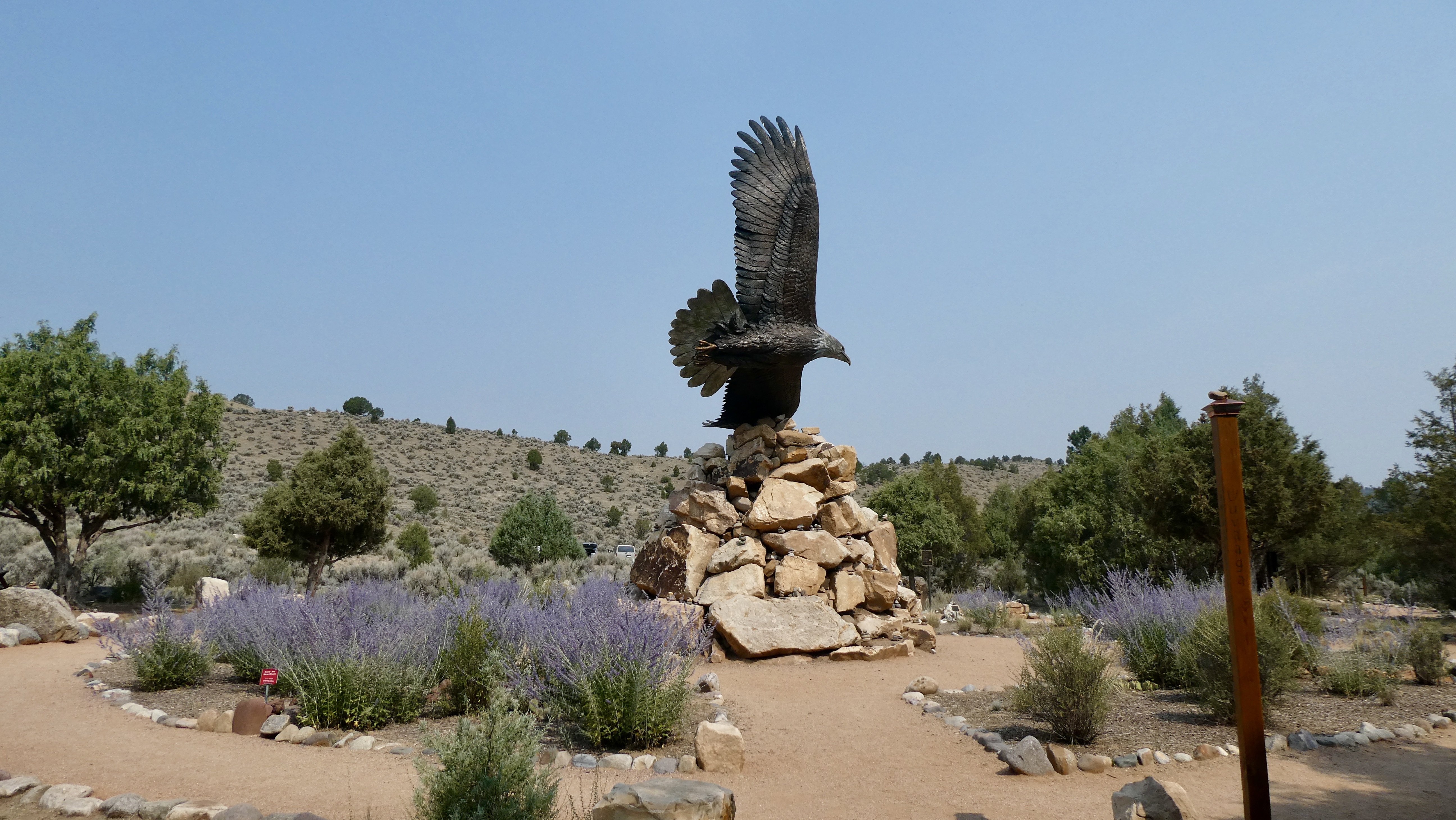 This eagle, by sculptor Vic Payne, has a wingspan of 21 feet.
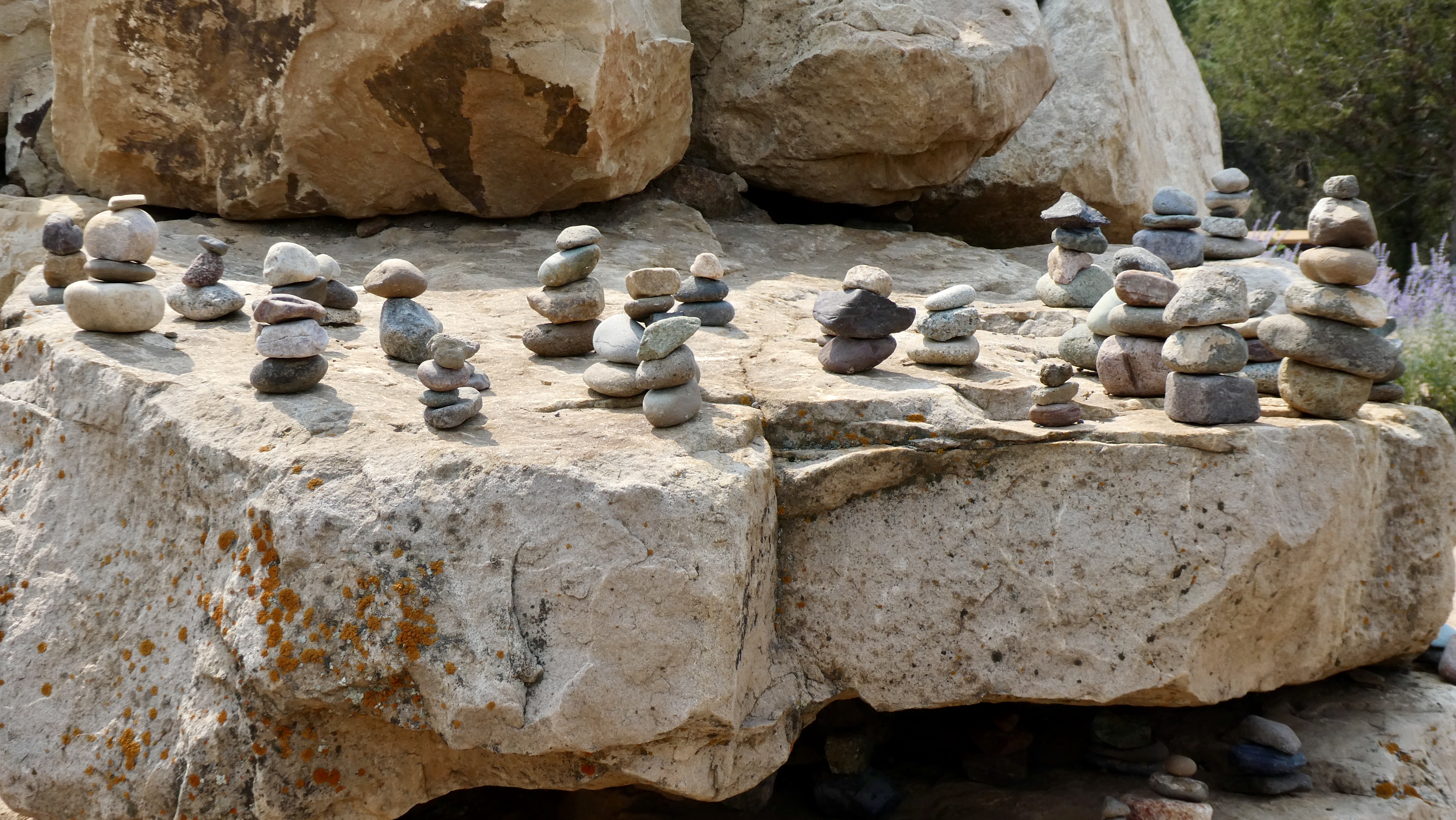 There is an invitation to assemble your own prayer stones.
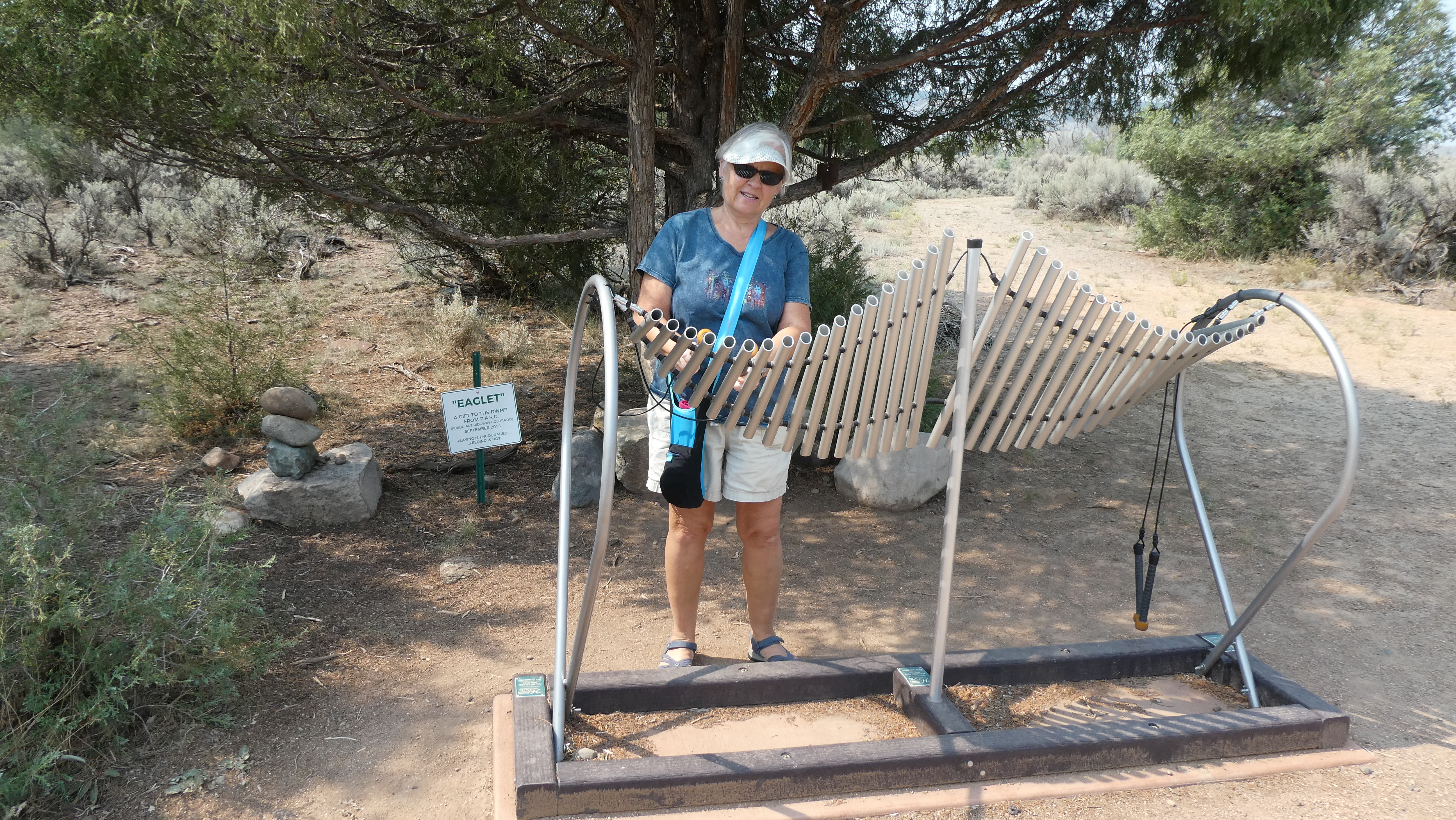 Enjoy a musical interlude along with relaxation and reflection inspired by the park.
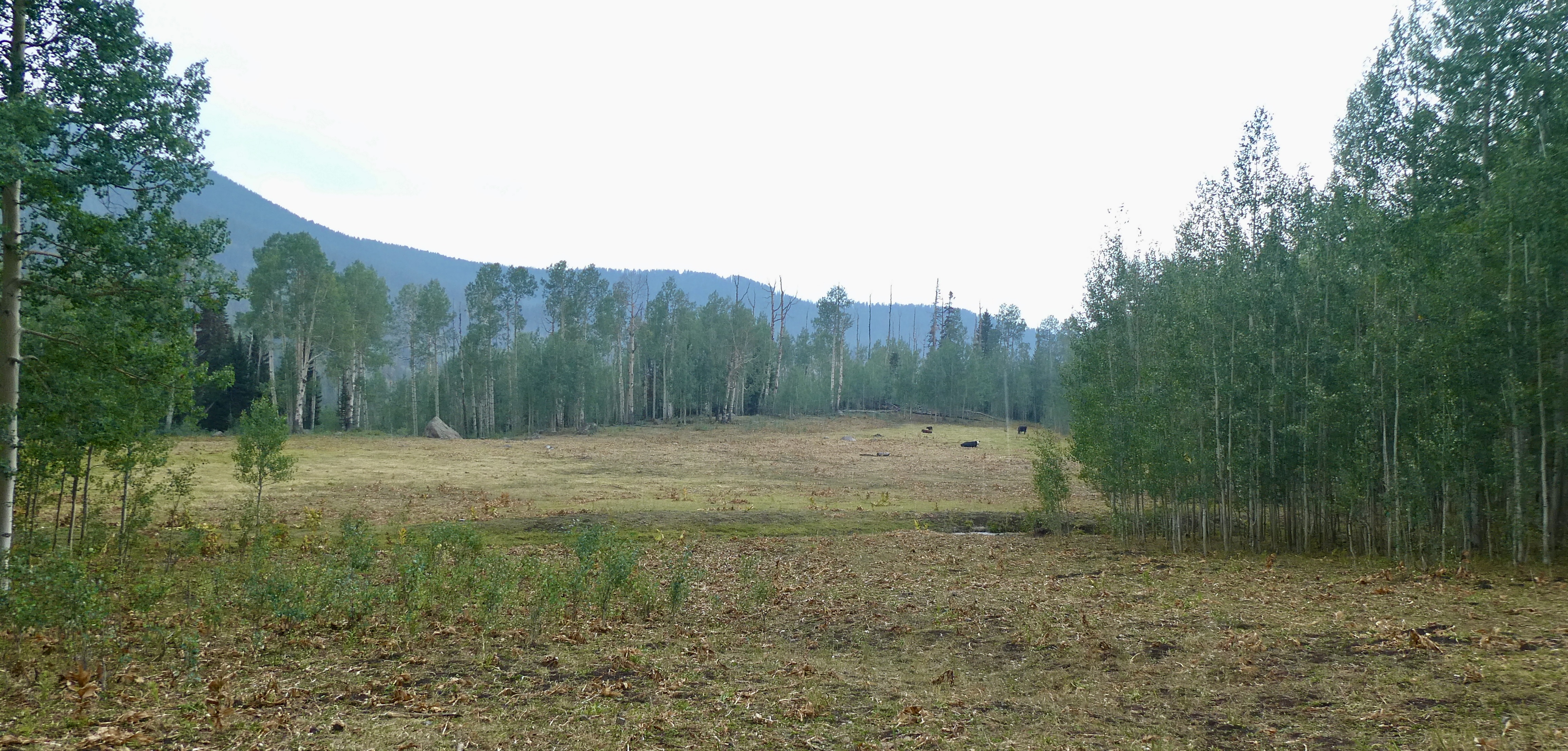 We found one True Grit site, Katie’s Meadow on Owl Creek Pass, where Rooster Cogburn (John Wayne) had a shootout with Ned Pepper (Robert Duvall).
 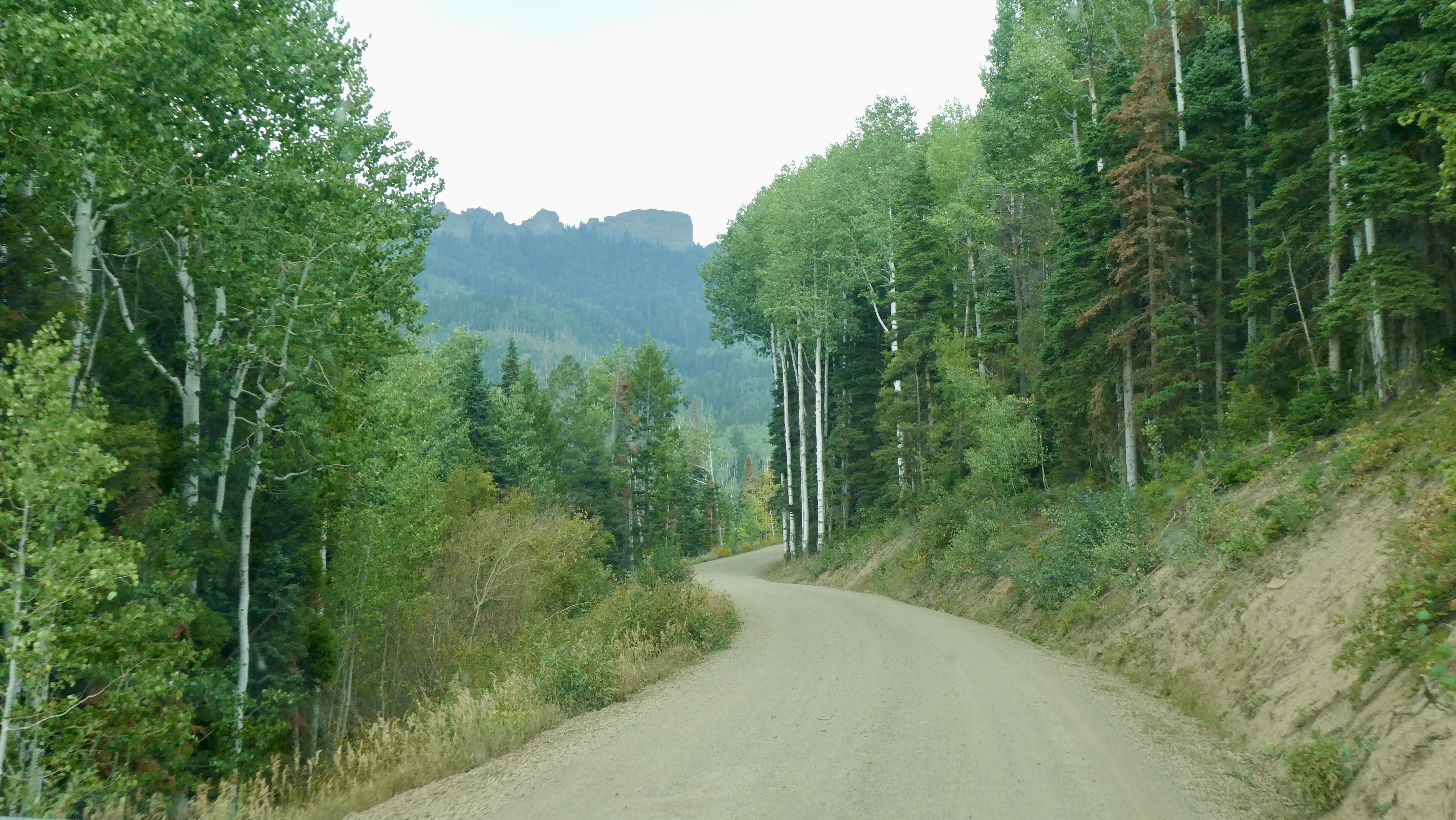 Owl Creek Pass is one of the famous scenic drives in the area.
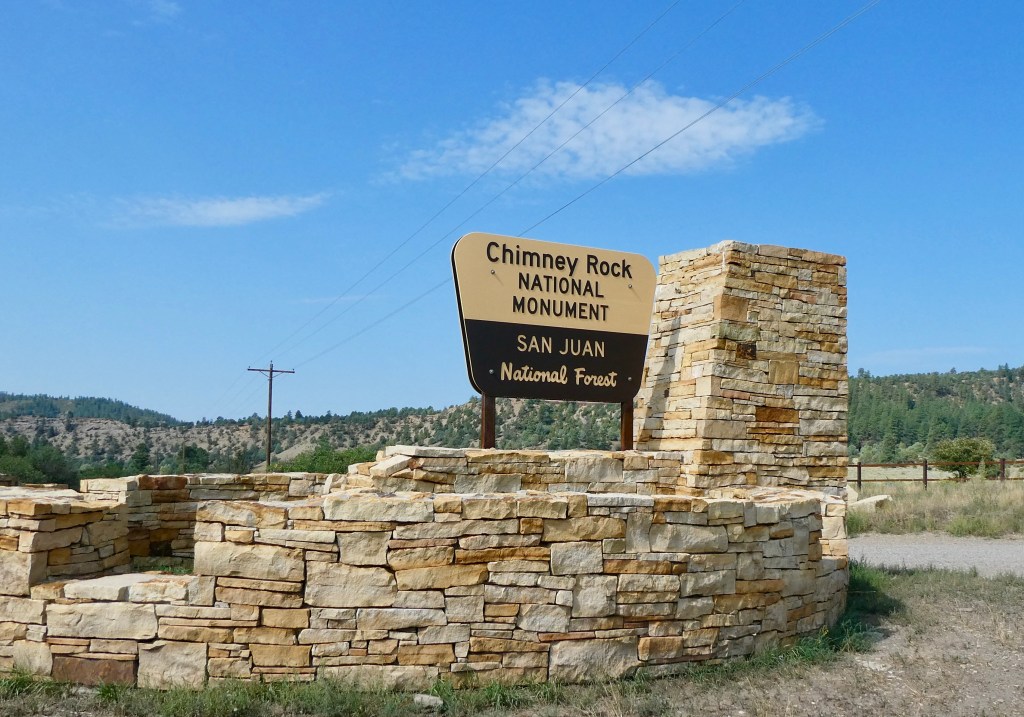
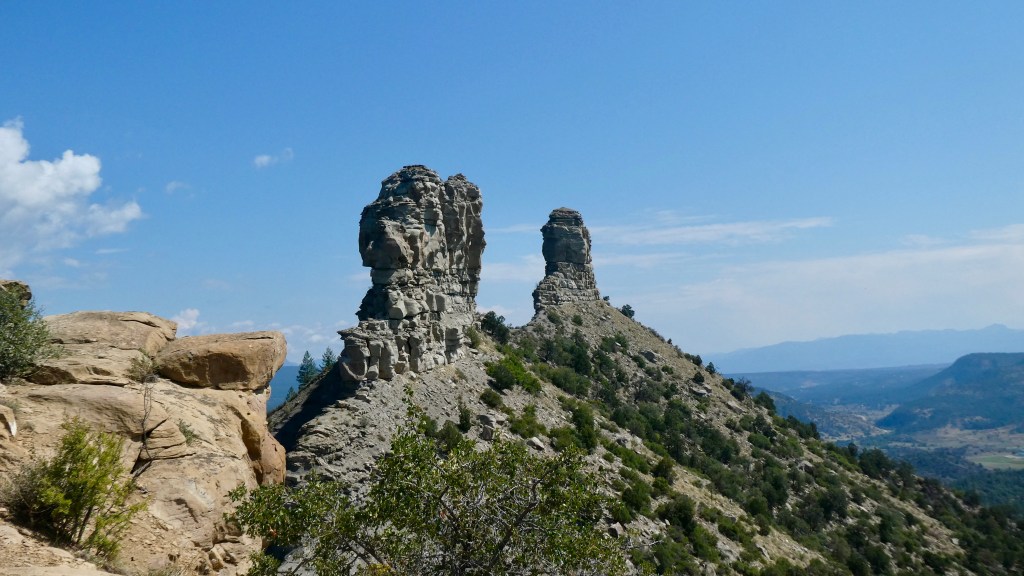
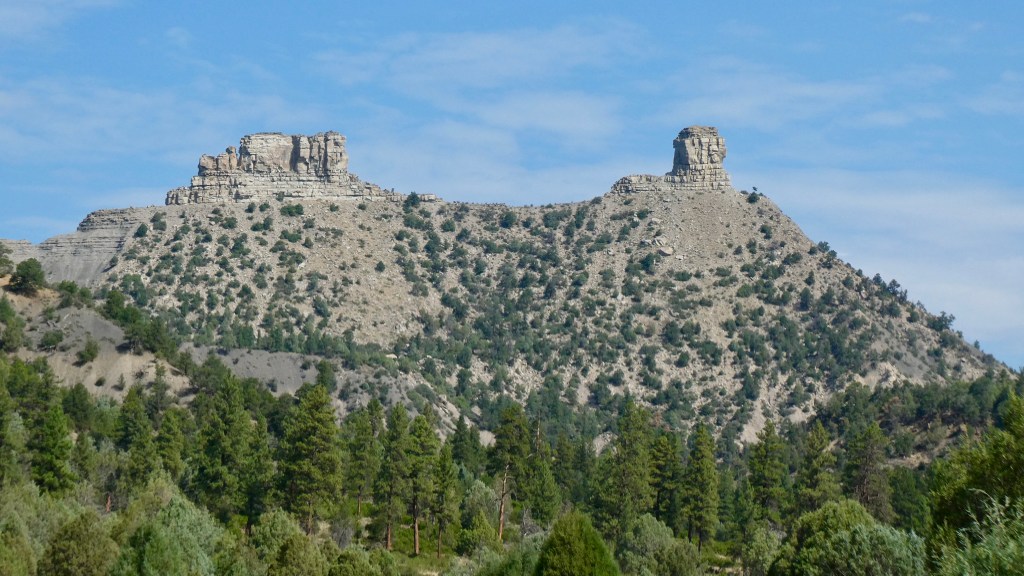
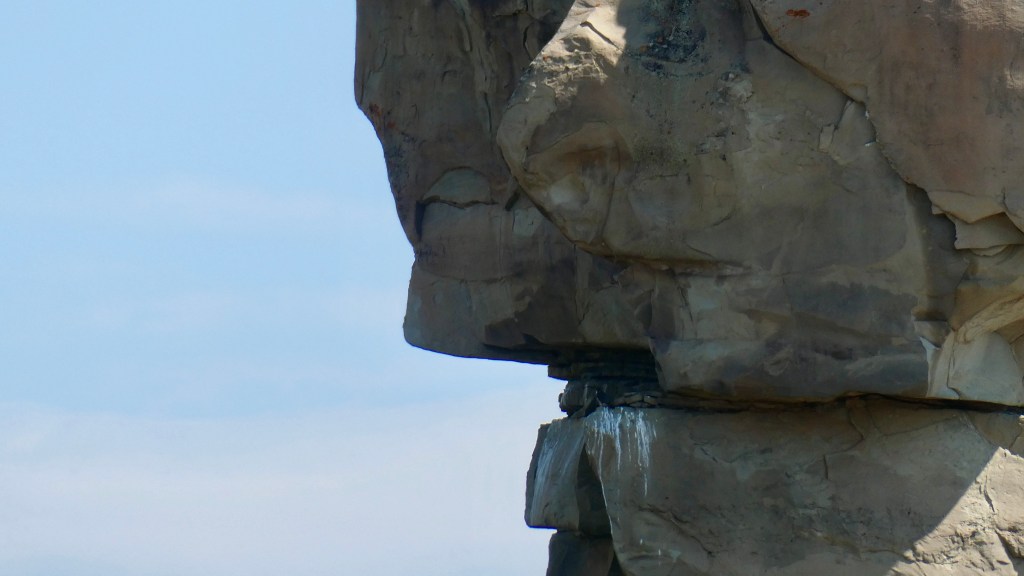
 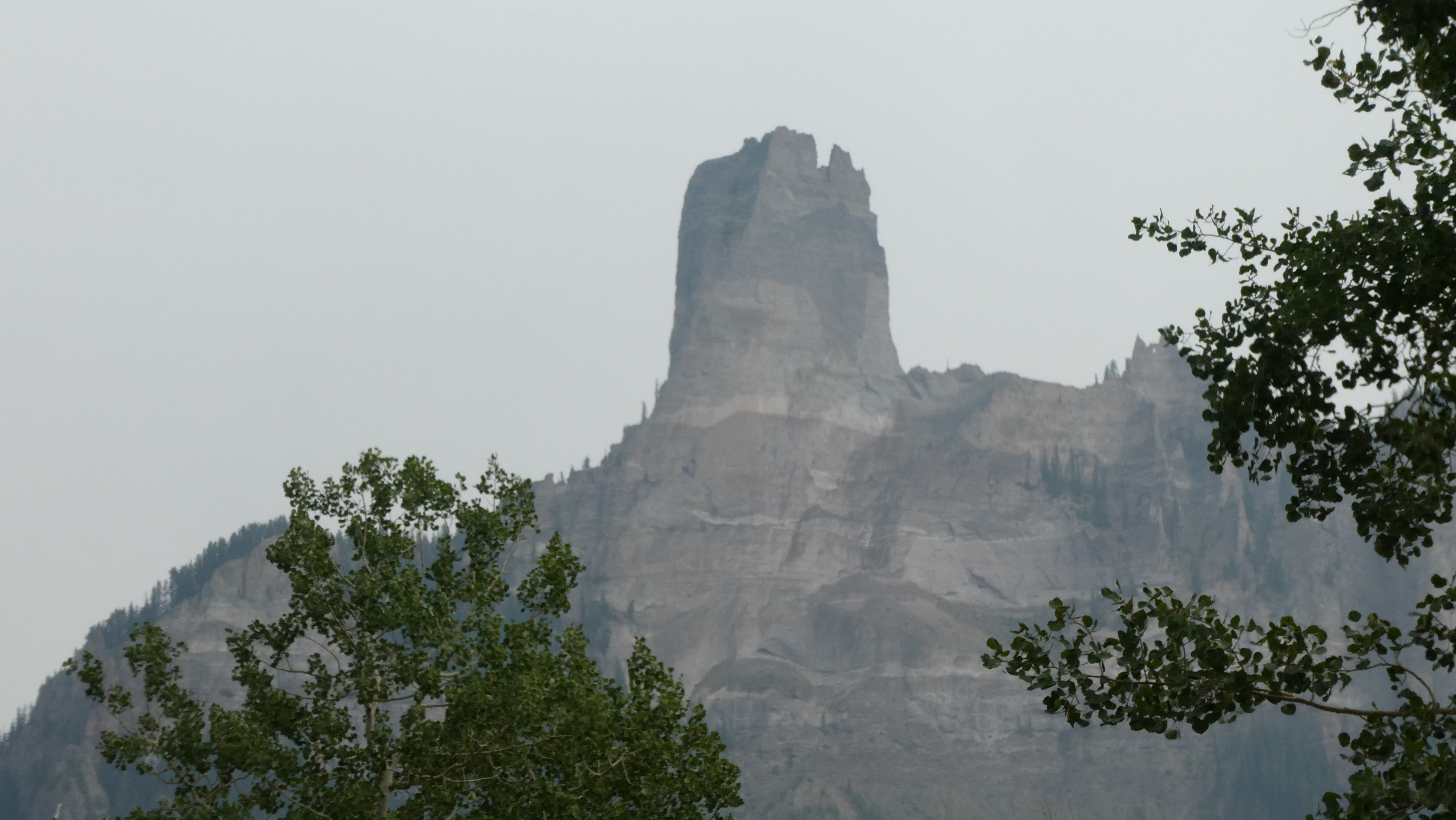 We saw Chimney Rock, clouded in smoke…
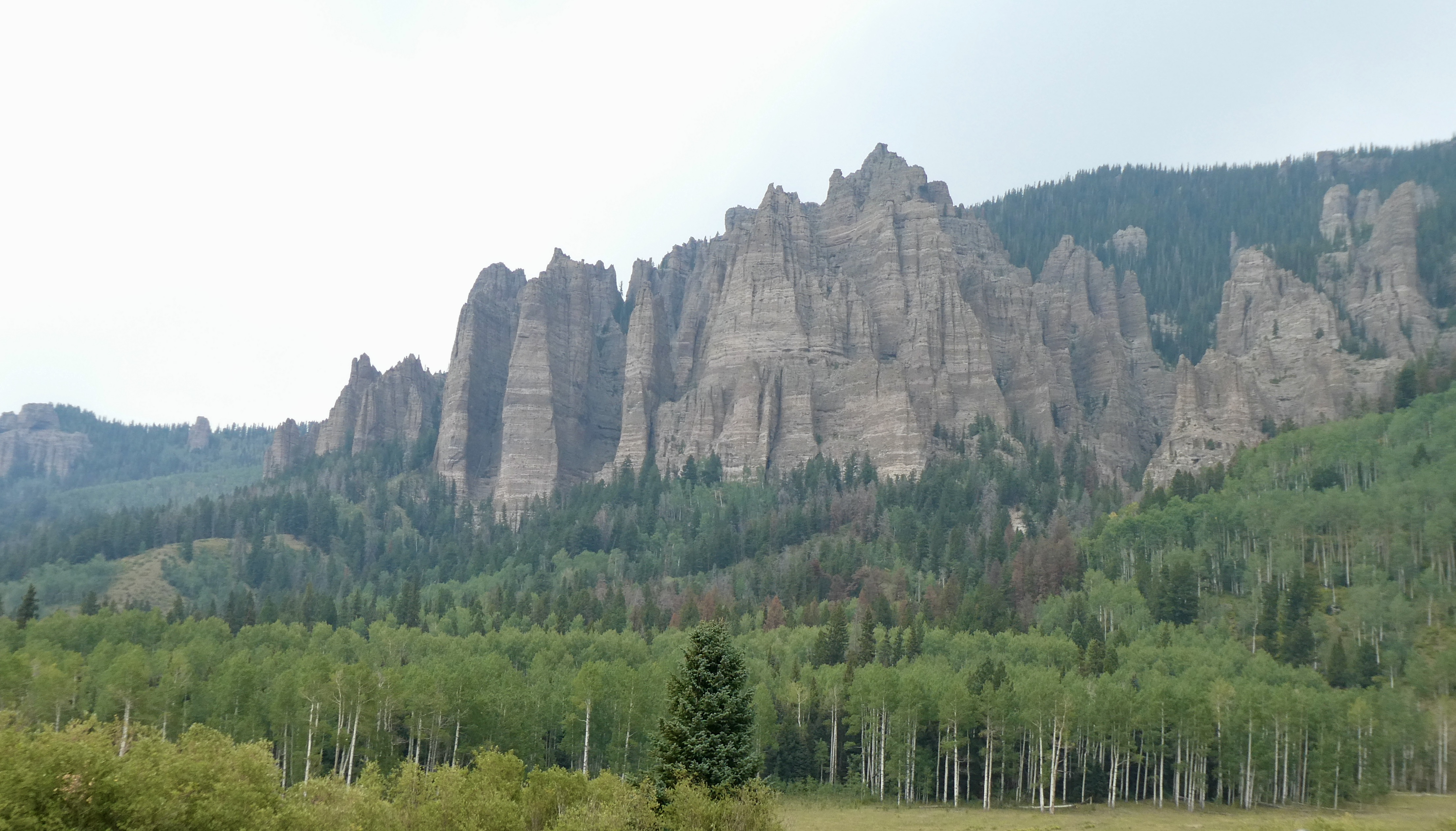 …and other beautiful towering rocks lifted up.
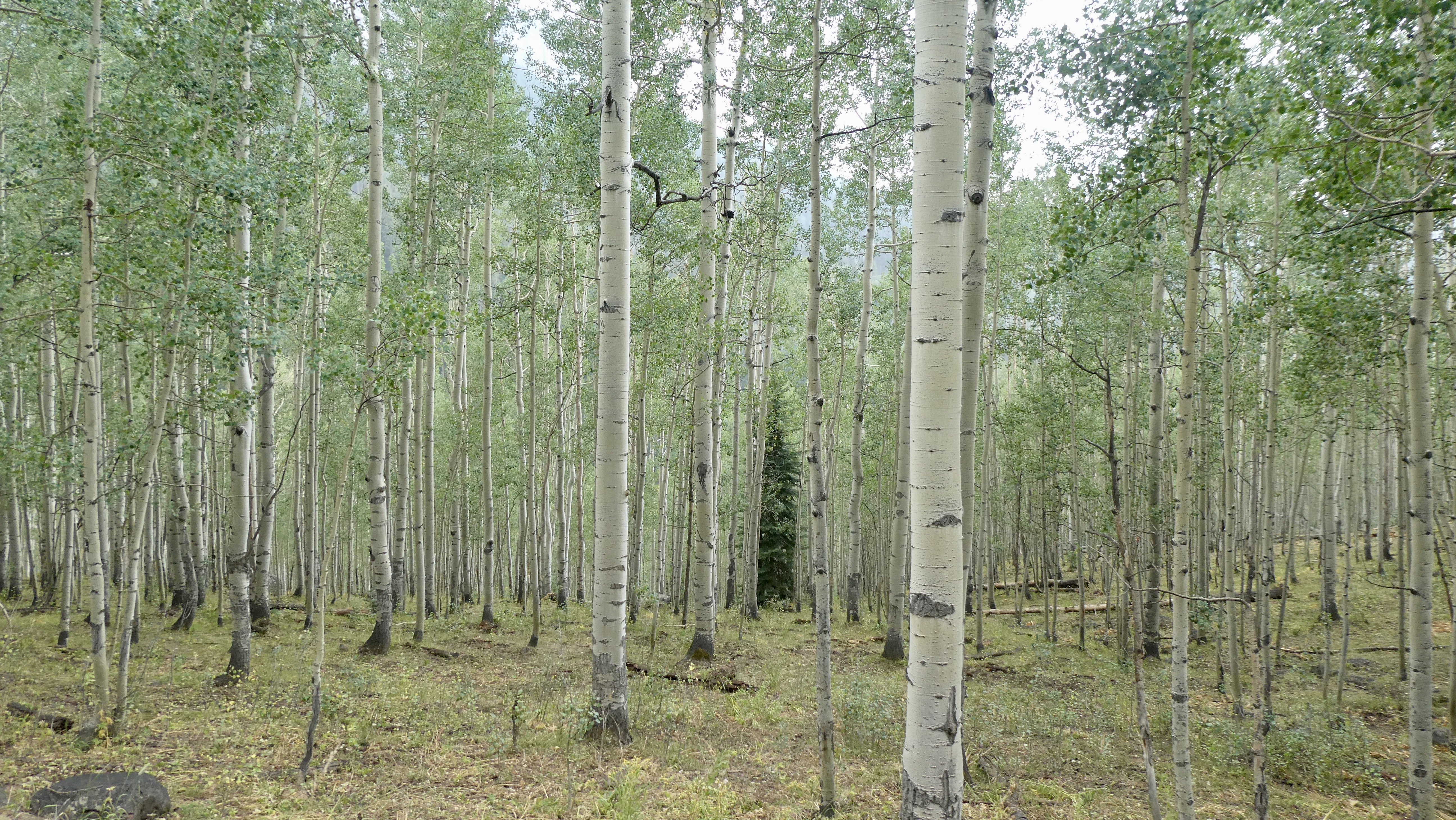 Miles and miles of aspen (and the random evergreens) made us want to come back and drive Owl Creek Pass in the fall.
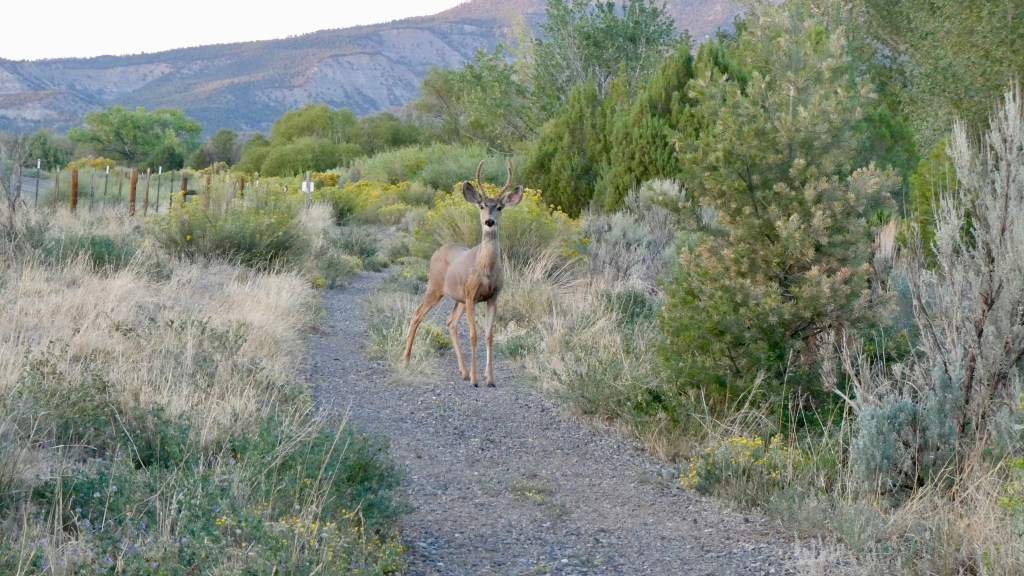
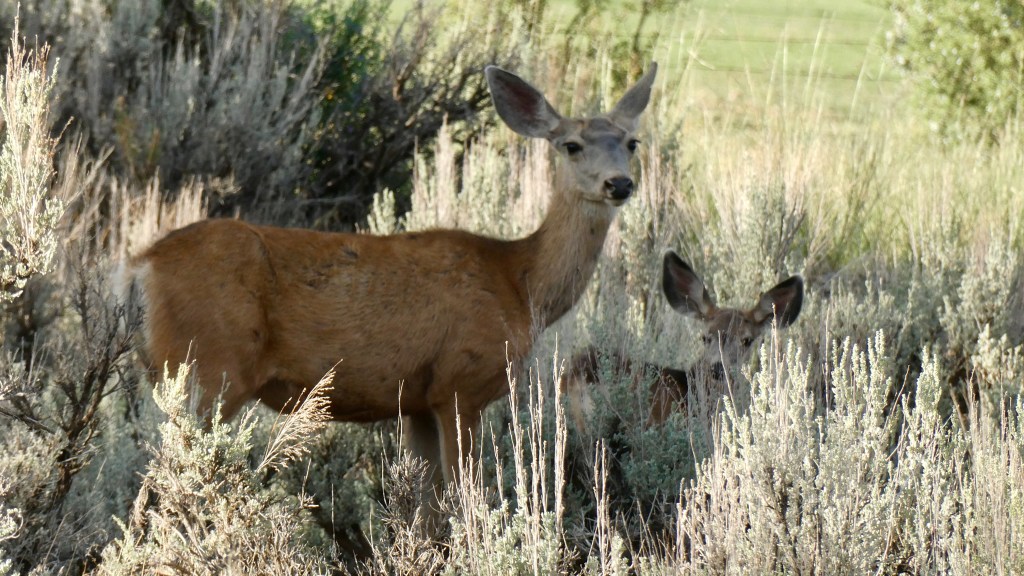
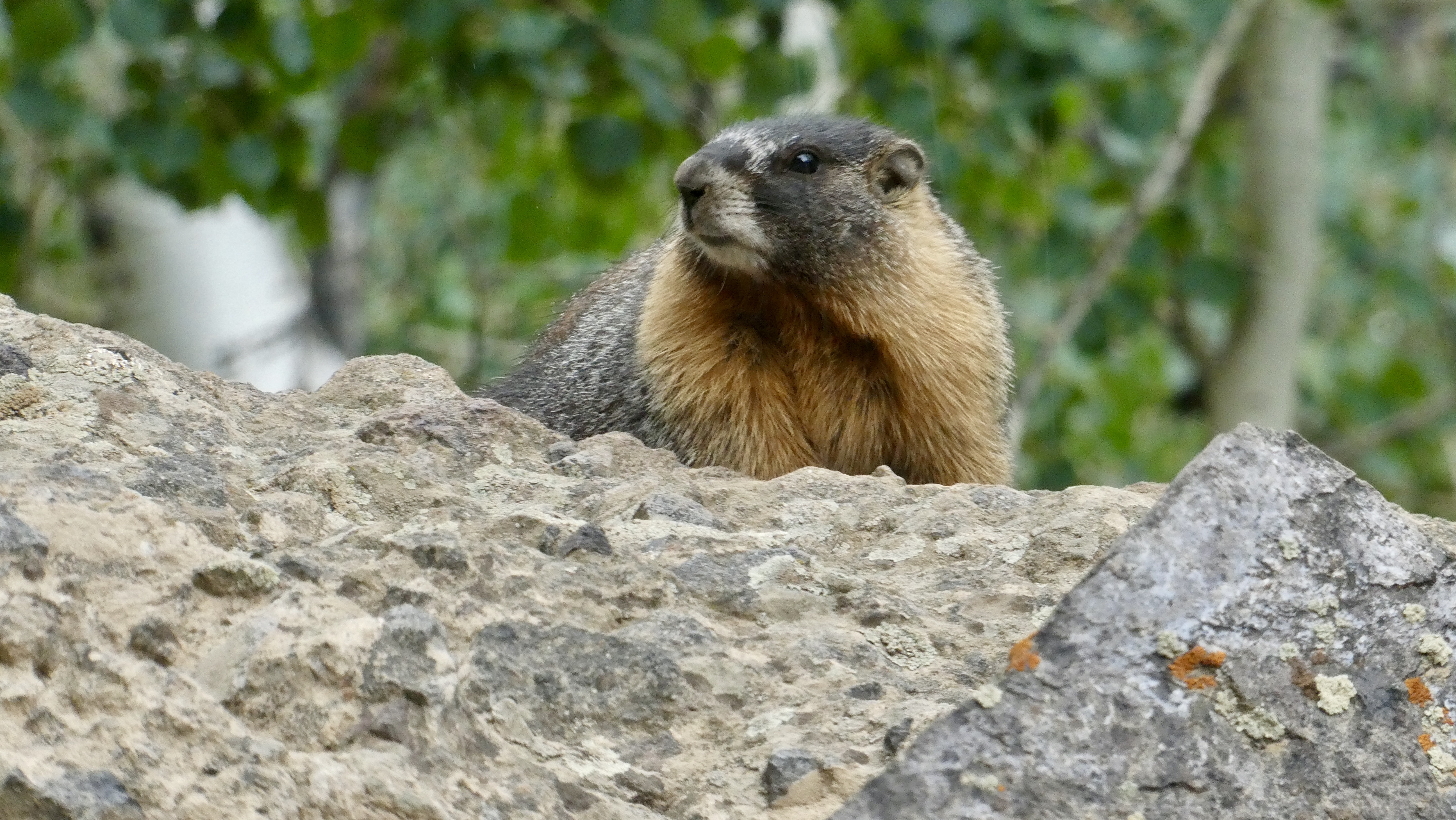 Although we saw signs for bear and big horn sheep everywhere, we didn’t see much wildlife beyond the free range cows.
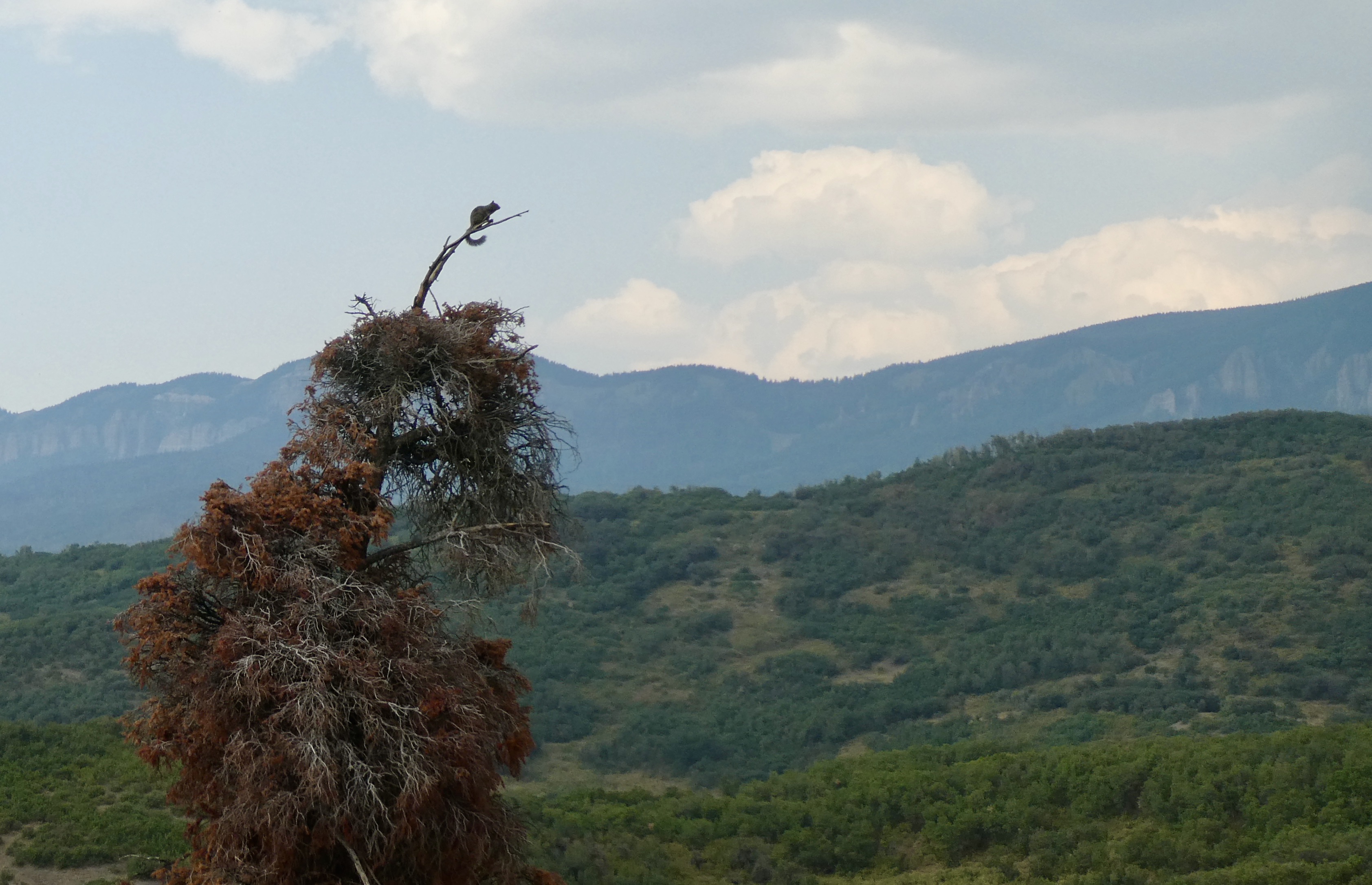 And this squirrel, high up in a dead tree, enjoying the Colorado beauty – just like we did!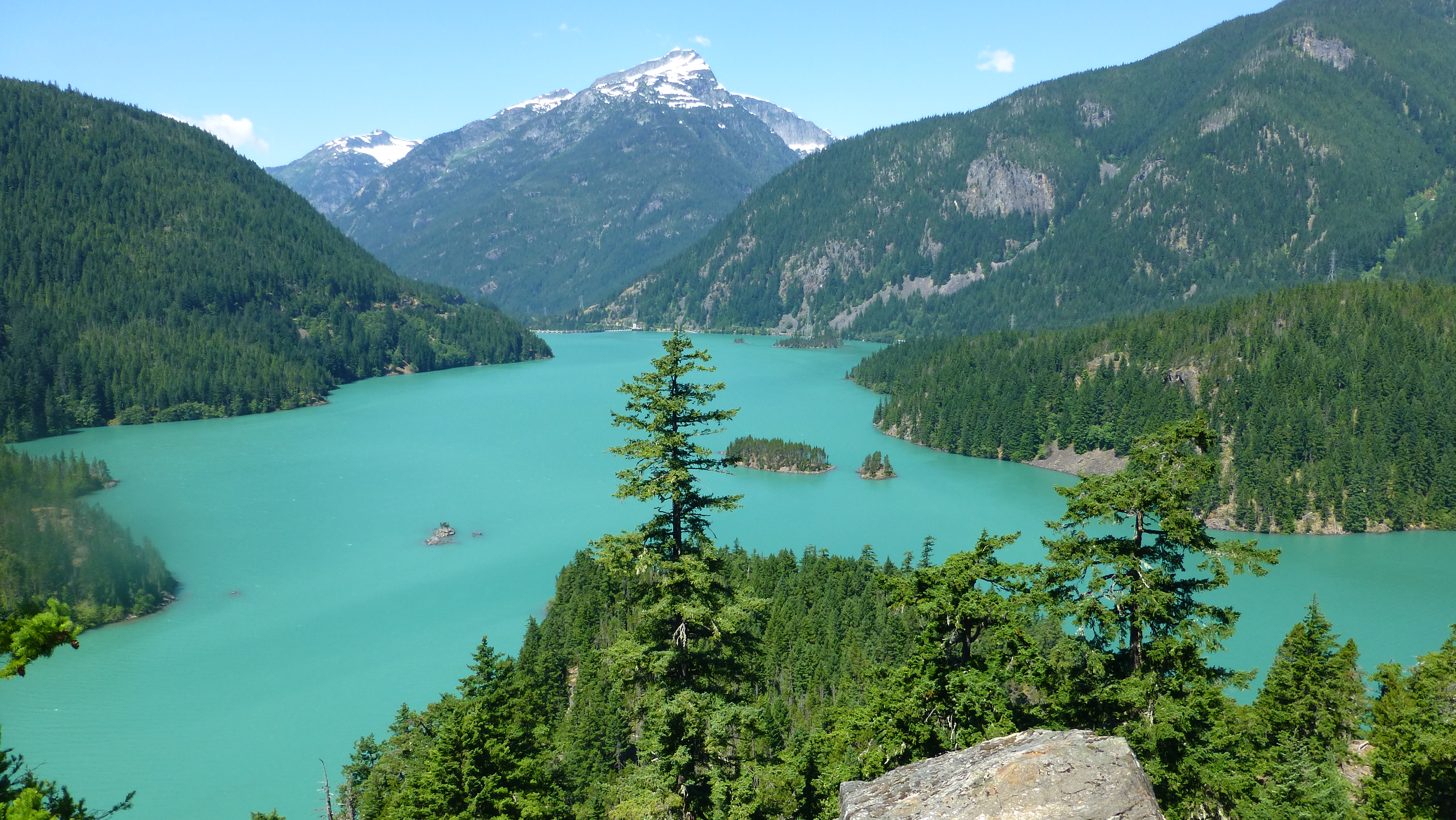
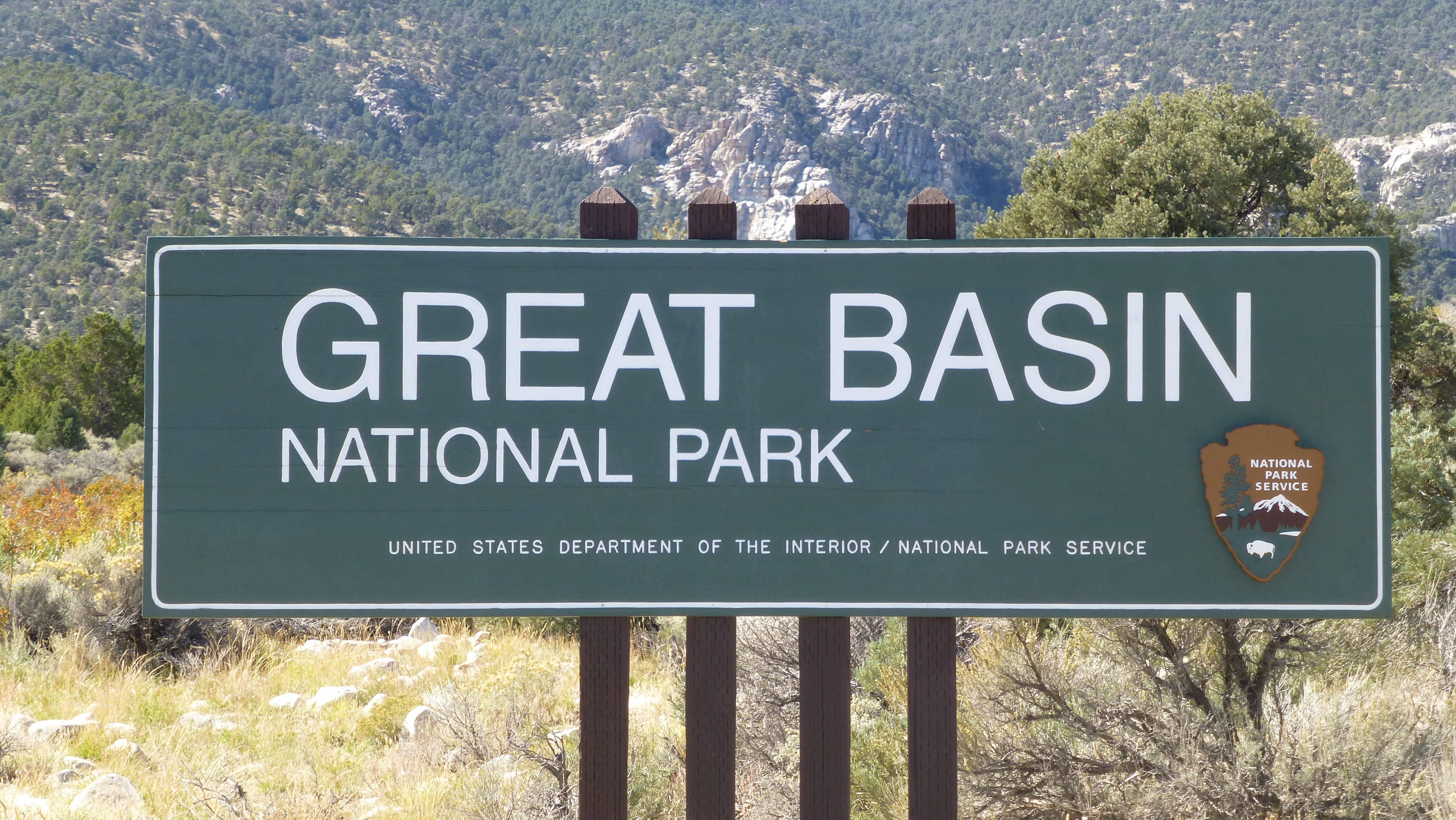 Great Basin National Park is very isolated near the Utah- Nevada border.
  This week we visited Black Canyon of the Gunnison National Park.
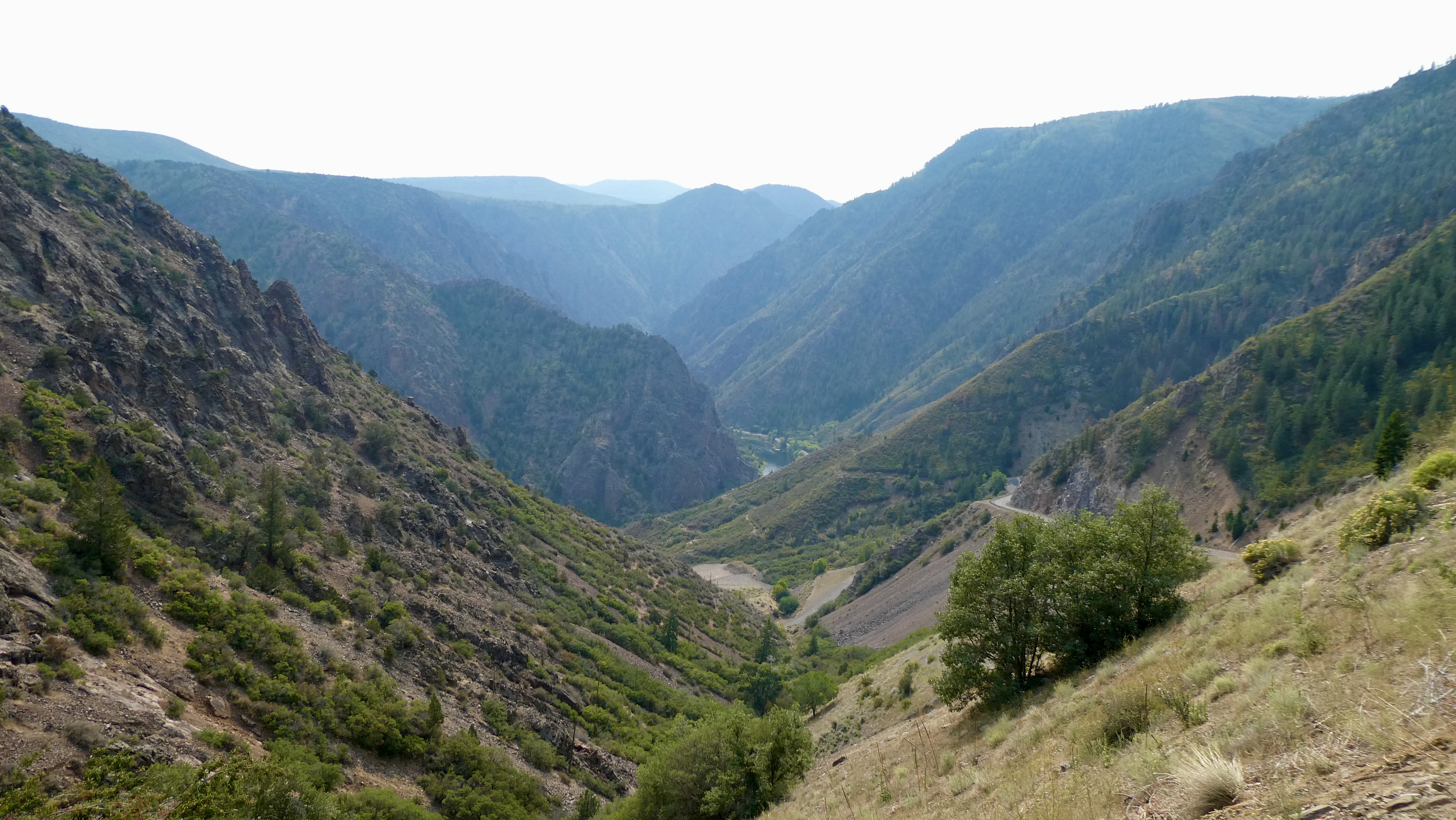 After entering the park, we started down the East Portal road which descends to the Gunnison River.
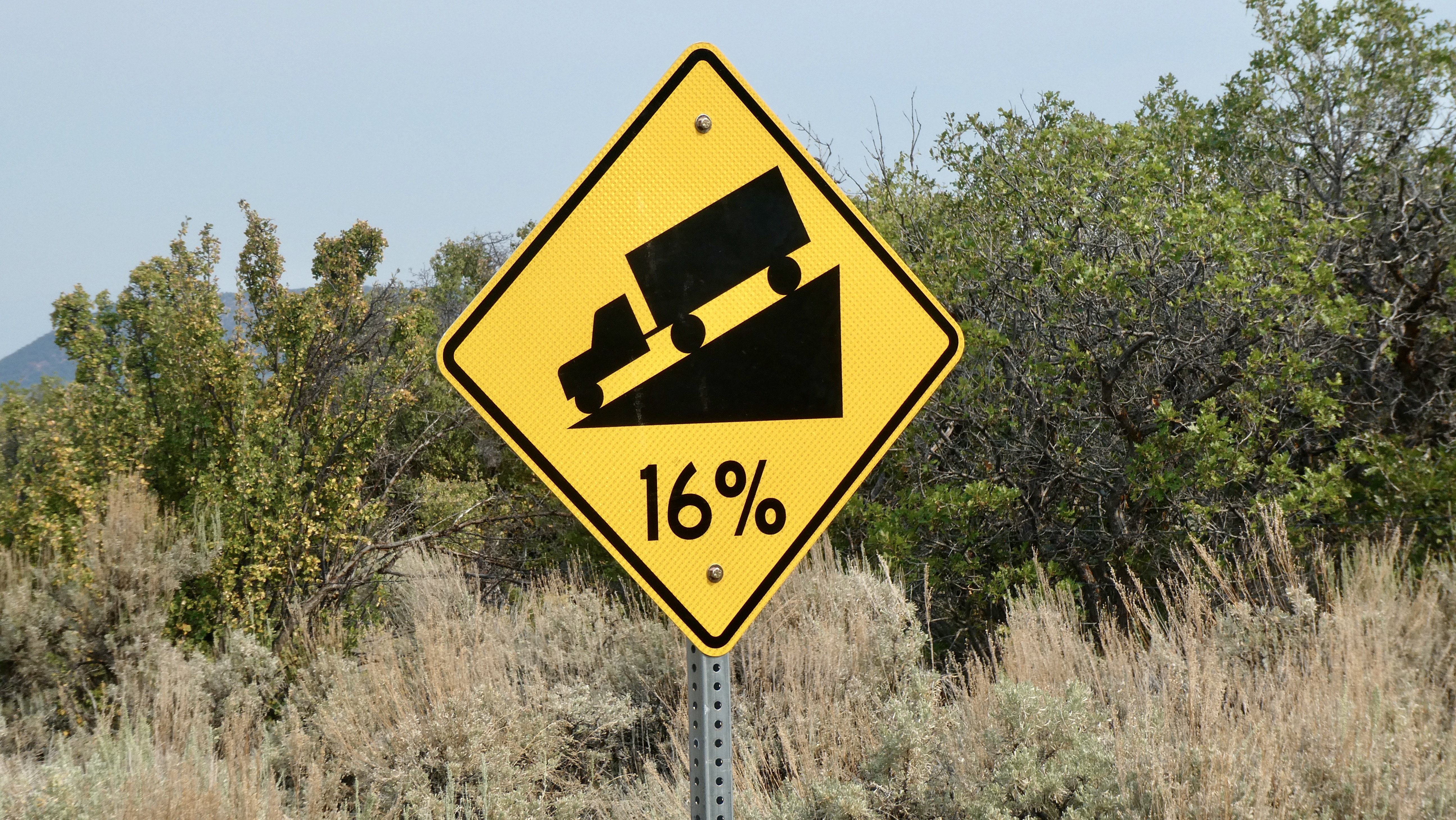 The East Portal road is closed in winter because of hair-pin turns and a 16% grade.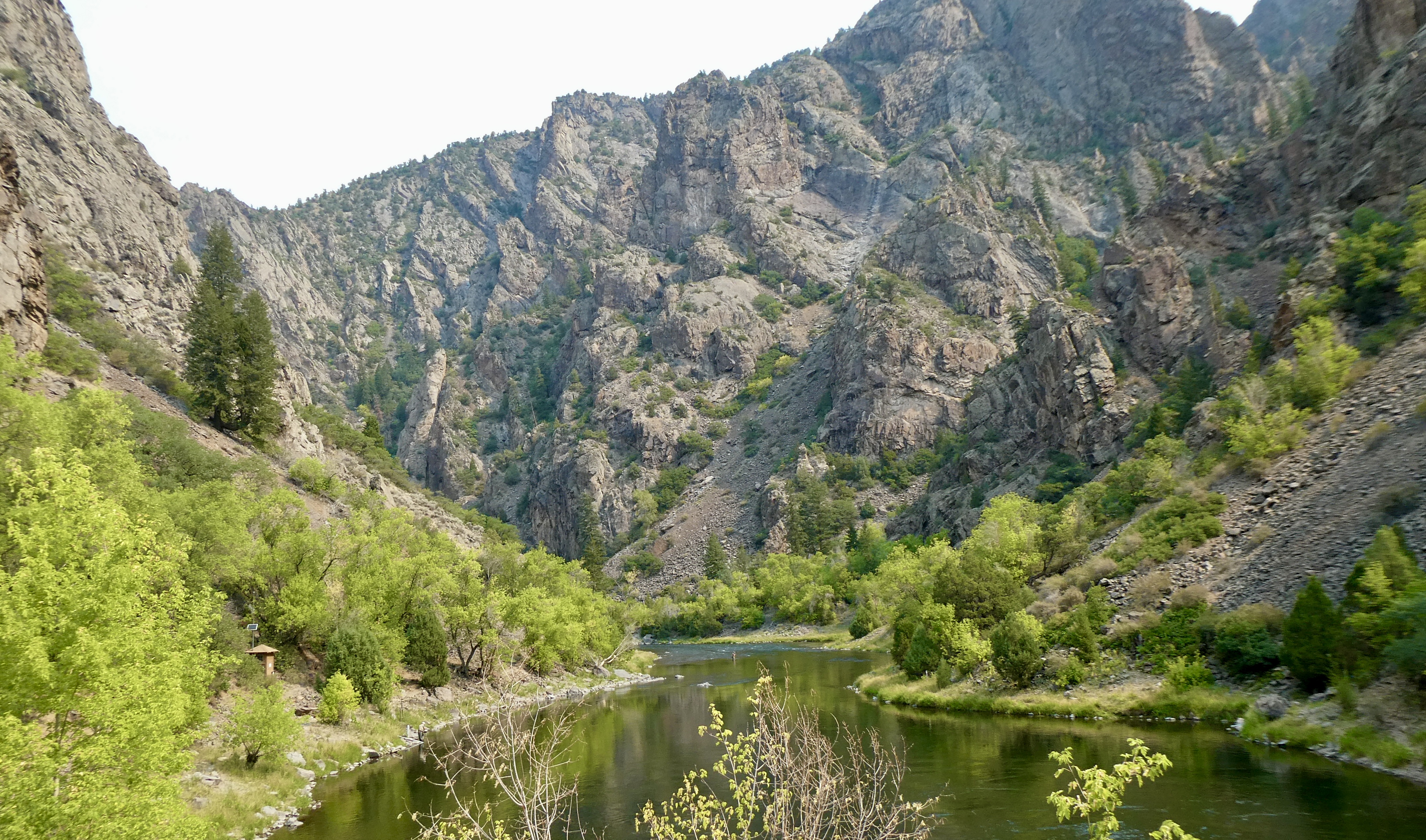
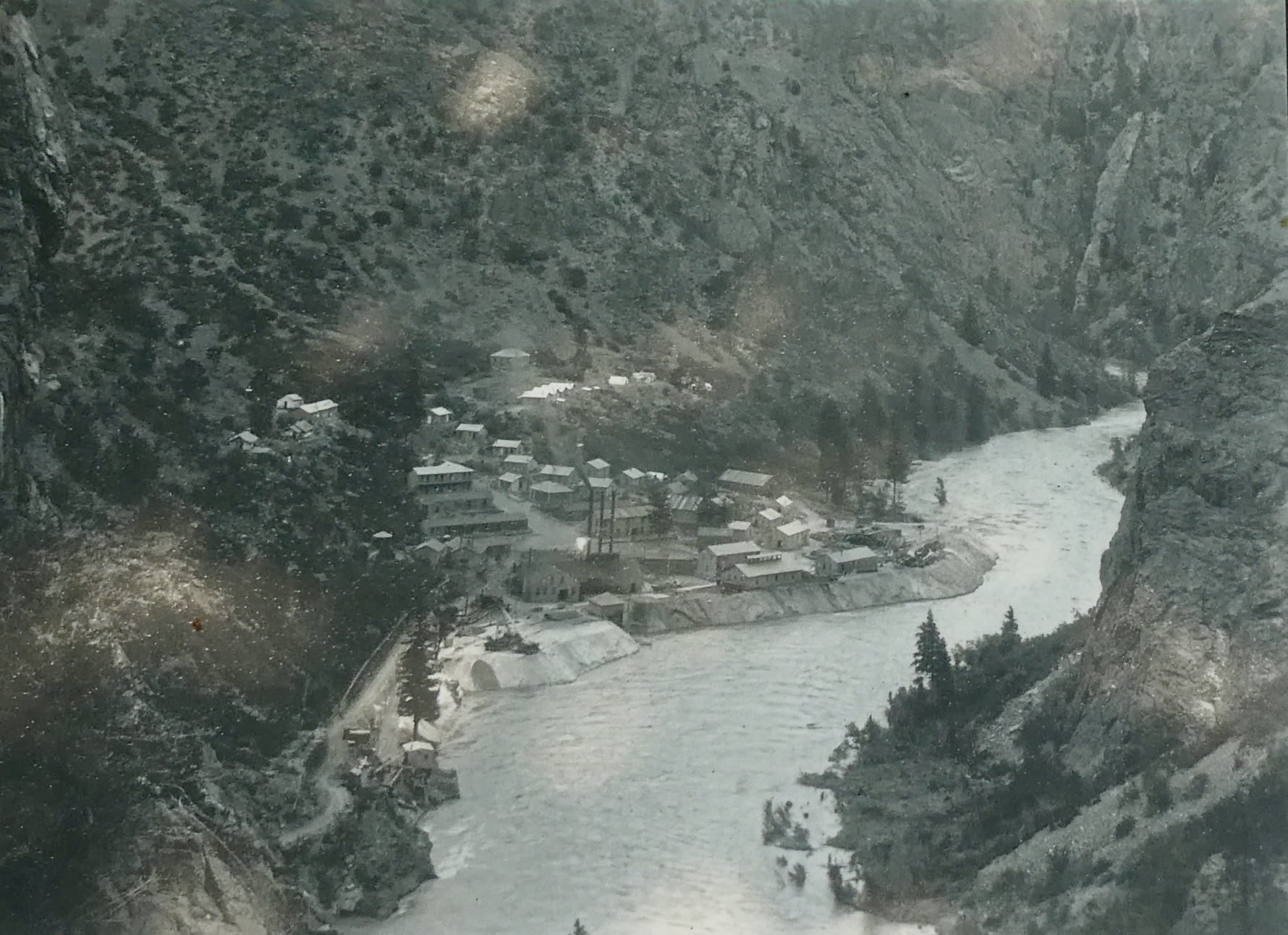 This picture shows the small town that supported the tunnel workers and families in 1905.
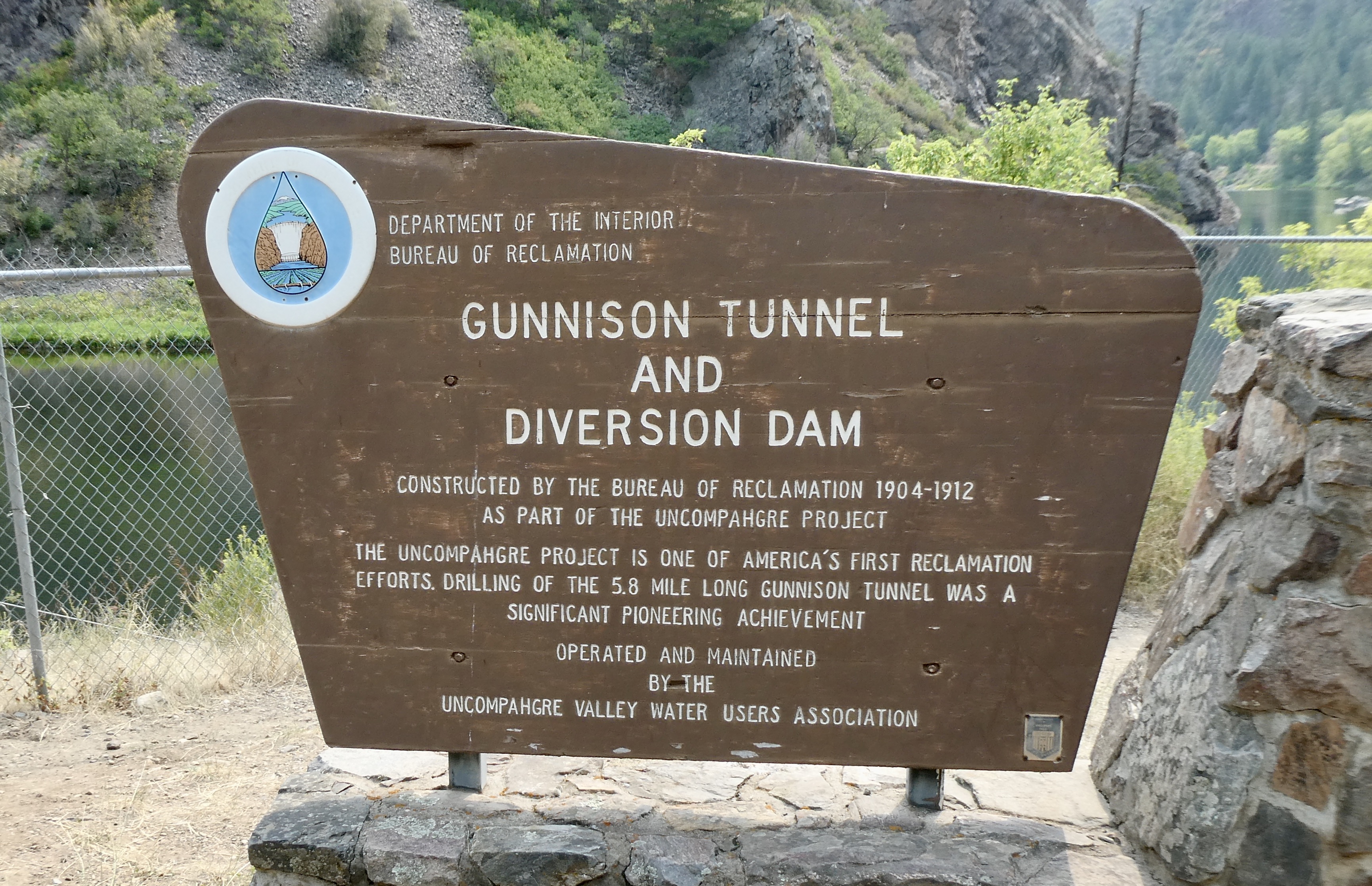 The 5.8 mile long tunnel was one of America’s first Reclamation Projects. A straight line was maintained for 10,000 feet into the canyon wall.
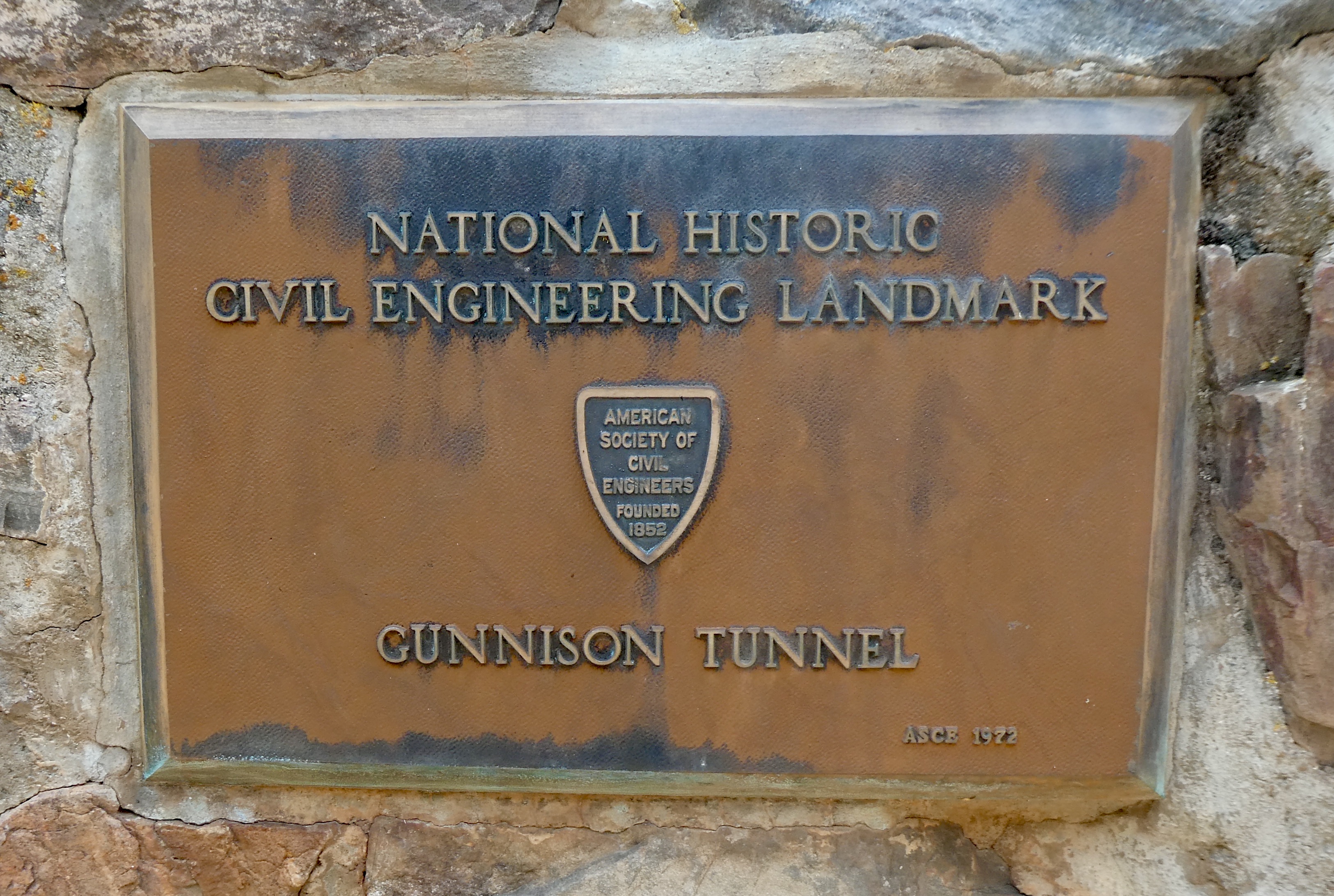 It was honored as a National Historic Civil Engineering Landmark.
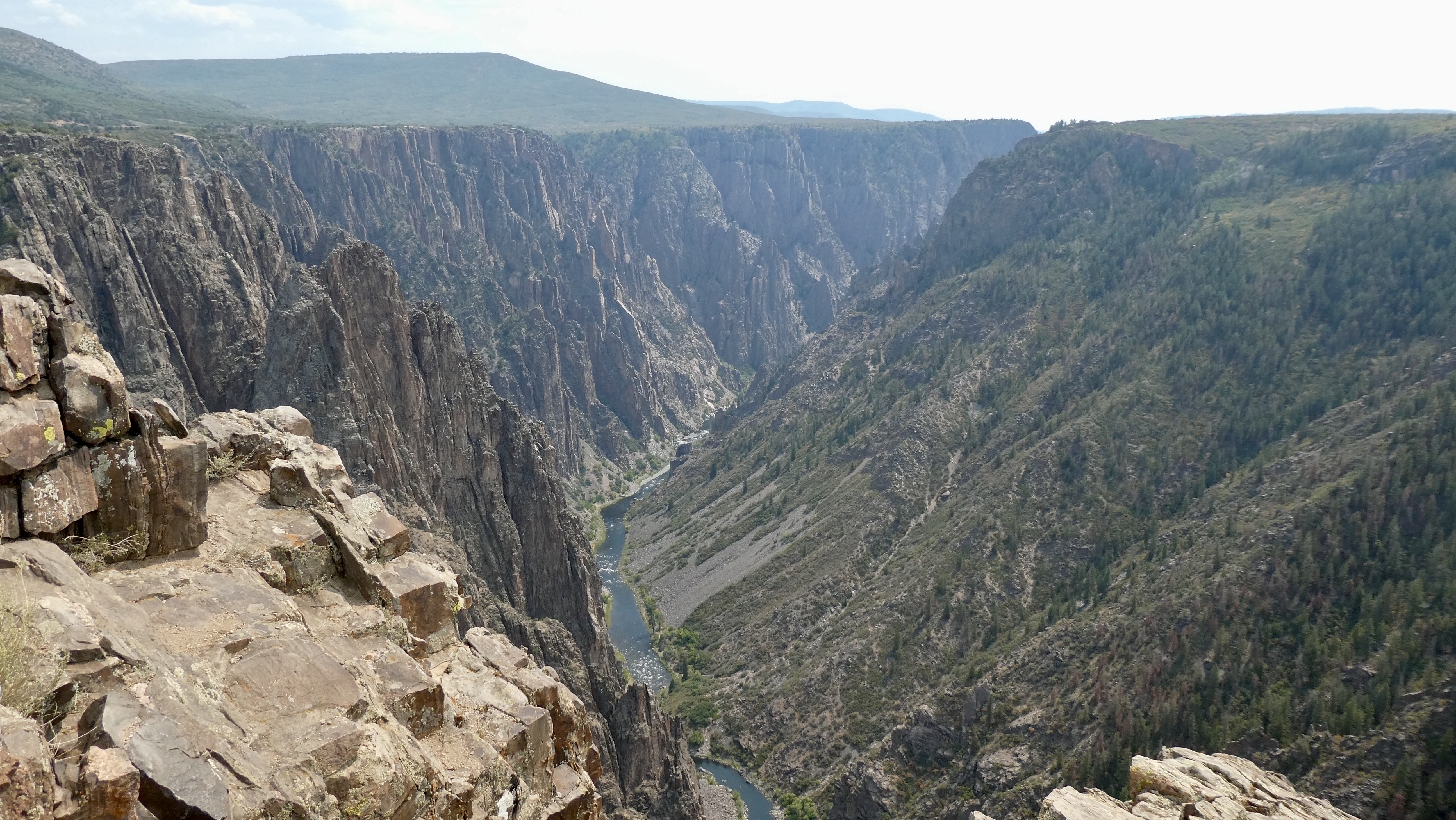 Black canyon isn’t the deepest canyon or the longest in the United States.
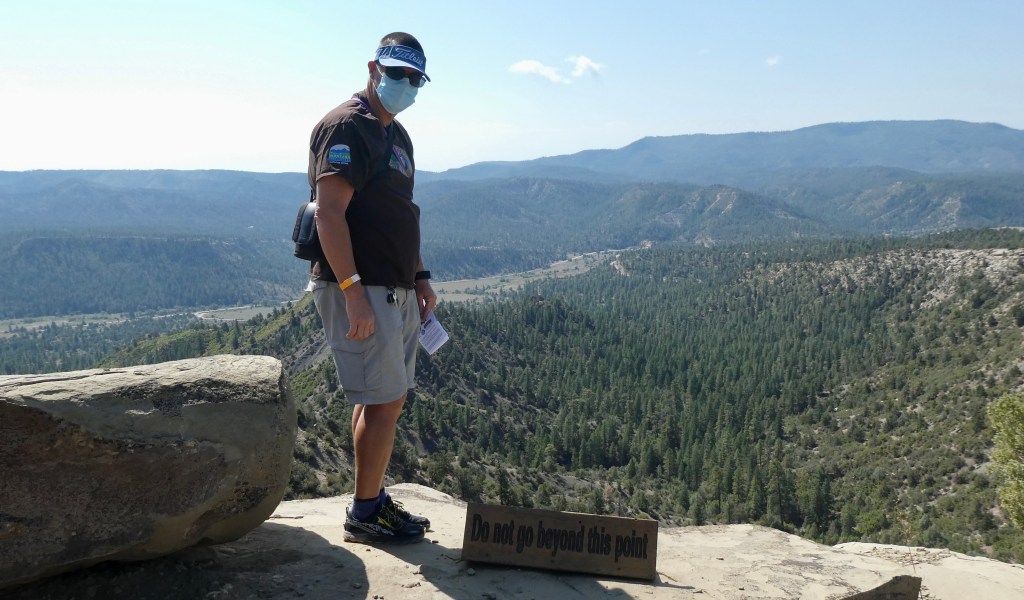
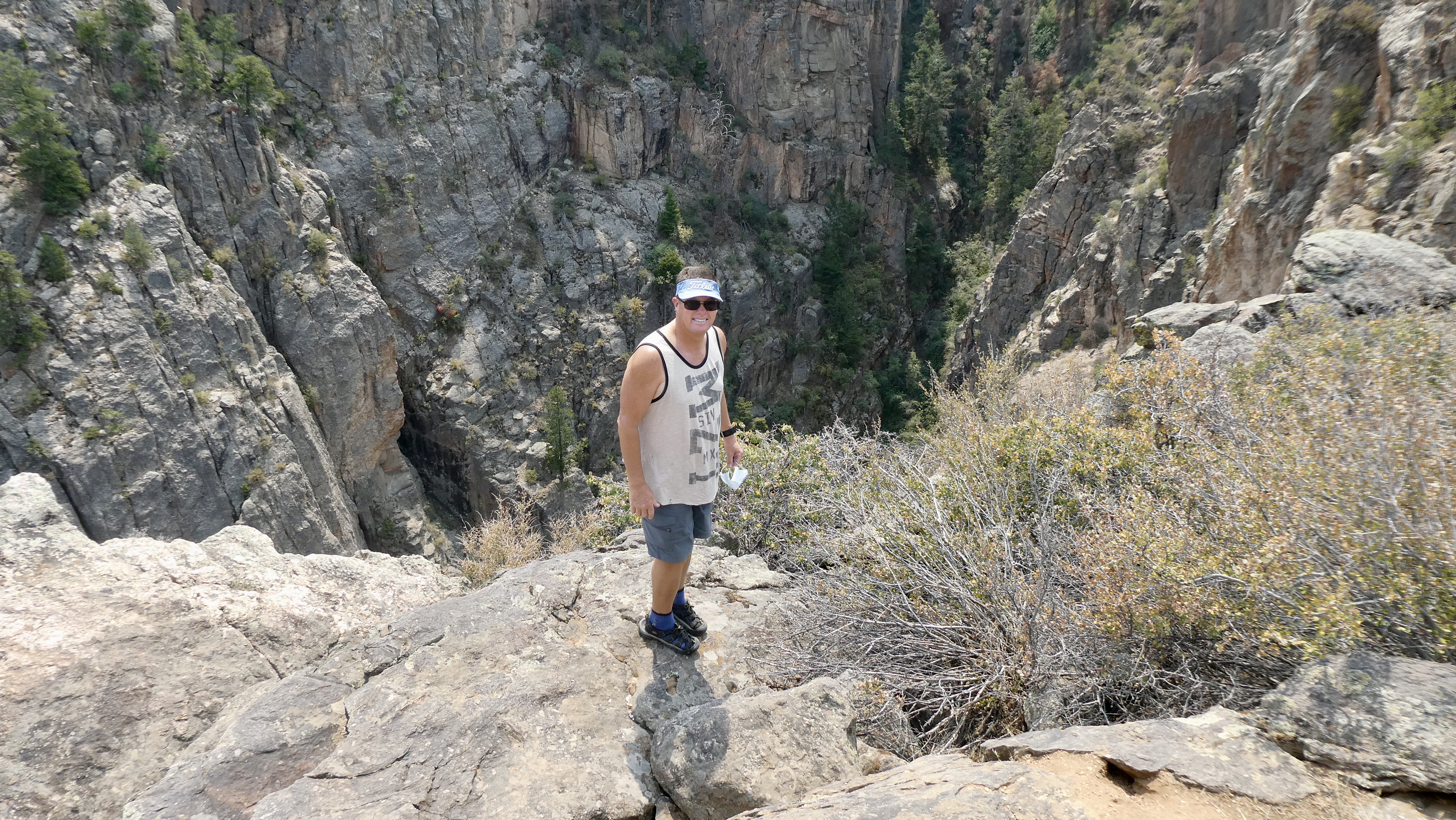 Randy stands at the edge of the precipice because…of course he does. I do not ask for these photo ops!!!
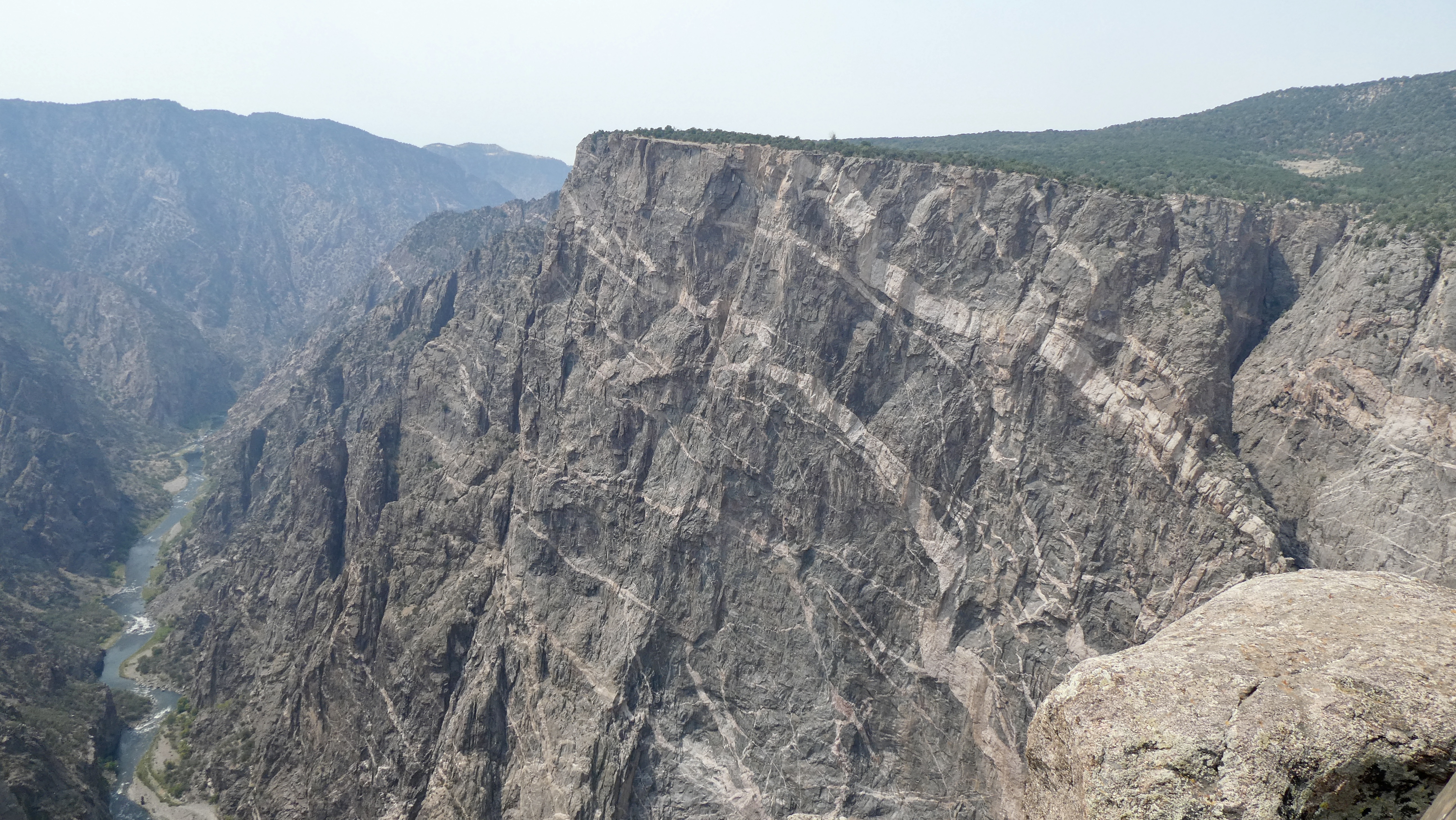 One of the primary features of the canyon is Painted Wall.
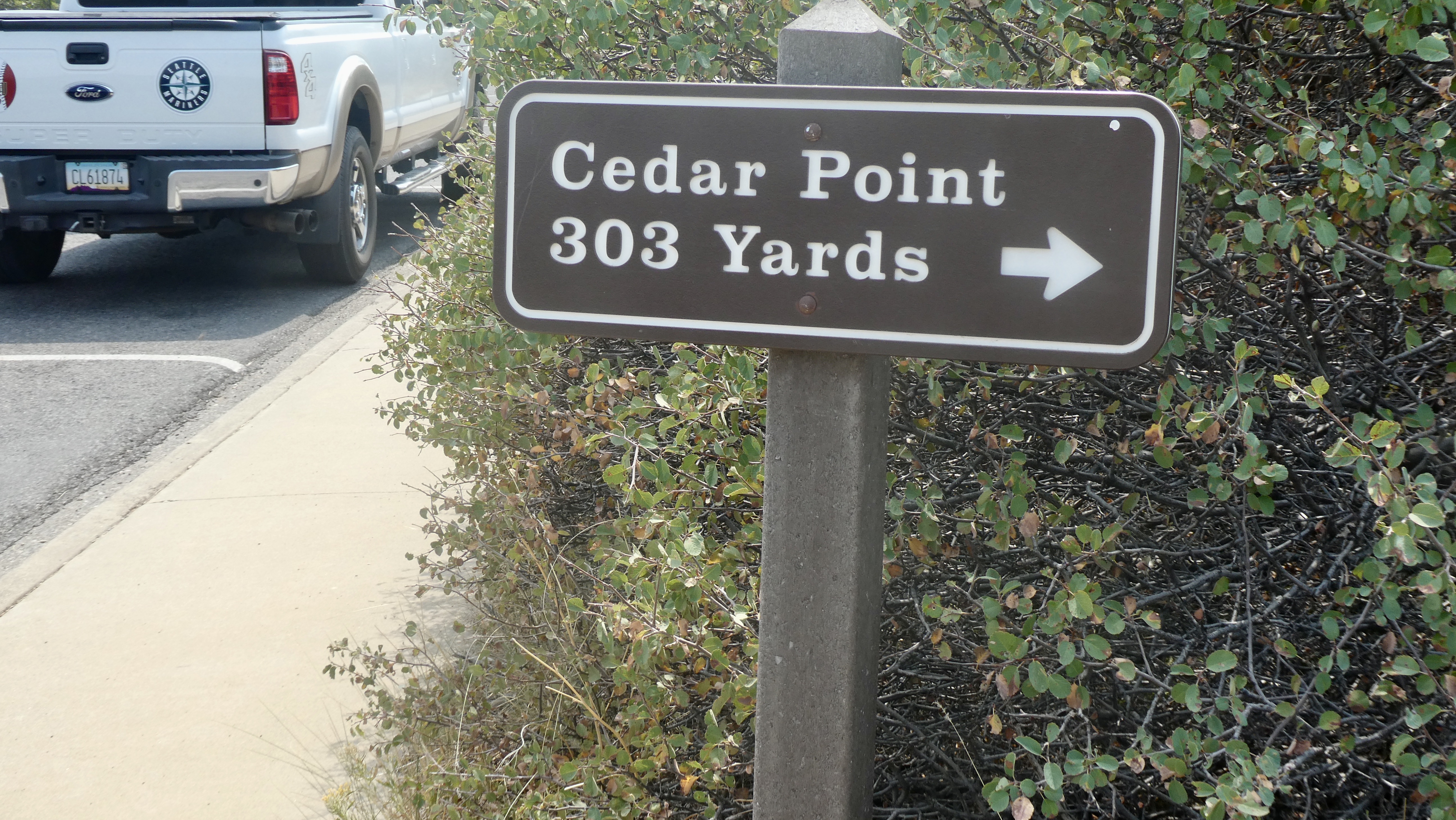 While all the scenic viewpoints are great, the eighth in our journey was our favorite – Cedar Point.
 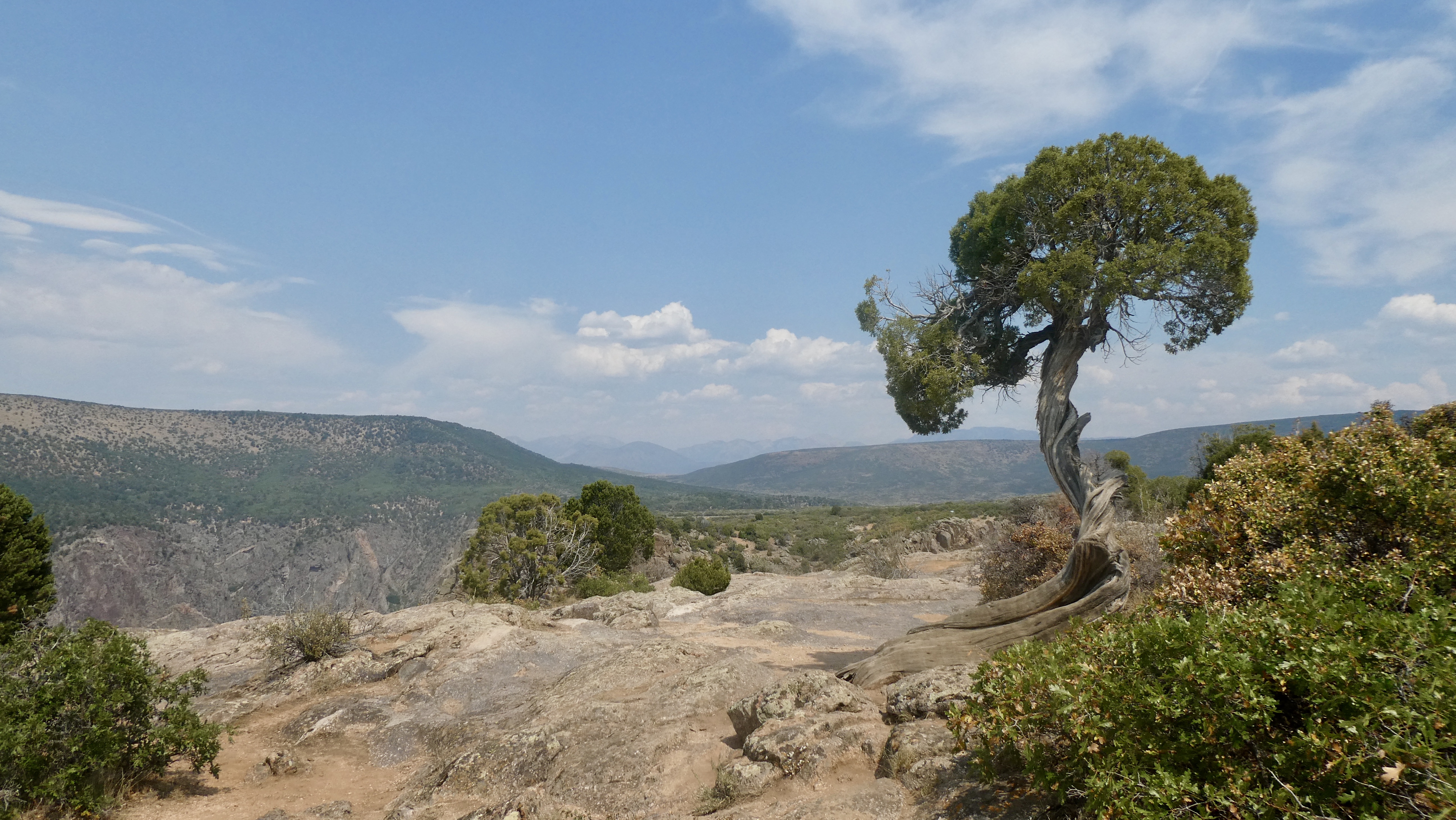 There was a bit of a hike through Pinon-Juniper to the overlook.
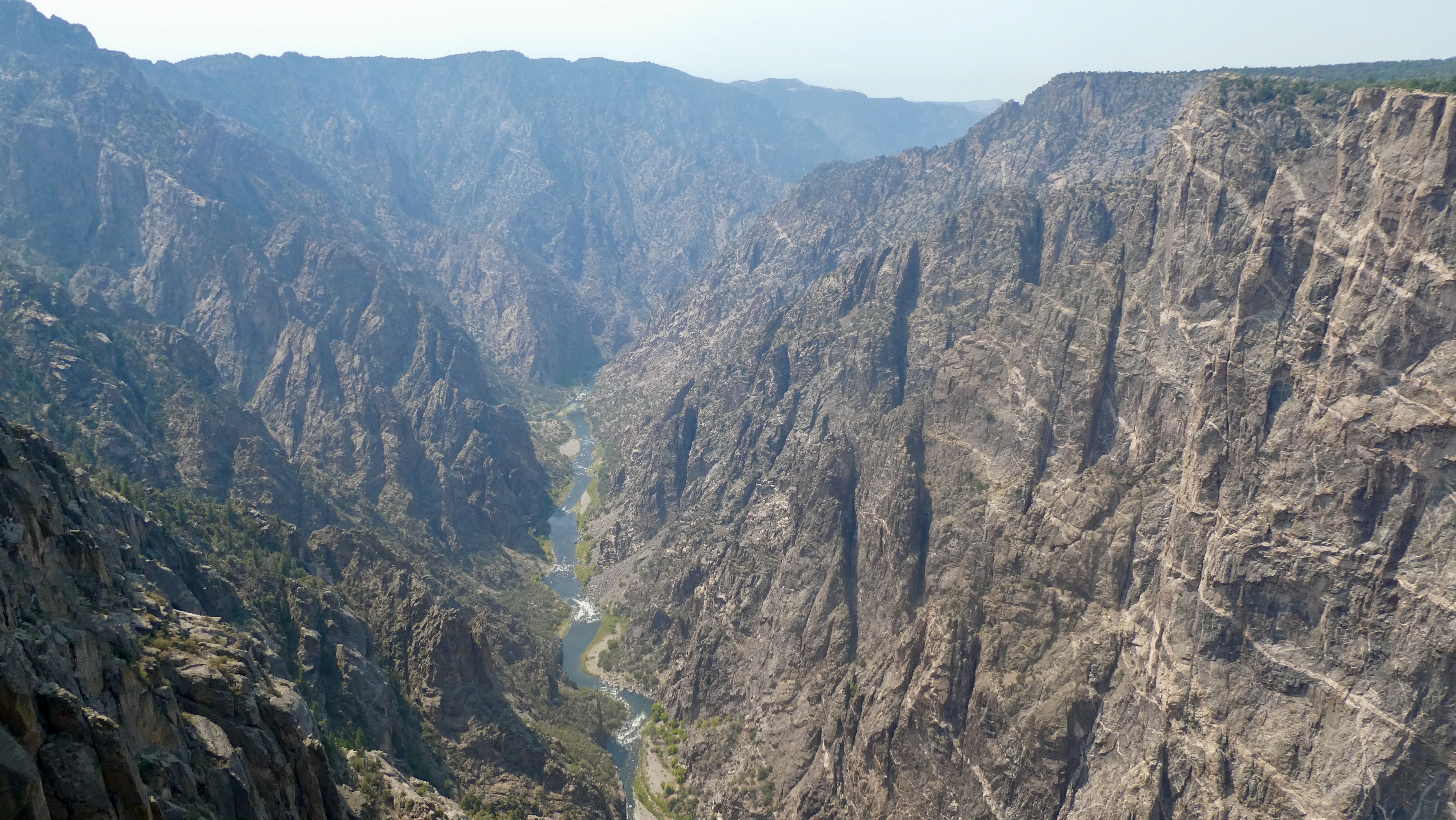 From Cedar Point we had a nice view of the Gunnison River and the Painted Wall.
 The last viewpoint involved a “moderate” 1.5 mile hike to Warner Point.
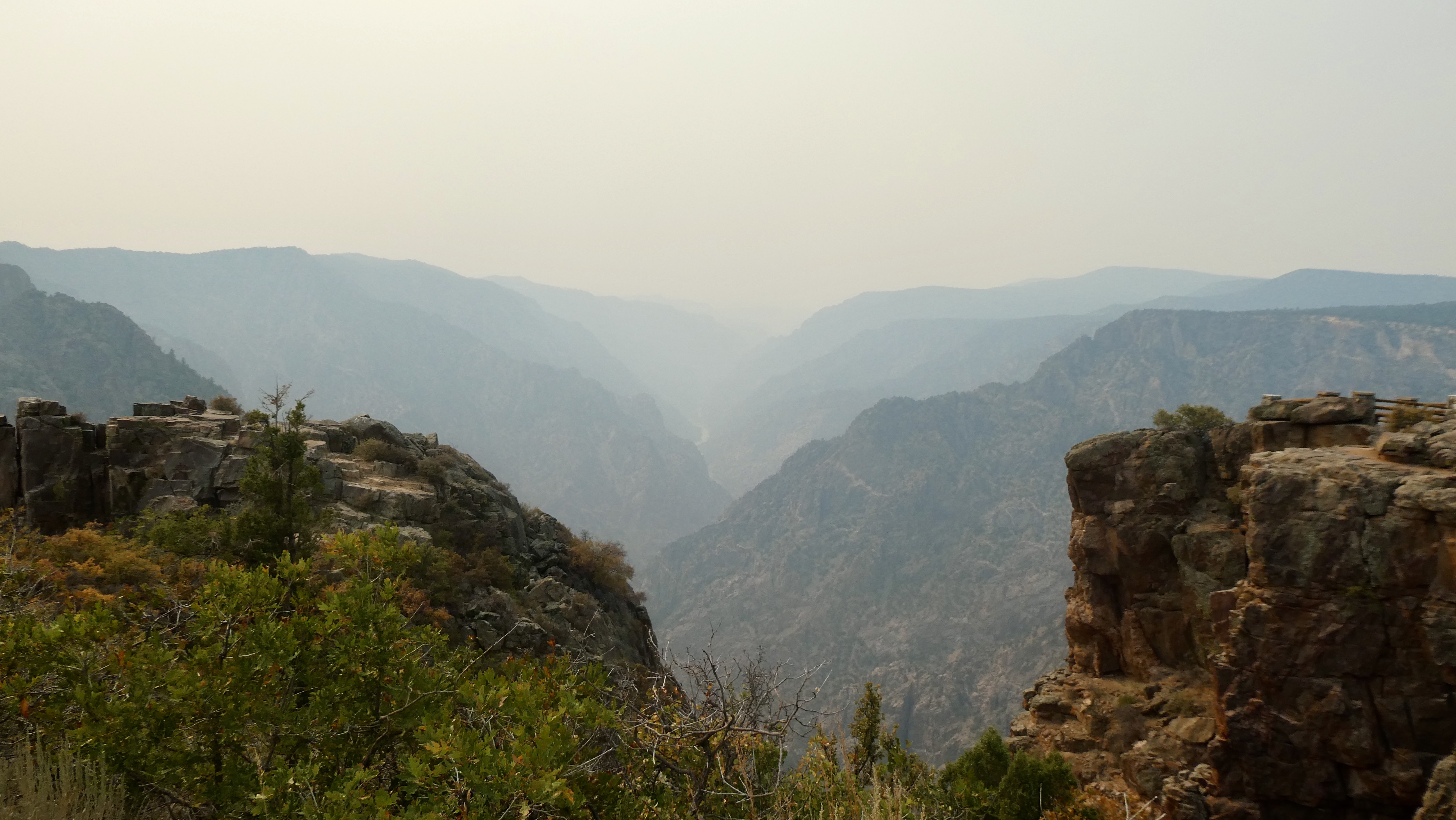 When we got to Warner Point we found our view thwarted by smoke.
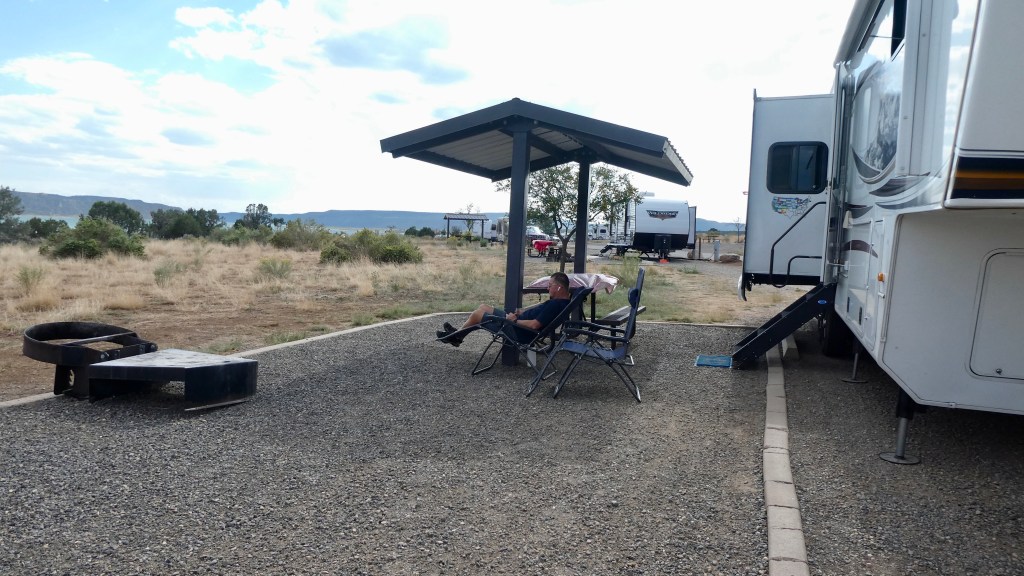
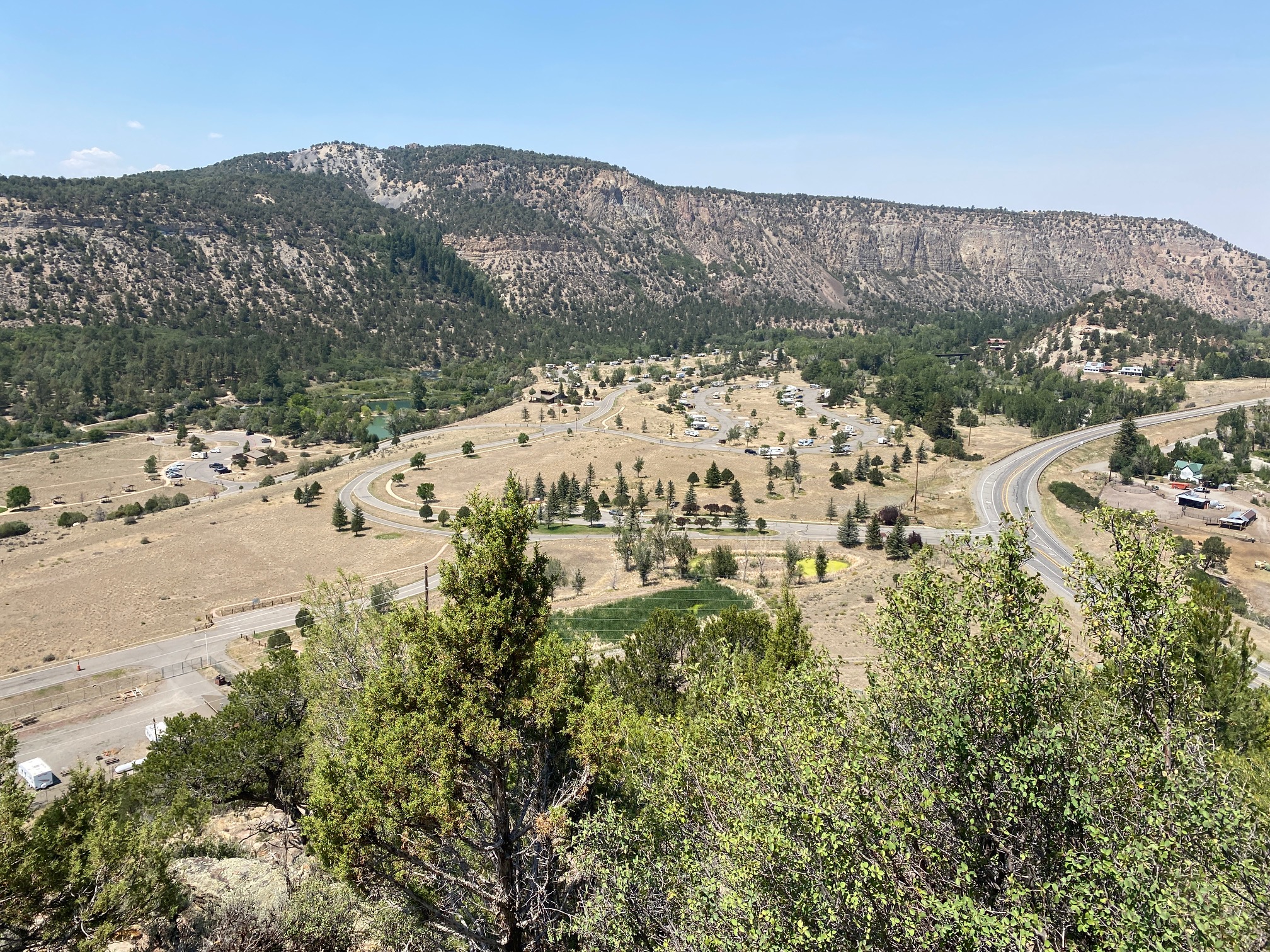
 After a quick overnight in Flagstaff, we arrived at Ridgway State Park near Montrose, the northern point of the San Juan Skyway region in southwest Colorado.
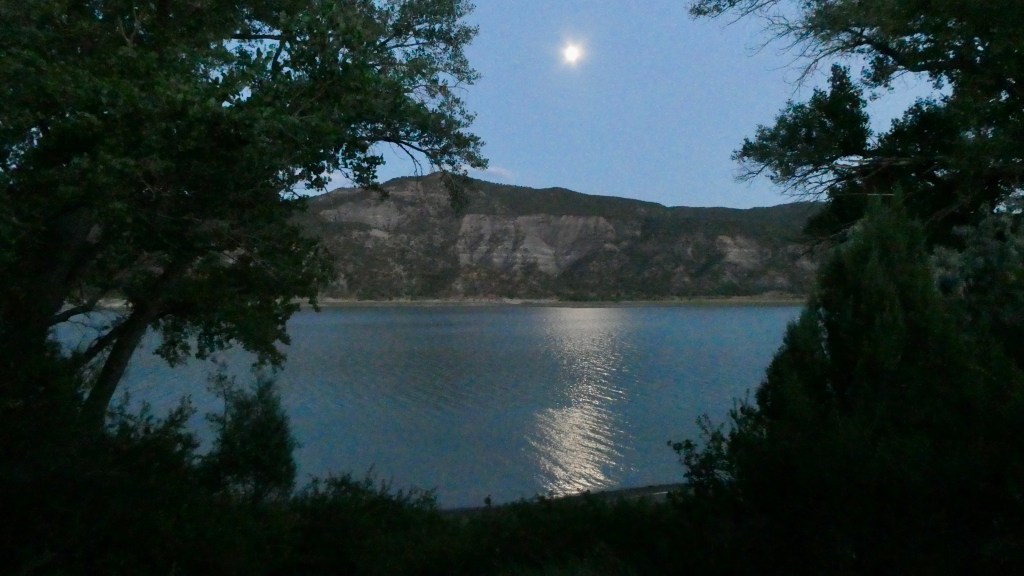
 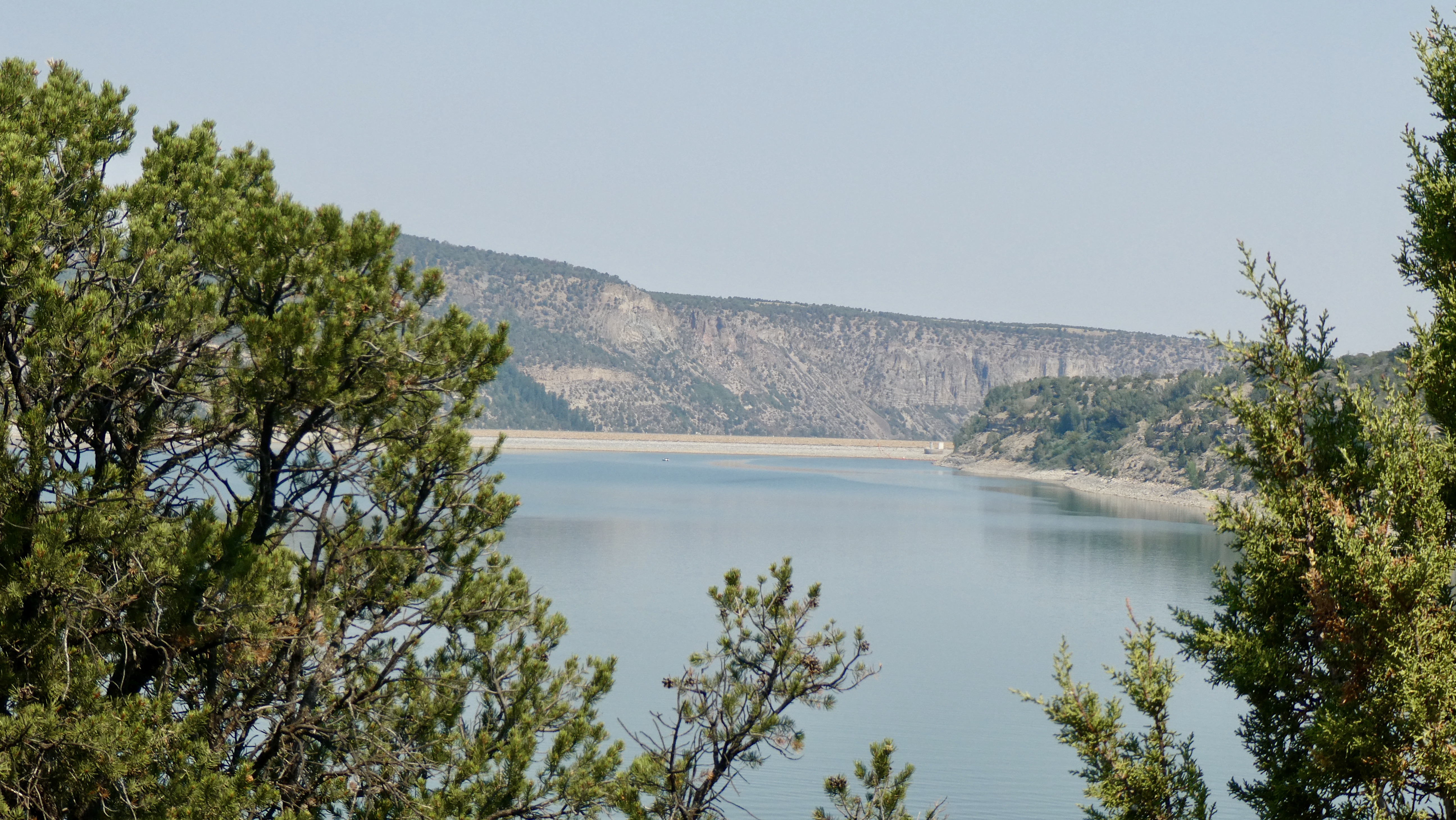 The park has trails along the Uncompahgre River and Ridgway Reservoir.
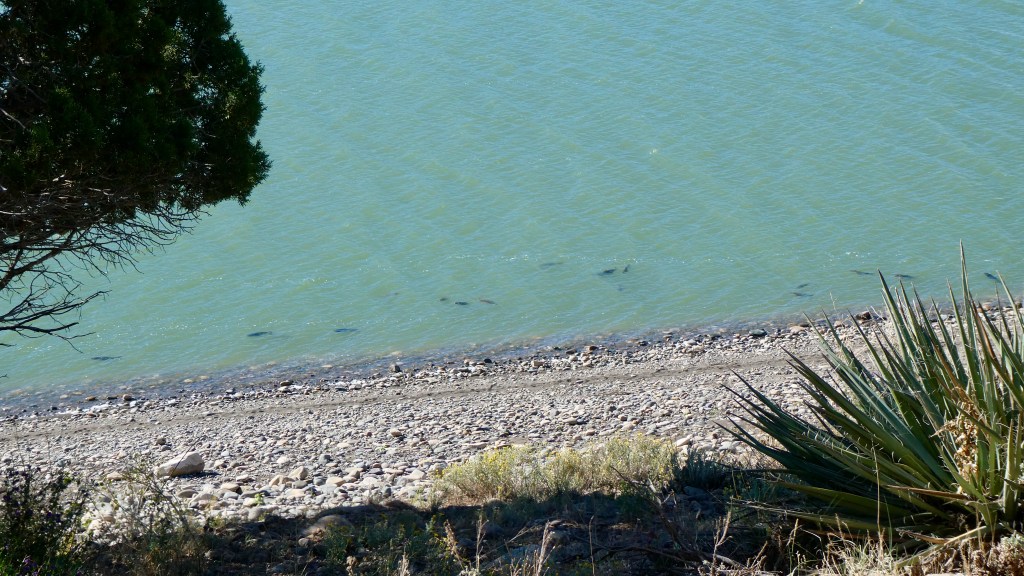
 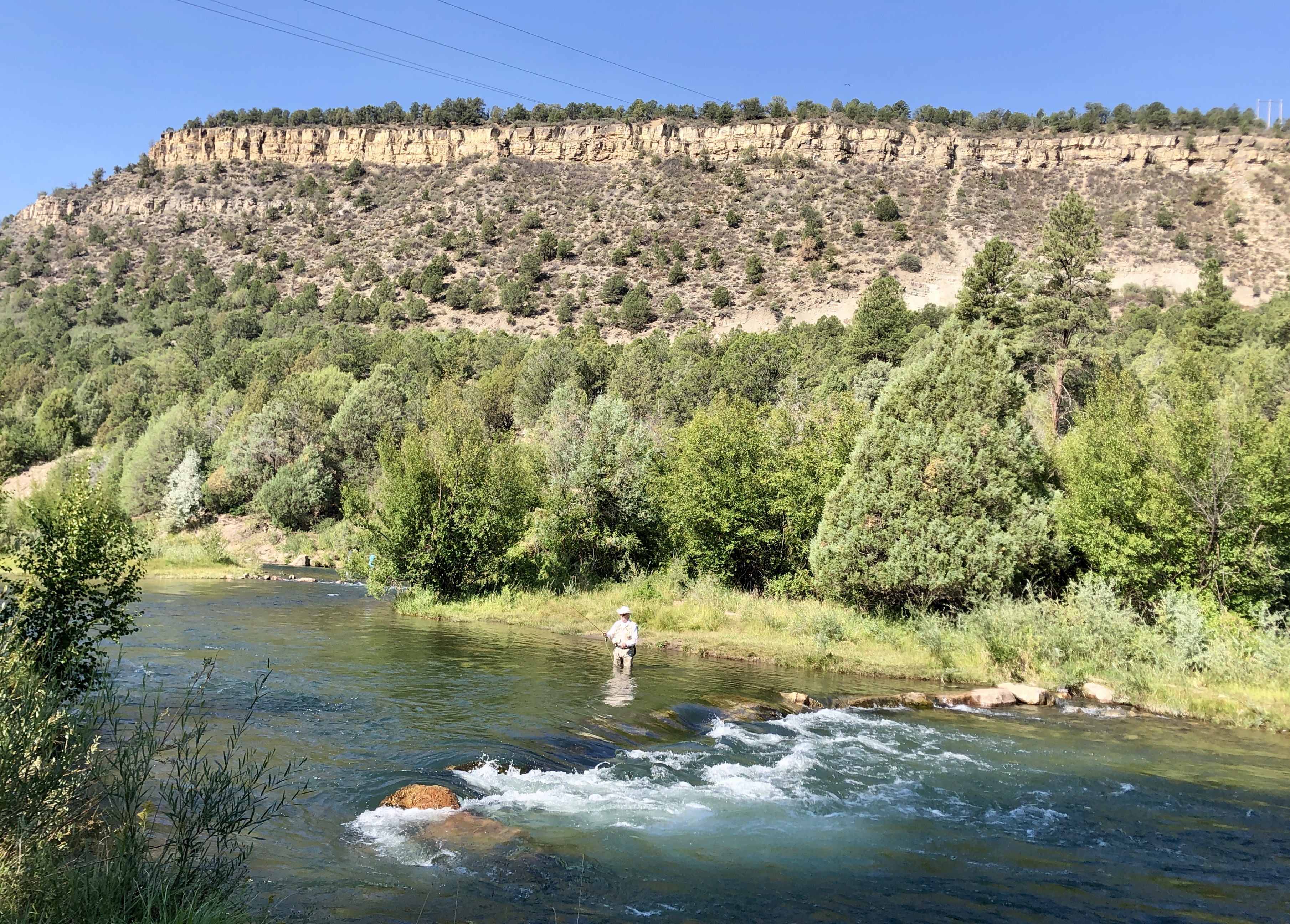 Fly fishing is very popular here and we enjoy watching.
 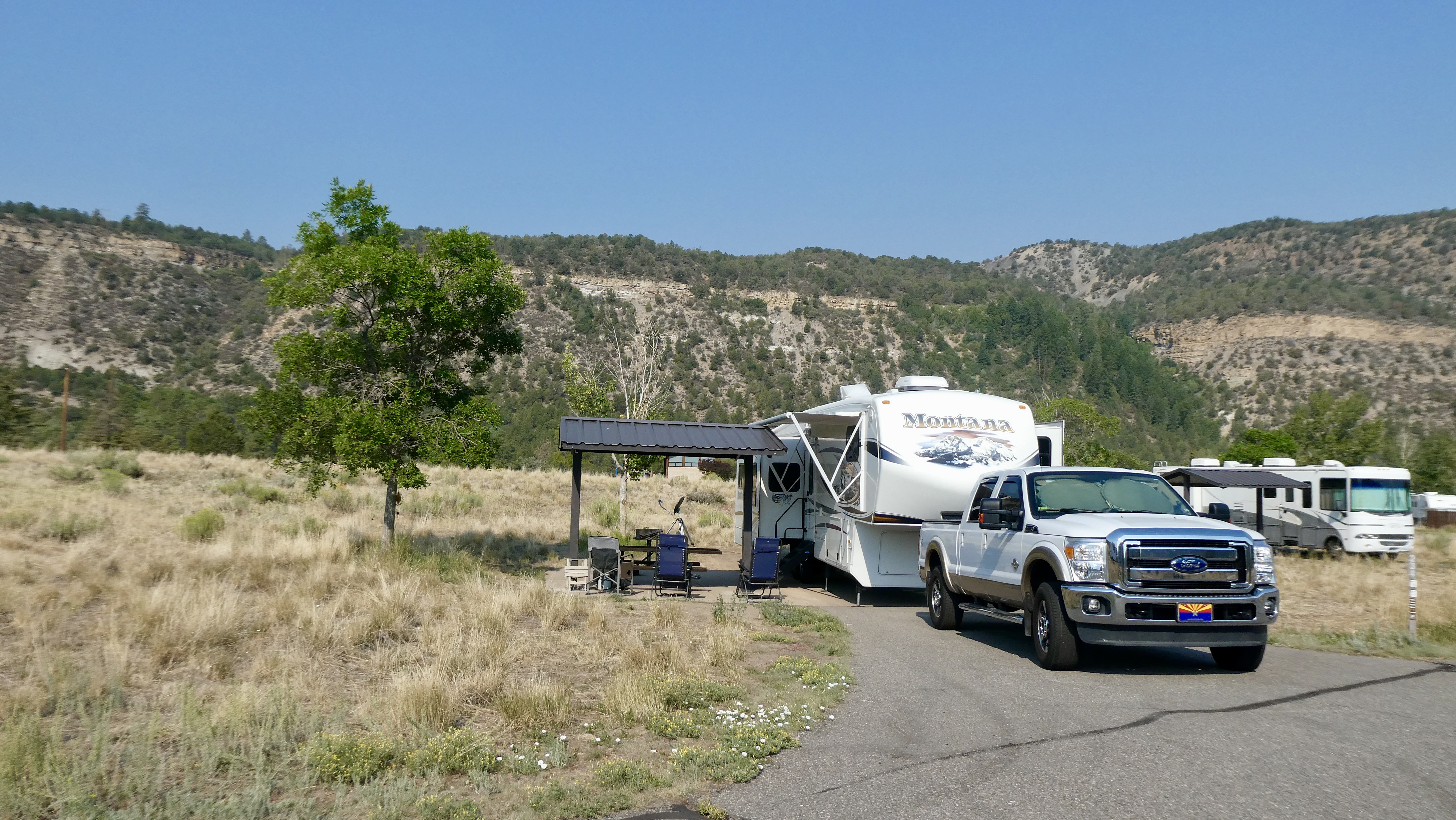 We are here for 11 days so have plenty of time to wander, relax and explore the area.
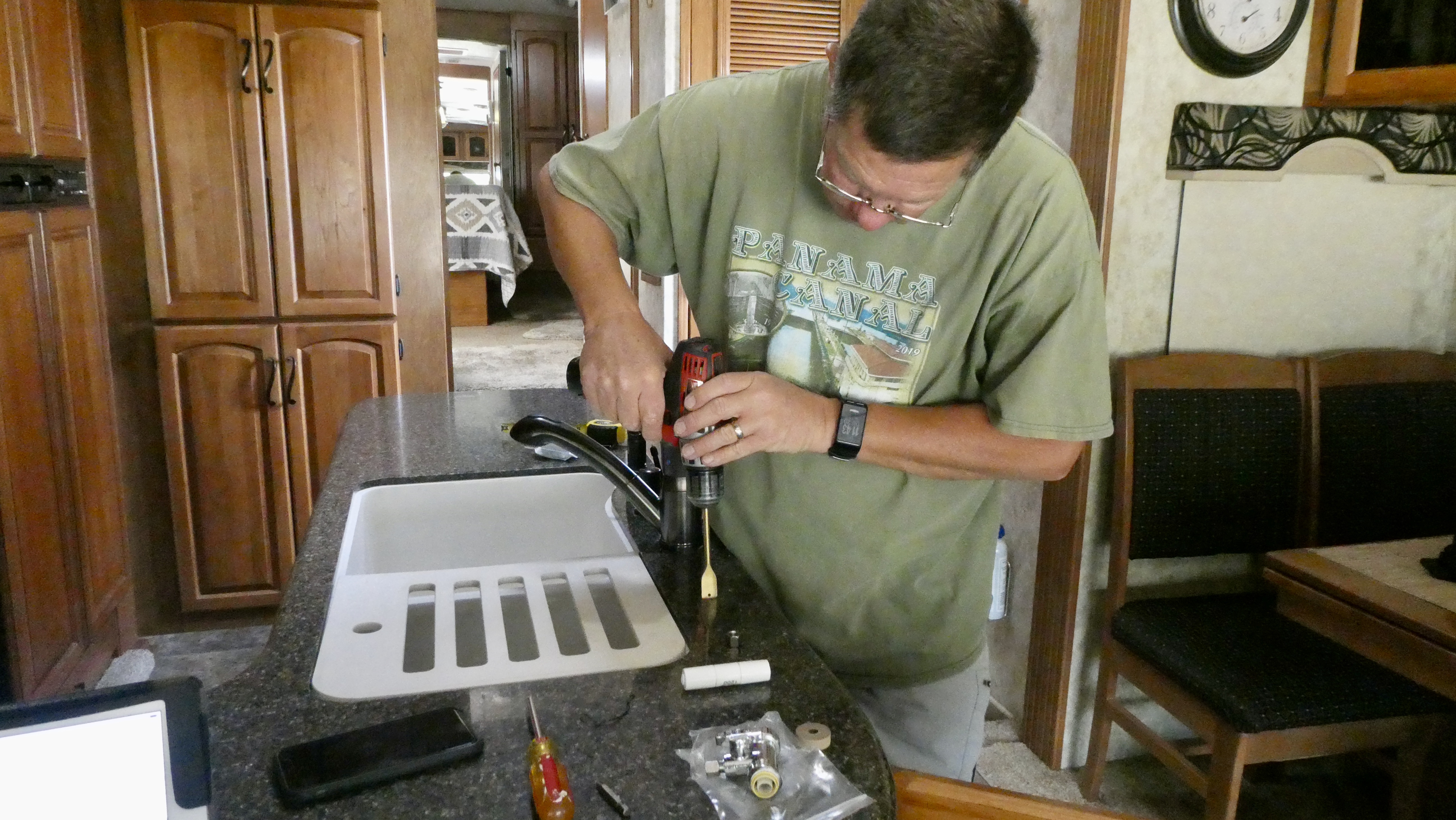 Also plenty of time for a Handy Randy project!
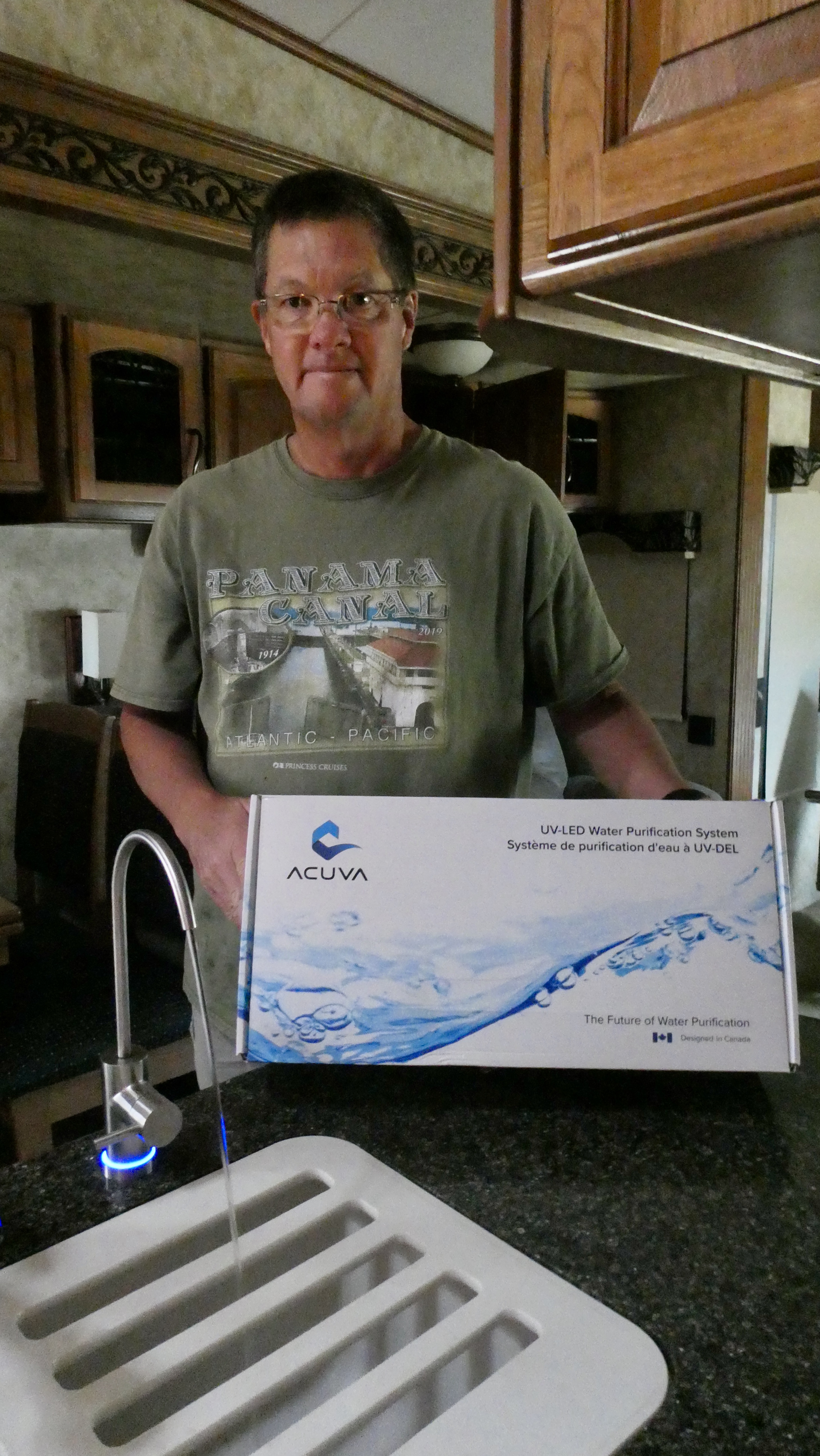 Randy installed an UV-LED water purification system by the Canadian company ACUVA.
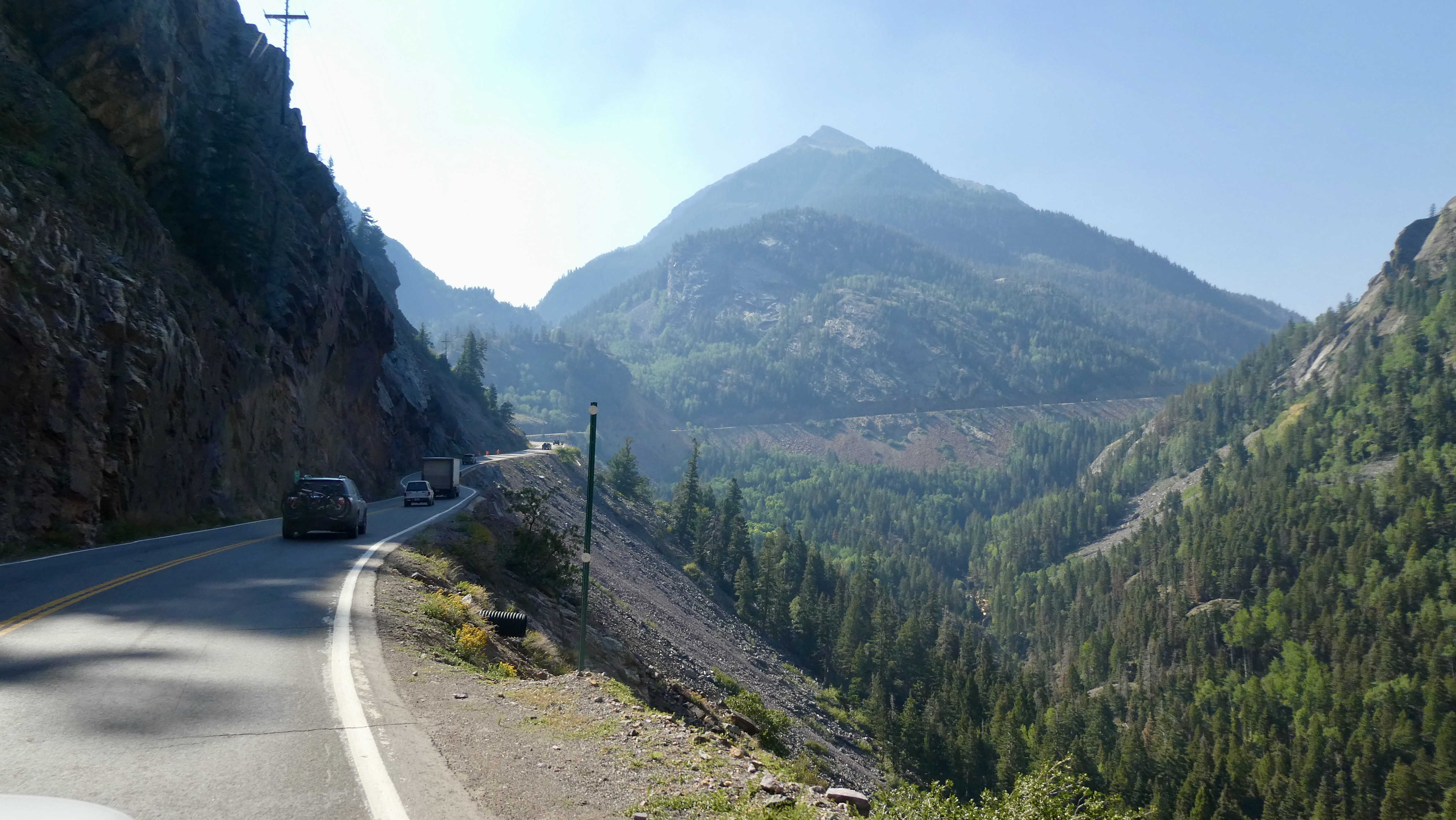 We took a day long excursion along the Million Dollar Highway, one of the “most scenic drives in America.”
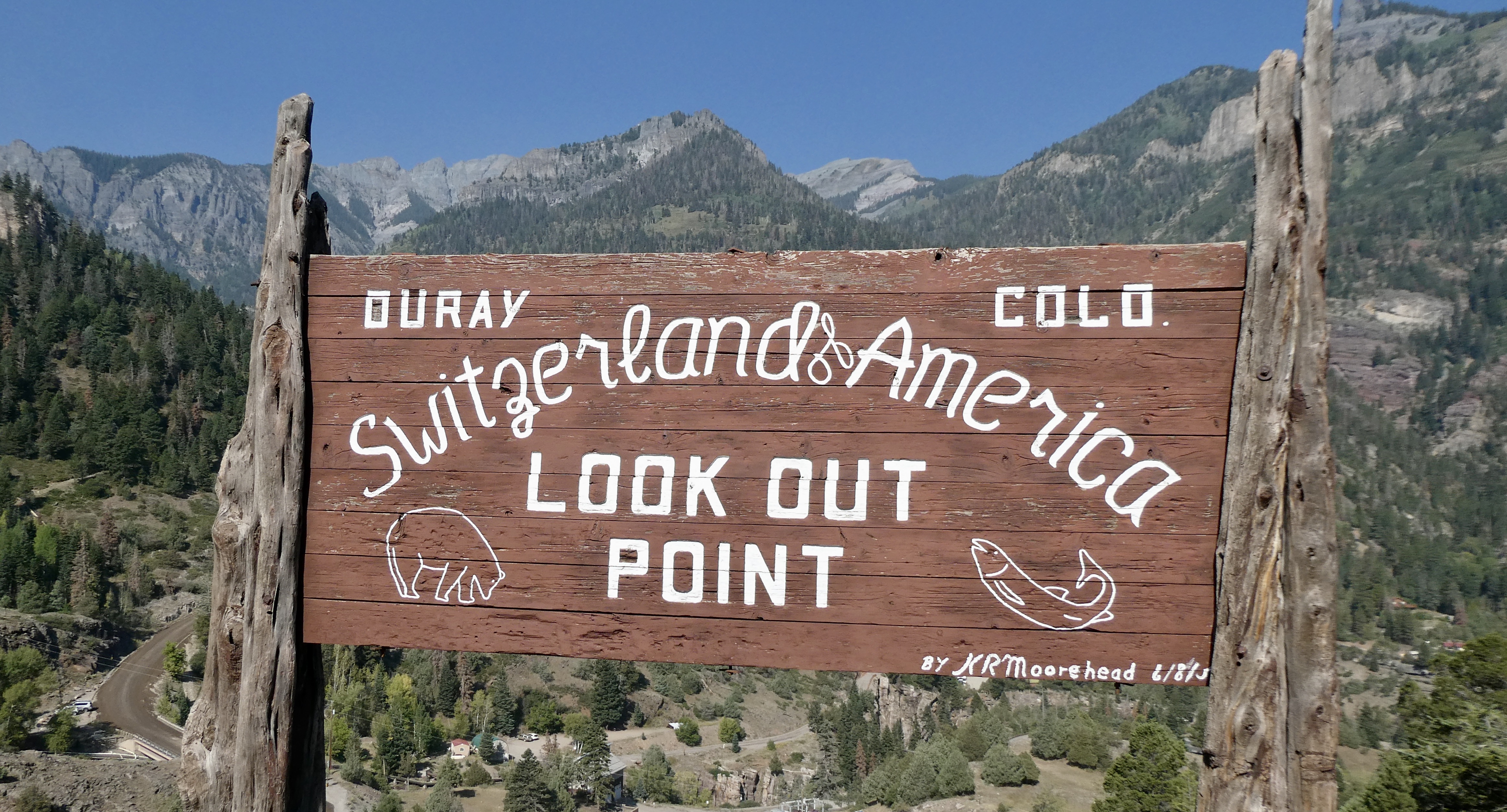 The Million Dollar Highway northern terminus is Ouray, the Switzerland of America.
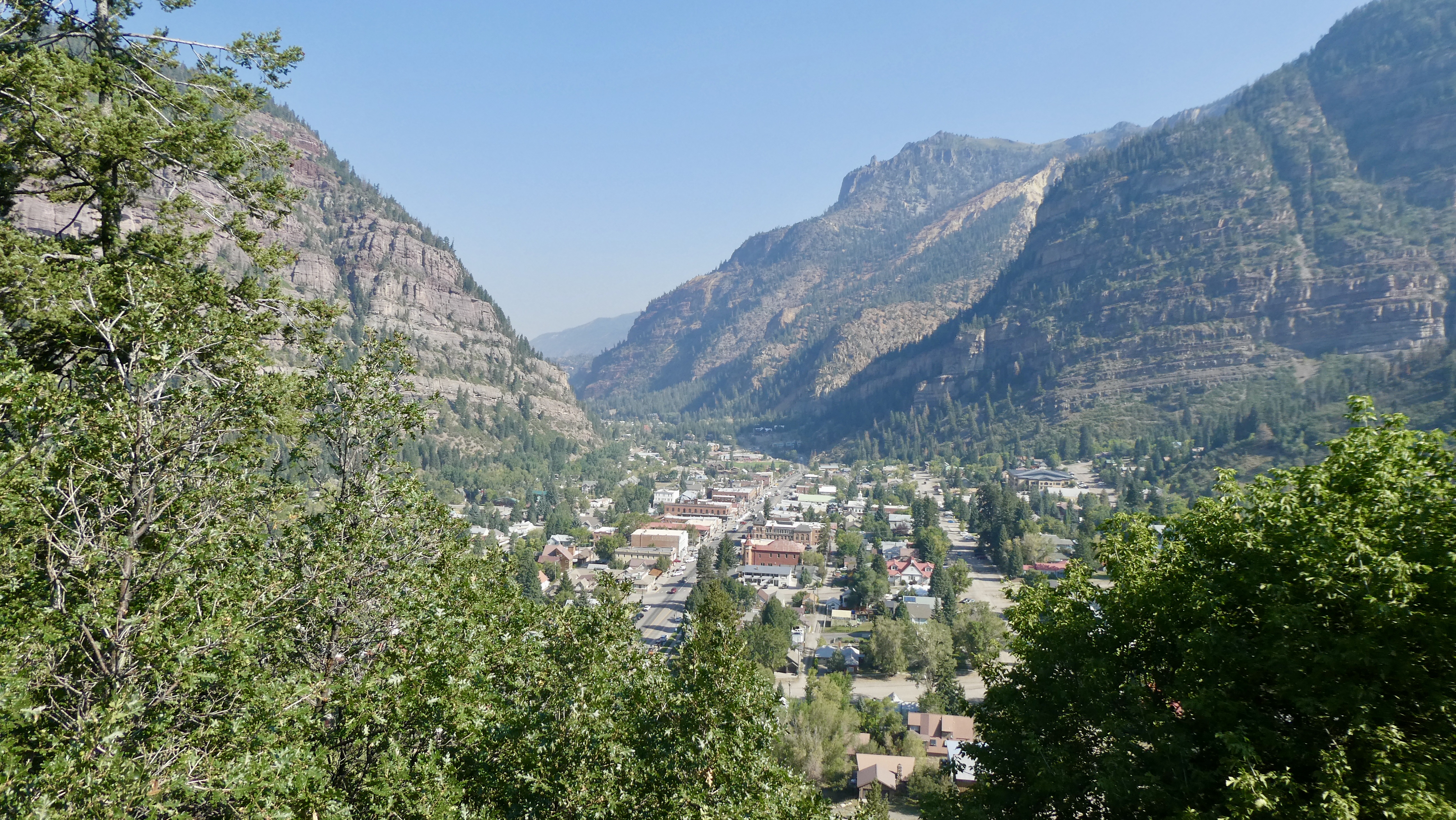 Ouray looks like a fun town with a historic main street, enticing restaurants, brew pubs and hot springs.
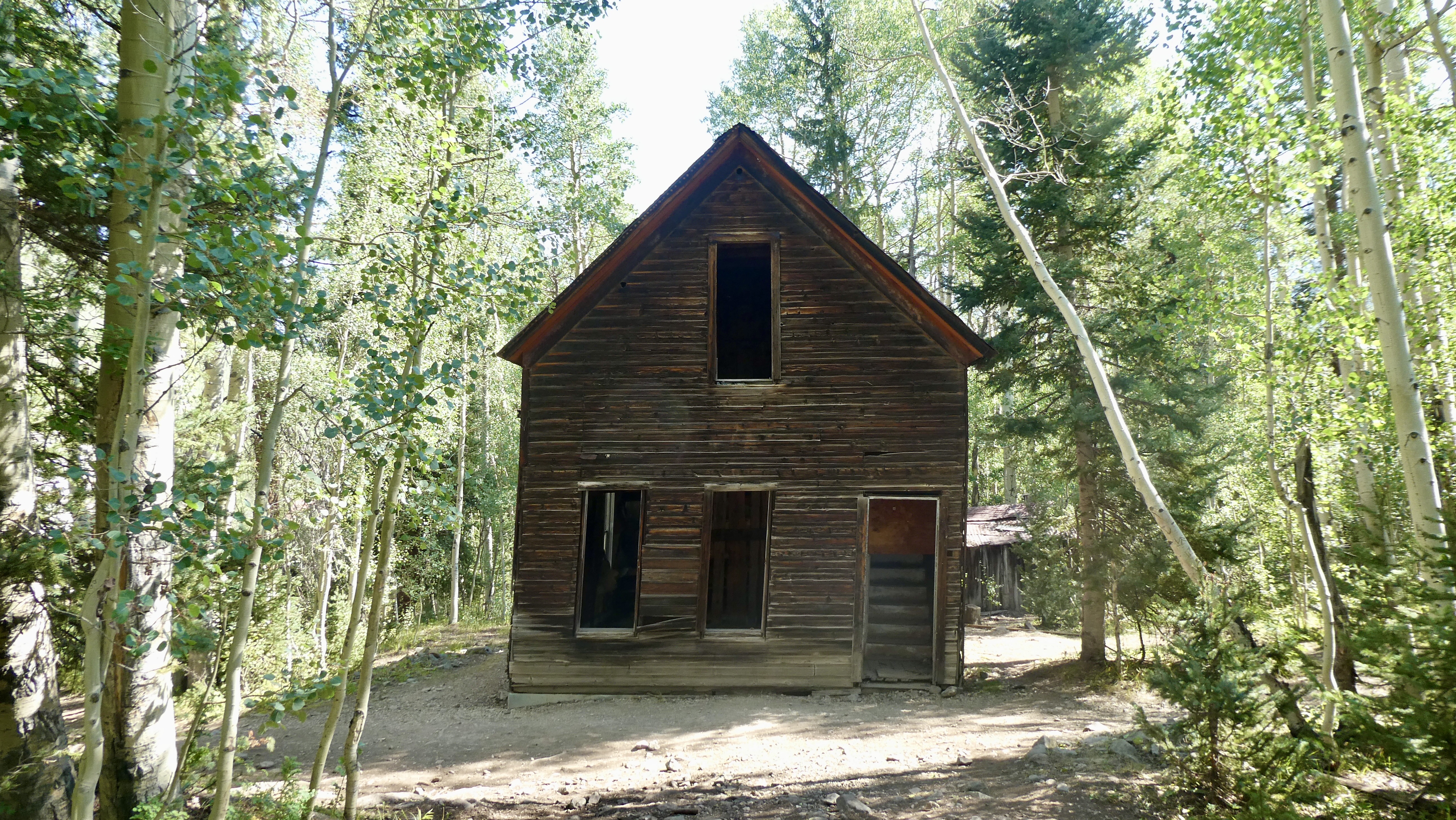 Ironton boasted 1000 residents circa 1890.
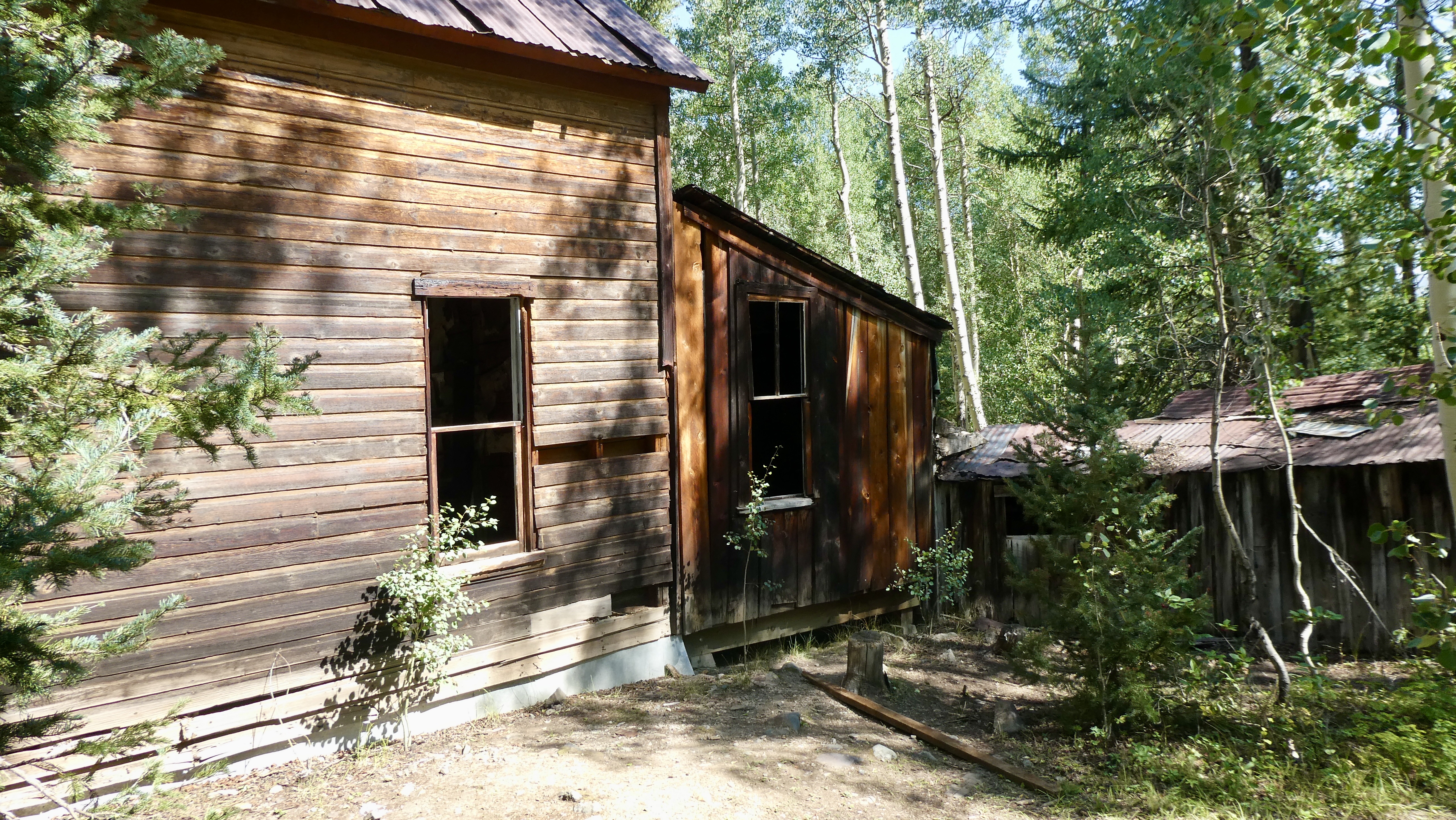 It was easy to see the additions off this main house – an added room and the covered walkway to the outhouse.
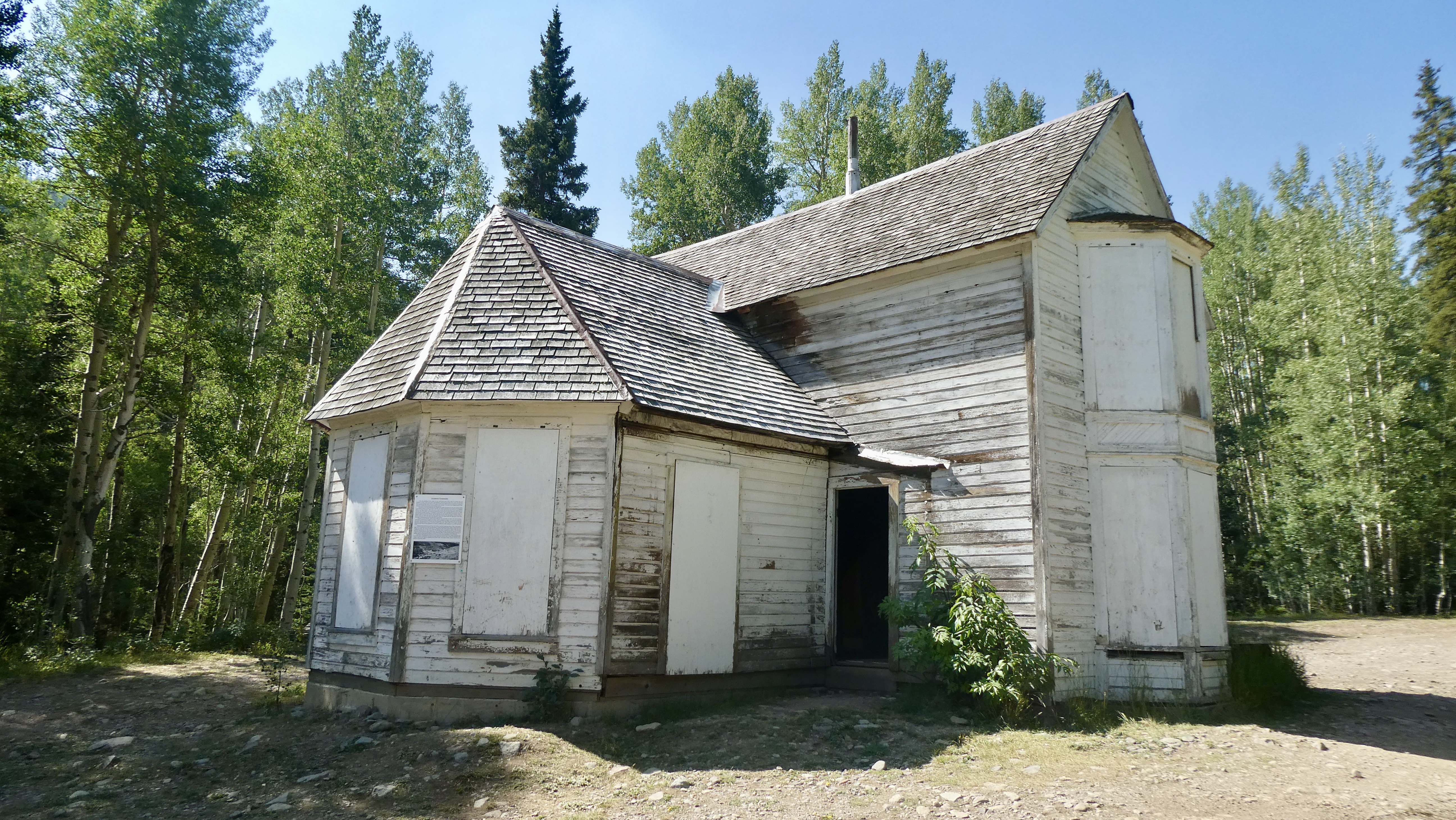 There are six or seven buildings still standing in the former residential area.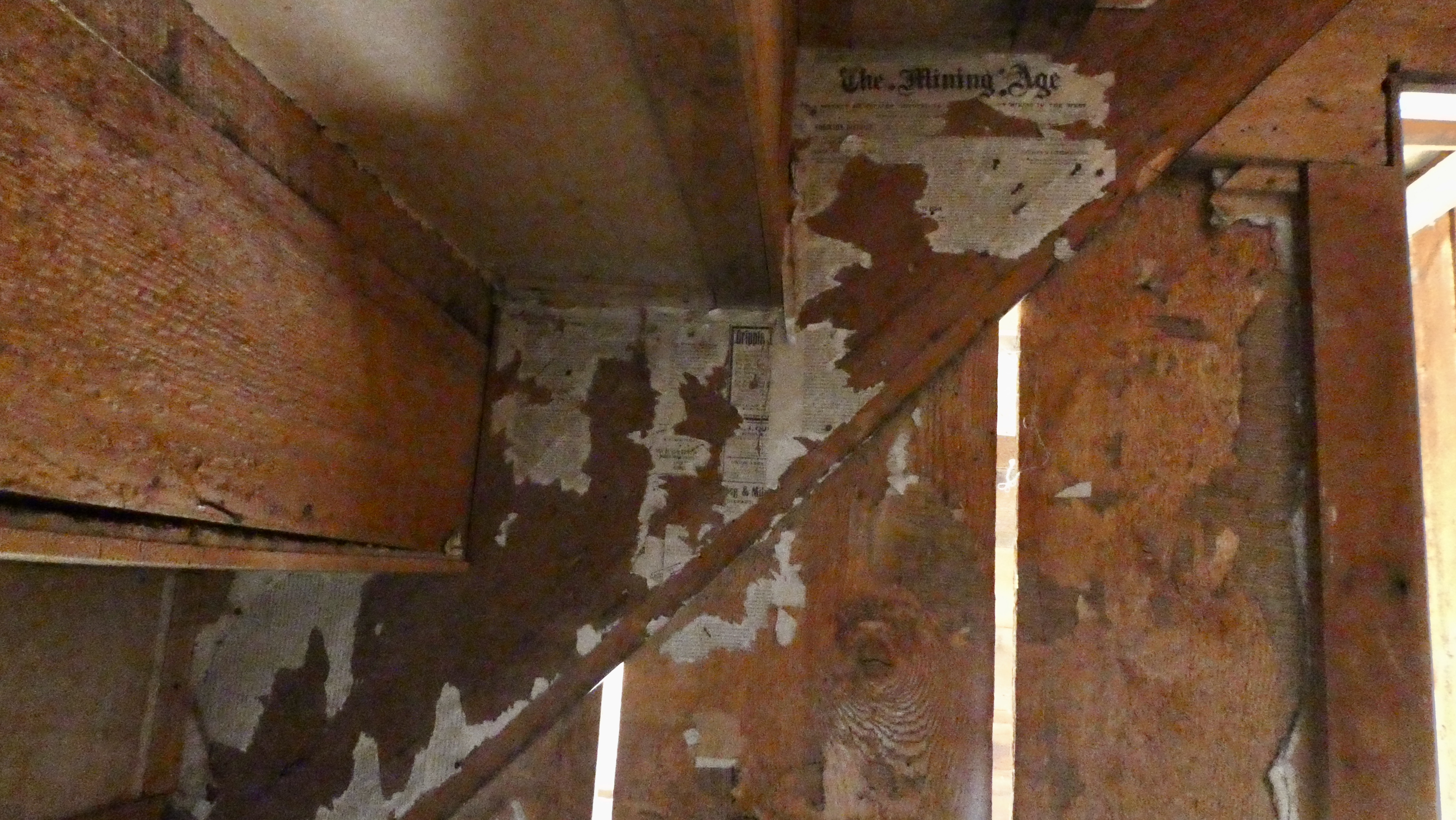
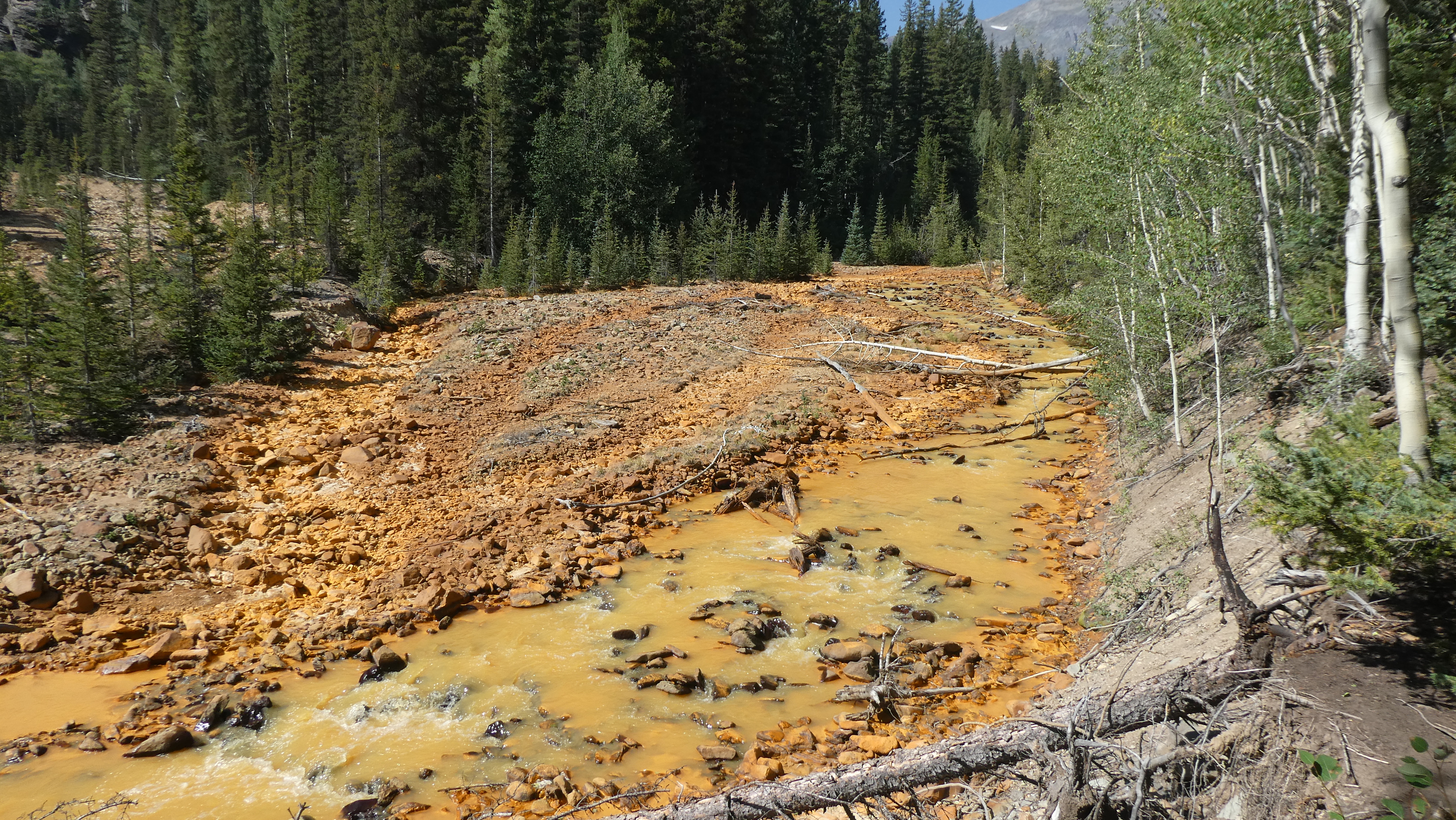 Red Mountain Creek runs adjacent to the town and is shocking at first sight!
 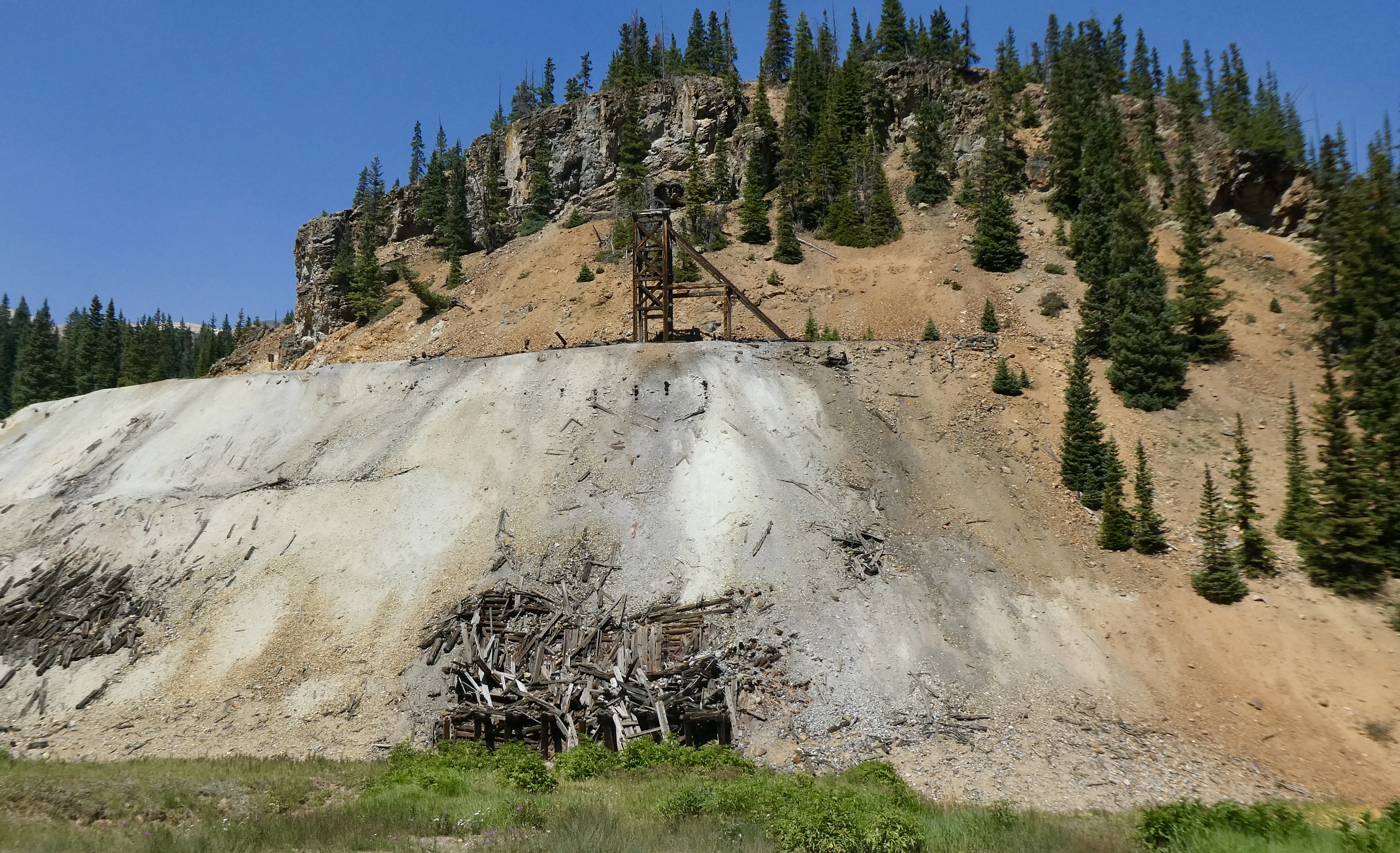 Given the remains of mines are everywhere, that task seems enormous!
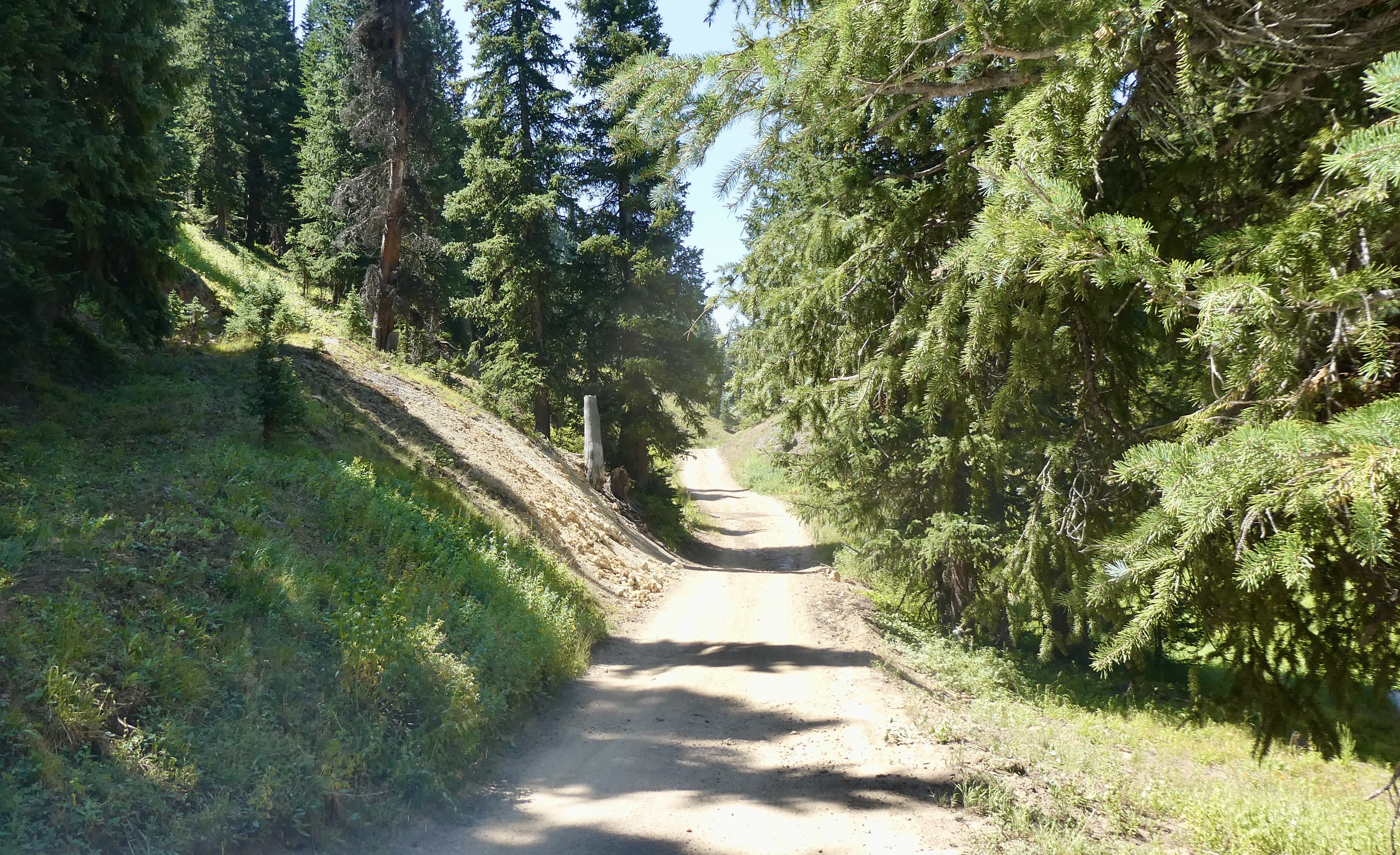 We searched for the townsite of Red Mountain
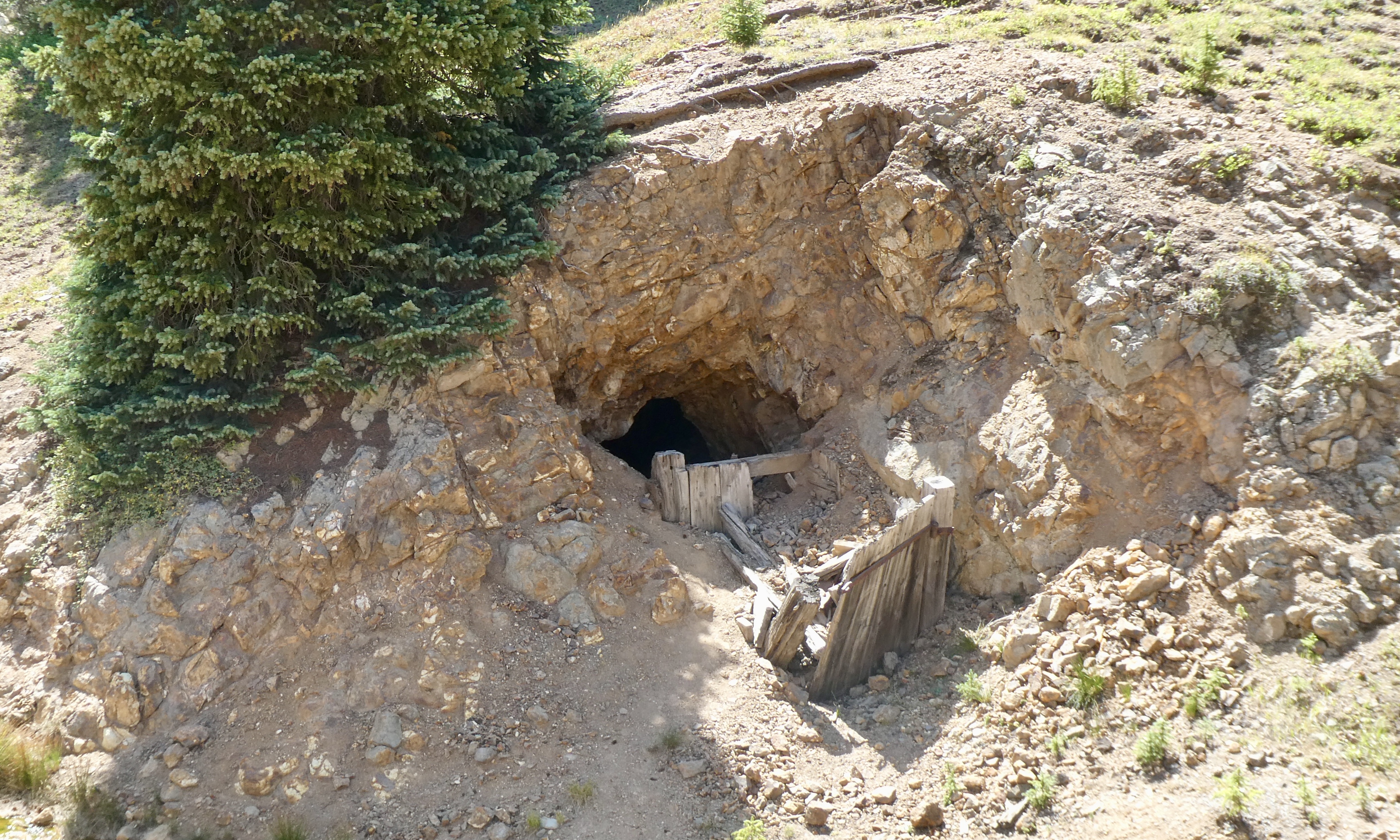 We found this mine opening…
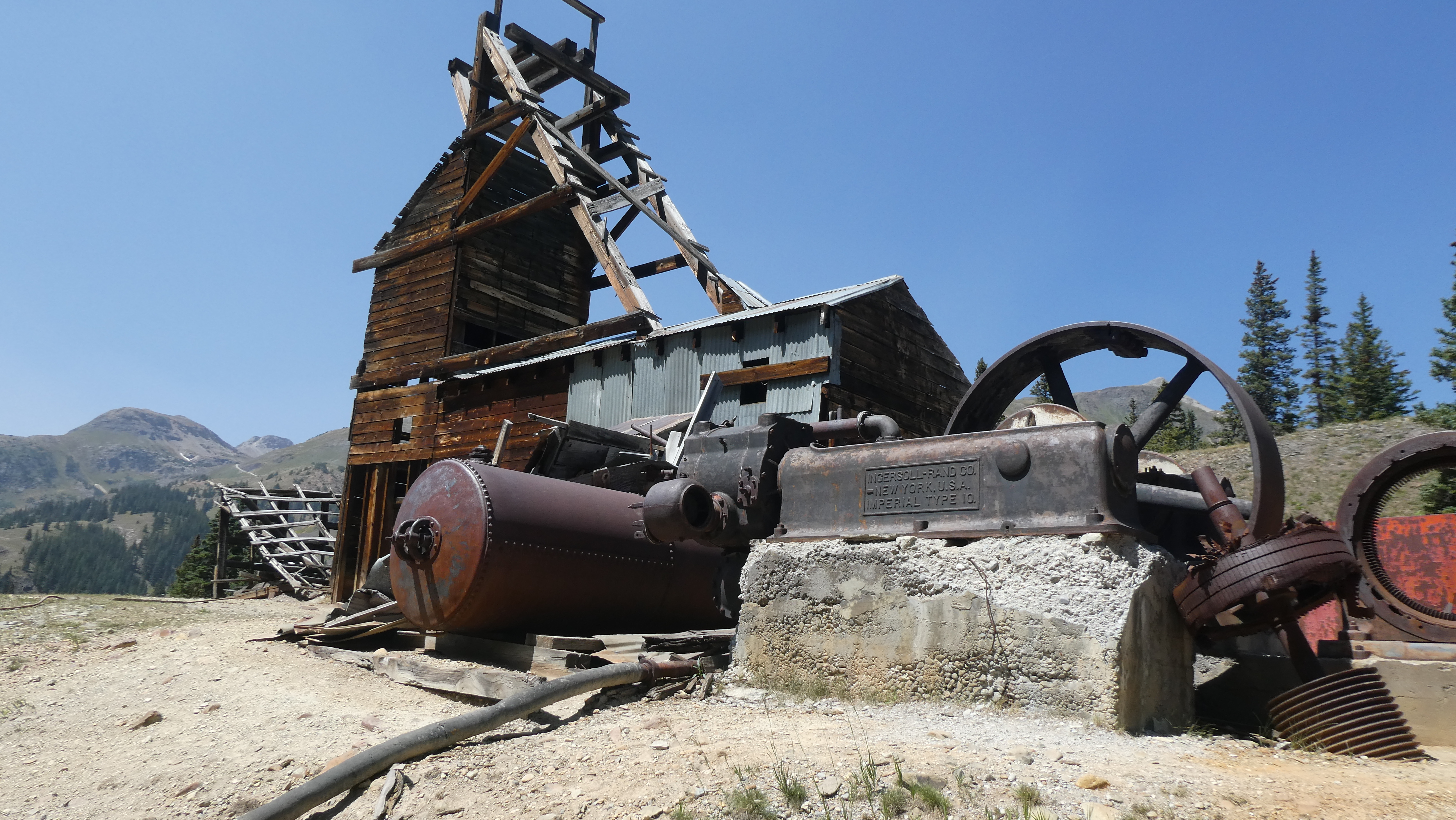 …and this machinery and mine shaft.
 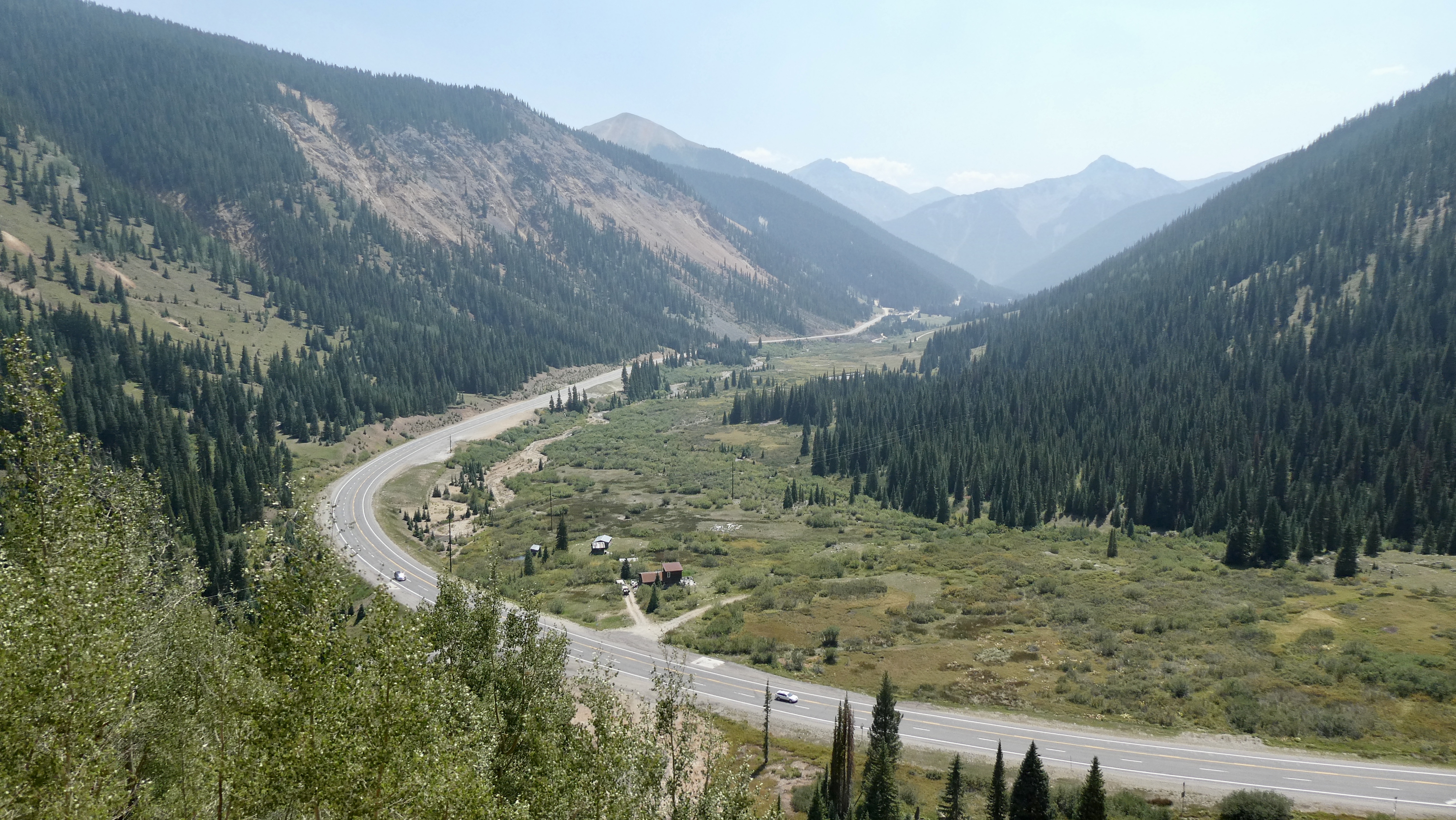 Eventually we got back on the Million Dollar Highway to Silverton.
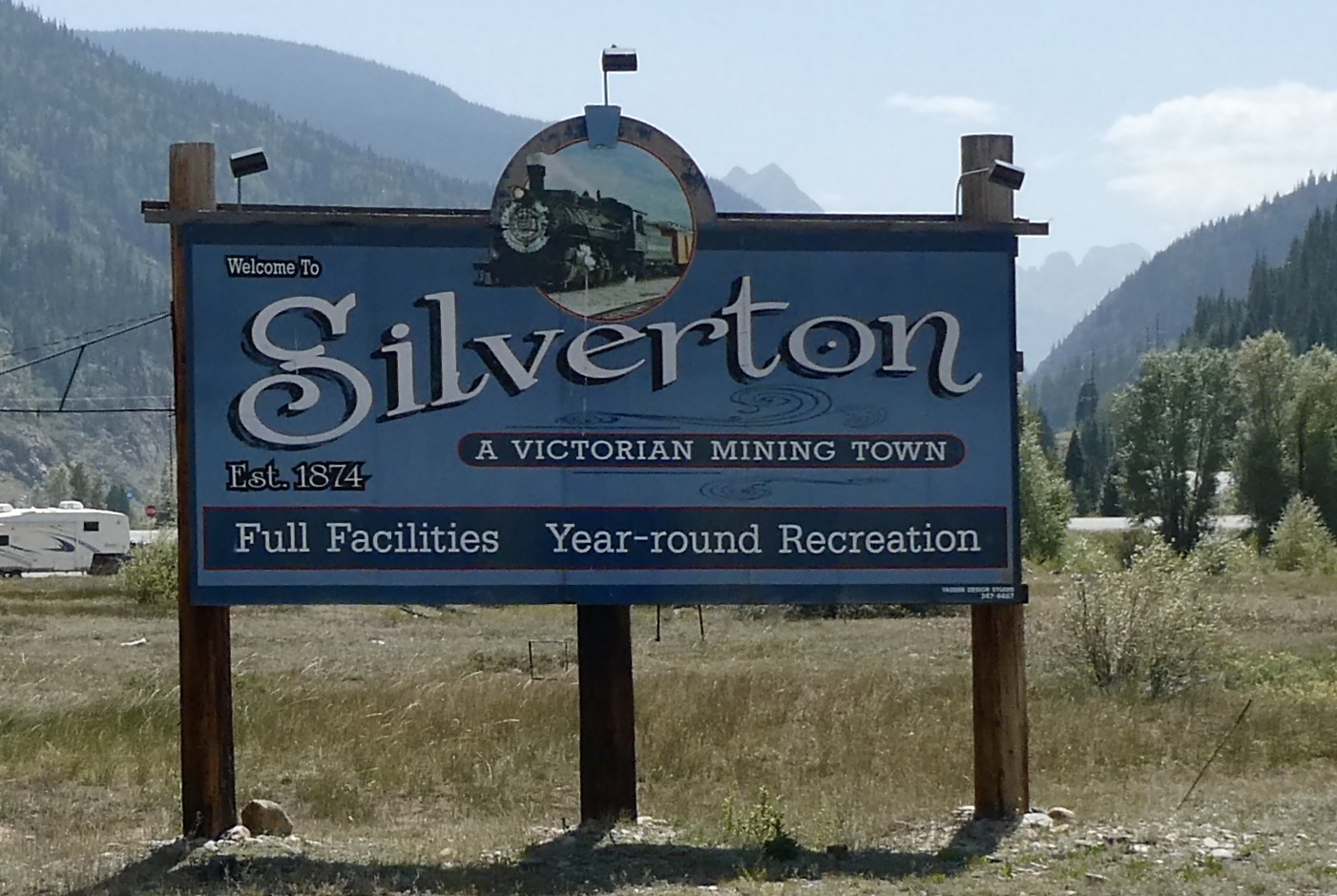 We spent a little time in Silverton last year when we rode the Durango & Silverton Narrow Gauge Railroad. (That blog post is
 Serene Wandering