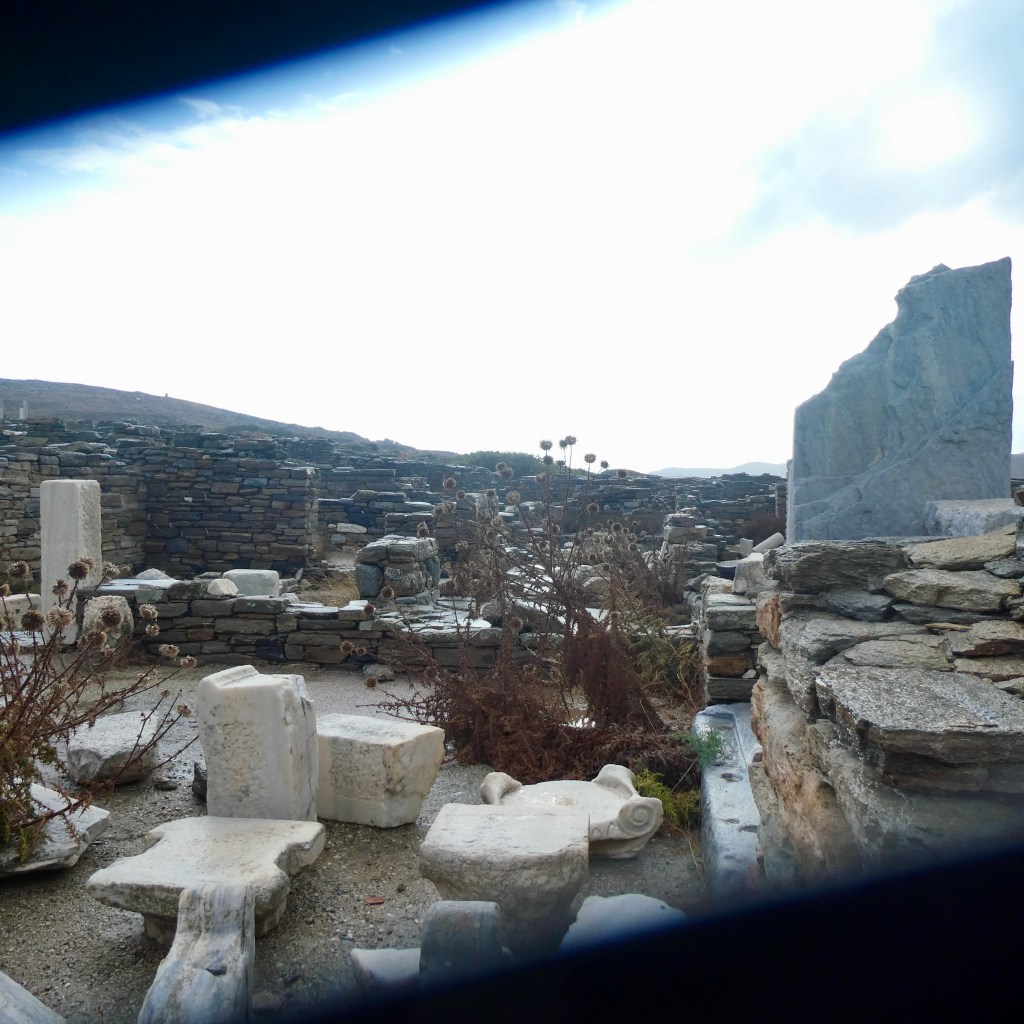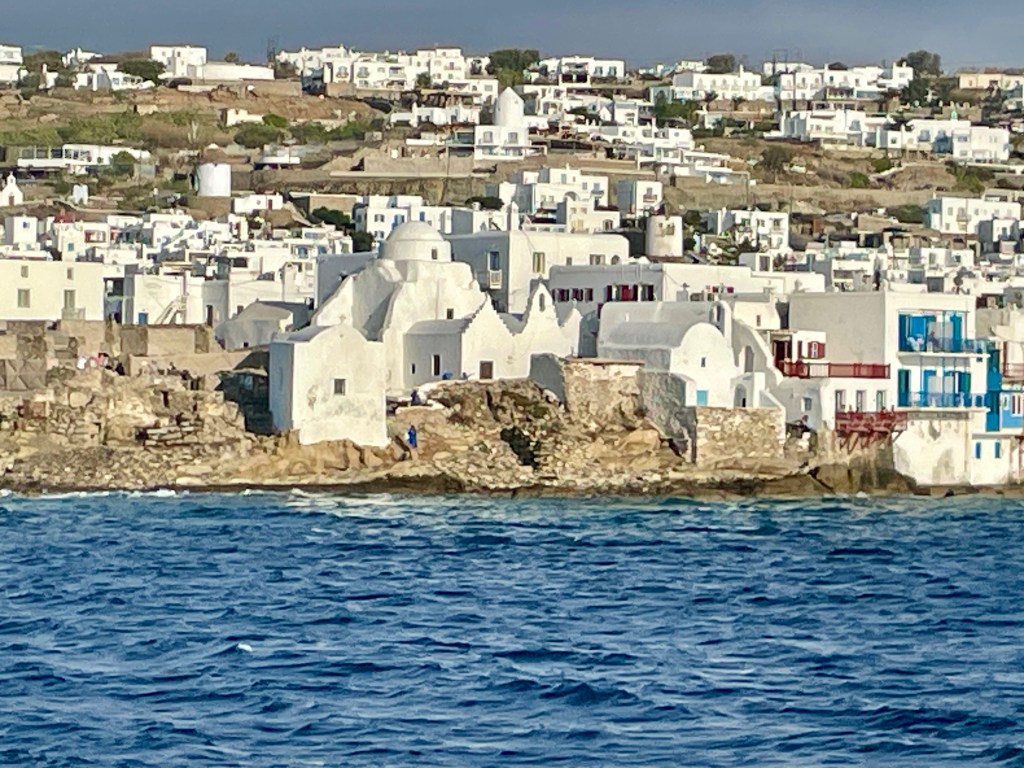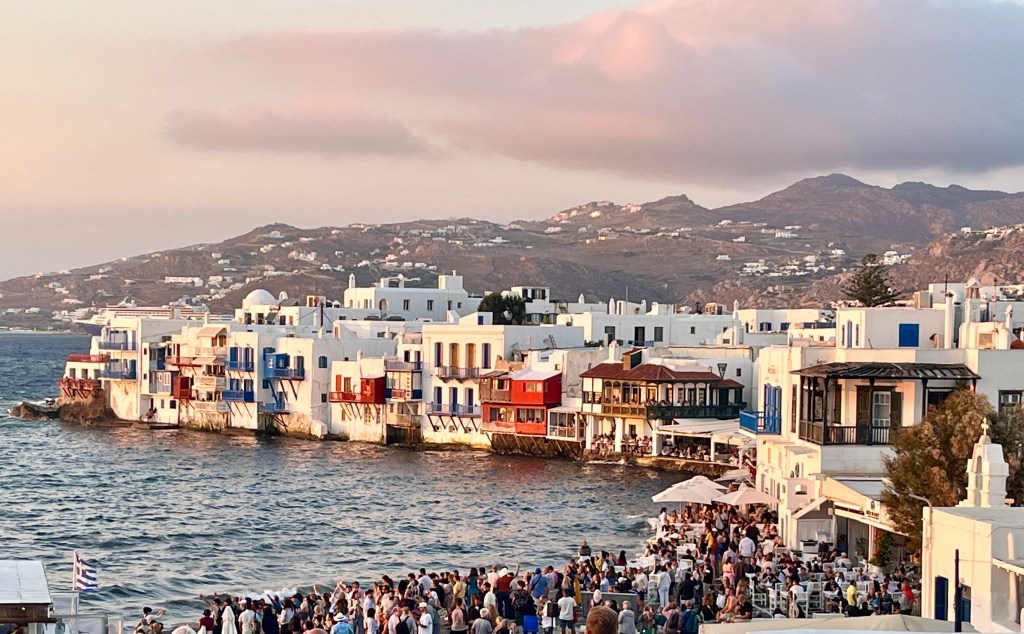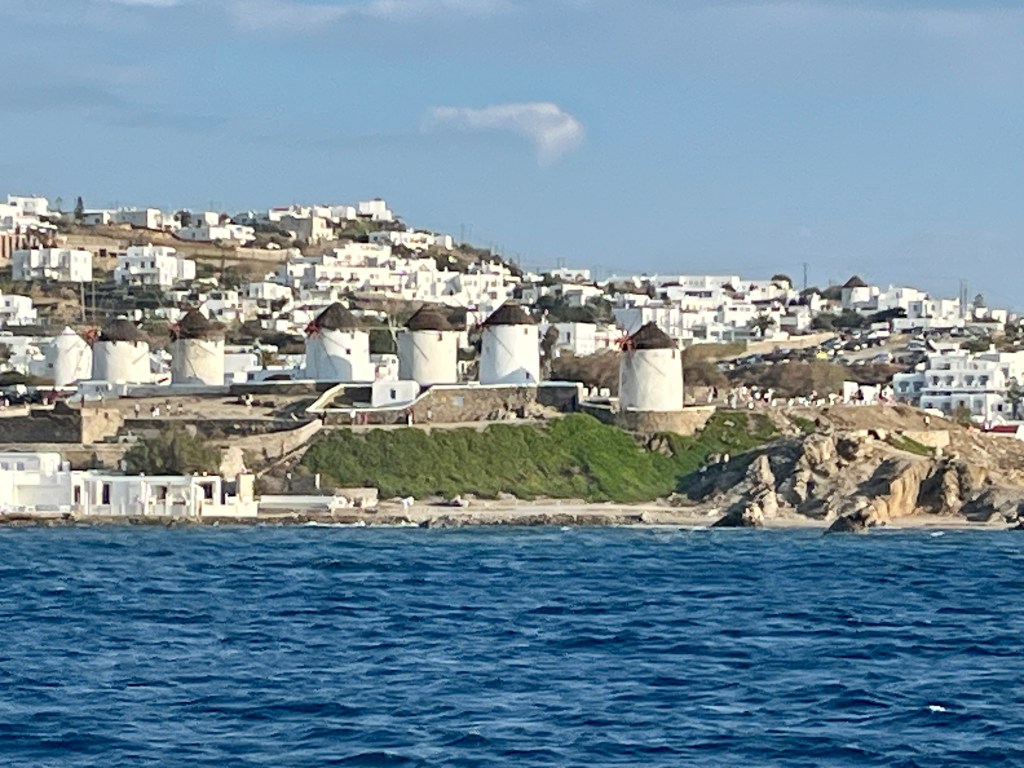
Ancient Mysteries Cruise: Istanbul Day 2

It isn’t very often that a cruise ship spends an overnight in a city allowing for tours on both days. Istanbul was one of those rare opportunities.

Our tour the first day had been called Istanbul 1 and had about 40 people.  It was designed to go with Istanbul 2 the next day.   Instead I booked a small group tour on the second day – also through Holland America – with only 10 people.  We prefer small group tours when they are available.

Our guide told us the population of Istanbul is 18,000,000 but that number is only an estimate because the city has taken in so many people as refugees from natural disasters and civil strife.

Five million Istanbul residents live in Asia but work in Europe. They use bridges, tunnels and ferries to cross the city.

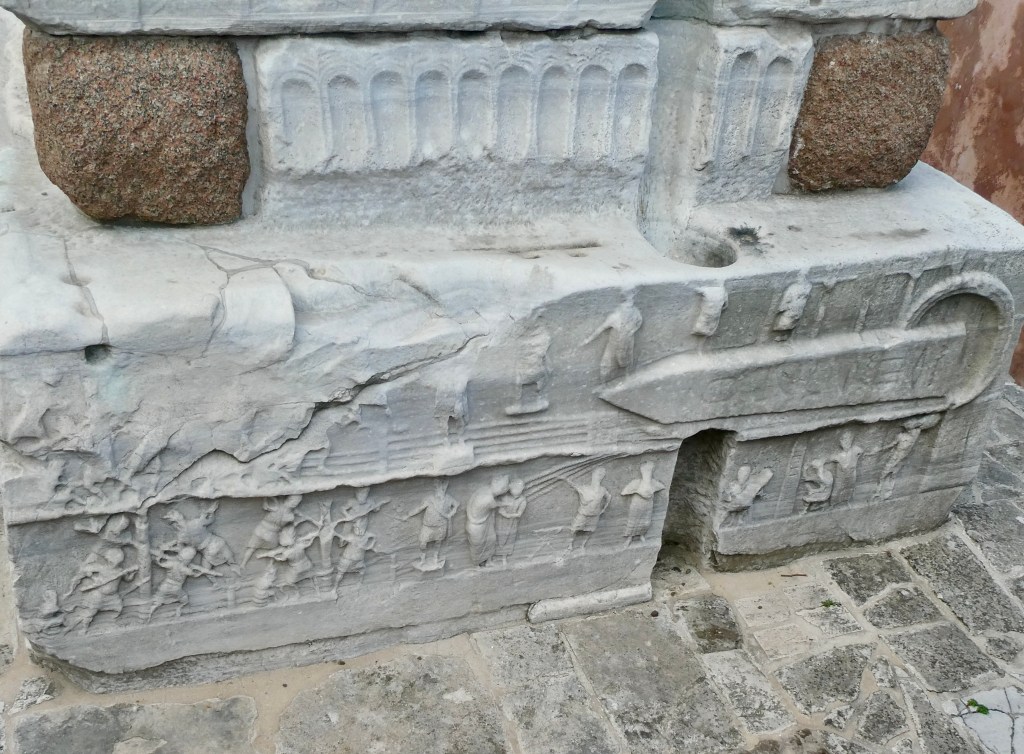
Istanbul, formerly known as Constantinople, has a long and rich history. Constantinople was once the capital of the Roman Empire. Constantius II had a 15th century BC obelisk sent from Egypt in the year 357 to commemorate his 20 years on the throne.  

The obelisk, named the Obelisk of Theodosius, is the oldest monument in Istanbul. Six cities around the world have genuine Egyptian obelisks.

The base shows the process of erecting the obelisk. It took 55 years to accomplish the task.

Its geographic setting made Constantinople one of the richest and most significant cities of all time. From the fifth to ninth centuries, it was one the most crowded cities on earth. 

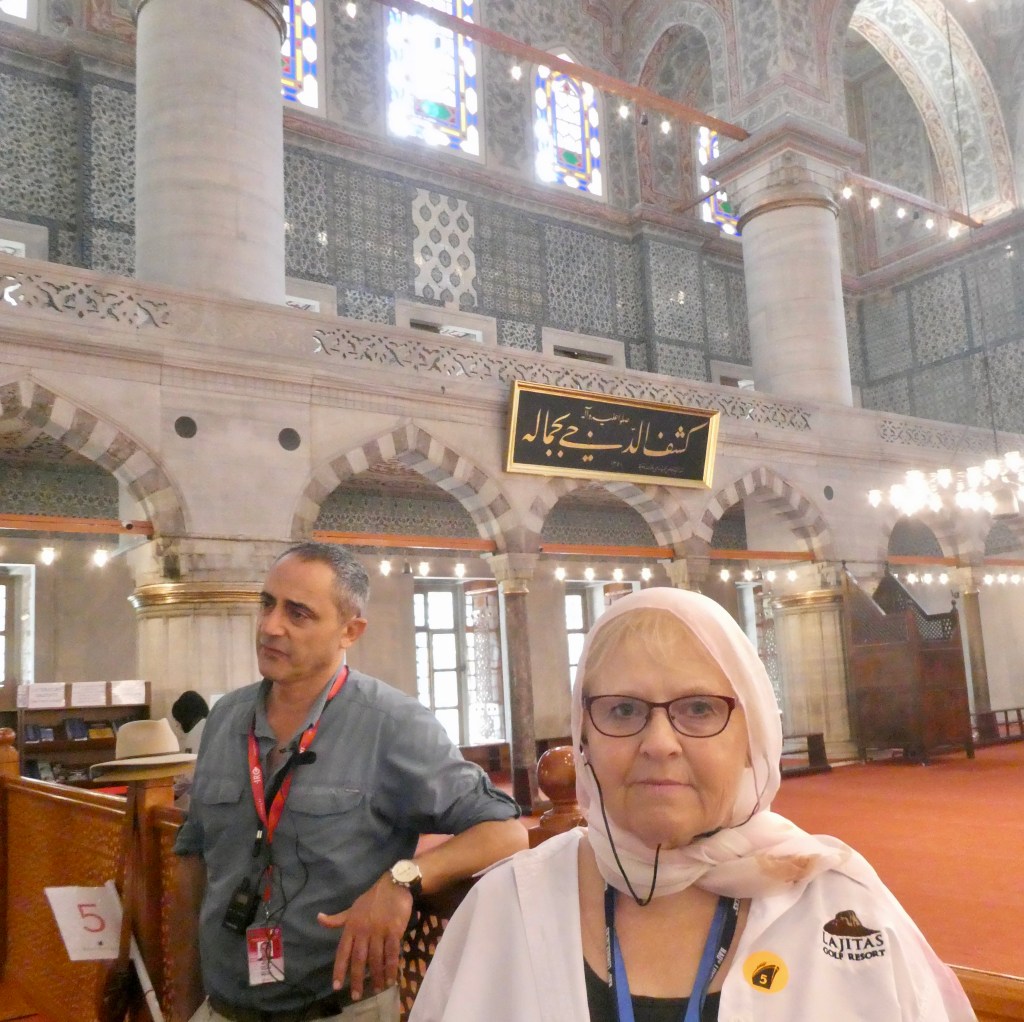
Our next site was The Sultan Ahmet Mosque, more popularly known as the Blue Mosque. 

It was completed in 1617 just prior to the death of its patron at age 27.

It is so named because of the blue tint to the interior.

Of course, there were modesty requirements for women.  The requirement was enforced.

The mosque once had ancient rugs instead of carpet but after some of the rugs were stolen, the remaining rugs were removed.  We were told that the rugs that were removed are on tour but I was unable to find a schedule.

Men pray on the bottom floor while women pray in the side galleries.

It was impossible for us to get an exterior photograph from a distance to see its grandeur.  This drawing gives a better perspective.

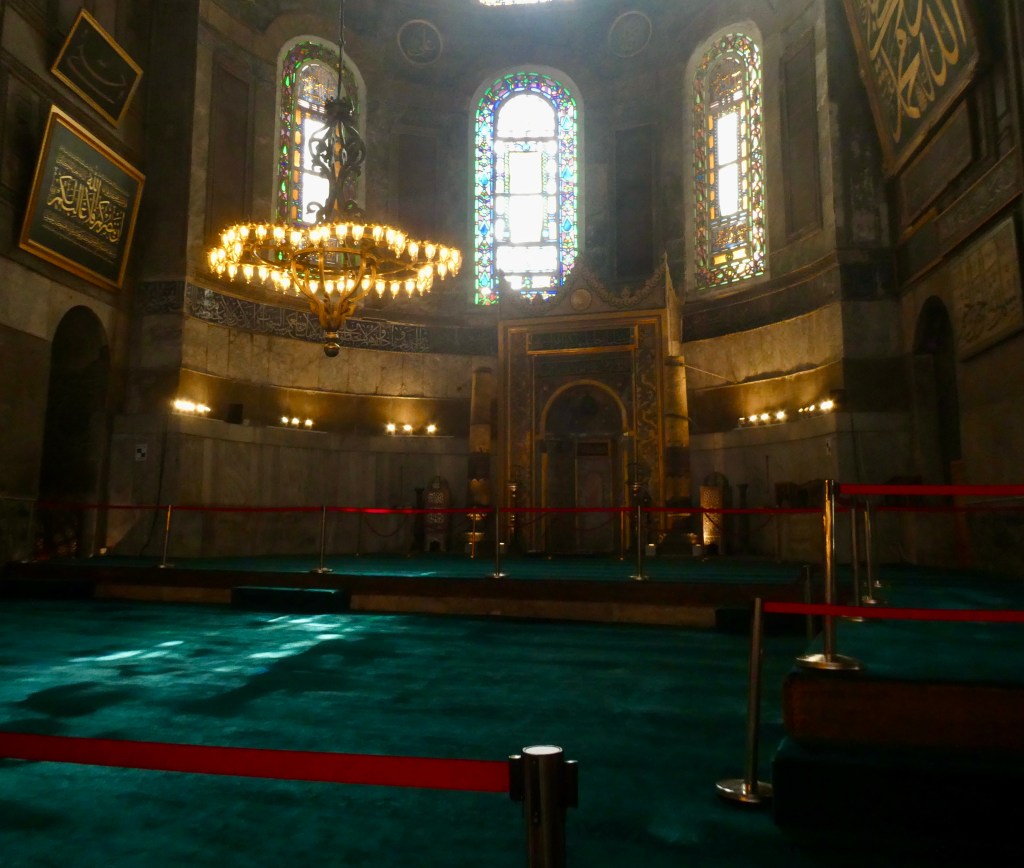
Our next site was the inspiration for the Blue Mosque, Hagia Sophia. This was the largest building on earth for 1000 years and still ranks number five.

Hagia Sophia, or St. Sophia, was built in the years 532-537. It has been in continuous use for 1500 years.  That has helped it remain in such good condition.

It was the first basilica with a domed roof.  They did that 1500 years ago!

St. Sophia was built and served as an orthodox Christian church from its beginnings until 1453. At that time the city fell to the Turks and St. Sophia was converted to a mosque. 

The central altar is now slightly offset to face Mecca instead of Jerusalem. 

It was turned into a museum and operated that way for 80 years.  One year ago it was made a mosque again by the “hard line, right wing government in Turkey.”  Those were our guide’s words.

Turkey is 99.9 percent Muslim and he said that about 50 percent are active.  Our tour guide was part of the .1 percent.  He described himself as an Orthodox Christian.

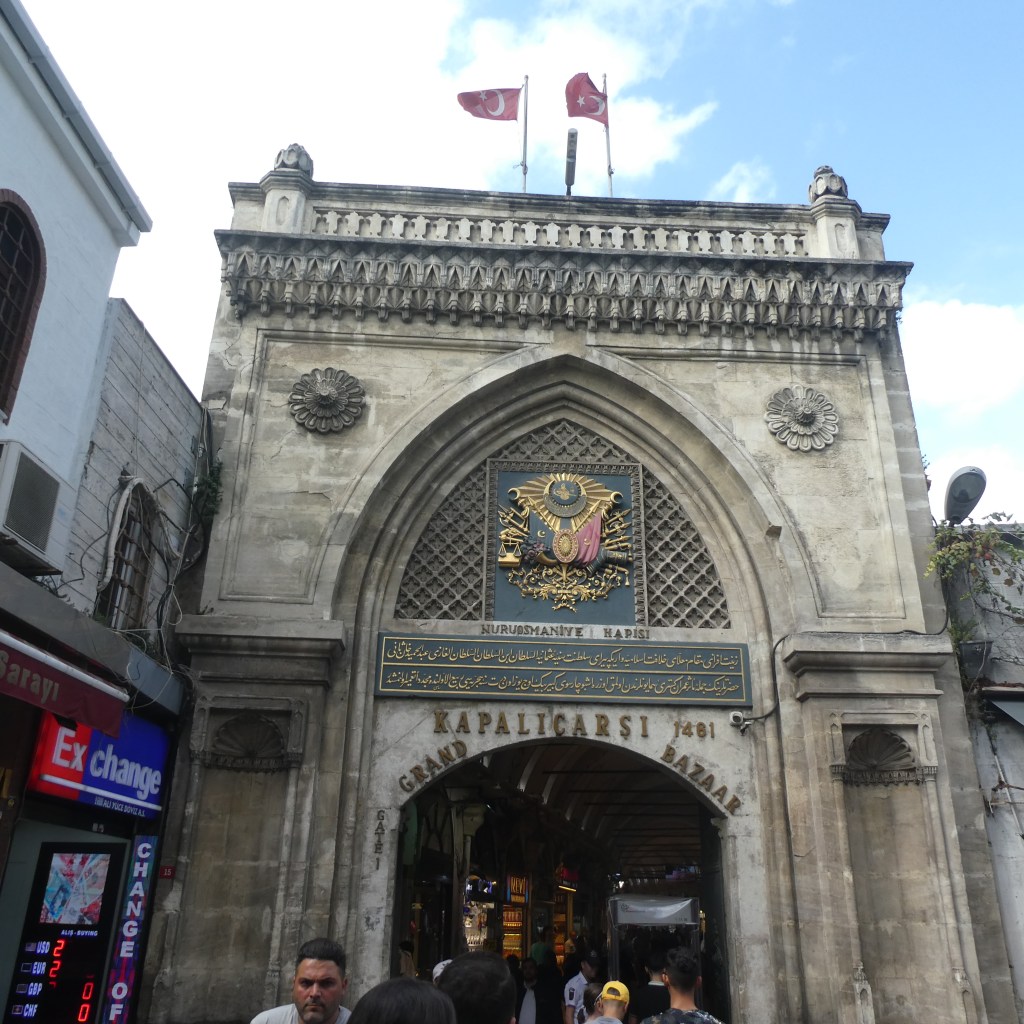
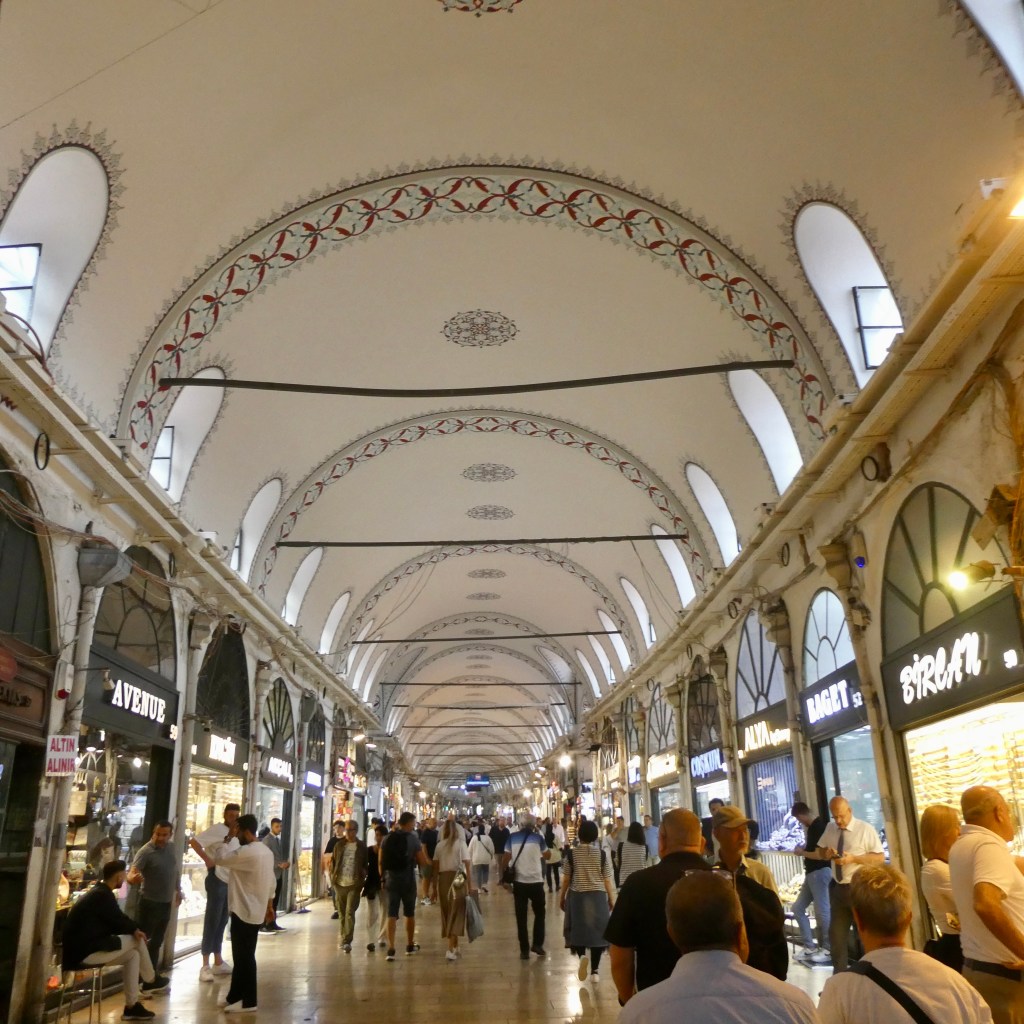
Next, we visited the Grand Bazaar.

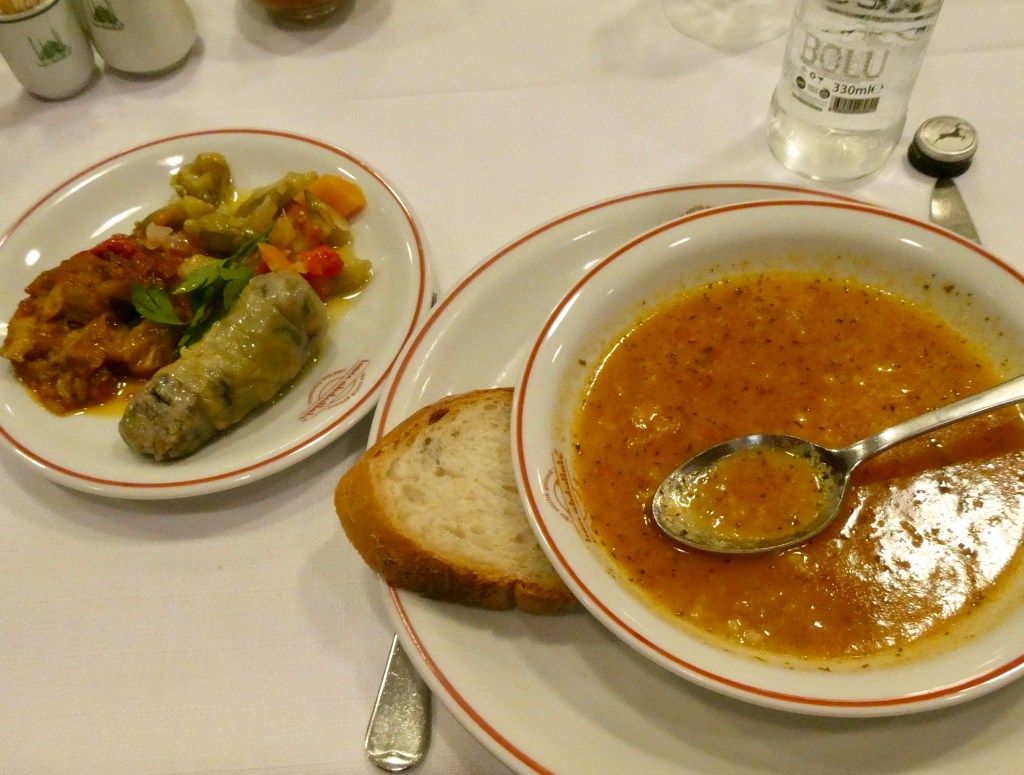
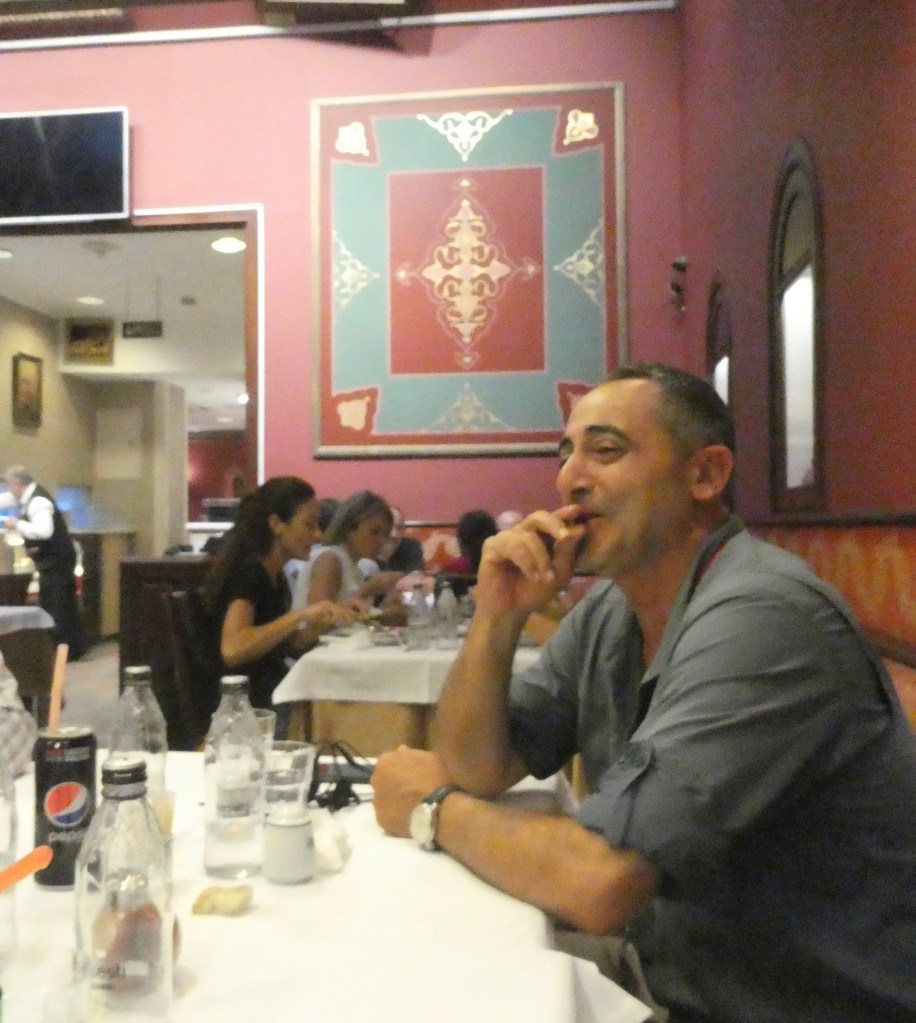
Our next stop was for a classic Turkish meal. It was very good.

It was almost like comfort food to see something resembling cherry jello.

Our guide, who had been so attentive and personable, was now getting phone calls and seemed distracted. Randy finally asked him if everything was okay. He then told us about his son who plays junior tennis for Istanbul and was playing in a regional match. Our guide was missing it for work and his wife was trying to keep him informed. His son won and would be playing his next singles match (either the finals or semifinals) the next day. He was hoping to catch his son’s doubles match later that day. 

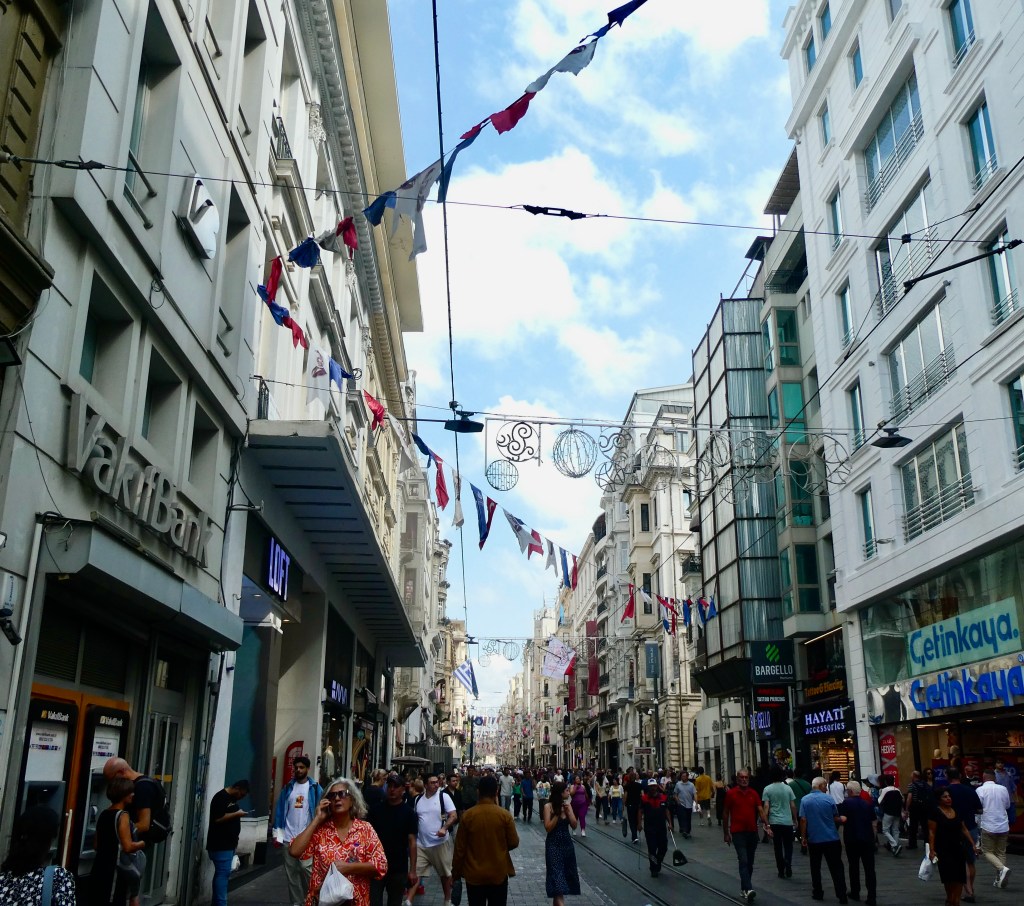
We walked down the Grand Rue de Pera, hub of cultural life. Nearby is the Hotel Pera Palace where Agatha Christi wrote Murder on the Orient Express – a train route that had termini in Paris and Istanbul.  

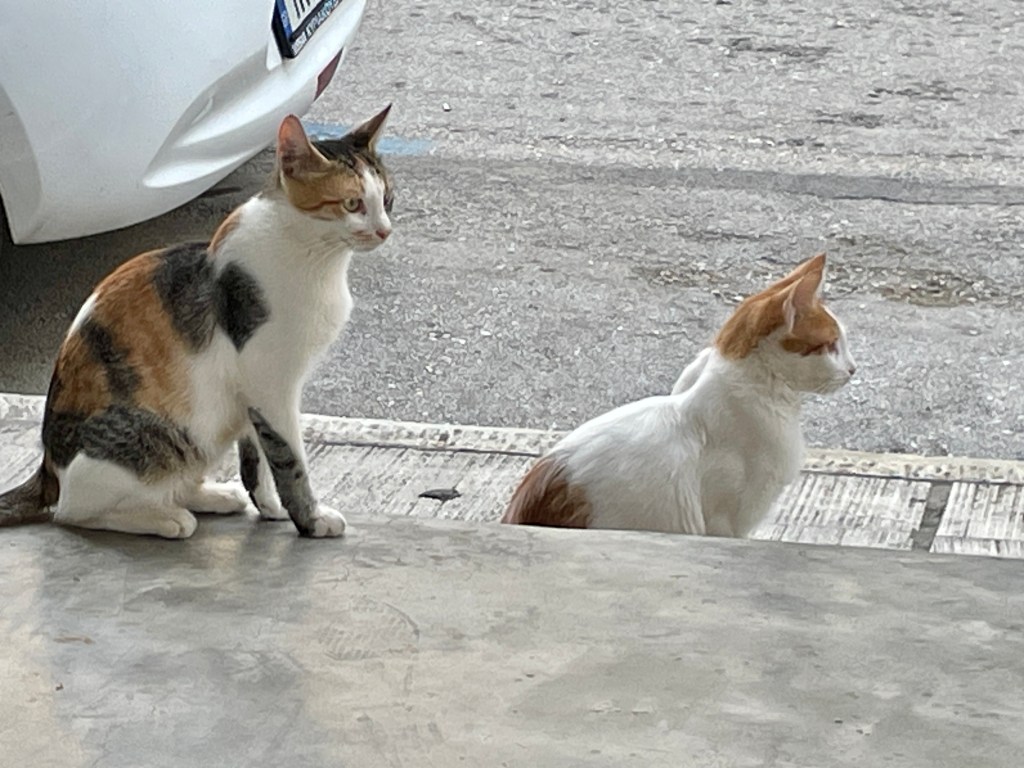
We saw that Istanbul too has cared for street kitties.

We said goodbye to our guide whom we had enjoyed very much. He was highly educated and a very good communicator. Small group tours really are the best when you can get them. 

We returned to our ship prepared for a late afternoon sail away. We still had some interesting sights to see on our way out of Istanbul.

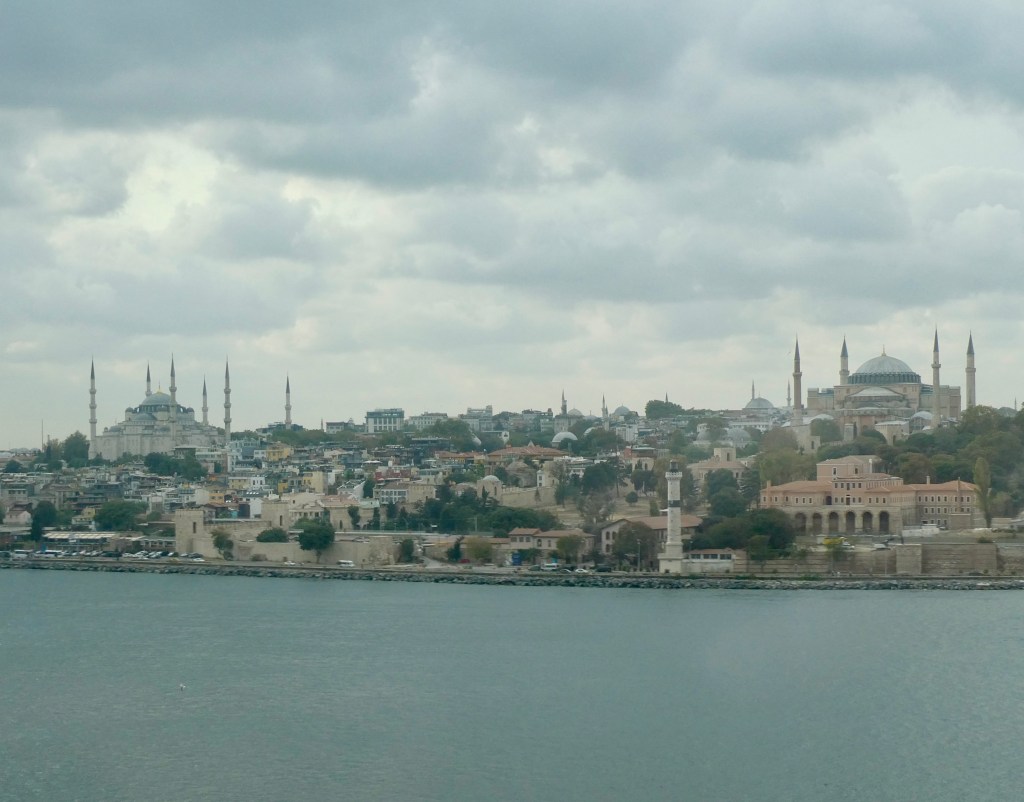
The Blue Mosque is on the left and St. Sophia is on the right. It is a unique (to us) landscape.

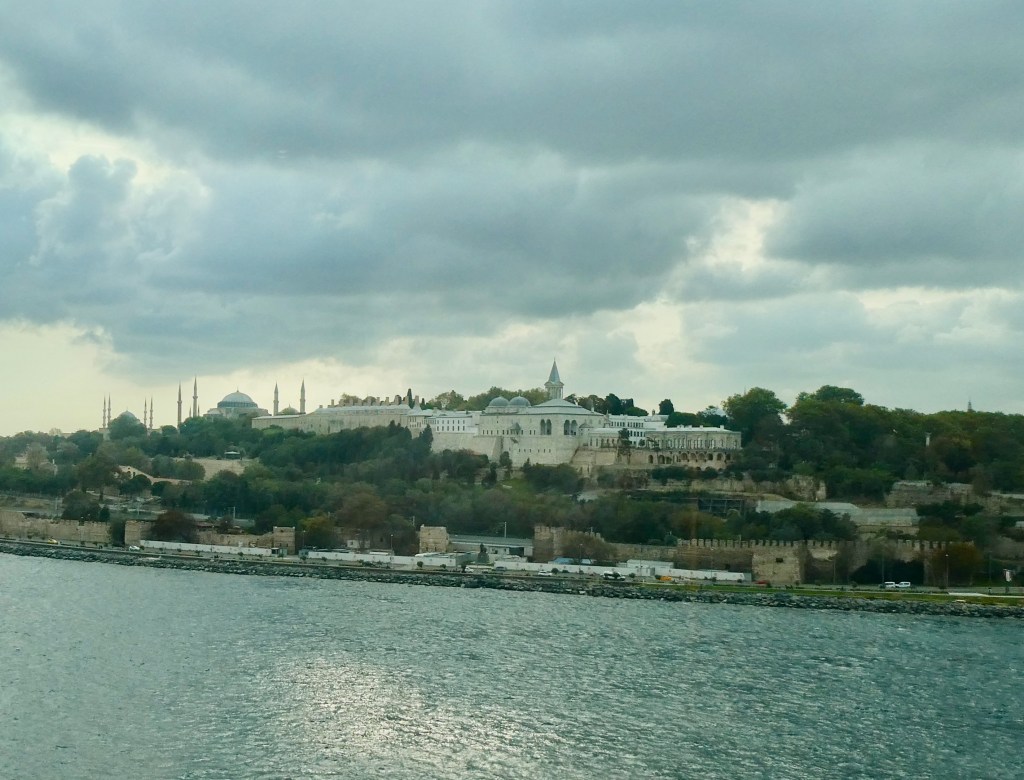
From 1460 on, the Ottoman Empire ruled much of the world from Topkaki Palace.  It was the administrative center and the main residence of the sultan.

There are more than 7000 mosques in Istanbul.  Sailing away, Randy was able to count 16 large mosques from our balcony on the ship.

Istanbul and Rome alternate as the third most visited city in Europe behind London and Paris.  We would be happy to visit again someday.

We were in Istanbul on September 27, 2023.

Next up: Mykonos

Posted in Uncategorized | Leave a comment

Ancient Mysteries Cruise: Istanbul Day 1

Istanbul is the only city in the world that is located on two continents – Europe and Asia.  It was once the center of the world as the second capital of the Roman Empire.

It also has 7000 mosques!  This sighting was the first of many we saw or visited.

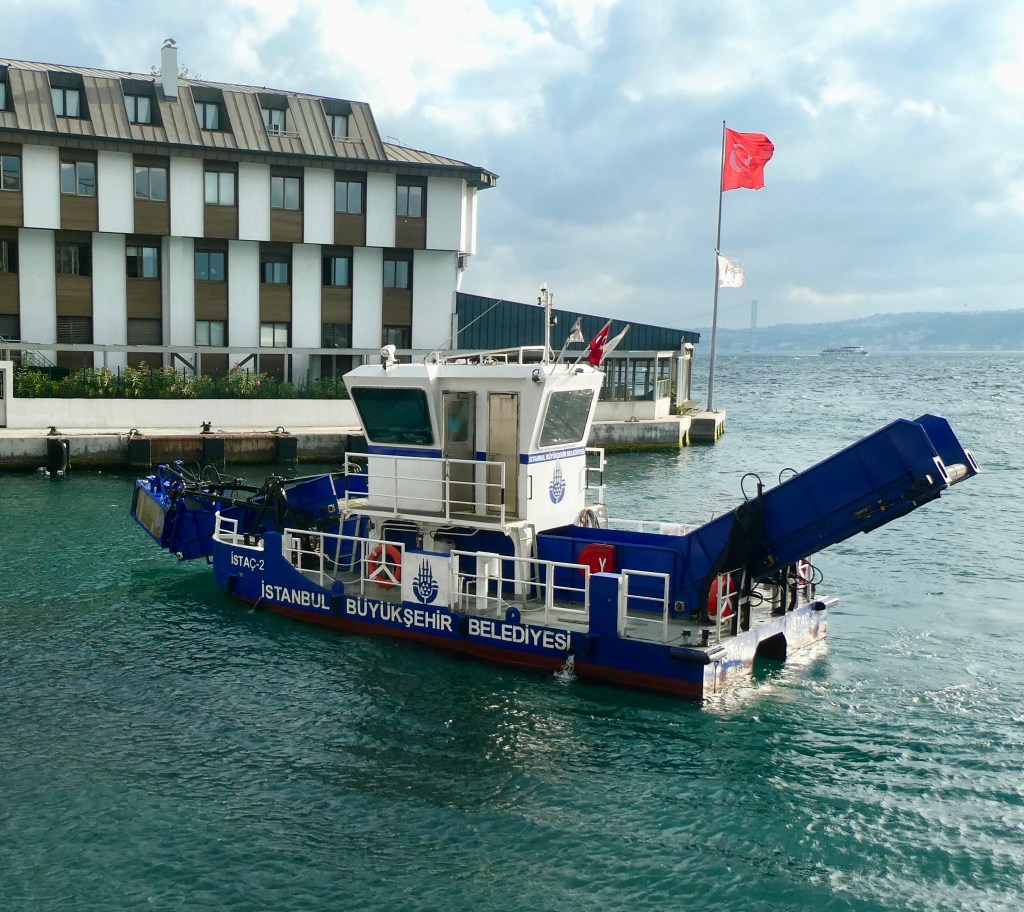
We were waiting for our boat to cruise the Bosporus Strait when we saw this vessel- a water vacuum cleaner.

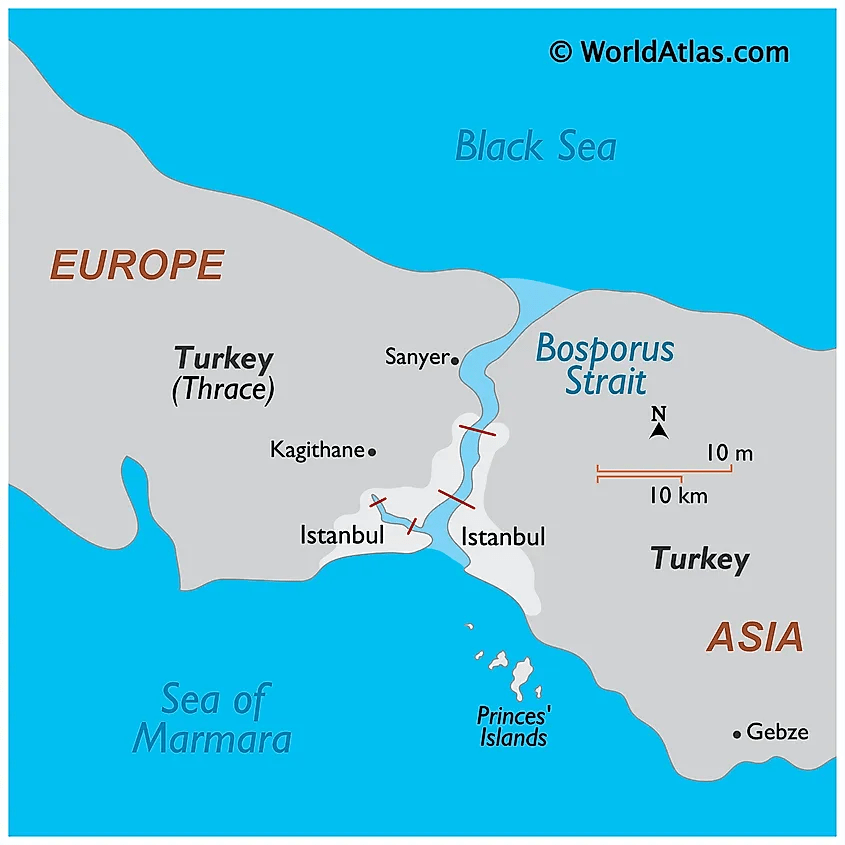
The Bosporus Strait, the narrowest in the world, connects the Black Sea with the Sea of Marmara. The Sea of Marmara connects with the Mediterranean and Aegean Seas.

The Bosporus Strait is natural with a length of 31 kilometers and a maximum width in the north of 3.7 kilometers. The narrowest point is 700 meters wide.

There is our boat!

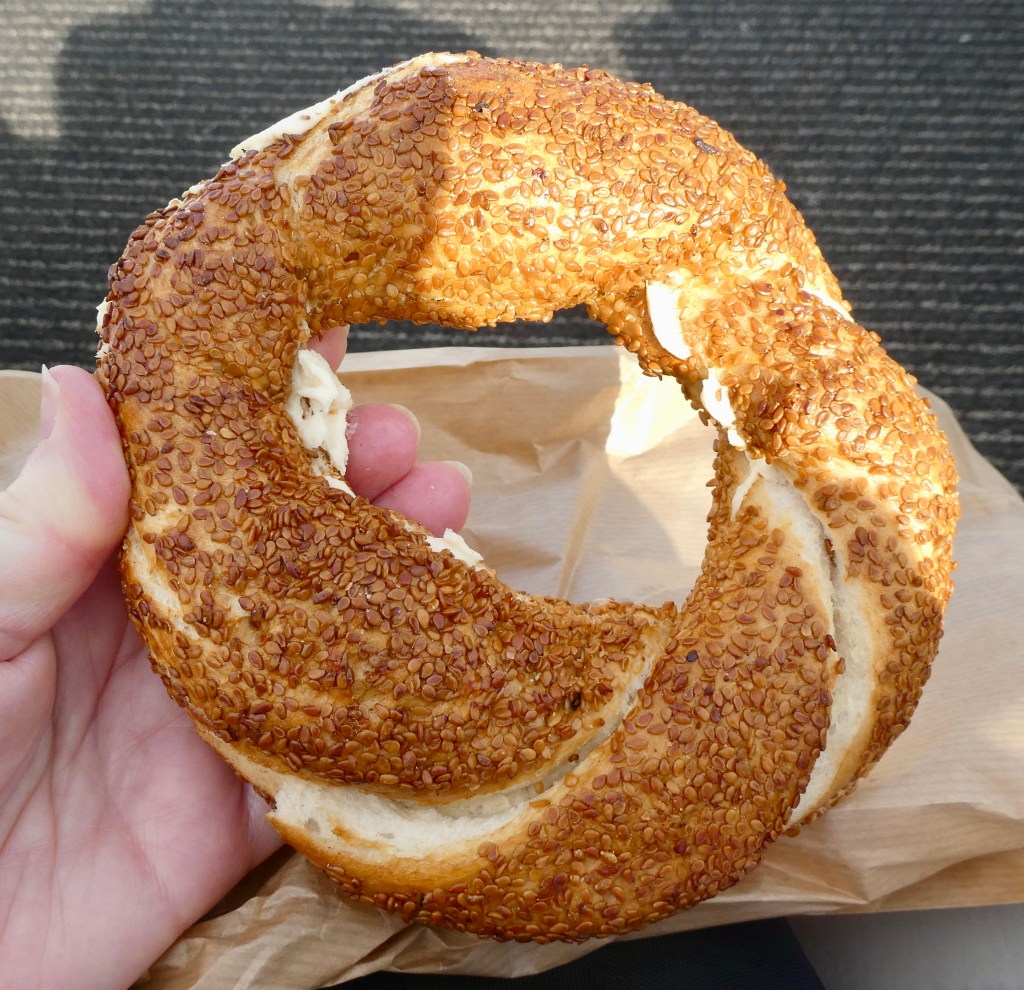
We were offered a Turkish snack called Simit.  It is kind of a pretzel-bagel often served for breakfast. It was served with hot tea. Turkey is famous for coffee but residents drink way more tea per capita than coffee.

Most of the historical highlights are on the European side of the Bosporus Strait.

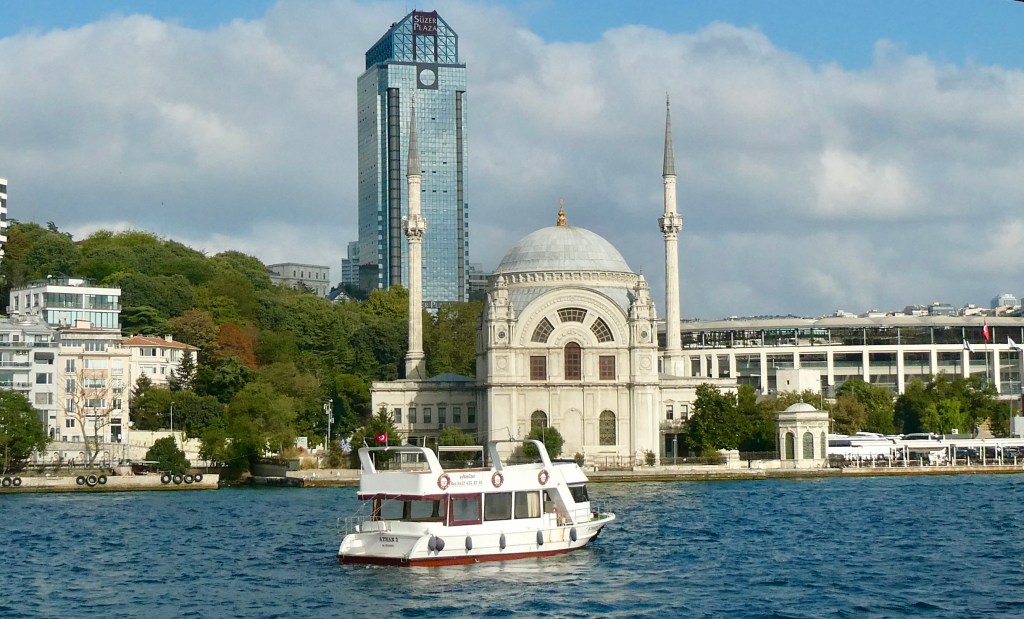
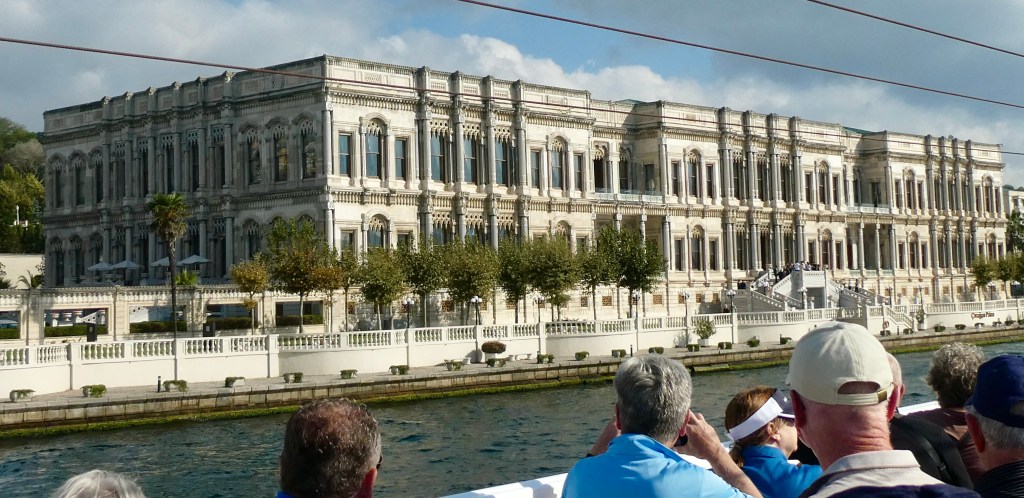
Those highlights included mosques and nineteenth century Ottoman palaces.

This building was the second palace from the Ottoman period. It is now a hotel.

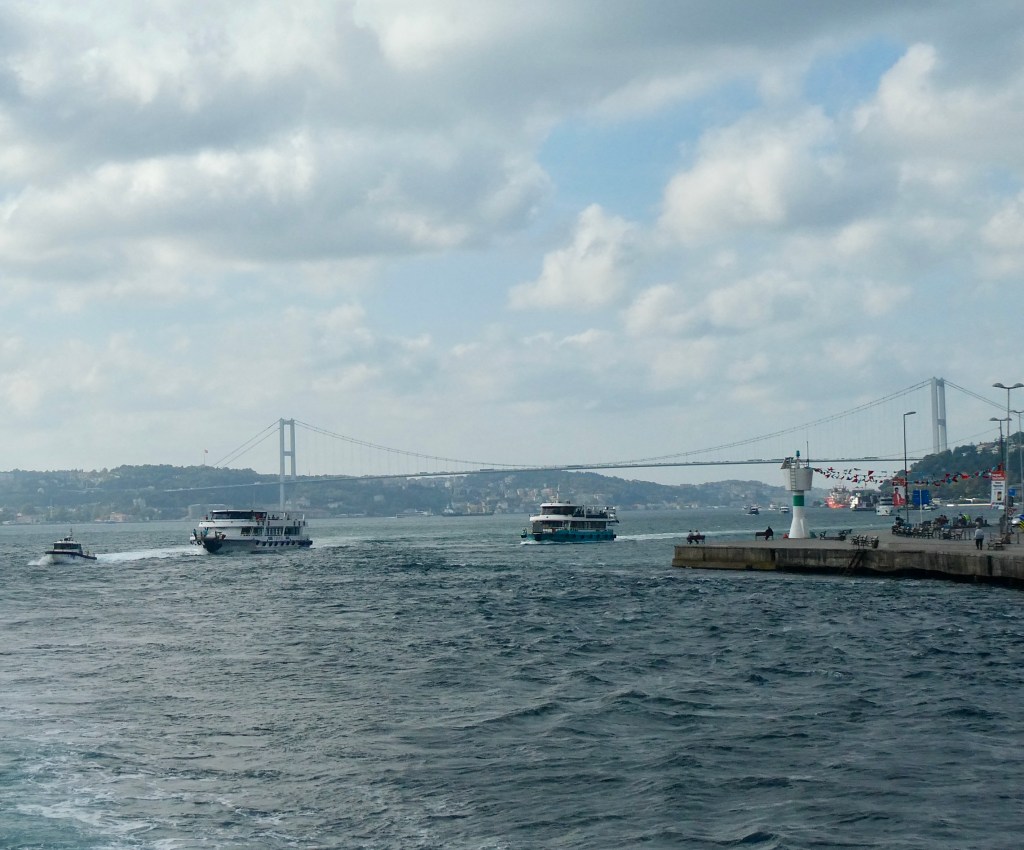
This is the Bosporus Bridge built in 1973. It was the first bridge between the continents.

This bridge, from 1989, goes between the shortest distance between the two continents. I wonder why they didn’t build that one first.

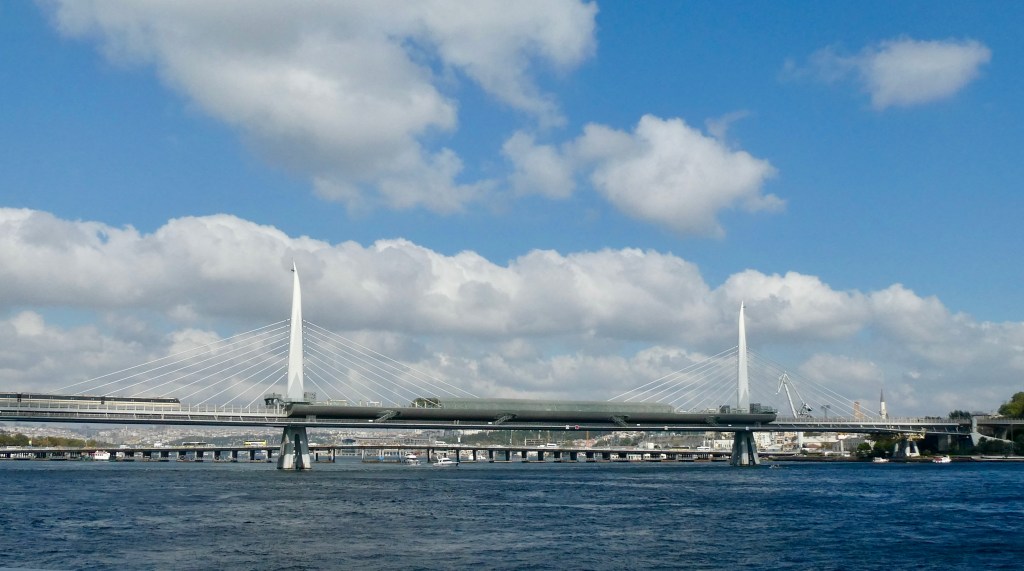
There are now three bridges and an underwater tunnel for cars and trains. 

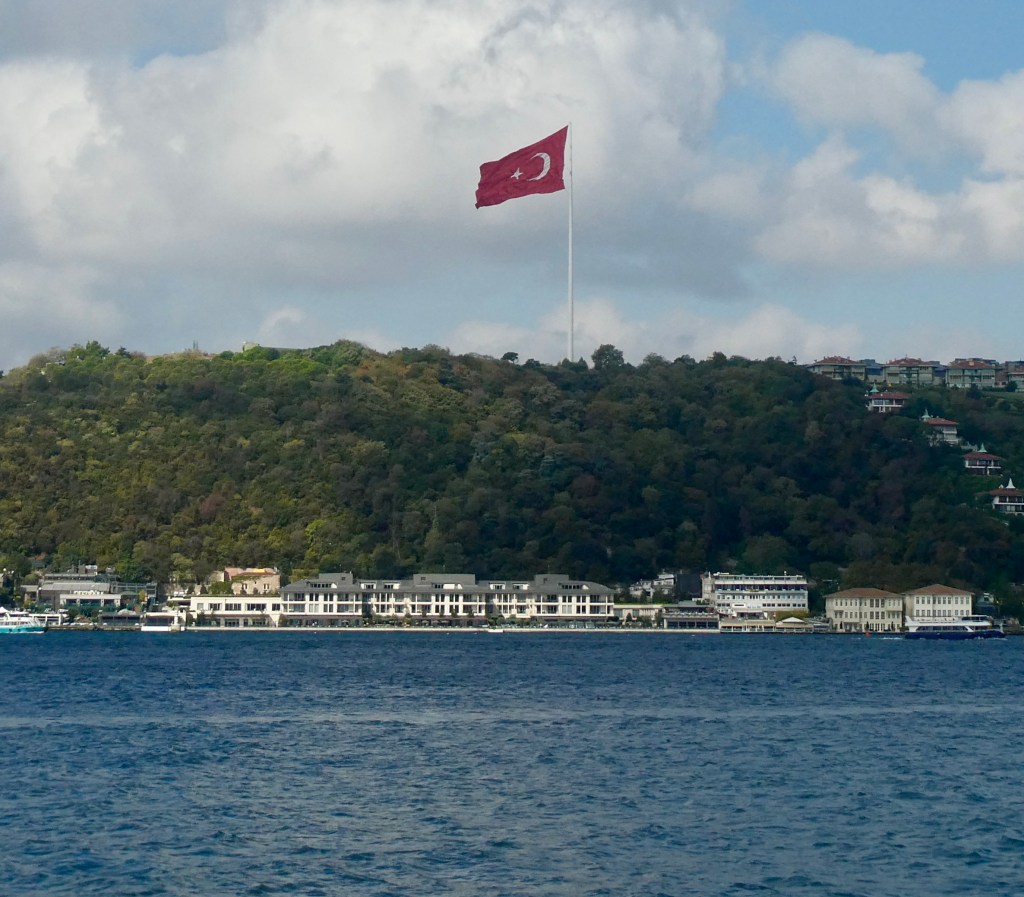
That is a very large Turkish flag!

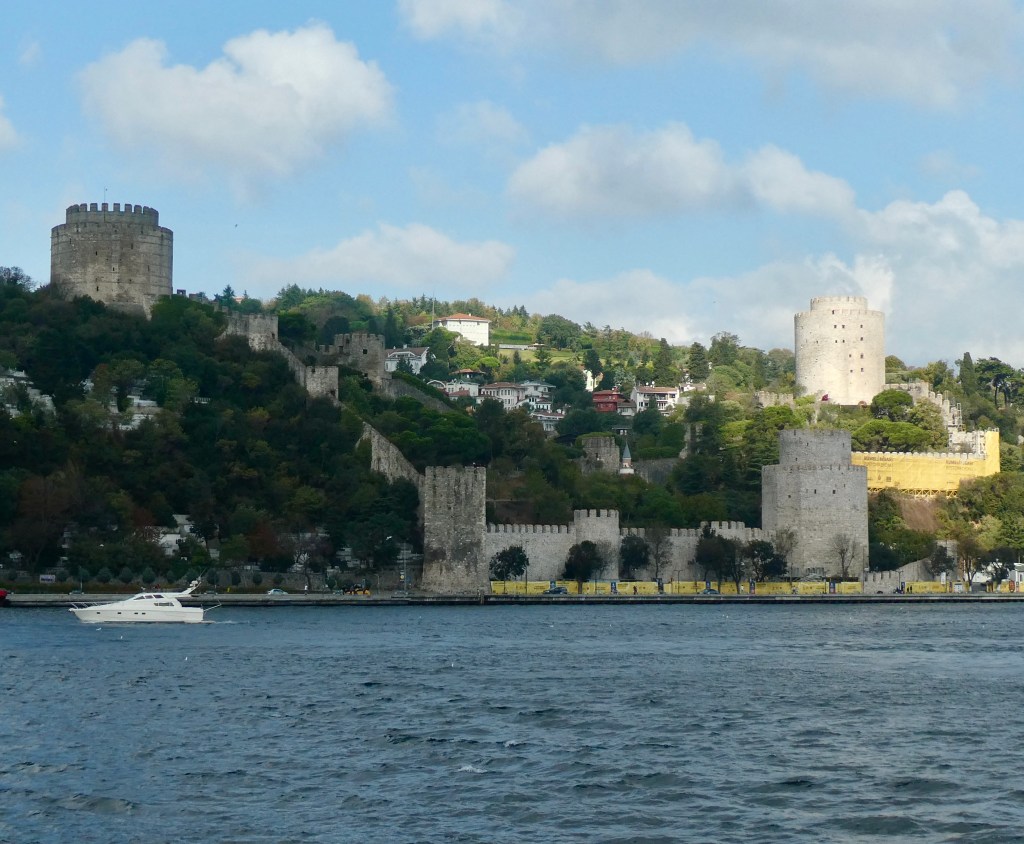
The Rumeli Fortress  was completed in six months, beginning in 1452) by Sultan Mehmet the Conqueror as preparation for a siege against Constantinople (the former name of Istanbul).

The 53 day siege resulted in the capture of the capital of the Byzantine Empire by the Ottoman Empire in May 1453. After conquering the city, Mehmet made Constantinople the new Ottoman capital. 

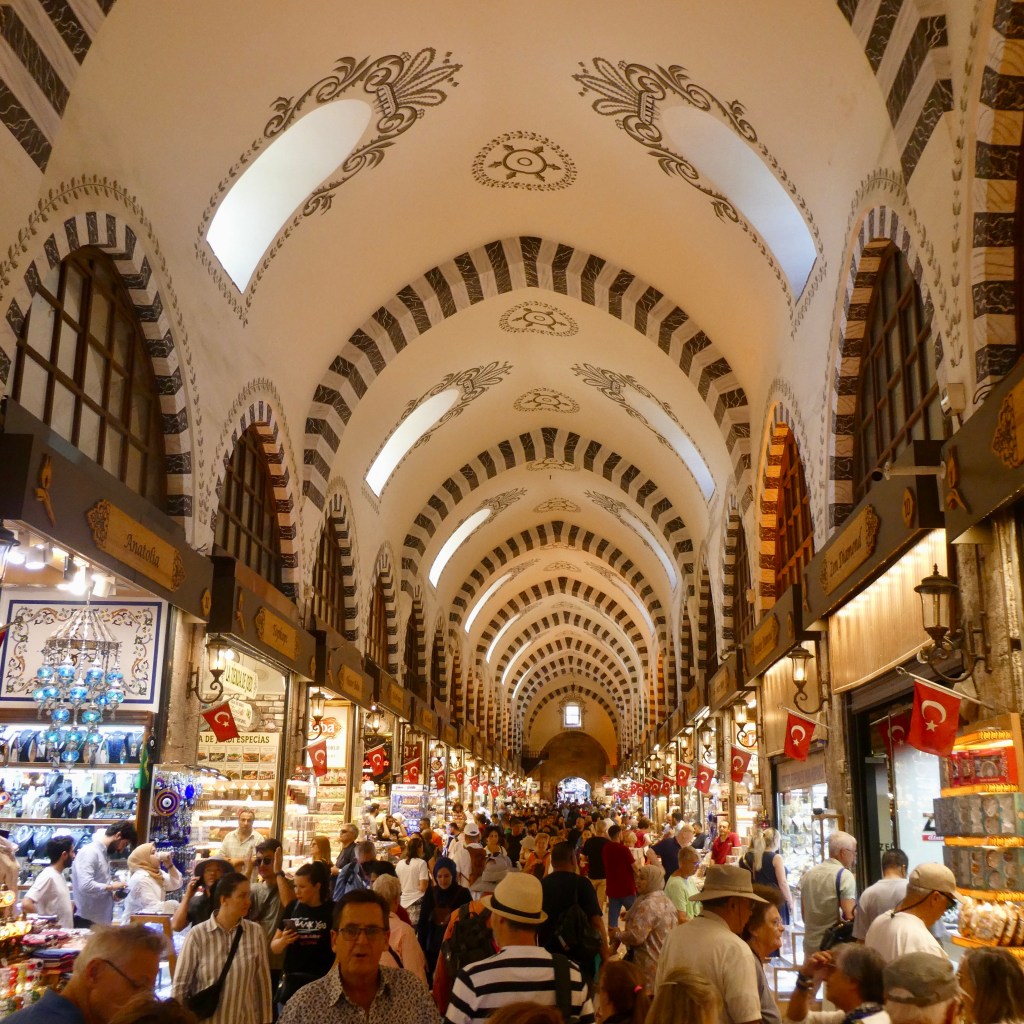
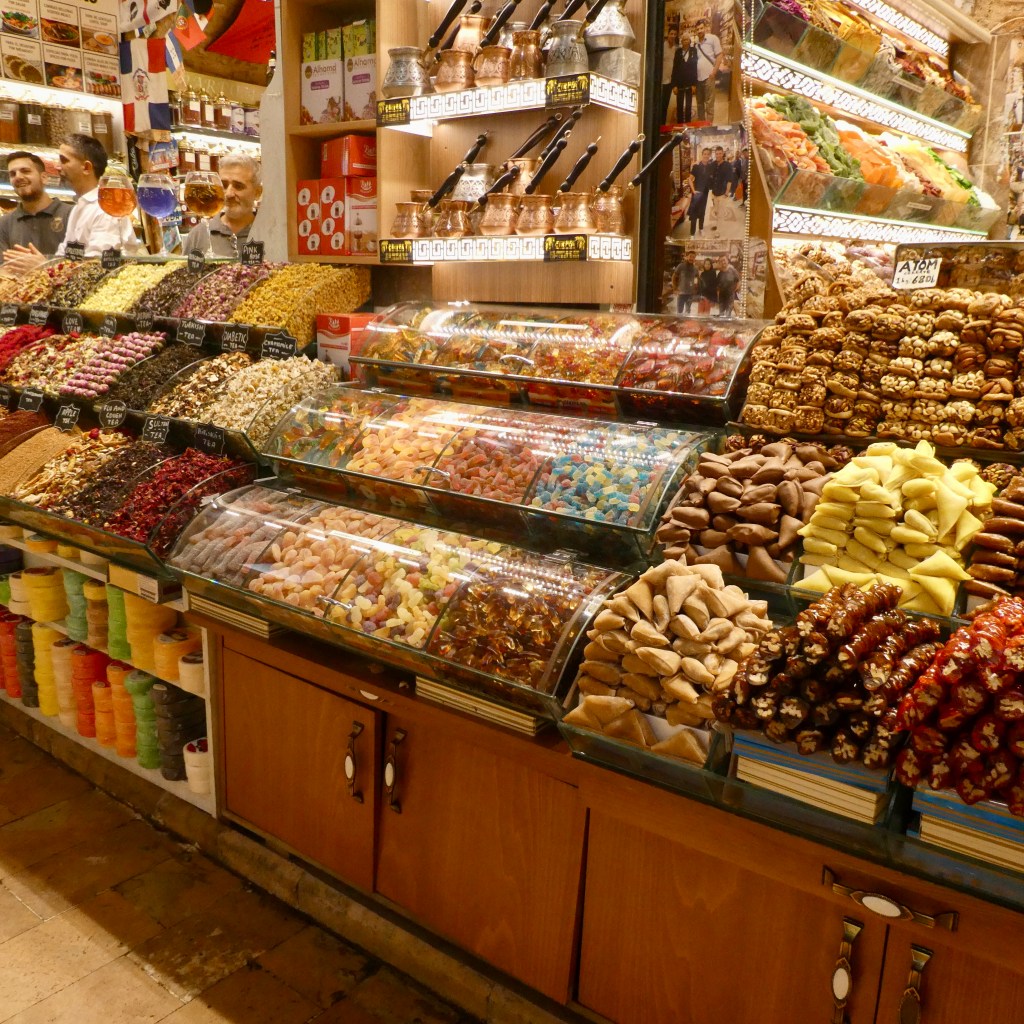
We left the boat and walked to The Spice Market, also called the  Egyptian Market. 

It dates back to 1663. 

Istanbul was the final destination on the Silk Road and a distribution center throughout Europe. 

Spice trading with Venice began in the 13th century and eventually included spices from India and Southeast Asia.

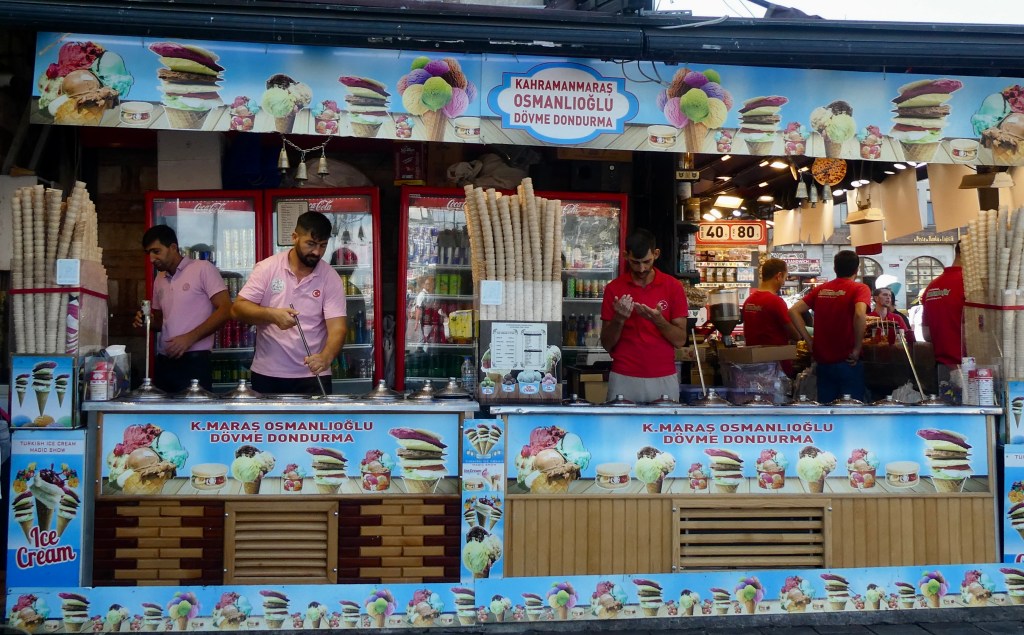
As we were finished in the market, we enjoyed watching the antics of the men in the ice cream booth. Think Seattle’s Pike’s Place Market but with ice cream instead of fish.

The market is adjacent to the New Mosque.

Also nearby was the Galata Tower. When built in 1348, it was the tallest building in Constantinople.  After the Turkish conquest in 1453, the tower was allowed to survive and was turned into a prison. 

It was from the roof of the tower that Herarfen Ahmed Celebi strapped on wings and jumped making the first intercontinental flight. He left the European side of the city and flew to the Asian side of the city in 1638.

The tower’s roof was destroyed during a storm in 1875 and remained that way for many years. In 1965, the roof and interior were reconstructed and opened to the public. It has been a museum since 2020.

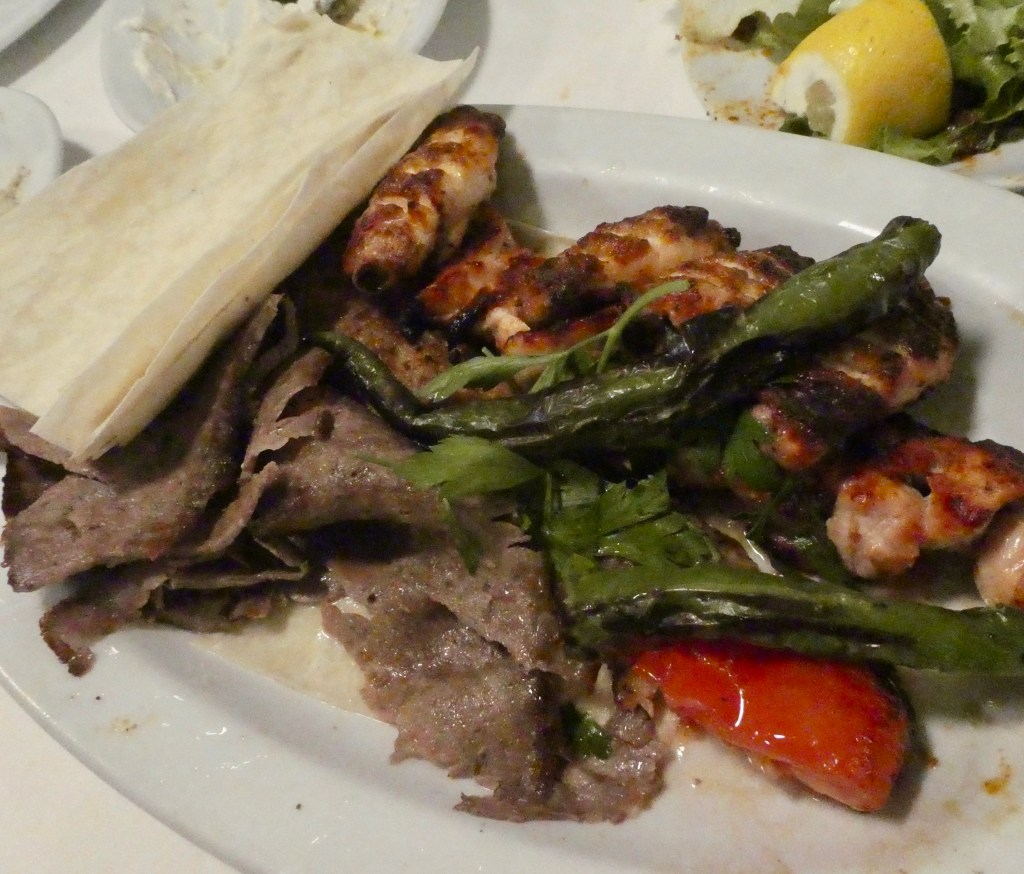
That evening we went on a Kebob Dinner Tour. The company was great and our food was delicious.

The options were many and I chose this picture from six that I took of various courses.

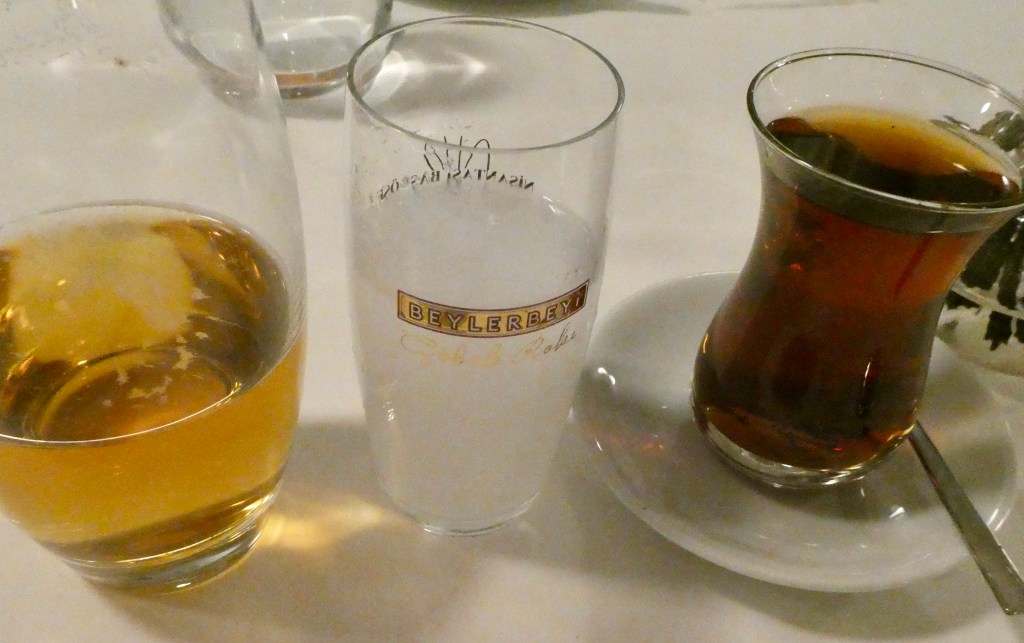
I was able to try raki – a strong liquor similar to oozo in Greece.  I liked it very much but I like black licorice.  Randy doesn’t, so he didn’t. The picture shows my beer, my raki and my tea. Sheesh!

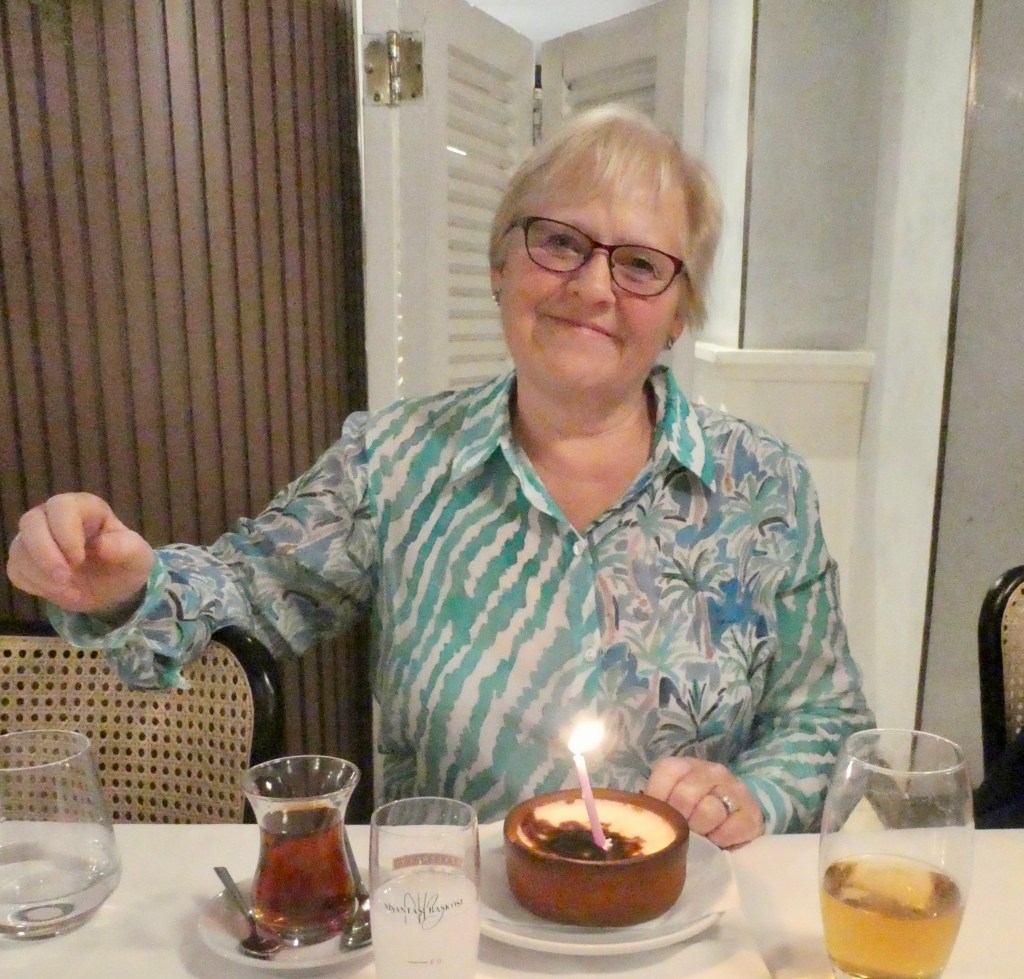
It came up in conversation that my birthday had been the previous day.  The couple we were sitting with informed the waiter and they sang and brought me a celebratory rice pudding dessert.  It was one of the best things I ate on the whole trip!

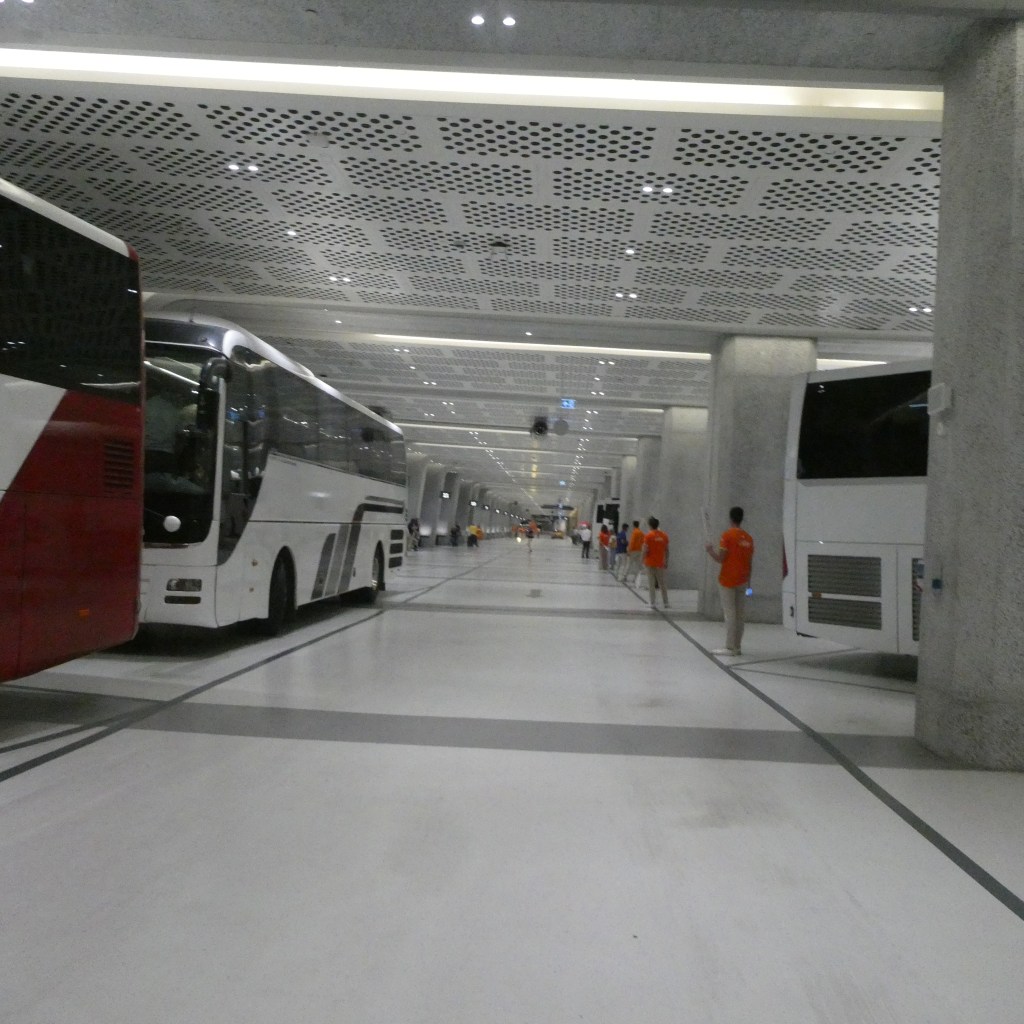
We returned to the port and went again into the cleanest bus loading and drop off area we have ever been in anywhere. Istanbul, in general, is very clean. 

We concluded day one of our two day stay in Istanbul on September 26, 2023. 

Next Up: Day 2 in Istanbul visiting the Blue Mosque and St. Sophia

Posted in Uncategorized | Leave a comment

Ancient Mysteries Cruise: Kusadasi

This was our view of Kusadasi from our balcony.

From our Kusadasi tour guide we learned that Turkey has a population of 85 million. Ninety-nine percent are Muslim, but he said only 15-20 percent are serious about it.

In 1934 women got the right to vote in Turkey, before many western cultures.

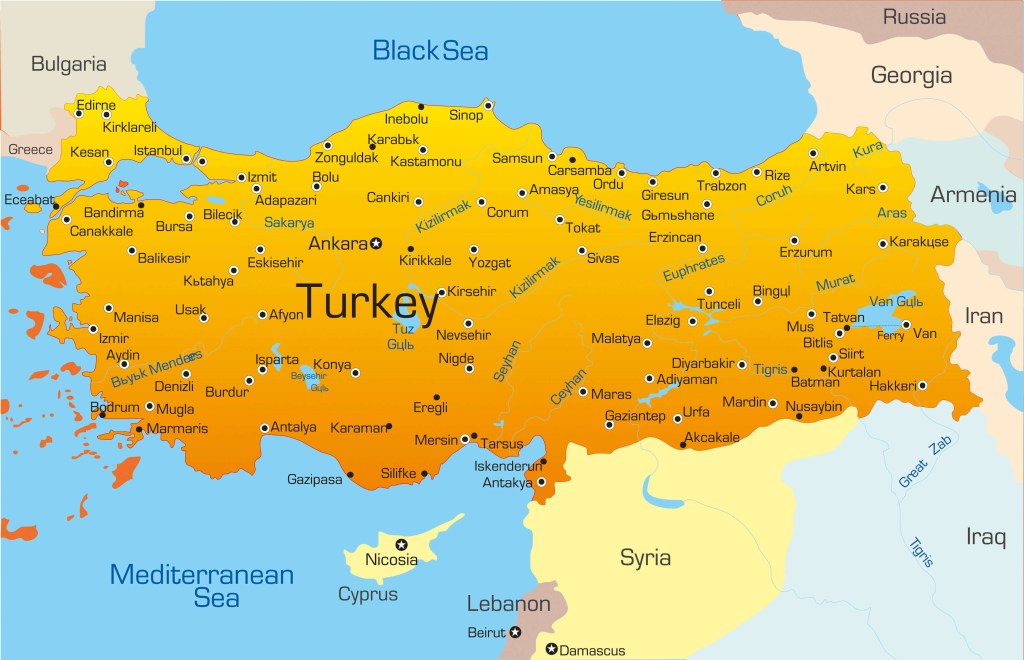
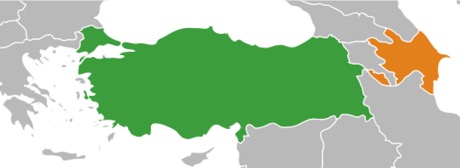
Turkey is mostly in Asia and has eight neighbors, some in the Middle East and some in Europe.  These include Greece, Bulgaria, Georgia, Armenia, Azerbaijan, Iran, Iraq and Syria. (What a neighborhood….) I didn’t see Azerbaijan on this map, so looked for more information.

The border between Turkey (shown in green) and Azerbaijan (shown in orange) is just 11 miles long!

There is archeological evidence of inhabitants in Turkey from 10,000 BC.  Mesopotamia, as this area was called in ancient days, was the most developed part of the world in 3000 BC

Our guide stated that religion started in Turkey and is second, after Israel, in biblical history. Mount Ararat is in Turkey where remnants of Noah’s Ark are believed to be.  Early Christians lived in Antioch.  Saul of Tarsus was born in Turkey.  Later named Paul, he taught extensively in Ephesus. There is also the Virgin Mary’s house.

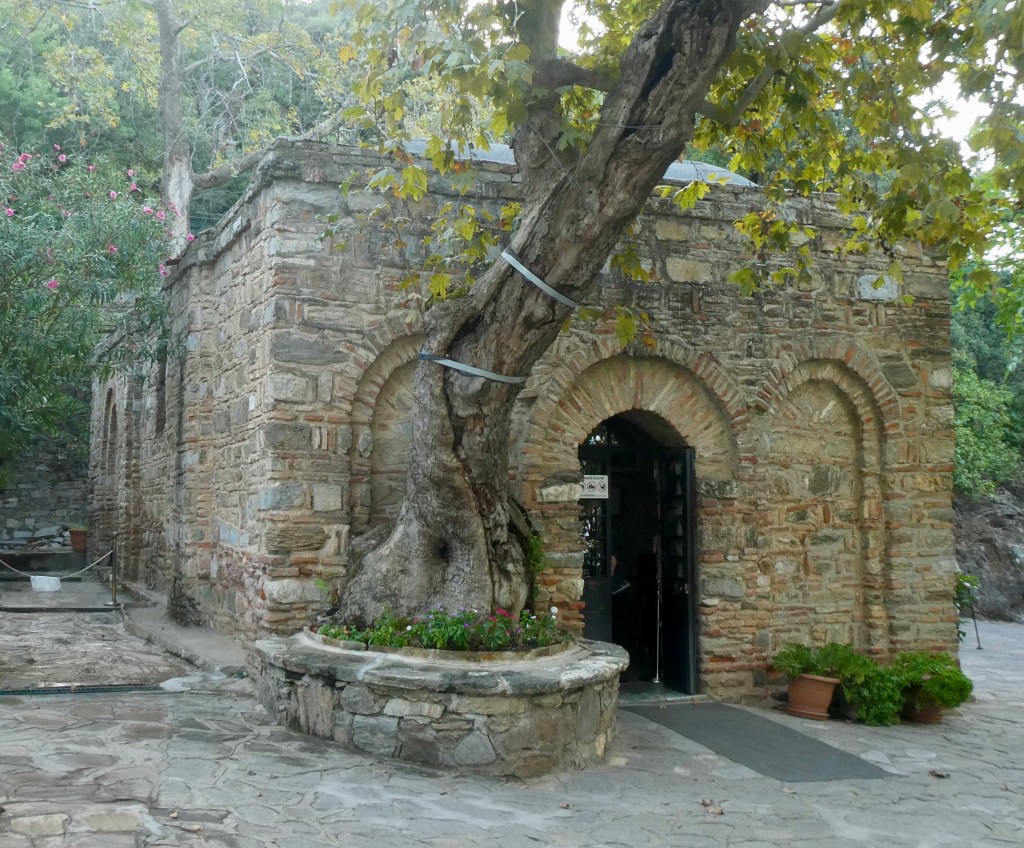
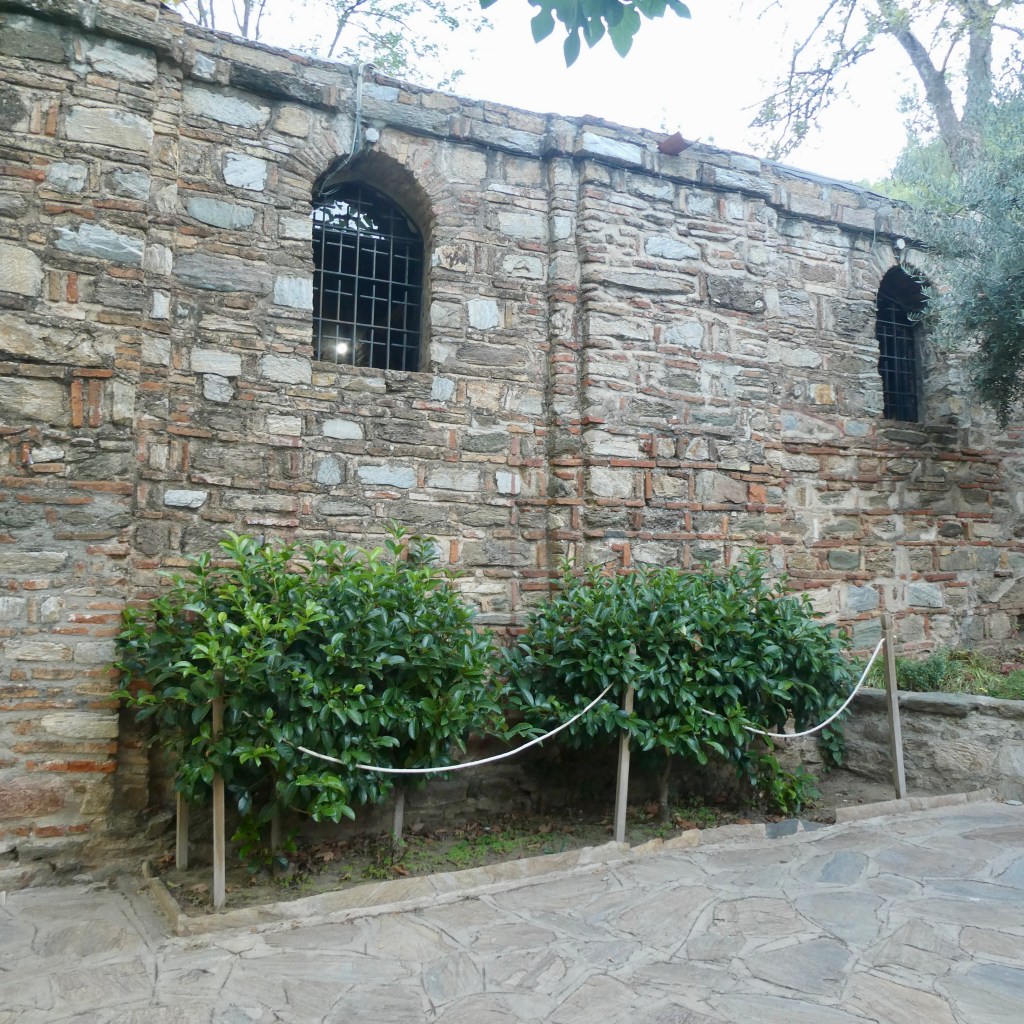
We began with a visit to the Virgin Mary’s house where Jesus’ mother is said to have lived the last years of her life.  Jesus entrusted his mother Mary to his follower John.  John came here, so she would have been here too.

Mary’s house was probably a house church in the first century AD.  Evidence exists that it was used as a church for a very long time. Making a church out of a revered person’s house was a tradition. 

There are 31 references to Mary in the Koran, so she is important for Muslims too.

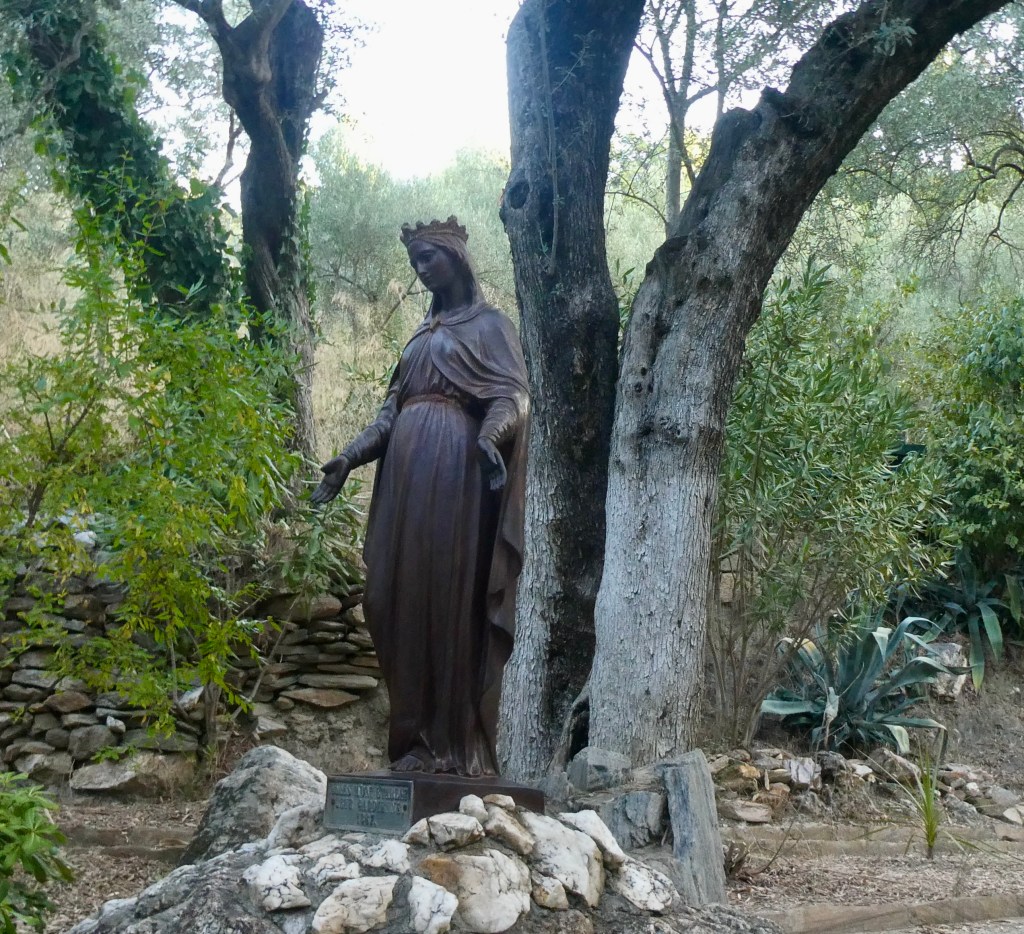
The Statue of Mary was a gift from a rich man from Lima, Ohio.  He came in 1948,  saw the house foundation, and believed the evidence that Mary had lived here.  He had the house rebuilt in 1951.

The Virgin Mary’s House is now a Catholic shrine. It was visited by Pope Paul VI in 1967, Pope John Paul II in 1979, and Pope Benedict in 2006.

John, disciple of Jesus, spent his last years in this region near Ephesus, and died in 100 AD. A small chapel was built over his grave.

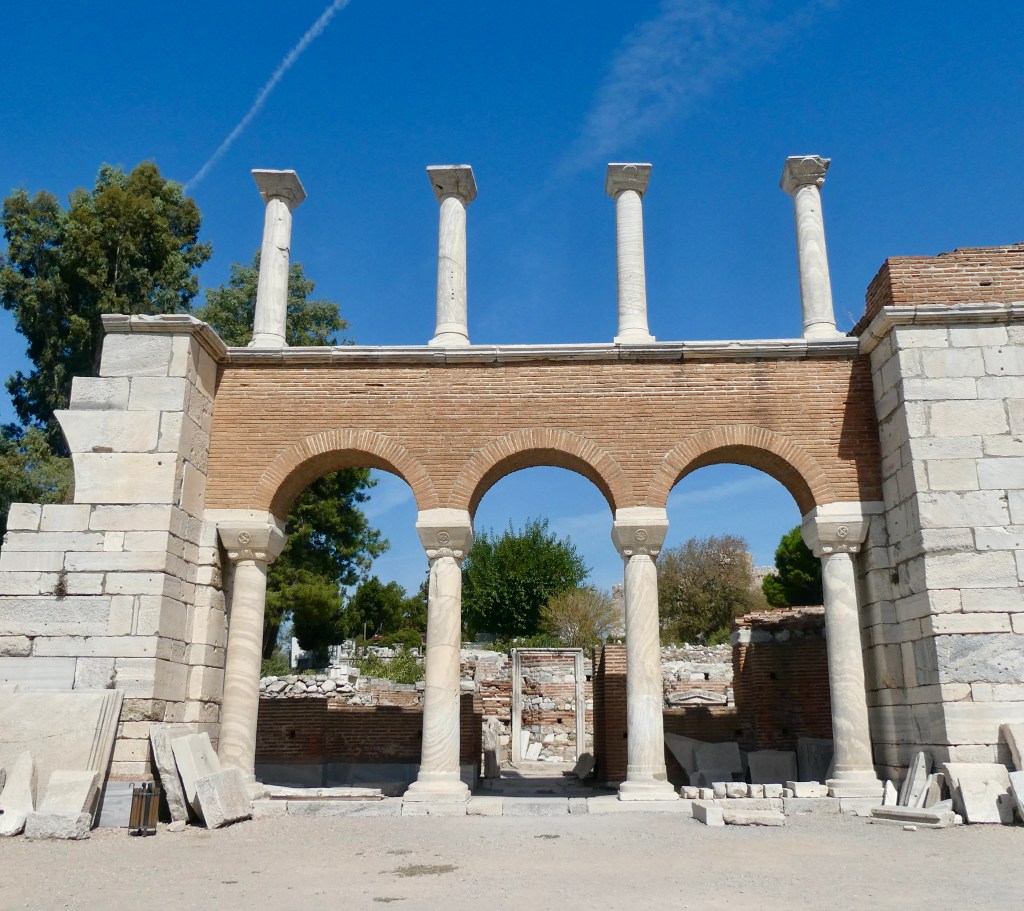
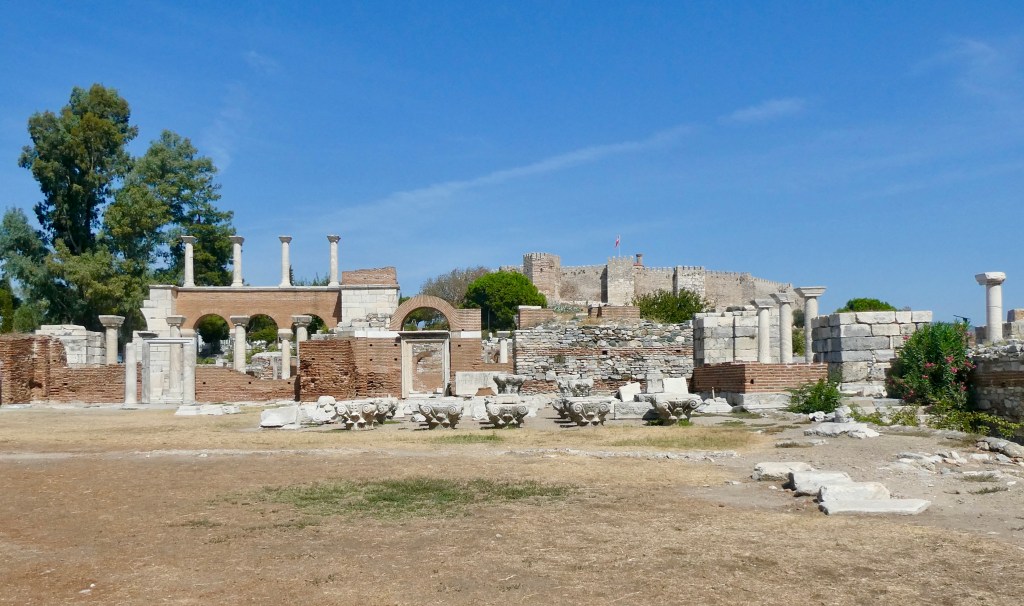
The Basilica of Saint John was built on the same site between 527-565 AD.

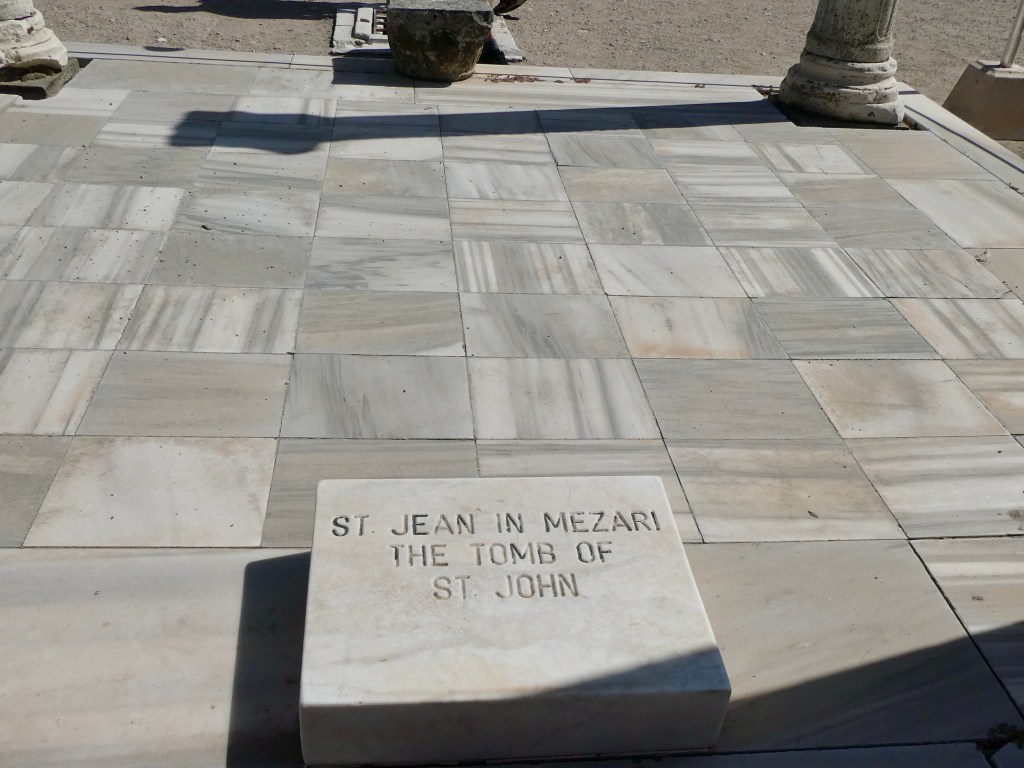
The tomb of St. John was under the central dome.

This was the baptistery.

Walls protected the basilica from attack by Arabs in the 7th – 8th centuries AD.

With the eventual conquest by the Turks, the basilica was used as a mosque for a brief time until it was destroyed in an earthquake in the 14th century.

Modern excavations began in 1973.

Our tour provided a buffet lunch and folkloric show.

Our last stop of the day was to learn about, and have the opportunity to purchase, Turkish Rugs.  We were offered apple tea, wine, or raki. Raki is Turkey’s version of an anise liquor – like oozo in Greece.

The proprietor told us that a rug’s value is based on how many women worked on it,  for how many years,  and how many knots there are per square inch.

We had the opportunity to see and walk barefoot on rugs made of wool on wool, cotton on wool and silk on wool.

The rugs we were shown ranged in cost from $450 to $87,000.  The good news was that you only paid for the rug. Taxes, shipping, and any duty is paid by the Turkish government.

The rugs were beautiful. The options were endless.  Special order was possible. We were thoroughly impressed but had no interest in purchasing a Turkish rug.

We were happy to see that six to eight couples on our tour seemed very interested and started engaging with all the sales associates. That made it easy to slip out.

We were close to the port so we just walked back to the ship.  

When we returned to our cabin we heard “Man overboard! This is not a drill.”  The alert was for the port side, which is where our cabin was located.   We went onto our balcony and people higher up could see that someone on the ship had thrown a life ring into the water.  We saw medical personnel heading aft and a lifeboat being prepared for launch. Then all went back to normal.

We learned later that it was not someone from our ship that had gone overboard but rather it was a local man who was swimming fairly close to the ship.  He was questioned by the police and presumably released.  It really had nothing to do with the ship – other than we had a man overboard alert which was a new experience for us .

The next day was our last sea day of the cruise.  

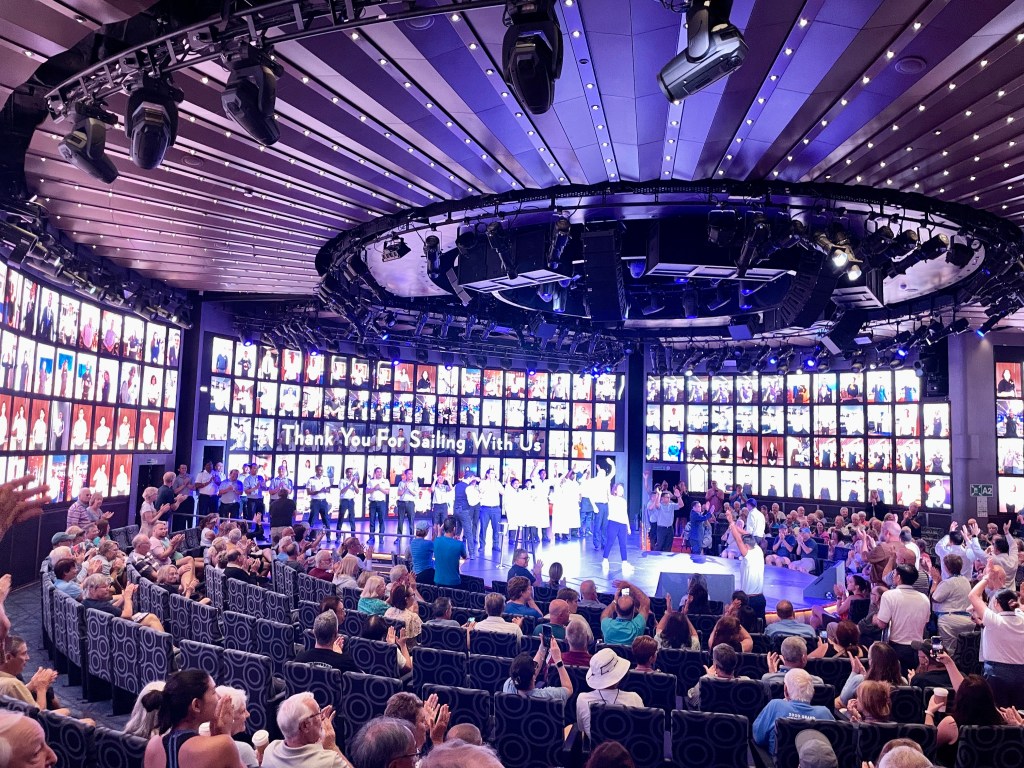
We went to the City on the Sea presentation.  

We have seen a few of these “ship operations” presentations and they are always interesting!

Then we watched the Visiting Istanbul presentation as it was our next port.  It wasn’t meant to scare us like the one for Egypt had been. Maybe Istanbul isn’t as scary or maybe the cruise director got some feedback on her previous presentation.

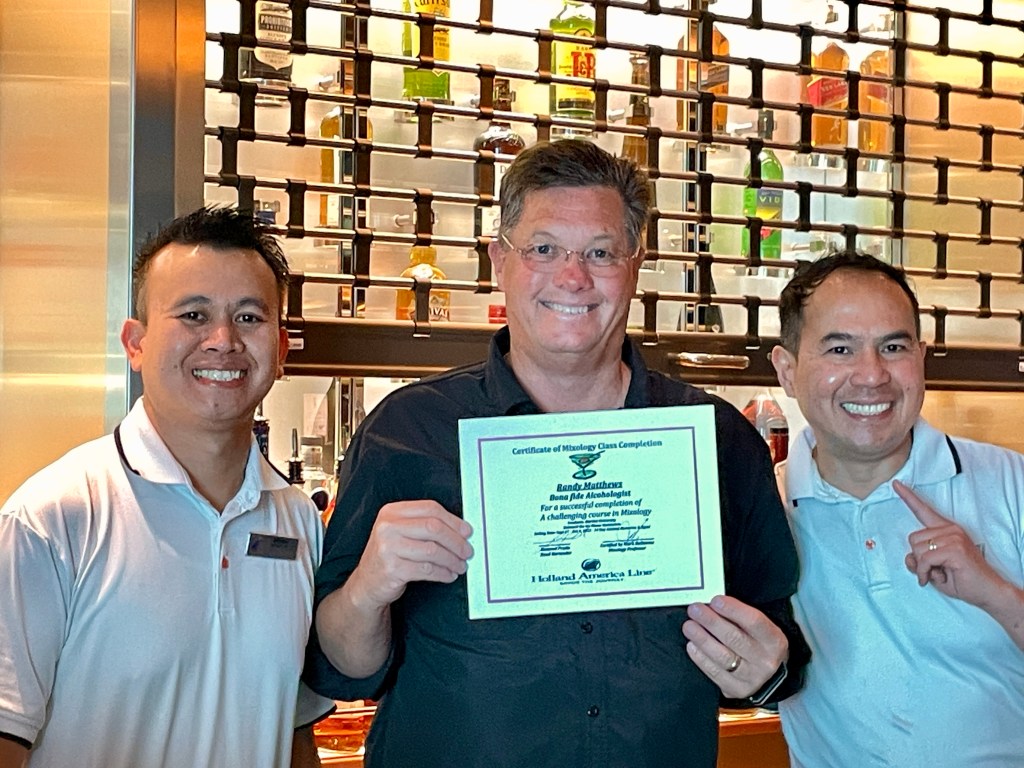
Randy went to his last Mixology class and I saw him get his Alcohologist Diploma.

He really enjoyed these classes held on sea days throughout the cruise.

While sitting in the bar we heard over the announcements that we had just gone under the 1915 Canakkale Bridge. The bridge opened in 2022 and connects Turkey’s European and Asian shores. It cost $2.8 billion and has the longest distance between its two towers, 1.25 miles, of any suspension bridge in the world.  

The numbers 1915 in the name commemorate an Ottoman naval victory against the French and British during World War One

If we had known it was coming, especially if it was the “most of” or “best of” we would have gone somewhere on the ship to see the whole span!  Instead, this is a picture from the CNN Travel website.

We had our last sea day on September 25, 2023. That just happened to be my birthday and when we went to dinner, the dining room staff knew. I ordered the desert on the right and then received the one on the left for my birthday.  If I had known it was coming I wouldn’t have ordered the ice cream!

Next up: Istanbul

Posted in Uncategorized | 1 Comment

Ancient Mysteries Cruise: Ephesus

When booking this cruise I was most excited about the two ports in Turkey, Kusadasi and Istanbul.

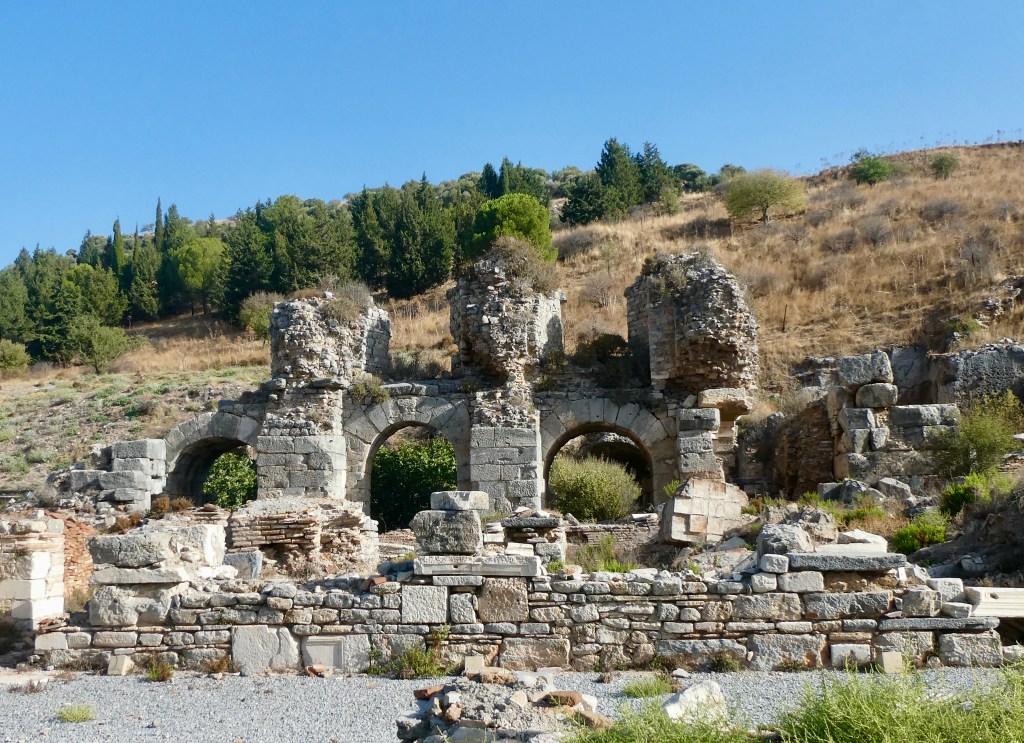
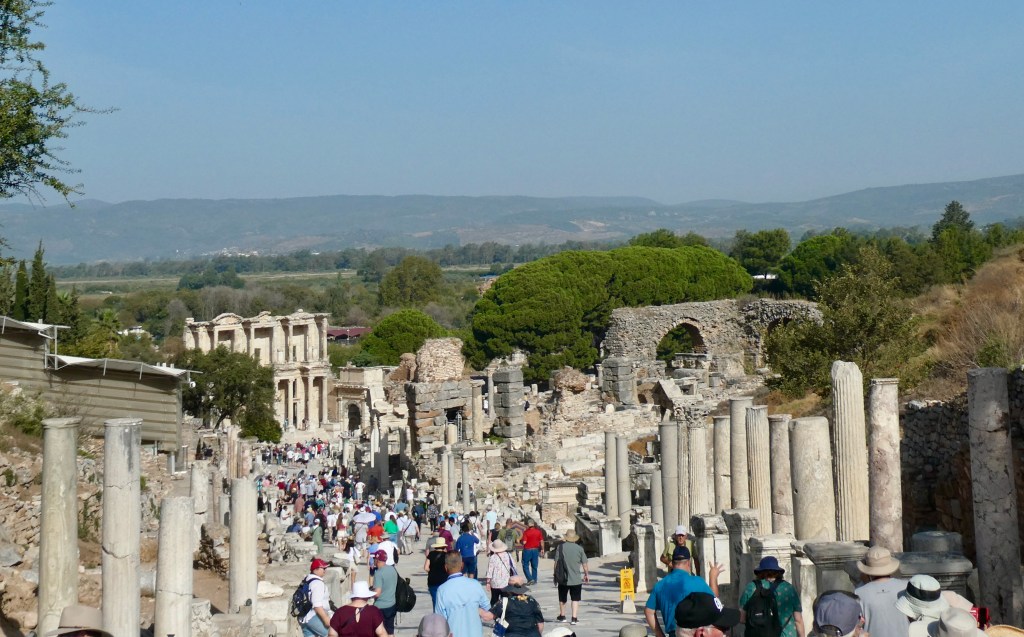
The primary point of interest near Kusadasi is ancient Ephesus, one of the best preserved archaeological sites in the world. 

Ephesus was chosen as a city site to sit between two hills. 

Archaeological evidence goes back to 1000 BC but the buildings in the city are generally from the 3rd century BC.

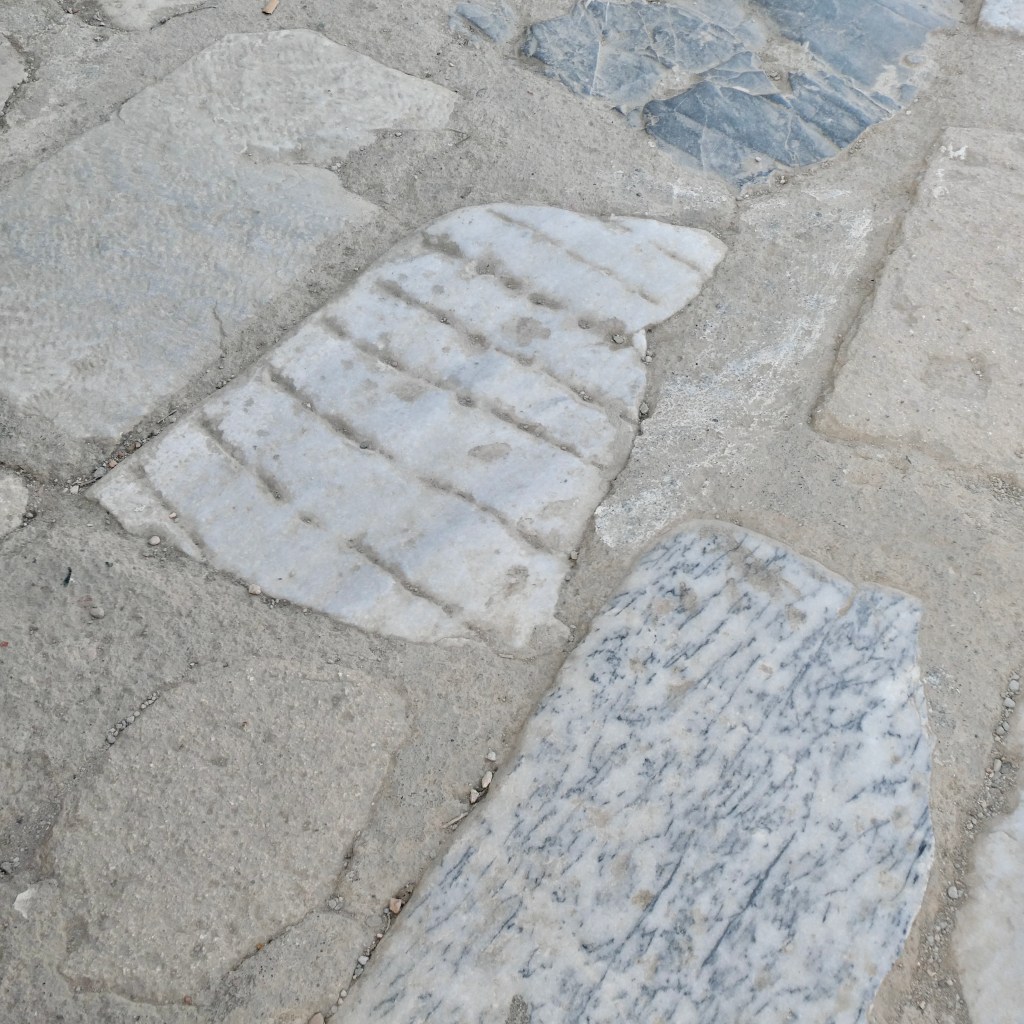
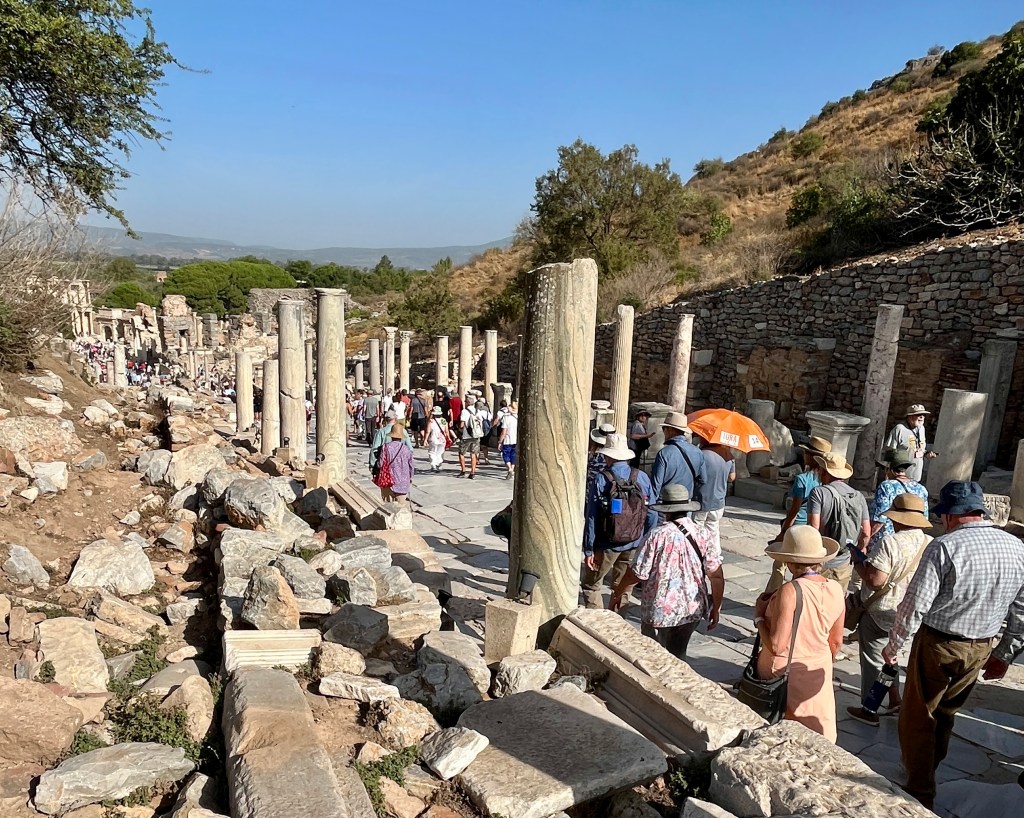
The road has an interesting combination of stones used over time.  The white one has been specifically scored to reduce the possibility of slipping when wet.

This is the oldest known building.  There was once an eternal flame, helping to recognize it as a temple.

In 133 BC the city became Roman.  A population of about 250,000 made it the third or fourth largest city in the Empire.

It became rich because of middleman fees in trade.

There was no natural source of water onsite so water was diverted to Ephesus.  They used pipes made of lead.

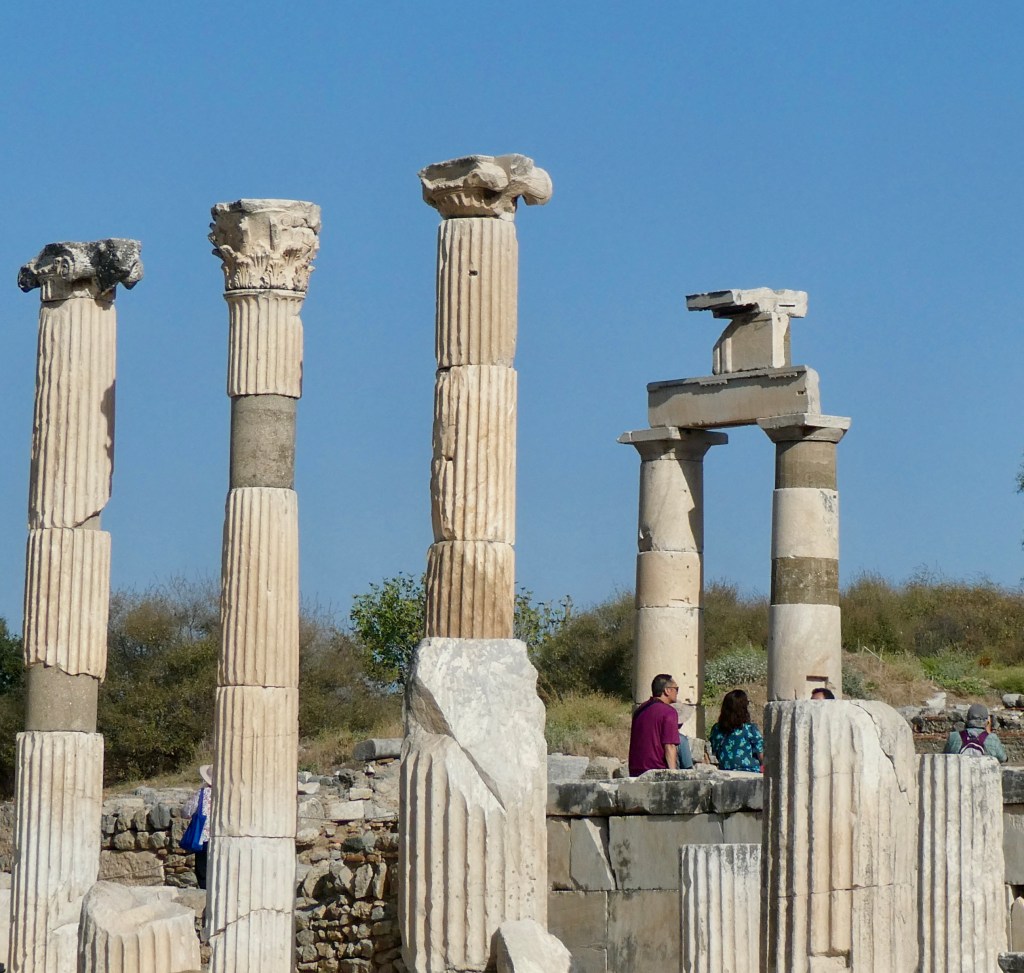
These are examples of the decorative art.

These adjacent slabs show ancient Greek and Byzantine Greek writing. (Did you see the cat?  I looked at that picture 20 times before I noticed it – one of those ever-present kitties!)
This is the only original statue remaining in Ephesus. He was a doctor based on information engraved on the base platform.

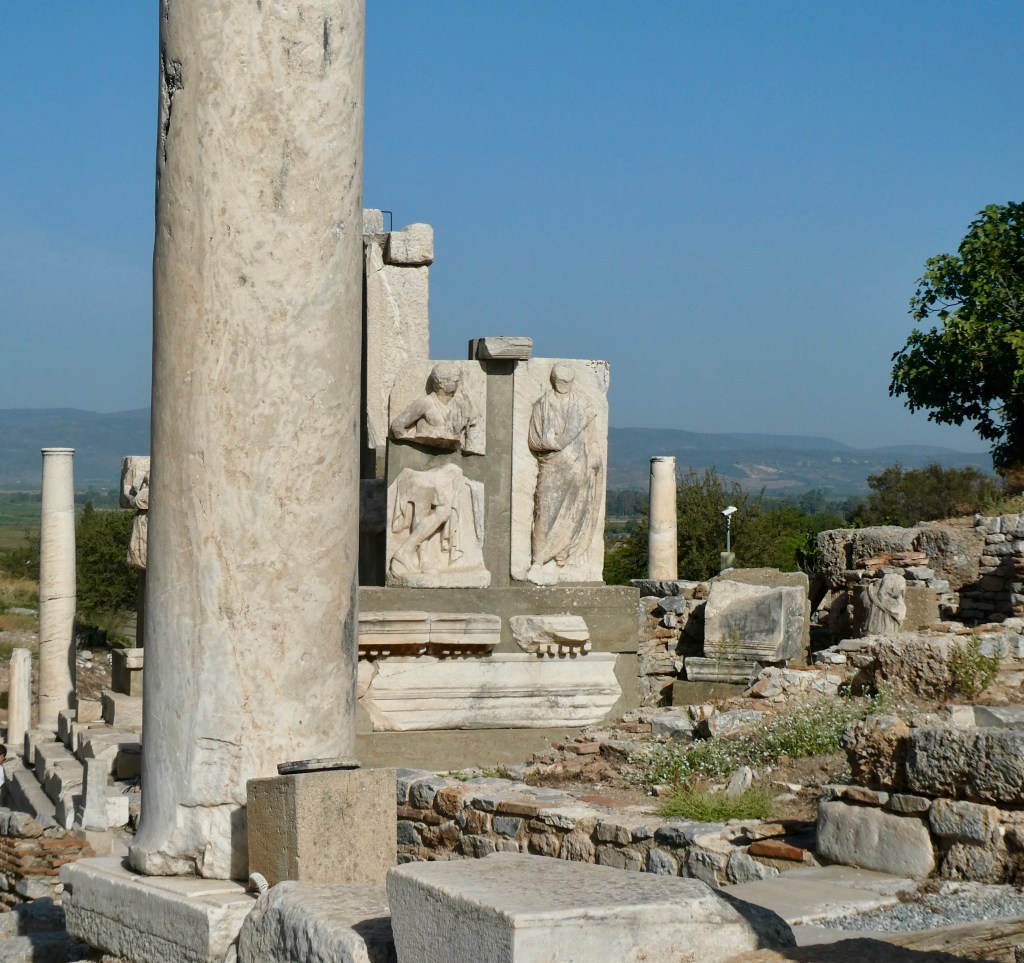
The streets were built by the wealthy and they had their statues made and displayed along the way.

The archeology rule in Ephesus is that there must be 60 percent original material to rebuild.

This is Hadrian’s temple with its Syrian arch.  The temple was dedicated in 118 AD to Hadrian, Artemis and the people of Ephesus.

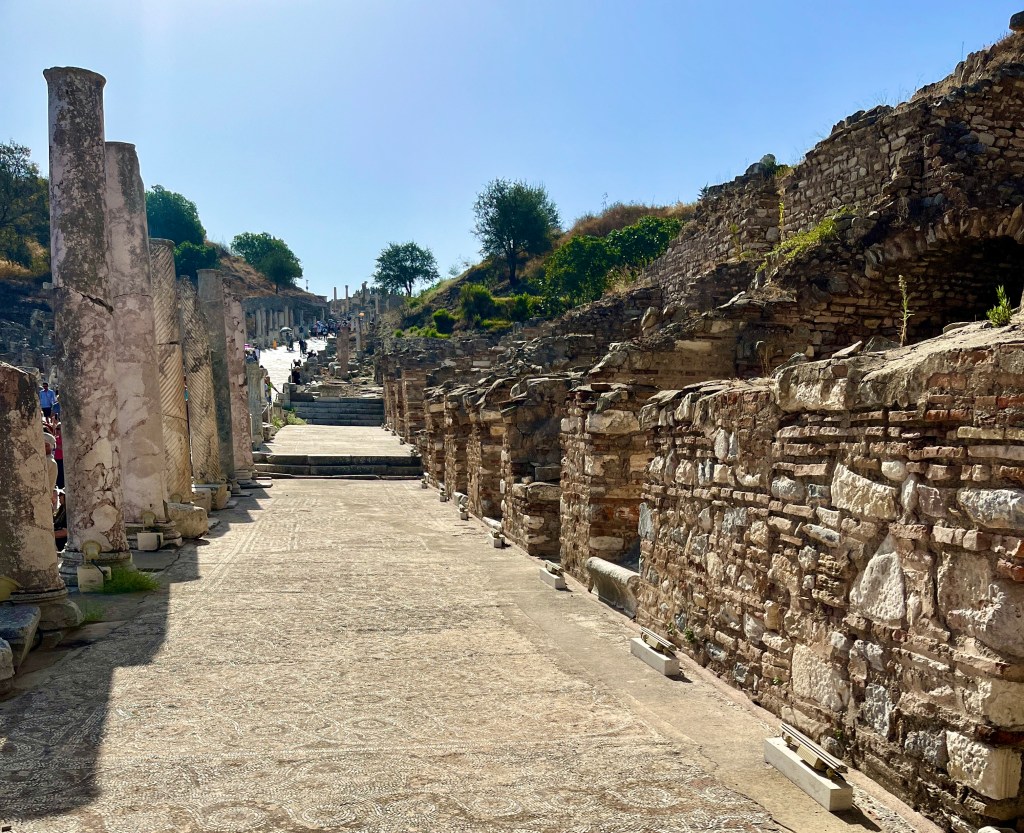
This is a sidewalk of mosaic.

There are samples of mosaic throughout the excavated buildings.

The Terrace houses were for the wealthy and important people of Ephesus.  A major project has commenced to excavate seven terrace houses.  The roof alone cost $11,000,000.

The first house we entered was the largest using the great room concept.

This was their water access.

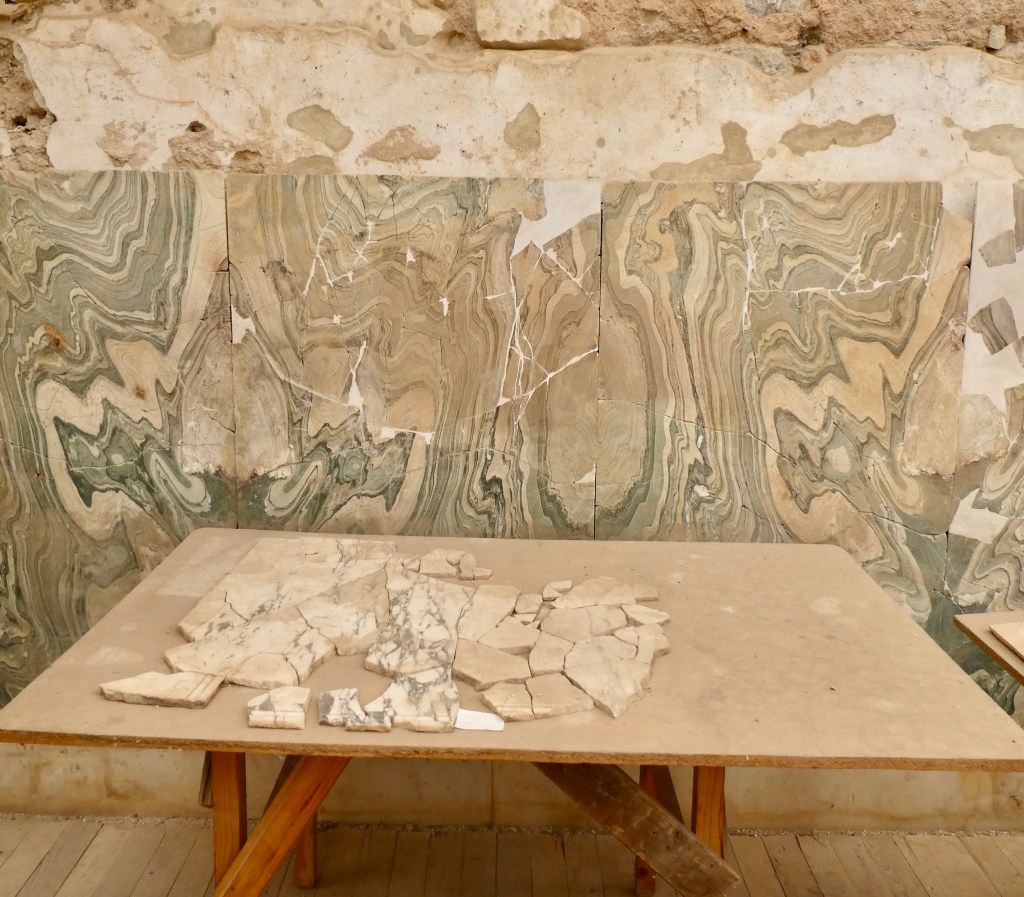
Replacing the marble on the walls is like a jigsaw puzzle.

Throughout the seven house complex there are frescoes and mosaics.

This is a Medusa mosaic.  She was once a beautiful woman and not what the legend has become.

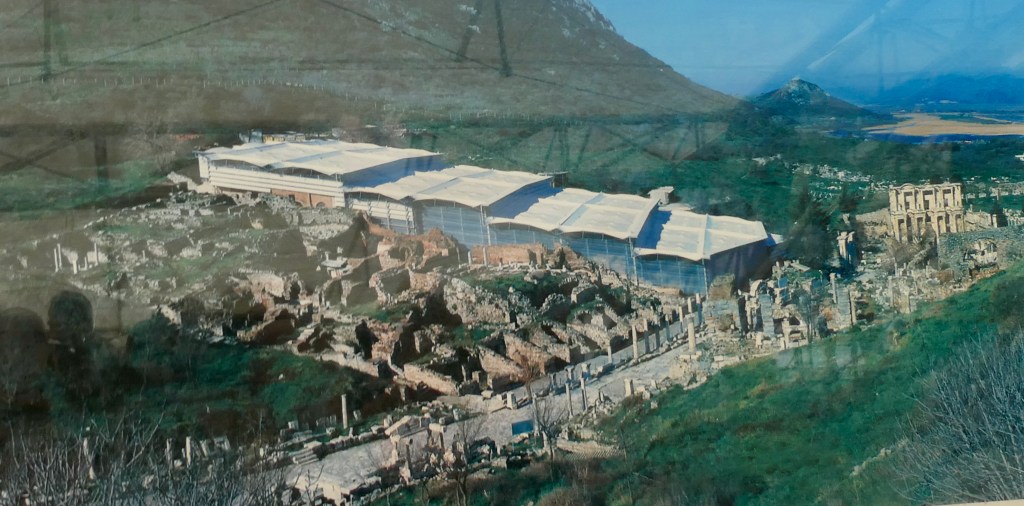
This is a photo of a photograph showing the size of the villa houses project. 

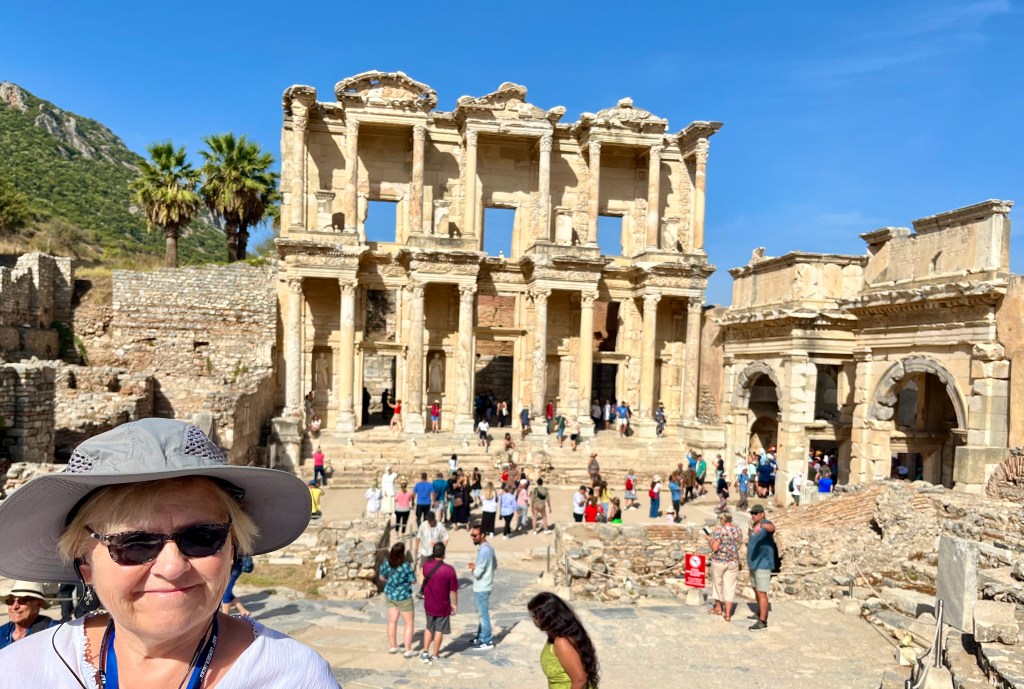
The Celsus Library was originally the tomb of Roman Senator Tiberius Julius Celsus Polemaeanus.  The library was built above the tomb and became the third largest in the Roman empire holding 12,000 volumes.   The library and its contents were destroyed in 262 AD after an earthquake.  

The facade was destroyed by an earthquake in the 10th or 11th century.  Austrian archaeologists found 70 percent of the original material so rebuilt the facade of the library between 1970-1978.

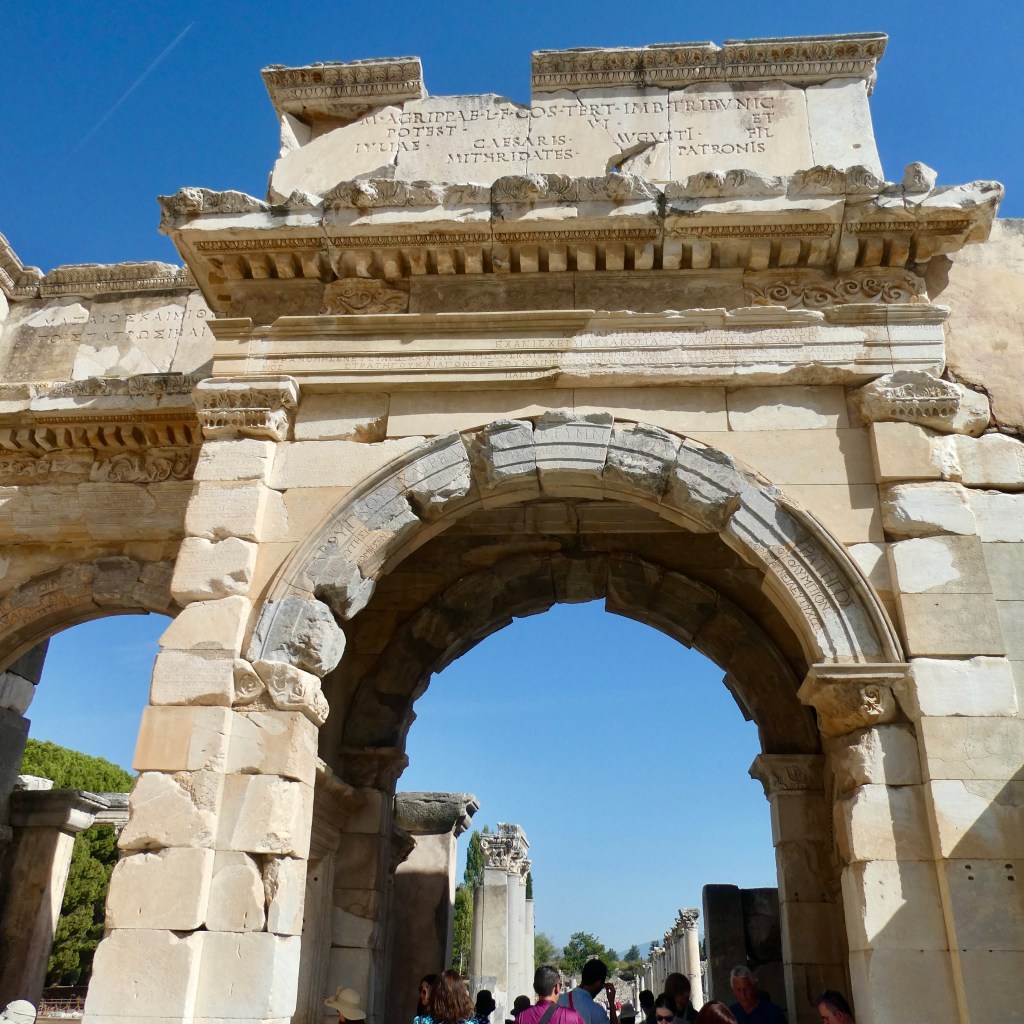
We walked through the arch into the agora. 

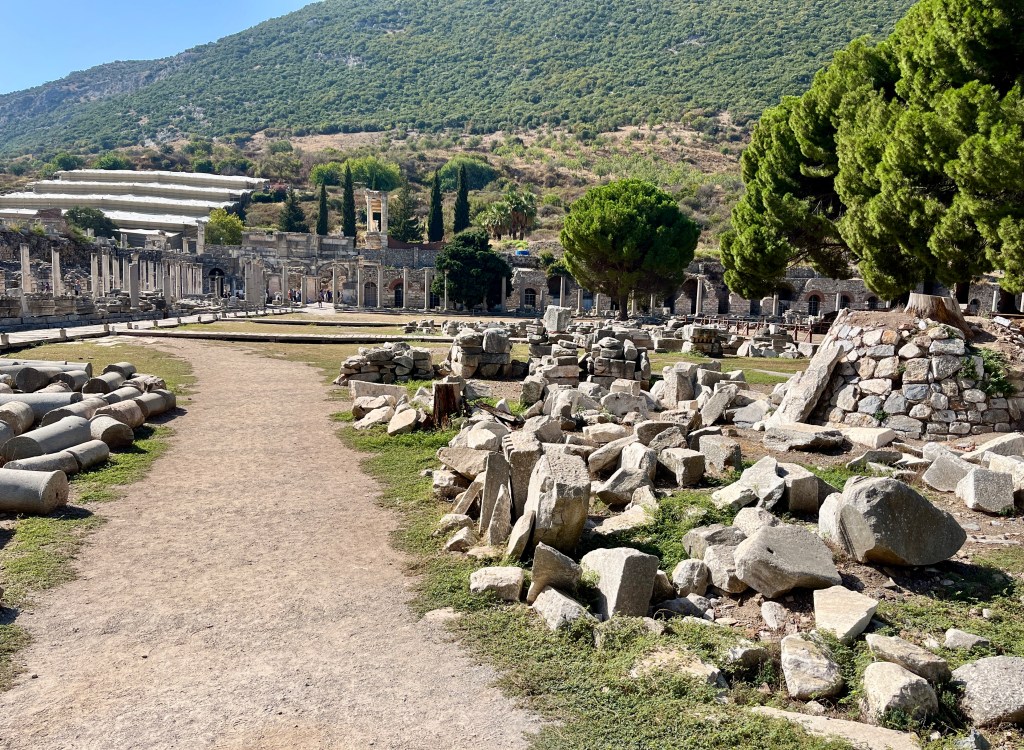
The agora was a marketplace and a space for people to socialize

It was a two story market. 

The Apostle Paul came to Ephesus twice, briefly on his second missionary journey and for two to three years on his third.  Acts 19 in the Bible tells of his time in Ephesus. Paul preached in the agora and in the theater.  He established a school in Ephesus when he was no longer welcome in the synagogue. It is believed Paul was imprisoned here about 55-56 AD.

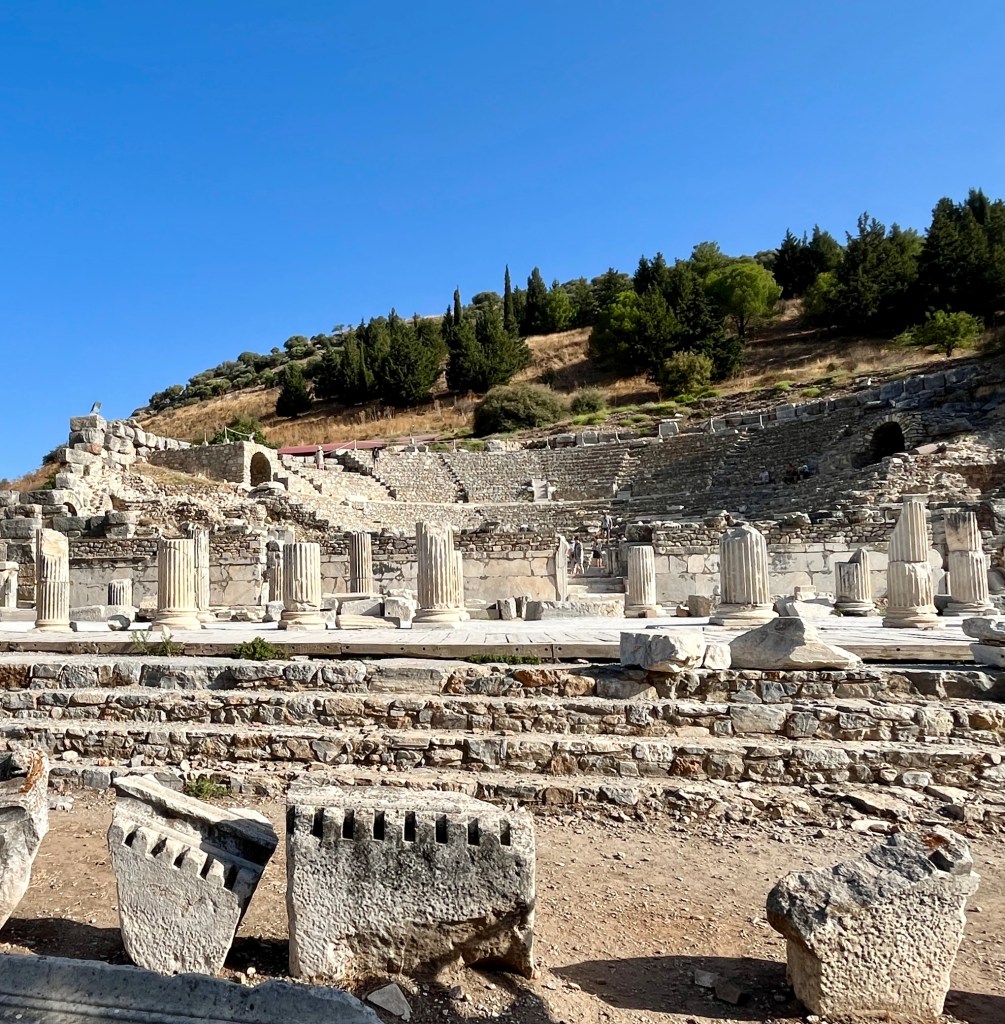
The origins of the great theater date from the Hellenistic period from 323 to 31 BC. It was reconstructed and expanded in the 1st century AD.  

If you walk all of the levels within the theatre it totals 11 kilometers.  That makes seating for 25,000.  

The theater remains active for events today. Singers such as Elton John and Celine Deon have performed there.

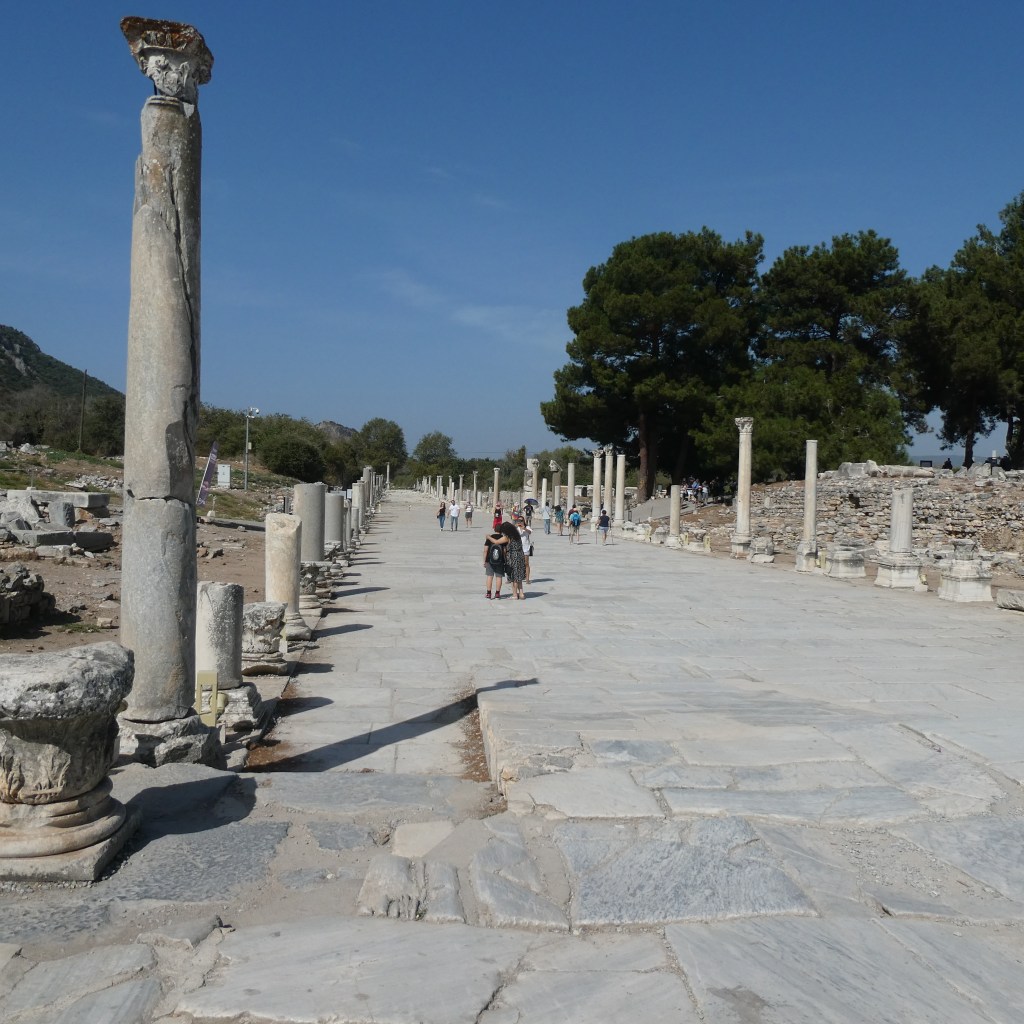
This is the city end of the 600 meter Harbor Street.  Legend tells that the city fathers washed the road with wine when Cleopatra and Mark Anthony came to Ephesus from their ship in the harbor.  That is supposedly the beginnings of the concept of using a red carpet for VIPs.

On the map the number 12 shows Harbor Street.  The harbor eventually silted in so Ephesus was abandoned after the 6th century AD.

At the end of this post about Ephesus, I would like to thank Randy.  I tweaked my back the day before our stop in Kusadasi and my ability to go to Ephesus at all was in serious doubt.  As this was one of my main desires on the cruise, I loaded up on Tylenol and decided to try.  Randy walked behind me, or held my hand, for hours making sure I didn’t get out of precarious balance or fall on an uneven surface.  The only time he left my side (or backside) was to go get us drinks, or to go to the top of the theater to take pictures.  He took a lot of the pictures in this post.  Just getting through Ephesus, and taking some notes, was all I could manage.

I was there! It was a successful day and I have loved writing about it and viewing it again through the lens of the camera and not the lens of my discomfort!

We were in Ephesus on September 24, 2023

Next up:  The rest of Kusadasi, Turkey.

Posted in Uncategorized | Leave a comment

Ancient Mysteries Cruise: Alexandria

The day before docking in Alexandria, Egypt, our cruise director put fear in all of us about going into Egypt.  She went on and on about leaving jewelry, watches etc on board.  We were told we must take our passport- but be sure not to lose it!  We were told we would be highly pressured by vendors and everyone, especially women, needed to dress conservatively.

Her strategy seemed to be that if anything went wrong while we were in Egypt it wasn’t going to be Holland America’s fault!  We had a shore excursion from the ship into Alexandria so we weren’t too worried. We weren’t going to be on our own.

An Egyptian family on board was not happy about the way she represented their country. 

The vast majority of our shipmates left the ship before 6:00 am to visit the attractions near Cairo and Giza.  For a couple of hours it seemed like there was no one else still on the ship!  We had plans to tour throughout Egypt a few months later so opted to stay and visit Alexandria instead. 

Alexandria is on the Nile delta in the north – marked with the number 4.

In 2000 BC the community that became Alexandria was a small fishing village. In 331 BC Alexander the Great wanted a capital city in the center of his new empire.  He chose this small village and stayed for six months.  He is believed to be buried in Alexandria but it is not known where.

Alexandria’s population now totals seven million people, ranking as Egypt’s second largest city. Omar Sharif is from Alexandria.  Daphne du Maurier, author of Rebecca, also  lived in Alexandria.

Our guide was Zaharia.  She was a valiant saleswoman on the attributes of her “cosmopolitan” city.  

Hearing what she said and seeing what we saw didn’t always go together. 

Zaharia said Alexandria is a modern Mediterranean city, taking care of and educating women.   She said a woman’s head covering is more practical than religious in Alexandria – a fashion accessory that means you don’t have to fix your hair everyday!   “I wear my head covered because I like it.  If you told me I had to, I wouldn’t.”  She also said “We speak Arabic but we are not Arab.” 

Zaharia told us that all the religious prophets were in Egypt at some time. Muslim, Christian and Jewish people have, and continue to live together cooperatively here.  She believes a focus on education, and sharing that cooperative history, makes people in the city more tolerant.

“There have been many, many groups that have had to leave their homelands and have been able to find a good new home in Alexandria.”

This cruise is the first time Holland America has visited Egypt since the pandemic and we were the first cruise to arrive this season. The local people were always waving and were very welcoming. Sixty-seven percent of income in Egypt is from tourism so having a welcoming attitude makes sense.

Zaharia asked us to consider, that if vendors seem aggressive, it is because they are trying to support their families in a country where the average income is very low.  American dollars are a very desirable currency.

We had discreetly armed security on the bus and walking around with us.   It was a very warm day and our guards wore their suit coats or vests.

We had police and military escorts.

Some of our security was not so discreet. Three busses from the ship traveled together. We never felt unsafe.

Our first destination was the Catacombs of Kom El Shoqafa.  The catacombs were discovered when a donkey fell through the surface in 1892. 

This photo shows where ground level was before excavation. 

We went down 100 feet to see one of the Seven Wonders of the Middle Ages.

Any tomb in Egypt is required to be under the ground. 

The catacombs are the largest Roman burial site, (not Christian), discovered in Egypt. 

The catacombs consist of three tiers of tombs and chambers cut into the bedrock. It was constructed in the second century A.D. as a single-family crypt and expanded.

Much of the lower two levels were under water for many years so those bodies were destroyed.  They had not been mummified. 

The water had to be pumped out.  The openings are placing bodies at different levels – an ancient elevator of sort.

There are 300 plus extension rooms for humans and animals, some were horses, dating to the early years AD.  Likely, many more will be discovered. 

There are some bones on display but most of the items found here were moved to the National Museum.

While there are Roman and Greek elements, the purpose and practice was  purely Egyptian. 

Leaving the catacombs, we drove through other parts of town enroute to our next destination. We passed a neighborhood dedicated to selling auto parts. 

There was another neighborhood dedicated to selling textiles. Notice the woman waving at our tourist bus. This happened frequently.

We drove past Pompey’s Pillar at the Temple of Serapis.  It is an 88 foot tall,  7 foot wide column of polished Aswan Rose granite. The temple was once one of ancient Alexandria‘s most important buildings. Despite its name, the pillar was erected to honor Diocletian in the fourth century A.D.

Our next destination was the Kom El-Dikka Roman Theater. It is the only remaining Roman amphitheater in Egypt. It was discovered in 1960 while foundation construction was underway for a new apartment building.   The first item that was found was a statue of Alexander the Great.

The theater once had 13 semi-circular tiers of white marble imported from Europe. The theater contains galleries, sections of mosaic flooring, and marble seats for up to 800 spectators.  Part is original and part is restored.

Also onsite are Roman Baths, and a college of humanities. 

Excavation continues with money from UNESCO. Archeologists assume about 40 percent of the site has been excavated.

Before excavation, the area was once a WWII battlefield.

And just like in Greece, there were cats everywhere. The street cats didn’t always look well in Alexandria but these cats were healthy and friendly. We noticed tour guides giving them food they had brought in.

While riding to our next destination, Zaharia talked to us again about her city and Egypt.  She said that military service is compulsory for men lasting one to three years depending on a man’s education. 

Women must serve in social service work for one year. The Arab Spring in 2011 removed President Mubarak and the protests were generally about social issues.

Alexandria does not have a subway system but does have a tram system.  It was built by the Dutch 100 years ago and is still in use.

This Sunken City area is where remains of the old Alexandria library are underwater.  The library was built in the 3rd century BC and had 700,000 volumes. Visitors to Alexandria knew to bring a volume for the library in order to be well received.

Julius Caesar was trying to attack an enemy in 48 BC and destroyed the library accidentally.  Only one original manuscript remains.

Alexandria University donated land in 1990 for a new library.  While surveying they discovered remnants of the old library underneath and nearby underwater.

The new Alexandria Library is the second largest in the world by volume. (The US Library of Congress is the largest.)  When the Alexandria Library reaches its capacity it will again be the largest in the world.

The Great Library of Alexandria was closed on Fridays – and it was a Friday.

Our next destination was the Royal Jewelry Museum, housed in a former royal palace.

The museum has 11,000 pieces of jewelry that belonged to King Farouk and his family.  

The king and his family left in 1952 with only 72 hours to prepare.  

Farouk was the last monarch of Egypt, ousted after the Egyptian revolution.  

The Abu Al Aubus Mursi Mosque is the largest mosque in Alexandria. 

Both men and women are able to go inside. We did not have that opportunity even if that was possible for visitors.

We visited the Alexandria National Museum in a building that was once owned by Omar Sharif’s uncle. It was also used as an American consulate before becoming a museum.  

The collection includes thousands of items spanning from the Pharaoh era through the Greco Roman times into the modern history.

Here is a sampling of what we saw.

This was our guide Zaharia. She was very knowledgable at all of our Alexandria sites. She loves her city.

At the end of the day we were having a quick dinner on the Lido deck.  The man who served our drinks had been to Cairo on a crew tour to see the pyramids.  He had to pay a fee for his tour but we thought it was great that he and others had the opportunity to go just like passengers.  Of course, he had to work his shift when he got back but still seemed very pleased to have gone. He said they will be have the opportunity for a crew tour in Kusadasi, Turkey next week and another in Jerusalem on the next cruise.

I know that was a really long post.  It was a really long day, but not nearly as long for us as for those who went all the way to Cairo.  

We were in Alexandria on September 22, 2023.

Next up:  Kusadasi

Posted in Uncategorized | Leave a comment

Ancient Mysteries Cruise: Epidaurus and Palamidi

Epidaurus is a UNESCO site known for unique medical facilities and healing treatments with curative baths and spas.  It is dedicated to the ancient Greek God of Healing, Asclepius.

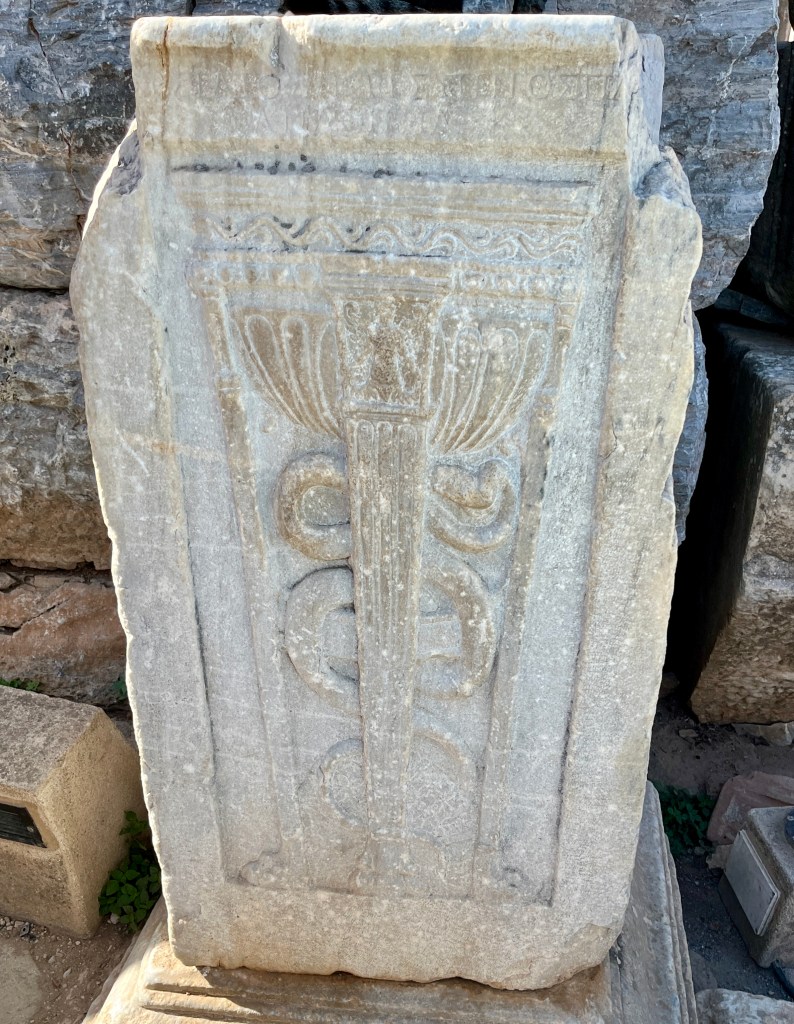
Asclepius was the son of Apollo.  His rod, with the snake entwined, is the genesis of the modern symbol of medicine. This is a plaster reproduction of a classical statue from AD 160.

The ancient Theatre of Epidaurus was constructed in 4th century BC.  The theatre was restored in 1954 and  is considered to be the most perfect ancient Greek theatre with regard to acoustics and aesthetics.   

I am standing at the center of the circle area.  Randy was seated in the highest row taking the picture.  He could hear me speak at a normal volume.

The theater is still is a working venue for modern concerts and recitals.

This theater cat is one of many we saw in Greece. They are well cared for strays that often have veterinary care. We saw hundreds throughout our Greek ports and never saw one that seemed to be under stress.

Because of its exceptional architecture and aesthetics, the theatre was declared a UNESCO site in 1988 along with the Sanctuary of Asclepius.

The sanctuary was built in the 4th century BC and provided accommodations for patients and their companions.

It is estimated that the sanctuary had 160 rooms and a restaurant for 5000.

Greek baths made spring water part of the healing process. The healing waters and soil characteristics were thought to contribute to an exceptional olive oil chemistry to assist with healing.

A Sacred Geometry used for the sanctuary temple.

Only free citizens could visit the Epidaurus Stadium.

Health care considerations in modern Greece are that everyone who lives in Greece is eligible for care under the country’s health program.  A person must work 50 days per year (after age 18) to be eligible.   Students can be covered under parents for an additional eight years. New mothers must go back to work after four months.

The second half of our tour took us to the Castle of Palamidi overlooking the town of Nafplion.

Greece was geopolitically very important between Asia, Europe and Africa and had several rulers and occupiers.

An existing structure was expanded into the current castle fortress rom 1711-1714 by the Venetians during their second occupation.

Palamidi and the surrounding area was taken over by the Ottomans in 1715 and remained under their control for more than 100 years.

In 1827 the Greek Revolutionary army took the castle from the Ottoman Empire.

The castle fortress sits 700 feet above the town of Nafplion and its harbor.

We can see our ship in the harbor.

We heard various numbers for the amount of steps between the castle and the city, somewhere between 850 and 999.  Although we were driven to the top, we had the option to walk down.  We didn’t.

We were in Epidaurus and Palamidi on September 19, 2023.

Next up: Alexandria Egypt

Posted in Uncategorized | Leave a comment

Ancient Mysteries Cruise: Olympia

After a sea day we arrived at our first port, Olympia Greece.  

Our destination was the Ancient Olympic Grounds. The ancient games were in honor of Zeus, the father of Greek gods and goddesses. Roman mythology has similar gods, just the names are different.

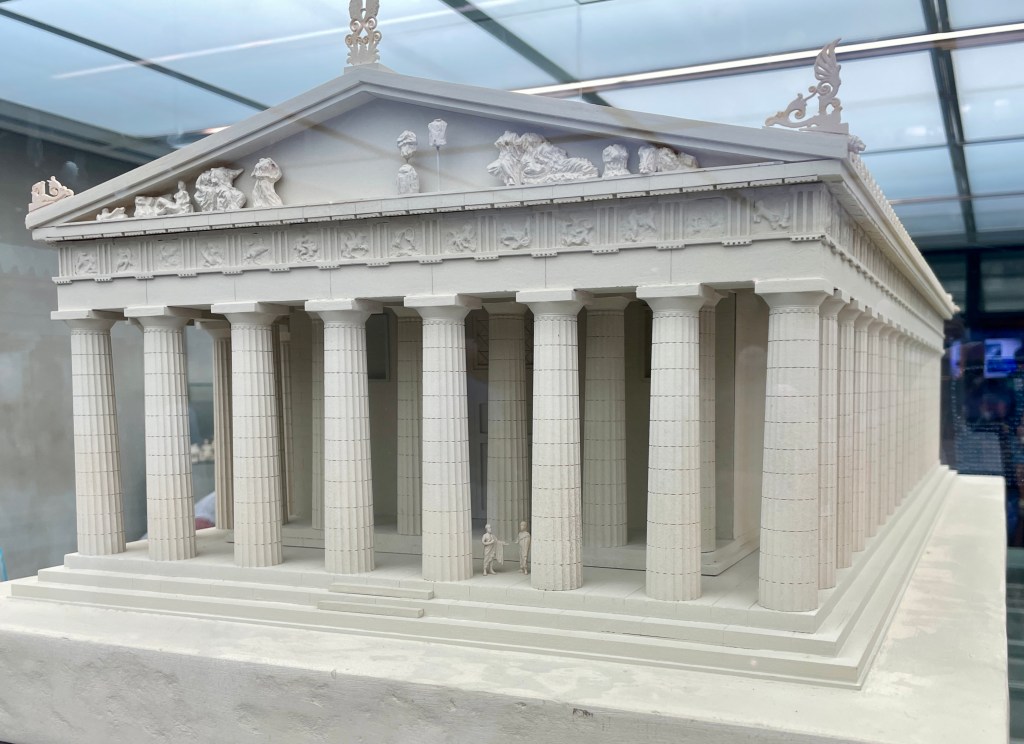
This is a depiction of the Temple of Zeus measuring six by thirteen columns.  The temple was one of the seven ancient wonders of the world.

The original statue of Zeus was made of gold and ivory. It was taken to Constantinople at some point and disappeared. 

The buildings in the distance are where the statue of Zeus was made. 

All Greek males were supposed to go to the Temple of Zeus once in their lifetime. These rocks are from that ancient temple. Many combined their visit with the Olympic games.

To be an Olympian, an athlete must have been male, free and a Greek citizen.  He had to be in Olympia two months early to train. 

The athlete trained and competed nude, covering their skin with olive oil and sand.  These troughs were part of that process.

A view of ancient Olympia.

This is a picture of the stadium grounds. There would have been five or six competitors. T

The Olympic stadium was once elsewhere in Olympia. It moved to this site on land once held in honor of the god Demeter. This stand is where one woman, chosen to attend in Demeter’s honor, would watch. Any other woman in the stadium could be killed.

We heard the story of one woman who disguised herself to be able to enter and watch her son compete.  She was discovered, and could have been killed, but her son’s victory saved her life.

These are the blocks from where the judges watched the competition. Anyone caught cheating had to pay for a “cheater statue” to be displayed on a walk of shame with his name, his father’s name, and his town’s name.

The champion of the competition was awarded for the win on this rock. He received a wreath and an olive oil gift, but also got fame and avoided taxes.

This arch leading to the competition grounds is from 4th century BC. The arch never fell.

The Olympics were celebrated here from the 766 BC to 393 AD. Then they were forbidden and the site was abandoned. 

Greece is at the connecting point between European and African continental plates so earthquakes are common.  This hill used to be three times higher.  An earthquake collapsed the hill and debris covered the site.

German archeologists, led by Wilhelm Dorpfeld, excavated the ruins beginning in 1877.  

They uncovered many artifacts, including a complete statue of Hermes, the messenger of the gods.  This statue is thought to have been built in 340-330 BC. Hermes was being prepared for transfer to Rome when the earthquake happened, so was protected and remained intact.

These are remains of the oldest temple on the site. It was built to honor the royal couple Hera and Zeus.

This monument is for King Philippeon, the father of Alexander the Great. The king was murdered so Alexander was the one who had it completed.

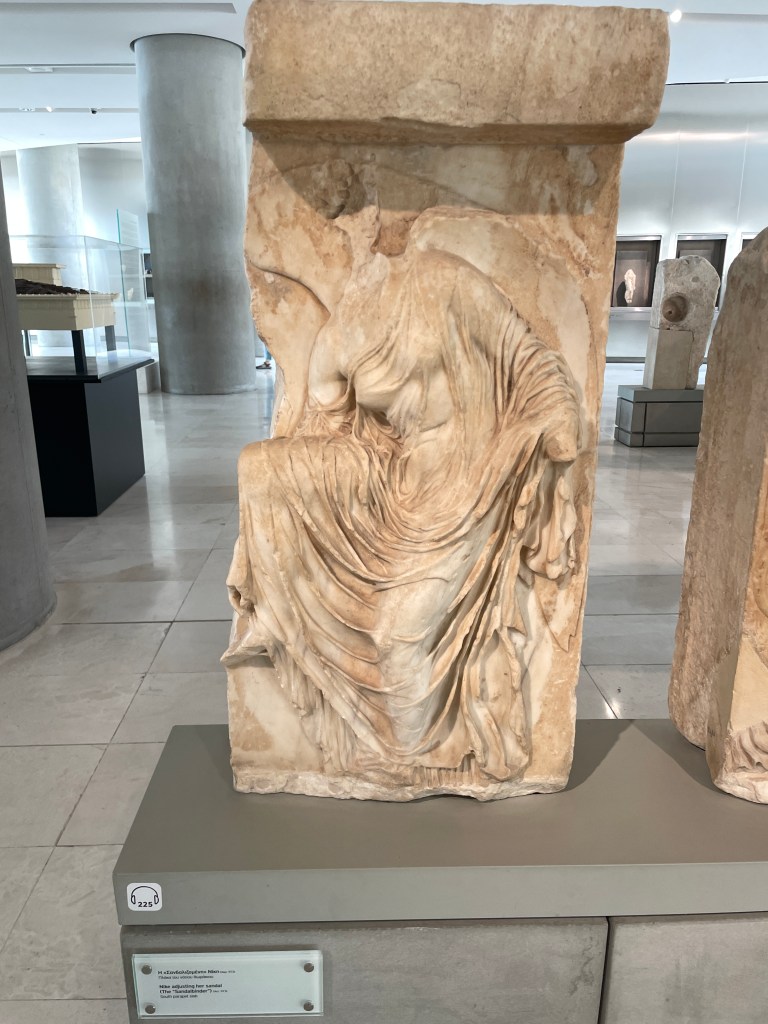
This is the Nike of Paeonios – once an offering to Zeus – from approximately 421 BC.

This photo is from 1891, five years after excavations began.  The interest generated by the excavations contributed to a revival of the modern games in 1896.  

Over 1500 years passed between the last Olympics held here and the first of the modern games held in Athens.  A Frenchman, Baron Pierre de Coubertin, had the idea to begin the modern games in Paris in 1900.  People from 34 countries loved the idea of starting the games but collectively decided on Athens in 1896. 

The marathon race, not part of the ancient games, began as an event in 1896 commemorating a run by Pheidippides.  After a great battle in Marathon, he ran to Athens to tell of the victory. The distance was just over 26 miles, the distance of modern marathon races.

The inauguration of the Olympic Flame began in the 1928 Amsterdam Olympic Games.  The first Olympic torch relay was in the 1936 Berlin Olympic Games.  

These days the torch begins in the stadium in Olympia, then goes to Athens and to the world beyond. We didn’t see this re-enactment. It is a picture of a postcard we bought.

The 2004 Olympic Games were held in Athens once again. Olympia, site of the ancient games, was included.

The earthquake that destroyed and covered the stadium and grounds so long ago caused all the columns on the Zeus’ Temple to fall.  Organizers rebuilt one of the columns for the 2004 Olympics.

A fire burned the area in 2003.  In March of 2004 the entire area was still black. Once again, a German citizen cared about the site and donated whatever was needed to make it green again. 

The men’s and women’s shot-put was held in the old ancient Olympic stadium. I’m pretty sure the competitors were allowed to wear clothes!

German archeologists are still in efforts to excavate the site of ancient Olympia.

Many of the photographs and artifacts shown here, and so many more, are in the Archeological Museum near Olympia and the Ancient Olympic Games, both of which we visited.

We were in Olympia, Greece on September 19, 2023

Next up: The UNESCO World Heritage Site of Epidaurus

Posted in Uncategorized | Leave a comment

Nieuw Statendam: Departing from Rome

After our Viking cruise, we spent a few days in Switzerland and then headed to Rome. The reason to go to Rome was to embark on a Holland America Cruise. The cruise-port for Rome is in the city of Civitavecchia about an hour away.

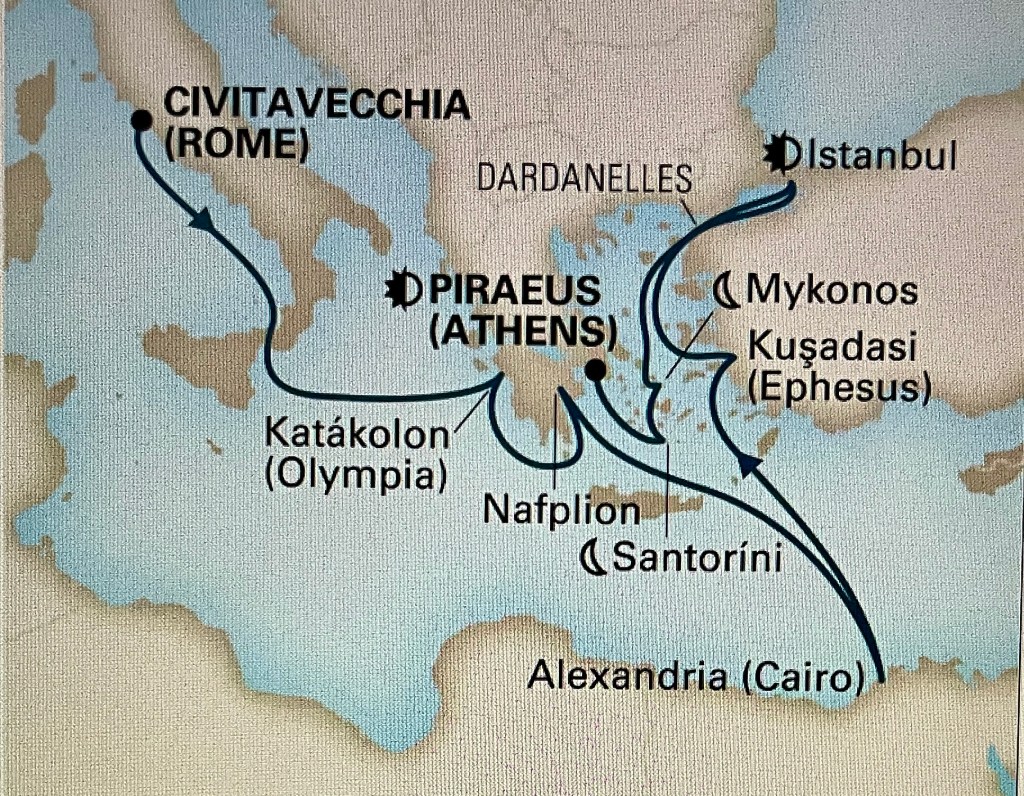
Our Ancient Mysteries cruise itinerary looked like this. The ports I was most excited about were Kusadasi (Ephesus) and Istanbul – both in Turkey.  Randy was most interested in Mykonos and Santorini, islands in Greece.

 We were in Rome just overnight to be in place for the morning embarkation. We toured Italy extensively in 2022 and spent several days in Rome. The one tourist thing we missed in 2022 was the Spanish Steps. That was where we were headed on this brief stop in Rome.. 

If you’d like to look back at the posts for our 2022 days in Rome they are Tour of Italy: Roma! Tour of Italy: The Vatican Tour of Italy: The ColosseumTour of Italy: Our Roma Wrap Up.

The Spanish Steps are a stairway of 135 steps built between 1723 and 1725.  

The stairs go between the Trinità dei Monti Church at the top and the Spanish Embassy to the Vatican at the bottom. 

The government in Rome has been trying to reduce loitering on the steps but we didn’t see any enforcement.  We also weren’t there long enough to know whether anyone was loitering.  

We walked up and peeked inside the church.

This is the view from the top looking out at Rome. Then we walked back down.  

We rode a tour bus around Rome as we had time to spend and nothing else specific we wanted to do. 

We enjoyed the sites and narration and learned that Rome was the first city in the world to reach one million people.  It took London 1900 years more to reach one million in population.

Mussolini used Piazza Venezia as a home and seat of government during his reign.  He gave speeches from the second balcony. 

We had wine and pasta for dinner at a little outdoor cafe (and later a gelato) because that is what you do in Rome!

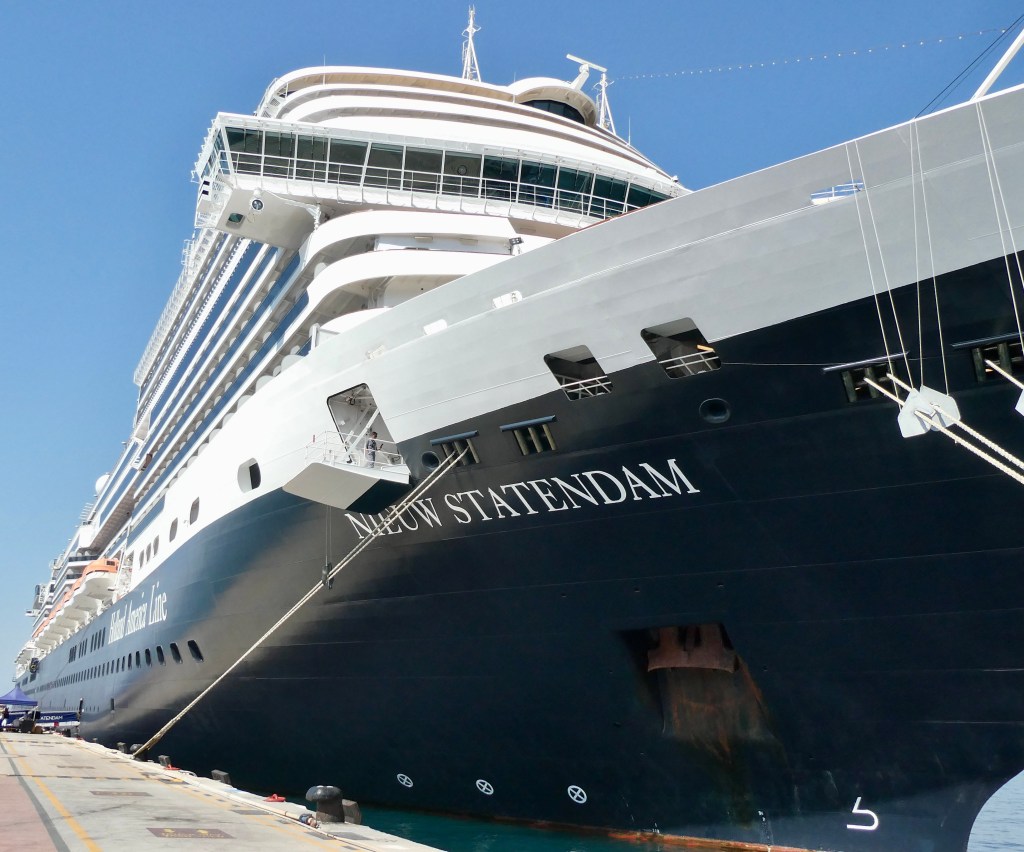
The next day we went to Civitavecchia and boarded the Nieuw Statendam.  We have sailed on this ship before so already knew our way around.

New to us, however, was a Neptune Cabin. We were excited to see it!  We had been offered a steeply discounted price through our travel agent and jumped on it.  We will never pay full price for this level of suite so it will probably be our one and only time to have one.   

Here is the tour:

It was very easy to get used to that much room!  

We boarded the Nieuw Statendam on September 17, 2023.

Next up:  Olympia, Greece

Posted in Uncategorized | 1 Comment

Switzerland: Jungfraujoch – the Top of Europe

We were going up 3454 meters into the Swiss Alps.  We were headed to Jungfraujoch – the Top of Europe.  We were going to see, or go through, three peaks:  Eiger, Monch and Jungfraujoch.  

Our first segment from Zurich to Interlaken was by bus. We stopped for Swiss Hot Chocolate! Unfortunately our hot chocolate was served at a Hooters instead of a quaint village cafe.   In hindsight, that fits perfectly with our tour guide.  He was very into himself and his performance as our guide. We were just accessories.  He had a schtick and I became weary of him very quickly.  Randy took a bit longer but neither of us were fans,

We saw a mountain waterfall enroute.

After a second bus ride, we boarded the first of two cogwheel rail trains.

We changed trains at Grindelwald, and then headed to Europe’s highest railway station.

The Jungfraujoch Railway has been taking passengers to the Top of Europe since 1912. Swiss industrialist Adolf Guyer-Zelle had the idea to blast a tunnel through the sheer rock of Eiger and Monch.  Building a railway to the summit of Jongfrau was thought to be beneficial for local tourism. Jungfraujoch is a UNESCO World Heritage Site where you can view the largest glacier in the Alps.

The railway construction began in 1896.  Despite employee deaths and strikes, workers broke through on February 21, 1912, sixteen years after it was begun.  The tunnel is 9.3 kilometers long. The tunnel through Eiger and Monch cost twice as much as anticipated.

We visited the ice palace, originally created in 1930.

Thousands of visitors walk through the ice tunnels to view various ice sculptures. That requires cooling the labyrinth and for the art to be refined as melting threatens.

The Sphinx Dome is used for astronomical studies. 

The terrace at the Sphinx opened for viewing in 1996.

Aletsch Glacier is the longest in the Alps at 20 kilometers.

One of the memorable events of the day was watching this young lady pose for this picture.  As she approached the flag she quickly discarded her heavy coat for her glamour shot.  The entire process took seconds.  She is lovely and the photo is stunning.

We saw the glamour shot Instagram mentality repeatedly on our trip and not just by beautiful young women.  It was quite the thing to observe.

Here is our less glamorous photo at the top of Europe!

We left the mountain on the Eiger Express cableway.

We went through the clouds and then the scenery was amazing all the way down.  

The Eiger face was long thought to be unscalable.

What a place to camp!

Our tour to the spectacular Swiss Alps used a bus, three trains and a gondola!  

We went to the Top of Europe on September 14, 2023

Next up: A brief stop in Rome

Posted in Uncategorized | 1 Comment

Cooling Off in Zurich – Summer 2023

Our plane to Zurich was late leaving Paris. Despite a nine hour time difference, our travel agent was aware and had already called to reschedule the driver picking us up at the airport in Zurich. She is golden.

Even though it was only a 75 minute flight, Air France still served a cucumber and cheese sandwich snack and drink.  We are accustomed to much less from our American carriers.

It was delightfully cool when we left the airport and our driver delivered us to the Hotel Adler. This boutique hotel in old town was recommended by our travel agent.

We got settled into our room and noticed an interesting bed configuration.  It was a large bed but each side had its own cover.

There was an Arizona Highways magazine in the sitting area so we felt right at home.

We walked around a bit enjoying the sites of Zurich. 

When we returned to our room a person was playing a guitar and singing right outside our window in the town square courtyard.   

The courtyard area turned out to be full of pleasant activity throughout our stay. 

We often saw people looking at the mural of old Zurich on the hotel exterior wall.  It felt a little odd at first because our room was close to the mural so it seemed like they were looking at our window!

The next day we had a TukTuk with Fondue tour.  We found our meeting place on the other side of the river but little did we know we’d soon be right back to our hotel!  

The Adler Hotel provided the cheese fondue!  We saw lines at our hotel restaurant each evening with most people lined up for the delicious fondue.

Our guide told us about this steak house. When it was a bar, the band Black Sabbath worked and lived there “when they only knew three songs”. We ate there a couple days later.

This building held the first gay bar in Europe. The business moved locations just recently during the pandemic.

Zurich has the most fountains of any country in the world. The water is drinkable and people fill water bottles from them.  It is also considered an emergency service water source. The side arm on the fountain sometimes provides wine.

The smaller church in front was a former women’s monastery with the larger men’s monastery behind. 

This is the parliament building.

Churchill gave one of his historic speeches near here stressing European unity in September, 1946.    Switzerland’s neutrality is sometimes criticized but our guide told us they cannot deviate, ie. donate to Ukraine, because of their constitution. 

Our TukTuk with Fondue Tour was a highlight, not just of Zurich, but of our entire trip.  Imagine riding comfortably in the back of the TukTuk drinking wine, dipping into delicious cheese fondue and getting great commentary. Perfect.

Later we wandered around a bit more on our own.  

We found a park with displays of children from around the world and their dreams. 

The boy from Liberia had a Cathlamet shirt on.  Cathlamet is a small town in southwest Washington state near where my parents lived in retirement.  It is interesting to think how that shirt was worn by a boy in Liberia and placed on a picture board in Zurich.

The other side of the park had displays of satellite images from around the world.  

One highlighted the airplane graveyard in Tucson, Arizona.  It is very near where Randy grew up and we’ve taken a tour there.

While waiting for our next tour, we stopped at a Starbucks and I had my first pumpkin spice latte of the season – in Zurich! The things one must endure to get access to the WC!  (WC=water-closet=toilet) 

The next tour was not one of the best but we did learn a few things of interest. Zurich is the largest city in Switzerland but is not the capital.

The Zurich train station is one of the busiest in the world. Nearly three thousand trains, and half a million people, go through on the twenty-six sets of tracks every day. There is a full shopping mall underneath the station.

This is one of the most famous chocolate shops in Switzerland.  We did not get to go in on our tour.  We also didn’t have the opportunity to tour Lindt Chocolate Company while we were in Zurich as their tours were sold out. Failure to plan ahead on my part….

I took a drive-by photo (and not a good one) of Tina Turner’s home outside Zurich. Tina Turner lived in Zurich for 30 years, enjoying some level of normalcy.  

This is another poor drive by picture – this time of a Migros grocery store.  Migros is a large grocery chain in Switzerland.  By policy, they do not sell alcohol or cigarettes but someone is selling lots of cigarettes!  There is so much smoking. There is very little trash around Zurich but 90 percent of what there is are cigarette butts.   All restaurant tables, inside and out, have ashtrays.  We moved from where we were sitting several times to avoid smoke in just a few days!

Swiss Francs are very colorful! Our travel documents said we would need 20 francs, in cash, to check into our hotel. We had planned to go to an ATM once we landed in Switzerland, or even to the dreaded currency exchange booth. However, I was telling Randy about it while we were in the security line in Paris and the young woman ahead of us said she had been carrying around 20 francs for a year not able to spend it anywhere. I traded $20 USD for her 20 francs and we were both happy. Problem solved. AND, at the hotel the 20 francs fee was NOT required in cash.

Zurich was lovely and cool and very pleasant.  

We were in Zurich September 13, 2023.

Next up:  We head up into the Swiss Alps and go to the Top of Europe!

Posted in Uncategorized | 2 Comments