Ancient Mysteries Cruise: Olympia

After a sea day we arrived at our first port, Olympia Greece.  

Our destination was the Ancient Olympic Grounds. The ancient games were in honor of Zeus, the father of Greek gods and goddesses. Roman mythology has similar gods, just the names are different.

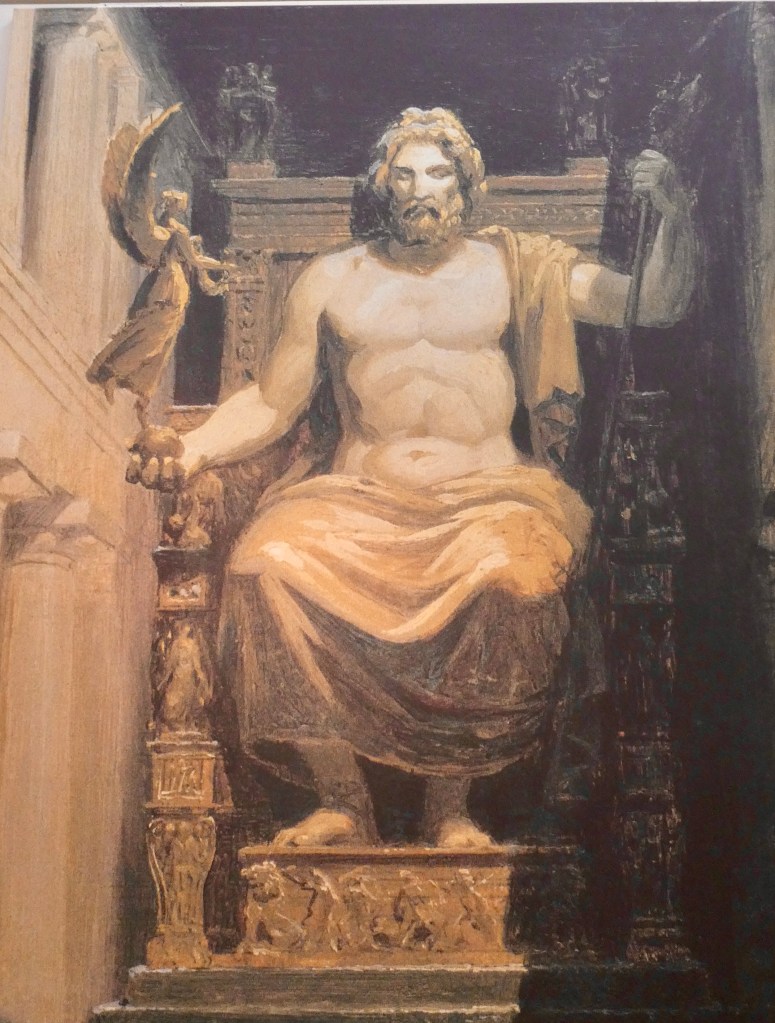
This is a depiction of the Temple of Zeus measuring six by thirteen columns.  The temple was one of the seven ancient wonders of the world.

The original statue of Zeus was made of gold and ivory. It was taken to Constantinople at some point and disappeared. 

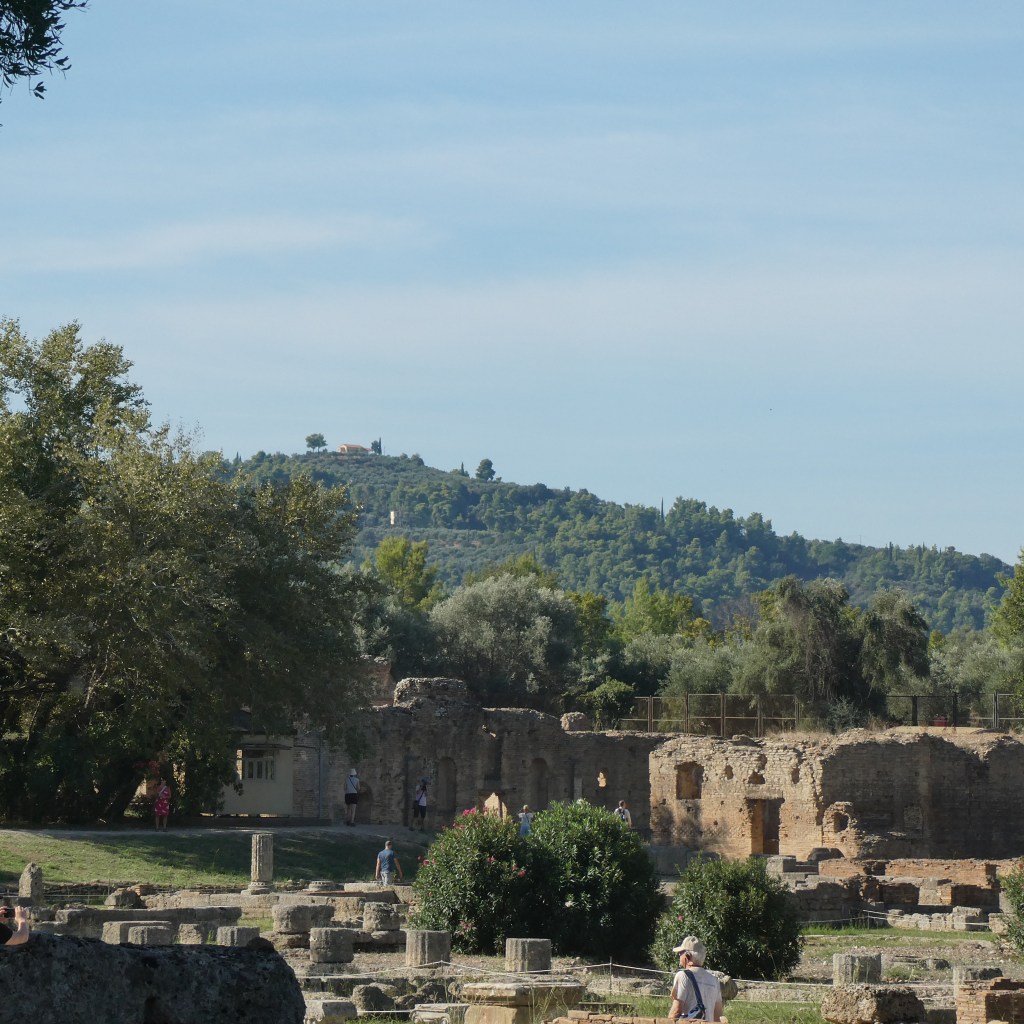
The buildings in the distance are where the statue of Zeus was made. 

All Greek males were supposed to go to the Temple of Zeus once in their lifetime. These rocks are from that ancient temple. Many combined their visit with the Olympic games.

To be an Olympian, an athlete must have been male, free and a Greek citizen.  He had to be in Olympia two months early to train. 

The athlete trained and competed nude, covering their skin with olive oil and sand.  These troughs were part of that process.

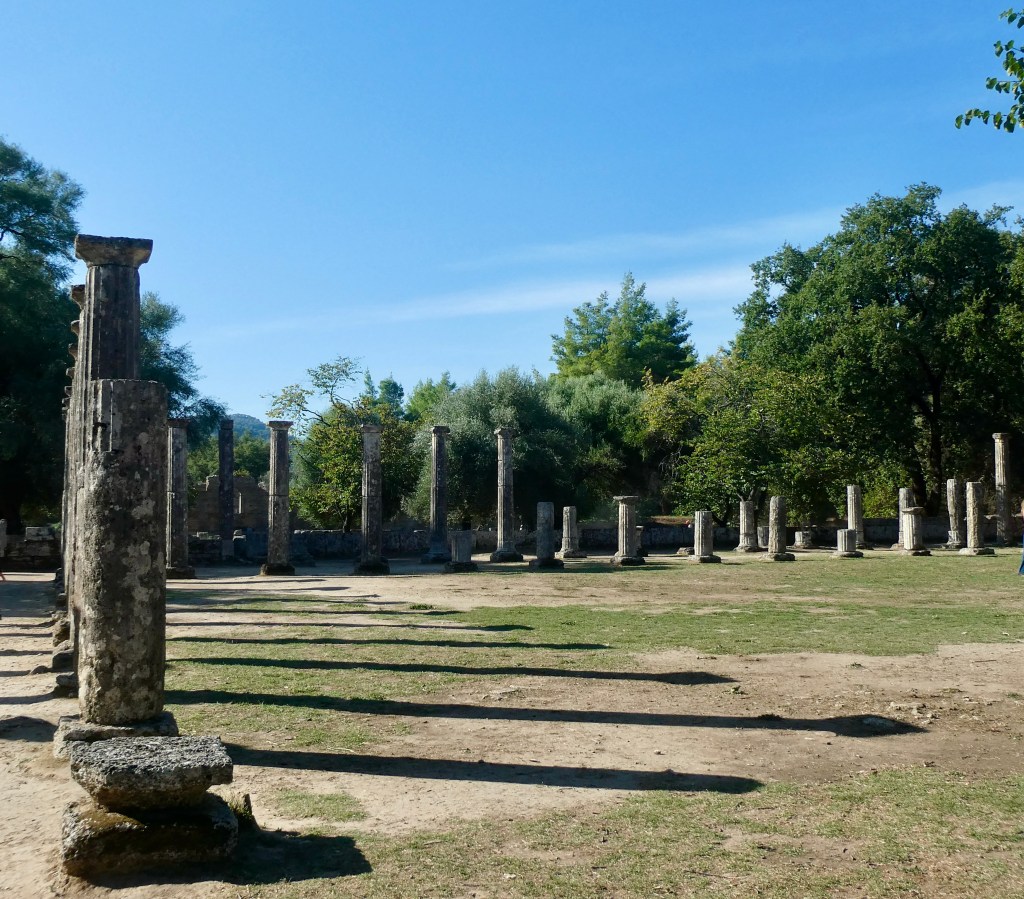
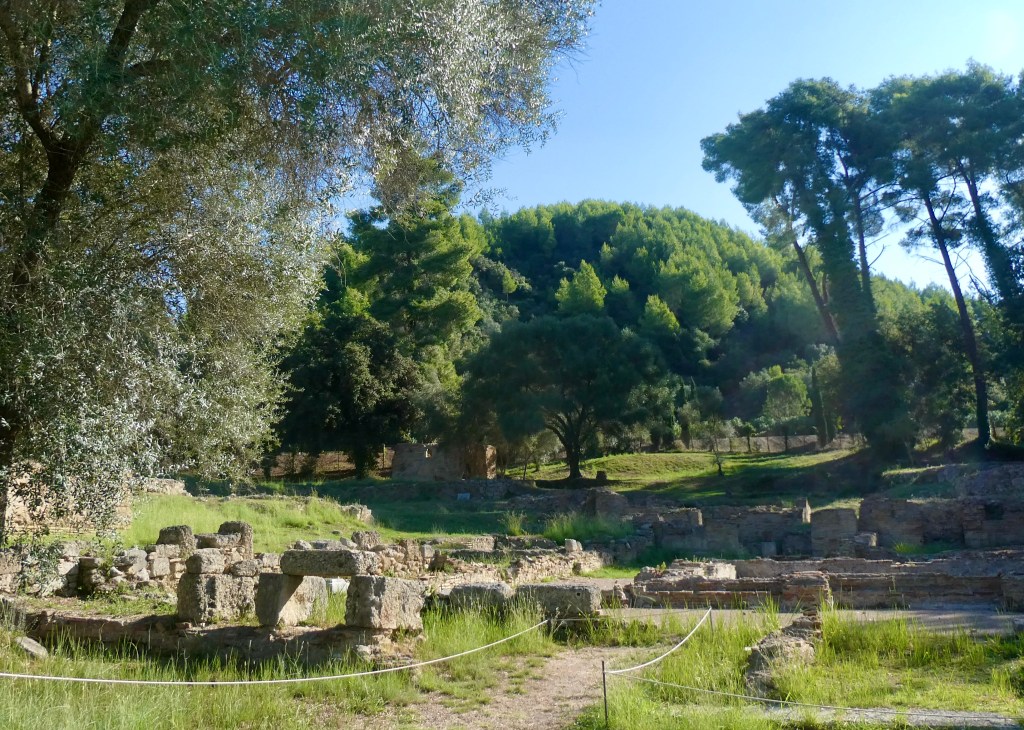
A view of ancient Olympia.

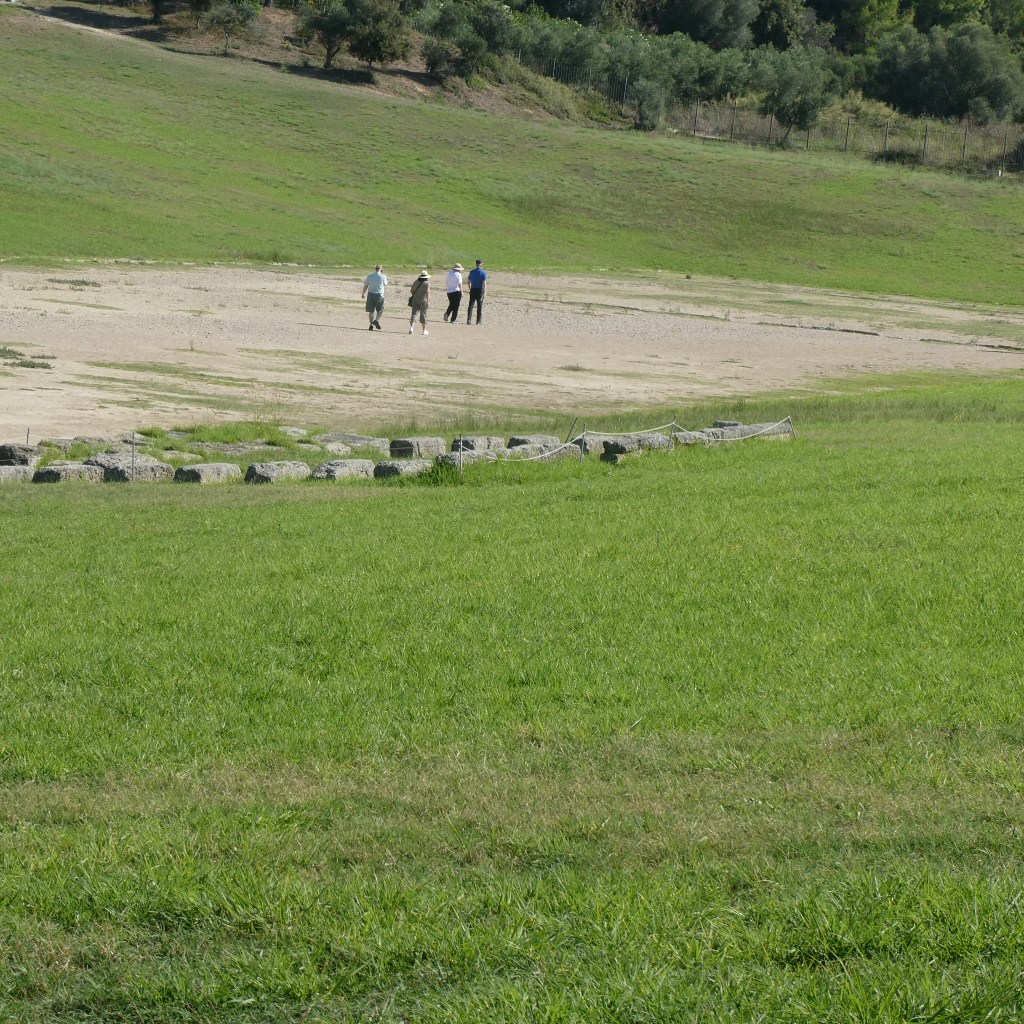
This is a picture of the stadium grounds. There would have been five or six competitors. T

The Olympic stadium was once elsewhere in Olympia. It moved to this site on land once held in honor of the god Demeter. This stand is where one woman, chosen to attend in Demeter’s honor, would watch. Any other woman in the stadium could be killed.

We heard the story of one woman who disguised herself to be able to enter and watch her son compete.  She was discovered, and could have been killed, but her son’s victory saved her life.

These are the blocks from where the judges watched the competition. Anyone caught cheating had to pay for a “cheater statue” to be displayed on a walk of shame with his name, his father’s name, and his town’s name.

The champion of the competition was awarded for the win on this rock. He received a wreath and an olive oil gift, but also got fame and avoided taxes.

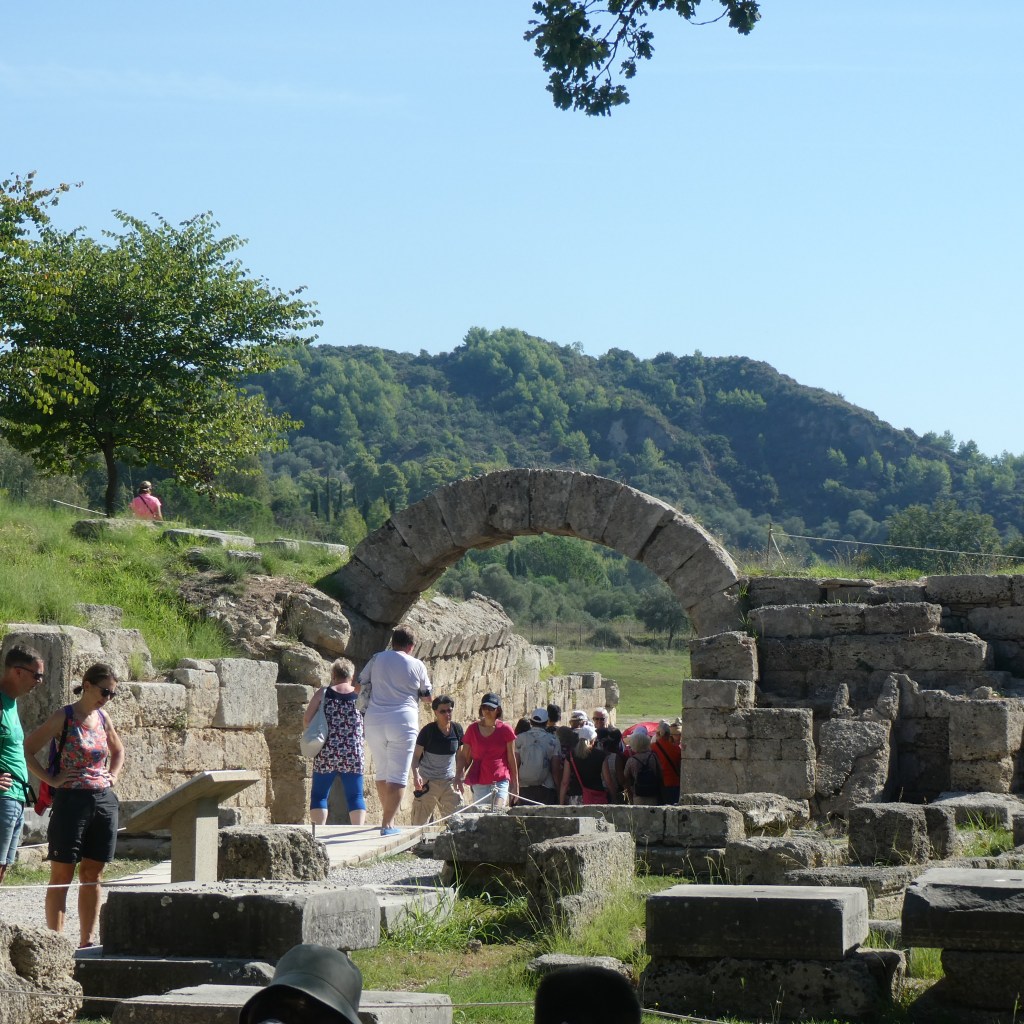
This arch leading to the competition grounds is from 4th century BC. The arch never fell.

The Olympics were celebrated here from the 766 BC to 393 AD. Then they were forbidden and the site was abandoned. 

Greece is at the connecting point between European and African continental plates so earthquakes are common.  This hill used to be three times higher.  An earthquake collapsed the hill and debris covered the site.

German archeologists, led by Wilhelm Dorpfeld, excavated the ruins beginning in 1877.  

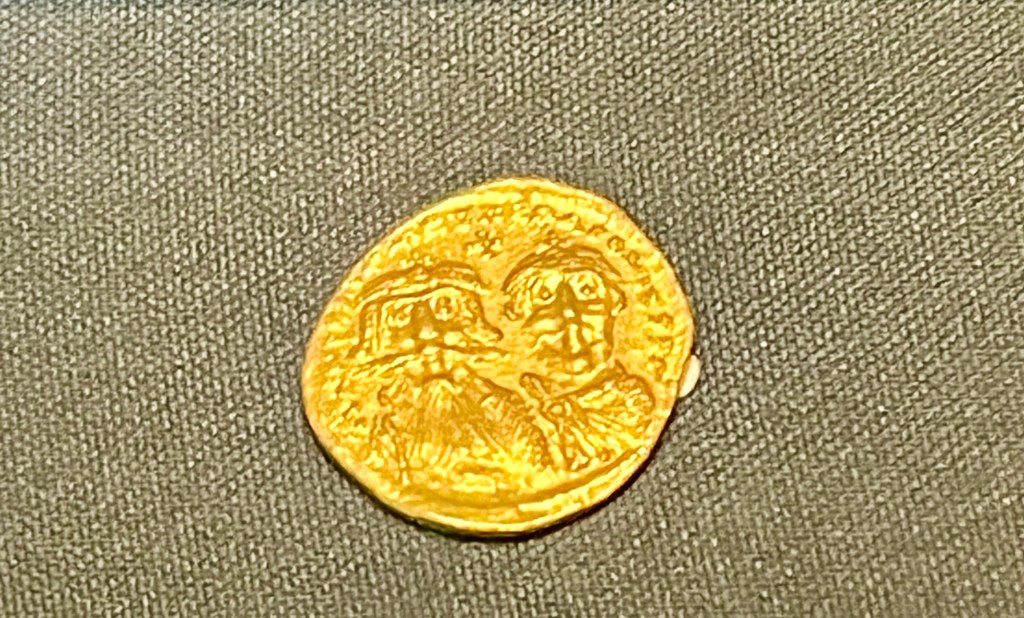
They uncovered many artifacts, including a complete statue of Hermes, the messenger of the gods.  This statue is thought to have been built in 340-330 BC. Hermes was being prepared for transfer to Rome when the earthquake happened, so was protected and remained intact.

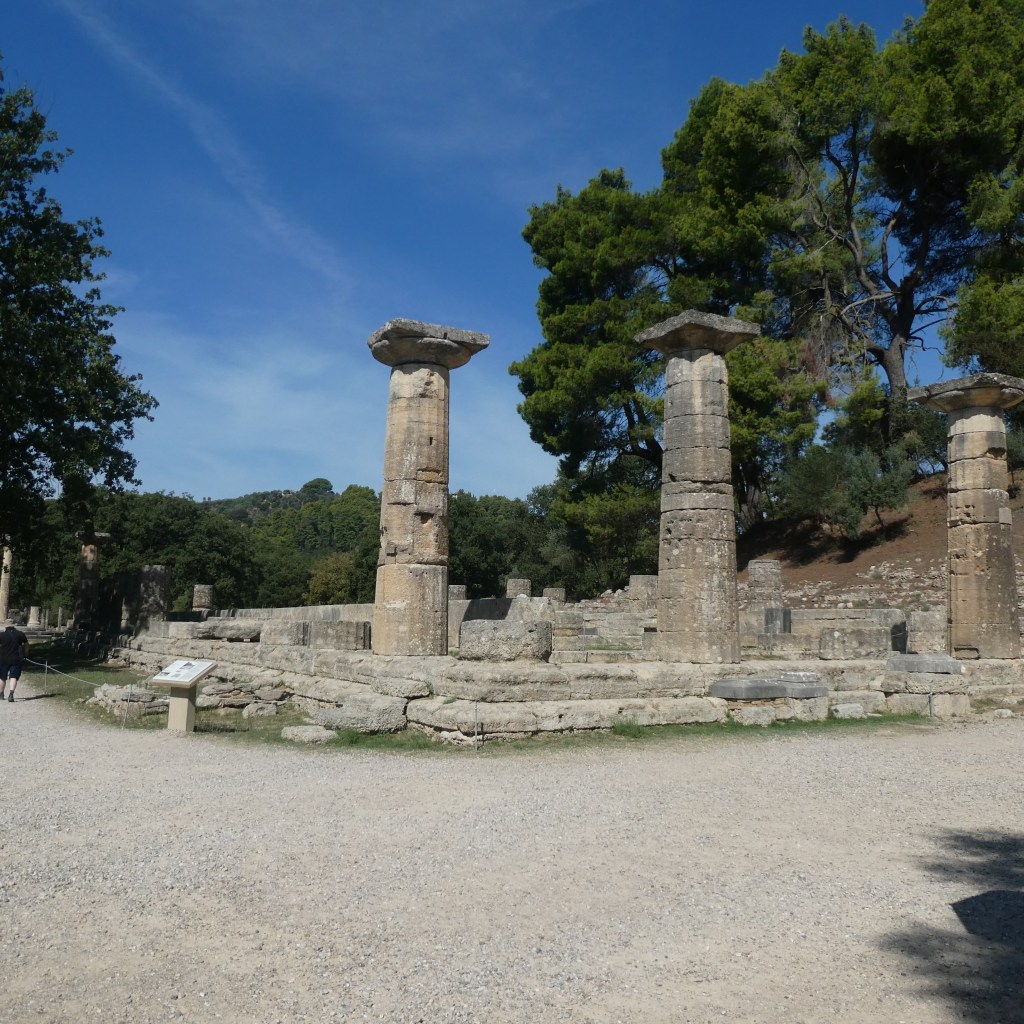
These are remains of the oldest temple on the site. It was built to honor the royal couple Hera and Zeus.

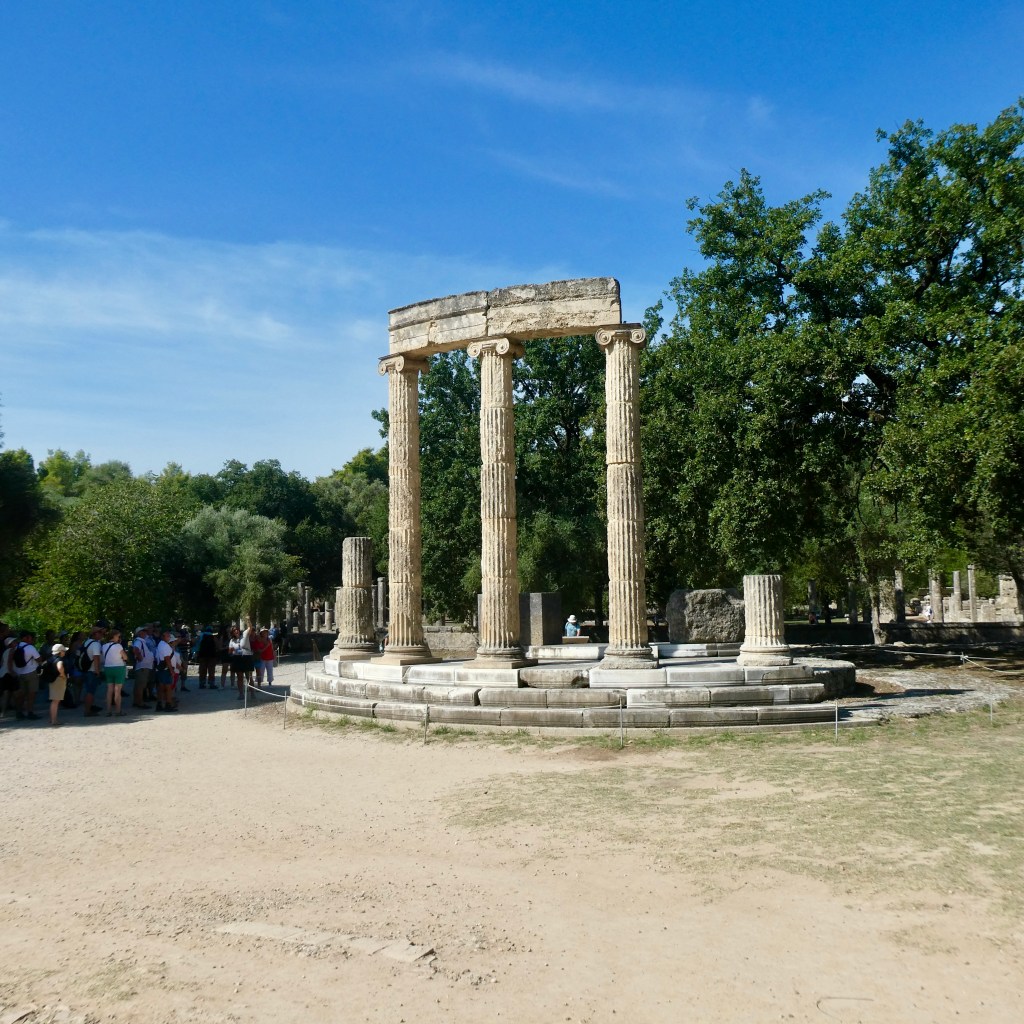
This monument is for King Philippeon, the father of Alexander the Great. The king was murdered so Alexander was the one who had it completed.

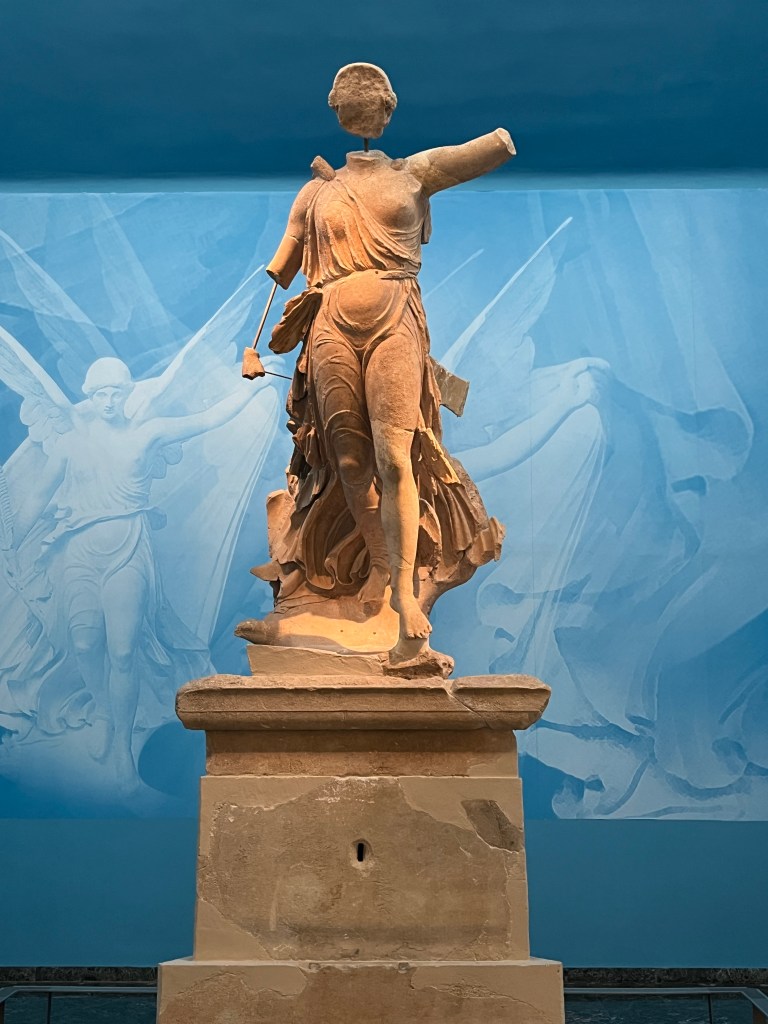
This is the Nike of Paeonios – once an offering to Zeus – from approximately 421 BC.

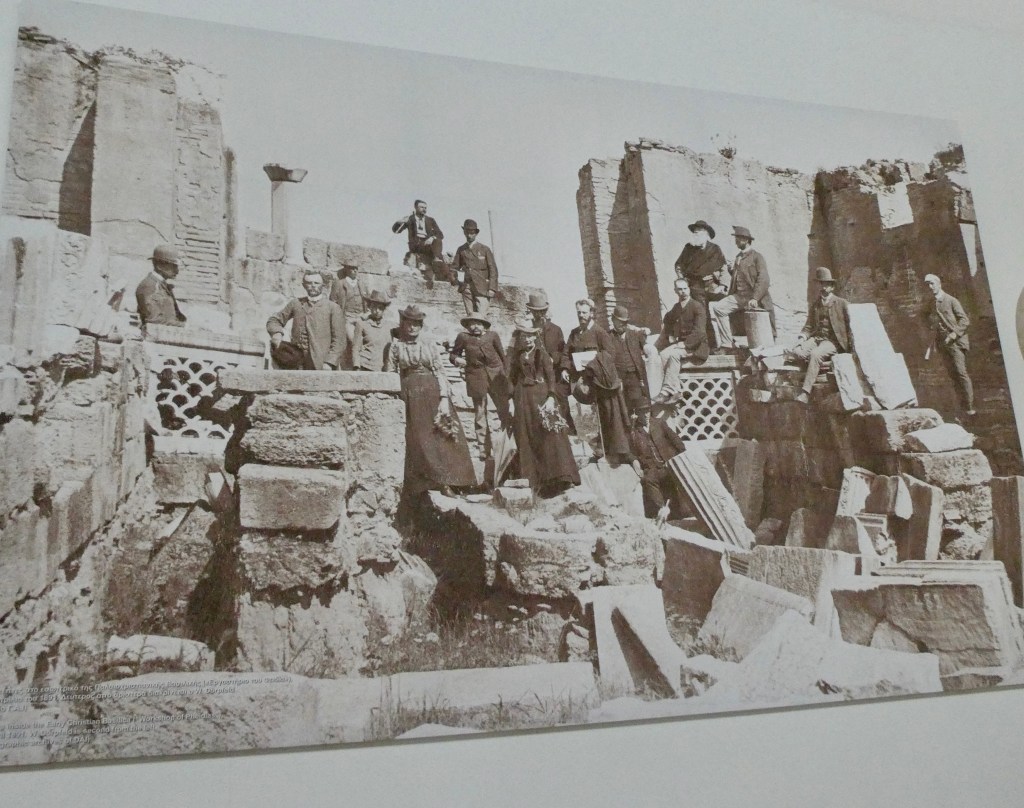
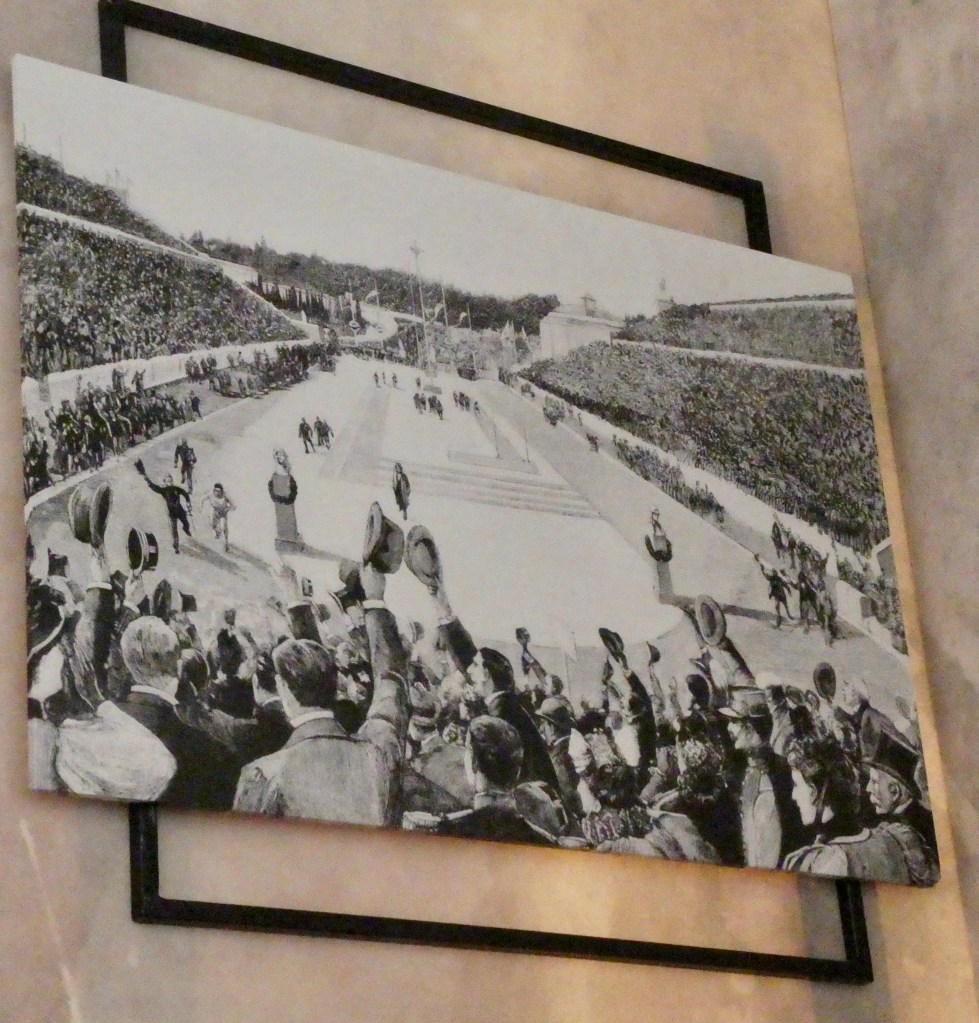
This photo is from 1891, five years after excavations began.  The interest generated by the excavations contributed to a revival of the modern games in 1896.  

Over 1500 years passed between the last Olympics held here and the first of the modern games held in Athens.  A Frenchman, Baron Pierre de Coubertin, had the idea to begin the modern games in Paris in 1900.  People from 34 countries loved the idea of starting the games but collectively decided on Athens in 1896. 

The marathon race, not part of the ancient games, began as an event in 1896 commemorating a run by Pheidippides.  After a great battle in Marathon, he ran to Athens to tell of the victory. The distance was just over 26 miles, the distance of modern marathon races.

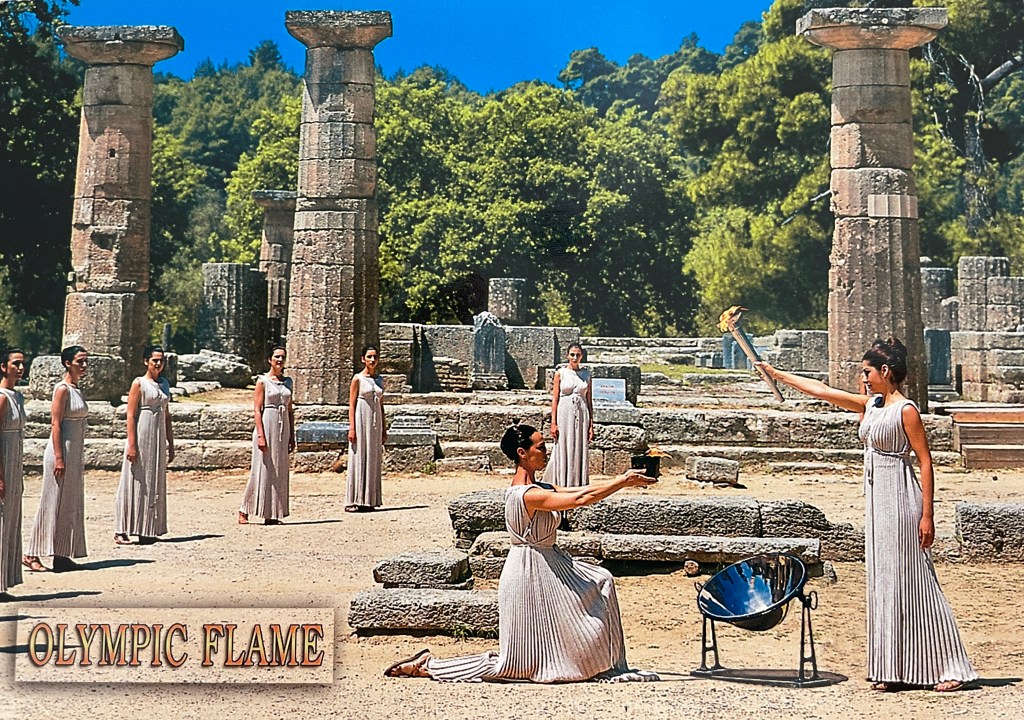
The inauguration of the Olympic Flame began in the 1928 Amsterdam Olympic Games.  The first Olympic torch relay was in the 1936 Berlin Olympic Games.  

These days the torch begins in the stadium in Olympia, then goes to Athens and to the world beyond. We didn’t see this re-enactment. It is a picture of a postcard we bought.

The 2004 Olympic Games were held in Athens once again. Olympia, site of the ancient games, was included.

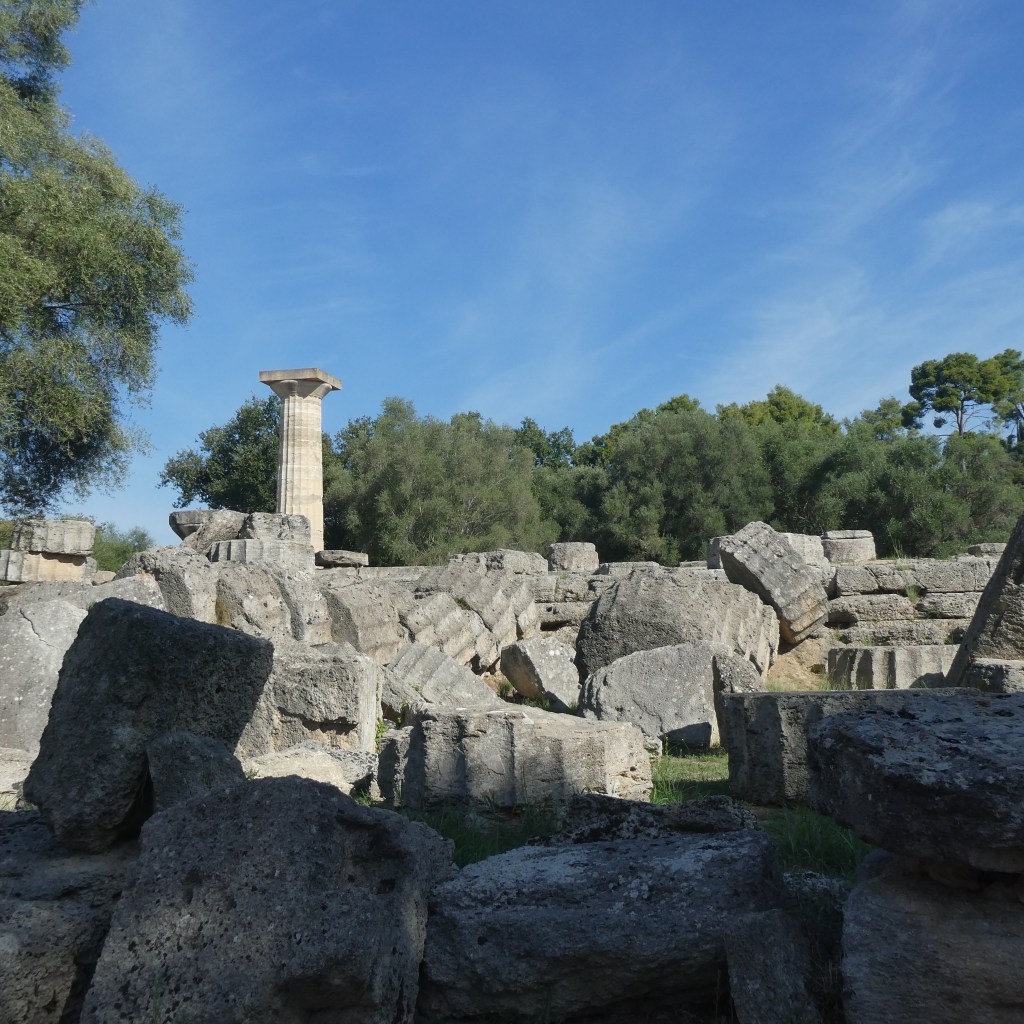
The earthquake that destroyed and covered the stadium and grounds so long ago caused all the columns on the Zeus’ Temple to fall.  Organizers rebuilt one of the columns for the 2004 Olympics.

A fire burned the area in 2003.  In March of 2004 the entire area was still black. Once again, a German citizen cared about the site and donated whatever was needed to make it green again. 

The men’s and women’s shot-put was held in the old ancient Olympic stadium. I’m pretty sure the competitors were allowed to wear clothes!

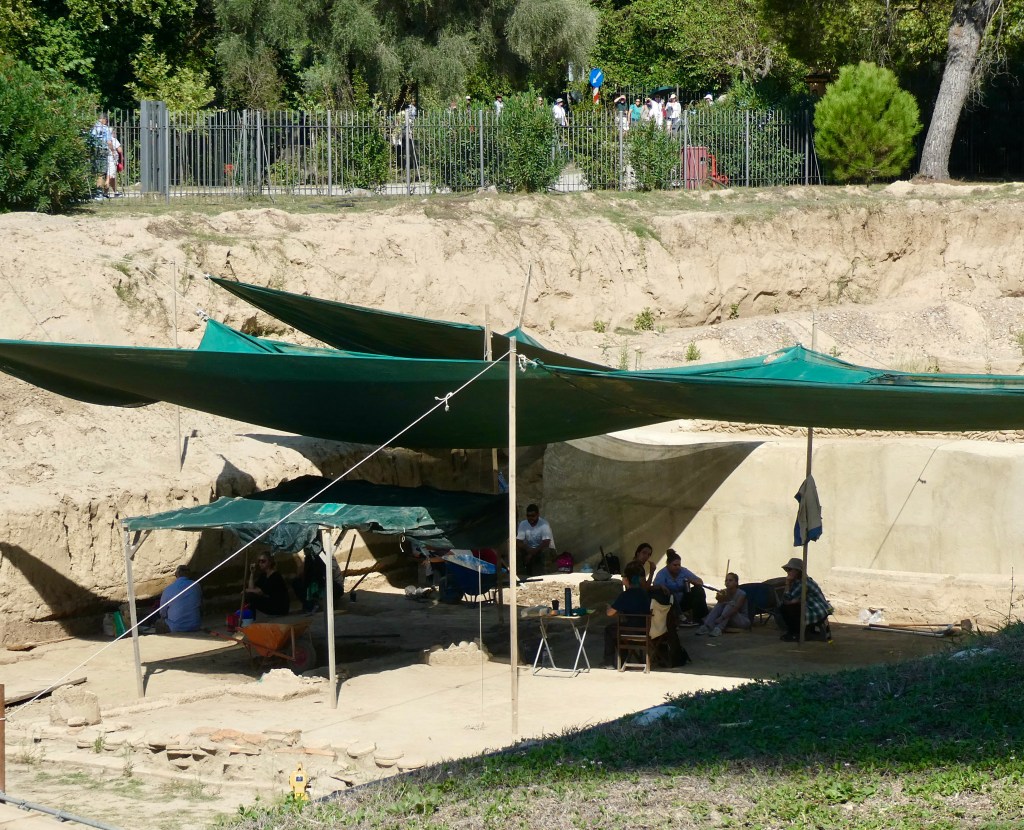
German archeologists are still in efforts to excavate the site of ancient Olympia.

Many of the photographs and artifacts shown here, and so many more, are in the Archeological Museum near Olympia and the Ancient Olympic Games, both of which we visited.

We were in Olympia, Greece on September 19, 2023

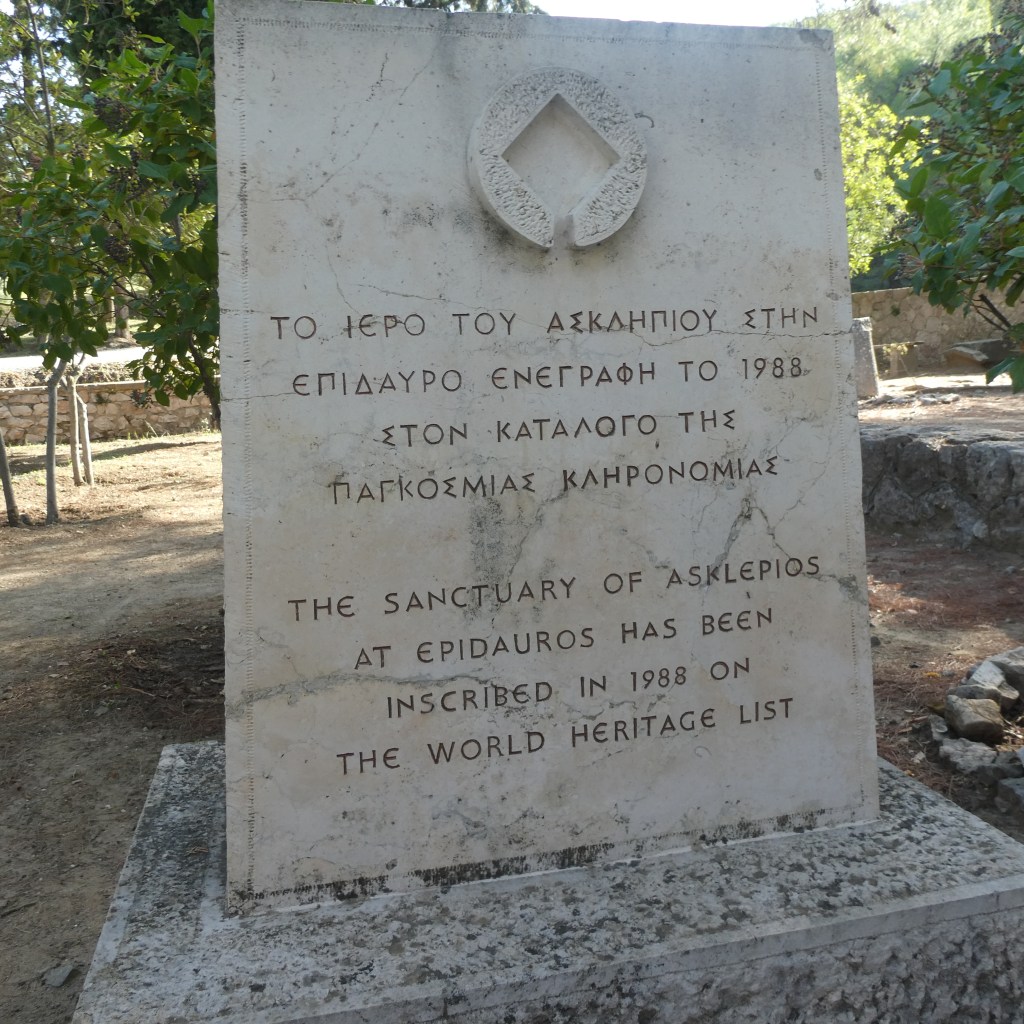
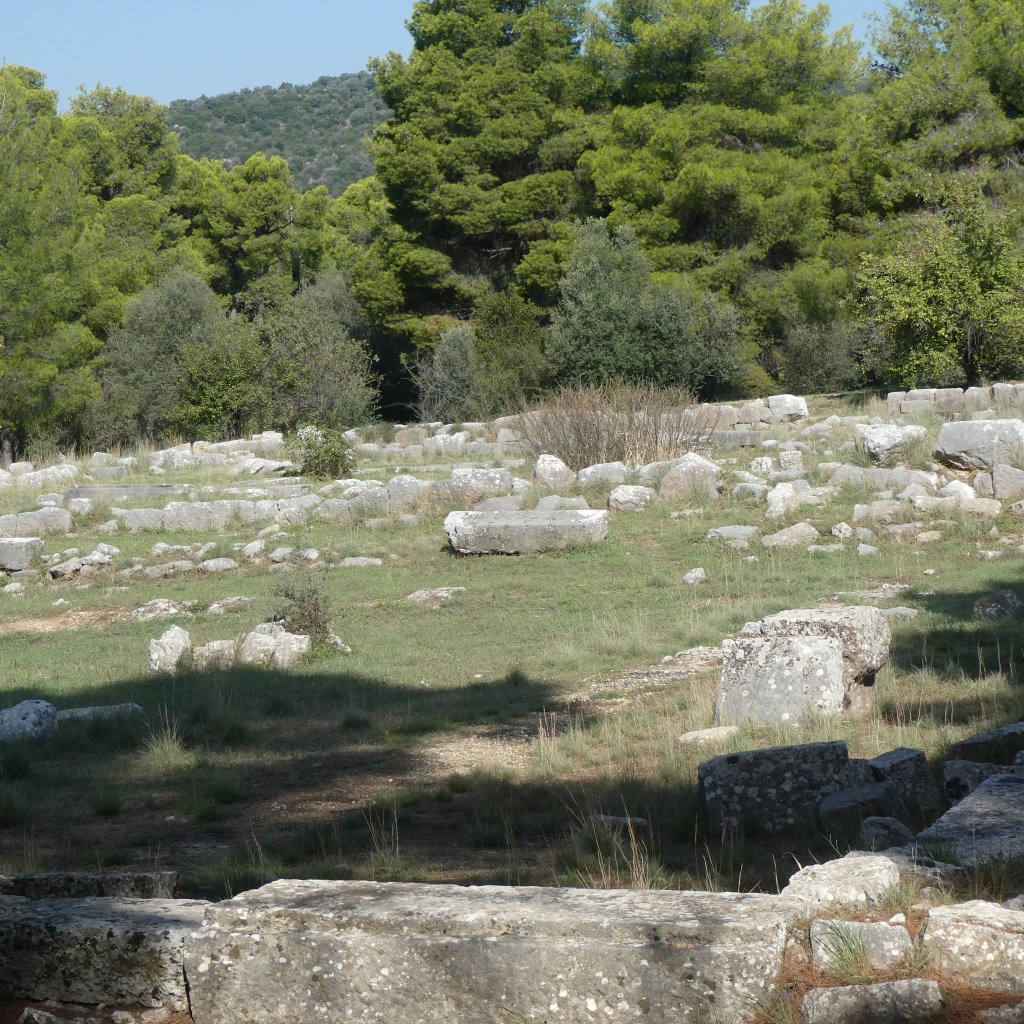
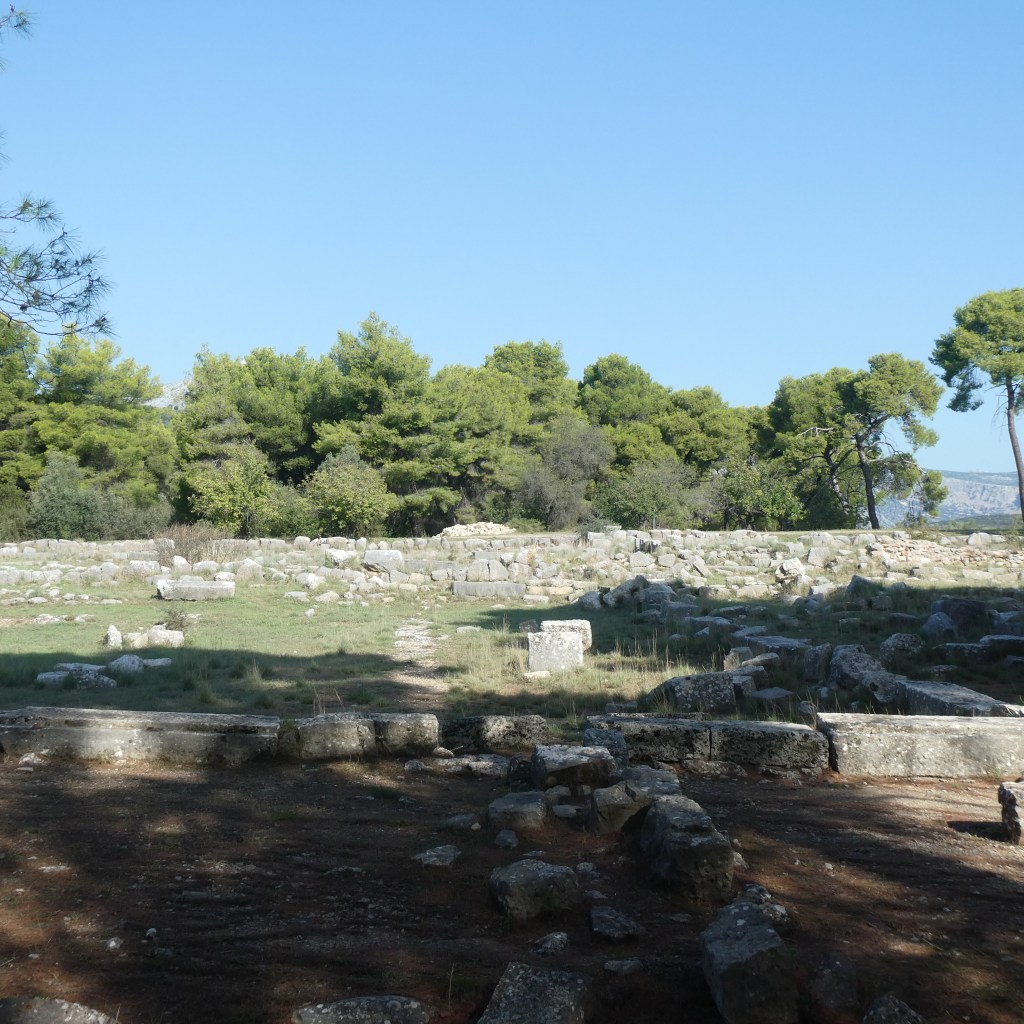
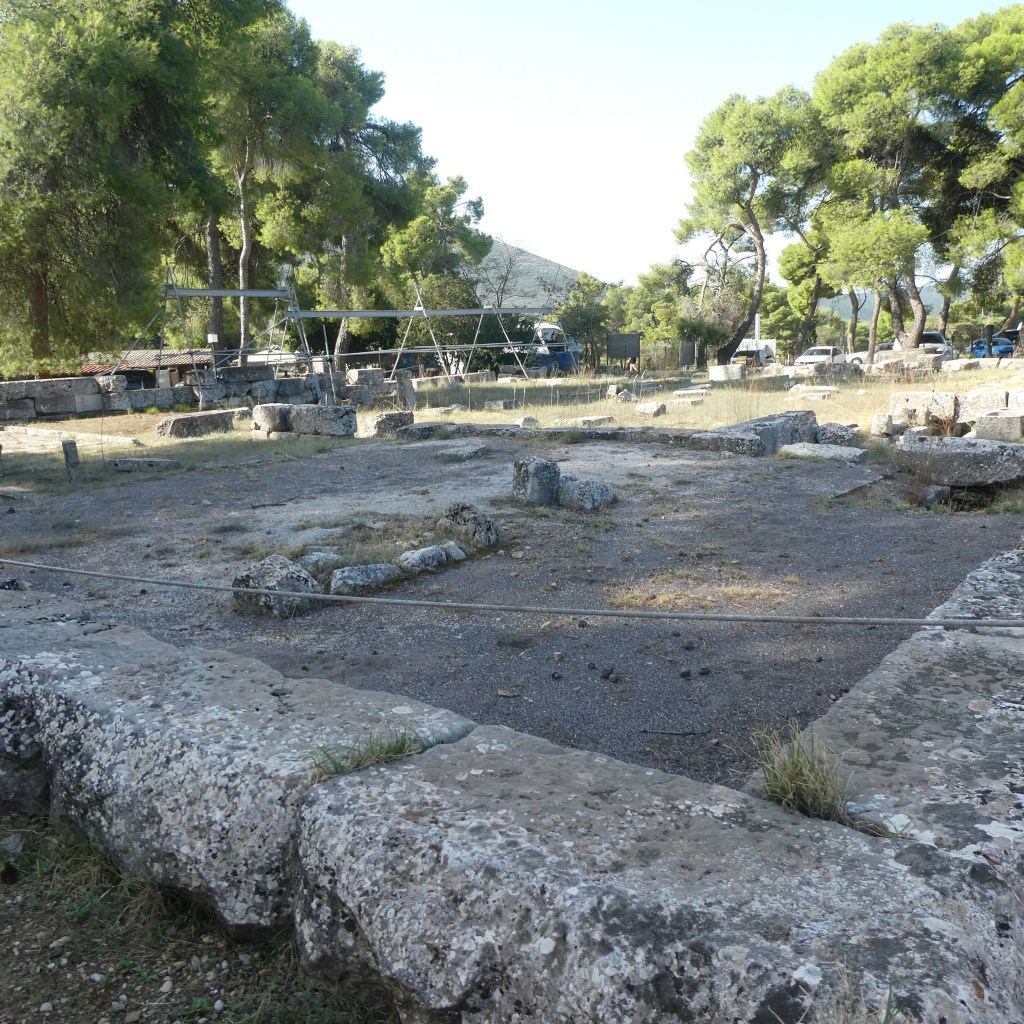
Next up: The UNESCO World Heritage Site of Epidaurus

Posted in Uncategorized | Leave a comment

Nieuw Statendam: Departing from Rome

After our Viking cruise, we spent a few days in Switzerland and then headed to Rome. The reason to go to Rome was to embark on a Holland America Cruise. The cruise-port for Rome is in the city of Civitavecchia about an hour away.

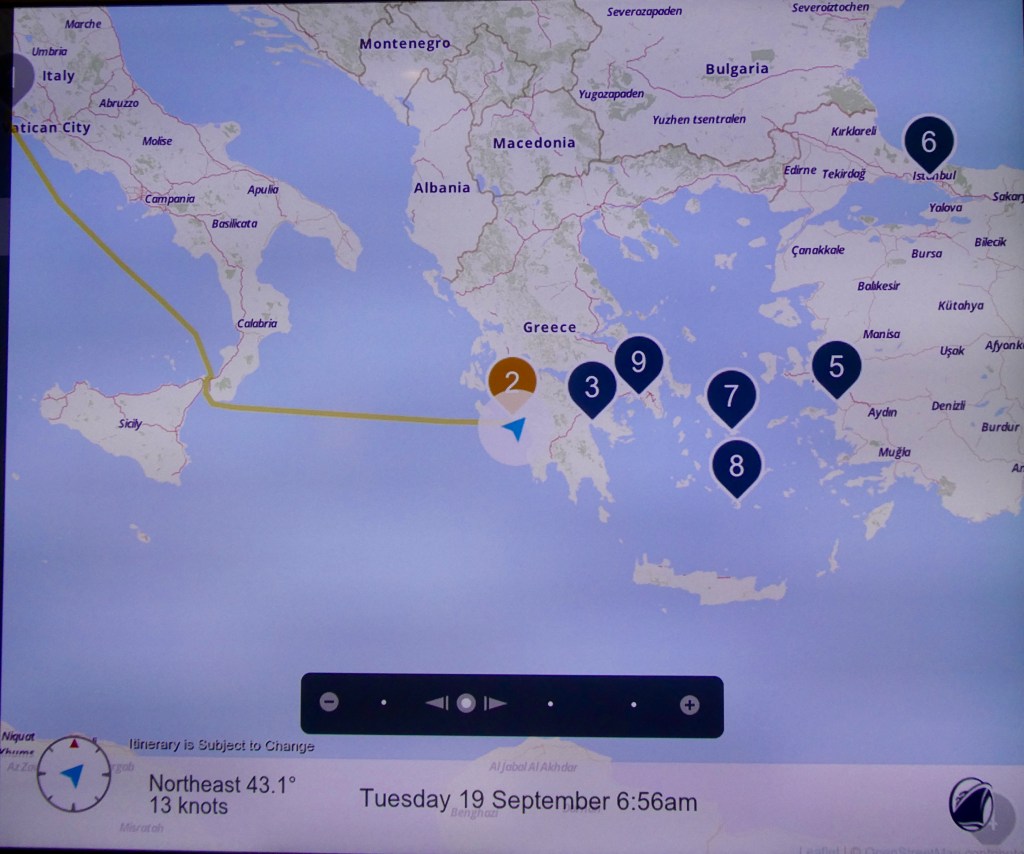
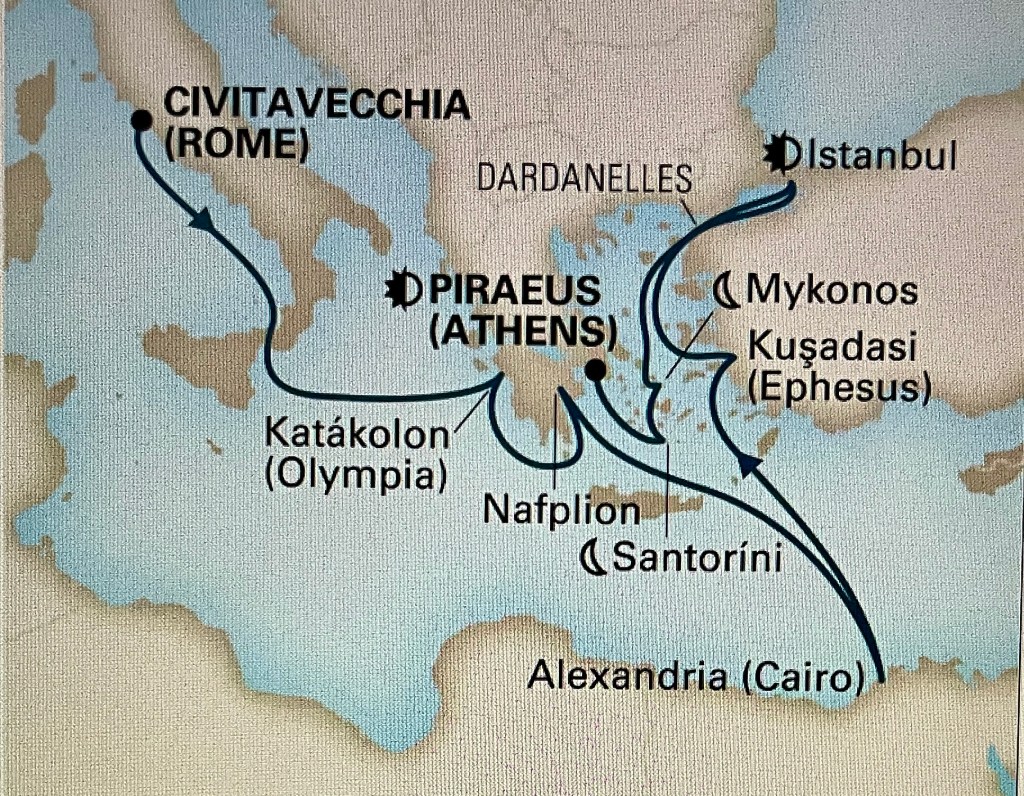
Our Ancient Mysteries cruise itinerary looked like this. The ports I was most excited about were Kusadasi (Ephesus) and Istanbul – both in Turkey.  Randy was most interested in Mykonos and Santorini, islands in Greece.

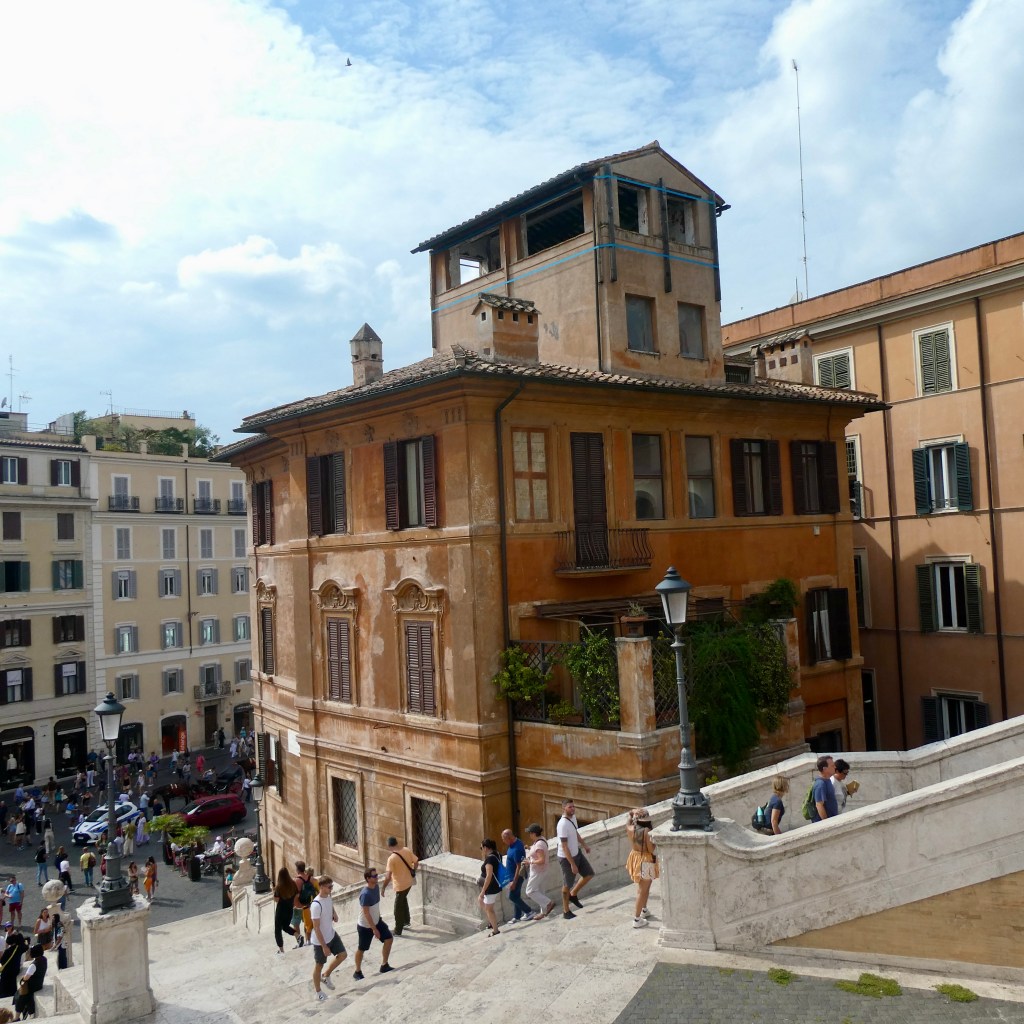
 We were in Rome just overnight to be in place for the morning embarkation. We toured Italy extensively in 2022 and spent several days in Rome. The one tourist thing we missed in 2022 was the Spanish Steps. That was where we were headed on this brief stop in Rome.. 

If you’d like to look back at the posts for our 2022 days in Rome they are Tour of Italy: Roma! Tour of Italy: The Vatican Tour of Italy: The ColosseumTour of Italy: Our Roma Wrap Up.

The Spanish Steps are a stairway of 135 steps built between 1723 and 1725.  

The stairs go between the Trinità dei Monti Church at the top and the Spanish Embassy to the Vatican at the bottom. 
The government in Rome has been trying to reduce loitering on the steps but we didn’t see any enforcement.  We also weren’t there long enough to know whether anyone was loitering.  

We walked up and peeked inside the church.

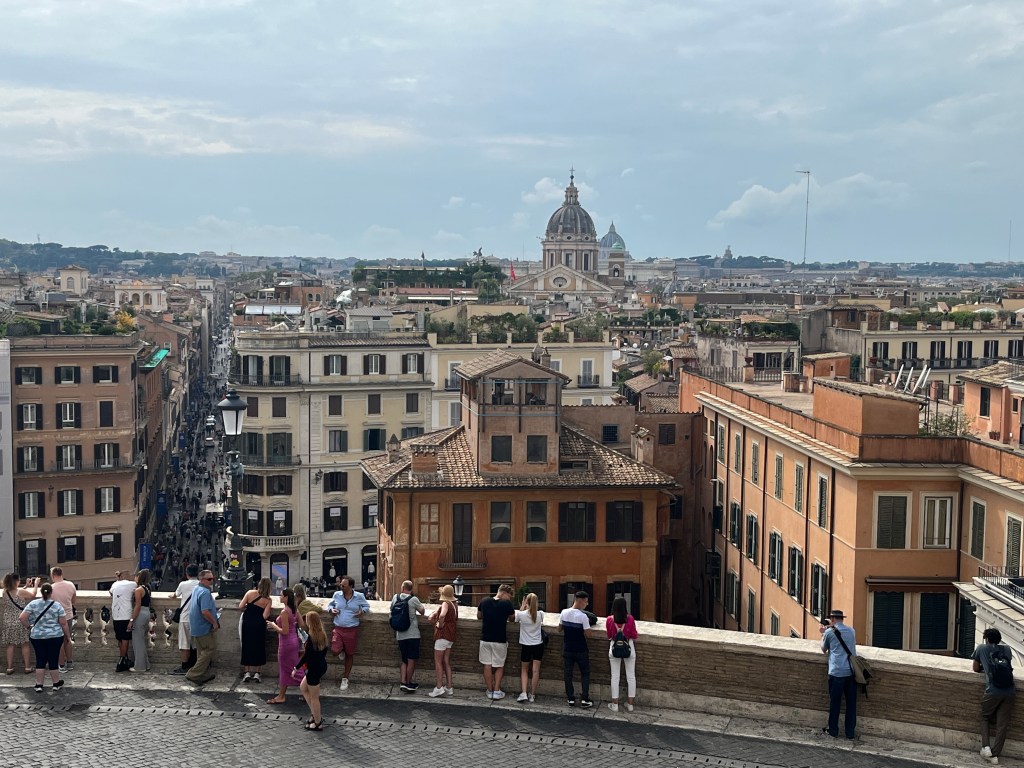
This is the view from the top looking out at Rome. Then we walked back down.  

We rode a tour bus around Rome as we had time to spend and nothing else specific we wanted to do. 

We enjoyed the sites and narration and learned that Rome was the first city in the world to reach one million people.  It took London 1900 years more to reach one million in population.

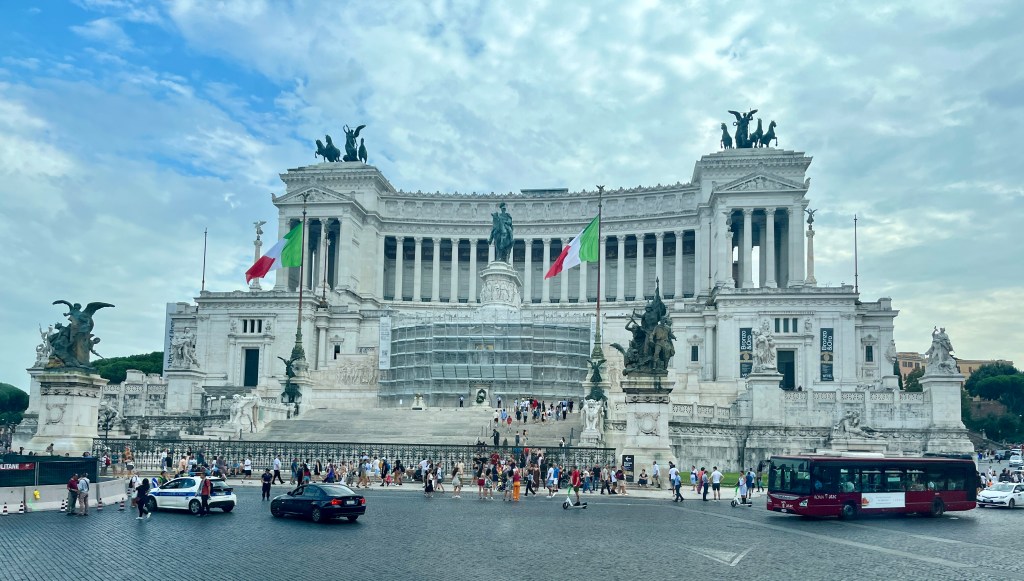
Mussolini used Piazza Venezia as a home and seat of government during his reign.  He gave speeches from the second balcony. 

We had wine and pasta for dinner at a little outdoor cafe (and later a gelato) because that is what you do in Rome!

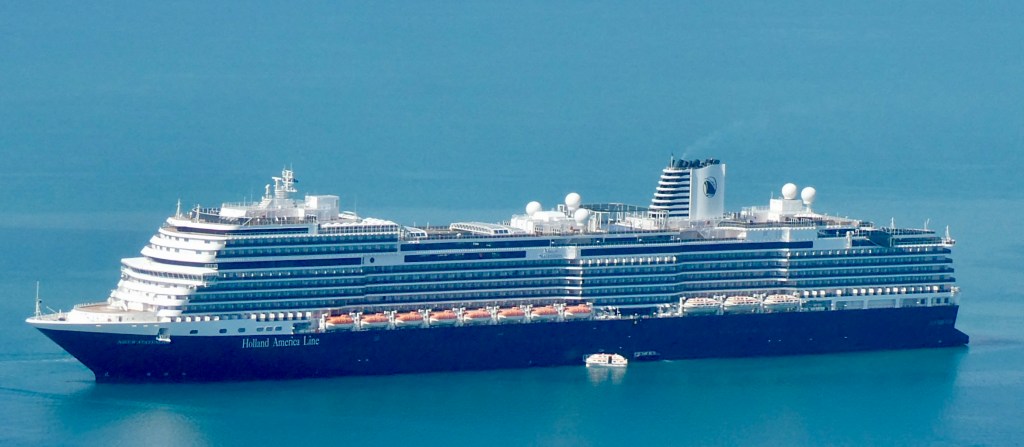
The next day we went to Civitavecchia and boarded the Nieuw Statendam.  We have sailed on this ship before so already knew our way around.

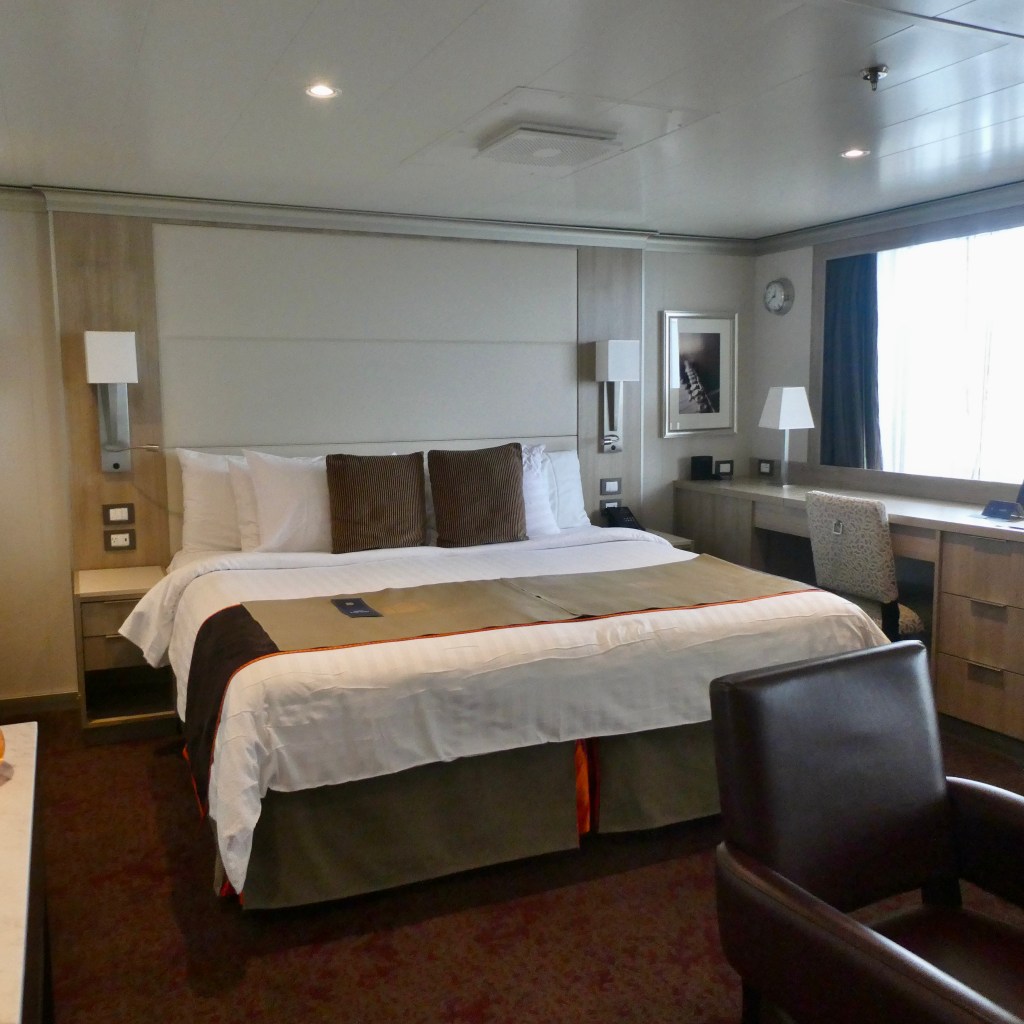
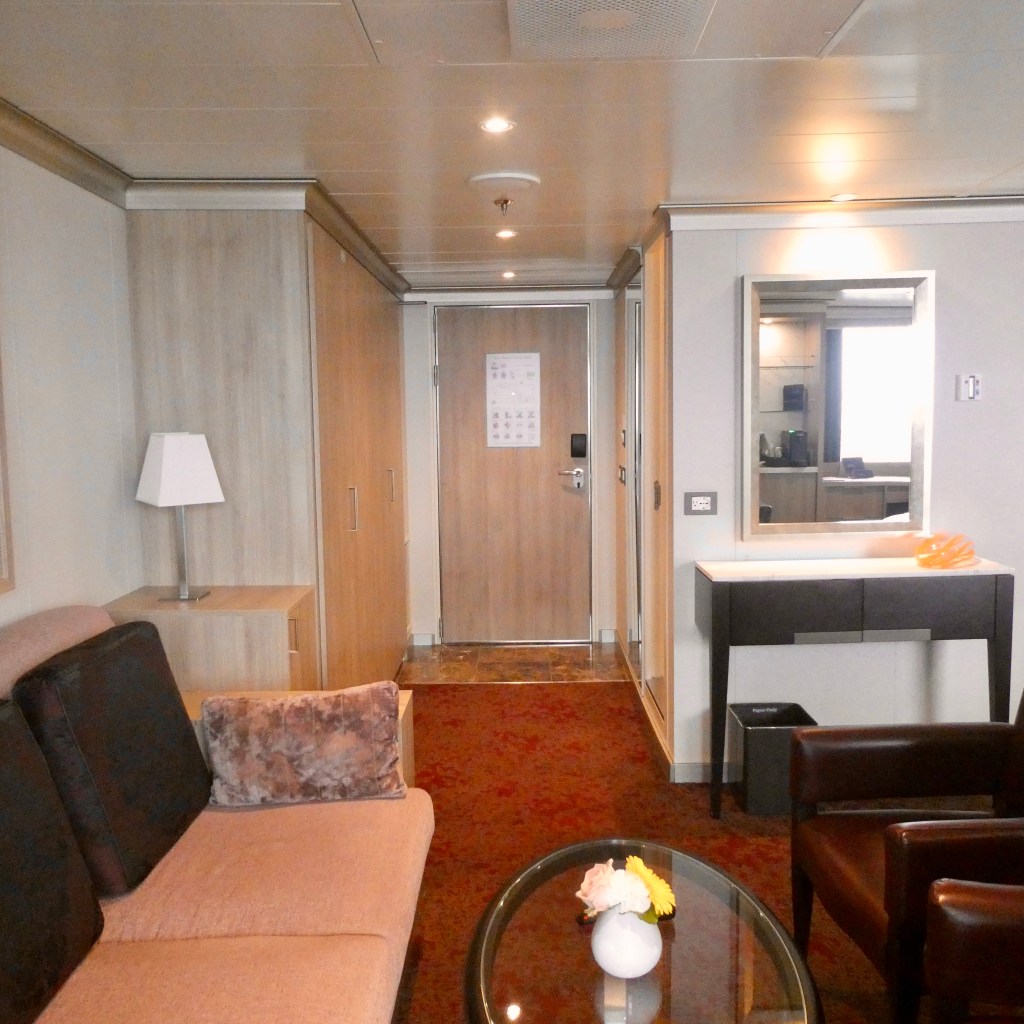
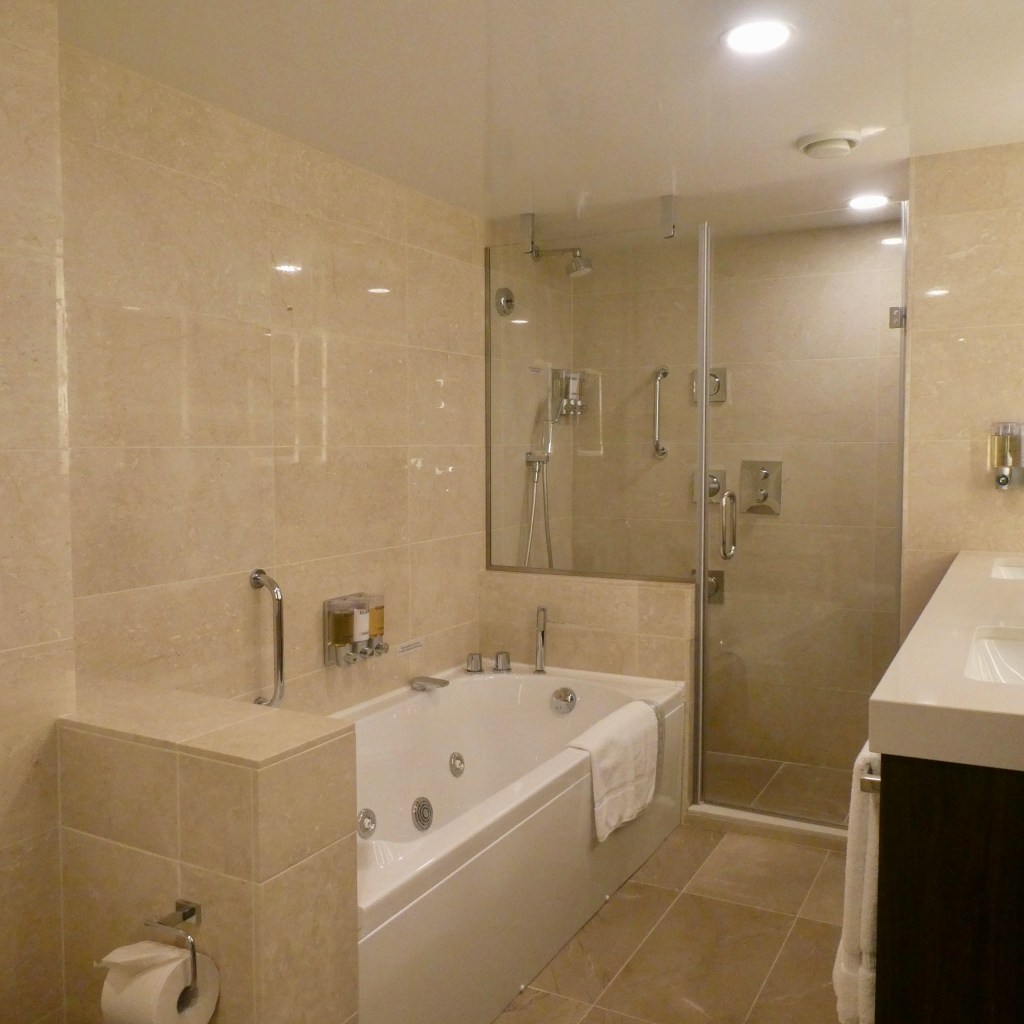
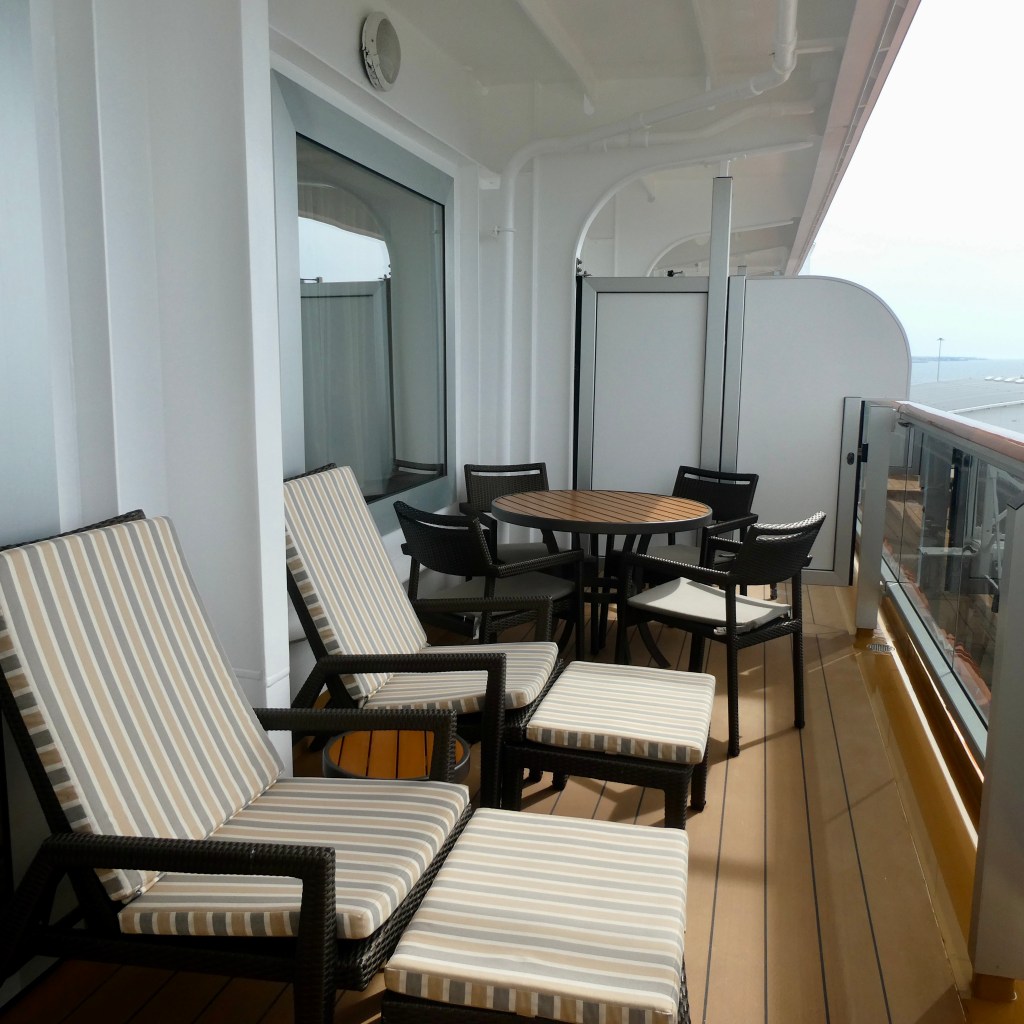
New to us, however, was a Neptune Cabin. We were excited to see it!  We had been offered a steeply discounted price through our travel agent and jumped on it.  We will never pay full price for this level of suite so it will probably be our one and only time to have one.   

Here is the tour:

It was very easy to get used to that much room!  

We boarded the Nieuw Statendam on September 17, 2023.

Next up:  Olympia, Greece

Posted in Uncategorized | 1 Comment

Switzerland: Jungfraujoch – the Top of Europe

We were going up 3454 meters into the Swiss Alps.  We were headed to Jungfraujoch – the Top of Europe.  We were going to see, or go through, three peaks:  Eiger, Monch and Jungfraujoch.  

Our first segment from Zurich to Interlaken was by bus. We stopped for Swiss Hot Chocolate! Unfortunately our hot chocolate was served at a Hooters instead of a quaint village cafe.   In hindsight, that fits perfectly with our tour guide.  He was very into himself and his performance as our guide. We were just accessories.  He had a schtick and I became weary of him very quickly.  Randy took a bit longer but neither of us were fans,

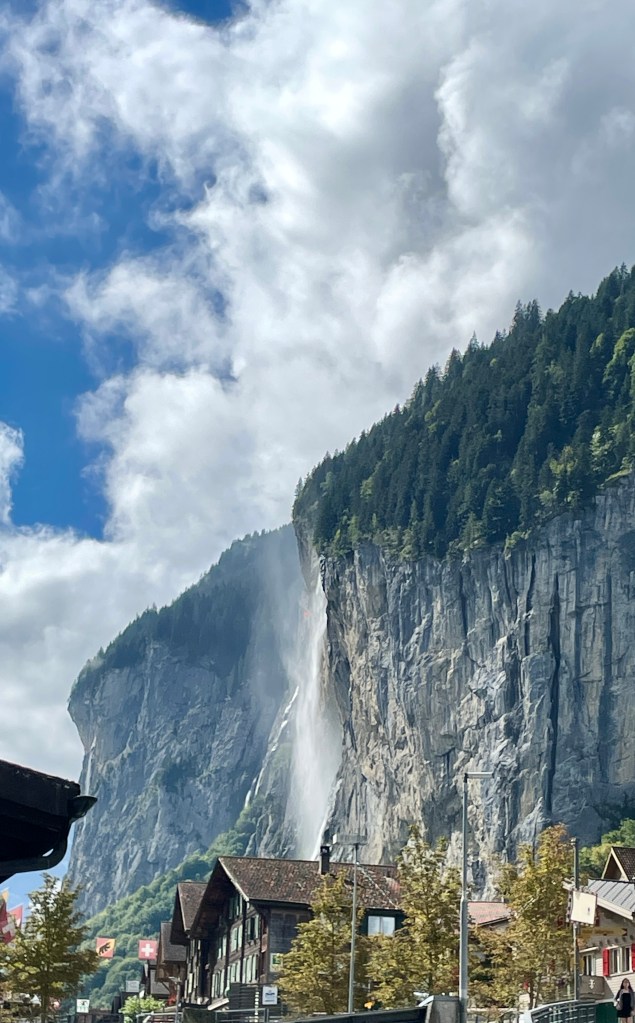
We saw a mountain waterfall enroute.

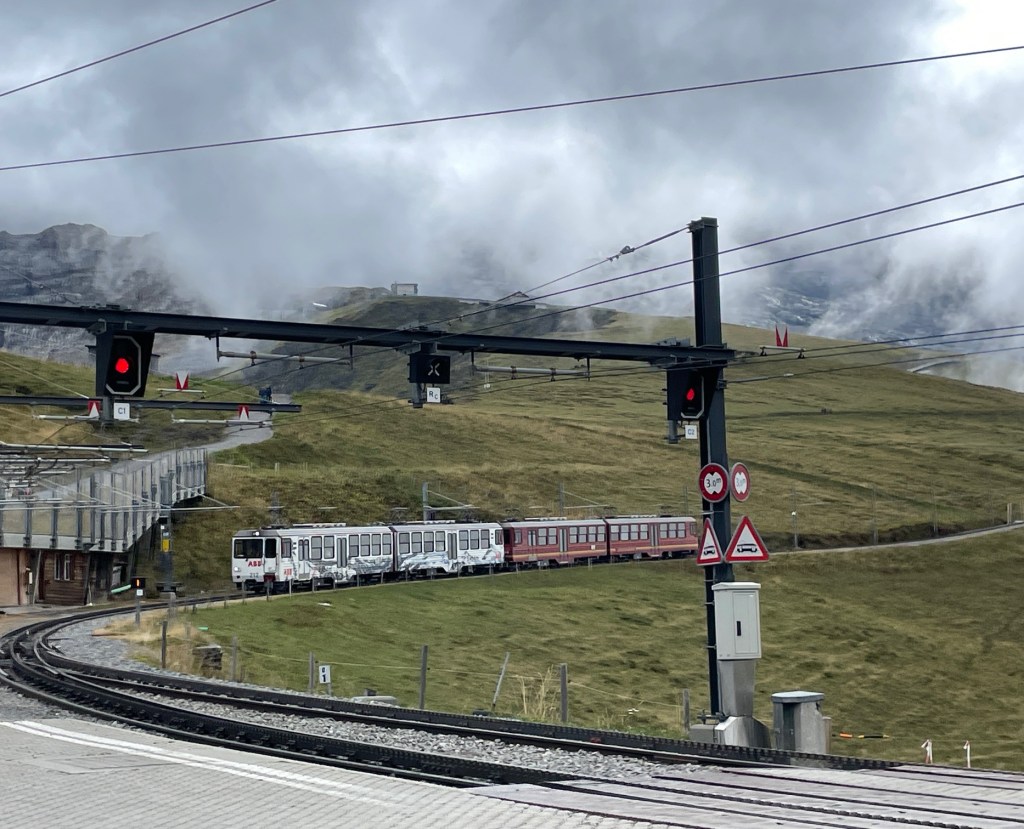
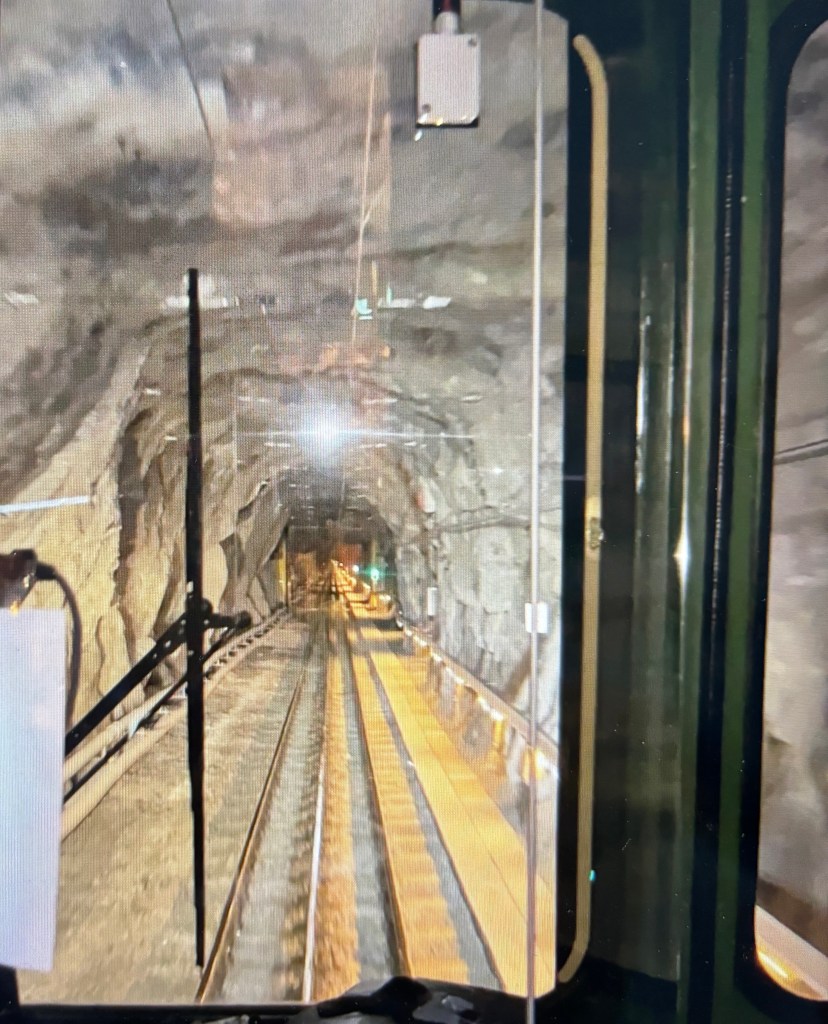
After a second bus ride, we boarded the first of two cogwheel rail trains.

We changed trains at Grindelwald, and then headed to Europe’s highest railway station.

The Jungfraujoch Railway has been taking passengers to the Top of Europe since 1912. Swiss industrialist Adolf Guyer-Zelle had the idea to blast a tunnel through the sheer rock of Eiger and Monch.  Building a railway to the summit of Jongfrau was thought to be beneficial for local tourism. Jungfraujoch is a UNESCO World Heritage Site where you can view the largest glacier in the Alps.

The railway construction began in 1896.  Despite employee deaths and strikes, workers broke through on February 21, 1912, sixteen years after it was begun.  The tunnel is 9.3 kilometers long. The tunnel through Eiger and Monch cost twice as much as anticipated.

We visited the ice palace, originally created in 1930.

Thousands of visitors walk through the ice tunnels to view various ice sculptures. That requires cooling the labyrinth and for the art to be refined as melting threatens.

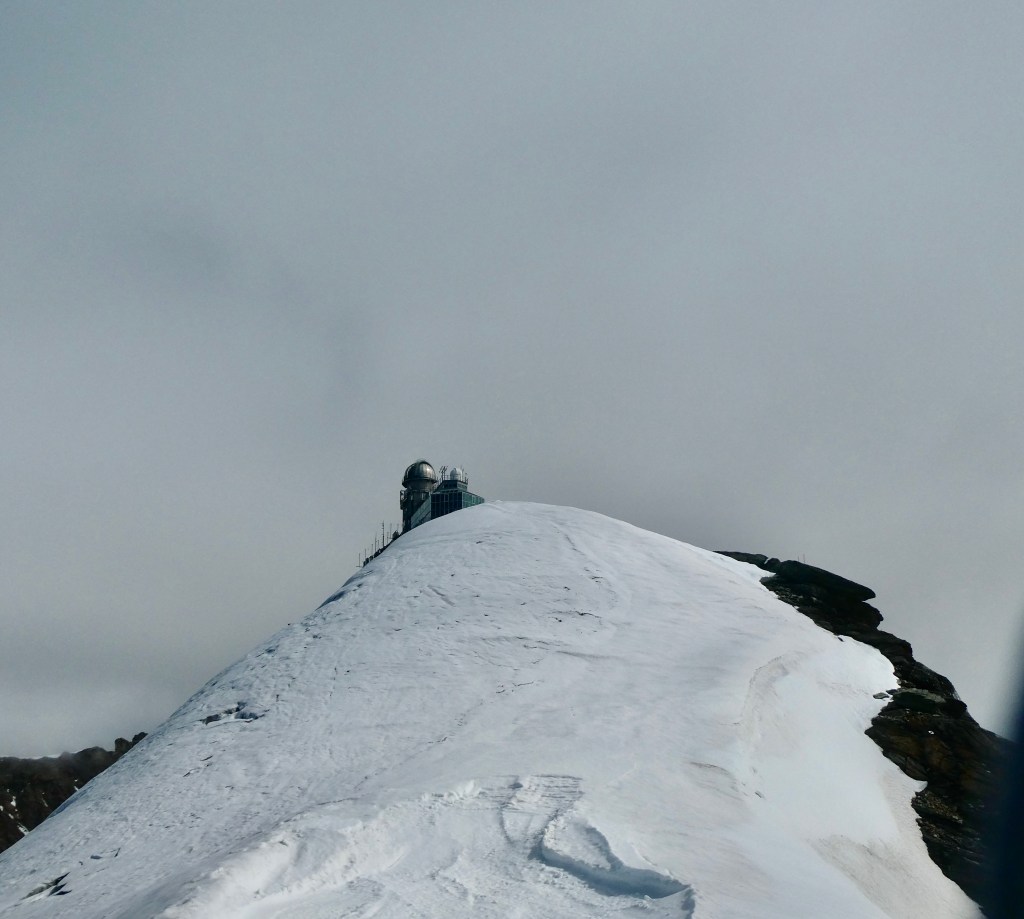
The Sphinx Dome is used for astronomical studies. 

The terrace at the Sphinx opened for viewing in 1996.

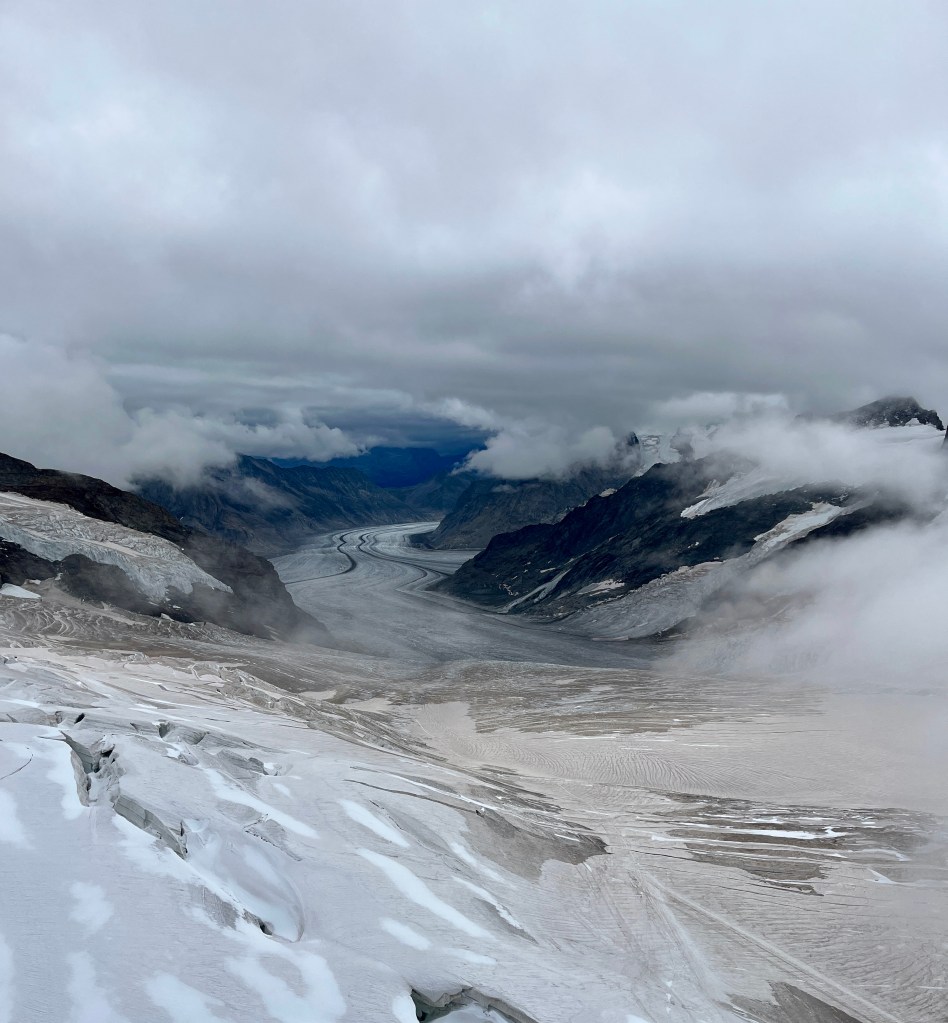
Aletsch Glacier is the longest in the Alps at 20 kilometers.

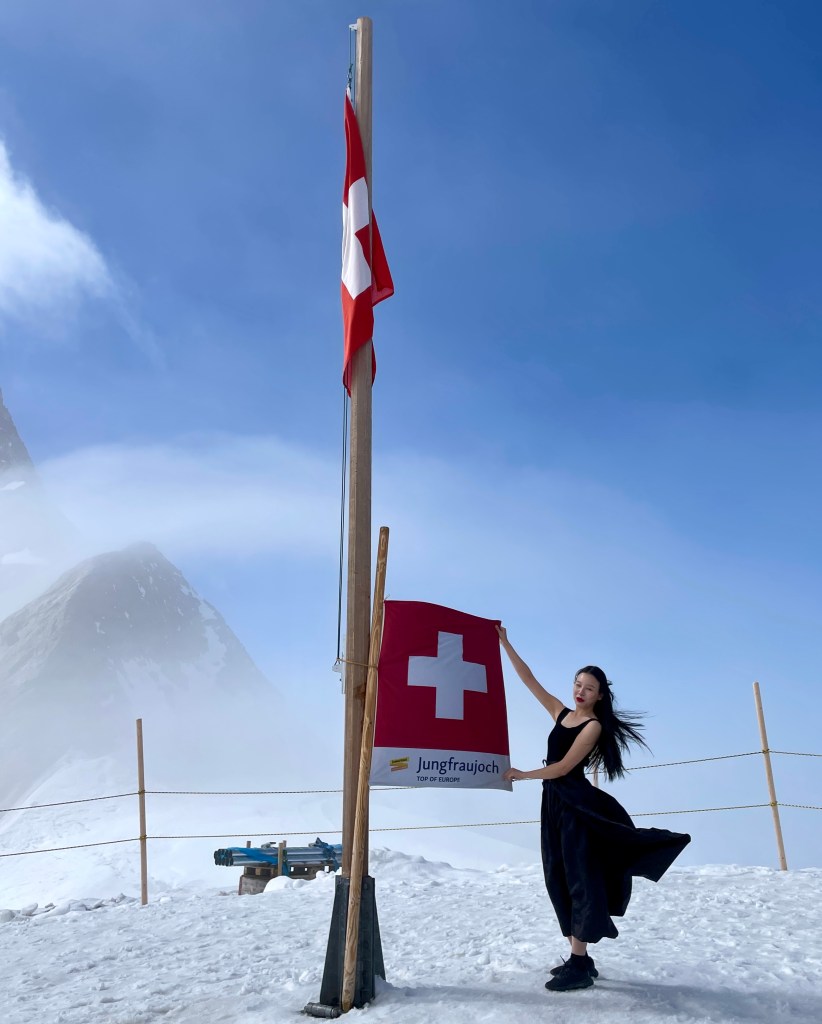
One of the memorable events of the day was watching this young lady pose for this picture.  As she approached the flag she quickly discarded her heavy coat for her glamour shot.  The entire process took seconds.  She is lovely and the photo is stunning.

We saw the glamour shot Instagram mentality repeatedly on our trip and not just by beautiful young women.  It was quite the thing to observe.

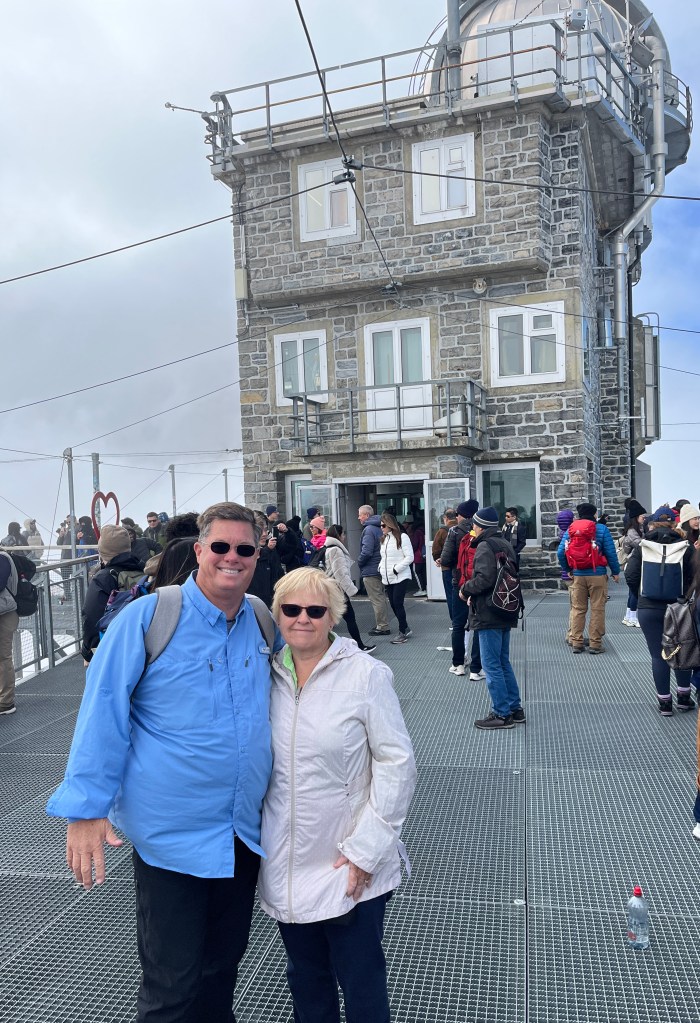
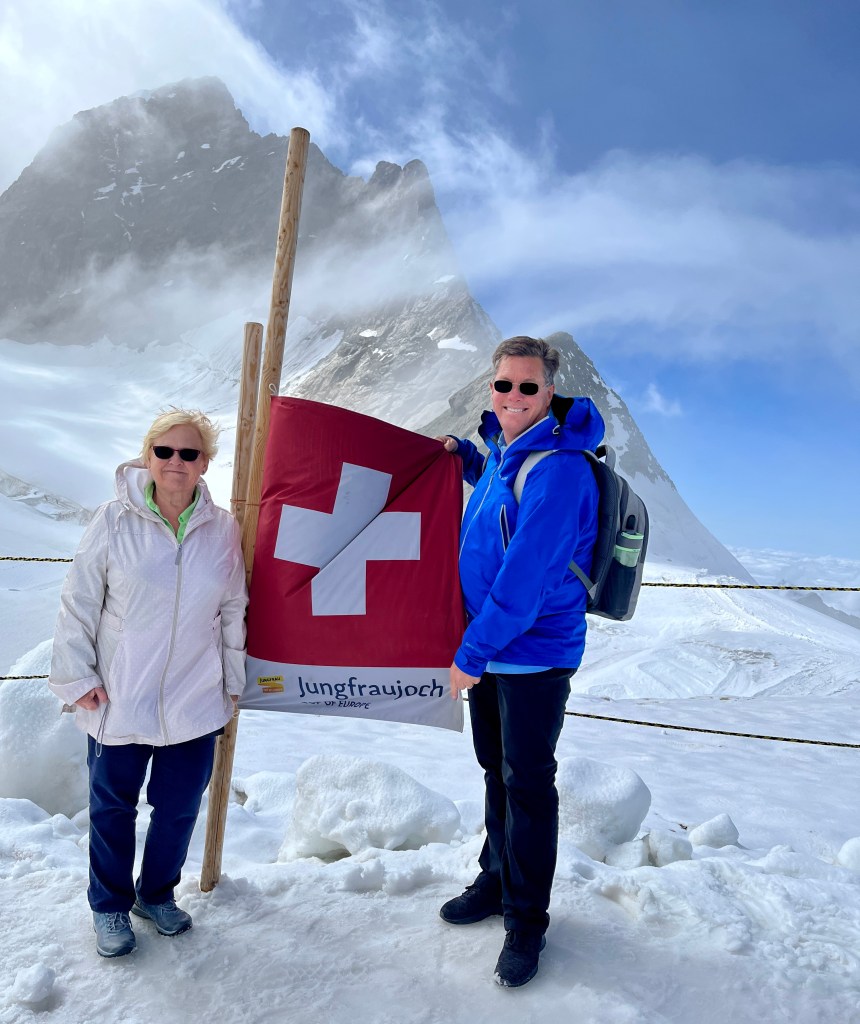
Here is our less glamorous photo at the top of Europe!

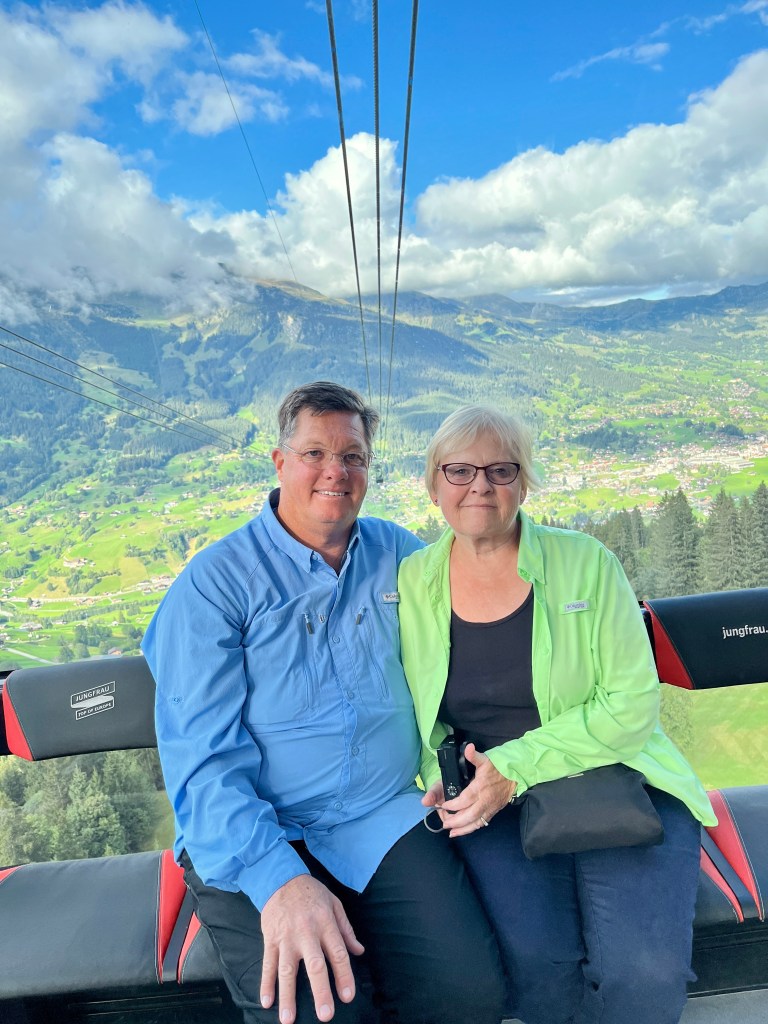
We left the mountain on the Eiger Express cableway.

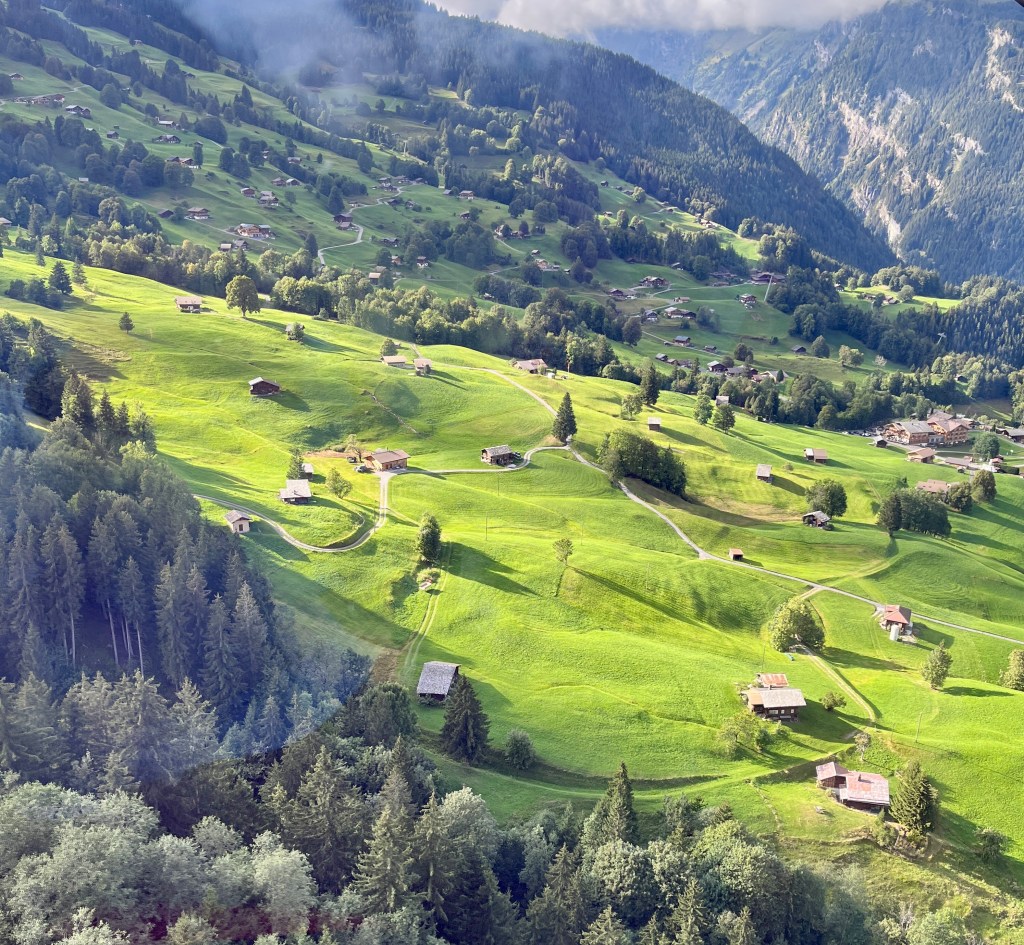
We went through the clouds and then the scenery was amazing all the way down.  

The Eiger face was long thought to be unscalable.

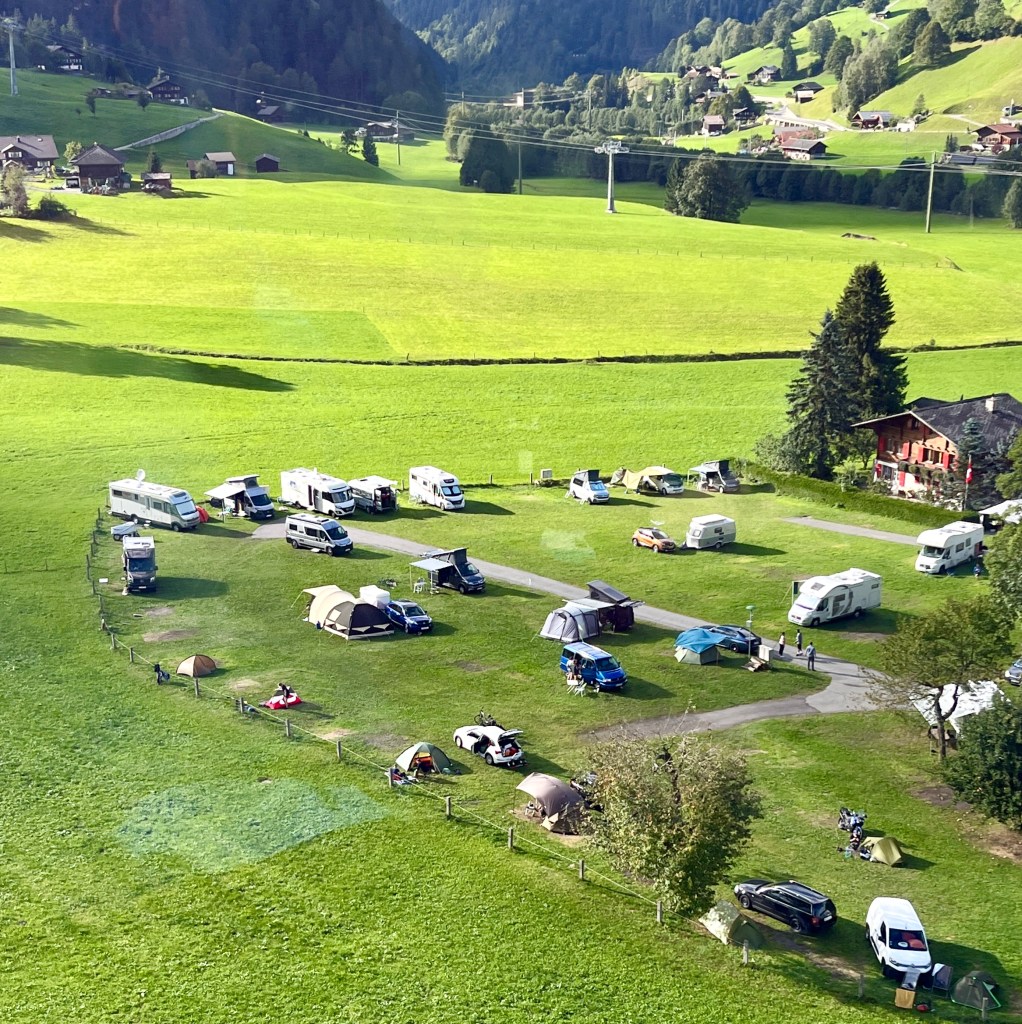
What a place to camp!

Our tour to the spectacular Swiss Alps used a bus, three trains and a gondola!  

We went to the Top of Europe on September 14, 2023

Next up: A brief stop in Rome

Posted in Uncategorized | 1 Comment

Cooling Off in Zurich – Summer 2023

Our plane to Zurich was late leaving Paris. Despite a nine hour time difference, our travel agent was aware and had already called to reschedule the driver picking us up at the airport in Zurich. She is golden.

Even though it was only a 75 minute flight, Air France still served a cucumber and cheese sandwich snack and drink.  We are accustomed to much less from our American carriers.

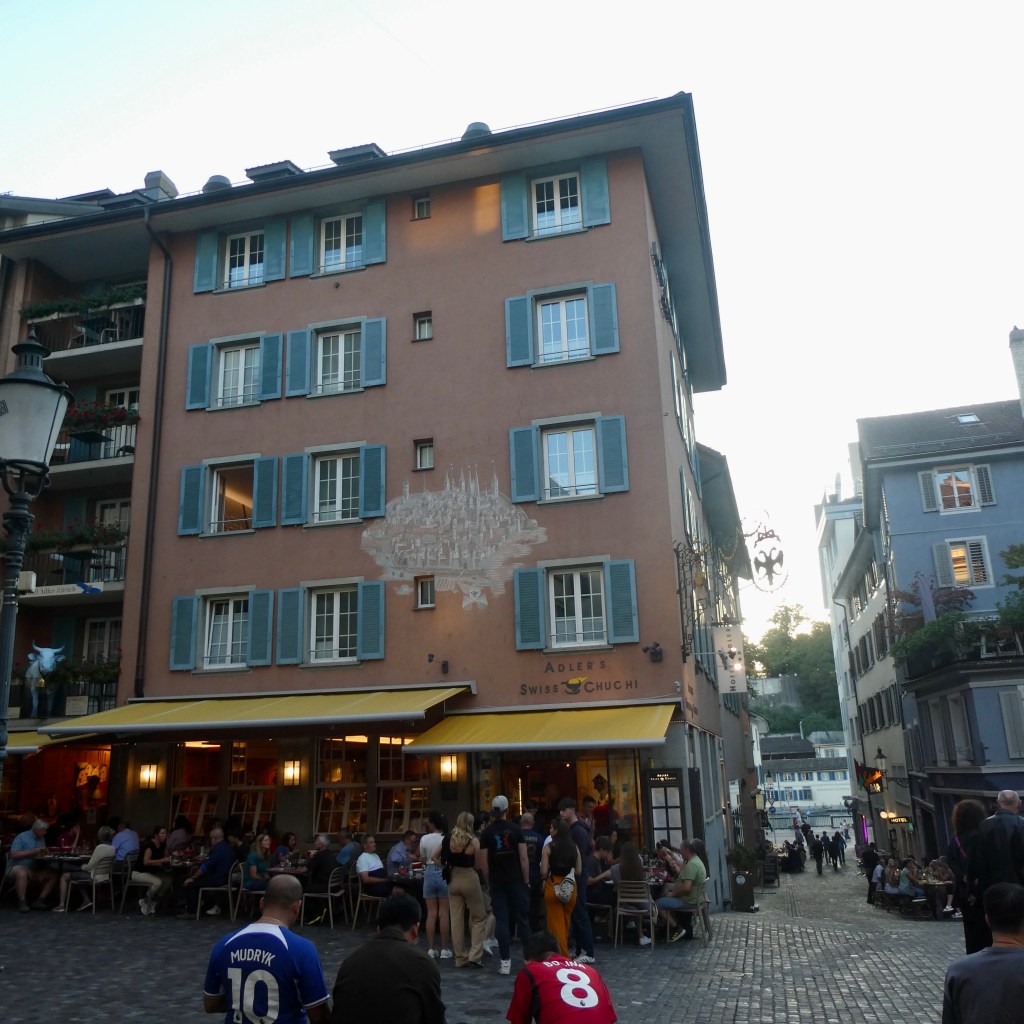
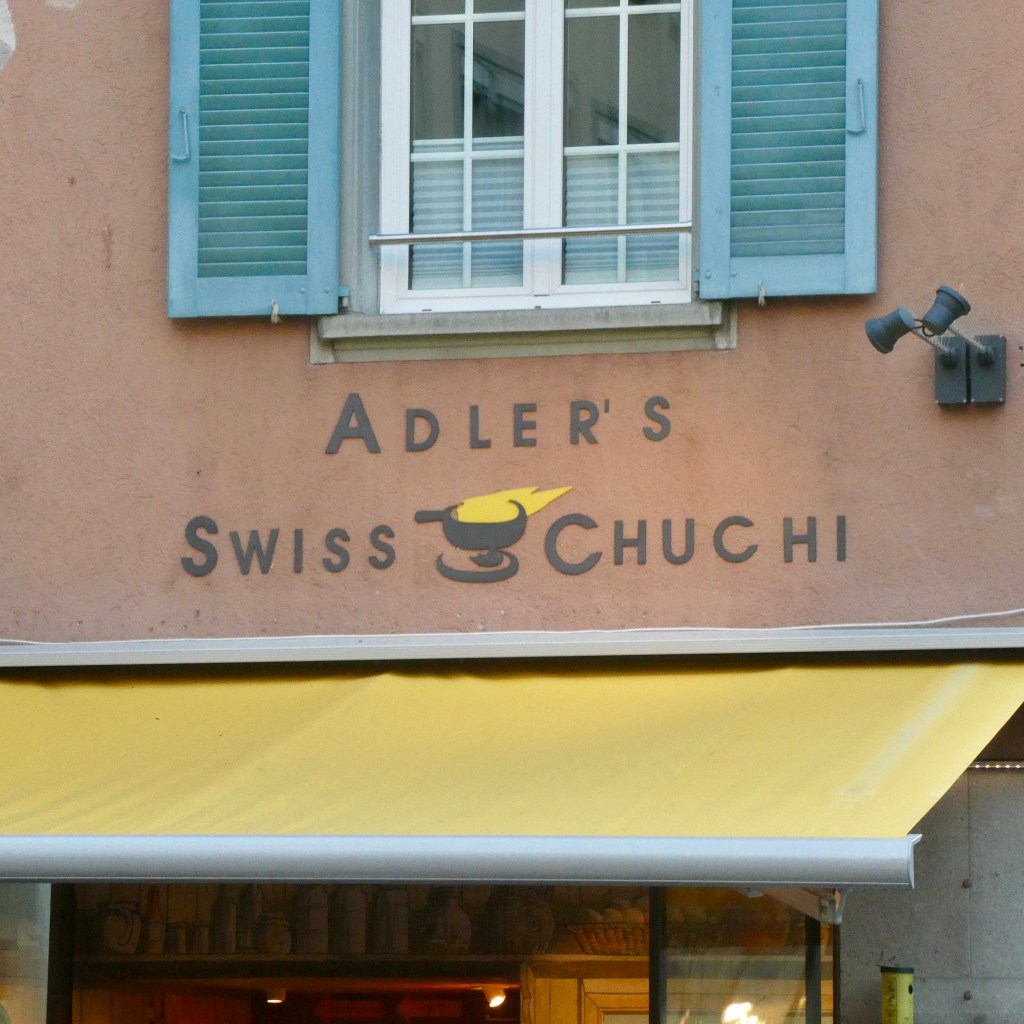
It was delightfully cool when we left the airport and our driver delivered us to the Hotel Adler. This boutique hotel in old town was recommended by our travel agent.

We got settled into our room and noticed an interesting bed configuration.  It was a large bed but each side had its own cover.

There was an Arizona Highways magazine in the sitting area so we felt right at home.

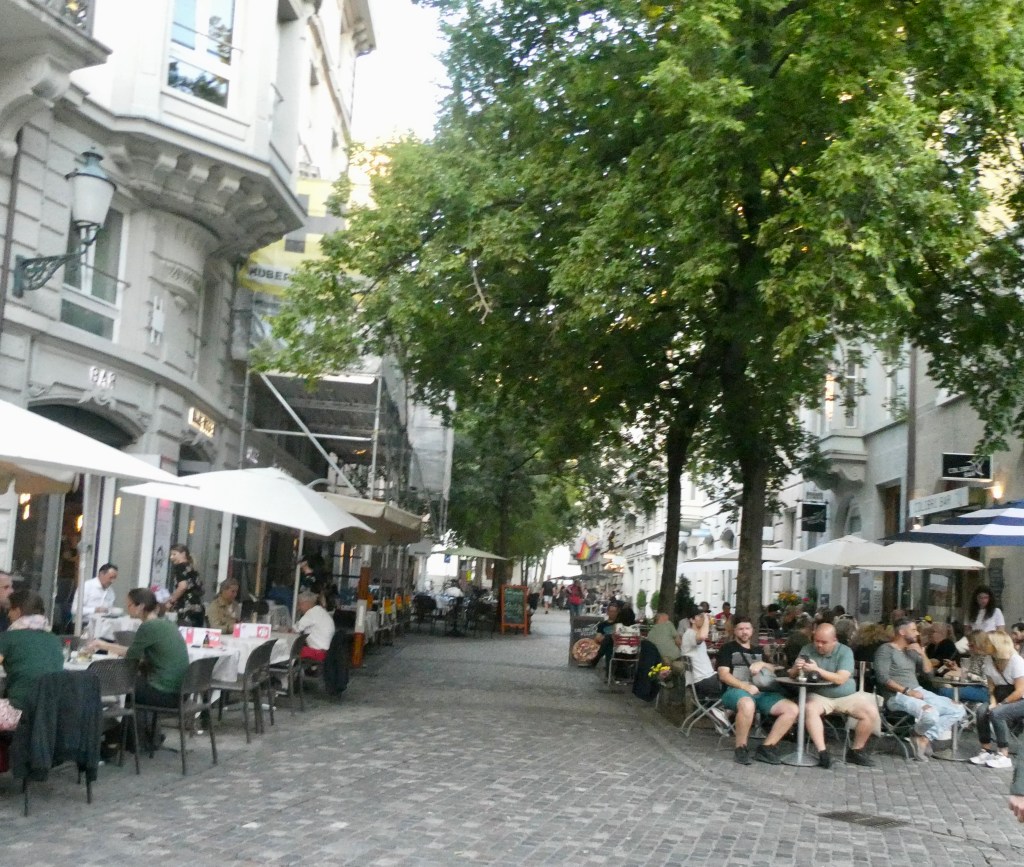
We walked around a bit enjoying the sites of Zurich. 

When we returned to our room a person was playing a guitar and singing right outside our window in the town square courtyard.   

The courtyard area turned out to be full of pleasant activity throughout our stay. 

We often saw people looking at the mural of old Zurich on the hotel exterior wall.  It felt a little odd at first because our room was close to the mural so it seemed like they were looking at our window!

The next day we had a TukTuk with Fondue tour.  We found our meeting place on the other side of the river but little did we know we’d soon be right back to our hotel!  

The Adler Hotel provided the cheese fondue!  We saw lines at our hotel restaurant each evening with most people lined up for the delicious fondue.

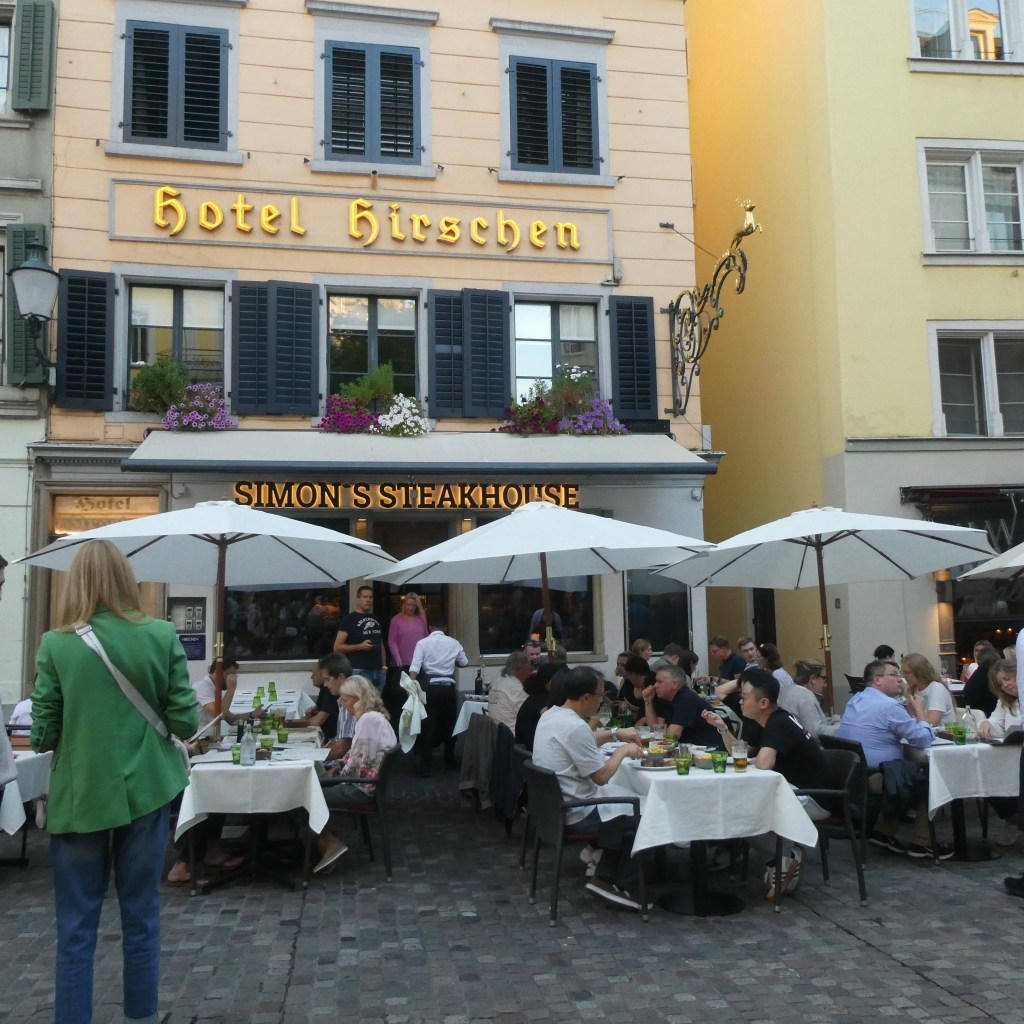
Our guide told us about this steak house. When it was a bar, the band Black Sabbath worked and lived there “when they only knew three songs”. We ate there a couple days later.

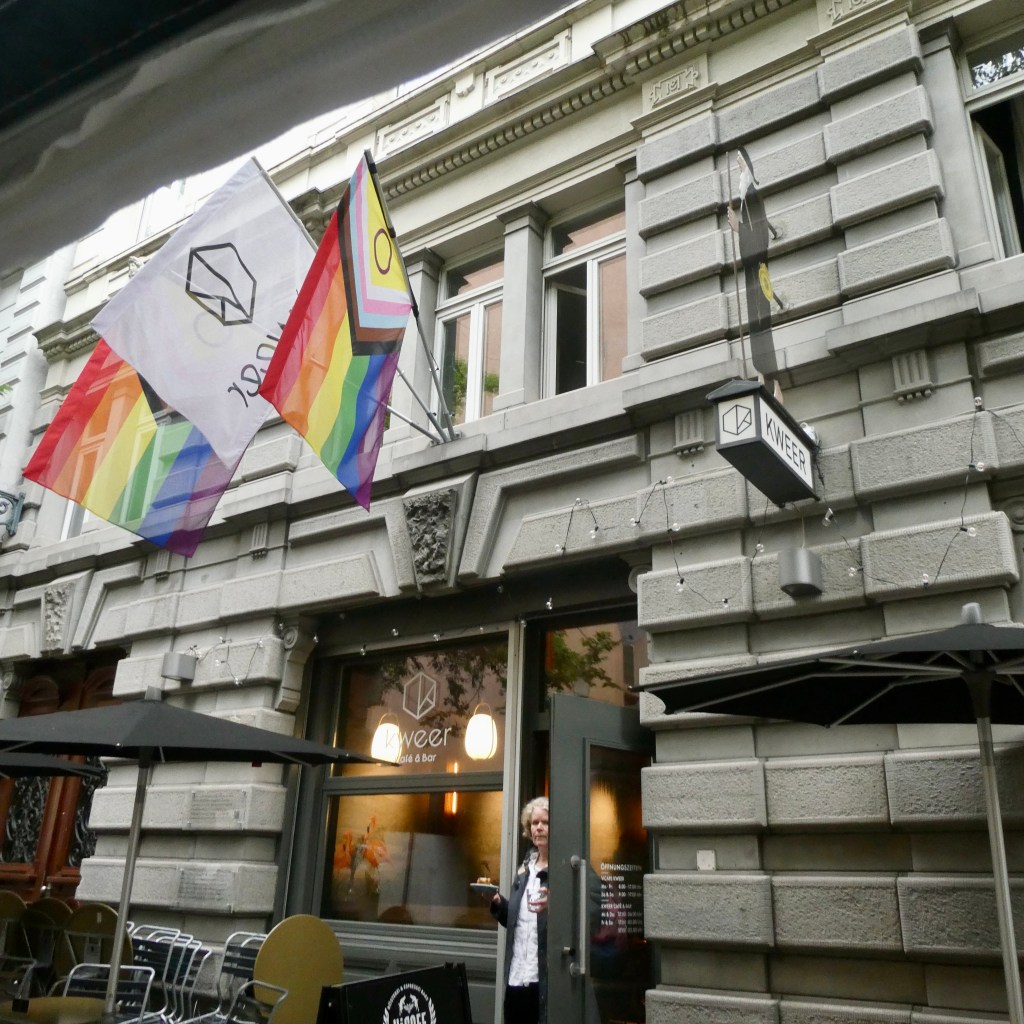
This building held the first gay bar in Europe. The business moved locations just recently during the pandemic.

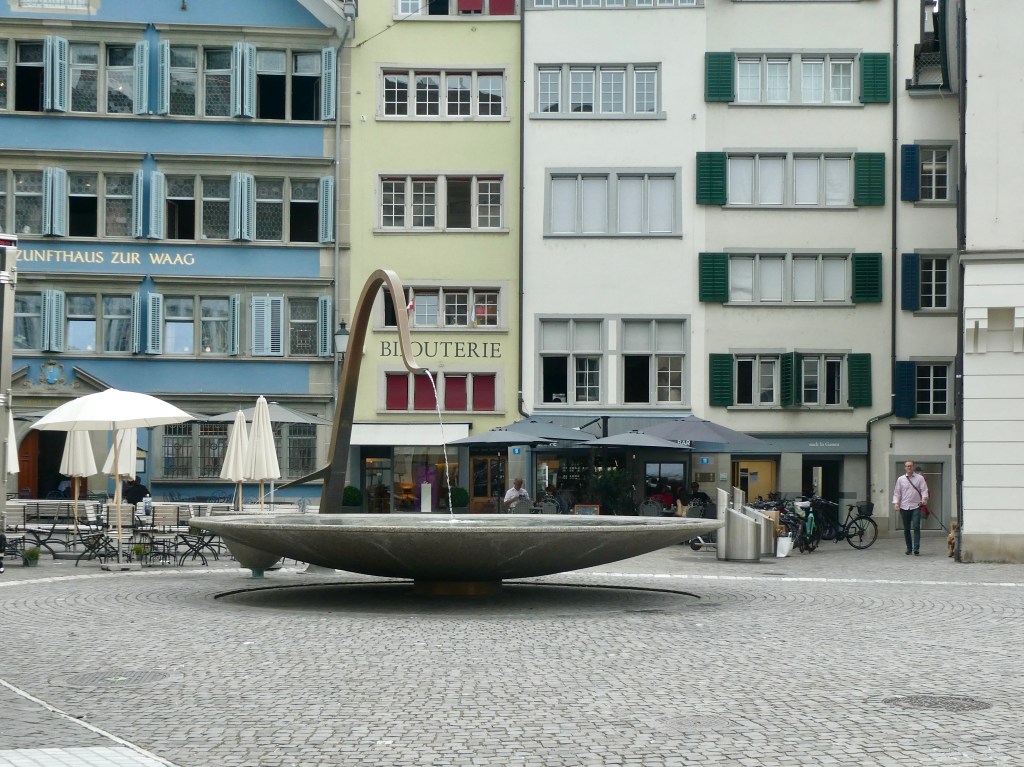
Zurich has the most fountains of any country in the world. The water is drinkable and people fill water bottles from them.  It is also considered an emergency service water source. The side arm on the fountain sometimes provides wine.

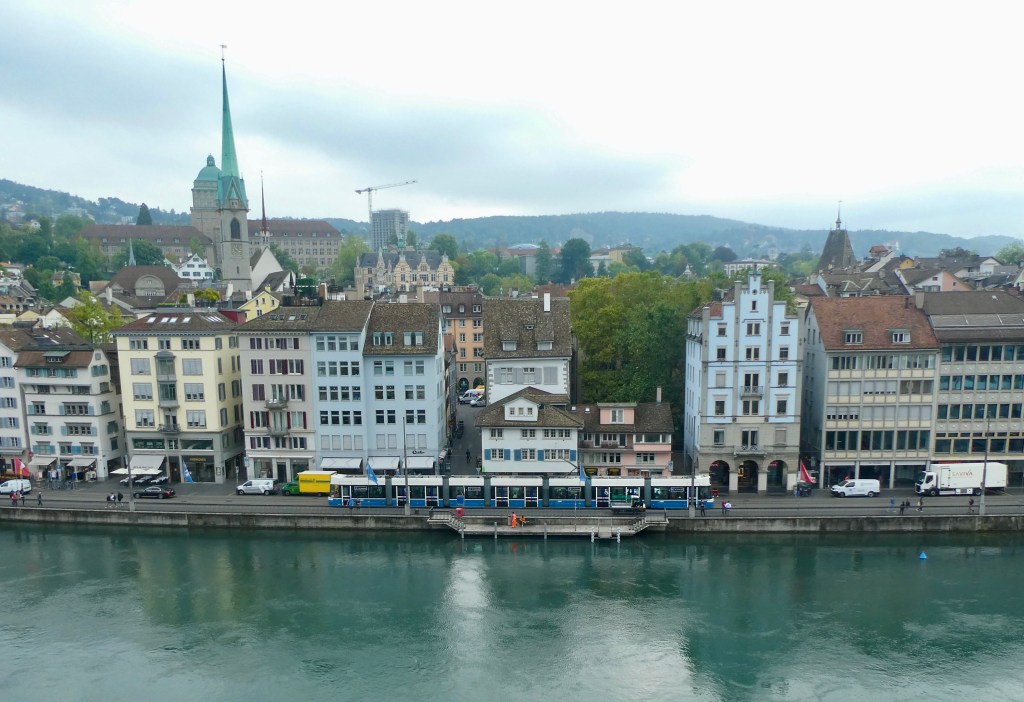
The smaller church in front was a former women’s monastery with the larger men’s monastery behind. 

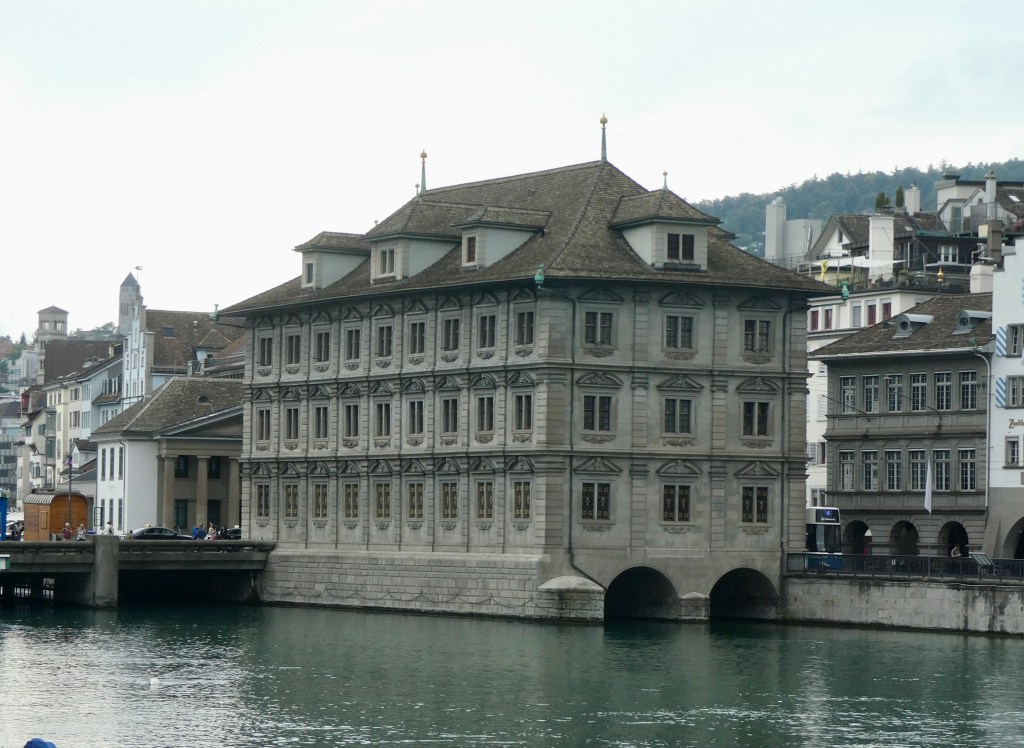
This is the parliament building.

Churchill gave one of his historic speeches near here stressing European unity in September, 1946.    Switzerland’s neutrality is sometimes criticized but our guide told us they cannot deviate, ie. donate to Ukraine, because of their constitution. 

Our TukTuk with Fondue Tour was a highlight, not just of Zurich, but of our entire trip.  Imagine riding comfortably in the back of the TukTuk drinking wine, dipping into delicious cheese fondue and getting great commentary. Perfect.

Later we wandered around a bit more on our own.  

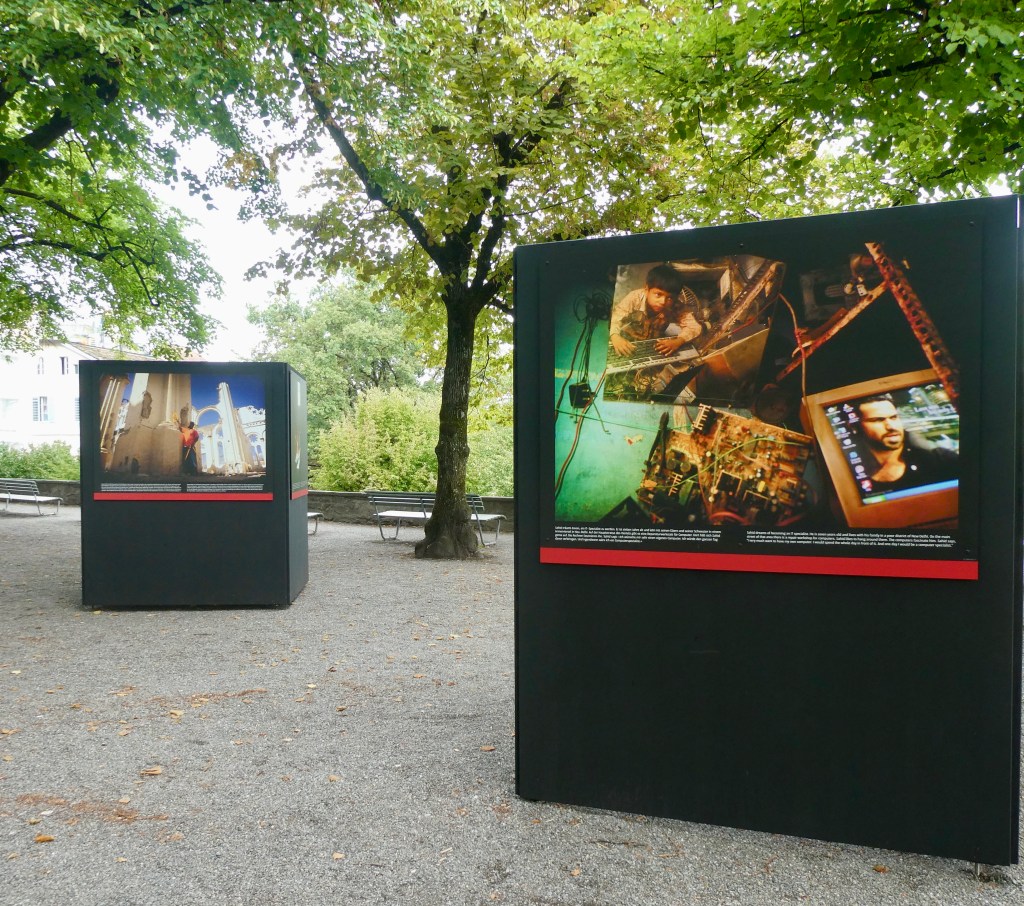
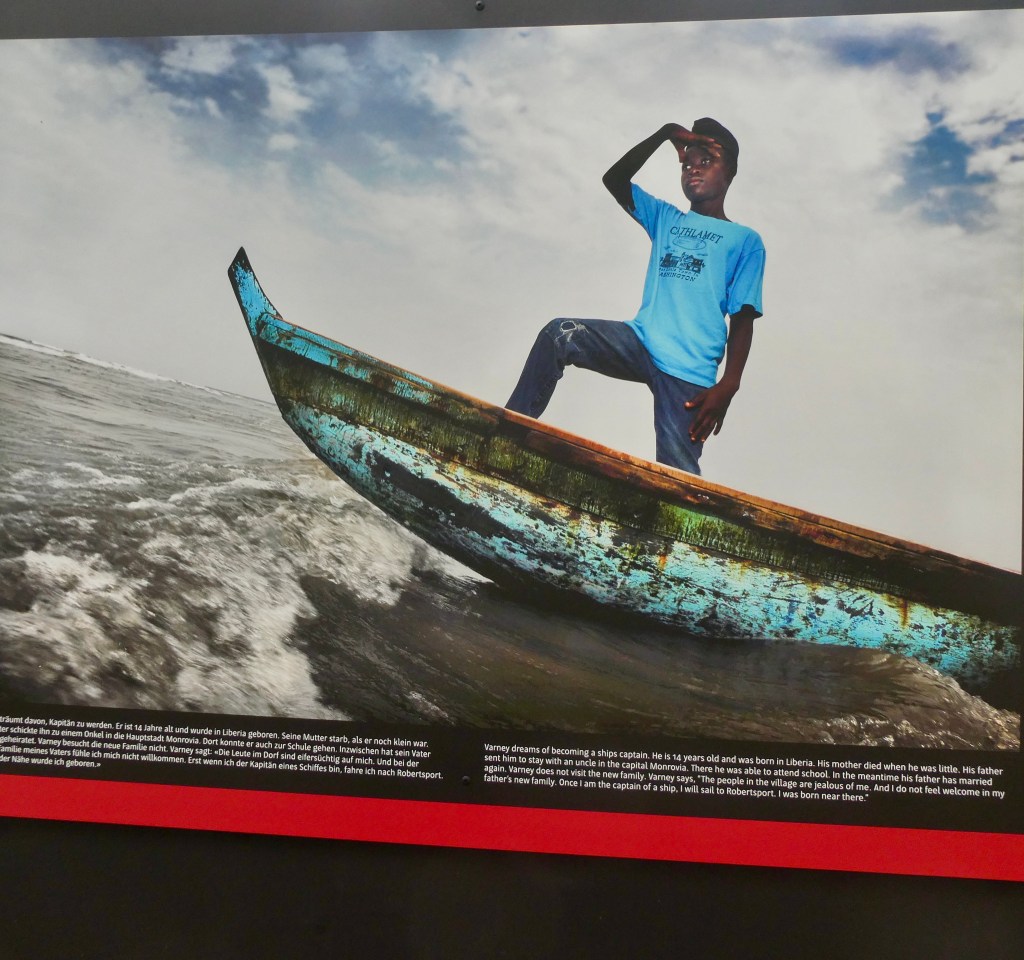
We found a park with displays of children from around the world and their dreams. 

The boy from Liberia had a Cathlamet shirt on.  Cathlamet is a small town in southwest Washington state near where my parents lived in retirement.  It is interesting to think how that shirt was worn by a boy in Liberia and placed on a picture board in Zurich.

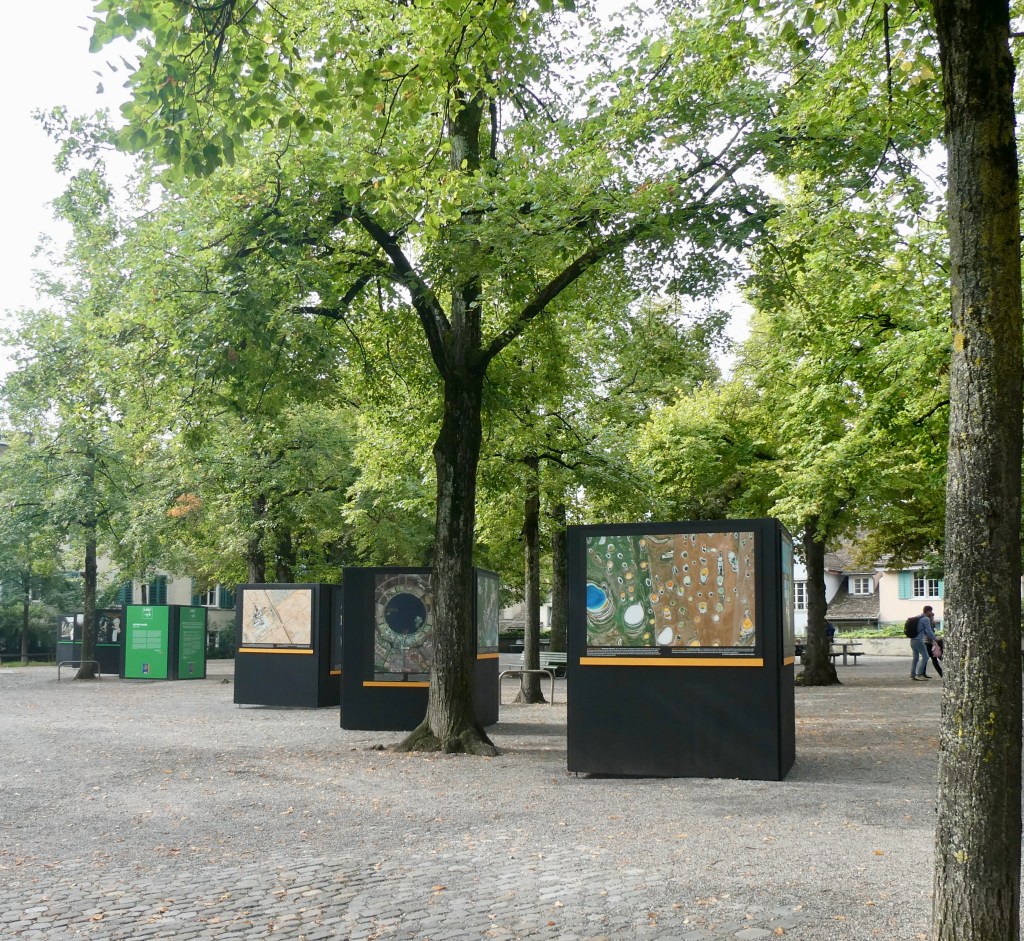
The other side of the park had displays of satellite images from around the world.  

One highlighted the airplane graveyard in Tucson, Arizona.  It is very near where Randy grew up and we’ve taken a tour there.

While waiting for our next tour, we stopped at a Starbucks and I had my first pumpkin spice latte of the season – in Zurich! The things one must endure to get access to the WC!  (WC=water-closet=toilet) 

The next tour was not one of the best but we did learn a few things of interest. Zurich is the largest city in Switzerland but is not the capital.

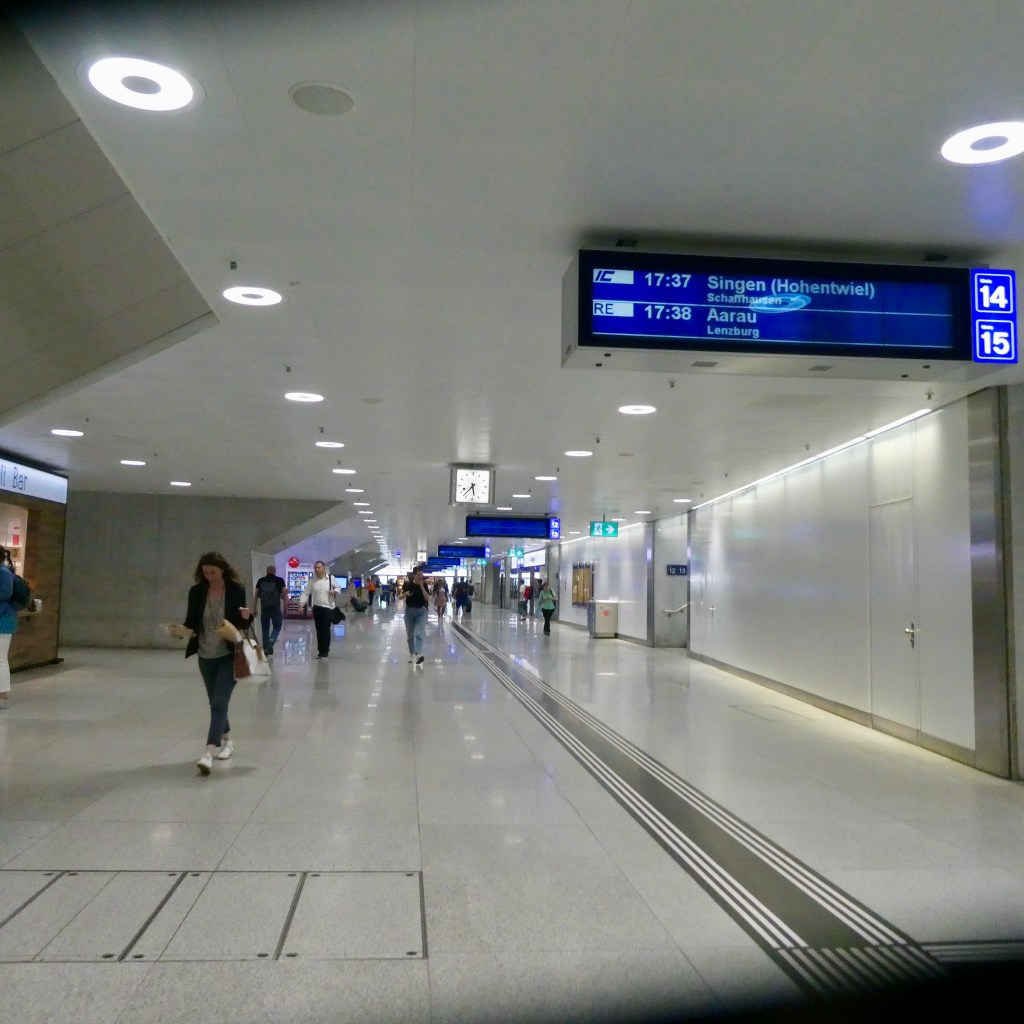
The Zurich train station is one of the busiest in the world. Nearly three thousand trains, and half a million people, go through on the twenty-six sets of tracks every day. There is a full shopping mall underneath the station.

This is one of the most famous chocolate shops in Switzerland.  We did not get to go in on our tour.  We also didn’t have the opportunity to tour Lindt Chocolate Company while we were in Zurich as their tours were sold out. Failure to plan ahead on my part….

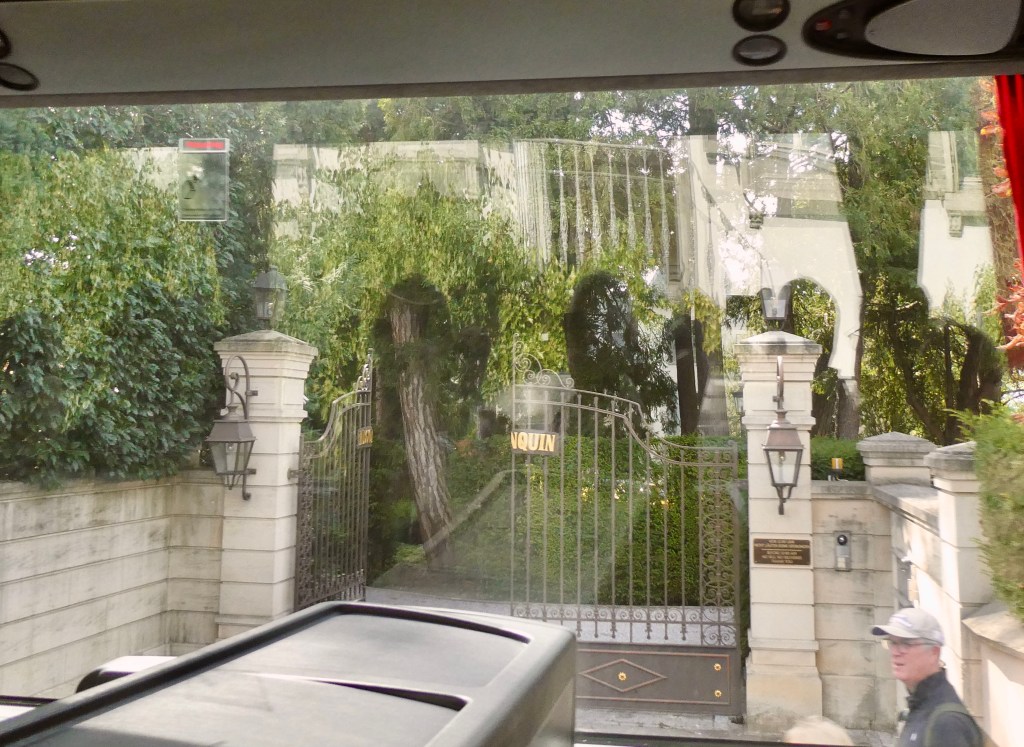
I took a drive-by photo (and not a good one) of Tina Turner’s home outside Zurich. Tina Turner lived in Zurich for 30 years, enjoying some level of normalcy.  

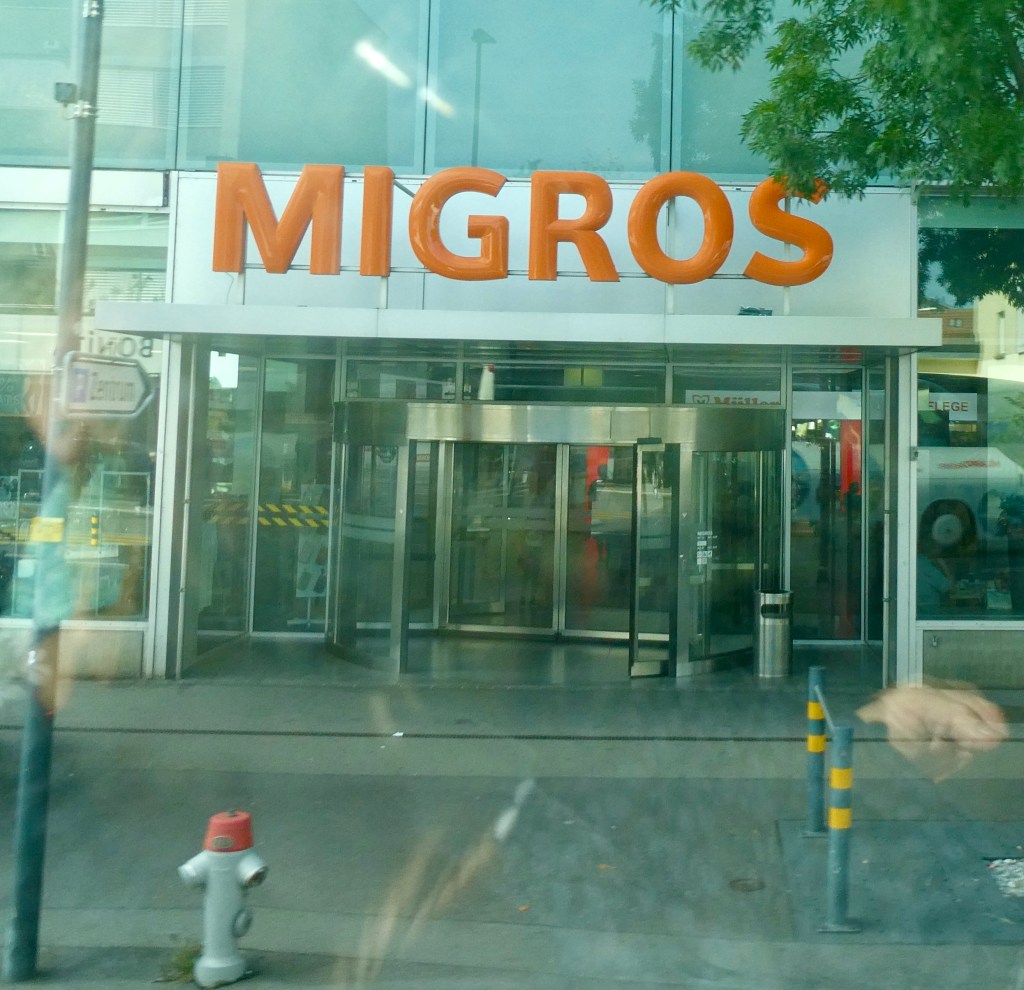
This is another poor drive by picture – this time of a Migros grocery store.  Migros is a large grocery chain in Switzerland.  By policy, they do not sell alcohol or cigarettes but someone is selling lots of cigarettes!  There is so much smoking. There is very little trash around Zurich but 90 percent of what there is are cigarette butts.   All restaurant tables, inside and out, have ashtrays.  We moved from where we were sitting several times to avoid smoke in just a few days!

Swiss Francs are very colorful! Our travel documents said we would need 20 francs, in cash, to check into our hotel. We had planned to go to an ATM once we landed in Switzerland, or even to the dreaded currency exchange booth. However, I was telling Randy about it while we were in the security line in Paris and the young woman ahead of us said she had been carrying around 20 francs for a year not able to spend it anywhere. I traded $20 USD for her 20 francs and we were both happy. Problem solved. AND, at the hotel the 20 francs fee was NOT required in cash.

Zurich was lovely and cool and very pleasant.  

We were in Zurich September 13, 2023.

Next up:  We head up into the Swiss Alps and go to the Top of Europe!

Posted in Uncategorized | 2 Comments

Viking Paris Extension: Normandy

Randy was not feeling well so he stayed at the hotel while Connie, Warren and I went on a small group tour to Normandy. Warren’s father had served in Europe during World War II so it was very important to him to go. We were pleased to go as well.

As we were driving through Paris early that morning we had a nice view of the Arch of Triumph.  Napoleon had this monument made to commemorate his soldiers one year after a significant victory.

We were on a full day trip, three and a half hours north of Paris, to another place commemorating more soldiers after battle and victory –  The Battle of Normandy, D-Day.

Although we were given a thorough summary on the preparations, strategies and battles, I am not going to attempt to be thorough. Instead you will read about details that captured my attention.

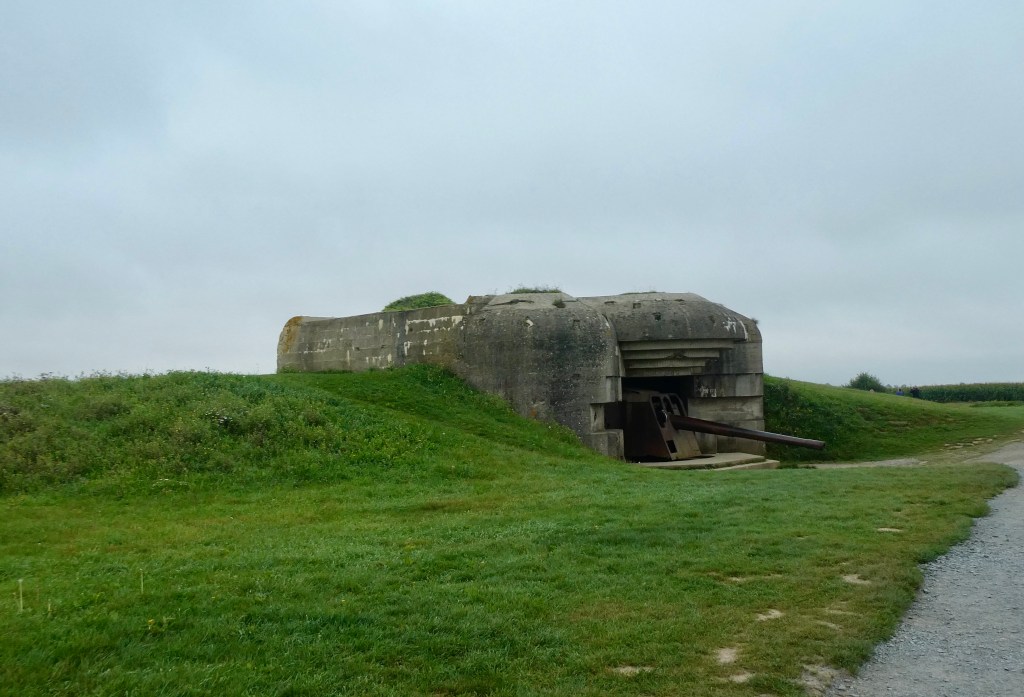
These were just two of the many German bunkers along the shore. 

About 20 soldiers would have been assigned to a bunker this size.

German guns could fire only 13 miles out while the Allies had a longer incoming range.  German soldiers in France were using reconditioned French guns from World War I.

We went on Omaha Beach.   

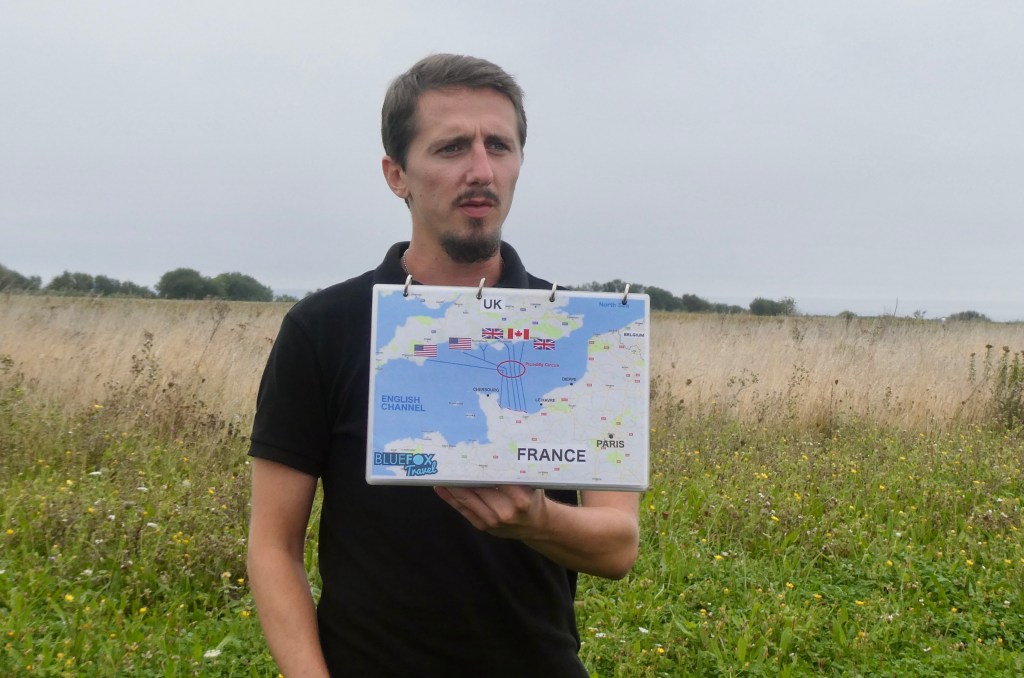
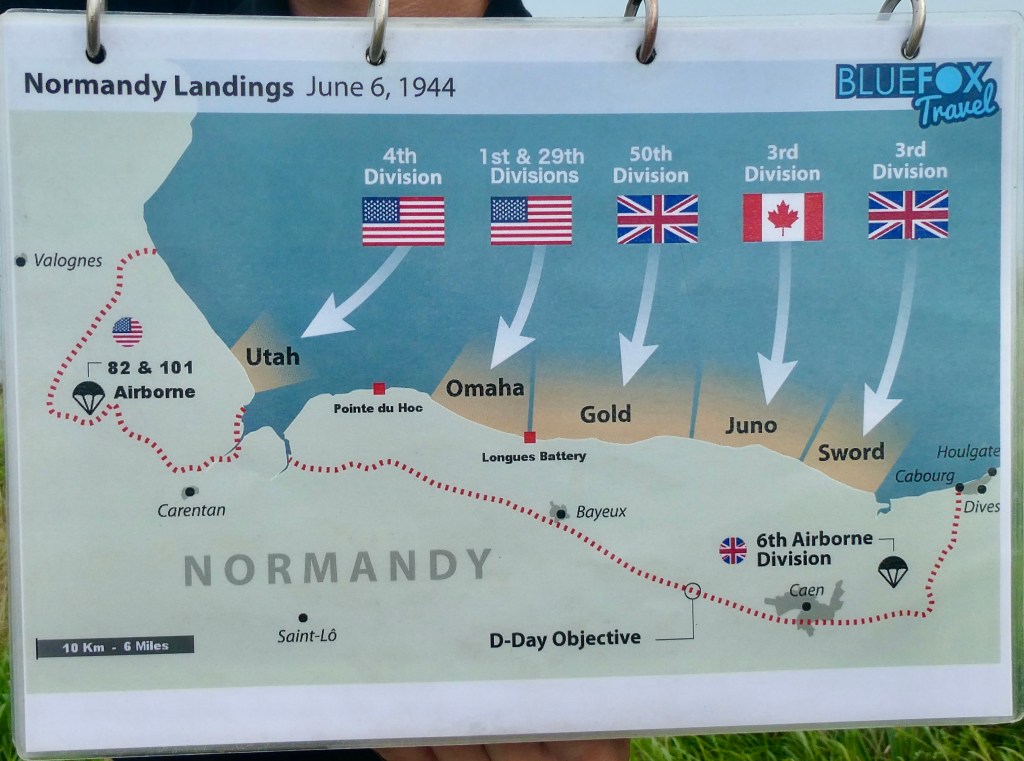
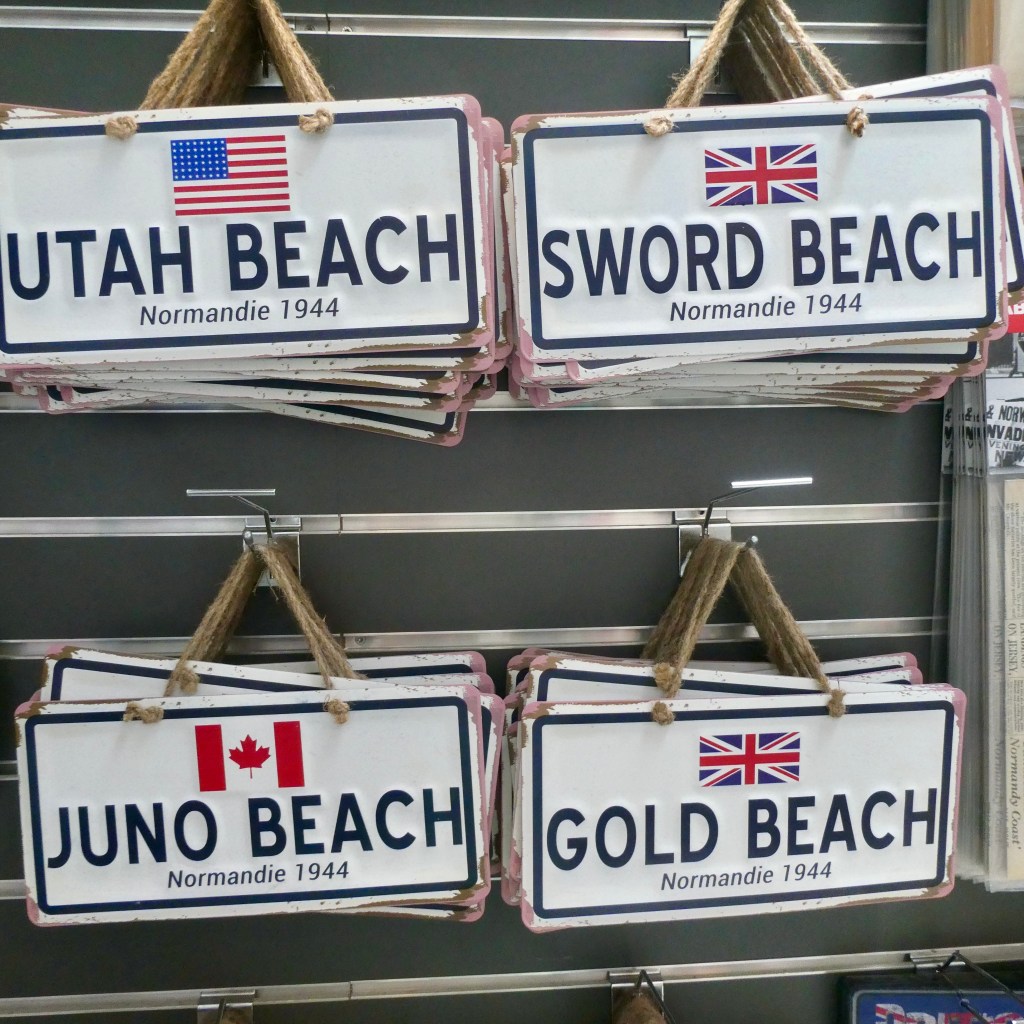
There were five landing sites for the Americans, British and Canadians that day.  Each country “named” the beach they were designated to attack. Eisenhower asked two construction workers where they were from and they replied Omaha and Utah. The Canadians and British decided to name their beaches after fish:  Gold, Sword,  and Jelly.   Someone determined Jelly was not acceptable and it was changed to Juno.

There were three important things the Allies needed for an assault to have a good chance of success.  They needed reasonable weather, a mid tide rising and a moon that was full only at the beginning of the night.

Poor weather caused a one day delay.  If they had not been able to launch when they did, they would have had to wait another month for all three conditions to align again.

A good coincidence for the Allies was that the German area commander was in Berlin. 

Omaha Beach is six miles long. Twenty five hundred Americans died there on D-Day.

The overall assault site was 50 miles long. There were 156,000 Allied troops attacking Normandy beaches that day. (After D-Day an additional 2.5 million allied soldiers landed here to fight for France.)

We were told only 10 percent of these floating tanks made it ashore. 

This is a memorial to Combat Medics placed at the first casualty collection point.

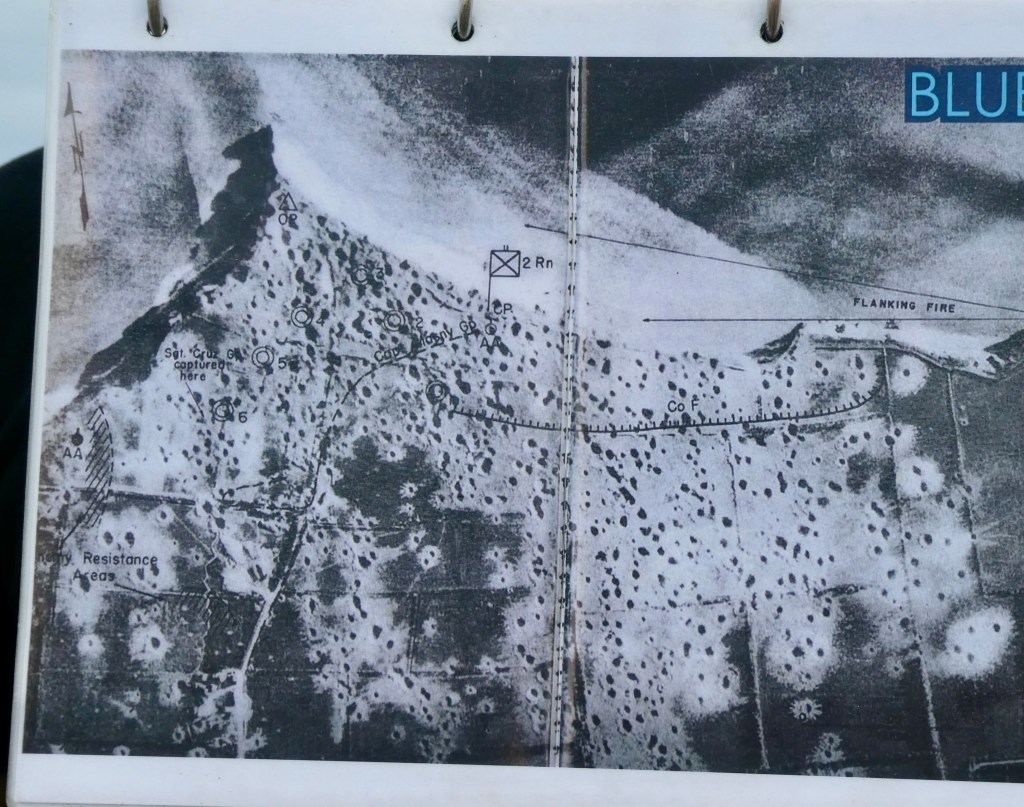
There were 225 Rangers assigned to try and take this point of land between Utah Beach and Omaha beach called Pointe du Hoc.  

They landed at the wrong cliff so were presumed dead by the commanders and their reinforcements were sent elsewhere.

There were about 40 German soldiers per bunker and roughly 200 soldiers in the area.  

The Germans got reinforcements more quickly so only 90 Rangers were still able to bear arms when American reinforcements made it to them 48 hours later.

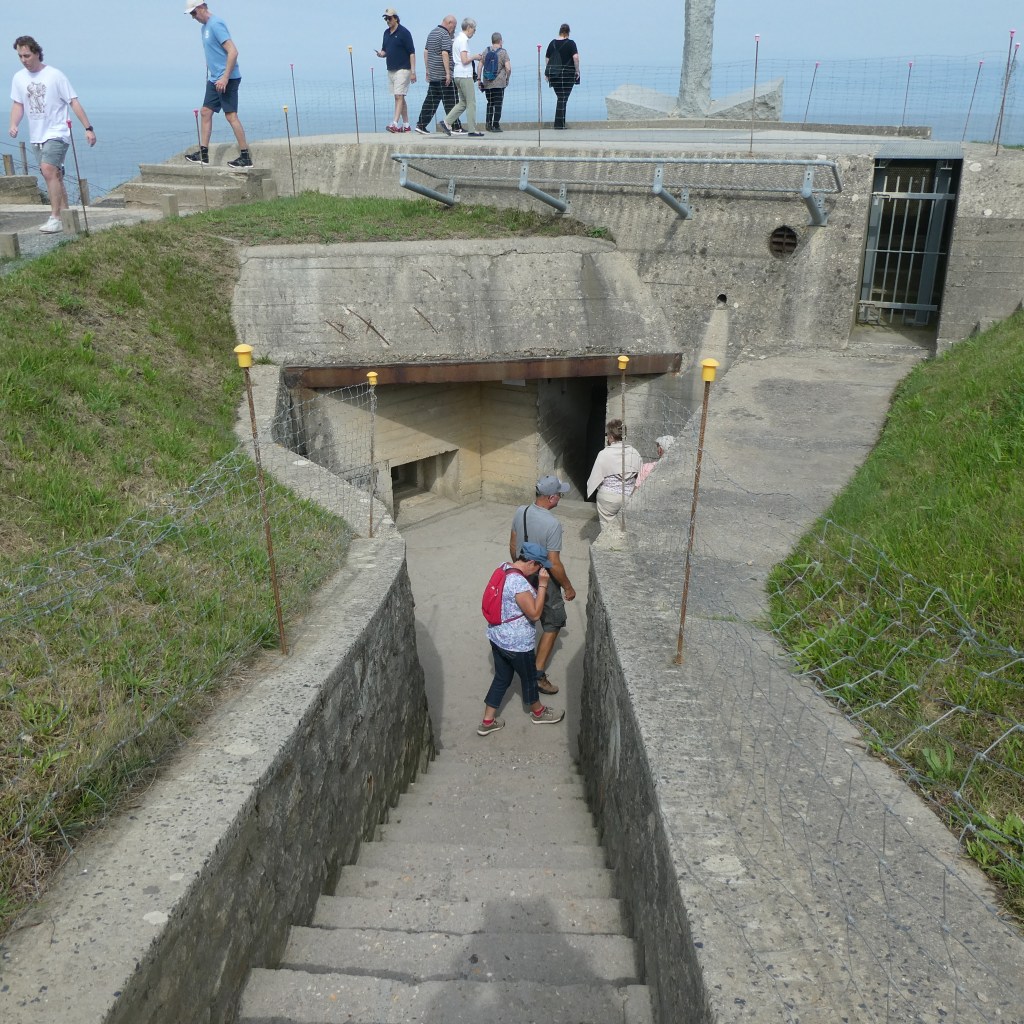
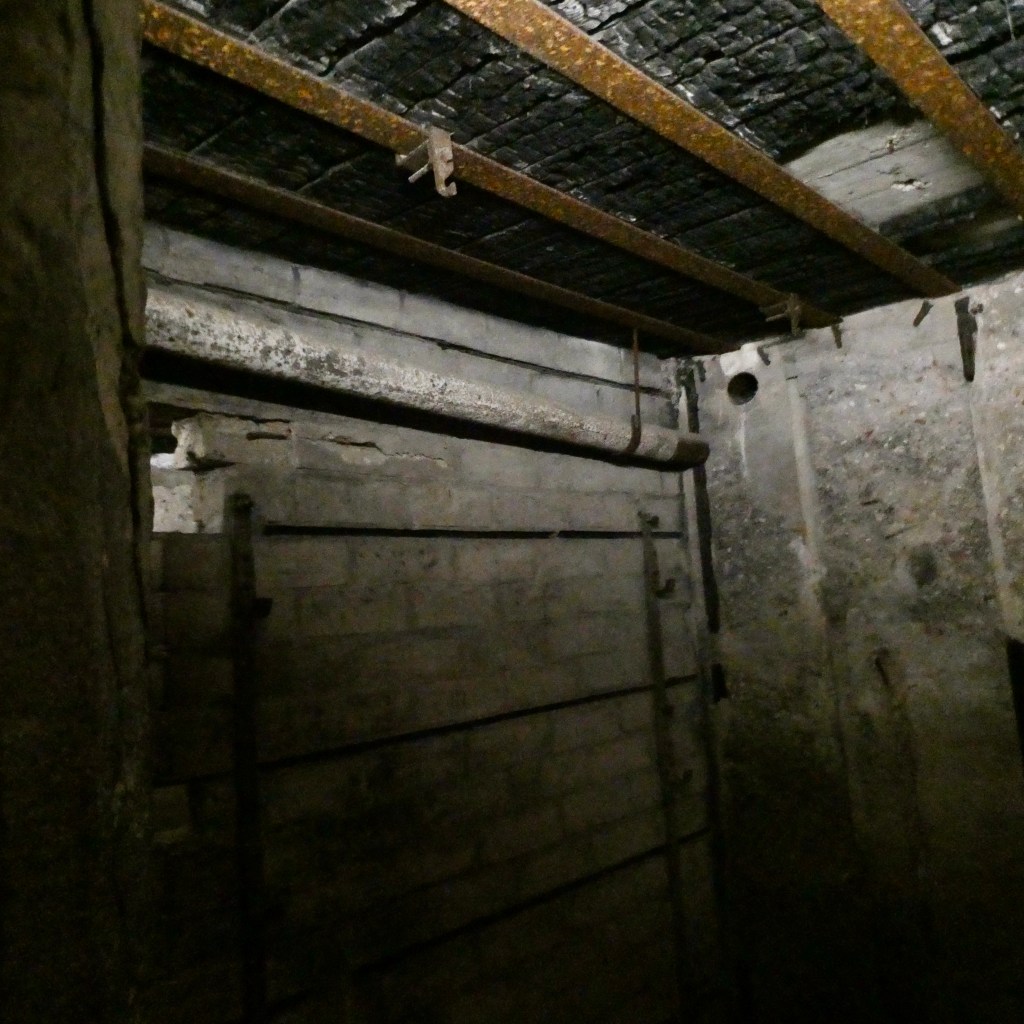
We were able to walk in and around this bunker that was mostly intact.

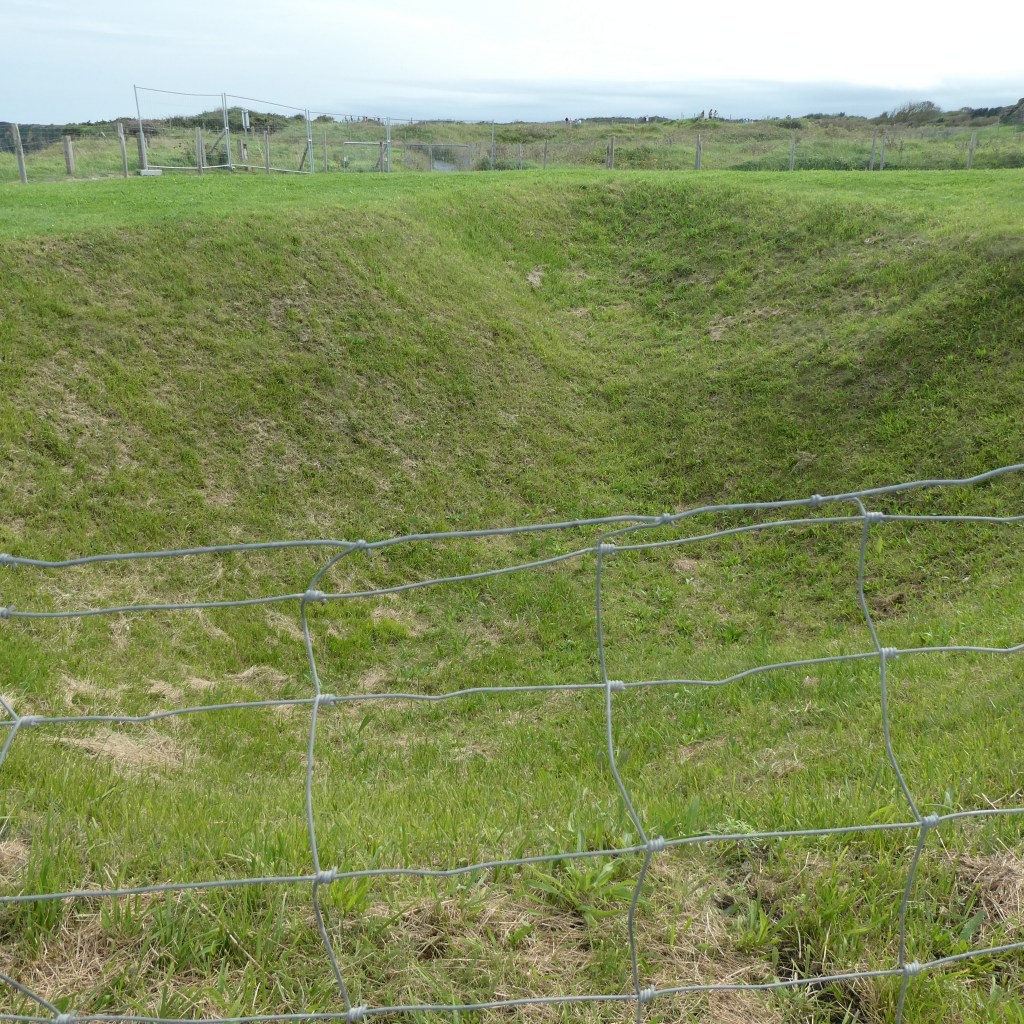
This picture shows the results of bombings on the land.

These massive concrete slabs used to be part of a bunker before they were blown up and scattered.

Some of these lands belong to the government and the history has been preserved. Other lands were flattened over time so they could be used for farming.

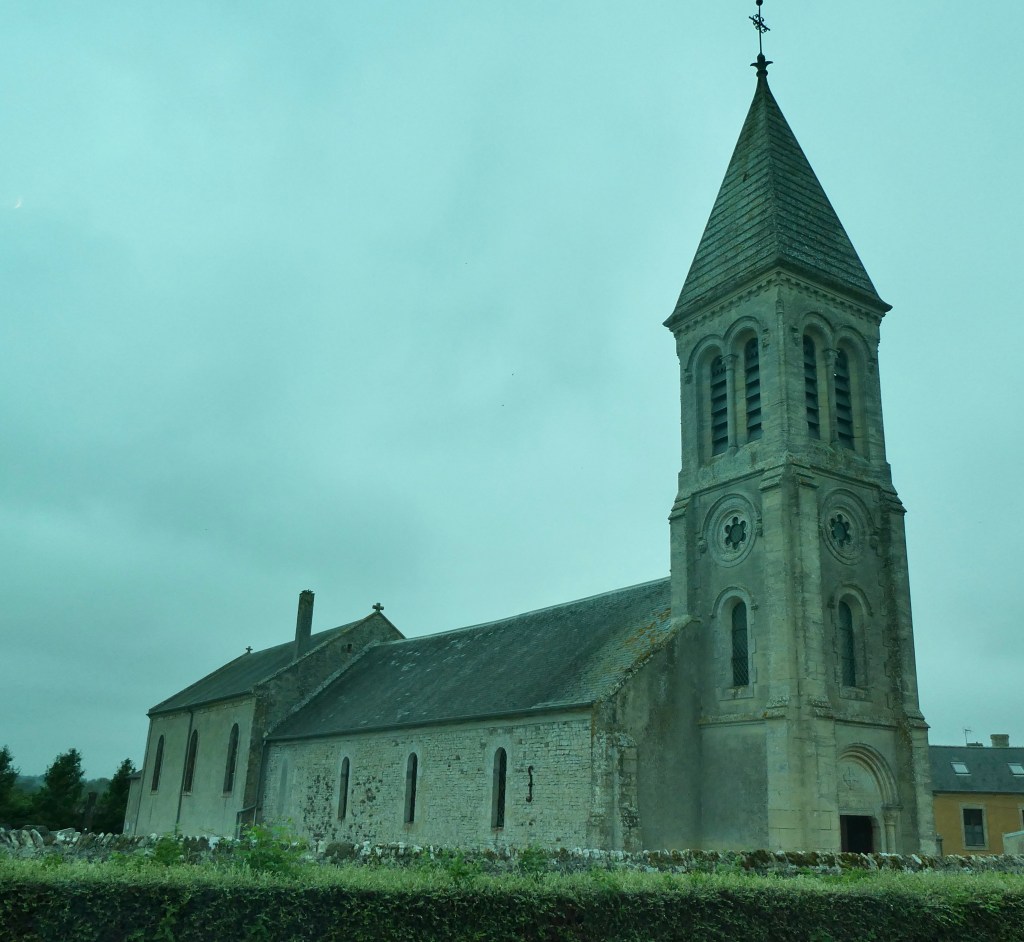
In the immediate days after D-Day, German snipers hid in church towers and steeples.  The allies shot down the towers so as not to deal with the snipers. They were later rebuilt. There are areas of the church that have different stone. Rebuilding sites like these were done quickly in the 1950s and 60s.

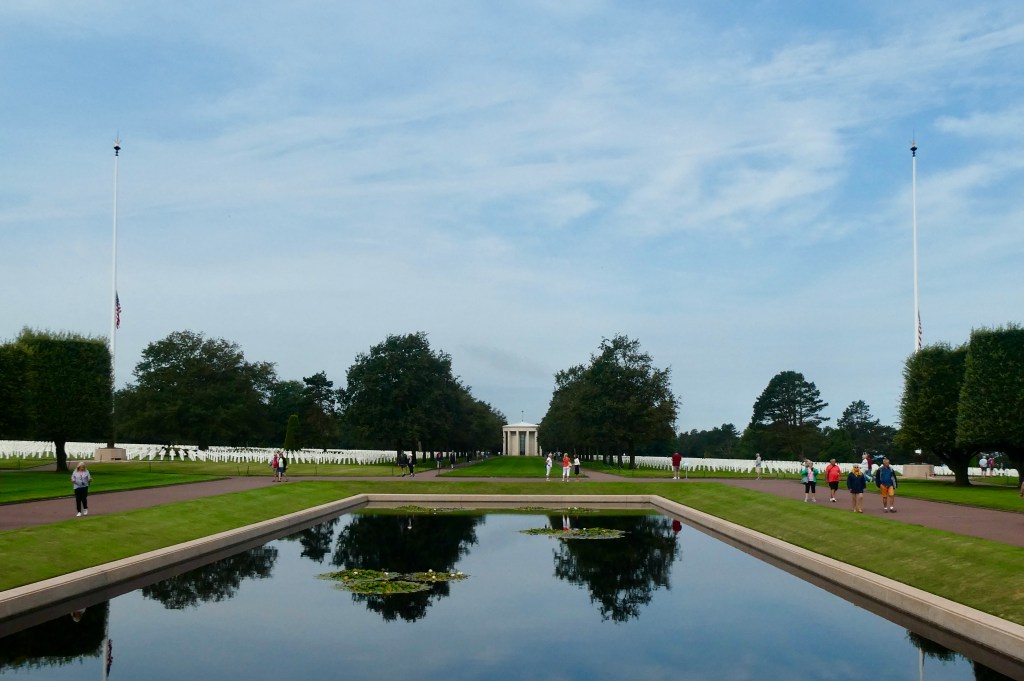
Our next stop was the American Normandy Cemetery and Memorial.

The cemetery is on French land but is American managed.

You can only be buried here if you were involved in the Battle of Normandy. 

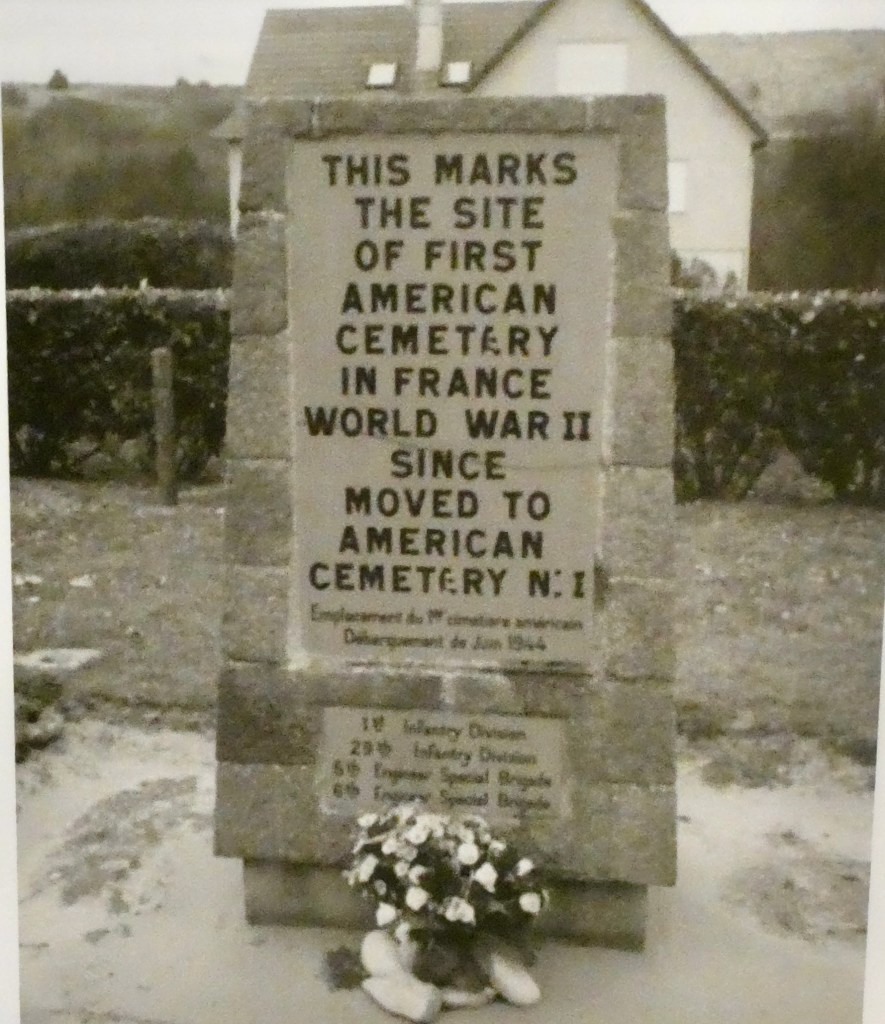
There were once ten separate American cemeteries but they were consolidated into one during the years 1947-56.

There were more than 29,000 Americans who died in the Battle for Normandy, including those on D-Day and the months after.

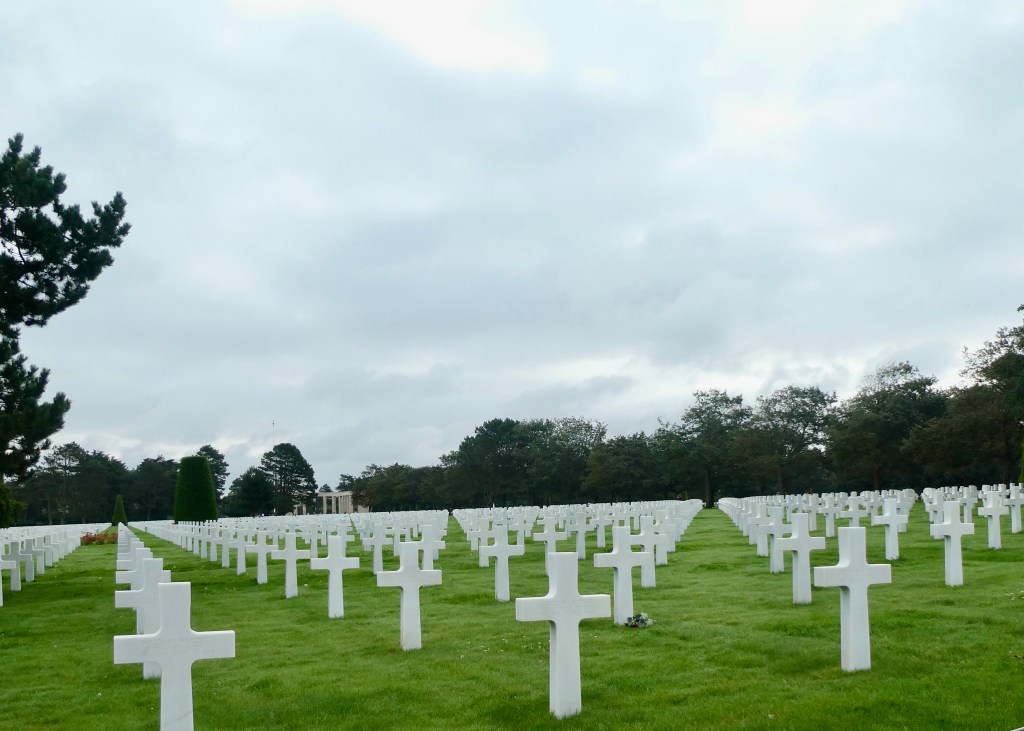
Two thirds of those went home at their family’s request.  The other third are here, 9388 American soldiers. The tour guide told us that one soldier was identified by DNA just last year but I was unable to find his name.

The names on the crosses face in the direction of the USA.  At this point in the war, soldiers knew about Jewish internment camps so those joining who were Jewish sometimes said they were Christian.  When families of the dead were contacted, sometimes they said “he was really Jewish” and then got Star of David markers.

Our final stop of the day was The Overlord Museum, named after the code name for the Allied battle for Normandy, Operation Overlord.

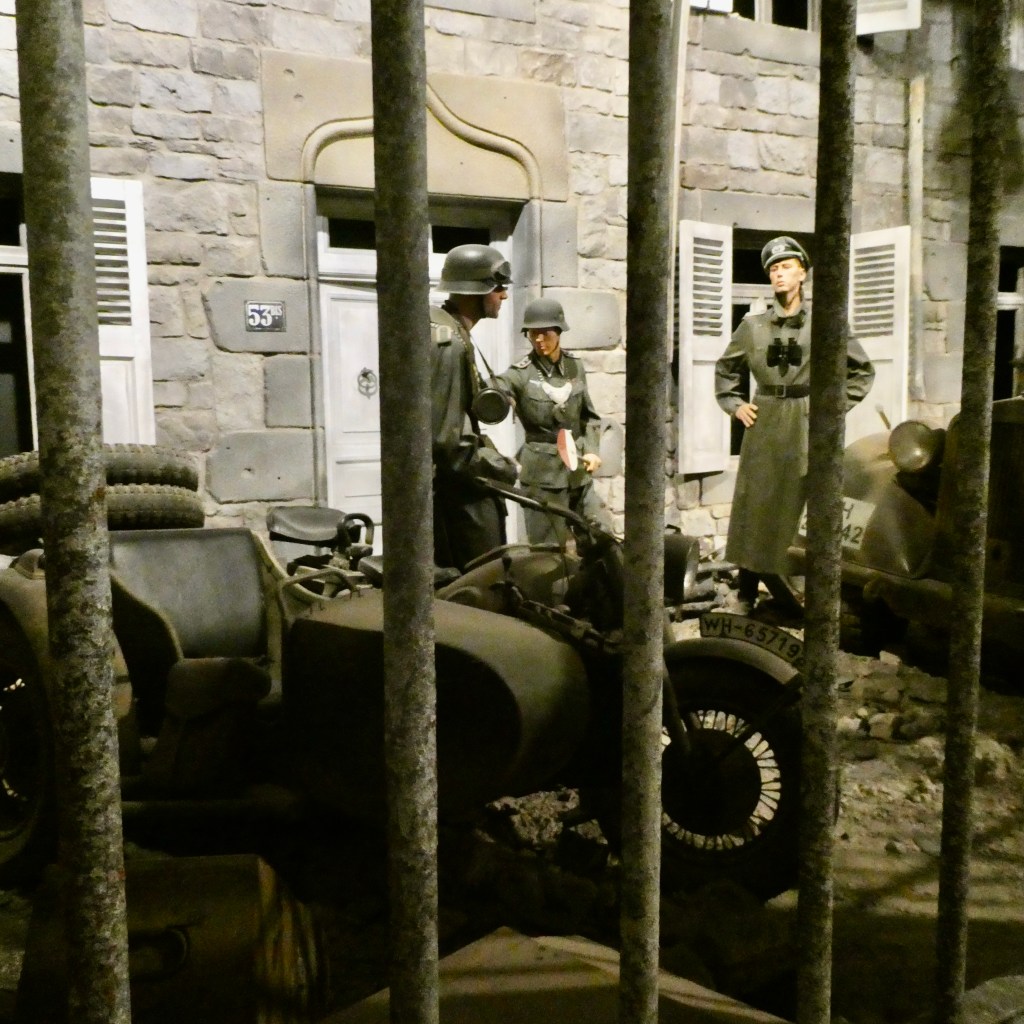
The life sized displays were numerous and very impressive.

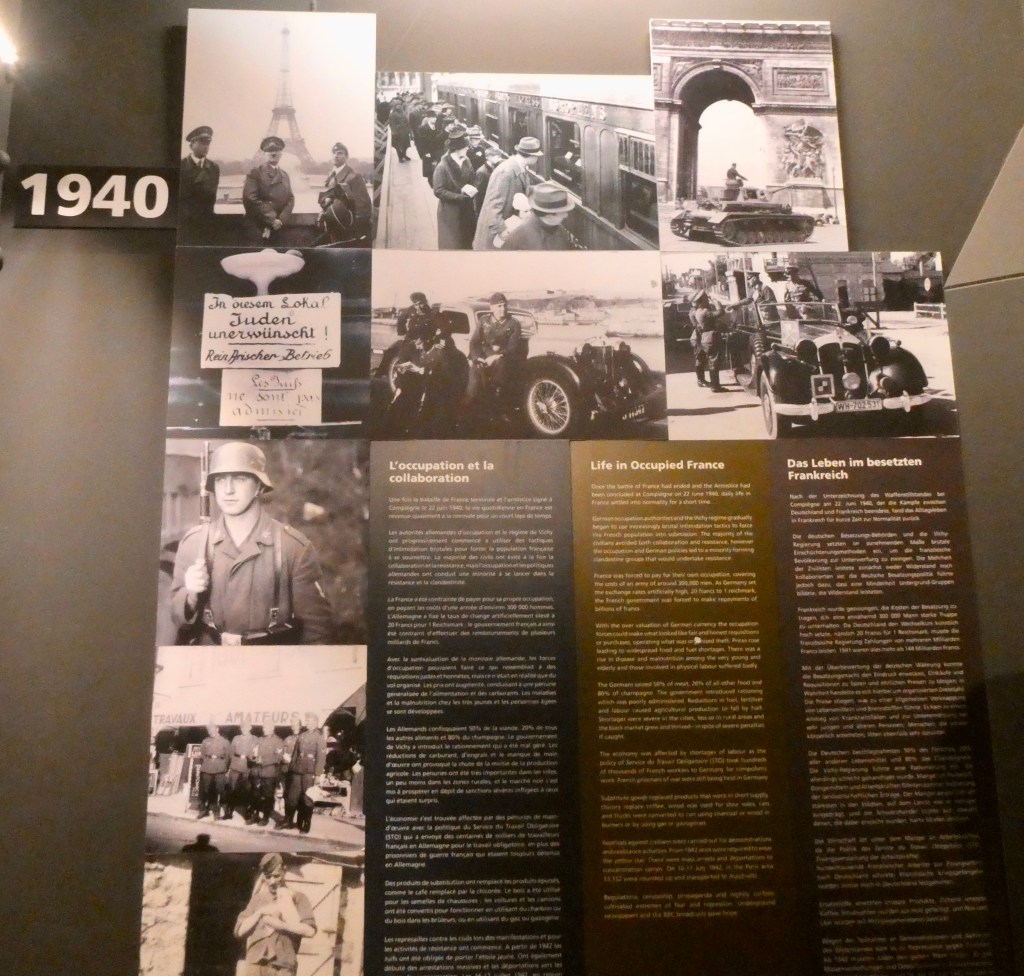
The information on placards and videos seemed so thorough. If studying World War II, and specifically D-Day and the Battle for Normandy, is your passion, you could be here for days.

Connie and Warren and I made our way back to Paris and the four of us gathered with our wine glasses from Bernkastle and had the remaining cherry cordial from Prague and peach liqueur from Cochem. We celebrated a successful trip and our last night in Paris together. They would head home to Arizona the next day while Randy and I went on to Zurich.  

Did I tell you (a few times) that it was hot in Paris?  Zurich and the Swiss Alps sounded like a perfect reprieve!

We went to Normandy on September 11, 2023.

Next: Zurich really is fabulous!

Posted in Uncategorized | 1 Comment

Paris: Eiffel Tower, Seine River Cruise and the Louvre

After being under the planning and protection of Viking for about two weeks, this was the day we were making our own way. We wanted to visit the Eiffel Tower, have a cruise along the Seine and tour the Louvre in one day!

The river cruise was easy to book but both the Louvre and Eiffel Tower took planning months in advance. The Louvre wasn’t bad.

However, the Eiffel Tower was a different story! I knew the exact day and middle of the night point in time that I needed to be online to get the earliest possible Eiffel Tower tour that allowed us to go to the top on September 10. Despite being ready, those tickets were gone in a flash. The best I could do was a bit later in the morning while paying for the most expensive “champagne included” tickets!

Perhaps that fits with the Eiffel Tower status of being the most visited paid entrance monument in the world!

As our Uber driver tried to get us close to the tower he found that roads were closed.  There was a very large Women’s 10K race being conducted in the area around the tower on the day of our visit. 

Thankfully there was a tall landmark we could walk towards! We eventually made it to a ticket line for those with advanced purchase tickets.

We learned the tower was planned for the 1889 World’s Fair, a date marking  the 100th anniversary of the French Revolution.

A design competition was launched in 1886 and Gustav Eiffel won by saying he could pay to get it built if he got the concession proceeds for a period of time.  (The cost was recouped in a very short time and then he made a lot of profit for many years.)

Digging began in January 1887 and construction of the tower was finished in March 1889.  It took only two years, two months and five days!

The resulting Eiffel tower was the tallest in the world at the time.  It measured 280 meters tall, the height of an 81 story building.

It was eclipsed by the Chrysler Building in New York in 1930.  The city added a transmitter tower in 1957 to gain the top spot once again at 330 meters.  After all this time it is still the second tallest building in France.

Parisians didn’t like the tower originally but grew to embrace it.  The lifts were a novelty. 

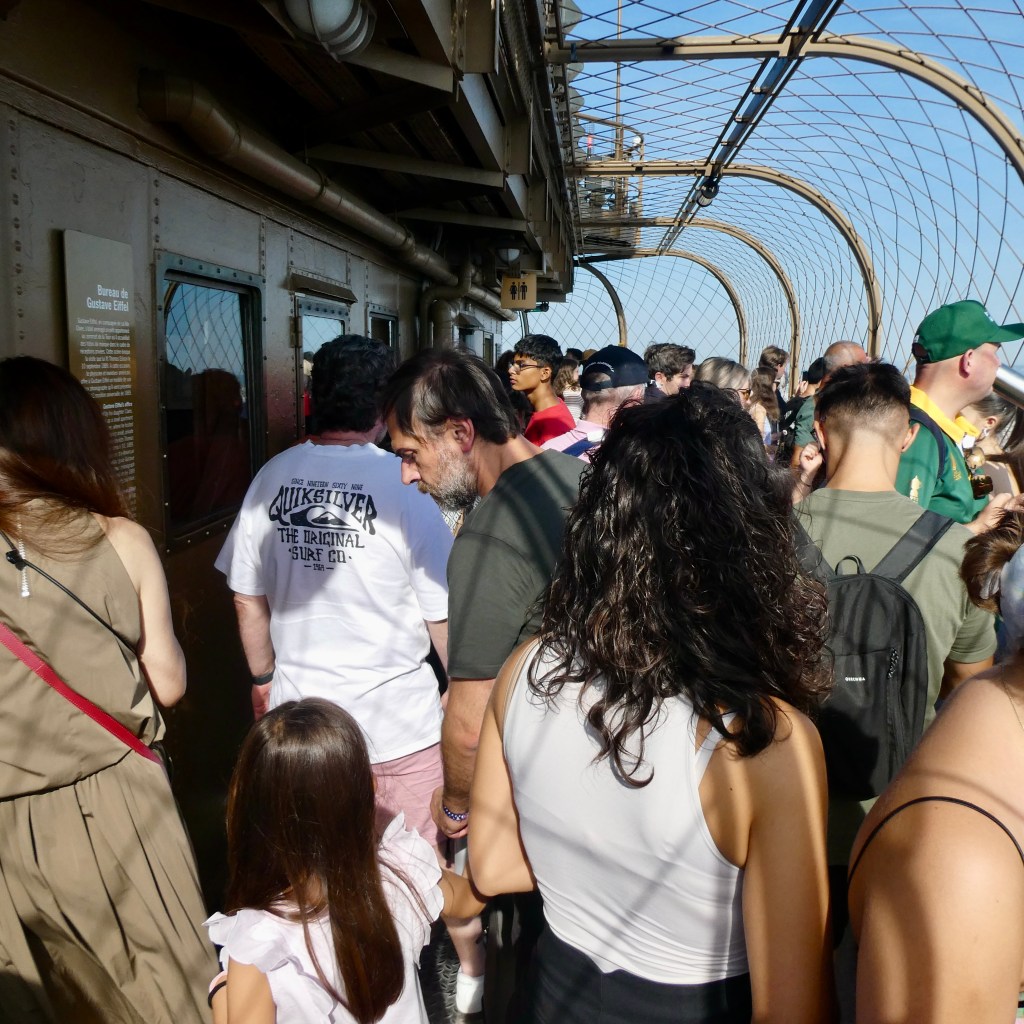
We certainly enjoyed both lifts – the first took us to the very busy second level where there were restaurants and shops.

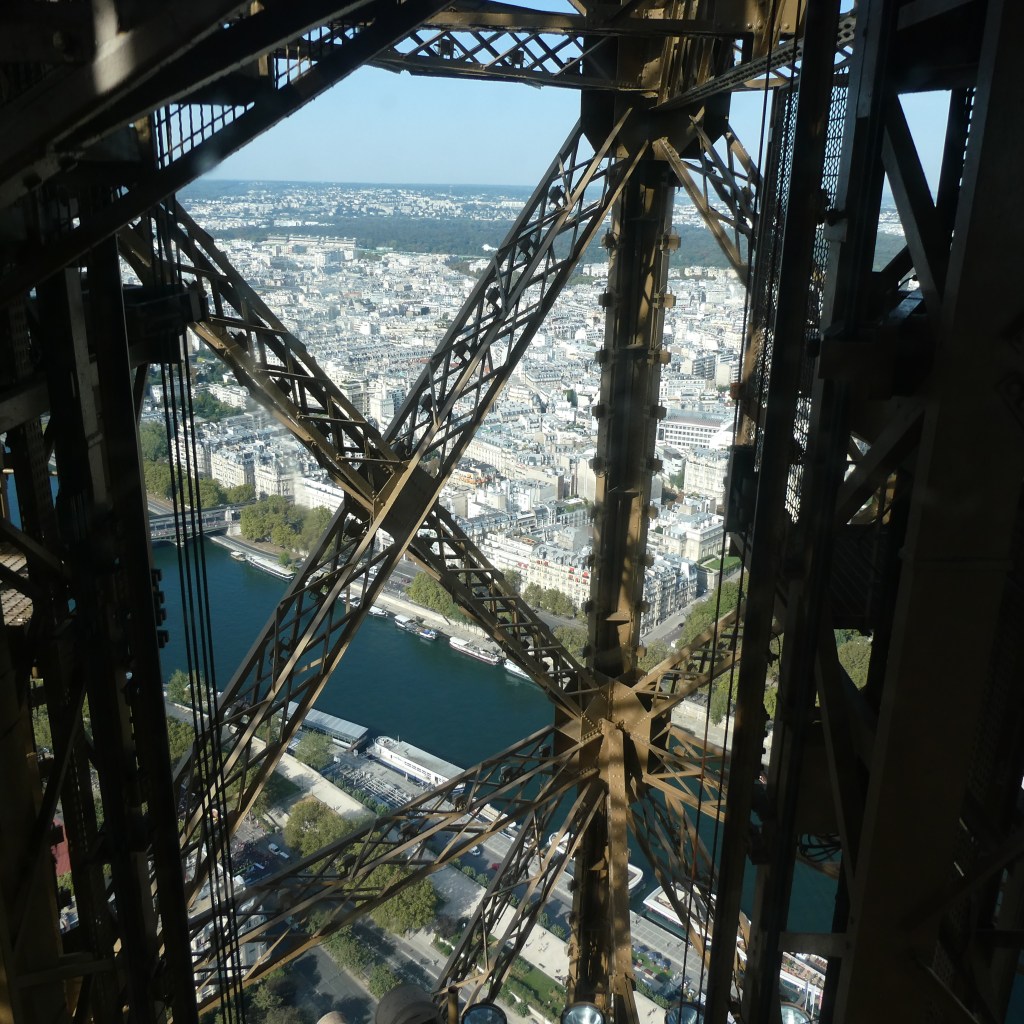
The second lift took us all the way to the summit where there was an observation deck.

It was at the top that we had our champagne served in “fancy” plastic flutes!

We saw views of Paris everywhere we looked!

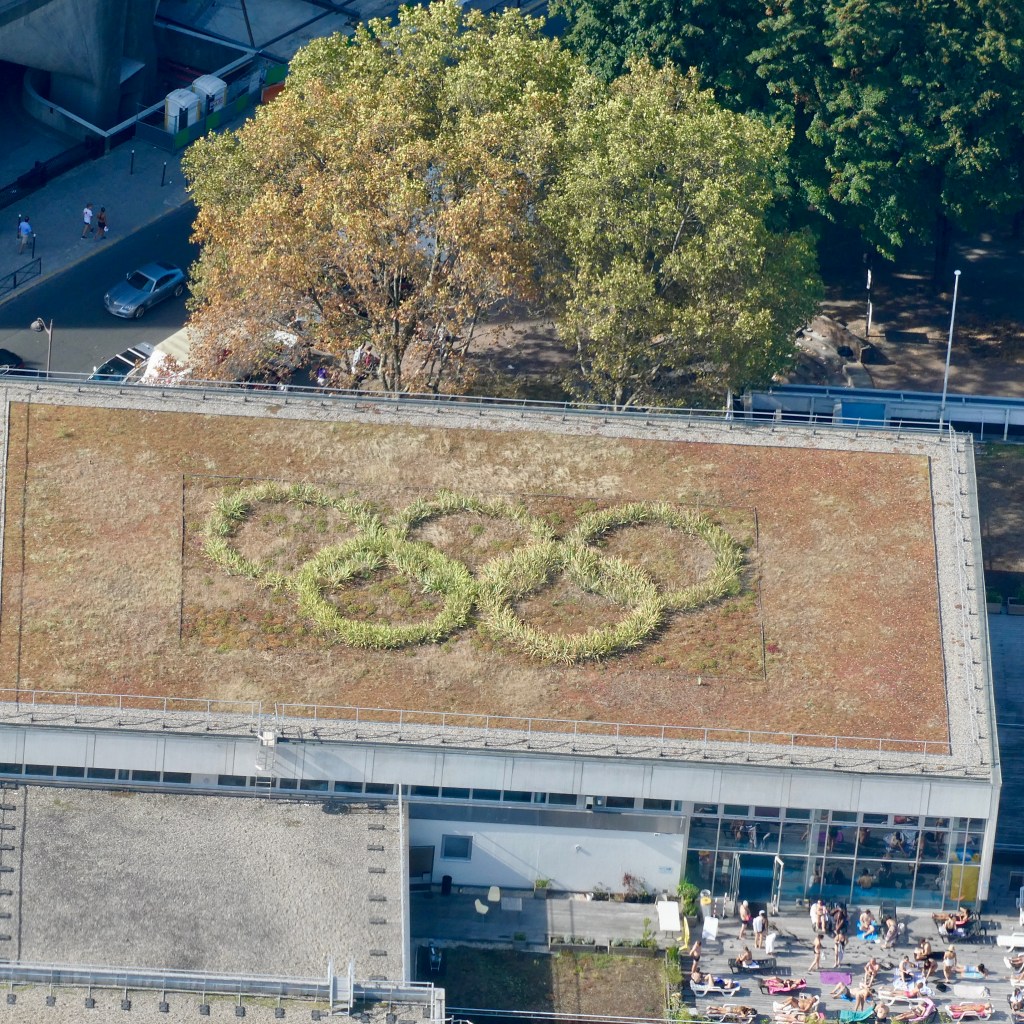
We saw evidence of preparation for the 2024 Olympics to be hosted in Paris.

The tower has 7,000,000 visitors per year and has become a globally recognizable icon of Paris.  The city of Paris now owns the concession. 

Fortunately our Seine River Cruise embarkation point was nearby – but that didn’t mean it was easy to get to given the fencing and barricades erected for the race.

We got there, boarded the boat and enjoyed the narration along the river.

We saw some fancy bridges!

These are part of a Russian Orthodox Spiritual and Cultural Center.

The obelisk in the distance is in honor for the work of Jean-Francois Champollion. He cracked the code of Egyptian hieroglyphs on the Rosetta Stone in 1822. 

In thanks, the sultan of Egypt offered Paris the diplomatic gift of two ancient Egyptian obelisks from the Luxor temple in 1830.  Getting the first one to and erected in Paris took years of effort and misadventures.  It was finally accomplished in 1836. The second obelisk was never picked up and “returned” to Egypt in 1981.

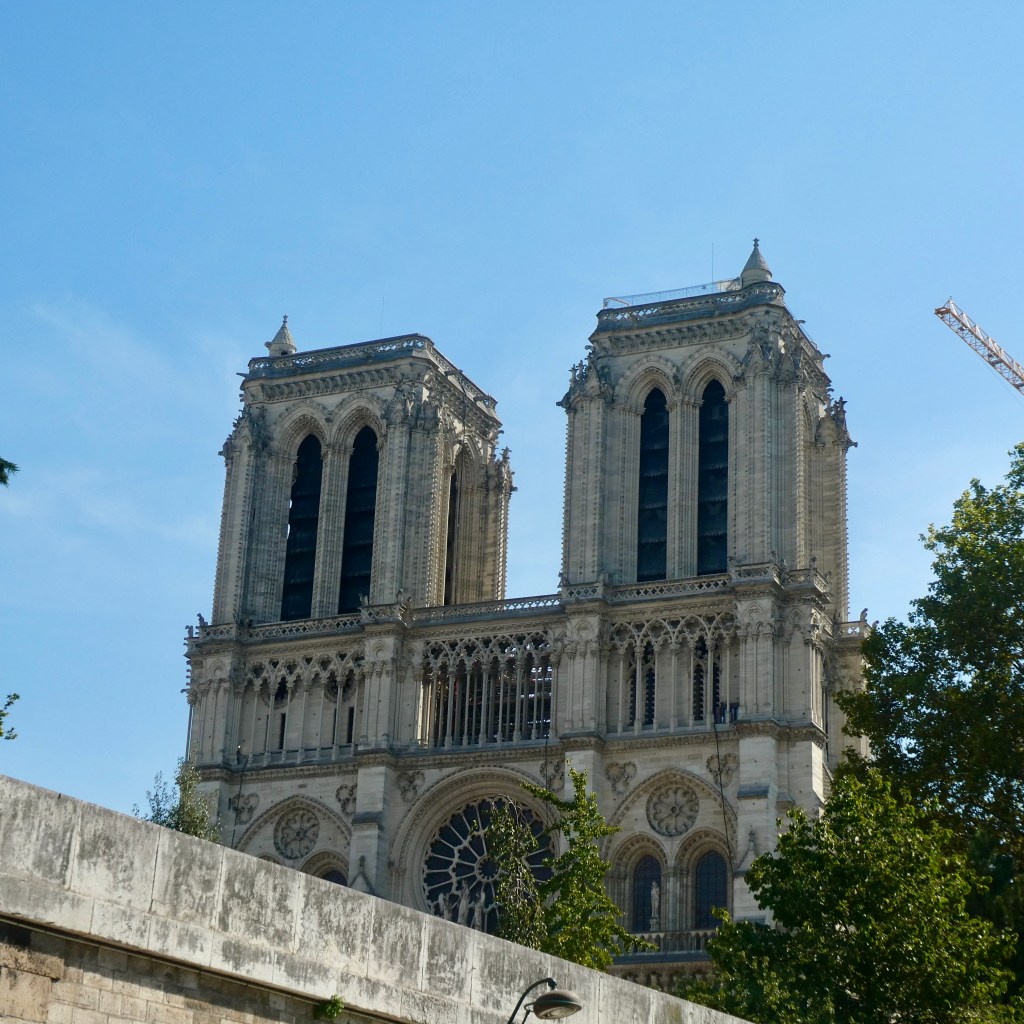
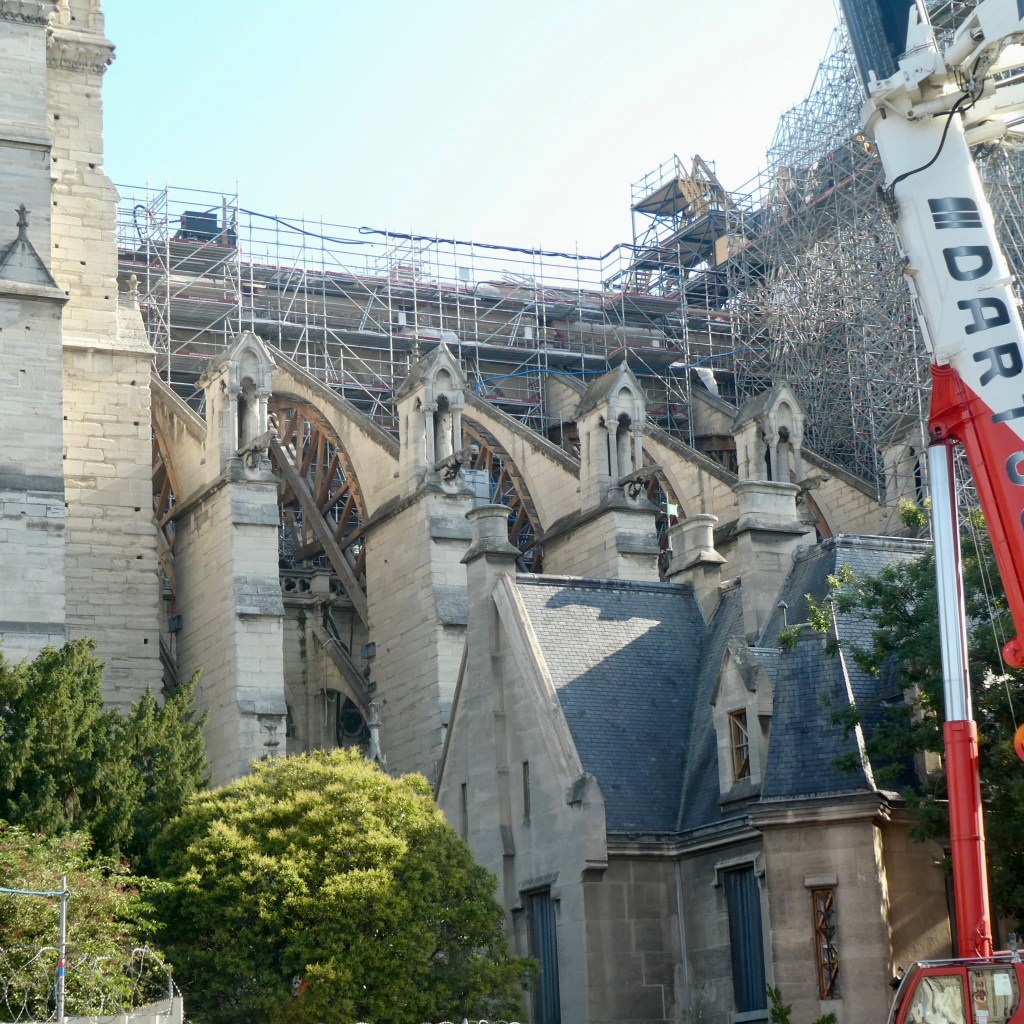
We saw Notre Dame again, this time from the river.

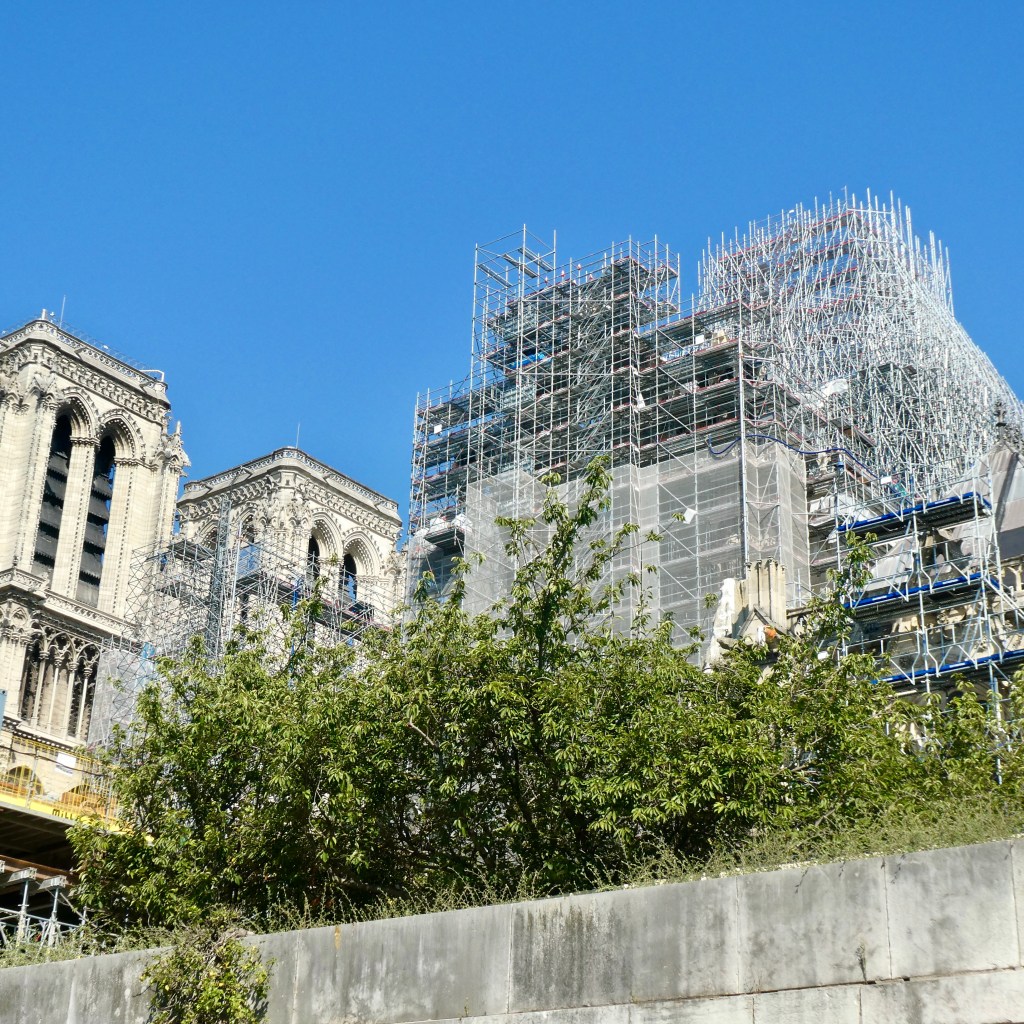
We had not been able to see this side of the repair work on Notre Dame from land.

More of the sights along the Seine River, Paris France!

We had one more view of the Eiffel Tower – this time from the river.

We disembarked and then had a terrible time getting an Uber to pick us up to take us to the Louvre. We were on a schedule needing to be there for our timed entry ticket purchased months in advance.  We had to navigate the competing thoughts of ‘we need to keep moving in case no one ever comes to get us’ and ‘we have to be willing to wait for a driver.”

Finally, after racing across the street, and getting a bit of a lecture about DON’T MOVE (even if the app tells you to) we were in a vehicle and on our way to the Louvre.

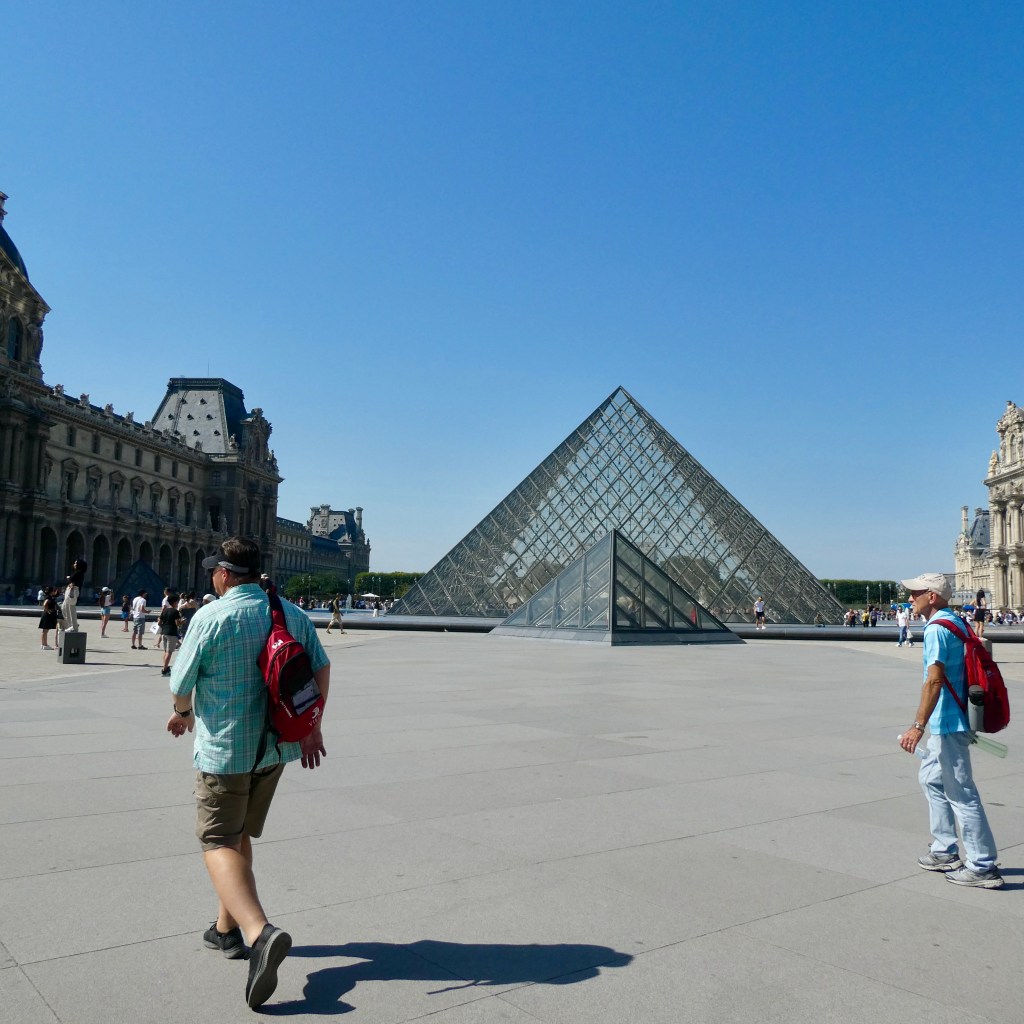
We made it to our final destination of the day, the Louvre Museum. It was still hot but we knew it would be air conditioned inside! 

We had booked a private guided tour for the Louvre because we didn’t have enough time in Paris to spend an entire day wandering around looking for the Mona Lisa and whatever else we might happen upon.

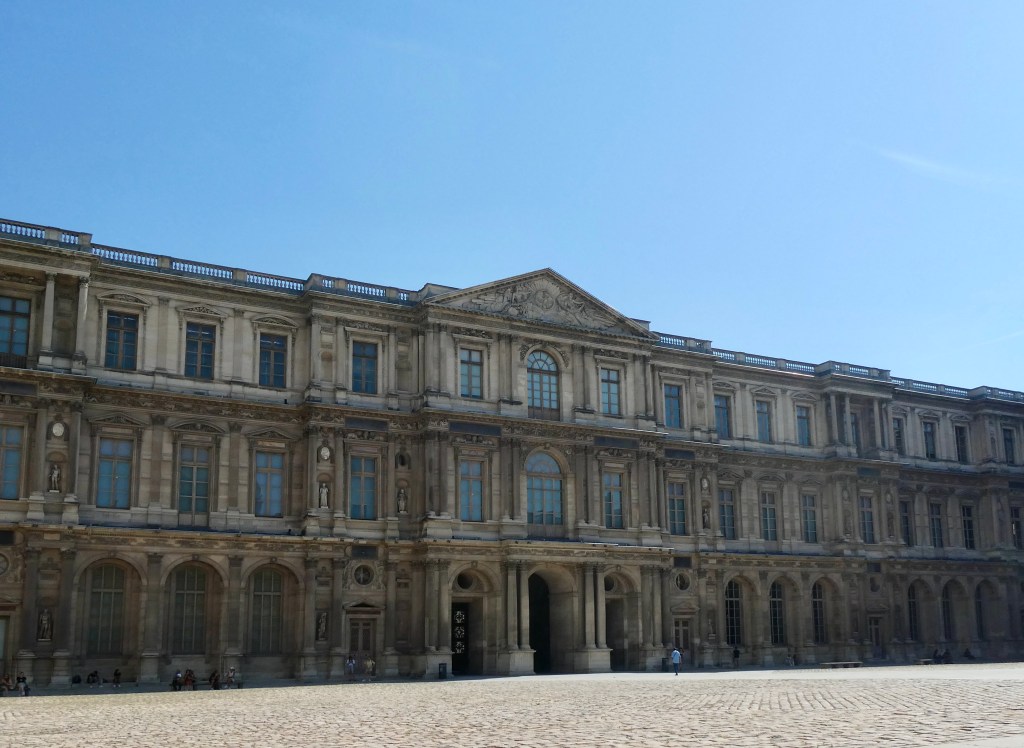
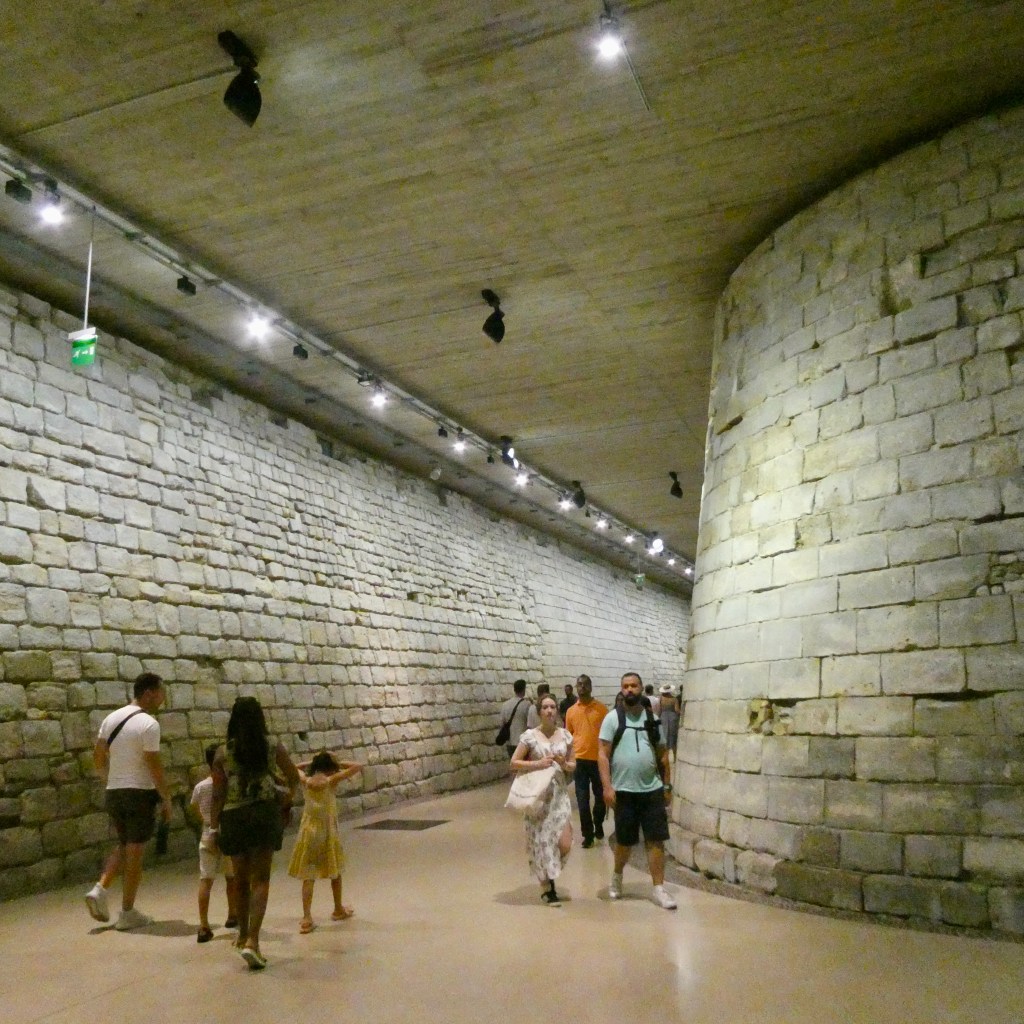
We met our guide and followed her lead. She took us first to the lower levels to see the foundations of the building from when this was the royal palace.

We were there – in the moat!

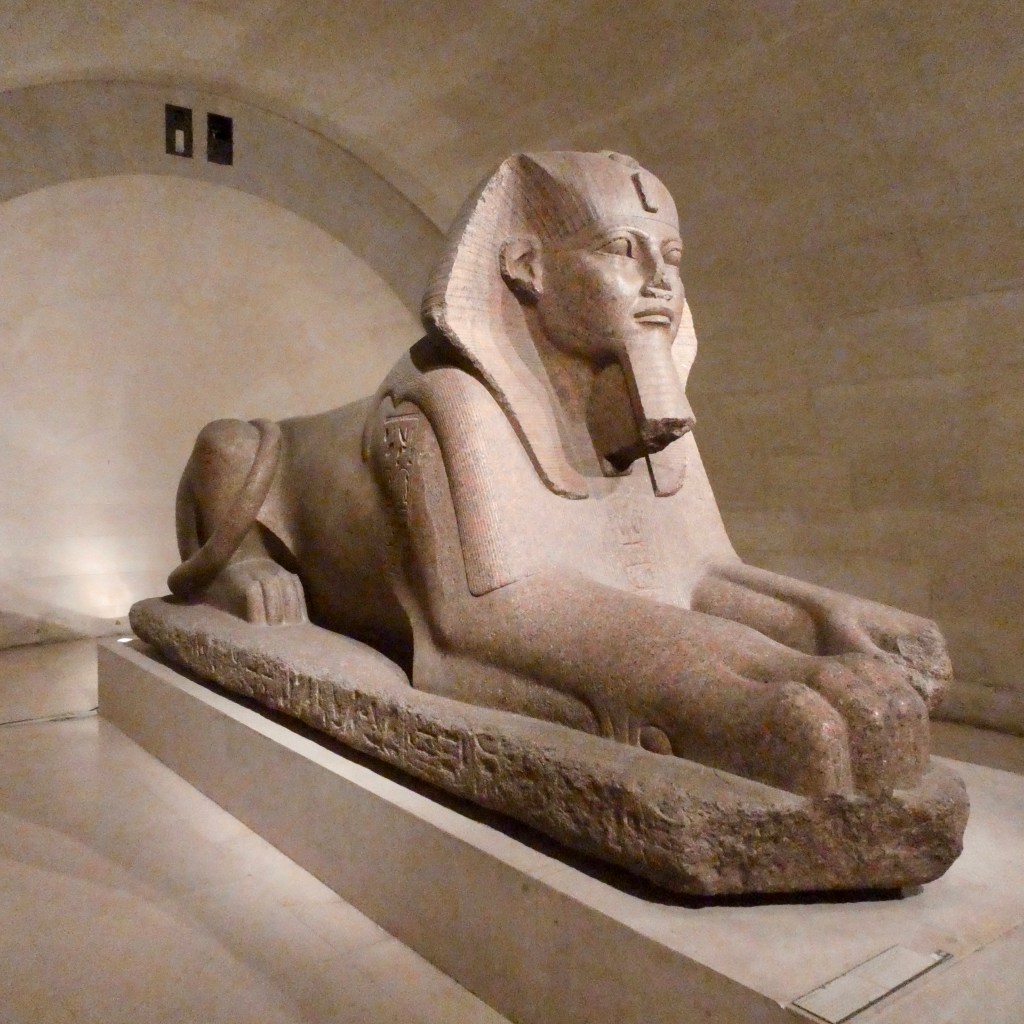
We saw some of the ancient Egyptian collection.

Our guide was very knowledgeable and always had us looking at details.

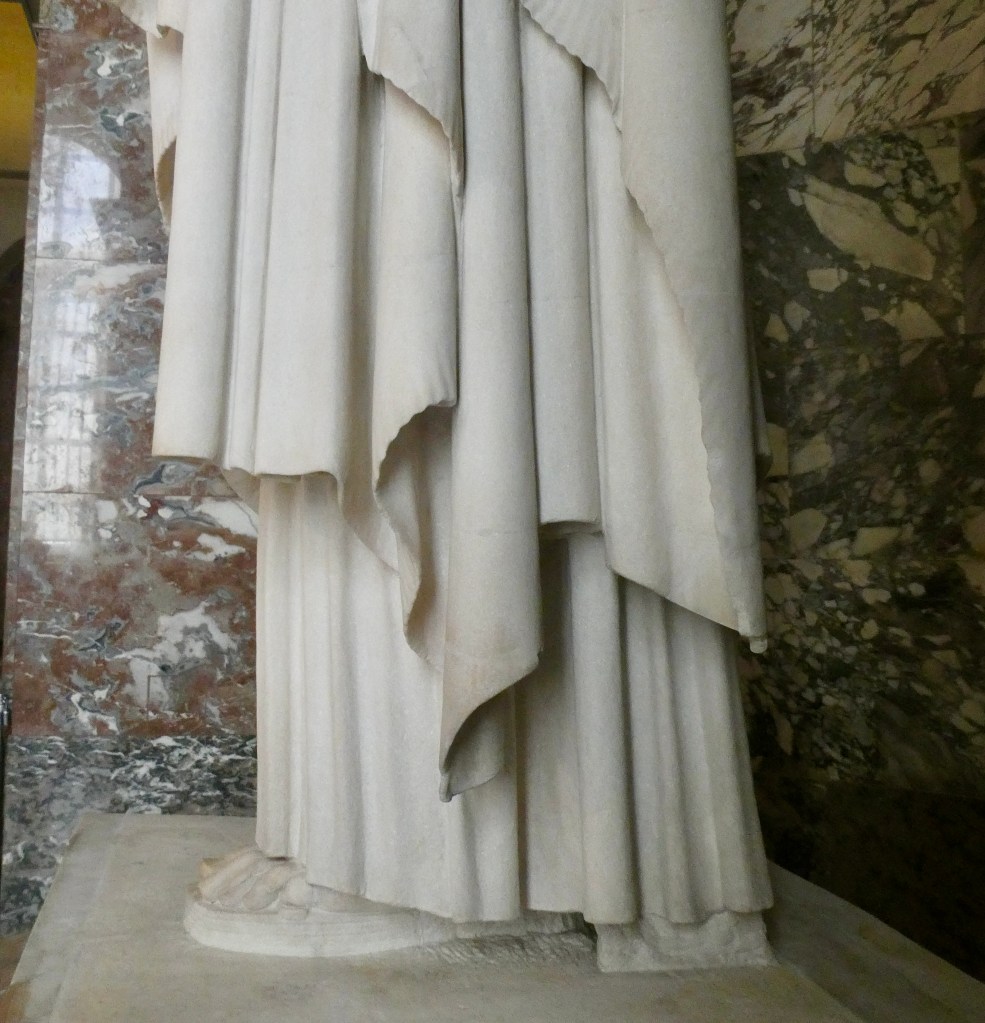
She had us notice how the artist was able to make the stone look like it was draping fabric.

This” stone fabric” has the illusion of transparency.

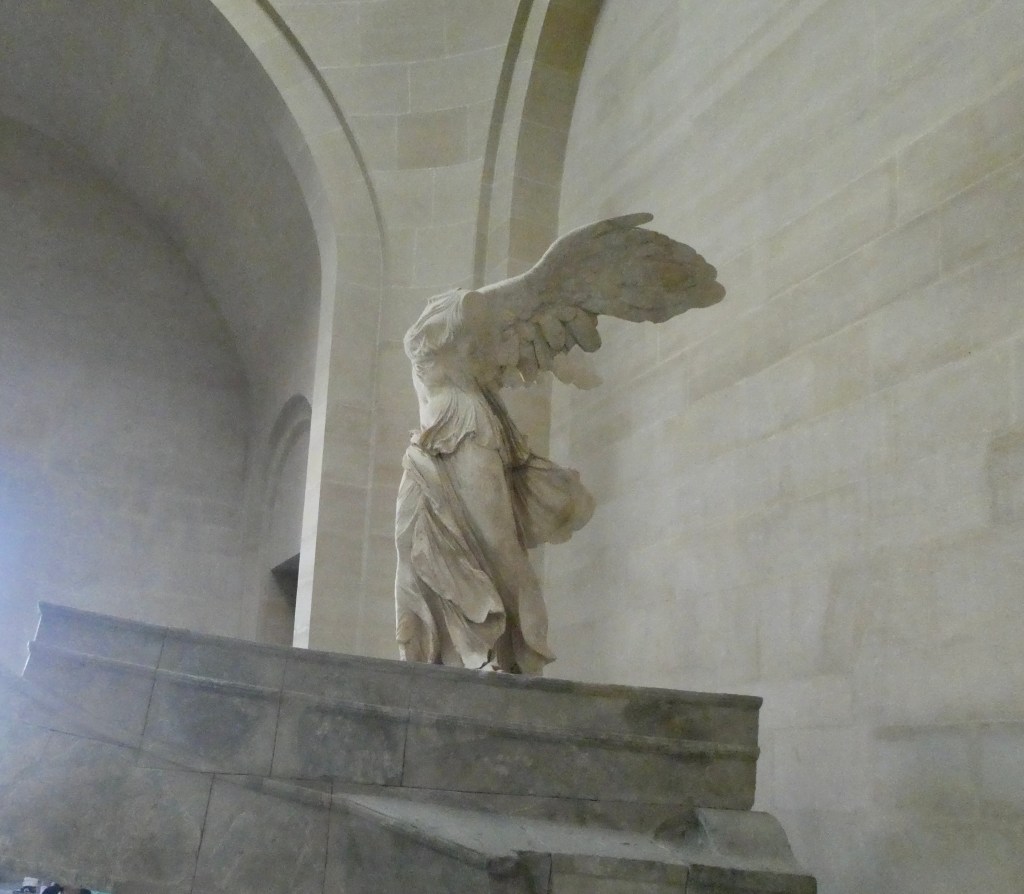
We saw a couple works that we recognized like the Nike (of Samothrace)…

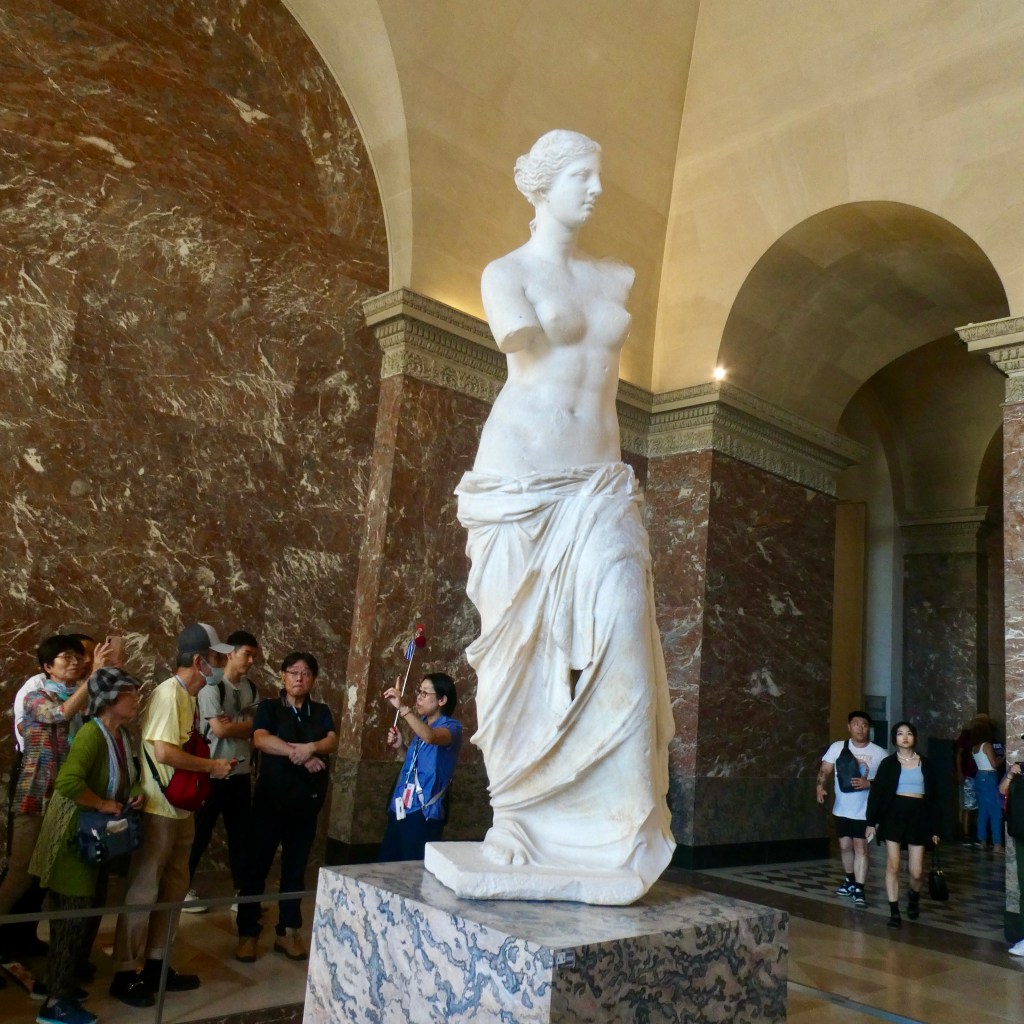
and the Venus de Milo.

Then she led us to many paintings that we knew nothing about.  

Our guide’s passion seemed to be these lesser known paintings, their secrets, and how the artists created them.

Our guide expressed frustration that one of an artist’s paintings might be more famous than another when the second was more worthy. She put the Mona Lisa in the category of being the most famous but not DaVinci’s best work.

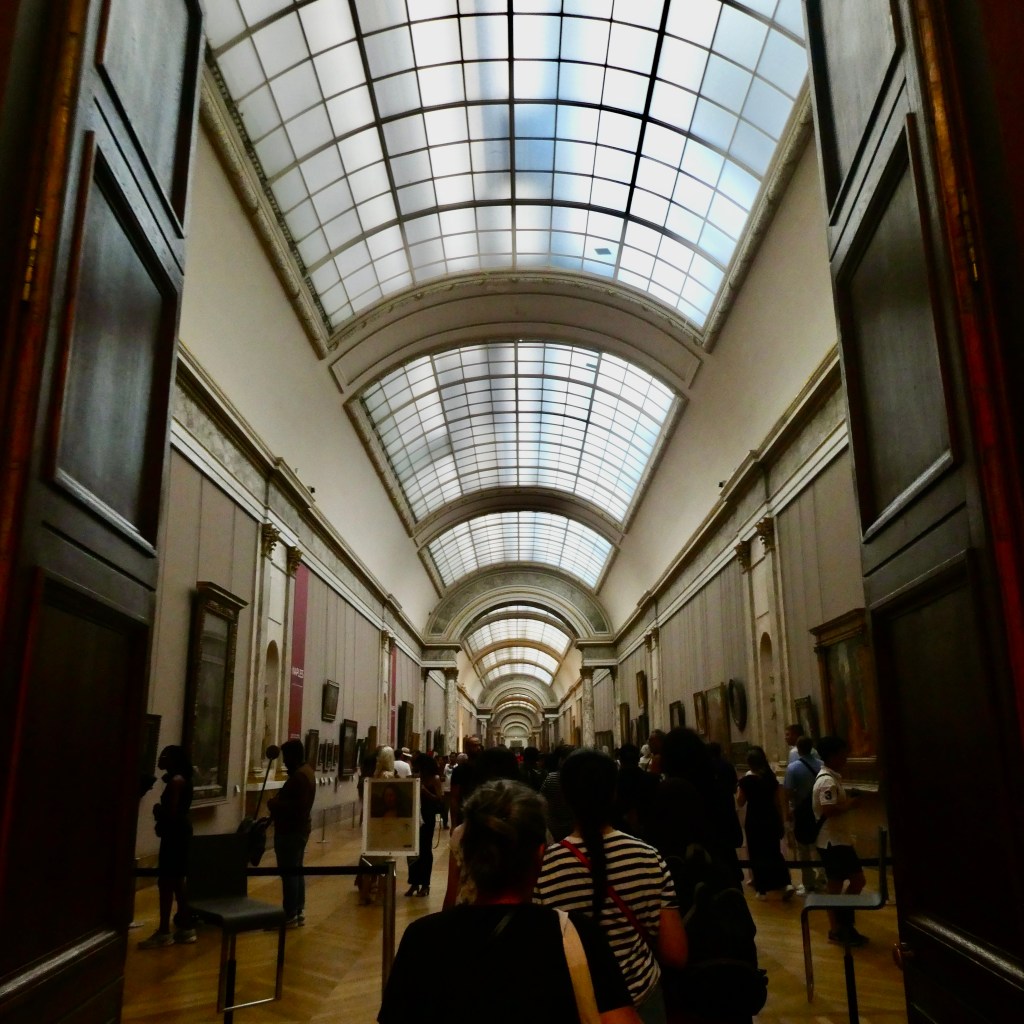
After 90 minutes, our guide escorted us to the line to view the Mona Lisa and was gone. 

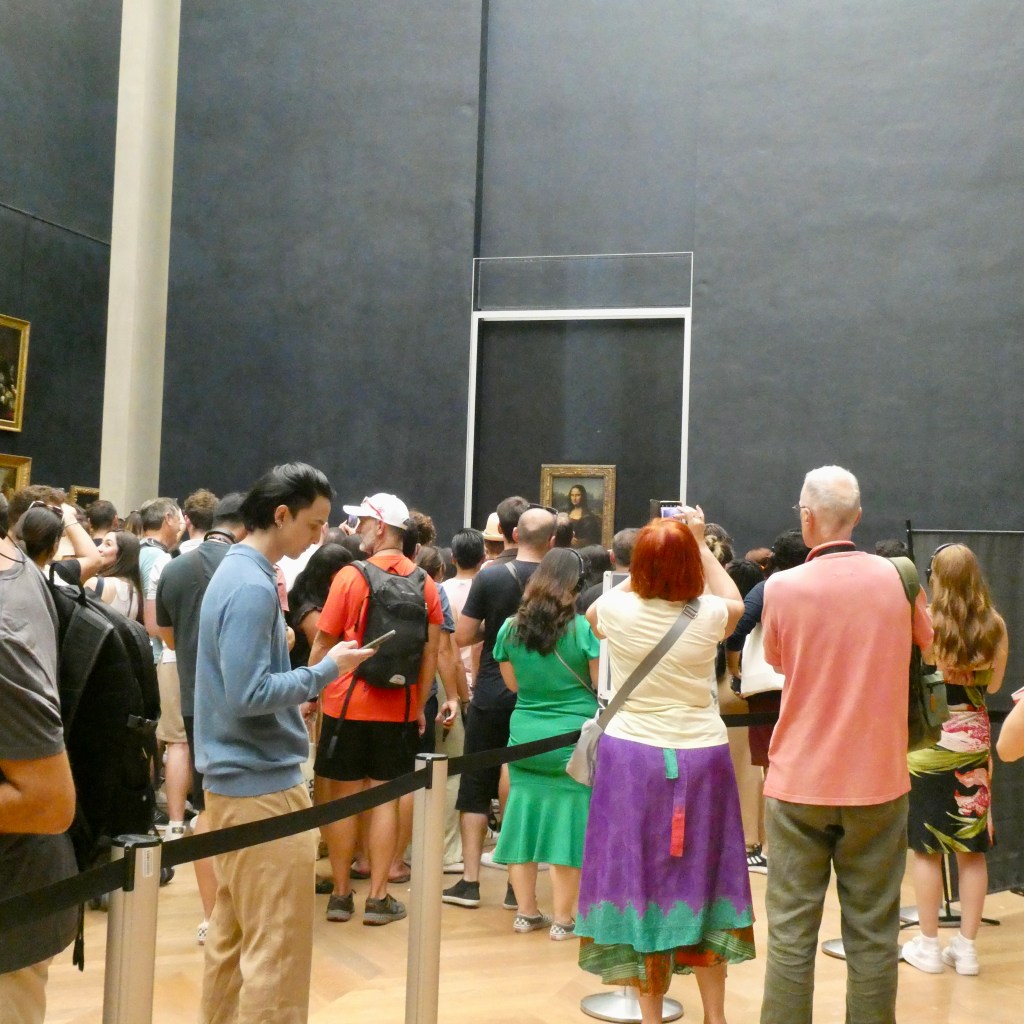
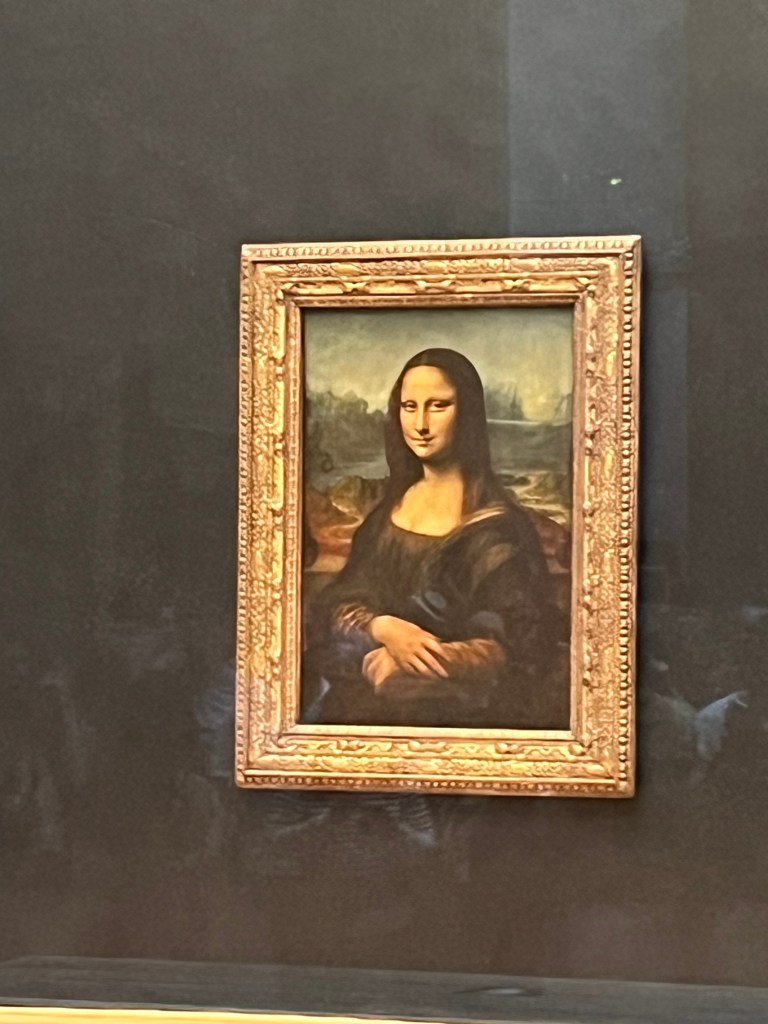
  As you can see there was quite the crowd gathered to see the small painting of Mona Lisa.  

We got close enough to use the zoom feature on our cameras and called it good.

I have mixed feelings about our experience using the personal guide. On the positive side she was extremely knowledgeable and we saw, and partially understood, way more than we would have on our own no matter how long we might have wandered. On the negative side, we saw what she wanted to show us. I can only assume she hit all the Louvre highlights. The thing that bothered me is that she never asked us what we wanted to see – even though we probably wouldn’t have known what to say had she asked.

We wandered a bit more on our own.

I saw this painting by Rafael that seemed familiar even though I know almost nothing about art.

In the end we felt good that our full and busy itinerary for the day had been accomplished successfully and very much enjoyed. 

However, there is an exception – except for Uber! We still had one more frustrating attempt to get an Uber driver to take us back to the hotel. It was painfully slow but eventually accomplished. If you are wondering why we didn’t get a taxi, there weren’t any of those either.  I don’t know if transportation issues are the norm or if was just a very busy few days in Paris.

Connie and Warren still had the energy to do one more Viking tour called Paris by Night.  They were able to see the Eiffel Tower sparkle! We were sorry to have missed it, but not sorry enough to wish we had gone!

We were busy in Paris on September 10, 2023.

Next up:  Some of us go to Normandy.

Posted in Uncategorized | 2 Comments

Viking Paris Extension: Palace of Versailles

My lasting memory of Paris may be the heat.  We live in Phoenix so we are used to hot weather but we aren’t used to very little air conditioning.  Fortunately our hotel had AC but we weren’t in Paris to stay in a hotel.

Unfortunately, Paris was experiencing temperatures ten degrees warmer than normal. In addition there was so much going on in the city that every place was busy and crowded.  

Paris, home of 2.2 million inhabitants, was hosting the Rugby World Cup while we were there.  There was also a lot of construction happening, catching up after COVID, and in an attempt to make Paris more bicycle friendly. 

On top of everything else, they were preparing for hosting the Olympics in 2024. Our timing wasn’t great!

Our first tour was Panoramic Paris – fancy talk for a bus tour of the sights, getting off here and there. 

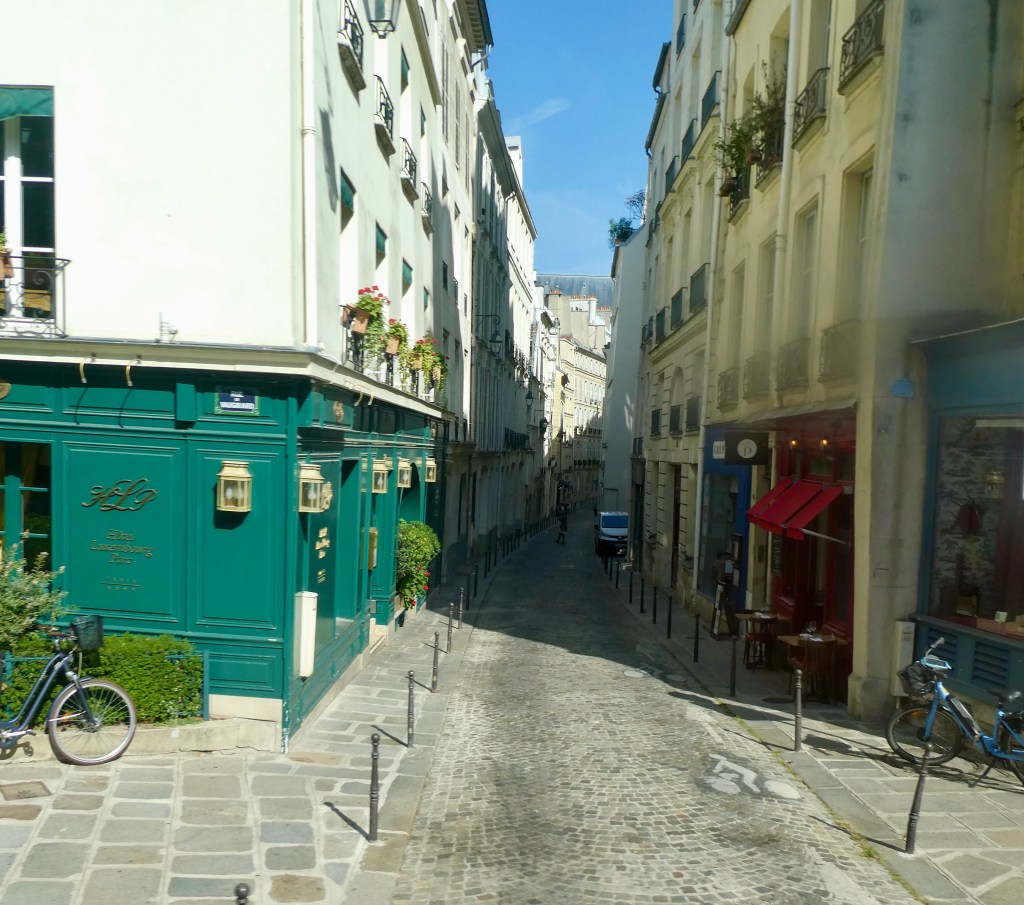
Most of my pictures didn’t turn out well through the bus windows but this one was fine.  Ernest Hemingway lived on this street during his years in Paris.

This tree is from the 1600s and is the oldest in Paris.  There are wooden supports because the tree was damaged during shelling from one of the wars. I’m not sure which war but there are a lot of possibilities.

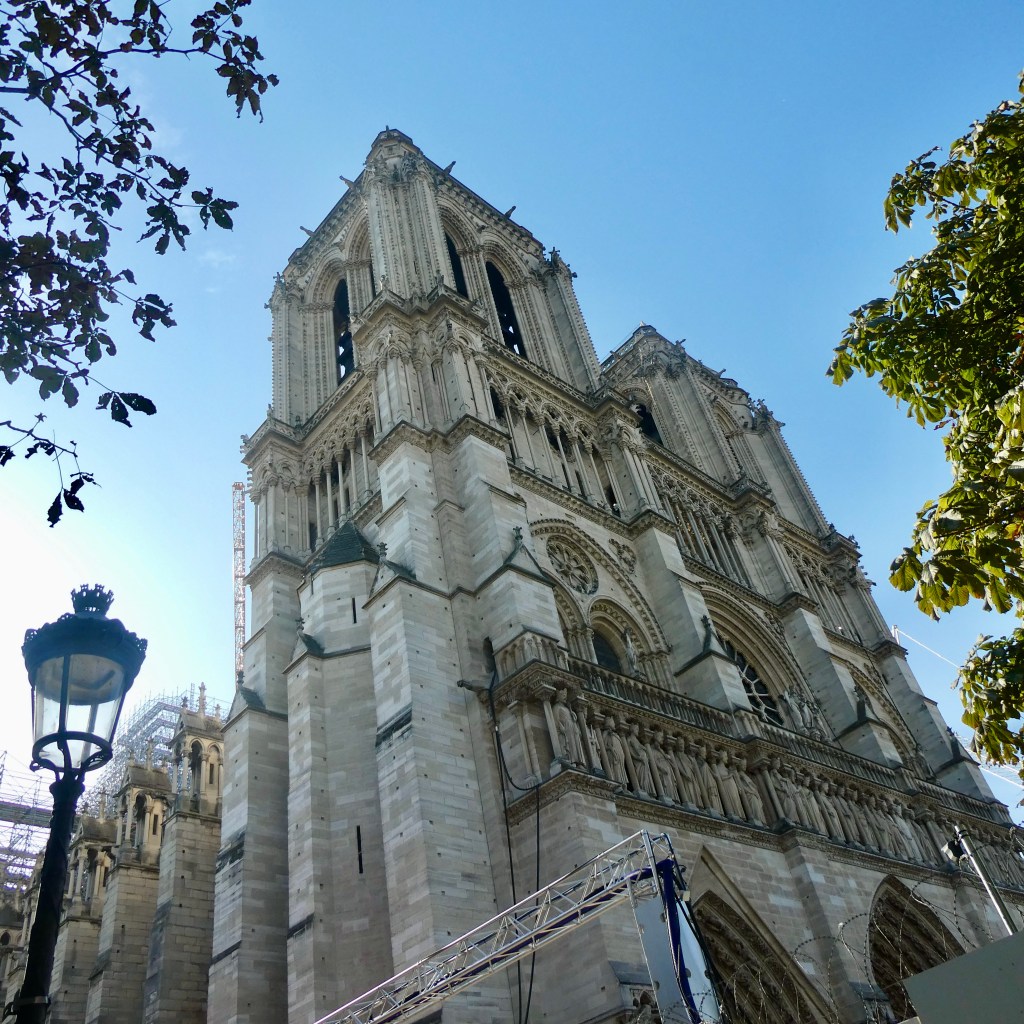
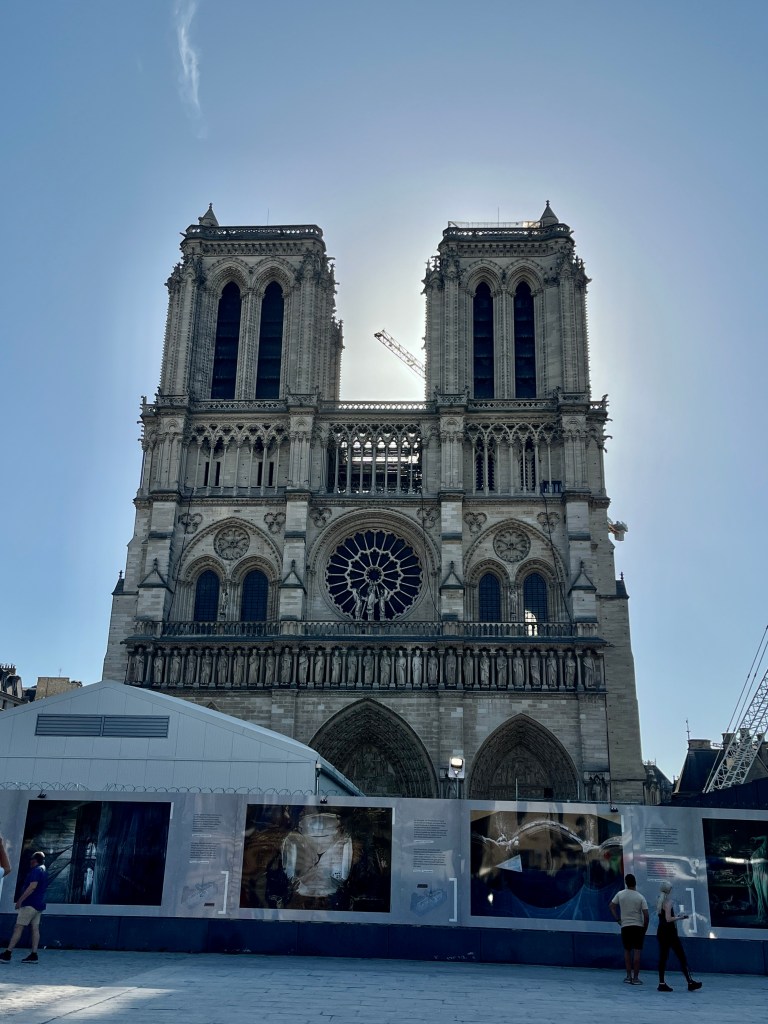
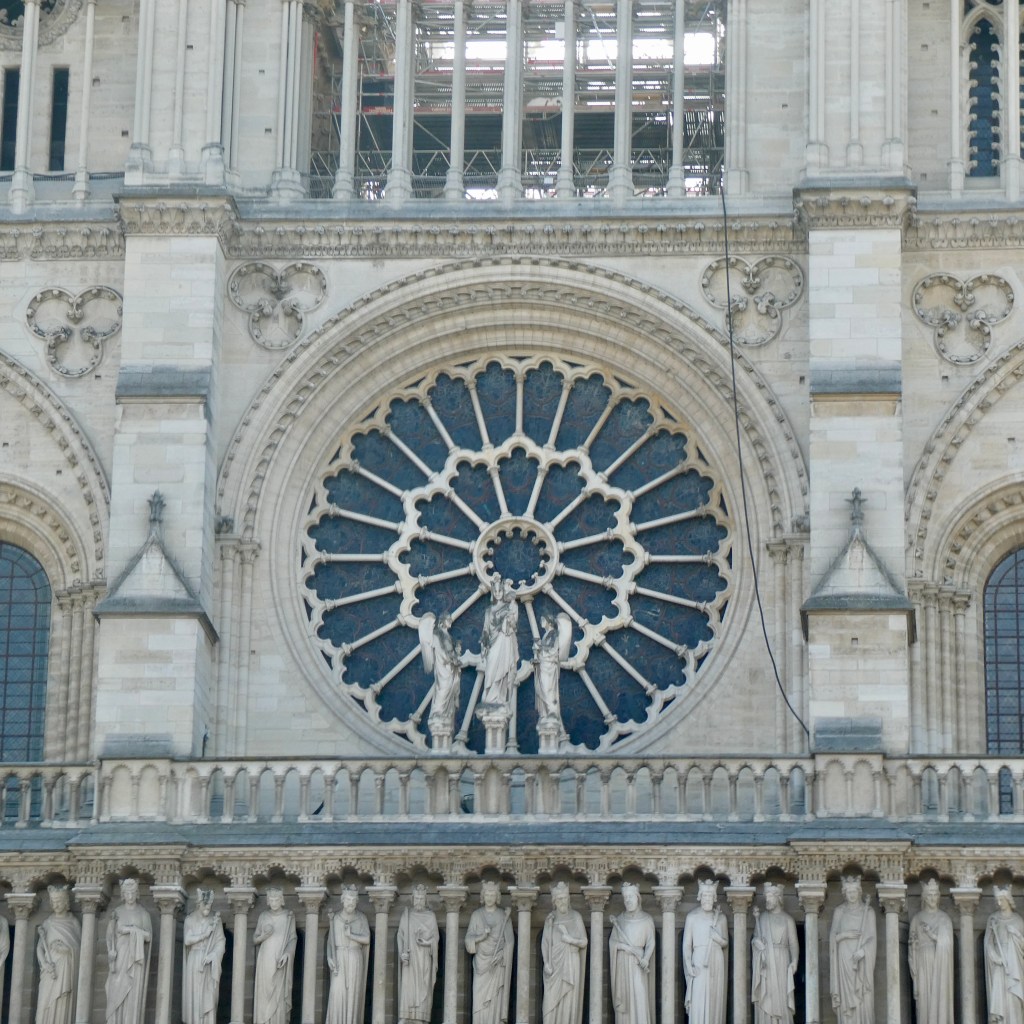
We were able to get out and walk around portions of Notre Dame, an 860 year old Paris landmark. 

It is, of course, under repair after the fire on April 15, 2019.  Story boards around the facility detail the fire and repair efforts.

They are on schedule with a five year massive effort to rebuild.  They plan to reopen December 8. 2024 – impressive given the delays that COVID caused in everything else.

We were told by our guide that Notre Dame wasn’t that important to the French until publication of Victor Hugo’s novel The Hunchback of Notre-Dame.

Our afternoon tour was to Versailles – the extravagant home of French royalty.  Unfortunately, in addition to the heat outside, the air conditioning on the bus did not work.  The bus temperature display read 40 degrees Celsius which is 104 degrees Fahrenheit. 

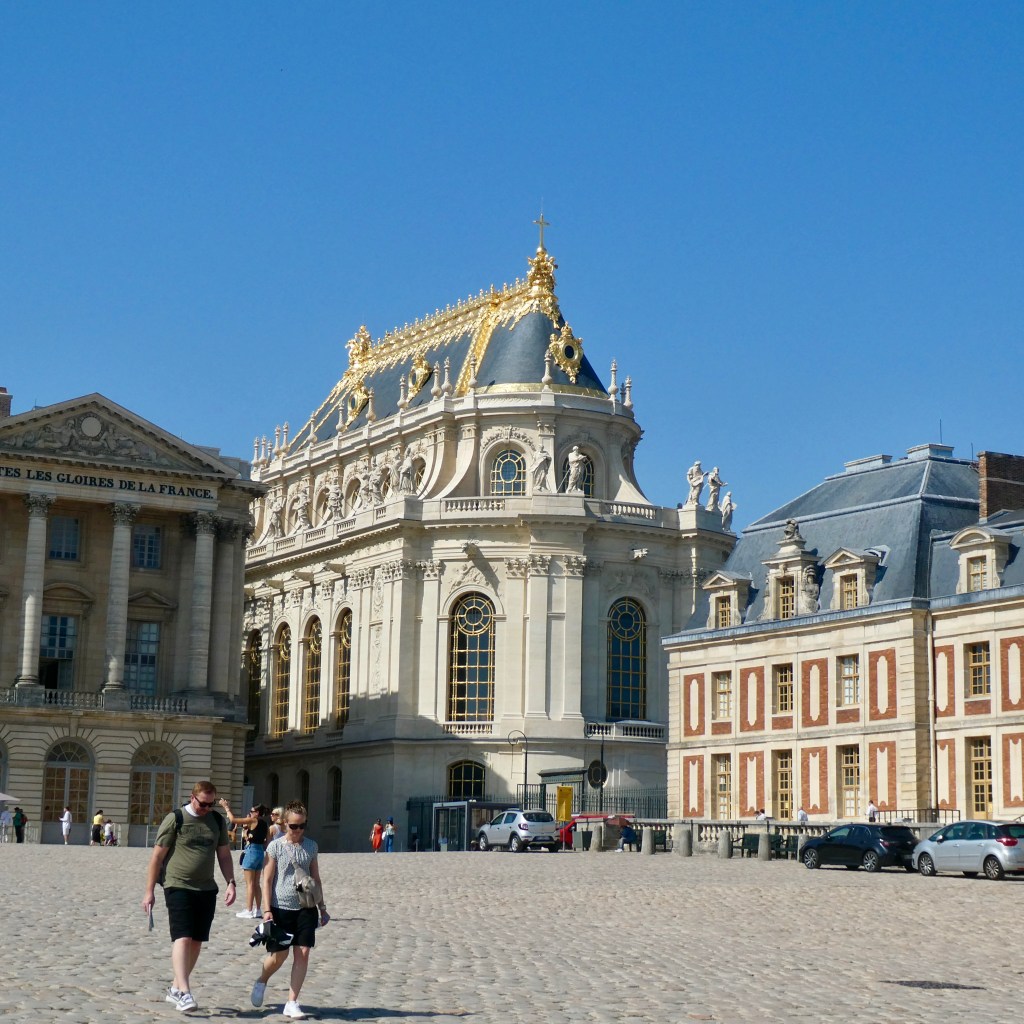
The palace and garden, are a UNESCO world heritage site. 

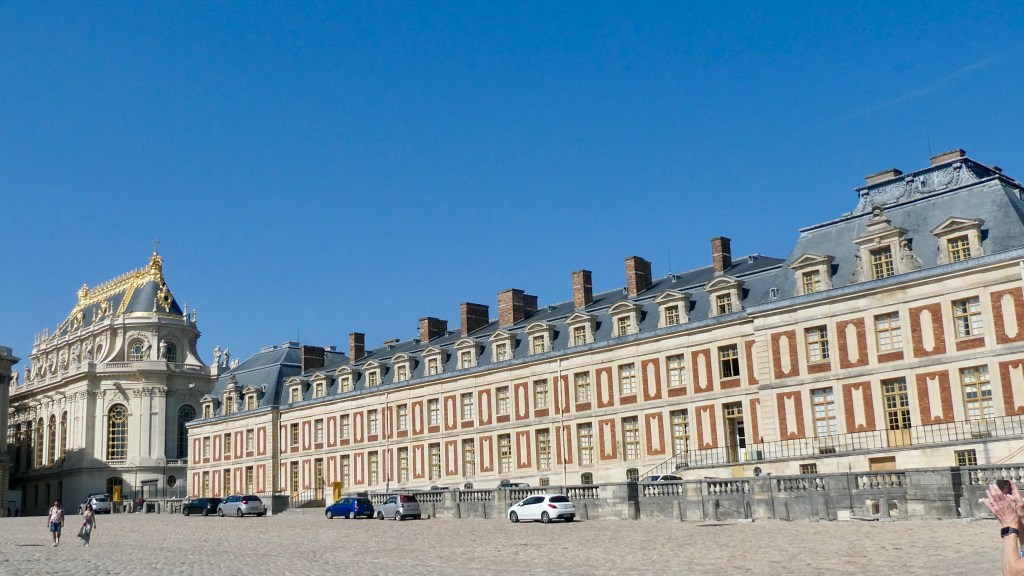
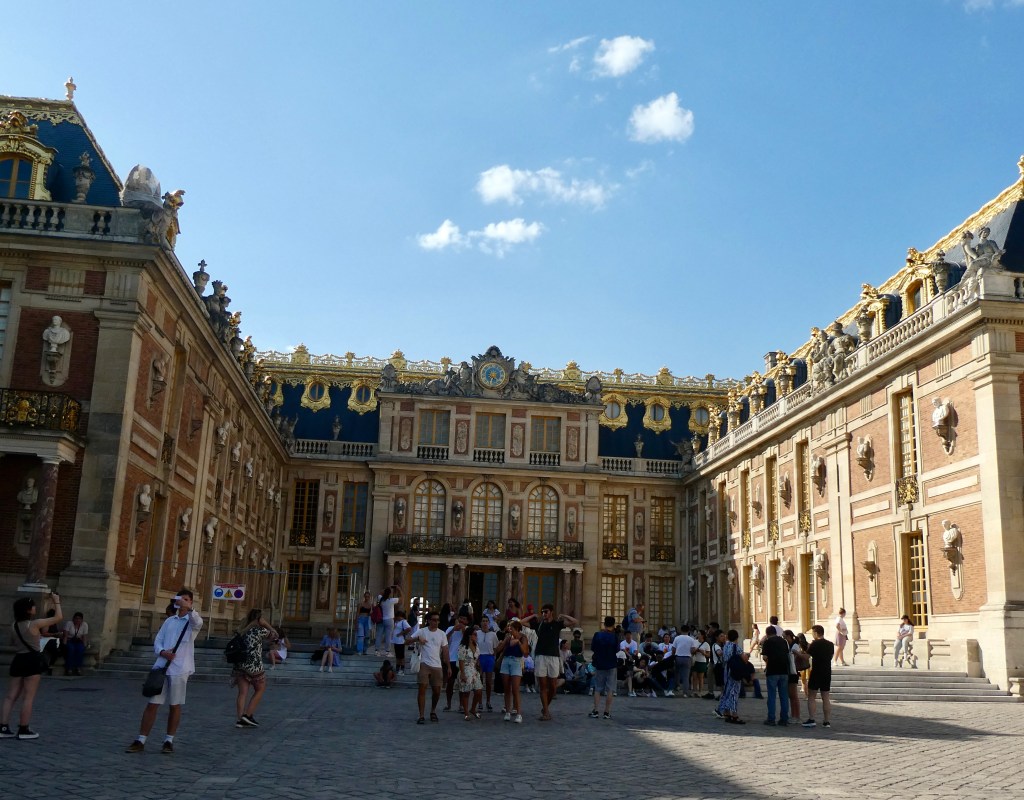
We were not far enough away to begin to get a picture of the entire palace. 

This one is from their website. 

The story of Versailles began in the 1600s when Louis 13th was King. The court was mostly in the old palace (now the Louvre) but moved around and was itinerant.  Louis decided he wanted a hunting lodge out of town and, in the 1620s, built one at Versailles. The hunting lodge had 20 rooms.  

Louis’ wife was Queen Anna of Hapsburg.  The marriage was a political alliance and finally resulted in a royal birth 23 years later. 

The baby Louis became Louis XIV. He became king at age 5 and ruled with an Italian Prime Minister. He began to rule by himself at age 23. 

He spent the next 50 years expanding the lodge, eventually to 2600 rooms. The court moved to Versailles permanently in 1682 when the palace began to be used for residence and administration. Part of his intent was to keep his enemies close. 

King Louis XIV ruled for 72 years, the longest in French history.

Eventually his son, Louis XV became king.  He lost much of the lands in France’ empire including Canada to England in the Treaty of Versailles of 1763.

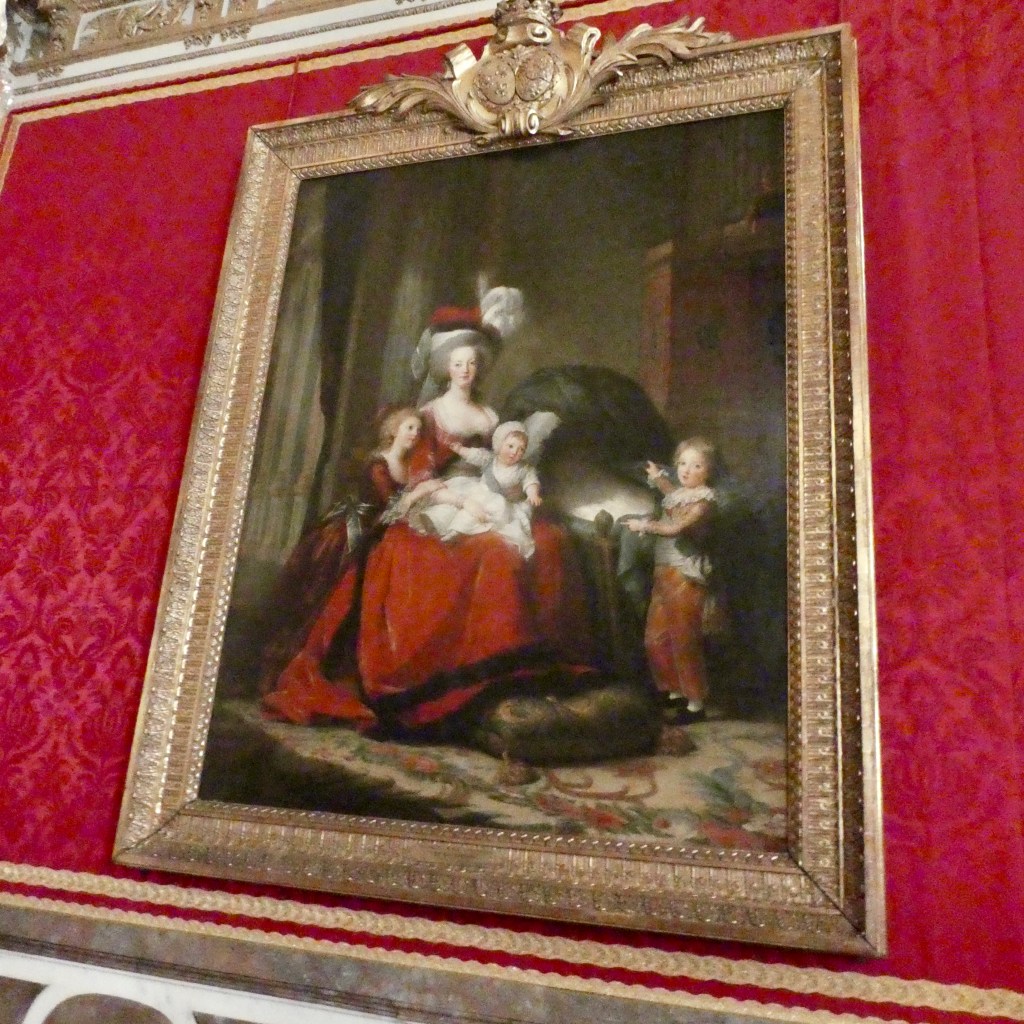
I believe that these pictures are King Louis XV on the left and King Louis XVI on the right.

King Louis XVI was the Louis who married Marie Antoinette.  He was also the one that Benjamin Franklin came to ask for help with the American Revolution under the guise of “Our enemy’s enemy is our friend.” 

History considers King Louis XVI to be a good guy trying to manage the three classes of people – the clergy, the nobility and the commoners. In 1789 he held meetings to talk about taxes.  He thought that rich people should pay more tax but they didn’t want to and he couldn’t insist and maintain his power.

The resulting French Revolution determined the fate of both King Louis XVI and Marie Antoinette.

There were so many people visiting the Palace of Versailles that day that it was difficult to stay with our guide or stay within range of the earphone system.

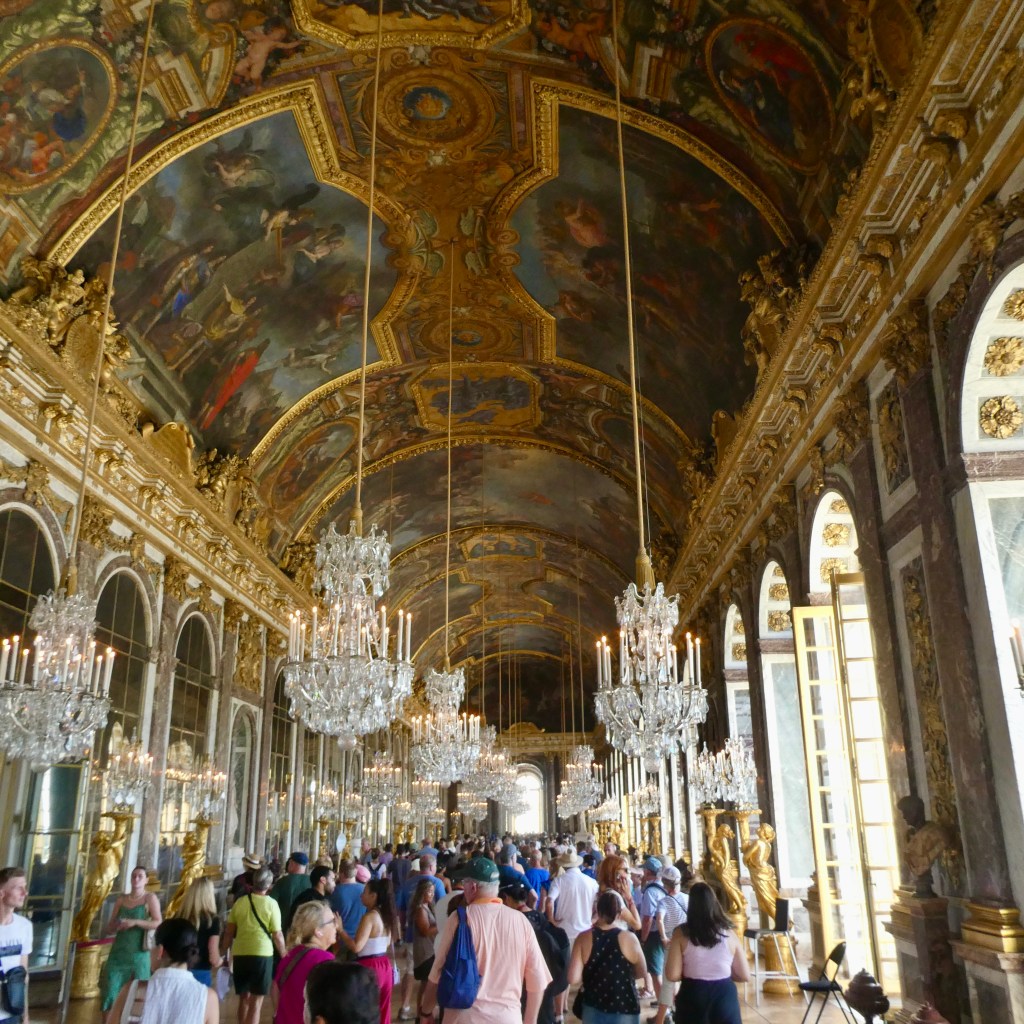
 We were in the crowd walking through the Hall of Mirrors.

In the end it was easier to just walk around, get a bit of a breeze from an open window when we could, and enjoy the sights.

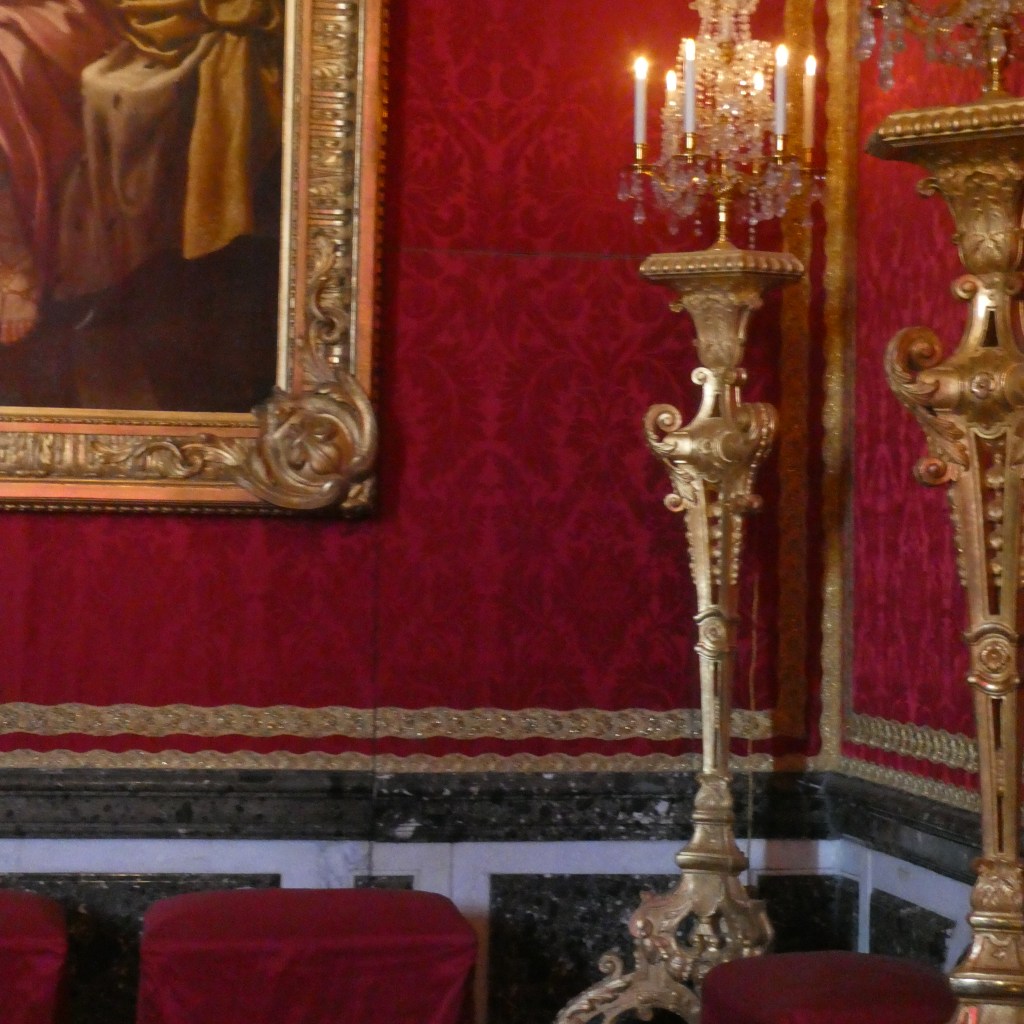
The interiors were very ornate!

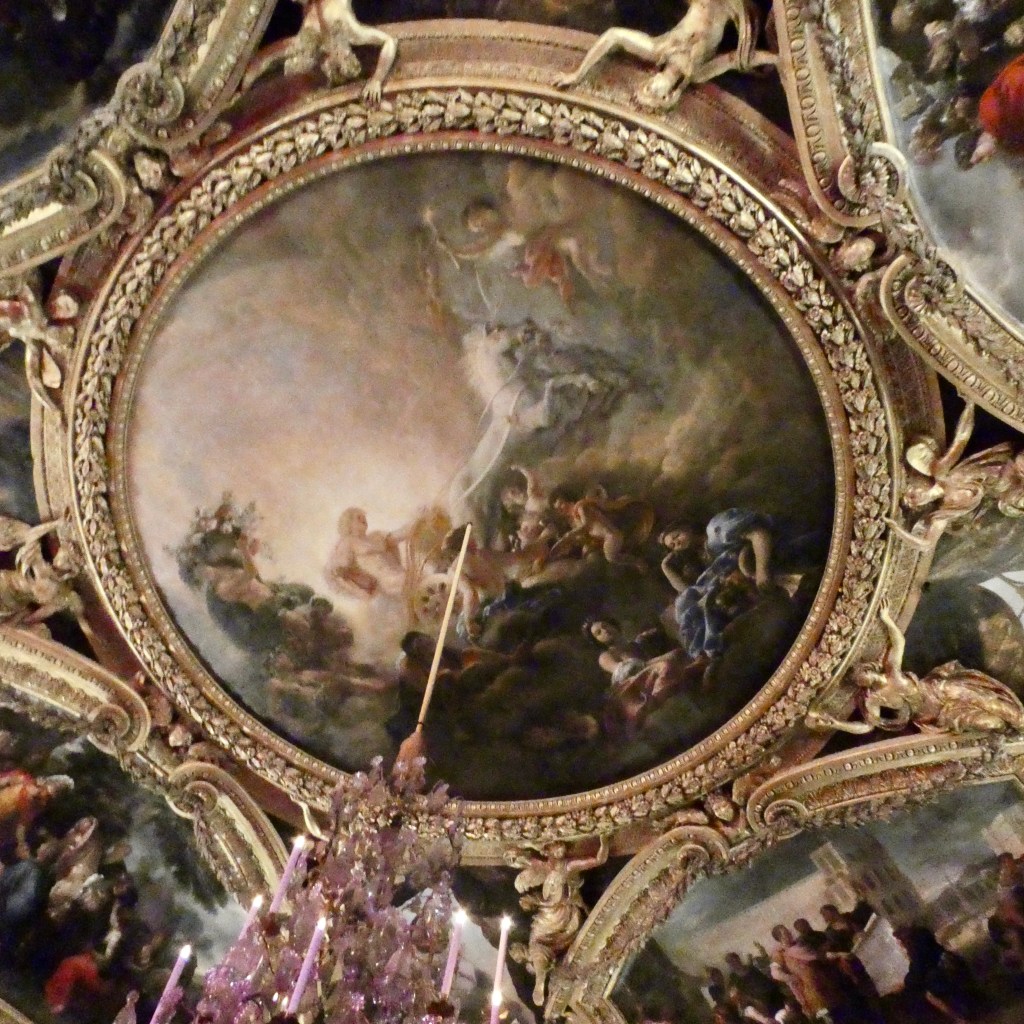
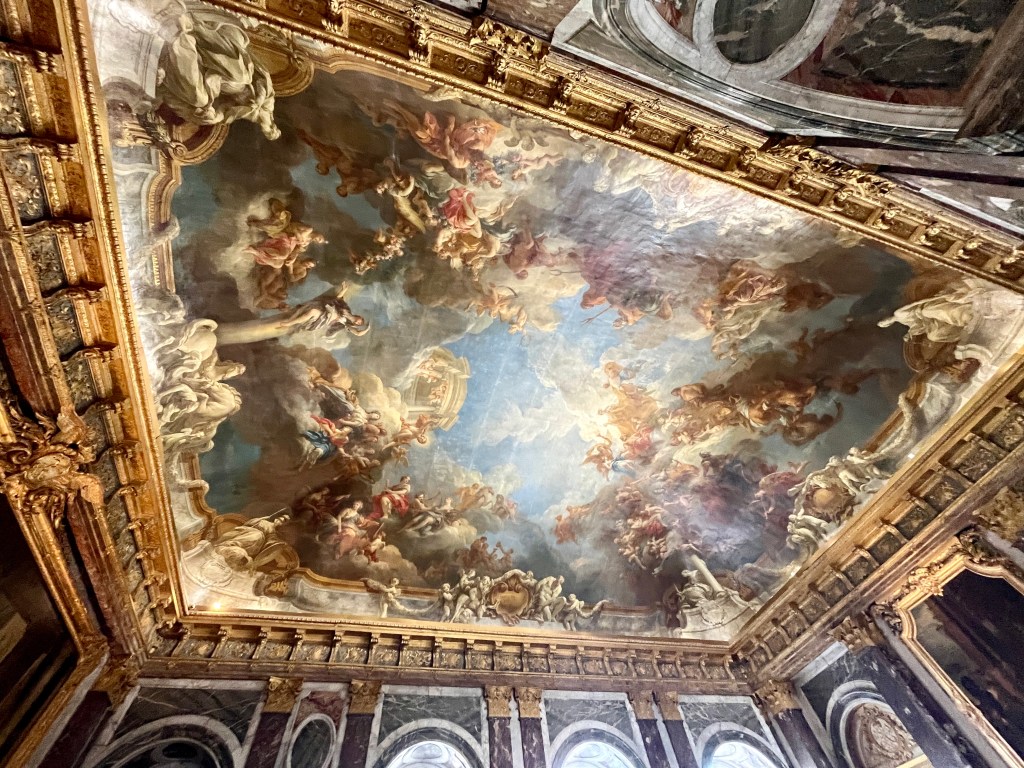
This fresco is one of the largest in the world.

There were many tapestries.

This was the king’s bedroom.

It had a secret door in the corner! I wonder where it went and whether it was for security or play.

This was once Marie Antoinette’s bedroom.

The opulence extended to the outside.

The grounds cover 1000 acres – about one tenth of the original size which included hunting grounds. We enjoyed walking around a small portion of the expansive grounds.

The citrus trees in the planters are taken “in” during the colder months.

There are 400 sculptures on the grounds.

What do you get a king who has everything for his birthday?  The Swiss Guard, who provided palace security, made the lake as a gift.

Earlier I mentioned a Treaty of Versailles signed in 1763.  Another important Treaty of Versailles was signed by the Allies and Germany on June 28, 1919 signifying the end of World War I. 

We had been in and around the palace for hours. They should have had time to fix the AC or exchange our bus, right?  No!  The bus ride both ways was without AC. 

A Viking representative from corporate was on our bus for the 40 minutes ride to the hotel. He was even less happy than we were!  Heads were going to roll – which is an interesting phrase to use in a country known for using guillotines.

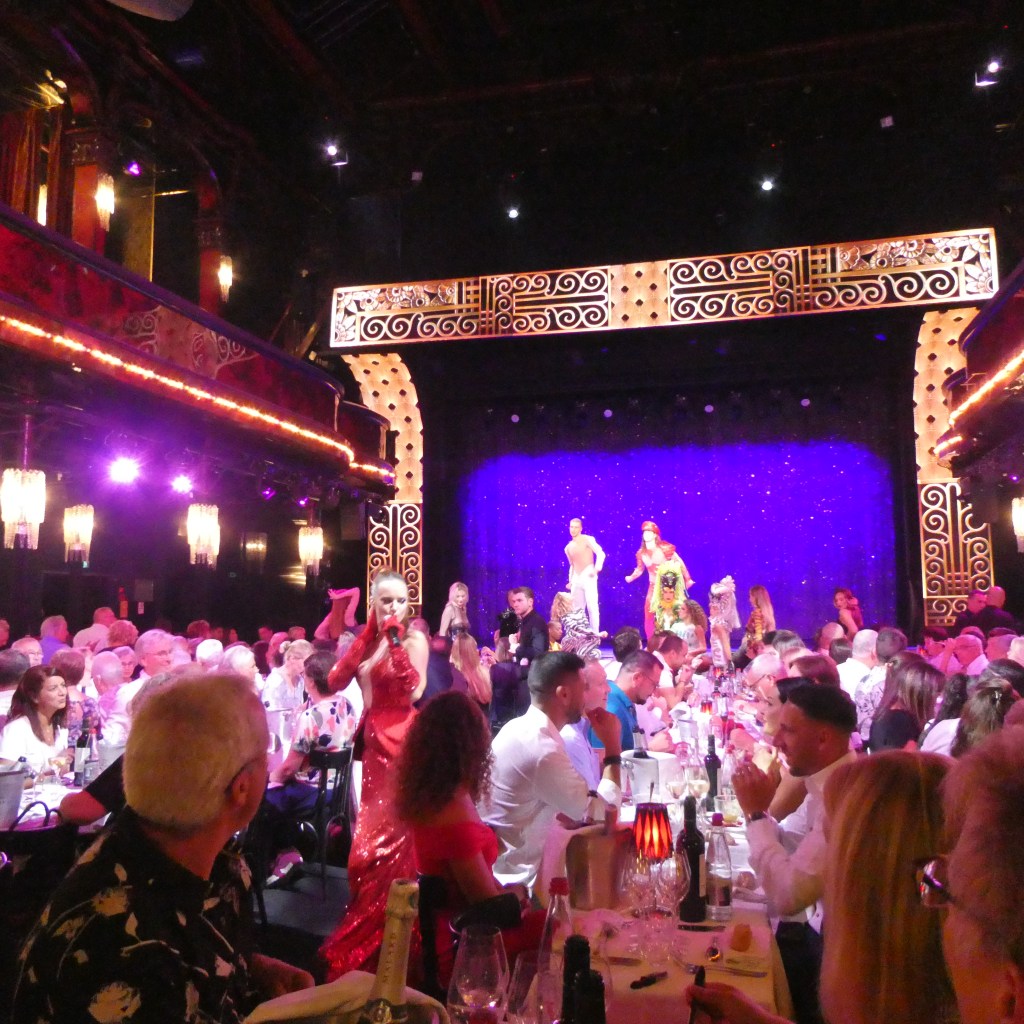
That evening, after a long hot day, we dressed up and went to the Paris Cabaret. The cabaret began in the late 19th century during a period of opulence. The building burned down.and was rebuilt by Gustave Eiffel in 1887-89, about the same time as Eiffel was building his tower.

Most enjoyed the dinner and show very much. The singers and dancers were very talented and had great strength and acrobatic skills. However, I was seated in a place and way that I could barely see the stage. I stood in the back but felt I was in the way as acts came in and out very quickly. Eventually I went out in the lobby and listened to the Mariners game on my phone. A good time was had by all!

We were at the Palace of Versailles on September 9, 2023.

Next up:  The Eiffel Tower and Louvre

Posted in Uncategorized | 2 Comments

Viking Bus Ride to Paris: Reims

We continued the bus ride to Paris with our guide.  She spoke about the belief that French people are rude.  She said not everyone is rude but it is the waiters who cause the problems. Parisian waiters have a life goal to make people feel bad and “they don’t do it because you are American, they do it because you breathe.”  There are almost no public restrooms in Paris, so visitors must interact with waiters and service people, thus the perception. In her opinion. (In hindsight, we really didn’t deal with any rudeness at all.)

Seventy five percent of power in France is from nuclear power.

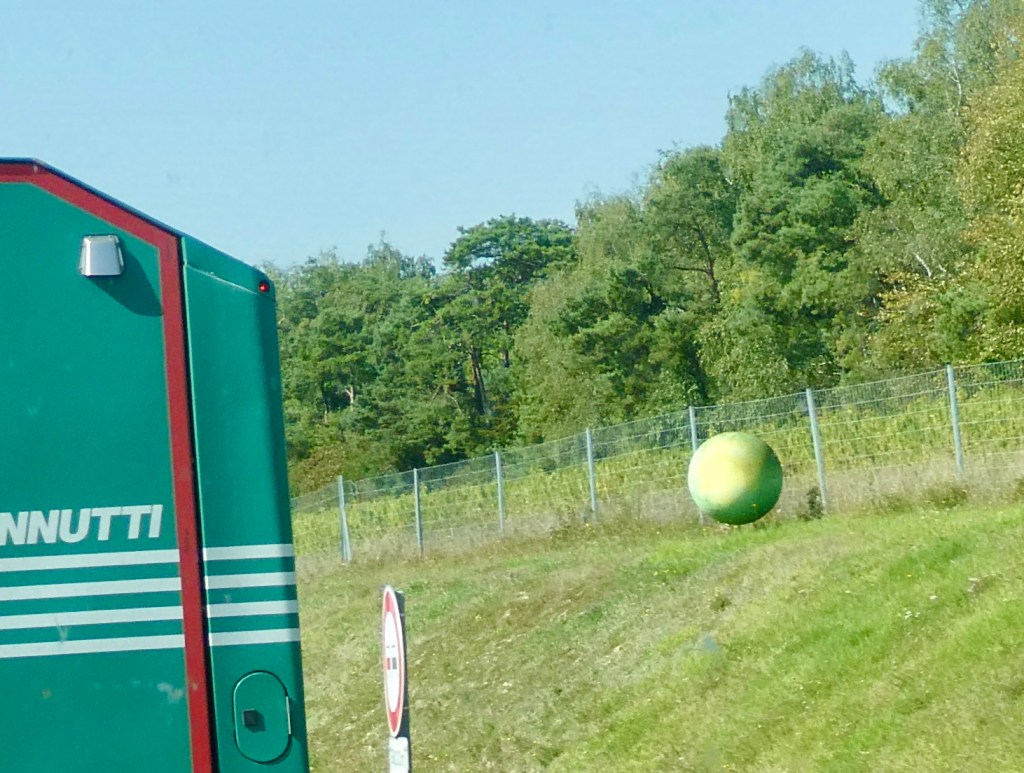
Along this road, in the area about half way between Luxembourg and Paris, drivers had accidents due to falling asleep.  Brain science research suggested that if there were random things to look at that didn’t belong along the road, people would notice and stay awake.  We saw numerous examples.

The strategy worked but after about ten years the effect was fading.   They repainted the objects to make them brighter and make them more noticeable.  Improvement was made once again.

Our guide started telling us about Reims.  “Reims is the capital city of the Champagnia region of France. Mimosas don’t exist!  If France still had the guillotine, that would be a capital offense.”

It takes between three and ten years to create a bottle of champagne.  The formation of a treaty to end WWI an article was written into the document saying only this area of France can produce champagne.  The United States signed the treaty but did not ratify it so there may be a loophole for the US.

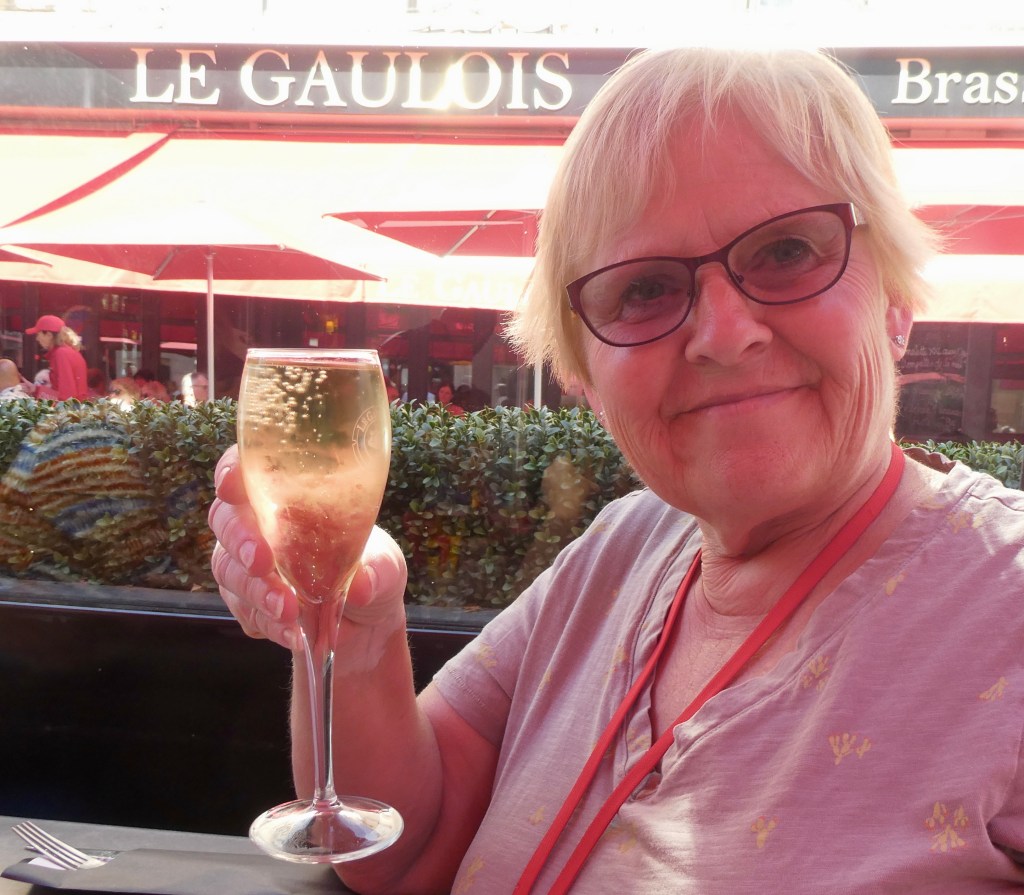
We were trained in how to drink champagne.  “Hold the glass in a way that will not warm the champagne.  You do not swirl it like wine because you break up the bubbles.  Also, don’t smell it, just drink it!”  It should be cooled but not cold.

“In this part of France they grow sugar beets so Coke tastes slightly different – but if you want bubbles, you should drink champagne” said our tour guide.

Arriving in Reims we walked towards the city center. The town was 60-80 percent destroyed during the wars and only the fountain remained in the city center. 

I had a delicious lunch of Quiche Lorraine and champagne- both regional examples.  I don’t usually like champagne but this was good, and I don’t think I was holding my glass correctly!

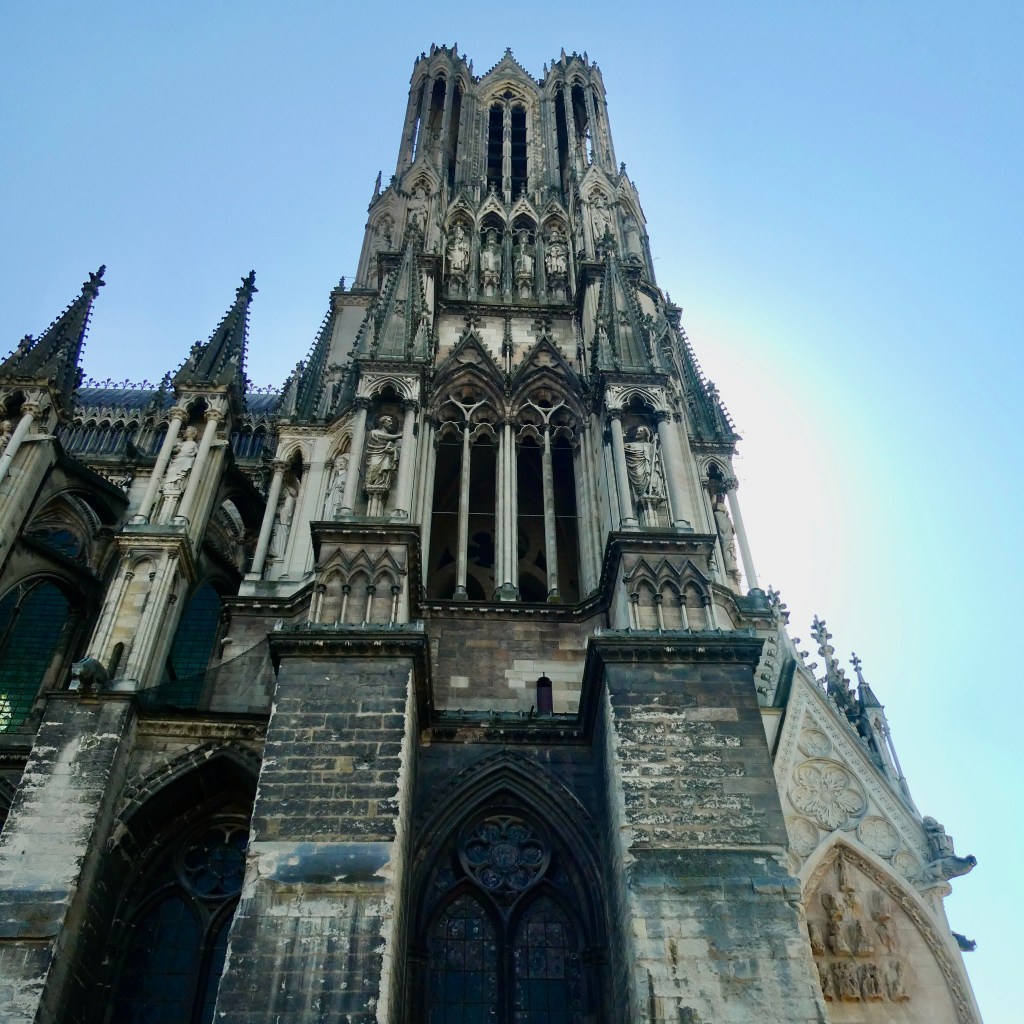
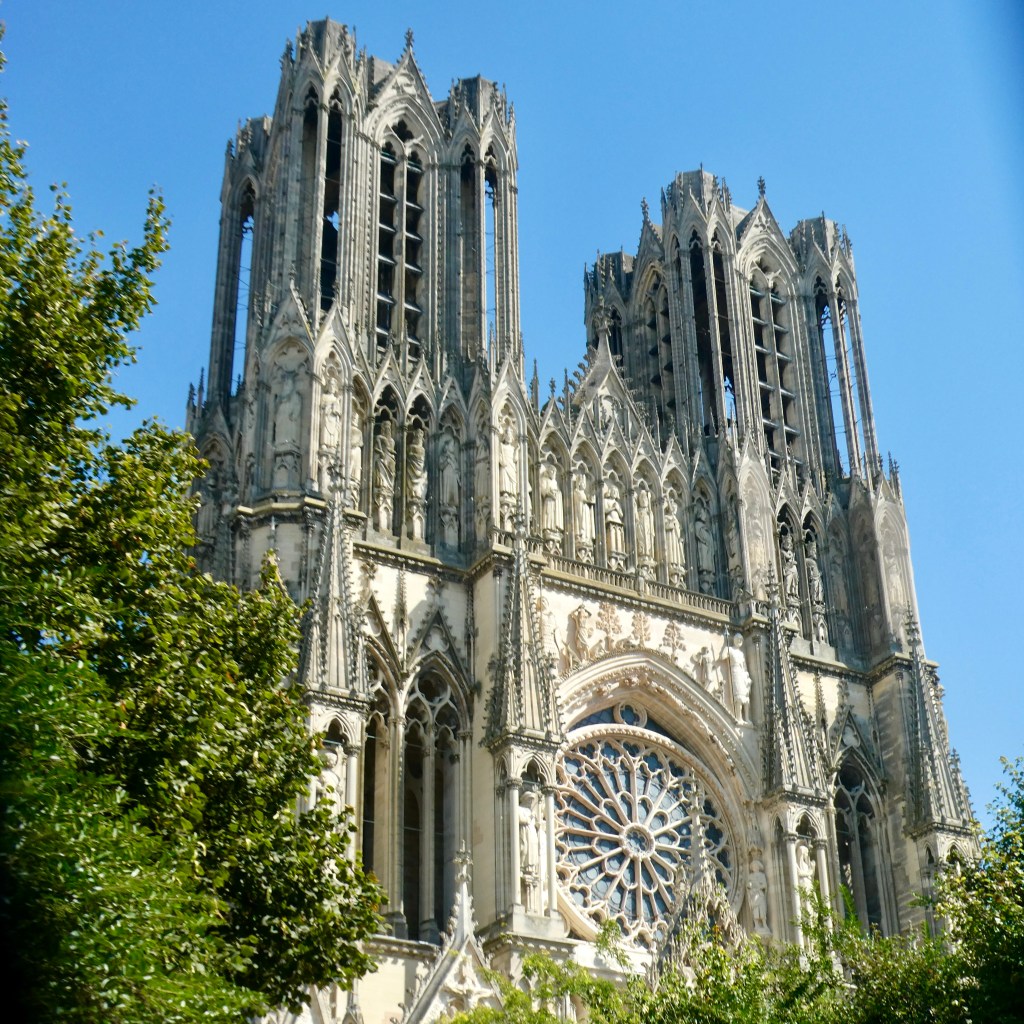
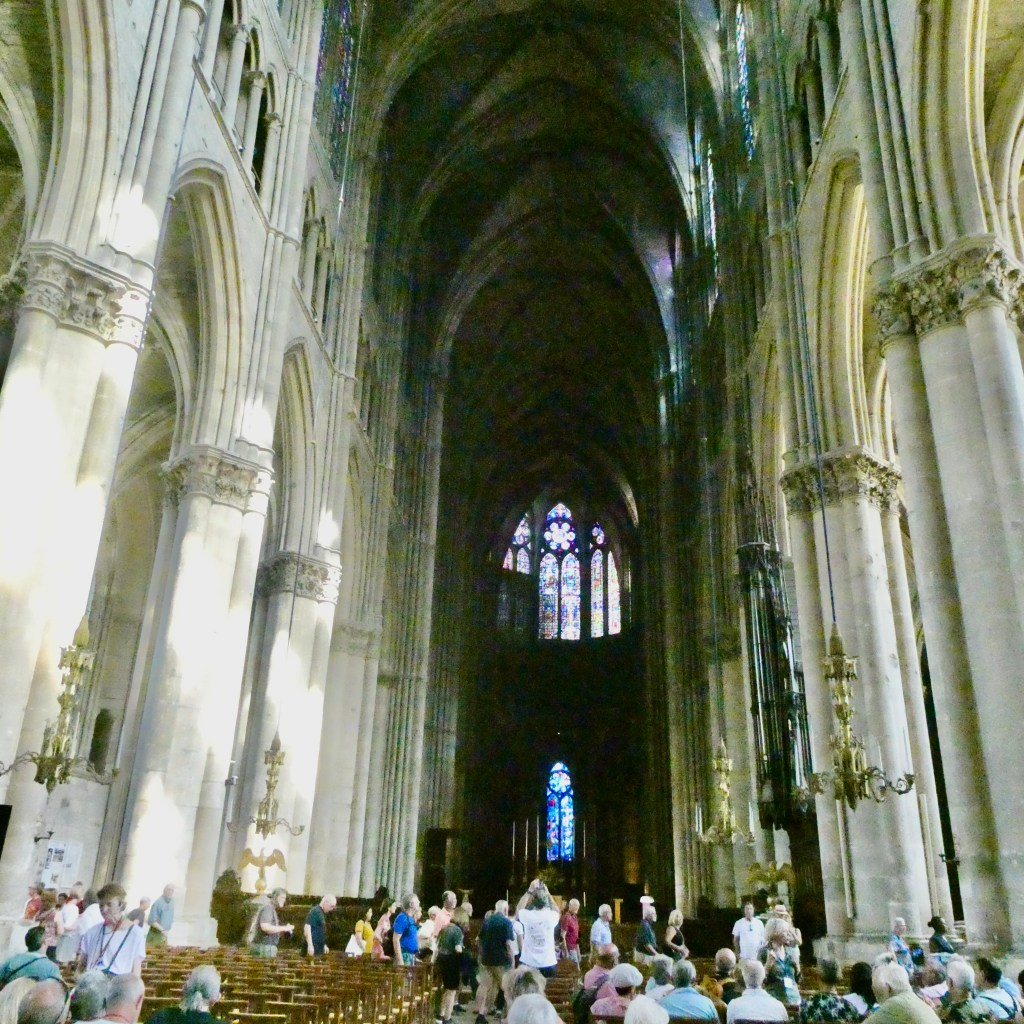
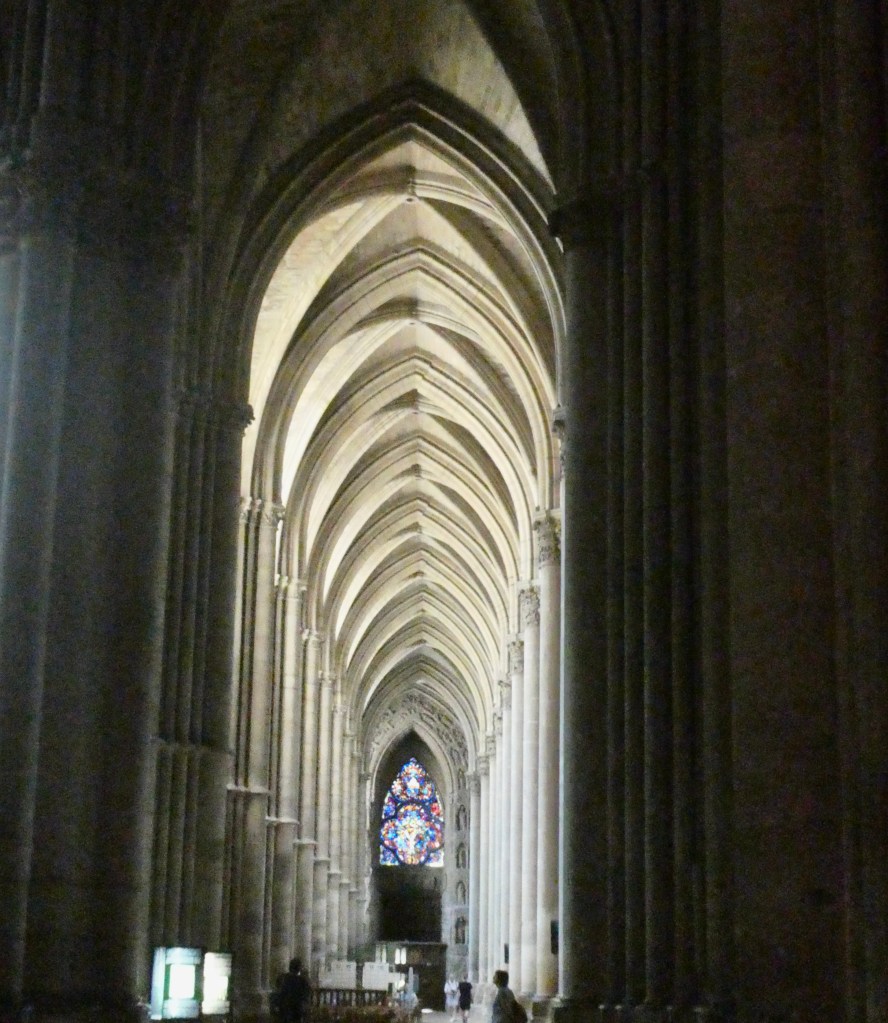
The Reims Cathedral is the most important cathedral in France, more so than Notre Dame.  It has been a UNESCO World Heritage site since 1991.

The Reims Cathedral was the traditional location for the coronation of the kings of France.  Twenty five French kings were coronated at the cathedral, the last in 1825.  Coronation was an important event but the king was already king by birth.

The original cathedral was commissioned in the fifth century by Bishop Nicosaius on this location, the former site of Roman baths.  

King Clovis was baptized christian in the cathedral a century later, the first French king to do so. 

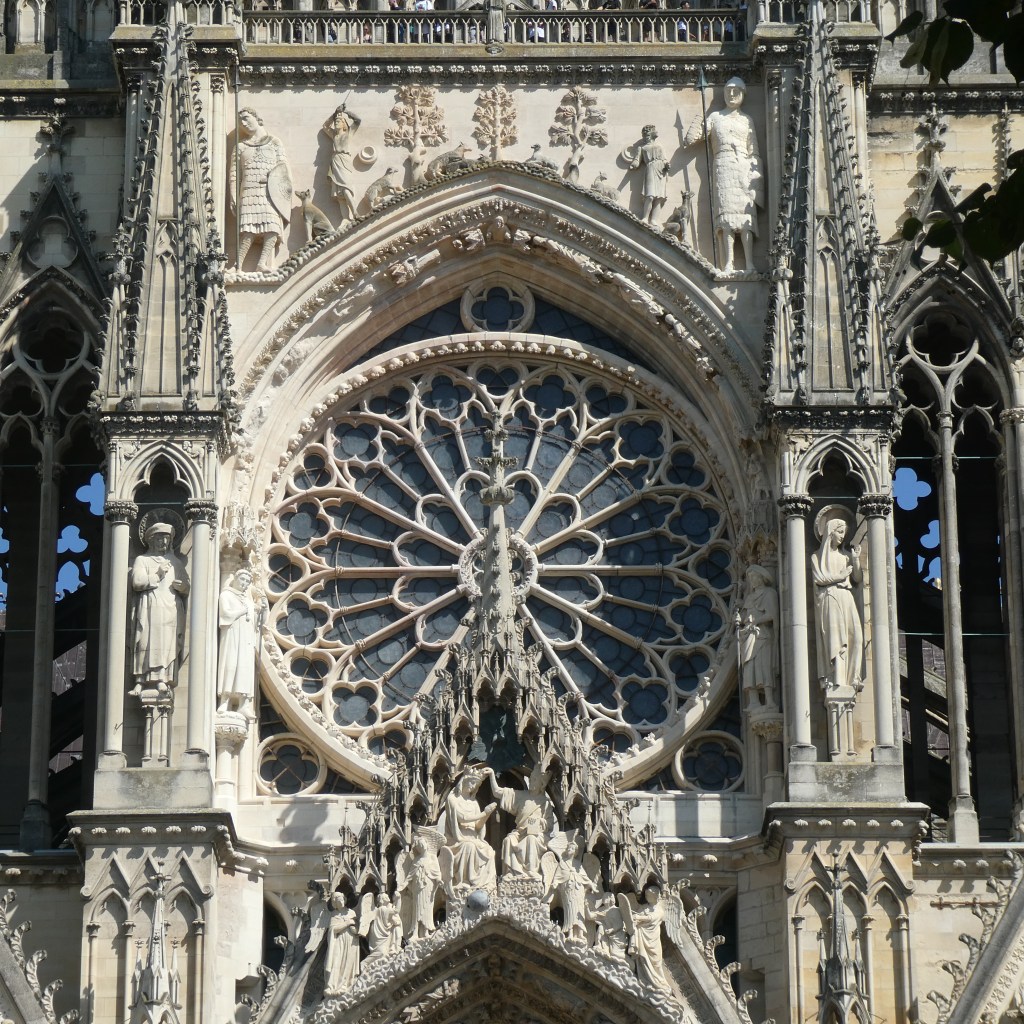
In 1211 the lower chapels were complete.  The areas above, including the Rose window, took until 1290.

Construction of the present Reims Cathedral began in the 13th century and concluded in the 14th century.  It was built to replace an earlier church destroyed by fire in 1210.   The cathedral is a prominent example of High Gothic architecture.

About two thirds up are a row of kings meant to signify they were halfway between heaven and earth. The spacing would have been about half way if the intended spires were built. When the builders got to that point in 1516, the Renaissance had begun and spires were no longer desired.

There are Bible stories and people in the art on the facade.  In earlier centuries, the stone was painted so the cathedral was colorful.

Although it was only slightly damaged during the French Revolution 1789-1799, there was some cathedral restoration in the 19th century. 

The Germans tried to destroy the Cathedral during WWI to damage French morale.  It suffered extensive damage from 300 shells.  The roof was destroyed and more damage happened when the Germans occupied Reims.

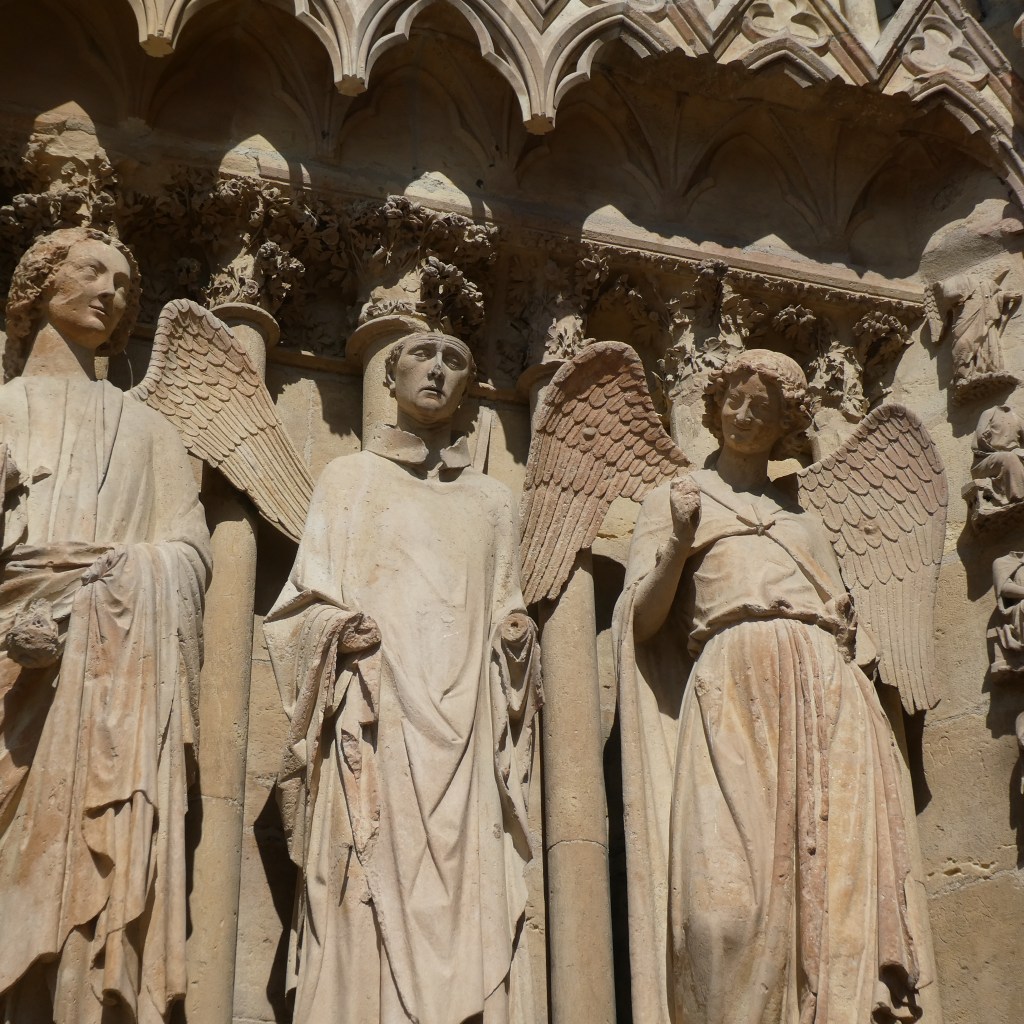
Shelling and a falling beam from the resulting fire decapitated the angel on the right, called both the Smiling Angel and St. Nicasius Angel.  Built in the 13th century, her gentle smile had welcome visitors into the cathedral.

After the shelling and fire, her head was broken into more than 20 pieces.  She became famous to the world as a symbol of the suffering of the people of France after the damage. Thanks to a priest who collected the pieces, and a plaster cast in a museum, the angel was restored in 1926.

After the war restoration of the cathedral became a world wide effort. The Rockefeller family from America paid to repair the roof using concrete.

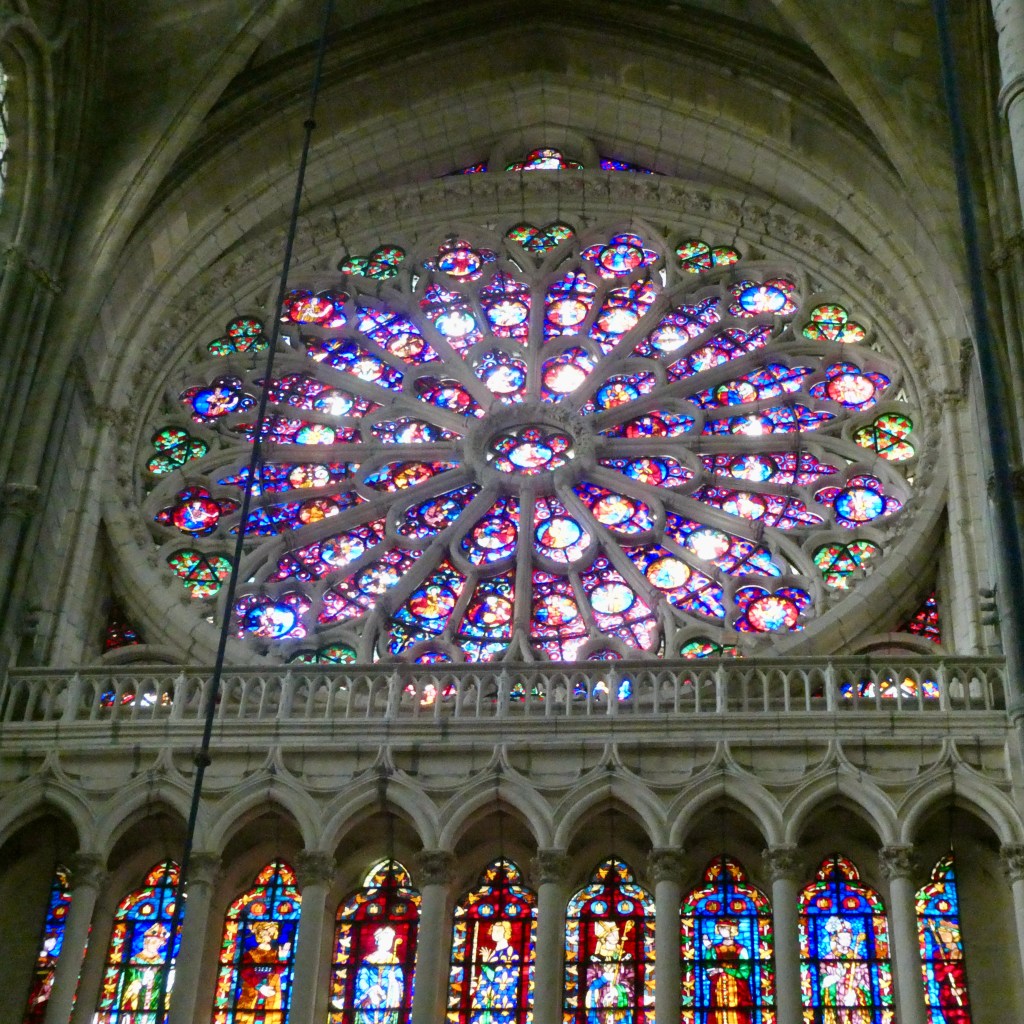
This is the rose window from the inside. Stained glass is very prominent throughout the cathedral.

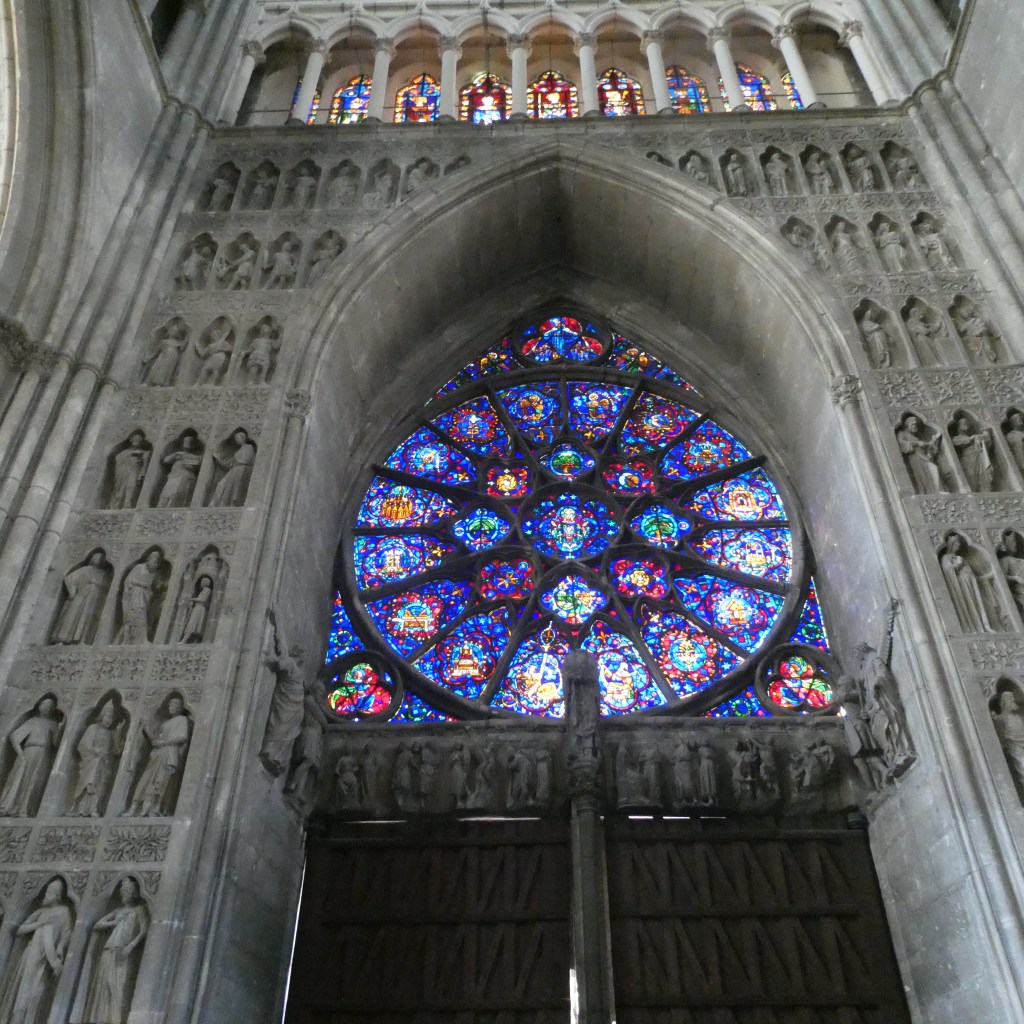
This is the western facade from the inside. The interior of the cathedral was once painted and very colorful complimenting and reflecting the stained glass. 

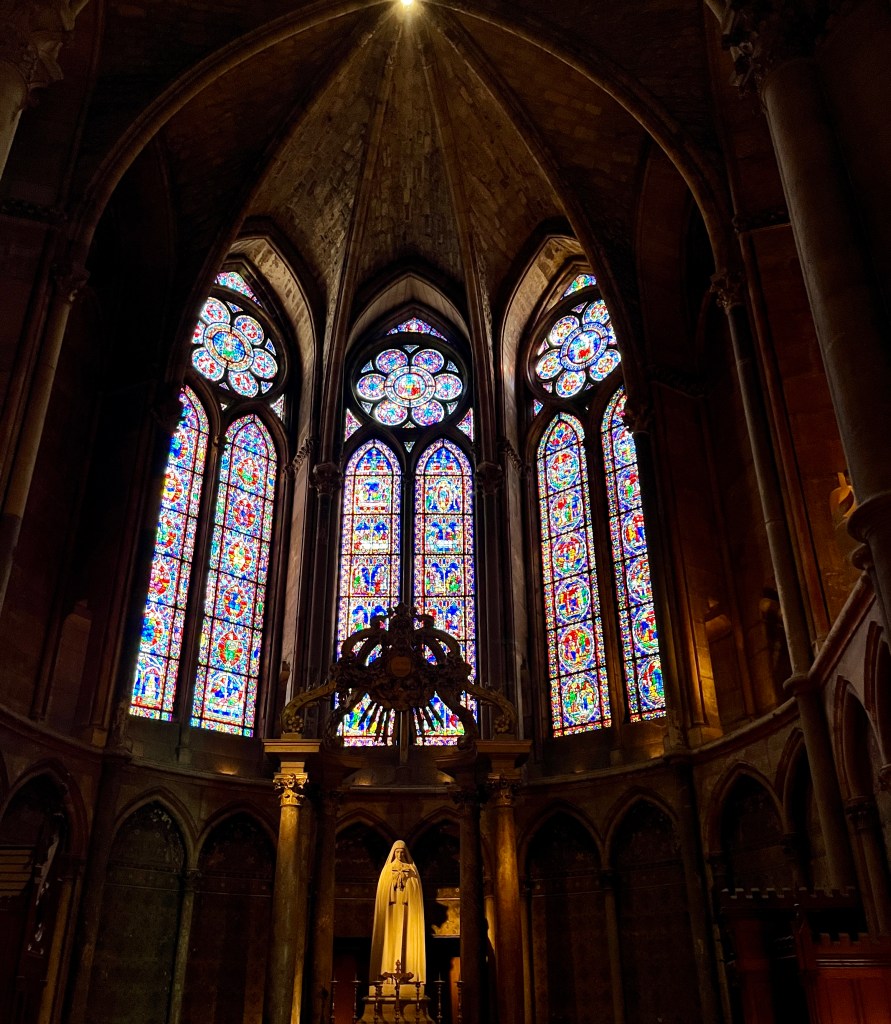
The stained glass windows range from original to restored to replaced due to age and destruction.  

The windows at the top of the altar area are from 1214-15. The front portion was once divided off as being sacred. In the 18th century it was opened up for all to see.


These side windows were once colored but were replaced to provide more light inside.

A 1905 law gave cathedral ownership and maintenance to the French government.  The Catholic church has rights to its use and the Reims cathedral has services throughout the week.

Some of the best-known windows (to those who know about such things) are from 1974. These are the three windows made by Marc Chagall. They represent the Tree of Jesse, the Old and New Testament; and the “Grandes Heures de Reims”.

Marc Chagall (1887 – 1985) was a Russian and French artist. He created works around the world in a variety of mediums including stained glass, paintings, drawings, book illustrations, stage sets, ceramics and tapestries. 

The newest stained glass windows in the Reims cathedral were placed in 2015.  

We were in Reims on September 8, 2023.

Next up:  We get to Paris and it was hot.

Posted in Uncategorized | Leave a comment

Disembarking and the Luxembourg American Cemetery

Today was the day we left the Viking Alsvin.  Our room steward, Jovan , thanked us for being his tidiest guests.

We said goodbye to the sweetest wait person Kristhina.  We had connected with her several times and learned about her two year old son at home in Manila with her mother.  Her husband is working on the Celebrity cruise line.  

On our last morning we talked again and said goodbye.  She came out for one more hug.  We have heard from her a couple times.

Randy said goodbye to Captain Lucian.  He had been very present with guests on the cruise.  Connie even danced with him one evening when Randy and I were already sleeping.

We boarded the bus for a full day road trip to Paris via Luxembourg and Reims, France.  The front seat on the bus was open so we took it.

Highway traffic along our route was dense because a lot of workers from France and Germany work in Luxembourg as the salaries are higher. The general rule of the road is to leave the center open for emergency vehicles.

Our guide for the day told us that Luxembourg is the second wealthiest country (assume it is per capita) in the world and has 600,000 inhabitants.    

Luxembourg became wealthy due to their iron ore industry.  Most beams for construction projects worldwide are still from Luxembourg.  (Qatar is now wealthiest.)

The influx of ore industry money  supported development of a banking industry which is another source of wealth.

The Translation Office for the European Union is also here.  That was a logical placement as people in Luxembourg speak four to five languages fluently. School grades are taught in successive immersion languages sequencing Luxembourgish, French and German. People usually learn English as well.

The country is officially the Grand Duchey of Luxembourg, a United Parliamentary Constitutional Monarchy.  It is currently ruled by Duke Henri and a Prime Minister.

Luxembourg American Cemetery was the temporary cemetery after the Battle of the Bulge.  It was later made permanent and was dedicated on July 4, 1960.

The cemetery is on Luxembourg land, but given for this use in perpetuity.  Paid staff are employed by the US embassy. The cemetery covers 50.5 acres.

If soldiers had stated that they wanted to be buried with their comrades, they are here.  A soldier’s family could also choose to have them buried here or have their deceased returned to the US.

There are 5076 graves, including General Patton, one female army nurse, and 22 sets of brothers.  

There are 4958 crosses and 119 stars of David.

Names and information were engraved on tombstones but not darkened, except for General Patton.

General Patton died after a car accident. When his body was brought to the cemetery there were lines of people along the road because they knew what Patton had done for them.

European Law generally states that there are no burials by rank or status.  However, for practical reasons it was a good idea to separate General Patton because so many people would be visiting his grave that the graves nearby would be disturbed.  Mrs Patton sought special permission from the Duchess for her husband to have a place of honor and the Luxembourg Duchess agreed.

(My father, who was career US military, is also in a military cemetery that does not place remains by rank, or even by conflict.  We like that idea.)

The Band of Brothers are buried together in section B.  That is another grouping that many people visit. The Band of Brothers (book and movie) tells the story of Easy Company, 506th Regiment of the 101st Airborne Division, U.S. Army. 

These large tablets show the names of 371 soldiers Missing in Action who were never recovered or who rest in unknown graves.

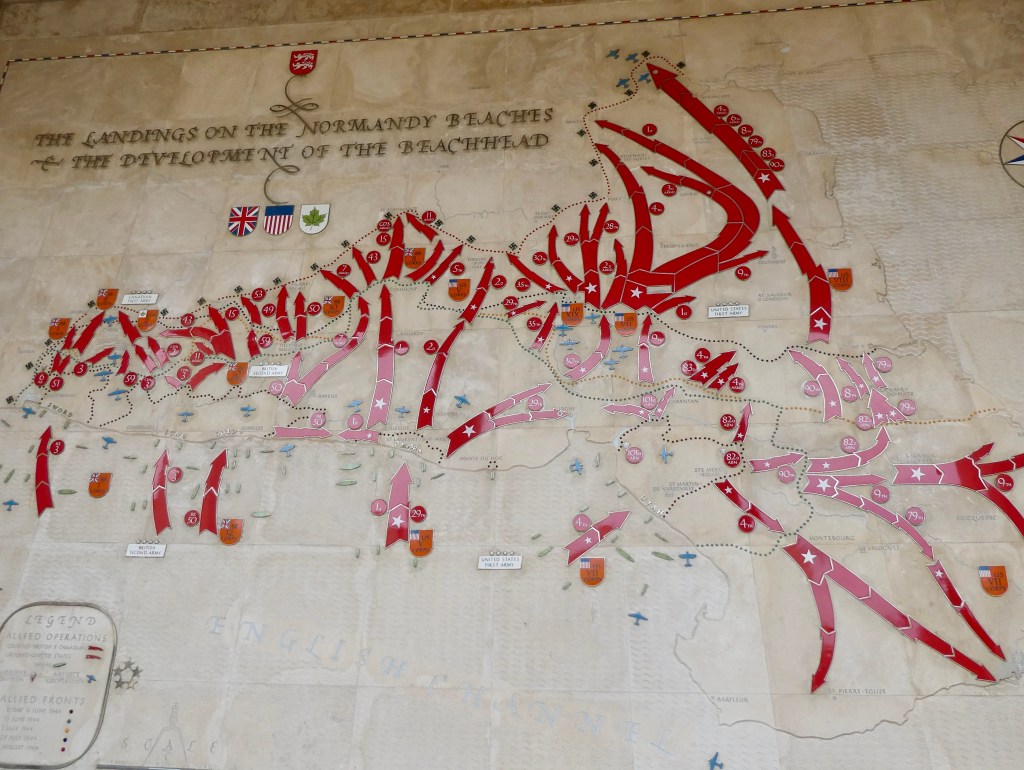
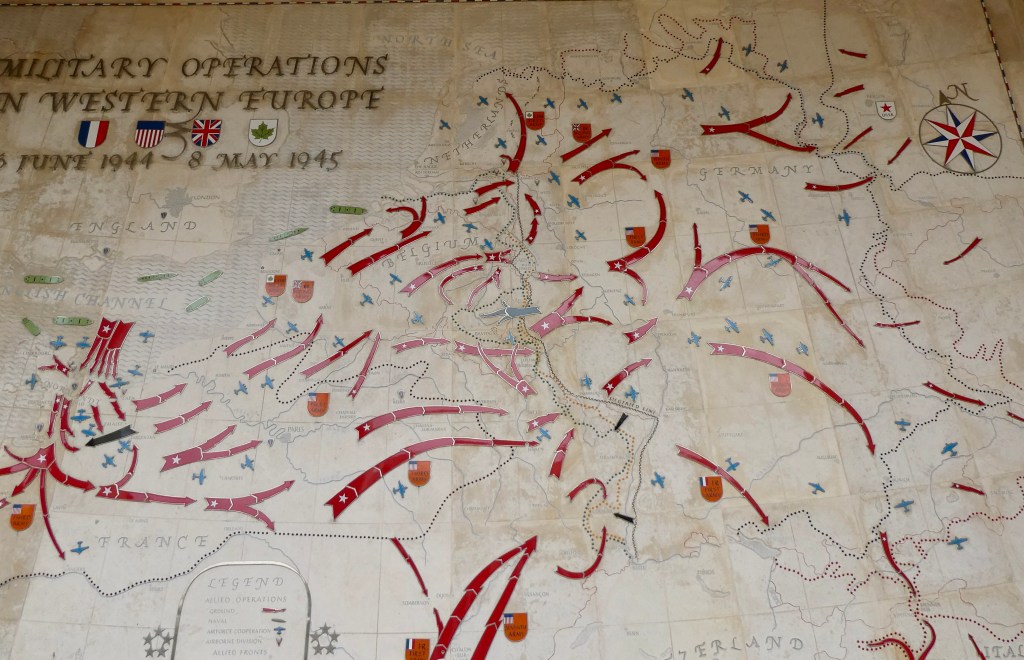
There are two large display maps detailing military operations in Germany and also in the entire European Theater..

A couple of people on our bus, including our friend Warren, had fathers who fought in the Battle of the Bulge, perhaps wounded, but made it home.

When we were at the American Military Cemetery near Florence, Italy last year we understood that there were two such cemeteries, that one and a second in Luxembourg.  In fact, there are 26 American Cemeteries and 32 memorials, monuments and markers in 17 countries. 

Leaving the cemetery we passed through an agricultural area of France that were battlefields during WWI.  The vast number of trenches caused the equivalent of 30,000 years of erosion.  To help the land recover,  the French government planted pine trees. After a few years the forest floor turned blue with blooms of a flower that had never grown there before.  The blue flower seeds were on the boots of US soldiers who fought and died in France. Our guide said it is nice to think that the forest continues to bloom each year in tribute.

She also told us that students in France are required to study history for many years beginning at age six.  From age 11 on the study gets very serious about WWI and WWII.  Our guide said that French people know what America did for them.

We were in Luxembourg on September 8, 2023.

Next up: We continue toward Paris and stop in Reims.

Posted in Uncategorized | Leave a comment

Viking River Cruise: Bernkastle, Wine and Not Trier

The town of Bernkastle was first recorded in civil documents in the year 1291.  It has always had a population of about 1000 because of the limited space available.

Landshut Castle was destroyed by fire in 1692.  It has recently been repurposed as a restaurant.

St. Michael’s Fountain is in front of the Bernkastle Town Hall built in 1608. 

This is the Spitzhauschen pointed house. The ground floor is quite small and, as the owners had more money, they built up and expanded a bit.

Bernkastle still has mostly original buildings because there was very little war damage as there wasn’t industry in the town.

The St. Michael Church, built in the gothic style,  is 400 years old.

These numbers and letters on a church door involve a three kings tradition called chalking the doors in celebration of Three Kings Day. The digits are for 2023 while the letters are for the kings names Caspar, Melchior and Balthazar and the plus sign represents the cross.

Bernkastle Tower is 600 years old.  It was once used for defense and now it is for bells.

Area vineyards are always established on a slope for more sunlight and the type of soil.

In Bernkastle, in preparation for our tour, we were told   “You’ve never had a wine tasting like this” and they were right. It was very unique!

The wine we were first served was Dokter wine.  It was so named because an important sick person was given the wine and got well.  

People in the area began to call the local wine, now the most famous riesling in Germany, the Dokter Wine. It tasted very light and I’m sure it made us healthier!

We were then able to begin the “do it yourself” portion of the tour – totally unsupervised. We could have spent hours there for our entry fee of about $20 per person.

There were 141 wines available to us in a wine cellar dating back to 1458.  The vast majority of the wines were riesling because of where we were on the Mosel River.  

They various wines were grouped by room according to dry, semi-sweet and sweet.   Yes, some rieslings were considered dry.

We looked to see if something on the information placard intrigued us.

Then we found the bottle in the nearby cooler with the corresponding number.  

We probably tried a dozen.  It was very unique and enjoyable.

Randy’s assessment: “My wife has had too much to drink and it is 10:15 in the morning.”

We had such a good time that we bought our glasses and brought them home in our luggage as a keepsake.

We made our way back to our Viking long boat, the Alsvin.

Randy is ahead walking with Claudia, possibly the best cruise director ever, and certainly the best we’ve ever encountered. She knew every one of her 160 ish passengers and where we were at all times. She knew every detail about everything.

We were scheduled to go on a tour of Trier in the afternoon. Trier is the oldest city in Germany and a UNESCO world heritage site.  It once rivaled Rome in size and influence. It was the birthplace of Karl Marx and home to a tunic thought to belong to Jesus at the time of his crucifixion.  

It was certainly worthy of an afternoon visit and we usually opt for every tour going anywhere when we possibly can. However, this day we opted to stay on the Alsvin while almost everyone else was gone.

Quiet space outside your cabin on a Viking River boat is very difficult to find and we opted for it.

We enjoyed the quiet ship and packed for disembarking the next day.  We read and visited the wheel house.

We asked our questions about operations and about right of way along the river.

The answer was that stretches of the river are treated differently and are designated by mile markers.  Other sections differ port to port.  In general, the priority is given to the vessel going downstream.

After a few hours our fellow passengers came back and we had our last night aboard the Alsvin.

Our travel companions, Warren and Connie, were very social, stayed up late, and met so many people! They enjoyed them selves immensely.

We (mostly I) tend to be a little ( a lot) more reserved but still met some very nice people. This was our last afternoon onboard with Warren and Connie and our new friends Vicki and Chuck.

We were in Bernkastle enjoying wine on September 8, 2023.

Next up: We disembark the Alsvin, board a bus to Paris, and visit Luxembourg on the way.

Posted in Uncategorized | 1 Comment