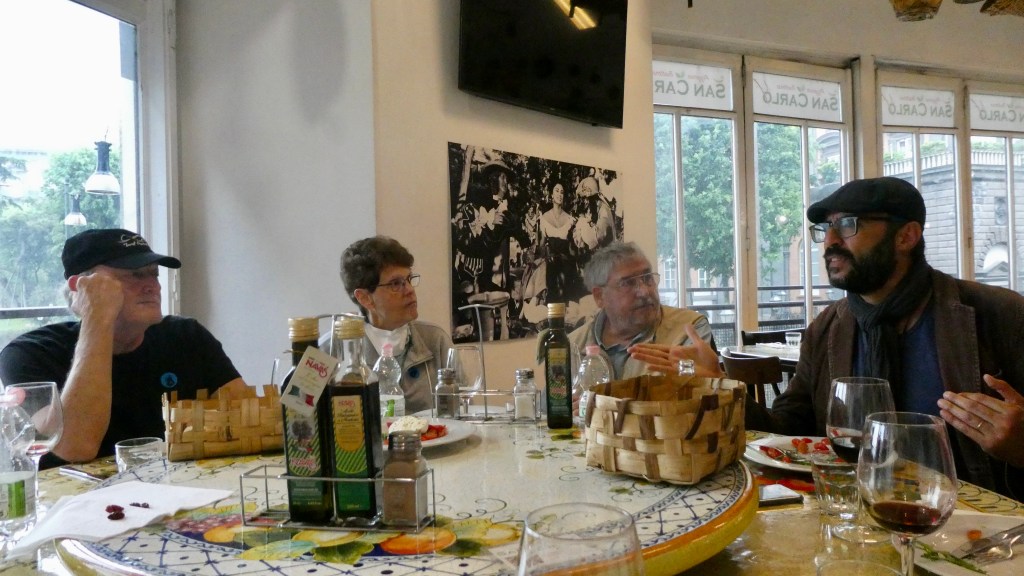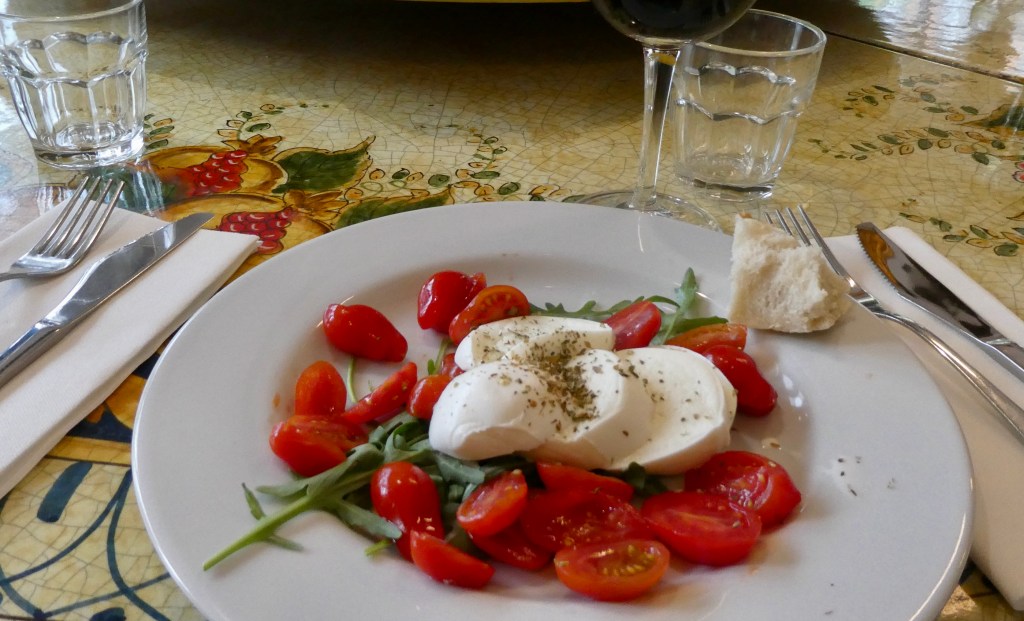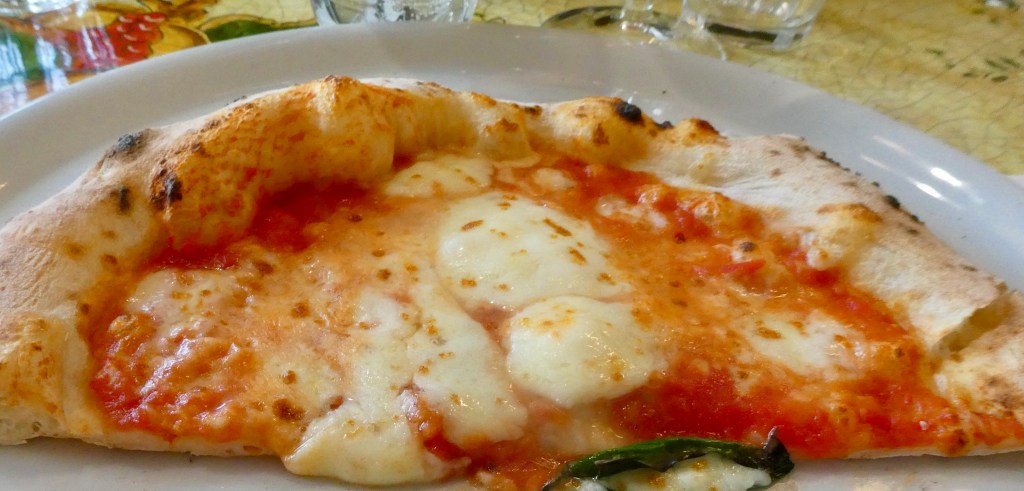
Transatlantic Cruise: Cannoli Snobs

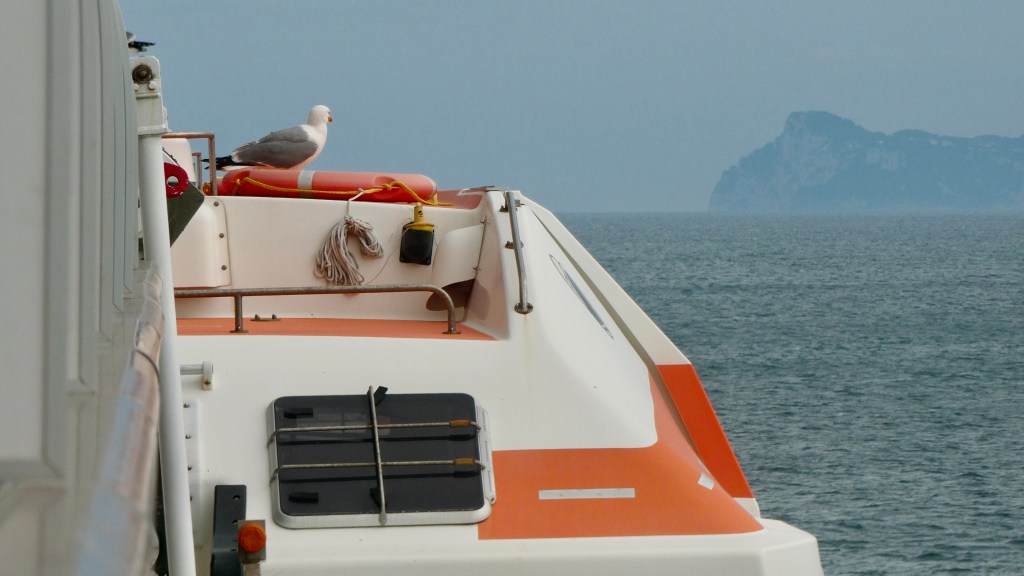
Our next stop was Polermo on the island of Sicily.  Sicily is the largest of more than 400 islands under Italy’s administration and sits near the toe of the boot. The other primary island is Sardinia, which sits northwest of Sicily.

Our tour guide met 32 of us on the pier and we walked towards the city center.  There was a lot of trash everywhere.  We hoped that once we left the port area it would get better, but improvement was marginal.  (Randy said India was worse, but I’ve never seen worse.)

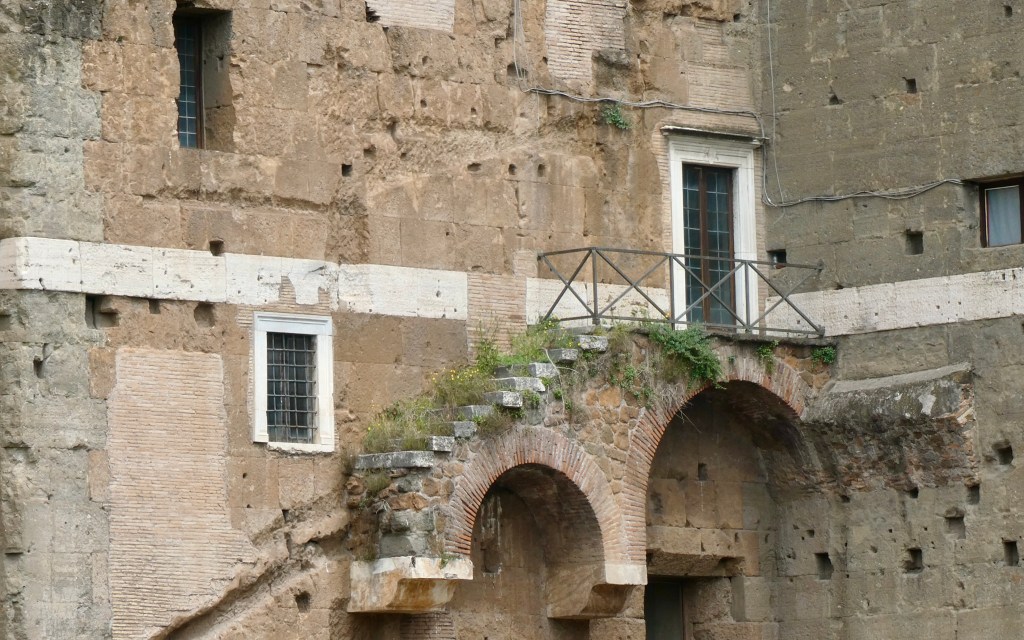
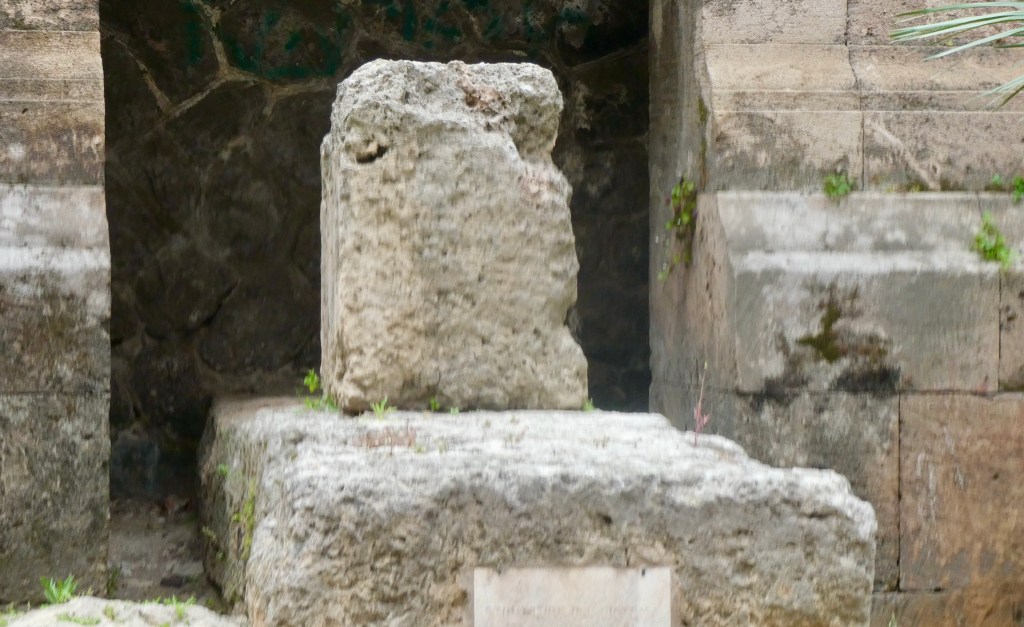
Our guide told us the city of Palermo goes back about 3000 years.  There have been 14 separate dominations.  All are still evident within the city in the architecture and food.  These blocks are from the Roman era.

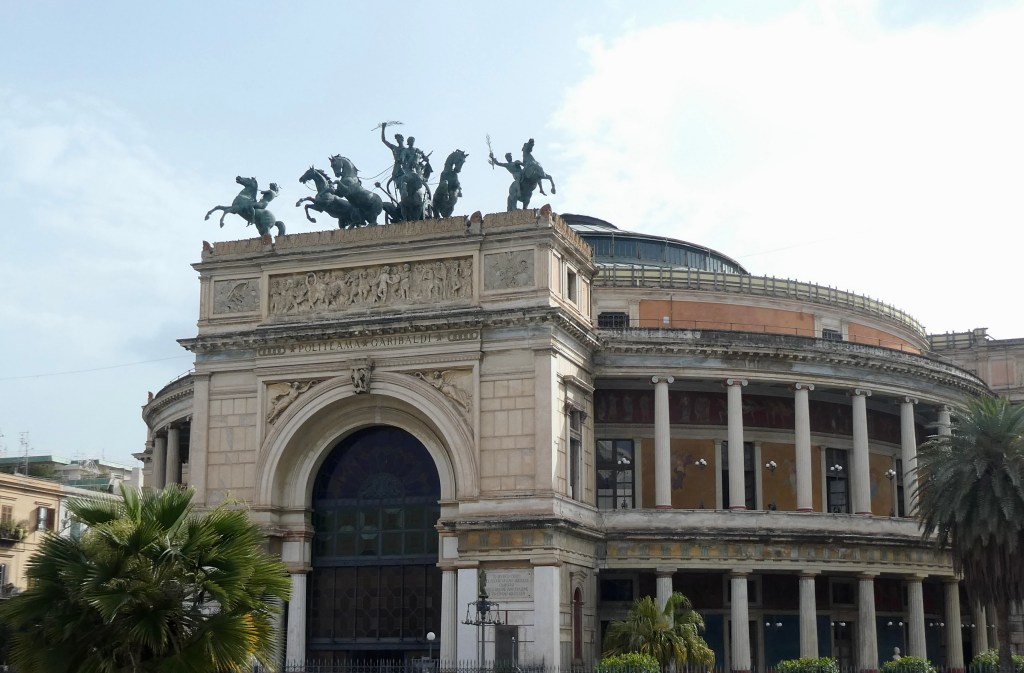
The Teatro Politeama Garibaldi is the performing home of the the Orchestra Sinfonica Siciliana.

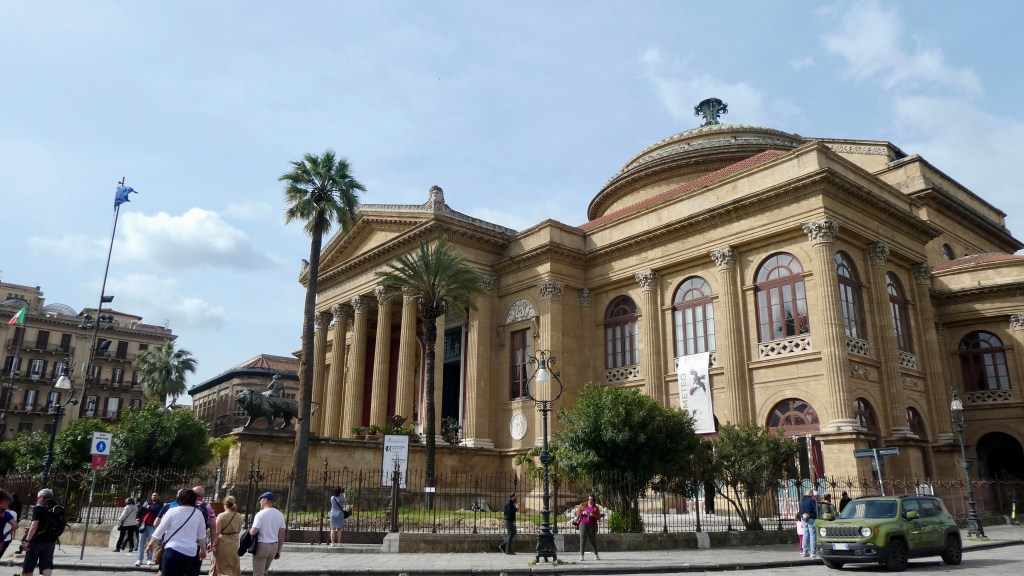
The premiere theater in Palermo is the Teatra Massamo.  Opera is performed there.

Our primary activity of the day was a food tour – something we look for where-ever we travel.  This tour specialized in Palermo Street Food. Although similar to Italian cuisine, Sicilian food has Greek, Spanish, French and Arab influences.

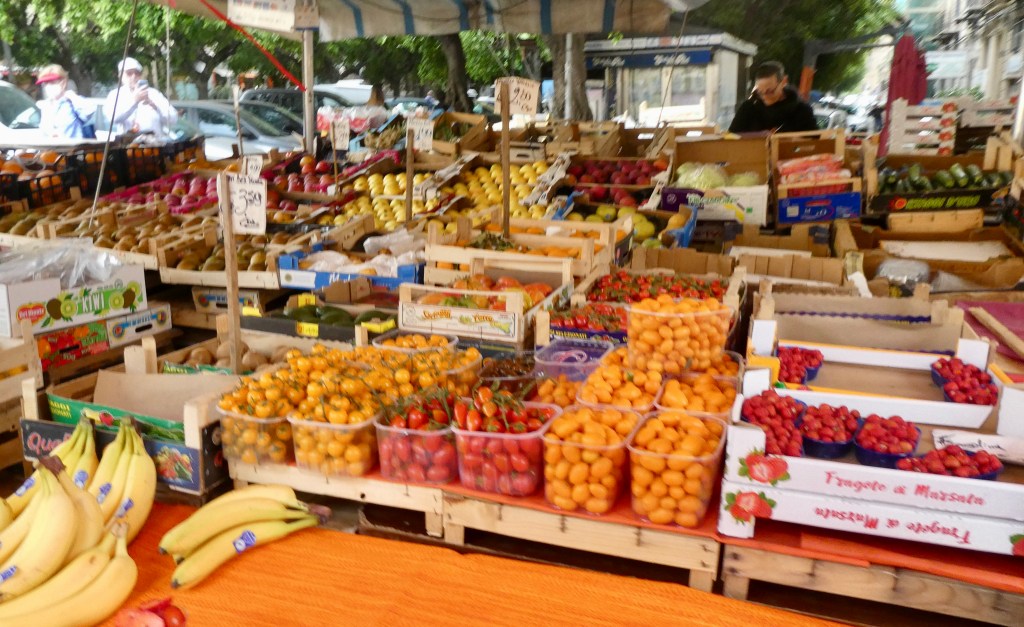
Our first food stop was in the Capo Mercato.  The sign and the food were very colorful!

An array of fresh seafood – expected on an island.

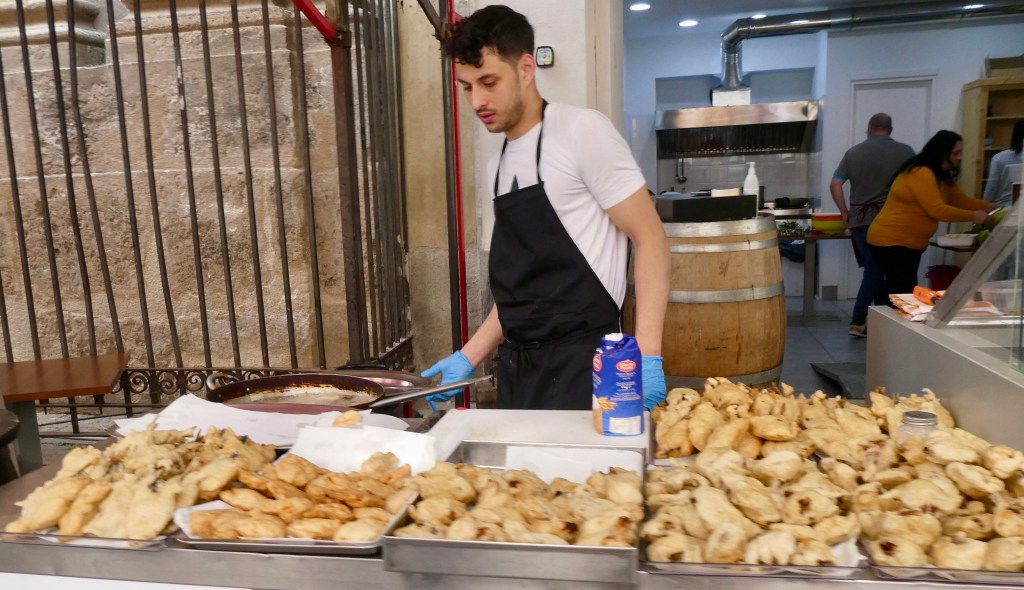
Our tour guide told us “Sicily loves fried food, we fry everything.”  She also said food in Sicily is simple,  having just a few ingredients. The population was generally poor so food was made with inexpensive, local, fresh ingredients and lots of olive oil.
We went to Da Ariana, a food stand within the Capo market.  It recently won a televised Sicily Food Challenge.

First we were served arancini. Arancini are rice balls that are stuffed with whatever is available, coated with breadcrumbs and deep fried.  They are a staple of Sicilian cuisine.  These were delicious.  The second item is caponata, an eggplant dish very famous in Sicily and also very good.

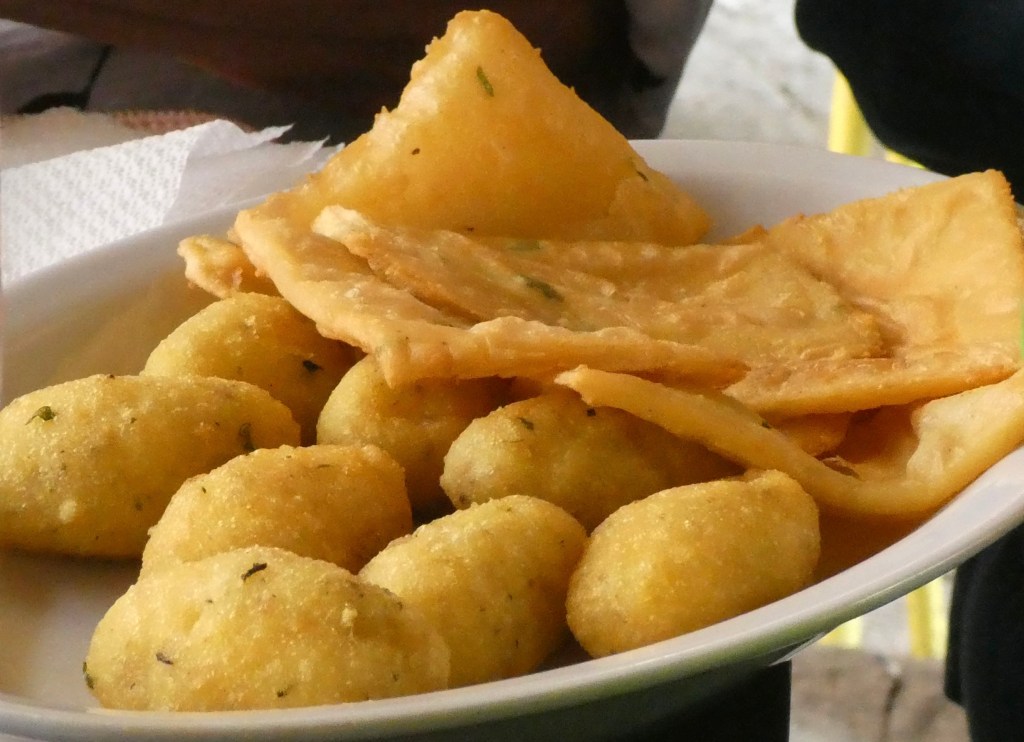
Our second course was fritters made from chick pea flour and crocché – breaded and fried mashed potato segments.

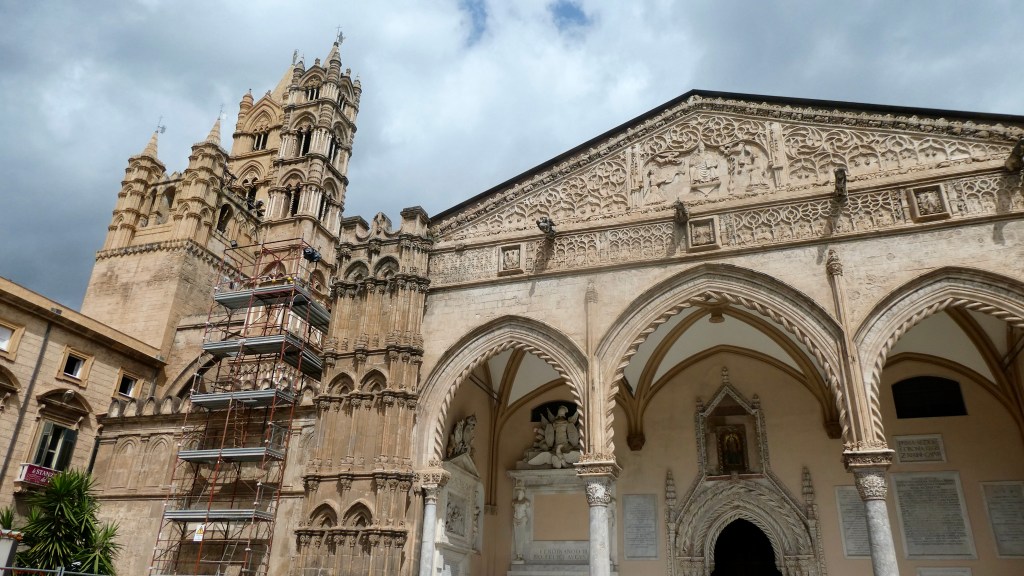
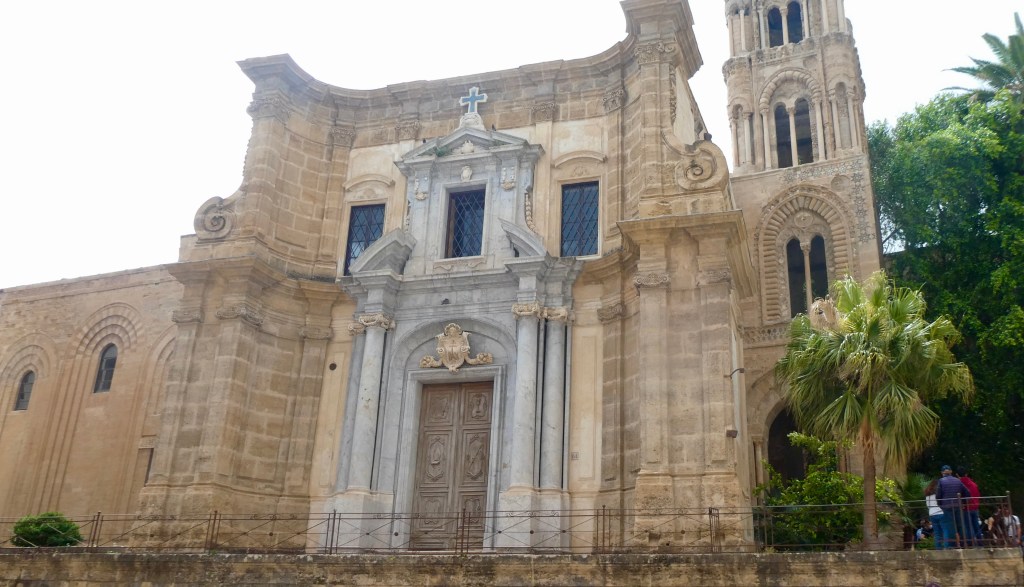
We walked on and saw the Cathedral of Palermo, built in 1184 by the Normans.  It was a Christian church on the site of a Muslim mosque,  built over a Christian basilica.

The cathedral was also a fortress.  Normans, Arabs and Jews all lived cooperatively together in the city of Palermo.

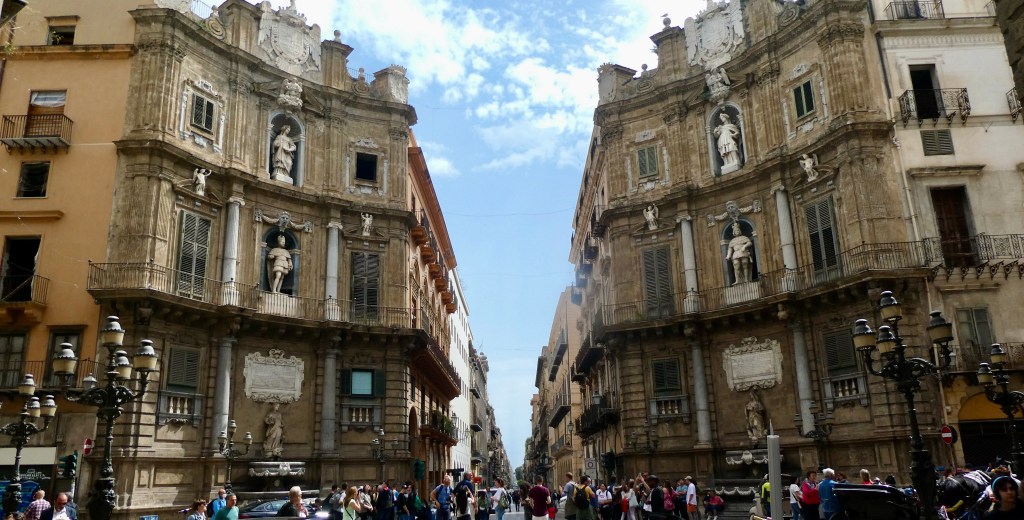
The walk brought us through this intersection.  The carvings and ornamentation on each of the four corners represents one of the four seasons.

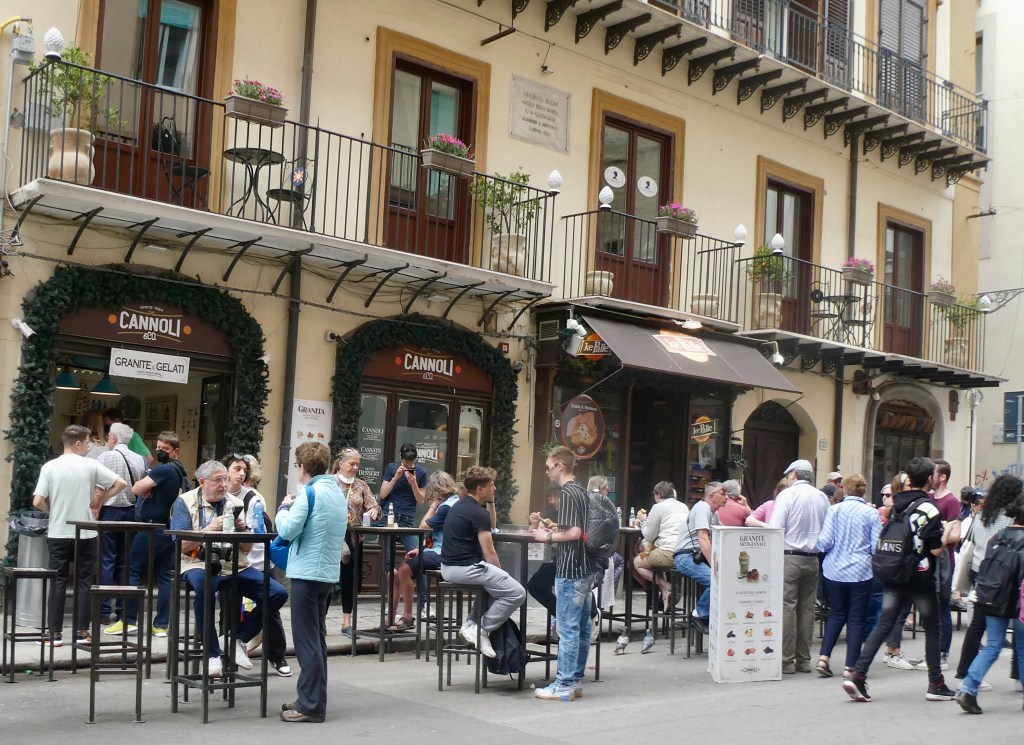
Our second food stop was typical in that we stood, or sat, outside the establishment to enjoy our street food.

We had a second version of arancini – good, but not as good as our first. These were baseball size!

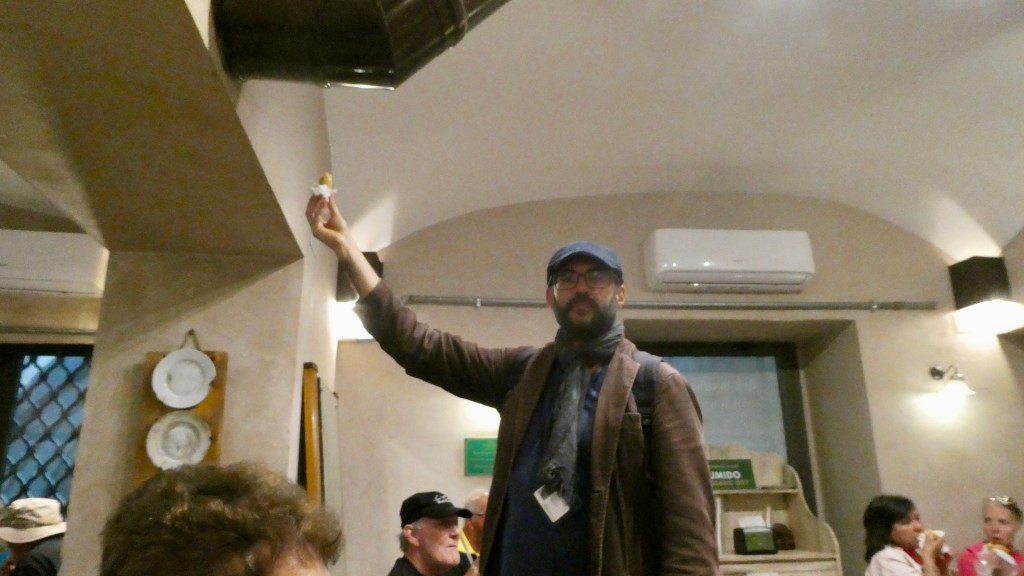
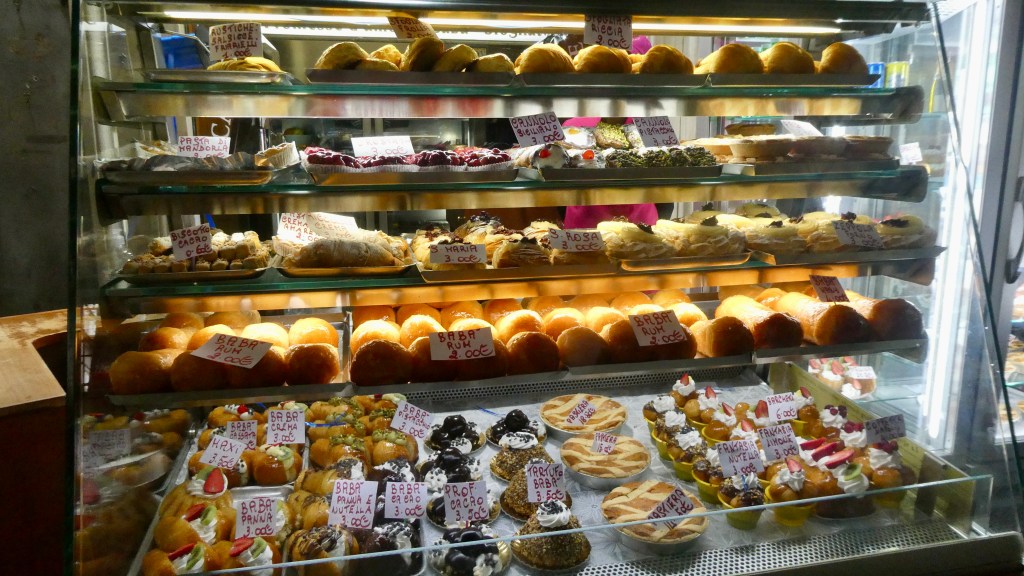
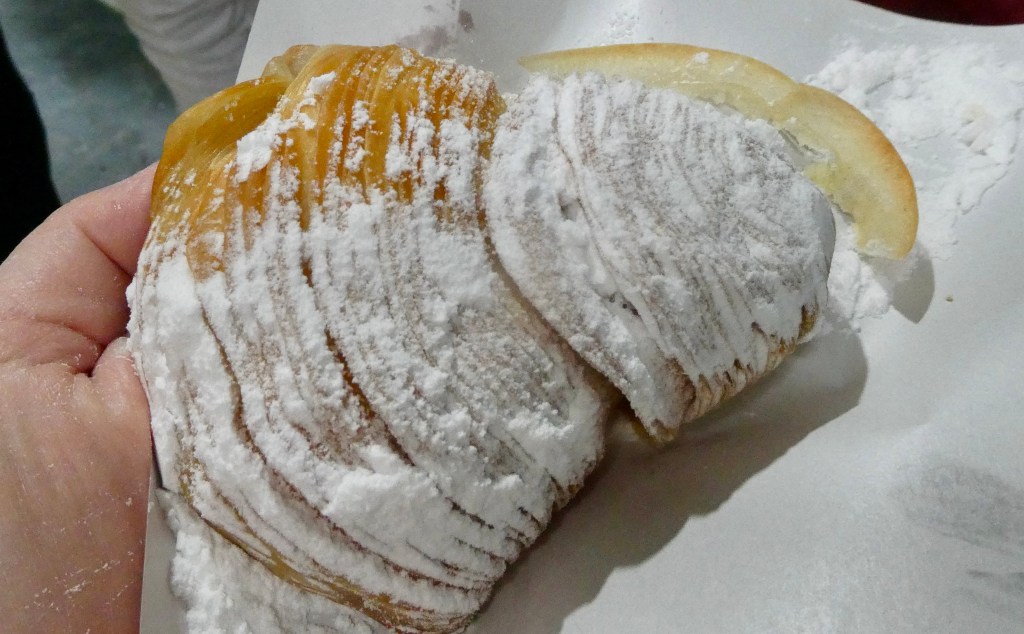
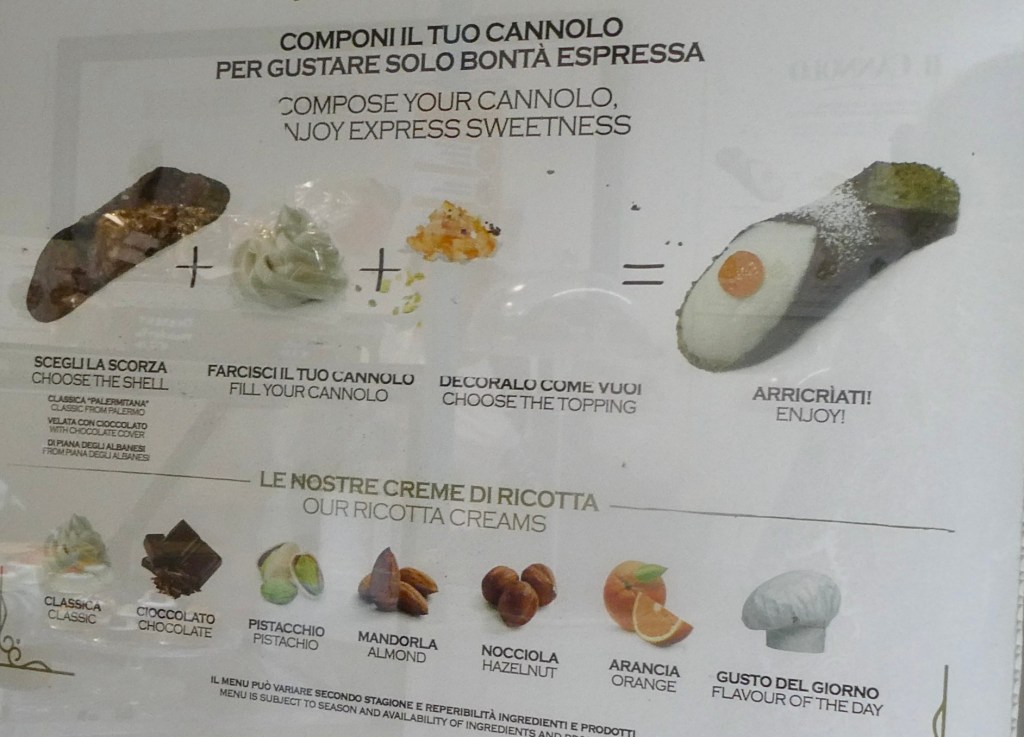
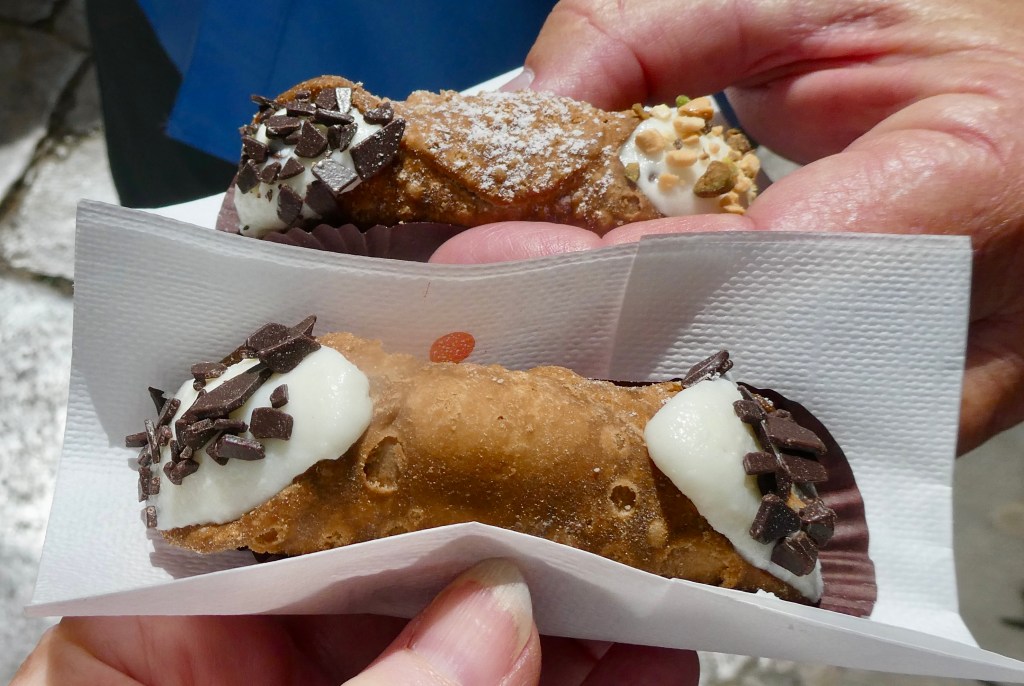
Then we were instructed about cannoli, a dessert originating in Sicily. (Cannoli is plural and cannolo is singular.) We were told that the only way to eat a cannolo is to pick a shell, pick a filling and pick one or more toppings.  We were told we should NEVER accept a pre-filled cannolo as the bottom would be soggy.

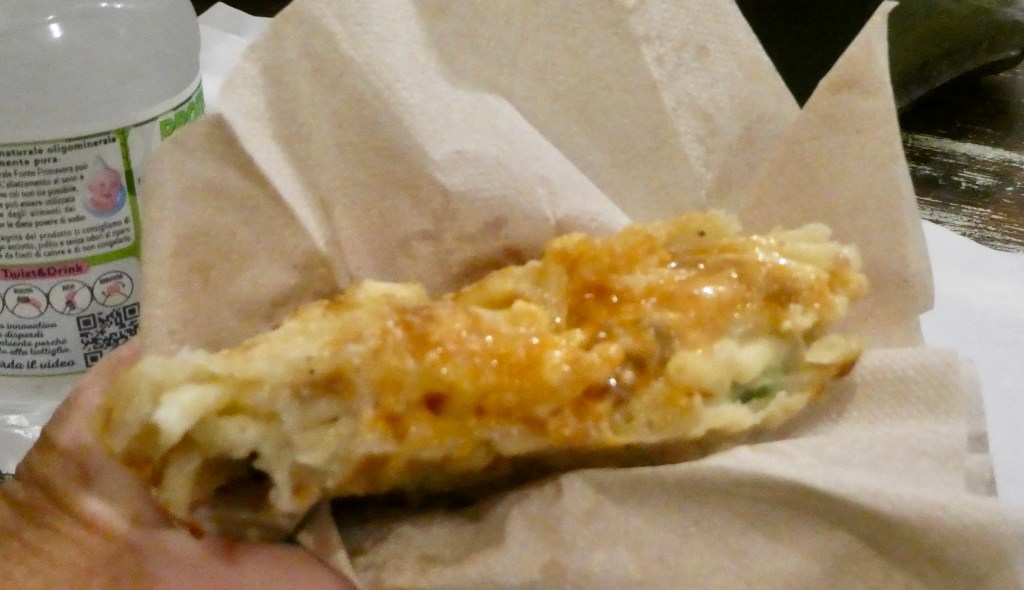
As we were a food tour and they were trying to assist 32 of us quickly, we were allowed to pick our shell and toppings but we all received the same sweet cream filling.  Oh wait, it wasn’t sweet cream – it was ricotta cheese – amazing, light, fluffy and sweet ricotta.

The cannoli were delicious – among the best things we ate on our entire trip.  It was also our one and only experience with cannoli because we never again saw them when they weren’t pre-filled.  We learned to be Cannoli Snobs to our own detriment!  (We’re eating the next authentic cannoli we see – even if it is pre-filled.)

On the move once again, we saw the Church of San Cataldo.  It was built in 1160, during the Norman occupation of Palermo. 

It was a Christian church but with an acknowledgement to the Islamic population, evident in the red domes.

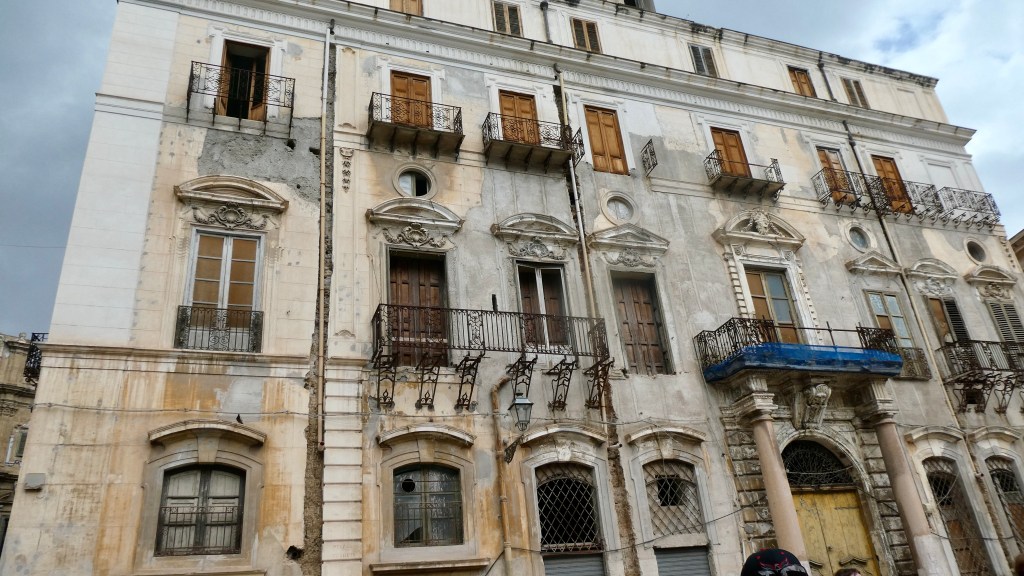
This is a typical Palermo building where people have lived for centuries.

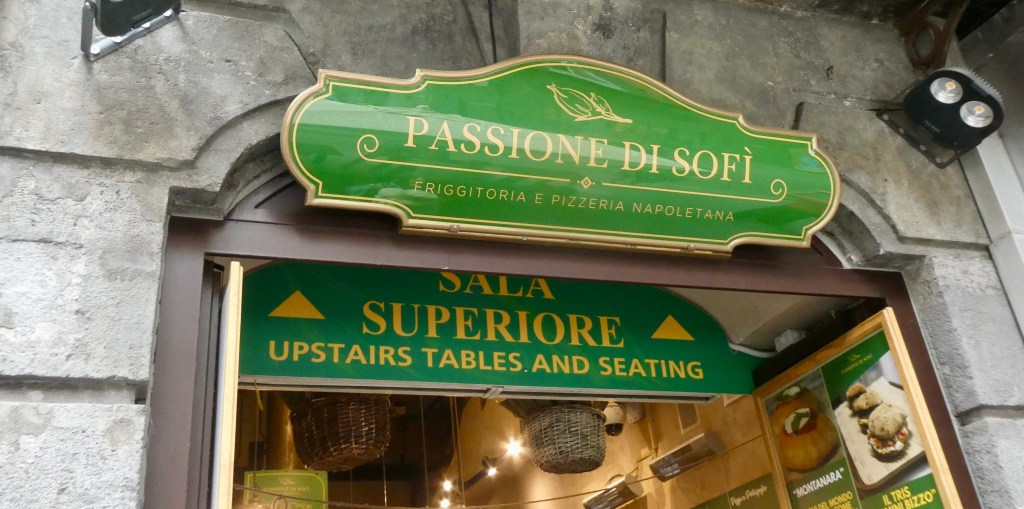
Our last stop was a restaurant awarded the title of Sicily’s Best Street Food.  They specialize in fried fish.  

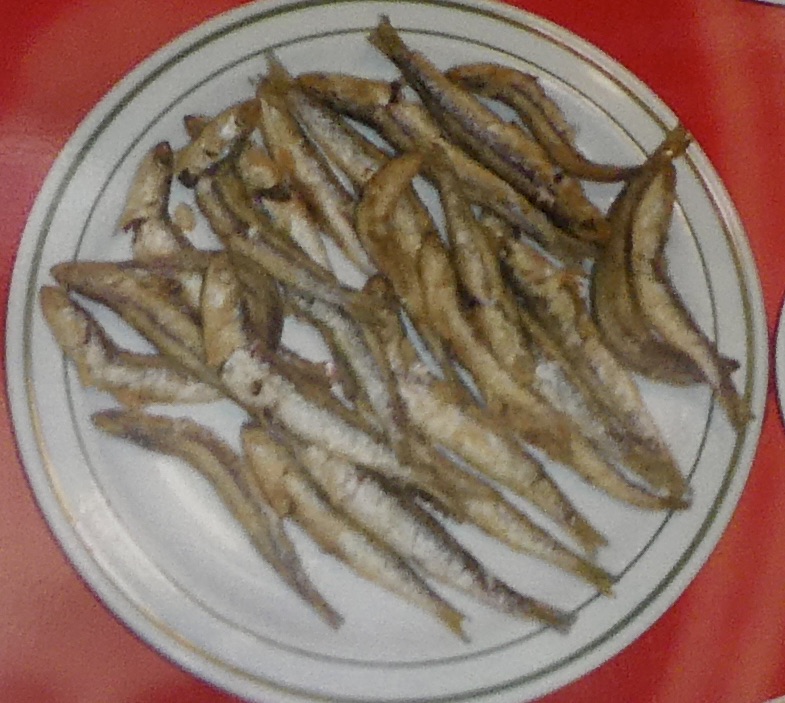
Imagine sardines breaded, fried and eaten like we would eat french fries. 

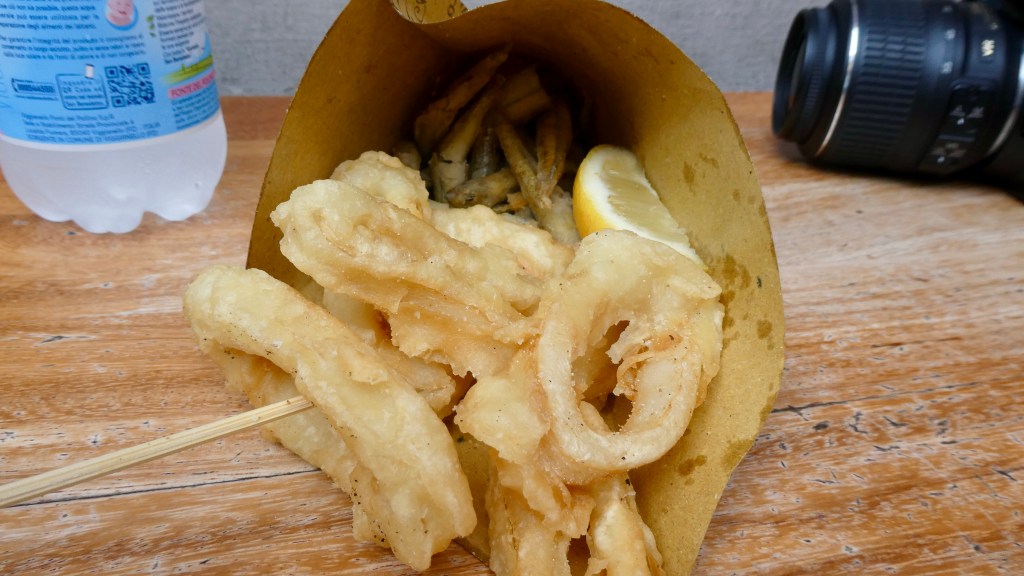
Now imagine a large cone with generous portions of sardine fries, calamari and shrimp.  We tried to decline but ended up accepting one so as not to seem ungrateful.  I almost never eat fish or seafood and Randy did not eat very much because imagine having fish after a sweet cannolo!

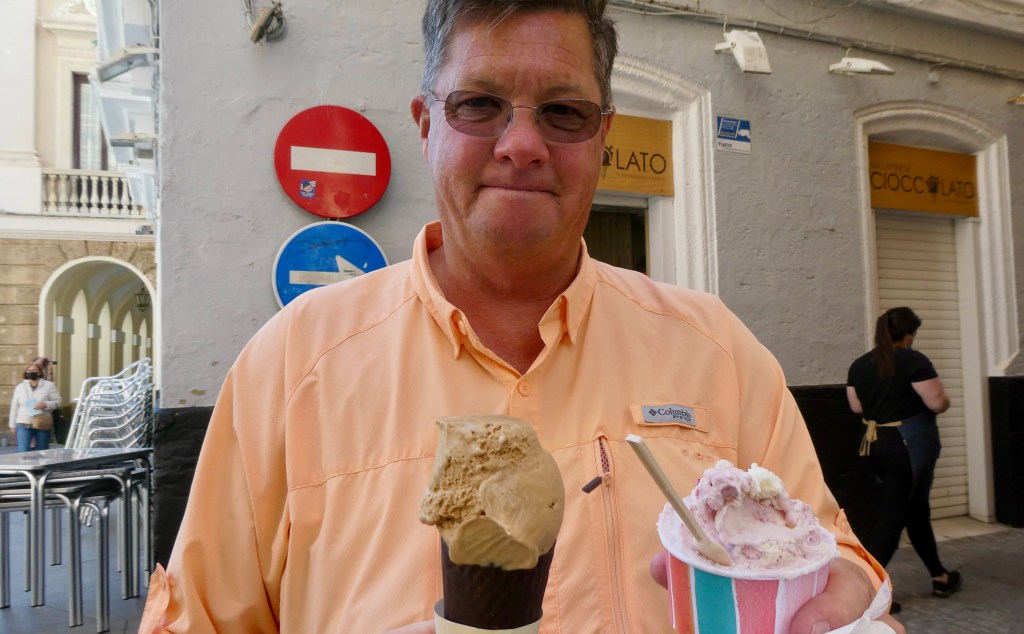
We did manage to eat another dessert originating in Sicily – gelato!  Although we never again had cannoli, we enjoyed gelato many times!

We very much enjoyed our tour and learning about the history of Palermo and the street food of Sicily.  We walked a lot on this tour – about 14,000 steps.  That was good because we ate a lot!

We got back to the ship just before the rains came.   As we sat on our balcony watching the storm, we also watched the Regal Princess leave port, tooting the love boat theme as a goodbye!

Next up:  Another food tour – this time in Napoli. Napoli is one of Randy’s two favorite places in Italy.

Posted in Uncategorized | 8 Comments

Transatlantic Cruise: Stormy Seas

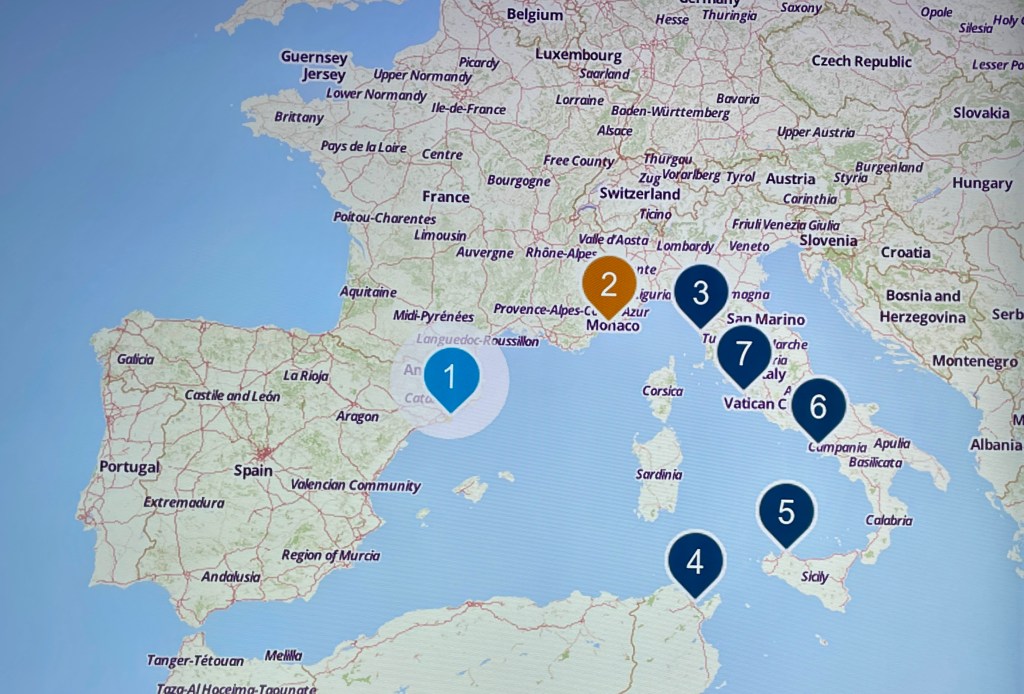
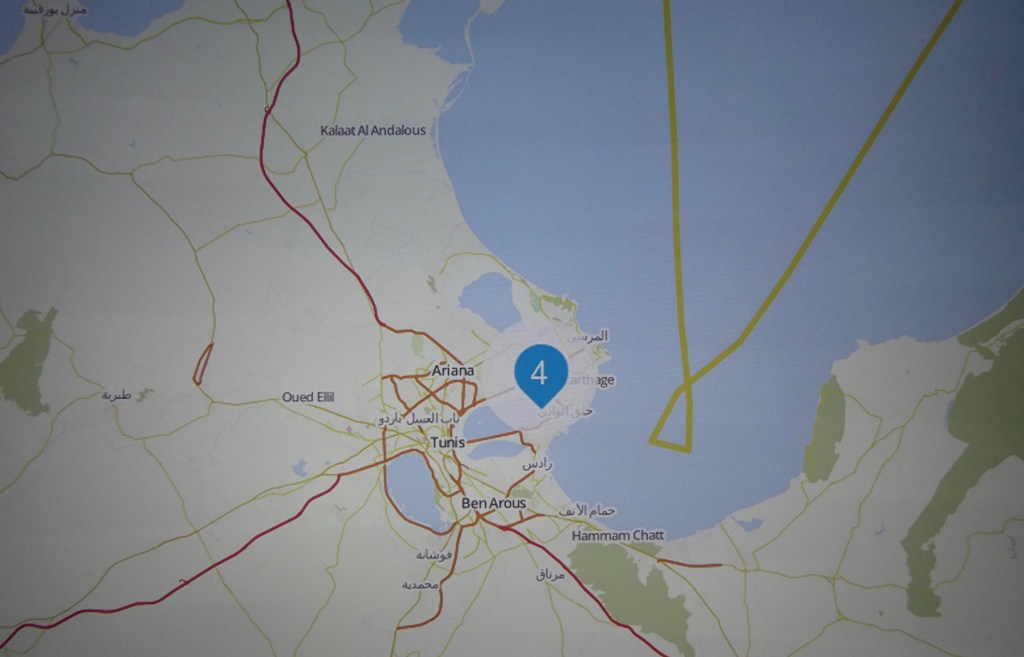
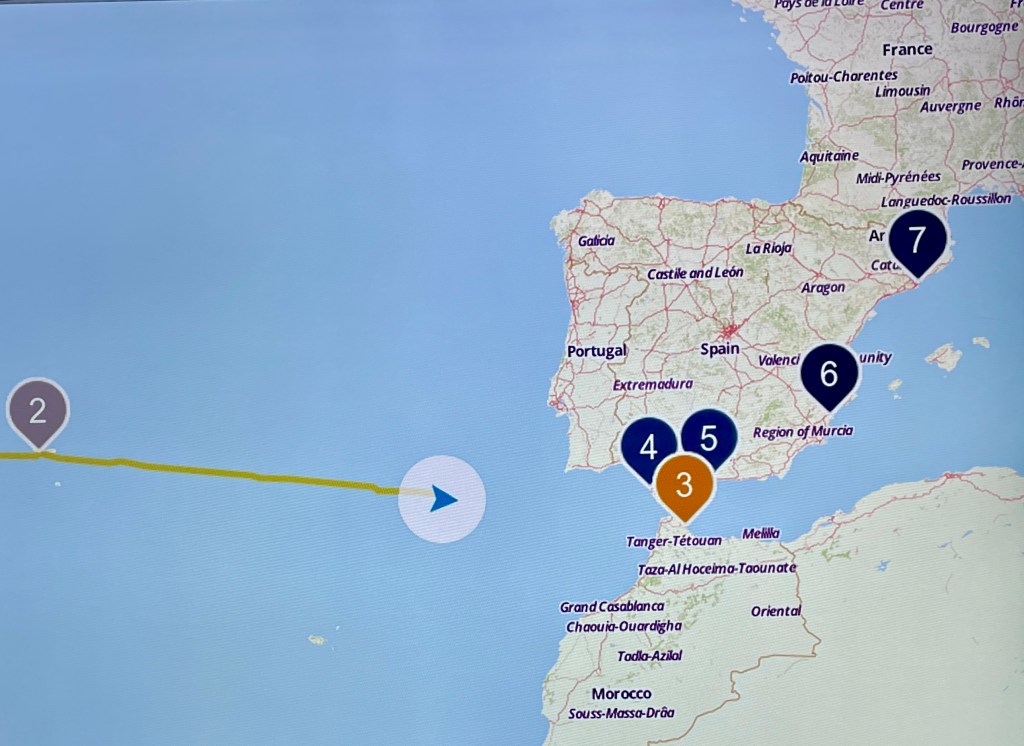
Our next port was supposed to be La Goulette, Tunisia (number 4) on the north coast of Africa.  We were booked to tour ancient Carthage and the picturesque Sidi Bou Said – think white buildings with blue roofs next to the blue, blue sea.

We were having an early breakfast and wondering why we had not yet docked.   The captain eventually announced that the winds were too high and the seas were too rough to safely dock in Tunisia.  The port day was canceled.  

Some of the more experienced Mediterranean cruisers had already been suggesting as much.   Missing out on Tunisia, due to weather, has happened before.

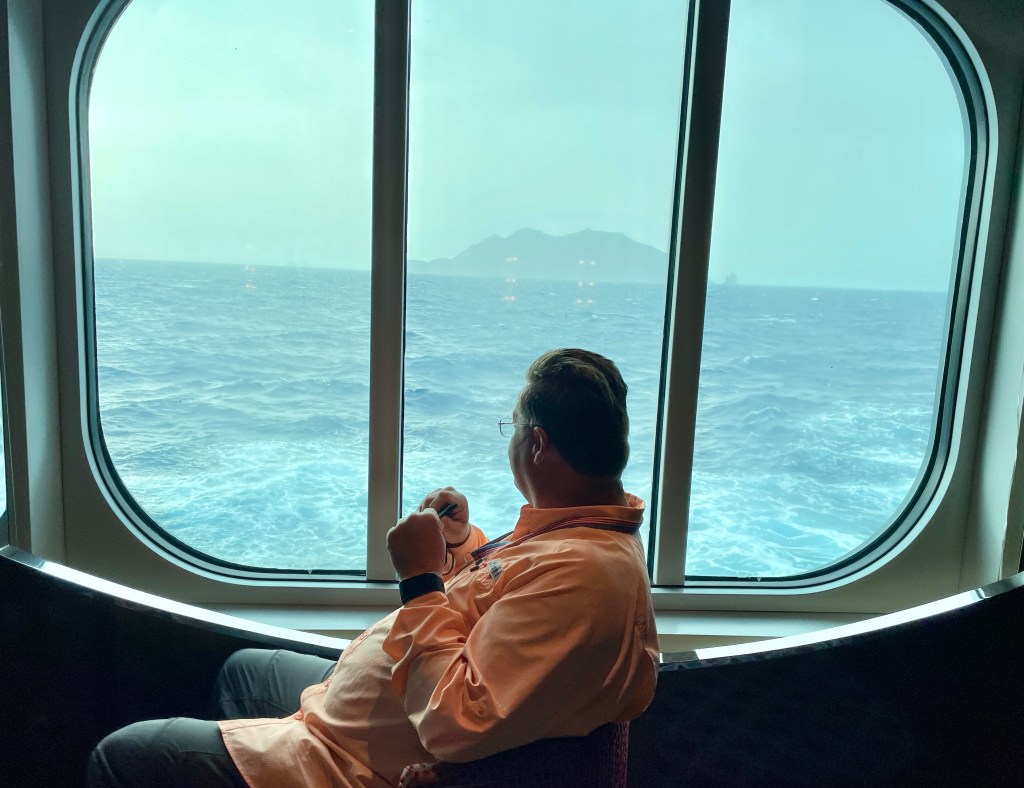
It was very windy and the seas were rough.  Once the decision was made, the ship’s crew wasted no time heading north to calmer seas.

We were both comfortable with the rocking and rolling. It was just a new part of our adventure and we never felt at risk.

Although we were a little disappointed not to see the sights, a bonus sea day is never a bad thing.   At least we had made it to the continent of Africa with our Ceuta stop earlier in the cruise.

The ship’s crew stepped it up by adding some entertainment and demonstrations that we would not have seen otherwise. It was a good day.

We have the ports of Palermo and Naples left on the cruise before disembarking near Rome.   We have food tours booked in both ports. That would not usually be my scheduling preference – but it is food – and it is in Italy!

Posted in Uncategorized | 2 Comments

Transatlantic Cruise: Portovenere and Cinque Terre

While on our cruise, we made the specific choice to stay near the port for our shore excursions.  We did not want to exhaust ourselves by going on 9-10 hour excursions when we were in new ports day after day.  We also had the advantage of knowing we would see many inland sites while on our Tour of Italy.

Livorno was the single exception. We chose a ten hour tour that allowed us to see Cinque Terre from the sea. If you have seen those iconic colorful villages on the mountainside overlooking the Mediterranean Sea – that may have been Cinque Terre.  

Leaving the ship, we went by bus to the dock where we boarded our tour boat.  It was the big one!

There were four or five groups boarding, each with their own guide.  We all had headphones “tuned” to the frequency for our guide.  That strategy was used many times throughout our trip.
We saw an Italian Navy ship as we were leaving the port.

Here is a map for orientation. This is the north central coast of Italy and Livorno is further south than the map shows.

Our first stop was Portovenere, just south of the Cinque Terre.  We were able to get off the boat and explore.  

The ruins of Castello Doria sit above the village.  Another fortress existed on this site in 1139 when the Republic of Genoa gained control of the village of Portovenere. In 1161, the new castle (adjoining the old) was built. The castle was a focal point of battles between Genoa and Pisa in the 13th century.

We entered through the ancient gate, a gate that was locked in the evenings to protect the village from seafaring enemies. 

After some basic instructions, we were let loose to explore.

We walked through the village towards the ancient architecture on the hill.

We saw some interesting things along the way.

The San Pietro church is on the point beyond the village.  It was built between1256 and 1277 by the Genoese on top of a former pagan temple dedicated to the goddess Venus Ericina.  

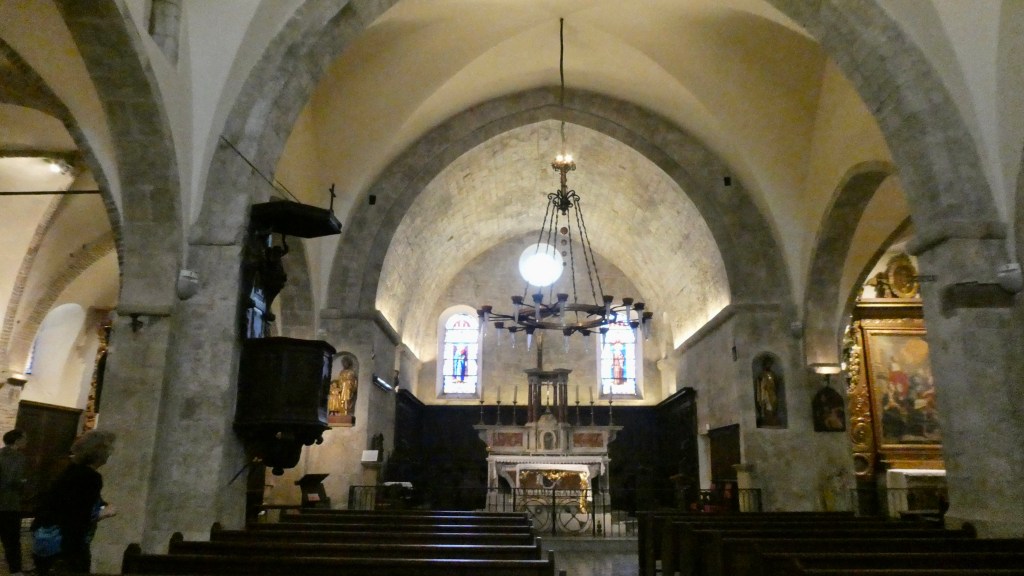
The inside was simple but interesting with the striped rock.

This is an old organ!

The church underwent extensive restoration between 1929-1934.  This protected area displays some of the original floor.

These are views looking toward the opposite side of the point.

There is a cemetery below the walls of the Castello Doria.

Before we left Portovenere we had focaccia bread! This region of Italy, Liguria, is known for originating focaccia. They were delicious – ranking high in our culinary memories of Italy!

We rejoined our tour and boarded our boat once again.

Leaving Portovenere.

We had a great view of San Pietro church from the sea.

Another great view as we rounded the point.

We motored the short distance north to the Cinque Terre. the collective name for the five small villages built up from the sea. The villages are Riomaggiore, Manorola, Coniglia, Vernazza and Monerosso. They formed in the 12th and 13th centuries and were collectively given the named Cinque Terre in the 1400s. 

They are truly mountain villages next to the sea. People joined together to protect themselves from pirates. Young boys were targets of North African pirates in the 1540s to be used as galley slaves.

The main economy was viniculture as the microclimate is perfect for growing grapes.  There were once 4700 miles of terraces used for vineyards and 2000 miles still remain.  

Eight thousand people lived in the Cinque Terre area in the1920s and there are currently about 3000 inhabitants.

Cinque Terre is a UNESCO Heritage Site and a National Park and Sea Preserve.

Rail is the best way to travel to Cinque Terre. It is also the best way to go from village to village, taking about five minutes between stops.  There are hiking trails but only the narrowest of roads. Motor vehicles within the villages are generally limited to scooters or motorcycles.

Although we didn’t actually set foot in any of the Cinque Terre villages, we are glad we made the decision to see them from the sea.  The train would have been fun but hiking up and down all those stairs would have been exhausting! 

The Disney-Pixar movie Luca was visualized in Cinque Terre. Those who have seen Luca spoke of the recognizable authenticity of the landscape.

After a short time we docked at Levanto, north of the Cinque Terre.  I’m sure there were impressive things to see in Levanto, but our primary destination was food!  We sat at a tiny table along the narrow path between buildings and had a lovely lunch with Italian wine. 

Our next port was Tunis, Tunisia but there was a problem blowing in!

Posted in Uncategorized | 5 Comments

Transatlantic Cruise:  France – Our Bonus Country

Our original itinerary had Monte Carlo as a port destination but changes offer opportunities and ours was to go to France.

Our port was the Bay of Villefranche. Our ship was too large to dock directly so we used tenders – a taxi vessel that took us from our ship to land. We learned that the Mediterranean Sea is not effected by lunar tides.

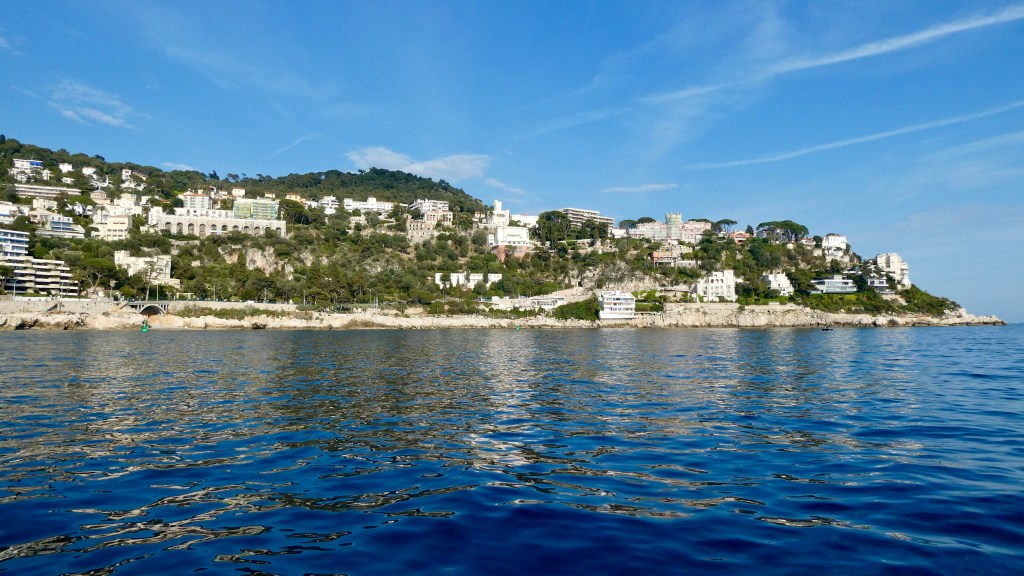
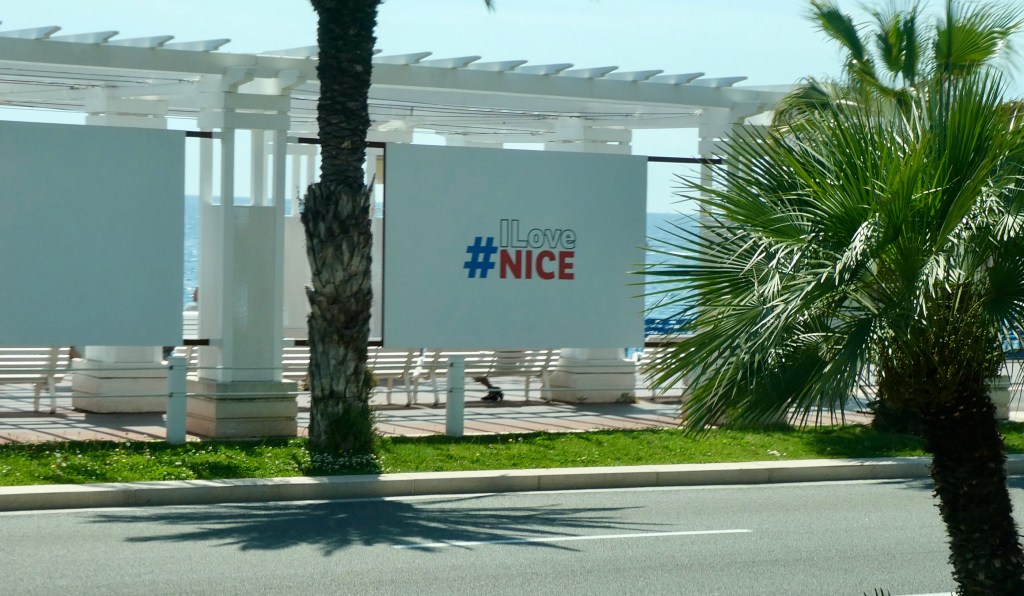
Nearby was Nice on the French Riviera, also known as Côte d’Azur (blue coast). Nice thrives on tourism, perfumes and a growing tech industry. Nice is the fifth largest city in France with 400,000 people.

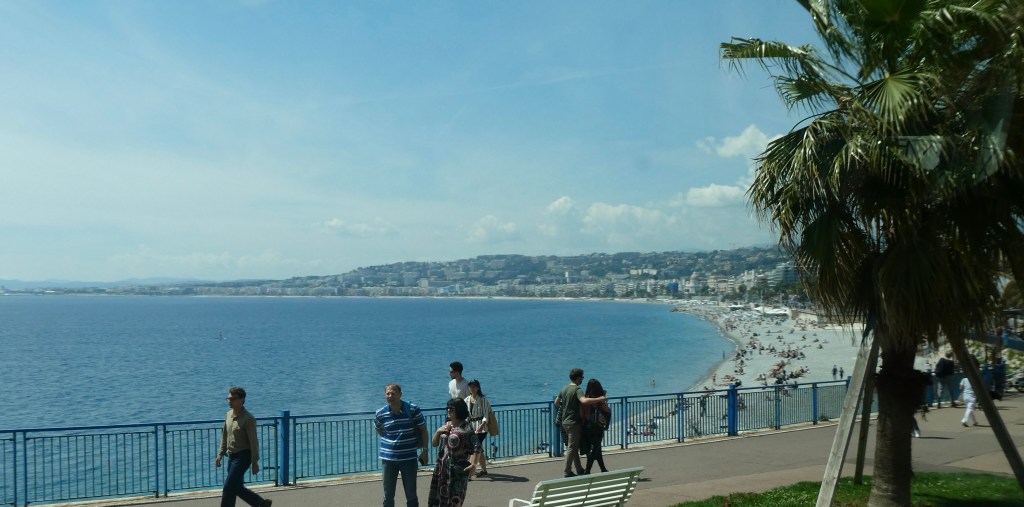
There is a nice promenade along the beach.

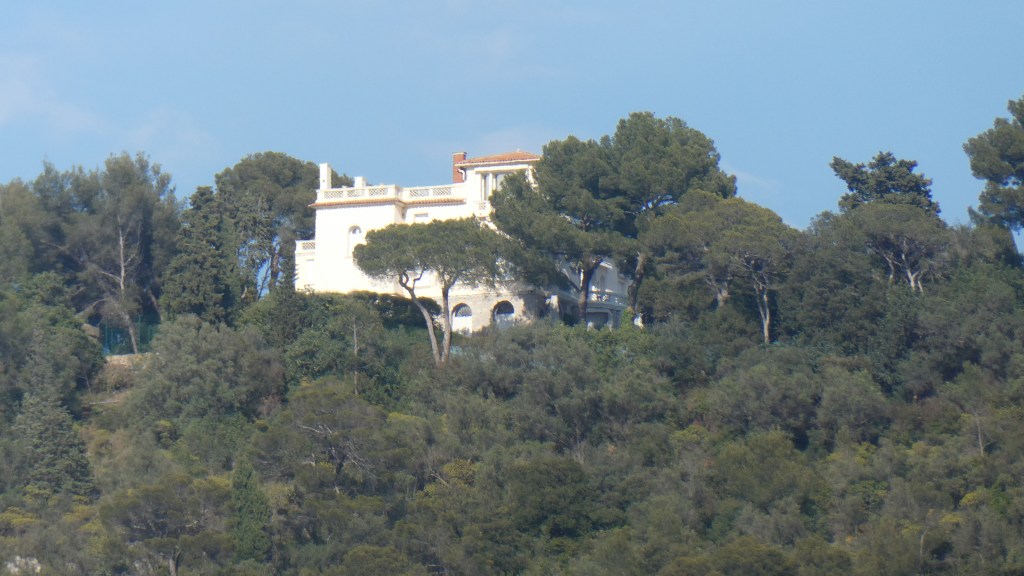
Elton John has a home way up on a hill. Telephoto lens in use here!

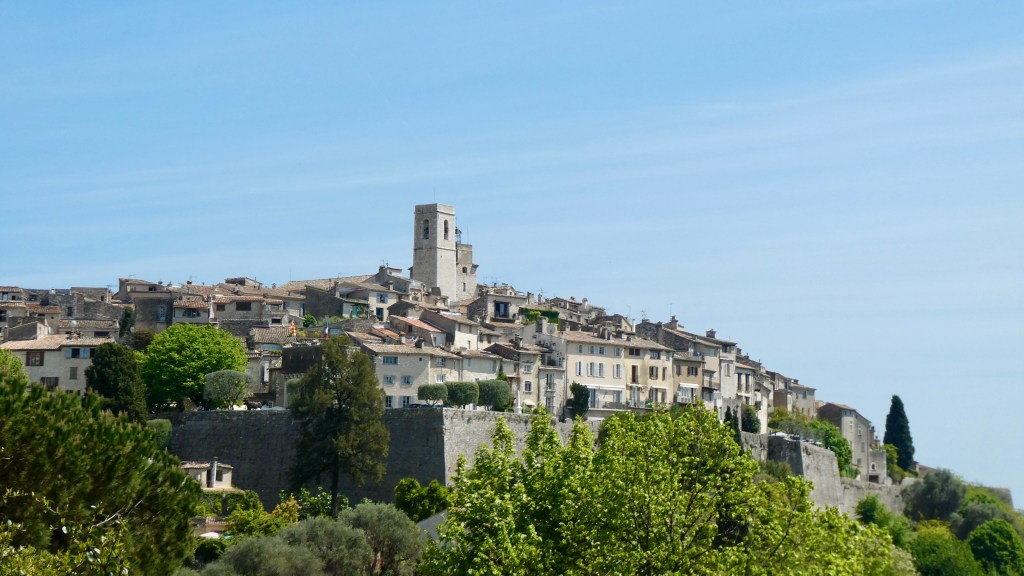
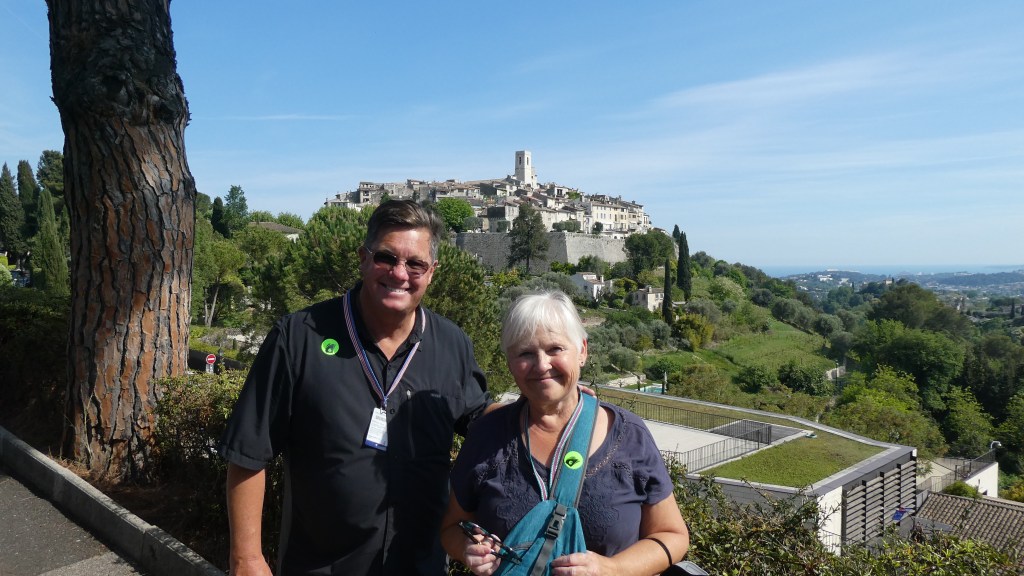
We traveled by bus to Saint Paul de Vence Village.

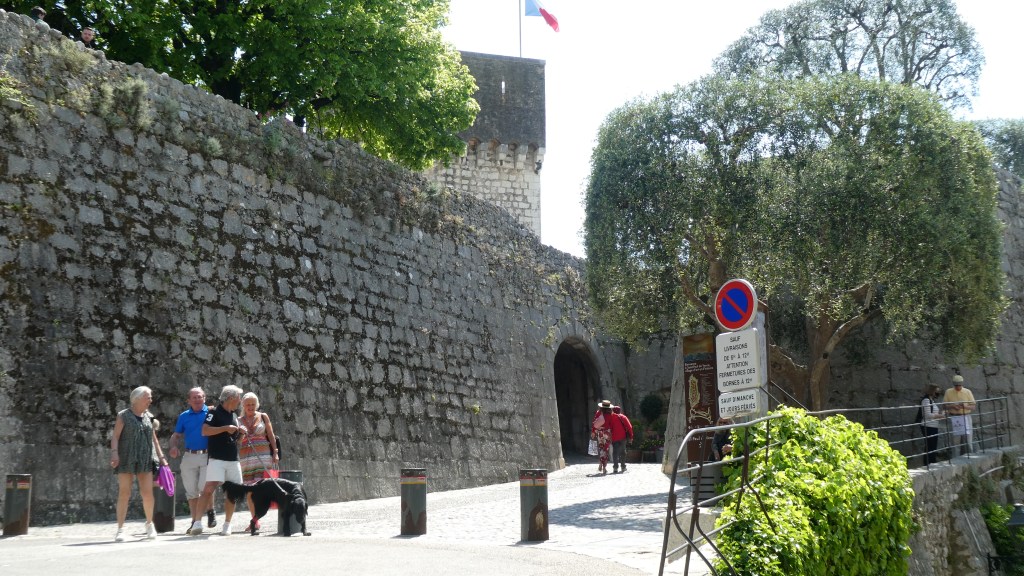
There were once 3500 inhabitants inside these 16th century walls. 

We entered the village through the arched gate.

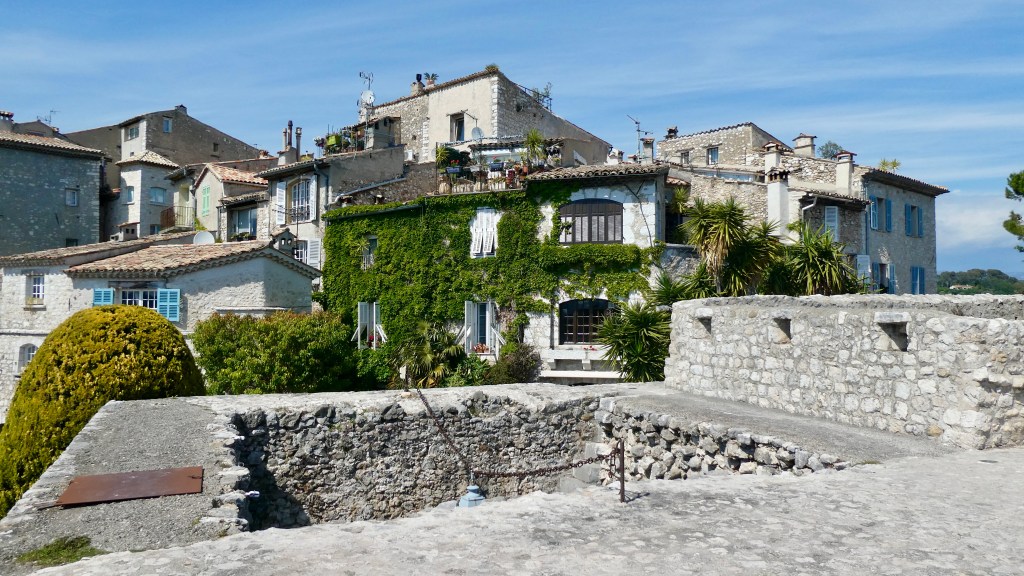
Some of the oldest buildings are from the thirteenth century. 

Villages like these were built on hills so to avoid flooding and pirates. 

Being up high on the hill also allowed them to see any enemy that was approaching.

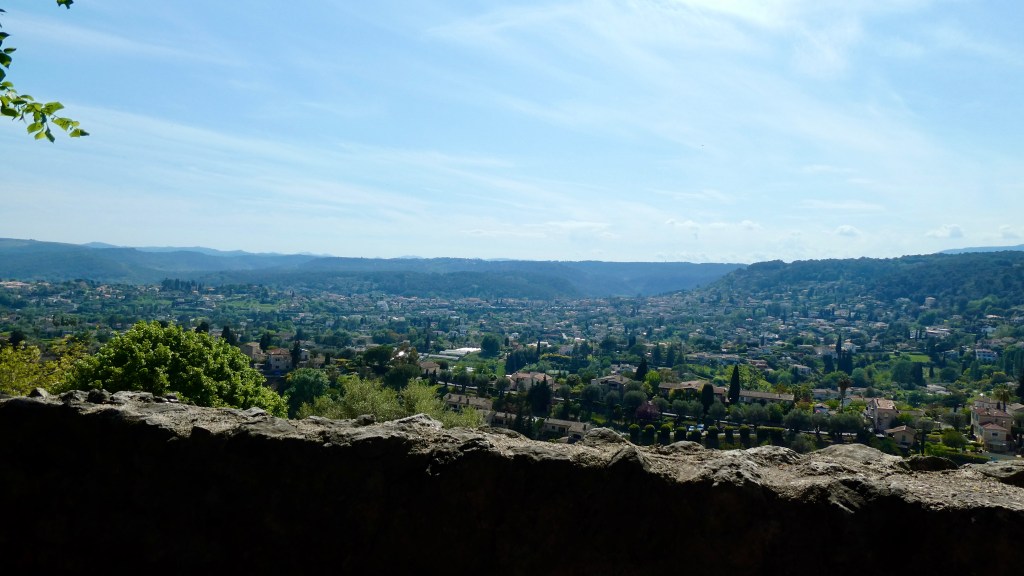
The mountains in the distance are The Alps.

The traditional architecture is white-ish with red tile roofs.

More recently artists arrived in Saint Paul de Vence and created the current version of artist colony. In the early days artists would pay for drinks and food with art.  

Currently, only about 300 people live here.  It is very picturesque but not very convenient for vehicles or deliveries.

The village is very picturesque!

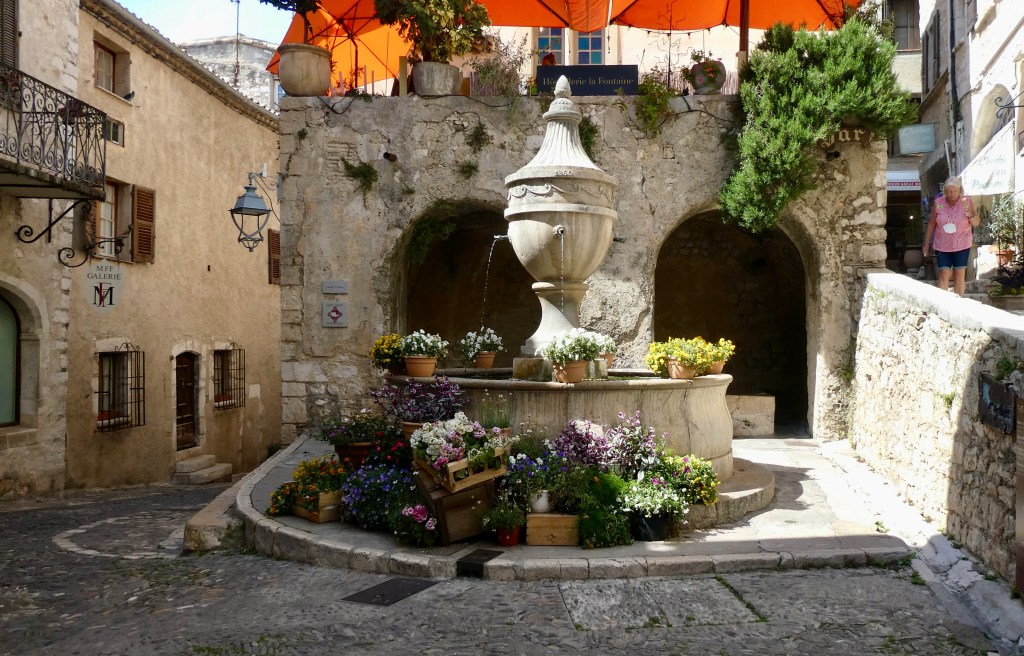
There is a lovely fountain in the middle of the village.

Of course there is a Roman Catholic church.

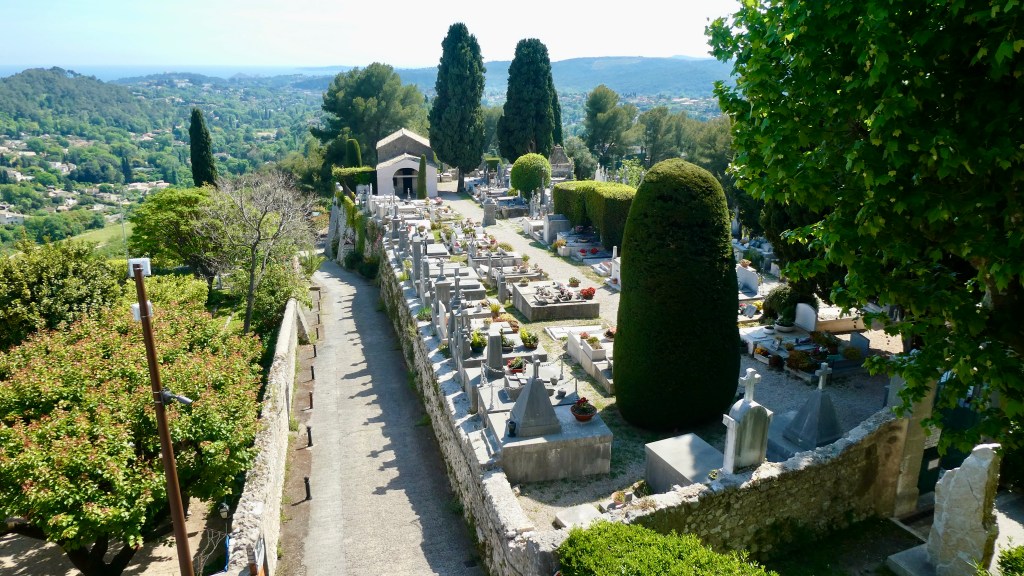
There was a cemetery with a view.

We left the village and made our way back down to sea level.

While tendering back to our ship we saw the St. Helena out of London. A little research revealed she had been one of the last two ships holding the RMS designation and had served as a mail ship and lifeline between Cape Town and the remote British territory of Saint Helena.

In 2016 the ship was retired, sold and entered a two year season of refurbishment. Efficiency was a priority to her new owners. The engines were rebuilt to run on low-sulphur marine diesel and the propellers were refurbished to reduce friction. Underwater sections are painted with anti-fouling paint to keep her more streamlined thus reducing emissions.

The ship supports the Extreme E’s Five Race Global Odyssey – an all electric grand prix conducted near ports around the world. Who knew?

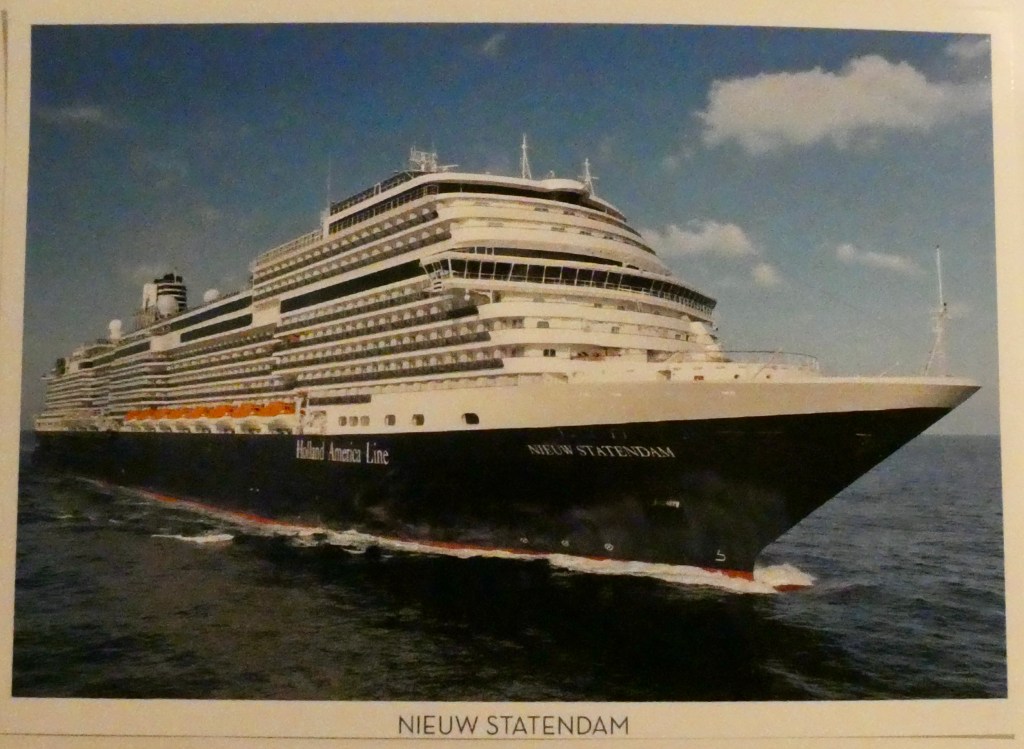
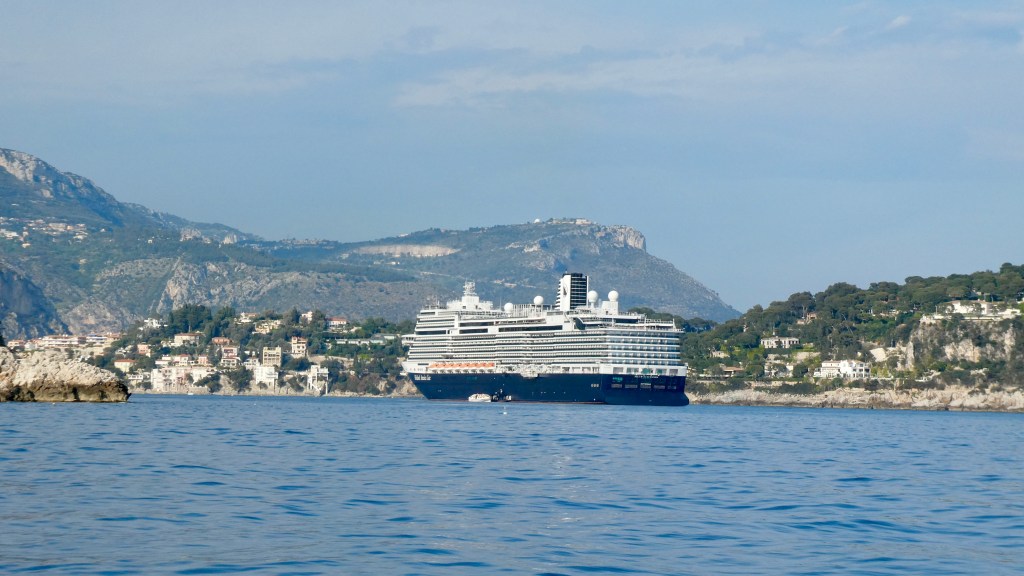
And there is our Nieuw Statendam. It was a good bonus day in France!

Posted in Uncategorized | 3 Comments

Transatlantic Cruise: Barcelona – Less Than We Expected

Barcelona was the end of the fourteen day transatlantic segment of our cruise and also the beginning of a seven day Mediterranean cruise. Eight hundred passengers, mostly American retirees, left the ship in Barcelona while six hundred of us were to continue on to Rome.

While the ship was going through the process of departing and embarking passengers, we had our choice of a variety of shore excursions. Our tour was the Highlights of Barcelona- with about 40 other passengers. We had met a number of passengers and crew who love Barcelona, and we had really enjoyed our previous ports in Spain, so we had high hopes for a great day.   

Unfortunately, our experience in Barcelona was less than we expected. We took a shuttle into the city and our first impression wasn’t great. We stepped off the bus right into a disturbance. There was a loud argument with pushing and shoving involving a dozen men and one woman. It was something about one of the men not getting paid what he thought he should. Our guide hurried us away.

Then we had a man yelling non stop at a sculpture as a form of protest and other preparations for a mass protest. We were not told what either was about.

Almost immediately many of our fellow passengers started whining. I need the toilet NOW. We’re moving too slow. We’re moving too fast. I want to stop and go back to the ship. The tour guide isn’t pronouncing English clearly enough. Good grief!  Like any of these people could speak Castilian Spanish, Catalan, French and passable English! And those are the only languages we know she speaks. She was a 28ish woman trying to herd seniors of varying physical condition and tolerance. Unfortunately it continued throughout the tour! 

Okay, enough of my whining about the whiners! Now on to what we saw in Barcelona.

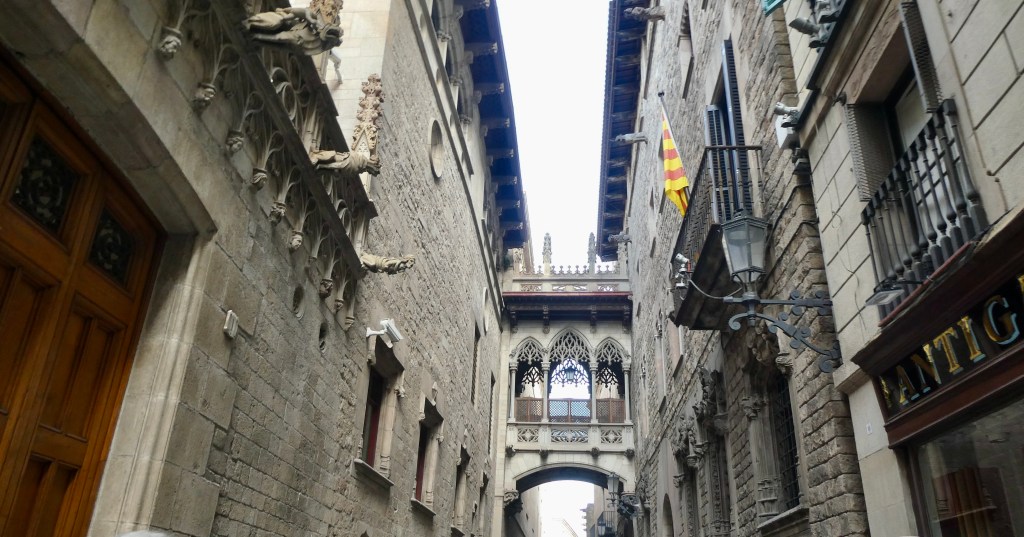
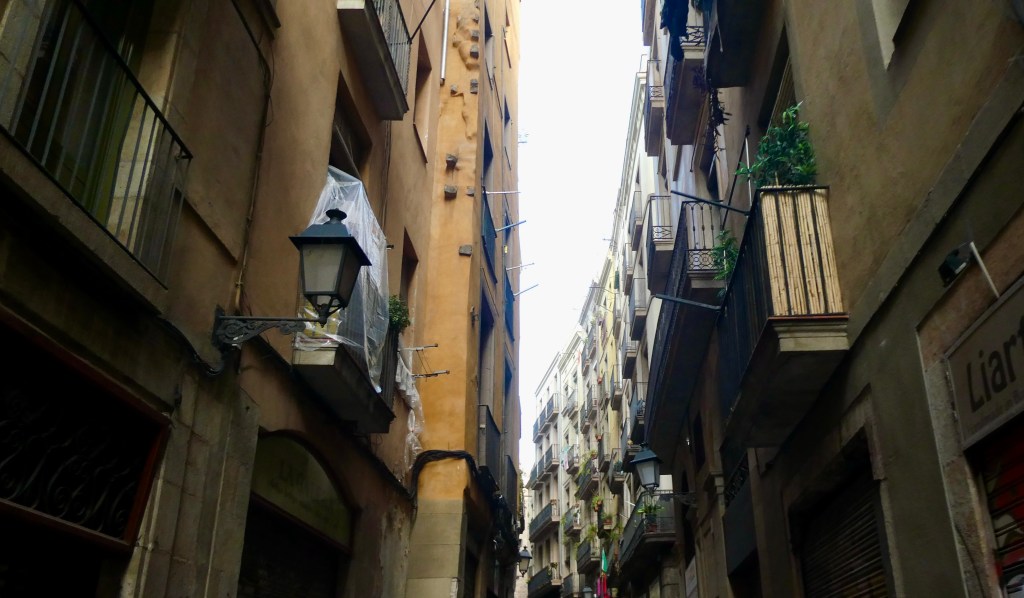
We walked into the Gothic Quarter, the ancient part of Barcelona. The city was founded 2000 years ago as part of Roman expansion over the Pyrenees Mountains. 

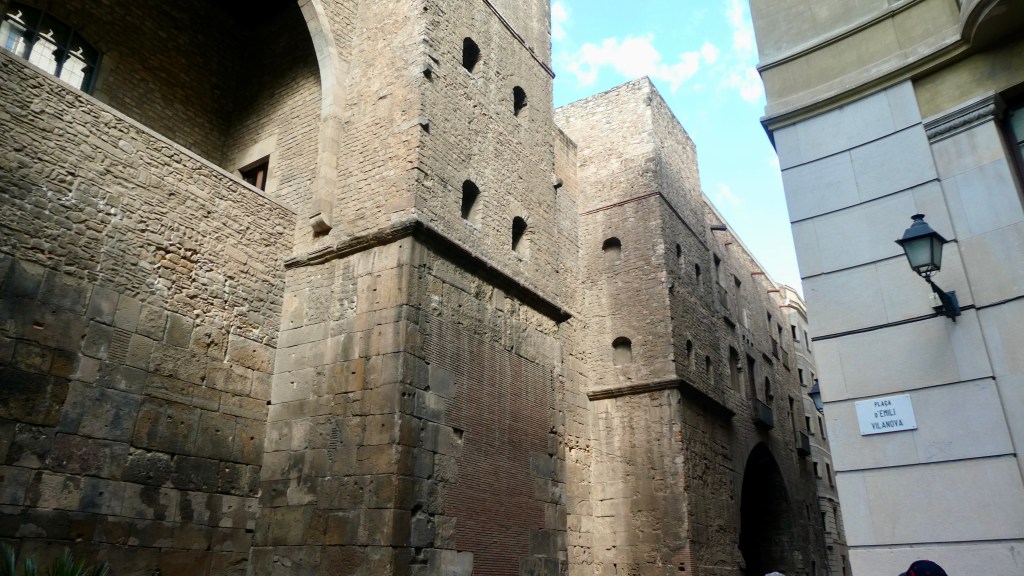
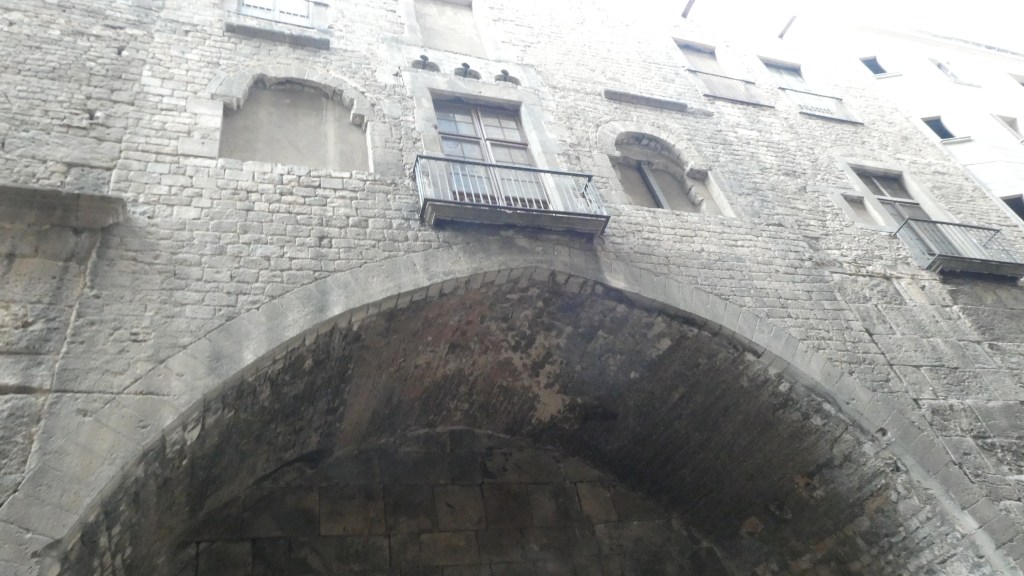
These ancient walls are a combination of Roman and Medieval influences. We found it so fascinating that apartments were built within the old walls.

.

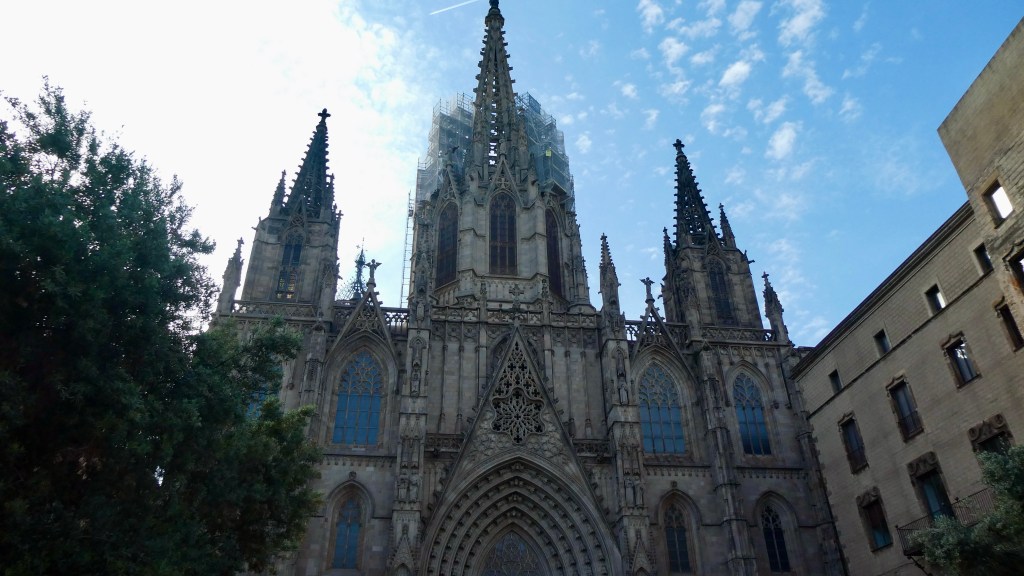
We were able to see the Cathedral of the Holy Cross, but only from the outside as an event was happening inside. Some people were going in, but not tourists.

It was common in cathedrals we visited that mass was conducted at the front and tourists sat at the back or walked around quietly. We have enough experience in liturgical churches that we generally knew what was happening even if it was in Spanish, Italian or Latin.

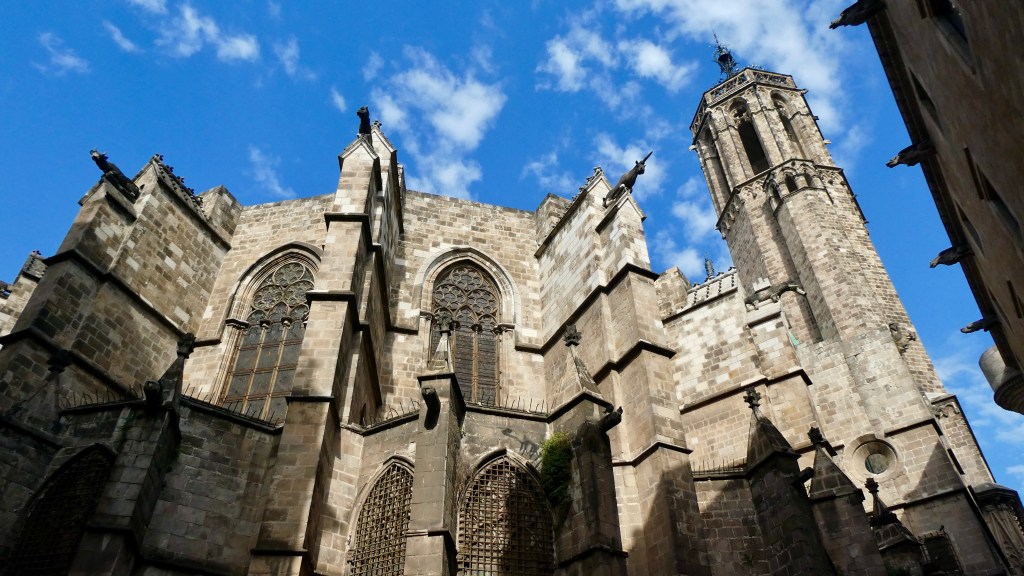
This is another side of the same cathedral built in the 14th century. Notice the unicorn to the left of the bell tower. Unicorns are mentioned in the Bible eight or nine times depending on translation but research says that the original Hebrew likely meant “beast with one horn” as opposed to the mythical unicorn.

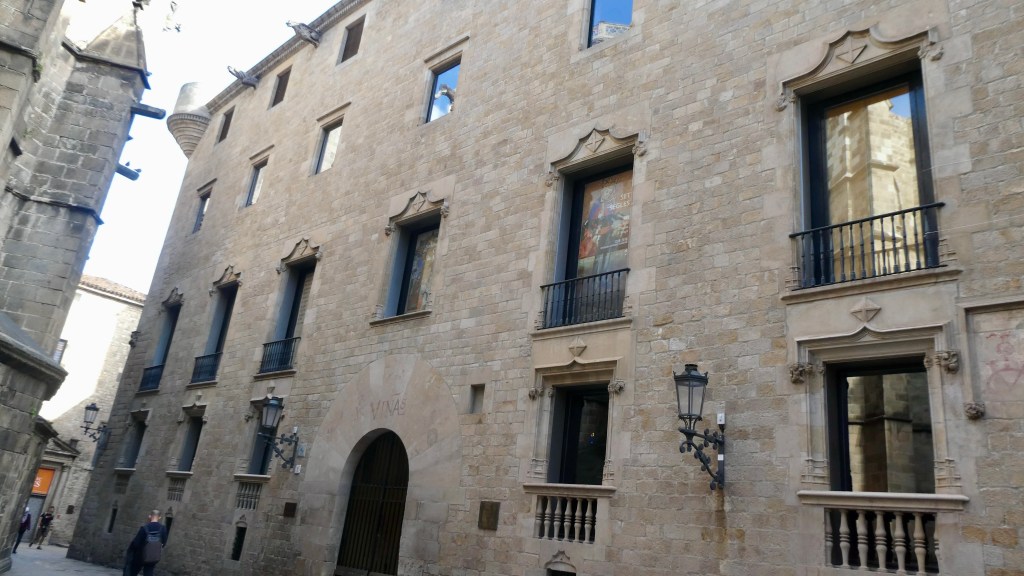
A building adjacent to the cathedral is now a museum commemorating the Jews who were martyred during the inquisition.  

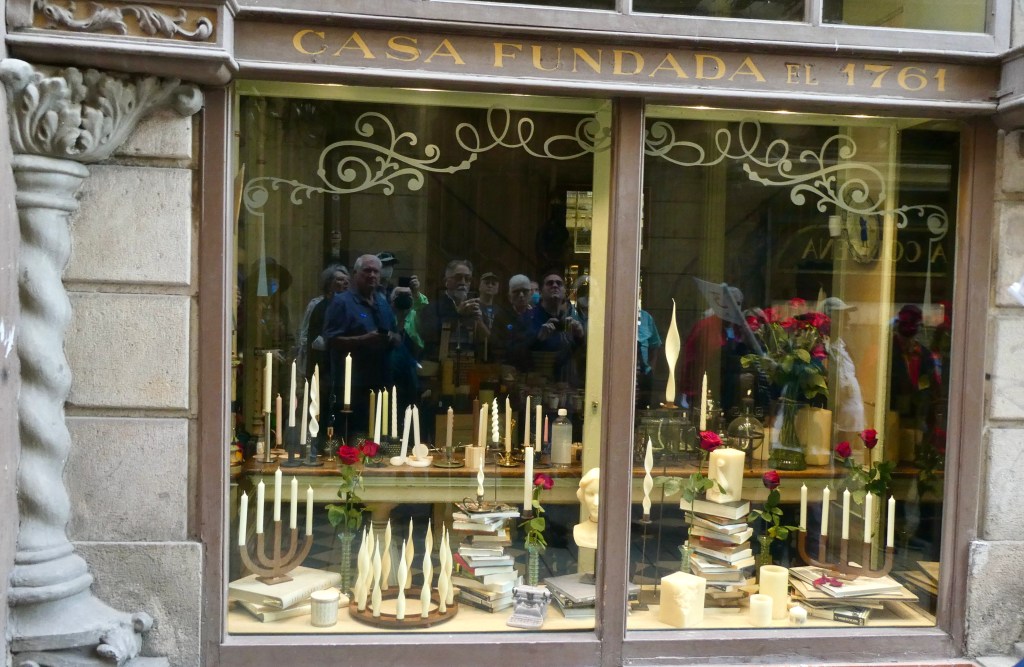
This candle shop, the oldest in Barcelona, dates back to 1761.

As we learned in Malaga, Picasso lived in one of these apartments as a child. 

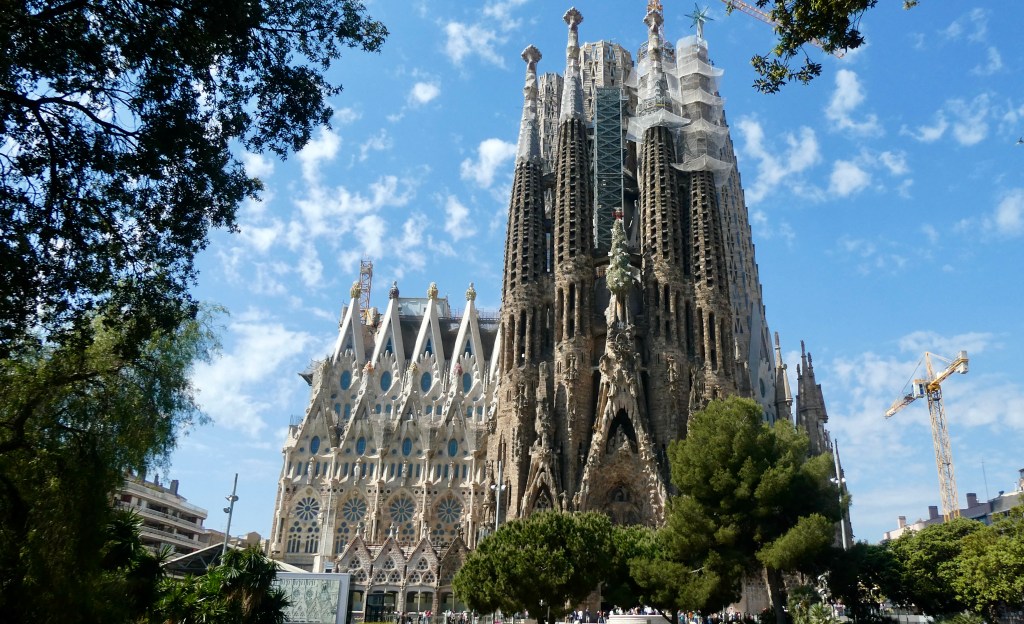
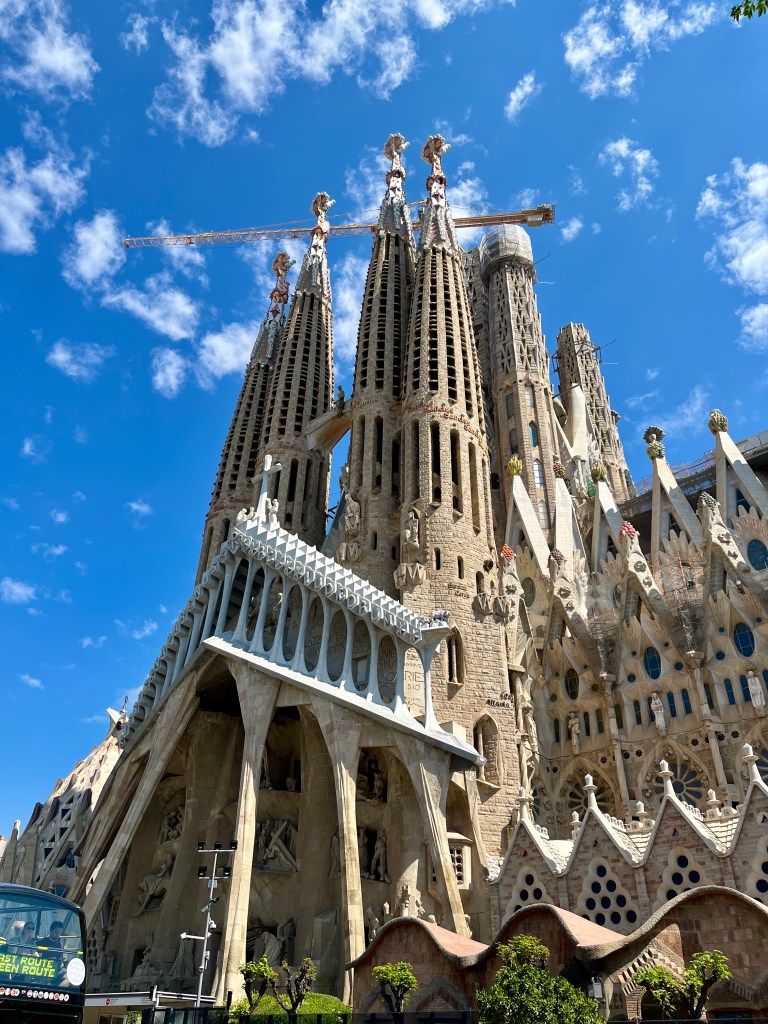
Our primary destination was Sagrada Familia a hallmark of Spain and Barcelona. 

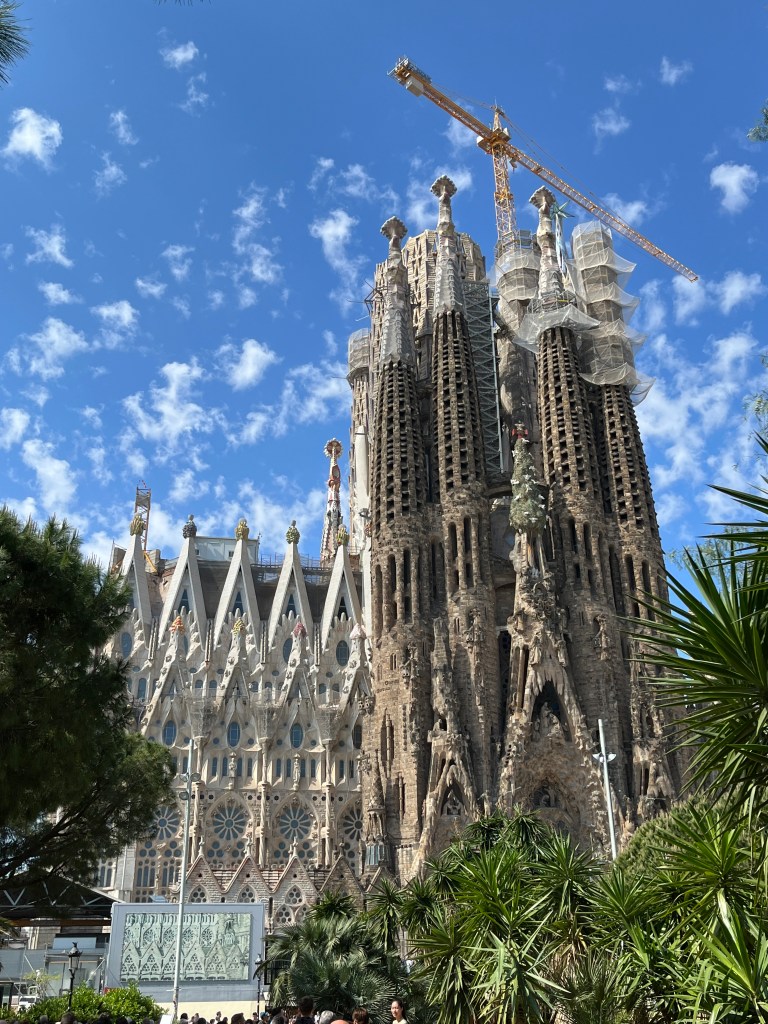
Even though it looks as though it is very old, and possibly under repair, in fact it has not yet been completed.  

Sagrada Familia has been under construction since 1882, 140 years. It was supposed to be completed in 2026, the 100th anniversary of Antoni Gaudi’s death.  Unfortunately COVID has altered that plan with completion now planned for 2030.

Gaudi was the primary architect and is buried in a tomb in the crypt of the church. The architectural works of Gaudí form a UNESCO World Heritage Site.  

Sagrada Familia is the tallest religious building in the world at 566 feet.  It is known throughout the world and visited by millions of people every year. The capacity of the church is 9000.

The different colors are because materials have come from different parts of the Catalan region of Spain.

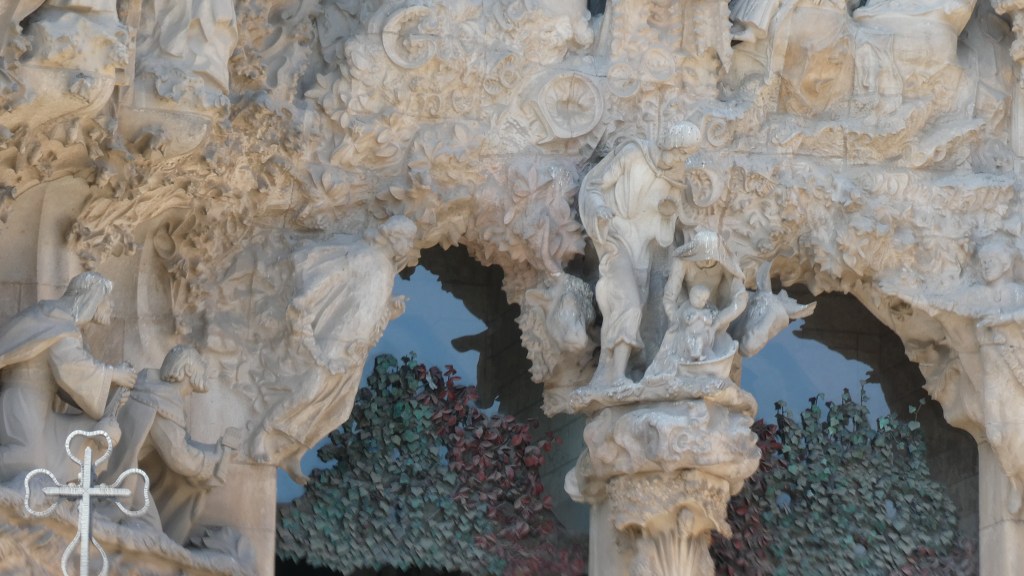
Elaborate carvings depict different stories of Jesus’ life in stone.  Some portions were damaged during the Spanish civil war and were repaired by a Japanese sculptor.

Most of our viewing was near the Nativity Entrance – the area depicting Jesus’ birth.

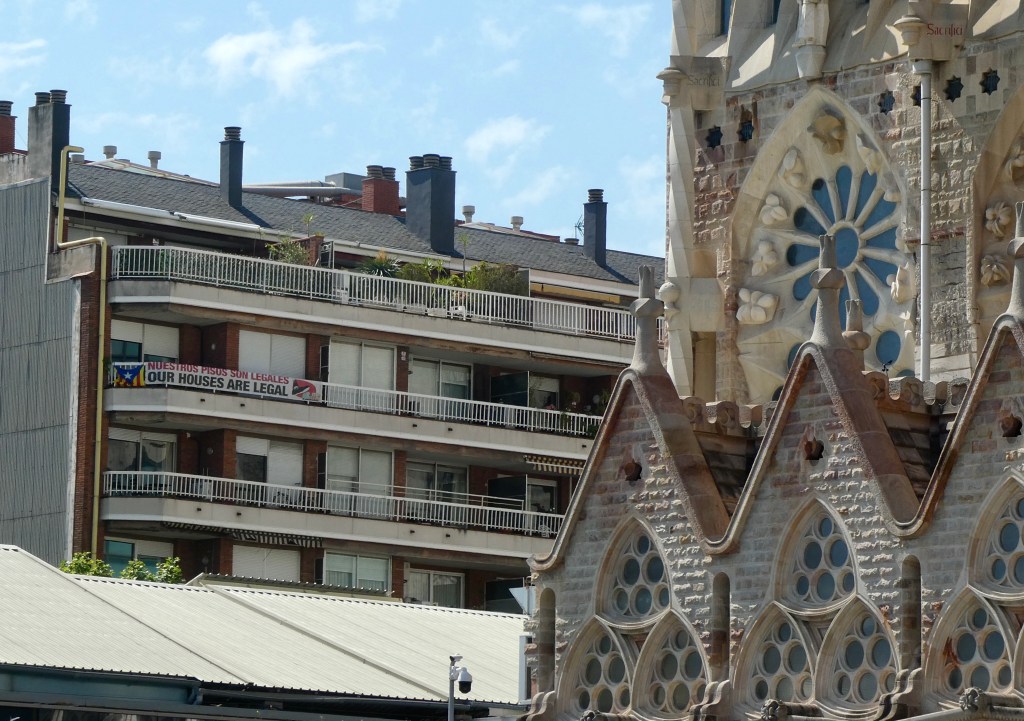
The Passion Entrance

The area around the Passion Entrance (Death of Christ) was very limited because of these apartments.  There is a legal dispute as to whether they can stay after they were approved in error.

We were very disappointed that our tour did not include entrance into the Sagrada Familia. Our experience was just to take pictures from the outside. Even that was challenging because the area around the church was very busy.  There seemed to be a festival going on in addition to just regular Sagrada Familia visitation. We were warned about potential pick-pockets.

We walked back to where we could meet up with our transportation to continue our Panoramic Tour – that means “see what you can from the bus”.  Two monuments we drove by, but couldn’t see well, were the Arch of the Triumph and the Christopher Columbus statue, both built as part of Barcelona’s World Expo in 1888.

We briefly saw the Bull Fighting Museum. Bull fighting was banned in this region of Spain in 2010 and a former bull ring is now the museum.

And we kind of saw the Olympic Stadium built for 55,000 for the Barcelona Olympics held in 1992.

Barcelona holds 1.5 million residents and is currently the fourth busiest port in Europe.  It was not as clean as the other Spanish port cities we had visited.  Certainly American cities have the same, but our earlier port cities in Spain had been spotless.

So,  we enjoyed our earlier stops in Spain enough to know we’d like to come back and give Barcelona another chance.  The on-line pictures we’ve seen of the inside of Sagrada Familia make it a must do.  We’re willing to try again. 

Back on the Nieuw Statendam we found that one thousand people joined the cruise so there were now1600 passengers on the ship from Barcelona to Rome. Sixteen hundred was still a very comfortable amount for the ship’s facilities. The new passengers were younger and more diverse.  

As appealing as younger and more diverse was, they were not generally compliant with the captain’s masking requirements. despite repeated admonitions,  Of course, they weren’t on the ship when we got that shocking letter that we had COVID onboard. We too had enjoyed that false sense of security that everyone testing negative prior to boarding had given. They were living that storyline as we departed.  

The plan was to visit new ports on five of the next six days, in three countries and two continents.

Next port:  Nice, France

Posted in Uncategorized | 1 Comment

Transatlantic Cruise: Alicante, Spain and the Caves del Canelobre

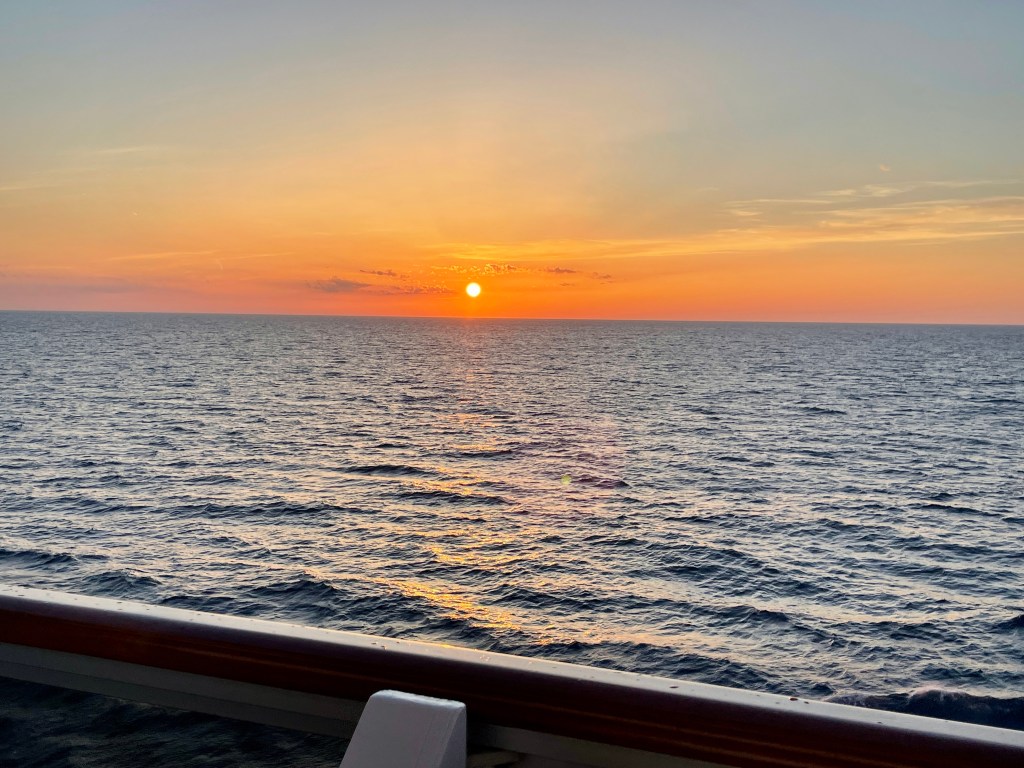
We viewed a lovely sunrise from our balcony as we came towards the port of Alicante Spain.

This area has been populated for 7000 years by the regular cast of characters, the Phoenicians, Greeks, Romans and Arabs. The Spanish monarchy recaptured Alicante in 1214 AD and established Catholic rule.

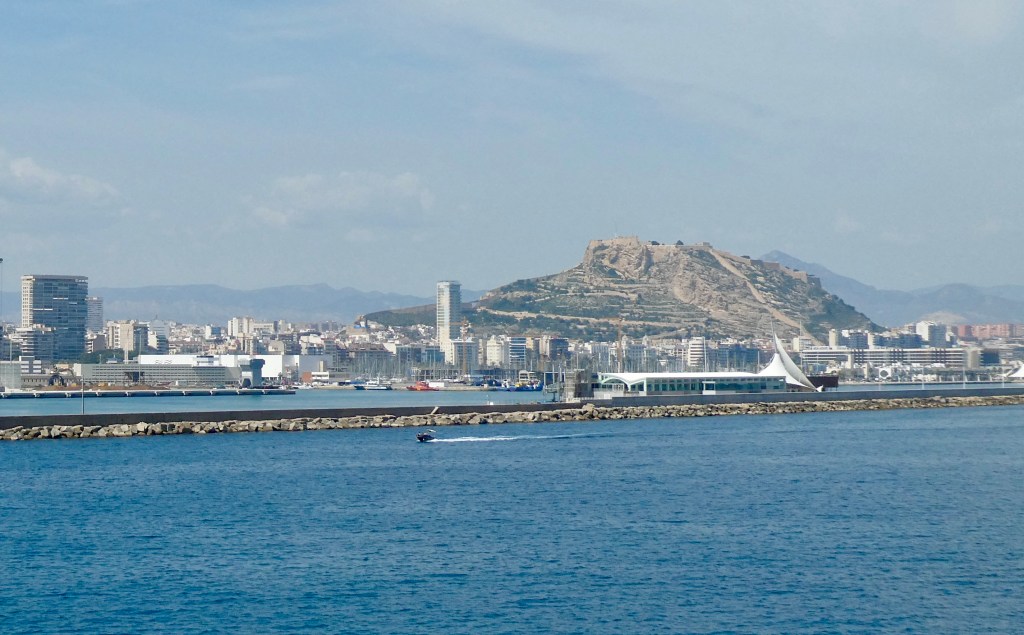
We could see the ancient fortress way up on the hill.  We learned later it was the Castillo de Santa Bárbara, built over a span of 1000 years, but primarily in the 16th century.  

Alicante actually has two castles, the second being the Castillo de San Fernando.  We didn’t go to either. What were we thinking?

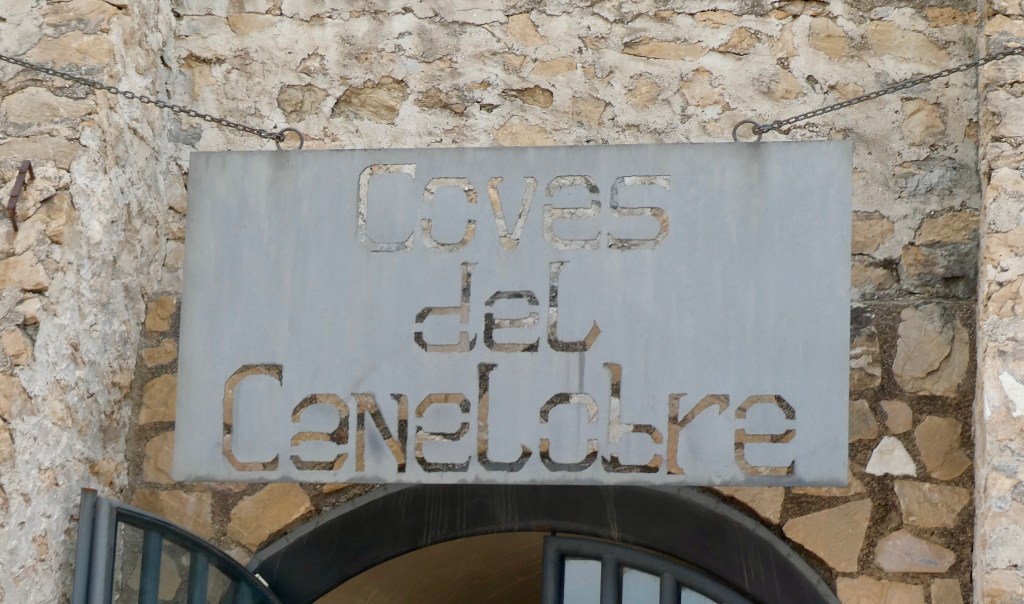
We were thinking something different – the Caves del Canelobre.  We had a brief city tour before heading inland.

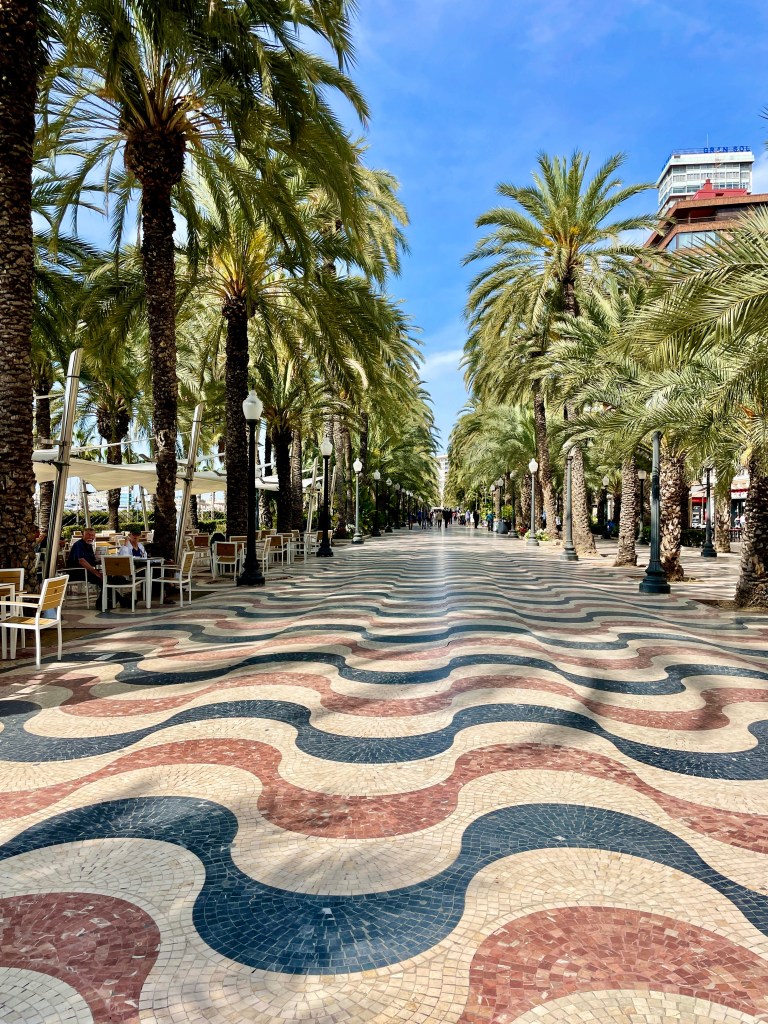
We saw the expansive public beaches the city is known for a well as the Explanada de España.  This tree lined walkway has restaurants, shops and open air events.  It took about five minutes of waiting to get this photo with the walkway mostly clear of people.

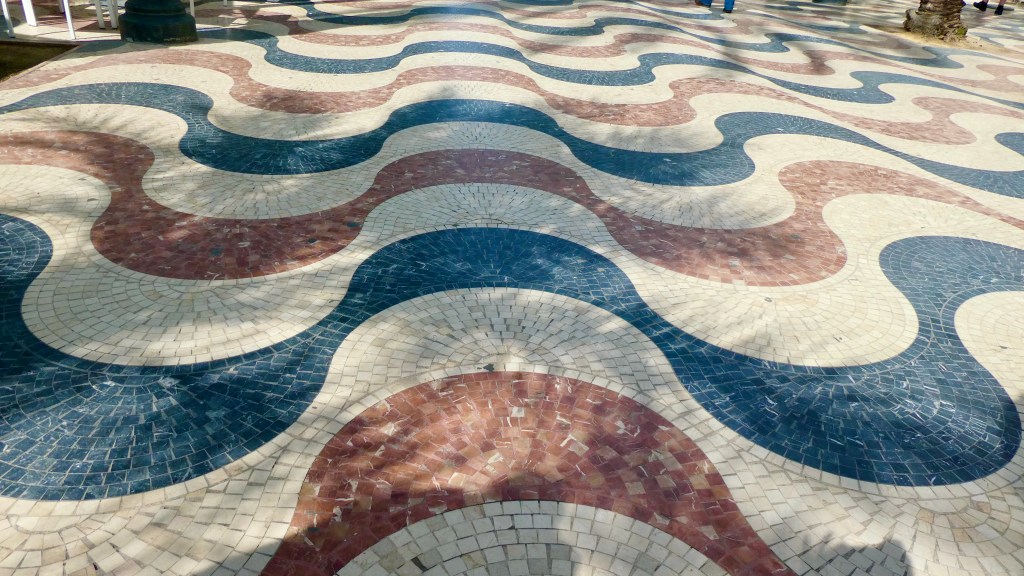
There are 6.6 million tiles in three colors.

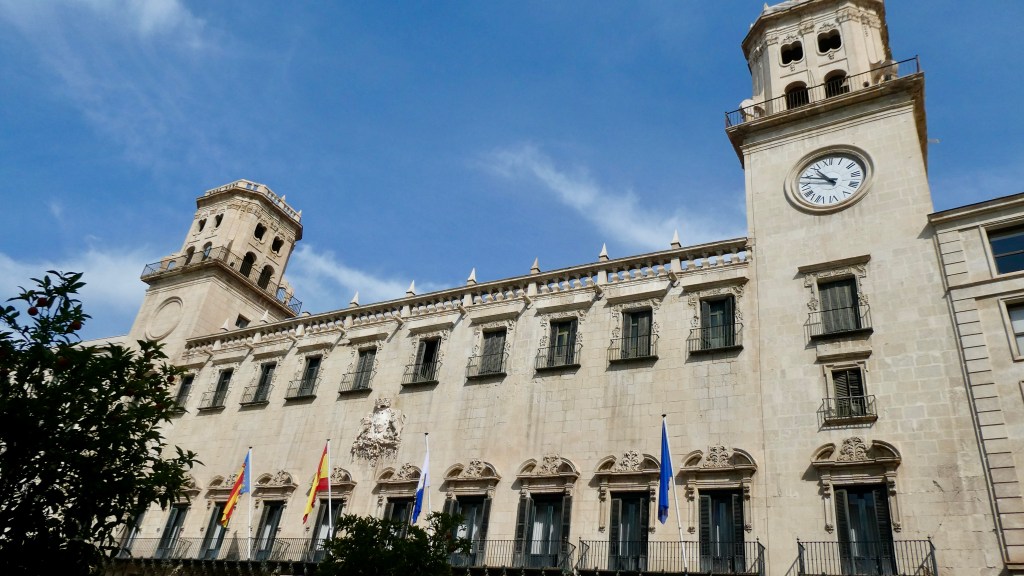
We saw the Alicante Town Hall, built in the baroque style in the 18th century.  The four flags represent Valencia, Spain, Alicante and the European Union.  

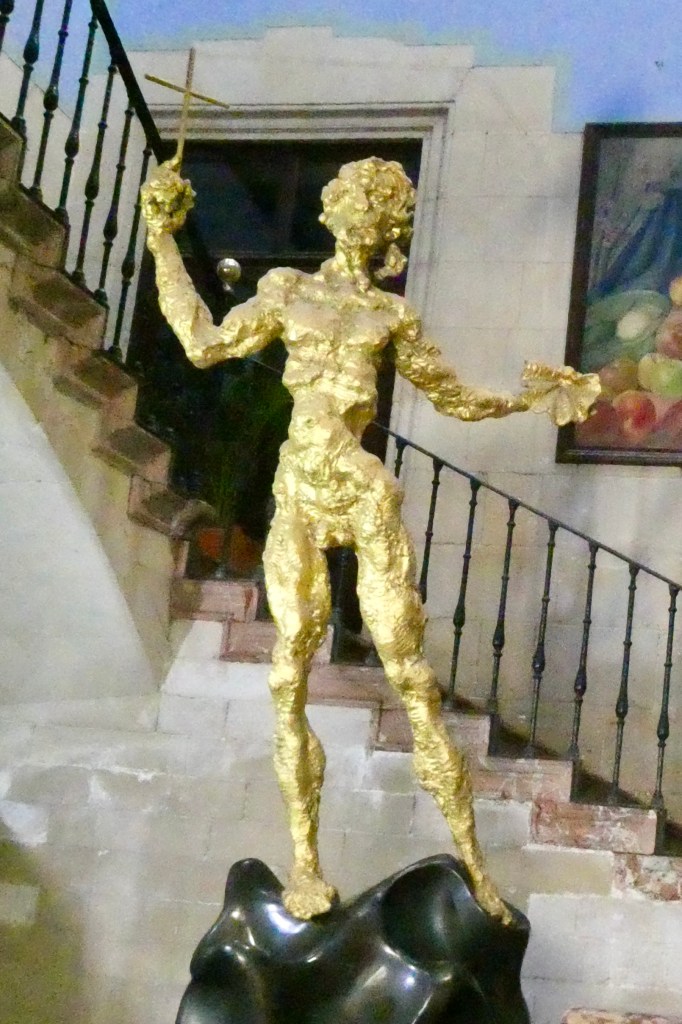
This sculpture by Salvador Dali (1973) was inside the entrance of the town hall.

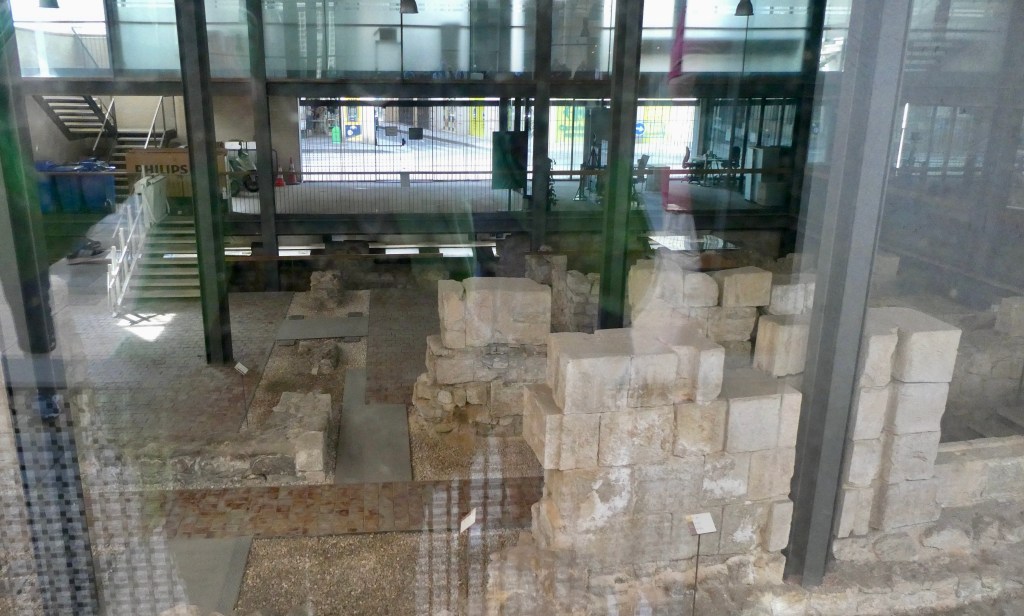
These ruins were discovered about ten years ago.  They are from a 13th -18th century Christian city.

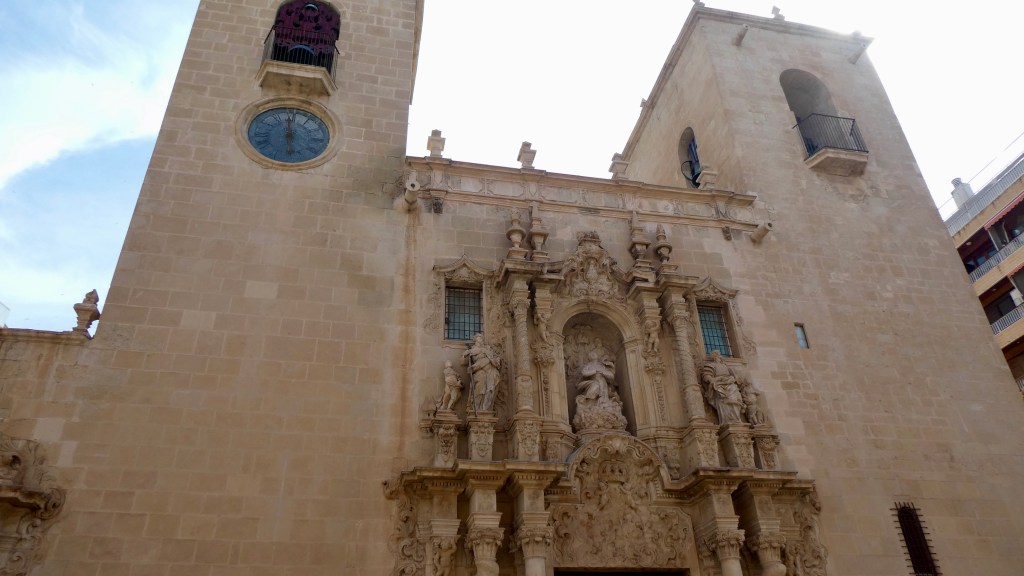
Walking in the old town area, we saw the Basilica de Santa Maria built in the 14th to 18th centuries.  The outside style is baroque.

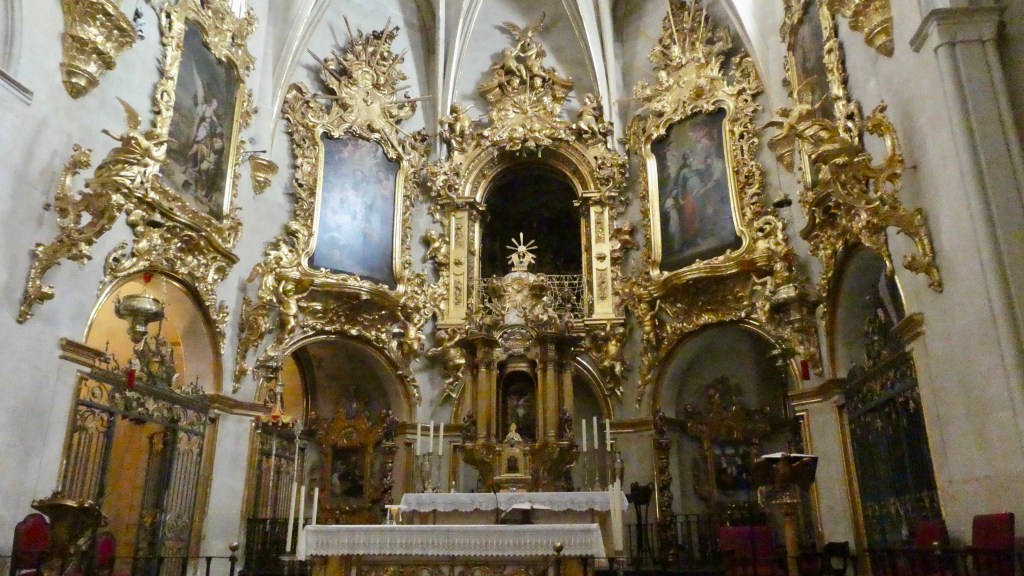
The style inside is gothic and has a glass floor above the crypt.  The basilica served as a church and a fortress and was built over a 9th century mosque.

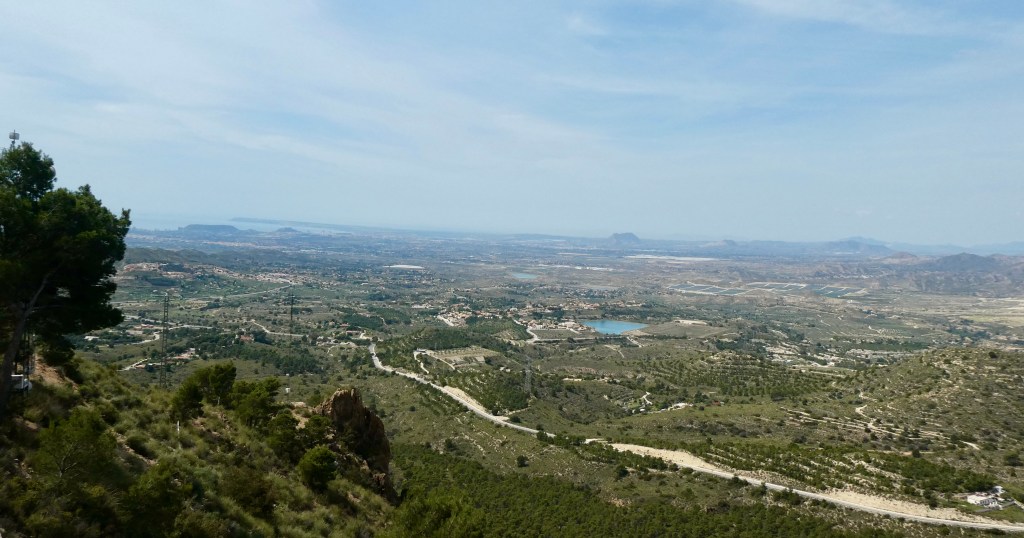
We enjoyed a ride through the countryside on our way to the Caves del Canelobre.

The caves, formed in Jurassic times, were discovered during the Arab era.  They also have an interesting recent history.

During the Spanish Civil War (1936-1939) the primary cave was used by the Republicans as a place to work on airplanes.  The Republicans were at war against the Nationalists who were led by Franco and supported by Mussolini and Hitler. 

An attack on Alicante by the Nationalists Italian Air Force on May 25, 1938 killed more civilians than any single bombing raid anywhere in Spain during the Civil War. 

The Nationalists overthrew the left-leaning democratically elected government and Franco ruled as dictator until his death in1975.

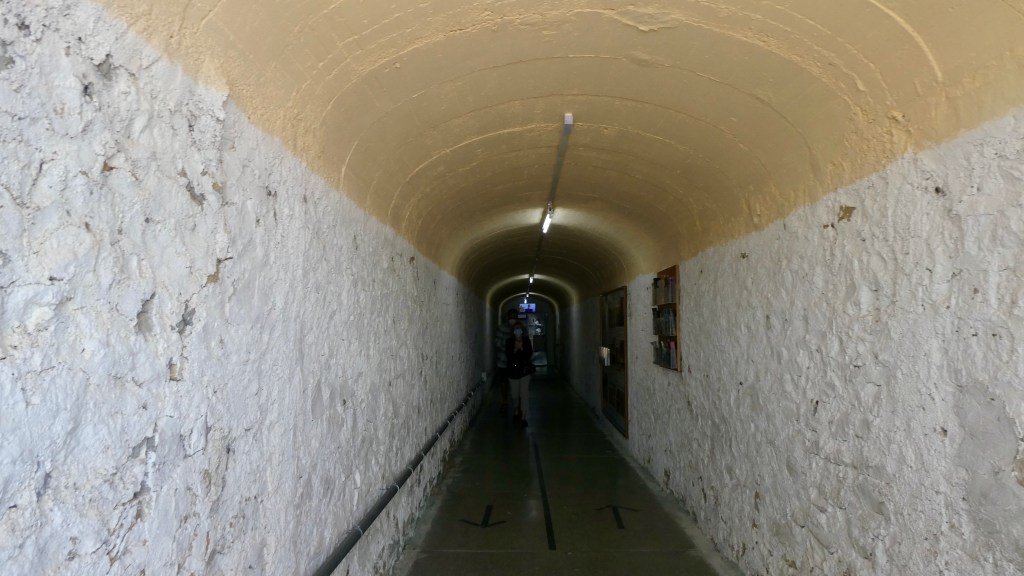
This tunnel was built during the civil war and is now used to provide access the cave.  The cave opened to the public in the 1950s. 

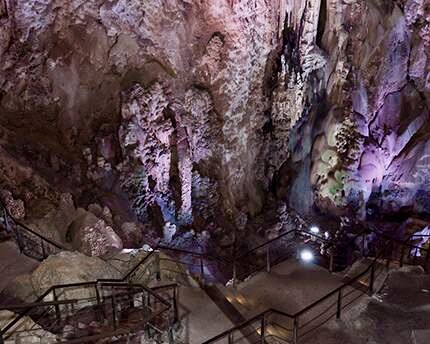
Pictures are not allowed in the cave so this is from their advertising. 

The Canelobre Cave is considered the biggest cathedral in rock measuring 70 meters tall.   In addition to tourism, the cave is used for concerts because of its great acoustics.  

We had a guided tour that lasted about 30 minutes.  We descended into the cave several hundred steps and then departed on those same steps.  The guide, speaking very good English, said the cave was last full of water 7000 years ago.  

We go into caves whenever possible and now we have been in a cave in Spain!

Our next port is Barcelona – our only bad day of the whole trip.

Posted in Uncategorized | 1 Comment

Transatlantic Cruise: Málaga and a Boring Yacht

We were in the part of the cruise that had a new port every day, mostly along the southern coast of Spain.  Our next port was Málaga, a city thought to be 3000 years old. Established first by the Phoenicians approximately 700BC, the name Málaga, meant “queen” in their language. The city was also ruled by the Romans, Moors and eventually Christians.

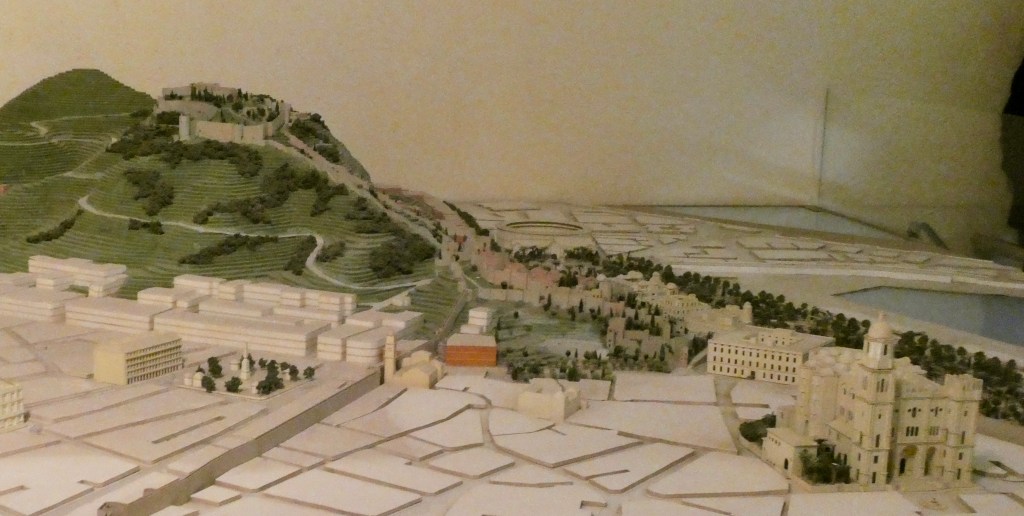
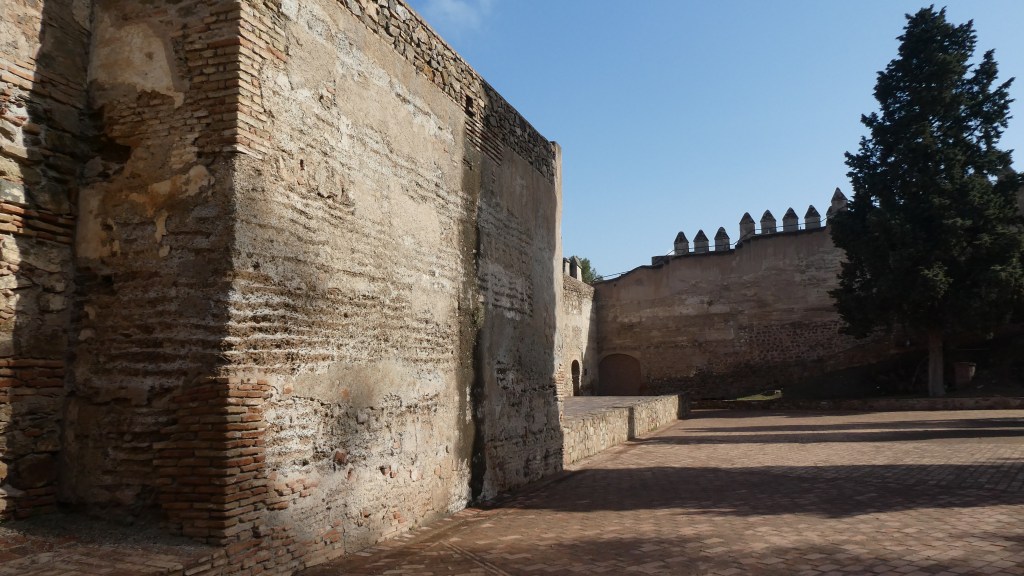
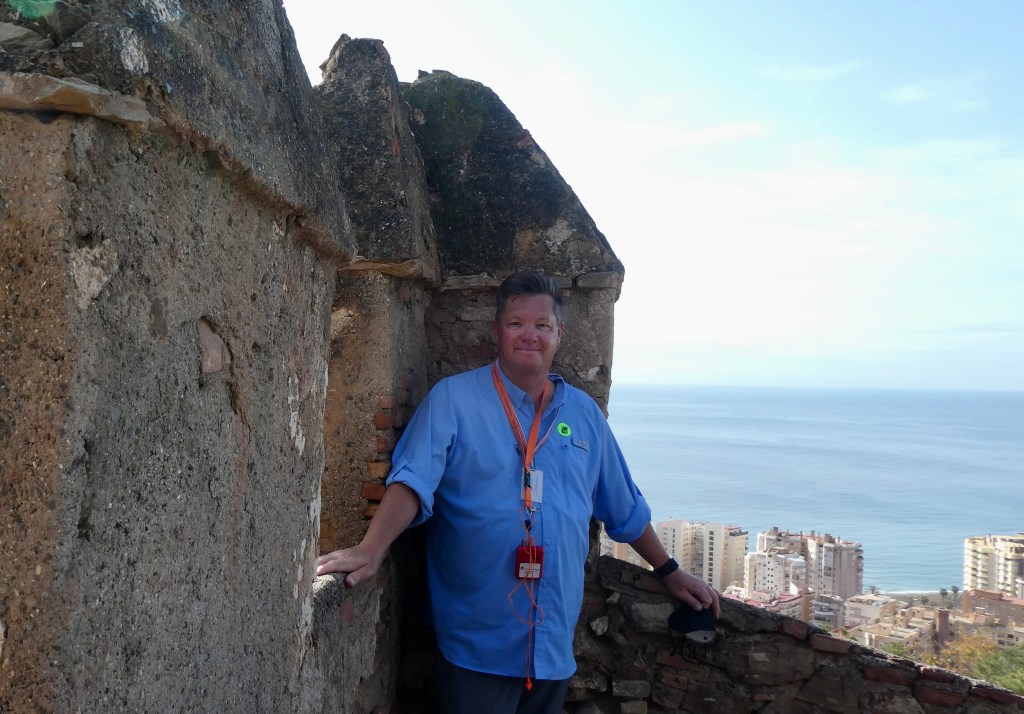
Our tour took us to La Alcazaba, also called Castillo de Gibralfaro.  On this relief map it is on the high point over looking the city.  (The cathedral is in the right foreground.)

The fortress, originating in the Roman era, was abandoned and restored many times.  The site was extensively expanded and modified by the Moors late in their occupation of 711 – 1492.  

Spanish monarchs, King Ferdinand and Queen Isabella, captured the city in 1492.  

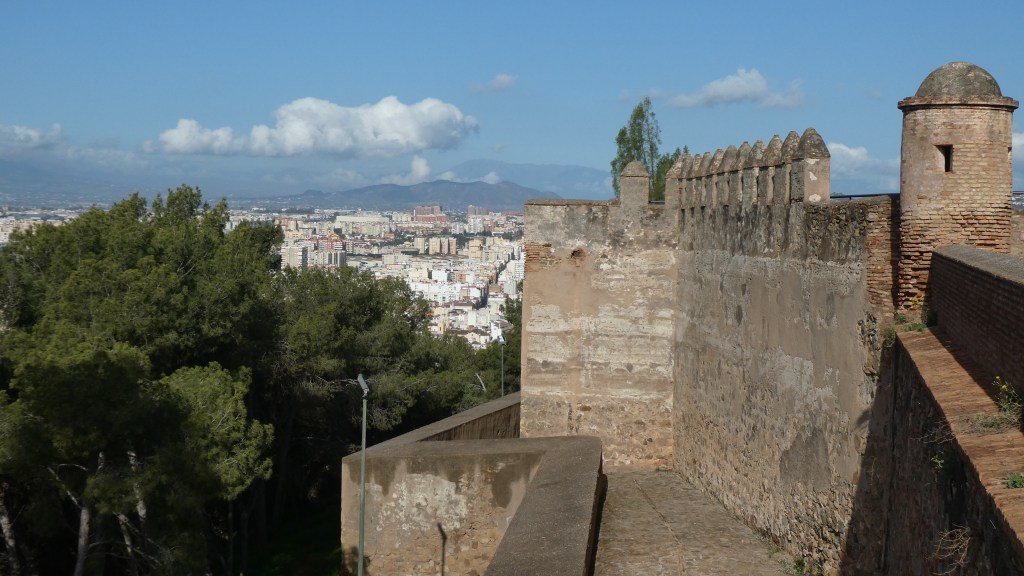
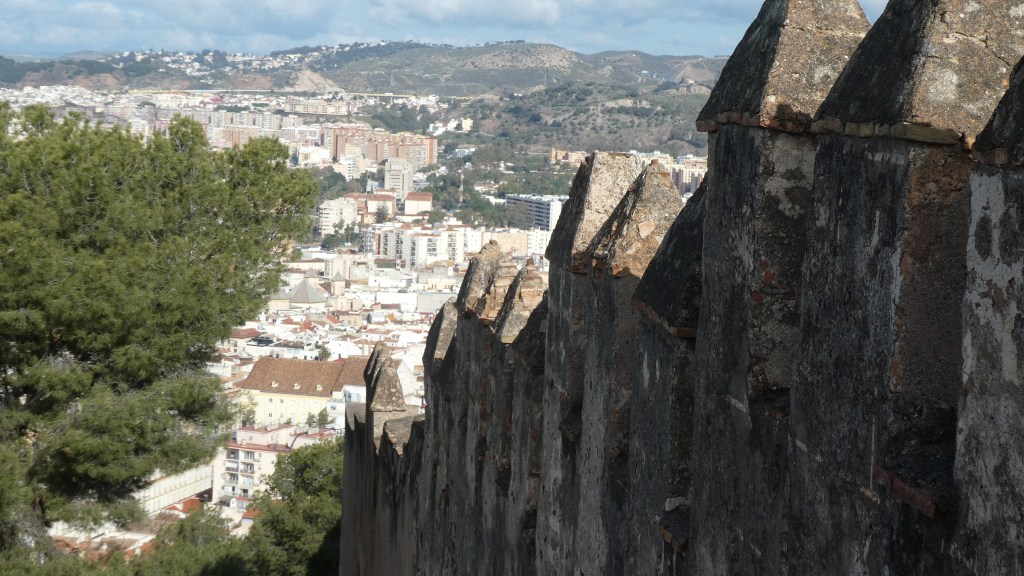
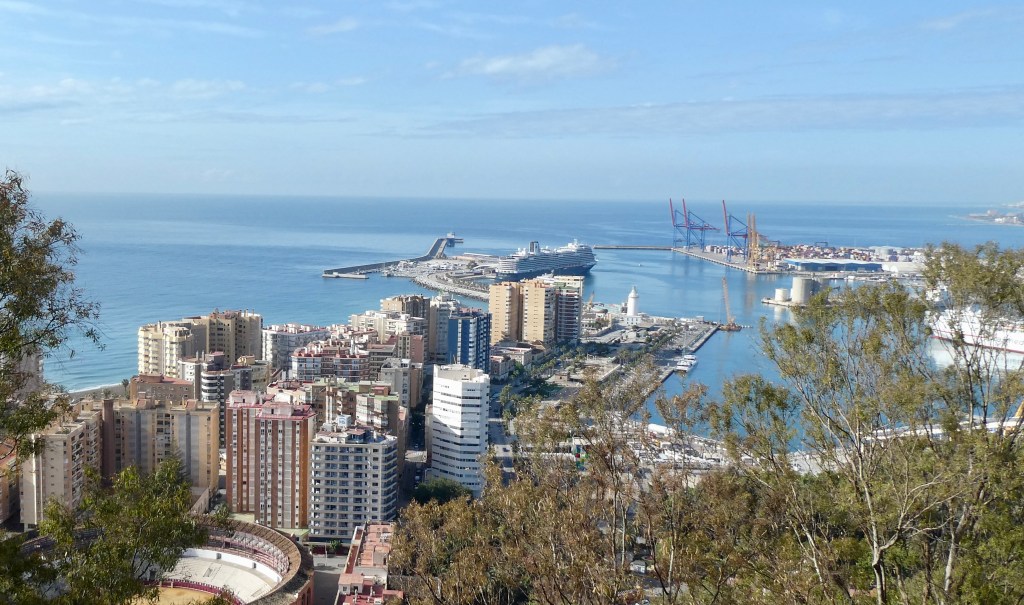
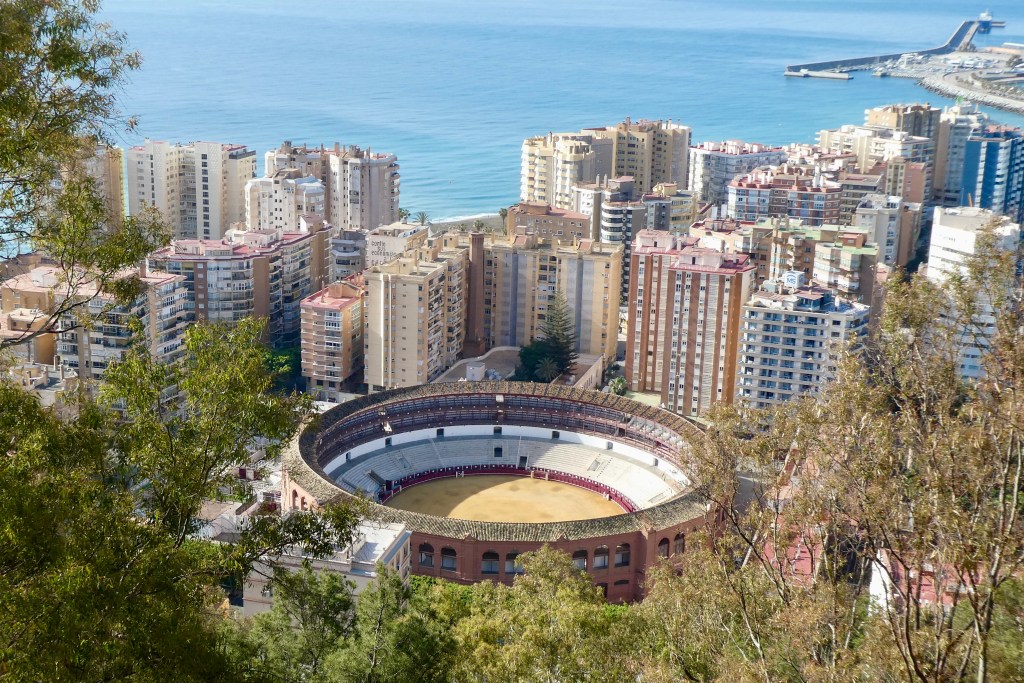
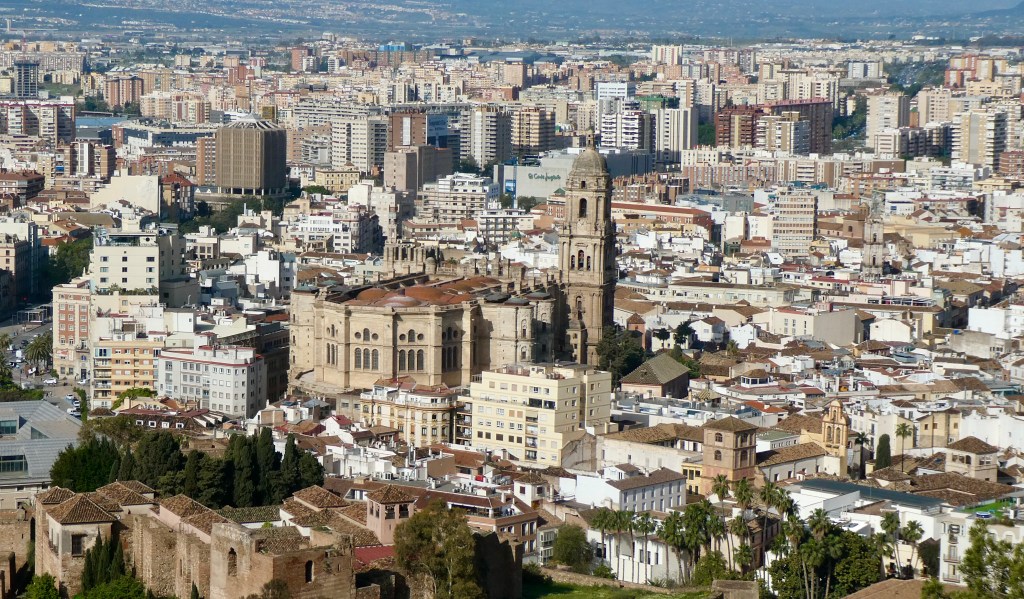
From high up on the hill those in charge, and we, had a good view of the sea and the city below.

We saw our ship, the Nieuw Statendam.

We saw the Bull Ring.

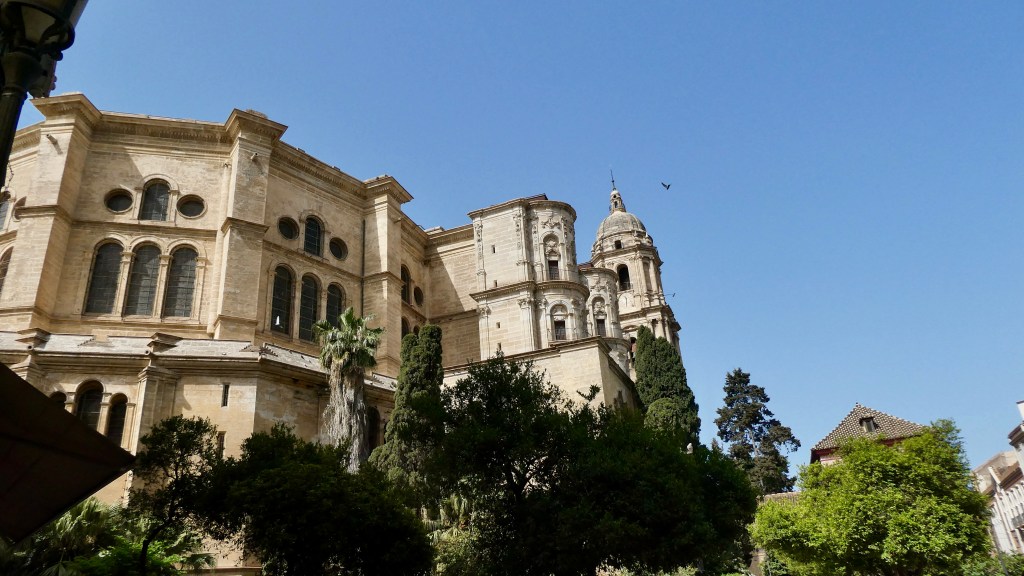
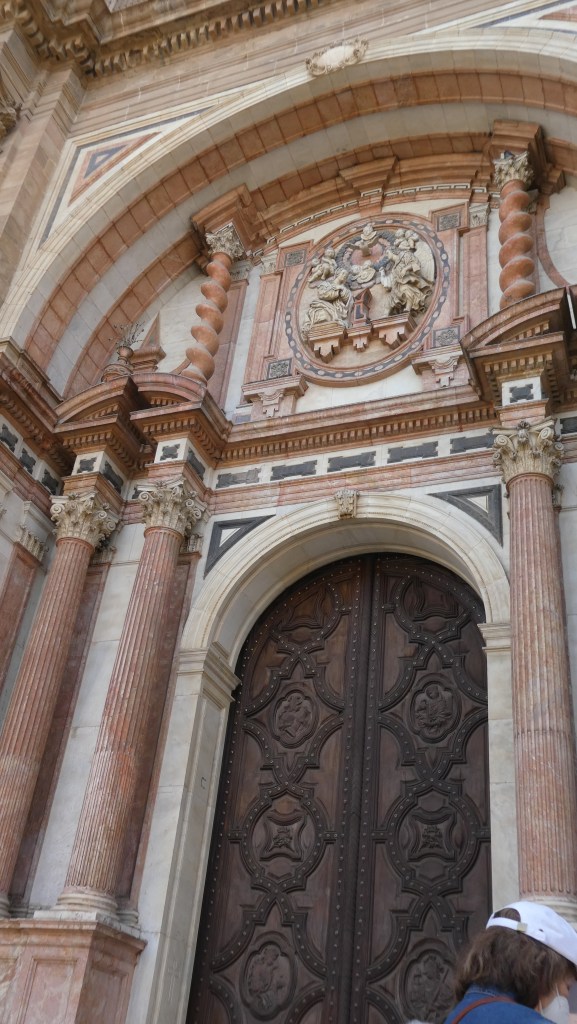
We saw the Málaga Cathedral.

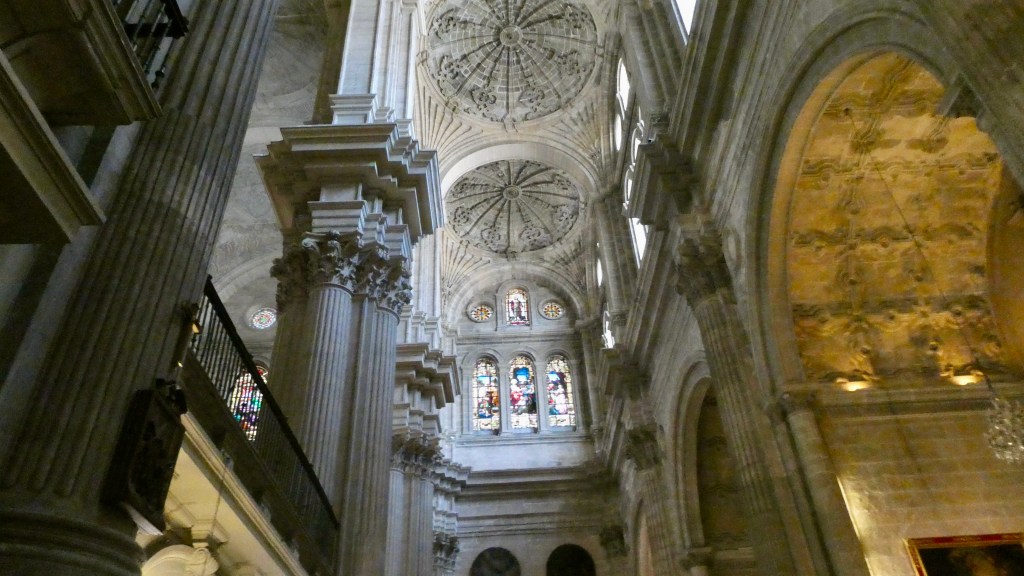
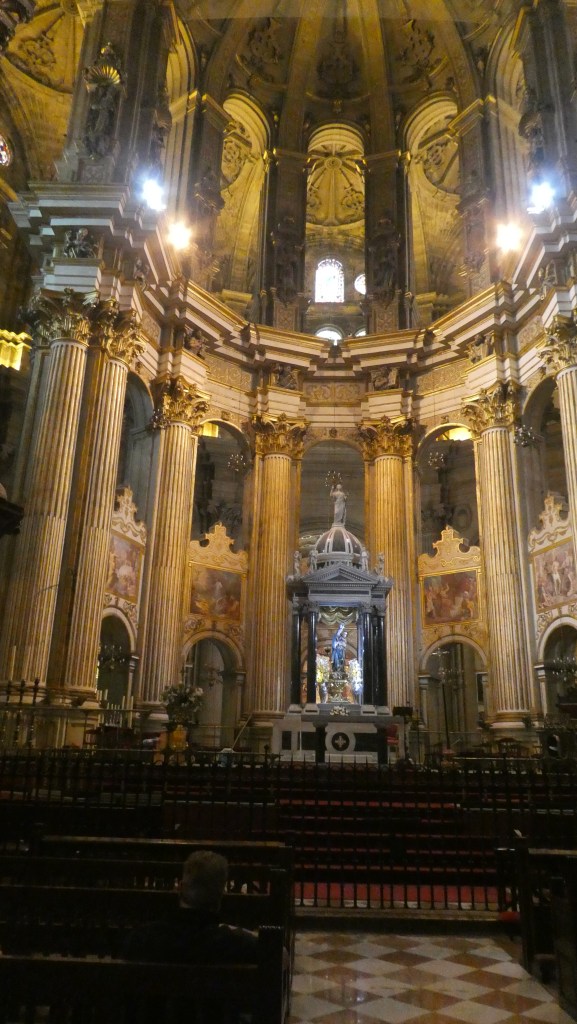
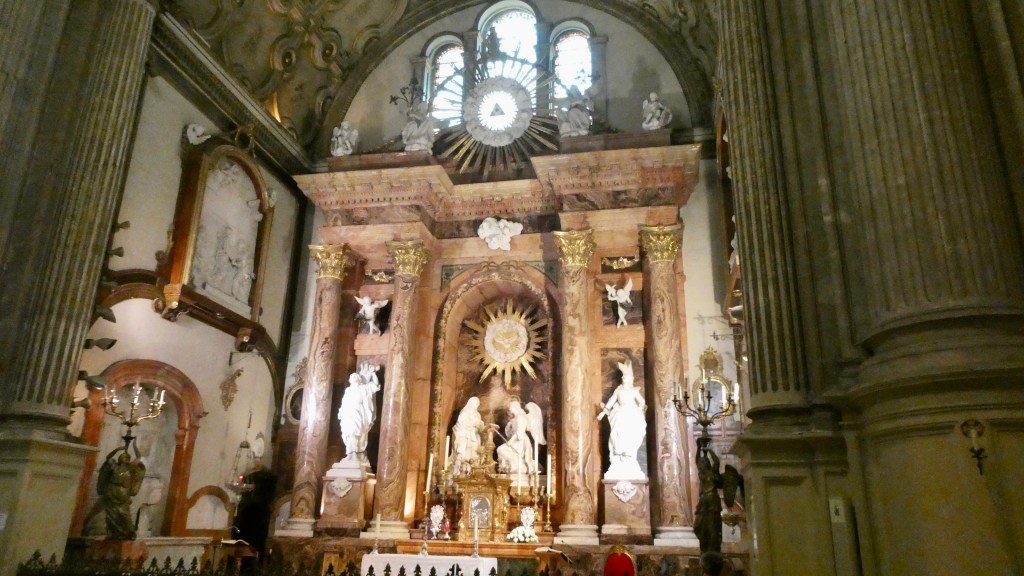
The “Catedral de la Encarnación de Málaga” is similar to other cathedrals we saw with a large central nave and altar.    

There was an ornate choir.

And a very old organ.

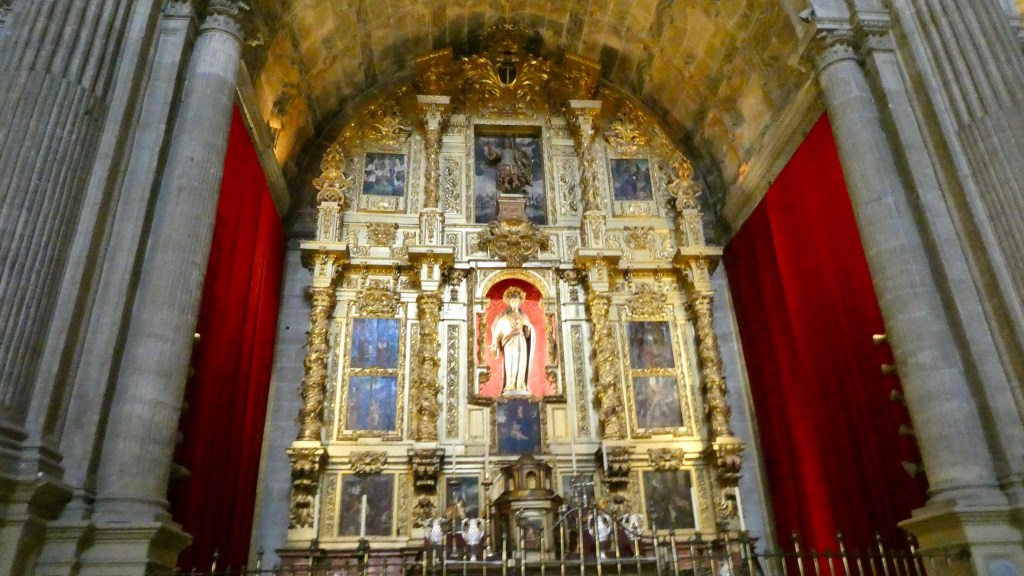
There were side chapels.  

The Málaga Cathedral was built between 1528-1782.  While still unfinished,  construction was stopped due to a lack of funding.  It is widely believed that the city of Málaga contributed funds to the American revolution.  Our tour guide told us that the US offered to help complete the cathedral post revolution but the offer was declined.

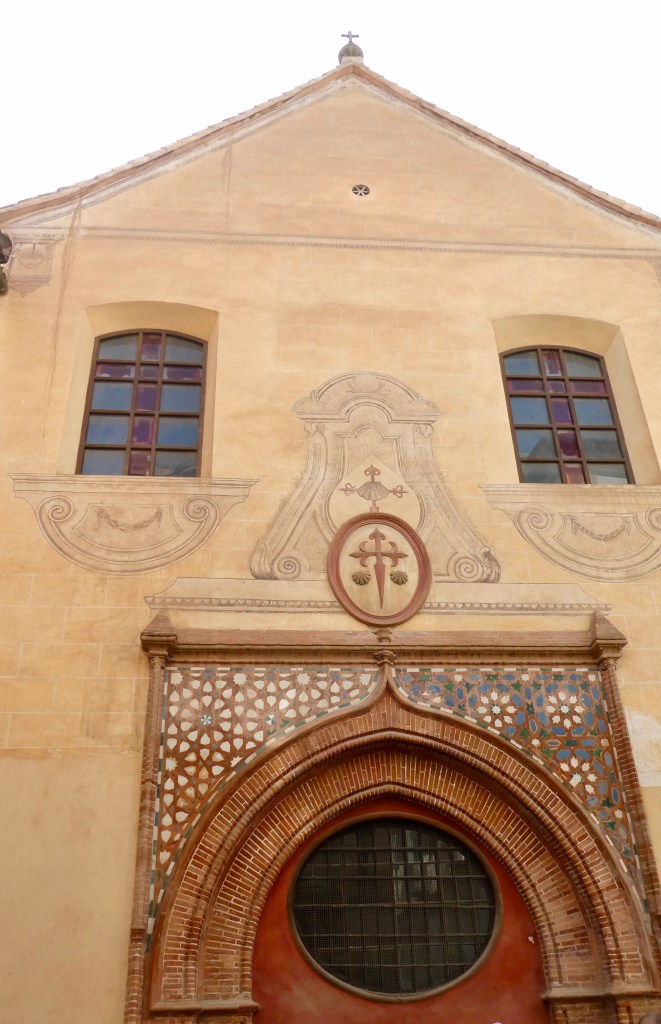
Christian rulers in Málaga, and throughout Spain, built churches over mosques, or refit them for Christian purposes. This entrance still has the Arabic arch.

In more recent Málaga history, Pablo Picasso was born here October 25, 1881 on the first floor of the building behind his statue.  His childhood home was on this square.  At the age of ten his family moved to Barcelona where he was educated.  Picasso eventually moved to Paris.  There is a Picasso museum in Málaga, opened in 2003, with artifacts given by his daughter in law Christine Picasso.

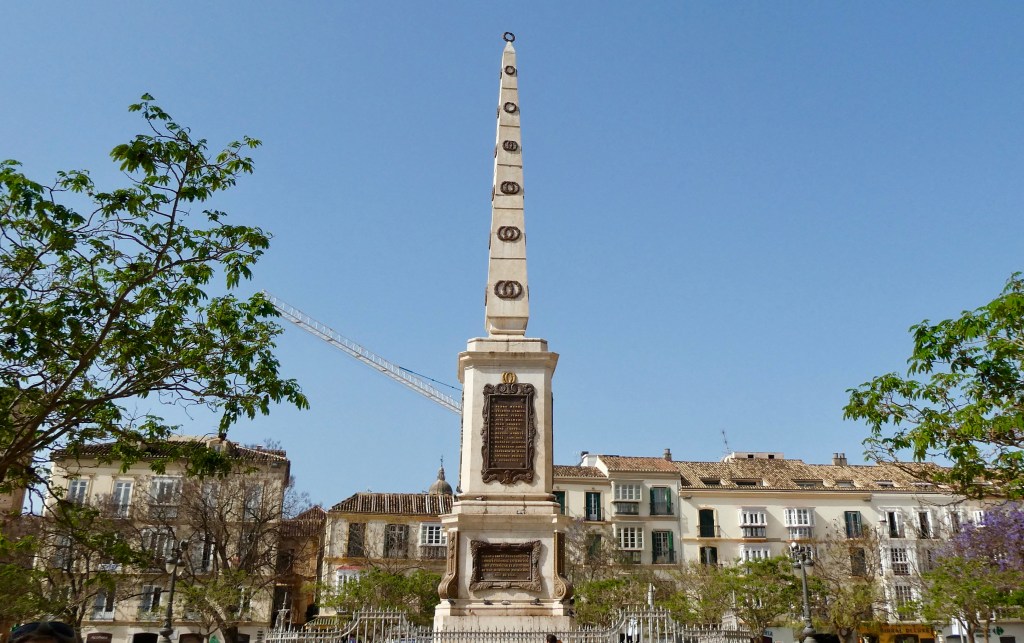
This Obelisk was dedicated to celebrate the Heroes of Independence in 1921.

This Roman theater was discovered in 1951 during excavations,  It is used once again for concerts and has great acoustics. 

The discovery of old ruins continues to happen. This construction site was on-hold until the archeologists determined what was there and how best to preserve it.

In 1960 actor Antonio Banderas was born in Málaga.  He lives here part time and built a large performing arts venue for the city.

In 1974 Málaga became a sister city with Mobile, Alabama.

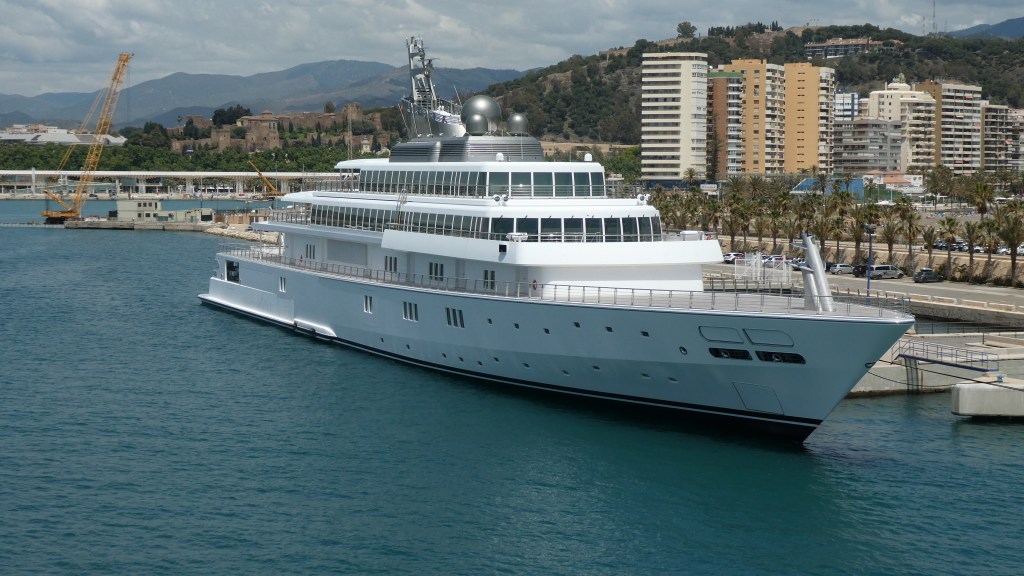
In 2022 we saw this yacht in the Málaga marina.  It was so white, so spartan, so quiet and so boring that we wondered if it was confiscated from a Russian oligarch.  There were very few people ever visible and no deck chairs or color anywhere. 

We eventually saw the name, Rising Sun, and did some research.  It was built in 2004 for Larry Ellison the CEO of Oracle Corporation.  Hollywood mogul David Geffen bought a half share in Rising Sun in 2006 and then the entire yacht in 2010.  The initial build cost was $200 million but with refits it is valued at $570 million.  The yacht’s annual expenses are estimated to be $25-40 million. 

We learned that many celebrities have spent time on the Rising Sun.  Also, billionaire David Geffen was highly criticized for posts showing self isolation on his yacht in the Caribbean during the early days of COVID.  We don’t often side with billionaires on anything, but self isolating on the ocean during a pandemic does seem to make some sense.  

Randy watched activity on and around the yacht with his binoculars and believes he saw David Geffen alone on the bow at one time.

We enjoyed doing research about the Rising Sun and more yachts and ships we saw in various ports.  More to come in future posts!

Posted in Uncategorized | 1 Comment

Transatlantic Cruise: Cadìz, Spain and our First Flamenco

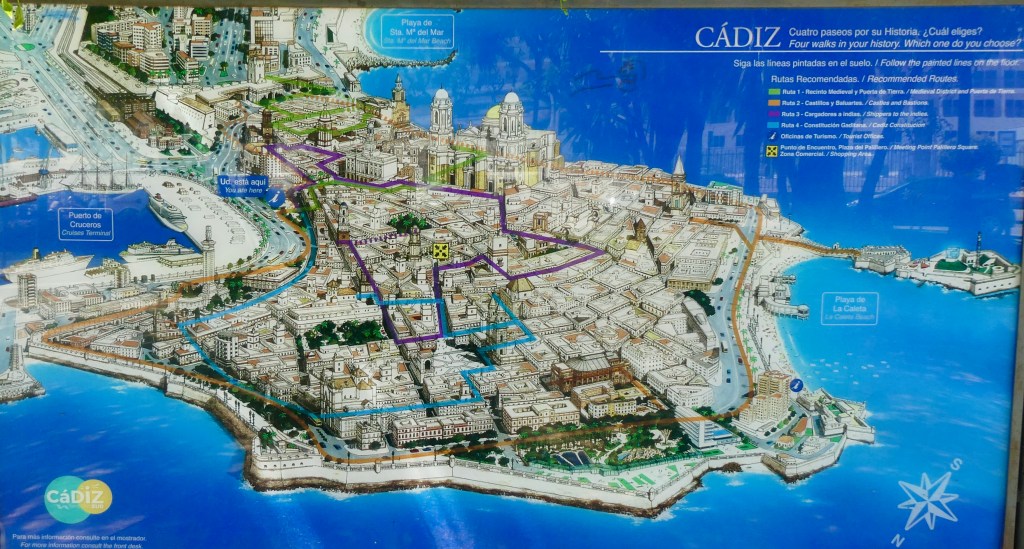
Cadìz is arguably the oldest inhabited city in western Europe.  The history is authenticated from 1104 BC.   It was inhabited first by the Phonecians, then the Carthaginians (beginning in 530 BC) Romans (beginning in 49 BC),  Moors (beginning in 711 AD) and Christians (beginning in 1264 AD).  Cadìz has been ruled primarily by Spain and its predecessors but was sought by the English, French and Dutch.

Cadìz sits on a small peninsula just west of the Mediterranean Sea and was an important port for trade and defense.

Cadìz is famous for the Watchtowers that were so important for shipping and times of battle.

The oldest walls in the city are from 800 BC.

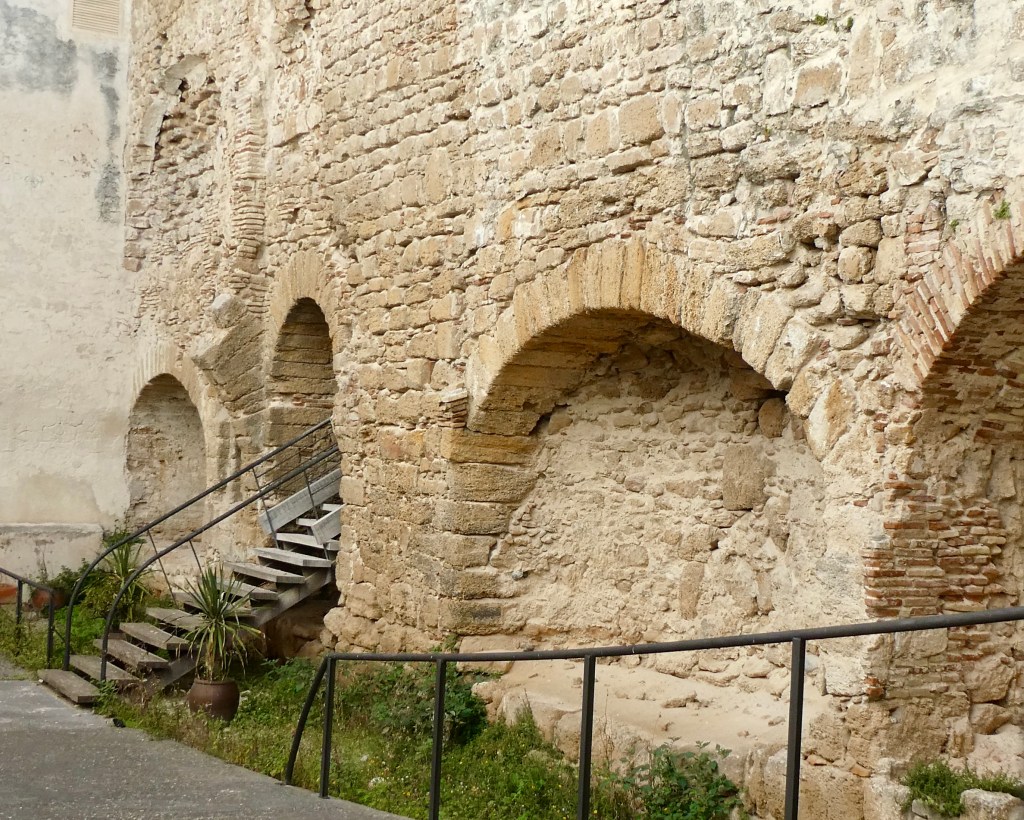
These walls from the Islamic era.  

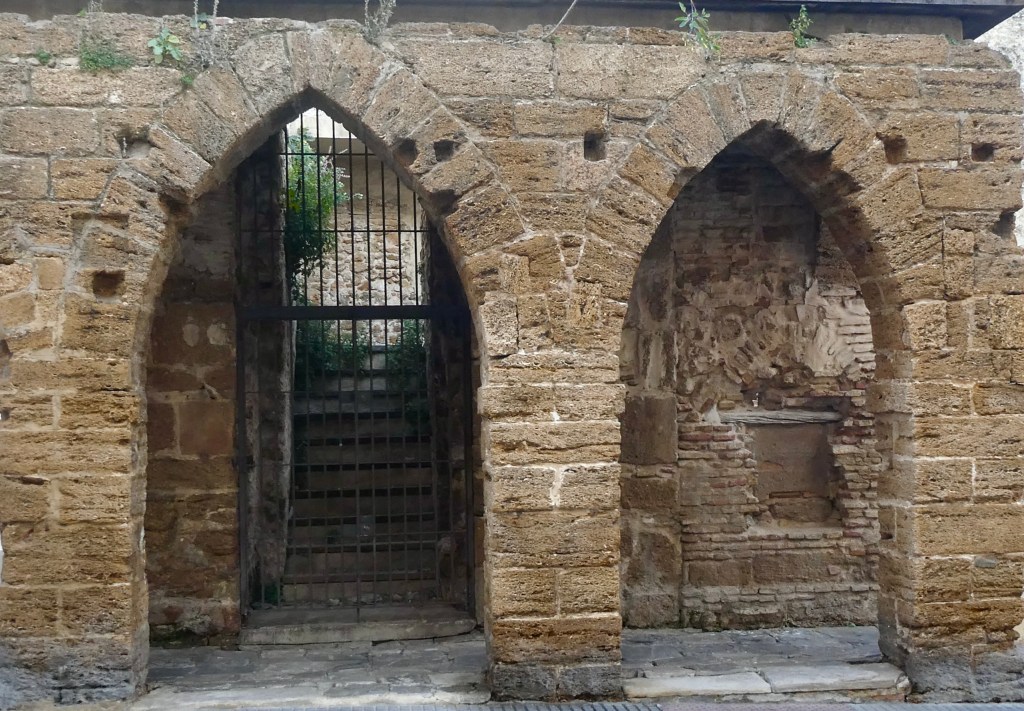
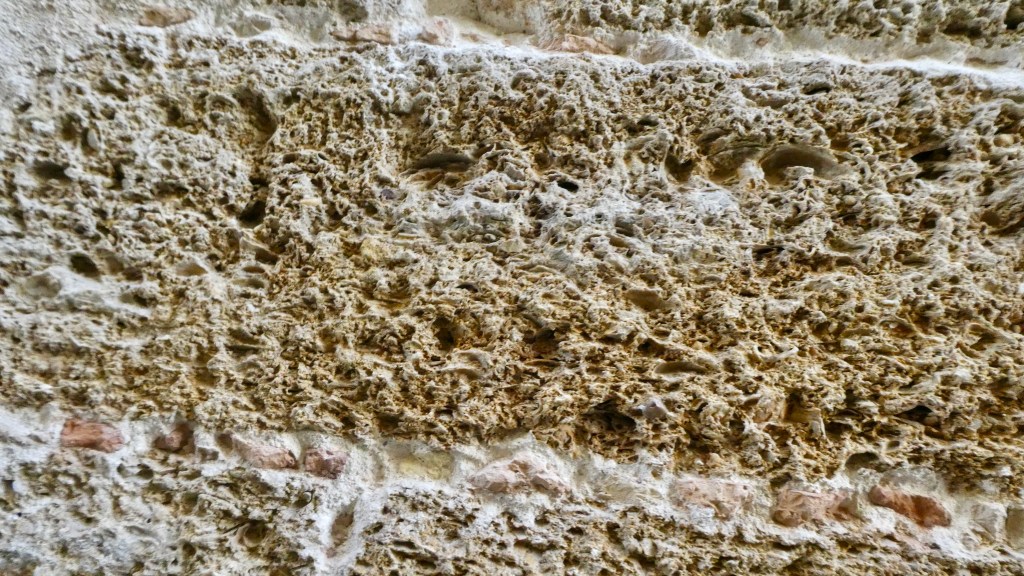
Walls of past eras were made from ostionera stone – a combination of crushed shells and small stones.

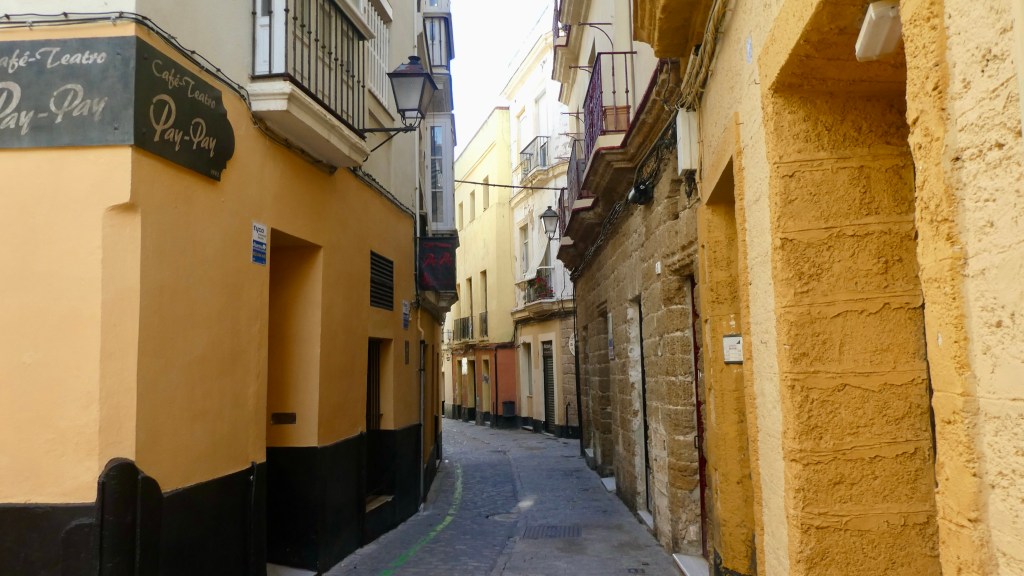
Cities in the Mediterranean region were built with narrow streets and buildings several stories high. .  This allows for shade and a cooling wind tunnel through the streets.

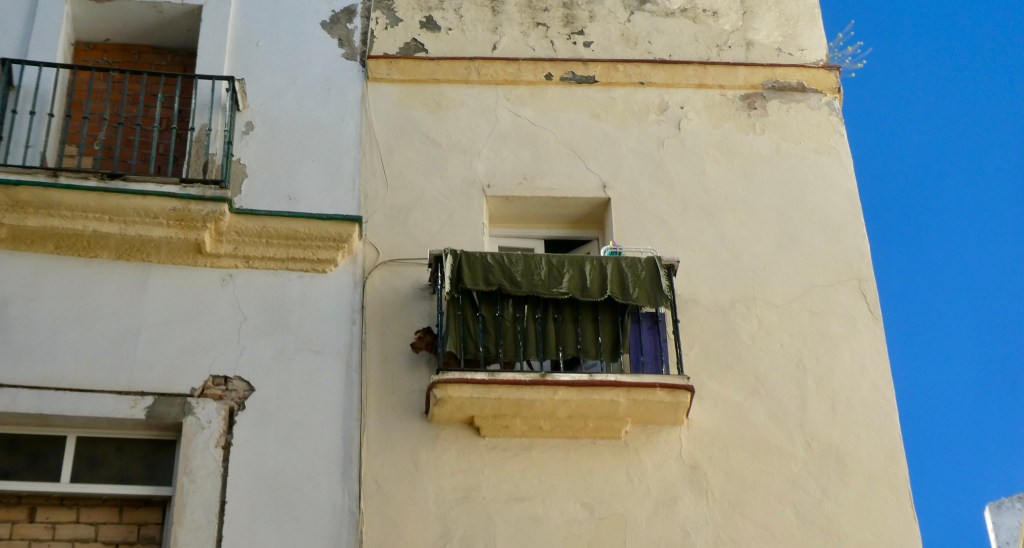
This pup was happy to greet us as we walked the narrow streets of Cadìz.

During the early 19th century, Cádiz was a stronghold for Spain’s anti-monarchist, liberal movement. A significant protest was held at the town hall in 1799.  As a result Cadìz was the site of the declaration of Spain’s first constitution in 1812.

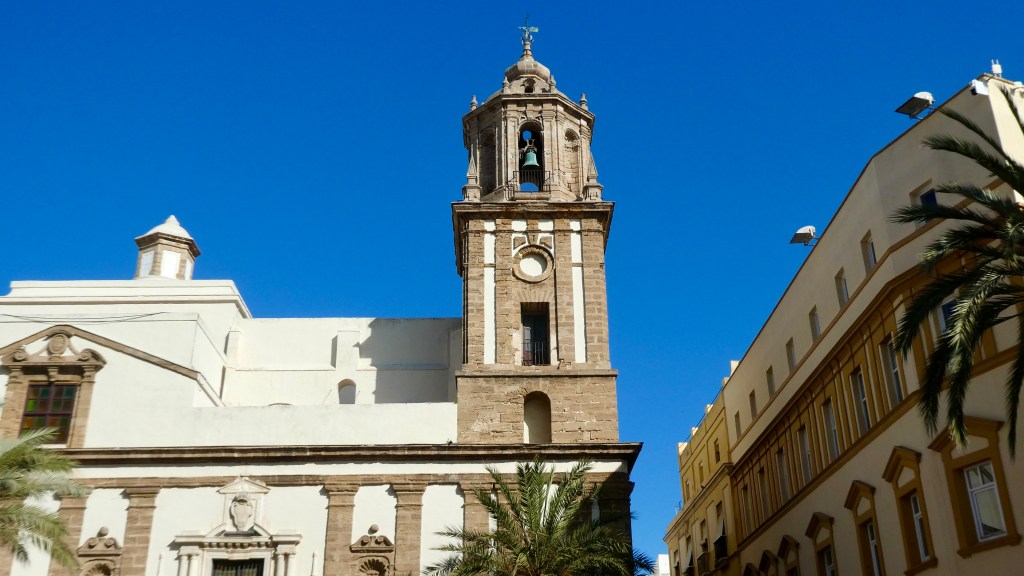
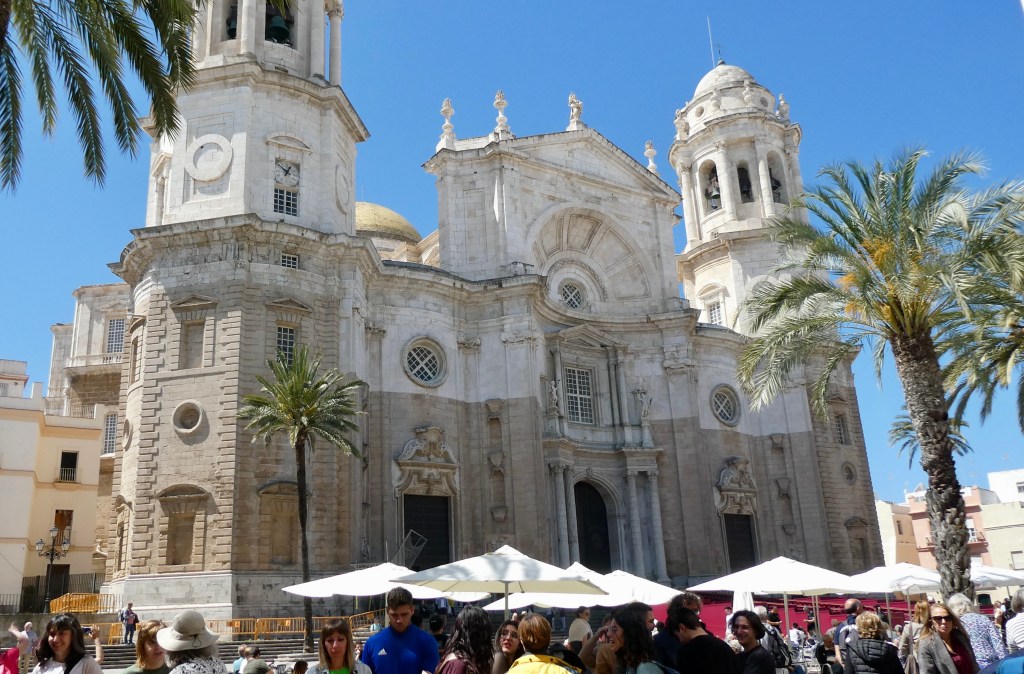
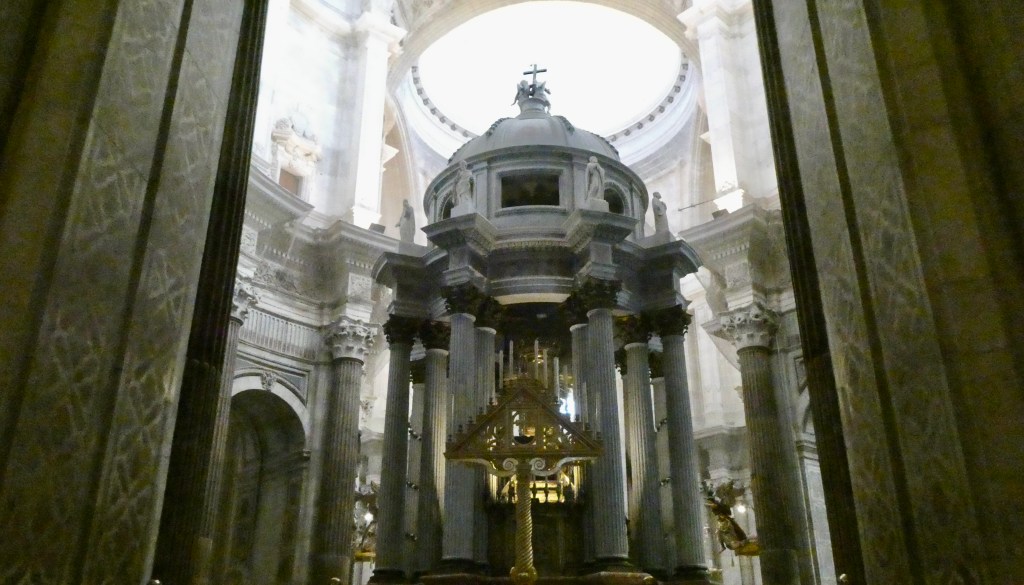
This is the “Catedral de CadÌz”, begun in 1722 and completed in 1838.  It is called the new cathedral because the 15th century cathedral was destroyed during a battle with the Dutch.

It is also called the Cathedral of the Americas because the wealth to build the cathedral was gained through trade with the new world.  The outside dome was gold so sailors could see it from a distance.

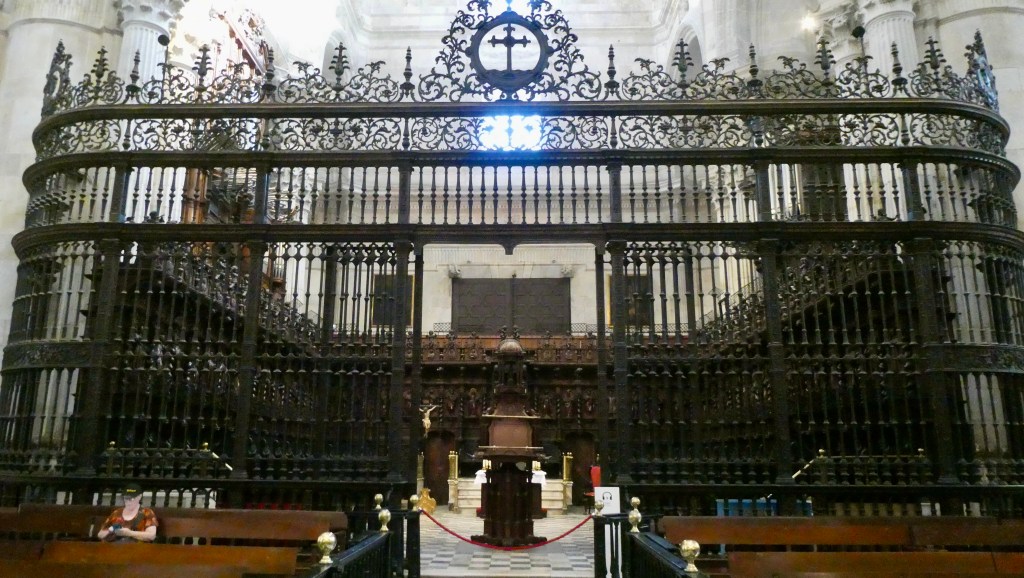
The Choir was built of the oak from ships, mostly from the Americas.

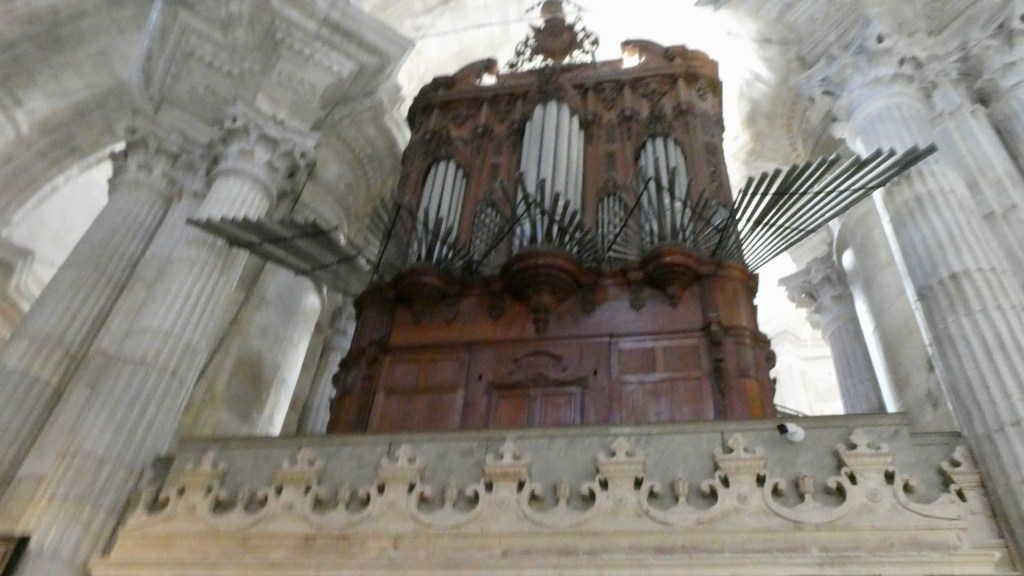
The organ is from the fifteenth century. 

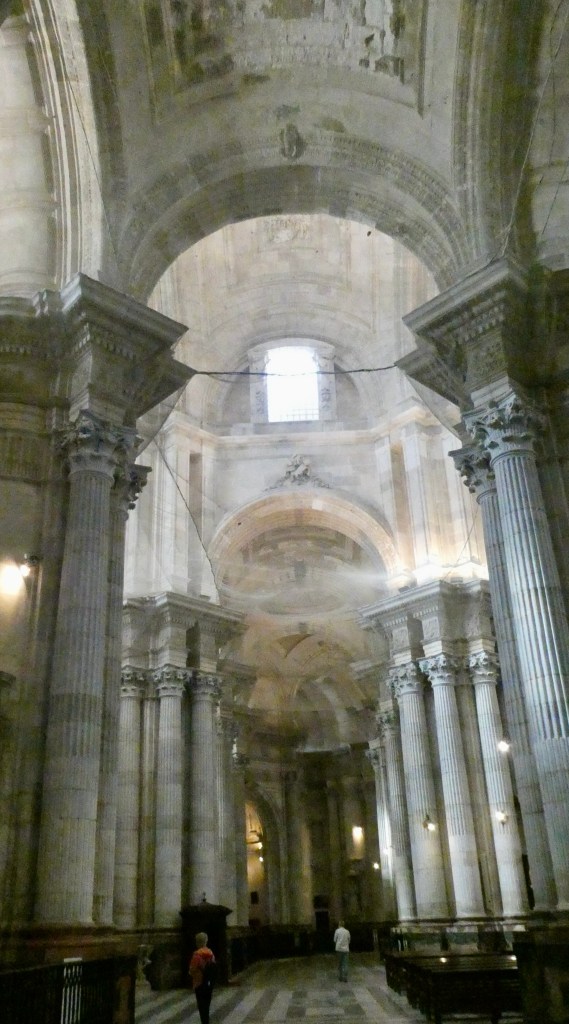
This is the main branch of the cathedral.

This is the central altar. Mass is still celebrated in the cathedral.

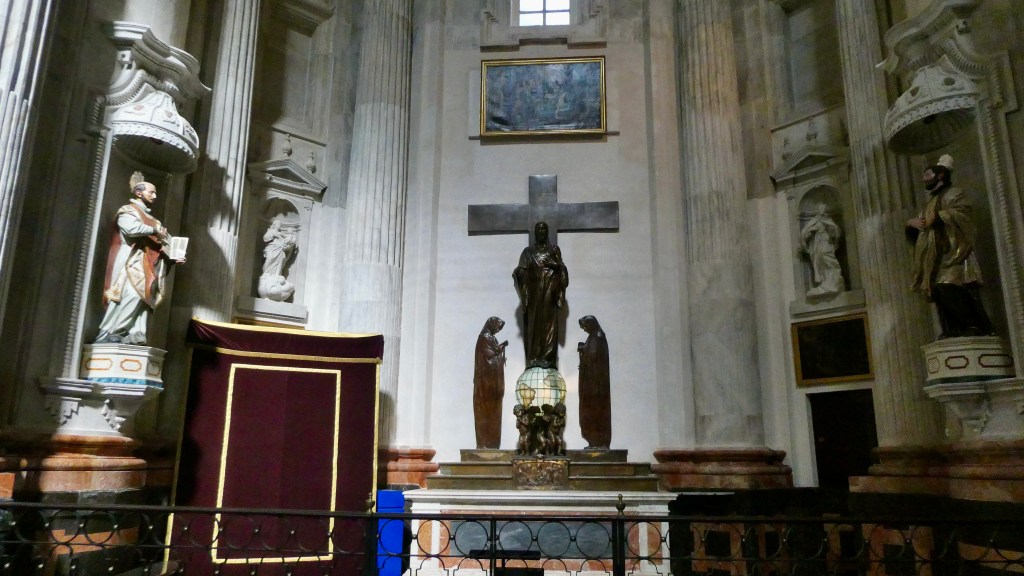
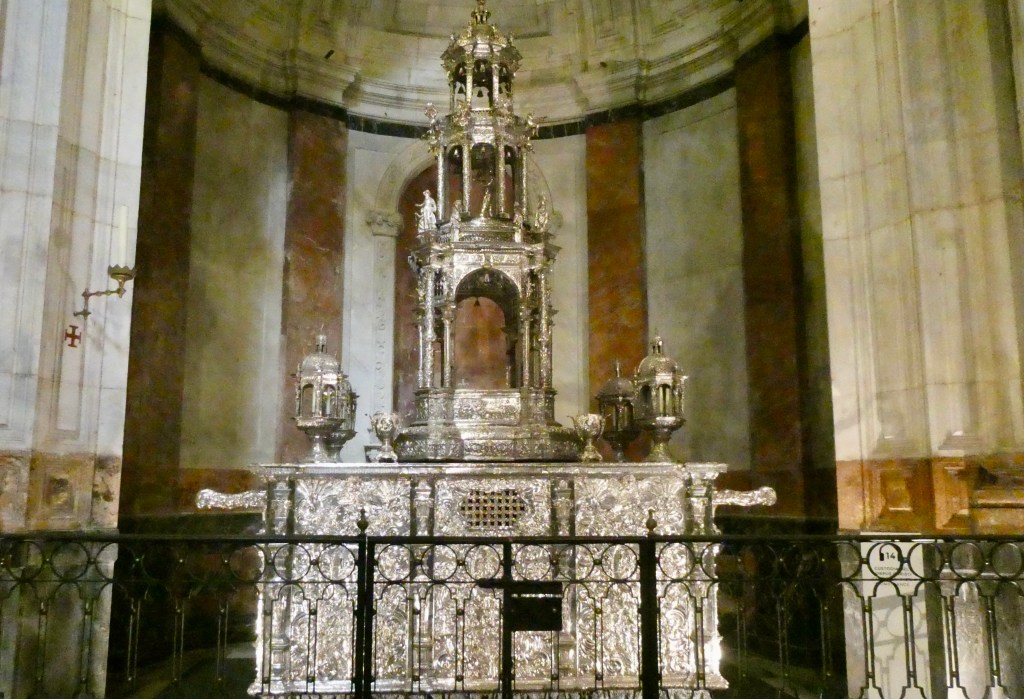
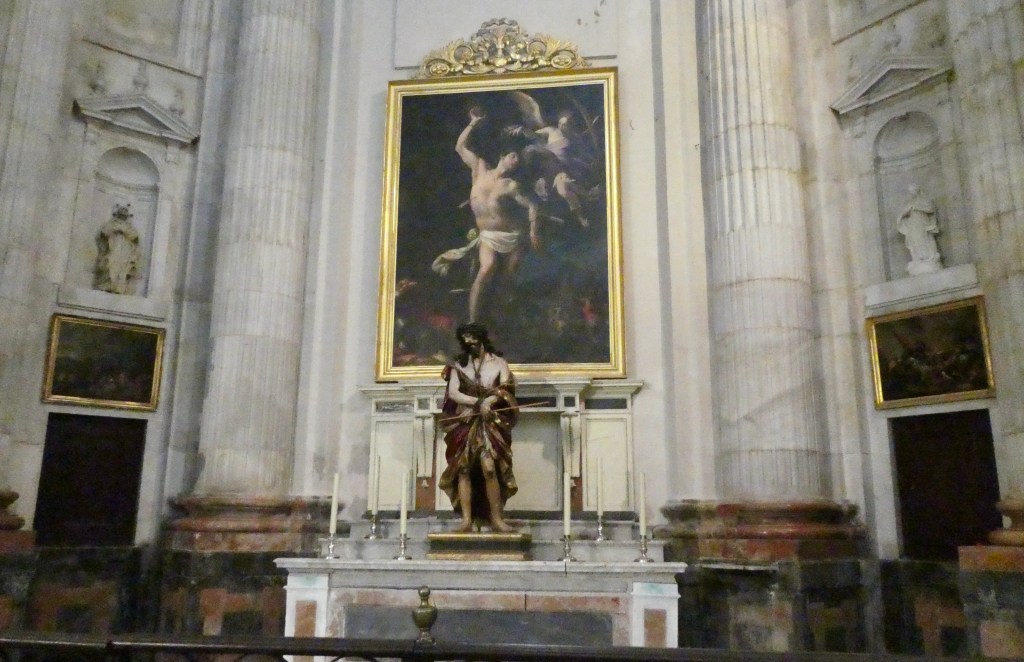
The cathedral has 16 side chapels. 

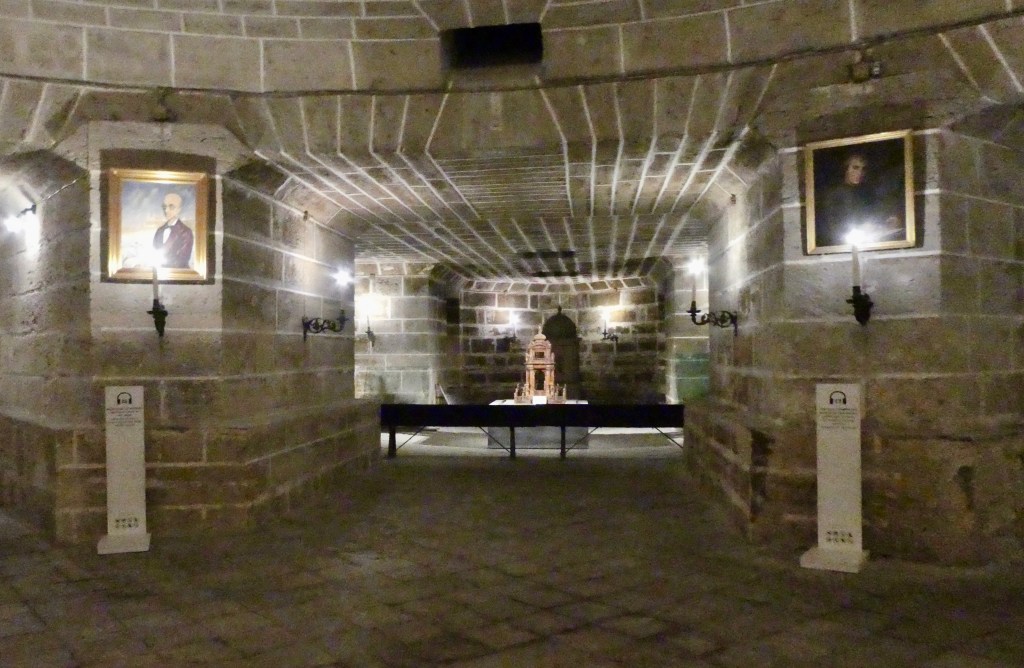
There is a crypt underneath the Catedral de Cadìz.  Among many entombed, the crypt of Manuel de Falla is highlighted.  He was a Spanish composer who was born in Cadìz.  He died in Argentina but was returned to CadÌz.  

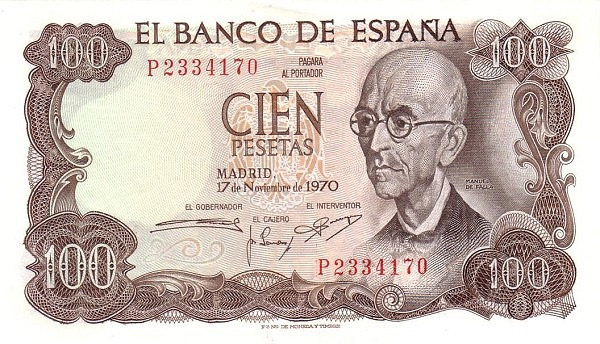
Manuel de Falla was important enough that he was on the 100 Pesatas currency of Spain.

Cadìz is in the Andalusia region along the southwest coast of Spain, one of seventeen autonomous regions. Andalusia is the second largest and most populous region of Spain.

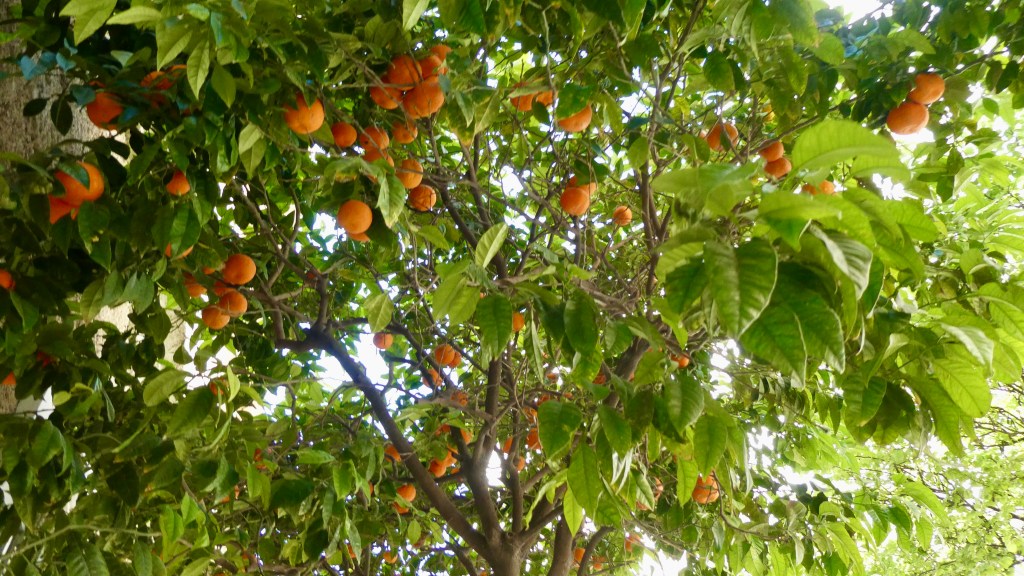
Cadìz is in one of the warmest areas of Spain along the southern coast. Bitter Oranges, also called Seville Oranges, were grown along the roads for their beauty. A market developed as they are exported to Britain for Orange Marmalade 

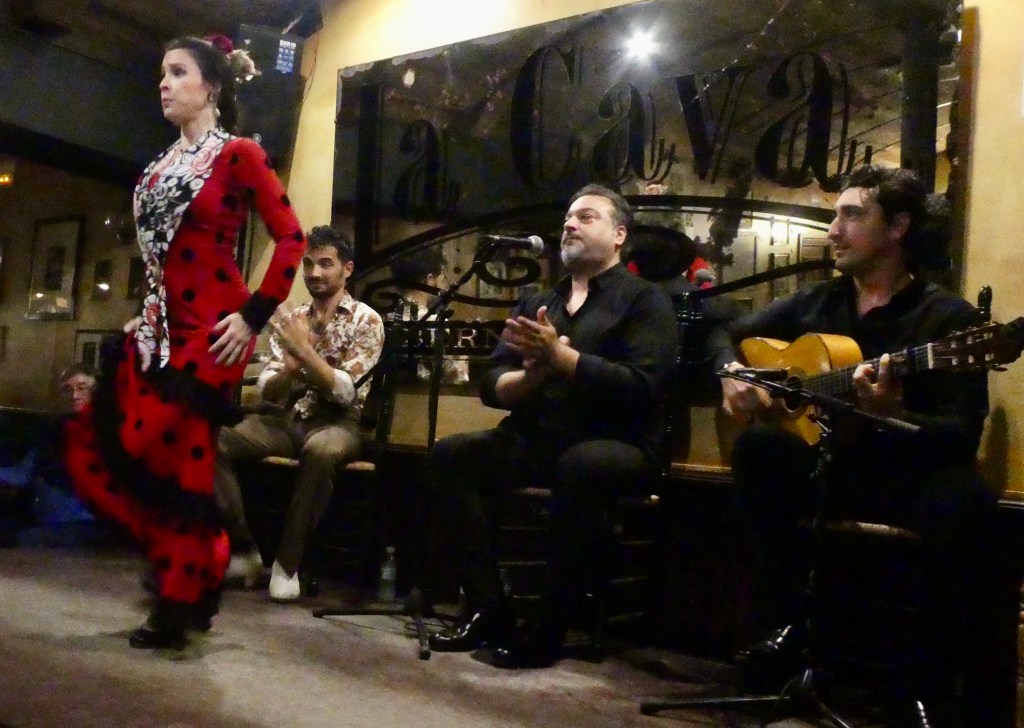
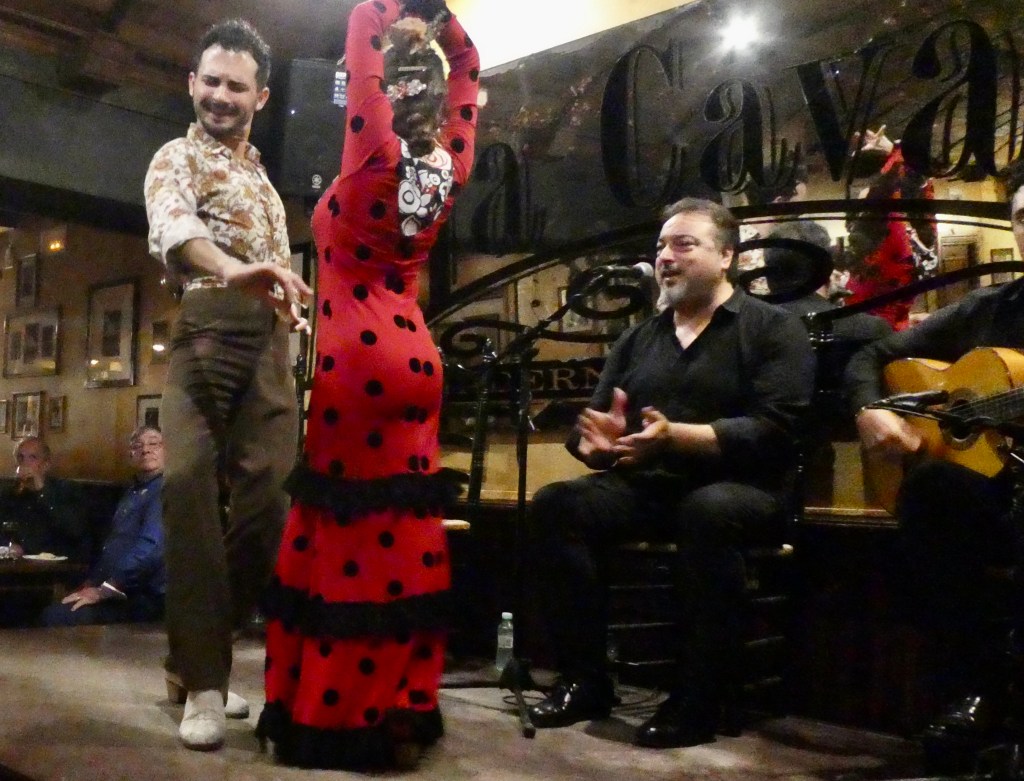
This area of Spain is famous for sherry.  We had our opportunity to try local sherry when we went to a Flamenco Show.  The sherry was served with a variety of tapas (meats, cheeses, small egg dish) and all were delicious.

We enjoyed the Flamenco way more than we expected to.  We consider it a whole trip highlight.  This group included a guitarist, singer and male and female dancers. 

The expressions on the face of the dancers were so intense.  We had the good fortune to sit very close and we could see how hard they worked to entertain us.

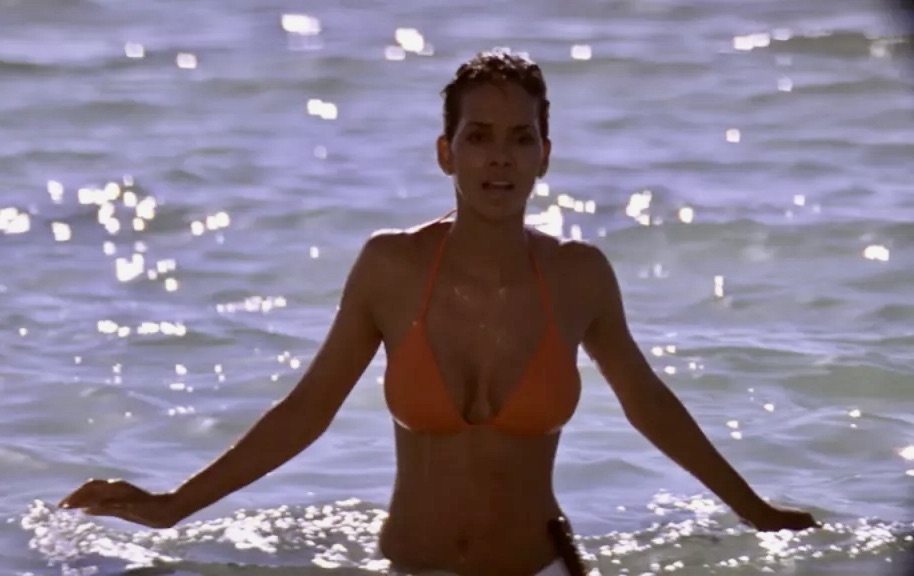
There is one more thing the guide made sure we knew about Cadìz.  The James Bond film Die Another Day was filmed here.  If you are a fan of Bond movies, you may remember the beach scene when Halle Berry came up out of the water.  It was filmed on the beach near the port for our ship.

We loved this port in Spain.  We have several more coming up. The next is Malaga.

Posted in Uncategorized | 2 Comments

Transatlantic Cruise: Ceuta – Is it Spain? Is it Africa? It’s Both!

When we purchased our transatlantic cruise, it included ports of Gibraltar and Monte Carlo.  However, we knew before we left home that those had been substituted out and our new ports were Cueta, Spanish Morocco and Nice, France.

Flexibility is required in travel. I didn’t care about Monte Carlo but I sure wanted to go to Gibraltar. 

We sailed through the Strait of Gibraltar, and past the Rock of Gibraltar on the port side.  We would pass it two more times as we went back out and in again over the next couple days.

The Rock of Gibraltar – maybe next time.

It was interesting to learn that Ceuta is one of two Spanish cities in Africa, the other is Melilla further to the east.

Ceuta was settled in the 7th century BC by the Phoenicians. It provided them strategic advantages due to the narrow strait. It later came under Roman and then Muslim rule.  Ceuta was conquered by Portugal in 1415.

Portugal and Spain were joined in 1580 for an unhappy 60 years. When they separated the citizens of Ceuta had the opportunity to choose whether they wanted to be part of Portugal or part of Spain.  They chose Spain and that was completed in 1668.  A Spanish monarch finally visited Ceuta in 1975 and then again in 2008.

We took a boat trip through the royal moat.  The left side was built in the 16th century by the Portuguese.   The right side was built by Spain in the 18th century.

We saw people “weeding” the moat.

And another kayaking the moat.

As we left the old part of Ceuta, we went by this sports complex showing Olympic Rings  Ceuta has had two Olympic medalists, one male and one female, both medaling in water polo in different games. 

We traveled out into the bay.   From there we could see Morocco in the distance.  There used to be a lot of daily travel back and forth but that has not occurred with COVID restrictions. Our tour guide said she worried about the Moroccan lady who works for her and wonders how she is getting by.

We could see this fortress on the hill.  In the past, if danger was present, someone would set fires to alert the people below.  In more recent years it was a prison and now a military post.

Ceuta Cathedral from the water.

We sailed back into the moat to have our land tour.

We went to Plaza de Africa.  It had all the power centers, the government, the military and the church.

This church is from the 18 century, built by the Portuguese.  It went through refurbishment in 2002.

This staff was held by the original Portuguese governor when he declared his rule in the 15th century.

The Inside.

We walked a bit and found the Casa de los Dragones. It was built in 1905, a mere youngin’ but fun.  The dragons were originally made of bronze and were removed in 1925. New lighter dragons were installed in 2006.

We saw the Ceuta Cathedral from land. It had a similar look to the nearby church on the Plaza de Africa but was much larger.

The inside of the cathedral.

The Pillars of Hercules – Hercules is separating the land to form the Strait of Gibraltar. 

Ahhh.  There is our ship, the Nieuw Statendam.  A welcome sight after a good day of touring in Ceuta, Spanish Morocco, Africa. Our very first time to Africa!

Posted in Uncategorized | 6 Comments

Transatlantic Cruise: The Azores

The Azores are a group of islands spanning a length of 373 miles.  The islands formed 50,000 years ago through volcanic eruption. Ten major islands surfaced and two were later joined through another eruption, leaving nine primary islands in the archipelago. The Azores, an autonomous region of Portugal, are 2100 miles from the US mainland and 900 miles from mainland Portugal. 

Flag of Portugal

Discovered in 1427 and settled in 1432, the primary language is Portuguese. The Azores dialect sounds slightly French because of the people who left Britannia during the Napoleon wars.

It took us six sea days to reach our first port –  Ponta Delgada on the island of Sao Miguel, The Azores, Portugal. 

The currency in the Azores is the Euro and we exchanged money on the ship.  This is really only a small sample of the denominations we eventually used both in bills and coin.  There are a lot!

As we were entering port, our captain commented on this ship, the Borealis of the Fred Olsen line.  She was launched in 1996 and christened in 1997 as part of the Holland America fleet.  She was the sixth ship in the line named the Rotterdam.  This ship was sold when the newest Rotterdam was planned.  The new, seventh, Rotterdam was in Fort Lauderdale with us and was in sight for much of of our journey across the Atlantic.

Our feet touched land for the first time in almost a week and we joined our guided tour – destination the Sete Cidades Crater.

However our first stop was at the A. Arruda pineapple plantation.  Originally brought from Brazil, pineapples are grown here in glass greenhouses.  A crop takes two years to grow as compared to six months in Brazil.

Smoke pots trick the plants to grow faster.

We tasted pineapple liquor. It was good.

On the drive up to the caldera crater, our tour guide told us a variety of things about his homeland.  

There are no snakes on the islands, but there are ferrets, weasels and rats.  They were stowaways on ships through time.

In the lush lands, they are able to grow food and sustain cattle.  As a result the Azores do not generally import foodstuffs.

Education for kindergarten through university is free.  All majors are available on the islands. Engineering, Medical and Law students transfer to the mainland to complete advanced degrees.

The United States still has an Air Force Base in the Azores, Lejes Field.

There are commercial flights from Boston every day.

At the top, we parked near to this abandoned hotel.   Built in the late 1980s, the Hotel Monte Palace was a five star resort and voted the best in Portugal, but lasted only eighteen months. It just couldn’t succeed financially.  The drab concrete seems like it could be featured on the TV show Mysteries of the Abandoned.

Just steps away was a viewpoint for Sete Cidades Crater.  We visited on an overcast day and, although still beautiful and lush, we didn’t see the lakes when the color differential was most vibrant.

This is a picture of an advertising photograph.

We passed another beautiful little lake on the way down into the caldera.

We journeyed to the town at the bottom and explored a bit.   There is always a church!

And there was food. This is fast food pizza – Azores style. It was okay, but cold. We didn’t know it then but it was foretaste of the challenge to come for us regarding the temperature of food in Spain and Italy.

After a good tour we had some time on our own at the port.  We walked to the Military Museum of the Azores, housed in the Fortress of Sao Bras  – a Renaissance military fortification.    

There were many interesting displays and objects throughout the museum,

The military objects and equipment spanned centuries.  We looked around and learned what we could but very few placards had information in English.

The Fortress had some lovely views.

After two more sea days we were to the part of the cruise that has a new port almost daily. Next up: Cueta, Spanish Morocco.

Posted in Uncategorized | 7 Comments