The Mission, the Mine and the Wildlife Museum


P1030513
We visited Mission San Xavier del Bac, also called the White Dove of the Desert, and heard the story of  Jesuit priest, Father Kino.   He began the mission in 1692 and served for 33 years.   After the Jesuits had a  falling out with the government of Spain, Franciscan priests  arrived and oversaw the  mission.   It was they who began building the mission church  that still stands.   San Xavier mission faced neglect with Mexican independence but continued.    After the Gadsden Purchase brought the area into the United States, restorative efforts were made without any government involvement.

P1030251

A duplicate of this statue of Father Kino is one of two supplied by Arizona for Statuary Hall in the Capital Building in DC. The second is of Senator Barry Goldwater.

Father Eusebio Kino, Jesuit priest, was the man who started it all.  As a young man in Italy, the future Father Kino suffered a life threatening illness and vowed that, if he lived, he would become a priest. He did live and studied for years in preparation. He was deemed gifted in mathematics and cartography and dearly wanted to serve in China. However, he followed the wishes of the Jesuit priesthood and went to New Spain.

Arriving in 1671 he served the Pima Indians, teaching them a new faith and new farming techniques. He also advocated for them when they were abused as laborers in silver mines by the ruling Spanish.   Mission San Xavier del Bac  was one of 24 he established in the area.

Over the years, Father Kino explored and charted much of what is now northern Mexico and southern Arizona and southern California. He explored Baja California numerous times, determining that it was a peninsula – not an island.

The current mission building was begun in 1783 and has a varied history including earthquakes, lightning, and neglect. Some features, such as the right tower have never been completed. There were a number of restoration attempts over the years, including one that used concrete and was quite damaging as those repaired sections  retained water more than the natural material. The current effort involves artisans from around the world and proceeds when money is available.

The art and statues (56) inside, and the work done to restore them, are impressive. An interesting feature is that the priests incorporated European and native symbols and peoples to make the transition to Christianity easier for the natives.

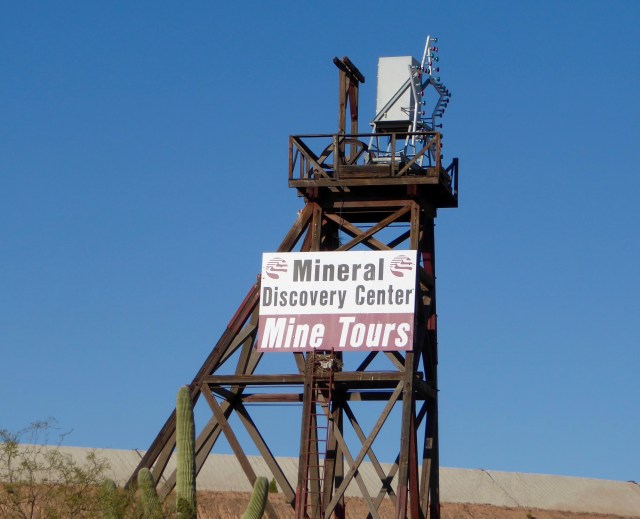
Currently, the Mission is on the National Historic Register and sits on the Tohono O’odham San Xavier Indian Reservation. There is an associated mission school and Mass is celebrated on a regular basis.P1030706We took a tour of the Asarco Mission Mining Site – so named because it is within 10-15 miles of the San Xavier Mission, but the mining emphasis has shifted from silver to copper.  It is a 2 mile by 2.5 mile open pit mine. Blasting is utilized to diminish solid mass into boulders or rocks of less than five feet in diameter.
P1030710

The very large trucks hold 320 tons of rock when carrying a full load to the mill.

P1030718

P1030709

Tires for these large vehicles cost $80,000 and last 4-5 months.

This truck with its 170 ton payload and bulldozer scoop were retired in the 1970’s. Today’s vehicles and tools are so much bigger and more powerful.

Due to an unknown gas leak, we did not get to visit the mill but learned that the rock is broken up and ground repeatedly until it is a copper powder. Somewhere in the process the powder is soaked with various chemicals in large vats . Eventually the process forms copper sheets that are 99.99 % pure. From boulder to sheet takes 28-30 days.

There are a few other by-products of the mining process that are acquired and sold, but copper is the main emphasis. Asarco estimates there are 15 years left of active copper mining in this pit.

The future? Our tour guide suggested three probabilities. First, there is a layer of granite under the copper that may entice another company to purchase the site. Second, it may become a very large sand and gravel pit. Or third, if the area is retired, it is required that the land be returned to its natural state. Asarco once operated five open pit mines in the area. Two that are on the Tohono O’odham Reservation have been successfully restored.

In the meantime there is a 225 acre (170 football fields) Solar Farm on mine land in the buffer zone between the pit and their neighbors. It is able to provide power for half of the homes in the neighboring town of Sahuarita, population just short of 27,000.

It was an interesting outing , if somewhat sad. The desert around Tucson is beautiful and it was stunning to see such a very large scar cut into the landscape. Yet, copper is used in so many things in our world and 640 people work 24/7, 365 (366) days a year in the mine…. I would just like to go back in 16 years and see that the restoration really is in process.

Another interesting, and somewhat sad, outing we took was to the International Wildlife Museum.

It is the educational outreach and the international headquarters for the Sierra Club. Four hundred insects, mammals and birds from around the world are displayed in dioramas and exhibits. Cousins Lynn and Marilyn – have you seen this place?
IMG_1325

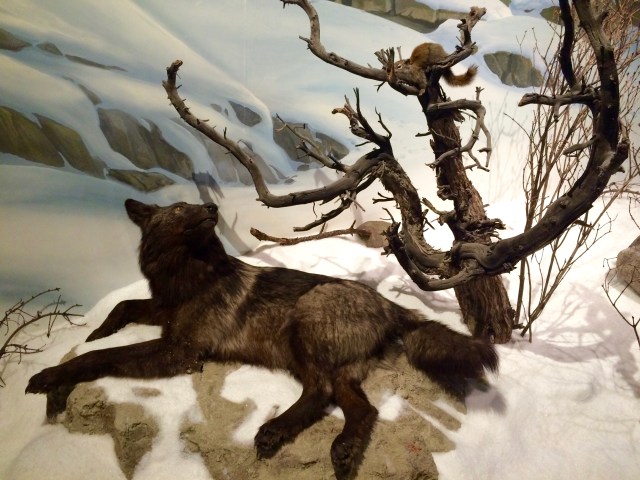
Going in, I knew very little about taxidermy. In the museum exhibit, I learned that only the hide/fur/covering of an animal is used in its final presentation and that the inner structure is built and formed by the taxidermist. Randy said he already knew that but I had always thought the skeleton was preserved and used. Learning is growing!


The animals are beautiful and some are more than 100 years old. The museum states that no animals were killed specifically for the museum and were “donated by various government agencies, wildlife rehabilitation centers, captive breeding programs, zoos and individuals.”


As people who don’t hunt,  we had some mixed feelings about the museum. However, the animals were very beautiful and superbly displayed and maintained. We left impressed.

Posted in Uncategorized | 2 Comments

Airplane Stories


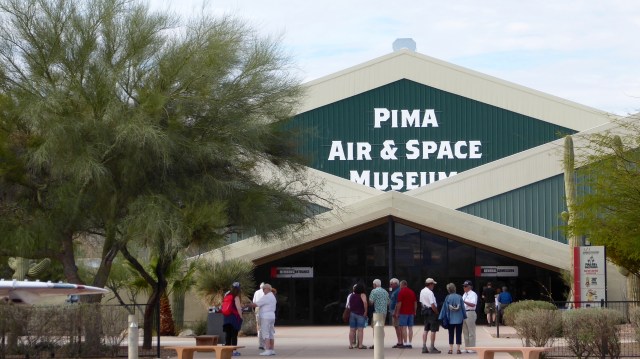
P1030547We spent most of a day at the Pima Air and Space Museum, another of Tucson’s must-dos. It is the third largest aircraft museum in the country (behind the Smithsonian and the Air Force Museum) with hundreds of aircraft displayed outside and in numerous large hangars.
The specifics of wing span, engine size and bomb payloads muddled in my mind very quickly and I quickly latched on to the airplane stories.   The museum often identifies when the aircraft was manufactured, where it was deployed, when and where it was salvaged, civilian use if any and how the Pima museum obtained it. I found myself very interested in those aspects of an aircraft’s history and some of them have very unique stories. I hope you enjoy them as well – and I’m saving my favorite story for last!

Grumman_(GM)_FM-2_Wildcat_MG_8810_a

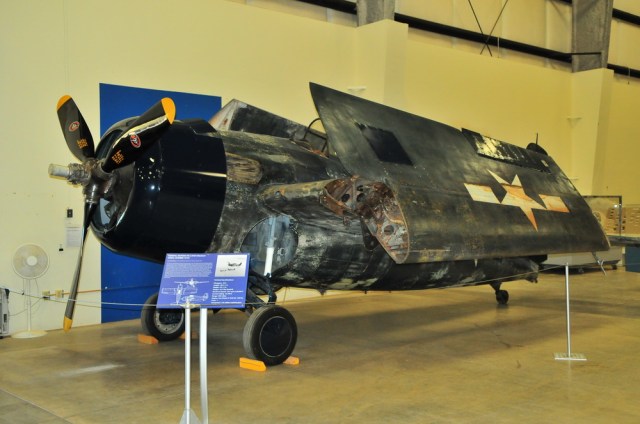
During WWII, new pilots needed to learn to  take off and land on aircraft carriers – only all the aircraft carriers were in use in the war zones. In the Great Lakes, barges were re-surfaced with an aircraft carrier top and training occurred there. The Wildcat airplane above slipped off the side of the practice carrier, undamaged, and was submerged in Lake Michigan. (The wings were folded in for storage purposes on the carrier.) It was retrieved 55 years later and obtained by the Pima Museum.

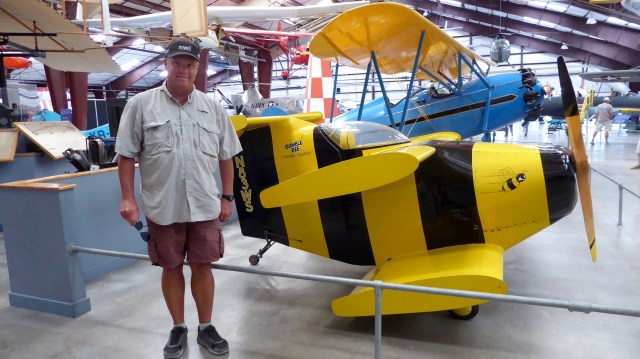
P1030552The Bumble Bee was built with the specific intention of getting a Guiness World Record for the smallest plane, which it received in 1984. The record held for eight months.
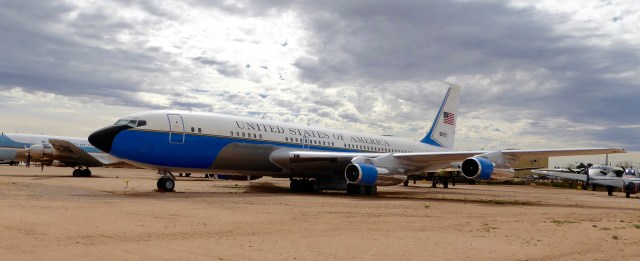
P1030578This plane brought the Iranian held US Embassy Hostages home on their Freedom Flight in 1981.
P1030585

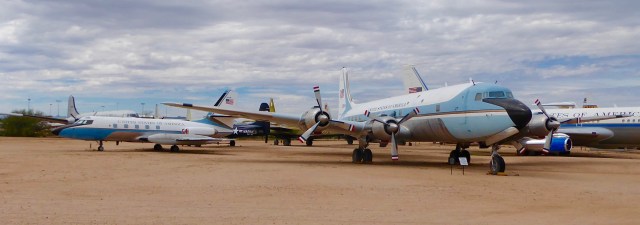
The plane on the right was Air Force One for Presidents Kennedy and Johnson. Randy remembers being able to go into this plane when he toured the museum years ago. The plane, still owned by the US Air Force, no longer allows that for liability reasons – what a shame.  The smaller plane on the left transported presidential family members was dubbed “Air Force Half” by President Johnson.

P1030593

One of the most versatile military aircraft ever, the C-47, evolved from the DC1 – originally built for TWA as a passenger plane. DC2 and DC3 versions (for civilian use) were stalled when all aircraft manufacturers built for the war effort during WWII. This particular C-47 was the second one ever built. The white lines near the tail were painted on all Allied planes during the Normandy Invasion to identify friends among the foes.

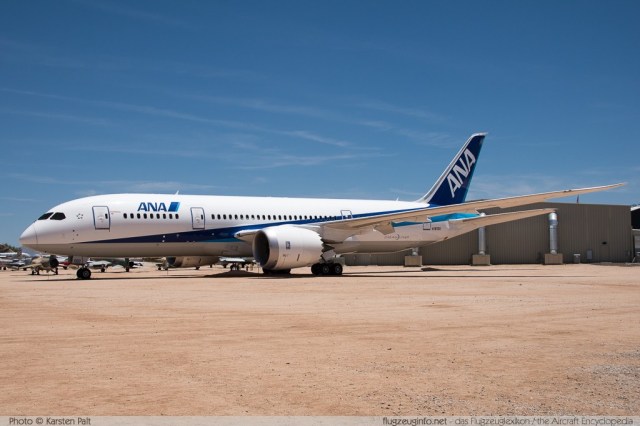
boeing_787-8_ana_boeing_n787ex_17_pima2015
The Dreamliner ANA was one of six prototypes to test the Boeing 787 around the world. Fully instrument equipped, the test plane was never certified to fly passengers, and was given to the museum when testing was complete.

P1030588

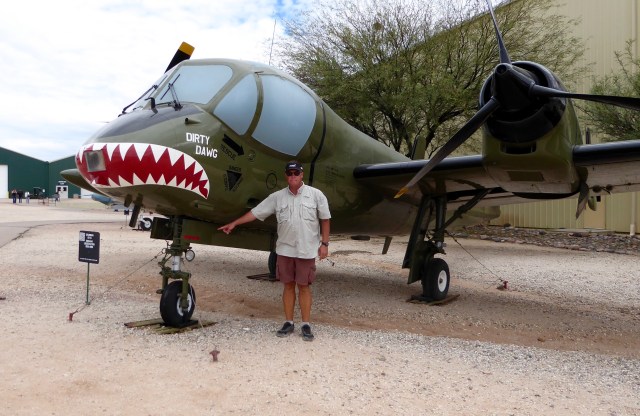
Many planes have nose art and symbols identifying various mission activities. Randy is pointing to four red hearts on the Dirty Dawg indicating this observation plane sustained four bullet holes.

Bad-Angel-01

The Bad Angel – My Favorite Story!

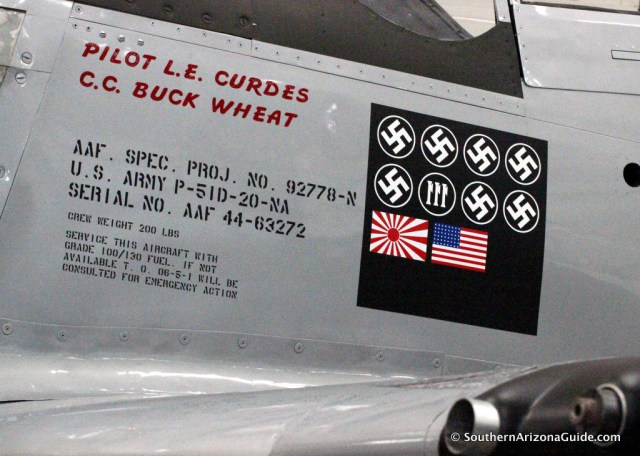
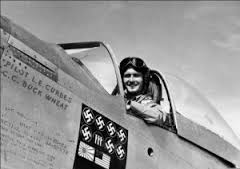
The P-51 Mustang, Bad Angel, was piloted by LE Curdes and has interesting symbols on its side representing its “kills” – seven Nazi, one Italian, one Japanese and one American….Hmmm.

Kill-Insignias-Close-01

At age 22 Lt. Curdes went to the war zone and had shot down five German planes within his first two months in the Mediterranean. During the next three months, he shot down an Italian plane and two more German planes before he himself was shot down and captured by the Italians. Within days of his capture,  Italy surrendered and Curdes and a few other pilots escaped – before Germany took over the prison camp.

He was assigned to the Pacific theater and, when he downed a Japanese plane, he became one of only three pilots to have shot down planes  from Germany, Italy and Japan.

images

And the American flag? While patrolling overhead to protect a downed American pilot, prior to rescue, Curdes noticed an American C47 heading toward a Japanese held airstrip on Bataan. He tried several strategies to intervene in the plane’s path but was unable to deter its direction. To keep them from landing in enemy territory, he carefully shot out one of the plane’s engines and then the other. The plane ditched in the water and the American crew, including two female nurses, were rescued along with the original downed pilot.  Lt. Curdes was awarded the Distinguished Flying Cross for downing an unarmed American transport plane.    Pretty good story, huh?

P1030627

To assist the war effort, civilians were encouraged to be plane spotters. This display shows playing cards with different plane shapes to encourage that awareness and knowledge.

Posted in Uncategorized | 4 Comments

Sabino Canyon and a Scorpion Hunt


P1030659

This week we went on the best hike ever! We went to Sabino Canyon, northeast of Tucson, and had a delightful day. We rode a narrated tram 3.9 miles up into the canyon. Not only was the narration pleasant and informative, but did you catch that we rode  3.9 miles uphill!

At the end of the road, we walked up the switchbacks another mile or so and then walked six miles down the Phoneline trail.  Love a hike that is mostly downhill!

P1030666

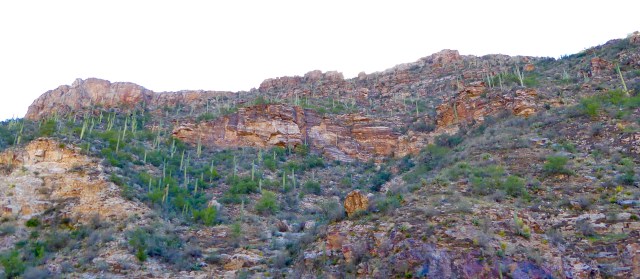
The desert scenery was beautiful and this bird sang a lovely song.


At the end we saw a very unique cactus, called a cristate saguaro. A formation such as this is rare – about 1 in 30,000.

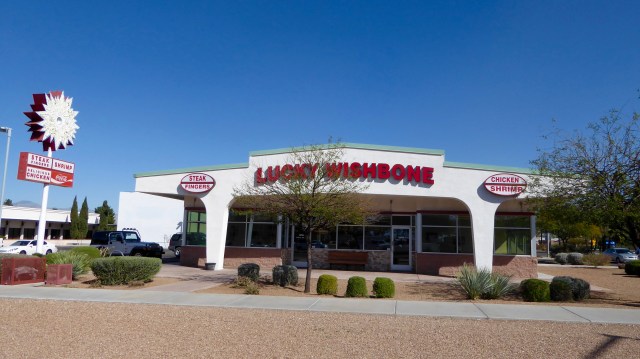
After our long morning of hiking DOWN we went to Lucky Wishbone – one of those local restaurants Randy use to go to when he lived in Tucson as a teenager. He said it tasted the same!

P1030700
A very different nature experience happened when we went to Chandler (south of Phoenix) for a visit with Randy’s brother, Tim and his wife Yvette.

P1030639

Because the weather was warm and dry,  Elko was going with us, and we anticipated being gone 12-14 hours, we took the opportunity to shampoo our carpets before we left.   Some parts of our life are still very normal!

P1030642

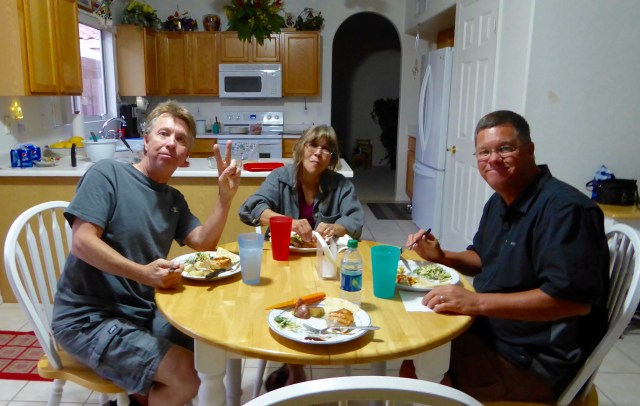
We enjoyed our day with Tim and Yvette very much. We had a good dinner and then concluded our evening with a scorpion hunt in their backyard.

P1030645

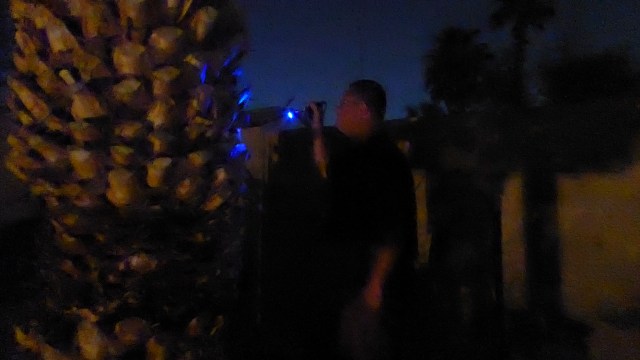
Randy and Tim had their scorpion lights (black light type) which really make the scorpions glow so they are very easy to see.

P1030650
The scorpions were on the walls, on the ground and in the palm trees. They found 32 in about an hour! It was surprising that there were so many scorpions out so early, but there has been record heat in Arizona the last two weeks so perhaps that is why. Tim and Yvette have noticed a lot of scorpions in their yard (they live in a subdivision) the last few years. They aren’t sure whether there really are more, or maybe the scorpions were there all along and they just weren’t aware until Tim was stung a few years ago.

It was a very pleasant visit – scorpions and all!

After we told the scorpion story to some new friends here in the Tucson RV park, they too wanted to go on a scorpion hunt. After about 30 minutes of searching the outside wall and nearby ground,  we found only one scorpion. Tucson is generally 5-10 degrees cooler than Phoenix so maybe the scorpions won’t be here until next month when we are gone.  What a shame…

Posted in Uncategorized | Leave a comment

Tucson: A New Routine

During our month in Yuma, we settled into a nice comfortable routine. Leaving there February 1st  we moved to Tucson, a city we are familiar with, but to an RV park we hadn’t yet seen. Rincon Country West is a mega, 55+ park, with 1100 lots and lots of activities and entertainment. Most people here come from cold northern states and return seasonally year after year.

P1030456

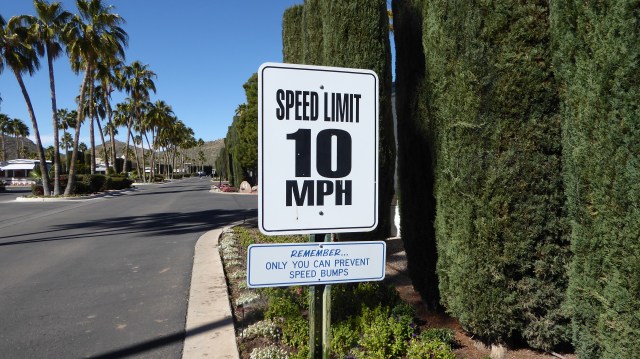
We love this sign posted around our new park – Only You Can Prevent Speed Bumps!

We have spent the last ten days trying out and settling on what park activities are going to be part of our new routines. Mine will include aerobics, line dancing and the Apple/Mac class.  Randy’s routine will include biking, pickle ball and golf. Elko has his same routine of eating, sleeping and walking no matter where we are – some places just have more interesting places to walk.

IMG_1294

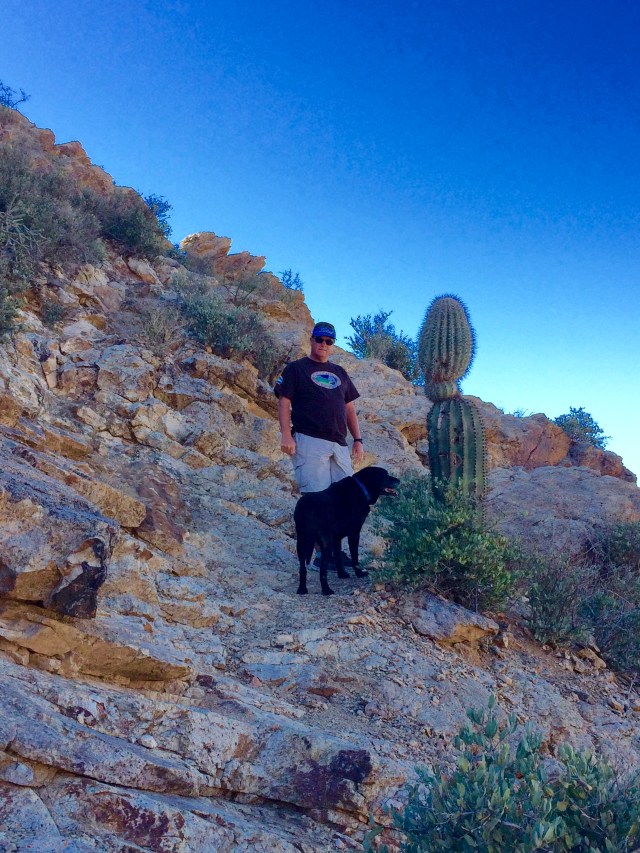
One day we went for a walk in a desert mountain park . Elko likes those days best!


We will certainly continue our routine of exploring.  There is so much to do in the Tucson area that we will not get it all in – even in a month. So, here is a sampling of what we’ve done so far:

P1030213

Randy ate Sonoran Hotdogs, a regional culinary wonder. Think hot dog wrapped in bacon with beans and jalapeño sauce…It didn’t sound good to me so I had tacos.

P1030215

We went to the Arizona Historical Society Museum which highlighted the three cultures that combined to make Tucson unique. These include the original peoples, the Tohono O’ogham,  formerly called the Papago.   The Mexicans/Spaniards came to the area in the 1700’s. Finally, Europeans/Anglos began arriving in 1854 when the lands that eventually became Arizona and New Mexico joined the United States by means of the Gadsden Purchase.

A few displays at the museum really caught our attention.

P1030232

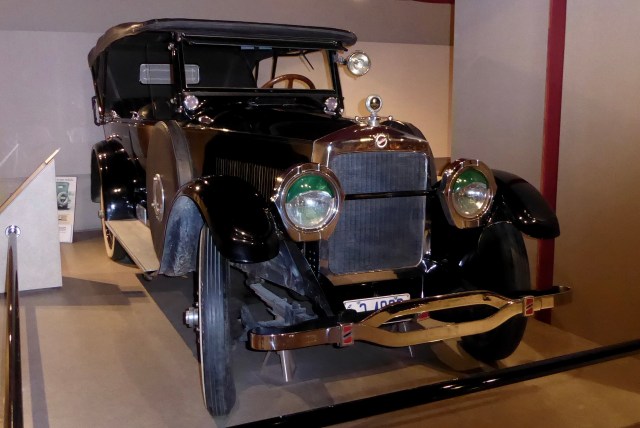
First was a 1923 Studebaker “Big Six” Touring Car.  Costing $1575, this model car was used by sheriffs in 12 of 14 Arizona counties.   When Studebaker became aware of their cars’  law enforcement use on Arizona’s rough roads, the company used that information in their advertising.   In 1925 they introduced a six cylinder vehicle with a lighter chassis  – the “Sheriff’s Special.”

P1030244

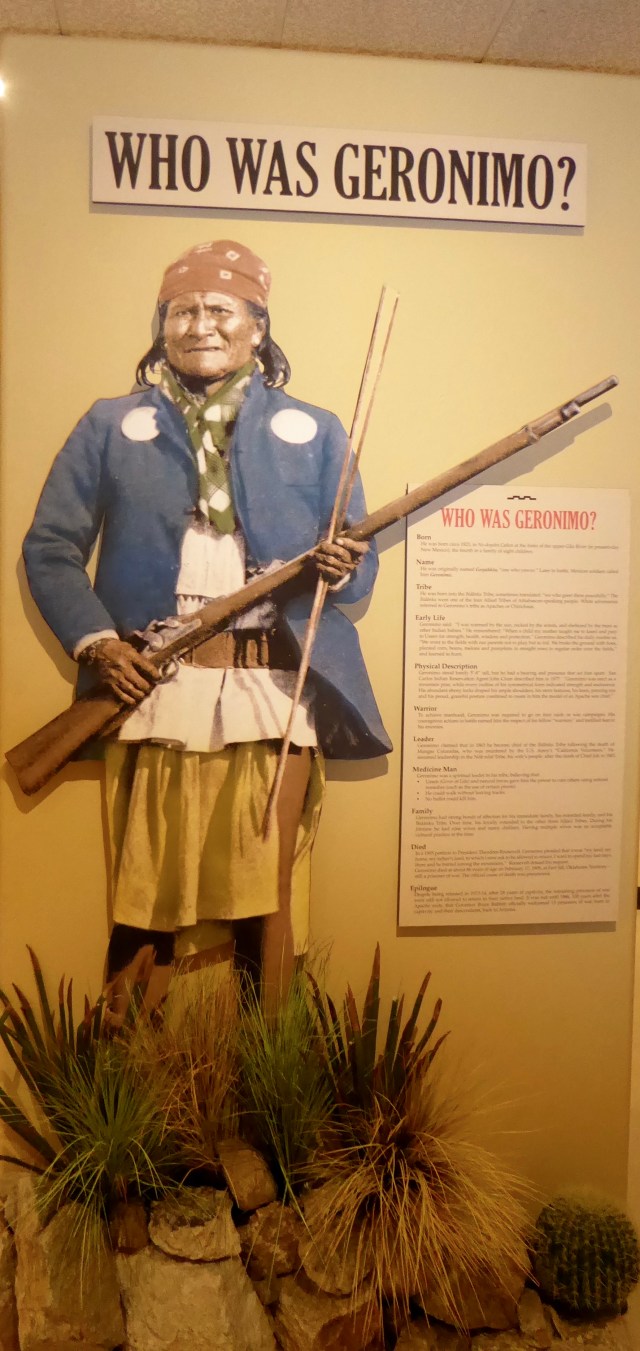
Another exhibit highlighted Geronimo, an Apache who wreaked havoc in the southwest. His people were the last American Indians to live as a free people. Geronimo surrendered for the final time in 1886.  In 1905, at Theodore Roosevelt’s invitation, Geronimo marched at the front of Roosevelt’s Inaugural parade. Roosevelt said Geronimo was the “greatest, single-handed murderer in American History and I want to give the people a good show.” Yet, when Geronimo pleaded to be allowed to return to native lands to die, Roosevelt denied the request.

A third exhibit of interest focused on Congressional Medals of Honor,  how they are awarded and Arizonans who have earned them.   Although I forgot to document who was awarded the older medal, the second Congressional Medal of Honor shown was awarded to Marine Corps Major Jay R. Vargas for heroism and sacrifice in Vietnam.

P1030405

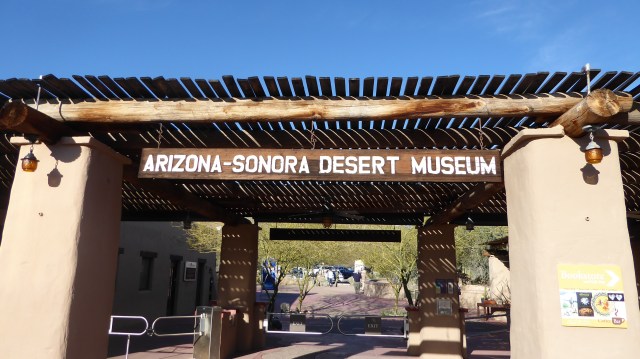
We also went to a completely different type of museum, The Arizona Sonora Desert Museum – which is really more of a desert zoo.

We saw snakes and tarantulas.

A coyote and sleeping javalinas.

We saw toads and so many desert animals – all the while hearing the unique “song” of the cactus wren.  It was once described to us as the cranking sound an old engine made   – you know it when you hear it!

One of our favorite exhibits was an aviary for hummingbirds.


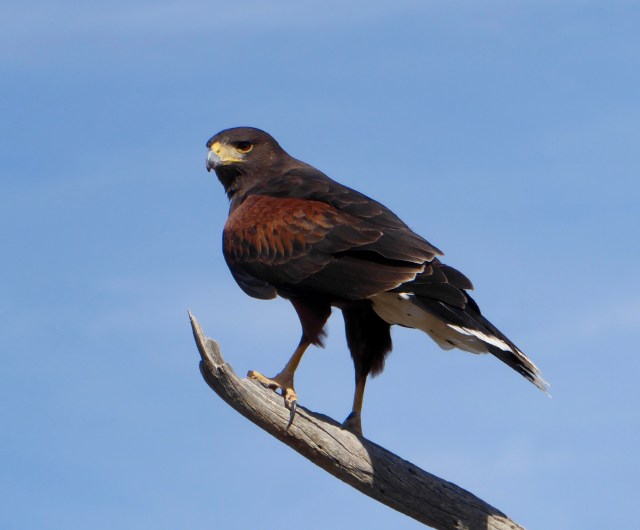
We also saw a museum program on raptors. It highlighted falcons, owls and Harris Hawks, the latter being the only bird of prey that hunts communally.

P1030308

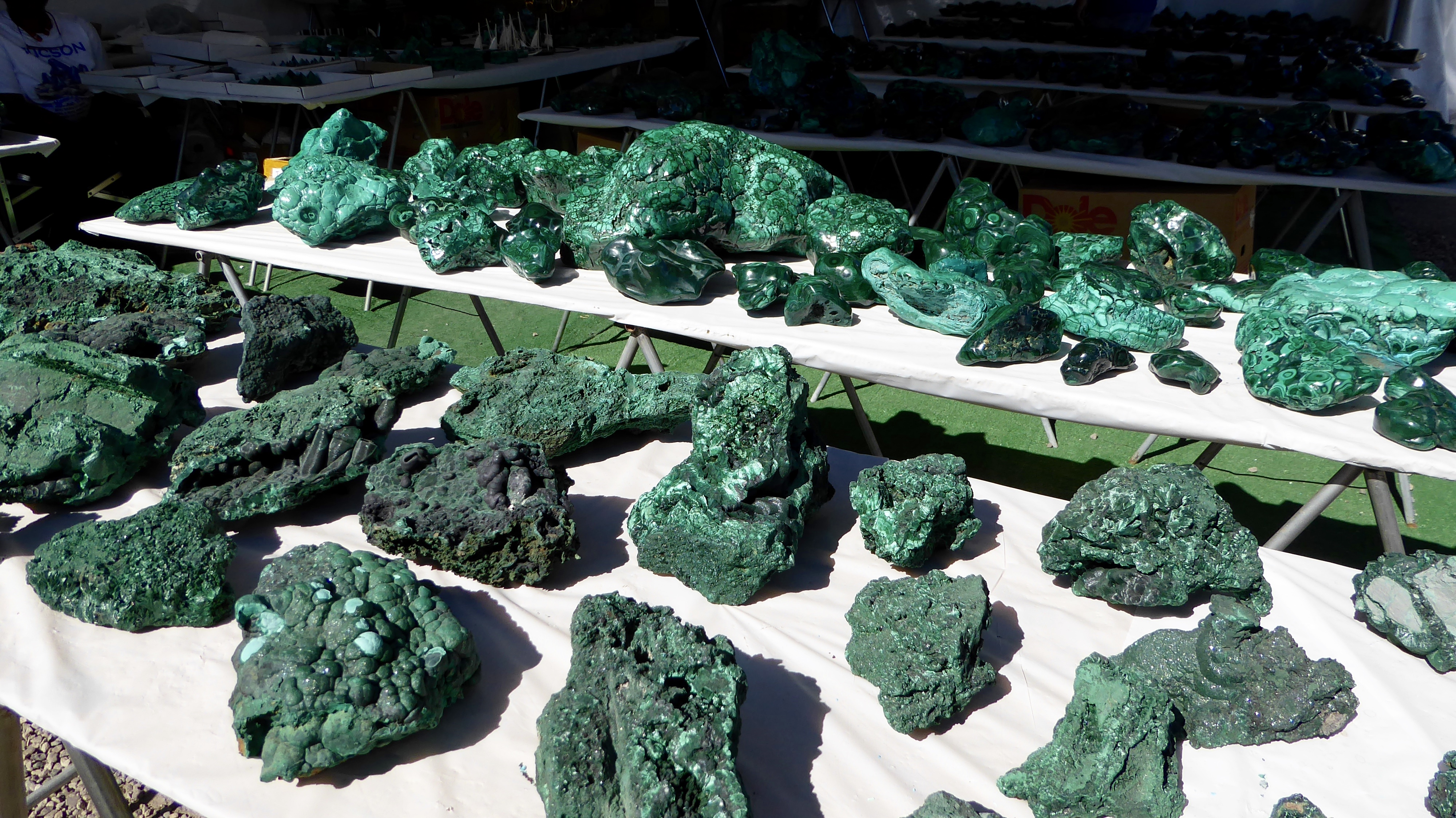
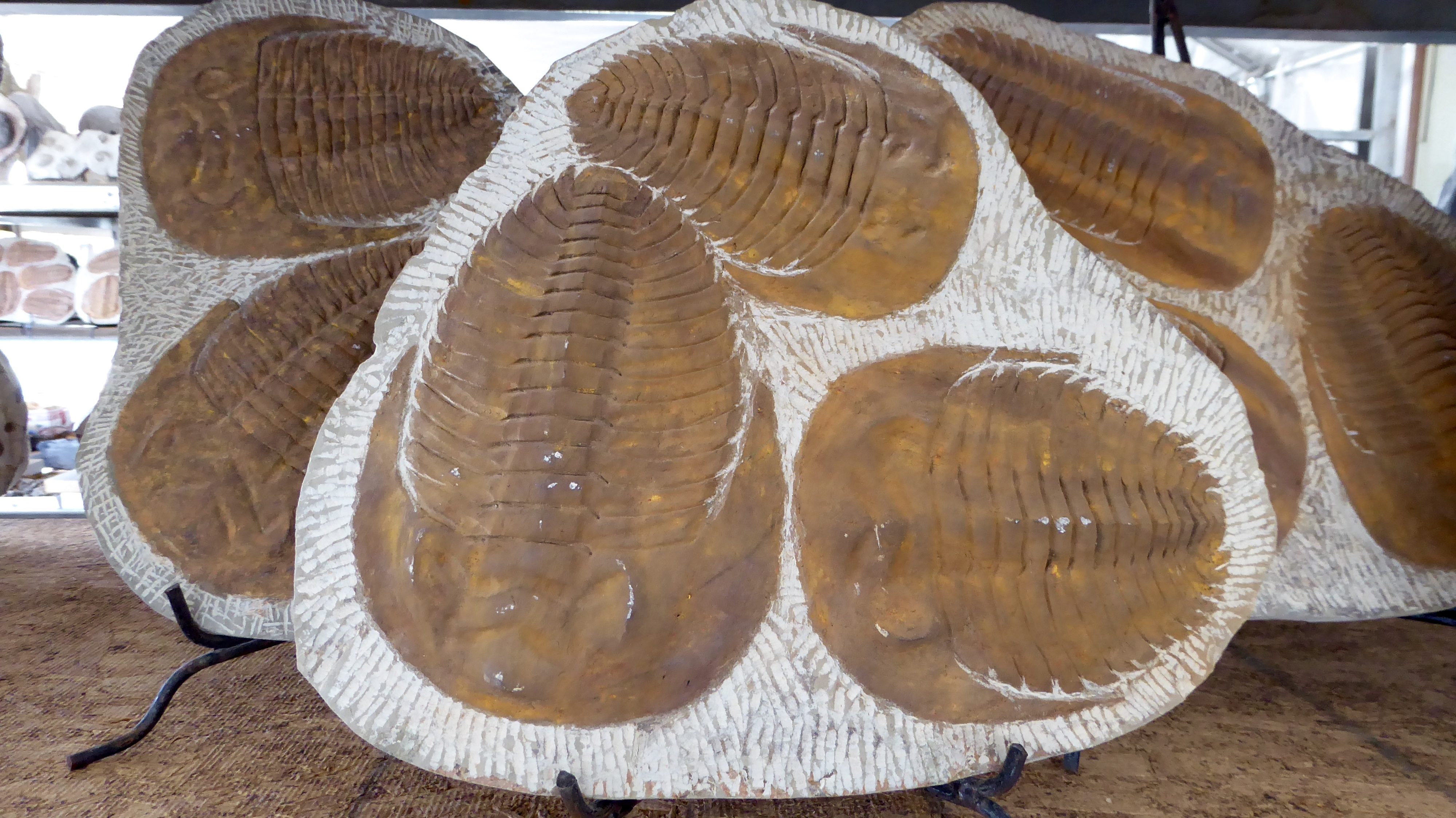
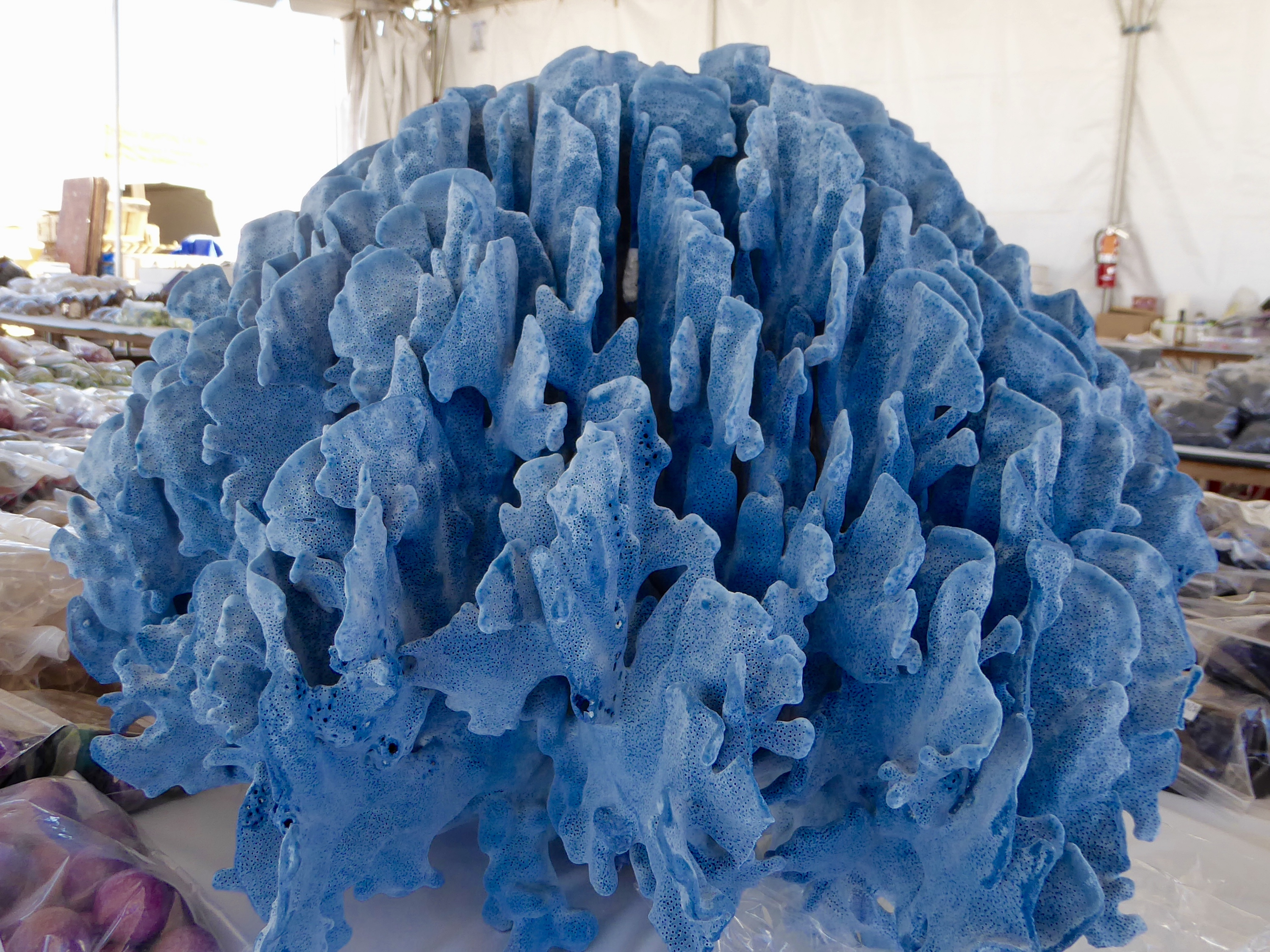
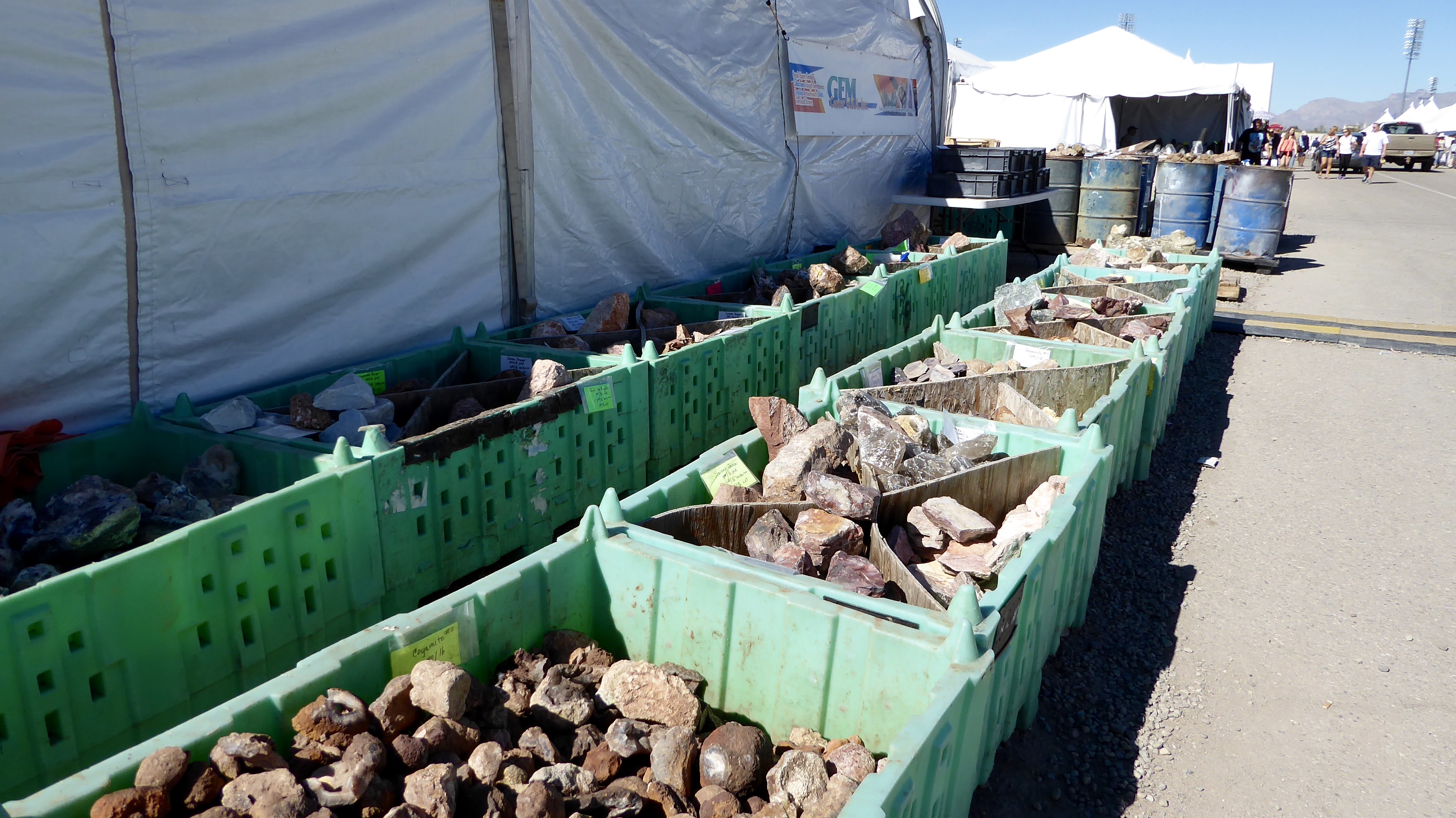
The Arizona Sonora Desert Museum is a “must do”  when visiting Tucson.  Another “must do,”if you are here at the right time, is the Rock and Mineral show. There are currently dozens of venues around the city.  We chose a venue that was close by which was a combination of wholesale and retail sellers and a bead and jewelry market.  It was an interesting afternoon but we live on wheels so we don’t need rocks to carry around!

P1030459 P1030468 P1030469 P1030470

We will continue to explore around Tucson – exploring will always be part of our routine!


Posted in Uncategorized | 4 Comments

Living Life Back in the Day

P1030160

We have enjoyed our month at Fortuna de Oro RV Park.   Fortuna is  a 55 and older park with many daily activities and weekly special events.  It is easy to stay busy here and I did.  Randy chose to spend more leisure time but still enjoyed golfing, pickle ball and bocci ball.

P1030161

Fortuna de Oro caters well to the clientele.   There was a car show with many old beauties from the 30s, 40s, 50s and 60s.   We even saw a 1964 Ford Falcon Convertible like the family car that was “mine” when I first went off to college and met Randy.  Maybe we belong to this “back in the day” culture after all!

P1030180

The park also sponsored a terrific show by Jay and the Americans. I didn’t think I knew the group but once they started singing, I recognized many of their songs such as Cara Mia, Just a Little Bit Closer, Only in America and This Magic Moment.

The group currently has three of the original “Americans” and is on their third “Jay”.  The first Jay lasted only a short time while the second was with them through much of their successful recording years.  Second Jay retained the name of the group when they disbanded.  Upon his  bankruptcy, the Americans bought the name back for $100,000 and reformed with a third Jay.   They had connections with many recording groups and musicians in the 60s and 70’s and had entertaining stories to tell.  They were instrumental in launching Neil Diamond’s career when Neil brought them the song, “Sunday” to record.  Although he originally said he was too shy to perform,  Jay and the Americans encouraged and helped Neil to  record it himself. (Thinking of you Cindy Berg!)

P1030186

The lead guitarist from the USA Band accompanying them looked so much like our guitar playing friend John Sloan, especially in profile,  that we went up and talked with him after the concert.

Outside the park we had more musical experiences from back in the day.   We saw Elvis performing at a local diner for $10 a ticket.  Who knew he too winters in Yuma and gives bargain performances.  We learned then that we are a decade too young to be true Elvis fans.  We knew chorus lyrics – but not every word, of every verse, of every song like everyone else in the room!

Continuing with the Elvis theme – We enjoyed dinner in an “Elvis Room” at a local pizza establishment with friends from our RV park neighborhood.

P1030176

We had a crazy amount of food because we all ordered the family specials. We took home more food than we ate!

These folks are all from Canada and regularly spend five winter months in the US.  Randy golfed with the guys numerous times and we had a few group dinners and happy hours.   It is fun to make new friends on the road.

P1030125

Our next door neighbors at the park also became friends.  Peggy and Myron are from Wisconsin and we hope to visit them when we head east next summer.  We went with them to Lutes Casino, “Where the Elite Meet.”  The building dates back to 1901 and is part of the Historic Downtown area.    During the 1950s, the billiard hall casino came into the Lute family as collateral for a failed loan.  The restaurant/bar (but not a casino) is an eclectically decorated place and Lute’s signature meal is a hotdog-hamburger.  Randy and Myron tried it and approved.

We also explored more of Yuma’s historical places from back in the day.  We went to the Quartermaster Depot State Historic Park.   This depot was a supply hub for the southwest during the Apache Wars.

A few old and rehabilitated buildings  remain.  Some hold exhibits  including old vehicles and a section of the plank road through the sand dunes in the Imperial Valley west of here.

IMG_1255

IMG_1259.jpg

This house served as home or office for a variety of territorial government officials but was originally built in 1859 as a riverside home by steamboat captain George Alonzo Johnson. Built for his bride, this is the first, and thereby oldest, adobe house built by an Anglo in Arizona.

One of the more interesting exhibits at the park was about the Colorado River and where the water goes – think Nevada, Arizona, California and a little bit left to Mexico.  These pictures show the Colorado river from the same site in Yuma before and after a series of dams were built to control flooding and provide water to the southwest.

We also visited the Yuma Pioneer Cemetery.   The cemetery was hosting a fund raising event for Saddles of Joy which provides therapeutic rides for special needs children.

The cemetery was divided into sections for Catholics, Yuma’s society folks and a variety of other categories.  I don’t think this group had a lot of clout.

P1030187

Nearly all the pioneer cemetery was dirt, but other sections had marble headstones and more decorative graves.

Part of the event was storytellers throughout the cemetery representing people who lived back in the day and had stories to tell about their life and death in Yuma and the Arizona territory.  Actors were near where the grave sites were for their character.

P1030199

This was Sheriff James T. Dana who was the sheriff of Arizona City from 1868 to 1871.  (Yuma had three names over time beginning with Colorado City, Arizona City and finally Yuma.)  He holds the unfortunate distinction of being the only sheriff ever killed in the line of duty in Arizona (while it was a territory and now as a state).

He was originally buried in the cemetery near downtown and his was one of many bodies who “surfaced” during the Colorado River flood of 1916.  Those bodies were reburied in the pioneer cemetery but are only marked with a “county” designation.  His remains are included in that group but his exact location is unknown.  It was a very interesting evening and one we’d gladly do again when we are next in Yuma since they highlight stories about different residents each year.

Tomorrow we are off to Tucson for the month of February.  We can explore places Randy remembers from when he was a boy there back in the day.

Posted in Uncategorized | 2 Comments

By Request: The Decisions We Made

Friend, and blog post reader, Shari, requested a post on whether the decisions we made going into this lifestyle were the right ones for us, or would we do some things differently. So, this is for Shari – and hopefully it will be interesting to the rest of you too.

Those of you who know Randy may remember that for the last five years of his working life, he could think (and talk) of little else than retiring. So this lifestyle choice, which went from a possibility, to probability, to certainty, was thought out and discussed for years during car trips and over dinner.

Some decisions were huge – when to retire, to sell the house or keep it, what type of RV to have and where to have our legal domicile.

Some decisions were small – how were we going to make ice, will we get a washer dryer combo and how was I going to travel with my jewelry.

P1030568

In the midst of it all, one decision was totally non-negotiable – traveling with a pet. Elko is part of our family and we never considered leaving him behind. He is with us for his duration – period.

Pets, especially our mellow old guy, are great conversation starters with people in campgrounds and we often remember people by their pet more than their names. Elko gets us outdoors when we might not want to go and brings a contentment to our lives that only pet lovers understand.

However, on the sad, sad day that we lose our sweet boy, we will make a different choice – for a time. Pets can limit where you can go, what you can do and how long you can be gone. National parks are notoriously “paw un-friendly” so our visits there are less than we’d like them to be. When the weather is warm and we leave for a time, we worry about the power going out in the park, or the air conditioner failing and Elko being too warm in this fiberglass box of a home. Randy had to figure out a warning method involving an extra cell phone and a temperature monitoring alert system (contact him for details.)

So, back to the big decisions….

retiring

We feel very blessed to have been able to retire at 55 (Randy on his 55th birthday and me 5 days after mine). Randy was unhappy in his job and, even though I was still a mostly happy teacher, we haven’t missed working at all. He had prepared the financial part of it and the Affordable Care Act made the last obstacle doable. (Yes, some of us like Obamacare!) Randy likes to say he can recommend retirement!

With advice from our realtor, we bought two rental properties and paid them off when we sold our house. We get rental income from the houses and also have options if we need or want to get off the road. We sold, or gave away, everything in our home except a few totes of sentimental items, stored at our daughter’s house.  We do not have a storage unit.

Where to domicile is an important legal decision. This involves where you vote, where you license your vehicles, where you obtain insurance and where you pay your taxes. Three states cater to full time RVers like us: South Dakota, Texas and Florida – all with reduced taxes, licensing, official mail forwarding systems etc. Randy figured out how we could get our mail and still stay residents of Idaho.  We just kept it simple because, in all probability, we’ll end up back there someday.  Most businesses and agencies will allow our mail forwarding address but, for those that won’t, we use our daughter’s address in Boise.

P1020951

We bought our 2012 Montana Fifth Wheel (and truck) before we retired. That allowed us to pay for them while we were still making money and also to be sure we had any potential bugs worked out. We had owned a weekender fifth wheel previously and knew what we wanted in a live-in version. For several years we had seen the Montana 3400RL model at the Boise RV show and had decided it was the best for us. Randy found  this link a couple years ago (when he was still doing the blog) to a video about our trailer model.

IMG_1228

We like this model because the living space is very generous – more than any motorhome we’ve seen. We went from a large house to a large fifth wheel but do not feel cramped unless it is rainy and cold and we can’t get outside for several days. Two things that were huge for me were a separate desk and a front closet. Those of you who know me well know that I don’t do clutter so I need a place for everything and everything in its place!

IMG_1230

It seems that slightly more full timers own motor homes than trailers of any type. I think traveling from place to place, and setting up and taking down may be easier in a motor home but at this age and physical ability – we don’t have any issues with our set up. Randy generally does the outside work and I generally do the inside things and we double check each other. It is working.

The only downside to our situation is that our drive around vehicle is a big truck. Randy usually drives when we are together (a pattern established 35+ years ago) but when I have to park this big truck in a crowded parking lot, I grumble…. If we had a motorhome, we could have a little run-about car but towing a car involves a whole other set of issues that we don’t have to worry about. There is no perfect answer and we’ve met people with fifth-wheels that have gone to motorhomes and people with motorhomes that have gone to fifth wheels. Each have advantages and disadvantages. We are also seeing more and more toy hauler type fifth wheels – allowing people to bring motorcycles or ATVs or other toys – but the living space is less.

IMG_1213

One decision we made, related to the fifth-wheel, was to buy a seven year extended warranty. The jury is still out on whether that was a good decision. Because it is SO much trouble to use the warranty when you live in your RV – it took 3 months to get our broken steps fixed – Handy Randy just fixes things on his own.

Most recently he fixed a hydraulic leak effecting our slides and leveling system.  Granted, most people probably can’t do that – but he can.    So we will ignore the extended warranty unless a major appliance or system goes down which can cost several thousand dollars each to replace. If nothing happens, we will have spent $2000+ to replace broken stairs.

IMG_1232

Another big decision was how to stay connected in a way that is secure, robust and stable. Randy has an unlimited data plan on his android phone and we stream off his phone when we want to watch movies, sporting events etc. and project them onto our TV. We have a Verizon jet-pack that I connect onto with my iPhone, Mac, iPad etc. It is interesting that in different locales different combinations of thing work better or worse,  even though they are all Verizon.  Of course, these only work if we are in an area that has cell coverage.

As for the smaller decisions…..

IMG_1231

We had new window shades installed throughout, and maybe this shouldn’t be in the small decision category because they cost $3000+, but we would do it again. They include a day shade which reduces the sun, while still being able to see out, and a night shade that is totally blackout. The greater benefit is that the trailer doesn’t get as hot or as cold using these shades.  These are our very favorite upgrade.

IMG_1223

Randy changed hitch systems sometime along this journey to lighten our load and reduce strain on his back in the event the hitch had to be removed. Another benefit of this Anderson hitch is a much smoother ride!

IMG_1243

Our TV service is through DISH satellite. It works very well and we have no issues except we are in the dark ages with our DVR. We can only watch or record ONE show at any given time because of the type of mobile satellite system we are allowed to have.

Absolutely yes to the washer-dryer combo – now that we have a quality one that is vented to the outside, rather than a ventless model. We would buy another unit tomorrow if this one died.

IMG_1225

Portable ice maker is sitting on the washer-dryer combo. Both are in the important front closet.

We bought a portable ice maker which we pull out every few days to make ice and store in ziplock bags. We don’t have to take up limited space in the freezer with a built in ice maker, or mess with ice cube trays.

IMG_1235

My jewelry boxes were not coming with us so I found this two sided hang up version and it works just fine.

The decision we’ve failed at twice is what BBQ grill to own and cart around. We started out with a full standing camp stove with all kinds of heavy attachments that we already owned. We donated that to a YMCA group next to us less than a month out. Then we bought a Coleman Road Trip system which basically did all the same things but was smaller and lighter. After a year or so we set it, and all the attachments, by a dumpster and “donated” it to someone in the park who picked it up. It still worked fine, but was a pain to keep clean. Now we are on to the Weber Q – it doesn’t do anything but grill but so far so good.

IMG_1237

I could go on and on with a dozen more decisions we had to make to do this but enough is enough! One size definitely does not fit all with any of these questions and answers, but we are happy with our decisions. Things may change down the road with age and time, but for now all is well.

IMG_1244

Posted in Uncategorized | 14 Comments

Pardons and Paroles in Yuma

P1030134

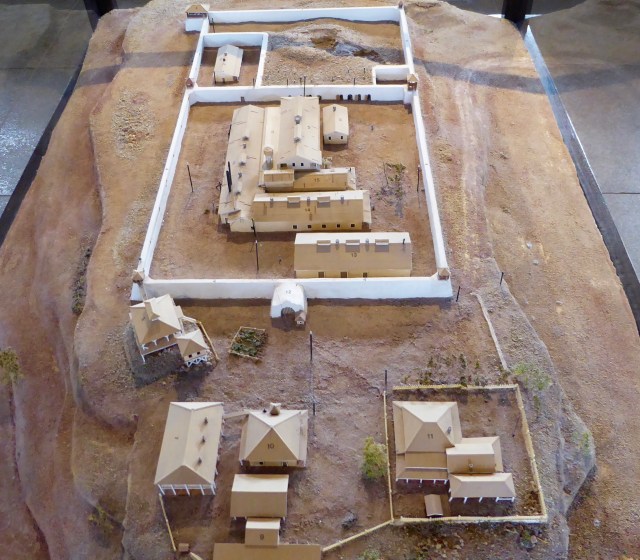
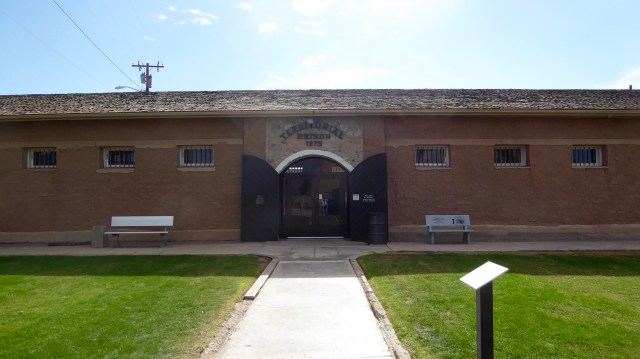
Yesterday we visited the Yuma Territorial Prison State Historical Park and learned some interesting facts about the infamous prison which was in use from 1876 to 1909.

One of the things we learned was that most of the 3069 prisoners were pardoned (instead of being paroled) before their term was completed, allowing former prisoners  to vote when released.   The territory of Arizona needed voters.

P1030142

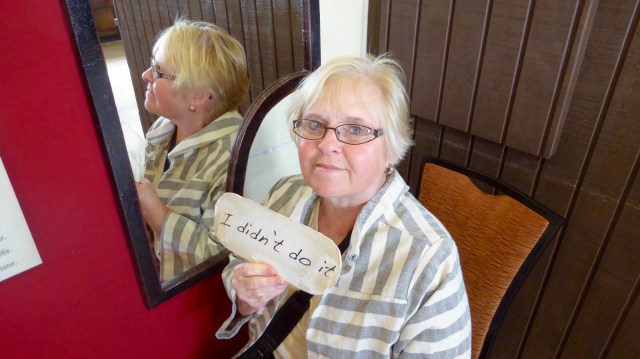
Thirty nine prisoners were women and they were often released early because, without good separate facilities,  the women were more trouble than they were worth. Some were released with the provision that they leave the territory.

P1030143


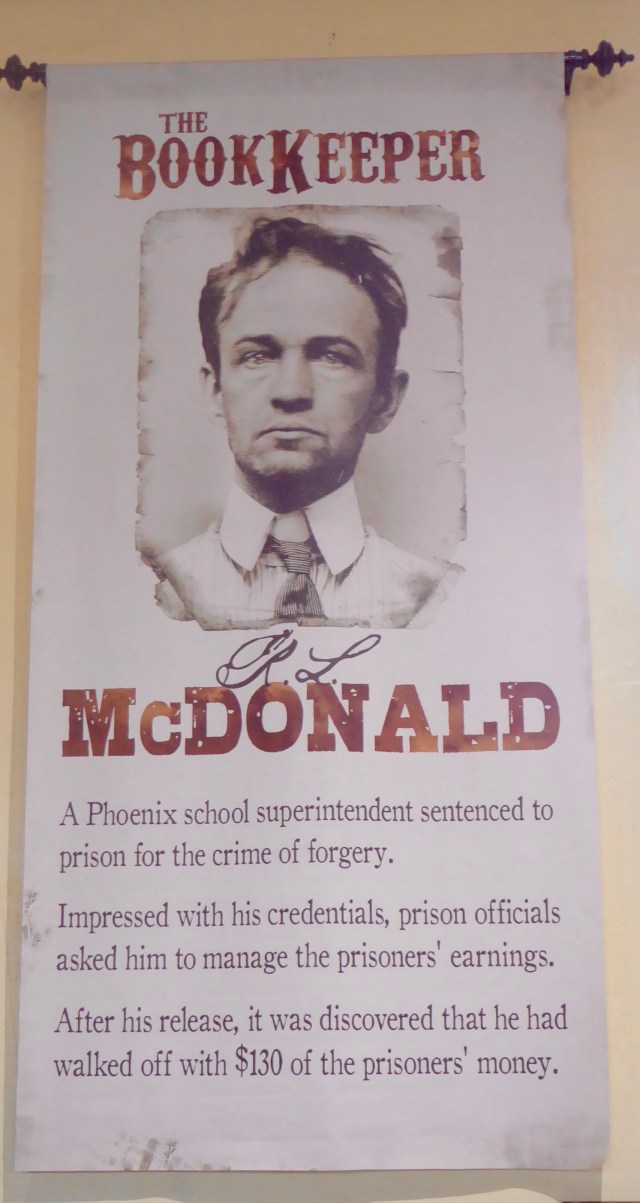
The visitor center highlights a few of the more notorious prisoners including RL McDonald who, as superintendent of the Phoenix School District, embezzled funds.  Because of his money savvy, he was put in charge of the prisoners’ monies.  Upon his release, it was discovered that he once again embezzled funds.   Duh?

Prisoners were incarcerated for a variety of crimes including burglary, murder, robbery, adultery, selling liquor to the Indians, obstructing the railroad, seduction, polygamy, and prize fighting. Very few prisoners escaped (28) because of the isolation with the desert on one side and a much more vigorous Colorado River on the other. No prisoners were executed on site.

P1030156

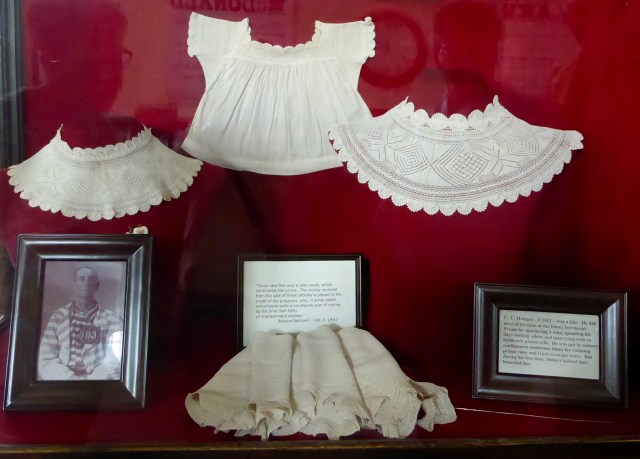
Prisoners worked 48 hours per week on the prison grounds and learned a variety of trades. The prison was mostly self sufficient and there were many opportunities to learn skills which could benefit a prisoner when released. During off hours prisoners were able to make crafts, including the knitted lace below,  which were sold at a public bazaar on Sunday afternoons.   If a prisoner took advantage of the opportunities, he or she could leave prison with marketable skills and a small nest egg.

P1030153

Although infamous, the prison was really quite progressive in its operation. Prisoners had opportunities to learn to read, write and do arithmetic. They had opportunity to learn English, Spanish and to play a musical instrument. Classes were taught by guards or by prisoners with those skills.

There was an onsite library, also available to the public, that was one of the first in the territory. Visitors paid a 25 cent fee to the prison for musical programs, tours or to borrow books and the monies were used to buy more books.

There was a well maintained onsite hospital and dental care was also available. One hundred eleven prisoners died while in prison, most from consumption (tuberculosis).

Yuma residents sometimes thought prisoners lived better than they did because the prison had gravity running water, telephone service and a basic ventilation system. It also had lighting due to one of the first power generation systems in the area. The prison sold electricity to the town of Yuma after 9:00 pm.

P1030149

Although this all sounds pretty good, it was not a club med prison!

P1030146

P1030145

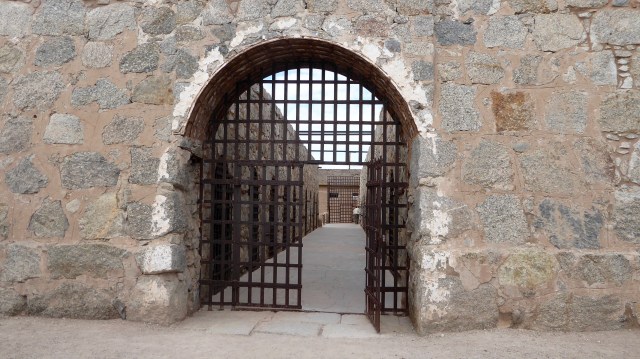
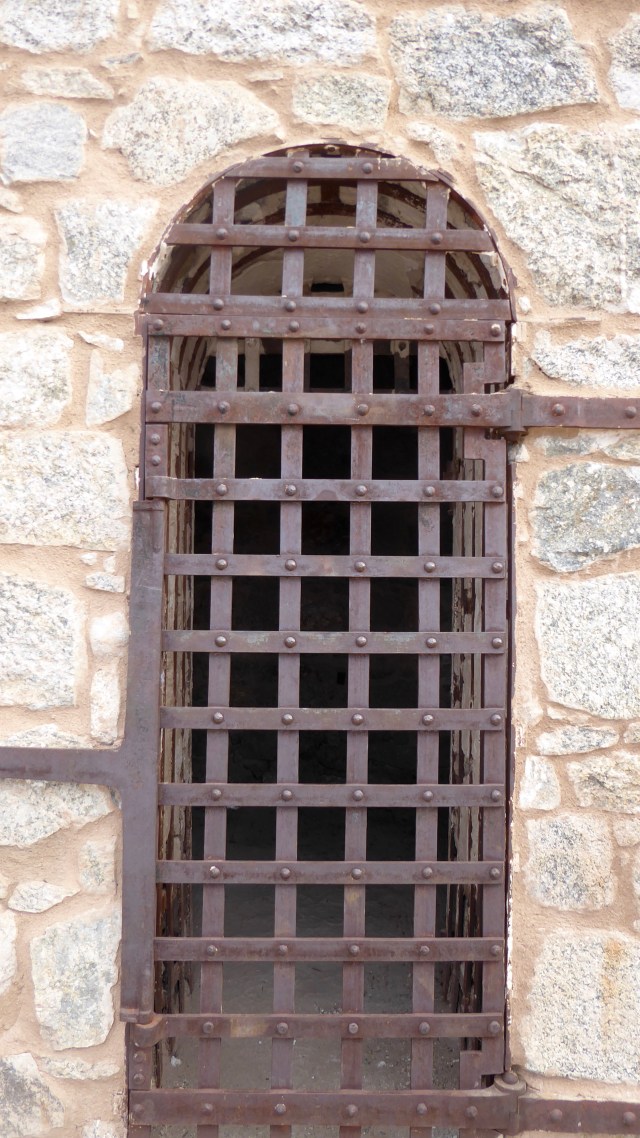
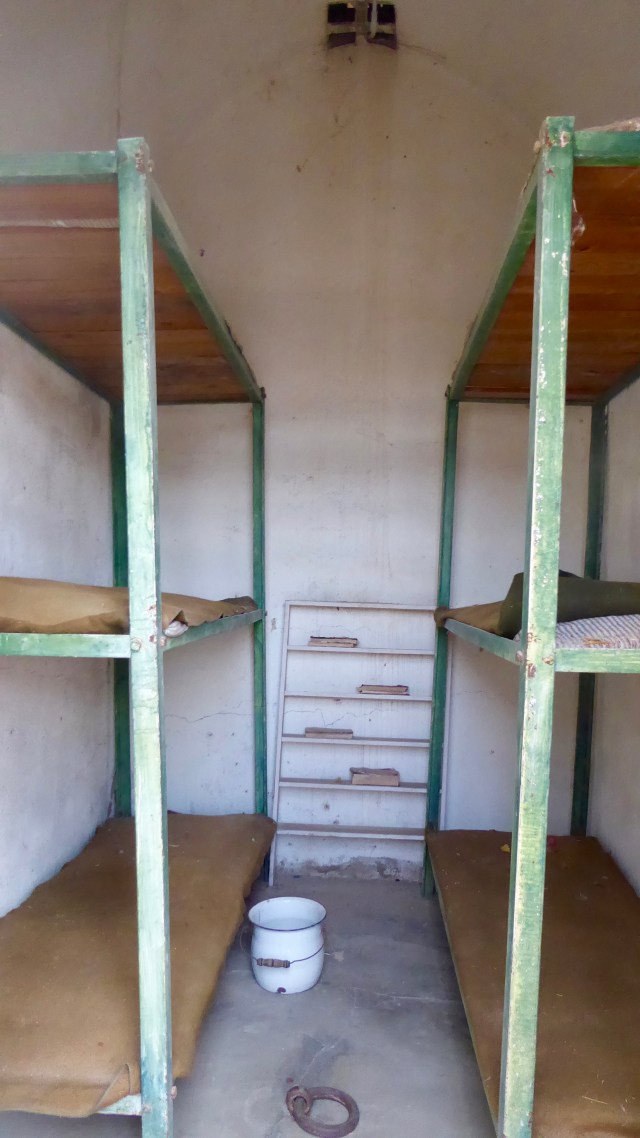
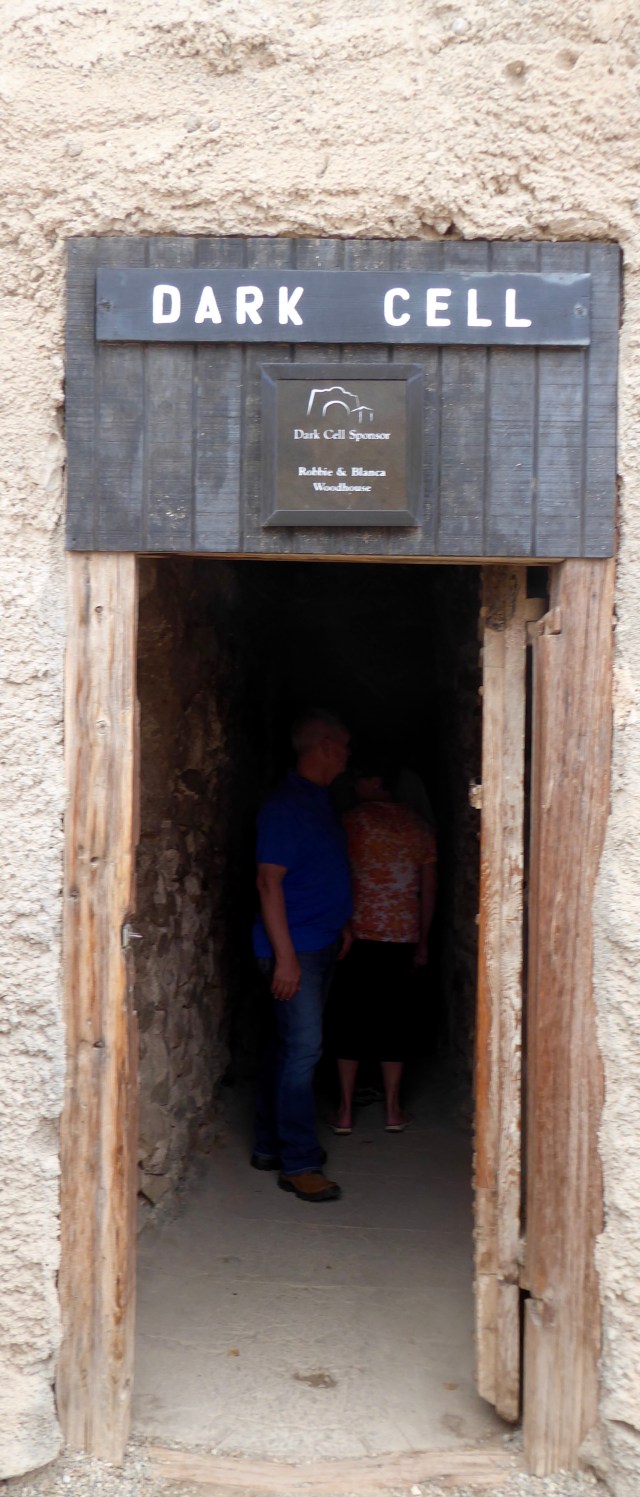
There were six inmates housed in each small cell.  There was also the dreaded “dark cell” for those who didn’t behave. We were able to go into each and have a brief experience.  Neither were anywhere we would want to spend any time!

P1030148

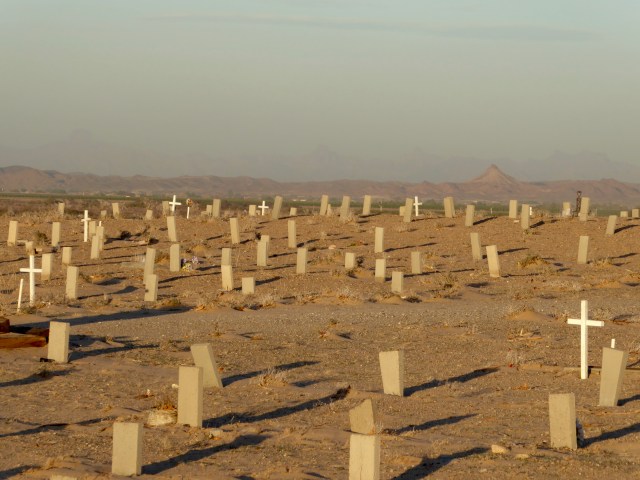
From its beginnings in 1876, the prison had an interesting run. Seven prisoners built the first two cells and moved in. Prisoners continued to build cells to allow for increased population. In 1878, the first escape occurred and the first female was imprisoned. The prison closed due to over-crowding in 1909 and the prisoners were moved to the new prison in Florence.

After their school burned, Yuma High School moved onto the site from 1910 to 1914.  Former and current students are called the “Criminals” or “Crims”.

The county hospital used the site for a number of years and hobos stayed in the cells during the 1920’s.   Depression era families moved in during the 1930’s and Yuma locals  used the site to obtain free building supplies.

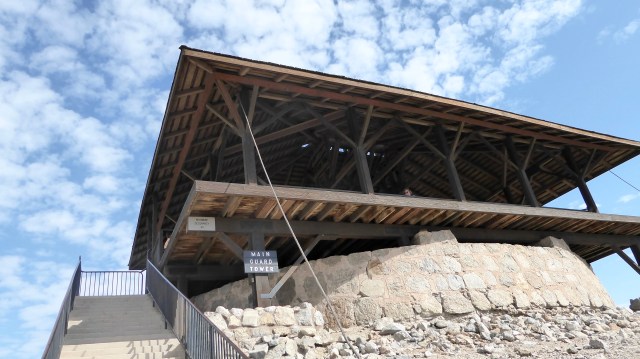
In 1939 local residents evicted the squatters and made the first efforts to protect the site for its historical value. Yuma residents raised monies to restore some of the buildings, beginning with this guard tower. The city operated the park until the site became Arizona’s third state park in 1961.

P1030139

The rounded area under the guard tower was for water storage.

In 2010 the state of Arizona resolved to close the park due to the budget crisis. Once again the residents of Yuma raised awareness and monies to save the Yuma Territorial Prison Historical Park and keep it open.

P1030141


Although few buildings remain (original or reconstructions), the prison park was very interesting and worth the time we spent there.

Now that we have seen it, we are interested in watching some of the movies filmed at the prison.  The most famous movie about the prison, “3:10 to Yuma” (both the original and the remake) contain no scenes from the site!  Movies filmed at the prison are To Kill a Memory (2012),  Riot (1969), Badlands (1958 – a cell entrance was lowered for this movie to make Alan Ladd look taller), Red River Valley (1936), Three Mousketeers (1933) and three silent films, one each in 1919, 1917 and 1914.    Popcorn?

Posted in Uncategorized | 4 Comments

The Center of the World and History in Granite

P1030050
Yesterday we were happy to see friends from Boise, Andy and his wife Julie, who were spending several weeks in Yuma. We were glad they made contact! We have been so busy enjoying all the activities in the RV resort (line dancing, biking, zumba, golf, happy hour, bocci ball, pickle ball, hot tub, visiting etc.) that we have hardly left the park.

Today we decided it was time to get out and explore a bit. What better destination than the Center of the World!

P1030051

We fueled up in Yuma (happily at $1.85 per gallon) and headed west on I-8 into California. Along the way we saw other RVers who chose to forgo all the RV park activities, conveniences and expense to just hang out in the desert.

P1030119

Fortunately, Randy and I agree that this form of RVing is of no interest to us whatsoever!

P1010864

You may remember that last July we saw the the Center of the Universe plaque in Wallace, Idaho.

P1030054
Just 1345.9 miles south of there, we came to the Center of the World Plaza in the very small town of Felicity, California.

P1030095

Based on the children’s book Coe the Good Dragon at the Center of the World published in French and English in 1985, the Supervisors of Imperial County, California designated this site, by law, as The Center of the World.

P1030060

Inside this pyramid is the marker.

P1030061

P1030063


P1030121

We were given a certificate acknowledging our presence at the Center of the World.

P1030064

There are a variety of other interesting things at the plaza.

P1030097

First we came upon a sundial depicting the “Arm of God” from “The Creation” painted by Michelangelo in the Sistine Chapel in Rome.
P1030082

The Arm of God points to the Chapel on the Hill, used for special events and services.

P1030101

These stairs were part of the Eiffel Tower in Paris, built in 1869. Over the years the weight of iron stairs caused the tower to sway and five hundred feet of stairs, from the second level to the top, were replaced with lighter stairs in 1983. Twenty sections were removed. This was section twelve and was climbed by many millions of visitors to the tower from 1869 to 1983.

P1030056

The History in Granite Museum is also on the same site! This is a work in progress but it is amazing.

There are large granite panels formed into long presentations depicting many aspects of history including  the histories of California, Arizona, the United States and the French Foreign Legion (The owners are French).

P1030067

There is a Korean War Memorial – We hadn’t known that over 4000 US Marines were killed in the Korean War.  Their names are all inscribed here – similar to the Vietnam Memorial in Washington DC.

P1030092.jpg

The work in progress is The History of Humanity. All of the granite walls are in place – it is the carvings that still need to be completed.

P1030075

P1030078

We didn’t expect anything this cool at the Center of the World!

P1030104
A few more miles into California we came to Imperial Sand Dunes Recreation Area. This is an off road vehicle paradise but we just used our 4 feet and our 4 paws to climb a few dunes.

P1030108
It was a fun day – maybe we can drag ourself away from the park again sometime soon.

It is also a sad day because cousin Audrey, the person who invited us to come have fun in her park, passed away today in Washington state.   We know why you enjoyed spending your winters here, Audrey.  Your Yuma friends, and we, will miss you.

Posted in Uncategorized | Leave a comment

The Last Person to Leave Canada Left the Door Open

“The last person to leave Canada left the door open.” That is one person’s assessment as to why the weather in Yuma is much colder, and wetter than it should be. Yuma is supposed to be the sunniest city in America with 330 days of sunshine a year.  So far we’ve had way more clouds and rain than is typical. We laugh because 10 days ago (while still in Boise) we would have thought low 60s with rain and/or overcast skies would be just fine. How quickly our perspective changes – and we know that none of you are going to feel sorry for us at all! Nor should you.

We are pretty sure the Canadians aren’t really to blame and it would be hard to find the one who was responsible anyway because there are lots of Canadians here. We heard one estimate that 65% of park residents are Canadian.  We have met people from British Columbia, Alberta, Ontario, Saskatchewan and Nova Scotia. In fact, in our visit to the hot tub last evening, we were the only Americans there amongst a dozen Canadians.

We had a fun conversation with a couple from Saskatoon, Saskatchewan. Apparently the combination of Simplot potatoes from Idaho and canola oil, supplied exclusively out of Saskatchewan, is the secret for McDonald’s excellent French Fries.

P1030047

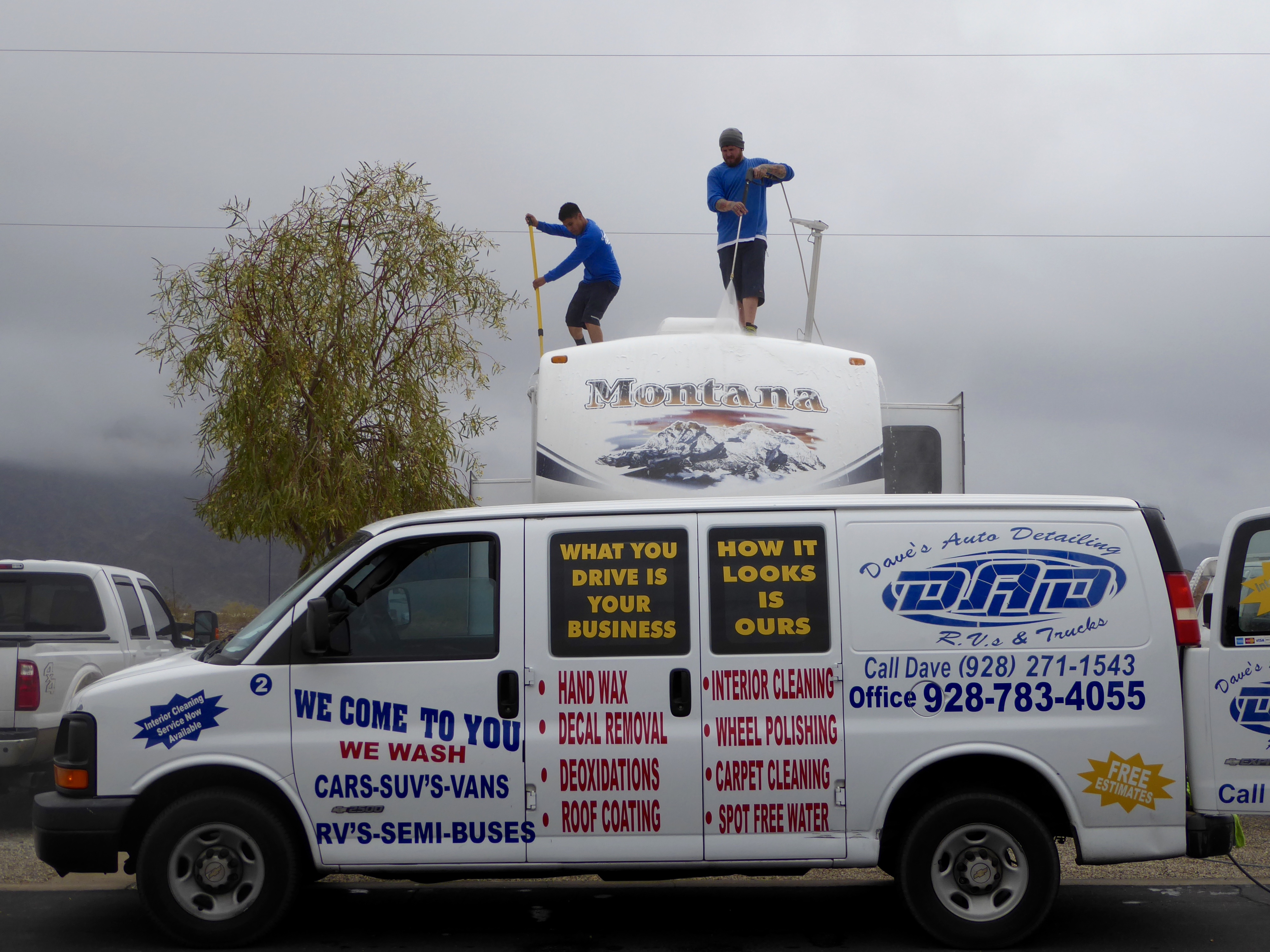
Our truck and trailer have been so dirty for the last few months and we were glad to have the opportunity to have them washed and waxed between raindrops. The park does not allow washing vehicles ourselves but does allow professionals to come in. At a cost of $135 for both – we were delighted to let someone else do the work! It is so nice to live in a clean trailer again.

IMG_1184

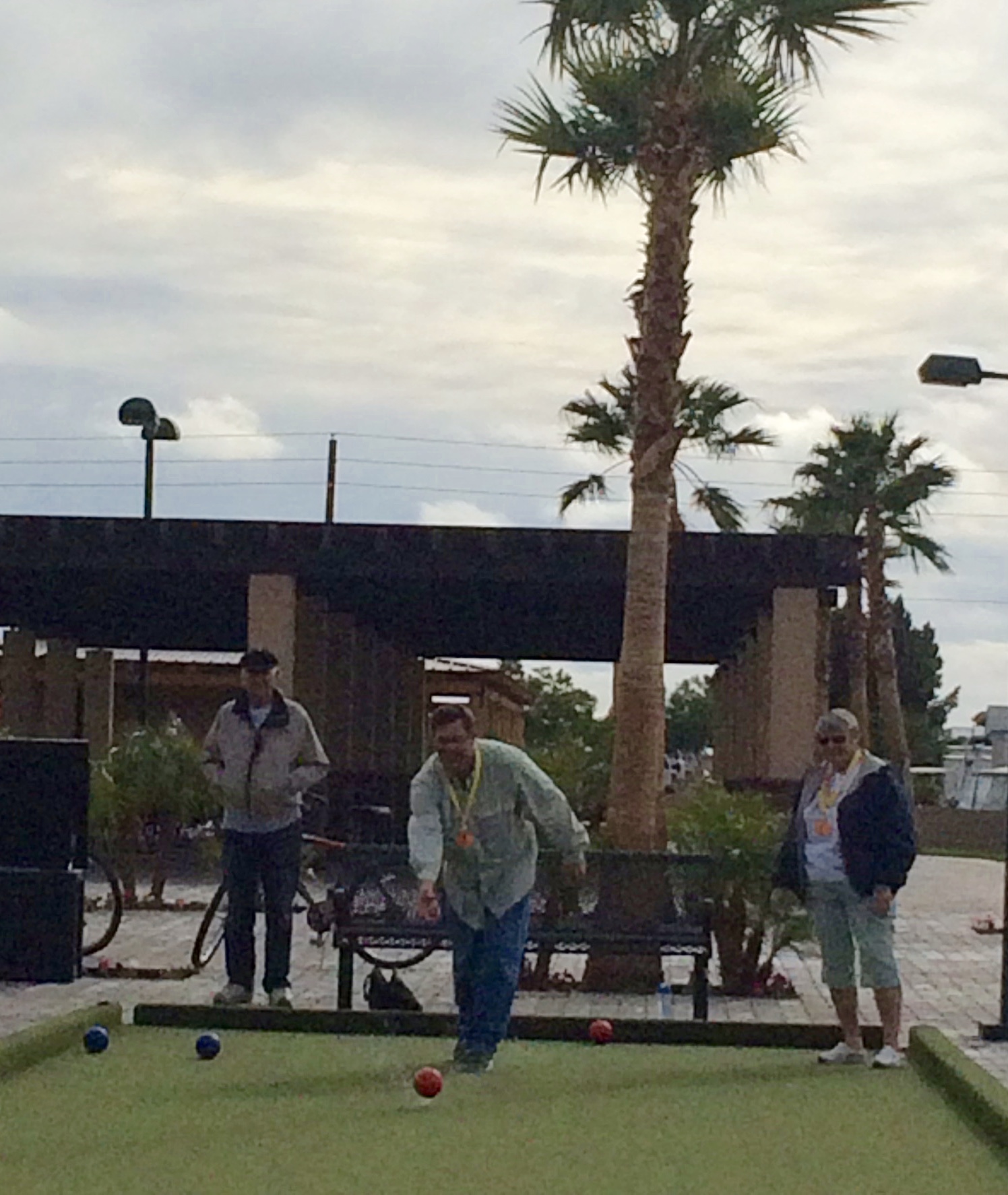
There are many activities here in the park and we have been partaking in a variety of them. The only time this week that the Sports Complex schedule and the weather matched up nicely for us was the afternoon they were teaching Bocci ball. We really enjoyed learning the basics of the game and liked that the rules are quite simple. There is lots to learn regarding technique and strategy, but the rules are simple!

IMG_1187

One rainy evening we enjoyed a Savor Yuma Food Tour with our next door neighbors from Wisconsin, Myron and Peggy.  

IMG_1185

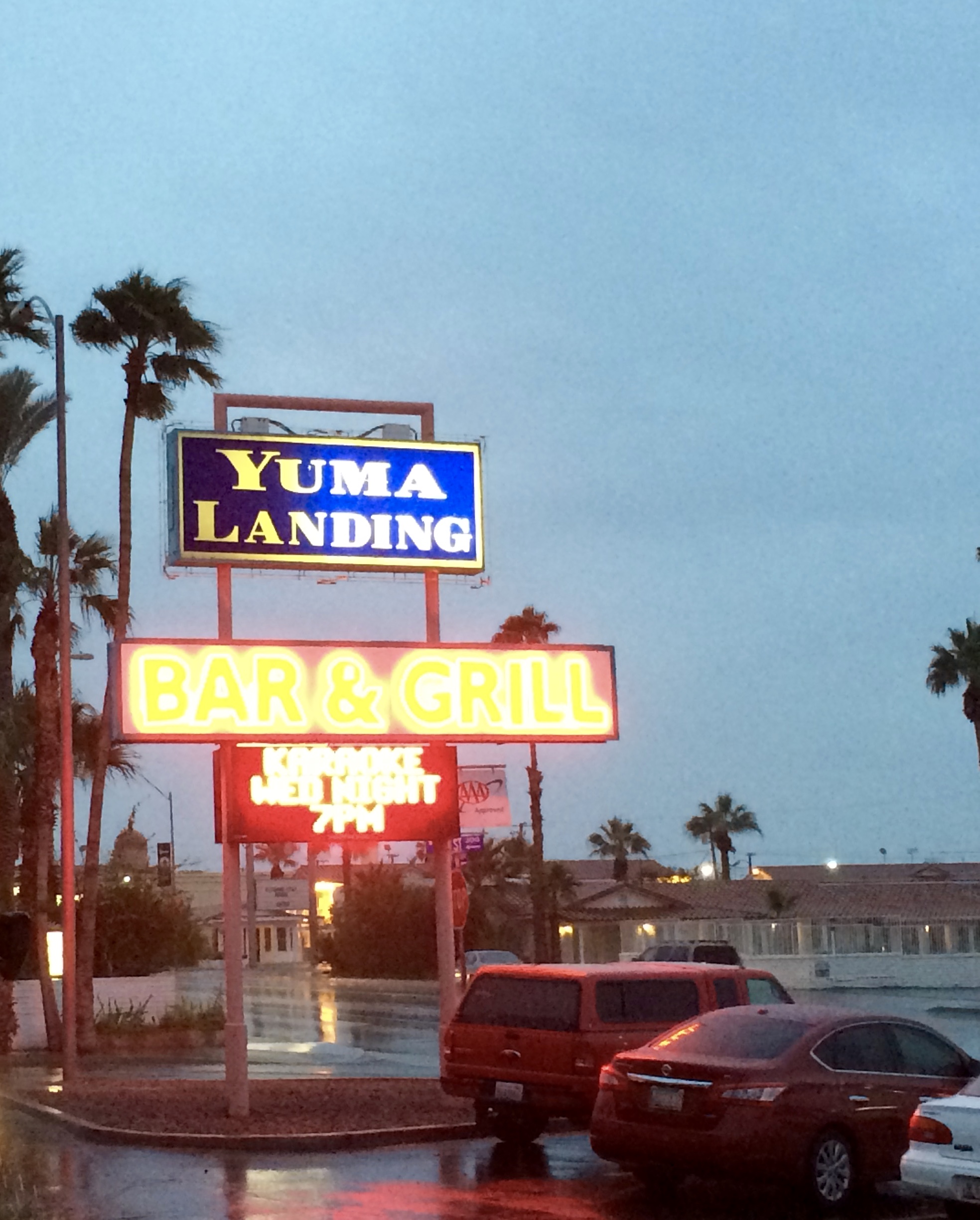
We began with appetizers at a restaurant called Yuma Landing. It is so named because the first plane ever to land in the state of Arizona came to Yuma on October 25, 1911. Piloted by Robert G.Fowler, the Wright Model B biplane, weighing 800 pounds and capable of reaching a top speed of 45 MPH, stopped here for a few days on its successful route from Santa Monica, California to Miami, Florida.

We then had a salad course at a local hotel restaurant – the salad was good but the destination was unremarkable.

IMG_1189

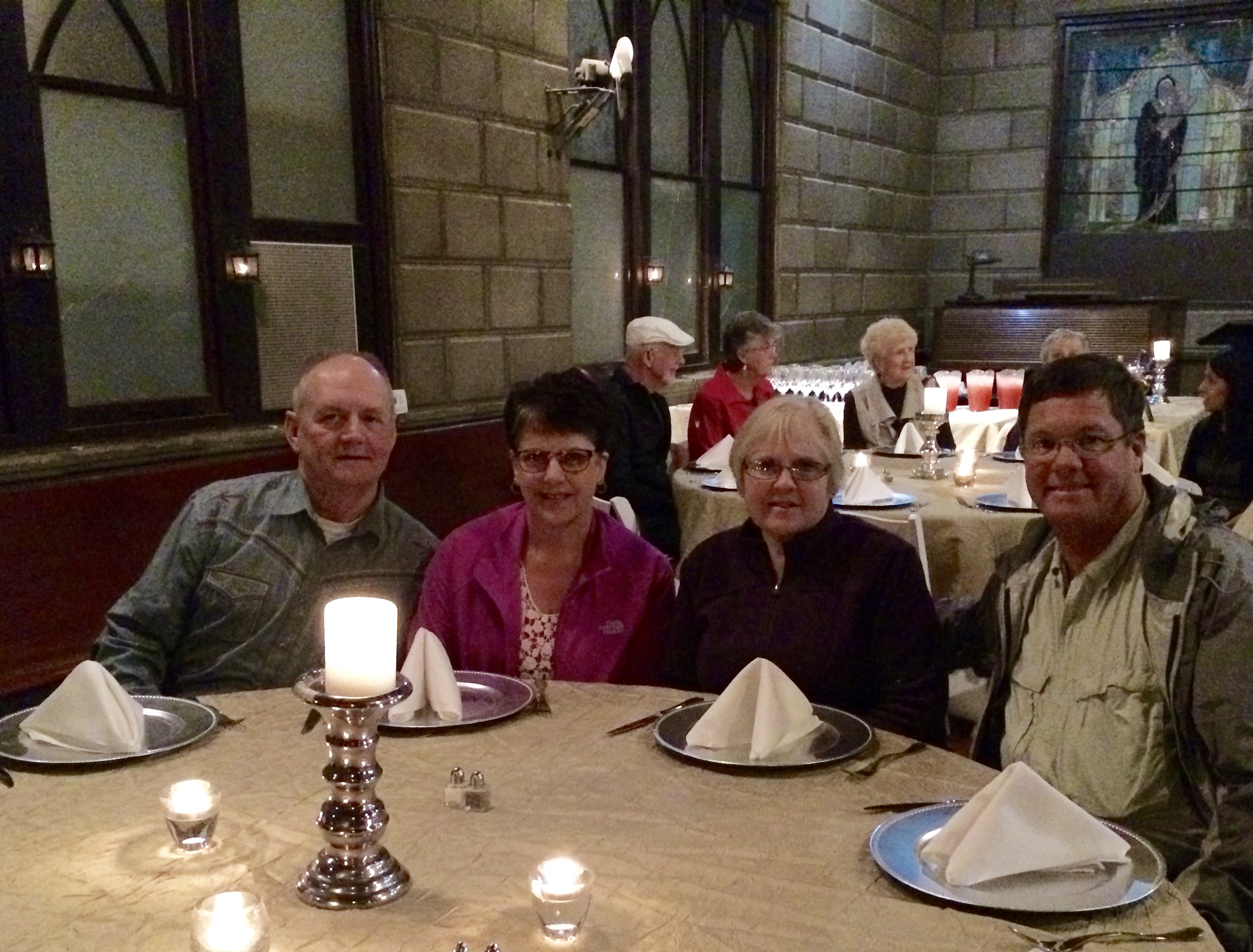
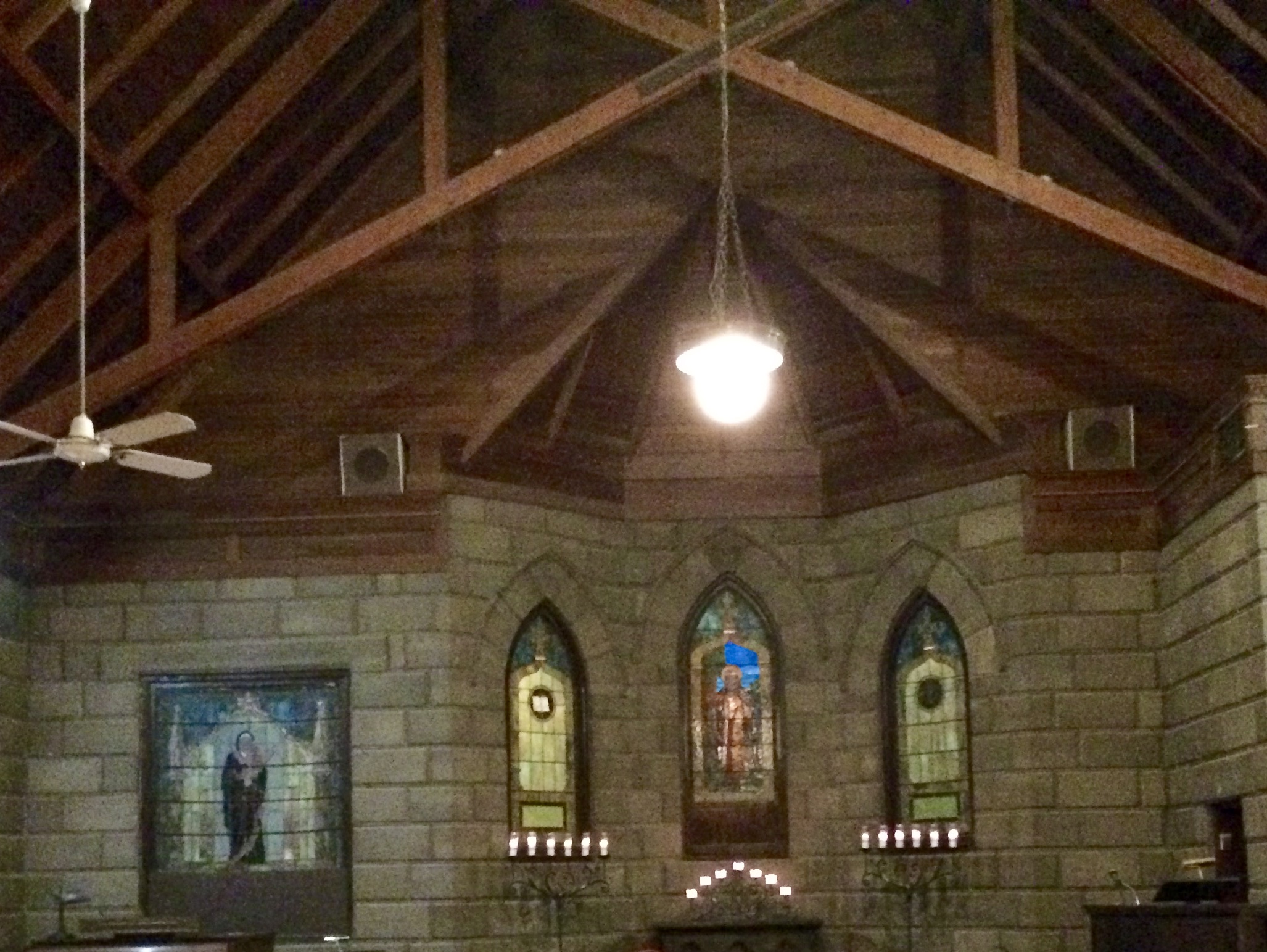
However, the destination for our main course, Old St Paul’s Church, was quite remarkable. The church was built in 1909 in the style of an English chapel and is listed on the National Register of Historic Places. The stained glass was imported from an even older church in Europe but the details are lost. Old St. Paul’s is considered to be the finest Gothic building in the southwest and is now a cultural events center.

It was raining quite hard the night we were there and there were buckets inside the church collecting rainwater. I’m glad to say they were able to find an area where we could eat without getting wet and are happy they are already scheduled to get a new roof next month.

P1030048

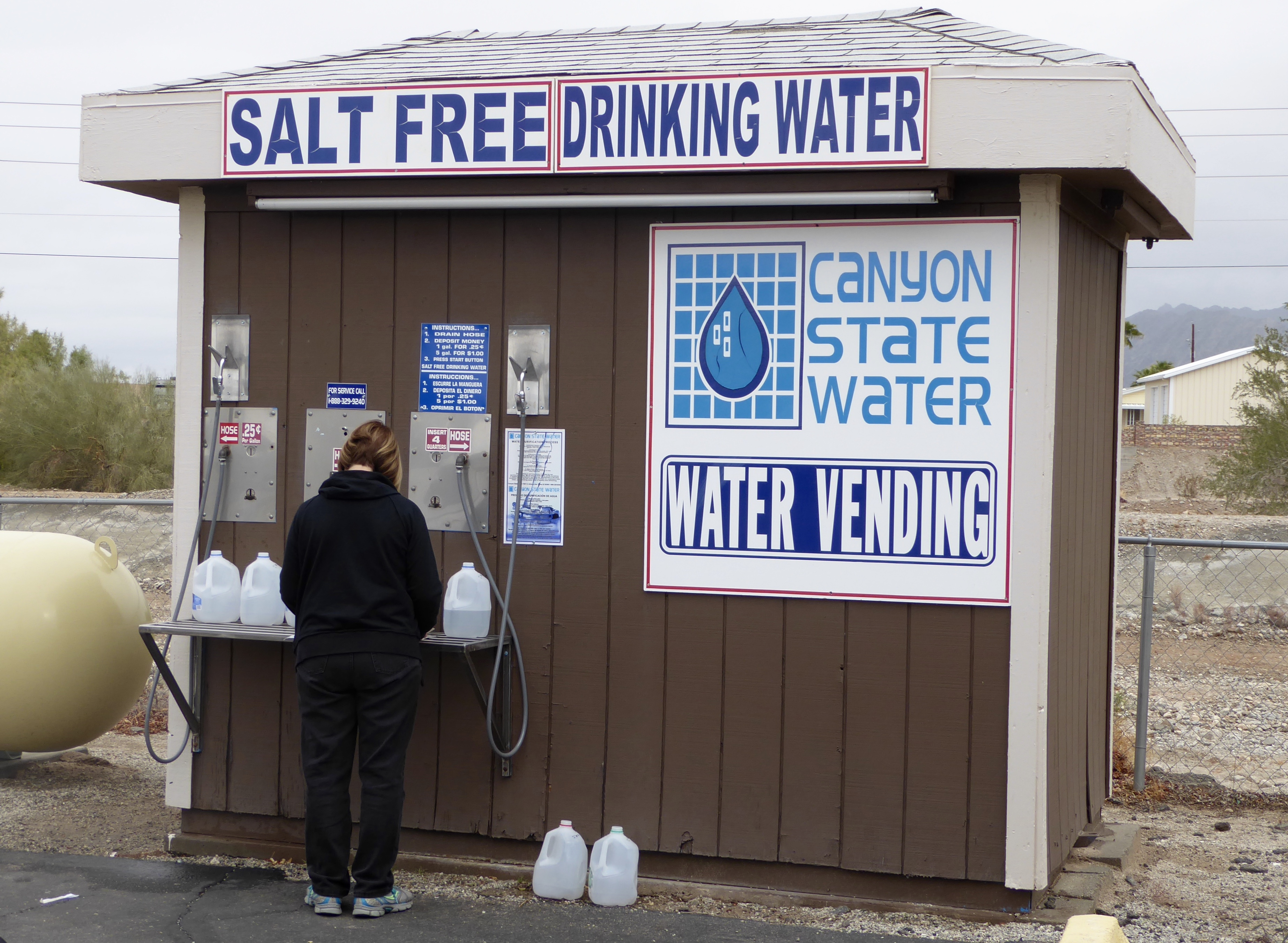
Continuing the water theme, the tap water in Yuma is really not drinkable. It tastes very salty so buying drinking water is the norm. We have a dispenser very close to where we are parked and a gallon costs 25 cents. Elko and I walk over and buy water nearly everyday.

IMG_1179

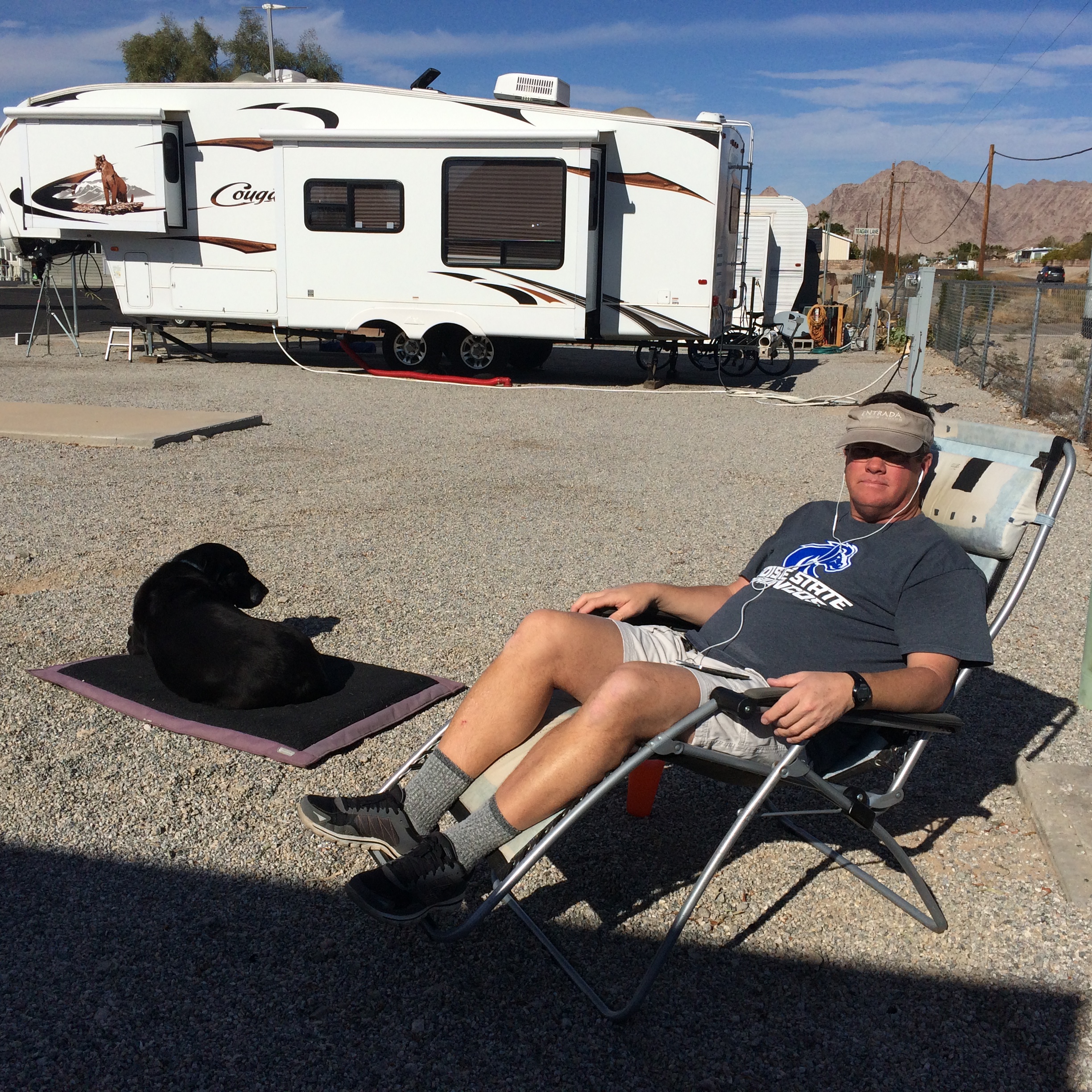
I took this picture of Randy and Elko on our first day here and it hasn’t been that warm and dry since. However, the skies seem to be clearing up so we are encouraged that the weather, and the choice of outdoor activities,  will be better soon!

P1030045

The sunrise out of our back window.

Posted in Uncategorized | 6 Comments

It is Good For His Soul

P1030041

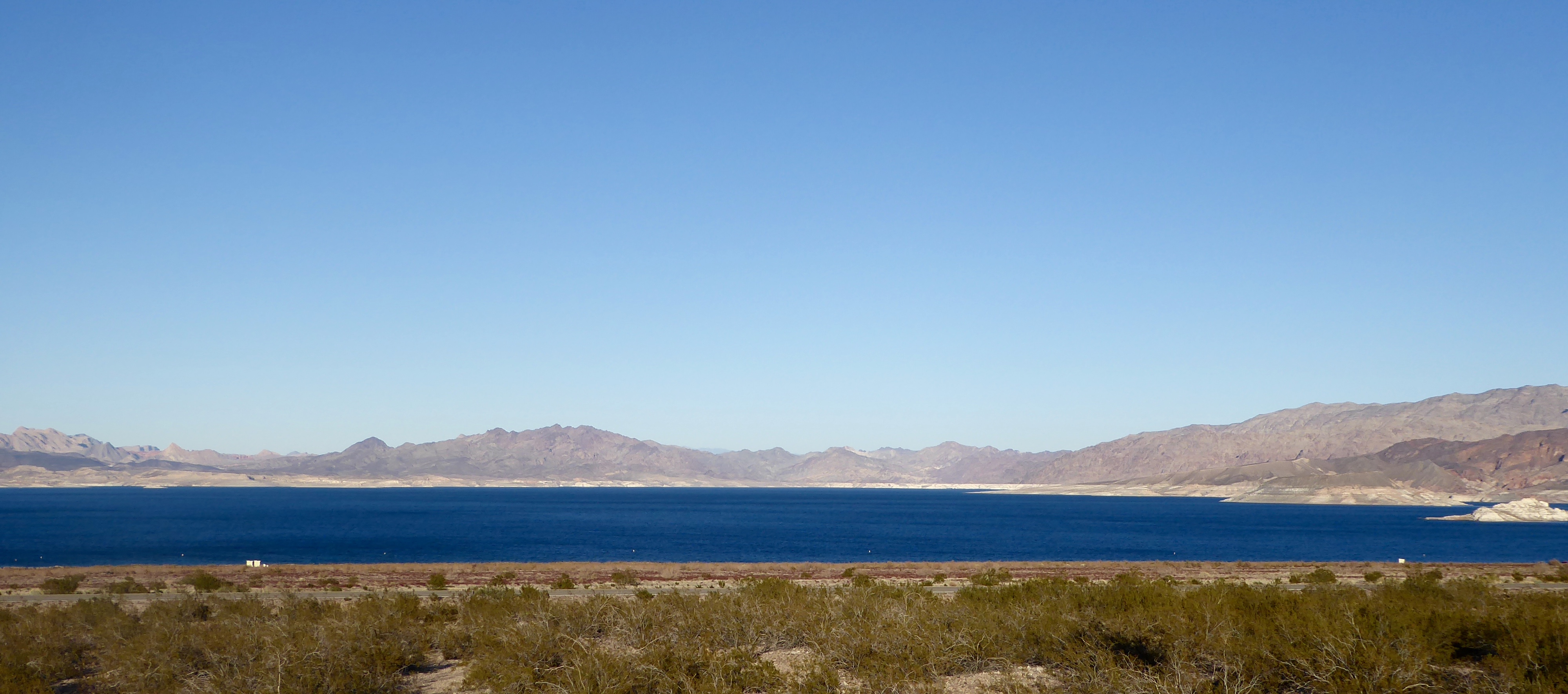
Randy told me that being at Lake Mead is good for his soul. Having grown up in Tucson, he loves the blue skies and landscapes of the desert southwest. Lake Mead, the largest reservoir in North America, has both.

He certainly had to work to get us here! Because of repeated snow and rain in Boise, we had two inches of ice on the top of each of our four slide-outs. He spent hours on Sunday chipping and washing the ice away so that our slides could close Monday morning. We left Boise at 6:00 a.m. and arrived in St. George, Utah 12 hours later. He drove the entire way. (Yes, I offered.) That is 3 times the length of our typical driving day but we had to go that far south to get out of frigid temperatures.

The following day we had just a three hour drive  to get to Lake Mead RV Resort, 25 miles from Las Vegas. Dedicated in 1964, Lake Mead National Recreation Area is our nation’s first national park dedicated to recreation. Thirteen percent of the recreation area is water with the rest being portions of the Mohave Desert.

Lake Mead provides drinking water for 25 million people, yet is designated for recreation. It makes us marvel at the lake we visited in California where there were signs indicating No Body Contact With the Water to avoid contamination of the drinking water.  That blog post is here:    https://serenewandering.com/2015/01/20/no-body-contact-with-the-water/

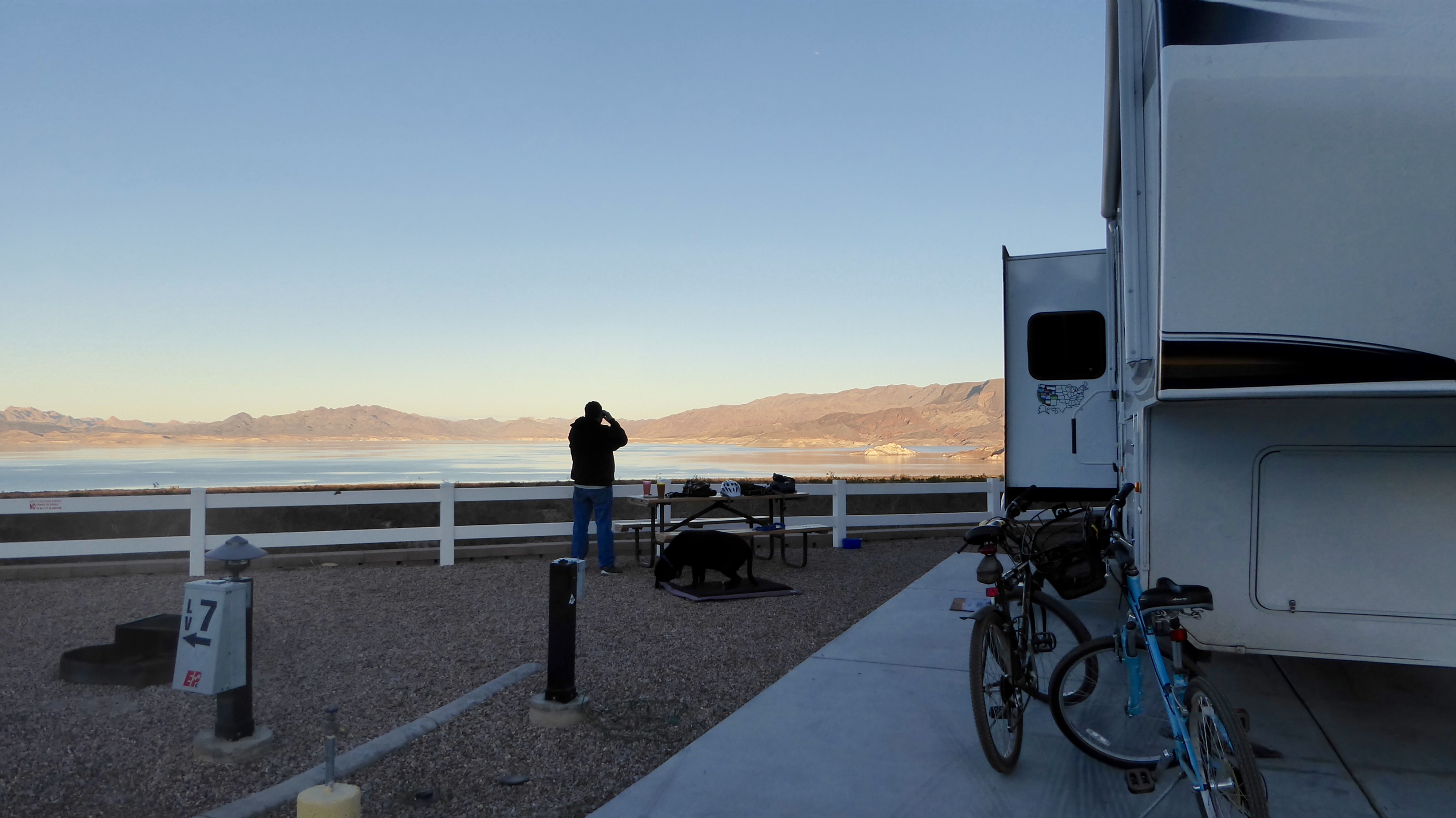
The Lake Mead RV Resort is operated by a concessionaire and our site is magnificent! We are paying a discounted rate of $45 per night for our lake view site (about 50% more than typical) and it is worth every penny. We have a wonderful view of Lake Mead through 8 of or our 11 windows.

P1030029

The resort is very well done in other ways too. There are utility hook-ups on both sides of the lake view sites! A motor home has a big window in the front and a trailer’s big window is likely in the back and with hook-ups on both sides, either RV can be accommodated, while preserving the great view. We have never seen this before.  The resort even supports recycling – something we don’t see nearly as often as we’d like.

P1030039

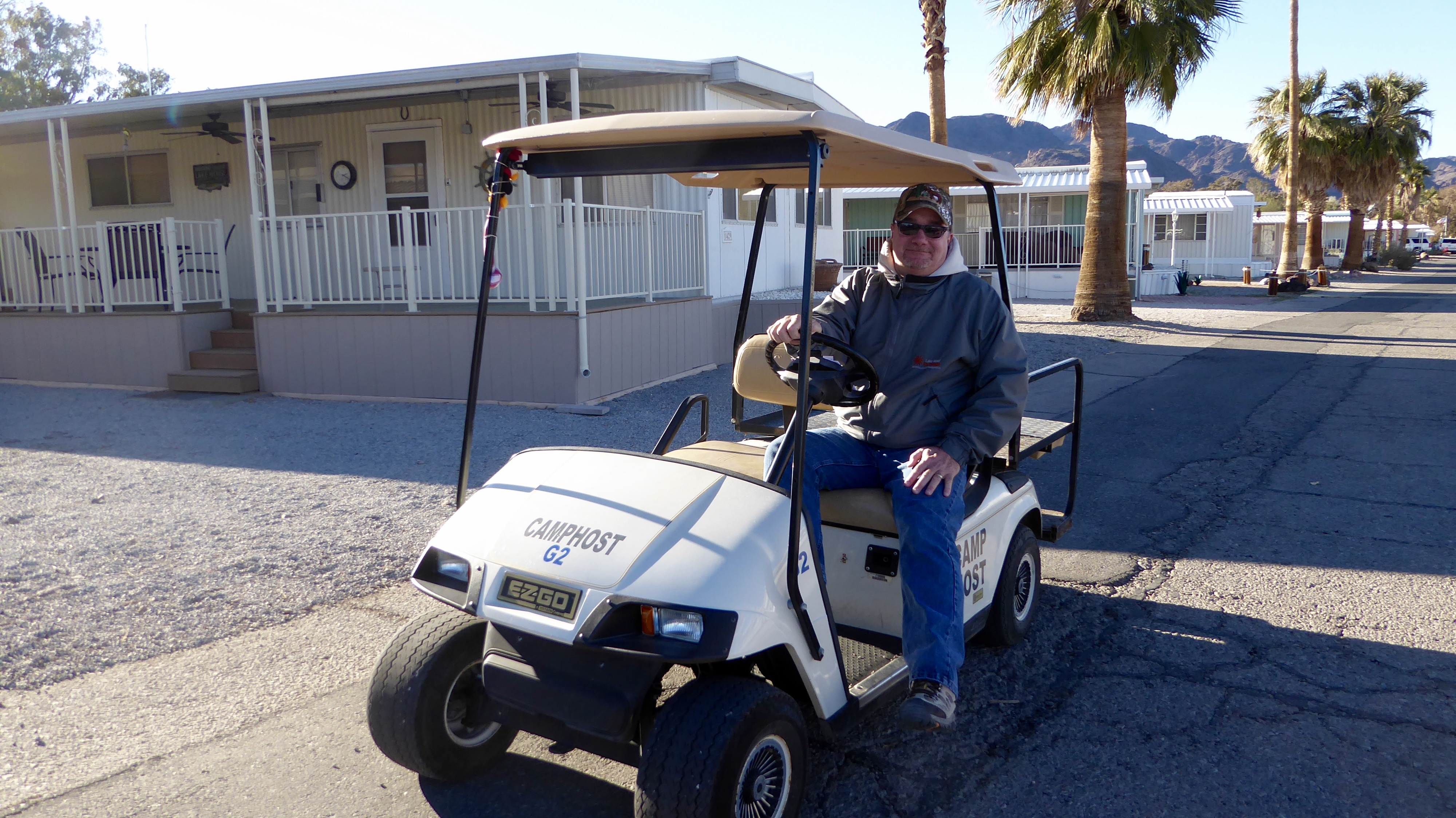
Because we view campgrounds through the lens of “would we want to volunteer here?” we spoke with Jerry, the camp host. He served 5 deployments in Iraq and is now spending time volunteering here at Lake Mead and going to culinary school on the GI bill. He says that camp host commitments here are for a full year. There are many people interested in volunteering here in the winter, but not so much in the summer heat!

P1030038

$8000, or make an offer

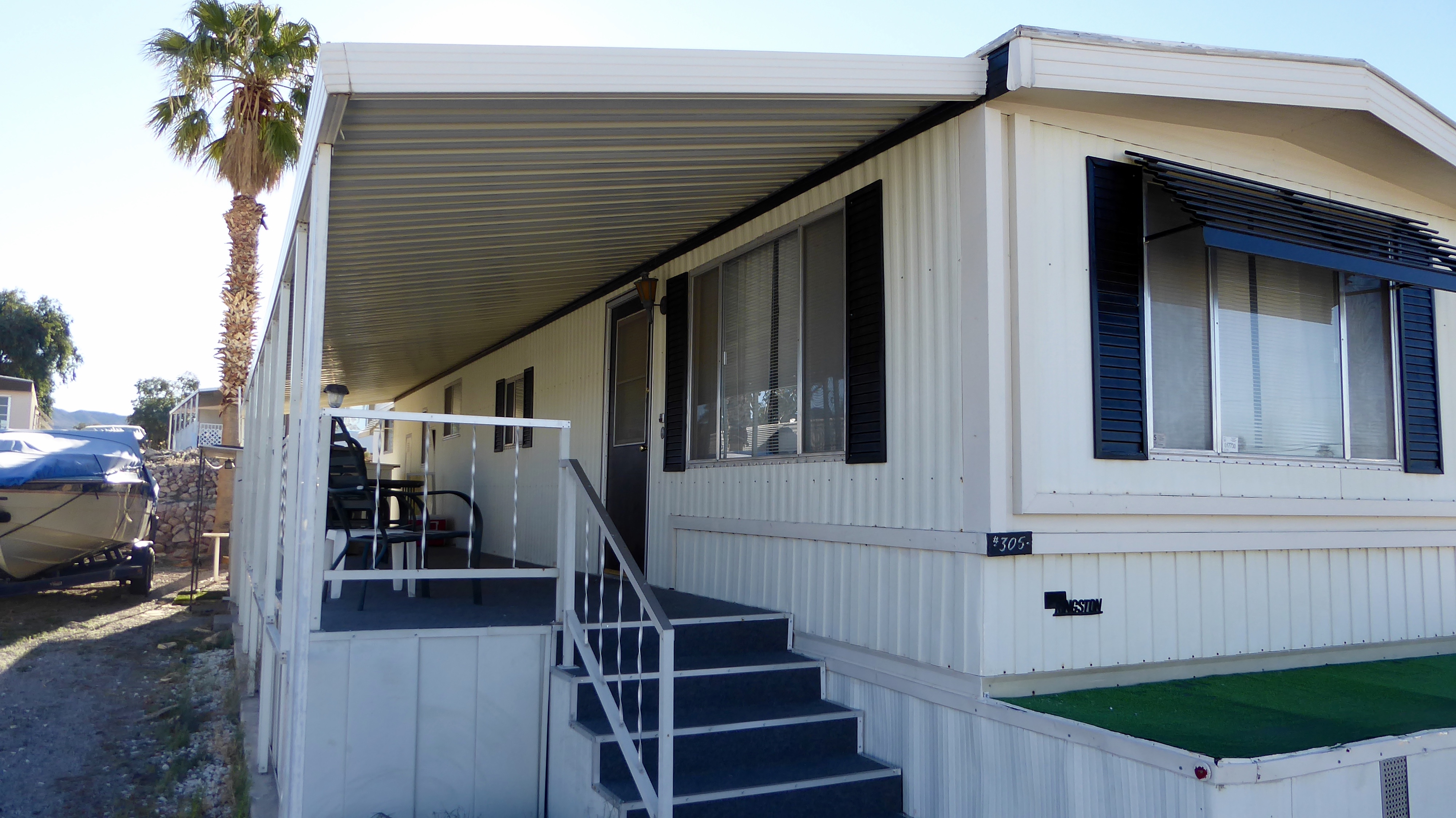
This campground also includes a “vacation home” mobile home park, begun in days past. Owners can live on-site for 180 days per year. The National Park Service is trying to transition away from having mobile home parks within the national parks. Those who already own mobile homes are allowed to keep them as long as they maintain their homes and site leases. These mobile homes may be bought and sold but no new mobile homes may be moved in. Currently there are three homes (vintage 1969, 1971 and 1991) for sale, five abandoned homes set for demolition, and a few vacant lots. These lots, and future ones that become available, will be repurposed for regular recreational vehicles like ours. There will be even more magnificent sites at Lake Mead!

P1030033

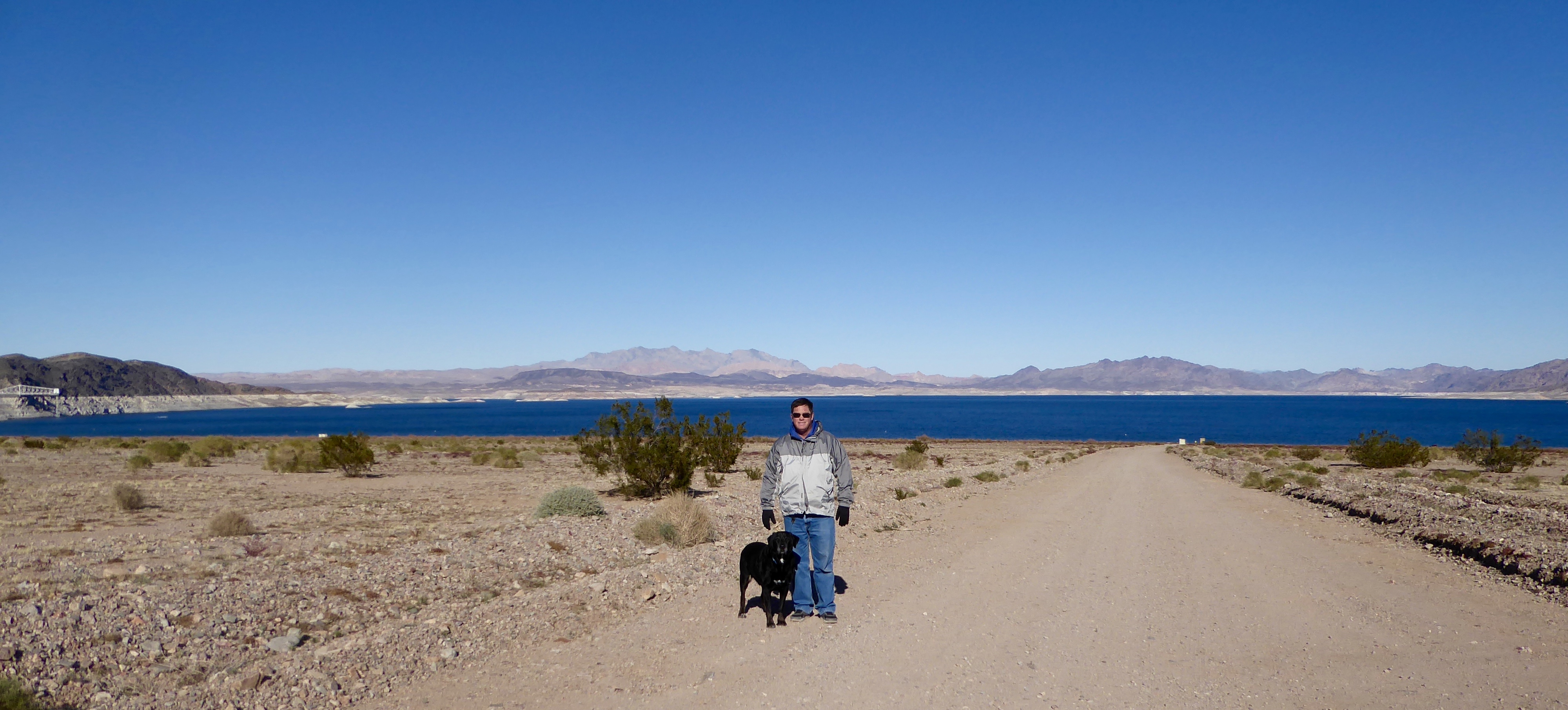
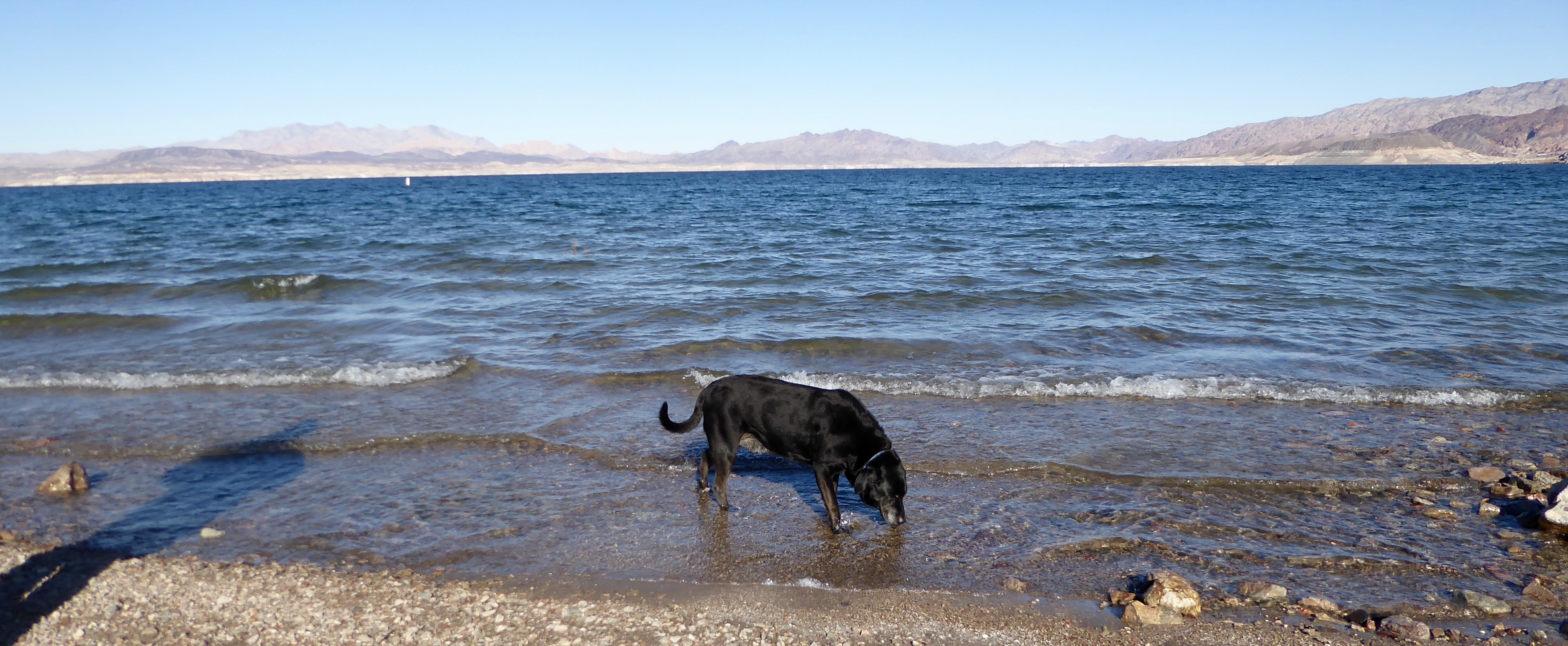
We have enjoyed walking around the RV resort and adjacent campground. One afternoon, we walked the long way down to the water’s edge but only Elko felt like wading in.

P1030035

P1030009

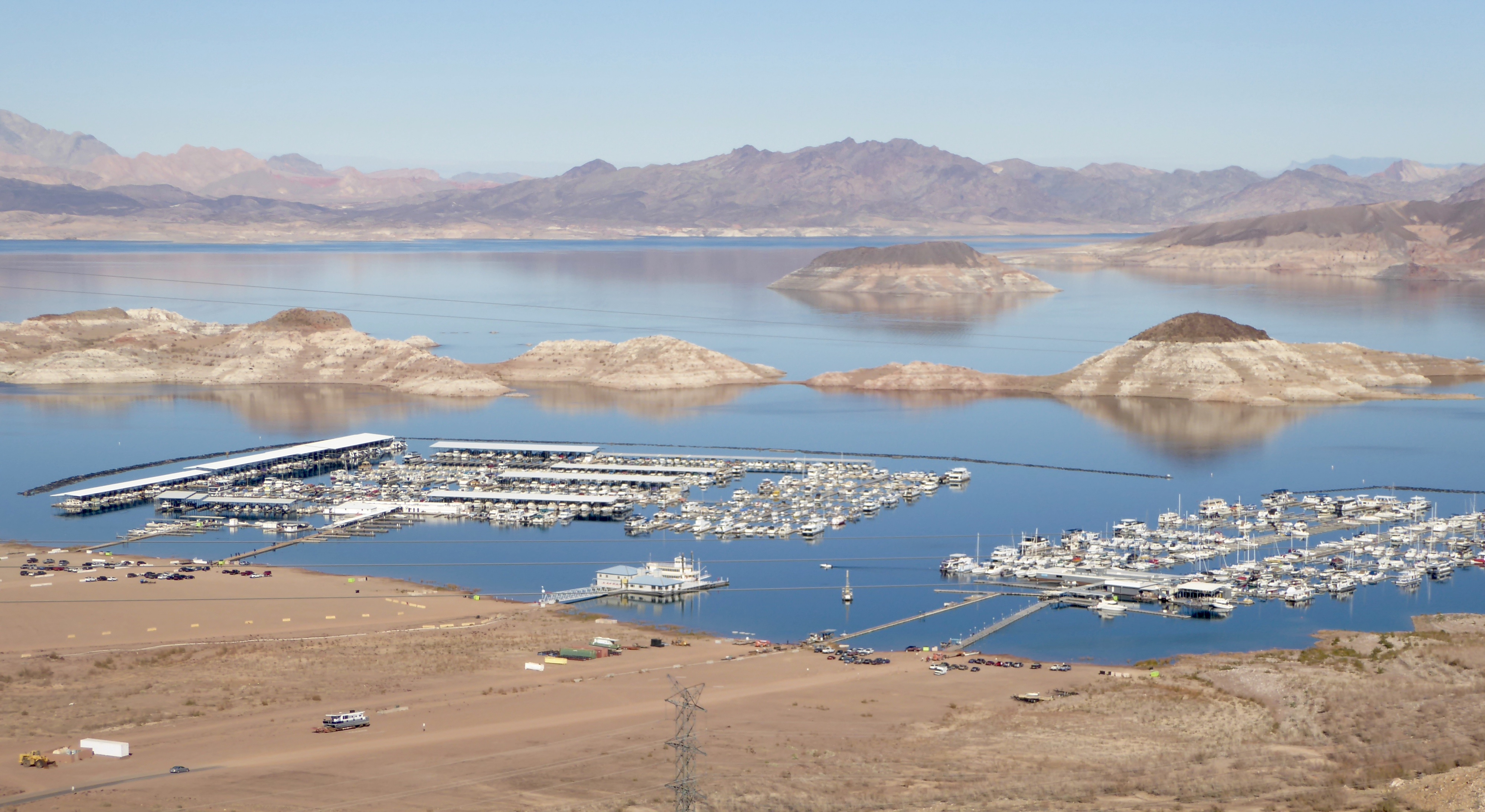
Although boating activity is huge in the warmer seasons, we saw very few boats in use during our stay.

P1030018

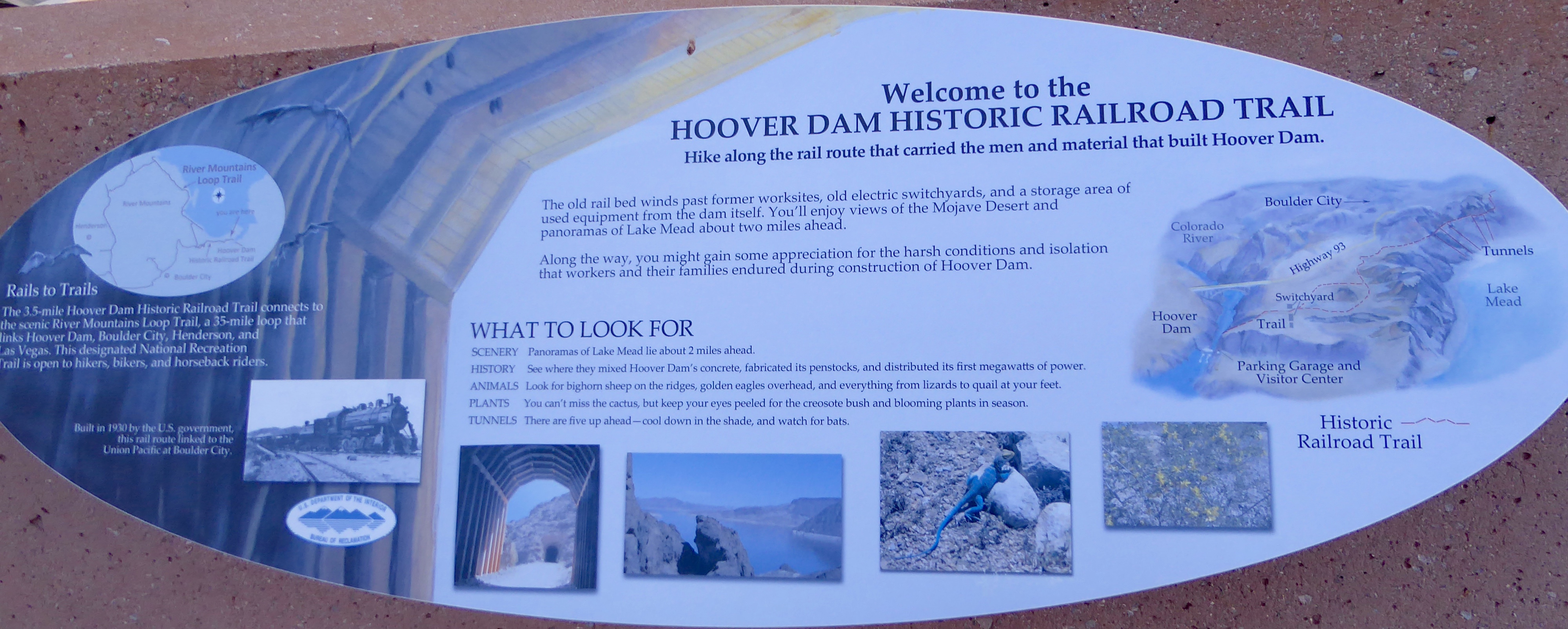
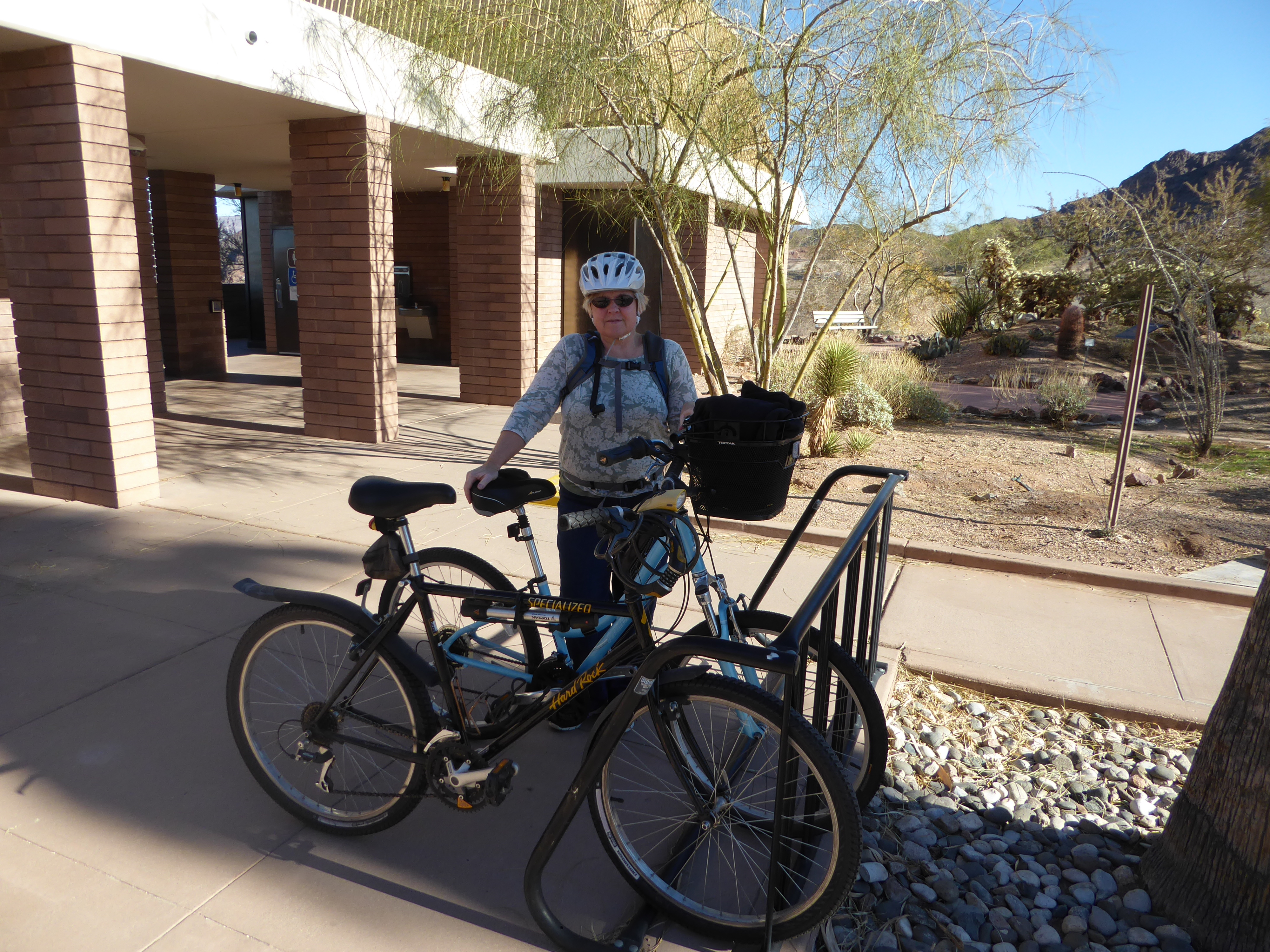
Our big event was to bike to, and along, the Historic Railroad Trail at Lake Mead, part of the National Trails System. This 3.7 mile trail is part of the 30 mile railroad grade used during the construction of Hoover Dam. The trail connects the Visitor Center at Lake Mead National Recreation Area and the Visitor Center at Hoover Dam and is open for hikers and bikers.

P1020997

Along the way we saw an area  in the desert where the workers and  families lived in the make shift community of Ragtown in the 1930s while working to build Hoover Dam. We learned that Hoover Dam workers came from every state in the country with the most from Nevada and the least from Delaware.

P1030026

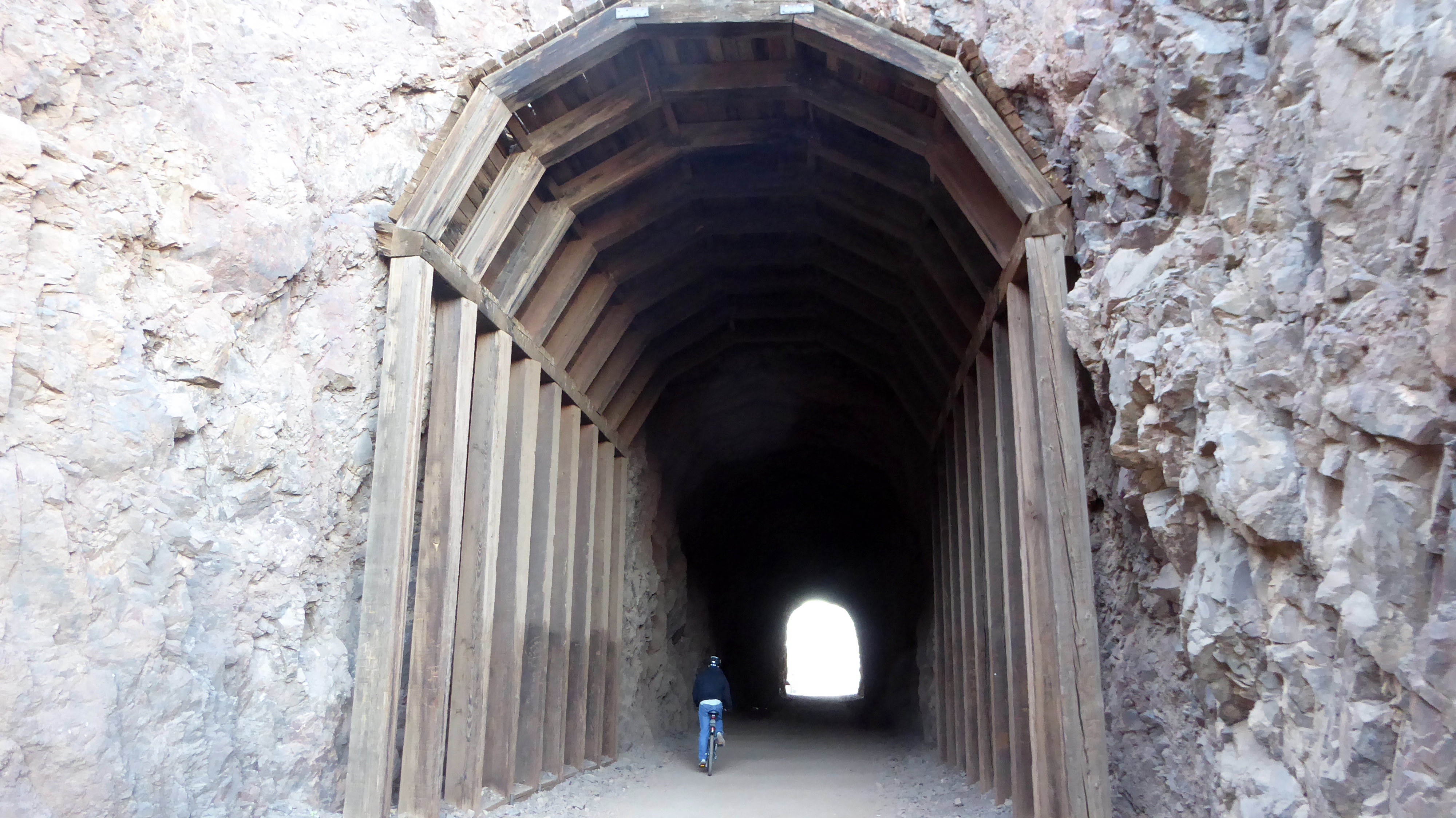
The Historic Railroad Trail goes through five tunnels. These tunnels were blasted/built in six months.  They were built to be exceptionally large, 18 feet wide and 27 feet tall, to allow for the transport of construction materials to the dam site. The original supporting timbers were destroyed by fire in 1990 but have since been replaced by the park service.

P1030017

Copper roofed building is the new visitor center.

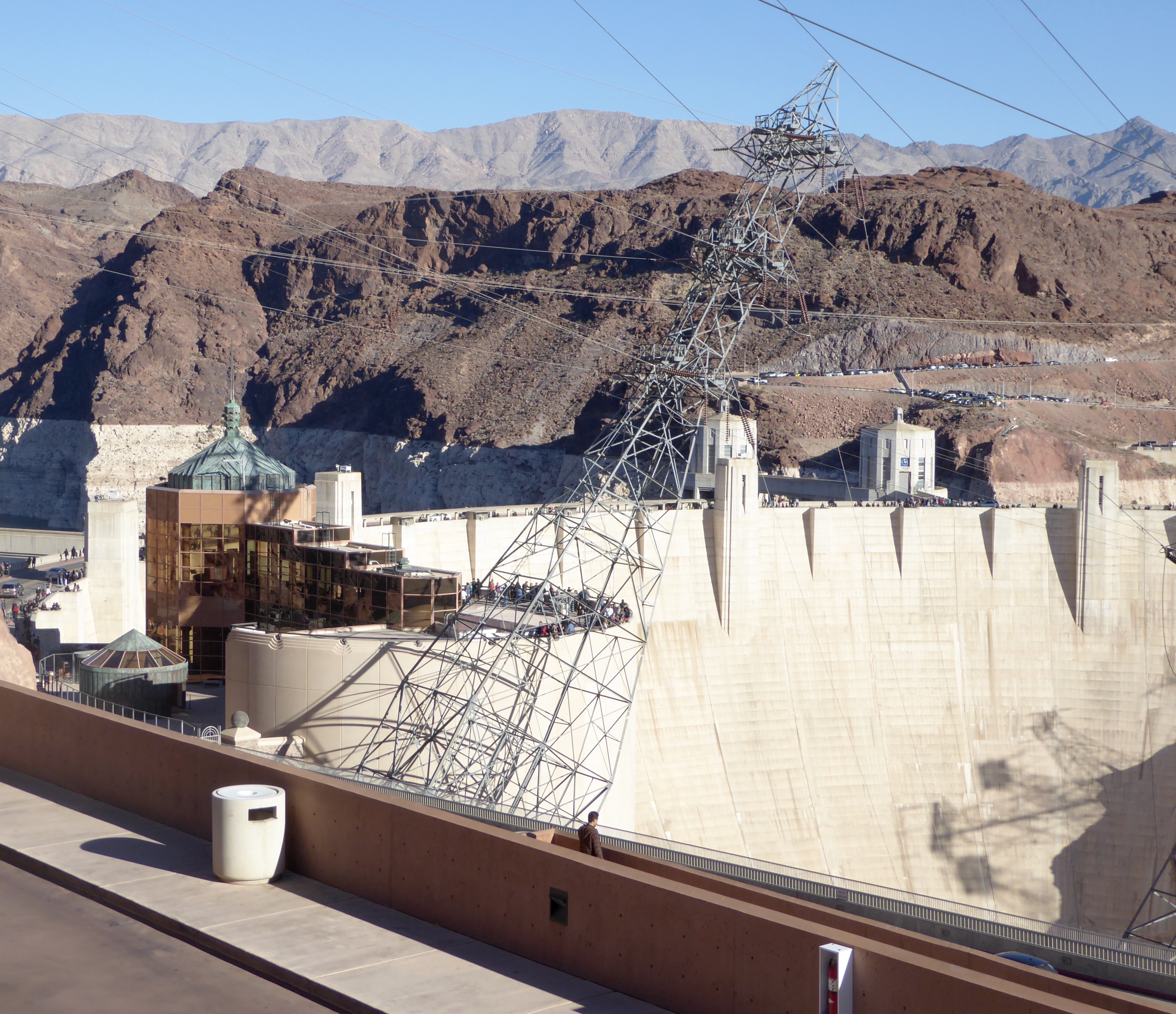
We have driven and walked over Hoover Dam several times in the past.   We even went inside the dam on a tour many years ago. With the new bridge in place, most traffic avoids the dam itself but the area was still very busy with visitors. There is a parking structure, a large gift shop, a restaurant, and a new visitor center. Tours are still available. Since we still had the trek back home we just enjoyed the view for a while and saved more exploration for another someday.

Although the Historic Railroad Trail itself is fairly level, the hard parts (for me anyway) were the elevation changes in and out of the visitor centers on each end. From our site, we had a 3 mile incline to begin the ride and I didn’t enjoy that part of the trip at all.   As encouragement, Randy reminded me that we’d have that same 3 mile decline on the way back.  As a reward for our efforts, we were hoping to go the entire 3 miles down without having to pedal at all but had the misfortune to meet a vehicle at one of only two crossroads.  Bummer – we had to pedal about 4 times to get going again!  All together we rode  11-12  miles – and had the aching body parts to remind us that we really should ease into these things!

Posted in Uncategorized | 8 Comments