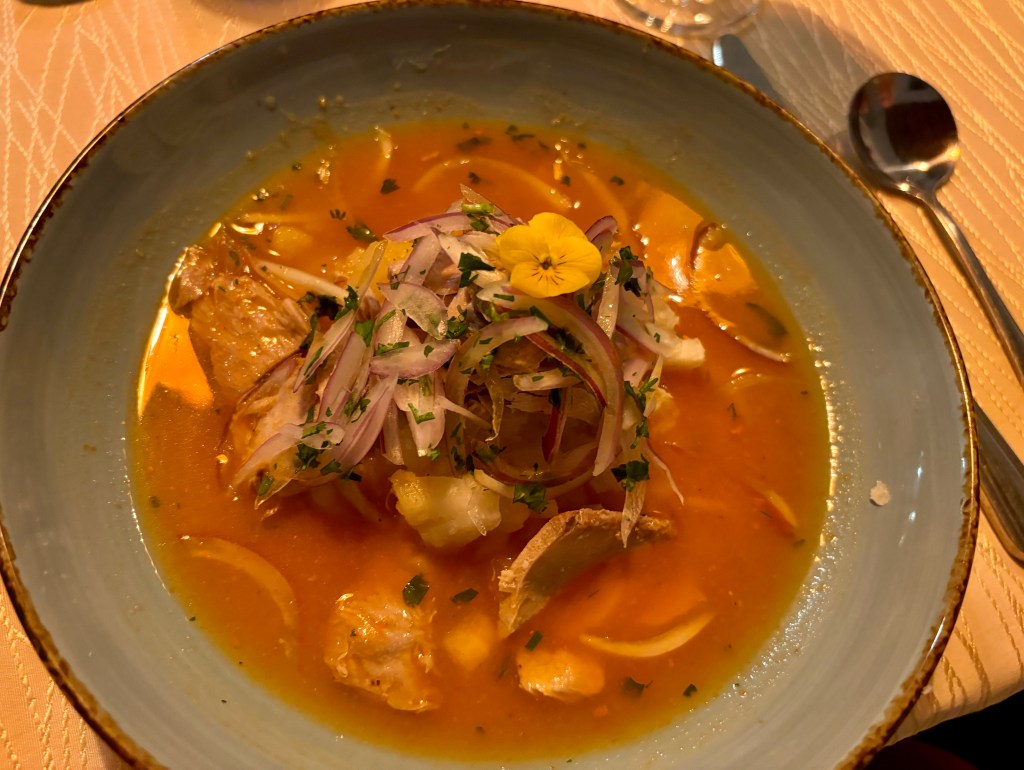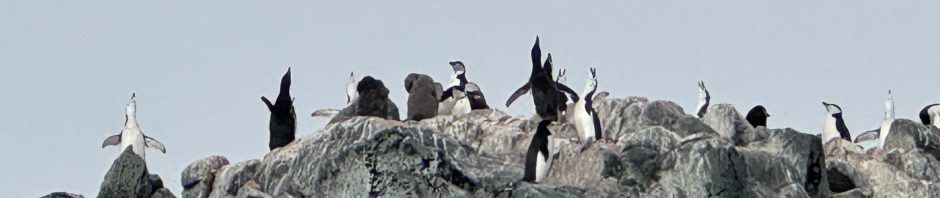
Tahiti Food Tour: This Girl Ate Fish

We ate a light breakfast because we had a morning food tour!
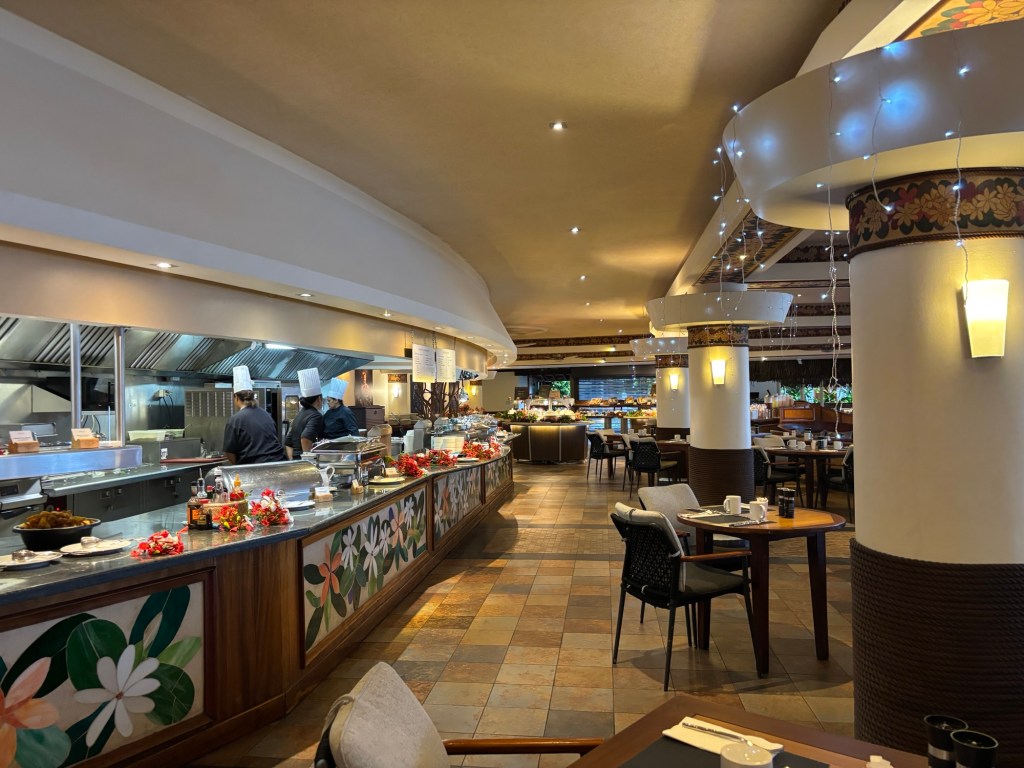
The resort’s breakfast buffet is very well done.  Unfortunately, neither of the dinners we had at the same restaurant were good at all.  It was our working plan to stay in town long enough to have our evening meal elsewhere.

A pre-arranged taxi picked us up at 7:00 a.m. for an 8:15 meeting.
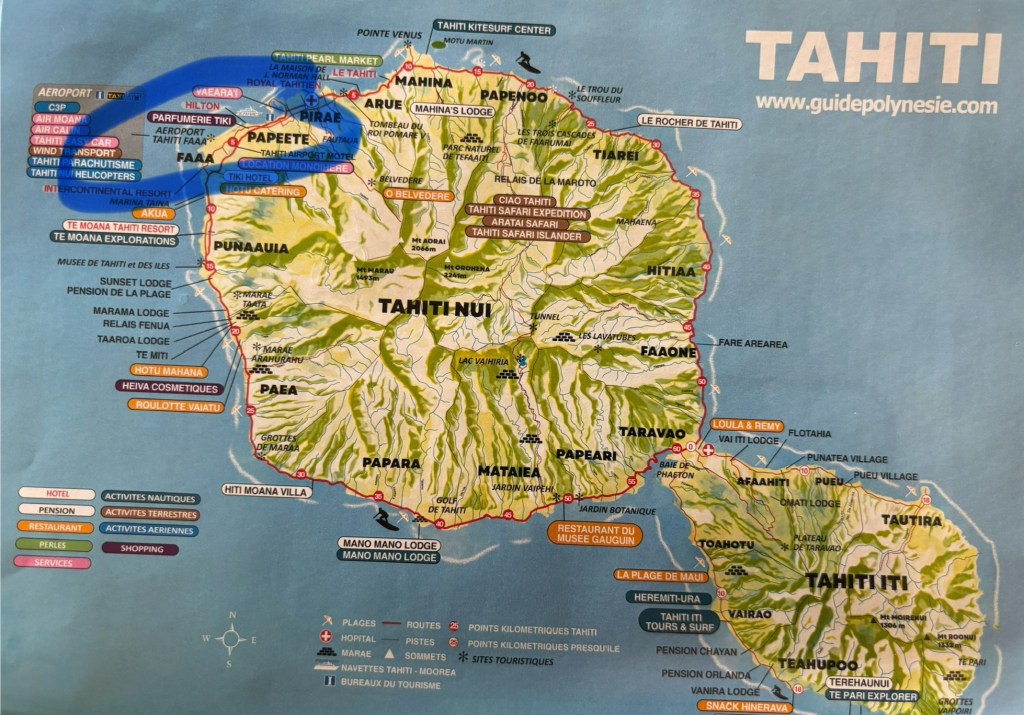
When we looked at the map, it just didn’t seem possible that it could take that long to go from the resort to Papeete.  The concierge confirmed the time was correct due to heavy traffic at that time of morning and never knowing what might happen to cause a significant delay. (We live near Phoenix, we know all about that!)
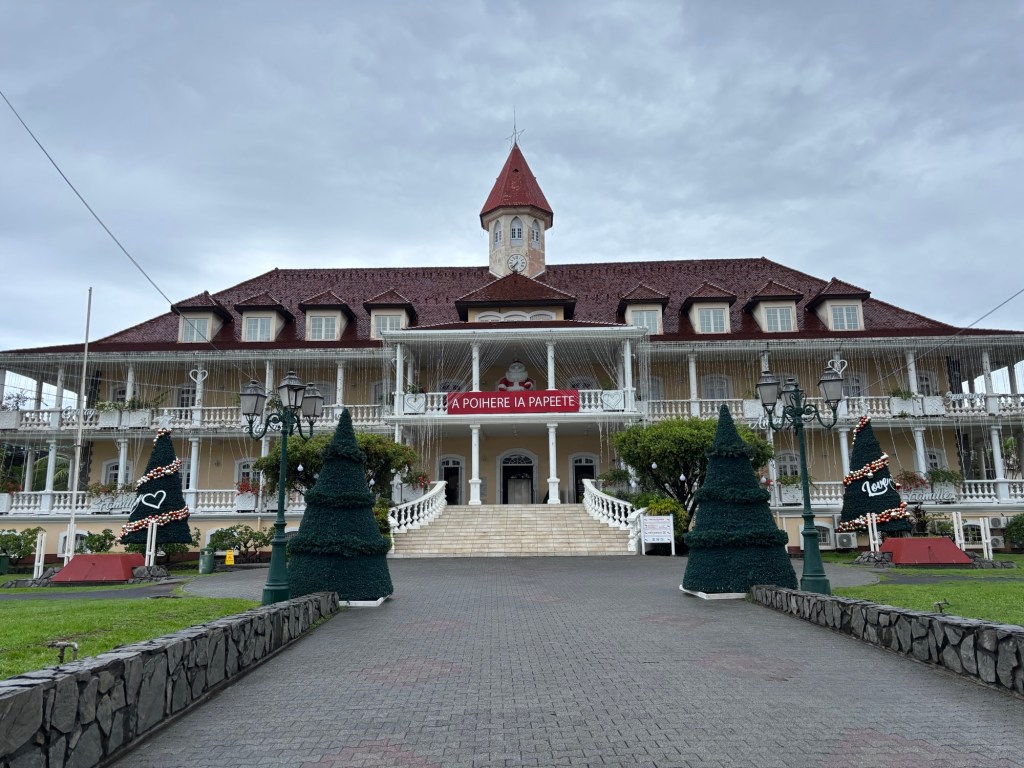
Our taxi driver dropped us off in front of a very elaborate building that identified as a hotel in big letters and city hall in small letters.  
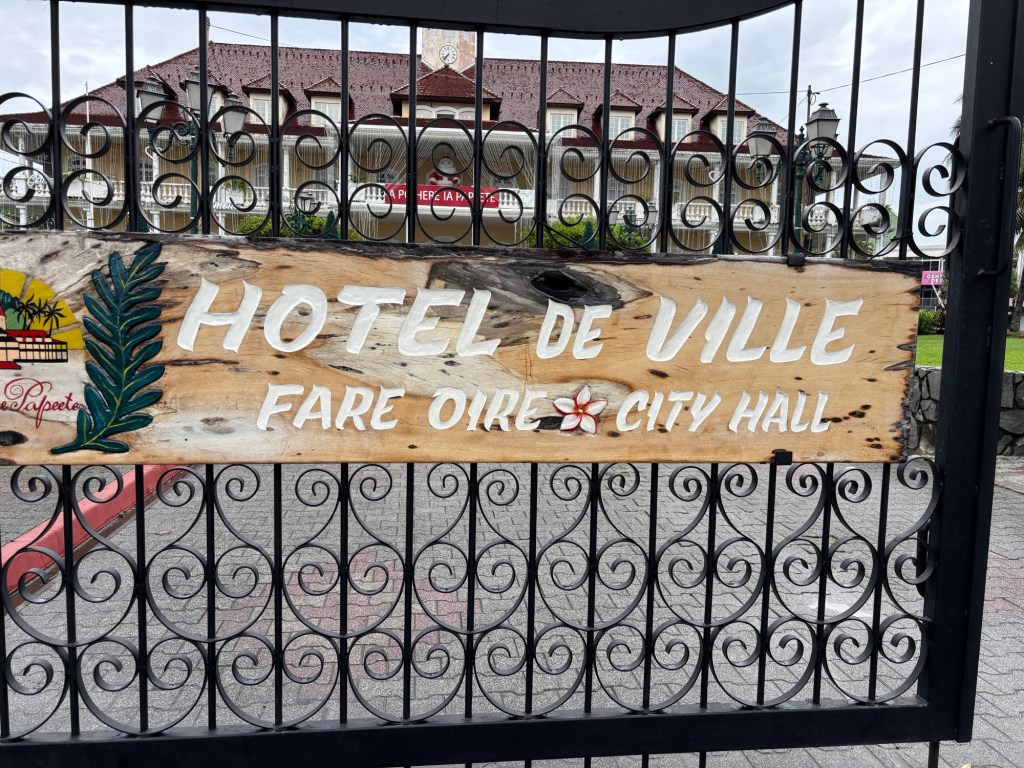
It looked like a hotel to us!

We verified that we were in the right place.  It never was a hotel as we know it – it’s just French for City Hall.

Our drive from hotel to city hall took only 30 minutes so we walked to a pharmacy.  We had to show a picture to be understood but we got what we wanted.
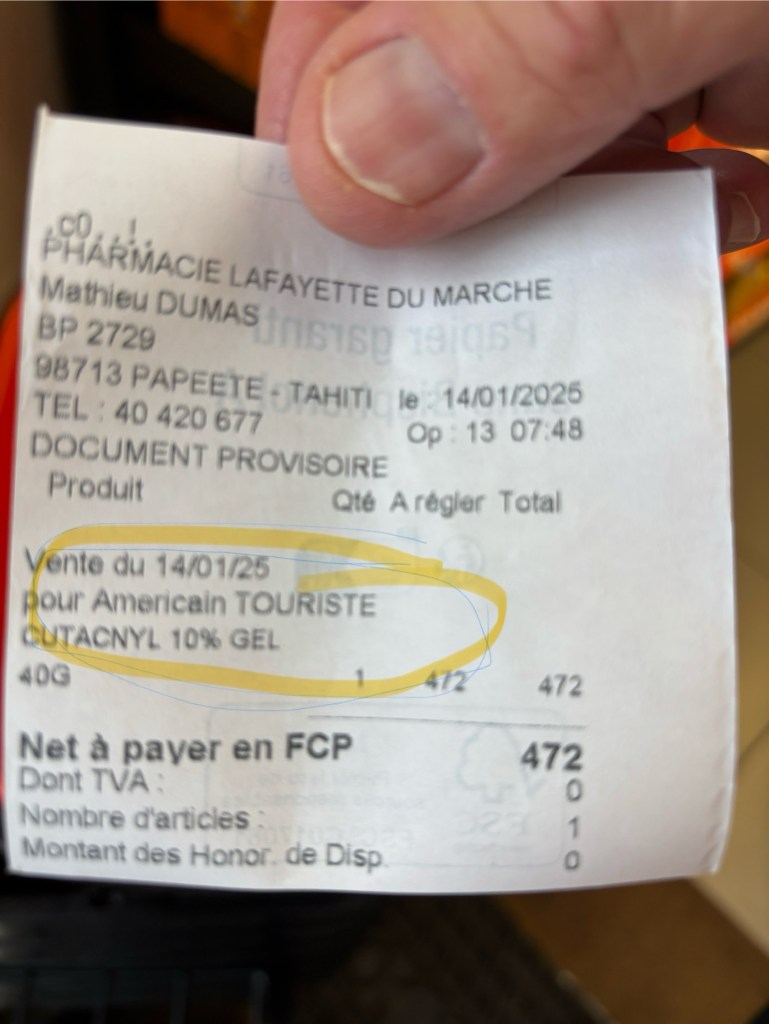
We chuckled at the receipt identifying Randy as American tourist. 

Back at city hall, we explored a bit. A plaque outside the building said it was commissioned in 1966 when the president of the republic was Charles de Gaulle.
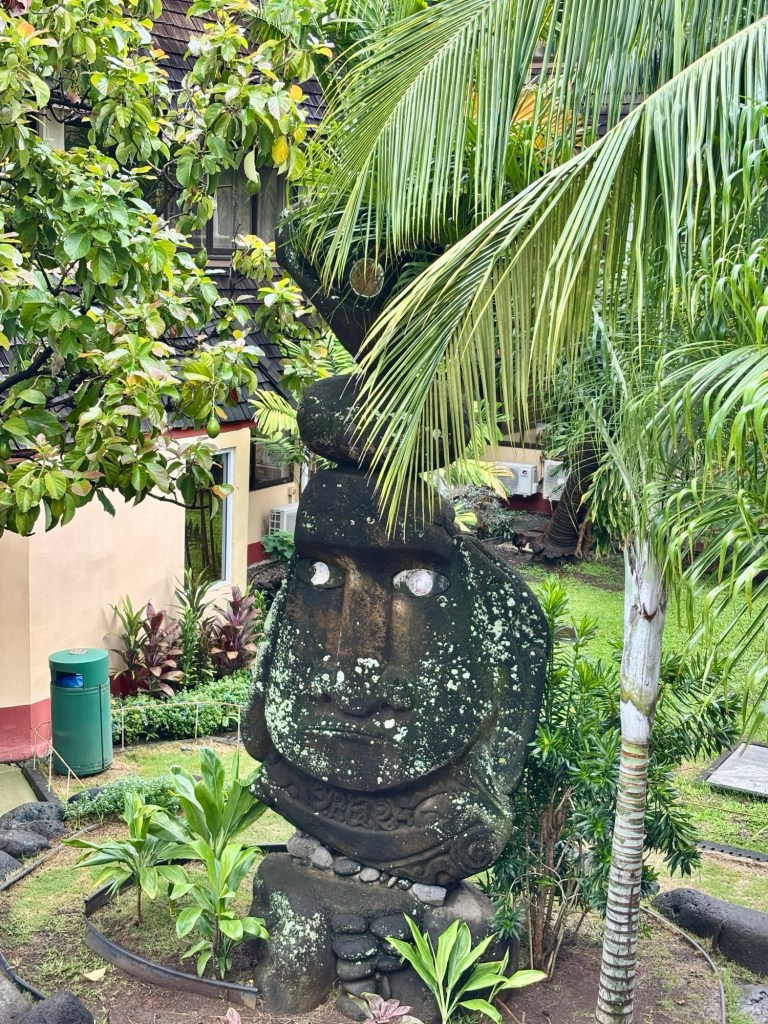
The statue was on the grounds.
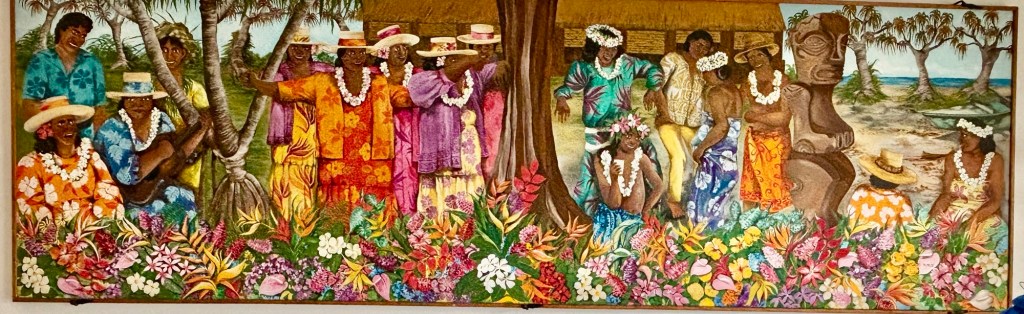
This mural was inside.

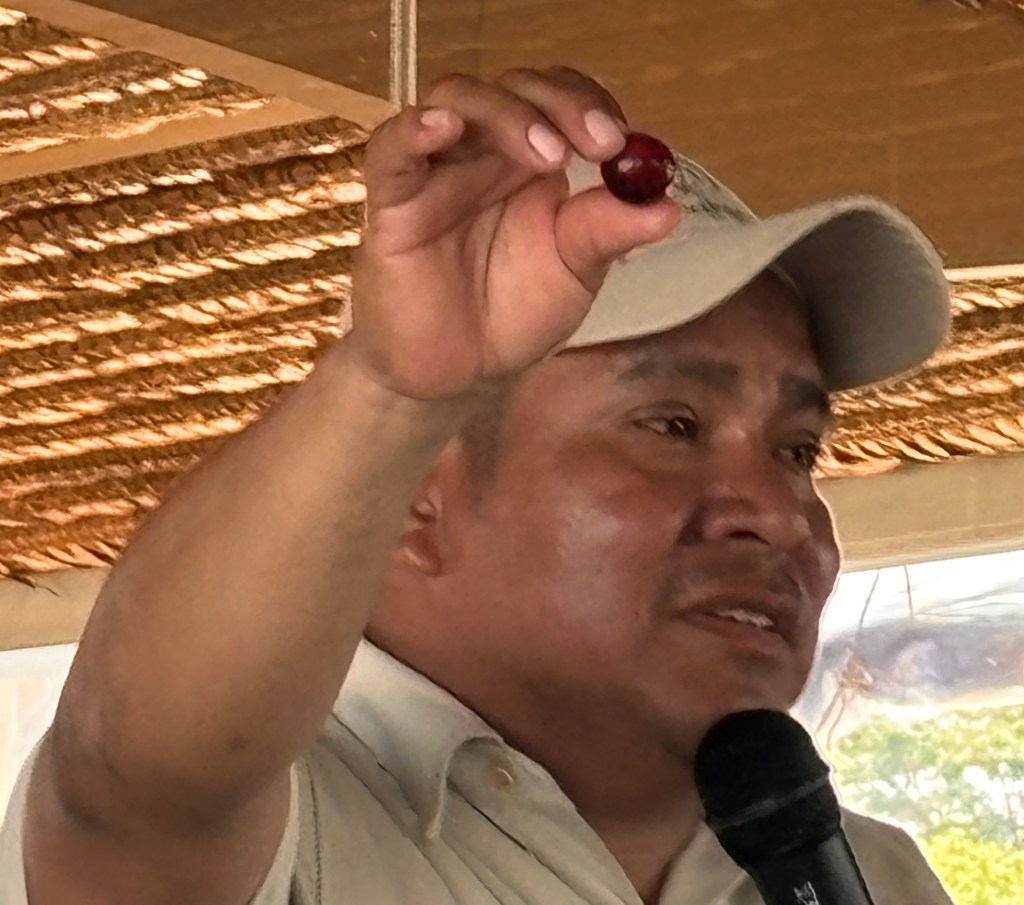
At 8:30 we met our food tour guide, Oramu, and one other guest.  Our first stop was for a typical Polynesian breakfast.
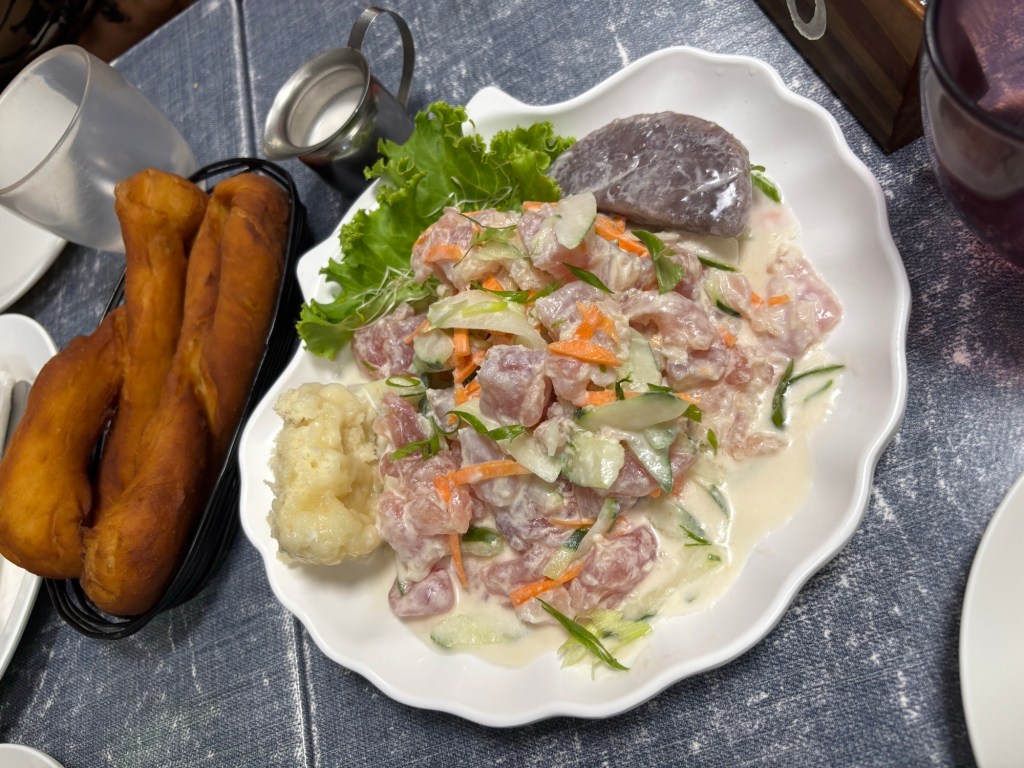
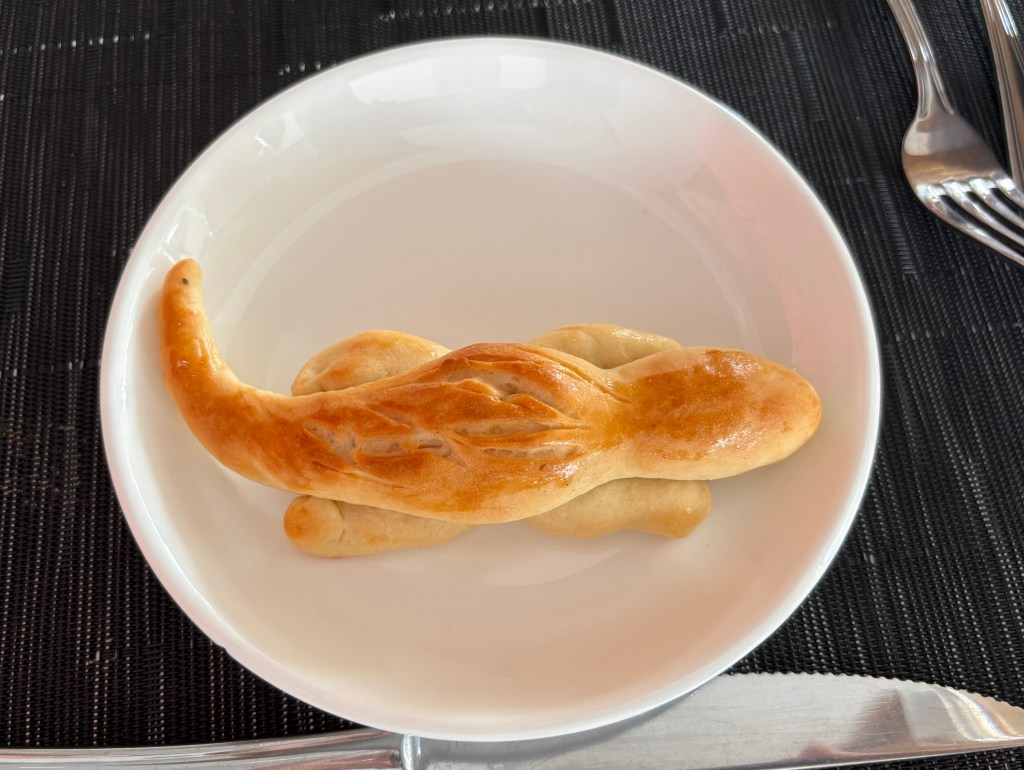
That consisted of a donut type bread that was not real sweet.  We also had a raw tuna dish with a small amount of vegetables in coconut milk, a coconut biscuit, and piece of taro root.  Oramu said this is the breakfast people eat everyday. There is only a small amount of lime, not enough to “cook” it like ceviche. The tuna, or other fish, is just always very fresh.

THIS GIRL ATE RAW FISH – and it was actually pretty good.  (In my world of not eating fish, I will very occasionally eat tuna or salmon.)  
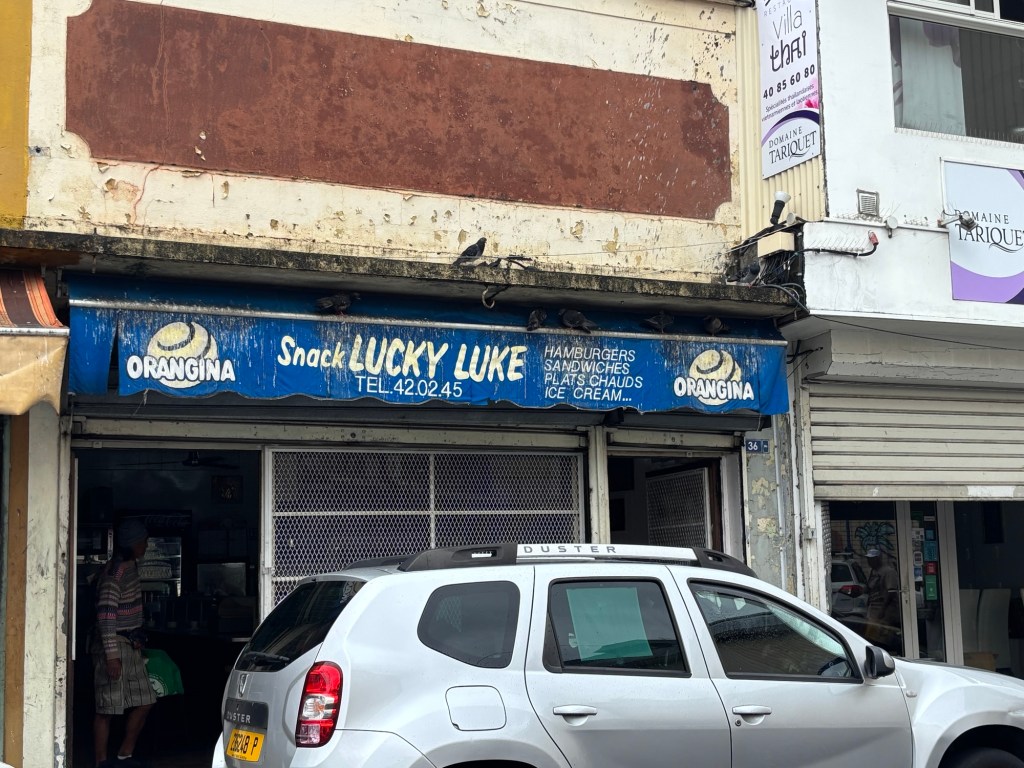
The next stop was Lucky Luke’s which has been in this spot for many decades.  Luke is now 90 and still comes in to greet his customers.  The next generation is now doing the day to day work running of the restaurant.
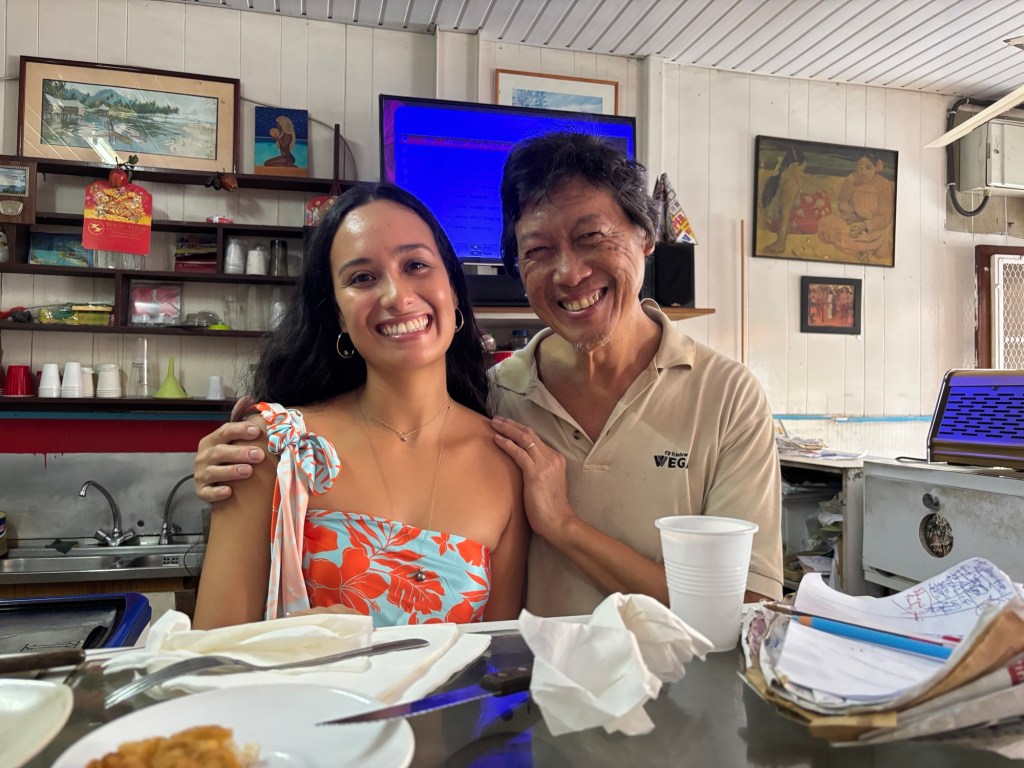
This is a picture of Oramu and Luke’s nephew.
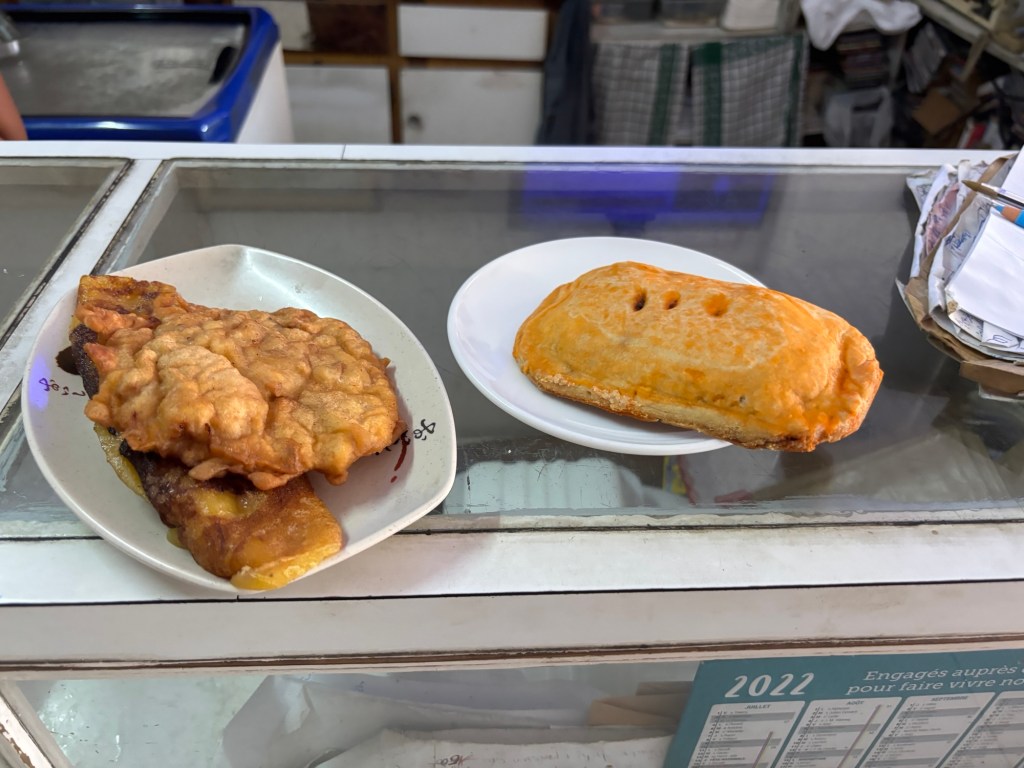
We tasted fried pastry with tuna inside, banana crepes, and a baked pastry with banana inside.
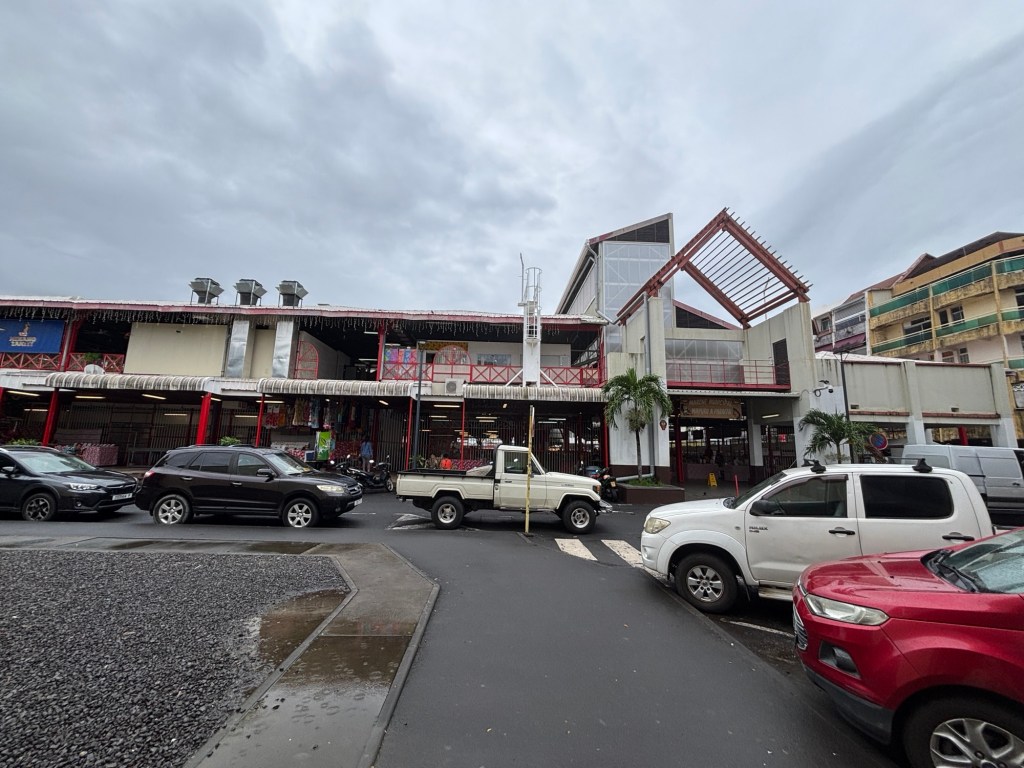
This is the market building.  It is much larger than it appears! It is open everyday but Sunday’s are the biggest event. It is the main day for locals to shop for their food for the week.  Sales begin at 3:00 a.m. and end at 9:00 a.m. on Sunday, otherwise there are more typical hours.
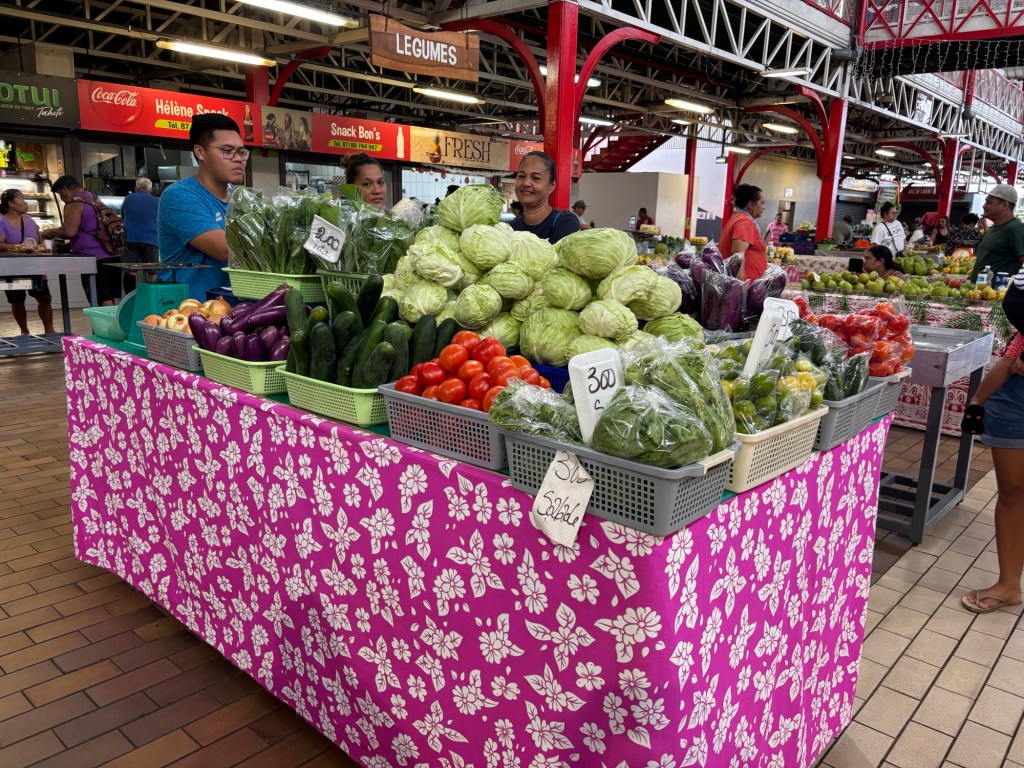
We saw a sampling of the fruits and vegetables available on a Sunday.
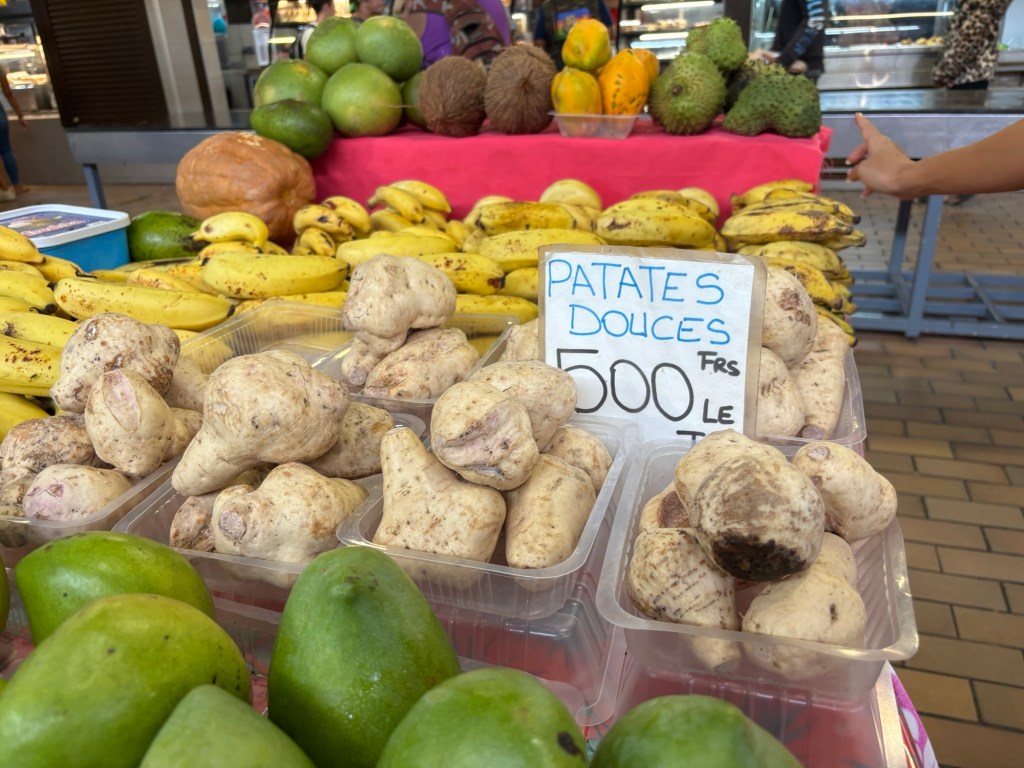
These white potatoes are a type of sweet potato.
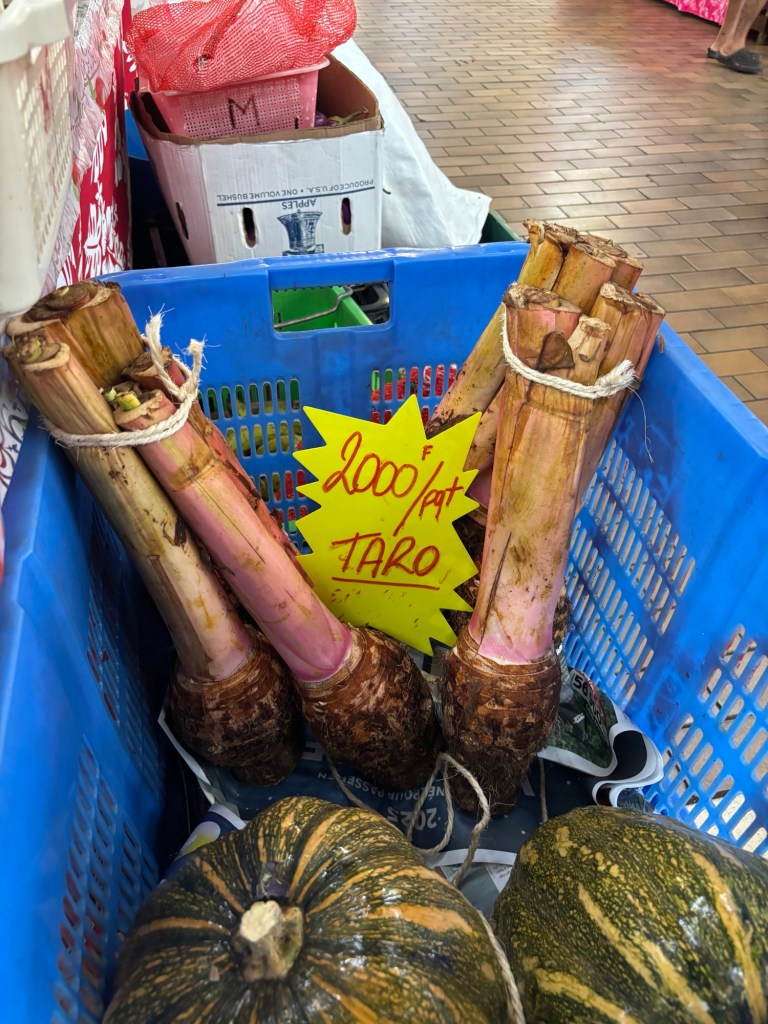
Taro root is purple when cooked.
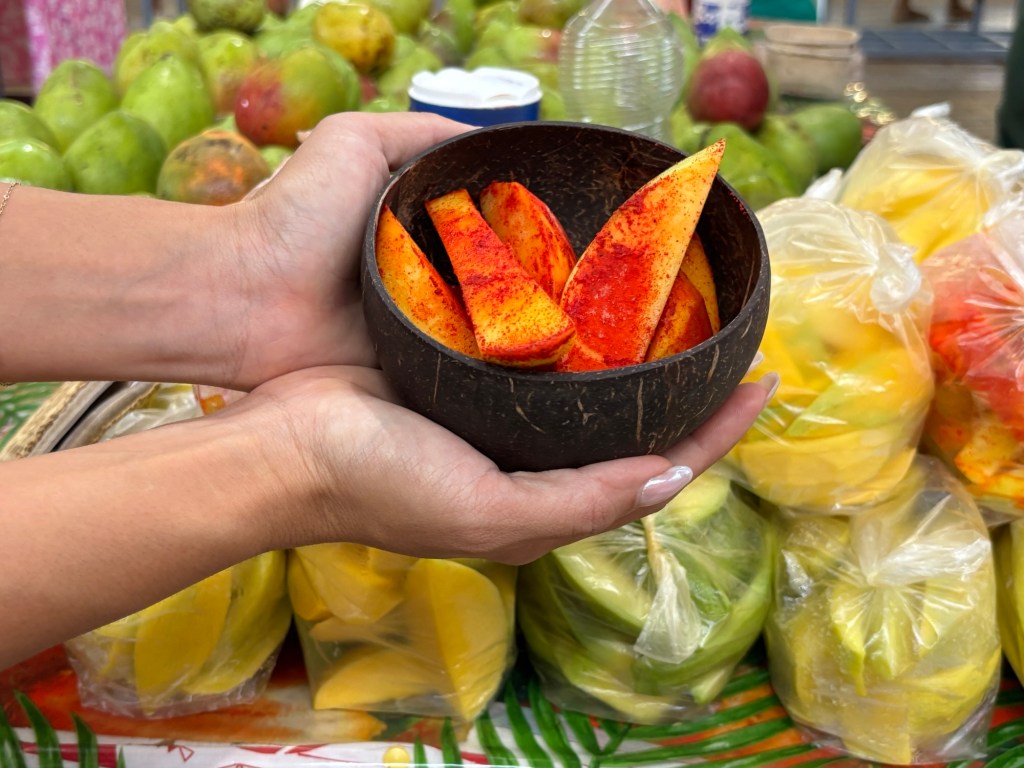
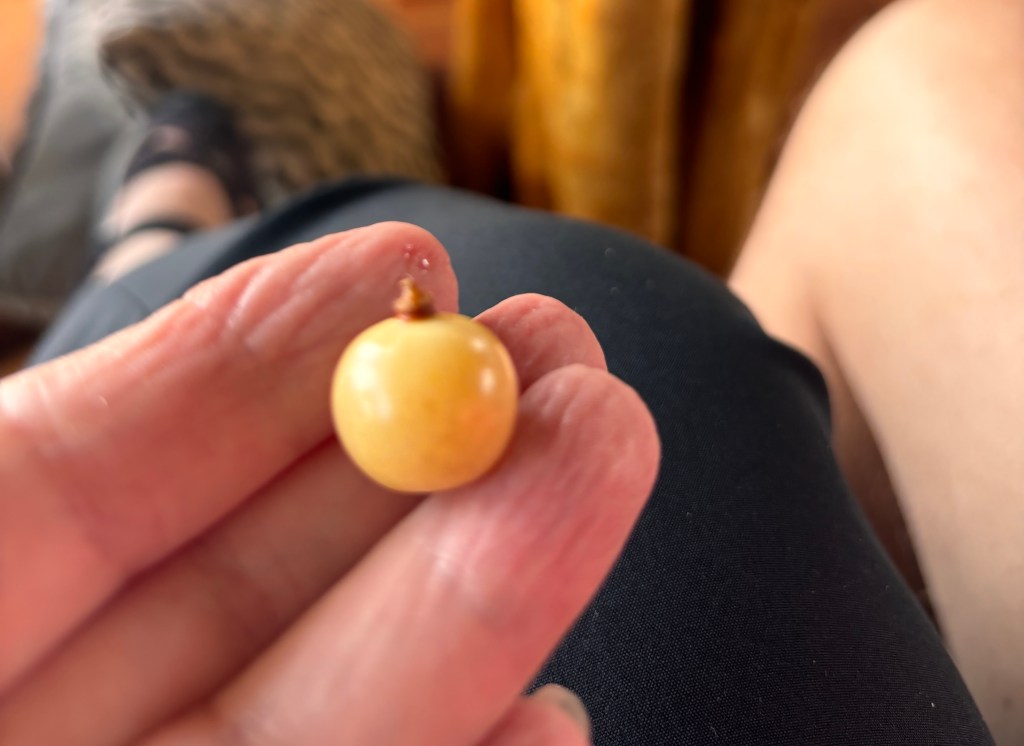
We sampled mango with Chinese Plum Spice Powder.  It is not spicy in a hot or ethnic way as Tahitians don’t eat spicy food. Oramu said this type of mango is candy to kids in Tahiti.

Beneath the bowl are bags of mango at various degrees of ripeness.  A person chooses a bag to their preference and the powder is shaken over it.  This was my favorite food on the tour.
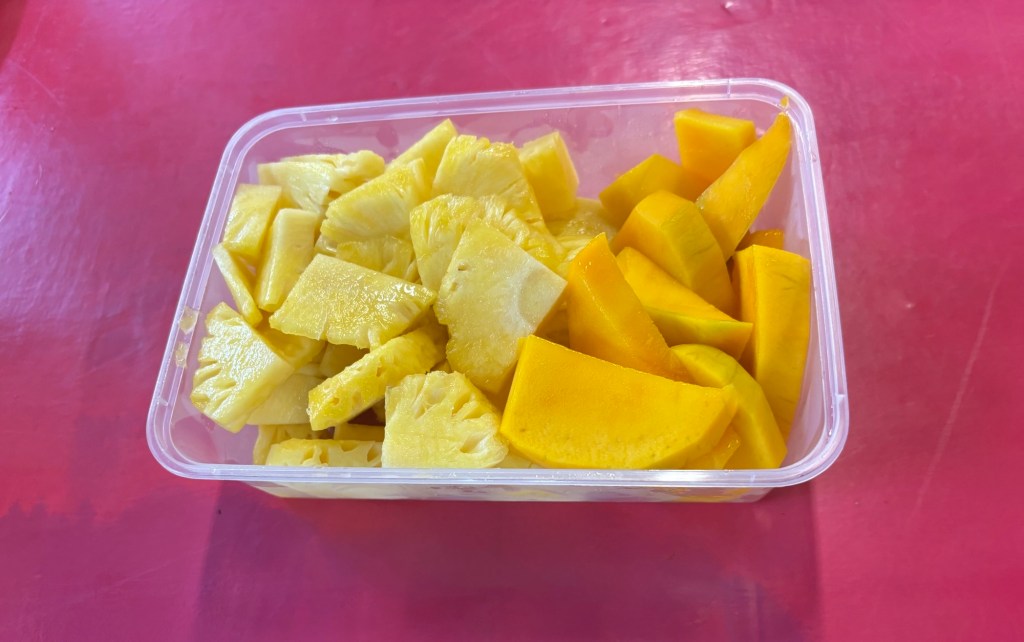
We also had fresh mango and pineapple.  On this trip, the pineapple, both fresh and juiced, has been the best ever.

Next we had coconut water and coconut bread from a market stall that sells all things coconut.  We didn’t like the water but the bread was interesting.  We like fresh coconut “meat” so we enjoyed  the taste and texture of it inside the bread.
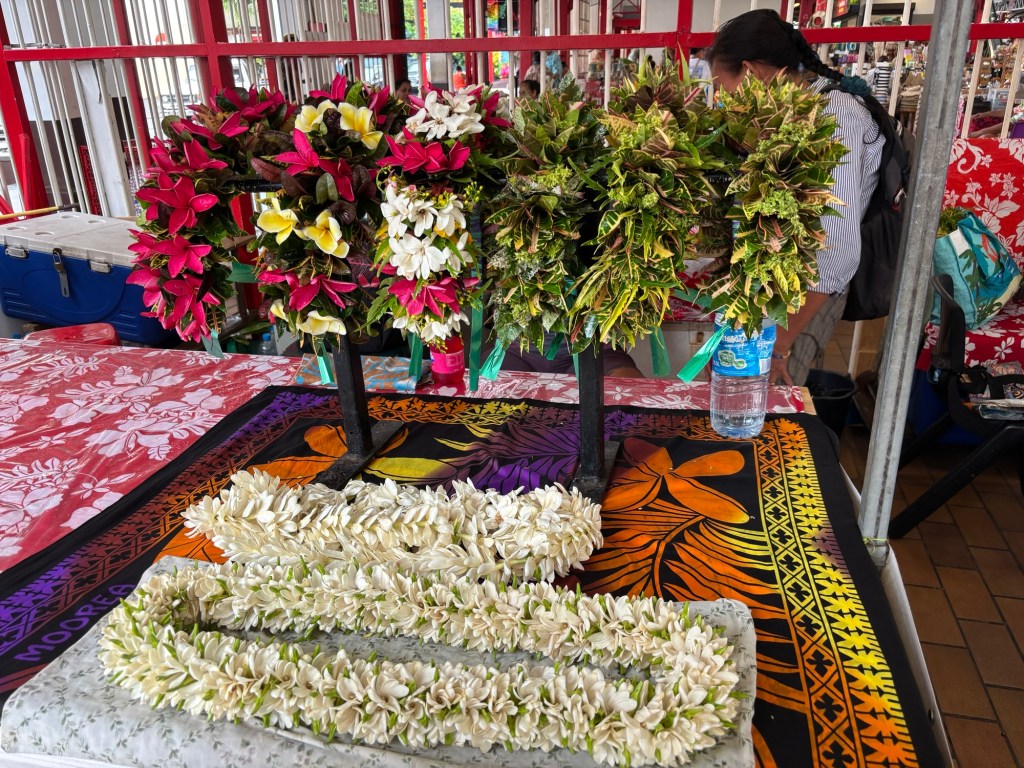
There are other things for sale too including flowers and flower crowns. The crowns cost about $25 or you can buy the flowers and create your own.
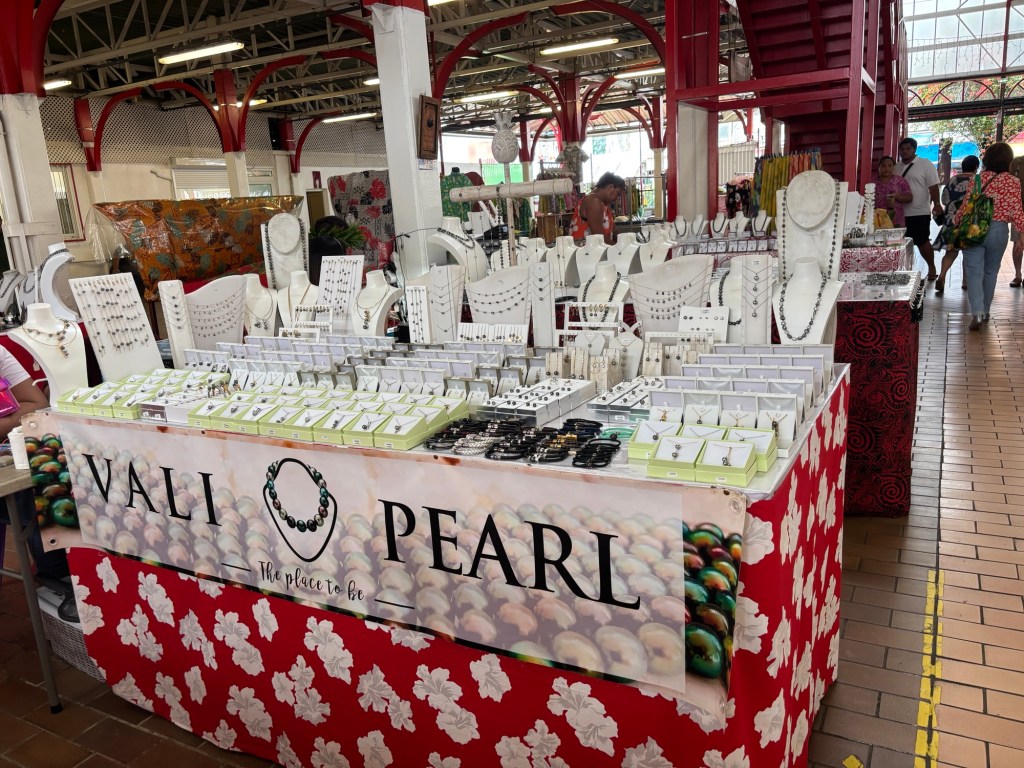
Black pearls are a product of the South Pacific and Oramu showed us the difference between natural and cultured.  I bought cultured pearls when we were here in 2019.
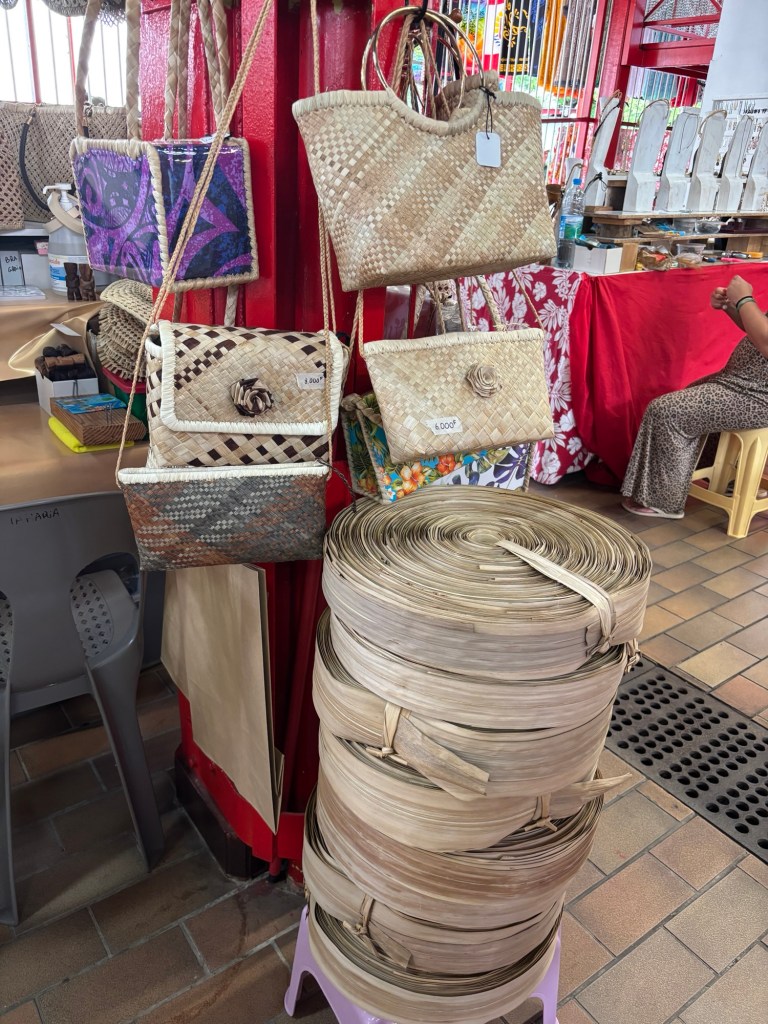
The material used for weaving bags is the same as used for thatched roofs.
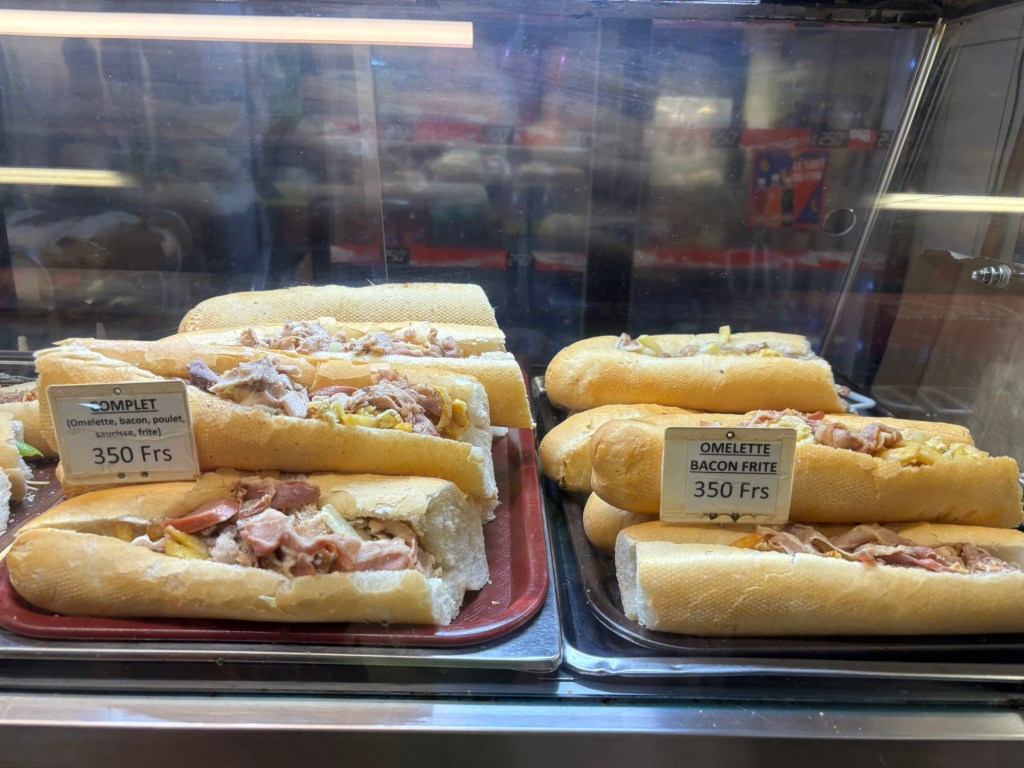
There was a section of grab and go foods. Sandwiches are often a most economical meal because the cost of bread is government controlled.  A generous sandwich costs 350 francs, roughly $3.50. I think this was the only bargain we saw in Papeete.
We left the market and went for Tahiti fast food at Vini Vini.  We did pass a McDonalds and a Burger King but they were not on our tour. Our guide said the American fast food places are very popular.
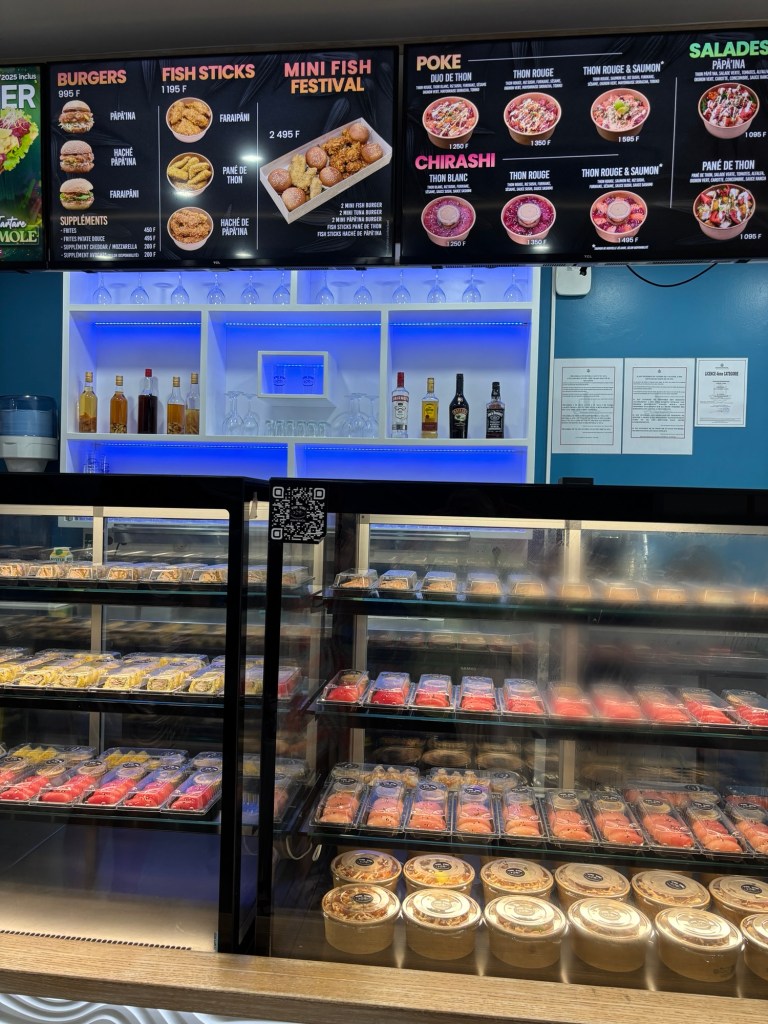
The cases show many kinds of fish and sushi that are ready to eat.
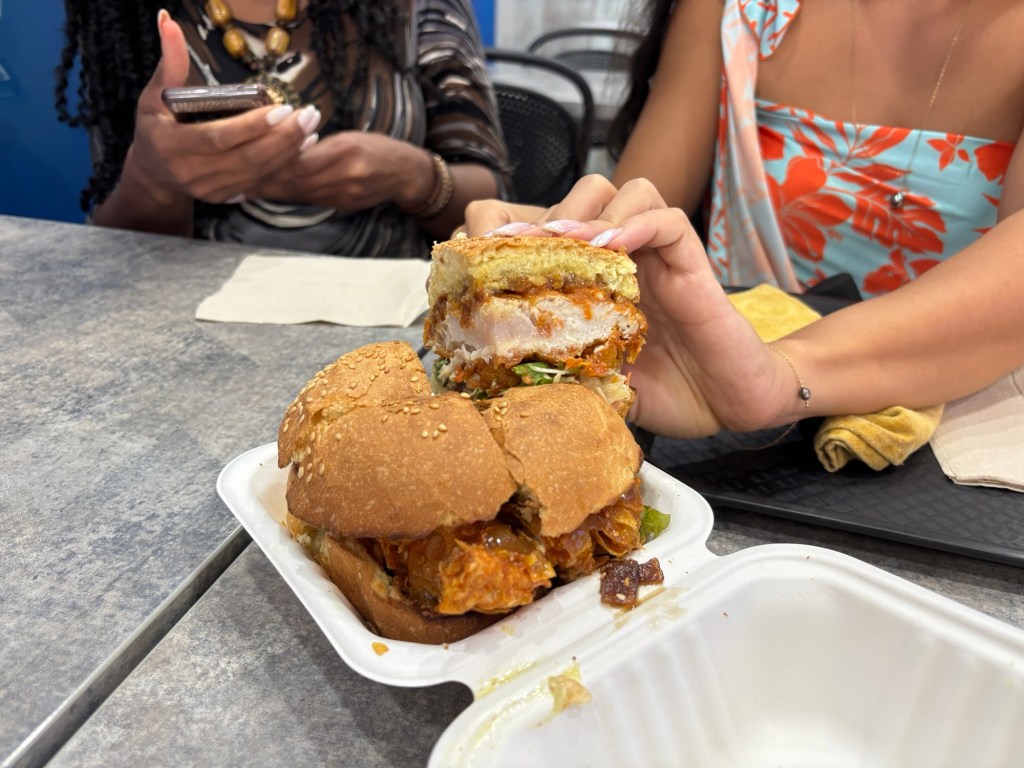
Oramu ordered us a burger.  The meat was cornflake encrusted tuna.  The coating was very crunchy and the tuna was good.  The burger was one of our favorites on the tour.
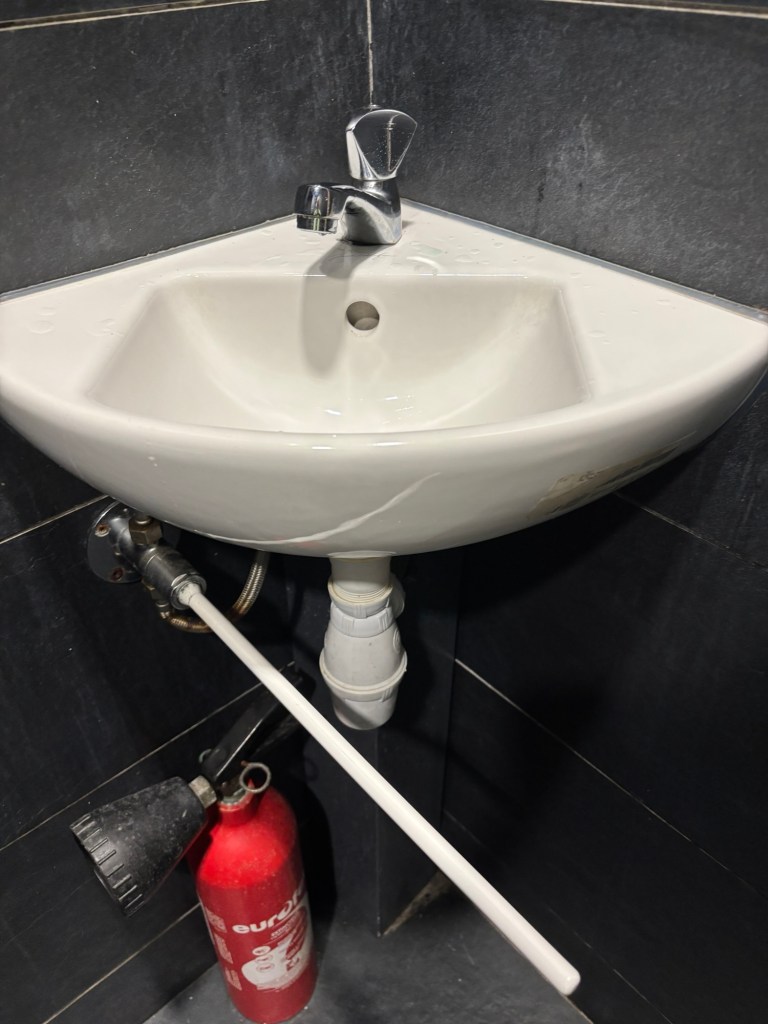
This is not food, but it was the same stop.  It took me a bit to figure out that I needed to “hip action” the white rod to get the water to turn on in the sink….
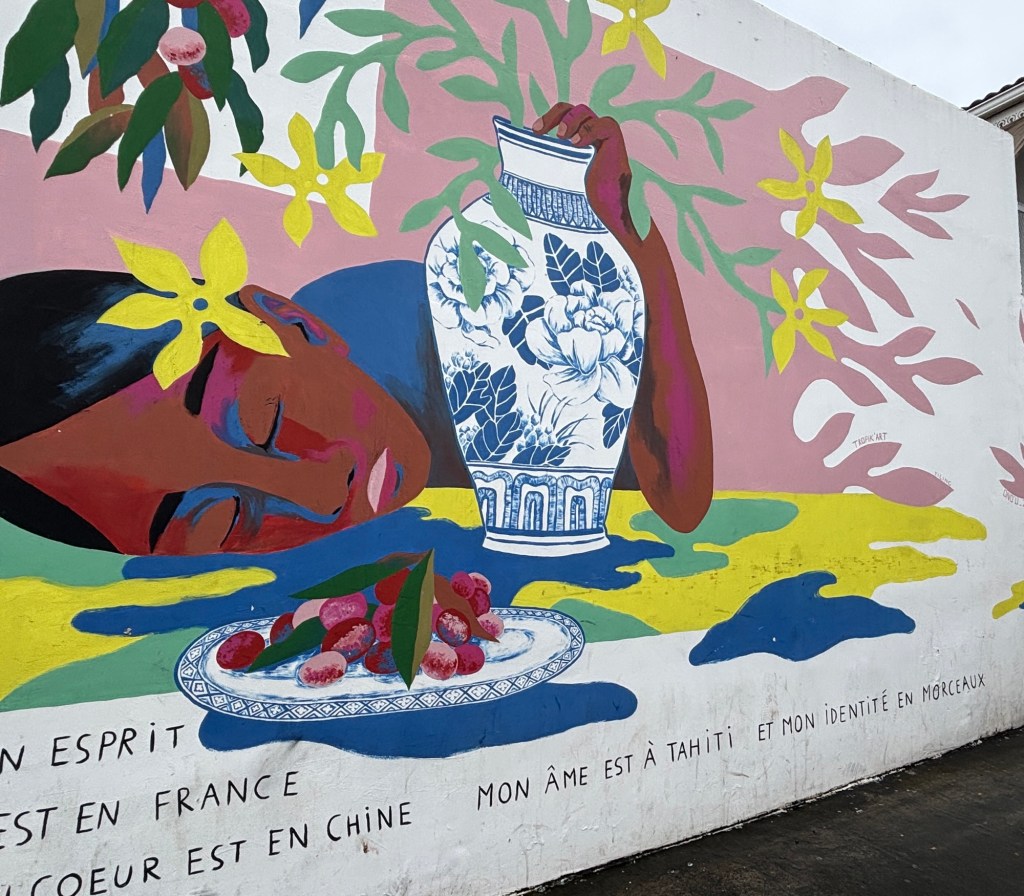
We stopped at this street mural and Oramu told us how it represented the three cultures that mesh in Tahiti: the Polynesian culture that has always been, French culture after becoming a protectorate of France in 1844, and an influx of Chinese in the 1860s as laborers. Food is also a mixture of the three.  

Residents of French Polynesian are French citizens and are allowed to vote in elections in France.

Oramu told us as that school is taught in French.  In elementary grades the students learn Tahitian as a second language.  In secondary school, they learn English.  

She told us that when she was young, her parents would argue in English thinking the kids didn’t know what they were saying.  Oramu’s grandfather spoke English and he was also instrumental in her being an excellent English speaker.  
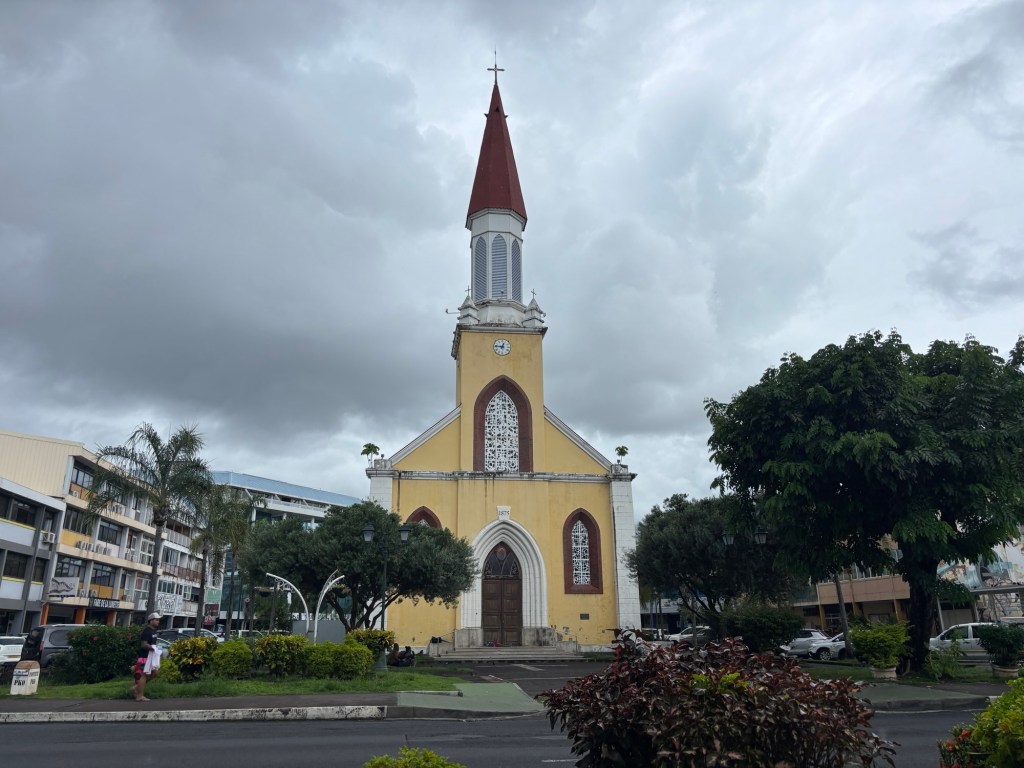
Papeete was bombed during World War I by the Germans.  Much of the area around this church was destroyed but the church remained.
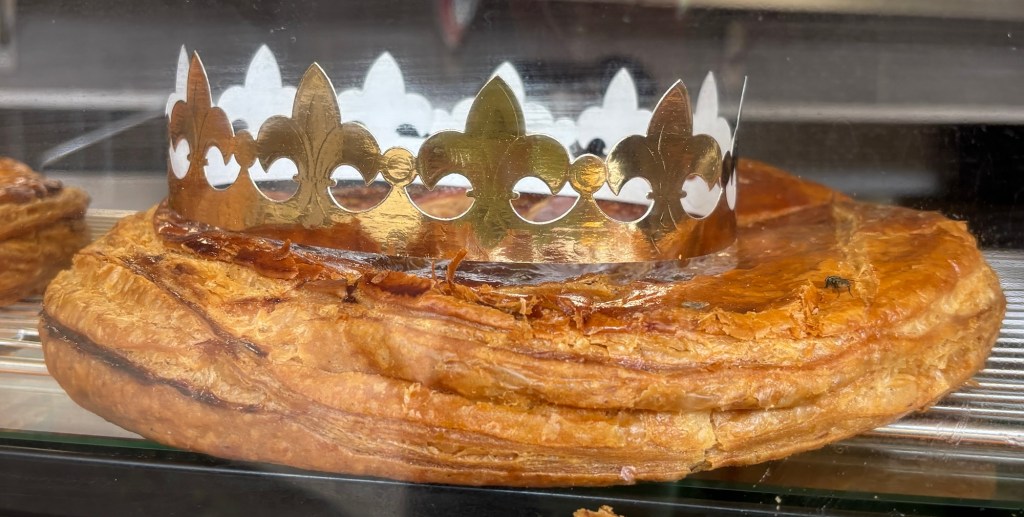
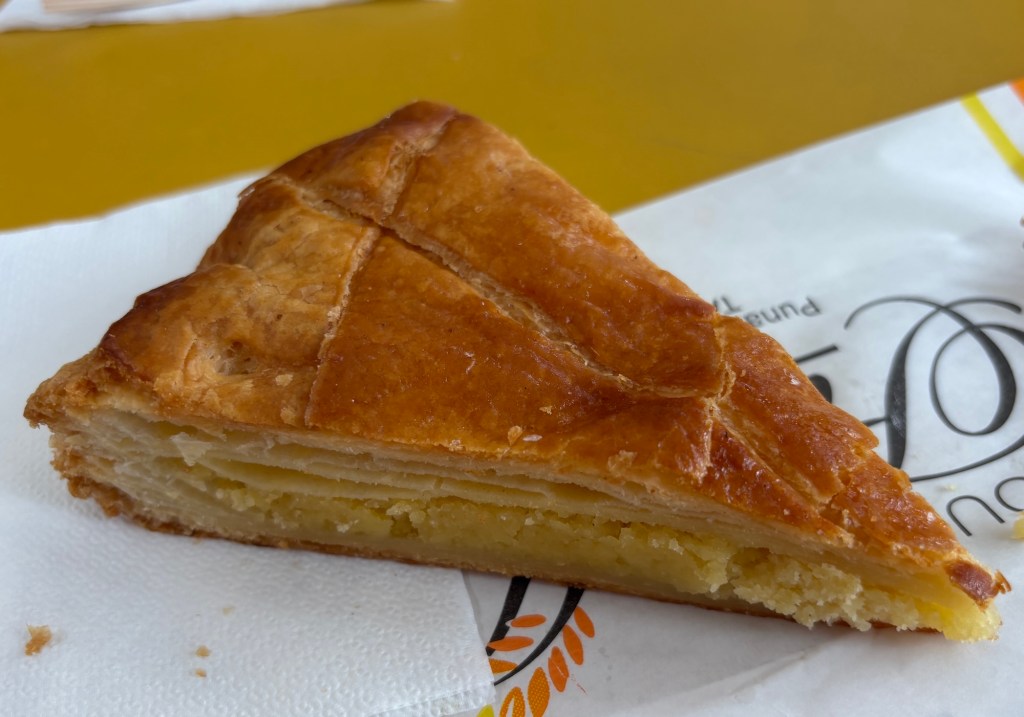
Our next food item was Polynesian King’s Cake.  She told us the oldest person in the family cuts the cake and the youngest family member  delivers the pieces of cake randomly to others.  Who will have the baby Jesus inside?
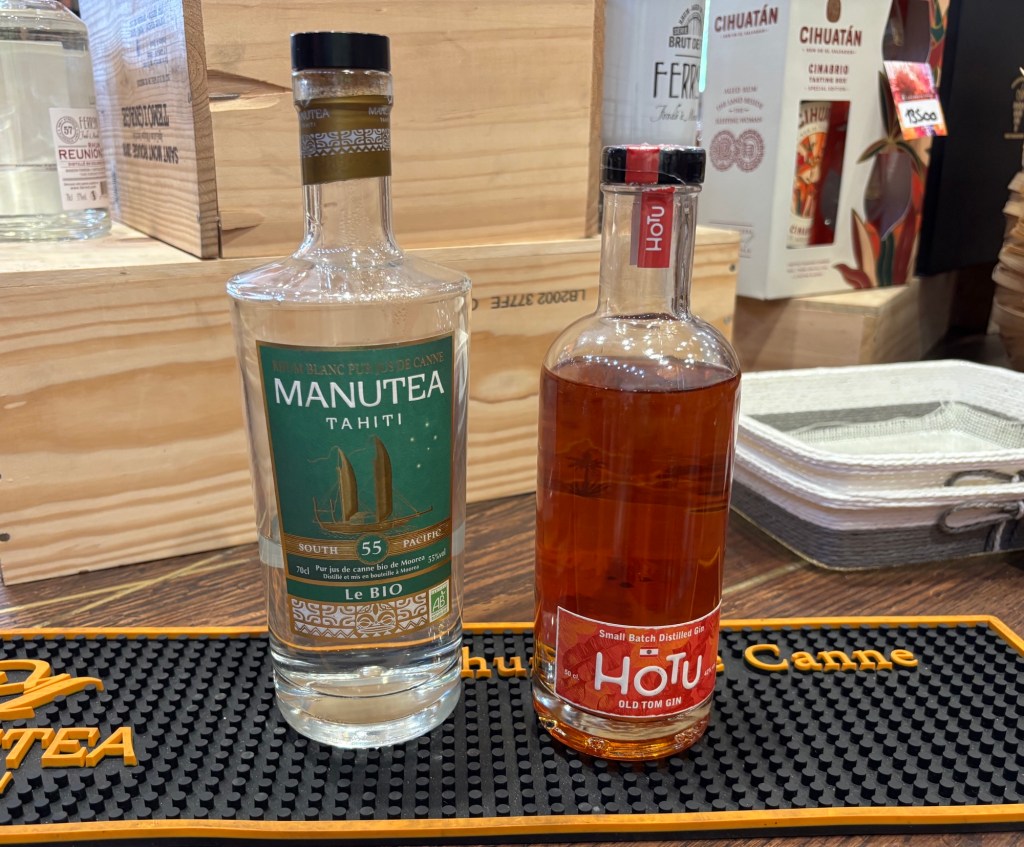
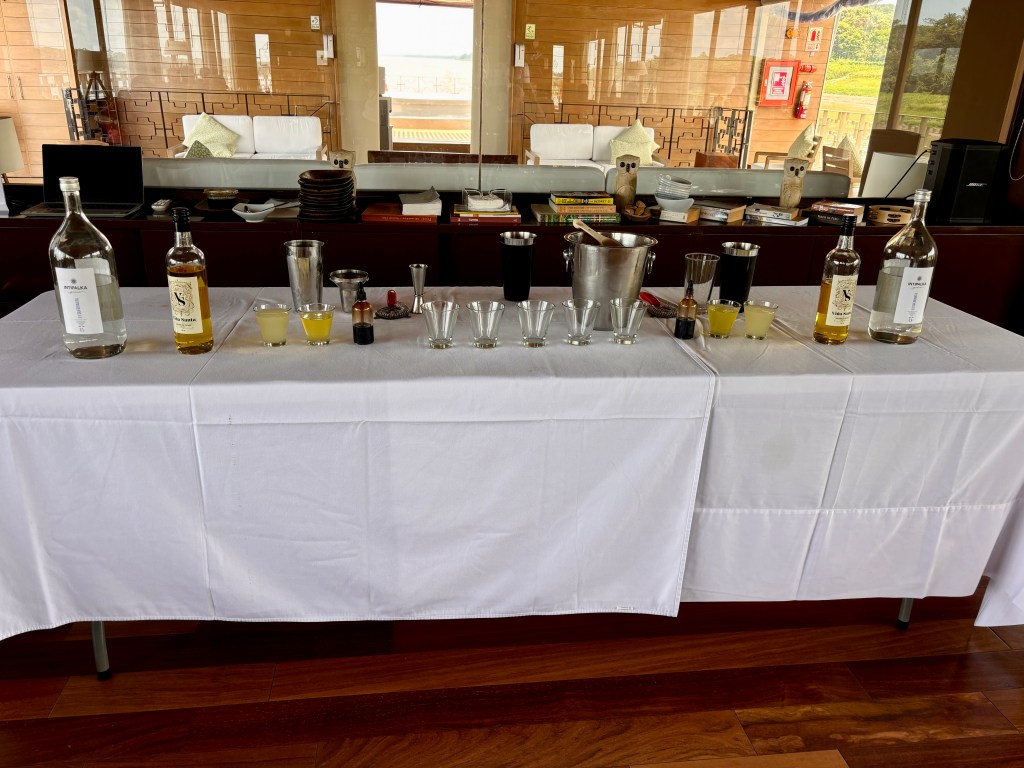
Our next stop was for a Tahitian liquor tasting.  We had a sip of Tahitian gin that was honey infused. I don’t like gin and the honey didn’t help.  The rum smelled so much like molasses that it should have tasted good – but it didn’t.   One of the islands specializes in pineapple wine which sounds wonderful given how good the pineapple is here.  Unfortunately, they didn’t give us a sampling of that and we didn’t have time to drink a bottle before leaving the island tomorrow.

Our last stop was for “papaya pie”.  Of course, all these dishes have a Tahitian or French name but we don’t remember them. 
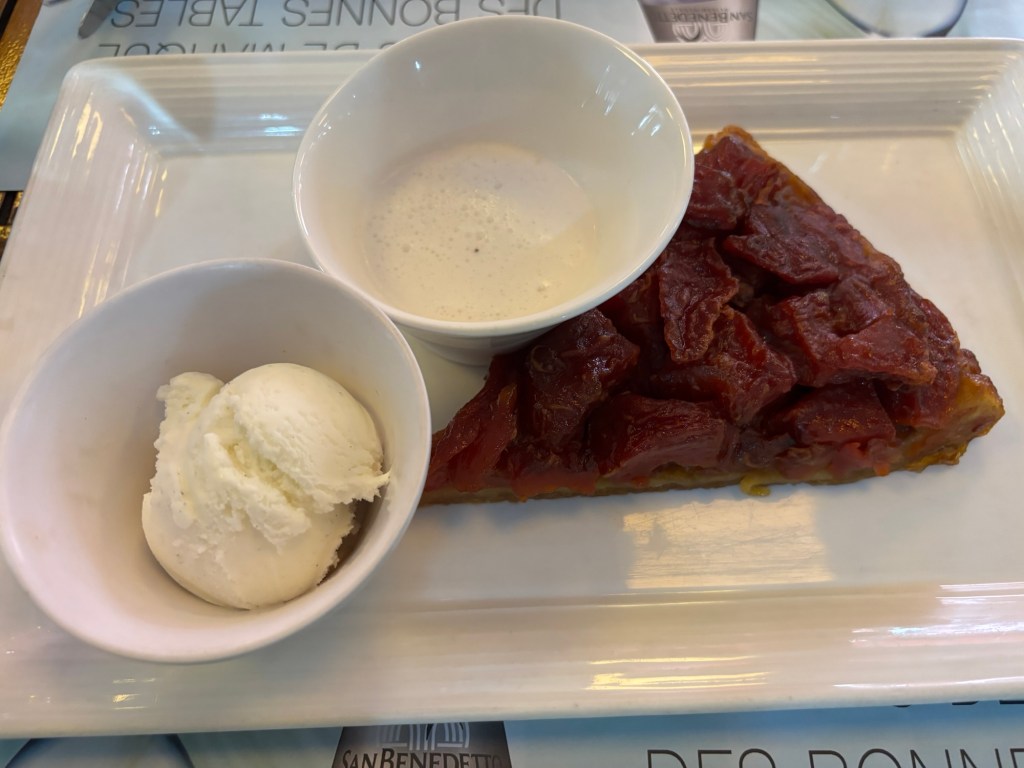
We were skeptical about this dish because we don’t like the texture of fresh papaya at all.  Cooking it made papaya so much better!  Served with some coconut milk and vanilla ice cream – this was Randy’s favorite dish on the tour.

We had been pretty fortunate with weather during our four hour food tour around Papeete.  We said goodbye to Oramu and our fellow guest.  The food on this tour won’t be remembered as the best, but the experience was very, very good.
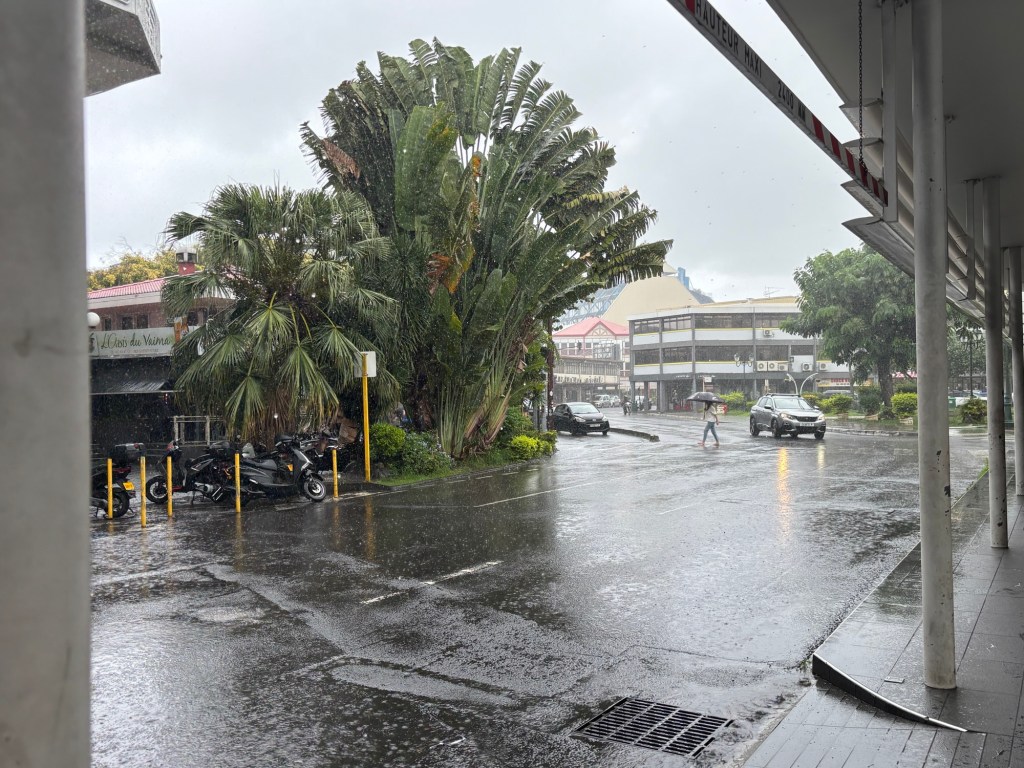
We did a bit of shopping and then the rain came down in sheets. We didn’t know if we’d even want to eat again, so we put on our raincoats and made it to the taxi stand.  We were shortly back at the hotel.
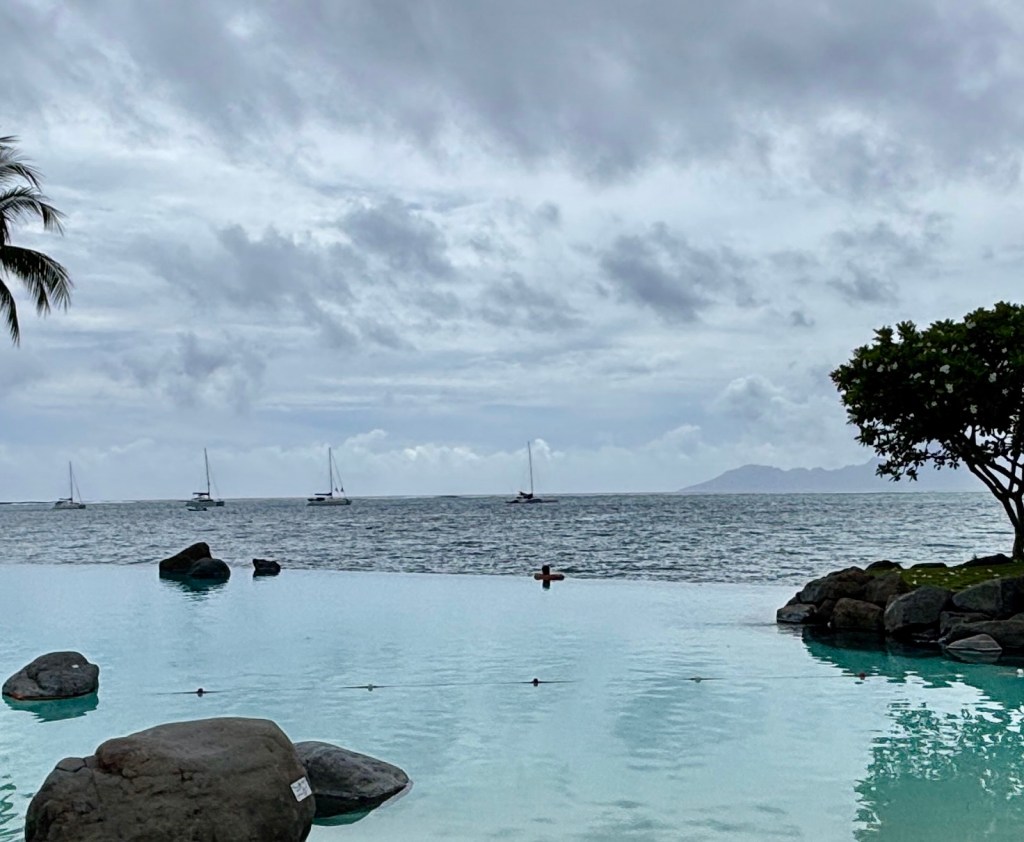
We felt a bit grimy and actually did go swimming this time.  Randy stayed in longer than me so I was able to take his picture in the pool, looking out at the lagoon, and the ocean beyond.
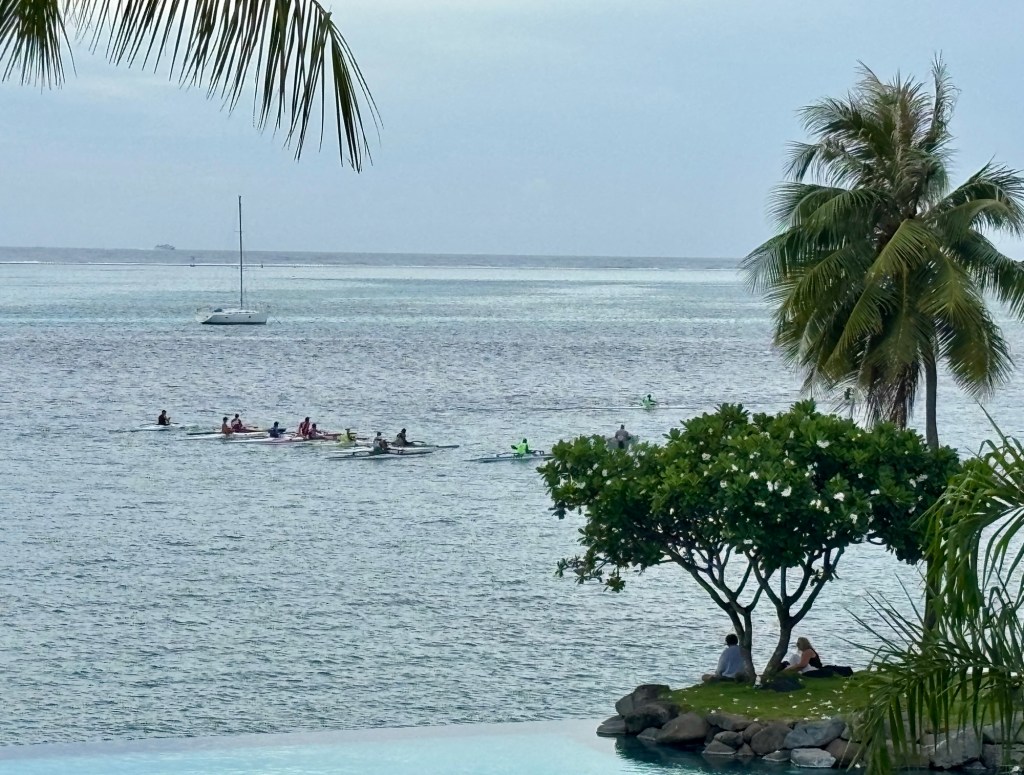
Back on our balcony, we saw the beginnings of a canoe race.

We eventually decided that we did want to eat again.  We went down and ate at the bar.
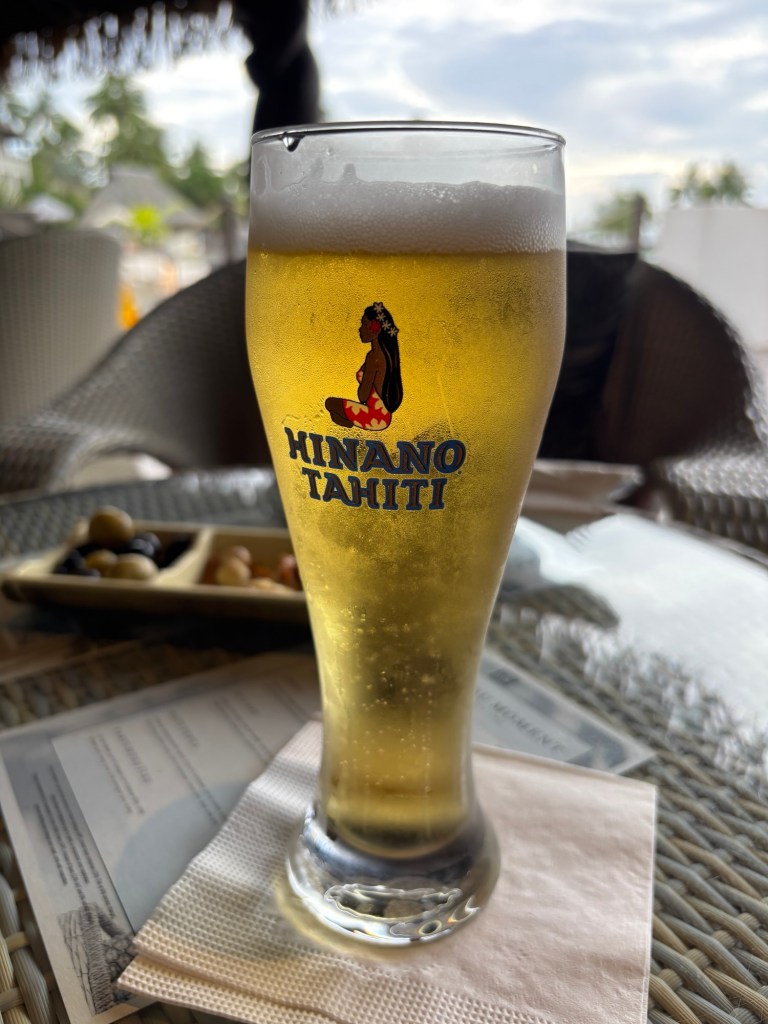
We began with the local beer – Hinano.  We remember the beer and this logo from the last time we were here.   Randy had asked for, and was given, a dozen cardboard coasters hwith her picture on them.  Several are still at our house.  Over time she has become the local symbol for Tahiti, not just the beer.  Randy bought a T-shirt with her on it and we also bought her on a coffee mug.
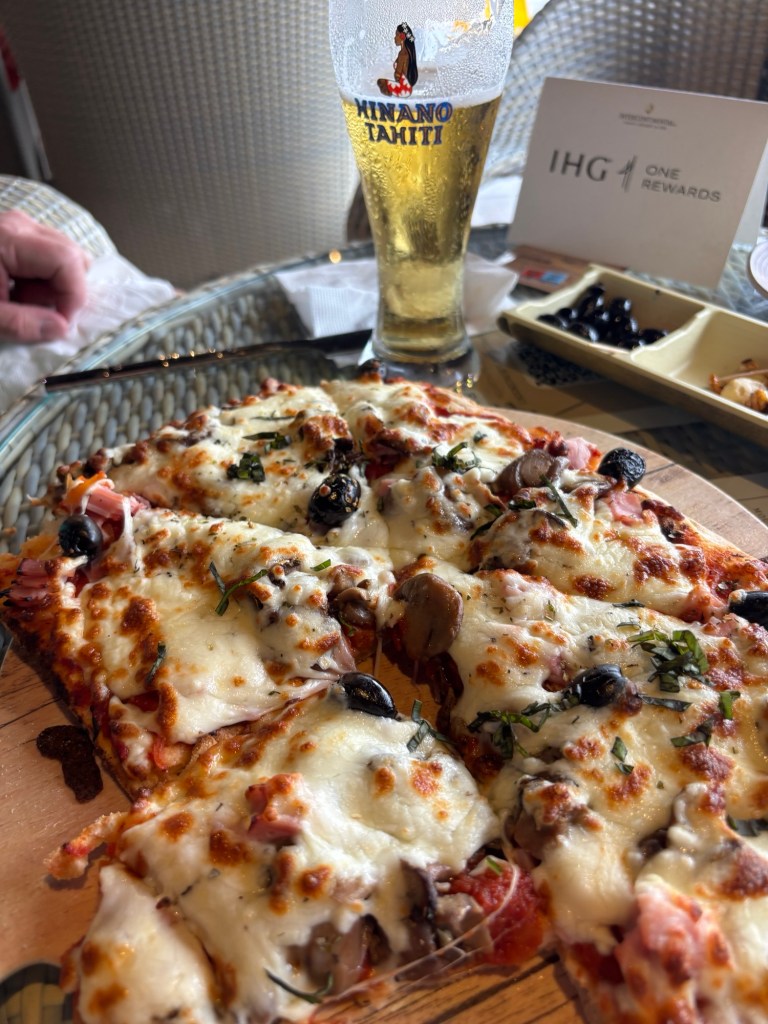
We also had decent pizza! It was a good last dinner at the InterContinental Tahiti Resort.

Our food tour was on January 14, 2025.

Next: Aukland, New Zealand – a new country for us.
Posted in Uncategorized | 1 Comment

Tahiti: Rainy Days

We knew rainy days were coming because our snorkel tour in Tahiti was canceled before we even left Phoenix.  It is the rainy season in French Polynesia.  We would have taken that into account if we were specifically coming here for vacation.  That wasn’t the case.  It is an allowed stopover to break up the flight by Air Tahiti Nui.  We aren’t paying extra for that with the airline.  Of course, we are paying for our hotel and food.

Because we’ve been here before, and it isn’t a priority destination this time, we weren’t concerned with rainy days.  

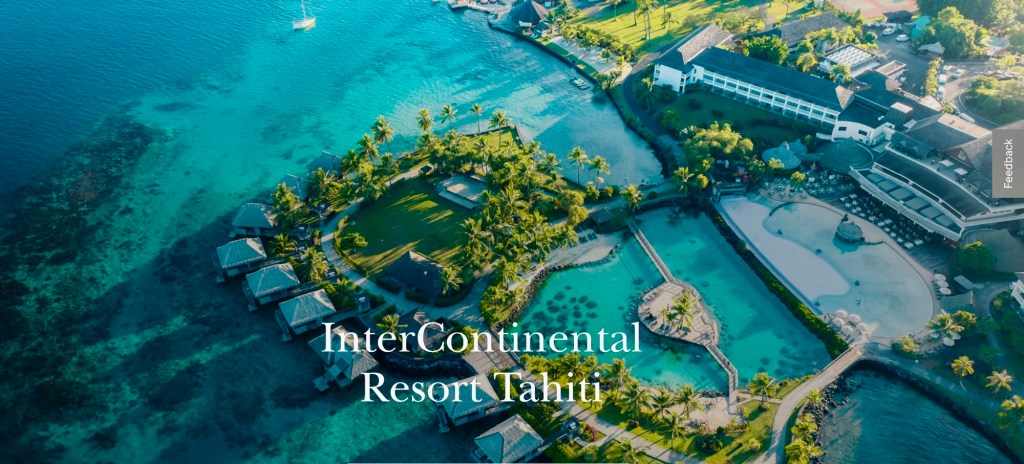
With overcast skies, we explored the InterContinental Tahiti Resort.

This resort has overwater bungalows but we skipped the extra cost this time.

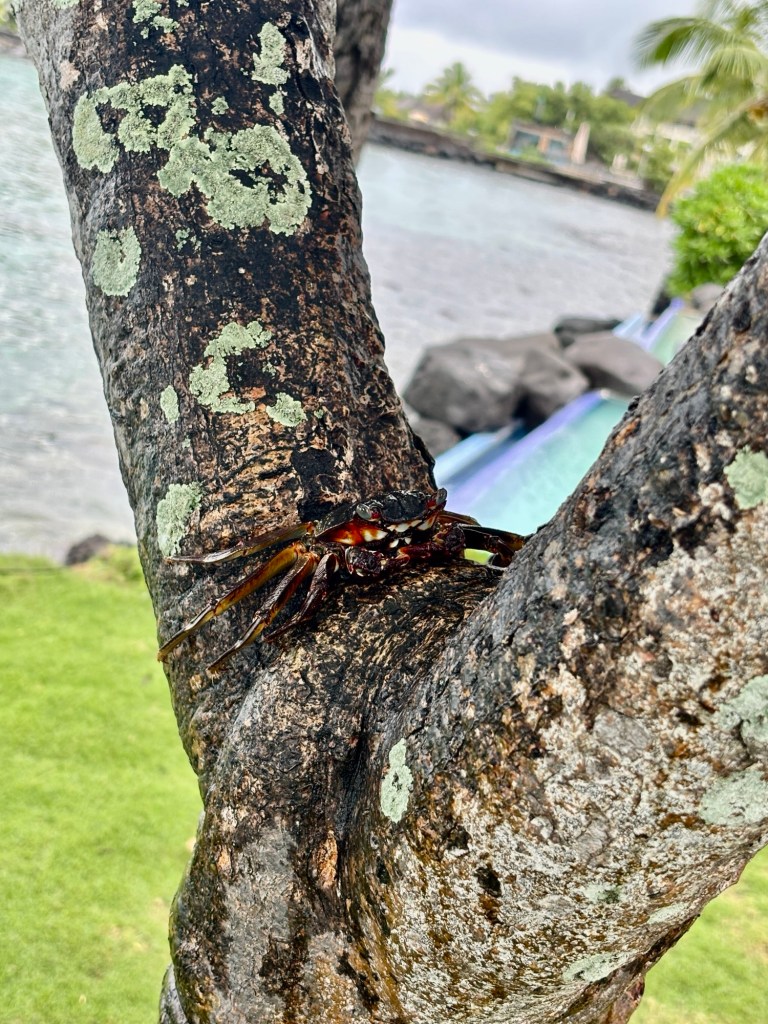
We found some crabs and this one played a bit of hide and seek with me.

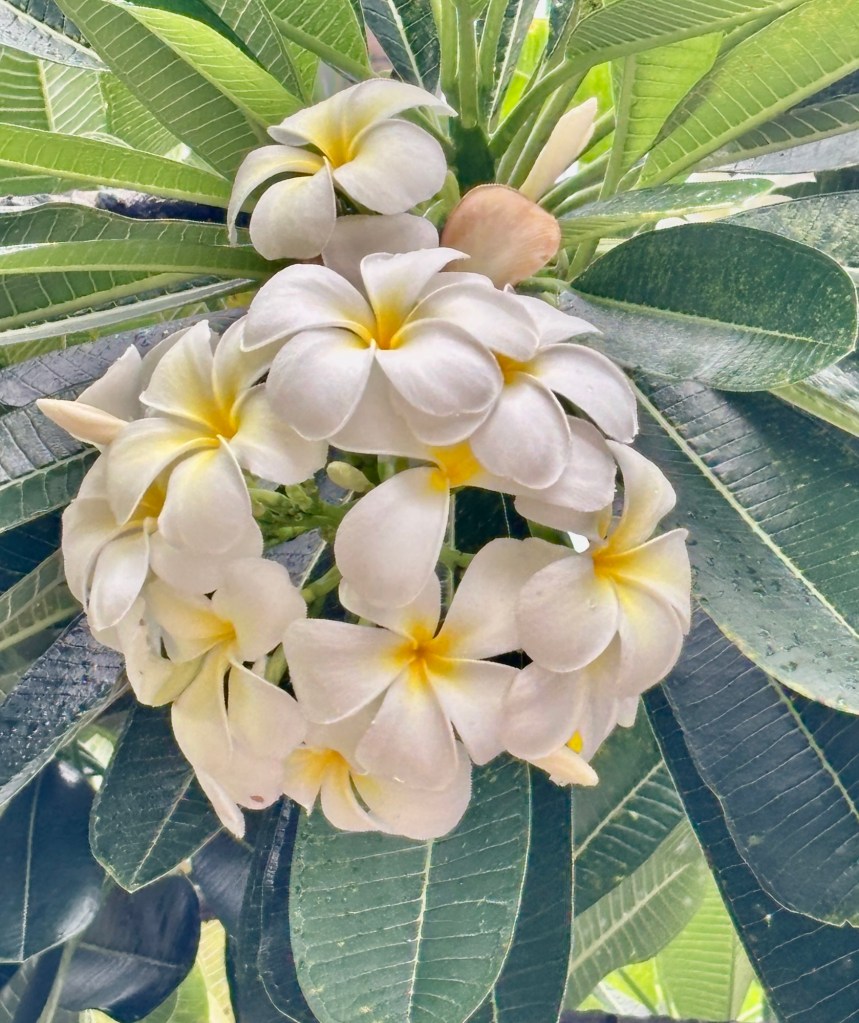
The flowers were pretty growing in the trunk of a palm.

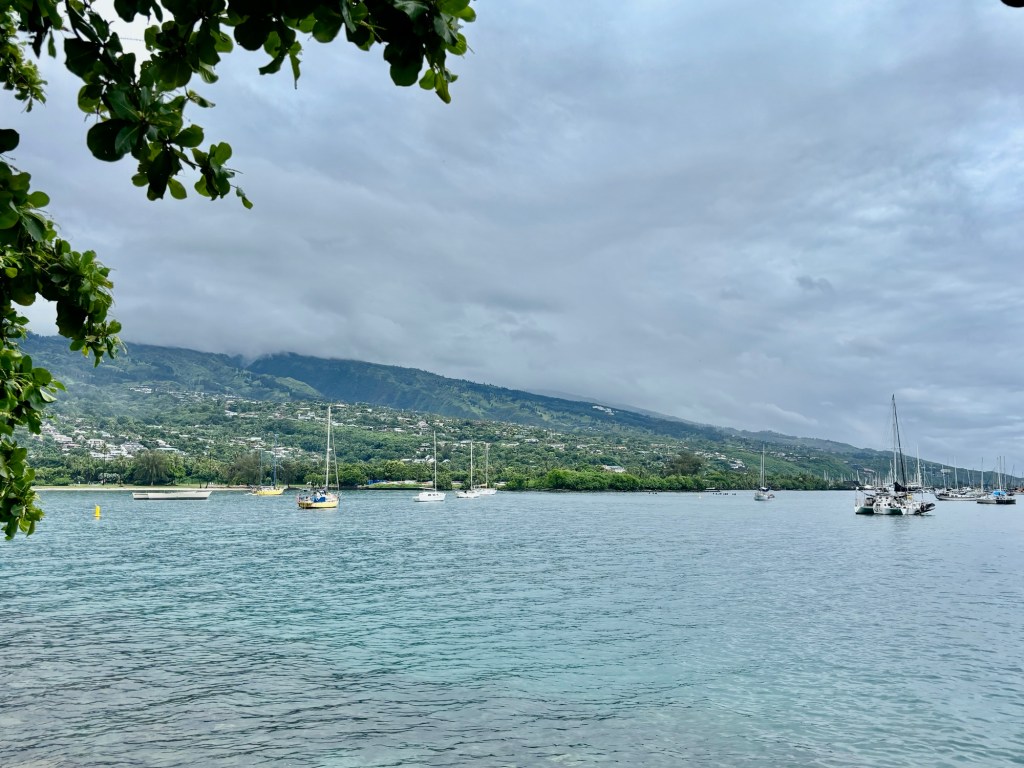
We climbed to the top of a lookout and saw some nice views of the lagoon and island. 

That is the island of Moorea in the distance.

Almost all of the photos in this post are light enhanced because it really was a dark day.

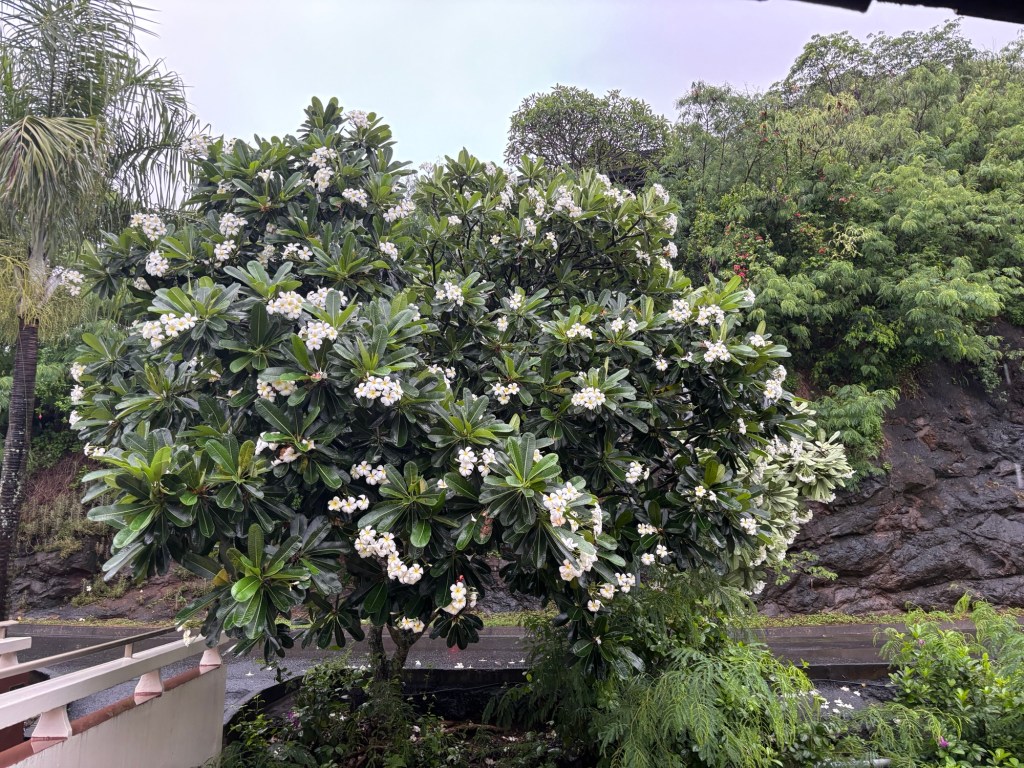
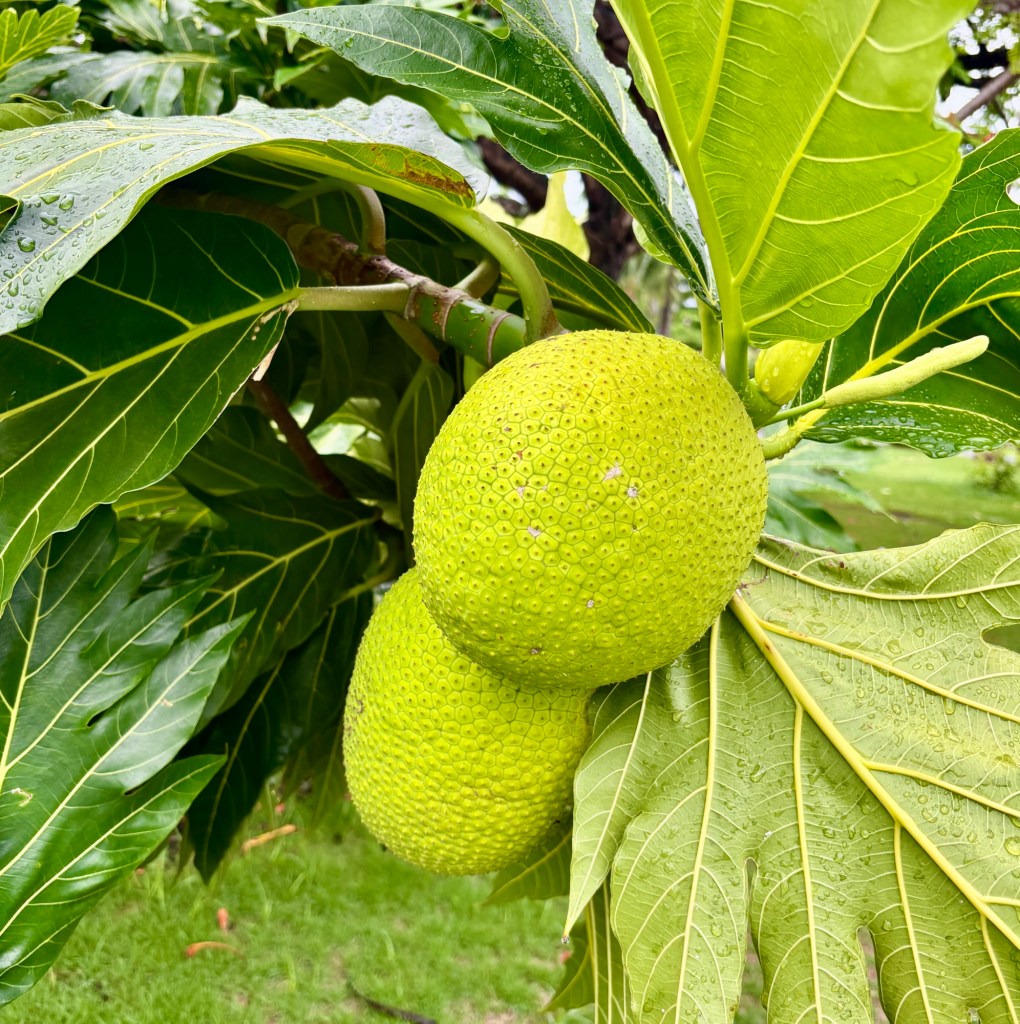
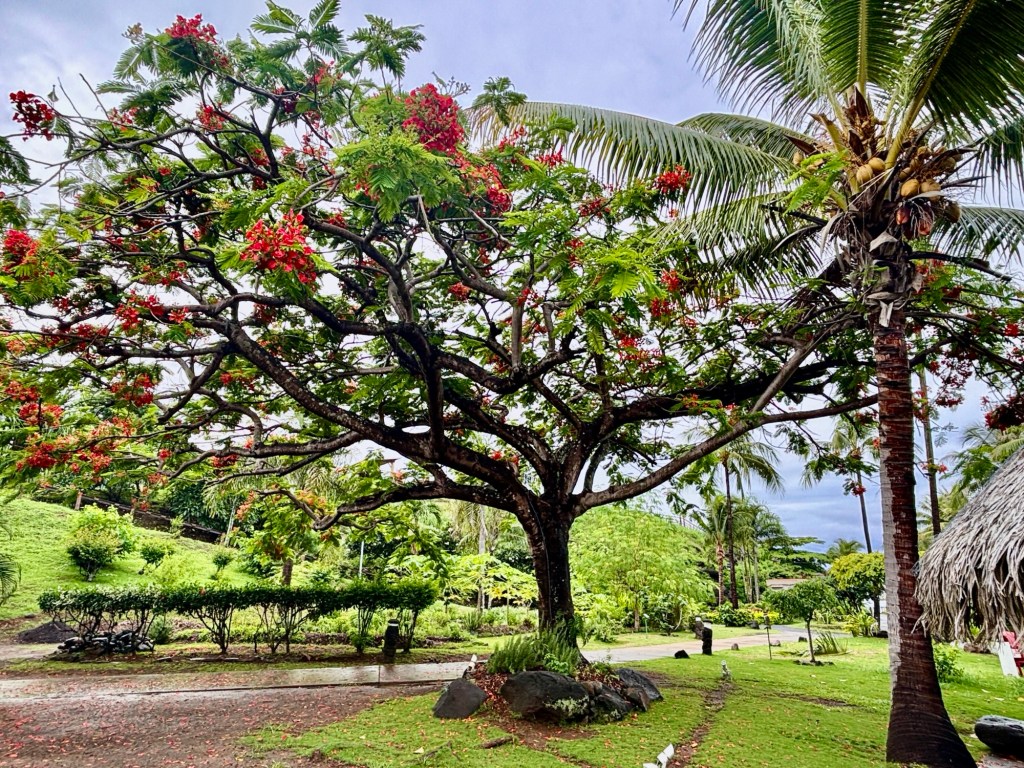
We saw several pretty trees that caught our eye and smelled nice!

This one we could tell from the fruit – a breadfruit tree.  There is probably a fancier name – but it grows breadfruit!

This red blossomed tree was striking and is called royal poinciana or flame tree.

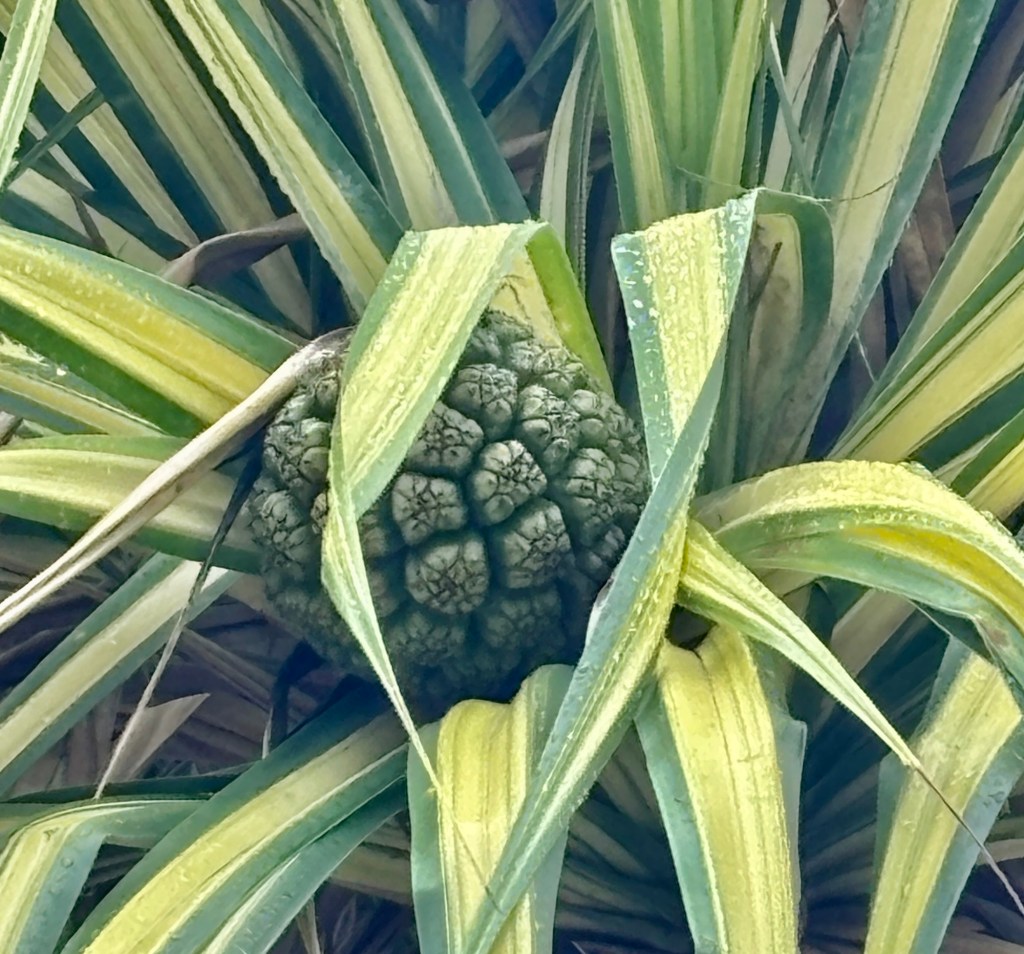
This is a screw pine.

The screw pine also produces a type of breadfruit.

It wasn’t quite the same as snorkeling, but we did get to see some marine life while walking around the various ponds.

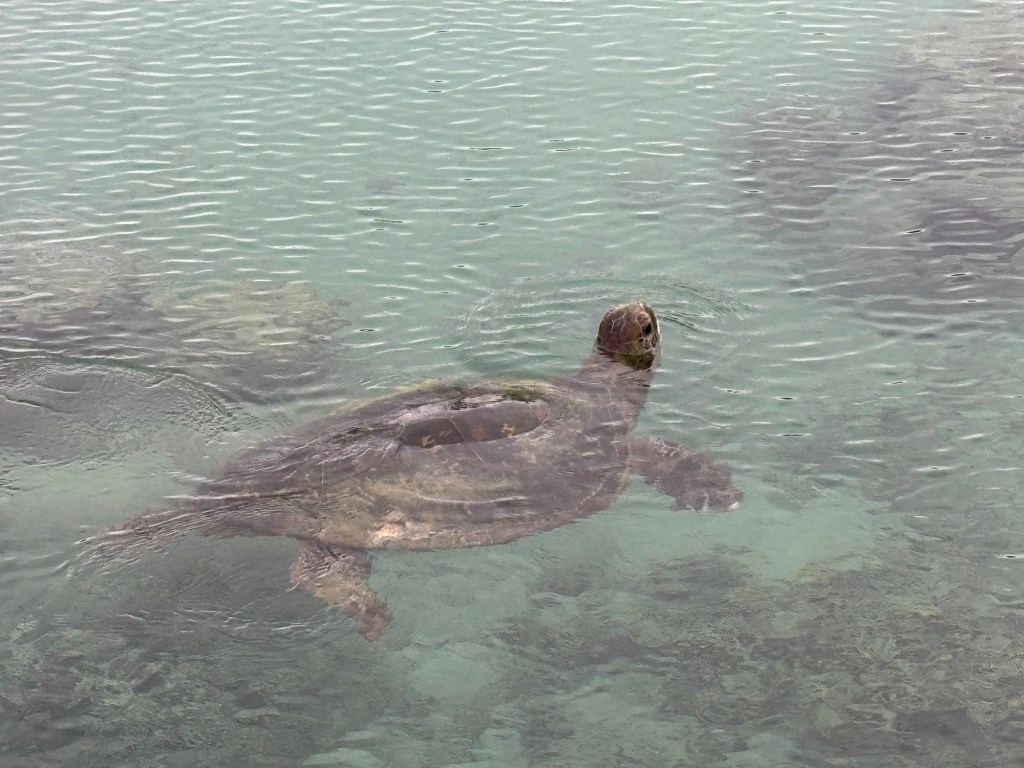
They have rehabilitation ponds where a group has been working for 19 years to help sea turtles.  They have helped over 650 turtles!

We watched this one swim into the boundary rock so we suspect it may be blind.

This is another resident of the rehabilitation pond.

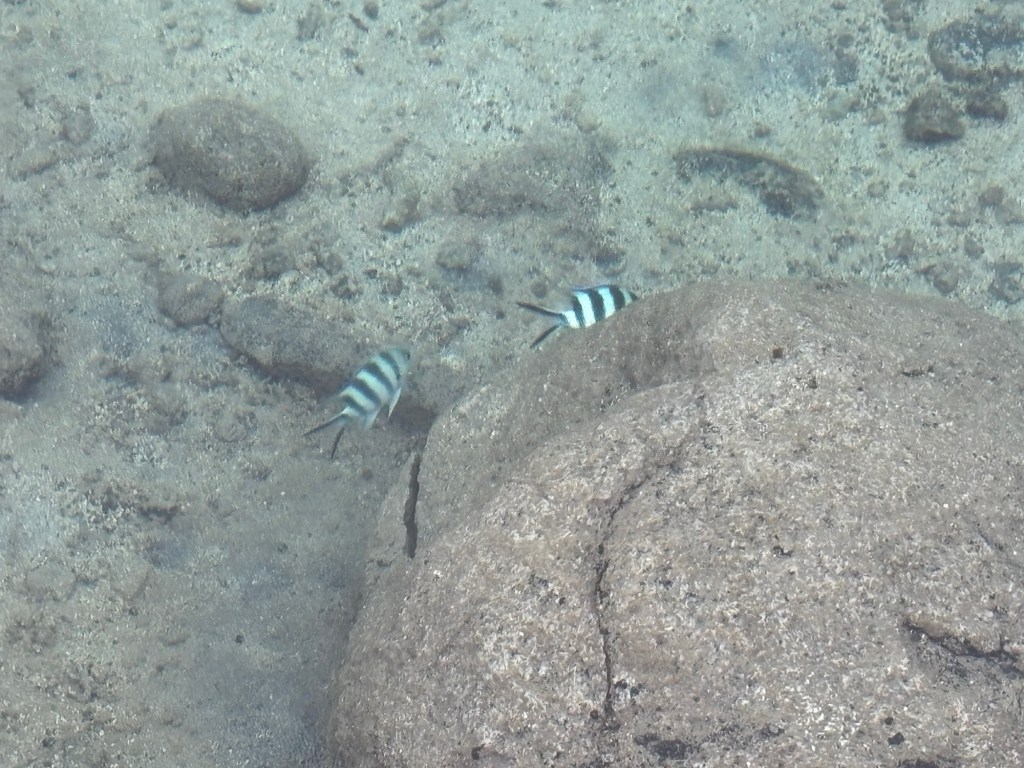
There were some nice fish but getting a good picture from above on a dark, dreary day wasn’t within my photographic capabilities!

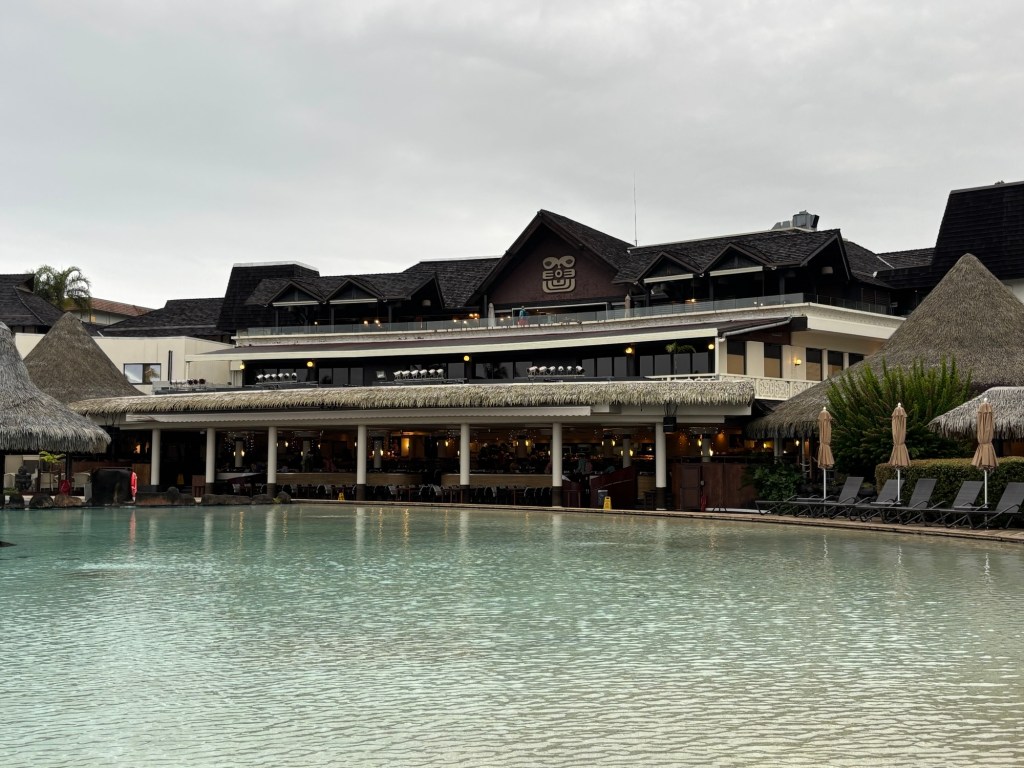
This is a view from the “lagoonarium” looking back towards the hotel restaurant and main building.

We also spent time looking out at the scene from our balcony.  We could see the lagoon and hear the breakers beyond the protective reef.

Often we were looking through rain and Randy marveled at the rowers in outrigger canoes.  We asked about them going out when it was raining and were told they don’t mind the rain and were just getting exercise rowing in the lagoon.

When we were getting ready to go down for dinner, we discovered that Randy’s phone thought it was already Monday. The hours and minutes were the same as mine, but my phone said Sunday and his said Monday.  We had to validate to make sure what day it was because we are on vacation!

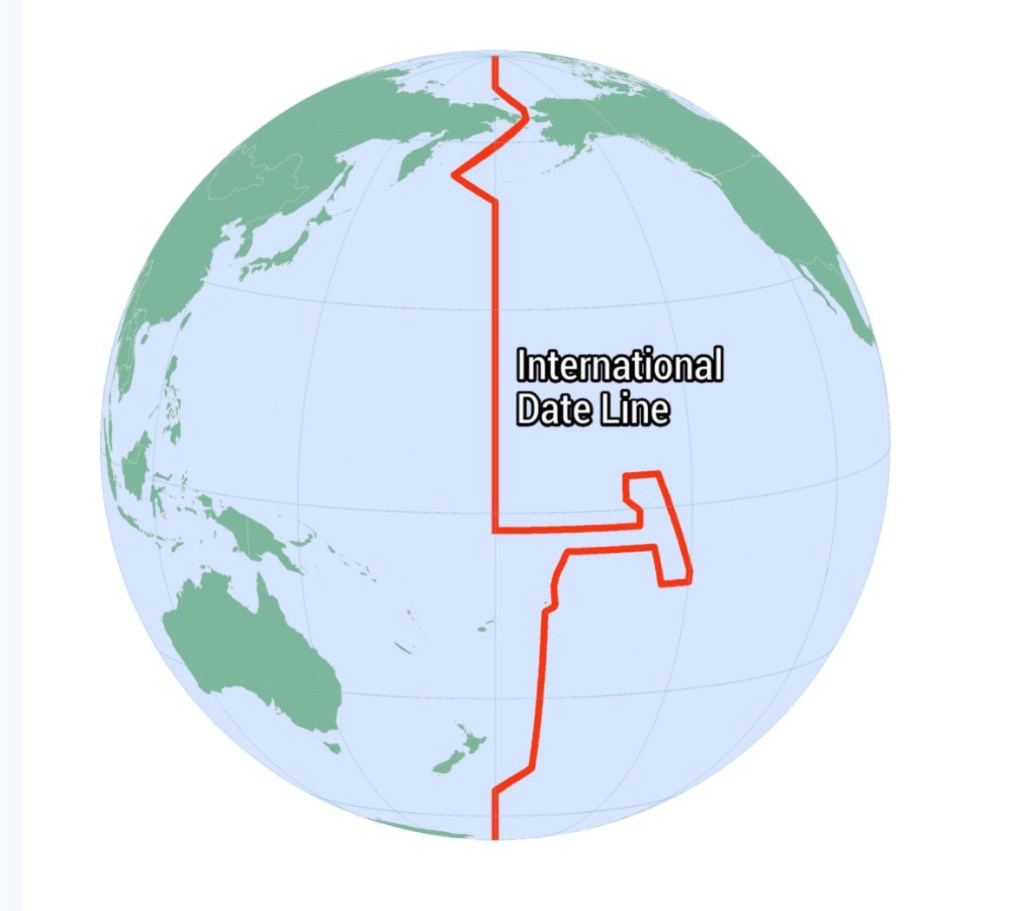
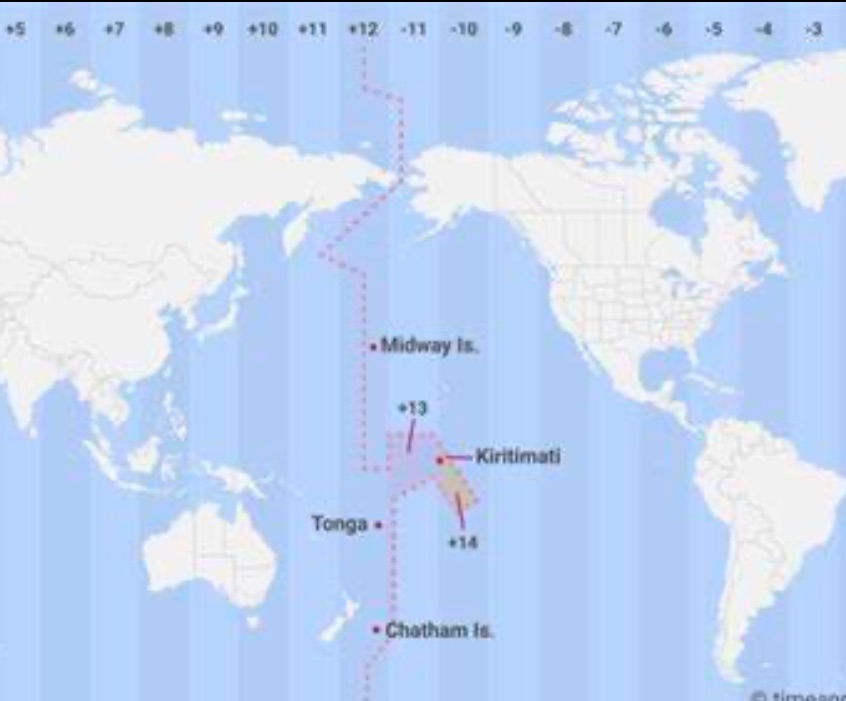
The discrepancy caused us to look up the international dateline to see if we were right on the edge and, for some reason, his was tipping over and mine was not. We both have iPhones so they should behave the same.  He eventually got his phone to recognize that it really was Sunday but doesn’t know what he did to fix it.

Meanwhile we learned the international date line has this strange little jog to the east to include the Republic of Kiribati.  Its 32 atolls cover 313 square miles and include Kiritmati, also known as Christmas Island.

And that was rainy Sunday!

We had hoped to wander in to town on Monday but the continued rain was impressive enough to change our plans.

I started prepping the initial blog post for this trip.  I have always waited until we got home to write our trips and always used my computer.  However, I have found that some initial work, as I have time on a trip, makes it easier.

An hour later I had actually finished writing the blog on my iPad with my attached keyboard.  There were some things that were harder to do and others that were easier using the iPad. I’m intrigued with using it.  I don’t know if I’ll have the time to keep on blogging the trip “live.”  We’ll see how it evolves.

Later we went down to the lagoon intending to swim because if you are going to get wet, what does rain matter? The cone shaped building is the pool bar.

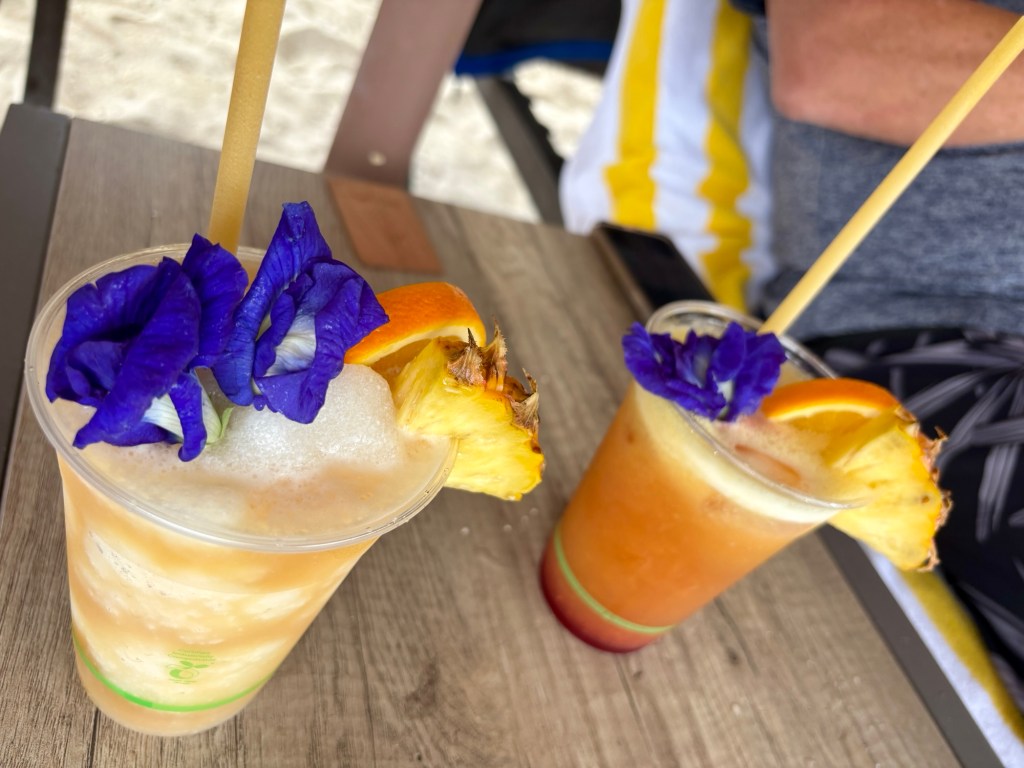
We had tropical drinks with PASTA straws.  They were delicious which was good because they were a bit pricy at $24 a piece.

Despite the fortification, our swimming was abbreviated at the knees.  The water and air felt just too cool.   We enjoyed our cabana time while staying mostly dry. 

After dinner, we exchanged dollars into pacific francs, the local currency of French Polynesia.  We’ll need that for our next activity, a food tour in Papeete.  We are likely to be touring in the rain.

And that was a rainy Monday!

These rainy days were January 12 and 13, 2025.

Posted in Uncategorized | 2 Comments

Our Next Big Adventure: The South Pacific

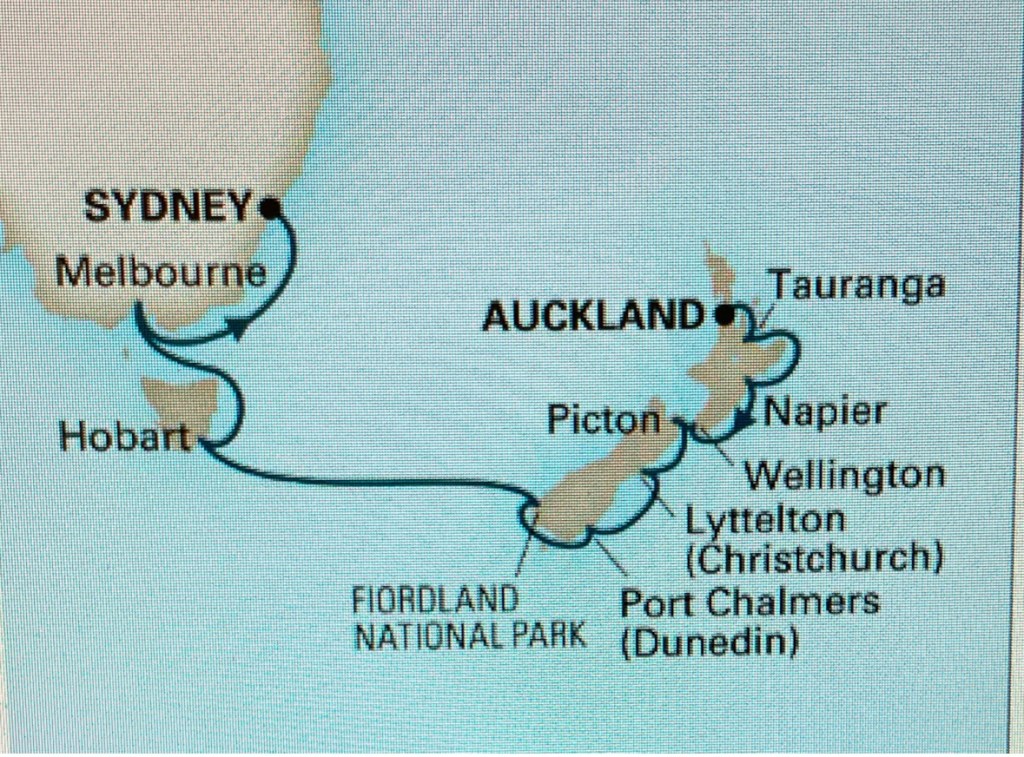
Our next big adventure is to experience another item on Randy’s bucket list – snorkeling the Great Barrier Reef in Australia. Before that, we have a few days in Tahiti,  a few days in Auckland, and a two week cruise.   

Holland America Cruise on the MS Westerdam

The cruise is mostly around New Zealand with a few ports in Australia.  We hope you’ll follow along.  This trip began on January 11, 2025.

The first leg of our journey was from Phoenix to Los Angeles. We had a bit of anxiety about whether our flights into and out of LAX would be operating normally because of the massive wildfires.  (We recognize that our flights are unimportant in the big picture of the LA tragedy.)

Our flight from PHX to LAX was in the evening so we expected to see the fires from the plane but we did not.  We arrived and spent several uneventful hours in LAX.   

I spent most of the time reading Mrs. Jewel and the Wreck of the General Grant by Cristina Sanders.  I enjoy reading books in preparation for a trip to get a sense of place or the history of a region.  I especially like books where an author takes a historical event and creates a fictional narrative.  It is truth that Mrs. Jewell was the only female survivor, of 15 total, from the sailing ship General Grant, which wrecked in the Auckland Islands in 1866. Little is known about how she spent the eighteen months before the group was rescued so the author made a narrative.   I loved the book and hope I am able to get a feel for the location when we sail around New Zealand.

The 4094 mile flight would take 7:47.

Our flight to Tahiti was an overnight flight in premium economy on Air Tahiti Nui. That meant we had reclining seats, just two together on the side of the plane. The attendants gave us a hot sandwich soon after we boarded and mostly everyone slept. (I spent a bit too much time finishing with Mrs. Jewell.) 

This is my omelette breakfast. Randy opted for French toast.

We were roused about 3:30 a.m. local time (5:30 pacific time)and fed a hot breakfast. 

Since my book was finished, I spent time with the plane’s onboard entertainment screens to learn more about Polynesian sailors and how they became experts with navigating by the stars.  They also knew about the currents and the indicators for land.

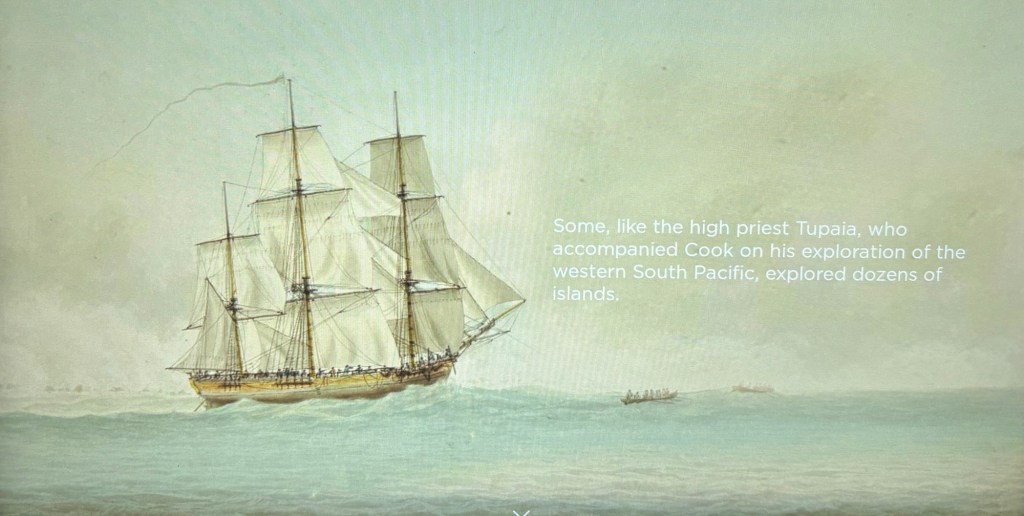
I learned just a little about Tupaia, who accompanied Captain Cook on his journeys in the South Pacific.

In 1770, Tupaia put his knowledge on paper, the first Polynesian to do so.  I was not surprised to hear that the original map resides in the British Library.  (It could be a year long bucket list item to explore all the things we’ve heard about in our travels that are in the British Museum and British Library.)

This was a Boeing 787-9 Dreamliner

We landed about 4:45 a.m. and walked into the terminal.

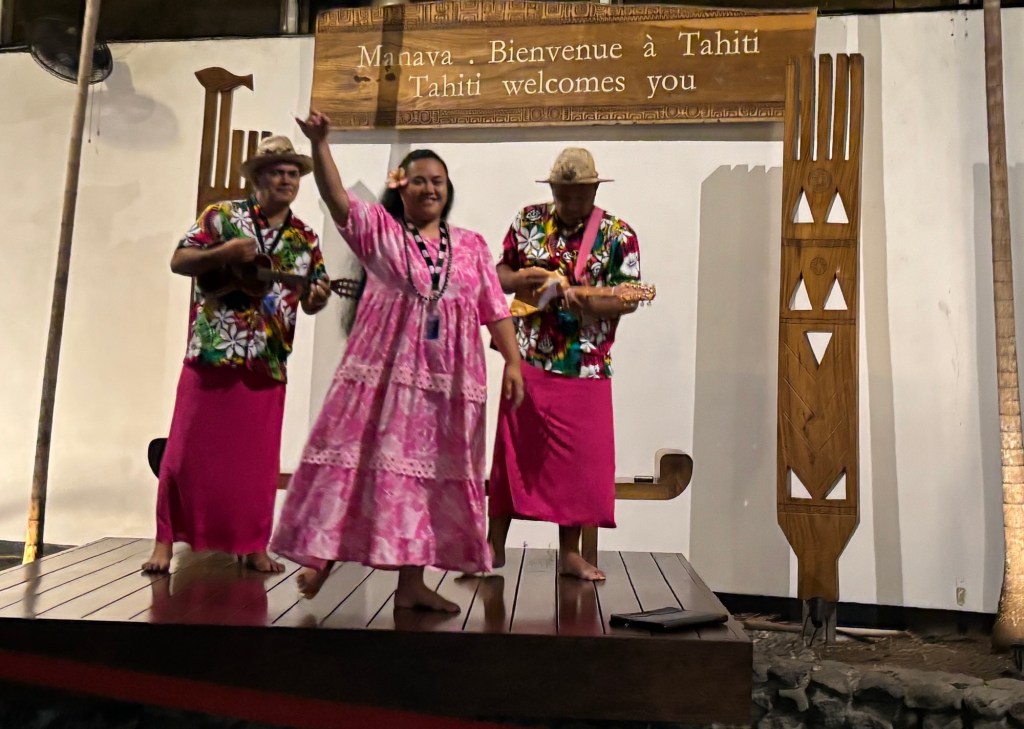
There were dancers waiting to greet us.  
Many years ago we experienced something very similar as our family and my parents came through Tahiti on our way to the Cook Islands.  That brief experience led to Randy wanting to bucket list Tahiti and staying in an overwater bungalow.  That trip actually happened in May 2019. It was his mental reward for getting through chemo and surgery for bladder cancer in 2018.   The blog post for that trip is Randy’s Bucket List – Tahiti and an OverWater Bungalow.

Getting back to our early morning on January 12, 2025, we gathered our bags, received our lei greeting, and met our driver.

He shouldn’t be able to look that good after a night flight with limited sleep.

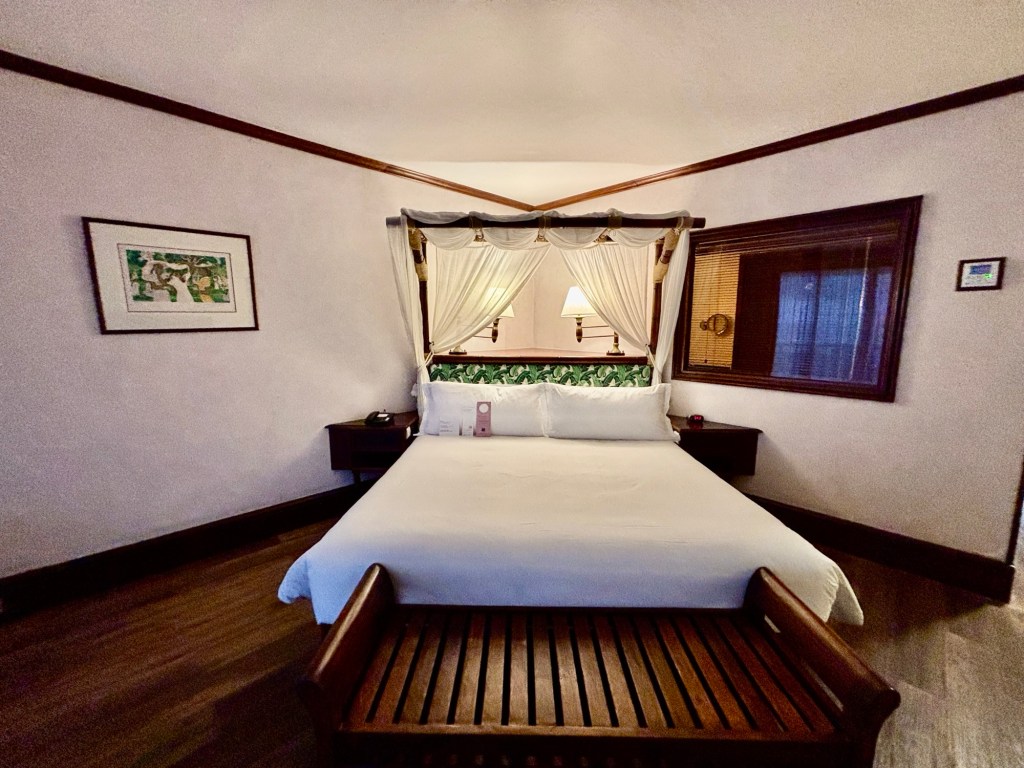
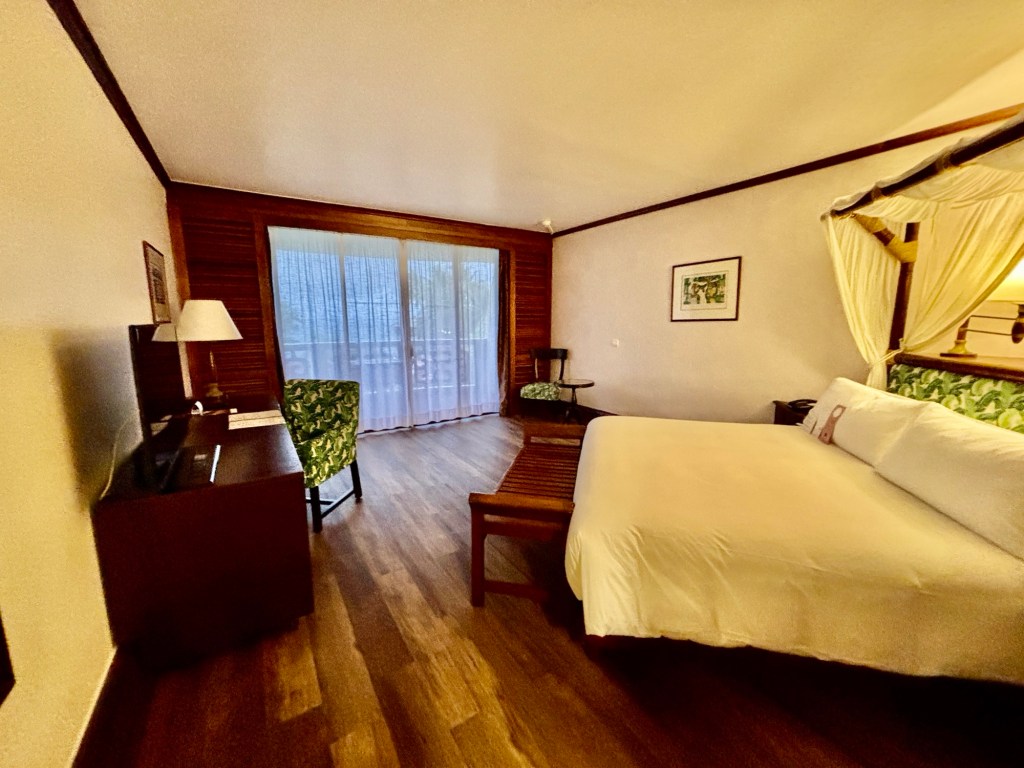
We arrived a little after 5:00 a.m. at the InterContinental Tahiti Resort.  Because we have an IHG Hotels account, we were able to access our room right away.


It was quite nice. 

We had eaten on the plane a few hours before, but knew we wanted more breakfast before taking a nap.  We had slept for a few hours on the plane but nothing like a whole night’s sleep.   

As we walked towards the restaurant, we had the sensation we had been there before.   I remembered that on the 2019 trip we had spent one night in Tahiti before going to Moorea and Bora Bora.  We checked on our blog, the same one I referenced earlier, and sure enough, we stayed at the InterContinental Tahiti Resort before.  The restaurant that felt so familiar was actually on the InterContinental Moorea Resort, where we also stayed.

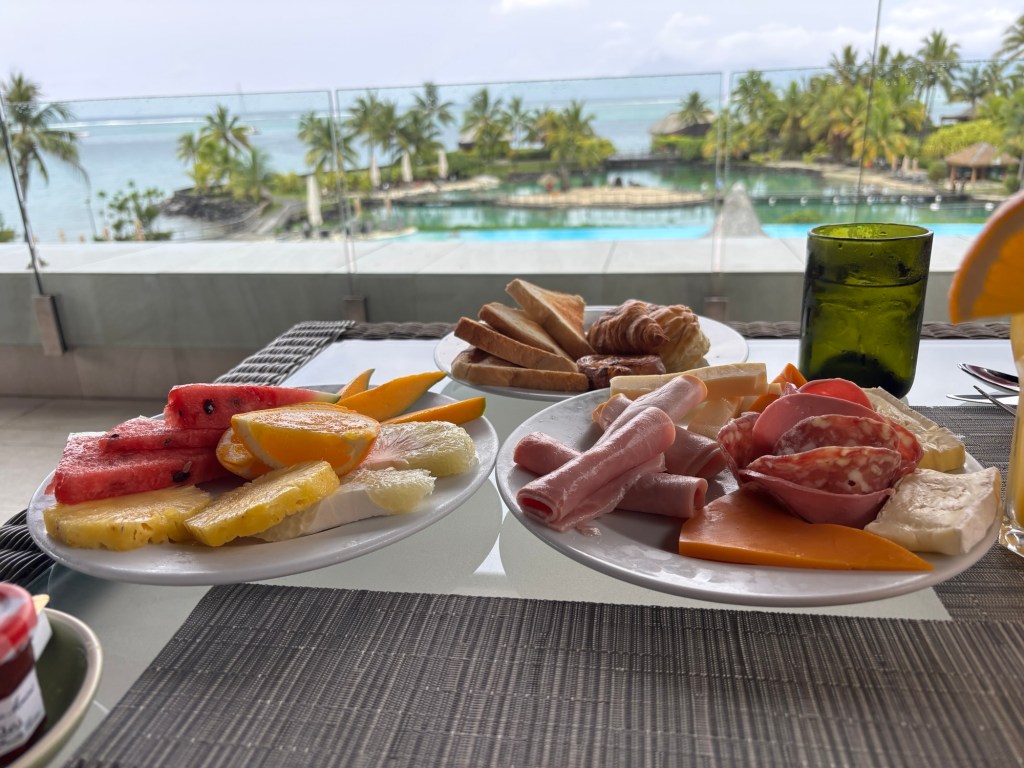
The Sunday Brunch extravaganza was available at the main restaurant but we were too tired for an extended and large meal. We opted for a continental breakfast at the bar cafe.  We were prepared to order two, but our waitress wisely suggested we share just one order.  

It was more than enough! 

Breakfast with a view!

We did get a look at the brunch show, but didn’t stay long. Our need for a nap was more important.

We left for Tahiti on January 11, 2025, arriving on January 12th.

Next Up:  We explore the grounds of the InterContinental Tahiti Resort.

Posted in Uncategorized | 2 Comments

Galapagos Islands:  Our Final Day

Before our final day, we had our final night aboard the Treasure of Galapagos.  Our ten person crew joined us in their dress uniforms so we had a chance to say goodbye and give them a thank you tip.

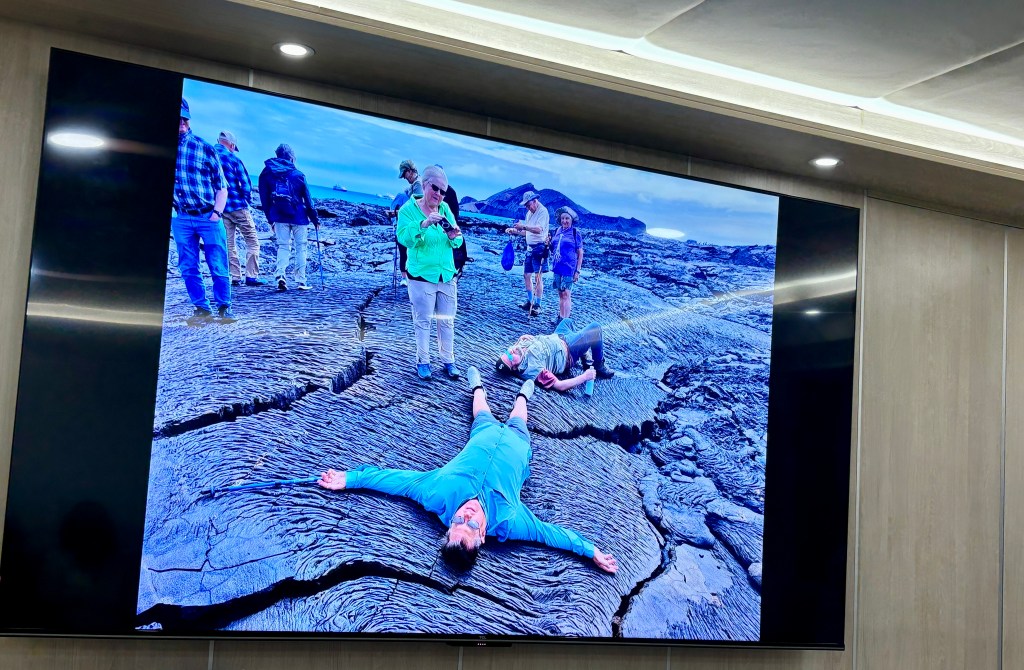
Victor had prepared a photo montage of our trip.  I was able to grab a quick picture of one he took of Randy and me on the lava bed.

Fortunately, our last overnight was uneventful and we awoke on the other side of San Cristobal Island. We said goodbye to the crew and went ashore in the zodiacs. 

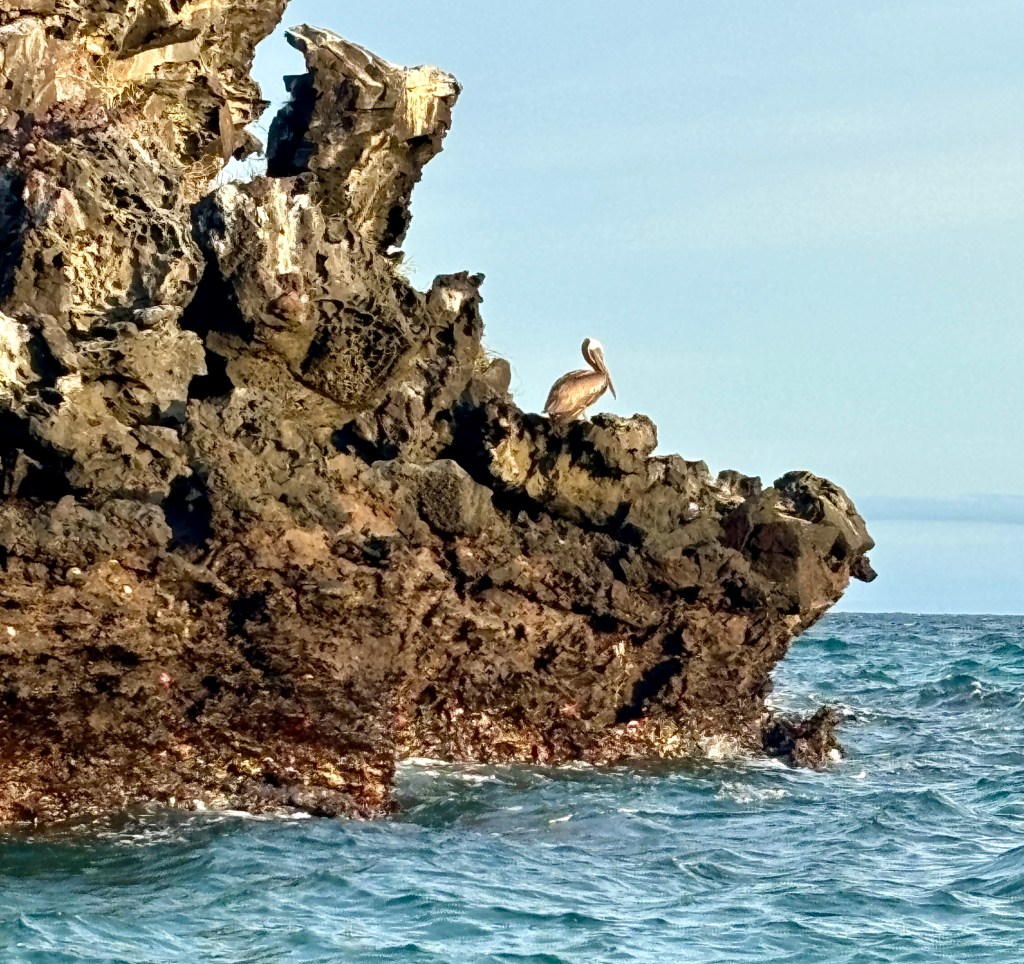
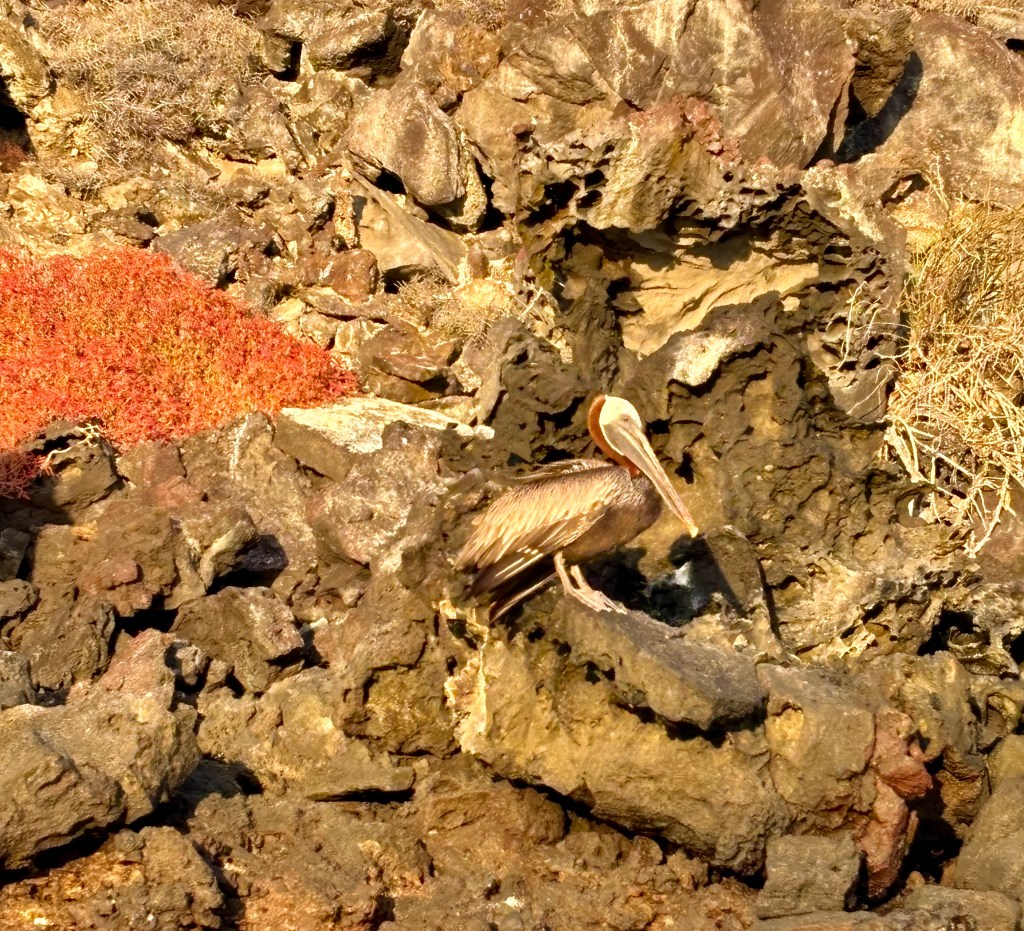
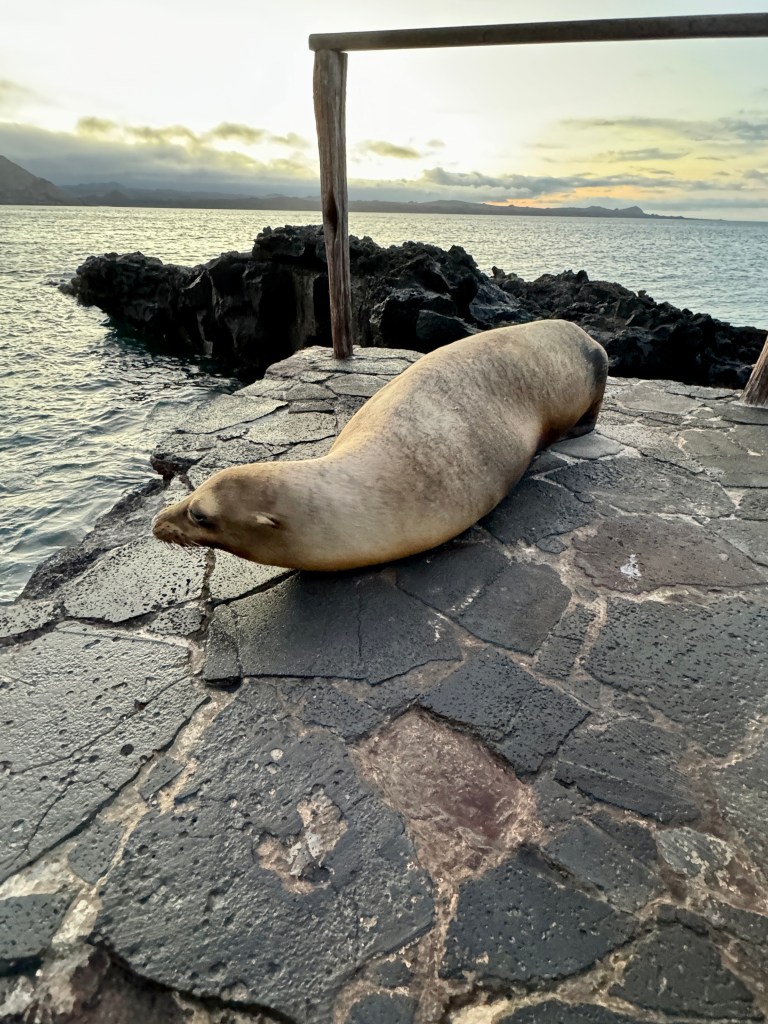
Of course, we saw one more sea lion sleeping in the rocks.

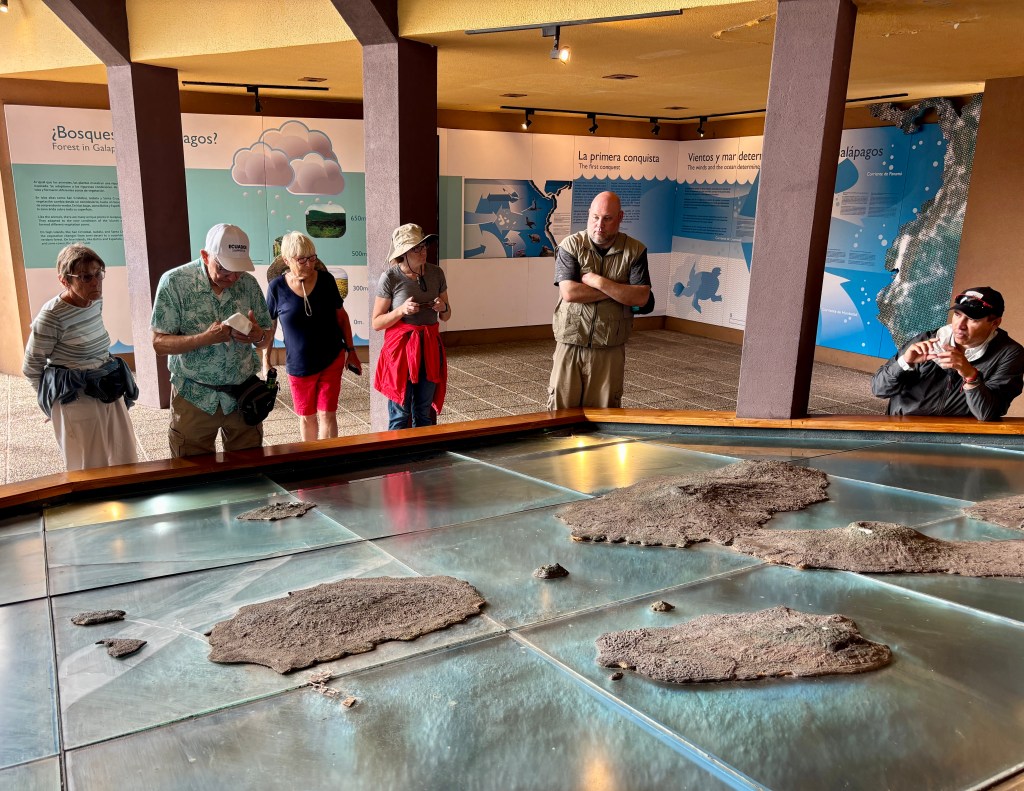
We were bussed to the San Cristobal Interpretation Center to learn more about the Galapagos Islands that we had been exploring for the last four days. 

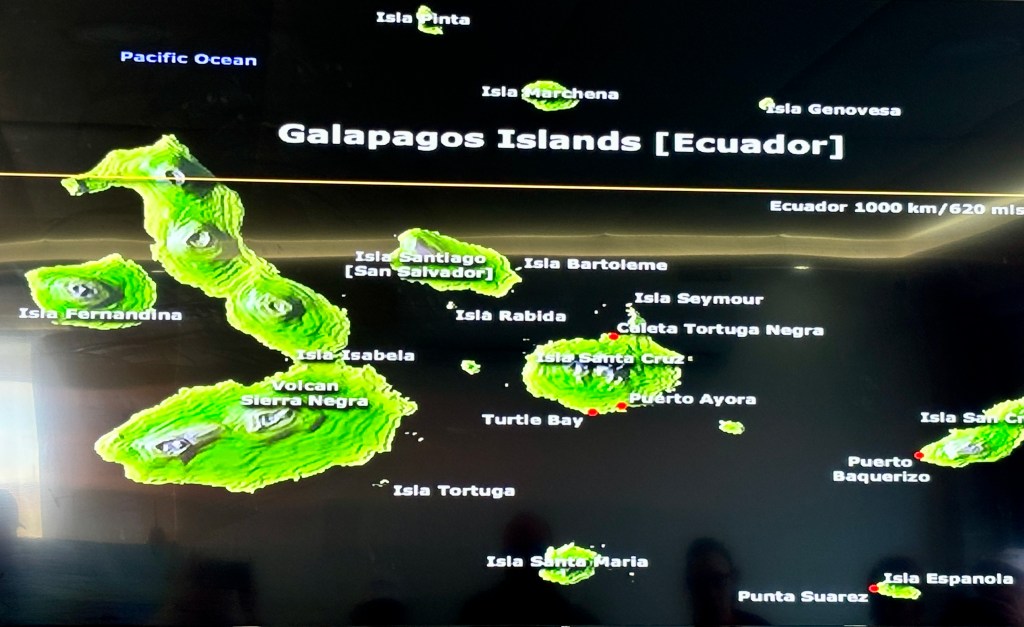
The Galapagos are a group of islands with unique ecosystems and biodiversity because they are impacted by four world currents which converge in the area.

Administered as a national park of Ecuador, they try to balance eco-tourism, the communities that live on five of the islands, responsible fishing and waste management.

The center offered us a history of the islands from origin to its discovery by Europeans and the abuses of attempted colonization. There’s even a murder mystery in there!

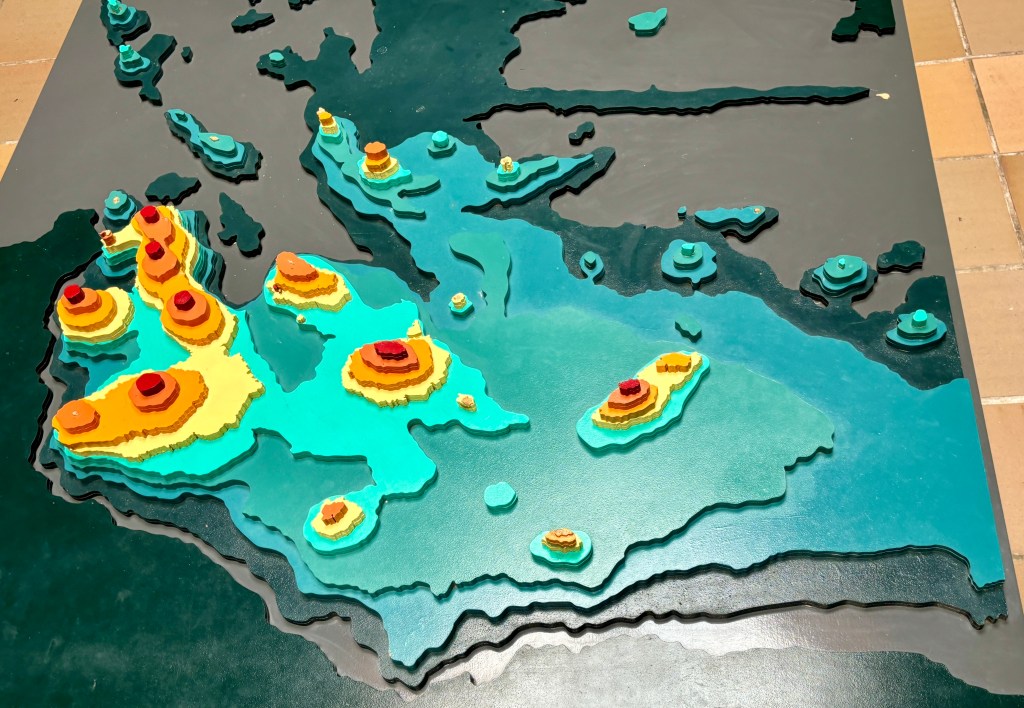
Over the course of millions of years, underwater volcanoes erupted repeatedly.  The islands are the tops of underwater volcanic mountains.  There are fourteen islands in the Galapagos, using the definition that each island has its own volcano.  There are many more “extra rocks.”

Currently, the hot spot from the earth’s core is creating new islands to the northwest.  This happens as the Nazca Plate is moving southeast at 3-4 inches per year.

Legend, and pottery shards, suggest that indigenous groups found their way to the islands from the Ecuador mainland during pre-Columbian times.

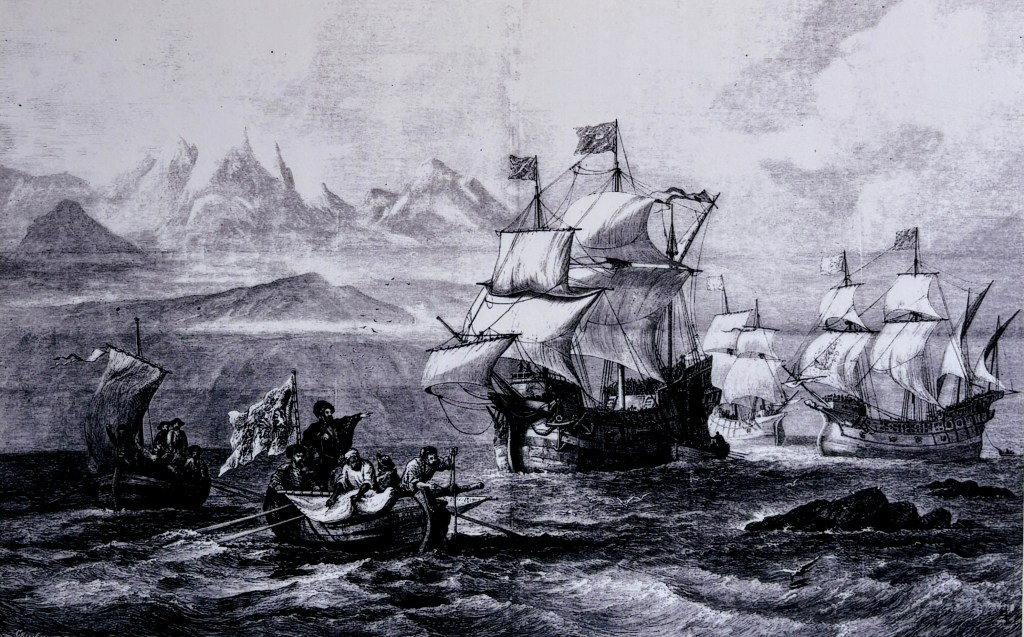
Documented discovery began with Tomás de Berlanga, sailing for Spain to inform the king about lands conquered from the Inca.  When the winds died, the currents took them out to sea. They landed, near death, on these islands.  A few died in the next 21 days, but most were able to sail back to the mainland when the winds returned.

Once discovered, the King of Spain sent numerous expeditions to explore and map the islands.  Many of the islands were named during this time and still bear their Spanish names.

In the 17th and 18th centuries, the islands became a haven for pirates.  Exploitation of resources, including the great tortoises, began. 

Non-native species were introduced.

In 1832, Ecuador claimed the Galapagos Islands as their territory.  Jose Villamil was designated the first governor and tried to establish a community that included prisoners who were pardoned in exchange for doing the work.  The mixture of colonists and former prisoners didn’t work and Villamil left within five years.

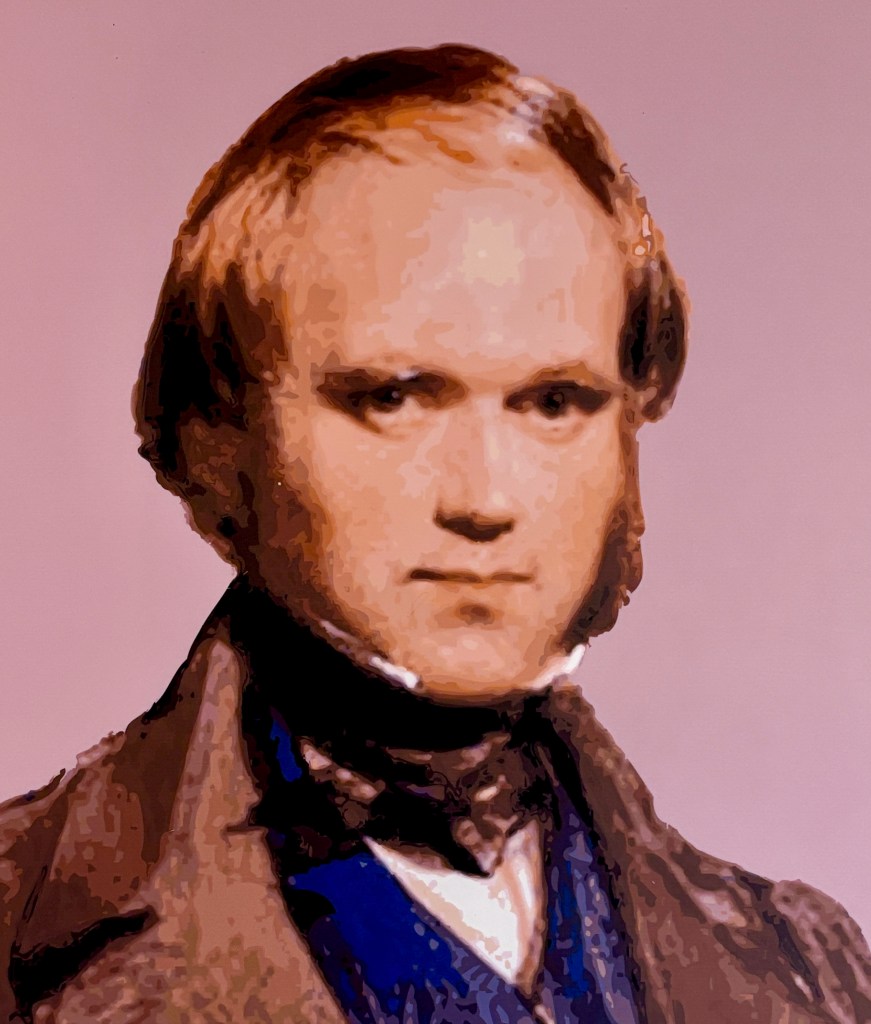
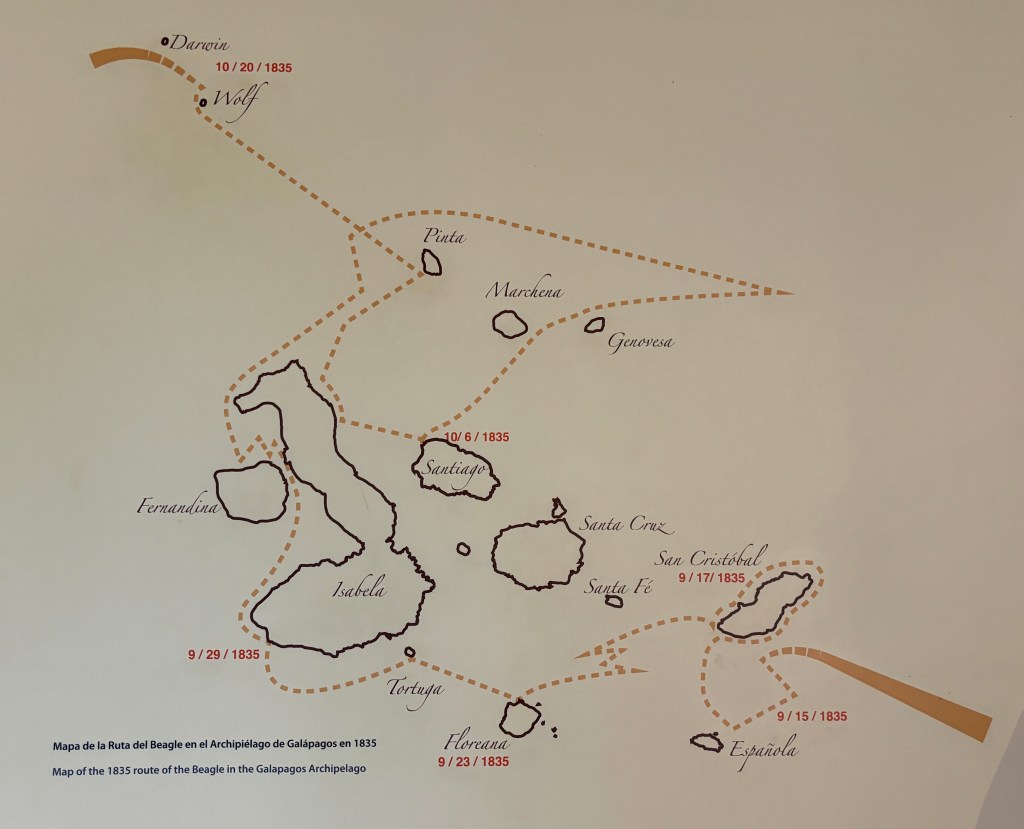
In 1835, Charles Darwin arrived during a voyage on the Beagle. 

The Galapagos were just one stop on a five year voyage under Captain Fitzroy but left an indelible mark on Darwin, and eventually the world of science and religion.

Darwin recognized that, geologically, the islands had a unique origin that should be studied.  He noted the differences in species not only from the mainland but also between the islands.  Darwin warned against the introduction of non-native species.

Over time, Darwin developed his theory of evolution that resulted in great controversy throughout the world. The implication that humans could have evolved from another, more primitive species caused him to be greatly and maliciously criticized. Charles Darwin died in 1882.

Back on the Galapagos, the exploitation of the islands continued. Cattle were introduced.  Criminals continued to be sent there. Over time, the islands were mostly abandoned because various criminal acts left an aura of being cursed.

In 1860, the United States, France and England became involved because the location of the islands was considered valuable for international trade and strategic as a defensive position.   The abundance of guano was valuable and marketable.  Despite pressure, Ecuador did not give up control of the islands.

In 1925, the islands were marketed in Norway as a tropical paradise.  That didn’t work out well and many immigrants died in the arid environment.

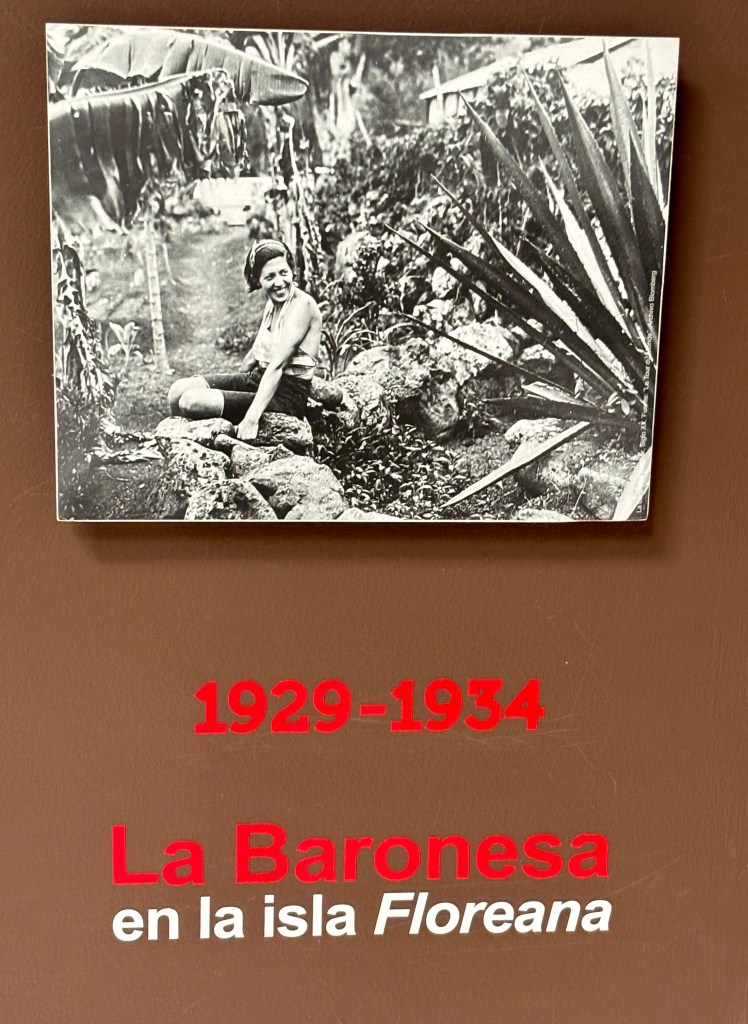
In 1929, two German couples emigrated (not together) to Floreana, a mostly habitable area.

Austrian Baroness Eloise Wehrborn de Wagner-Bosquet, and her two German lovers, also came to the island to build a hotel. She declared herself Empress of Isla Floreana. In March 1934, the Baroness and one of  her lovers disappeared under mysterious circumstances while all of their belongings remained.  The drama continued with the disappearance of her other lover and the death of one of the original German men.  His wife returned to Germany.  In the end, only one of the two original couples stayed on.

The mystery has never been solved, but a  movie was made about the events in 2014.  It was called “The Galapagos Affair: Satan Comes to Eden.”

In 1942, the Americans established a base in the islands to protect the Panama Canal as it was considered a likely target for the Japanese.

In 1946, a penal colony was established in the islands.  For thirteen years terror was inflicted on those sent there . The penal colony was closed after an inmate uprising.

In 1959, Galapagos National Park and the Charles Darwin Research Station were created.

Tourism began in the islands in 1969.  Keeping an appropriate balance is still the challenge.

In 1984, The Galapagos Islands were declared the first Natural World Heritage Site.

What a history that we knew nothing about!  I think I thought the animals had always been there, developing in their own way, and people found them and behaved responsibly.  Not so much! Hopefully, care and preservation will always be a priority going forward.  Ecuador seems to be doing credible work.

We returned to Phoenix after some minor travel issues. Our reaction to the trip for at least a week after we returned was that “it was exhausting.”  We did so much in 20 days!  Of course, once we recovered we appreciate so much the opportunity to see what we saw and do what we did.

It is hard for either of us to pick a favorite event! Was it fishing for piranha or snorkeling with penguins? Was it walking in Machu Picchu or flying above the Nazca Lines? Was it learning about the Inca and how artificial intelligence says they couldn’t have built what they built? Was it walking with the tortoises or boating with dolphins? So much to choose from!

When we returned we were able to “scratch off” Peru and Ecuador and the Galapagos Islands.

Our thanks to Avalon for great planning and wonderful execution.  Also thanks to our fun, kind and considerate travel companions.  I hope we meet again!

We visited South America, including the Nazca Lines, Machu Picchu, Peruvian Amazon and the Galapagos Islands in September, 2024!

Posted in Uncategorized | 4 Comments

Galapagos Islands:  Boobies and Dolphins!

North Seymour is a small, but important, island for seabirds and those who are interested in seabirds.  It is the primary destination in the Galapagos for birders.

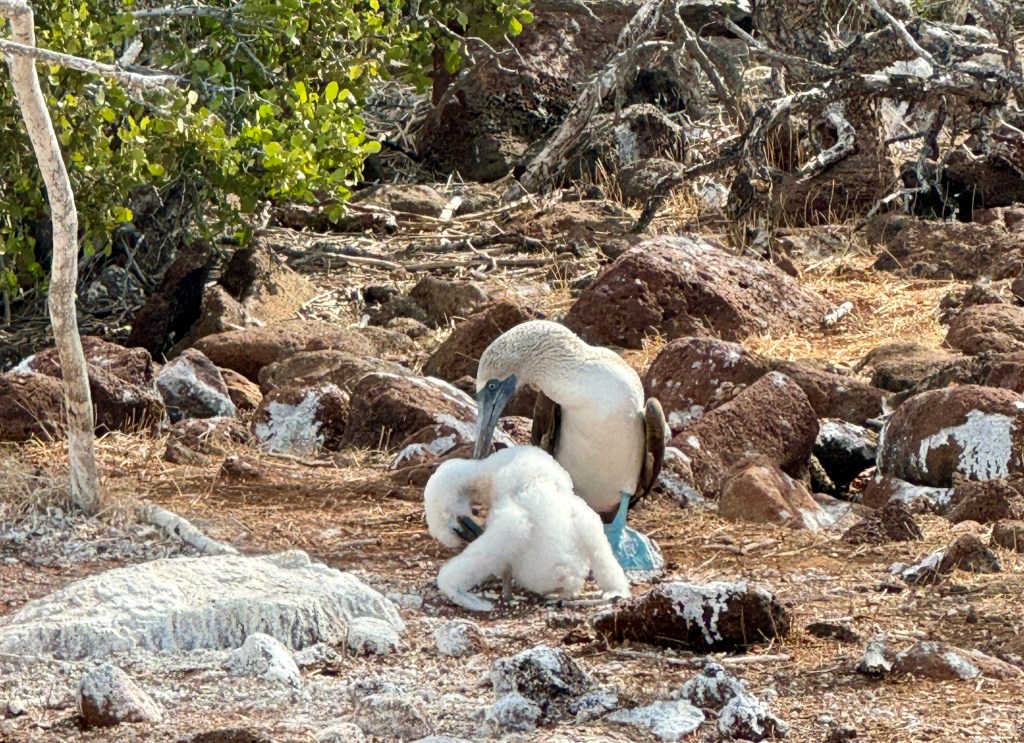
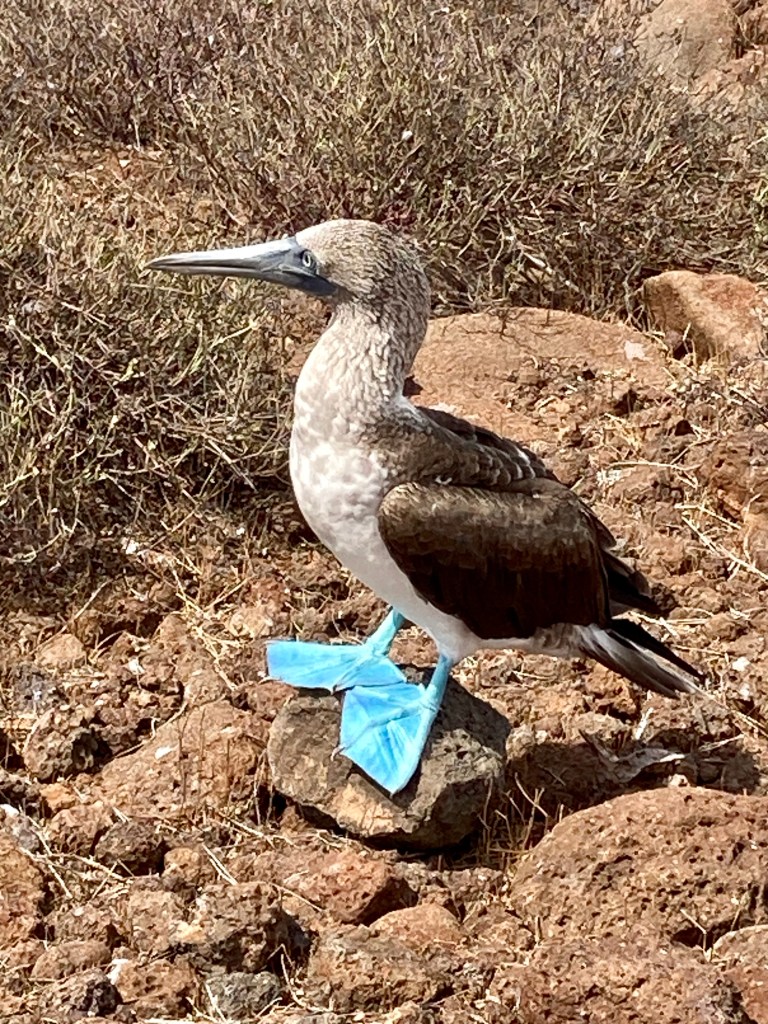
Frigates and blue footed boobies have nesting grounds on the island.  This boobie mother and baby had their nest right next to the path.

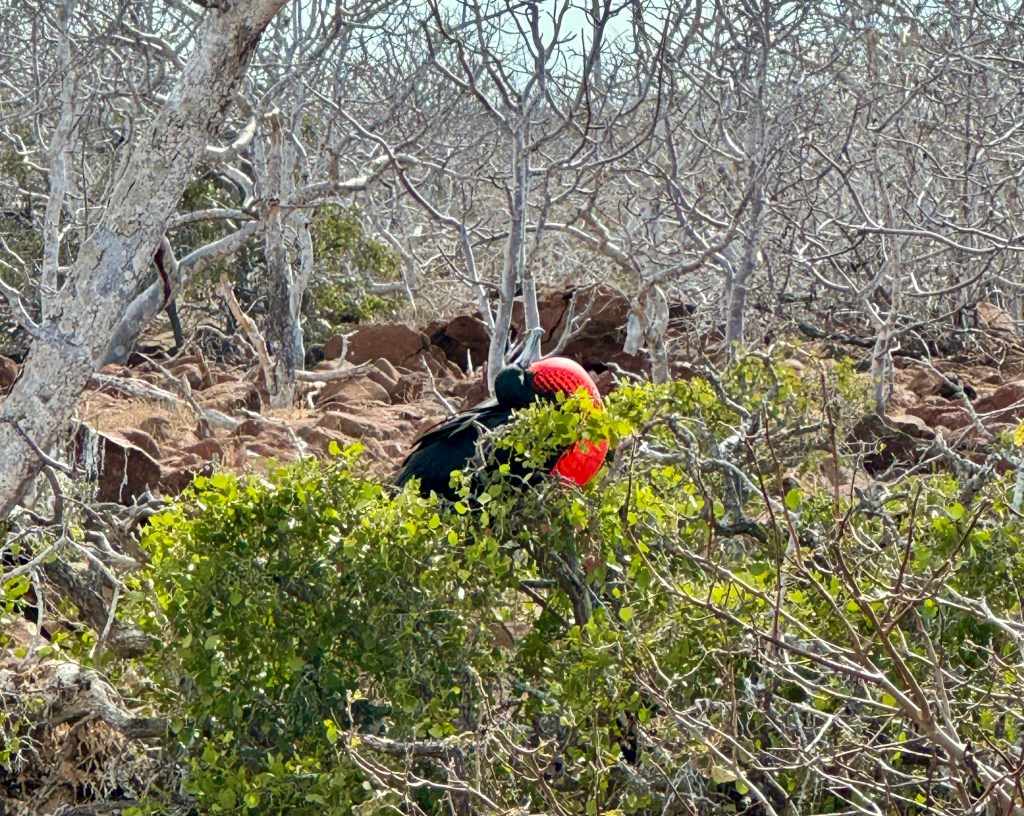
This is a male frigate with his enticing red pouch.  We watched six to eight of the males trying to entice a female in the vicinity!  She came down on one for 15-20 seconds and flew off again.  Deed done?

This is a male and juvenile frigate.  Frigates are unable to walk on the ground so they generally fly or perch in trees.

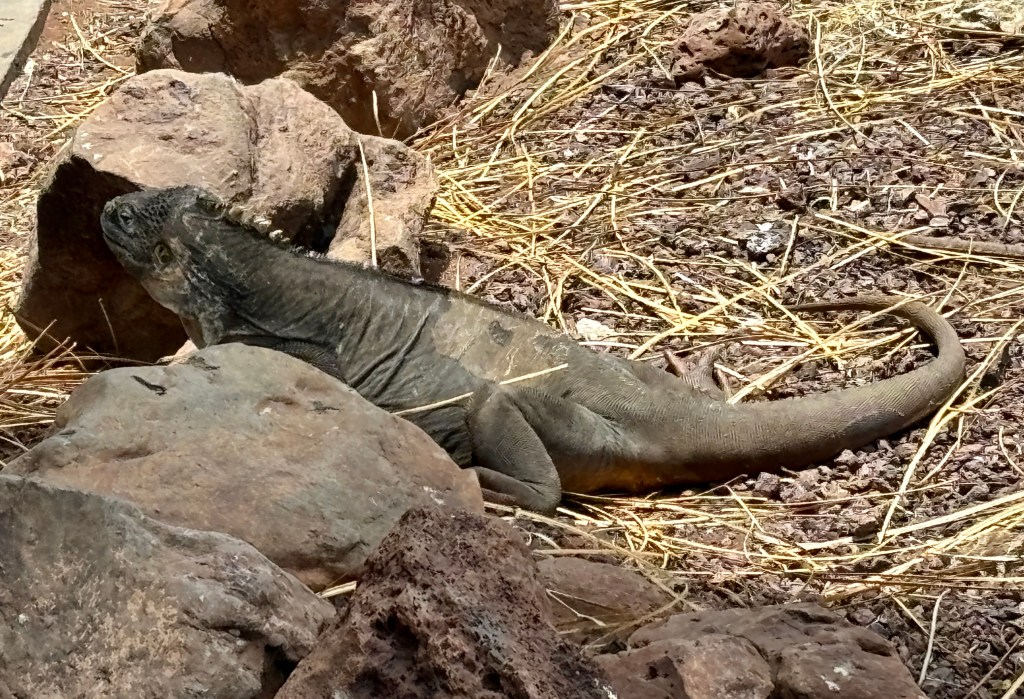
There is a large population of land iguanas on North Seymour because of abundant cactus pads and fruit for food.

An iguana’s color lightens as it ages.

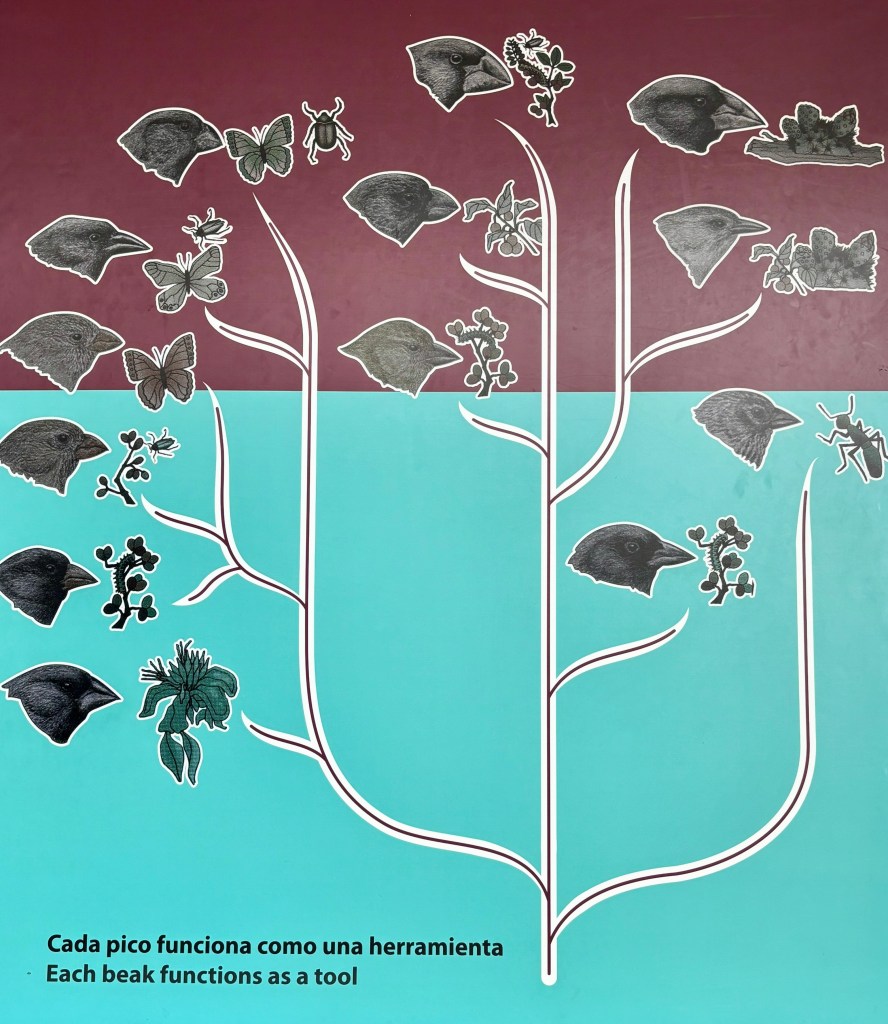
This Darwin finch is getting a drink from the cactus. 
Darwin finches encompass 13-18 species (number varies by research site) of nearly identical birds on the Galapagos.  They vary only in beak shapes that had adapted to the type of food found on the island inhabited. Charles Darwin discussed the finches and their beak adaptation in his book The Origin of Species.
We walked into an area that was concentrated with blue footed boobies. (I love these boobies. I even got earrings that match their feet.)

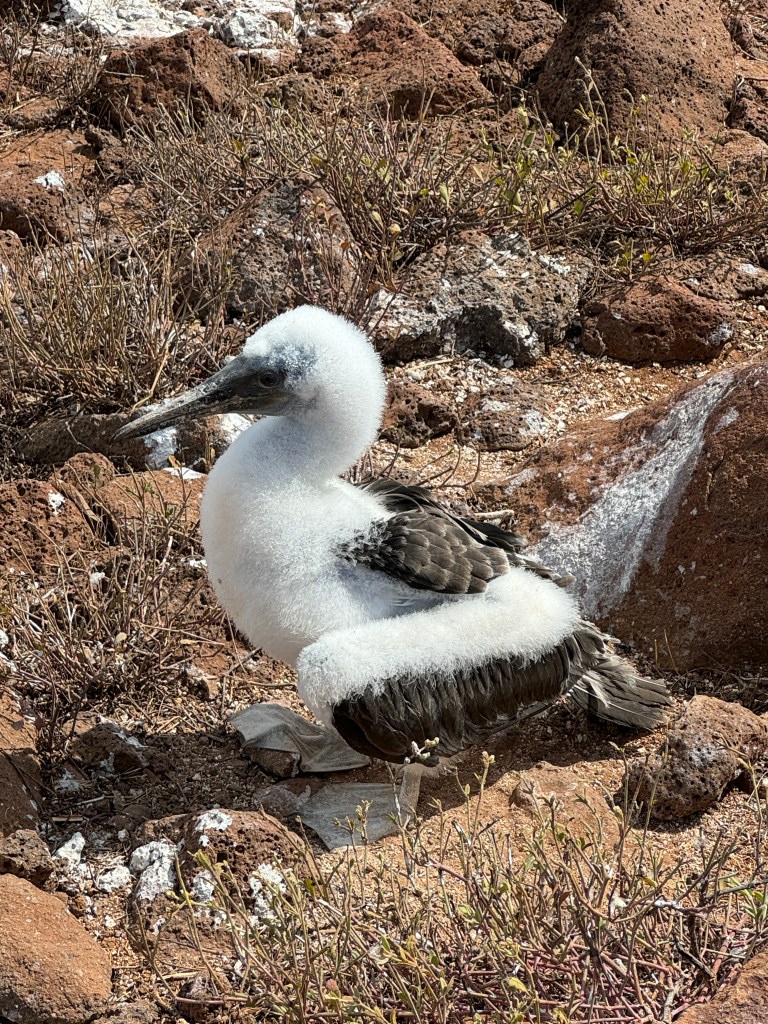
This is a juvenile blue footed boobie.  The shade of blue develops with age and the depth of blue is dependent on the bird’s diet.

Boobie comes from bobo, meaning foolish.  This guy actually looks a little foolish, but I like him!

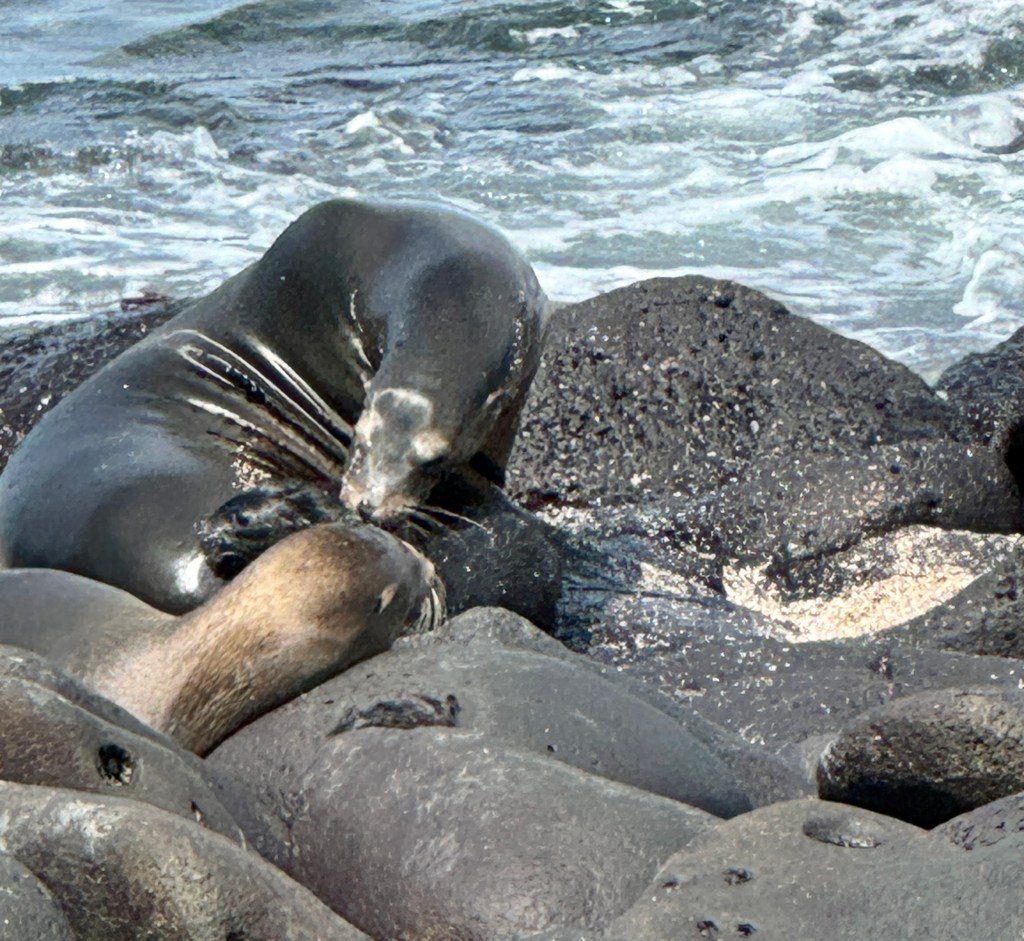
As we walked towards the water we came across this bloody scene.  Our guide said it was the placenta from a mother sea lion that had recently given birth.

It surprised us how rough the new mother was with her hours old babe! There was a second mother (foreground) with her baby in the same area. Victor thought the other baby was a couple weeks old.

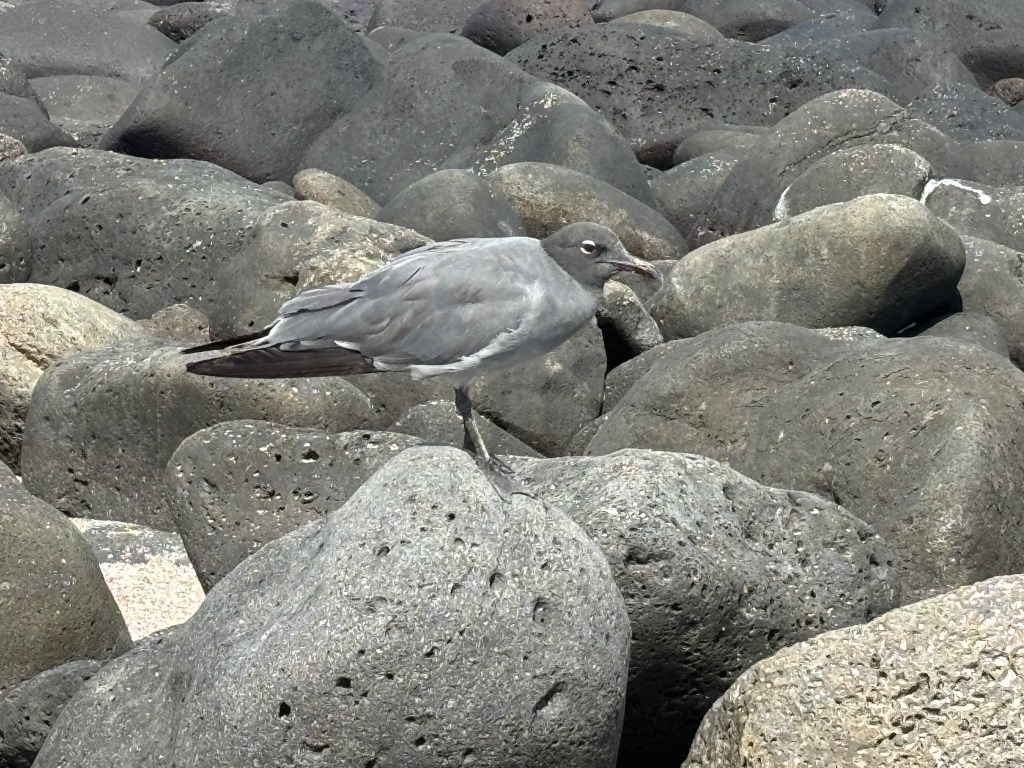
This is a Lava Seagull, endemic to the Galapagos Islands.

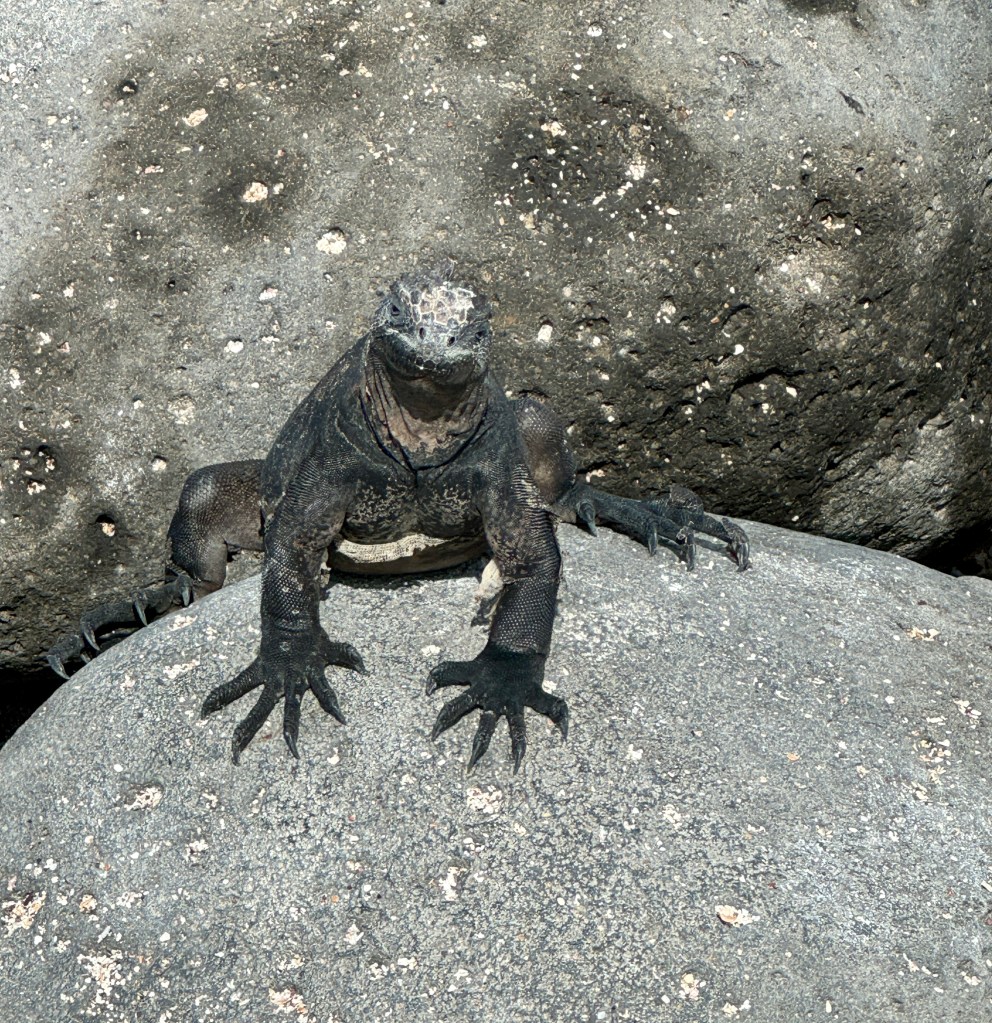
This is a marine iguana.  (This is the species I saw on the BBC program I mentioned in an earlier post.  However, the scene depicted of snakes going after the marine iguana babies across the beach happens on a different island.)    The Galapagos Islands have land, marine and hybrid iguanas.  

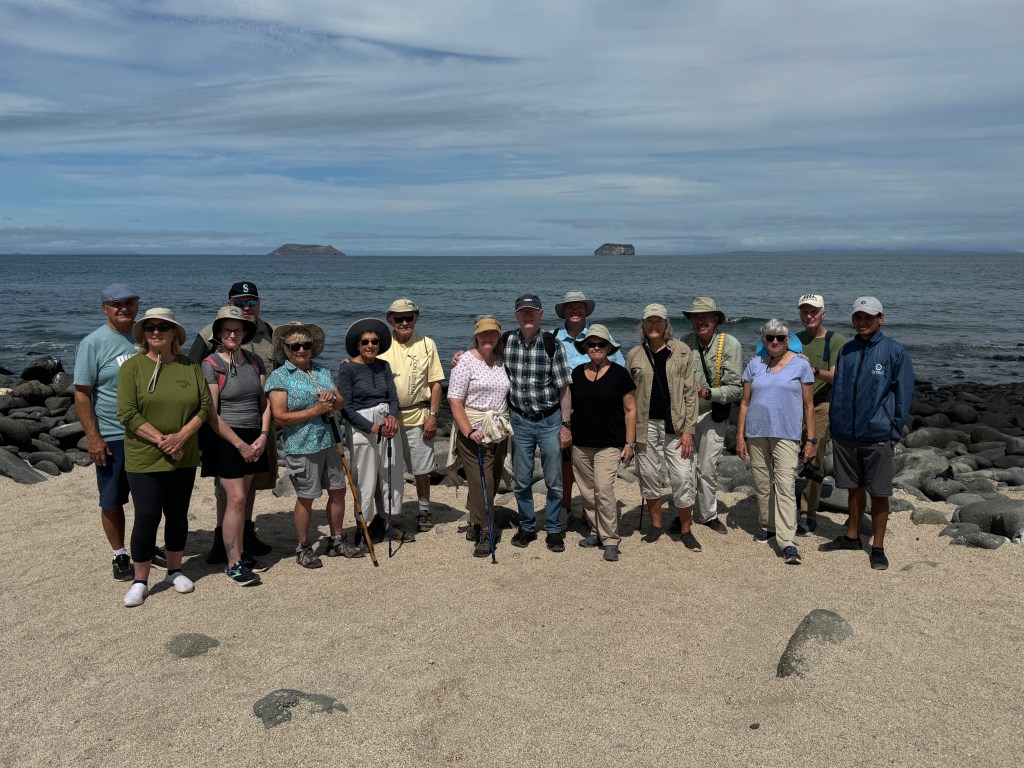
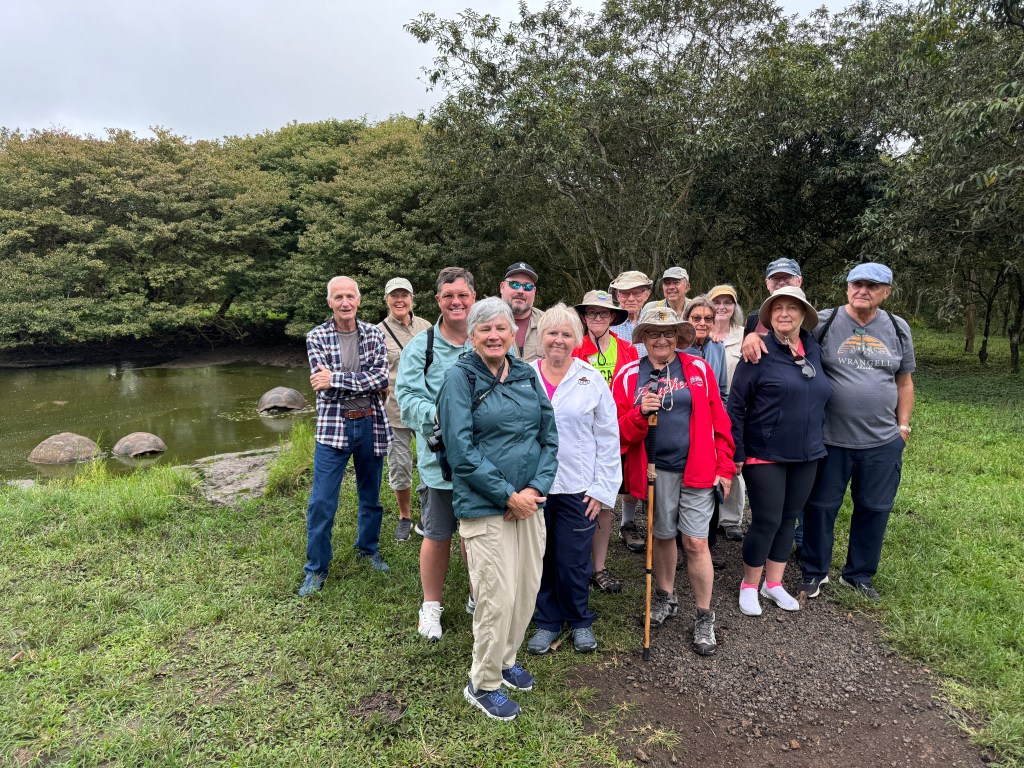
Here we are, our Avalon group, posing for a group picture on North Seymour Island in the Galapagos Islands!

We walked a ways and saw a baby sea lion, alone and still.  We were concerned that we had come upon a baby dead or dying.  Victor, our guide, told us numerous times that rangers let nature happen. If there is a human cause (or human introduced predator) to the injury, then they will intervene.

Fortunately, this baby perked up!  Victor explained that the baby may be left alone for hours or even a few days while the mother hunts.  She will then try to find her baby using their unique shared vocalizations and scents and reunite.

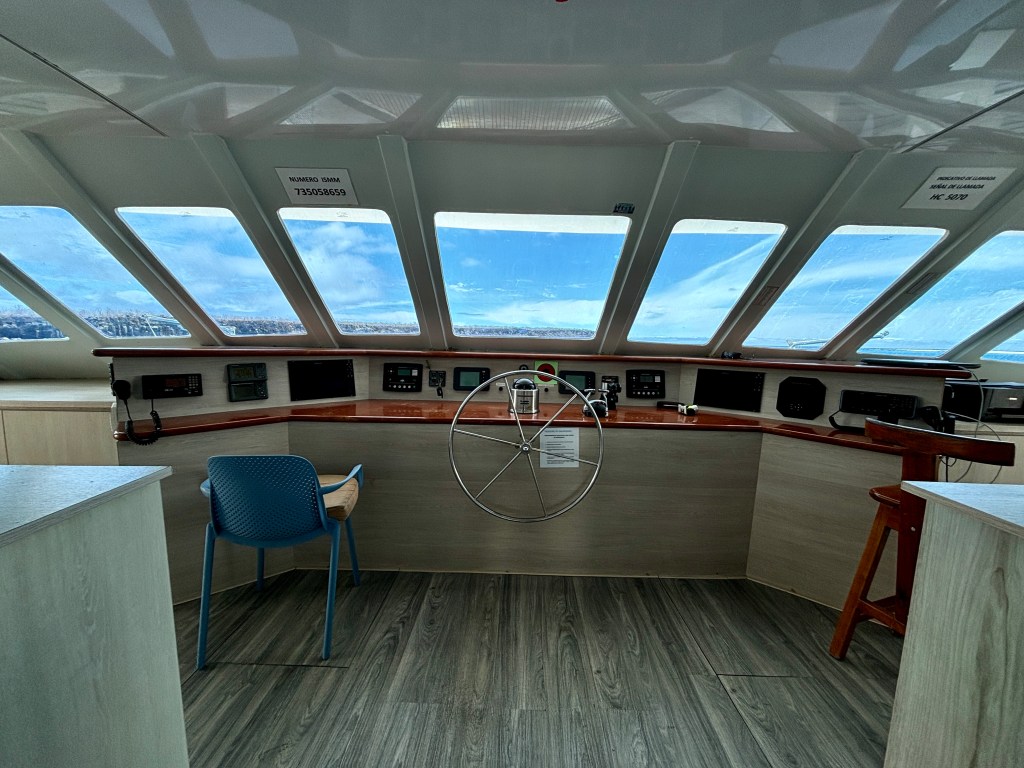
We returned to the Treasure of Galapagos and had a chance to take a picture of the bridge while the door was open and no one was inside.

Randy had another snorkeling experience while I road in the zodiac.

Later we walked on Island Plaza Sur and saw some of the local inhabitants!

After dinner, we had our evening briefing about the next day’s activities, Our boat, Treasure of Galapagos had a time slot from 6:00 to 10:00 a.m. on San Cristobal Island. Access is scheduled and limited so as not to disrupt the species and habitat too much.  Breakfast was to be served at 6:00.  We all retired to our cabins.

We were asleep when the alarm went off at 5:00 a.m. but that may be the only time in the long night that we were asleep!   We had a very rough night traveling between Isle Plaza Sur and San Cristobal Island.  No one slept as we were banged around, especially our friends in the suite in the lower level front. Our closet doors were opening and slamming shut and at some point I braced pillows and cushions in the gap to stop it. Anything not battened down was tossed all over the room.  Several times we were at risk of being dumped out of bed!

Eventually the long night was finished and the next day dawned.  Breakfast was eaten and our activities continued.

Part of the group (Randy included) left for a several hour hike.

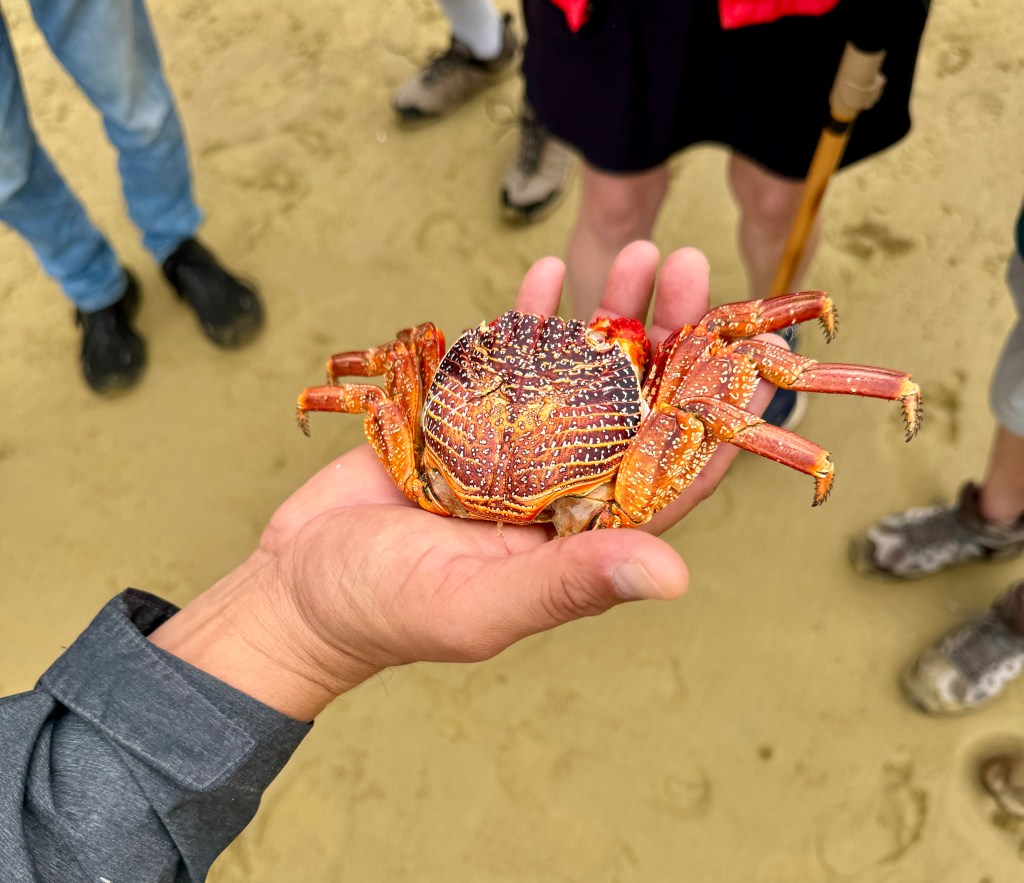
Victor explained that this crab shell was just the skeletal structure.  The crab had moved on and would develop a new shell.

This goat is an example of human introduced species that have done much damage in the Galapagos Islands.  They came to the islands in the 19th century for food and as pack animals. The goats compete with native species for food and habitat, disrupting the balance of life.  Galapagos National Park has culled the population of goats quite dramatically but some remain.  

They saw more blue footed boobies. 

Their nests just aren’t protected at all!

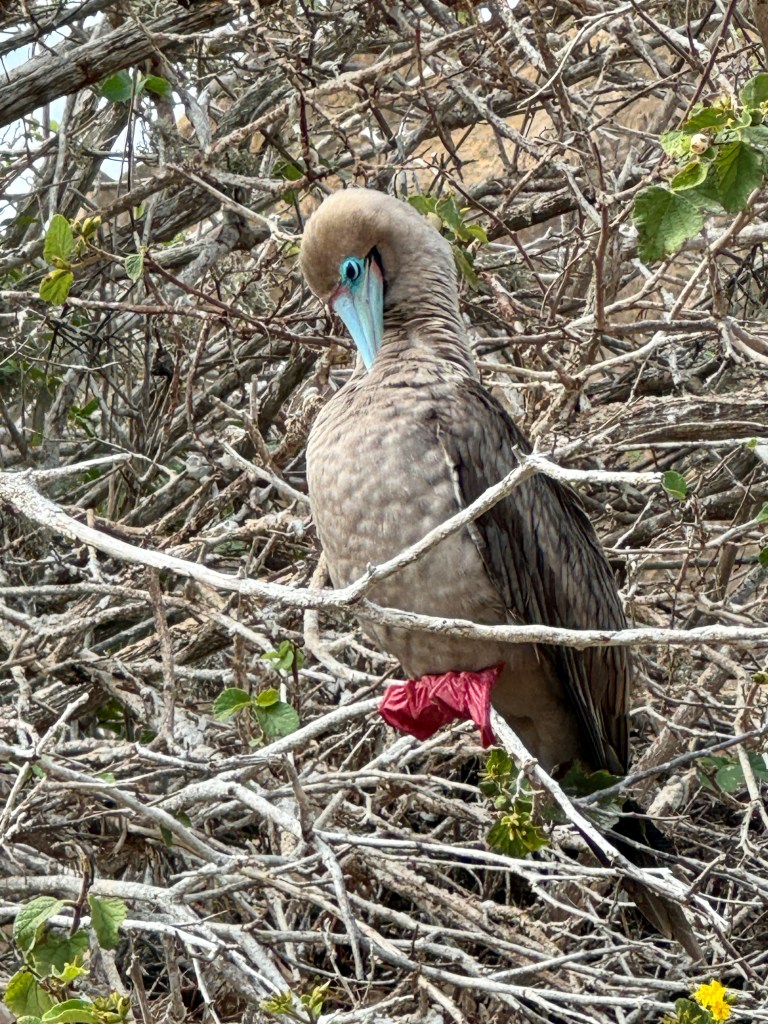
The main draw of this hike was the red footed boobies. I regret, a bit, not seeing them in person.

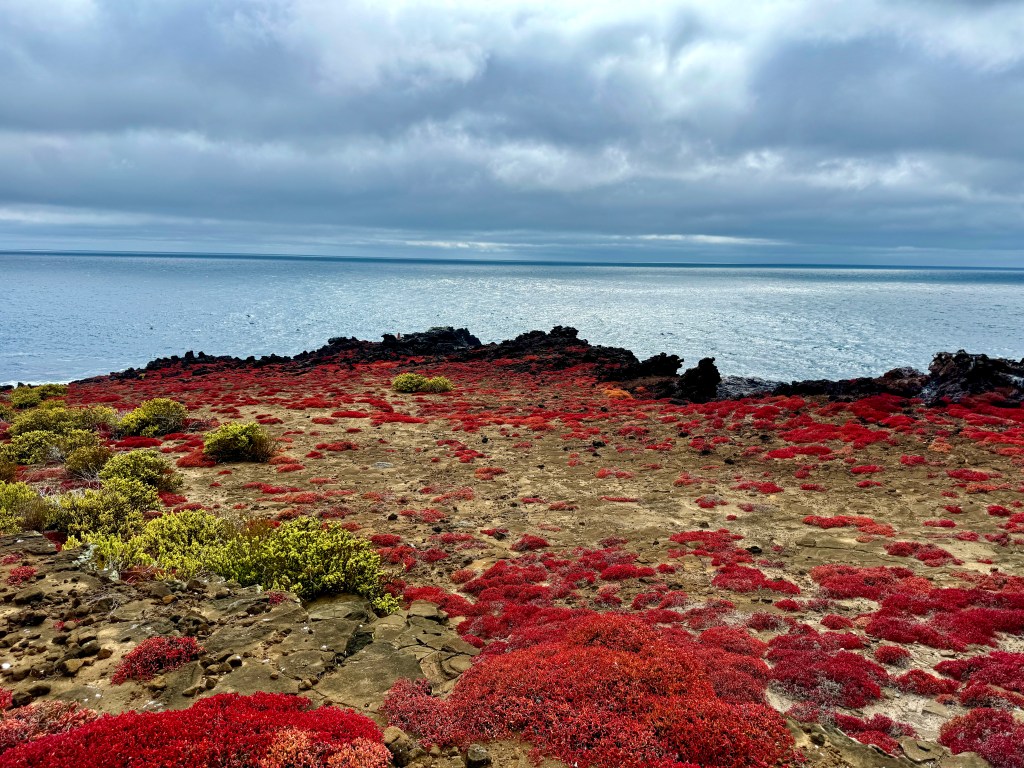
That, and maybe this view – gorgeous!

Instead of hiking, five of us went on a zodiac ride around the area.  We had rain and mist and didn’t really see anything we hadn’t seen before.  

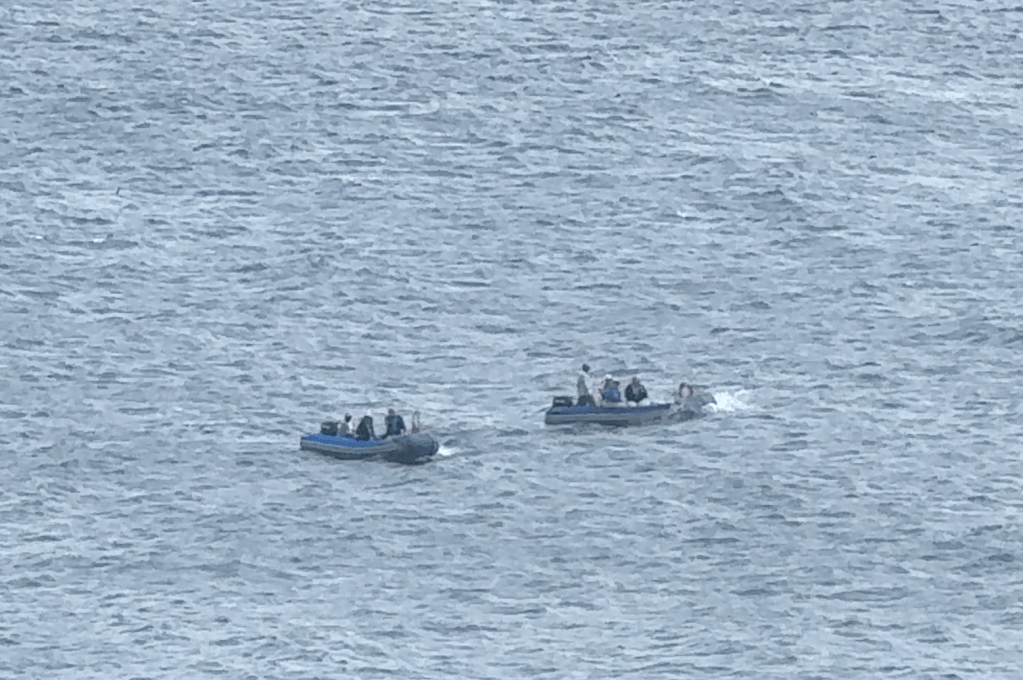
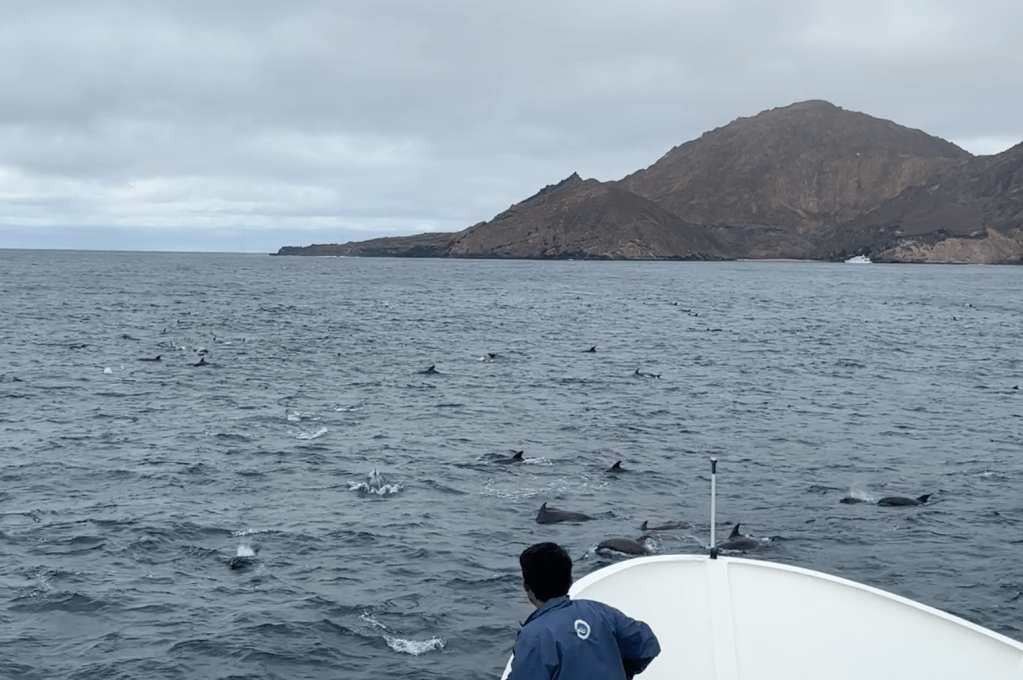
After 45 minutes we returned to the boat. We had just unloaded, and put our shoes out for cleaning, when word came that dolphins were sighted.  Go! Go! Go back into the zodiacs!  We didn’t even put our shoes back on – just got into the zodiacs in our socks.  

There were dolphins all around us and what a joy that was! 

We saw many dolphins but Randy’s group saw hundreds looking down from above.

They could see us in the zodiacs too.

Too soon, the dolphins were gone and those of us in the zodiacs were back on Treasure of Galapagos. Eventually, everyone was back on board and we were underway. 

Randy saw the dolphins again from our balcony and alerted the ship’s crew.  

The captain diverted course so we could enjoy them again!

A while later we were alerted to whales.  Our naturalist believed it was a mother and baby humpback.  Humpbacks often give birth in the Galapagos area.

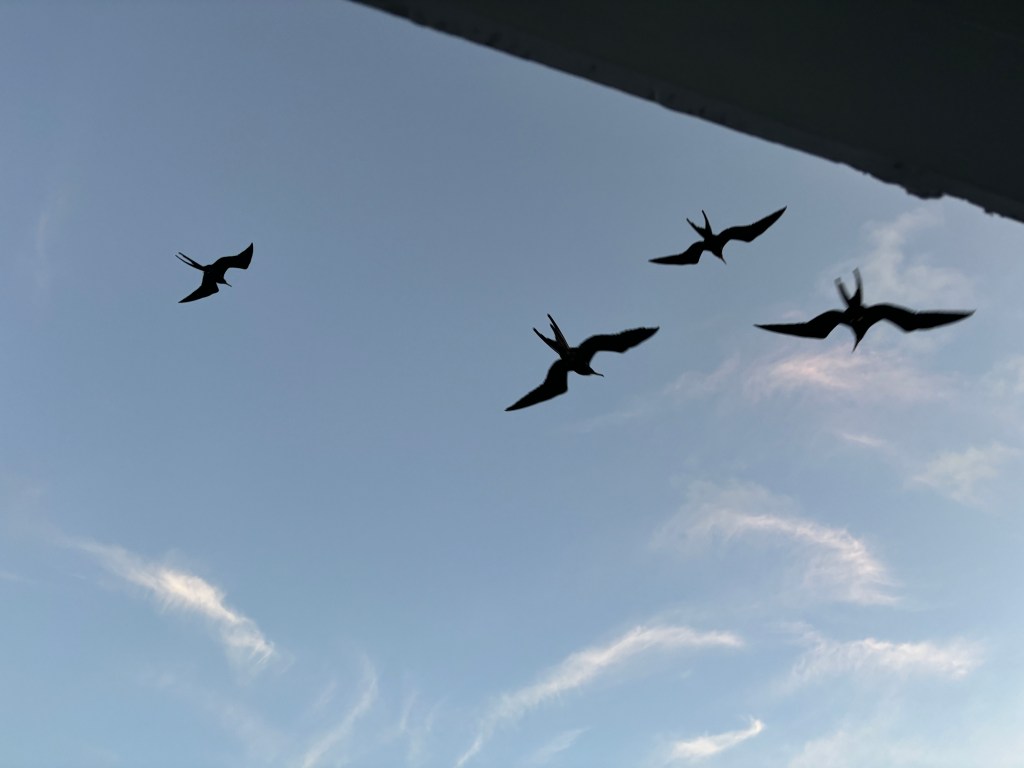
I couldn’t get a good picture of the whales, but I did catch the frigates escorting us out of the area.

We were in the Galapagos Islands on September 29 and 30, 2024

Next Up: We leave the Galapagos and head home.

Posted in Uncategorized | Leave a comment

Galapagos Islands: Santiago and Bartolomé Islands

Overnight the captain had motored us towards our next activities on Santiago and Bartolomé Islands.  We generally enjoy sleeping to the movement of a boat so all was well.

Our first activity of the day was a lava hike.  We used zodiacs to transport from our boat to Sullivan Bay on Santiago Island.  

Some red crabs welcomed us to the island and really stood out against the lava.

Our guide/naturalist, Victor, gave us a geology lesson about the Galapagos archipelago  and its movement (3-4 inches per year)  on the Nazca plate.   (Victor could really teach us about a lot of things.  Before he was a guide, he was a naval officer, and he is also a lawyer.)

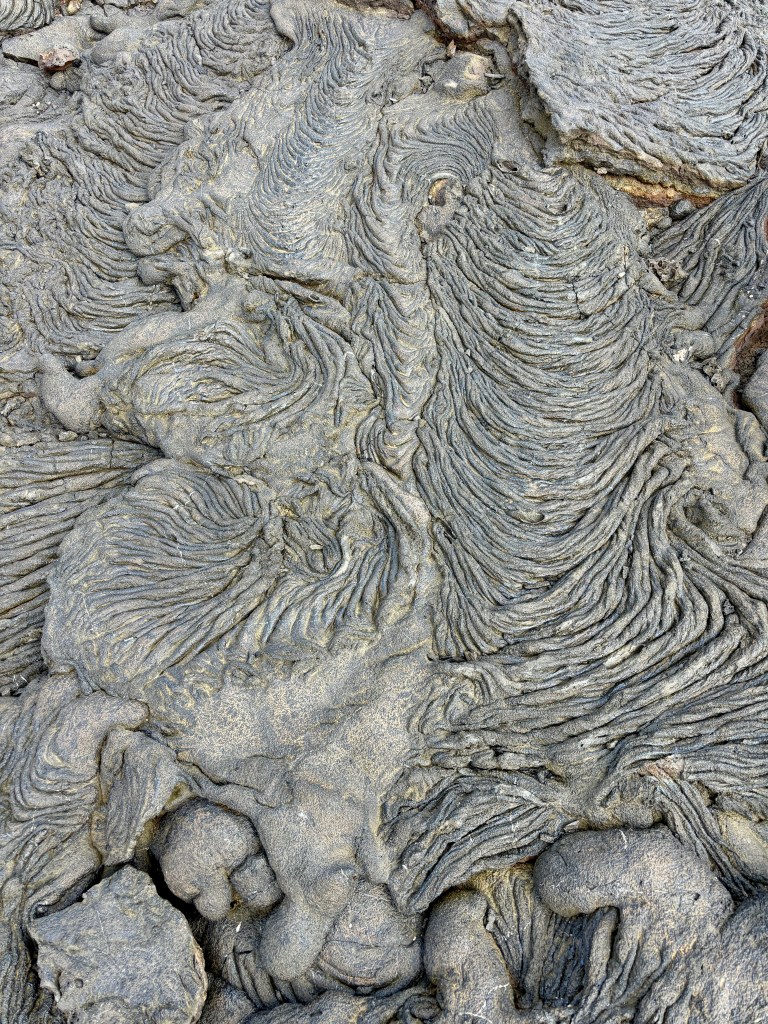
Victor told us how this area’s volcanos are different from land volcanos.  The underwater volcanos formed the islands over repeated eruptions and the resulting layering and lifting from below.

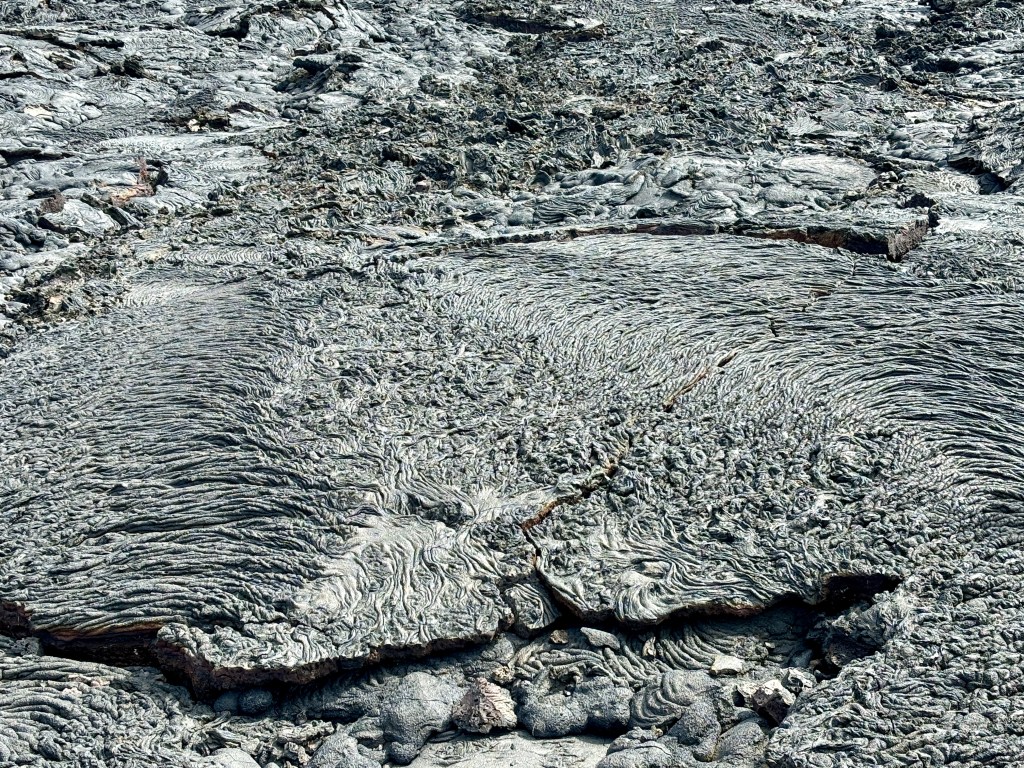
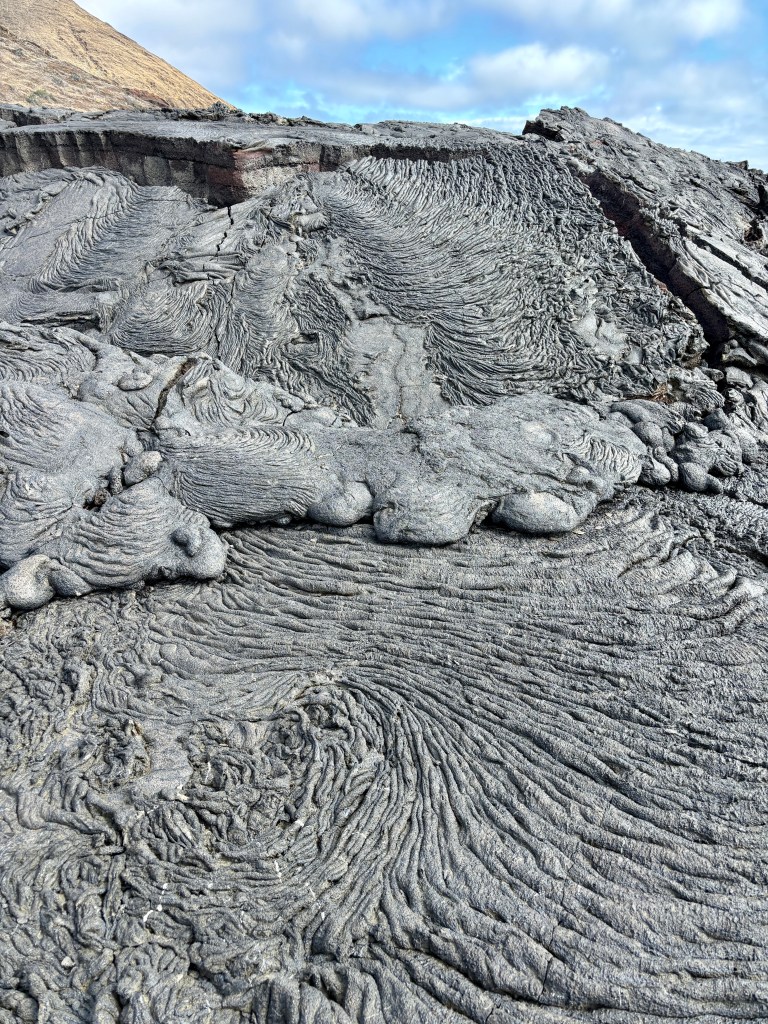
The area off Sullivan Bay is famous for the extensive lava flows believed to be mostly from the late 1800s, with one eruption being specifically documented in 1892.

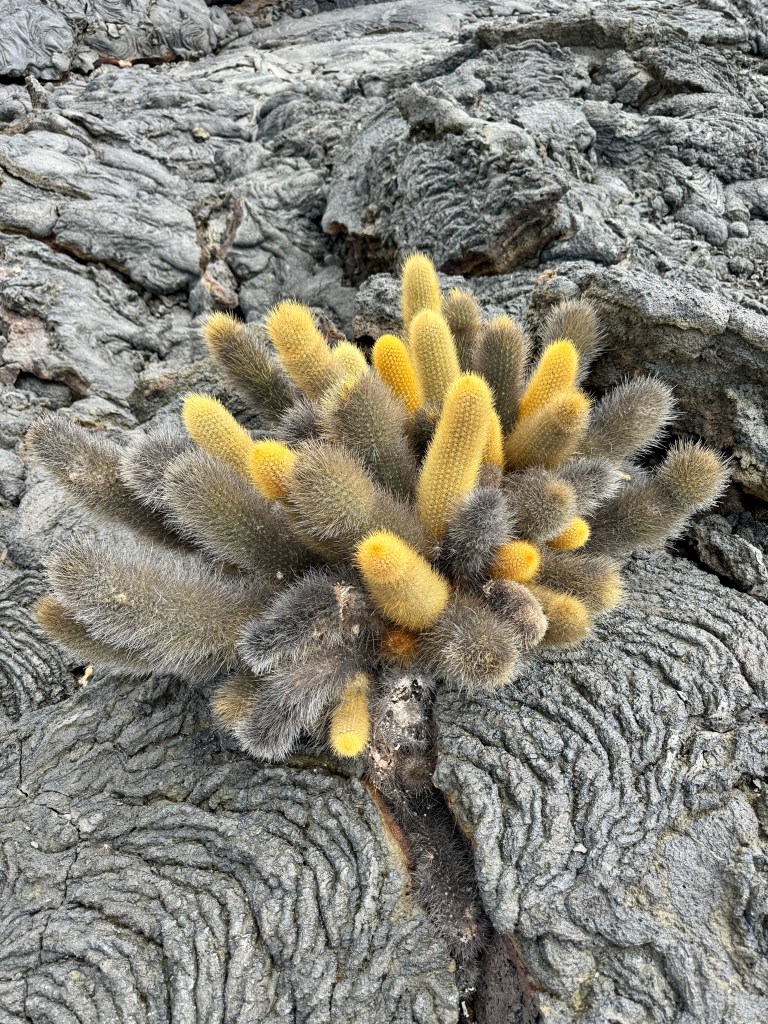
This is a lava cactus – unique to the Galapagos Islands.

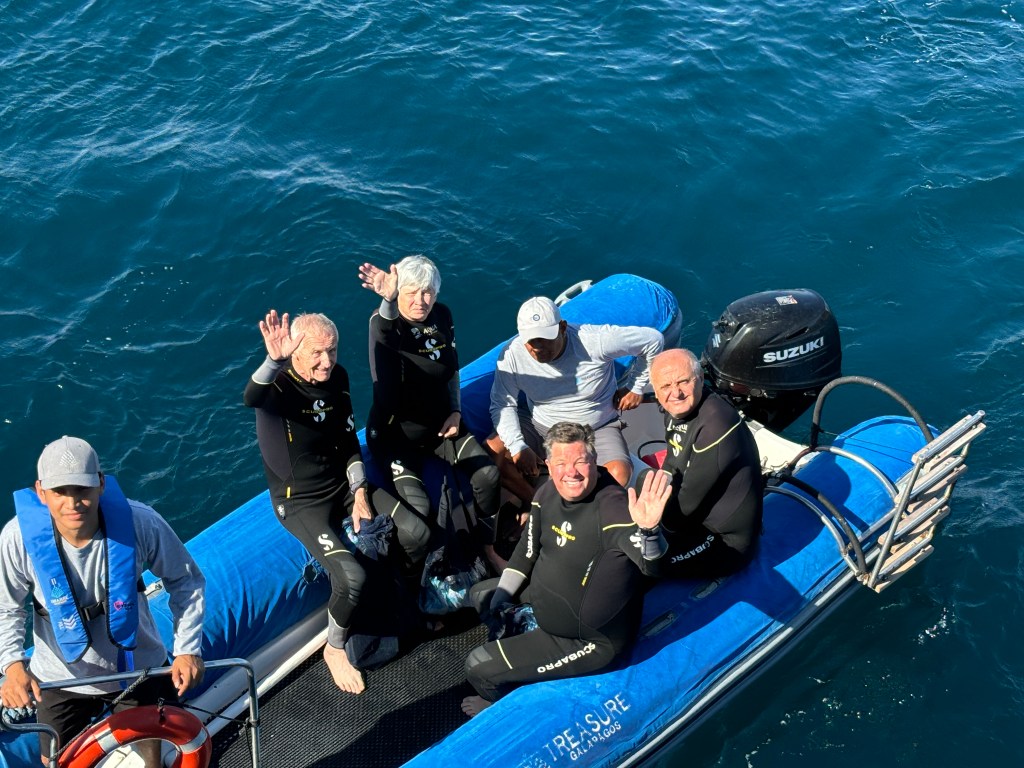
We returned to Treasure of Galapagos and Randy was fitted for his wetsuit for snorkeling.

Because of the currents, the water is quite cold, despite being so close to the equator.

I have snorkeled many times, in many places but am not a fan of getting in and out of wetsuits. When we learned that there would frequently be zodiac excursions offered for those that didn’t prefer to snorkel, that was an easy decision for me.  

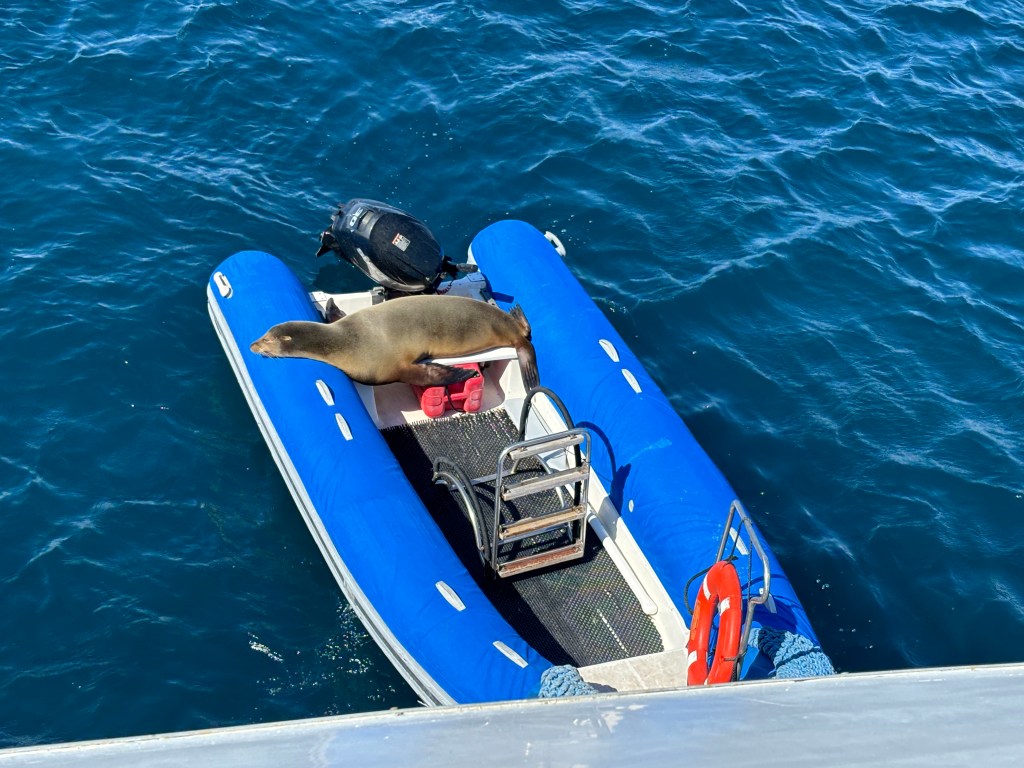
Before they left, this sea lion was lounging in the boat.  He was having a nice time, until they made him leave!

With the super hectic pace of the last two weeks, I enjoyed sitting on our balcony with my tea, an audiobook, and the binoculars.

Randy was super excited when he came back because they snorkeled with penguins!  That was almost enough to make me wish I had gone along.

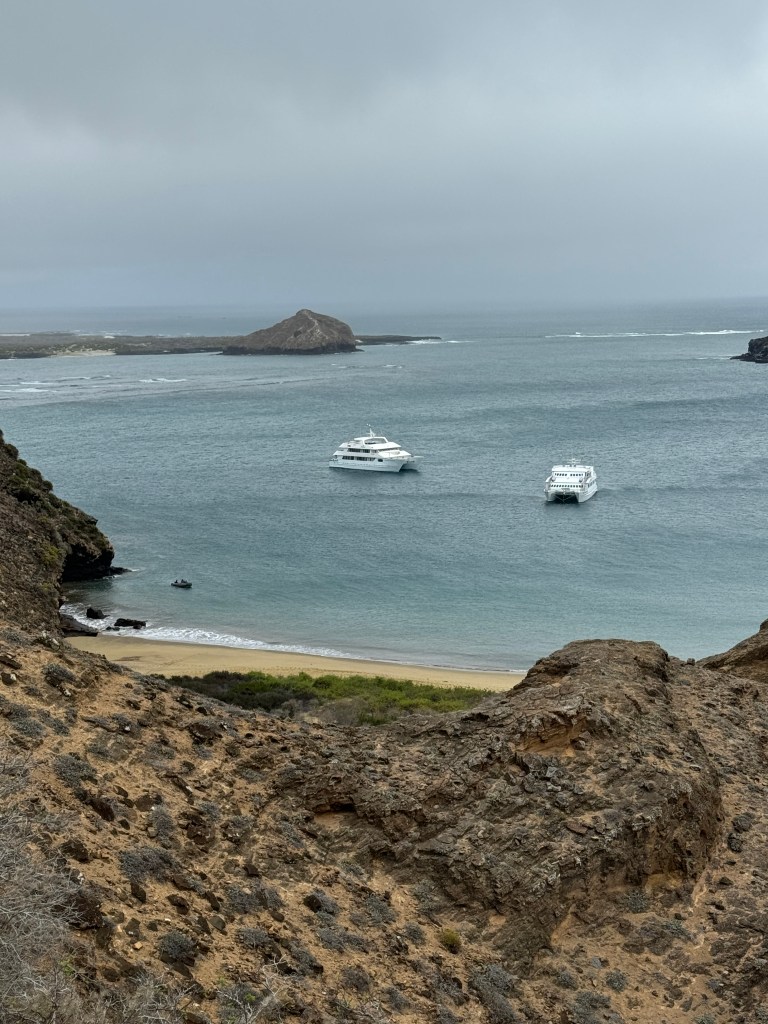
During lunch we motored to our next destination of Bartolome Island.  Once arrived, there was a group climbing to the high point of the island and another group doing a zodiac trip around the island.  We decided to divide and conquer.  

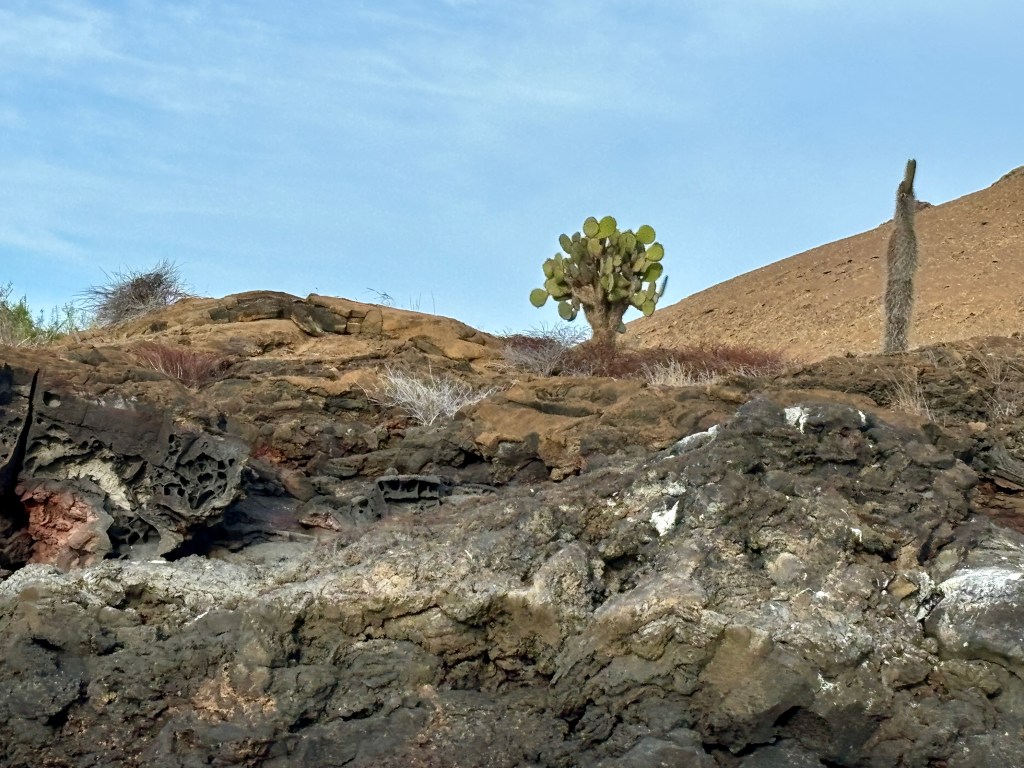
Living in the desert, we are well familiar with various forms of prickly pear cactus.  Seeing it in tree form in the Galapagos was new to us!

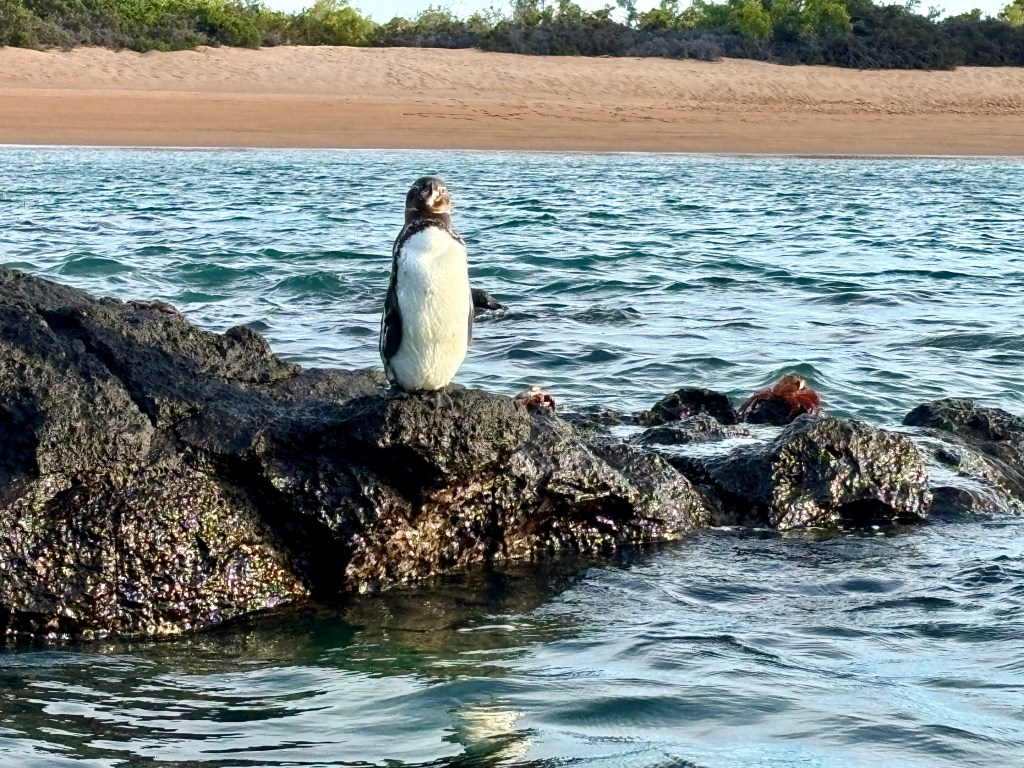
On the water, we saw quite a few penguins.
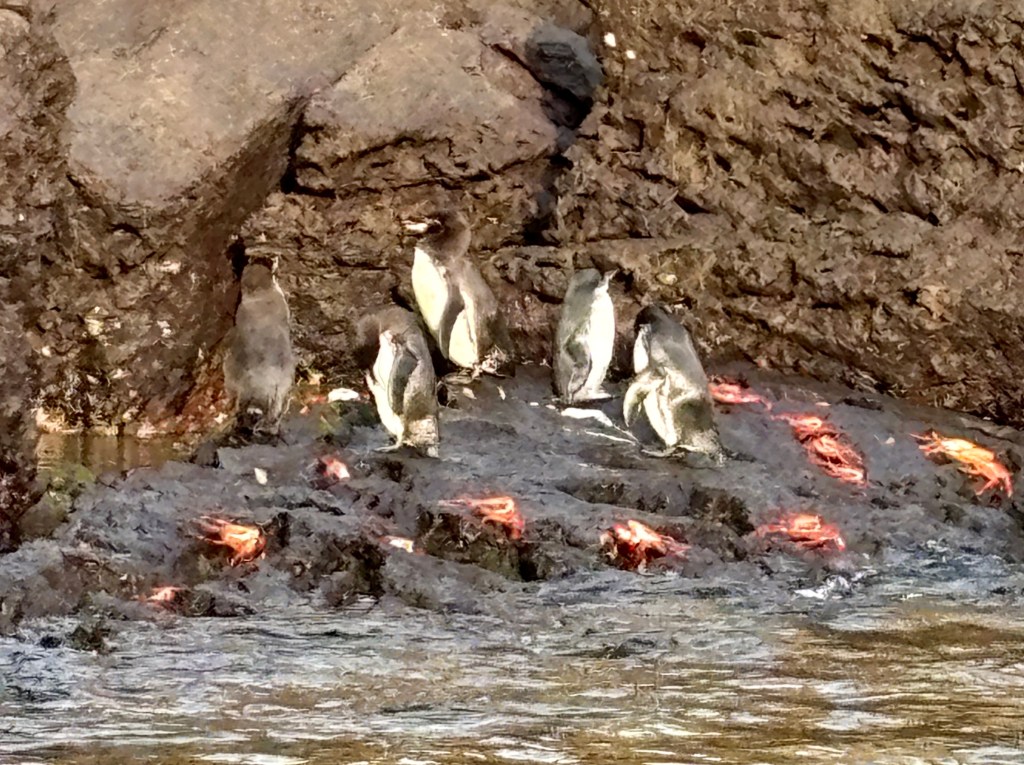
And crab.
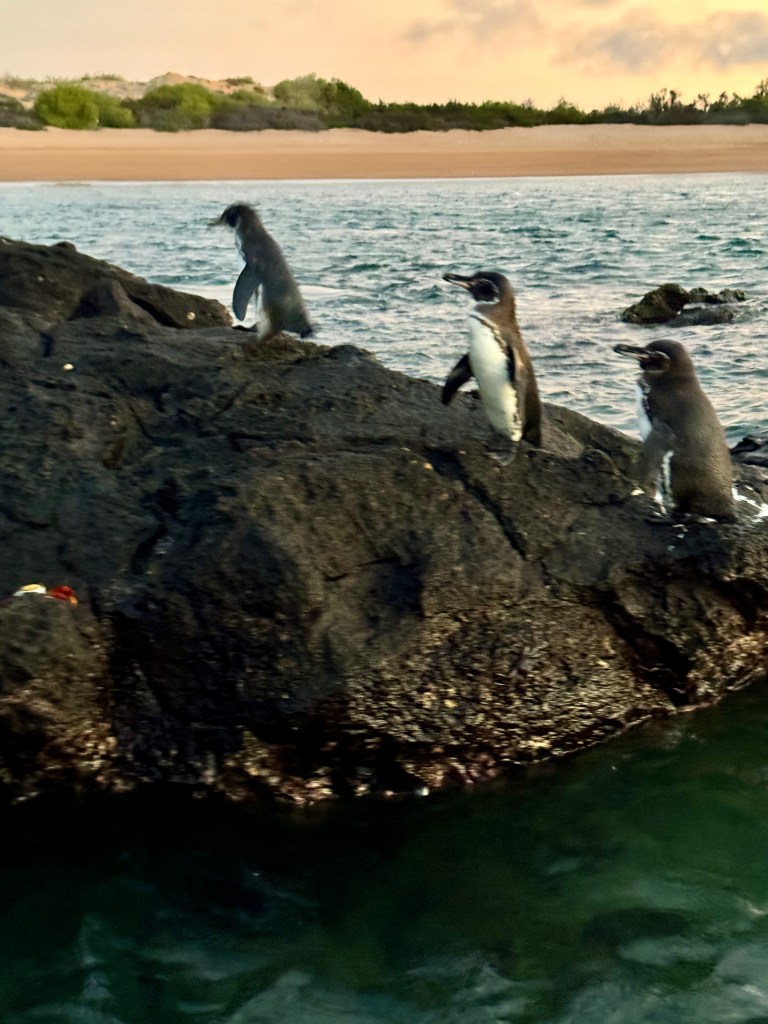
And penguins and crab!

The sea birds are always present!

Randy made it to the top and had some nice views.

The sea lions just go where they want and aren’t bothered by the people.

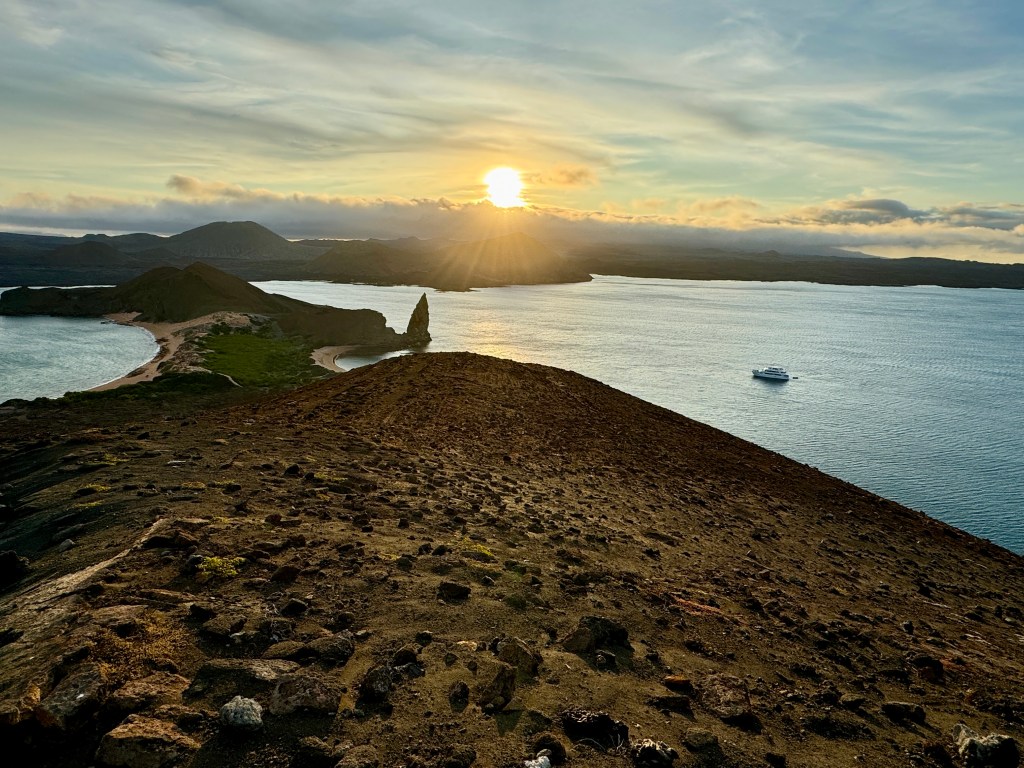
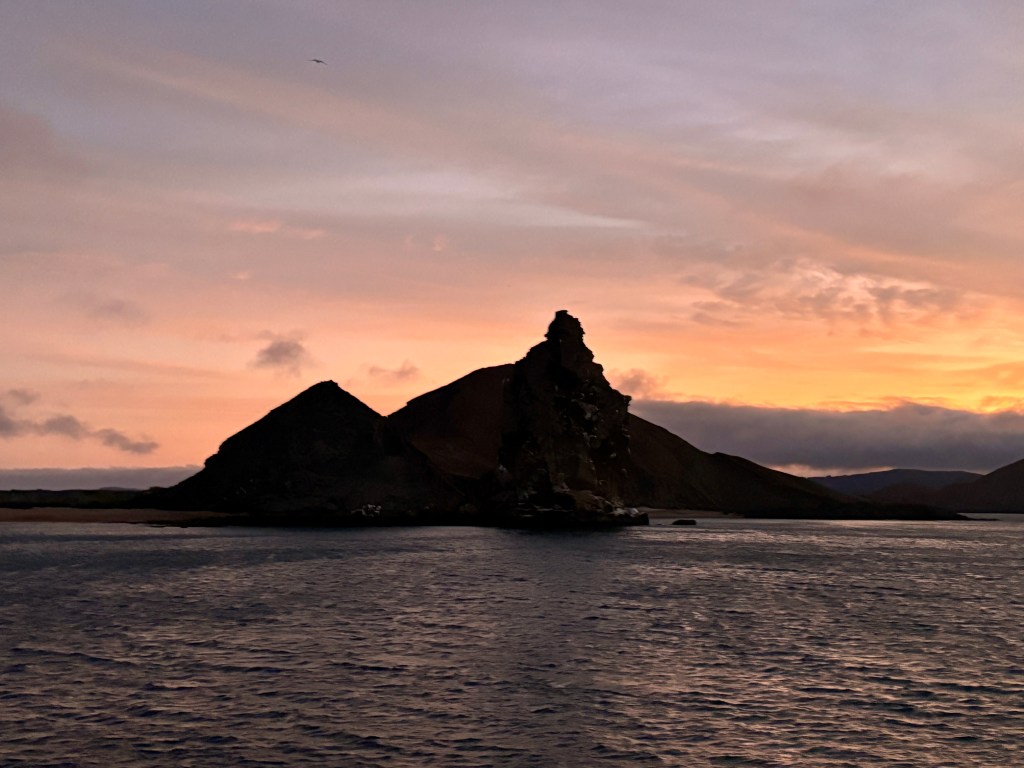
A sunset of Bartolemé Island in the Galapagos.

We were in the Galapagos on September 28, 2024

Posted in Uncategorized | 1 Comment

Ecuador: Arriving in the Galapagos Islands

We had an early start at the hotel in Quito.  Our bags had to be out by 4:30 to allow for Galapagos bag inspections.  They were looking for anything fresh or with seeds that might invade the Galapagos ecosystem.

The hotel had a modest breakfast for us in the lobby, which was nice considering that their regular breakfast service didn’t start for another 90 minutes.  Avalon seems to have the ability to negotiate these things.

The Quito airport was a nice place.  It was clean, with lots of shopping, and a fair amount of food options even before 7:00 am.

Most surprising was the suggestion to throw toilet paper in the toilet.  For two weeks, that had been pleaded against, even in nice hotels.   Sorry, if that seems like too much information but retraining habits of a lifetime are challenging!  

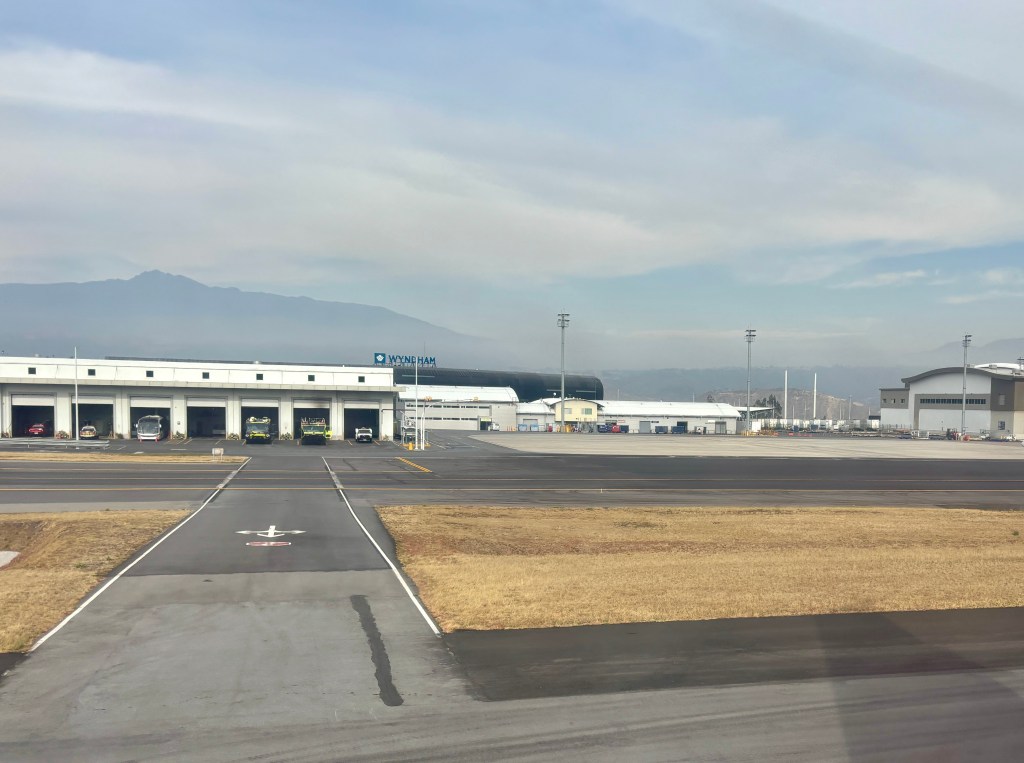
We boarded our flight on Avianca Airlines, the oldest airline in the Americas. As we were taxiing down the runway, we could see the smoke still enveloping Quito. Except for smoke in the air, and one time altering our bus route, the fires that made international news had not impacted our visit to Quito.

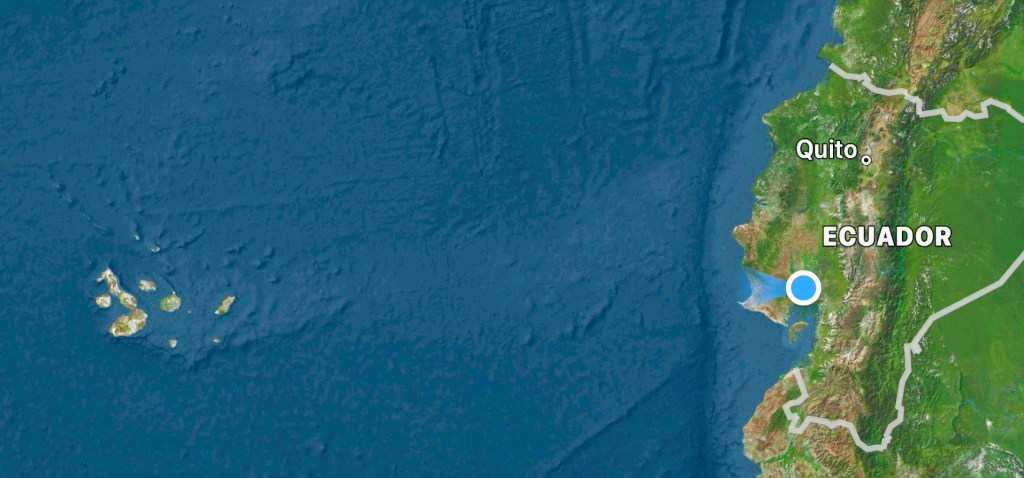
Screenshot

We landed in Guayaquil, south of Quito but still on the mainland.  Some people got off, but we were instructed to stay on the plane and in our seats while the plane was refueled for the flight to the Galapagos Islands.

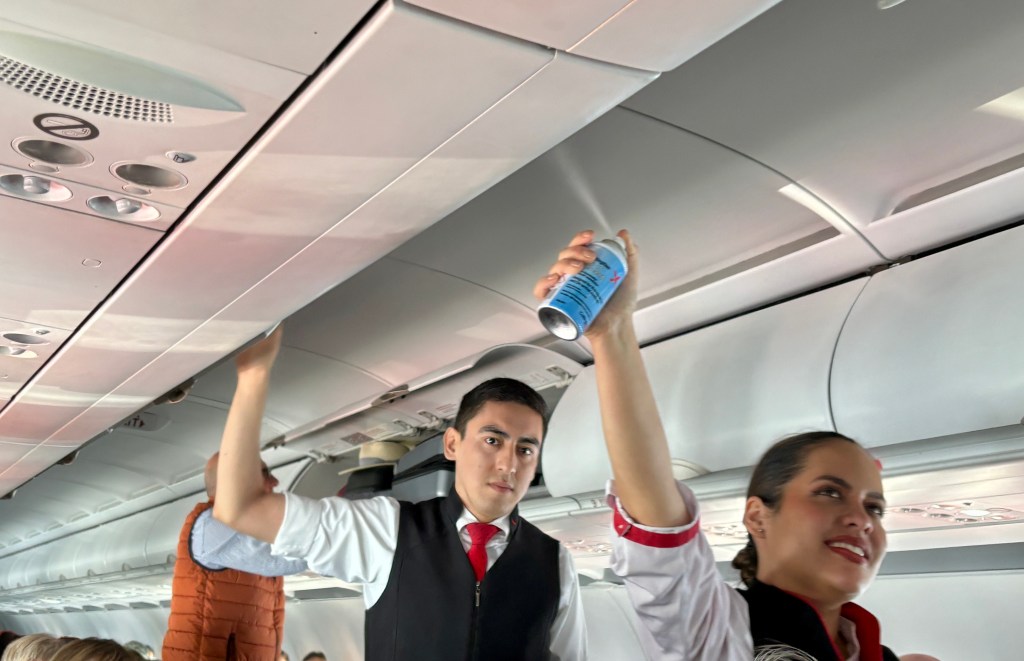
Mid-flight excitement happened when the flight attendants opened and sprayed all the overhead compartments and carryon luggage.  We assume that was an extra protection against anything that might accidentally get onto the islands.

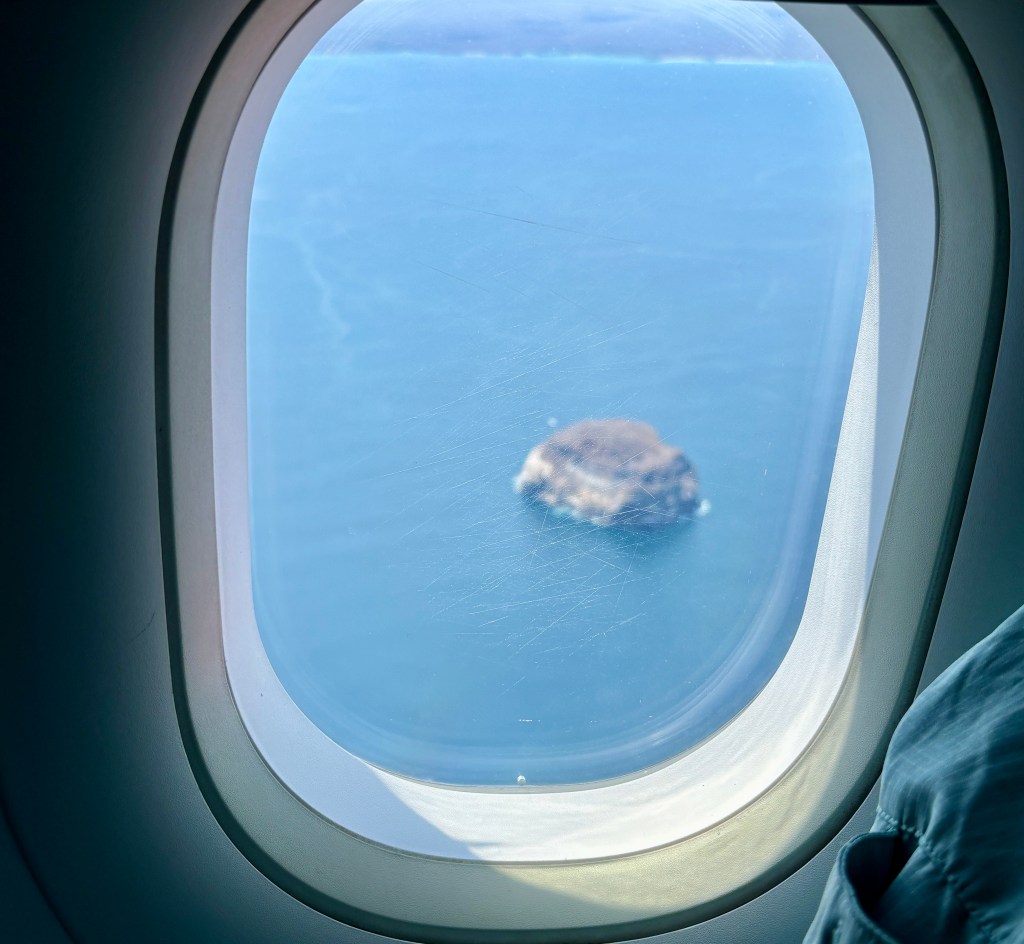
This was our first sighting of a Galapagos Island.

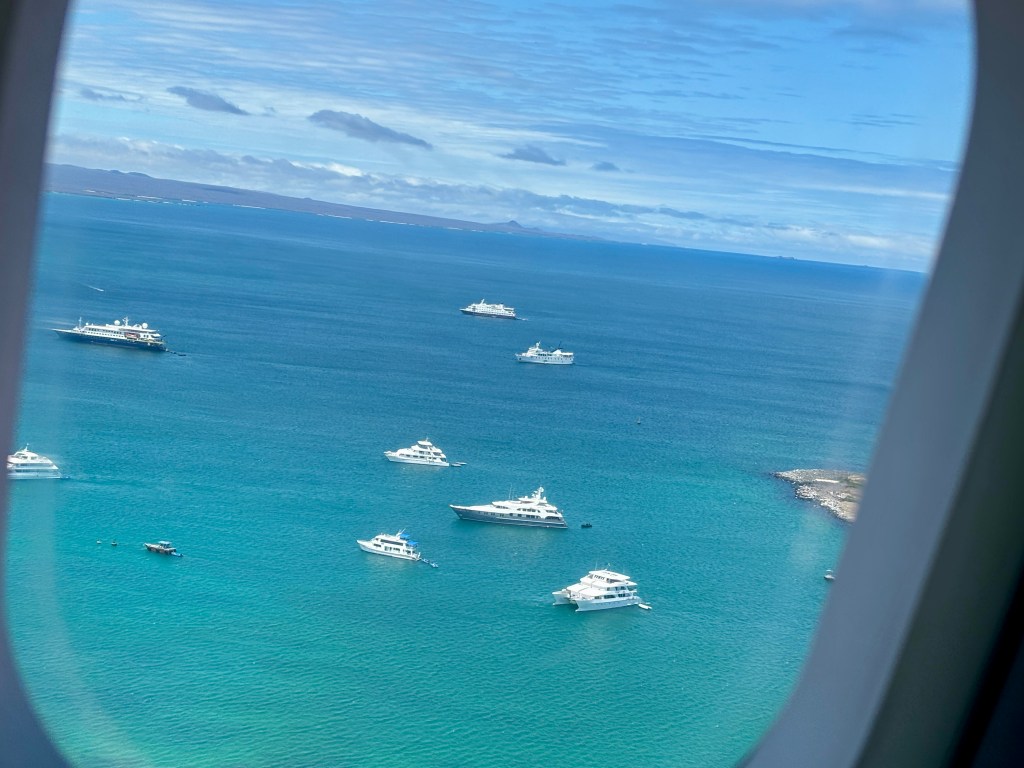
Obviously, we aren’t the only ones here!

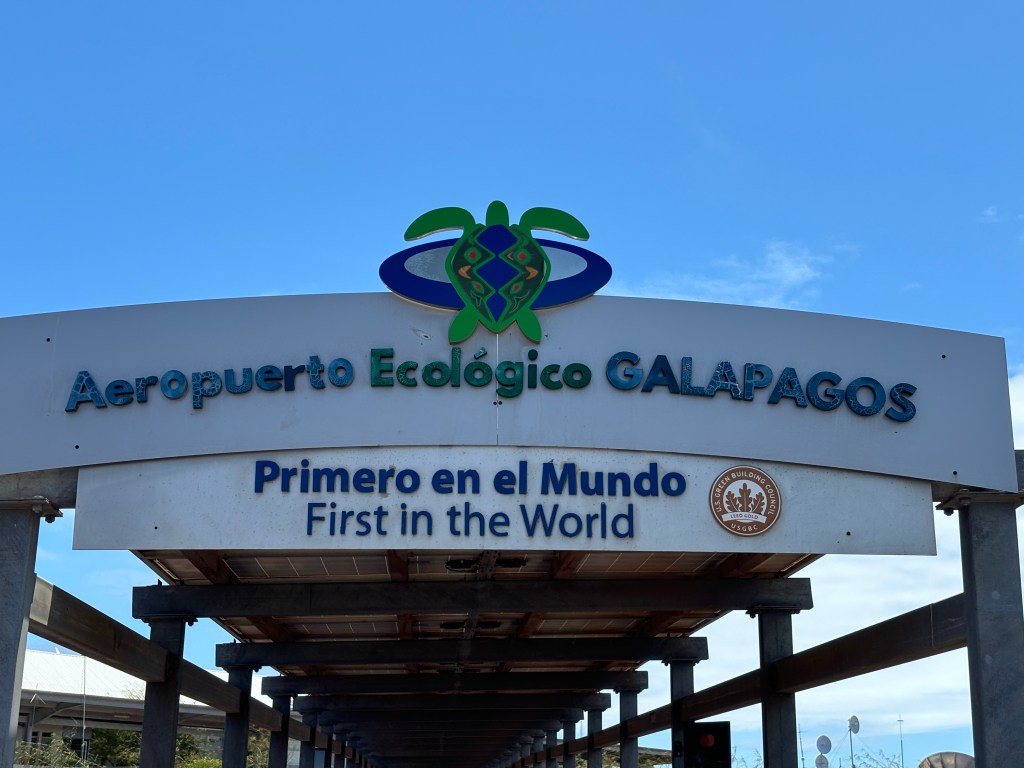
We landed on the island of Baltra and disembarked into the airport.

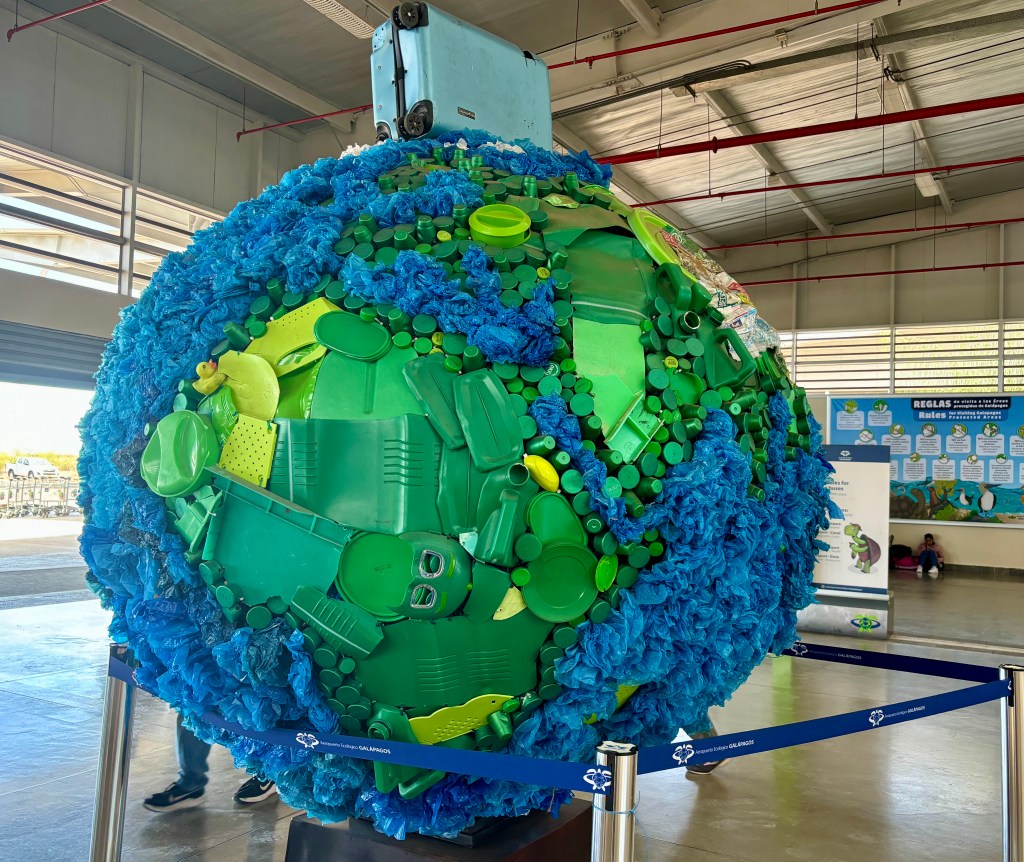
There was an earth made of items found in the sea.  

We saw a land iguana on the sidewalk and it reminded me of a BBC Planet Earth program we saw about hundreds of snakes attacking baby iguanas trying to make it across a beach.  It was so awful!  After seeing that, I said I never wanted to go to the Galapagos. And here we are.  (I later asked our guide about that program and he said the photography angles made the snakes look much larger than they really are.  I said I didn’t want to go there and he said we wouldn’t be.)

Avalon didn’t have a separate bus for us on Baltra so we boarded a city bus to go around the island to a pier. 

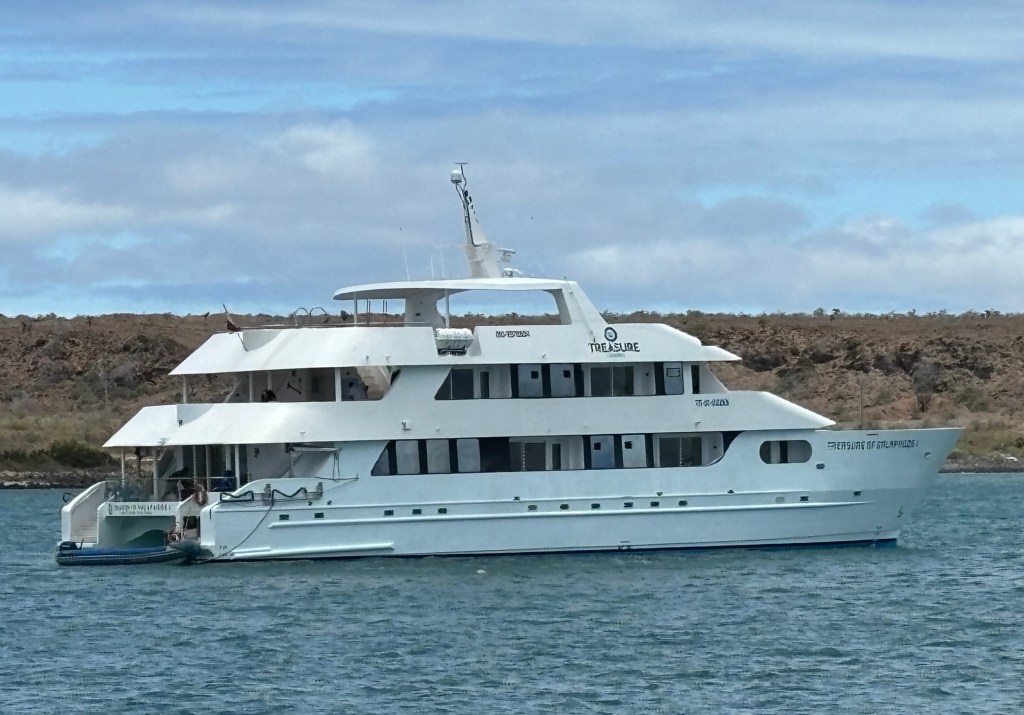
This was our first view of our home for the next four nights – the Treasure of Galapagos.  

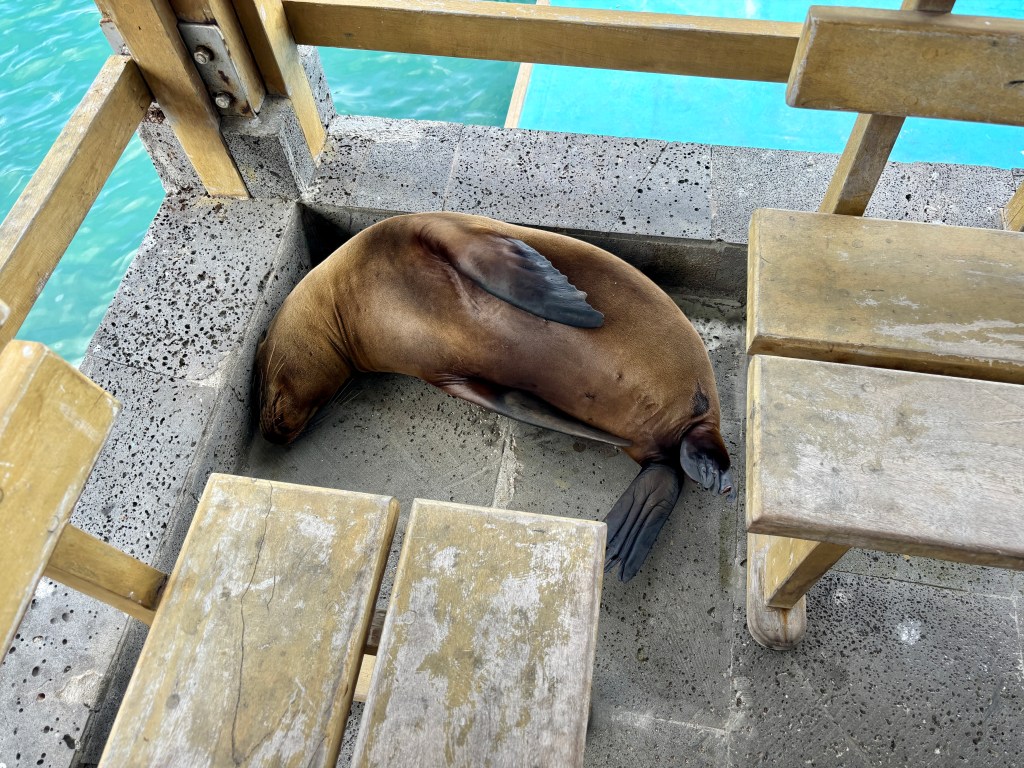
While we were waiting to transfer to the ship, this baby sea lion provided some interest.  Apparently the mother drops him off at the pier while she goes hunting or visiting or having some alone time or whatever mother sea lions do. He found his own place to nap.

Fifteen passengers boarded the Treasure of Galapagos.  There were twelve of us with Avalon and three others who joined for this segment.  The boat’s passenger capacity is 16.

We were given Cabin 6 and it was very comfortable.  An interesting thing was that there were no keys for the cabins as they could only be locked from the inside.

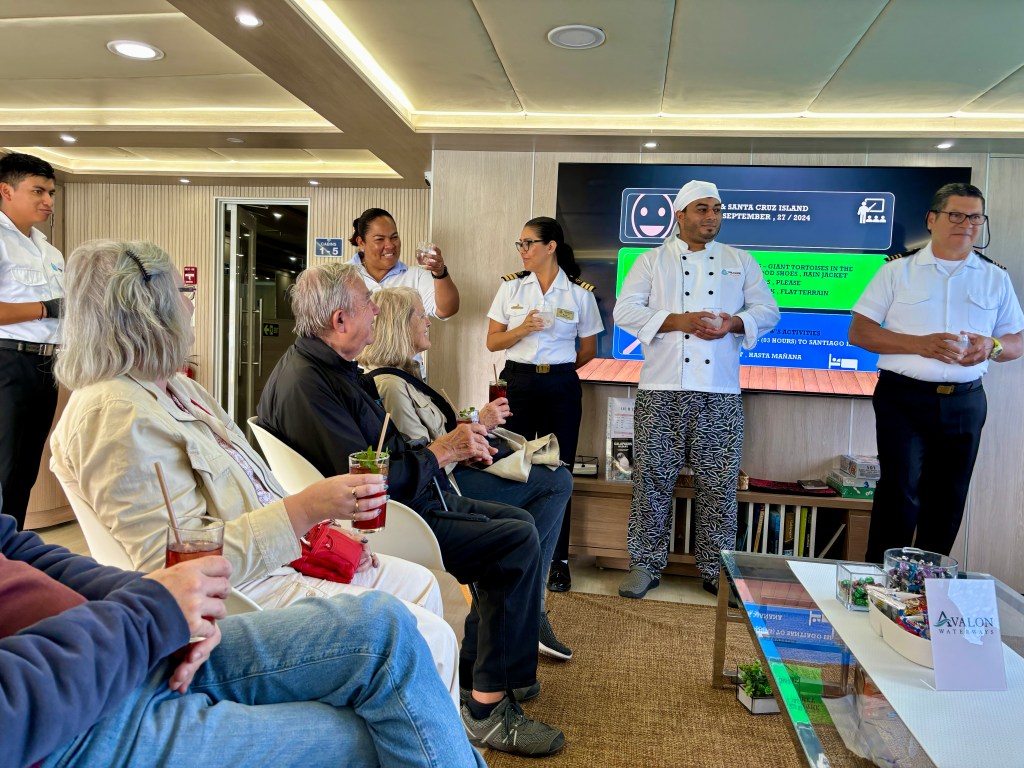
We had our opening orientation we met the ship’s crew and heard from our guide.

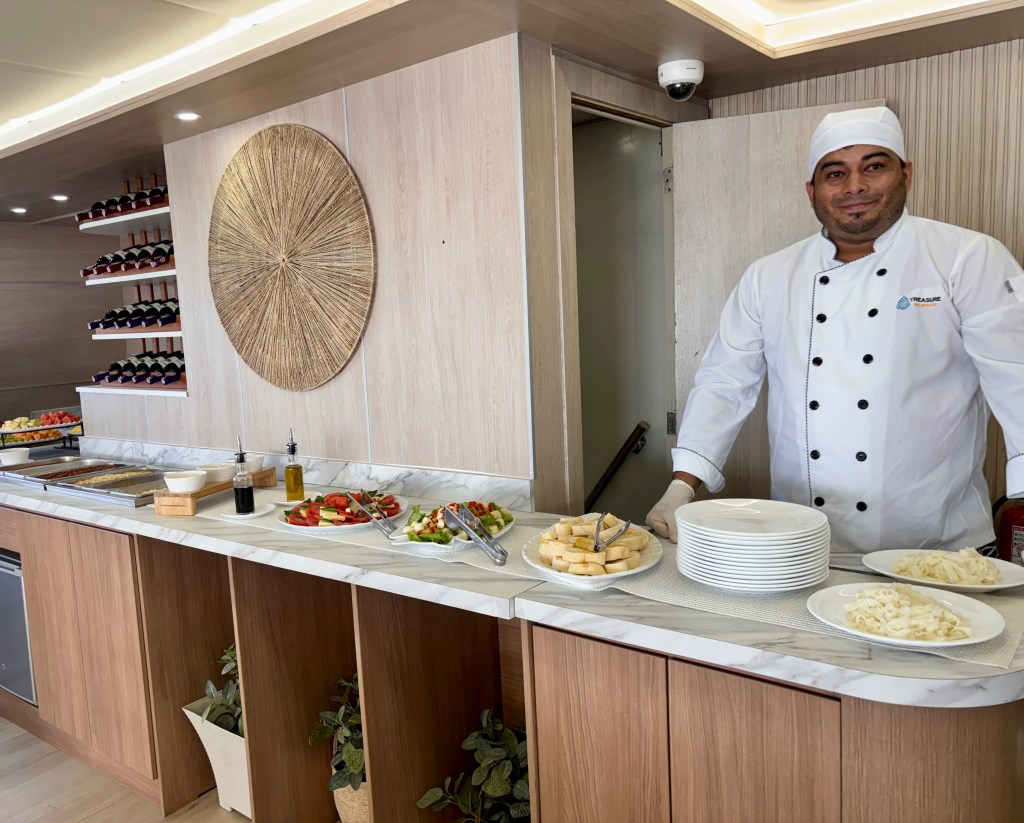
Our chef had prepared pasta for lunch with several sauce options.  (This man was amazing.  He did such a good job with so many challenges including those of us that don’t like fish, those who needed a gluten free diet, and one person who was allergic enough to tree nuts that it impacted what could be served to anyone,)

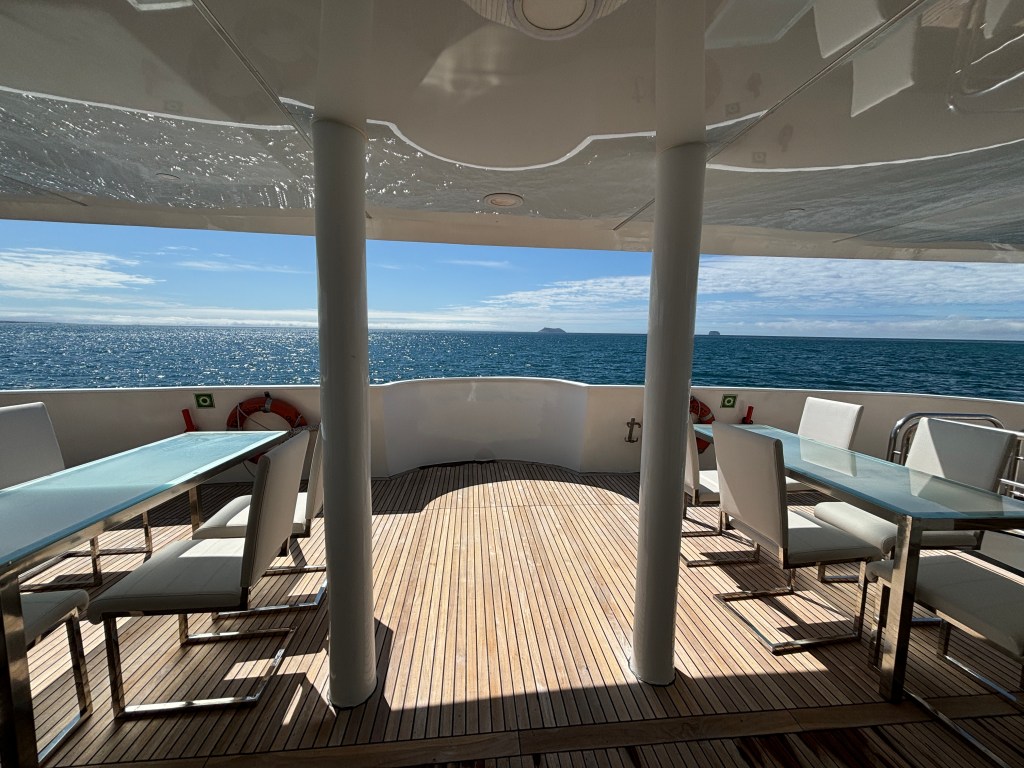
This was the view from our balcony.

We had a brief time to explore the boat. We stopped near Santa Cruz Island and left for our first excursion. 

On board our zodiacs, we saw the first of many, many sea birds and sea lions.  

The sea lions hangout on the docks.

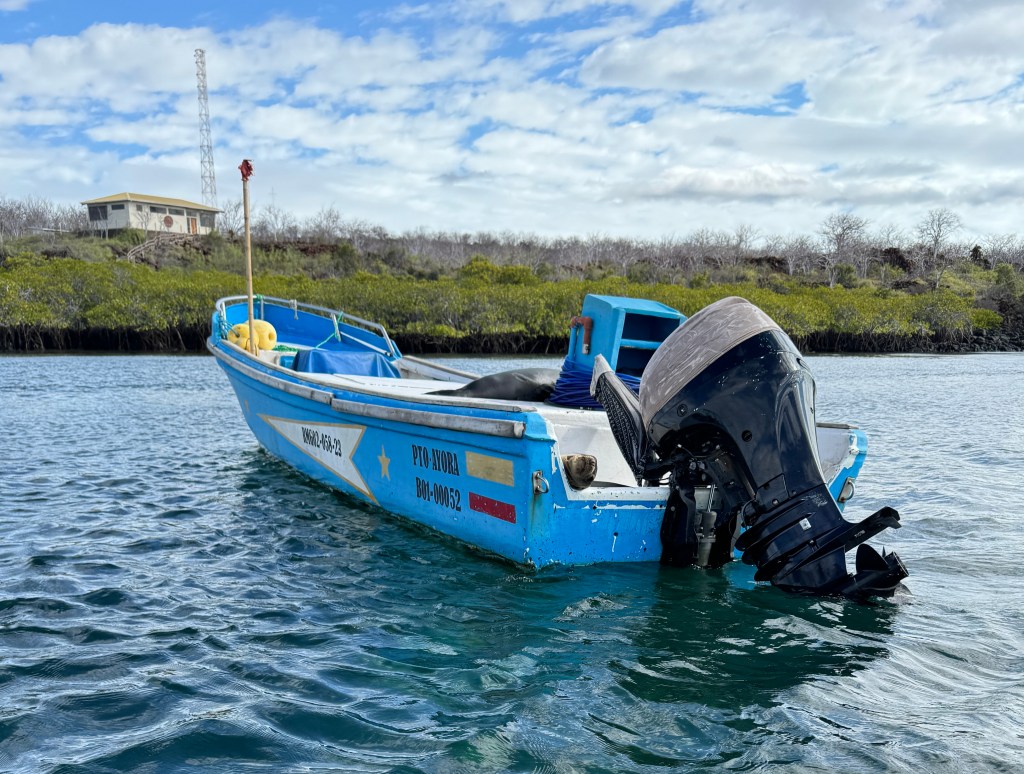
They board boats and pretty much go wherever they want!

We drove across the island and I was surprised to see so many buildings and houses.  About 40,000 people live throughout the Galápagos Islands.  They are allowed to have pets but with strict rules and high licensing fees.

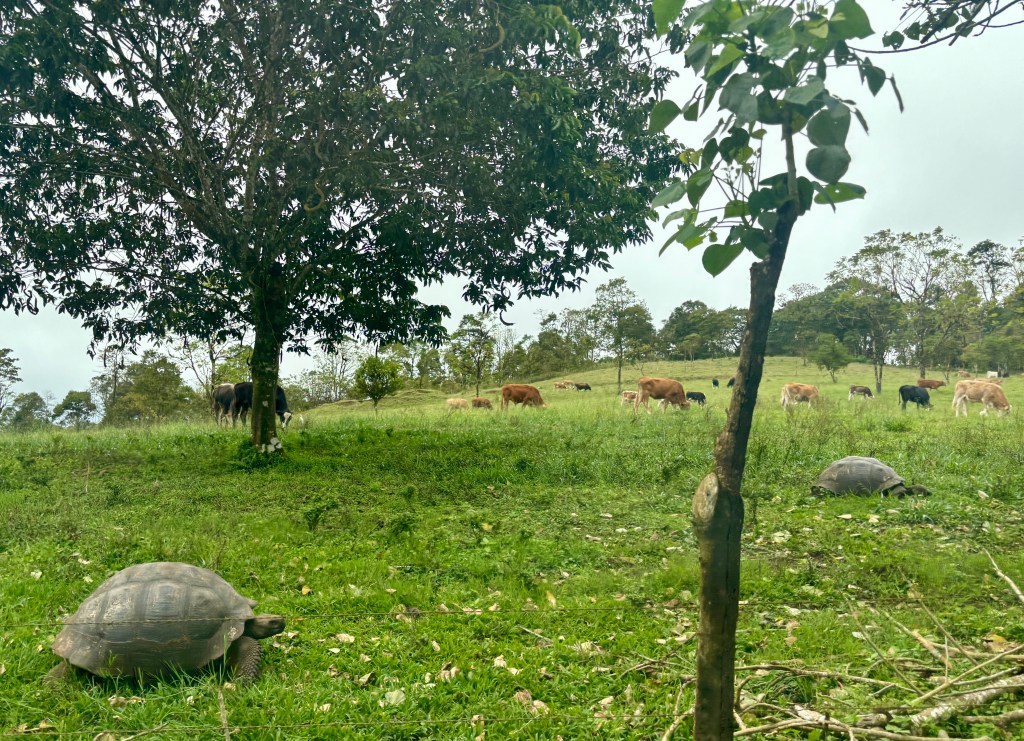
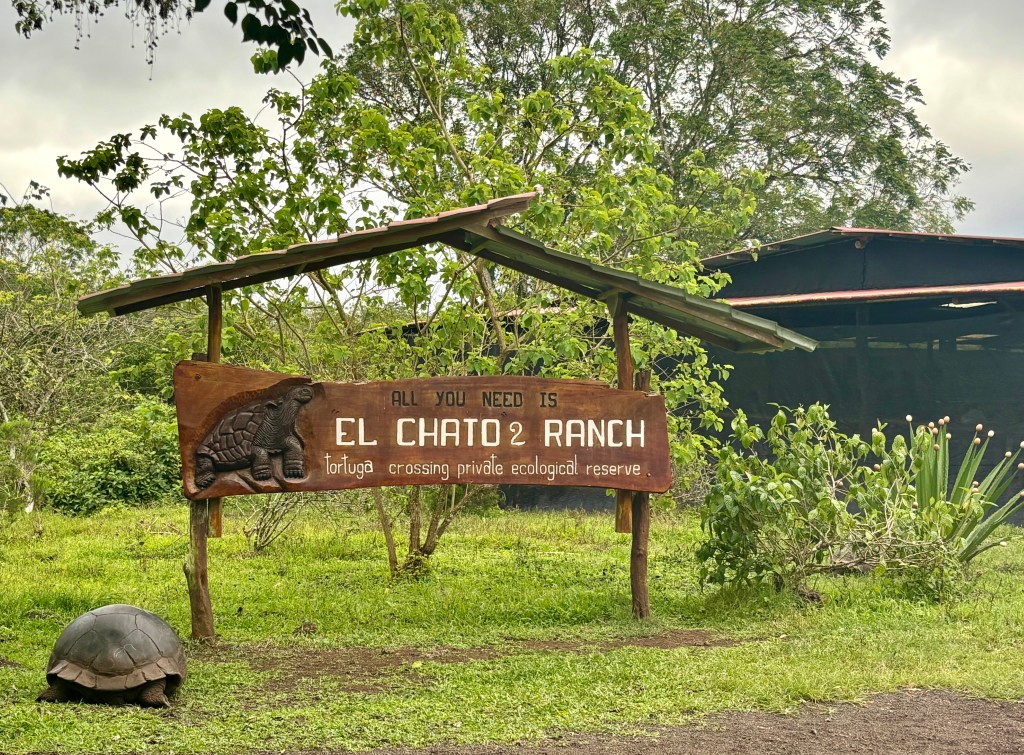
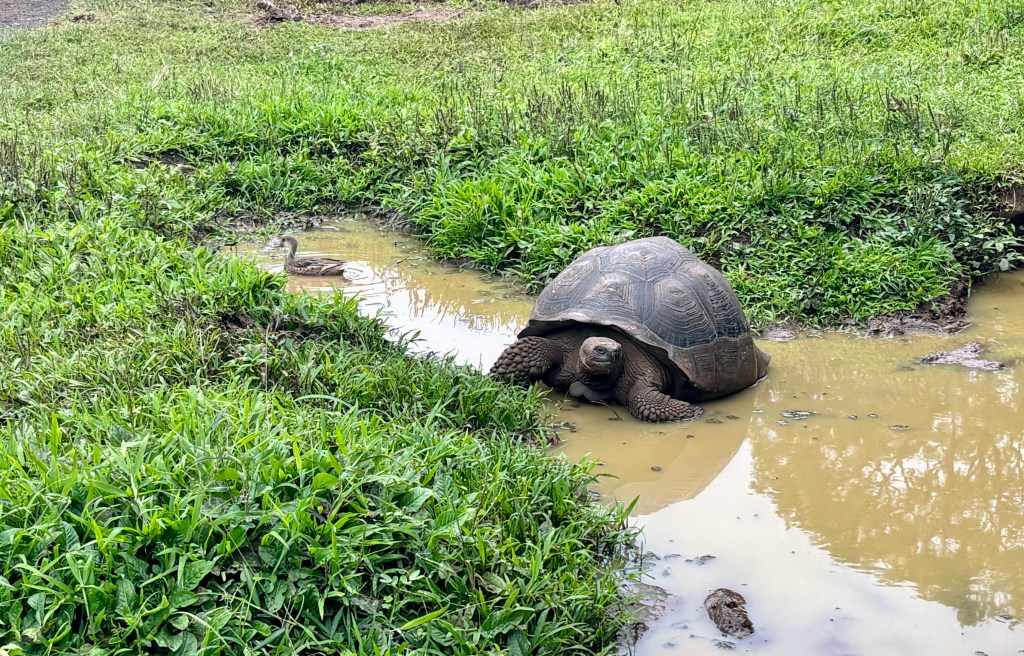
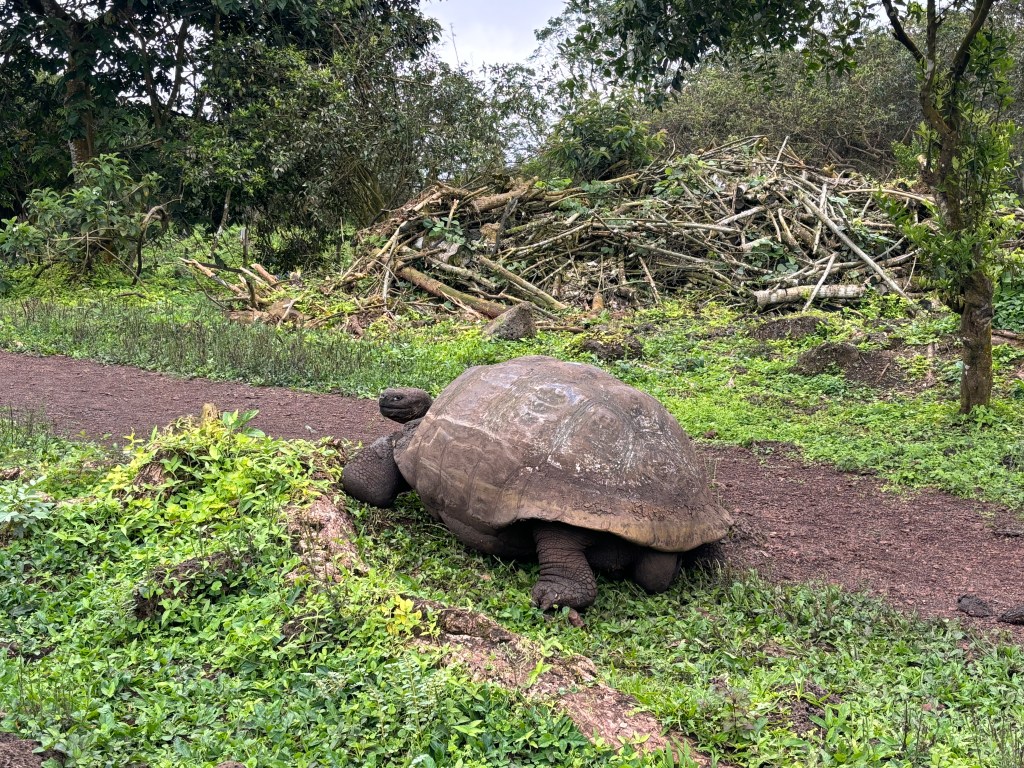
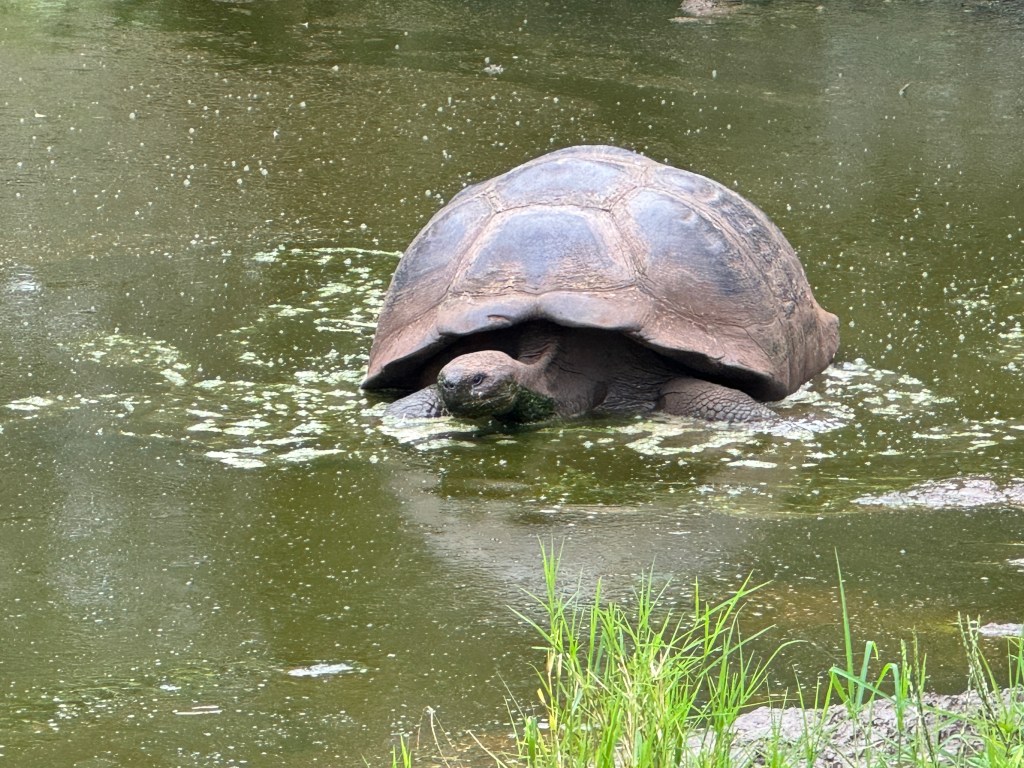
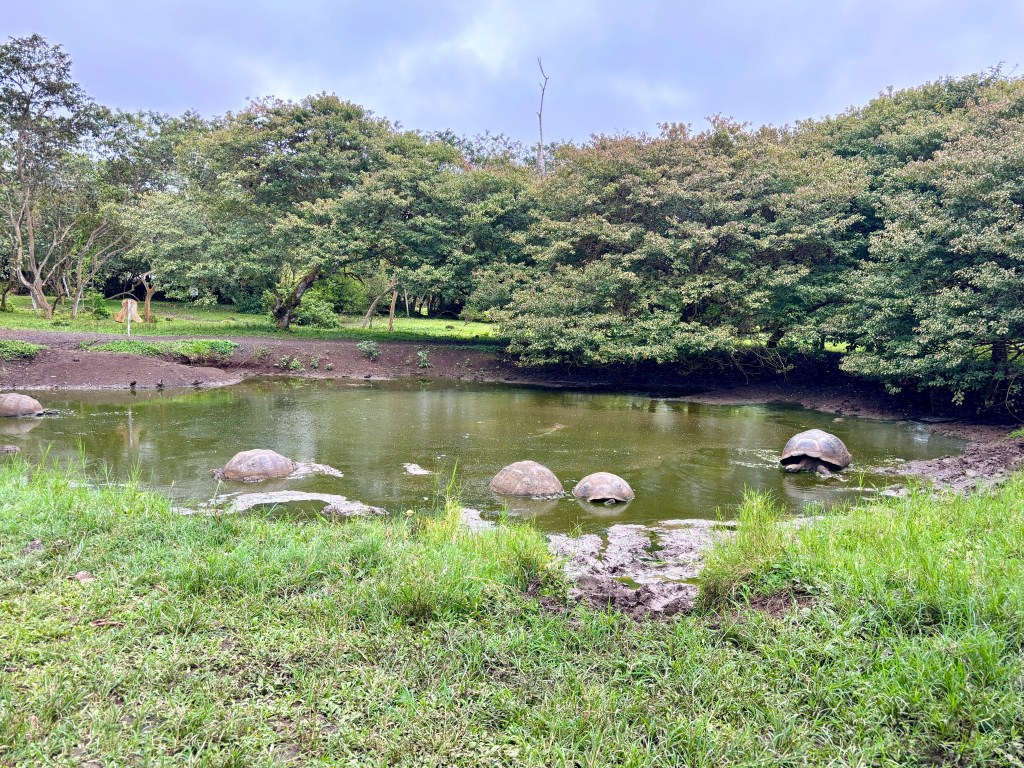
Our destination was a great tortoise reserve in the highlands. It was so much fun to see the tortoises in the fields, or the side of the road, as we approached the reserve.

Tortoises evolved over millions of years to be very large because of optimum conditions on the islands with no predators. 

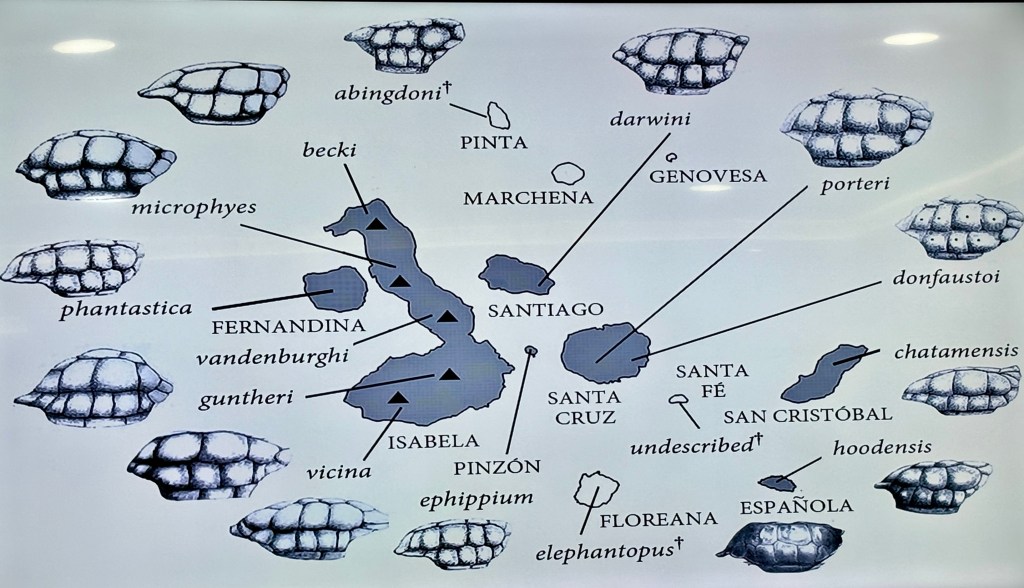
There are eleven species of tortoises throughout the Galápagos Islands totaling about 100,000 individuals.  We saw the porteri species on Santa Cruz Island. 

It is thought that there were 1,000,000 tortoises in the islands before humans started coming a few hundred years ago.  Some tortoises were directly killed, while others were killed by species that came with humans. 

Males are always bigger.  They can walk one mile a year if they have a lot of fat for energy. 

Tortoises are most active when they are warm and have collected energy from the sun.

They can only see the colors green and yellow but can hear very well.

Tortoise fossils go back 250,000 years.

Here is our group, the passengers on the Treasure of Galapagos.

The view was lovely on our first evening aboard the Treasure of Galapagos.

We landed in the Galapagos Islands on September 27, 2024

Next Up:  More Galapagos adventures.

Posted in Uncategorized | Leave a comment

Ecuador: We Learned so Much in Quito!

Our Ecuador guide, William, picked us up at the hotel to begin our Quito adventure.   On the way, he gave us some general information.

The US dollar has been the national currency of Ecuador for 24 years.  They do have some local coins but not bills.  Ecuador is the only country in South America that uses US currency as their own currency.  One of the things we noticed is that there seemed to be more use of US dollar coins than is common in the US. 

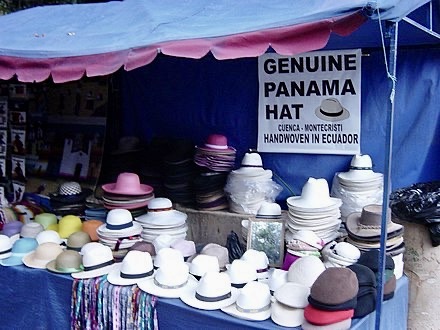
Panama hats are made in Ecuador!  The straw from a variety of palm used is grown in Ecuador and the hats were noted by the Spanish conquistadors in 1562.  Weaving the traditional Ecuadorian toquilla hat was added to the Unesco Intangible Cultural Heritage List in 2012. (Picture was taken from Wikipedia site.)

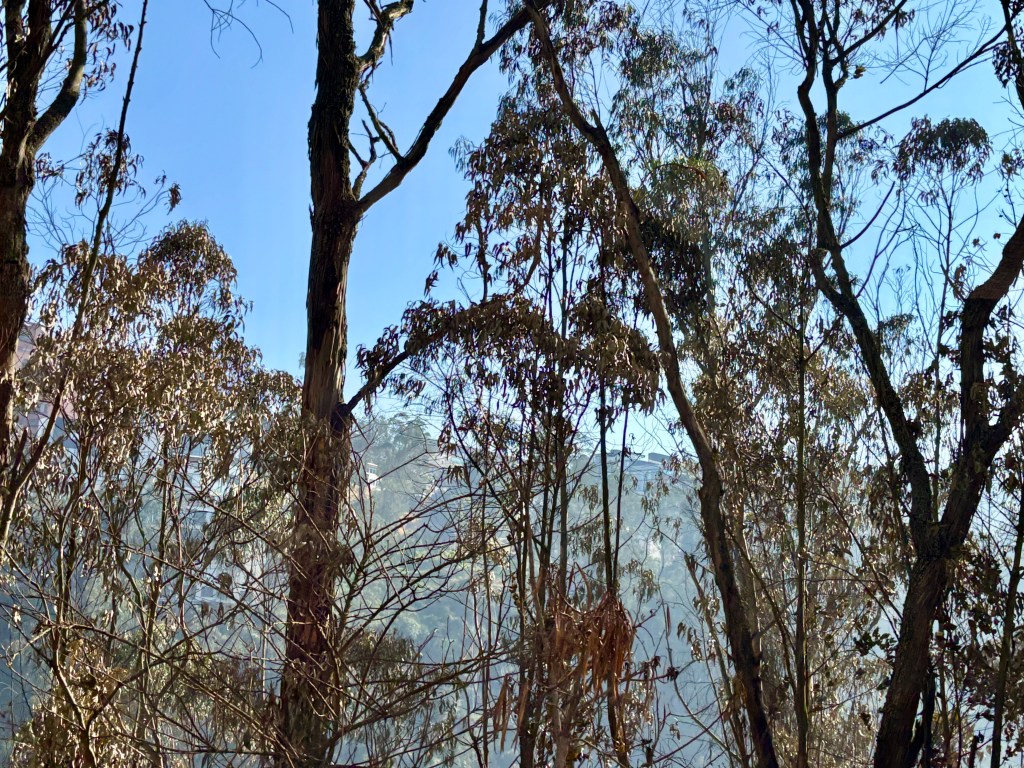
William spoke about the recent fires in Quito and that children had missed several days of school because of the smoke.  Life was quite disrupted but the situation was improving.  These trees were burned right off the road.

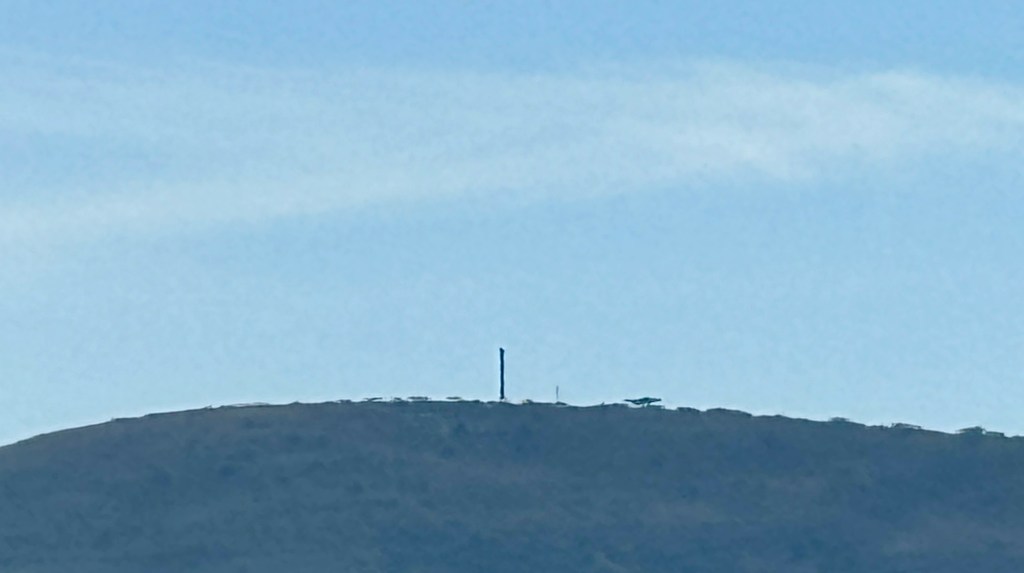
We were once again traveling on the Pan-American Highway as we journeyed. The monument on the hill was placed by the ancient people 1300 years ago and is evidence that they were knowledgable about the sun’s path on the equator.

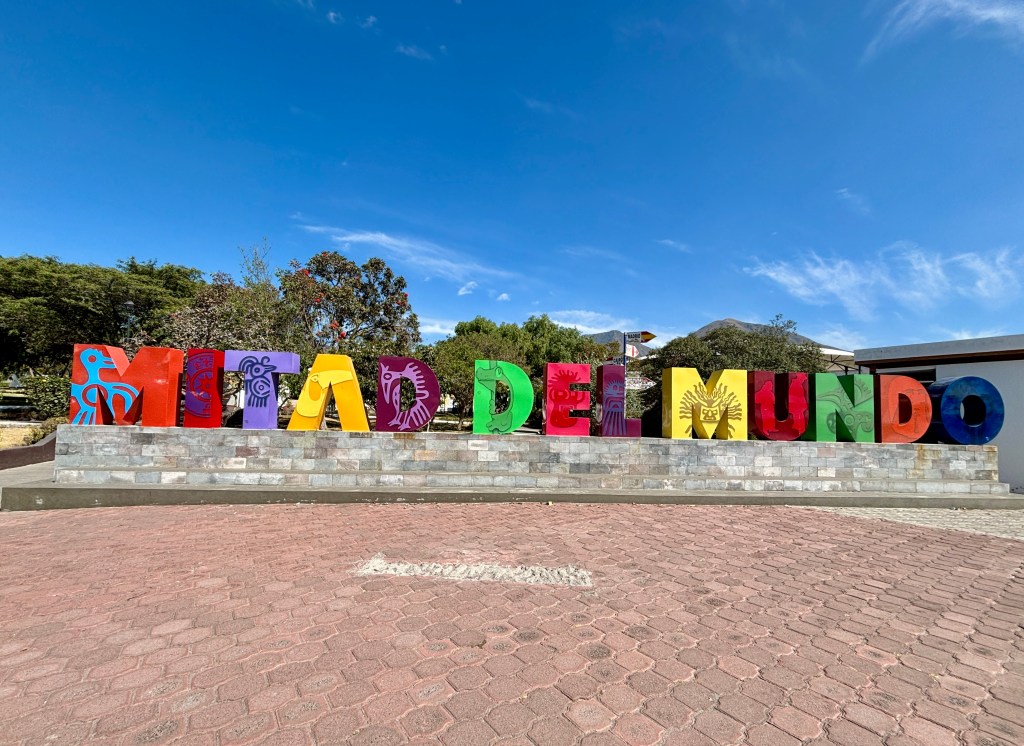
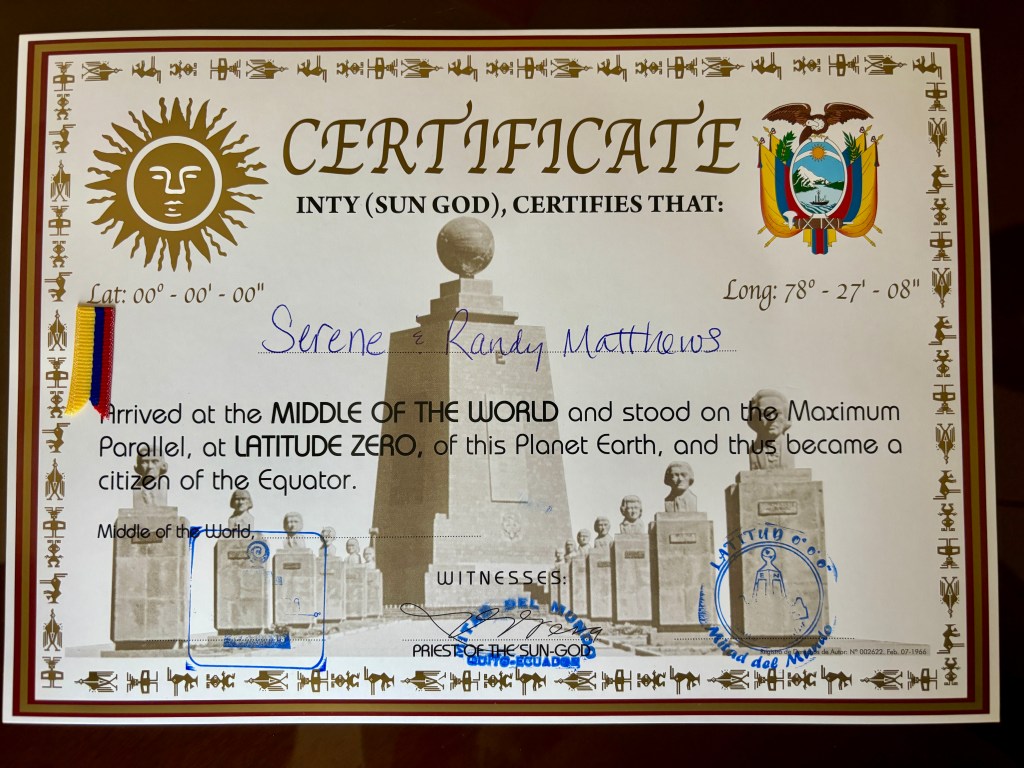
Our first stop was at Ciudad Mitad del Mundo – a monument and park celebrating the earth’s equator.

We explored exhibits on how a variety of indigenous peoples lived in the area that became Ecuador.

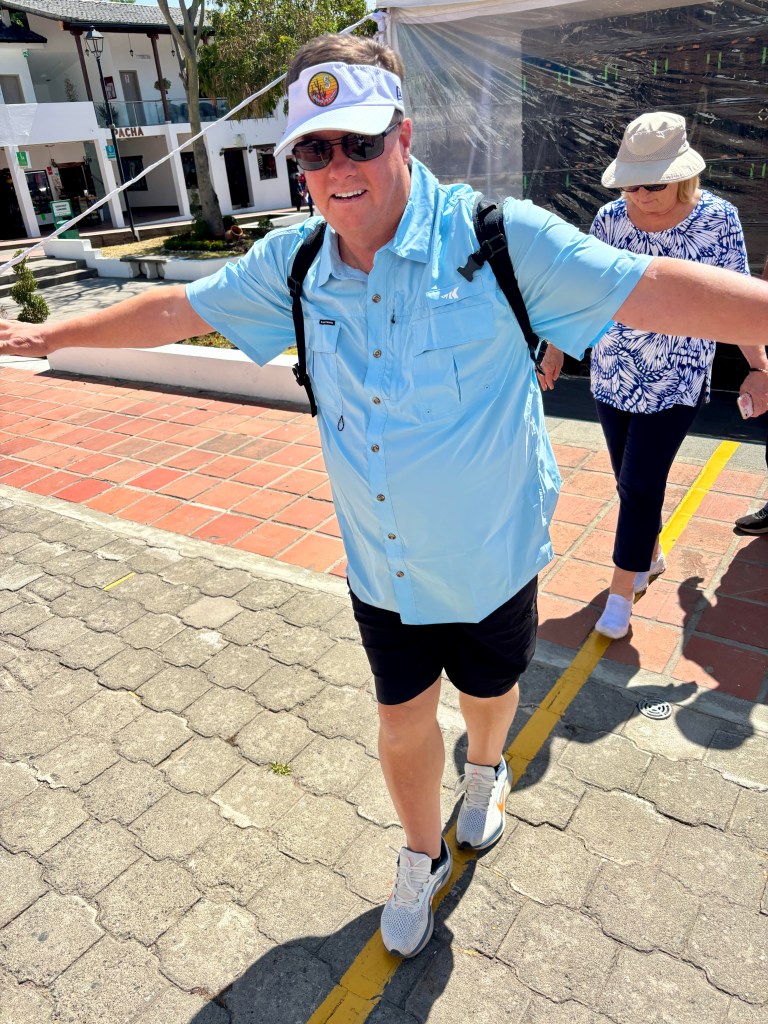
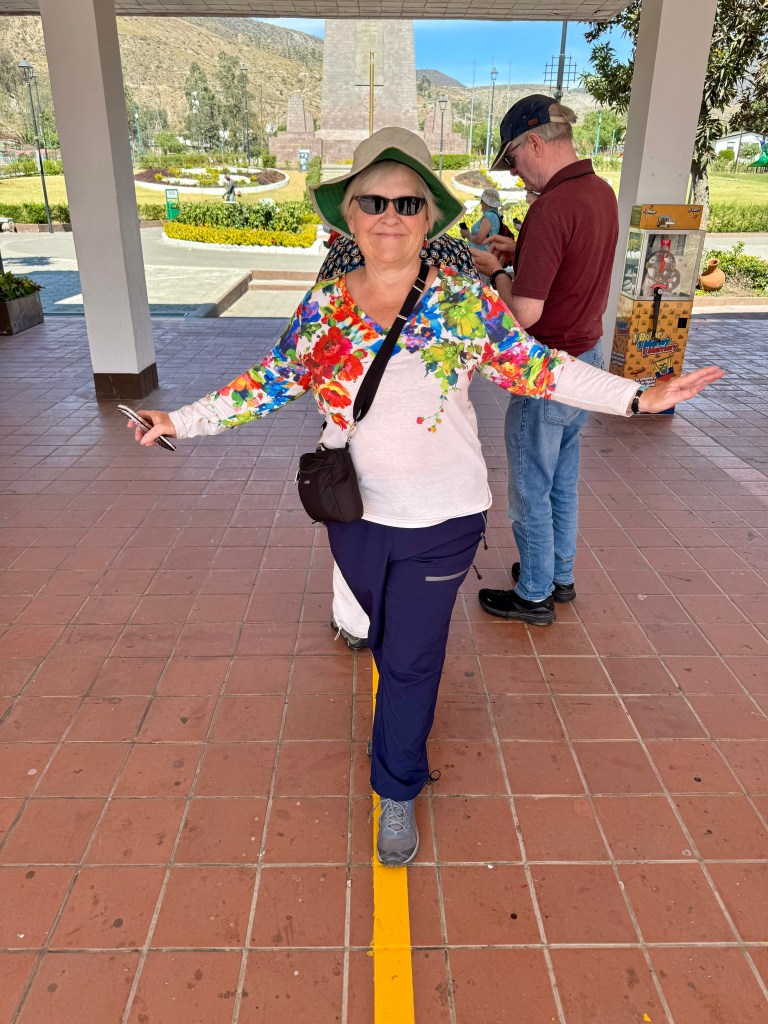
We walked the line – the equator line!   

One of the things we failed to do was have a picture of straddling the line to specifically stand in the northern and southern hemispheres at the same time.  Bummer!

The equator goes for 24, 901 miles around the earth and goes through thirteen countries.  Those are:  Ecuador, Brazil, Columbia, Sāo Tomé and Principe, Gabon, Republic of the Congo, Democratic Republic of the Congo, Uganda, Kenya, Somalia, Maldives, Indonesia and Kiribati. 

William told us that you lose body weight at the equator.  That is caused by the centrifugal force from Earth’s rotation.  We didn’t verify that with scales.

Our Ecuador tutorial continued once we were back on the bus!   Ecuador is somewhat smaller than Texas and has 90 volcanoes.  There are 17,000,000 inhabitants, mostly Mestizos those of Incan and Spanish mix.  Less than 10 percent are indigenous, mostly they live in mountain villages. Sixty percent of Ecuadorians live in towns. 

Ecuador has many ex-pat communities for those from the United States and Canada.  I could see the draw, at least as it involves Quito – a city with history and culture, but which is also modern and clean.  Quito also does not have the wandering dogs that were ever-present in Peru.

Ecuador’s varied ecosystems, mild weather and volcanic soil allow it to be self sufficient.  Climate change and jungle deforestation may change that going forward.

William told us about the variety of businesses in Ecuador.  He equated them to types of “gold” including the black gold – oil.  They also have green gold – supplying 20 percent of the world’s supply of bananas.  Pink gold is shrimp harvesting and sales. Gray gold is for fish, tuna, sardines and tilapia.  White gold is tourism.  

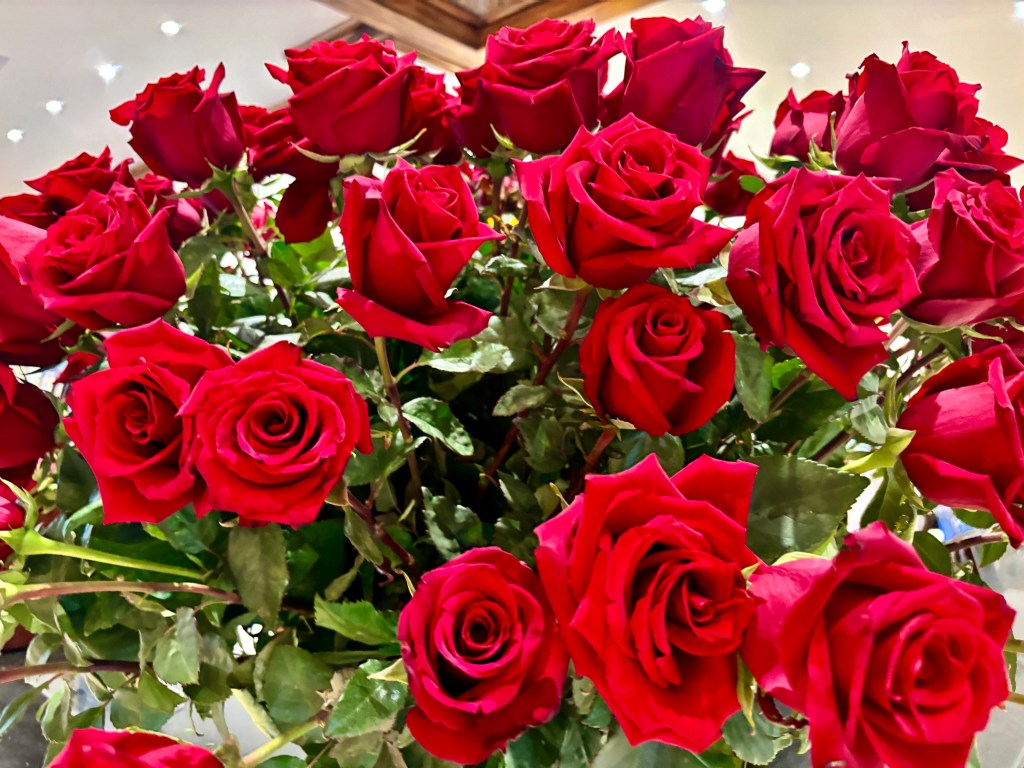
He said rainbow gold was for flowers.  Ecuador is a world leader in the production of roses, exporting 50,000 every single day.  There were very large arrangements in our hotel!

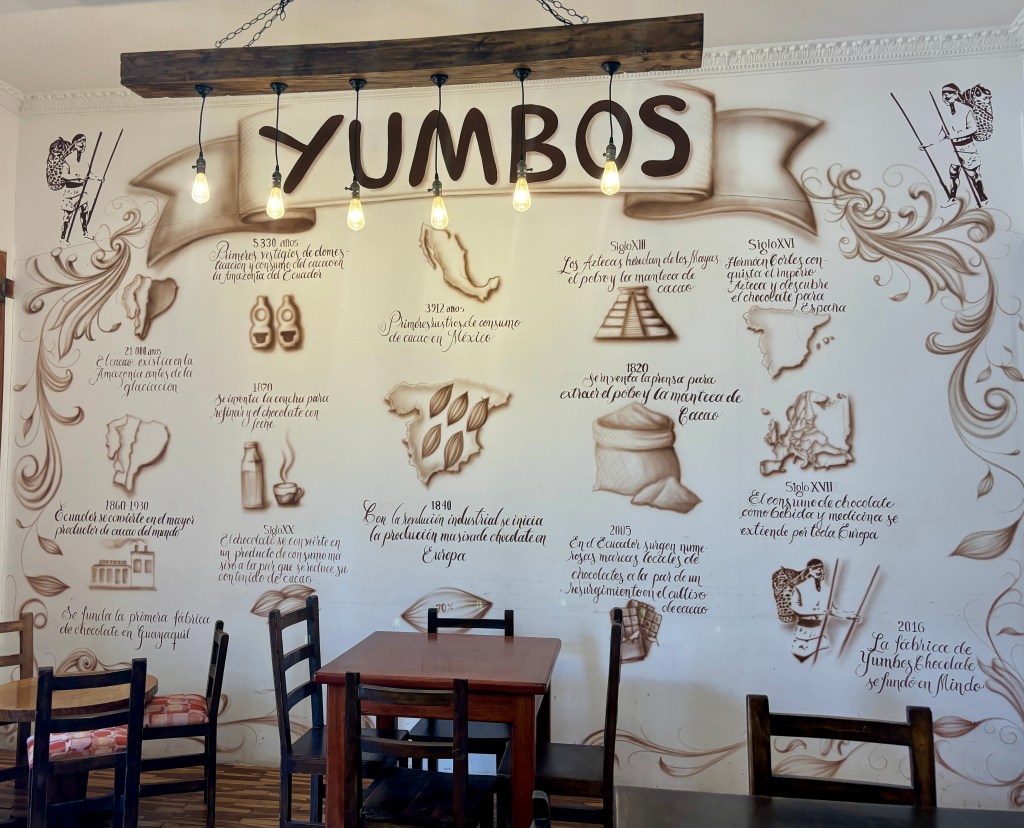
The last gold he spoke of, brown gold has to do with cacao beans for chocolate.  Chocolate production has a 5000 year history and had to do with our next destination. 

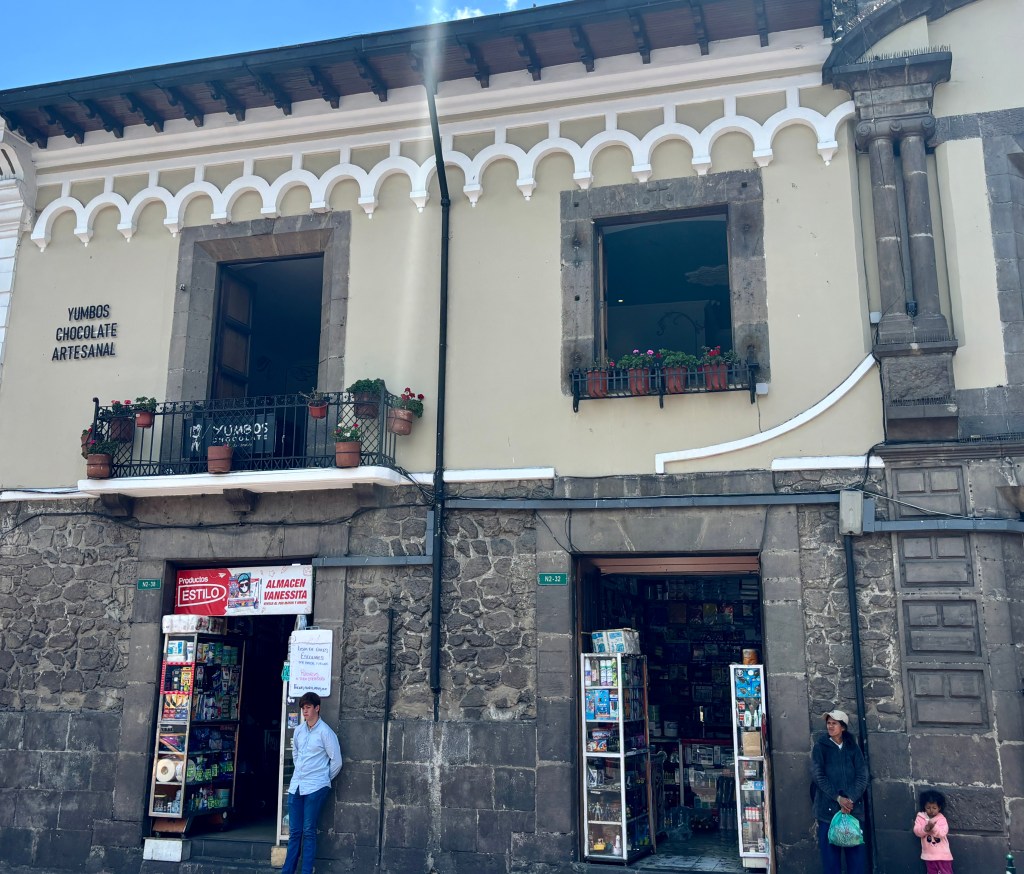
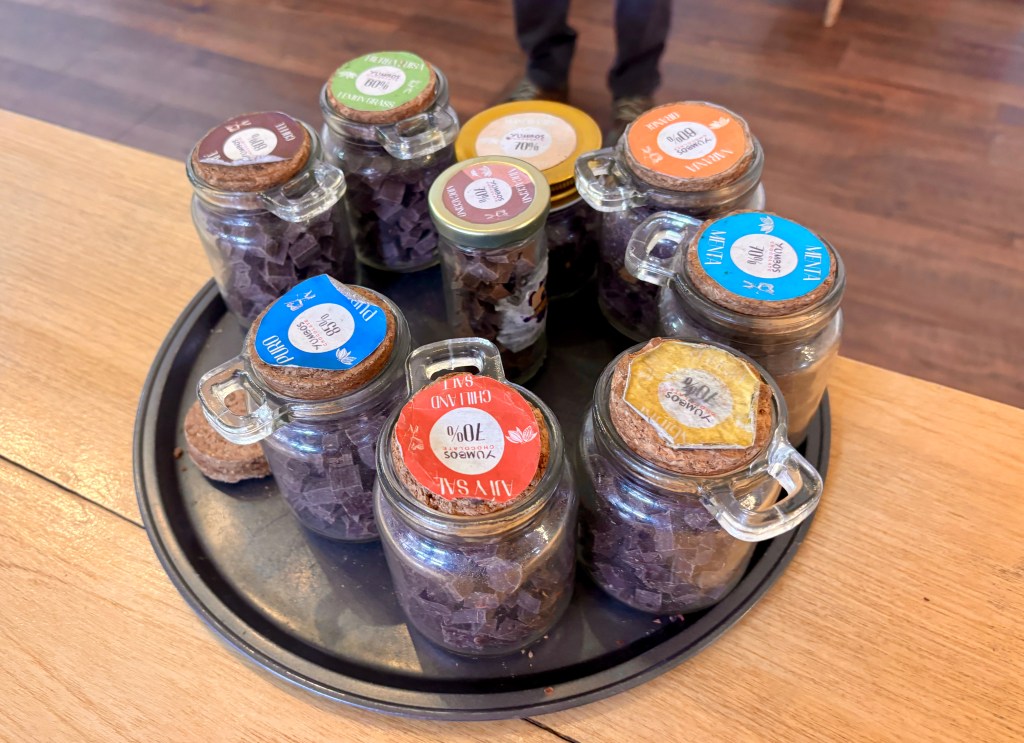
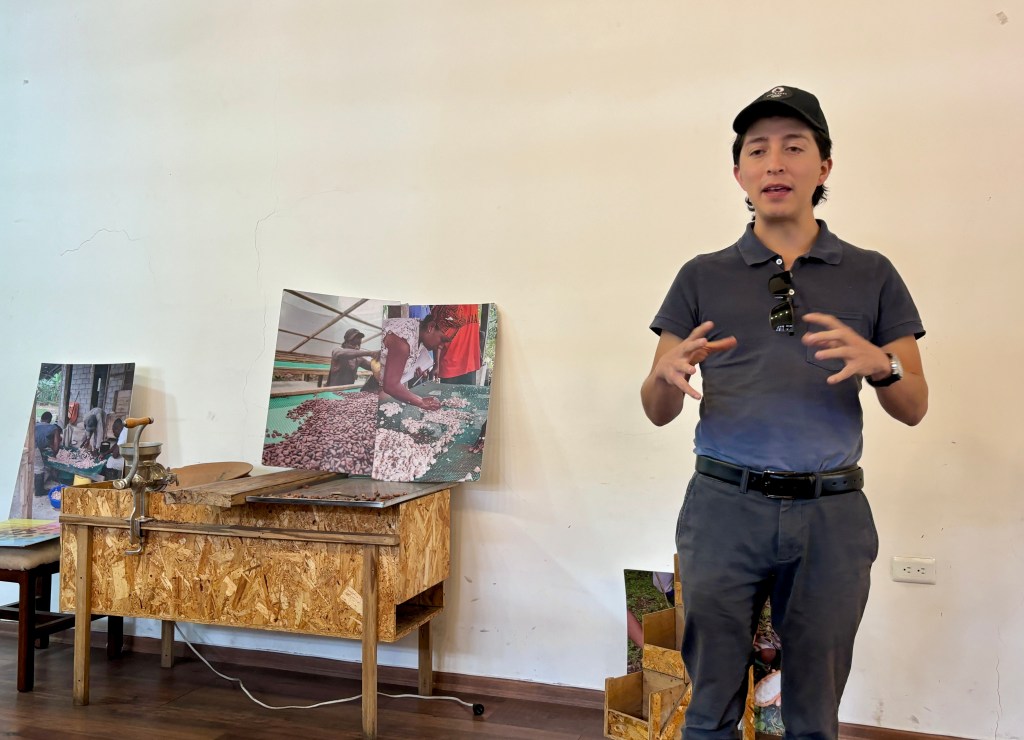
We were present for a chocolate tasting at Yumbos Chocolate Artesanal.  

Yumbos is a boutique chocolate operation. They were awarded the Chocolate Bar Award Winner for in 2019, 2021 and 2023.  It takes them 30 days to make a chocolate bar and they only make 5000 bars per month. They only sell locally because they do not have the inventory to go beyond that.

We were offered tastings of a variety of chocolates including 85 percent cacao, 60 percent with orange peel,  60 chocolate with coffee beans, chocolate with lemongrass, chocolate with chili and sea salt and chocolate with salt and mango.  As delicious as most of these were, we were also offered some hot chocolate that we did not care for at all!  

One of the things our guide talked about was the sense of taste – something I thought I knew a lot about.  I taught the five senses in kindergarten for many years including breaking down the sense of taste into sweet, salty, sour and bitter.   He started talking about the sense of umami!  What was that?!

That required instant research before we even left the shop.  Umami is a fifth taste characteristic of broths and cooked meats.  Soy sauce and ripe tomatoes are also example of foods with umami characteristics. Initially proposed in 1908, umami was accepted as a fifth taste in 1985.  This was primarily done because umami is recognized by a unique set of tongue receptors, not a combination of the other four. 

I loved learning about umami. I was so excited that I called my former kindergarten teaching partner, Connie, right away to tell her about it.

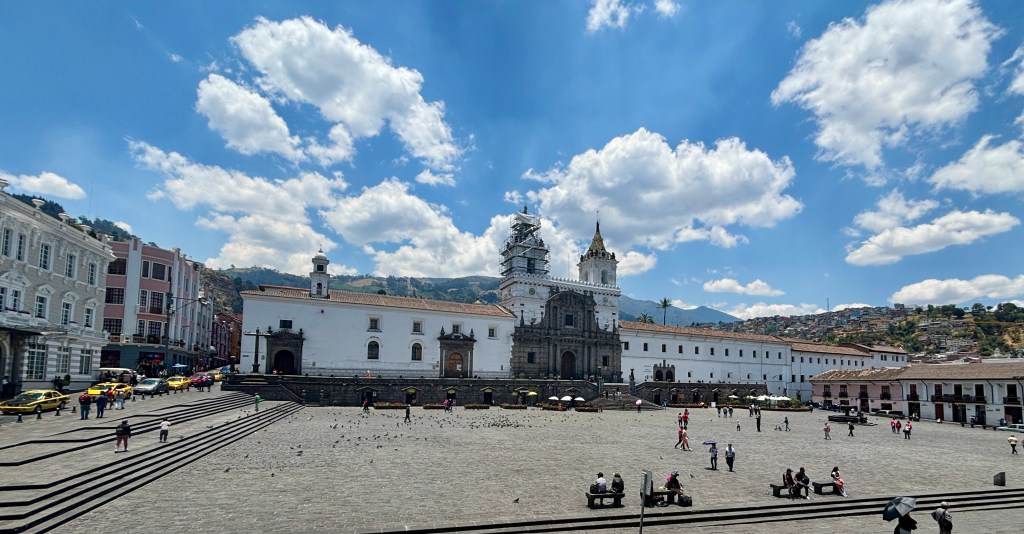
This is a picture of the Plaza de San Francisco, a public square, taken from the upstairs of Yumbos. The plaza was built upon ancient Incan ruins, including a palace that was in use from 1497-1533.

While we walked near the square and into Old Town Quito, we had a police escort.  We certainly never felt at risk but imagine police presence is a deterrent.  We saw numerous tourists use our police guide for information which he graciously provided.

Old town Quito has been a UNESCO site since 1978.  Quito was built over the top of an Incan city by the Spaniards, beginning in 1534.  They designed their city in the shape of a Latin cross emphasizing Catholic Church and government power. There were 33 churches in the area of the cross. There are some very steep roads similar to San Francisco. 

One of the interesting things we saw were a series of women walking around selling ice cream, or something similar.  It was interesting that the confection didn’t seem to turn into a runny mess!

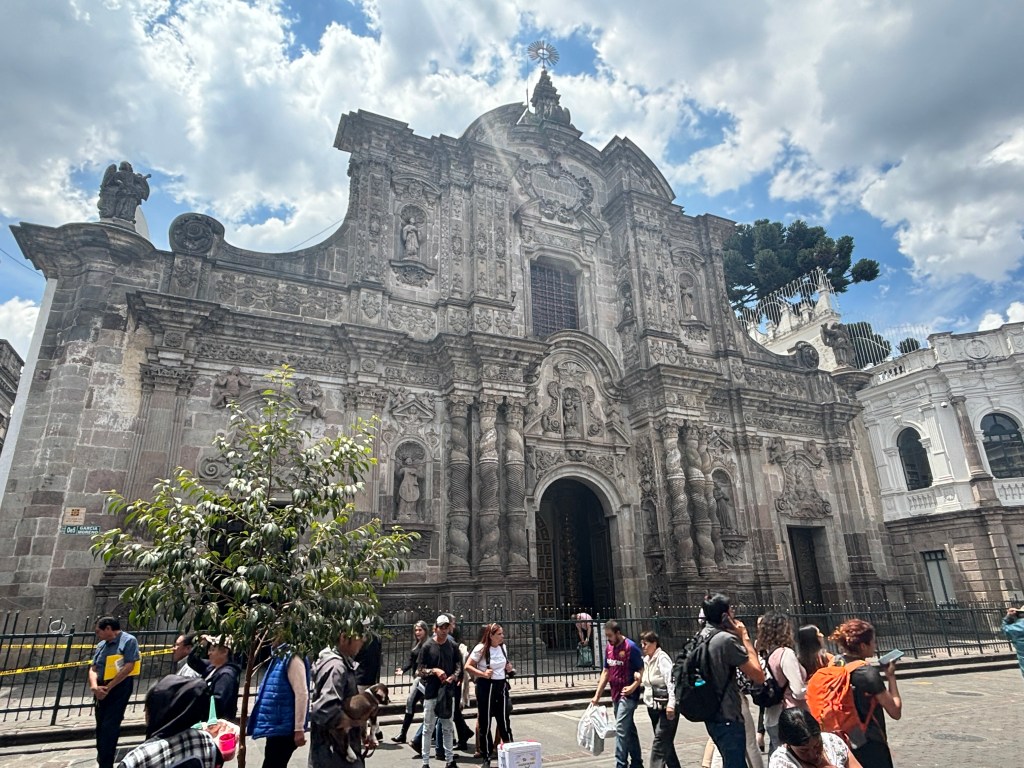
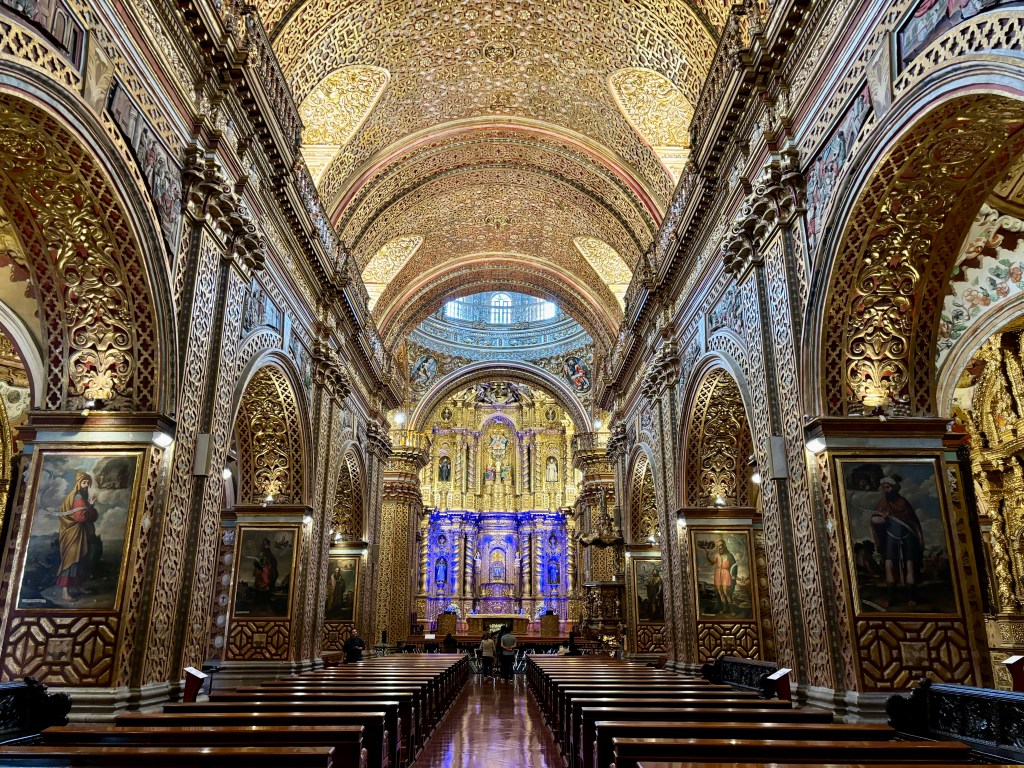
Our next destination was the Compañia Church, or more specifically Iglesia de la Compañía de Jesús. William said that 80 percent of the people in Ecuador are Catholic, but at least half aren’t active.

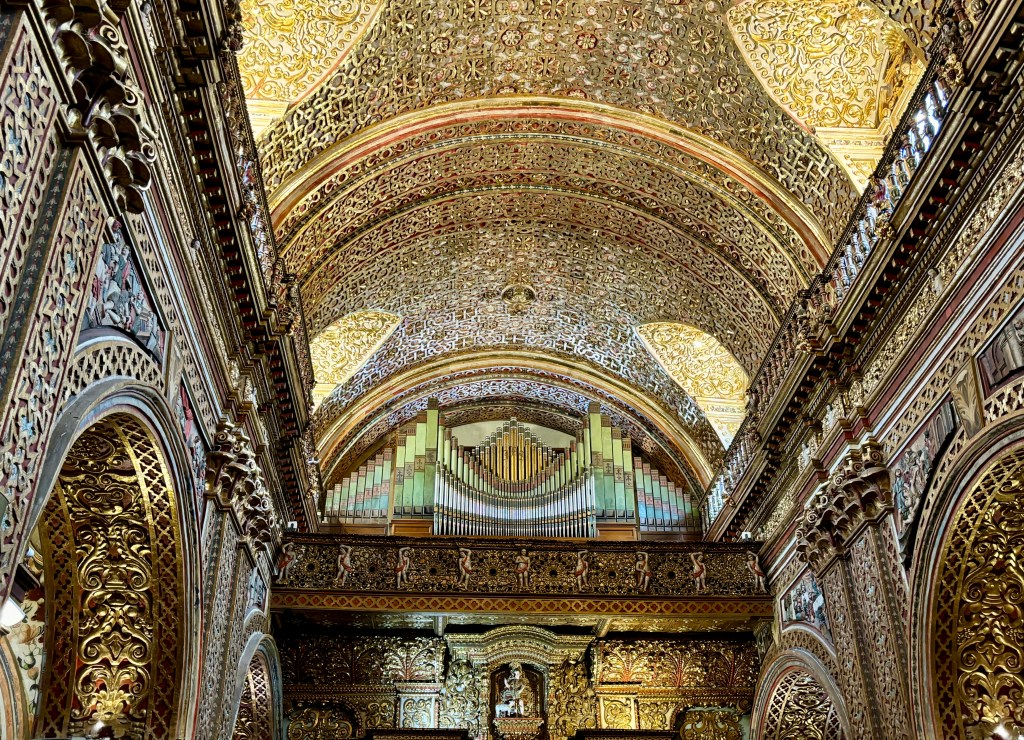
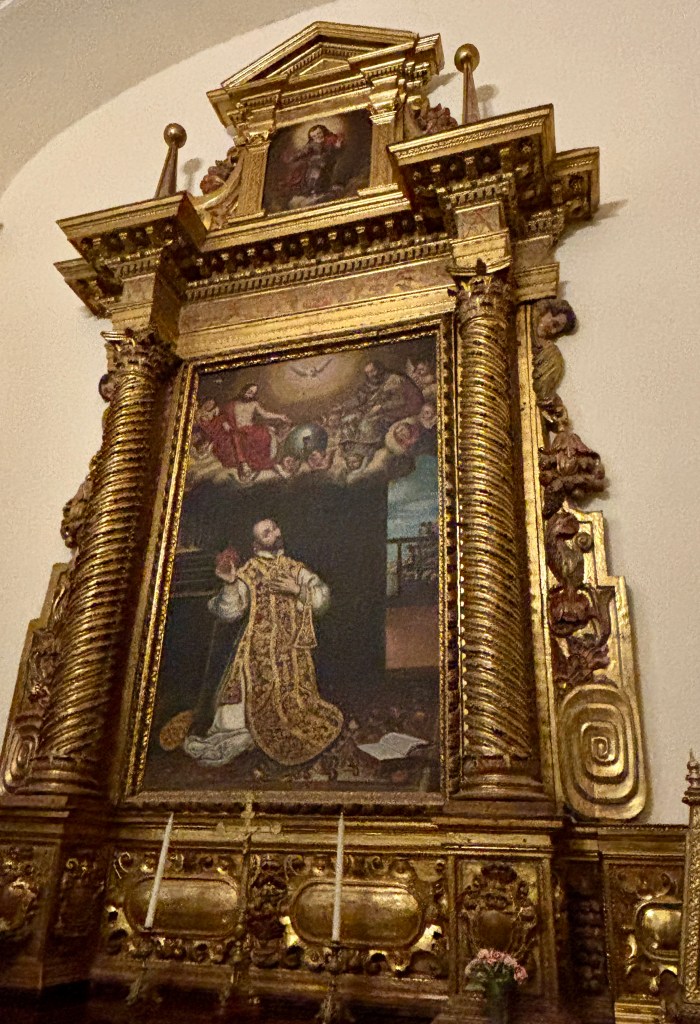
It took 160 years to complete the Compañia Church, the most ornate in Ecuador.  

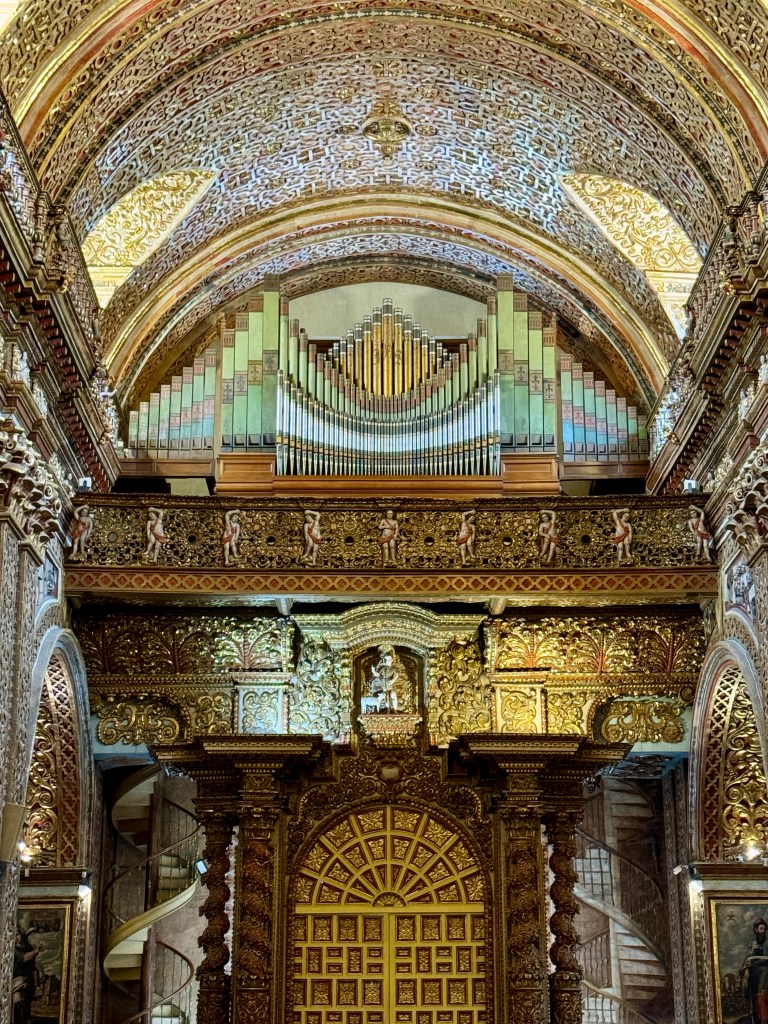
Even the back of the church, showing the organ, is beautiful.

William pointed out the symmetry of the circular staircases.  Only one is real, the other is painted.

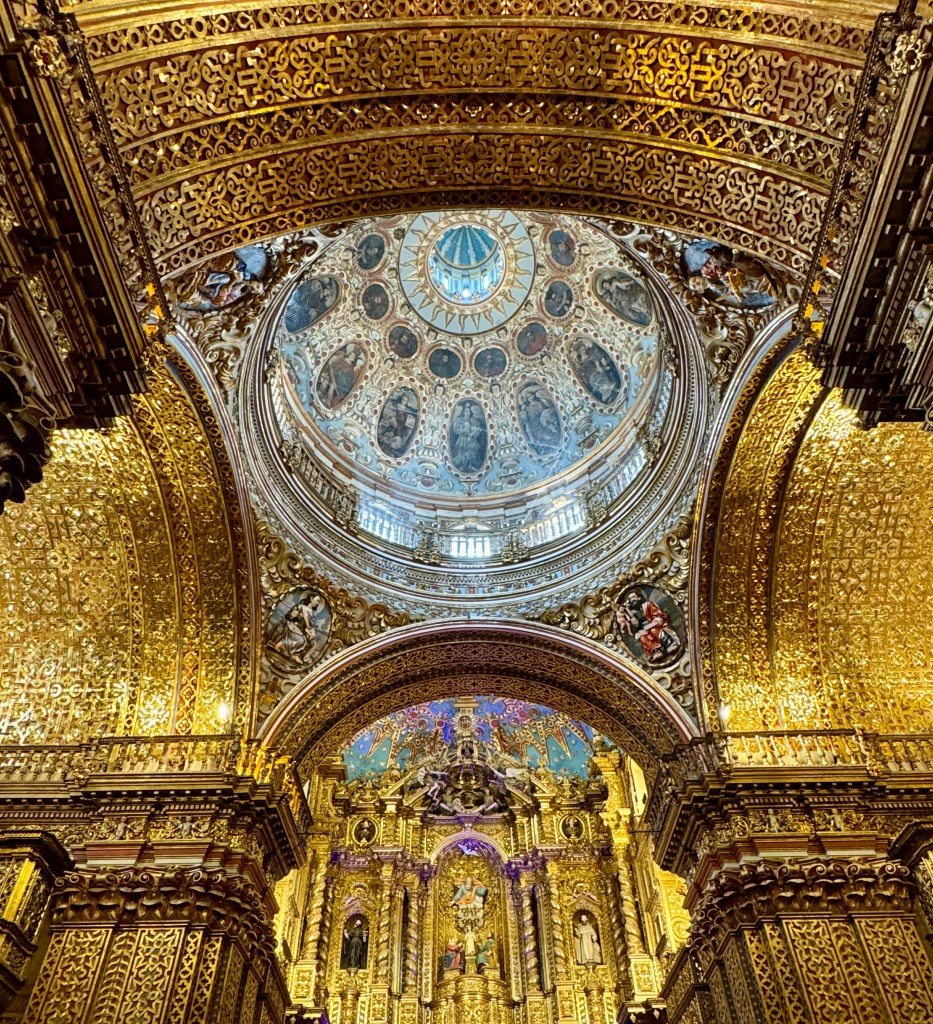
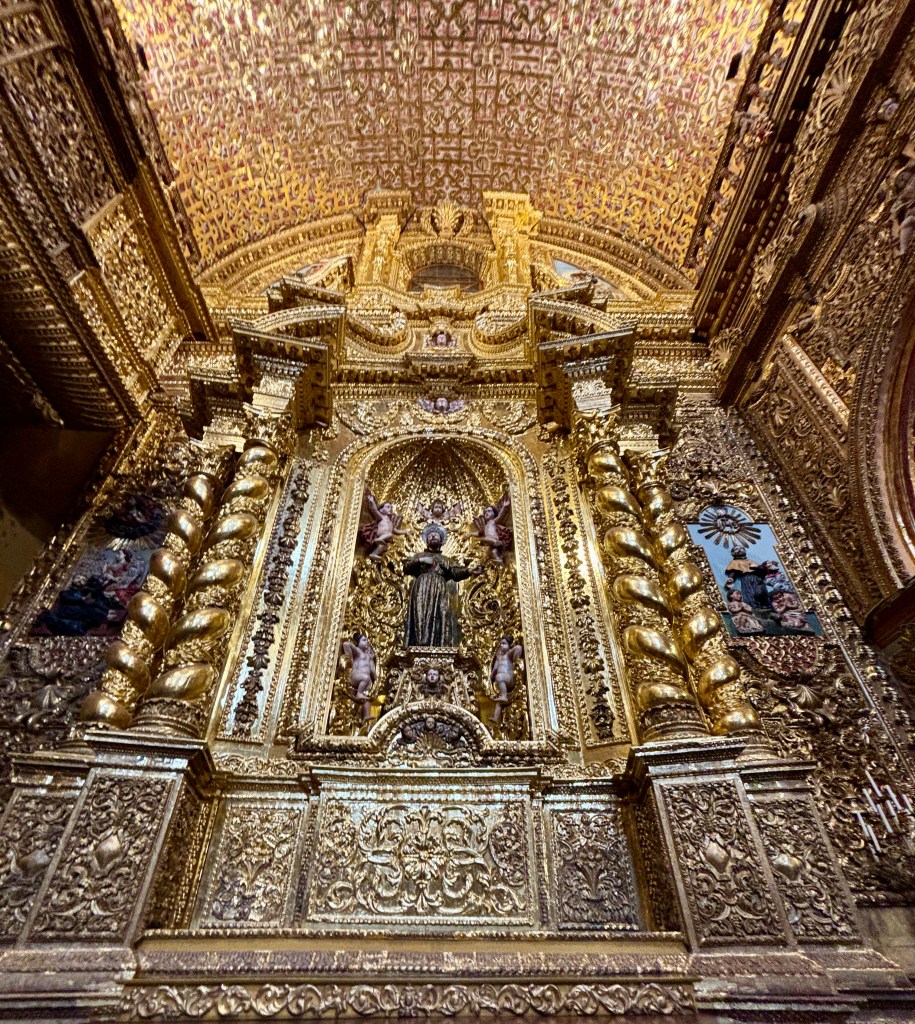
The ceiling and dome are very ornate.

This painting of Our Lady of Sorrows is the same as one from the nearby Jesuit St. Gabriel’s Academy.  Thirty- six boys boarded at the school on April 20, 1906. One young boy observed the blessed virgin open and close her eyes.  He alerted other boys and the teacher.  The phenomenon lasted about fifteen minutes. The eye movement repeated for the students during prayer time. Church authorities eventually verified the miracle, and moved the painting.  Several other observances of her eyes opening and closing have happened over time and numerous people came to faith because of it.

In a gallery on the property we were shown that even as the Spaniards conquered the Inca, they incorporated a bit of their culture into their art.  Notice the somewhat circular rendition on the bottom right – this is an Incan design.

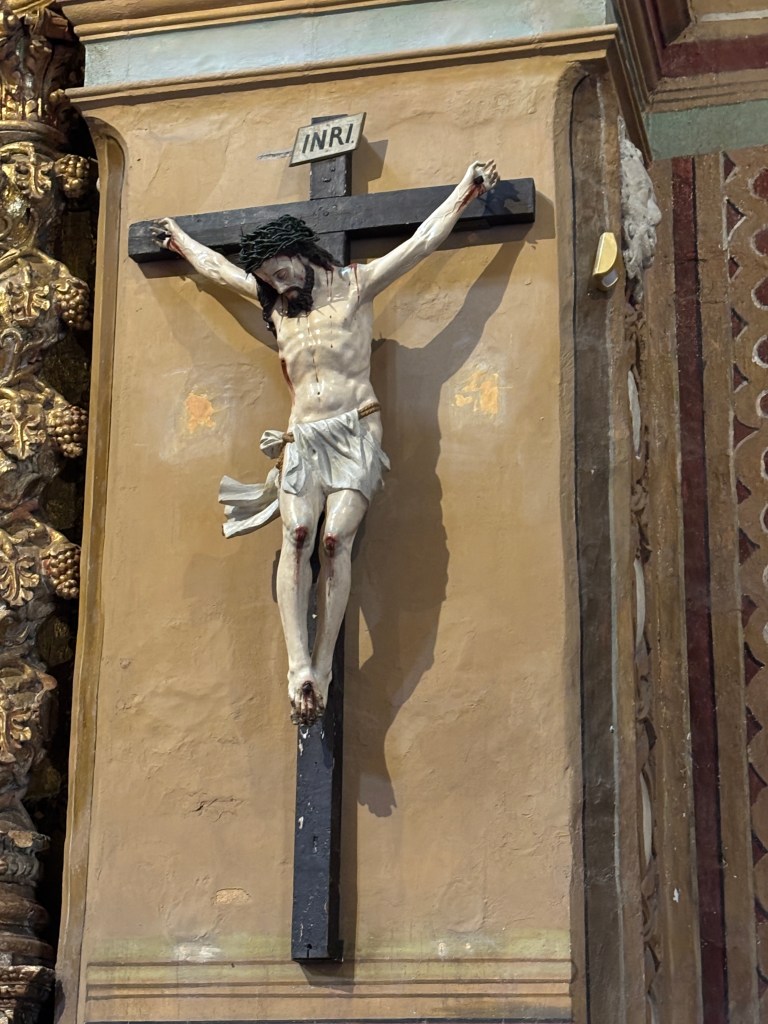
While observing this figure of Christ looking down with eyes closed, we were told that after accepting Jesus Christ, Mestizos would often display him this way with his head down and eyes open.  That was perceived that he was looking down at their Mother Earth, pachu-mama.  The Catholic Church forbade this, insisting that Jesus be portrayed in death looking down with his eyes closed or looking up to his father in heaven with his eyes open.

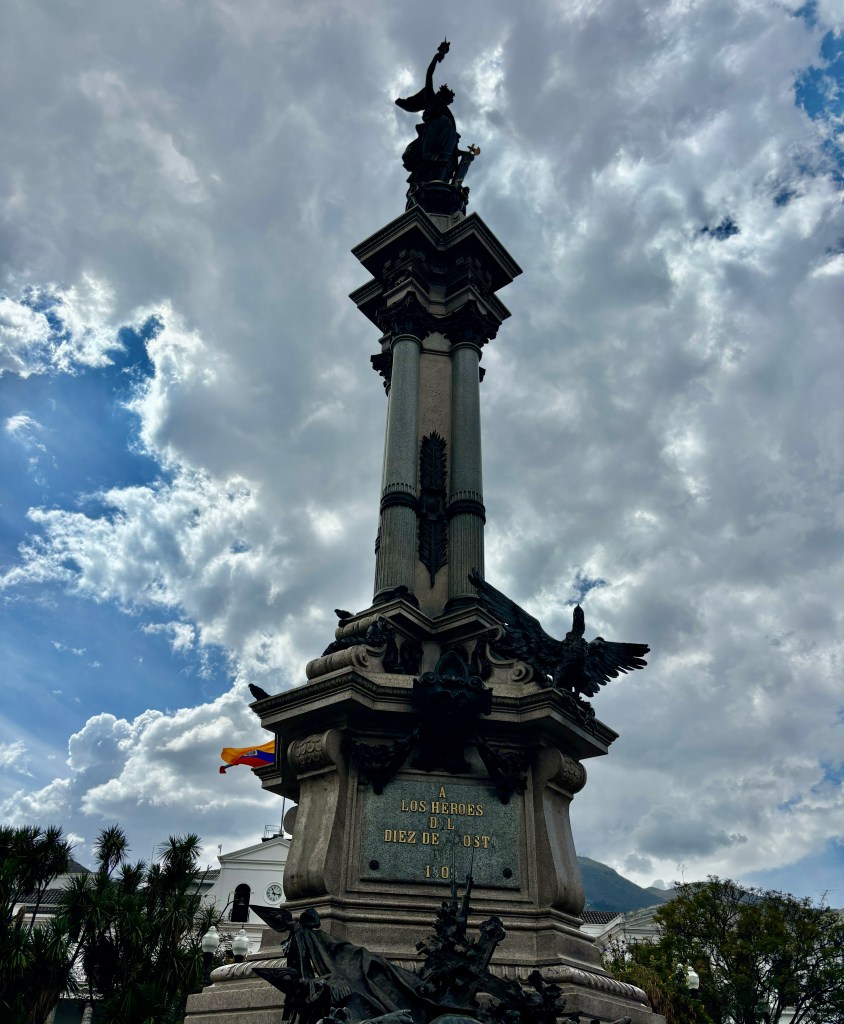
When we left the church, we walked to Independence Square.

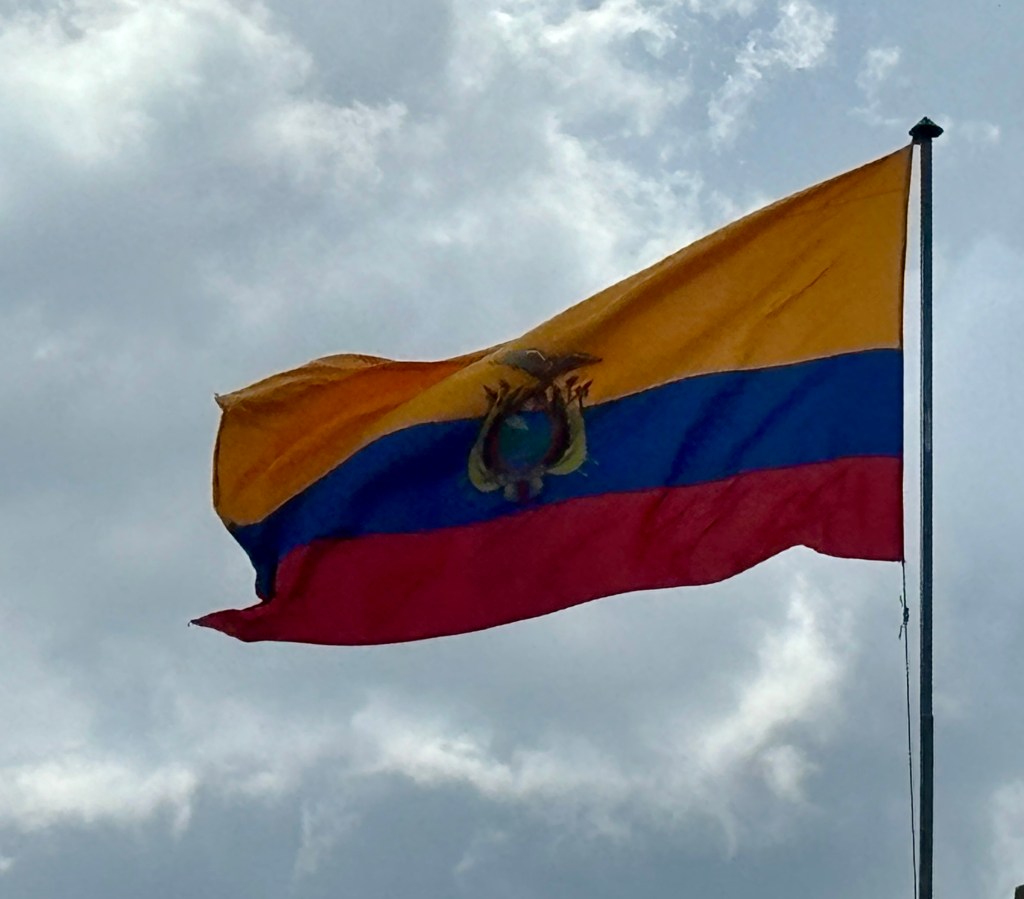
The Flag of Ecuador originated from a similar flag of the former Gran Columbia Union. Gran Colombia (1819–30) included lands roughly encompassing Colombia, Panama, Venezuela, and Ecuador.

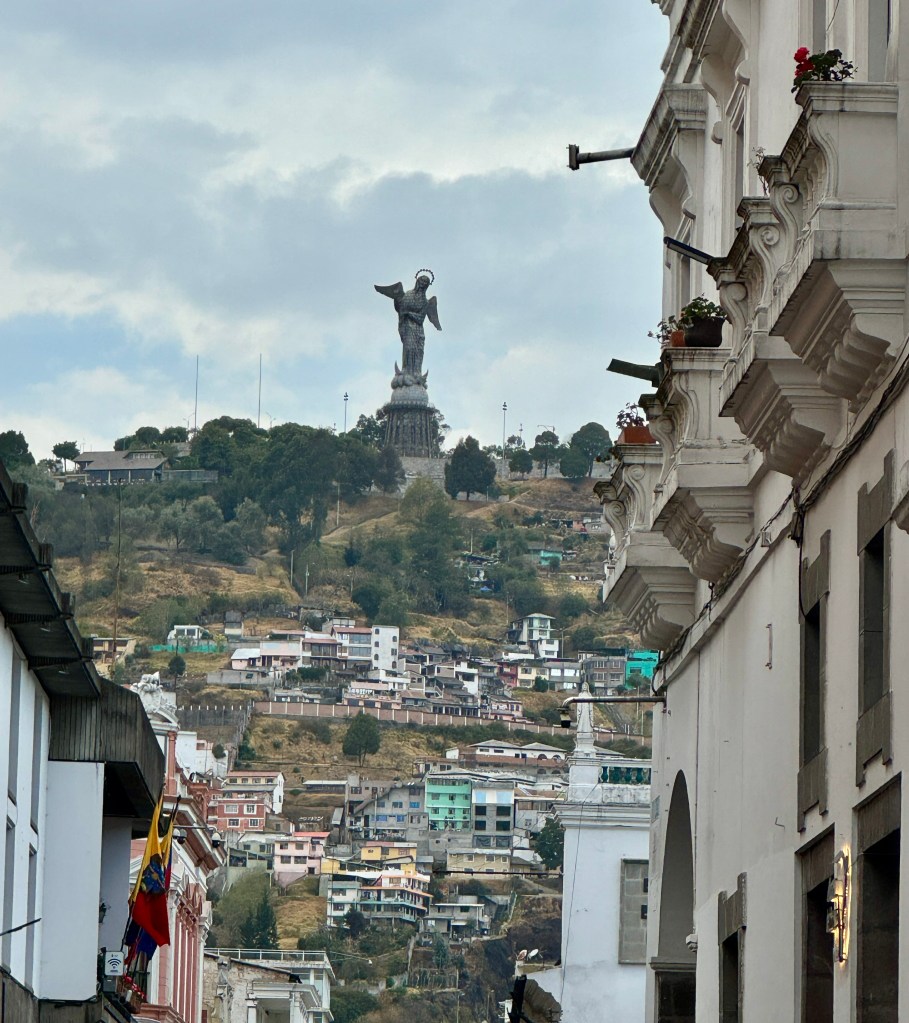
This statue of the Virgin Mary is the tallest aluminum statue in the world.

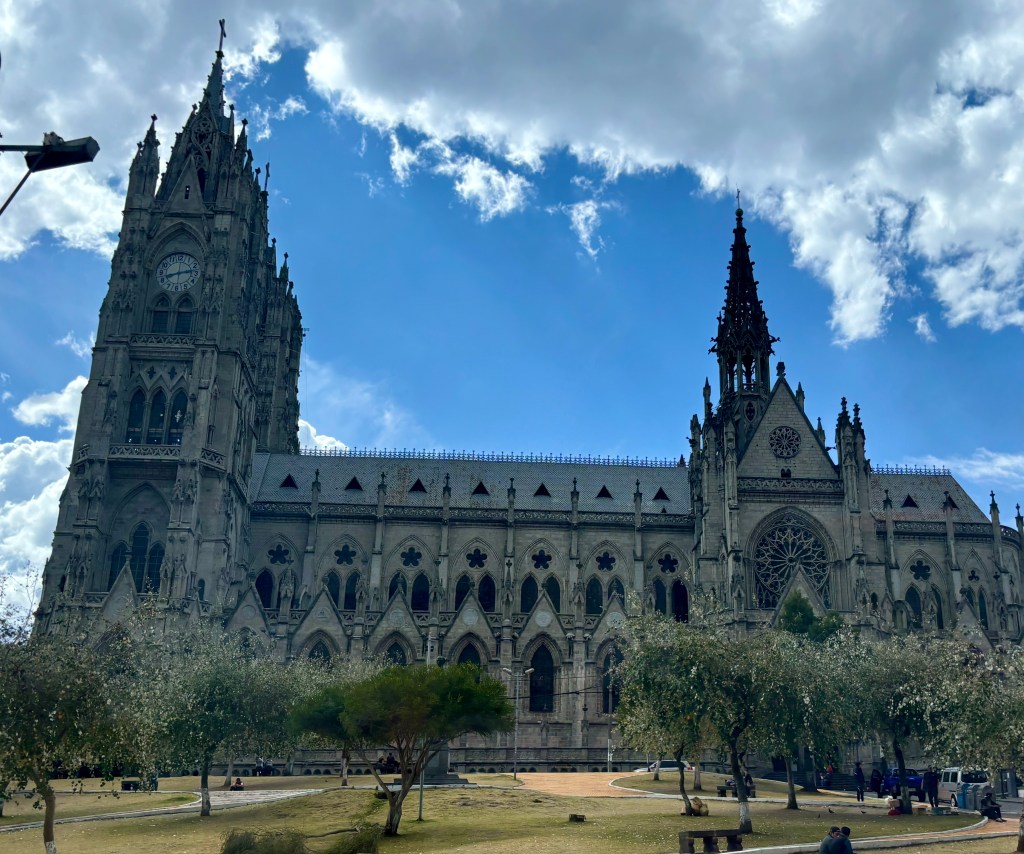
Ecuador’s National Basilica is still under construction with 10-15 percent remaining.

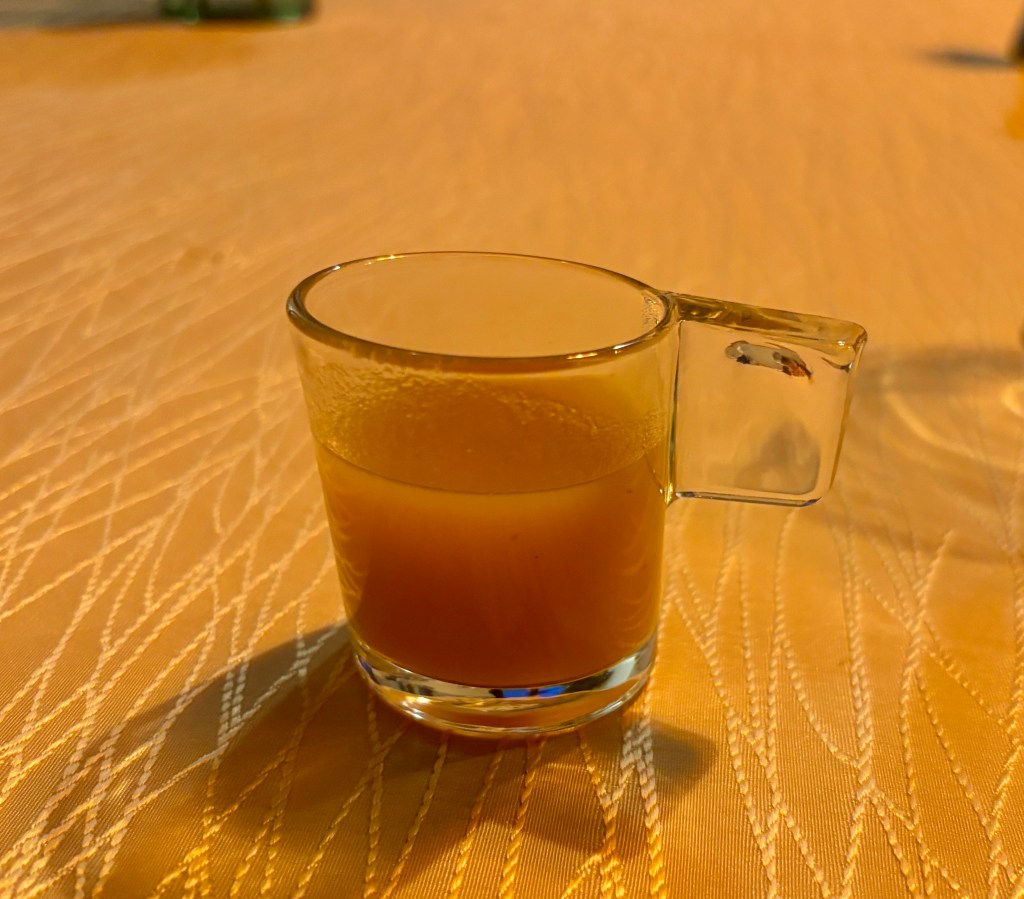
We had the opportunity to try a unique treat.  A local liquor is inside – “mistelas de liqór”

We went to a restaurant as a group and had a nice dinner that began with a traditional drink of Ecuador – cane-lasso.

It was great to learn so many things in Quito on September 26, 2024!

Next Up:  We transition to the Galapagos Islands.

Posted in Uncategorized | Leave a comment

Peru: Manatees and More of My Birthday

The morning of September 24, the day we were to depart the Delfin III, I woke up feeling hungry and went to the lounge for a cookie before breakfast.  During breakfast, I started feeling gastric-intestinal discomfort and headed to the cabin to eat dry toast and sip Coke.  I almost never drink Coke or any kind of pop. yet the carbonation has always seemed to help when I’m sick.

Unfortunately, the wife of the man who had been sick in Cusco had also become quite ill when we were on the Delfin III.  Probably his problem hadn’t been the high altitude sickness after all.  She missed a full day of Amazon activities and it appeared that I was next.

I wasn’t just going to miss out on activities. I, and therefore Randy, was going to have to deal with me being sick on a travel day.

Randy and I went through all of our various meds and I took whatever we thought might be beneficial.  We did not take our anti-malaria meds that morning in the mix of all that,  and never took them again.  

I slept for a couple hours before disembarking.  Two of our friends got in line extra early for the bus in order to get us the front seat. After another hour or so of sipping on coke during the drive, I felt pretty well and was able to move on with the activity of the morning. 

We visited a private agency formed to help endangered species including manatees turtles, sloths, snakes and macaws. 

They have a professional staff of biologists and veterinarians who work in conjunction with the Dallas World Aquarium. 

Their goal is to release the animals back to the wild whenever they can.  

These manatees, also called sea cows, are two young females.  The smaller is two months old and was injured by a machete.  The larger, two years old, is assisting in  socializing the younger.

This is a two year old male.  He and the female in the previous tank will be released to the liberation pond together with eventual release into the wild.

This manatee has only been at the center for three days.  He has a harpoon injury.  He will be treated and released quickly.

This sloth was used in the tourist trade for pictures and was not healthy, likely due to stress.  It will be remediated and released if possible. 

This chart shows the number of releases per species.

This is a type of pygmy monkey – the smallest monkey species in the world.

These monkeys won’t be released into the wild because they would be attacked by a native monkey group.  Instead, they will be released into the extended grounds of the center.  About 50 have been successfully released onto the grounds so far.

We saw five  liberation ponds the last stop before true liberation.  There were three manatees in the largest pond but we did not see them

Paiche are the largest fish in the Amazon region.  It is a popular fish to eat and was  served on the Delfin III.

We flew back to Lima one more time and then said goodbye to Enrique.  He had taken very good care of us over the past two weeks and greatly enhanced our trip. Our next activities were in Ecuador and we would have an Ecuadorian guide.    We also said goodbye to those on our tour who were not continuing to the Galapagos.  The twelve of who were going on were met by another Amazon representative, who took us back to the same Lima hotel we’d stayed in twice before!

The same representative met us the next morning and took us to the airport for our flight to Quito.

The twelve of us were truly without our Avalon support handler in the Lima airport and on the flight to Quito.  All seasoned travelers, we felt we could handle it as long as things didn’t go awry!

But first, I needed to spend my remaining Peruvian soles.  The amount was equivalent to about $60 USD so I went shopping in the airport gift shop.  It was my birthday after all.  I ended up buying a small Peruvian nativity scene to go with others I have collected from our travels.  I also bought a pair of earrings using the same type of red lucky beans we had been given in the Amazon.

In the end, I took out the credit card to buy one more item.  It was not to remember something we did in Peru, but something we won’t ever do. 

Rainbow Mountain, more accurately Vinicunca, is a 16,500 foot mountain somewhat near Cusco.  We saw signs for day tours to the mountain while we were in Cusco.  Enrique said he has taken people to Rainbow Mountain and only about 60 percent of those who try to hike it are successful.  That isn’t going to be me!

Our flight was uneventful and we were met by William, our new Avalon guide for Ecuador.

We had registered our trip with the US State Department and had received reports about fires in Quito.  The fires were in the national news in the US as my cousin contacted me saying she hoped they wouldn’t derail our trip.

The fires were still visible although the situation had greatly improved.  Apparently, the fires were set by an arsonist.

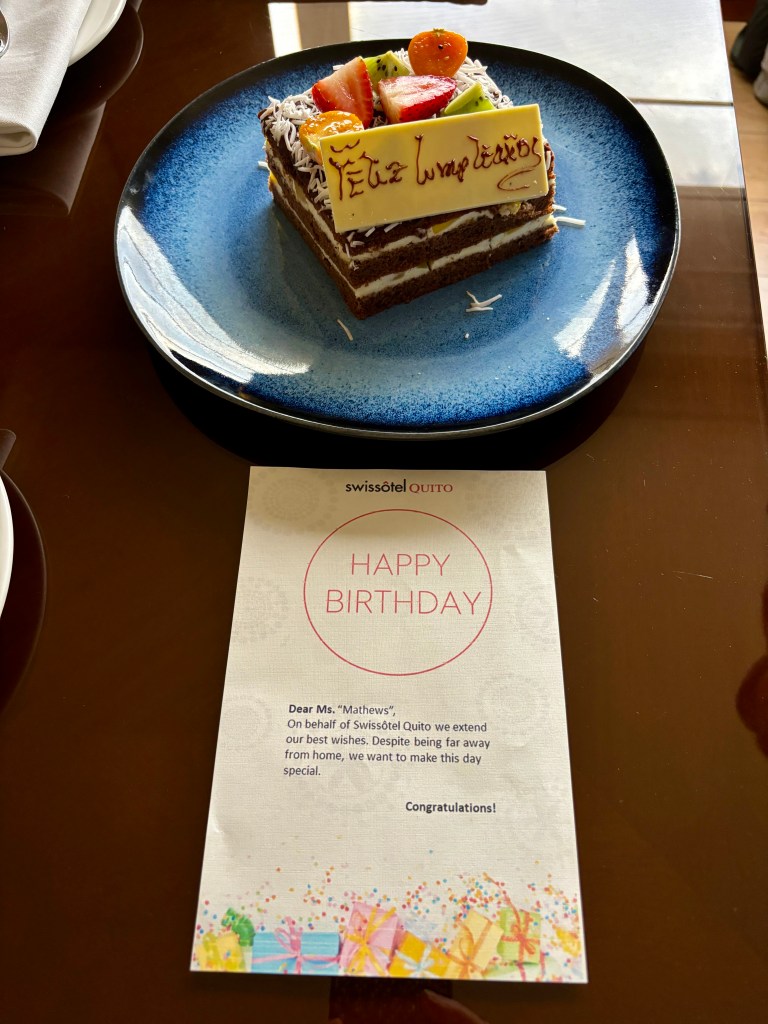
We arrived at our hotel and were surprised to find chocolate covered strawberries and a large slice of birthday cake!

A couple hours later all twelve of us joined together for dinner by choice – even when we didn’t have to! We really did get along very well throughout the trip.

Someone told the restaurant staff that it was my birthday and it got celebrated again!   Enough already!

We arrived in Quito, Ecuador on September 25, 2024, my birthday.

Posted in Uncategorized | Leave a comment

Peru: Amazon Village

We opted to skip the first activity of the day – another jungle walk in the Amazon and stay on the Delfin III for the morning.  We were guaranteed to get hot, muggy and tired in the heat and not guaranteed to see monkeys, sloths, snakes or spiders.  We were happy with our choice as we stayed cool and comfortable in the lounge.  It seemed as though we had the ship to ourselves with just a few remaining crew.  After a while, a few more passengers wandered up to the lounge but we all seemed to be enjoying the quiet and solitude.

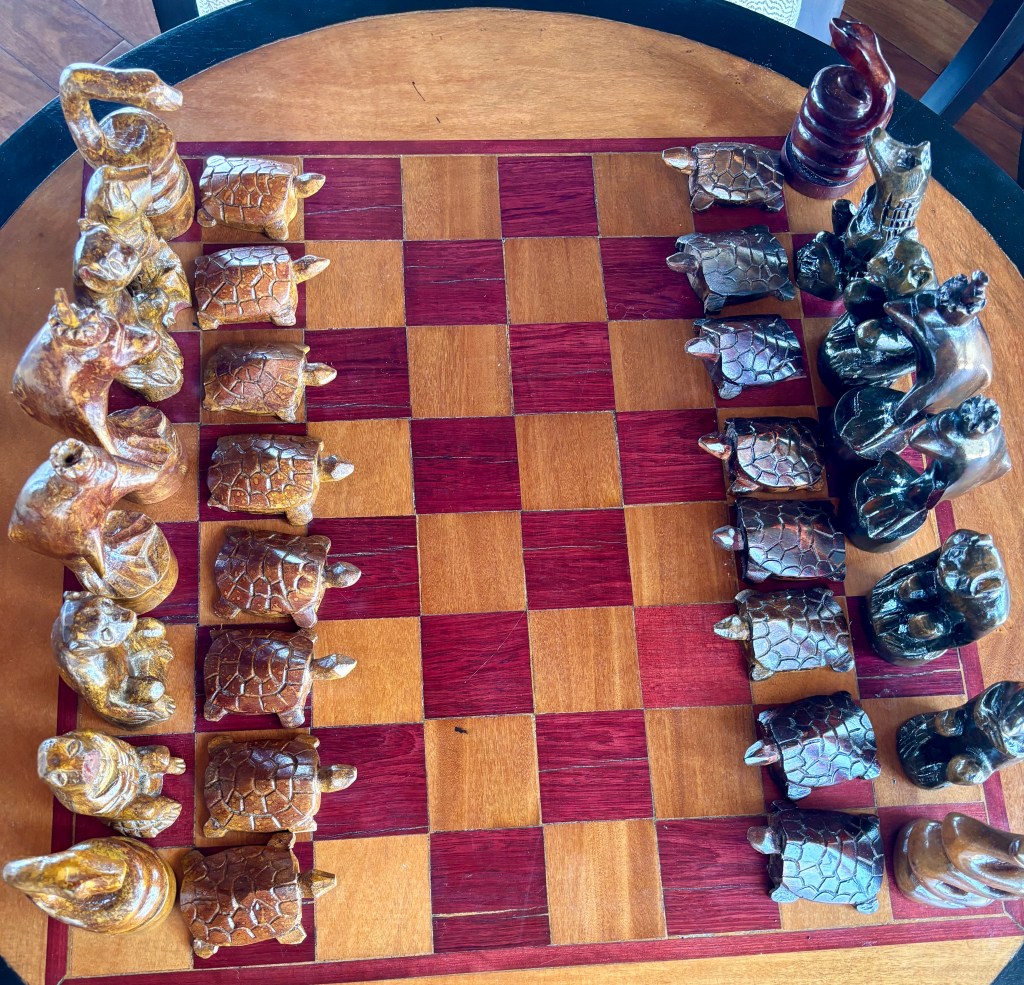
There was an Amazon themed chess board ready for play.

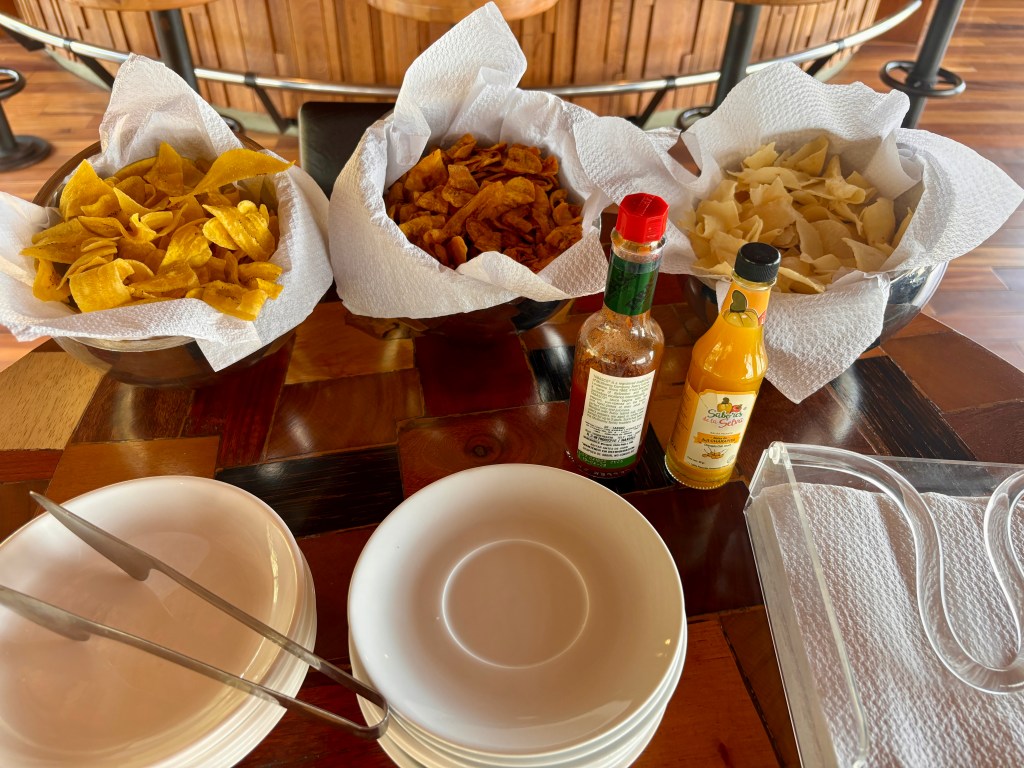
There were three types of plantain chips ready for snacking. 

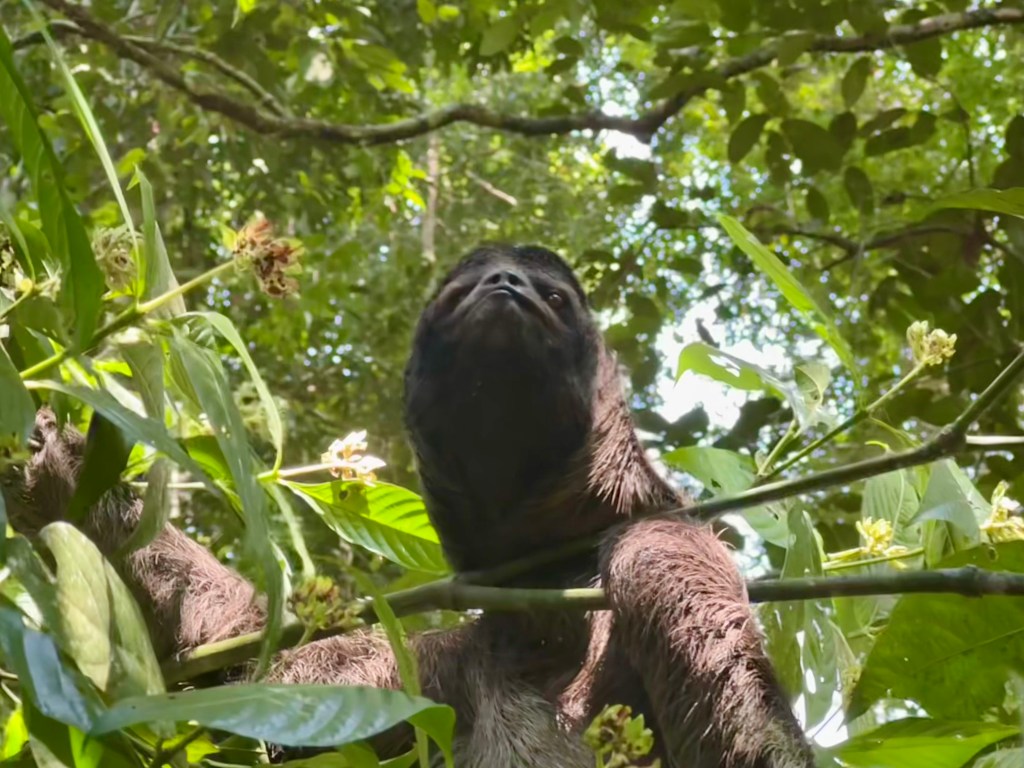
When the hikers returned, they said it had been hot and muggy but they did see a sloth and a tarantula. Someone shared their pictures of the sloth.

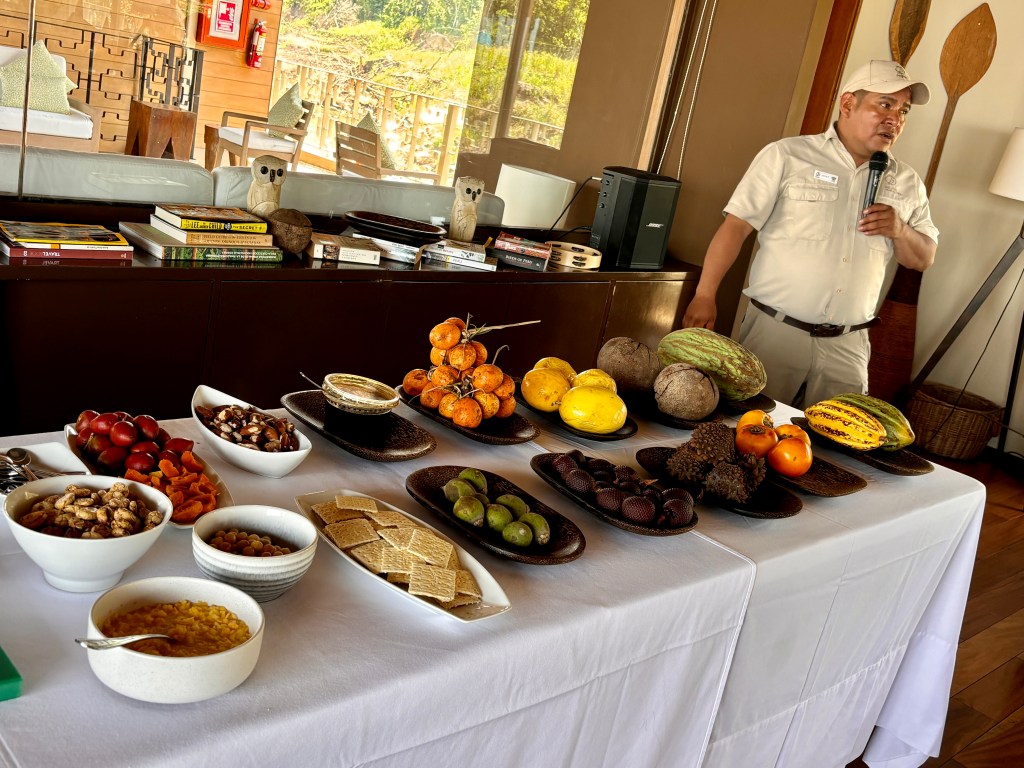
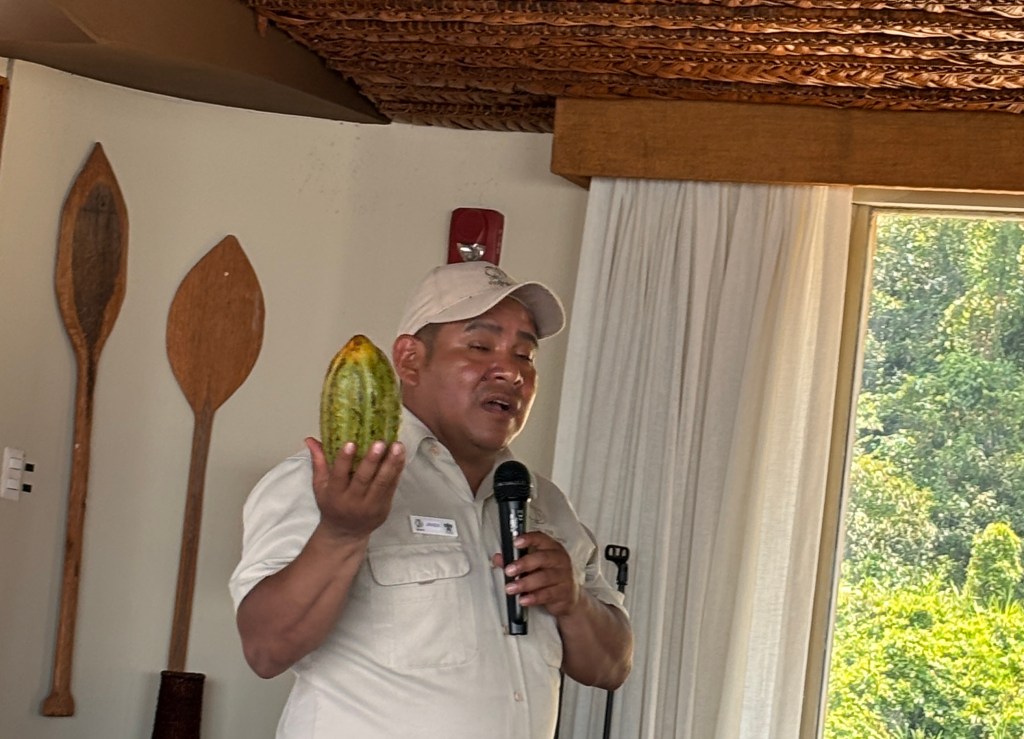
After they had a chance to clean up, the next activity was a Fruit of the Amazon presentation.  There are 170 species of tropical fruits in the Amazon region!

This large green fruit – macambo – is a relative of the cacao bean but evolved differently in the Amazon.  The white colored pods can be roasted and have antioxidant value.  The type of cacao  for chocolate  was developed by the Mayan culture in Mexico. 

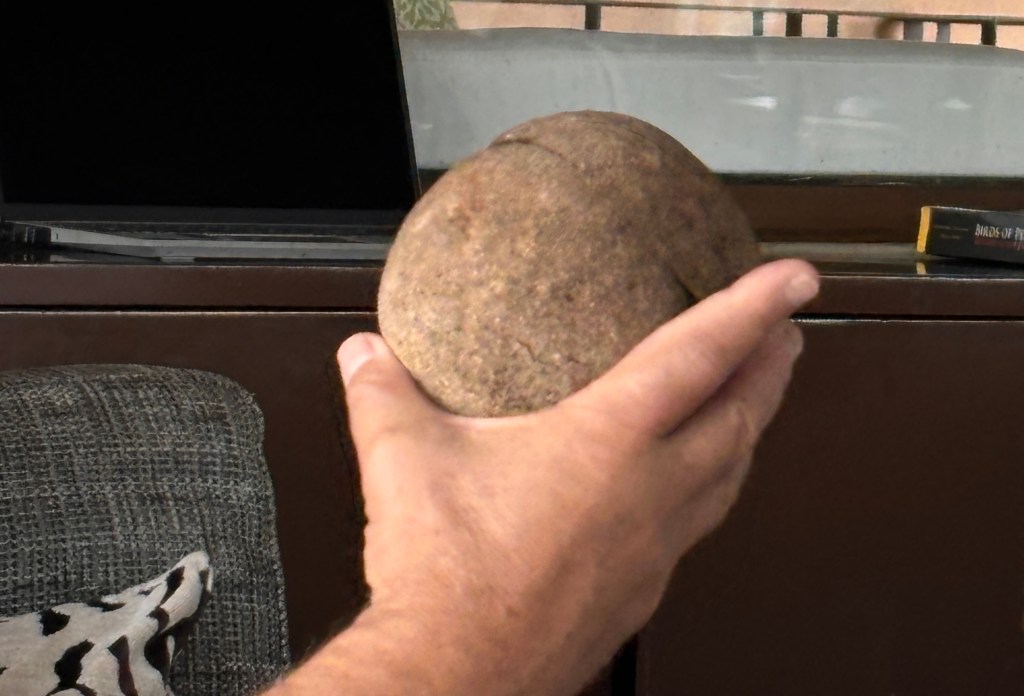
This is a Brazil Nut outer shell.  Brazil nuts are mostly attributed to Brazil but they grow all along the Amazon. A native rodent, the agouti, can break the shell and uses the nut as a food source.

This is a brazil nut shell that has been cut.  The nuts we are familiar with form inside this shell.

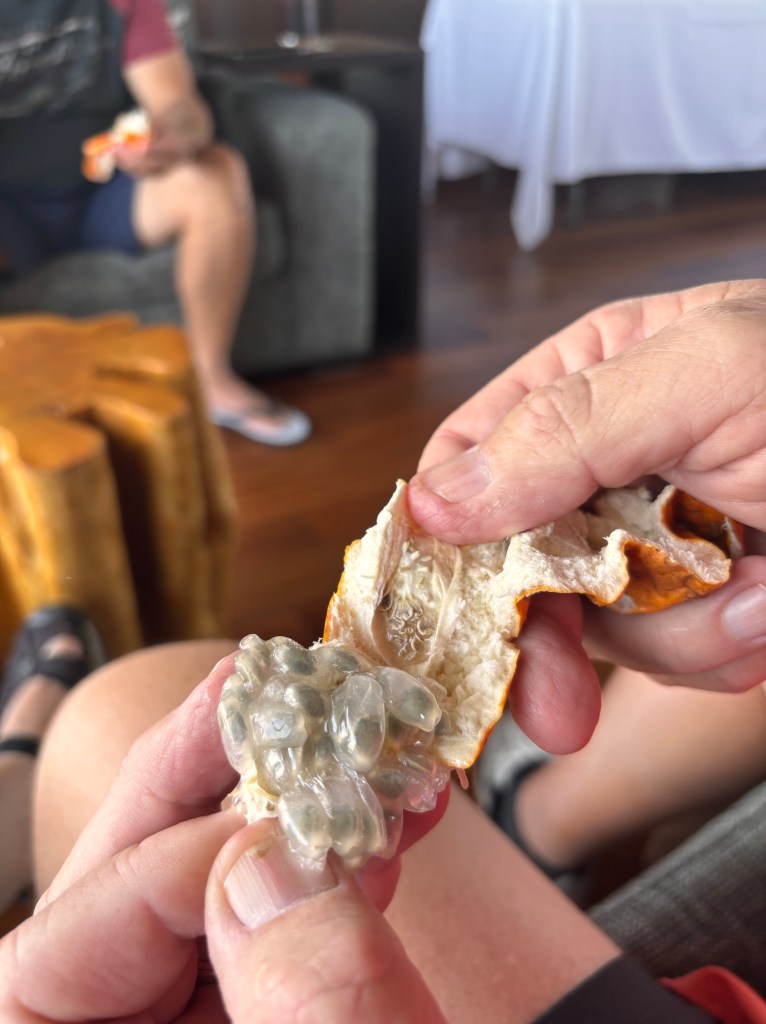
White grenadilla is a fruit in the passion fruit family.  It is sweeter than the passion fruit we are used to.  It has an interesting texture and neither of us cared for it.

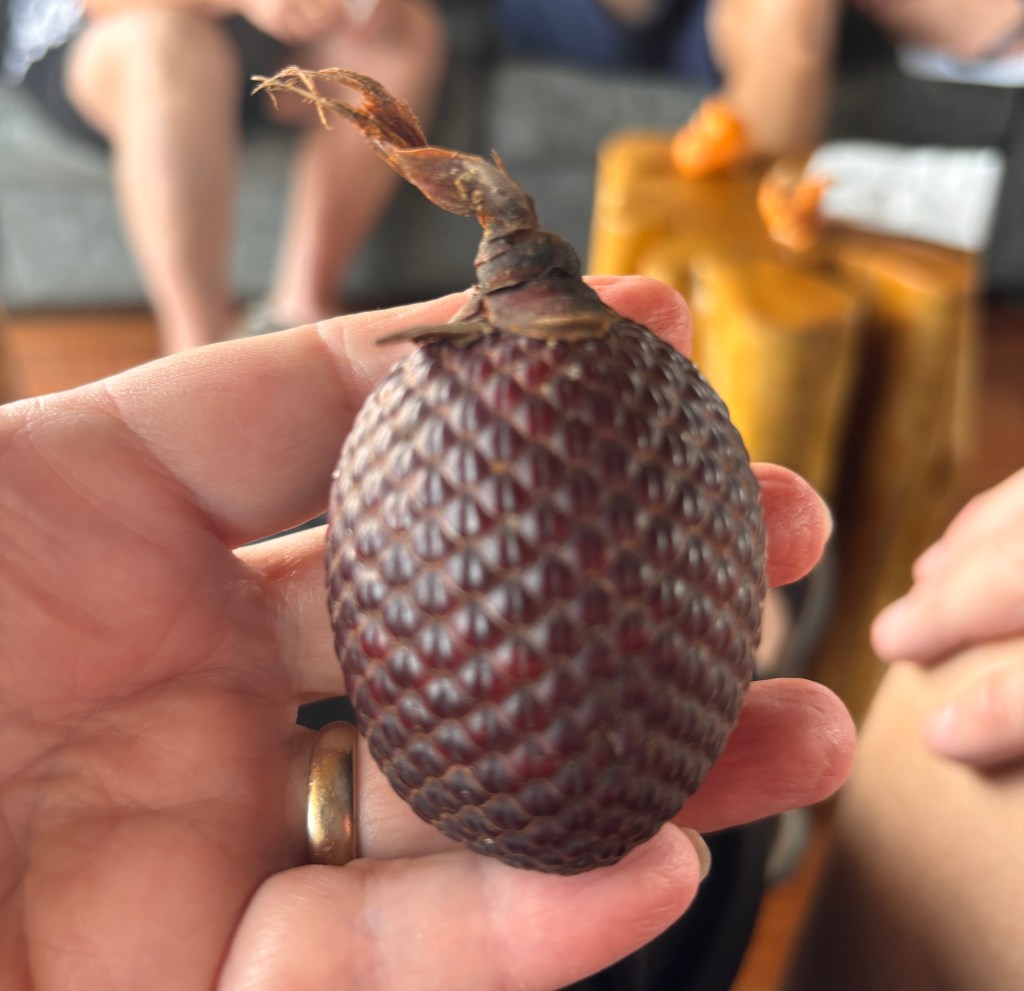
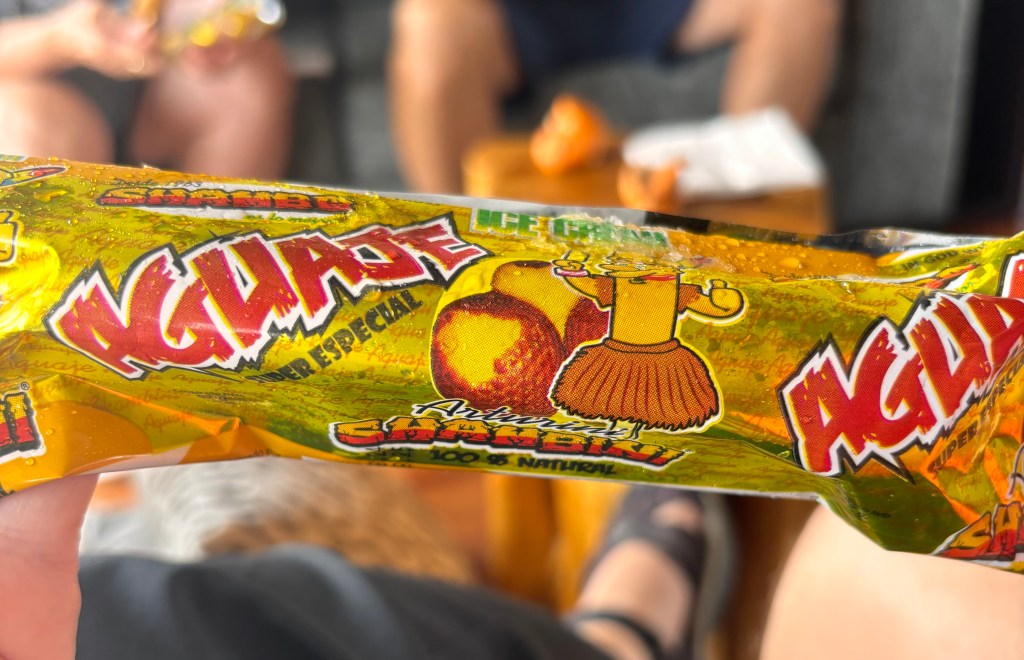
This is aguaje palm fruit.  It has twenty times more vitamin A than carrots. Macaws  eat them. 

We had aguaje in popsicle form.

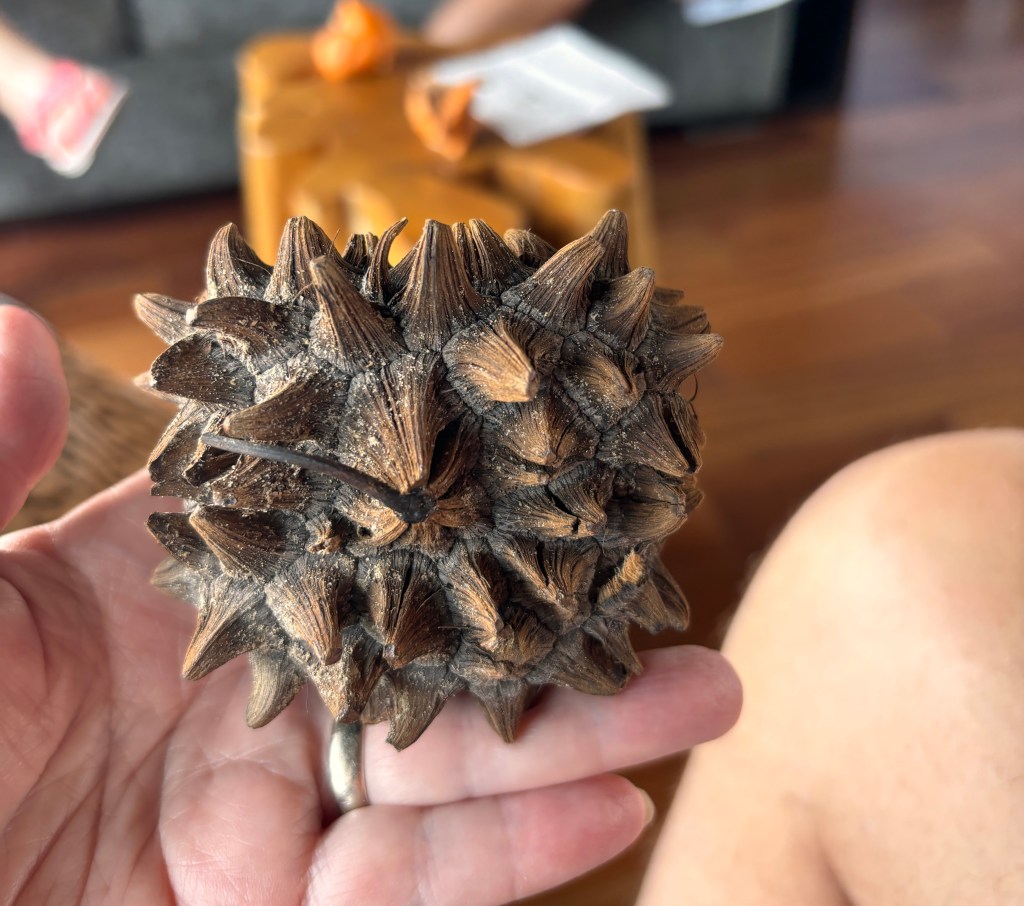
I don’t know what fruit or nut this is, but it sure looks interesting!

The camu-camu is good as an antioxidant and for anti-aging. It is often consumed as juice.  

This is a type of tomatillo.  Eat ten a day to reduce your cholesterol levels.

Then we had another Pisco sour demonstration with all of us participating in the shaking part.  I think it was our third time learning to make the national drink!

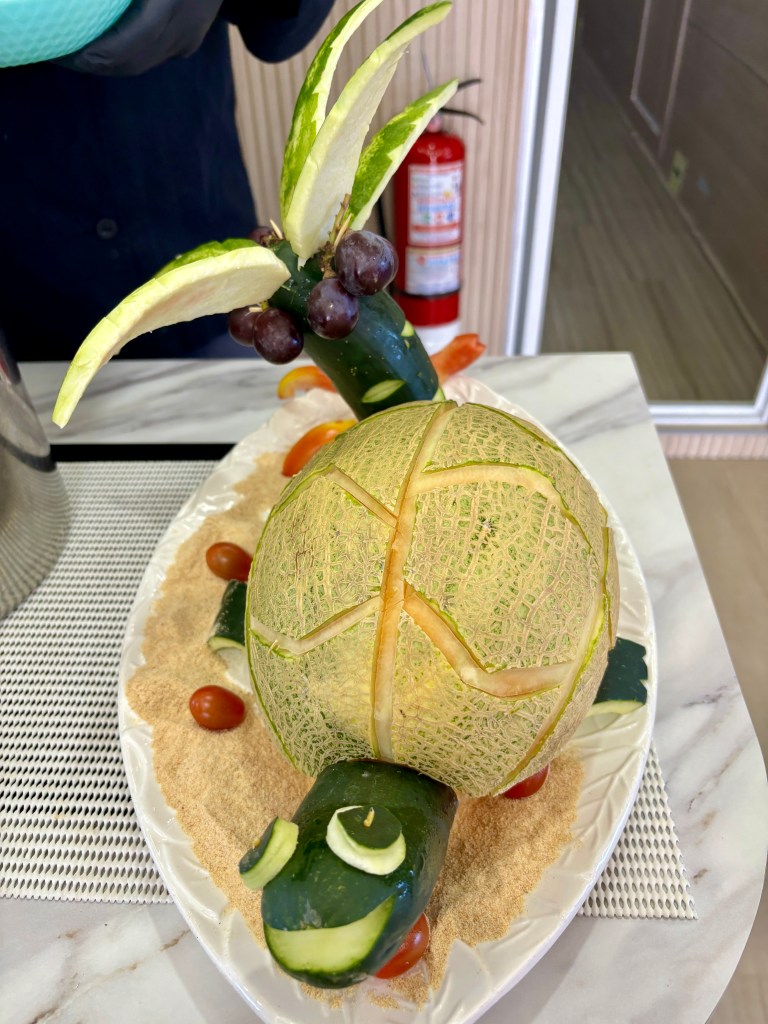
Lunch followed and included the bread art of the day.

The next activity was an excursion to an Amazon village to learn about their lifestyle.  That was worth braving the heat and humidity in my opinion.

A group of kids met us at the boat dock.  They are familiar with tourist visitors.  Avalon suggested we bring school supplies as gifts and several of us had done so.

Our first stop was to a village kitchen where two women were preparing a meal for their families.

Fish, free food along the river, is always on the menu!

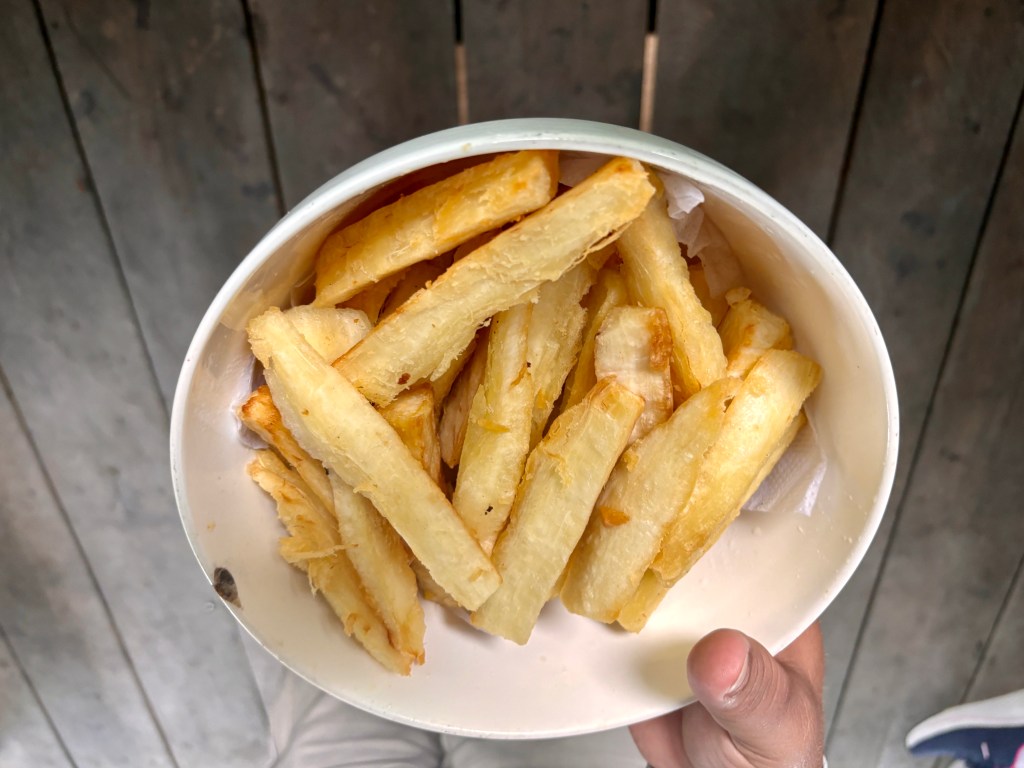
I do not remember what this food was but I think it had a banana base.

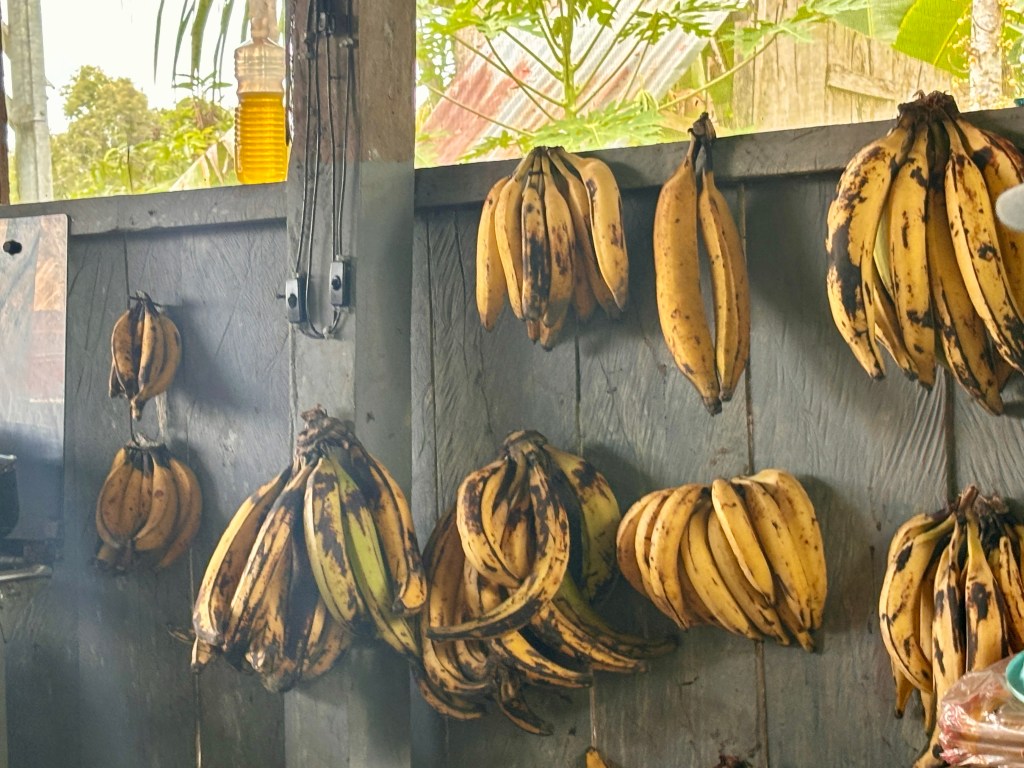
Bananas are used in every stage of ripeness with the ripest becoming juice.

I also don’t recall these foods.  The setting was intimate enough that taking notes didn’t feel appropriate.

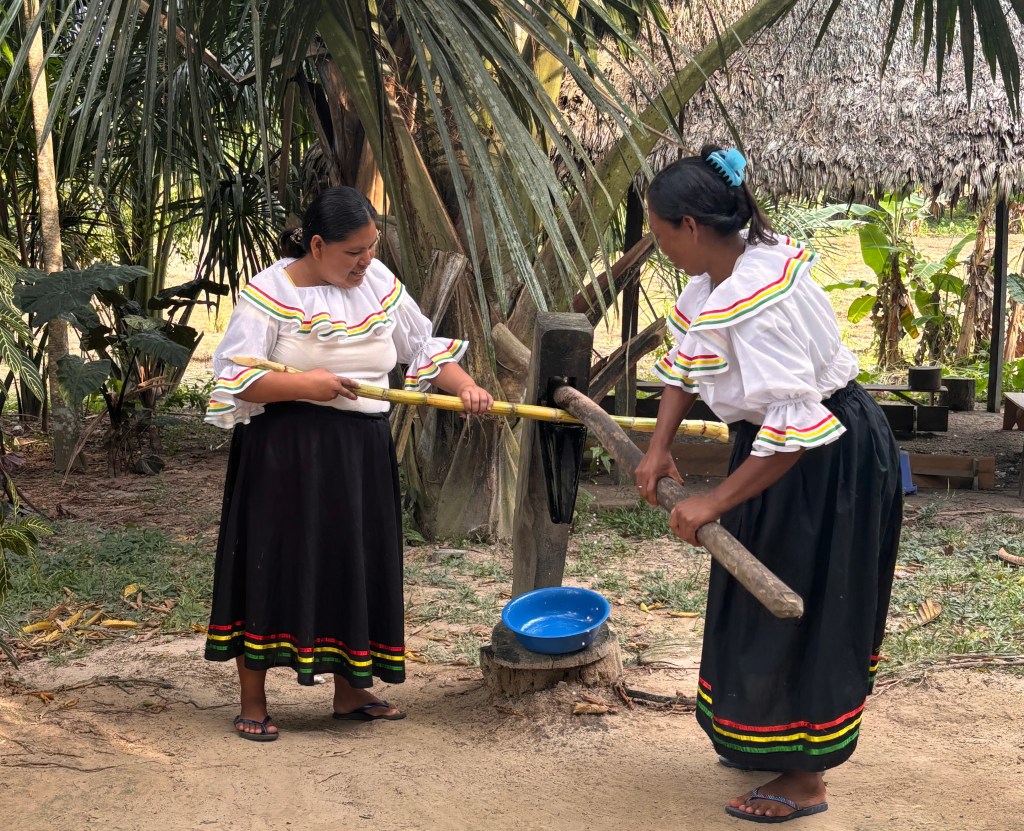
These women were demonstrating how they get juice from sugar cane.

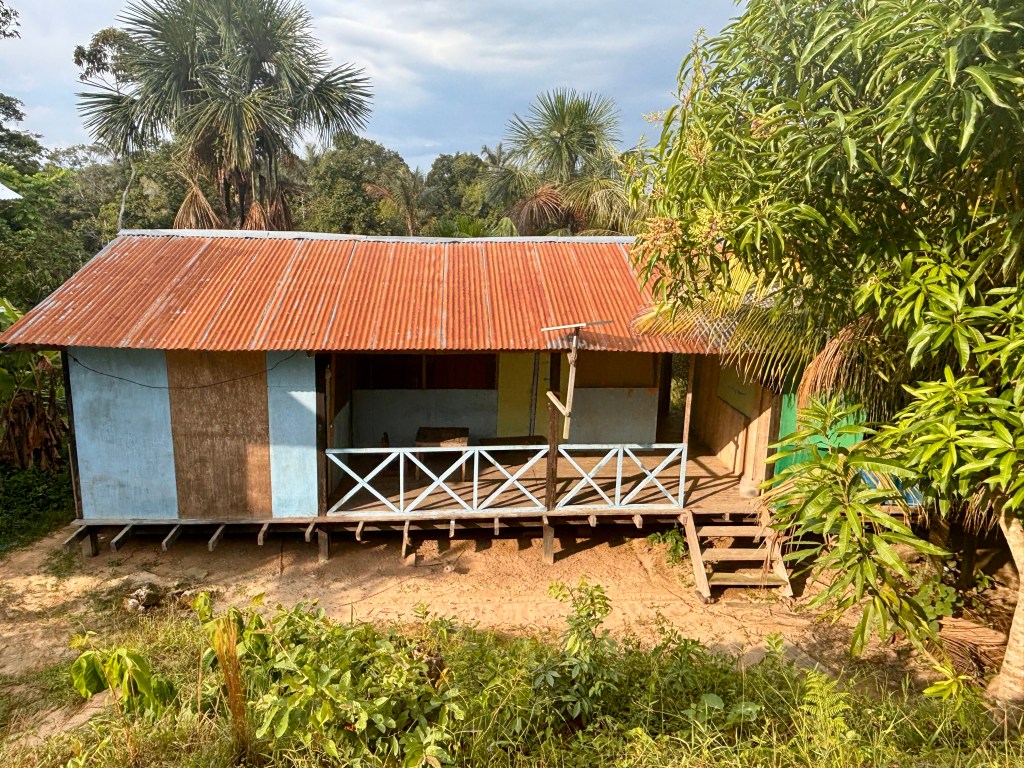
This is a typical home in the village.   

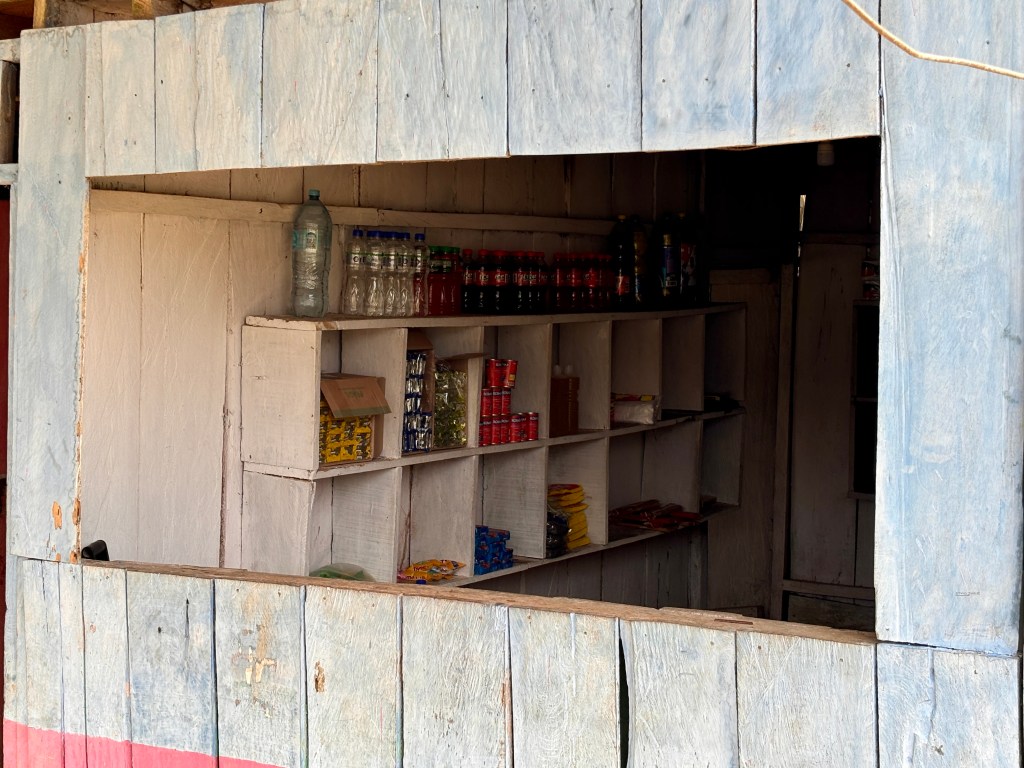
We saw this open shop but no one was minding the store.

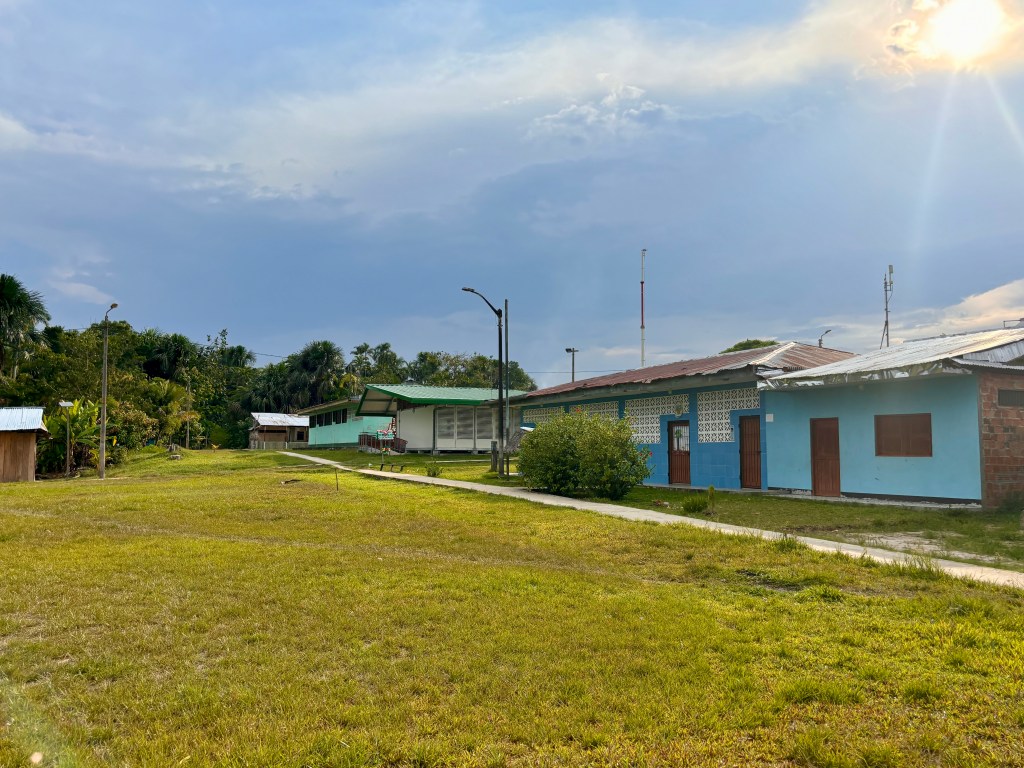
This is part of the central area in the village.  Peruvian government would have paid for the infrastructure.

The government also supplied the community with a generator and Wi-Fi capability.  The community has to pay for the fuel to run the generator. Typically they have electricity a few hours each week.

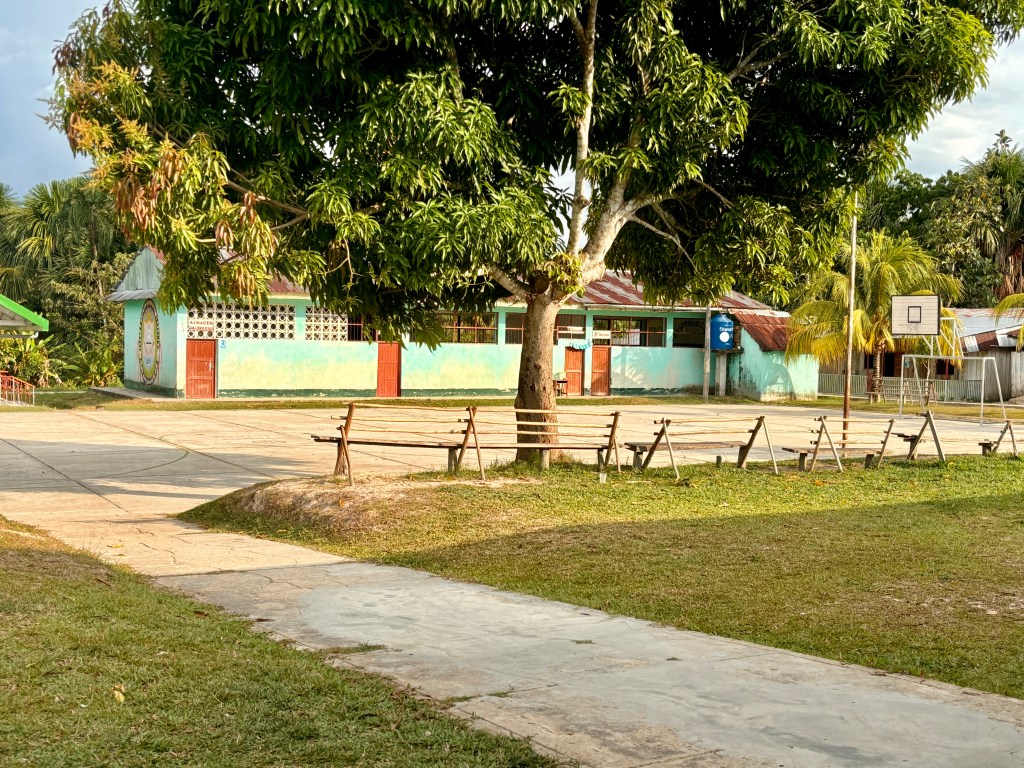
There are three school buildings generally equating to elementary, middle and high school groupings.

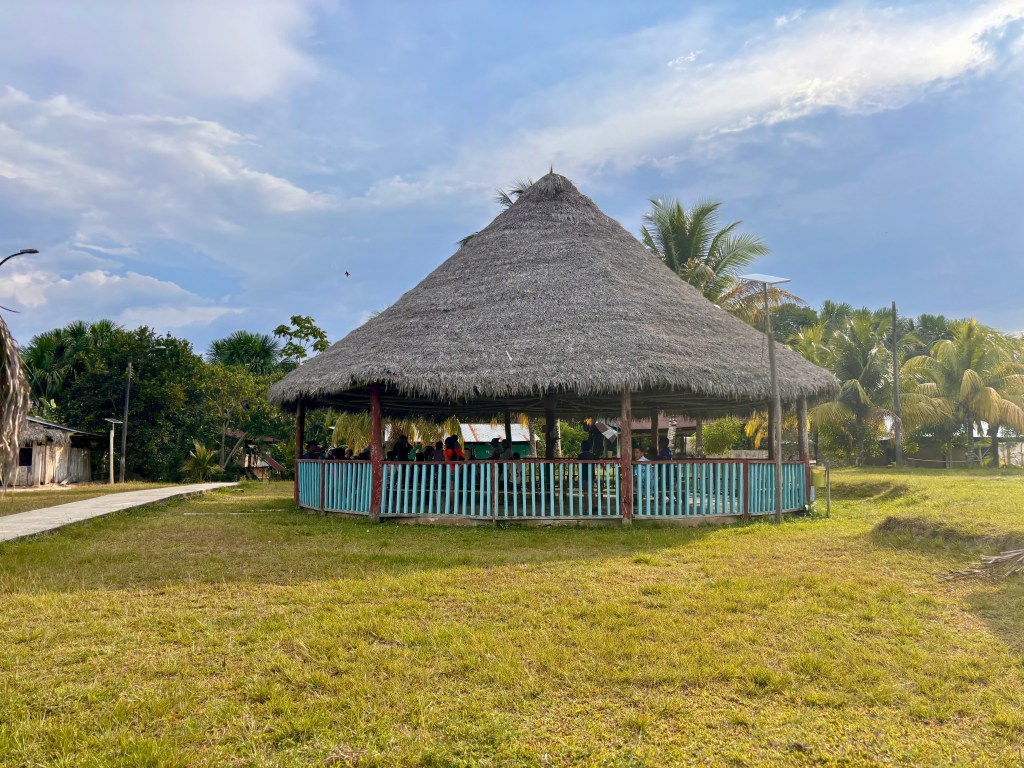
This central pavilion was our next destination.

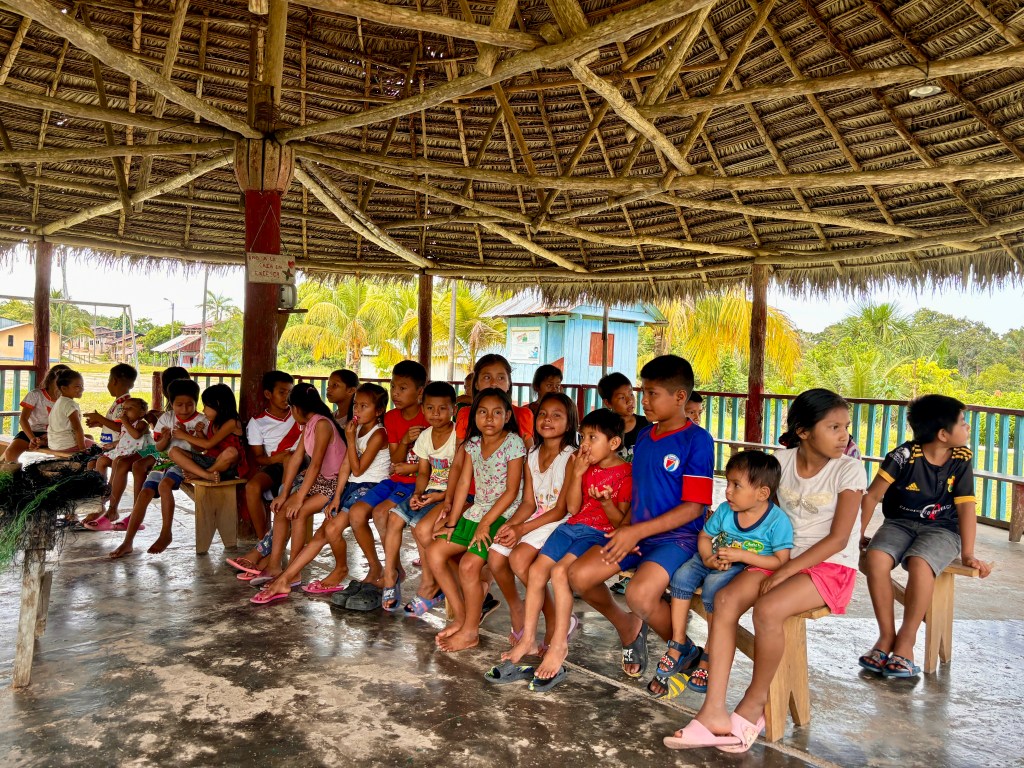
We found kids!  They were remarkably well behaved while we were receiving instruction from one of their teachers.

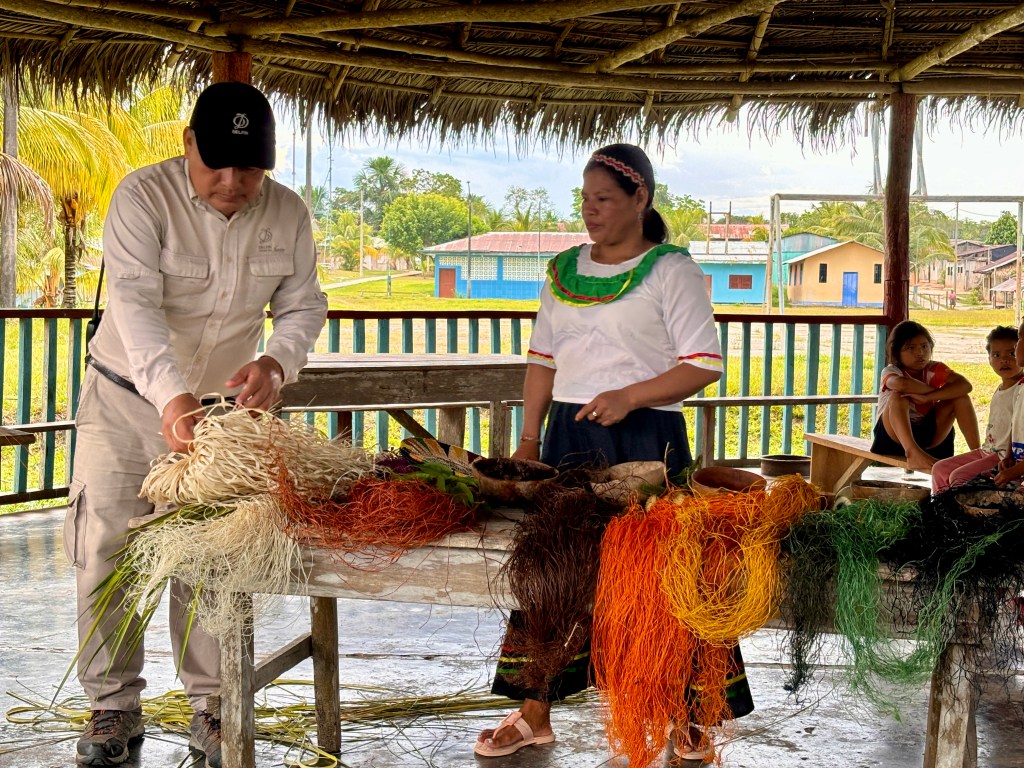
We learned about collection and drying of the fiber used for weaving.

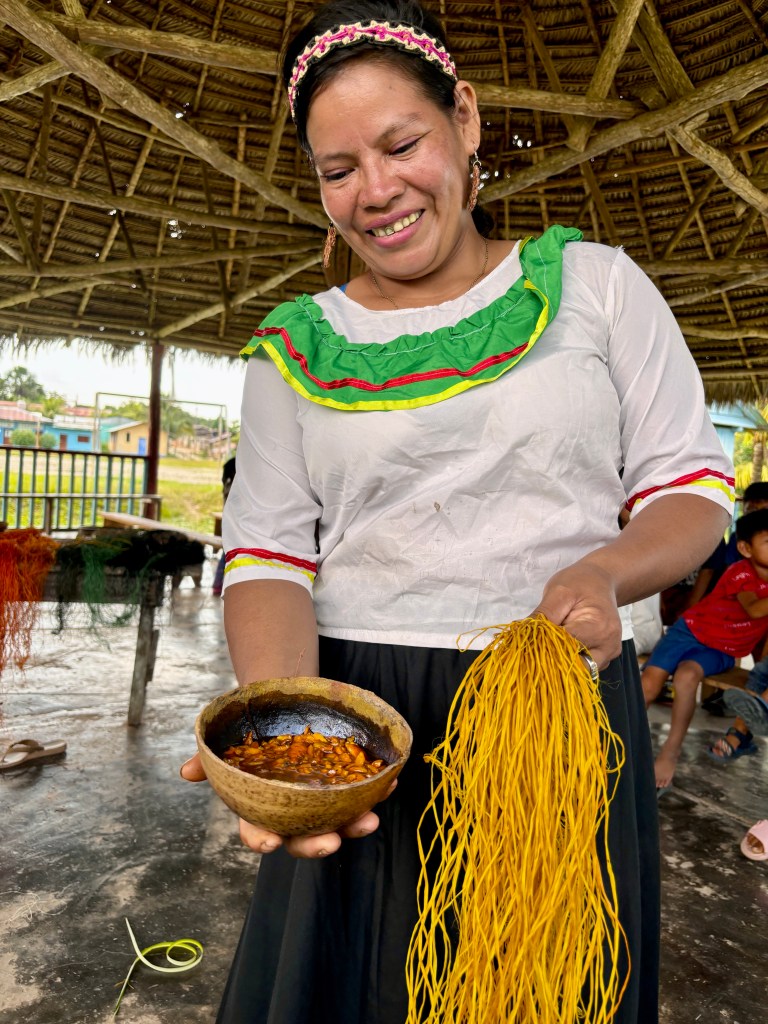
We learned about which plants are used to achieve various colors.

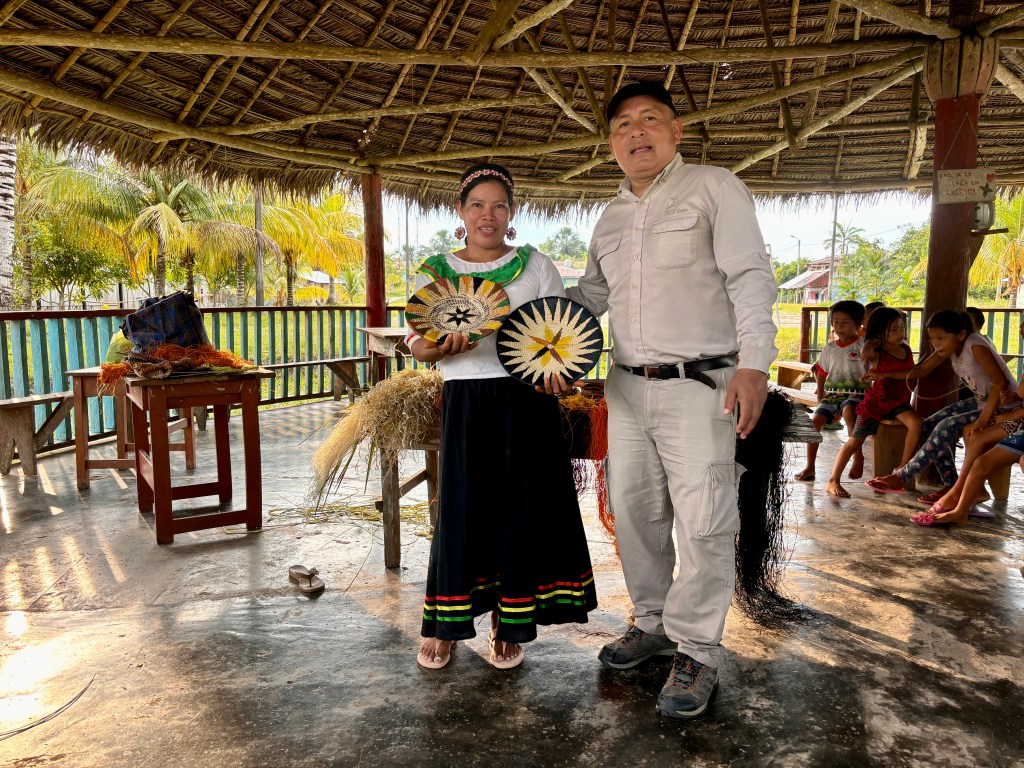
It takes her three days to weave a small basket. 

I bought the one on the right for the asking price of about $13 USD. 

Obviously this village is right off the river and open to receiving tourist guests.  This was not the Amazon village one might have seen in National Geographic decades ago.

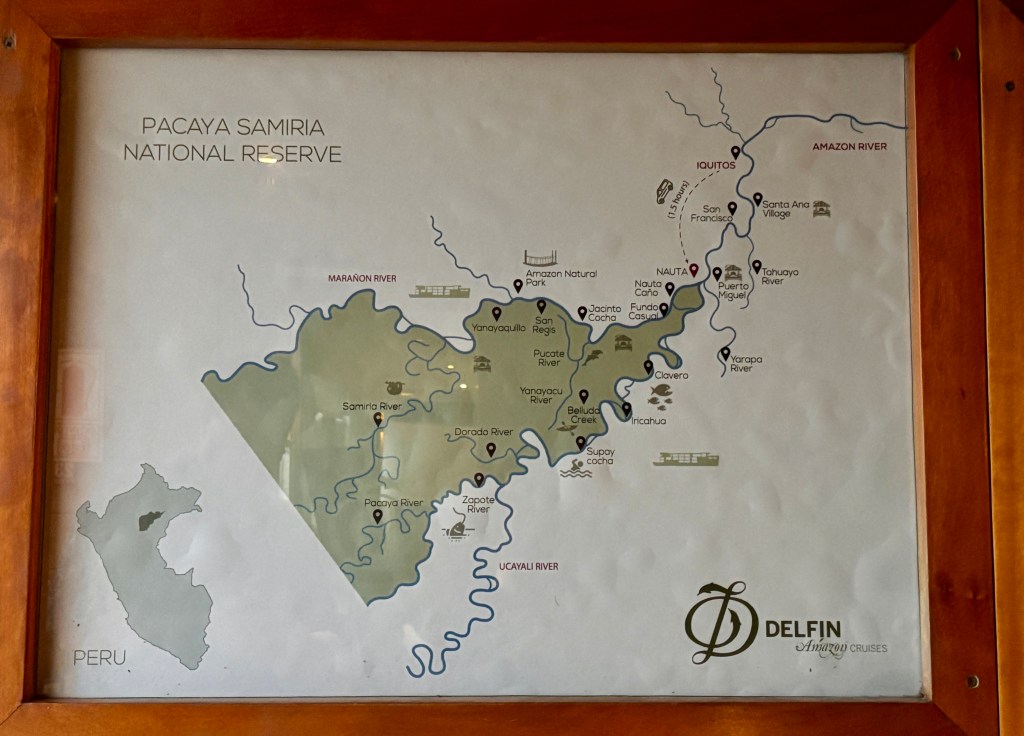
This map was posted to show us that on some of our Amazon journey we ventured into tributaries.

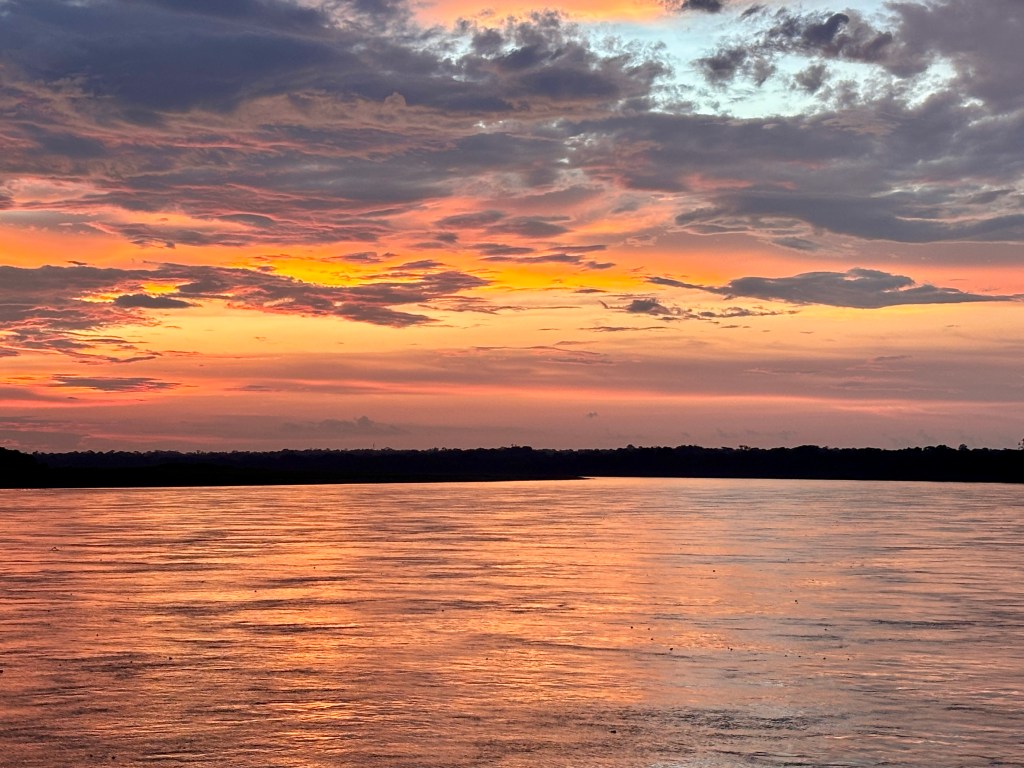
We had another beautiful sunset along the Amazon – or one of its tributaries.

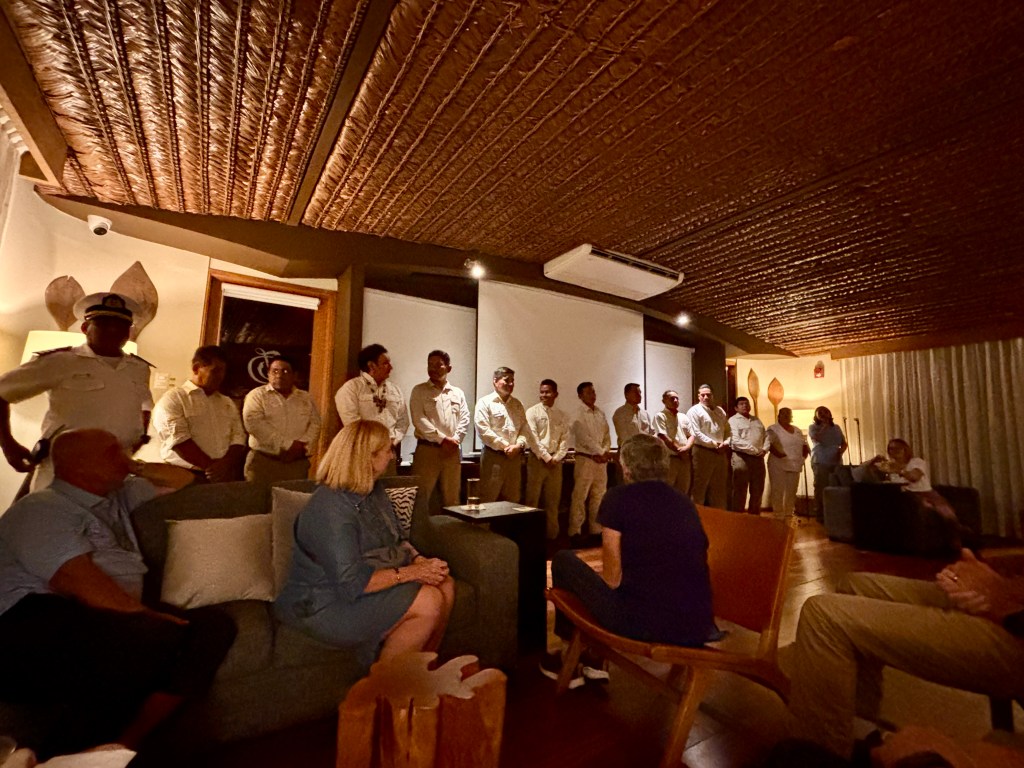
This being our last evening on board, we had a chance to see all the crew dressed up and to thank them for a job very well done.

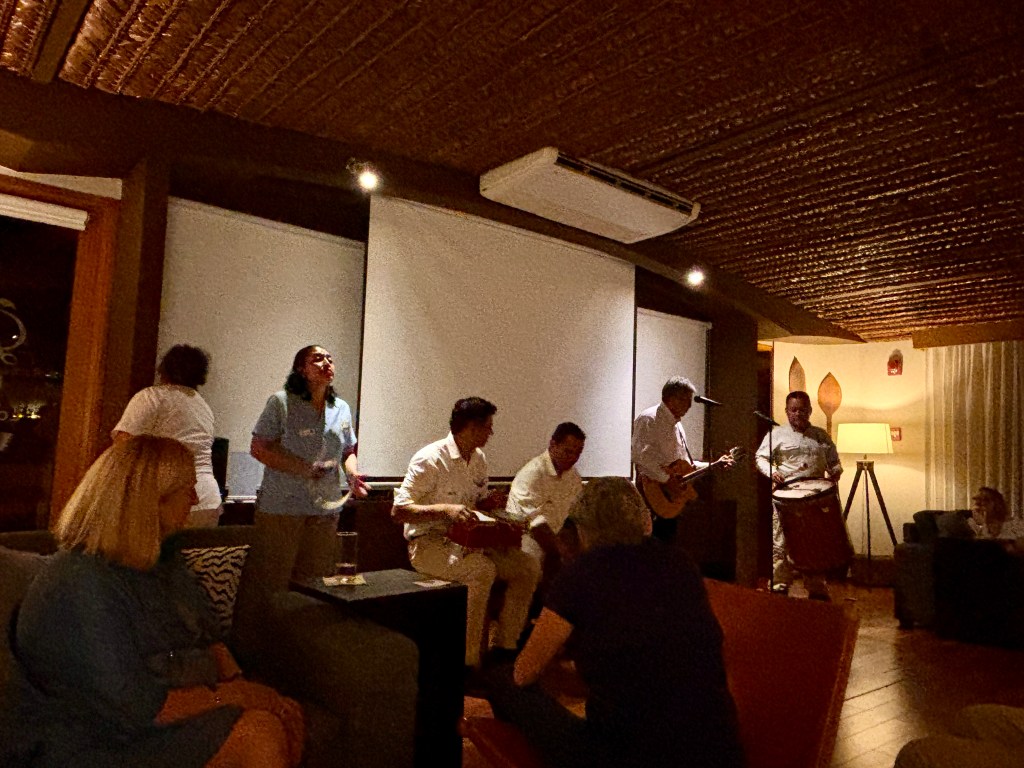
A few even gave us an American music concert!

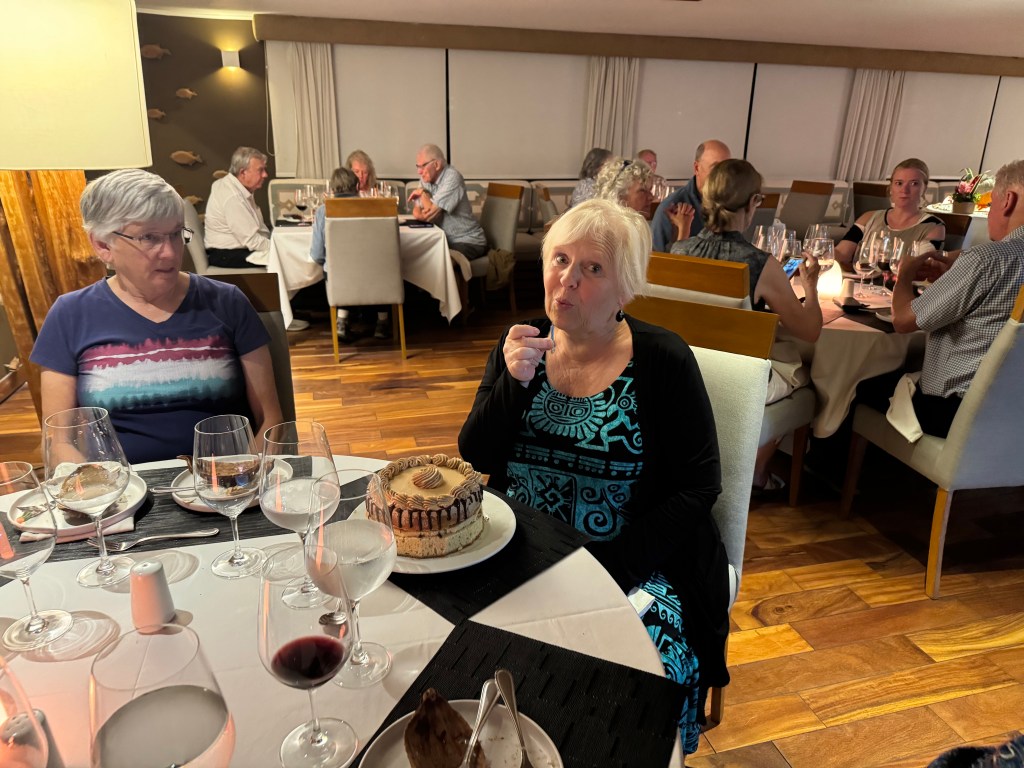
After dinner, the chef and waiters acknowledged two passengers having birthdays in a day or two after disembarking.  That would be me!

We were on the Amazon on September 23, 2024.

Next Up;  Sorry, not sorry, to leave the Amazon.  The boat was terrific but the weather was not.

Posted in Uncategorized | 1 Comment