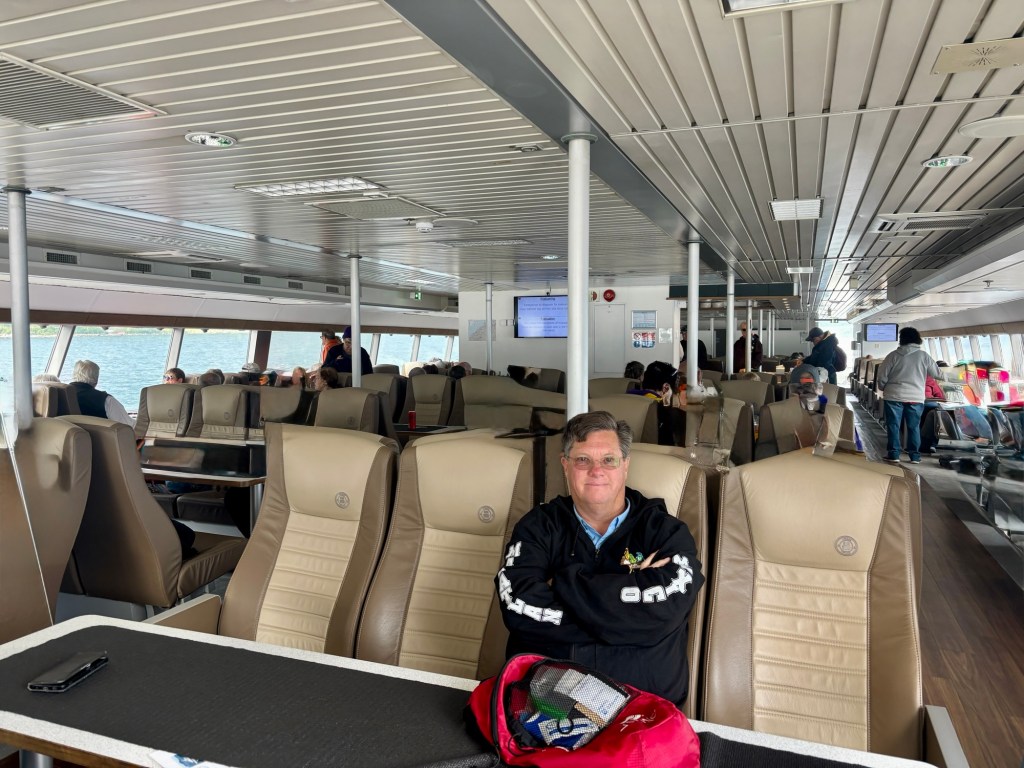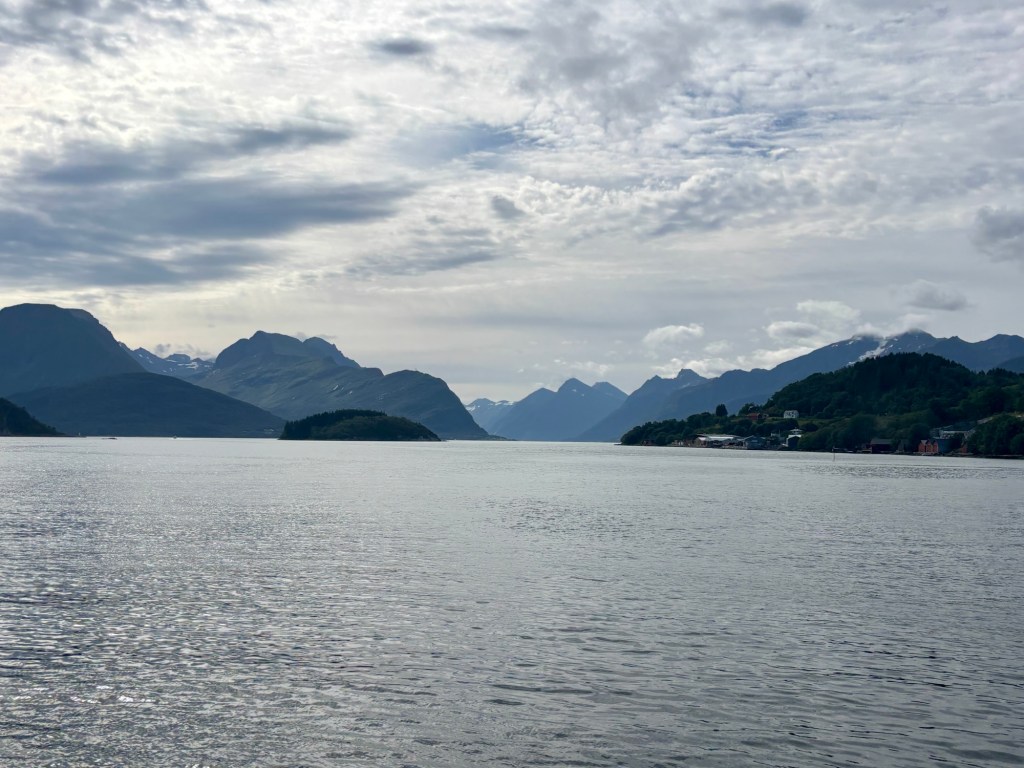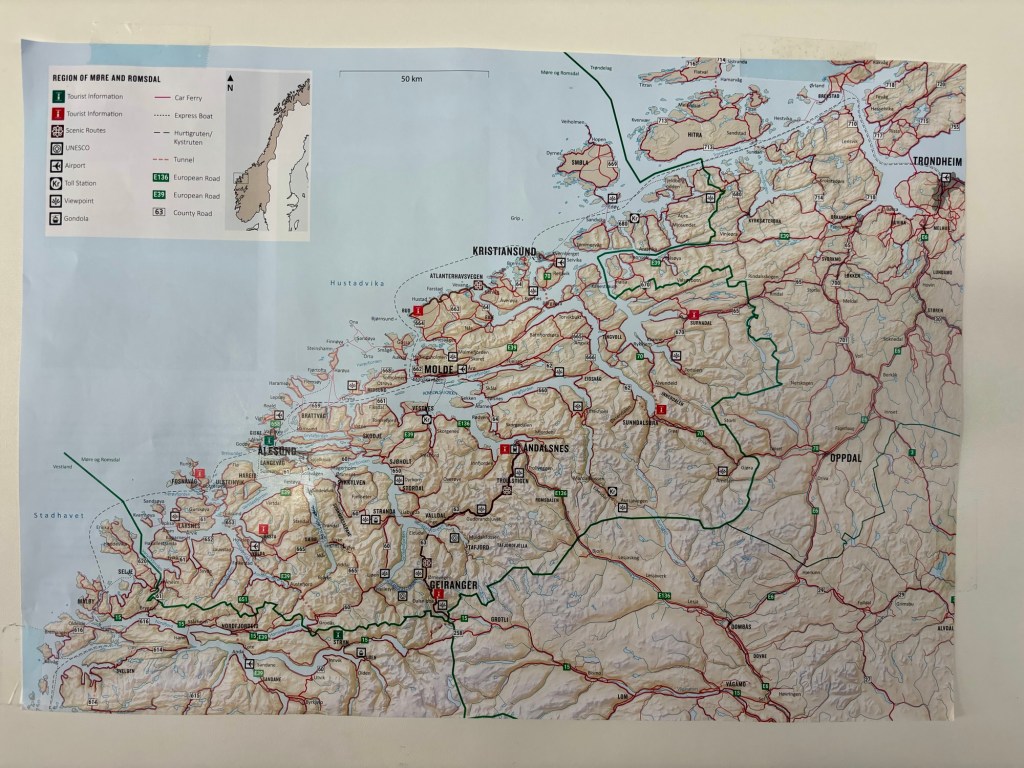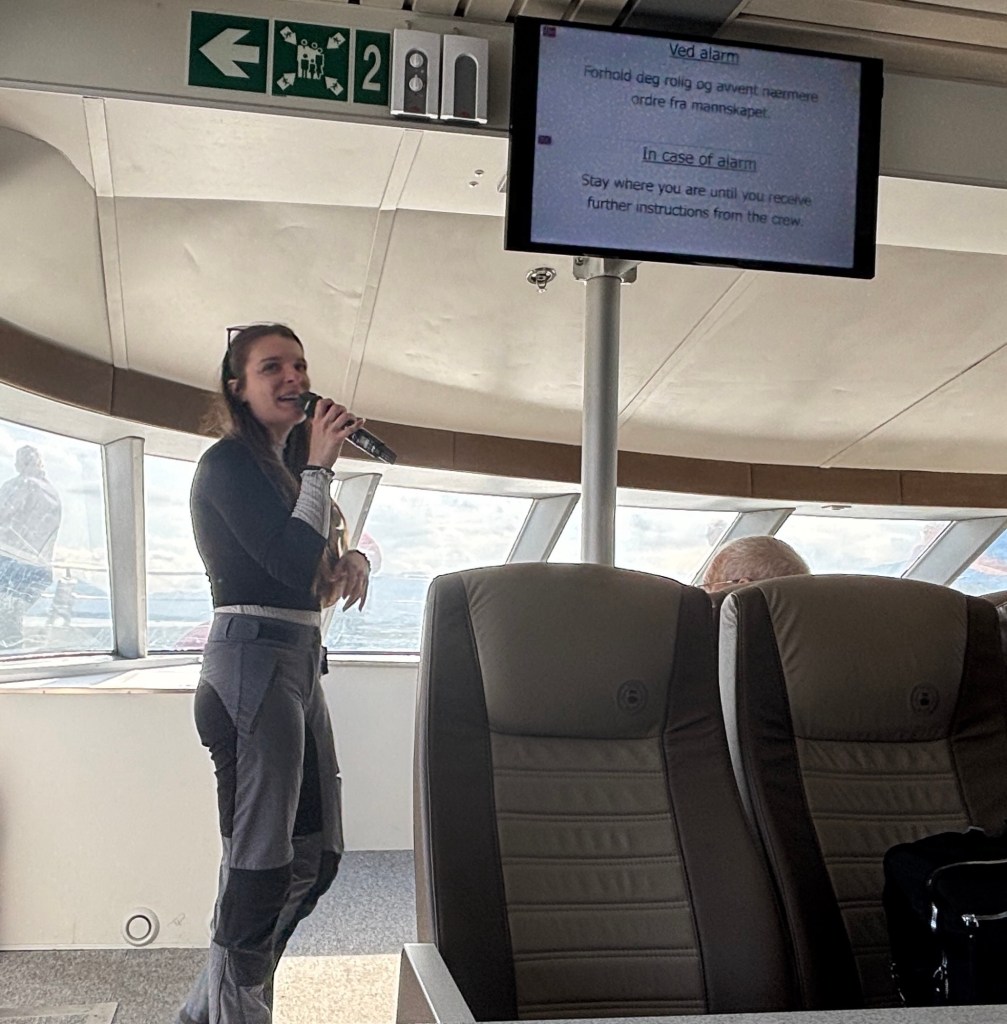
Two Cruises: Joining Friends on Nieuw Statendam

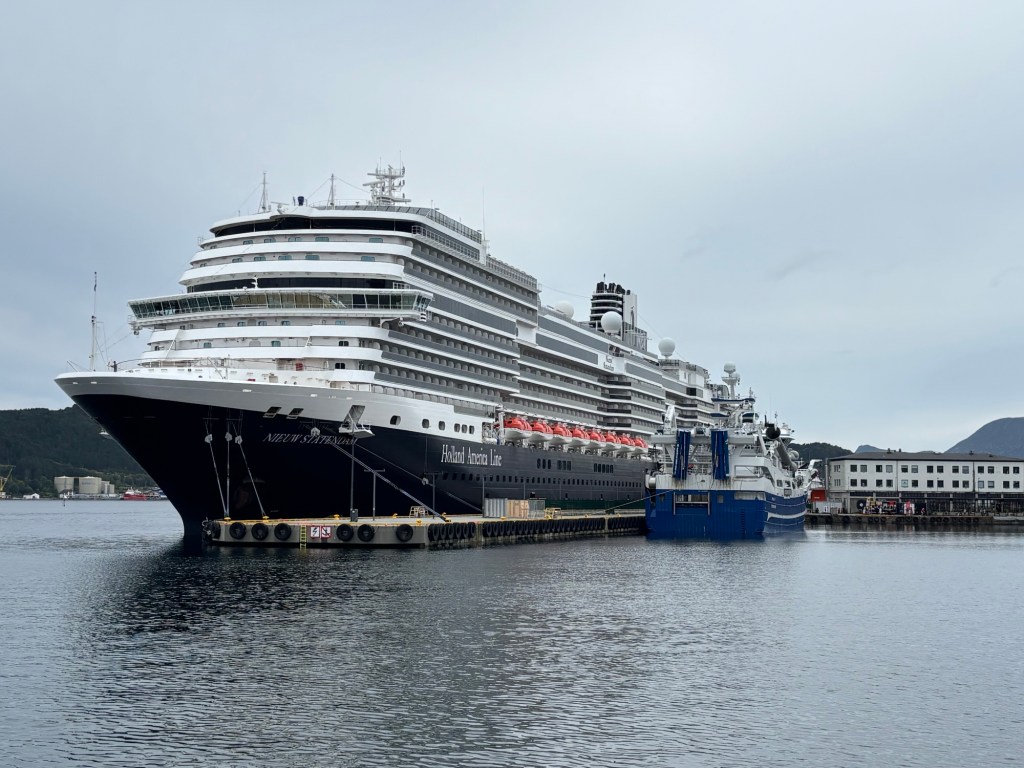
We were able to enjoy a relaxing morning in Rotterdam and walked a couple hundred yards to check in at the port.  We boarded Nieuw Statendam shortly after 11:00 a.m. on July 27th.

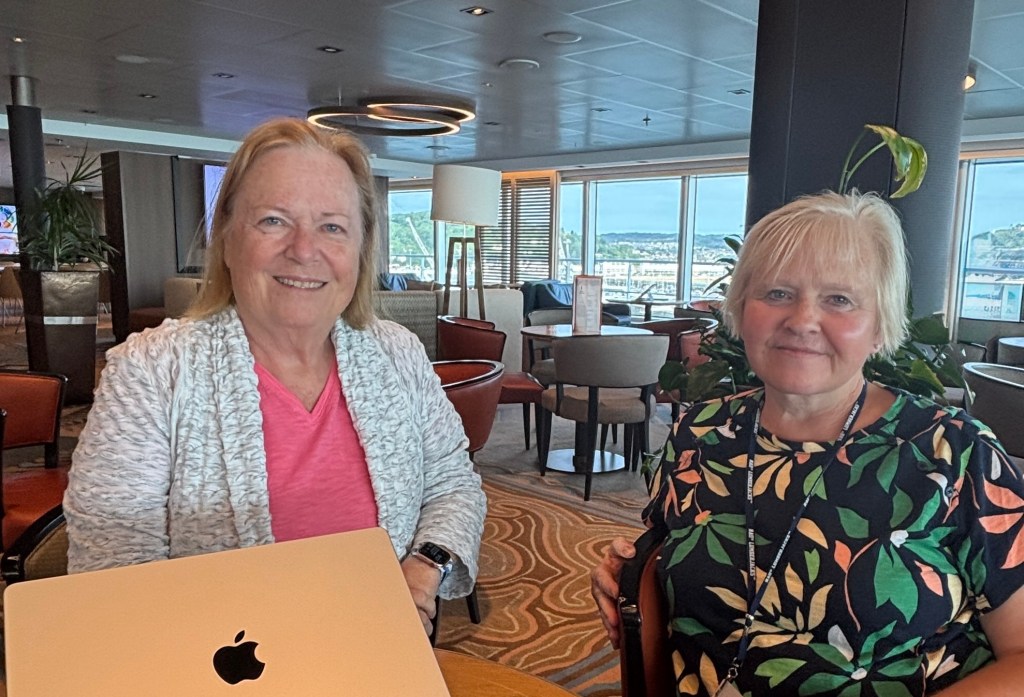
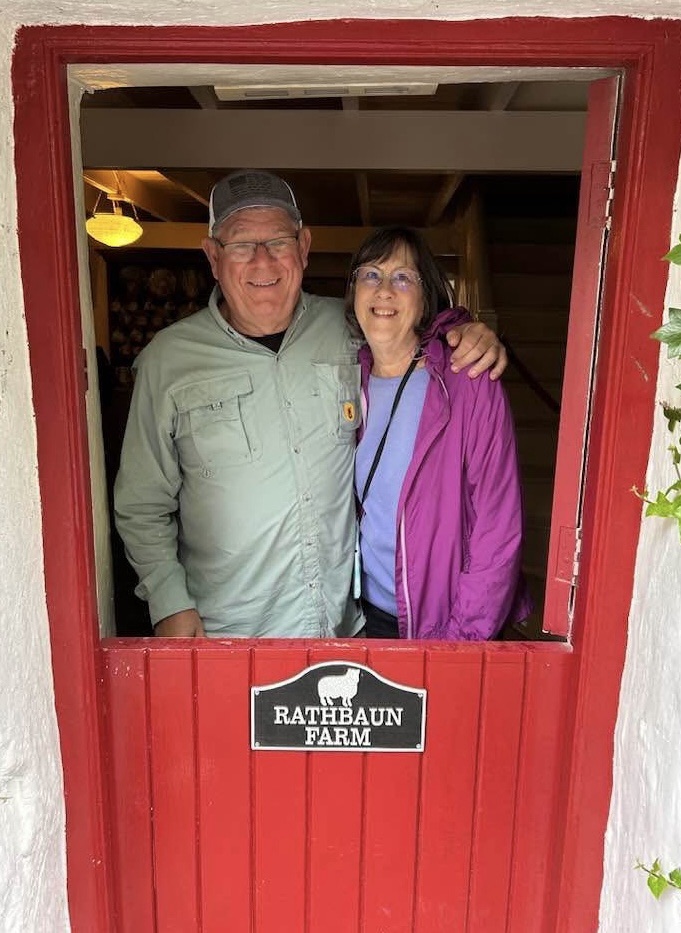
We were excited to begin our cruise titled Wild British Isles: Ireland’s West Coast with our friends Cindy and Darrell. Having boarded the day before, in Dover, they were on a tour to the windmills.

This was our fourth voyage on Nieuw Statendam, so we knew our way around.

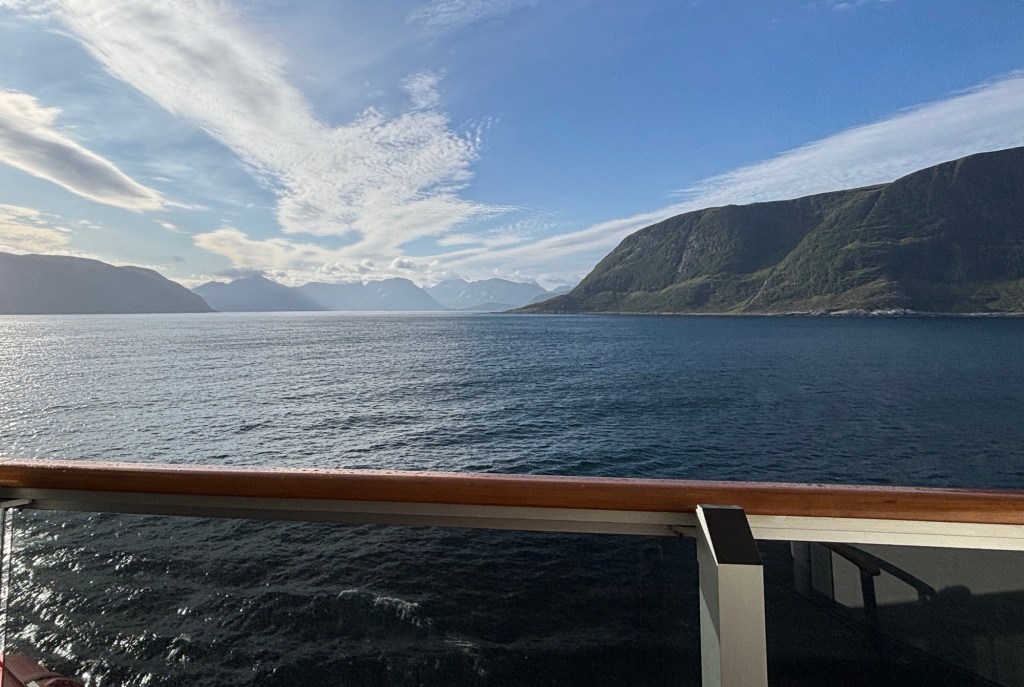
Our cabin was ready so we had a chance to explore our large balcony.  

It is large because of how the ship juts out a bit.  We had chosen the cabin specifically because of the balcony.

The inside was just like any other verandah cabin we’ve ever had on this ship – perfectly adequate.

We noticed this large door above the bed. We learned later it was a drop-down bed for converting our two person cabin to a three or four person cabin if also utilizing the sofa bed. 

We spent time unpacking and organizing. We will live in this cabin for four weeks!

We watched our safety video and went to our muster station as required.    

We saw, and talked briefly, to Boby who had been our room steward on the Westerdam seven months ago. He did not remembe us, nor would I have expected him too.

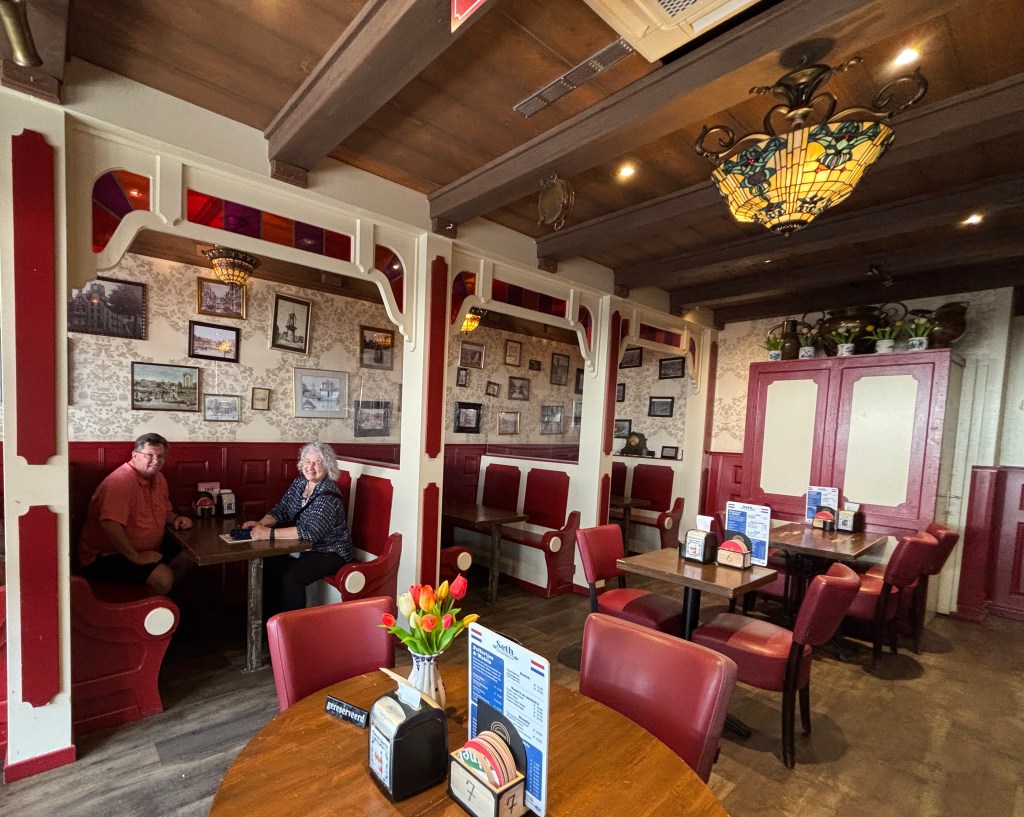
Emely, on the other hand, remembered Randy right away.  She had been a favorite, also on the Westerdam, and we knew to look for her. Unfortunately, her job at the Dutch Cafe won’t allow for more than occasional brief contact.

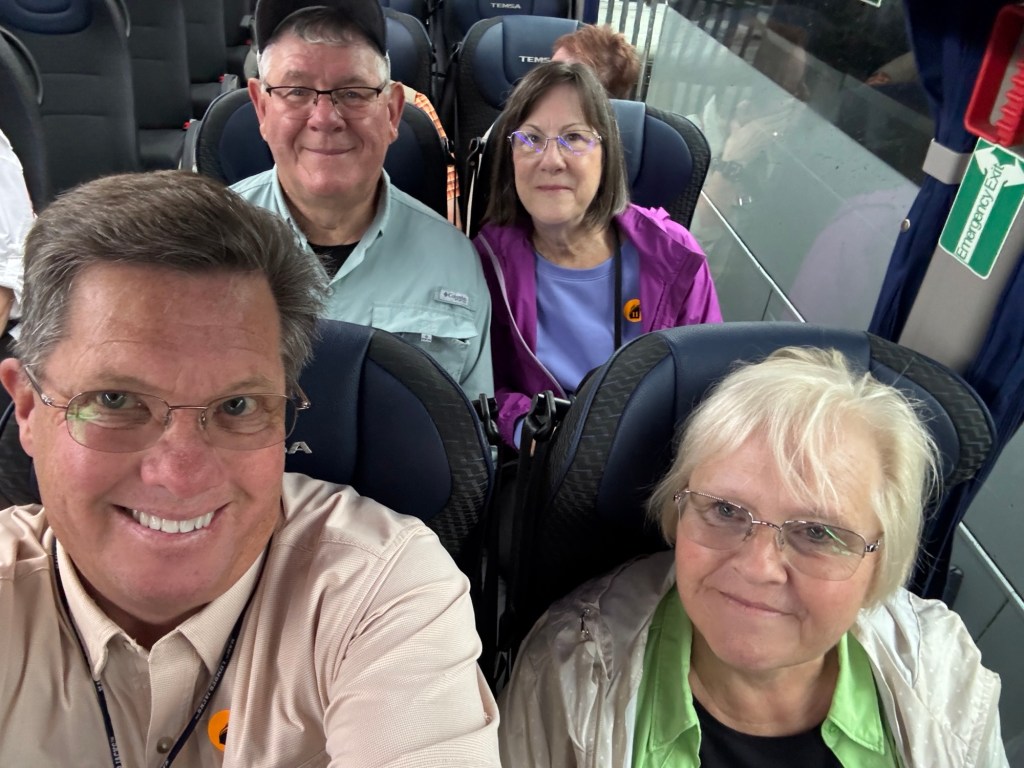
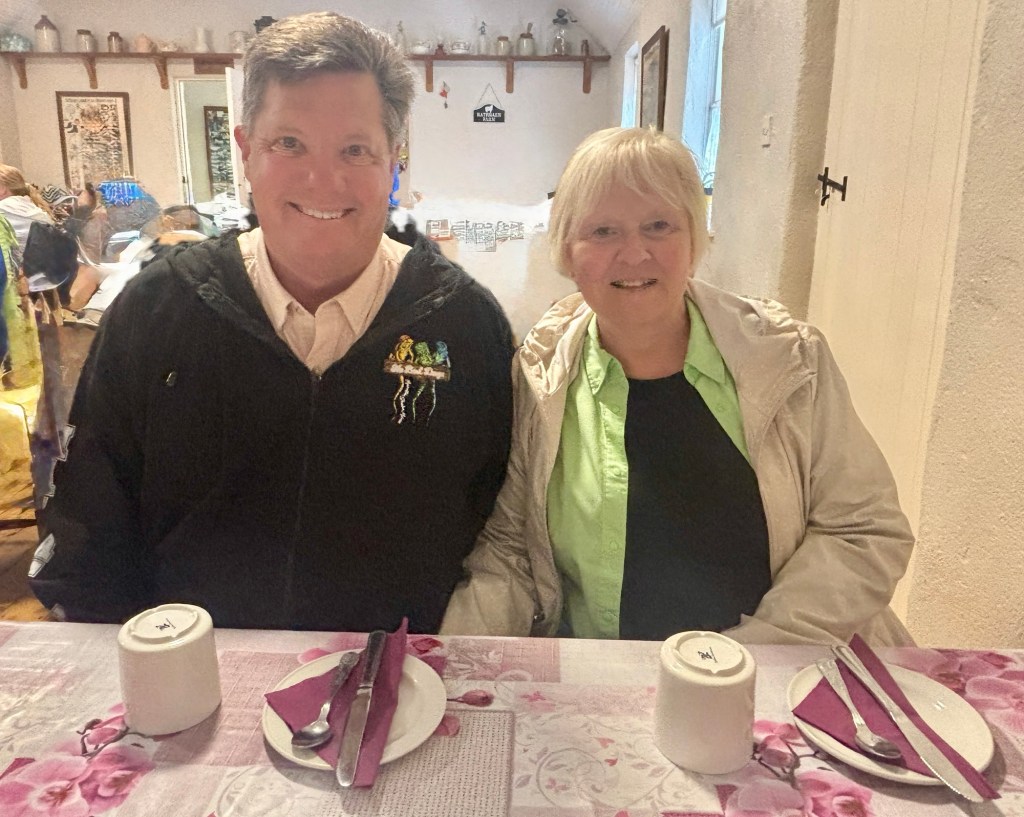
We were happy to connect with Cindy and Darrell later in the afternoon.

We see them each time we go to Boise but haven’t vacationed with them since 2023 – on the cruise that Randy got quarantined with Covid.

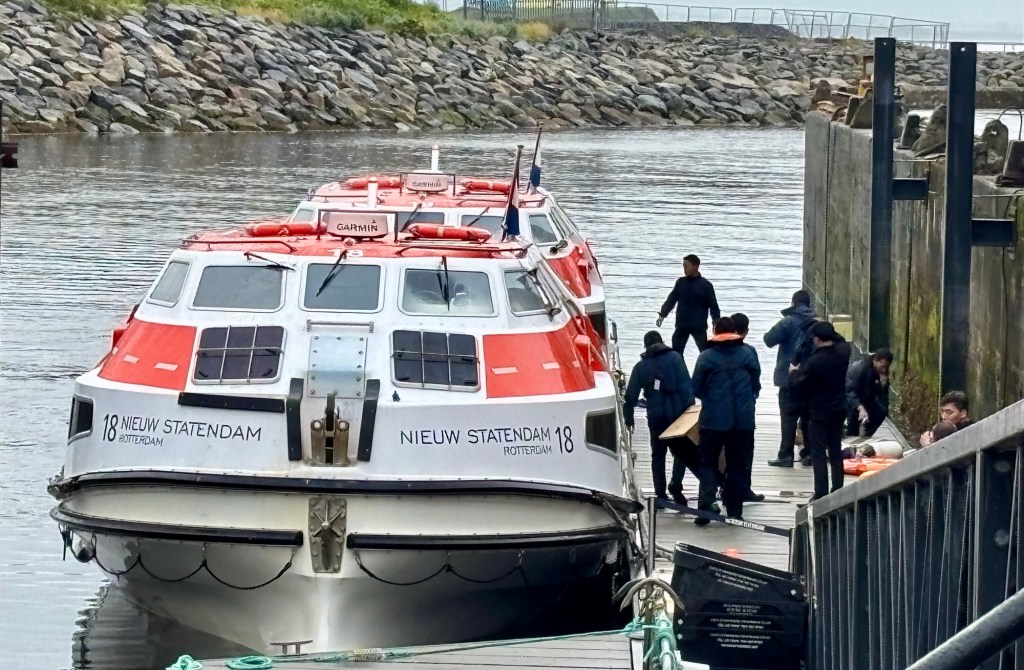
It is always interesting to watch provisioning activity.

As we sailed away, we had one more look at the Hotel New York.

Since 1871, there have been seven ships named Rotterdam that have sailed for Holland America. The seventh, and current SS Rotterdam, had been in port prior to Nieuw Statendam arriving.

As we continued out of the city, we saw the permanently berthed fifth Rotterdam, now a hotel and restaurant.  

This former Holland America Line flagship was known as ‘La Grande Dame.’   She began sailing in 1959 and was the first Holland ship to transition from “transportation” to cruising as we know it.

As Rotterdam V aged, she no longer met maritime safety requirements. With Carnival Corporation owning Holland America, the ship was sold. She was renamed, abandoned after bankruptcy, sold again, and then refurbished.

In August 2008, Rotterdam V returned to the city of Rotterdam and is now a member of the West Cord Hotels group.  If we return, we will surely stay onboard.

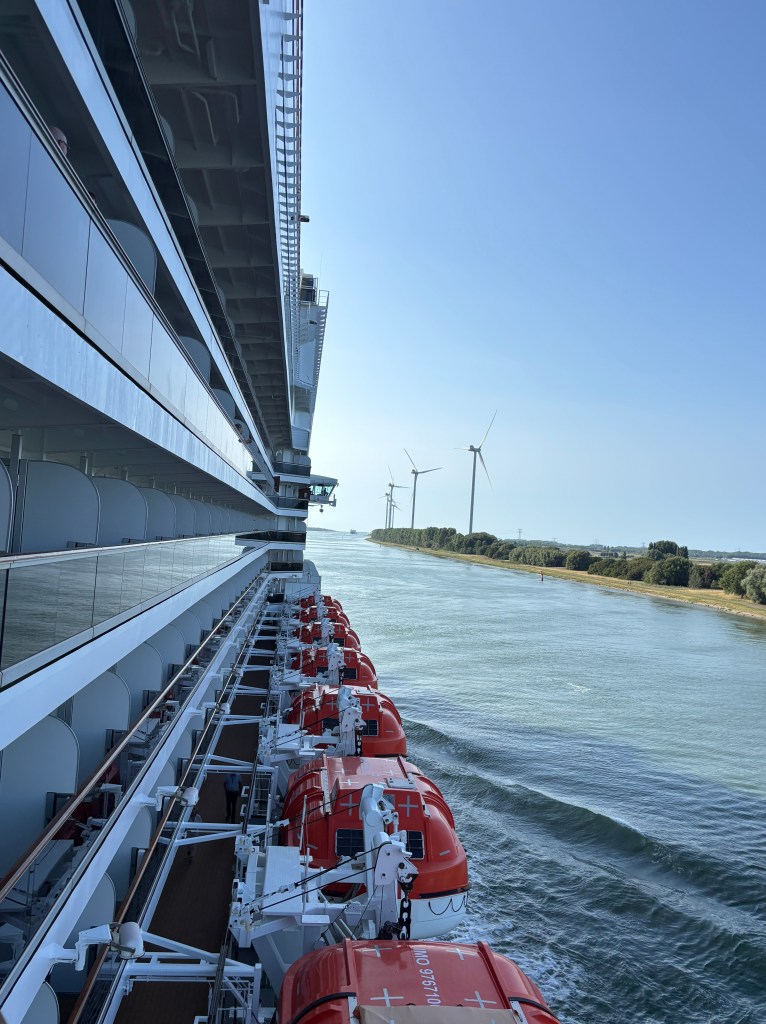
As we continued on, we saw miles and miles of the port of Rotterdam, the largest in Europe, and the largest in the world outside of Asia.

We enjoyed dinner with our friends and went to a first show.

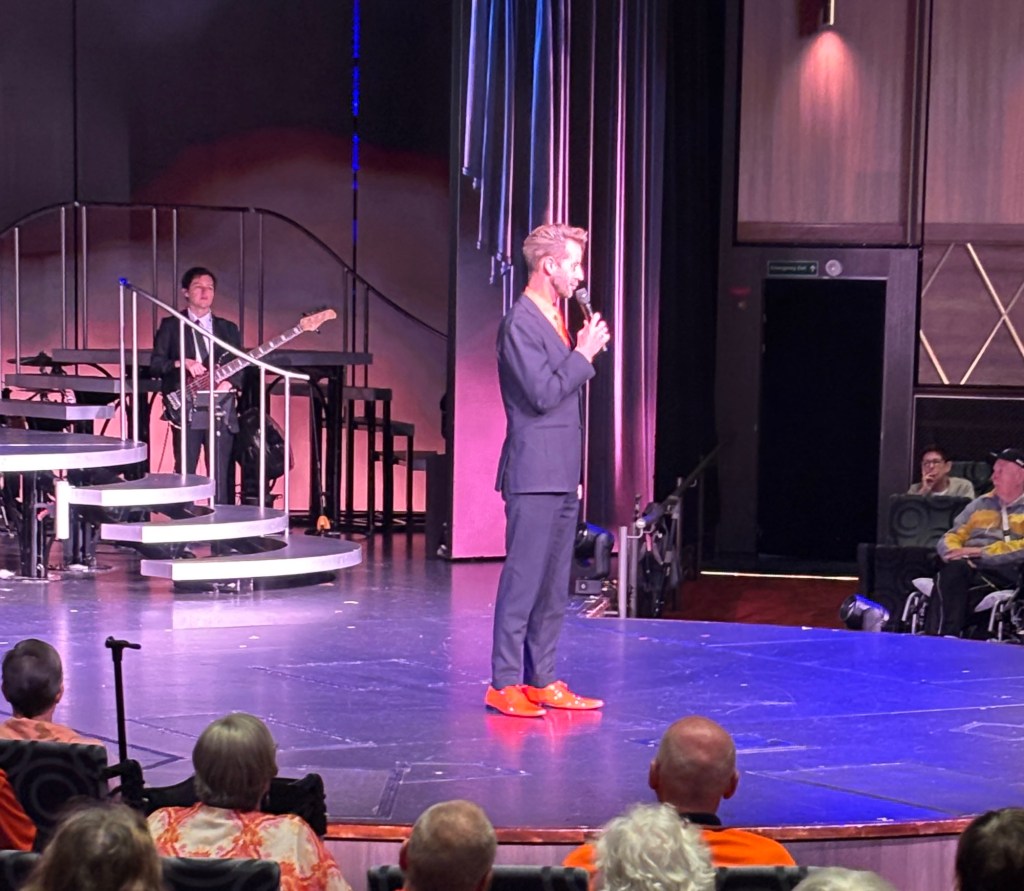
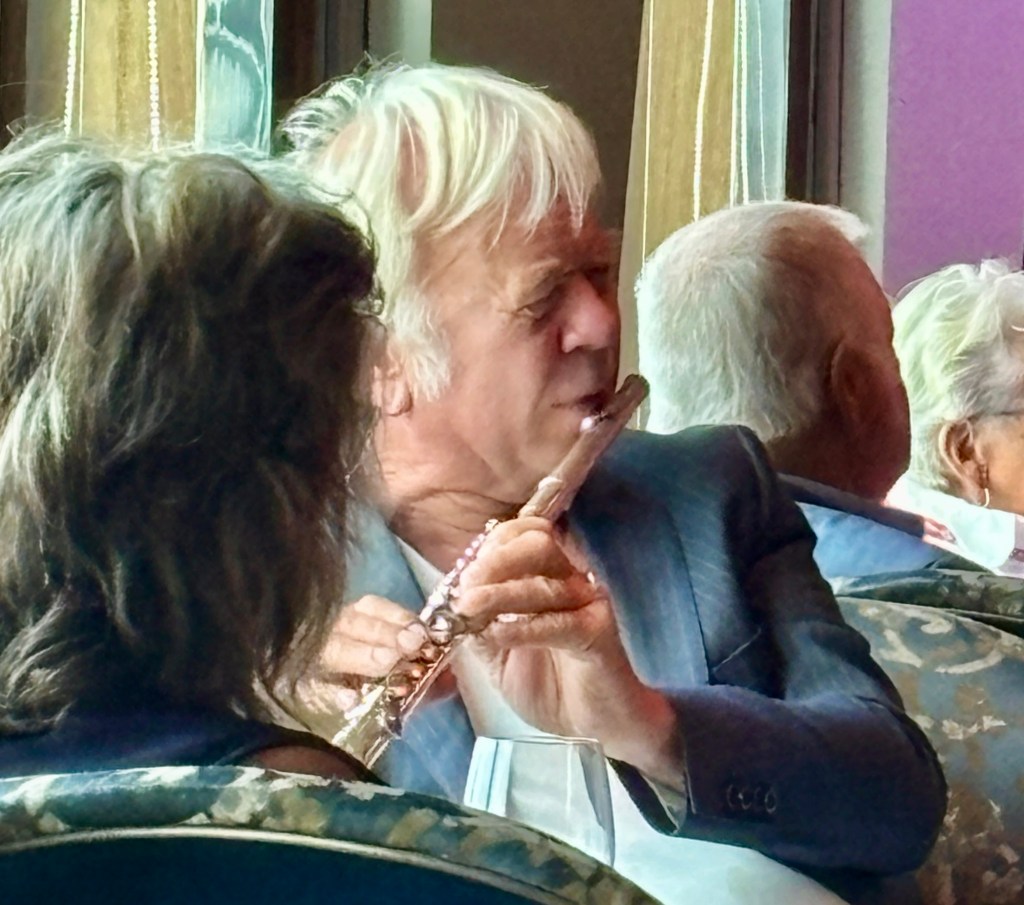
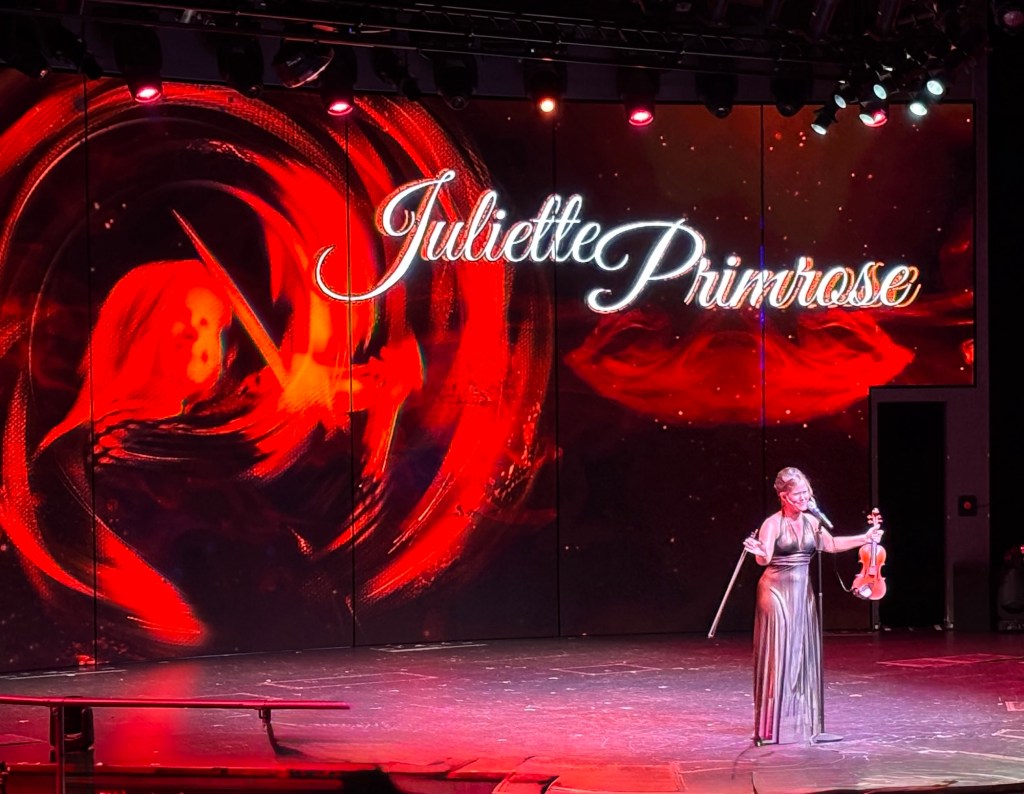
Harry the Piano was very entertaining.  Through most of the show he played songs of his choice.  In the final segment he created a medley of requested songs.  His trick is to weave the songs sometimes playing them in totally different styles if requested. Imagine “Don’t Cry for Me, Argentina” as a polka with “Stairway to Heaven” as a country song. He was pretty good!!

Overnight, and all the next day, we sailed to our first port of call, the Isle of Lewis in Scotland.

Posted in Uncategorized | Leave a comment

Two Cruises: Kinderdijk Windmills

Kinderdijk has been a UNESCO World Heritage Site since 1997.  This group of 19 windmills was built circa 1740 and is the largest grouping left in the Netherlands.  That was our destination for the day on July 26.

We had a private tour with a lovely young woman named Eleftheria.  She says she is totally Dutch but she had creative parents who chose her name which means freedom in Greek. 

As we walked across the Erasmus bridge she told us how most of the city center in Rotterdam is new since the Second World War.  Germany bombed the city into submission to have control of their port, the largest in Europe. The port stretches for miles, this is just the part viewable from the bridge.

The bridge is named for Desiderius Erasmus, a prominent renaissance humanist and a major historical figure in Dutch culture.

The bridge, also called The Swan, is a symbol of Rotterdam.  

We were riding on the bridge the night before in our Uber when one end went nearly vertical to allow a high masted boat to pass through. 

During that delay our Uber driver told us about the Hef Bridge, shown above, and how Jeff Bezos had coerced the city of Rotterdam to partially dismantle this bridge to allow his newly built yacht to pass under.  We were disgusted at the story. 

However, when El told us the story, she said that the city said “no” to the wealthy American and made him modify his yacht to be able to pass under.  We told her what we had been told the night before.  Although she was confident, El did the research quickly and confirmed that she was correct.  We liked her version of the story much more!

We learn repeatedly not to take everything tour guides or Uber drivers say as truth. Our Uber driver embellished a lot. He said when they dismantled the bridge to let Bezos’s boat through, they had to reconstruct it and used that opportunity to repaint it. Not only did they never take the bridge apart, it was never repainted.

The Hef is a vertical lifting bridge built in 1927 and was very unique for that time and is an iconic piece of Rotterdam.

We took a pleasant 45 minute cruise on public (boat) transportation to Kinderdijk.  This picture is Randy, of course, and the delightful El, or Eleftheria.

We passed a replica of Noah’s Ark. It was a little worse for wear, seemingly abandoned.

When we arrived at Kinderdjik, we missed the first few minutes of an orientation video. Seeing those minutes might have helped me but it took awhile to wrap my head around the fact that the canals and windmills were to get the water OUT. That was needed to make the land livable.  

Exposing the land also allowed them to cut out portions from the peat layer to dry and use as a fuel source. Some still use peat, centuries later.

We live in a desert in a decades long drought.  My mind always thinks conserve water and save every precious drop.  It just didn’t compute trying to get rid of the water so they could live in marshy lands below sea level.

Kinderdijk is Dutch for “Children dike” and named for the legend of a villager finding a wooden cradle floating after a flood. 

Inside was a child with a cat trying to keep it in balance.  This sculpture is on the grounds in commemoration.

The former queen of the Netherlands, Beatrix, was instrumental in making sure this collection of 19 windmills were preserved.   Seventeen are rented out as homes while two are set as part of site tours.

Apparently, this is the iconic windmill shot at Kinderdijk.

And here is proof that we were there!

We enjoyed touring the two available windmills and seeing how “millers” and their families lived through the 17th, 18th and 19th centuries.

We had an interesting talk with one man about his wooden shoes.  He wears them always, but said they must be paired with wool socks.

They are made from a renewable resource, protect his feet from getting wet and being stepped on by farm animals.  Finally, they can be firewood when they are used up.  He says a pair lasts him about eight months.  In hindsight, we failed to ask how he knew when a pair needed to be replaced.

We visited a large building that held the steam engines that took on water pumping after the windmills.

Nowadays, water experts, using modern technology, play the chess game of how much water to remove, from where, at any given time, considering present and presumed precipitation.

At the end of our tour we rode the boat back into Rotterdam. 

We decided to avoid the long walk back across the bridge. We got tickets aboard a second boat, a water taxi, for 10 Euros (about $11.50). It was a great choice.

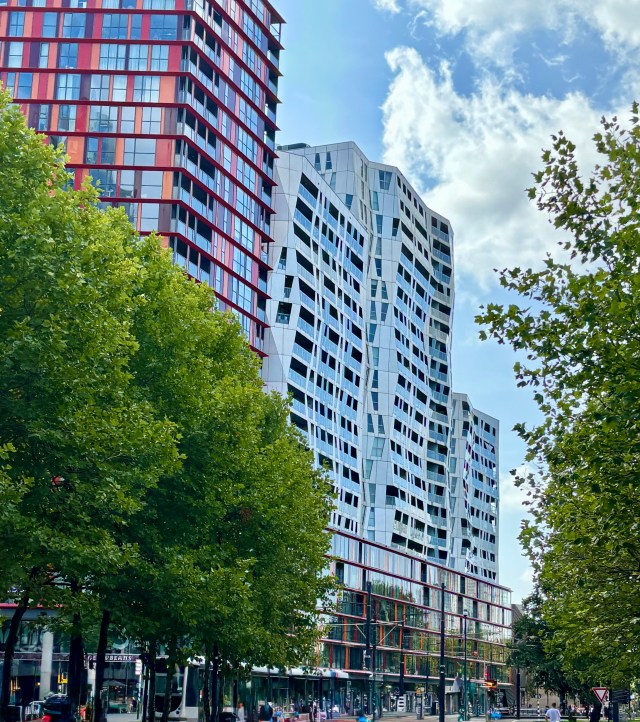
From a different angle, we could see an interesting sky scraper behind the Erasmus bridge.

It was also interesting to see our Hotel New York from the water. It was a nice stay in Rotterdam!

Next Up: We board the Nieuw Statendam, catch up with friends Cindy and Darrell, and begin our first of two cruises.

Posted in Uncategorized | Leave a comment

Two Cruises:  Amsterdam Food Tour

We were still in Amsterdam on July 25th.  We had a food tour scheduled in the afternoon after our Anne Frank House morning.

We met our guide, Roman, and our fellow food tourists.  Roman was amazing in how he instantly knew everyone’s name.  He does two tours almost every day so it isn’t like he could study them.

Roman began by taking us to a flower market that opened in 1871.  It is open everyday.  The Dutch originally acquired tulips from Istanbul and currently send out two billion tulips a year.  The growing season is March to May.

It wasn’t until we got to the back side that he showed us the flower market is really floating on the canal.

We stopped for Gouda cheese, which is aged beteeen two weeks and two years.   Each Dutch person eats about 34 lbs of Gouda cheese a year.  Edam is also a local cheese.

We started by watching a video about this dairy farmer’s ways.  His philosophy is that happy cows make the best milk and the best cheese.  His cows can be outside in the pasture or they can be reclining on soft hay in the covered area.  They can be milked or not as they feel the need.  The video showed how the cows walk themselves to an automatic milker.  We all loved this farmer.

The cows did make delicious cheese.  We were able to sample about 20 kinds of cow, sheep and goat cheese. 

My favorites were the “goat cheese extra old” and “rosemary and thyme.”

Randy said he liked them all.  Several in our group bought cheese but we were in a hotel without a refrigerator heading to a cruise ship.

Our next stop was for take away grilled cheese sandwiches made with edam, gouda and cheddar cheeses.  The dip had a mayonnaise base.

We walked a bit and came to a unique part of the city.  There are 105 women who live in this protected community of apartments. It is designed to give childless, unmarried women, 35 and older, with limited income, a safe community. 

There used to be more of these communities around Amsterdam, some run by the church, and later by the city.  Visitors may access the public courtyard during specific hours.

The last wooden house in Amsterdam is here.  It is over 600 years old.   Many houses in Amsterdam were once built of wood, but repeated fires initiated a required change in materials.

Directly across from each other are Protestant and Catholic Churches.  Both are active and allow participation from outside the women’s community.

The Netherlands was ruled by Spain for many years and was, thereby, Catholic.  When it became independent, the country became protestant. In tolerance, they allowed some Spanish Catholic churches if they were “hidden”  

This Catholic Church was one of them.  There is nothing denoting a church from the outside construction.

When the Dutch became protestant, they became Calvinists. Calvinists didn’t allow themselves pleasure in food.  As a remaining characteristic in Dutch culture, food preparation and eating is done as efficiently as possible.

Thus, our next food stop was for take away fish. 

Our group circled around and ate from the top of a trash can!  Roman did clean it off and gave us hand sanitizer.  It was kind of strange, but it worked.

Our first “course” was herring with pickle and onion.  I try to be a good sport in these settings and eat a little of everything – even things I think I’ll hate.  I didn’t hate the herring – but the dominate taste was the pickle so that helped.

The second sampling was kibbeling, or fried cod.  It tasted just like any fried fish to me, but Randy liked it.

Roman continued to push around his bike as we walked from place to place.  He had some things for us in his packs.  His bike is a rental for €19 per month. The rental price for tourists is €15 a day.  The rental shop will fix anything that needs to be repaired and replace it if it gets stolen as long as he can prove it was locked.  Proof is having the key, removable only if the bike is locked.

Roman stressed repeatedly that Amsterdam is very safe BUT over 500,000 bikes are stolen every year. He said it’s a national craze.

Hans Egstorf is the oldest bakery in Amsterdam. We stopped for stroopwafels. 

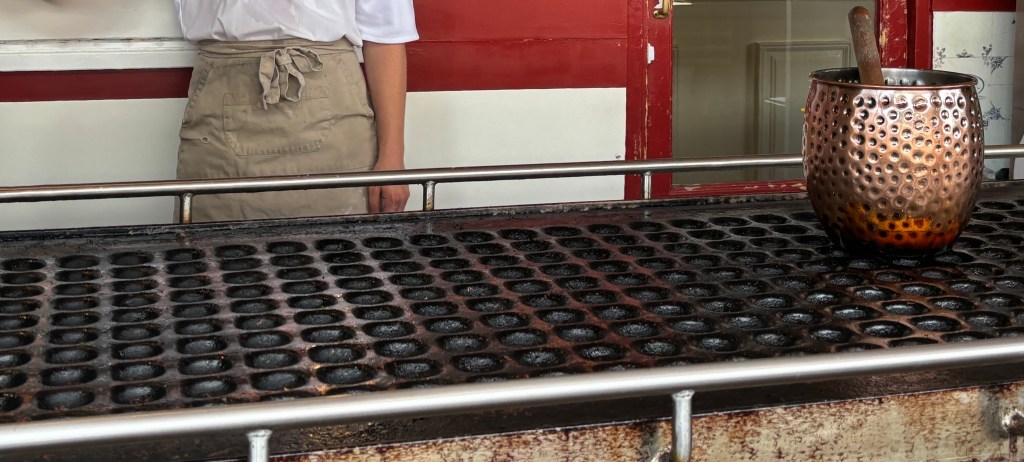
We have had the crisp, packaged version before but not ones hot out of the waffle iron.   They had a ginger/clove taste with caramel flavoring in the middle.

Food tours are interesting, not just for the food, but for the quirky things you learn.  

A coffeehouse sells canabis, not coffee.  This one is owned by Mike Tyson.  If you really want coffee, go to a cafe.

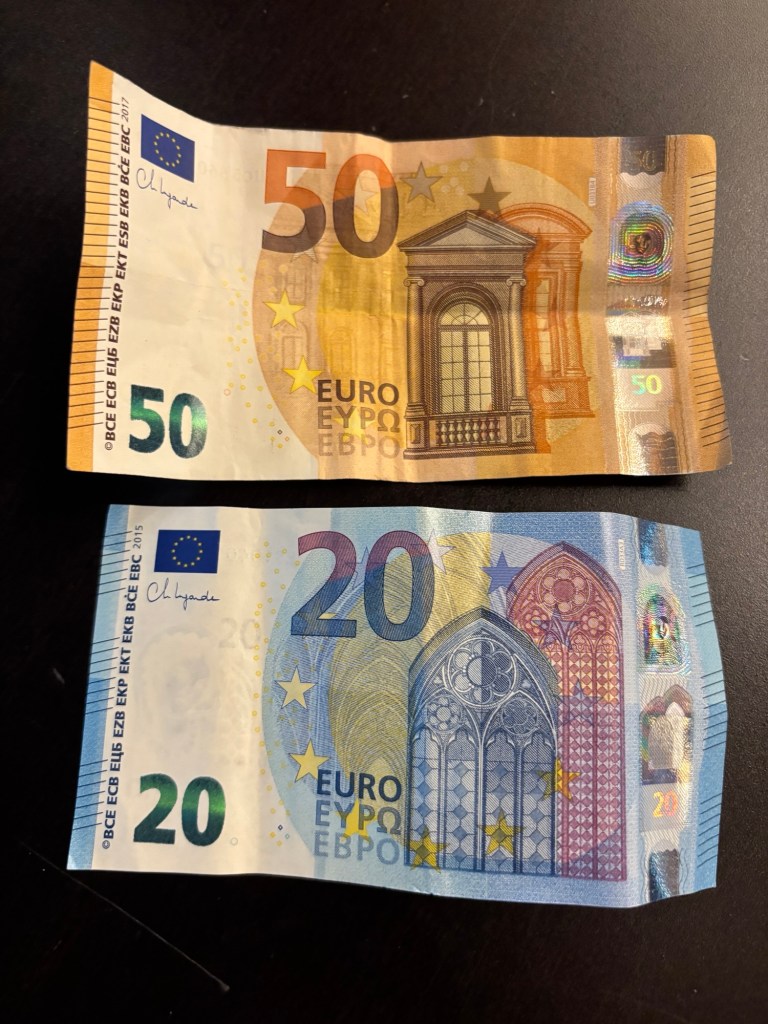
We had gone to a cafe to get coffee right after arriving in Amsterdam that morning. Mostly, we wanted to get change from a 50 Euro bill.  The proprietor said she couldn’t make change so early in the day but explained how people get change in Amsterdam.  She directed us to a nearby grocery store to buy a small item.  She said to use a checkout machine that would take cash to get the change back.  I’m sure it was comical for others to see how confused we were because there were no directions in English.  The young man behind us, who wanted to use the machine, helped us.

And the most fun story we heard – The Netherlands gained independence from Spain and became the first republic in Europe in the 1630s.  However, the Dutch eventually chose monarchy and were ruled by descendants of conquering hero William the Orange.   According to the legend, farmers crossbred carrots to give them an orange color to honor their monarch.  The orange carrot color grew in popularity, spread around the world, and became the dominant color.

Most houses in Amsterdam lean forward with a hook near the roof.  This allows for packages and furniture to be hoisted up.  The stairs within the houses are usually far too narrow. 

Our food tour group crossed the largest canal bridge in Amsterdam. The bridge had many people on it but I have learned how to edit them out.  Amsterdam was plenty crowded that day – just not in my pictures.

The bridge used to have prison cells underneath it and one enclosure is still visible.

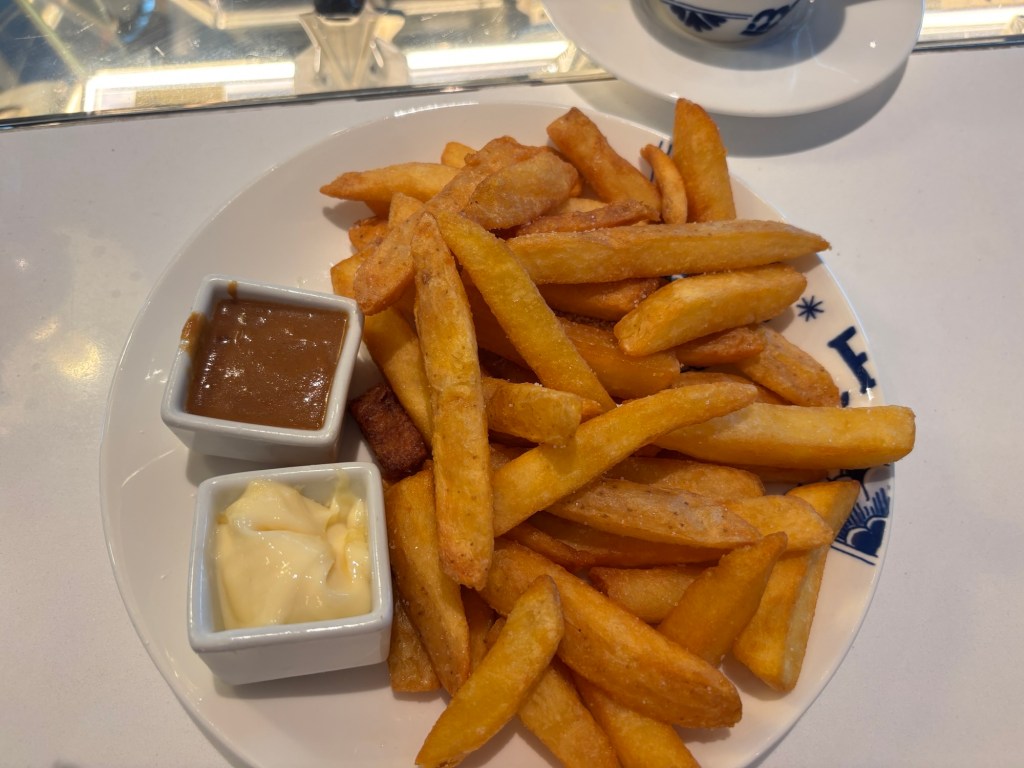
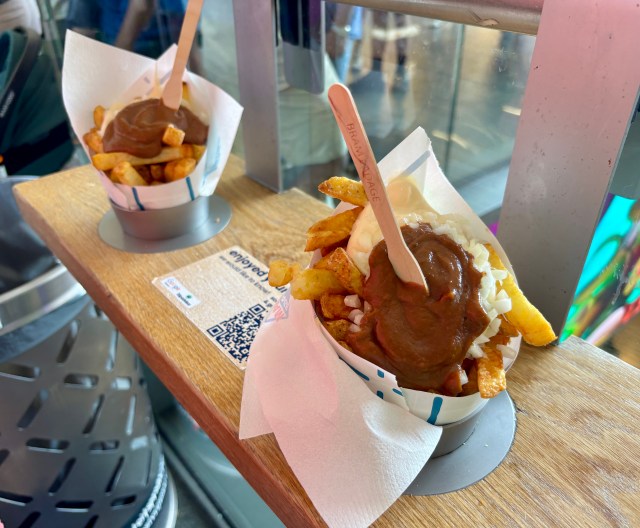
Our next course, again as take away, was french fries with a mayo curry sauce.

Then we had a kroketten, or beef filled croquette.  It was pretty good.

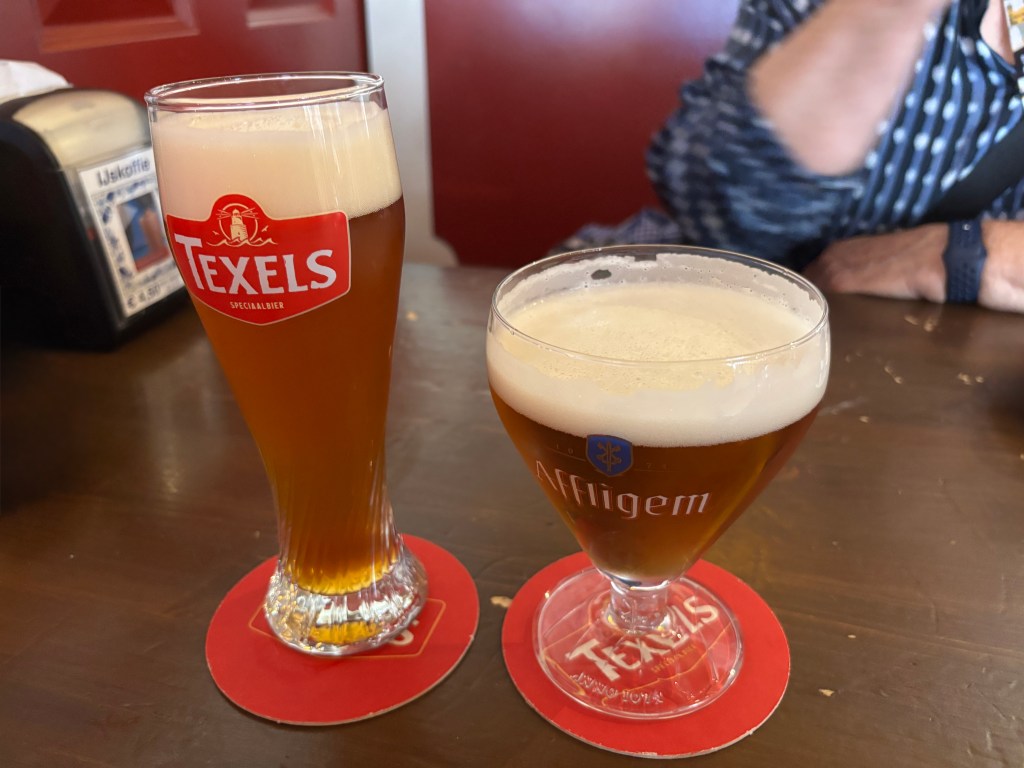
The only time we sat in a restaurant during our three hour tour was for our final course – Dutch apple pie!  We had Dutch beer with it!

Food in the Netherlands is generally simple, frequently fried, and quick to prepare and eat, usually while standing.   There just isn’t a foodie culture here. The food tour though, was still a blast!

Next up:  We learn about something that really is part of the Netherlands culture – windmills.

Posted in Uncategorized | 1 Comment

Two Cruises 2025: Anne Frank Day

We woke up in Rotterdam about 4:45 am local time on July 25, very happy to have slept as long as we did after our long travel day.

If you read my post on planning this trip, you know that getting tickets to the Anne Frank House was a significant endeavor fraught with illness, time change, international credit card fraud and persistence.  Okay, that is exaggerating a bit, but all aspects are somewhat true. Today was Anne Frank Day.

We had breakfast at the hotel and engaged an Uber to the train station. 

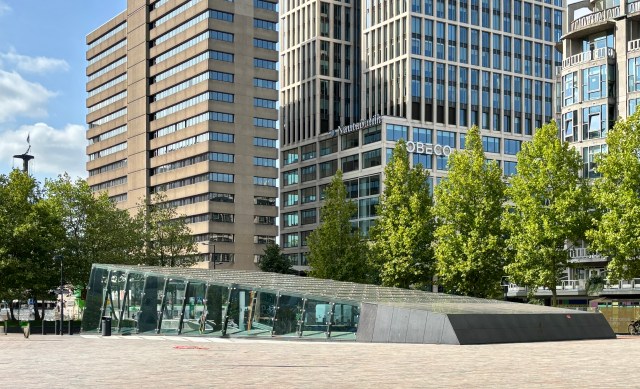
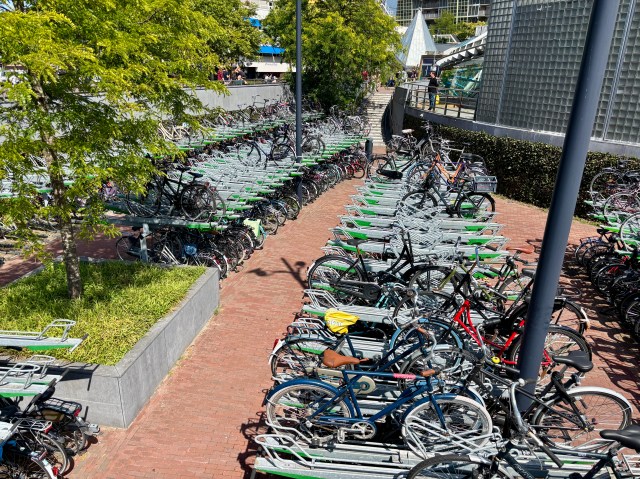
There were so many bicycles parked outside the station.  Bicycles are the prime mode of transportation in the Netherlands and seem to have right of way over everything.

The station uses a tap-on tap-off system like we have experienced before.  Of course, we generally have no idea how much we will be charged for these European mass transit activities, but it is never very much. 

We had a general idea of where to go from the helpful desk agent at the hotel.  We tried to look at the information boards for confirmation and understanding.  However, for a country in which everyone seems to speak some amount of English (thank you very much) there is almost no signage in English.  

We did recognize these!

We had to pay, again by credit card, to use the water closets. The funny thing was that women paid .5 Euros and men paid .9 Euros. Would that relate to which had to be cleaned more often?

The trains were electric and very quiet. The platforms were clean.

We were pretty confident we were in the right place.

We boarded and sat down to enjoy our ride to Amsterdam.  We were talking quietly when were shushed and told that we were in the silent car.  The woman pointed to the notice below the window.

We were novices and happy to learn – also very happy to accidentally be in a silent car. We had 75 minutes of silence to Amsterdam Central.  The trains interior was very clean.

These fields were for flowers, but past their season.

Again, although everyone we had interacted with for the last 24 hours spoke some English, the announcements on the train were only in Dutch.

Upon exiting the train, we followed the crowd out of Amsterdam Central, remembering to tap out. (We later learned that our tickets were the equivalent of $22 USD each.) 

Looking at Maps on our phones, we decided we would walk to the Anne Frank House.

A few things looked familiar from when we were in Amsterdam 18 months ago.  Northern Lights Cruise: Amsterdam is the link.

Today was the day to absorb what happened right here in Amsterdam during the Holocaust.

There were between 25,000 and  27,000 Jews in hiding in the Netherlands,  1/3 of whom were eventually betrayed.  Families were often separated while in hiding as it was less of a burden on the people providing shelter to care for one or two people rather than an entire family. 

These are pictures we took from outside. No photography was allowed inside.

We had timed entrance and then followed a tight queue throughout the building.  We saw the offices where the “helpers” worked. The helpers were four employees of Otto Frank who assisted those hiding by providing food and other essentials. Since we had both recently read books about the betrayal of Anne Frank, all of the names and events were familiar.

The place was different than I expected in that all the rooms were so compact.  That should have been obvious given the narrowness of the building.  We went up several flights of steep narrow stairs, with one or two rooms for offices on each floor.

This picture is of the bookcase that hid the opening to the stairs going up to the secret annex.  This picture is from the website and is exactly what we experienced.  The bookshelf is original but is encased.

Once in the annex, Randy noticed how squeaky the floors were.  That was just a reminder of how quiet the eight people in the annex would need to have been during the day.  There were four in the Frank family, three in the Van Pel family and Fritz Pfeffer.

We were able to walk through each of the annex rooms including one for Mr and Mrs Van Pel that also served as a communal room.  There was a bedroom for Mr and Mrs Frank and older daughter Margot, and another for Anne Frank and Fritz Pfeffer.  Anne’s side of the room was decorated with magazine clippings and photographs.  The only room we did not see was Peter Van Pel’s room in the attic, accessible only by ladder.  

Where the office rooms had been smaller than I expected, these rooms seemed larger.   However, I do not doubt that they felt very small to the eight people trapped in them for over two years.  There was very little natural light.

The occupants of the secret annex were betrayed and captured in August 1944.  They were on the last transfer to Auschwitz.  Anne and her sister were transferred to Bergen-Belsen and died in February or March 1945, just weeks before the end of the war.  

They were so, so close to making it through.  The only one of the eight to survive was Otto Frank, Anne’s father.

Before we left the museum we had an opportunity to see Anne’s diary and other pages she had written on when the diary was full.   Her writings started as her way to express her feelings about life.  She then decided to re-write and focus on telling what happened during the war so it could be known.  This picture is from the website. We saw the diary opened with her writing visible, but just for moments.

Anne wanted to make a difference in the world.  She accomplished that, probably even more so because of her death.

World, do better!

Next up: An Amsterdam Food Tour.

Posted in Uncategorized | Leave a comment

Two Cruises 2025: Phoenix to Minneapolis to Rotterdam

July 23-24, 2025

It was nice to have a reasonable start to our travel day to begin our trip! Our friend picked us up at 8:00 a.m. to take us to the Phoenix airport. 

Upon arriving, we learned our flight to Minneapolis was delayed for one hour.  We purposely had a five hour layover to avoid flight delay concerns so it was no problem for us. Unfortunately, not so for others.

The pre-flight safety video highlighted Delta as the first airline to 100 years old.   Segments were presented by people in period outfits by decade.

We made it to Minneapolis and had dinner and wait time in the Delta lounge.

Our next flight was Minneapolis to Amsterdam.   The gate attendants used facial recognition during the boarding process. That was new to us.  It worked well but made boarding slower than usual.

The 7:33 minute flight was uneventful. We slept for a few hours. 

Welcome to the Netherlands, the land of bicycles!

We had an hour Uber ride to our hotel in Rotterdam.

Usually I am happy to take recommendations from our travel agent regarding hotels, but this time I told her where we wanted us to stay. 

The Hotel New York is located in the 1901 headquarters of the Holland-America Line.

Unfortunately, the employee who gives the guided tours was on vacation so I got what I could from hotel placards and the website.  I will intersperse the timeline with pictures from around the hotel.

The initial business was Nederlandsch Amerikaanse Stoomvaart Maatschappij.  It was renamed Holland America Line in 1896.

A warehouse was added at the back of the headquarters in 1908.

In 1913 the office was expanded with a 38 meter high tower.  A second tower was added in 1917.  

There is a clock on one tower and weather vane on the other.

A scale model within the hotel shows Holland America’s SS Nieuw Amsterdam, built in 1938, as a luxury liner.  It was painted gray and stripped down to be a troop shift during World War II. Because of its speed and strength, it sailed without convoy between the United States and Great Britain.

After the war, Nieuw Amsterdam returned in glory to Rotterdam.  She was re-appointed inside and outside. In 1947, she returned to passenger service. It sailed its last voyage from Rotterdam to New York in 1971.  The SS Nieuw Amsterdam was scrapped in 1973.  That seems an unfortunate end for such a historic ship.

In 1971, with increasing competition from aviation for general transportation, the Holland-America Line (HAL) decides to focus on the American cruise ship industry.  Corporate headquarters moved to Seattle in 1977.

The former headquarters building in Rotterdam was sold in 1984. By 1988, it was occupied by squatters.  That same year, the city of Rotterdam purchased the building.

In 1981, hospitality developers began transforming the property into the current hotel and restaurant, officially opening in 1993.

These are of our room.

These are from the lobby and common areas.

From the hotel’s website:; 

Despite numerous improvements, the building still reflects its rich history, shaped in part by the hopes and dreams of thousands of migrants who embarked on a new adventure from here: a life in the land of opportunity: America!

This picture has the old hotel with modern buildings around it and also a door in the foreground.  There is no explanation about the door nearby, but may be symbolic of emigrants from Europe opening a door to a new life in the Americas.

The park around the hotel and pier is quite nice with green space and artistic features.

The hotel is very close to the pier as evidenced by this picture – probably not more than 100 yards.

The AIDAperla was in port and quick research revealed two interesting facts.  First, this ship was built by Mitsubishi in Nagasaki,Japan.  Most ships we are aware of seem to be built in Italy.  Second, a crew member from the AIDAperla went missing and was presumed overboard in 2023.  A nine hour search failed to locate the crew member and was called off.

We had a nice dinner at the hotel restaurant, got instructions for the train to Amsterdam for the next day, and called it an early night.

Next Up: We make it to the Anne Frank House.

Posted in Uncategorized | 1 Comment

Trip Planning for Our Next Adventure

The genesis of our next big adventure was a phone call from Cindy, one of our close friends from Boise, in late summer 2023.  She was interested in a particular Holland America cruise because it included western Ireland and asked if we were interested. Of course we were in!  We love traveling on our own, but also appreciate the opportunity to go with friends and family.

We have been fortunate to travel internationally with Cindy and Darrell several times over the years – as well as many times in our RVs.

We have been on two cruises with them. The first was to Alaska and the second was the infamous cruise to Quebec City when Randy was quarantined with COVID.

Shortly after talking with Cindy, Randy and I were on a Holland America cruise.  Being on the ship allowed us to get extra perks when booking the new cruise.

Almost two years out, we had our choice of cabins.  I pay attention and make notes about unusual cabin attributes and how to find them on deck plans. We selected a verandah cabin with an extra large balcony. Ours is V6115 – visible on the bottom right of the picture below. The extra gray lines indicate the larger balcony.

There aren’t many of these cabins on the ship and we felt fortunate to get the same cabin for back to back cruises. More on that in a minute!

This is the map itinerary for our Wild British Isles Cruise with Ireland’s West Coast – with Cindy and Darrell.

Because we were going all the way there, we decided to add on the next cruise as well, Viking Trails and Celtic Origins. There is a bit of overlap but its lure is to cruise around Iceland.

Once the trips were on our calendar, I started collecting information.   I don’t think I’ll ever get the British Isles vs Great Britain vs the United Kingdom committed to memory.  Hopefully, being there will help.

The map of the United Kingdom seems a bit more straightforward.

We went to a class and watched a Rick Steves show about visiting Iceland – quite the trendy thing to do these days! 

Cruises are usually fully booked so it is essential to purchase the shore excursions you really care about early on.  The first excursion I booked for these cruises was in April, 2024 – over a year out.

I’ve also researched and booked several tours in Rotterdam and Amsterdam including food tours, Kinderdijk windmills and The Hague. Randy is pretty flexible and, after all this time, I have a good idea about what he will like and not.

For the first time, we had to submit an application to enter the UK.  It wasn’t hard or expensive, but struck me as sad that it is now required given the state of the world.

Cindy and Darrell are getting on the ship in England, a day before us, so they can visit London.  I opted for us to begin in Rotterdam for two reasons.  First, I wanted us to stay in the New York Hotel, the site of the original Holland America offices that so many emigrants passed through heading to the United States.  I’m sure I’ll be writing about that later.

Even more important to me was for an opportunity to go to the Anne Frank House in Amsterdam, a short distance from Rotterdam.  We were in Amsterdam briefly last year and saw the house on our canal tour.

I can tell quite the dramatic story about my quest for tickets to the Anne Frank House! It involves researching the exact day and time tickets became available for the day I wanted us to go.  (They are released a week at a time.) Tickets became available at 1:00 am on June 10, 2025.  It was also the night that this girl, who rarely gets sick, had the flu.  I set an alarm and was on my computer at 12:55 am. I had done web site recognizance so had an idea of what would happen. The moment the queue opened, I was number 305 – I chose my tickets but accidentally checked Visa when the number I put in was for Mastercard – Declined.  I got back in the queue and was number 680+. This time, my credit card was declined for suspected foreign transaction fraud.  I told the bank the charge was fine but it was too late – Declined.  I got in the queue a third time and was person 1350-ish.  My hopes were diminishing but I tried again and was able to reserve tickets for only 30 minutes past my target time.  I just needed to be able to pay for them!  I put in the same card, hoping it would go through, instead of beginning all over with a different card. It worked!  A stressful 20 minutes after I began – I HAD TICKETS to the Anne Frank House! 

I keep a travel book list, always adding to it when I hear of a book set in places we might someday visit.  I really enjoy having a sense of place when we travel.   A couple months ago, I went through all the possibilities I had gathered and condensed it to 3-5 books per country. I knew I wouldn’t get through that many, but its a goal!

Since we start our trip in the Netherlands, I began by reading The Map Colorist.  In 1660, Amsterdam was the map printing capital of the world. Colorists enhanced the maps with simple or elaborate paints and decoration. The main character is a young woman in a man’s world.

My second book was The Last Painting of Sara De Vos,  partially set in the 1600s. The Dutch Golden Age included artists such as Vermeer and Rembrandt. Artists were mostly men and members of artistic guilds.   Again, the main character was a woman in a man’s world.

I read two books on the internationally researched cold case of who betrayed Anne Frank.  The Betrayal of Anne Frank is, by far, the better book. Randy also read this book, expanding his knowledge of Anne Frank.

In addition to reading, I listened to a variety of podcasts including Scottish Blethers, and pertinent episodes of Stuff You Missed in History Class, History Daily, Strong Sense of Place, Travel with Rick Steves and Noble Blood.  

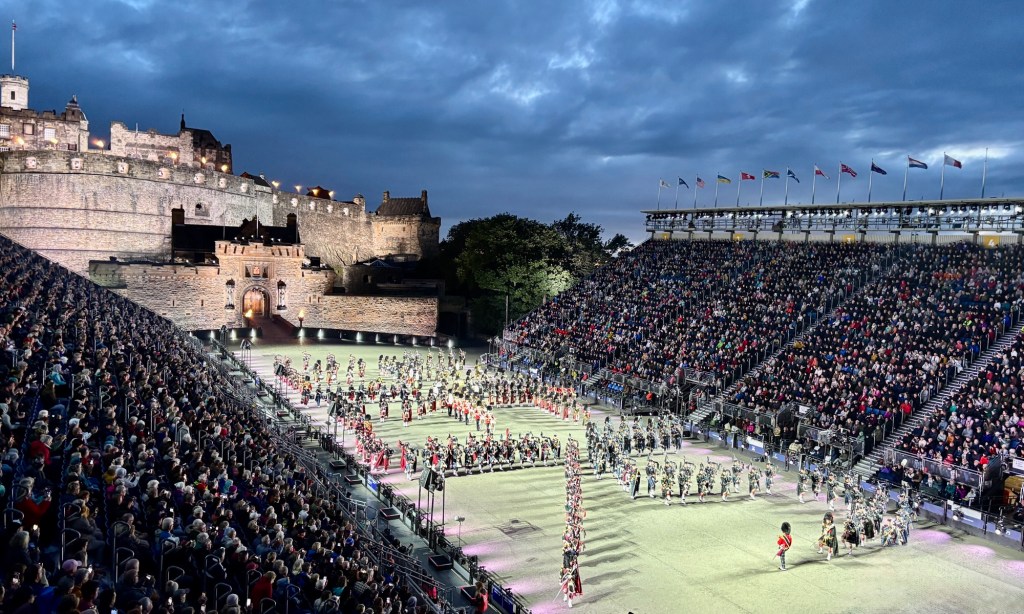
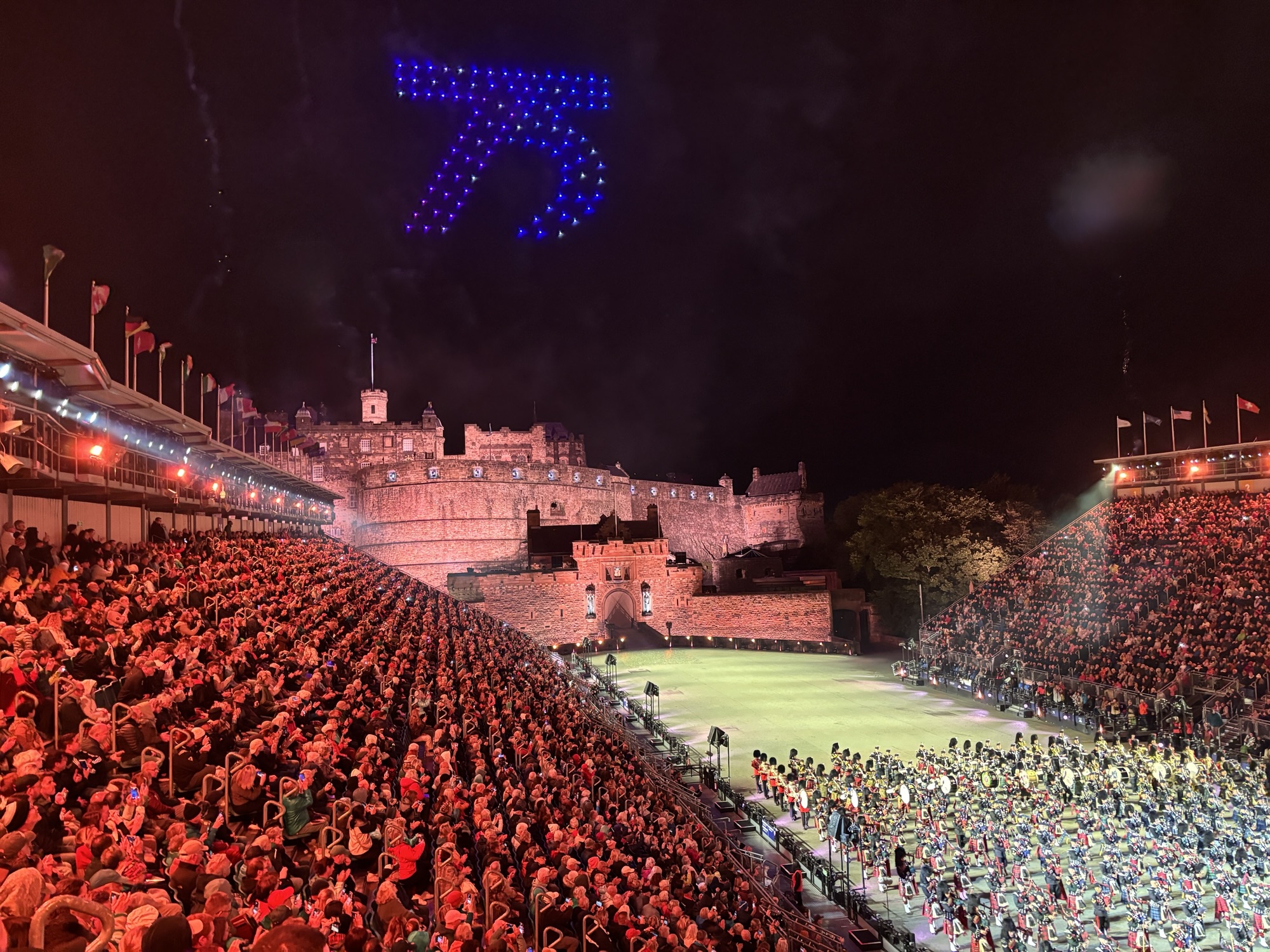
As I write, we are four days from embarking on this adventure. This morning I made one addition to our shore excursion itinerary.   About a week ago we were offered a new excursion to the Edinburgh Tattoo. I knew nothing about it.  It looked like a big deal but the tour was expensive so we decided not to pursue it.  Then – twice in conversations with people who have some knowledge of Scotland – the Tattoo came up.   So, we decided to jump in and get the tickets.

This is from the Edinburgh Tattoo website:  An experience like no other, our Show brings together the best of British Military with international performances from a global cast. Presenting emotionally charged entertainment featuring cutting edge lighting, sound and military precision. Sounds like fun!

All this planning is not unique to this trip. I enjoy the process and do it for almost every trip we take. I hope you’ve enjoyed this little foray into my trip planning world and will join us in reading about the trip itself!

Posted in Uncategorized | 3 Comments

Sydney to the Blue Mountains

Our last day in Sydney, February 9, 2025, was spent in the Blue Mountains, ninety minutes outside the city.  We met for our tour at 6:55 a.m. and our guide introduced herself as “Rin, It rhymes with gin, and Rin likes gin.”  She was like that all day long – all 9 hours of it!

She drove us through the CBD which doesn’t mean what it does in the US.  In Australia, CBD means Central Business District.  Sydney is one of the most diverse cities in the world with 43 percent of residents coming from overseas.  

We went through one of many tunnels in Sydney.  This one was six miles long and allows for much more efficient traffic flow than on street level.  There was dynamic pricing for the toll, as many in Sydney are.

We headed to the UNESCO listed Blue Mountains.  These mountains contained the colonizing Brits to the Sydney area after they arrived in 1788.   It took them 25 years to figure out a way around, over, or through the mountains to explore more of Australia.

Our first destination was Scenic World, described by Rin as “an amusement park for nature lovers.”  

Scenic World includes several dramatic rides.  She told us that the equipment was made by the Swiss, so is very reliable and safe for mountains.

The Three Sisters are the most famous rock formations in the Blue Mountains.  A solid sandstone ridge 14,000,000 years ago, they are now three separate formations.

We rode the Skyway across the Jamison Valley and back. The Skyway opened in 1958 as Australia’s first cable car. It rides 270 meters above ground.  

We saw this waterfall from above.

These trees are a type of eucalyptus. 

Our next ride was the Scenic Cableway.  It is the steepest aerial cable car in the southern hemisphere with a 36 degree incline.  It travels five meters per second.

We dropped into a subtropical rainforest that was claimed to be 90,000,000 years old.

We traversed one of Australia’s longest (1.5 miles) elevated rainforest boardwalks. It was built with zero ecological impact.  

We learned about plants and animals unique to this rainforest. 

Lyre birds inhabit the area and look like a brown chicken size peacock. We didn’t see any but I found this picture on the internet. Lyre are able to mimic other birds, environmental sounds and human speech.

The vines keep the canopy thick, the trees in place and the temperatures low.  A fire would be devastating here. 

A coal mine opened in the rainforest in 1878, eventually involving 65 miles of tunnels. 

The mine closed in the 1930s and they let the pit ponies go free into the wild.

The miners started taking tourists into the mines on the train in 1928. This car was used in the 1960s and is now available for photo opportunities. (We aren’t there.)

The Scenic Railway is in the Guiness Book of World Records for the steepest passenger railway in the world!  Still the record holder, it has a 52 degree incline and covers 4 meters per second.  

As we were going back up the mountain, we were looking out and down while we went up and back.

The Blue Mountains were actually formed by erosion happening in the valleys and not an uplift of tectonic plates.  The sunlight passing through dispersed eucalyptus oil, causes a blue haze, thus the name. 

Ninety percent of the trees are a variety of eucalyptus. There are 934 different species of eucalyptus in Australia.  About 70 percent of the varieties need fire for germination.

This waterfall has never gone dry in recorded history, including a couple thousand years of aboriginal history.

Another tour guide was feeding the cockatoos to the angst of our own.  He justified it by saying what he is feeding them won’t hurt them.  Rin’s point is that they become accustomed to being fed and someone will feed them something that will hurt them.

We stopped for lunch and had Chicken Parm, a very popular meal in Australia.  Notice the french fries underneath instead of pasta.

Our next stop was Featherdale Animal Sanctuary – our last chance to see some of the Australian specialties.   Our guide told us that everything in Australia is trying to kill you, including most of the world’s poisonous snakes.  Snakes actually kill very few people in Australia because of anti-venom.  

Crocodiles on the other hand are given “credit” for a number of human disappearances every year.

We did see a few more koala but didn’t understand why some of them were in a natural setting and most were in small enclosures.  

We saw a Tammer Wallaby, the smallest wallaby species.

We saw blue penguins in captivity, having seen some in the wild in New Zealand.

We were intrigued by this cassowary.  We were told they were dinosaur birds. Research says they are genetically similar to the emu.   

They are flightless and live in areas of New Guinea and northern Australia.  They are the third largest bird, behind the ostrich and emu.

It is sometimes considered the world’s most dangerous bird because it can inflict serious injury and death if provoked. The middle “toes” are weapons.

Cassowary can run 30 mph, jump and swim.  They are solitary birds, not tolerating others of the same sex in their territory.

A little further down the path was an emu.  Emu feathers are softer and more flexible than most other birds.  They have two feathers coming from the same shaft, a primary and secondary.

Wombats are very cute little guys.  Their poo is square! 

This is a quokka – definitely a new animal to us!

We finished with a couple dingo.  The oldest fossilized remains of dingo are believed to be 3250 years old.

We were leaving Australia feeling like we saw almost all of the animals we’d hoped to. We’d not seen kangaroos in the wild or a platypus anywhere, but overall we were pleased.

As we rode a bus and then a ferry back into Circular Quay in Sydney. There was another new cruise ship in port.  We knew the locals wouldn’t be pleased to have such a large ship! Ovation of the Seas sails with 4900 passengers.  We aren’t interested in a ship that big, but lots of people enjoy all the family friendly amenities.

A couple random thoughts before we leave Australia: Electric outlets have switches to turn them on. The emergency phone sequence in Australia is 000 instead of our 911.

As we prepared to leave, we found it highly amusing that we would leave Sydney at 11:05 am on a Monday  morning.  We would arrive in Phoenix at 10:35 am on that same Monday morning!   It was like getting home before we left…NOT! We lost a day going and gained a day coming home.

We flew home in Premium Economy on Delta and found it very adequate.  Our long leg was 14.5 hours.  We waited 30 minutes on the tarmac in Los Angeles waiting for customs to open.  The flight to Phoenix was uneventful.

We had a great month exploring Tahiti, New Zealand and Australia! Thanks for coming along. Stay tuned this summer when we take off again!

Posted in Uncategorized | Leave a comment

Sydney! Opera House and Food Tour

Our second full day in Sydney was a really good day.  We had tours of the Sydney Opera House and a food tour called the Tastes of Sydney.

First, we learned to use the Sydney light rail.  We had been told it was easy – just “tap on and tap off” with a credit card.   The places we were going to were walkable but we were going to be out all day and didn’t want to feel grimy because of the humidity.

A bell-boy gave us directions to an access point right around the corner from our hotel.  

An “experienced” tourist, who was on his third day in the city, confirmed how to get on and off. We were ready!    Our stop was three stops down the route. The cost in USD came through at 63 cents per person.

When we got off the light rail we saw the Coral Princess.  We had seen her in Cairns earlier in the week. This ship is too large to fit under the Harbor Bridge like the Westerdam did, so had to dock in Circular Quay (pronounced key). We heard quite a bit of grumbling about the big ships because they block views.

Our morning destination was the Sydney Opera House.  

We learned that the land where the opera house sits was once occupied by the Eora people.   Their ruler, Bennelong, had a complicated relationship with the British – mostly to British advantage.

The British military and government leaders built Fort Macquorie on the land the Eora had lived on. They ruled from there.  The old fort was demolished at the turn to the 20th century and a tram station was built. When Sydney leaders decided they needed a world quality performing arts center, this site was chosen. They called it Bennelong Point after the Eora leader.

A world wide competition was held to pick the design of the opera house. There were over 2000 submissions. The design chosen was by Danish architect John Utzen.  After receiving the assignment,  it took him three years to determine how to construct the shells in his design.  He eventually found his answer by beginning with a sphere.

Construction began in 1959.  Ten thousand men worked on the Opera House without a single death.  

The opera house is a self supporting structure of concrete.

Over time, a new prime minister was chosen in Australia and he was at odds with Utzen because of significant delays.  There was much angst and controversy.

Eventually, Utzen felt he could not continue and quit the project.  Sydney Opera House architect John Utzen never saw the finished building.  

Three Australian architects, led by Peter Hall on the left, took over the job of building Sydney’s Opera House. While making some necessary changes, they did their best to stay true to Utzen’s design.  One example concerned Utzen’s desire to have the lobby areas open to the harbor for breezes and views.

Instead of being open, glass windows were installed for the feel of the design but also to be more protected.   The glass was engineered, in France, so that there are no reflections visible from the inside as one looks out towards the harbor, even at night.

The glass for the windows was one of only two types of building materials to come from outside of Australia. 

The others were 1,000,000 tiles from Sweden to cover the opera house shells. The texture on the shells helps to disperse the sun’s rays.  The tiles are also self cleaning. 

(The tiles are checked every five years and only five percent have ever been replaced after 56 years.  Only 44 tiles were replaced during the last check.)

The walkways between the shells are covered in stones that are spaced to allow water to flow through the stones into an under structure water dispersement system.

Even though the shells on the Opera House appear white in photos, there are really a combination of white and off white tiles.  

Interior work on the Opera House began in 1967.   Completion took 16 years and was funded by an Australian lottery.

Queen Elizabeth II was present for the Opera House opening in 1973.

There are seven performance venues in the house and we went into the two largest.   We could only take pictures in the largest, the Concert Hall.  

This hall seats almost 2700 people and can be used for amplified or acoustic performances.

The paddles create a false ceiling for acoustics when needed.  

The stage can be modified with elevation as needed.

The hall holds one of the largest and most complex organs in the world with 10,000 tubes.  It is played in performance about five times a year.  

The Sydney Symphony Orchestra is just one of the resident groups that use this venue.

The second largest theatre, was set up for an Opera Australia performance later in the day.   There is no amplification of voice or instruments in that venue.  A combination of Australian hardwoods and softwoods create perfect acoustics.   Because it was prepared for performance, we were not allowed to take pictures

Our guide had promised us a better ending to the Utzen architect story at the end of the tour and he delivered.  In the 1990s, the Sydney Opera House attempted to re-engage with Utzen.  He was, understandably, very reluctant to do so.

Eventually, Utzen and his son were hired to produce a set of guiding architectural principles that will hold indefinitely for the Opera House.

Before he died, Utzen was awarded the Pritzker award, architecture’s highest honor, for his work on the Sydney Opera House.  He also lived to see it be declared a UNESCO World Heritage Site in 2007.

The Sydney Opera House is one of the most recognizable buildings in the world.  Eleven million people visit each year between concerts and tours.  It is the most visited tourist site in Australia. 

After our tour, we had drinks at the Opera Bar, a recommended activity.

We had a Henny Tea and a coconut margarita.  Fortunately, Randy was willing to drink the Henny Tea. One trial sip was enough for me.

During our time at the Opera Bar, we spoke for quite awhile with a Brit who has lived in Sydney for many years.  We spoke about Sydney’s high housing costs and her recent move.  We spoke about Sydney’s legal prostitution and the fact that there is no controversy about it.   She said there is much more controversy about the large cruise ships! Our time with her was informative and pleasant.

We got back on the light rail to get closer to the meeting point of our next activity, a food tour of Barangaroo and the Rocks.

Barangaroo is an area of Sydney named for the second wife of Bennelong from the picture shown earlier.  She didn’t acquiesce to the British rulers very much and is a revered person in aboriginal history.

Our specific tour was operated by a non-profit group who has worked to help refugees, immigrants and other marginalized groups.  As such, some of the restaurants we visited have been part of that supportive work. 

Our first food was lobster tacos.  I had mine vegetarian style with cauliflower instead of lobster.   They were very good.

The second sampling were sausage rolls from one of Sydney’s oldest bakeries.  That was followed by gelato. We ate our gelato cones without a picture.

Of course, along the way we learned more about the area we were visiting.  This tunnel was built by British convicts long ago.  Their hand chiseling through the tunnel is still evident.

This is a presentation about Francis Greenway, an architect that got into some trouble for shenanigans in London.  He came to Australia as a convict and eventually designed many of Australia’s most important buildings.

Our next stop was the Lord Nelson Brewery Hotel- one of three breweries who claim the title of the oldest in Sydney.  This is the oldest continuously licensed brewery 

We had a very pleasant group for our tour – five Americans with a Brit turned Australian as our guide.  One was an lawyer from Iowa on business.  Two were a father and daughter from Florida.  They were in Sydney to move her to town to begin veterinary school.  

The last part of our excursion took us into The Rocks, the oldest part of Sydney.   

This man is Jack Mundy, a union leader who was instrumental in not letting The Rocks succumb to progress which would have taken away the past.  Our guide considered him a hero.  From a distance, you don’t see the stairway coming down above his forehead – unless someone is walking there!

We didn’t stop at one of the other oldest pubs in Sydney, but we saw it!

Our final stop was one of Sydney’s original Thai restaurants.  Thai food is the most popular “take away” meal.    We ate in the restaurant and had a new to us dish, spicy crisp rice with pork. It was really good!

It was a delightful day from start to finish!

Next Up:  Our last tour, on our last day in Australia.

Posted in Uncategorized | Leave a comment

Australia: Cairns to Sydney and More!

After days of rain in Cairns, the morning of February 6, 2025 was sunny and warm, but also really humid.  We thought briefly of the snorkeling that might have been but were mostly just grateful that we got it in.

Our main activity of this day was to transition from Cairns to Sydney. 

At the airport we saw a currency collector for charity.  It is always interesting to take a peak and see the various types currencies.  We saw a couple 5000 denomination bills. A little research later, we learned that 5000 Indonesian Rupiah were worth 31 cents in US currency.   It only looked like a huge amount!

It was much less dramatic flying into Sydney compared to coming in on the Westerdam, before sunrise, a few days before. I think I’d like to show you those pictures again!

We settled at our hotel and walked around a bit. We had a delicious Chinese dinner at the number 1 Chinese restaurant in Sydney – no insignificant stat! The dinner was delicious but we took no pictures.

The next morning was our first in Sydney!  We began with my least favorite kind of tour, a panoramic.  The tour was part of our package with Globus and involved riding around in a bus, listening to a guide talk about things you may or not see depending on your seat on the bus.   Pictures on these types of tours are usually poor because of glare from bus windows.  That being said, our tour guide was very nice and gave us some good information. 

We were able to get out of the bus a few times, like at this nice viewpoint to see the Sydney Opera House and the Harbor Bridge.

Sydney Harbor is the world’s largest natural harbor and the Harbor Bridge is the largest steel bridge in the world.  It was built by a company in England and used local steel, stone and labor.  The granite pylons at each end are purely decorative to honor Australia’s sacrifices is World War I.  The steel arch is self supporting.  The bridge opened in 1932.

Atop the bridge are two flags.  The Australian Flag is part Union Jack (representing its ties to Britain) and part stars in the shape of the southern cross (representing the states and territories).  The second flag on the bridge represents the aboriginal peoples.  

The people on the bridge were on a tour to climb across the bridge from one side to another.  It is “a thing” but we didn’t know to do it – and we probably wouldn’t have done it even if we had known!

This picture shows the north head and south head at the entrance to the harbor.  The ocean is the Tasman Sea, part of the Pacific Ocean.  

We went to the famous Bondi Beach.  Bondi is from the aboriginal language meaning “tumbling water” or “water over the rocks.” There were a lot of surfers at the beach but no good waves while we were watching.  There are over 100 natural sand beaches in Sydney and its suburbs. 

Sydney has a red light district as indicated by this building.  Prostitution is legal as long as the negotiation does not take place in view of a church or school.  Both genders are available on street corners, but not in shop windows.  Learning that surprised me.

The most interesting place our guide took us was to Mrs Macquarie’s Point at the end of a peninsula within the harbor.  Mrs. Macquarie was the wife of Major-General Lachlan Macquarie, Governor from 1810 to 1821. 

Our guide told us that Mrs. Macquarie was not happy with her husband’s posting and longed to return to Britain.  The governor had convicts cut a chair in the sandstone so she could watch the ships coming and going – while she longed to be on one of them.  

The inscription refers to a road, also built by convicts, that used to exist between the government house and her chair. The Macquarie Point area is now a park.

Our morning tour left us at Darling Harbor, one of the two primary harbor areas in Sydney. We had about five hours before our Sunset Dinner Cruise.  It was quite warm and only going to get hotter. We decided not to walk to the hotel and back again.

We dawdled over lunch and then made our way to the Maritime Museum. We almost always find Maritime Museums interesting and we could be in air-conditioning for several hours.   Yet, even as the air-conditioning called, we started with the ships outside. 

The Duyfken is a replica of the first European ship to reach Australia.  It arrived in 1606 and was repelled by the aboriginal people.  

This gentlemen tells visitors about life onboard the Duyfken for the crew of 20 Dutch sailors. They were on a six month voyage.  We sat with him about ten minutes which was not long enough for how interesting he was, but way longer than we wanted to sit in the hot, stuffy, cabin!

The next ship was the HMAS Vampire.  It was the third of three Australian-built Daring Class destroyers.  Built from 1952-1959, it was one of the first all welded ships in Australia.

The Vampire was mostly in South East Asia. However, it was assigned to escort the royal yacht HMS Britannia in 1977 during the visit of Queen Elizabeth II and Prince Philip to Australia.  The Vampire remained in service until decommissioning, in 1986, when it was given to the museum.   

Our final exhibit outdoors was the HMAS Onslow, one of five submarines in the Australian navy.  It was decommissioned in 1999 and gifted to the museum.  

The motto of the Royal Australian Navy’s submarine corps is “Strength, silence, surprise”.   It had soundproofing on all equipment to make one of the quietest class of submarines ever built.  Onslow travelled enough miles to circumnavigate the world  more than 16 times.

Finally…indoors and AC!

We saw watercraft from Australia’s first people.

We learned that the Royal Australian Navy flies a national (blue background) flag at the bow and the Australian White Ensign on the stern.  The White Ensign is the flag for the navy.

These are the alphabet flags used by the Royal Australian Navy.

The yacht, Blackmore’s FIRST LADY, was sailed by Kay Cottee on her voyage around the world. Cottee was the first woman to complete a circumnavigation by herself, non-stop, and without assistance.  The journey took 189 days, leaving Sydney in November 1987 and returning in June 1988. Just a few days into the voyage, the yacht suffered damage to the wind-powered generator due to rough seas.  She faced several severe storms during the journey, but Cottee was able to stay in radio contact with family and supporters throughout. 

The Spirit of Australia is (or was) the Fastest Boat in the World.  Builder and driver, Ken Warby, reached 317.6 mph in October 1978 at Blowering Lake Dam in New South Wales, Australia.

Two men died trying to beat Warby’s record.  The first was Lee Taylor at Lake Tahoe, Nevada in 1980 and the second was Craig Arfons at Jackson Lake, Florida in 1989.   The museum did not provide information as to whether the Warby record has been broken. My internet search was inconclusive.

We headed across the harbor towards our evening activity.  On the way we were able to watch a few boat races.  We were told that competitors from other countries, male and female, come to Sydney and race each other and the women’s national team.  The Australian women’s national team always wins – told to us by a perfectly non biased Australian.

Our dinner cruise was with Captain Cook Cruises.   It was nice.

We had dinner and motored around the harbor.  As we passed a navy ship we were told to look for the red kangaroo.  The kangaroos were added to the ships sailing from Australia when they still sailed for Britain

We had entertainment.

These buildings have condos – two owned by Russell Crow (who is generally present) and one by Nicole Kidman (who isn’t). It is the high rent district!

There were SO MANY sailboats in Sydney Harbor on a Friday evening!!

We passed under the Harbor Bridge and by the Sydney Opera House. Touring the Opera House was our activity for the next morning and will be the subject of the next post.

Posted in Uncategorized | Leave a comment

Cairns: Bucket List Snorkel!

We woke up on February 4, 2025, half expecting our Great Barrier Reef snorkel trip would be canceled – and it was.   

It occurred to us that our accommodation in the hotel was room 1313 on the 13th floor!  We are not generally superstitious, but we had lost two days of activities!

There were FOUR potential cyclones around Australia, and seven low pressure systems in the vicinity resulting in meters of rain!

The next day was our last chance to snorkel the Great Barrier Reef.  We had a plan B for a half day tour at a part of the reef that was closer in if our full day trip was canceled.  We also had a plan C – a future cruise circumnavigating Australia and to try again some other year.

So, we spent the day watching Cairns off the balcony.  That was not smoke, it was heavy rain. There was too much rain to even venture a walk.

There was a new ship at the dock – the Pacific Encounter.  It was a P&O Cruise Line ship, but was to be taken over by Carnival Cruise Lines in March 2025.

For dinner we went back to Hemingway‘s Brewery.  We enjoyed eating there on our first night in Cairns and it was a quick walk from the hotel.

Randy got a beer flight. Our favorite was Mr. Wongs featuring banana and cloves!  

The next morning, February 5, 2025, the weather looked substantially better.

After walking to the reef terminal, we were able to check in at the Passion of Paradise desk.  Whoohoo – it seemed to be a go!  

Part of the check in process was to determine potential health issues and comfort level in the water.  The representative said that nothing was going to keep someone out of the water, it just defined what the crew were going to do to make it safe.  Even people who didn’t swim had workable accommodations.  We both swim and have snorkeled before.

Once onboard, the boat configuration had me surveying every escape route because of my claustrophobic tendencies.   When I mentioned it to one of the crew, she said she wouldn’t assign anyone else to our table.  That meant we were just four at a table that usually had six or more. That was possible because there were only 70 passengers on board.  They usually sail with 100 passengers but are allowed to have 140.  I could not have done this tour with 140 people in this space!!  As it was, Randy traded seats with me so I felt I had easier access to a way out.

As soon as it was possible, however, we went up top, and stayed up top, most of the day.

I noticed that the Australian flag on the boat was on a red background, not blue. I was told that boats fly the red flag so it will be more visible on the water.

At some point, we hit something hard while motoring.  Everyone could feel it. Fairly quickly, looking out the back of the boat, we could see it was a mostly submerged log. It was very impressive to see how the crew mobilized immediately.  There was no damage to the boat, so we continued on to the reef.

We had some sun and blue skies in the distance but mostly it was overcast with a little rain.

Soon it was time to get our sting suits on. They were necessary because it was jellyfish season.  Ugh..we hated this part! The type of jellyfish we were avoiding were very small but packed a painful punch. Our suits even had mittens to cover our hands. Fortunately the jellyfish did not impact our trip at all.

We went into the “pool” as they called the area of the reef and saw a lot of corals and many fish!! It was pretty cool!

Most cool, was being above a giant clam – think loveseat size!  One of the crew pointed it out and waved her hand above it to make the clam close.  There was a fish inside.  I hope it got out!   We learned that snorkelers drown each year by putting their hands and arms inside a clam and not being able to get loose.

We also saw several types of star fish including this blue one. We didn’t try to take pictures ourselves, choosing to just enjoy the experience.

The crew photographer took pictures of us!

When we got out I mentioned to Randy that I had been getting cold.  Randy mentioned to me that he had been having a bit of trouble with his mask.  Immediately the crew were on it – offering me a wet suit to go over the sting suit and adjusting Randy’s snorkel.  Are you getting the message that this crew was amazing?

They also made a delicious lunch.

I was dreading putting the sting suit back on (with or without the wet suit) and thinking that I might consider my reef experience to be done unless we would see different things at our second stop.  I also really don’t like the sticky skin feeling after being in salt water.

About that time, the skipper said we’d be staying where we were for a second snorkel because of wind conditions at the other site.  My decision was made.  About half of the people made the same decision I did.

Randy went out again as this bucket list item was the reason for coming!

I tried to keep my eye on Randy since I wasn’t being a good snorkel buddy.

The crew was watching too.

When Randy got back onboard, he said he’d seen several things we hadn’t seen before on our first snorkel.  Plus, the sun had broken through a couple times and he was able to see the range of colors that you see in pictures!  He was glad he went out again.

The ship operators had several procedures to be sure everyone was present including head counts by at least two crew and roll call by the passenger number they gave us at check in.  I was #20 and Randy was #21.  At the time, I told him we could remember that because I was 20 when we got married and he was 21.  He didn’t remember that!  Too long ago, I guess!

The ship’s crew had done a great job, including organizing and cleaning all this equipment.  As you can see, some people chose to dive the reef.

On the two hour ride back to Cairns, they offered a Great Barrier Reef marine life chat.  I’m usually all about learning whatever all I can, whenever I can, but not this day!  Not only did I not want to be down stairs with a lot of people, but I didn’t want to interrupt being up top in the wind!  The second in command joined us and we spent about 30 minutes talking.  He was a native Kiwi, who had lived in Australia, helping others snorkel or dive the Great Barrier Reef for 20 years.  He was planning to go back to New Zealand in the next few months to help care for his mom.

As we check snorkeling the Great Barrier Reef  off Randy’s bucket list, the only place that remains on our lists from years past is Petra, Jordan for me.  Petra was on a cruise itinerary in 2023 but we chose to cancel given world events.

Of course there are still way more places we’d like to go to than we’ll ever get to!  We have some very cool trips in the queue, we just hadn’t considered them “bucket list” destinations with longevity.
We walked back to the hotel and were so pleased to get cleaned up and get the salt water stickiness off our skin!  I had an impressive sunburn even though I never felt like I was sitting in the sun!
We chose to go back to Hemingway’s AGAIN.  It was close, easy,  and very good.  We hadn’t had pizza in at least three weeks, so why not have it three times in four days?

Next up:  We return to Sydney.

Posted in Uncategorized | Leave a comment