On Kauai: Noni and Waimea Canyon

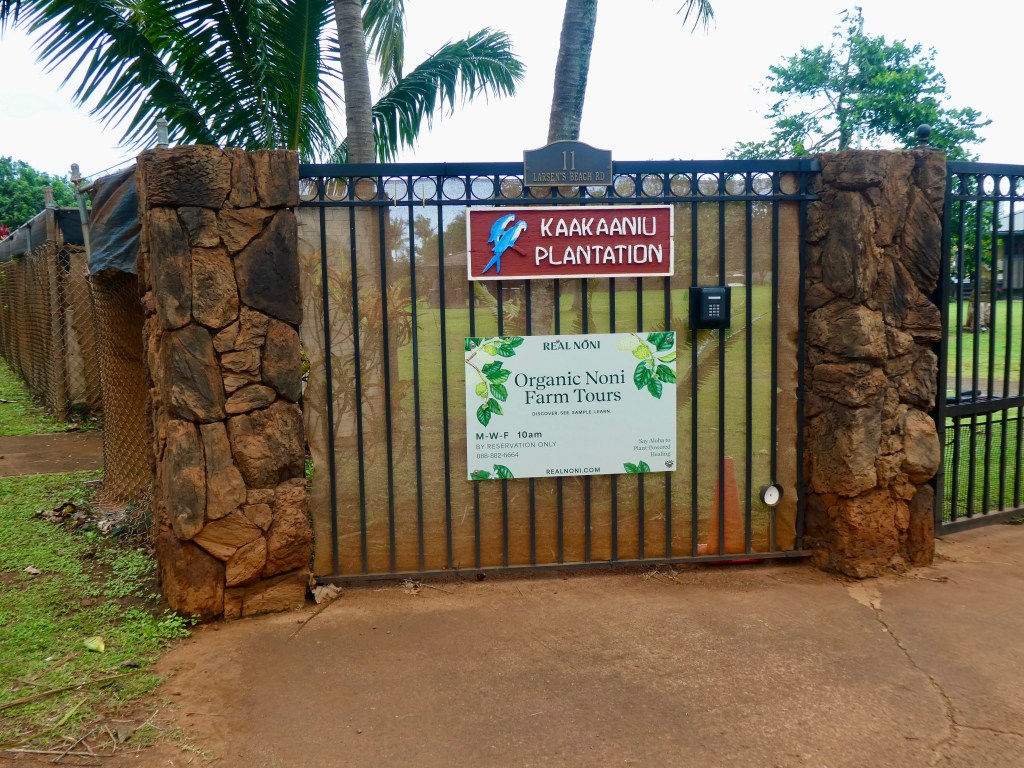
We were ready to learn about noni so went to Kaakaaniu Plantation for a free tour at the Organic Noni Farm.  (A free tour means they hope you purchase their product but we knew that going in.)

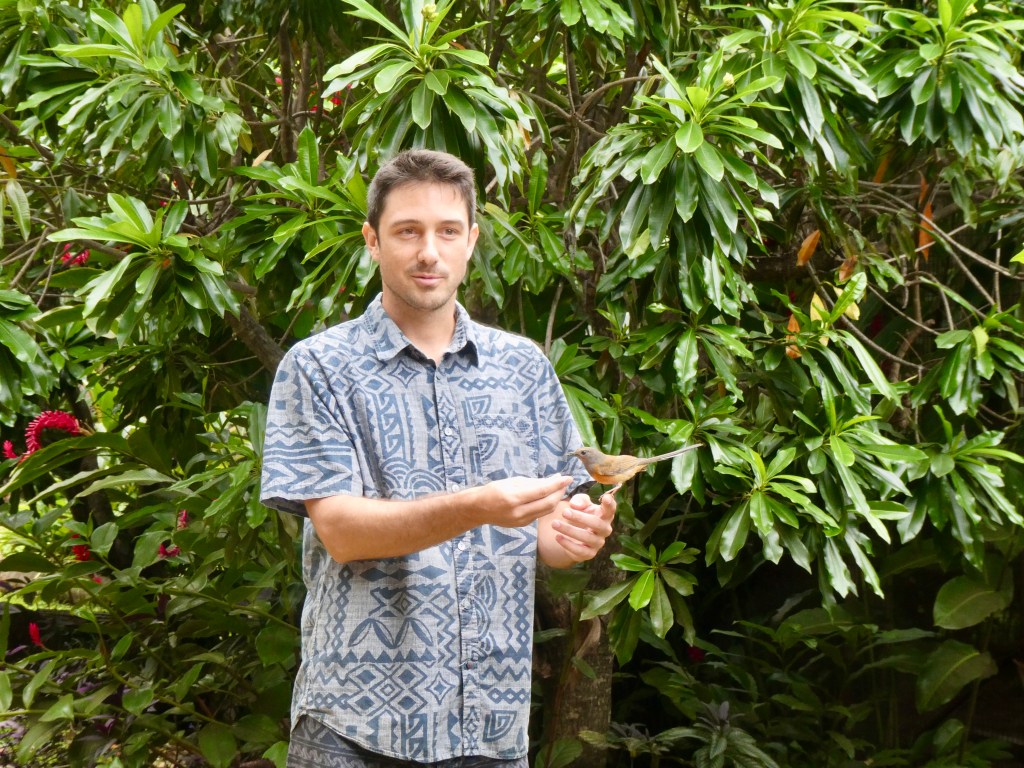
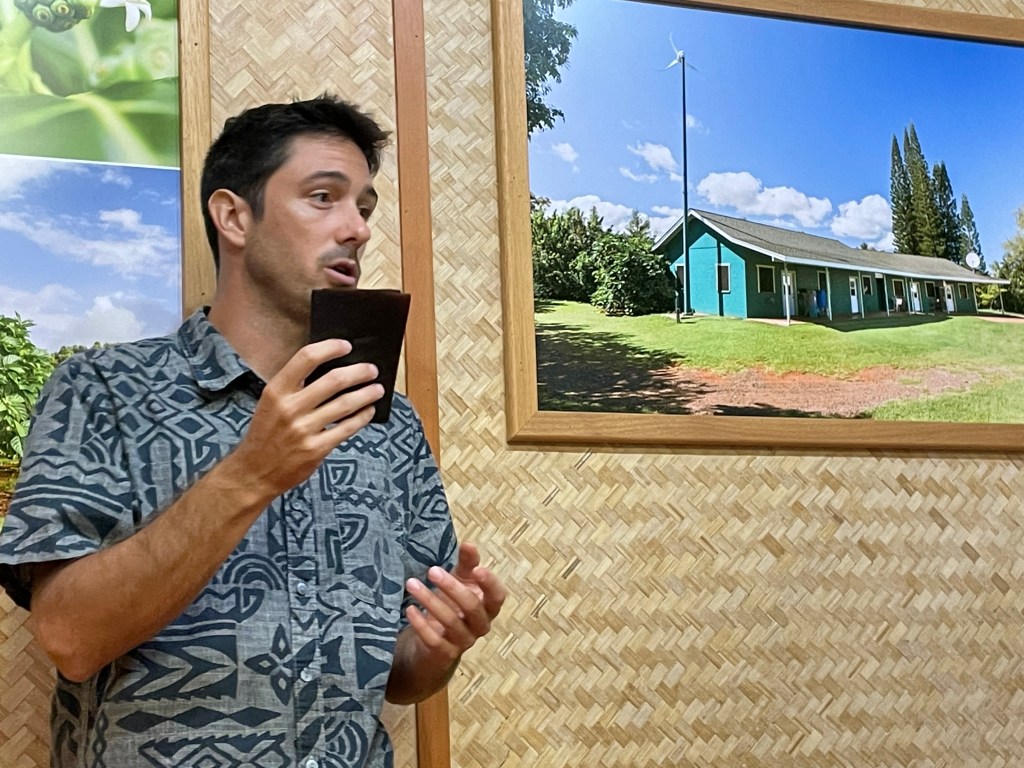
The farm and business is family owned and operated with great assistance from Steve, our guide. He works with noni from tree planting to sales of the finished product.

Steve told us that Polynesians either brought noni to Hawaii or recognized it from previous use when they arrived.   Archeological evidence suggests noni has been used for 40,000 years – most likely as a medicine or pain reliever.  Noni has anti inflammatory properties.

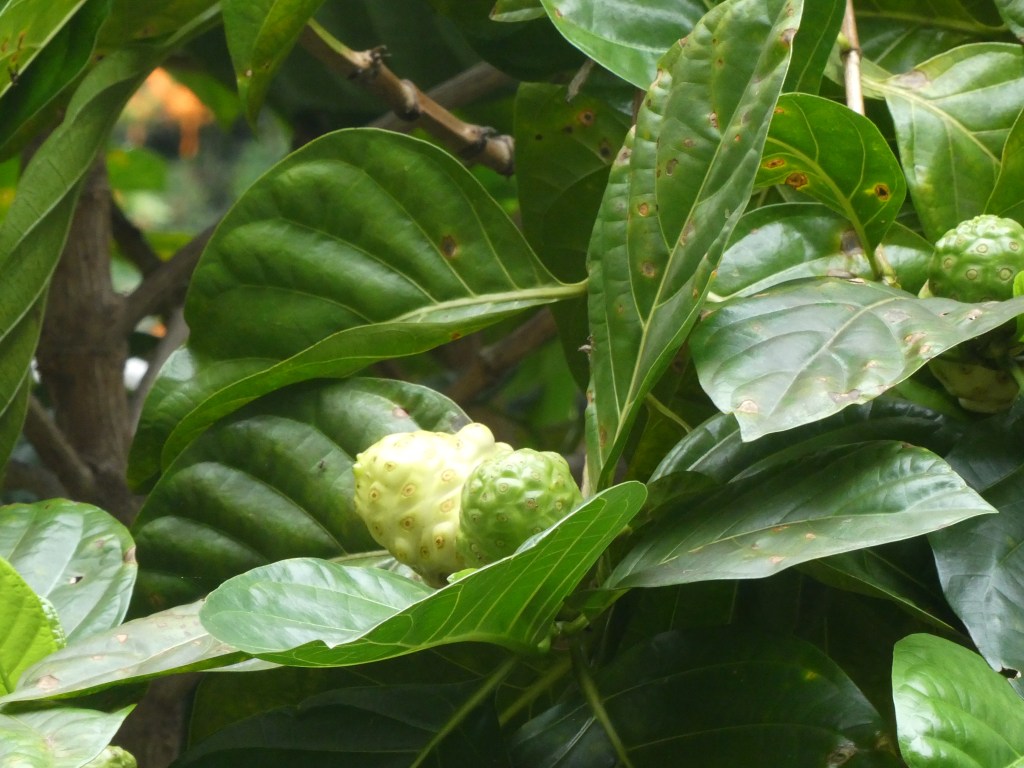
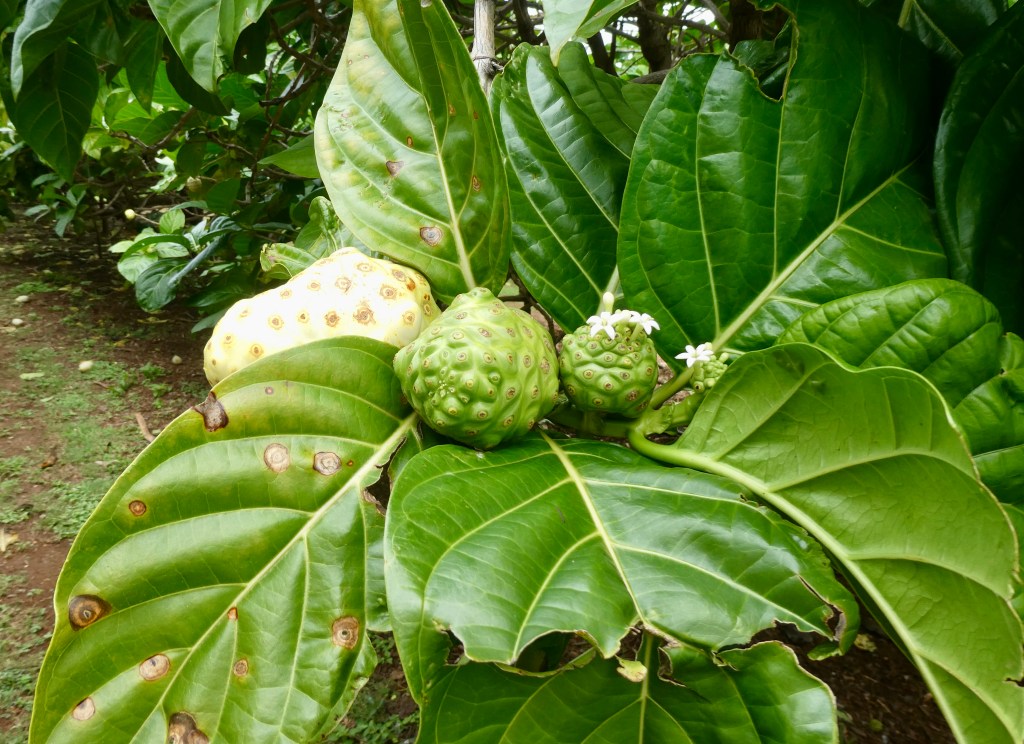
Noni trees are constantly producing.  This photo shows the various stages of development from blossom to ready to pick all on the same branch. The trees produce non stop year round.

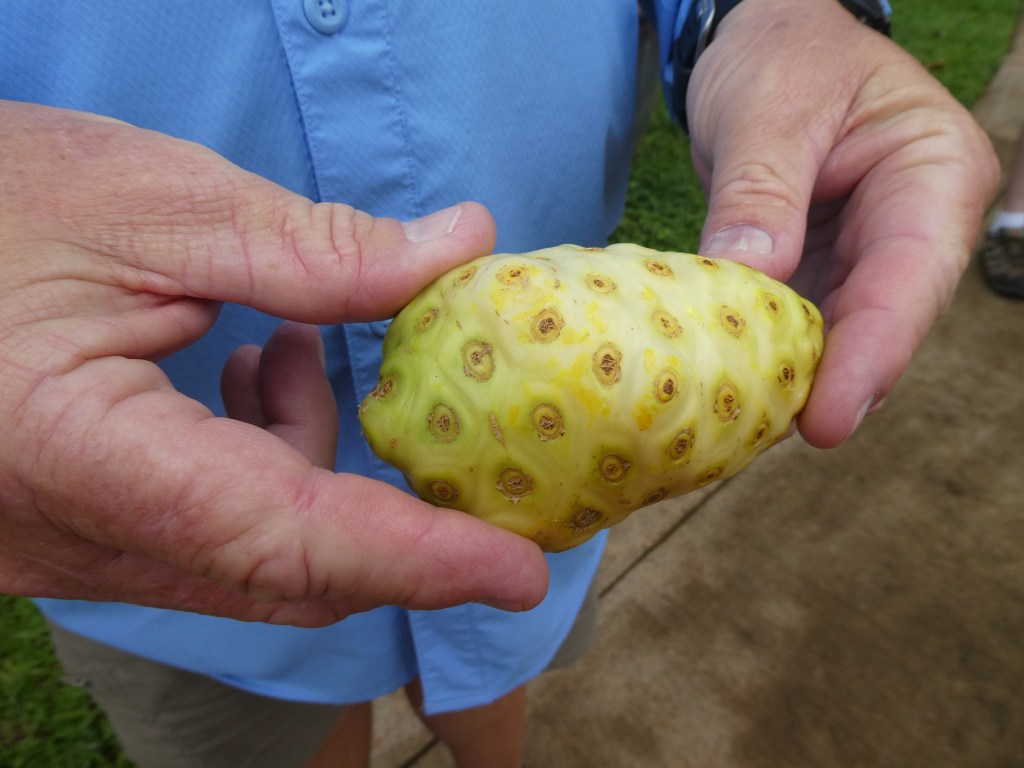
This is what a noni looks like when it is mature enough to use.  

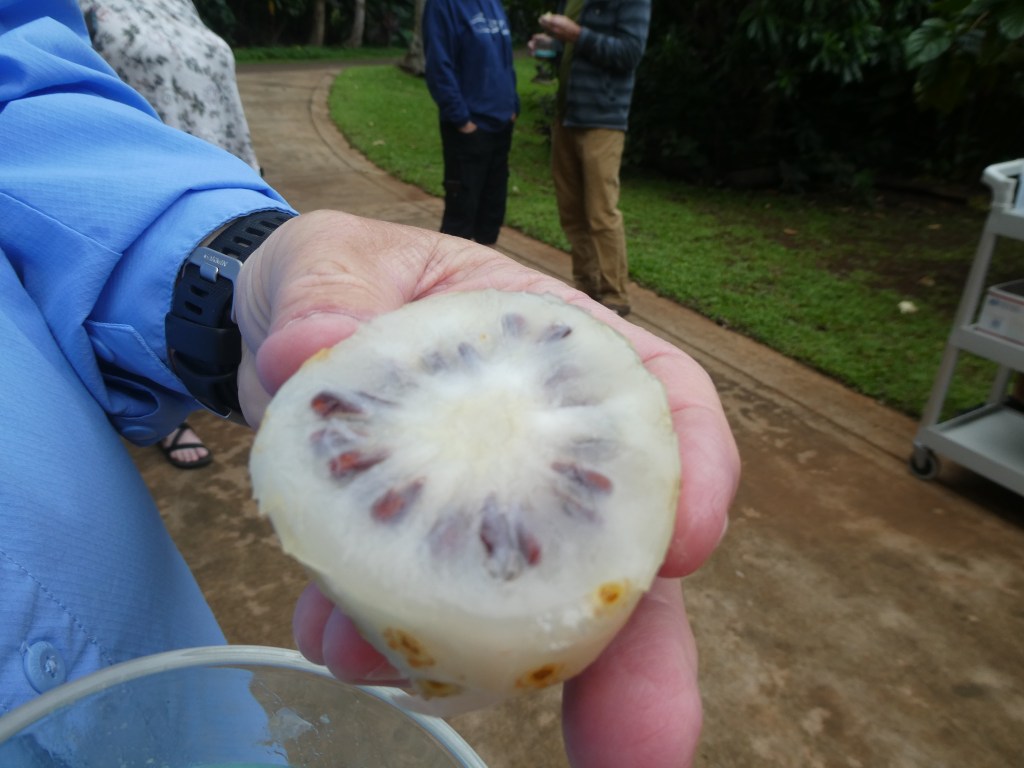
We tried some of the pulp and it tastes like bleu cheese!.  We like bleu cheese but it was odd to taste it in fruit!
Noni is a complete protein and could be a primary food source.  However, the Organic Noni Farm does not suggest it be used in that way.

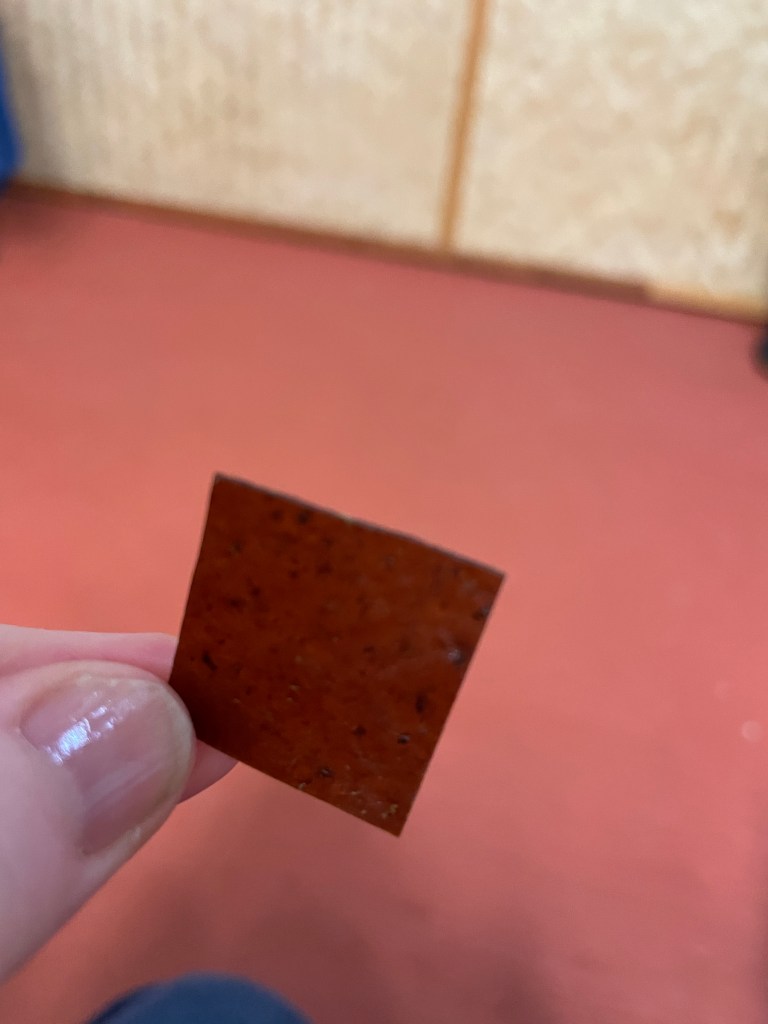
Their primary product is a 14:1 concentration fruit leather.  They suggest a daily dietary supplement dosage of one  2″ by 2″ square per day for maintenance and up to 4 squares per day for medical conditions. 

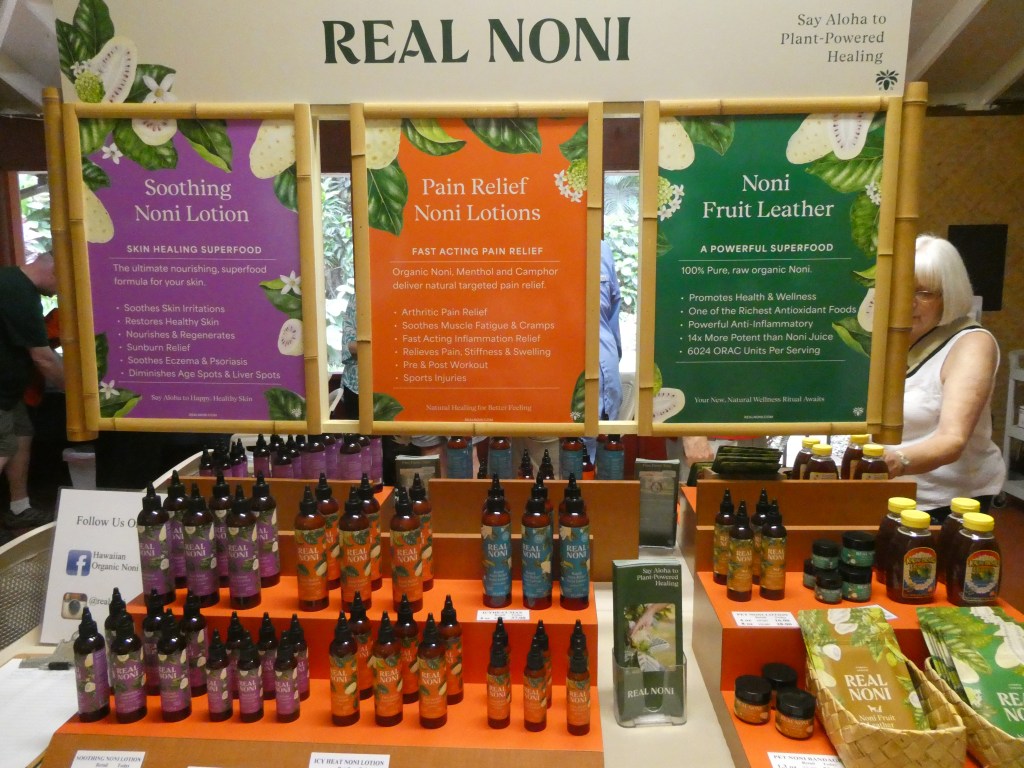
As an organic supplement, they suggest noni is helpful as an antioxidant for inflammation and arthritis, with additional possible benefit for almost everything!  (We bought some noni leather but haven’t tried it so can’t speak from personal experience.)

The Organic Noni Farm has worked with the University of Hawaii to develop a moisturizing lotion and a pain relief lotion. 

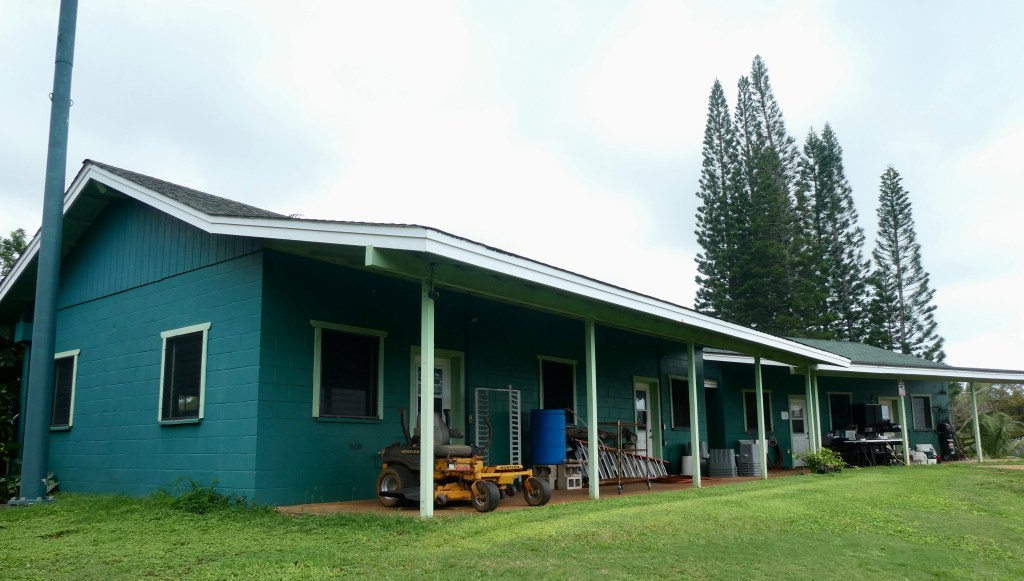
Noni processing, from picking to product, takes one week.  The mature noni softens for a few days, is put into liquid form, and then dehydrates for 60-72 hours.  The entire process, including packaging, takes place in this building.  Nothing is outsourced.

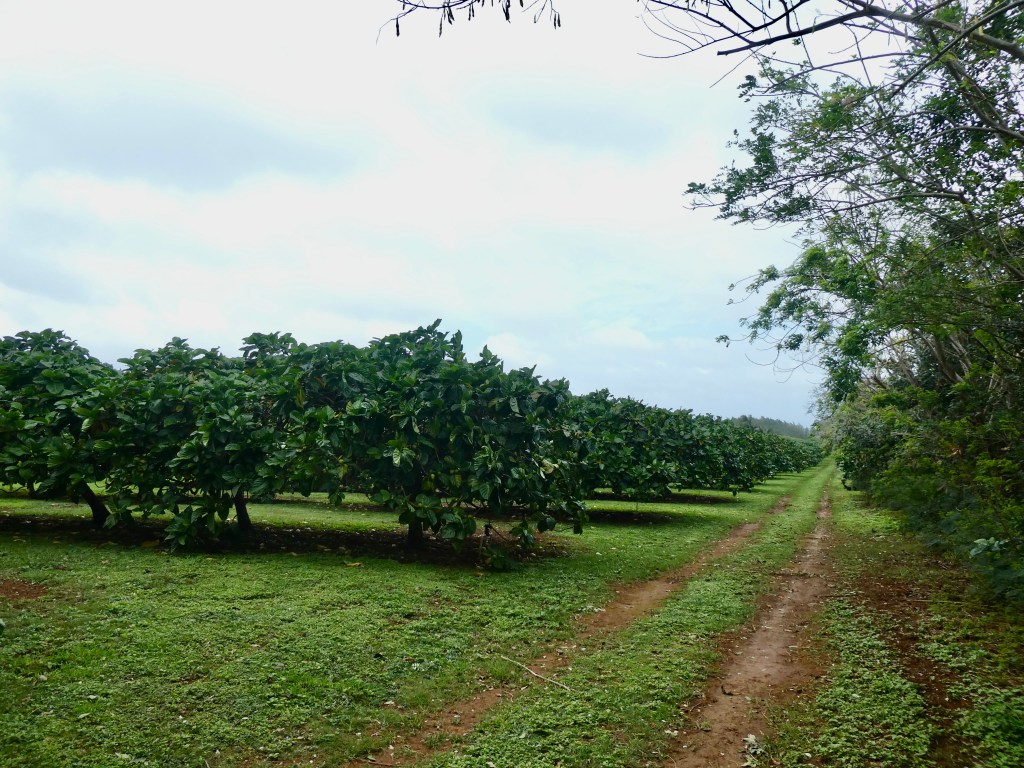
The Organic Noni Farm has 1000 trees. 

The trees provide way more noni than the family can currently process. Much goes to waste but there is a continual supply.

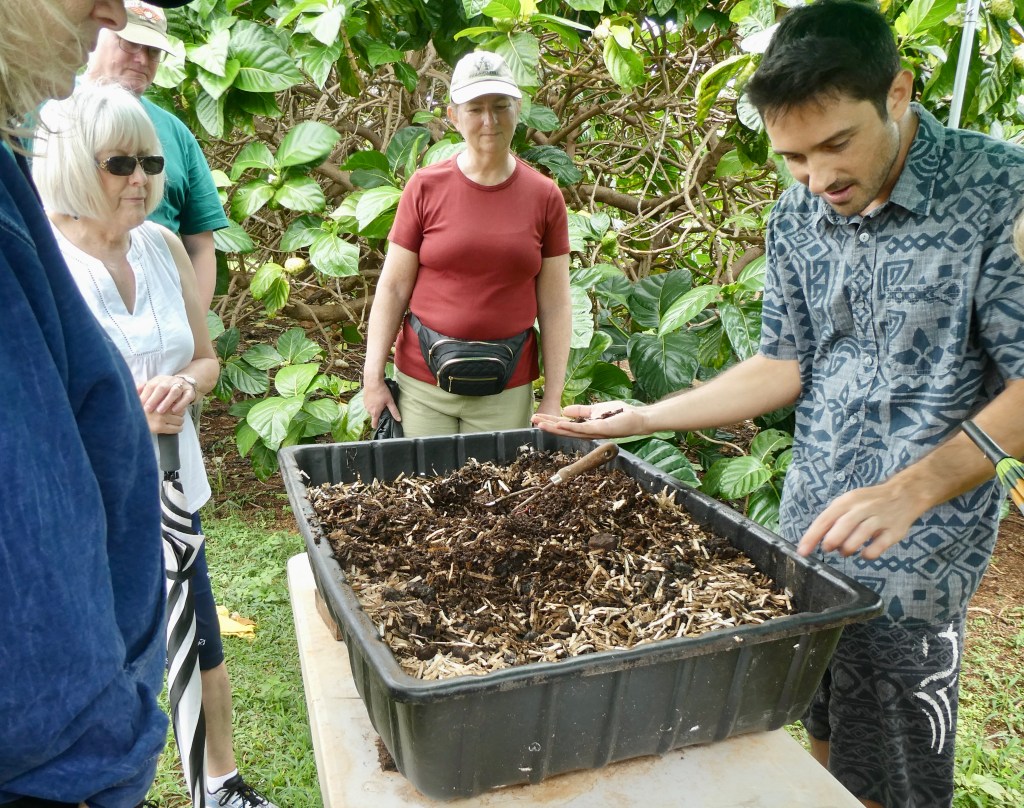
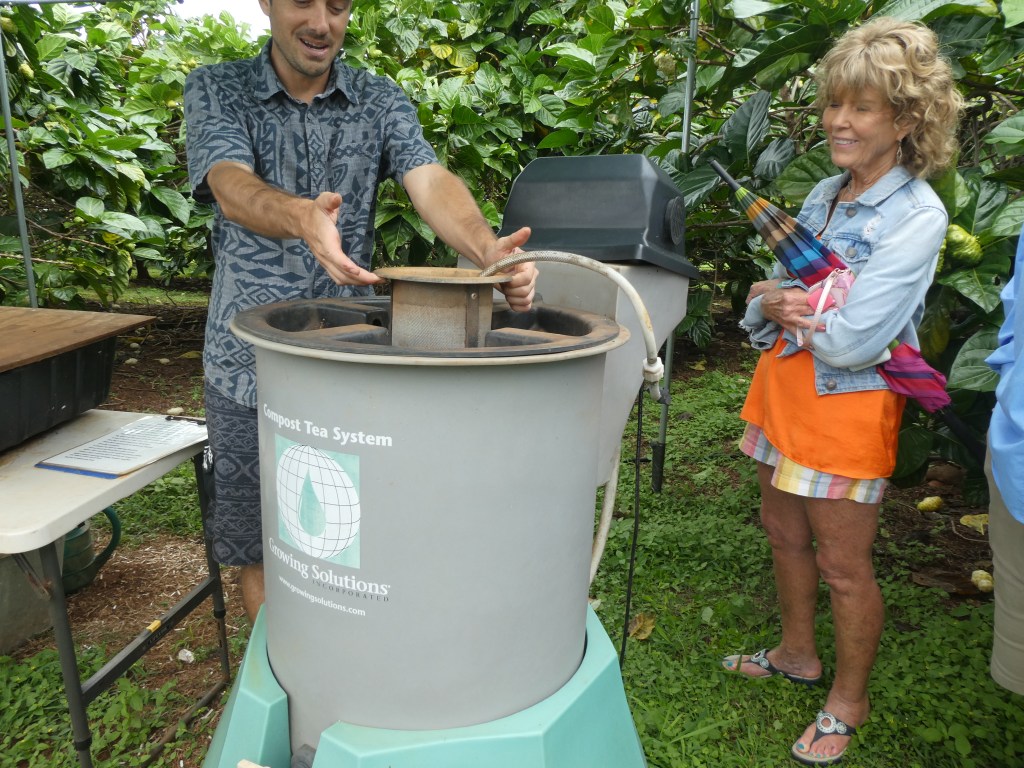
In caring for the trees, they fertilize with worm cast tea. The worms eat blended kitchen waste and give off castings (poop).  

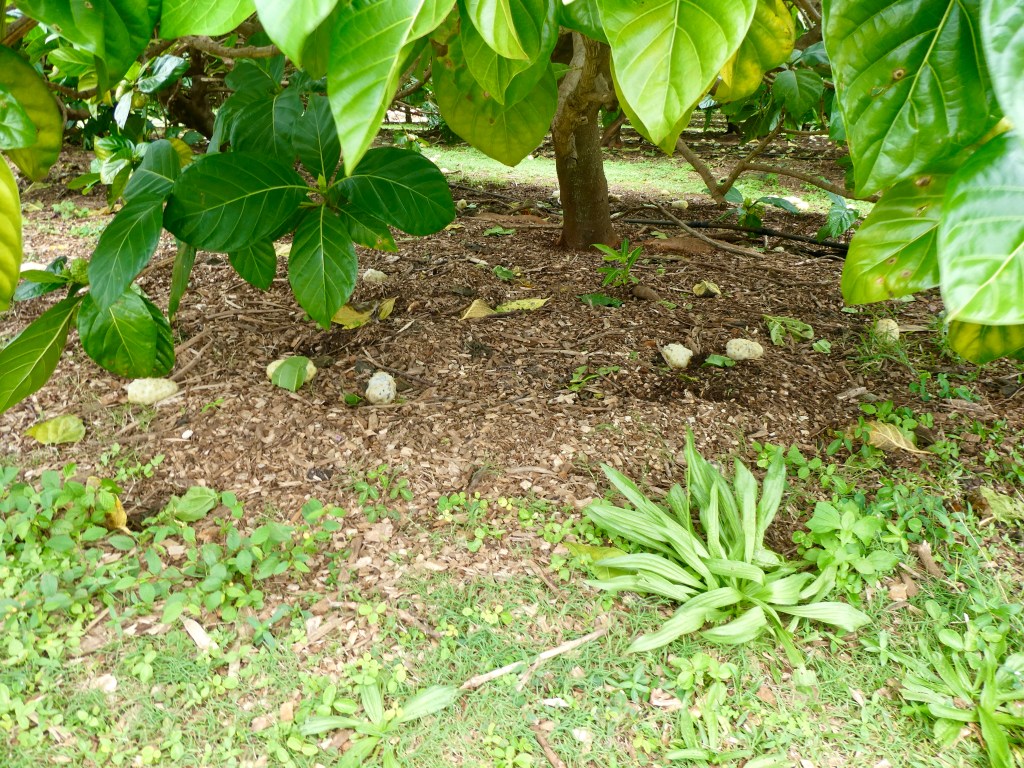
The castings are made into a tea and each tree gets one cup of tea twice a year.  The trees are  also surrounded with mulch.   (Pictured is our friend, Donna, who hosted us on this trip.)

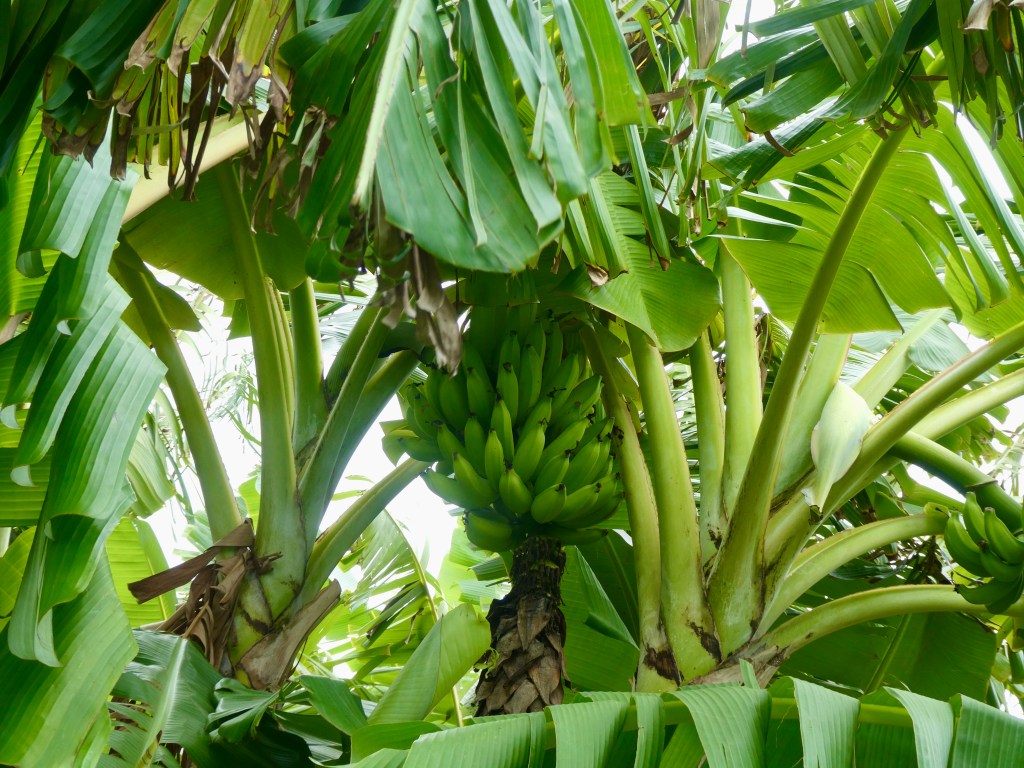
The farm has a number of other fruit producing trees, primarily for family use. These are apple bananas.   The stalks are one and done. Once a group of bananas is grown, that stalk dies off..

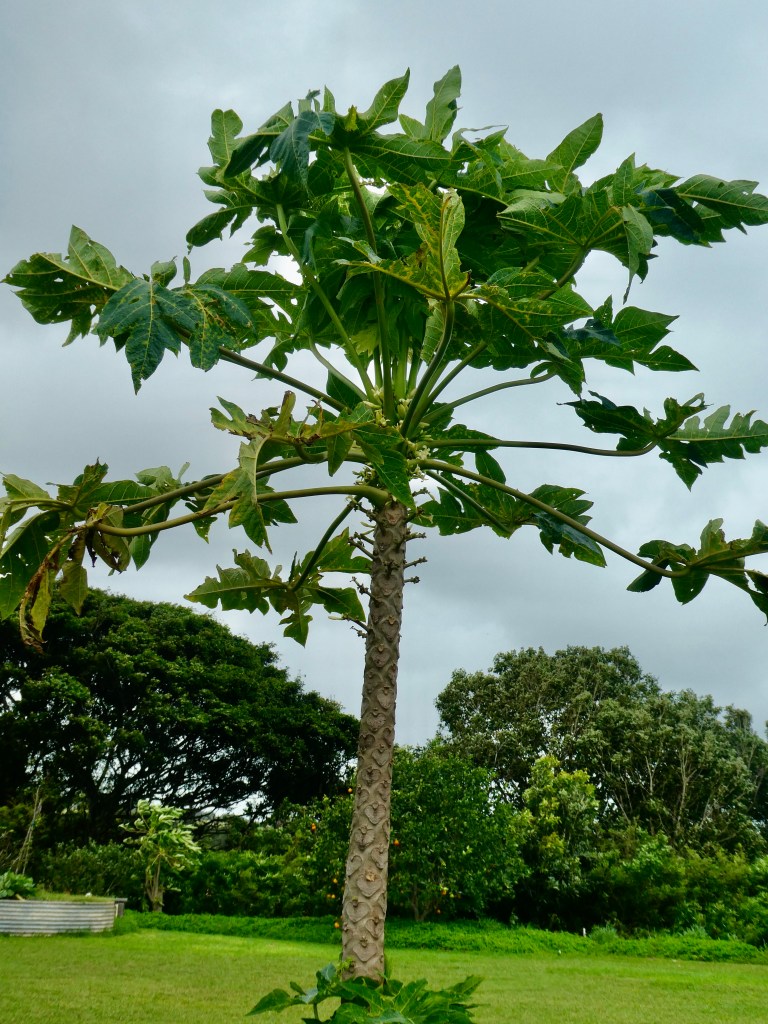
Papaya tree are male, female or hermaphroditic (containing both male and female properties in a single tree). Properties from both genders are necessary for papaya production.

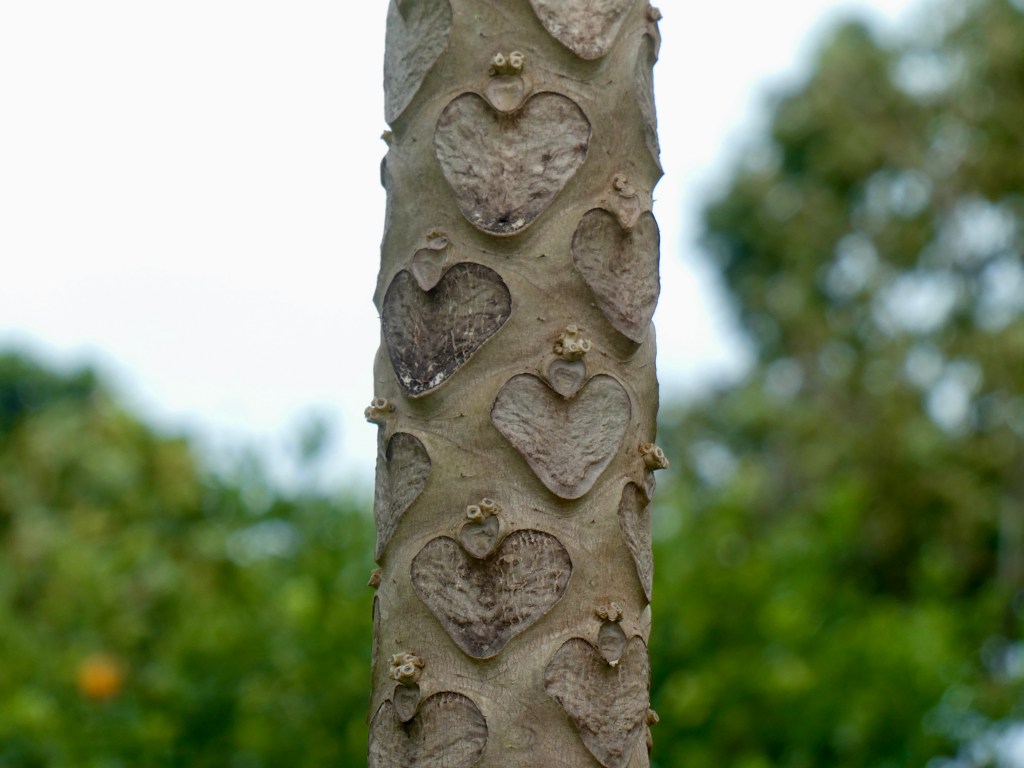
The papaya trunks have heart shaped markings as fronds fall away.

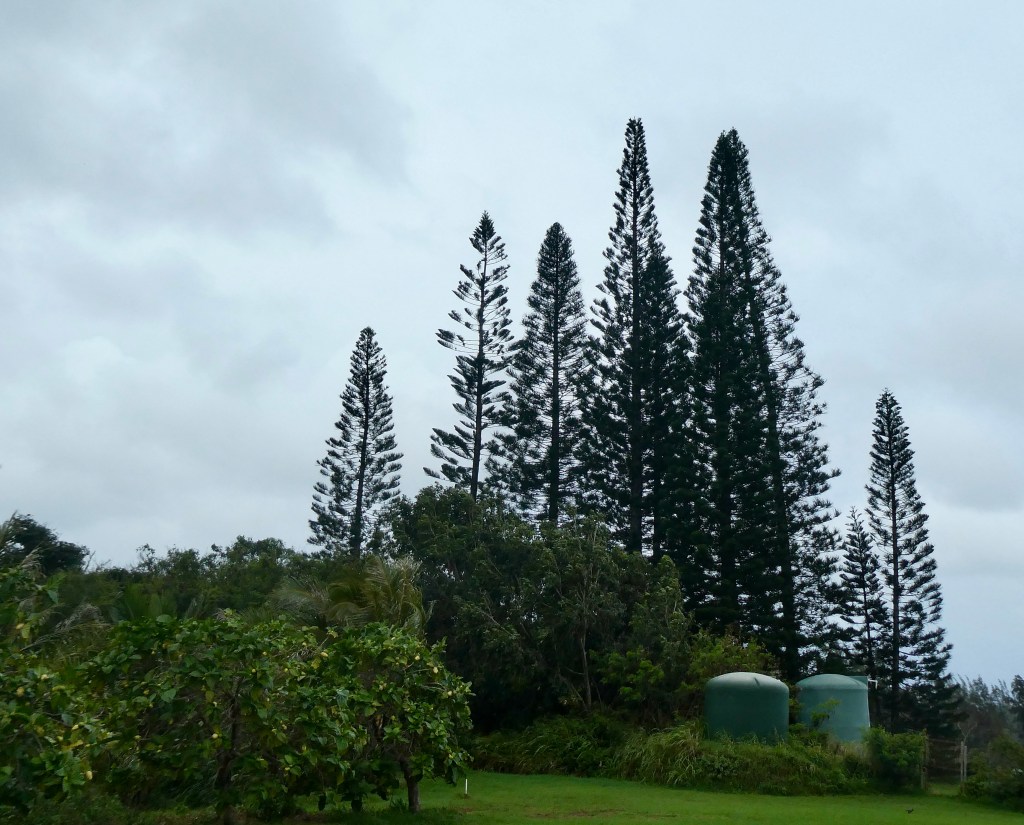
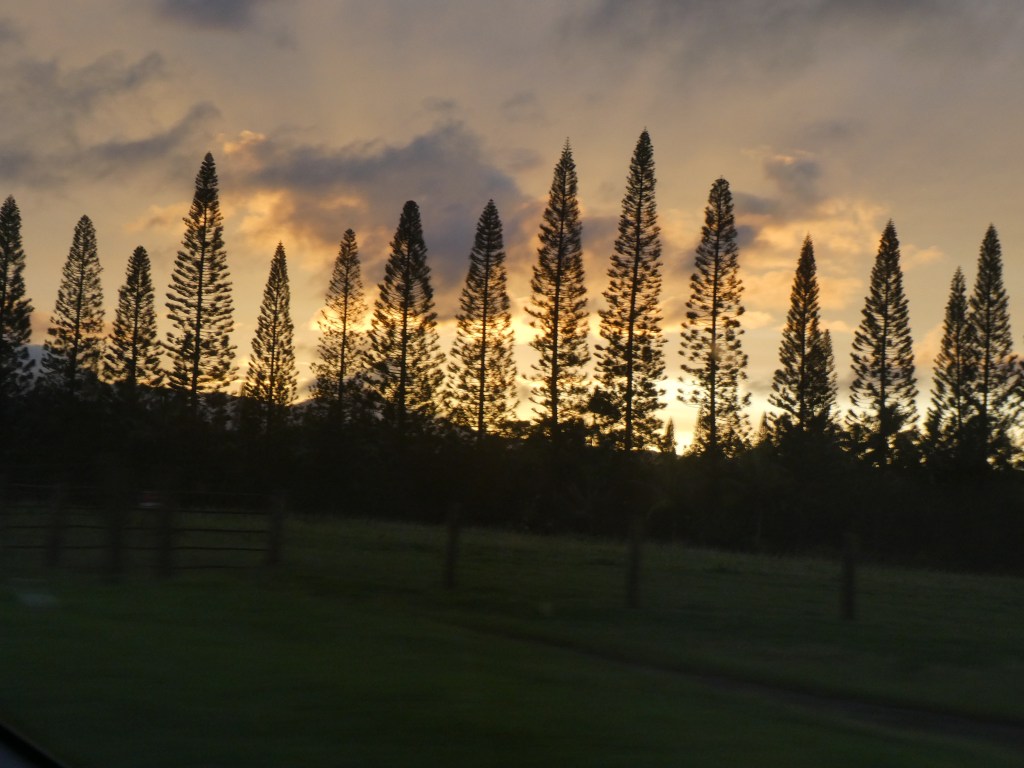
We were told about Norfolk pines.

They were imported to the Hawaiian Islands during an age when ships needed mast replacements using strong straight trunks.

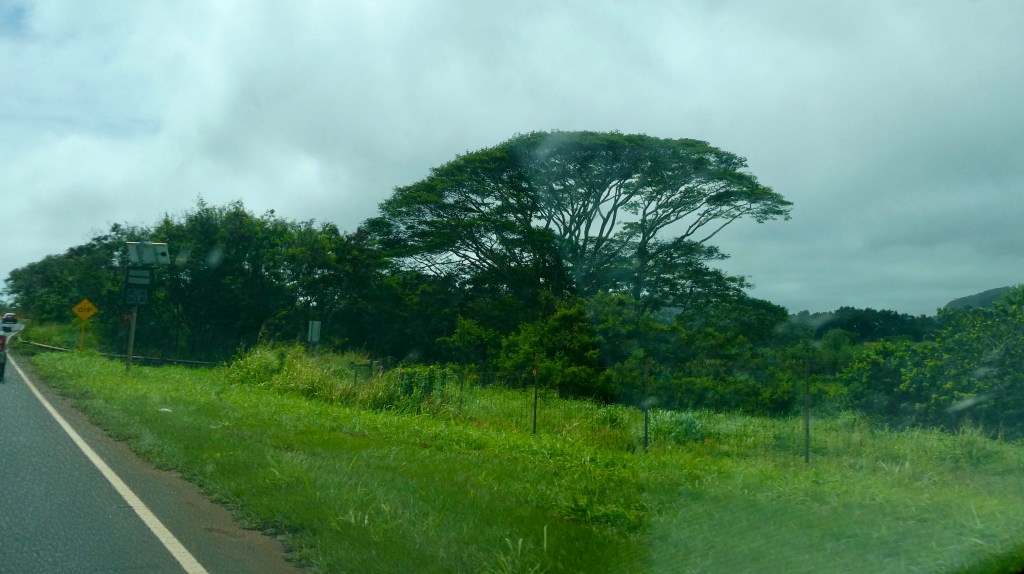
Another tree species, common on Kauai but not native, is the Albesia. Albesia trees in Africa grow to 30 feet and are a hardwood.   Because of water availability on Kauai, the Albesia trees here grow 60-70 feet high and are a soft wood.  It is the Albesia tree that is used for the mulch around the noni trees.

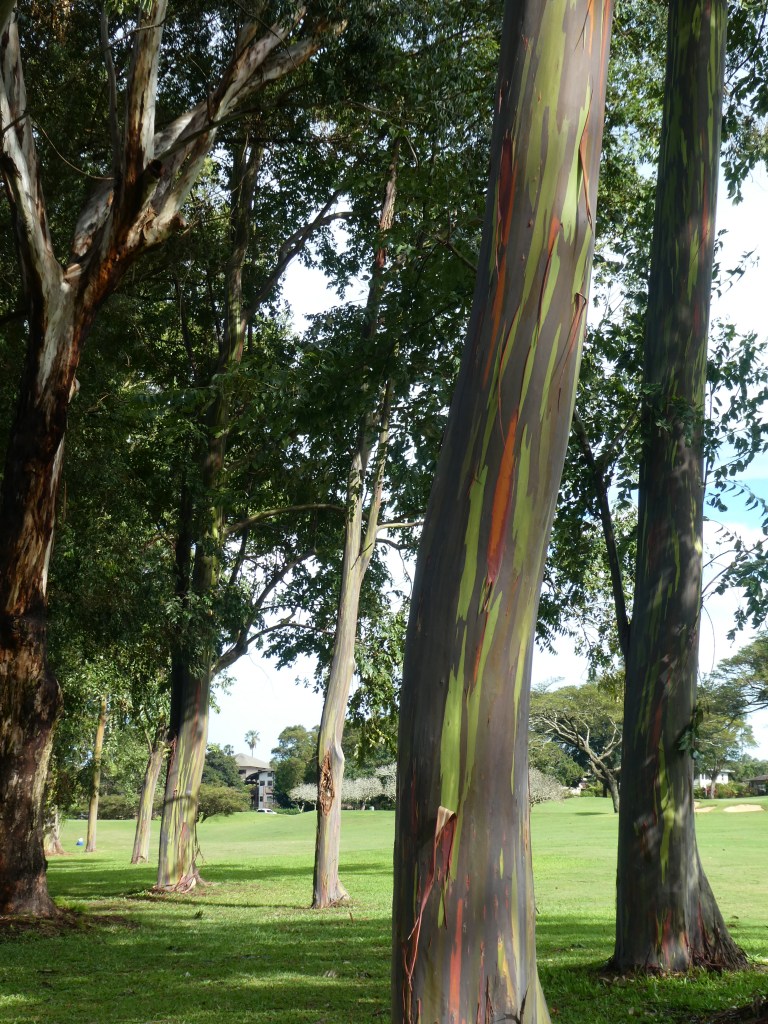
Staying with trees, this is the colorful bark of the rainbow eucalyptus. . Native to the Philippine islands, the rainbow eucalyptus were brought to Hawaii in the 1920s to help with reforestation and erosion.

After our tour was complete, we purchased our noni products and left the plantation.  

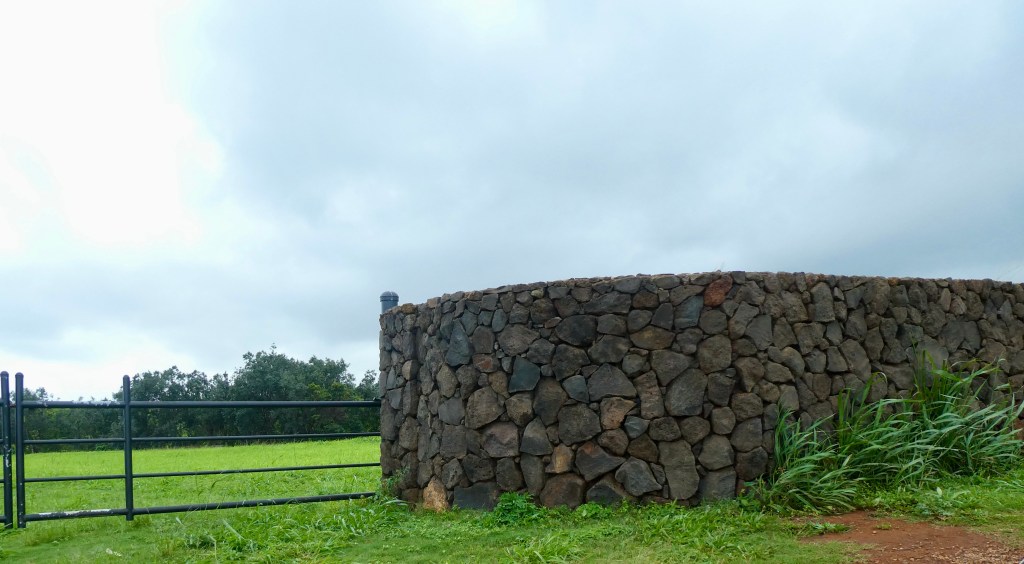
We were told to look for the nearby rock wall.  It surrounds 800 acres purchased by Mark Zuckerberg.  This enclosed property once had 75 home sites. It now has only one – his.  Our guide indicated that there is both good and bad in having high profile owners on the island. They are frequently generous, but also have specific wants that may not always mesh with local customs.  Mark Zuckerberg owns 1300 acres on Kauai. 

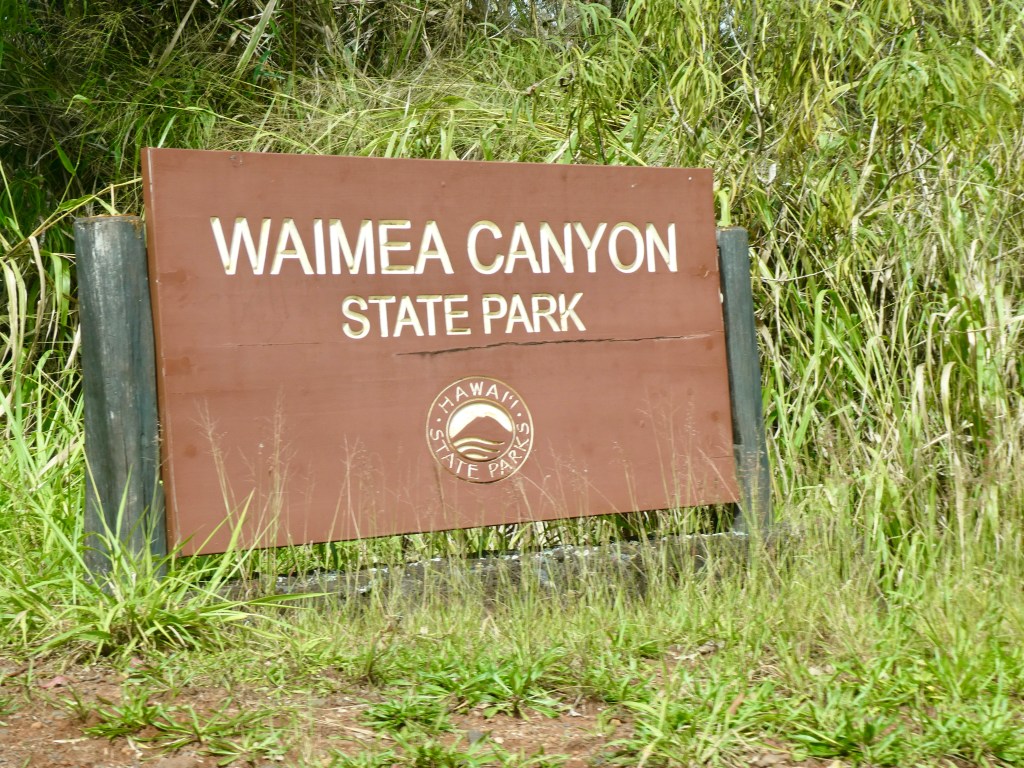
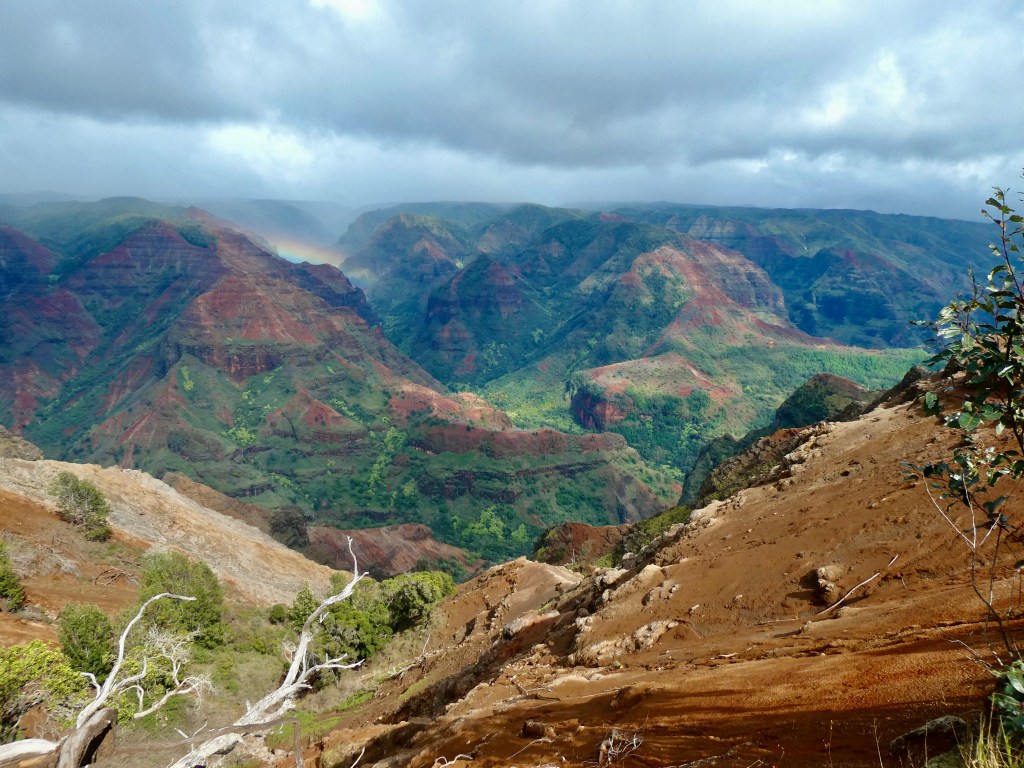
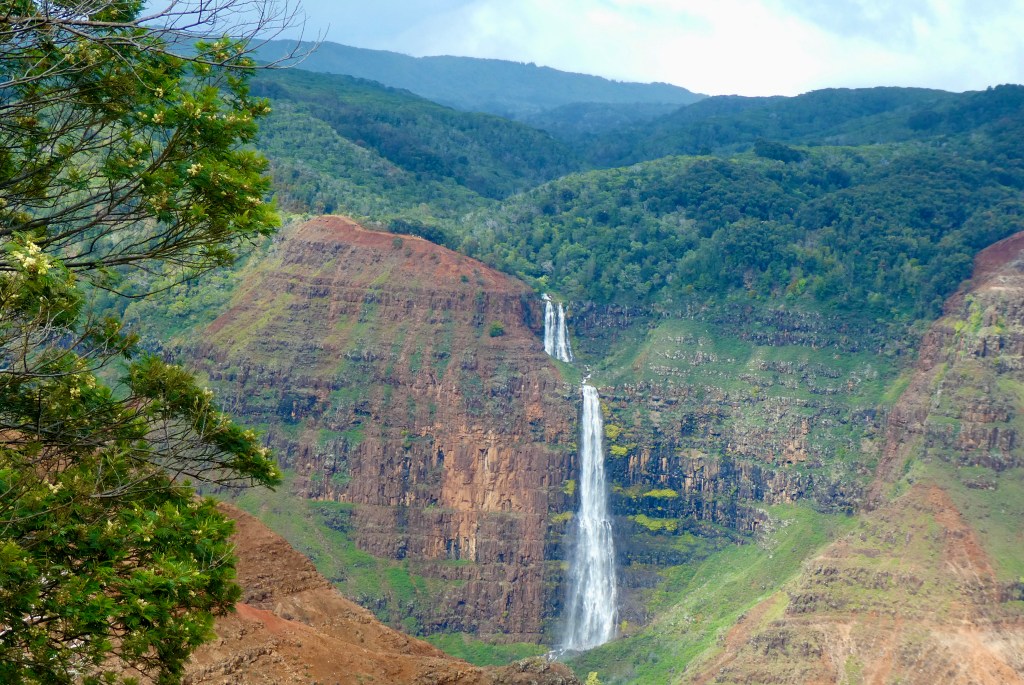
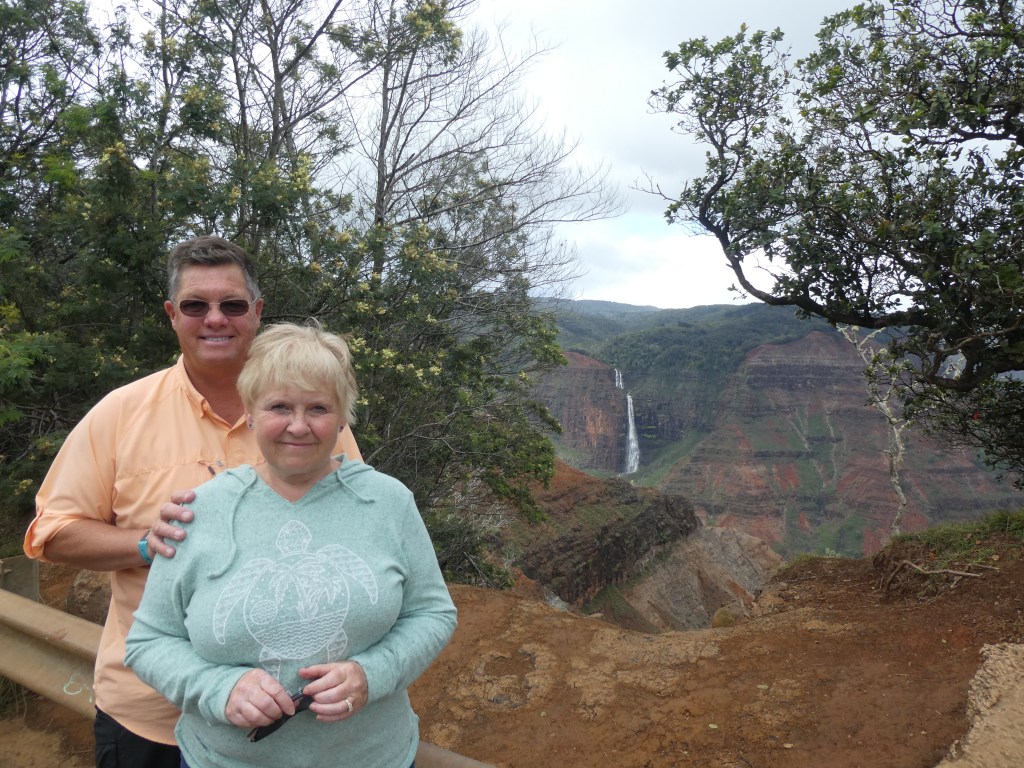
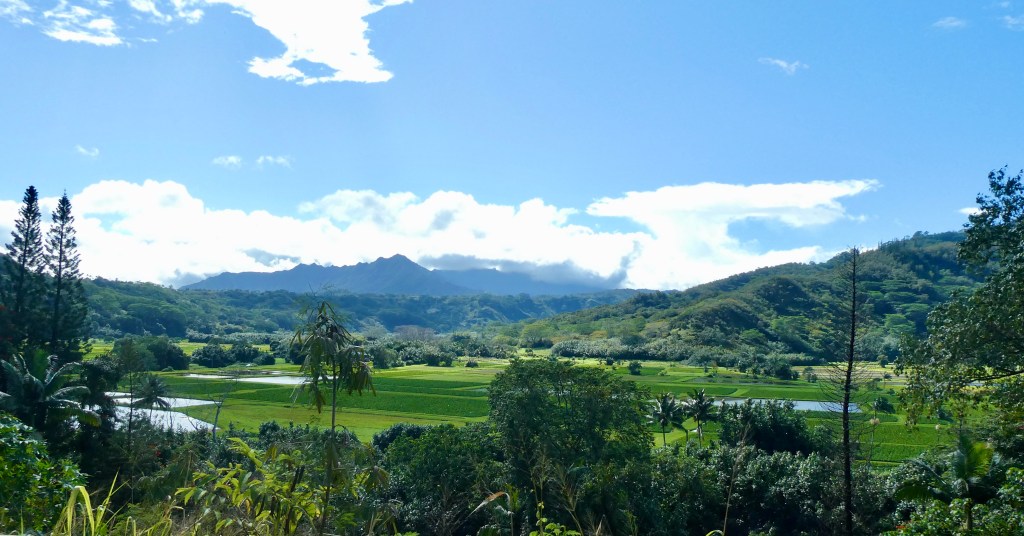
When our sight seeing flight was canceled again due to weather, we drove to Waimea Canyon.

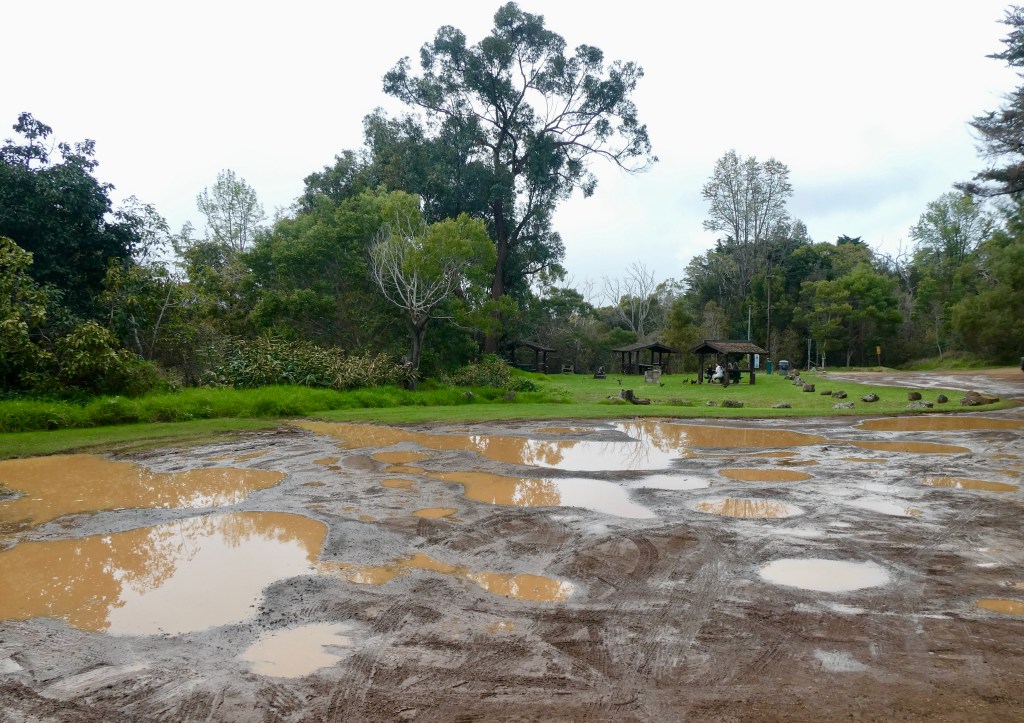
It was also too wet to hike so we drove around a bit and looked at views of the canyon.

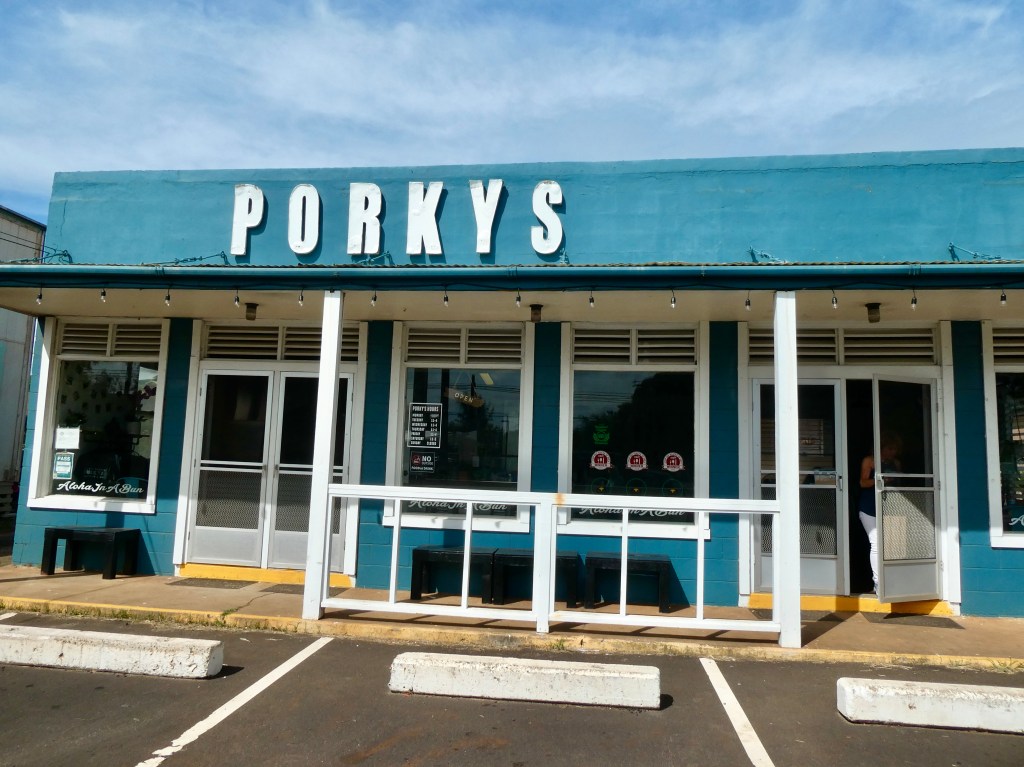
We ate at Porky’s – a famous west island eatery.

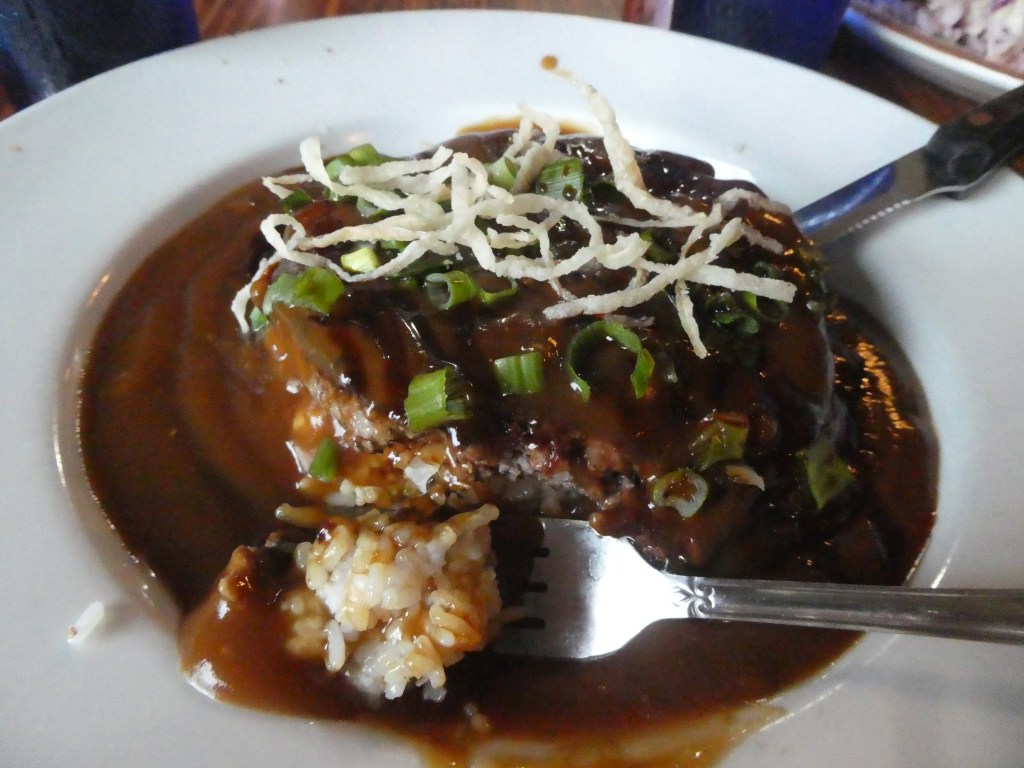
One more food related item – below is a common Hawaiian comfort food – loco moco.

It combines layers of white rice, burger and brown gravy. It is topped with runny eggs.

I don’t like runny eggs so this was the version I ordered! It was very good.

Next up: Rum tour and Luau!

Posted in Uncategorized | 4 Comments

Kauai: A Rainy Island and Albatross

We were able to enjoy a week in Kauai courtesy of our next door neighbor, Donna.  She had enough time- share points to have most of a month on the island.  Her family members came and went and, when she found she’d be alone for her last week, she invited us to join her. 

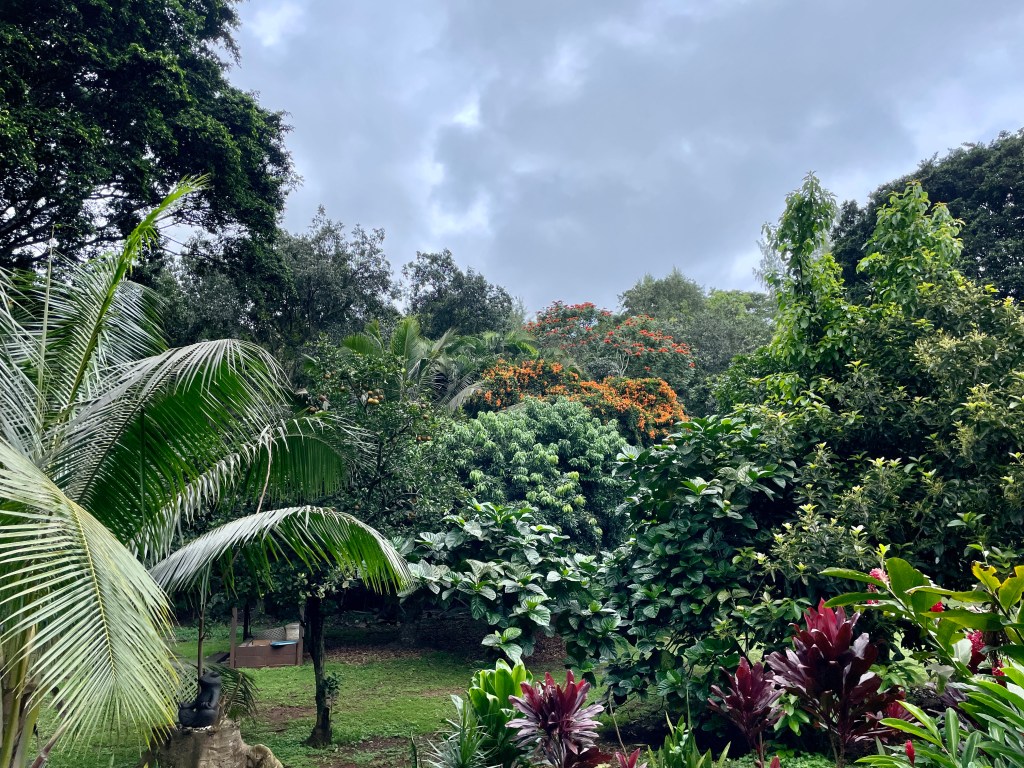
We were on Kauai in 2013 so much was familiar including the lush country side.

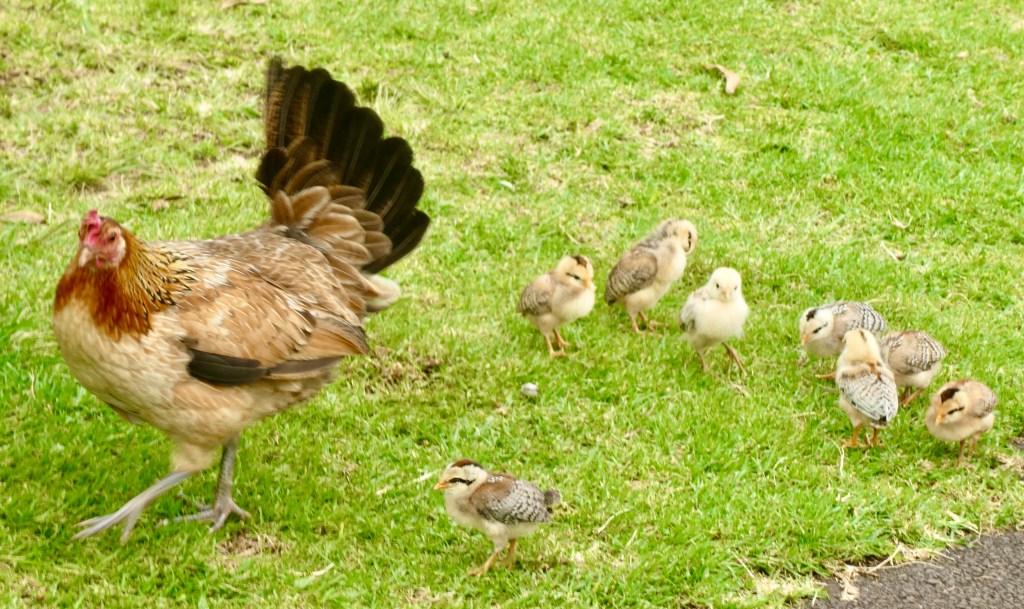
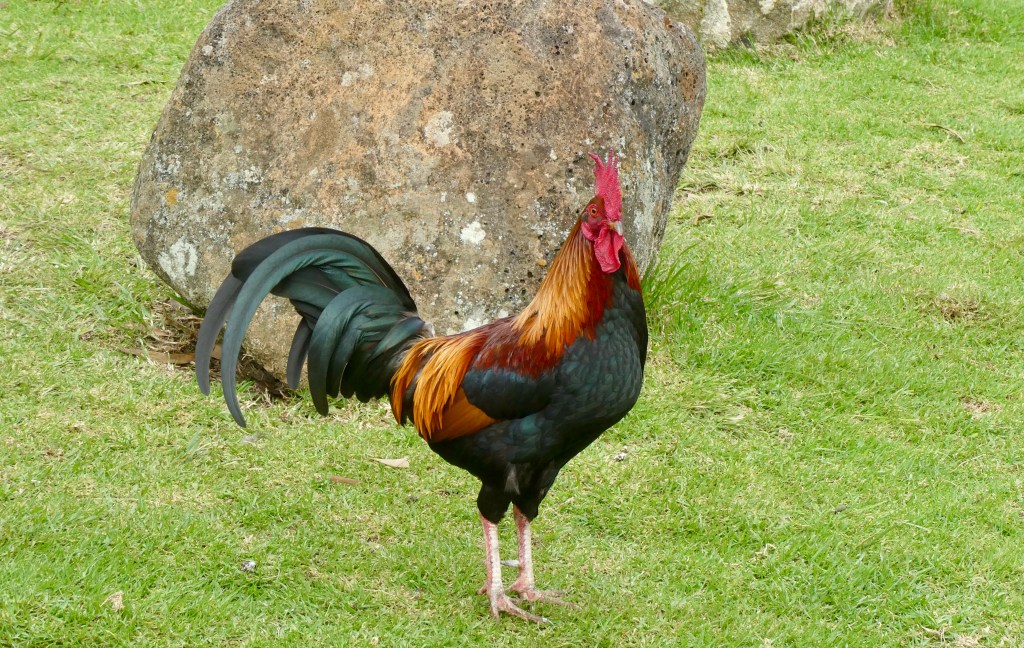
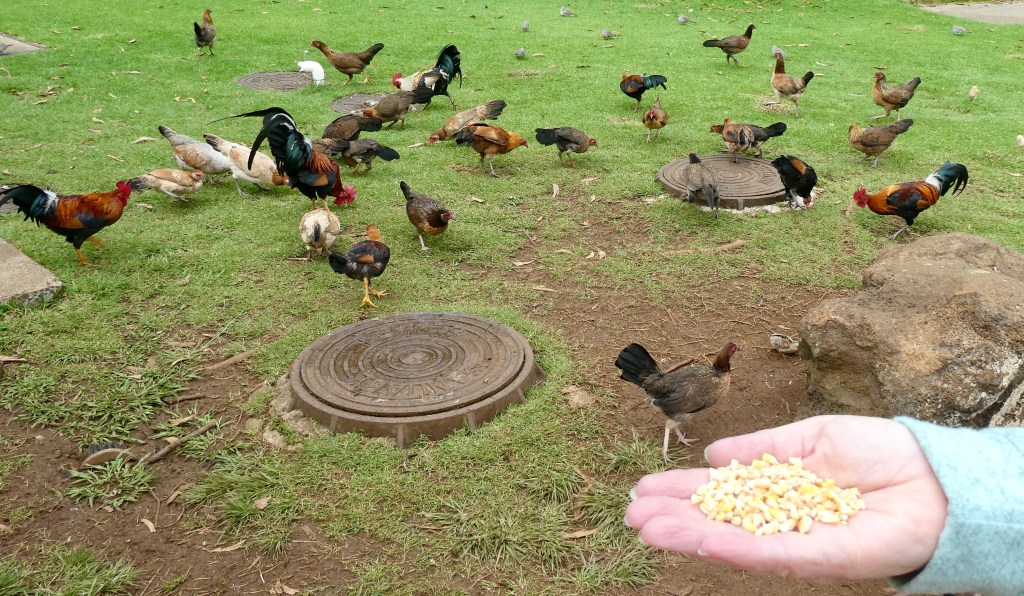
Also familiar were the “rare”and “special” Kauai chickens! 

We saw (and heard) them once or twice.

 Or maybe a thousand times!

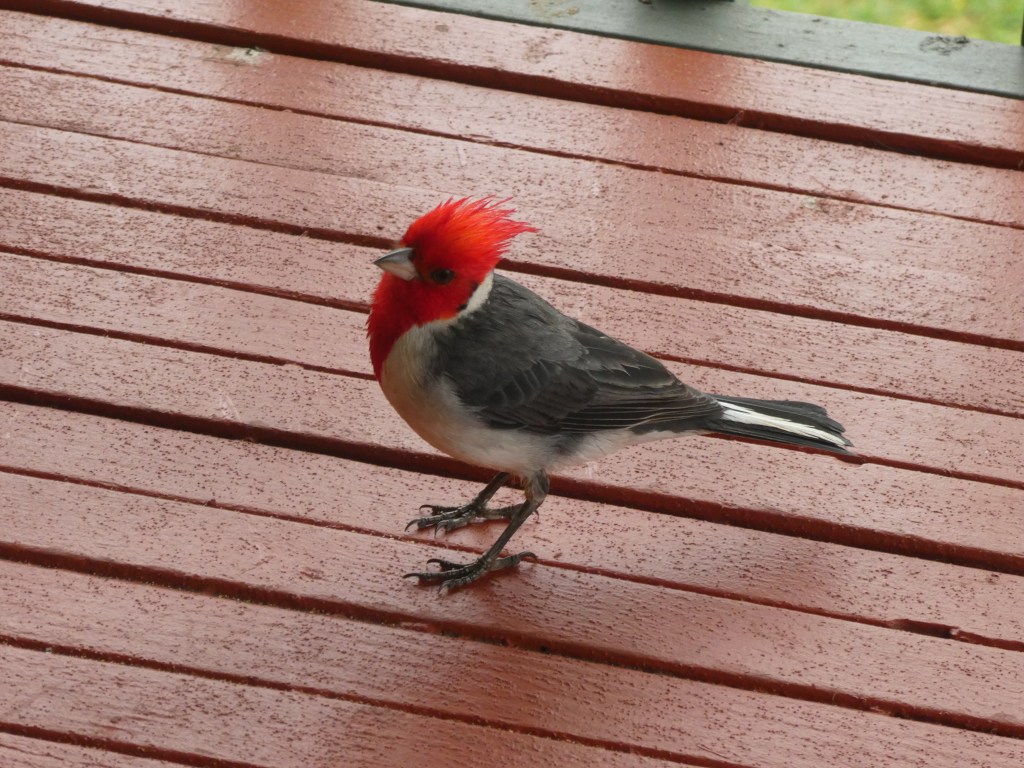
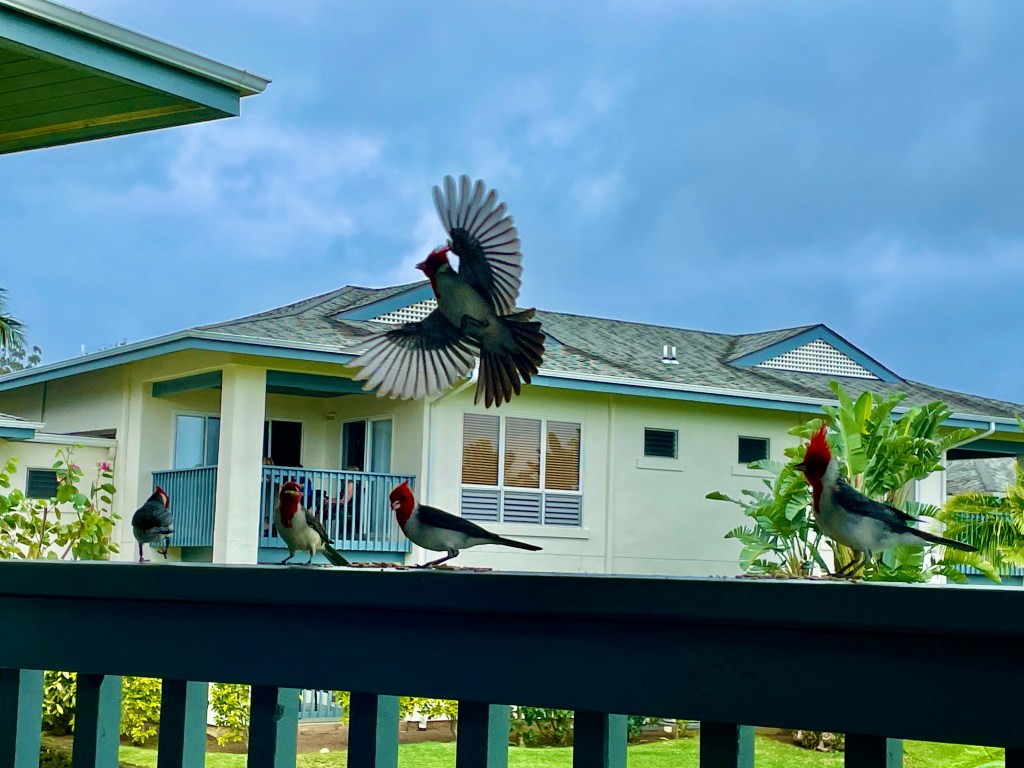
We also enjoyed seeing these birds again!  They are Red-Crested Cardinal although they aren’t actually part of the Cardinal family.  Native to Brazil, these lovelies are related to Tanagers.

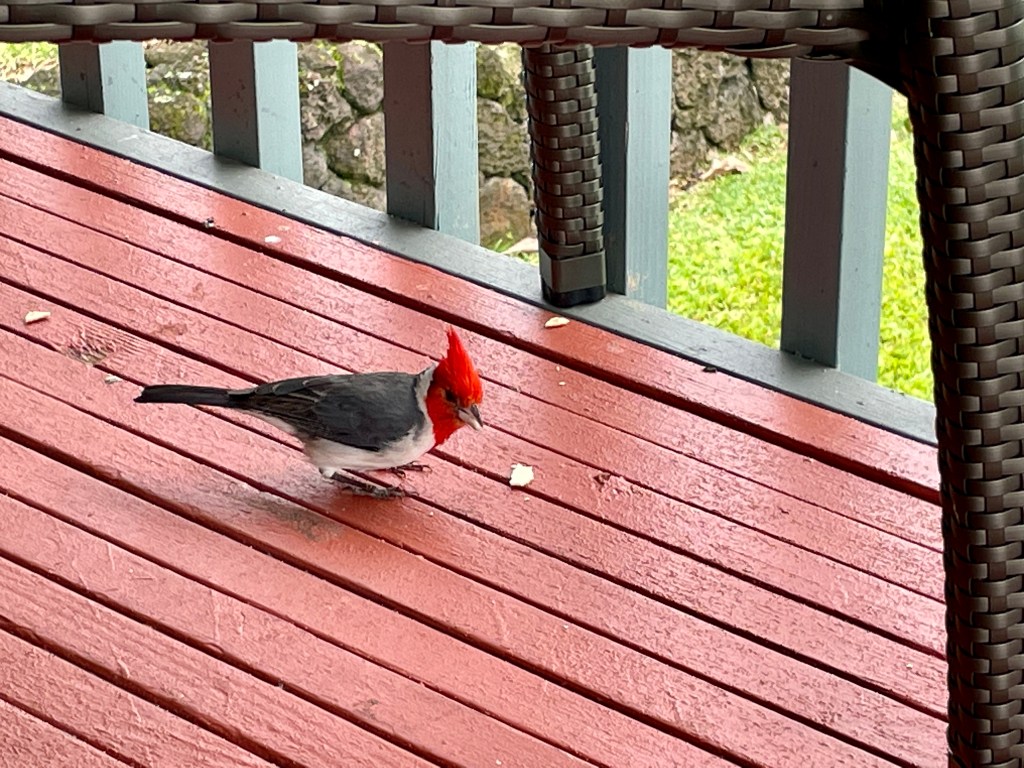
I accidentally got this cool shot of the Red-Crested Cardinal on the condo deck!  

There might have been crackers involved.

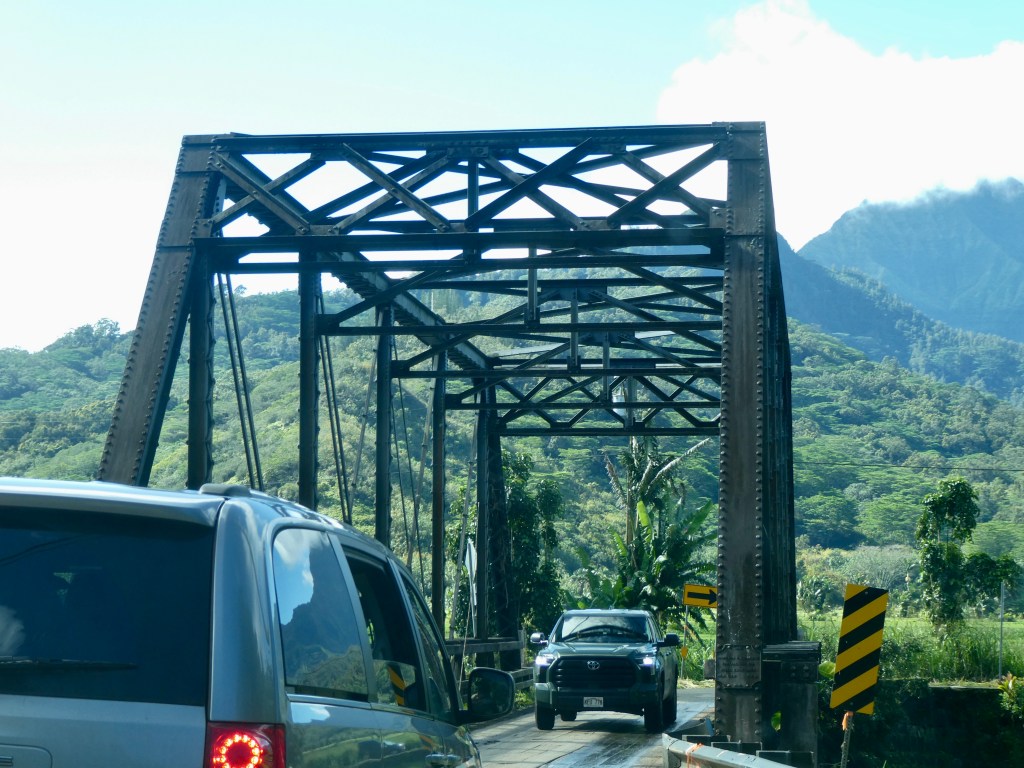
We had been on this one lane bridge to Hanalei before.  

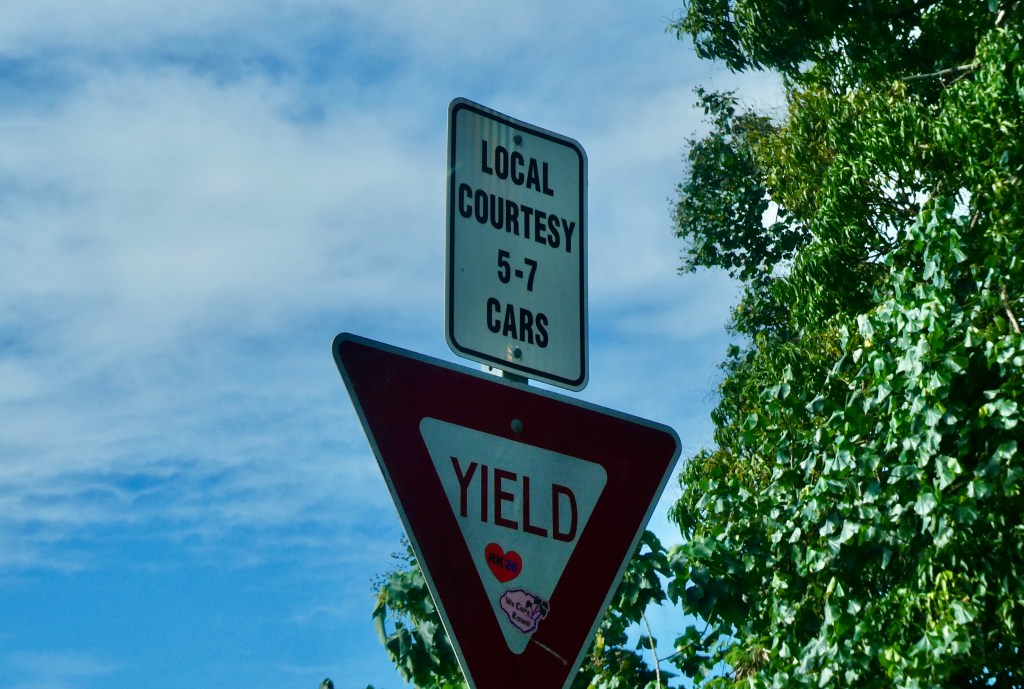
The 5-7 vehicle courtesy is the same as 2013.

Unfortunately this bridge and others were closed by flooding on the day we were to have had a food tour in Hanalei.  It was canceled. 

Rain, in greater amounts than usual, impacted our week on Kauai several times.  We couldn’t go for a plane ride to see the Na Pali Coast on two separate days. There were other excursions that just weren’t as appealing in the rain.  

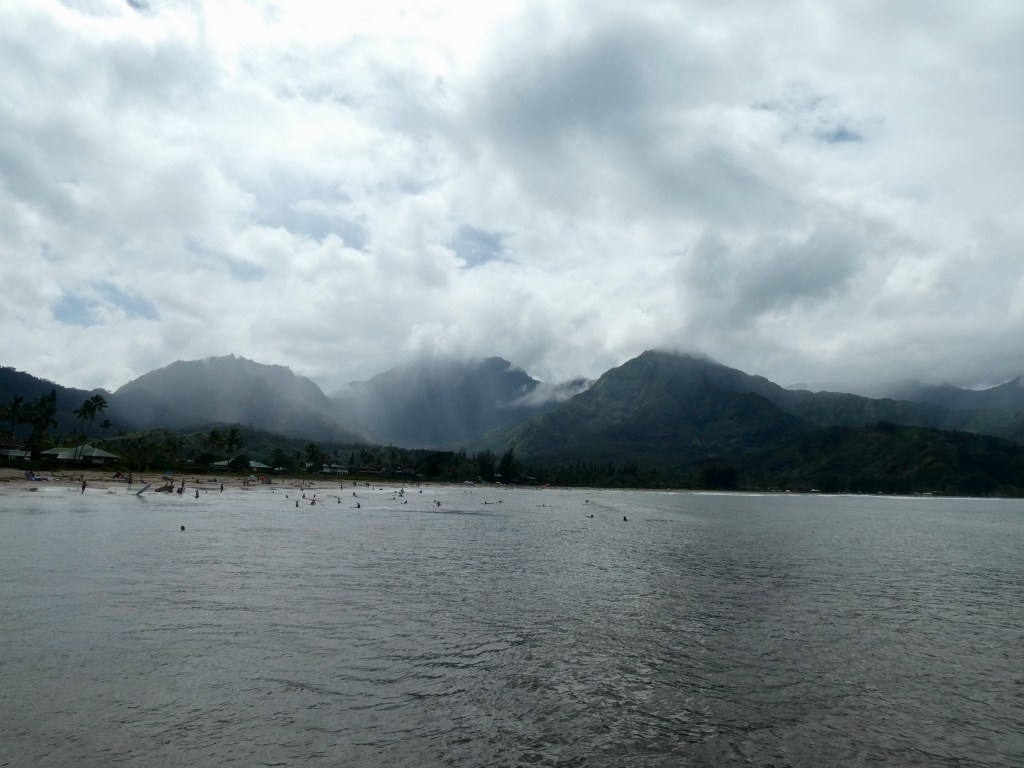
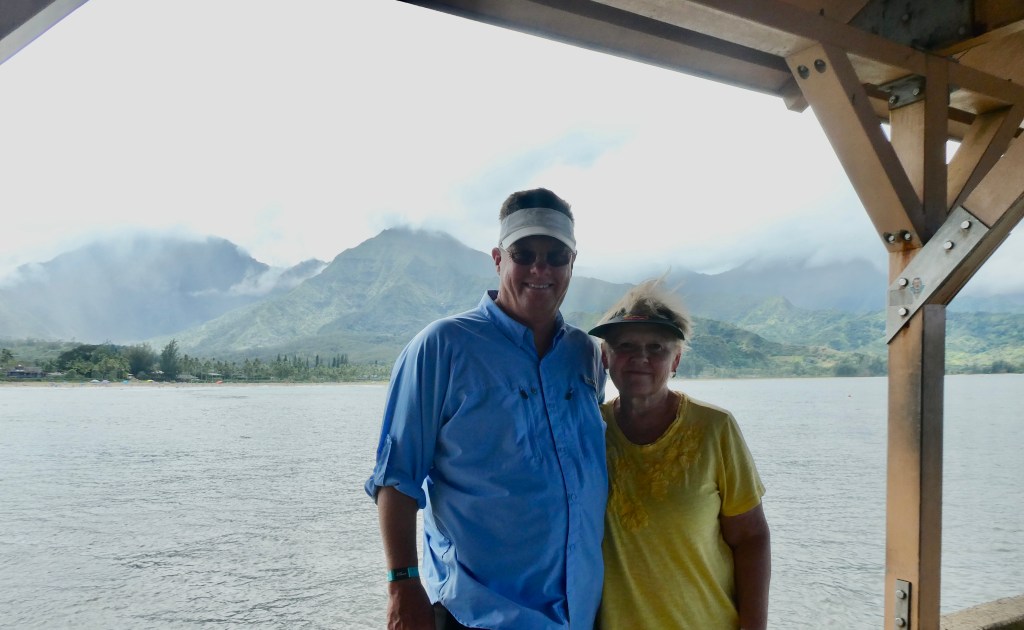
We were still able to enjoy our week! On a sunny moment in time, Randy and I took a walk in the neighborhood adjacent to the time share complex.

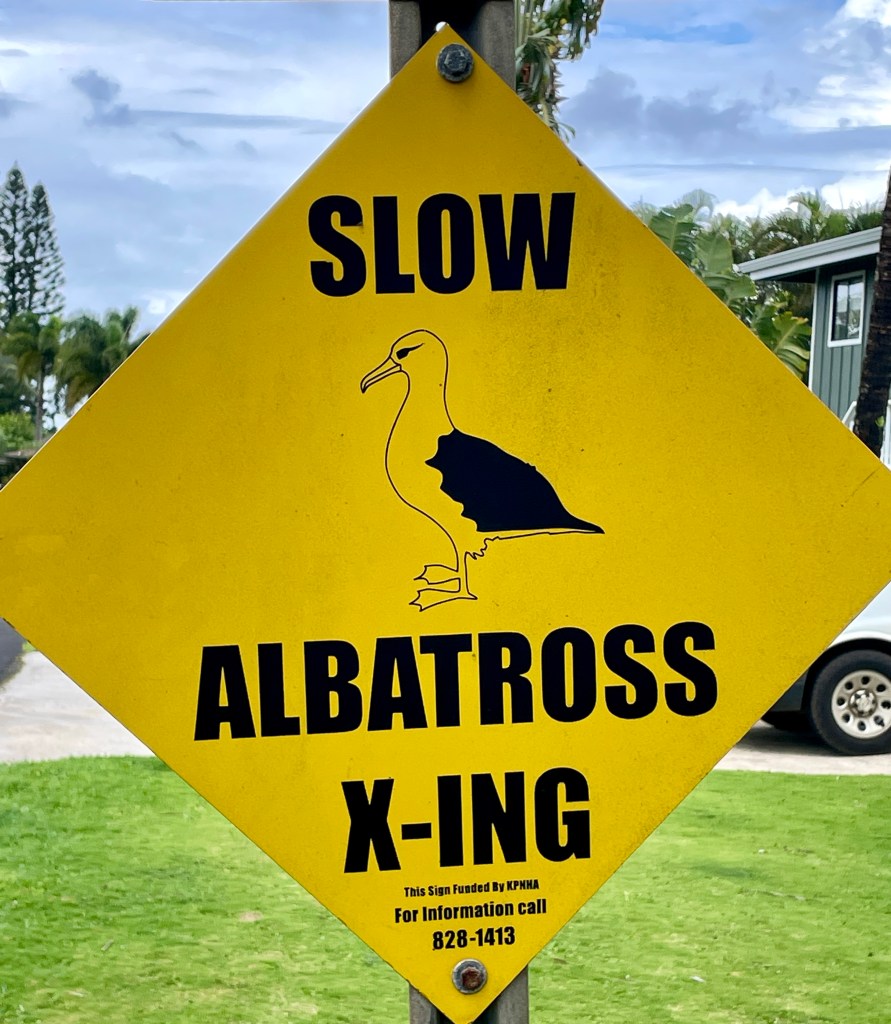
We came upon this sign for albatross crossing!

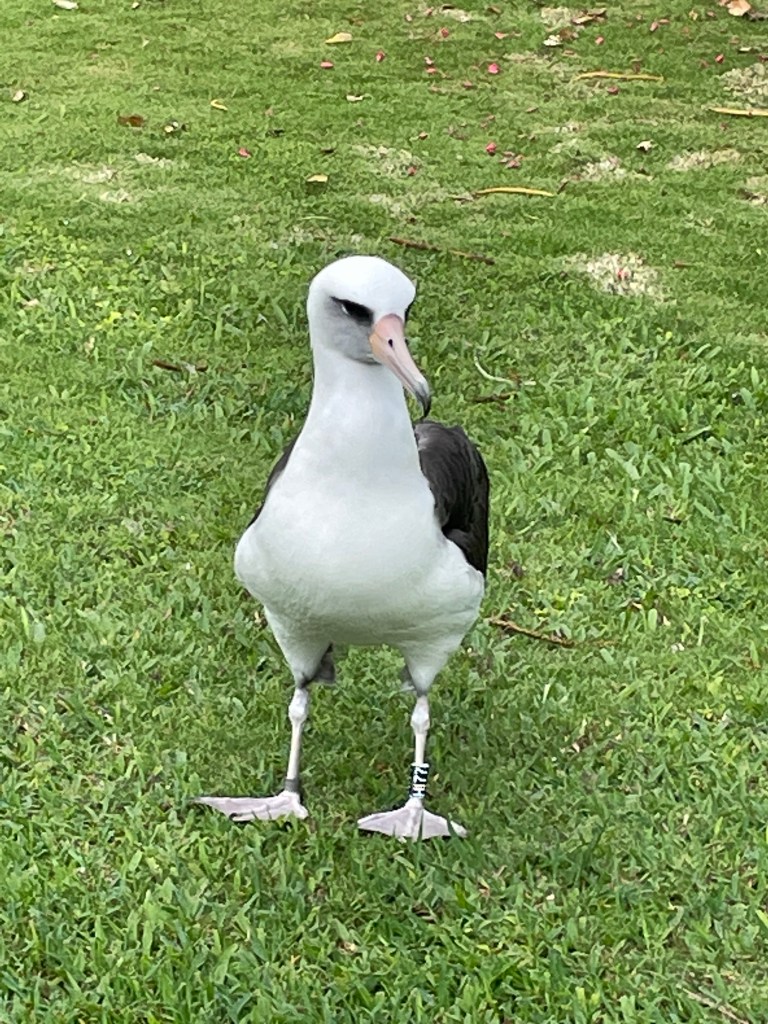
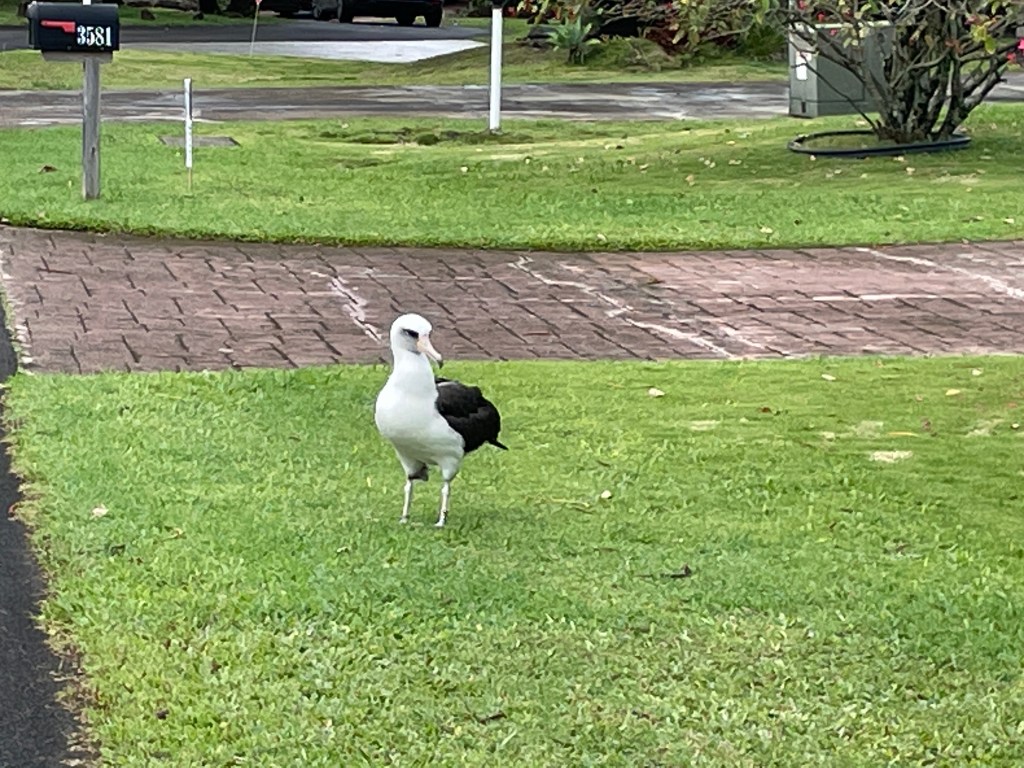
Very shortly we came upon a few individual albatross!  They were intriguing as we knew almost nothing about them. My trip notes said “research albatross” so I did.

I went specifically to the site www.albatrosskauai.com  Their information is extensive, but I’m shortening your education to just a brief summary:

There are 22 species of albatross world-wide but the ones that visit Kauai are called Laysan albatross.  They have wing spans of over six feet.  

Laysan albatross spend most of their lives on the waters of the Pacific.  They, and other varieties, may not touch land for years at a time.  The Laysan travel great distances from the waters off North and South America to Hawaii to the Arctic. 

As much as they live at sea, albatross cannot nest on the water.  Each November adult albatross return to land to breed and raise chicks. 

Albatross mate for life.  Given that they return to the nesting site at different times, researchers believe they don’t travel together throughout the year.  A mate left alone will usually pair up with another.

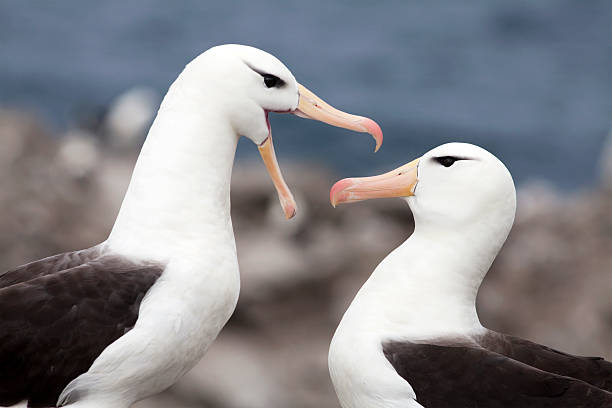
Black-Browed Albatross (Thalassarche melanophrys) pair, Falkland Islands.

Many hundreds of thousands of albatross nest in the northern Hawaiian islands.  About twenty years ago, the Laysan Albatross began nesting on Kauai. 

There are currently several hundred nesting pairs, some choosing residential sites.

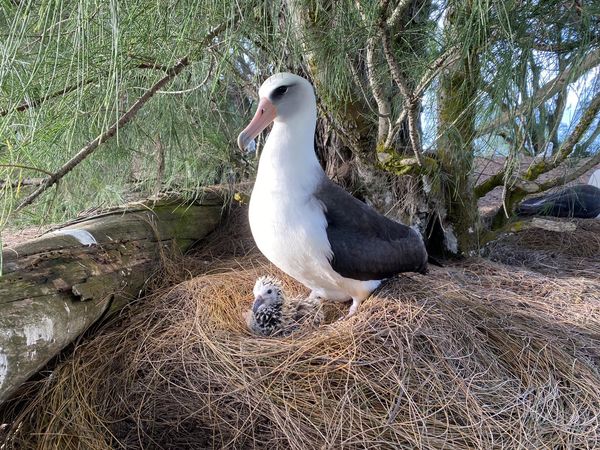
Albatross build a nest on the ground and lay one egg a year. Both parents take responsibility for the egg and chick.    The viability of the eggs and their successful hatching is about two thirds of eggs lain.

One parent stays on the egg while the other flies thousands of miles north to feed.  The journey takes one to two weeks while the remaining parent never leaves the nest, even to eat themselves. 

The gestation period is 70-80 days.

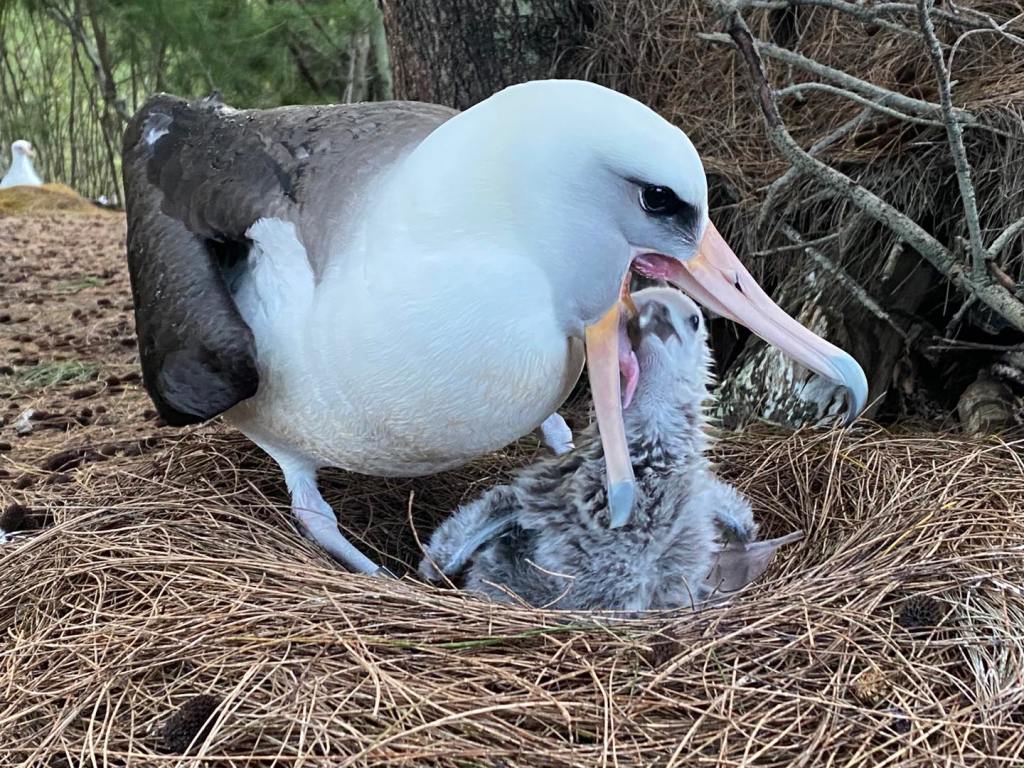
At three weeks of age, the chick is left “home alone” for days at a time while both parents go on the food cycle to bring regurgitated “take out” for the growing chick.  

The chick is fed this way for four months.  Combined, the parents make 25-30 trips traveling about 60,000 miles.  

The chick grows to its adult size during this time. At about six months, an internal clock and compass leads the chick, independently, to the edge of a cliff where it runs and jumps and flies.  

It probably won’t touch land again for 3-5 years when it will return to it’s place of birth to find its own mate and start the cycle again.   These are pretty fascinating birds!

Next up:  We learned about the growth and use of noni.

Posted in Uncategorized | 4 Comments

Road Trip: Palm Springs, California

We planned a road trip to the Palm Springs area of southern California to see a show at the McCallum Theatre.  Usually we see any show we want in Phoenix but we were not home when Come From Away played here last summer.  More on that later.

Our trip involved a two night stay so we visited a few places highlighted on a travel show on PBS called Samantha Brown’s Places to Love.

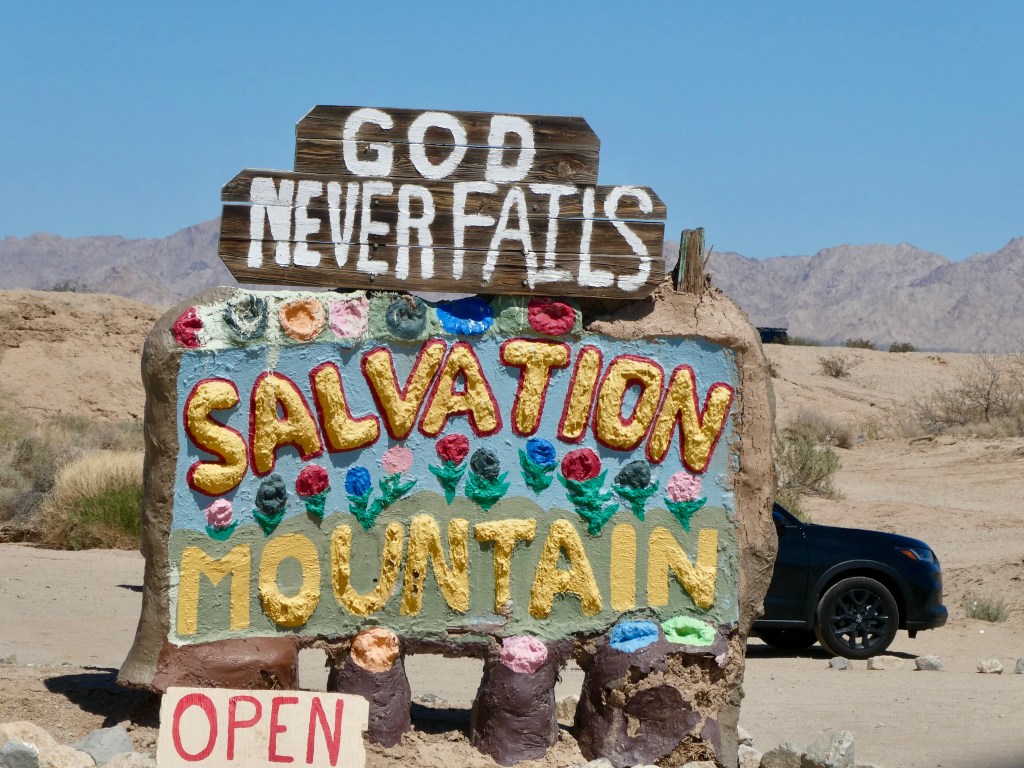
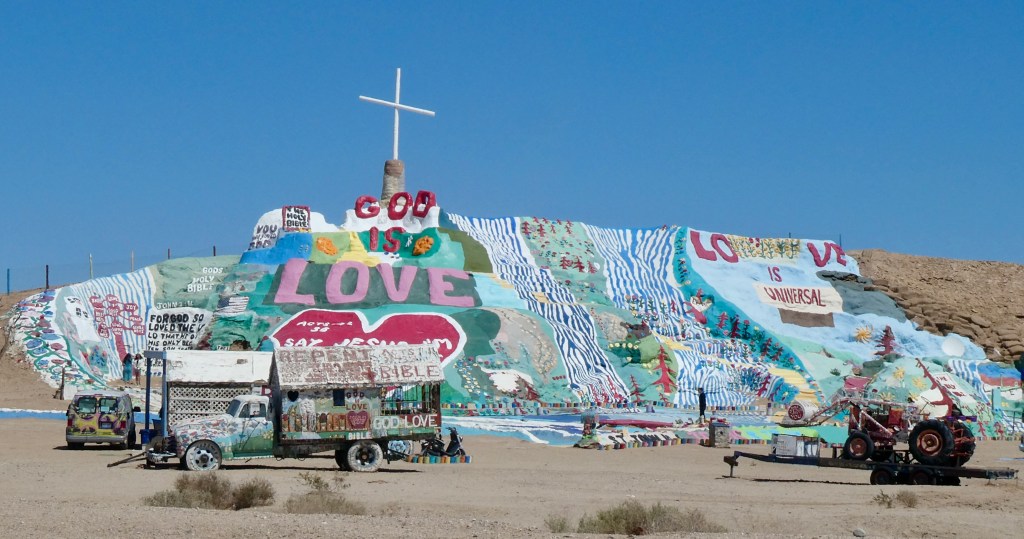
We started at Salvation Mountain in Niland, California.  

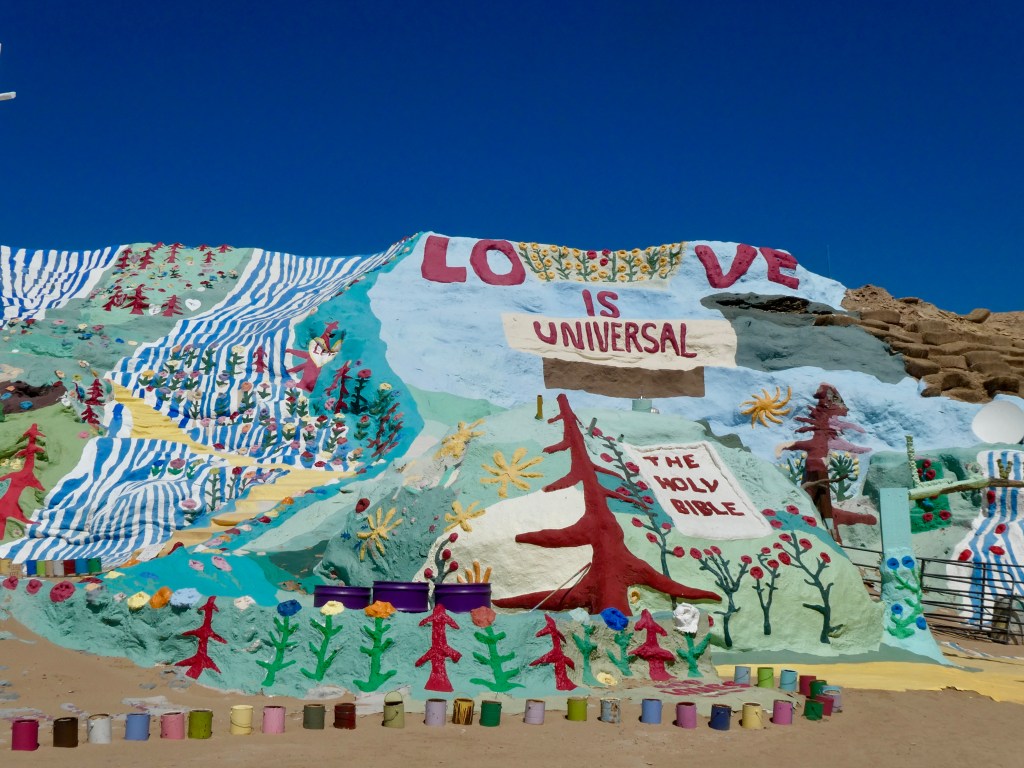
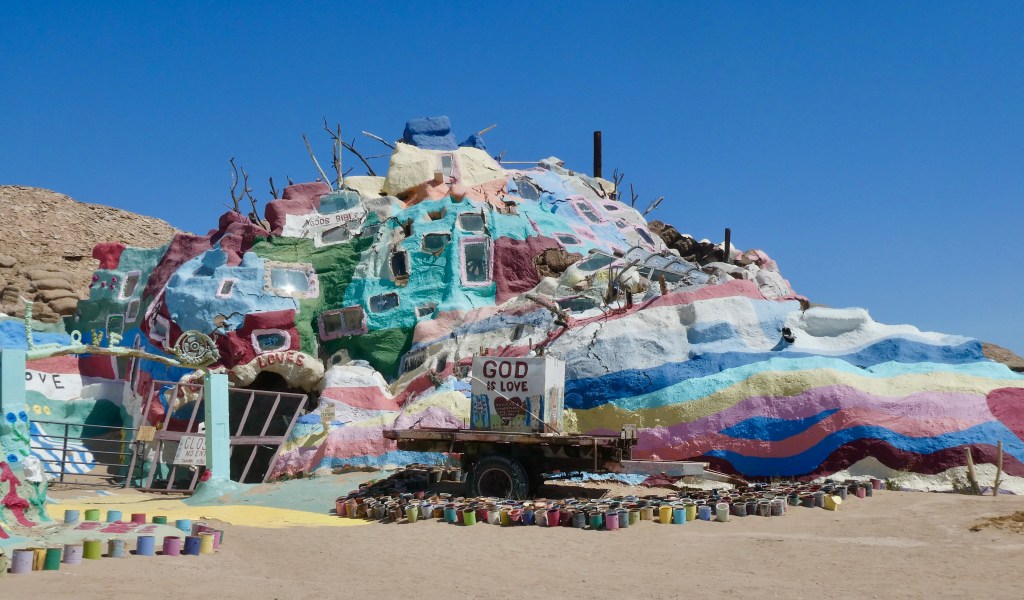
Salvation Mountain began as a temporary monument representing God’s love as perceived by Leonard Knight (1931 – 2014).  

Leonard found all religions to be too complicated instead believing all that was needed was repentance and forgiveness through Jesus Christ.  

He put his belief into his Salvation Mountain.

He worked on his monument over 28 years using plaster covered hay bales, items scrounged from the dump, and half a million gallons of latex paint.

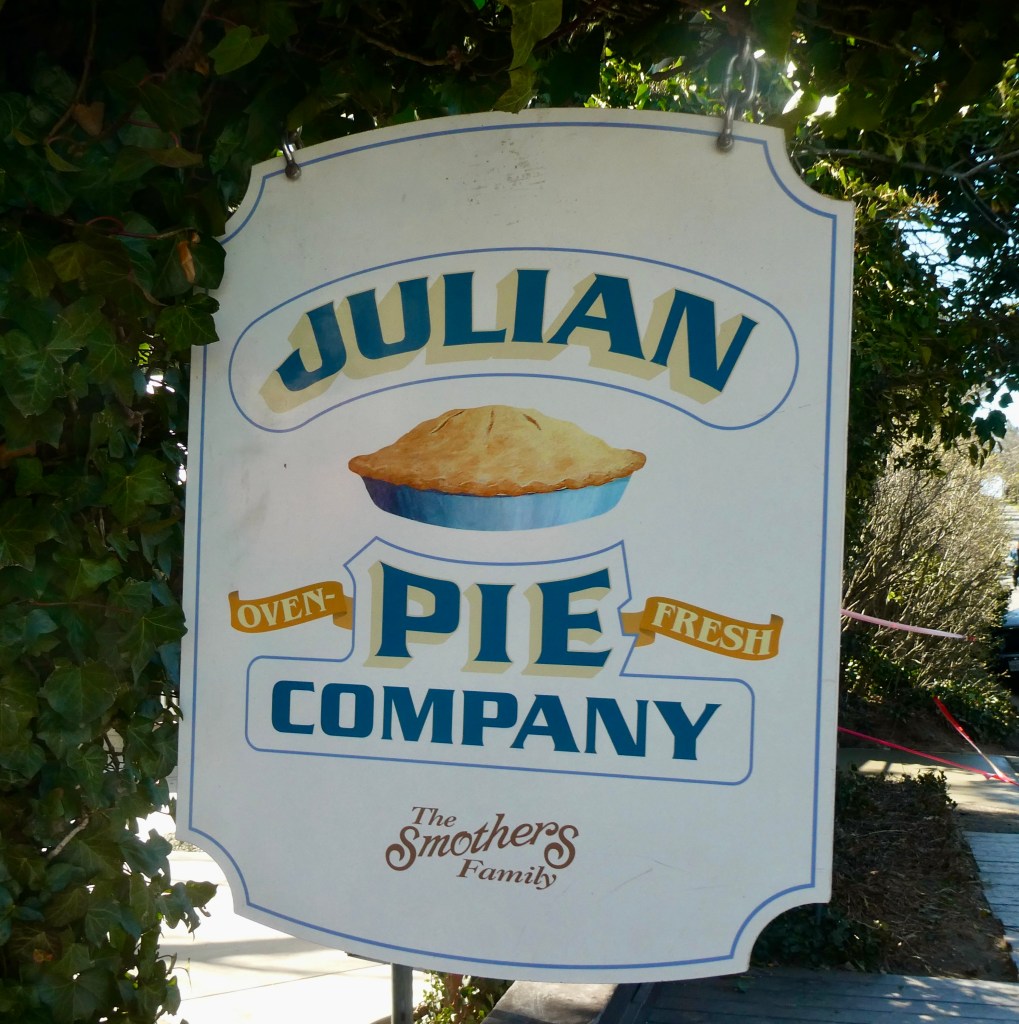
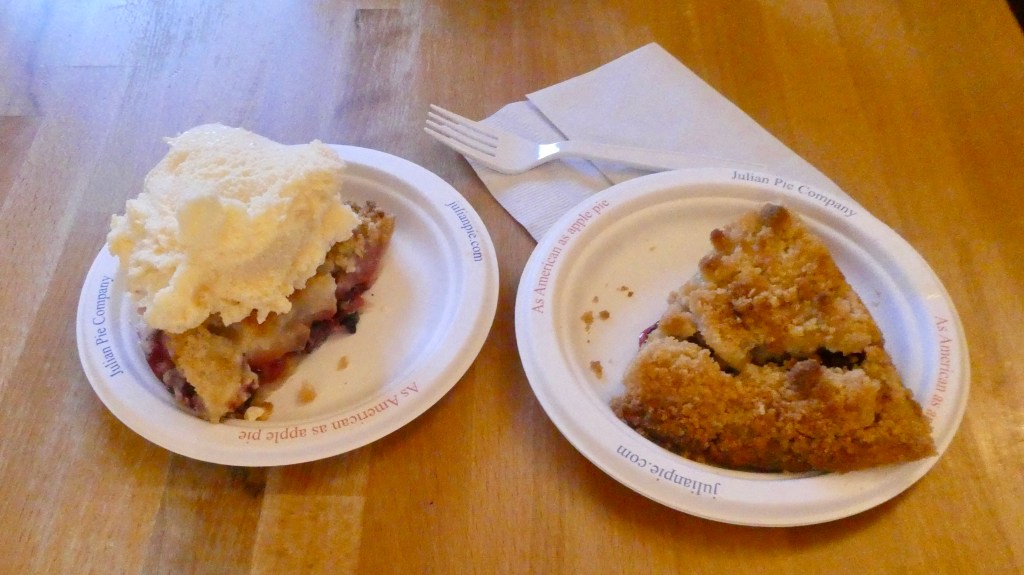
The PBS show made us aware of visiting the town of Julian to have pie at the Julian Pie Company..  

A long standing family operation, almost all pies start with home grown apples. We had apple and berry pie for dinner!

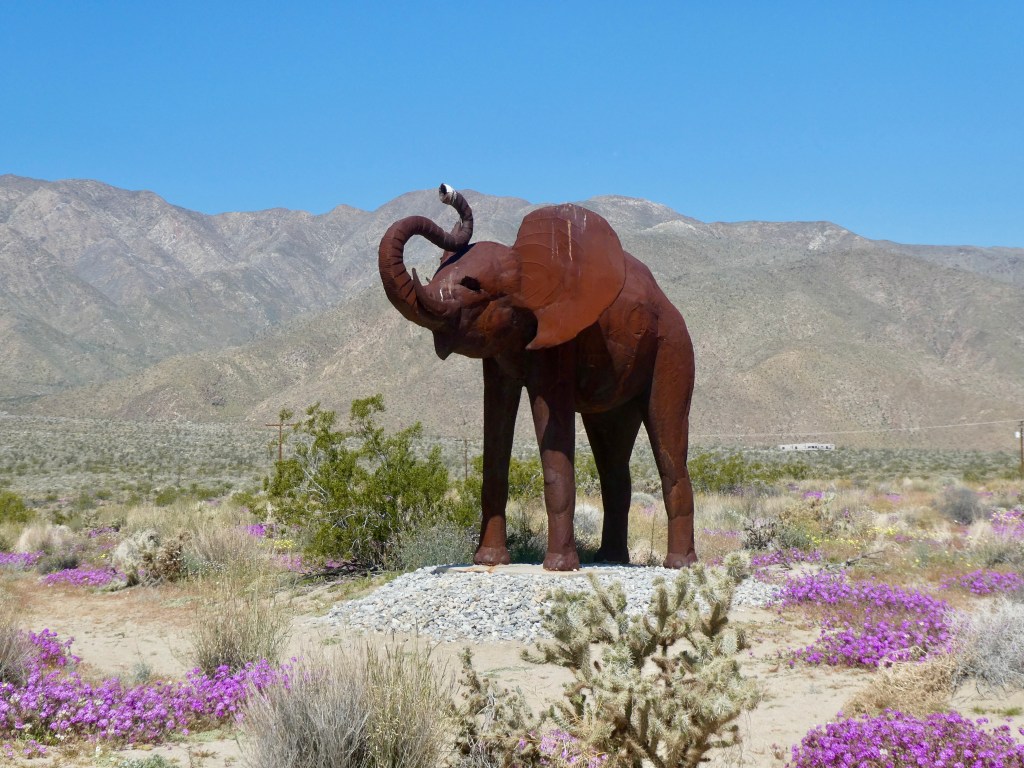
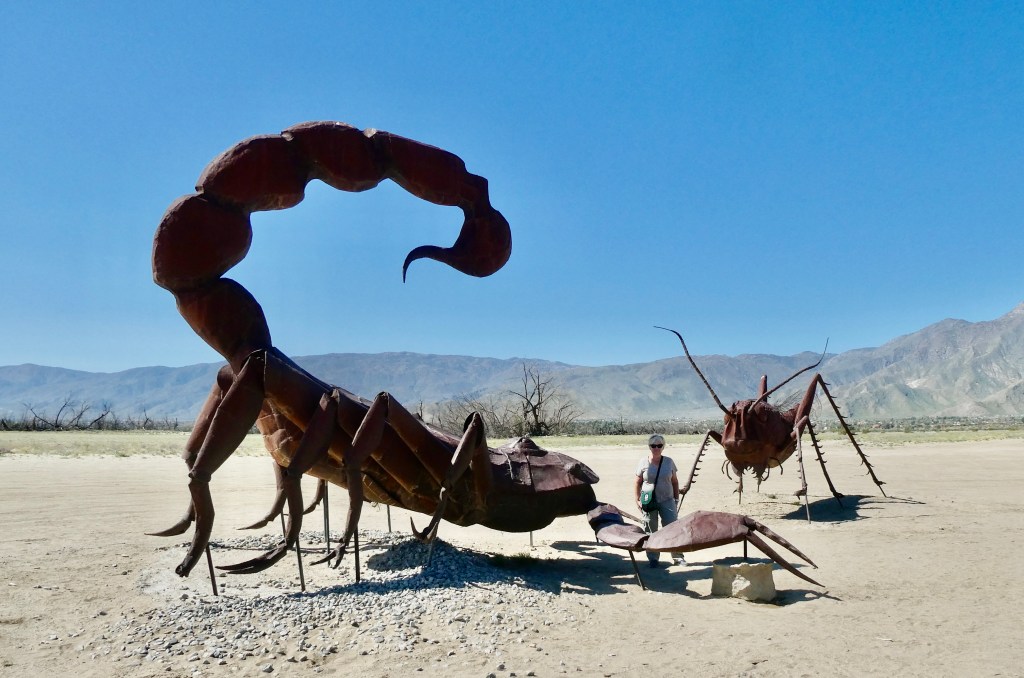
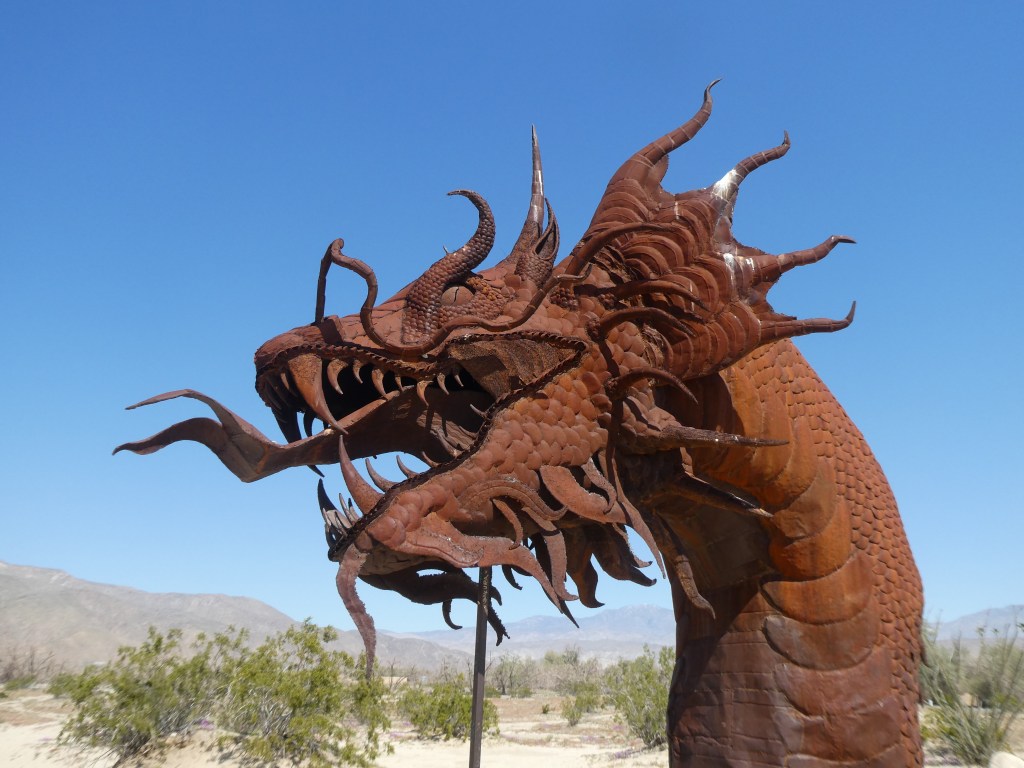
Again, following the PBS show recommendation, we visited Borrego Springs to see a collection of larger than life metal sculptures.

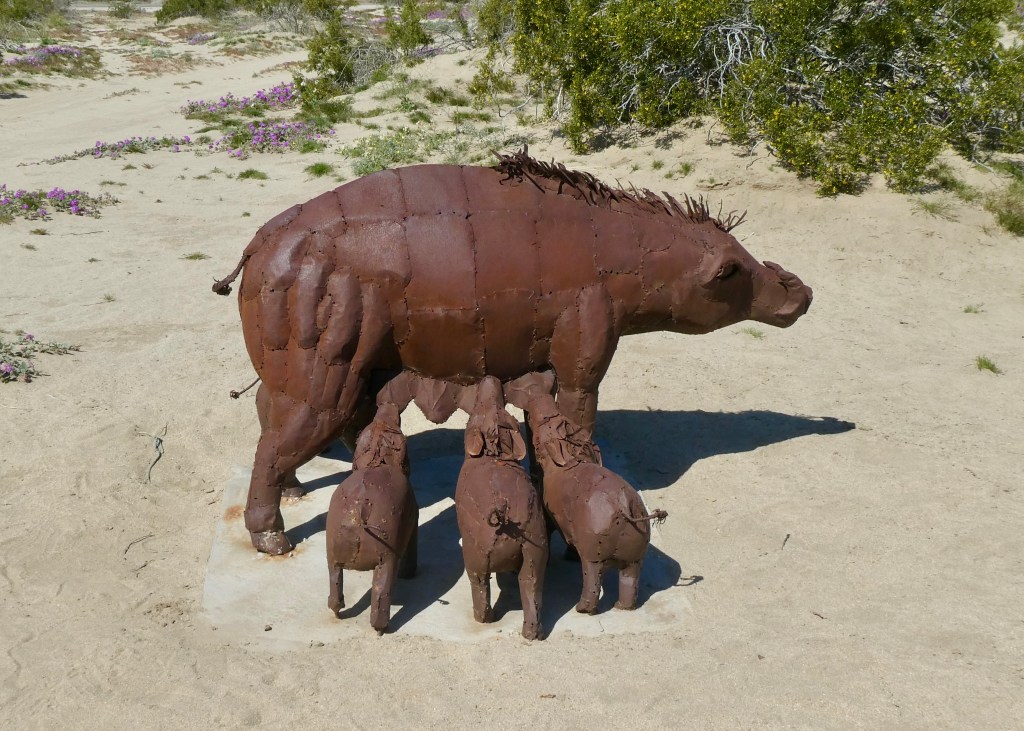
There are 130 sculptures in and around the town of Borrego Springs. The town is surrounded by the Anza-Borrego Desert State Park.

The largest concentration of sculptures are in an area north of town called Galleto Meadows.  

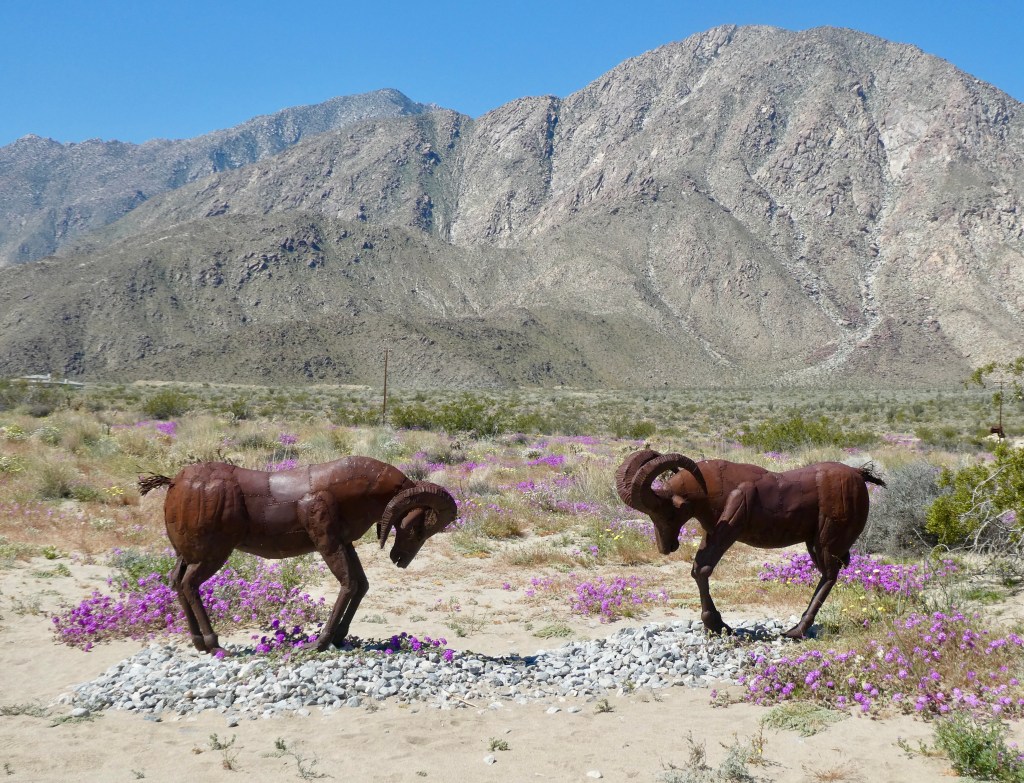
We lucked out with some wildflowers too!

Philanthropist, and Galleto Meadows owner Dennis Avery, commissioned sculpture artist Ricardo Breceda to build the sculptures from 2008-2012. That seems a nice gig for an artist during the recession!

We drove through and walked around the expansive area.

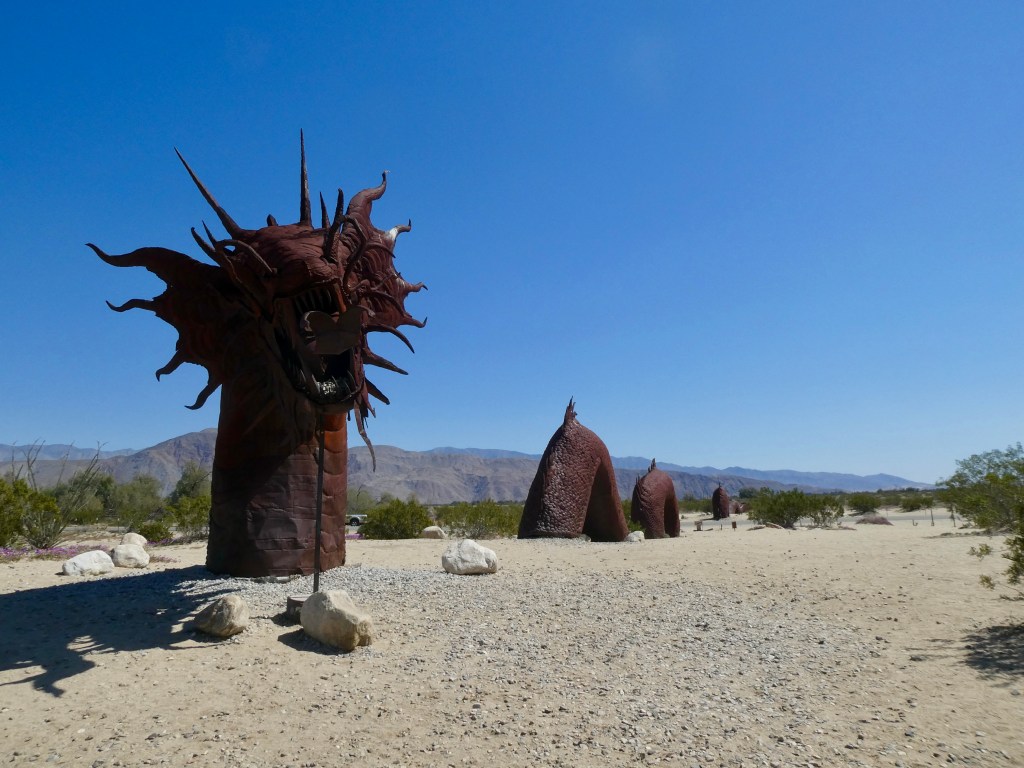
The sea serpent has body parts on both sides of the road!

As fun as these side experiences were, the purpose of our trip was to see the musical Come From Away at the McCallum Theatre.

We become aware of the show when visiting Newfoundland last summer.  

I have not yet written about that trip. However, we so enjoyed re-living our Italy trip by writing it after the fact, that I will probably write our Canada trip as time allows this summer. By then Randy may be able to find the end of that trip somewhat amusing!  No, probably not….teaser!

Anyway, in preparation for seeing the musical we both read Jim DeFede’s book The Day the World Came to Town.

We learned that Newfoundland is pronounced Newfin-land.  They have their own time zone that is 90 minutes ahead of US Eastern Standard Time.  Their isolation leads to a cooperative spirit for the survival of all.

The history of helping others rose again in 1942 when two US military ships were destroyed by running aground in a violent storm.  One hundred ninety three sailors drowned but 186 were saved by the heroic efforts of Newfoundlanders.

The island has a long history of aviation importance as a refueling stop for military and civilian aircraft.  Newer jets with longer range has greatly reduced aviation traffic but the long runways remain. 

On September 11, 2001, United States airspace was closed at 9:54 a.m. EDT after the terrorist attacks. There were 4546 aircraft aloft over the US and they were directed to land. There were an additional 400 international flights heading to the US, mostly from Europe..

Of those 400 flights, 250 aircraft were diverted to Canada.  Those planes carried 43,895 people.  Thirty-eight planes, landed in Gander, Newfoundland with crew, passengers, and an assortment of animals.  

Imagine 6595 extra people joining a town of 10,000!   The book and the musical tell the story of the locals and passengers and how they passed the next four days together.  The service provided by the population of Gander is unimaginable – yet they did it.

Photos were not allowed of the production. If you ever have the chance to see the musical, do it!  At the very least, read the book!
An interesting side note to entering the theater – ID and proof of COVID vaccination were required.  We had received this information with our tickets. Masks were recommended but not required.

The next day we had a four hour drive back to Phoenix and made a couple more stops along the way.

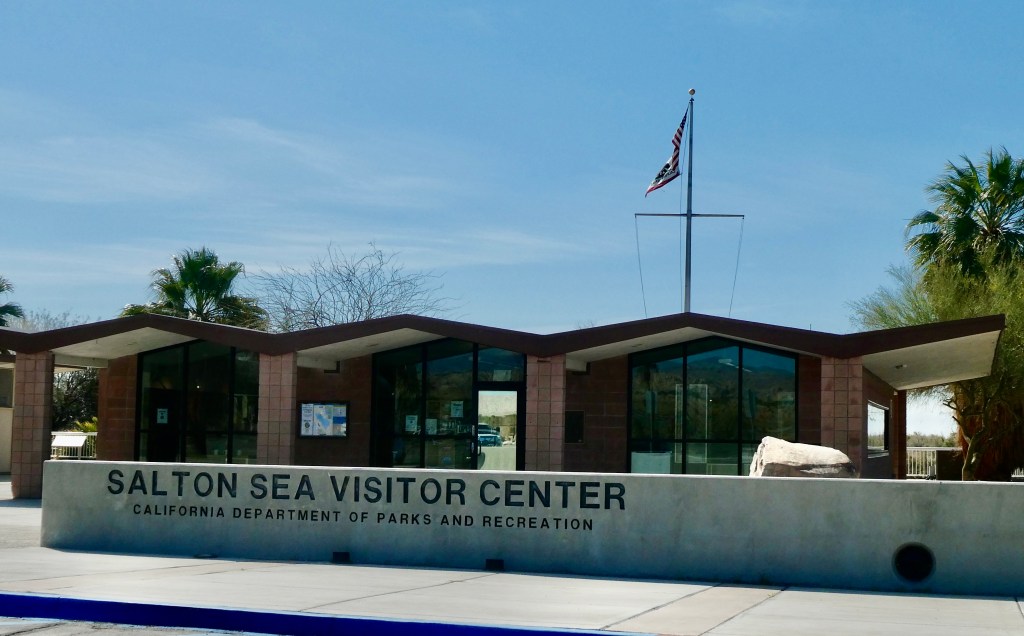
Our first stop was the Salton Sea Visitor Center.   

The depression for the lake was caused by tectonic shift, sediment collection and flooding along the Colorado River.  It has a salt water, fresh water, salt water history.

The sea measures 372 square miles and is the largest lake in California.  It sits 277 feet below sea level. It was once the second busiest (of 273) state parks in California.  Its heyday was in the 1950s and 1960s.

Even after its peak, the Salton Sea was still a haven for fish and fishermen and birds and birders.  

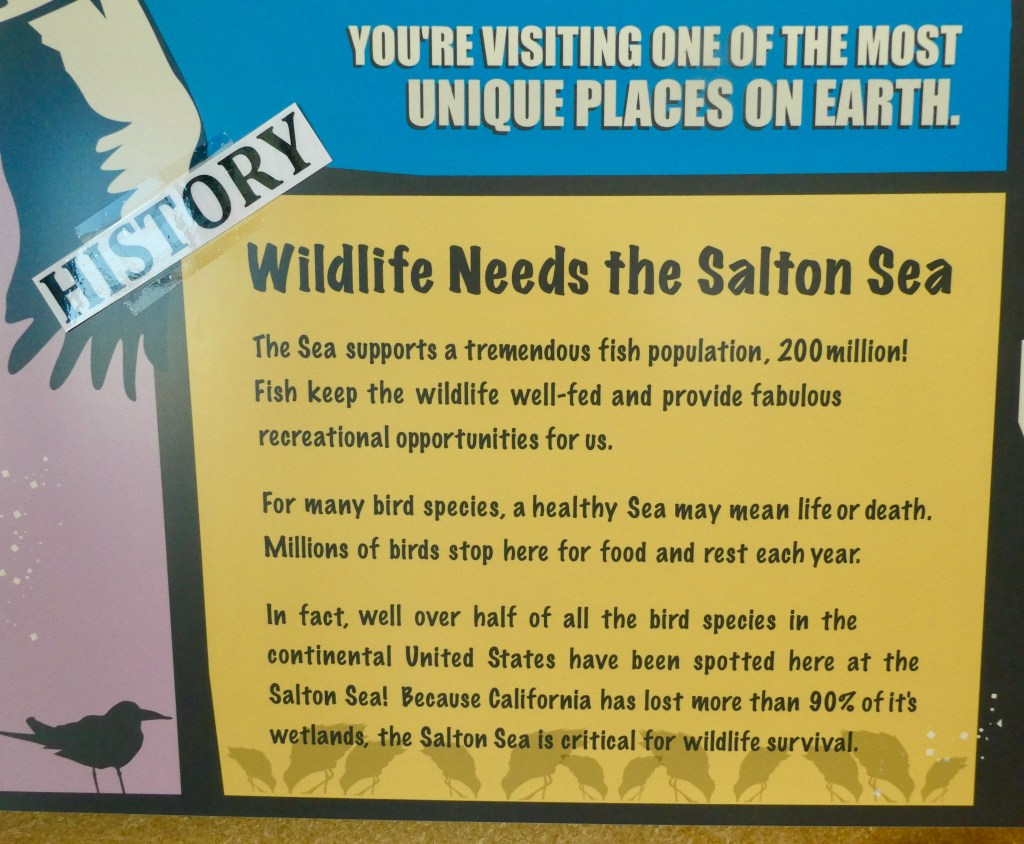
Placards in the visitor center are now slapped with History labels as so much has changed.

With climate change and drought, the salinity has increased too much to support fish and the last of the fish died two years ago.  Given that, there are now much fewer birds.  The politician Sonny Bono was very interested in the health of the Salton Sea. There are maintained birding areas with his name in the southern part of the sea.

The Salton Sea currently has higher salinity levels (60 grams per liter) than the Pacific Ocean but less than the Great Salt Lake.

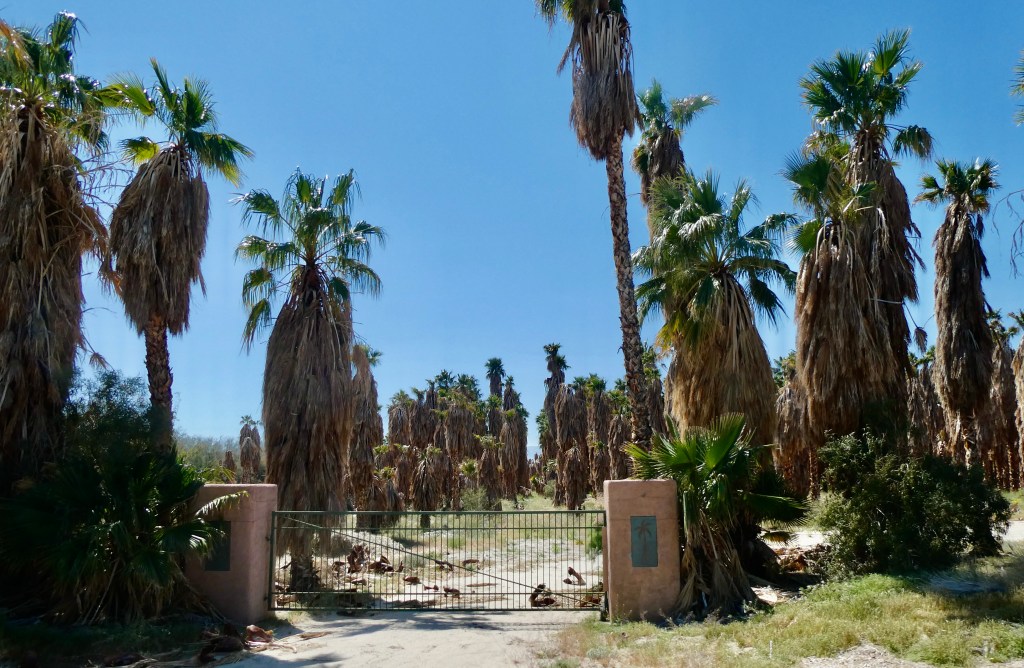
As we left the area we were quite confused by the assortment of agriculture that was dying off, and new agriculture being planted.

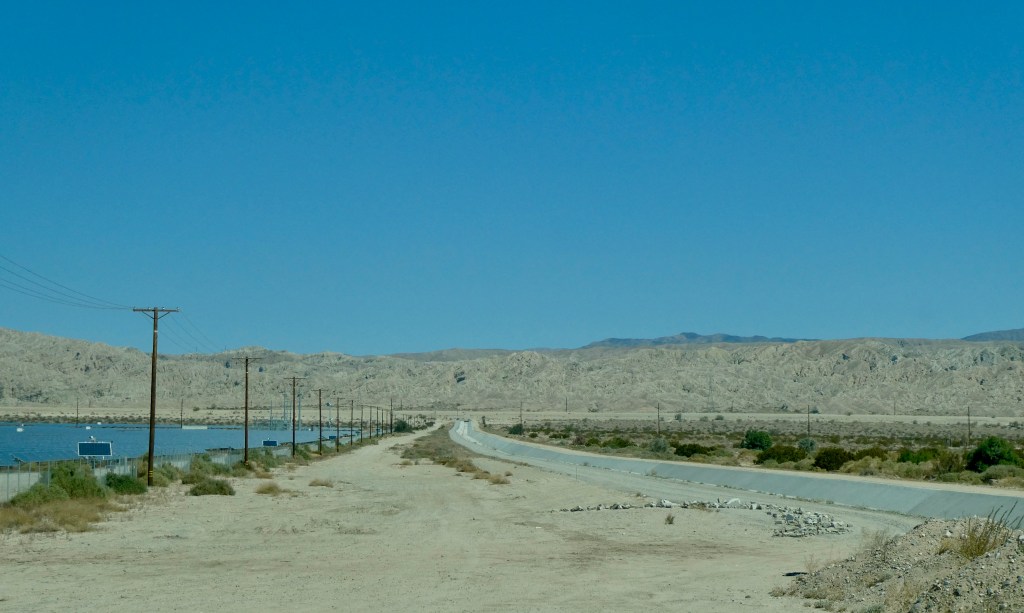
We were stunned to see this new water canal. 

I know the water and agriculture scenario is complicated given the drought but allowing established crops to die, while starting new crops, when water is scarce just doesn’t make a lot of surface sense.  

On to a person who made more sense of his life – General George Patton.   

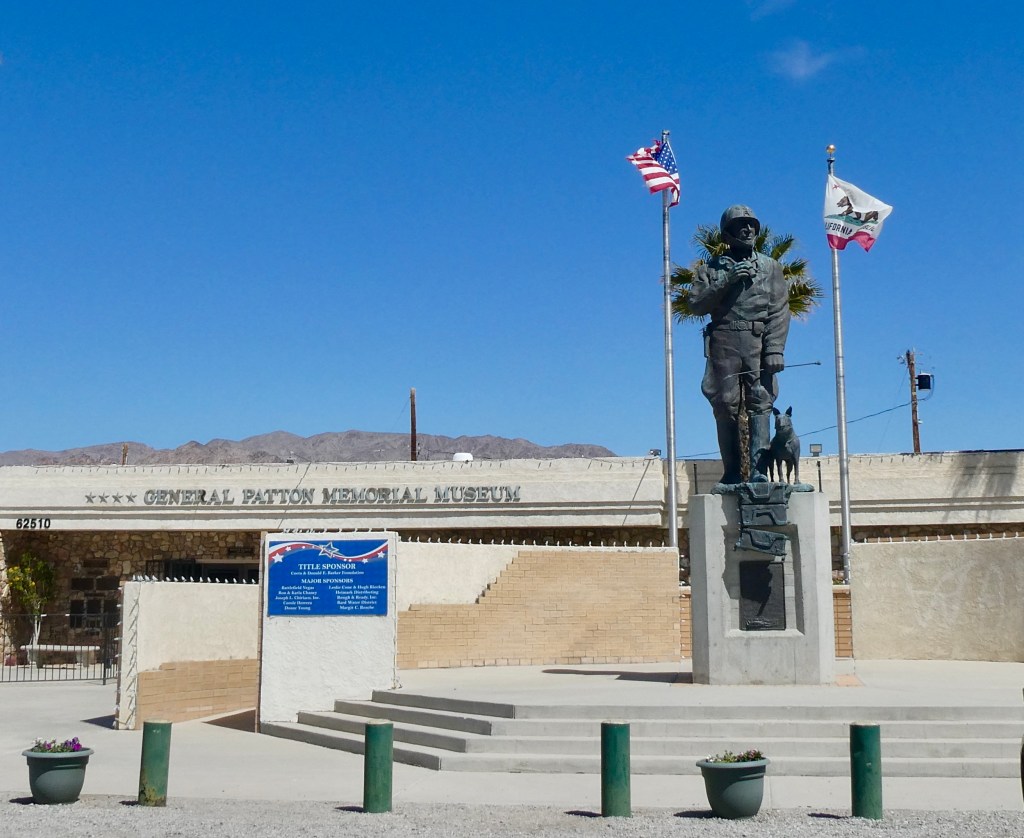
Our last stop in the area was at the General Patton Memorial Museum.  The museum is extensive with details, not just about Patton, but about all military activity during his lifetime.

Some very brief highlights of his life are that he had a family legacy of military service stretching from the Revolution to World War II.

Patton went to West Point and participated in the 1912 Stockholm Olympics as the first American athlete in the pentathlon.

He was instrumental in beginning a tank training program during World War I.

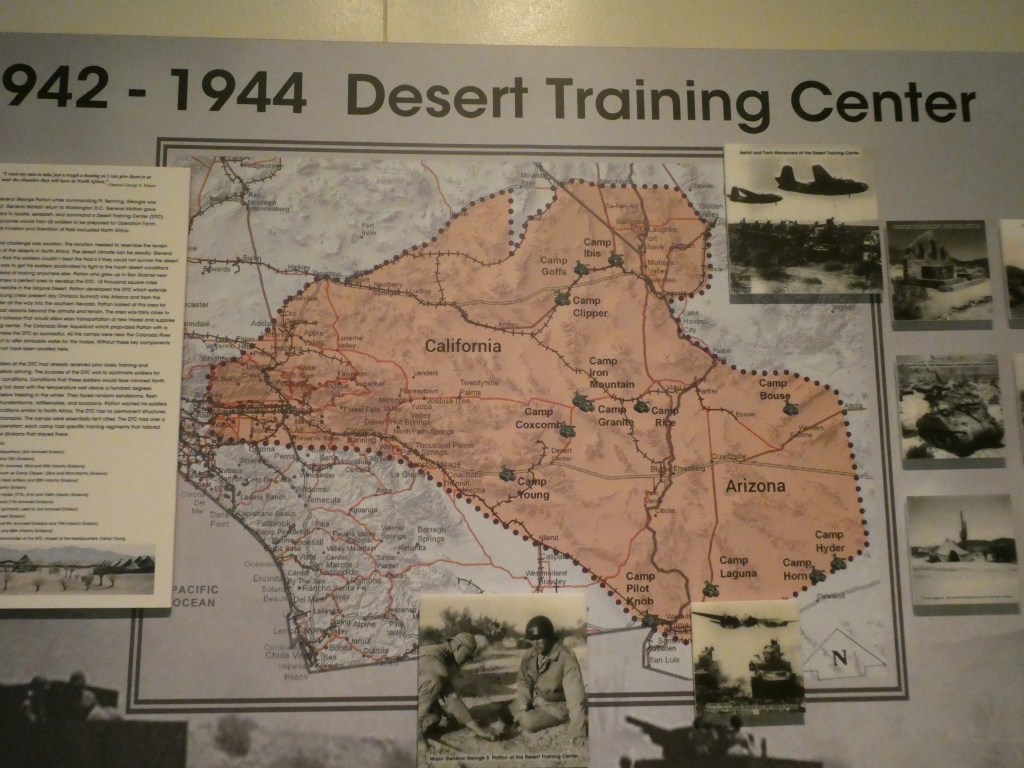
After the US got into WWII, Patton chose the site for, and led, the Desert Training Center  in the American southwest.  He was from southern California so knew of the Mohave Desert area. 

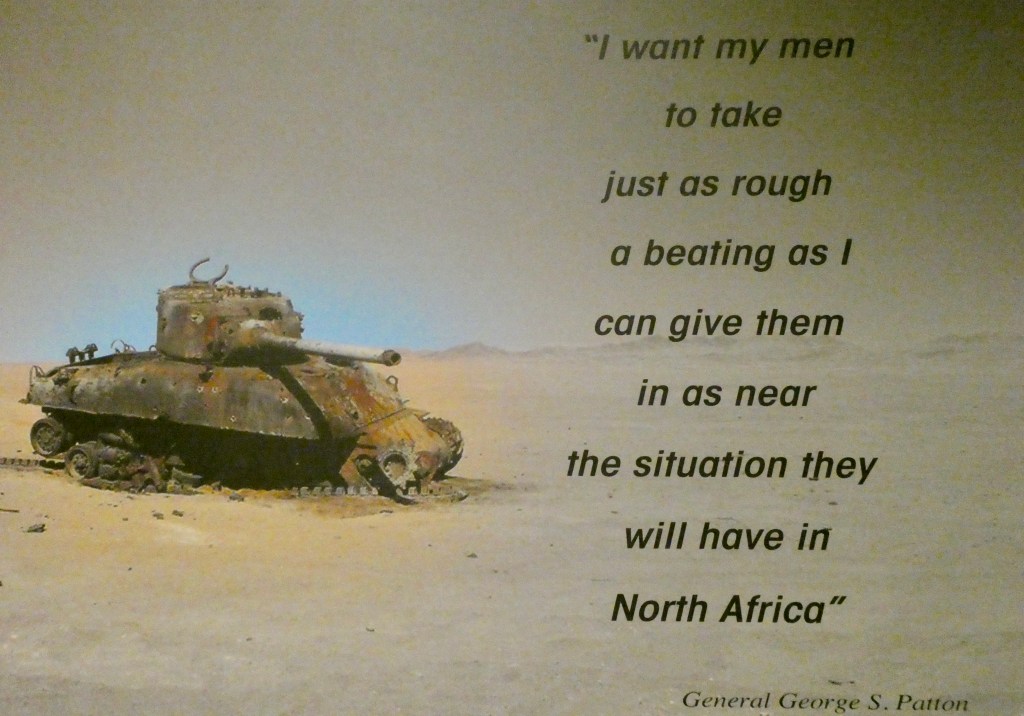
His goal was to prepare American soldiers for war against the Axis regimes in Northern Africa.  

There were camps holding about 15,000 soldiers scattered in the region. At one time there were over 200,000 soldiers training in the Desert Training Center.  

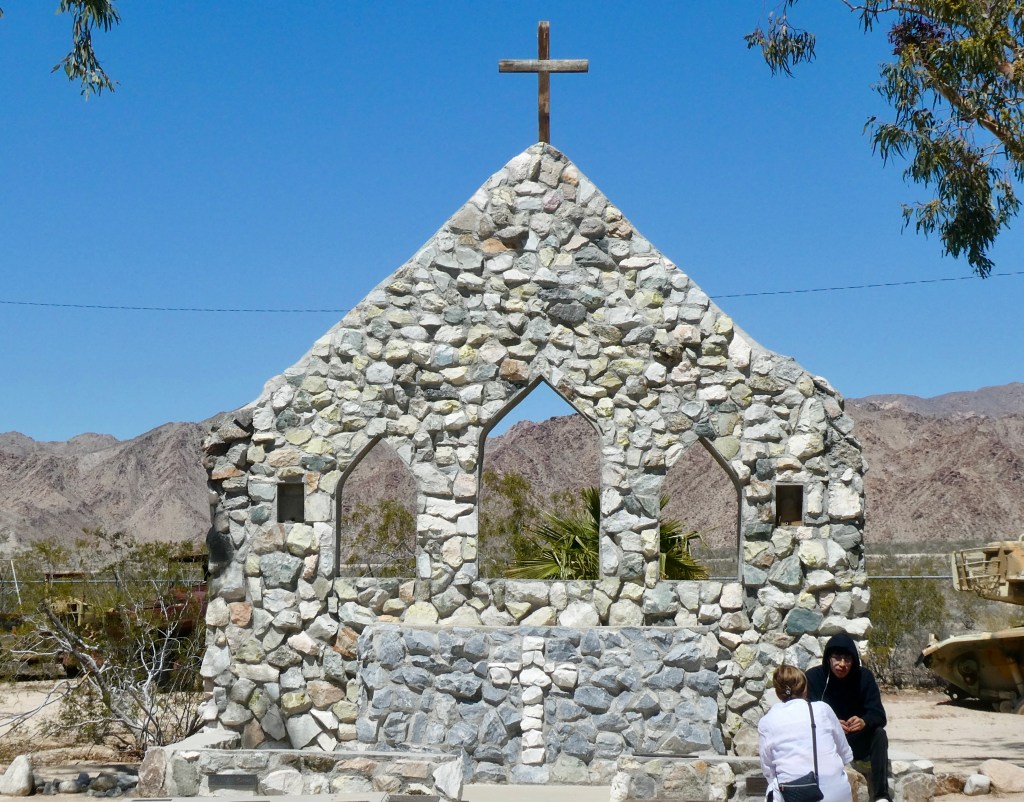
The camps were spartan with no luxuries at all.  Men lived in tents and ate standing up. There were two chapels, one for Catholics and one for Protestants. This is a representation of one of them at the museum.

When the original engagements did not go well in northern Africa,  Eisenhower appointed Patton to come in and lead the troops.  He emphasized discipline and things turned around. 

Patton is seated second from the left as we view the picture. Eisenhower is seated in the center with General Omar Bradly to his left (our right).

Patton’s next accomplishment was capturing Sicily. He followed that with an unusual strategy in the Battle of the Bulge.

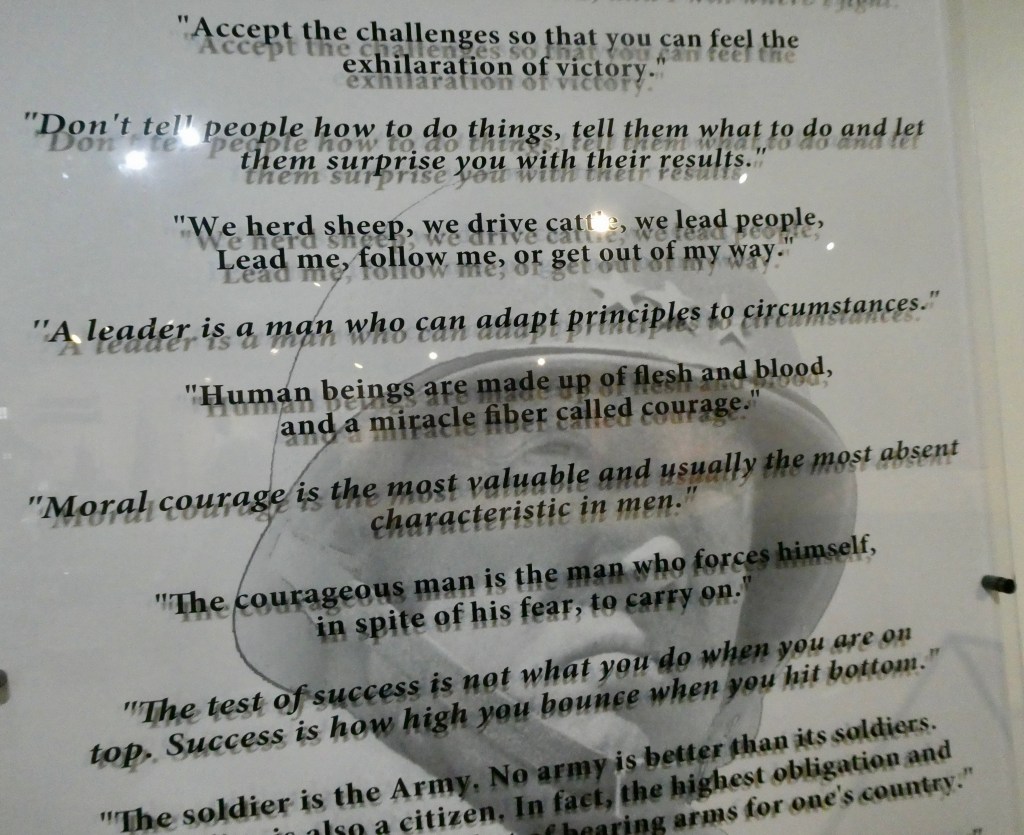
Patton must have been a good interview because the museum was full of his quotes.  Patton speaking also got him into some trouble . At one point he was sent to desk duty for accusing a shell shocked soldier of malingering. 

He also caused trouble for those trying to work through difficult situations with diplomacy.  After being his earlier champion, Eisenhower removed Patton as Commander of Bavaria because of things he said.

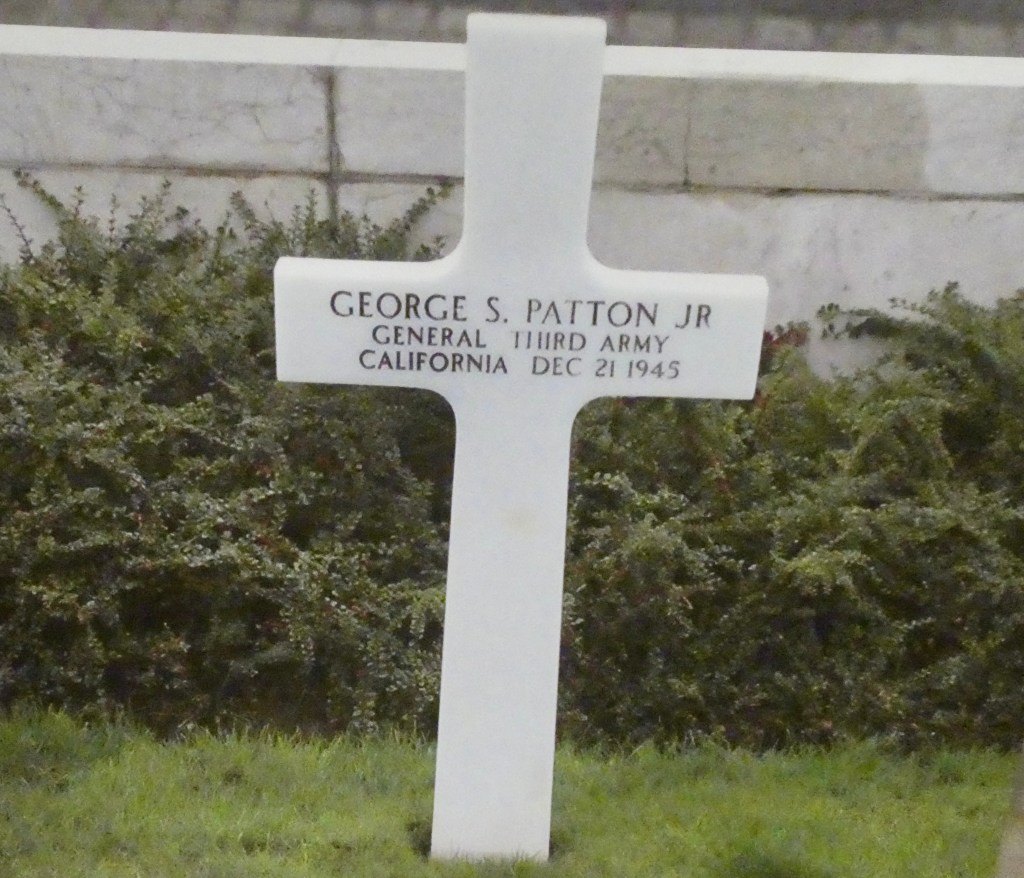
General George S Patton suffered a broken neck in a car accident in 1945. Two weeks later he died from a blood clot related to the paralysis suffered in that accident.  He and his wife decided prior to his death that he should stay with his troops. General Patton was buried in the Luxembourg American Cemetery. 

For those who might wonder, we visited Joshua Tree National Park and did the Aerial Tramway when we were in Palm Springs in 2015. Those observations are in the post One Potato, Two Potato, Three Potato, Four.

Posted in Uncategorized | 8 Comments

Arizona: Burros and Wildflowers

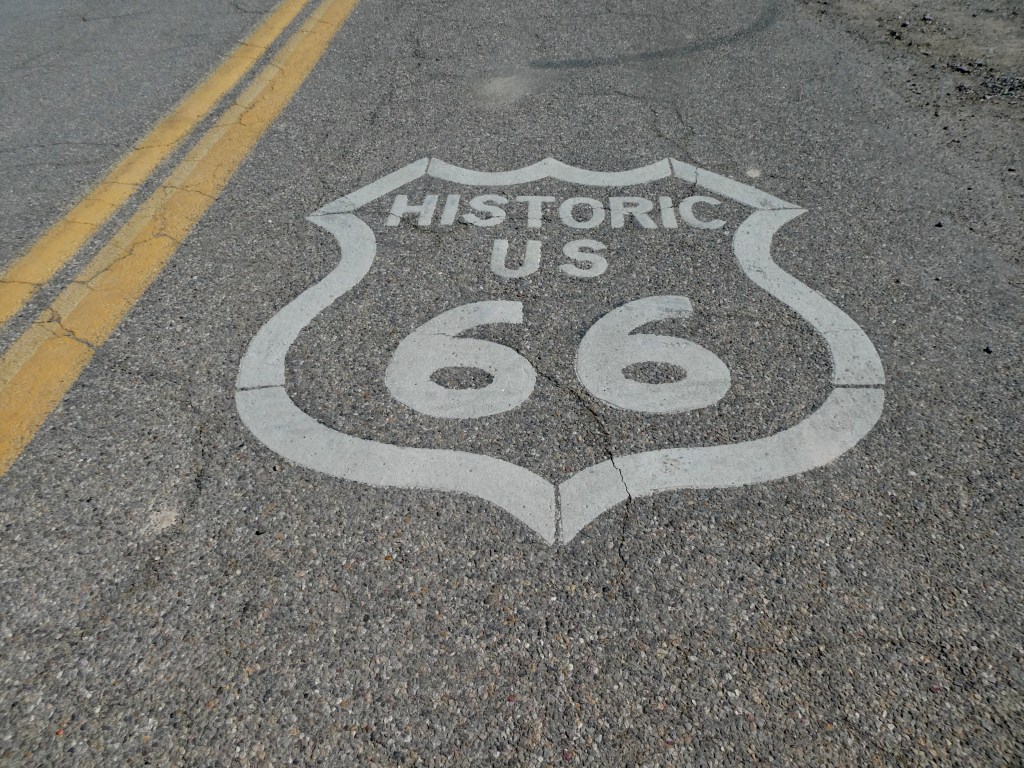
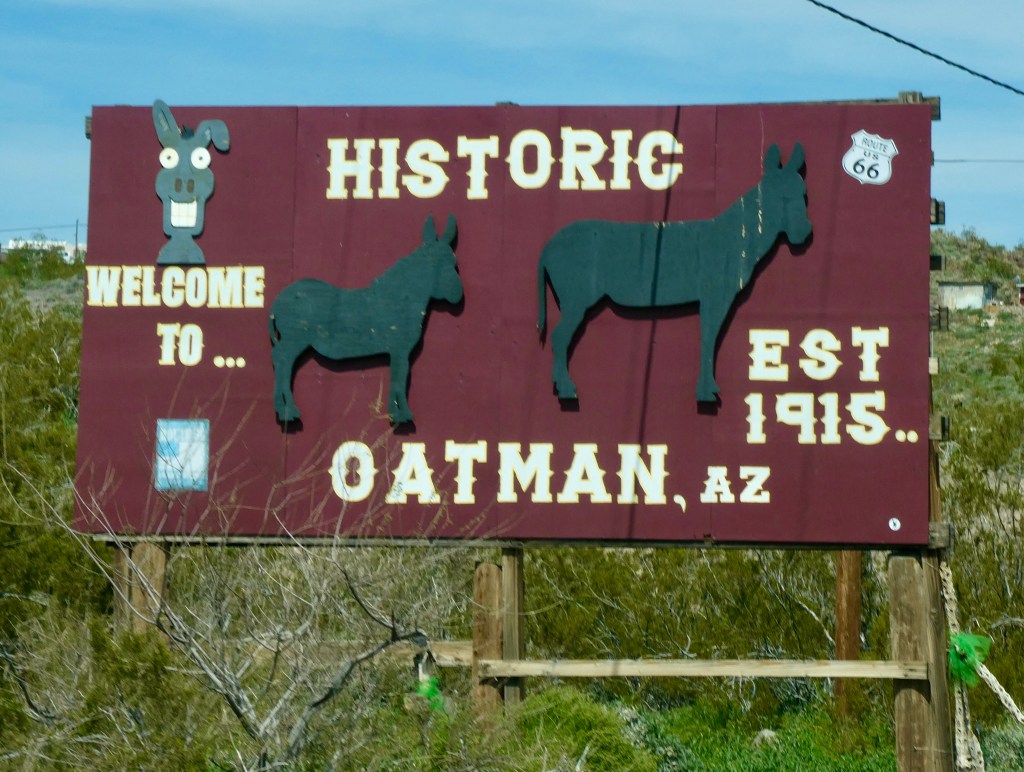
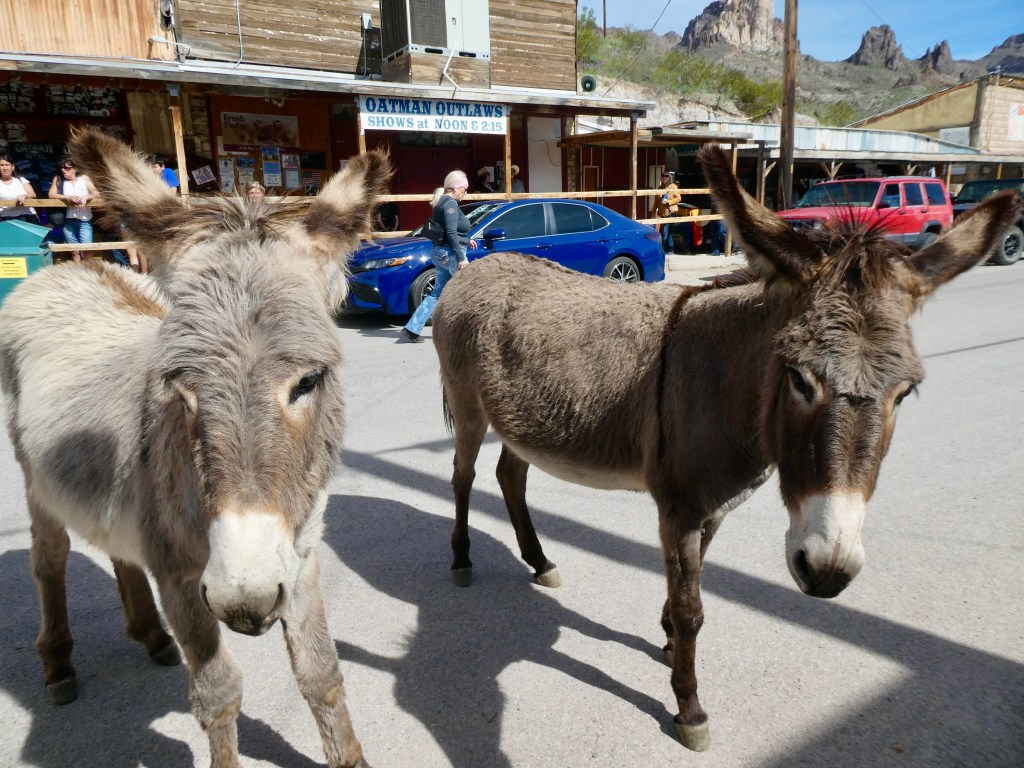
Returning from Las Vegas, we made a detour along Historic Route 66 to visit Oatman, Arizona. We knew it as a tourist ghost town with wild burros that wander the streets.  

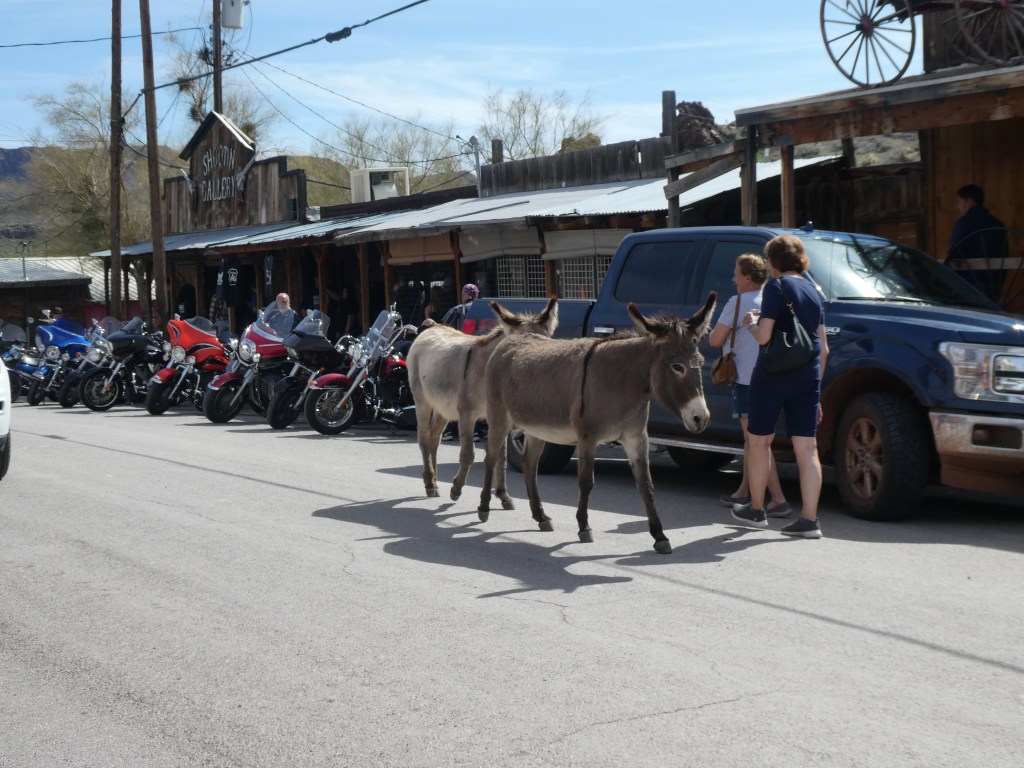
Oatman is a former mining community and burros were common beasts of burden for the industry.  As the mines were abandoned, burros were sometimes released to fend for themselves.  The burros in Oatman are descendants of those mining burros.

We arrived in town on a beautiful Sunday afternoon and found way more than we expected.  Oatman was very busy!  

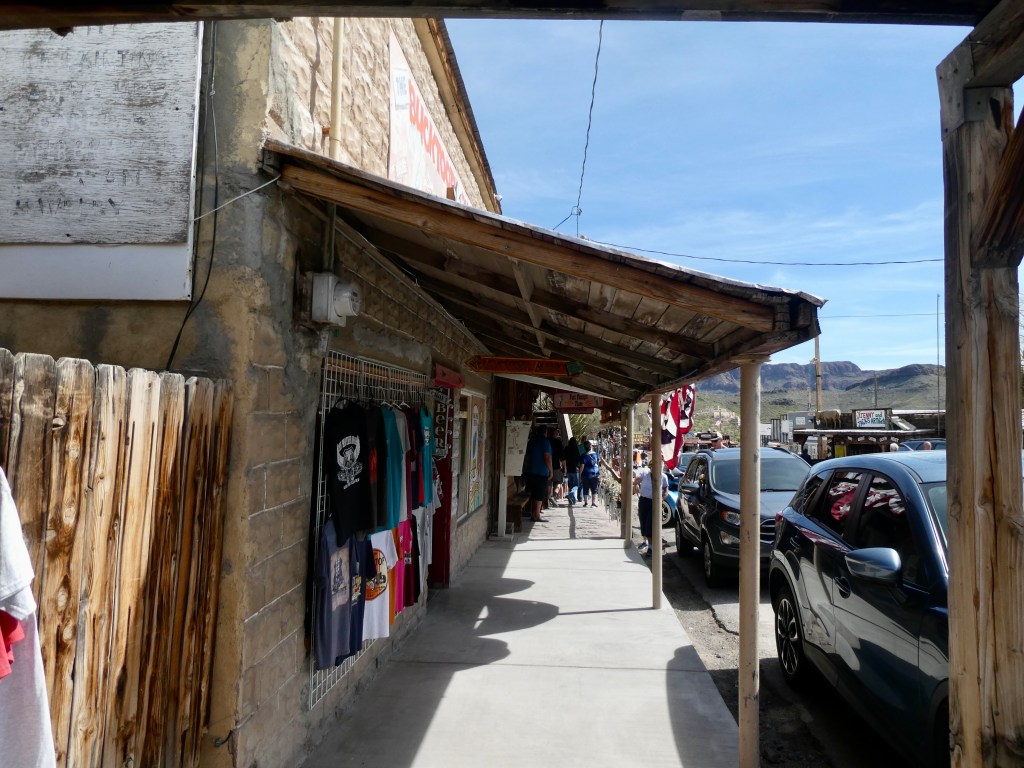
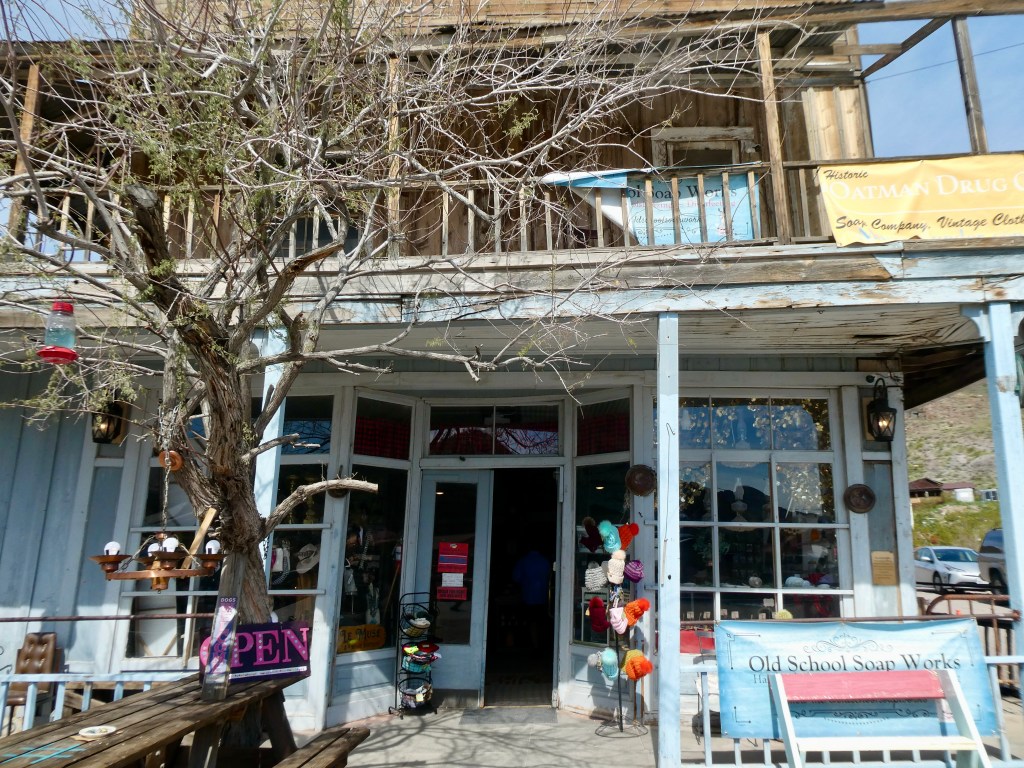
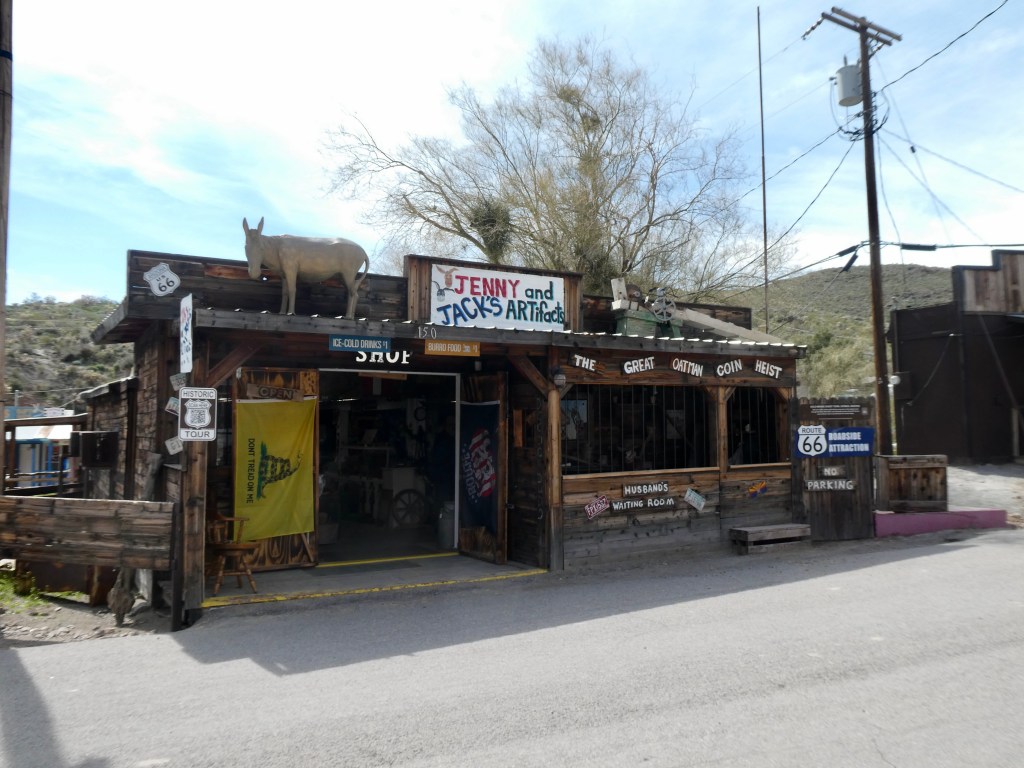
There were the old buildings and wooden sidewalks you expect in a western ghost town.

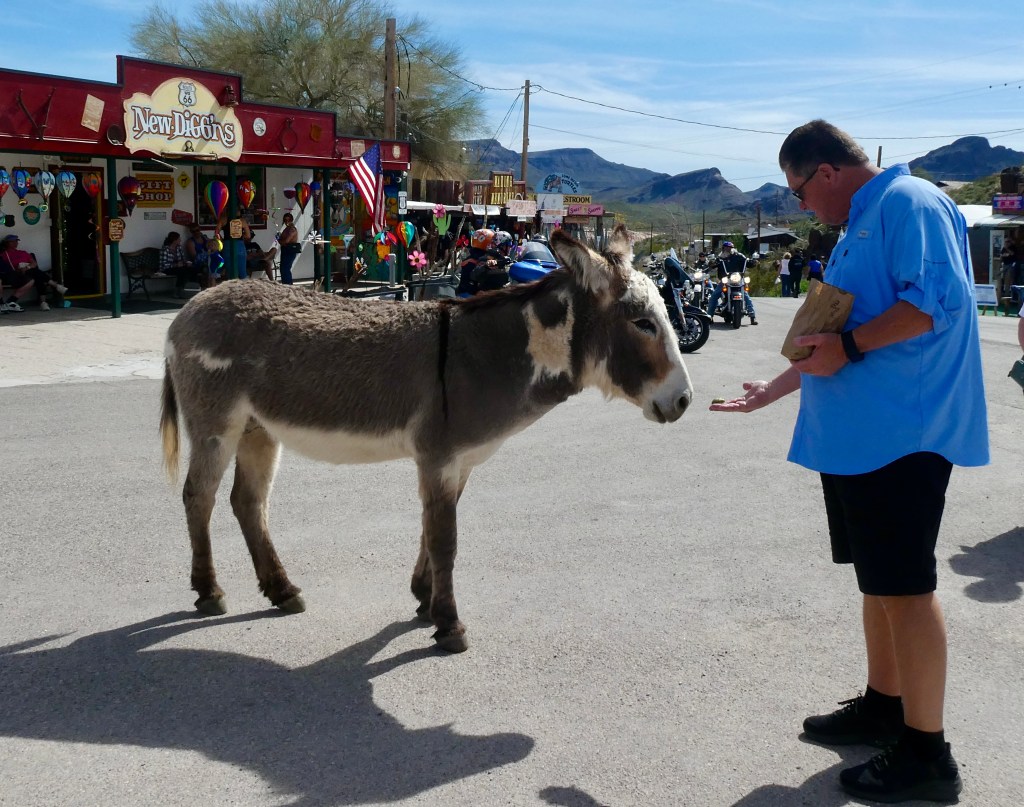
It didn’t take long to find the burros! They are technically wild, but also tame enough to enjoy a scratch or snack.

We bought a bag of hay cubes to feed the burros but they were not interested in “healthy” food. 

They wanted better treats than we were offering.

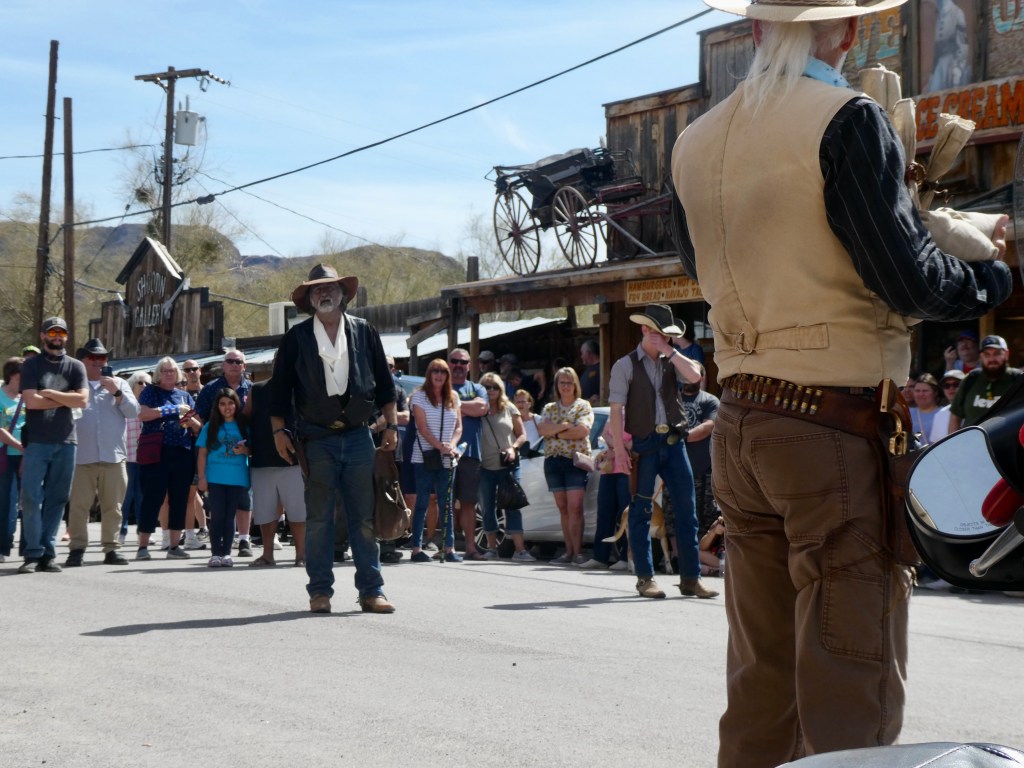
The locals performed a wild west showdown for us!

We wandered through some of the old buildings and shops.

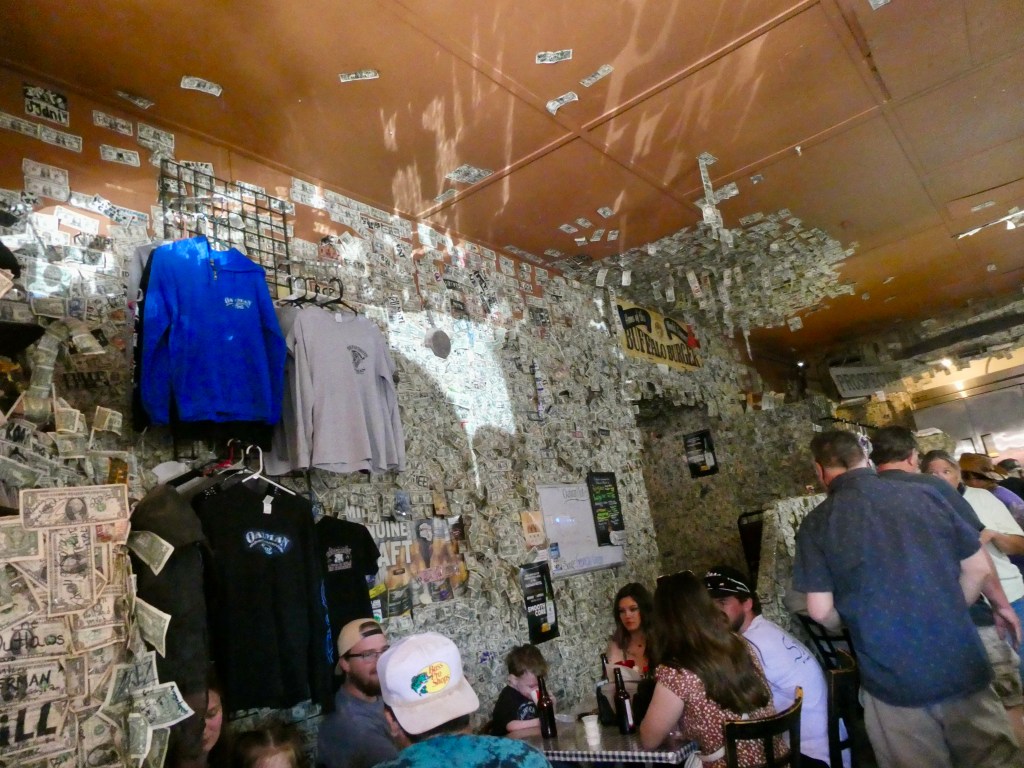
This restaurant was decorated with $1 bills and was busy enough that we only peeked inside.

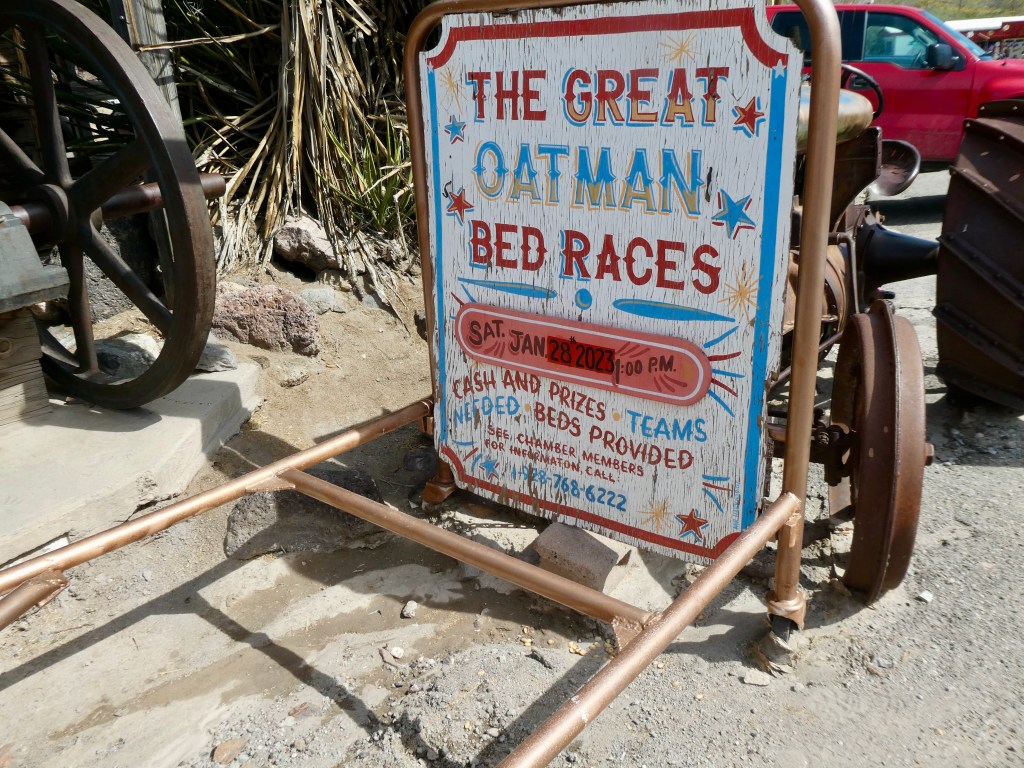
We missed the Bed Races but it looks like it could be fun!

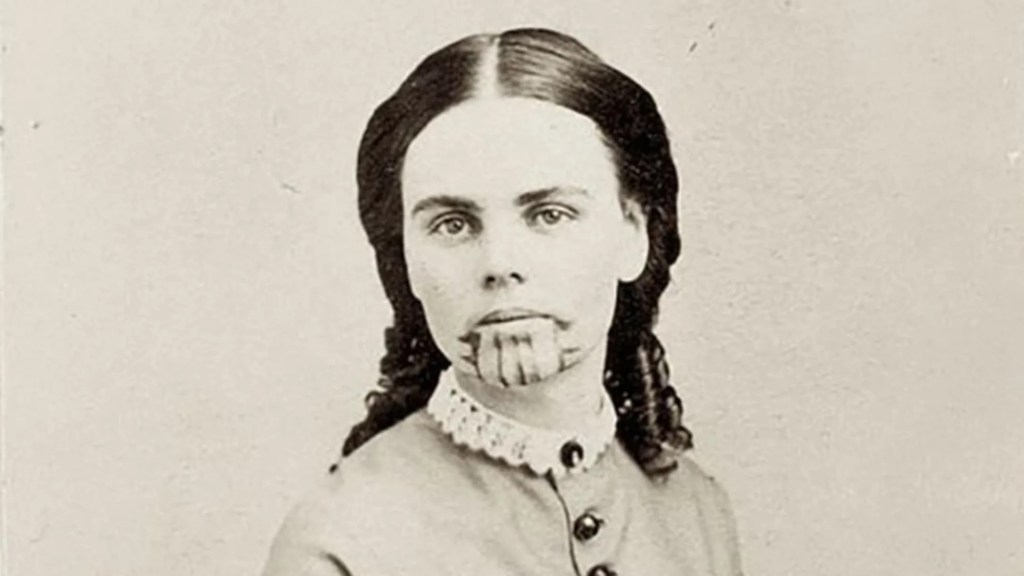
Olive Oatman’s restaurant and saloon was closed but it suggested a connection between her and the name of the town – something I hadn’t picked up on previously. Prospector Johnny Moss named the area after Olive Oatman in 1860 during her celebrity era.  

Olive Oatman and her family were part of a group traveling west to settle in western Arizona or southeastern California.  Some of the group decided to stay in New Mexico while others stayed near Tucson.  Although the Oatmans were warned of the danger, they eventually traveled further west alone.  

Ninety miles east of Yuma, the Oatmans and their seven children were engaged by Native Americans and the encounter turned deadly.  Both parents and four of the children were killed.  A teenage son survived and two daughters were taken captive.   

The girls, ages 14 and 7, were taken by the Yavapai and lived as slaves for about a year.  They were eventually traded to the Mojave tribe who treated them as adopted daughters. They were given tattoos identifying them as members of the tribe.

Over several years, people interacting with the tribe noticed the white girls living amongst the Mojave.  Word made it back to civilization. Olive was eventually “rescued” although accounts differed on whether she appreciated being taken away. (Prior to finding Olive, the younger sister died, along with many of the Mojave, during a drought.)

Olive was reunited with her brother and became a bit of a celebrity on the lecture circuit. She later married and lived until age 65.   

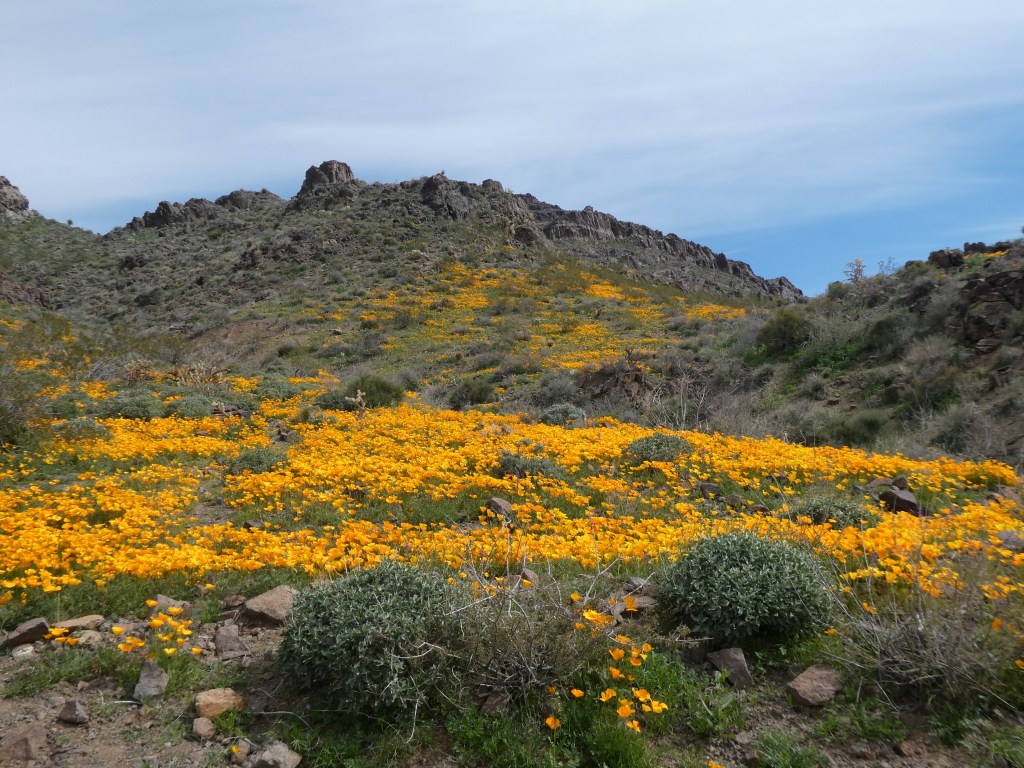
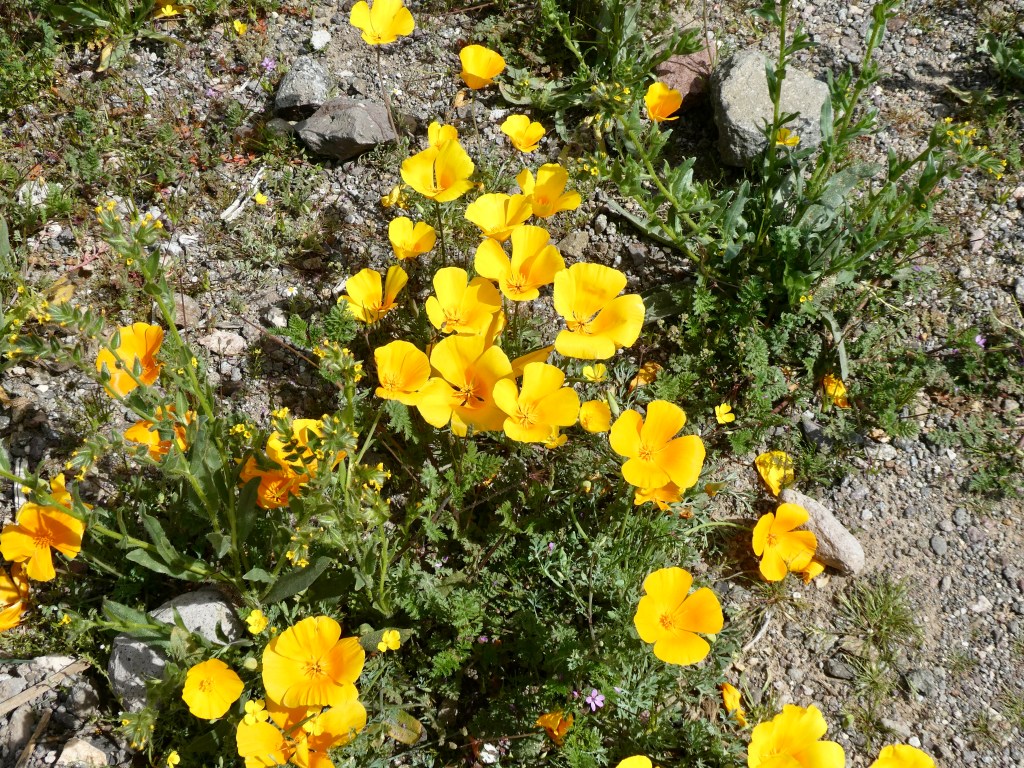
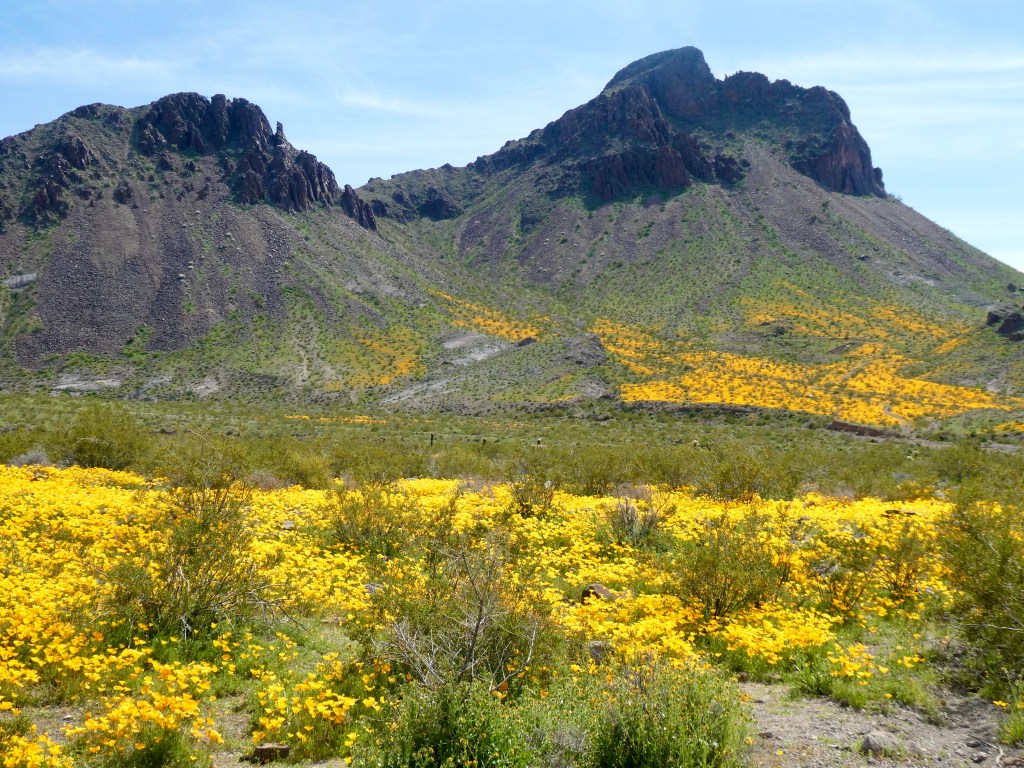
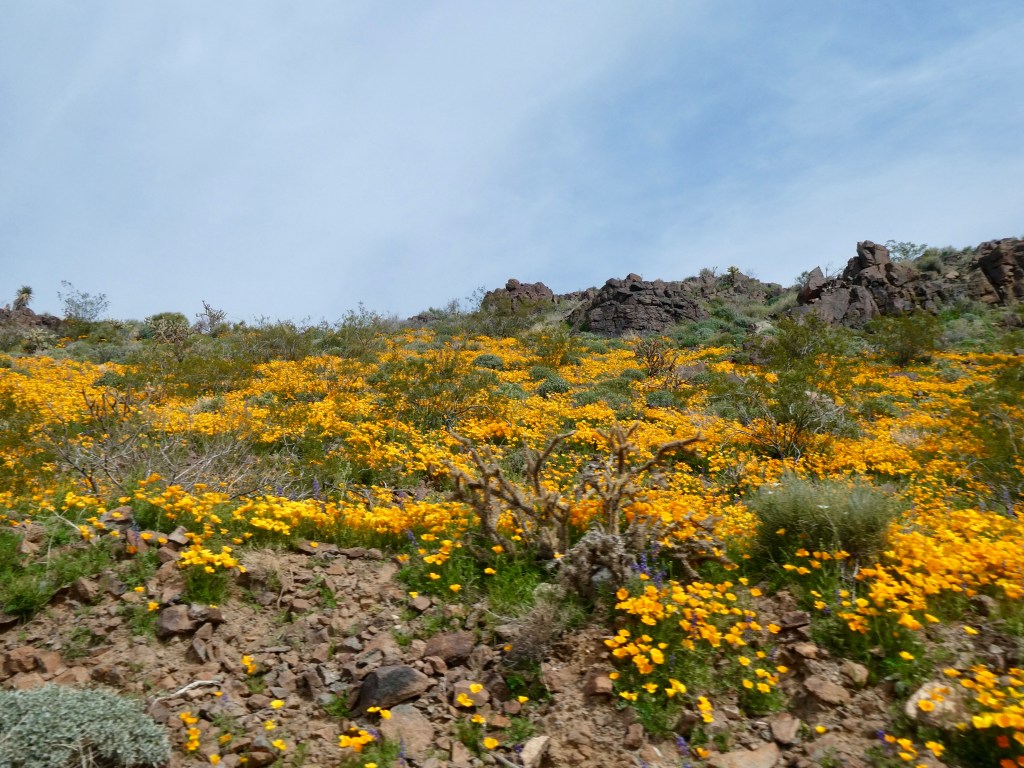
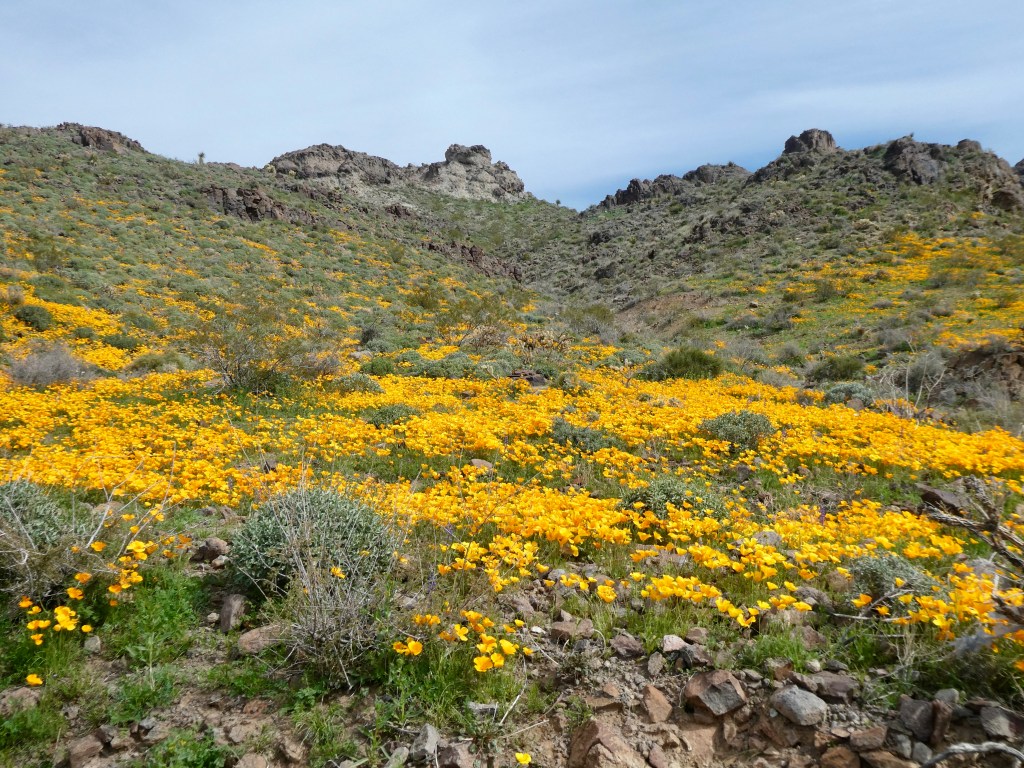
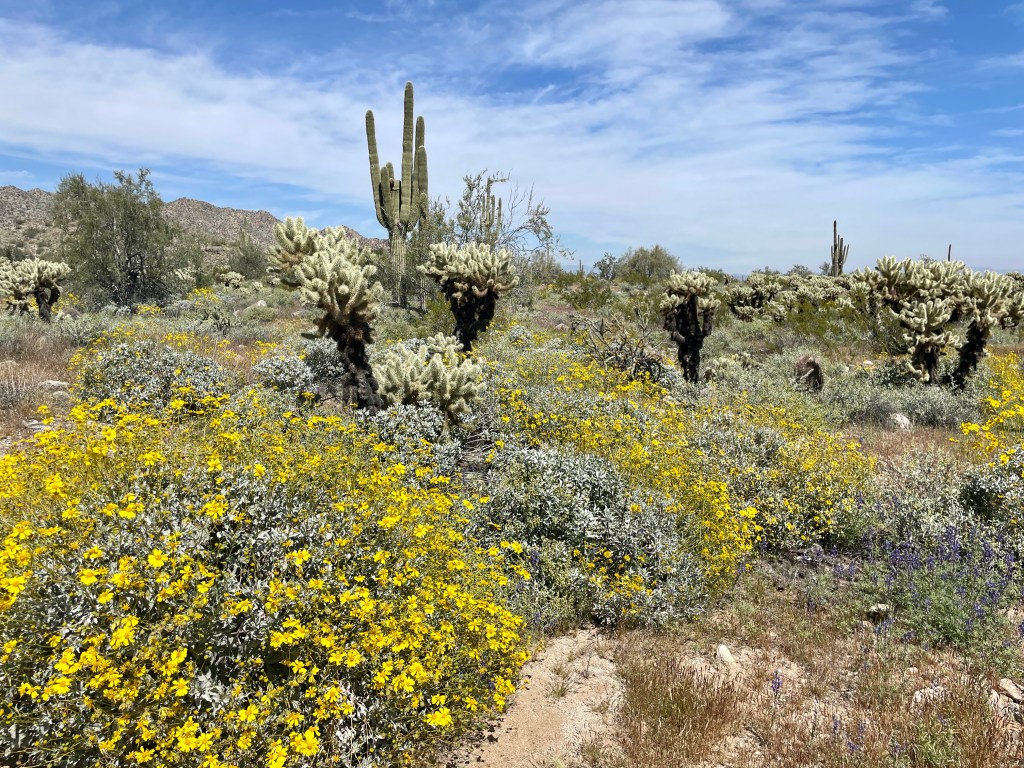
Entering and departing Oatman we were delighted to see bright yellow wildflowers against the stark landscape. 

We were at the right place at the right time for Mexican poppies!

When you live in the desert, spring wildflowers are such a gift.  The winter of 22-23 has been wet and cool.  

Water is desperately needed and we also knew that the moisture might treat us to a nice wildflower season.

Twice this past week we ventured out on a desert hike looking for wild flowers.

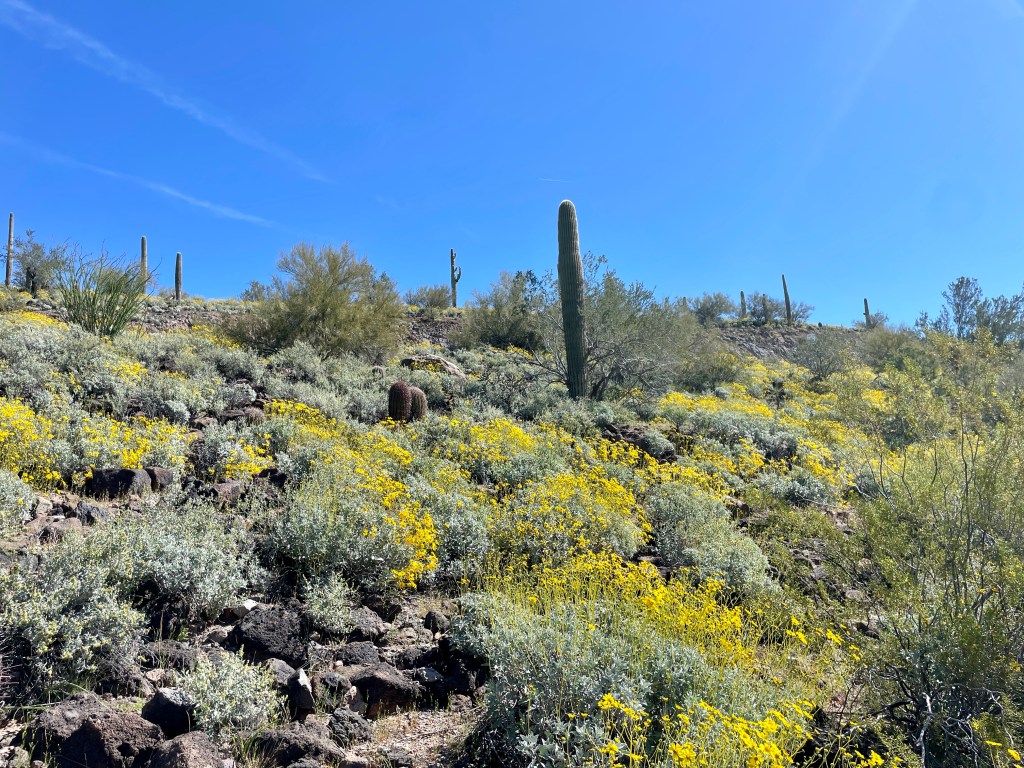
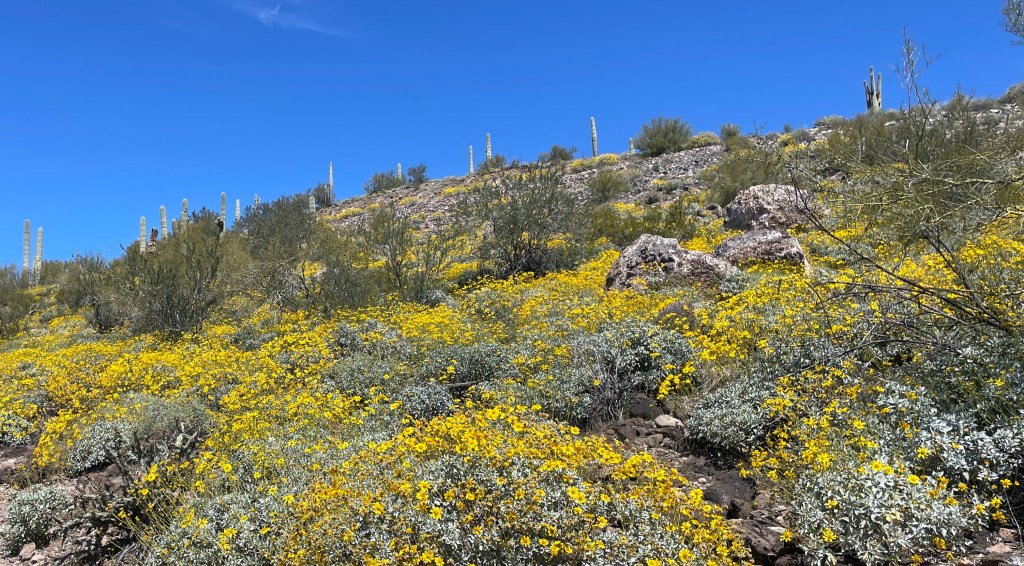
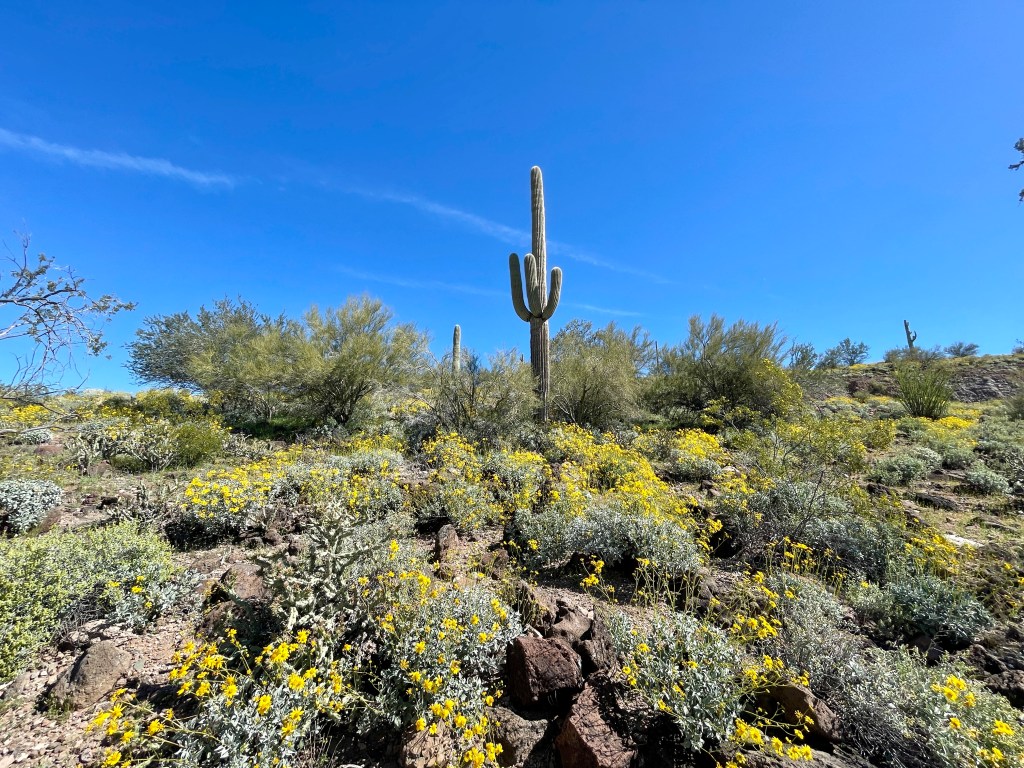
White Tanks Regional Park is near us and we enjoyed seeing a variety of flowers.

A few days later we went just a bit further to Lake Pleasant Regional Park.  There were more flowers there!

Lake Pleasant is one of our favorite parks because not only are there nice trails, but there is a lake, a restaurant at the marina, and the possibility of seeing wild burros.

It seems like hiking Wild Burro Trail should work for seeing burros! We see them about every third time we visit Lake Pleasant. 

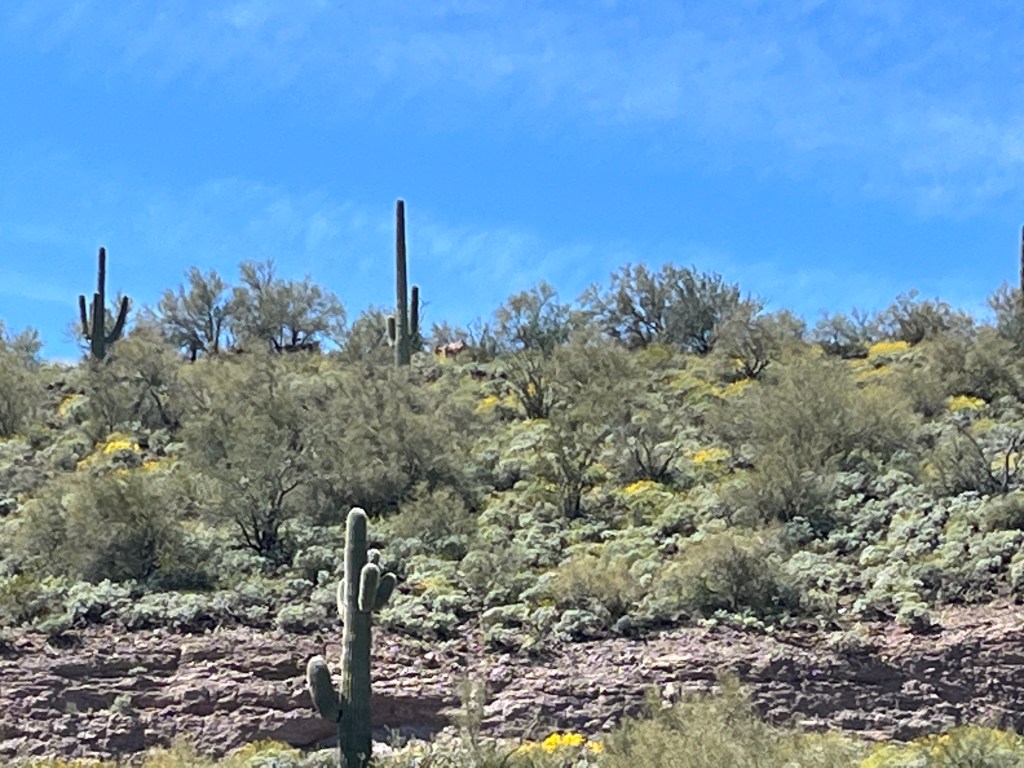
On this day we heard the burros way before we saw them!  We could discern their general location by listening to their loud braying. It still took some time to find them high upon the ridge.  (This picture is using a phone zoom lens.) One of the three burros is just to the right of the saguaro in the top middle. They blend in so well that they must be moving to see them at this distance.

Burros and wildflowers (and lunch at the marina) made for a great day at Lake Pleasant!
Posted in Uncategorized | 4 Comments

PHX: Two Tours in One Day!

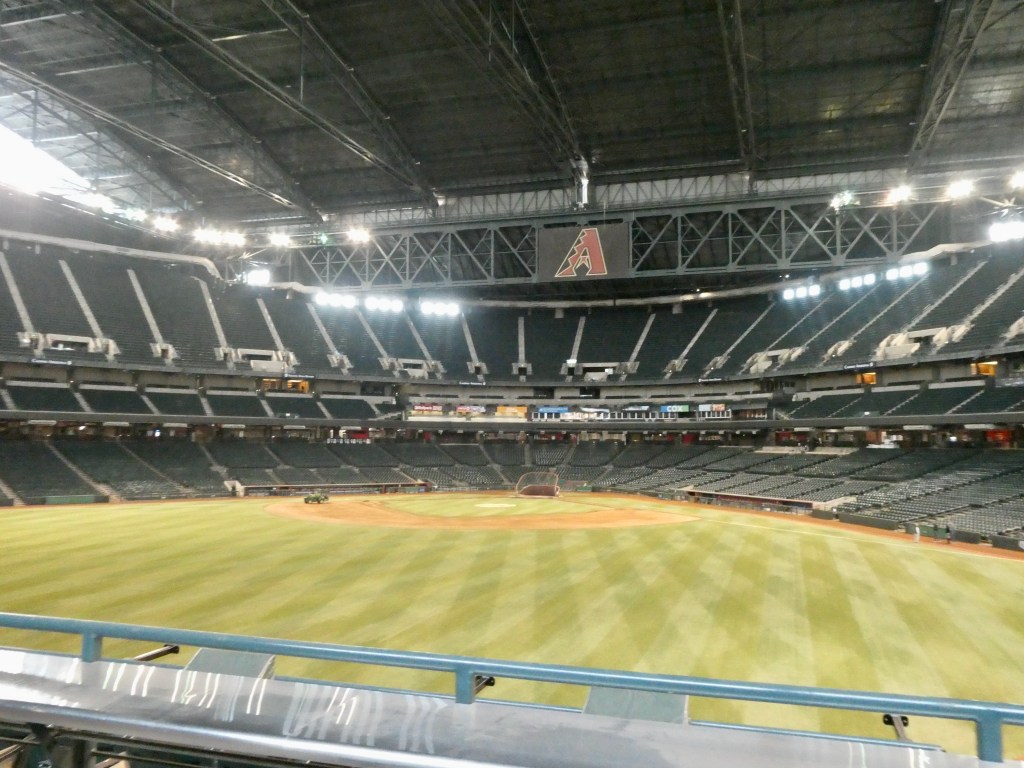
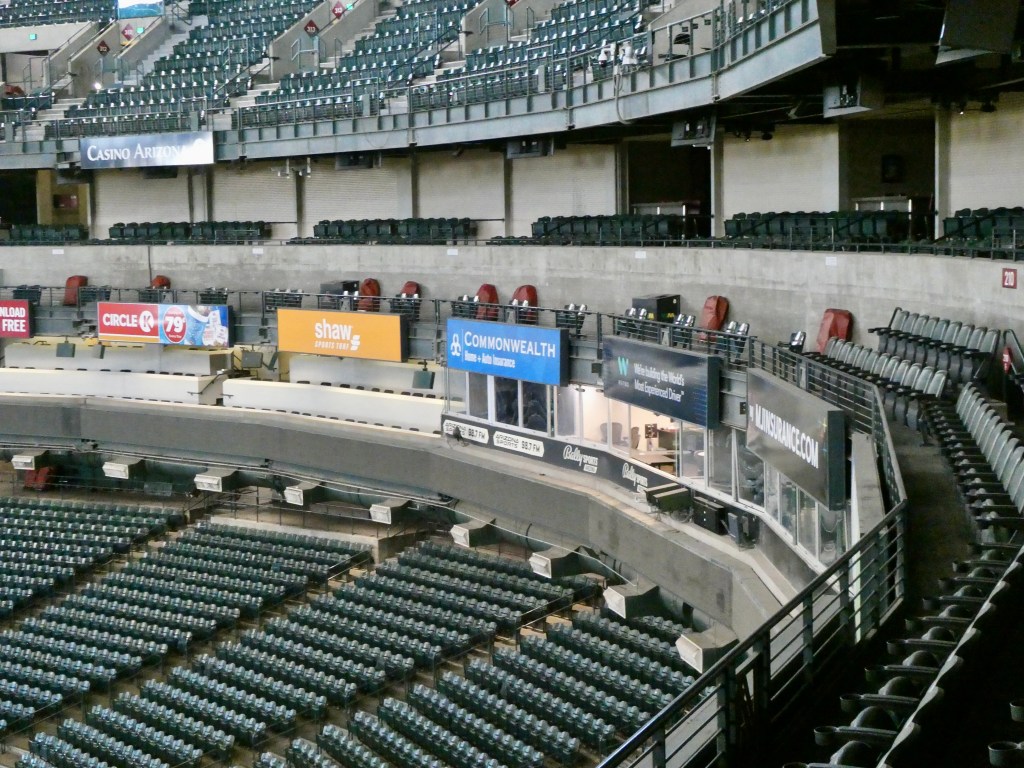
We toured Chase Field in downtown Phoenix! 

The Arizona Diamondbacks were created through MLB expansion 25 years ago.  They came into the league at the same time as the Tampa Bay Devil Rays.

The Diamondbacks were the youngest team ever to win a World Series Championship – after only four years in the league!

The stadium’s construction cost $354 million dollars and was first named Bank One Ballpark.  It had 48,500 seats, about the same as today.  Although only 25 years old,  it is the fourth oldest ball park in the National League.

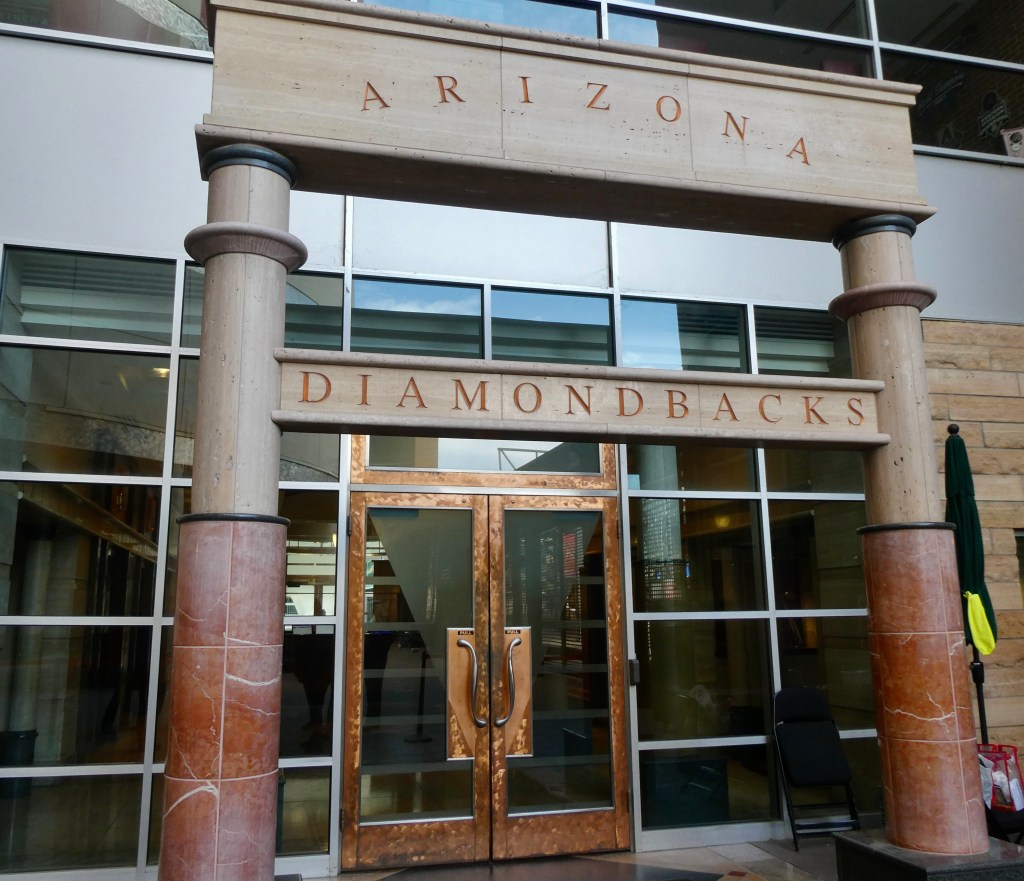
In 2006, the name was changed to Chase Field. We met for our tour outside the main offices.

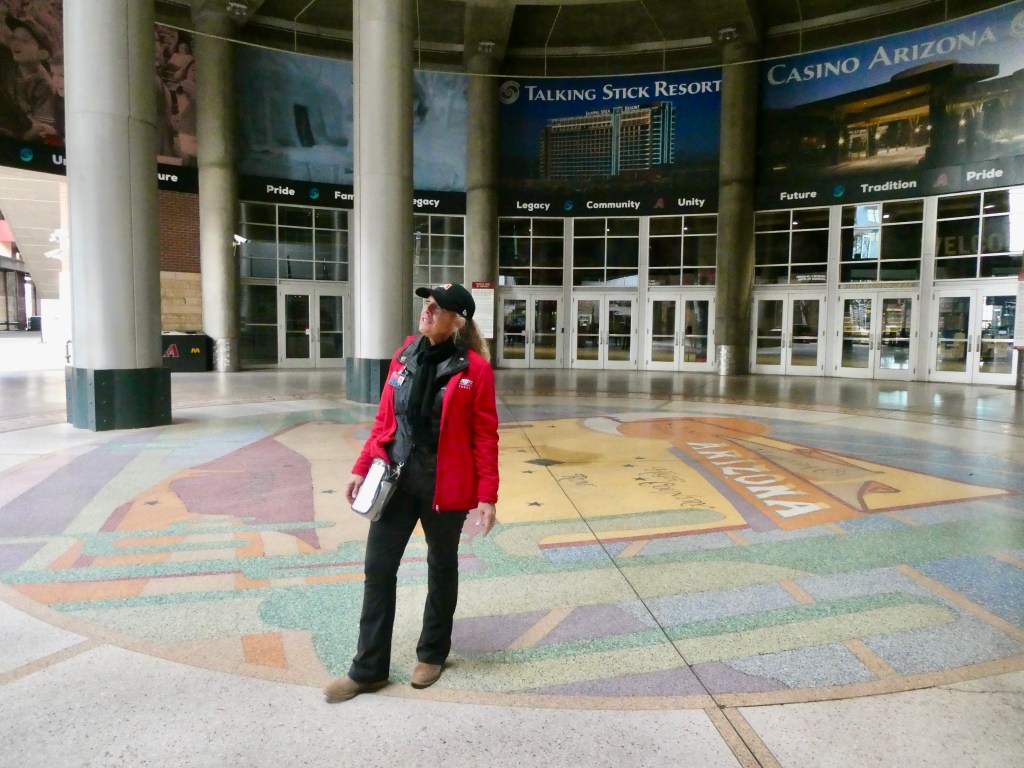
Our guide, Molly, began where most fans walk into the stadium. This area highlights things about Arizona.

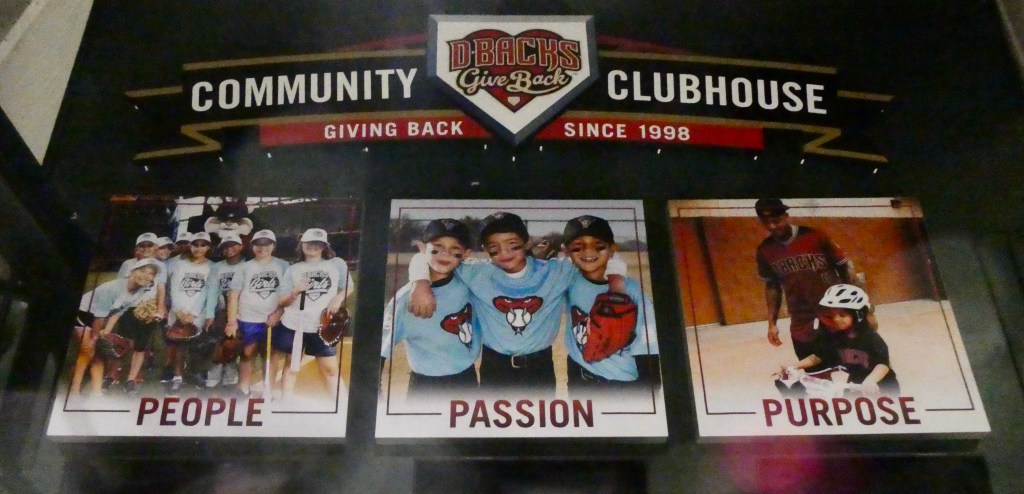
She told us about ways the Diamondbacks contribute to Arizona. Funds are raised at every game with a 50-50 raffle. A ticket winner gets half the proceeds while the designated charitable group gets the other half. We have seen these amounts be in the $60,000 – $80,000 range many times. One time we saw the total go over $100,000!

The Diamondbacks also raise money for charities with the sale of authentic game worn gear.   

In conjunction with the local power company, the team develops and donates fields for Arizona youth and provides replica Diamondback team jerseys.

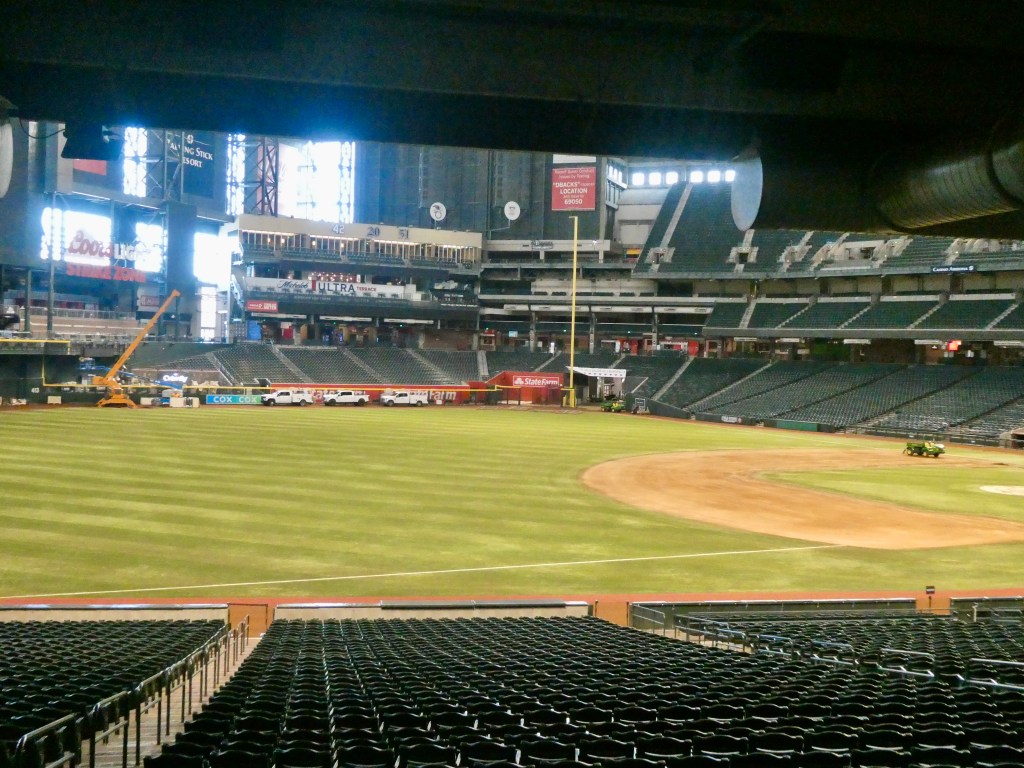
The stadium opened with a natural grass playing surface but has since transitioned away from it.  The current “grass” is made of organic coconut fibers.

The perimeter areas are made of a granite and plastic composite.  The infield is made from a mixture of sand and clay.

The change allowed for savings of 2,000,000 gallons of water and also created the ability to have other events at the stadium throughout the year. 

The roof opens or closes in 4.5 minutes.   We didn’t learn about it on the tour but the local news has told us that the roof needs repairs to the point where it is not operated when people are inside.   The roof position decision must be made before the game begins.  

The stadium air-conditioning system can cool the stadium in 2 hours.  Cooling is defined as 74 degrees at field level and 80 degrees on the 2nd level.  We often sit on the third level and it is still quite comfortable – especially if we strategically sit in the vicinity of the cooling vents.  The stadium is partially solar powered.

There is a 33 percent rise In the stadium’s third deck for good viewing – but the trek up can seem steep.

The video board measures 136 by 46 feet and there is 120 feet of video ribbon surrounding the field.  There are over 750 TVs in the stadium.

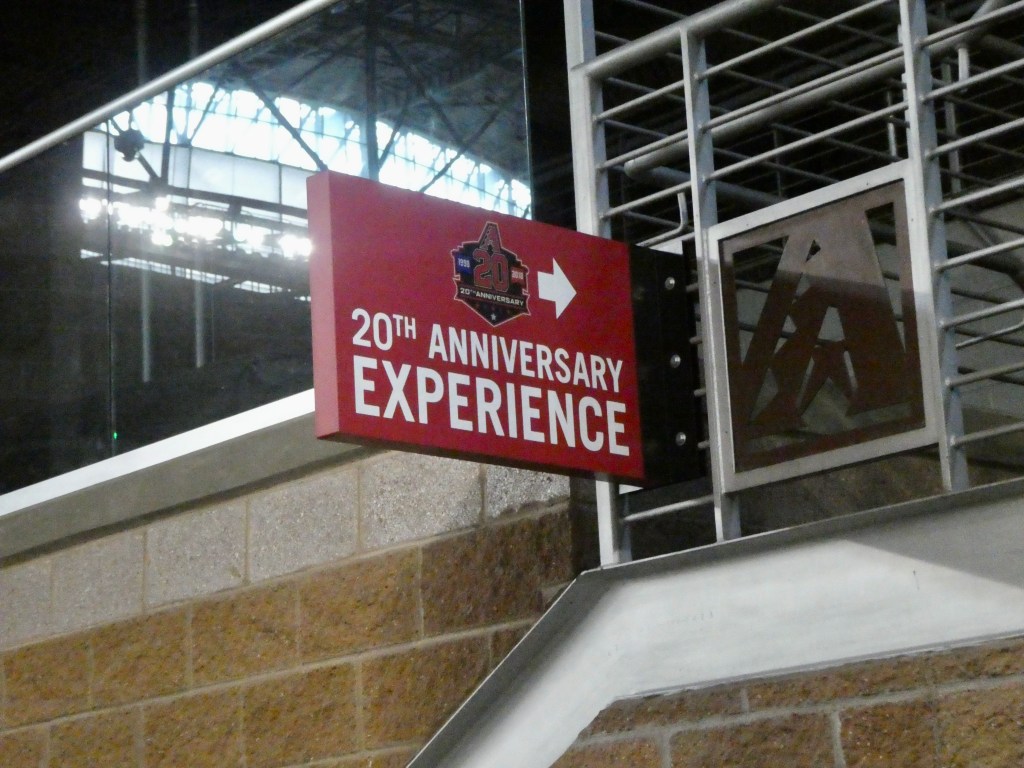
We have been to Chase Field numerous times but it was always crowded and we hadn’t known about the stadium museum named the 20th Anniversary Experience.  We weren’t able to go in on our tour because of off season construction. We will look for the World Series Trophy and World Series Ring on display there the next time we go to a game.

Chase Field is the only park with a pool!  A group event at the pool allows for 35 people, food, parking, towels to keep, and a lifeguard.  The cost begins at $7000 for a game but rises based on the opponent.  That means you Dodger and Cubs Fans.

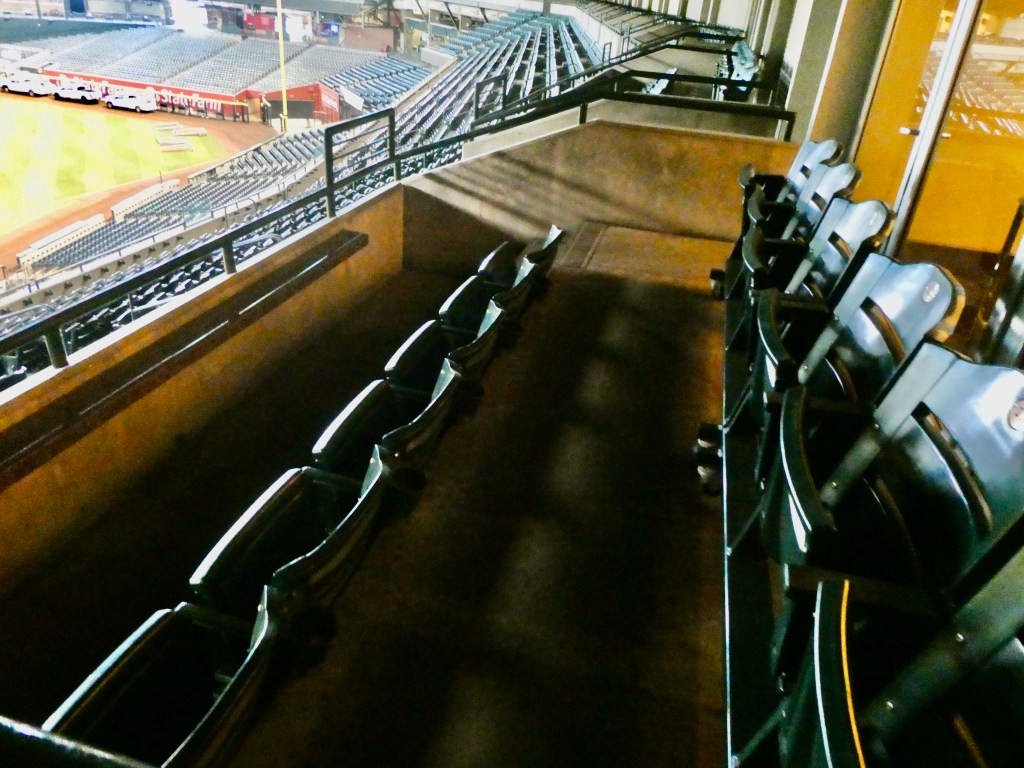
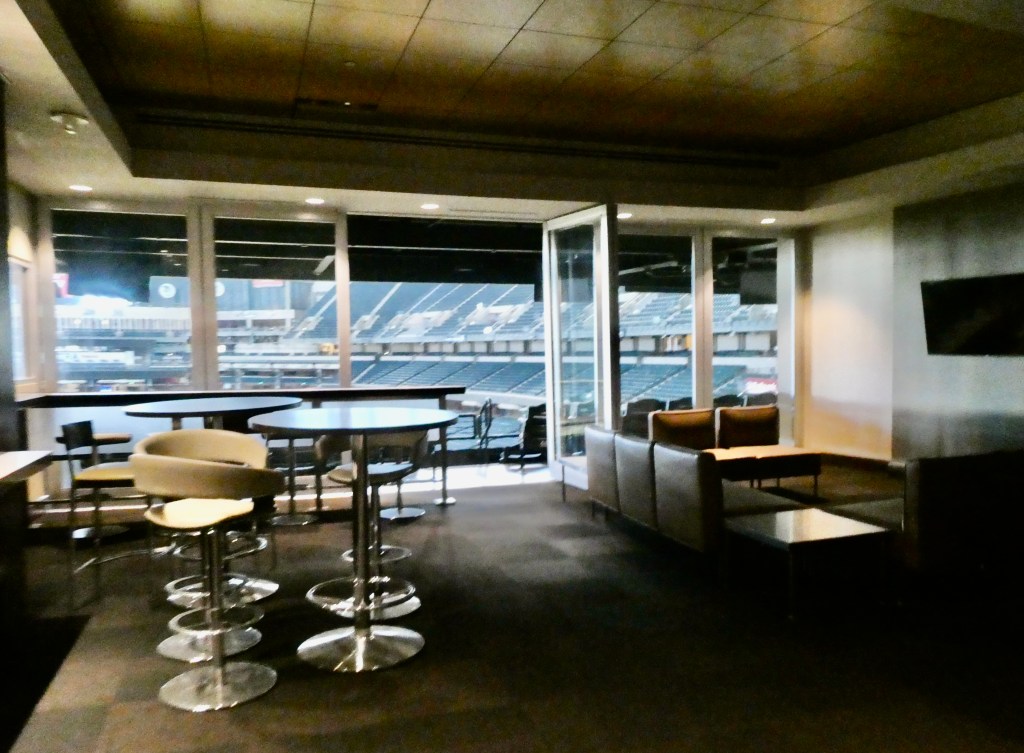
There are 68 suites which hold 20 people each at an event cost of $2500. 

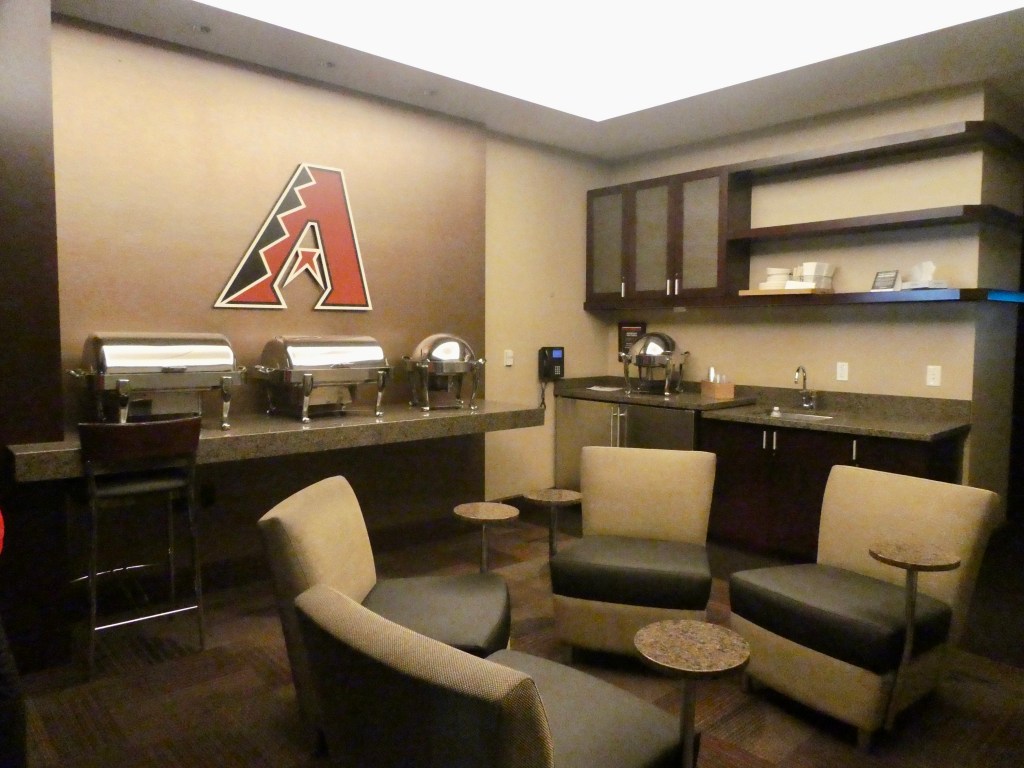
Food is included and guests have suite seating and stadium seating.

The Owner’s Suite has space for 34 guests.

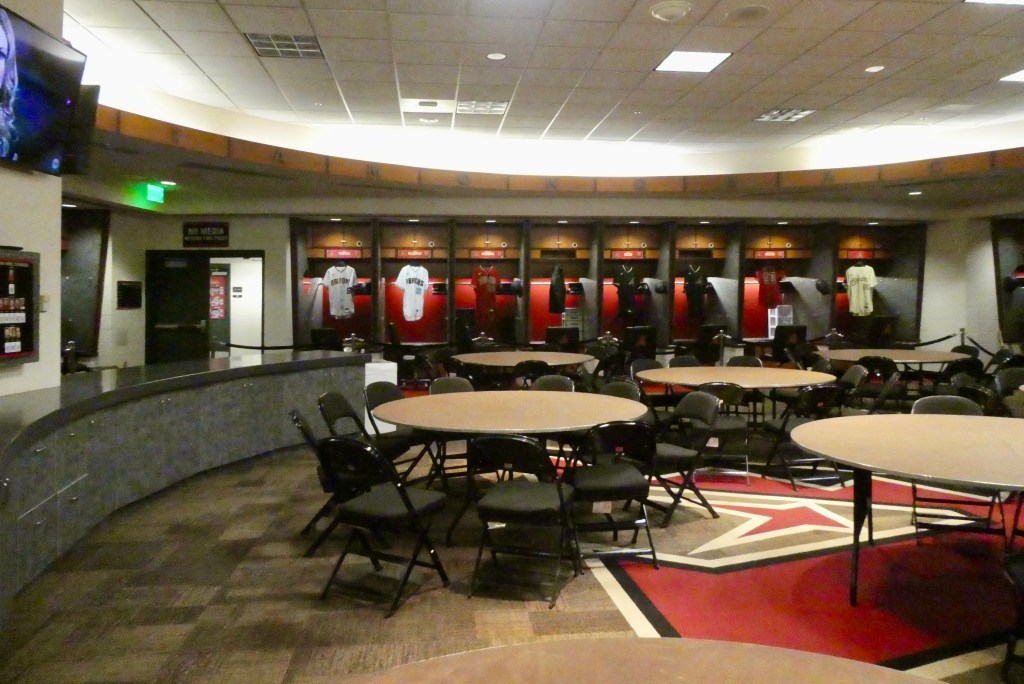
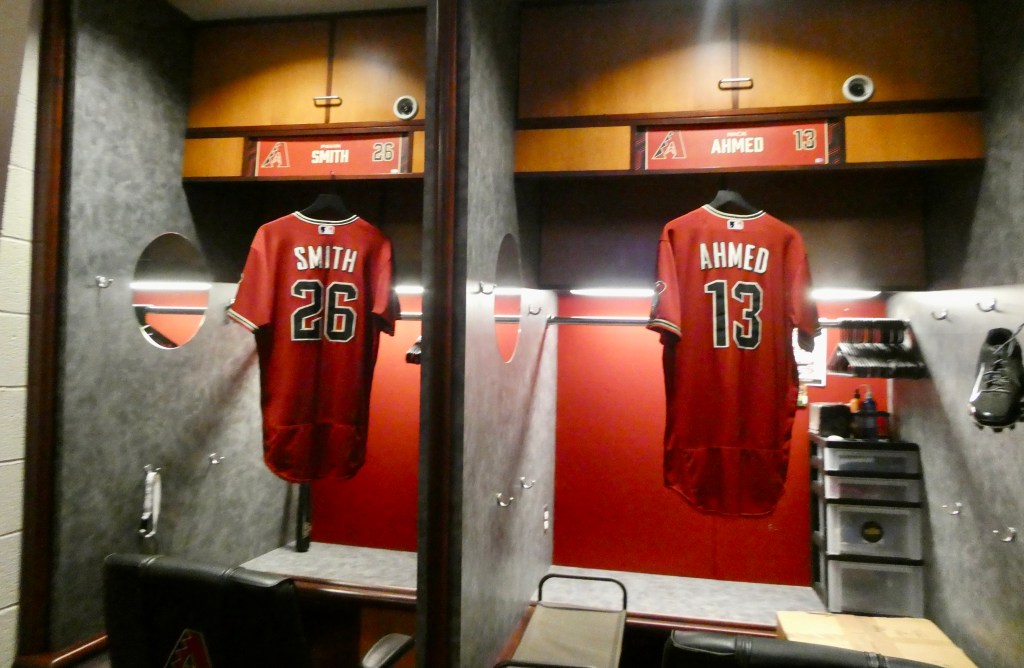
We were unable to go into the Press Box because of work on an elevator. Disappointing but there was an advantage to going in the off season – We were able to go in the Diamondback’s locker room!

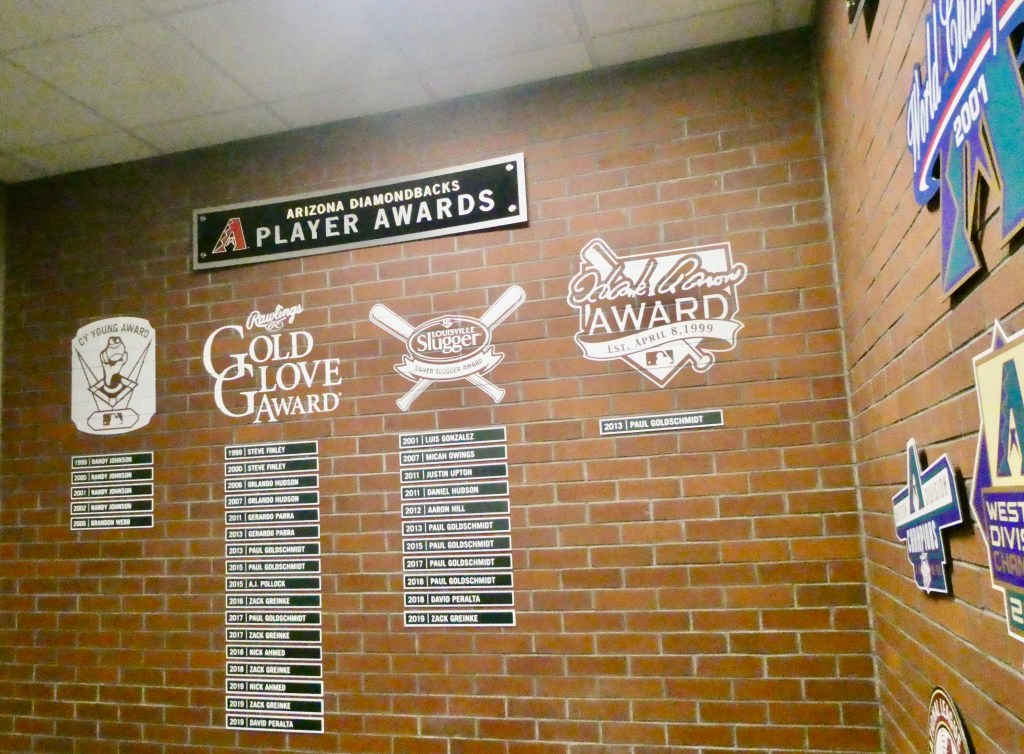
As we approached we saw the Diamondbacks’ Player Awards.

There are numerous tables surrounded by lockers. There were shower, spa and training areas that we were able to see but not photograph.

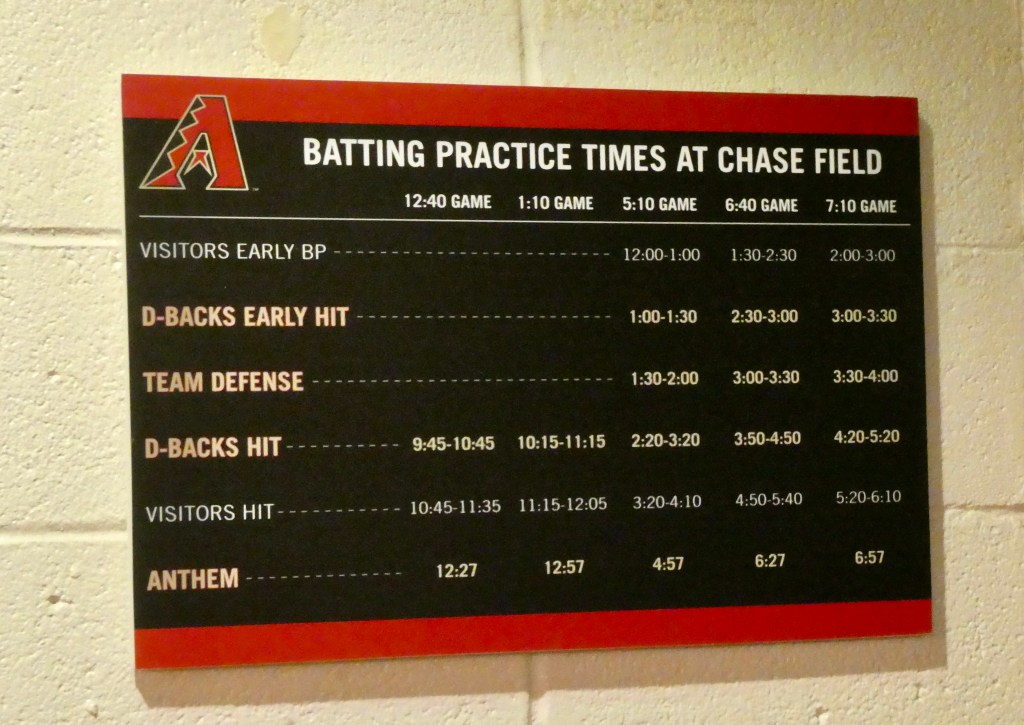
As we left the clubhouse, heading to the dug-out, we saw this interesting chart showing activities based on game times.

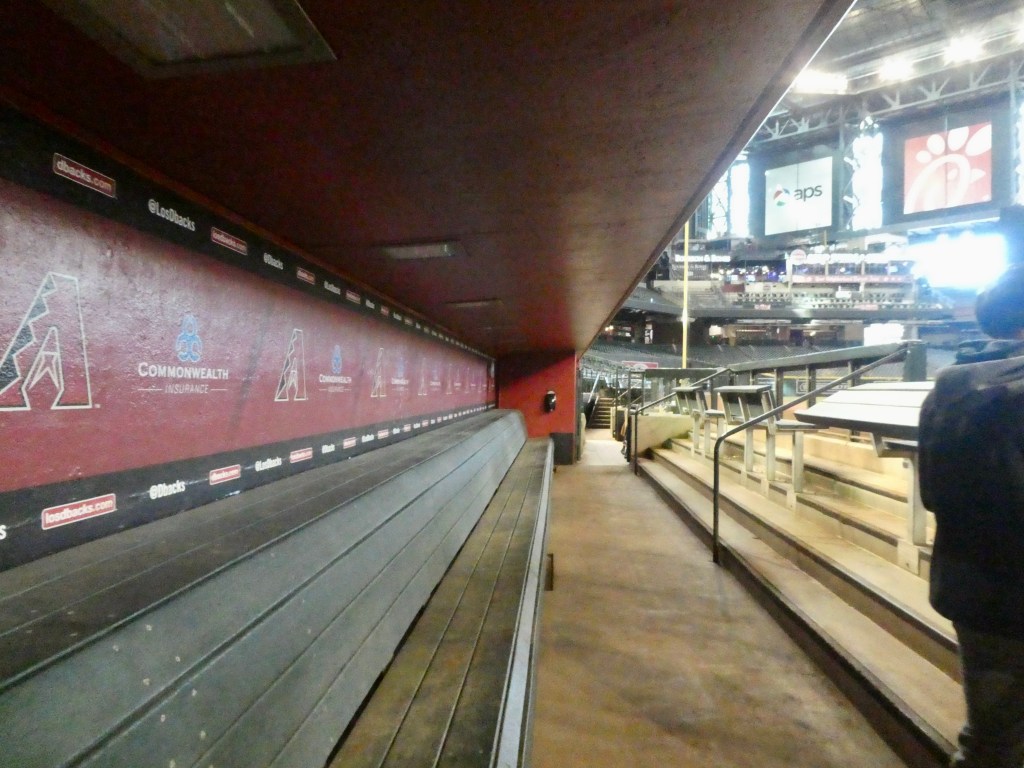
The dug-out!

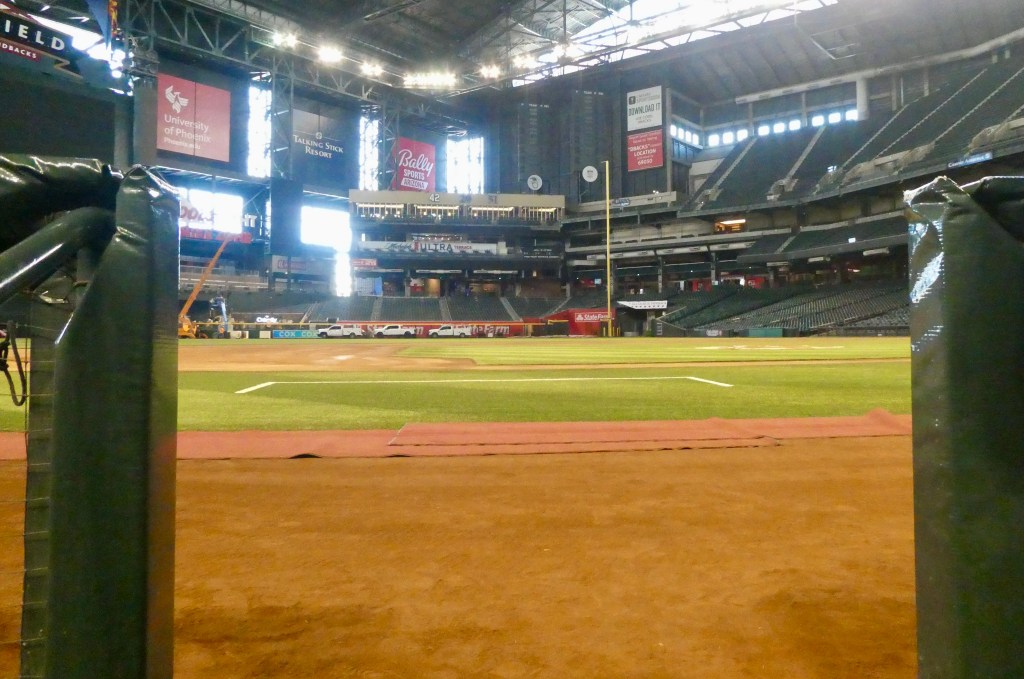
Field view from the dug-out.

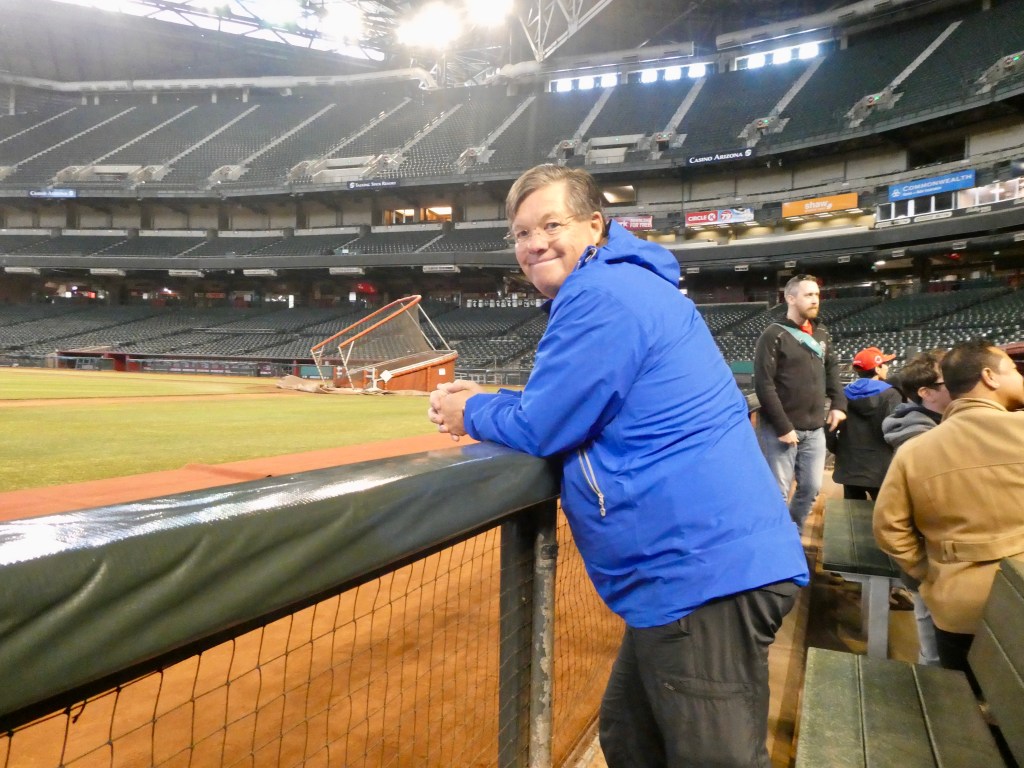
Randy mostly enjoys my love of baseball.

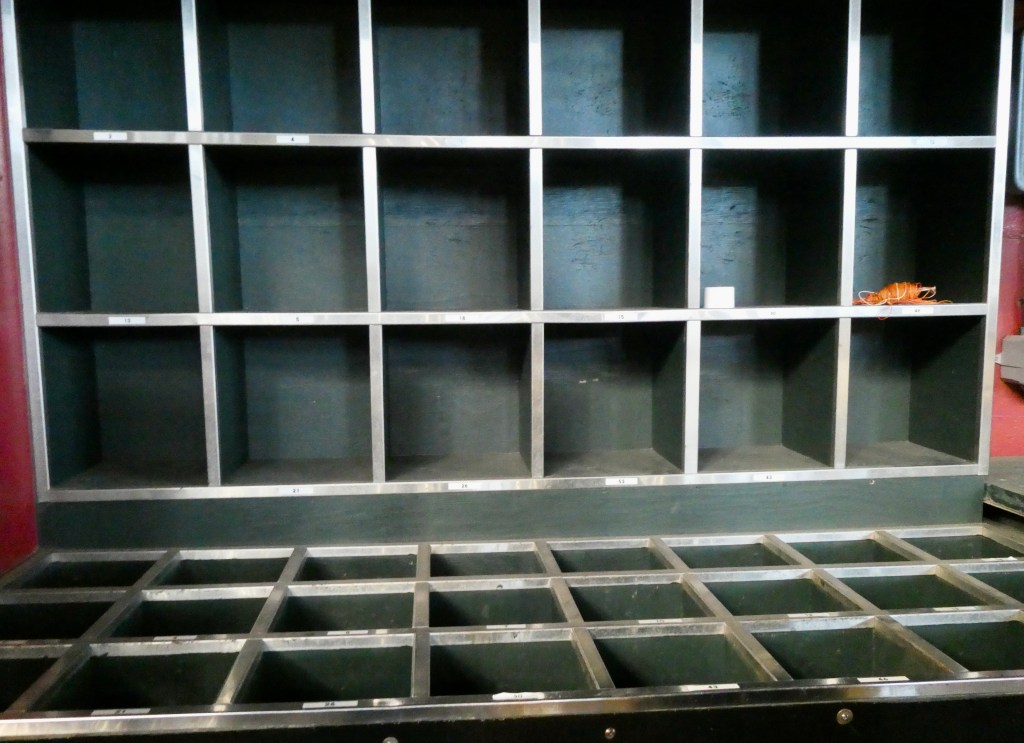
For bats and gloves…

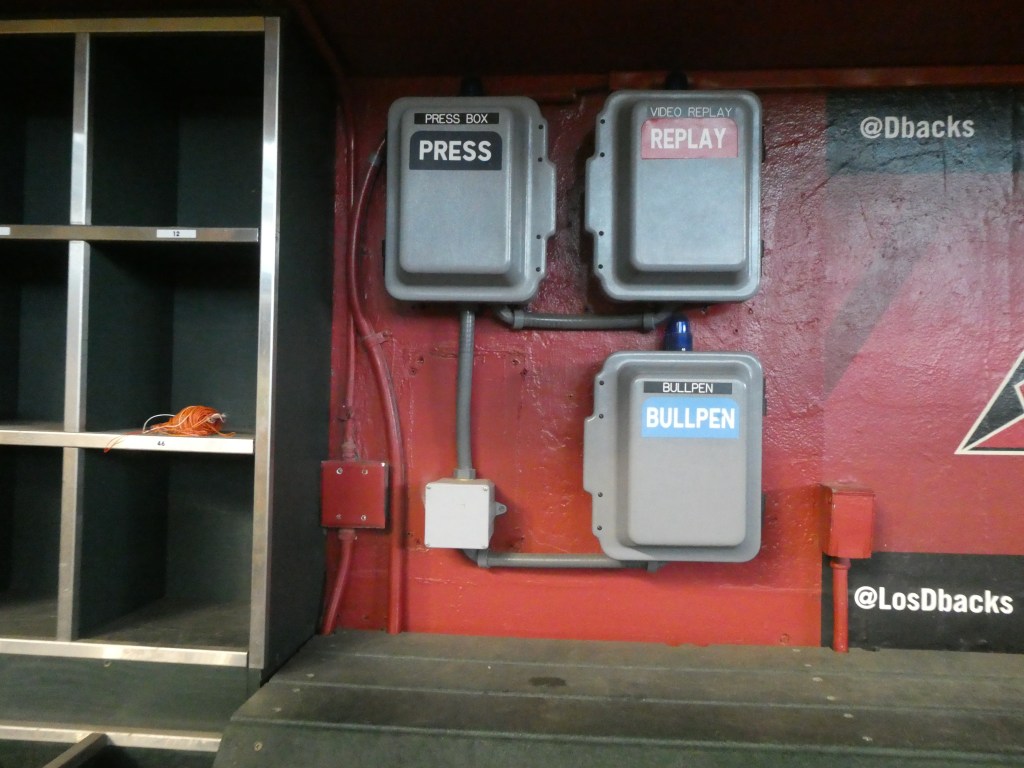
Need a new pitcher? Call the bullpen.

It was an interesting tour that will increase our enjoyment of games at Chase Field. Perhaps we will look for other stadium tours as we travel.

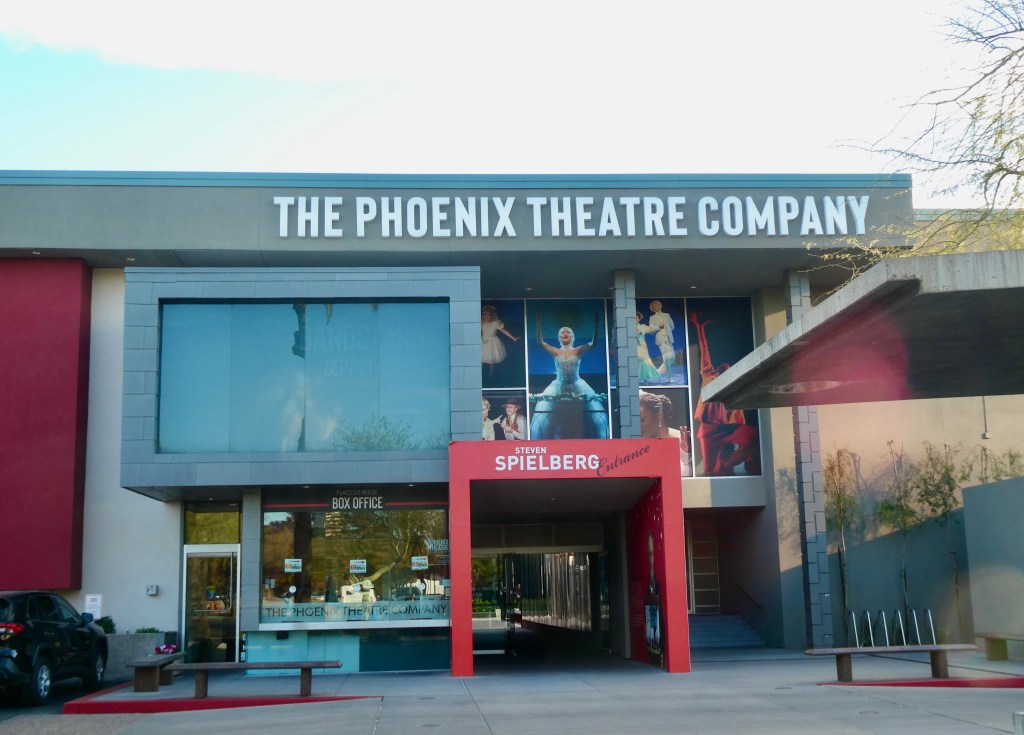
Our second tour of the day was of The Phoenix Theatre.  We are frequent patrons of this downtown theatre and are always amazed at the quality of their productions.

While entering the theatre, you pass through the Steven Spielberg Hall of Mirrors. His debut movie was shown here when he was a young employee at the theatre. 

The Phoenix Theater began in 1920 and in 1923 the prominent Heard family donated their carriage house as the first building.  The Phoenix Public Library was also held at the site.

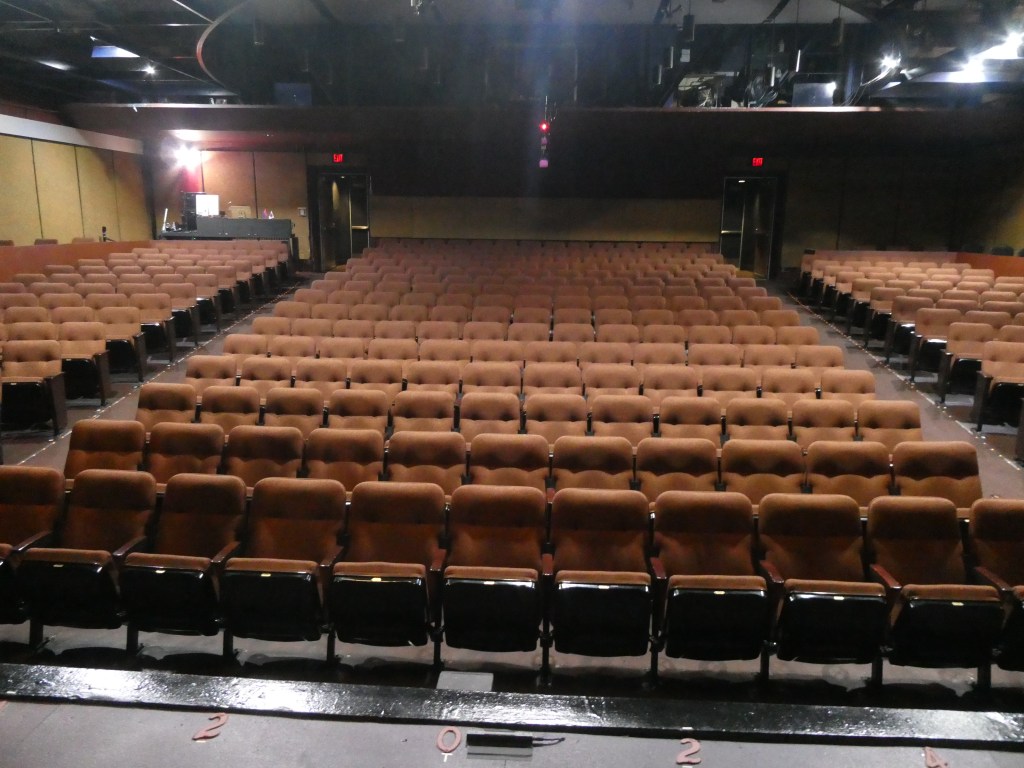
The main stage was built in the 1950s and seats just less than 400 people.

It works but is far from luxurious.  They are in the midst of a fundraising and building project.  We donated and got perks – including this tour!

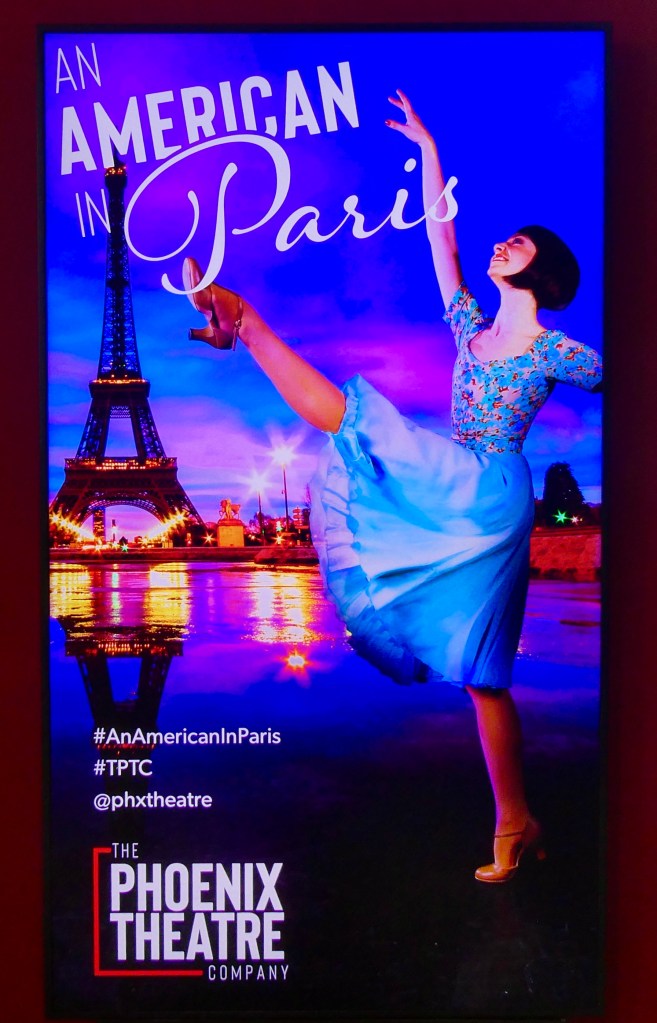
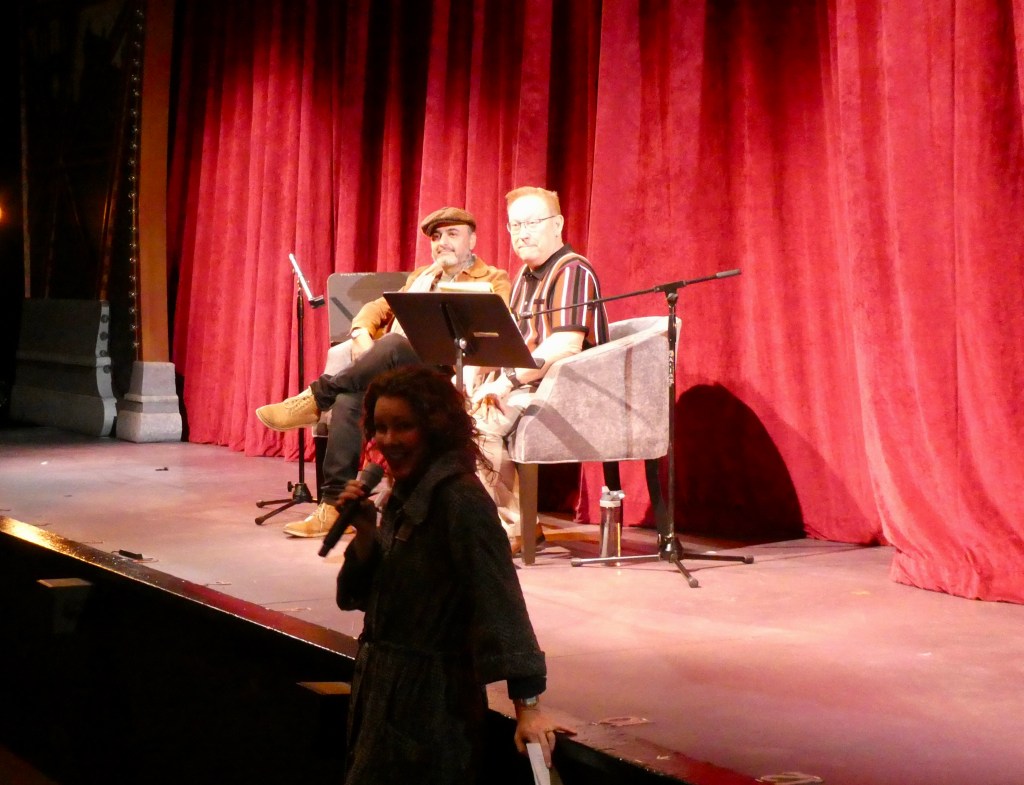
Another perk was being invited to a Director’s Talk after a delightful performance of An American in Paris.

The artistic director and dialect coach talked specifically about the An American in Paris production and then the whole experience of shows moving from movie to stage or stage to movie.  They highlighted successes and failures of both. The dialect coach talked about the process of being specific with regional dialects.

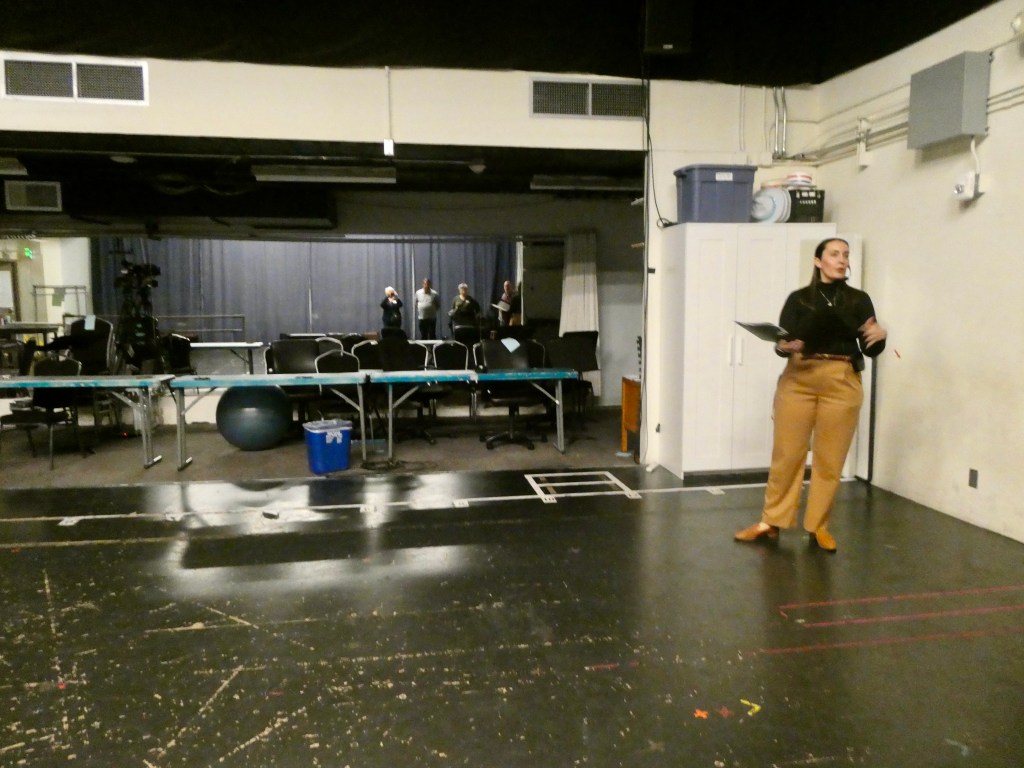
Our tour guide, Kristen, told us a production gets three weeks of rehearsal.  This is the primary rehearsal space as the main stage is utilized for an ongoing production at the same time.

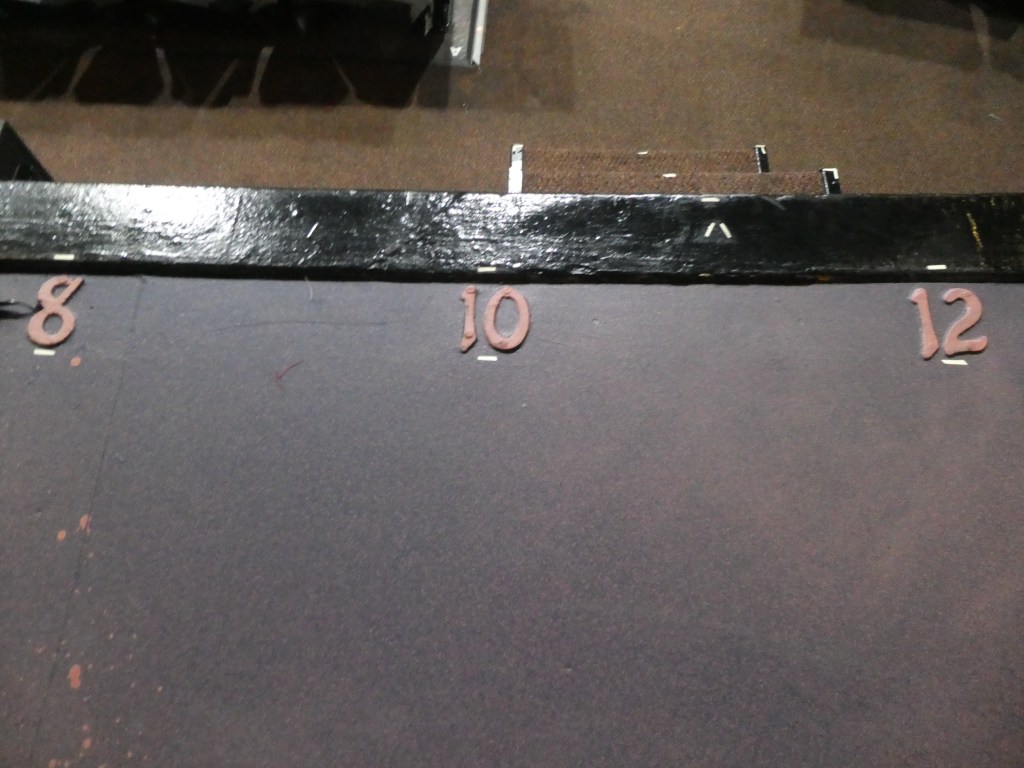
The numbering in the rehearsal space is matched on the stage so set crew and actors know where they, and things, will be.

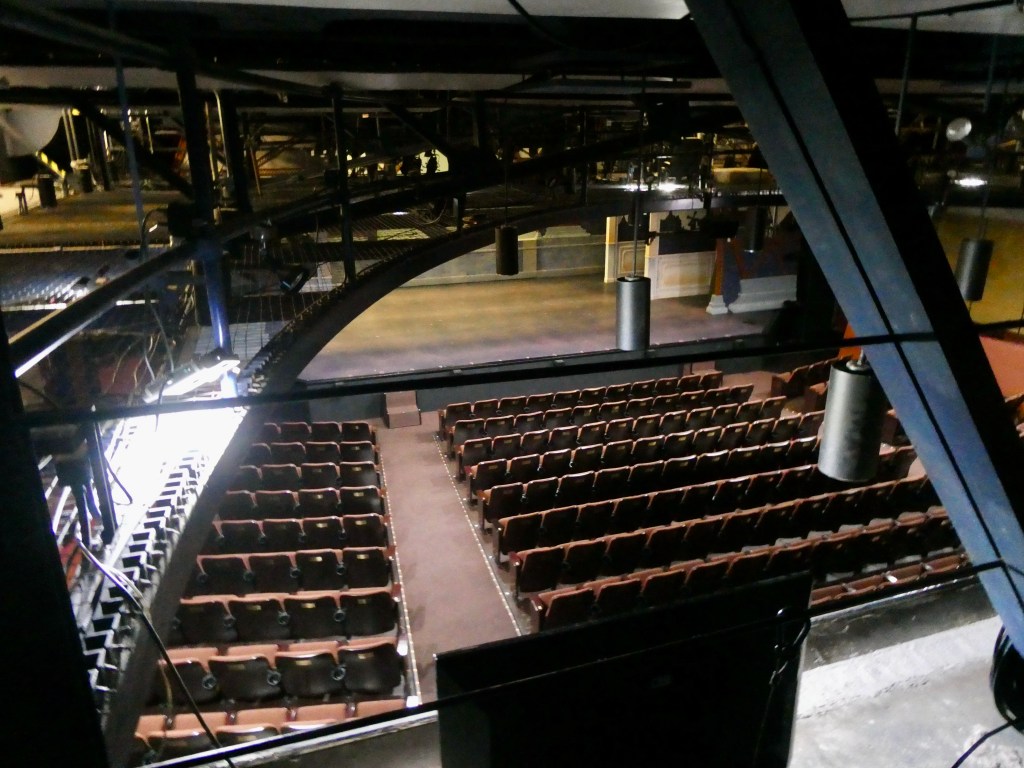
The orchestra pit was once under the front of the main stage.  Many years ago it was deemed too small and the orchestra was moved to another space.  

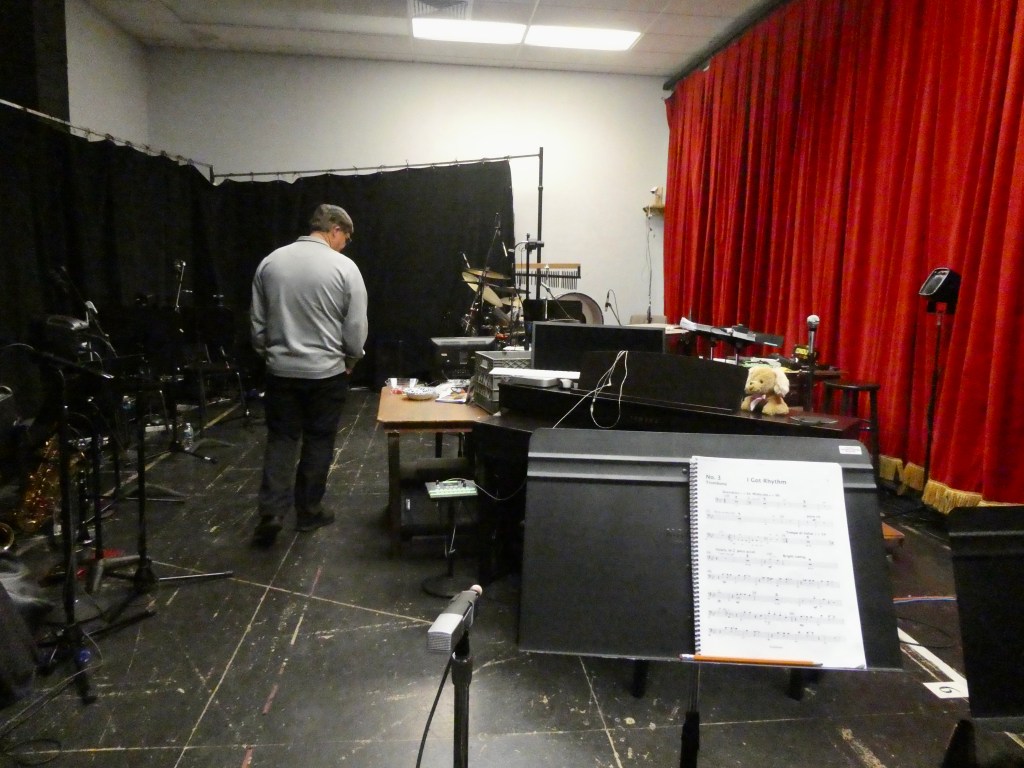
Through a series of video cameras and screens, the music director can see the stage and the actors can see him.  It is amazing how well it works considering they are totally separate!

The theatre has 60 full time employees including directors, ticket staff, set designers, costumers, and prop people.  The actors are employed per show, not on a full time basis.

While visiting the costume shop, we learned that vodka can be used for a quick cleaning and deodorizing of costumes between shows. The lighting on stage utilizes 200 bulbs of 500 watts each. The theatre always feels cold to patrons but we understand the need to cool it down better now!

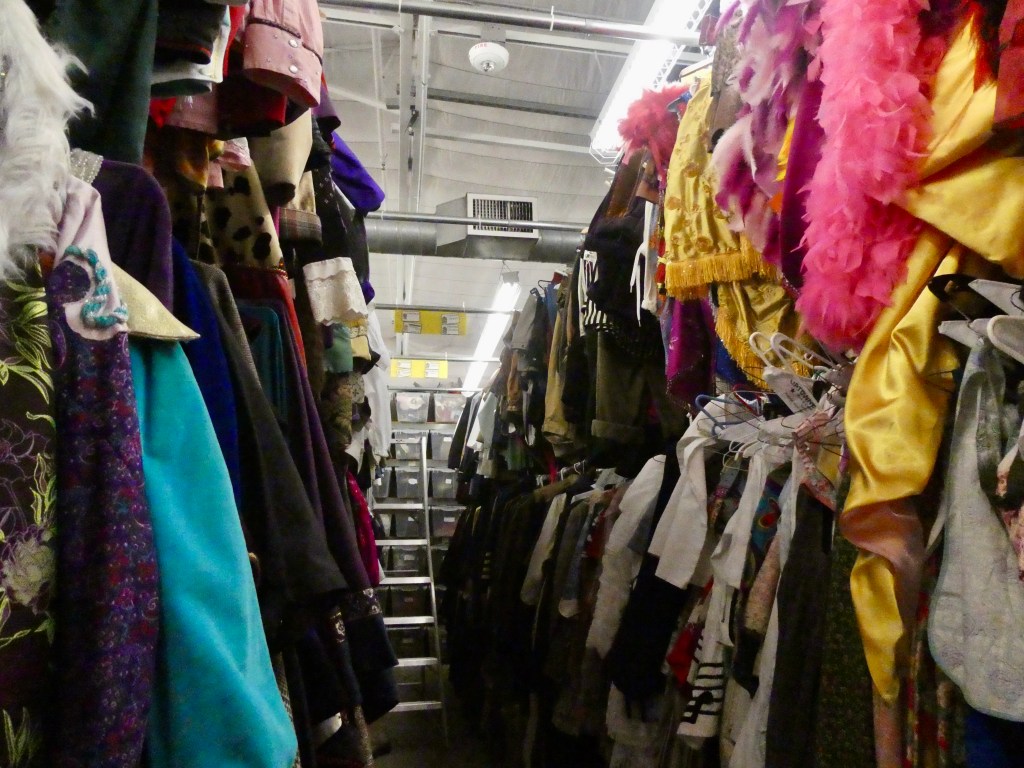
While waiting utilization on another show, costume pieces are stored by gender, type and era.  The racks look much like a goodwill emporium.

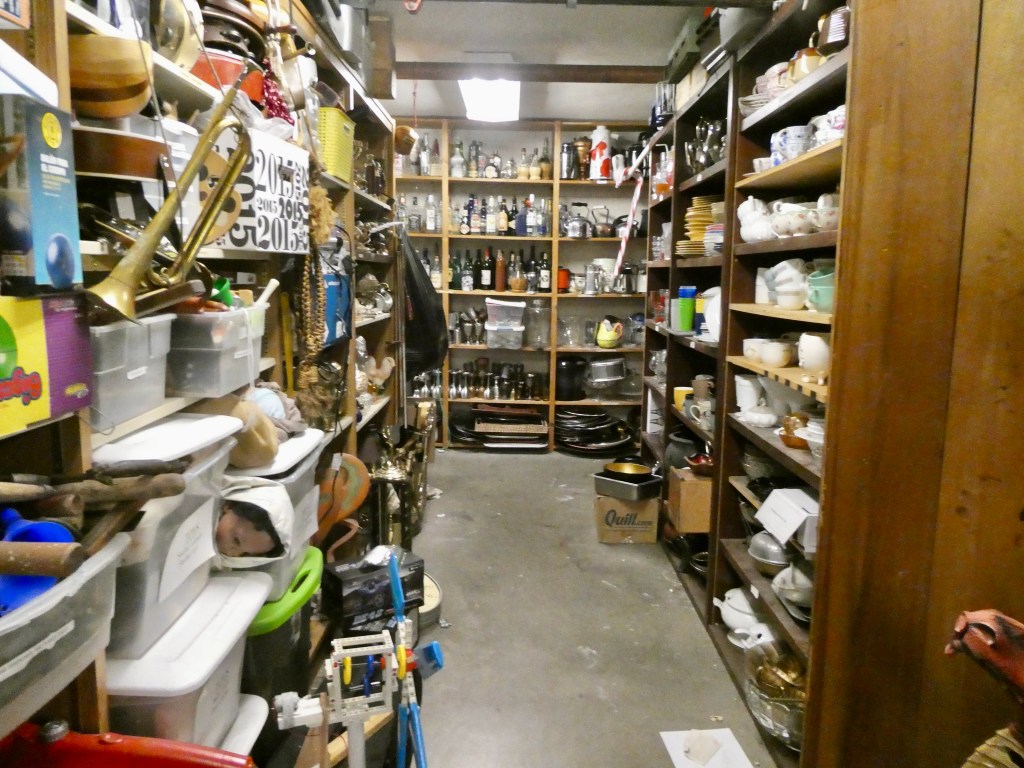
The prop shop also looks like a thrift store!  

These are the props and costume pieces used for the current production of An American in Paris. They are kept ready just off stage. I never looked too closely at the props or costumes during a production before but now I know to be amazed with what they do with marginal things!

There were two random bits of theater trivia we learned on our tour:

The Green Room we associate with guests or performers waiting to “go on” is from Marie Antoinette’s reign.  While hosting a lavish party, she put those marginal theater folks in a green tent so they would be less noticeable to her important guests. 

We also learned about the microphones and battery packs actors use while onstage.  The microphones aren’t terribly expensive and their periodic replacement is expected.  The battery packs are very expensive and condoms are used as a water proof or sweat proof barrier to protect them.  Our tour guide told a good story about someone who was new to the financial side of the theatre questioning the line item expense for so many condoms!

Posted in Uncategorized | 2 Comments

PHX: Mystery Castle

Boyce Gully left his home and family in Washington State when he was diagnosed with tuberculosis in 1929.  His doctor recommended he move to a drier climate. Boyce left his wife, Frances, and their five year old daughter, Mary Lou, and did not tell them where he was going or that he was ill. He believed he was likely going to die.

While waiting for whatever would come, Gully acquired land in the desert south of Phoenix by filing a mining claim. 

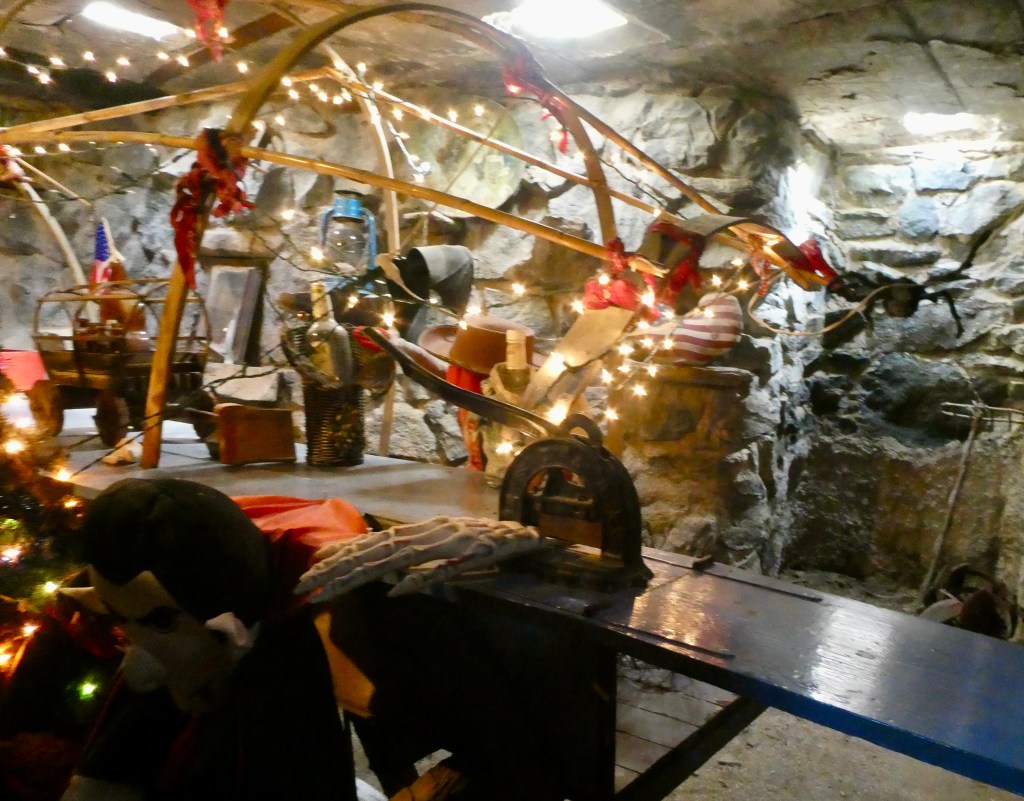
To gain title he had to live on the land and do some actual mining. He did just enough mining to qualify for the land but it was never a priority. Gully was eventually deeded his 40 acres. The above photo shows remnants of his mining equipment.

Boyce and daughter Mary Lou had loved building sand castles together on the Washington Coast. She had once asked him to build her a real castle. He set about building a castle that couldn’t be washed away.

Boyce’ contact with Frances, and MaryLou was minimal over the years. He never did tell them he was ill or that he was building a castle.

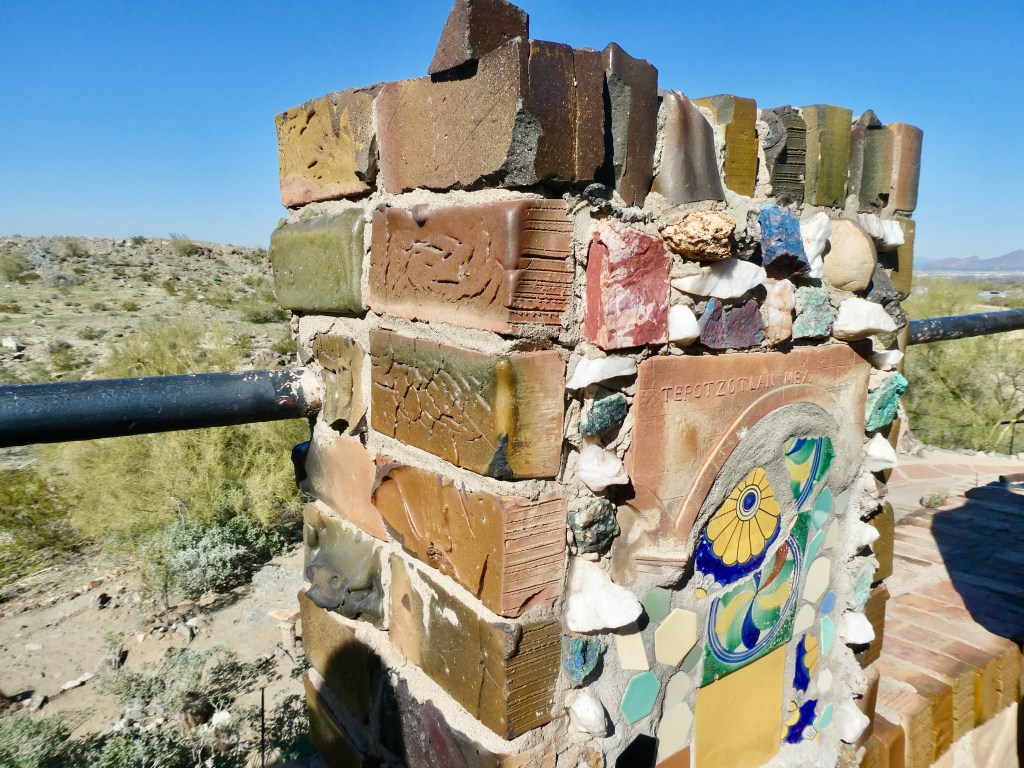
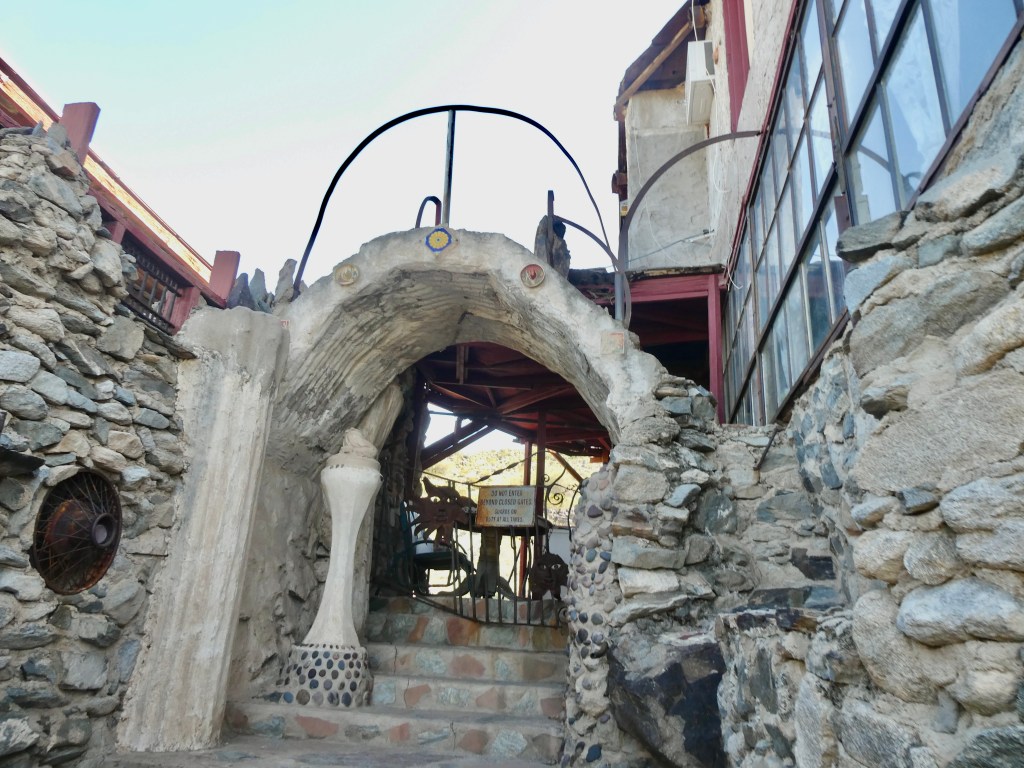
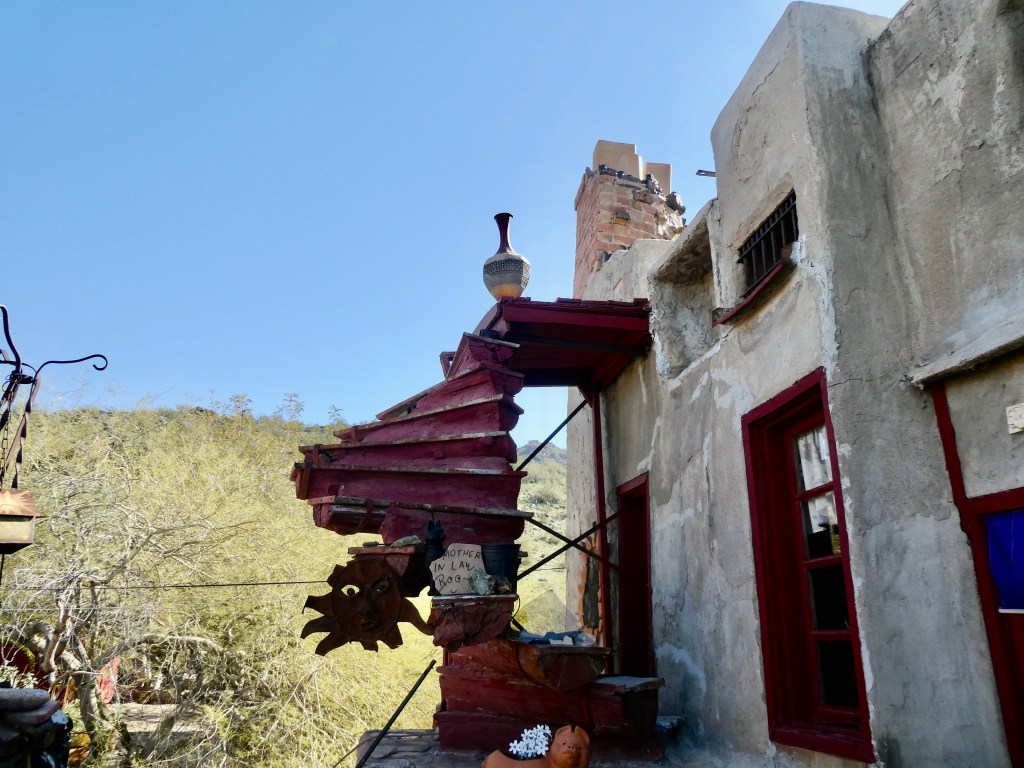
Boyce obtained free materials (bricks) and rocks whenever and however he could. 

People gave him their excess or random items. He was creative in what he used as construction materials. 

He used downed telephone poles and wood from abandoned sites and rail cars.  

He used whatever he could find or gather. 

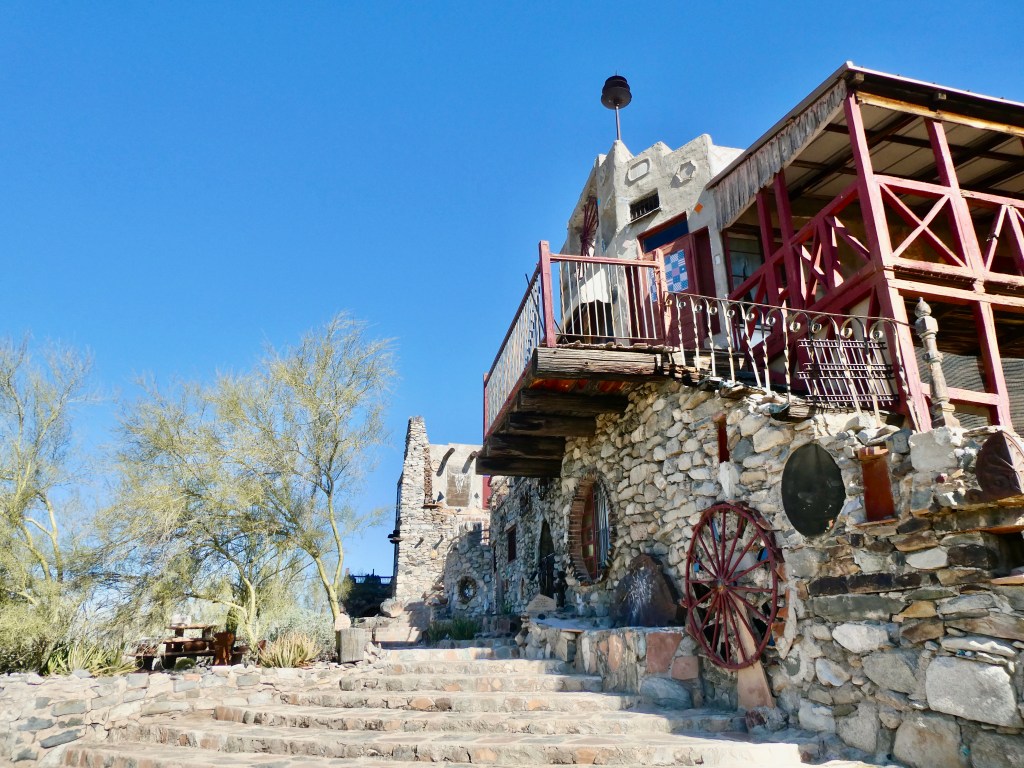
Old wheels became windows. 

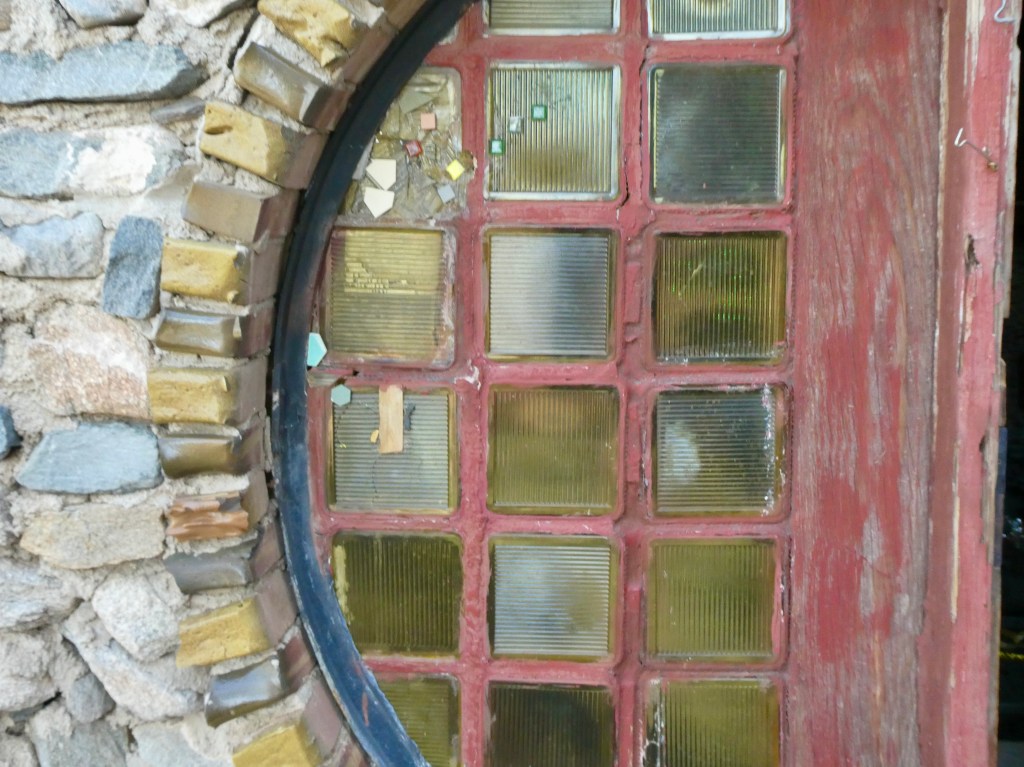
These glass blocks are used dishes.  

The castle cost very little in dollars.

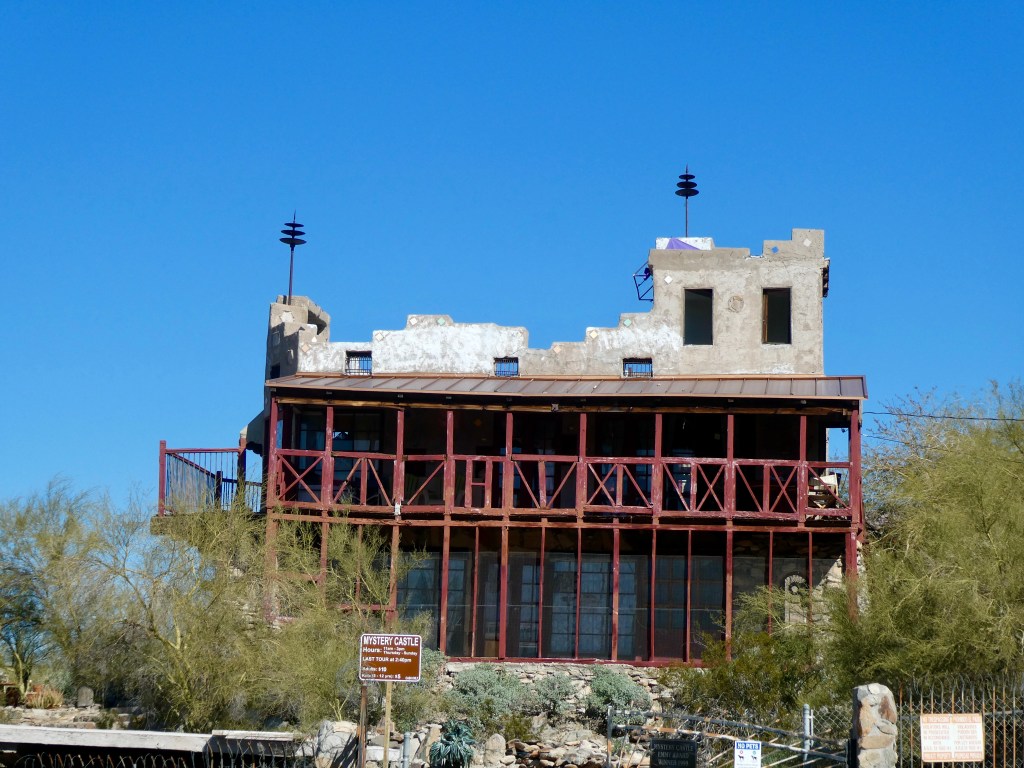
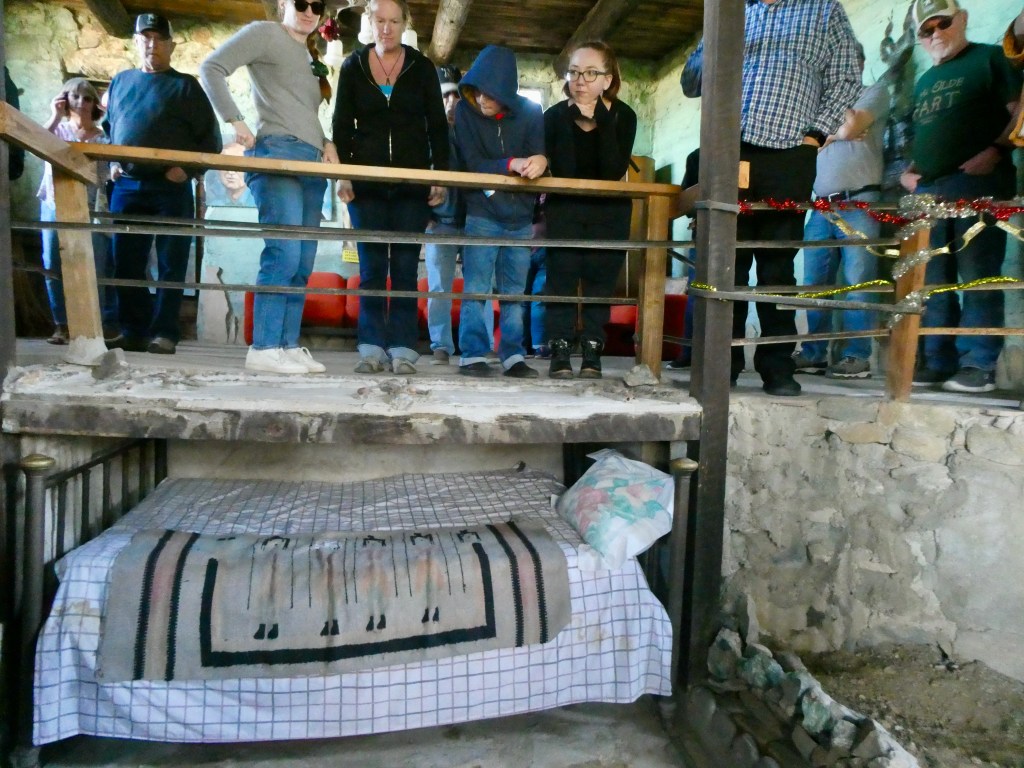
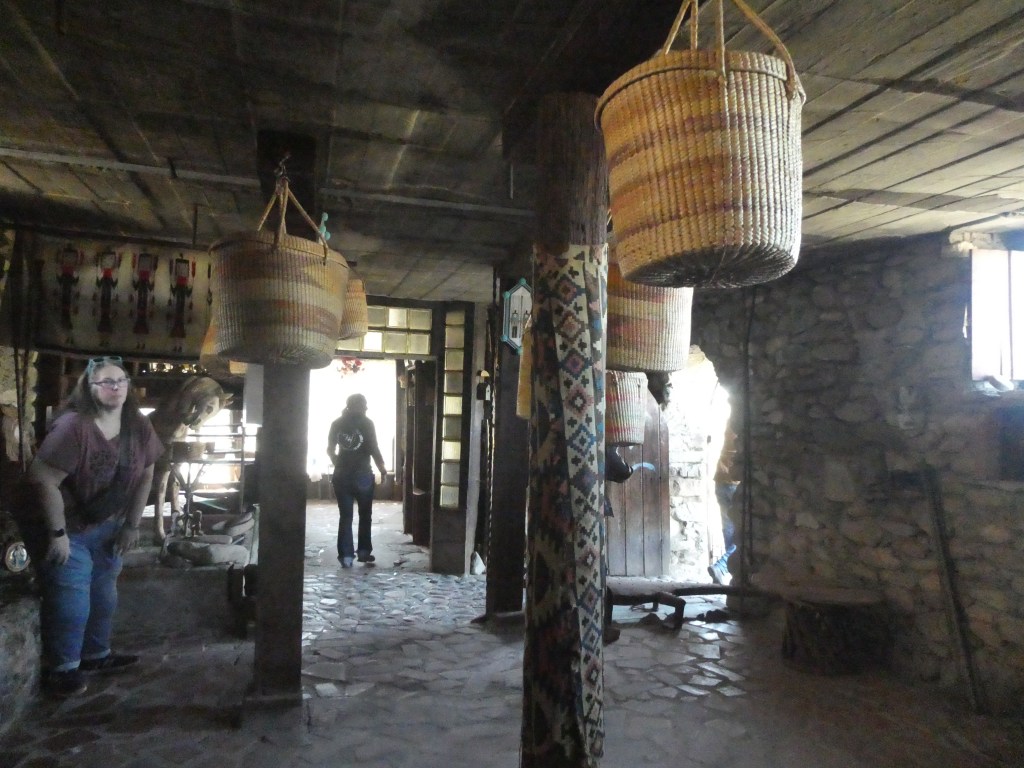
Eventually, there were eighteen rooms and thirteen fireplaces.

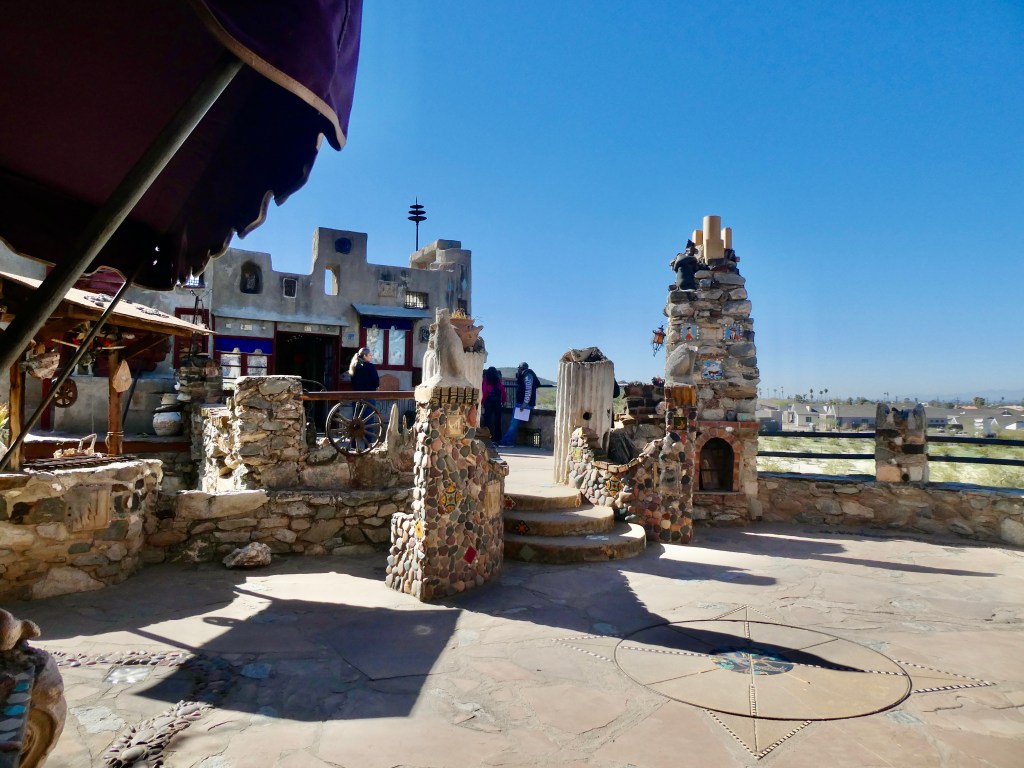
There is a courtyard made of stone and rejected construction bricks.

Looking through the Phoenix Window revealed the once small town of Phoenix. (Phoenix is a bit bigger now and doesn’t fit.)

Stairs go from the courtyard to the open upper level.

Following Boyce’ death in 1945, daughter Mary Lou and wife Frances learned they had a castle outside of Phoenix.  

They traveled to Arizona to claim it. 

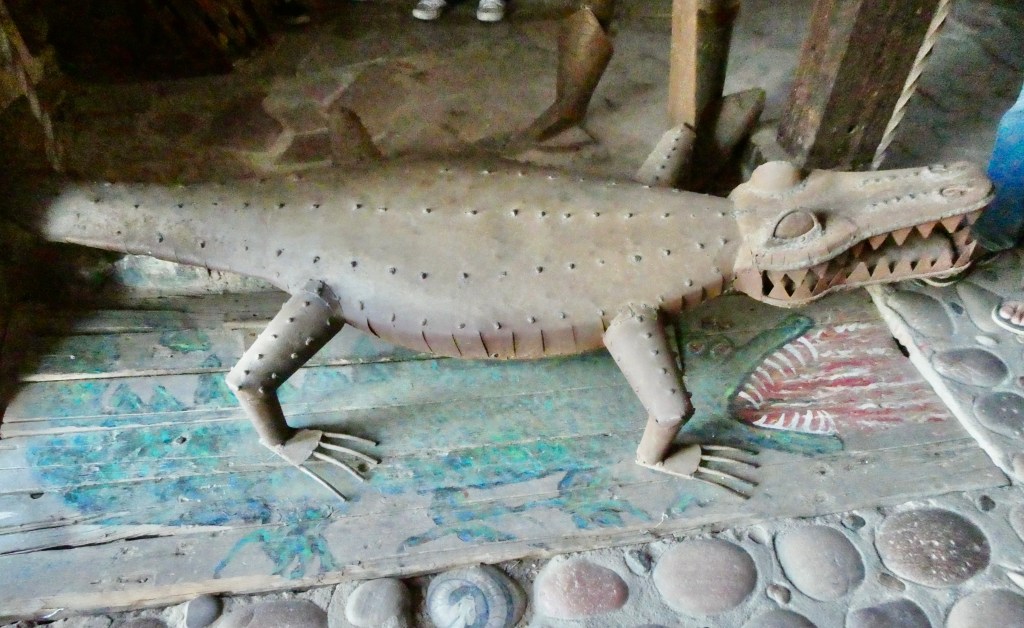
Boyce left a trap door under the alligator with letters, documents and two $500 bills.

The castle was featured in Life magazine in 1948 and people made the trek seven miles south of Phoenix to see it.  

Mary Lou started giving tours for 25 cents per person. That included coffee and a donut provided by Frances. 

The women lived in a castle without water and power until Frances died in 1970.    

Mary Lou was able to obtain water and power to the main rooms later in the 1970s.    

She offered chapel services for weddings. It is still possible to be married at the Mystery Castle.

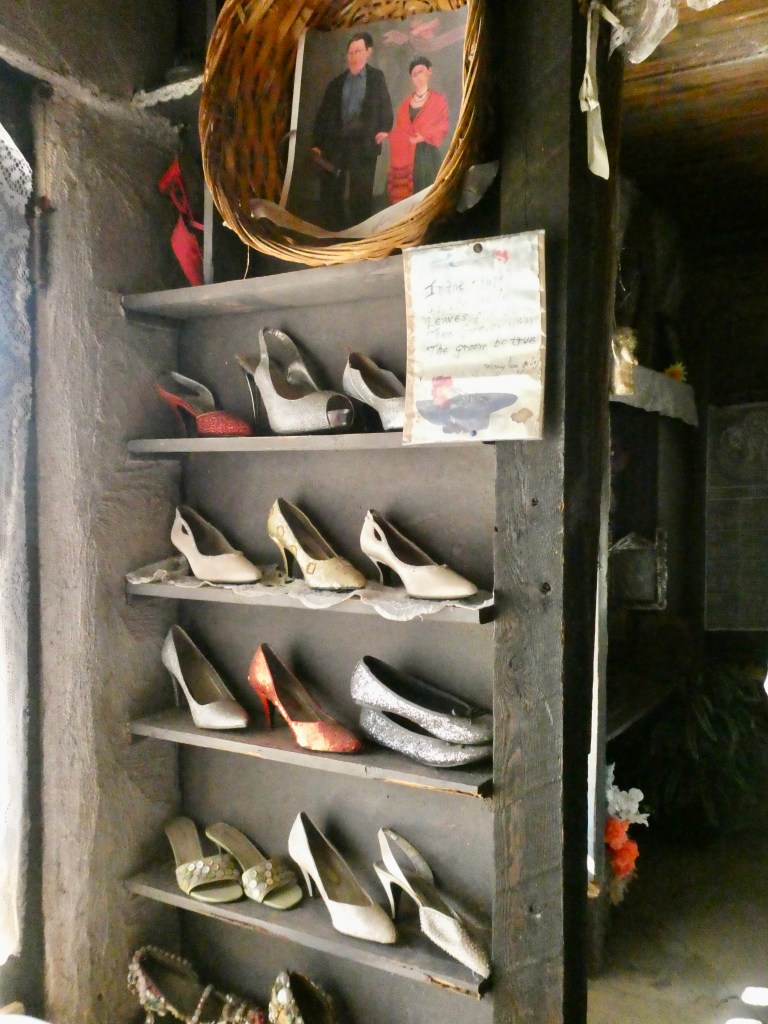
This collection of shoes once belonged to brides who married at the castle chapel. Mary Lou wrote the following poem: If the bride, Leaves one shoe, Then forever will, The groom be true.

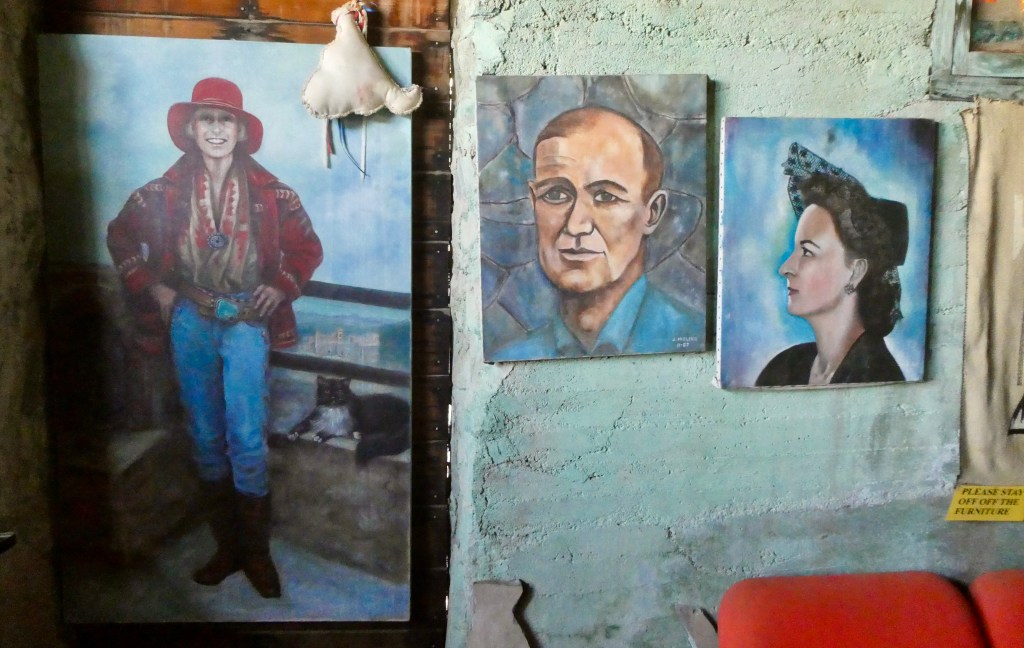
The castle gained status over time – although no one seemed to know what the Emmy sign was about. A brief internet search on my part also yielded no answers.

It isn’t clear that Bill Clinton visited the Phoenix Mystery Castle, but he corresponded with Mary Lou.

Mary Lou lived in the castle her father built for her until 2010 when she passed away. 

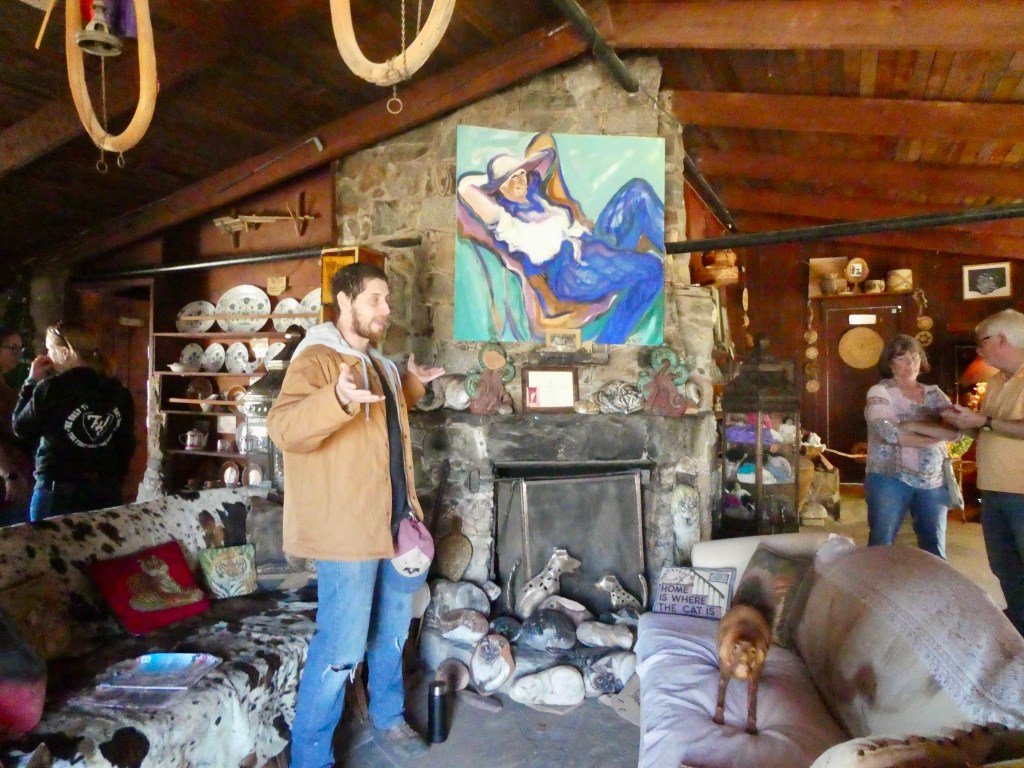
Currently, tours are offered seasonally on a limited schedule.  The guides spoke about finding snakes in the castle during the summer months. Between the snakes and limited services, summer tours just aren’t viable. The price is $10 – cash only. We did not get Frances’ coffee and donuts but still enjoyed the tour very much.

The castle and grounds are on seven of Gully’s original 40 acre mining claim. 

Some of the remaining acreage was donated to Maricopa County as it was developing South Mountain Regional Park.  The view of Phoenix from the Dobbins Lookout window doesn’t quite hold all of Phoenix now either.

Next up: More of Phoenix – Two Tours in One Day!

Posted in Uncategorized | 3 Comments

Outside Nashville: Mammoth Cave National Park, Kentucky

When we travel, you can be sure I have done the research.  That includes hotels, things to do and places to eat.  The morning we headed to Mammoth Cave National Park, my research failed us.  All of my breakfast places were downtown, or south of the city.  We wanted a place that was generally north towards Kentucky.

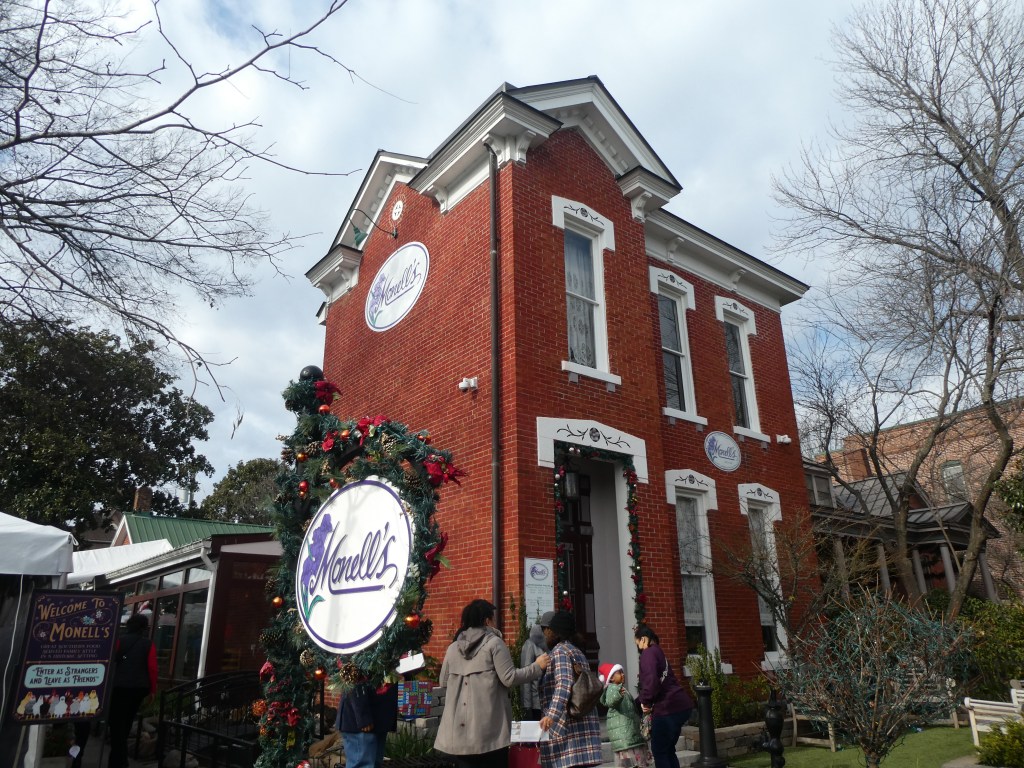
Apple maps said Monell’s was close and had good reviews.  What a wonderful surprise it turned out to be!

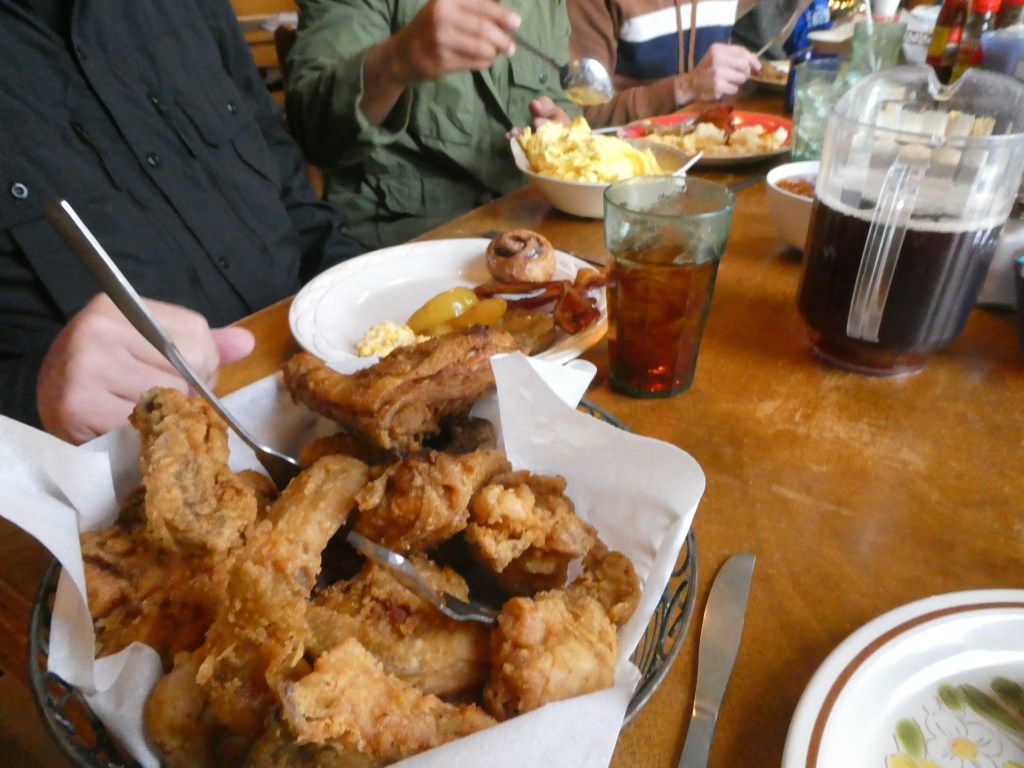
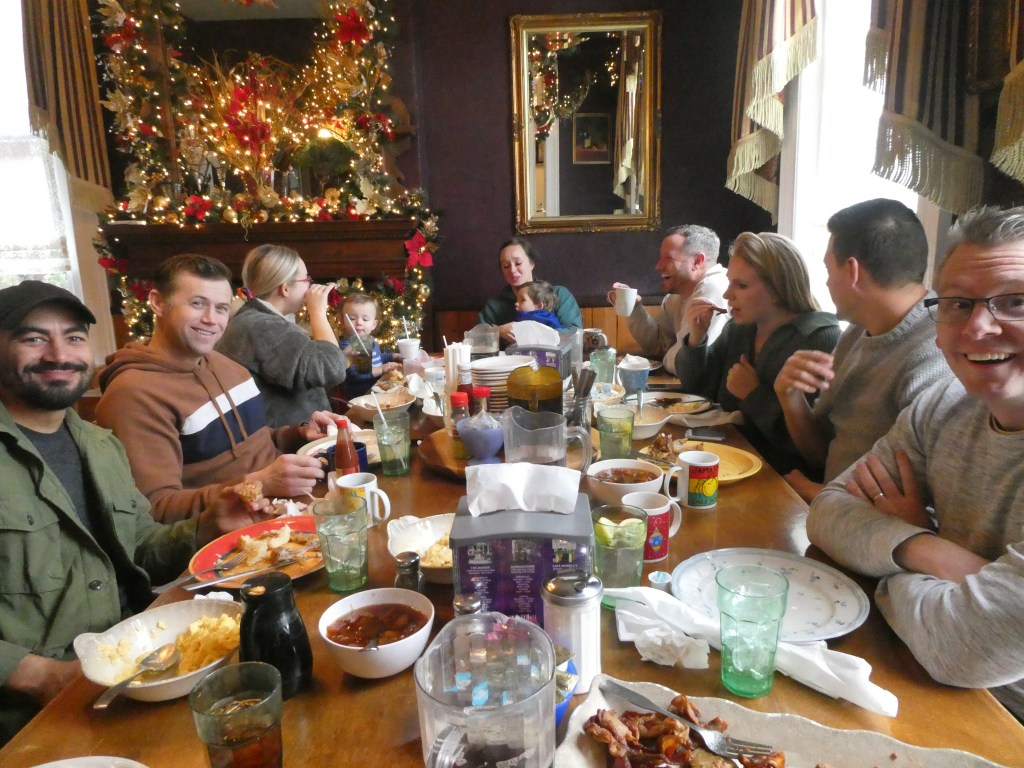
Monell’s serves family style so you walk in and are seated at large tables with whomever happened to walk in just before or after you.

The bowls and platters started going around and our table mates were good to explain what we were eating when it wasn’t obvious.  We knew about grits but did not know a thing about corn pudding!  Yum!

We sat with a group of pastors from the campuses of Cross Point Church of Middle Tennessee. They were so pleasant, asking about our time in Nashville, and what people eat for breakfast in the southwest.   In a true act of southern hospitality, they bought our breakfast and created a very nice memory of our trip.  

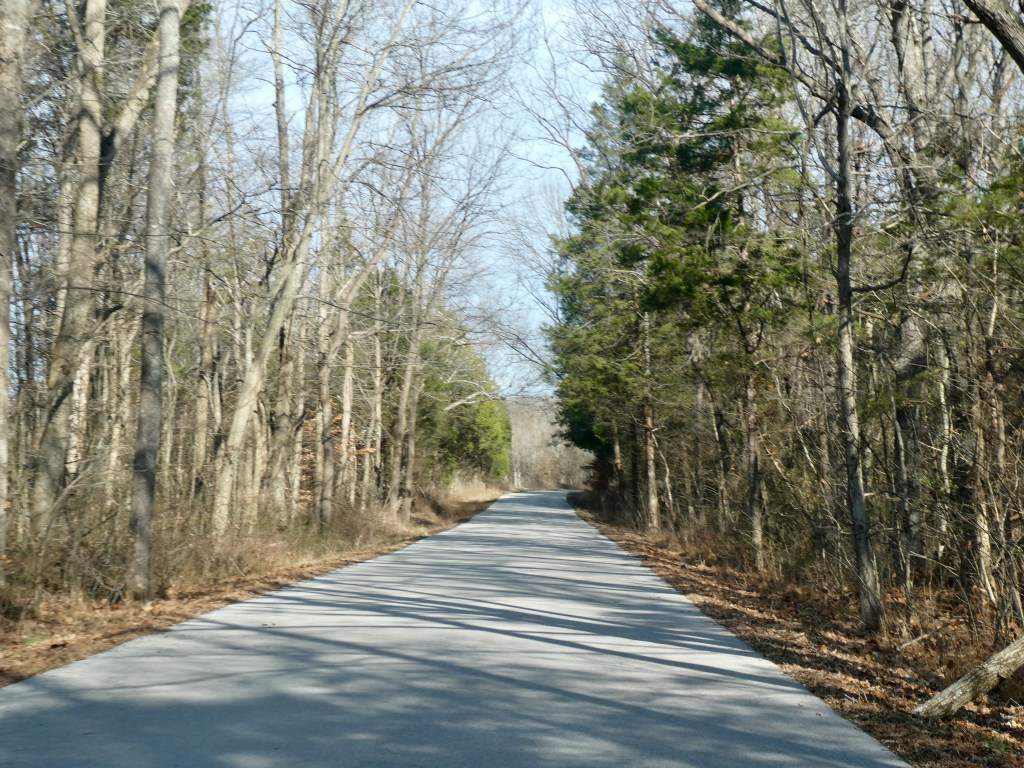
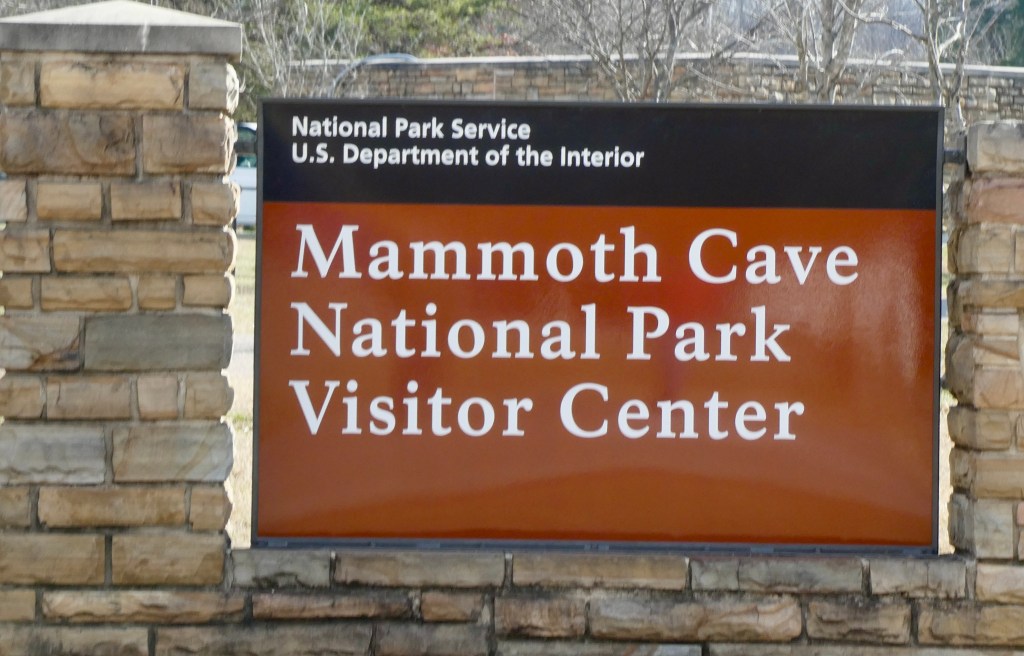
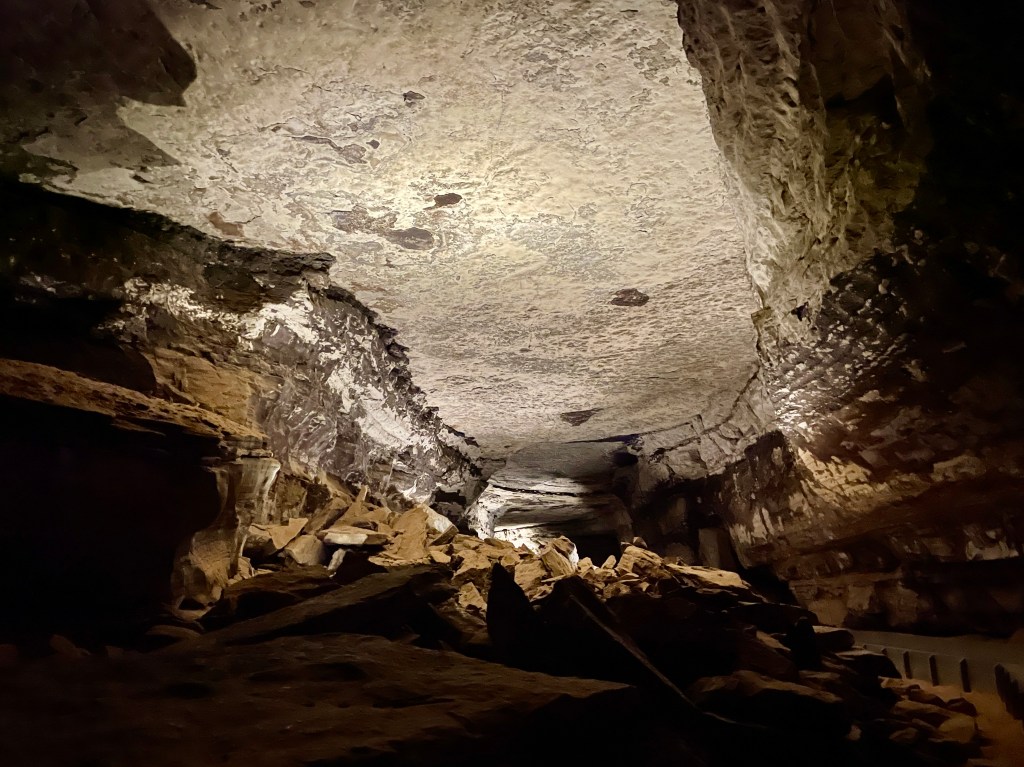
Adequately nourished, we drove two hours to Mammoth Cave National Park.  There was no entrance fee, only a fee for tours.

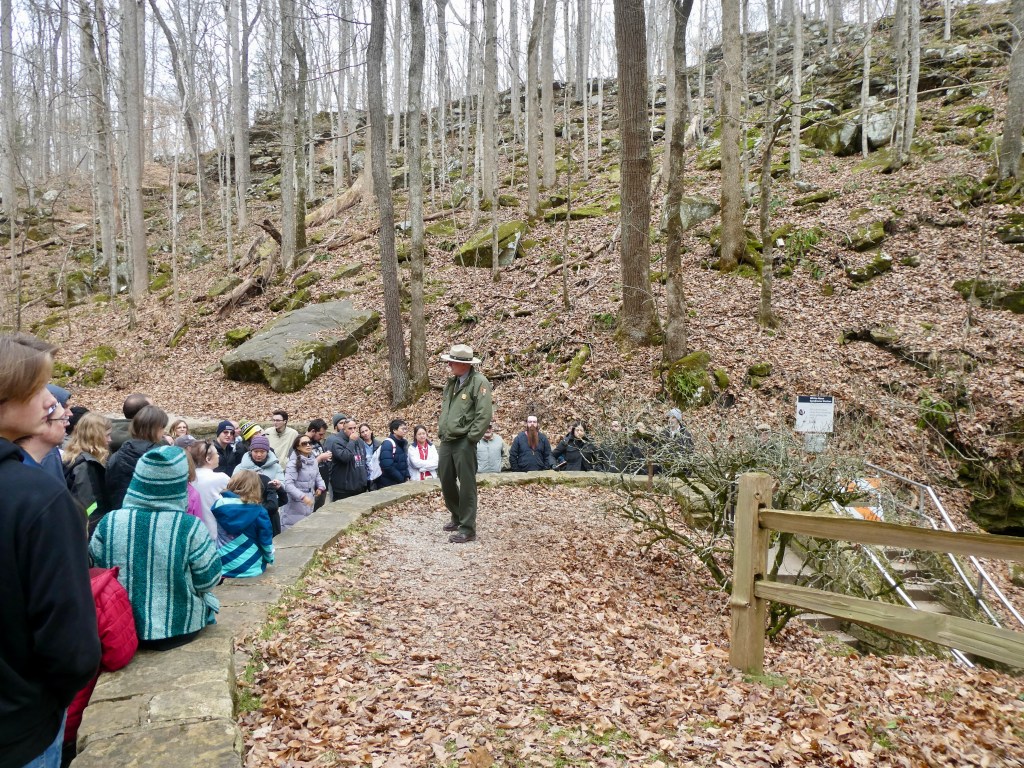
I had reserved our cave tour ahead of time.  Because it was December, our options were limited and I chose the History Tour. Very likely it is what I would have chosen anyway.

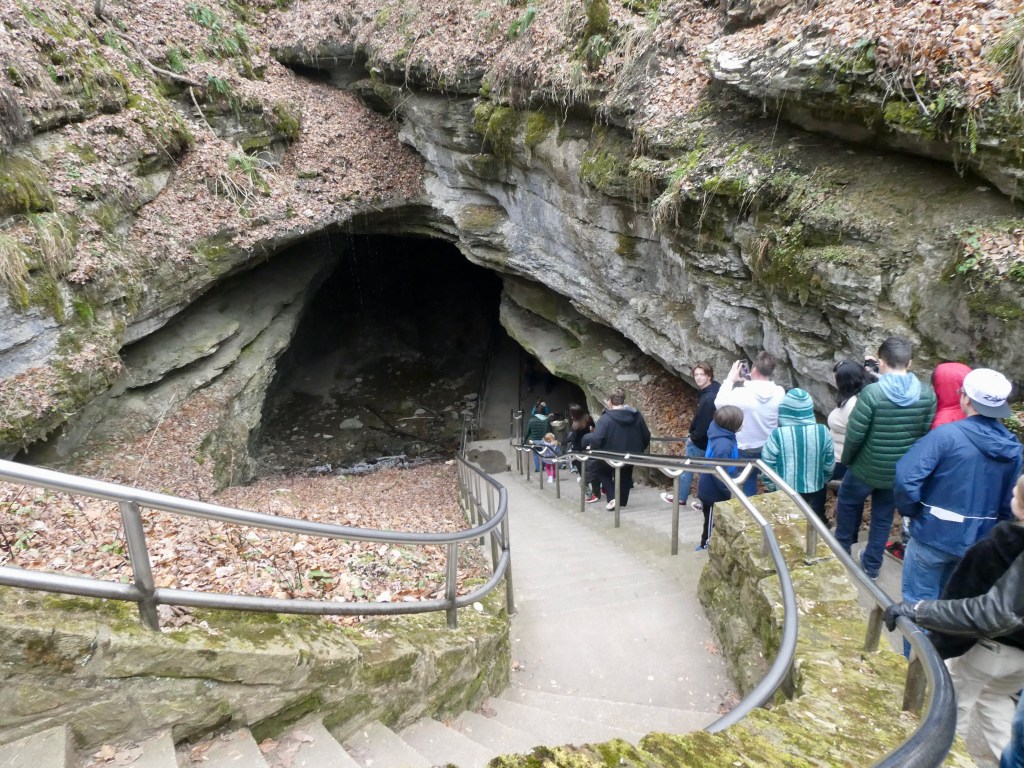
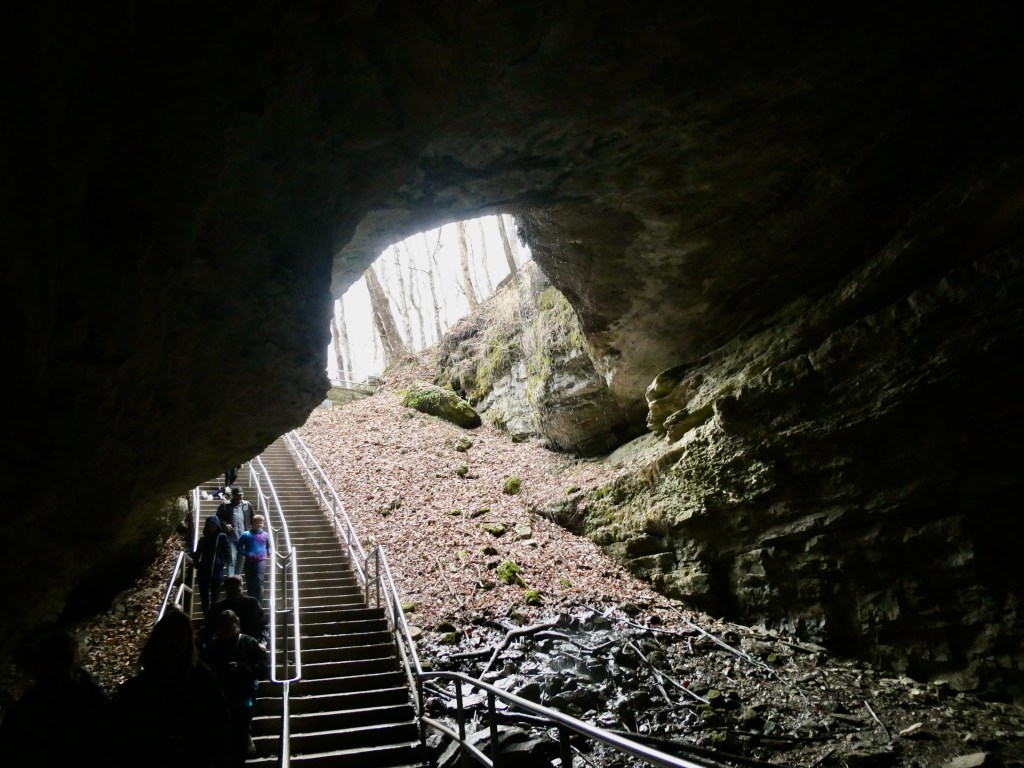
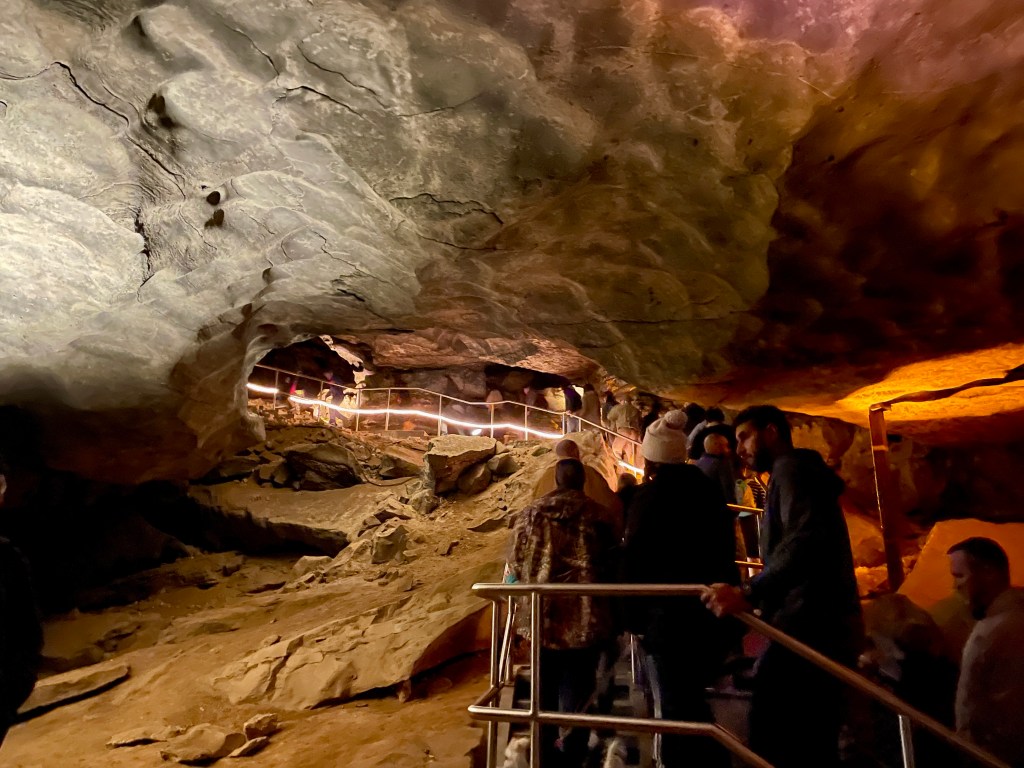
We knew we would be walking two miles and going down and up 546 stairs.   We would be 310 ft below the surface at the lowest level 

Archeological evidence suggests the cave was used 4000 years ago by prehistoric man.  They scraped minerals at least ten miles into the cave.   (In 1935, a  prehistoric body was found.  It was taken out and analyzed, then returned.) 

After more than 2000 years, the cave was rediscovered in 1798.  Legend says that John Halges shot a black bear and the wounded animal led him into Mammoth Cave. 

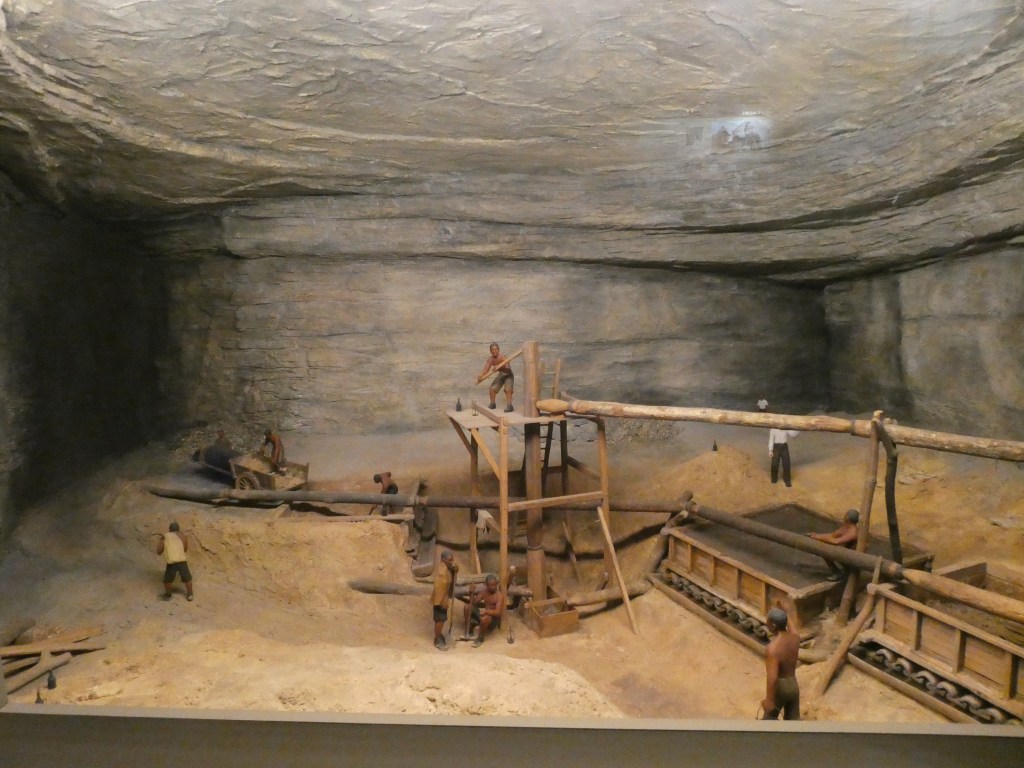
Local men explored a bit and found mineral deposits. Saltpeter production begin shortly after and peaked during the War of 1812.  Saltpeter was mined by slaves and sent to Delaware to make gunpowder. 

Mining was discontinued after the war.

By 1816 people starting visiting the cave.  Local men and boys led the tours and those guides and visitors had to work a lot harder than we did! 

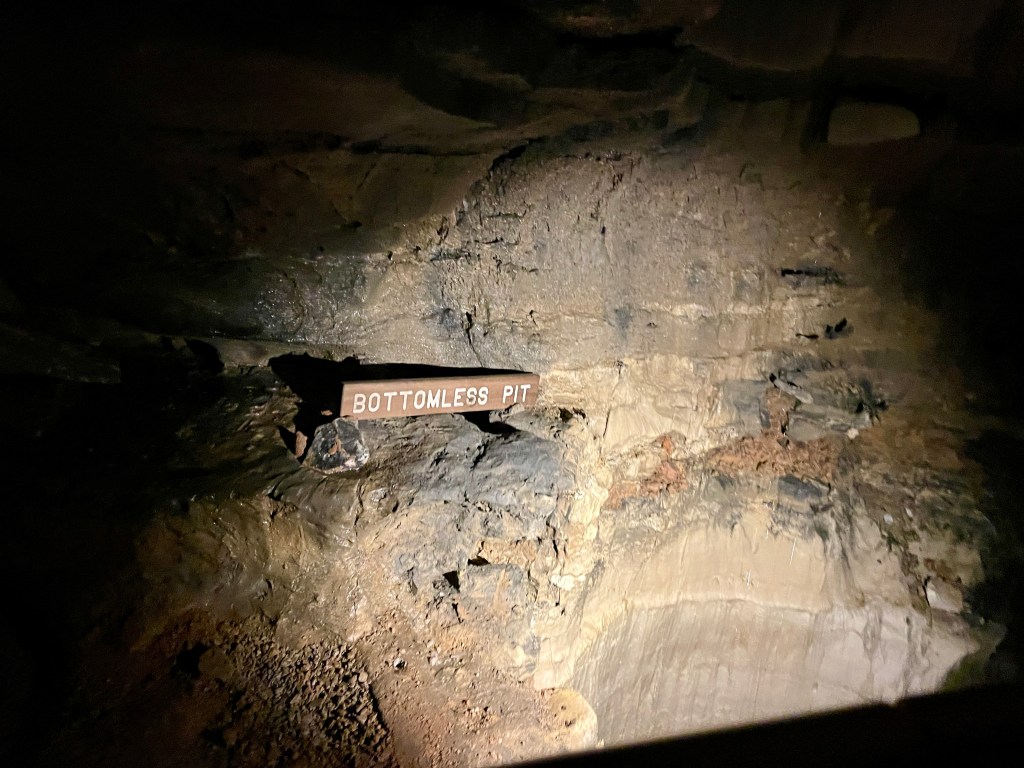
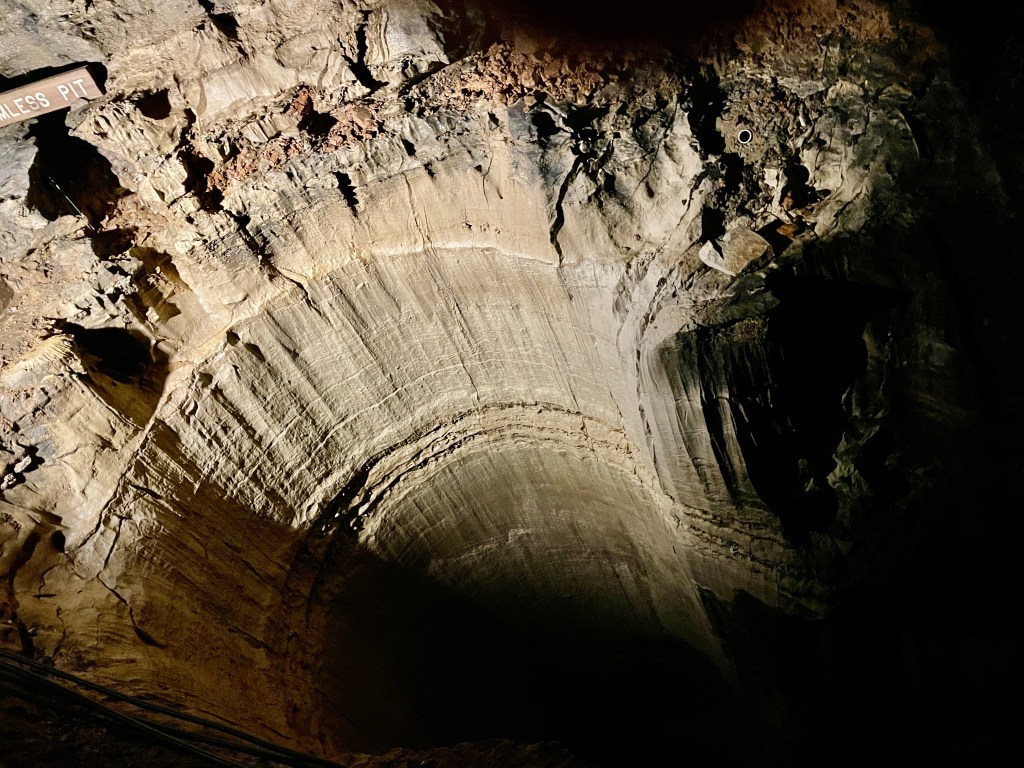
Tours stopped at The Bottomless Pit, one and a quarter miles into the cave.  

In 1838 three enslaved men were sent into the cave to be the guides.  They were Stephen Bishop, Mat Bransford and Nick Bransford.  The enslaved men were able to keep their tips.  (Years later Bishop’s grandson also guided tours.  The Branfords and their descendants were tour guides in the cave for over 100 years ending in 1939.)

Stephen Bishop was just 17 when he began leading white people into the cave. He later said he felt a sense of respect and authority guiding tours that he never felt above ground. 

Someone hired Bishop to take him beyond the bottomless pit, where no one else had been before.  They went another 25 feet.

Stephen Bishop explored many more miles within the cave over many years. He went down to the rivers and up to Mammoth Dome.   

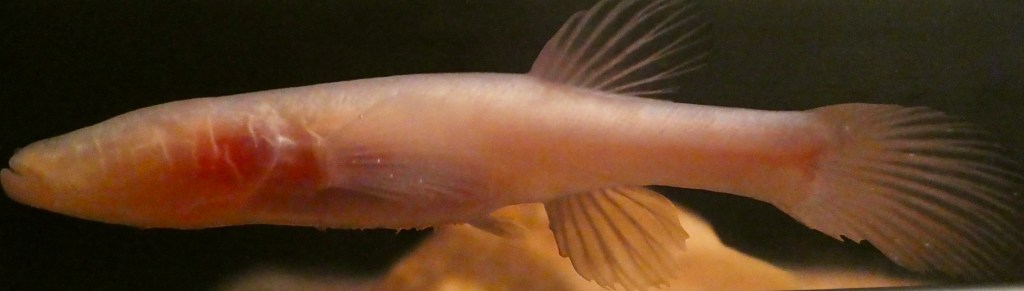
Bishop was the first to discover the eyeless cavefish.  The enslaved guides sold the fish above ground and were able to keep the money. 

When Bishop found a lantern on the cave floor in an area he had never been, he knew an opening had been found from above. There are eleven natural entrances to the cave but the park service believes only one was ever used by humans.

Bishop, who called Mammoth Cave a “grand, gloomy, and peculiar place” was granted his freedom in 1856.

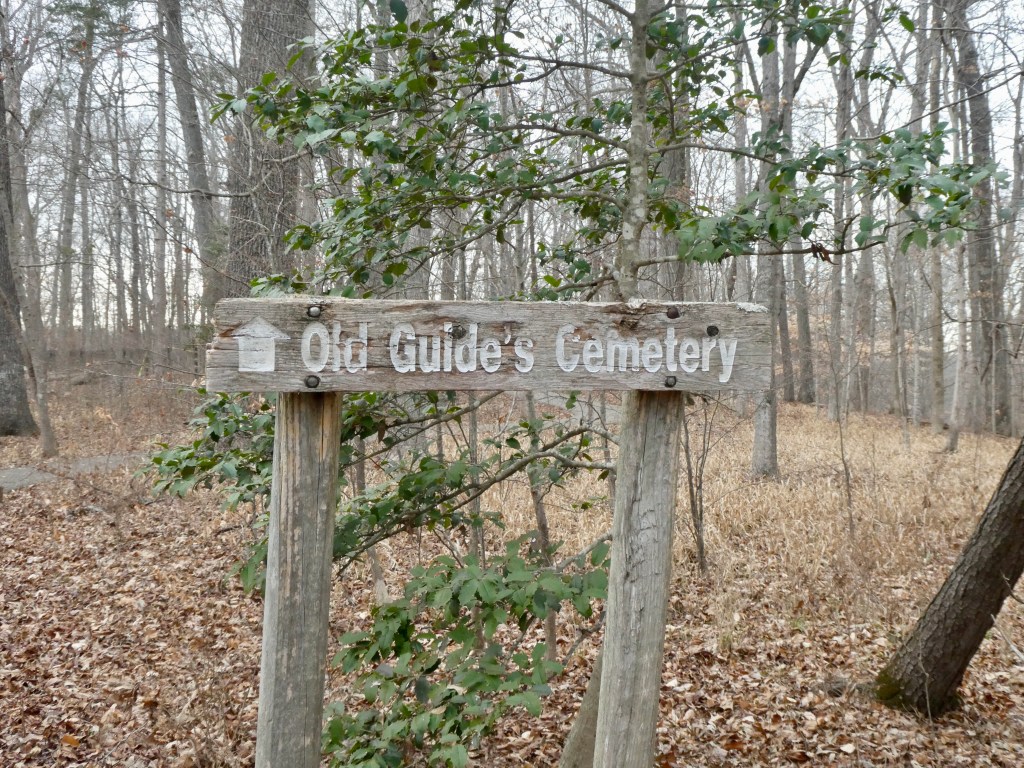
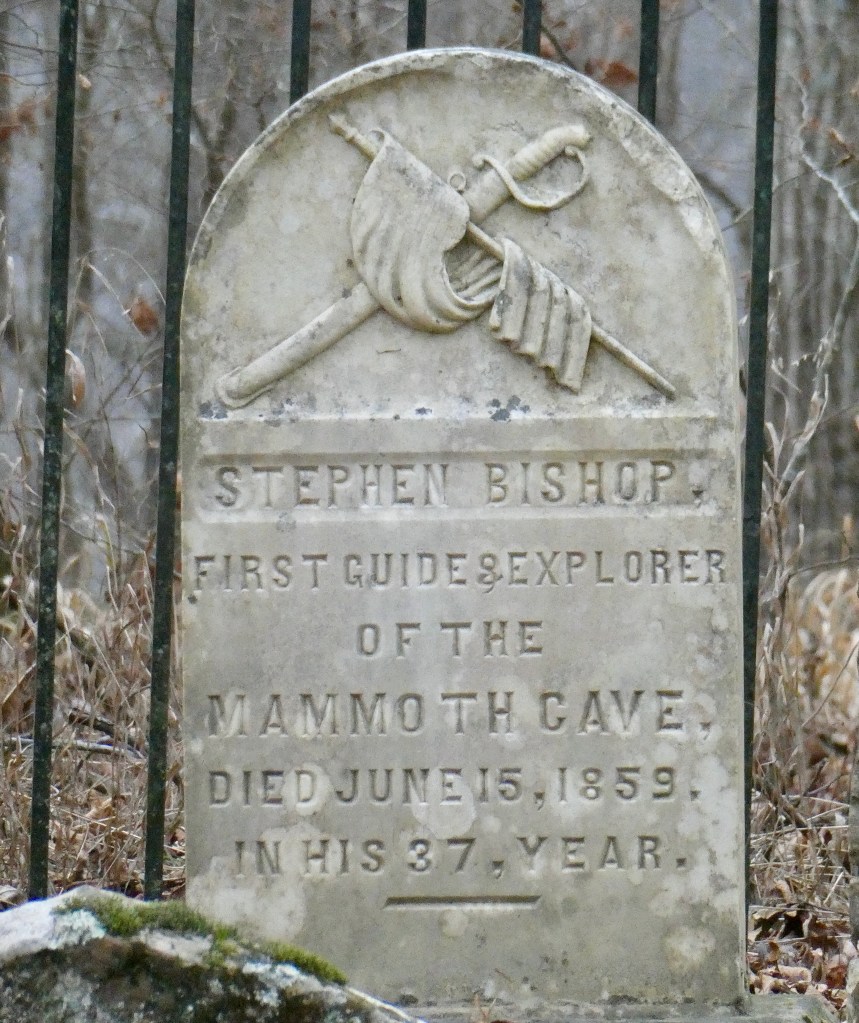
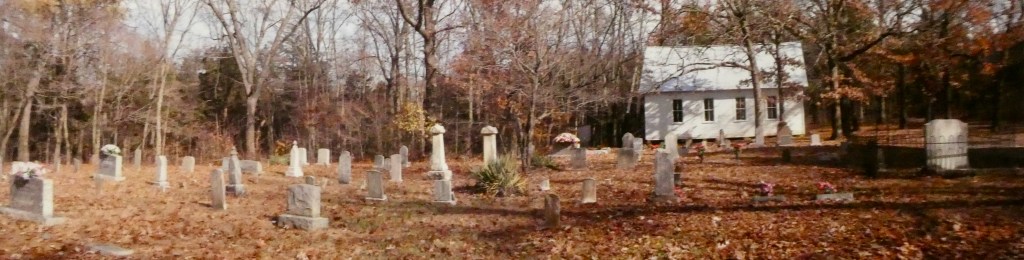
Steven Bishop  died in 1857 and is buried in the Old Guides Cemetery within the park.  

His headstone was donated by a park visitor 20 years after his death.  The stone had been intended for a union soldier, thus the military symbols.

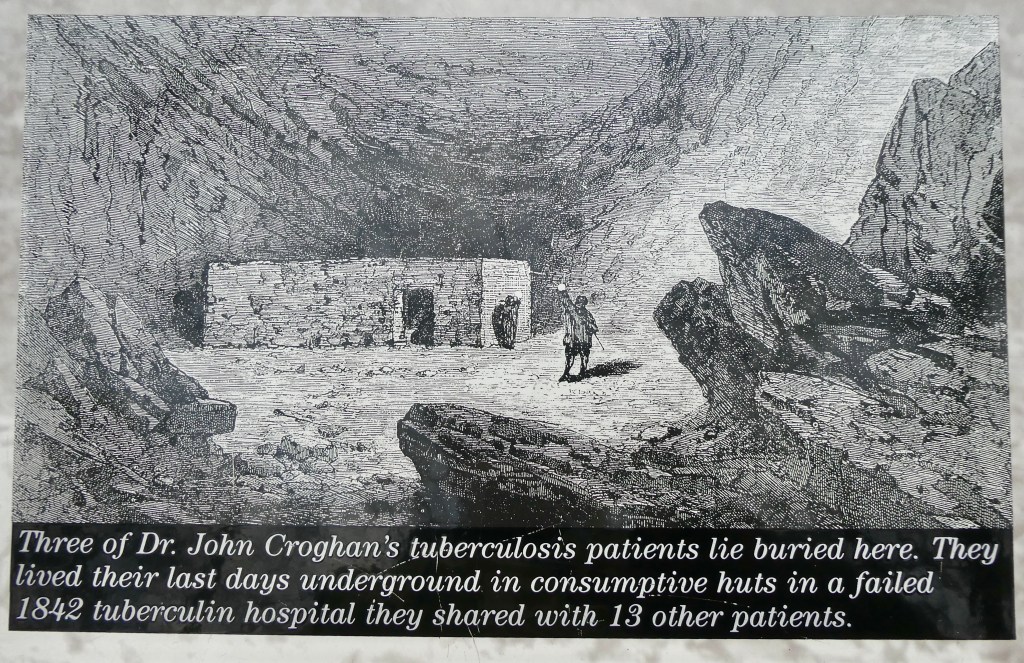
Tuberculosis patients were brought into the cave in 1842-43 as a proposed cure for the disease.  This experiment was not successful but two tuberculin huts remain.  (The cave was also used for a mushroom farm,  for a famous sleep study, and as a shelter in the 1950s and 1960s.)

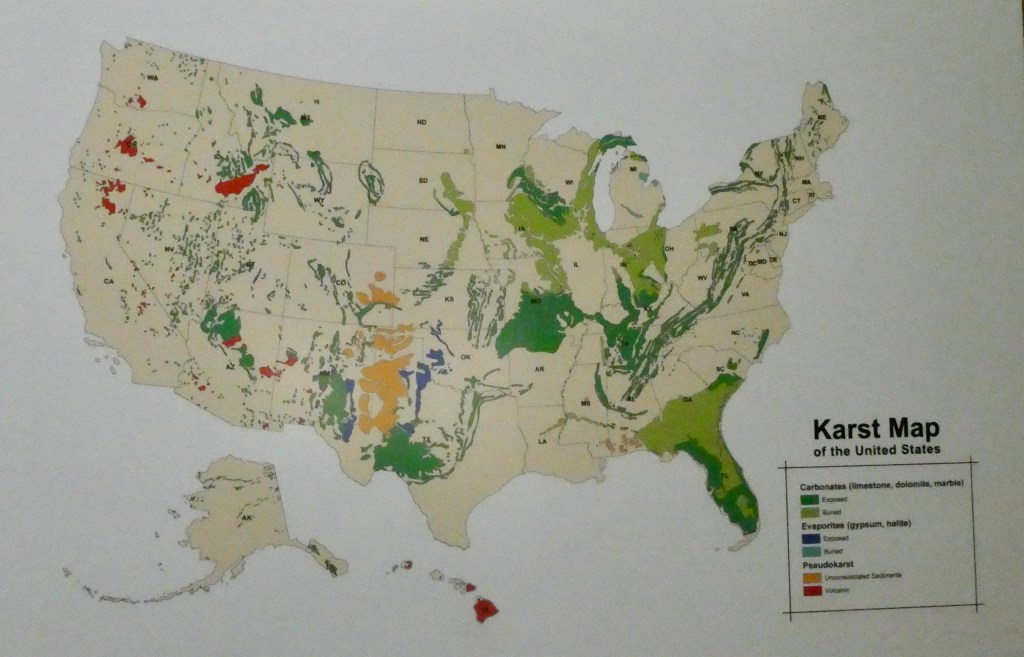
The river system above and within the cave was critical to forming Mammoth Cave.  The entire region sits upon more than 400 feet of layered, eroding, limestone. Over millions of years, subterranean streams have honeycombed the region with caves.

This kind of limestone topography is called Karst. The map shows Karst areas in green.

The cave system supports 130 species including northern and southern classes of eyeless cavefish.  Some species are specially adapted to live their entire lifespan in the cave while others come in and out.   

The site that became Mammoth Cave National Park was first commissioned by Congress in 1926.  The land previously was occupied by 600 farms, villages and independent cave operations.   Some people sold their properties willingly to the Park Service while others were acquired through eminent domain.

In 1933 four Civilian Conservation Corps camps were formed and park infrastructure was built.  The CCC also had the job of dismantling the former farm buildings.    They left three churches and 100 cemeteries.  (Verified descendants can still be buried in cemeteries within Mammoth Cave National Park).

The park was officially dedicated in 1941.

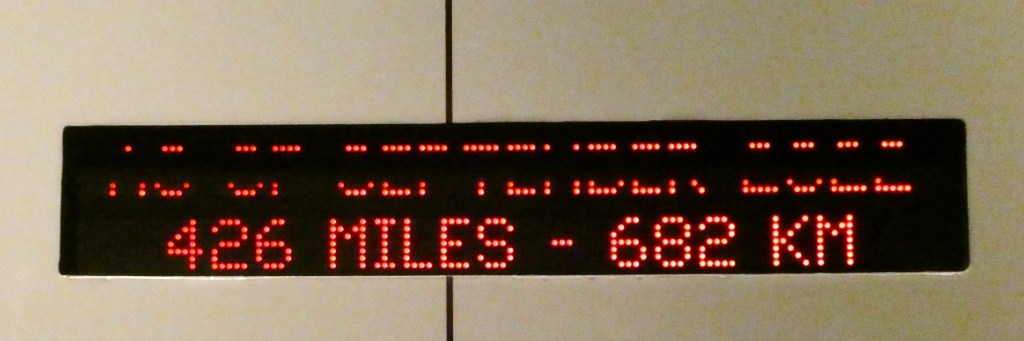
The 400 mile mark of explored and documented passageways in Mammoth Cave was achieved in 2012. Currently, there are 426 miles of passageways documented.  Many more hundreds of miles are presumed.  

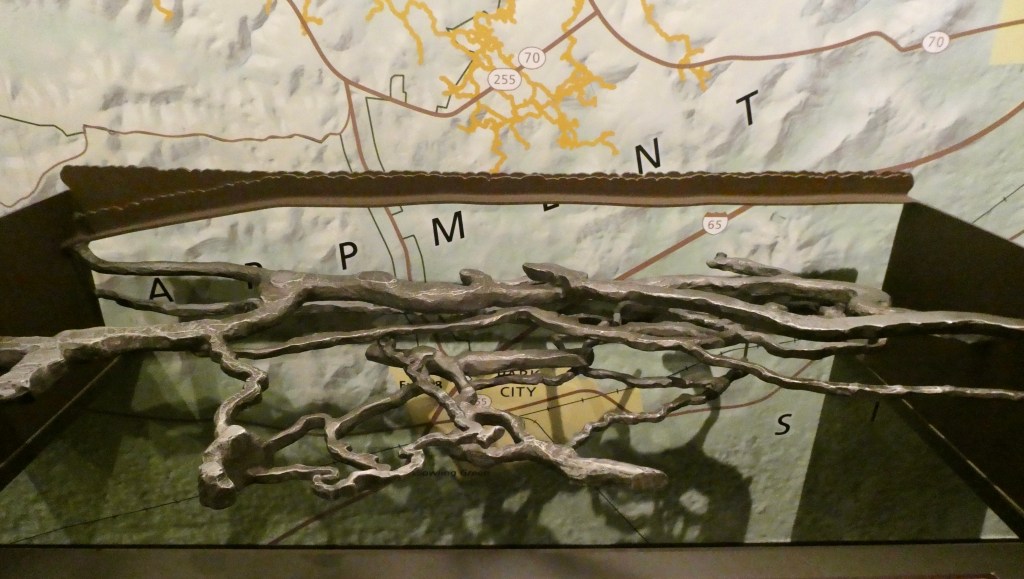
The passageways are above and below each other turning and intertwining, like a plate of spaghetti.  It is the largest cave system known in the world.

As you can see, other known caves in the world aren’t even close to the size of Mammoth Cave.

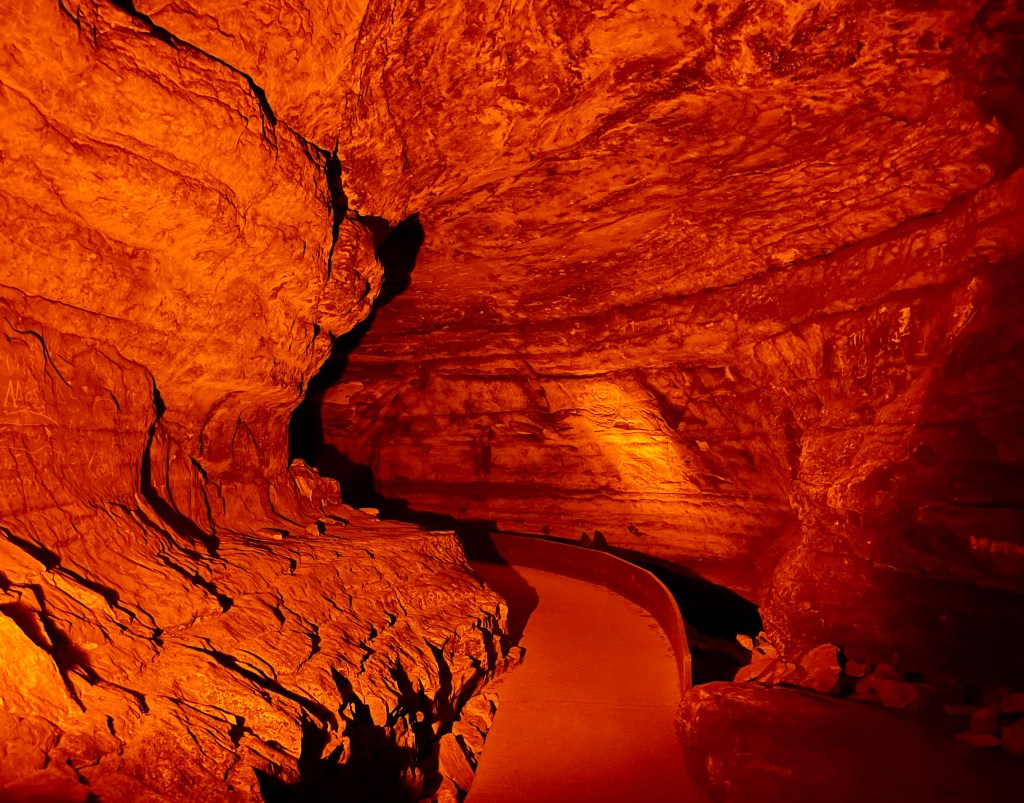
Twelve miles of the cave are currently toured and six miles are paved.  Our tour was on a paved route.

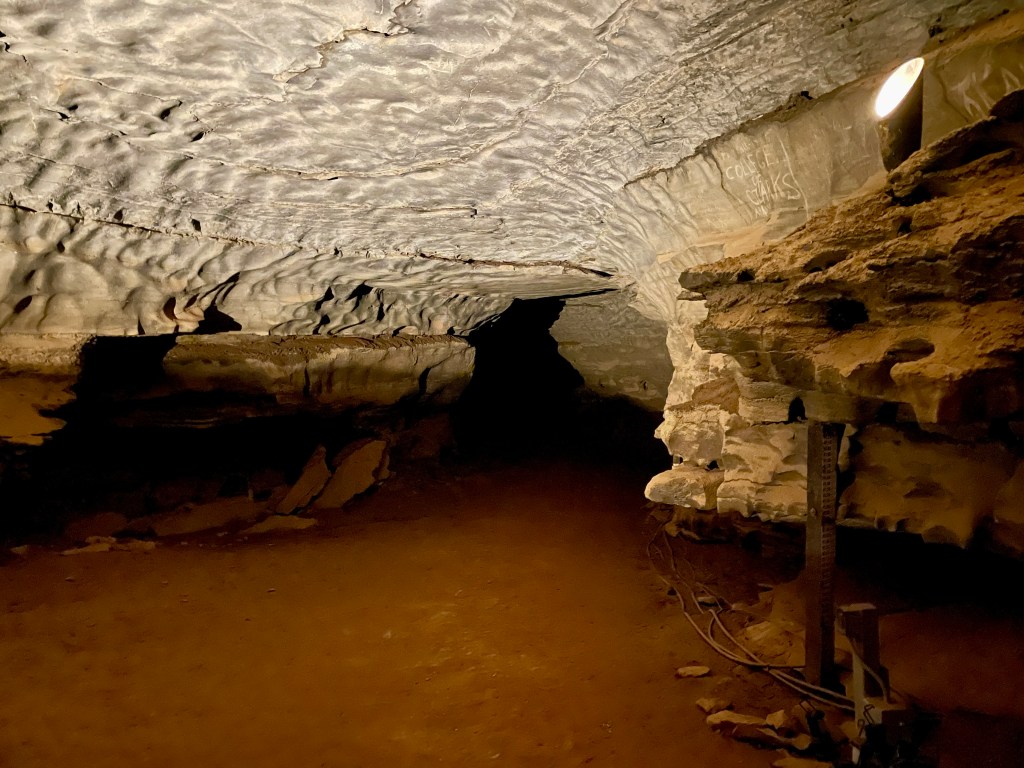
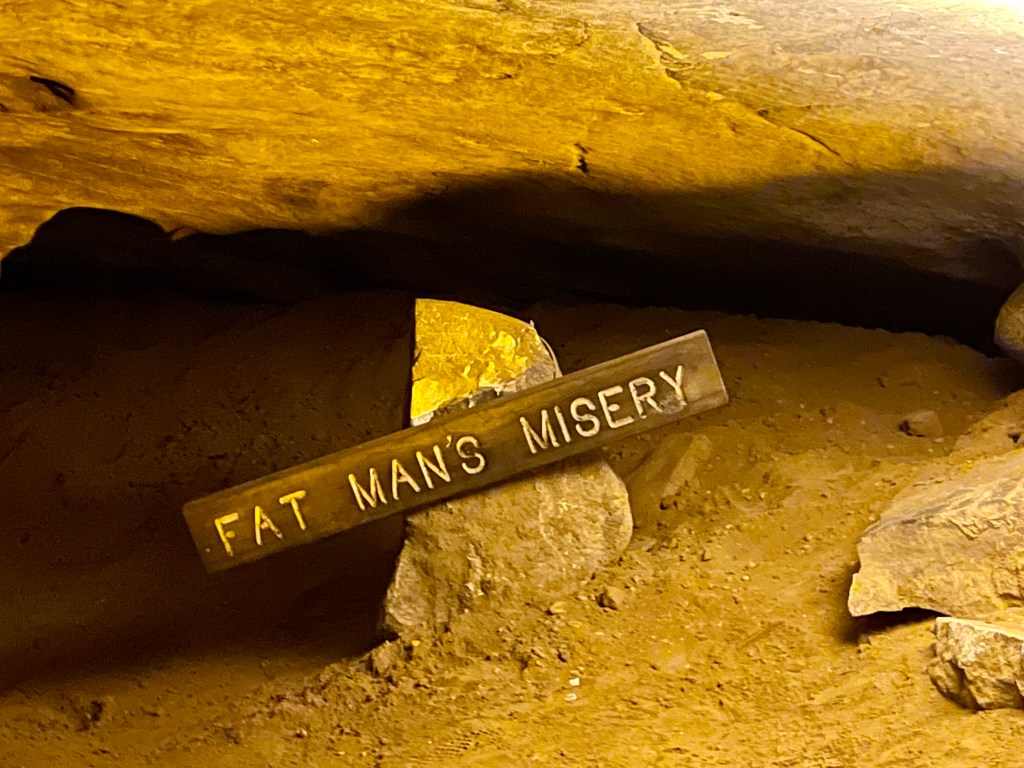
Fat Man’s Misery is a section where the path is quite narrow. Tall Man’s Misery is a section where the “ceiling” is very low.  Even I had to duck a few times.

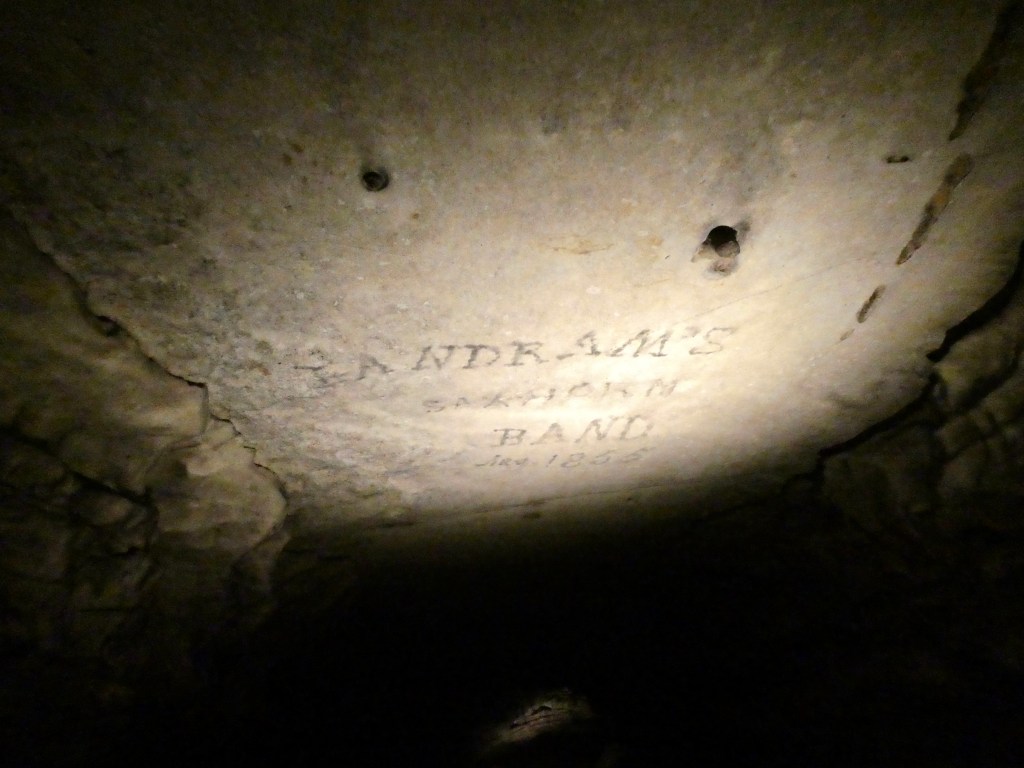
We saw writing on the walls and ceiling.  Writings or carvings that were done before 1941 are considered historical graffiti. After 1941 the same activity became a federal offense.

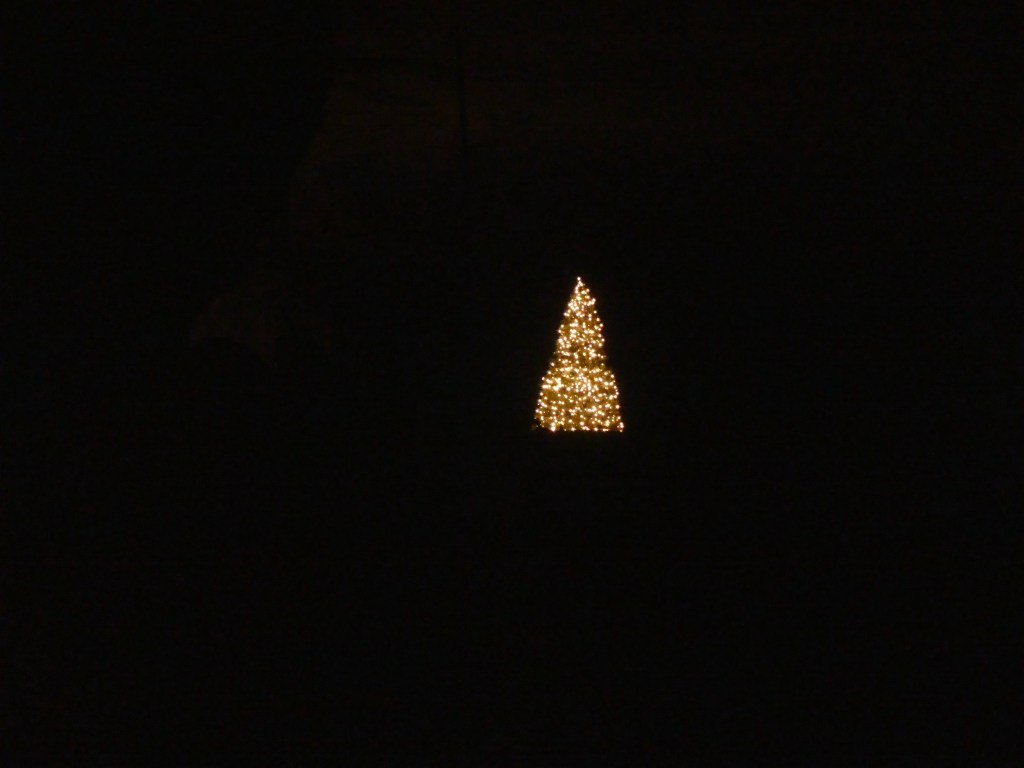
Someone put up a Christmas Tree in the cave while we were there in December 2022.

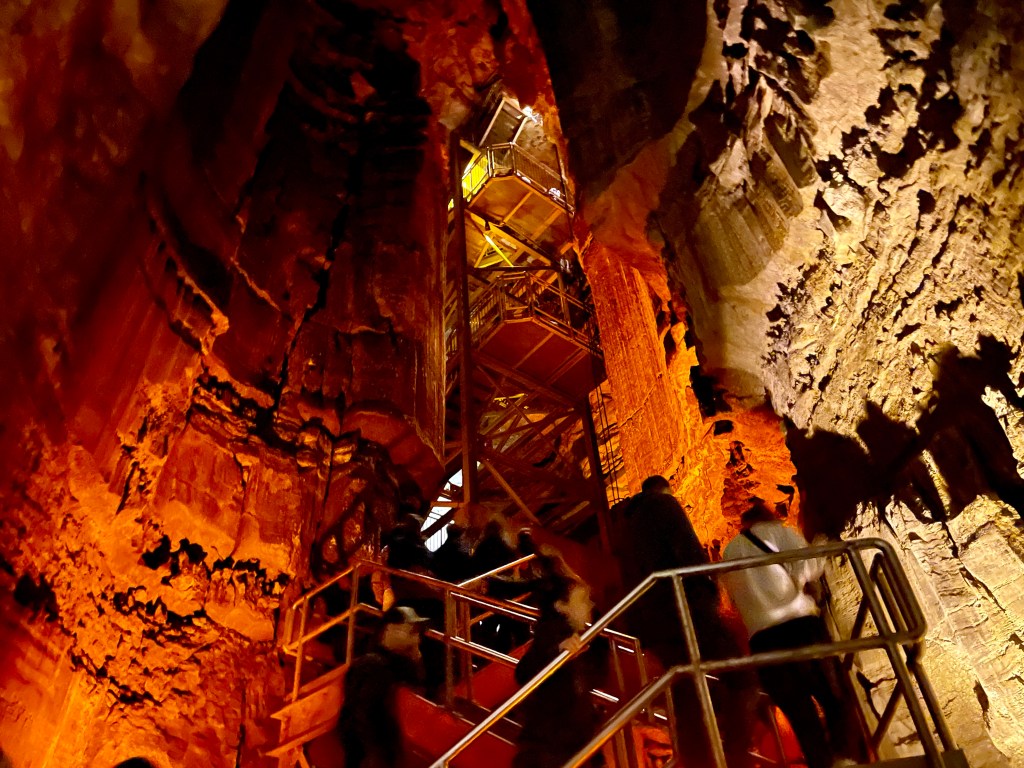
We had to go up ALL THESE STAIRS to exit the cave.  

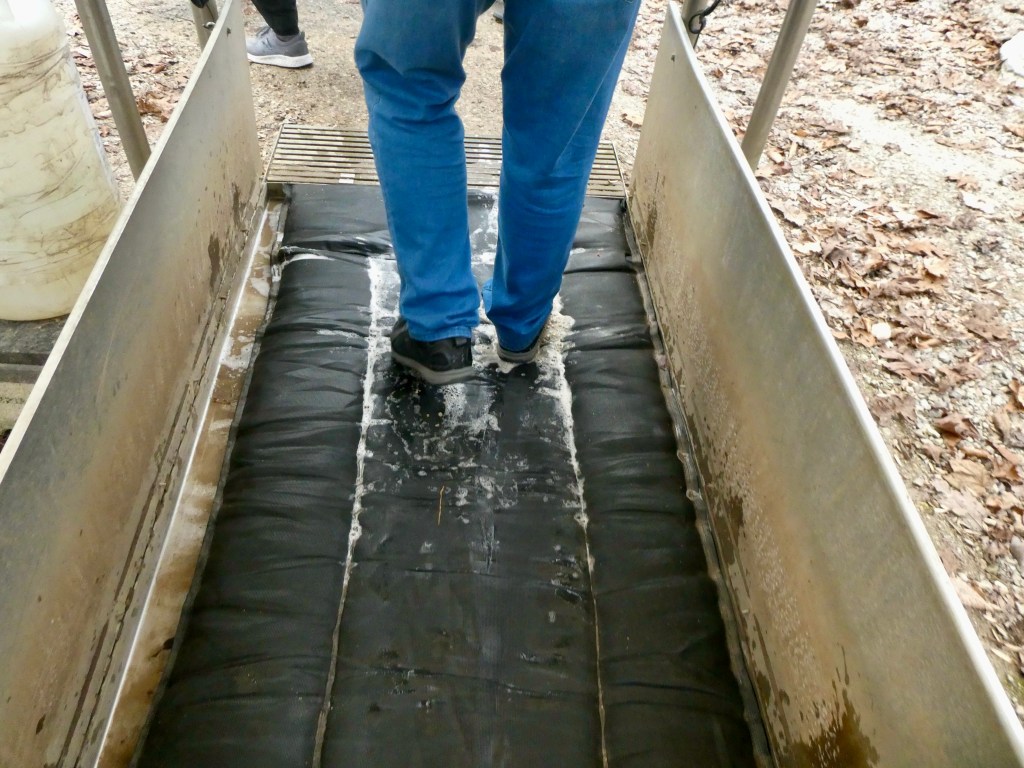
To avoid the spread of of White Nose Syndrome, we had to walk through a solution to get infectious particles off our shoes as we left the cave. 

Those inclined to visit Mammoth Cave might visit other caves.  And we have! We visited both Wind Cave National Park and Jewell National Park (both in South Dakota) well before we started writing about our adventures.

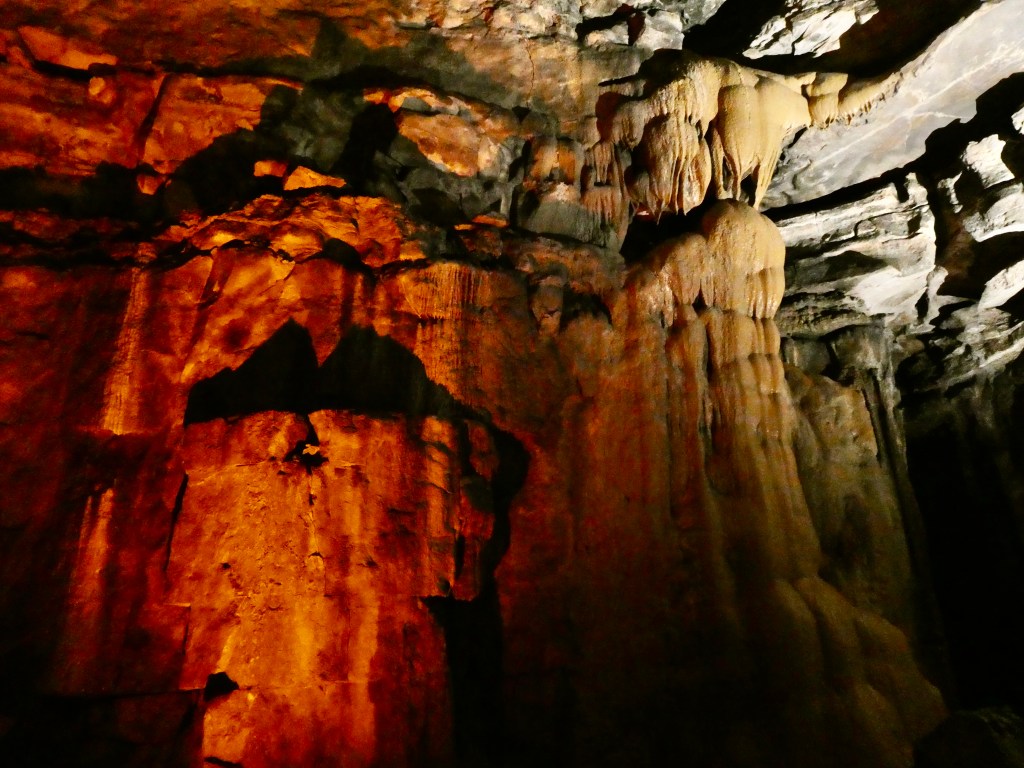
Mammoth Cave is impressive in its size, and interesting in its history, but it is not the prettiest cave we’ve seen – at least not the part we saw on this tour.

If you are interested in a few of the other caves we visited, click on the links below. Our most recent visit to Carlsbad Caverns (and Roswell, NM) in 2021 is recorded in Below and Beyond.

To read about two southern Arizona caves, Colossal Cave and the pristine, highly protected Kartchner Caverns, read The Tale of Two Caves from 2018.

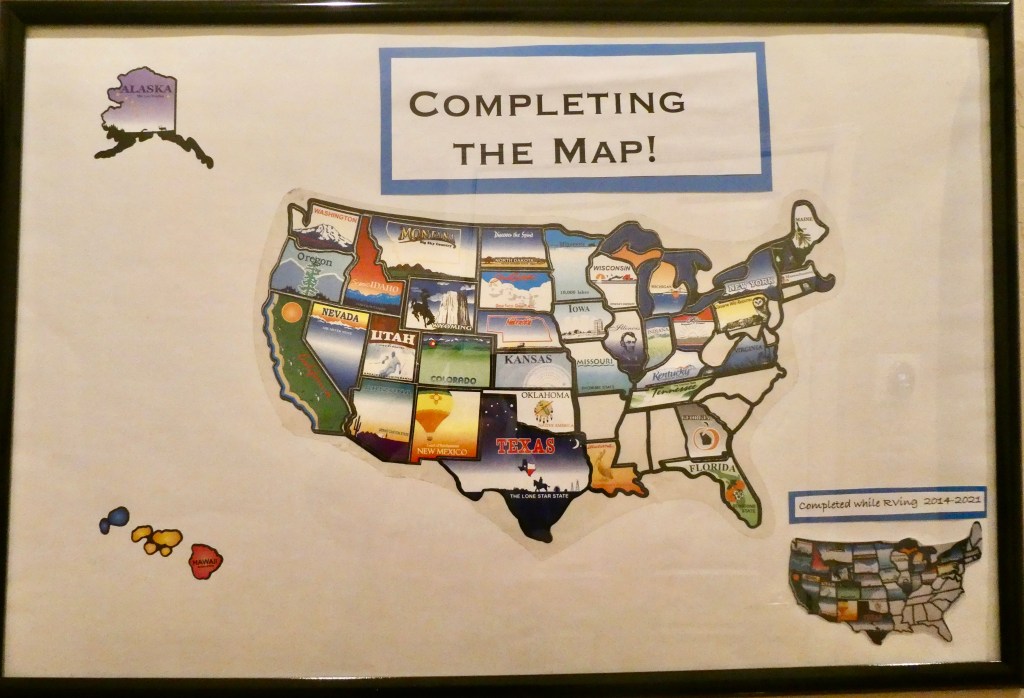
This is the last post from our Nashville trip. We planned to go to Tennessee twice in our RV days but never made it.  Years later we are finally able to add the Tennessee and Kentucky stickers!

Posted in Uncategorized | 9 Comments

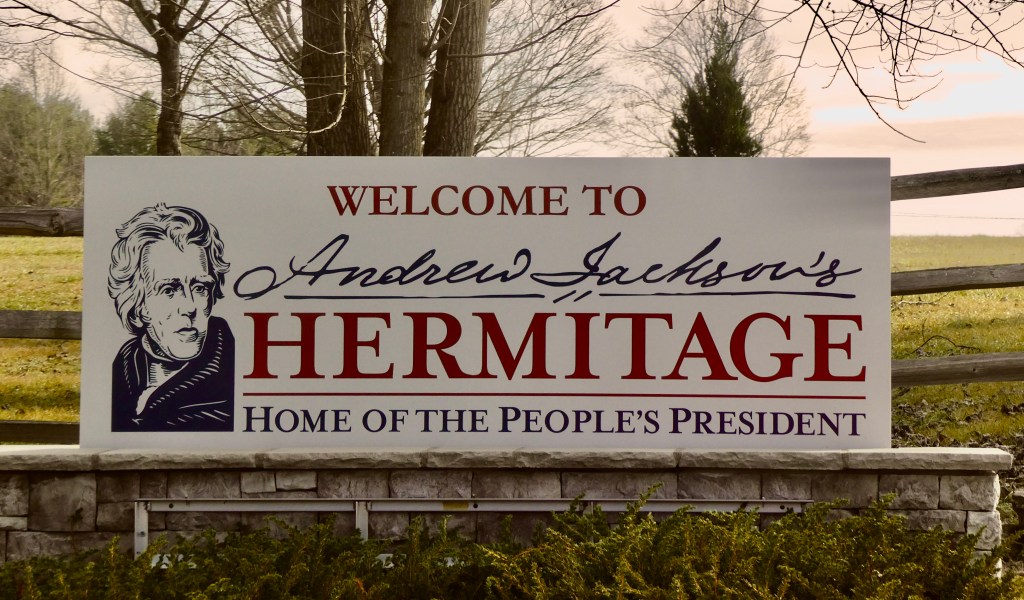
Outside Nashville: The Hermitage

Andrew Jackson was born fatherless and orphaned at 14.  He made his own way in the new America by taking chances and bending the rules.  He was courageous, independent and determined.  Do I sound like a fan?   

All I knew about Andrew Jackson going into The Hermitage was that he was horrible to Native Americans and he loved his wife Rachel.  I definitely wasn’t a fan.

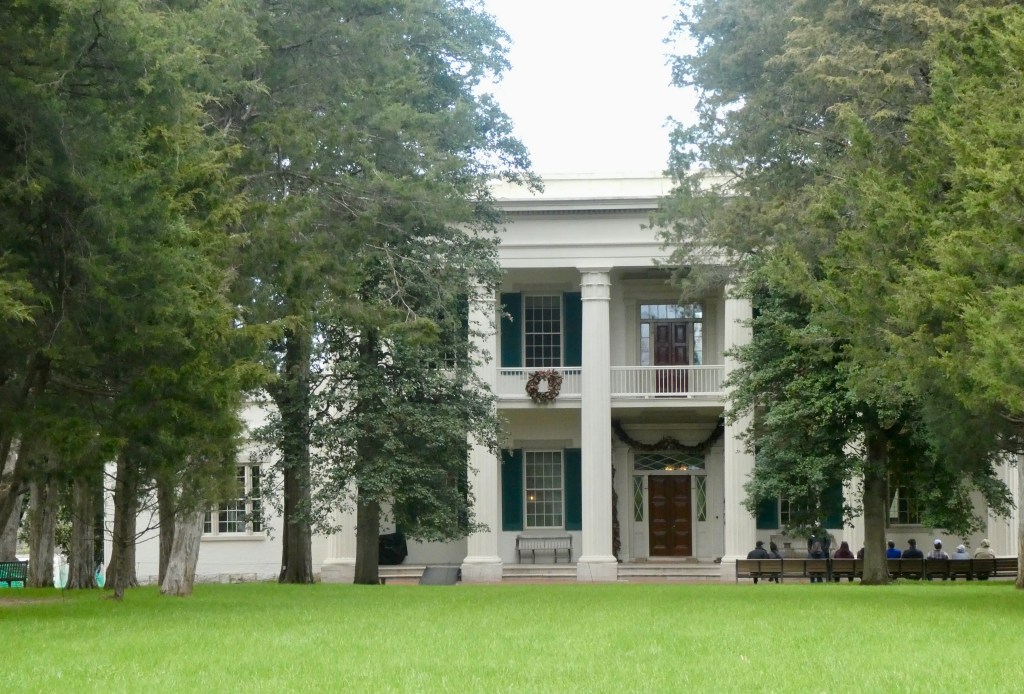
Regardless, we ventured out of Nashville to “The Hermitage – Home of the People’s President.”

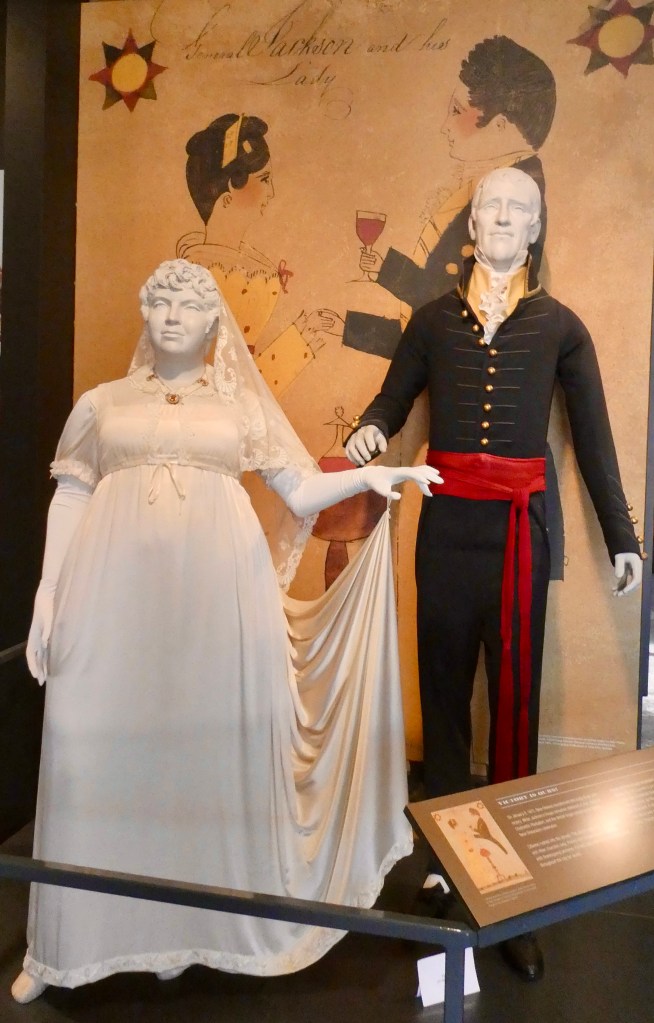
As a young man, Jackson lived in a boarding house in Nashville.  He was attracted to the proprietress’ daughter, Rachel.  Unfortunately Rachel was already married and trying to stay away from an abusive husband.  The attraction went both ways.  

Rachel and Andrew left town for a time in 1791.  When they returned, they reported that Rachel had been divorced and they had married.  However, there was no official record of the divorce or the marriage.  When Rachel finally obtained her divorce in 1793, she and Andrew were officially married the next year.  

The innuendo about their courtship and marriage caused much angst over the years.  Jackson fought a duel defending Rachel’s honor years later.

Having no credentials by birth, Andrew Jackson knew he wanted to be known and respected.  He earned that recognition in the military and was elected General of the Tennessee Militia.  He never asked his men for anything he didn’t do himself.  He earned the name Old Hickory.

Jackson gained acclaim for defeating the British at the Battle of New Orleans on January 8, 1815.  If the city had fallen, there was fear the British could split the country from Canada in the north to the Gulf of Mexico in the south.  It was one of the pivotal battles in the war.  (A treaty had been signed prior to the battle but was not yet ratified nor known to those involved in the battle.)

In defeating the British, Jackson restored the country’s dignity and confirmed that this fledgling  country was here to stay.   The acclaim raised his national profile and was a precursor to his rise into politics in Tennessee and to the US House and Senate.

He was an inspiration to those who wanted to believe that hard work and determination mattered more than a birthright to power and privilege.

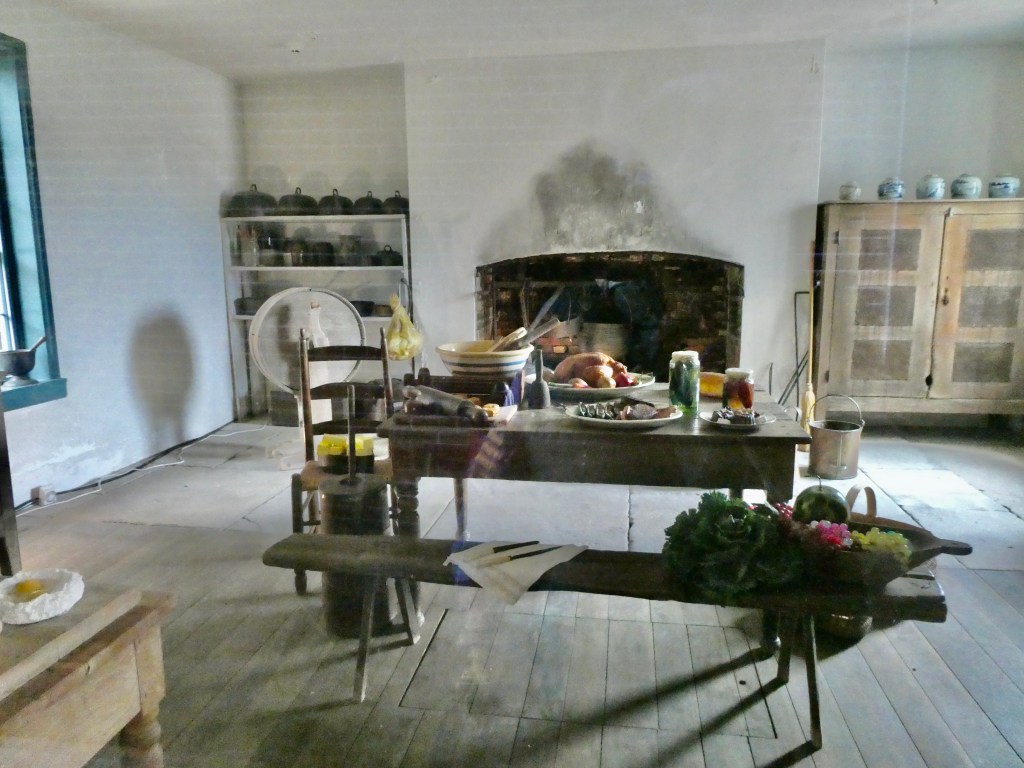
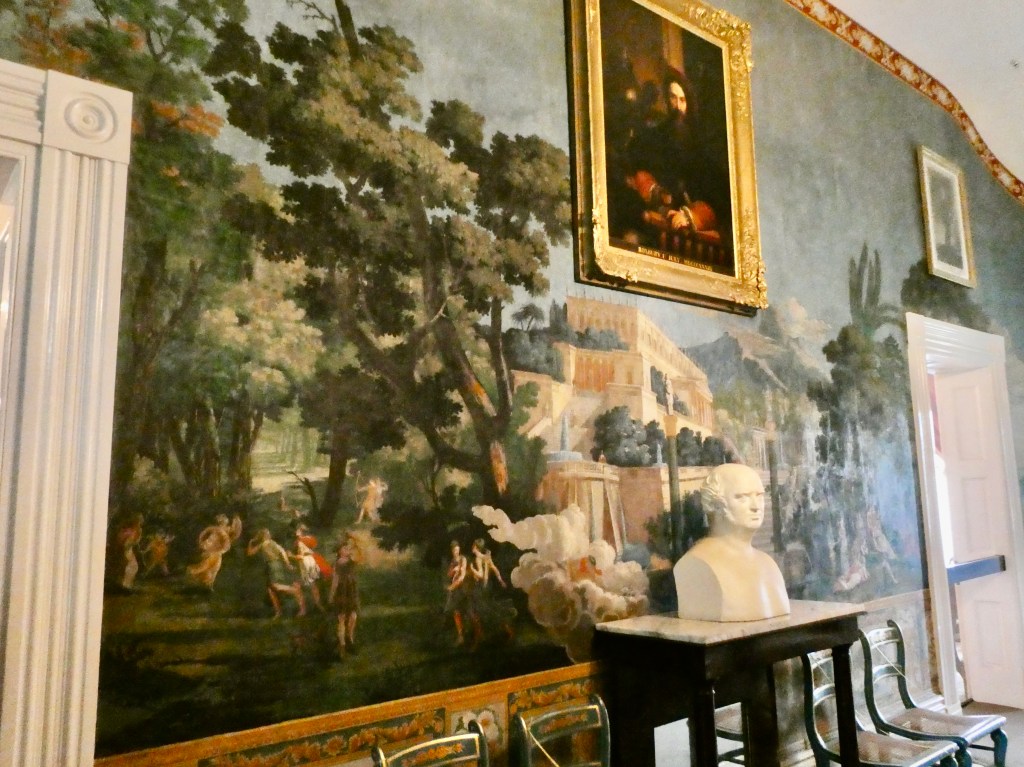
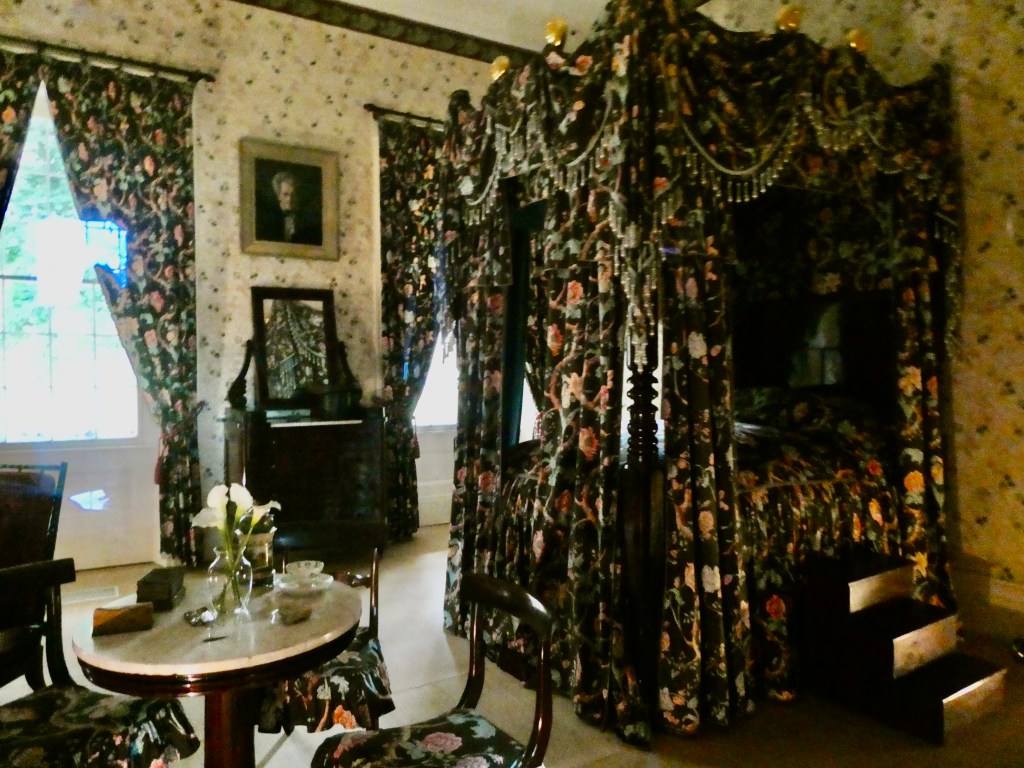
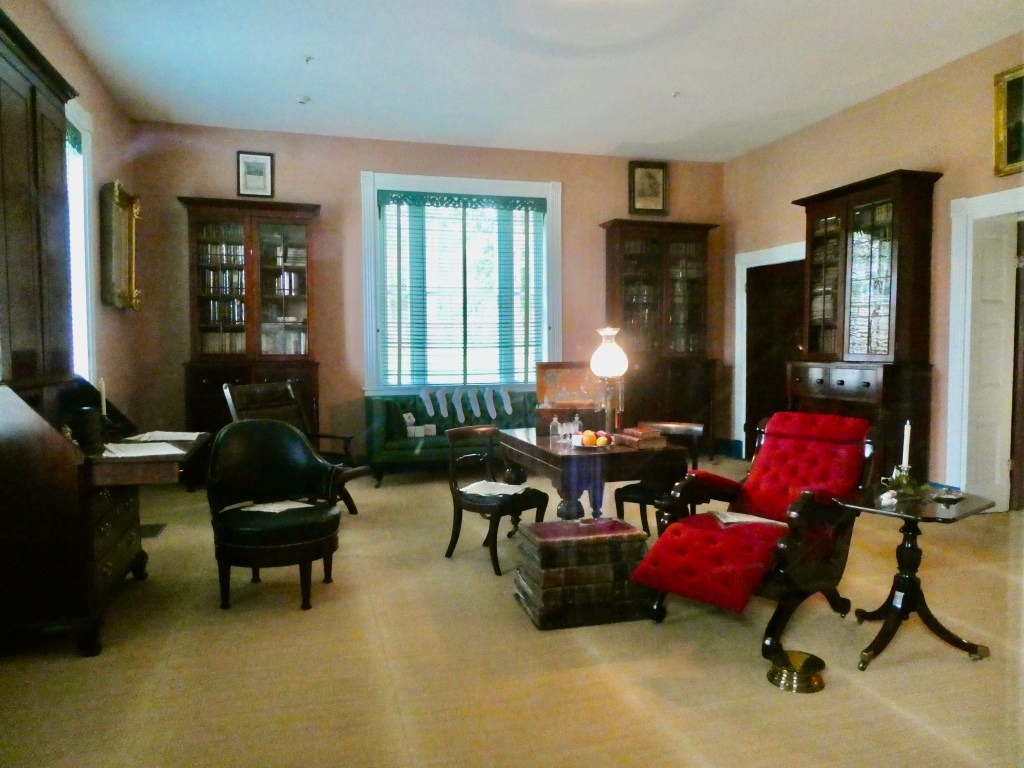
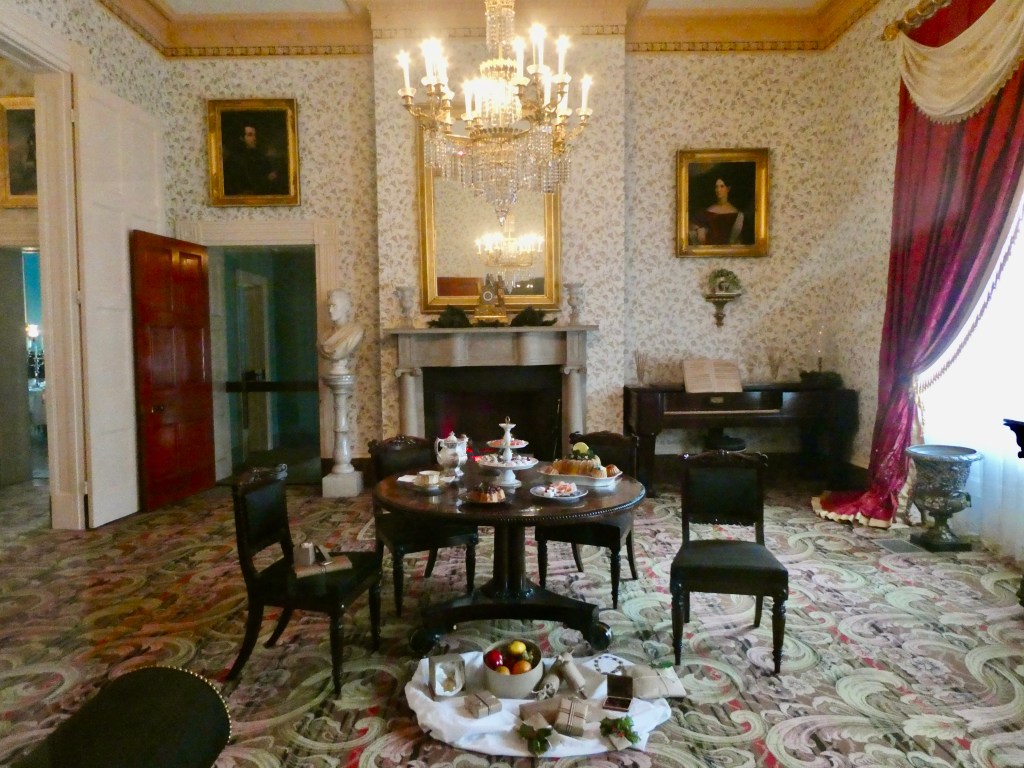
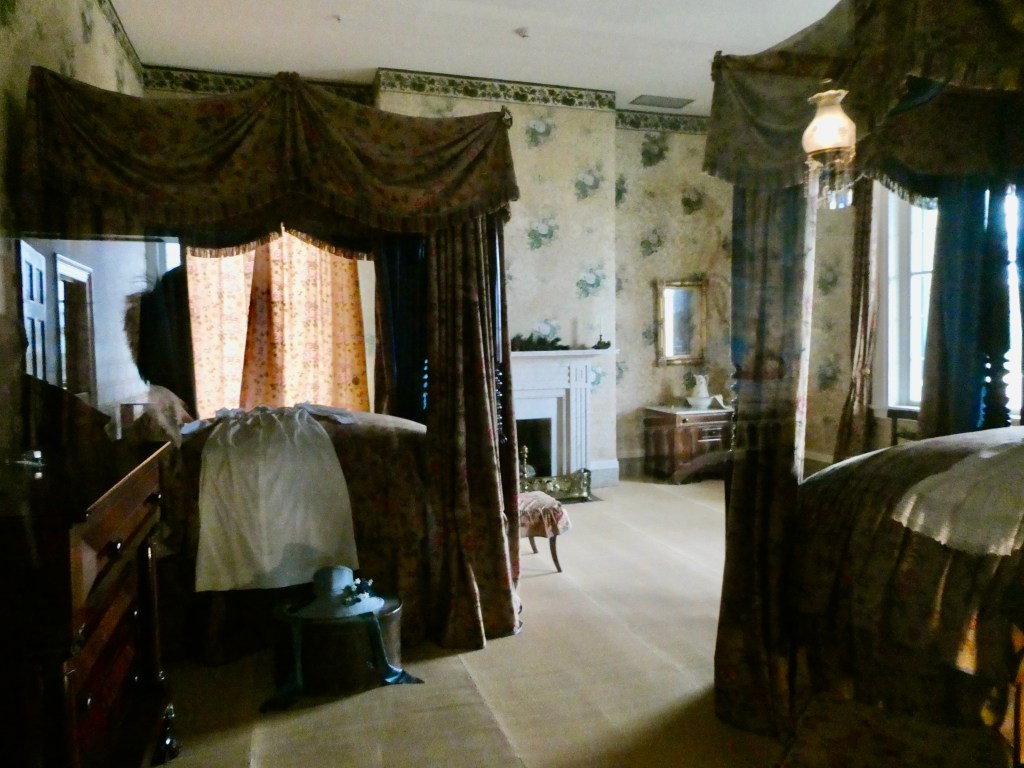
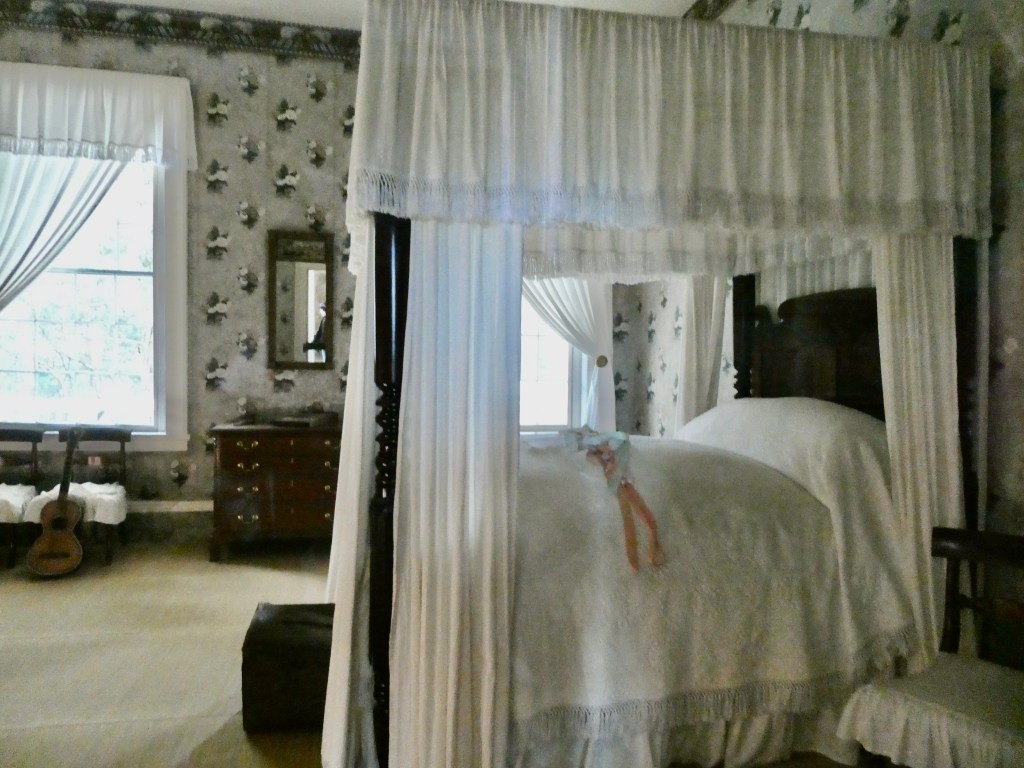
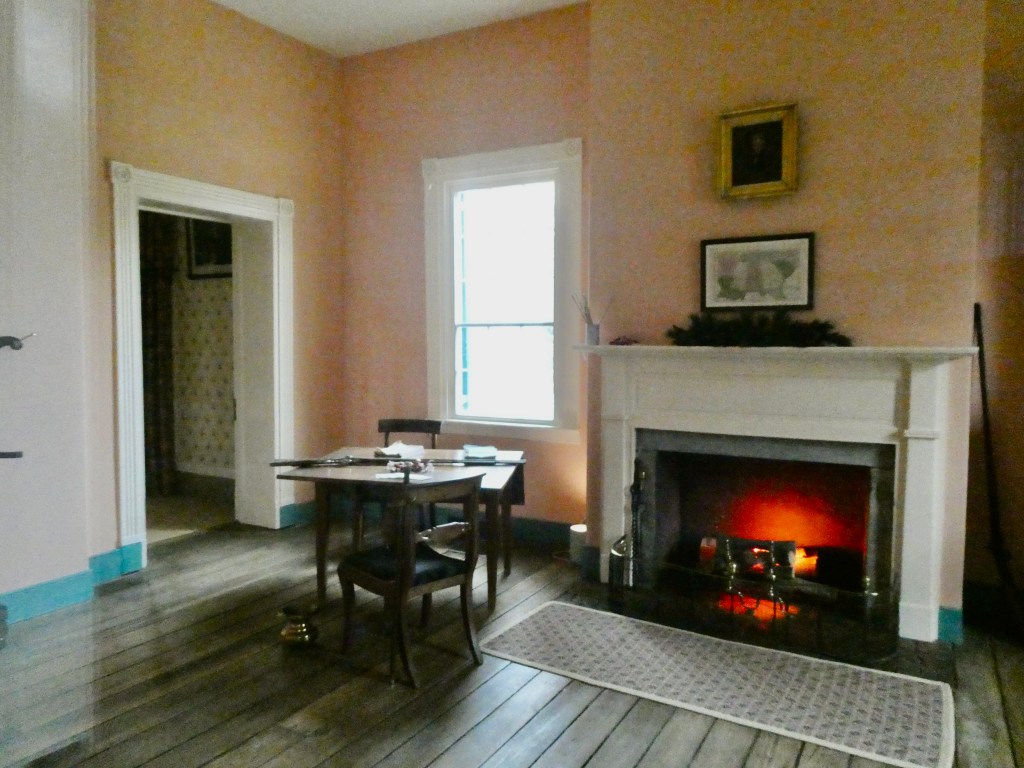
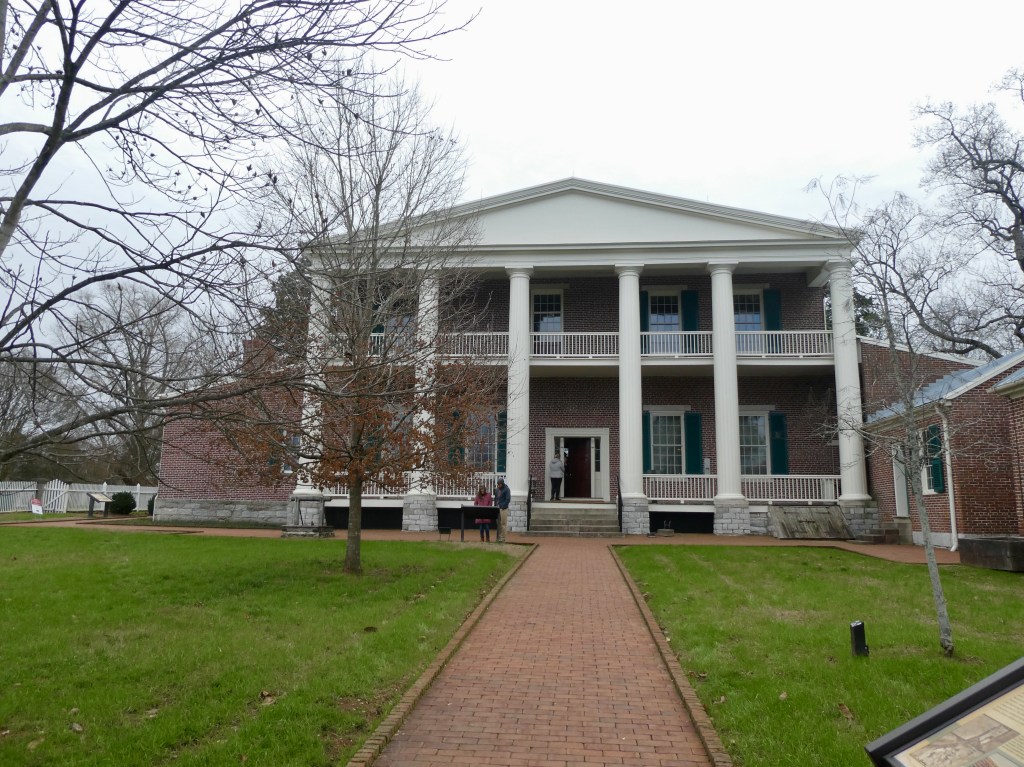
Jackson was sharing time between Washington DC and his home outside Nashville, The Hermitage.   Following are pictures from inside the main house.

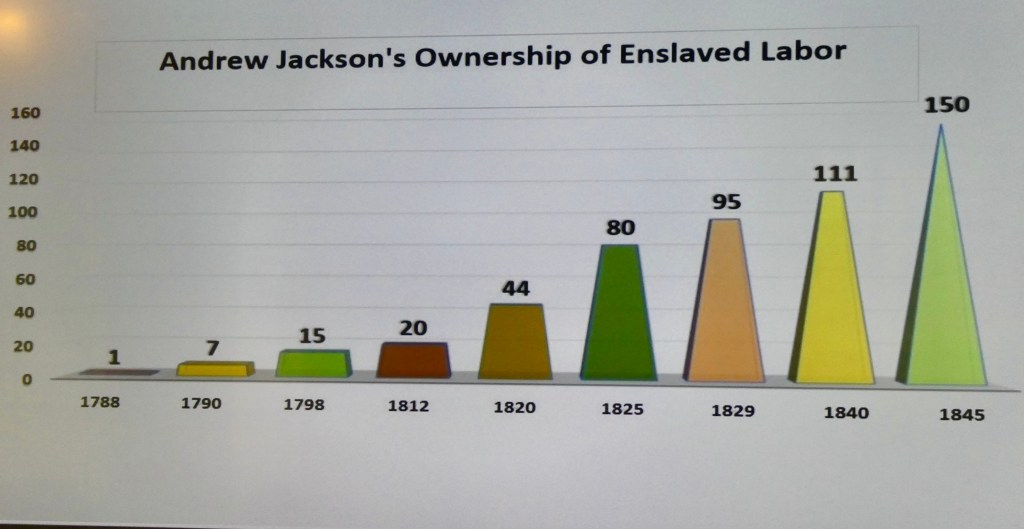
The story of the Jackson family and The Hermitage should also include the stories of 150 enslaved people. 

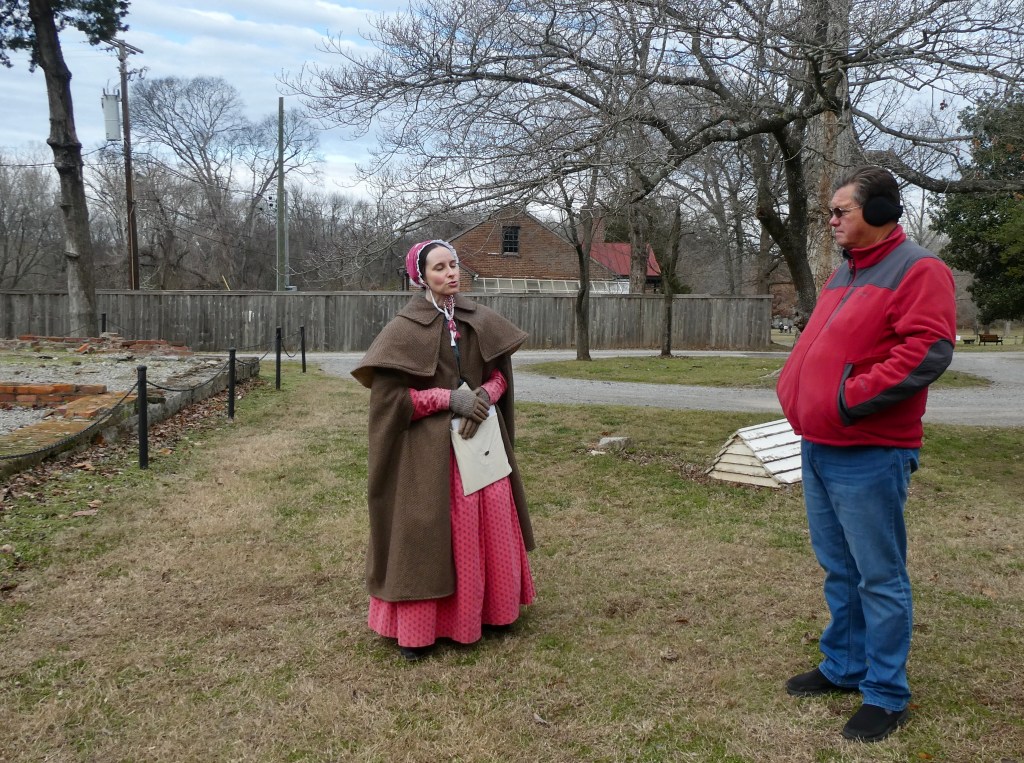
Our tour was called “In Their Footsteps – Lives of the Hermitage Enslaved”

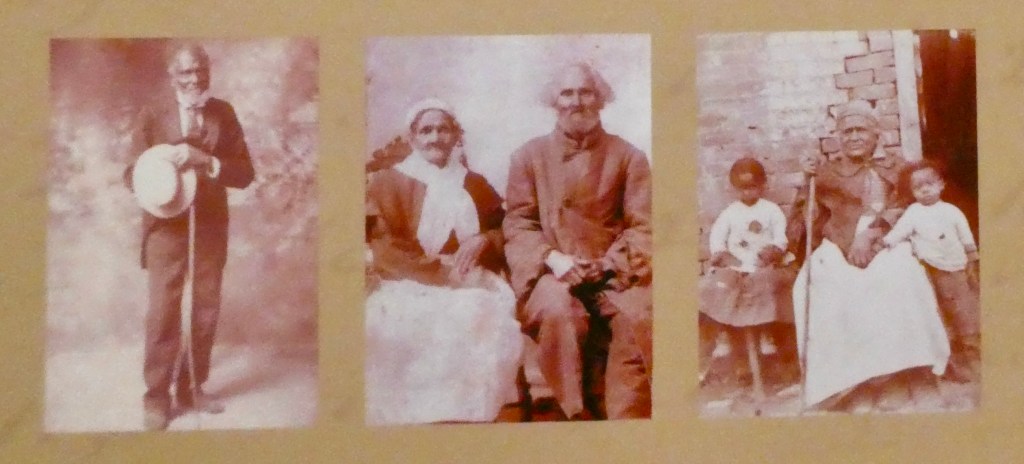
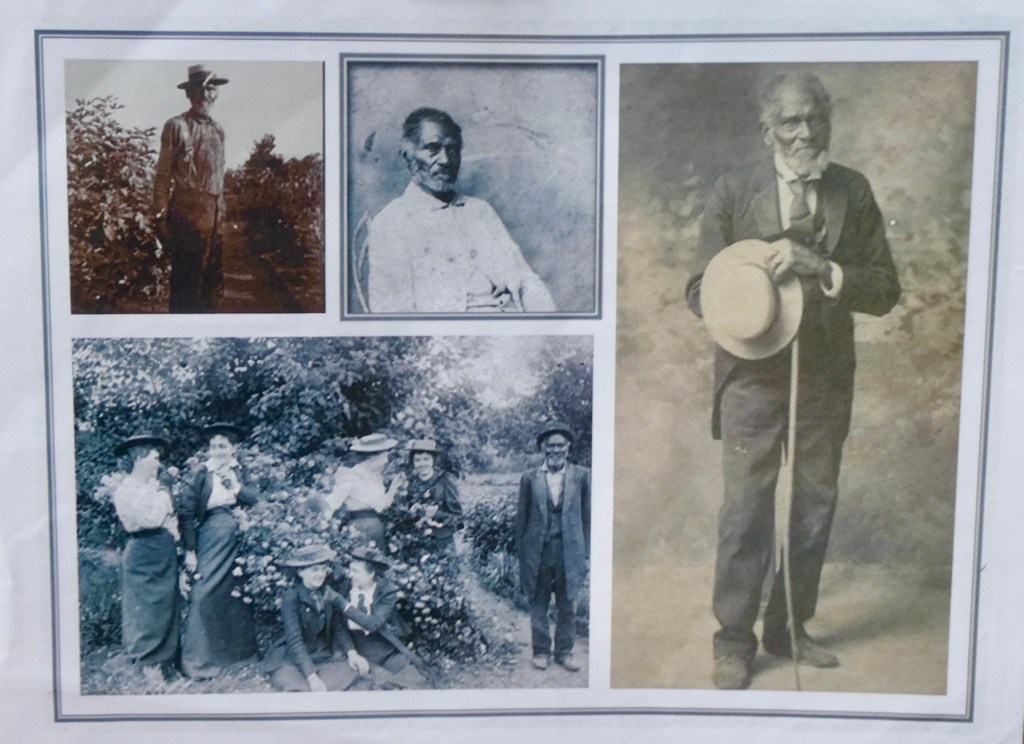
Unfortunately, only a small portion of their stories are known.  One that is known is that of Hannah and her family. Hannah was purchased by Andrew Jackson in 1794. That bill of sale still exists.  Hannah had a daughter named Betty who was the enslaved cook for the Jacksons for many years.   

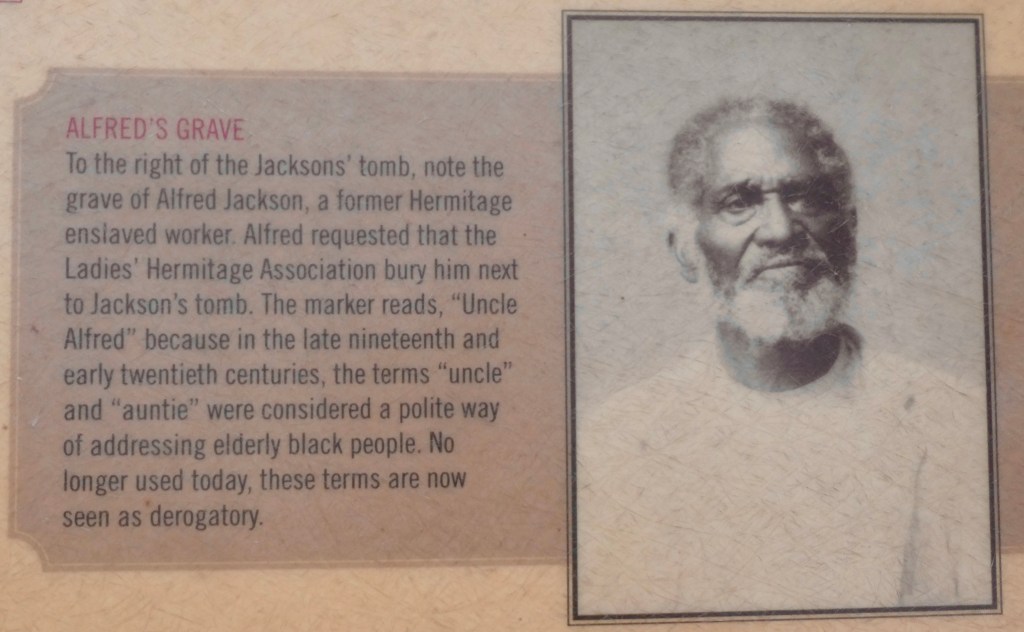
Betty had a son named Alfred who lived at The Hermitage longer than any other person, white or enslaved.  We’ll come back to Alfred at the end.

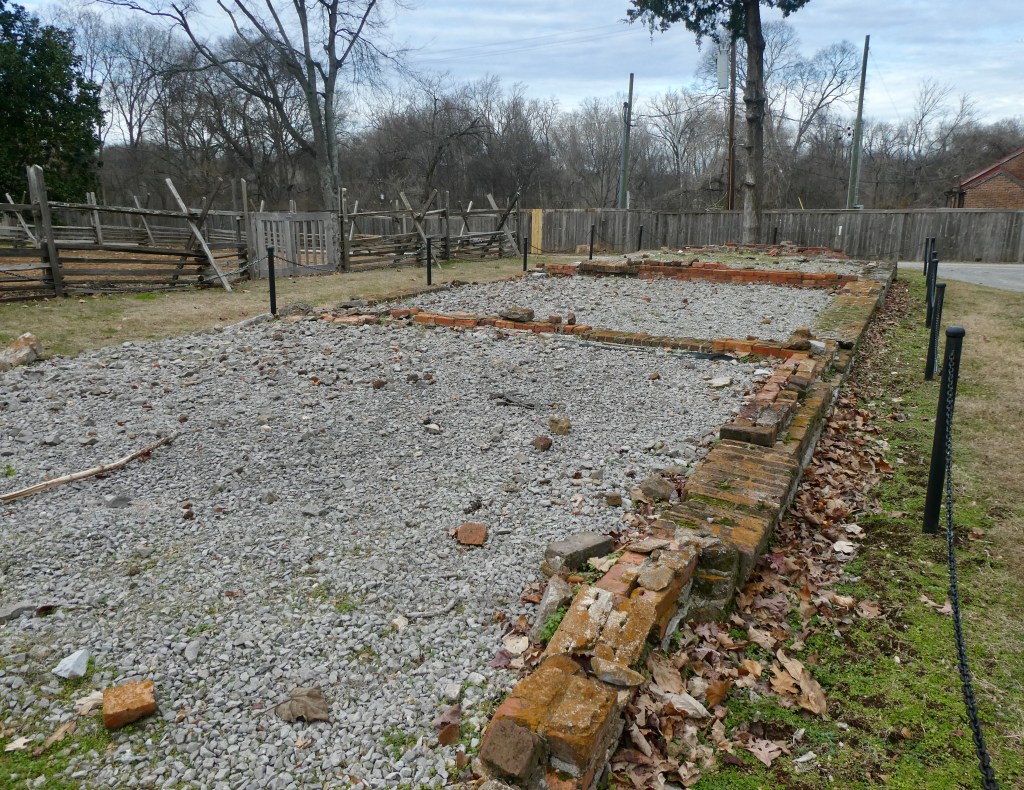
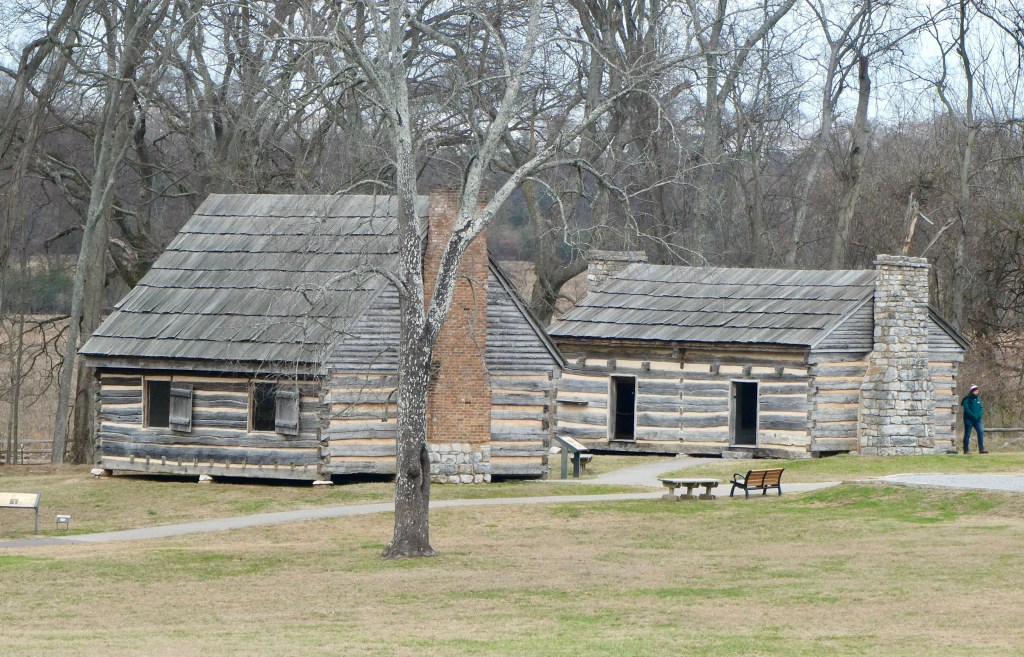
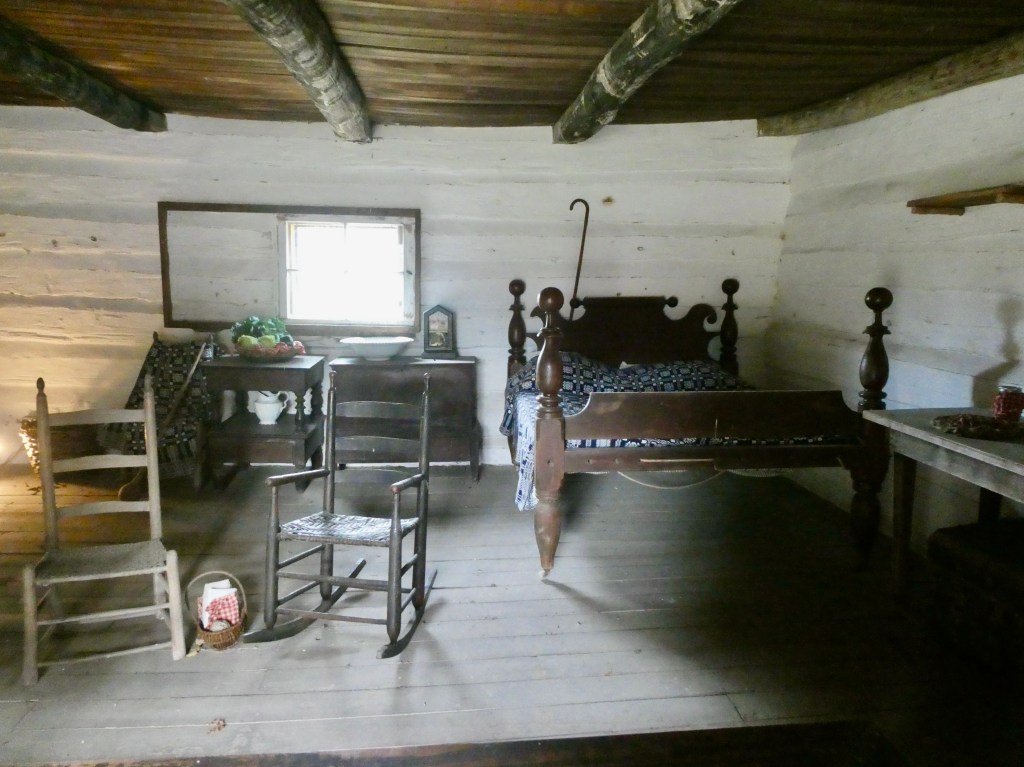
These foundations were the enslaved people’s homes and work spaces.  Archeological evidence suggests that the middle room was occupied by an enslaved seamstress named Gracie.

These bricks, on the main house complex, and made at The Hermitage show the fingerprints of the enslaved person who made them.

Like many of his era, Andrew Jackson never expressed any qualms about slavery.

During Andrew Jackson’s run for the presidency, his opponents brought up Rachel’s questionable marriage past almost 40 years after the fact.  When Jackson was elected, but before he took office, Rachel died.  Jackson always believed that the election nastiness related to Rachel’s past caused her death.

Deep in grief, Jackson was determined to fulfill the office to which he’d been elected.  He served from 1829 – 1837.  

The “Age of Jackson” brought about great change in the United States.  Some approved those changes and many did not.  Jackson expanded the powers of the presidency beyond those held by the six presidents who had preceded him.   He sought to restore power to “We the People” but the people didn’t include women, those trapped in slavery or Native Americans.

Andrew Jackson had a number of “firsts” as president:  He was the first to be from a state besides Massachusetts and Virginia, and the first from Tennessee. He was the first president to ride a train and be from immigrant parents.  He was the first president to be assaulted while in office and the first to face an assassination attempt.   He was the last president to have served in the Revolutionary War and the only one to have been a prisoner of war.  He was also the only president to have paid off the national debt.

Andrew Jackson believed strongly in state’s rights for many things but, when those rights came into conflict with the national interest – the national interest won.

His presidential record is varied and messy.  I am not trying to make this a comprehensive review of the Jackson presidency.  There is, perhaps, some good, and definitely some bad.  

Jackson’s lasting legacy for many is the forced removal of tribes from the southeastern United States.  Even though the Cherokee, Choctaw, Creek, Chickasaw and Seminole were considered “civilized,” Jackson sought their removal to lands west of the Mississippi.  The Indian removal policy lasted beyond his presidency, but Jackson was the architect.  The ethnic cleansing and forced removal of approximately 60,000 native peoples, eventually known as the Trail of Tears, is on him.

After his presidency, Jackson returned to The Hermitage to live out his remaining years. 

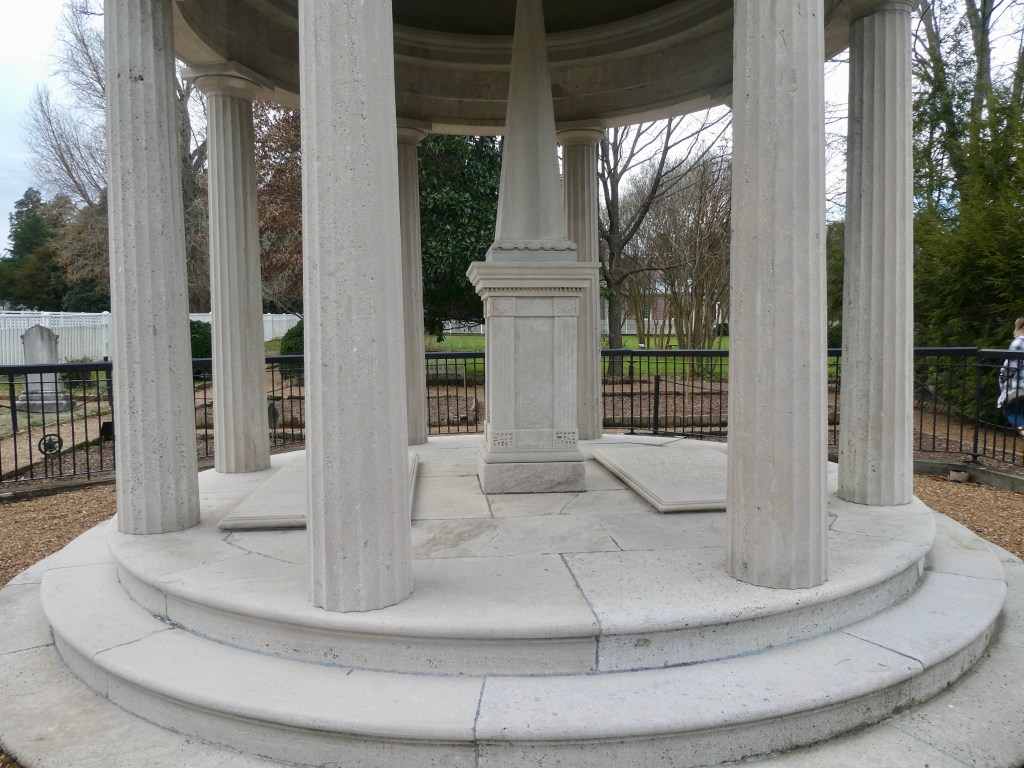
He commissioned a Greek Revival Tomb to be his and Rachel’s place of rest.  

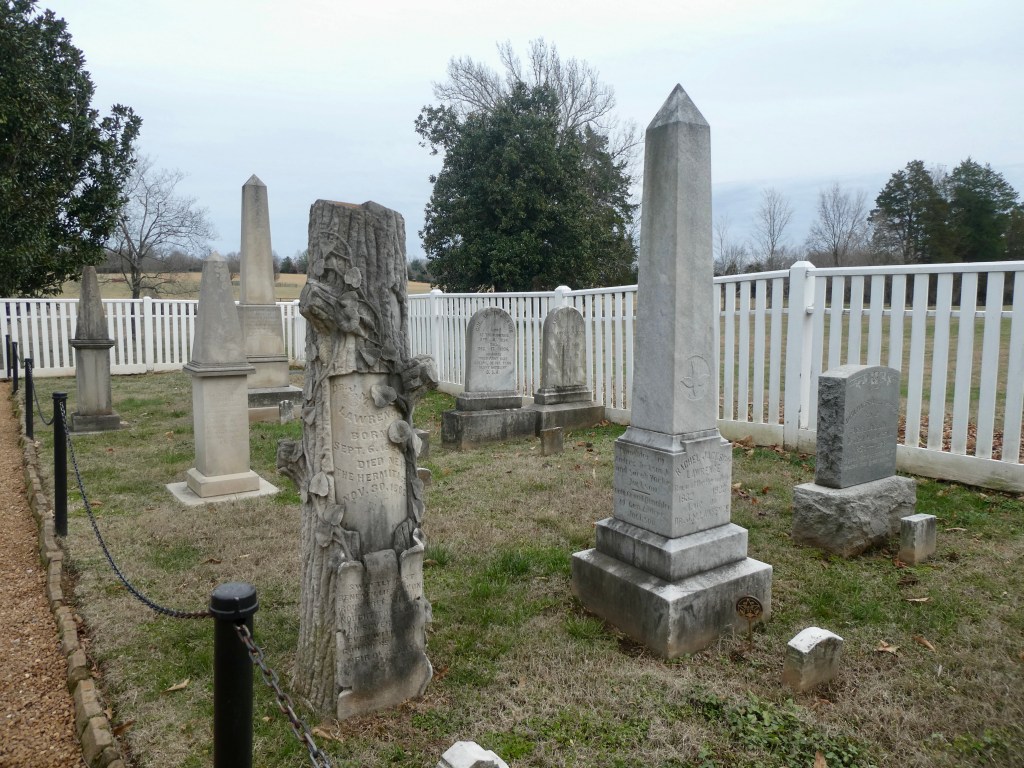
It sits near the family plot….

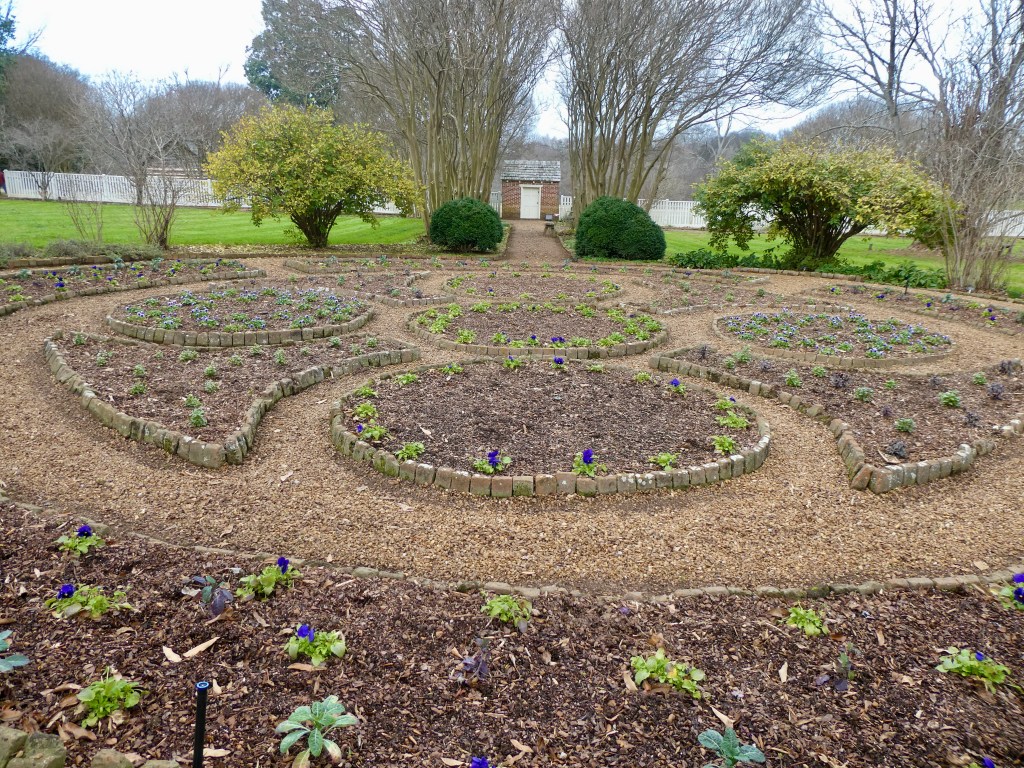
….and near Rachel’s gardens.

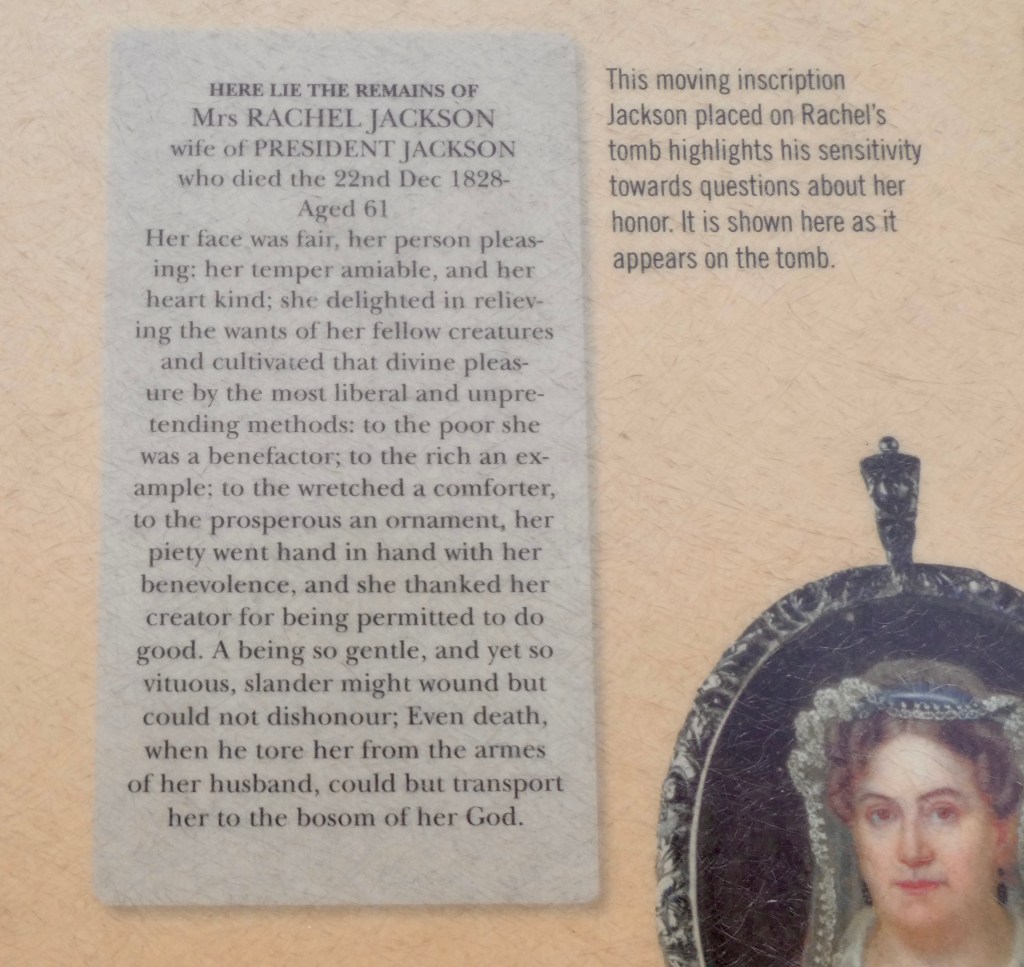
Her tombstone epitaph, written by Jackson himself, reflected his belief in her virtue and his love for her. Jackson’s tomb simply reads General Andrew Jackson. He always preferred to be called General rather than Mr. President.

And now, we revisit the third generation enslaved man, Alfred.  He chose to stay at The Hermitage after the Civil War and emancipation had freed him.  He worked for pay and was a tenant farmer. In 1889 The Hermitage Association took over the estate and hired Alfred as caretaker and guide.

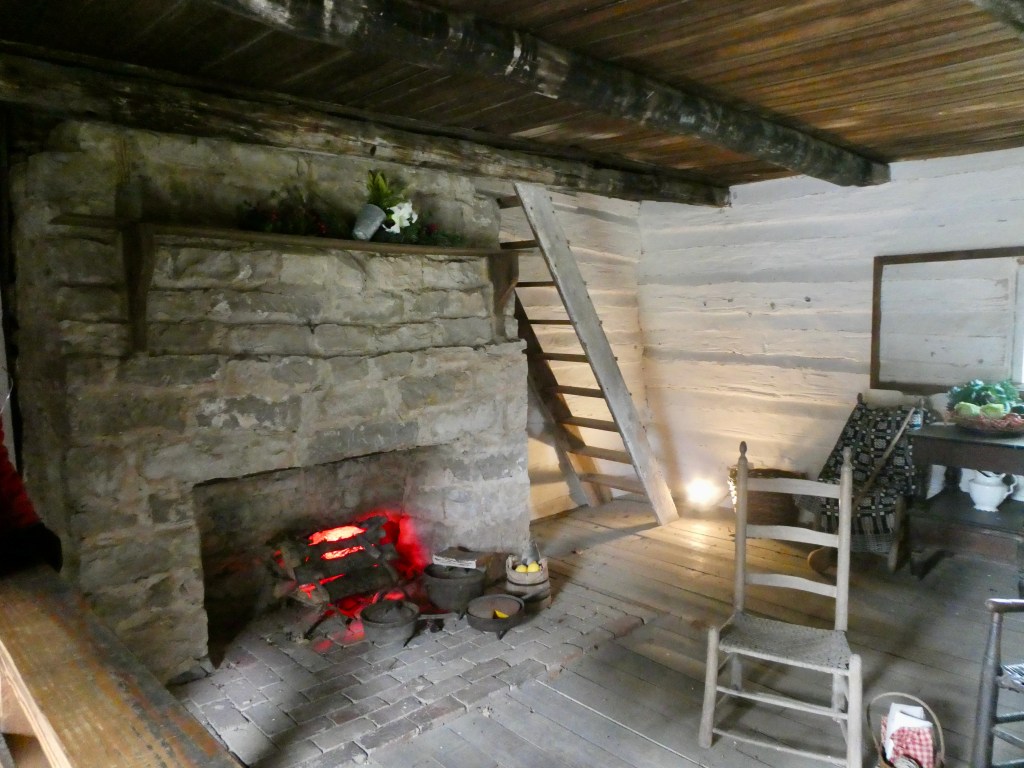
Over the years, Alfred purchased Jackson family heirlooms and, late in his life, he traded those to The Hermitage Association for the ability to live out his days on site in “Alfred’s Cabin.”

When Alfred died, his funeral was held in the main house.  Alfred was buried near Andrew Jackson at his request.

I am glad we visited The Hermitage and learned about the people enslaved there and about Andrew and Rachel Jackson.

We learned a lot about the man, the soldier, the husband and the president.  I like Andrew Jackson the husband and can appreciate him as a soldier serving Tennessee and our country.  He was a man of his era and region – perhaps no better or worse than others – and he made his mark without benefit of noble birth. I can be a fan of most of that. 

My feelings about him as a president are less forgiving.   How about you? Fan or not?

Next up:  Another enslaved man turned tour guide in Mammoth Cave Kentucky.

Posted in Uncategorized | 6 Comments

Outside Nashville: Belle Meade Plantation

Our first journey outside Nashville was to the Belle Meade Plantation. It sits on the Natchez Trace, a former Native American path connecting settlements.  

John Harding bought the site in 1807 and began developing a farm he called Belle Meade or “beautiful meadow.”

This was the first Harding cabin at Belle Meade.

One of his priorities was to establish a blacksmith shop, charging for and providing services for neighbors and travelers along the Natchez Trace.  Enslaved person, Ben, was Harding’s blacksmith for ten years until he escaped.  Ben was never found, despite Harding’s offer of a $20 reward.  Harding also had cattle and sheep in addition to a cotton gin, and a saw mill. By 1816, John Harding was boarding and breeding horses. 

After Harding’s death, his son William inherited Belle Meade.  William married and he and his wife Elizabeth had two daughters who survived to adulthood, Mary and Selene. 

Over the decades William Harding acquired additional property, eventually owning 5,400-acres.  He also held 136 enslaved people. 

In 1853 he expanded his father’s house into a much larger mansion. (We were able to tour the mansion but not take photos.)

During the Civil War, Harding donated money to the Confederacy and was made a Brigadier General.  He was captured by Union forces and imprisoned in the north.  He paid a $20,000 bond and signed an oath of allegiance to the United States.  Harding was released and confined to Belle Meade.

After the Civil War, Harding resumed horse racing and breeding operations, albeit with fewer workers. Of the 136 people he had enslaved, 72 chose to work for pay at Belle Meade. 

One of those who stayed was Bob Green.  Bob was an integral part of the horse training and breeding enterprise eventually enjoying international acclaim and respect.

Bob bought land off the plantation for a family home but they also used Harding’s original cabin as a residence. 

There is some sweet irony in a former slave, now a horse training and breeding deity, residing in the Harding cabin.

In 1868, Harding’s daughter Selene married William Jackson, also a former Confederate Brigadier General. The couple lived at Belle Meade

The Harding-Jackson children enjoyed a playhouse built in the 1870s.

While Selene managed the household, Jackson worked with his father-in-law in the horse business.  They, with Bob Green, developed Belle Meade into a nationally renowned thoroughbred farm. 

By 1875, Harding and Jackson’s focus on breeding led to annual yearling sales. 

They had many successful thoroughbred studs, including Bonnie Scotland and Enquirer, whose bloodlines long dominated racing in America. 

In 1881, Iroquois was the first American-bred horse to win the Epsom Derby in England.  Jackson attracted international attention when he bought the stallion in 1886.  Iroquois was the leading sire in the United States in 1892. 

Thoroughbred racing was very important in the social life of southerners and Tennessee was at the center of horse racing in the United States throughout the 1800s.   During that time Belle Meade was the premiere breeding farm in the country.  

The plantation carriage house was utilized by many visitors for yearling sales and other activities at Belle Meade.

At its height, Belle Meade boasted breeding thoroughbreds, the mansion, a gun club, spring house and hunting grounds. It featured a 500-acre deer park which held 200 deer, and smaller numbers of elk, bison and water buffalo.   

Baseball replaced horse racing as the top American sport, and the temperance movement campaigned against horse racing and its associated gambling.  When the Tennessee Legislature outlawed gambling, the focal point of horse racing in the United States shifted to Kentucky.

In 1903, both Jackson and his adult son, William Harding Jackson, died.  The plantation had massive debt. The trustees of the estate decided to sell Belle Meade in 1906. The company released the deer from the fenced park. 

In 1938, most of Belle Meade’s former acreage was incorporated into the independent city of Belle Meade, Tennessee. The mansion and 30 acres were preserved by five private owner families who lived in the home. In 1953 the State of Tennessee bought the mansion and a collection of outbuildings to ensure its preservation. 

Belle Meade Plantation is listed on the National Register of Historic Places and is now owned by a preservation association.  It is operated as an attraction, museum and winery. 

In 2009, Belle Meade opened Tennessee’s first Winery. Their wines specialize in using native muscadine grapes. A tasting is included with your tour ticket.

Next post:  The Hermitage….Does Andrew Jackson have any redeeming qualities?

Posted in Uncategorized | 7 Comments

Nashville: Studio B and the Country Music Hall of Fame

Elvis Presley recorded five records at Sun Records in Memphis before RCA bought his contract for $35,000. In January, 1956,  Elvis recorded his first song, Heartbreak Hotel, in Nashville.

Work on Studio B began that same year and began producing records in 1957.  It is the oldest, surviving music studio in Nashville.  Our guide told us the studio was not RCA property but was used by RCA artists. Other artists, like the Everly Brothers also recorded there but were not RCA signed.

During this time, Rock and Roll was siphoning off country music fans so producers softened the country twang and created the Nashville Sound.  Over 1000 hits were recorded in Studio B.

We saw this picture of a younger Connie Smith. We had enjoyed her performance the night before at the Opry.

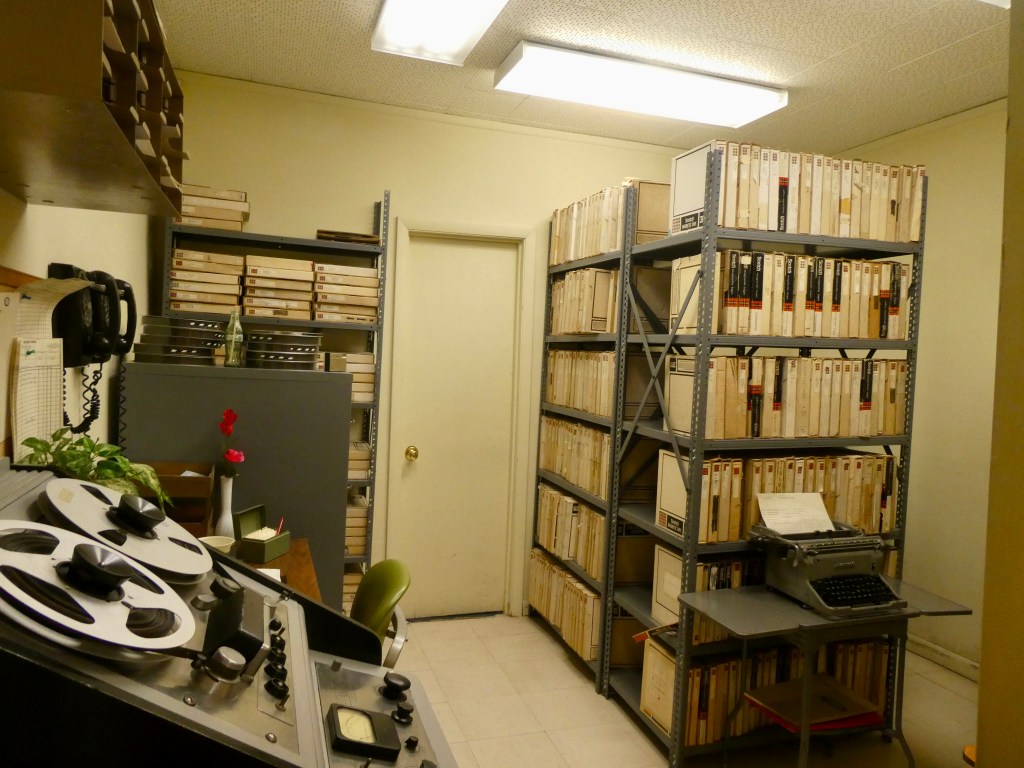
Producers and musicians were creative.  Roy Orbison was the first to move behind the blanketed coat rack to isolate the voice from the music.  They were able to create two tracks and produced the reverb.

This picture shows Jim Reeves but I’m including it because it shows the blanket over the coat rack behind him.

This board shows music represented with a numbered chord system. Commonly used now, that system was invented at Studio B.

Skeeter Davis recorded her song The End of the World at Studio B.  It made history as the song was number one on all four music charts.  It was also the first to use over dubbing – meaning Skeeter was singing her own harmonies. 

Dolly Parton was an RCA artist who recorded at Studio B.  She was so nervous before her first session that she hit the brick building with her vehicle before going in. 

Trisha Yearwood was a Studio B tour guide before she made it big as a performer.

Studio B’s acoustic were very good but the real draw to record there was that Elvis recorded there.  He recorded at Studio B more than any other place.

In this photo Elvis is pictured wearing a tie.  That is because he came to record while in uniform during his military service.

This 45 record sleeve was unique in that Elvis’ song was being rushed into production but it did not yet have a title.  The eventual title was Stuck on You and it was on put on the record label itself.  This use of a sleeve opening large enough to see the title was a first.  Within 48 hours 1,000,000 records were pressed and shipped.

Elvis’ hit Are you Lonesome Tonight was recorded in total darkness while he stood at this microphone. 

Elvis played his own piano while recording the song Walk On.

The last songs Elvis recorded at Studio B were My Way and I’ll Be Home for Christmas.  

Elvis wanted to record Dolly Parton’s song I will Always Love You but negotiations fell apart because Elvis’ manager, the Colonel, wanted them to receive half the royalties. Dolly refused.  She never gave up royalties on any of her 5000 plus songs. Whitney Houston and Dolly both recorded I Will Always Love You and she still made a lot of money with it – even without Elvis.

We explored the Music City Walk of Fame.

We enjoyed the story behind the architecture of the Country Music Hall of Fame.  Beginning on the left, the radio antenna represents the broadcasts of the Grand Ole Opry.  The circle stack below it represents 45, 78 and 33 RPM Records. The outward projections along the circle portion represent the song Will the Circle Be Unbroken as it would be on a player piano cylinder.  The main building has windows in the pattern of piano keys.

When we first entered we were able to enjoy a concert by Sister Strings. 

The top floor highlights Country Music’s origins into the 1960s. Included was a display about Bill Anderson, who we had seen at the Opry the night before.

Maybelle Carter’s husband spent $275 on this guitar.  It was a fortune at the time but also an investment in their future. It seemed to work out!

Bill Monroe’s mandolin is said to be the most famous in history.  Built in 1923, Bill found it in a Florida barbershop and purchased it in the mid 1940s.  A home intruder destroyed the mandolin in 1985 and Gibson Company painstakingly reconstructed the mandolin from 150 slivers of wood.

In a transition between floors we saw several walls of Gold and Platinum records (sales of 500,000 and 1,000,000 respectivly.)  There are 854 country albums displayed, all awarded by the Recording Industry Association of America. 

The main floor highlights the music and artists from 1960s to present.  Only one tenth of their holdings are on display at a given time. 

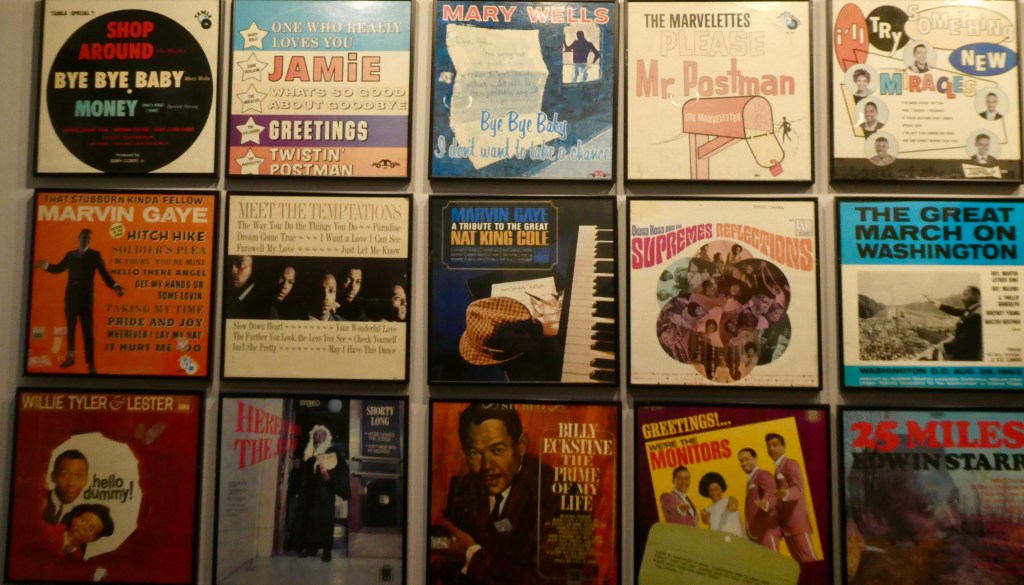
This display showed about a dozen first drafts of songs.

This is another example of the numbered chord system, developed in Nashville, but now used everywhere.

We learned how country music changed as Los Angeles came onto the music scene.  Musicians pushed the boundaries and created Country Rock in the late 60s and 70s.   

Linda Rondstadt was from Tucson and had an authentic Mexican aspect to her music.  The musicians who became The Eagles were her back up group. Several artist credited her with helping them.

We had seen Emmy Lou Harris the night before and she was highlighted as one of the artists who bridged between LA Country Rock and mainstream country.    Others were Rosanne Cash, Vince Gill, and Martina McBride.

Country and Rock influenced each other.  Crossover stars included Glen Campbell, Lynn Anderson, Dolly Parton, Kenny Rogers and Barbara Mandrell.

Discovered while playing in a Nashville venue, Taylor Swift signed with RCA at age 14.  She started in country music and then had a decade of pop superstardom.  She has recently re-emphasized her country roots and sponsors the Taylor Swift Education Wing at the Country Music Hall of Fame. This “tour bus” allows people to record themselves.

The Country Music Association has elected Hall of Fame Members since 1961.  The plaques are placed like notes on a staff.

The room is round so all members are of equal importance. The words are once again from the Carter Family song, Will the Circle Be Unbroken.

The replica radio antenna we saw from the outside continues on the inside. We enjoyed our day learning about country music and the Nashville sound.  

Here are some additional random Nashville things:

This Christie Cookie company started in Nashville and has a site within the Bridgestone Arena, home of Nashville Predators NHL team.  The company provides the cookie dough for Hilton Double Tree Inns. 

The first seeing-eye dog school in the US began in Nashville in 1929. It moved soon after to New Jersey as land was donated for its use.

Some cross walks in Nashville actually cross through the intersection! We used this one. It felt odd!

The downtown city streets have cleaning crews everywhere.  

Nissan Stadium is where the NFL Tennessee Titans play.  It is easily accessible across vehicle and walking bridges from downtown.  A few days after we left Nashville most of the country went into a deep freeze.  On Sunday the mayor of Nashville asked the Titans to delay the start of their game by one hour to balance out power usage.  We felt bad for the people in the stands who had to sit out there in the cold for another hour!  We were told a new stadium is in the works for the Titans that includes a movable roof system.

Next up:  We venture out of Nashville. 

Posted in Uncategorized | 1 Comment