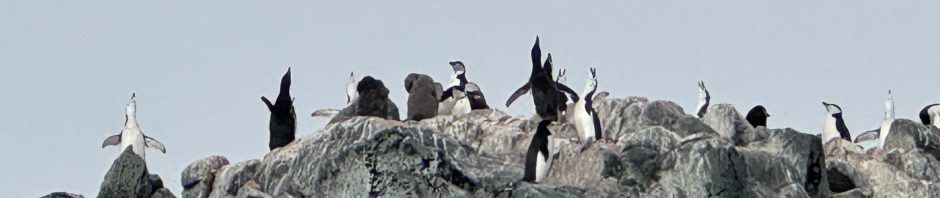
As we meet people curious about our lifestyle, we are often asked “Where is your favorite place?” There are too many variables for that question to have a simple answer. We have been blessed to see wonderful places reflecting geology, history, science and personal achievement. But I do have a very short list of “places that matter,” those I wish everyone could visit because of the impact they had on my soul.
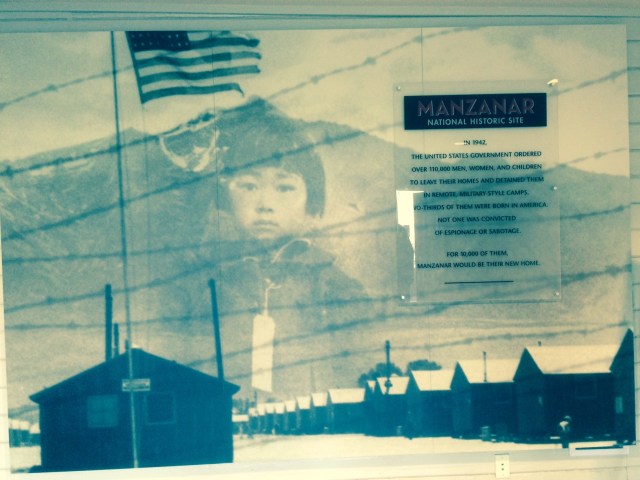 The place that may always top my list of “places that matter” is Manzanar, the WWII Japanese Internment Camp Historic Site near Lone Pine, California. I wrote about it in the Highs and Lows blog post from November, 2014. It is interesting that my write up on Manzanar was really quite brief given the profound way that I remember it.
 Another “place that matters” by my definition was Little Big Horn Battlefield. I wrote about our visit there in Montana Days Off – Week 2 from September, 2015. Seeing grave markers at Last Stand Hill and then scattered in pairs across the vast battlefield was sobering.
 This week we visited another “place that matters.” We traveled to Bandon, to the Washed Ashore art gallery and workshop. The organization’s mission is to build and exhibit art to educate about plastic pollution in our oceans.
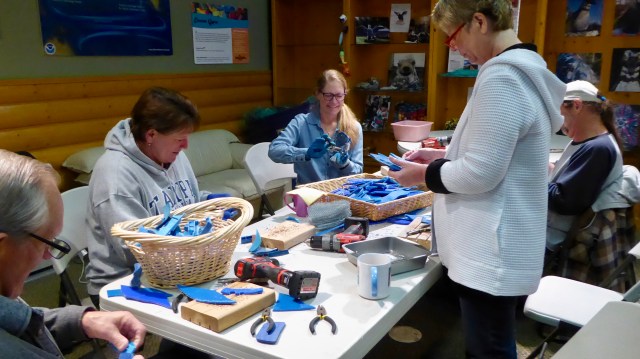
These volunteers are “regulars.”
Since 2010, more than 10,000 volunteers have cleaned 300 miles of Pacific coast beaches, collecting more than 38,000 pounds of petroleum based debris, generally plastic. Ninety five percent of the debris was used to make more than 60 sculptures.


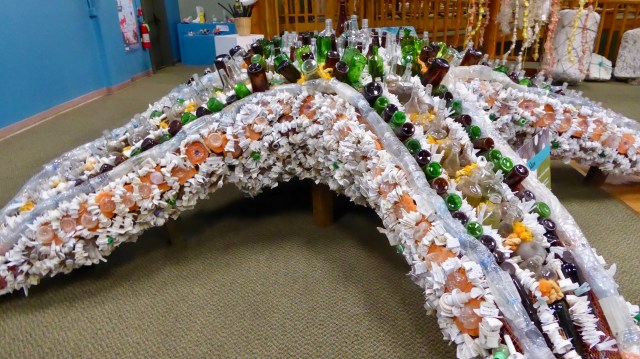
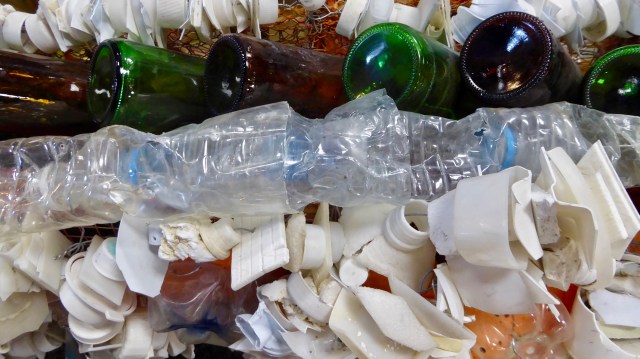
The clear plastic water bottles with the blue rings are from the Beijing Olympics.
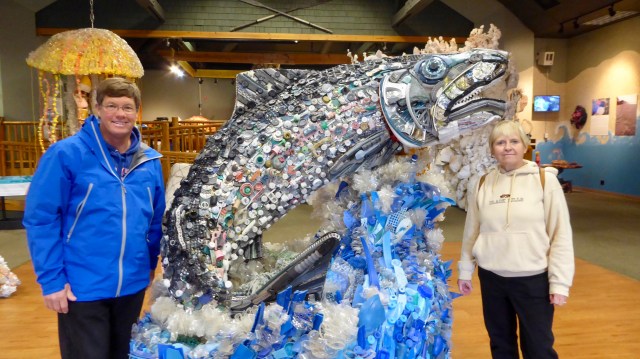
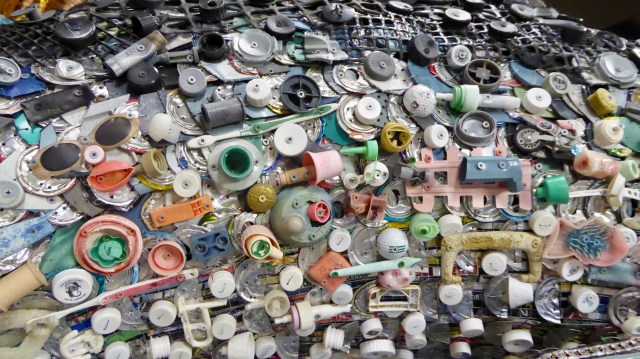 It was immensely sad that so much recognizable garbage ends up in our oceans. It was also inspiring that one woman, Angela Pozzi, concerned about the beaches near her hometown of Bandon, Oregon started this mission of awareness to change individual habits.

Jelly fish made pretty much entirely of plastic water bottles….
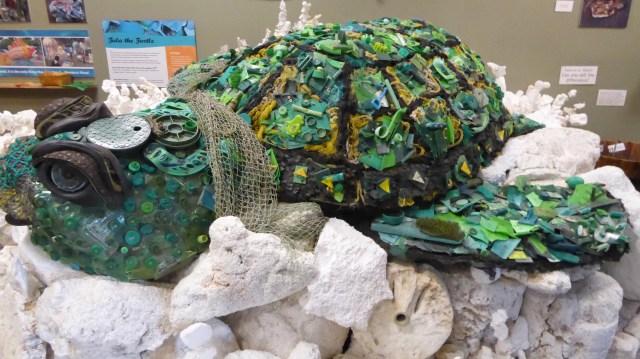 A few of the sculptures are on display at the exhibition hall in Bandon. Others are on display throughout the country. Right now they are in Ames Iowa, Tacoma Washington, Washington DC and Richmond Virginia. Their website at washedashore.org gives current information. I encourage you to visit in Bandon, or see the exhibits around the country if you ever have the chance.
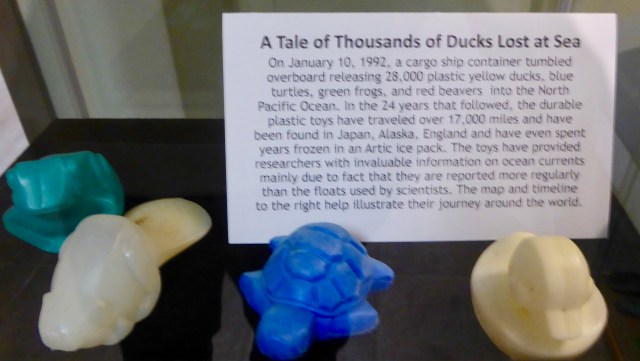 At the Washed Ashore exhibit hall I learned about 28,000 plastic ducks, turtles, frogs and beavers that were lost at sea in 1992. In the intervening years they have been found all over the world giving scientists valuable information about currents and the connectedness of our oceans.
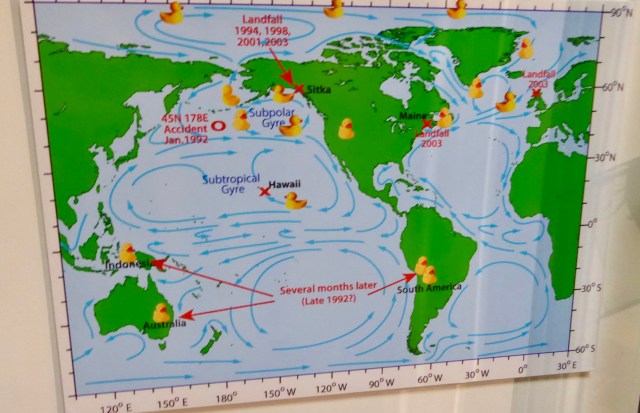
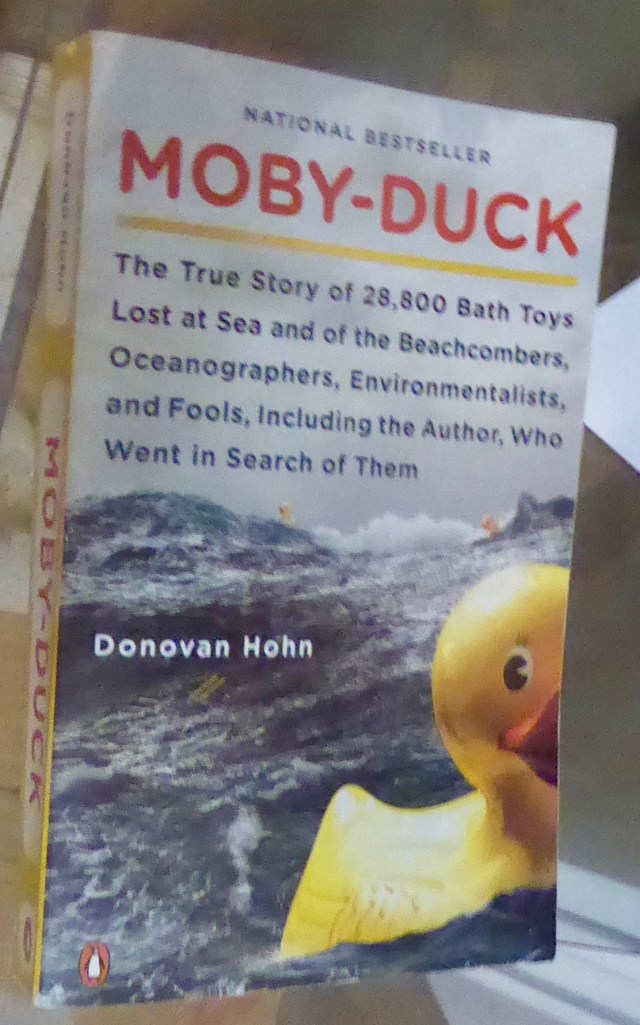 The book about the toys and their movement, Moby Duck ,will be on my summer reading list! There was also an NPR Interview with the author, Donovan Hohn, if you are interested…. but not THAT interested!
I appreciate seeing theses “places that matter.” I just hope good will come from each sad tale.
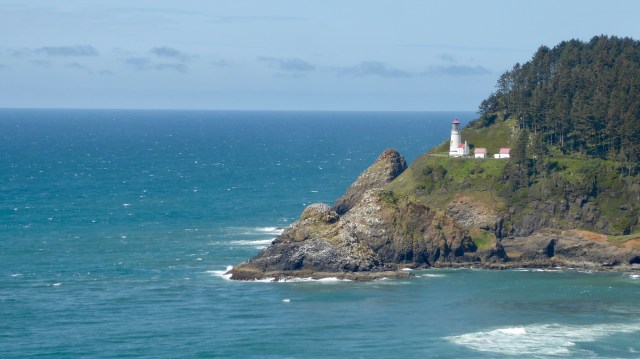 Haceta Head Lighthouse is the iconic Oregon coast photo-op. We have visited Haceta Head before so we were content this time to see it from the viewpoint. When we did, we heard quite the commotion below us! The sea lions who chose not to venture into the commercial cave just down the road (Sea Lion Caves) were having a grand time.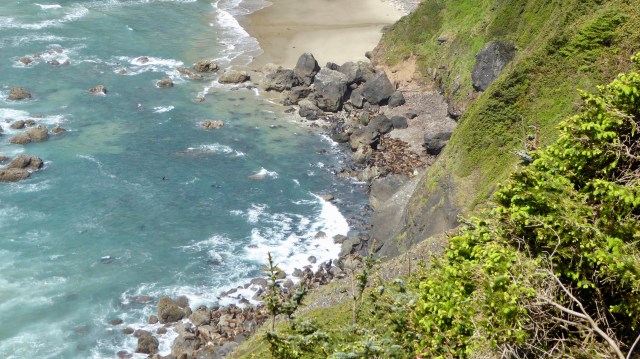

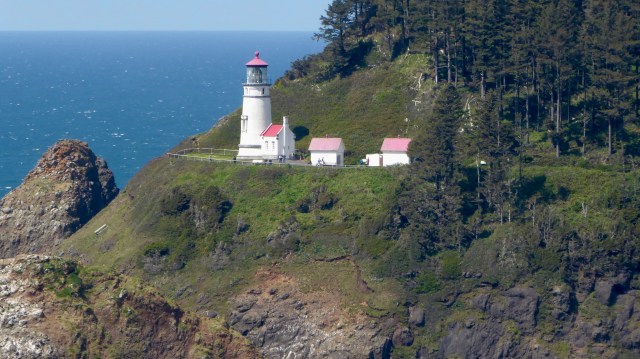 Haceta Head is one of nine historic lighthouses along the Oregon coast. All are on the National Historic Register and seven are open for public viewing. We are within a short drive of Haceta Head but are only a short walk from our state park’s namesake, Umpqua Lighthouse.
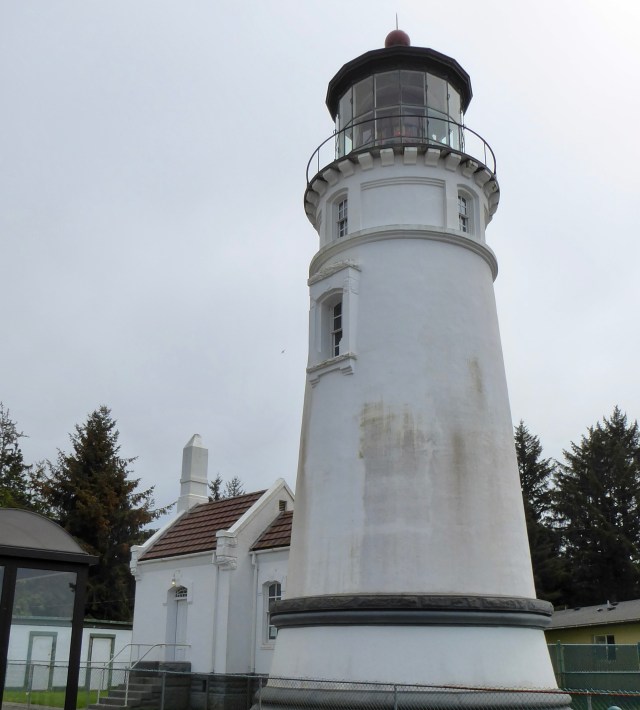 We walk to the Umpqua Lighthouse almost daily because there is where we have our nearest ocean view and outgoing mail drop.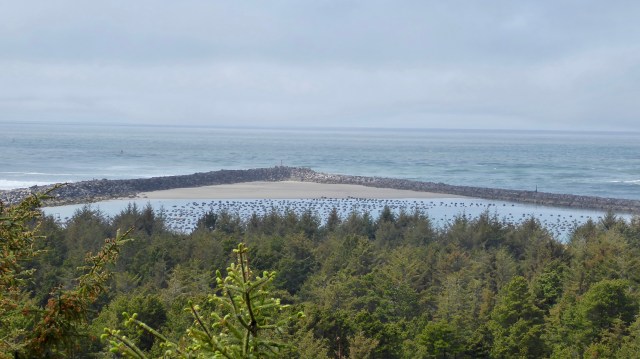
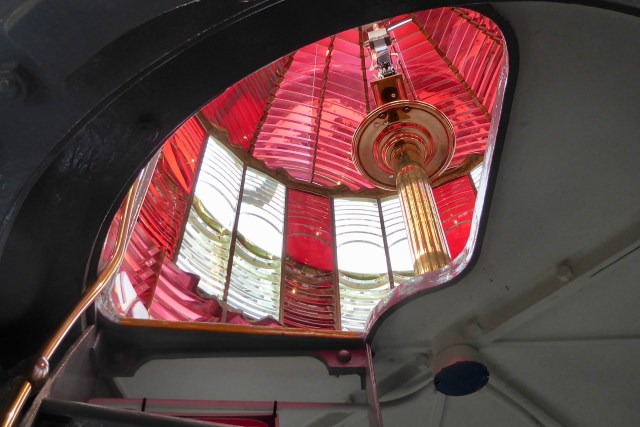 Umpqua Lighthouse uses a Fresnel lens built in Paris in 1890 and reconstructed on-site. Fresnel lenses are ordered first to seventh depending on their radius, height, and weight, with first order being the largest. Umpqua’s first order lens has a radius of 36.2″, height of 101.97” and weight of 12787 lbs. On our tour we were able to go to the top and view the lens and prisms from just below.
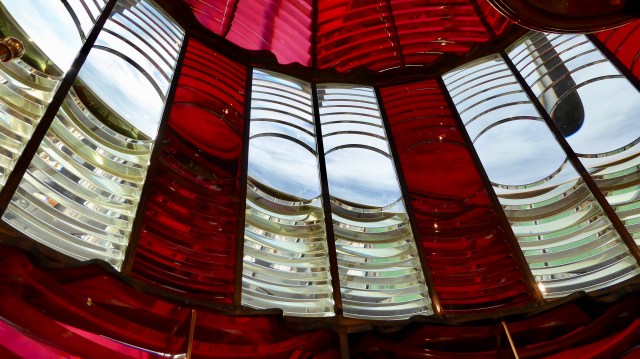 The Umpqua Lighthouse emits a ‘white, white, red’ beacon in even intervals for about 20 miles seaward. It is the only lighthouse on the Oregon coast that uses red illumination. The original oil lamp light source was changed to electricity in 1934 and was fully automated in 1960.
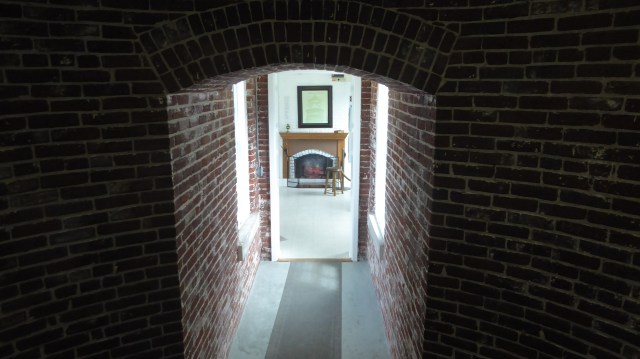 In the early days at Umpqua Lighthouse, a “Keeper” was a family man who made $800 per year. His first and second assistants, likely younger and single, made $600 and $550 respectively. It was an isolated life and keepers and their families were expected to be self-sufficient with only periodic supply drops by lighthouse tender ships. The tenders dropped food staples, fuel sources and polish for maintenance.
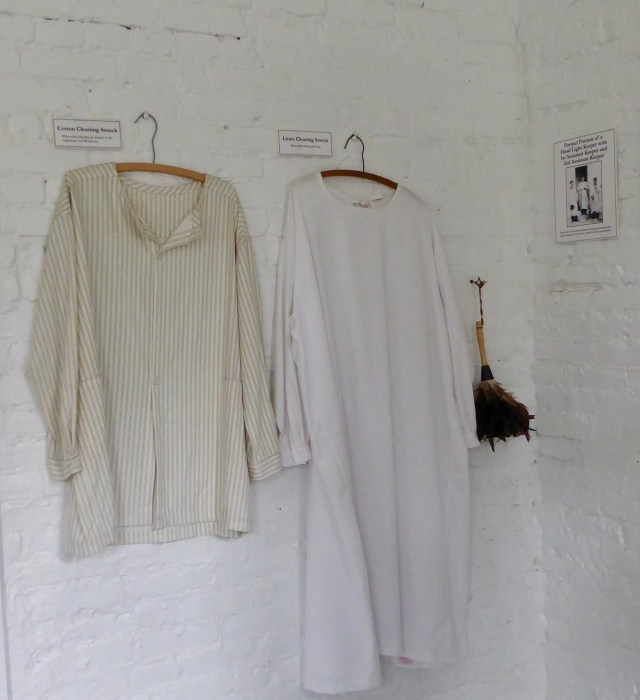 Keepers and assistants wore smocks so their uniform buttons would not scratch the lens and prisms during cleaning.
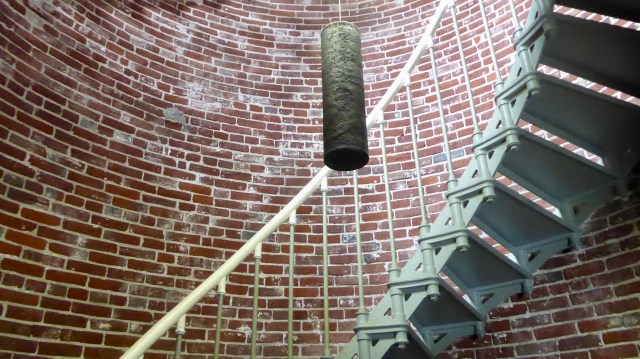 This weight was part of the original rotation system using gravity to turn the lens. A keeper would need to wind it back up several times a night.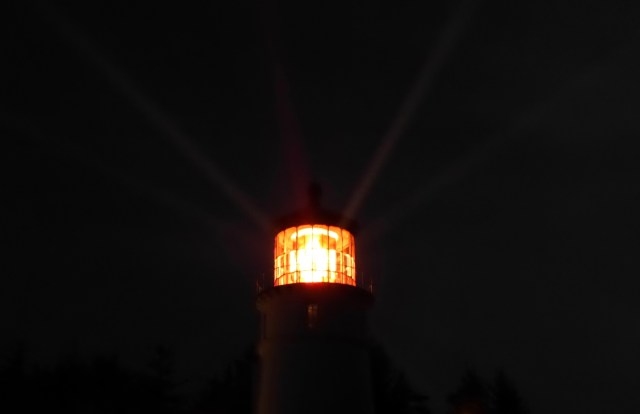
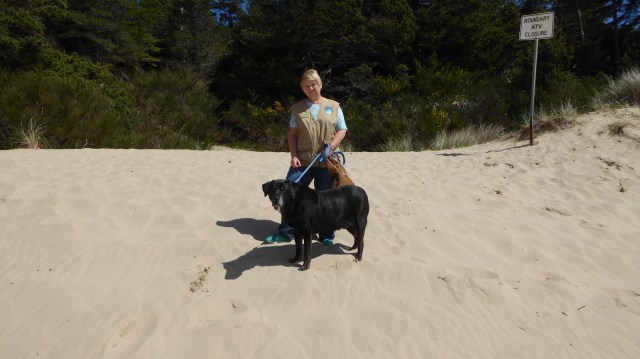
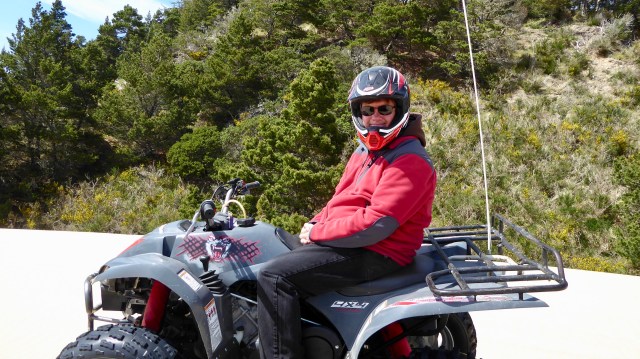
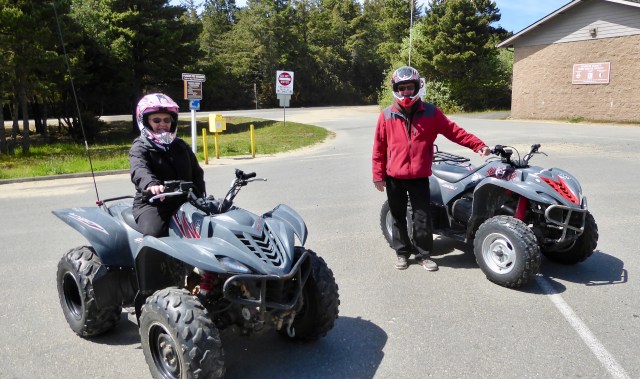 I am usually content to let Randy drive on these types of adventures while I enjoy the ride. This time it was less expensive for us to each have our own.
 In a closing note, we are doing our best to enjoy our stay here knowing that when we return to Boise, Randy will begin his treatments. In his engineer way, he has done LOTS of research and is feeling good about it. Thank you for your prayers and good wishes.


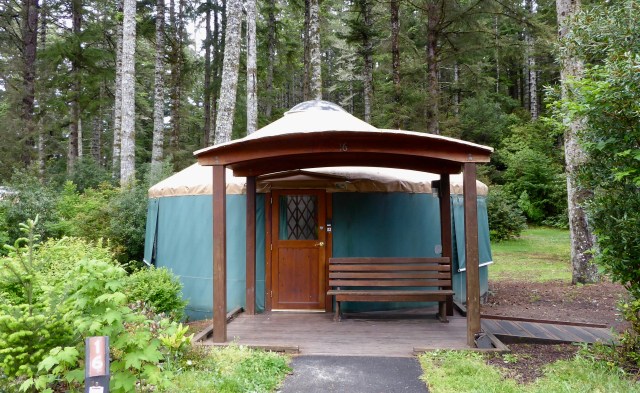


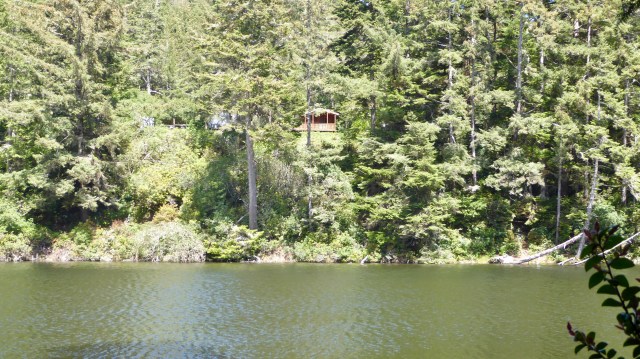 Our favorites are the $41 per night rustic cabins – not because they are quick to clean, but because they are so darned cute and they sit above Lake Marie with a nice view.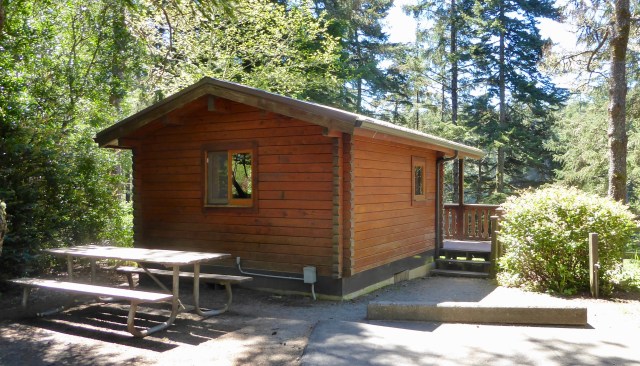


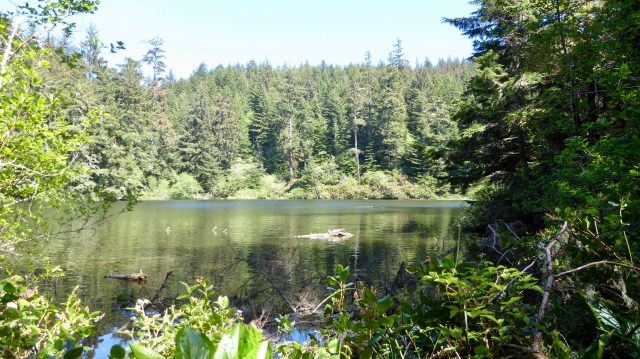 The other part of our assignment is walking and monitoring the Lake Marie trail. We walk the one mile loop once a day picking up trash and generally enjoying the scenery – even though we only are asked to do it once a week.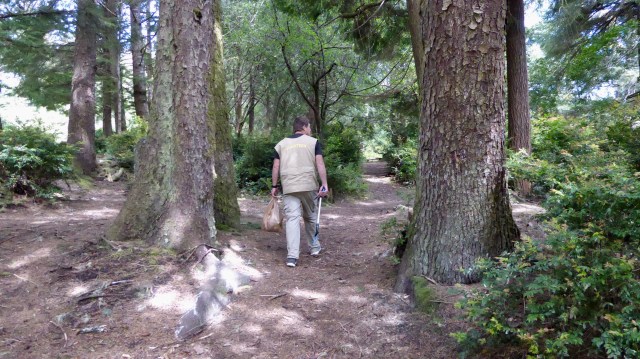
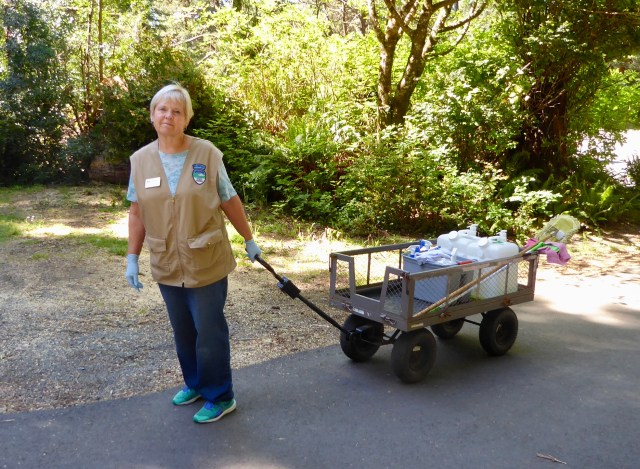
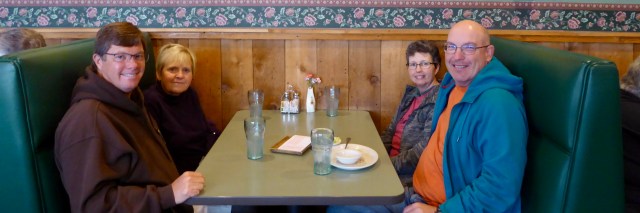
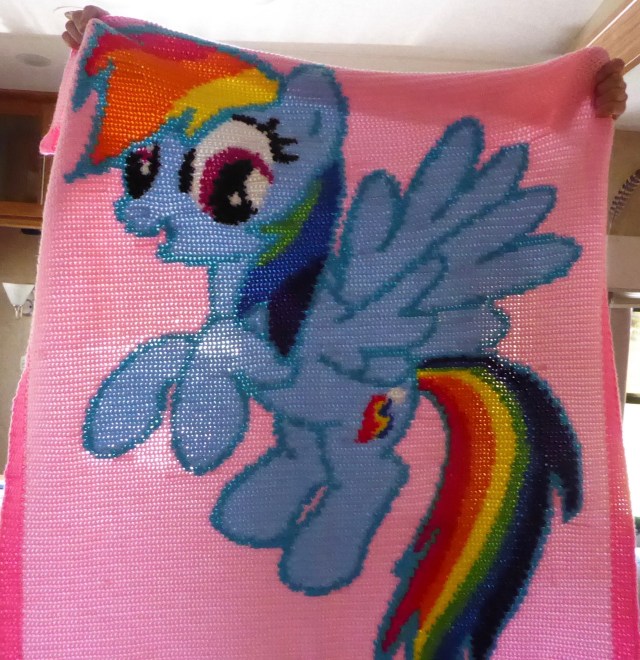
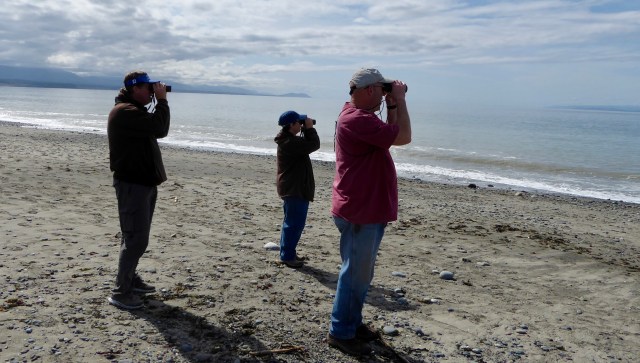
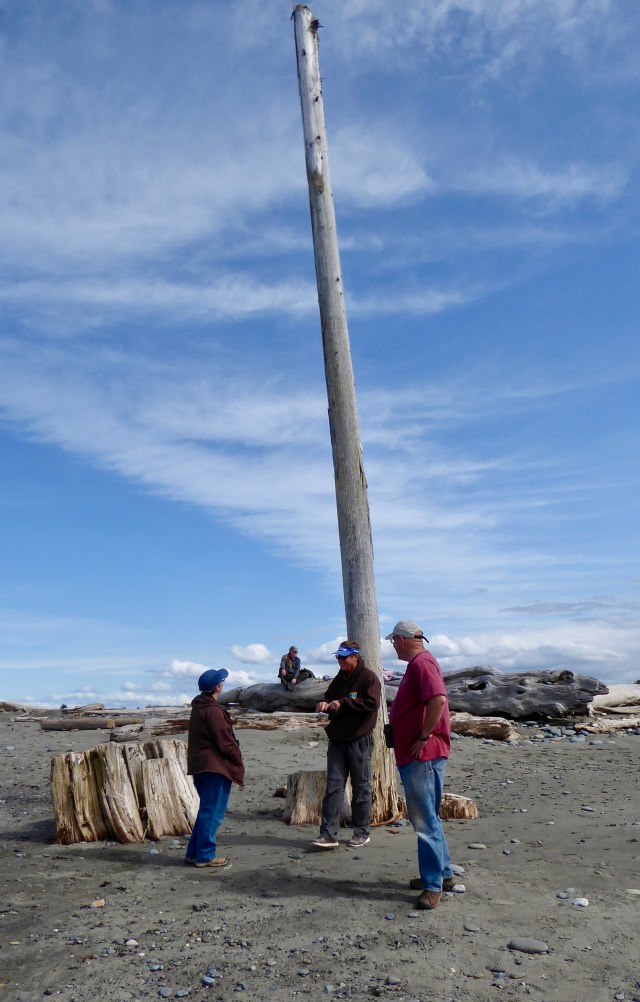
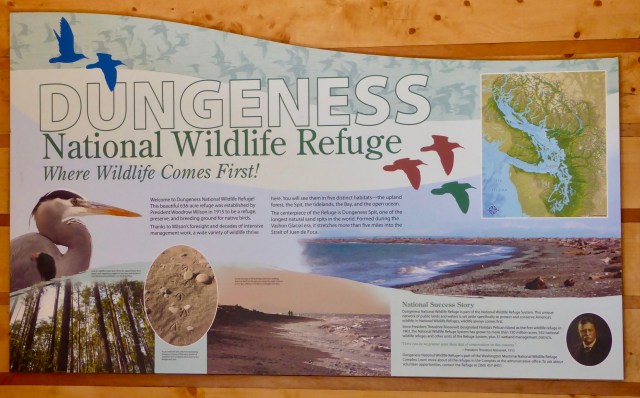 Mark and Teri are currently volunteering at the Dungeness National Wildlife Refuge. Access to Olympic National Park is nearby, but much is still snowed in. Fortunately, we have been there before so it wasn’t a priority this time.
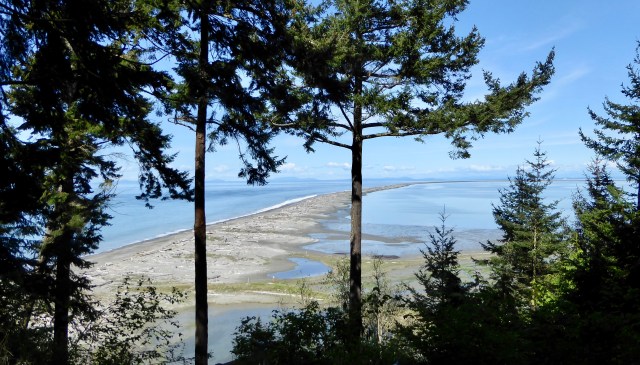 At the wildlife refuge, we walked along the Dungeness Spit. A spit is “a narrow coastal land formation that is tied to the coast at one end.”
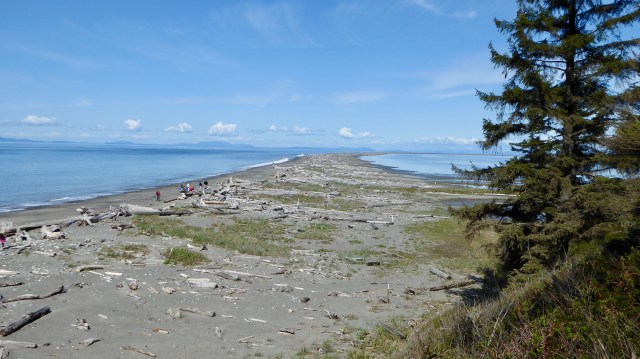 The Dungeness Spit is five and a half miles long, the longest natural spit in the country.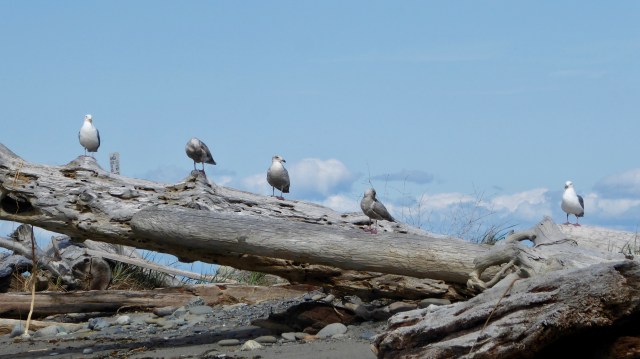
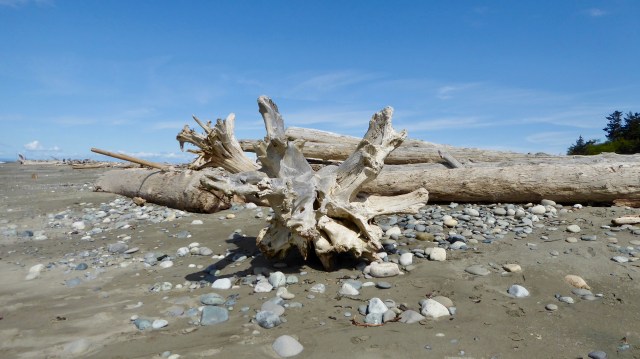
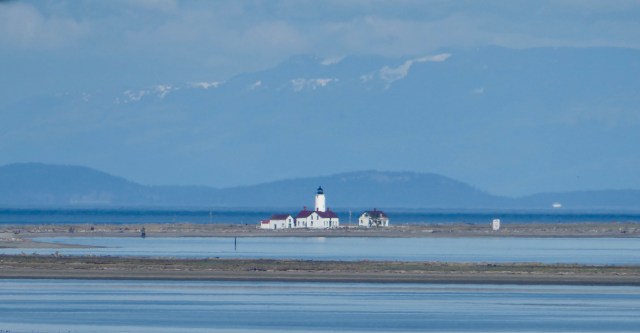 Near the end of the spit is the Dungeness Lighthouse. Built in 1857, the lighthouse still assists navigation on the Strait of Juan de Fuca. A “lighthouse keeper” program allows individuals or families to pay to spend a week maintaining the lighthouse and giving tours to visitors. To be a keeper for a week costs $350 for adults. To “keep” the entire lighthouse costs $2250 per week. More information is available about this interesting “vacation” on the lighthouse website
  We visited the Olympic Game Farm. There are a variety of animals here including waving bears who didn’t feel like waving during our visit.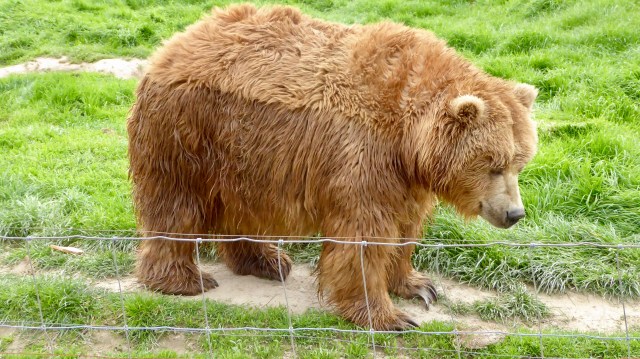
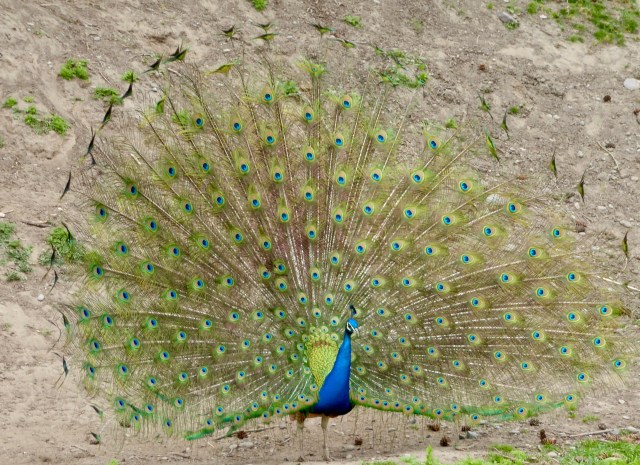 Several peacocks were in full fashion mode. We even heard him rattling his feathers, called “train rattling,” which is part of the male’s courting process.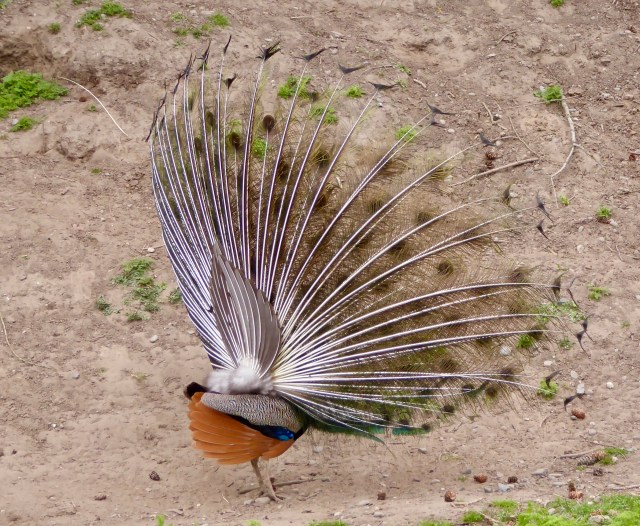
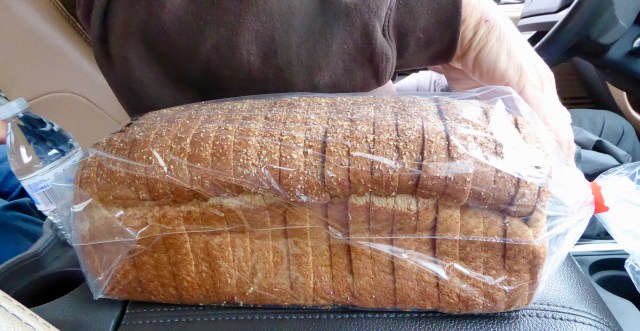 Although each animal is given a specific diet appropriate to its needs, the farm sells very soft whole-wheat bread loaves for $2 to supplement the animals’ diets and visitors’ enjoyment. We bought two large loaves and could have easily given out more.
 The llama knew what to expect and how to get it!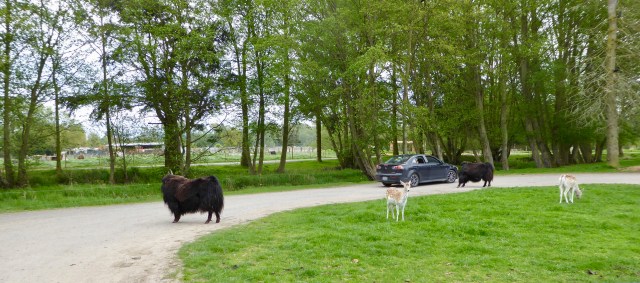
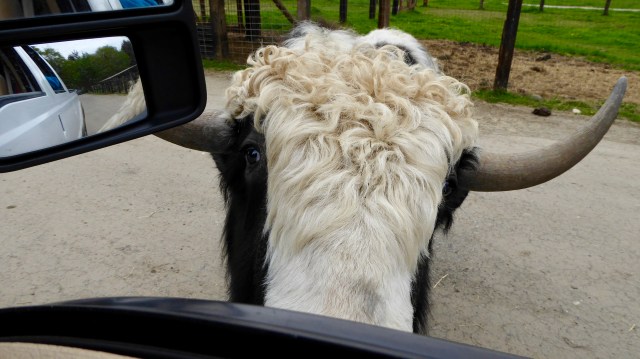 The animals get so close so quickly it is hard to take a picture!
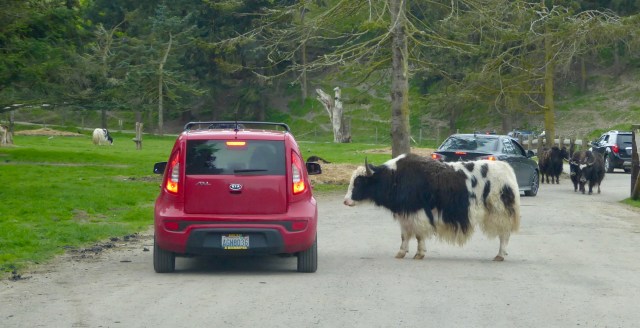
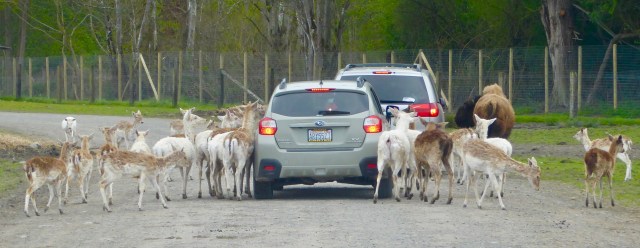 It is far easier to take pictures of the cars in front of you! Once you get to the elk and bison section, you are advised not to stop because the animals are pretty aggressive and can damage your car. Unfortunately, the car in front of this one had stopped! We didn’t get damaged but we sure got slime and slobber on both sides of the truck!
 We were glad we had our big tall truck. It would have been really intimidating to have these two bison reaching their head in for food! The experience was a little bit unnerving at times, but a whole lot of fun! I thought it would be scary to drive through all the animals but the animals are experienced and Randy said it wasn’t bad.
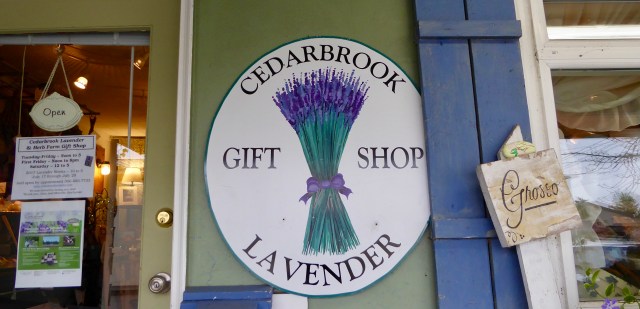 We were too early in the season for any of the lavender farms to be open to the public but I did take the opportunity to visit one of the lavender gift shops downtown.
 When we arrived at Willow Creek RV Park, we found a lovely little campground. It appears to be connected with the Willow Creek Dam above Heppner but no one is here to ask so it is hard to know.
 At the campground, we began setting up. I started opening the slides and heard wood splintering. That can’t be good! I looked to see if the rocking chairs were safe (the last wood heard splintering) but found it was the bed frame this time.
 Those of you who have read the blog for a while may remember that Handy Randy redesigned our bed frame a while back. Now a 12-pack of pop had shifted and lodged under the bed frame and jammed the frame and slide. Fortunately, the slide wasn’t damaged, just the bed frame.
 After driving a long way, with bonus time for the detour, Handy Randy set about fixing the bed frame, which of course he did. What a guy to have around!
 This morning we took Elko for a walk around the area. We found the ultimate green monster – the dam! For those of you who aren’t baseball fans, the original green monster is the name of the left field wall at Fenway Park in Boston.
 We also found the Masonic Cemetery of Heppner, Oregon. I opened my Find-A-Grave app and found that there were 46 open requests, a huge amount for this small town cemetery!
 Find-A-Grave allows people to ask for a picture of a gravesite in cemeteries around the country. I loaded the app over a year ago but hadn’t ever been at the right place at the right time to actually use it. We didn’t see a directory or anyone to ask, so we just started looking around.
 I found Grace A. Hayes, born December 28, 1874, died May 19, 1908, and married to Charles Hayes.
 The Grace A. Filkins Hayes being sought on the app was born December 28, 1873 and died May 19, 1908 but when I looked at the death certificate the death year was written over and unclear. Interesting and sad that Grace died at age 34 from tuberculosis pneumonia. I submitted the photo of the gravesite with the note about the year of death discrepancy.

 Randy is on a roll today….. cleaning the truck, the trailer cap, adding water to batteries etc. As I said – a good guy to have around! Maybe the ultimate good find!
 I called in to say I wasn’t ducking them and quickly filled out my jury questionnaire. I didn’t have negative feelings about serving and was glad that my summons corresponded with our month back in Boise.
 I served on a criminal trial for two days. It was an interesting and sobering experience – not bad, just one in which I felt the weight of responsibility. That was real life.
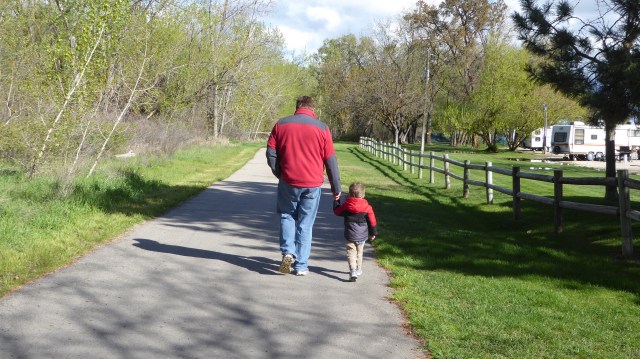 The picture above shows Randy and Archer walking on the Greenbelt along the Boise River. This path usually extends 46 miles through and beyond Boise but is now closed in many areas because of high river flow and flooding.

 About 1/2 mile east of our campground the decision was made to remove a bridge that had been there for years because of erosion around the footings. We did’t see the actual removal but watched them moving the 15000 pound crane ballast pads onto flat trucks.


 There is so much snow in the mountains, and water in the reservoirs and rivers that flooding concerns are very real. But all that water comes with a chance to see things that are better than normal as well.
 The water flow was very impressive,- approximately19,900 cubic feet per second. To see a video of Shoshone Falls, click
  We also took the opportunity to visit Twin Falls waterfall (the name sake for the town). This was a first for us even though we lived in southern Idaho for 33 years.


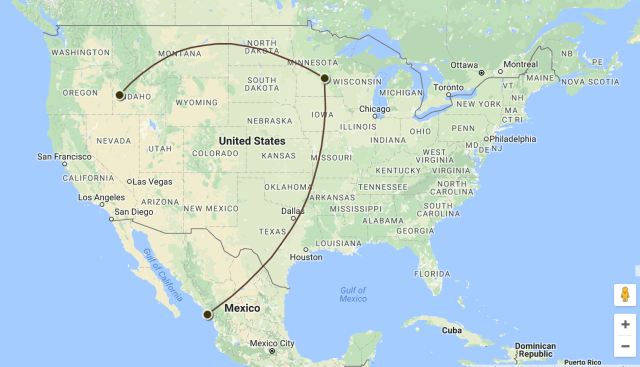 Our Boise to Minneapolis to Mazatlan route stayed the same but Delta’s change meant we had to leave Boise at 5:30 a.m. on Friday instead of mid-morning Saturday. Fortunately, Cindy was able to take the extra day off work but Delta didn’t pay for our extra night at the resort.
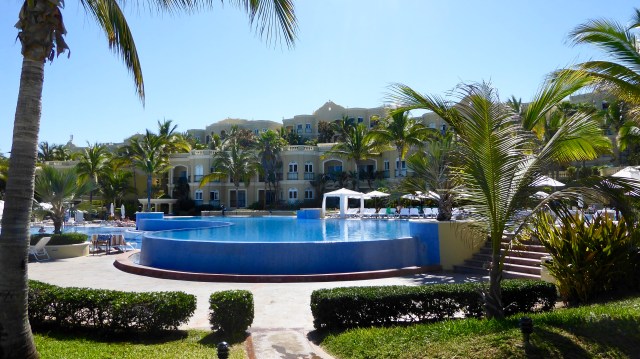 We have time-share weeks at Pueblo Bonito Emerald Bay in Mazatlan and have been there many times. Darrell and Cindy came with us previously in 2012. We traded for Cabo the last two years so were very glad to be going back to Emerald Bay. From the welcoming Tequila Sunrise forward, it was our Happy Place all week long!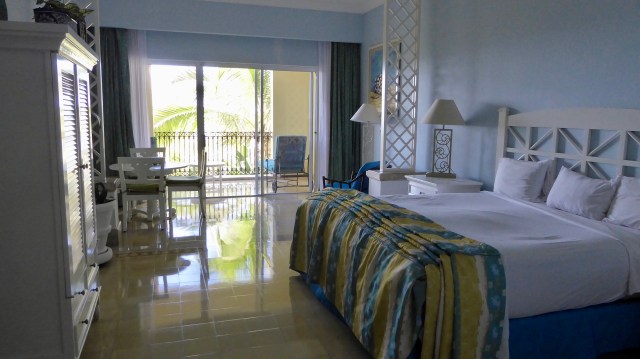
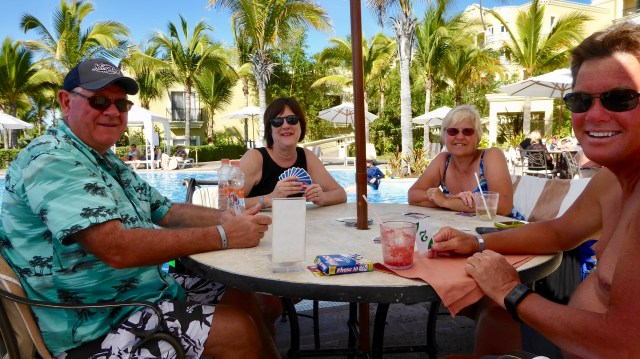 We spent a lot of time by the pool lounging, playing cards and enjoying nachos, pina coladas, miami-vices, chi-chis and other adult beverages.
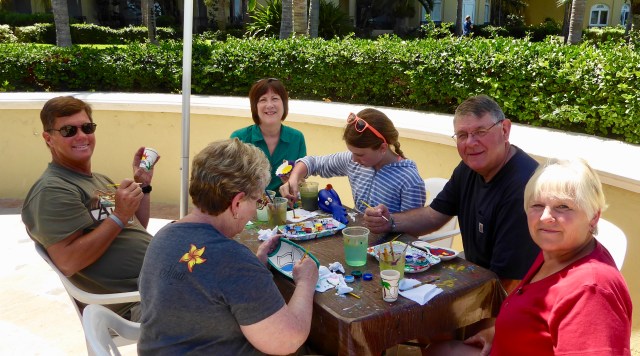 We enjoyed painting our Mexican pottery. You paint a pre stamped design and the people providing the opportunity make them look beautiful!


 Randy para-sailed on our honeymoon – 36 years later it was my turn!
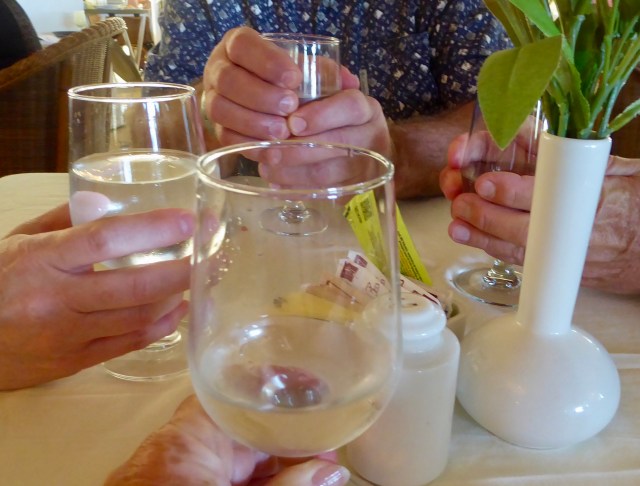 The servers around the pool and in the restaurants are wonderful. One of the waiters had us giggling. He was so efficient that he was removing our dishes before we were finished with them. We finally had to hold on to our glasses so they didn’t disappear.
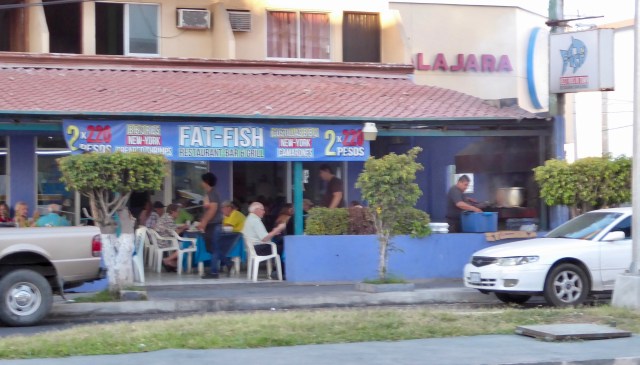 We did leave Emerald Bay and go into town a few times. We went to Randy’s favorite restaurant – Fat Fish. It isn’t fancy AT ALL but is #7 of 300+ on Trip Advisor.


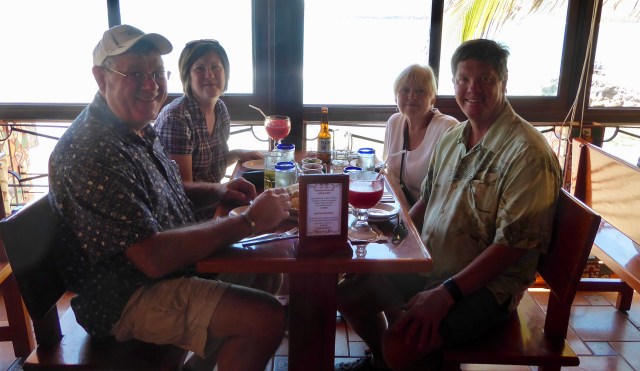 We ate at Panchos in the Golden Zone. We were having a fine time enjoying our meals, complimentary tequila and complimentary kailua and cream when our waiter noticed I wasn’t eating my carne asada (too rare). So, he gave us another round of tequila and a piece of cake to share.
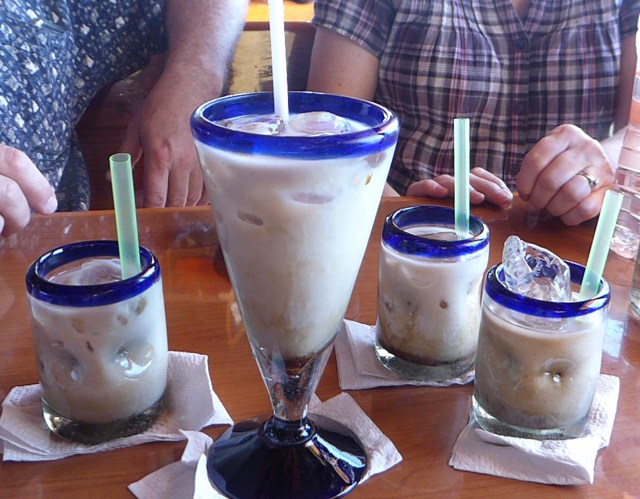 When we got our second round of complimentary kailua and cream- mine was HUGE and went unfinished!
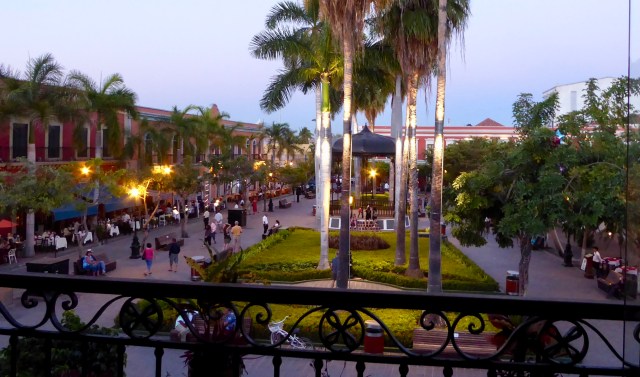 Our time wasn’t totally spent eating and drinking! We went on a City Tour one evening.

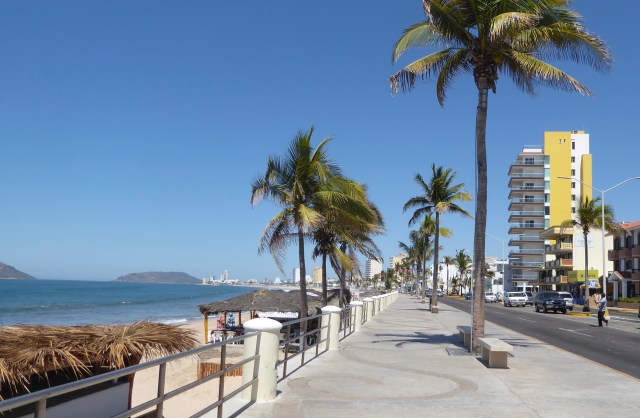 Another day we walked along the maleacon and enjoyed sites and views along the way.
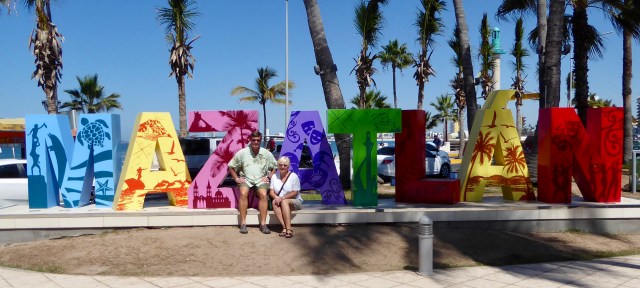



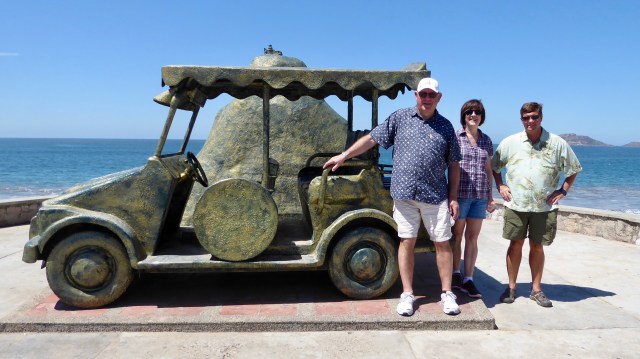 This statue commemorates pulmonias – Mazatlan’s famous open air taxis. They were called pulmonias because opponents tried to discourage their use by suggesting that those who rode in them would get pneumonia. The discouragement didn’t work. Pulmonias are everywhere and riding in them is fun!
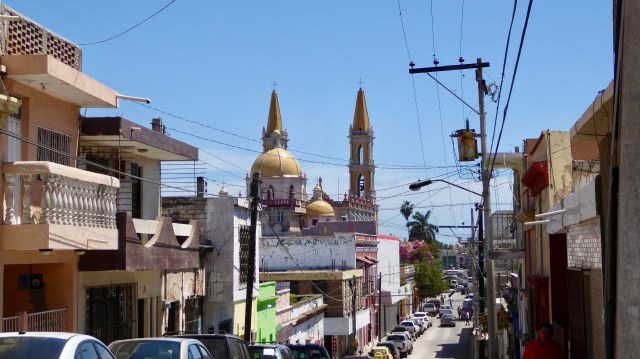 We rode a city bus (also an experience) into the historic district to see the Cathedral Basílica de la Inmaculada Concepción, begun in 1856 and completed in 1899.
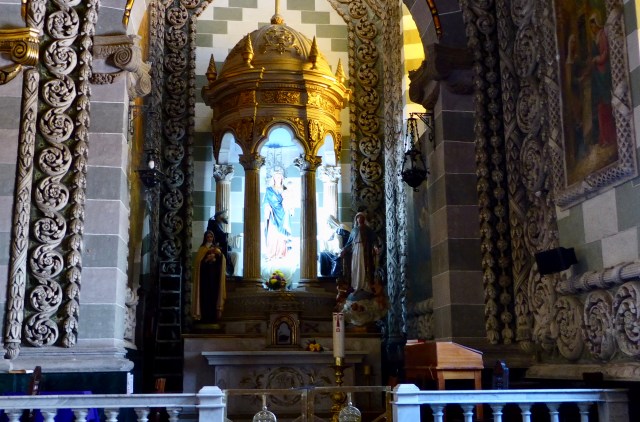
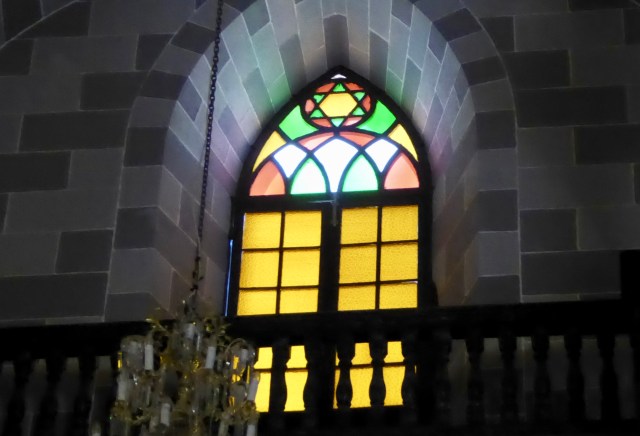 This Roman Catholic cathedral has 28 stained glass windows featuring a Star of David. This was done in gratitude to a local Jewish family who provided funds to complete the church.
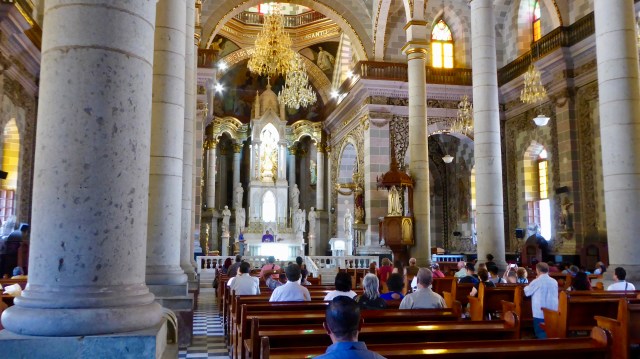 We visited during Mass and there was no English translation this time. Mass is celebrated many times each day.

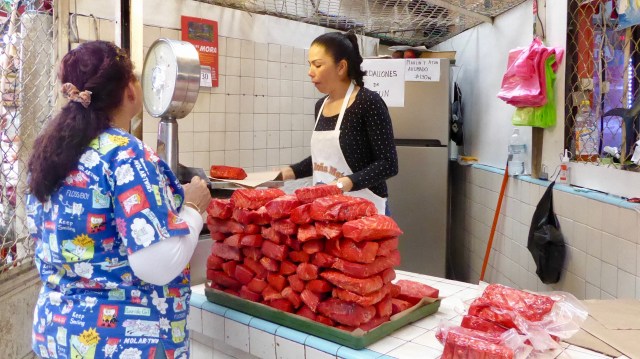
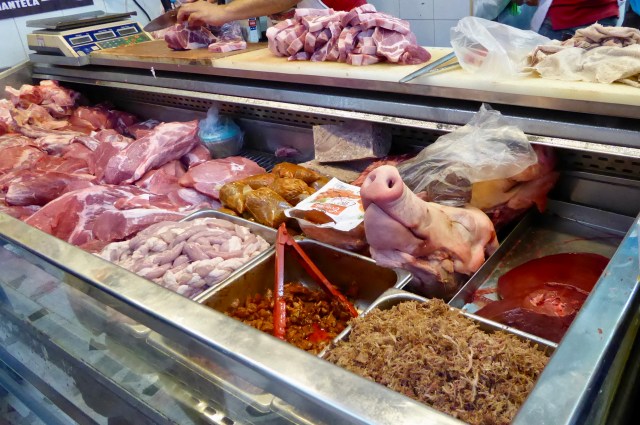 The “on the hoof that morning” meat market is somewhat shocking to our American sensibilities. We visited in the early afternoon and there was still a lot of meat sitting out. I asked what happened to the meat that didn’t sell and was told that it was purchased and frozen for sale in grocery stores.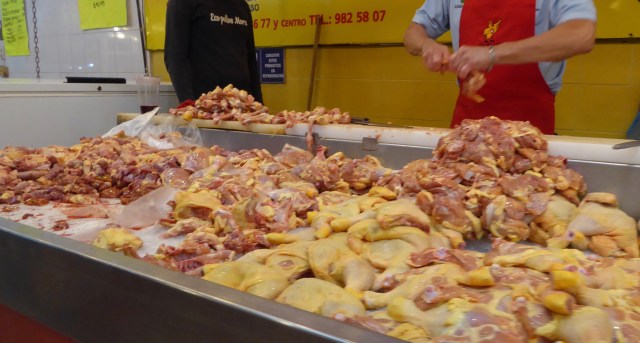

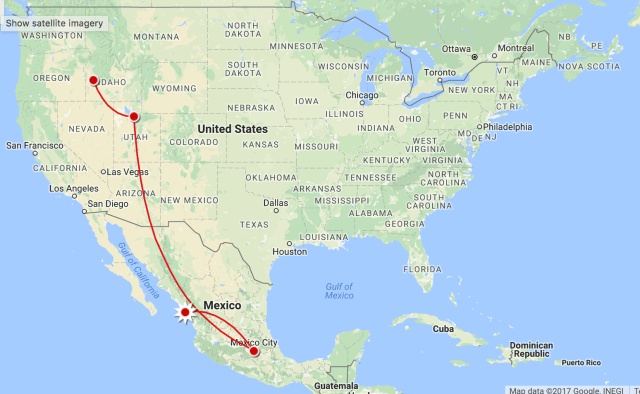 Our Delta revised route home took us from Mazatlan at 6:00 a.m. (on AeroMexico) south to Mexico City (five hour delay), back on Delta to Salt Lake City and then into Boise at 9:30 pm. It was a long day.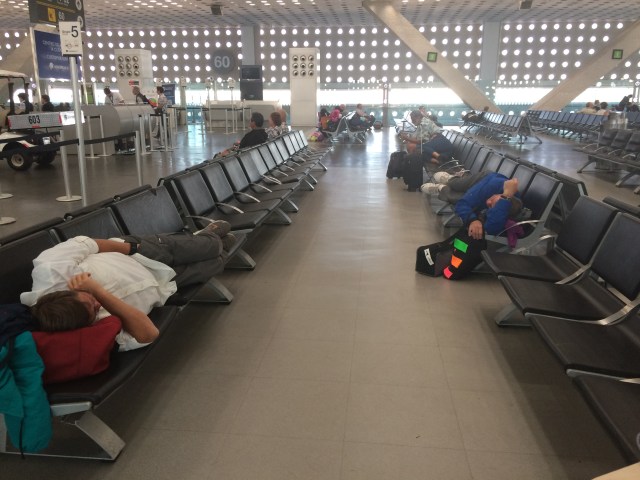

 After a LONG day in the truck we found a site and I took Elko for a walk. Randy set up, opened the slides, and discovered more disarray and damage than we’ve ever had in a prior move. He remembers a big rise and dip over a railroad track so maybe that did it. We had cupboards opened that never open, clothing off the racks in the closets and a box valance came loose. One of our rocking chairs rotated and tipped so when the slide opened, it broke one of the rocker bases.


 Kent and Pam met us near Lake Havasu City on their way south and our way north – our final stop in Arizona for this season.

 We learned paddlewheel steamers first came onto the Colorado River to transport Army supplies north from Fort Yuma. A comedy of errors resulted in 30 percent of the 150+ steamers sinking due to sand bars or flooding. Fortunately, there was little loss of life.
 The waters were the right level for travel if the eye opening was visible on this reclining rock face. If waters were too high or too low, the eye was not visible. We were good!
 There was also an area of petroglyphs.
 Our tour began and ended near the London Bridge. The city of London put the bridge up for sale in 1967 and Lake Havasu City entrepreneur Robert McCulloch bought it for $2,460,000. There were higher bids but the London folks liked McCulloch’s plan to use the bridge for foot and motor traffic over water.
 There were “love locks” on two fences symbolizing the devotion of couples to each other. This tradition began in Paris.
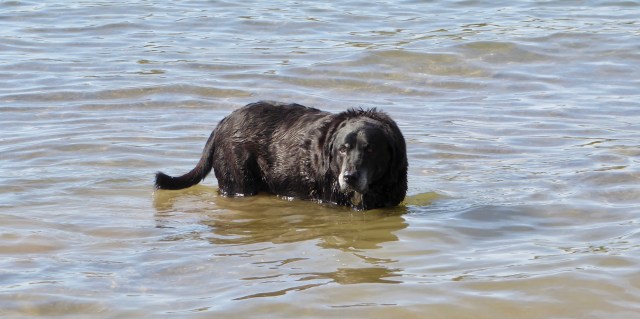 Elko enjoyed wading in at the Dog Beach several times a day.
 Kent and I took our canoe out and enjoyed a paddle! Notice the interesting erosion barrier in the background. Our TxDot friend, Mark told us that pocketed fabric is laid, liquid concrete is pumped in and allowed to dry. The fabric eventually decomposes.

 This area is above Parker Dam and the facility on the right is where water is pumped out to go to southern California.
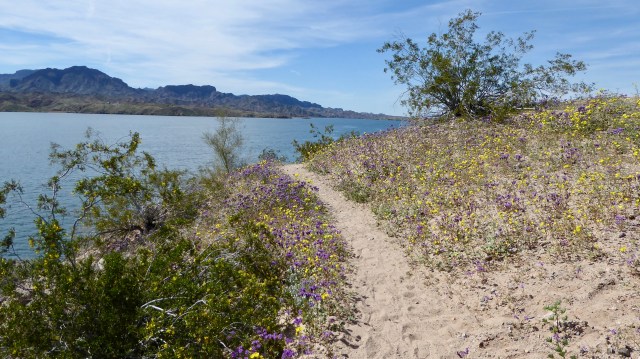
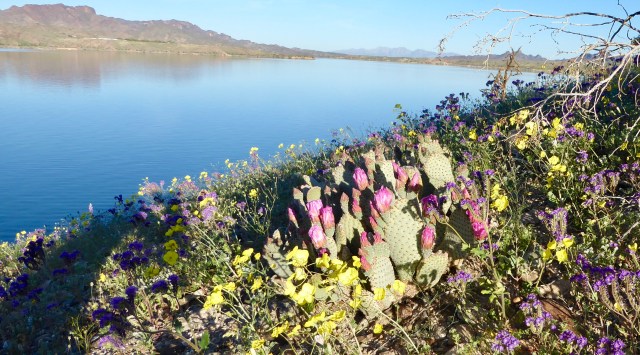
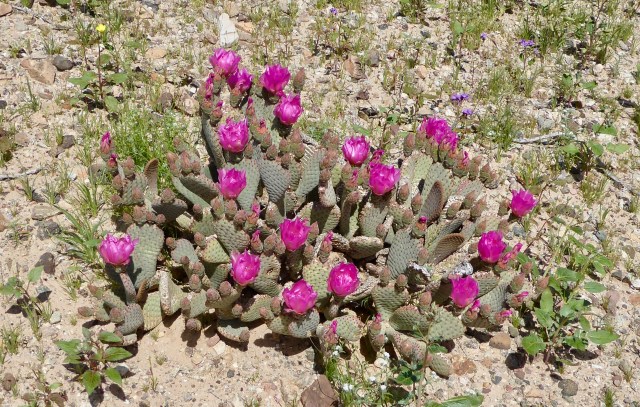 So, our stay in Arizona is done for another year. We decided we will not return to two of the resorts we visited this year. We didn’t have bad visits but, in both cases, there was continual jet noise that we tired of. Done and done! There are other parks!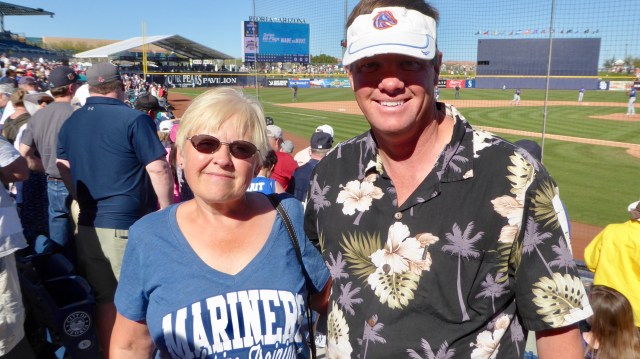


 We had a surprise meet-up this week with Boise friends who came south for Spring Training – Cubs fans Kevin and Karen! Thanks for the visit!

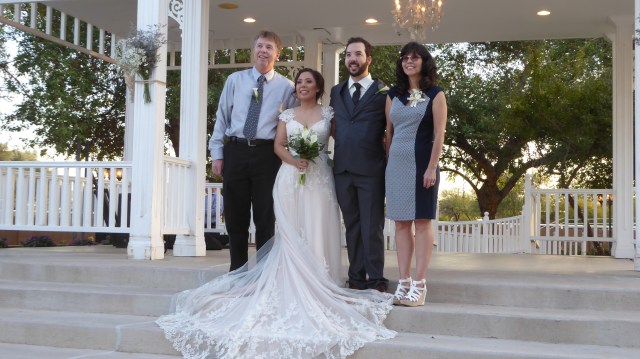
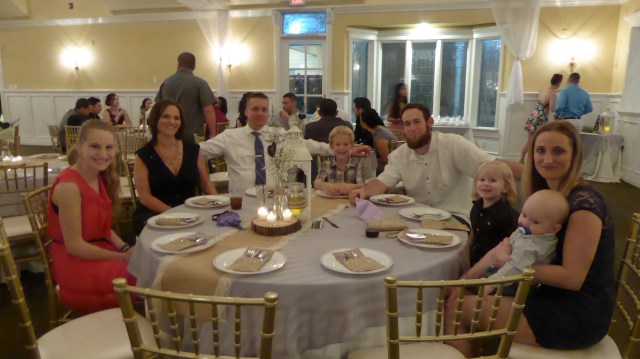 This picture shows two of Sean’s siblings, Tim (blue tie) and his wife Christal, and Michele (holding the baby) and her family. (Tim and Christal are also a Mr. and Mrs. Matthews.) Michele’s husband is also a Tim but they are not a Mr. and Mrs. Matthews. This part of Randy’s family is the crew we play Fantasy Football with and three of the eight owners in the league are named Tim.
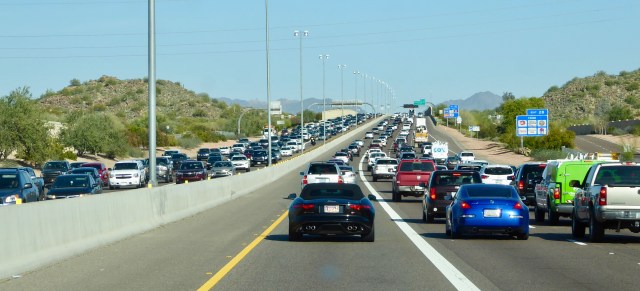 We were liking Phoenix more than we thought….and then it took us 90 minutes to go 30 miles from the west valley to Mesa!
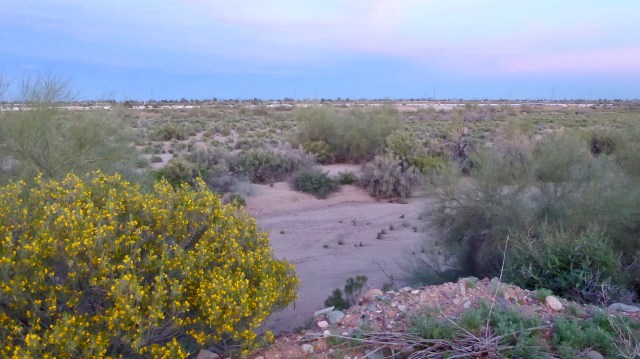 When I took Elko out at dawn our first morning here, we saw three coyotes in this wash about 100 yards from our trailer. There is a fence between the resort and the wash but it was still pretty interesting!
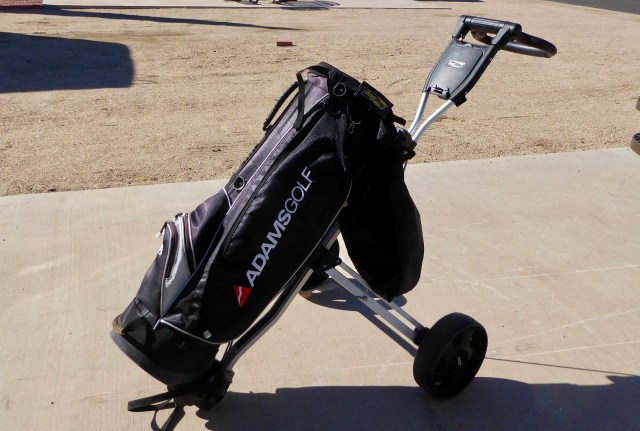 Randy bought a “new to him” golf bag and push cart at the resort patio sale for $20. Such a bargain!
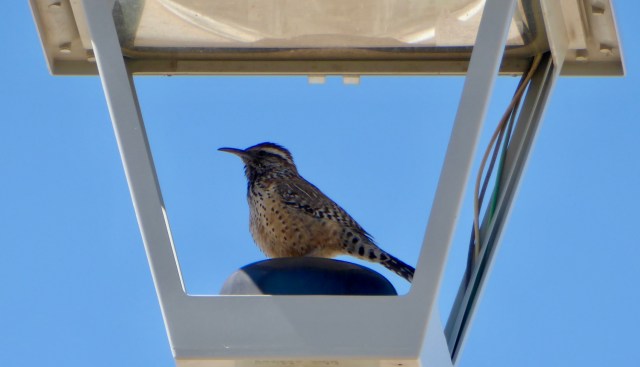 I mentioned to Randy a few weeks ago that I missed hearing cactus wrens this year. They have a very distinctive “start the engine” song and we’ve heard and enjoyed them on previous trips. Here is a
 Serene Wandering