Grandparents to the Rescue

Four days and 2200 miles ago we were in Connecticut.   Our daughter called and told us our grandson was in the hospital in Boise. Over the course of several days he was diagnosed with a blood and bone infection and treatment began. He was released from the hospital yesterday and is expected to make a full recovery but will need some extra attention for the next 4-6 weeks. So — grandparents to the rescue!

Actually, great grandparents came to the rescue as well. My parents went to Boise to help out while we cross the country at a pace of 700 miles per day. It took us almost two months to get to Connecticut but we’ll take 5 days to go back to Boise.

We left Hartford, Connecticut on Sunday late afternoon and drove as far as Wilkes-Barre, Pennsylvania. There we did something we’ve never done! We spent the night in a casino parking lot!

P1060811

Many RVers spend nights in parking lots for casinos, Walmarts, Cabella’s and truck stops. We choose to support local campgrounds so this was new to us. We didn’t know how long we’d drive that night so it was an option and it worked.  The night was cool enough that air conditioning wasn’t needed.  We went into the casino to have breakfast to give them a little business.


We spent the next night 700 miles down the road in Indianapolis so we could see our friend Rosa.  She was great to meet us at 7:00 in the morning so we could visit and still get on the road for our next 700 miles.

Most of the roads on the trips east and west have been pretty bad. Illinois was the exception with really nice roads and really big rest stops. This was just part of the “truck” side of the parking lot when we stopped to stretch our legs.

P1060813

Unfortunately we had to drive right through Iowa without seeing our “extended daughter” Christina and meeting her husband. We drove through Iowa mid-day when they were at work.

Our Nebraska night was in a nice campground owned by a young couple right off of I-80. It was hot and humid and we were really glad to have hookups to have air-conditioning!

We had big winds while driving through Wyoming but we managed not to litter this time!   We stayed in the fairgrounds campground and the trailer really rocked in 24 mile per hour winds gusting to 35 mph. You gotta love Wyoming!

P1060832

Our cousins Lynn and Marilyn were great to take us for an early breakfast so we could visit and still get on the road.

We left Rock Springs about 90 minutes ago and Randy just said we had 400 miles to go to get to Boise – That means our total trip will be 2709 miles done over five days (most of it in four).   Although I have offered, Randy has driven all of it so far and I don’t see him giving up the wheel in the final stretch!

We enjoyed the rally and meeting people and some terrific sites along the way to New England.   However, we did not enjoy the humidity and bugs!   We will go back and complete our trip someday but for now we are grandparents to the rescue.

Posted in Uncategorized | 9 Comments

Sturbridge: The Campground, the Town, and the Historic Village

Sturbridge is 60 miles southwest of Boston, Massachusetts.  We visited Boston years ago, loved the city, and would be delighted to visit again someday.   Yet, for this visit to Massachusetts,  our focus was Sturbridge.

We stayed in Sturbridge Campground, in the town of Sturbridge, for the purpose of visiting Old Sturbridge Village. A lot of Sturbridge going on….

P1060732

We lucked into the nicest campsite available in one of our least favorite campgrounds ever. If we hadn’t been given this nice site, in contrast to the normal awful ones, we wouldn’t have spent six nights here! As it was we shortened our stay from 10 nights to six…
P1060754

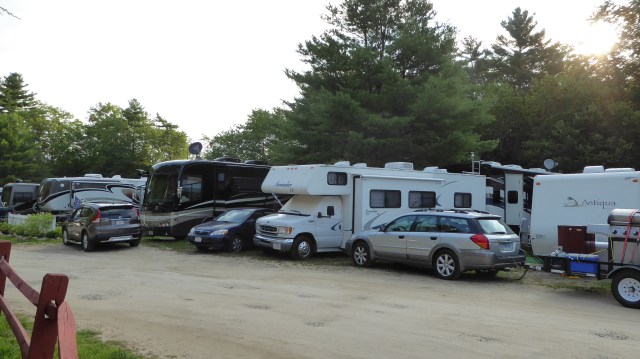
How the other campers lived…..


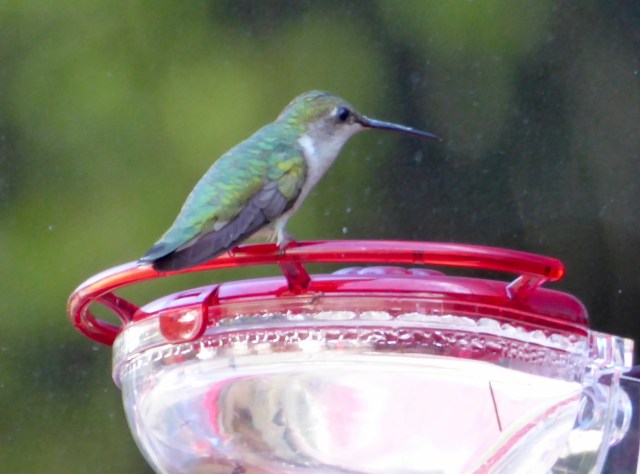
P1060741We did enjoy a multitude of hummingbird visitors while hanging out in our shaded yard feeling bad for everyone else.

We didn’t spend much time in the town of Sturbridge but we did go see Star Trek Beyond and Jason Bourne. It had been a while since we had the time and opportunity to see a movie in a theater.

P1060620

Old Sturbridge Village was the reason for visiting the area and it was terrific!
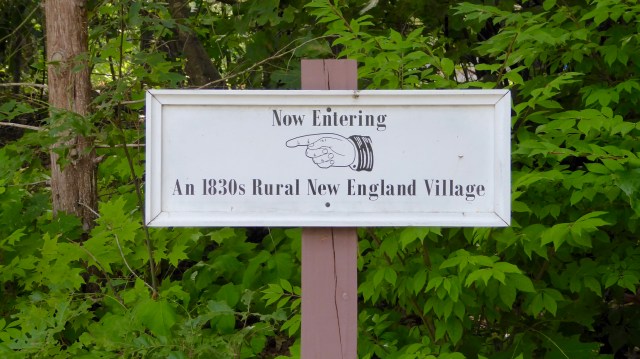
P1060727

As you walk through the village, and surrounding farms, you are able to talk with costumed historians and learn about “their” life.  Most sites had a historian available for our mid-week summer visit.

The firearms cabin held a large variety of rifles, hand guns, shot and powder horns. The top rifle is a flintlock fowler from 1725 New England. It was six or seven feet long.  Who could carry and shoot that thing?
P1060663
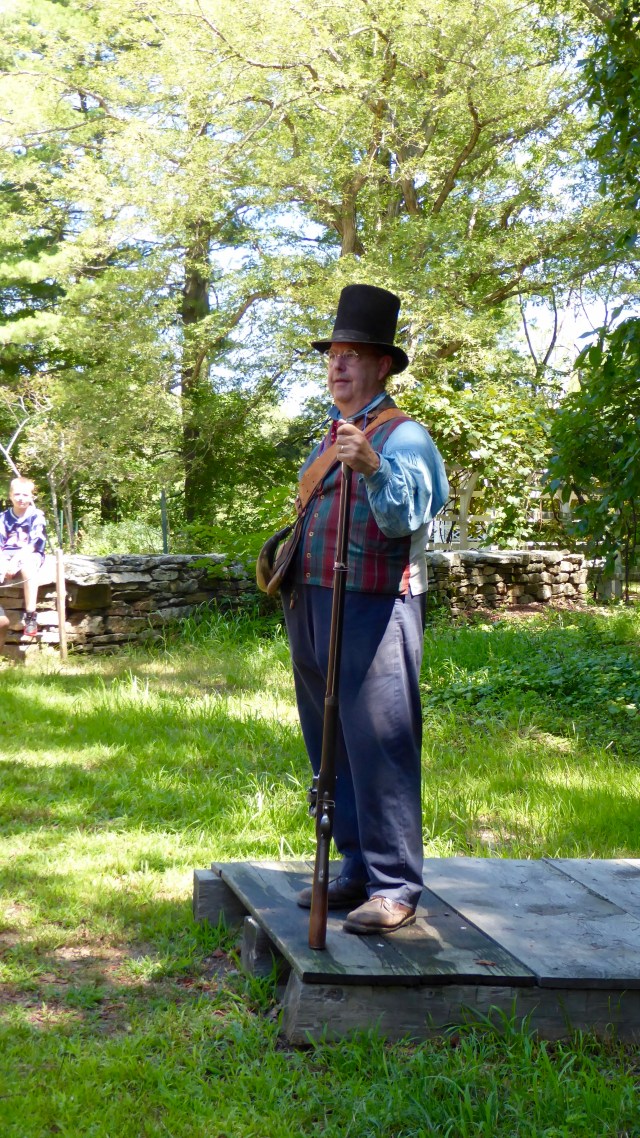
We learned about flintlock rifles and how they are fired. This demonstrator could reload and fire three times in a minute. (We learned that a crew from Jeopardy filmed this and other demonstrations as “answers” for the show. We saw them several times throughout the afternoon.  Those who watch Jeopardy, like my parents, will see Sturbridge references sometime soon.)

There was also a childrens group at Sturbridge for a day camp. They seemed to be having a great time.

We toured a village town home and saw how it was decorated.
P1060659

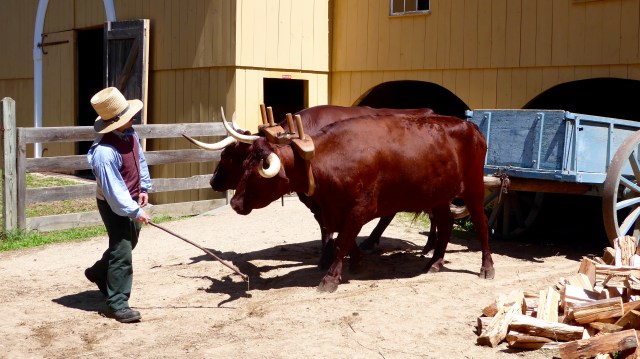
We watched  oxen pull a wagon and stayed to see them unburdened from their 50 pound yoke.  No one but me thought 50 pounds was needlessly heavy for the poor oxen.

We spoke with this farmer as he was using a scythe to cut grass for the cattle.  With steady cutting, a blade needed quick sharpening in the field every 15 minutes.  It would need to be sharpened more thoroughly after a full days work.   A man would cut an acre a day alone although usually a group of men worked together to cut fields more efficiently.


We saw wool from the sheep processed in the carding machine….

…to the spinning wheel to the dye pot.

Bright wall paper, produced in New England, decorated the early homes.  Space was well utilized with an early “murphy” bed.

P1060686

We went to a farm and learned about the crops and medicinal plants grown there. Some plants were brought from Europe and others were acquired from Native Americans.
P1060684

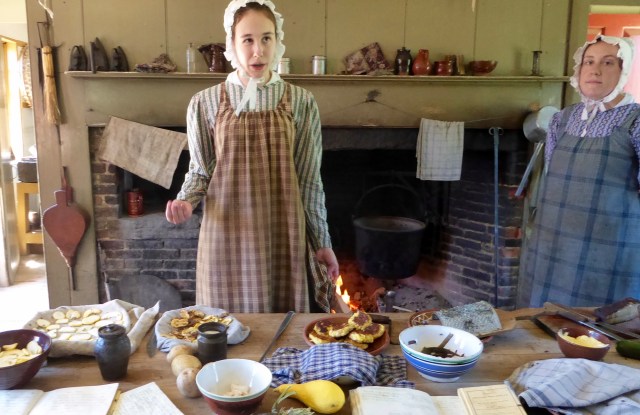
There were flies everywhere in this village kitchen so there was no temptation to snack!  In 1830s New England, people didn’t know there was a reason to worry about flies on food and no practical way to keep them away.

P1060687

The village had a cooper shop to make needed containers.

The village potter makes the vessels that were used in 1838. Once a year he fires 600-700 pots in the old kiln. Others are fired using modern methods.


The school teacher was 16 years old and made $6-8 per month, half of what a male teacher would make. Gender inequality started early…  She taught the alphabet to her youngest children but older pupils, up to 50 total, would study independently and come to her to recite their lessons.

P1060703

The cobbler demonstrated making leather shoes.  In early New England most common shoes did not have a differentiated left and right.


An experienced tin maker could make 16 of these lanterns in one work day.
P1060678
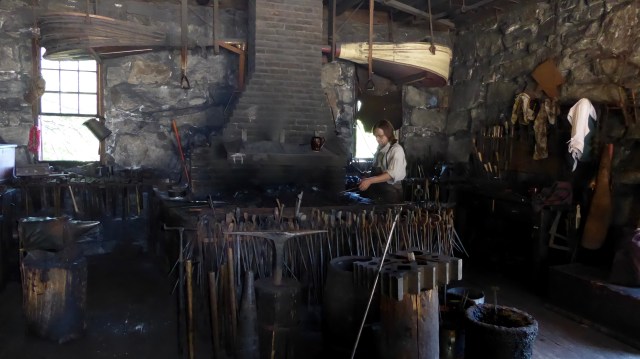
By 1838, most tools were made in a New England factory and the blacksmith was a repairman.
P1060706

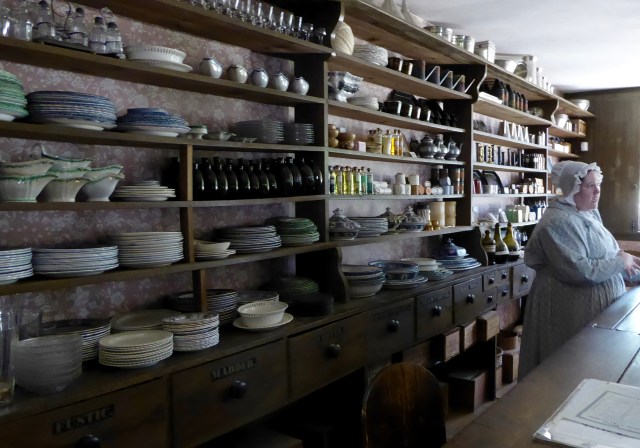
The shopkeeper sold goods from all over the world.   Villagers made butter and cheese as credit to buy what goods they needed and could not make.  The shopkeeper took the butter and cheese to the city to trade for goods.  These days, items made in the village such as pots, brooms, yarn and tin goods are available in the museum gift shop
P1060704

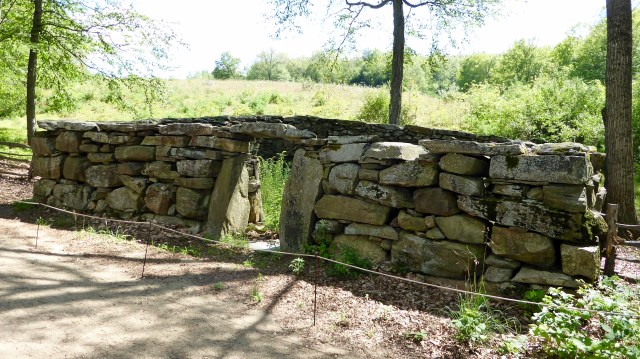
This was the pound for stray farm animals. The animal would be caught, impounded, and the owner would pay a fee to get it back.

Please don’t think we’ve shown you so much of Old Sturbridge Village that visiting is unnecessary.  It is absolutely necessary!  We had a great time and took advantage of a second visit free within 10 days.

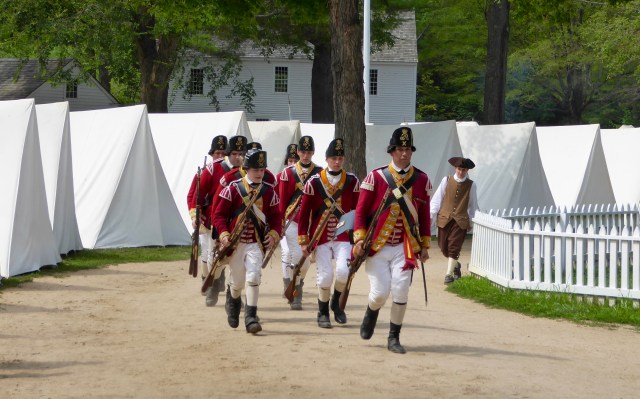
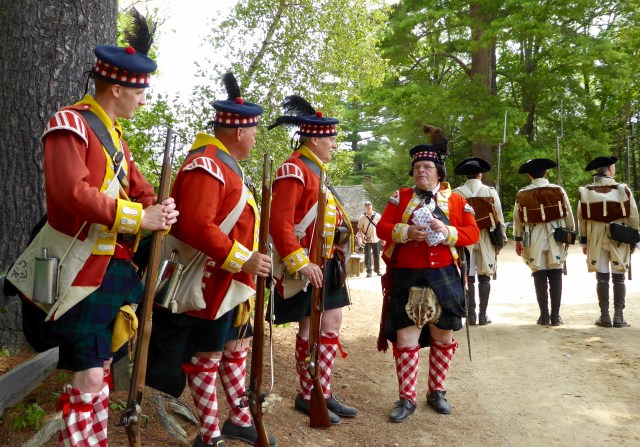
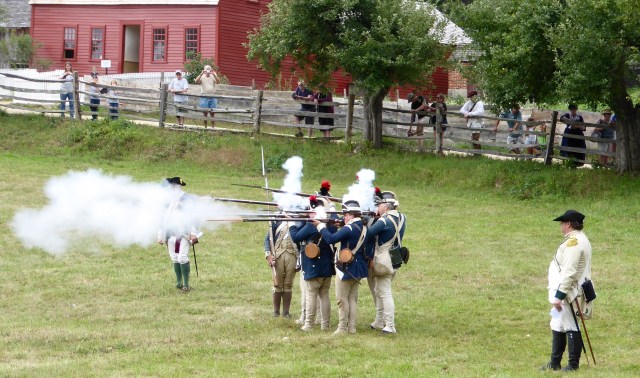
Why go again?   Because New England’s largest Revolutionary War Re-enactment was held while we were here.
P1060761

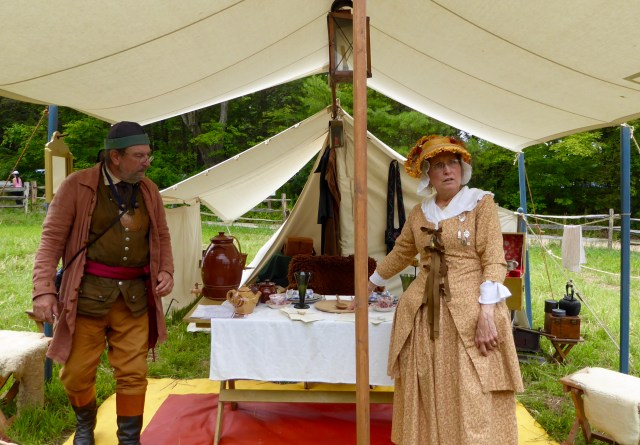
A commander of a militia unit was able to take some of the comforts from home.   His qualification for being the commander was that he was the wealthiest citizen, even though he may have had no military training.
P1060776

The British wore tall hats and cutaway jackets to appear bigger and taller and thus, more intimidating to foes.
P1060784

We weren’t sure which side these guys were on!   See the fox? We did’t get a chance to ask what that was all about.

The cavalry riders came through the infantry line after the guns were fired.  Only two revolutionary war battles used cavalry.
P1060789

The guns were fired in a volley because they were more likely to hit something that way.  Individual shots were not very accurate or reliable.
P1060801

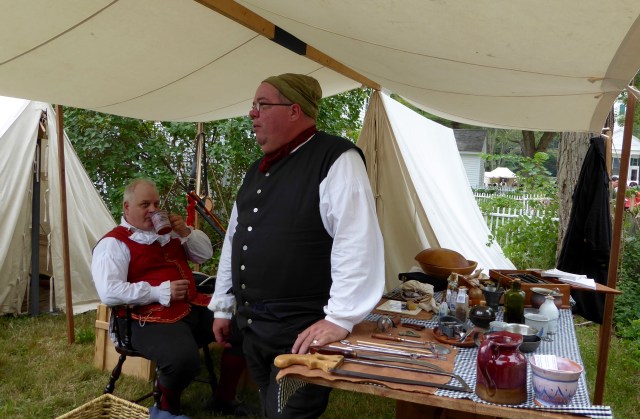
And with all the re-enacted shooting going on, the next stop was the doctor at the regimental “flying hospital”, a precursor to MASH units.   A doctor became a doctor by purchasing a manual, no experience or training required.  Midwifes often treated maladies that didn’t require “cutting” and used herbs for treatment.    Of course, there was no knowledge of bacteria or how to treat infection.

The re-enactors came to Old Sturbridge Village on Friday evening and stayed for the weekend – quite the dedication to this event.   We are glad we had a chance to enjoy the fun.

Old Sturbridge Village was developed because Albert Wells loved to collect everyday items from early New England. His collection was the beginning seed for the living history museum which opened in 1946.
P1060628

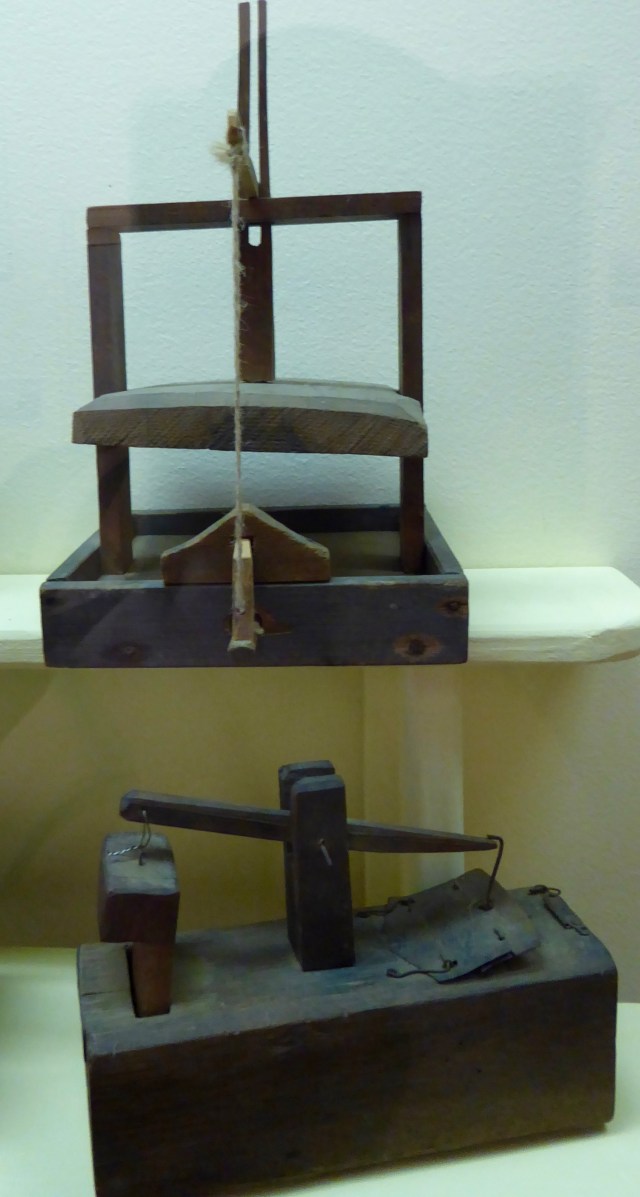
These are two of about 20 early mouse traps displayed.  At least they knew they didn’t want mice – even if they didn’t know they didn’t want flies!
P1060633

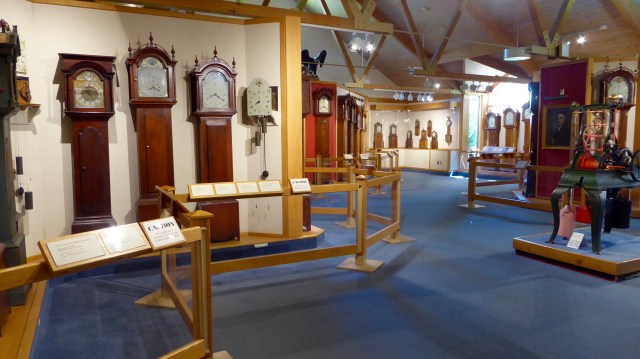
Collecting was a family trait. Brother J. Cheney Wells collected clocks and over 110 are displayed in the adjacent gallery.

P1060642

These clocks were from the mid 1700s.  Most displays included one showing the inner workings.
P1060634

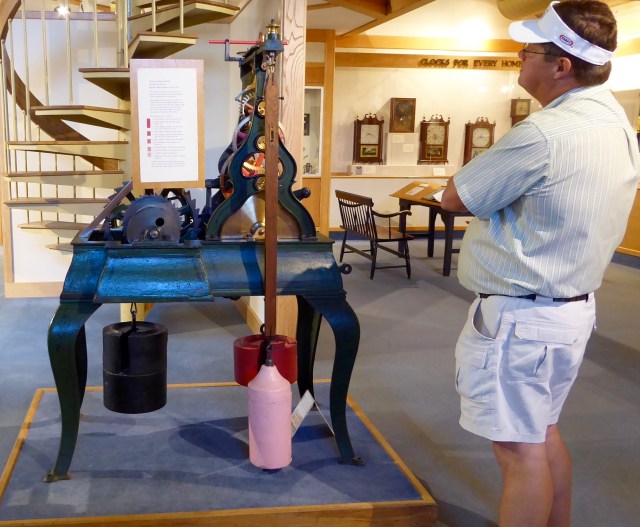
Ever the engineer, Randy was disappointed this clock wasn’t working and spent time figuring out how it would work.

Next stop….Connecticut!
 

Posted in Uncategorized | 2 Comments

Vermont: The Reason for the Road Trip

We made it to Vermont!  We came across the country for the 56th Escapees Escapade, an RV rally, in Essex Junction, Vermont.  More accurately,  we used the rally as an excuse to come to Vermont and beyond.

The same day we crossed over Lake Champlain into Vermont, we went to Vermont’s #1 tourist destination, Ben & Jerry’s!

Ben and Jerry’s began in 1978 with a $5  Ice-Cream correspondence course from Penn State.  “Cherry Garcia” was the first of many flavors named for rock legends. They sourced milk and other ingredients locally and took on social missions. In 2004, they partnered with Rock the Vote and registered 11,000 new voters on free cone day. They also served “Save The Swirled” ice cream to Paris UN Climate Summit participants in 2015.

Ben and Jerry’s pay their employees a living wage with benefits, including three pints of ice cream for every day worked with the caveat that the pints cannot be sold.  However, there is an extensive bartering system in the area!

P1060417

Not real – but they sure look real!

We went on a plant tour and received a small scoop of “Milk & Cookies” at the end. Yum! The line to buy ice cream was long so we were glad we had ours on the tour.

P1060418

Those sitting are awaiting the free Friday night movie!

The Vermont factory is the original of what is now six factories world wide and the only one giving tours. They produce ice cream 24 hours a day, five days a week, making one flavor at a time.

We enjoyed walking around the Flavor Graveyard. Some flavors “died” from weak sales but others died because specialty ingredients became too expensive or could no longer be obtained locally.

After the tour, we feel good about buying Ben and Jerry’s ice cream!


We spent most of a week at the Escapees Escapade, a rally to promote RV education and fellowship.  We were glad to see two couples we met at the Tucson rally last year, Dan and Sandie from New Hampshire, and Peter and Mary from Pennsylvania. We were also glad to meet Dan and Sandie’s friends, Ricky and Linda.

Participants were asked to pin their home. Our blue pin is in Boise.   The only other Idaho pin was in Coeur d’Alene for a couple presenting on Sky Med.

We just enjoyed ourselves. I got up every morning for line dancing at 7:30 and even participated in the Ham-O-Rama talent show with the line dance group. I love, love, love line dancing!

P1060479

There was nightly entertainment and the chance to meet RV “royalty.”

IMG_1841

We met John and Kathy Huggins. They have an RV website and a weekly RV podcast called Living the RV Dream. We listened to them for years as we were preparing for this lifestyle.

We went to a variety of seminars. The one we enjoyed most was about the Vermont Maple Syrup industry.   Vermont makes 40% of the country’s maple syrup. Twenty percent of Vermont is open land while 80% is forested, including lots of sugar maple trees!

A tree should be 10” in diameter before inserting a single tap. That tree might by 40-50 years old under good growing conditions. Larger, older trees can take multiple taps. Some still use buckets but most larger farms have a gravity fed tubing system.  These pictures are from their presentation.

Sugaring, or collecting sap, lasts 4-6 weeks in the spring for as long as there are alternating freezes and thaws. Sap has the consistency of water and a sugar content of 1.5 – 3 percent before it is boiled down to a syrup. It takes about 50 gallons of sap to make 1 gallon of syrup which darkens and deepens with age. Flavor differences come from different soils.

P1060432

That’s Randy in his new Ben & Jerry’s shirt!

An RV dealer sponsored happy hour each afternoon to promote visitations to his models. We had fun walking through the motorhomes.


We found a motorhome we liked but wouldn’t want to pay for it!

P1060433

There were a few extra pillows on the bed! Don’t they realize space is valuable in an RV!

P1060464

Randy even had the opportunity to give blood at the rally.

P1060495

After the rally, we traveled to Concord (pronounced conquered), Vermont and found lots to do in nearby  St. Johnsbury.

We went to the St. Johnsbury Athenaeum, donated to the city in 1871 by Horace Fairbanks. Fairbanks made his fortune from scales, many still in use today.

The Athenaeum is part public library and part art museum, originating with the Fairbanks family’s private collections.  Randy and I readily admit that we are “art impaired” but still knew enough to be impressed!

P1060506


The 10’ x 15’ painting, The Domes of Yosemite resides here. This very valuable painting has an interesting history and the athenaeum was built specifically to display it.

P1060508

Randy standing there for perspective.

The collection includes a variety of artworks, paintings and statues.

P1060514

This is a mosaic using pieces smaller than the naked eye can easily discern.

P1060512

This statue of Abraham Lincoln is thought to be the only one of him smiling.


There are a lot of really old beautiful churches in Vermont and this one had a labyrinth on the grounds. I walked the whole thing and found peace in the world at the center.

We went to the Fairbanks Museum and Planetarium!


We saw dead birds from all around the world –  3000 of them on display, with 2000 more in reserve!

P1060535.JPG

This is part of just one side of the display.  A duplicate is on the other side, plus a few more cases here and there!

We really liked  the Bug Art! John Hamson created nine pieces using bugs as a medium in the late 19 and early 20th centuries. The Fairbanks museum owns all nine and displays seven.

P1060567This Abraham Lincoln portrait contains 6399 insects and was made in 1916.

P1060559
This is a close up of another bug picture to help you see the bugs better.


Our last adventure in Vermont was Elko’s favorite – Dog Mountain!

P1060588

This is 150 acres of dog heaven – trails, ponds and other dogs, and no one wearing a leash!


P1060607
There is also a Dog Chapel where people leave pictures and remembrances of dogs they have loved.

I left a note about the dogs we have known and loved: Anna, Toby, Shoeless, Ravi and the “blond girls.”

P1060606

Should have added Shadow…

Vermont will be in the rear view mirror tomorrow when we head south to Massachusettes, but the reason for the road trip was worthwhile. We’re glad we came!

Posted in Uncategorized | 2 Comments

We’re in a New York State of Mind

We’re in a New York state of mind – or at least we’re in New York state…

P1060293

While planning the trip east there were two iconic destinations I wanted us to see in New York – Niagara Falls and the Adirondacks. (We went to New York City in 2012 and saw many of the city’s iconic destinations so they didn’t need to be part of this trip.)

As we approached our Niagara Falls visit the question was American side or Canadian side? Research and talking  with people in the RV park indicated that going to the Canadian side was the better choice.

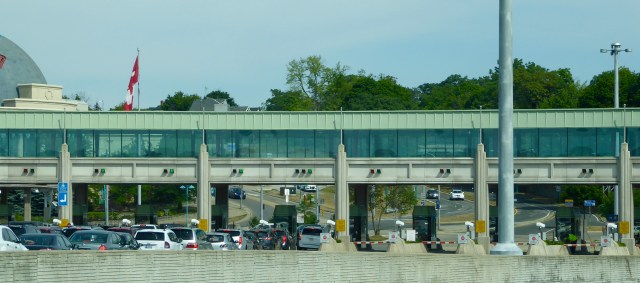
P1060294We grabbed our passports and drove across Rainbow Bridge to enter Canada.
P1060316

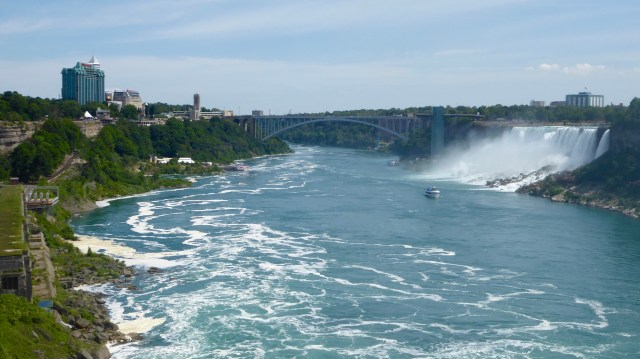
The Rainbow Bridge spans the Niagara River which separates the US from Canada.  American Falls and the vessel Maid of the Mist are on the right side of the photo.

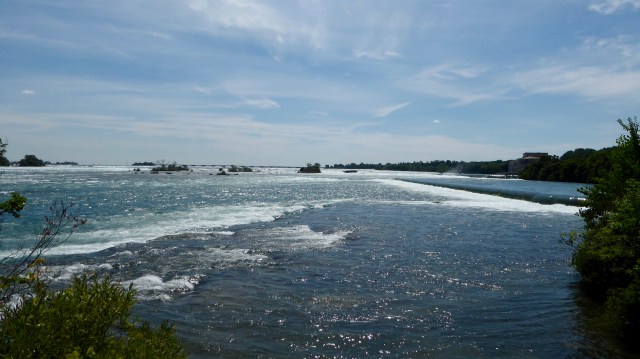
We parked just upstream from the falls and walked along the churning and unsettled Niagara River.

P1060298

P1060299

We noticed an old barge, unofficially named the Niagara Scow, stuck in the river above the falls.  It has been there since August 6, 1918, nearly 98 years!  It is slowly rusting away.

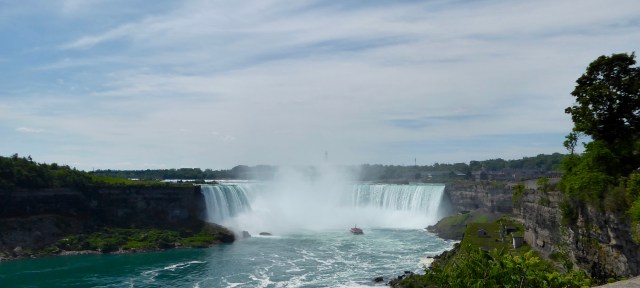
We saw the river preparing to drop 6,000,000 cubic feet of water every minute over Niagara falls.  Three waterfalls make up Niagara Falls:  Horseshoe, American and Bridal Veil. The Horseshoe Falls, viewed from the Canadian side, is what is seen most often in pictures.

P1060307As we approached Horseshoe Falls we could feel the mist. It was pleasantly cooling but also made it difficult to get nice pictures!
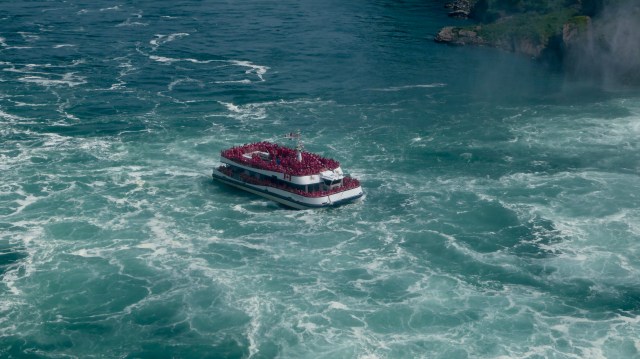
P1060324

P1060312

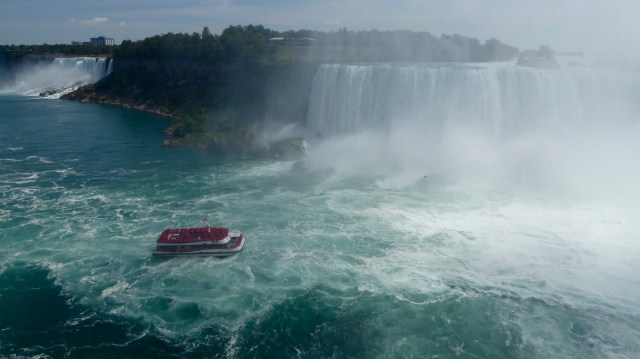
P1060311We watched the Hornblower and the Maid of the Mist approach the falls.  They allow visitors to get up close and personal at water level and we already had our tickets!
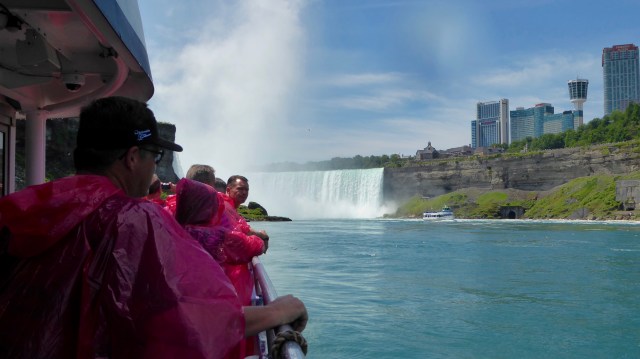
P1060341Since we were on the Canadian side, our vessel was the Hornblower. (Maid of the Mist operates off the American side.) They give you ponchos but you still get wet. It was fun and we would recommend going on one or the other!
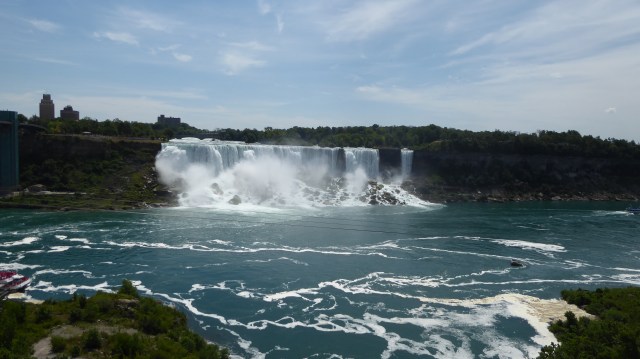
P1060326From the Canadian side, and on our boat, we had a nice view of American Falls.  If we saw Bridal Veil Falls, the smallest of the three waterfalls making up Niagara Falls, we were not aware of it.

After a two night stop on Grand Island, we drove across the state to the Adirondack Park region. I say region because the “park” stretches over six million acres and is larger than Massachusetts. Half of Adirondack lands are owned by the state of New York and half are privately held.

The Adirondack region is not a wilderness area set apart. It is a region of 2759 lakes and ponds and 1500 miles of rivers. There are 43 mountains over 4000 ft. and many forests, streams, wetlands and small villages.

P1060363

We went to the Adirondack Museum in the village of Blue Mountain Lake to learn about the area. The museum’s grounds and exhibits are very extensive.

One of the more interesting exhibits highlighted boats and boat building – something very important when you have so many lakes!

The museum has a boat builder in residence!  She works at the museum during the summer months crafting her boat and explaining the process to visitors.  It will be auctioned off and the funds will support the continuation of the program. Past boats have raised between $14,500 and $26,000 each.

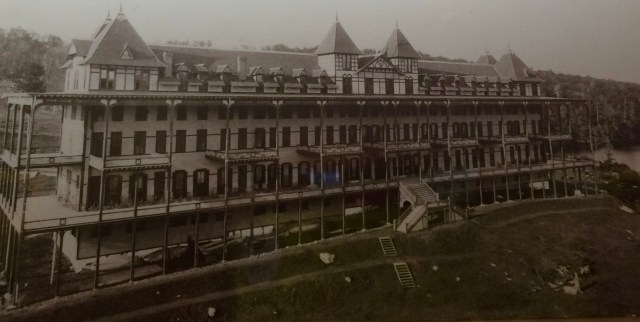
IMG_1801We learned about the history of the Adirondack region.  Although it was difficult to get to, people have been coming to the area since the mid 1800s.  One of the earliest grand hotels was the Prospect Hotel, opening in 1882. Even given the remote location, the Prospect was the first hotel in the world to have electric lights in every room. After the 1893 financial crisis and a typhoid epidemic, the hotel closed in 1903. The once glamorous hotel was torn down in 1915.
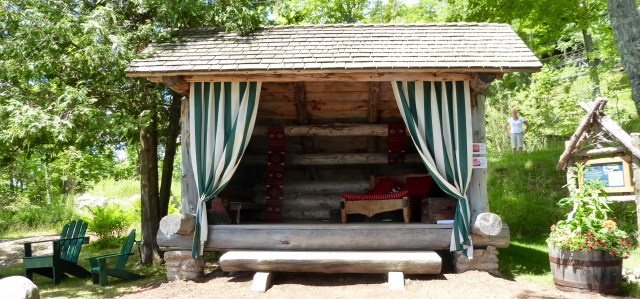
P1060366

In the early days of the park the state supported individuals and groups building camping lean-tos such as the one above. If built on public lands, they were to be available to everyone.

P1060369

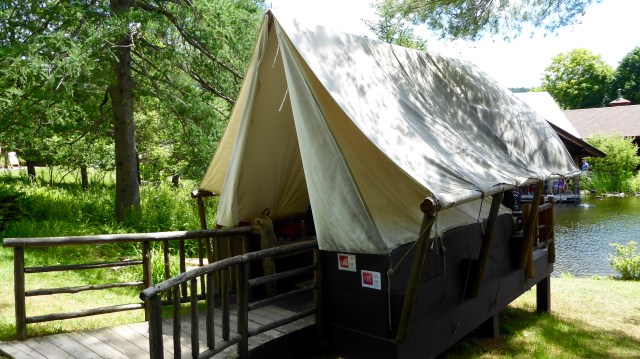
This tent represented the history of tuberculosis patients who came to the Adirondacks for pure air treatment.

The Olympics were held twice in the Adirondacks  – both times at Lake Placid.

This is the bobsled that the Stevens brothers used to win the gold medal in 1932.

These are “Miracle on Ice” hockey tickets and gold, silver and bronze medals from the 1980 Olympics.

There were beautiful cabins on the grounds representing the thousands of family cabins throughout the Adirondack region. The furniture within the cabins was amazing.

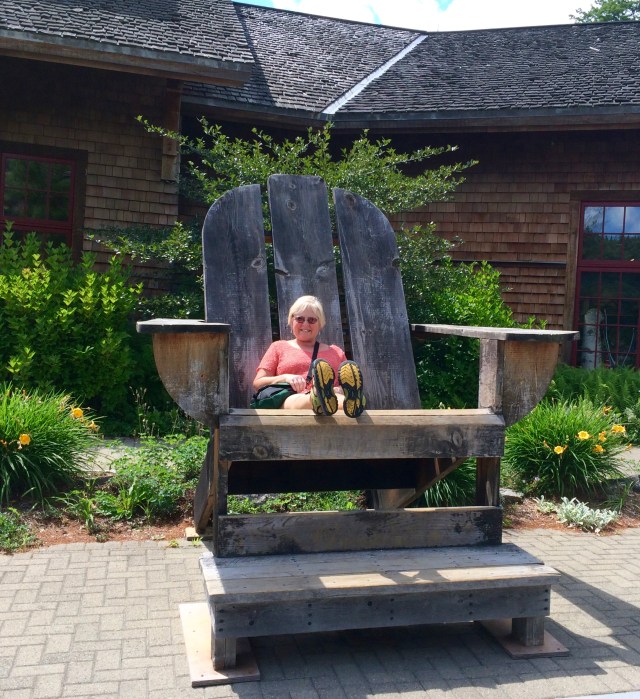
Of course, there were a few Adirondack chairs around the museum grounds!

IMG_1825

And one that was just my size!

Posted in Uncategorized | Leave a comment

Rural Ohio Surprises

We continued our travels in Ohio near the small town of Jefferson. We stayed four nights in one of the nicest Thousand Trails Parks we’ve ever been to, Kenisee Lake Resort.

While in Jefferson we met up with Titan brake mobile installers John and John (and Courtney).

When our truck brakes were replaced in Boise, we were told that they had virtually disintegrated due to overuse.    Randy began to research installing better braking support on the trailer itself and had pre-arranged installation of hydraulic over electric brakes.

Randy took the opportunity to clean the wheels and Elko supervised it all.

The end of the brake project was delayed overnight when the old studs and new studs were different sizes.  Randy combed northeast Ohio for the specialized lug nuts and found just what he needed.   The installation was complete and, after a test drive with John,  all seems well.  Randy says he can really feel the difference using the new trailer brakes.

We also did some exploring in the area.  We took a short drive and saw the shortest covered bridge in the United States.   The West Liberty Covered bridge is only 18 feet long.


Another short drive took us to the longest covered bridge in the United States.   The Smolen-Gulf Bridge is 613 feet long.   Both of these bridges are in Ashtabula County, Ohio.  There are 16 more covered bridges in the county  but we didn’t take that on as an exploration mission.

P1060233

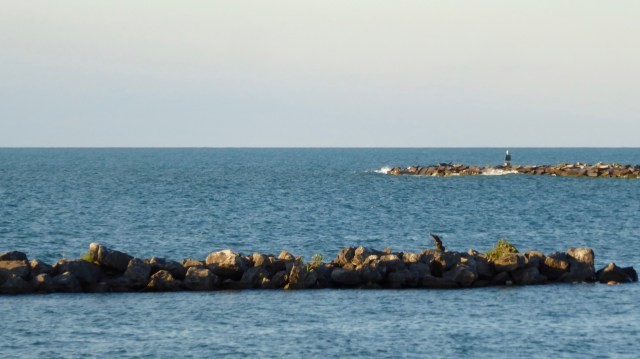
We were finally able to get close enough to a great lake to take a picture!   Elko wasn’t allowed in the lake side park so we snapped the picture and left. Although we traveled along a “scenic byway,” there were usually houses and estates between us and Lake Erie.  We expected scenic overlooks allowing us to stop and enjoy the view but there were none.    We really feel the difference in access to coastal areas compared to what we are used to in the west.

We found another difference from east to west right in the campground!  Our very nice neighbors were sending sky lanterns aloft with an active flame. We went right over to investigate!  Supposedly the flame raises the lantern and extinguishes itself before falling to earth somewhere along the wind pattern. (So it isn’t really a fire hazard – it’s just littering.)  We told them you could never do that in the west!!

P1060256

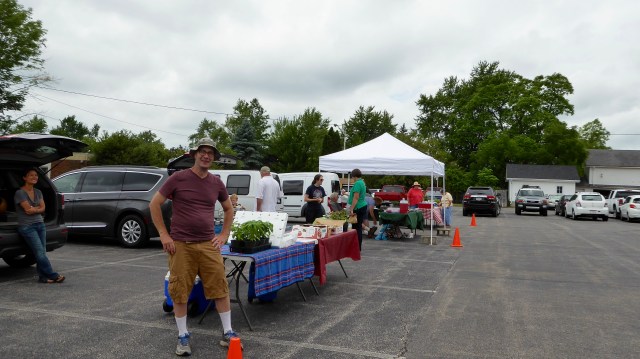
I went to a very small Farmer’s Market in Jefferson. The man in the foreground noticed my Boise State bag and told me his daughter attended Boise State while stationed at Mountain Home. Its a small, small world!

museum949

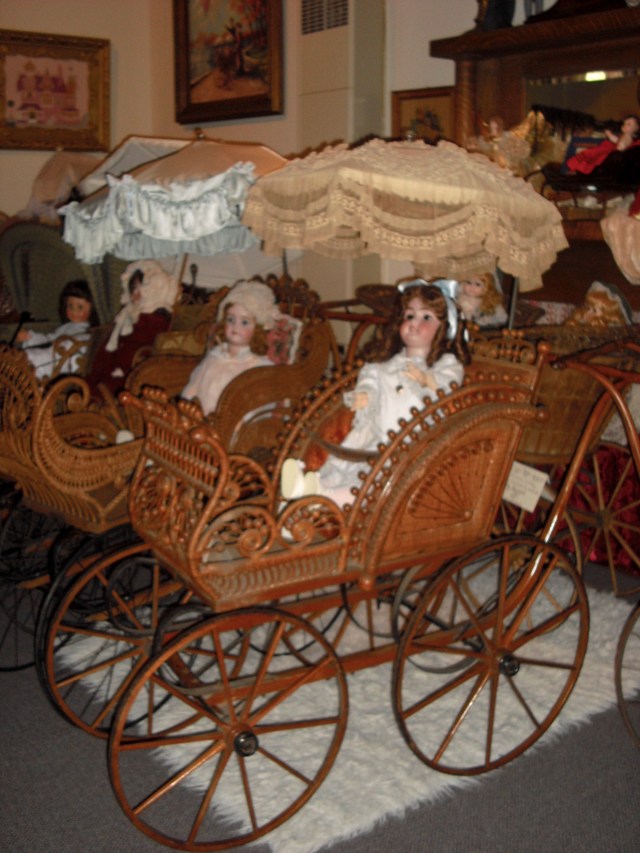
Because I was in Jefferson and it was in Jefferson, I went to the Victorian Perambulator Museum and Art Gallery. I knew I would be seeing a collection of baby carriages and assumed I would buzz through and it would be slightly interesting.   Wow, was I ever wrong. Given that I have very little interest in baby carriages, miniatures and Victorian art in general, I was still amazed at the things I saw.

Twin sisters have collected over 250 handmade, artistic baby carriages over the last 42 years.  They give personal tours showing and explaining their vast collection. They do not allow personal photos so these are from their website.

P1060252.JPG

One of their prized acquisitions is this carriage that Queen Elizabeth and Princess Margaret rode in as children. Later, it was used in a scene at the Munchkin Village in The Wizard of Oz.  Passing through several owners, including the Ringling Brothers, the carriage now resides in the Perambulator Museum in rural Jefferson, Ohio.

P1060250

I had to look twice at the Christmas tree hanging upside down!  This tradition has its roots way back in time.   St. Bonafice journeyed from England to Germany in the 7th century to preach the message of God and used triangular trees to represent the Holy Trinity. The triangle pointed down to show God coming to earth. By the 12th century it was custom to hang Christmas trees upside down as a symbol of Christianity.   Ornaments hang nicely this way!

The Perambulator Museum is one of those places you could visit 20 times and not see everything.   If this is up your alley, check their website before you come to Jefferson, Ohio.   They are hoping to move to a larger facility in a larger city so more people will be able to see their collection.
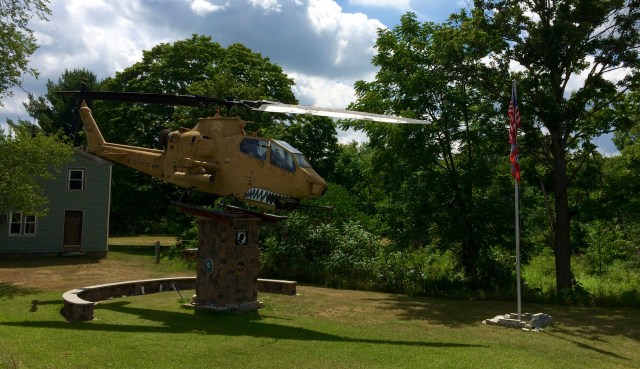
IMG_1783The next day I went to the post office in Rock Creek, Ohio to mail a postcard to our grandson and saw this Cobra Attack Helicopter tucked in behind the building. Research indicated this is a memorial for Veterans of Foreign War Post 4953.

As always, wherever we go we find things that are unique and interesting! Next stop is Niagara Falls – I think we know what will be interesting there!


Posted in Uncategorized | 2 Comments

Cleveland, Ohio: Getting In and Out Before the RNC


P1060196There was a time a couple of weeks ago when I looked at our presumed itinerary and had momentary panic that we were going to be in Cleveland at the same time as the Republican National Convention.   Although I love history, due to the unique and potentially volatile nature of this event,  I wanted us to stay far away from it.   It was a relief to know we were scheduled in and out a few days prior to the RNC beginning so we didn’t have to re-route or change plans.

We wanted to go through Cleveland to see Elizabeth (one of our extended daughters from way back), her husband Dan and their two boys.

P1060205

Elizabeth and baby Mark – He’s not looking too happy at the moment.

P1060197

Dan, Luke and Randy looking at a wonderful hand made book by Grandma Sloan.

We had a delightful visit and, once again, are so glad that this lifestyle allows us to visit people we wouldn’t otherwise see.

While we were in the area, we took the opportunity to visit nearby Cuyahoga Valley National Park.  This park preserves 33,000 acres between Cleveland and Akron, protecting the river valley from development, and providing green space for those living in the cities.


We road the Cuyahoga Valley Scenic Railroad on a leisurely trip through the valley. There was an app that allowed me to get periods of narration along the route.

P1060214

The next day I was listening to a Memory Palace podcast when, serendipitously, the topic was the Cuyahoga River. That 9 minute podcast link is here…..Memory Palace oil-water.   Of course, the podcast prompted some additional research.

The Cuyahoga River, flowing north through the valley, through Cleveland, and into Lake Erie, was once one of the most polluted rivers in the world. Due to decades of oil refinery leakage and waste, the river caught fire 13 times between 1868 and 1969, killing workers and destroying property. Over time the pollution was so bad that the river supported no fish and wildlife between Akron and Cleveland and was described as “oozing” instead of flowing.

Although the 1969 Cuyahoga River fire was easily extinguished due to practice and improved technique, people were beginning to get concerned about the environment. That last fire was the “spark” to create the Environmental Protection Agency and the Clean Water Act in the United States. The Cuyahoga River water quality has improved, and fish and wildlife have made a partial comeback, but even all these years later there is more recovery needed.

P1060220

The closest we got to downtown Cleveland was on our way out of town. We know there is lots to do in Cleveland so we’ll come back someday.

As we were driving east through Cleveland, we saw evidence of the upcoming Republican National Convention.

P1060223

P1060221

We talked with several people throughout our stay who had experienced various levels of  security checks and workplace inconvenience.  Our conversations were general in nature and didn’t address the unique aspects of this particular event.

P1060218


Throughout Ohio we saw this sign along the highway and tried and tried to think of what it would mean. When I finally looked it up and found it to mean  “No Hazardous Materials” we had a “duh” moment!

We have moved east but are still in Ohio.  More on that next time.


Posted in Uncategorized | 2 Comments

Indiana – The Amish and the RVs

As I write this, we are at the beginning of another thunderstorm.  The thunder is bellowing and the rain is pounding and I just saw the first of the lightning. This time we are in a campground with large trees. I’m not sure it is safer, but it feels safer than being totally exposed like we were in Wisconsin.

For this storm, we are in Indiana. We are near the communities of Shipshewana, Goshen and Elkhart. The Amish and the RV industry are prominent here.  We experienced aspects of both.

It is very common to see Amish horse drawn carriages along the county roads. The Amish believe the use of automobiles cause people to be away from home and family too often.  Automobiles speed up life and cause people to forget what is really important. Buggies keep people close to nature and to their communities.

We learned about that and much more at the Menno-Hof Museum. The main structures of the museum buildings were built in six days in a “barn raising” style by peoples of faith from all over the region. It took a year and a half to complete the inside.

P1060132

The museum has several multi media presentations about the anabaptist movement as part of the Reformation in the 1500s.  The anabaptists opposed the Roman Catholic  practice of infant baptism. Anabaptists believed baptism should be delayed until adulthood as a voluntary confession of faith.  That was just one of seven differences they cited between their tenants of faith and the Roman Catholic Church.

For two centuries the anabaptists were persecution by governments and the Catholic and Protestant churches. The believers spread throughout Europe hoping to find a place to practice their faith in peace. One group split off, became the Hutterites, and practiced communal ownership and communal living. Another group believed the anabaptist Mennonites were not strict enough in their practice and broke away to become the Amish.

Quaker William Penn invited peoples of persecuted faiths to settle and worship on his lands in the new world.  This area was known as Penn Sylvania, meaning “Penn’s woods.” From there the Mennonites, Amish and Hutterites expanded into this country.  Russian Mennonites brought a hardy winter wheat which established the American and Canadian wheat belts.

P1060174

We learned that all three groups of anabaptists still live out their faith in this area and around the country.  Hutterites still live communally and number 30,000.  The Mennonites are the largest group and, although they look and live similarly to other Christians, they still worship with the same anabaptist beliefs.   The Amish “live within firm boundaries they set for their lives.”  Almost all new Amish are born into the faith.  It was one of the finest museums we’ve been to and two hours went by quickly.

P1060074

On the RV side, we went to a few of the many RV surplus stores in the area. We were looking for a new loveseat but didn’t find one we liked. Too bad we weren’t looking for one of the millions of parts that were available!

P1060195
We saw how thousands of those parts are put together at our Montana Factory Tour, where our 2012 Montana was born. Randy has been frustrated at times with how our trailer was built so we were not expecting to be impressed.

P1060182

The frames are custom made for Montana fifth wheels.


P1060185

It was interesting to see the order that various components went into the trailers.

P1060186

Of course, many pieces are pre-made prior to assembly.

P1060188

We were able to walk into of some of the trailers in various stages of construction. The crew was gone because it was a hot day and the facility is not air conditioned.  They had worked from 4:00 am to noon.

The last few trailers on the line had red ribbon pieces on them.  Because women seem to have the better eye for this task, they compose the team that finds the defects and blemishes to be fixed before a trailer is considered complete.   Most times we could not see the defect the ribbon was identifying.

Eighteen Montana Fifth Wheels, of various floor plans, are completed at this site each day.  Each trailer takes a day and a half to assemble.

P1060194

Our tour guide told us about one of their upcoming “improvements.”  These stairs fold up as one piece and latch in the doorway.  I was able to raise and lower the stairs but see them as an accident waiting to happen.  Randy and another engineer pretty much picked apart the idea and our guide seemed deflated.   It will be interesting to see if the stairs are really used and how long they last.

P1060193

We felt better about our own Montana walking out of the tour than when we walked in!

P1060077

We went to the RV/MH Hall of Fame and Museum.  The motorhome on the left is vintage 1970s with original decor including bright orange shag carpet.  It is the ugliest trailer or motor home we’ve ever seen!  Surely, it was beautiful it its day.

P1060085
Inside they have  many old trailers and motor homes.  The first dates from 1913 and was pulled by a Model T.  Unfortunately there was no good angle for a picture of that one.

P1060113

The 1929 Covered Wagon was the first production trailer in the US but went out of business during World War II.

P1060103

This 1939 trailer belonged to Charles Lindberg.


Mae West’s House Car wasn’t for camping.   It was a chauffeur driven lounge.

Although this looks like an old trailer, it is really a new “old” trailer. Very cute!!

P1060119

We saw this motorhome as we were leaving the RV Museum. It looks like the dogs are ready to get moving!

We’re moving too – this time into Ohio – but Elko isn’t driving.


Posted in Uncategorized | Leave a comment

En-route: Small Town Finds

After our excitement in Wisconsin we were ready for a couple of easy state stickers for our map! We rolled into Belvidere, Illinois with no expectations beyond that. This was an en-route stop on our journey, not a specific destination. Belvidere showed us that we should always have expectations!

Belvidere, a small town west of Chicago, considers itself the “City of Murals” with 15 murals in its downtown area. We saw these four murals when we had lunch.

P1050998

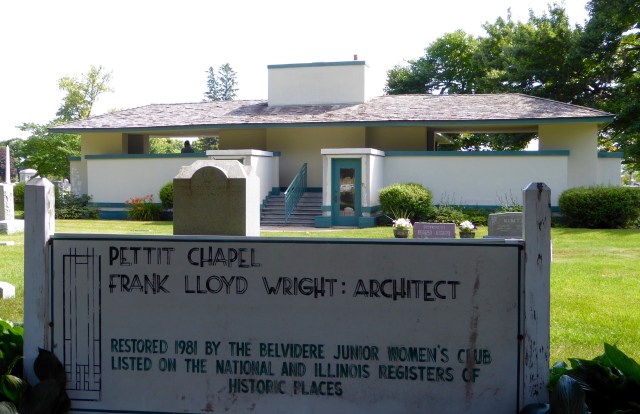
We also found the Pettit Chapel in the Belvidere Cemetery, one of only two chapels ever designed by Frank Lloyd Wright. After reading the book, Loving Frank, I’m not a fan of the man,  but I can appreciate the history and beauty of his designs.

Emma Pettit commissioned the Pettit Chapel as a memorial to her deceased husband, Dr. William H. Pettit, beloved physician and humanitarian. Built in 1907, the chapel is on the National Registry of Historic Places.

P1060016

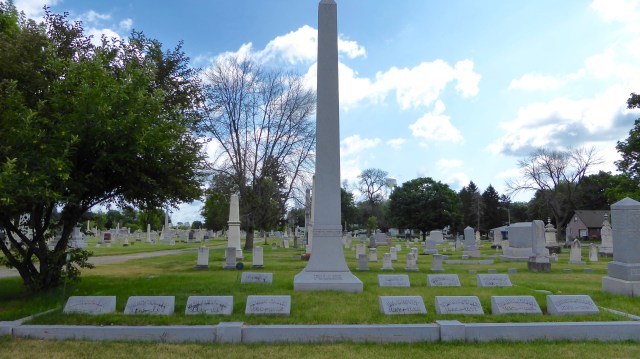
The cemetery has a historic walking tour with 36 grave markers identified for people who contributed to “historic progress of the community, state and the nation.” Here are a few:

P1060004

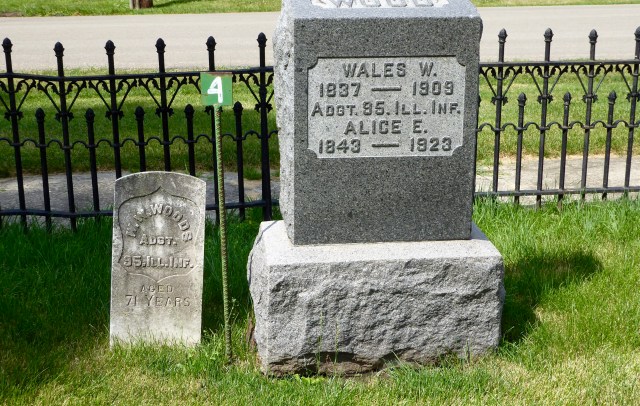
Wales Woods was a lawyer in New York before coming to Belvidere. During the Civil War he was appointed Adjutant to the 95th Regiment of the Illinois Volunteer Infantry. In addition to his service, he wrote a detailed history of the 95th, a regiment that was decimated at the Battle of Guntown, Mississippi. An interesting side note about the 95th regiment involved one of its former privates.  In 1913 civil war veteran Albert Cashiere was hit by a car and found to be a woman, Jenny Hodges.

P1060027

Also from the Civil War era, Adjutant General Allen C. Fuller was buried in this family plot. As a memorial for his daughter Ida, who died at age 24, he commissioned Belividere’s free public library in 1883.

Gravestones for other war veterans are found throughout the cemetery, even from the Revolutionary War.

P1060030

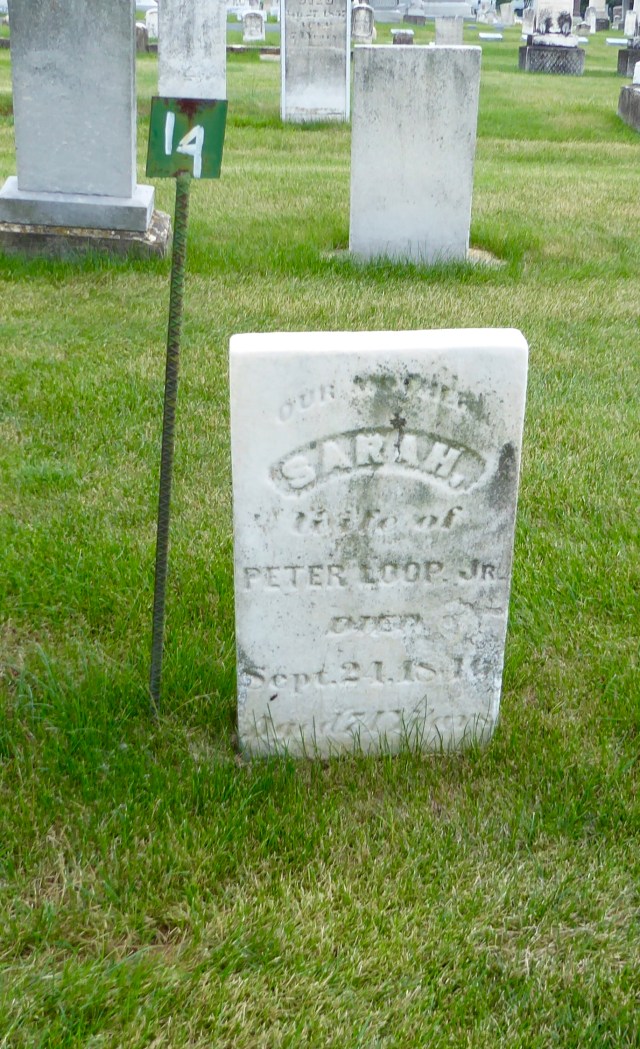
Sarah Loop was the first white woman in Boone County, Illinois.

P1060031

There were two sets of intertwined tree headstones, this one for Cephas and Pamelia Gardner.

P1060040
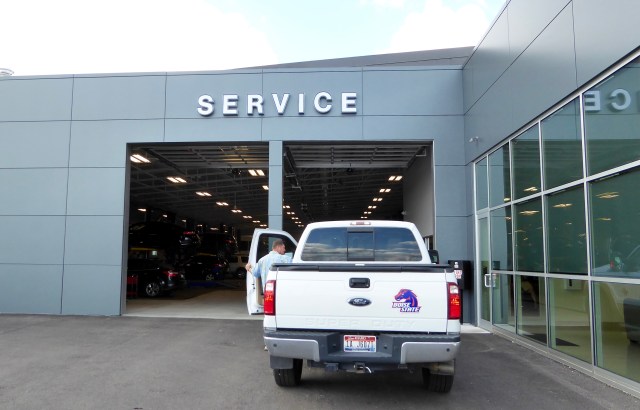
Our truck was telling us it needed fresh oil so the next stop was Manley Ford. The first thing I noticed walking in the door was script on the wall saying “World’s Second Oldest Ford Dealer.” Does that not beg the question where is the world’s oldest ford dealer?  I asked the first employee I saw who responded that he had no idea. Surely I’m not the first person to ask.  It seems if you put that statement on the wall, employees ought to know the answer to the obvious question. As I had time and my phone I did the search…..

Oldest Ford Dealers in the World
Tenvoorde Ford, St. Cloud MN
Manley Ford, Belvidere, IL
Diehl Ford, Bellingham, WA
Fairmont Ford, Fairmont, MN
Swanson Ford, Ceresco, NE
Tiffany Ford, Hollister, CA

Manley Ford also says it is the 3rd oldest car dealer in the world, not exclusive to Ford. There was a list of all the various types of cars they had sold, beginning in 1883, most of which I had never heard of. But by then my interest had waned….

There were a variety of Henry Ford quotes on the walls, including this:    Anyone who stops learning is old, whether at 20 or 80. Anyone who keeps learning stays young.   Randy and I should stay forever young if we keep learning things along the way.

The next day we learned about toll roads on the somewhat harrowing trek from Illinois, through the northwest corner of Indiana to the southwest corner of Michigan. We tried to route around most of Chicago but it is too big to escape completely.


We encountered our first, second, third, and maybe even fourth toll roads! Thanks to Gerry and Kathy, friends we met in Arizona last winter, we were prepared with our Illinois I-Pass giving us half price tolls in Illinois.  The pass also works with other states’ toll systems throughout the midwest and northeast. Our toll expenditures for the day –  $19. We were glad to be able to drive by or through all of those toll collection stations instead of getting in lines and worrying about having the right cash.

P1060055

Michigan’s theme seems poignantly sad given the Flint water situation.

We arrived for our overnight near Buchanan, Michigan. We have been told many times that we should go to Michigan’s upper peninsula and someday, when we forget about the bugs and humidity of this region, we’ll come back.  This quick stop was all about getting that Michigan sticker on our map!

P1060072

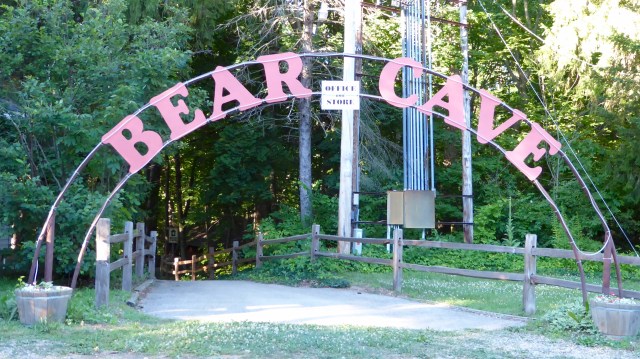
Yet, even here in Buchanan, Michigan we found something of interest. Our campground is called Bear Cave Resort and even though the “resort” label is stretching it, there really is a Bear Cave.

P1060057

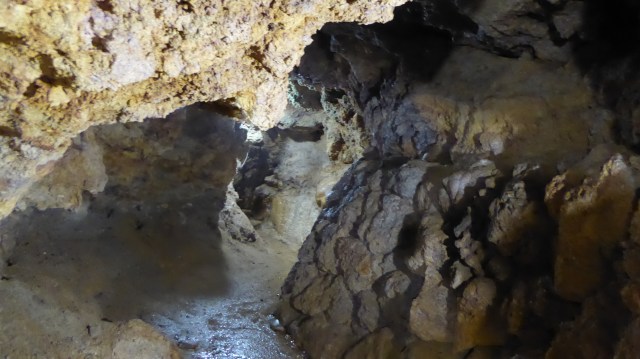
Caves are rare in this part of the country and this one was formed by glacial drift 25,000 years ago. The cave is about 150 feet long, 10 feet high and 4-6 feet wide. It opened for visitors in 1940.

P1060067

The interesting thing about this cave is that it was used as part of the underground railroad during the civil war. Fleeing slaves were brought up the St. Joe River, hidden in the cave until nightfall, and then sent to the next station enroute to Canada.

In addition, the 1903 silent movie classic “The Great Train Robbery” was filmed at Bear Cave. The movie was based on a real Ohio bank robbery and the bandits used Bear Cave as a hideout before escaping the country.

We tried to take a trek to Lake Michigan, just to see it, and let Elko wade in a great lake. Unfortunately, public access to the lake in this corner of Michigan is almost non-existant. Two towns had some access but did not allow pets so we went on by. Coming from a western perspective where scenic over-looks and public access are the norm, we were disappointed.

We did see lightning bugs on the drive back to the campground though! Randy is re-living his Oklahoma childhood seeing the lightning bugs! Guess there are good bugs to go with the bad!

Moving today – back into Indiana!

Posted in Uncategorized | Leave a comment

Wisconsin: We Earned Our Map Sticker!

We were glad to arrive in Wisconsin, a state that neither of us had been to before. We were excited to reconnect with friends Peggy and Myron, our neighbors for the month of January in Yuma.   It was an easy decision to come through Mondovi, Wisconsin and see them.

P1050965

All was well as we arrived and got settled in on their daughter and son-in-law’s farm. Peggy and Myron live full time in their toy hauler trailer and have this area as their home base for the months they are in Mondovi.

We visited very comfortably and were glad we had come. They showed us around the area and we went to dinner. We knew thunderstorms were expected so we went back and settled into our respective trailers anticipating some lightning, thunder, rain and wind – regular thunderstorm stuff. We like storms, no problem…..

P1050946.jpg

Problem!!!

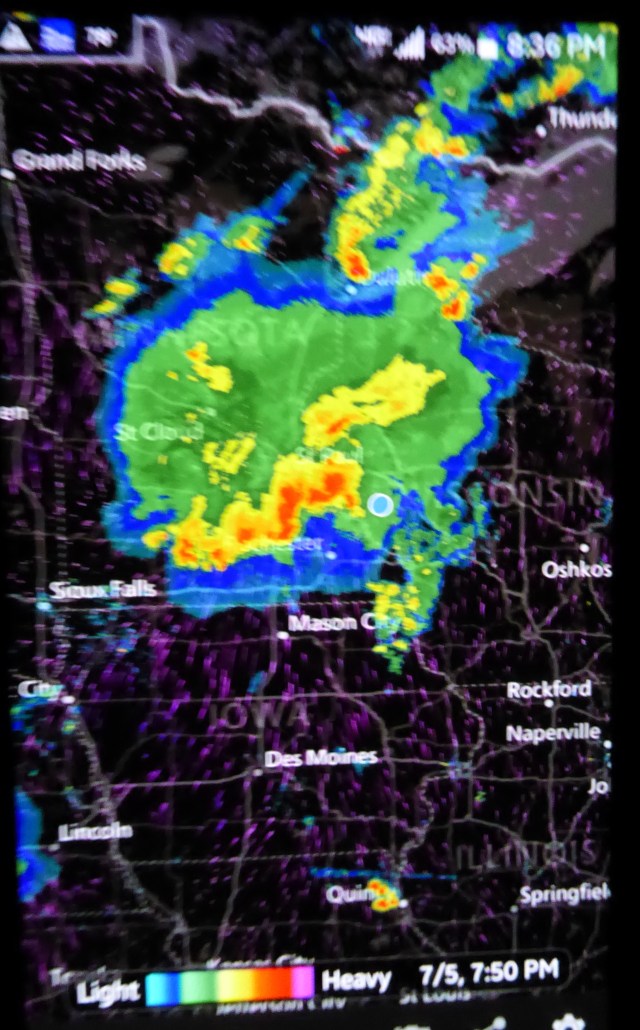
Before long we had a Severe Thunderstorm Warning. That’s our location in the light blue circle getting ready for yellow, orange, red and brown-red level thunderstorm activity. It started with lightning – everywhere. There were cloud flashes and ground flashes, some quite close. We heard thunder almost continuously.

Our phones alerted us to a tornado sighting 21 miles away with Mondovi included in its projected path. We could hear the sirens from Mondovi and called Peggy and Myron in their trailer about 30 yards away. They said Mondovi sounds the warning sirens for severe thunderstorms and tornados so it didn’t necessarily mean that a tornado had been sighted near us. That made us feel a little better…

We talked about getting in the truck and going in the opposite direction but we had waited too long as were already in the middle of it. By our inaction we had “decided” to stay and ride it out.

Severe thunderstorm warnings advise you to go to a basement or interior room without windows. We were sitting in our trailer in a very open field feeling quite exposed and vulnerable. Our window shades have two layers and I pulled down the light diffusing shade on each window to provide some small bit of protection in case a window was broken.  Yet,  we wanted to see what we were facing.

The wind and rain came in torrents. Water started coming in through the window’s weeping holes where the worst of the storm pounded against our trailer. Although the winds seemed to be coming from everywhere, we were glad the worst of it was hitting us on an end instead of broadside.

We stared at our phones watching our position within the radar display. The tornado’s path was adjusted slightly to the south so we were no longer in the projected path. That was good but then the alert showed a mesocyclone at our location. In the middle of this massive thunderstorm, with the trailer rocking and rolling in the wind, I googled mesocyclone not at all sure I really wanted to know what it was. In very simple terms a mesocyclone is when the atmosphere rolls horizontally. If one end starts to tip up vertically, it can be the genesis of a tornado.

Have I mentioned that Randy and I both like storms a lot? But we weren’t liking this one at all. I prayed continuously while scanning the skies for a tornado. I attached Elko’s leash in case we had to make a run for it. But run to where? Peggy and Myron’s trailer is tucked in under trees but was that a good thing or a bad thing?

As the storm finally moved past we could see a little river moving down our friends’ driveway and under our trailer. Did we survive the storm just to get knocked around in a water flow?

Well, obviously my prayers were answered and we survived. It was about 90 minutes from the beginning of the storm to the end.  For 45 minutes it was the scariest storm I’ve ever been in given our circumstances. I called my parents to tell them we were okay because I assumed, correctly, that they were aware of where we were and the storms around us.

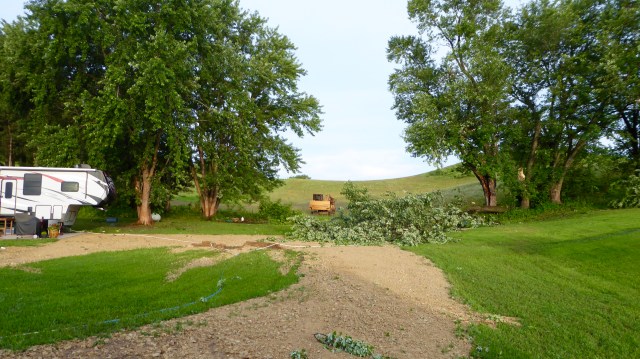
The next morning, we surveyed the damage. We saw that this huge tree trunk had split and fallen. Thankfully, it didn’t hit Peggy and Myron’s trailer! Much of their driveway rock had washed away under our trailer and down into the field.

P1050956.jpg

We were all surprised that we hadn’t heard this large tree come apart and fall.


P1050953

Peggy and Myron had some things blown and tipped at their trailer about but nothing significant – except for that big tree about 20 yards away!

Peggy heard that the Thunderstorm had been a Category 3. That means Significant Danger and winds between 55 and 75 mph.  She measured over three inches of rain with the storm. An RV dealer in the nearby town of Durand had trailers blown over on their sides.

P1050986

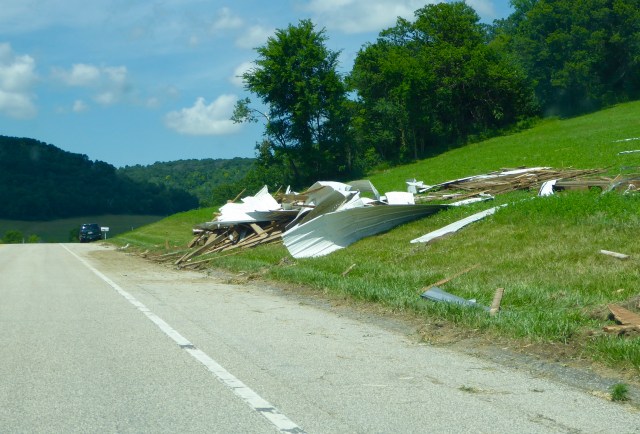
This was part of a farm outbuilding. We saw people cleaning up everywhere.

All around the area we saw trees down or twisted or split. But we also saw beautiful Wisconsin fields and farms.

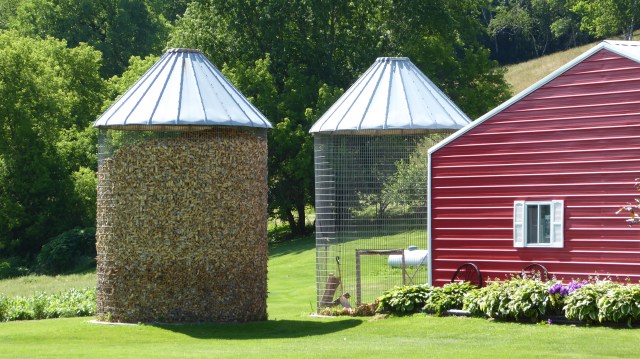
P1050994

We enjoyed seeing these corn cribs on this neat and tidy Wisconsin farm.


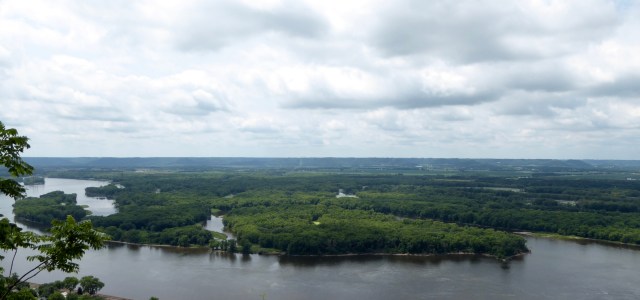
P1050974
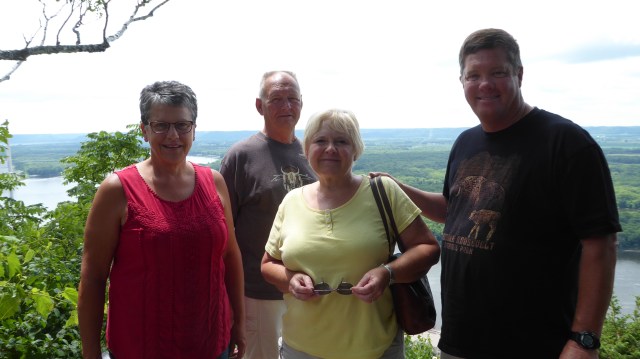
We went to a park overlooking the Mississippi River.

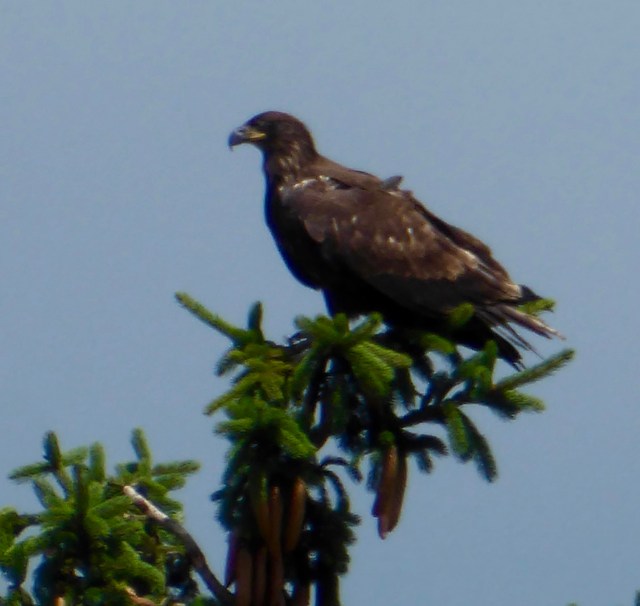
P1050979

We enjoyed a glass of wine at a local winery and watched this juvenile eagle.

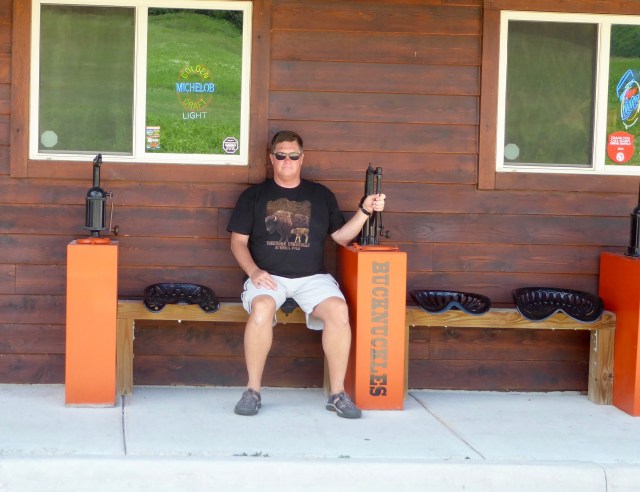
We went for our meal at Bucknuckles, a local favorite with a very eclectic decor.

P1050988

The benches have tractor seats! The inside has them too, but on the ceiling.

P1050973

We had a great visit with Peggy and Myron and a very memorable time in Wisconsin!

P1050964

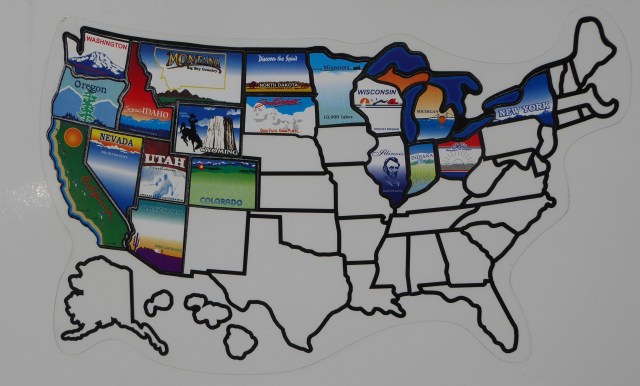
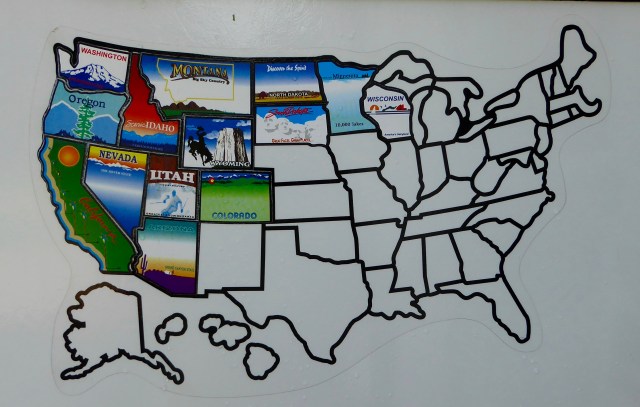
Adding Wisconsin in a memorable way!

This was our most memorable map sticker ever! We hope we never have another state rival it in drama!

Posted in Uncategorized | 7 Comments

More Minnesota!

P1050871

We continued our meanderings through Minnesota at Bear Head Lake State Park. We  couldn’t get into our reserved site due to trees blocking our needed angle of access.  With ranger assistance, and trial and error,  we found a site we were able to fit into for our two night stay. Whew!

That stress event was followed by another when Elko injured his leg getting off the bed – something he’s done hundreds of times before. We couldn’t determine if the injury involved his foot, leg or hip but he was a hurting three legged dog for the rest of the day. (We were anticipating taking him to an emergency vet in Minneapolis over the Fourth of July Weekend but he was better the next day.)

P1050814

While Elko was resting, we went to Soudan Mine State Park. We got hard hats and prepared to descend a half mile into the earth.

P1050815

Hard hats, sturdy shoes and jackets – 51 degrees down there!

The ride down takes two and a half minutes and goes 10 mph at an angle of 78 degrees. We descended  2341 feet underground to Level 27, the last and lowest level mined.

These double cage lifts transported 18 miners in each cage.  There were 11-12 of us in a cage each time we rode and it was snug. The thought of eighteen men together was uncomfortable.

P1050846

The pulley system running the alternating sets of cages is impressive!

Once down, we rode in cars on the rails once used to transport ore. We went 3/4 of a mile further into the mine to learn about the work that was done here.

The Soudan Mine opened in 1882 and was Minnesota’s first iron ore mine. It initially operated as an open pit mine but went underground in 1892 for safety reasons.

P1050825

The iron ore mined here was exceptional because of its high oxygen content.  That allowed for a higher quality of steel.

P1050826

From hammers and chisels to pneumatic drills

In the early years the miners, who came from all over Europe, worked in teams of three  and often spoke three different languages. Foremen used this strategy to make it more difficult for miners to unionize.

Eventually, the workers did unionize and together with management created the “Cadillac of Mines.” The Soudan Mine was safer than most due to good air quality and the hard rock holding the ore. Even so, 140 miners lost their lives at Soudan during its 80 years of operation.

Operations shut down in 1962 as the industry shifted to lower quality ore. There is still high quality iron ore in the Soudan Mine, but no market for it.

P1050859

Later in the day we rode the cage back down to tour the High Energy Physics Lab. Utilizinging aspects of the old mine, the lab was built underground to shield sensitive experiments from cosmic rays. Physicists from around the world conduct experiments looking for dark matter and neutrinos.

P1050861

I don’t even begin to understand dark matter knowing only that it is presumed to exist due to consequential evidence.

The Soudan lab is recording the number of neutrinos collected at this site from the trillions of neutrinos released from Fermilab near Chicago, Illinois. The neutrinos travel 457 miles underground in 2.5 milliseconds, nearly at the speed of light. A single neutrino is detected in the Soudan collector every few hours. It would have traveled through the empty space in matter from Chicago to northeastern Minnesota. Mind boggling, huh?

After our minds were boggled, we headed home and saw wildlife along the way!

P1050870

This fox was very content to watch us watch him.


P1050848

Then we saw a black bear on the road!

P1050850
Then we saw one cub and then another!  Later we learned there were actually three cubs and they are frequently sighted along the road.  We’ve seen more bears this week in Minnesota than collectively ever before.

We traveled south and arrived at an Anoka County Park  15 miles north of Minneapolis. It is one of the best – a great park with lakes, beaches, and trails. The 50 amp grass sites are large and private with a picnic table on a pad. We have a fire pit and a barbecue grill – and a resident rabbit!

We’ve stayed in great county parks in Oregon, Arizona and Minnesota.   Our theory is that when tax money stays close to home, sometimes people are willing to pay for nice parks.

In Minneapolis we went to the Mill City Museum which was built within the ruins of the  Washburn Mill.

P1050888

The first Washburn mill was built in 1874 and destroyed by a flour dust explosion in 1878. The explosion killed 18 workers and destroyed much of Minneapolis’ mill district. When an improved version was built on the same site in 1880, it was the largest flour mill in the world producing two million pounds each day.

P1050900

The Gold Medal Flour sign was erected in 1910 and the Washburn Mill became General Mills in 1928. Minneapolis was the flour mill capital of the world from 1880 – 1930. This mill closed in 1965 and burned in 1991. The Mill City Museum, built within the ruins, opened in 2003.

P1050898

Across the river, the Pillsbury Mill was the largest in the world for 40 years.  It closed in 2003. Currently the world’s largest flour mill is in Jakarta, Indonesia producing 23,000,000 pounds of flour daily.

P1050915

The Mill City Museum has exhibits about grain, the Mississippi River, General Mills, Pillsbury and Minneapolis.

P1050903

Competing slogans!


P1050909

Flour sacks as reusable assets.

The Flour Tower Experience describes the historical workings of the mill and ends on an observation deck.  The deck offers great views of the Stone Arch Bridge and the St. Anthony Falls and Dam on the Mississippi River.

P1050899

The upper St. Anthony Locks were closed in June 2015 by an act of Congress rendering the Mississippi River unnavigable through Minneapolis. The locks were closed to prevent the migration of Asian Carp further north.

FullSizeRender

Our best Minneapolis activity was meeting our friend Eric at a Minnesota Twins game. We so enjoy being able to reconnect with people!

P1050926

There were nice Independence Day themed pregame events. The company, the weather and the game results were all terrific. Twins win! Twins win!

P1050872

Grocery shopping is not usually a reported on activity but these two items caught my eye. I haven’t seen potato chips sold in a box since I was a child and  I’ve never seen lefse sold in a store.  Both are here in Minnesota!


Posted in Uncategorized | 2 Comments