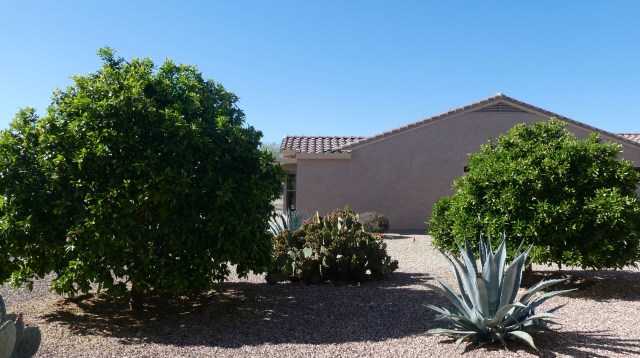
 You may remember that we have citrus trees in our yard and have enjoyed the bounty in whole, juice and liquor forms.
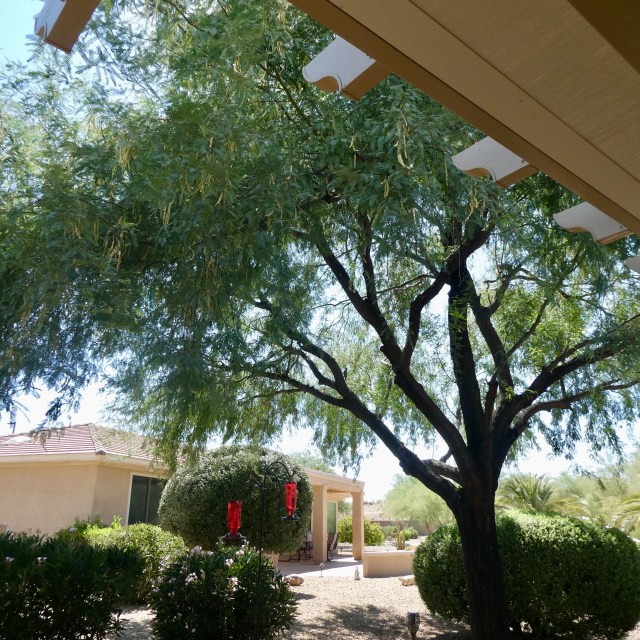 We also have a mesquite tree with lots of seed pods.
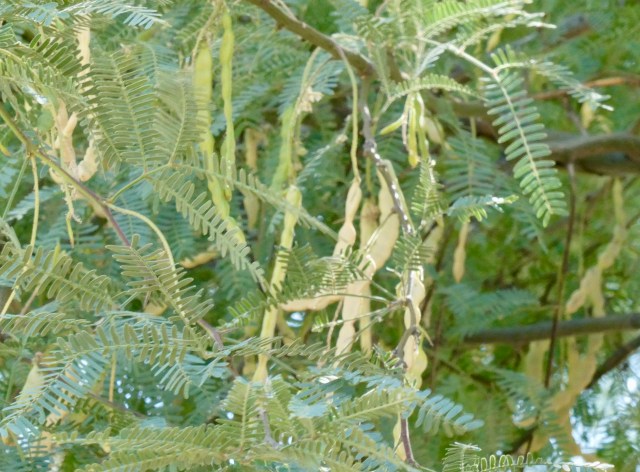 I knew native peoples used mesquite as a food source so I studied it. There is a wide variance of flavor in the seed pods of mesquite trees. The resulting flour has a strong flavor and needs to be mixed with other flours to neutralize it. Assuming I liked the taste of our seed pods, I would have to find a place to mill it. Since I do almost no baking I’m not going to pursue it. If COVID-19 still has us home this time next year, I might rethink that decision for a new experience.
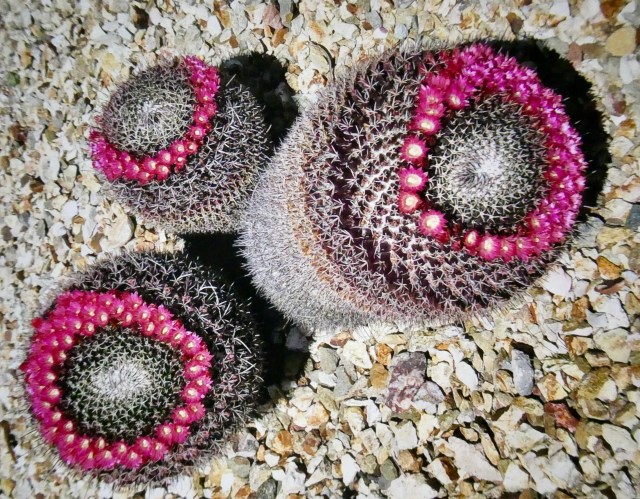
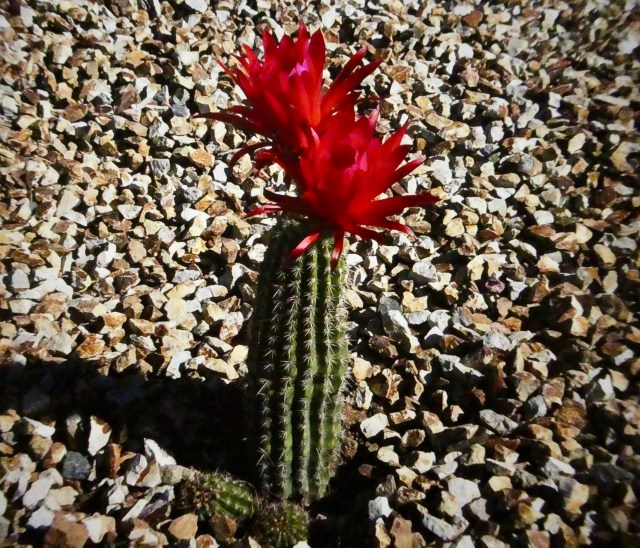
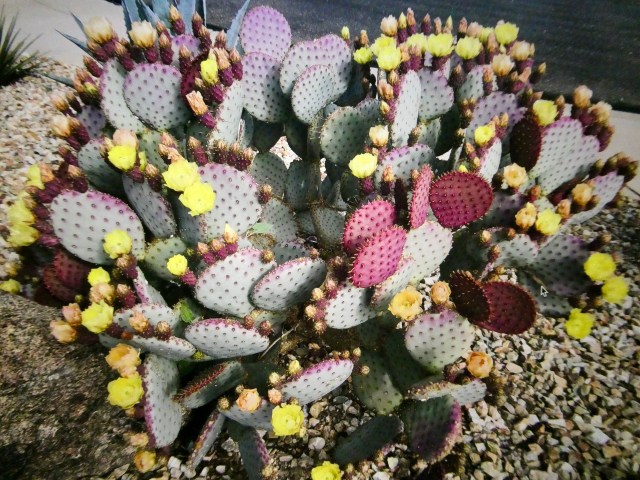
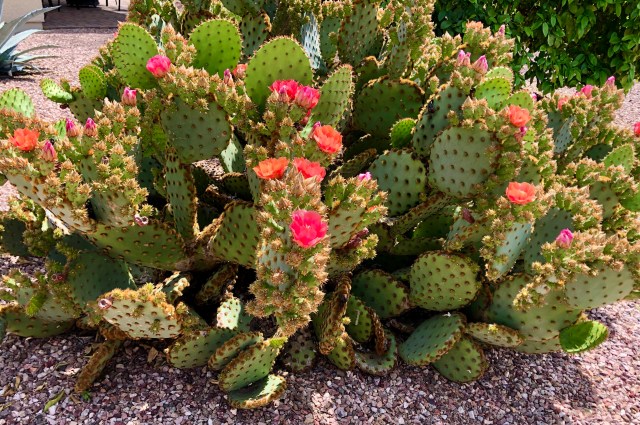 This year I chose to learn about harvesting the fruit given by our prickly pear cactus. There are dozens of varieties of prickly pear and we have these two in our yard.
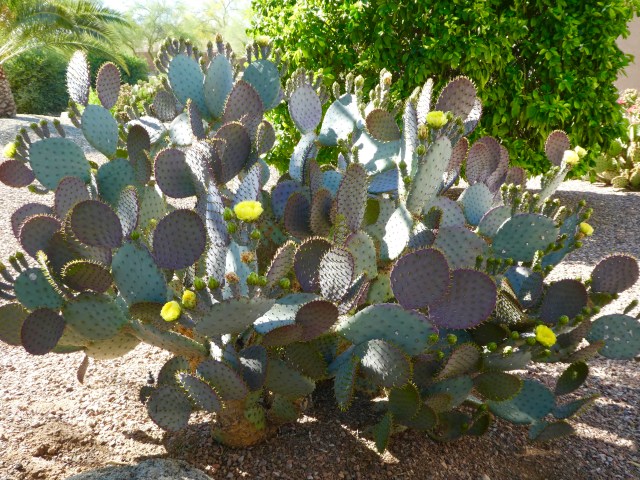 This one has lovely yellow blossoms. It had fruit last year but didn’t develop any this year.
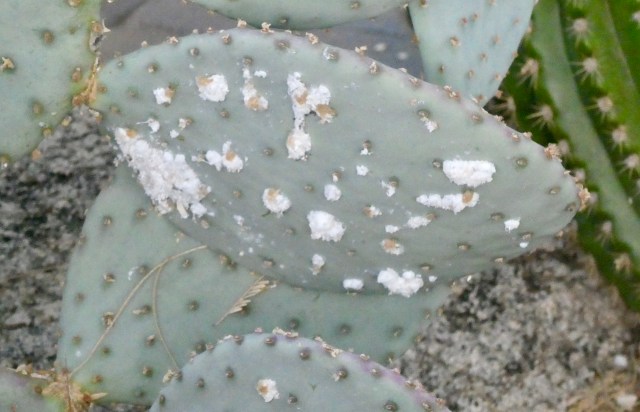 I don’t know if skipping a year is normal or if it is because we have water sprayed this cactus several times to reduce dactylopius coccus, a scale insect. This parasitic insect is useful in making red dye.
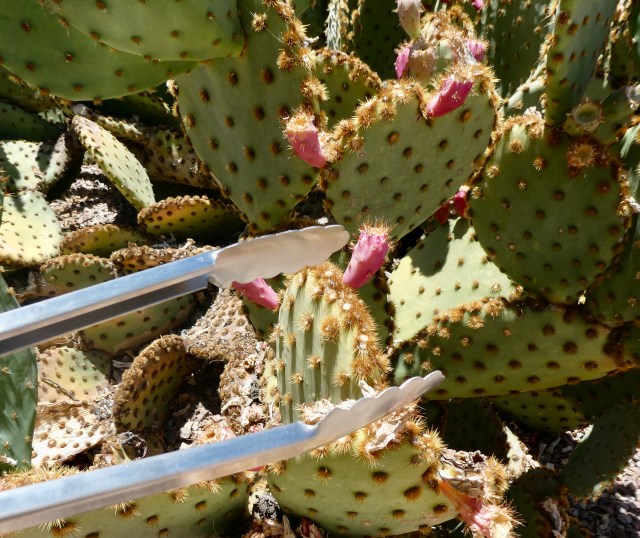 The first step was to pick the magenta fruit, also called “tuna.” That is no easy task given that prickly pear cactus have tiny hairlike prickles called glochids that stick to everything, especially skin.
 Even using the precaution of metal tongs and gloves I still got some prickles in several places on my body! (Twenty four hours later I think they are finally gone.)
 Once gathered, I used a culinary blow torch to burn off the glochids.
 Then I passed the fruit back and forth between bowls to knock off any remaining prickles.
 I boiled the fruit and then let it steep for several hours.
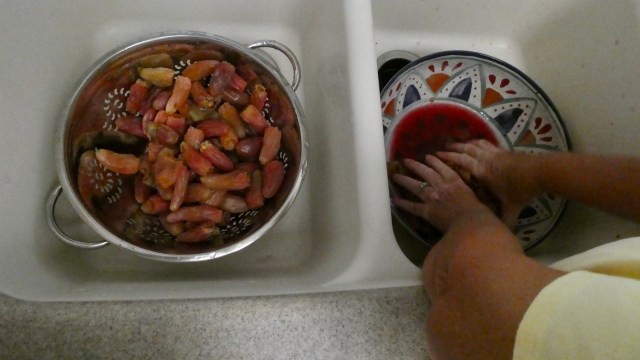 The directions said to mash and then strain but the skin was too tough. I resorted to puncturing the skin and then kneeding the juice out.
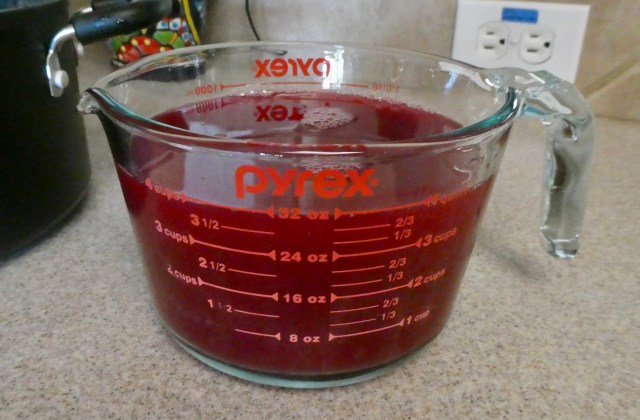 From four and a half pounds of fruit I got four cups of prickly pear juice! An equal amount of sugar goes into the pot to simmer and then cool.
 While we were waiting for it to cool, we tried some fresh prickly pear fruit, eating only the insides. I thought it tasted like watermelon. Randy, who doesn’t like watermelon, thought it tasted bitter and didn’t like it.
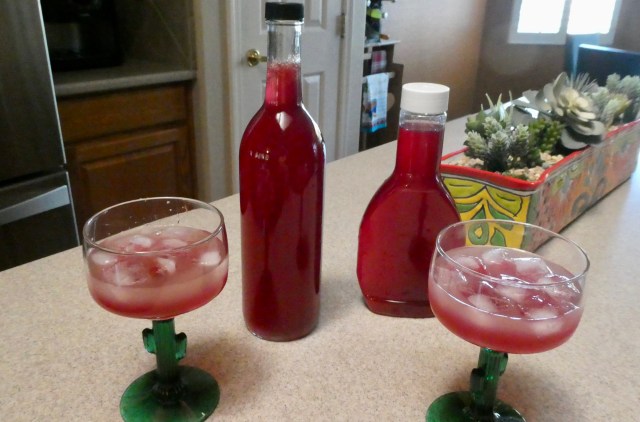 A couple hours later we bottled our prickly pear syrup and enjoyed prickly pear margaritas! I don’t like plain margaritas but thought the added syrup made it taste good!
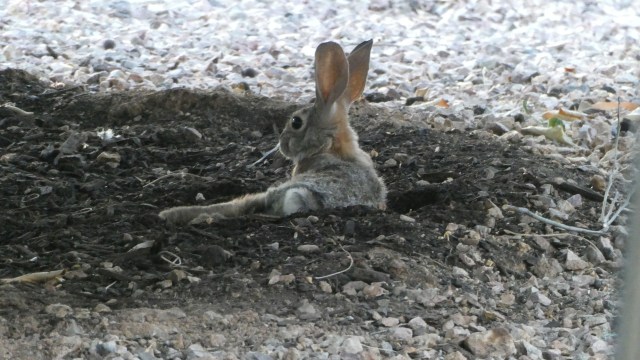 So what else might we be eating from our backyard? Not this cute little bunny enjoying the cool mulch under the grapefruit tree.
 Not our favorite quail parents and babies! The babies start out like ping pong balls with hair. As they grow, the family seems to shrink from 15 babies down to 5 or 6. They have a high mortality rate. Even though both parents are always present and seem to do their best to keep track of the brood some must get left behind in the constant movement.
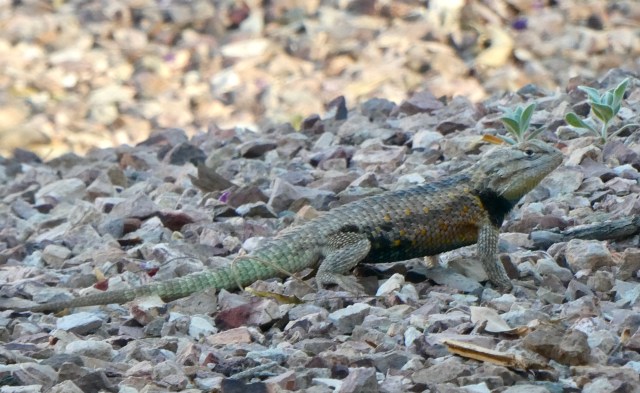 We won’t be eating this guy either. Does anyone eat lizards unless it is absolutely necessary? He is fun to watch as he does his push-ups each day.
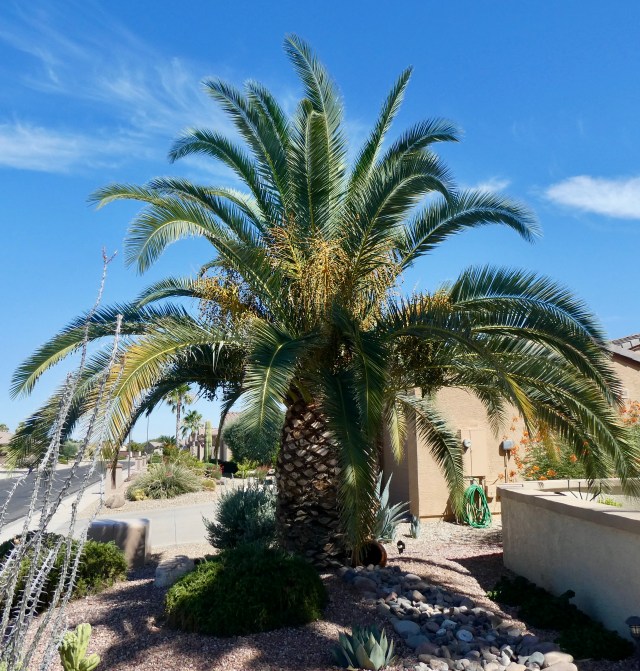 We haven’t checked whether the seeds pods on our pineapple palm are edible. Pineapple palm is indicative of the appearance, not the fruit.
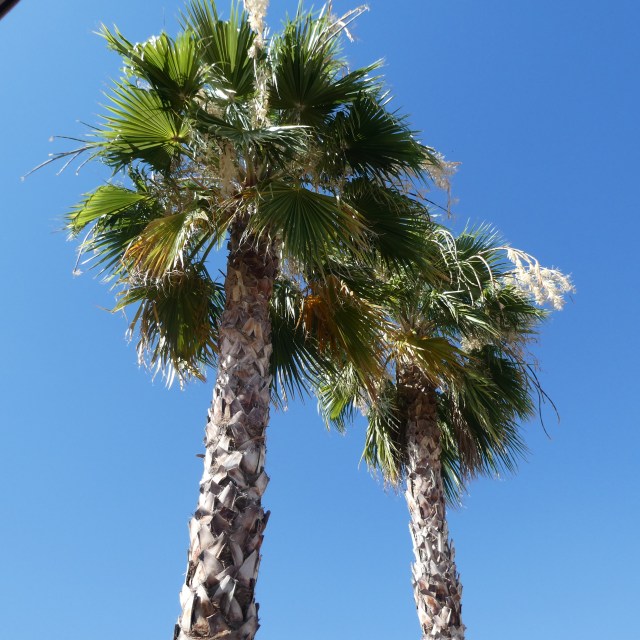 These palms have nothing for us – no coconuts, no dates – nothing! What’s up with that?
 Randy and I met soon after we arrived on the


 Shortly thereafter we moved to Boise, Idaho for Randy to work at Hewlett Packard.
  I was hired as a first grade teacher and we were off, working at careers that would last 33 years for Randy and 25 for me.


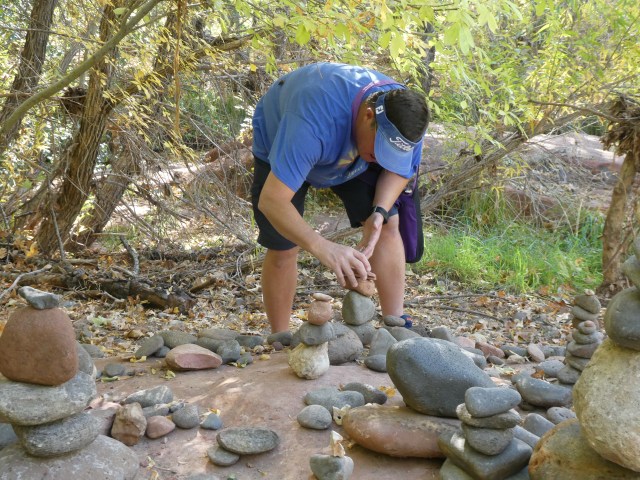
 In mid October we met friends Kent and Pam in Sedona for an awesome, beautiful weekend.
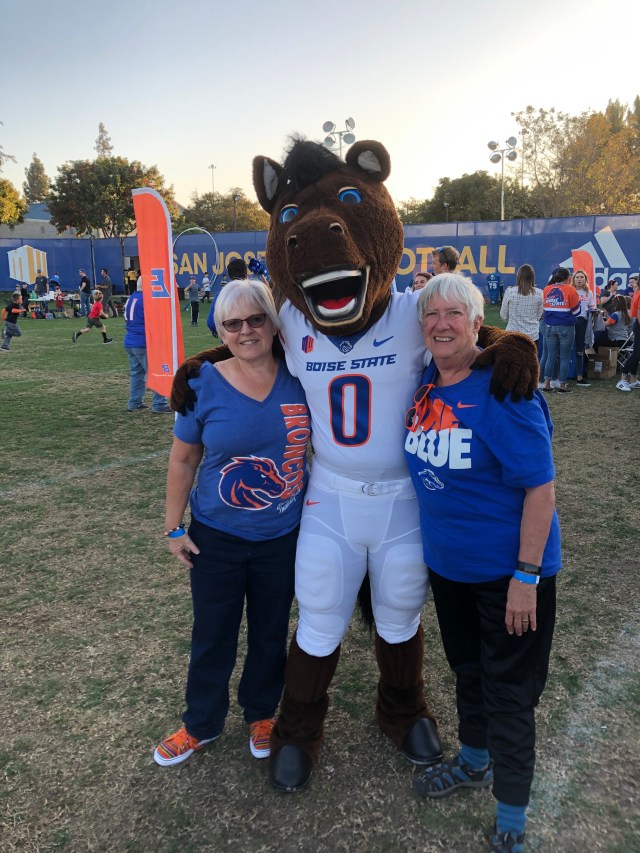 We continued on with Kent and Pam to San Jose for a BSU volleyball game, football game and some whale watching!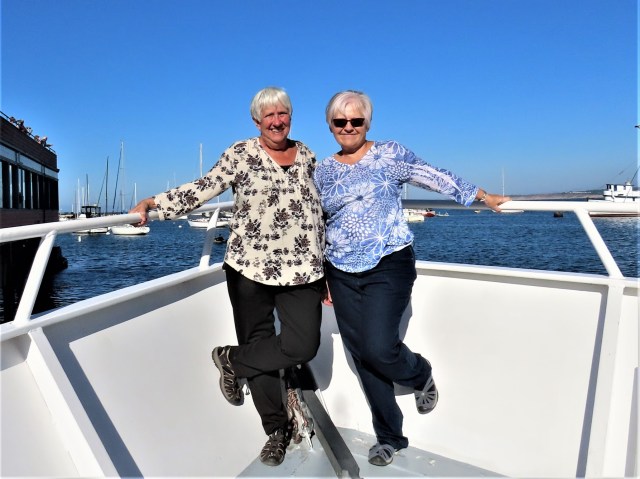


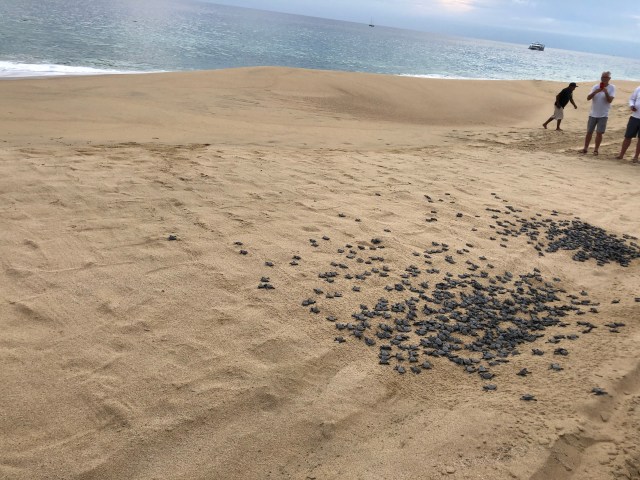
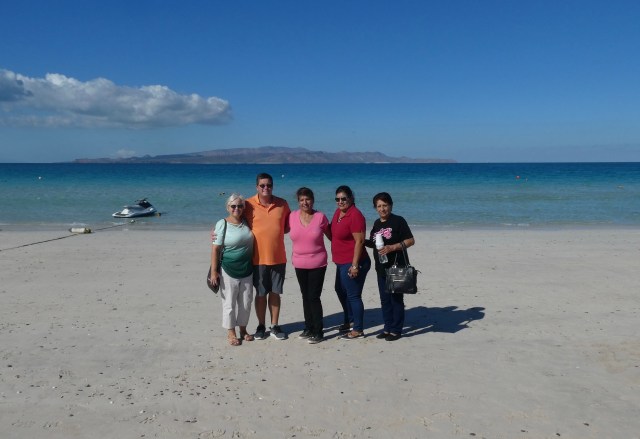


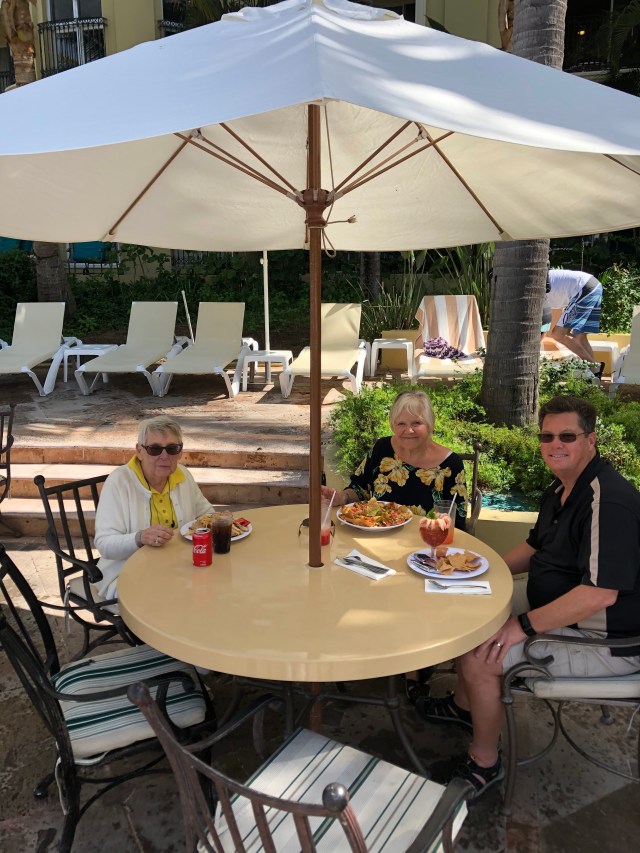

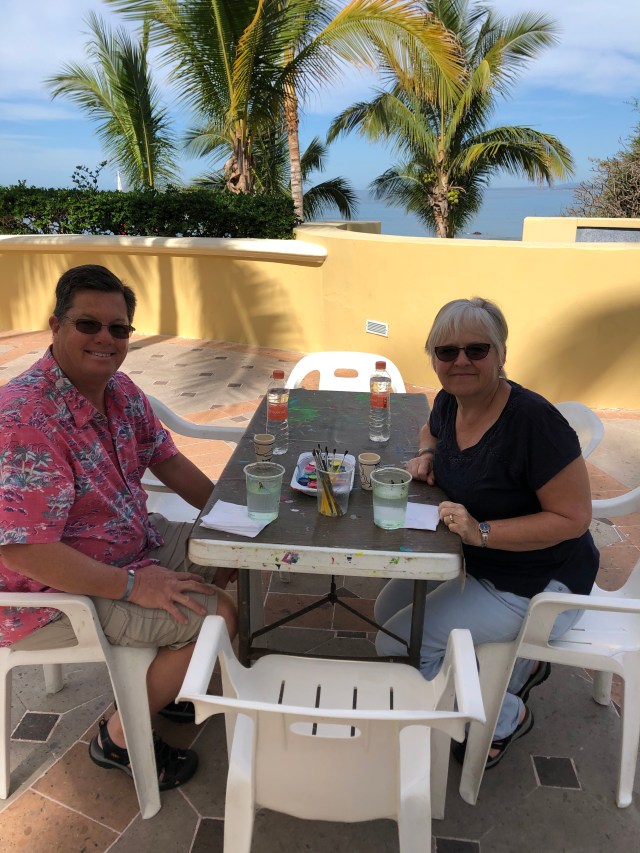

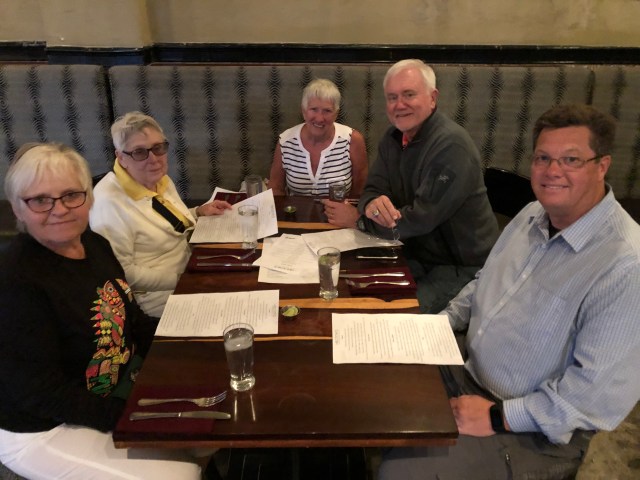
 We went whale watching again and it was awesome.
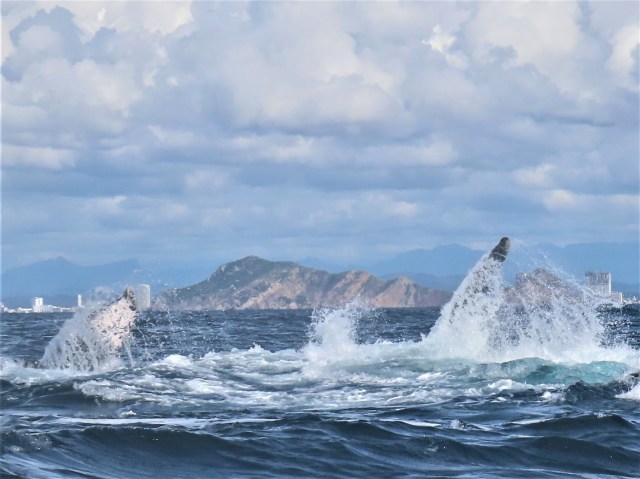 Then we watched four males competing for a female.
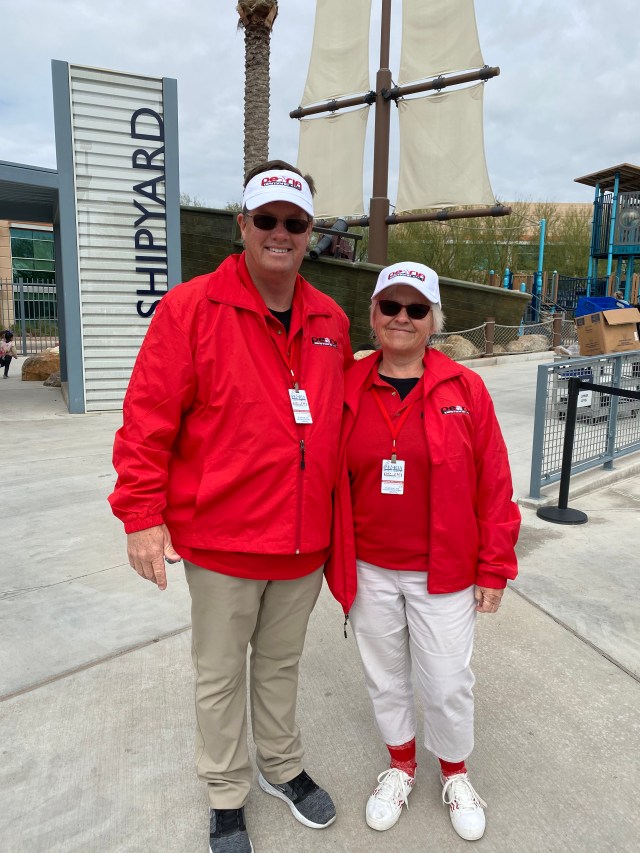 Home again, we started Spring Training volunteering for Peoria Sports Complex, home of my team, the Mariners.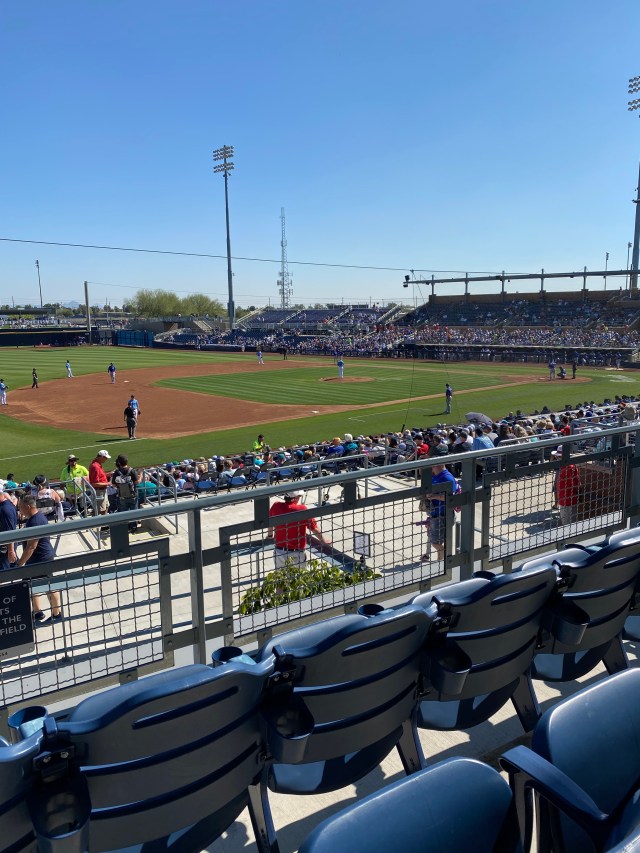

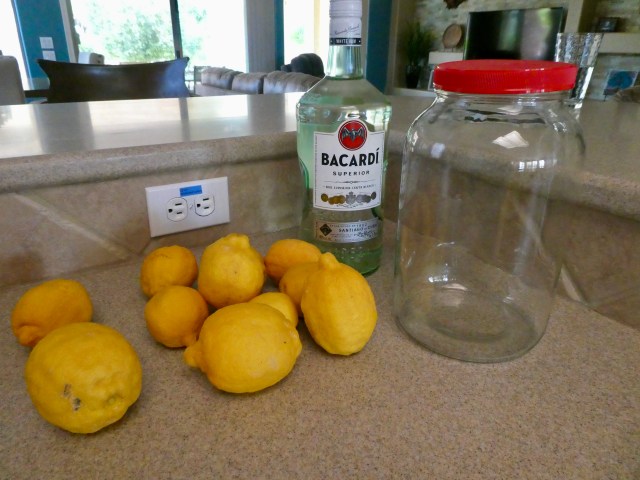
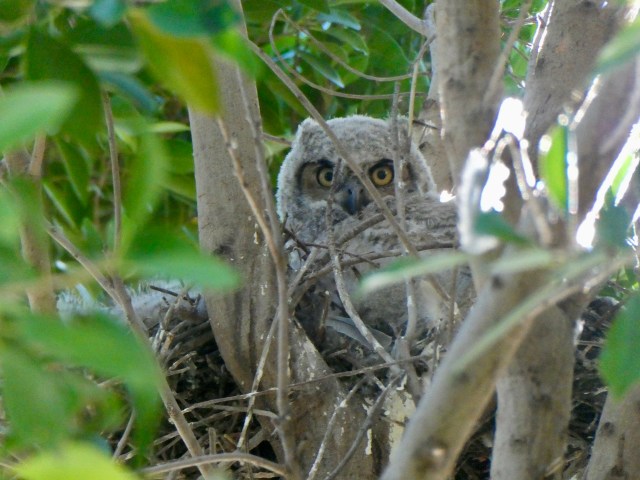 Every few days w
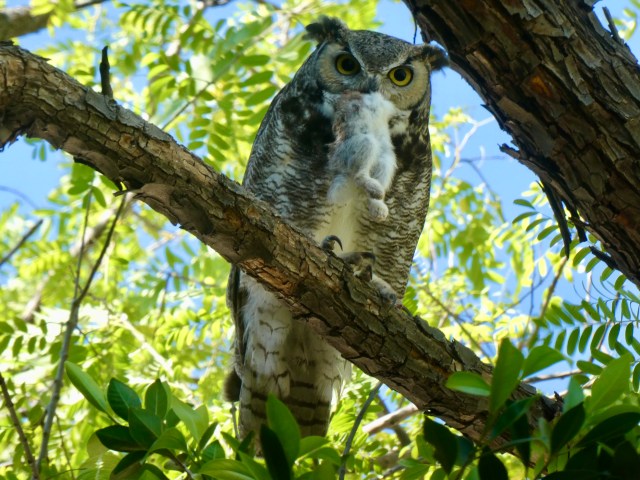 This morning we got more than we expected!
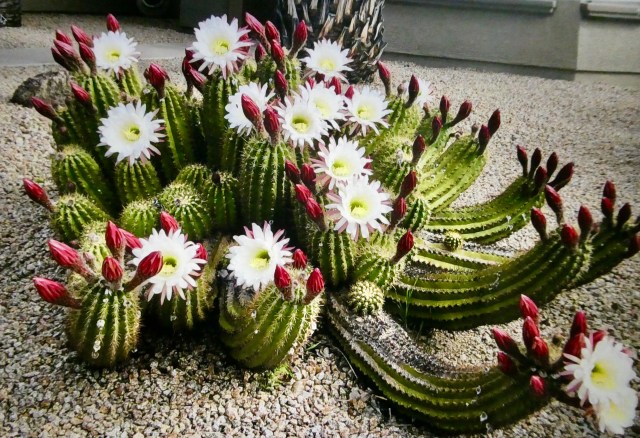 Randy and I mostly stay home but we do go walking every morning.
 Did you know the desert does this? Enjoy!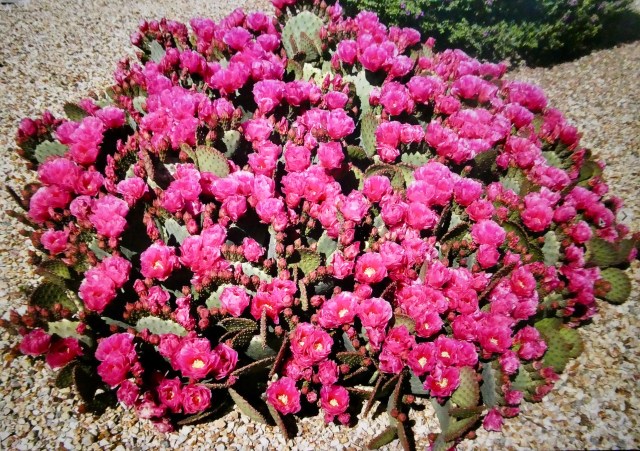
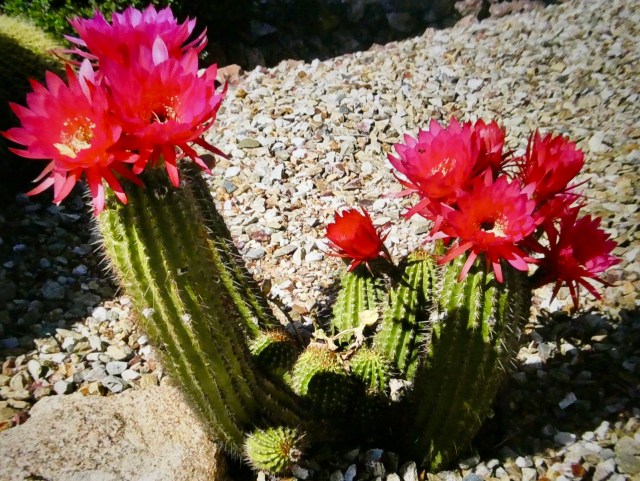
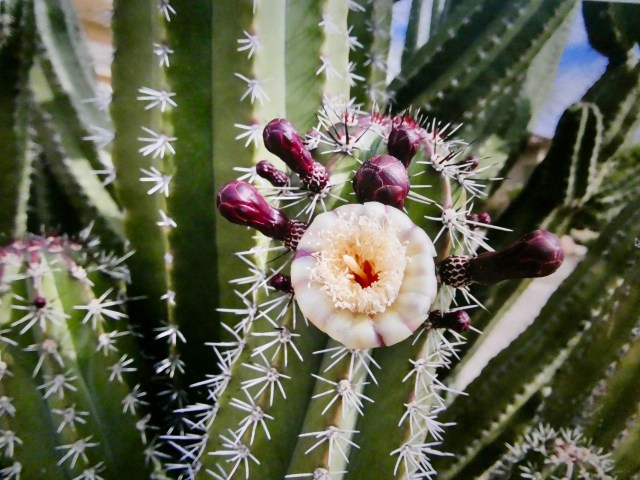
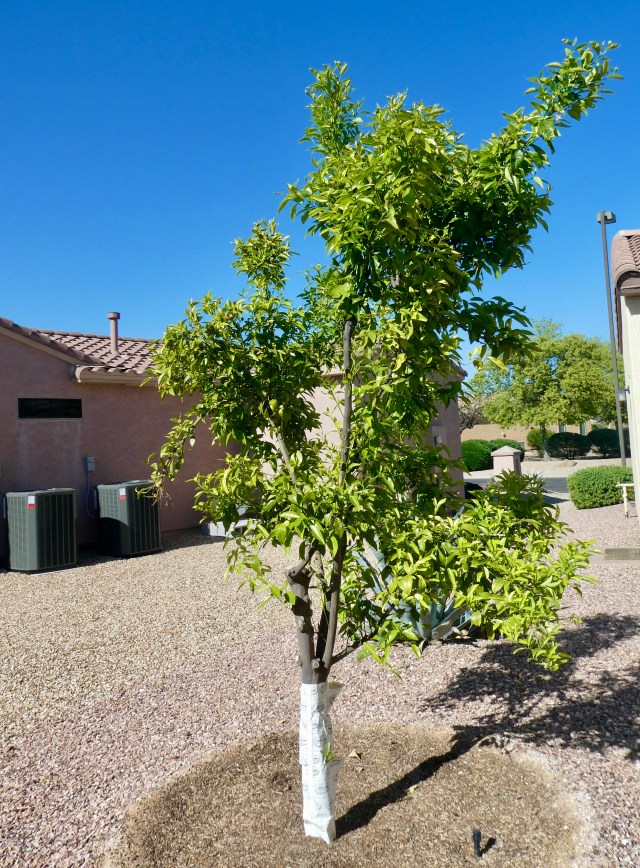 We even added to our citrus grove by purchasing a tangerine tree.
 In January we joined a citrus gleaning group at our church.
  Twice we had house guests who joined us.
  Our friend Beth also came and picked with us while visiting.
  After Donna and Rick had taken as much as they wanted,
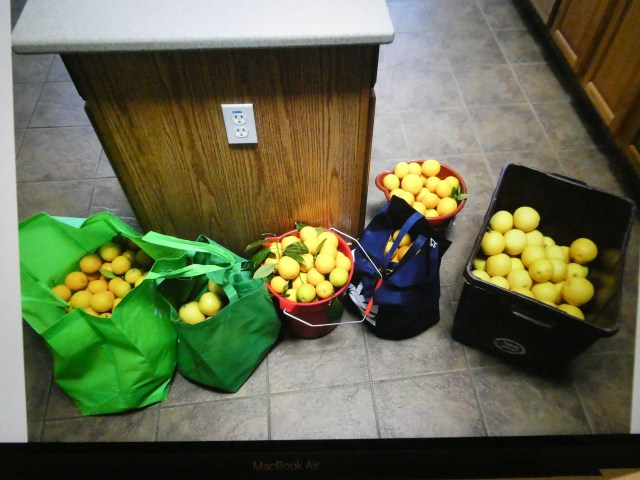 We juiced a lot! We have enough grapefruit juice to last all year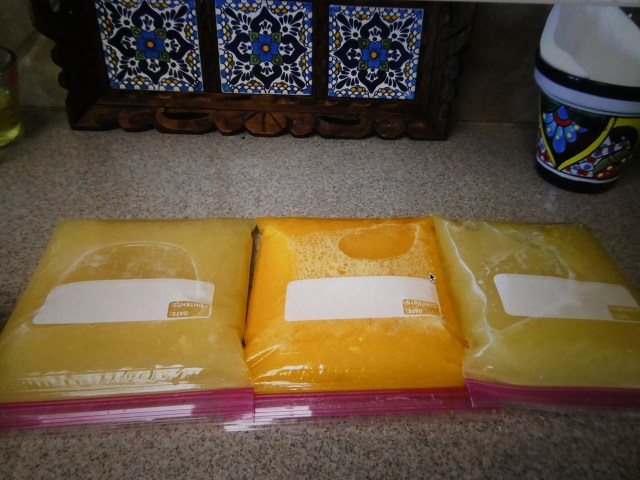
 All that is way overstating the importance of limoncello in my life but when you have a neighbor with a lemon tree, and he gives you way too many lemons, you go for it.
  Limoncello uses zest peel, not juice, and is usually made with Everclear. We had some rum that Randy didn’t like so we used that instead.
 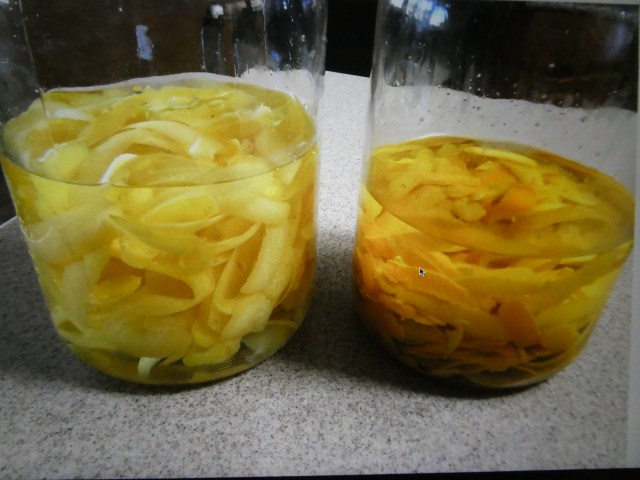 We got overconfident and decided to try grapefruitcello and orangecello using our own citrus.
 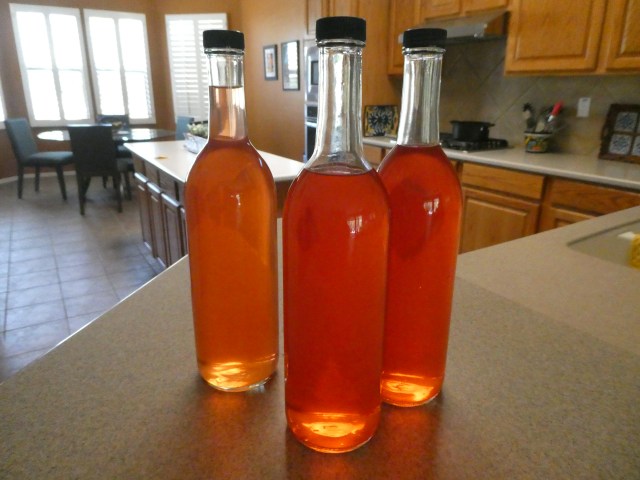 Our orangecello was drinkable but not as good as our limoncello.
  So we’ve learned a lot in our newbie citrus year – about caring for trees, about gleaning and about eating and drinking the fruit. This little orange is already beginning next year’s crop of fruit, juice and orangecello. Cheers!
 No, we didn’t fall off the face of the earth – and thanks to those of you who wondered!
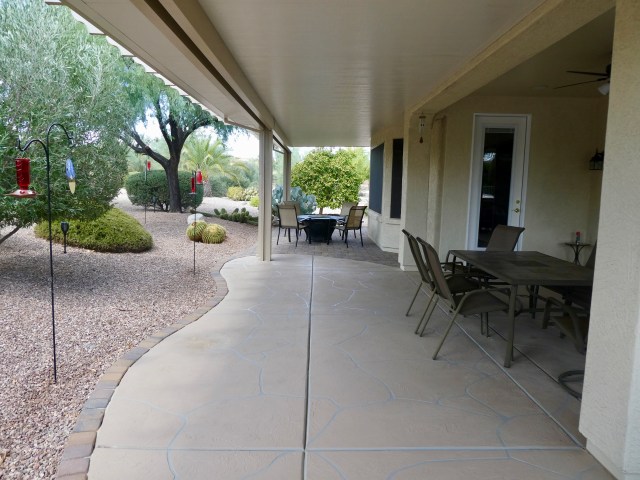
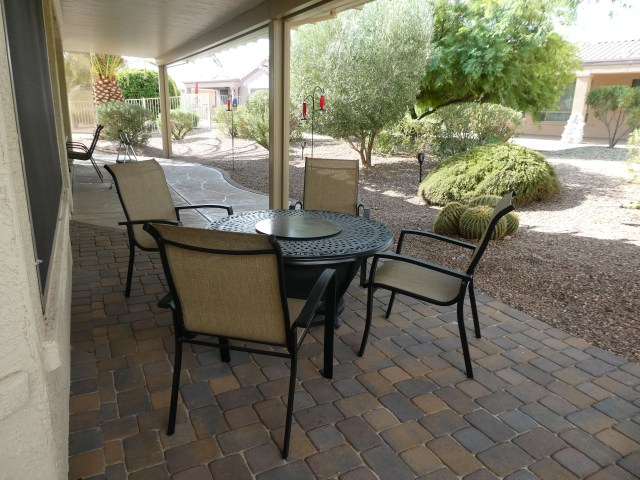
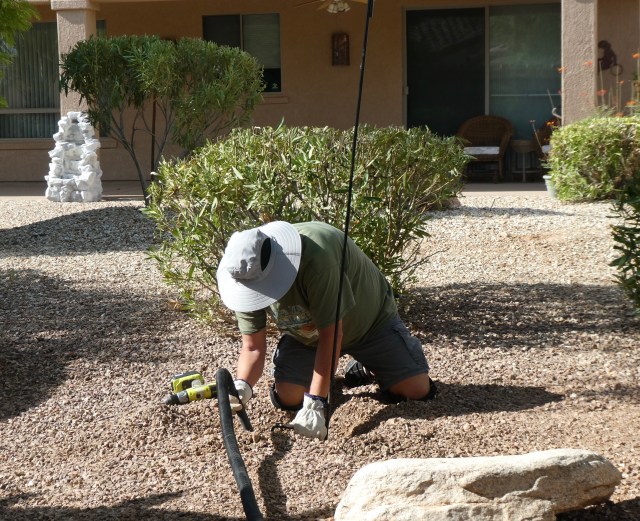
 We really enjoy the animals that visit our backyard. One morning this bobcat strolled by as I was sitting with my coffee!
 We had 27 solar panels installed.

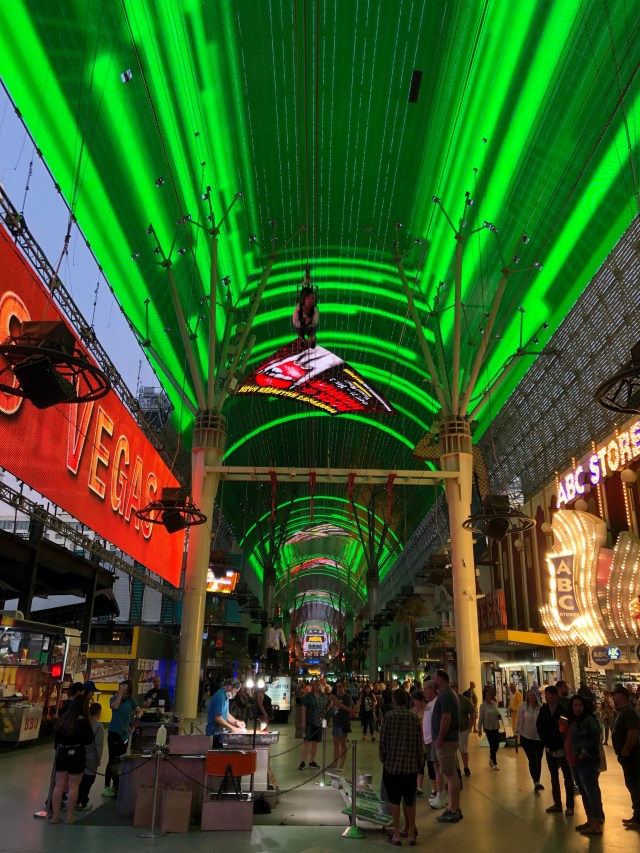 We stayed downtown (instead of on the strip) to have easy access to the Fremont Street Experience.
 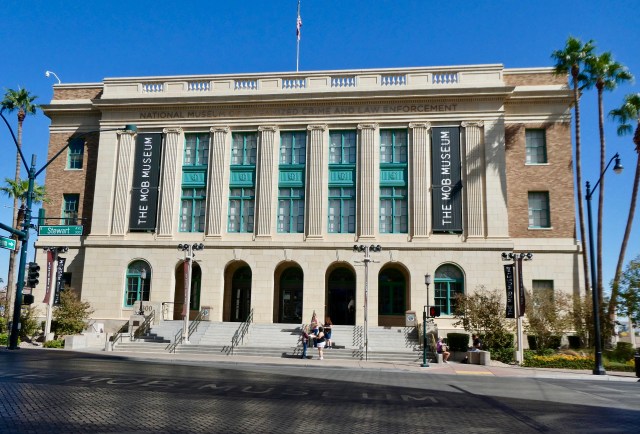 Our downtown hotel was across the street from The Mob Museum.
  Huge skimming operations occurred at both the Stardust and the Tropicana in Las Vegas.
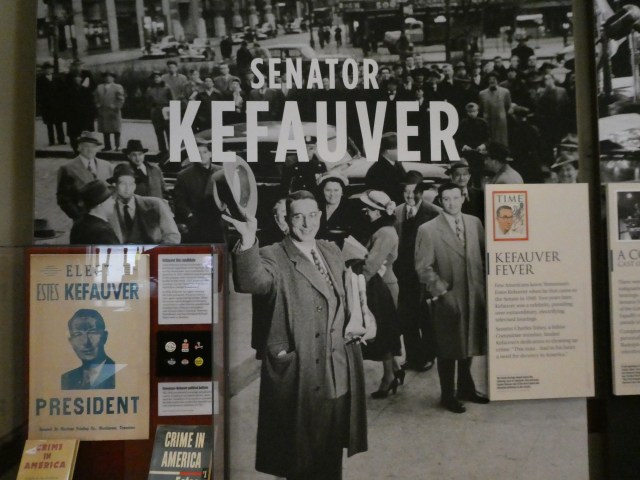 American awareness of organized crime was raised through the Kefauver Hearings in 1950 and 1951.
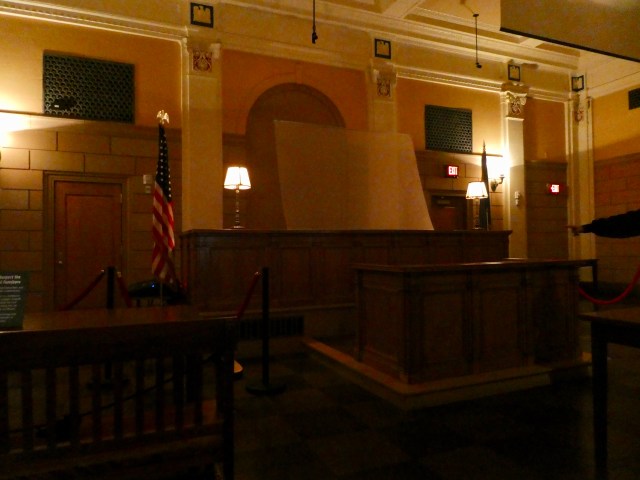 Today the old Las Vegas courthouse is The Mob Museum. A very effective multi-media presentation about the hearing is available in the very room in which it was held.
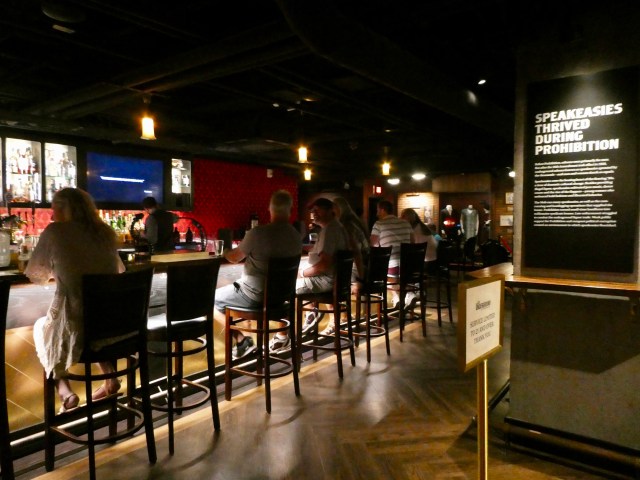 In tribute to Speakeasies, common during prohibition, the Mob Museum has its own in the basement.
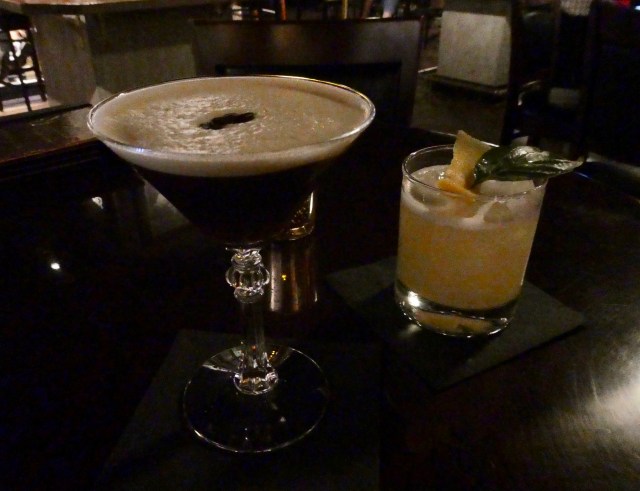 We enjoyed a couple of drinks.
 Also new, we went to a Rod Stewart Concert!
  It was very good!
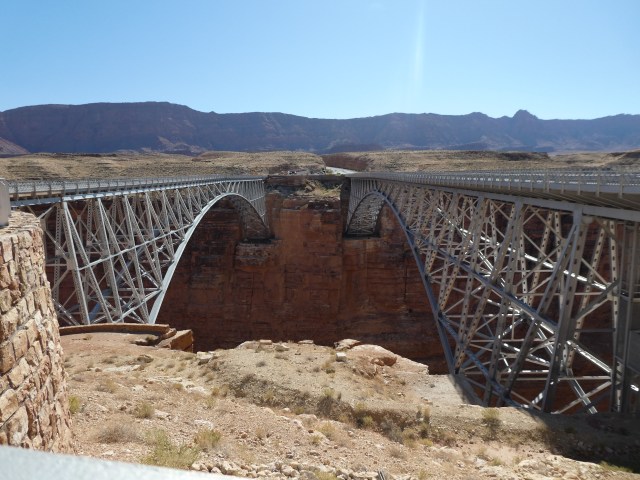 En-route we came upon the Navajo Bridges.
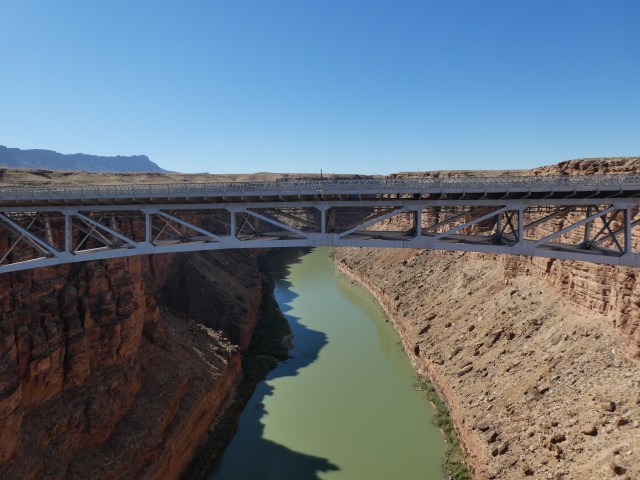 A second, very similar looking bridge, was built for modern vehicles and traffic, in 1995.
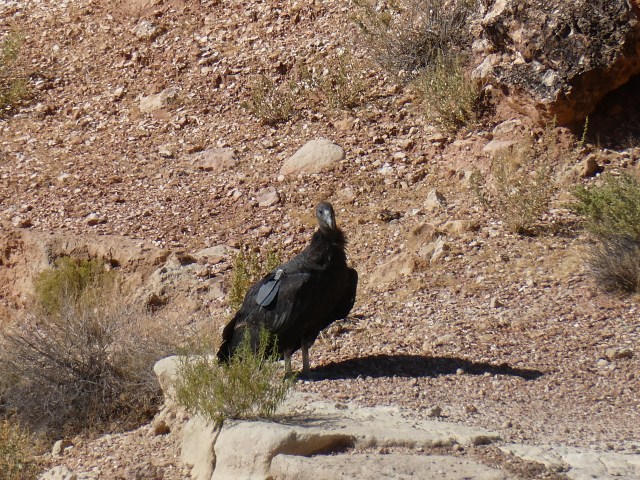 California Condors frequent and nest in the Navajo Bridge area and we were delighted to see one near the bridge footings.
 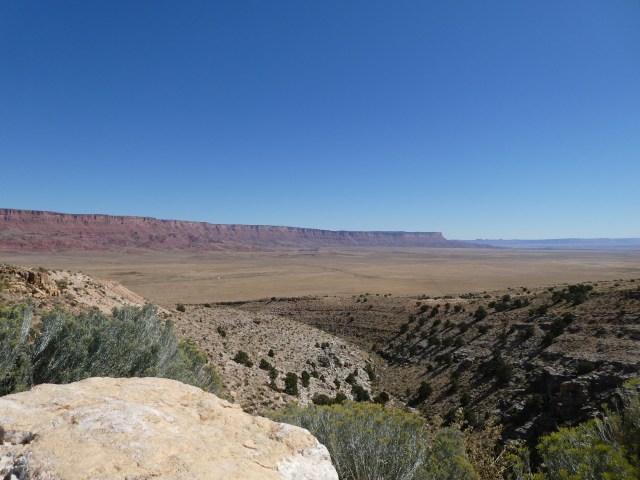 Further down the road we came to the “Arizona Strip,” where six condors were released by the Peregrine Fund in 1996. Condors had not been been seen in Arizona since 1900. Since that initial release, the Peregrine Fund has released an additional 8-10 condors annually.
 Adjacent to the condor placard was one about Sharlot Hall. She was important in Arizona history in a variety of ways. The placard highlighted her campaign to ensure that Arizona got separate statehood status. In 1906, she opposed a congressional measure to bring New Mexico and Arizona into the Union as one state. She toured the territory gathering opposition to the bill and wrote a poem describing why Arizona deserved separate statehood.
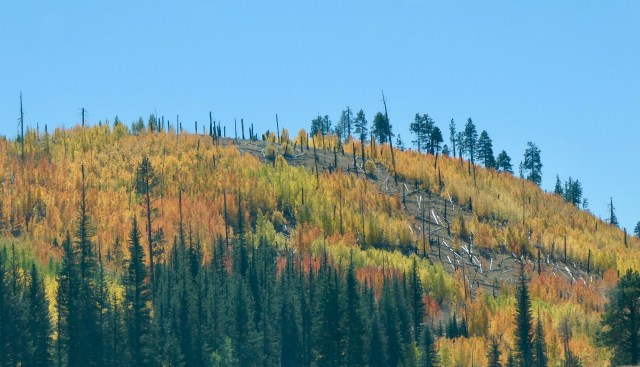 We had a beautiful fall drive approaching the north rim of the Grand Canyon.
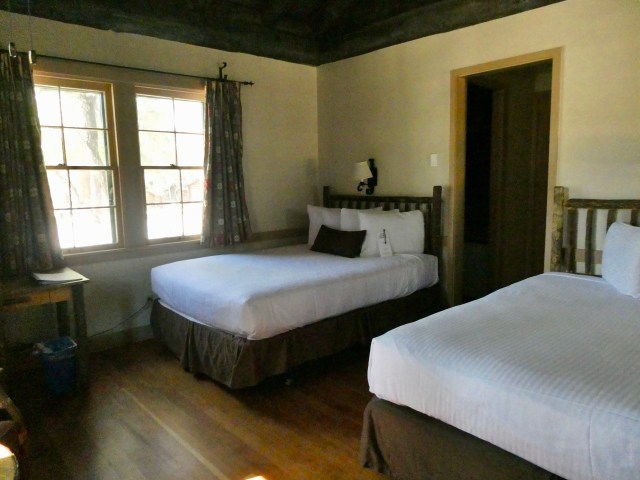
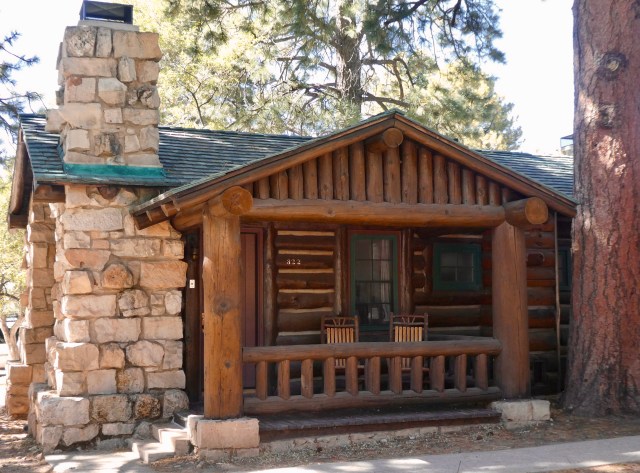 We were delighted with our little cabin, inside and out!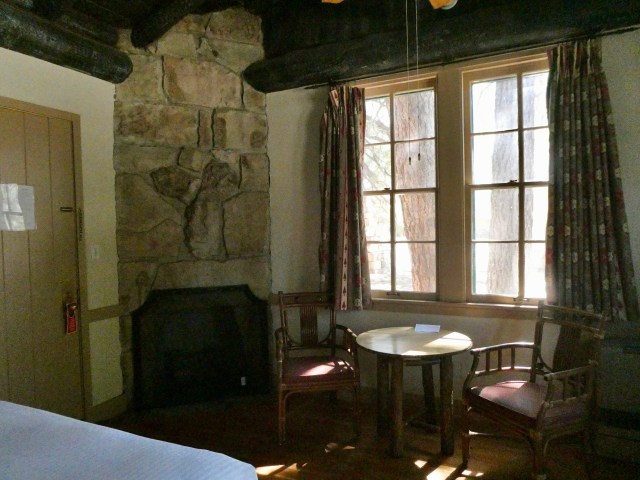
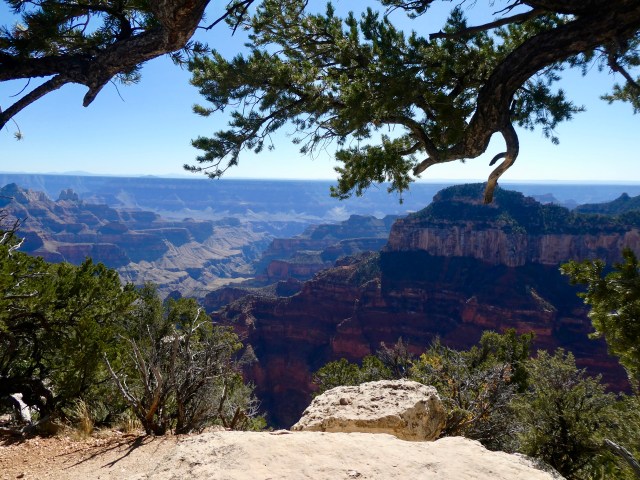 Although the day was a bit hazy, we enjoyed views of the north rim!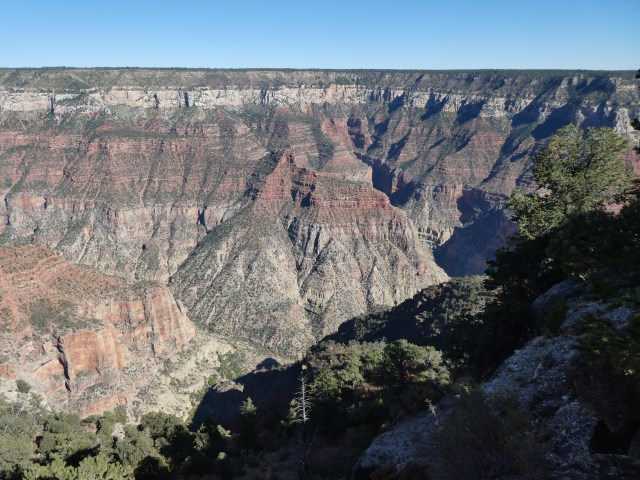
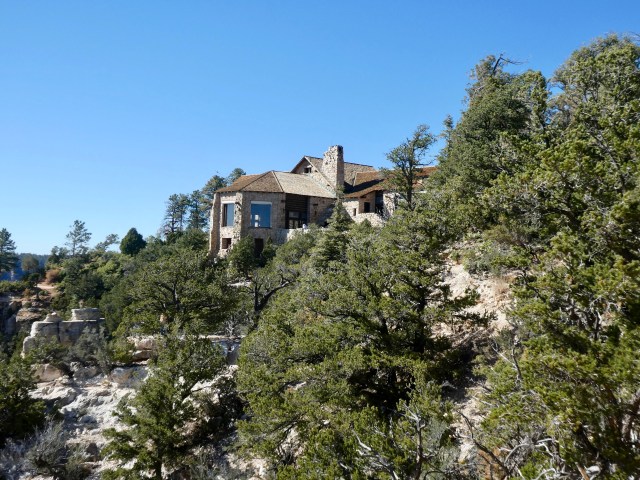 The Grand Canyon Lodge was built on the edge of the north rim.
 We enjoyed the warm sun on the lodge verandah.
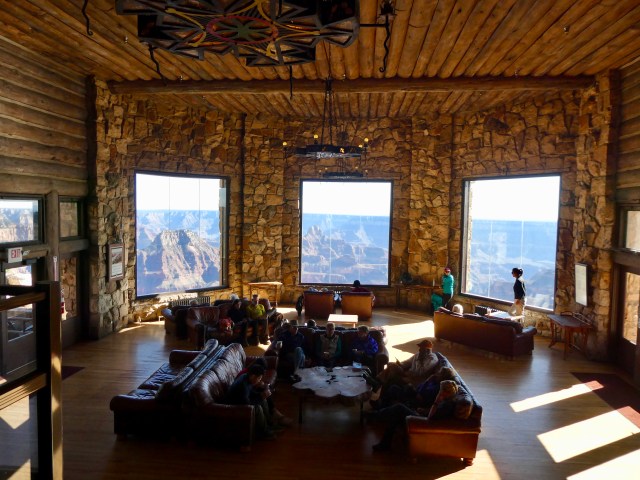 There were views everywhere, including inside the lodge lobby.
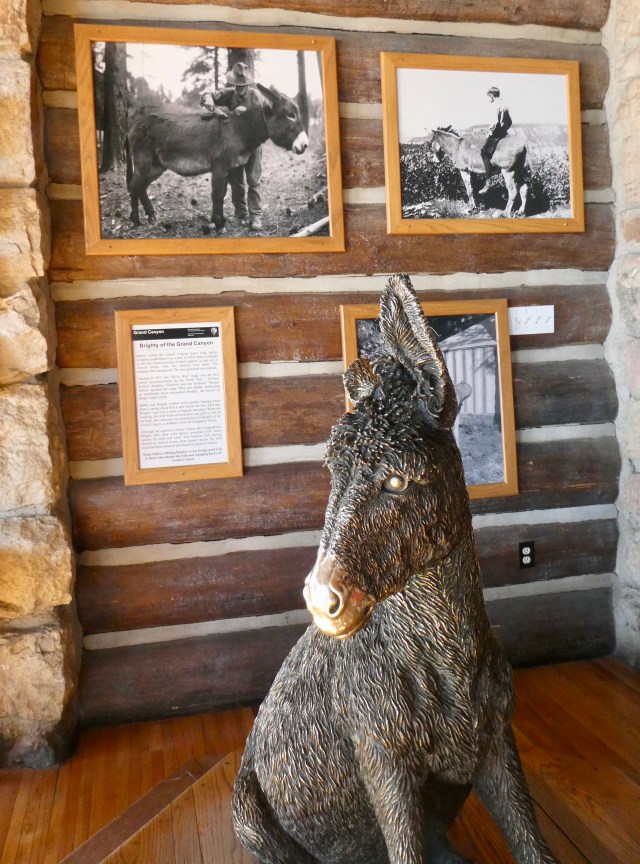 We learned about Brighty, the burro.
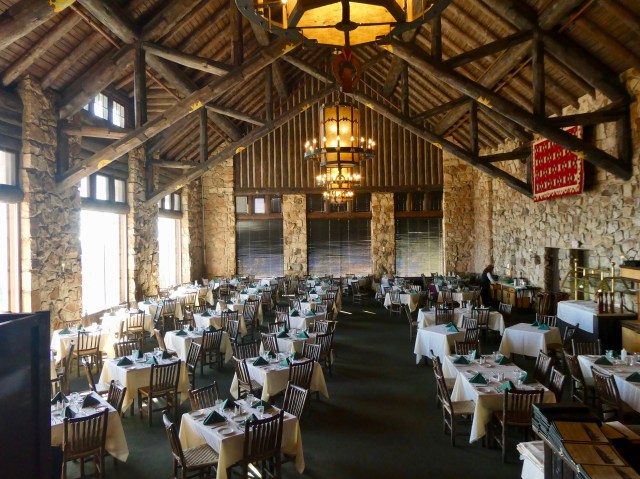 We ate in the lodge dining room, one of several places to eat on site.
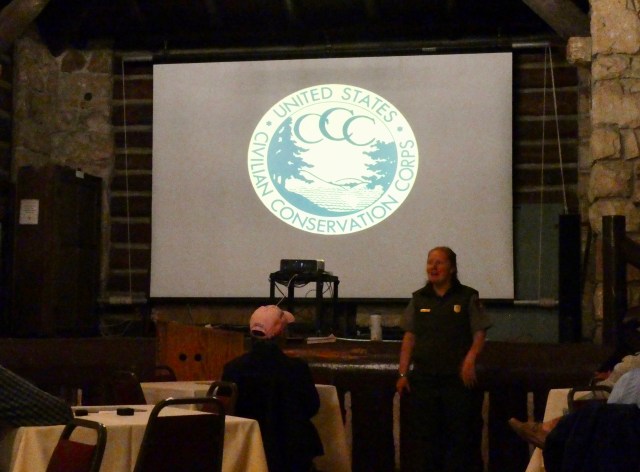 We attended a ranger presentation on the Civilian Conservation Corps.
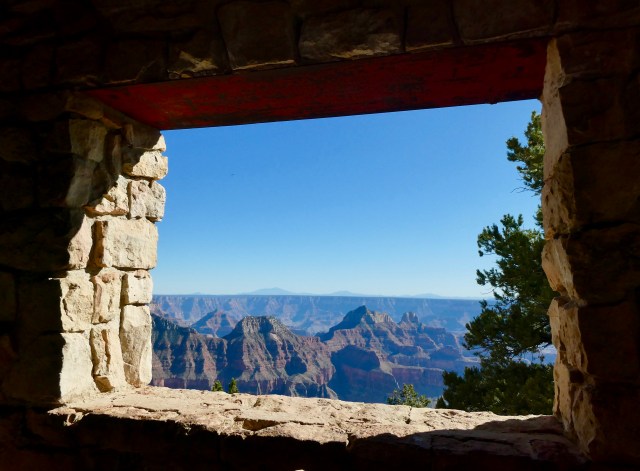 A view from one of the CCC sites.
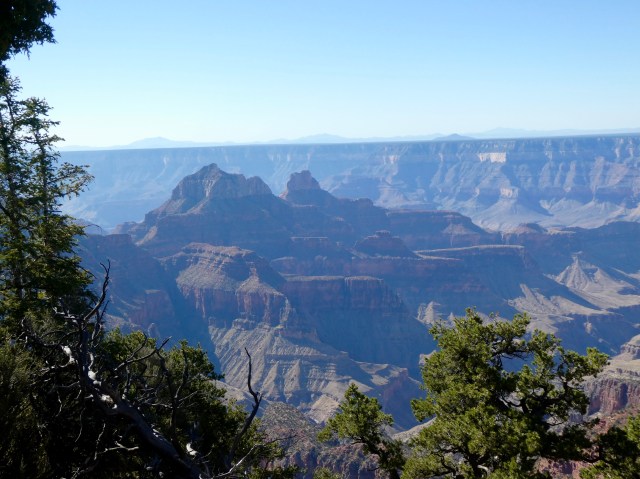 The next morning we walked the rim trail one more time looking at the views and trying to find a Kaibab Squirrel. We learned Kaibab Squirrels live only in this area and we wanted to see one. Supposedly they are everywhere but we had quite a challenge finding one!
  We saw and heard evidence of this one long before Randy finally found it way up in the tree. The zoom lens and his steady hand got the picture!
 After all that effort, we saw this one bounding away as we approached our truck to leave.
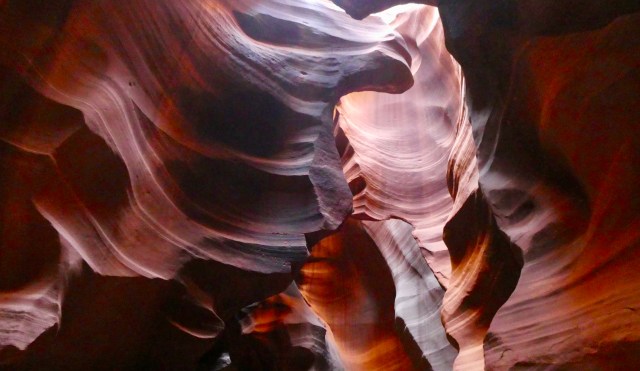 Even if you are unaware, you have likely seen photographs of Antelope Canyon near Page in northern Arizona.
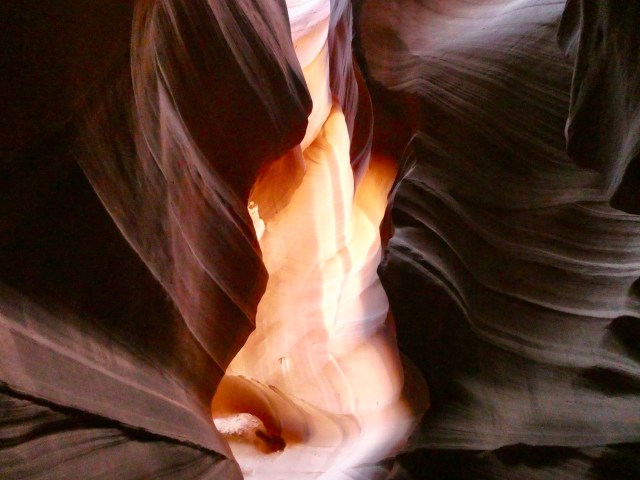 Antelope Canyon was formed by flash flooding through Navajo Sandstone.
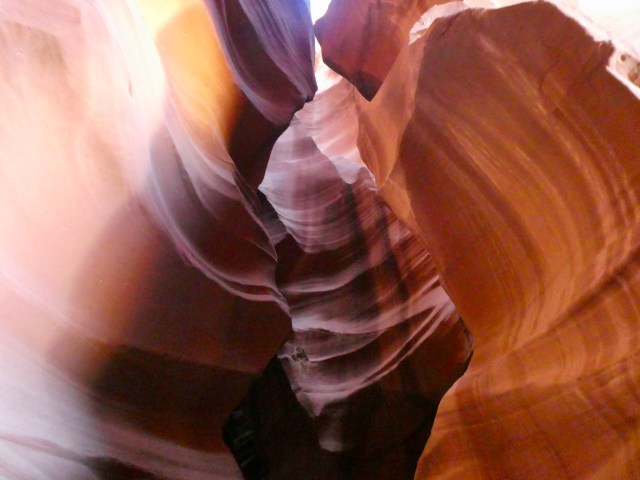 The first problem we encountered with Antelope Canyon was whether to book (well in advance) an Upper or Lower Canyon tour.
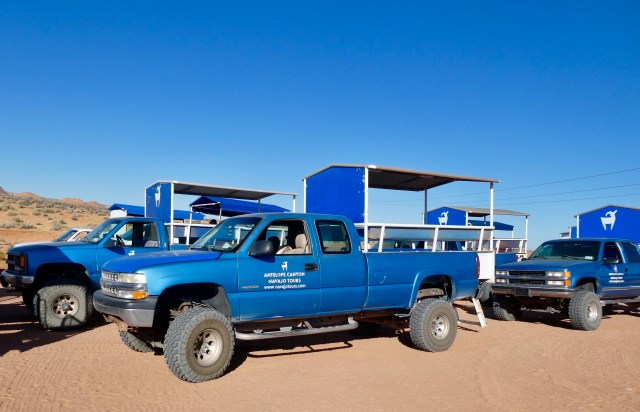 We were transported to the site in four wheel drive vehicles.
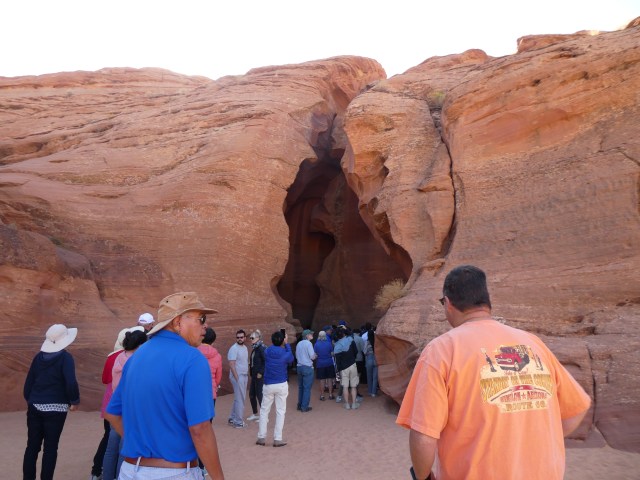 An interesting entrance to the Upper Canyon – walk right in!
 There are about 12 people in a tour group, but there are dozens of tours in the canyon at the same time.
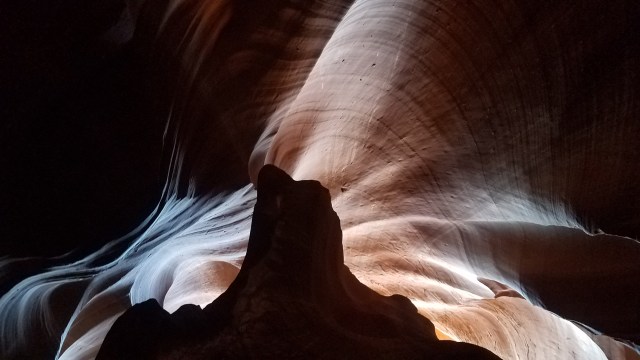 The tour guides are awesome, knowing just where and at what angle, to take photographs. Some of the views have been named to reflect something similar outside the canyon.
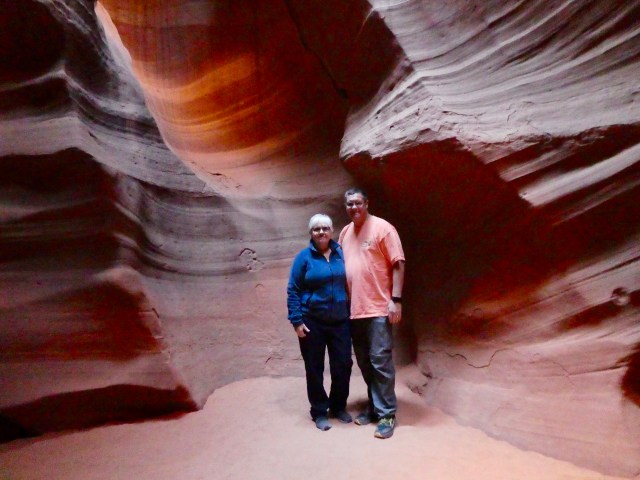 We enjoyed our tour so much that we inquired about a walk up tour for the Lower Canyon. (We had seen limited “cash only” walk up opportunities at the Upper Canyon.)
 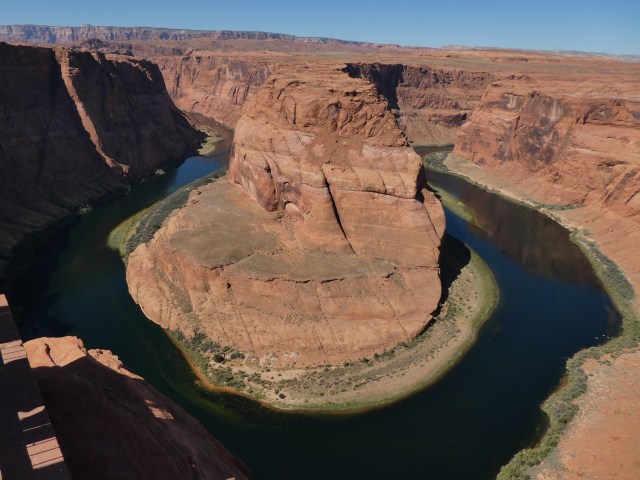 With hours to wander, we ventured to other sites near Page.
  Then we went to Antelope Point Marina and enjoyed a boat tour of this section of Lake Powell.
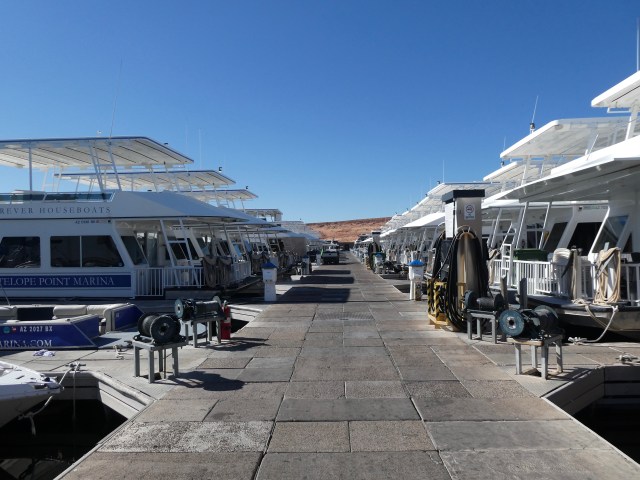 We enjoyed three house boat vacations on Lake Powell many years ago and, while at the marina, decided to take a look inside the new houseboats available for rent.
 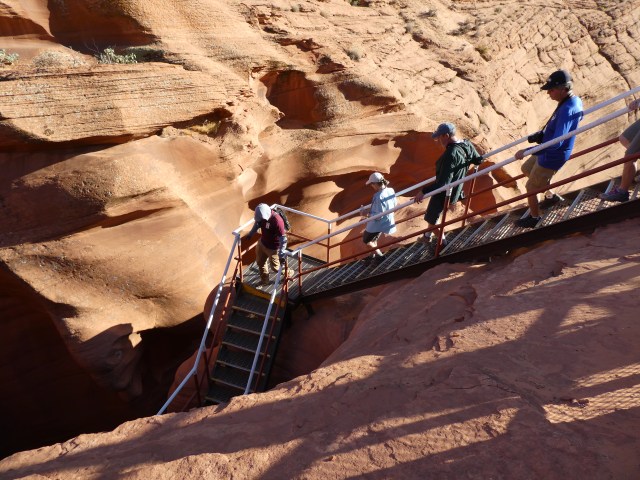 At 4:00 we connected with our tour guide.
 There were sets of stairs throughout the tour which could be problematic for some.
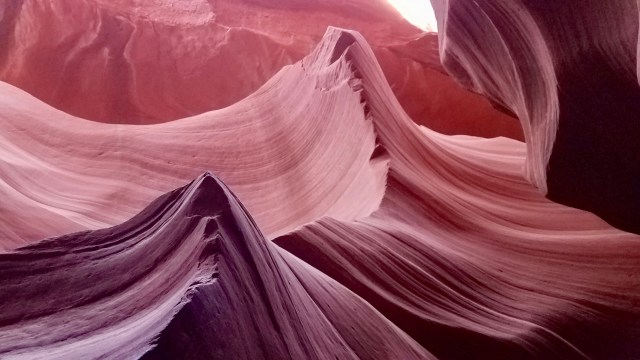 There are so many interesting features in the sandstone.
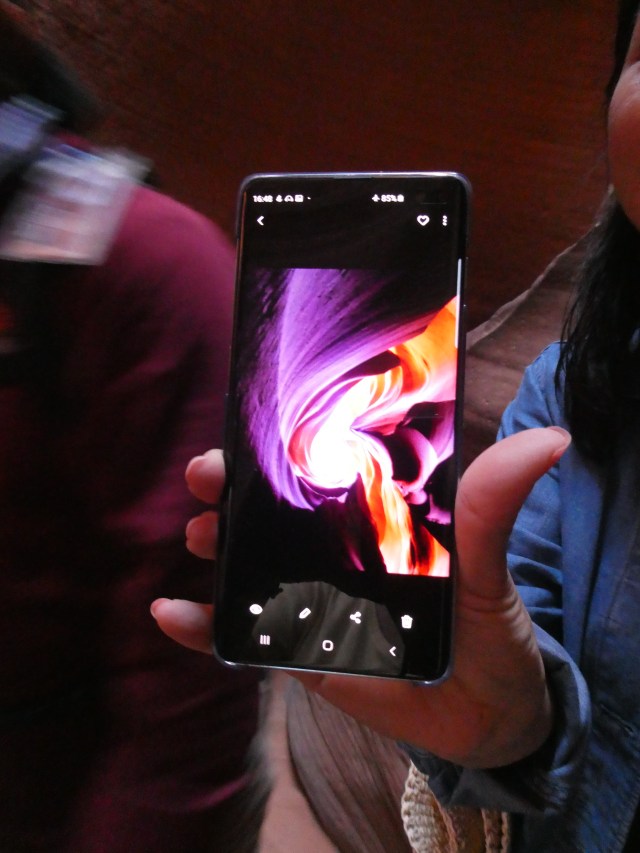 Like before, our tour guide knew when and how to get the best pictures, mostly with cell phones.
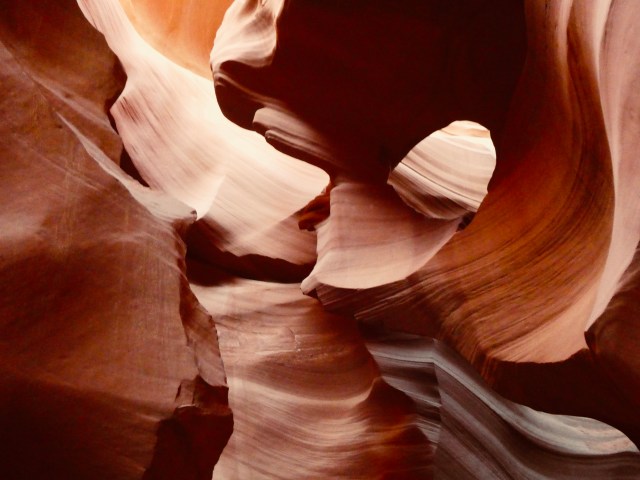 One “photography tour” is offered each day, presumably allowing more time at the best time of the day for light angles.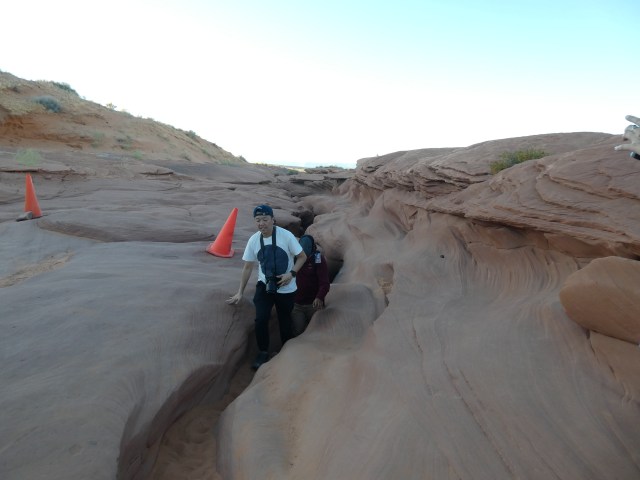
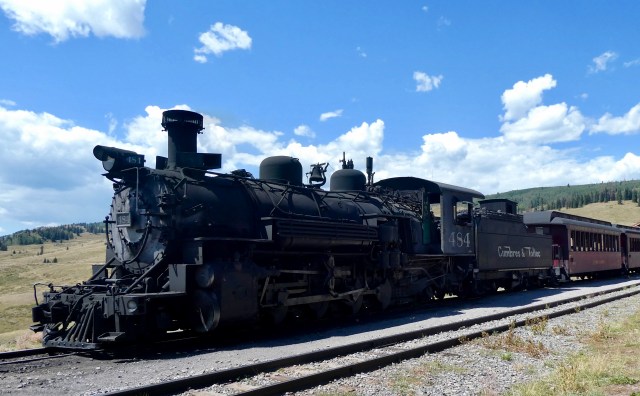 We enjoy riding old trains and have been on quite a few including the Durango to Silverton trip I wrote about in
 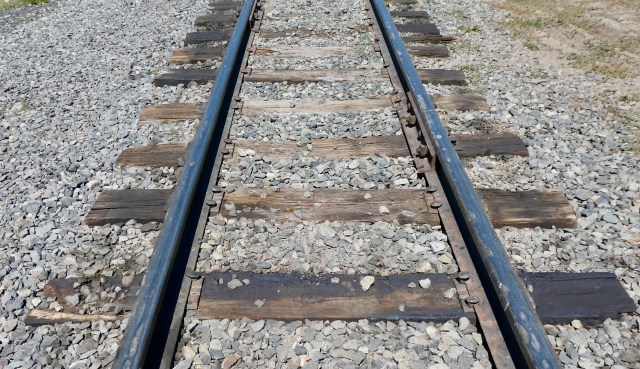 The Cumbres & Toltec is advertised as the longest and highest narrow gauge railroad in America. Narrow gauge lines are 3 feet wide instead of the standard 4 feet 8 inches.
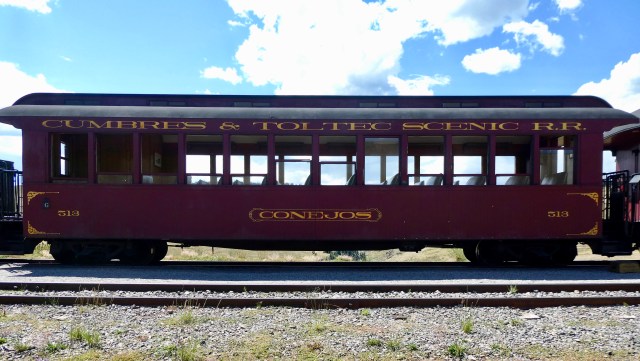 The Cumbres & Toltec is a remnant of the Denver & Rio Grand Railway, built in 1881 for the mining industry in southwest Colorado.
 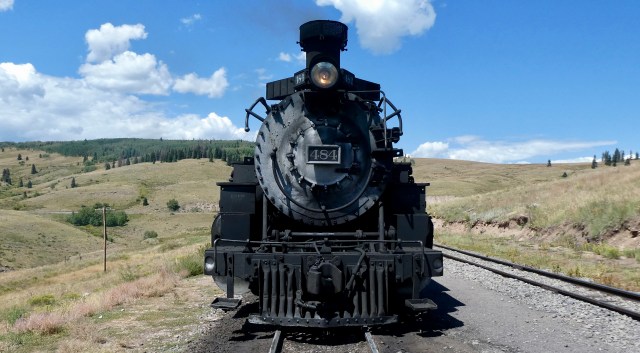 Colorado and New Mexico joined together, contracting with Cumbres Toltec Operating LLC and the Friends of Cumbres & Toltec Scenic Railroad, Inc. to operate a tourist train.
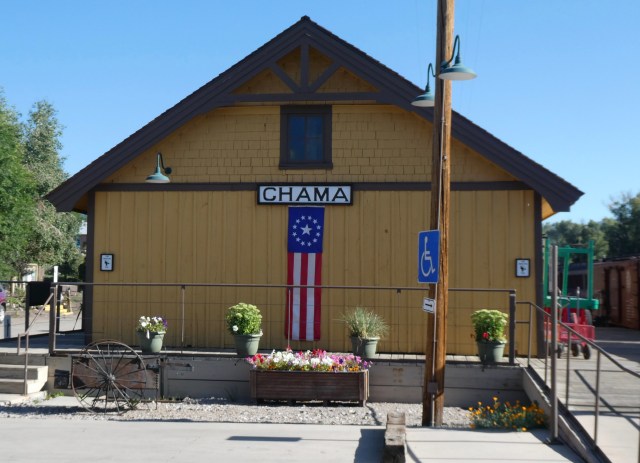 We began our train ride in Chama, New Mexico with tickets to ride the complete 64 mile route arriving in Antonita, Colorado. We would return to Chama by motor coach.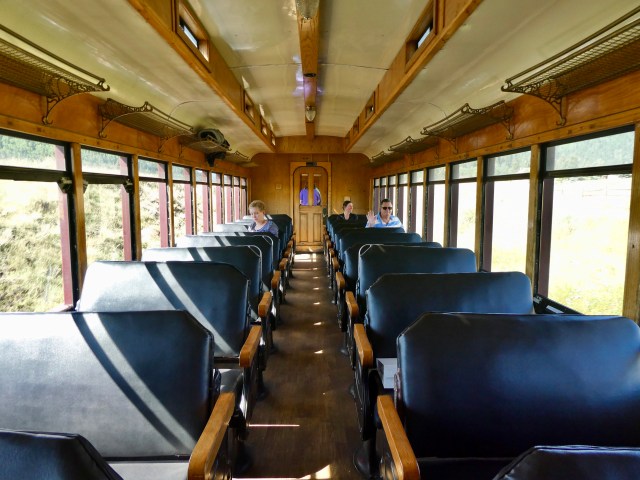
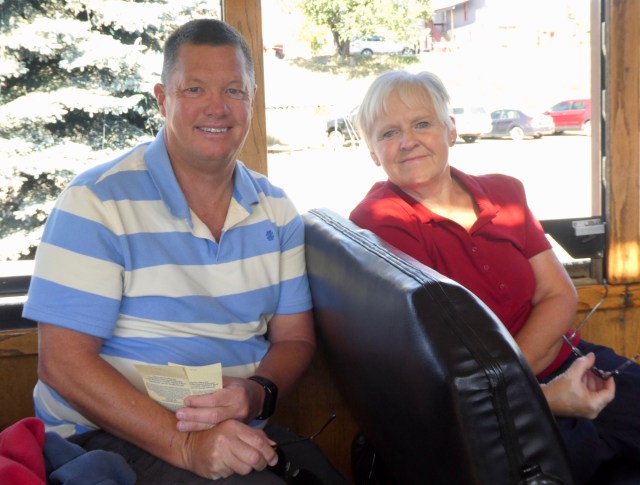
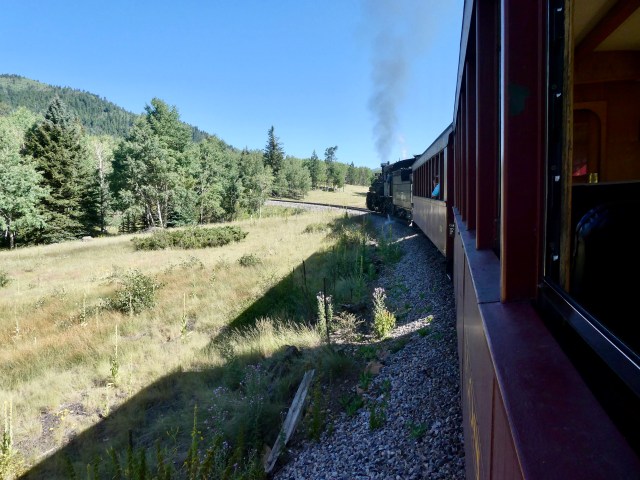
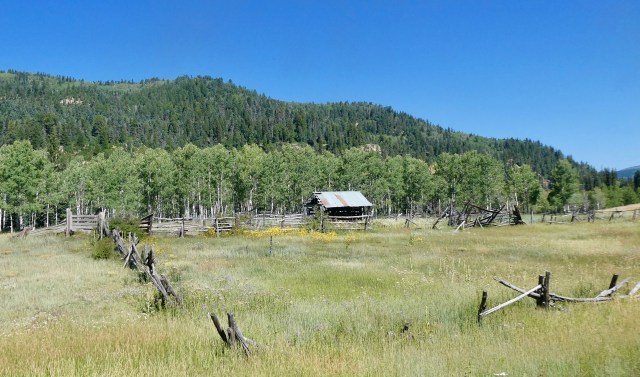 Movie personnel utilized the train and this area while filming Indiana Jones and the Last Crusade.
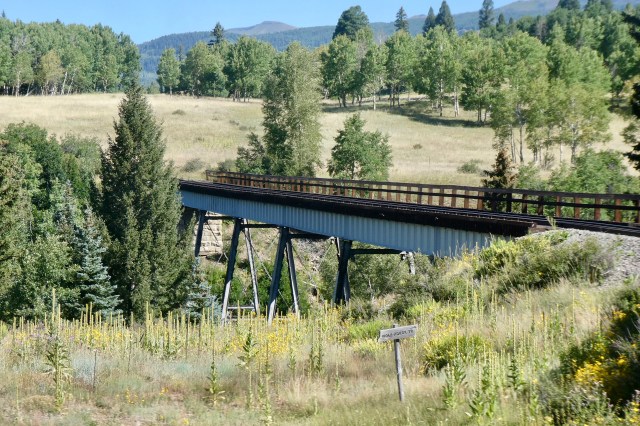 Lobato Trestle sits 100 feet above Wolf Creek.
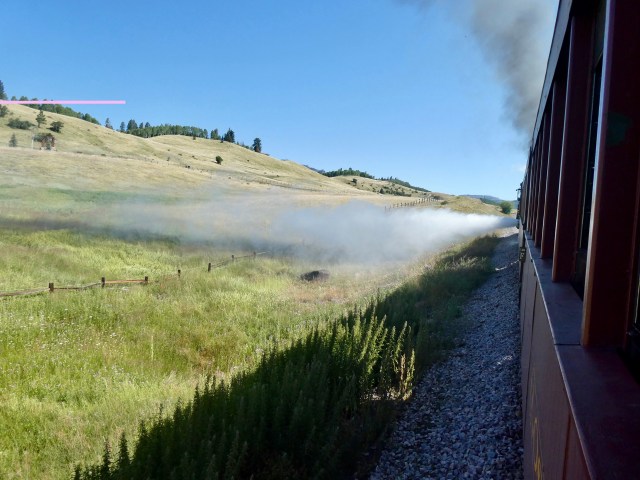 The engineer is doing a blowdown – releasing steam to adjust pressure and eject sediment.
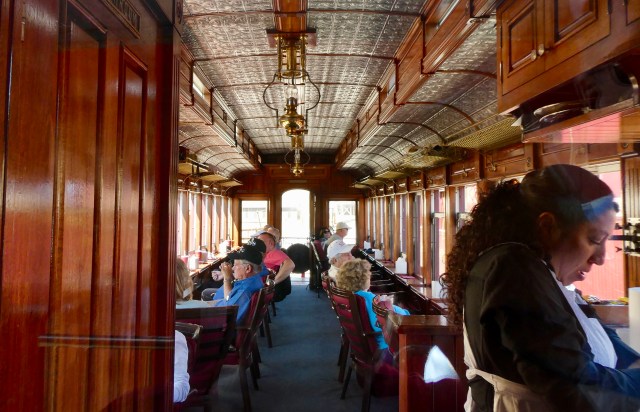
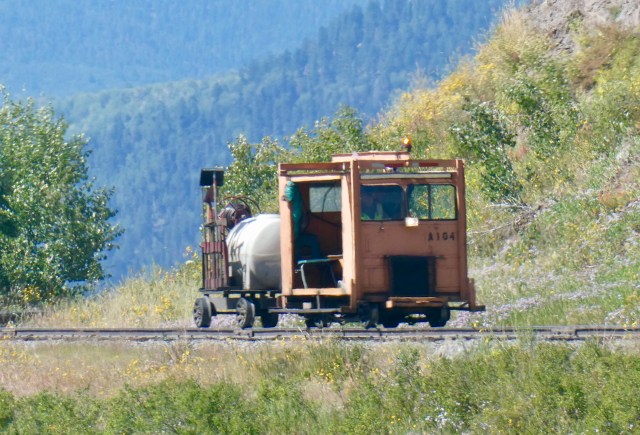
 At Cumbres Pass “station” eight people from our car disembarked.
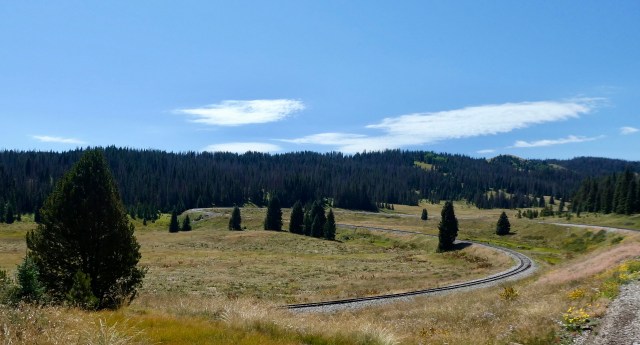 This is Tanglefoot Curve.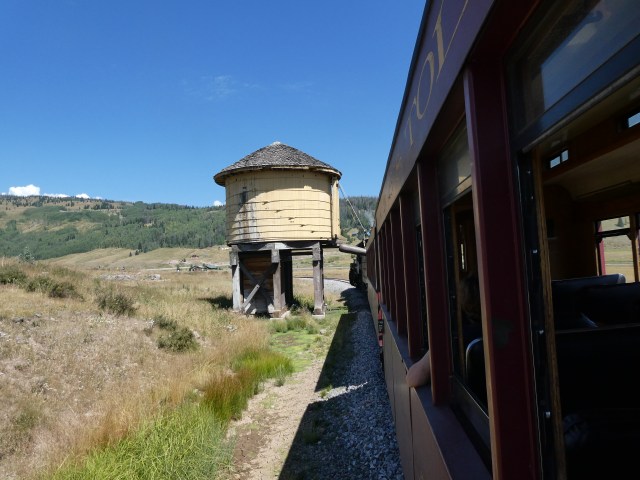
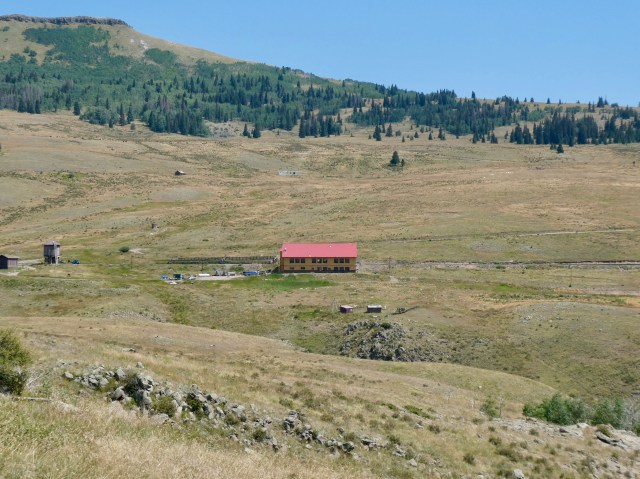 Two and a half hours into our journey we approached Osier.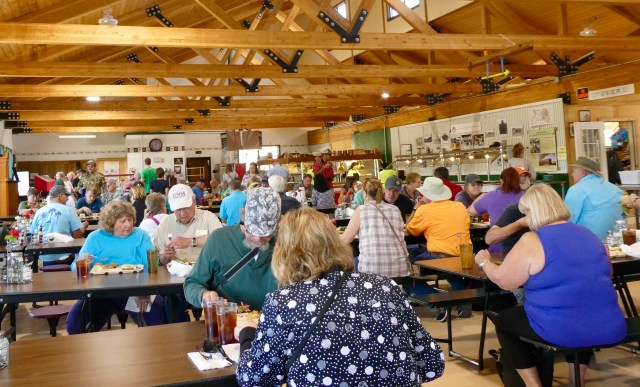
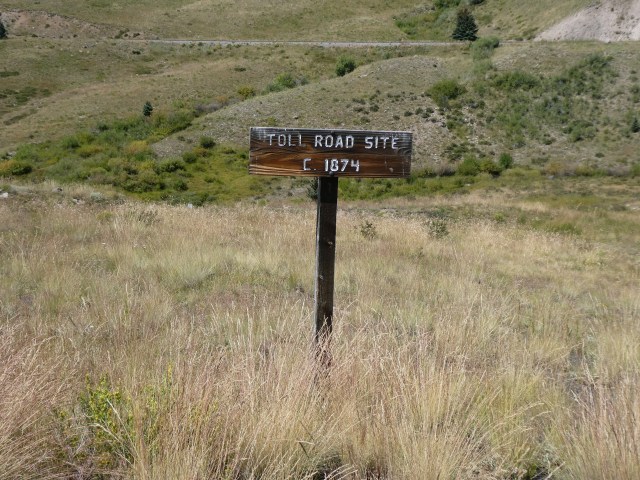 Osier used to be a toll station on the road from Conejos to Chama.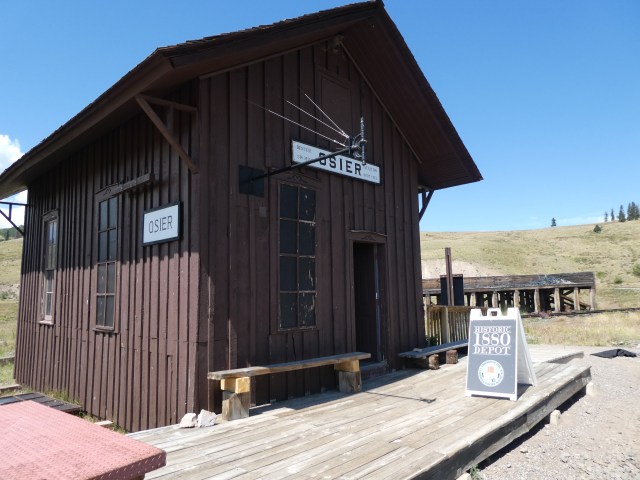
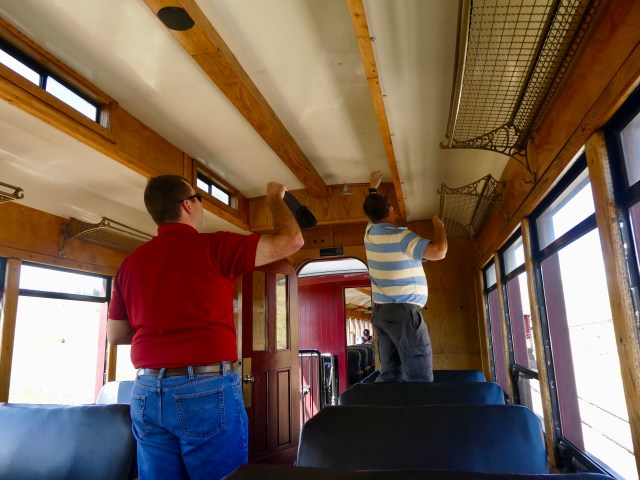 When we boarded the train to continue on a bird was trapped in our car.
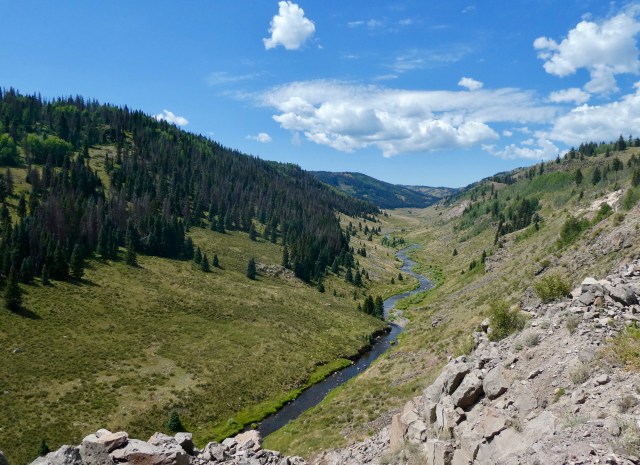
 We traveled through the Toltec Gorge, 600 feet above the Rio de Los Pinos River.
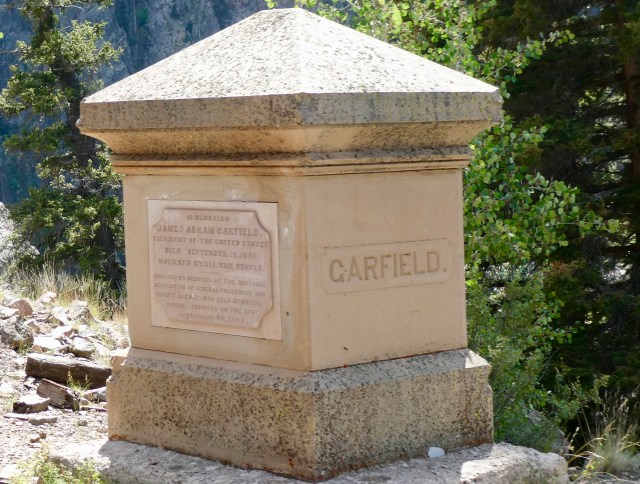 Just west of the Rock Tunnel we saw a Garfield monument.
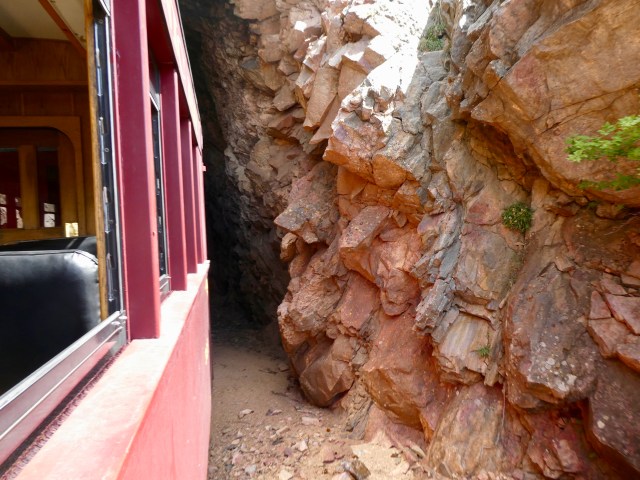 We entered the tunnel, bored through 360 feet of solid rock – in 1881.
 A second tunnel, Mud Tunnel, required wooden supports over the entire 342 foot length.
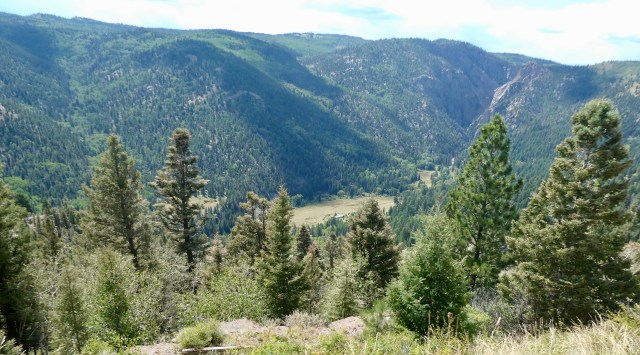 Throughout the day we enjoyed seeing houses and cabins in the wilderness.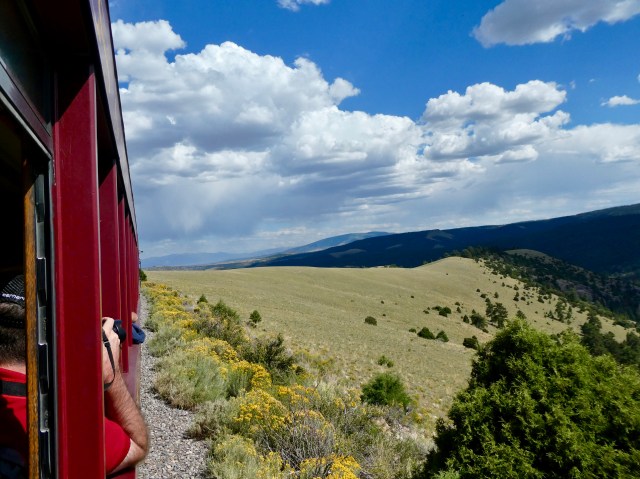
 We saw entering New Mexico (or Colorado) signs throughout the day!
 Sometimes a new sign appeared just a couple hundred yards down the track as the route looped from one side of the border to the other.
 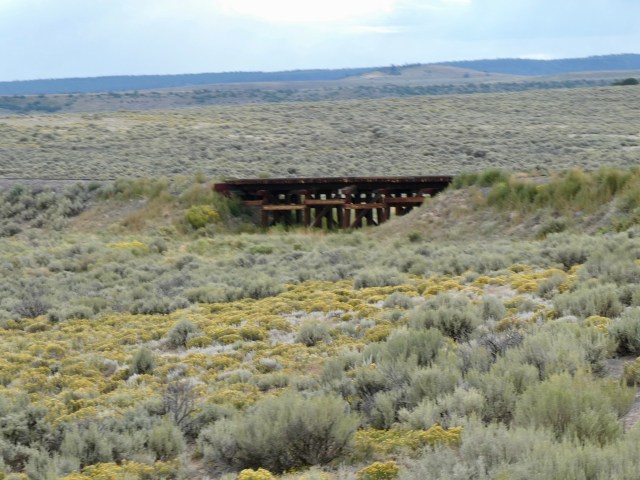 As we approached Antonito we saw Hangman’s Ferguson Trestle (Mr. Ferguson was hanged on it.)
 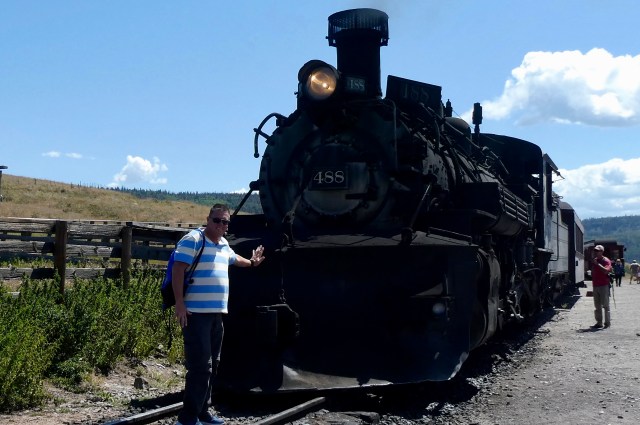 Randy and I have been fortunate to make seven or eight of these train trips. We have liked them all but agree that the Cumbres & Toltec Scenic Railroad is our favorite.
 El Morro, this large sandstone bluff, sat on the main east-west route for several people groups.
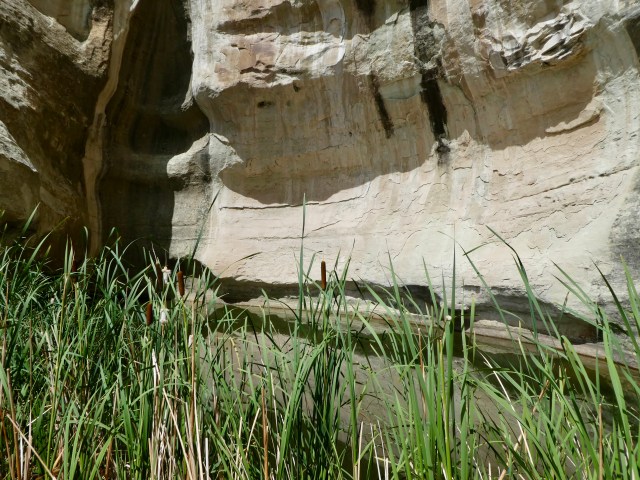
 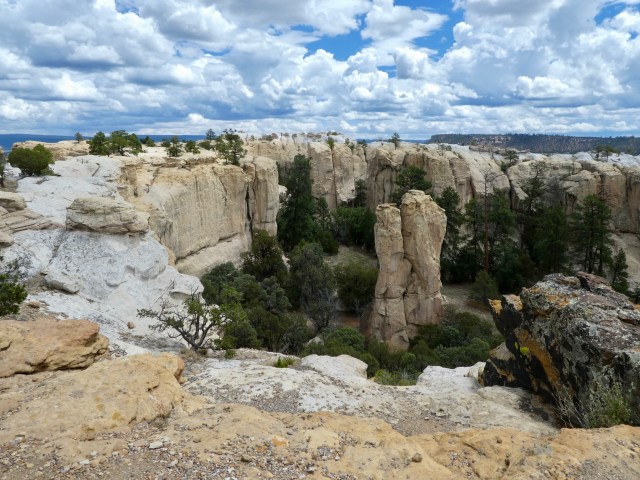 It wasn’t the rock promontory, but the oasis pool at the base that was the reason for many to stop and rest a spell.
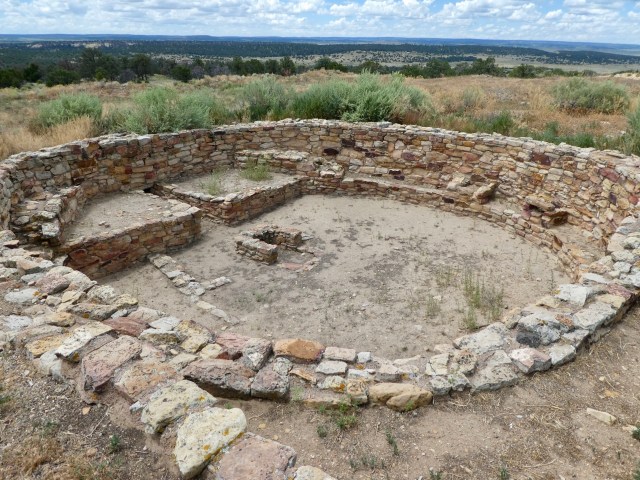 Zuni forefathers, part of the southwest puebloan culture,
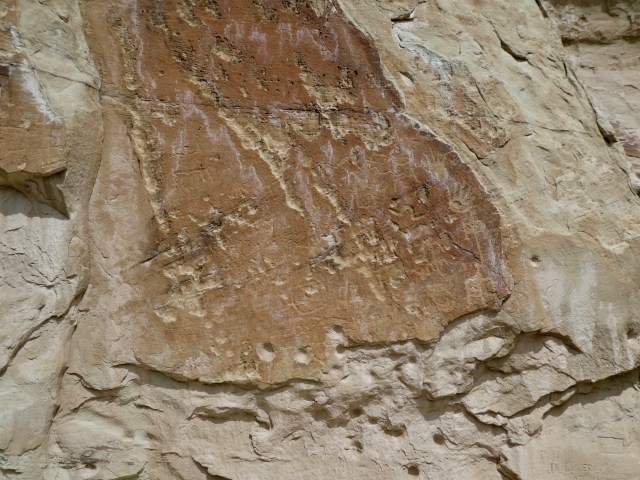 Petroglyphs in the sandstone bluff are the earliest carvings.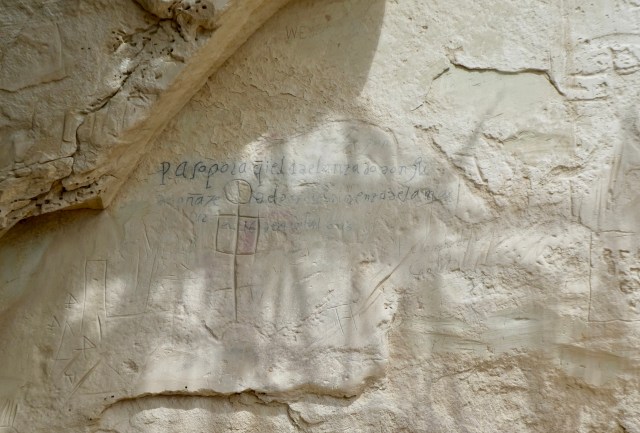
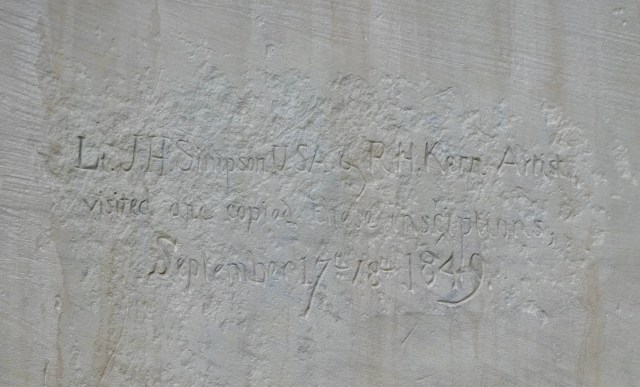 Named “Inscription Rock” by the Anglo-Americans, Army Engineer Lt. James H. Simpson and accompanying artist Richard Kern came to document the inscriptions.
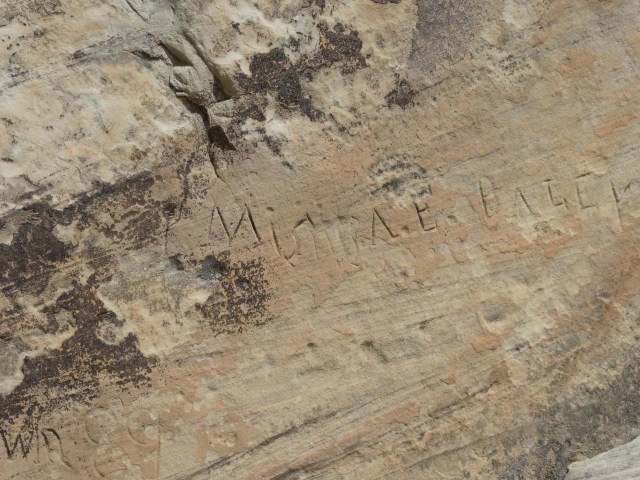 Emigrants to California and railway survey groups added inscriptions in the last half of the nineteenth century.
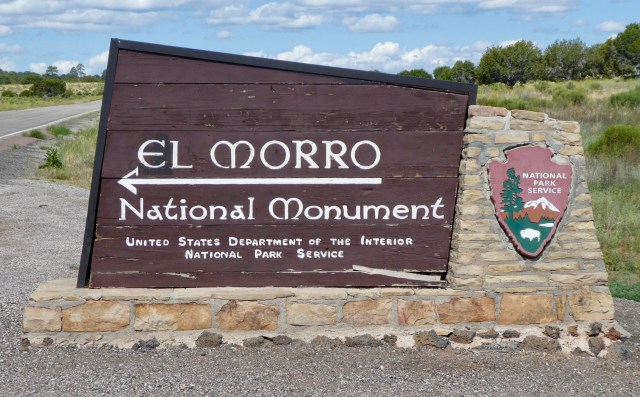 El Morro was named a National Monument in 1906, one of the original four designated
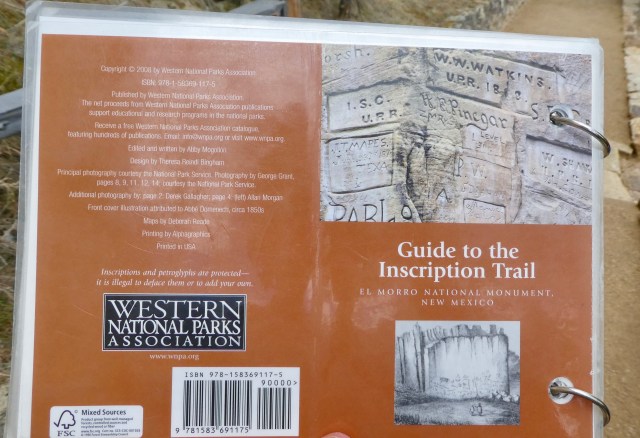 A stop at the visitor center gives you an introductory video, expert advice and a loaner trail guide.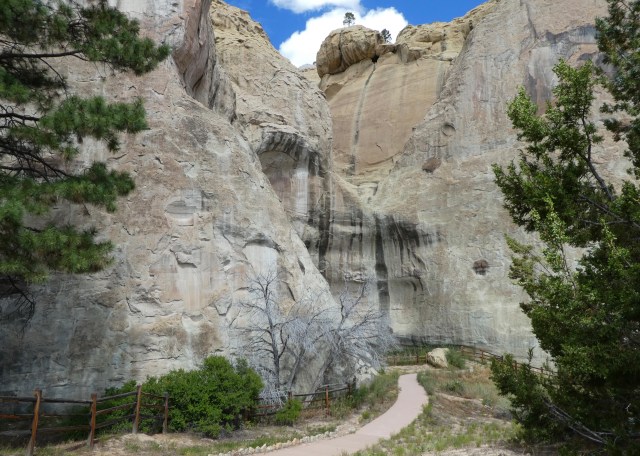
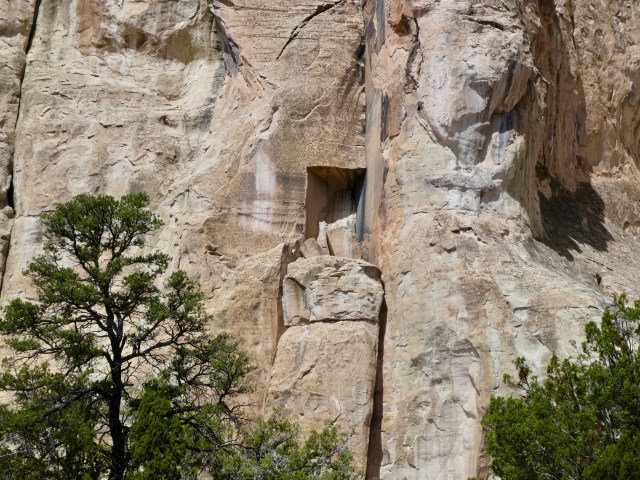 Nature will have its way with sandstone but this cut is so precise it looked purposeful. Alas, no -it was just the way the rock broke and fell.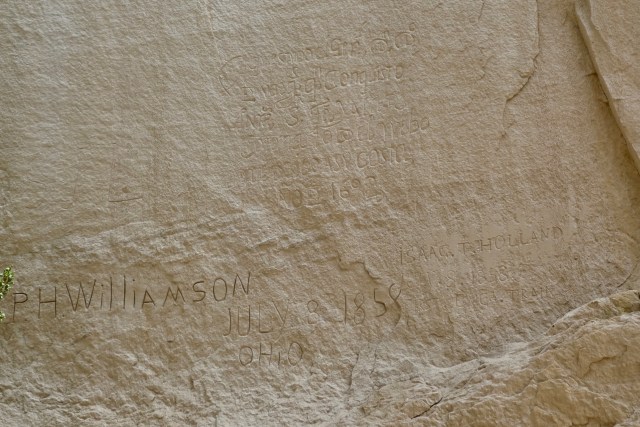
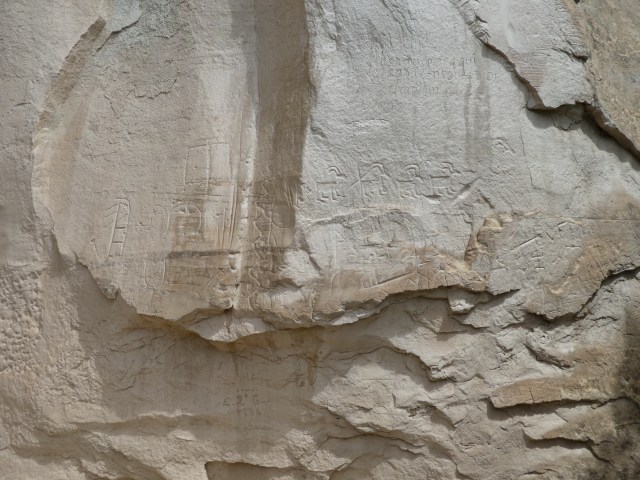

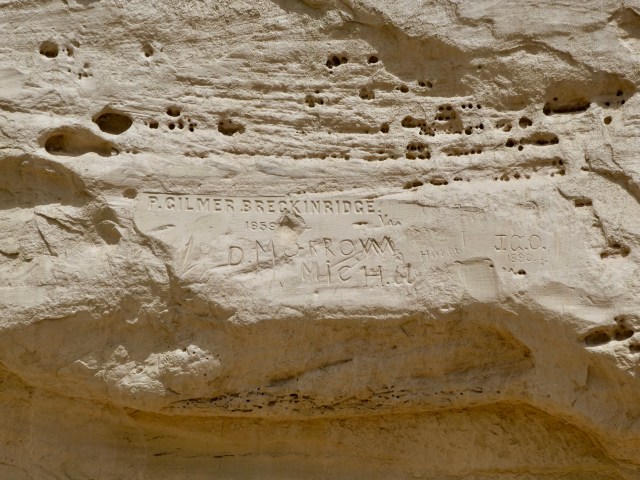
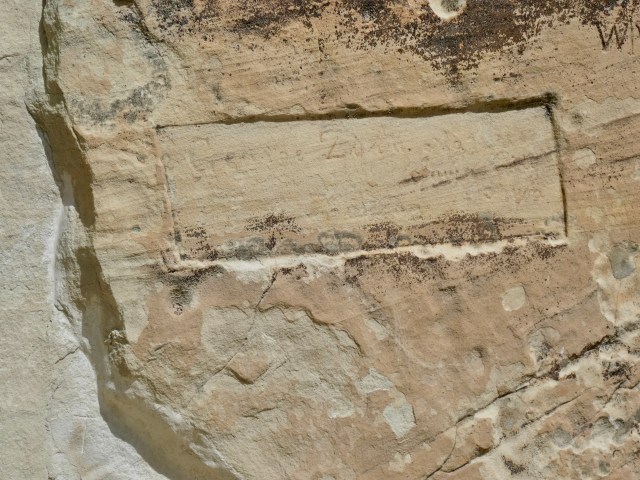 Several monument administrators have done what they thought was best to try and preserve the inscriptions that will eventually be lost to nature. Cutting around inscriptions to move water flow away was attempted.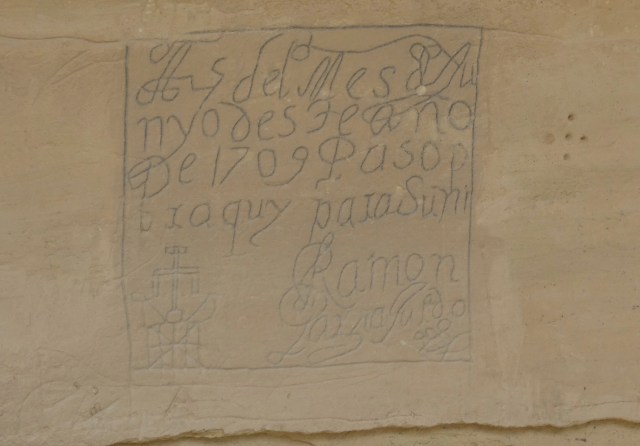
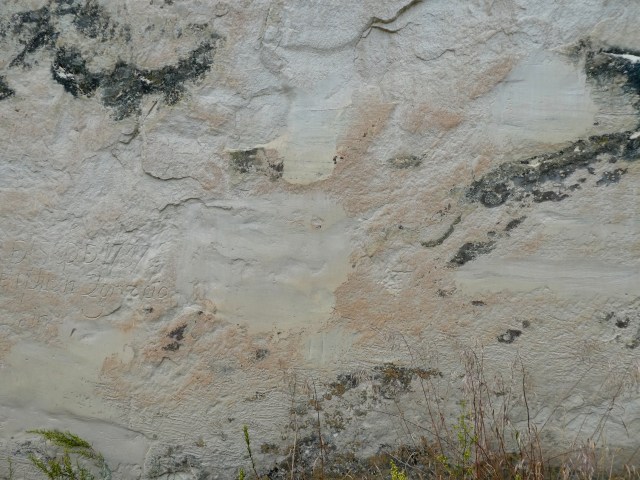
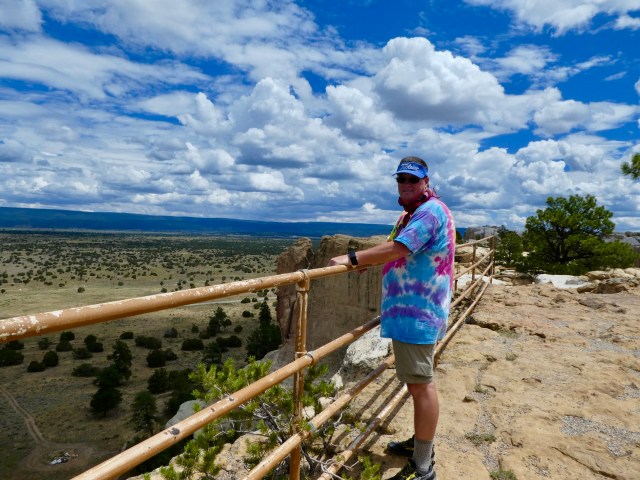
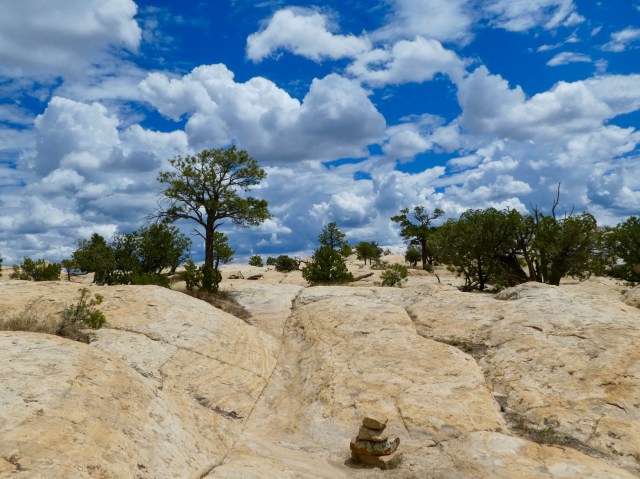
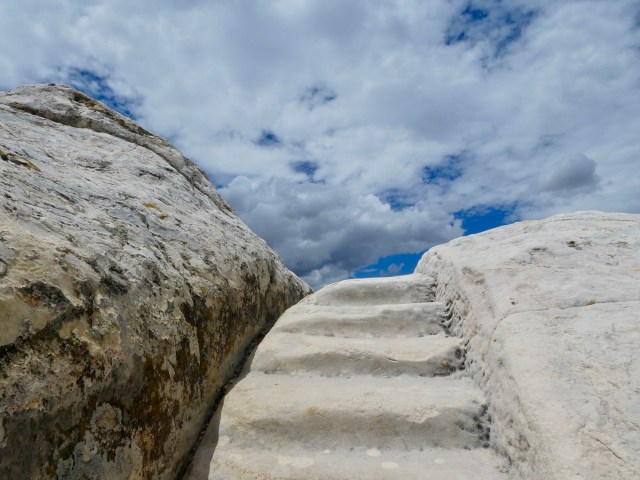
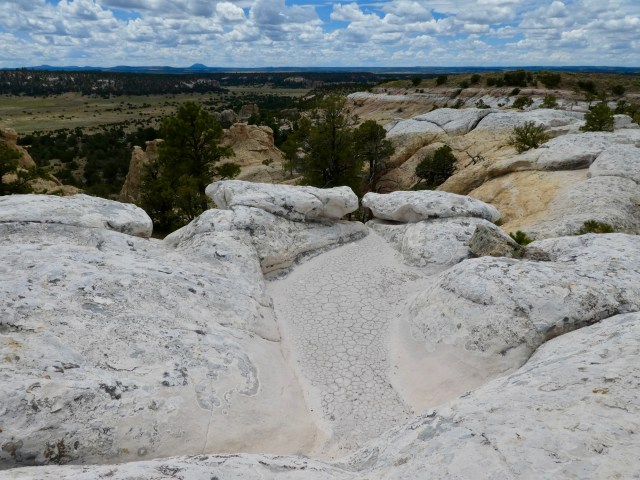
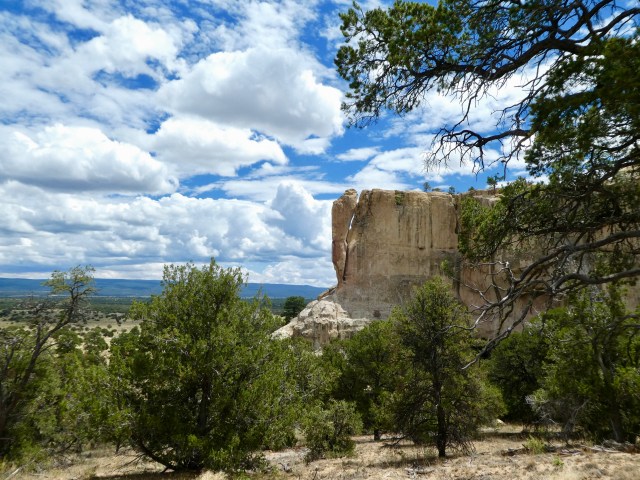 After viewing the signatures near the base of the rock, we followed the trail up to the mesa.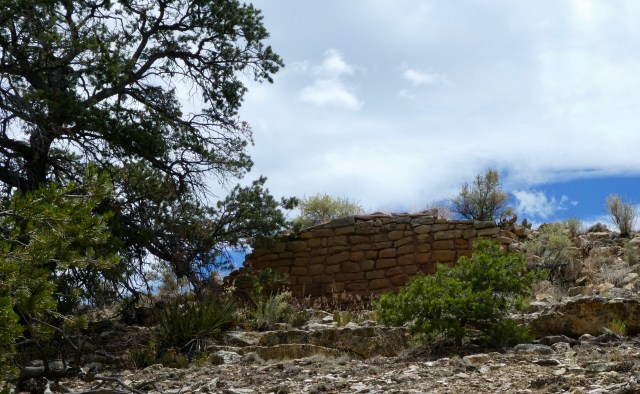
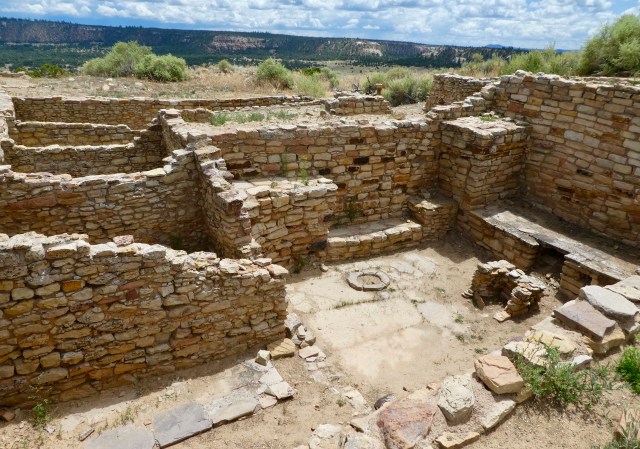 We saw a second set of ruins that are being preserved and are accessible.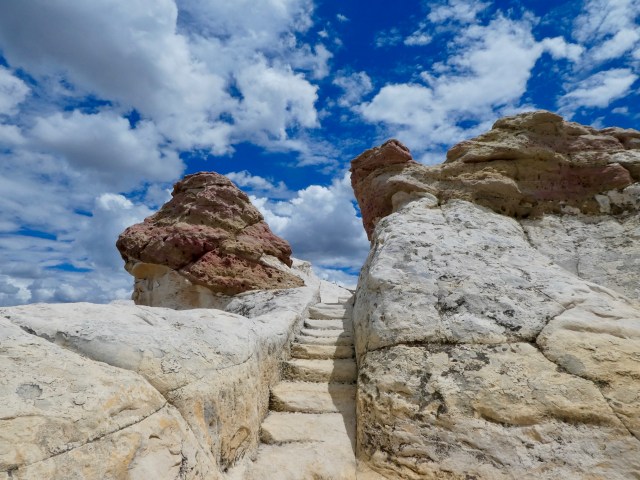

 Serene Wandering