We enjoyed our stay near Lake Havasu last spring and documented it in the post Arizona: Done and Done. We enjoyed hiking amongst the desert wild flowers, learning about Parker Dam and motoring along the Colorado River. Of particular interest was the London Bridge!
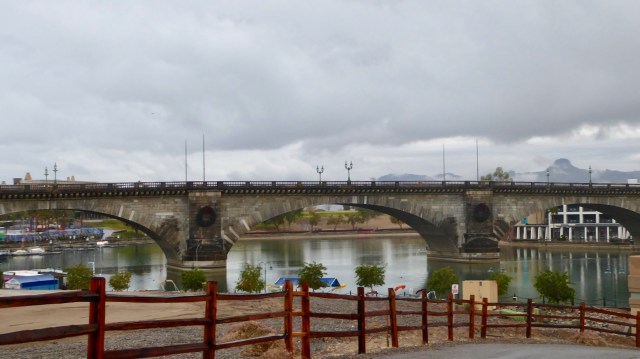
Yes, THE London Bridge.
We enjoyed our stay so much that we have had a bit of a buzz since about whether this could be a permanent landing spot for us. So, we are here again on our way south.
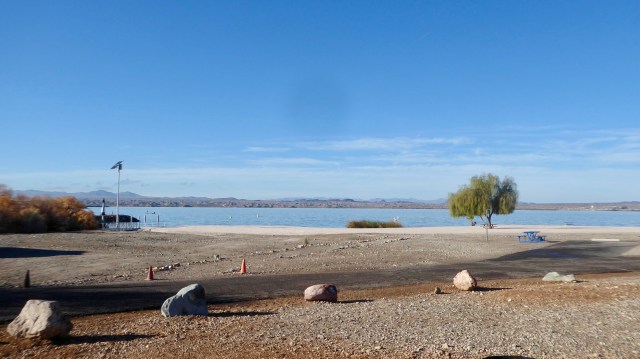
We have enjoyed our campsite view of the lake!
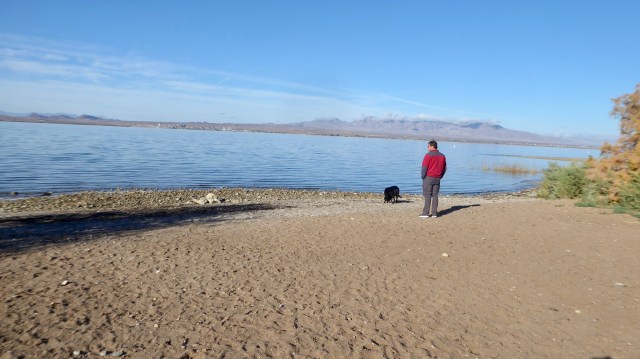
Elko liked the dog beach but it was a little chilly for us to be interested in getting in.
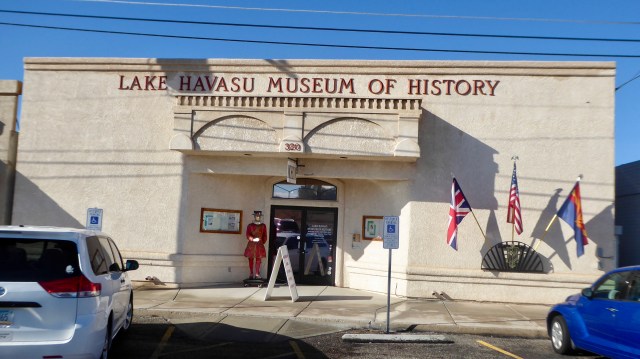
We visited the Lake Havasu Museum of History.
There were exhibits about native peoples and wildlife. There was information about the Colorado River and the decisions made to capture and distribute its water. But the exhibits that really caught our interest were the ones about the history of Lake Havasu City and the buzz to grow the town.

Picture from a museum exhibit.
As with so many things, the story starts during WWII. The Army Air Force established airfields for training pilots and crews of USAAF fighters and bombers. Seven sites (creatively named sites one through seven) were built along the Colorado River with Site Six located at Lake Havasu.
Site Six was also used for rest and relaxation by Army Air Force personnel. When WWII ended, the military closed the landing field but planned to continue to use the facility for recreation. However, in an odd bit of irony and patriotism, the military found that the property was privately owned. They had assumed it was state land but it was really owned by Corinne and Victor Spratt of Needles, California. The Spratts had allowed the military to use their land without comment because it was needed for the war effort. Ironically, the Spratts hadn’t charged the Army Air Force a fee for occupying their land but the military asked them for a token amount to pay for the improvements. The Spratts eventually developed a small resort on Site Six.
A dozen years later, in 1958, Robert McCulloch happened upon the area while looking for a place to test his company’s outboard motors. He purchased most of the Spratt land.
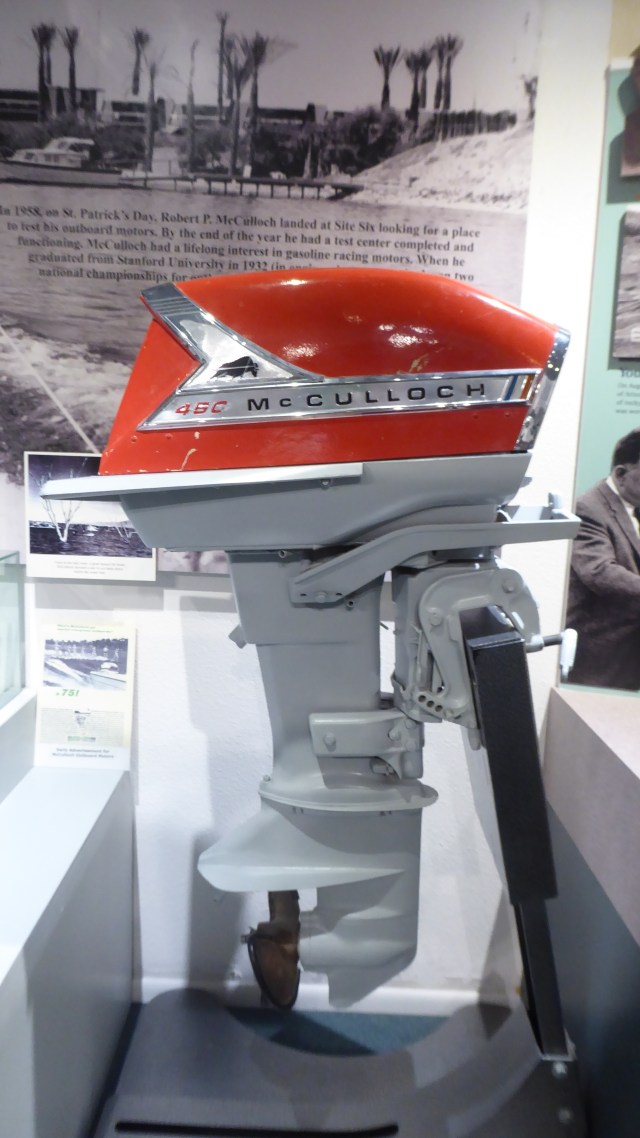
But McCulloch didn’t stop there. He decided to create a city in the middle of nowhere and needed to create a buzz. What better way than to buy the London Bridge, which he did in 1967. He teamed up with Bud Graham, who had previously worked with Walt Disney, and made it happen.
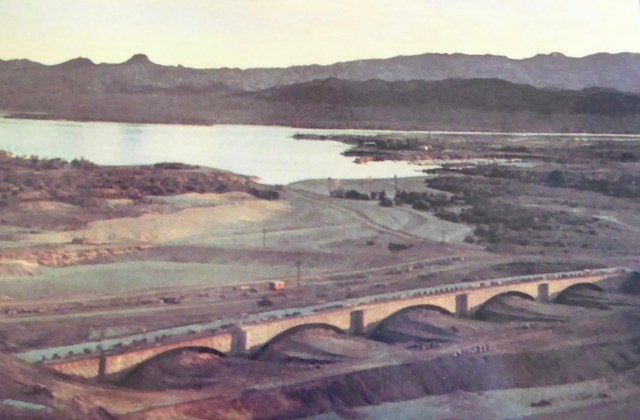
The bridge arrived in Lake Havasu and was reassembled across the narrow part of the peninsula using existing sand to support the arches.
 When dredging under and around the bridge was complete, the peninsula was an island utilizing the London Bridge for access.
With their new focal point ready, McCulloch needed to to build and populate the city. He offered incentives to businesses to establish themselves in Lake Havasu. McCulloch moved his chain saw manufacturing plant to Lake Havasu.
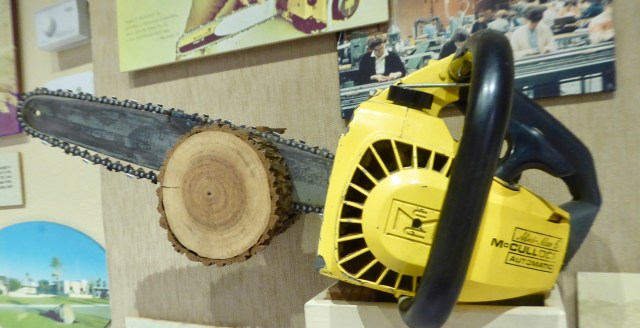
The Saw that Built a City
During 1970s winters McCullough advertised his desert city in newspapers to those in the east and midwest. When interest was expressed, they received a follow up visit from a salesman offering a free trip to Lake Havasu. McCulloch even provided free air travel on one of his own airplanes. Who could turn down that buzz?
Years later, retirees and tourists are still drawn to Lake Havasu City and its mild winter weather. Although summers are hot, so is the opportunity for water sports. The London Bridge is still a major draw and others have added to the buzz.
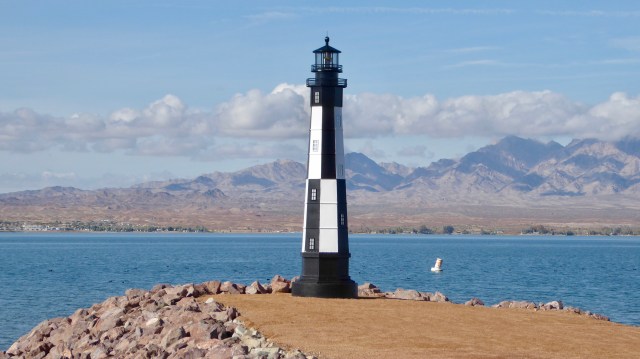 To improve safety on the lake, and to create additional buzz, the Lake Havasu Lighthouse Club installed and maintains 26 lighthouses in the vicinity. Lake Havasu has more lighthouses than any other city in the country. Lighthouses on the west side of the lake are replicas of famous west coast lighthouses and those on the east side are east coast replicas. Lighthouses on the island are replicas from those on the great lakes.

The East Quoddy Lighthouse original is in New Brunswick, Canada.


Another source of buzz is the casino across the lake! We were more motivated by the cheap way to get on the water than the casino but we enjoyed our evening.
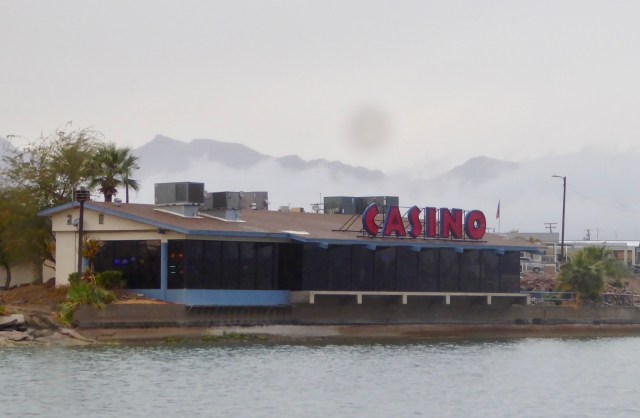
We had appetizers and drinks in the lounge (a more typical buzz), dinner in the dining room and a very brief visit to the slots! Randy lost $5 in two minutes and we still had 15 minutes to wait for the shuttle. I put in my $5, bet $1 and pushed the button. Lights and sounds went off like crazy! At the end of all the hubbub, I won $11.70 (to go with my remaining $4). It seemed like a great time to cash in and grab the shuttle home.
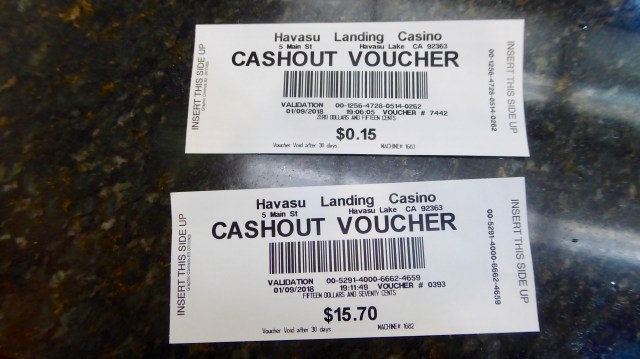
Randy’s cash out voucher was some less than mine – for once!
Lake Havasu City – What’s the Buzz?
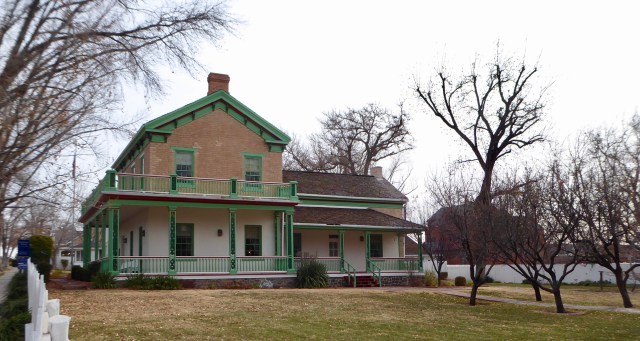 I traveled back in time and back to St. George to visit Brigham Young’s Winter Home. Brigham Young was born in Vermont, raised in New York, and eventually traveled with his followers to the area now known as Salt Lake. He not only lived all over the map but expanded the map when he coordinated the establishment of more than 400 communities. One of those communities was St. George where he was one of the first “snowbirds” spending winters in this home-office from 1873 until his death in 1877.

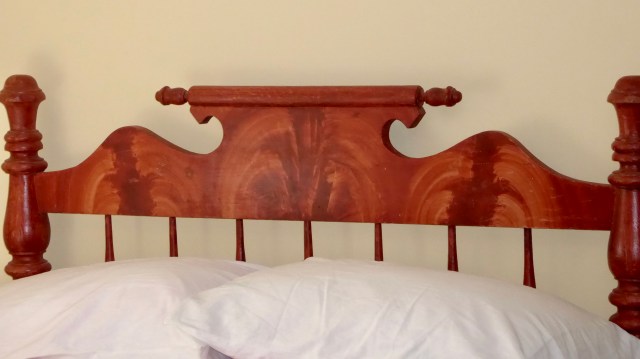 All of the available wood for construction and furniture making was pine. Craftsmen painted pine to resemble other woods such as oak, maple, mahogany and walnut. There were many examples of this in finish work and furnishings throughout the house.
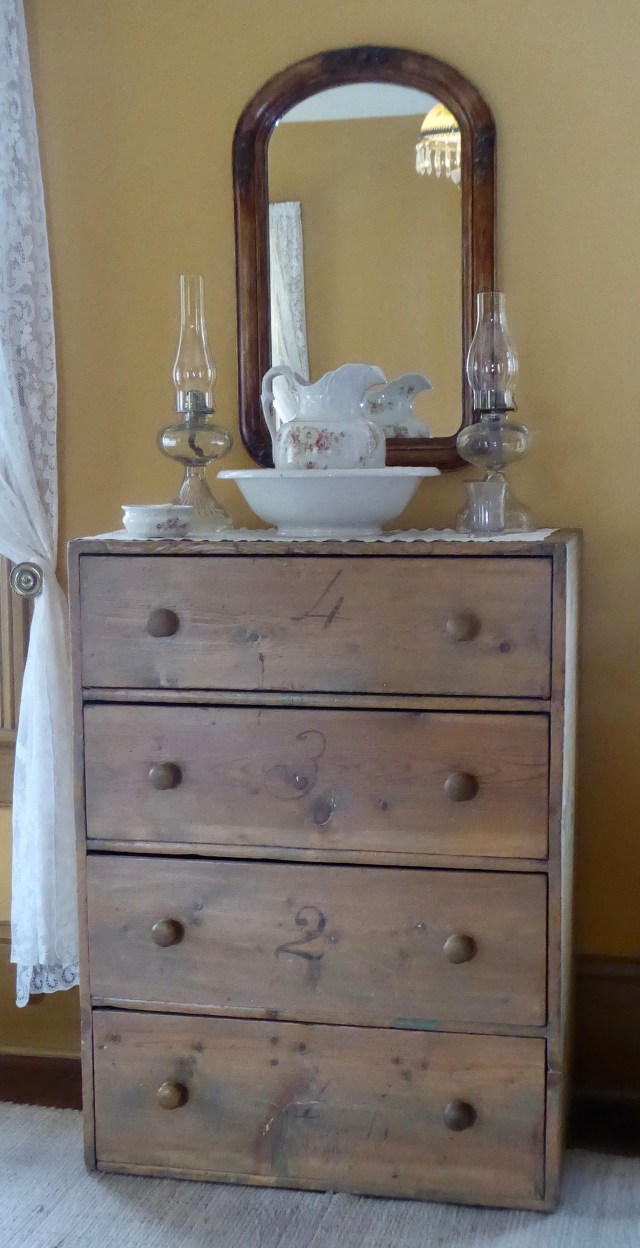 This was Brigham Young’s chest of drawers. He traveled frequently because of church and territory responsibilities and this chest went with him. The drawers were removed for loading and travel and put back into place on arrival. No need for a trunk!
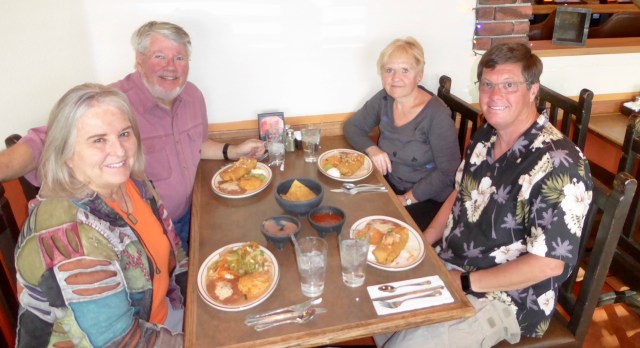 We went the other direction (again) to Las Vegas and had lunch with the RV Navigators, Ken and Martha. We have listened to their very popular RV Navigator podcast (10,000 downloads monthly) for many years and have always enjoyed their banter. They travel extensively all over the map by RV, cruise ship and other modes and share their experiences with listeners. We hit it off splendidly and hope to join them on an adventure someday – maybe the Galapagos Islands in 2019.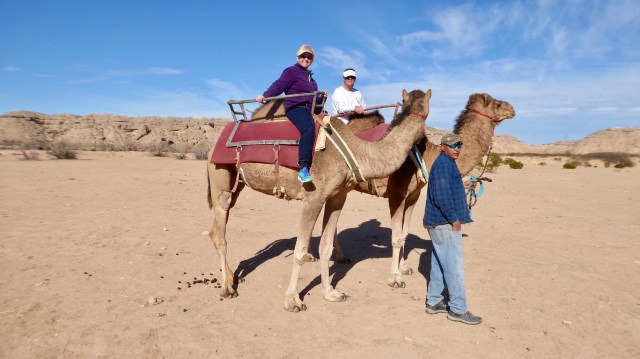
 The Camel Safari farm encompasses 176 acres and has 31 camels of two types. Dromedary camels, from Africa and Arabia, have one hump. The endangered Bactrian camel, from central Asia, has two. Contrary to popular opinion, humps do not hold water. Humps store fat which can be converted to nutrition in times when food and water is scarce. It is also wrong to assume camels like to spit. They regurgitate their food as a defense mechanism. Get out of my face or ugly stuff is coming your way!
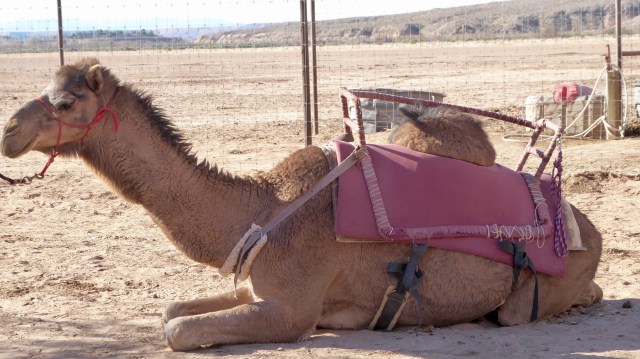 This is Barton, the camel Randy rode. He was very vocal and Randy imagined him complaining about having to carry a load today.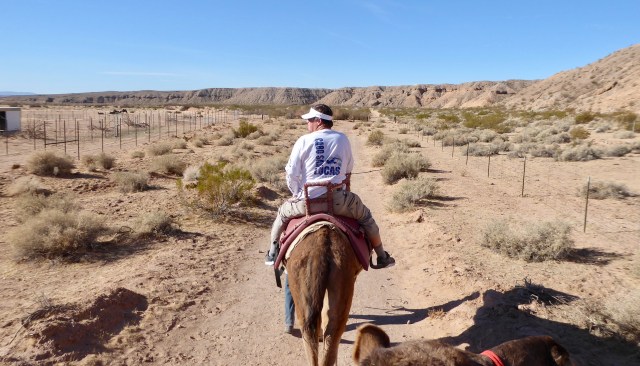
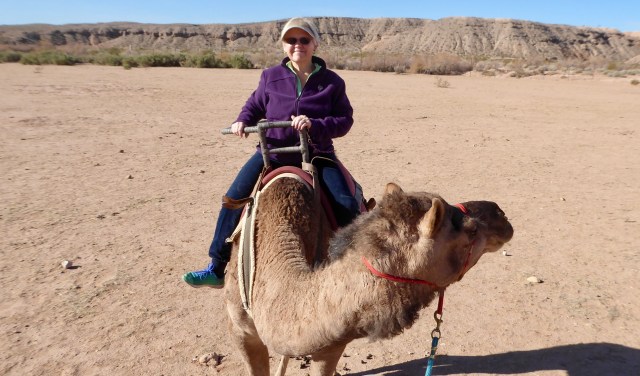
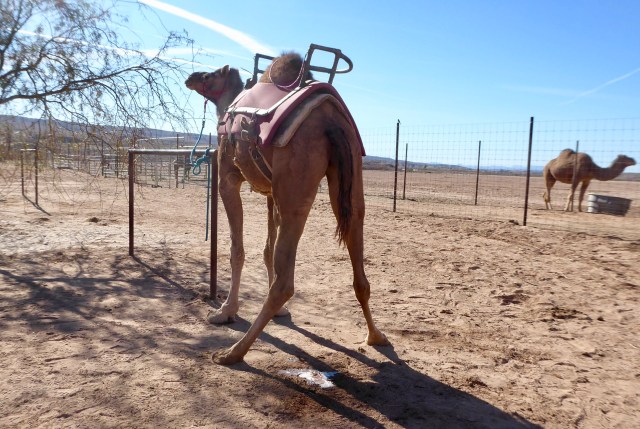 After our ride, the camels started peeing, and peeing… Although we were only in the peeing vicinity for about 5 minutes, we were told they can maintain the flow for 15 minutes. And when one starts, the next one starts and so on.
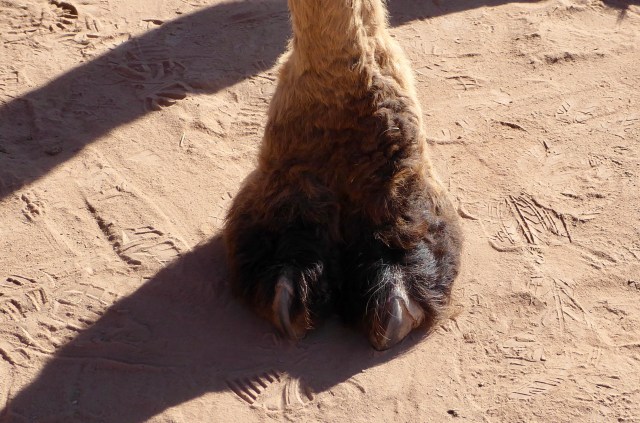 Camel feet have two toes with nails, but do not have hooves. The foot is divided into halves, covered by a thick protective sole and joined by webbing. The foot spreads and flattens to avoid sinking in soft sand.
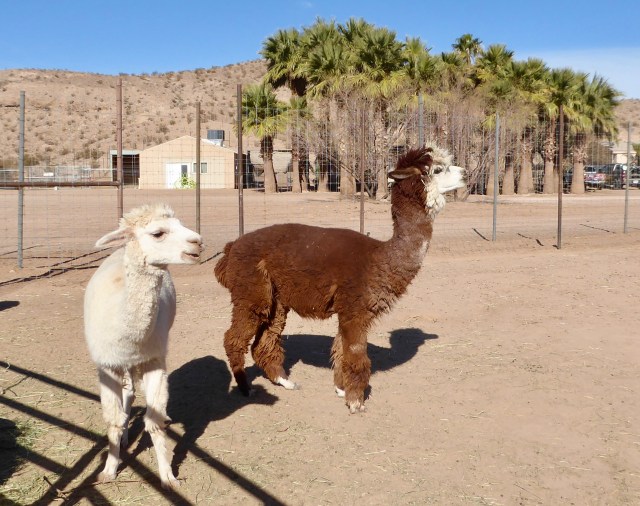 Llamas and alpacas also have two toes and are in the camel family. These alpacas also live on the farm with a variety of other interesting residents.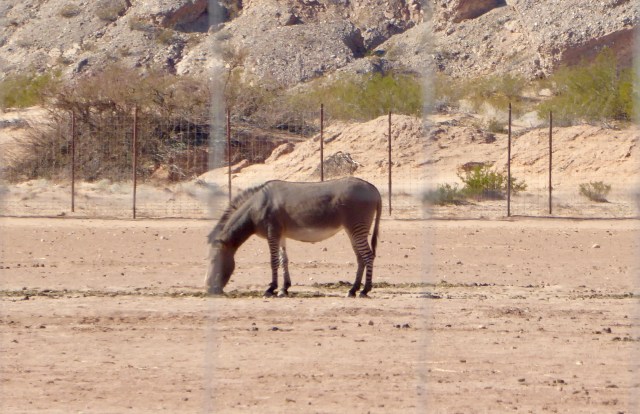
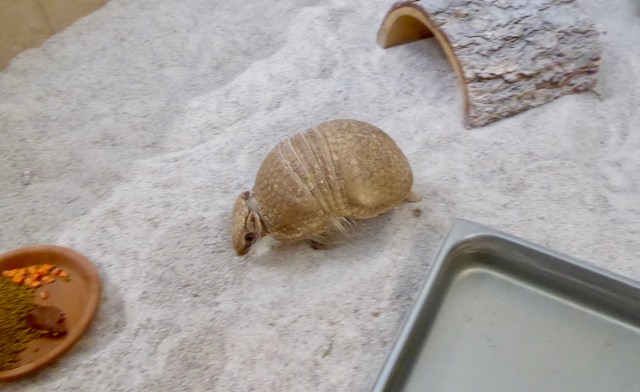 There were a number of armadillos we could meet and touch. This small four band armadillo can virtually roll up in a ball for sleep or defense. The armadillo boys and girls are housed separately as they multiply prolifically and the farm doesn’t want to be responsible for armadillos taking up residency in southern Nevada.
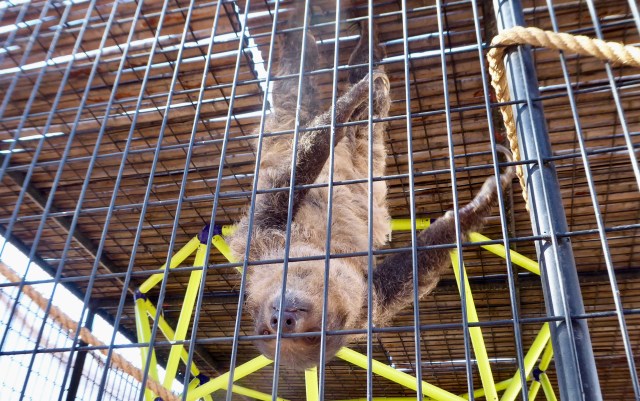 This is Ambien, a two toed sloth who was very active during our visit. Ambien does everything upside down except urinate. She lived in a small pen in her previous home but can now be inside or outside depending on the weather and her whim.
 Mesquite is a popular retirement town and there is a Del Webb community, Sun City Mesquite, nearby. We spent an enjoyable afternoon touring the grounds, recreation center and model homes. We aren’t ready to “hang up the keys” anytime soon but do see the appeal of living in a community like this one. For us that means a nice little house, near a major airport, that is easy to leave for weeks or months at a time.
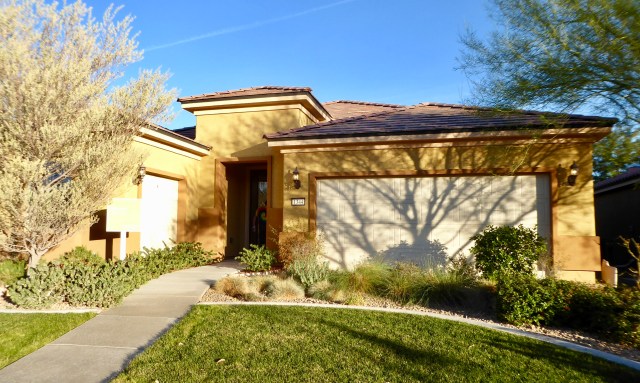 We viewed nine model homes and very quickly decided on a couple that would fit our needs – a two bedroom, two bath home with a den (or third bedroom), light interior, a large patio and a big bathtub. One of the few things we miss about our house in Boise is our big bathtub!


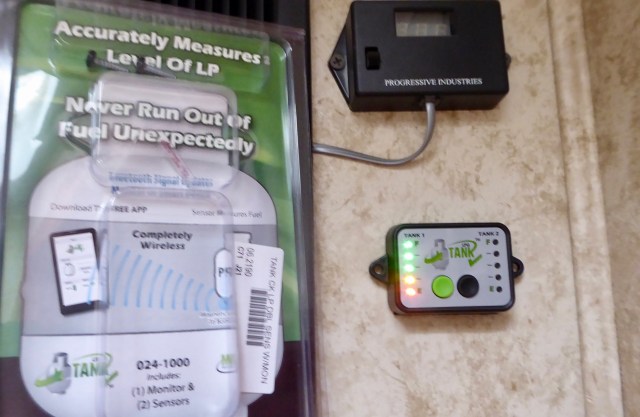 Randy is a retired engineer but hasn’t lost his love for tech gadgets. This gizmo tracks the propane levels in our two tanks. We only open one tank at a time and when it goes empty we find out when the propane stove turns off while making dinner or when we wake up very cold because the furnace has gone out. One of us has to go outside and move the lever to switch tanks.
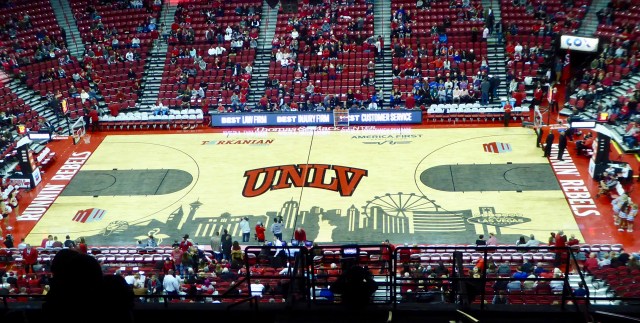 They had season tickets for Boise State Basketball for many years, as we did, and the Broncos were playing UNLV in Las Vegas so we took that 90 minute road trip together. It was a great time to catch up and enjoy a Bronco win! They’ll be here a few more days so we’ll see what more fun we can cook up!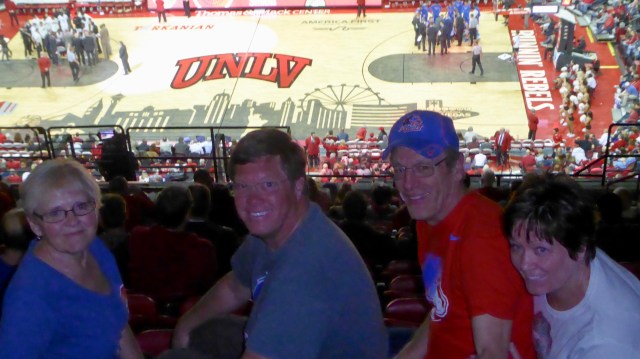
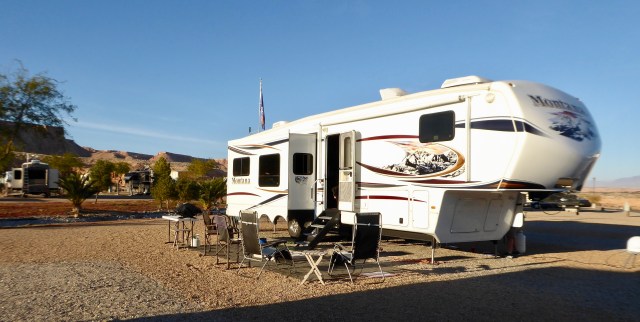 We made it as far south as Mesquite, Nevada and will be here a month. The RV park has gone through several owners (and at least two bankruptcies) so it is far from finished. In the meantime they are using every other space so the sites are huge. It is actually quite nice and very quiet.
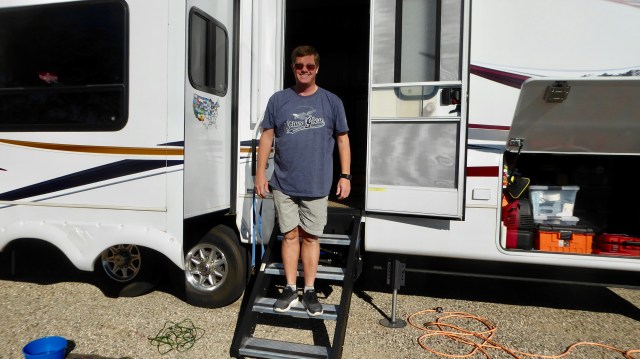
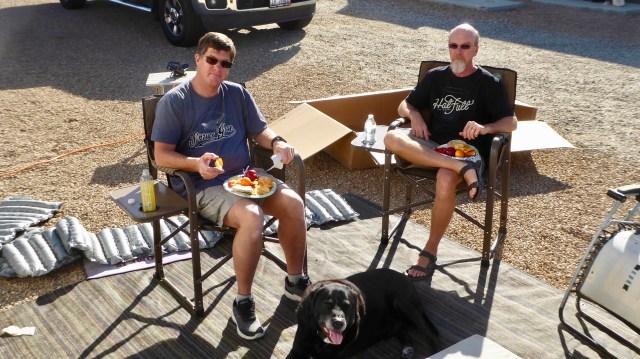 Our friend Mike drove up from Bullhead City, Arizona to spend a couple of days hanging out. Mike and Randy played golf at Coyote Springs, one of the many courses in the area. They also worked on installing Randy’s new steps.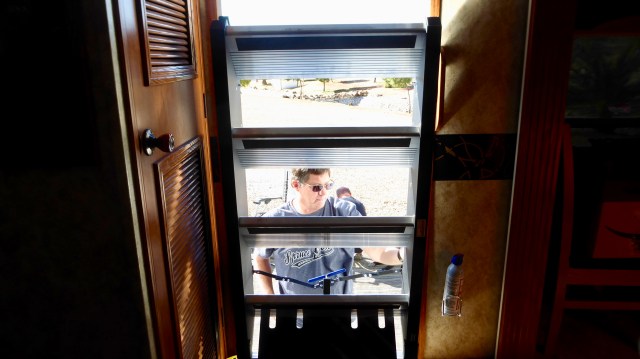
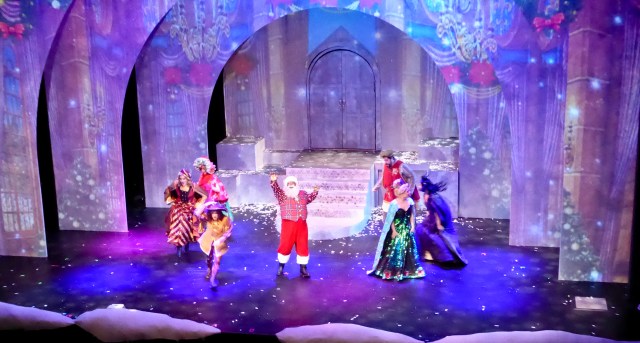 One evening Randy and I drove to the Tuacahn Center for the Arts, near St. George. We saw the best show called Fairy Tale Christmas! All the fairy tale villains, like Cinderella’s evil step-mother, band together to take down Santa. Of course, they fail and all live happily ever after but the show was very, very well done! Bravo!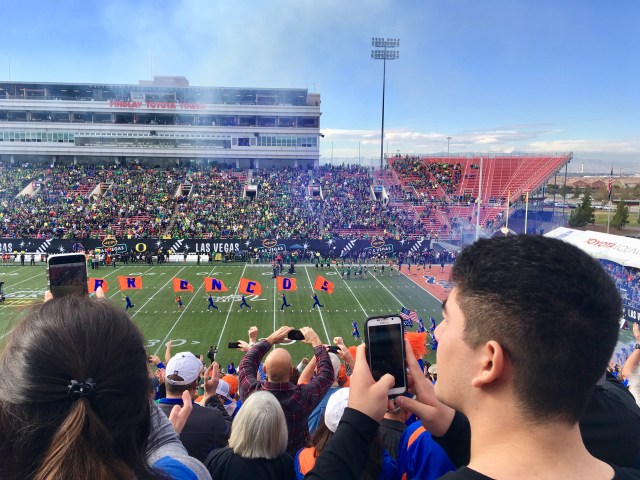
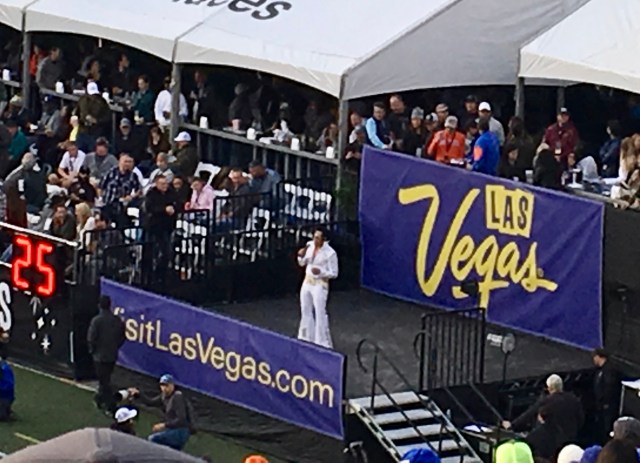 Because it is Vegas, there was Vegas entertainment during timeouts. We were fortunate to be near the stage!
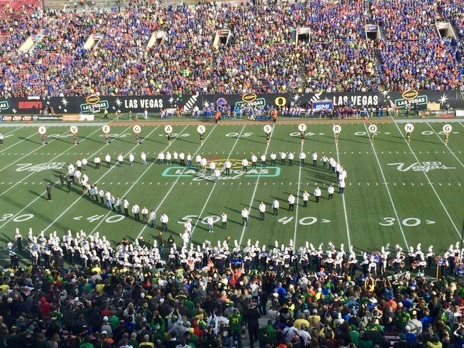 There was a very moving tribute at half time to the victims and first responders of the Las Vegas shooting. #Vegas Strong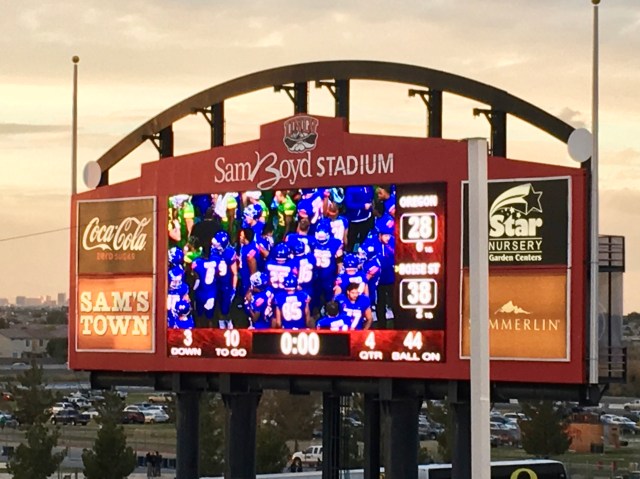
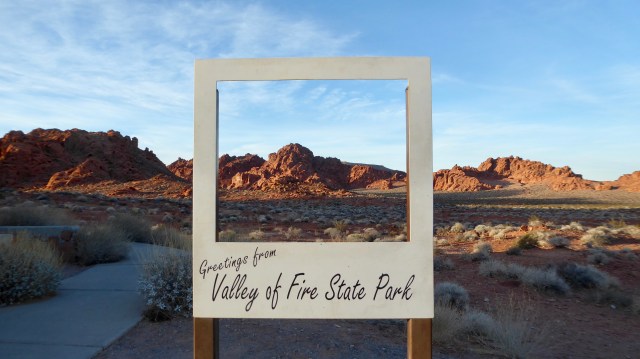
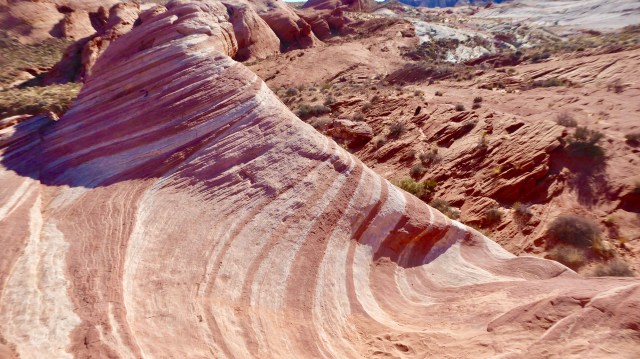
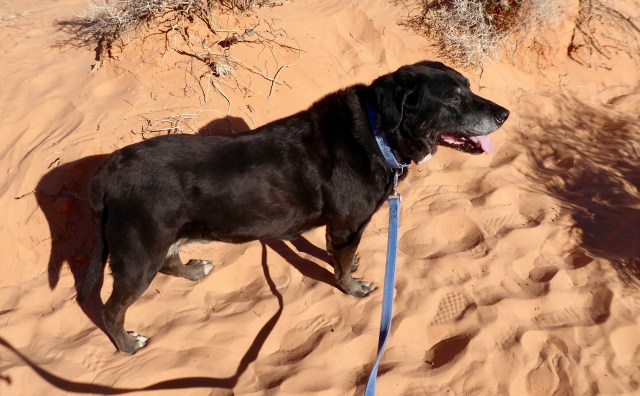 Our first hike was Fire Wave. After the rocks in our campground, Elko was loving the soft sand!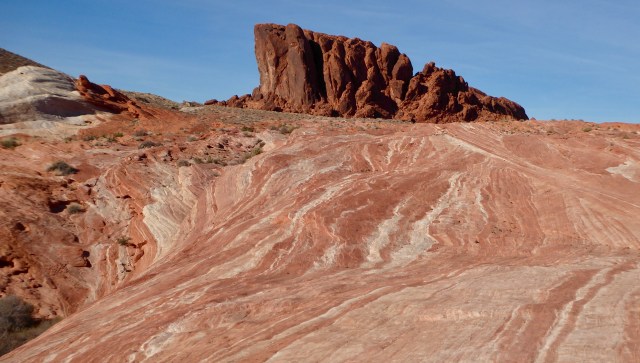
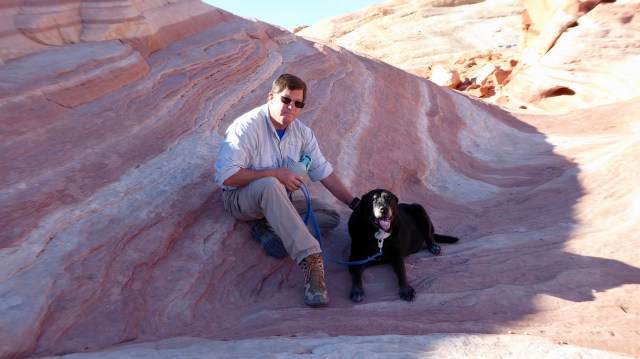
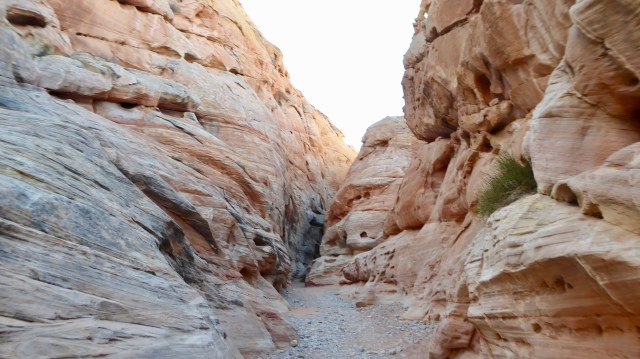
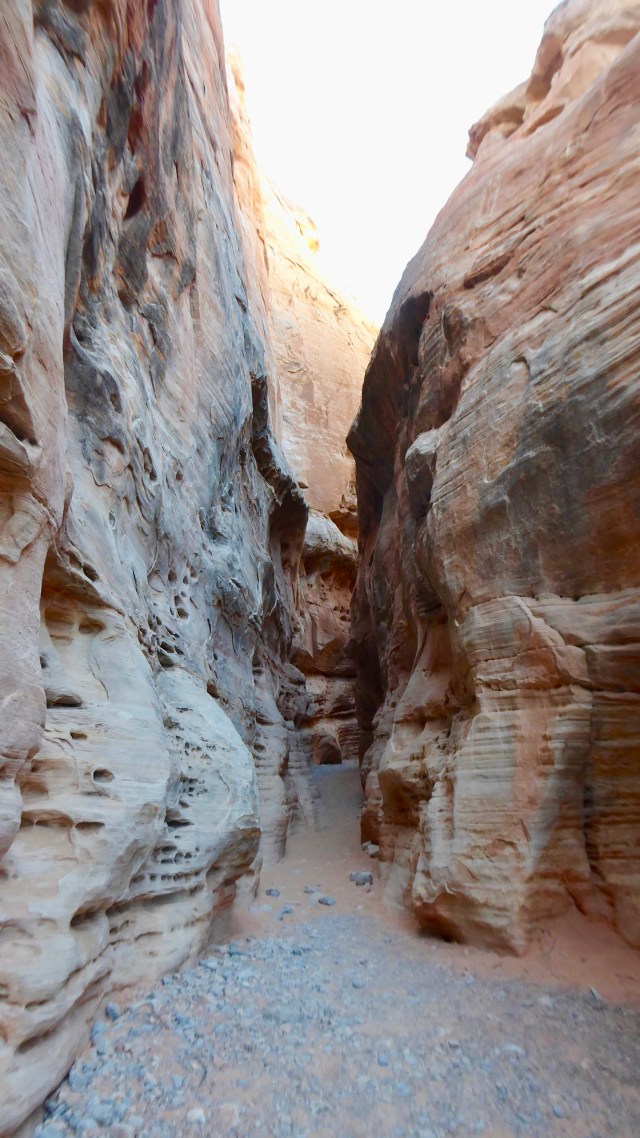
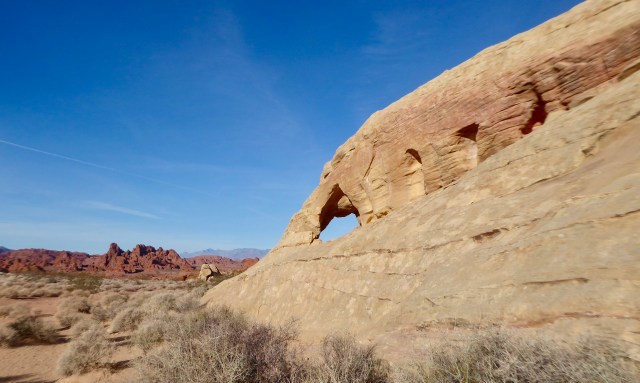
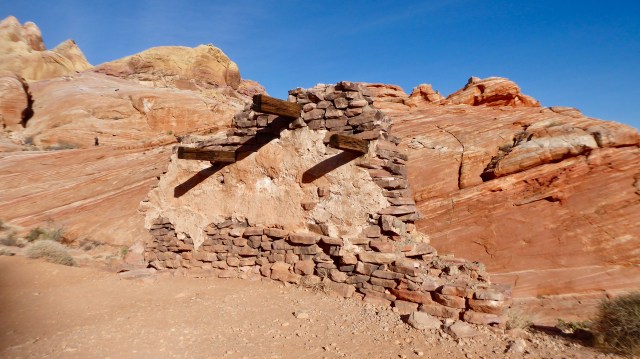 There were remains from the hacienda for the set for the 1965 movie “The Professionals.”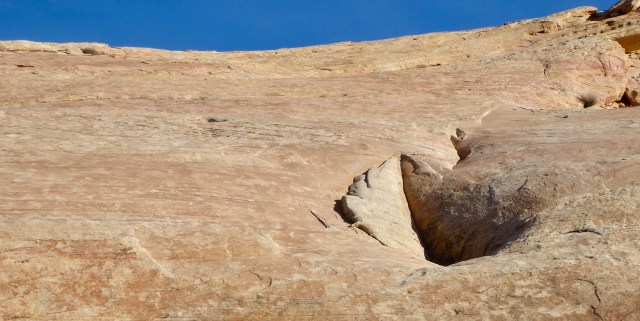
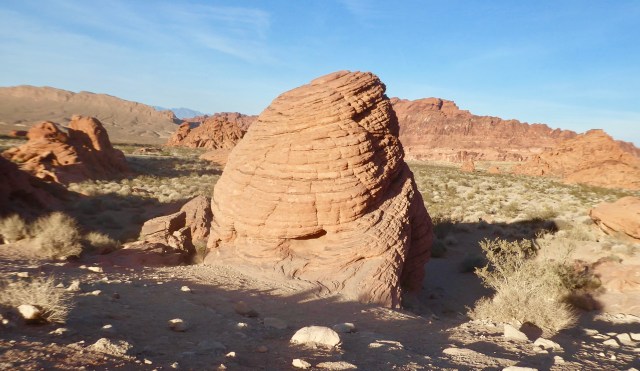 In other areas of the park we found other interesting sites including a beehive formation.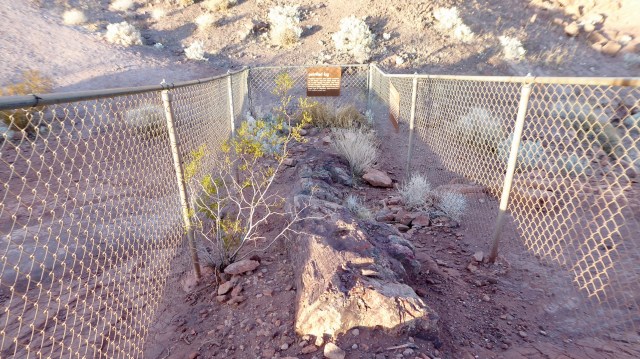
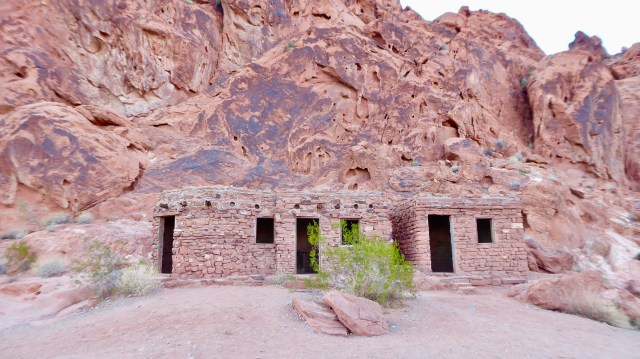 Three cabins built by the CCC in the 1930s and rented by park visitors for many years.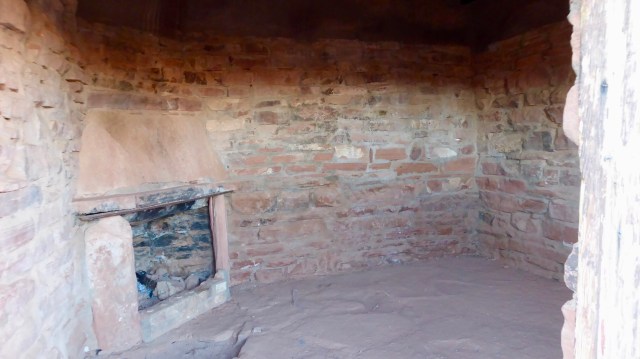
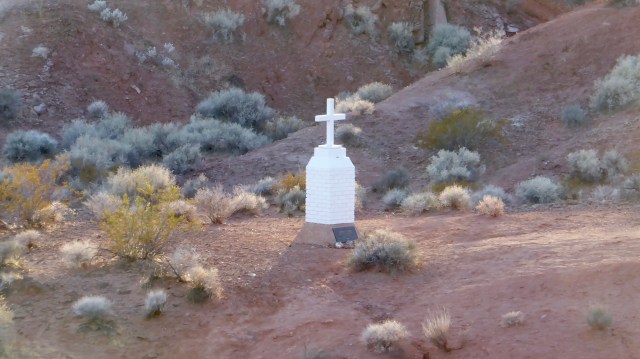 We saw a lone gravesite for Civil War Veteran Sgt. John J. Clark who died of thirst in 1915.
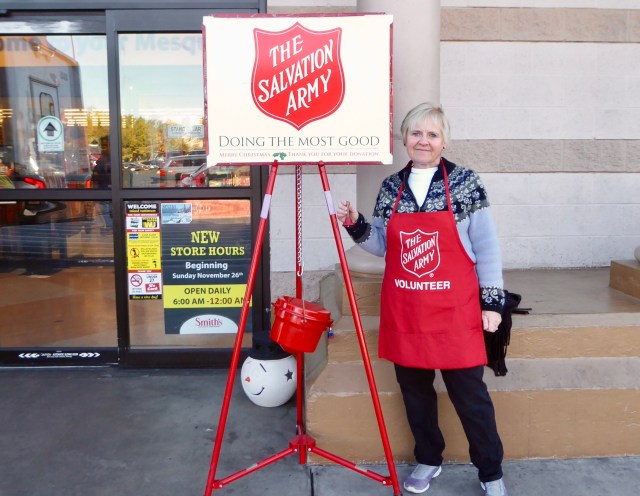 Back in Mesquite, I noticed an article in the local paper saying the Salvation Army was short on bell-ringers. I rang the bell for a couple of hours one afternoon will do so again on Saturday.



 The number one tourist destination in this region of New Mexico is Ruidoso Downs. Racing occurs throughout the summer season. On Labor Day the winner of the All American Futurity receives the largest purse in quarter-horse racing, $3 million. In contrast, the Kentucky Derby winner gets a mere $2 million!
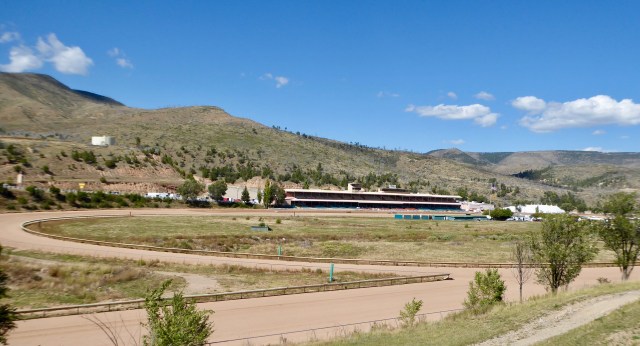 More than 25,000 folks descend on this unassuming racetrack in the town of Ruidoso Downs. All was quiet during our visit as racing was done for the season.
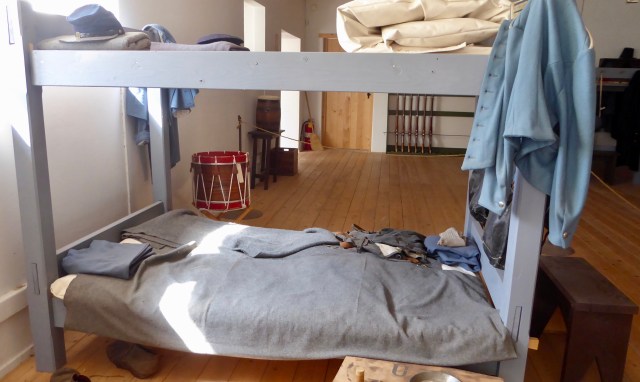
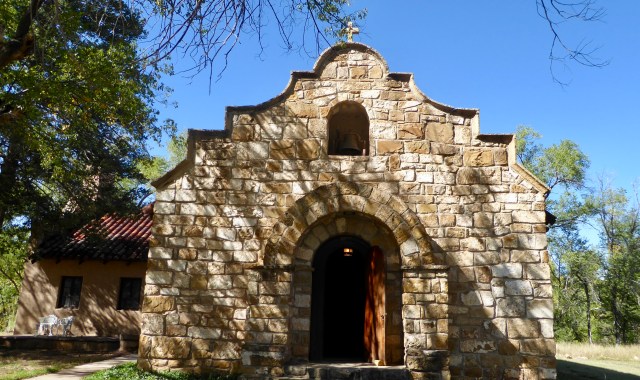
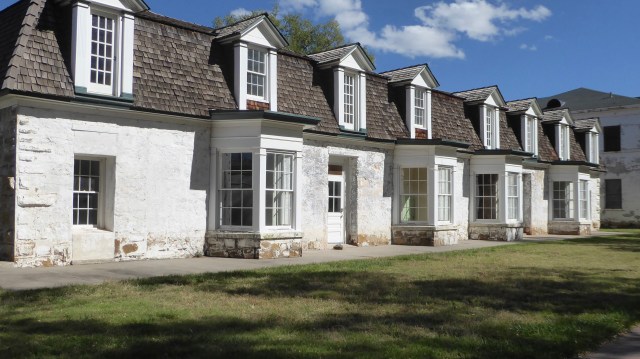 We traveled further afield and found Fort Stanton, established in 1855. Like many forts in the west, it began as an outpost to protect settlers from Indians, in this case, the Mescalero Apache.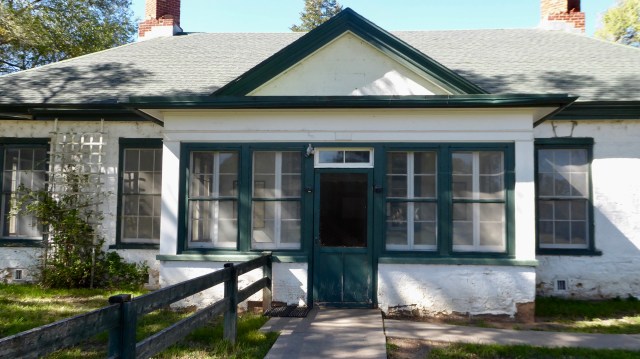
 In keeping with medical treatment protocols at the time, patients lived in open air tents and had a strict protocol of nutrition and rest.
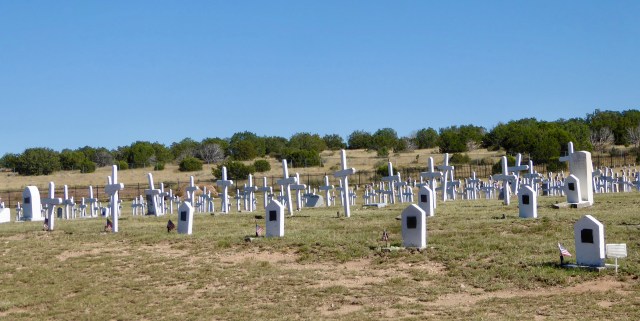 Although many patients recovered, a nearby cemetery holds those who didn’t. The hospital was the primary occupant of the Fort Stanton facility from 1896 to 1953.
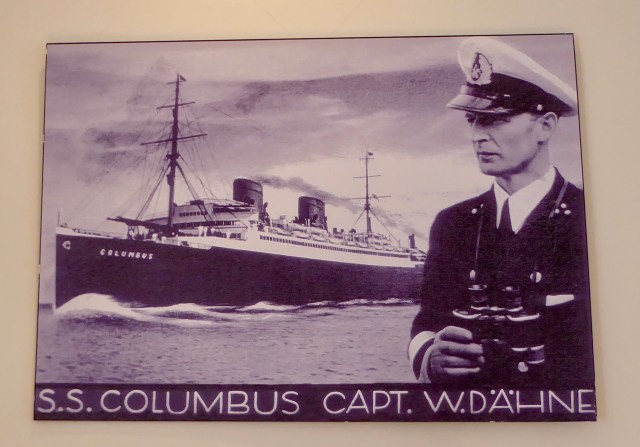 One of the most interesting chapters in Fort Stanton’s history was when the crew of the SS Columbus, a German Luxury Liner, were housed there from 1939-1945.
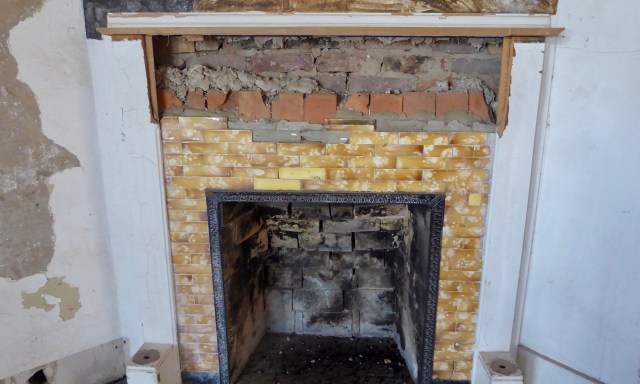
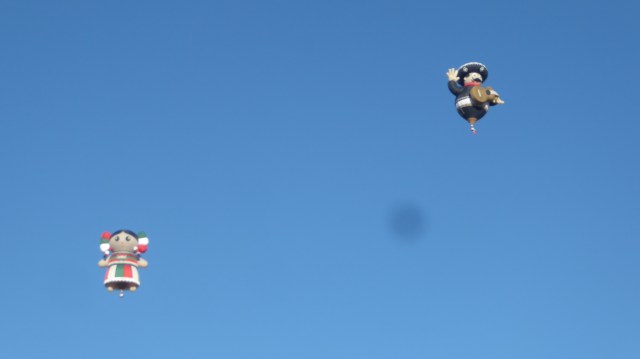 For awhile I have grumbled about a shade spot on my photographs. I called about having the camera cleaned but the estimate was $175 just to get started. Usually the spot was buried in photographic content and was just a nuisance but at the balloon fiesta it was really a problem.
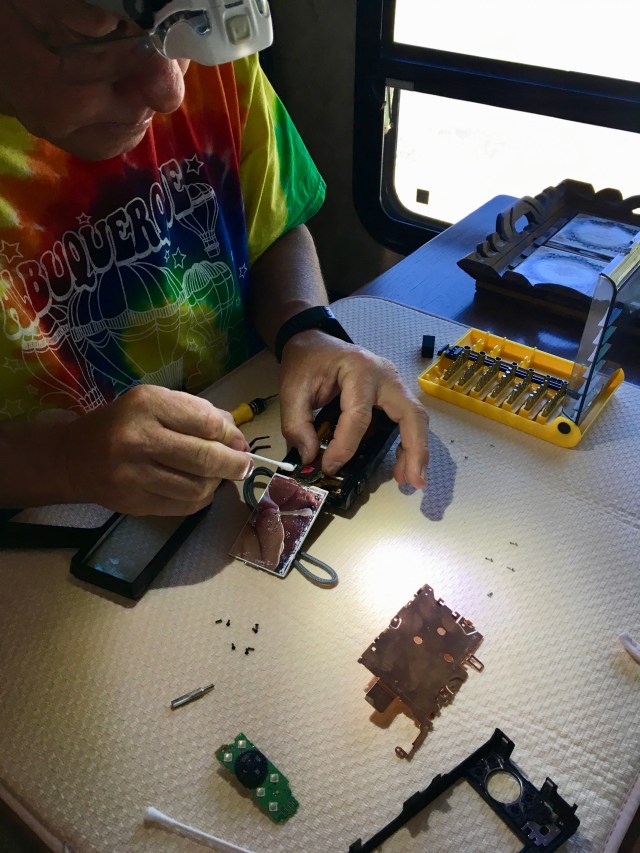 When he got it, he set to work.
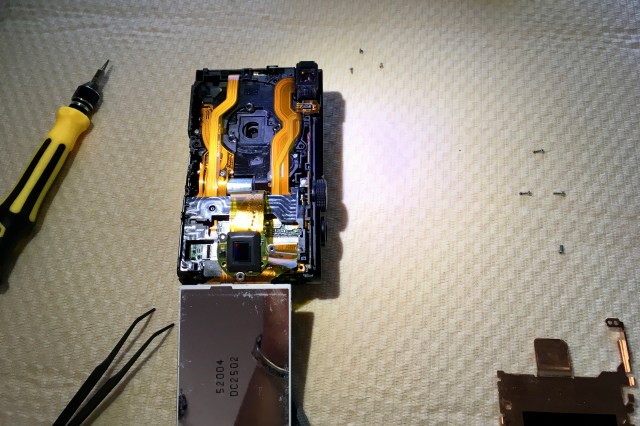 And to the surprise of no one, he took the camera apart, cleaned some dust off the CCD, (the electronics part that captures the light for the image) and no more shade spot!
 Whoohoo! He saved us about $400 for a new camera and me from having to learn new technology! Like I said, Handy Randy can fix all things!!
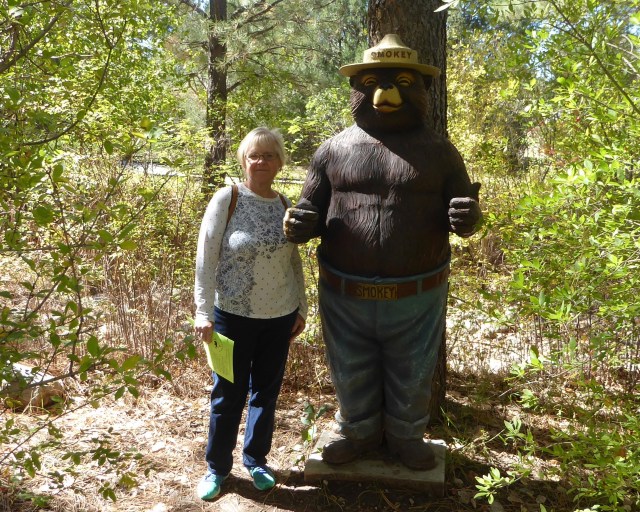 I grew up with the story of Smokey Bear. I even taught Smokey’s story as a kindergarten teacher. A bear cub was rescued during a forest fire and nursed back to health. He was named Smokey and became a messenger for the prevention of forest fires. Those basics are still there, but there is much more.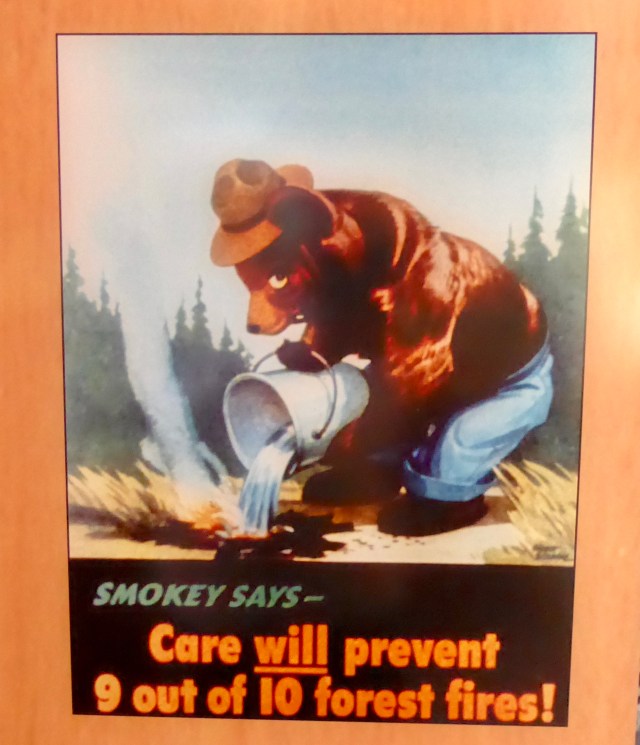
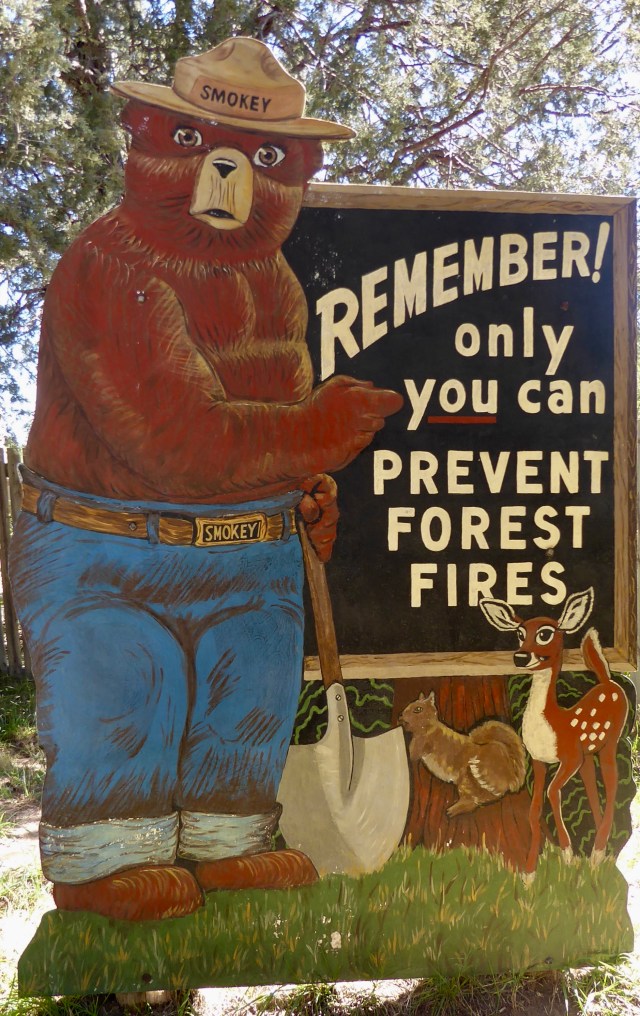
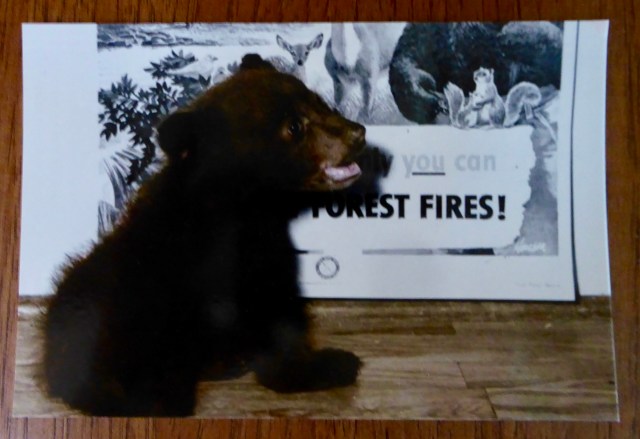 So what about the little bear cub in the fire we all know about? It wasn’t until 1950 that he was rescued near Capitan, New Mexico. He was badly burned on his paws and buttocks and he weighed five pounds.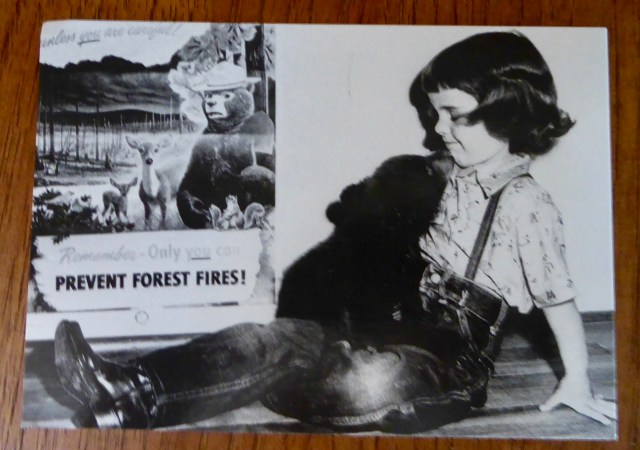
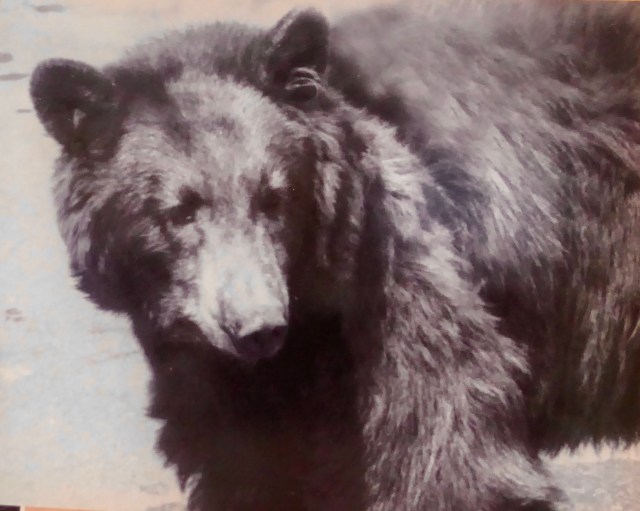 Another New Mexico orphaned black bear, Goldie, was brought to the zoo to be Smokey’s mate in 1961. She was also known as Mrs. Smokey. They never had cubs.
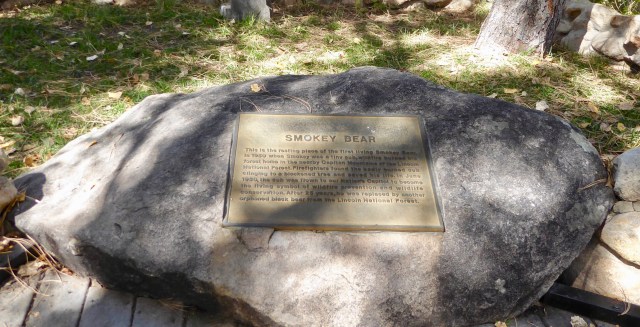 Smokey died a year later and his remains were returned to Capitan, New Mexico and buried at the Smokey Bear Historical Park.
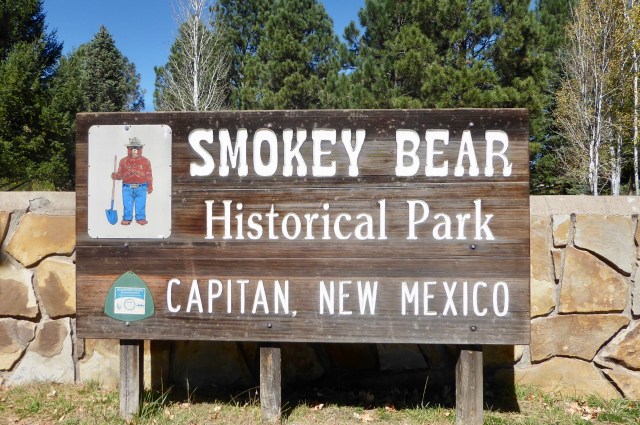 When Smokey retired another New Mexico orphan cub went to the National Zoo. The new Little Smokey embodied the message until his death in 1990 when live bear representation was discontinued.
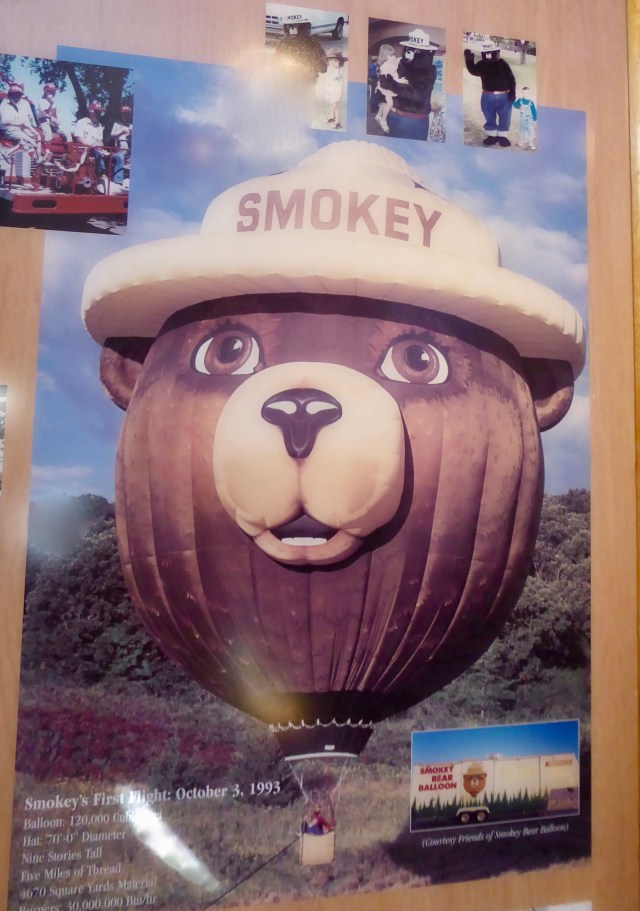 At the Albuquerque Balloon Fiesta we talked extensively with the current coordinator of the Friends of Smokey Bear Balloon. He told us how the original thought of a Smokey balloon slowly gained momentum and was eventually approved by the US Forest Service. A public and government partnership funded the original Smokey balloon which took flight over the Albuquerque Balloon Fiesta in1993.
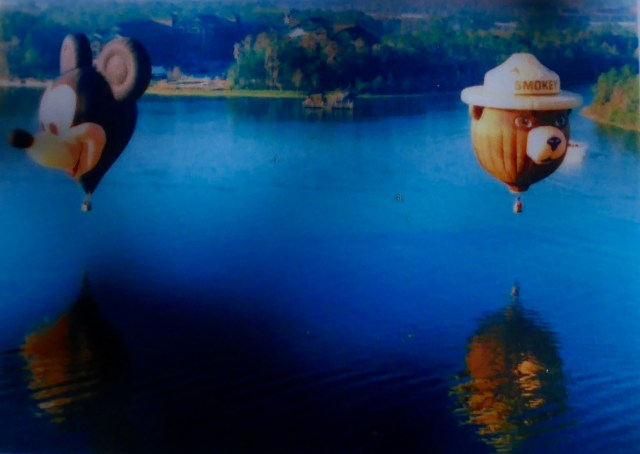 In addition to hundreds of appearances around the country, the Smokey Bear Balloon was the first non-Disney balloon invited to fly over Walt Disney World.
 With public support, funds were raised for a second Smokey Bear Balloon. It continues to make dozens of appearances each year. That balloon is aging and the future is uncertain. The Friends of Smokey Bear Balloon organization have the “rights” to the image but funding a new balloon and continuing operations going forward look challenging.
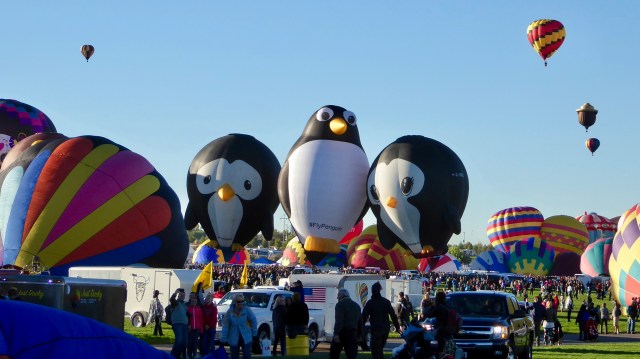 It’s Amazing! That is what we said over and over again at the Albuquerque Balloon Fiesta.
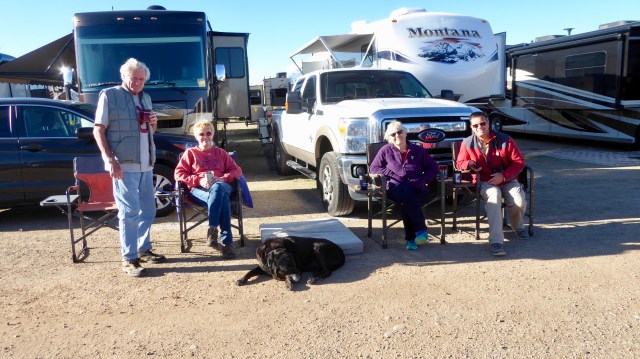 We decided a year ago to meet Art and Beth at the Fiesta and coordinated arrival so we were parked side by side. Beth arranged a balloon flight and had a great time. We paid big bucks to fly over Lake Tahoe previously so didn’t plan to do so again.
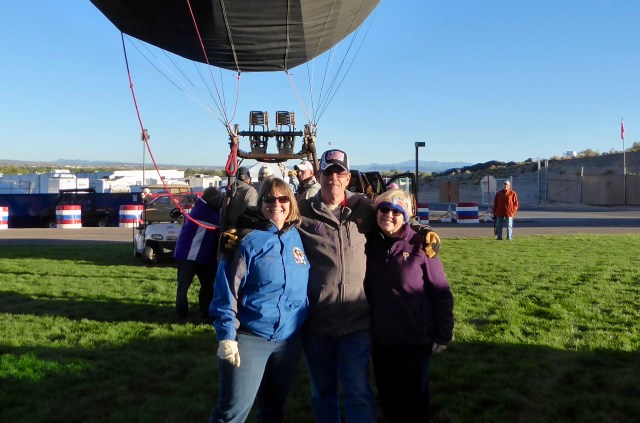 Friends Gerry and Kathy are balloon crew and Fiesta veterans. They advised, encouraged and provided opportunities and experiences that we never expected. Kathy was a fount of information about individual balloons and Gerry knew everything about the science of it all. They helped make the Fiesta an amazing experience
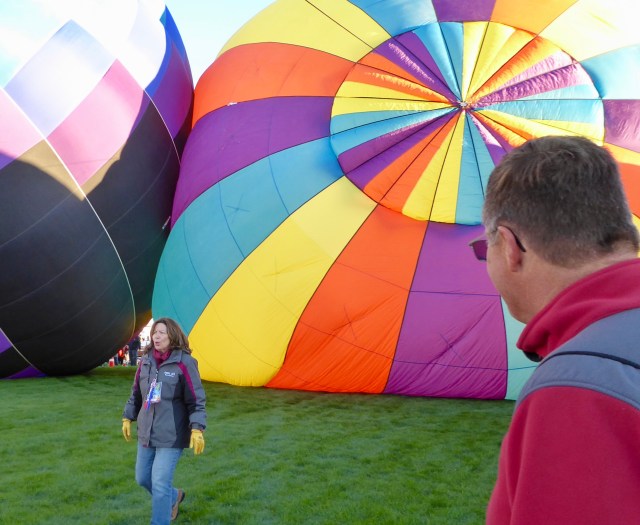 Through them we met Cheryl, a balloon pilot and instructor. She is also a member of the Fiesta Board of Directors. In addition to providing entry passes, Cheryl told us stories about security, sponsorship, statistics, volunteering and the design process for their balloon Twisted.
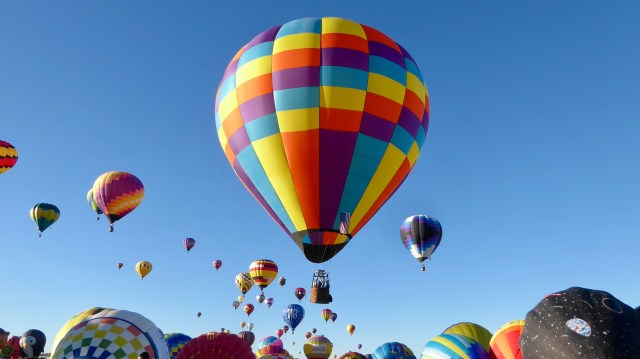 Her husband, Fred, is the pilot for Twisted, the balloon Gerry and Kathy crew for. We were invited to come out and crew.
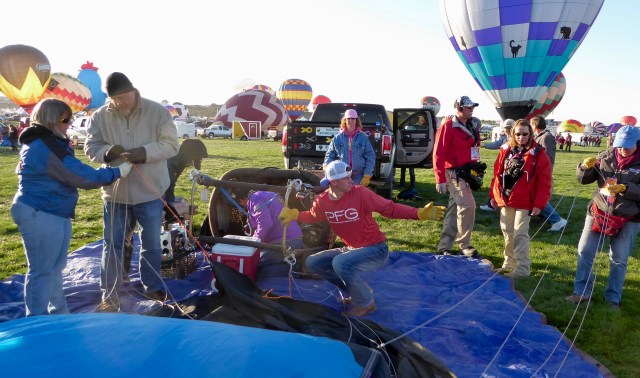 The process looks complicated to a novice. A dozen people were preparing Twisted for flight.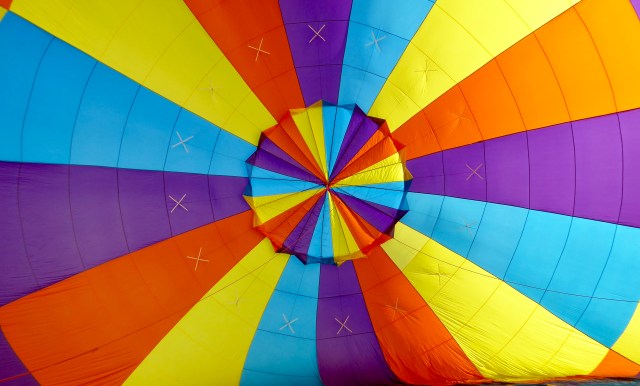
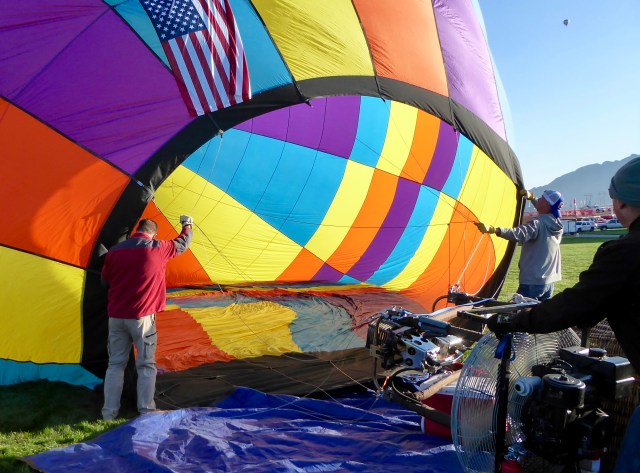 Randy had the job others didn’t want when it’s cold outside – standing in front of the fans for the initial inflation process!

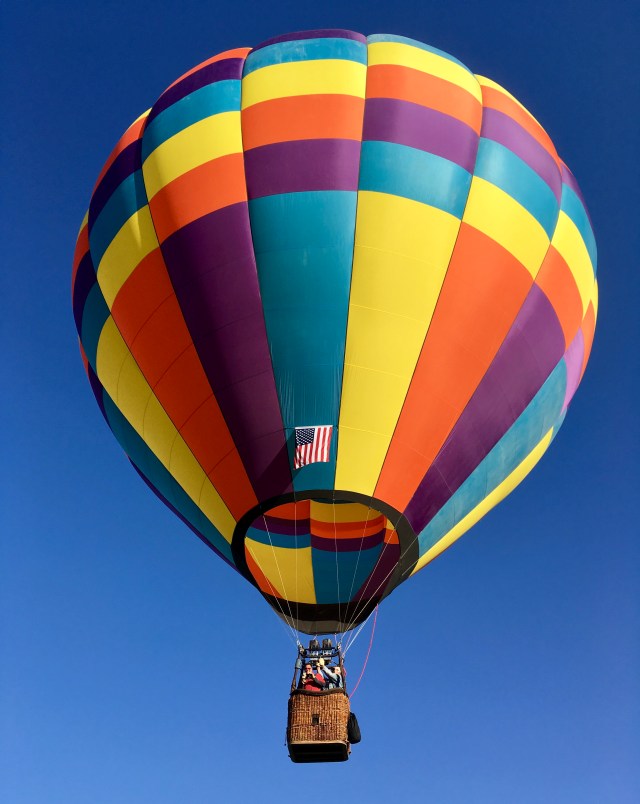


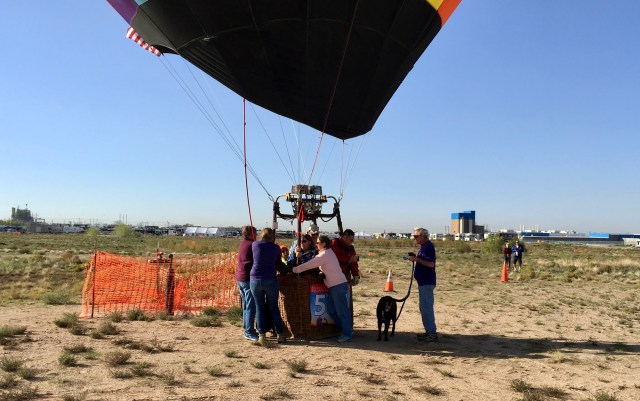 Art, happily babysitting Elko while Randy and I crewed, noticed Twisted heading toward a nearby field and walked over. Elko found his dad in the balloon!
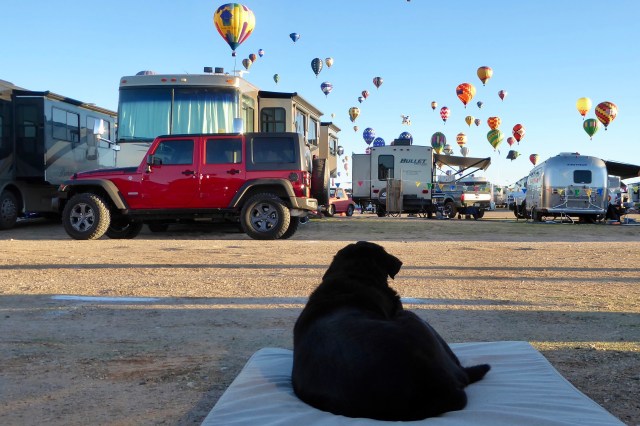
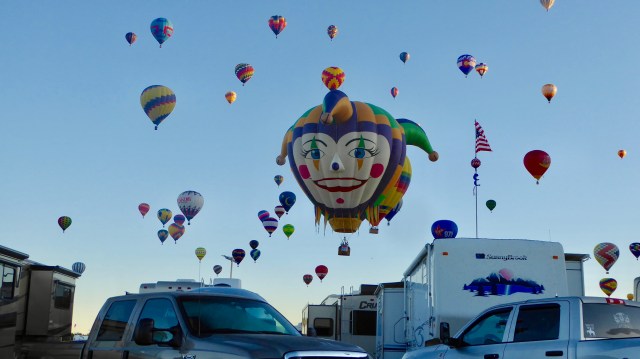 We spent two amazing mornings sitting at our campsite watching waves of balloons come over us. With 550+ balloons at the Fiesta, we were always noticing one we hadn’t seen before!
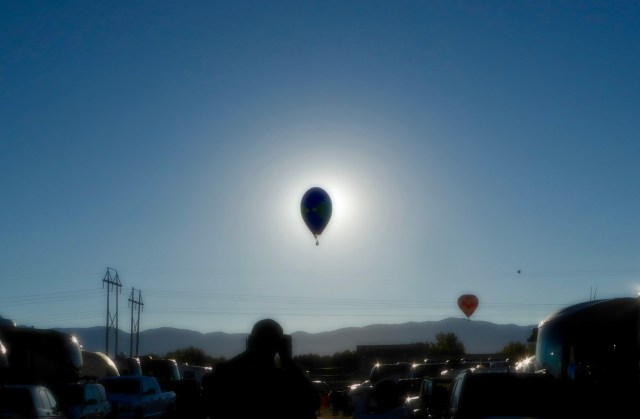


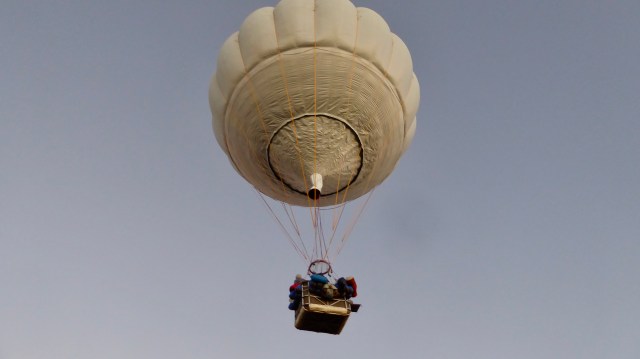
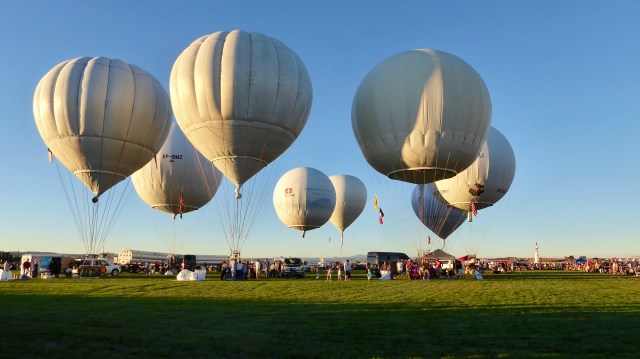 We enjoyed learning about the America’s Challenge Gas Balloon Race, one of only two distance races for gas balloons in the world. The America’s Challenge was founded in Albuquerque in 1995. The balloons are white to lessen the impact of heating and cooling and filled with hydrogen, the lightest of gases.
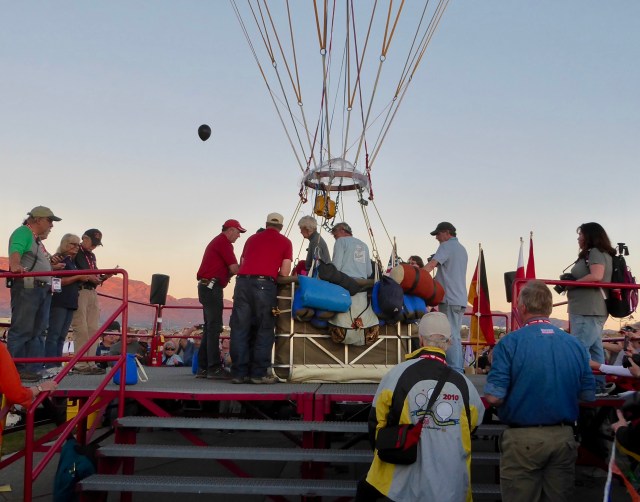 Balloons launch consecutively from the same stage holding two pilots, oxygen, and all the gear needed for a 3-4 day flight. They have sand and water ballast.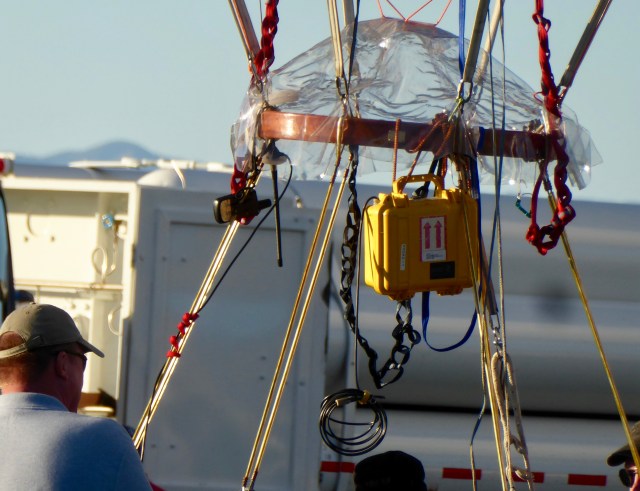

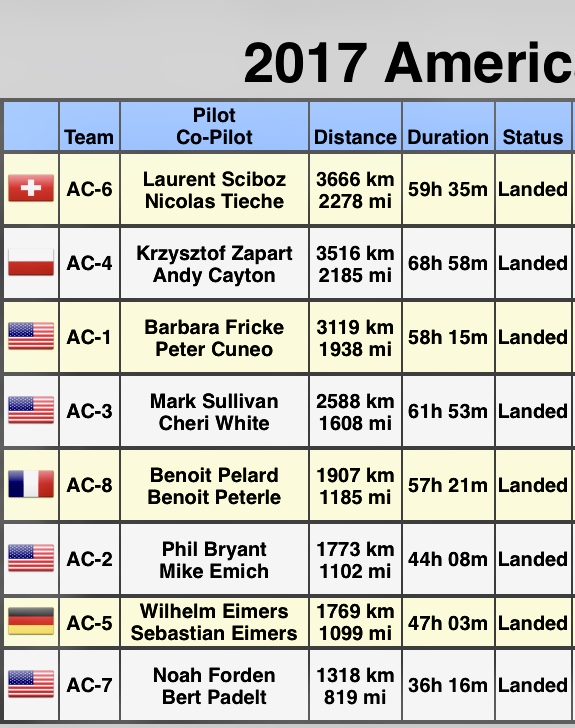
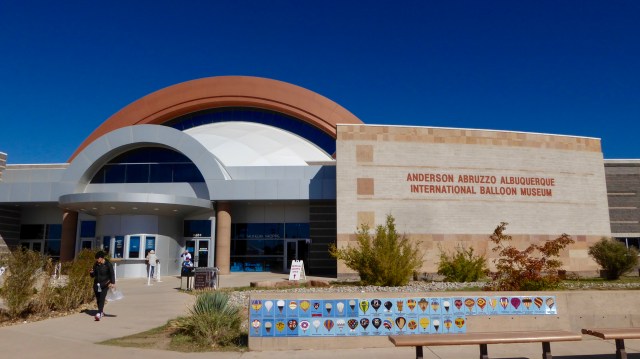 At the Balloon Museum we learned about the first balloon flight in France with a crew of a duck, sheep and rooster. We learned about a failed attempt to land in the arctic and the beginnings of the Albuquerque Fiesta. We learned about milestone flights across the country, across the Pacific, across the Atlantic and around the world. We learned about balloons used in warfare.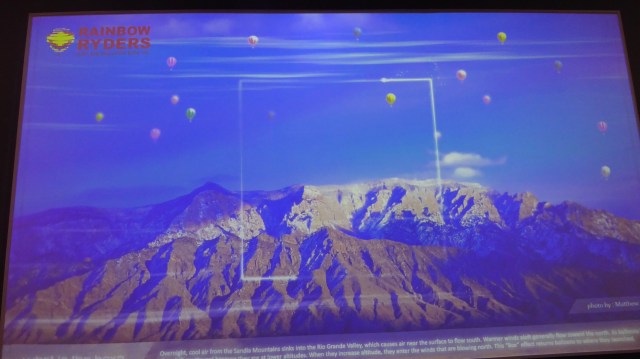
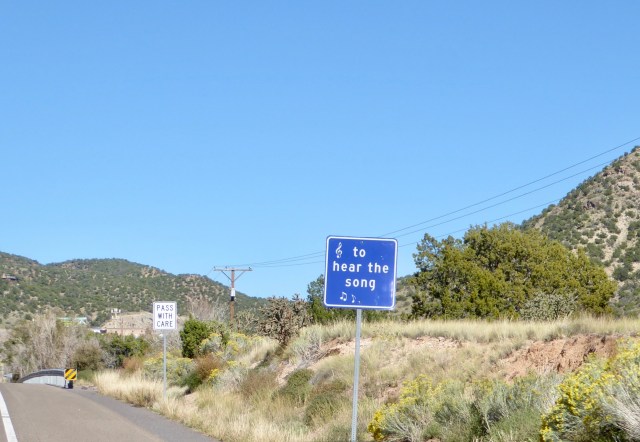 We experienced another amazing thing away from the Fiesta grounds – a Musical Highway. We traveled east of Albuquerque on Route 66. Once there, Randy drove on the rumble strip at exactly 45 miles per hour and we heard America the Beautiful.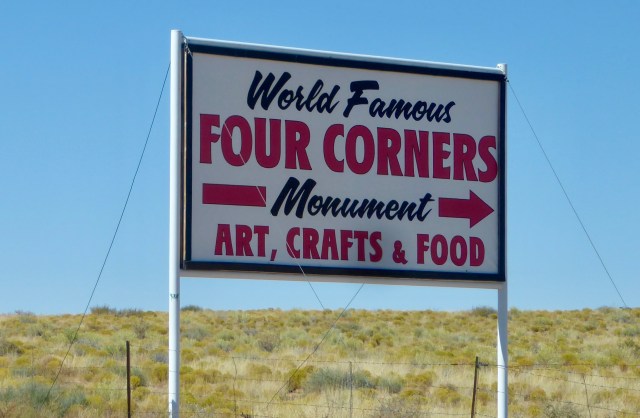
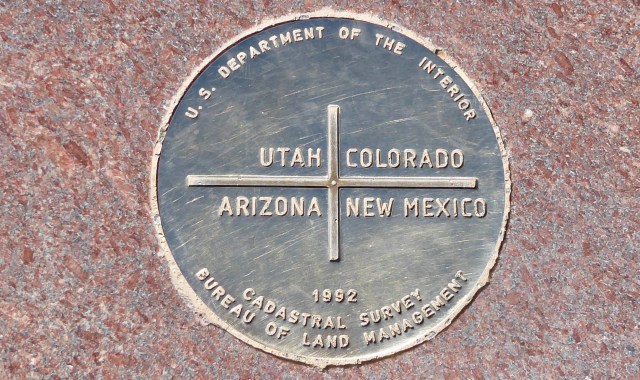 We had both been to Four Corners before, the only place in the US where four states meet. We remembered a parking lot with a medallion and were ambivalent about going again. But when the sign says you are only five miles away – why not?
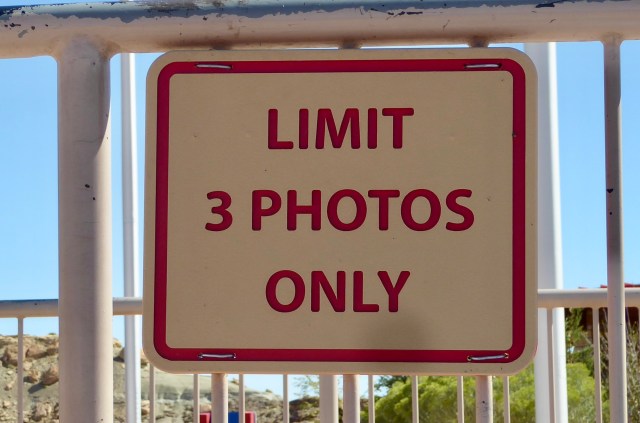
 A lot has changed in 40 years. It is now marketed, requires $5 per person admission, and has a full complex with booths. It is actually quite nice.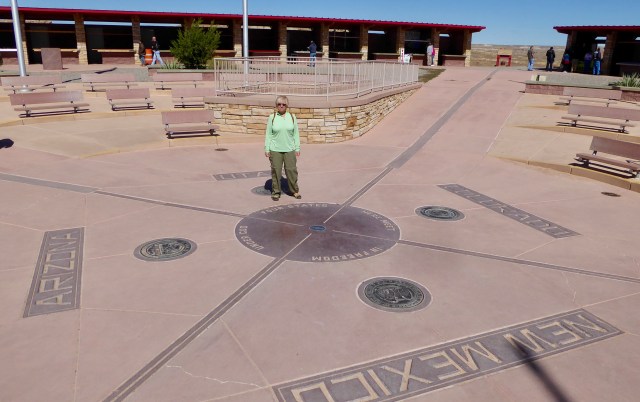

 Randy saw this tarantula crossing the road so we turned around and took pictures! It was about 3 inches wide and five inches long.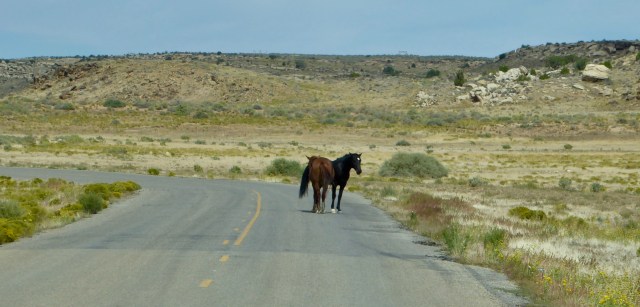
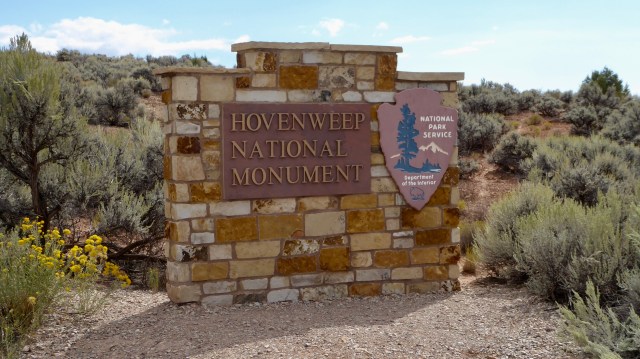

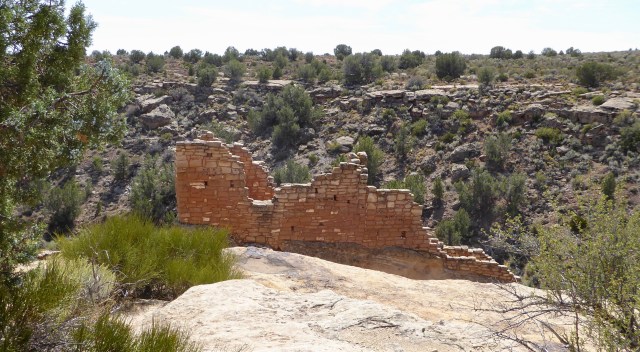 At Hovenweep we saw remnants of Ancestral Puebloan culture in the form of round and square towers.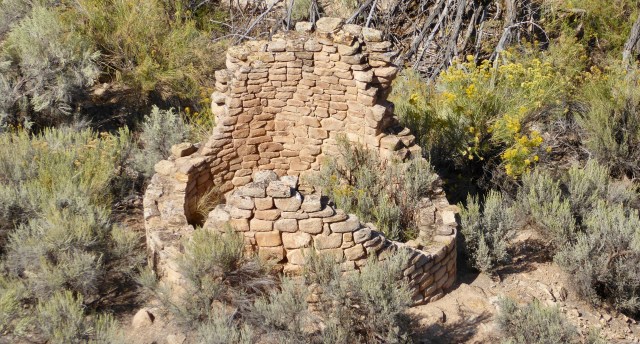
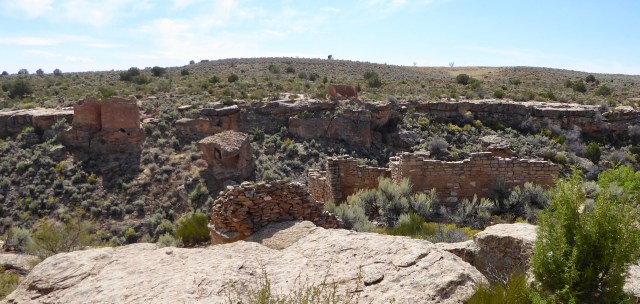
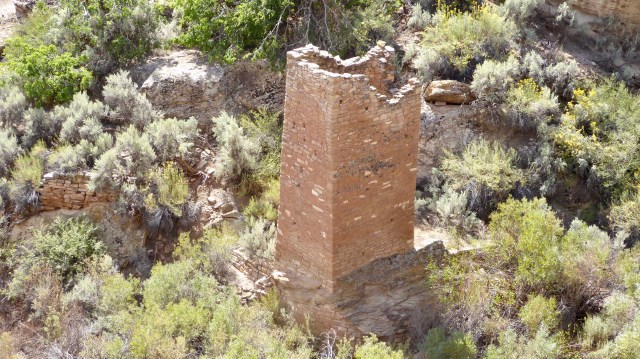
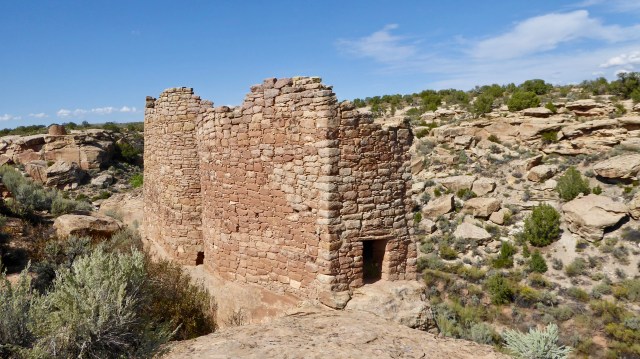 The ruins were discovered in 1854 by a Mormon expedition and later named Hovenweep for the Piute/Ute word for “deserted valley.” The ruins were surveyed by Smithsonian Institution representatives in 1917-18 and designated a national monument in 1923.
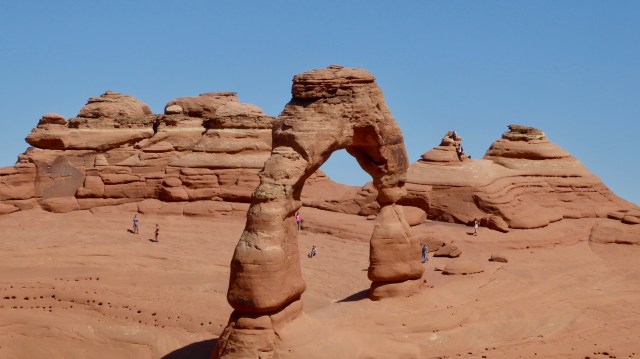 We have visited Moab several times and have wandered Arches and Canyonlands National Parks quite extensively. Randy went into Arches one afternoon and hiked to Delicate Arch but we also did some new things!
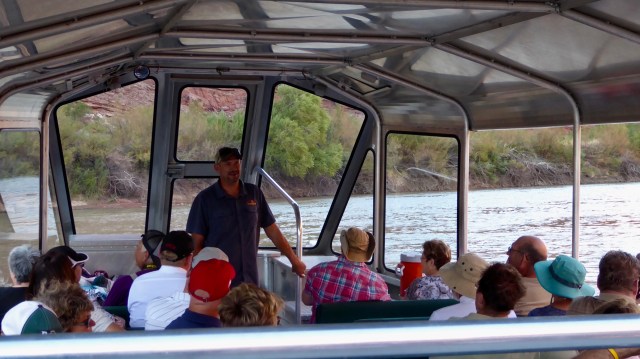 We enjoyed a Canyonlands Sunset Cruise with Rory – one of the most engaging tour guide boat captains we have ever experienced.
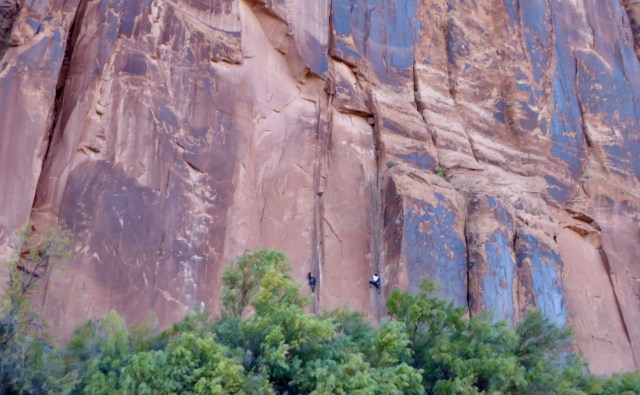 We saw people brave enough to climb these steep cliffs – 65% of climbers are female!
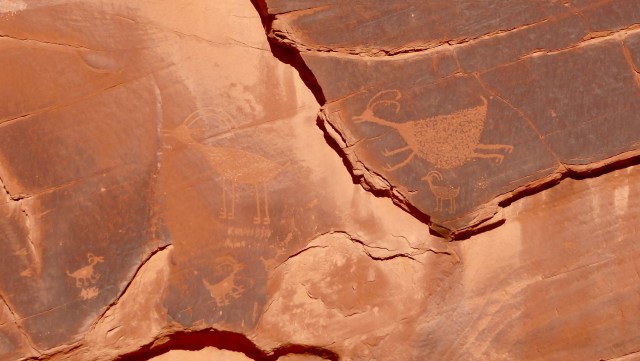
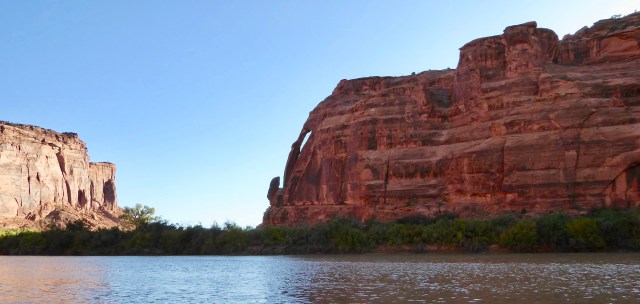 We saw jug arch, petroglyphs and amazing scenery. Dinner was pretty good too.
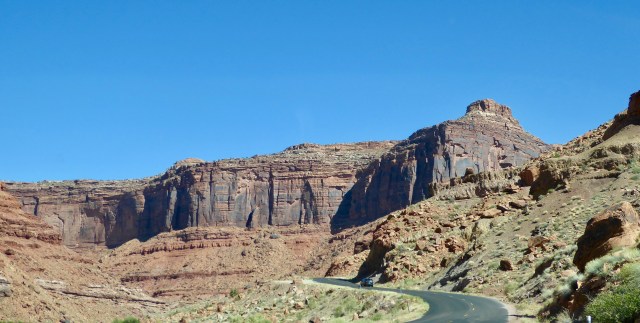 By truck, we traveled the Upper Colorado River Scenic Byway out of Moab through more marvelous scenery. The first few miles out of Moab have an adjacent bike trail.
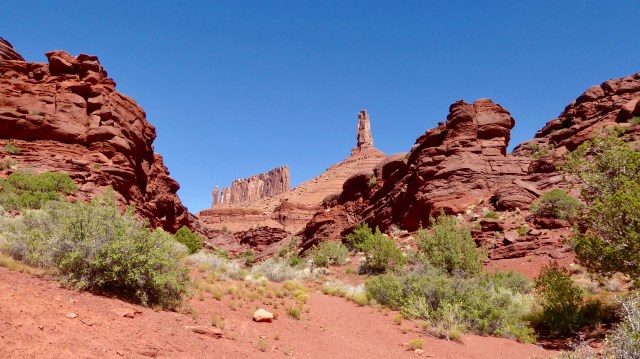 We hiked a bit and saw some climbers way up on this rock!
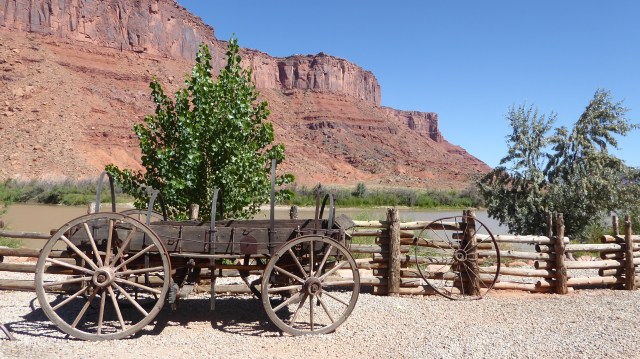 We traveled to Red Cliffs Ranch Lodge and the Moab Museum of Film and Western Heritage. We learned more than 120 movies were filmed in this area. Former owner of the site, George White, was instrumental in bringing the first movie, Wagonmaster, to the area in 1949.
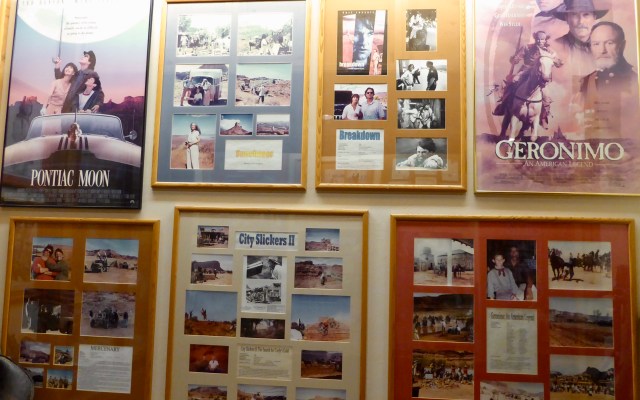 The film industry has been a source of income in the Moab area for many years as locals are hired as actors, extras and professional crew. Animals and trainers are also employed. An auto tour allows you to find specific locations for movies and shows.
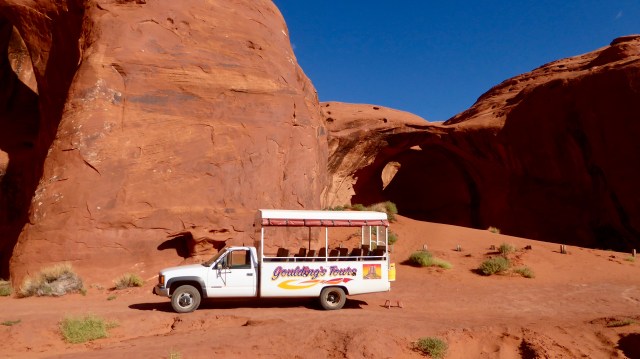
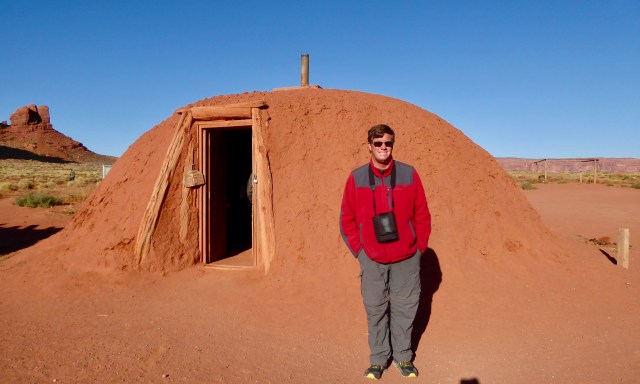
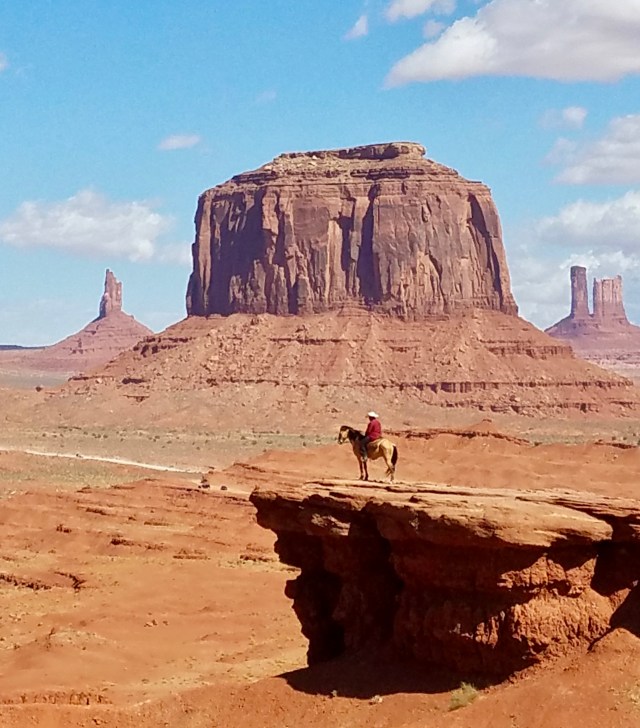
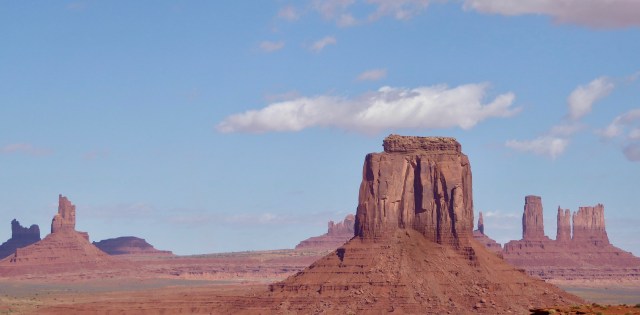 Movies, TV shows and commercials continue to be a lucrative industry for both Moab and Monument Valley. The movie industry came to Monument Valley during the great depression. Harry Goulding, owner of the local trading post, sought additional industry for himself and the Navajo people and spent his last $60 to take landscape pictures to John Ford in Hollywood. The rest is history.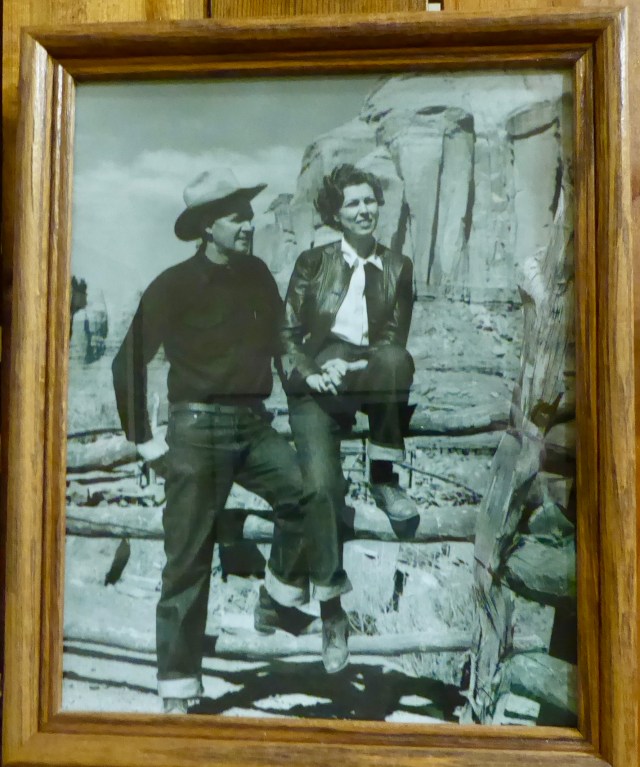
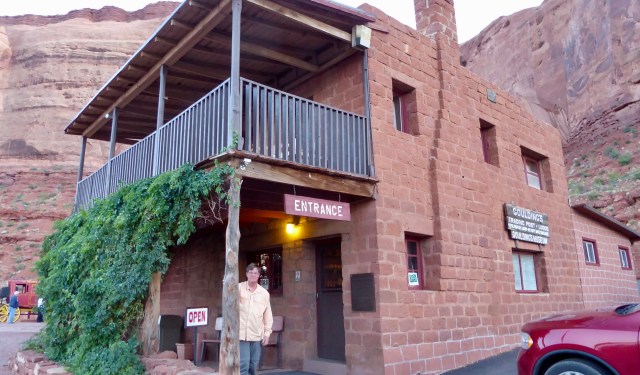
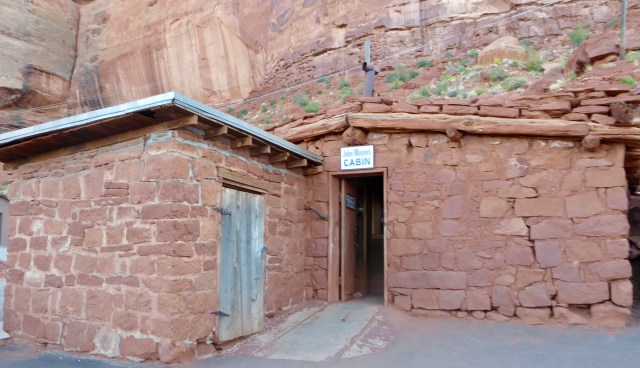
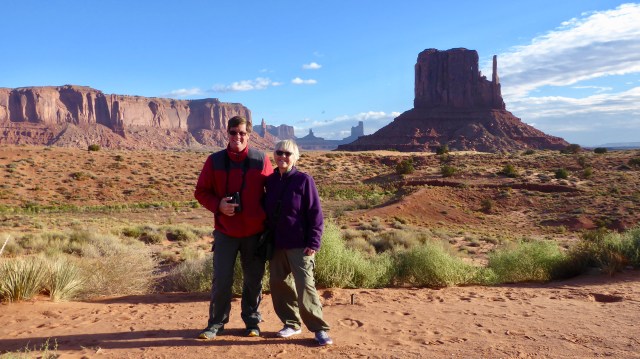
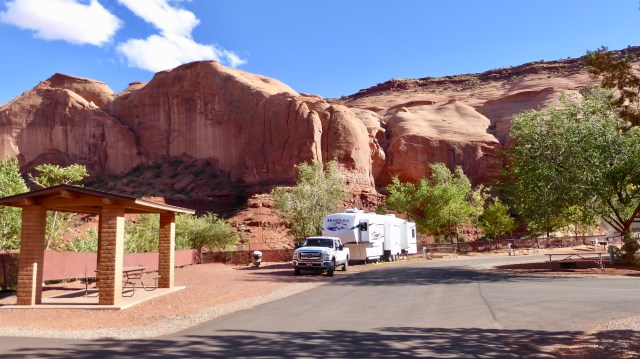 We had one of the nicest sites in this campground and enjoyed some easy and accessible hiking within walking distance.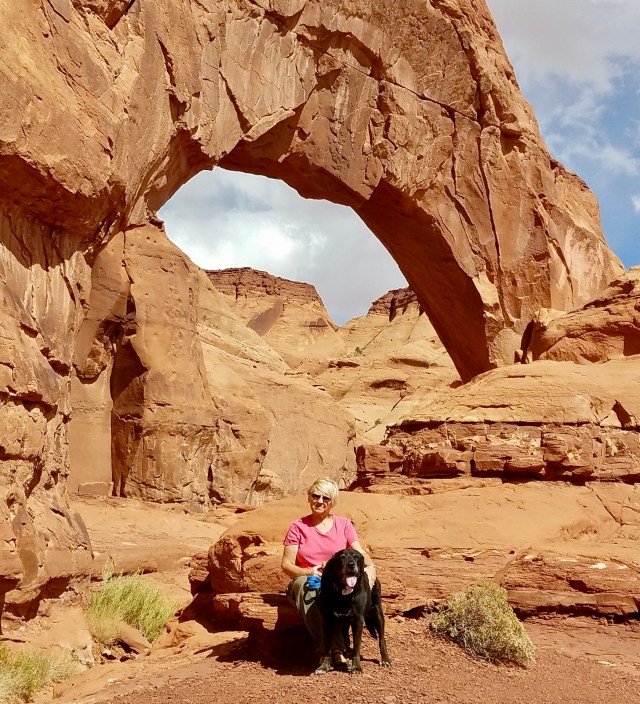
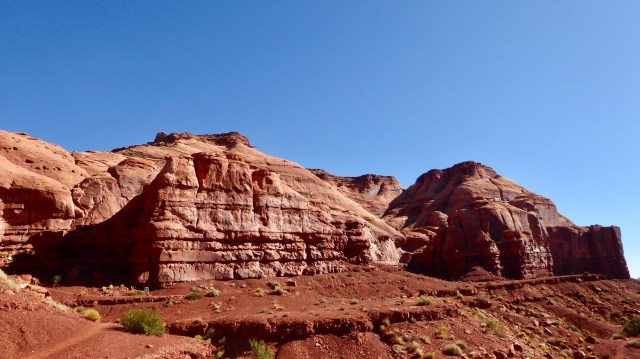
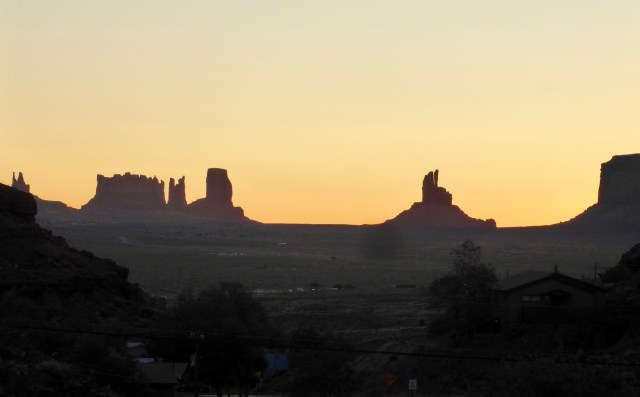



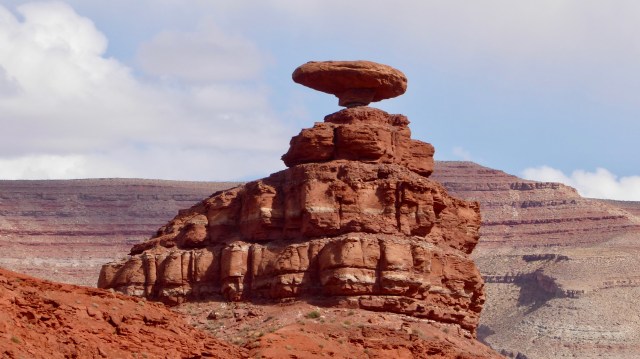
 Goosenecks State Park has dry camping right on the bluff overlooking the river. Some sites are worth not having hook-ups for. Maybe next time!

