A Fun Day in Montana!

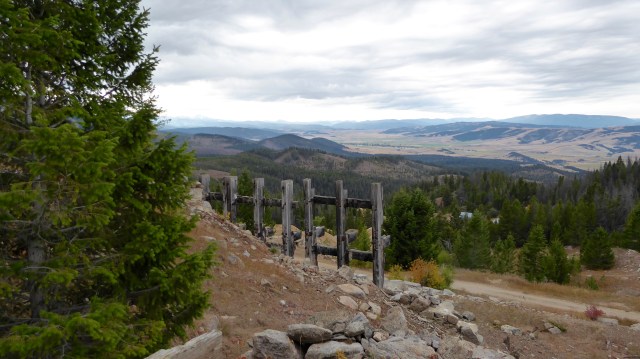
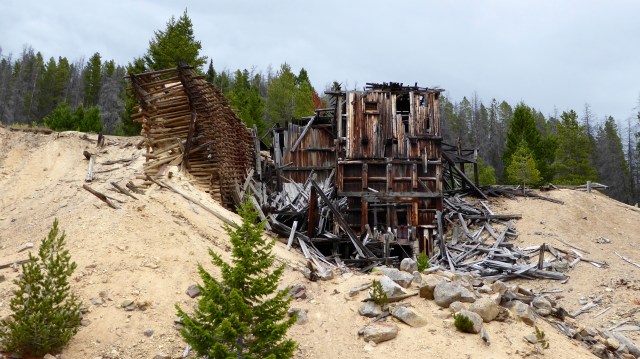
p1070203We traveled up a steep and winding mountain road to Granite Ghost Town State Park. We didn’t need 4-wheel drive, but our truck’s high clearance was a good thing. Four miles up we found the remnants of a 1890s silver mine and boomtown.

p1070170

Interesting visitor center for this Montana State Park!

p1070189

This was Main Street.

Three thousand people once lived in Granite which had a library,  hospital,  school,  newspaper, saloons and churches.  Chinatown and a red light district were nearby.

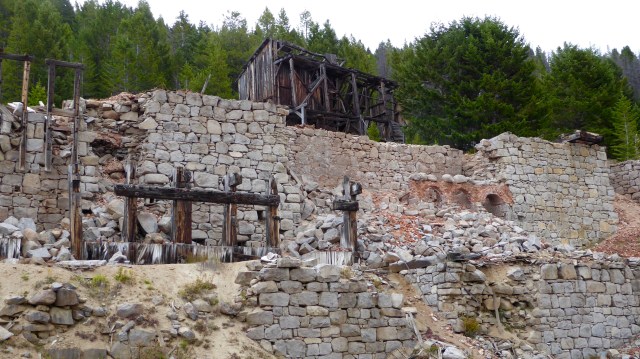
The largest building in town was the miners’ Union Hall. It was a three story building with union offices, a recreation hall and an event center with a special “spring floor” for dancing.

p1070182

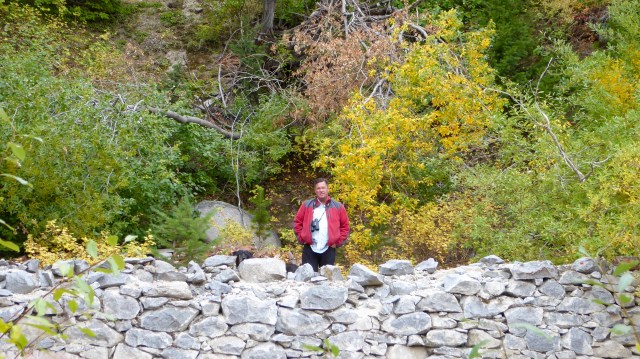
Randy and Elko climbed up behind the Union Hall’s back wall.

P1070169.jpg

There was one bank and it was stout as it is the most complete building remaining.

p1070226Of course, Granite was here because of the nearby silver mine.   Interesting tidbit, the mine backers gave up on the venture and sent a message to end operations. The message was delayed and what should have been the last shift found the silver that was eventually worth $40,000,000.

p1070222

p1070196

This was once the mining office.

The 1893 silver crisis closed the mine and, like many other mining boomtowns, Granite faded away.

p1070191

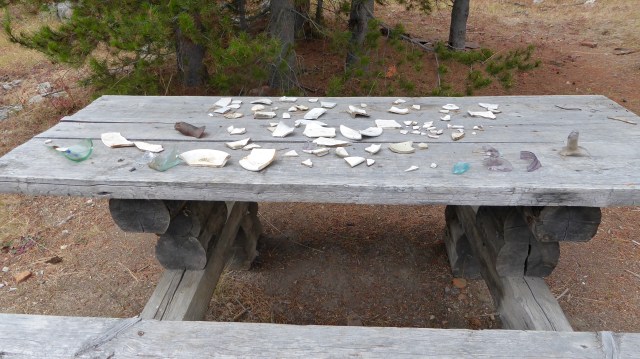
Visitors seem to be collecting old glass and pottery shards.


Randy shows off a 100+ year old square nail and a cable with 32 strands.  The cable was used to trolley the ore to another plant 8,750 feet down the mountain side.  That is a long cable, since it had to run back up the hill too.  That is at least 17,500 feet of cable, or about 3.3 miles worth.

p1070232

Back down the mountain in Phillipsburg, we had lunch and then went to the highly recommended Sweet Palace. What a candy store!

p1070231

That’s Randy in the back left – filling his bags!

Randy loves salt water taffy and they had so many flavors made on the premises.  I asked him to get me a few pieces of licorice taffy but he didn’t want to contaminate his bag.   So I got my own and gathered a few other flavors he wouldn’t like.   Meanwhile Randy filled a second bag! I got a few dark chocolate covered pretzels and a few hard candies and pretty soon we had $29 worth of candy. Crazy for people who don’t eat much candy!

p1070268

Serene’s are on the left, Randy’s are on the right.  He says all of his are calorie free. It will, or should, take us a long time to eat all this taffy – hopefully it will stay soft.

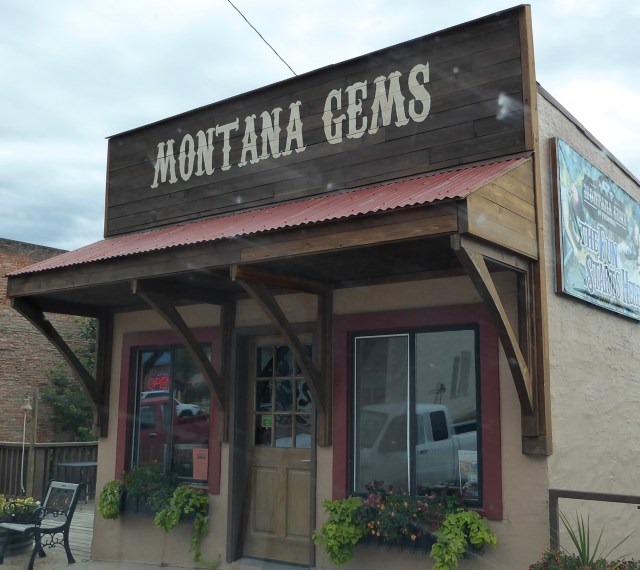
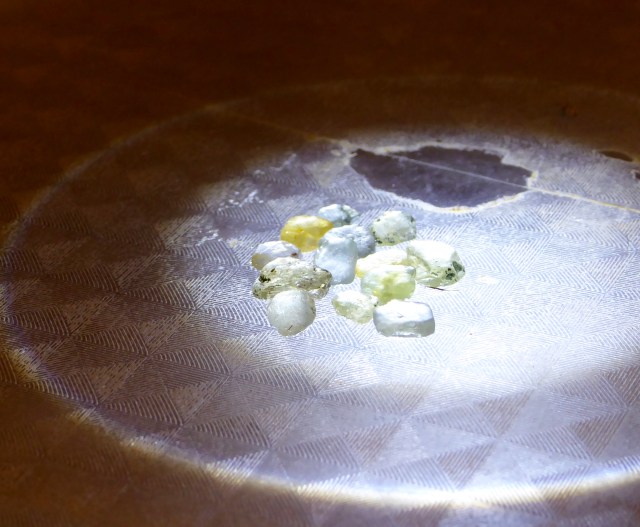
p1070233Our fun continued at Montana Gems. We bought a 35 pound sack of gravel and sifted and washed through it looking for sapphires.

After we found ten sapphires, employee Doug went through our tailings and found three we had missed.

p1070251

p1070241

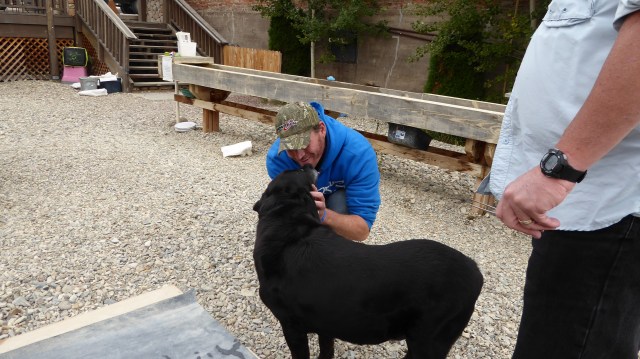
And then Doug loved on Elko because, well, why wouldn’t you?

p1070253

The fun final results were 13 sapphires found, 7 of which are worth cutting, totaling 9.3 carats. (The six smaller sapphires were 3.75 carats combined.)   We could have had them cut for $20 each but since I don’t know what I would do with them, we just took them home. Something to think on….


Posted in Uncategorized | Leave a comment

Mining in Butte: The Good, the Bad and the Super Toxic

When we set off on this journey two and a half years ago, we didn’t realized it would be a lesson in mining. We have seen gold, silver, copper and iron mines across the west and in Minnesota. We have been underground numerous times and have looked out at open pit mines with sadness. I can even write a coherent paragraph about mining with very little fact checking. Immersing ourselves in mining wasn’t the goal but here we are in Butte, at the foot of the Richest Hill in the World.

p1070047

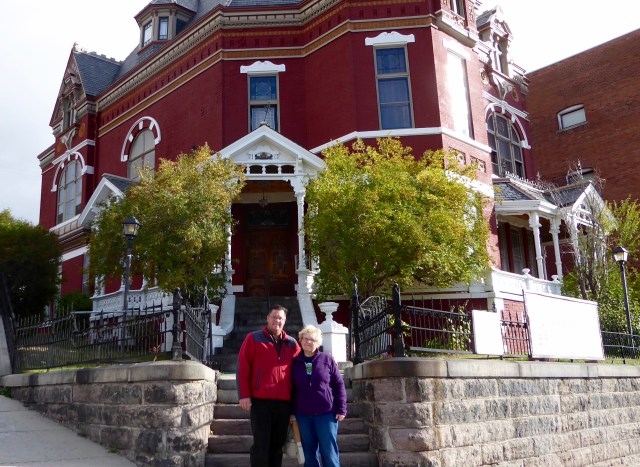
We toured the Copper King Mansion, home of William Andrews Clark. A former school teacher, Clark avoided being drafted into the Civil War and traveled west to pursue mining. He made a little money mining in Colorado and Bannack, Montana but made much more by establishing a trade route to Salt Lake City and overcharging other miners for needed supplies.

p1070066
Clark purchased six area mines and became one of three copper kings in Montana.

Clark’s business interests were varied and he was once the second richest man in America. His railroad interests intersected in an area that became Las Vegas, Nevada.  The encompassing Clark County was named for him, as was Clarkdale, Arizona.

The Clark family gave philanthropically to causes around the country including museums, a library, a memorial home, an orphanage, a camp, and an art collection.

Less admirably,  Clark bribed Montana legislators to send him to the US Senate reportedly saying “I never bought a man who wasn’t for sale.” The US Senate refused to seat him because of the scandal but one term later Clark won election and served as the US Senator from Montana.

Construction began on the Butte mansion in 1884 and was completed 4 years later at a cost of a half million dollars – a half day’s wage for Clark. It was one of seven mansions the family owned, six in the US and one in Paris. After family members living in the home died, it and interior items were sold. The mansion served a variety of purposes until it was purchased by the Cote family 40 years ago.

p1070060

The Cote family spent much time and money restoring the mansion and furnishing it with period pieces. A few Clark family items were purchased or donated back. Today it is a reasonably priced bed and breakfast with rooms that must be vacated for tours between 10:00 am and 4:00 pm.

p1070122

We also visited the World Museum of Mining. It has acres of exhibits and a recreated mining town. They offer an underground tour but we chose to pass this time.

p1070104

There is a large exhibit of the many rocks and minerals found in the Butte area.

p1070095

Randy’s Ben and Jerry’s T-shirt glowed like the minerals under the ultraviolet light!

p1070097

Labor Unions once flourished in Butte and the city was called the Gibraltar of Labor. When the mines were sold to corporate America, the labor situation worsened and became dangerous. During World War I the emphasis was “just get the ore out” and the labor situation deteriorated even more. There was a period of union suppression until the New Deal allowed for unions once more.

p1070142

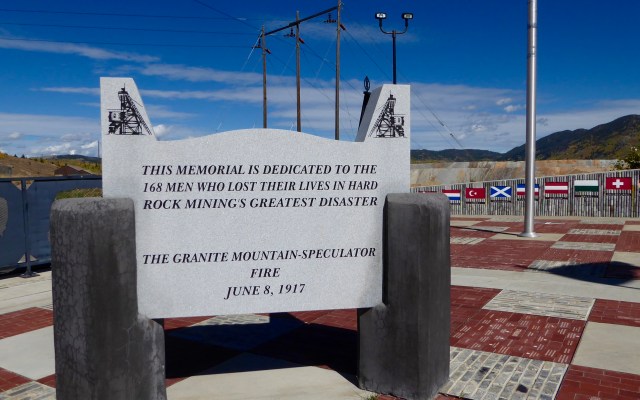
The Granite Mountain Memorial provides the opportunity to remember 168 miners who died in the Speculator Mine from an accidental fire and the subsequent smoke and poisoned air. The memorial site has audio readings of letters the trapped miners wrote to loved ones during the day or two before they died. The accident on June 8, 1917 remains the world’s largest hard rock mining disaster.

p1070146Also commemorated are the 2500 Butte miners who died from mining related causes between 1870 and 1983.  That’s a lot of men.

p1070156

Mining in Butte has the good (wealth and employment), the bad ( accidents, illness, death and labor unrest) and the super toxic.  See the Berkley Pit….

p1070129

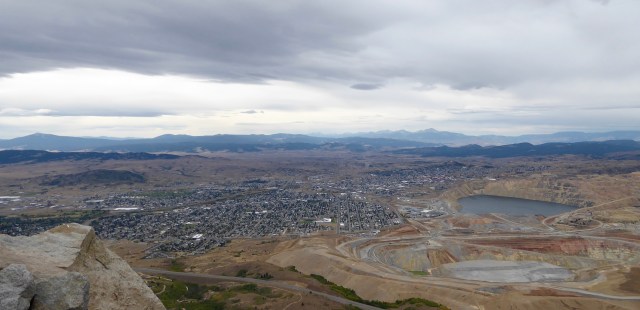
Once underground mining strategies became less profitable, the Berkley Pit was dug to continue mining copper and molybdenum, a steel hardener. Operations began in 1955 and were shut down in  1982.   The pumps keeping ground water out of the pit and out of the underground shafts were then turned off. The water level in the pit rose and was found to be toxic with high levels of minerals, sulphuric acid and arsenic.  The pH levels measure 2.5 instead of the normal 7.

The Berkley Pit has been a Superfund Site since the 1980s with efforts focused on cleaning the water before it reaches critical levels and backfills into the Clark Fork River, projected to happen in 2023.

p1070131This plant has cleaned the water enough to be used in other mining operations,  slightly delaying the rise,  but not enough to be released.

p1070030

The ramifications of failing seem disastrous for Butte and the environments downstream.   Residents seem to have confidence in the scientists working on the problem.  Let’s hope they are right!

Posted in Uncategorized | 4 Comments

Southwest Montana: The Views

Montana is Big Sky Country and the views reflect that nickname.  We saw a variety of them in the last few days.

Traveling from Bannack towards Butte we viewed two roadside Montana State Parks, both marking historical sites. The first was Clark’s Lookout – think  Lewis and Clark.

p1070005

An easy walk up a short trail takes you to this large granite monument depicting the spot where William Clark stood as he viewed the landscape and took three compass readings.  He gathered coordinates in preparation for making maps when the Corps of Discovery expedition was completed.

p1070011A few miles down the highway we viewed Beaverhead Rock. This formation, resembling a beaver’s head while swimming, was the landmark Sacagawea recognized when traveling with the Corps of Discovery. Seeing it, she knew they were close to the Shoshone lands that had been her childhood home.

p1070015

The view from our yard – only a small portion of our big sky.

Our home for the next few days is an RV park with a view!  We are in the middle of a wide valley with mountains around us.  We even have cows that wander by once in a while.

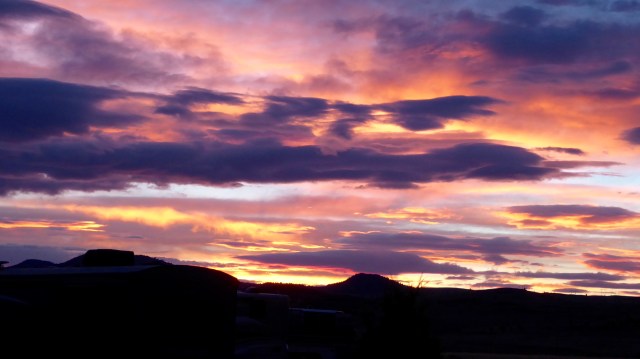
p1070020 Yesterday’s sunrise was so beautiful that Elko and I sat outside curled up in a blanket with the remains of a Starbucks Mocha.  Since he didn’t want the blanket, and didn’t have the mocha, Elko wasn’t too impressed and went back inside.   I thought it was lovely.   Cold, but lovely.

p1070016

The sunrise even reflected onto the trailer!

Also lovely,  is a large white statue up on the mountain.   We noticed it when we traveled through Butte in a mad dash last summer and hoped that someday we would come back and see what it was all about. That someday was yesterday!

14807988

We didn’t have a good weather day so I pulled this picture from the internet. Thanks to the unknown photographer!

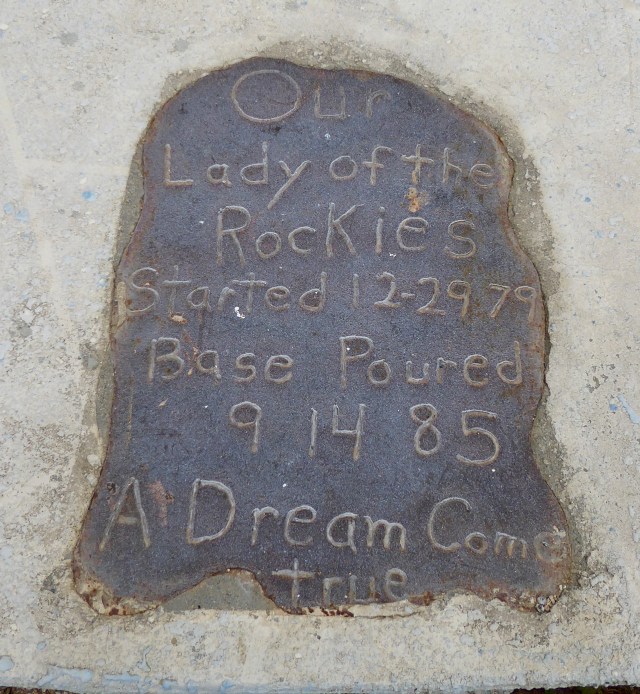
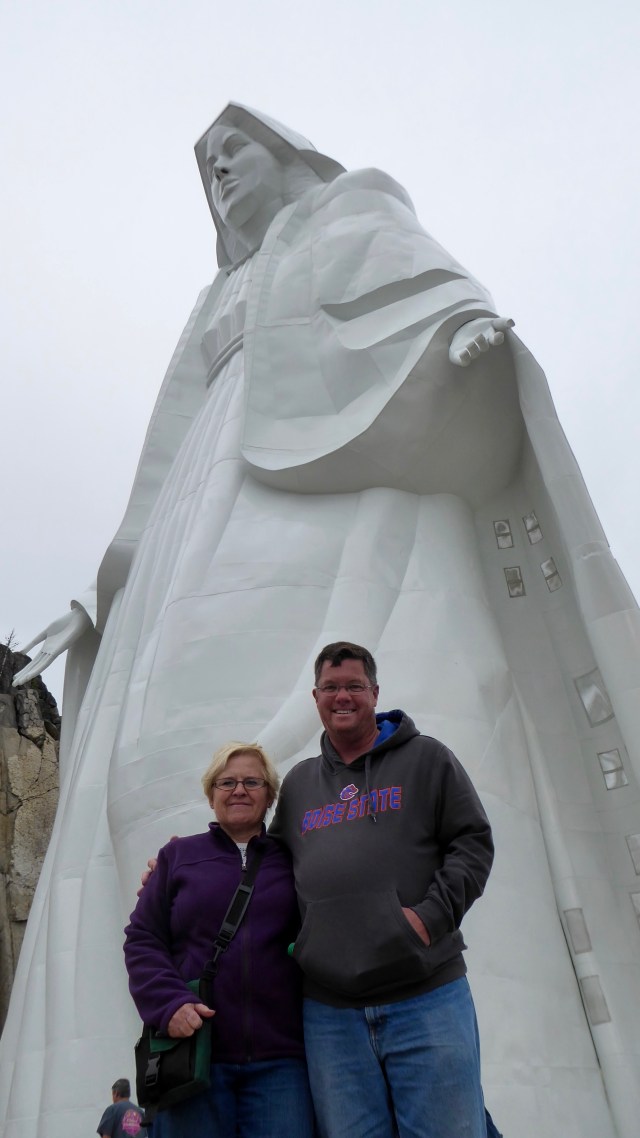
The story of the statue began with a man’s concern for his ill wife and his promise to build a monument to Mary, Mother of Jesus, if his wife survived. It took this man and his friends, and eventually many in the community of Butte to give  “donations of time, money, land, equipment, manpower and a wealth of love and faith…” to build the 90 foot statue, Our Lady of the Rockies.

p1070025

The story is really quite inspiring.   Many of the men who held onto this dream for six years were unemployed miners. The welder who became the sculptor had never done anything like it before, even on a small scale. After the road was widened and a site prepared, the six large sections of the steel statue were individually helicoptered onto the site and layered one atop the other.  The section with the hands barely averted catastrophe.

p1070030

Completed as a tribute to all mothers, Our Lady of the Rockies sits on the continental divide, at 8510 feet, and overlooks the town of Butte.

p1070023


p1070041

The “school bus – tour bus” did very well getting up and down a steep and rough road.

p1070034

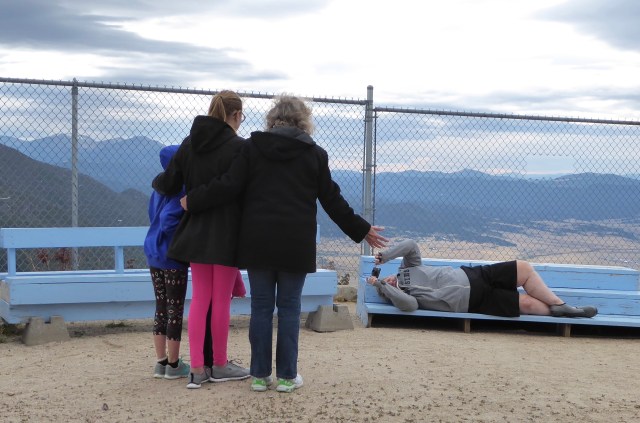
We got a chuckle over our 70ish bus-driver/tour guide who knew just the right vantage point (lying down) to get her tourists and the Lady of the Rockies in the view finder.

p1070038

Tours, tributes and memorials help support the Lady of the Rockies.  A chapel for special events has been built and a tram to go up and down the mountain is planned.

We have one more southwest Montana big sky view to close out this blog post.  Still from the Lady of the Rockies site – this one is just looking the other way!

p1070039


Posted in Uncategorized | Leave a comment

Boise to Bannack

Our first night out of Boise was spent in Arco, Idaho. We have been there before so didn’t re-visit Craters of the Moon National Monument or the Atomic Museum, both of which we enjoyed previously and recommend.

p1060906

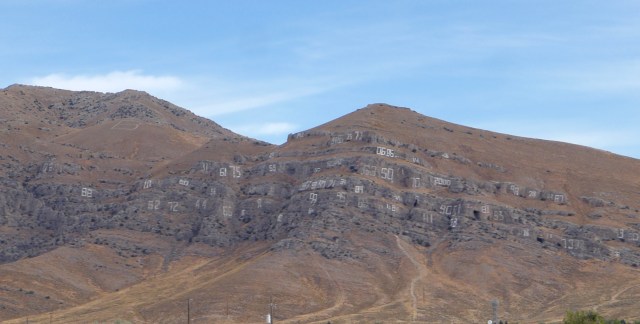
We stayed at the Mountain View RV park with a good view of Number Hill memorializing the local high school classes since 1920.

While setting up, Randy noticed the electrical pedestal was arcing so we moved to another site.  He was in the middle of repairing our pocket door, cutting an access hole and re-attaching the rails, when the power at our new site fluctuated due to low voltage. We have a monitoring system to evaluate incoming power and the level dropped to 105 volts when it should have been between 115 and 120.

We switched our appliances over to propane to avoid damaging those systems and very shortly the furnace stopped working. It runs on propane and the 12 volt system so it didn’t make sense that it was part of the power problem.   It took a couple of very cold hours for Randy to get it working again. After researching the problem he discovered the furnace sensors use microvolts and that just a little bit of dust can keep them from working correctly. He was skeptical but disconnected the connector from the furnace controller board, blew on it, reconnected it, and the furnace worked again. Whoo-hoo!

We were very happy, not just to be warm, but without our propane furnace we would have had to change our travel plans. Our next stop was a campground without hook-ups and the night time temps were projected to be in the low 40s.

p1060913

On our drive from Boise to Arco and beyond we saw lots and lots of raptors. We counted for a while but stopped in the 50s.  We  saw sections where 8 of 10 telephone poles had a raptor on top.

p1060925We also saw them on irrigation apparatus. There must be a lot of mice in those fields….

p1060927

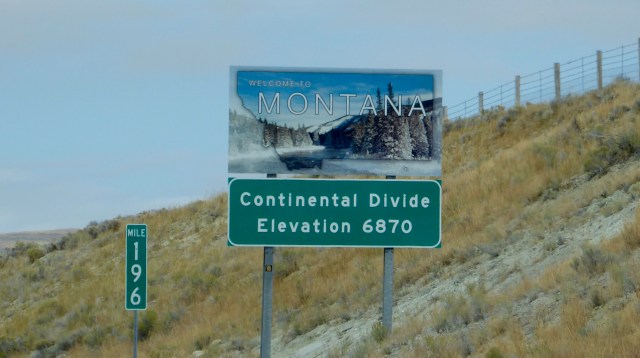
It’s always interesting to cross the continental divide!

p1060972

Our next stop was Bannack State Park near Dillon, Montana, home of one of the best preserved ghost towns anywhere. Bannack is on the National Register of Historic Places and a National Historic Landmark.

p1060930

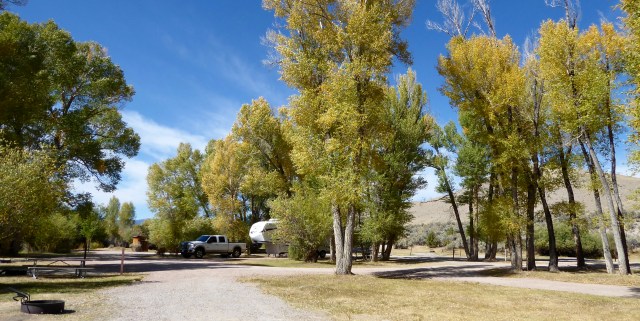
When we arrived we found a beautiful, empty campground. We set up, explored a bit, and were so contented that we asked the rangers if they needed camp-hosts for the next month. They didn’t. (The camp host site had hook-ups but the rest of the campground did not.)

We were eventually joined by one neighboring rig so we invited them over to share our campfire and some peach pie.

p1060995

We explored the ghost town of Bannack. As my computer keeps trying to auto correct the spelling, I should tell you the town was named after the Bannock Indian Tribe but an error in the 1863 registration process in Washington DC created Bannack instead of Bannock.

p1060974

Bannack began when gold was discovered in Grasshopper Creek in July 1862. The find initiated Montana’s first gold rush and all the influx and drama that comes with a gold discovery. Bannack’s gold was purer than most, 99.5% rather than 80%.

p1060983
The population of Bannack ebbed and flowed as different approaches for mining were initiated and abandoned. When the placer deposits were exhausted, miners adopted hydraulic techniques that washed away surfaces to expose bench deposits. The world’s first electric dredges tore at the gravel in Grasshopper Creek, sorting and sluicing from 1895 to 1902. Advances in hard rock techniques enabled additional mining into the 1940s.

p1060976

Remains of the 1895 dredge

As required by the war effort, mining in Bannack stopped during WWII and was never profitable again. The people of Bannack were forced to go elsewhere for work and the original capital of the Montana Territory became a ghost town.

Preservation efforts began in the 1940s with many groups contributing. The town was officially donated to the state of Montana in 1954 with the stipulation that the ghost town atmosphere be preserved.

Sixty buildings remain on site. Most are open for viewing.

p1060977

This cabin is on the site of the Montana Territory’s  first governor’s mansion which burned in 1900. Supposedly some of the logs from the original mansion were used in building this house.

p1060981

In a mining town, there are sometimes problems!  The town’s first jail and gallows were built by order of Sheriff Henry Plummer in 1863.

p1060978

Bannock’s first jail, on the right, was one room with metal rings to shackle prisoners down. The larger second jail, on the left, had individual cells.

Plummer and two of his deputies were hanged on the gallows in 1864 by vigilantes. The sheriff and his deputies were implicated by a convicted murderer for running a criminal gang called the Innocents. The Innocents were responsible for many robberies and 102 murders. Within 42 days, the vigilantes found and executed 20 members of the Innocents. (Ned Ray, one of the deputies killed, was the great-grandfather of James Earl Ray who killed Martin Luther King Jr.   Hmmm, bad genes?)

p1060942

The Methodist Church was built in 1877. A traveling pastor, Brother Van, was instrumental in it being built after a feared Bannock Indian attack did not materialize.

p1060951

This building was the original Beaverhead County Courthouse but when the county seat was moved to Dillon, it eventually became the Hotel Meade.


It has a safe and a graceful stairway at the main entrance. A large kitchen is in the rear of the building with many guest rooms and suites upstairs.


Bannack Masonic Lodge No. 16 built this building in 1874 with their meeting room upstairs and room for the public school downstairs.

p1060957

The school was utilized for 70 years before closing in the 1940s.

P1060940.jpg

While we were there, a group was setting up for Living History Days, a four day event celebrating the early days in Bannack.  Maddox was happy to give us a tour while his family members were setting up in various buildings.  Maddox told us that he and his grandfather had recently been cast in a new movie, the Ballad of Lefty Brown, to be filmed in Bannack.   His uncle is actor Bill Pullman from Spaceballs and Independence Day so acting runs in the family!

p1070002

There were two pioneer cemeteries nearby but not too many gravestones still visible.


p1060986

This grave was within the park, overlooking the town, but outside the cemetery boundary. I asked the ranger about it since it looked new . He didn’t know but headed up to investigate. Sounds like a mystery…..


We  enjoyed Bannack State Park, even without hook-ups!

Posted in Uncategorized | 2 Comments

Ready for the Road Again

After more than a month in Boise, we are heading out tomorrow, getting back on the road.   We are glad that we were able to come back and help with our grandson and especially glad to report that he is doing very well.   So, the road beckons.

We have enjoyed doing some of our traditional Boise summer activities like attending the Western Idaho Fair and Idaho Shakespeare Festival with John and Deb. We’ve been out for many lunches and dinners with friends. Randy’s gone golfing and we’ve enjoyed being back at our home church.

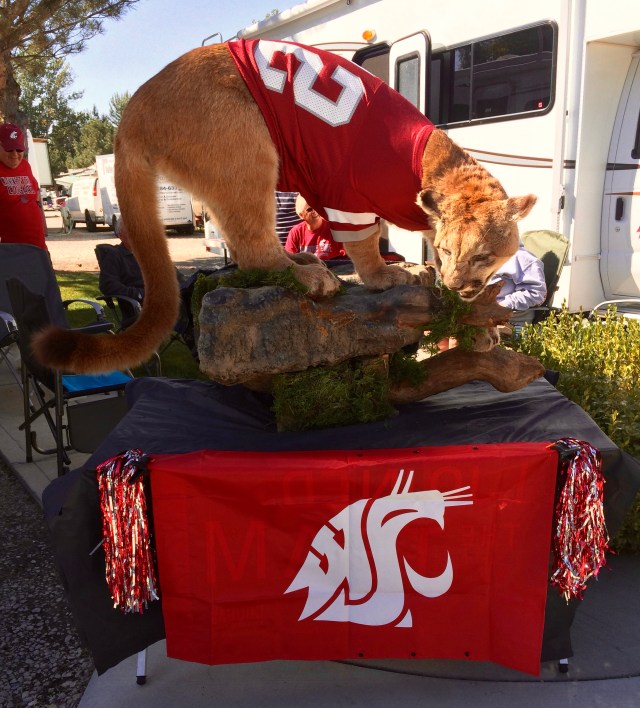
We stuck around long enough to attend the Boise State Broncos’ football home opener, another flashback from our former life.  Walking around the campground on game day we met some Washington State Cougar Fans who brought their own cougar!

img_1916

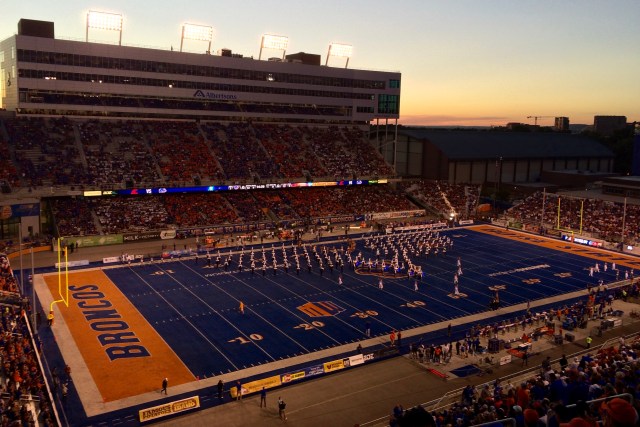
Although the game ended up closer than it felt like it should have been, the Broncos did win!

img_1924

It has been 20 years since we sat on this side of the stadium!

img_1926

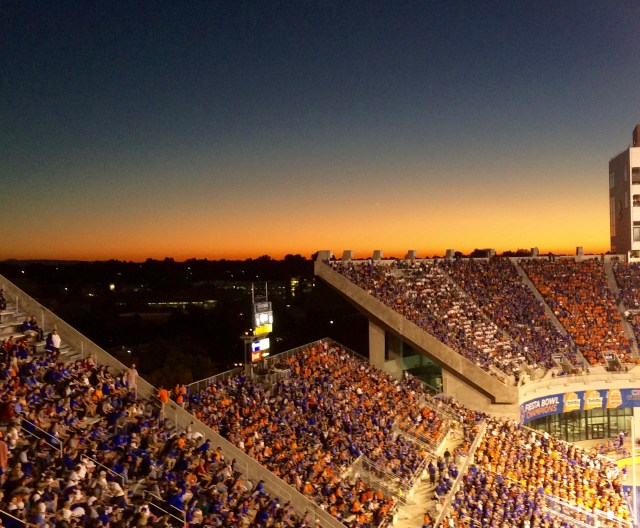
It was our night, even the sunset was blue and orange!


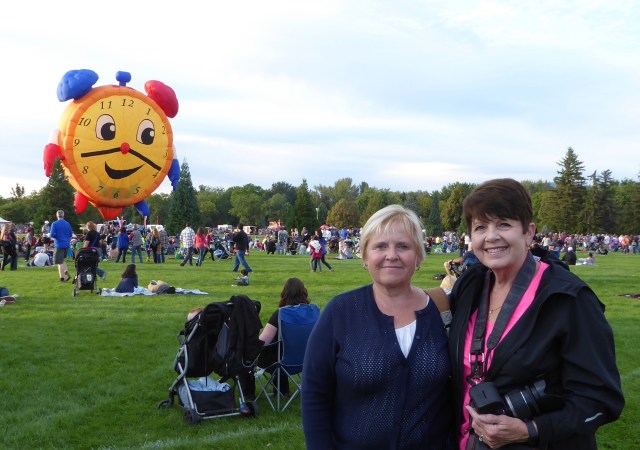
We also did something totally new in Boise!  We attended the Boise Balloon Festival for the first time in its 25 year run. I’m not sure why we never got there before but when cousins Marilyn and Lynn came through Boise, it seemed the thing to do!

p1060856

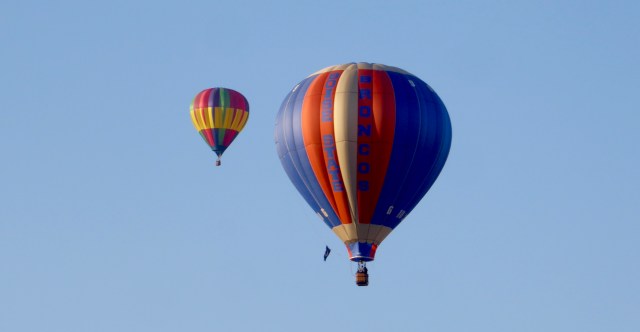
We really enjoyed the Night Glow event – 25 balloons lighting up at one time!  Credit to Lynn for the cool video!

p1060854

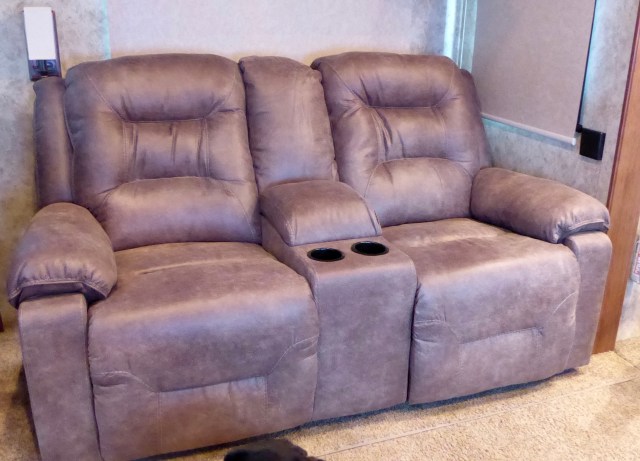
We also managed to purchase a new theater love-seat at a Boise area furniture store.  We had been looking on and off for many  months and finally found one that fit into our limited space and checked off all of our combined boxes.  Unfortunately, we forgot to have a box marked “comfortable.”  We are getting used to it so hopefully we’ll grow to love it.


So where are we headed tomorrow?   We’ll overnight near Arco, Idaho and  then head north into Montana, perhaps going as far as Glacier National Park – depending on the weather.  We also intend to visit  Cody Wyoming,  Spearfish South Dakota and a variety of places in between.   It will be our first unscripted/unreserved trip.  We’ll see how “winging it” goes.

We do know that we will meet up with the Boise State Broncos, and friends Kent and Pam, in Laramie for another football game at the end of October.

p1060850

Posted in Uncategorized | 4 Comments

Update from Boise – He’s Looking Good!

When we last posted, we were completing our dash across the country due to our toddler grandson’s health concerns.  He had a very serious blood and bone infection likely caused by a scraped knee.   Thankfully, it was caught very early and we are so blessed, happy and grateful to report that he is doing very well!

When we arrived he was crawling or being carried because of pain in the infected foot. Nine days later he is walking with only a slight limp and his blood work has returned to normal levels. He was able to go to “school” and play with his friends for a few hours Thursday and Friday.

That seems to be the working plan for the next week or so. His mom will drop him off at school on her way to work and we’ll pick him up about 10:00 and take him home to play, have lunch and take his midday meds. The aggressive antibiotics will continue for another few weeks but all is looking well for a total recovery. Thanks for the prayers on his behalf!

Getting a campsite in Boise was a challenge – although I don’t know why anyone who doesn’t have to be camping here now would be!  It is miserably hot outside!

When we began our drive home I called our usual campground to get reservations and the desk workers told us they were completely full. The Western Idaho Fair was about to begin and the campground is adjacent to the fairgrounds.

Given the circumstances, and our history with the campground, manager Karen told us to try the other campgrounds in the area and if we couldn’t make something work to call back and she’d try to figure something out.  Everything in Boise was fully booked so Karen worked some magic and got us into an overflow site on the grass. That means we have great power, marginal water access, and no sewer for about three weeks but we are very grateful to have what we have.

P1060839

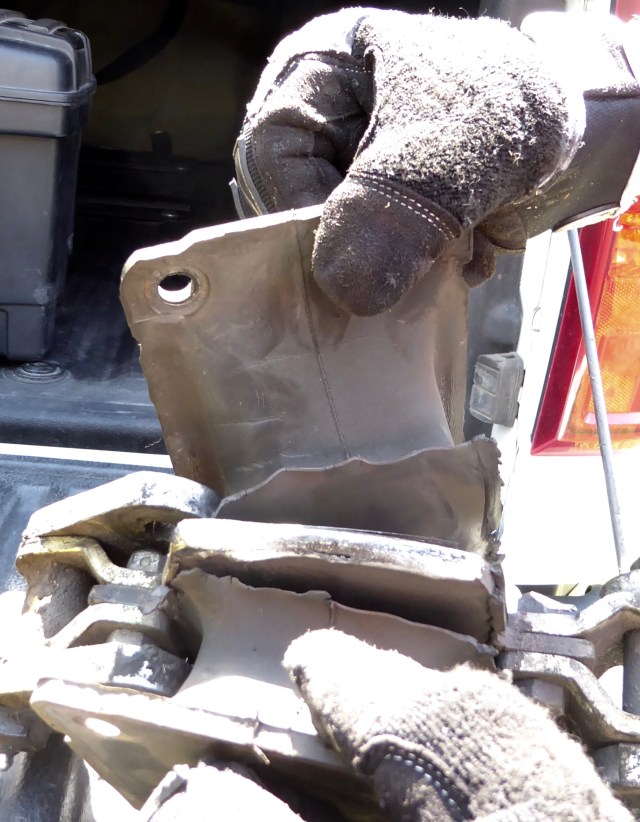
The advantage of being on the grass is that Randy was able to spend one very long hot afternoon repairing the trailer again!   He replaced a broken shear spring while lying in the grass instead of lying in dirt or gravel.

P1060838

A shear spring provides shock absorption between the axle leaf spring and the frame. It had broken on the way east, and although not dangerous, was not good for the trailer.

Once the fair is over and the fair employees have moved on we’ll be able to move into a traditional site for the remainder of our stay. We originally thought we’d be here until the end of September but that is no longer a given. We’ll see how things go but we may leave sooner than that.

For now we have settled into a daily routine of caring for our grandson and being able to spend evenings with friends. Thanks to John and Deb, Kent and Pam, and Darrell and Cindy for making time for us already!

Posted in Uncategorized | 5 Comments

Grandparents to the Rescue

Four days and 2200 miles ago we were in Connecticut.   Our daughter called and told us our grandson was in the hospital in Boise. Over the course of several days he was diagnosed with a blood and bone infection and treatment began. He was released from the hospital yesterday and is expected to make a full recovery but will need some extra attention for the next 4-6 weeks. So — grandparents to the rescue!

Actually, great grandparents came to the rescue as well. My parents went to Boise to help out while we cross the country at a pace of 700 miles per day. It took us almost two months to get to Connecticut but we’ll take 5 days to go back to Boise.

We left Hartford, Connecticut on Sunday late afternoon and drove as far as Wilkes-Barre, Pennsylvania. There we did something we’ve never done! We spent the night in a casino parking lot!

P1060811

Many RVers spend nights in parking lots for casinos, Walmarts, Cabella’s and truck stops. We choose to support local campgrounds so this was new to us. We didn’t know how long we’d drive that night so it was an option and it worked.  The night was cool enough that air conditioning wasn’t needed.  We went into the casino to have breakfast to give them a little business.


We spent the next night 700 miles down the road in Indianapolis so we could see our friend Rosa.  She was great to meet us at 7:00 in the morning so we could visit and still get on the road for our next 700 miles.

Most of the roads on the trips east and west have been pretty bad. Illinois was the exception with really nice roads and really big rest stops. This was just part of the “truck” side of the parking lot when we stopped to stretch our legs.

P1060813

Unfortunately we had to drive right through Iowa without seeing our “extended daughter” Christina and meeting her husband. We drove through Iowa mid-day when they were at work.

Our Nebraska night was in a nice campground owned by a young couple right off of I-80. It was hot and humid and we were really glad to have hookups to have air-conditioning!

We had big winds while driving through Wyoming but we managed not to litter this time!   We stayed in the fairgrounds campground and the trailer really rocked in 24 mile per hour winds gusting to 35 mph. You gotta love Wyoming!

P1060832

Our cousins Lynn and Marilyn were great to take us for an early breakfast so we could visit and still get on the road.

We left Rock Springs about 90 minutes ago and Randy just said we had 400 miles to go to get to Boise – That means our total trip will be 2709 miles done over five days (most of it in four).   Although I have offered, Randy has driven all of it so far and I don’t see him giving up the wheel in the final stretch!

We enjoyed the rally and meeting people and some terrific sites along the way to New England.   However, we did not enjoy the humidity and bugs!   We will go back and complete our trip someday but for now we are grandparents to the rescue.

Posted in Uncategorized | 9 Comments

Sturbridge: The Campground, the Town, and the Historic Village

Sturbridge is 60 miles southwest of Boston, Massachusetts.  We visited Boston years ago, loved the city, and would be delighted to visit again someday.   Yet, for this visit to Massachusetts,  our focus was Sturbridge.

We stayed in Sturbridge Campground, in the town of Sturbridge, for the purpose of visiting Old Sturbridge Village. A lot of Sturbridge going on….

P1060732

We lucked into the nicest campsite available in one of our least favorite campgrounds ever. If we hadn’t been given this nice site, in contrast to the normal awful ones, we wouldn’t have spent six nights here! As it was we shortened our stay from 10 nights to six…
P1060754

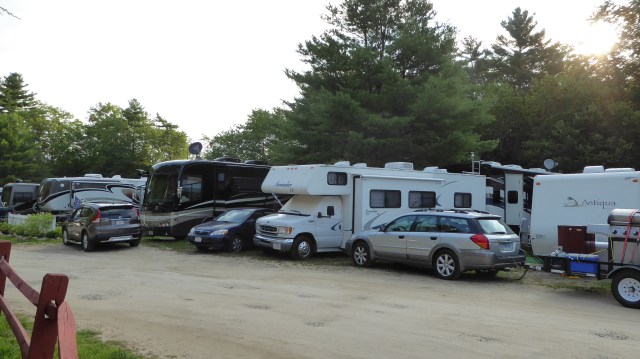
How the other campers lived…..


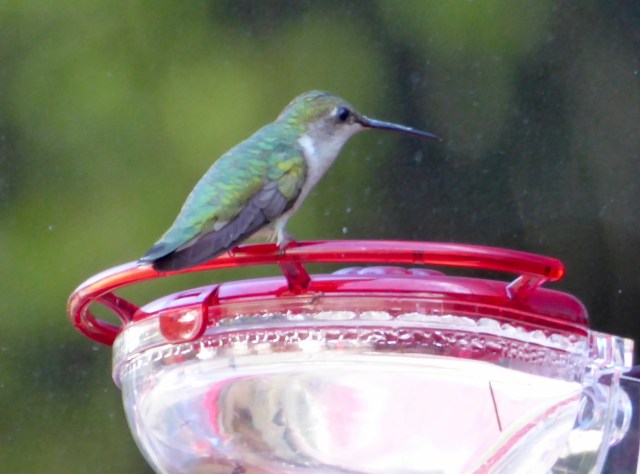
P1060741We did enjoy a multitude of hummingbird visitors while hanging out in our shaded yard feeling bad for everyone else.

We didn’t spend much time in the town of Sturbridge but we did go see Star Trek Beyond and Jason Bourne. It had been a while since we had the time and opportunity to see a movie in a theater.

P1060620

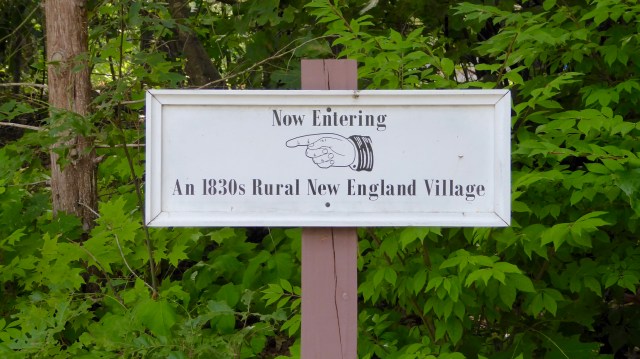
Old Sturbridge Village was the reason for visiting the area and it was terrific!
P1060727

As you walk through the village, and surrounding farms, you are able to talk with costumed historians and learn about “their” life.  Most sites had a historian available for our mid-week summer visit.

The firearms cabin held a large variety of rifles, hand guns, shot and powder horns. The top rifle is a flintlock fowler from 1725 New England. It was six or seven feet long.  Who could carry and shoot that thing?
P1060663
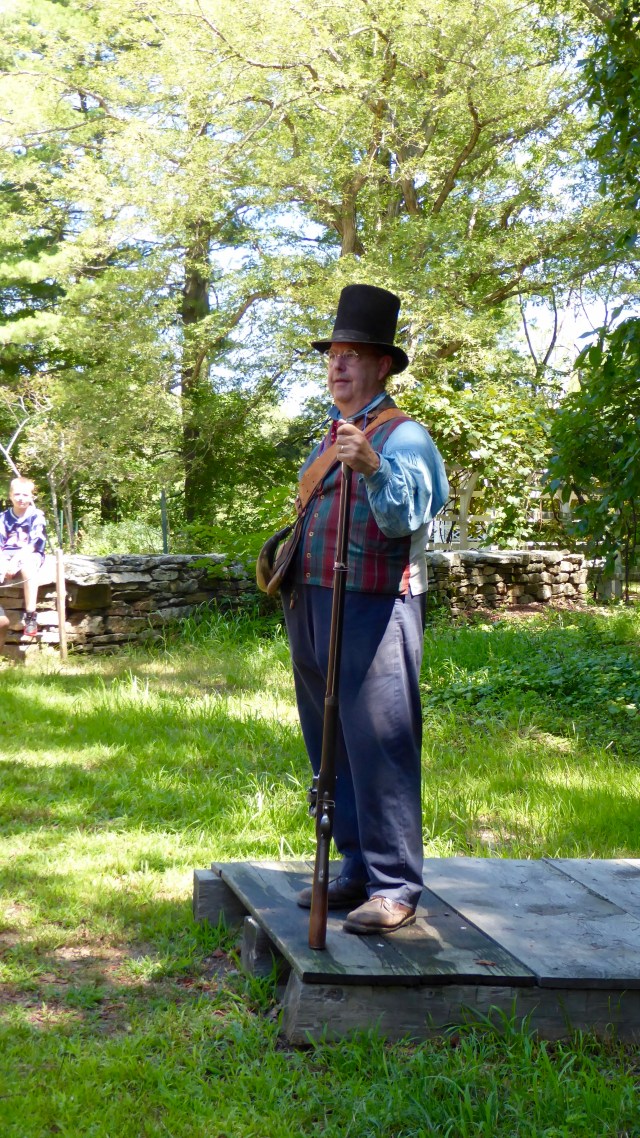
We learned about flintlock rifles and how they are fired. This demonstrator could reload and fire three times in a minute. (We learned that a crew from Jeopardy filmed this and other demonstrations as “answers” for the show. We saw them several times throughout the afternoon.  Those who watch Jeopardy, like my parents, will see Sturbridge references sometime soon.)

There was also a childrens group at Sturbridge for a day camp. They seemed to be having a great time.

We toured a village town home and saw how it was decorated.
P1060659

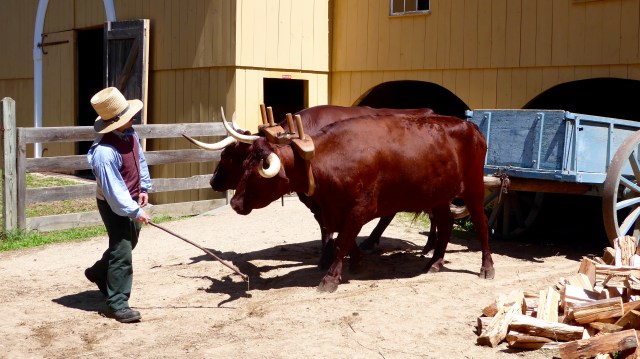
We watched  oxen pull a wagon and stayed to see them unburdened from their 50 pound yoke.  No one but me thought 50 pounds was needlessly heavy for the poor oxen.

We spoke with this farmer as he was using a scythe to cut grass for the cattle.  With steady cutting, a blade needed quick sharpening in the field every 15 minutes.  It would need to be sharpened more thoroughly after a full days work.   A man would cut an acre a day alone although usually a group of men worked together to cut fields more efficiently.


We saw wool from the sheep processed in the carding machine….

…to the spinning wheel to the dye pot.

Bright wall paper, produced in New England, decorated the early homes.  Space was well utilized with an early “murphy” bed.

P1060686

We went to a farm and learned about the crops and medicinal plants grown there. Some plants were brought from Europe and others were acquired from Native Americans.
P1060684

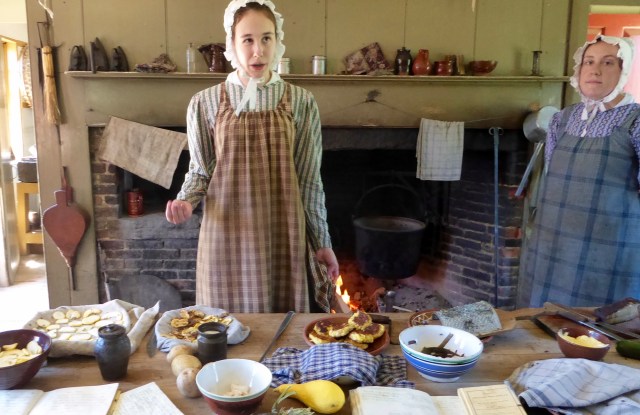
There were flies everywhere in this village kitchen so there was no temptation to snack!  In 1830s New England, people didn’t know there was a reason to worry about flies on food and no practical way to keep them away.

P1060687

The village had a cooper shop to make needed containers.

The village potter makes the vessels that were used in 1838. Once a year he fires 600-700 pots in the old kiln. Others are fired using modern methods.


The school teacher was 16 years old and made $6-8 per month, half of what a male teacher would make. Gender inequality started early…  She taught the alphabet to her youngest children but older pupils, up to 50 total, would study independently and come to her to recite their lessons.

P1060703

The cobbler demonstrated making leather shoes.  In early New England most common shoes did not have a differentiated left and right.


An experienced tin maker could make 16 of these lanterns in one work day.
P1060678
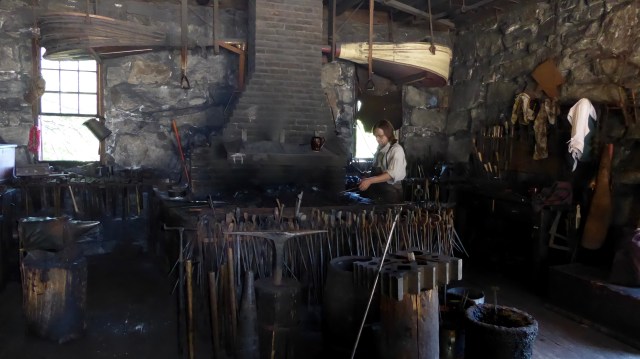
By 1838, most tools were made in a New England factory and the blacksmith was a repairman.
P1060706

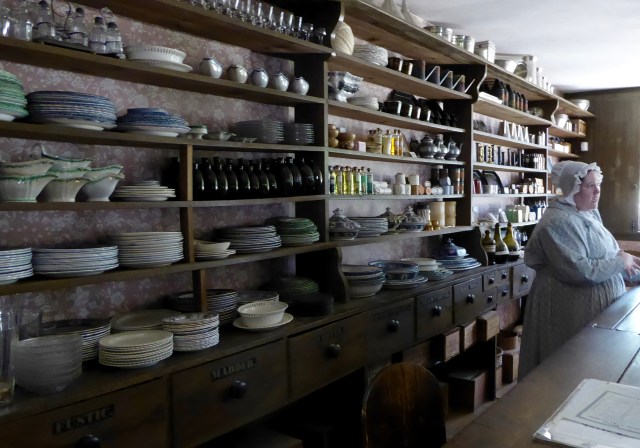
The shopkeeper sold goods from all over the world.   Villagers made butter and cheese as credit to buy what goods they needed and could not make.  The shopkeeper took the butter and cheese to the city to trade for goods.  These days, items made in the village such as pots, brooms, yarn and tin goods are available in the museum gift shop
P1060704

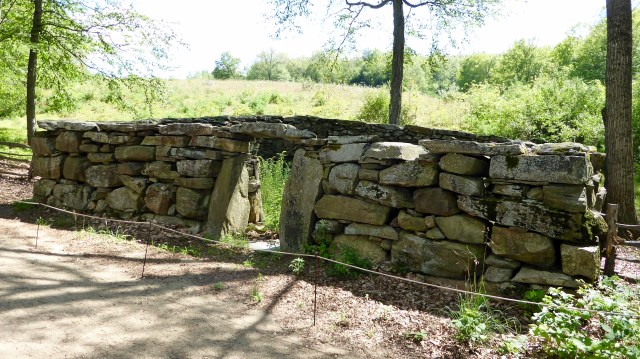
This was the pound for stray farm animals. The animal would be caught, impounded, and the owner would pay a fee to get it back.

Please don’t think we’ve shown you so much of Old Sturbridge Village that visiting is unnecessary.  It is absolutely necessary!  We had a great time and took advantage of a second visit free within 10 days.

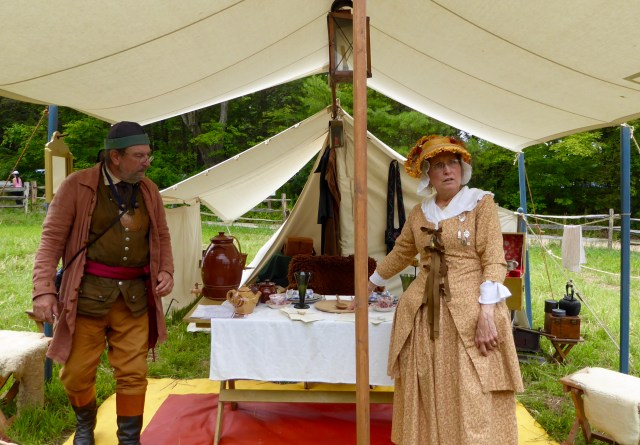
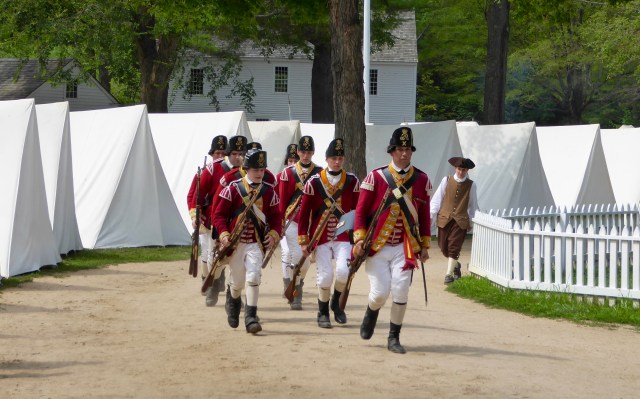
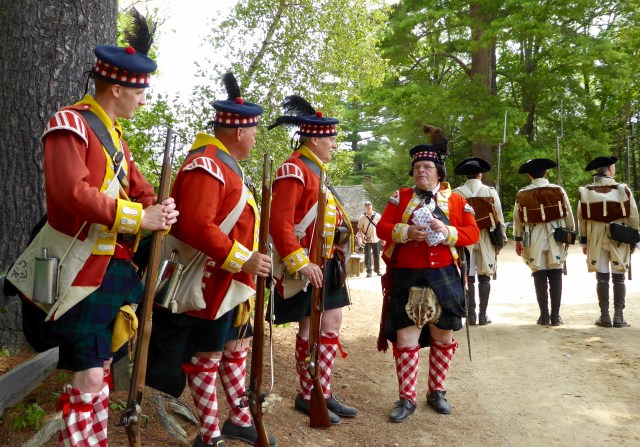
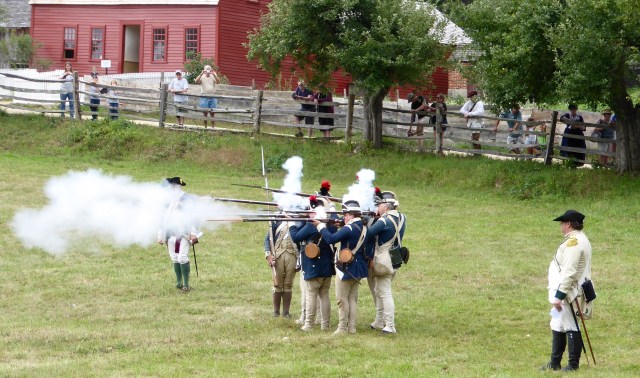
Why go again?   Because New England’s largest Revolutionary War Re-enactment was held while we were here.
P1060761

A commander of a militia unit was able to take some of the comforts from home.   His qualification for being the commander was that he was the wealthiest citizen, even though he may have had no military training.
P1060776

The British wore tall hats and cutaway jackets to appear bigger and taller and thus, more intimidating to foes.
P1060784

We weren’t sure which side these guys were on!   See the fox? We did’t get a chance to ask what that was all about.

The cavalry riders came through the infantry line after the guns were fired.  Only two revolutionary war battles used cavalry.
P1060789

The guns were fired in a volley because they were more likely to hit something that way.  Individual shots were not very accurate or reliable.
P1060801

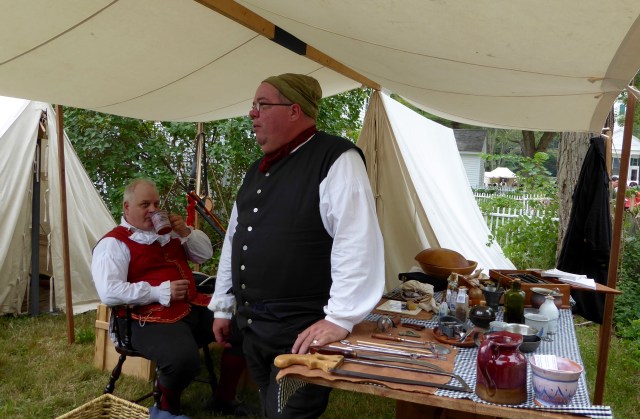
And with all the re-enacted shooting going on, the next stop was the doctor at the regimental “flying hospital”, a precursor to MASH units.   A doctor became a doctor by purchasing a manual, no experience or training required.  Midwifes often treated maladies that didn’t require “cutting” and used herbs for treatment.    Of course, there was no knowledge of bacteria or how to treat infection.

The re-enactors came to Old Sturbridge Village on Friday evening and stayed for the weekend – quite the dedication to this event.   We are glad we had a chance to enjoy the fun.

Old Sturbridge Village was developed because Albert Wells loved to collect everyday items from early New England. His collection was the beginning seed for the living history museum which opened in 1946.
P1060628

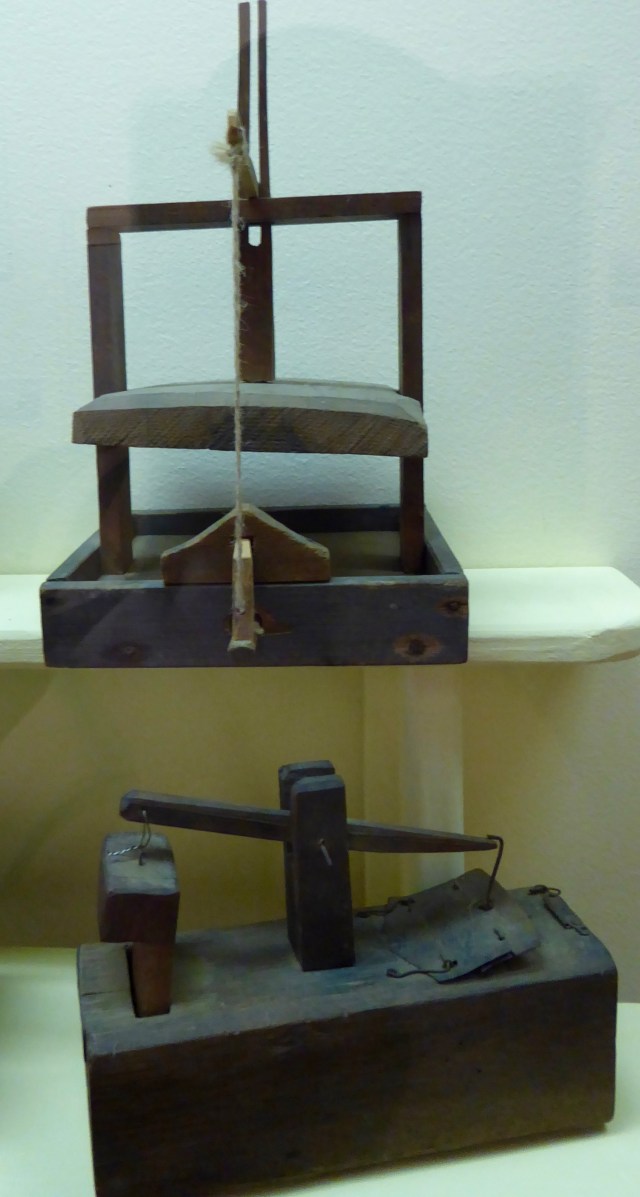
These are two of about 20 early mouse traps displayed.  At least they knew they didn’t want mice – even if they didn’t know they didn’t want flies!
P1060633

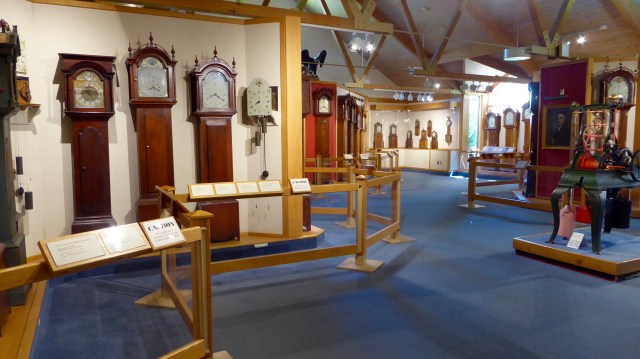
Collecting was a family trait. Brother J. Cheney Wells collected clocks and over 110 are displayed in the adjacent gallery.

P1060642

These clocks were from the mid 1700s.  Most displays included one showing the inner workings.
P1060634

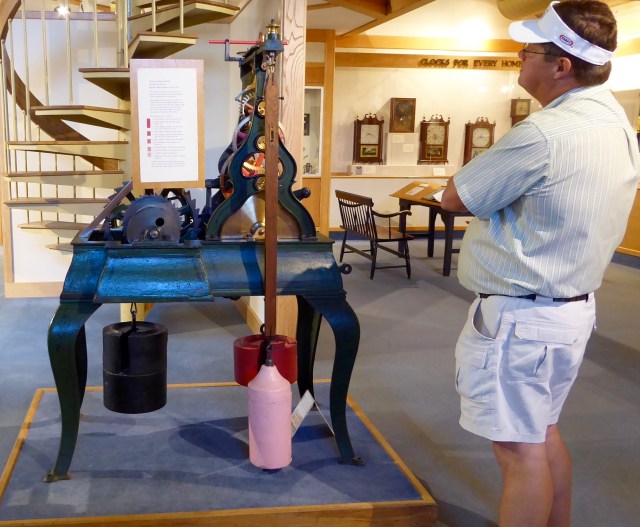
Ever the engineer, Randy was disappointed this clock wasn’t working and spent time figuring out how it would work.

Next stop….Connecticut!
 

Posted in Uncategorized | 2 Comments

Vermont: The Reason for the Road Trip

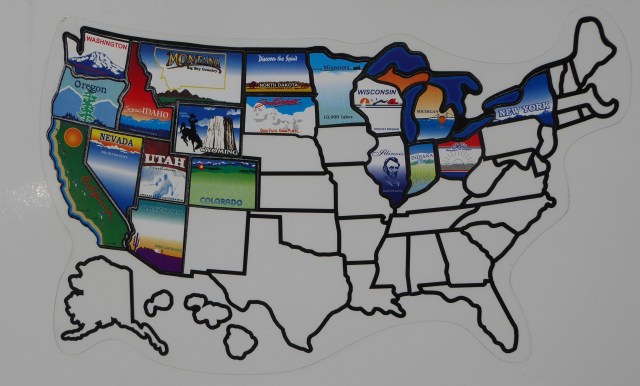
We made it to Vermont!  We came across the country for the 56th Escapees Escapade, an RV rally, in Essex Junction, Vermont.  More accurately,  we used the rally as an excuse to come to Vermont and beyond.

The same day we crossed over Lake Champlain into Vermont, we went to Vermont’s #1 tourist destination, Ben & Jerry’s!

Ben and Jerry’s began in 1978 with a $5  Ice-Cream correspondence course from Penn State.  “Cherry Garcia” was the first of many flavors named for rock legends. They sourced milk and other ingredients locally and took on social missions. In 2004, they partnered with Rock the Vote and registered 11,000 new voters on free cone day. They also served “Save The Swirled” ice cream to Paris UN Climate Summit participants in 2015.

Ben and Jerry’s pay their employees a living wage with benefits, including three pints of ice cream for every day worked with the caveat that the pints cannot be sold.  However, there is an extensive bartering system in the area!

P1060417

Not real – but they sure look real!

We went on a plant tour and received a small scoop of “Milk & Cookies” at the end. Yum! The line to buy ice cream was long so we were glad we had ours on the tour.

P1060418

Those sitting are awaiting the free Friday night movie!

The Vermont factory is the original of what is now six factories world wide and the only one giving tours. They produce ice cream 24 hours a day, five days a week, making one flavor at a time.

We enjoyed walking around the Flavor Graveyard. Some flavors “died” from weak sales but others died because specialty ingredients became too expensive or could no longer be obtained locally.

After the tour, we feel good about buying Ben and Jerry’s ice cream!


We spent most of a week at the Escapees Escapade, a rally to promote RV education and fellowship.  We were glad to see two couples we met at the Tucson rally last year, Dan and Sandie from New Hampshire, and Peter and Mary from Pennsylvania. We were also glad to meet Dan and Sandie’s friends, Ricky and Linda.

Participants were asked to pin their home. Our blue pin is in Boise.   The only other Idaho pin was in Coeur d’Alene for a couple presenting on Sky Med.

We just enjoyed ourselves. I got up every morning for line dancing at 7:30 and even participated in the Ham-O-Rama talent show with the line dance group. I love, love, love line dancing!

P1060479

There was nightly entertainment and the chance to meet RV “royalty.”

IMG_1841

We met John and Kathy Huggins. They have an RV website and a weekly RV podcast called Living the RV Dream. We listened to them for years as we were preparing for this lifestyle.

We went to a variety of seminars. The one we enjoyed most was about the Vermont Maple Syrup industry.   Vermont makes 40% of the country’s maple syrup. Twenty percent of Vermont is open land while 80% is forested, including lots of sugar maple trees!

A tree should be 10” in diameter before inserting a single tap. That tree might by 40-50 years old under good growing conditions. Larger, older trees can take multiple taps. Some still use buckets but most larger farms have a gravity fed tubing system.  These pictures are from their presentation.

Sugaring, or collecting sap, lasts 4-6 weeks in the spring for as long as there are alternating freezes and thaws. Sap has the consistency of water and a sugar content of 1.5 – 3 percent before it is boiled down to a syrup. It takes about 50 gallons of sap to make 1 gallon of syrup which darkens and deepens with age. Flavor differences come from different soils.

P1060432

That’s Randy in his new Ben & Jerry’s shirt!

An RV dealer sponsored happy hour each afternoon to promote visitations to his models. We had fun walking through the motorhomes.


We found a motorhome we liked but wouldn’t want to pay for it!

P1060433

There were a few extra pillows on the bed! Don’t they realize space is valuable in an RV!

P1060464

Randy even had the opportunity to give blood at the rally.

P1060495

After the rally, we traveled to Concord (pronounced conquered), Vermont and found lots to do in nearby  St. Johnsbury.

We went to the St. Johnsbury Athenaeum, donated to the city in 1871 by Horace Fairbanks. Fairbanks made his fortune from scales, many still in use today.

The Athenaeum is part public library and part art museum, originating with the Fairbanks family’s private collections.  Randy and I readily admit that we are “art impaired” but still knew enough to be impressed!

P1060506


The 10’ x 15’ painting, The Domes of Yosemite resides here. This very valuable painting has an interesting history and the athenaeum was built specifically to display it.

P1060508

Randy standing there for perspective.

The collection includes a variety of artworks, paintings and statues.

P1060514

This is a mosaic using pieces smaller than the naked eye can easily discern.

P1060512

This statue of Abraham Lincoln is thought to be the only one of him smiling.


There are a lot of really old beautiful churches in Vermont and this one had a labyrinth on the grounds. I walked the whole thing and found peace in the world at the center.

We went to the Fairbanks Museum and Planetarium!


We saw dead birds from all around the world –  3000 of them on display, with 2000 more in reserve!

P1060535.JPG

This is part of just one side of the display.  A duplicate is on the other side, plus a few more cases here and there!

We really liked  the Bug Art! John Hamson created nine pieces using bugs as a medium in the late 19 and early 20th centuries. The Fairbanks museum owns all nine and displays seven.

P1060567This Abraham Lincoln portrait contains 6399 insects and was made in 1916.

P1060559
This is a close up of another bug picture to help you see the bugs better.


Our last adventure in Vermont was Elko’s favorite – Dog Mountain!

P1060588

This is 150 acres of dog heaven – trails, ponds and other dogs, and no one wearing a leash!


P1060607
There is also a Dog Chapel where people leave pictures and remembrances of dogs they have loved.

I left a note about the dogs we have known and loved: Anna, Toby, Shoeless, Ravi and the “blond girls.”

P1060606

Should have added Shadow…

Vermont will be in the rear view mirror tomorrow when we head south to Massachusettes, but the reason for the road trip was worthwhile. We’re glad we came!

Posted in Uncategorized | 2 Comments

We’re in a New York State of Mind

We’re in a New York state of mind – or at least we’re in New York state…

P1060293

While planning the trip east there were two iconic destinations I wanted us to see in New York – Niagara Falls and the Adirondacks. (We went to New York City in 2012 and saw many of the city’s iconic destinations so they didn’t need to be part of this trip.)

As we approached our Niagara Falls visit the question was American side or Canadian side? Research and talking  with people in the RV park indicated that going to the Canadian side was the better choice.

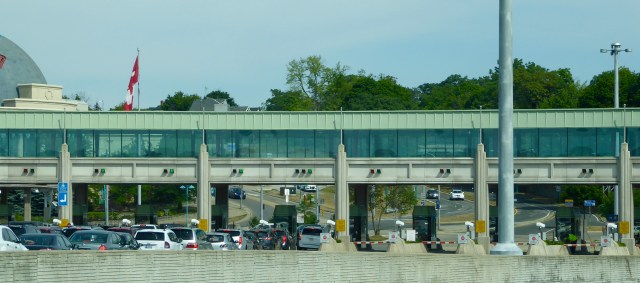
P1060294We grabbed our passports and drove across Rainbow Bridge to enter Canada.
P1060316

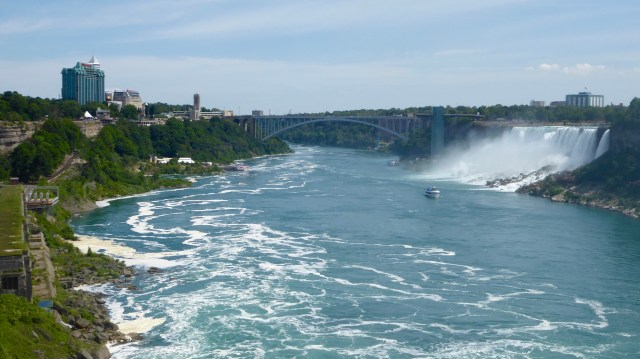
The Rainbow Bridge spans the Niagara River which separates the US from Canada.  American Falls and the vessel Maid of the Mist are on the right side of the photo.

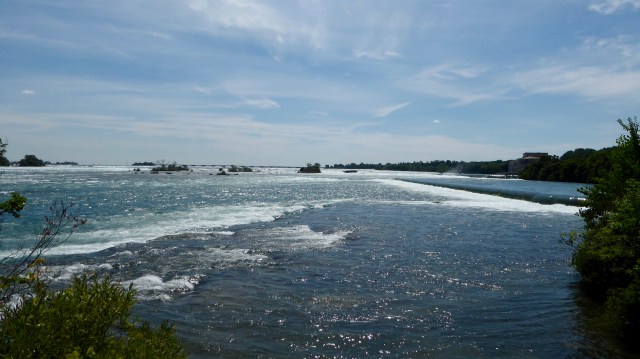
We parked just upstream from the falls and walked along the churning and unsettled Niagara River.

P1060298

P1060299

We noticed an old barge, unofficially named the Niagara Scow, stuck in the river above the falls.  It has been there since August 6, 1918, nearly 98 years!  It is slowly rusting away.

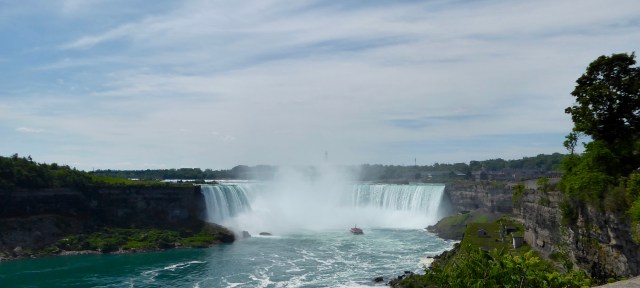
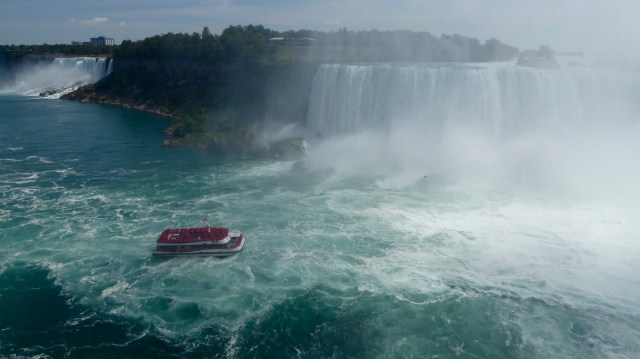
We saw the river preparing to drop 6,000,000 cubic feet of water every minute over Niagara falls.  Three waterfalls make up Niagara Falls:  Horseshoe, American and Bridal Veil. The Horseshoe Falls, viewed from the Canadian side, is what is seen most often in pictures.

P1060307As we approached Horseshoe Falls we could feel the mist. It was pleasantly cooling but also made it difficult to get nice pictures!
P1060324

P1060312

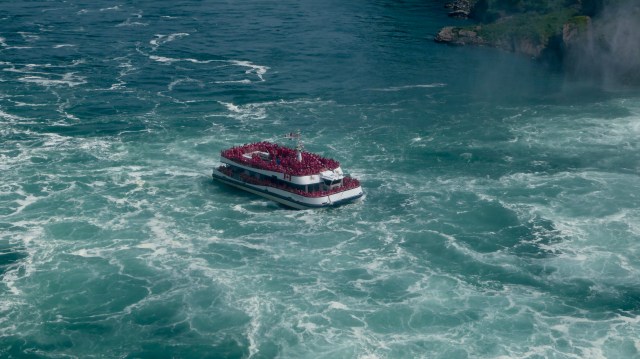
P1060311We watched the Hornblower and the Maid of the Mist approach the falls.  They allow visitors to get up close and personal at water level and we already had our tickets!
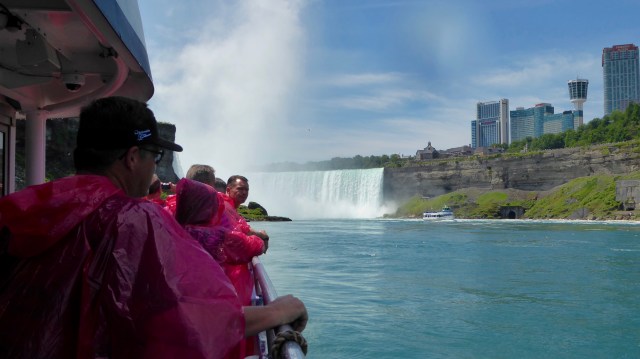
P1060341Since we were on the Canadian side, our vessel was the Hornblower. (Maid of the Mist operates off the American side.) They give you ponchos but you still get wet. It was fun and we would recommend going on one or the other!
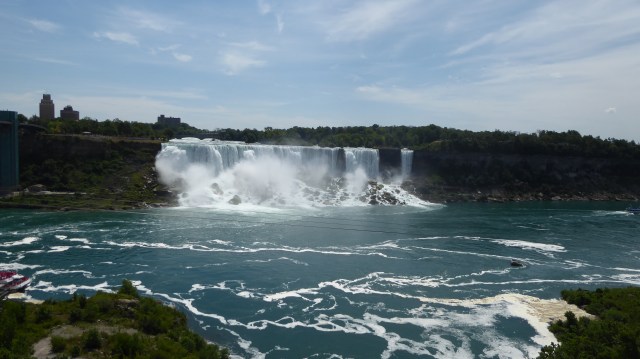
P1060326From the Canadian side, and on our boat, we had a nice view of American Falls.  If we saw Bridal Veil Falls, the smallest of the three waterfalls making up Niagara Falls, we were not aware of it.

After a two night stop on Grand Island, we drove across the state to the Adirondack Park region. I say region because the “park” stretches over six million acres and is larger than Massachusetts. Half of Adirondack lands are owned by the state of New York and half are privately held.

The Adirondack region is not a wilderness area set apart. It is a region of 2759 lakes and ponds and 1500 miles of rivers. There are 43 mountains over 4000 ft. and many forests, streams, wetlands and small villages.

P1060363

We went to the Adirondack Museum in the village of Blue Mountain Lake to learn about the area. The museum’s grounds and exhibits are very extensive.

One of the more interesting exhibits highlighted boats and boat building – something very important when you have so many lakes!

The museum has a boat builder in residence!  She works at the museum during the summer months crafting her boat and explaining the process to visitors.  It will be auctioned off and the funds will support the continuation of the program. Past boats have raised between $14,500 and $26,000 each.

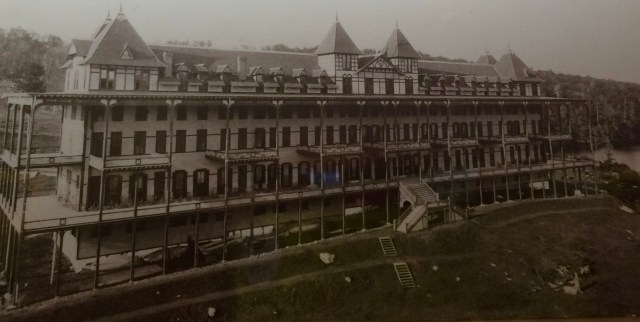
IMG_1801We learned about the history of the Adirondack region.  Although it was difficult to get to, people have been coming to the area since the mid 1800s.  One of the earliest grand hotels was the Prospect Hotel, opening in 1882. Even given the remote location, the Prospect was the first hotel in the world to have electric lights in every room. After the 1893 financial crisis and a typhoid epidemic, the hotel closed in 1903. The once glamorous hotel was torn down in 1915.
P1060366

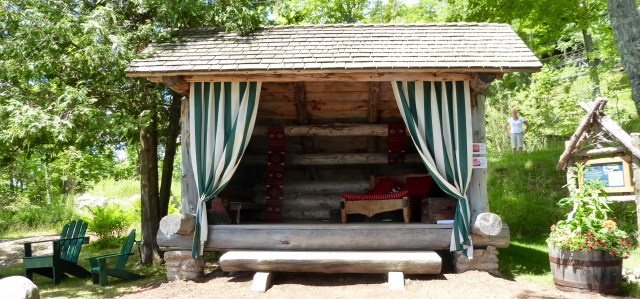
In the early days of the park the state supported individuals and groups building camping lean-tos such as the one above. If built on public lands, they were to be available to everyone.

P1060369

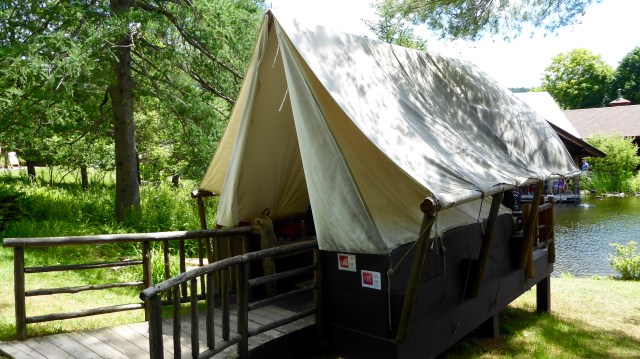
This tent represented the history of tuberculosis patients who came to the Adirondacks for pure air treatment.

The Olympics were held twice in the Adirondacks  – both times at Lake Placid.

This is the bobsled that the Stevens brothers used to win the gold medal in 1932.

These are “Miracle on Ice” hockey tickets and gold, silver and bronze medals from the 1980 Olympics.

There were beautiful cabins on the grounds representing the thousands of family cabins throughout the Adirondack region. The furniture within the cabins was amazing.

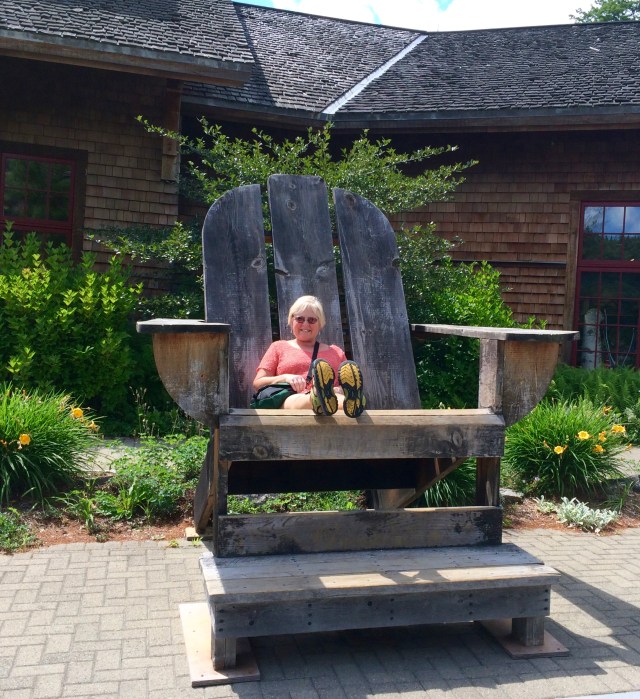
Of course, there were a few Adirondack chairs around the museum grounds!

IMG_1825

And one that was just my size!

Posted in Uncategorized | Leave a comment