


We were glad to get moving again after our truck problem but the last day in Wyoming was still stressful. Randy was concerned enough about our tires on the trailer to change one out for the spare and rotate the others. Irregular and accelerated tire wear is the whole reason for our planned suspension change in Elkhart – we just have to get there!
 We were so glad to see that when we crossed the border into Nebraska we were headed for the good life! We’re not asking for a whole good life in Nebraska, just a few days with interesting things to do, no tire drama, no scary storms and safe passage into Iowa.
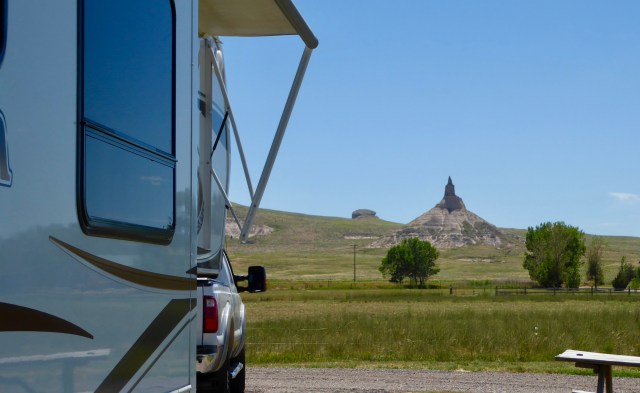
Like the 250,000 people who traveled through the area during western migration, we marveled at Chimney Rock. Natives in the area named the rock “Elk Penis” but Anglo-Americans preferred “Chimney Rock.” Emigrants on the California, Mormon and Oregon trails came by here to travel the south pass through the Rocky Mountains. Chimney Rock was a prominent landmark and often featured in drawings and diaries.

Chimney Rock is not actually rock but is Brule Clay. It stands 360 feet tall.
 We were surprised to step outside in the evening and see Chimney Rock illuminated!

Carhenge is another landmark of interest in the area, but it is man-made!
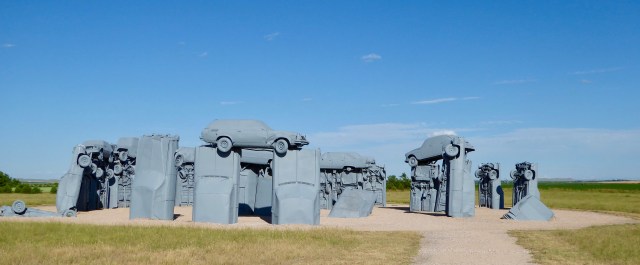 Jim Reinder spent years working in England and wanted to built a version of Stonehenge for his hometown of Alliance, Nebraska. Twenty five cars were collected and Carhenge rose in six days at a Reinder family reunion in 1987.
 This Jeep was driven 1000 miles by its owner to be part of Carhenge.

The very clever introduction video said the lawyer in the family finally caught his ambulance and donated it to Carhenge.
 The good citizens of Alliance were not enthralled with Carhenge at first but have embraced the site over time. The Friends of Carhenge have built additional auto art.


Over time, four of the original 25 cars, those of Japanese origin, were removed and replaced with American cars. The Japanese cars were allowed to “rust in peace.” Carhenge was named Trip Advisor’s Top Family Attraction for Nebraska in 2016.


While enroute to Carhenge we saw storm damage northeast of Bayard. A tornado swept through the area on June 12, 2017. We are thankful there were no deaths or serious injuries and hope that all of the people effected by the tornado will soon be living the good life in Nebraska once again. A very impressive StormChasing.com video of the tornado and damage is available here.


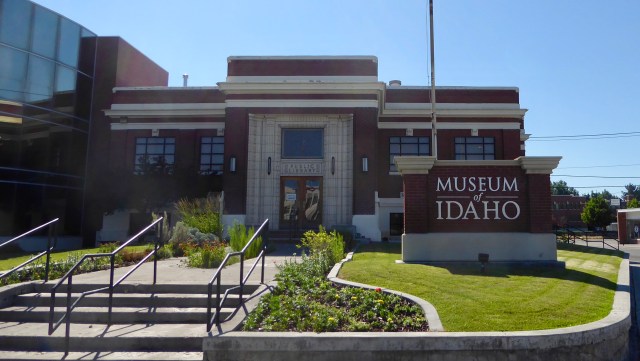 We have been to the Museum of Idaho twice before, weekend trips from Boise, to see traveling exhibits on Egyptology and the Titanic. This time the exhibit was about Space Voyage, one of Randy’s passions.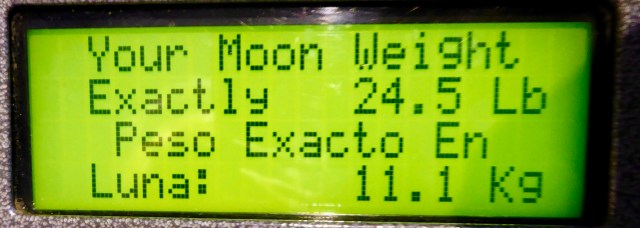




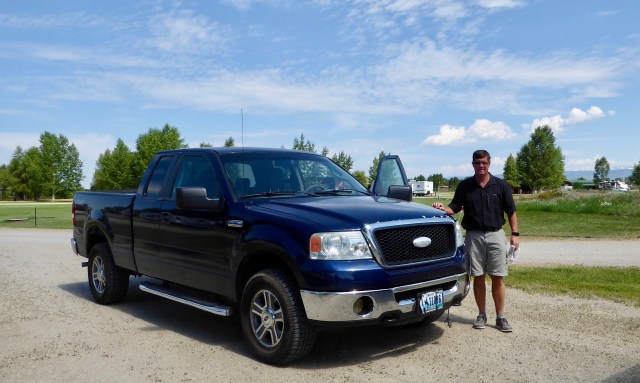 The Ford dealership loaned Randy a truck so we had transportation back and forth to the cabin and back and forth to Rock Springs. Randy has been very pleased with their service. As I write Friday afternoon, Randy is on the way back from Rock Springs with our truck, the fourth 90 minute trip he has taken in 2 days.


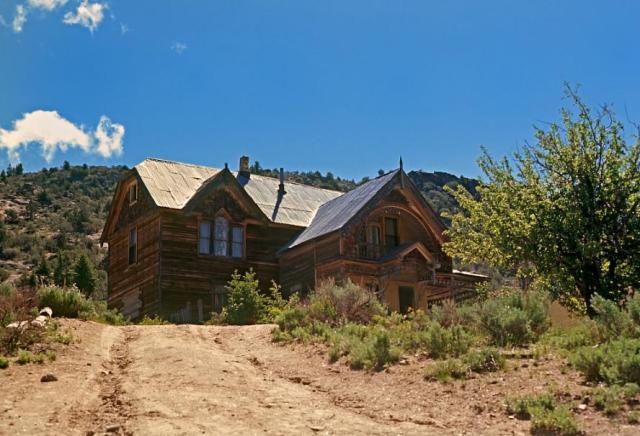
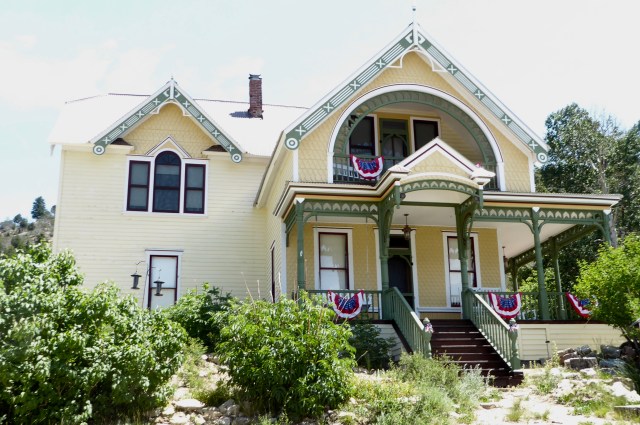


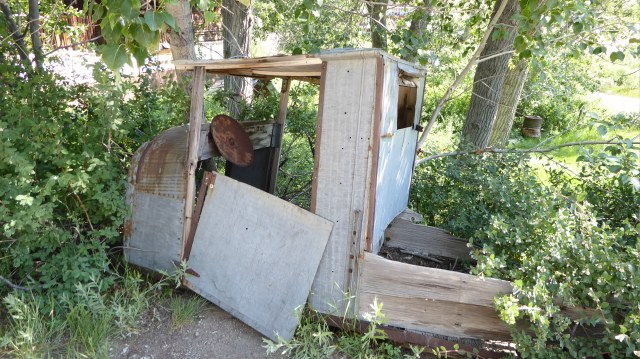
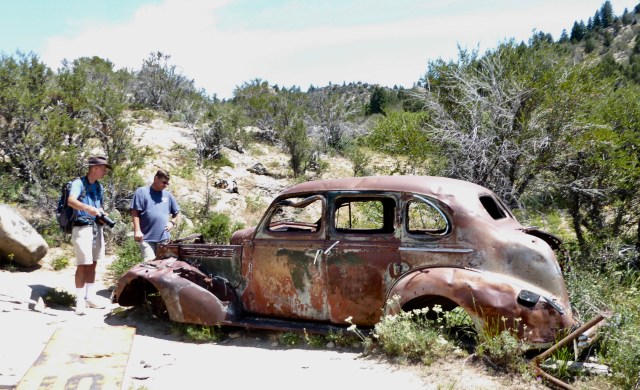
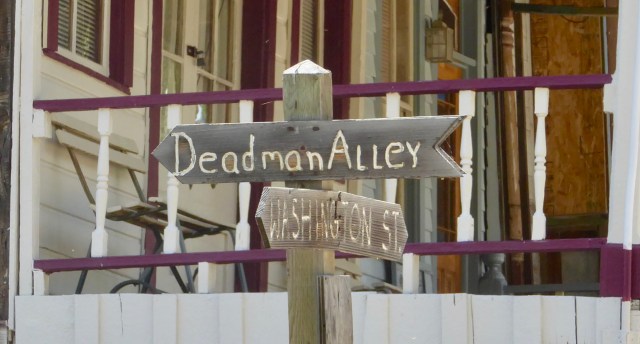 We walked by Deadman’s Alley, so named because of the gunfight death of Joseph Koenig by Colonel Dewey. The alley was also the demarkation between Silver City’s Chinatown and the business district.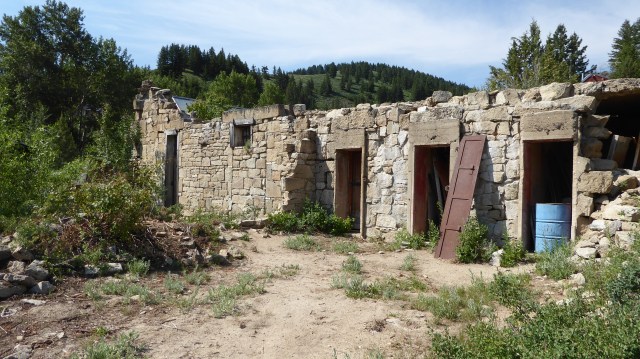
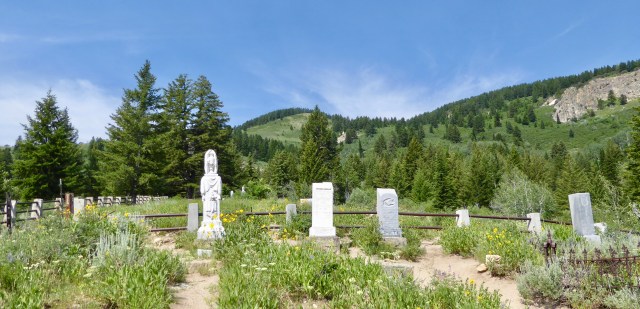 It seems all old mining towns or ghost towns have a cemetery. Most graves were very old and a disproportionate number were for children and women.
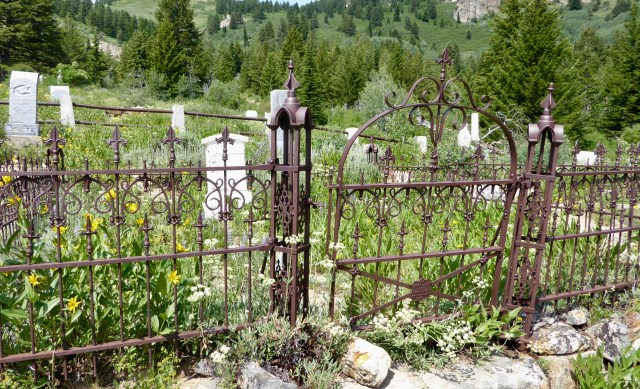 There were a number of fenced plots by Stewart Iron Works of Cincinnati, Ohio. I wondered how iron works from Cincinnati end up in the remote Owyhee mountains of Idaho. That thought meant I had research to do on Stewart Iron Works.
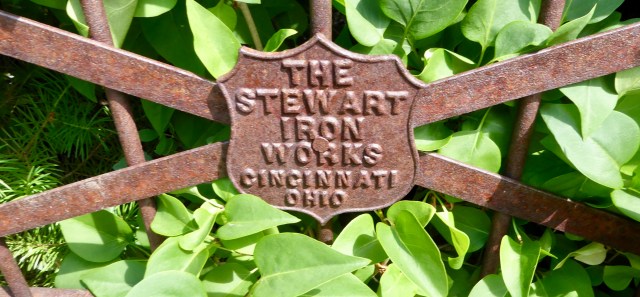 Begun in 1862, Stewart Iron Works specializes in metal artistry. The company is still in business and has a vast array of past projects, foreign and domestic. The following information came from the Stewart Iron website:
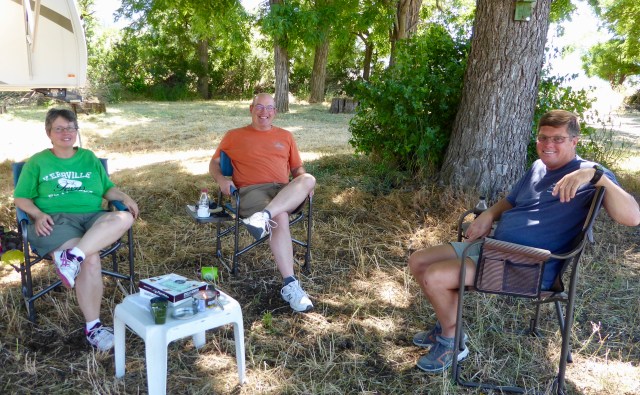 Teri and Mark are volunteering near LaGrande, Oregon. Their primary duty is to rehabilitate the Ladd Marsh volunteer site that hasn’t been used in several years.
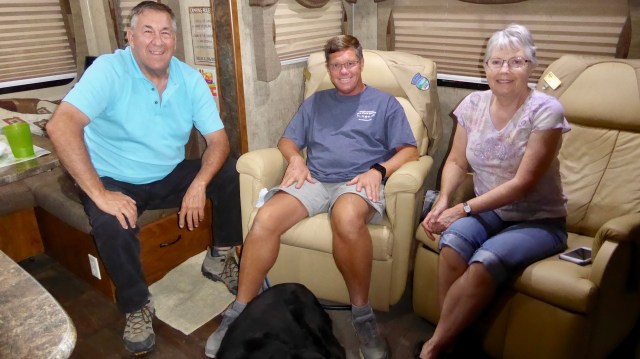 We also saw fellow Umpqua Lighthouse State park volunteer friends, Jess and Jean. They are now at Farewell Bend State Park near Ontario, Oregon. It was great to visit with them again.
 As we needed to stay home this afternoon for Randy to flush out his system by drinking lots of water, we took advantage of the hot weather to shampoo our carpets. It was nice that everything dried out quickly and we could turn on both air-conditioners!
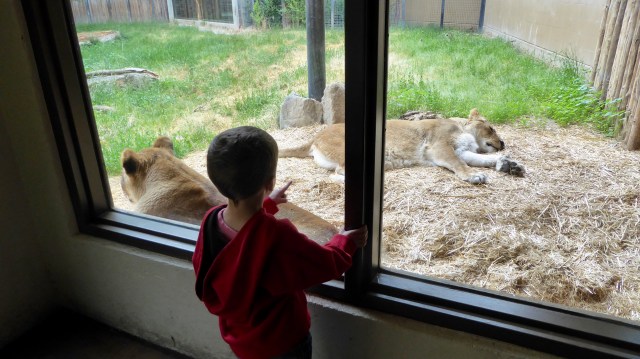 We have been able to take Archer to the zoo, Chuck-E-Cheese and the playground. No telling what else we’ll experience with him this summer so that is a benefit.
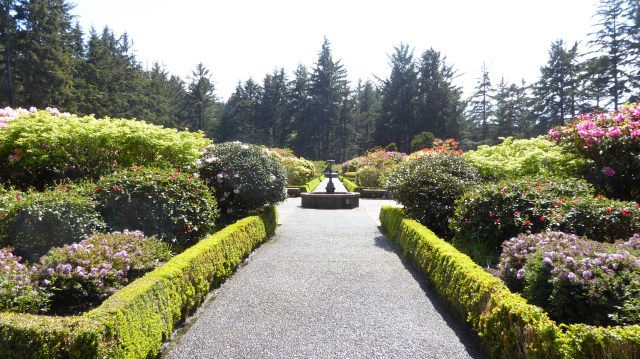 These pictures are from Shore Acres State Park, once a private estate. The grounds are now available for strolling and special events.
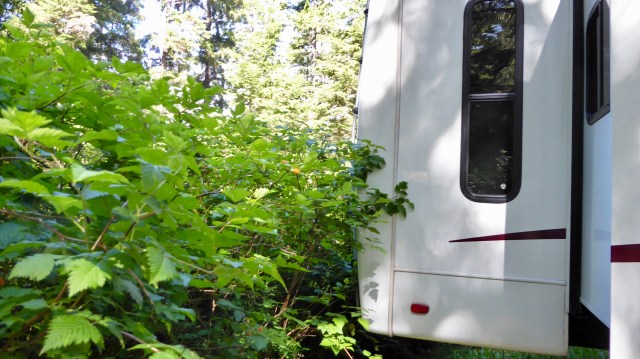 At our site, the salmonberries behind us have grown several feet in the past month. If we were here another month, the back end of our trailer might disappear!
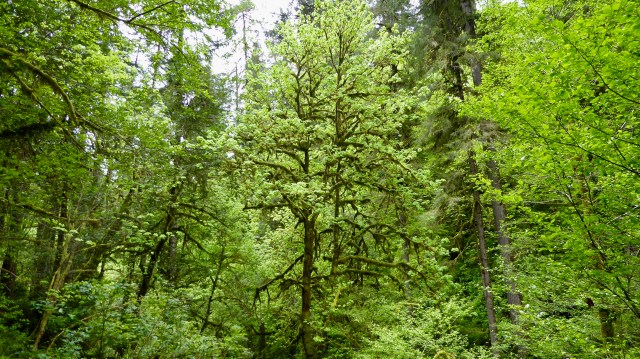


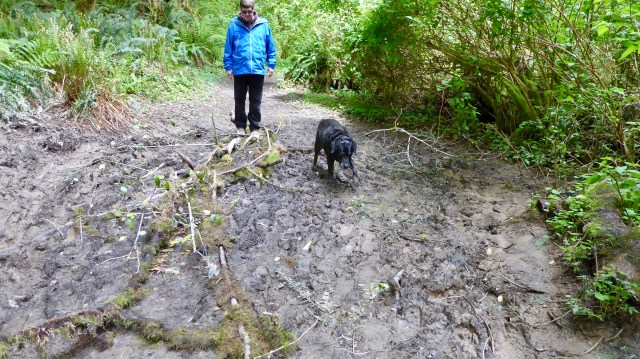
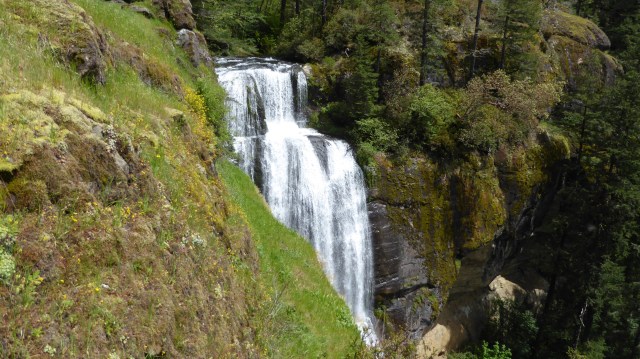

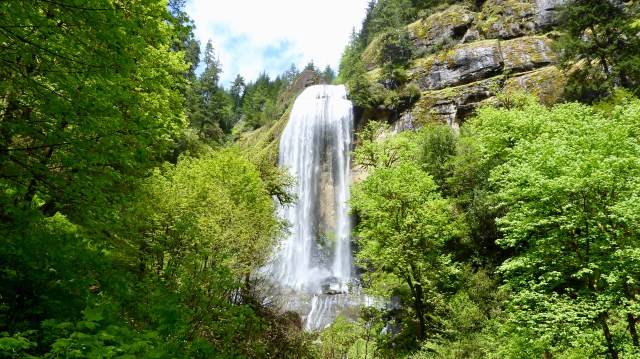
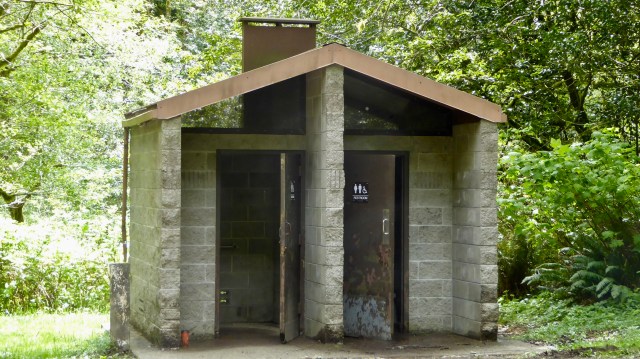 Even though Oregon State Parks are generally superb, these restrooms at the Golden and Silver Falls Trailhead were the worst we have ever seen! I thought they might be from a third world prison and Randy said they were worse than the restrooms he saw in India. The area is remote but sheesh!
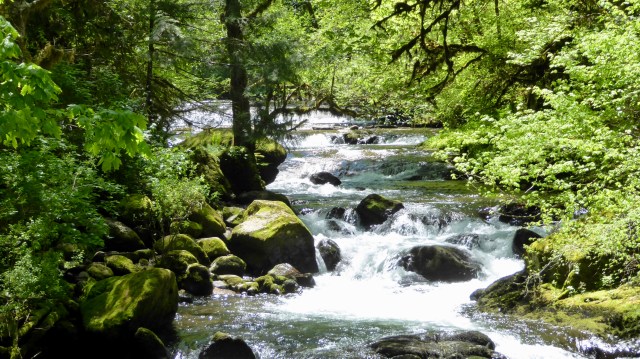 The second remote hike was the Sweet Creek Trail with eleven waterfalls in 1.1 miles. This was one of the best hikes we’ve ever been on for its sheer beauty.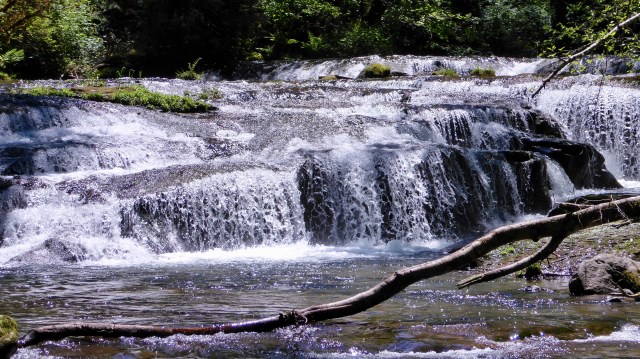
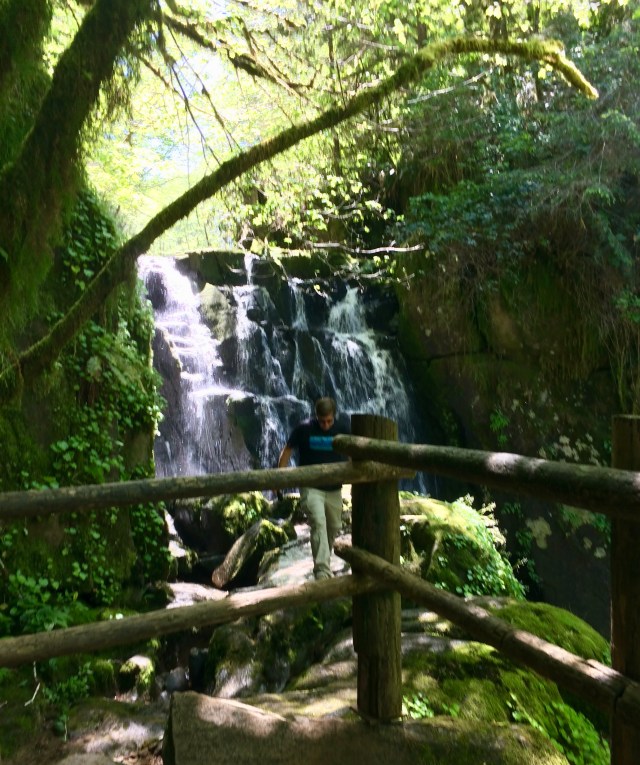 At the Sweet Creek Falls viewpoint I asked Randy to take the picture because he was in the corner nearest the waterfall. He climbed the fence to get even closer. I don’t usually get nervous when he does things like that because he does things like that all the time. However, this time I was very nervous because the rocks were mossy and wet. I hadn’t wanted the picture that badly!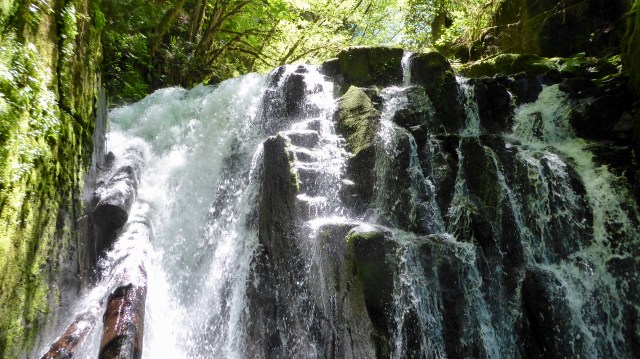
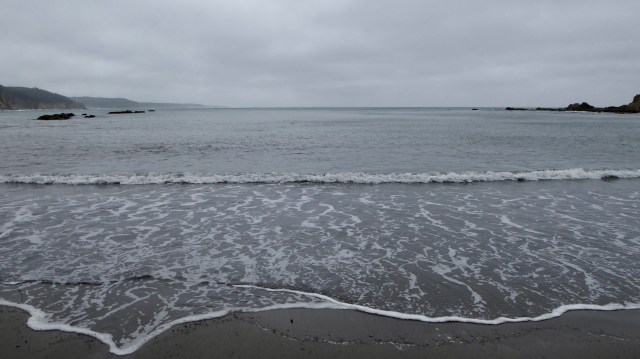 As we finish out our month volunteering near the Oregon coast, we have learned we enjoy cleaning yurts and will look to do it again in future volunteer gigs. We weren’t really “on the coast” so we had to specifically drive there if we wanted to go to the ocean. It was always worth it!
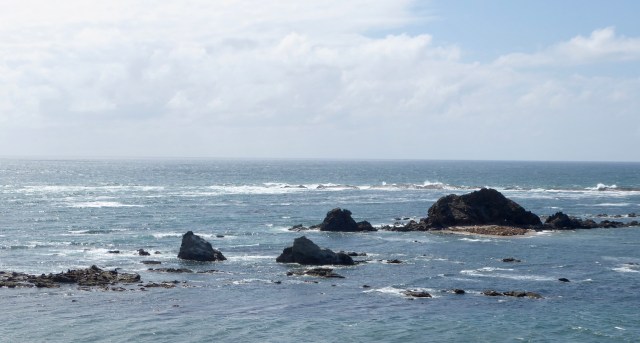
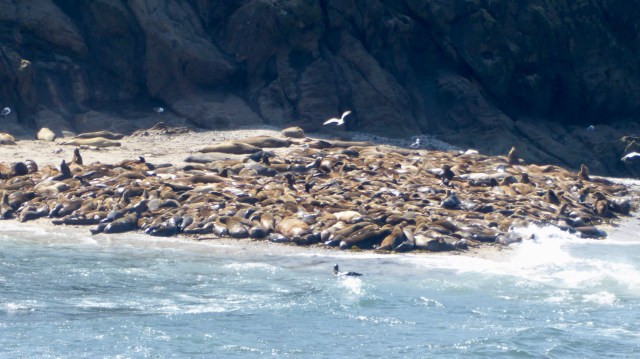
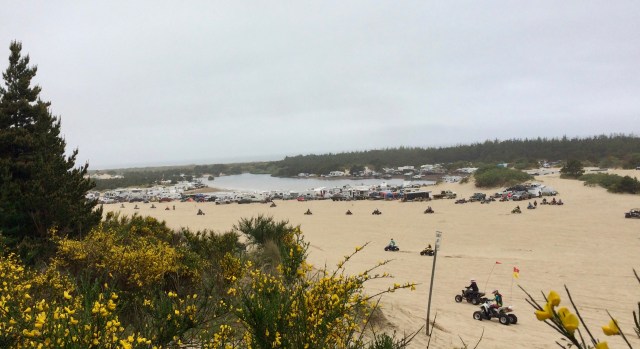 The human wildlife has arrived in the area for the Memorial Day Weekend! There haven’t been any RVs around this lake until the last few days. The sand vehicles run at all hours of the day and night. People seem to be having fun!
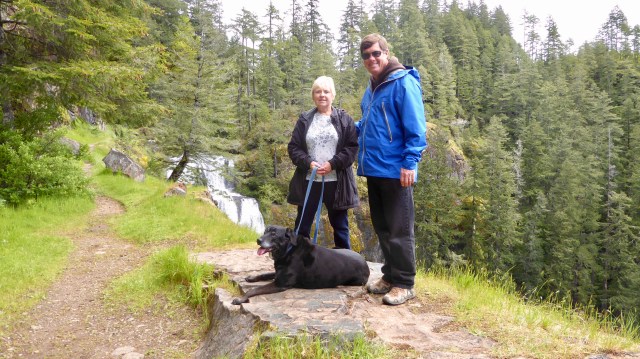 During this past week we celebrated our 37th wedding anniversary and our third anniversary of living as full time RVers!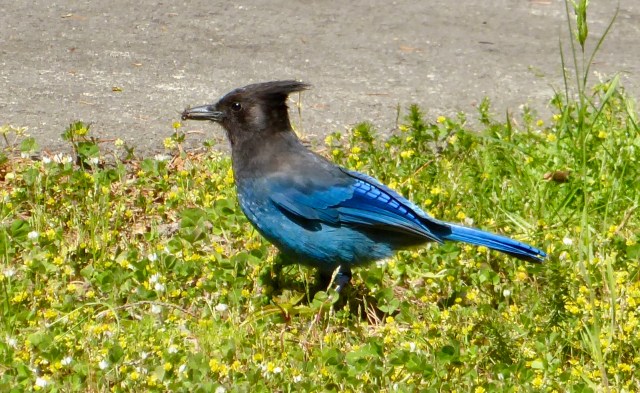

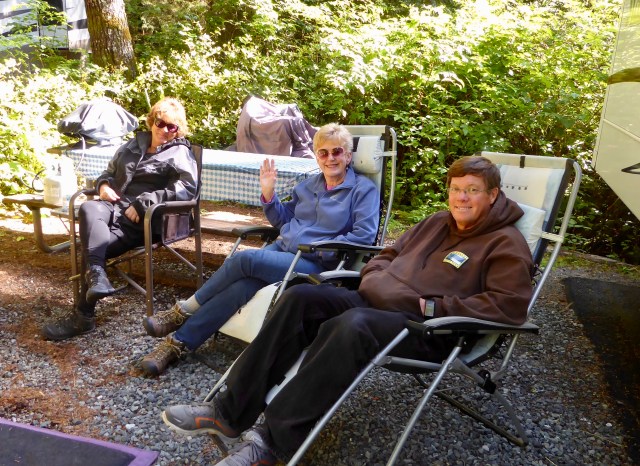 We’ve been able to see Beth a few more times, including when she and her friend Kathy came by our place at Umpqua Lighthouse State park.
 Boise friends take a close look – some of you probably know Sharon and Stu. It was AMAZING how many times our lives might have intersected in Boise but didn’t. We lived in the same part of town. Their daughter went to a school I taught in. Sharon was a nursing professor at Boise State when Natasha was in the nursing program. Their girls went to the same high school as our daughter. We know some of the same people.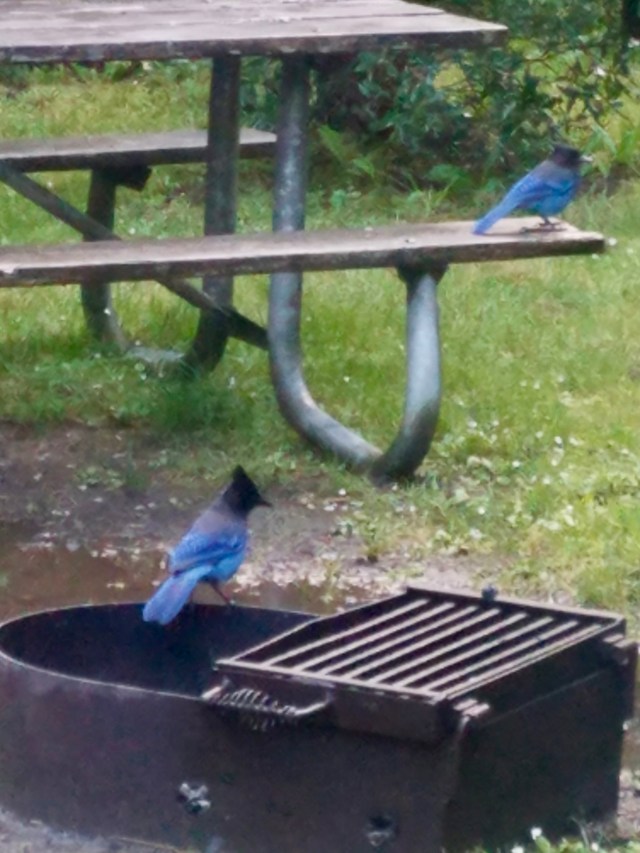
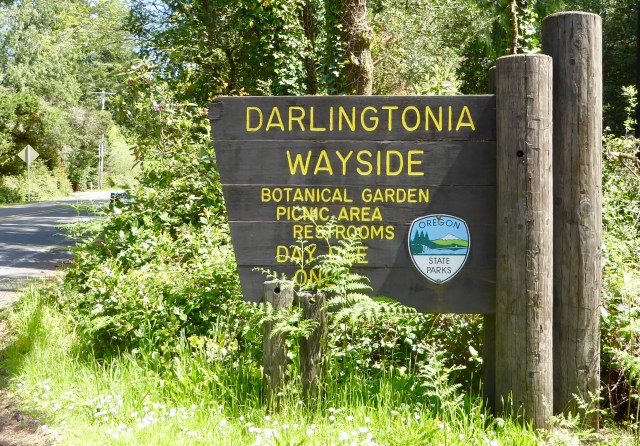 We went to the Darlingtonia Wayside, the only Oregon State Park dedicated to protecting a plant species. This botanical preserve is set aside for observing the carnivorous plant, darlingtonia californica. It is a foe to insects (and not humans) so we felt comfortable walking the boardwalk amongst the carnivores.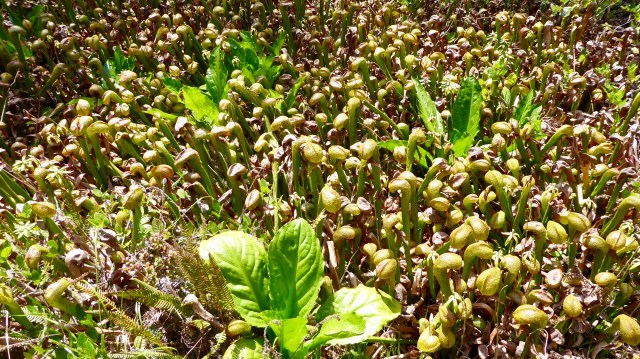
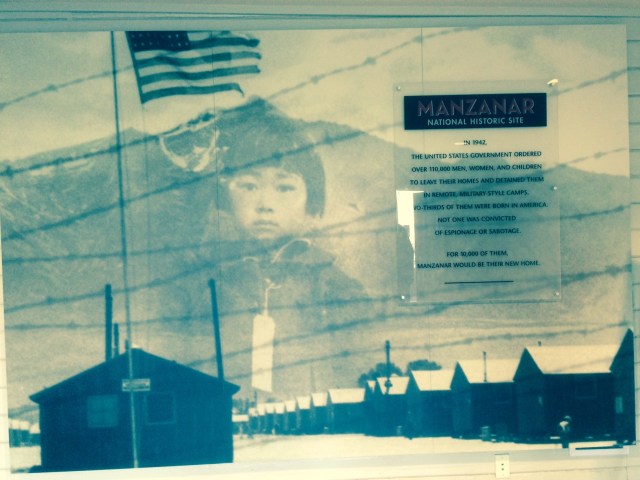 The place that may always top my list of “places that matter” is Manzanar, the WWII Japanese Internment Camp Historic Site near Lone Pine, California. I wrote about it in the
  Another “place that matters” by my definition was Little Big Horn Battlefield. I wrote about our visit there in
  This week we visited another “place that matters.” We traveled to Bandon, to the Washed Ashore art gallery and workshop. The organization’s mission is to build and exhibit art to educate about plastic pollution in our oceans.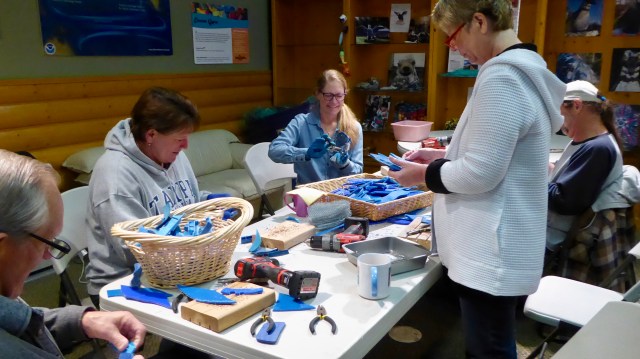


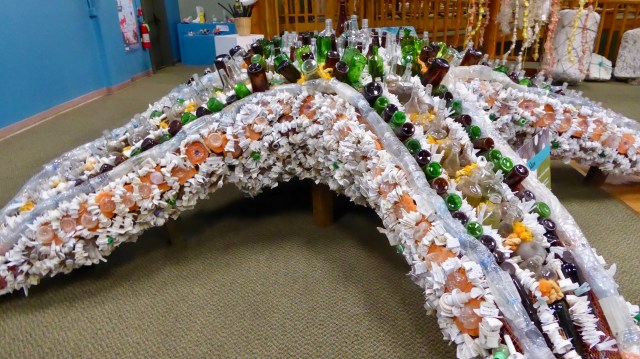
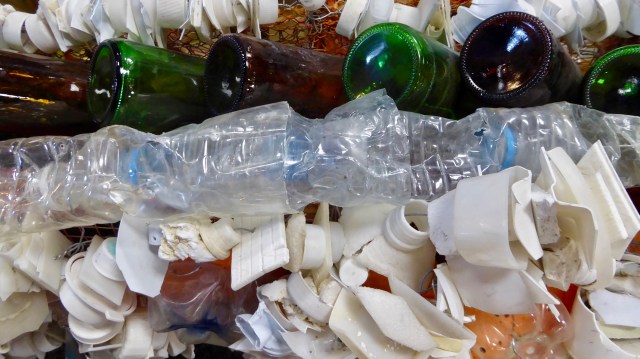
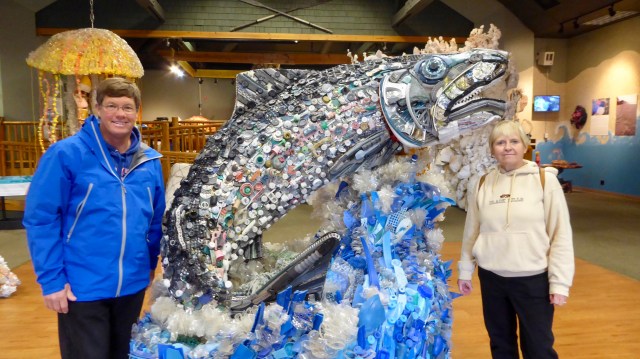
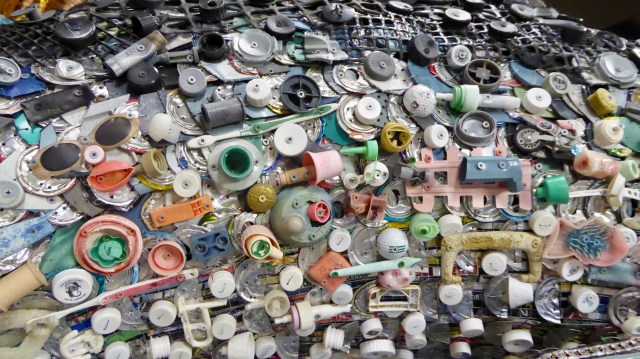 It was immensely sad that so much recognizable garbage ends up in our oceans. It was also inspiring that one woman, Angela Pozzi, concerned about the beaches near her hometown of Bandon, Oregon started this mission of awareness to change individual habits.
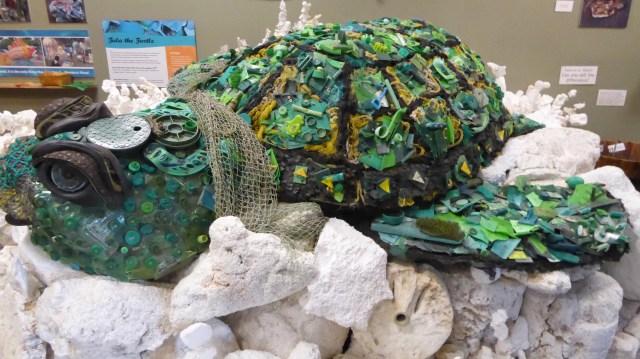 A few of the sculptures are on display at the exhibition hall in Bandon. Others are on display throughout the country. Right now they are in Ames Iowa, Tacoma Washington, Washington DC and Richmond Virginia. Their website at
 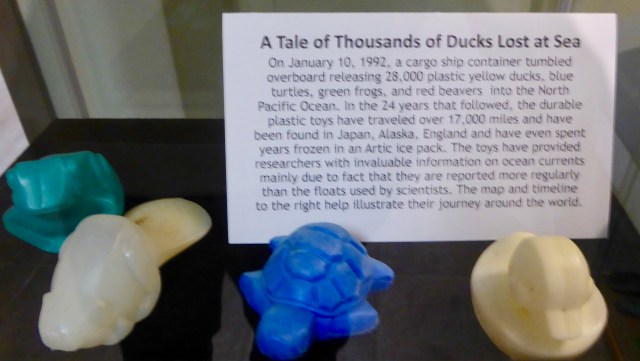 At the Washed Ashore exhibit hall I learned about 28,000 plastic ducks, turtles, frogs and beavers that were lost at sea in 1992. In the intervening years they have been found all over the world giving scientists valuable information about currents and the connectedness of our oceans.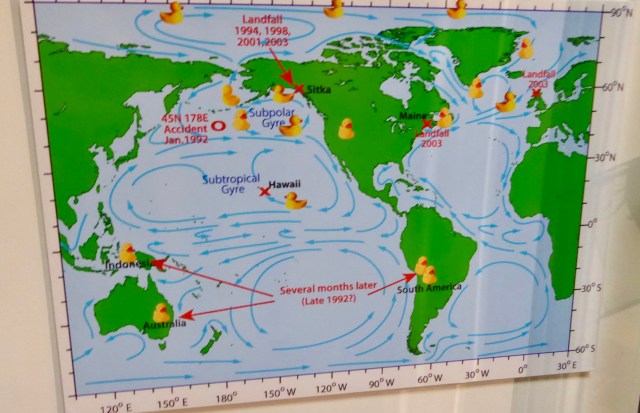
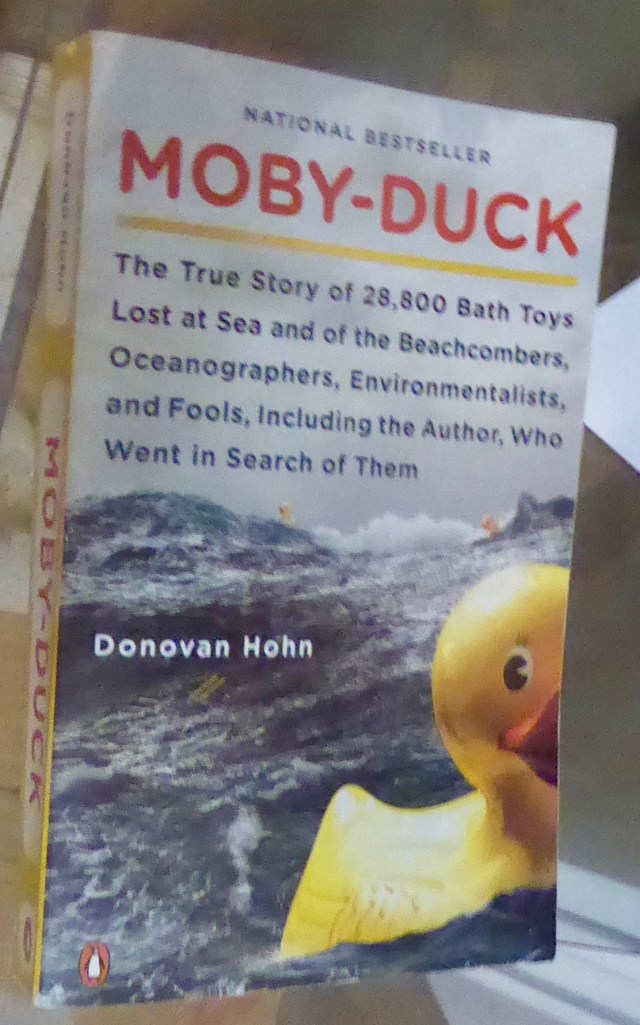 The book about the toys and their movement, Moby Duck ,will be on my summer reading list! There was also an
 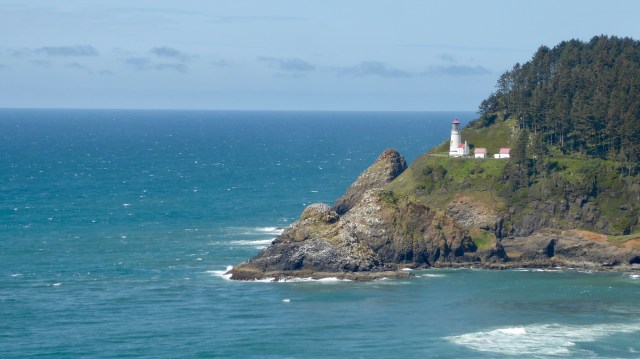 Haceta Head Lighthouse is the iconic Oregon coast photo-op. We have visited Haceta Head before so we were content this time to see it from the viewpoint. When we did, we heard quite the commotion below us! The sea lions who chose not to venture into the commercial cave just down the road (Sea Lion Caves) were having a grand time.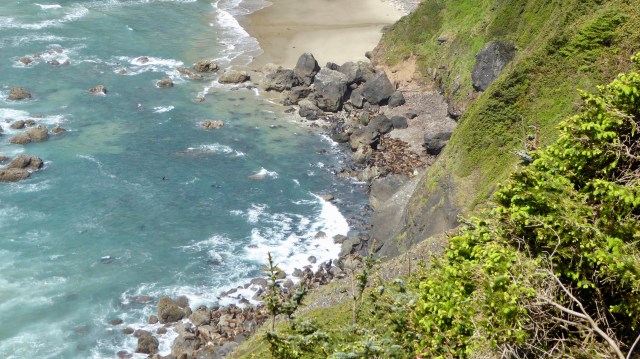

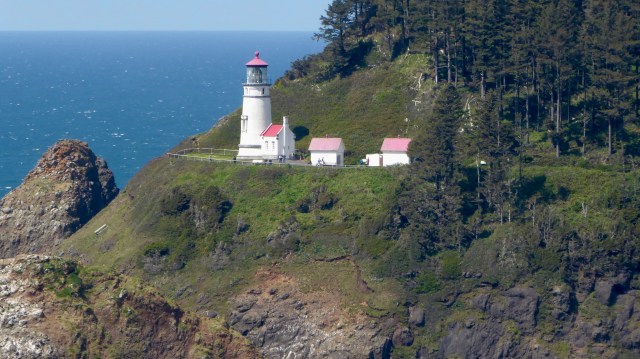 Haceta Head is one of nine historic lighthouses along the Oregon coast. All are on the National Historic Register and seven are open for public viewing. We are within a short drive of Haceta Head but are only a short walk from our state park’s namesake, Umpqua Lighthouse.
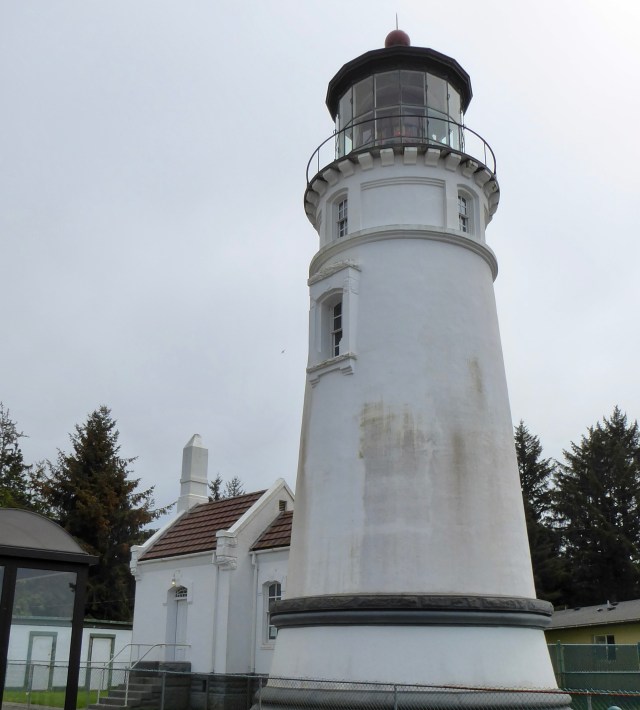 We walk to the Umpqua Lighthouse almost daily because there is where we have our nearest ocean view and outgoing mail drop.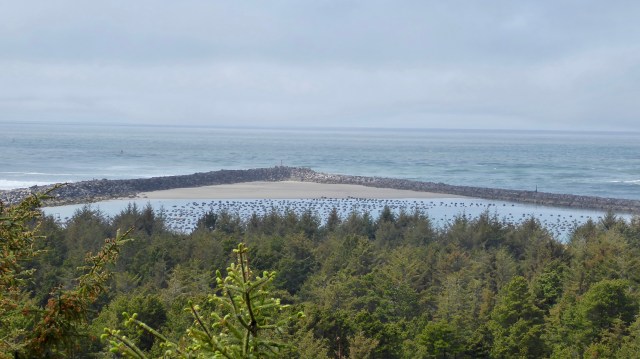
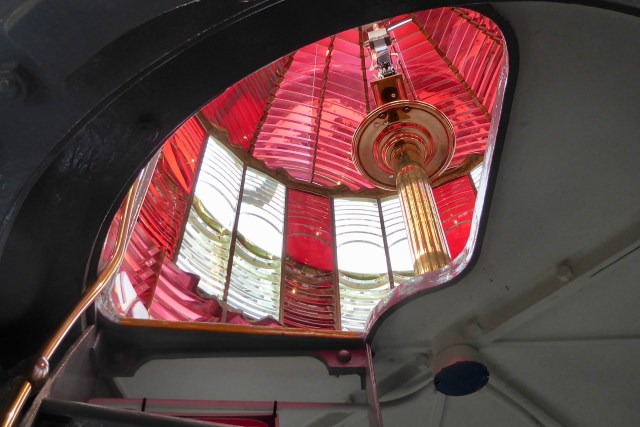 Umpqua Lighthouse uses a Fresnel lens built in Paris in 1890 and reconstructed on-site. Fresnel lenses are ordered first to seventh depending on their radius, height, and weight, with first order being the largest. Umpqua’s first order lens has a radius of 36.2″, height of 101.97” and weight of 12787 lbs. On our tour we were able to go to the top and view the lens and prisms from just below.
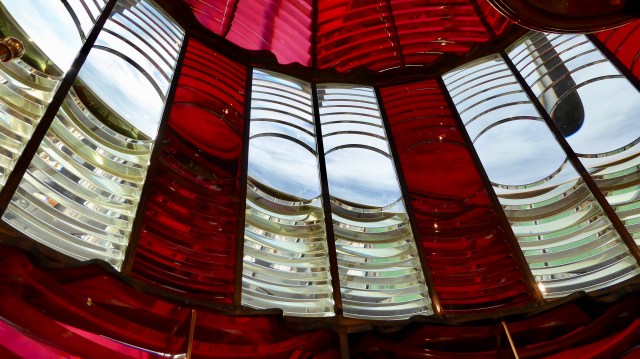 The Umpqua Lighthouse emits a ‘white, white, red’ beacon in even intervals for about 20 miles seaward. It is the only lighthouse on the Oregon coast that uses red illumination. The original oil lamp light source was changed to electricity in 1934 and was fully automated in 1960.
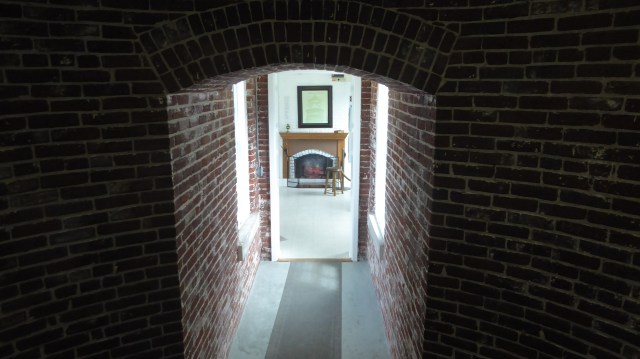 In the early days at Umpqua Lighthouse, a “Keeper” was a family man who made $800 per year. His first and second assistants, likely younger and single, made $600 and $550 respectively. It was an isolated life and keepers and their families were expected to be self-sufficient with only periodic supply drops by lighthouse tender ships. The tenders dropped food staples, fuel sources and polish for maintenance.
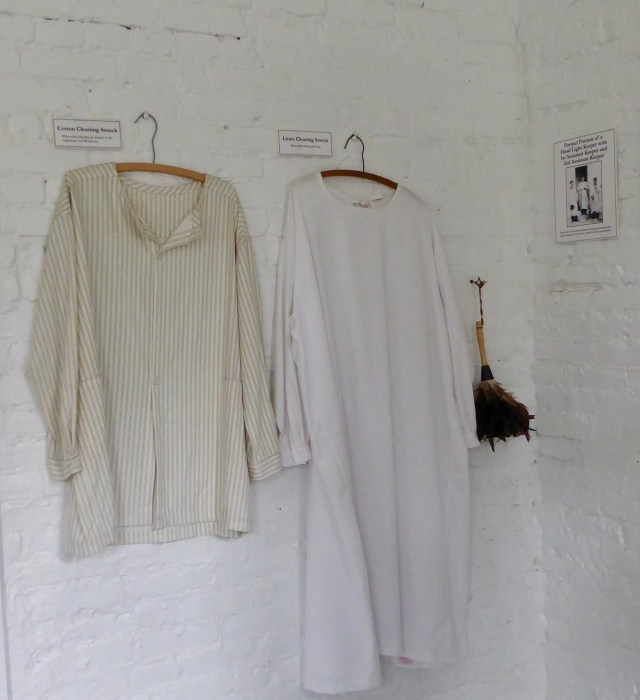 Keepers and assistants wore smocks so their uniform buttons would not scratch the lens and prisms during cleaning.
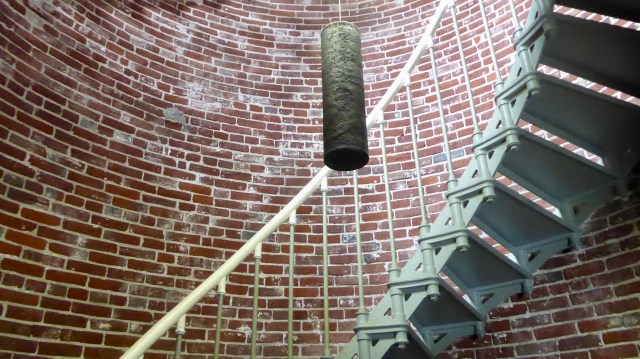 This weight was part of the original rotation system using gravity to turn the lens. A keeper would need to wind it back up several times a night.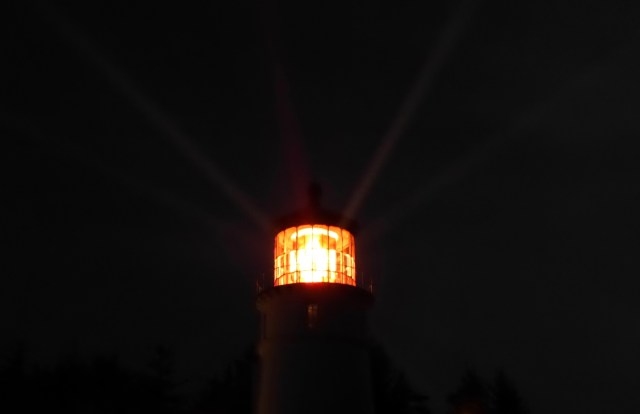
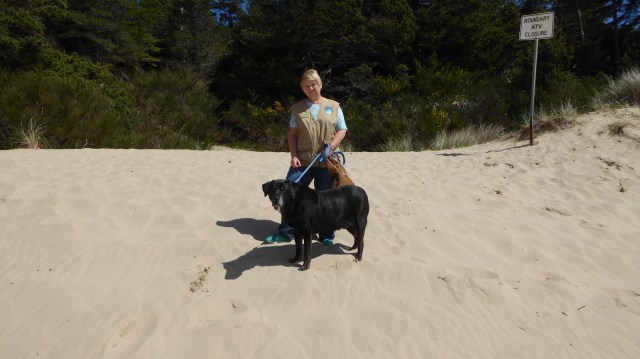
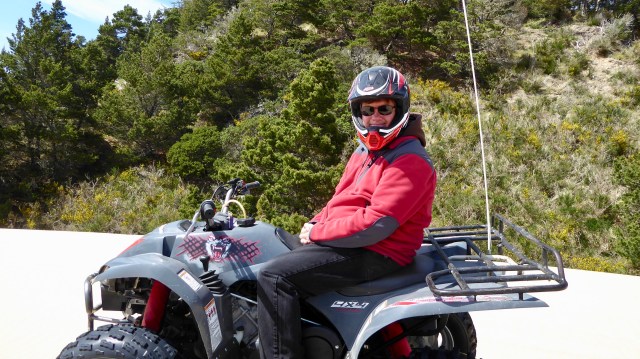
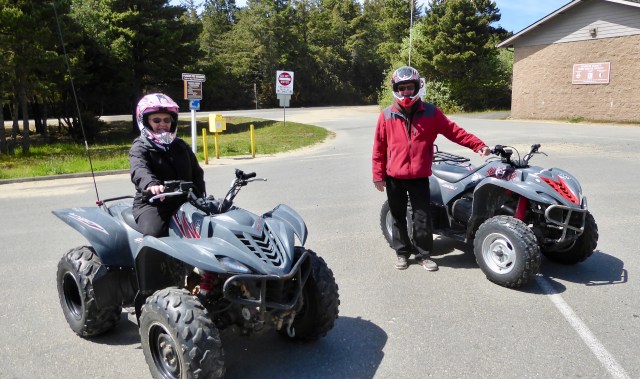 I am usually content to let Randy drive on these types of adventures while I enjoy the ride. This time it was less expensive for us to each have our own.
 In a closing note, we are doing our best to enjoy our stay here knowing that when we return to Boise, Randy will begin his treatments. In his engineer way, he has done LOTS of research and is feeling good about it. Thank you for your prayers and good wishes.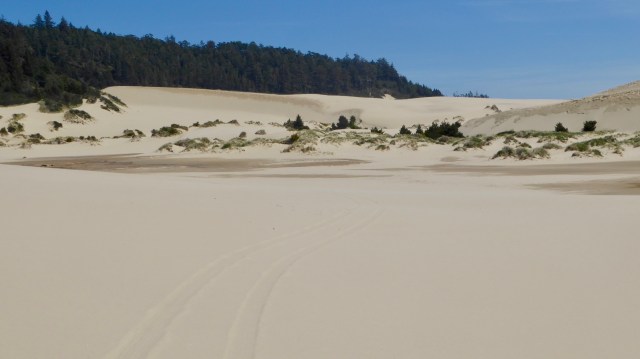


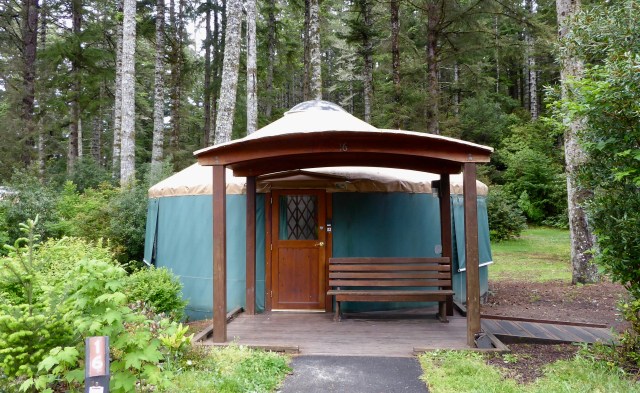


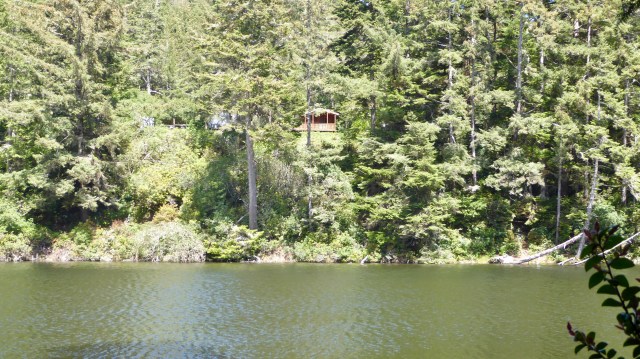 Our favorites are the $41 per night rustic cabins – not because they are quick to clean, but because they are so darned cute and they sit above Lake Marie with a nice view.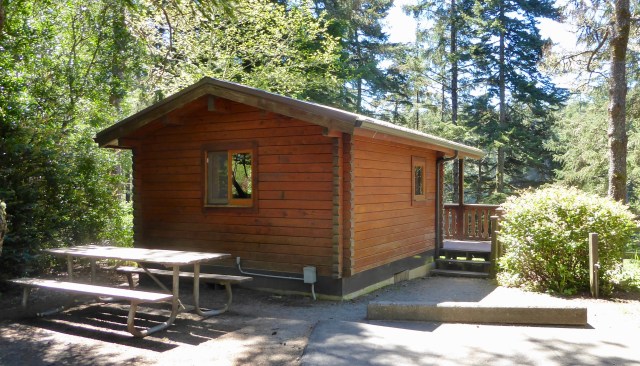


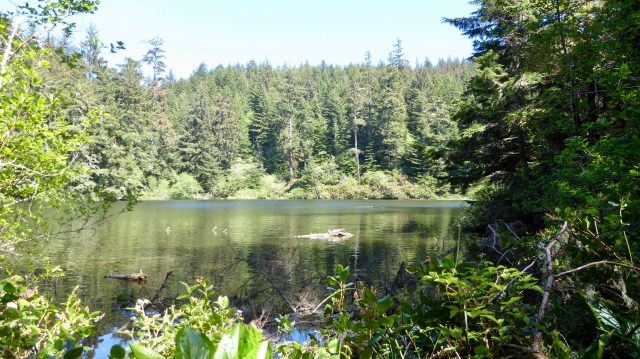 The other part of our assignment is walking and monitoring the Lake Marie trail. We walk the one mile loop once a day picking up trash and generally enjoying the scenery – even though we only are asked to do it once a week.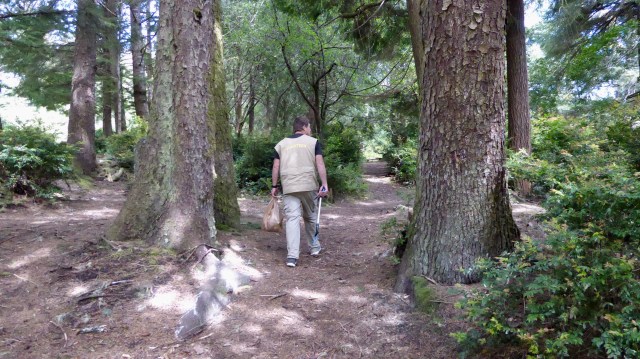
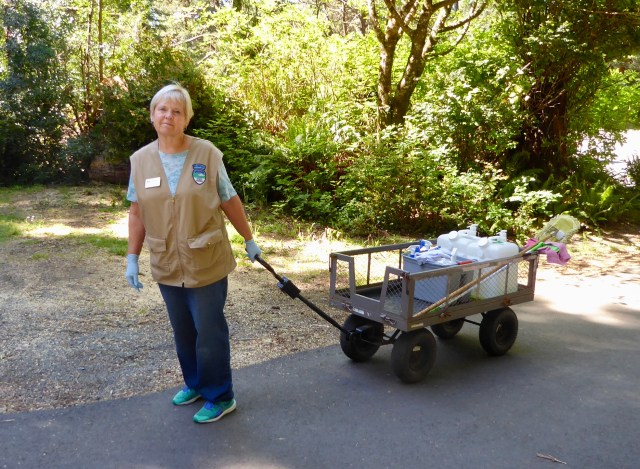
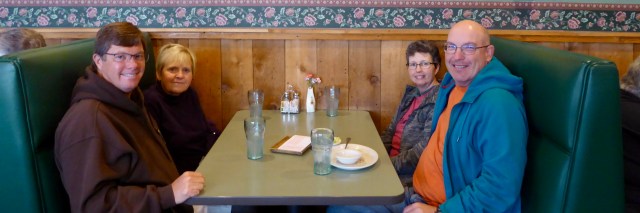
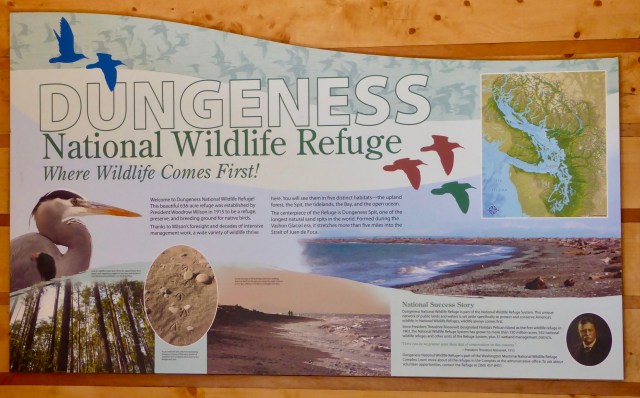 Mark and Teri are currently volunteering at the Dungeness National Wildlife Refuge. Access to Olympic National Park is nearby, but much is still snowed in. Fortunately, we have been there before so it wasn’t a priority this time.
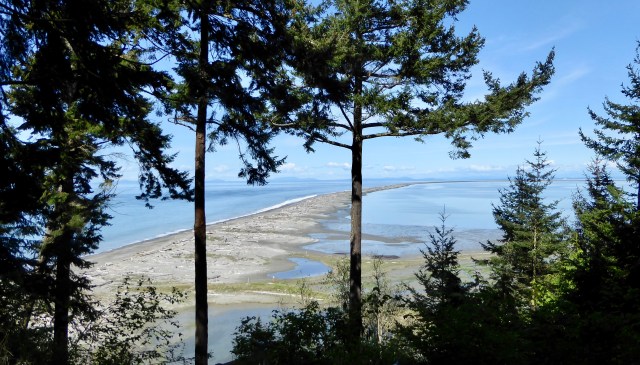 At the wildlife refuge, we walked along the Dungeness Spit. A spit is “a narrow coastal land formation that is tied to the coast at one end.”
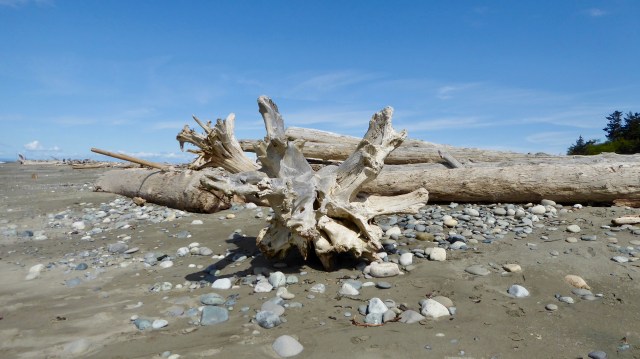
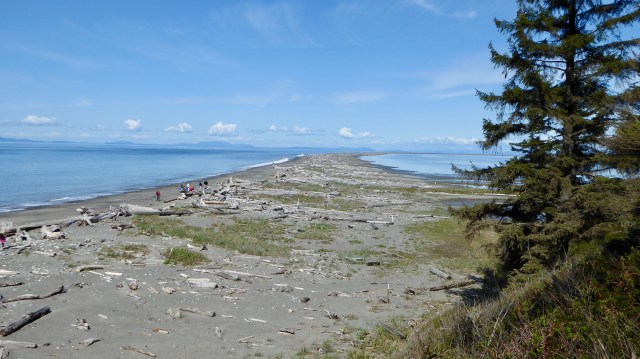 The Dungeness Spit is five and a half miles long, the longest natural spit in the country.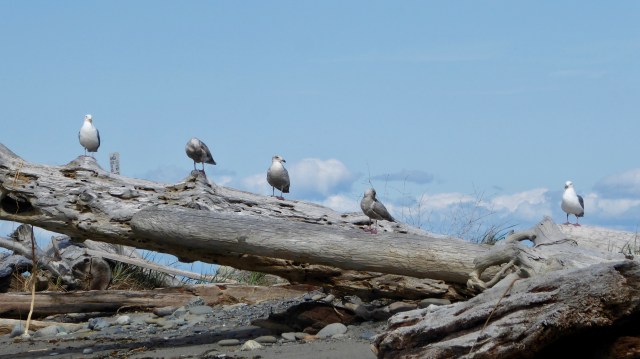
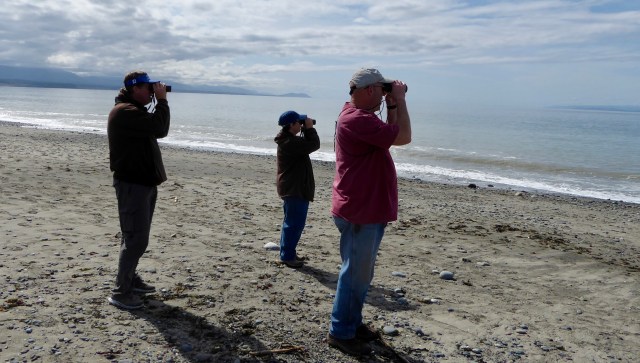
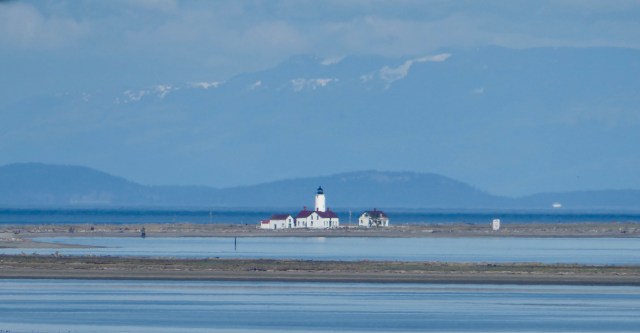 Near the end of the spit is the Dungeness Lighthouse. Built in 1857, the lighthouse still assists navigation on the Strait of Juan de Fuca. A “lighthouse keeper” program allows individuals or families to pay to spend a week maintaining the lighthouse and giving tours to visitors. To be a keeper for a week costs $350 for adults. To “keep” the entire lighthouse costs $2250 per week. More information is available about this interesting “vacation” on the lighthouse website
  We visited the Olympic Game Farm. There are a variety of animals here including waving bears who didn’t feel like waving during our visit.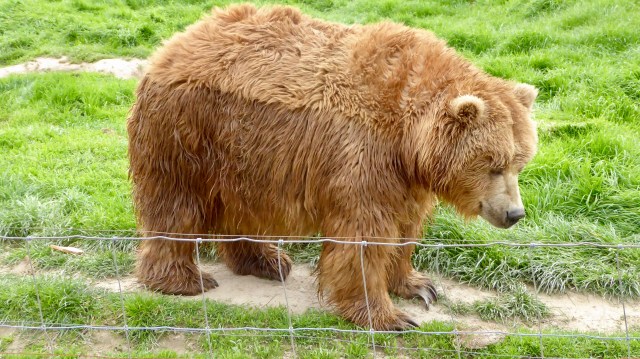
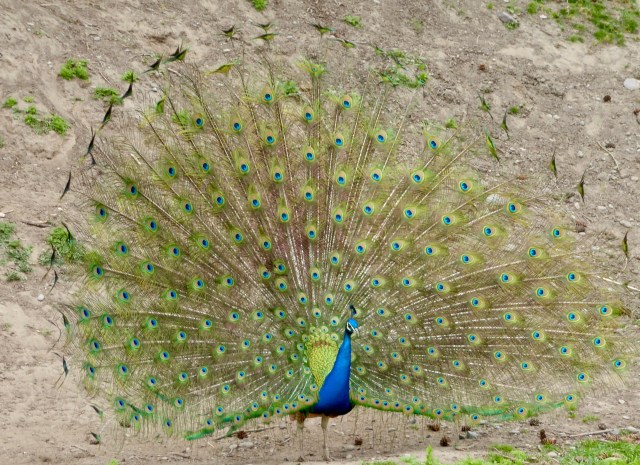 Several peacocks were in full fashion mode. We even heard him rattling his feathers, called “train rattling,” which is part of the male’s courting process.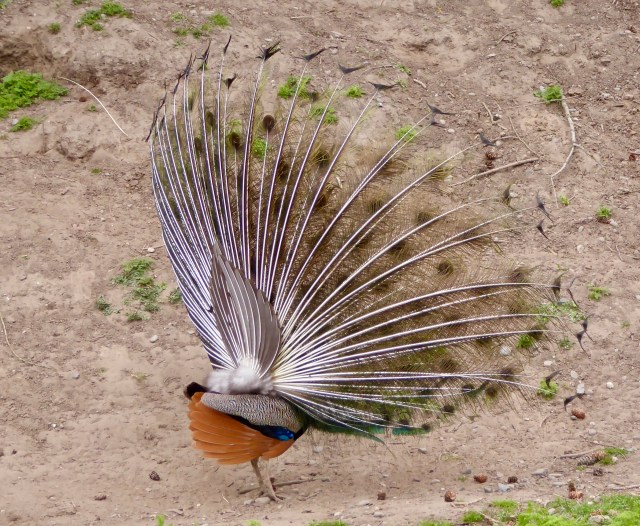
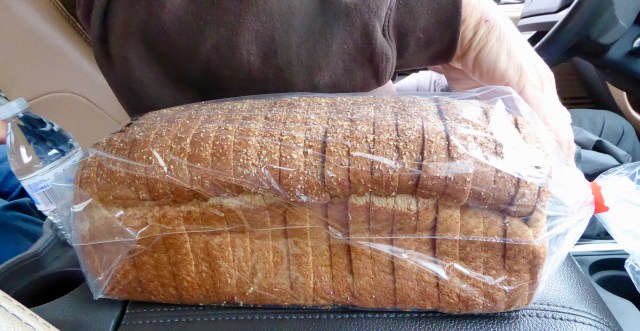 Although each animal is given a specific diet appropriate to its needs, the farm sells very soft whole-wheat bread loaves for $2 to supplement the animals’ diets and visitors’ enjoyment. We bought two large loaves and could have easily given out more.
 The llama knew what to expect and how to get it!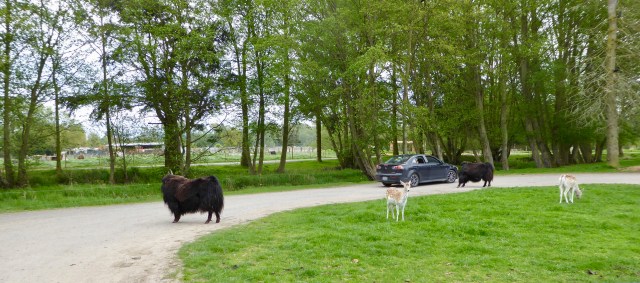
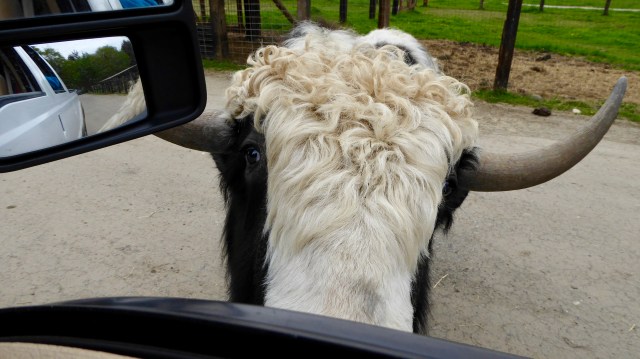 The animals get so close so quickly it is hard to take a picture!
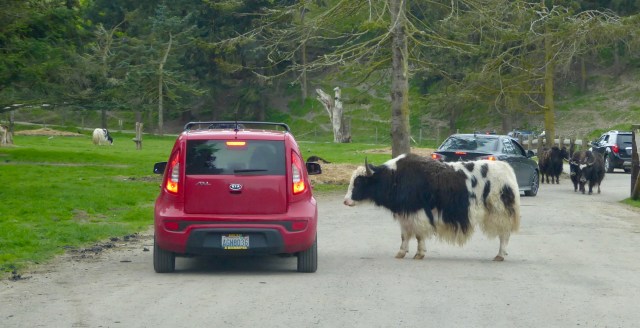
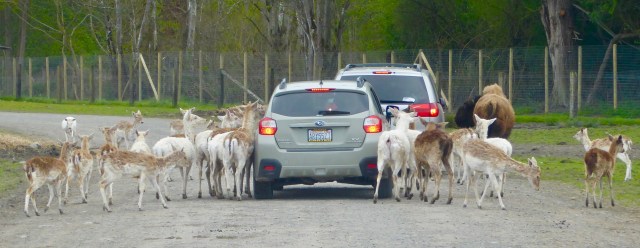 It is far easier to take pictures of the cars in front of you! Once you get to the elk and bison section, you are advised not to stop because the animals are pretty aggressive and can damage your car. Unfortunately, the car in front of this one had stopped! We didn’t get damaged but we sure got slime and slobber on both sides of the truck!
 We were glad we had our big tall truck. It would have been really intimidating to have these two bison reaching their head in for food! The experience was a little bit unnerving at times, but a whole lot of fun! I thought it would be scary to drive through all the animals but the animals are experienced and Randy said it wasn’t bad.
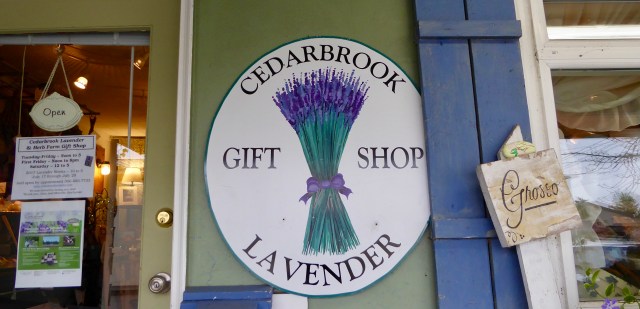 We were too early in the season for any of the lavender farms to be open to the public but I did take the opportunity to visit one of the lavender gift shops downtown.

