Do you remember Biosphere 2 from the 1990s? Eight people lived in a sealed environment for two years out in the Arizona desert. When they finished their term, there was another group that started. I had vague recollections of it.
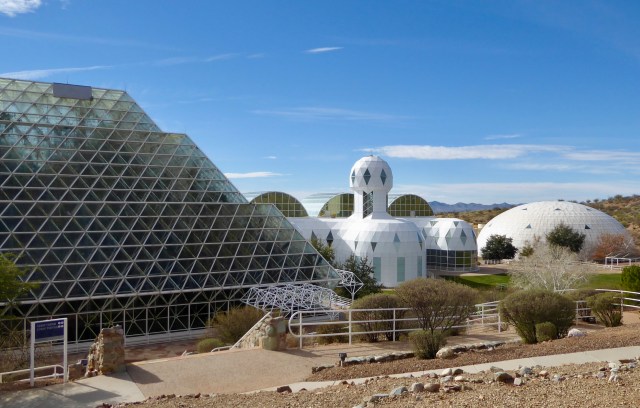
The Biosphere 2 is still here and is now owned and operated by the University of Arizona. The environment is no longer sealed and no longer conducts human experiments, yet, because the biosphere was created, a wealth of earth science experiments are possible.
The big project now is Landscape Environmental Observatory (LEO). On three large (think massive) landscapes, researchers are investigating how water, carbon and energy move through controlled environments. Much of the research emphasis is on global climate change.
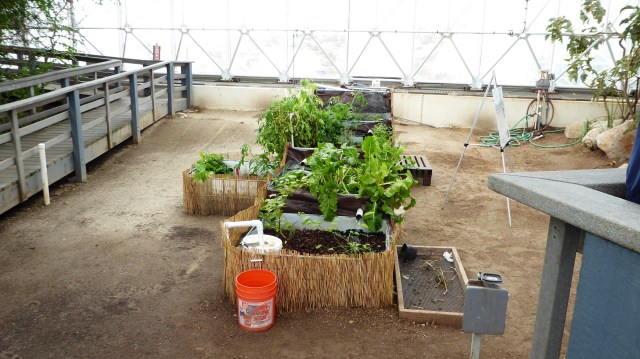 They do “little” experiments too – this one in conjunction with a local high school science class.
When we visited, we were very fortunate to be offered a History Tour in addition to the regular Biosphere 2 Tour. Guides for both tours were excellent, some of the best we’ve ever had.
The question I wanted to ask was “What happened to Biosphere 1?” They answered that before I could ask. The scientists consider Biosphere 1 to be our Earth.
With a private expenditure of $150,000,000, Space Biospheres Ventures bought desert property in 1984 and began construction two years later with the purpose of developing self-sustaining space colonization technology. NASA was aware of, but not involved in Biosphere 2.
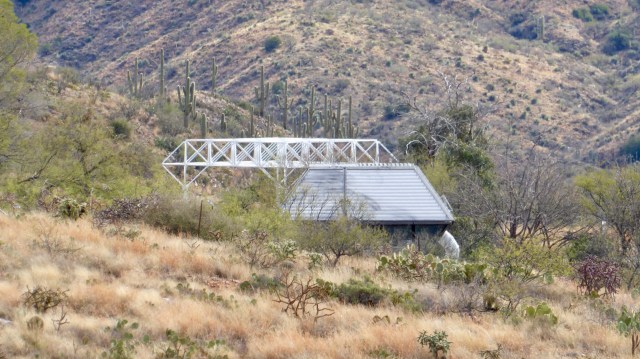 While construction was proceeding, scientists took 7 – 21 day trial runs in this small, practice biosphere.
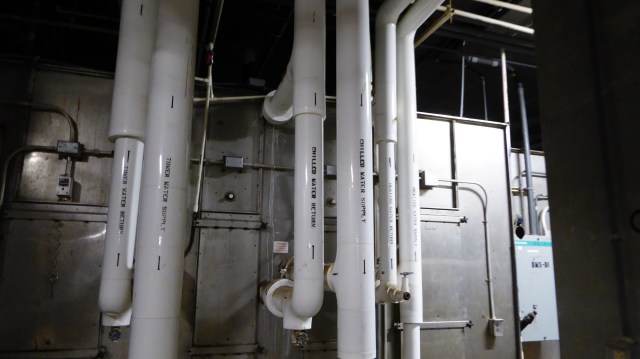
Construction was completed in 1991. The glass enclosure has a floor plan of 3.14 acres and used 6500 windows. It is 91 feet high at the highest point and encloses 7.2 million cubic feet. A 500 ton stainless steel liner separates Biosphere 2 from the earth below. It involves thousands of miles of wiring, pipes and ductwork. It is an engineering marvel.


Five biome environments are part of Biosphere 2: rainforest, desert, savannah, ocean and wetlands.

The first of two Human Missions began in 1991. The four men and four women entered the airlock door below. To the right was their communication window where people from the outside could come, see and speak with them using a phone just out of the picture.


Each person had their own apartment and there was a communal kitchen.
The mission started with a 120 day store of food because it would take 90 days for new crops grown within the biosphere to yield food. The monitoring and growing of food was their primary task and they each spent 65-70 hours per week doing that as well as maintaining systems. They grew 45 different crops and had an orchard for fruit trees. They had a few chickens, pigs and goats.
The biospherians had a largely vegetarian diet with meat included only once a week. They each had one small cup of coffee every two weeks as the coffee plant was deemed non-essential and only a small amount of space was dedicated to it.
A doctor was part of the group to monitor the biospherians’ health and to monitor personal and social responses to the two year enclosure and commitment. After eight months, each biospherian had lost between 20-25 pounds because they weren’t getting enough to eat.
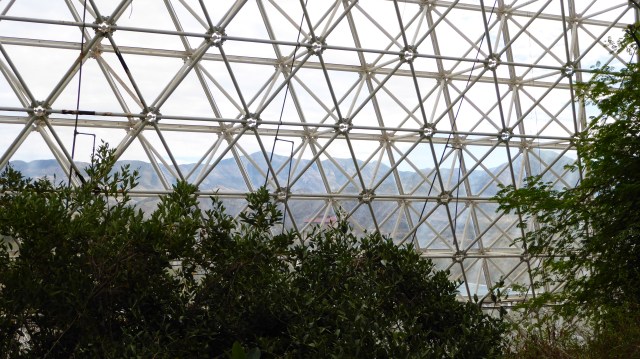 Although the desert area north of Tucson was chosen because it averaged 300 days of sunshine a year, 1991-2 were El Nino years and the skies were far more overcast than usual. That effected the growth of plants and the production of food.
The reduced plant growth also effected the oxygen levels within the biosphere. Optimal oxygen levels for humans range between 19.5 and 23.5 percent. Serious side effects, and eventual death occur if oxygen levels fall below those levels. At or below 17 percent, mental abilities become impaired. Levels of 16 percent and below bring noticeable changes to physical well being. Levels under 14 percent will cause extreme exhaustion from physical activity.
At the end of the first year, the levels of oxygen available for the biospherians were 14.2 percent. They were trying to work 65 -70 hours per week, were constantly hungry and living at the oxygen equivalent of 13,000 feet. Things were not going well and there was a lot of discord within the biosphere.
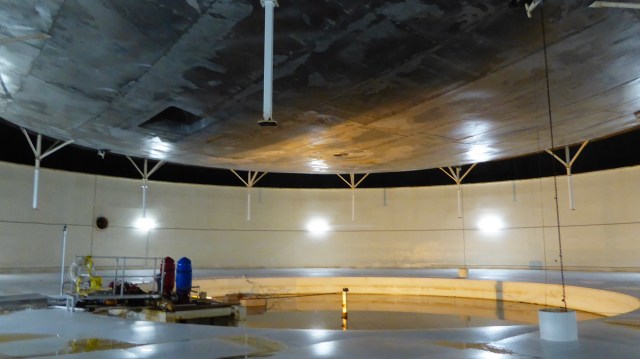
One of two biosphere lungs
The decision was made to use the biosphere’s lungs to inject additional oxygen into the environment. This was done three times and allowed the experiment to continue. The eight scientists completed their assignment.
There was a second, six month, mission which ended abruptly, with drama. We heard and read several different accounts of the problems but all were from the outside, not within Biosphere 2. The decision was made to end Human Missions.
So, strictly speaking, was the biosphere environment capable of supporting the eight humans, plants and animals for two years without outside assistance? No, but part of scientific research is learning what goes wrong and why. That knowledge is important too.
Although still privately owned, the property went through a series of management companies, eventually landing with Columbia University from 1996 to 2003. They built classrooms and housing to allow students studying earth systems science to live onsite while conducting experiments.
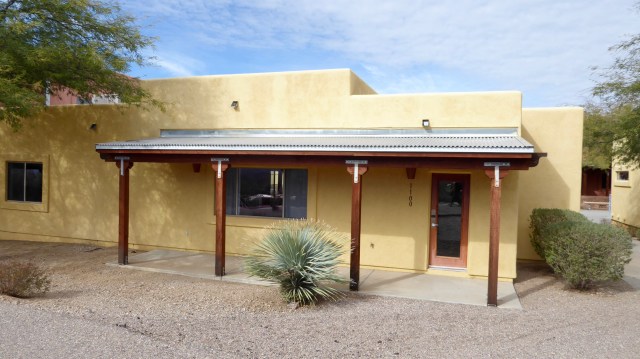
 Biosphere 2 was eventually donated to the University of Arizona who operates it as a research facility. It was a very interesting place to visit and doesn’t feel like a failed experiment at all.
Even in “failed experiments” some positives come forth. One couple each from both the first and second human missions developed relationships and were married after they came out of Biosphere 2.







 Christmas Eve found us with Randy’s brother Tim and our sister-in-law Yvette. Elko enjoyed lounging near Yvette’s Christmas display – this is just a small portion of the town!
 Tim and I battled for fifth and sixth place in our eight team Fantasy Football league. Even though neither of us did well, it was fun to be together watching the games and our corresponding points. Yvette was the league Champion this year (whoohoo!) and Randy came in fourth.
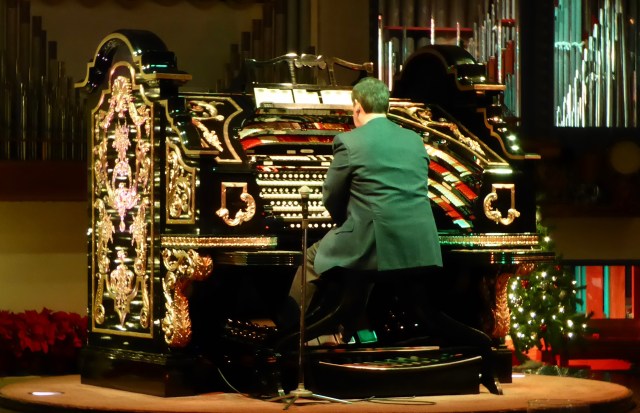 During our week in Mesa we enjoyed some of the local attractions. We went to the famous Organ Stop Pizza Parlor. The big draw here isn’t the pizza, it is the organ that utilizes one full wall of the large building. The corresponding light and percussion show was impressive.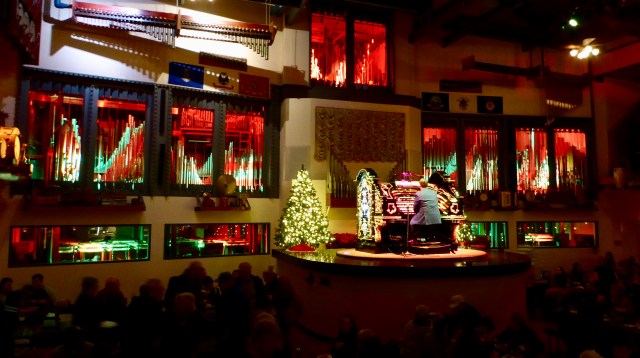




 “A building should appear to grow easily from its site and be shaped to harmonize with its surroundings if Nature is manifest there.” Frank Lloyd Wright


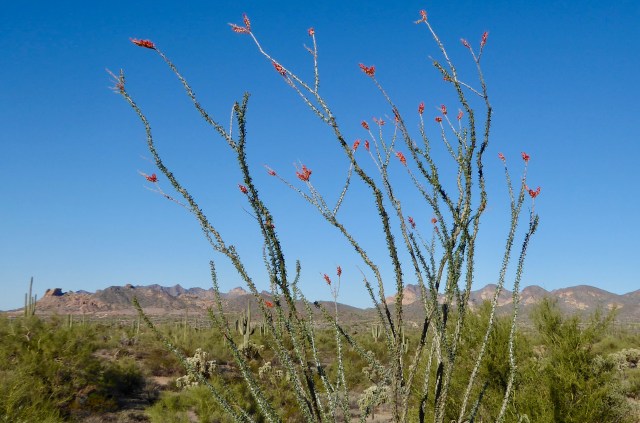
 Yet even without the quest of gold, we enjoyed our stay at Lost Dutchman State Park, nestled at the base of the Superstition Mountains. This is truly one of the nicest state parks we’ve been to anywhere (sorry Oregon…). As you can see our view was amazing!





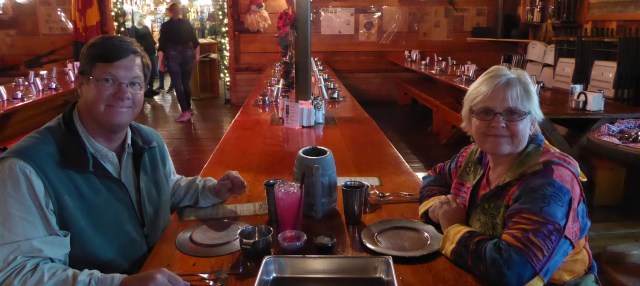
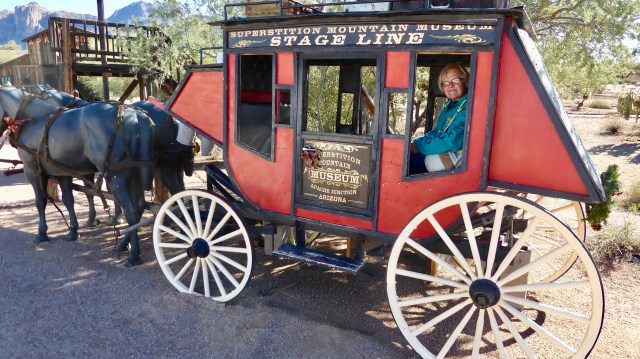


 It was at another chapel that we had our big negative experience of the week! The Goldfield Ghost Town website indicated worship services on Sunday morning so we went to the touristy venue with the idea of having breakfast, going to service and then exploring the ghost town.


 There was a shoot-out on Main Street and a nice little train ride around the town and lots of shopping opportunities! Too bad I don’t have room to collect “stuff.”


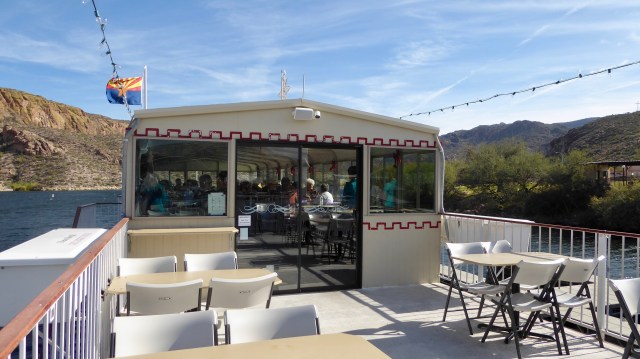
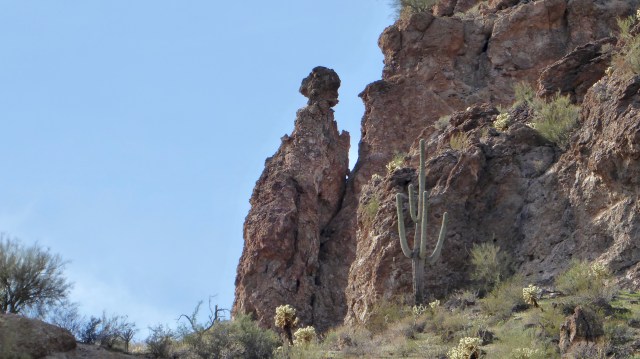

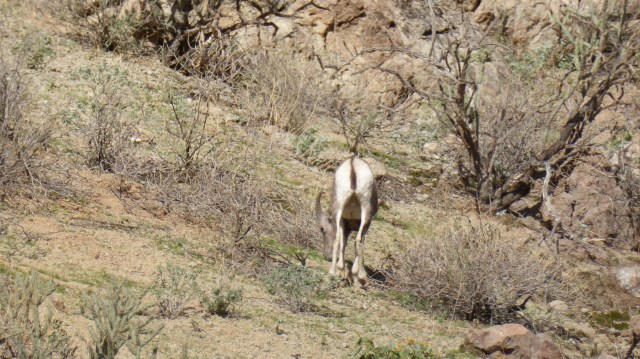
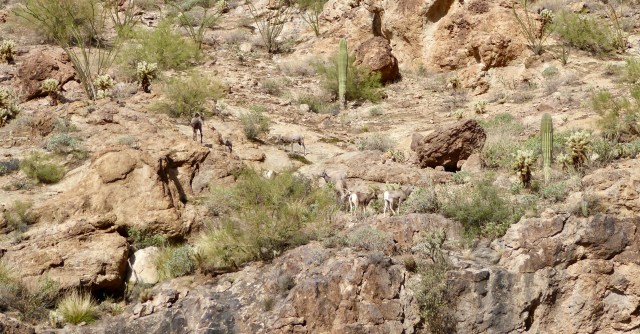


 We made it to Yuma, Arizona and the first order of business was to have our truck and trailer washed and waxed! $130 later, both were clean and shiny! Sunny and warm needs clean and shiny!
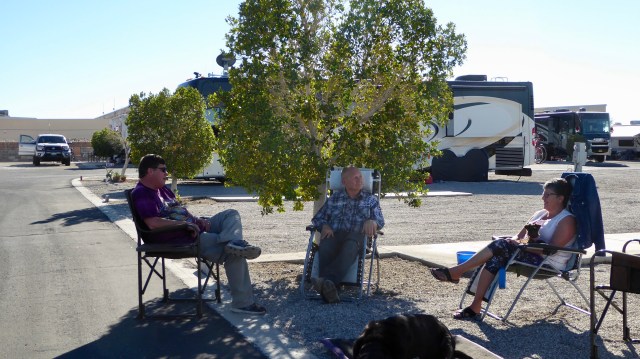 We enjoyed catching up with Myron and Peggy and meeting their new puppy. We were visiting them in Wisconsin last summer when we lived through that memorable storm!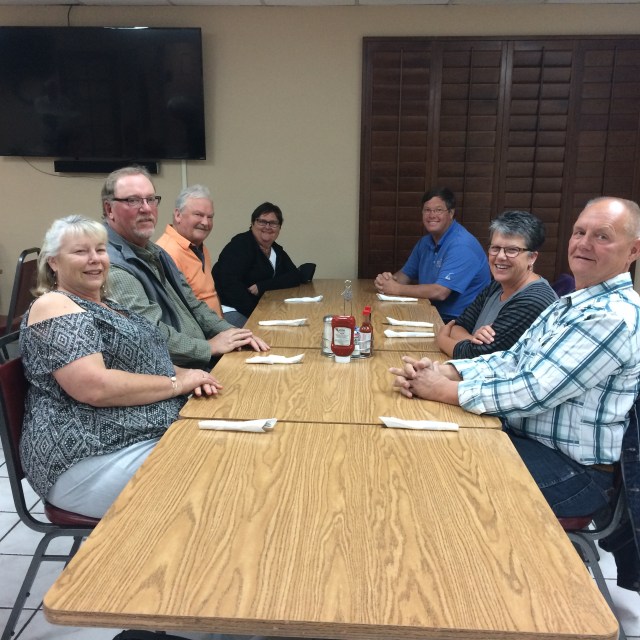
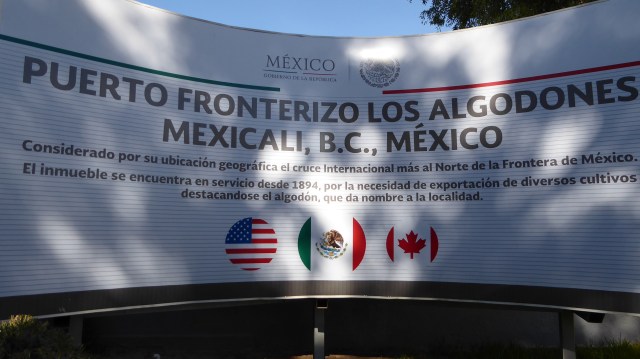
 While waiting in line to get back into the US, Randy spent time talking with these two veterans. The man on the right was a Vietnam vet while the one on the left served in Korea. The latter has been driving commercial trucks since returning from Korea all those years ago. He will be 85 years old in a few months and will be forced to retire due to company policy.









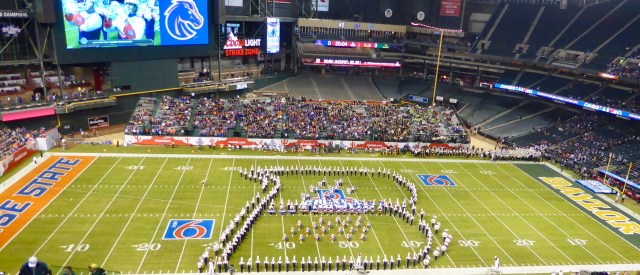
 It was kind of fun, but three years in a row our road trip game with Kent and Pam has been a BSU loss… with huge bowl game implications. I couldn’t get too interested in writing about that.
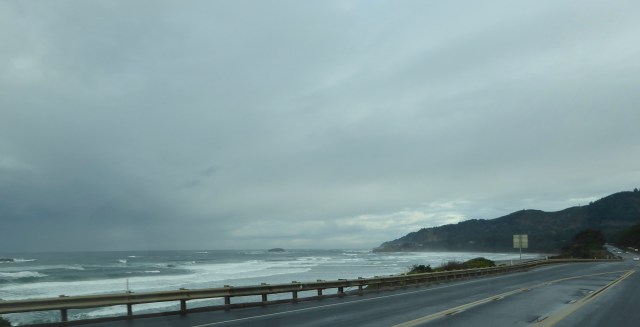 Then we spent a cold, wet and dark week on the coast near Newport, Oregon.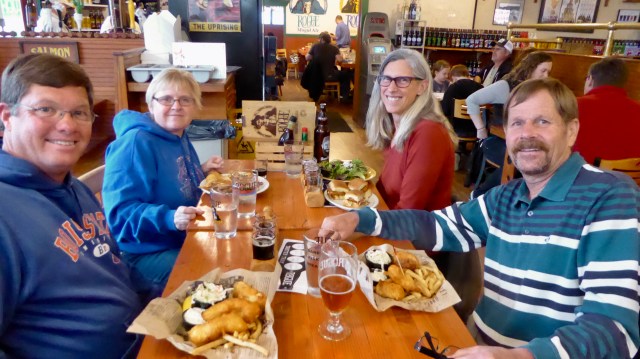
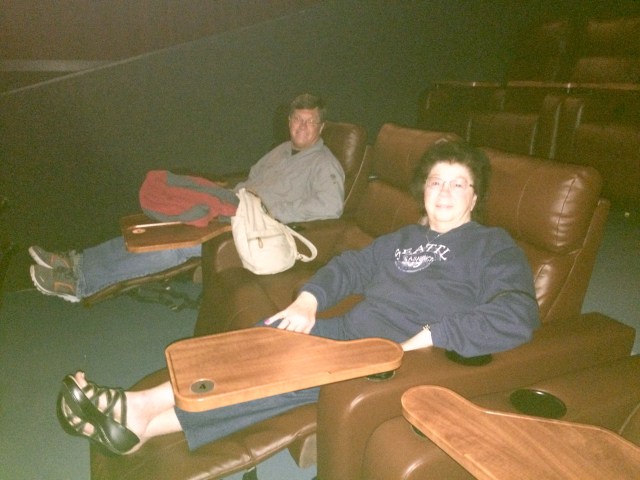
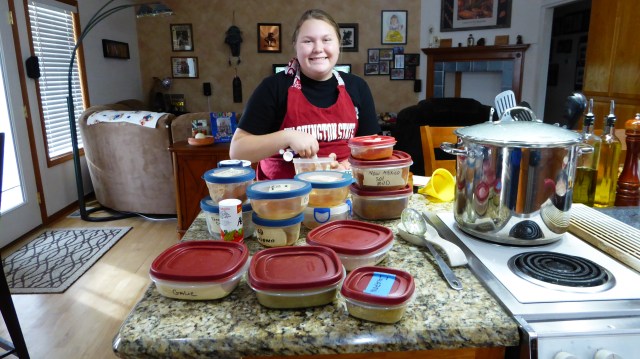 We also enjoyed eating the results of competition chili tweaking – one pot of green and two reds. Cousin Kylee’s red was hot but mellowed nicely with sour cream!
 This tunnel was tiled for tourists and had a unique echo quality. Clap here and you can hear it come back at the speed of sound.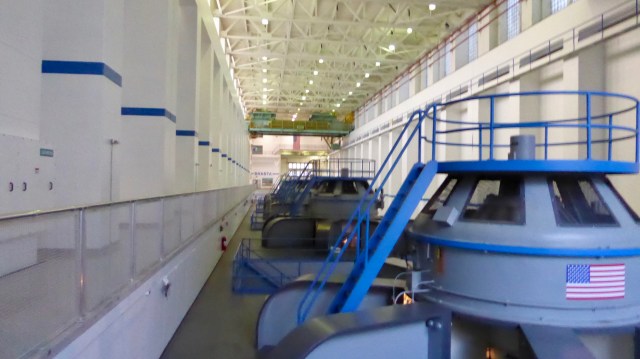
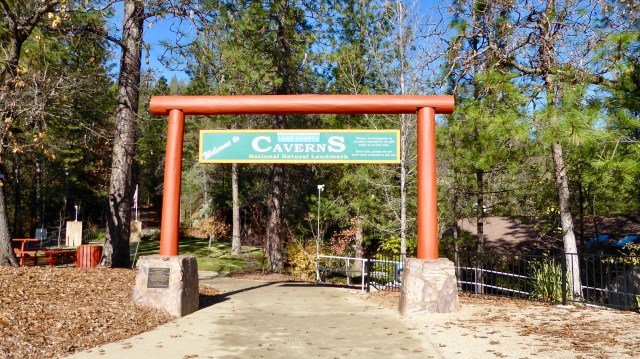

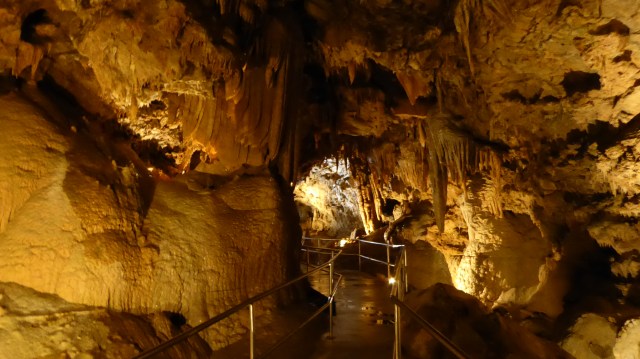 We walked a great set of caverns with lots of the interesting formations.


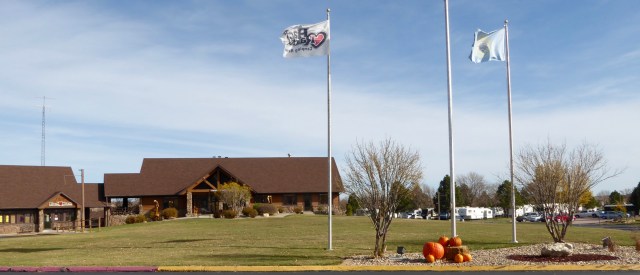


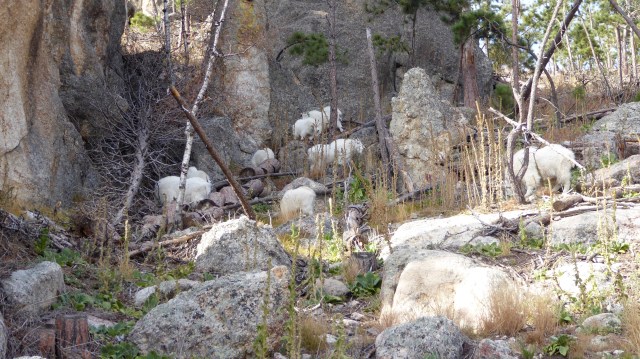
 The only place we visited in 2006 and again on this trip was Custer State Park.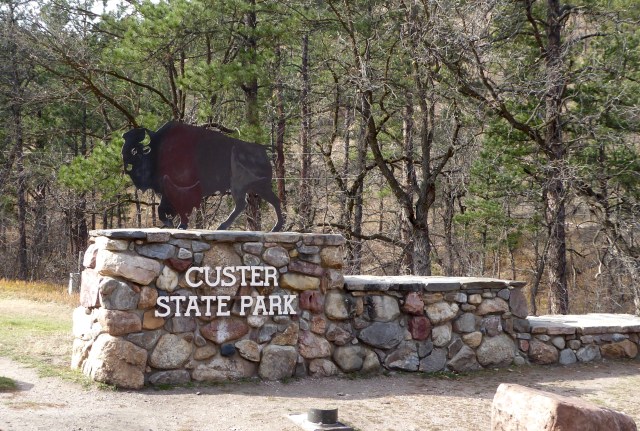














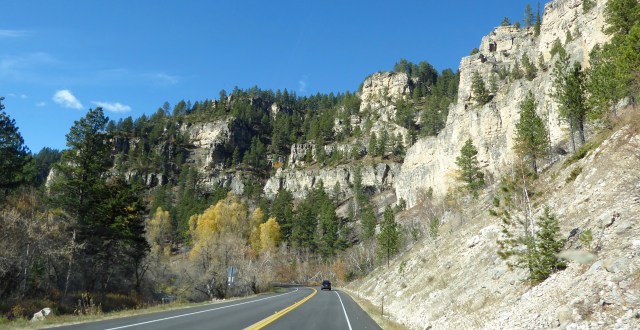


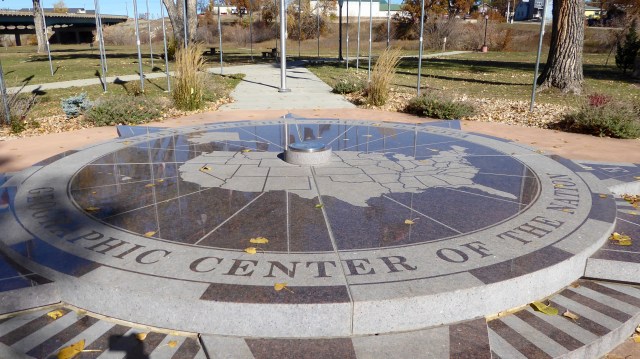
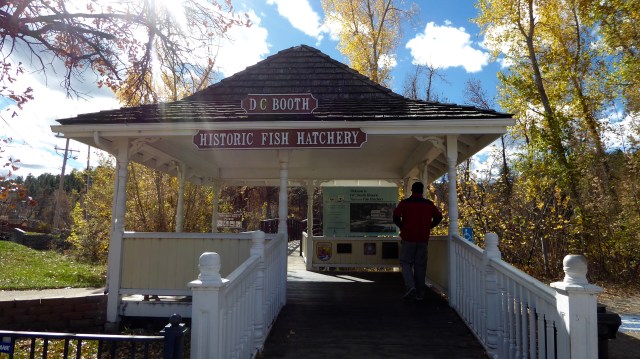

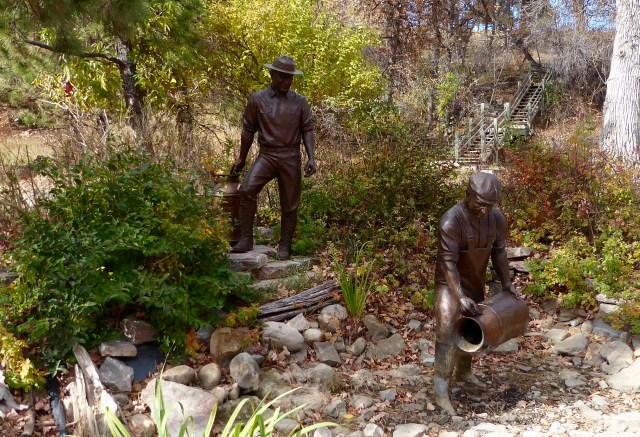 Earlier this year, we applied to volunteer at the DC Booth Historic Fish Hatchery for the summer 2017 season. It looks interesting, and maybe we will revisit the idea again some day but the volunteer coordinator at DC Booth has not yet begun scheduling for 2017 and Oregon State Parks’ rangers have.
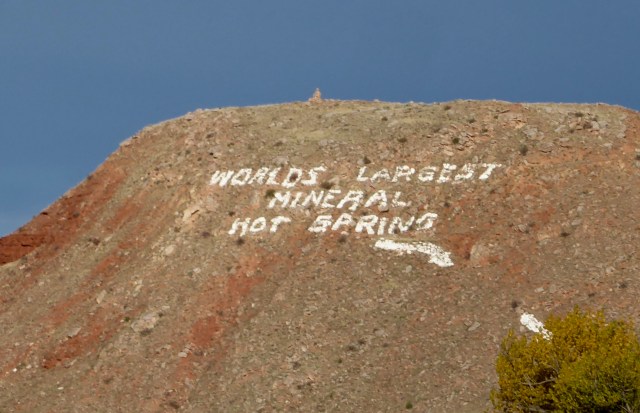 The name Thermopolis just sounds like there should be hot springs in the area and there are. The world’s largest mineral hot springs are located in Thermopolis, Wyoming.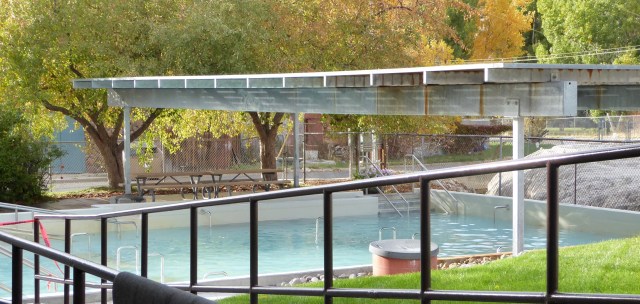
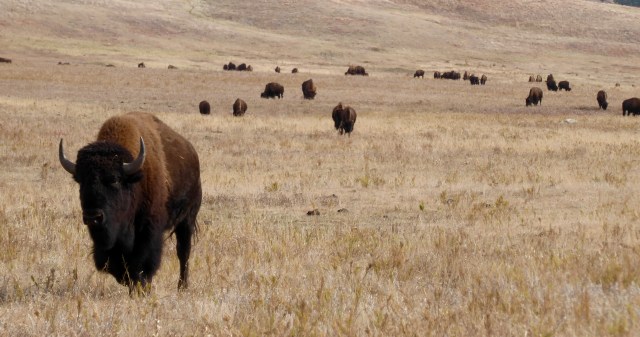
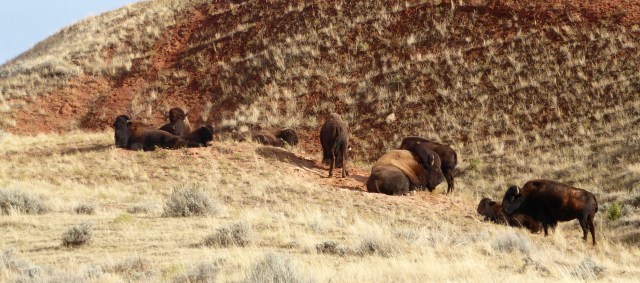 Still within the state park, we drove to the bison pasture and saw a small herd.







 Serene Wandering