Elko’s Blog 2

When my mom writes a blog, she looks for a theme.  This one was hard for her so she gave it to me.  I’m Elko.

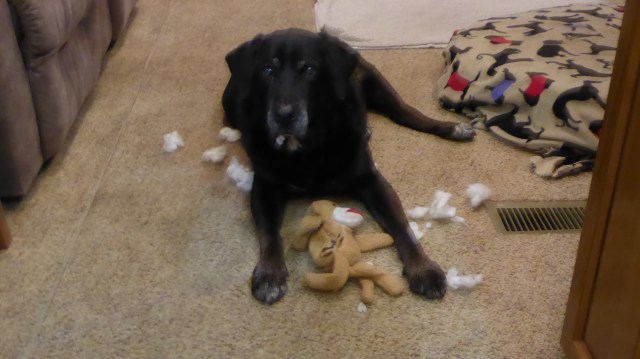
p1090061Let me get my gripe out of the way first. My mom took me to Pet Smart for a Paw-dicure. Embarrassing!  They clipped my nails and cleaned my ears and my mom tried to make me feel better with a new toy. I waited two days to play with my new monkey. I may be more cooperative with my dad next time.

p1090176

Lots of trees for doggie business on our street

We have been to this place before but I don’t know why my friend Jack isn’t here this year –  at least we’ve seen our friend Beth lots of times.

One day my mom and Beth went to Mexico to have their teeth cleaned.  For $35 my mom got an exam, X-Rays and cleaning.

Another day they went for a walk downtown.   My mom has been sad for a while and it made her feel better to walk with 15,000 women, men and children who had been sad too.

fullsizeoutput_3937

“This is what democracy looks like.”

When she found out that millions of other sad people in every state, other countries and  every continent had taken walks on the same day, she felt even better. My dad wishes he had gone too.

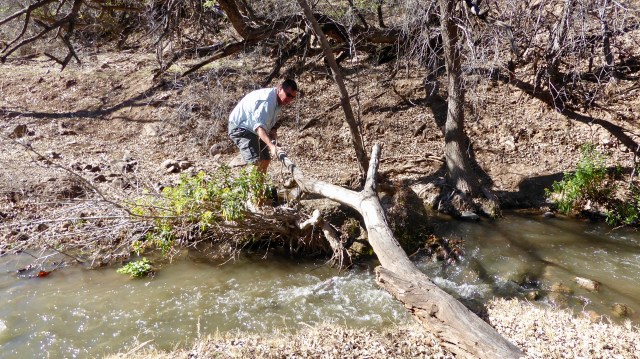
We go on walks every day.  I like it best when both my people take me to the Santa Cruz wash. Some days we see a coyote.

Some days we drive places.  We went into the desert and it was bumpy.


fullsizeoutput_3946

We drove to the Ironwood Forest National Monument.

p1090189

This is an Ironwood tree.  The trees grow to be very old and the wood is very hard.

We found some old  buildings and learned they were the ghost town Sasco.

These were the Rockland Hotel.

Another day we drove to Madera Canyon. Most people go there to see birds.

Dad likes birds, I like smells, and mom likes scenery.

fullsizeoutput_38db

fullsizeoutput_38e2
She took this picture to show we have snow near Tucson too.

p1080929We don’t need to drive places to see hummingbirds. We have a feeder and they are always zipping around when my dad and I sit outside.

p1090174My dad and I sit outside a lot. I know how to get him to, even when it is cold.

Mom goes to  Zumba, line dancing and Apple class.  Dad goes for long walks and Mom and I don’t go because we aren’t fast enough. Dad mostly stays with me because he fell the first time he played pickle ball and thought he cracked some ribs. The doctor said they weren’t cracked, he just had a bruise inside. Dad hasn’t played pickle ball or golf the whole time we’ve been here. That makes him sad but I am happy to have my dad around.

p1090065We do boy things. Mom said the pantry drawer didn’t work right and that was a two hour project. Dad found a pepper mill we had lost (and replaced) a year ago.

I helped dad replace the dryer vent for the washer/dryer combo.  I supervised because my hair is part of the problem.  Dad thought the vent never worked as well as it should, but just like everything, my dad fixed it and it works much better now.

p1090072

Handy Randy’s work is never done.

Every now and then I have to stay home while my mom and dad go somewhere without me.

fullsizeoutput_38f4One day they went to a presentation by the US border patrol. They learned the border patrol’s responsibility is the big backyard between entry points. They try to stop the illegal entry of people and drugs.

Border patrol agents must learn Spanish but not all people who come across the border speak Spanish.  Tucson zone agents have caught people from 144 countries around the world.  They are finding Chinese people lately.

Some people pay their money to have help getting here but are stranded by the “coyotes.” The border patrol rescues people who would die out in the desert. There are rescue beacons in the desert so people can get help if they need it.

fullsizeoutput_38d8In 2008,  the border patrol got lots of new technologies. They have drones, mobile ground radar, night vision and infrared from the US Armed Forces and tunnel technology from the Israeli government.

Every person the Border Patrol finds is processed using fingerprints and eye biometrics.  All are charged with a misdemeanor (unless they find some reason to make felony charges) and cannot file for legal entry for five years. If they try again and again, they spend increasingly more time in jail up to six months.  Then they are charged with a felony, spend even more time in jail, and can never apply for legal entry.

p1080997

The fence between Nogales and Nogales

This worker didn’t want to get political about “the wall” but said he likes fences because then they can see what is happening on the other side.

There are dogs working for the border patrol that are really smart. They smell drugs and people and can even do math. They alert their border patrol partners if they smell six people, but only see four.  Very impressive!   I’m proud of my dog cousins!

Well, it’s been fun. I don’t know when my mom will have me write another blog but maybe sometime.   If you want to read the first blog I wrote, it is here: Guest blogger: Elko

Love, Elko

Posted in Uncategorized | 2 Comments

Our Tucson Food Tour

When we travel to a city, we often look for a “food tour.” We have enjoyed several tours over the years as we sample local restaurant specialties and learn town lore at the same time. There is a “Taste of Tucson” but we haven’t made it to the official tour yet.  We did, however, have a few interesting food related experiences.

p1080773

We are always glad to spend time with our friend Beth, this time meeting in Tucson. We didn’t stay at the same park but managed to get together several times.

fullsizeoutput_385f
Our first outing was to Cafe Desta to experience Ethiopian Food. We didn’t know what to expect but figured it would be an adventure and it was delicious. It was different from what we are familiar with to eat from a communal plate.  Beneath the food is injera, a tortilla like pancake made of grain.  We had other injera to tear and use as a scoop.

fullsizeoutput_38d0Randy and I went to Mi Nidito – one of Tucson’s iconic Mexican restaurants. Opened in 1952, the entrance highlights photographs of celebrities who have visited the restaurant.

There are many, many celebrity pictures including Madeline Albright and Julio Iglesias.

fullsizeoutput_38d1They seem most partial to Bill Clinton who visited in 1999.

fullsizeoutput_38b4

The booth where his party sat is commemorated (but still used) and the combination plate he ordered is highlighted on the menu.

fullsizeoutput_38b3

Randy and I went on a Tucson history tour that took us up to A Mountain (think University of Arizona). From there we could see the Mission Gardens growing heritage crops on one of the oldest continuously farmed plots in North America.

fullsizeoutput_38cf

Heritage-Foods-Mission-Garden

Photo from Edible Baja Arizona website

We learned that Tucson was named a UNESCO World City of Gastronomy, the only city holding that designation in the United States. Tucson’s agricultural history, extending back more than 4000 years, is longer than any other city in North America.

Tucson was also noted for innovating ideas for growing food in a hotter, drier environments and community staples such as seed banks, community gardens, farmer’s markets, and food heritage preservation.

p1090076We journeyed an hour south to Tubac to the Santa Cruz Spice Shop where they produce and sell a huge variety of spices.

Beth and I did some sampling and everything was hot!

fullsizeoutput_38e7

Loved this crowned saguaro as we traveled near Tubac!

fullsizeoutput_38e8

Still in Tubac, we fulfilled an area bucket list item and went to Wisdom’s Cafe. At Wisdom’s you are encouraged to “order dessert first.” Not that you eat it first, just order it, so your fruit burrito ala-mode will be ready when you are done with your lunch. The three of us shared a peach burrito but we dug right in and I forgot to get a picture. It was yummy.

Of course some of our favorite things to eat in Tucson are fresh tortillas. Grocery store varieties available in the north barely resemble the real thing. 115552-tortillas_picmonkey

Picture from the Food City website – I don’t usually take the camera  to the grocery store.

In Food City, a grocery chain stocking foods for the Hispanic clientele (and for those of us who love Mexican foods), you can watch tortillas being made and get them right off the griddle.   Fresh tortillas are even better than the peach burrito ala-mode!

Posted in Uncategorized | 1 Comment

The Missions of Tumacacori

fullsizeoutput_38b7

Tumacacori National Historical Park, south of Tucson,  was our nation’s third national park – after Yellowstone and Yosemite.  It was designated in 1908,  four years before Arizona became the 48th state.

The Tumacacori site preserves one of many missions begun by Father Kino who served the area between 1687 and 1711. His mission work for Spain concentrated in what is now northern Sonora, Mexico and southern Arizona.

fullsizeoutput_38ee

The Tumacacori Mission grounds included an extensive compound of farmlands, housing, shops and communal kitchens and storerooms.

fullsizeoutput_38ec

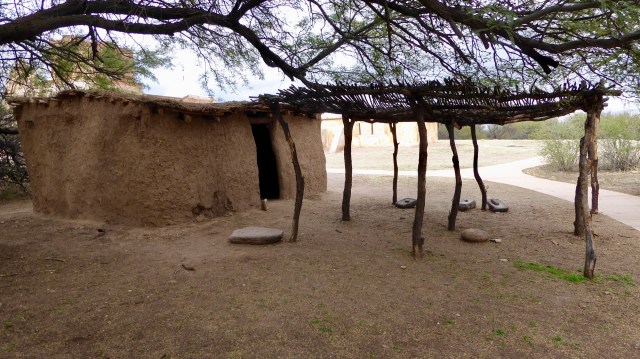
This is a re-creation of typical housing for O’Odham peoples within the mission.

p1090092

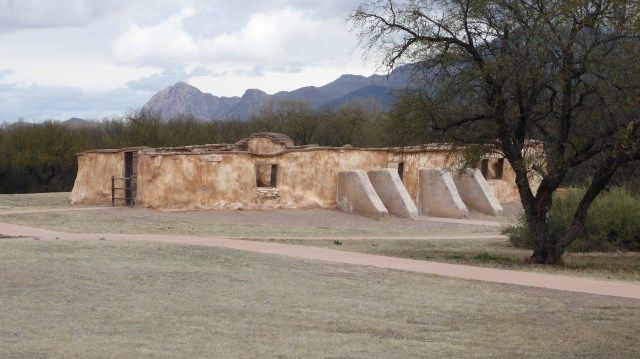
The priest’s house also served as the schoolhouse and the center of government. The limestone plaster has protected the adobe walls. The supporting buttresses are not original.

fullsizeoutput_38ba

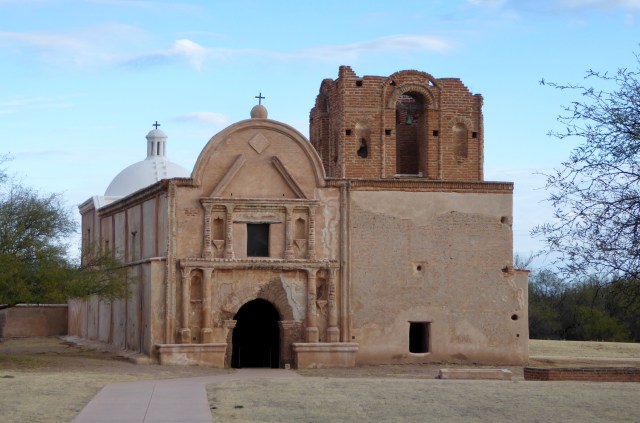
Work began on this church about 1800. Construction ebbed and flowed with the final phase pushed forward in the 1820s. Yet, the bell tower was never finished.

fullsizeoutput_38e9

An artist’s rendering of what the inside of the Tumacacori mission church looked like.

fullsizeoutput_38ea

What it looks like now. The park service works towards preservation of what remains, not restoration.

fullsizeoutput_38eb

The artwork that remains on the limestone plaster is original.

The Tumacacori Mission  persevered between 1691 and 1848. Inhabitants suffered disease, Apache attacks and the Spanish King’s removal of Jesuits in favor of Franciscans. After Mexican independence, Spanish born priests were expelled leaving a shortage of priests. The site was abandoned in 1848 and became part of the United States with the Gadsden Purchase of 1853.

Spain’s Jesuit, and later Franciscan missionaries, were tasked with spreading Spain’s language, religion and rule of law to native peoples. In retrospect, this effort was successful in two aspects given that peoples in Mexico and Central and South America speak primarily Spanish with Catholicism as the dominant religion.

We also went on a tour to see two missions available for viewing only with a ranger, and conducted just twice a month.

fullsizeoutput_38c1We traveled by van to the remains of Los Santos Angeles de Guevavi, also begun by Father Kino in 1691. He encountered the natives, celebrated mass, left gifts of livestock and winter wheat seed and promised a permanent missionary. The first resident missionary helped  build a small church that was completed in 1701. It was a difficult locale so Jesuit missionaries came and went.

In the 1740s Guevavi Mission took on a more permanent role and a bigger church and compound was completed in 1751.

fullsizeoutput_38c3

Inside the larger church.

Guevavi was impacted by an O’odham (native peoples) uprising and the repeal of all Jesuit missionaries by the King of Spain. As the Franciscan priests arrived, the decision was made to move the area mission headquarters to Tumacacori.  Guevavi was abandoned by 1775.

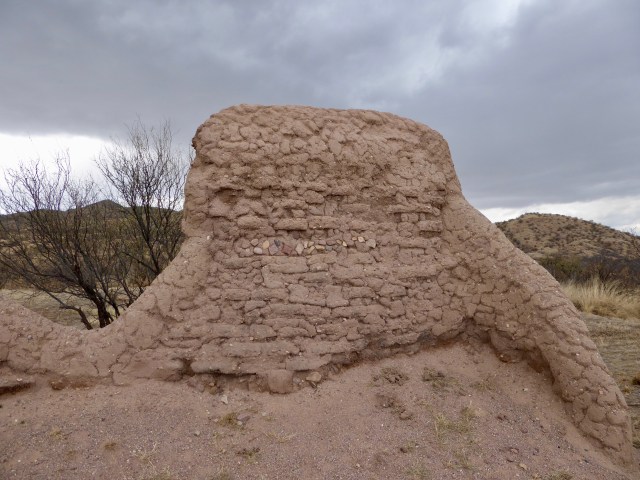
fullsizeoutput_38bfTo preserve what remains of the mission site, the park service limits access and covers the remaining adobe walls with mud.
fullsizeoutput_38c4An archeology study was done a few years ago and an extensive record was found.

fullsizeoutput_38bdThe remains of a building were found in this area with lower walls still intact under the sediment.
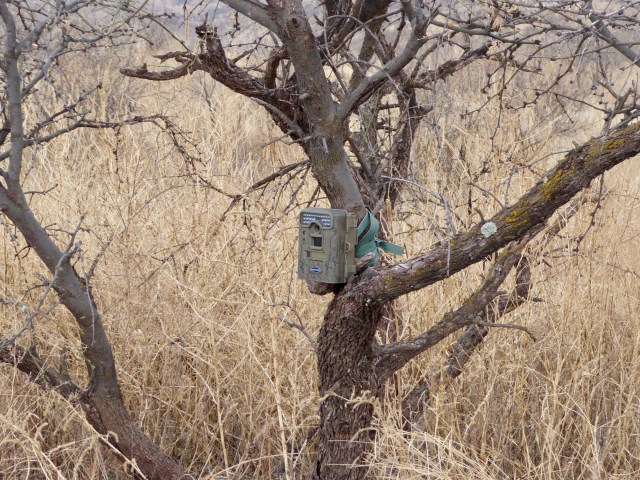
fullsizeoutput_38c5Only wild game are allowed in the Guevavi unit without escort. We didn’t see any, but we saw the camera that sees them!

A dozen miles away we were shown San Cayetano de Calabazas. The naming of this mission is a mystery as most missions took on the name of a neighboring village. Calabazas means gourds or squash. It is not known when this mission actually began but the first reference to it in the written record was in 1756.fullsizeoutput_38c8The side doorways were a later modification.

fullsizeoutput_38cbThis indenture near the floor would have been at or above eye level during the mission church’s active years. A statue of a saint would have been displayed there. Several feet of sediment now cover the floor.
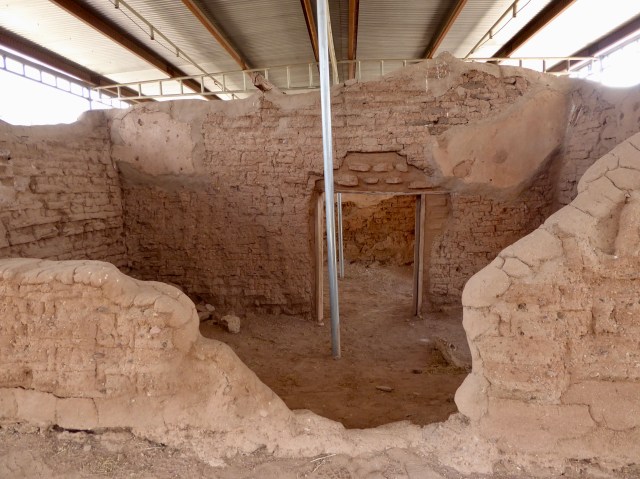
This area was under constant threat of Apache attack and by 1780s, most of the people of Calabazas had assimilated into Tumacacori.  The grounds of Calabazas were converted into a stock ranch to support the Tumacacori mission.

Over the years, the ranch had several owners but was generally occupied. After Mexican independence, the abandoned ranch was purchased in 1844 for $500. The old church became a ranch house.

fullsizeoutput_38cc

This view is from what was the sacristy where the priest could look out towards the worshippers. The doorways and interior walls were added when the church was used as a ranch house.

When the lands became US territory, the mission was used by squatters until it became Camp Moore during the Civil War.

The Apache continued to be a problem for Calabazas until Geronimo was curtailed in 1886. Eventually it was left to ruin until the park service came into stewardship.  Strategy for preservation at Calabazas is to cover the remains and limit access.

I hope you enjoyed the return to a History blog.  Channeling Donnie and Marie:  “I’m a little bit History,   He’s a little bit Science and Space.”

Posted in Uncategorized | 2 Comments

“An Angel Worked in a Synagogue to Help the Vatican”

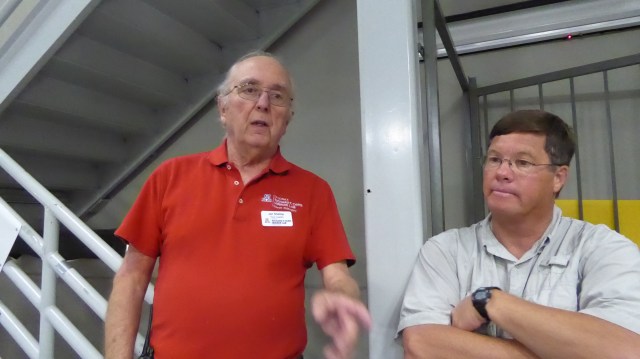
p1080897“An Angel Worked in a Synagogue to Help the Vatican” was the quip provided by our tour guide Jon at the University of Arizona Mirror Lab.
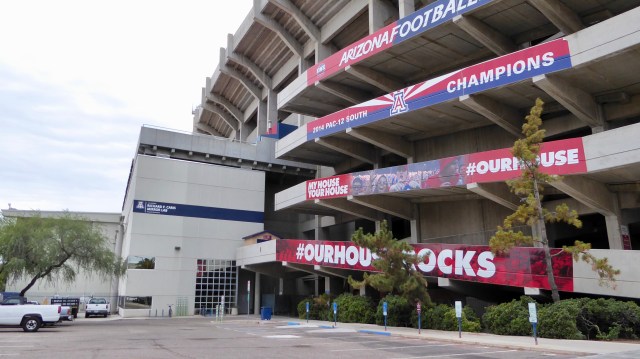
Jon told us about Dr. Angel, an astronomy professor at U of A, who was approached by folks at the Vatican Observatory to make new mirrors for the Vatican Advanced Technology Telescope in southern Arizona.  Dr. Angel had a theory for a new process and used a vacant synagogue as his work space.

fullsizeoutput_389a


Eventually, Dr. Angel and his new process moved under the home grandstand at the University of Arizona football stadium. The geologically sound land base, chosen to support the stands, provides a good foundation for the delicate work of creating telescope mirrors.

p1080900The large triangle “floats” so that mirror calibration and measuring can go on, even when the stands are rocking.
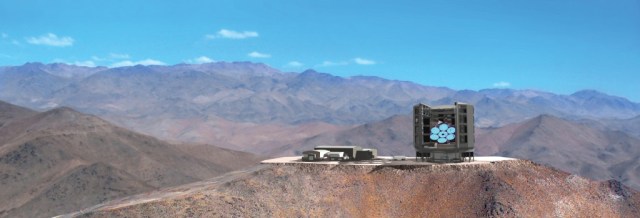
Although the Mirror Lab, and its 20 engineers, have completed many jobs and have more  in the queue, the current assignment is to create the mirrors for the Giant Magellan Telescope (GMT). The GMT is being funded by a consortium of international foundations from Australia, Korea, Brazil, Chile and the United States. U.S. entities include The Smithsonian, Carnegie Institute of Science, Harvard, University of Texas, Texas A&M, University of Arizona and University of Chicago. Each group’s time on the telescope will be proportionate to their investment.

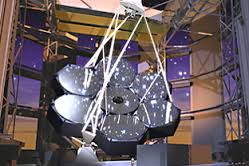
overview-how-pngThe GMT will be placed in the Andes Mountains in Chile and will be the largest telescope in the world. It’s resolution will be 10 times greater than the Hubble Telescope, even though it is land based.

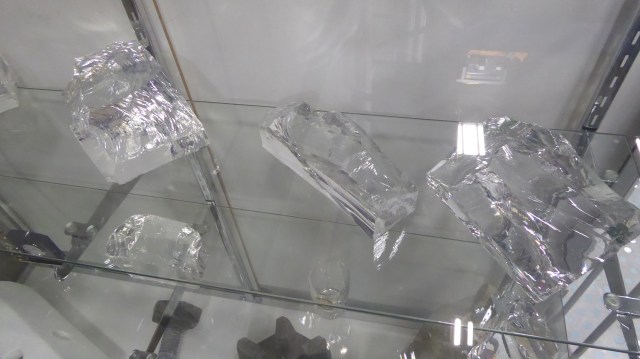
 

Production of GMT began in 2015 and it should be complete in 2024. The seven 28 feet diameter mirrors, the largest in the world, are being created under the football stadium at the University of Arizona in Tucson. The production of each mirror takes six years from start to finish and costs $26 million.

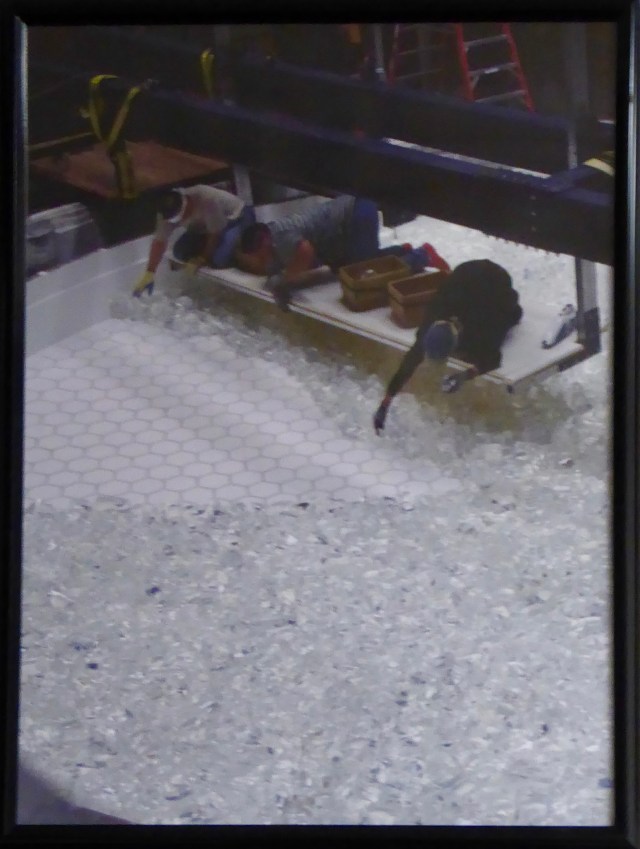
p1080907The mirrors begin as optical glass,  processed in Japan by the Ohara corporation. They use a special sand found in Japan and a few other places around the world. It takes 20-26 tons of glass for each main mirror.
fullsizeoutput_38a1
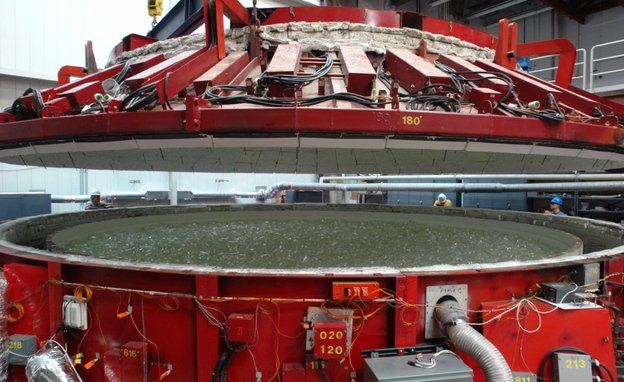
The glass is brought to Tucson, placed manually and then heated at 2150 degrees for three days.  The “oven” is a spinning heater which evenly distributes the glass.  This saves most of the grinding required with other mirror processes.

telescope-oven-lid closing

It takes the large mirror three months to cool.

It takes months to grind and calibrate,  grind and calibrate and grind and calibrate the mirrors.

Approximately five hundred actuators are installed on the reverse side of each mirror so it can be moved and flexed to stay focused while in use. There are over 4000 actuators  in all of the mirrors combined.

p1080906

Finished mirrors weigh 24 tons and will be shipped individually by truck to a port city and then by ship to South America.  Trucks will again be used to take the mirror up to the telescope site.  A final aluminum coating will be applied at the Chile observatory.

images

The Giant Magellan Telescope will be functional when three of the outside mirrors and the center mirror are in place.  Currently one of the outside mirrors is finished and two others are in their final processes in Tucson.  Most of the current work is on the center piece.

As an aside, a European Consortium is also building a telescope in this size range. They are using the different tact of a multitude of smaller mirrors working together rather than seven very large ones. Only time will tell if one approach is better than the other and in what ways.

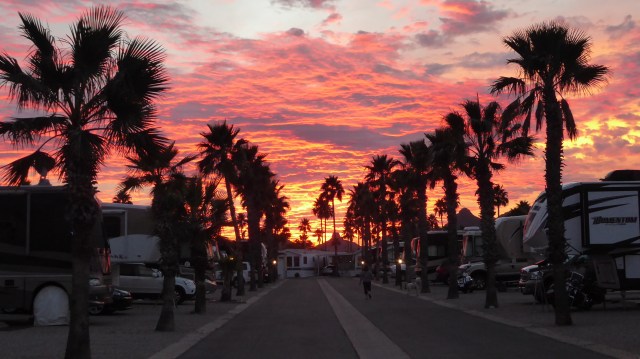
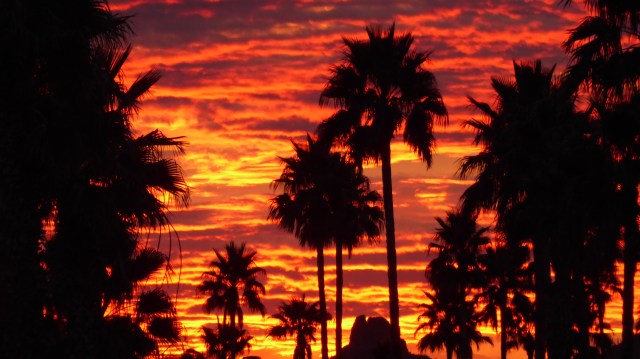
Telescopes can certainly see some interesting and beautiful sites. But, after we came home from the Mirror Lab we got to see a beautiful sight right in our RV park, right here on Earth!  Check out the sunset!

p1080921

p1080922

Posted in Uncategorized | Leave a comment

A Failed Experiment?

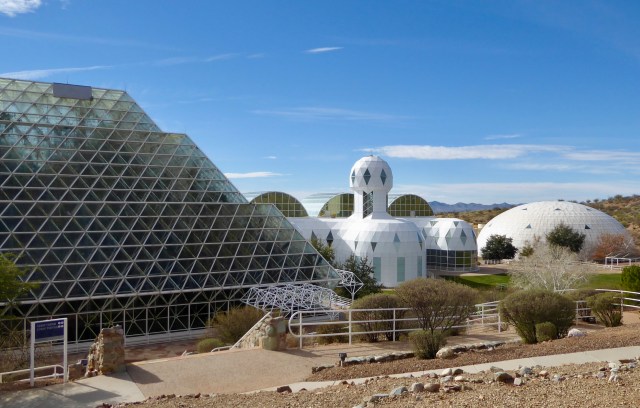
Do you remember Biosphere 2 from the 1990s?   Eight people lived in a sealed environment for two years out in the Arizona desert. When they finished their term, there was another group that started. I had vague recollections of it.

fullsizeoutput_3883

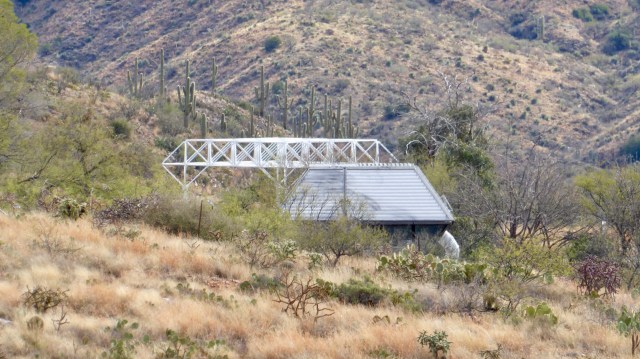
The Biosphere 2 is still here and is now owned and operated by the University of Arizona. The environment is no longer sealed and no longer conducts human experiments, yet, because the biosphere was created, a wealth of earth science experiments are possible.

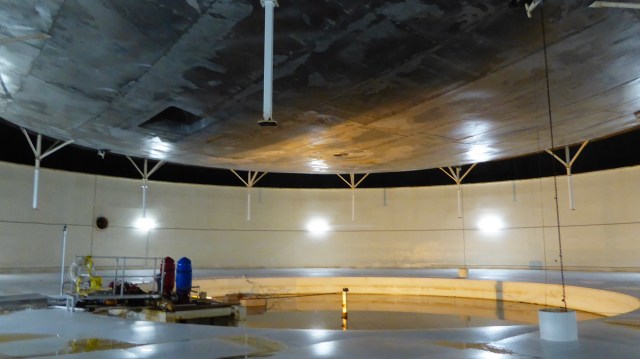
The big project now is Landscape Environmental Observatory (LEO). On three large (think massive) landscapes, researchers are investigating how water, carbon and energy move through controlled environments. Much of the research emphasis is on global climate change.

p1080845They do “little” experiments too – this one in conjunction with a local high school science class.
When we visited, we were very fortunate to be offered a History Tour in addition to the regular Biosphere 2 Tour. Guides for both tours were excellent, some of the best we’ve ever had.

The question I wanted to ask was “What happened to Biosphere 1?”  They answered that before I could ask.  The scientists consider Biosphere 1 to be our Earth.

With a private expenditure of $150,000,000, Space Biospheres Ventures bought desert property in 1984 and began construction two years later with the purpose of developing self-sustaining space colonization technology. NASA was aware of, but not involved in Biosphere 2.

fullsizeoutput_3882While construction was proceeding, scientists took 7 – 21 day trial runs in this small, practice biosphere.
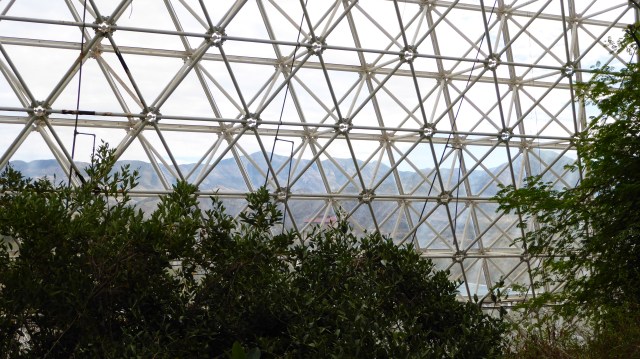
Construction was completed in 1991. The glass enclosure has a floor plan of 3.14 acres and used 6500 windows. It is 91 feet high at the highest point and encloses 7.2 million cubic feet. A 500 ton stainless steel liner separates Biosphere 2 from the earth below. It involves thousands of miles of wiring, pipes and ductwork. It is an engineering marvel.

p1080850


Five biome environments are part of Biosphere 2:  rainforest, desert, savannah, ocean and wetlands.

fullsizeoutput_3892

The first of two Human Missions began in 1991. The four men and four women  entered the airlock door below.  To the right was their communication window where people from the outside could come, see and speak with them using a  phone just out of the picture.

fullsizeoutput_388a

Each person had their own apartment and there was a communal kitchen.

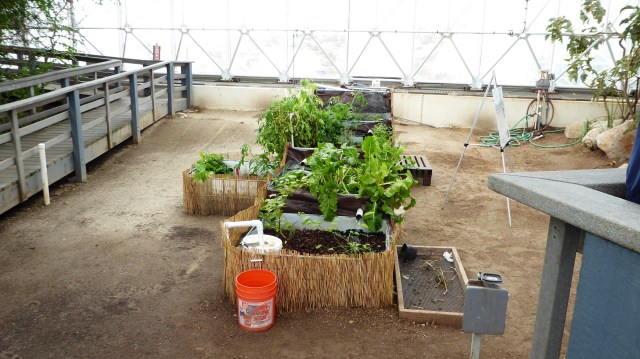
The mission started with a 120 day store of food because it would take 90 days for new crops grown within the biosphere to yield food.  The monitoring and growing of food was their primary task and they each spent 65-70 hours per week doing that as well as maintaining systems. They grew 45 different crops and had an orchard for fruit trees. They had a few chickens, pigs and goats.

The biospherians had a largely vegetarian diet with meat included only once a week. They each had one small cup of coffee every two weeks as the coffee plant was deemed non-essential and only a small amount of space was dedicated to it.

A doctor was part of the group to monitor the biospherians’ health and to monitor personal and social responses to the two year enclosure and commitment. After eight months, each biospherian had lost between 20-25 pounds because they weren’t getting enough to eat.

p1080844Although the desert area north of Tucson was chosen because it averaged 300 days of sunshine a year, 1991-2 were El Nino years and the skies were far more overcast than usual. That effected the growth of plants and the production of food.
The reduced plant growth also effected the oxygen levels within the biosphere. Optimal oxygen levels for humans range between 19.5 and 23.5 percent. Serious side effects, and eventual death occur if oxygen levels fall below those levels. At or below 17 percent, mental abilities become impaired. Levels of 16 percent and below bring noticeable changes to physical well being. Levels under 14 percent will cause extreme exhaustion from physical activity.

At the end of the first year, the levels of oxygen available for the biospherians were 14.2 percent. They were trying to work 65 -70 hours per week, were constantly hungry and living at the oxygen equivalent of 13,000 feet.   Things were not going well and there was a lot of discord within the biosphere.

fullsizeoutput_388c

One of two biosphere lungs

The decision was made to use the biosphere’s lungs to inject additional oxygen into the environment. This was done three times and allowed the experiment to continue.   The eight scientists completed their assignment.

There was a second, six month, mission which ended abruptly,  with drama.  We heard and read several different accounts of the problems but all were from the outside, not within Biosphere 2.  The decision was made to end Human Missions.

So, strictly speaking, was the biosphere environment capable of supporting the eight humans, plants and animals for two years without outside assistance?   No, but part of scientific research is learning what goes wrong and why.   That knowledge is important too.

Although still privately owned, the property went through a series of management companies, eventually landing with Columbia University from 1996 to 2003. They built classrooms and housing to allow students studying earth systems science to live onsite while conducting experiments.

fullsizeoutput_3880


p1080865Biosphere 2 was eventually donated to the University of Arizona who operates it as a research facility. It was a very interesting place to visit and doesn’t feel like a failed experiment at all.

Even in “failed experiments” some positives come forth. One couple each from both the first and second human missions developed relationships and were married after they came out of Biosphere 2.

Posted in Uncategorized | 4 Comments

Planes in the Desert


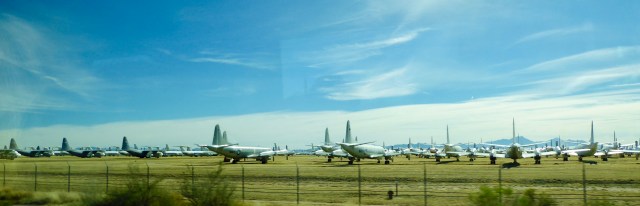
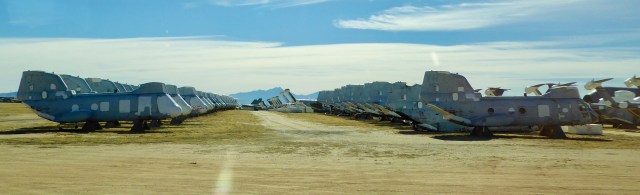
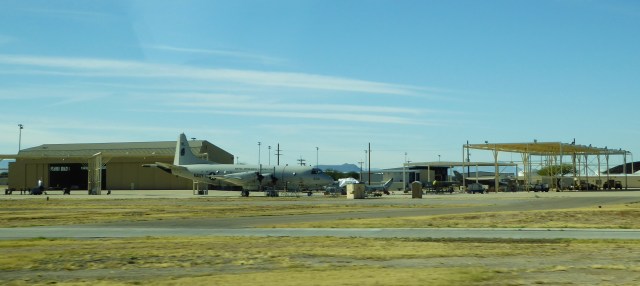
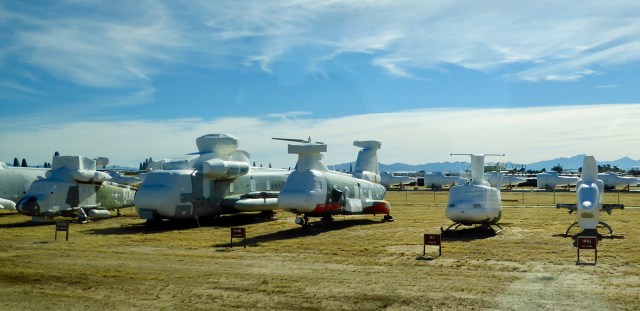
As our first big adventure in Tucson this winter, we took the “Boneyard Tour” at the Aerospace Maintenance and Regeneration Group (AMARG) Facility on the Davis-Monthan Air Force Base.  There were no bones but there were lots and lots of aircraft!

matthews_p_0084

But first, a step down memory lane!

Randy hadn’t been on Davis-Monthan since our wedding reception in 1980 and I hadn’t been there since the week after our reception when I went to the base commissary to supply our first kitchen. I was quite nervous about that excursion since I’d been married for a whole week and wasn’t really a military dependent anymore. I am such a rule follower, it is surprising that I went at all. I have never forgotten my transgression….

fullsizeoutput_3866

Back to the tour!  After two ID checks, we boarded a bus and drove through a familiar part of southeast Tucson near Randy’s childhood home. A huge number of planes in “dry dock” have always been visible as you travel around the area and we were ready to learn more about them.

fullsizeoutput_3862


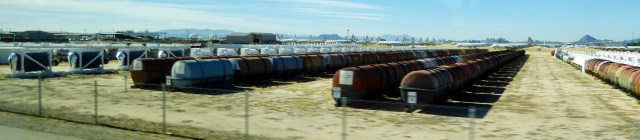
We entered Davis-Monthan Air Force Base where no photographs were allowed until we came to the “boneyard” operated by AMARG.  Although we were required to stay on the bus, our friendly docent narrated around the boneyard and told us about its establishment and purposes.   More than four thousand aircraft from the U.S. Air Force, Navy-Marine Corps, Army, Coast Guard, and several federal agencies including NASA are placed here.

fullsizeoutput_3863

Aircraft storage on Davis-Monthan began because the government already owned the land, the dry weather was conducive to avoiding decay and the caliche held up the planes.

Caliche is the hardpan a few inches below the surface of the desert floor. It allows the heavy planes to stay on the surface without sinking into the ground, even after decades. (This is the same material that doesn’t allow water to seep into the desert very effectively after a rain.)

fullsizeoutput_386a

The aircraft on-site are in varying degrees of storage, regeneration or recycle. AMARG operates the site as a money maker for the general fund.

fullsizeoutput_386b

When an aircraft is designated for placement at the AMARG site, it goes through a cleaning process and if high end electronics are present, they are removed.

fullsizeoutput_3874

A four layered rubber protectant, the last being white, is sprayed over  windows to protect the inside from excessive heat.

fullsizeoutput_386c

Some planes are scavenged and the parts sold.  These drums contain engines and other large components.

Some planes are stored with a target of eventual reinstatement, such as those for programs that were disbanded under sequestration.

p1080780

Planes like these are being repurposed as drones.

Many aircraft will eventually be designated scrap and cut apart for the metals recycle market.       A few are even released and sold on the used plane market.

fullsizeoutput_3869

And a few, like these B52s, will just sit out in the desert forever….

B52 model airplanes began flying in 1952. 744 planes were built between 1952 and 1962 and 78 are still on active duty with the US Air Force. The B52 carried nuclear weapons during the Cold War and the destruction of many were part of the Strategic Arms Limitation Treaty (SALT).  The B52s above were cut into five pieces, as per the treaty requirements, and are viewable by satellite for treaty verification purposes. The SALT-II treaty required that more B52s were destroyed, cutting those into three pieces.

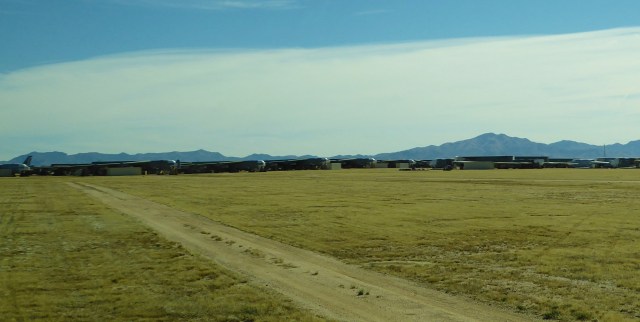
The pictures don’t do justice to the massiveness of the facility.  4000+ aircraft take up a lot of ground space.  It was quite interesting and we’d recommend it if you travel to Tucson.

fullsizeoutput_3870

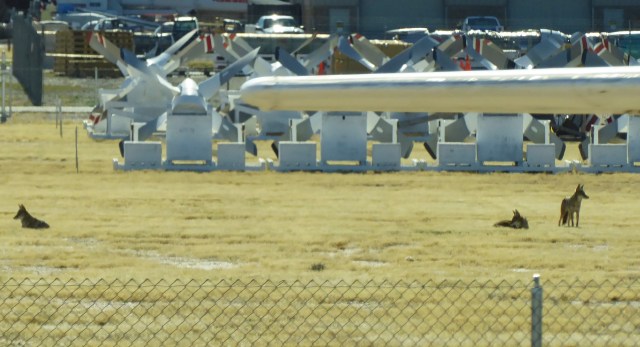
Security was pretty tight for the tour but my guess is these coyotes didn’t show ID!


Posted in Uncategorized | 2 Comments

Embrace and Release

fullsizeoutput_3838

We spent Christmas Week in Mesa, Arizona at a 55+ Snowbird park. We were embraced warmly by the residents and enjoyed our stay. Valle de Oro is a very large park and only had room for us Christmas Week because many residents don’t arrive until after the holidays.   The park is at capacity during January, February and March at about 3700 residents. During the summer months, the population dips to about 200.

fullsizeoutput_3839
Randy enjoyed daily gab sessions with Duane, one of our friendly neighbors and a fellow Idahoan.

fullsizeoutput_3833
We enjoyed meeting and eating Christmas Dinner with our table mates here at the park.

fullsizeoutput_382fChristmas Eve found us with Randy’s brother Tim and our sister-in-law Yvette. Elko enjoyed lounging near Yvette’s Christmas display – this is just a small portion of the town!

fullsizeoutput_3830Tim and I battled for fifth and sixth place in our eight team Fantasy Football league. Even though neither of us did well, it was fun to be together watching the games and our corresponding points. Yvette was the league Champion this year (whoohoo!) and Randy came in fourth.

fullsizeoutput_3820During our week in Mesa we enjoyed some of the local attractions. We went to the famous Organ Stop Pizza Parlor. The big draw here isn’t the pizza, it is the organ that utilizes one full wall of the large building. The corresponding light and percussion show was impressive.
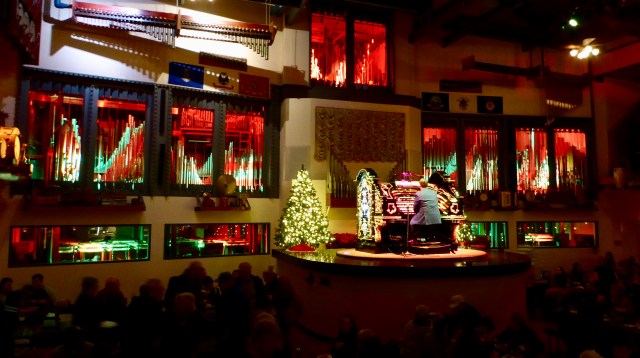
fullsizeoutput_3821


We enjoyed an evening at the Arizona Opry and their Home for the Holidays show.

fullsizeoutput_3822

Someone in the Arizona Transportation Department has fun with highway signs.  We enjoyed seeing what was new each day when we were out and about.   On the day “Star Wars: Rogue One” was released, there was a sign about not letting your vehicle be a death star.

fullsizeoutput_382e

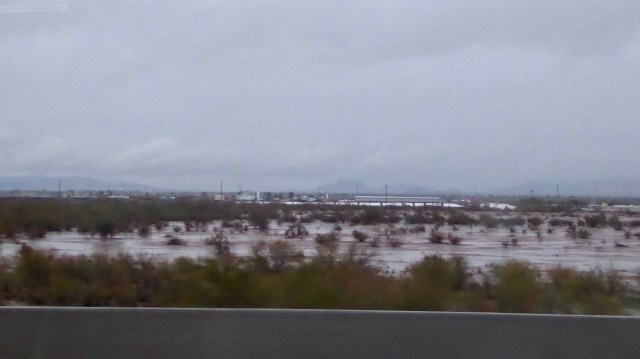
This is a view from the highway. It rained a lot during the week and there were puddles and pools in the desert. It seems so odd that the rain doesn’t soak easily into the desert!

p1080740

There was some good weather too!   Randy enjoyed the sun!

fullsizeoutput_3824

We toured Taliesin West (pronounced tally-essen), designed by Frank Lloyd Wright as his winter camp.  Built in the remote desert but now on the outskirts of Scottsdale,  Taliesin West is a national historic landmark.   Building began in 1937 and most materials came from the desert landscape.

fullsizeoutput_3828“A building should appear to grow easily from its site and be shaped to harmonize with its surroundings if Nature is manifest there.”  Frank Lloyd Wright


Taliesin West  was built and maintained almost entirely by Wright and his architecture apprentices (students) and was very personal for him. The Frank Lloyd Wright School of Architecture continues to have an enrollment of 35 apprentices, paying $40,000 per year to gain a Master’s Degree in Architecture.   Fees include room and board at Taliesin in Wisconsin and Taliesin West in Arizona.  The entire school moves with the seasons, just as it did when Frank Lloyd Wright was alive.

fullsizeoutput_382a
One of the hallmarks of the design at Taliesin West is Wright’s “embrace and release” concept. Doorways and entrances are small and open into large rooms. He was an innovator of the “great room” design.

fullsizeoutput_382b

Our tour companions came from Canada, England, Brazil and all across the US.

We enjoyed our tour very much and will look for future opportunities to see more Frank Lloyd Wright designs.

fullsizeoutput_384a

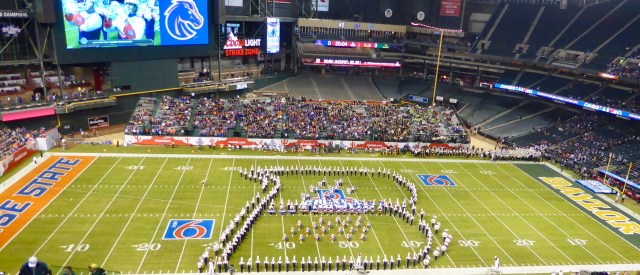
For years we have traveled following and embracing the Boise State Bronco Football team.   It was so nice of them to come to us this time!  They participated in the Motel 6 Cactus Bowl held in Phoenix.

The best part of the evening was pregame when the roof opened and skydivers came in carrying the US flag, the AZ flag, the Cactus Bowl banner and flags for both Boise State and Baylor.   Imagine skydiving above this huge city and gliding through an open roof into a stadium.   It was impressive!

fullsizeoutput_384b

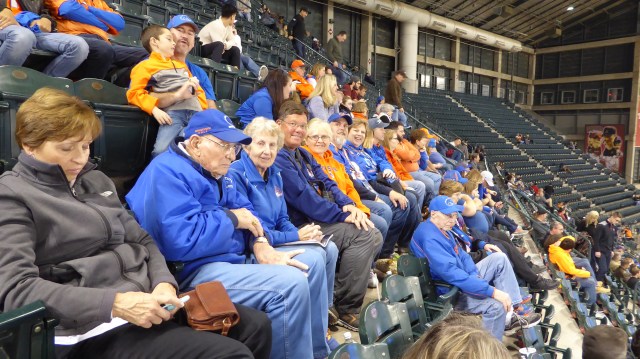
So, the game was the worst beat-down Boise State has ever suffered in post-season play.  By the end of the game Baylor fans finally outnumbered Boise State fans because so many BSU fans left – but not in our row!

p1080768

Our row of people, who didn’t know each other before the game, remained to the bitter end.  Any of us could have moved to have more room but we all stayed together nice and cozy.   The couple Randy is sitting next to have been to every home and away football game since 2007.   The couple I am next to came to their very first as a Christmas present to each other.

Randy thinks maybe we should be done with away games after this debacle but I think after we mentally release this game and season,  we’ll be ready to embrace them again next fall.

Embrace and Release – 0r visa-versa!


Posted in Uncategorized | Leave a comment

Looking for the Lost Dutchman’s Gold

The title, Looking for the Lost Dutchman’s Gold, is an unfair tease….We didn’t even look for the lost gold mine.  The Lost Dutchman, thought to be in the Superstition Mountains east of Phoenix,  is one of the most famous lost mines in America. Attempting to decipher a set of clues found after Jacob Waltz’ death (1810- 1892), thousands of people have looked for his hidden gold mine ever since.   Unfortunately, some die while searching each year.

fullsizeoutput_37ffYet even without the quest of gold, we enjoyed our stay at Lost Dutchman State Park, nestled at the base of the Superstition Mountains.   This is truly one of the nicest state parks we’ve been to anywhere (sorry Oregon…). As you can see our view was amazing!

fullsizeoutput_3811

fullsizeoutput_37ef

Sunrise was beautiful day after day!

p1080558

This was one of the fullest saguaros we have ever seen – lots of arms!

fullsizeoutput_37fd

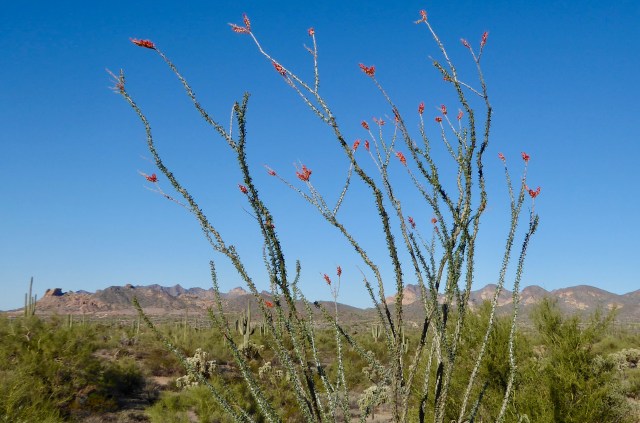
The blooming ocotillo was lovely as well!

There are lots of hiking trails within the park and signs with desert information. An Eagle Scout made a Sundial from a coyote silhouette.

Of course there were real coyotes too – a neighbor saw one in our campsite, and Randy heard them howling a couple times.

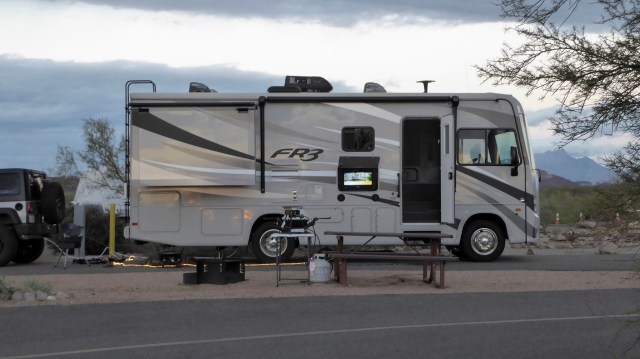
The above mentioned camper was slightly annoying in that he would turn on his outside TV and then go off on a walk or whatever…..AARGH!  At least the volume wasn’t very loud and they were only there for the weekend.

fullsizeoutput_380f

See any people out there watching that TV?

We had to protect our vehicles from those pesky packrats, surrounding our trailer and lighting up the engine compartment of the truck with rope lights.

fullsizeoutput_37fe

So, since we didn’t search for gold – we did other things in Apache Junction!

fullsizeoutput_380c

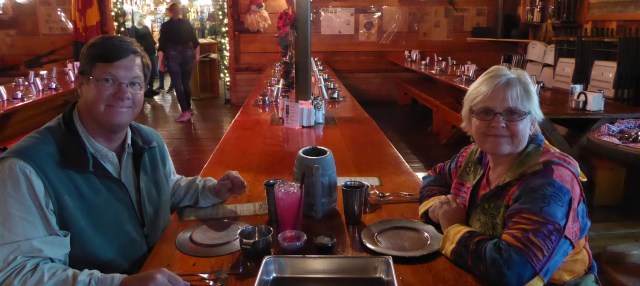
We went to the Mining Camp Restaurant – recommended by my cousin Lisa from her visits there years ago when she was driving trucks cross country.

fullsizeoutput_37f5

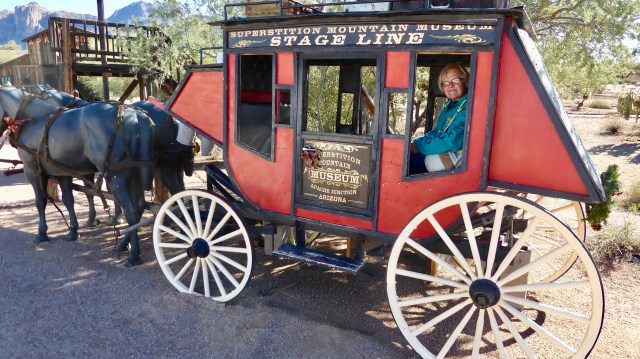
We went to the Superstition Mountain Museum which highlighted Apacheland, at one time a location for filming western movies.

fullsizeoutput_37f4

p1080585

This is the Elvis Presley Chapel which figured prominently in the 1969 movie Charro! – Elvis’ only dramatic, non-singing movie role.

fullsizeoutput_3802It was at another chapel that we had our big negative experience of the week!  The Goldfield Ghost Town website indicated worship services on Sunday morning so we went to the touristy venue with the idea of having breakfast, going to service and then exploring the ghost town.

p1080530
The Sunday before Christmas, at a tourist venue, we expected a nice version of Cowboy Church. Instead, we and other tourists joined an established congregation using that chapel.  The “service” was the most hateful, judgmental, politically charged event we’ve ever had the misfortune to attend. If we could have exited with any kind of grace, we would have. The best I can say is that we survived it and my Trip Advisor review will allow other visitors to be more aware than we were.

Otherwise, our trip to Goldfield Ghost Town was enjoyable.

fullsizeoutput_3801There was a shoot-out on Main Street and a nice little train ride around the town and lots of shopping opportunities!   Too bad I don’t have room to collect “stuff.”

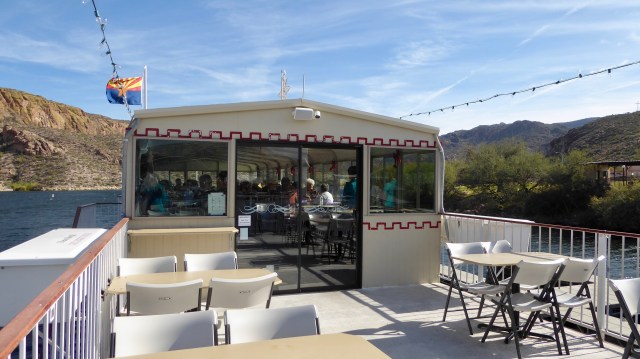
On our last day at the park, Randy was touristed out and stayed home with Elko.  They did “boy things” to the trailer. I went on a Salt River Canyon cruise on the Dolly Steamboat.

fullsizeoutput_37ea

People from Phoenix thought it was cold so I had the upstairs, outside seating all to myself for awhile!

fullsizeoutput_37e9

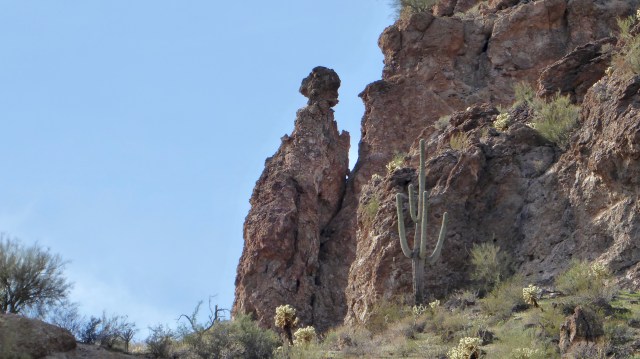
The views and rock formation were terrific. This one below looks like a young girl looking up towards the left AND looks like Bach playing a piano to the right. The sound system played a Bach composition as we traveled through this area.

fullsizeoutput_37e4

fullsizeoutput_37e7

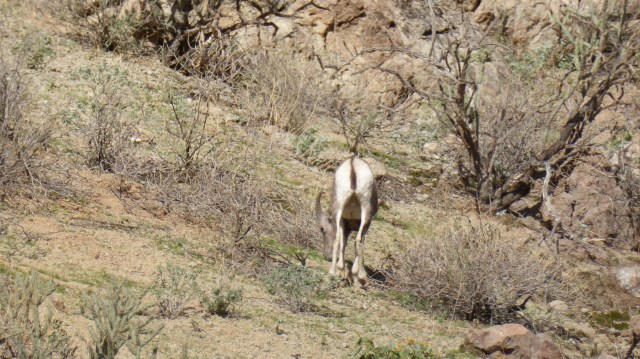
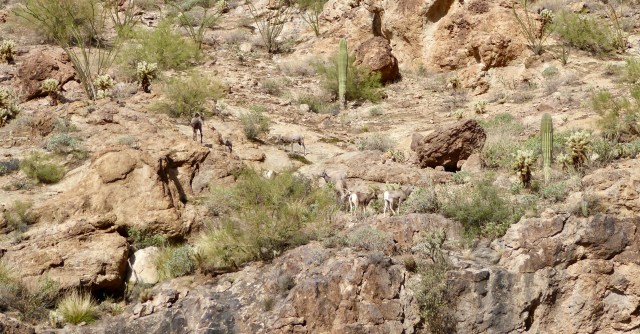
We enjoyed the Bald Eagle up atop the cliff and LOVED the Big Horned Sheep along the journey.

p1080634
The captain spotted this sheep first – and suggested he was “mooning” the boat. In fact, it is often the lighter hind end that allows them to be spotted.

fullsizeoutput_37de

After having a boat for so many years, I love any opportunity to get out on the water – and what an unexpected pleasure to do so in the Arizona desert!

Posted in Uncategorized | 5 Comments

Where Summer Goes to Winter

fullsizeoutput_37b4We made it to Yuma, Arizona and the first order of business was to have our truck and trailer washed and waxed! $130 later, both were clean and shiny!  Sunny and warm needs clean and shiny!

fullsizeoutput_37b5We enjoyed catching up with Myron and Peggy and meeting their new puppy. We were visiting them in Wisconsin last summer when we lived through that memorable storm!

img_1976
We were so glad to reconnect with the friends we made at this park last year!  Randy golfed several times with Canadian friends, Dave and Gordon while Linda, Catie and I did a little bit of this and that.

p1080394

We made the 30 minute trip to Los Algodones, Mexico to do some Christmas shopping. Most people go to Los Algodones to see dentists and optometrists. They cater to American and Canadian patients who come down for the inexpensive care. We’ll likely do that too someday.

p1080397While waiting in line to get back into the US, Randy spent time talking with these two veterans. The man on the right was a Vietnam vet while the one on the left served in Korea.  The latter has been driving commercial trucks since returning from Korea all those years ago. He will be 85 years old in a few months and will be forced to retire due to company policy.

Our week in Yuma with our friends went way too fast and soon we were off again, heading two hours east to a small town in the the middle of nowhere –  Ajo, Arizona. Ajo is the gateway to Rocky Point and selling insurance to those traveling into Mexico appears to be a lucrative business.

Ajo began life as a copper mining town and they have their very own poisonous lake at the bottom of the open pit.   The mine is currently shut down but has not been abandoned.  A former miner told me that the company does just enough to satisfy the government to keep their options open.

fullsizeoutput_37bb

fullsizeoutput_37bc

The old Catholic Mission Indian School is now the historical museum.

We are in a very nice RV park and poor Elko is miserable. In lieu of dirt or grass, the entire park is decorative rock of various hues and his feet are so sore. I’m glad our stay here will be brief, just 2 nights. “Where Summer Goes to Winter” is the Ajo Heights RV park slogan. I borrowed it for the title of this blog.

Coyote and javalina are common in the area and wander around and into the park. We glimpsed a coyote about 20 feet away from our campsite, but no javelina – at least not yet!
fullsizeoutput_37be

The reason we came to Ajo was to go to nearby Organ Pipe Cactus National Monument. Our friend, Beth, drove 2+ hours west from Tucson to join us. We had a lovely day viewing the scenery and cacti.

fullsizeoutput_37bf

Saguaros on the left, Organ Pipe Cactus on the right.

fullsizeoutput_37c9
Randy and Beth took a hike up towards the arch while I stayed in the picnic area with Elko. He was not allowed on the trail so he rested his feet and I read a book.

fullsizeoutput_37ca

The Organ Pipe Cactus National Monument is also a United Nations Biosphere Reserve. It is one of the 699 reserves in 120 countries with ecosystems involving plants and animals of “unusual scientific and natural interest.” The designation is to help protect sites and promote research and conservation.

fullsizeoutput_37c0


fullsizeoutput_37cf

This saguaro had some interesting features….

The monument’s 31 mile southern border is also the international border. Border patrol vehicles, helicopters and agents are common sights.  We have never had any trouble and don’t expect to.

Tomorrow we move on – hopefully there will be packed dirt for Elko instead of more rocks. We won’t even think about grass for awhile but we should still be able to enjoy summer in winter.

Posted in Uncategorized | 5 Comments

Creepy Campground – Revisited!

p1030599

We stayed at this campground two years ago and have talked about it ever since. Even though our site was decent, the campground has been high on our list of worst campgrounds ever.  I named the blog post from that week “This Place is Creepy.”

It was creepy because, although the campground looked like it had once been quite nice, it had deteriorated horribly. Dozens and dozens of power pedestals were in various stages of disrepair.  Coyotes were howling and dogs (from a nearby rescue facility) were barking night and day. There were enough “annual site owners” living in decrepit rigs/tents/tarps that it didn’t feel safe to wander around after dark. (To be fair, there were and are a number of California Thousand Trails campgrounds with that situation.)

p1030601

Even this sign gave us a bit of a chill two years ago – We were glad Elko is a big boy!

We had a Thousand Trails Southwest Zone Pass when we stayed here before. We found a couple of parks we liked in the system and many that we did not, including this one at Soledad Canyon, 30 miles northeast of Los Angeles.

When asked to complete an on-line evaluation of our stay, I was brutally honest and had a number of suggestions. That resulted in several follow-up phone interviews by people up the chain. The brand new manager, not responsible for the sad state of affairs, said she hoped we would try the park again someday. Ha! We never thought that would happen.

So, Creepy Campground-Revisited. Why???  That is a fair question. The answer is minimally financial and mostly curiosity.

The financial part is easy. We bought another Thousand Trails Zone Pass for our trip back east last summer. Campgrounds (where we could fit) in the northeast are $50 -70 per night and we thought the pass would be more cost effective. When our trip was cut short to help care for our grandson, Thousand Trails representatives were kind enough to exchange our Midwest and Northeast Zones to Northwest and Southwest. So by staying here again, we are using our pass for a couple more nights.

Staying here again just to save a few bucks would not have been motivation enough. Curiosity sealed the deal because we had read reviews over the last year about how the place had been improved. When our itinerary brought us this way, we decided to see for ourselves.

We can see some structural improvements with upgrades to power pedestals in two sections. There have been new camper cabins installed. There is still a very long way to go but it does appear that there has been progress.

Additionally, the “annual site owners” living in the decrepit rigs/tents/tarps are gone. I hope they are all living in better circumstances now than they were here, but the campground looks better and feels safer without them.

Last time we were here Elko ate something that made him very sick so we did not explore the area at all.  We all had better luck this time!

fullsizeoutput_37ac

We went to the Los Angeles County Park, Vasquez Rocks Natural Area. You may not have been there, but you’ve seen the rocks many times!

Hundreds of movies, TV shows and music videos have been filmed at Vasquez Rocks because of proximity to Los Angeles. Movie examples include: Flintstones, Planet of the Apes, Blazing Saddles and My Stepmother is an Alien. TV examples include The Big Valley, CSI, Lassie and The Twilight Zone.

The filming example that came up over and over again was Captain Kirk fighting Gorn. Click here to re-live that epic Star Trek battle!

There was actually a filming/photography event happening while we visited the rocks.  We didn’t recognize the “star” (not a surprise) and my picture didn’t turn out well enough to ask all of you for help.

Tomorrow we leave the formerly creepy campground and head into Arizona.  We will be here and there around the state for about three months – Randy is a happy guy!

Posted in Uncategorized | 1 Comment